Category: Health Care

  • Philadelphia’s Senior Law Center has taken over two of CARIE’s advocacy programs

    Philadelphia’s nonprofit Senior Law Center has taken over two of the programs that the Center for Advocacy for the Rights and Interests of the Elderly (CARIE) operated before it abruptly shut down around Thanksgiving.

    The Senior Law Center said this week in an email to supporters that it will continue CARIE’s work to support elderly crime victims under a two-year contract with the Pennsylvania Commission on Crime and Delinquency.

    That contract is for $462,094 per year and has been reassigned to the Senior Law Center. The Senior Law Center has hired four of the five CARIE employees who were involved in that work. The fifth person had already accepted another job, a Senior Law Center spokesperson said.

    Kathy Cubit, CARIE’s former advocacy director, has moved to the Senior Law Center, where she will continue her work on health equity and long-term care. Cubit chairs a group that monitors Pennsylvania’s implementation and development of Medicaid programs.

    CARIE listed 26 employees on its website the week before it closed. Few details were available on why CARIE closed after nearly 50 years. Much of its work involved long-term care ombudsman services for the elderly in most of Philadelphia and in Montgomery County. It lost both of those contracts.

  • How brokers gamed the ACA marketplace, roiling subsidy debate in Congress

    How brokers gamed the ACA marketplace, roiling subsidy debate in Congress

    The Florida insurance brokers offered an enticing deal to unemployed and homeless people: Enroll in a Healthcare.gov health plan they weren’t eligible for in exchange for gift cards, food, alcohol, or cash. They coached them to lie about their income to qualify for heavily subsidized coverage, according to court documents. Sometimes they enrolled people without their knowledge.

    A federal jury convicted Cory Lloyd and Steven Strong last month of collecting millions of dollars in commissions between 2018 and 2022 through a widespread plot to defraud the federal insurance marketplace. People earning at least the federal poverty level can get income-based subsidies to help them afford monthly premiums for plans sold through the Affordable Care Act. Under Lloyd and Strong’s scheme, the federal government paid at least $180 million in ineligible subsidies.

    Many more agents and brokers — likely thousands, according to two career staffers at the Centers for Medicare and Medicaid Services, who spoke on the condition of anonymity because they weren’t authorized to speak to press — are gaming the marketplace where 24 million Americans get health insurance.

    Corruption among Healthcare.gov agents and brokers had emerged as a sticking point in Washington as Congress failed to reach a deal to halt the year-end expiration of enhanced subsidies for insurance premiums, which will drive up the cost of plans for millions of Americans. Republicans invoked the fraud to argue against extending the subsidies while Democrats said the solution is better enforcement rather than withholding assistance from Americans who need it.

    Last year, the Biden administration temporarily suspended 850 insurance agents and brokers suspected of fraudulent or abusive conduct. CMS hasn’t terminated any agents or brokers this year — although spokesman Christopher Krepich said the agency has “initiated terminations” even as it sets up stricter enrollment rules for customers amid Administrator Mehmet Oz’s promises to root out fraud.

    Around 100,000 agents and brokers are authorized by Healthcare.gov. They facilitate more than three-quarters of enrollments. For each person enrolled, insurers pay them a small monthly commission, typically between $5 and $20. Florida, where Lloyd and Strong operated, offers the largest commissions in the country, averaging $28 per enrollee, according to the nonpartisan health policy organization KFF.

    A new government report underscored how easy it is to game the marketplace.

    When the Government Accountability Office, which evaluates federal programs and spending, submitted 20 fraudulent applications to Healthcare.gov for coverage this year, 19 were initially approved even though the agency didn’t submit documents requested to prove income, citizenship, and Social Security numbers. The marketplace terminated one enrollee for insufficient documentation. The government is still paying more than $10,000 a month in subsidies for 18 remaining enrollments.

    Investigators also discovered misuse of Society Security numbers — in one case, a single number was used for 125 policies in 2023 — and identified serious shortcomings in how CMS assesses marketplace fraud.

    Stopping marketplace fraud is “not a priority” for CMS, said Seto Bagdoyan, a director at GAO who worked on the report.

    Krepich said the agency has undertaken “a thorough investigation into improper agent and broker activity” and is committed to “ensuring consumers are never enrolled in coverage without their knowledge or consent.”

    Democrats complain the Trump administration is doing little to fix the problem despite its bluster about waste, fraud, and abuse in federal health programs.

    Rep. Lloyd Doggett (Texas), the top Democrat on a subcommittee overseeing CMS, wrote a letter to Oz last week requesting closer scrutiny of the reinstated agents and brokers. “The remedy is not to deny a mother access to care for her sick child,” Doggett said in a statement. “What we need is effective law enforcement.”

    Like brokers for Lloyd and Strong, who did not return requests for comment, many have enrolled people without their knowledge, switched their plan without their consent or created fake enrollments to maximize commissions.

    The GAO concluded that the enhanced subsidies worsened fraud in recent years as bad actors seized upon the beefier assistance to lure new customers. As enrollments on Healthcare.gov skyrocketed under the extra subsidies, fraudulent sign-ups grew too. The Congressional Budget Office estimated those misstating their incomes to get more subsidies nearly doubled from 1.3 million to 2.3 million between 2023 and 2025.

    “We believe that the expansion of the subsidies — which put more money in the pool — invigorated the financial incentive to sign up as many people as possible,” Bagdoyan said.

    The GAO’s findings were among the hurdles to Republicans in Congress agreeing to extend extra subsidies for a marketplace they’ve accused of failing to sufficiently police from bad actors.

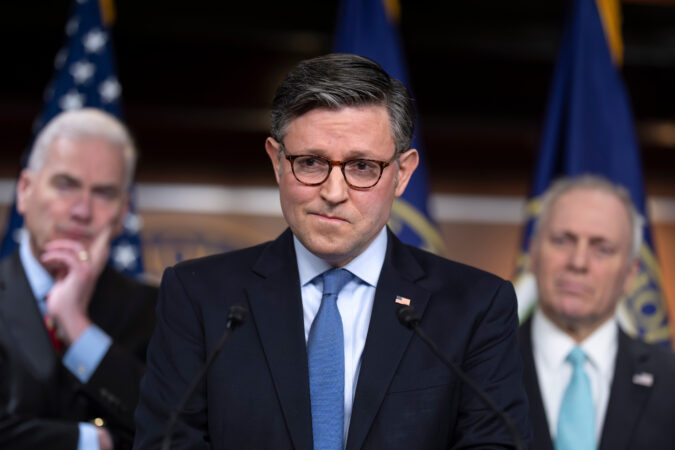
    “These findings validate long-standing Republican warnings: Obamacare’s subsidy system lacks even the most basic guardrails and has created an environment where criminals, identity thieves, and unscrupulous brokers can exploit taxpayers with ease,” House Speaker Mike Johnson (R., La.) said in a statement last week.

    Democrats say the proper response isn’t to let the extra subsidies expire but to go after the brokers.

    “I’ve always said any fraud is too much,” said Sen. Ron Wyden (Oregon), the top Democrat on the Senate Finance Committee, which has oversight of healthcare issues.

    Wyden introduced a bill to create new civil penalties for brokers who commit fraud. He said Republicans haven’t signed onto his bill or offered similar measures.

    After receiving hundreds of thousands of complaints about fraud, the Biden administration started requiring customers to hold a three-way call with their broker and the marketplace call center in July 2024. But the new policy left plenty of loopholes, agents told GAO. The rule didn’t apply to new enrollees. And the marketplace took only “limited steps to verify the identity of the consumer on the three-way call,” the report says.

    Oz has been vowing to root out the abuse, slamming the prior administration for rules he said were too lenient and touting stricter enrollment rules CMS released in June. Those rules don’t include any direct, new restrictions on agents and brokers but could indirectly make fraud harder by ending year-round enrollment for people earning less than 150% of the federal poverty level, roughly $23,000 for an individual.

    “The past administration prioritized achieving big program enrollment numbers over protecting program integrity,” Oz said in a video posted recently to X.

    CMS is also preparing to implement stricter verification requirements laid out in Trump’s sweeping tax-and-spending law he signed this summer. That legislation bans the marketplaces from awarding subsidies before verifying a customer’s personal information, including their income and legal status, before awarding any subsidies, which could make it harder for bad actors to sign people up.

  • ChristianaCare and Virtua Health have ended merger talks

    ChristianaCare and Virtua Health have ended merger talks

    ChristianaCare and Virtua Health have ended merger negotiations that would have created a healthcare system with more than $6 billion in annual revenue and business in four states, the two nonprofits announced Thursday.

    The nonprofits, the largest in South Jersey and the largest in Delaware, had disclosed a preliminary agreement to join forces in July. ChristianaCare and Virtua did not share specific reasons for dropping the idea.

    They issued identical statements: “After thoughtful evaluation, both organizations have determined that they can best fulfill their missions to serve their communities by continuing to operate independently.”

    It wasn’t obvious to industry insiders what advantages combining the two systems would have brought other than more revenue and the potential for some relatively small savings from greater scale.

    Both systems are financially solid. Virtua has a AA- credit rating from Standard & Poor’s. The S&P rating for ChristianaCare is two notches higher, at AA+.

    They have been expanding on their own.

    Virtua acquired Lourdes Health System in New Jersey in 2019, and is now spending hundreds of millions to renovate two of its hospitals.

    ChristianaCare explored an acquisition of Crozer Health in 2022, but decided not to go through with the deal. It won a May bankruptcy auction with a $50.3 million bid to assume Crozer leases at five outpatient locations in Delaware County. It has since opened 15 medical practices at those locations.

    ChristianaCare previously acquired the shuttered Jennersville Hospital in Chester County and turned it into a micro-hospital. It plans two more micro-hospitals for Delaware County.

    The five-hospital Virtua system had $3.24 billion in revenue last year. ChristianaCare, with three full-scale hospitals, had $3.3 billion in revenue in the year that ended June 30, 2025.

  • CHOP was Southeastern Pa.’s most profitable nonprofit health system in first quarter of fiscal 2026. Four systems lost money.

    CHOP was Southeastern Pa.’s most profitable nonprofit health system in first quarter of fiscal 2026. Four systems lost money.

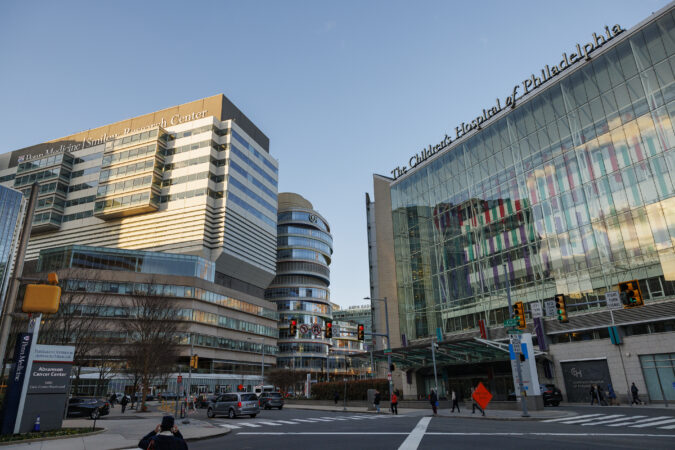
    Children’s Hospital of Philadelphia was the most profitable nonprofit health system in Southeastern Pennsylvania during the three months that ended Sept. 30, according to an Inquirer review of financial filings.

    CHOP reported $70 million in operating income in the first quarter of fiscal 2026, up from $67 million the same period a year ago. The nonprofit’s revenue climbed nearly 9% to $1.3 billion.

    The biggest loss in percentage terms was at Redeemer Health, the region’s smallest health system and the only remaining operator with a single hospital. Redeemer had an $11.7 million operating loss on $103.4 million in quarterly revenue. That was an improvement over an $18.9 million loss last year.

    Jefferson Health had the most patient revenue following its acquisition last year of Lehigh Valley Health Network. The 32-hospital system had $2.9 billion in patient revenue, $100 million more than the $2.8 billion at the University of Pennsylvania Health System, which has seven hospitals.

    window.addEventListener(“message”,function(a){if(void 0!==a.data[“datawrapper-height”]){var e=document.querySelectorAll(“iframe”);for(var t in a.data[“datawrapper-height”])for(var r,i=0;r=e[i];i++)if(r.contentWindow===a.source){var d=a.data[“datawrapper-height”][t]+”px”;r.style.height=d}}});

    Here’s a recap of selected systems’ results for September quarter:

    Jefferson Health

    Jefferson Health reported a $104 million operating loss, as its insurance business continued to drag down results. The loss included $19.4 million in restructuring charges for employee severance related to earlier job cuts and moves designed to make the system more efficient.

    University of Pennsylvania Health System

    University of Pennsylvania Health System had an operating gain of $109.3 million, up from $49.3 million in the same period a year ago. This year’s results include Doylestown Health, which Penn acquired April 1. Total revenue was $3.3 billion, up from $2.8 billion a year ago.

    Temple University Health System

    Temple University Health System’s loss in the quarter was $15 million, an improvement over a $17 million loss last year. Total revenue was $800 million, up 13% from $712.5 million a year ago. Outpatient revenue increased by nearly $62 million, much of it from the health system’s specialty and retail pharmacy business.

  • Mental health workers in Philadelphia unionize following changes in their workplace and patient care

    Mental health workers in Philadelphia unionize following changes in their workplace and patient care

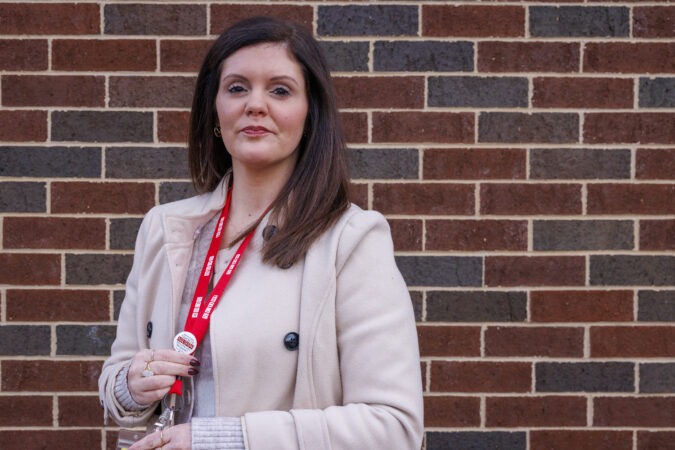
    Mental health professionals at Rogers Behavioral Health in West Philadelphia have formed a union, citing increased workloads and business changes that diminished patient care.

    The nonprofit mental healthcare provider last year transitioned from individual patient sessions to a group care model, said Tiffany Murphy, a licensed professional counselor and therapist at the facility. Some workers there were also moved from salaried to hourly positions then forced to reduce hours, their union has said.

    Some patients and workers have left amid the changes, says Murphy, estimating that 22 of her colleagues have quit in the past year.

    “A lot of us sort of put our jobs on the line by [unionizing], because we believe in the organization, but more so, we believe in our patients. We wanted to provide the best patient care that we possibly could for them,” said Murphy.

    The 19 West Philadelphia Rogers employees, including therapists and behavioral specialists, filed their petition last month to unionize with the National Union of Healthcare Workers. Rogers voluntarily recognized the union, according to NUHW, marking the union’s first unit in Pennsylvania.

    NUHW represents some 19,000 healthcare workers, primarily in California.

    Sal Rosselli, NUHW president emeritus, said the union is pleased that Rogers accepted the petition. “All too often, employers do the opposite and put together very anti-union campaigns, spending all kinds of patient care dollars to prevent their workers from organizing,” he said.

    The Philadelphia metro area, which also includes Camden and Wilmington, has the fifth-highest number of working therapists among U.S. metros, according to the Bureau of Labor Statistics. This region employs just over 500 therapists, with average salary of $79,510.

    A spokesperson for Rogers declined to comment on employees’ organizing efforts and remarks on workplace changes.

    Rogers provides addiction treatment and mental healthcare with facilities in 10 states. In Philadelphia, the nonprofit offers outpatient treatment and partial hospitalization, treating patients with depression, anxiety, and obsessive-compulsive disorder.

    In recent years, Rogers workers in California also unionized with NUHW. Their recently forged union contract includes caseload limits and a cap on how many newly admitted patients can be assigned to each therapist or nurse.

    Thousands of healthcare workers in the Philadelphia area have moved to unionize in recent years.

    Within the past few years, residents at Penn Medicine and the Rutgers University health system finalized their first contracts with their health systems, and attending doctors at ChristianaCare became the first group of post-training physicians in the region to unionize. Residents at Temple University Hospital, Thomas Jefferson University Hospitals, ChristianaCare, and Jefferson’s Einstein Healthcare Network also voted to unionize in early 2025. Residents at Children’s Hospital of Philadelphia narrowly voted against joining a union.

    The organizing push means that about 81% of the city’s resident physicians are unionized.

    What do workers want?

    When Murphy first started working at the Rogers facility in Philadelphia 4½ years ago, she said there was “a really good work-life balance.”

    At the time, clinicians had four patients per day, provided individualized care, and led group sessions. As the organization moved toward group counseling, she said, caseloads have grown, with up to 12 patients in each group.

    The organization hired behavioral specialists to support therapists, said Murphy, but “it was difficult to provide the patients with the care that they really needed and deserved with the new structure.”

    Some patients and staff left because of the new model, said Murphy.

    This year, some salaried workers were switched to hourly, and Rogers started sending workers home due to low patient demand, leaving the rest with larger workloads, according to the union. That meant some used paid time off to avoid going without pay, said Murphy.

    When Philadelphia Rogers employees heard their colleagues in California were unionizing, “That became a bit enticing to us,” said Murphy, noting the workplace had become challenging and sometimes “unbearable.”

    Now, she says, the union members want more manageable caseloads — or pay increases to account for the larger caseloads — and a return to the old pay model for those who were switched to hourly work.

    “We are unionizing to have a voice at work that will allow us to promote a healthier work-life balance as well as high-quality sustainable patient care,” therapist Sara Deichman said in a union news release.

    Where else have mental health workers unionized?

    The organizing in Philadelphia comes as the U.S. faces a shortage of mental healthcare professionals, and in the wake of a demand surge from the pandemic.

    “The industry is forcing fewer providers to care for more and more patients because the focus is on the bottom line,” said Rosselli.

    Staffing concerns plague the healthcare industry generally, said Rebecca Givan, an associate professor at Rutgers University’s School of Management and Labor Relations.

    “If the facility wants to hold down costs, it tries to keep staffing levels as low as possible,” said Givan. “In the case of mental health providers, it can be about shortening appointment times or increasing caseloads so that each provider has a very large number of cases or clients.”

    She says there’s not “a huge amount of union representation” in stand-alone behavioral health facilities, but some public hospitals are unionized.

    Private practice mental health workers can’t unionize because they’re self employed, Givan noted, but “one could argue that they might benefit from collectively negotiating, for example, with the insurance companies that determine their reimbursement rates.”

    NUHW is leading efforts to organize independent providers. The goal, Rosselli says, is to “establish an employer for them so that they can have leverage against insurance companies to increase pay and increase access to patient care issues.”

    The union has already done this in the home care industry in California, Rosselli noted.

    Staff reporter Aubrey Whelan contributed to this article.
  • Mark Hallett, world-renowned neuroscientist and groundbreaking researcher, has died at 82

    Mark Hallett, world-renowned neuroscientist and groundbreaking researcher, has died at 82

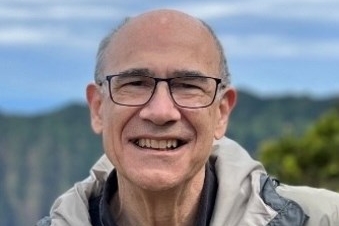
    Mark Hallett, 82, of Bethesda, Md., world-renowned scientist emeritus at the Maryland-based National Institute of Neurological Disorders and Stroke, former chief of the clinical neurophysiology laboratory at Brigham and Women’s Hospital in Boston, associate professor of neurology at Harvard Medical School, groundbreaking researcher, prolific author, mentor, and world traveler, died Sunday, Nov. 2, of glioblastoma at his home.

    Dr. Hallett was born in Philadelphia and reared in Lower Merion Township. He graduated from Harriton High School in 1961 and became a pioneering expert in movement, brain physiology, and human motor control.

    He spent 38 years, from 1984 to his retirement in 2022, at the National Institutes of Health in Bethesda and was clinical director and chief of the medical neurology branch of the National Institute of Neurological Disorders and Stroke. He and his colleagues examined the human nervous system and the brain, and their decades of research helped doctors and countless patients treat dystonia, Parkinson’s, and other neurodegenerative diseases.

    “When I met him, I was in bad shape,” a former patient said on Instagram. “I’d also been told … that no one would ever figure out the source of my illness. … He and his team diagnosed me, and thereby, I’m pretty sure, saved my life”

    Dr. Hallett told the Associated Press in 1992: “The more that we know about the way these cells function, the better off we are.”

    He founded the NINDS’ human motor control section in 1984, cofounded the Functional Neurological Disorder Society in 2018, and served as the society’s first president. He cultivated thousands of colleagues around the world, and they called him a “giant in the field” and a “global expert” in online tributes.

    Barbara Dworetzky, current president of the FNDS, said Dr. Hallett was a “brilliant scientist, visionary leader, and compassionate physician whose legacy will endure.” Former NIH colleagues called his contributions “astounding” and said: “The scope and impact of Dr. Hallett’s work transcend traditional productivity metrics.”

    He chaired scientific committees and conferences, and supervised workshops for many organizations. He earned honorary degrees and clinical teaching awards, and mentored more than 150 fellows at NIH. “Our lab’s demonstration of trans-modal plasticity in humans was another milestone,” he told the NIH Record in 2023. “And, of course, I am particularly proud of the fellows that I have trained and their accomplishments.”

    In a tribute, his family said those he mentored “valued his intellect, his encouragement, his kindness, and his humor.”

    Dr. Hallett and his wife, Judy, married in 1966.

    Dr. Hallett had planned to study astronomy at Harvard University after high school. Instead, he earned a bachelor’s degree in biology in 1965 and a medical degree at Harvard Medical School in 1969. He completed an internship at the old Peter Bent Brigham Hospital, now part of Brigham and Women’s, and joined a research program at the NIH in 1970 to fulfill his military obligation during the Vietnam War.

    A fellowship in neurophysiology and biophysics at the National Institute of Mental Health sparked his interest in motor control, and he served a neurology residency at Massachusetts General Hospital in 1972 and a fellowship at the Institute of Psychiatry in London in 1974.

    He returned to Brigham and Women’s in 1976 to supervise the clinical neurophysiology laboratory and rose to associate professor of neurology at Harvard. In 2019, he earned the Medal for Contribution to Neuroscience from the World Federation of Neurology, and former colleagues there recently said his work “had a lasting global impact and shaped modern clinical and research practice.”

    He also studied the scientific nature of voluntary movement and free will. He wrote or cowrote more than 1,200 scientific papers on all kinds of topics, edited dozens of publications and books, and served on editorial boards.

    He was past president of the International Federation of Clinical Neurophysiology and the International Parkinson and Movement Disorder Society, and vice president of the American Academy of Neurology.

    At Harriton, he was senior class president, a star tennis player, and a leading man in several theatrical shows. “The only time he disobeyed his parents,” his family said, “was when he decided to leave Philadelphia to attend Harvard College.”

    Mark Hallett was born Oct. 22, 1943. The oldest of three children, he was a natural nurturer, a longtime summer camp counselor, and the winner of an Alfred P. Sloan Foundation national scholarship award in high school.

    He grew up in Merion and met Judith Peller at a party in 1963. They married in 1966 and had a son, Nicholas, and a daughter, Victoria.

    Dr. Hallett (center) was a star on the Harriton High School tennis team.

    Dr. Hallett was an avid photographer and a master of the family group shot. He championed a healthy work-life balance, and his family said: “He eagerly built sand castles, skipped stones, and started pillow fights. His easy laugh was contagious.”

    He enjoyed hiking, biking, jazz bands, and organizing family vacations. “He was a natural leader,” his son said, “self-assured and patient of others, with a deep sincerity and a desire to help people.”

    His daughter said: “People were constantly turning to him for medical advice, and he was always willing and eager to help.”

    His wife said: “He was very high energy. He brought out the best and the most in young people. He made them feel good about themselves.”

    Dr. Hallett traveled the world on business and family vacations.

    In addition to his wife and children, Dr. Hallett is survived by two granddaughters, a sister, a brother, and other relatives.

    A memorial service is to be held later.

    Donations in his name may be made to the Functional Neurological Disorder Society, 555 E. Wells St., Suite 1100, Milwaukee, Wis. 53202; and the International Parkinson and Movement Disorder Society, 555 E. Wells St., Suite 1100, Milwaukee, Wis. 53202.

  • Temple Health reported a $15 million operating loss in the first quarter of fiscal 2026

    Temple Health reported a $15 million operating loss in the first quarter of fiscal 2026

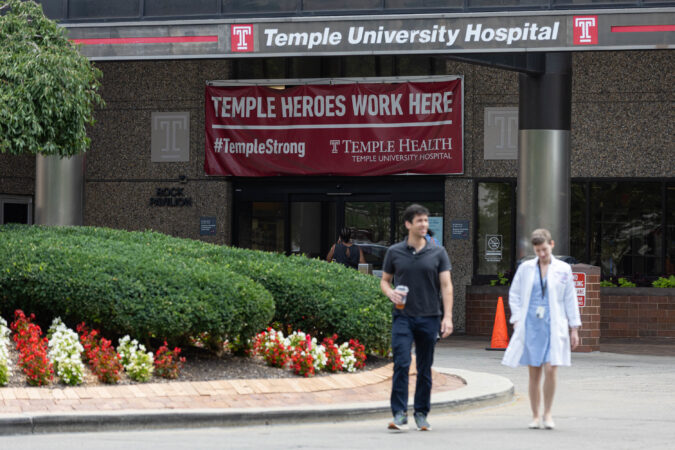
    Temple University Health System reported a $15 million operating loss in the three months that ended Sept. 30.

    The result for the first quarter of fiscal 2026 was an improvement from the North Philadelphia nonprofit’s $17 million loss last year.

    “We’re pretty happy where we are,” CEO Mike Young said Wednesday. Revenue was above budget and labor costs were on budget in the first quarter for the first time in several years.

    Here are some details:

    Revenue: Total revenue was $800 million, up 13% from $712.5 million a year ago. Outpatient revenue increased by nearly $62 million, much of it from the health system’s specialty and retail pharmacy business.

    Temple participates in a federal program for safety-net hospitals that allows it to buy certain drugs at a discount and then get full reimbursement from insurance companies.

    Expenses: Temple noted in its report to municipal bond investors Tuesday that salaries, including higher pay rates for nurses, and higher drug spending for outpatient infusions and other pharmacy business were the biggest expense increases.

    Notable: On the labor front, several job categories remain hard to fill, Young said. Those are CT techs, nurse anesthetists, and lab techs. “Other than those three [specialties], it’s not where it was three years ago, where you couldn’t find anybody,” he said.

  • Jefferson Health hit with federal WARN Act lawsuit

    Jefferson Health hit with federal WARN Act lawsuit

    A lawsuit filed Tuesday in Philadelphia accused Jefferson Health of violating federal labor rules when it laid off 1% of its 65,000 employees in October and this month without providing a 60-day notice.

    The purported class-action lawsuit says the proposed lead plaintiff, Ciara Brice, lost her job as a medical assistant on Nov. 12 with no notice and has not received the severance pay she was promised.

    Brice was not available for comment, said her lawyer, Jeremy E. Abay, with Philadelphia law firm Pond Lehocky Giordano Inc.

    The Worker Adjustment and Retraining Notification Act has a complicated rubric for determining when a mass layoff requires advance notification, which is filed with state labor departments. One of the triggers is an employer cutting at least 500 jobs, according to Abay.

    Even though the layoffs happened throughout Jefferson’s entire footprint from South Jersey to near Scranton, Abay said notice is required because Jefferson operates as a single entity.

    “We believe the facts will show that there was no violation of the federal WARN Act,” Jefferson said in a statement.

    The nonprofit filed a notice of 108 layoffs at Jefferson Cherry Hill Hospital, Jefferson Stratford Hospital, and Jefferson Washington Township Hospital because New Jersey has its own rules, Abay said.

    In August, Jefferson reported a $195 million operating loss on $15.8 billion in revenue for the year that ended June 30.

    The nonprofit, which grew through acquisitions from three hospitals in Philadelphia in 2015 to more than 30 now, provided no details when it announced the layoffs in mid-October.

    That layoff was part of a series of large job cuts starting in the summer of 2023, but may have been the first time patient-facing workers like Brice were hit.

    The lawsuit seeks back pay, benefits, and damages for each laid-off employee who did not receive a 60-day notice.

    Editor’s note: The headline on this article has been updated to clarify that a lawsuit claims violations.

  • Bayada Home Health Care has appointed Bryony Winn as next CEO

    Bayada Home Health Care has appointed Bryony Winn as next CEO

    Bayada Home Health Care, a Moorestown nonprofit that is one of the nation’s largest providers of home health and related services, appointed Bryony Winn as its next CEO, Bayada announced Thursday.

    When she takes over March 2, Winn will be the first outside CEO of the organization that was founded in 1975 by entrepreneur J. Mark Baiada. He turned the company into a nonprofit in 2019.

    Winn will succeed the founder’s son, David, who has been CEO for eight years.

    Until this month, Winn was president of Caralon, a unit of health insurer Elevance that provides assorted services, including prior authorizations, to other health plans. Before that, she worked at Blue Cross Blue Shield of North Carolina and as a consultant at McKinsey & Co.

    “Leading an organization like Bayada is the opportunity of a lifetime,” Winn said. “It’s a special organization that makes a real, tangible impact on people and health worldwide. I can’t wait to get started.”

    Until Winn arrives, David Baiada will remain CEO, and then will join the organization’s board of directors and act as an adviser to Winn.

    Bayada had roughly $2 billion in annual revenue last year, the organization said. In addition to traditional home healthcare, Bayada offers private-duty nursing and hospice care.

    In June, Bayada laid off about 10% of the staff in its Pennsauken offices, where back-office and other services are provided for the entire company. Bayada employs more than 30,000 people.

  • Philadelphia’s Center for Advocacy for the Rights and Interests of Elders is closing next week after nearly 50 years

    Philadelphia’s nonprofit Center for Advocacy for the Rights and Interests of Elders, known as CARIE, is closing next Wednesday after nearly 50 years, the organization’s board announced Tuesday in an email to supporters.

    Few details were available on what led to the decision to close abruptly the day before Thanksgiving. CARIE’s new executive director, Brian Gralnick, did not reply to an email or voicemail asking for more information.

    Board chair Joan Davitt, an associate professor and geriatric scholar at the University of Maryland School of Social Work who lives in the Philadelphia area, also did not respond to requests for comment.

    The organization lists 26 employees on its website. Its most recent audited financial statements show that it had $2.9 million in revenue and a $177,307 operating loss in the year that ended June 30, 2024.

    An unaudited financial report for the seven months that ended in January warned that CARIE “was facing financial risks, including the potential default on its line of credit.” At the end of January, CARIE only had enough cash to pay its bills for two weeks, the report obtained by The Inquirer said.

    This year, CARIE lost two of its largest contracts, effective next year. Those contracts were to provide long-term care ombudsman services for the elderly in most of Philadelphia and in Montgomery County. An ombudsman’s job is to provide independent advocacy for residents of long-term care facilities and to help resolve complaints about care and living conditions.

    In Philadelphia, CARIE had provided the service since 1981, four years after its founding. Philadelphia Corporation for Aging, which manages the contracts, is still finalizing the selection of the new providers.

    CARIE started providing ombudsman services in Montgomery County in 2022, but the county’s Office of Aging Services is taking the service back in-house on Feb. 1.

    CARIE has lacked stability in senior leadership since the retirement of Diane Menio in March 2023. Menio had been executive director for 34 years.

    Menio’s successor, Whitney Lingle, lasted just 19 months. She was followed by an internal acting executive director for a year. Gralnick took over in September.