Category: Law

  • Daniel Segal, longtime Philadelphia attorney and community activist, has died at 79

    Daniel Segal, longtime Philadelphia attorney and community activist, has died at 79

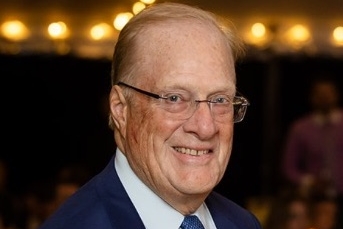
    Daniel Segal, 79, of Philadelphia, cofounder and shareholder of the Hangley Aronchick Segal Pudlin & Schiller law firm, adjunct law professor at the University of Pennsylvania, former cochair of the Philadelphia Soviet Jewry Council, onetime board president at the Juvenile Law Center, mentor, and “mischievous mensch,” died Thursday, Jan. 8, of stomach cancer at his home.

    Born and reared in Washington, Mr. Segal moved to Philadelphia in 1976 to teach at what is now Penn Carey Law School. He went into private law practice in 1979, became cochair of a litigation department in 1993, and joined with colleagues in 1994 to establish Hangley Aronchick Segal & Pudlin.

    For more than 40 years, until his recent retirement, Mr. Segal handled all kinds of cases for all kinds of clients, including The Inquirer. He was an expert in juvenile law, defamation, the First Amendment, professional ethics, education, civil rights, and other legal issues.

    He was president of the board at the Juvenile Law Center and worked pro bono for years, beginning in 2009, to help represent more than 2,400 juvenile victims and win millions of dollars in settlements in what is known as the Luzerne County “kids-for-cash” case. In that case, two judges were convicted of taking kickbacks for illegally sending juveniles to two private for-profit detention facilities.

    “This is one of the worst judicial scandals in history,” Mr. Segal told The Inquirer in 2009. “The people you’re stepping on are the true, true little guys.”
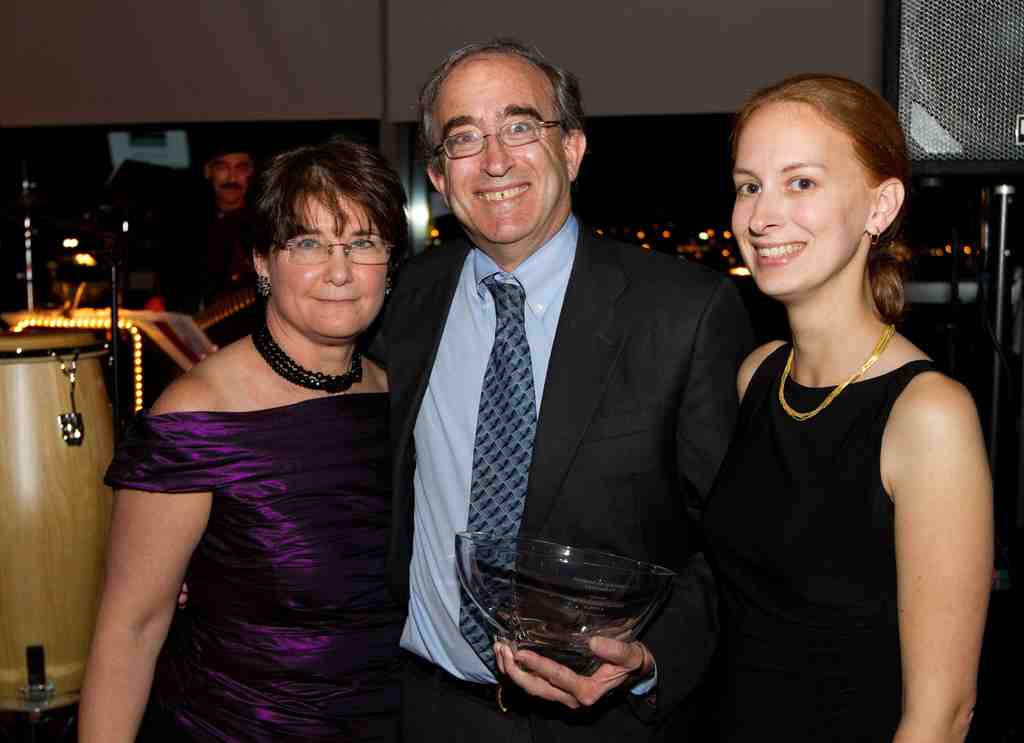
    Mr. Segal was honored in 2010 by the Philadelphia Bar Foundation.

    Among his other notable cases are a 1985 workplace racial discrimination dispute, a 1990 libel case against The Inquirer, and a 2000 trial about the city taxing outdoor advertisers. “Dan Segal was a living testament to professional excellence,” said Mark Aronchick, his law partner and longtime friend.

    Law partner and friend John Summers said: “He was a great teacher and mentor.” Marsha Levick, cofounder of the Juvenile Law Center, said: “He was a brilliant, steady partner who made us smarter and kept us laughing.”

    Mr. Segal clerked for Chief Judge David Bazelon in the U.S. Court of Appeals for the District of Columbia Circuit in 1974 and for Supreme Court Associate Justice Thurgood Marshall in 1975. He was active with the Philadelphia Bar Association, Philadelphia Common Pleas Court, and the Penn Law School American Inn of Court.

    He wrote articles for legal journals and letters to the editor of The Inquirer and Daily News. He spoke at panels and conferences, earned honors from legal organizations and trade publications, and was named the Thomas A. O’Boyle adjunct professor of law at Penn in 1992.
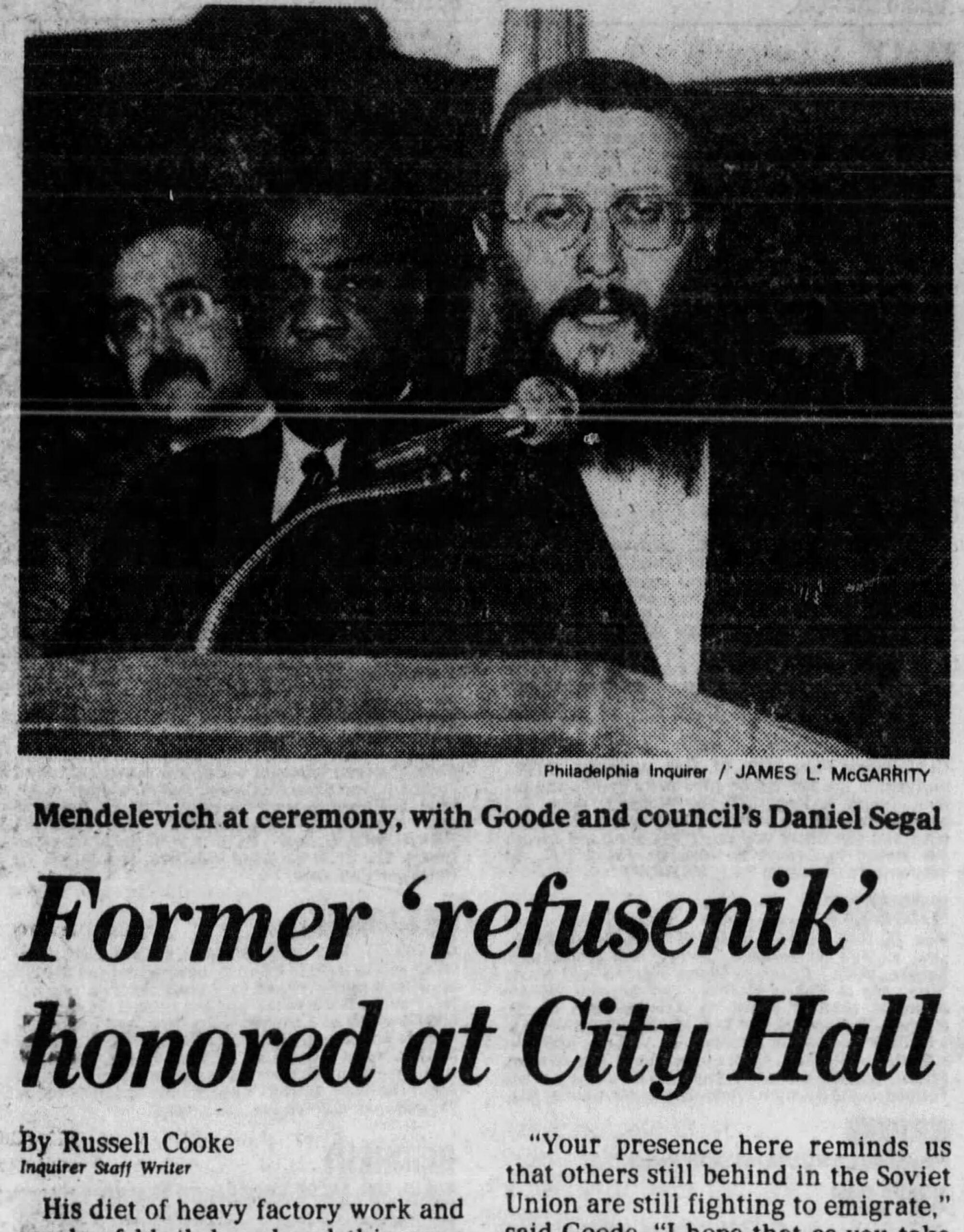
    This story and photo features Mr. Segal (left) and appeared in The Inquirer in 1984.

    The son of a rabbi, Mr. Segal was cochair of the Soviet Jewry Council in the 1980s, and he organized rallies and marches for social justice and human rights. He traveled to Israel often and to the old Soviet Union several times to secretly support Jews not permitted by government officials to immigrate to Israel.

    “We are persuaded that the Soviet Jews are pawns in the Soviet-American relationship,” he told The Inquirer in 1985.

    He served as president of the board of directors at what is now Jack M. Barrack Hebrew Academy and held leadership roles with the Jewish Community Relations Council, the New Israel Fund, Mazon: A Jewish Response to Hunger, and other organizations.

    Colleagues at the New Israel Fund praised his “characteristic kindness” and “gentle and sparkling humor” in an online tribute. They said: “He was everyone’s favorite board member.”
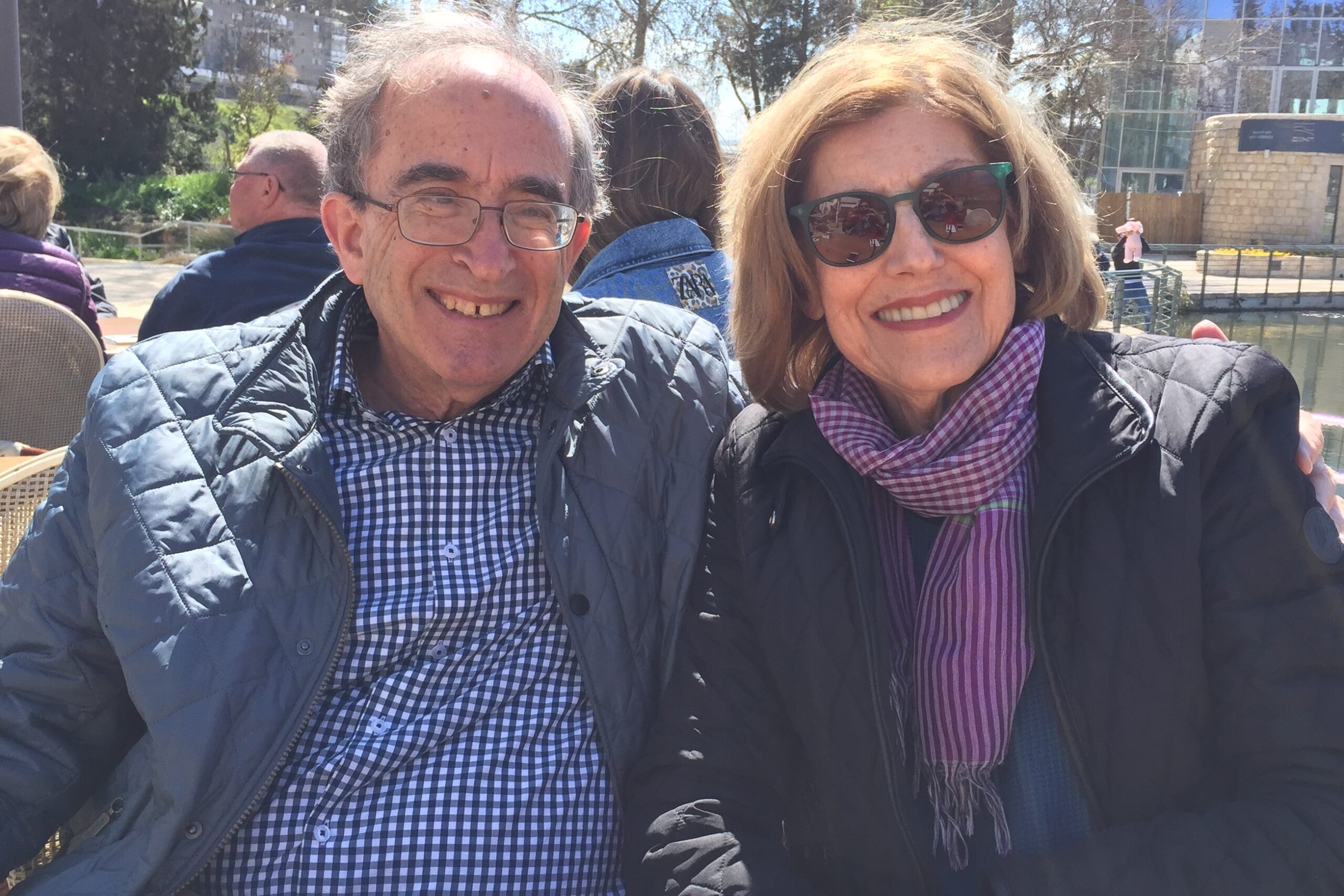
    Mr. Segal and his wife, Sheila, married in 1968.

    Mr. Segal enjoyed pranks and funny jokes, even at work, and neighbors called him Silly Dan. His son Josh said: “His warmth, humor, and humility meant that he could connect with just about anyone.” A friend said he was a “mischievous mensch.”

    He earned his law degree in 1973 and was executive editor of the Law Review at Harvard University Law School. He earned a bachelor’s degree in politics and economics at Yale University in 1968 and a master’s degree in international relations from the London School of Economics in 1969.

    He taught elementary school for a year in Washington and spent another year in Europe before moving to Philadelphia. “He taught us just how important it is to stand up for what is right,” his son Eli said, “and to do so not only with conviction but with humility and kindness, and without a thought of getting personal credit.”

    Daniel Segal was born July 4, 1946. He started dating Sheila Feinstein in ninth grade, and they married after college in 1968. They had sons Josh and Eli, and lived in Center City and Lower Merion before moving to Fairmount in 2018.

    Mr. Segal’s sons said: “Our dad showed us that relationships are the heart of a life well-lived by nurturing lifelong friendships.”

    Mr. Segal loved chocolate and ice cream. He recovered from a traumatic brain injury 20 years ago, and he and his wife traveled to Iceland, Peru, Vietnam, Europe, Japan, and elsewhere.

    He doted on his family and friends, and he and his wife rented vacation places every summer to bring his sons and their families together. “Neither of us were surprised that our dad always made our kids feel so loved,” his son Eli said. “Because that was just how he made us feel.”

    In addition to his wife and sons, Mr. Segal is survived by six grandchildren, a sister, a brother, and other relatives.

    Services were held Sunday, Jan. 11.

    Donations in his name may be made to the New Israel Fund, 1320 19th St. N.W., Suite 1400, Washington, D.C. 20036; and Mazon: A Jewish Response to Hunger, Box 6095, Albert Lea, Minn. 56007.


    Mr. Segal’s sons said: “He was always there for us and made clear that he always would be for as long as he could.”
  • A bank’s ‘racist and overzealous’ fraud investigator ruined a Pa. car dealership, lawsuit says

    A bank’s ‘racist and overzealous’ fraud investigator ruined a Pa. car dealership, lawsuit says

    Tianna Williams didn’t finish high school after becoming a mom at 16. As a teen dropout, she began flipping cars to make money, and by her late 20s, her car sales acumen led her to open a dealership in Lehigh Valley that grossed over $1 million in annual sales.

    An opportunity to get a line of credit with one of the nation’s largest banks turned Williams’ dream into a nightmare, she said, which led the 30-year-old to file a lawsuit.

    M&T Bank opened a fraud investigation into Williams in spring 2023, says the suit filed in Common Pleas Court in Philadelphia in March. The bank inappropriately informed her financial partners that her business could be illegitimate, the complaint says. The bank froze her account, her partners cut ties, and her checks bounced. Williams’ growing businesses crashed.

    The investigation found no fraud, M&T lawyers said in a September hearing. But Williams says the damage was done.

    The complaint says the Black entrepreneur was a victim of the bank’s “racist and overzealous fraud investigator” who tormented the business owner for weeks. The investigator told Williams “you people” have ways of making fraudulent behavior seem legitimate, the suit says.

    Despite eventually finding no fraud, the investigator shared an email with a colleague, signed with a smiley-face emoji, saying “doing my best to not let her win on my watch.”

    “She killed my self-esteem,” Williams said of the investigator. “I lost all financial security.”

    The phenomenon of Black people being treated with suspicion by financial institutions has been dubbed “banking while Black” and has a history going back at least to the 1930s, when red lines on maps labeled majority-Black neighborhoods as unworthy of mortgages. More subtle variations of the practice have continued into the 21st century, resulting in settlement agreements for millions of dollars.

    Black customers have also reported tellers refusing to cash their checks, and banks calling police in disbelief that deposits made by Black people were legitimate. Studies further found that banks are more likely to scrutinize, and less likely to offer assistance to, Black small-business owners compared with their white counterparts.

    The Philadelphia area is not immune to the phenomenon. Black Philadelphians are less likely to have a bank account than their white neighbors, according to a report from the Economy League of Greater Philadelphia. And multiple banks entered settlements over offering worse interest rates and ratcheting up closing costs for Black mortgage seekers.

    ‘Somebody really has it out for you’

    Williams’ rags-to-riches story began in 2012, when she became pregnant at the age of 16. Her mother had recently been diagnosed with cervical cancer, and the family barely scraped by. After dropping out of high school before completing 10th grade, Williams learned how to flip cars from auctions with the help of a mentor she met through Facebook.

    Her first car: a 2002 Lincoln that as a 17-year-old she sold the next day for a $700 profit.

    The young hustler with a knack for sales got her auction license a couple of years later. She kept selling cars on Craigslist and through other social media connections. In 2018, she began working at an auto dealership. She learned the trade and became especially good at working with people who had low credit scores.

    Williams’ cut from each sale at the dealership was a fraction of the overall profit, so she decided to go it alone. She bought a lot in Easton in 2020 and set to work. The cars she sold became newer and more expensive.

    Tianna Williams next to the sign of her car dealership in Easton.

    To sell cars for more than a couple of thousand dollars, Williams needed to offer financing options. She got her banking license and contracted with lenders. Her business was booming and she was planning to open a second location.

    That’s when Shazard Mohammed from M&T reached out, the complaint says. He offered Williams a line of credit that would allow her to take her business to the next level, and she transferred her accounts to the bank.

    Within days, Williams’ lenders contacted her to say they could no longer offer her financing because she was being investigated by M&T for fraud. Nearly overnight, she was without a business while owing about $200,000 in business and tax debts.

    “M&T BANK basically told me that they suspected you of fraud,” one business partner told Williams in a text message, according to the complaint. “If that’s not true, then somebody really has it out for you.”

    Records fight

    The bank is now fighting in court to keep documents related to the investigation secret, despite an attorney representing M&T saying in a September hearing that “there was no finding of fraud,” according to a transcript.

    M&T said in that hearing that Williams was investigated because of “red flags,” such as misspellings on checks that were immediately withdrawn as cash, and that the investigation lasted only seven days.

    Common Pleas Court Judge Paula Patrick sanctioned the bank’s lawyers in October for their failure to produce documents and ordered them to pay nearly $8,000 in attorneys’ fees. The judge also found that most records should not be sealed. M&T is appealing the ruling.

    Dean Malik, the attorney representing Williams, frames the case as a fight of David vs. Goliath. By issuing sanctions, he said, the judge reminded large entities that in court the playing field is leveled.

    “The judge is sending a message that it doesn’t matter if you are a billion-dollar bank and have two law firms representing you with five lawyers, you are still bound by the orders of the court,“ Malik said.

    Williams now cleans houses with her mother to support her family financially. She said her self-esteem has been shattered, and she hasn’t set foot inside a bank out of fear since her business closed in 2023.

    “There is nothing else I know how to do,” Williams said. “All I know is cars.”

  • Philly lawyer accused of falsifying medical records calls Uber’s suit a ‘tactic’ to scare attorneys

    Philly lawyer accused of falsifying medical records calls Uber’s suit a ‘tactic’ to scare attorneys

    The Philly-area personal injury lawyer accused by Uber of working in concert with a group of medical professionals to falsify medical records told a federal judge that the lawsuit was part of a “business tactic” by the rideshare giant to scare attorneys away from representing crash victims.

    Marc Simon, of Simon & Simon, asked the judge on Friday to toss out Uber’s complaint.

    “If you are a lawyer who dares to sue Uber or its drivers (or a doctor who agrees to treat the victims of the Uber drivers’ negligence), Uber will destroy your career — call you a fraud, accuse you of criminal racketeering, seek ‘eight figures’ in damages, and demand the surrender of your law license,” Simon’s filing said.

    Uber filed similar lawsuits against personal injury law firms in New York, California, and Florida in which the rideshare company alleges that attorneys conspired with medical professionals to fraudulently inflate medical costs in an effort to get higher settlements or verdicts.

    “Their strategy is simple: use their unlimited resources to intimidate injured victims and bully their lawyers into silence,” Simon said. ”It won’t work.”

    Uber sued Simon & Simon in September, accusing the firm and its founder of violating the Racketeer Influenced and Corrupt Organizations Act, saying the law was enacted “to address precisely this type of fraudulent pattern.”

    The scheme, as alleged in Uber’s lawsuit, involved the firm providing instructions on the treatments clients should get at a New Jersey pain physician’s clinic and having clients often receive more than 20 chiropractic visits.

    It culminated in expert reports written by a private-practice orthopedic surgeon who performed nearly 1,300 exams for Simon & Simon clients in the past three years, and the firm paid him about $1.5 million, according to the complaint.

    The providers documented a need for extensive treatments that often contrasted with police reports where officers on the scene noted no injuries, the suit says.

    The goal of the reports was to inflate cost-of-care projections, which Simon & Simon used in settlement negotiations to turn “low value claims into million-dollar-plus” requests, according to the complaint.

    Simon was an obvious target for Uber in Philadelphia, the attorney’s filing says. He was viewed as an “easy hit” because of two recent instances in which federal judges sanctioned him.

    The sanctions were related to firm procedures and jurisdictional issues, and neither order “even slightly resembles” the “outrageous fraud and criminal conspiracy” alleged by Uber, Simon said in his motion to dismiss.

    One of the judges who sanctioned Simon noted in a blistering memo that the firm’s expert reports had “little relationship to real world medical care” and that when the same expert in every case projects “monumental future costs” it “becomes difficult to read the reports in question as credibly addressing actual patient needs.”

    The attorney says Uber failed to show that it was injured by any alleged misrepresentation. As evidence of the conspiracy, Uber says Simon dropped the rideshare giant as a defendant from dozens of lawsuits in which the pain physician was the key expert once they asked question.

    “For this reason, Uber did not plead (and could not have pled) that it paid any verdicts or settlement in such cases,” the Simon’s filing says.

    The medical professionals also filed motions to dismiss the case.

    A spokesperson for Uber said in a statement that the motions to toss out the lawsuit offer “no real response to the detailed and credible allegations of fraudulent conduct.”

    “We are confident in the merits of our case and look forward to seeing the defendants in court,” the statement said.

  • David E. Loder, longtime attorney, multifaceted board member, and education advocate, has died at 71

    David E. Loder, longtime attorney, multifaceted board member, and education advocate, has died at 71

    David E. Loder, 71, of Flourtown, longtime attorney at Duane Morris LLP, multifaceted trustee and board member, education advocate, mentor, and volunteer, died Thursday, Oct. 23, of complications from lymphoma and scleroderma at his home.

    A graduate of Germantown Friends School and what is now the University of Pennsylvania’s Carey Law School, Mr. Loder spent 43 years, from 1982 to his retirement in 2024, as an associate, partner, and chair of the health law group at the Duane Morris law firm. He became partner in 1989 and helped the health law practice gain national recognition for its success.

    Mr. Loder and his team represented the Hospital and Healthsystem Association of Pennsylvania, the Pennsylvania Trauma Systems Foundation, and other medical providers in all kinds of consequential litigation. In 2006, he helped local hospitals win a multimillion-dollar settlement with an insurance company. In 2010, he supervised a case that successfully revived a state abatement program that alleviated medical malpractice costs for physicians and hospitals.

    In a tribute, former colleagues at the Pennsylvania Trauma Systems Foundation praised “his ability to see both the legal complexities and the human dimensions of every situation.”

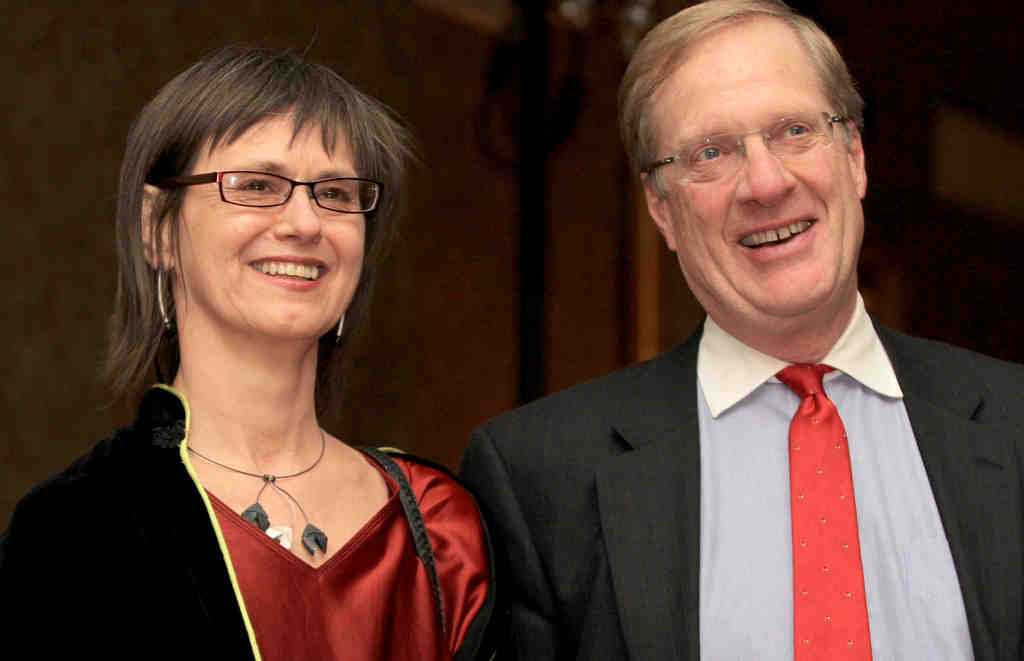
    Mr. Loder stands with Blanka Zizka , the Wilma Theater’s artistic director, at an event in 2018.

    He was adept in vendor contract law, board governance, policy development, and human relations issues. He took special interest in doctor-patient relations and told the Daily News in 2016: “While it is critical that the healthcare provider convey necessary and accurate information to patients concerning their health condition, it is also important to remain sensitive to the patient’s interest and willingness to hear such information.”

    Matthew A. Taylor, chair and chief executive officer at Duane Morris, said in a tribute: “He was one of the nation’s most respected healthcare lawyers.”

    Mr. Loder also represented the Philadelphia Zoo, homeowners fighting increased property assessments, participants in gestational-carrier programs, and other clients. “He was a shrewd judge of character,” said his son Kyle. “He was thoughtful and strategic. He became a confidant and adviser to many of his clients.”

    John Soroko, chair emeritus at Duane Morris, said in a tribute: “Dave had a unique ability to turn friends into clients. But, even more importantly, to turn clients into friends.”

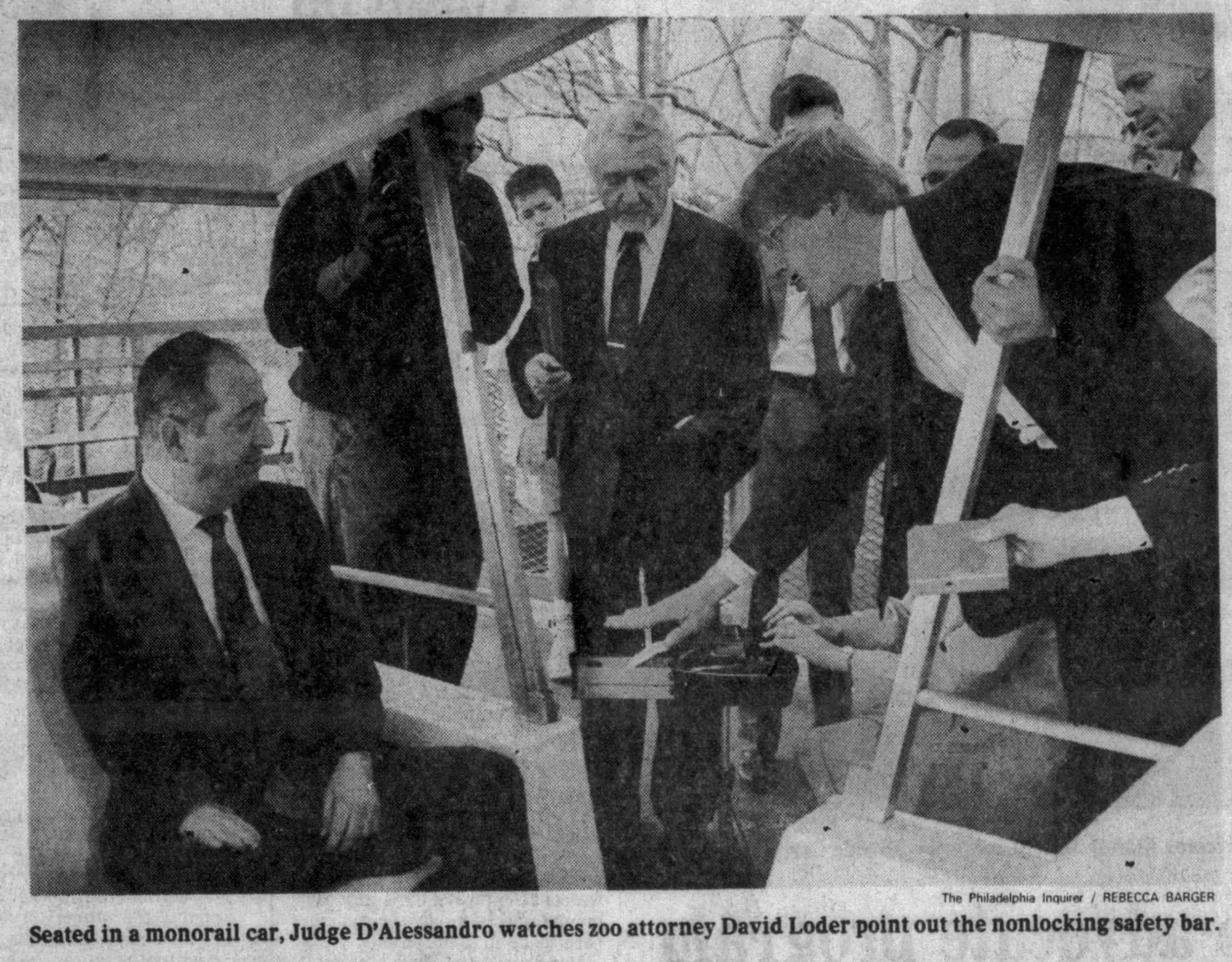
    This photo of Mr. Loder (right) representing the Philadelphia Zoo appeared in The Inquirer in 1989.

    Away from the law firm, Mr. Loder was chair of the board for the Wilma Theater and served on boards at Germantown Friends, the old University of the Sciences, the World Affairs Council of Philadelphia, and other groups. He was a trustee at the Dolfinger-McMahon Foundation and the Christian R. and Mary F. Lindback Foundation, and represented the Lindback regularly at its annual distinguished educators awards ceremony.

    “There’s a firm belief in the importance of excellence in education in the public schools,” he told The Inquirer at the 2016 Lindback ceremony. In 2017, he said: “All of us need to recognize that the Philadelphia public schools are serving an incredibly important function.” In 2018, he said: “People need to know that there are some exceptional educators in Philadelphia public schools.”

    He mentored many other lawyers and volunteered to help students in need. In online tributes, friends noted his “kind advice,” “voice of reason and compassion,” and “sense of humor, keen intellect, love of sports, and limitless knowledge on so many topics.”

    In 1998, he was featured in an Inquirer story about the challenges parents face when dealing with young children stuck inside during the cold winter months. He said: “I find that if you can get the kids down by 6 p.m. and have a glass of wine in front of the fireplace, it gets you through.”

    Mr. Loder enjoyed sports and the outdoors.

    His family said in a tribute: “He took life seriously but never too seriously, and his warmth, humor, guidance, and generosity will be remembered.”

    David Edwin Loder was born April 22, 1954, in Yalesville, Conn. His father, noted theologian Theodore Loder, moved the family to West Mount Airy when Mr. Loder was a boy, and he graduated from Germantown Friends in 1972.

    He starred in football, basketball, and baseball in high school, and went on to play basketball and earn a bachelor’s degree in political science at Wesleyan University in Connecticut in 1977. He worked briefly after college as a high school history teacher, served an independent study fellowship in Poland, earned his law degree at Penn in 1981, and studied international law at the London School of Economics and Political Science.

    He married Nadya Shmavonian, and they had sons Marek and Kyle, and a daughter, Julya, and lived in Philadelphia and Flourtown. After a divorce, he married Jennifer Ventresca and welcomed her children into the family.

    Mr. Loder liked hiking in New York’s Adirondack Mountains and relaxing at his getaway home on Long Beach Island.

    Mr. Loder enjoyed tennis, squash, and golf at the Philadelphia Cricket Club. He liked hiking in New York’s Adirondack Mountains and relaxing at his getaway home on Long Beach Island, N.J.

    He doted on his family and Labrador, and played cards every month for years with an eclectic group of old friends.

    “David embodied the values of faith, service, and integrity,” his family said. His son Kyle said: “He was magnetic, gracious, thoughtful, and curious. He was easy to talk to.”

    In addition to his wife, children, and former wife, Mr. Loder is survived by a granddaughter, a sister, two brothers, and other relatives.

    Mr. Loder “was magnetic, gracious, thoughtful and curious,” his son Kyle said.

    A memorial service and celebration of his life were held earlier.

    Donations in his name may be made to the Penn Medicine Scleroderma Center, Attn: Amanda Hills, 3535 Market St., Suite 750, Philadelphia, Pa. 19104.

  • A Philadelphia jury reached $35 million verdict against Main Line Health and Penn Medicine for cancer misdiagnosis

    A Philadelphia jury reached $35 million verdict against Main Line Health and Penn Medicine for cancer misdiagnosis

    A Philadelphia jury reached $35 million verdict last week against Main Line Health and the University of Pennsylvania Health System for a cancer misdiagnosis that led a then-45-year old Philadelphia resident to undergo a total hysterectomy in 2021.

    Main Line discovered later that the biopsy slides used to make the diagnosis in February 2021 were contaminated. The cancer diagnosis was due an error that involved a second person’s DNA, not that of the plaintiff, Iris Spencer, who did not have cancer.

    Main Line settled with Spencer in 2022 for an undisclosed amount, so it won’t have to pay its share of the verdict.

    The jury found Penn and its physician, Janos Tanyi, a gynecological oncologist, liable for $12.25 million, or 35%, of the total awarded in damages for her unnecessary hysterectomy. The lawsuit said Spencer suffers from “surgically-induced menopause.”

    The lawsuit against Penn and Tanyi said the physician did not do enough to resolve a conflict between biopsy results at Main Line and those at Penn, where Spencer sought a second opinion.

    A Penn biopsy did not find cancer. Other tests were also negative, but Spencer did not know about those results.

    “The verdict affirms the central importance of the patient and the doctor’s obligation to inform the patient of all of the test results, of all of her options, and that she shouldn’t be dismissed because she’s a patient and not a doctor,” Spencer’s lawyer, Glenn A. Ellis, said Monday.

    The $35 million verdict is Philadelphia’s largest this year for medical malpractice, according to data from the Philadelphia Court of Common Pleas.

    Medical malpractice costs have been rising throughout healthcare. A factor in Pennsylvania is a 2023 rule change that allowed more flexibility in where cases can be filed.

    In 2023, a Philadelphia jury issued a state record $183 million verdict against the Hospital of the University of Pennsylvania in a birth injury case.

    A laboratory mistake

    Spencer’s troubles started in February 2021 at Main Line’s Lankenau Medical Center where her biopsy found that she had cancer in the lining of her uterus despite the lack of symptoms.

    For a second opinion, Spencer saw Tanyi at Penn a few days later. A repeat biopsy came back negative, according to Spencer’s complaint that was filed in early 2023. Tanyi also performed other tests, all of which came back negative, but he did not share that information with Spencer, the complaint says.

    After Tanyi performed the complete hysterectomy on March 8, 2021, Penn’s pathology laboratory found no cancer in the tissues that had been removed from Spencer’s body.

    That’s when Spencer, who has since moved to Georgia, went back to Lankenau seeking an explanation. Seven months later, Main Line informed her that she never had cancer.

    Main Line and Spencer subsequently “reached an amicable full and final settlement to resolve and discharge all potential claims for care involving the health system,” Main Line said in a statement. Main Line did not participate in the trial.

    Penn said in a statement: “We are disappointed by the jury’s verdict in this case that was unmoored to the evidence presented at trial on negligence and damages. Our physician reasonably relied on the pathology performed at a hospital outside our system that revealed a very aggressive cancer.”

    Penn said it plans to appeal the verdict, which could increase by more than $2 million if the court approves a motion for delay damages that Ellis filed Saturday.

  • Temple Health says its new medical malpractice strategy is working

    Temple Health says its new medical malpractice strategy is working

    Temple University Health System‘s medical malpractice expenses have surged in the two years that ended June 30 as part of a campaign to reduce financial risk by settling old cases.

    The hope is that “aggressively” settling cases will pay off over the next few years by reducing medical malpractice expenses, Michael DiFranco, the health system’s chief accounting officer, told investors during a conference call last week on the health system’s fiscal 2025 financial results.

    Temple Health has 12,000 faculty members and employees who work mainly on five hospital campuses. Its fiscal 2025 revenue was $3.3 billion.

    Temple’s annual medical malpractice expenses increased nearly fourfold, to $117.8 million in fiscal 2025 from $31.6 million two years ago. Over the same period, it cut its reserves for future expenses by $88 million, or 22%. Temple’s reserves peaked at $402.9 million in 2023.

    Rising medical malpractice costs are reverberating throughout healthcare. Tower Health recently boosted its reserves after its auditor decided they should be higher to deal with anticipated claims. Lifecycle Wellness, a birth center in Bryn Mawr, blamed its decision to stop delivering babies in February in part on rising medical malpractice costs.

    The average number of medical malpractice lawsuits filed in Philadelphia every month has risen from 34 and 35 in the two years before the pandemic to 51 last year and 52 so far this year, according to the Philadelphia Court of Common Pleas. In additional to lawsuits against hospitals, the tally includes litigation against physicians, nursing homes, and other healthcare providers.

    Contributing to the increase was a rule change at the beginning of 2023 that allowed more cases to be filed in Philadelphia rather than the county where an injury occurred. Malpractice lawyers say they like to file in Philadelphia because the system for trying cases is efficient. Health systems often note that Philadelphia juries sometimes award large verdicts.

    A ‘wake-up call’ at Temple

    Temple Health started rethinking its medical malpractice strategy after John Ryan started as general counsel in January 2022. A month before he started, The Inquirer published an article about three suicides at Temple Episcopal Hospital in 2020. At least two of the families sued Temple.

    “That was a wake-up call,” Ryan said in a recent interview on his approach to handling malpractice cases.

    Then in May 2023, a Philadelphia jury hit Temple with a $25.9 million verdict in a case involving a delayed diagnosis of a leg injury leading to an amputation.

    After that loss, Temple changed the kinds of outside lawyers it hires to defend it in malpractice cases, Ryan said, swapping medical malpractice specialists for commercial litigators from firms like Blank Rome, Cozen O’Connor, and Duane Morris. Such lawyers cost more, but it’s paying off, he said.

    “The settlements we’re getting from the plaintiff lawyers, because they can see that we’re serious, are much better,” Ryan said. The two Episcopal cases were settled this year for undisclosed amounts, according to court records. A birth-injury lawsuit against Temple University Hospital in federal court settled for $8 million this month.

    In 2024, a jury awarded $45 million to a teen who was shot in the neck and suffered brain damage from aspirating food soon after his release from Temple. Temple appealed and the judge who oversaw the original trial ordered a new one. That case then settled at the end of October for an undisclosed amount.

    The new approach has helped Temple reduce the number of outstanding cases at any one time to 65 or so now compared to 110 three years ago, according to Ryan.

    Temple is using the money it is saving on malpractice costs to invest in better and safer care, Ryan said. “That’s not a byproduct of all we’re trying to do as the lawyers. It’s the goal,” he said.

    Inquirer staff reporter Abraham Gutman contributed to this article.