The layoffs are planned forthe end of April, according to a Thursday WARN Act filing with the Pennsylvania Department of Labor and Industry. They include the employees of all six Philly-area Amazon Fresh locations — 205 at the Northern Liberties store, 189 in Broomall, 161 in Bensalem, 157 in Langhorne, 144 in Warrington, and 127 in Willow Grove, according to the filing.
By the end of April, Amazon also plans tolay off nearly 900 New Jersey employees, the vast majority of whom work in northern counties where there are Amazon Fresh stores, according to a WARN Act filing with New Jersey Department of Labor & Workforce Development.
The day after announcing the Amazon Fresh closures, Amazon said 16,000 employees companywide would be losing their jobs as part of a broader reorganization.
“We’ve been working to strengthen our organization by reducing layers, increasing ownership, and removing bureaucracy,” Amazon said in a statement announcing the layoffs.
The company said most U.S. employees will have 90 days to look for a new role internally. After that, those leaving the company will receive severance pay, “outplacement services,” and health insurance benefits, as applicable, according to Amazon.
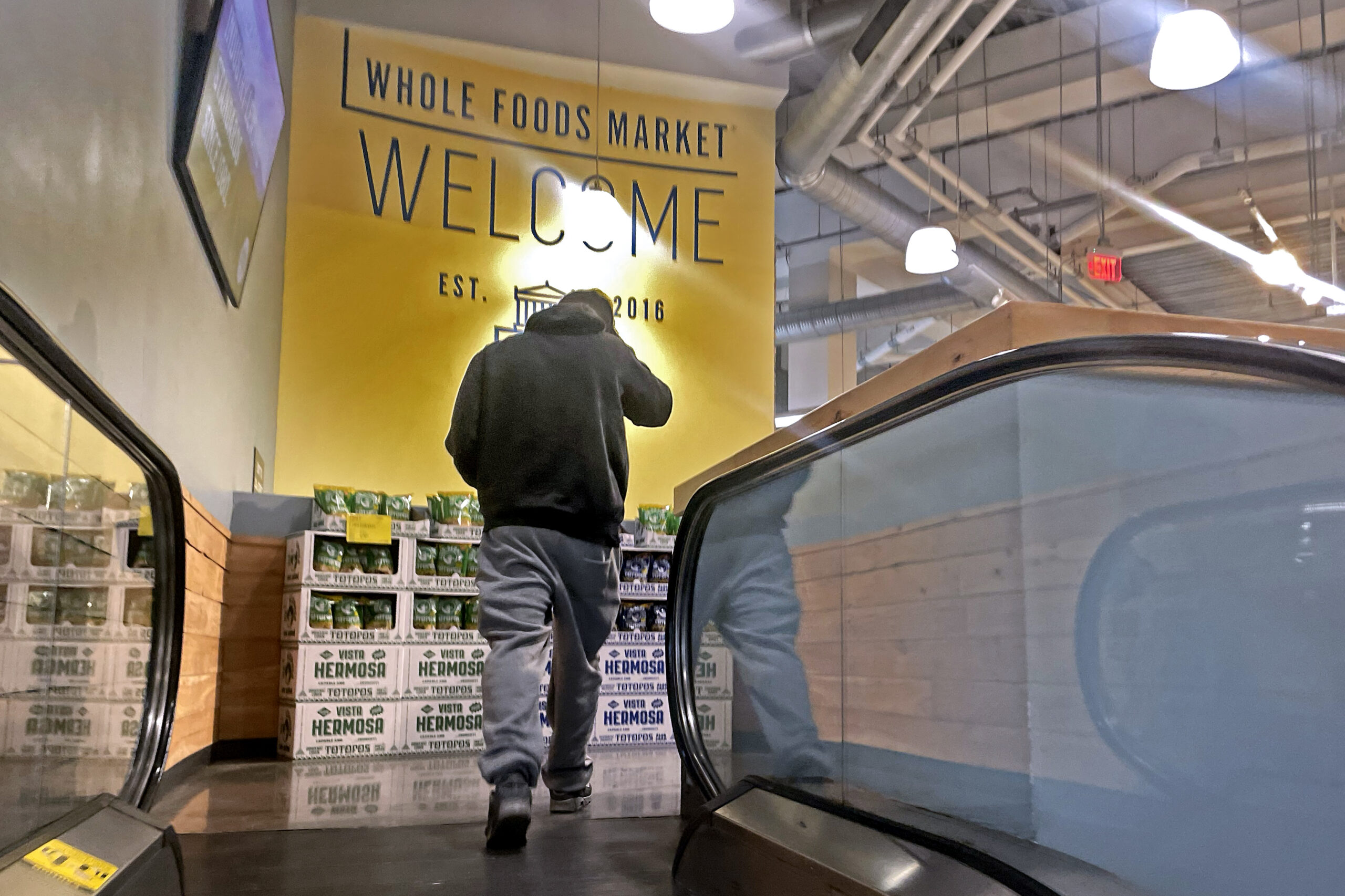
With its move to shutter the Fresh stores, Amazon has said it will “double down” on online grocery delivery and expand its Whole Foods footprint. Whole Foods, which Amazon bought in 2017, has more than a dozen locations in the Philadelphia area.
“Amazon Whole Foods, a trillion dollar entity, treats us like robots to be exploited and squeezed for maximum profits,” Jasmine Jones, a Philadelphia Whole Foods worker and member of Whole Foods Workers United, said Tuesday in a statement that noted the company’s Whole Foods expansion plans. “They are making billions of dollars off of our labor and we deserve better pay and benefits.”
Amazon will be closing all its physical Amazon Fresh stores, including six in the Philadelphia region, as it expands its Whole Foods footprint and grocery delivery services.
“While we’ve seen encouraging signals in our Amazon-branded physical grocery stores, we haven’t yet created a truly distinctive customer experience with the right economic model needed for large-scale expansion,” the company said.
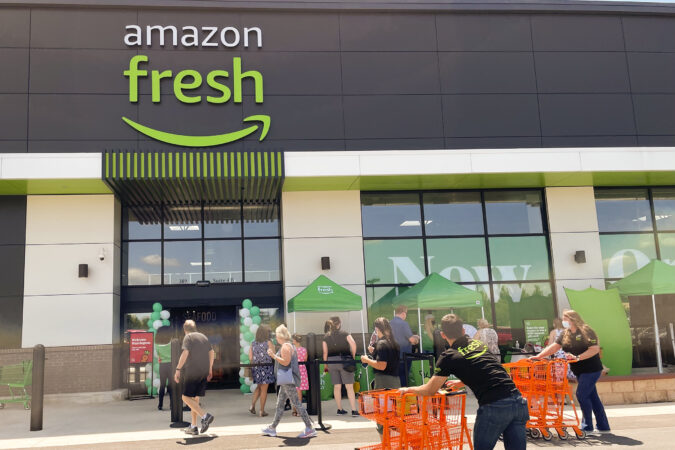
People shop inside the Amazon Fresh in Warrington in August 2021. The store and all other Amazon-branded grocers are closing.
The statement did not specify which Amazon Fresh stores would become Whole Foods, and company spokespeople did not answer questions about whether any Philadelphia-area locations would be converted.
Amazon Fresh has stores in Broomall, Bensalem, Langhorne, Northern Liberties, Warrington, and Willow Grove. The Northern Liberties location on Sixth and Spring Garden Streets opened this summer after years of construction.
Two more potential Amazon Fresh stores seemed to be in the works in Havertown and Northeast Philadelphia as of the summer, according to PhillyVoice.
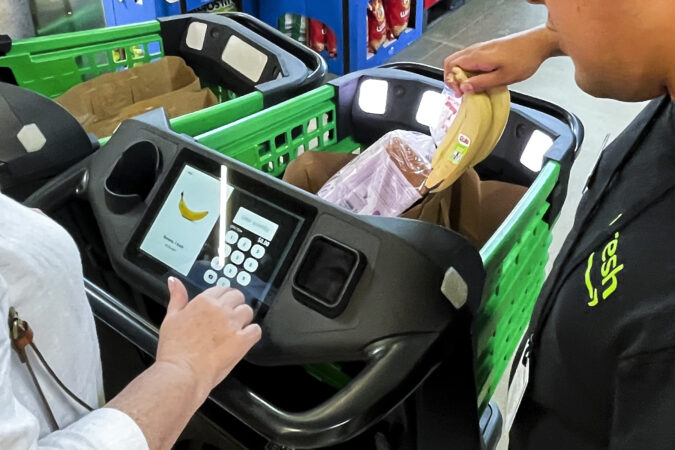
Customers use the Amazon Dash Cart at the Amazon Fresh grocery store in Warrington in 2021.
As the company winds down its Amazon-branded physical stores, it says it will “double down” on online grocery delivery, including by expanding its same-day services to more communities.
Whole Foods has 550 locations nationwide, including more than a dozen in the Philadelphia area. Amazon spokespeople did not answer questions about whether more Whole Foods stores were in the works in the Philly region.
Amazon also expects to open at least five more smaller-format Whole Foods Market Daily Shop stores by the end of the year. The company said that decision was based on “strong performance” at the five existing shops in the New York City area and Arlington, Va.
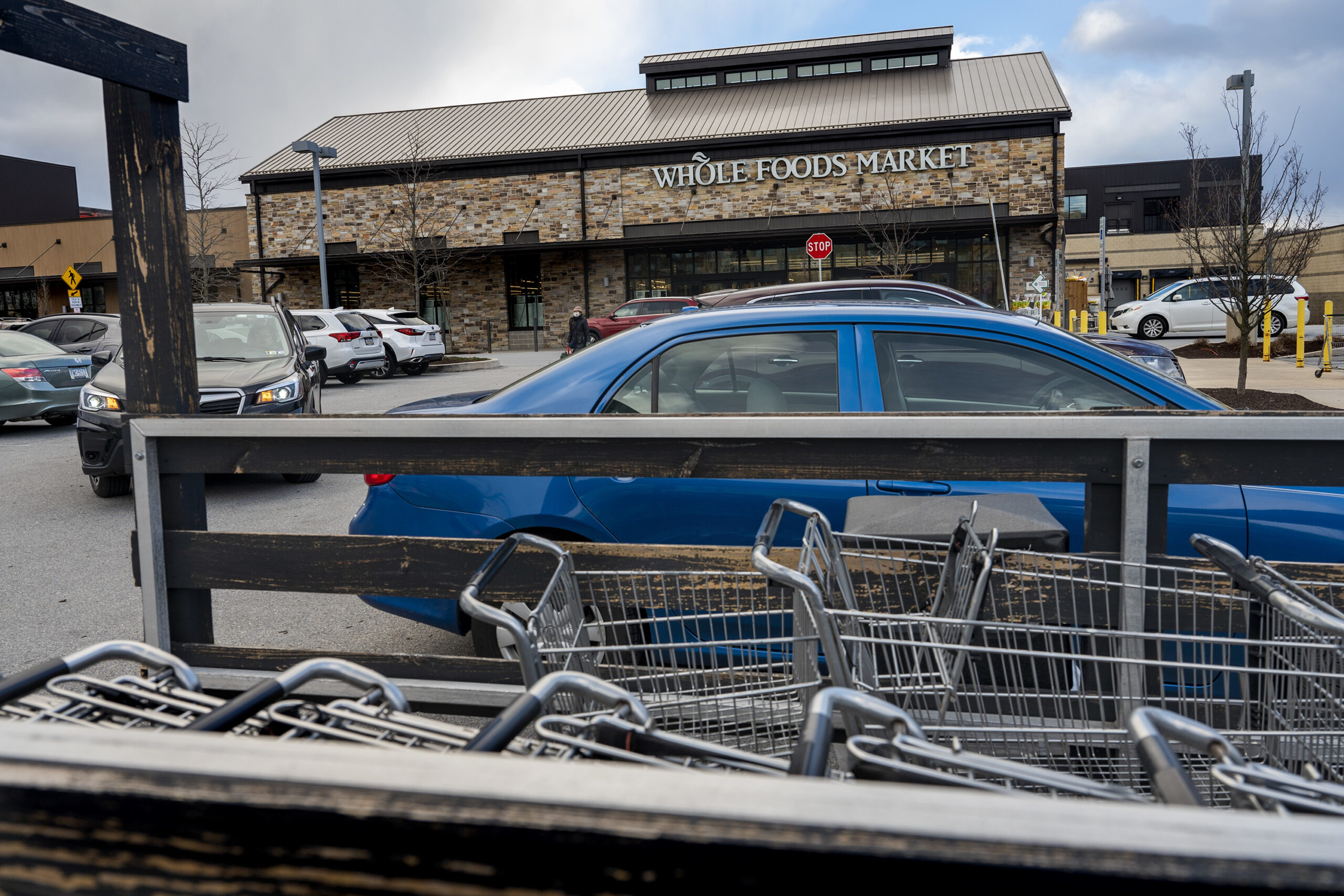
The Center City Whole Foods Market as pictured in February 2025.
The online retailer said it plans to continue to experiment with new ways of shopping at its physical stores.
In its statement, Amazon gave a shout-out to one such test in the Philadelphia area: “The store within a store” experience at the Whole Foods in Plymouth Meeting.
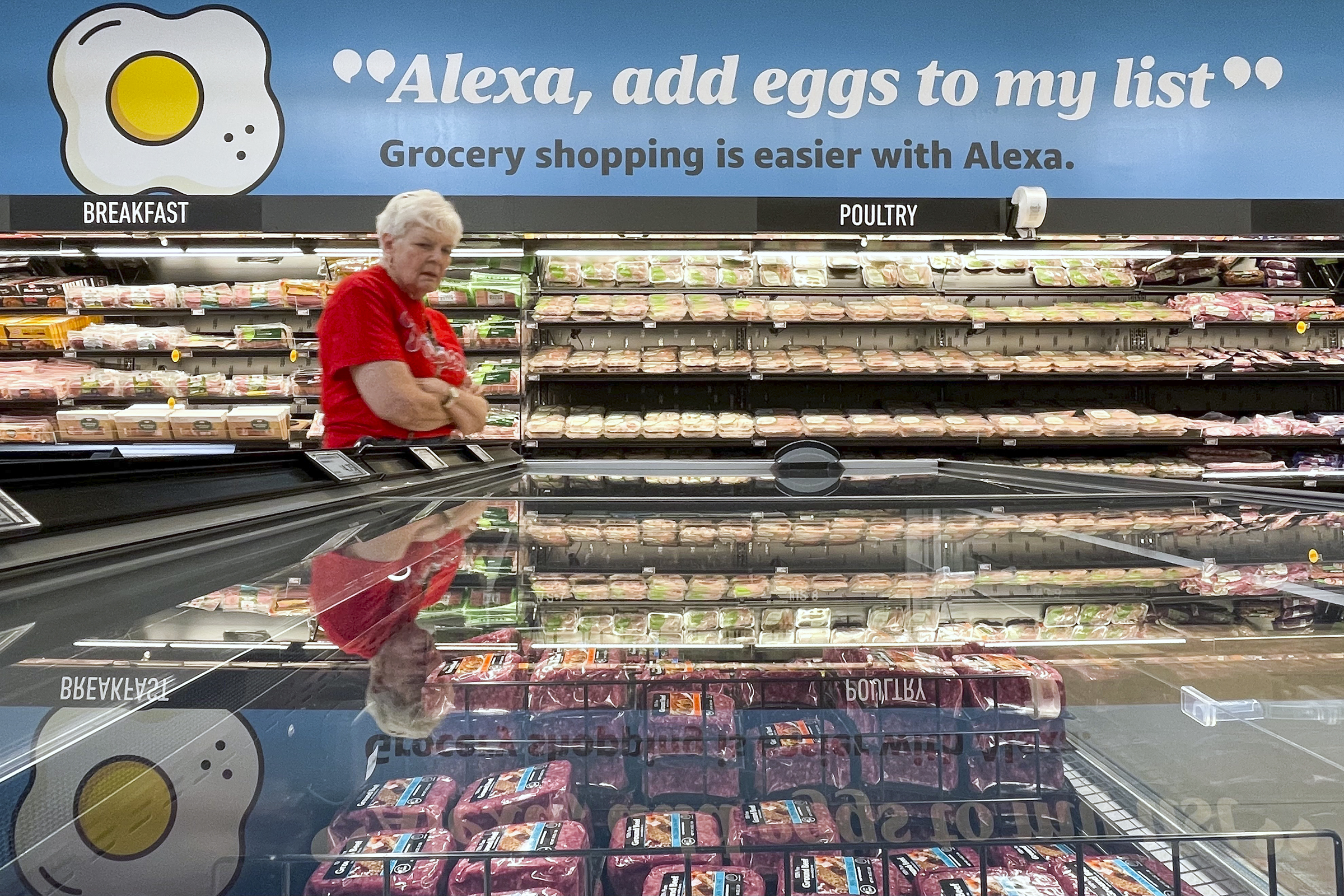
Since November, customers at that store have been able to browse the physical aisles of Whole Foods, while digitally ordering unique products from Amazon and Whole Foods. The orders are then packaged in minutes in an automated micro-fulfillment center within the grocer’s back-of-house area.
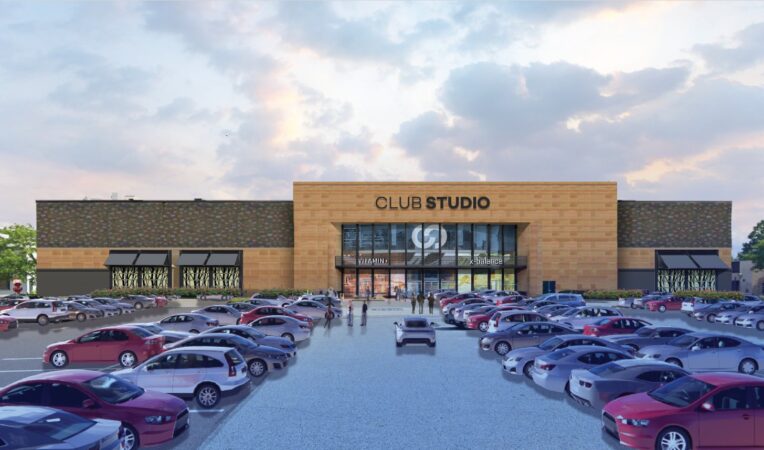
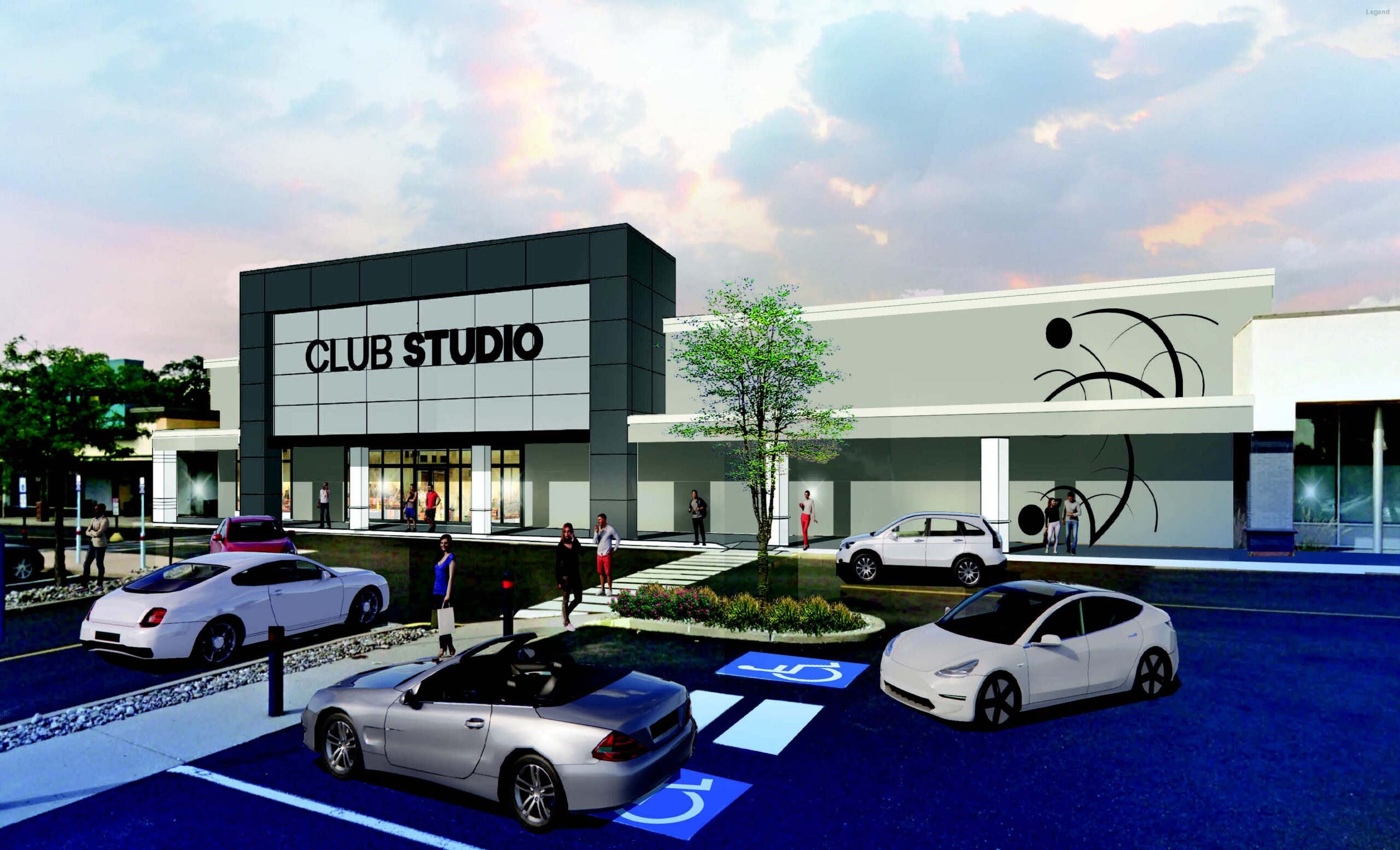
Boutique gym Club Studio Fitness is expanding to the Philadelphia area with new locations in Cherry Hill and Wynnewood.
Club Studio is set to take over 30,240 square feet at Cherry Hlil’s Ellisburg Shopping Center in the former BuyBuy Baby storefront. The gym is expected to open in spring 2027.
The Cherry Hill gym will be Club Studio’s second New Jersey gym. The California-based chain opened its first Garden State location in Edgewater in May.
A rendering of the Club Studio Fitness gym slated to open in the Ellisburg Shopping Center in Cherry Hill, N.J., in spring 2027.
The high-end gym chain is also set to open on the Main Line late this year. Club Studio will take over a 50,000-square-foot space in the Wynnewood Shopping Center, a space formerly home to Bed Bath & Beyond. The Wynnewood gym is expected to open toward the end of 2026.
Both shopping centers are owned by Federal Realty Investment Trust, a Maryland-based real estate trust with a large Philadelphia-area footprint.
The addition of Club Studio is “an exciting new chapter for Wynnewood Shopping Center” that continues “the evolution towards more relevant shopping, dining, and now, wellness” experiences, Jeffrey Fischer, Federal Realty’s vice president of leasing, said in a news release.
The Cherry Hill and Wynnewood gyms will have boutique fitness classes; free weights areas; strength and functional training zones; cardio equipment; juice bars; cryotherapy and red-light therapy; and personal stretch stations.
Club Studio is planning to open another Pennsylvania location in Collegeville. The chain has around a dozen locations across the U.S., with a large presence in California, and has around 20 new gyms in the works, according to its website.
This suburban content is produced with support from the Leslie Miller and Richard Worley Foundation and The Lenfest Institute for Journalism. Editorial content is created independently of the project donors. Gifts to support The Inquirer’s high-impact journalism can be made at inquirer.com/donate. A list of Lenfest Institute donors can be found at lenfestinstitute.org/supporters.
But the Rochester, N.Y.-based supermarket chain won’t say whether it’s collecting biometricdata on shoppers at eight Philly-area stores. There are Wegmans stores in Cherry Hill and Mount Laurel in New Jersey and in Glen Mills, Malvern, King of Prussia, Collegeville, Warrington, and North Wales in Pennsylvania.
Patrons at some New York City Wegmans locations learned earlier this month that the supermarket chain had begun to collect, retain, store, and share data on their faces, eyes, and voices. The information, Wegmans said, was being used for “safety purposes.”
“This is information that can be used to identify or help identify you,” a sign posted at Wegmans in New York City said, according to reporting from the online news site Gothamist. “We use facial recognition technology to protect the safety and security of our patrons and employees, and do not lease, trade or otherwise profit from the transfer of biometric identifier information.”
Wegmans does not “get into the specific measures used at each store” for “safety and security purposes,” Wegmans spokesperson Marcie Rivera said in an email.
Rivera said Wegmans has deployed cameras equipped with facial recognition technology in “a small fraction of our stores that exhibit an elevated risk.” Wegmans is using the technology in a “handful of states.” It posted mandated signage in New York City to comply with local regulations, Rivera said.
Wegmans has previously said that the surveillance software is used to help identify individuals who “pose a risk to our people, customers, or operation.”
Biometric surveillance is becoming increasingly common but is not yet widespread, said Gus Hurwitz, senior fellow and academic director of the Center for Technology, Innovation and Competition at Penn’s Carey Law School.
Companies that use biometric surveillance do so for a number of reasons, but seldom tell consumers what their data is being collected for. Data collection can help companies understand what consumers are purchasing and how they’re moving through stores, Hurwitz said. Biometric data collection can also be used for dynamic pricing, when retailers change prices in real-time depending on a number of factors, including time of day, demand, weather, and consumer behavior.
Hurwitz said it’s important to distinguish between real-time and non-real-time biometric screening. Non-real-time screening has been happening for decades in the form of security cameras and other data collection tools, often used for market research purposes.
Real-time screening, however, is a newer frontier with a far murkier regulatory landscape.
Businesses in New York City that collect biometric data are required to post signage notifying customers, per a 2021 city law, however the agency in charge of implementing the law has no enforcement mechanism for noncompliant businesses, a city official told Gothamist.
A bipartisan bill regulating biometric data collection is currently moving through the Pennsylvania legislature. A recently introduced bill in the New Jersey Legislature would require any entity collecting biometric information to post a “clear and conspicuous notice” at every entryway to their business, like in New York City.
Hurwitz said we’re “still very much in the development era of these sorts of technologies,” and that he expects more and more government entities to hone in on regulating them in the near future.
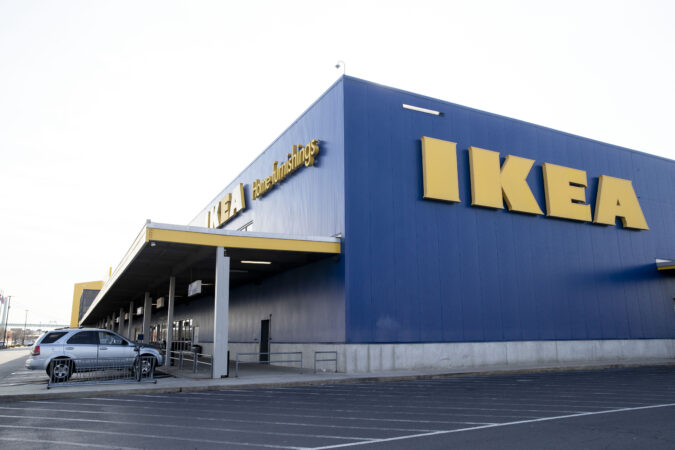
But this time it’s not with new physical stores. The home design company is entering the virtual world.
The retailer, which has its U.S. headquarters in Conshohocken, announced this week that it is testing an immersive product experience on the Roblox platform.
Sweden and Australia are the first two pilot countries, according to the company, and the tests there “will better inform future decisions.” Ikea spokespeople did not respond Friday to questions about whether there were plans for similar pilots in the U.S.
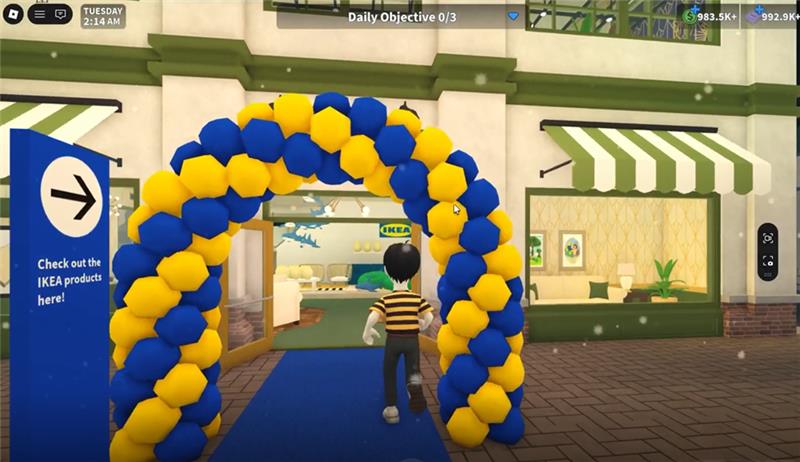
What users of “Welcome to Bloxburg,” a Roblox game, will see when they go to search for Ikea digital products in the simulation.
“We’re delighted to bring some of our most loved Ikea products into this digital space,” Sara Vestberg, home furnishing direction leader at Ikea Retail, said in a statement. “With curiosity, we’re looking forward to seeing the home furnishing ideas people create, and how our products feel at home in their digital lives.”
During the Ikea pilot, the company is making six of its popular products available in virtual form to Welcome to Bloxburg users in the select countries. The digital items include the Stockholm sofa, the Elsystem rug, and the Blahaj stuffed shark.
The virtual experience can collide with the in-real-life shopping experience, too, if customers scan QR codes hidden around physical stores in these countries. The QR codes unlock extra virtual products, according to Ikea. In Sydney, Roblox users can compete to win real products at in-store events next week.
“This pilot is very much about learning and exploring,” said Parag Parekh, chief digital officer at Ikea Retail. “We’re using it to better understand how digital environments can enrich the Ikea experience, while continuing to stay true to our values and what customers expect from us.”
Ikea was founded in Sweden in 1943, and is currently based in the Netherlands. Its U.S. headquarters in Conshohocken employed more than 800 people as of June. Nationwide, Ikea has more than 50 stores, including in Conshohocken and South Philadelphia.
Step inside a Hollister store today and get a millennial retrospective: low-rise baggy and flare jeans, baby doll tops, fur-trimmed cable-knit V-necks, and sweatpants with numbers and words like“Senior” printed on the backside.
Walk outside, and you may notice teens sporting Longchamp totes and Ugg slippers. Or digital cameras, which are seeing a resurgence after years of being sidelined by smartphones.
These are the markers of “Millennial Core” — or the “Y2K aesthetic,” depending on whom you ask —a Gen Z reimagining of the trends its elders (now roughly 29 to 45 years old) made mainstream in the late 1990s and early aughts. Though it’s not unusual for teens and young adults to resurrect styles of the past — fashion trends tend to have 20-yearcycles — the currentmoment speaks to a yearning for what they perceive as simpler times, when people their age weren’t tied to their phones, endlessly scrolling, and battling brain rot, industry experts say.
“It is such a foreign concept to Gen Z and younger because it’s a world they will never be able to experience,” said Jenna Drenten, a marketing professor at Loyola University Chicago. “Some of these consumer choices … are a tangible way of trying to capture some of what that culture was.”
Teens are taking cues from influencers and peers on social media. And brands are capitalizing on this, reacting quickly to emerging styles and sending products to TikTok stars to show off to their followers.
But it’s more than just staying on-trend — curating a modern Y2K style is both a creative outlet and a form of escapism for Gen Z, who run from approximately age 13 to 28, said Michael Tadesse, a marketing professor at George Washington University. During times of social, economic, climate, and political instability, they search for “an emotional anchor.”
“So when they go to Coach, Longchamp, and others, [the brands] are familiar, comforting and also safe to experiment” because older generations have shopped there, said Tadesse, who studies how technology and psychology shape marketing and retail. “Our brains are wired to find comfort in things that we’ve seen repeatedly.”
It’s no coincidence that Gen Z is drawn to these brands, said Mark Silverstein, the chief business officer and co-founder of Cafeteria, an app that pays teens and young adults to offer their insights on brands, retailers, and trends. The most successful brands are known for quality and value, do frequent-enough discounting, and have physical stores. They also marry nostalgia with modern style, he said.
“If you don’t have all these elements, you’re not capturing this group,” Silverstein said.
The payoff is clear when you do: Birkenstock’s revenue rose 16% in fiscal 2025. Tapestry, which owns Coach, said net sales surged 13% last quarter, year over year. Notably, of the 2.2 million new customers it acquired globally during that time, 35% were Gen Z.
Hollister, which is owned by Abercrombie & Fitch, outperformed the namesake store in its last quarter, A&F chief executive Fran Horowitz said in a November earnings call. Same-store sales at Hollister grew 15% year over year.
Industry experts expect that this nostalgic style will only grow in 2026.
“It’s going from trend to acceptance,” Silverstein said.
Vicarious nostalgia
Though the idea of feeling nostalgia for an era you didn’t actually experience might be counterintuitive, Chris Beer said it’s a “constant rule” for marketers.
“Younger people are almost paradoxically more nostalgic,” said Beer, a senior data journalist at global insights company GWI. “It’s to do with life disruptions, and of course when you’re young you go through so many milestones and rites of passage.”
Drenten, who as a teenager in the late 1990s and early 2000sremembers her mom saying she had the same halter top at her age, calls it “vicarious nostalgia” when a cultural zeitgeist gets reformed for a new generation. But the difference now is that tweens, teens, and young adults have more exposure to former trends and cultural touchstones than their predecessors, who had to draw inspiration from old photos, magazines, album covers, and TV shows.
“Gen Z — and even Gen Alpha — has a much bigger access portal to this generational hand-me-down, which is the internet,” said Drenten, who studies digital consumer culture. “Now you have social media, you have search, Google, and Pinterest.”
They can still find 2006 outfit inspiration boards on Pinterest with baggy, low-rise jeans, slim sunglasses, miniskirts, and Ralph Lauren polos.
There are other triggers outside social media that are filtering into the marketplace, Drenten said, with current economic uncertainty amid a slowing job market and inflation, and geopolitical instability in the Middle East and Russia being reminiscent of the early 2000s: “There’s a bigger bubble or radius of where there’s millennial comparisons being made.”
Ironically, Silverstein said, many of the teenagers and young adults his company surveys talk about a desire to “retreat to nostalgia” to get away from these conditions, as well as feeling chained to technology and AI that “are just flooding the internet with junk.”
They’re not just expressing Y2K aesthetic in their clothes and handbags — they’re also buying analog media such as vinyl, CDs, and cassettes, as well as digital and disposable cameras, coloring books, charm bracelets, and collectible cards and figurines.
Though CDs and DVDs are still niche, revenue declines are leveling. Sales fell 3% in the third quarter of 2025, according to the trade organization Digital Entertainment Group; a year earlier, they tumbled nearly 26%.
But sales of point-and-shoot cameras climbed 48%, year over year, in the 52 weeks ended Jan. 3, according to market research firm Circana. The number of units sold spiked 89%.
“Waiting for a photo to develop, or download, or print, increases emotional reward,” Tadesse said. “It’s delayed gratification. … They’re trying to figure out a way to appreciate what they have because everyone’s told them that they want everything now, and life doesn’t work that way.”
Curators, not consumers
The brands with the most “iconic Y2K vibes” keep finding new ways to refresh the millennial look, Silverstein said. Ugg launched a line of Mini boots and its Tasman slipper. Birkenstock released more colorways and variations on its popular clogs and sandals. Hollister is constantly refreshing its in-store inventory. Other brands bubbling back up are Juicy Couture, Ed Hardy, and True Religion, Silverstein said.
The teens and young adults Cafeteria surveys say these brands “‘get it’ as far as modern styling with the aesthetic,” Silverstein said.
Then there are brands such as Coach and Longchamp, Millennial Core staples that come with a level of “recognizable status,” he said. These shoppers may have spotted these brands in their mom’s closet.
The Coach Brooklyn purse — a popular tote that ranges in size — goes for $295 to $495. A Longchamp Le Pliage original tote bag costs $180.
“It’s expensive enough to signal quality and status, but there is this aspirational-purchase language they use around them: ‘I’m waiting to buy this,’ ‘I’m saving up for it,’ ‘I’m having it in my cart for the right time,’” Silverstein said. “They have identified the product they want. … It is the goal.”
The internet has played a crucial role in how Gen Z has adapted their style. They have endless inspiration and everything they could want on their devices, Tadesse said. Unlike millennials, who were mostly limited to discovering what was cool by reading the same magazines, watching the same TV shows, and visiting the same stores in the mall, Gen Z is less constrained, and it’s reflected in their fashion choices, Tadesse said.
“They’re curators,” he said. “They’re able to mix and match, and do things their own way. And so that gives them the irony, the play and the ability to control traditional sense [of style], but they bring their own flavor of what’s cool.”
“Something that could be cringe is also cool,” he said.
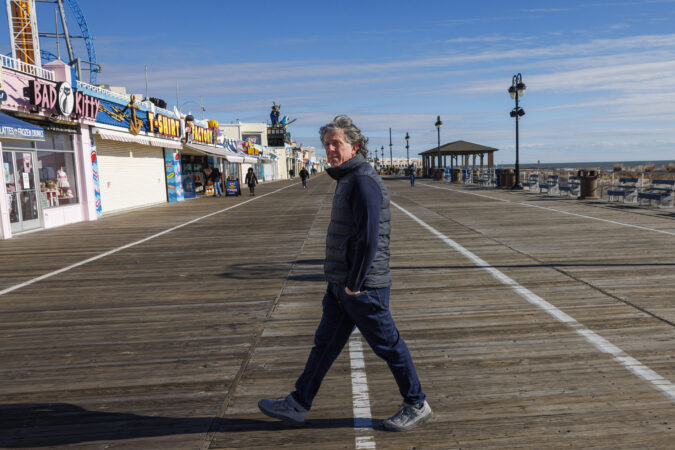
OCEAN CITY, N.J. — Along the commercial stretch of Ocean City’s boardwalk, from Sixth to 14th Streets, there are 167 storefronts, including four Kohr Bros. Frozen Custards, three Johnson’s Popcorns, three Manco & Manco Pizzas, and eight Jilly’s stores of one type or another.
There are eight mini-golfs, nine candy shops, 18 ice cream places, 10 pizza shops, 18 arcades or other types of amusements, five jewelry stores, three surf shops, five T-shirt shops, and 47 clothing or other retail shops. There is one palm reader.
Even without Gillian’s Wonderland Pier, the iconic amusement park at Sixth Street that famously closed in October 2024, it still adds up to a classically specific, if repetitive, Jersey Shore boardwalk experience. Many of the shops are owned by the same Ocean City families, some into their third generation.
But now these very shop owners are sounding the alarm.
“This is a group that’s been hanging on for a long time,” Jamie Ford, owner of Barefoot Trading Co., at 1070 Boardwalk, said in an interview last week. “These places are hanging in there. They’re not going anywhere, but we’re nervous.”
Chuck Bangle, owner of the storied Manco & Manco Pizza, warned planning officials he might close one of his three locations if business did not pick up. Other boardwalk property owners said longtime tenants were not returning.
“It’s the 70th year of our family business, the 34th year on the boardwalk,” Bangle told the planning board Jan. 7, before it eventually deadlocked 4-4 on whether the Wonderland site should be declared in need of rehabilitation. “I wrestled with closing the Eighth Street location. I don’t want to close. The impact of Wonderland’s closing on all the merchants has been substantial.”
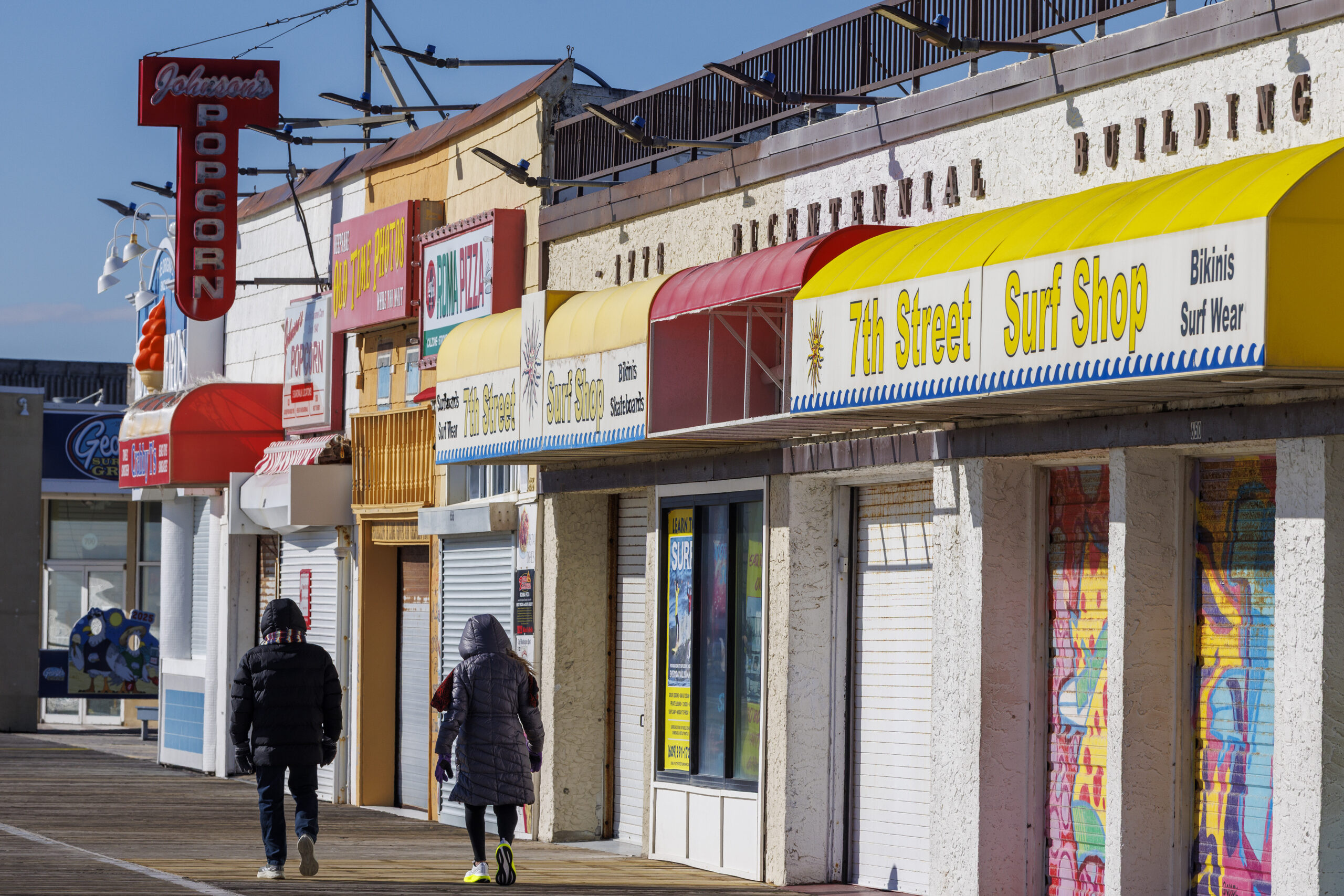
Business along Boardwalk near 7th Street, Ocean City, NJ., Thursday, Jan. 15, 2026.
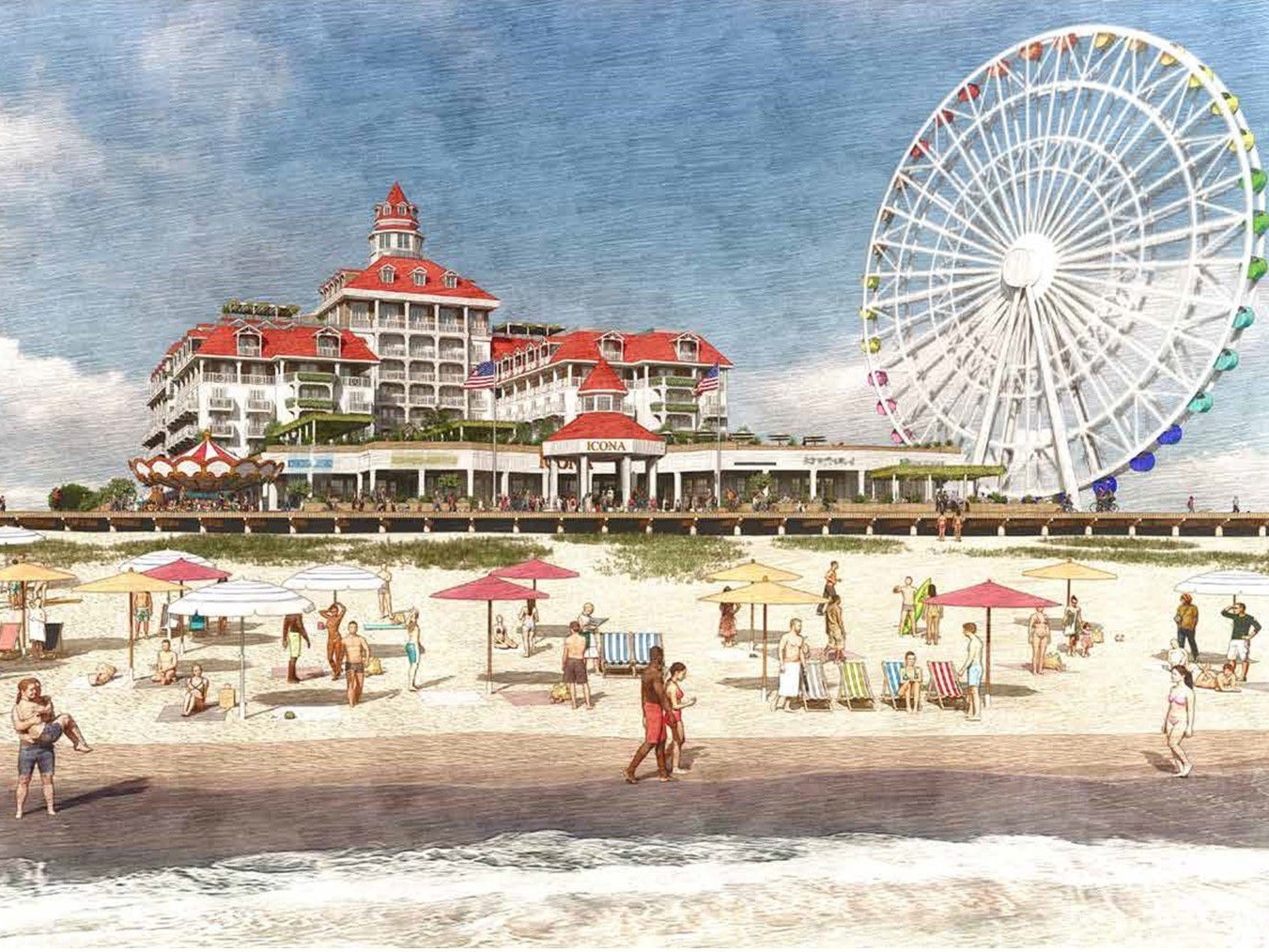
Into blustery January, the debate has raged about whether a luxury hotel, even one that would save the Ferris wheel, would bolster or undermine the essential character of this dry town and its beloved boardwalk.
At this point, even the most ardent members of the Save Wonderland faction seem resigned to the reality that, as Will Morey of Morey’s Piers himself came up from Wildwood to say to the planning board, the odds of Wonderland coming to life again as an amusement park are slim to none.
A rendering of the proposed new Icona in Wonderland Resort, to be built on the site of the old Wonderland Pier. The proposal for a 252-room resort includes saving the iconic Ferris wheel and carousel.
It’s the rest of the boardwalk that now wants to be heard: merchants with the voice of their ancestors ringing in their ears.
“This is an incredible opportunity,” said Ocean City Councilman Jody Levchuk, a member of the family that owns the Jilly’s stores on the boardwalk. He is also a member of a boardwalk subcommittee that will report its findings on Feb. 7. “My grandfather — who’s a big boardwalk guy — he’d walk up and he’d say this man wants to spend $170 million and you’re ignoring him.”
Plummeting parking revenue
A season without Wonderland took its toll. Parking figures from municipal lots tell the story.
The 249-spot lot at Fifth and the boardwalk across from Wonderland brought in $483,921 in parking fees in 2024 (people paid an average of $21 to park there during the summer season), but dropped to $290,895 in 2025, a 40% decrease. Overall, parking revenue dropped by about a half-million dollars, from $2.46 million in 2024 to $1.95 million in 2025.
At the end of 2025, there were a half-dozen empty storefronts, according to boardwalk merchants who keep track, mostly in the 600 block adjacent to Wonderland, though there is inevitable churn during the offseason.
Becky Friedel, owner of 7th Street Surf Shop, said in an interview that the shop is planning to expand and take over two of the vacant boardwalk storefronts for a new breakfast and lunch spot and a clothing boutique.
She said that while businesses have seen the loss of some of the younger clientele who used to fill Ocean City rooming houses and group Shore houses, the newer second-home owners come “with a fair amount of money.” The boardwalk also has a handful of higher-end boutiques, including the Islander. The downtown saw the opening of a Lululemon last year. Some envision a boardwalk that might include more boutiques in the mix, and fewer repeating sequences of ice cream-french fries-pizza-beachwear.
“We’re optimistic,” Friedel said. “Obviously [Wonderland closing] hurt us a little bit, especially in the evening. Our night business isn’t as strong as it was. We’re taking over the french fry place to focus on breakfast and lunch.”
Taking on the boardwalk
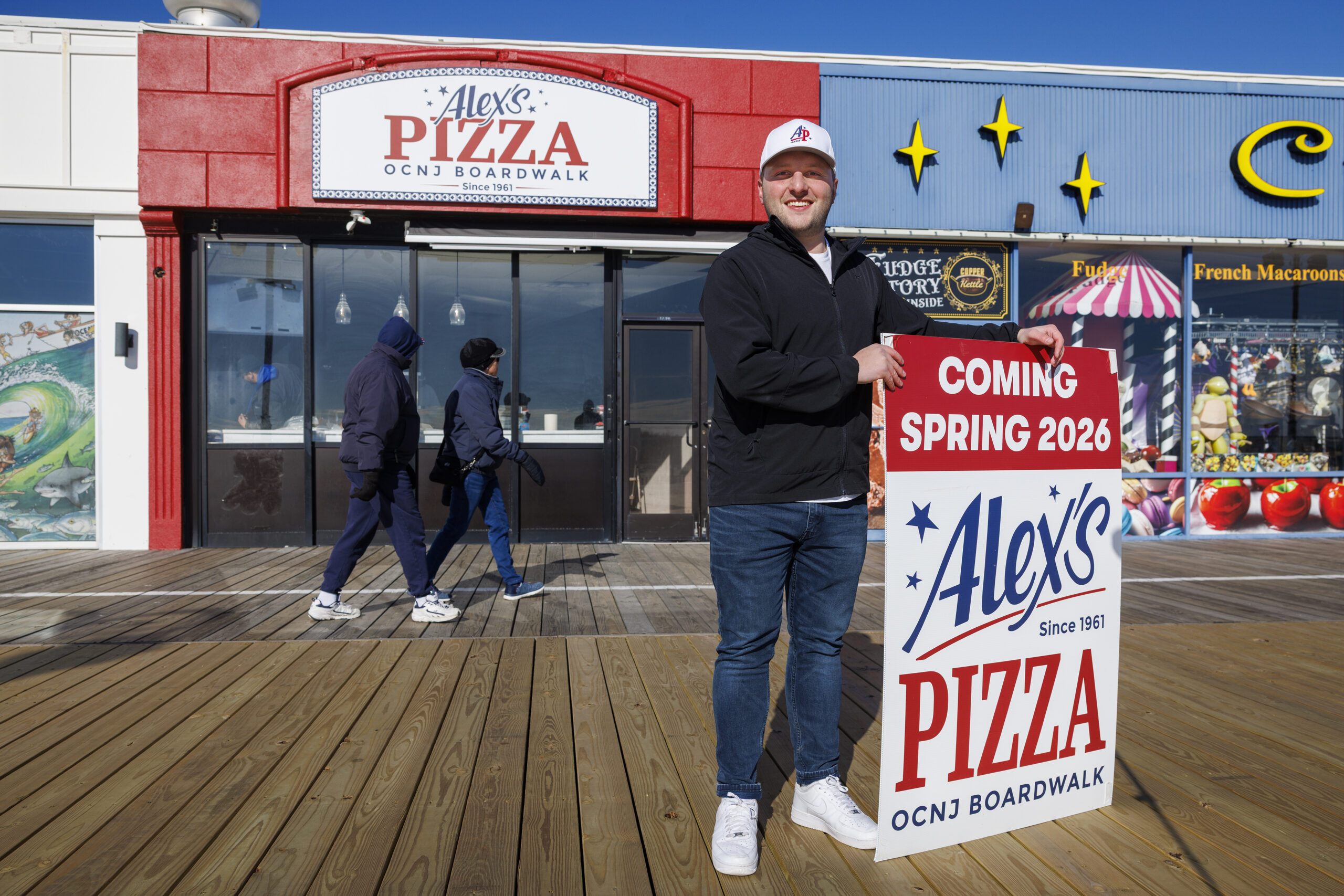
Also optimistic are the partners behind Alex’s Pizza, the Roxborough stalwart dating to 1961 that is opening up this summer at 1214 Boardwalk, next to Candyland. Coming in hot with a tomato sauce swirl atop the pizza not unlike the Manco’s staple, Alex’s partner Rich Ennis said, “We’re more of a thin-crust pizza.”
The enthusiasm of Ennis and partner Dylan Bear to take on the boardwalk also raises the question of whether the center of gravity will continue to shift southward, away from the no-longer-Wonderland end.
Dylan Bear, owner of Alex’s Pizza, 1214 Boardwalk, Ocean City, NJ., Thursday, Jan. 15, 2026.
“If you don’t have an anchor down there, people are not going to walk down there,” said Mark Benevento, owner of Congo Falls golf at 1132 Boardwalk, among other properties he rents out. “They will turn around at the music pier.”
Rather than seeing the hotel proposal as a threat to the character of the town, the merchants have united to stress that they view it as essential to Ocean City’s preservation. In other Shore towns, it has been the push of residential development that has eaten away at commercial zones. The parcel is currently zoned for amusements.
In places like Seaside Heights, Long Beach Island, and Avalon, condo and new residential construction has chipped away at the essential character of the places, replacing some of their most distinctive destinations, from restaurants to motels to bars and nightclubs.
Mark Raab, a local pediatric dentist whose family owns five boardwalk properties in Ocean City, called the closing of Wonderland “devastating” in remarks to the planning board.
“People don’t know what’s going on,” he said. “This year we had three businesses that closed, longtime tenants that did not renew their leases. Six years ago we had a waiting list for these properties.
“The boardwalk is not thriving,” he said. “The boardwalk is slowly going down. It’s going down piece by piece. It is rapidly becoming a snowball effect.”
‘Now they have galvanized us’
Ford, of Barefoot Trading, thinks the time has come for the view of the merchants to be heeded. The 4-4 tie at the planning board is being seen not as an outright rejection of a rehabilitation designation, which would expedite zoning allowances and possible tax abatements, but as a pass back to the city council.
The families, he said, are “the backbone of it. What we’re speaking in favor of should carry a little bit of weight.”
In a usually sleepy Jersey Shore January, there has been an awful lot of intrigue, and packed meetings, with the latest talk of perhaps a limited zoning change that would allow a hotel, though perhaps one not as grand (252 rooms, seven stories) as Mita is seeking.
There is also talk of allowing residential units above boardwalk storefronts. And many believe the city council will essentially give the tie to the nonvoting planner, Randall E. Scheule, who told his deadlocked board he believed the Wonderland site did meet two needed criteria — significant deterioration and a pattern of underutilization — and to go ahead and approve the rehabilitation zone.
Mita has said that time is of the essence. He said he has been shocked at the way the town has stymied his plan twice.
Councilman Keith Hartzell, who twice voted against advancing Mita’s development plan, said he still wants to negotiate with Mita over height, parking, and other issues. One possibility, in conjunction with the boardwalk subcommittee, is rezoning just the 600 block of the boardwalk to allow a hotel. Hartzell has also been trying to bring a playground to that end in the meantime.
“I’m not anti-hotel at all,” Hartzell said. “Our job is to come up with something [Mita] can do that he can make money with and be happy with.”
For Ocean City’s merchants, the Wonderland saga, and Mita’s difficulty in getting his hotel off the ground, has prompted them to step out from behind the counter or out of the ticket booths and speak up.
Said Benevento, the Congo Falls owner: “Maybe we have never gotten political. Now they have galvanized us.”
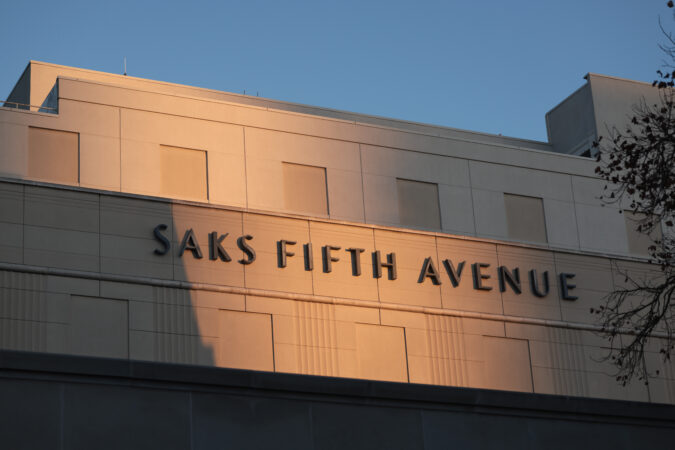
In the Philadelphia region, Saks Global has long operated an expansive Saks Fifth Avenue store off City Avenue in Bala Cynwyd. The company also has a Neiman Marcus at the King of Prussia Mall, as well as Saks Off 5th discount outlets at the Franklin Mall in Northeast Philadelphia and at the Metroplex shopping center in Plymouth Meeting.
Both local Saks Off 5th locations are slated to close soon, as was reported this fall by several news outlets, including the Philadelphia Business Journal.
Here’s what the bankruptcy filing means for local Saks shopper.
Is Saks Fifth Avenue in Bala Cynwyd closing?
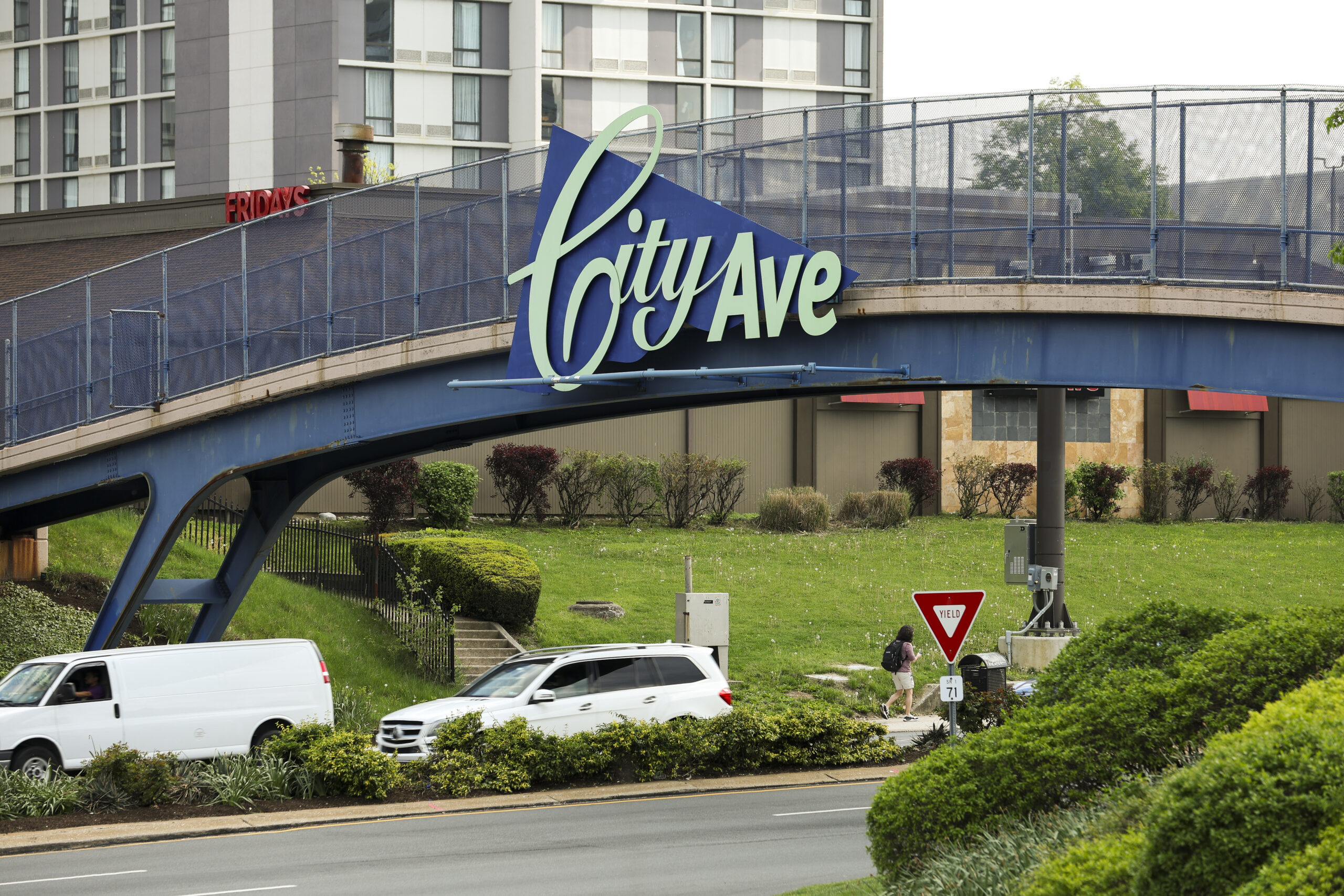
Saks Fifth Avenue has been a retail success along City Avenue in Bala Cynwyd, as shown in April 2024.
No. At least not in the immediate future.
Saks has filed for Chapter 11 bankruptcy, which means the company intends to reorganize financially and stay in business. That’s opposed to Chapter 7 bankruptcy — as is the Iron Hill Brewery case — through which businesses liquidate all their assets and close locations.
“To be clear, a Chapter 11 filing does not mean that Saks Global is going out of business,” Saks wrote in a bankruptcy FAQ on its website.
But when companies reorganize through bankruptcy, they sometimes do close stores, particularly underperforming ones.
Saks executives alluded to the possibility of this in its statement, which read in part: “As part of the Chapter 11 process, the company is evaluating its operational footprint to invest resources where it has the greatest long-term potential. This approach reflects an effort to focus the business in areas where the company’s luxury retail brands are best positioned for sustainable growth.”
The Inquirer reported in 2024 that business at the store was strong and that the chain had resisted offers to move to King of Prussia, according to the City Ave District.
In response to questions from The Inquirer about the future of Philadelphia-area stores, Saks Global said: “Our footprint evaluation is underway, and we have already begun to work collaboratively with our real estate partners to find future-facing solutions, where possible, to achieve a stable and sustainable business model and optimized portfolio on the other side of this process.”
Is Neiman Marcus in King of Prussia closing?
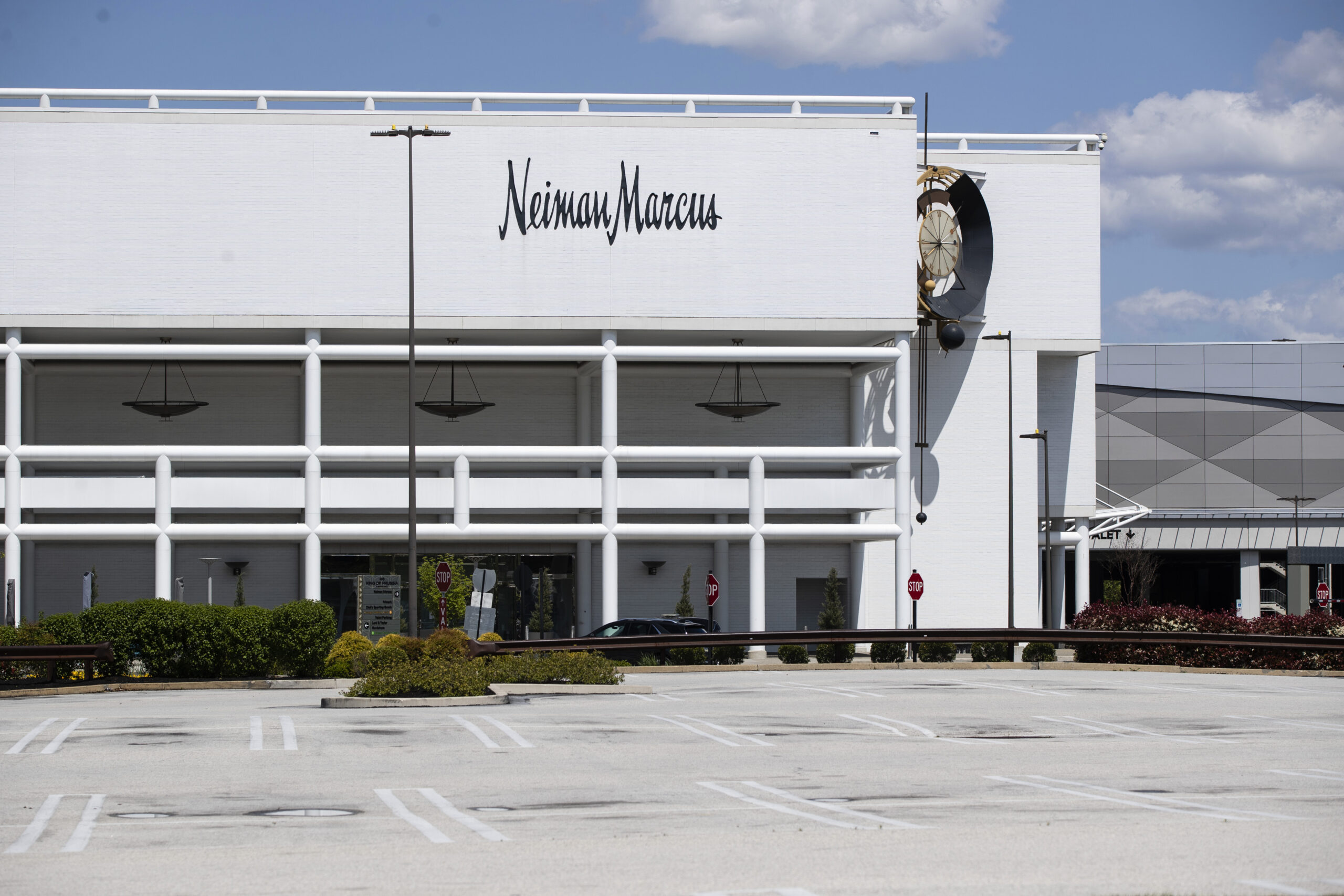
The Neiman Marcus store in King of Prussia, as shown in May 2020.
Are Saks credit cards or gift cards impacted by the bankruptcy?
No, the company says.
“There are no changes to our credit card programs and rewards, with customers continuing to shop, earn and redeem benefits as usual,“ the company wrote in the FAQ. ”We continue to accept payments as usual, including credit cards and gift cards, with no changes to how customers transact with us.”
Are Saks’ return policies impacted by the bankruptcy?
No, according to the company.
“Our refund and exchange policy is expected to remain unchanged, with refunds and exchanges being accepted and issued as usual,” the company wrote.
I am waiting on a package from Saks. Will my order still arrive?
Yes, all current and future orders will be delivered as usual, the company said.
What’s next for Saks?
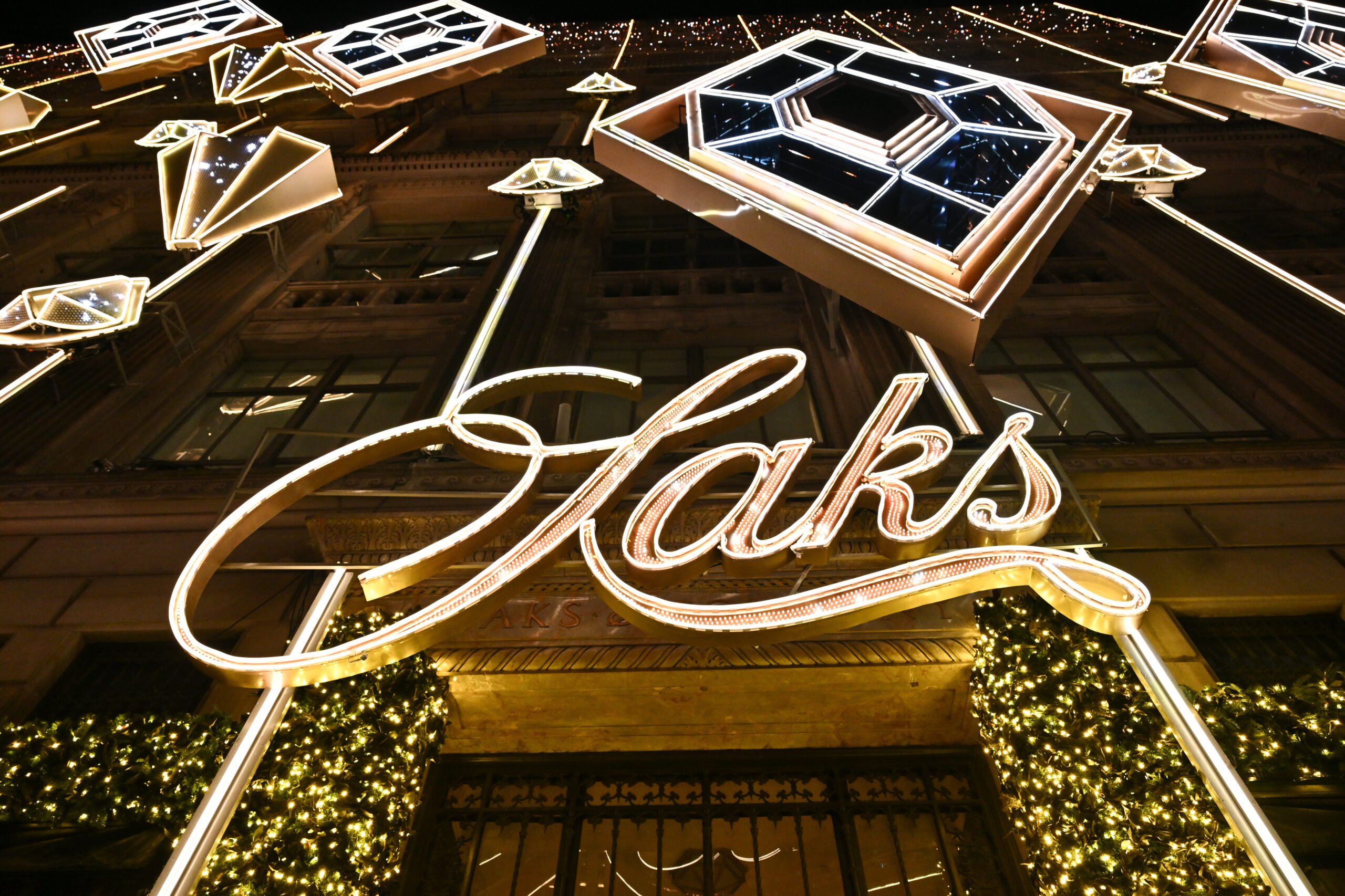
In New York, Saks Fifth Avenue’s holiday light show and window was revealed in November.
The company says it is not going anywhere.
“Saks Global is firmly focused on the future, and we look forward to continuing to serve customers and deliver for our stakeholders,” the company wrote in the FAQ.
As of Wednesday, Saks was waiting for court approval of a $1.75 billion financing deal that would come with an immediate $1 billion debtor-in-possession loan from an investor group.
If approved, the deal “will provide ample liquidity to fund Saks Global’s operations and turnaround initiatives,” the company said in a statement.
Saks estimates its assets and liabilities at between $1 billion and $10 billion, according to court documents filed in U.S. Bankruptcy Court in Houston. Saks has between 10,001 and 25,000 creditors, including luxury brands like Chanel, to which Saks owes $136 million, according to the documents.
To lead the company during this transition, Saks also announced a new chief executive, with former Neiman Marcus CEO Geoffroy van Raemdonck replacing Richard Baker.
Saks said it hopes to emerge from bankruptcy later this year.
The company said in its FAQ: “With new capital and a stronger financial foundation on the other side of this process, we are confident that we can play a central role in shaping the future of the luxury retail industry while delivering the elevated shopping experience our customers expect from our dedicated team.”
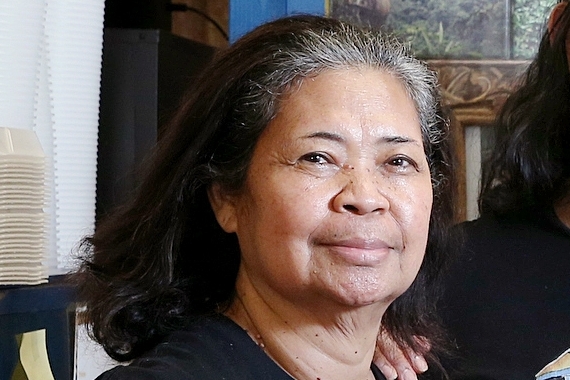
Ena Widjojo, 73, of Philadelphia, owner and longtime celebrated chef atthe Hardena restaurant in South Philadelphia, mentor, and mother, died Wednesday, Dec. 24, of cancer at her home.
Born and reared in Java, Indonesia, Mrs. Widjojo came to the United States in 1969 when she was 17. She opened a cantina at the Indonesian Consulate in New York in 1977, worked as a caterer in the 1990s after the cantina closed in 1989, and moved to Philadelphia in 2000 to open Hardena with her husband, Harry.
Over the next decade and a half, until she retired in 2017, Mrs. Widjojo grew Hardena, described by the Daily News in 2007 as “a postage-stamp-size luncheonette at Hicks and Moore Streets in a gritty section of South Philly,” into a culinary and cultural connection for thousands of local Indonesians and other diners who enjoyed her homemade Southeast Asia cuisine.
The corner restaurant’s name is a blend of their names, Harry and Ena, and features Indonesian specialties such asgolden tofu, goat curry, saté chicken, beef rendang, and tempeh. “It’s the best Indonesian food in Philadelphia, a great mix of Indian and Chinese flavors,” elementary schoolteacher Aaron MacLennan told the Daily News in 2007.
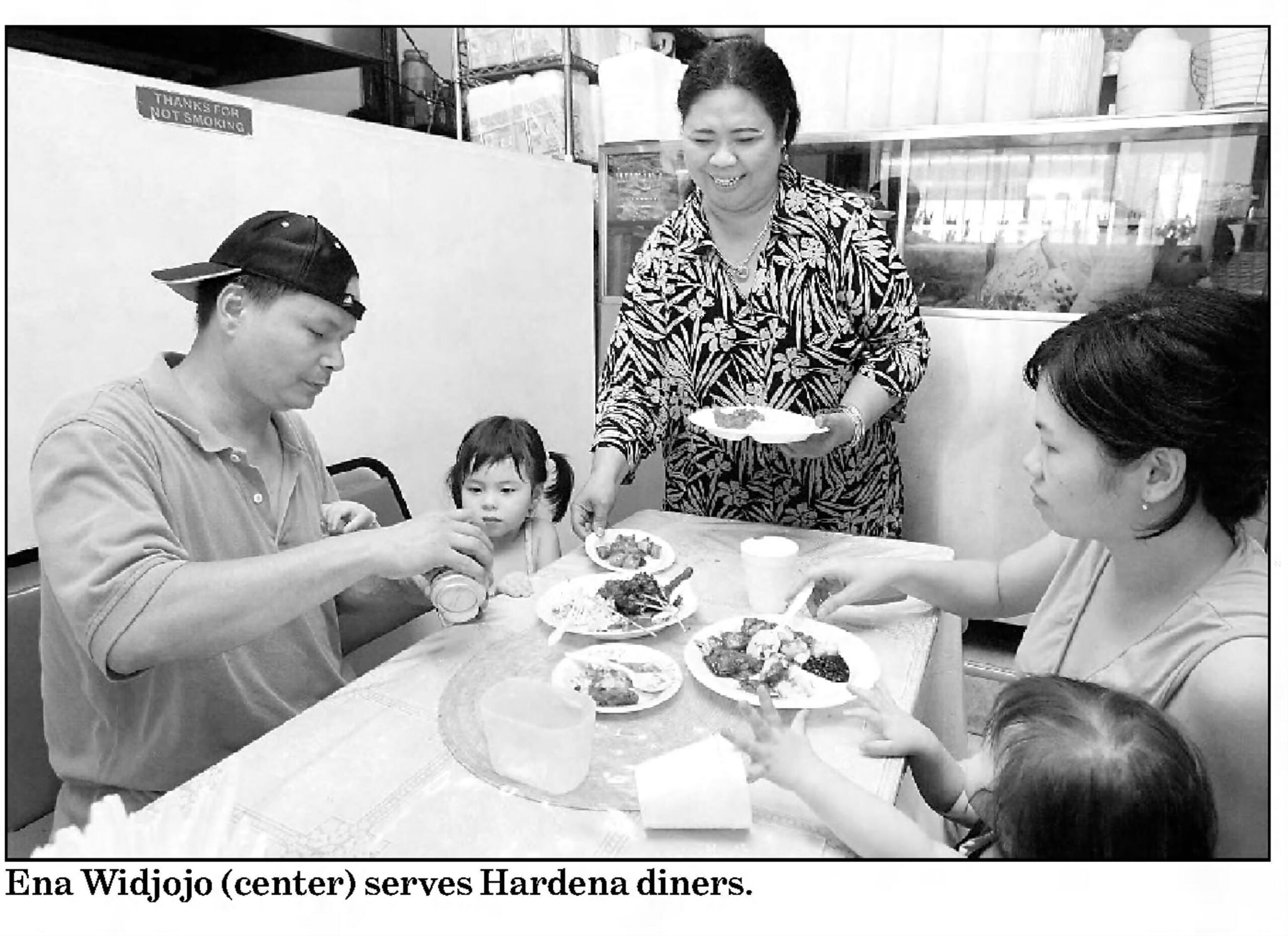
This photo of Mrs. Widjojo appeared in the Daily News in 2007
Friendly and ever present at the lunch and dinner rushes, Mrs. Widjojo was known as Mama to many of her customers and friends. She learned how to bake and cook from her mother, a culinary teacher in Java, and later incorporated many of her mother’s recipes into her own memorable melting pot of Indian, Chinese, Arab, Portuguese, Spanish, English, and Dutch dishes at Hardena.
“She served me greens once, and I felt like I was at home,” a friend said on Instagram.
She and her husband traveled weekly between Philadelphia and Queens while their daughters — Diana, Maylia, and Stephanie — finished school in New York. Maylia and Diana assumed control of Hardena when Mrs. Widjojo retired, and Diana opened the restaurant Rice & Sambal on East Passyunk Avenue in 2024.
Earlier, at the consulate in New York, Mrs. Widjojo made meals for former Secretary of State Henry Kissinger and former Indonesian President Suharto and his large entourage. “I cooked for all the diplomats.” she told The Inquirer in 2018.
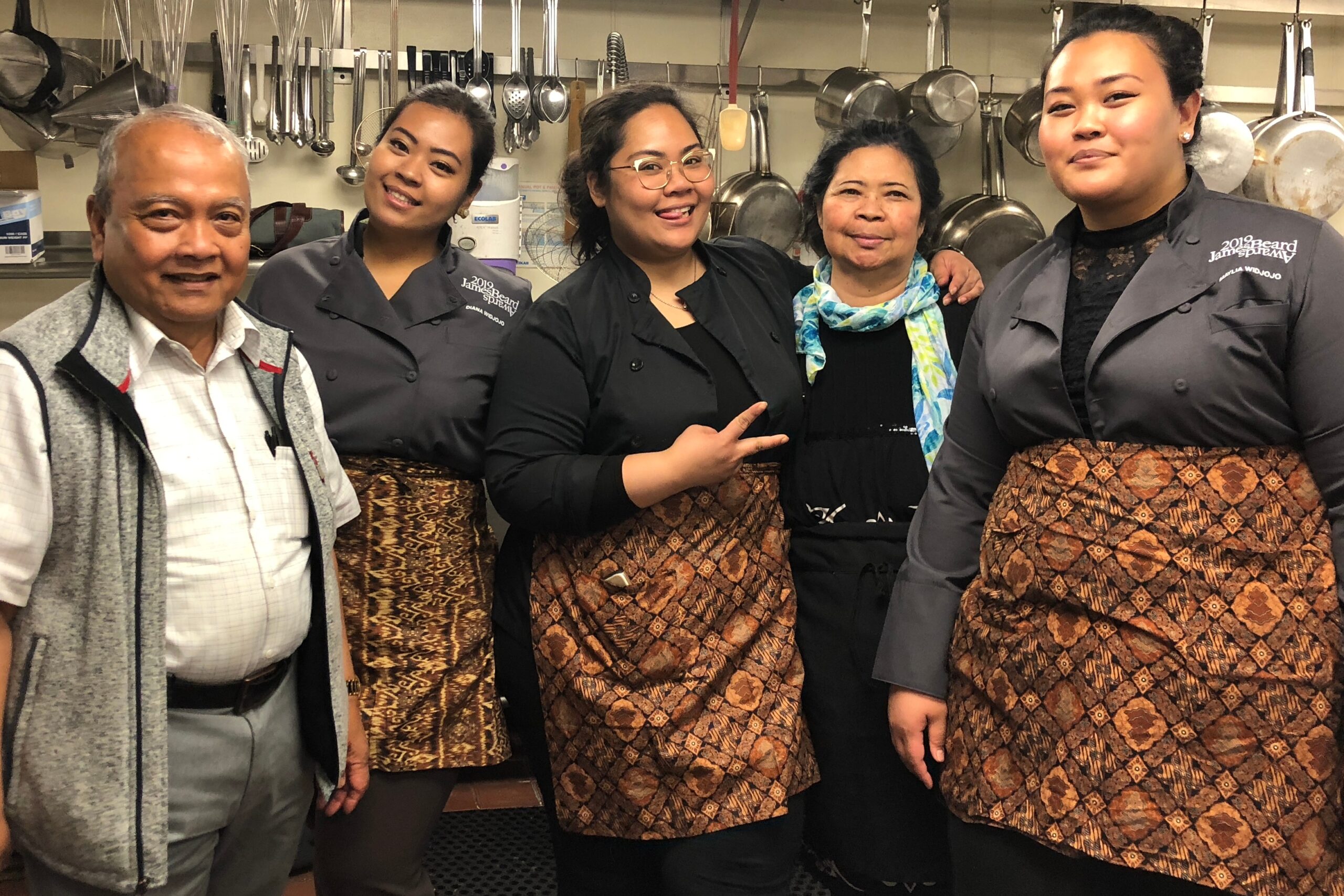
Mrs. Widjojo (second from right) smiles with her husband and three daughters.
She grew chili peppers and lime trees in her South Philly backyard, was happy to share kitchen tips and cultural traditions with visitors and cooking classes, and helped her daughters cater the 2019 James Beard Foundation’s annual Media Awards in New York.
She worked six days a week for years and told edible Philly in 2017 that her retirement was good for her daughters. “If I’m cooking all the time,” she said, “they’re not learning.”
Ena Djuneidi Juniarsah was born April 24, 1952. She baked cakes in a charcoal oven for her mother in Java and sold cookies and pastries after school when she was young. “
Her mother was strict about cooking, Mrs. Widjojo said in 2018, and discarded any and all imperfect creations. “Like me, with my kids’ cooking,” she said, “if you’re not good, that’s no good.”
She married fellow restaurateur Harry Widjojo in New York and spent time as a singer, beautician, florist, and nanny before cooking full time. Away from the restaurant, she enjoyed drawing, painting, crocheting, and family strolls in the park.
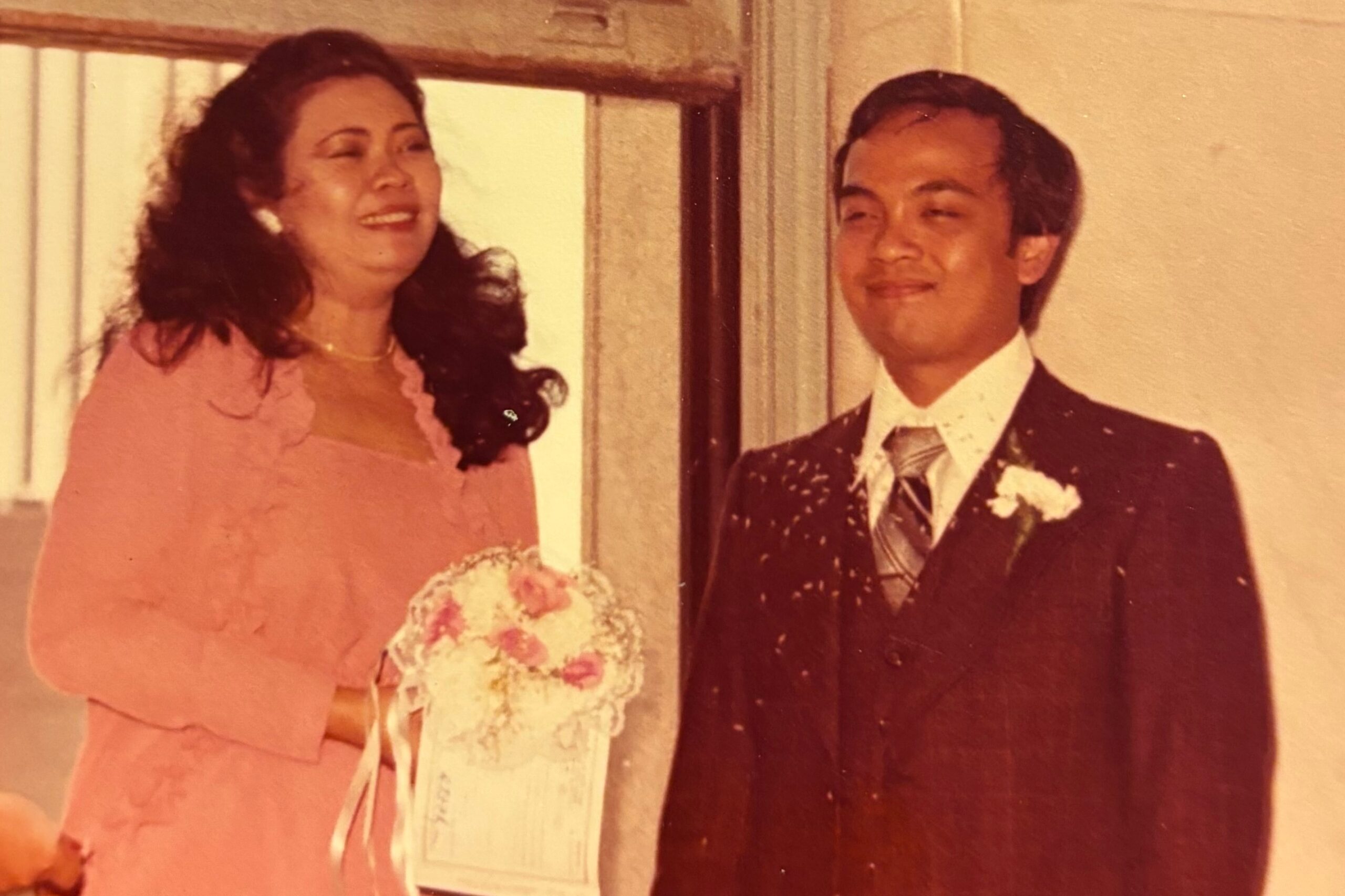
Mrs. Widjojo and her husband, Harry, were married in New York.
She could be goofy, her daughters said. She sang “You Are My Sunshine” when they were young and served as their lifelong mentor and teacher.
Friends called her “sweet,” “amazing,” “a beautiful soul,” and “warm and welcoming” on Instagram. She was diagnosed with cancer in 2015.
“Her life, generosity, and talent enriched the hearts of all who met her,” her family said in a tribute. “She taught us that feeding people is one of the purest ways to show love, have pride in our culture, and support our family.”
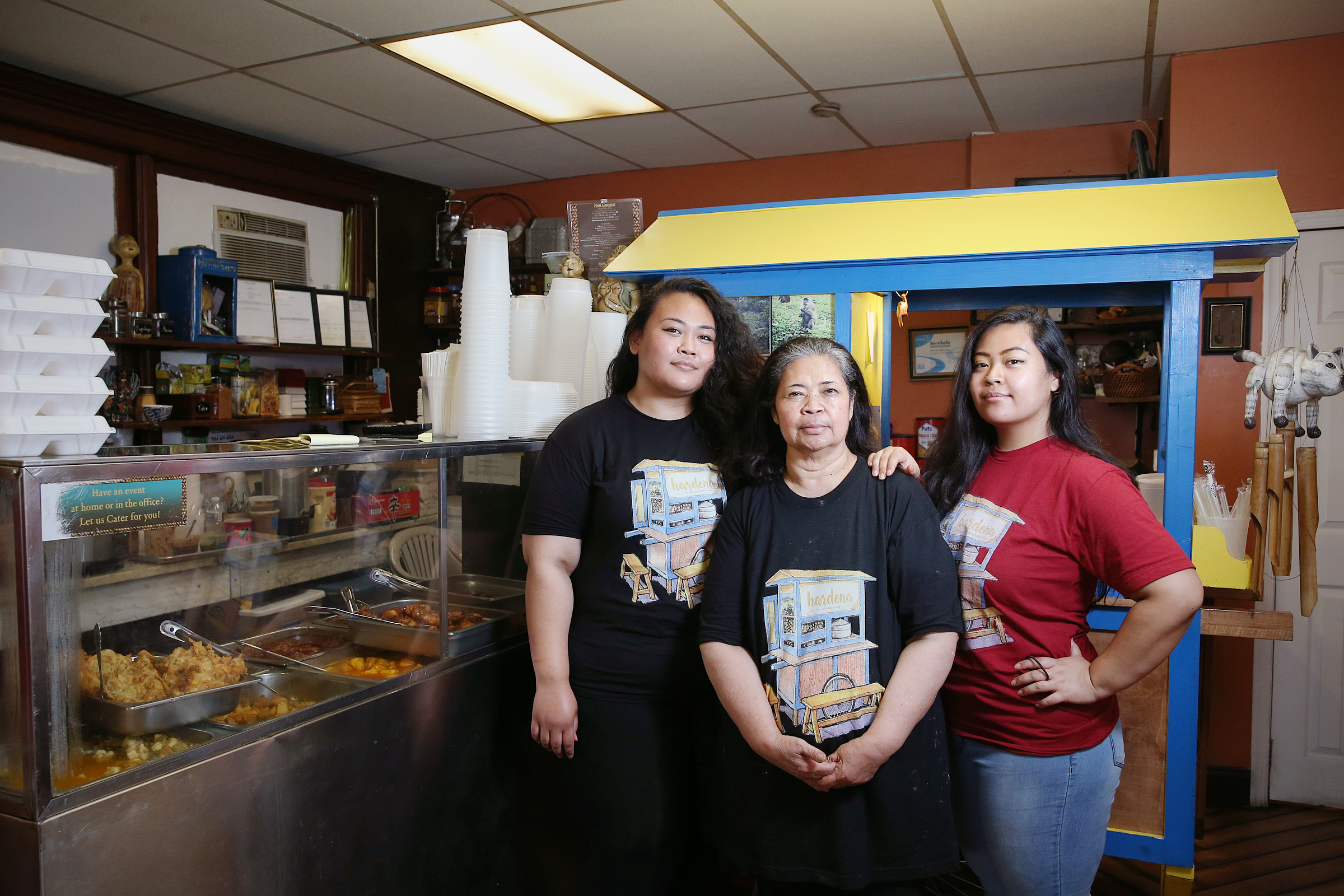
Mrs. Widjojo (center) stands in Hardena with her daughters Maylia (left) and Diana in 2020.
Diana said: “She saw the world with open arms and an open heart. She was a wonder woman.”
In addition to her husband and daughters, Mrs. Widjojo is survived by two grandchildren, a sister, two brothers, and other relatives. A sister and two brothers died earlier.
The 147,201-square-foot mall between the Liberty Place towers, two of Philadelphia’s most iconic skyscrapers, is up for sale.
Chicago-based Metropolis Investment Holdings sees a sale of the Shops at Liberty Place as a way to put the property in the hands of a company that specializes in retail.
“With the property established as a leading retail destination in Center City, we believe it is at a natural point for a new owner to build on this foundation with additional investment and fresh ideas,” Tom Dempsey, head of asset management for Metropolis, said in an email.
Metropolis is focused on office real estate and owns the 61-story One Liberty Place. The company purchased both properties in 1999.
The sale of the Shops at Liberty Place is not an indication that Metropolis is planning to sell the skyscraper, too.
“We are focused on our office portfolio, and One Liberty Place will continue to be a cornerstone asset for Metropolis,” Dempsey said. “It has demonstrated strong and consistent performance, benefits from a loyal tenant base, and remains one of Philadelphia’s most iconic and competitive office buildings.”
There is no listed price, but a source familiar with Metropolis’ thinking says they are hoping to sell the Shops for $20 million.
The shops at 1625 Chestnut St. are 77.7% occupied and include tenants like Jos. A. Bank, Victoria’s Secret, and Bloomingdale’s. The food court proved especially popular and has long been a draw for office workers.
In 2024 indoor minigolf facility Puttshack opened as part of a wave of experiential retail in Center City.
“The venue is particularly strong in group sales, hosting corporate events, social gatherings, and celebrations, which reinforces its role as a destination — its mix of entertainment, dining, and social interaction helps drive consistent foot traffic and contributes to the overall vibrancy of The Shops,” Dempsey said.
Real estate brokerage Jones Lang LaSalle (JLL) is handling the sale of the Shops at Liberty Place.
The company’s listing for the Shops at Liberty Place describes it as an “established in-fill urban location with significant population density and economic demand drivers” and boasts its “irreplaceable location along highly trafficked Chestnut Street within Philadelphia’s premier shopping district.”
JLL says that it attracts 5.1 million visitors a year.
An aerial view of One Liberty Place, the Shops at Liberty Place, and Two Liberty Place taken during 1990.
The Shops at Liberty Place opened in 1990, three years after One Liberty, which famously broke the gentleman’s agreement that no building in Philadelphia be taller than William Penn’s hat atop City Hall. Two Liberty Place also opened in 1990.
The Shops at Liberty Place proved a bright spot on Chestnut Street, which has long been overshadowed by Walnut Street as Center City’s premier shopping destination.
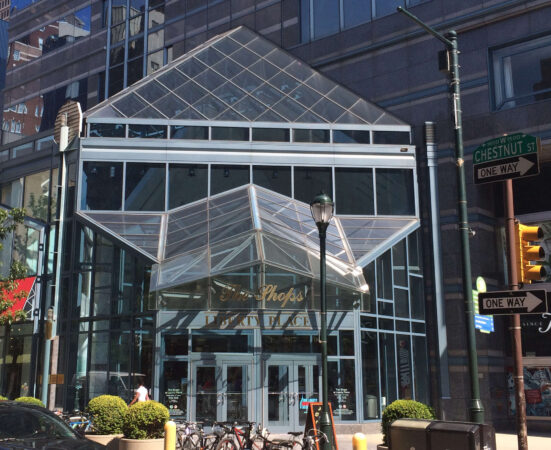
The Inquirer’s architecture critic, Inga Saffron, praised the design of the building’s entrance, which seeks to echo its sister skyscrapers that soar above.
“The glass structure sits a generous distance back from the hectic corner, providing plenty of elbow room for harried pedestrians,” she wrote in 2016. “The best detail is the batwing canopy over the doors. … The canopy’s angles recall the tiered chevrons that distinguish the crowns on Liberty Place’s towers.”
The Shops at Liberty Place’s occupancy suffered a blow following the COVID-19 pandemic, but its general neighborhood is looking healthy. Both the Liberty Place skyscrapers have strong occupancy, and Center City’s residential population is climbing.
“We’ve managed the asset carefully through challenging times,” Dempsey said. “Today, the property is well-positioned with a diverse mix of tenants, including strong experiential and destination offerings, and continues to attract interest from retailers and visitors alike. We see solid potential for continued growth and momentum under new ownership.”