Category: Small Business

  • Rite Aid is gone. Its shells remain, with some becoming gyms and car washes.

    Rite Aid is gone. Its shells remain, with some becoming gyms and car washes.

    It’s been almost a year since the last Philly-area Rite Aids closed their doors for good after years of financial trouble.

    But the pharmacy chain’s distinct facade still dots the landscape — in suburban shopping centers, on the corners of congested intersections, sometimes even smack dab in the middle of city blocks.

    Some of these buildings are still vacant, surrounded by overgrown grass and empty parking lots. Others are getting new life as dollar stores, medical clinics, daycares, Spirit Halloweens, and a Rally House sports retailer.
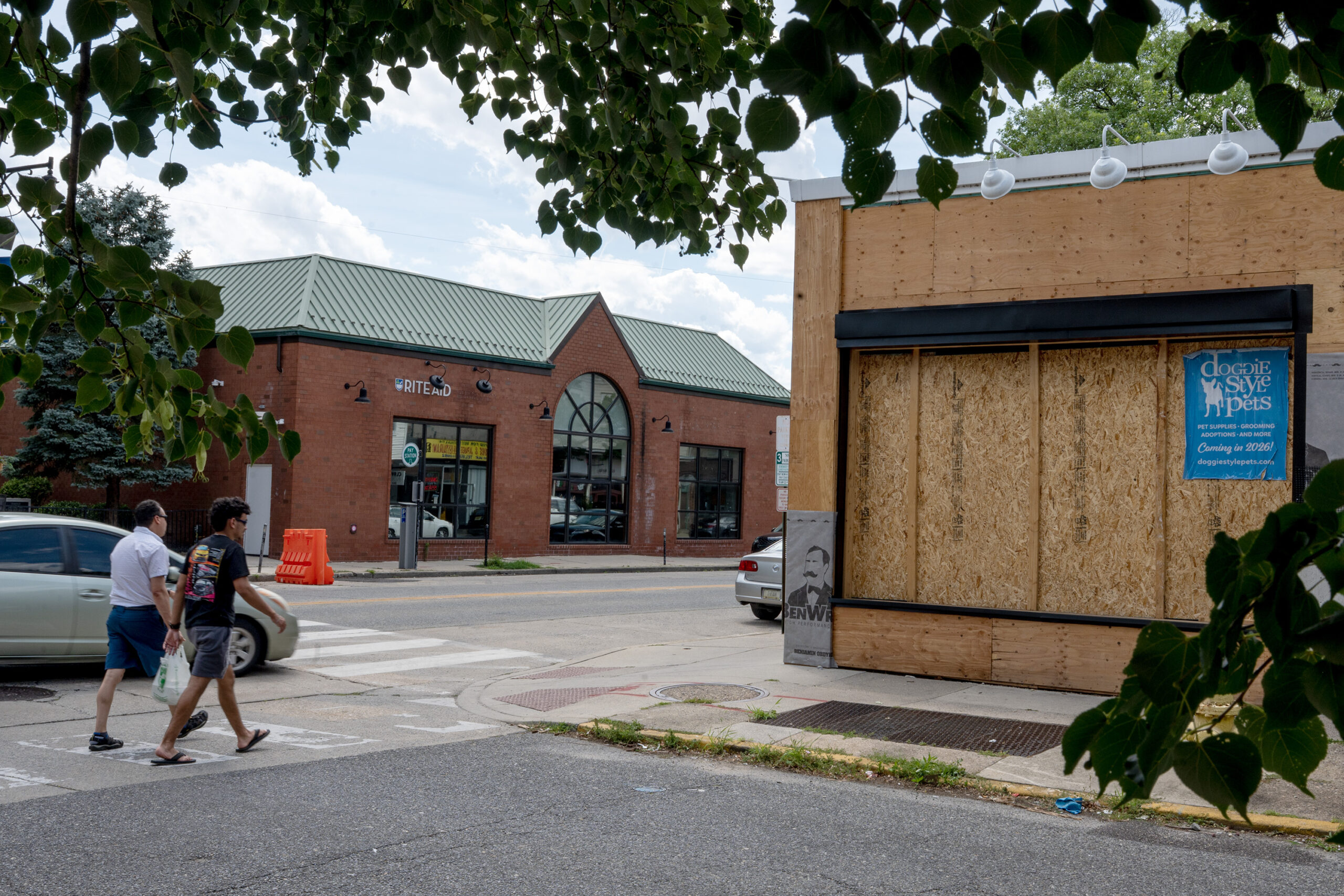
    A former Rite Aid (left, rear) and former Wawa (right) sat empty in Collingswood in June.

    The 8,000- to 16,000-square-foot shells are ideal for only so many tenants, real estate experts have said, and it is not unusual for these kinds of properties to take several months or more to lease.

    Here is a look at what’s happening at a few local zombie Rite Aids:

    South Jersey Rite Aids are becoming fitness centers

    A former Rite Aid in Blackwood, Camden County, has been a gym for more than a year, and its owners soon plan to open a second location at another old Rite Aid in Cherry Hill.

    Nick Bennett, CEO of the Bunker Fitness Center, said the owner of the Blackwood Rite Aid building approached him after seeing the gym’s content on TikTok. At the time, Bennett said, the gym was outgrowing its 3,000-square-foot space in Franklinville, Gloucester County.

    When he went to see the 13,000-square-foot former Rite Aid in Blackwood, he said, it had already been demolished inside.

    “It was just wide open,” Bennett said. “That floor plan works for our business model because gyms are open. You don’t really need to put up walls.”
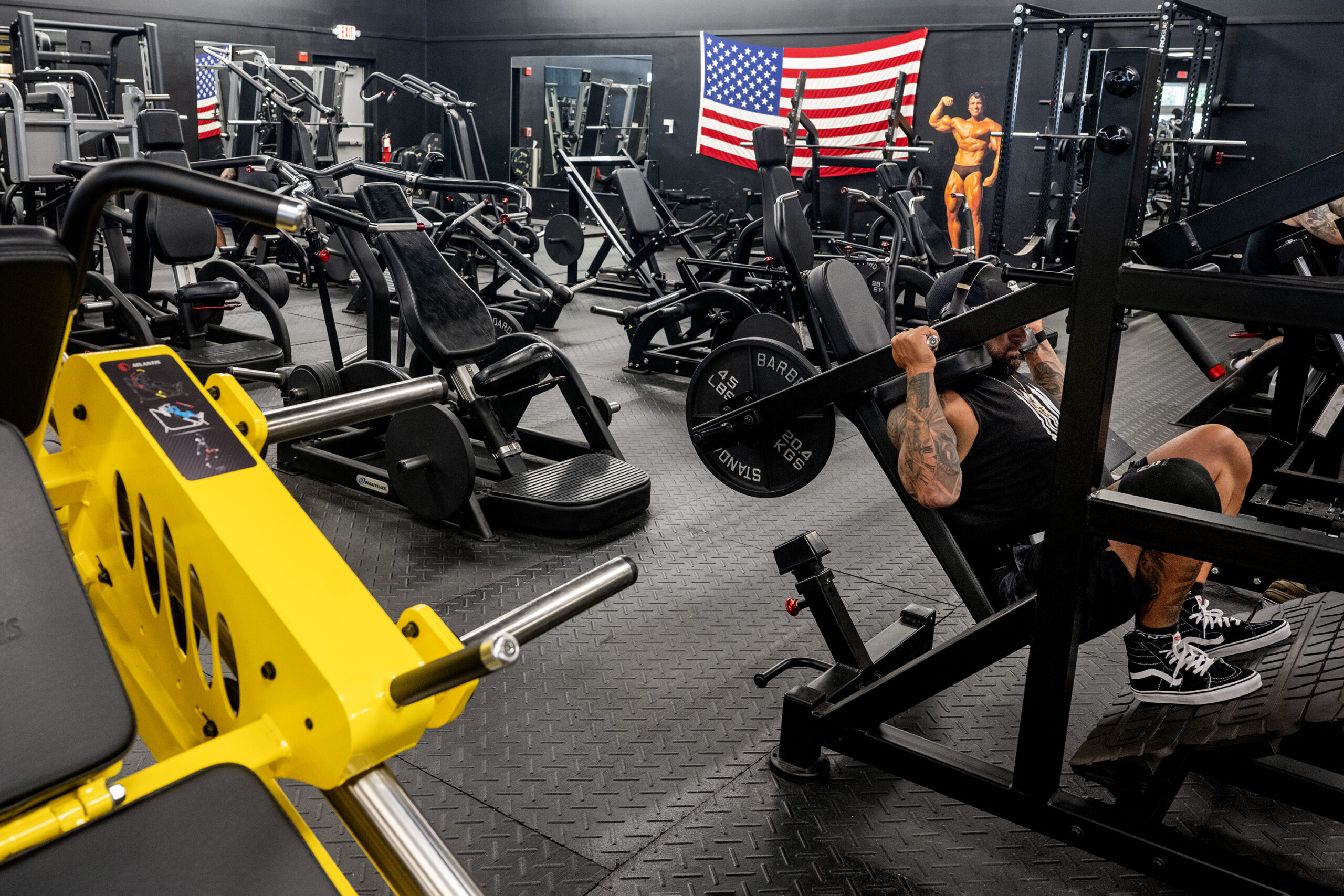
    Steve Cristelli works out at the Bunker Fitness Center in Blackwood.

    Another plus, he said: Pharmacies have rows of refrigerators, which require electrical outlets, and the Bunker crew could use those outlets to plug in workout equipment.

    The old Rite Aid on Black Horse Pike needed “very little” work, just paint and rubber floors, Bennett said, and was easily transformed into the exercise and recovery space he had envisioned. The gym opened in 2025.

    “We’re smashing it,” Bennett said, with thousands of members who pay between $49 and $59 a month for the 24/7 gym, which has cardio and strength machines, weights, a sauna, and a cold plunge. He declined to provide specific sales or membership figures for competitive reasons.

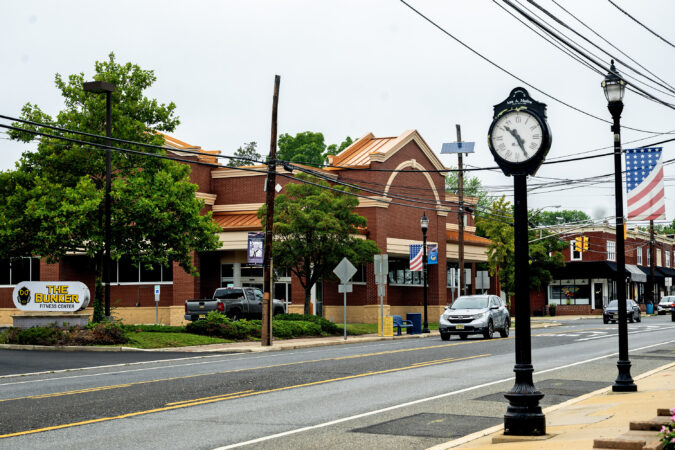
    The Bunker Fitness Center operates inside a former Rite Aid in Blackwood.

    But Bennett said the business is doing so well that it is expanding into another former Rite Aid, 12 miles away in Cherry Hill with franchisee Jack Prendergast.

    That 10,000-square-foot pharmacy shell at Brace and Kresson Roads closed more recently and needs a bit more work inside, Bennett said. When they signed the lease, he said, it “looked like a Rite Aid.”

    Bennett said he and Prendergast are demolishing the interior, aiming for a September opening.

    In Delco, a Rite Aid could become a township’s first car wash

    The former Rite Aid in Newtown Square may get new life as a car wash.

    The store at West Chester Pike and St. Alban’s Circle closed last year. In February El Car Wash, a Florida-based chain looking to expand into Pennsylvania, New Jersey, and Maryland, applied to open there, said Newtown Township Solicitor Rich Sokorai.

    On its website, El Car Wash lists several other Philly-area locations as “coming soon,” including Cherry Hill, Drexel Hill, Feasterville, and Maple Shade.

    The Newtown Square Rite Aid operated a drive-through, Sokorai said, and drive-throughs are permitted in that commercial zone. After a June meeting, the township zoning hearing board is considering whether to permit the car wash, with a decision expected in the coming weeks.

    A Rite Aid with a “store closing” sign last summer.

    If approved, it would be the only car wash in Newtown Township, the solicitor said.

    Residents of the neighborhood behind the old Rite Aid have expressed concerns to local officials, Sokorai said, “because they fear traffic.”

    Others have said they are looking forward to a new business moving into the vacant space on a prime corner, Sokorai said. Even before the Rite Aid closed last summer, its shelves were often empty, the solicitor said, and “it was dying a slow death.”

    Temple University buys another old Rite Aid

    Temple “T” flags fly on North Broad Street.

    Temple University recently bought a second former Rite Aid on North Broad Street.

    The school recently closed on the old Rite Aid building on the 2100 block of North Broad for $9.25 million, according to spokesperson Stephen Orbanek. He said ArchWell Health, which operates a primary-care clinic for seniors there, will remain the tenant.

    “This property’s location, directly across the street from James S. White Residence Hall, supports the priorities of our campus safety and physical environment plan,” Orbanek said.

    This latest Rite Aid acquisition comes two years after Temple bought a Rite Aid and its surrounding shopping center near Temple University Hospital for $8.2 million. The Rite Aid is being converted into Temple Health neurology offices.

    The moves are part of a broader expansion of the university’s footprint on Broad Street, which includes the January acquisition of a vacant property at the site of a former McDonald’s for $8 million.

    Editor’s Note: This story has been updated to indicate that Temple Health plans to open neurology offices at the previously acquired Rite Aid building.
  • Main Street is doing better than the headlines suggest | Expert Opinion

    Main Street is doing better than the headlines suggest | Expert Opinion

    Wars. Inflation. Tariffs. Labor shortages. High interest rates. Political uncertainty. If you only read the headlines, you’d think America’s small businesses are on life support. They’re not.

    The sentiment I’ve been hearing and seeing from dozens of industry groups and clients about this year is “so far, so good.” This comes from businesses that do everything from distributing industrial equipment to installing commercial doors. With few exceptions, most have not only been holding their own in 2026, but they’ve been growing.

    Anecdotal? Hardly. The data supports these claims.

    Manufacturing in the U.S. has expanded for the past five months, reaching its highest level since 2022, according to the closely watched Purchasing Managers Index from the Institute for Supply Management. Service industry companies, according to a similar index, have seen expansion since 2024.

    In June, small-business revenue increased in 11 of 12 sectors and in all eight U.S. regions, according to a small-business index published monthly and based on real-life data from hundreds of thousands of customers using Intuit QuickBooks. Payment processing firm Fiserv found that small-business sales showed steady short-term expansion in June, with both nominal sales and transaction volume increasing. Last quarter’s national GDP was just revised from 1.6% to 2.1%.

    The U.S. Census Bureau reported that new business applications continue to come in at all-time highs. Even LinkedIn said that there’s been a 69% year-over-year increase in the number of U.S. members adding founder to their profile.

    Want more proof?

    Despite lower levels of optimism, over half of Main Street owners rated the health of their business as “excellent or good,” the National Federation of Independent Business reported this month. A recent survey from financing firm OnDeck said 93% of small businesses expect growth in 2026, and marketing firm Vistaprint said this month that 84% of small-business owners report being happy operating their businesses, despite ongoing economic and operational challenges.

    Bank of America’s June 2026 Small Business Checkpoint said the small-business sector remains “financially healthy and operationally resilient.” MetLife and the U.S. Chamber of Commerce found strong confidence in business health, cash flow, and future growth prospects despite ongoing concerns about inflation, labor costs, and economic uncertainty.

    Three out of four U.S. small-business owners expressed “high confidence” in their business’ future, according to new research from Capital One. TD Bank’s recent survey said that small-business owners also remained highly optimistic about future growth.

    Economist Mark Zandi recently wrote that among the 25 largest metropolitan areas in the country with populations of more than 3 million, Philly enjoyed the strongest job growth last year. Payroll firm ADP reported that the private businesses in the U.S. added 122,000 jobs in May and 98,000 in June. HR giant Paychex said small-business hiring increased over the past four months.

    Job openings among small businesses are rising, an indicator of demand for employees.

    “Main Street job openings in New Jersey and nationwide are starting to pick up after a decline in May,” National Federation of Independent Business New Jersey state director Eileen Kean told ROI-NJ.

    Center City, which represents 42% of all Philadelphia employment, has seen office leasing activity reach its highest level in six years, according to Center City District’s State of Center City 2026 report. The report also highlighted development projects topping $2 billion; projected Convention Center attendance exceeding 1 million in 2026; and retail, restaurants, and cultural institutions that “continue to rebound strongly.”

    There are always news reports about how this business is “struggling” and that business is “barely holding on.” There’s no denying that this happens. How could it not? There are more than 34 million small businesses in the United States operating in hundreds of different industries and localities. Some are bound to be doing better than others.

    But other things happening right now are underscoring small-business growth and optimism.

    Tariffs (that aren’t being refunded) may have increased costs for some, but many manufacturers are reporting increased domestic demand as global firms move more operations here.

    Inflation is sticky, but at less than 3% excluding energy, most business owners have found ways to pass these costs down to their customers or find other savings internally.

    Labor shortages persist but most company owners are getting their work done regardless.

    And consumer spending is strong, according to recent data from the National Retail Federation.

    Oil prices are now back down to prewar levels.

    Many owners are also benefiting from a lighter federal regulatory environment and friendlier tax policies. Capital is more expensive than in years past, but available for those who can measure return on investment. The stock market is up over 20% over the past year, providing more financial security. And for entrepreneurs and small-business owners, government aid and other resources, education, tools, and support proliferate like never before.

    Small businesses employ half of the country’s workers and make up half of our GDP. Their success is critical for the U.S. economy.

    They aren’t ignoring the challenges. They’re simply finding ways around them. And that’s why, despite all the doom and gloom, many are having a surprisingly good year.

  • Dot cake went from TikTok trend to Philly bakeries. Here’s how 3 small businesses jumped on the bandwagon.

    Dot cake went from TikTok trend to Philly bakeries. Here’s how 3 small businesses jumped on the bandwagon.

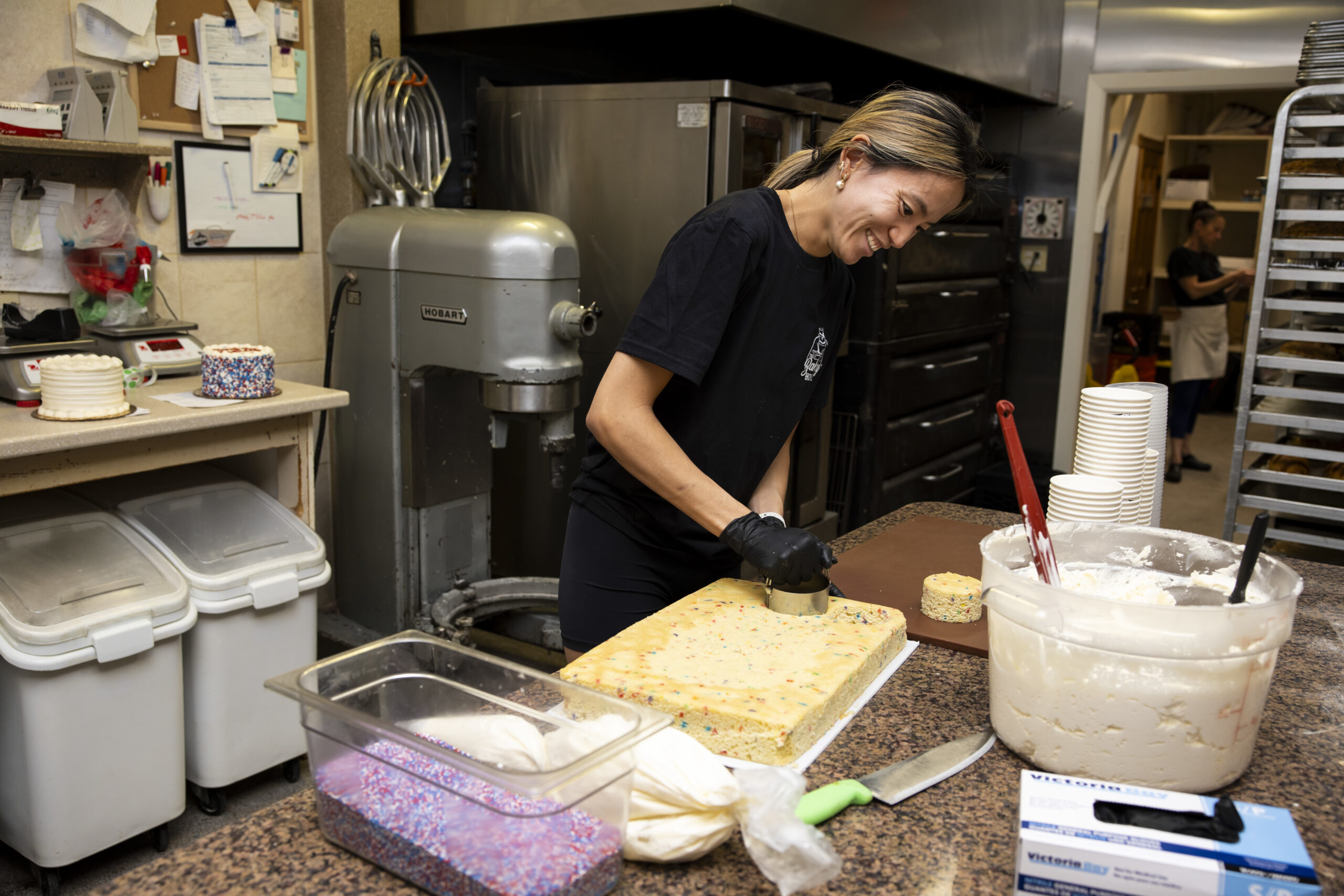
    Michael Ibrahim, general manager of the Bakery House in Bryn Mawr, said custom orders for dot cakes, the latest viral TikTok food trend, started trickling in at the end of May. By June 1, the Bakery House posted the new menu addition on Instagram and Facebook.

    Within 15 minutes, they were sold out.

    “We ordered more material, made more the next week, and then we made sure to never run out of it again,” Ibrahim said.

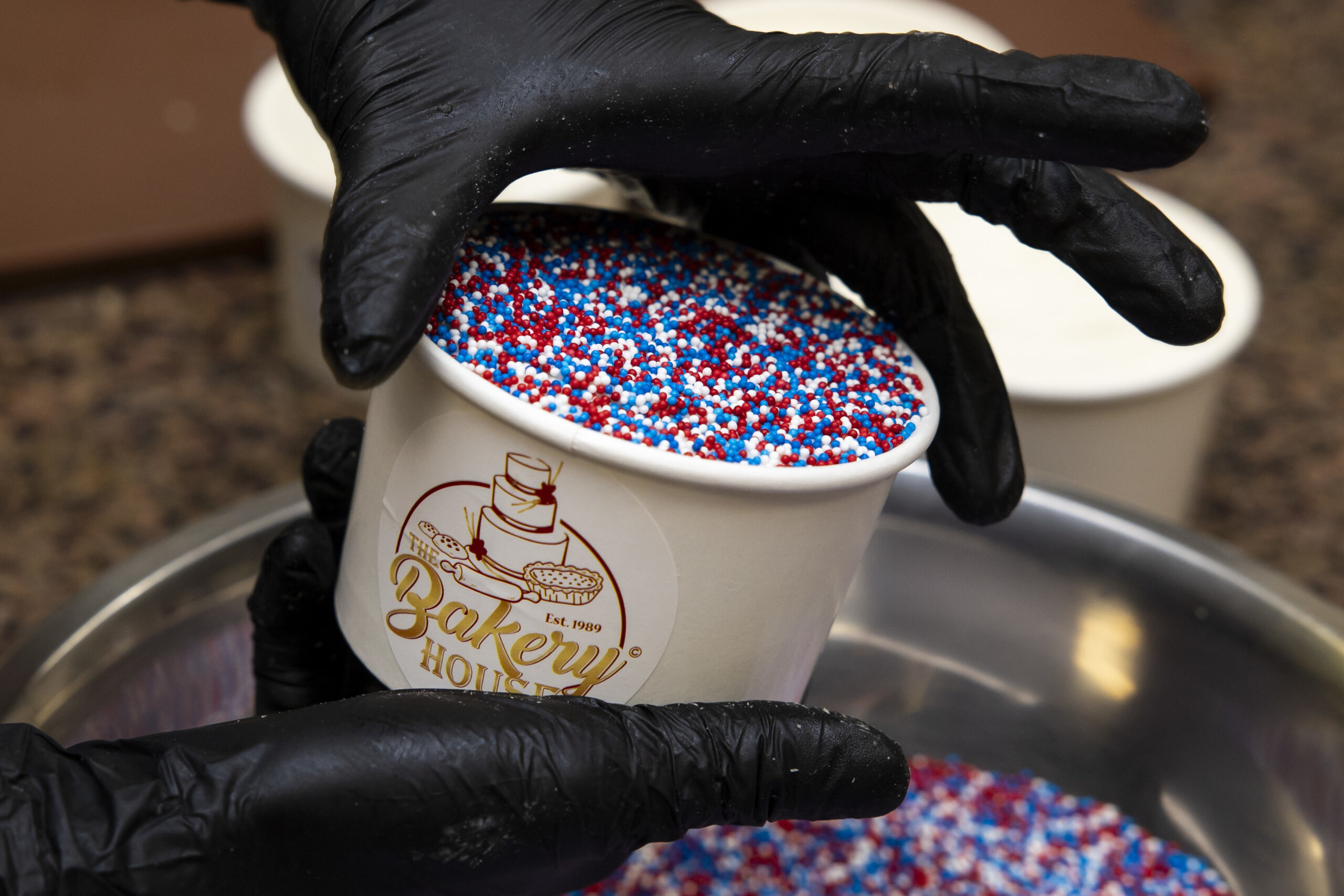
    The dessert — a layered cake in a cup coated in nonpareil sprinkles — was created in 2017 by mother-daughter duo Alex and Sondra Posner of the Dot Cakes in Roslyn, N.Y. It reached national audiences this past May when influencers began reviewing the bakery’s dot cakes sold in New York City’s Butterfield Market. In June, the New York Times Style section reported people standing in line at 6 a.m. for a taste of the sweet treat.

    Elizabeth Aversa, owner of the Margate location of Aversa’s Italian Bakery, said her shop is now regarded as “cool” after introducing dot cakes.

    “I’m getting these new, trendy people that we were never getting before,” Aversa said. “Before, we were just like a mom-and-pop, old-school store … but now they come to us.”

    With viral trends appearing and fading almost as fast as they arrive — remember crookies and butter boards? — deciding which fad to hop on can be a challenge for small businesses.

    Ray Sheehan, founder of Old City Media, said businesses have to identify when viral trends will stick around long enough to be worth the investment. That most often occurs when they cut across several consumer demographics.

    “When things take off like this, it’s almost like pop music,” Sheehan said. “It just speaks to so many different people.”

    Lily Diebold assembles dot cakes at the Bakery House.

    ‘Everybody started calling’

    When the Bakery House got its first order for dot cake, Ibrahim thought it was an easy request. The bakery already had everything needed to prepare the dessert: cake ingredients, frosting, and nonpareil sprinkles

    “Then, the customers told each other, and then everybody started calling,” Ibrahim said. “All of a sudden, we had about 60 custom orders for dot cake.”

    Ibrahim said that the team usually avoids bending to the whims of social media trends — notably, they skipped the “crookie” despite offering both croissants and cookies on their menu.

    “We didn’t do it in the store because we didn’t feel that anybody was asking for it,” Ibrahim said.

    Dot cake, however, was so popular among customers that the Bakery House decided to put it on the menu permanently.

    According to Sheehan, adapting to a viral trend is one of the best ways for businesses to show consumers that they are relevant.

    “If I’m a customer, it feels like this bakery is in tune and that they’re talking to me,” Sheehan said. “I’m resonating with their brand because they understand me, and that this thing is so popular.”

    Dot cakes have been around for years, but only recently became popular nationwide due to TikTok.

    Ibrahim said the bakery now has two employees dedicated to making dot cakes all day, and the fervent demand has caused a dip in sales for traditional cupcakes.

    Though, he says, it’s a net gain. Ibrahim estimated that for every loss of 100 cupcakes, 200 dot cakes are sold. On top of that, dot cakes are priced about $5 more than the bakery’s most basic cupcake, generating greater revenue.

    A middle schooler’s suggestion

    At Aversa’s bakery, the decision to start making dot cakes was a family affair.

    Aversa’s 14-year-old son, Ralph, saw the viral dessert on TikTok and he asked his mother to make dot cakes for a school party.

    It was a popular choice: ”He was a rock star at the party,” Aversa said.

    Ralph wanted to bring dot cakes to the bakery. His mother let him go for it, thinking it would be a fun summer activity.

    Then they flew off the shelves.

    “We put 20 out; they sold out. Then 40, then 50,” Aversa said. “Now we’re selling almost 100 a day.”

    Aversa said that dot cake sales are not replacing regular items but rather bringing in new customers. The younger demographic, drawn in by the dot cakes, may bring their parents, who then come across Aversa’s chicken salad or Caesar salad wraps.

    “Some people maybe never would have come to Aversa’s if it wasn’t for the dot cakes,” she said.

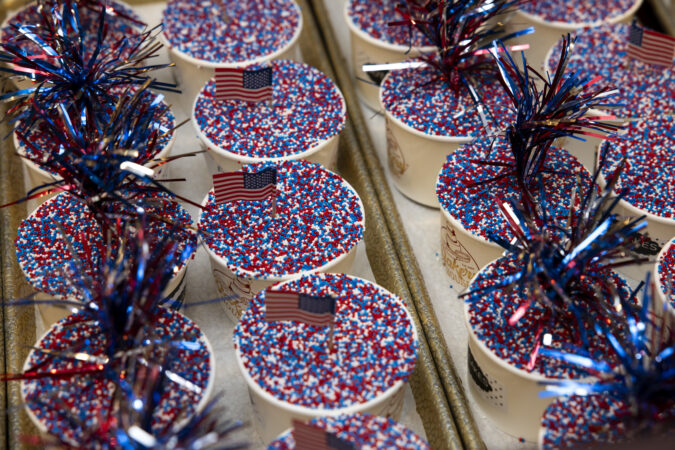
    Dot cakes get a layer of icing and then a crunchy topping of nonpareil sprinkles.

    Influencer tips

    At Sweet Box Bakery on South 13th Street, owner Gretchen Fantini said a well-known social media personality who frequents the shop tipped her off to dot cakes.

    Destiny Deniz, a Philly-based creator with nearly 177,000 followers on TikTok, told Fantini that the dessert was blowing up in New York, and Sweet Box should hop on the trend. At first Fantini was reluctant, but then she started seeing it all over her feed.

    “We have everything here,” Fantini said she thought at the time. “We should just do this.”

    Since the business — and local influencers — started advertising Sweet Box’s dot cakes, Fantini said their Instagram has grown by almost 1,000 followers.

    Sweet Box’s feed features collaborative posts with local food Instagrammers showcasing the viral dot cakes, including @josheatsphilly (197,000 followers), @phlfoodstagram (42,900 followers), and @phillyfoodies (135,000 followers).

    Fantini said the bakery’s influencer relationships are built organically. Creators may pop into the shop, and she’ll give them a taste of her baked goods for free, but she has not done a paid partnership so far.

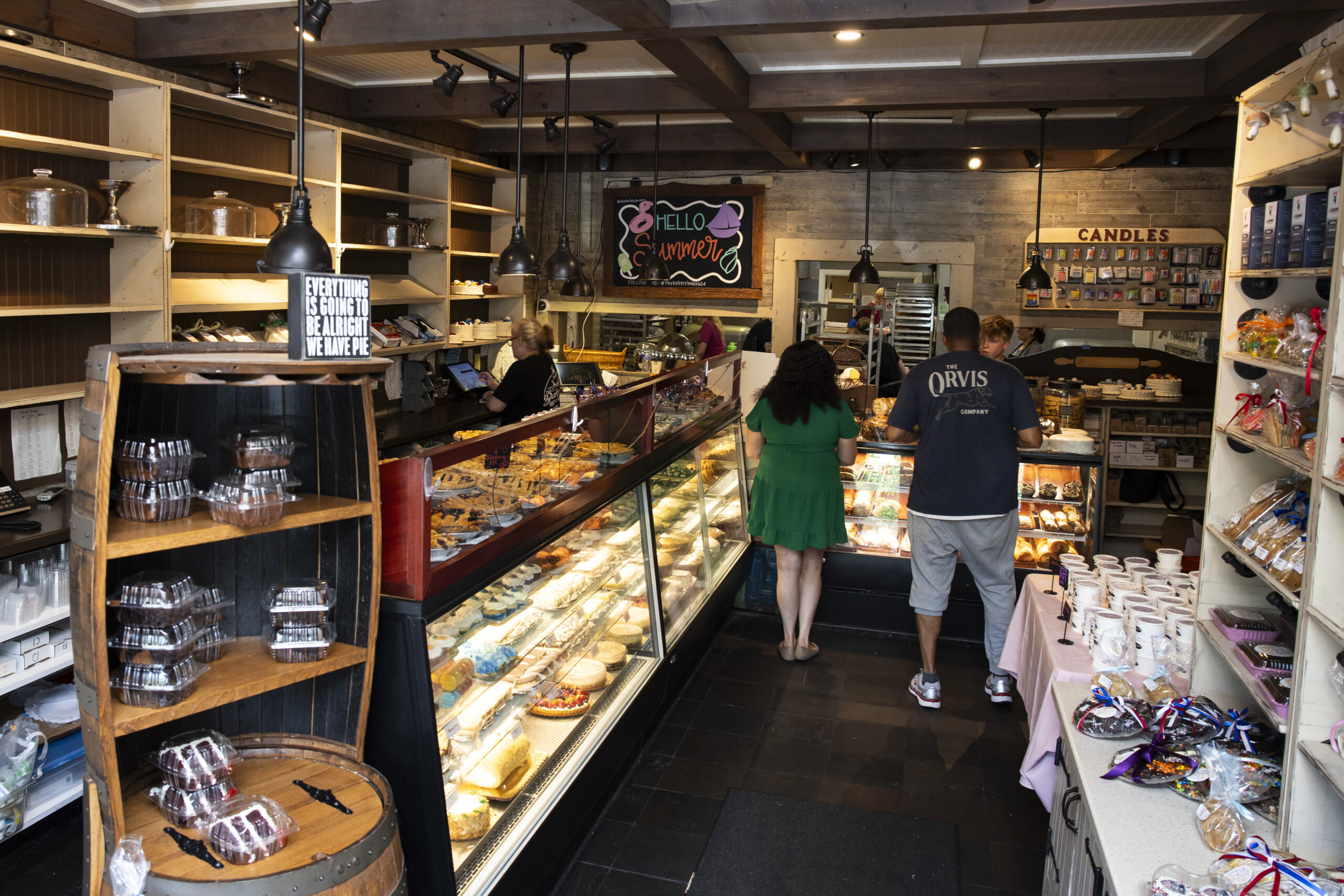
    Customers line up at the Bakery House in Bryn Mawr, which recently starting selling more dot cakes than cupcakes each day.

    “I’m Italian, so if you come into my bakery and I’m baking something, I’m going to give it to you to try,” Fantini said.

    Dot cakes are hit at Sweet Box, but so far sales have not surpassed cupcakes, the bakery’s specialty. On a day where the bakery sells 500 cupcakes, Fantini said they typically sell about 250 dot cakes.

    This isn’t the first time Sweet Box has adopted social media-fueled food trends. In 2017, the bakery introduced edible cookie dough, which was a breakout dessert of the year.

    “I want to make my customers happy,” Fantini said. “If I can stay true to what I’m making, and if it’s something that they want, I’m going to make it.”

  • Business owners near the FIFA Fan Festival prepared for crowds. Not all saw them.

    Business owners near the FIFA Fan Festival prepared for crowds. Not all saw them.

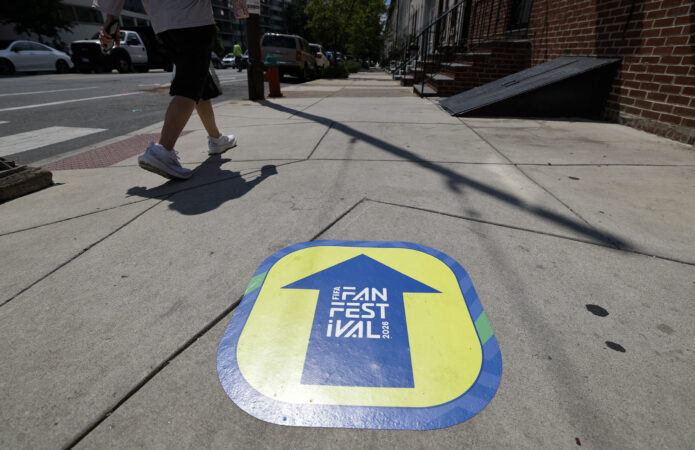
    Yolanda Welch, owner of All Day Hoagies, walked down West Girard Avenue to grab lunch. It was just a couple hours before the start of another World Cup match in Philly, but near the FIFA Fan Festival, Brewerytown’s main drag was nearly empty.

    “Normally, I’m not able to do this,” Welch said, as the lunchtime rush usually keeps her too busy to leave her post.

    She had free time on Thursday, she said, because the regular midday crowd had thinned ever since the FIFA Fan Festival arrived at Lemon Hill, about a half-mile away.

    City officials have estimated that hundreds of thousands of people have flocked to the monthlong World Cup watch party, which started in mid-June and is set to run through mid-July. But last week some Brewerytown business owners said they had yet to reap the benefits.

    In nearby Fairmount, some bar managers said they had seen a soccer-fueled boost in business. But several other neighborhood shop owners said they were only breaking even, with the slight increase in tourist traffic offset by a sharp drop in regular customers. Parking restrictions and street closures have kept many locals away, business owners said.

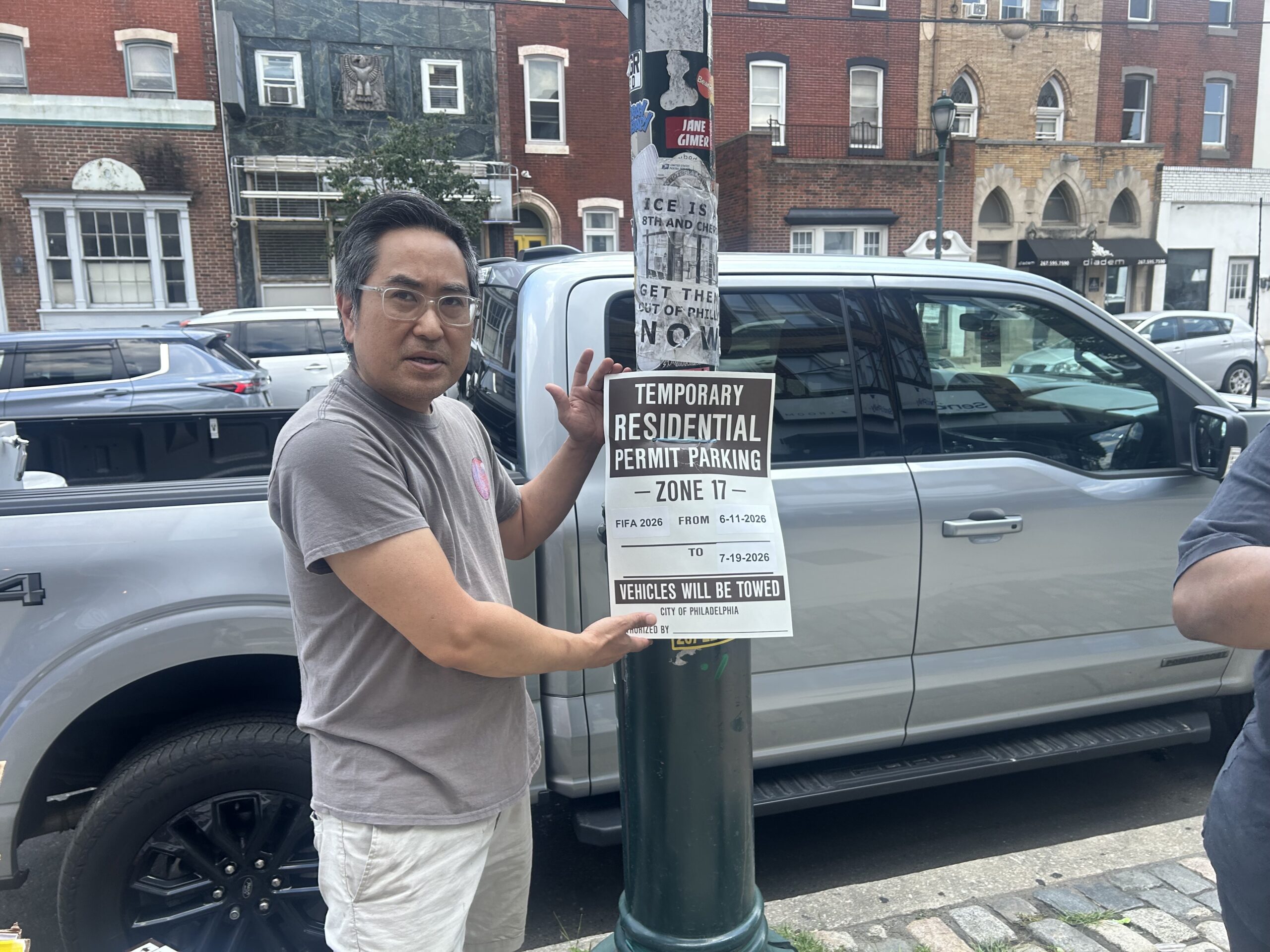
    Temporary parking restrictions near the FIFA Fan Festival are keeping some customers away, said local business owners.

    A World Cup let-down for some in Brewerytown

    Many Philadelphia business owners said they had high expectations for the World Cup: Some near the Fan Festival stocked up on inventory and even hired extra staff.

    “I ordered all kinds of soccer stuff to put in ice cream,” said Welch, who owns the hoagie shop and I Scream for Ice Cream. “I bought a whole [World Cup] banner.”

    As of Thursday, Welch said she hadn’t seen enough soccer fans to justify putting out the merchandise or unfurling the banner, which still sat in her car.

    Business is down precipitously at All Day Hoagies, which usually goes through 200 rolls a day. Since the World Cup began, the number has dropped to 125 or fewer.

    Across the street, AJ Kim, front-of-house manager at Baby’s Kusina + Market, hired two extra employees to run food ahead of the festival.

    “We were prepared for a huge crowd,” Kim said. “But it wasn’t much at all.”

    Like other business owners, Kim said the temporary parking rules have confused regular customers, and stories of residents being ticketed and towed are scaring many patrons away. According to Kim, a Baby’s chef was among those erroneously ticketed by the Philadelphia Parking Authority, despite displaying the required temporary permits.

    Every night, a handful of people cancel their Baby’s reservations, saying they are worried about parking, Kim said. Staff has tried to dispel misinformation on social media, and lends temporary parking passes to diners, but uncertainty remains.

    Some spots see steady business

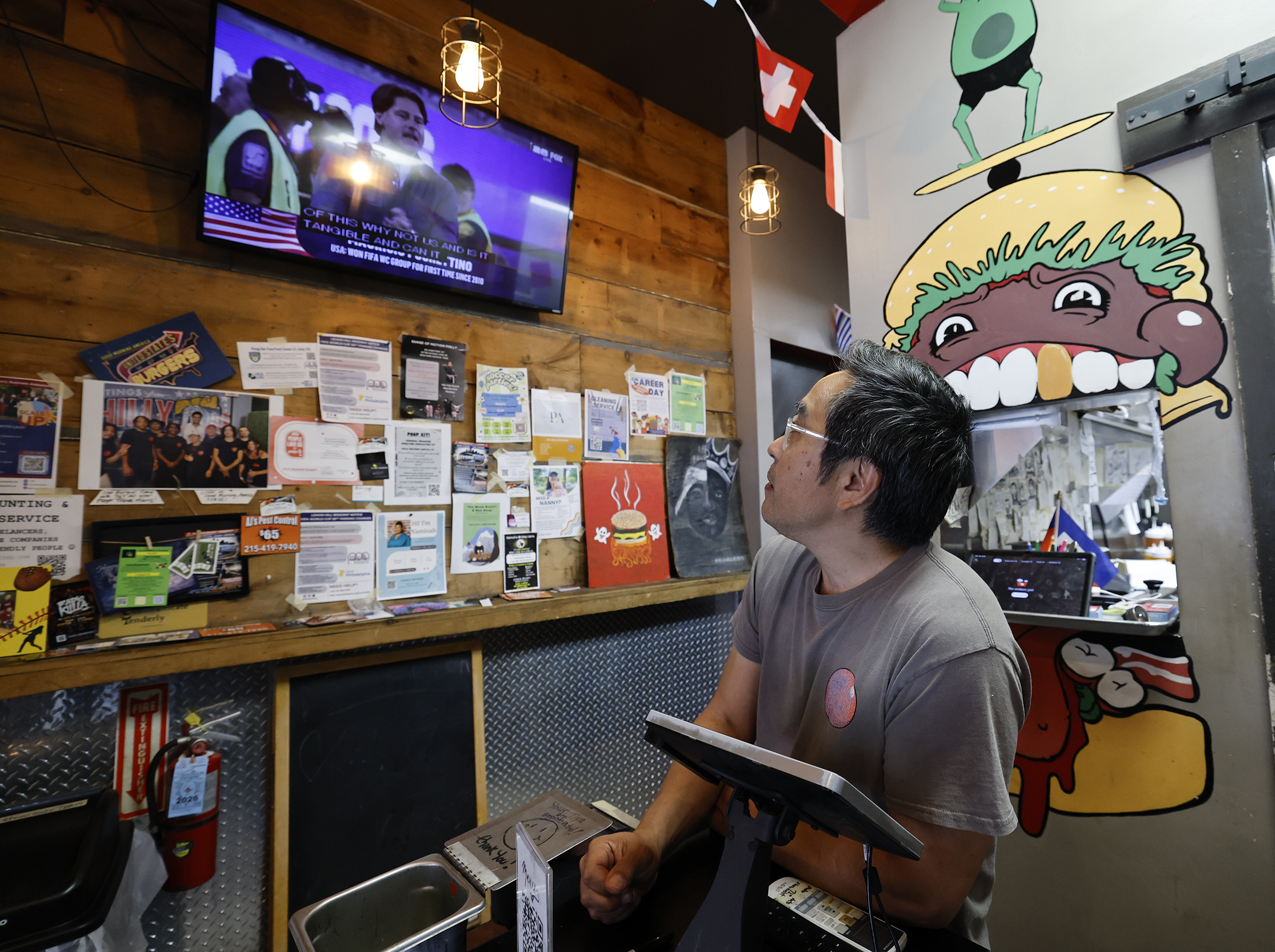
    Josh Kim, owner of Spot Gourmet Burgers, watches World Cup programming from his Brewerytown burger joint.

    Some businesses are faring better than others, even if they aren’t seeing crowds of soccer fans every day.

    Josh Kim, owner of Spot Gourmet Burgers in Brewerytown, said international tourists have made special trips to his restaurant for one thing: American cuisine.

    “When people go to Italy, they want pasta and pizza,” Josh Kim said. “When they come to America, they want burgers.”

    June 19 was a particularly busy day for him: After the Brazil-Haiti match in South Philly, Spot’s sold 200 burgers in less than an hour, he said.

    But no other recent days have been as lucrative, and Josh Kim said he worries it could take a while for regular customers to return to Girard Avenue once the World Cup games — and the restrictions — are over.

    Josh Kim, owner of Spot Gourmet Burgers, points out a temporary residential parking permit sign on Girard Avenue. He said parking confusion has hurt business in the neighborhood during the FIFA Fan Festival.

    “Consumers are habitual,” Josh Kim said. “If [they] break that habit, they no longer think about going to Girard Avenue. … They’ll go up Ridge.”

    On Boathouse Row, across the street from the Fan Festival, Cosmic Café and Ciderhouse has seen steady business, manager Sachael Sciarretta said. About 30% of the cafe’s regulars drive there, and he said he hasn’t seen them since the festival began. But business from soccer fans has made up for the loss.

    Fairmount bars and restaurants seem to have been among the biggest World Cup winners. On Thursday afternoon at the Black Taxi, an Irish pub a few blocks from the festival, almost every seat was filled — several by customers donning soccer jerseys.

    Regulars and soccer fans eat and drink at the Black Taxi Irish Pub in Fairmount on Thursday, June 25.

    “Foot traffic has been great, and the neighborhood is buzzing,” said manager Neil McKernan, who estimated that sales are up 30%.

    In the dining room, the Trainor family enjoyed a meal before walking to the Fan Festival to watch the 4 p.m. match between Curacao and Ivory Coast.

    It was the first time that Kelly Trainor, 42, of Glenside, had been to the Fairmount watering hole, and she brought along her three young children.

    “We can’t afford tickets to the game,” Trainor said. “So this is the next best thing.”

    The Trainor family, of Glenside, enjoyed refreshments at the Black Taxi before attending the FIFA Fan Festival.

    Back in Brewerytown, where the business corridor was quiet, some owners said they wished they could have been more involved in the festivities. Josh Kim, of Spot Gourmet Burgers, said perhaps organizers could have allowed local restaurateurs to sell from food trucks outside the fan entrance.

    “If we were able to activate this corridor, it would have been a lot different,” Kim said.

    “Why didn’t they work with the local businesses so we could make the money?” added Welch, of All Day Hoagies. “Because we ain’t making none.”

  • Danny’s Guitar Shop, a destination for Main Line musicians, has closed after 17 years

    Danny’s Guitar Shop, a destination for Main Line musicians, has closed after 17 years

    Danny’s Guitar Shop, an independent guitar store and lesson center run by musician Dan Gold, closed its doors after 17 years in downtown Narberth.

    Over nearly two decades, Gold forged connections along the Main Line, sold guitars to celebrities, brought outdoor music to Narberth’s streets, and, briefly, starred in a TV show that drew on his talents as a self-proclaimed “kibitzer.”

    Gold, 72, said retirement was already on his mind when his landlord raised the rent beyond what Gold could pay. Danny’s officially closed at the end of May. As Gold prepares for the next chapter, which will be filled with swimming, traveling, and playing bass in Broken Arrow, his Neil Young cover band, he said his time in Narberth was “just perfect.”

    The former storefront of Danny’s Guitar Shop in Narberth.

    Gold opened Danny’s Guitar Shop in June 2009, right as the country had begun to dig itself out of the Great Recession. Guitar store Medley Music of Bryn Mawr had closed the year prior, and Center City’s 8th Street Music had moved across the bridge to New Jersey, leaving a vacuum for guitar lovers in Philly’s western suburbs.

    Gold, a Newtown Square resident, grew up in Havertown and graduated from Haverford High School and Temple University. He started his career as a schoolteacher before taking a gig as a district sales manager for Fender Guitars, traveling across the region, from rural Pennsylvania to North Jersey, selling instruments and accoutrements.

    Though it was risky to open a brick-and-mortar store at the heels of the financial crisis, Gold was bullish on the prospect. His mentors told him that as long as he ran guitar lessons, he’d be able to pay the rent. Gold had always loved Narberth’s “very distinct, charming personality” and was smitten with the Forrest Avenue storefront right away, with its ample natural light and welcoming front porch.

    When Danny’s opened in 2009, the Main Line Times described it as having promptly “established itself as that rare kind of clubhouse — the kind where everybody’s allowed in.”

    Over the years, the storefront’s shaded porch became the site of dozens of guitar recitals and summer evening jam sessions. Narberth residents gathered outside of Danny’s to talk about the news and the neighborhood gossip, and Gold always had treats for local dogs. Gold helped bring live music to Narberth during First Fridays and the annual July Fourth celebration. Ahead of a recital last fall, Gold posted on Facebook: “Students playin’ on the porch this Sunday 3:00! Bring a chair and come hang out!”

    “Danny is loved around here and for good reason,” said Ed Ridgway, president of the Narberth Business Association, who took guitar lessons at Danny’s.

    Ridgway described Danny’s as resembling an “old-timey barbershop.” If you asked Ridgway to make a list of 10 things that define Narberth’s downtown, he said Danny‘s would be on the list.

    “He was just such a good presence in Narberth,” said Tracy Tumolo, owner of Narberth art and gift shop Sweet Mabel Store.

    “This place,” Gold said. “It just fit me like a glove.”

    Danny Gold (center) pictured at Danny’s Guitar Shop in Narberth in 2018 with partners Larry Freedman (left) and Ron Stanford.

    Every once in a while, a star or two would stop into Danny’s Guitar Shop while visiting the area or prepping for a show at Ardmore Music Hall. The Eagles’ Timothy B. Schmit bought a few guitars and gave Gold backstage passes when the band played Atlantic City. Wilco’s John Stirratt stopped by, as did Dweezil Zappa, Frank Zappa’s son. Tumolo said Gold always encouraged them to shop at Narberth’s other businesses.

    In 2014, Gold starred in a 13-episode series on WHYY-TV’s YArts cable channel, which aimed “to do for guitars what Anthony Bourdain has done” for international cuisine or ”Mike Rowe for the art of cleaning septic tanks,” according to an Inquirer story from the time. In the series, Gold explored the origins of Klezmer music, interviewed the scholar who wrote the definitive book on the history of the accordion, and spent quality time with electric guitar giant Paul Reed Smith.

    Lessons were the biggest part of Gold’s business model at Danny’s, as his mentors predicted. He did a large consignment and secondhand business, as well, as he was mostly selling to first-time and beginner players.

    “The lessons made me a destination store. It’s never like I carried away wheelbarrows full of money, but we were able to make a modest living and enjoy doing what we were doing,” Gold said.

    Like many brick-and-mortar merchants, Gold said it became more difficult over time to keep up with the ubiquitous online marketplace. Consumers can now buy any model of guitar, in any color, at any time. Music stores across the country have shuttered in recent years, pointing to online shopping as a factor in their decline.

    On one hand, Gold feels somewhat liberated from the day-to-day responsibilities of running his namesake storefront. On the other hand, there’s a lot he’ll miss — the people, the borough, watching the neighborhood kids grow up.

    At the end of the day, Gold said, “It’s been a great run.”

    This suburban content is produced with support from the Leslie Miller and Richard Worley Foundation and The Lenfest Institute for Journalism. Editorial content is created independently of the project donors. Gifts to support The Inquirer’s high-impact journalism can be made at inquirer.com/donate. A list of Lenfest Institute donors can be found at lenfestinstitute.org/supporters.

  • Google Workspace can save small-biz owners time and money. Here’s how. | Expert opinion

    Google Workspace can save small-biz owners time and money. Here’s how. | Expert opinion

    When it comes to office software, people generally think first of Microsoft. But the reality is that Google Workspace is used by over 11 million paying organizations and boasts more than 3 billion monthly active users globally.

    Many of my small-business clients use Google Workspace to send emails, create documents and spreadsheets, host meetings, and store files. And yet most are only scratching the surface. It’s often frustrating to witness so many businesses not taking advantage of all the capabilities of Google Workspace, even though they’re paying for it. That’s a waste of money.

    If used the right way, Google Workspace can scale right along with the growth of your business, provide excellent collaboration features, and can be cost-effectively managed and secured without requiring expensive IT firms.

    For starters, centralize everything.

    If you’re going to use an office platform like Google Workspace, it’s best to lean into it fully. Mollie Plotkin, who runs a successful talent and speaker agency in Philadelphia, says Google Workspace is the “shared backbone” of her company. She uses Google Meet, Calendar, Chat, and Drive to “create an ecosystem” so that everything is in one place.

    “Work is much more manageable when everyone had equal access to the same systems regardless of where they were working,” she said. “Instead of relying on multiple versions of files being e-mailed around, our teams work from one live document at a time, which dramatically reduces confusion and duplication.”

    Plotkin also says that her internal team saves time on searching and improves efficiencies by consolidating all files and data in one place.

    “Important information lives in shared spaces instead of individual inboxes, which makes collaboration faster and prevents bottlenecks,” she said. “We use shared templates, collaborative planning documents, and centralized project tracking so our team can move quickly without reinventing processes each time.”

    Cheryl Friedenberg, a founder of High Key Impact, a digital marketing firm in Blue Bell, says that sharing calendars has significantly reduced “all the back and forth” for scheduling client calls and managing deadlines.

    “Google Drive and Docs make sharing files simple, without endless email chains,” she said. “There’s no confusion about versions or missing attachments.”

    Friedenberg always tells her clients to go the extra yard and make sure to also use Gmail within their own website domain and not as just a Gmail address.

    “Using a generic @gmail.com address on proposals, invoices, or your website can make your business look less professional,” she said.

    Automate everywhere

    Once your team is using Google Workspace as a primary office management tool, it’s important to start automating tasks wherever possible.

    Milan Baria, who runs Blueclone Networks, an IT services firm in Princeton, says that with Google Workspace you don’t need a developer to automate repetitive tasks. “We use simple scripts to bridge the gap between Google Sheets and Gmail to automate client follow-ups.”

    Andy Williamson, one of the founders of Wilmington-based training firm ONLC, says that Google Workspace Studio, with Apps Script, lets a non-technical user describe a workflow in plain English and have it built.

    “The new agents can read the email that came in, decide what kind of request it is, draft the reply, pull the right doc, and only come back to you when something actually needs a person,” he said.

    Williamson says that it’s not difficult to create automation so that a company’s data power dashboards or other applications.

    “Apps Script used to be just for programmers, but this has been changing recently,” he said. “Everyone in the business is becoming an agent builder, not just the developers.”

    Leverage AI

    Even if you’re not ready to automate with agents, Google Workspace comes with many AI features right out of the box.

    Friedenberg says that by leveraging AI, a user can turn a simple prompt into a fully designed presentation in minutes.

    “You’re starting with something polished instead of a blank page,” she said.

    In addition, and instead of hiring a videographer, Friedenberg encourages her clients to use Google Workspace to make short professional-looking video.

    “You can make a spokesperson-style video without being on camera,” she said. “The voice-overs sound natural enough that most viewers wouldn’t know they were AI-generated. Many small-business owners don’t realize it’s already included in a tool they’re probably already paying for.”

    Joe Henderson, a Philadelphia-based expert with Google premier partner Promevo, says that another underused application is Google’s Notebook LM, a premium feature with many paid Google Workspace plans.

    “Notebook LM is an AI research assistant that analyzes your documents, then generates summaries, answers questions, creates study guides, timelines, podcasts, and other content based solely on your uploaded sources,” he said. “Our clients use it to input raw documents, industry articles, vendor videos, and automatically turn that chaotic information into easy-to-understand explainer videos, short audio podcasts, quizzes, and custom study guides. It’s like a proactive operational brain sitting within Google Workspace.”

    Finally, lean into Workspace’s IT management tools

    Baria says that most owners don’t realize that they easily can restrict Workspace access based on the user’s location or device security status like any experienced IT professional.

    “High-level security isn’t just for enterprises,” he said. “Small businesses can set up simple rules that prevent employees from accidentally emailing out sensitive information, and use Workspace’s license and user management tools to eliminate unnecessary applications and archive user accounts to save hundreds, even thousands, of dollars a year.”

    Plotkin agrees.

    “You don’t need a massive IT department or expensive infrastructure,” she said. “Workspace allowed us to add team members, improve collaboration, and manage more clients without drastically changing our operational structure.”

  • Center City snack shop Nuts To You tries TikTok Shop as it pivots toward its next 50 years

    Center City snack shop Nuts To You tries TikTok Shop as it pivots toward its next 50 years

    On 20th Street between Market and Chestnut, much has changed in the past 50 years. One tenant that hasn’t: Nuts To You. The snack shop, wrapped in yellow wallpaper speckled with walnuts, remains packed with shelves of nuts, candy, and dried fruit galore.

    Nuts To You, a snack haven owned by the same family for three generations, is celebrating 50 years in Center City. Since its first location opened in 1976, Nuts To You has survived the rise of the internet, and the emptying of the business district in a post-pandemic Philadelphia, building decades-long customer relationships on the way.

    Pulling off such a feat is “rare, and it’s really hard,” according to Erika Tapp Duran, director of Temple University’s Small Business Development Center.

    Nuts To You freshly roasts their nut products at a warehouse in Frankford. Over the years they have broadened their inventory to include freshly popped popcorn (also made in-house), as well as chocolates, candy, dried fruit, and almost anything else one could find in a kitchen pantry.

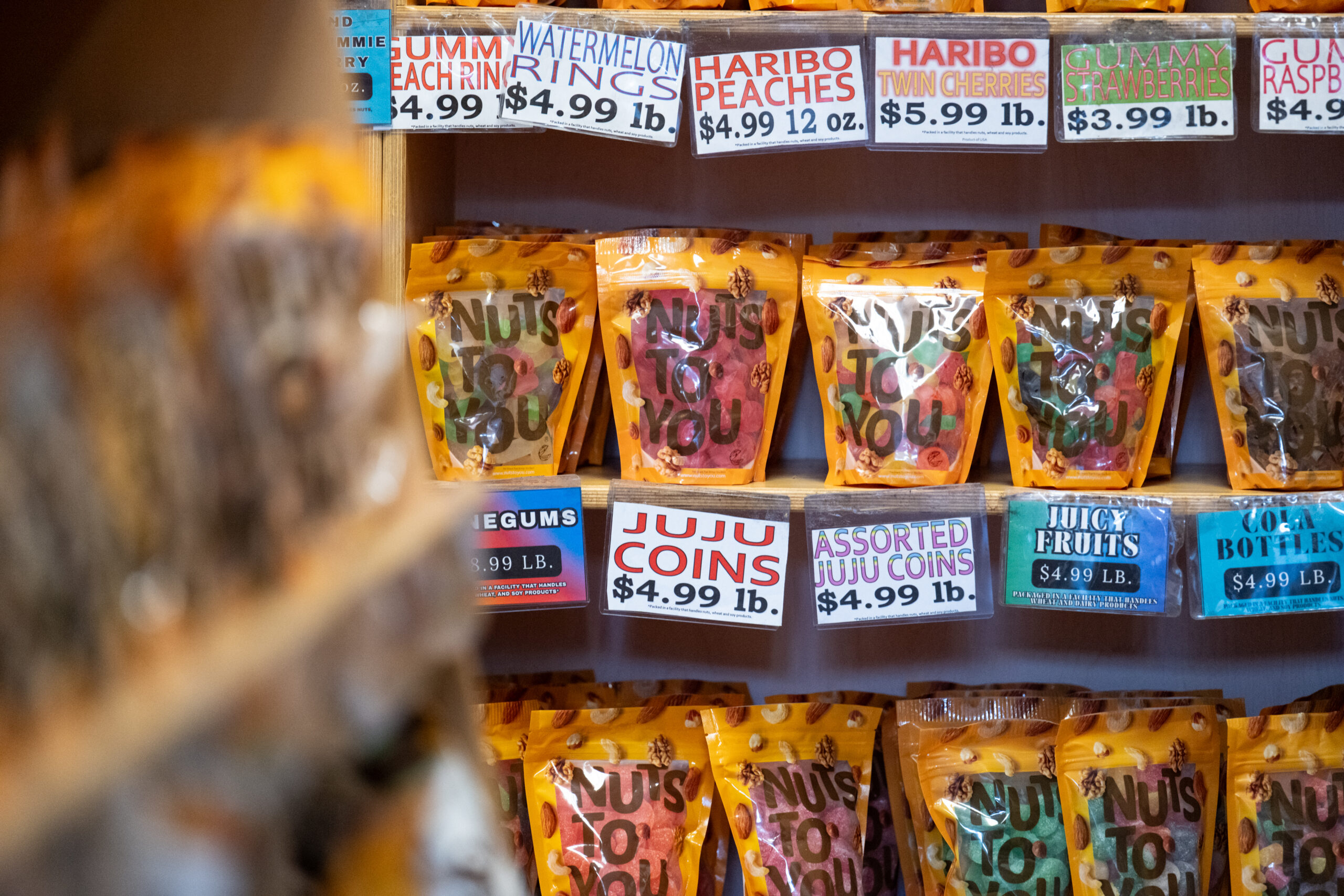
    Gummy candies sold at Nuts To You, a family-owned and operated snack store.

    They sell those products out of three city storefronts: on 20th Street near Rittenhouse Square, 16th and Market Streets on the ground floor of Centre Square; and Seventh and Walnut Streets in Washington Square West.

    But the brick-and-mortar business has changed. In 2018, Nuts To You had six physical stores, and its leaders were considering expanding into Washington, D.C.

    “We used to have lines during lunch rush,” said Justin Bernstein, who co-owns the business with his father, Howard Bernstein. “That just doesn’t exist anymore.”

    The location beneath Centre Square has a front-row seat to the evolution. At the end of 2025, the office building had the highest vacancy rate in Center City. Developers are now planning to convert it into a mixed-use complex with apartments and luxury hotel rooms. With three years left on that lease, Nuts To You is uncertain about the 16th and Market store’s future.

    But for now, “We’re still here,” said Justin, who has spent most of his life as part of Nuts To You. “We’re still going.”

    Fewer walk-ins and a digital pivot

    James Troutman, 77, a regular at the Seventh and Walnut Street location, piled bags of rolled oats, cashews, peanuts, walnuts, and sunflower seeds into his gray backpack as he left the store on a Tuesday morning. He’ll later combine those ingredients into his daily homemade cereal, which he has been making from Nuts To You products for decades.

    “That’s why I’m so young looking!” Troutman joked.

    Employees said this location, the company’s most popular, draws an estimated 100 customers a day. But Nuts To You is not immune to the struggles facing brick-and-mortar businesses. In-person sales are down 30% to 40% from pre-pandemic levels, which the owners attribute to less foot traffic as more people have remote or hybrid work arrangements.

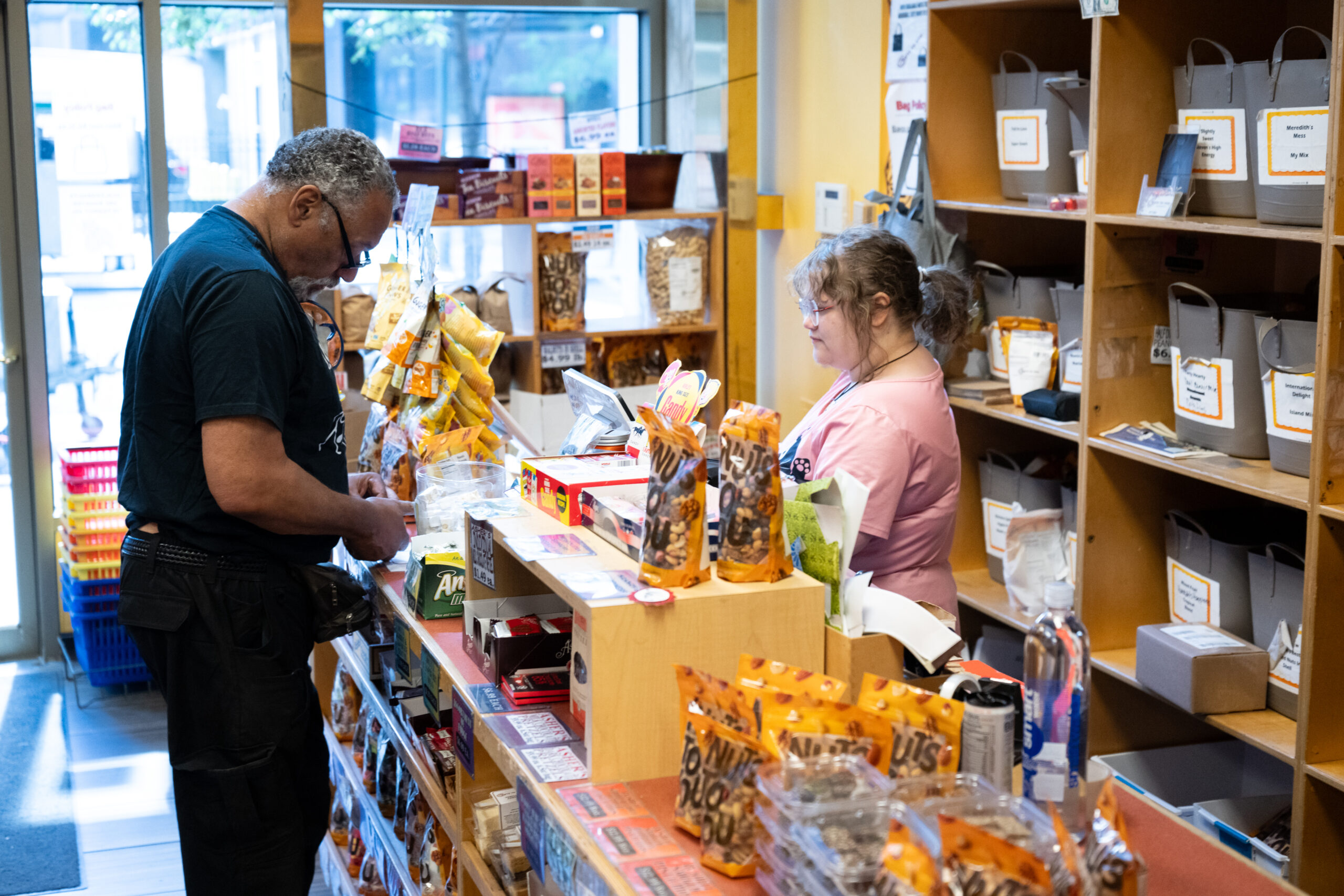
    Anthony Feaster (left) makes a purchase with the help of employee Brianna Boyko at the 16th and Market Streets Nuts To You.

    The entry of big retail competitors into Center City has also changed the business.

    “Fifty years ago, there was nobody selling this product,” said Howard. “CVS and all those drug stores didn’t have full lines of nuts and candy.”

    For Nuts To You, the decline in foot traffic has been offset by an increase in online sales. The company launched its website in 2010, but was only making about $100 to $200 a day online before the pandemic. Within two days of COVID-19-related lockdowns taking effect, sales increased to $3,000 a day.

    Now, 40% of Nuts To You’s sales come from its website, and the company has forayed into selling on TikTok. As of June, only about 1% of their sales come from TikTok Shop, but Justin said that’s already more than expected.

    In lieu of the nuts and oats that traditional walk-in customers buy, online customers tend to purchase sugar-free products or nostalgic novelties like wax bottles or Sugar Daddies.

    “Think about all the things that have changed for consumers in the last five or six years, and then multiply that out over 50 years,” said Temple’s Tapp Duran. “You have to be able to pivot.”

    Howard says that Nuts To You’s popularity has stemmed from its business strategy, which he defines as “largest variety, lowest prices, highest quality.” This may have been true for many years. Though, with larger retailers’ entry into Center City — Justin cited Trader Joe’s in 2003 and Target in 2016 — it has been difficult to beat corporate giants on prices.

    However, the owners say what they can still ensure is quality — “That’s what our customers expect,” Justin said. They source their walnuts and pistachios from small growers in California, with whom they’ve maintained yearslong connections.

    “We don’t want to switch to another brand, even though I could save a dollar,” said Howard. “Most customers appreciate that.”

    In addition to greater competition and a changing retail landscape, Nuts To You has faced challenges common among small businesses in 2026.

    Within the past few months, they’ve joined the ranks of small businesses who were sued for violating the Americans With Disabilities Act, based on allegations that the Nuts To You website relied on a visual interface that was inaccessible to individuals who are blind or use screen readers. Another lawsuit came out of a Proposition 65 claim — a law that requires products sold in California to warn consumers for potential exposure to dangerous chemicals — leading Nuts To You to adopt a disclaimer on its website.

    “You think you’re OK, we’re running smooth, we know our expenses, then all of a sudden you get served papers,” said Justin. “And it’s like, what?”

    Generations of work

    For years, Basheer Ali, 65, has been traveling from Southwest Philly to the Center City Nuts To You stores for his fresh nuts and candy. Employees there have helped him navigate a diabetic diet, introducing him to sugar-free chocolate pretzels.

    “The people need these kinds of stores,” Ali said.

    The company sees very little employee turnover, Justin said. At least half its 19 employees worked at the company for more than a decade.

    Regina DeLeon, manager of the Washington Square West location, has been with the company for 26 years. When prompted by a customer, she recalled Nuts To You’s founder and first-generation owner, Manny Radbill.

    Radbill predicted in 1975 that nuts were going to be the next health craze. He wasn’t wrong: In 1992, a study found an association between nut consumption and a lower risk of coronary heart disease, which kicked off decades of research on the health benefits of eating nuts.

    With the help of Radbill’s daughter, Caryn, and her then-husband Howard, they opened that first store on South 20th Street, which is still in operation today.

    Justin first entered the family business when he was 2 years old, pushing buttons on the cash register. Howard required him to gain outside experience first, but Justin said, “I always kind of knew this is what I wanted to do.”

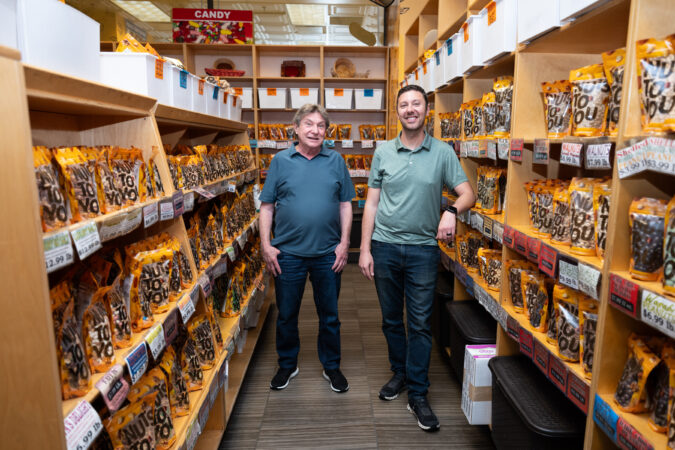
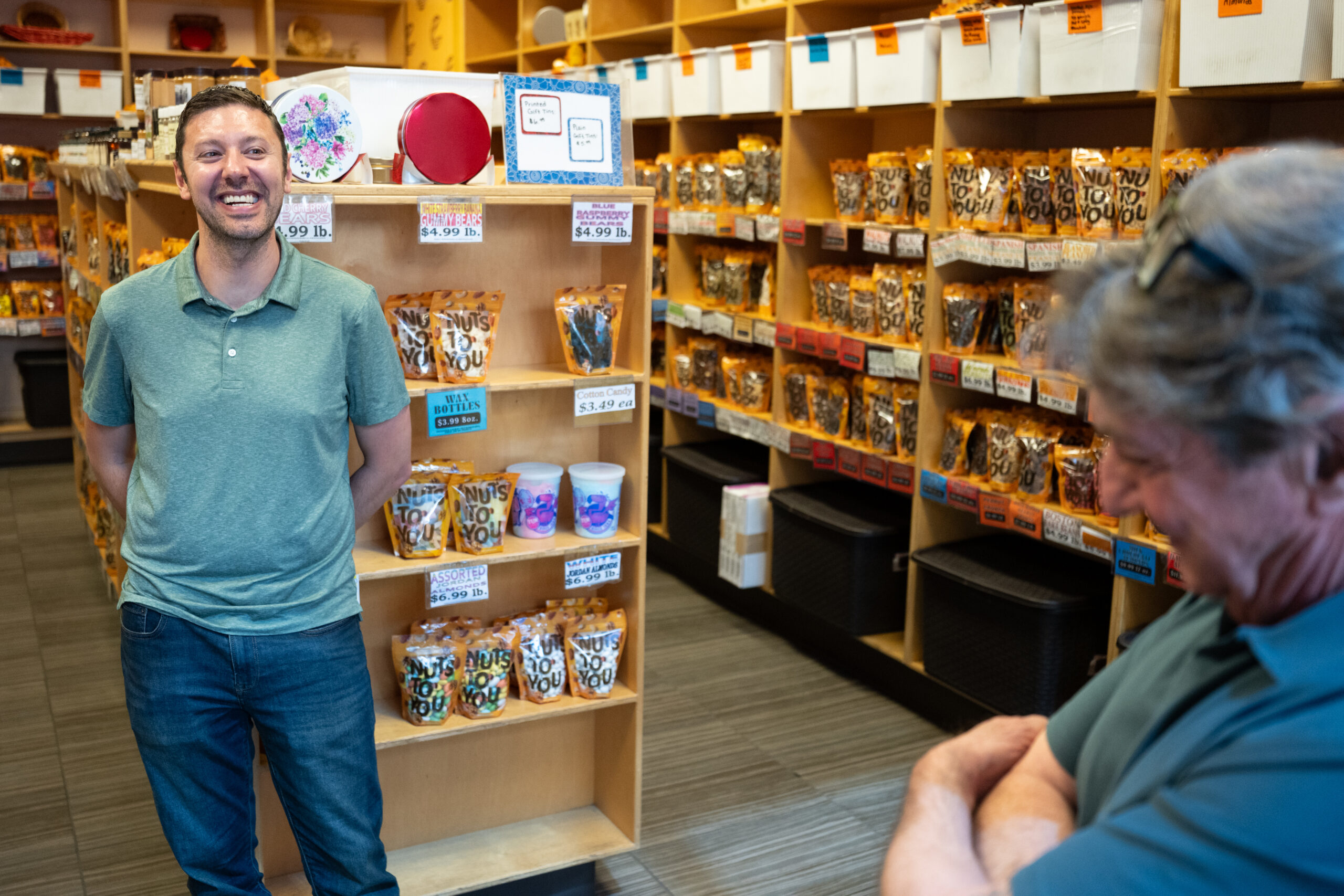
    Justin Bernstein smiles at his father, Howard Bernstein, inside one of their three Center City Nuts To You stores.

    So, after his college graduation and a brief stint at Boscov’s, about 20 years ago Justin joined Nuts To You and has since become co-owner.

    As iconic family businesses like Di Bruno Bros. have been acquired, buyers have approached the Bernsteins, but Howard and Justin decided against it. They entertained one offer, but the deal-breaker was a requirement to close all of the physical stores — the owners refused to put their staff out of jobs.

    Over their 50 years in business, Justin said he is most proud of staying family owned.

    “We’ll see what happens, what the future holds,” said Justin. “At least another 20 years, call it.”

  • As health insurance prices climb, HRAs offer small businesses a flexible option | Expert Opinion

    As health insurance prices climb, HRAs offer small businesses a flexible option | Expert Opinion

    Finding and retaining employees remains a top concern among small-business owners, and offering affordable healthcare benefits continues to be a significant challenge. Because of this, health reimbursement arrangements, or HRAs, have become more popular.

    Simply put, an HRA allows an employer (or an employee) to make tax-free (and tax-deductible to the employer) contributions to an individual’s HRA account.

    The employee can use those funds to reimburse uncovered healthcare expenses or purchase their own health insurance, either from outside brokers or on the Pennsylvania, New Jersey or Delaware healthcare marketplaces.

    HRA options

    A small business can consider a few different HRA options.

    A general HRA is funded entirely by just the employer and often used alongside existing group insurance plans to help reimburse expenses not covered by their existing insurance. These expenses could include co-pays, over-the-counter medication, or even dental and vision care.

    Alternatively, health savings accounts (HSAs) allow employees to contribute pretax dollars for the same purpose.

    “An employer can buy a high-deductible group plan, then use HRA funds to cover part of that deductible,” said Robert Deninno, a founding principal of Precision Benefits Group in Philadelphia. “The appeal is that unused HRA money remains with the employer, unlike HSA funds, which belong to the employee.”

    Deninno said employers can use HRA language to fill in specific gaps in a group plan, such as hospital costs, rather than paying a much higher premium for a richer underlying plan.

    An individual coverage HRA (ICHRA) allows employers to reimburse employees for premiums on health insurance the employee independently purchases.

    A qualified small-employer HRA (QSEHRA) is designed specifically for businesses with fewer than 50 employees that do not offer a group plan. It is more formalized and is similar to an ICHRA.

    HRA popularity

    These arrangements give employers wide discretion, said Ed MacConnell, owner of Total Benefits Solutions in Feasterville.

    “Employers can determine reimbursement levels, caps, frequency, and categories,” MacConnell said. ”That matters because most employers are trying to balance two competing goals: doing right by employees while staying within budget.”

    Many people assume employers just want the cheapest plan possible, MacConnell said, but in his experience the opposite is usually true.

    “Most employers genuinely care about how their choices affect employees and their families,” he said. “HRAs can help by letting them target limited dollars more intentionally.”

    All of these plans have their nuances and it’s best to speak with a health benefits consultant or your payroll company to determine what’s best for your business.

    You won’t be alone. ICHRAs alone grew 52% among small employers from 2024 to 2025 with 83% of employers who previously didn’t offer health insurance options now offering either ICHRAs or QSEHRAs, according to a recent report from the HRA Council, an advocacy organization.

    HRA benefits

    That surge in popularity is because offering HRAs — in addition to or in lieu of group coverage — provides an employer with three significant benefits.

    The first is cost control. The cost of group insurance is expected to rise as much as 10% in 2026, but with an HRA, an employer can contribute whatever amount they can afford, unbeholden to the insurance company’s premiums. With certain HRA plans, an employer no longer has to negotiate with a group insurance provider, and is less exposed to potential privacy violations of an employee’s health history.

    “The employer can decide what to reimburse, how much to reimburse, and under what limits,” MacConnell said. “This flexibility makes HRAs attractive to smaller employers that want to start somewhere rather than do nothing.”

    Another benefit: because an employee can use these funds to purchase their own insurance, they’re no longer limited to the options their employer offers and they may be able to buy more affordable or more suitable plans.

    Finally, there’s the recruiting benefit. Offering an HRA plan allows small businesses to have a response when a prospective employee inevitably asks about health benefits. By contributing even a nominal amount — and allowing an employee to contribute their own pretax dollars — a small business has a healthcare benefit option and becomes more competitive when pursuing talent.

    HRA challenges

    There are challenges with these types of plans. For example, administration can be messy, especially as the company grows or employee situations become more diverse.

    “If 10 employees buy 10 different plans, the employer and broker lose the efficiencies that come with one group carrier and one group policy,” said Deninno. “When employees are scattered across different individual plans, it becomes much harder to resolve claims problems or coverage issues.”

    MacConnell emphasizes the need for a third-party administrator, particularly when a company exceeds 10 to 15 employees.

    “Outsourcing becomes worthwhile when the alternative is tracking many different employees, many different plans, and constant premium changes,” he said.

    For HRAs to work well, it’s also important to educate employees and make sure it fits the company culture. Experts recommend meeting frequently and providing employees with as much support as possible.

    “A good broker or administrator will act as a coworker with your employees,” said MacConnell. “They should help both employers and their employees choose the right plans, answer questions, and act as an advocate.”

  • Workplace discrimination remains an important issue for employers. Here’s how to protect yourself | Expert Opinion

    Workplace discrimination remains an important issue for employers. Here’s how to protect yourself | Expert Opinion

    Workplace discrimination guidelines have been changing under President Donald Trump’s administration.

    The Equal Employment Opportunity Commission has been rolling back Biden-era guidelines — particularly with regard to Diversity, Equity and Inclusion (DEI) policies. But avoiding discriminatory practices remains a top concern among employers, both when hiring and terminating employees.

    Taking several important steps can ensure that your business is not on the wrong side of a discrimination claim.

    Write job descriptions thoughtfully

    Avoiding claims of discrimination can be mostly accomplished by focusing on job descriptions, said Claude Schoenberg, a labor attorney based in Bala Cynwyd.

    Schoenberg says that a good job description fully lays out what’s required of an employee to adequately perform their job. “It becomes your Bible and it takes a lot of the subjectivity out of the conversation,” he said.

    It is clear about the physical nature of the work such as moving large boxes, lifting heavy items, operating equipment, or working outdoors in all kinds of weather. A good job description details every single required job function, so if any of these functions are not being completed, the employer has the right to take action.

    “If you have employees for whom there is no job description, then develop one. It’s a critical document and it cannot be vague,” Schoenberg said. “If you don’t have that job description, then you are vulnerable to claims alleging things that you may not have said or done.”

    Some jobs make this tricky, Schoenberg warns, such as roles that require wearing a specific type of clothing at work, or positions that are only open to one gender (such as a male attendant in a men’s locker room).

    “You should always have an attorney review your job descriptions before using them,” he said. “And there should be a very detailed job description for every single employee at your company, from hourly workers to your top managers and executives.”

    But job descriptions do not broadly protect employers from any kind of discrimination claim, said Christina M. Reger, a labor attorney at Loutel Law in Newtown.

    “They’re helpful in things like disability accommodation disputes, but not as a catch-all defense against all age, gender, and race claims,” she said.

    Update company policies and train managers

    Anti-discrimination rules should be a “critical part of every company’s handbook,” Reger said, and must be communicated to employees regularly. She recommends ongoing training for managers so they can identify any potential issues.

    “Policies should be living and broad without listing specific protected classes one-by-one, which would help avoid constant updates and prevent misunderstandings when language changes,” she said.

    To help enforce these rules, Reger also recommends having a clear complaint procedure and an external source for complaints. This could include an outside attorney with a dedicated email or phone line for complaints, or a third-party human resources consultant.

    “Many small employers get burned because the complaint path is not credible,” she said. “You want complaints going to an external source, not directly to the EEOC.”

    How has EEOC guidance on discrimination changed?

    The EEOC’s new policies are pushing back against corporate DEI practices that became mainstream in recent years. Instead, the EEOC is encouraging employers not to discriminate based on factors such as skin color, religion, and sexual orientation. The agency now says all employees should be treated equally regardless of these factors and hiring practices should reflect the same.

    The change in policy can be confusing, but Schoenberg reminds his clients that when it comes to discrimination in the workplace, the EEOC only sets guidelines. Depending on the political environment, the EEOC has been known to flip-flop. But court rulings are binding.

    “The EEOC’s own regulations do not have the force of law,” he said. “Employers should focus on actual statutes and court interpretation — not the administration’s latest guidance.”

    Before terminating an employee, Reger suggests the employer do a “retaliation/discrimination risk check.” This involves running through a checklist of documentation — recent complaints, leave, accommodation requests, protected status signals — and documenting the legitimate reason for termination.

    Employers should “also strongly consider severance pay if it can help reduce the risk of a lawsuit,” she said.

    Schoenberg advises companies to get Employment Practices Liability Insurance (EPLI) as a “backstop.” Most general liability policies don’t cover employment practices, he said, and employers should not assume that they’re covered if a discrimination lawsuit is filed against them.

    All of this points toward treating employment as a life cycle from hiring to termination.

    “The more you document that life cycle, the better off the employer is,” said Schoenberg.

  • Small businesses, don’t expect tariff relief anytime soon | Expert Opinion

    Small businesses, don’t expect tariff relief anytime soon | Expert Opinion

    The U.S. Supreme Court dealt a blow to President Donald Trump’s tariff plan last week. But if you’re a small-business owner who’s been affected by tariffs, don’t get too excited.

    This fight is far from over. And so is the uncertainty. Even when courts push back, presidents retain enormous tariff authority — and small businesses should assume continued volatility.

    The president had imposed tariffs on a number of countries under the International Emergency Economic Powers Act (IEEPA), which authorizes him to “declare a national emergency and regulate or block commercial and financial transactions with foreign nations deemed an unusual, extraordinary threat to U.S. national security, foreign policy, or the economy.”

    The Supreme Court upheld previous lower court rulings that said he exceeded his authority to do so. But President Trump has vowed to continue the fight. He’s far from finished.

    For starters, he’s able to raise tariffs under the 1930 Smoot-Hawley Act. This law allows the U.S. to impose tariffs (up to 50%) on imports from countries that “discriminate” against U.S. goods through unfair duties, taxes, or regulations. It requires an investigation and a time-limit but it pretty much leaves the entire decision up to the president.

    The problem for President Trump is that imposing tariffs under Smoot-Hawley requires Congressional approval which is far from guaranteed, even though his party holds slim majorities in both the House and Senate, given the pushback he’s received from other Republicans on his past tariff actions.

    The president can also take advantage of Section 122 of the Trade Act of 1974. This legislation gives “balance-of-payments” authority to the executive office and allows him to impose a 15% tariff on countries as he chooses. He used this authority last week to raise the global tariff the U.S. charges to other countries from 10% to the maximum 15%. Unfortunately for him, there’s a 150-day limit to this tariff, unless Congress approves an extension which is, as mentioned previously, far from assured.

    Finally, the president can invoke Section 232 of the Trade Expansion Act of 1962, along with Section 301 of the Trade Act of 1974. Both allow the president to impose tariffs on selected sectors and industries. These laws were behind the tariff increases enacted by the Biden Administration in 2024 on steel, aluminum, semiconductors, electric vehicles, critical minerals, and solar cells. To play this card, investigations are required along with public comment, but once those rules are satisfied the executive office has a lot of flexibility.

    All of these are strategies that the president could use. And — as he’s proven — he’ll fight anyone in court who challenges him, a process that could easily extend beyond his current administration.

    It’s why Secretary Treasury Scott Bessent told CNBC in December that the Trump administration would be able to replicate tariffs even if it loses at the Supreme Court. As recently as Friday, Bessent said, “The overall tariffs, at the end of the day, will be unchanged.”

    So what do to? The smartest small businesses aren’t waiting for Washington. They’re restructuring supply chains now. You can do the same.

    Investigate bonded warehouses and free trade zones where you can bring your goods tariff-free and defer their impact until you ship product out of the warehouse, hopefully at a future time when rates are lower or there’s more clarity.

    Use organizations like the World Trade Center Association and tools like the Make Onshoring Great Again portal to find alternate suppliers and products, both domestic and foreign.

    Selectively pass down price increases based on individual customer profitability analysis, rather than broadly.

    Lean into technology in an effort to increase the productivity of your workers in order to better control or even reduce overheads.

    Try to do more assembly and manufacturing here in the U.S. All of these moves are what my smartest clients are doing in order to mitigate the uncertainty.

    Can you expect a refund? Don’t hold your breath. Refunds need to come from the importer/exporter of record, which is generally the company that handled the transaction at the port. Most of these companies I know are not structured to apply for refunds on such a scale, even if there was a process in place (which there isn’t).

    The Supreme Court has “remanded this back down to the lower courts to decide if refunds will be issued and without knowing for certain, many believe that the refunds will not be issued retroactively,” Lori Mullins of Rogers & Brown, a customs brokerage firm in Charleston, told CNBC on Friday. “For importers hoping for refunds the answer is yes, we have a ruling but we do not have a ruling on if any refunds will be granted. That will be handled by a lower court at a future date/time.”

    The Trump administration is wiping their hands clean of orchestrating a tariff refund, saying, effectively that it’s not up to them, it’s up to the lower court. In his dissent, Justice Brett Kavanaugh noted the ruling lacked any refund guidance, and he stated that the refund process may be a “mess.”

    Lawsuits already filed by larger corporations will take years to sort out. Smaller companies — lacking resources — will have a much bigger hill to climb, if that hill even exists. If you’re expecting a retroactive refund, you’re planning on a hope strategy — not a business strategy.

    Whether you agree with the president’s tariff strategy or not is beside the point. What matters is this: Tariff policy has become a tool of both trade and politics.

    That means volatility is now structural, not temporary. Which means the impact of tariffs on your small business isn’t going to change anytime soon.

    Uncertainty? That much is certain.