DETROIT — The Dodge Charger won the 2026 North American Car of the Year award, while the Ford Maverick Lobo took the crown for trucks, and the Hyundai Palisade won the utility award.
The awards were announced Wednesday morning during an Automotive Press Association event at the start of the North American International Auto Show in Detroit.
Automakers prize the awards, which are decided by a group of journalists from the U.S. and Canada who evaluate factors such as vehicle innovation, design, performance, driver satisfaction, and more in their decisions.
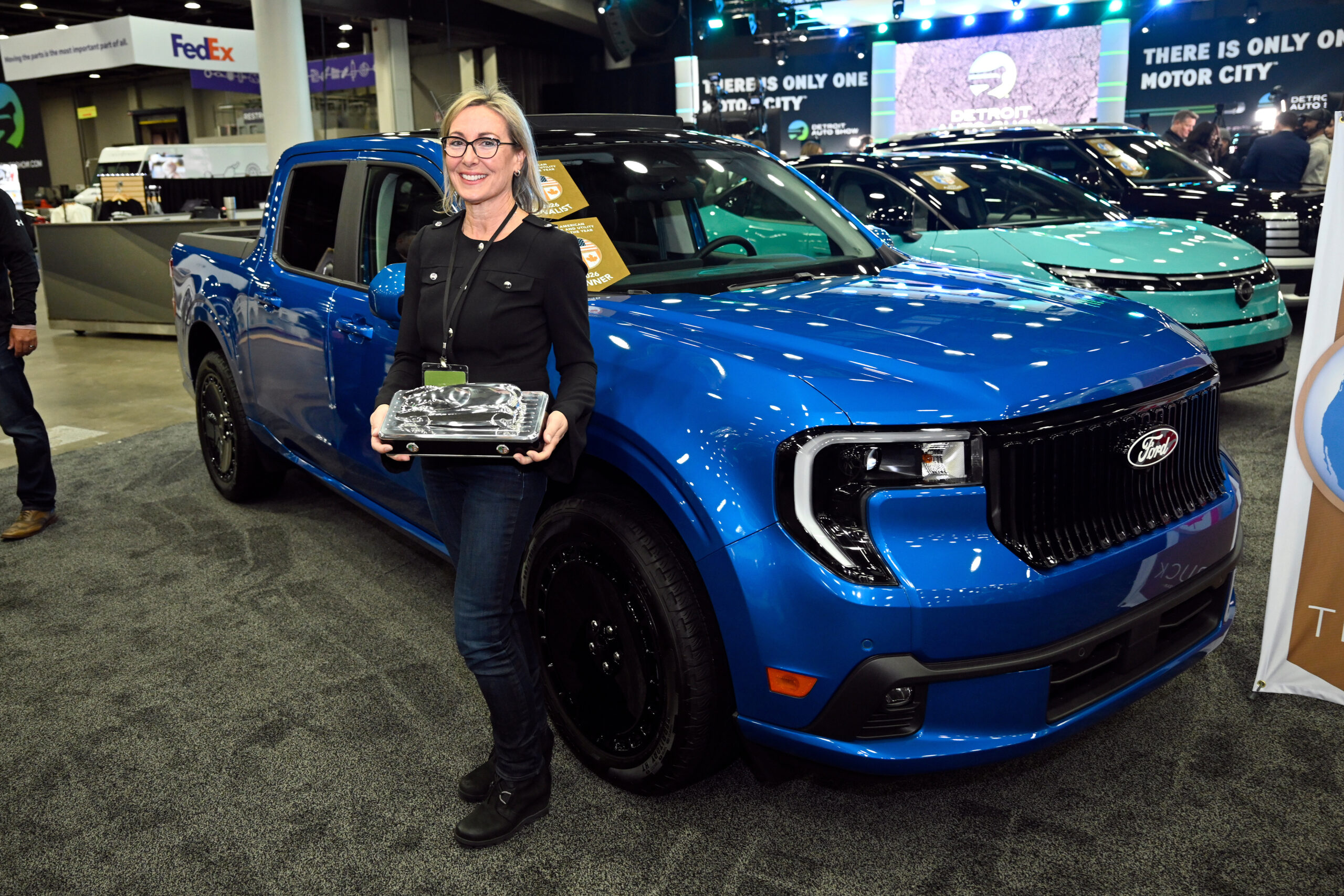
Pamela Wylie, Ford Motor Co. vehicle programs director, holds the North American Truck of the Year award in front of the Ford Maverick Lobo.
The honors are considered a key gauge for how media perceive automakers’ new and redesigned vehicles, and buyers often use them in selecting vehicles for purchase.
In addition to the winning Dodge Charger midsize car, car finalists included the Honda Prelude hybrid sports coupe and the Nissan Sentra compact car.
The truck finalists this year included the Ram 1500 Hemi alongside the Ram 2500.
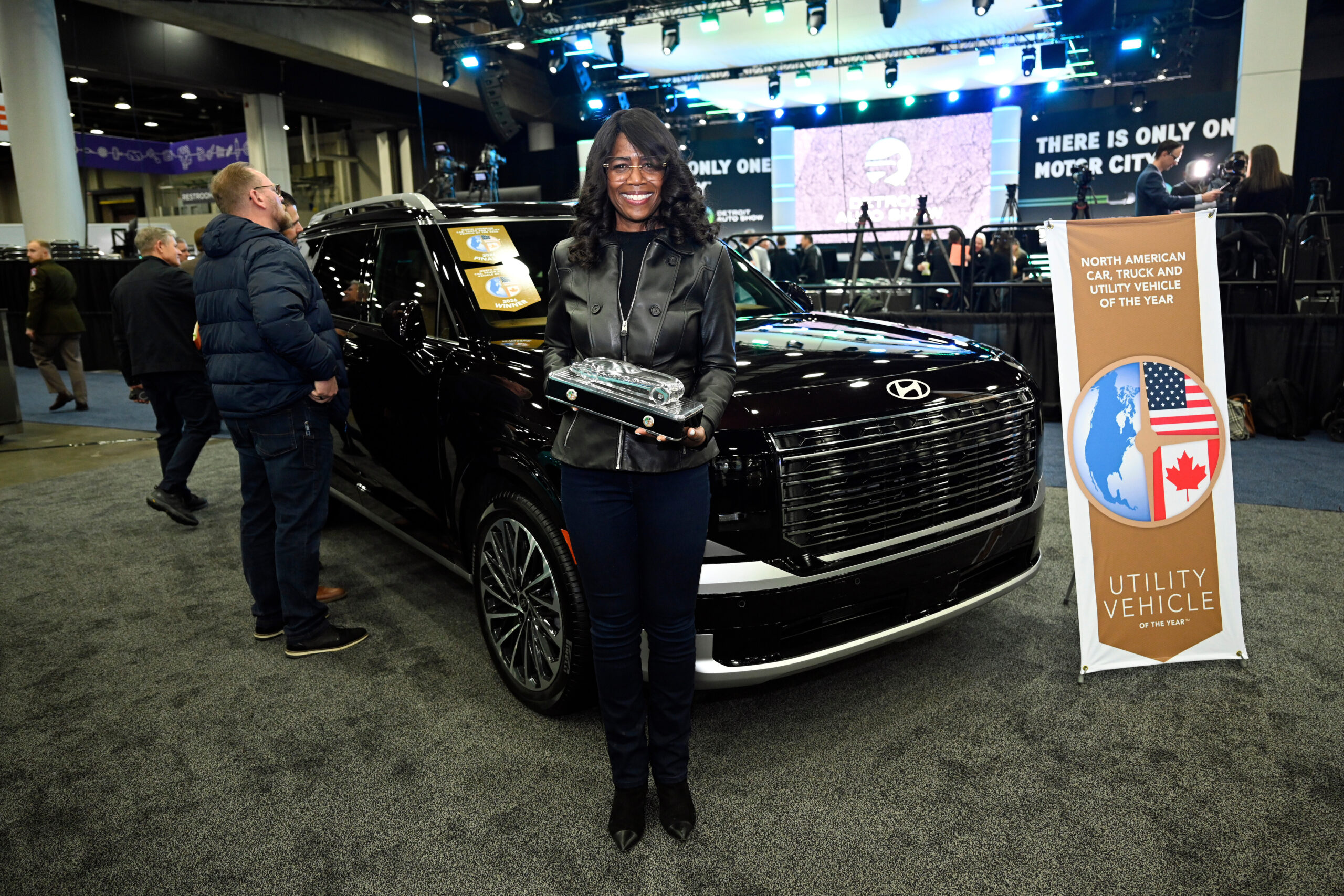
Olabisi Boyle, Hyundai Motor North America senior vice president for product planning and mobility strategy, with the North American Utility Vehicle of the Year award in front of the Hyundai Palisade.
The remaining utility finalists were the Lucid Gravity luxury electric vehicle and Nissan Leaf small electric crossover SUV.
This year’s finalists represented a mix of internal combustion engine, hybrid, and electric vehicles.
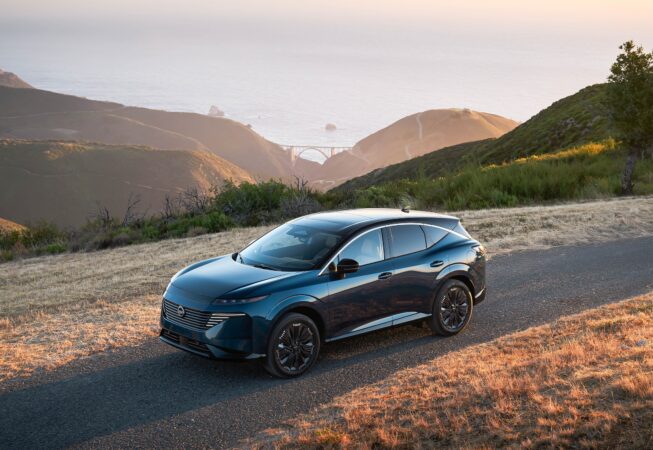
2026 Nissan Murano Platinum AWD vs. Volkswagen Atlas SEL Premium R-Line: Midsize SUV comparison.
This week: Nissan Murano
Price: $53,950 as tested
What others are saying: “Highs: Comfortable front seats; short stopping distances. Lows: Rough-shifting transmission, uneven power delivery, stiff ride, unintuitive controls,” says Consumer Reports.
What Nissan is saying: “Energetic elegance.”
Reality: I promise I checked Consumer Reports after I wrote the column.
What’s new: I was excited to have a Murano in my lineup because after all these years of columnizing, I would finally get to review one.
(Googles “Scott Sturgis” “Inquirer” “Murano.”) Well, huh. I drove 2015 and 2018 models.
Memorable, evidently.
This is not the same Murano, naturally. A redesign for 2025 gives the awkward old two-row, midsize SUV an awkward new look, along with a new engine and transmission.
Shifty: Hooray! A Nissan without a CVT! The Murano came with a 9-speed automatic, so I should be this delighted. But read on.
Up to speed: Gone is the V-6 that powered the old model. The 2.0-liter turbocharged engine creates 241 horses, which is not a ton for this size of vehicle. It gets the vehicle to 60 mph in 7.2 seconds, according to Car and Driver.
But the acceleration story has many more chapters. When I first pulled out of my neighborhood, the Murano seemed to alternate between lag and lurch. “OK, it’s cold,” I thought, offering the benefit of the doubt even while it was probably 85 degrees outside. “I’ll give it some time.”
But the unsteadiness continued. Sometimes SUVs and minivans can have an awkward accelerator-foot interface, so I looked into that. But, no, it felt comfortable.
“Aha! Here’s a drive mode selector,” I cried. “I’ll try that.” When I shifted to sport mode, it got sporty all right — in the way that your eighth-grade gym teacher forced you to run laps around the gym at 8 a.m. until you felt like throwing up. It was even rougher than before, although the roughness came at you faster.
“All right, I never do this,” I sighed and shifted into eco. Surprisingly, the power didn’t completely die out. The Murano felt smooth. Sure, it took a lot of foot stomping to get the Murano on highways and such, but the SUV delivered power much better.
On the road: Mode, schmode, driving the Murano was never more than OK. Country roads are blah; highways are a faster blah. There are just so many more enjoyable competitors to get around in.
The lane-keeping system drove me nuts for a few days, and the menus to adjust it are inscrutable. Press one of two little dotted lines on the steering wheel to change them. The screen says “OK Menu,” and there’s a tiny OK button next to a microphone/button, and that seemed to function at somewhat regular intervals. I’d need practice to do it again.
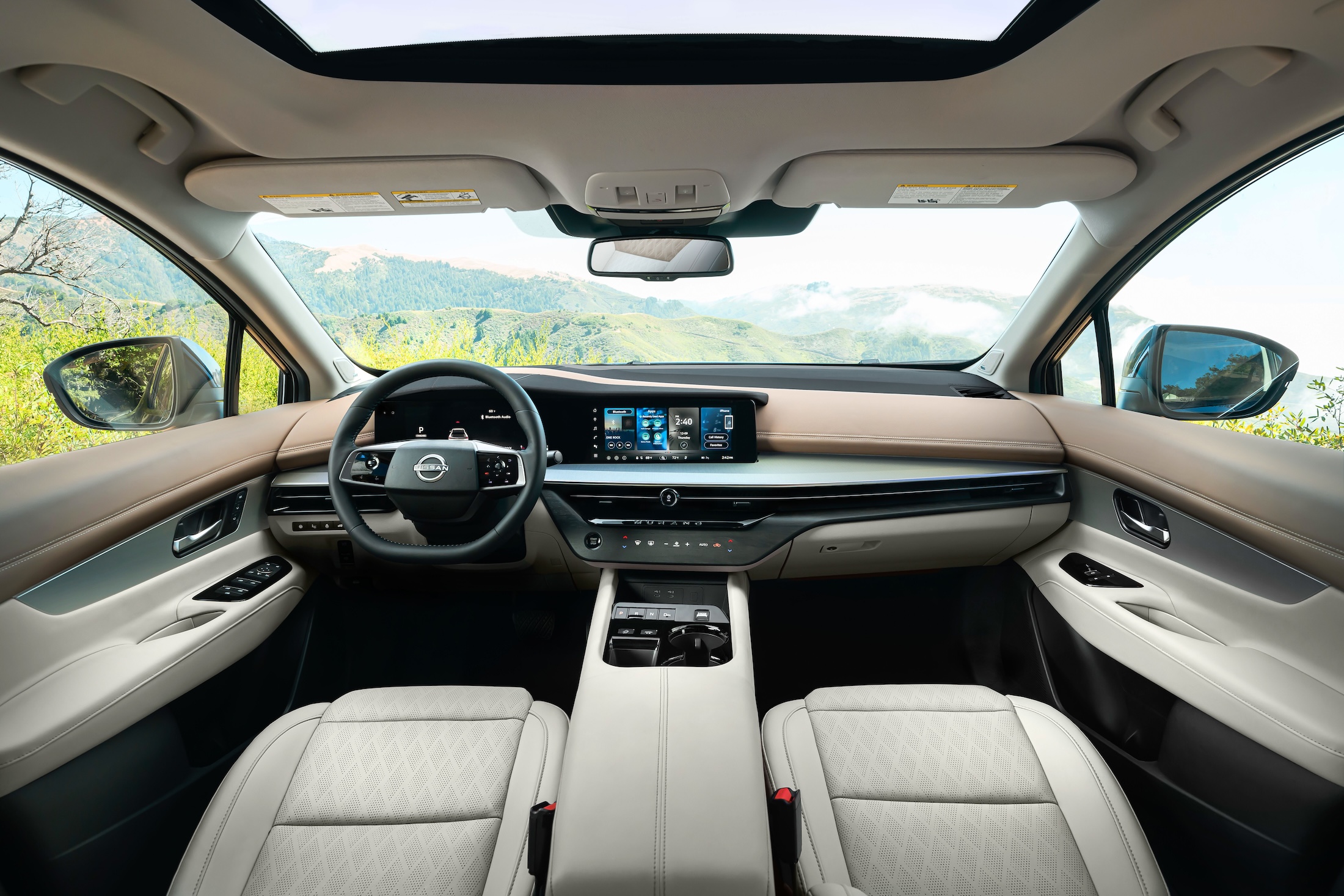
The interior of the 2026 Nissan Murano is elegant, as are many of Nissan’s offerings. Unfortunately its user-friendliness is lacking.
Driver’s Seat: The seat itself is on the plush side, roomy and wide. Nissan has long offered classy interiors even down to the Sentra (sorry, Versa, not you). Silver buttons and trim with nice colored material add to the upscale feel.
But here’s a better place to complain about the transmission controls. Why did some designer think a row of buttons at the front of the console would be a great idea? My phone and other items forever covered them. Also, they’re just not intuitive, so when you’re in a tight spot and have to maneuver forward and back to get out, it requires far more concentration than it should.
Friends and stuff: The rear seat is roomy, comfortable, nicely appointed, and well positioned. Heads, legs, and feet have no shortage of space, even in the middle seat.
Cargo space is 32.9 cubic feet in the back, and 63.5 with the rear seat folded.
In and out: The Murano rides at a height perfect for entry and exit without leg stretches.
Play some tunes: A single large volume knob is available outside the touchscreen. The 12.3-inch screen sounds like a good size, but it’s very short and wide, and a row of icons along the side and HVAC display along the bottom eat into the space.
Sound from the Bose Premium system is OK, about a B+ or so, and leaves me wondering what the not-premium system sounds like.
Keeping warm and cool: Going one better (or worse) than the popular ebony touch pads, which Mr. Driver’s Seat doesn’t love, the Murano offers a cheap-looking black plastic controller pad with temperature, fan speed, and source, and it requires a forceful push to engage your choices.
While you’re fighting with that, a teeny tiny display at the bottom of the touchscreen shows the changes. Let’s all say it in unison: “Eyes on the road!”
Fuel economy: I couldn’t get the trip display to do more than show me how each individual trip went, and the car said the best fuel economy was 22.8 mpg. So, the rest were worse. Let’s call it 20.
Where it’s built: Smyrna, Tenn. Half the parts come from the U.S. and Canada, including the transmission. The engine hails from Japan.
How it’s built: The Murano gets a predicted reliability of 3 out of 5 from Consumer Reports.
In the end: Nissan has a comfortable, roomy, attractive (on the inside) SUV here. If they can tweak the engine and suspension and start over with infotainment and HVAC controls, this could be a winner.
2026 Genesis GV80 Coupe 3.5T E-supercharger vs. 2026 Land Rover Defender 130 V-8 vs. 2026 Mercedes-Benz GLE 450 4Matic SUV: Off-roading in high style.
This week: Mercedes-Benz GLE 450 SUV
Price: $79,100 as tested.
What others are saying: “Highs: A powertrain for every need, well-appointed and spacious interior, legitimately capable; Lows: Rivals offer smoother rides and better handling, Benz charges extra for ubiquitous features.” — Car and Driver
What Mercedes is saying: “It’s innovative. Intelligent. And just a bit indulgent.”
Reality: Cushy, yet satisfying.
What’s new: The GLE 450 SUV carries on fairly unchanged since the 2024 model year, when it received tech updates and available hybrid power.
Up to speed: The GLE 450 is powered by a 3-liter inline six-cylinder engine with a mild hybrid system. It creates 375 horsepower. It gets to 60 mph in 5.3 seconds, according to Car and Driver.
I never found the GLE lacked power, but it definitely seemed sedate. I used it in Sport mode, and nobody ever felt planted in their seats during test maneuvers. Strange how it was almost an exact match with the GV80’s 5.2-second time, but somehow the Genesis felt much more exuberant.
Shifty: Mercedes originated the latest incarnation of the column shifter, with a bump up for Reverse and down for Drive. Shifting of the 9-speed automatic transmission happens through steering wheel paddles.
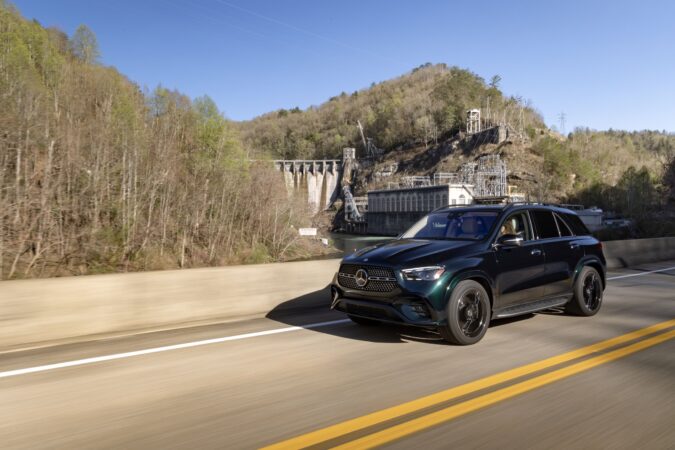
On the road: The GLE handled about as I expected from a Mercedes — very smooth, almost to a fault. Pennsylvania’s ruttiest roads, including Route 202 around King of Prussia, could send the GLE into jumping fits, but the rest of the time the SUV felt serene, quiet, cushy.
Speaking of cushy, that’s where the GLE handling lives — don’t expect this SUV to perform feats of derring-do on country roads. But stay within its limits and life is pleasant.
At least when you’re in Sport mode. The vehicle defaults to Comfort mode, and that has a sway and bounce that takes cushy into nauseating.
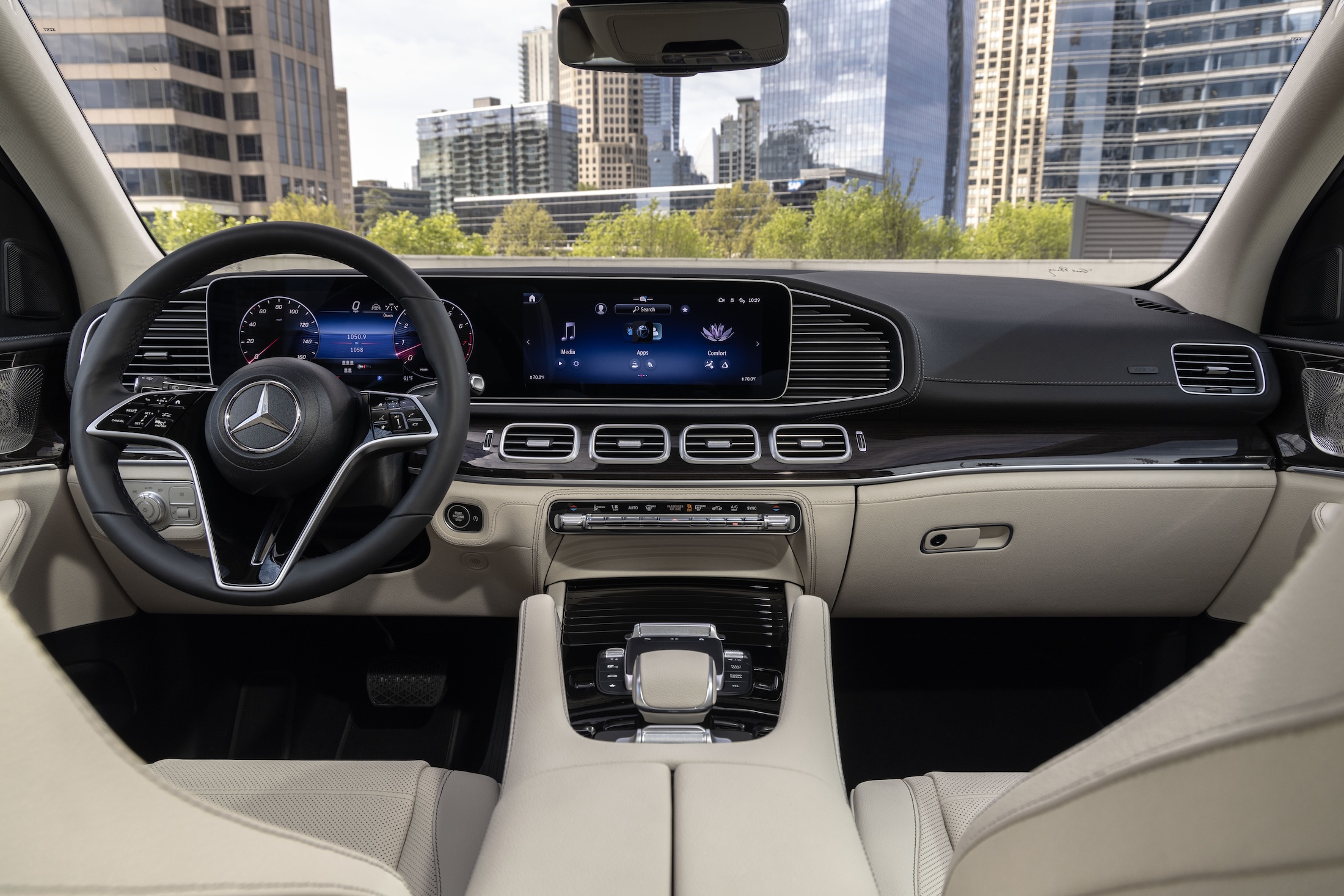
The interior of the 2026 Mercedes-Benz GLE 450, on the other hand, could very well win several beauty contests.
Driver’s Seat: Ooo, aaah. Great leather coverings, not too firm, not too soft. The front seats are wide as well, perfect for large dinners at fancy restaurants.
Visibility up front could be a bit challenging. I raised the seat up quite high and still was unsatisfied with what I could see in the corners. But I did ace a couple head-first parking lot episodes, which normally I find can be rather difficult in SUVs, so maybe it’s better than I think.
The interior is fancy like a Mercedes should be, but the trim around the HVAC vents leaves something to be desired. They come in a contrasting color and look like I could pop them out with a small screwdriver, if I were so inclined. Why offer this?
Friends and stuff: The other couple you bring along to show off your Mercedes (practice saying it like Cary Grant in North by Northwest — “Laura’s Meh-seddies”) will definitely be impressed. The seat is awesome, and there’s so much room to spread out, you’ll feel like you’re being chauffeured.
A third row is optional.
Cargo space is 33.3 cubic feet in the back and 74.9 with the seat folded.
Towing capacity maxes out at 7,700 pounds, just 500 less than the Defender and more than 1,500 over the GV80.
In and out: The GLE 450 sits up a little high so entry and exit are not the easiest in the world, but it sure beats the Defender.
Play some tunes: Sound from the system is delightful, an A veering close to A+ territory.
My ratty old iPhone plugged in and just worked, a nice touch. I’m forever getting defaulted to Bluetooth in various vehicles and then I have to fight and do dances to get it to link. But this one worked every time.
The screen offers a simple CarPlay tab and another main tab. Console controls are also available, for those who are used to them.
Keeping warm and cool: A row of silver toggles underneath the infotainment system looks sharp and operates with ease. I could change the temperature and the fan speed without looking after a couple tries, as it should be.
Large vents provide plenty of airflow but never seemed to blast us.
Fuel economy: That mild hybrid is definitely mild, as the GLE averaged 18.5 mpg for me. Gulp, but still the winner among the three tested.
Where it’s built: Vance, Ala. Germany supplies 34% of the parts; Mexico 17%.
How it’s built:Consumer Reports predicts the GLE SUV reliability to be a 3 out of 5.
In the end: I felt a little bad about setting up this trio, as they do aim in different directions. But the Genesis fell short in so many areas that had nothing to do with its size — comfort and handling among them. The Land Rover really was quite nice, but their reliability reputation makes that a gamble.
Fortunately, the Mercedes was hands down the nicest among the three, slightly sippier, more comfortable, and nice to drive. And there’s enough money left over among the three to consider a hybrid model.
2026 Genesis GV80 Coupe 3.5T E-supercharger vs. 2026 Land Rover Defender 130 V-8 vs. 2026 Mercedes-Benz GLE 450 4Matic SUV: Off-roading in high style.
This week: Land Rover Defender 130
Price: $118,900 as tested.
Conventional wisdom:Car and Driver liked the “unmistakable Land Rover styling, unquestionable off-road capability with on-road civility,” and that the “interior deftly blends utility and comfort.” They were less thrilled about the “disappointing fuel economy,” and that “this sure isn’t priced like the original.”
Marketer’s pitch: “Freedom for all. Eight seats for shared exploration.”
Reality: Feels pretty cool, but is it worth the $30,000 upcharge from the Genesis?
What’s new: The Defender gets a revised look, a bigger 13.1-inch touchscreen, and optional off-road cruise control.
Competition: In addition to the GV80 Sport and the GLE 450, there are the BMW X5, Lexus RX, Lincoln Nautilus, and Toyota Land Cruiser.
Up to speed: The 5.0 V-8 engine creates a whopping 493 horsepower, but as it tries to move the buffalo that is the Defender, it has its work cut out for it. I found getting the accelerator to move the vehicle briskly could be a challenge, but over time this became easier.
A plethora of engine options and horsepower ratings make nailing down the 0-60 time cumbersome. Motor Trend estimates it gets to 60 mph in 5 seconds, a number I thought was optimistic. Land Rover claims 5.4 seconds.
The Defender really was a little lackluster in passing, a more useful measure of performance than pole position moves at the stoplights. It was about a draw with the GV80 Coupe for acceleration until here.
Shifty: The joystick takes a push ahead for Reverse and a pull for Drive with a button for Park. Shift from the lever or the paddles if you want to move your own gears.
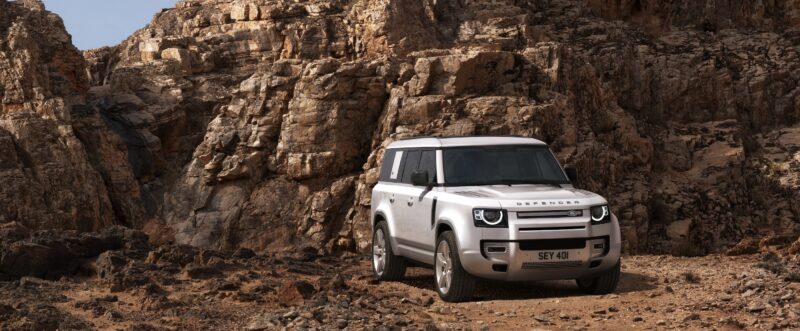
On the road: The Defender does a fantastic job smoothing out rough Pennsylvania roads.
The handling is not bad for its size; the Defender has a fairly narrow profile for a behemoth SUV, and I found snaking through country roads pretty enjoyable, especially considering its 11.5-inch ground clearance. Still, neither Land Rover nor Genesis stands out yet.
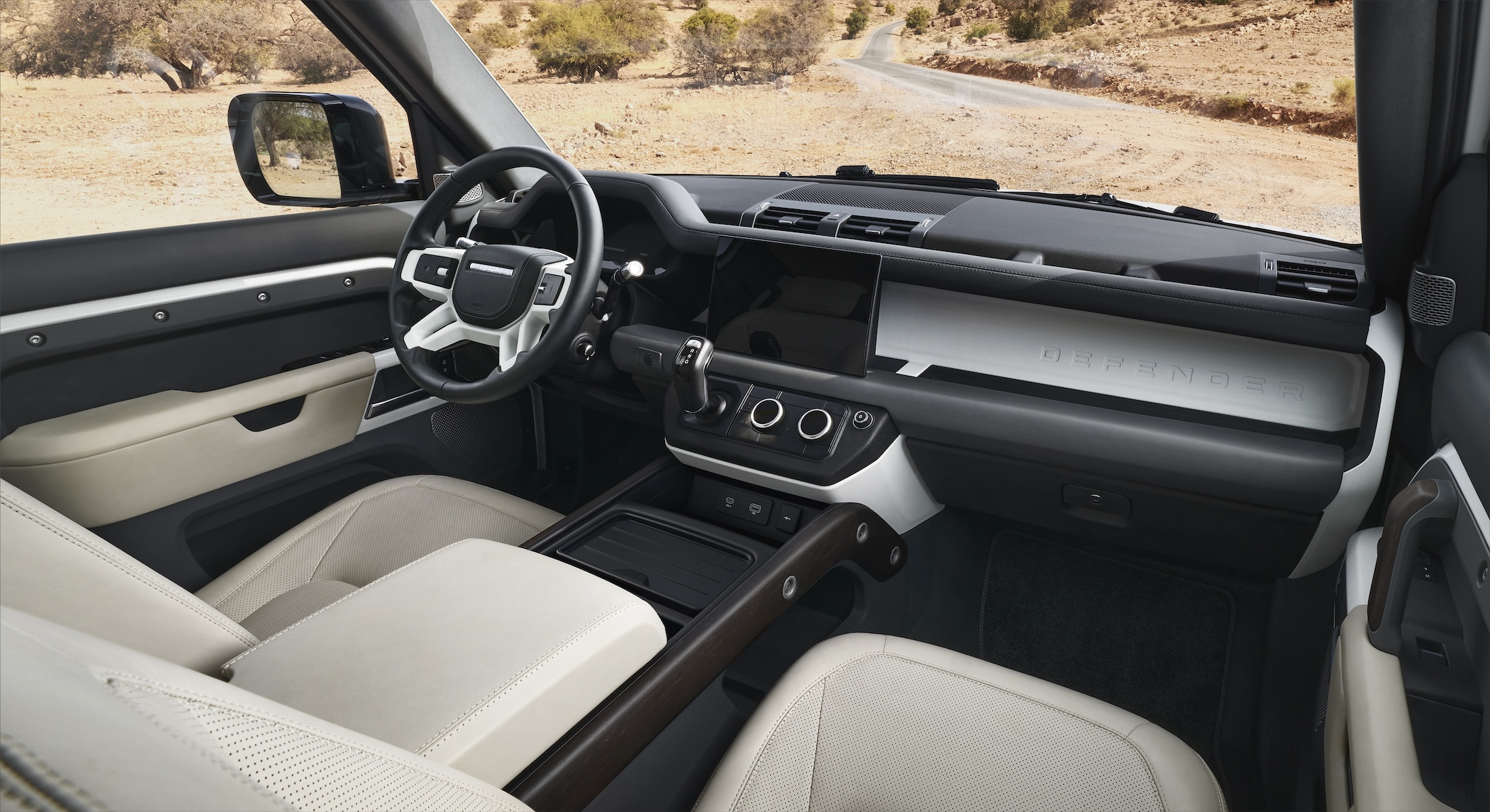
The interior of the 2026 Land Rover Defender 130 allows driver and many passengers to ride up high and comfortably.
Driver’s Seat: The seats provide plenty of comfort and enjoyment; it is quite nice riding above all the other cars on the road. Adjustments were plentiful and everything seemed easy to operate.
The Lovely Mrs. Passenger Seat remarked on the comfort and captain feeling of her seat frequently. Big advantage Defender.
Of course it’s a bit of a stretch into the Defender but it never seemed too awful. But unlike a lot of other parts, my knees still work fairly well.
Passing can be a challenge because the mirrors are narrow, the spare tire makes rearward visibility a challenge, and the door post behind the driver’s door is huuuuge.
Friends and stuff: It’s big, so of course there’s lots of space in the seats, and to get around, right? Well …
The seats all sit up high, all three rows, so everyone should be happy with the view from their location.
The middle-row captain’s chairs are nicely supportive, although they’re a little narrow. They do run back and forth to accommodate the third row, and there’s plenty of room to get around inside.
The rear-row seats are much smaller and sit low to the floor. And, surprise, the mechanism for the seat belts for the middle row impedes legroom in the corners.
Headroom is a little tight in the middle row and very tight in the back.
Cargo space is 15.3 cubic feet in back, 43.7 with the third row folded, and 89.9 with the second row also folded. Of course, all are far larger than the GV80 Coupe.
The barn door in back could be awkward. I couldn’t get the second-row captains chairs to lie flat. Still, three rows and some comfort, advantage Defender.
The Defender 130 tows up to 8,200 pounds, so here’s where the extra $30K is well spent. That’s like $10/pound over the GV80, basically the price of ground beef.
Play some tunes: Sound from the Meridian surround sound system is pretty good, about an A- or so. I expected better.
Operation was not too difficult. The USB-C was very plug and play and CarPlay popped right up. Getting to sound adjustment in the screen was not hard. Still, advantage GV80 Coupe for playback.
Keeping warm and cool: A pair of dials focus on temperature at first glance. Changing the fan speed requires hitting the toggle button in between to change the one dial to fan speed, which is about as confusing as it reads. Buttons all around set the blower. Still, it’s easier than the Genesis HVAC.
The vents are set at the top corner of the dashboard. They do clear out the stodgy air up front, as expected, but they also blow nicely across the occupants and keep everyone feeling nice without being too forceful.
Fuel economy: 15 mpg on premium fuel. Urp. I don’t care if you just forked out six large for this SUV; that still has to sting a little.
Where it’s built: Nitra, Slovakia. The United Kingdom provides 31% of parts, Germany 19%, and the U.S. and Canada just 1%.
How it’s built: Consumer Reports predicts the Land Rover Defender reliability to be a 2 out of 5.
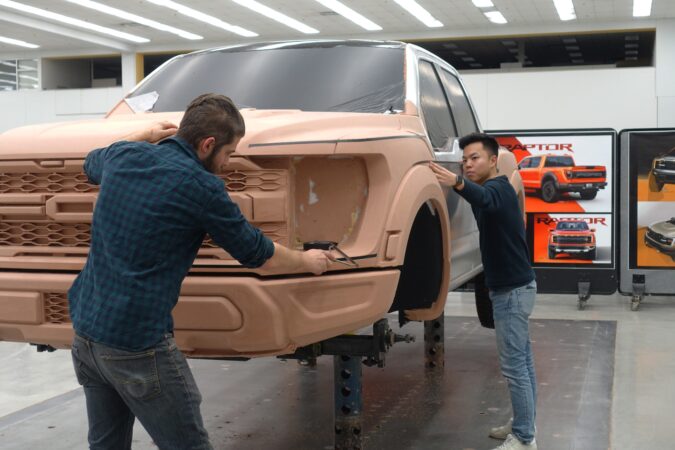
Often found hidden behind two or three levels of locked doors, accessible only to a chosen few with the right credentials, they’re expansive, well-lit, and full of wonder. Mood boards filled with fashion photos, pictures of landscapes and architectural iconography inspire the team. Models of cars sculpted from clay — in various shapes and sizes — fixate the designers.
Then you smell the sulfur.
Traditional modeling clays contain sulfur, a reliable binding agent for the waxes and oils used during the sculpting process, and exudes a pungent smell of rotting eggs. For decades, designers just dealt with the smell until their computers started failing.
“Over 15 years ago, all computer circuit boards switched to a silver compound from lead solder,” said Mark Malewitz, president at Clay Warehouse. “They found out pretty quickly, as any modeler that wore silver jewelry already knew, that sulfur corrodes silver.”
Over the years, some companies such as Chavant and Staedtler have created different formulations without sulfur to try to eliminate the concomitant odor, but new technology such as augmented and virtual reality is significantly reshaping the auto development process. Virtual reality headsets, when combined with digital modeling software, allow designers and engineers to collaborate more quickly and easily. Besides saving money, the technology also reduces the need to sculpt full-size models of cars with clay.
“Before we had virtual reality we were building, for a major project, let’s say a new architecture, around about 80 to 100 vehicles,” said Karsten Garbe, plant director at GM’s Artisan Innovation Center in Warren, Mich. Today, that number is closer to 30 or 40 vehicles, and virtual reality is used in the development of every new car.
From gaming headsets to 3D printing
Like many other auto manufacturers, General Motors first started experimenting with the computer-gaming-focused HTC Vive headsets in the late 2010s. Today, manufacturers use everything from consumer-grade headsets, like Meta’s $499 Quest 3, to more professional units like the Varjo XR-4, which can cost more than $10,000.
Garbe’s team is responsible for piecing GM’s prototype cars together for brands such as Chevrolet and GMC, making sure not only that everything fits but that it can be assembled and serviced in a safe, repeatable way. It’s a little like assembling the world’s most complicated model kit, long before the instructions get written.
Before GM invested in virtual reality, engineers had to wait for prototype components to be manufactured and delivered. Now, they can work from early digital 3D models, checking fit and feasibility months before the first part is cast. Garbe said that this identifies problems early, flagging components that can’t physically be maneuvered into place or that don’t fit properly, dramatically reducing the number of prototype vehicles needed. This process was used to develop GM’s latest electric vehicles, including the Chevrolet Blazer EV and Cadillac Escalade IQ.
When it comes to visual design — the outright style and appearance of the car — there are considerable advantages, too.
Jim Conner, director of 3D process delivery at Ford Design, cited the important task of finding the right wheels. He said designers might go through as many as 35 potential wheel designs for a major model like the Mustang. In the old days, all 35 would have to be crafted by hand from plastic, foam, and paint for evaluation.
Using augmented and virtual reality, designers can narrow it down much more quickly, changing colors, finishes, and shapes instantly. “We’re really getting down to five or six critical ones that really resonated. And then we’ll actually make very nice prototypes of those,” Conner said
Other technologies, like 3D printing, are changing the game, too, speeding up prototyping and the creation of parts out of plastic, resin, or even metal that previously would be meticulously hand-sculpted. “We used to hand model, in clay, seats, including stitches,” Conner said. “You can imagine the technique and the expertise it takes to model a stitch on a seat in clay.”
Larger digital designs can also be brought into reality via milling machines that hone giant slabs of clay into a rough shape. The artisan modelers then come in to finesse the final shapes and details.
“The ability to rapidly mill full-size physical models provides significant advantages in the product development process, primarily by enabling a more dynamic approach to design iteration and validation,” said John Krsteski, senior chief designer for Genesis North America.
“We still do hand modeling, but we’ve taken our clay modelers and put a lot of technology in their hands now, and basically given them different tools,” Ford’s Conner said. “We’re trying to not say that people are clay modelers. They’re actually a model maker where clay is one thing they’re using.”
“A lot of the studios were saying, ‘Let’s just go digital,’” Malewitz said. But the results, he continued, weren’t good, with plenty of “angular lines that don’t have the human touch.”
While the engineers can create near-photo-realistic renderings of objects in augmented and virtual reality, a key part of the process was missing: “The one thing you cannot replace with virtual reality is sunlight,” Malewitz said, echoing a common sentiment among designers that, while they may be investing in fewer models than before, nothing beats a real, full-size clay sculpture for final approvals.
“Virtual and augmented reality are really fantastic developmental tools, but I do believe there will always be a point where you’re going to see a physical thing,” Conner said. “I don’t think virtual reality will replace that.”
2026 Genesis GV80 Coupe 3.5T E-supercharger vs. 2026 Land Rover Defender 130 V-8 vs. 2026 Mercedes Benz GLE 450 4Matic SUV: Off-roading in high style.
This week: Genesis GV80 Coupe
Price: $87,780 as tested.
Conventional wisdom:Motor Trend likes the “gorgeous interior,” that it “retains rear headroom” and is “more luxurious than ever.” Reviewers panned that it’s “not actually sporty,” has a “confused personality” and “reduced cargo space.”
Marketer’s pitch: “The pinnacle of comfort.”
Reality: It has some high points, but comfort isn’t what I would market.
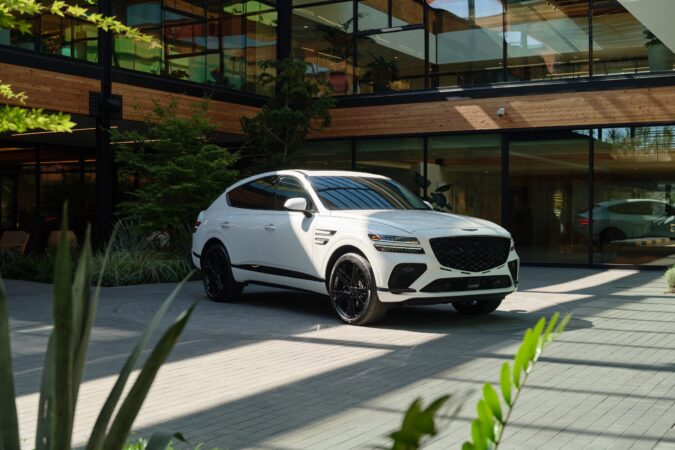
What’s new: The GV80 Coupe — essentially an SUV with some of the cargo capacity lopped off — joined the GV80 lineup for the 2025 model year. Some color changes and new trim levels have been added for 2026.
Competition: In addition to the Defender and the GLE 450, there are the BMW X5, Lexus RX, Lincoln Nautilus, and Toyota Land Cruiser.
Up to speed: Woohoo, that e-supercharger really works, dialing up the horsepower from the 3.5-liter turbo up to 409. Turn the dial to Sport+ and this baby gets off the ground; 0-60 takes 5.2 seconds, according to Car and Driver. It seemed faster.
Shifty: The eight-speed automatic transmission operates through the dial on the console — twist counterclockwise for Reverse or clockwise for Drive. It’s a nice setup that’s easy for back-and-forth motions when parking.
There’s no corresponding move for shift mode, though. Just use the paddles on the steering wheel and keep fighting the vehicle for control. I usually blinked first and just let it do the shifting for me.
On the road: The handling in the GV80 Coupe is almost as impressive as the acceleration. The sporty shaped SUV does nice on the slalom and has a lot of good road feel. The steering is nice as well.
The only drawback for me came on cornering. The GV80 had a lot of drift, and I had to slow down for the sharper movements.
Off the road: The GV80 gets a new terrain mode for 2026, with settings for snow, mud, and sand.
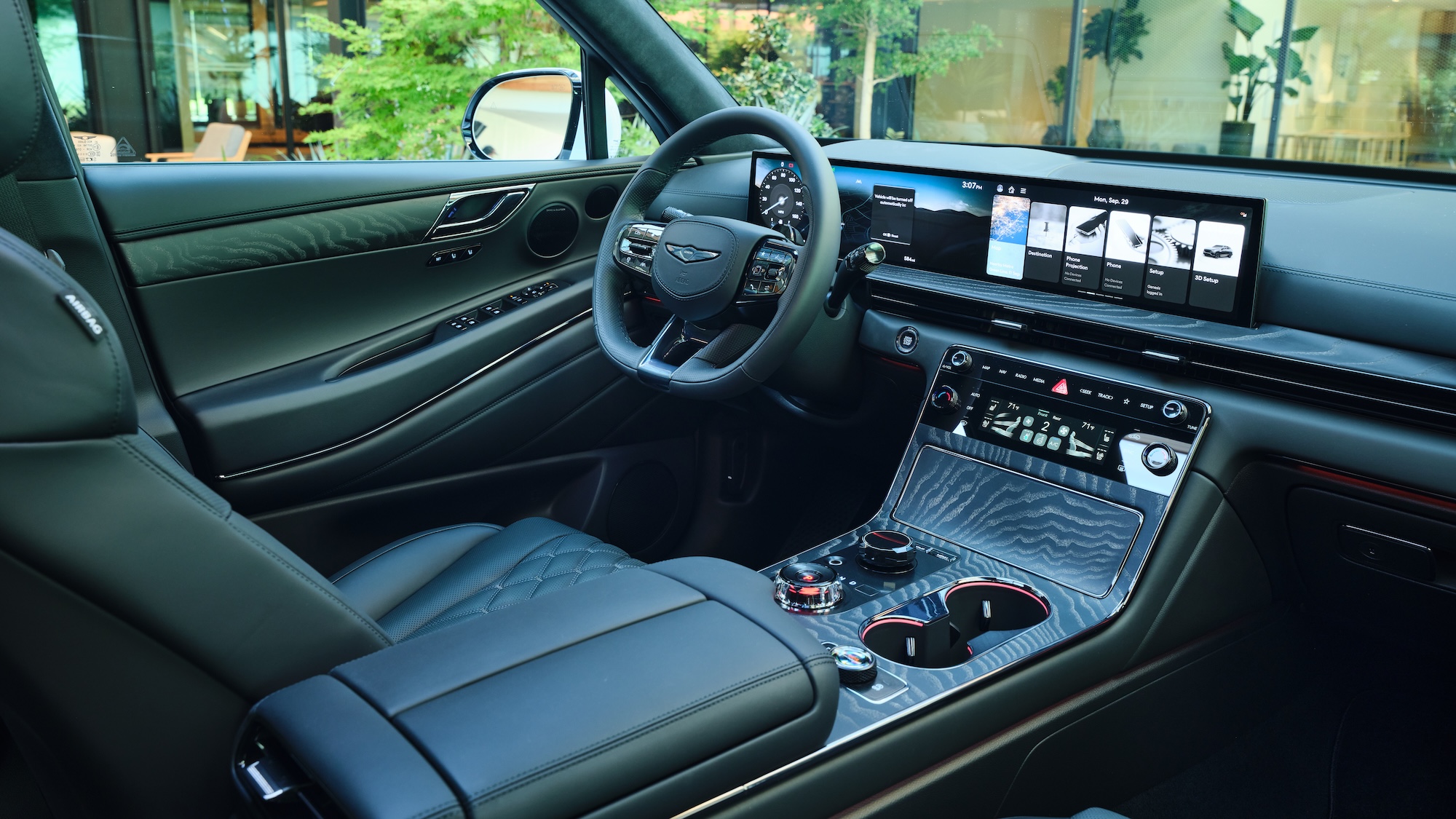
The interior of the 2026 Genesis GV80 Coupe looks inviting, but it turns out comfort is lacking. Also, adjusting the temperature settings is harder than it should be.
Driver’s Seat: The seat seemed quite hard, and the lumbar support seemed more like a kidney punch than a feature. I’m not sure I could live with this seat day to day. It really seemed as uncomfortable as the old Hyundai basic seats and not quite worthy of this fancy a vehicle, even covered in Nappa leather.
The fancy digital dashboard also leaves a bit to be desired. So many of the features are hidden by the steering wheel that it could be hard to know what was going on. The gauges are fine, though, and everything sure is attractive.
Friends and stuff: The rear seats offer nice amenities — power fold and lift, and power recline that provides quite a bit of choice.
Unfortunately, the low ceiling means headroom is less than plentiful — I still have a little space above my head but not much — and foot room is kind of snug.
Cargo space is 61.1 cubic feet with the rear seat folded and 29.3 when it’s upright, both numbers down about 15% from the regular GV80.
The GV80 Coupe can tow up to 6,000 pounds.
In and out: There’s a bit of a climb into the GV80, naturally, but you must have been expecting that.
Play some tunes: Sound from the system is delightful, an A+.
Operation uses either a dial or the touchscreen. A home screen shows all the possible places you can go and swiping to the right shows even more. It’s easy to use and to follow, even through the layers of nested elements.
Keeping warm and cool: Would that the HVAC were so easy to operate. It features simple dials for temperature but then the source, fan speed, and seat heater and ventilator icons are so tiny in their handsome little ebony touch pad, and it offers zero feedback. So there’s a lot of potential vehicle drift just to keep the air at the right temperature. I’ve been panning Hyundai for this left and right and will continue to do so.
There also seems to be a lot of thrust in the airflow, so it might not be everyone’s cup of tea. The Lovely Mrs. Passenger Seat was having none of it, lest her perfect hair get blown about.
Fuel economy: I averaged about 16 mpg, which is pretty pitiful.
Where it’s built: Ulsan, South Korea. The vehicle is made up of 85% Korean parts and 3% from the U.S. and Canada.
How it’s built: Consumer Reports predicts the GV80 reliability to be a 2 out of 5.
BRUSSELS — The gasoline-powered car is outlasting the policies that had aimed to banish it.
The latest example of the combustion engine’s staying power came Tuesday, when the European Union said it would back away from a landmark pledge to ban emissions from new vehicles in 2035. That announcement came one day after Ford said it would scale back electric vehicle production plans, joining a long list of American and European automakers to rethink climate strategies.
Those retreats, taken together, show that the full-on electric transition is far less certain than it might have looked several years ago — and that polluting cars and trucks could remain on roads across Europe and America for decades to come. The moves also sharpen the contrast between the West and China, which has developed a massive and lucrative EV market supplied by state-backed automakers.
In the United States, where President Donald Trump has portrayed electric cars as an expensive “scam,” the White House has cut EV incentives and this month announced plans to weaken fuel efficiency standards for new cars and trucks.
European officials say they favor a future that is mostly electric, and many countries still have EV incentives in place. But Brussels faced intense pressure from the continent’s automakers to dilute the 2035 ban. Those legacy carmakers, with huge workforces and factories built around combustion engines, have struggled to compete with China’s low-cost, high-quality EVs.
The revised proposal will force carmakers to meet 90% fleetwide emissions reductions compared with 2021 levels. That means most vehicles will be fully electric. But it also leaves room for hybrids — including those with a plug-in option — and gas-powered vehicles.
Ferdinand Dudenhöffer, the director of the Center Automotive Research in Bochum, Germany, said he sees the world’s auto industry splitting into three parts — one in the United States, fully supportive of gas cars; one in China, all in on EVs; and another in Europe, where policies are now muddled. He said Chinese automakers are likely to benefit most from that dynamic because the Chinese market dwarfs those in the U.S. and Europe and looks to keep growing — and electrifying.
American and European markets have had a hard time splitting from the gas-powered vehicles because combustion engines have higher profit margins. But that strategy leaves them in a long-term bind.
“In the future, China will define the rules of the car industry,” Dudenhöffer said.
With a license to keep producing gas vehicles, he said, Western manufacturers “earn some kind of short-term windfall. But in the long term, they lose a lot. The advantages of the Chinese carmakers will be larger and larger.”
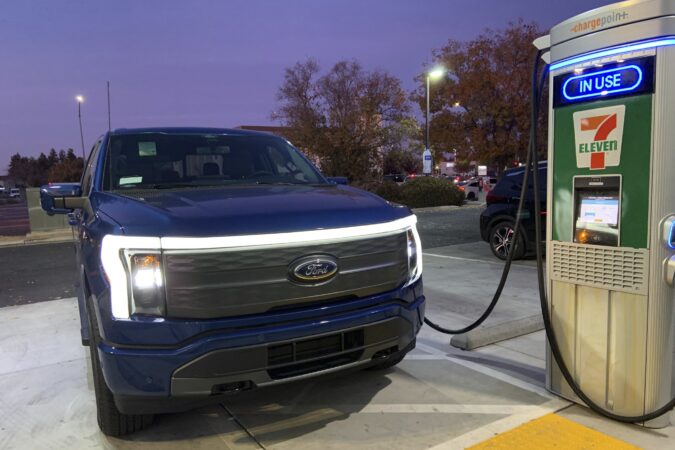
Ford, in its announcement, said it was seeking out “higher-return opportunities” by expanding gas and hybrid options. It said it would produce a gas-powered pickup truck at a Tennessee plant while putting a hold on production of its flagship EV, the F-150 Lightning.
Carmakers such as Volvo and Porsche have also pulled back from more ambitious EV plans. Earlier this year, Stellantis, which includes the Jeep and Fiat brands, shifted away from plans to be fully electric in Europe by 2030.
The gas vehicle ban had been a core component of Europe’s much-heralded climate plan, introduced four years ago as officials cited the “generational task” of saving the planet. At the time, E.U. leaders said they had put the continent’s car industry — which accounts for 7% of Europe’s gross domestic product — at the forefront of innovation by creating a clear future target.
But large automakers — including Mercedes-Benz, Volkswagen, and BMW — have seen their market values nosedive. In a strategic error, the EVs they produced tended to be high-end, not for the mass market. In the meantime, leaders in Germany and Italy described the 2035 target as a danger to European jobs.
“Such a hard cutoff in 2035 will not take place, if I have anything to do with it,” German Chancellor Friedrich Merz had said.
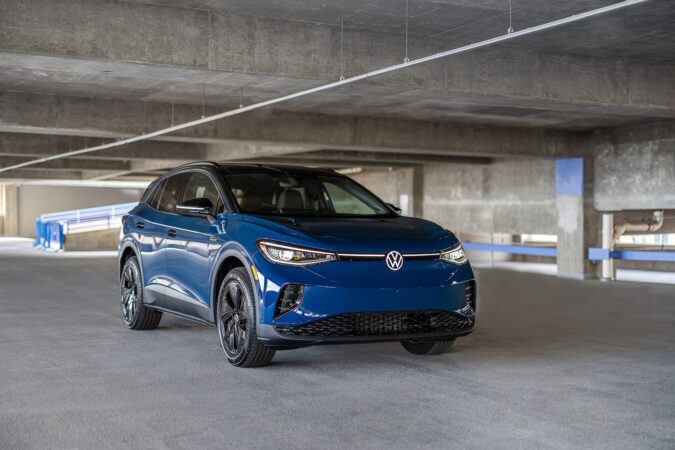
Price: It starts at $54,095 for this higher-end model tested.
Conventional wisdom: Car and Driver likes the ID.4’s “good price, good range, good space.” They complained that the “infotainment system is still wonky, base model lacking in range, it’s not the GTI of EVs.”
Marketer’s pitch: “The future of driving is here. And it’s electric.”
Reality: The driving experience can be awkward, but there may be another big reason to avoid ID.4.
Catching up: So we’ve already tested a bargain-priced Chevrolet Equinox, and a Hyundai Ioniq 5 that’s a fairly nice price match for the ID.4.
What’s new: After upgrades in performance for 2024, the ID.4 only gets an adapter for Tesla Superchargers for the 2026 model year.
Up to speed: Like most EVs, the ID.4 makes quick work of getting on the move. I could pull in front of cars I would never consider when driving most gasoline-engine vehicles, and passing could be a real treat.
The 335 horses available in the all-wheel-drive version tested get the EV SUV to 60 in a quick 4.8 seconds, according to Car and Driver.
Rear-drive models offer 282 horses and a 0-60 time of 7.3 seconds.
Back down again: The ID.4 has a one-pedal feature, which allows for driving without using the brake much at all. Unfortunately, it required so much foot pressure to get moving that it made me nervous in parking lots, worried I would overcompensate and smash into something. Without that feature on, pulling out is easier, but when it’s time to slow down, the brakes are exposed as the indifferent bastards that they are.
Shifty: The twisty stalk gear selector in last week’s Hyundai Ioniq 5 impresses, but a similar setup in the ID.4 irked me. The type on the ID.4 is subtle and easy to misunderstand; Hyundai makes it obvious what to do with theirs.
On the road: Drive mode control is tucked away in the touchscreen, but it’s easy to get to and to follow. Sport mode did tighten up the steering and boost the acceleration but the suspension became so firm I felt like I was driving a brick, and the ID.4 hit potholes with a thud.
Because the ID.4 is larger, the drive experience had a Jeep feel without any of the retro touches or quirky handling that add a sense of fun. Even the ID.Buzz minivan is a better drive.
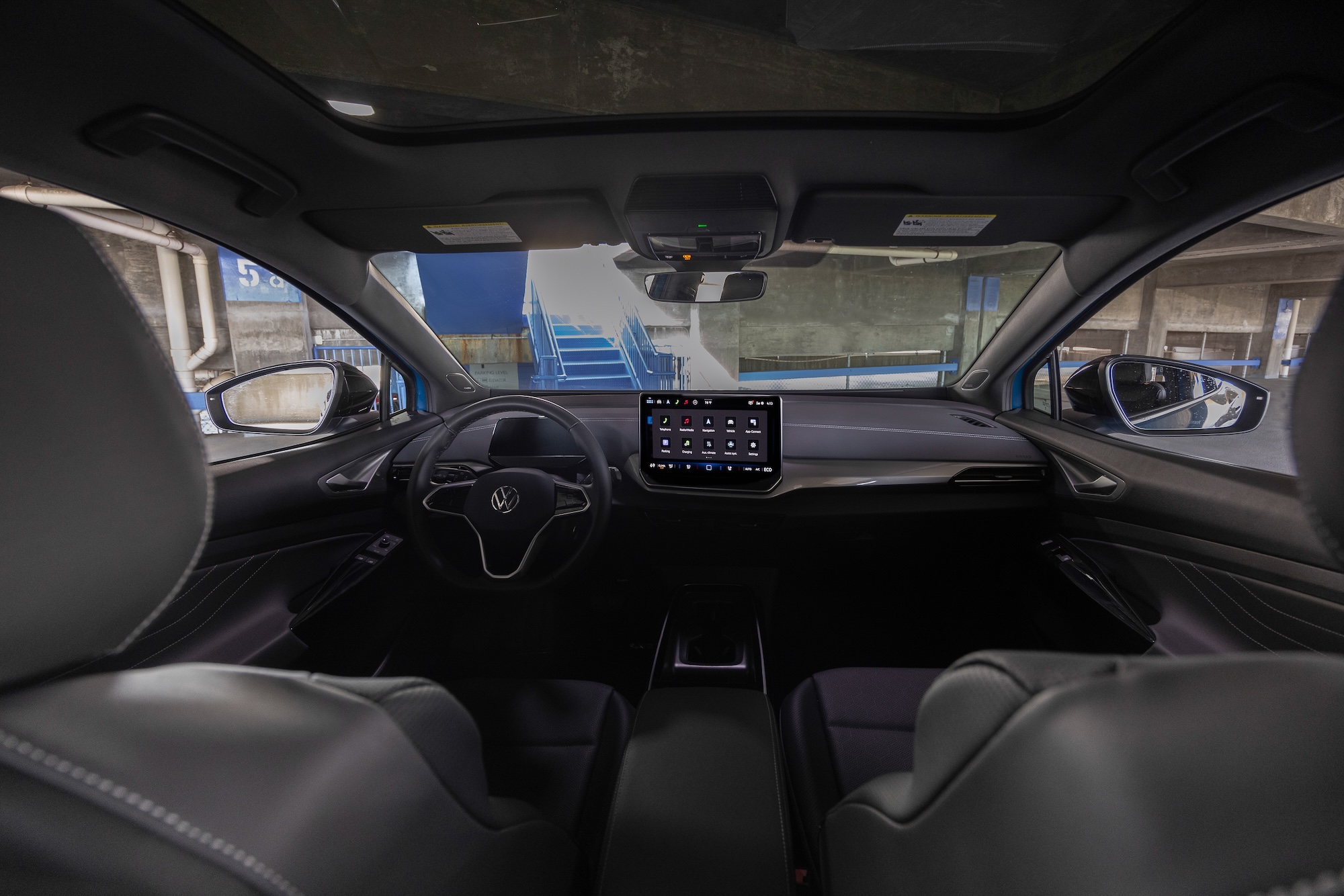
The 2026 Volkswagen ID.4 interior is definitely a hip place to be in all black, but function and comfort are lacking.
Driver’s Seat: The speedometer and gauges also disappoint. The diminutive through-the-steering-wheel display can be difficult to inform at a glance. The long-ago Chevrolet Spark and Sonic sported a similar motorcycle-esque unit, but those were easy to read.
Seat comfort is also lacking; the Driver’s Seat is almost rock hard without wings or bolsters to hold you in place.
Later that day I became even more annoyed when the seat lumbar support seemed to be knuckling my kidneys. Try as I might I couldn’t release the pressure. Soon I realized that the massage feature somehow activated itself and proceeded to give me the saddest massage I have gotten in a long time.
Friends and stuff: The rear seat offers plenty of legroom and foot room. Headroom is not bad but I expected more from this tall vehicle.
The rear seat seems angled a little far back for me and matches the front for comfort, or lack thereof.
Cargo space is 30.2 cubic feet behind the rear seat and 64.2 with the seat folded, the giant among the three EVs tested, and similar to a Volkswagen Tiguan.
In and out: It’s only a tiny step up into the ID.4.
Play some tunes: The giant 12.9-inch touchscreen offers quick access to most of the usual functions, and the home screen features big, clear icons for all the choices.
The touchscreen’s stand-up iPad-like configuration provides a nice way to hold your hand in place while selecting functions, and that makes operation easier.
I neglected to note the sound from the Harman Kardon stereo system. It’s scored an A- in other VW SUVs and an A+ in the EV ID.Buzz minivan. I’d lean toward the lower score; Mr. Driver’s Seat would have been typing furiously about the sound if it were an A+.
Keeping warm and cool: The ID.4 continues with the tiny touchslider thingies to adjust the temperature, and also activate the HVAC screen controls. These were the most cumbersome part of the screen, not quite user-friendly for adjustment on the fly.
The required buttons for front and rear defroster are on the left with the light control. It works in the sense that we’re supposed to use the lights when the wipers are on, but not in the sense of being away from the touchscreen where the rest of the HVAC controls are.
The big touchscreen means the center vents have been pushed disappointingly far down on the dashboard. It made cooling down difficult after one humid post-YMCA adventure, and the ambient temperature may have only been about 70 degrees.
Fuel economy: The range advertised in the vehicle was about 260 miles, but it seemed to exceed that more than a few times.
Where it’s built: Chattanooga, Tenn.
How it’s built: The ID.4 gets a 2 out of 5 reliability rating from Consumer Reports.
I don’t usually delve into recalls too deeply — the Sturgis family Kia Soul has been recalled nearly half a dozen times, but has never shown any of the potential problems so it’s just another inconvenience.
But Do Not Drive orders have been issued for the ID.4 for the second time, this time for wheels that could fall off — the first was for potential fire hazards in 2023. And I’ve collected anecdotal information on ID.4 troubles.
In the end: Hyundai has proven themselves over and over again in the EV world, and the Chevrolet might be worth a look. But I’d leave the ID.4 alone.
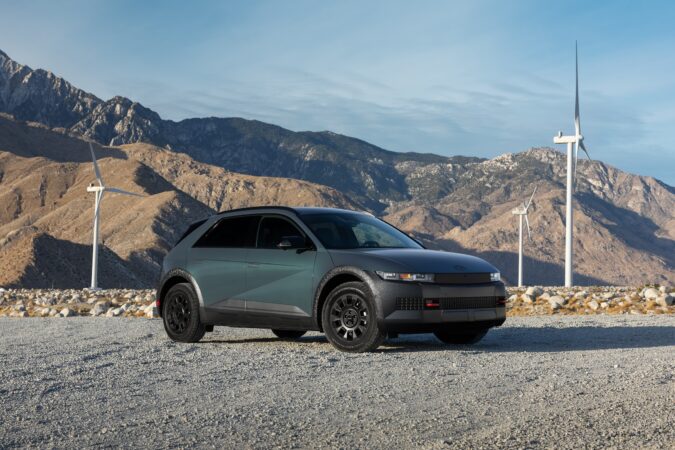
Conventional wisdom:Motor Trend likes that the Ioniq 5 XRT offers “proper fun in mild dirt,” that it’s “great as an everyday do-it-all crossover,” with “built-in NACS convenience.” But they lament the “off-road gear brings on-road compromises, using Tesla Superchargers not yet optimal,” and the “price close to high-end Ioniq 5 Limited trim.”
Marketer’s pitch: “Our fast-charging electric SUV that goes the distance.”
Reality: The off-road accoutrements are so limited, you might as well get one with more range.
Catching up: Last week, we tested a Chevrolet Equinox EV, which seemed like a real bargain until we started digging deeper.
This week we blow another $20,000 and see what we have to show for it.
What’s new: The Ioniq 5 received a refreshed appearance for 2025. It adds the NACS charging port, allowing easy access to Tesla superchargers, and boosts the size of the batteries across all models.
The new XRT model is marketed as a more rugged version, slightly lifted and with all manner of cladding and black.
Up to speed: The Ioniq 5 gets to 60 mph as fast as any EV. It reaches the magic number in just 4.5 seconds, according to Motor Trend. Unlike last week’s stripped-down Equinox, the Ioniq 5 offers power aplenty throughout the range of driving, as well as through the range of models.
Shiftless: I’ve been singing the praises of the Hyundai twisty-stalk gear selector, and that will continue.
On the road: The Ioniq 5 handled nicely on highways and wasn’t too bouncy for its squared-off shape. Country roads were quite fun, especially in Sport mode.
The Ioniq 5 did have more than its share of rattles, though, from either the hatchback door or the rear cargo area; the squarish shape of the vehicle is probably a factor here.
In the rain: EV makers put low-resistance tires on to help with range. I can’t specifically recall having any other EV in the rain, but the Ioniq 5 with its 235/60/R18 all-terrain tires designed for off-ish roading seemed like it would slide on wet roads. Test drive in the rain, if you can.
Steady speed: The Smart Cruise Control with curve control feature in the Ioniq 5 felt dumber than advertised. I’ve noticed many test vehicles from all brands slowing on curves while the cruise is set, and it’s a welcome feature, but more than a few times I found myself shouting at the dashboard as the Ioniq 5 suddenly started to slow dramatically from my set speed. The cruise was still engaged, too, so it required me taking complete control and starting from scratch.
This can all be controlled through the various settings, but I never found one that I thought worked as well as other manufacturers’ offerings.
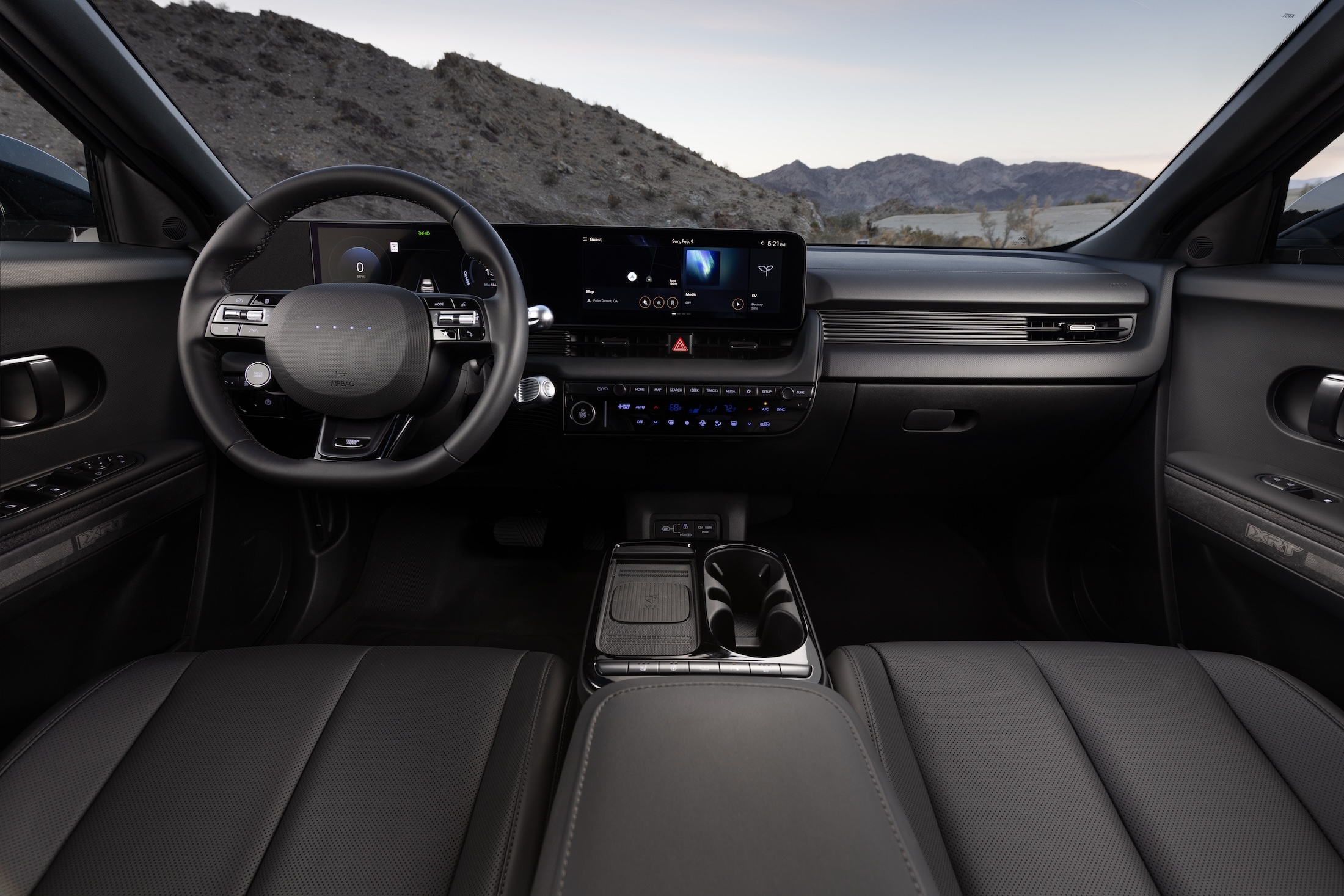
The interior of the 2026 Hyundai Ioniq XRT offers plenty of comfort and easy operation.
Driver’s Seat: The leather-covered seat was geared for comfort but still supportive. It held me in place while not getting fresh. The lumbar bolster was just fine and the seat bottom stretched to my knees, something often lacking at this vehicle size.
The seat heater operation and some other functions are in a row of silver buttons (yay!) on the console that will help you in yoga class, requiring a sharp contortion just to reach them (boo!).
Friends and stuff: Sturgis Kid 4.0 blessed the rear seat as comfortable and roomy on a trip to the Sweetest Place on Earth. The flat floor means middle seat occupants won’t feel too bad.
Cargo space is 26.3 cubic feet behind the rear seats and 58.5 when it’s folded.
Play some tunes: Sound from the system is pretty good, about an A-, maybe a B+.
The 12.3-inch touchscreen makes playing tunes and getting to other functions easy enough, and buttons and dials underneath offer a real assist. The home screen has large icons that make navigation swift.
Keeping warm and cool: I was at first pleased at the HVAC’s use of real buttons underneath the infotainment display. But things were not exactly as they appeared; those were just faux buttons of the highly sensitive touch pad variety. Every time my hand got close, I seemed to adjust three things I didn’t intend to. So the driver’s attention is still stolen away from the driving portion of our adventure and is instead trying to fix things that have been changed by accident.
Range: The Ioniq 5’s advertised range of 258 miles was about spot on, as determined by our trip to the AACA (Antique Automobile Club of America) museum in Hershey. We used up about 200 miles of range in 180 miles or so of travel — about half of them keeping up with turnpike traffic; those high speeds suck down the juice. (I could slow down, and yet, I don’t.)
A less expensive SE model would get you beyond 310 miles on a charge. Recharging from 10% to 80% takes as little as 20 minutes.
Where it’s built: Ellabell, Ga. This was the site of an ICE raid in September. It remains to be seen how long the Ioniq 5 will actually come from there, also considering recent trends in EV sales. Stay tuned.
The U.S. and Canada supply 29% of the parts; South Korea another 29%; and Hungary, 33%.
How it’s built:Consumer Reports predicts the reliability to be a 2 out of 5.
In the end: The Ioniq 5 has always been tied with the Kia EV6 on my list of EV champs; the Kia looks a little less stupid, so I’d probably go that direction. But the Equinox is a strong challenger and is worth a look.
A lower price and more range makes any of them more attractive.
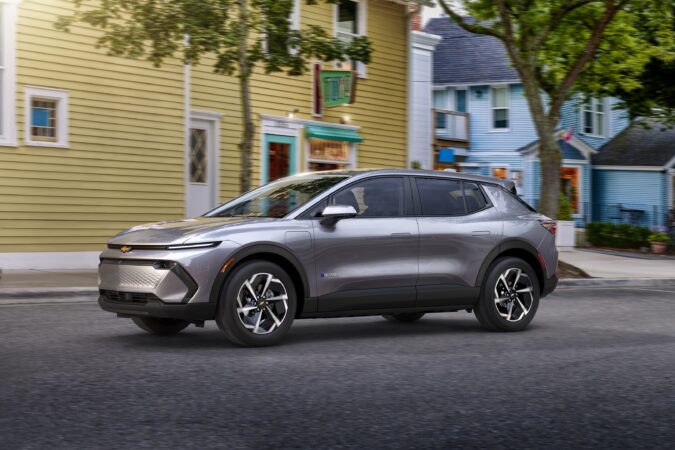
2026 Chevrolet Equinox EV LT front-wheel drive: A no-bells, no-whistles EV test.
Price: $36,495 as tested. No options on test vehicle; price is up by $1,500 from the 2025 model tested.
The all-wheel-drive model starts $5,000 higher and sacrifices about 10 miles of range.
Conventional wisdom:Car and Driver likes that it has “more range than rivals, competitively priced” and is “available with Super Cruise and other tech.” They didn’t love the “underpowered front-drive model, less cargo space than the gas model, no Apple CarPlay or Android Auto.”
Marketer’s pitch: “America’s most affordable 315+ mile range EV.”
Reality: Definitely affordable. Will it be worth the trade-offs?
Plug them in: Mr. Driver’s Seat has compiled a few EVs for comparison. So over the next two weeks you’ll see how this compares to more expensive electron-driven options from Hyundai and Volkswagen.
What’s new: The Equinox EV carries on pretty much unchanged since its 2024 debut, although all-wheel-drive models boast a range boost for 2026.
Up to speed: Car and Driver got one thing right — the 0-60 time is not the stuff of EV legend. The Equinox EV in its barest front-wheel-drive form will not plaster you to the seat when it’s time to leave the red light, but it does move with ease. It’s worth noting that pickup for passing will still leave most drivers impressed, and this can be an important test.
Car and Driver puts the 0-60 time at 7.7 seconds, a not-unexpected number from a small SUV with 220 horsepower. All-wheel drive ups the ante to 300 horses, and it moves to 60 mph in 5.8 seconds.
Shiftless: The Mercedes-ish wiper stalk on the steering column requires a pull and up for Reverse and a pull and down for Drive. The pull is a nice touch, so you don’t feel like you’ll make any stupid mistakes while riding around, the kind I’ve made now and again with these shifters.
On the road: The Equinox EV handles with great ease, being pulled to the road by the heavy batteries in the floor. Highways are smooth, and country roads are nicely followed, with a touch of fun added as well.
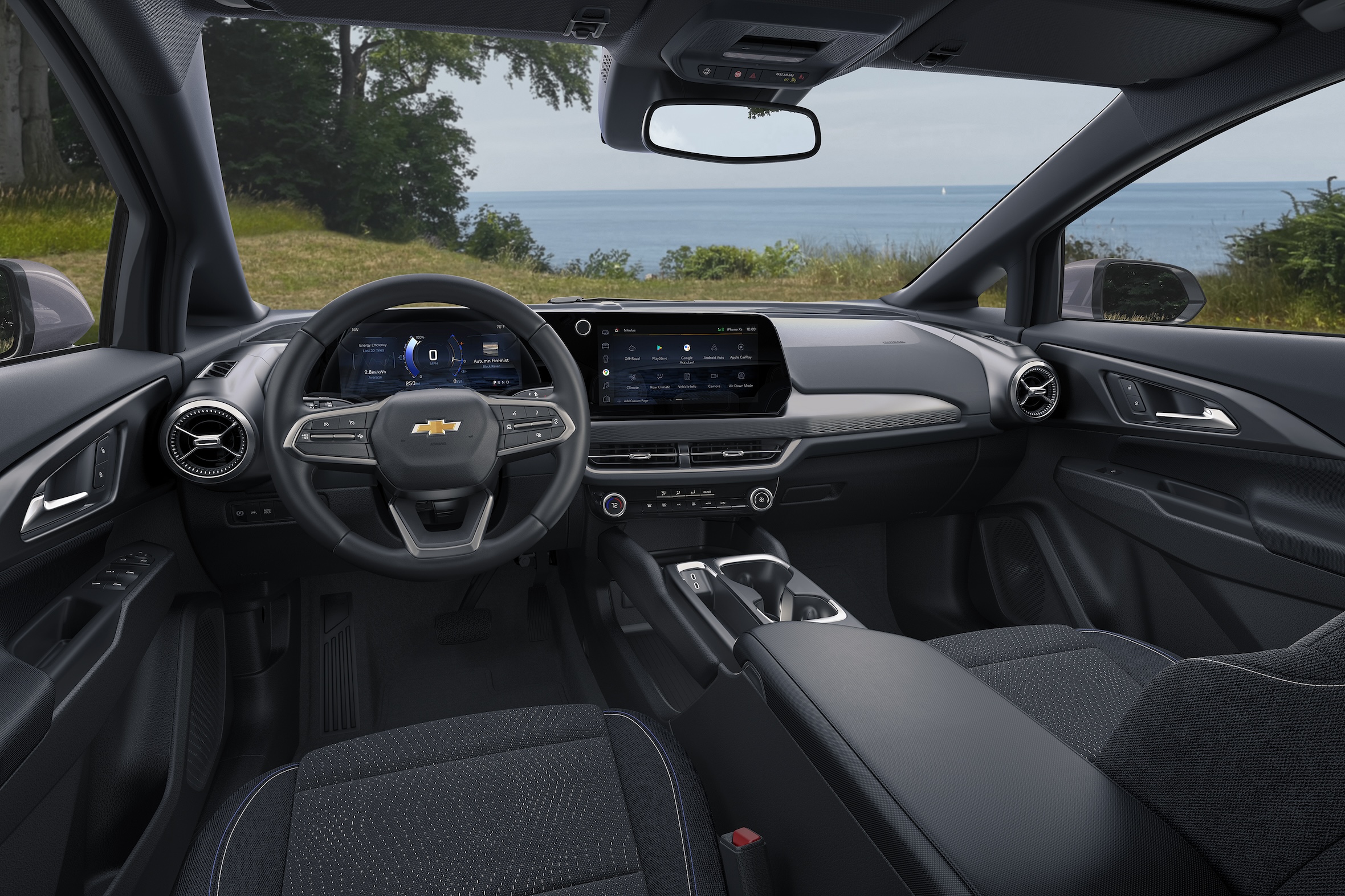
The interior of the 2026 Chevrolet Equinox EV LT1 is quite literally the cheap seats. The front are comfortable, but the rear seat is lacking. Upgrades are available.
Driver’s Seat: The cloth seats in the basic model tested provided plenty of comfort and support, although they felt a little warm as the humidity stayed up even as the temperatures fell to high 70s at the end of August.
(If you want heated and ventilated seats, you have to add $7,000 for the LT2 model, and then you have the privilege of paying extra for those options.)
The starter is in the seat sensor, which is not my favorite way to get going, but this one seemed to work more consistently than some I’ve experienced. GM also has added a touchscreen on-off icon for the times when the Equinox can’t tell you’re done driving.
Friends and stuff: Rear seat room is nice in the corners, but the center seat passenger will feel the hump and the console. The seat is designed presumably to make your passengers whine during the test drive, so you buy an upgrade. It’s firm and has weird indentations in the lumbar area.
You can always counter back from the Driver’s Seat that legroom, foot room, and headroom are all awesome so everyone back there should be thankful they’re not riding around in the back of 1980s front-wheel-drive Buicks, because there was a sad seat.
Cargo space is 57.2 cubic feet with the seat folded and 26.4 behind the rear seat.
Play some tunes: The infotainment center features a gigantic 17.7-inch display that’s clear and pretty easy to follow.
The volume dial is a wide shallow thing that GM keeps putting into cars. It reduces me to tears at least once a week after accidentally rubbing the touchscreen and changing something important.
Like maybe the music. Sound from the system is very good, about an A, so any interference becomes a personal affront. (Don’t interrupt the tunes, as the lovely Mrs. Passenger Seat and all the point-ohs know.)
CarPlay is gone, but my notes didn’t mention missing it, so maybe that’s not the end of the world after all.
Keeping warm and cool: Actual knobs control temperature and fan speed, and buttons let you do some of the simple functions. It’s nice that the big touchscreen didn’t eliminate the old-style controllers, even as temperature and fan control options reside in the bottom corners of the touchscreen.
You can really get some air out of the blowers, which is nice. The corners have the round vents that make me happy with their ease of direction and on-off control.
Range: A 319-mile range is great to have, but charging can be slow. InsideEVs tested one at three different chargers in February, and it averaged around 40 minutes to get from 10% to 80%, far slower than most competitors.
Chevrolet advertises just 285 miles of range for the AWD models from 2025 but 309 for the 2026 AWD models.
Where it’s built: Ramos Arizpe, Mexico. Mexico supplies 46% of parts; South Korea, 20%; the U.S. and Canada, 12%.
How it’s built: Consumer Reports predicts the reliability of the Equinox EV to be a 2 out of 5.
In the end: If you don’t mind missing some creature comforts, the Equinox EV can get you charging for a nice price.