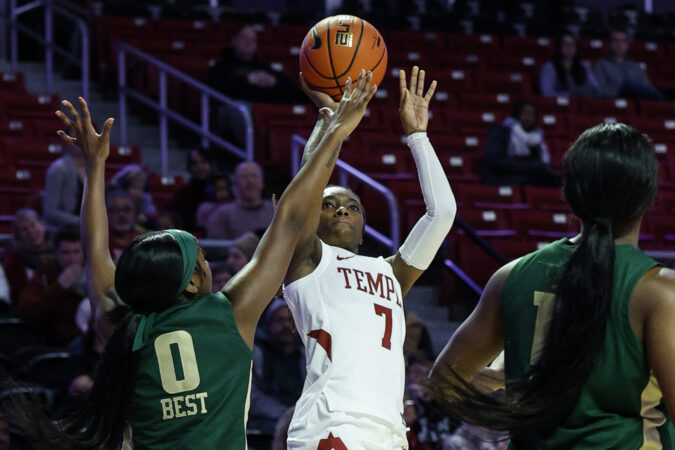
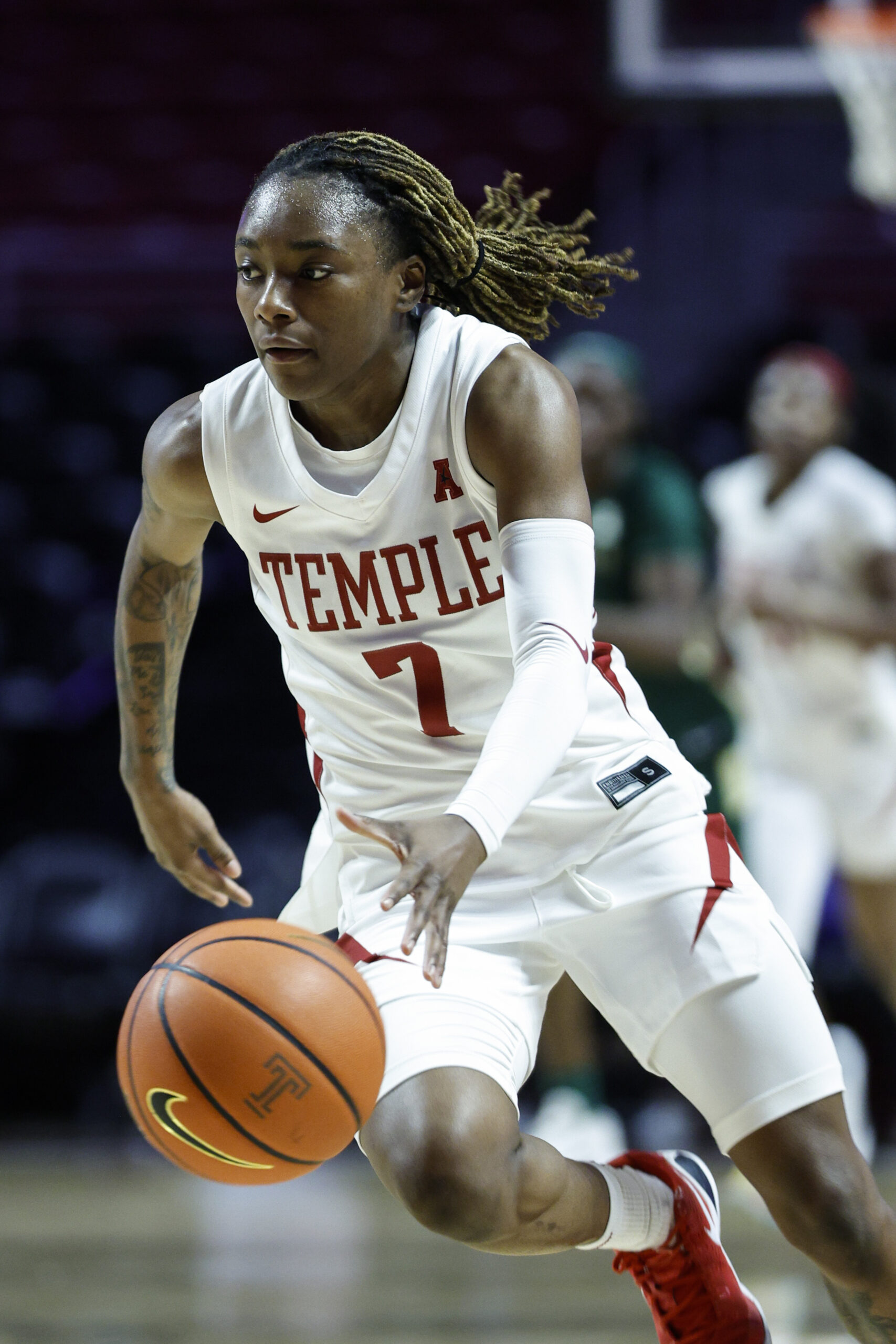
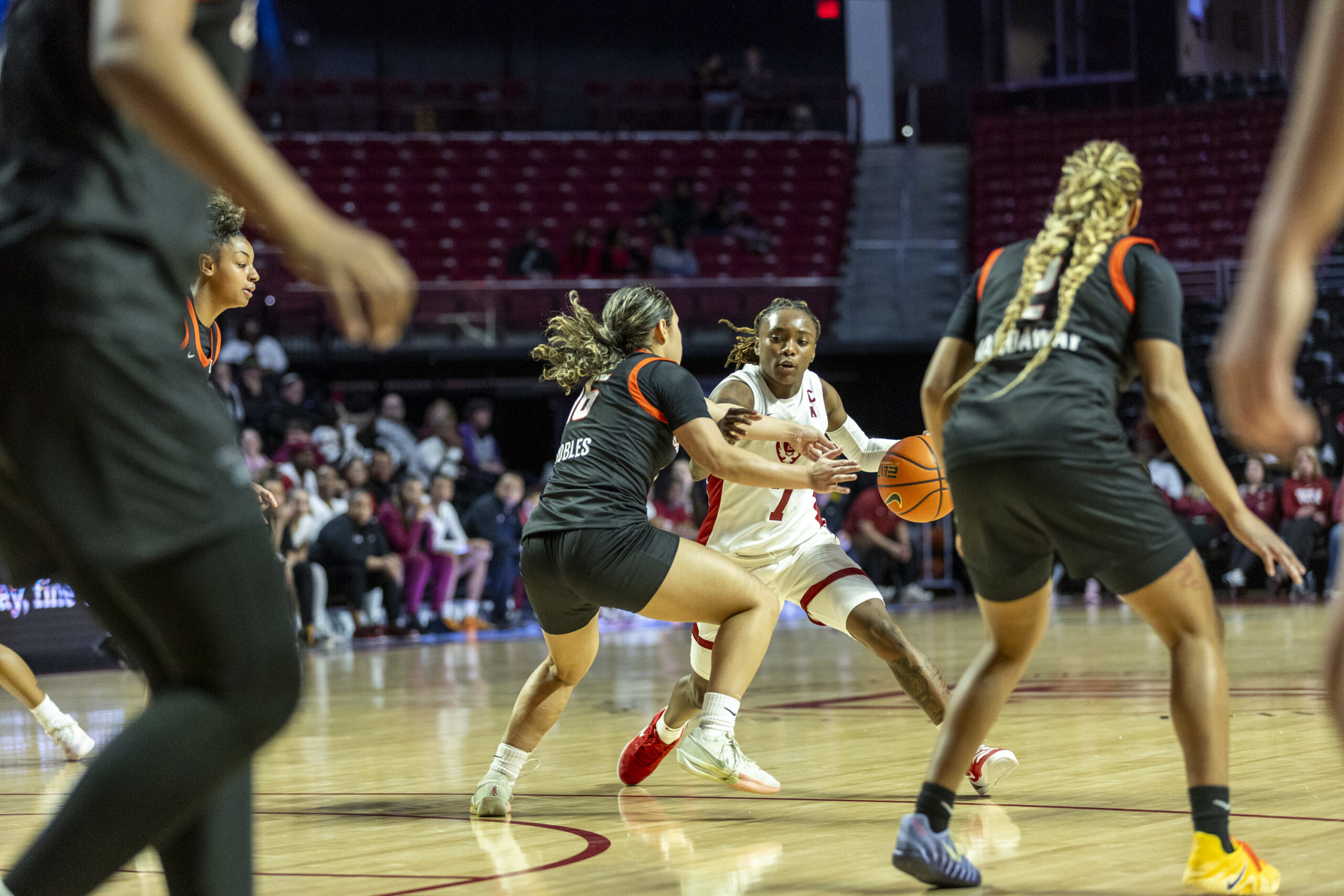
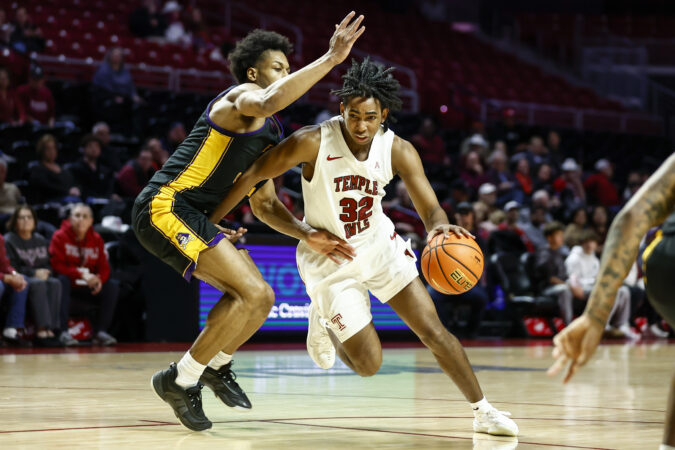
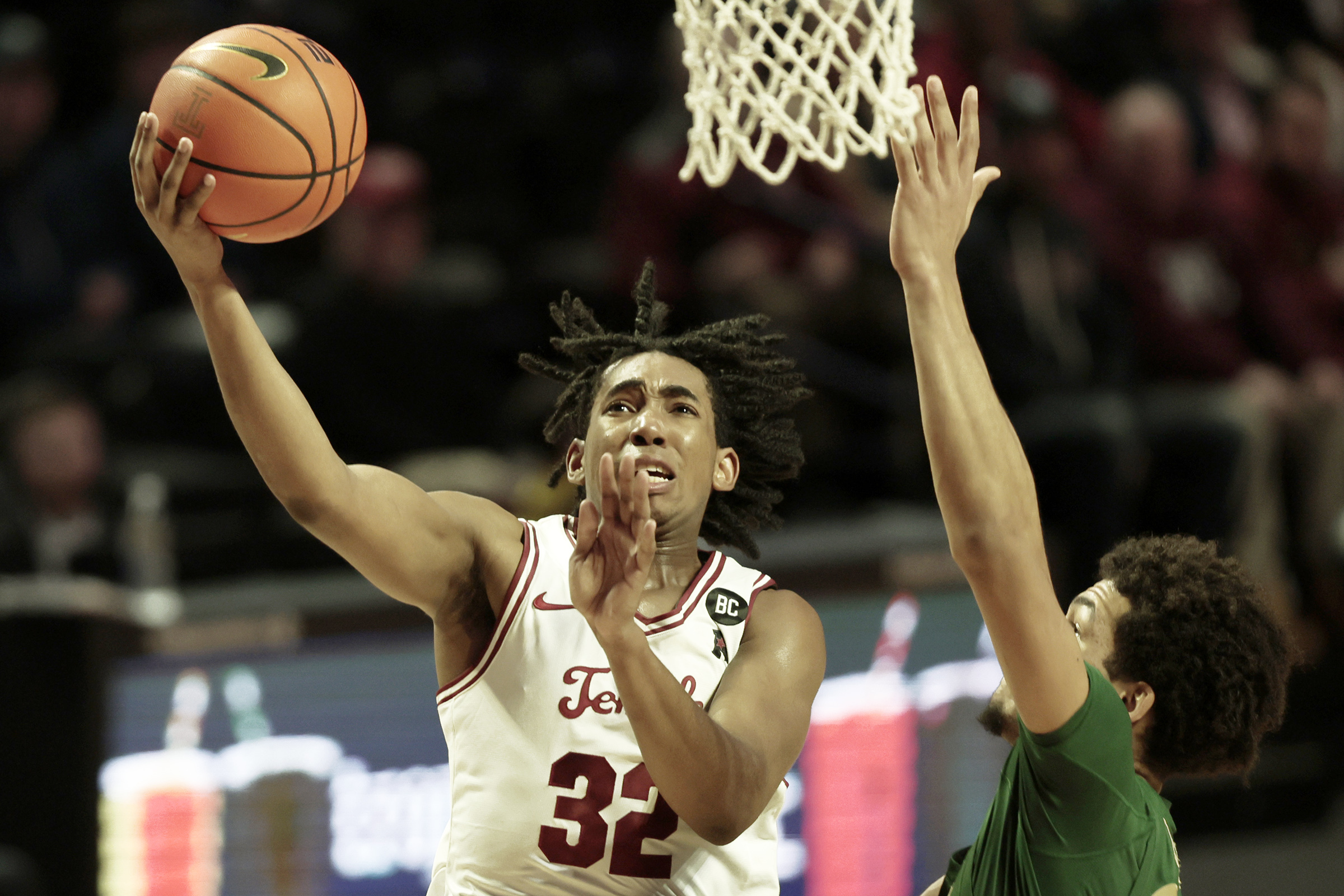
About a week ago, Temple was in contention for the No. 2 seed in the American Conference. Now, the Owls are on a downward spiral following a 76-71 loss to Alabama-Birmingham Wednesday night at the Liacouras Center.
Temple (15-11, 7-6) has lost three straight games and is tied for sixth place in the conference standings. The win moved the Blazers (17-10, 8-6) ahead of Temple in the standings.
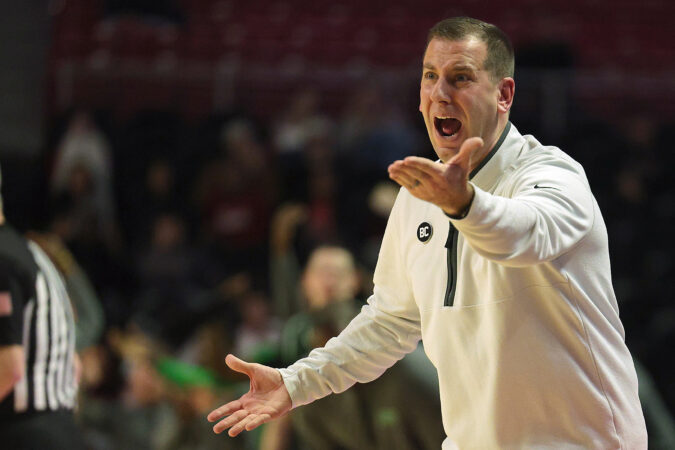
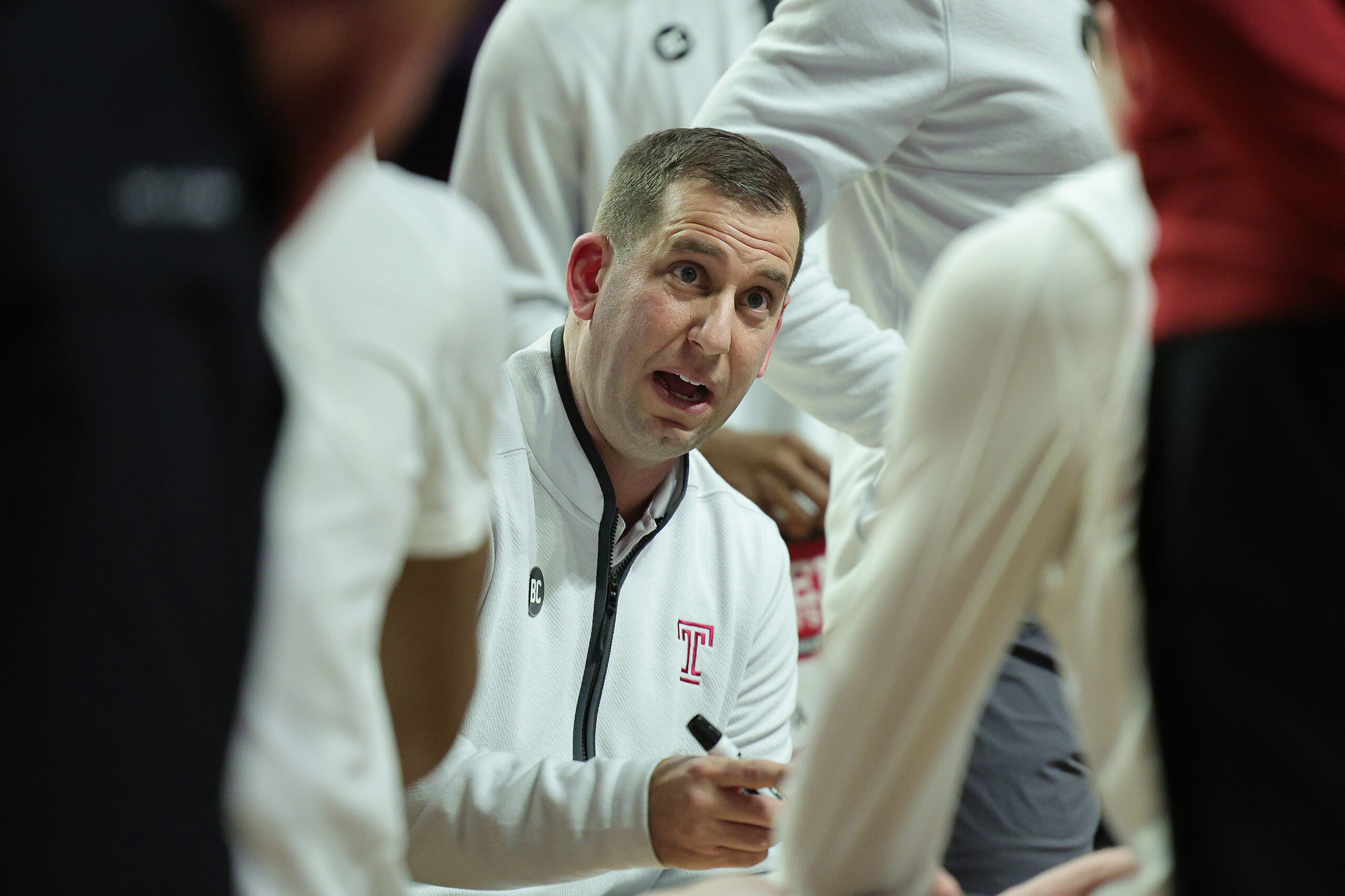
Temple coach Adam Fisher noted he was disappointed with the Owls’ execution.
“Proud of the effort, not the result,” Fisher said. “Effort doesn’t always get it done. You got to execute. Got to be better at home. You see zone for most of the game, you can’t shoot 1-for-15 [from three-point range] at home. Another game with a free throw line [deficiency]. We got to get better there. We got to do some small things.”
Statistical leaders
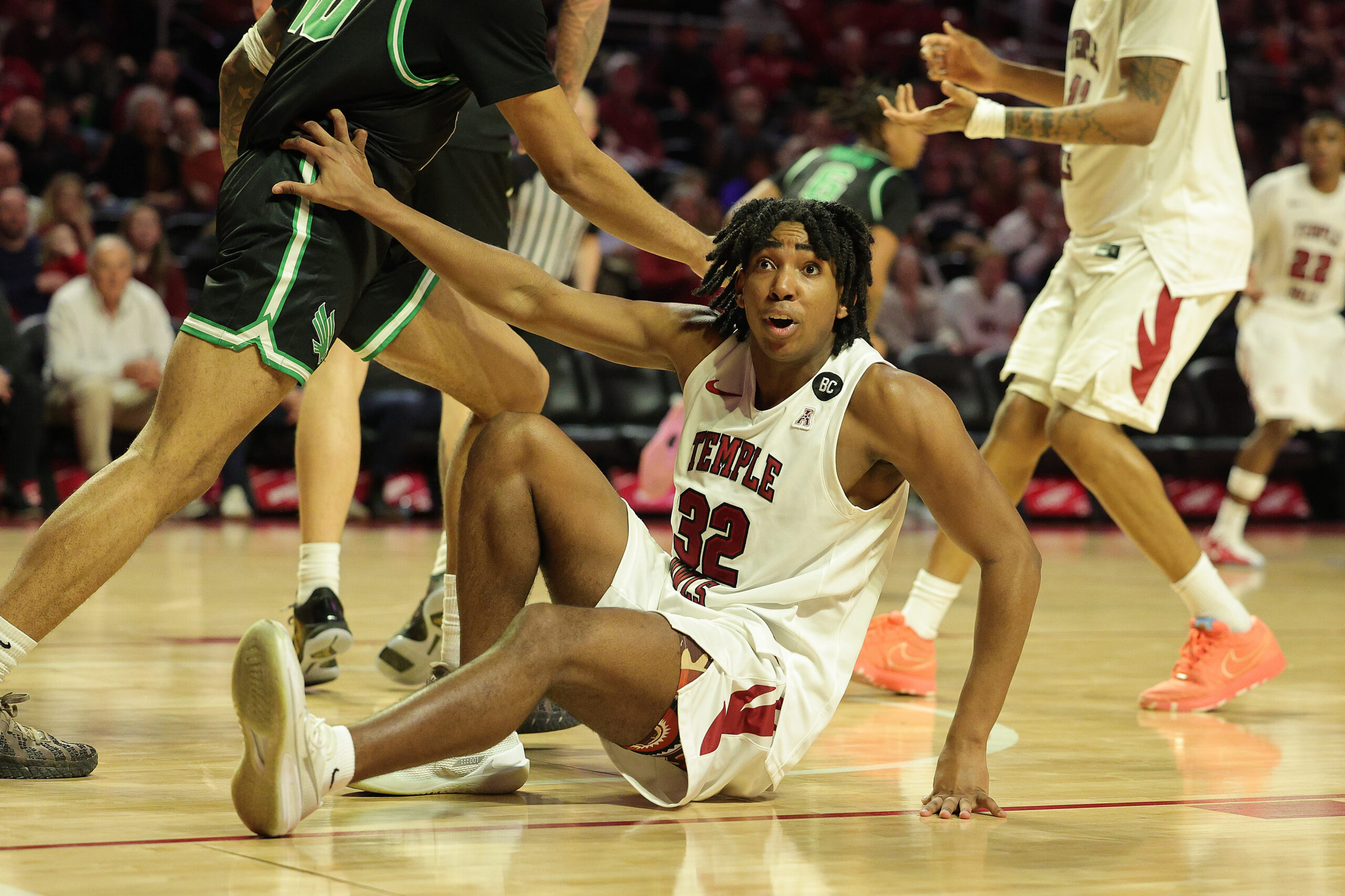
Temple ended the game winning the rebounding battle 37-31 against the second-best rebounding team in the conference. Guards Jordan Mason (18 points) and Derrian Ford (17) led the team in points, while forward Jami Felt had eight points and 10 boards.
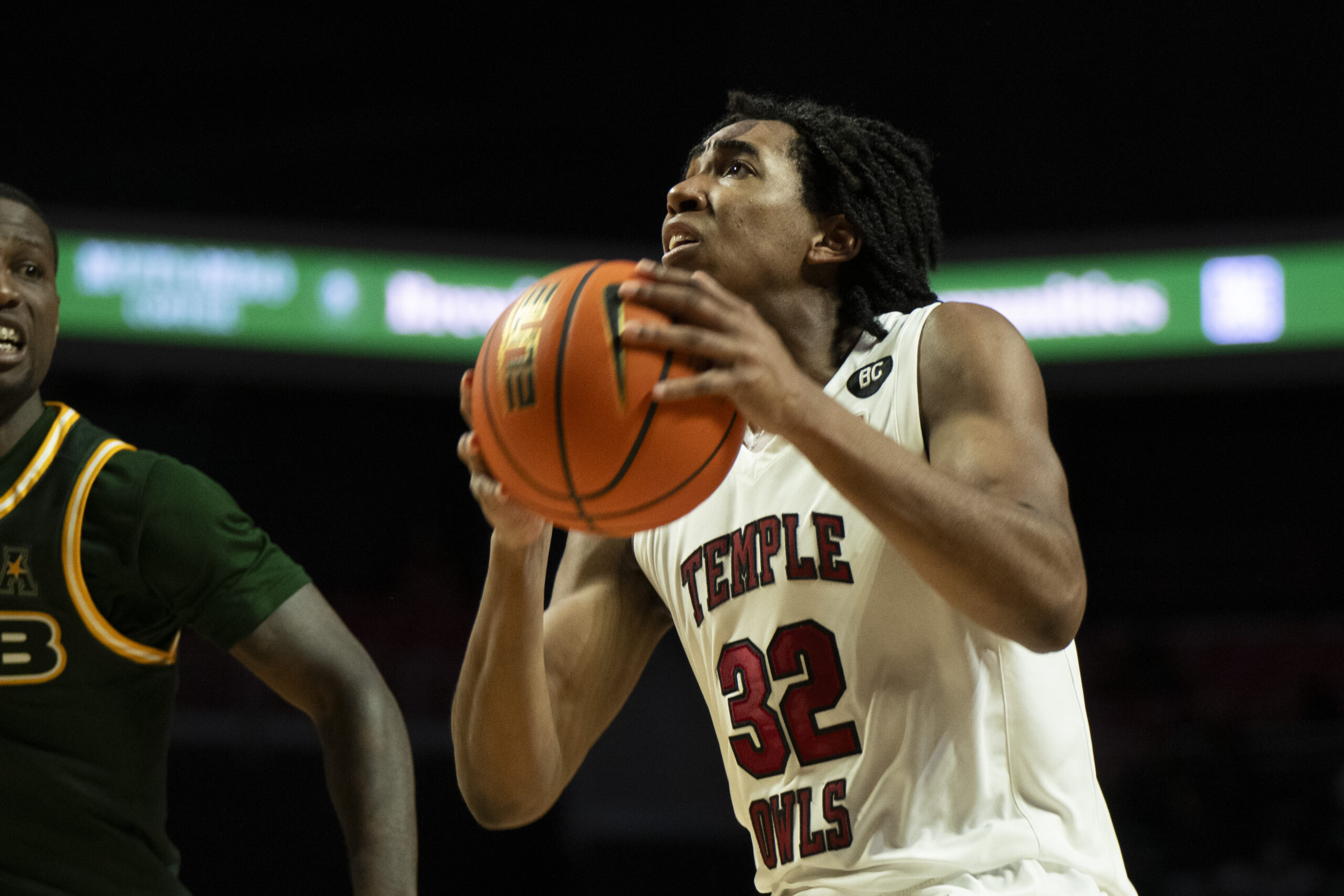
Temple’s Jordan Mason finished with 18 points on Wednesday night.
The Owls had just five turnovers, following 16 in their last outing against North Texas, but struggled shooting the ball. In addition to their 1-for-15 three-point performance referenced by Fisher, they went 12-for-19 from the free throw line.
Guard Chance Westry led the Blazers with 24 points and eight assists.
What we saw
Temple pushed the pace on the Blazers’ defense for easy points inside the paint.
Mason, Ford, and Felt got the Owls out to an early 20-16 lead before UAB woke up. The Blazers snatched a 39-33 lead at the half. Temple continued to get points in the paint, but struggled without any points from the perimeter.
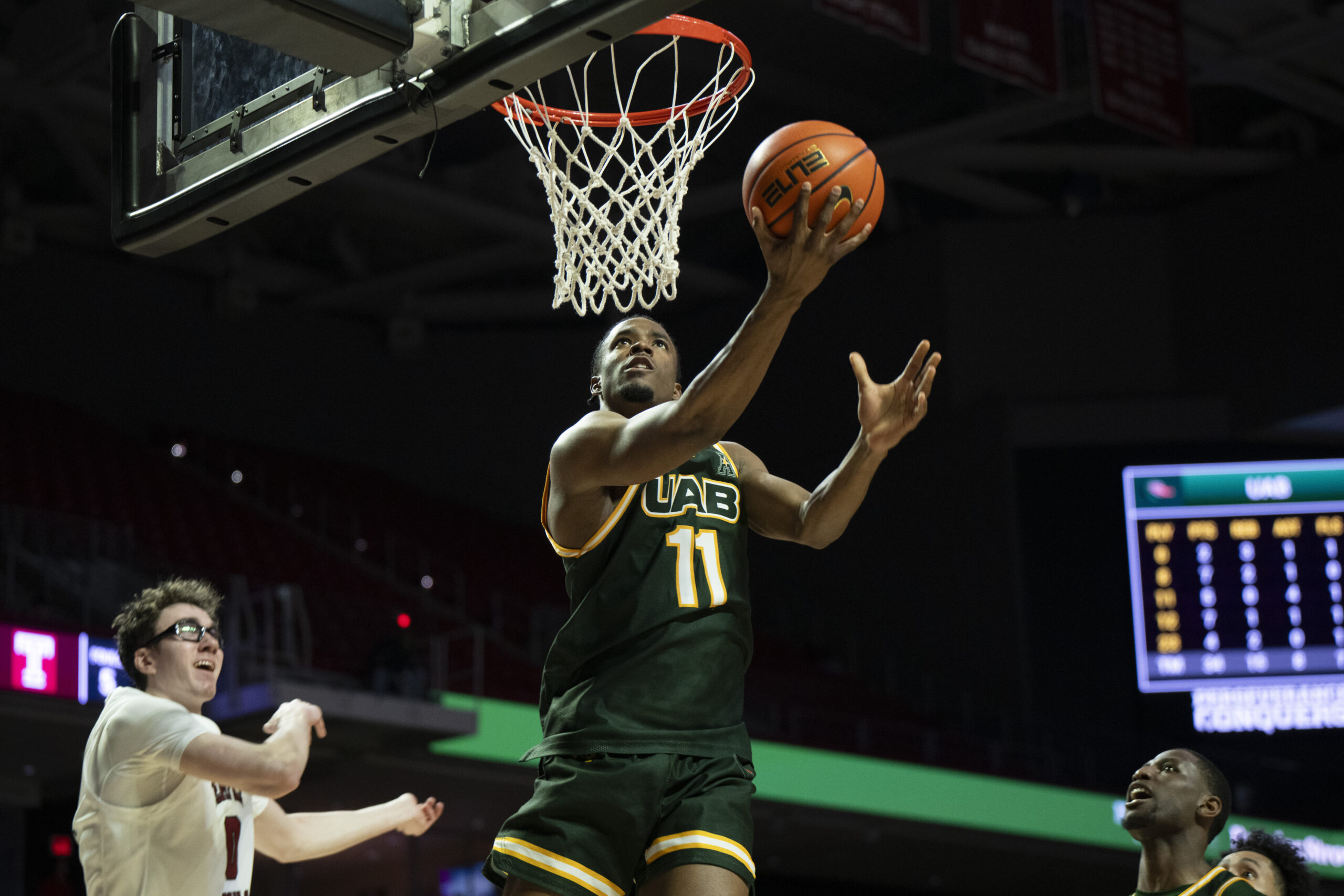
Chance Westry led UAB with 24 points on Wednesday.
Temple made just one three-pointer the entire game. Westry, however, got hot and scored 17 second-half points.
“We tried to be in gaps and constructed it a little bit,” Fisher said. “But [Westry] had a really good night.”
Game changing play
Felt delivered a dunk to give the Owls a one-point edge with seven minutes remaining. Then, 20 seconds later, he went to the line to give them a chance at a three-point lead.
Instead, his shot bounced off the rim, and UAB went back to work.
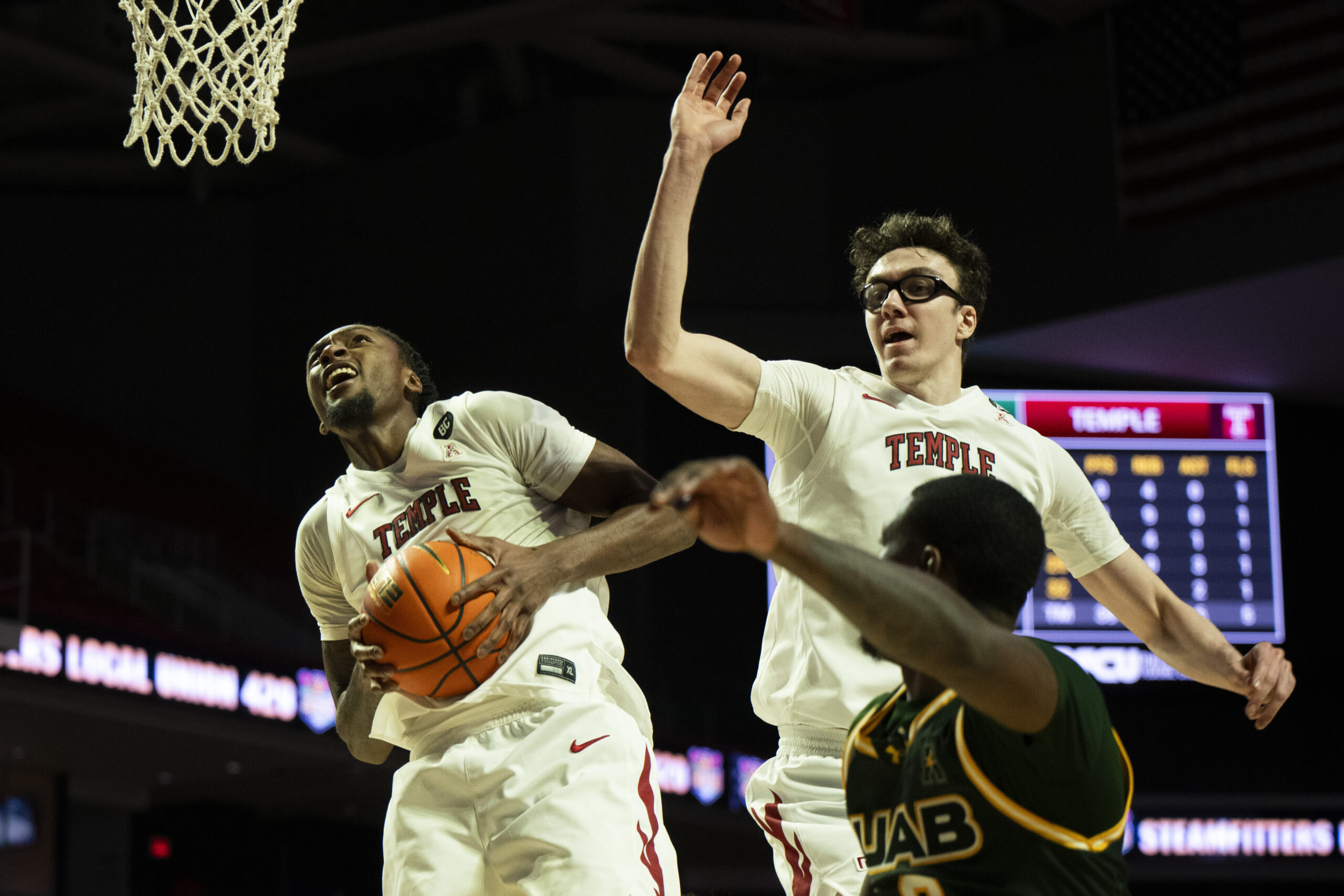
Temple’s Jamai Felt secures a rebound against UAB on Wednesday.
Westry capitalized 24 seconds later by drilling a three-pointer to snatch the lead right back for the Blazers. Felt had another chance to tie the game with more free throws, but both missed. Mason also missed a critical three-pointer.
UAB knocked down five of its last six shots to seal the victory.
Up next
Temple will visit Wichita State (17-10, 9-5) on Saturday (ESPN2, 6 p.m.).
WASHINGTON — Tre’ Johnson, the former standout Washington offensive lineman who went on to become a Maryland high school history teacher, died Sunday. He was 54.
“It is with a heavy heart that I inform you that my husband, Tre’ Johnson, passed away suddenly and unexpectedly … during a brief family trip,” she wrote. ”His four children, Chloe, EJ, EZ and Eden, extended family, friends, and I are devastated and in shock.”
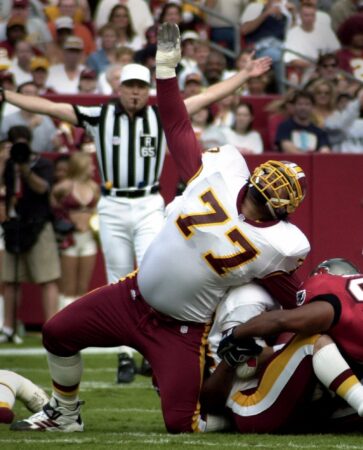
After starring at Temple, Johnson was drafted by Washington 31st overall in 1994. He played for Washington through 2000, spent 2001 with Cleveland and returned to Washington for a final year in 2002. The 6-foot-2, 328-pound guard was a Pro Bowl selection in 1999.
After football, he became a history teacher at the Landon School in Bethesda, Maryland. His wife said recent health issues had forced him to take a leave of absence.
Coach Adam Fisher’s anger was palpable when he stormed into the Al Shrier Media Room on Sunday afternoon. The reason was simple: Temple had blown a 12-point lead, resulting in a 65-62 loss to North Texas at the Liacouras Center.
The Owls (15-10, 7-5 American) had just come off a loss to Tulane on Wednesday, prompting Fisher and the team to go back to the drawing board. They prepped for a Mean Green (15-11, 6-7) defense that allowed a conference-best 66.3 points per game.
Instead, Temple played into its opponent’s strengths. It turned the ball over a season-high 16 times and missed eight free throws.
“Not the response we wanted,” Fisher said. “I thought, last game on the road, we had a heart-to-heart. Long couple practices. We didn’t play Temple basketball at Tulane the right way, and we got back to some basics. Our mental approach wasn’t there for whatever reason at Tulane.
“Today I thought we responded by playing hard, but we had a few lapses in the second half … We’ve got to be better at home. I appreciate the crowd coming out. I’m [ticked] that we have this many people and we play like this.”
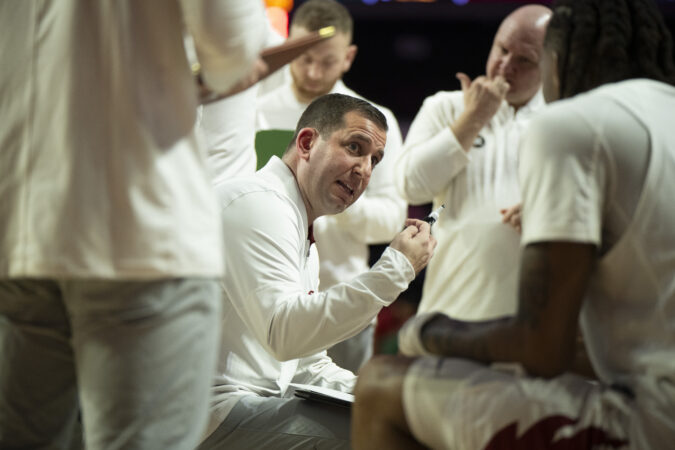
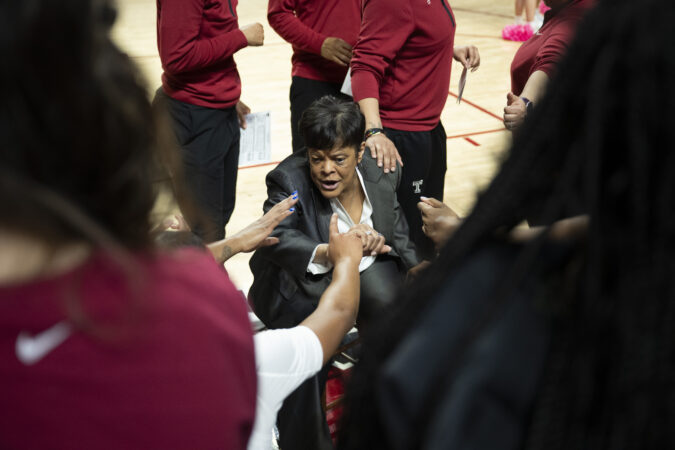
Temple head coach Adam Fisher talks with his players during a timeout in the second half against North Texas Mean Green.
Temple opened up the game slowly, before its offense eventually got going against a pesky Mean Green defense. North Texas forced two early turnovers but guard Derrian Ford, who finished with 20 points, drilled a three-pointer.
The Owls used ball movement to get the best of the visitors zone defense and got open looks. It took awhile to find a rhythm but eventually guard Masiah Gilyard hit back-to-back threes, which ended a near eight-minute drought without a triple.
That effort became all for naught, as the Owls’ 40-28 lead six minutes into the second half eventually evaporated.
Temple guard Jordan Mason looks to the official for a call against North Texas.
“It’s what we expected. It’s what we spent time on pulleys versus their pressure,” Fisher said. “They’ve heard that since the second we got off the plane at Tulane.”
With six games left in the season before the American Conference tournament, the past week looks like a missed opportunity to gain traction in terms of seeding. The Owls entered the matchup tied with Charlotte for second place in the American.
The 49ers dropped their game against Texas-San Antonio on Sunday, paving a way for Temple to get sole possession of the second seed of the conference tournament. South Florida, which leads the American, nearly lost its game against Florida Atlantic, which could have put the Owls within striking distance of the top spot.
Now, the Owls are in a fight with Charlotte and Memphis in a tie for fourth place. Tiebreakers have Temple in the fourth spot, which gives it a bye to the quarterfinals, but two wins this week thrust it to a tie with USF and they wouldn’t play until the semifinals under the new format.
But Fisher and the rest of the Owls aren’t worried about those results, opting to keep their focus inward.
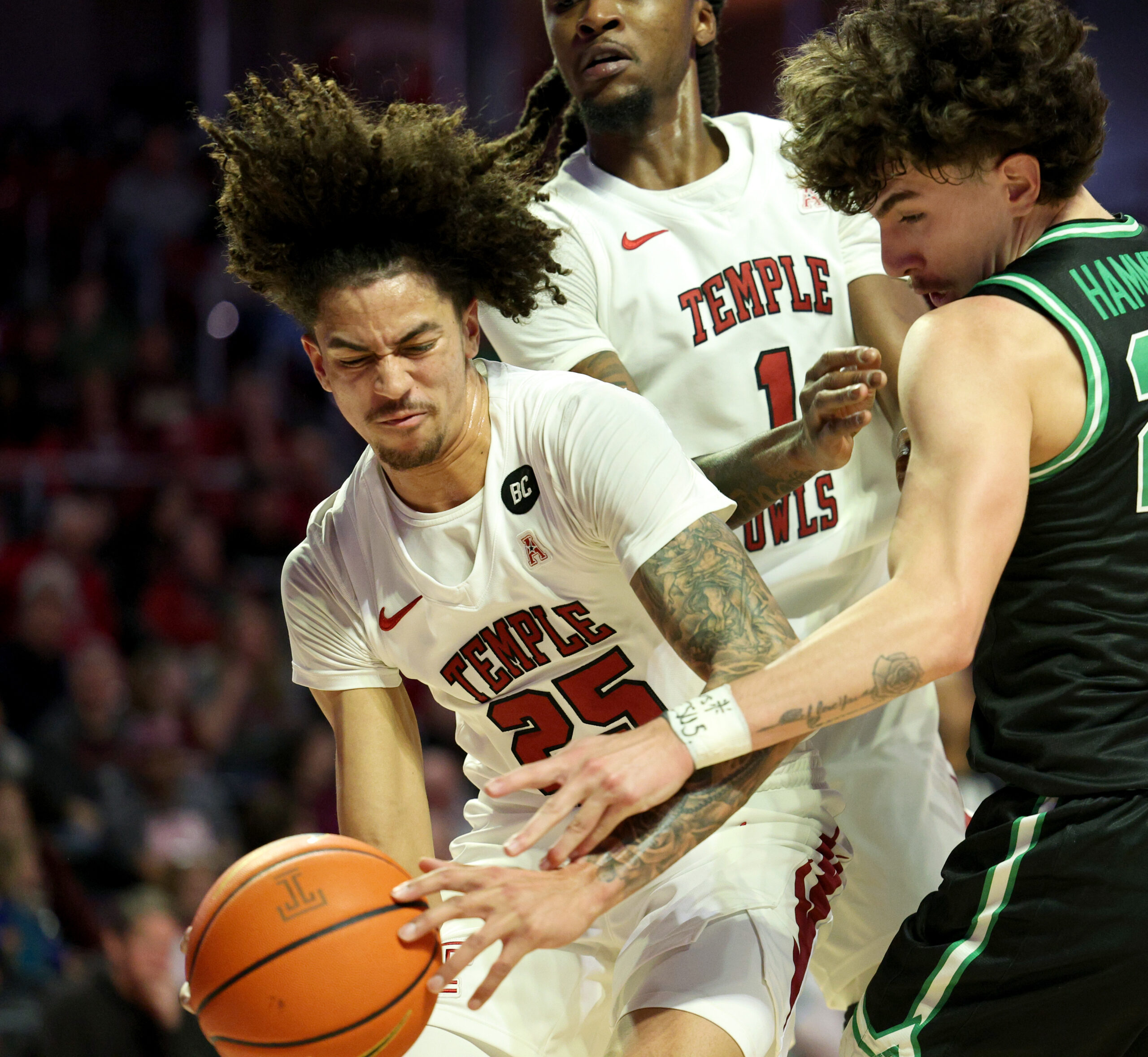
Temple guard Aiden Tobiason (left) battles for the ball against North Texas Mean Green forward Buddy Hammer Jr.
“We focus on us,” Fisher said. “I think when you start watching standings, look, we want to play meaningful games in February and into March. And right now we are and that’s got to be our focus.”
“We’ve got to learn and keep getting better,” Fisher later said. “Got another great opportunity at home against a really good team and we got to make sure we bring the same fight, but do it for 40 minutes.”
Up next
Temple will host Alabama-Birmingham (16-10, 7-6) on Wednesday (ESPNU, 7 p.m.)
Temple overcame an 11-point first-half deficit in the first half against East Carolina. Then, the Owls faced another in the fourth quarter.
Temple attempted a comeback at the Liacouras Center on Saturday, but every time it scored, the Pirates had a response. Temple cut its deficit to four in the final minutes, but East Carolina held the Owls off and handed them a 79-73 loss. It’s their third-straight loss, putting them in danger of missing the American Conference tournament.
Temple (10-14, 4-8 American) is in ninth place in the conference standings and has six games remaining in the regular season. The top 10 teams qualify for the tournament.
“It was a tough game,” coach Diane Richardson said. “We are trying to learn how to put four quarters, and [we’ve] got some things to work on. I look at the stat sheet, and we sat back for a bit, then we turned it on. So we’ve got to just be consistent.”
Statistical leaders
The Owls focused on attacking the paint early, and Saniyah Craig led the effort.
The junior forward scored a game-high 20 points and added six rebounds. Sophomore guard Savannah Curry finished with a season-high 18 points on 6-for-8 shooting and a team-best eight rebounds. Temple struggled with turnovers and gave the ball away 24 times. Every Owl who played had at least one turnover.
“I was really just playing my game,” Craig said. “Playing slower because usually when I speed up, I throw the ball over the rim, so I was just playing slower and playing my game.”
The Pirates (19-7, 11-2) were led by guard Kennedy Fauntleroy and forward Anzhané Hutton, who scored 19 points apiece.
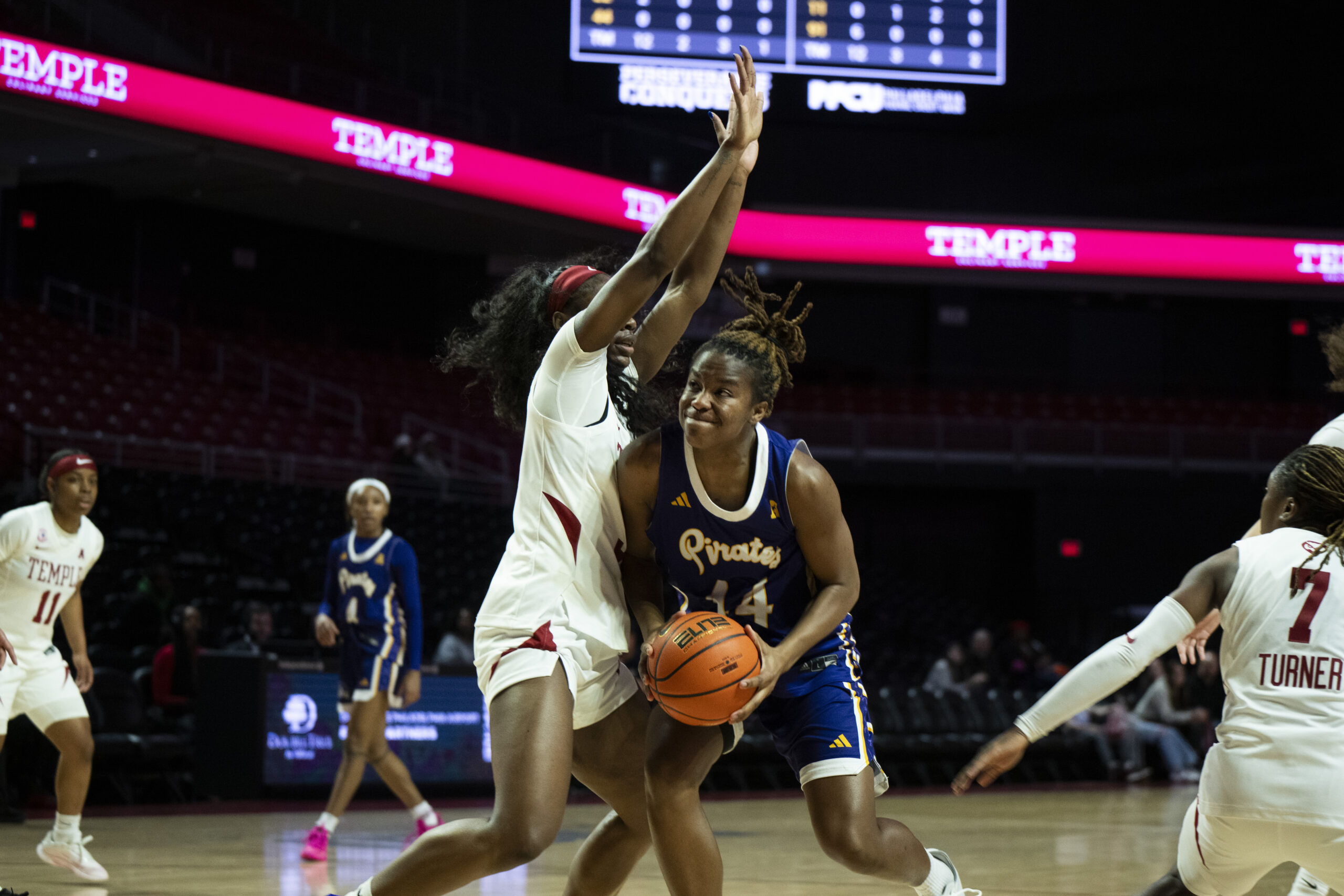
East Carolina’s Bobbi Smith (14) looks for a shot as Temple’s Saniyah Craig defends on Saturday at the Liacouras Center.
Too much for a comeback
Temple shot 69.2% from the field in the first quarter and 50% through 20 minutes, but couldn’t get out of its own way. Temple committed 17 turnovers in the first half, which East Carolina turned into 13 points. The Pirates built an 11-point led midway through the second quarter before Temple found its footing.
The Owls ended the quarter on an 11-0 run, thanks to strong defense and free-throw shooting. A free throw by Tristen Taylor (10 points, seven assists) sent the game to halftime tied at 36, but Temple failed to carry that momentum into the second half as its offense went cold.
The teams traded baskets for much of the third frame before the Pirates pushed their lead to 11 in the final minute. Temple spent the fourth quarter searching for a comeback and got within four points multiple times but could not come up with a clutch basket or defensive stop to get over the hump.
“I need our bench to be more aggressive and give us more,” Richardson said. “Oftentimes, I try to give our starters a little rest, but our bench has really got to step up and fill those gaps so there is not much of a drop off. And that’s on me.”
Costly turnover
Temple guard Kaylah Turner (14 points) knocked down two free throws to cut East Carolina’s lead to 75-71 with 32 seconds remaining, then stole the ensuing inbounds pass to give Temple another chance to get within one possession.
However, Turner moved a little too quickly and lost control of the ball. Pirates guard Jayla Hearp grabbed it, and the Owls were forced to foul. Temple did not get another opportunity as East Carolina made its free throws to secure the win.
Up next
The Owls will visit Charlotte (12-13, 6-6) on Tuesday(6:30 p.m., ESPN+).
The Harlem Globetrotters are a can’t-miss attraction whenever they are in town. With their flashy and fun playstyle, along with in-game entertainment, they get fans involved and bring out plenty of laughs.
The Globetrotters consist of former high school and college players who adjusted their game to benefit the fan experience. The group includes a mix of men and women, but it wasn’t always that way.
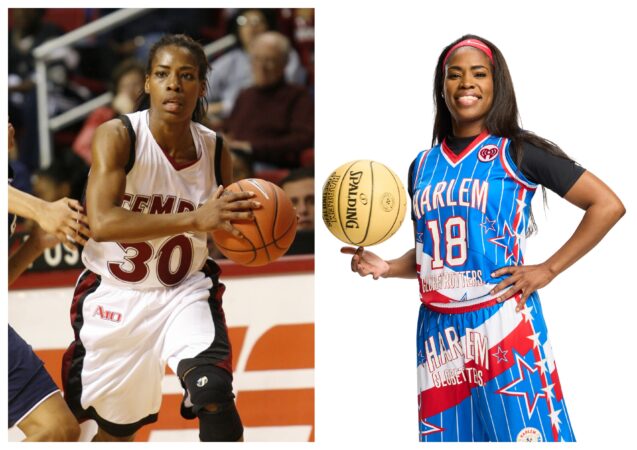
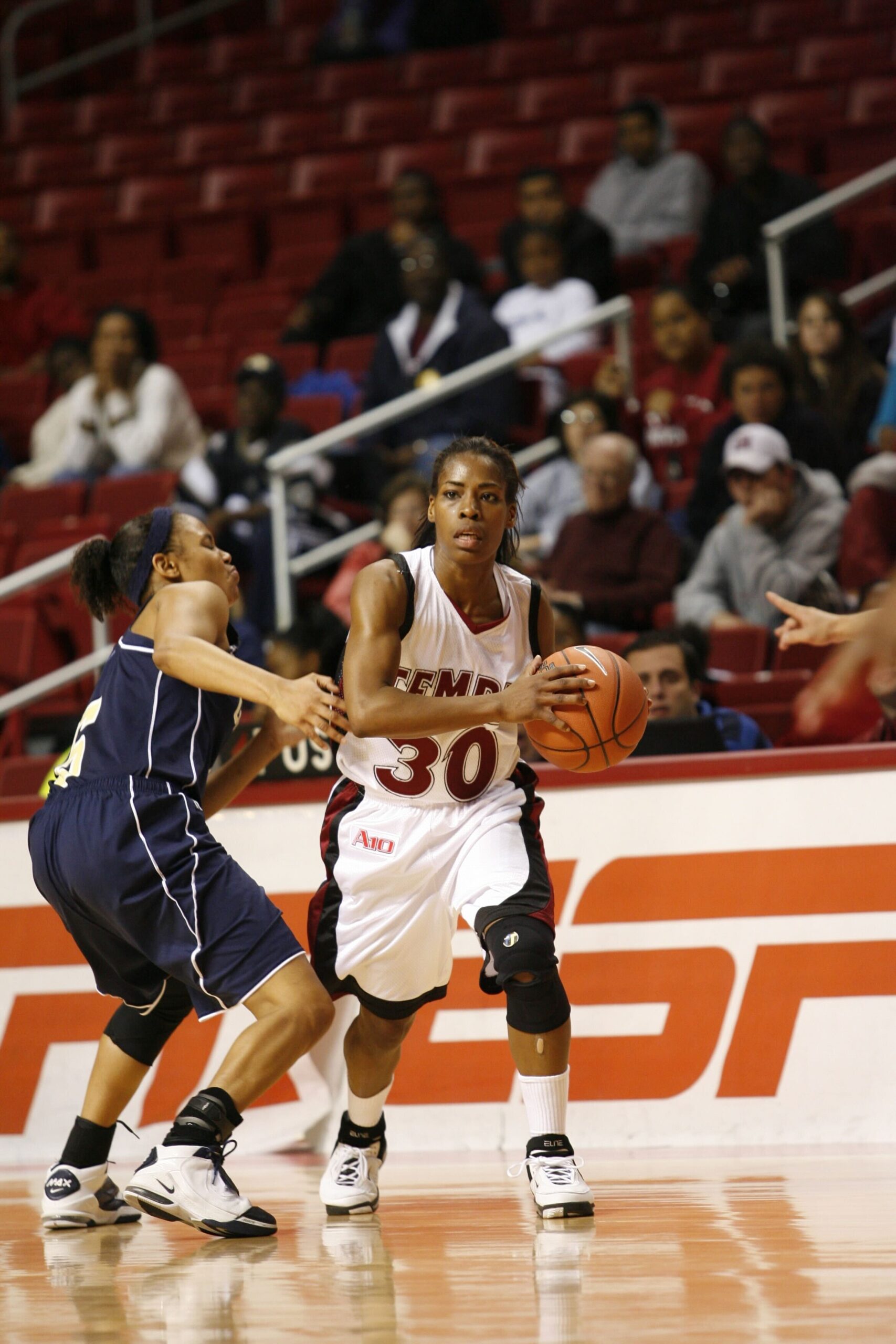
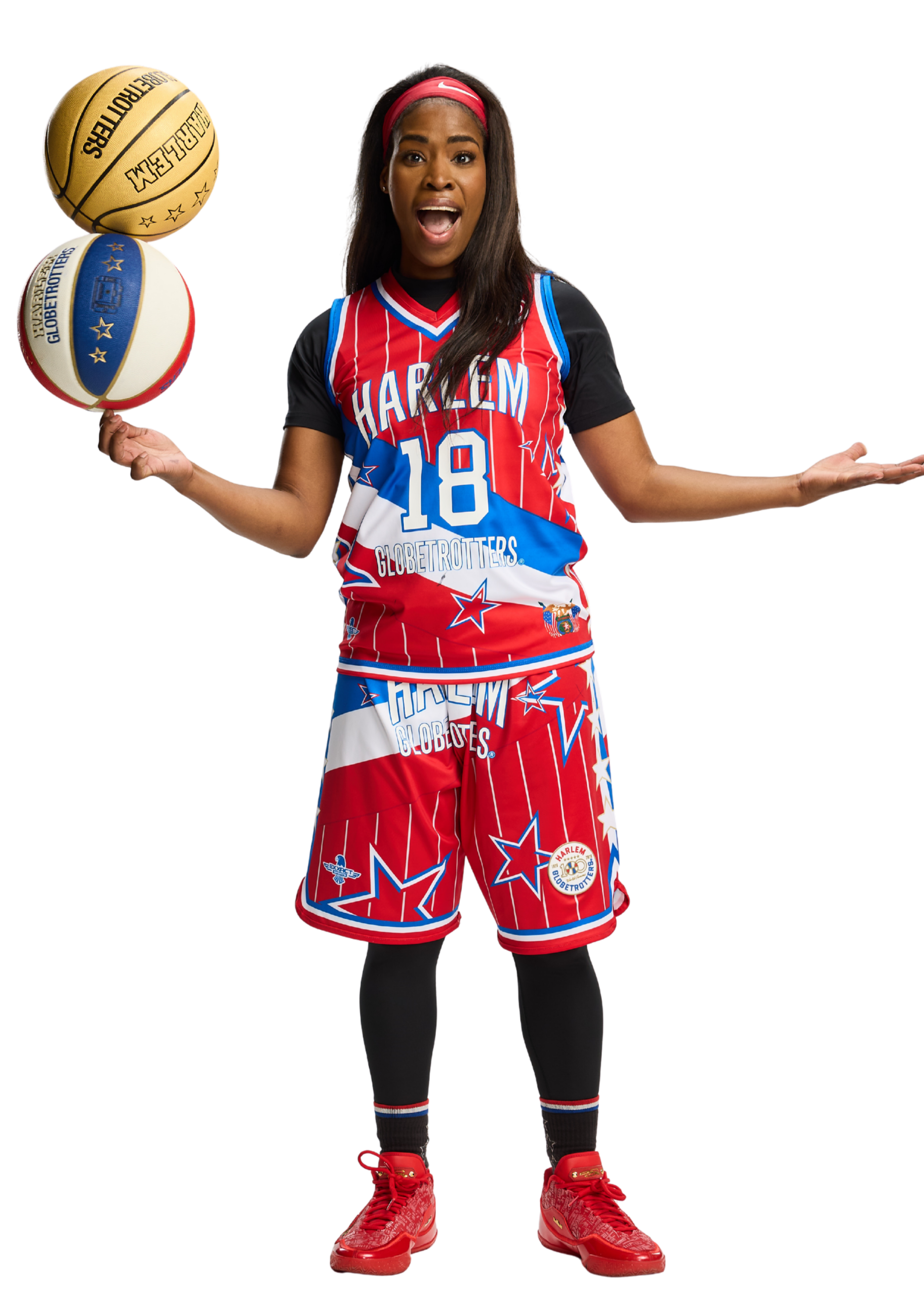
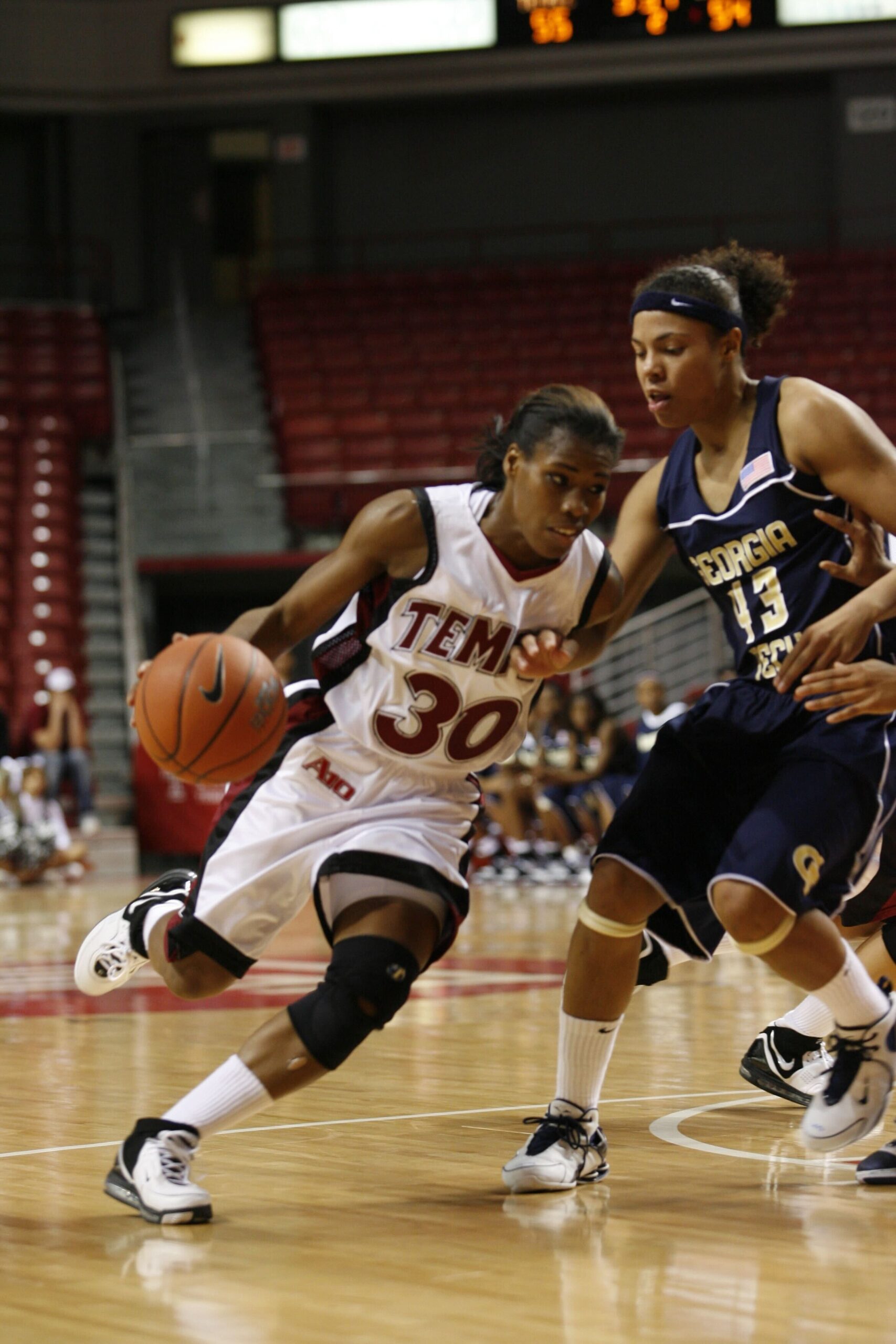
From 1993-2010, the Globetrotters had no women on the court. That changed in 2011, when Fatima “TNT” Lister joined the team. Lister played at Temple from 2005-07 — she played her first two years of college ball at the University of New Mexico. After playing a few years overseas, Lister tried out for the Globetrotters and earned a contract with the world-famous basketball team.
Lister adopted the nickname “TNT” from her teammates because of her explosive play and flashy dribbling. Fifteen years later, Lister still dons the jersey and has paved the way for other women to play for the Globetrotters.
“The fact that I get to kind of open that door back up for women to have this experience and I get to be that representation for little girls, you can tell kids things, but seeing is believing for kids,” Lister said. “So, the fact that they can see me out there holding my own and I get a chance to interact with them and things like that. That’s been the highlight for me.”
This year marks the 100th anniversary of the Globetrotters, and they will make appearances at the Liacouras Center on Feb. 19 and Xfinity Mobile Arena on March 1. While Lister won’t be in Philadelphia as she is with the international squad, the city still holds a special place.
The streetball and flashy style that embodies the Globetrotters has always been in Lister’s game. Growing up, the Colorado Springs native loved watching AND1 Mixtapes and 76ers legend Allen Iverson’s signature crossover.
But Lister’s game went beyond flashy dribbling. She played college basketball at New Mexico for two years, before transferring to Temple, where she learned under former head coach Dawn Staley.
Lister was a stellar three-point shooter while playing at Temple.
“It was a privilege to be able to pick her brain one-on-one,” Lister said. “Players dream of that, and as a basketball player, she’s done everything that I wanted to do. But I also got to see that she was very much part of the community. She did a really good job of taking care of her family and just juggling all of those things. It kind of inspired me to want to give back myself.”
It was one of the main reasons Lister signed a contract with the Globetrotters; they are heavily involved in the community, especially with children.
Lister’s favorite events are when the Globetrotters can bring a smile to a kid’s face who is going through a trying time.
Fatima “TNT” Lister tried out for the Globetrotters in 2011 and earned a contract with the world-famous basketball team.
Lister also enjoys bringing families together to make memories by watching her do what she loves — playing basketball. Each time Lister and the Globetrotters bring together thousands of fans it’s special.
“This has been an opportunity for me to do something that I’ve been in love with doing in terms of community service, but just on a bigger platform,” Lister said. “I’m really thankful to be a part of this and know how much we reach people, not just domestically but globally.”
While the Globetrotters’ on-court product may look fun and goofy, the group puts in hours of work to provide the best entertainment.
The Globetrotters are split into three squads, which allows them to play between 250-280 games at multiple venues each year. Practices last two and a half hours, and it’s not just tricks they are working on, the Globetrotters are doing regular basketball drills.
Fatima Lister played at Temple from 2005-07 before playing a few years overseas.
Most of the in-game skits or dazzling moves are improv, and they try to cater certain activities or fun moments to the city they are playing in.
Lister thought she would play just three seasons in the red, white, and blue, but instead has become a 15-year staple on the team. The experience continues to reap rewards, especially since her daughter, Kali, is old enough to watch her mom.
“She’s 7 now and she knows she doesn’t have the regular mom, and she loves it,” Lister said.”She loves coming to the games. I always bring her to the court. My teammates are like her uncles and they always make sure she has a good time. It’s been cool for her to see that.”
Lister has been an inspiration for other women to join the Globetrotters. She says her involvement serves “a purpose that’s bigger than me.”
“We all have our personal goals,” she added. “But the way I’ve been able to touch other people’s lives and use this thing that I have loved since I was 12 years old — I’ve probably performed in front of over 100,000 people. I don’t know everyone that I impacted, but I know the impact is bigger than even my dreams.”
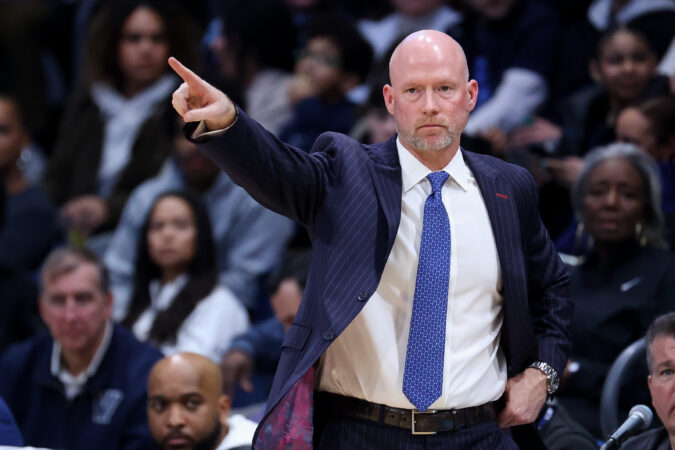
Every once in a while, Kevin Willard loves when the shot clock expires before a Villanova shot attempt.
There really is a time and place for everything.
“Everyone will say, ‘You’re nuts,’” Willard said Tuesday night after Villanova rallied late to beat Marquette. “It takes 30 seconds; it sets up our defense. The worst thing you can do is come down and jack up a shot with 2 seconds on the shot clock, long rebound, your defense isn’t set. I’d rather have a shot-clock violation, set my defense up, have them work for 25 seconds, and then take 30 seconds and the game’s over.”
Villanova has taken its share of violations in the second half of victories this season. There were two during a 12-point win over Seton Hall on Feb. 4 while the Wildcats held leads of 14 and 12 inside of five minutes. They took one vs. Providence up by 19 points with four minutes left. They took one vs. Butler while ahead by 12 with 2½ minutes to go. And they had three during their Big East opener on Dec. 23, when they built a big lead over Seton Hall on the road and won by eight.
To be clear, there were no such violations during Tuesday’s win. So how did we get to this topic? Willard was asked after the game about tempo and whether he thought the team could play a little faster. The Wildcats are ranked 337th by KenPom’s adjusted tempo metric and 296th in average possessions per game (68.4).
Willard, who has the Wildcats at 19-5 overall and 10-3 in the Big East entering Saturday’s game at Creighton, is a passionate talker of tempo. He went on a mini rant about the subject in April at his introductory news conference at Villanova. He focuses on defensive tempo, he explained then, the amount of time it takes for an opponent to get off a shot. On the offensive side, the difference between shot speed from top to bottom is only a matter of a few seconds, he said.
“You know the difference between the 20th fastest team and us?” Willard asked Tuesday. “1.6 seconds.”
By average number of possessions, the difference between Villanova at 297th and the 100th-ranked team (Miami) is just four possessions.
Freshman point guard Acaden Lewis is charged with setting Villanova’s tempo on offense.
“I have a young team, and when we get up I’m going to control the ball and take the air out of the ball,” Willard said. “That’s one of the reasons why our tempo is so low is if you watch any time we’ve gotten up more than 12, I’ve taken the air out of the ball and we have run the clock down. One of the easiest ways to lose leads is to take quick shots.
“I think we play pretty fast. It’s not like he walks the ball up,” Willard said, pointing to freshman point guard Acaden Lewis. “It’s not like we’re ever walking the ball up. It’s 1.6 seconds. Everyone gets stuck on that tempo s—.”
Less than a month of regular-season basketball remains, so it feels like a good time to round up who could win Big 5 awards.
Let’s start with the coaches. The easy answer here is Villanova sweeping. Willard is on his way to stopping the three-year NCAA drought on the men’s side. Denise Dillon has her fifth 20-win season in six years as Wildcats coach. But those are the obvious answers partially because they coach teams that entered the season with at-large NCAA Tournament chances.
But how about Mountain MacGillivray, the La Salle women’s coach? The Explorers went 4-15 in the Atlantic 10 last season. They’ve nearly doubled that total so far in 2025-26 and still have five games left. And what about Adam Fisher? The Temple men’s coach had to rebuild another roster in the offseason and has the Owls at 7-4 in the American Conference and in the mix. Or Steve Donahue, who stepped into a weird situation at St. Joseph’s, got off to a slow start, and has the Hawks in fourth place in the A-10?
La Salle’s Ashleigh Connor is guarded by St. Joseph’s Rhian Stokes on Jan. 28.
As for player of the year on the men’s side, Villanova’s Tyler Perkins and Lewis have good arguments, as do Penn’s Ethan Roberts, Derek Simpson of St. Joe’s, and Temple’s Derrian Ford. On the women’s side, it might be Villanova sophomore Jasmine Bascoe’s award to lose. But La Salle’s Ashleigh Connor is having a great season, as is Drexel’s Amaris Baker and Gabby Casey of St. Joe’s.
The Villanova women won by 40 Wednesday night at Xavier and Bascoe reached the 1,000-point plateau in less than two full seasons. The Wildcats are rolling. They’re 13-3 in the Big East and firmly in second place, two games clear of Seton Hall in the loss column.
But they’re also firmly on the NCAA Tournament bubble. ESPN’s latest bracketology had the Wildcats as a No. 10 seed and in the “last four byes” group. The projected field capped just six spots behind them.
Villanova coach Denise Dillon with her star guard, Jasmine Bascoe.
Like the men, the women are in Omaha, Neb., this weekend. They play a Creighton team on Sunday that they already beat by 10 at home. It’s not a great time to have a slip-up, because after that it’s the annual home game vs. No. 1 UConn, which is undefeated and already beat Villanova by 49. Just two games are on the schedule after that: a home game vs. fourth-place Marquette and a road showdown at Seton Hall. Then comes the conference tournament.
Since we last took stock of the Big 5 men’s teams, a few more got on the positive side of .500 in league play, which brings a better possibility of running the table come conference tournament time.
What’s Torvik’s math — which is based on thousands of simulations — for the rest of the pack?
Penn: 10.1%
Drexel: 3%
Temple: 2.9%
St. Joe’s: 2.6%
La Salle: 0.1%
The Big 5’s streak of no men’s teams looks like it’s ending. Just don’t count on Villanova having any company at the dance.
Temple guard Kaylah Turner describes her play as “KT ball,” which she says is scoring at all three levels and being a pest on defense.
However, the 5-foot-6 junior is constantly looking to improve, whether it’s becoming a better passer or grabbing more rebounds. Her drive has helped her blossom into one of the best players in the American Conference.
The Alabama A&M transfer and reigning American sixth player of the year leads the conference in scoring with 17.2 points per game. It’s been a difficult stretch for the Owls in conference play, and Turner has led Temple (10-13, 4-7) to three wins in its last seven games. She scored 12 points in Tuesday’s 52-43 loss against University of Texas San at Antonio.
“We just have to focus on the next game,” Turner said. “We can’t really draw on all the losses.”
Temple guard Kaylah Turner is averaging 17.2 points per game.
Turner had high expectations this season. She was named to the American’s preseason all-conference first team after a strong first season with the Owls, in which she averaged 9.9 points on 38.5% shooting off the bench. With the graduation of guards Tiarra East and Tarriyonna Gary, Turner moved into the starting lineup this season.
“First-team preseason was cool, but I think I should have been preseason player of the year,” Turner said. “So that’s on my mind, and that’s what’s motivated me every day to get better because I didn’t get my original goal, so I still have another couple of goals in mind. I’m just never satisfied.”
Moving into the starting lineup paired Turner with point guard Tristen Taylor, who led the American in assist-to-turnover ratio last season. Turner’s scoring prowess and Taylor’s facilitating has forged a formidable backcourt.
“We play very well together,” Taylor said. “I feel like we’re actually the best backcourt duo in the conference, and I’ll say that. But Kaylah comes in here and works hard every day. She is a great teammate, not just to me, but to everybody. She always brings energy, and I just feel like that flows onto the court when she goes out and plays.”
That energy has helped Turner lead the conference in scoring and shoot 41.6% on three-pointers, which is second in the conference..
However, when Temple lost four of its first five American contests, Turner was one of the players who couldn’t find her groove.
Turner shot below 40% in four of those five games. Before Temple’s game against South Florida on Jan. 20, the team held a meeting to go over everyone’s role on the floor. The Owls beat the Bulls, 86-83, and are 3-3 since the meeting. Turner has been one of the biggest beneficiaries of the refreshed role clarity.
Temple’s Kaylah Turner has surpassed 1,000 career points this season.
She had a 27-point outburst in Temple’s 67-65 overtime win over Tulane on Jan. 31 and came up with a steal and assisted forward Jaleesa Molina’s game-winning layup in the final seconds.
“We were just super locked in on that play,” Turner said. “I got the steal, but all my teammates were all talking at that time. So that’s why we got that steal and Jaleesa was able to get the bucket.”
Turner also eclipsed 1,000 career points after knocking down a three-pointer in the second quarter in the win over the Green Wave.
“It definitely means a lot,” Turner said. “I was definitely happy when I got it. Just seeing my success that I had at Alabama A&M, and then having the same thing here is just incredible, seeing my hard work pay off in that aspect.”
Despite having the best season of her career, Turner sees plenty of room for improvement. With Temple ninth in the 13-team American with seven games to play, Turner is looking to give the Owls momentum heading into the conference tournament.
“Looking at these games that we won recently, it was with the defense and 50/50 balls, intensity, urgency, all that type of stuff,” Turner said. “So we can make sure we really emphasize the little things. We can sit here and look at scout and run our plays, but what wins games is everything that’s not on the scout. Energy, talking, getting on the floor, that type of stuff. Just being consistent with our spicy defense, like Coach [Diane Richardson] always talks about.”
When Jordan Mason entered the transfer portal last spring, he wanted to be part of a winning program.
It wasn’t his first time in the portal. The senior spent two seasons at Texas State before transferring to University of Illinois Chicago in 2024. He got in contact with Temple coach Adam Fisher in the portal and immediately felt at home.
Mason thought his skill set would complement Temple’s screen-heavy offense. He has since been a catalyst for the Owls.
Temple (14-8, 6-3 American Conference) lacked a true point guard for the past two years. Mason has taken over that role. He’s averaging 11.7 points and a team-leading 4.3 assists in 22 starts.
“I saw the way that the coaches interacted with each other and the way they interacted with me and my family,” Mason said. “It felt like a family right away. It felt like home. It was like I could be comfortable here. I can be myself here.”
Mason developed into a key rotational player at Texas State. As a freshman, he averaged 6.3 points in 32 games (19 starts). His numbers more than doubled as a sophomore (12.9 points per game) and 23 starts in 29 games.
He transferred to UIC for the 2024-25 season and averaged 9.6 points. Mason also was an asset defensively and as a ballhandler. He had 3.3 assists and 1.2 steals per game with the Flames.
“He knows when to pick and when [to] shoot,” Fisher said. “Guys enjoy playing with somebody like that, when you know that there’s an opportunity that you’re going to get shots, and he gets you easy looks.”
Jordan Mason played two seasons at Texas State and one at University of Illinois Chicago before joining Temple this offseason.
Mason quickly established himself as Temple’s main ballhandler in the season opener and created scoring opportunities for his teammates, notching six assists in the 83-65 win over Delaware State.
“Every pass I make, it seems like the shot goes in,” Mason said. “So some of it is me getting a little bit better at passing, but a lot of it is just the talent around me. They’re just really good dudes that make a lot of shots. So it makes me look good.”
His play contributed to the Owls winning seven straight from Dec. 9 to Jan. 14 — a stretch in which he also surpassed 1,000 career points. When he struggled in the middle of January, though, the team’s production took a dip.
Temple lost two straight games, but a road trip to his native Texas helped turn things around.
“He’s the heart of our team,” said guard Aiden Tobiason. “Because he’s so important. He’s really the main guy in principle every single time.”
The Owls won both games at Rice and University of Texas at San Antonio, and Mason recorded back-to-back double-digit outings, 15 points against Rice in Houston and 18 at UTSA — with his family in attendance.
“It was pretty amazing,” said Mason, who’s from San Antonio. “I’ve actually played UTSA as a freshman, and I didn’t touch the floor. That was rough for me because it was my first time playing at home, and it was, to be honest, a little embarrassing not playing. So to be able to come back, full-circle moment my senior year and play in front of everybody and beat UTSA because we lost to [them] my freshman year.”
Entering Saturday’s noon matchup at East Carolina (7-15, 2-7), Temple sits in fourth place in the American and could snatch a top-four seed in the conference tournament in March.
Mason, in his final year of eligibility, looks to make that happen.
“I want to win the conference tournament and go to the NCAA Tournament,” Mason said. “That’s the big goal for our team.”
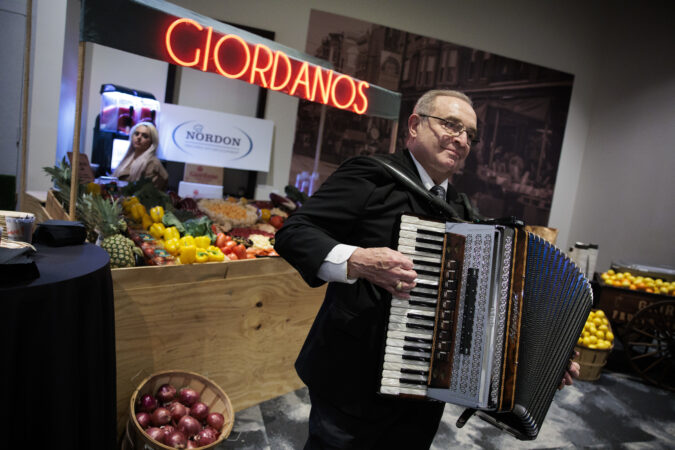
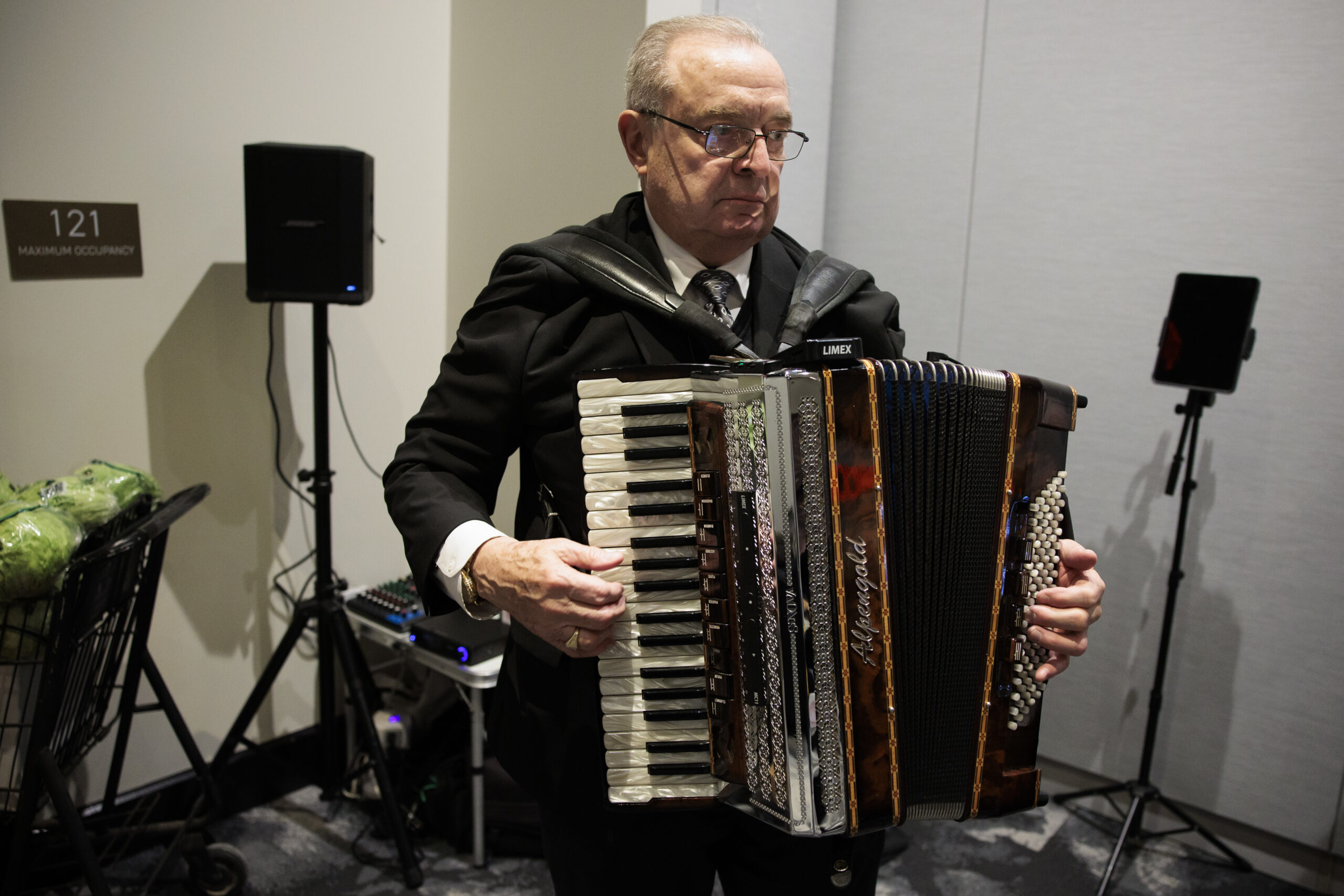
Don Bitterlich’s Chevy Caprice was loaded with everything he needed for his gig that night at an Italian restaurant in Northeast Philly: an accordion, a speaker, and a pair of black slacks.
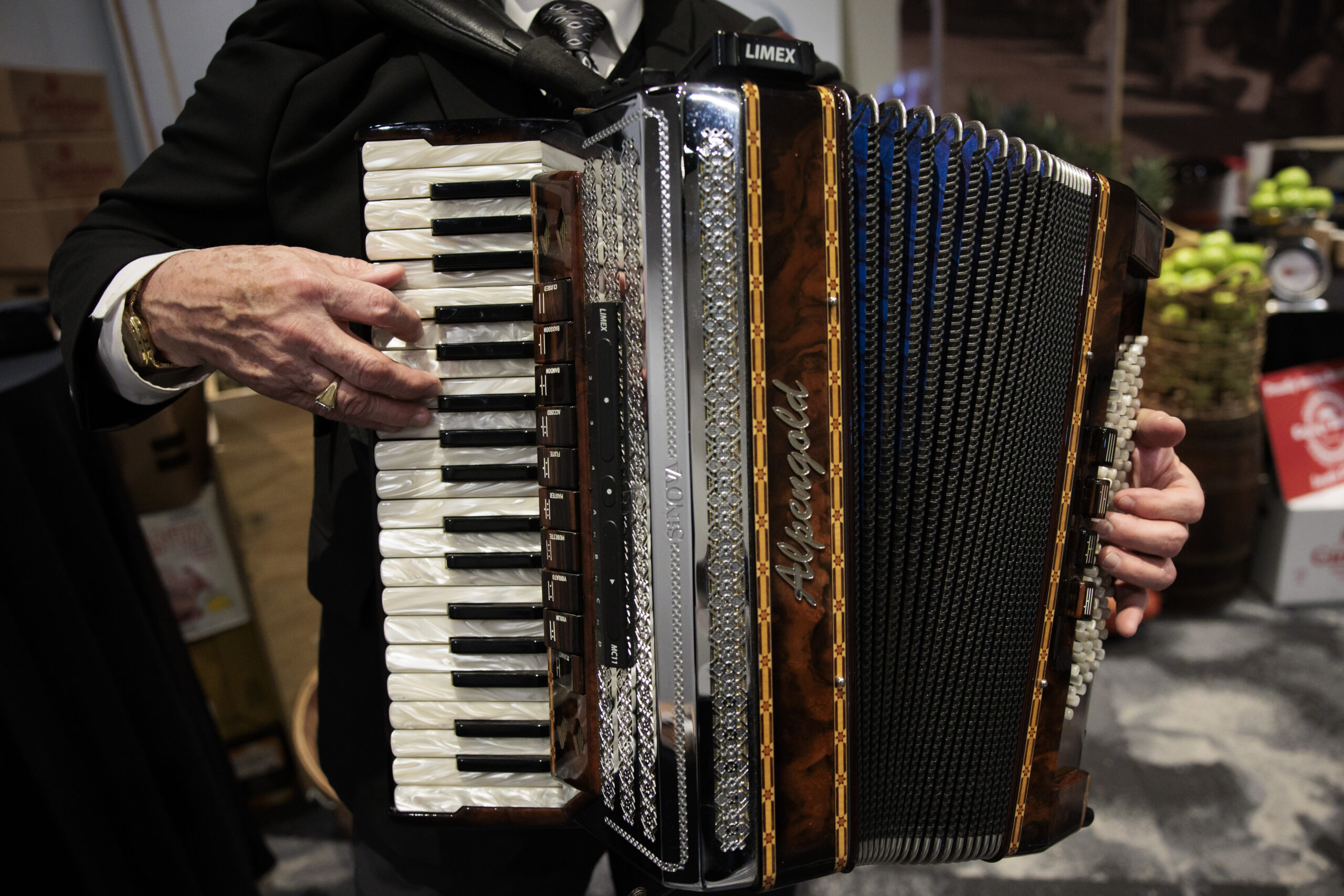
He learned to play the accordion as a 7-year-old in Olney after his parents took him to a music shop on Fifth Street and he struggled to blow into a trumpet. His father pointed to the accordion, and Bitterlich played it everywhere from his living room on Sixth Street to Vitale’s on Saturday nights.
The owner of Vitale’s — a small restaurant with a bar near Bustleton and Cottman Avenues — paid Bitterlich $175 every Saturday. It was a lot of money for a college student in the 1970s. First, he had to finish football practice.
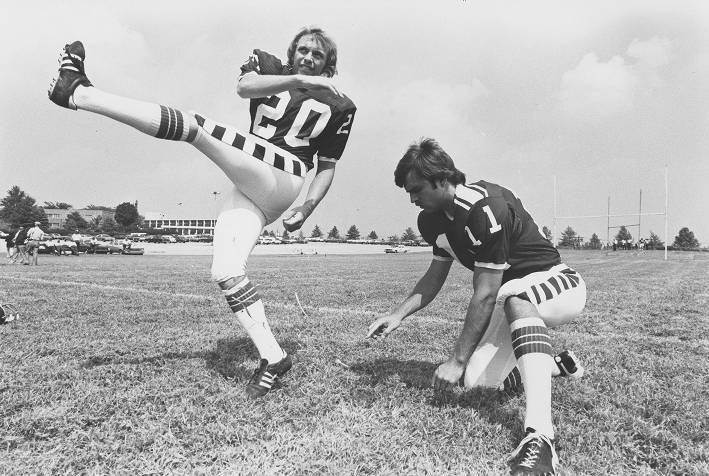
Bitterlich went to Temple on a soccer scholarship before football coach Wayne Hardin plucked him to be the placekicker. He never even watched a football game, but soccer coach Walter Bahr — the father of two NFL kickers — told Hardin that Bitterlich’s powerful left leg was fit for field goals.
Bitterlich went to football camp in the summer of 1973, while also playing soccer for Bahr and trying to keep up with his accordion. He had yet to officially make the football team that August, so there was no use in canceling his 10 p.m. Saturday gig at Vitale’s. Bitterlich was due to play there in 90 minutes, but the Owls had yet to include their kicker in practice. He was hoping to leave practice by 8:45 p.m., and it was almost time.
“I’m watching the clock,” Bitterlich said.
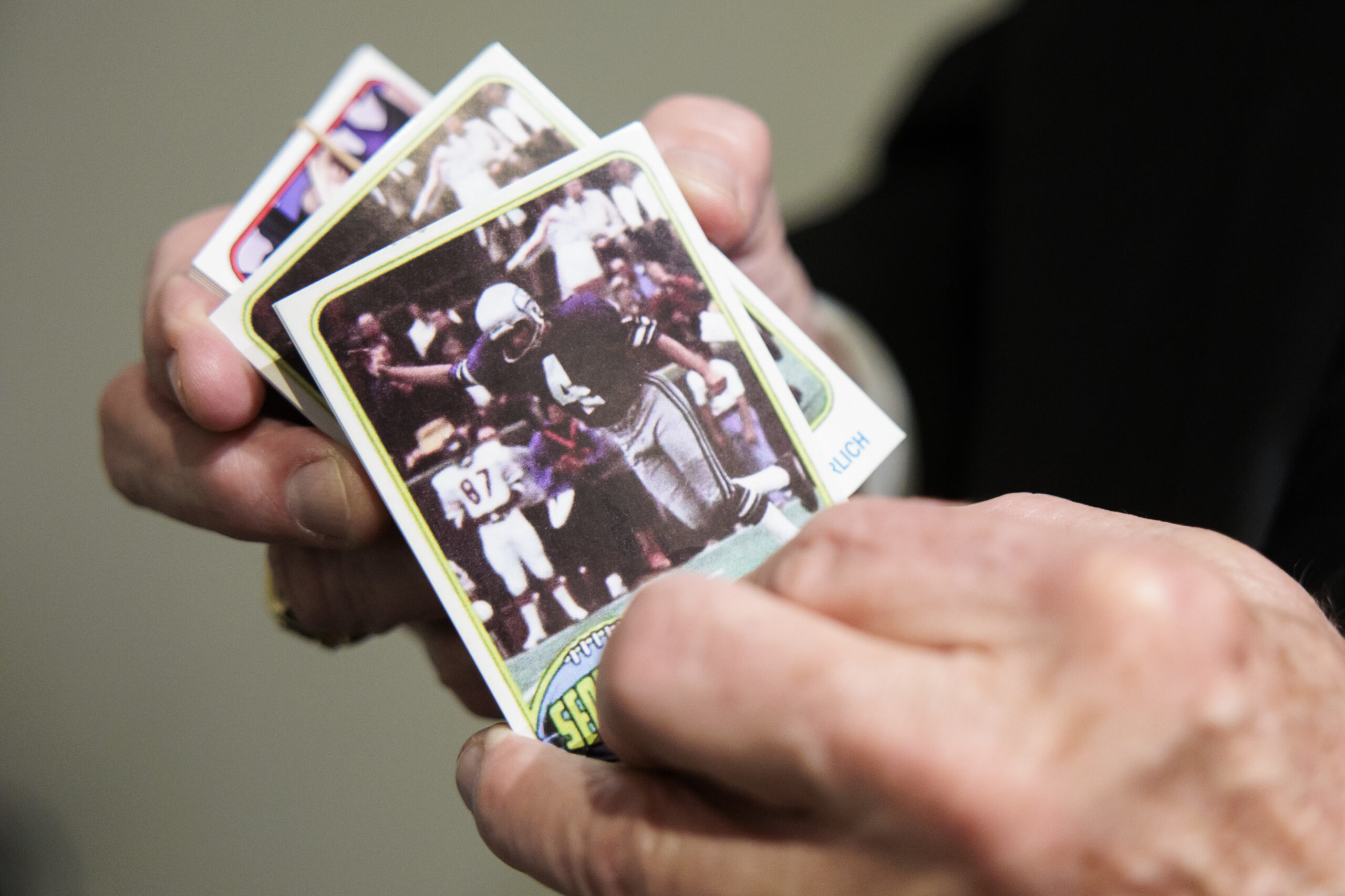
Don Bitterlich holds his Seahawks football card. He scored the first points in Seahawks history as a kicker.
He asked an assistant coach if the team was going to kick, and the coach shrugged him off. A half-hour later, he asked again. He had to go, Bitterlich said.
“He said, ‘Go where?’” Bitterlich said.
Bitterlich set records at Temple, played in an all-star game in Japan, was in his dorm when he was selected in the 1976 NFL draft, and scored the first-ever points for the Seattle Seahawks, who play Sunday in Super Bowl LX against the New England Patriots.
He made it to the NFL despite knowing little about football until he became Temple’s kicker. It was a whirlwind, he said.
He really made his name with the accordion, the instrument he’s still playing more than 50 years after he had to rush to a gig from football practice.
He has long been a regular at German festivals, restaurants, banquets, and even marathons. A German club in the Northeast called Bitterlich “the hardest working accordion player in the world.” He played a gig on Sunday night in South Philly and another on Monday morning near Lancaster.
Bitterlich, 72, who worked as a civil engineer until retiring last year, said he played more than 100 gigs in 2025. Football stopped years ago, but the show rolls on.
“These days,” he says, “most people around hear me playing the accordion, and they don’t know that I kicked in the NFL.”
Becoming a kicker
Bitterlich was home in Warminster — his family moved from Olney just before his freshman year at William Tennent High — when Bahr called. The Temple soccer coach had been a star on the U.S. team that upset England in the 1950 World Cup and was one of the best players to come out of Philadelphia.
“He had this raspy voice,” Bitterlich said. “He smoked cigars during practice and basically chewed and ate half of it as well. He always called me ‘Bitterlich’ but called me ‘Donald’ if I screwed up.”
Don Bitterlich (20) at Temple, likely during the 1975 season.
So Bitterlich figured he was in trouble when his coach called him “Donald” on the phone.
Bahr asked Bitterlich whether he knew who Hardin was. Yes, he said. Bahr said he had just talked to the football coach and told him Bitterlich could kick. The coach had watched Bitterlich since he played soccer for Vereinigung Erzgebirge, a German club his grandfather founded off County Line Road. He told Bitterlich he could do it.
“So I said, ‘No soccer?,’” said Bitterlich, who was also the mascot at basketball games in the winter. “‘No, you’re my starting left midfielder.’ I was thinking, ‘How is this going to work?’”
Bahr told Bitterlich to call the football office, get a bag of balls, and start kicking. He kicked every day at the German club and tried to figure it out. He was soon splitting his day between football camp in Valley Forge and soccer camp at the old Temple Stadium on Cheltenham Avenue in West Oak Lane. Each sport practiced twice a day and Bitterlich found a way to make them all.
He played a soccer game that season in Pittsburgh, flew home with the team, and then took a taxi from the airport to Temple Stadium to kick for the football team. He was studying civil engineering and balancing two sports plus his accordion.
It eventually became too much. Hardin told Bahr that he would give the kicker a full scholarship to play football. That was it.
“With the football scholarship, I got room and board,” Bitterlich said. “So I was living on campus after commuting from Warminster. It was insane. I was so worn out.”
Making history
Bitterlich kicked a game winner in October 1973 against Cincinnati as time expired, made three kicks at Temple longer than 50 yards, and was the nation’s top kicker in 1975. The soccer player made a quick transition.
“Coach Hardin always said, ‘If I yell ‘field goal,’ I expect three points on the board,’” said Bitterlich, who was inducted into the Temple Hall of Fame in 2007. “He expected that. The point of that was that he trusted you. That was his way of saying, ‘I’m not asking you to do anything that I don’t think you can do.’”
Don Bitterlich performs with his accordian on Sunday during The Tasties at Live! Casino.
The coach helped Bitterlich understand the mental side of kicking, challenging him in practice to focus on the flagpole beyond the uprights. Try to hit the flag, he said.
“That had a huge mental impact on me,” Bitterlich said. “You have that image, and then when you do your steps back and you’re set, that’s all you can see. It made all the difference in the world for me. Once you have that image, you zone out any of the noise. You’re just focused on that image.”
It helped him focus in September 1976 when the Seahawks opened their inaugural season at home against the St. Louis Cardinals. They drafted Bitterlich five months earlier in the third round. The Kingdome’s concrete roof made the stadium deafening, but Bitterlich felt like he was back in North Philly practicing at Geasey Field as he focused the way Hardin taught him to.
He hit a 27-yard field goal in the first quarter, registering the first points in franchise history. The Seahawks had quarterback Jim Zorn and wide receiver Steve Largent, but it was the soccer player who scored first.
Bitterlich’s NFL career didn’t last long, as the Seahawks cut him later that month after he missed three field goals in a game. He tried out for the Buffalo Bills, but a blizzard hindered his chances. He signed with the Eagles in the summer of 1977, missed a field goal in a preseason game, and was cut.
He landed a job as a civil engineer in Lafayette Hill. He received a call on his first day from Eagles coach Dick Vermeil, who said the San Diego Chargers wanted to try him out. Bitterlich flew to California the next day but turned down a three-year NFL contract that would pay him only slightly more than his new job back home.
“Plus, the real reason I turned down their offer was that they couldn’t hold for a left-footed kicker,” Bitterlich said. “Their holder just couldn’t get the ball down. I didn’t want to sign that contract. ‘What’s going to happen in two days when that guy can’t get the ball down?’”
A week later, the San Francisco 49ers called. He flew back to California, tried out against another kicker, and was told he won the job. But the 49ers decided to sign Ray Wersching, who had been cut the previous season by the Chargers. Bitterlich turned down the chance to replace Wersching in San Diego, and now Wersching was swooping in for the job Bitterlich wanted in San Francisco.
“I went back home and said, ‘That’s enough,’” said Bitterlich, who played three NFL games. “It started to get disappointing.”
“I love to play,” Bitterlich says of his accordion. “I usually don’t take breaks. Most bands will play 40 minutes on, 20 minutes off. I just play through.”
Still playing
His NFL journey was hard to imagine that day at practice as he watched the clock at Temple Stadium and thought about how long it would take to drive to Vitale’s. Bitterlich told the assistant coach that it was almost time to play his accordion. That, the coach said, was something he would have to talk to Hardin about. Fine, Bitterlich said.
“I didn’t know if I was going to make the team or not, and I knew I was going to play soccer,” Bitterlich said. “So I just went over and told Coach.”
Hardin heard his kicker say he had to leave football practice to play the accordion and laughed.
“He said, ‘Yeah, I heard something about that,’” Bitterlich said.
The coach stopped practice and let Bitterlich get in the mix. He nailed six field goals and the other kicker shanked a few. The job felt like his. He hit a 47-yarder and looked over at Hardin.
“He’s like, ‘Yeah, yeah. Go ahead. Go,’” Bitterlich said.
Bitterlich was soon in his Chevy Caprice, heading down Cottman Avenue on his way to Vitale’s. He wasn’t late to his accordion gig that night. His football career would end a few years later, but the music has yet to stop.
“I enjoy it,” Bitterlich said. “I love to play. I usually don’t take breaks. Most bands will play 40 minutes on, 20 minutes off. I just play through. I really don’t take a break. I love it.”
Paging through the bulky Sunday Inquirer on Nov. 28, 1976, readers encountered a sports section that might have been compiled in Mount Athos, the tiny Greek republic that’s been off-limits to women for centuries.
It was stuffed with man’s-world staples — stories, stats, and standings on the NFL, NHL, pro and college basketball. There were columns on hunting, golf, boys’ high school sports; features on boxing, men’s cross-country, minor league hockey; an entire page devoted to horse racing.
The ads were no less macho-flavored, promoting car batteries, rifles, tires. A prominent one hyped January’s U.S. Pro Indoor Tennis Championship at the Spectrum with its lineup of “50 of the world’s top male pros.”
About the only indications that women participated in sports were an account of a West Chester State field hockey game and, buried on the gray scoreboard page, a truncated leaders’ list from that weekend’s LPGA tournament.
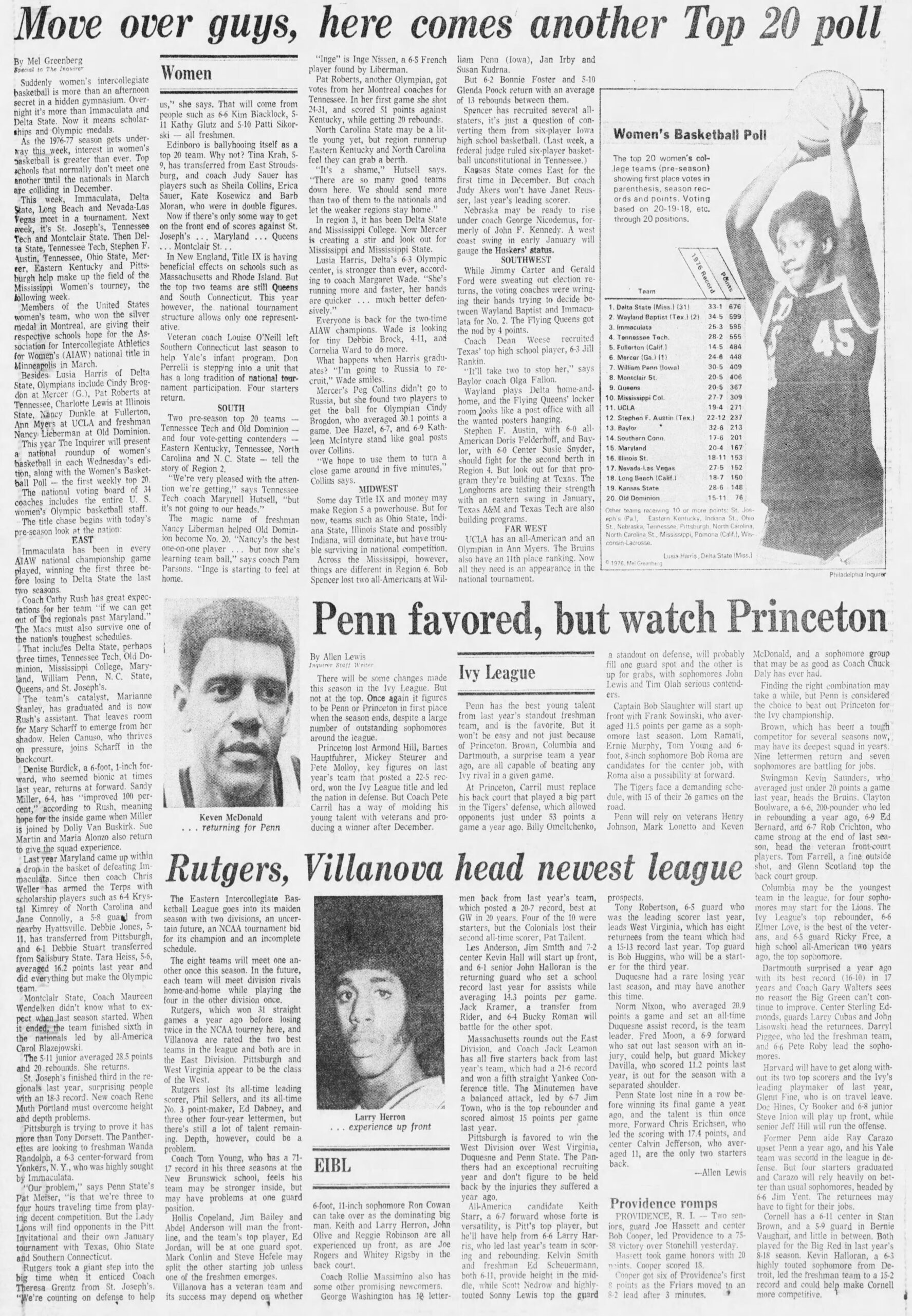
But for those who reached Page 16, a strange interloper awaited. Sandwiched between two men’s basketball previews, as if editors thought it incapable of standing alone, was one of the earliest and most consequential harbingers of a bubbling sports revolution — the first women’s college basketball poll.
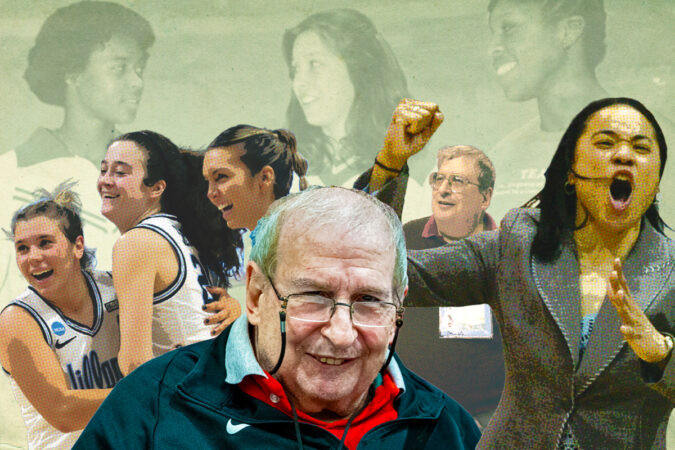
Conceived by then-Inquirer sports editor Jay Searcy and obsessively nurtured by a Temple-educated newspaper clerk named Mel Greenberg, its headline read like a polite plea for recognition: “Move over guys, here comes another Top 20 poll.”
A clipping from the Nov. 28, 1976, edition of The Inquirer that features the first installation of what became the AP women’s basketball poll.
It came. And it stayed. Week after week, year after year, Greenberg’s poll accumulated popularity and heft, becoming a building block in the growth of women’s basketball. A sport that had been widely ignored and loosely governed by the Association for Intercollegiate Women’s Athletics now had validation, a common sense of purpose, and unity.
“That poll gave coaches and others around the country an opportunity to know what was going on everywhere with women’s college basketball,” said Marianne Stanley, a star on Immaculata’s 1970s championship teams and later a successful college and WNBA coach. “Prior to that, there was only word-of-mouth. Newspapers didn’t cover it, and no one was tracking what was happening nationally.”
Revisiting that debut poll in this, its 50th anniversary year, is eye-opening. Its top 10 might today be mistaken for a ranking of Division III field hockey teams — Delta State, Wayland Baptist, Immaculata, Tennessee Tech, Fullerton, Mercer, William Penn, Montclair State, Queens, and Mississippi College.
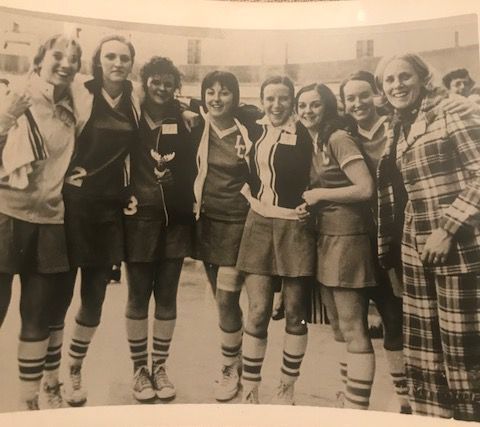
Theresa Grentz (second from left) and Marianne Stanley (fourth from right) with Immaculata teammates and coach Cathy Rush at right. Immaculata was one of women’s college basketball’s first powers.
The large state schools that dominate in 2026 mostly were absent.
But not for long.
Motivated by the mandates of 1972’s Title IX and by a desire to see themselves in the new rankings, many started to invest in the sport.
By 1981, when the NCAA replaced the AIAW as the game’s overseer, there were 234 women’s Division I programs. That jumped to 284 in 1991, 317 in 2001. Last season there were 325 D-I programs, and more than 1,000 when Division II and III are included.
“The fact that so many schools where women’s basketball was nonexistent or an afterthought went all in is a credit to Mel and his poll,” said Jim Foster, the retired women’s coach at St. Joseph’s, Ohio State, and elsewhere.
Deirdre Kane, the retired West Chester University coach, said that “until Mel’s poll, the NCAA wasn’t even acknowledging our existence. That poll made people realize, some of them for the first time, that women’s collegiate basketball was being played.”
Greenberg built a national network of coaches and administrators, contacting them weekly for information and input. As newspapers beyond Philadelphia added his poll, its significance deepened.
“We were all fighting for recognition, but none of us were getting much,” said Geno Auriemma, the Norristown-raised, spectacularly successful coach at Connecticut. “Mel came along, and he was one of the few who gave us a little. His poll helped us all grow the game.”
It grew so widely that in 1996 the NBA launched a women’s pro league, stocked with the stars of the college game. The WNBA now has a national TV contract, recognizable superstars, and a lineup of big-city franchises that in 2030 will include Philadelphia.
“When Philadelphia gets that team,” Foster said, “they ought to call it the Philadelphia Mels.”
It took 28 years after the inception of the Associated Press’ men’s college basketball poll for the women to get one. In 1976, Searcy, who before arriving at The Inquirer had covered women’s sports for the New York Times, decided the time had come. His motivation likely sprang from developments in that Bicentennial year.
Women’s basketball made its Olympic debut that summer in Montreal. A few months earlier, Immaculata had appeared in its fifth straight AIAW national title game. The Mighty Macs, who in 1971 played in the first nationally televised women’s game, had won the first three and were runners-up the next two years.
Searcy reached out to Greenberg, an editorial clerk who by then was the de facto Immaculata beat writer.
“Jay called me into his office and said, ‘What do you think of the idea of a women’s basketball poll?’” Greenberg said. “And I said, ‘I think you’re nuts.’”
As Greenberg prepared for the poll’s November launch, Searcy promoted it. He revealed his plan to Temple students during a campus visit. In that audience was Foster, then a physical education major who also coached Bishop McDevitt High School’s girls.
“It was really exciting news for anyone interested in the sport,” Foster said. “He told us he was going to start a women’s basketball poll that would be just like the men’s.”
Still, many scoffed. Women’s basketball, after all, existed deep in the shadows. Most newspapers and TV stations ignored it. With few exceptions, games were played before tiny crowds, often in substandard gyms. Rules weren’t standardized, qualified coaches and referees were in short supply, and, until the AIAW’s 1971 founding, there was no universally accepted end-of-season tournament.
“The only people who followed women’s basketball then were the people involved in the game,” Kane said.
But if there was a hotbed, it probably was the Philadelphia area. Numerous elementary schools, high schools, and colleges here had teams. West Chester State, with its strong physical education program, gained prominence in the 1960s under coach Carol Eckman, now known as “the mother of women’s college basketball.” And it was a West Chester grad, Cathy Rush, who turned Immaculata into the nation’s best team in the early 1970s.
“There was always a huge basketball presence in Philadelphia,” Stanley said. “But it wasn’t until Immaculata that many people noticed the women. Then, the AIAW was formed, and that was big. Now, here comes the poll, and suddenly we’ve got a way to track and pay attention to what was happening not just here but across the country.”
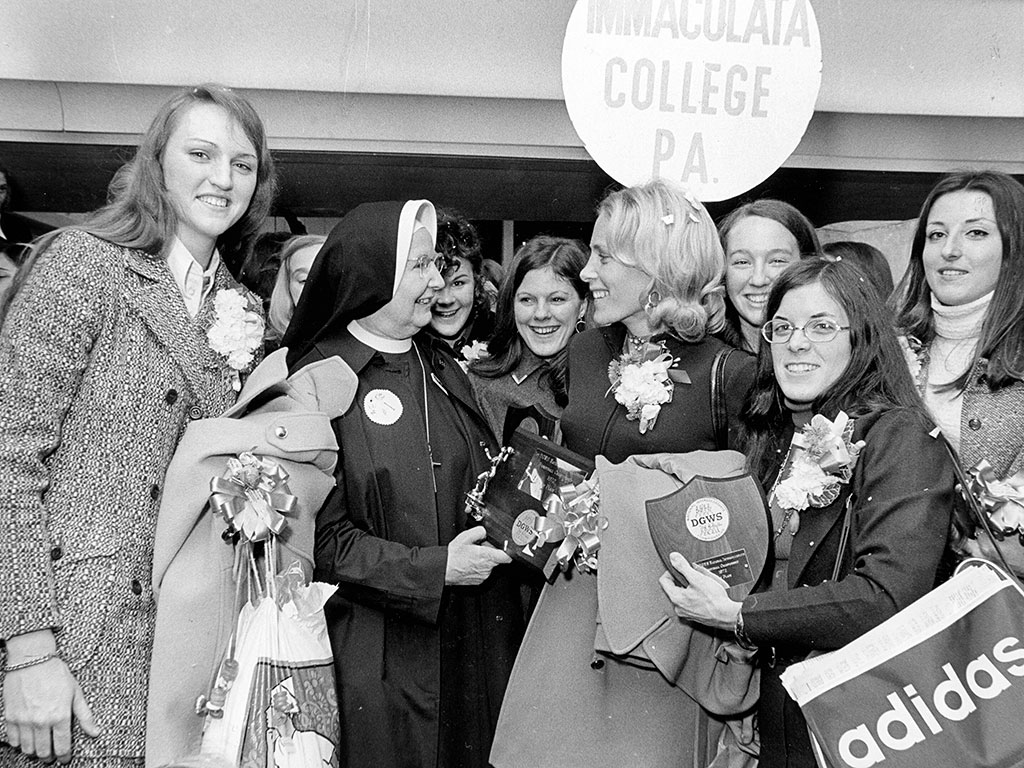
Members of the Immaculata College basketball team gather around their coach as they return after winning the first women’s collegiate national championship in 1972. From left in the foreground are Theresa Shank, college president Sister Mary of Lourdes, coach Cathy Rush, and Janet Ruch.
Despite Greenberg’s occasional stories on the Mighty Macs, few readers knew much of the women’s basketball world beyond. And few sports editors and writers besides Searcy and Greenberg saw its potential.
“I loved women’s basketball,” said Dick Weiss, a veteran sportswriter who then was covering men’s college basketball for the Philadelphia Daily News, “but most of us never saw it becoming a regular beat. All our energy went into the Sixers with Julius Erving and the Big 5, which still had NCAA teams filled with local talent.”
Launching the poll proved problematic. If women’s programs were second-class on most campuses, so were their support staffs. Gathering schedules and stats was nearly impossible. When Greenberg reached out to the AIAW for help, the organization balked.
“They told me women’s sports shouldn’t get involved in things like newspaper polls because that would lead to the evils of men’s athletics,” he said.
So he built a Rolodex of contacts, then he and some basketball contacts painstakingly collected information over the phones.
“Mel based the poll operation in our sports department,” said Gene Foreman, then The Inquirer’s managing editor. “His volunteer helpers were several tall women.”
Coaches telephoned in their votes on Sunday nights. One, N.C. State’s Kay Yow, provided an early indication of the poll’s impact.
On Jan. 2, 1977, Immaculata visited N.C. State, which typically played before small gatherings. But the new rankings promised a compelling matchup. The Wolfpack were ranked No. 15; Immaculata, which triumphed, 95-90, was No. 2.
“I remember Yow calling and talking about how excited she was,” Greenberg said. “It was snowing before the game, but there was a long line of fans outside the arena waiting for tickets.”
In 1978, the Associated Press began distributing the poll, giving most news outlets access. Then, in 1994, Greenberg ceded its compilation to the AP, and media members replaced coaches as the voters.
The poll was a cornerstone of the game, and in 2000, another Sunday Inquirer spotlighted women’s basketball’s maturity.
Philadelphia was hosting that year’s Final Four. Its lineup of Connecticut, Tennessee, Rutgers, and Penn State revealed the game’s progression from the days when little Immaculata could win three straight titles. Its two sessions attracted nearly 40,000 fans. Millions more watched on ESPN.
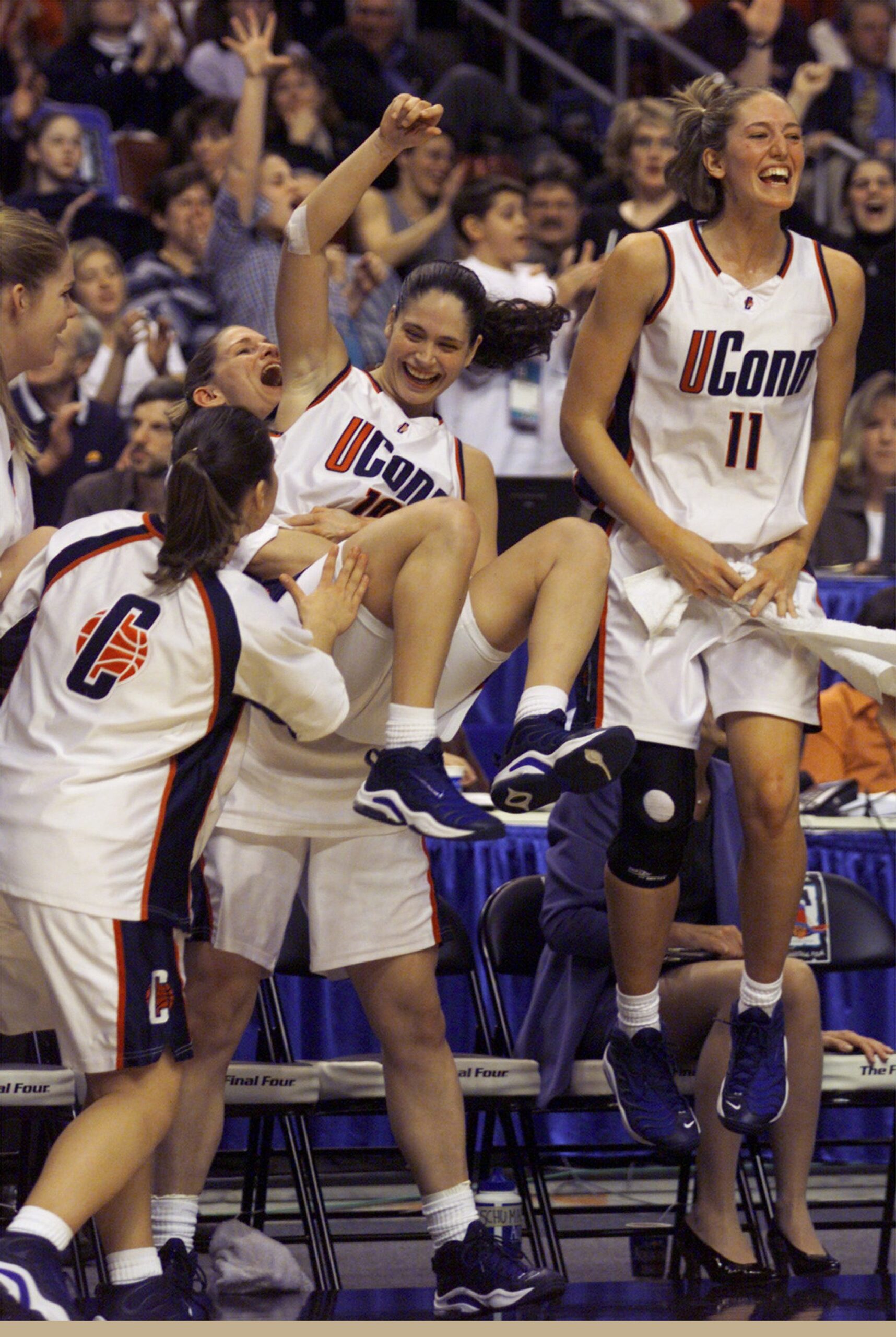
Stacy Hansmeyer, Sue Bird, and the UConn bench celebrate after Swin Cash makes a breakaway layup late in the second half of UConn’s Final Four game against Penn State on March 31, 2000, at what then was called the First Union Center.
The April 2 Inquirer ballyhooed that night’s title game on Page 1. Inside was an entire section previewing the event from every angle. There were profiles of coaches, players, even the referees. There were analyses, features, columns, statistics, photos and predictions.
And the poll?
Well, the championship game itself proved just how plugged in it was. Connecticut, the No. 1 team in the regular season’s final rankings, defeated No. 2 Tennessee.
Greenberg retired from The Inquirer in 2010 but still compiles a widely read blog. Organizations, including the Naismith Basketball Hall of Fame, have recognized him and his poll’s contributions.
“Mel was a gift to the women’s game,” Stanley said. “He was so passionate, and so dedicated and so single-minded. Who knows how long it otherwise would have taken for anything of substance to occur? Not many news outlets gave a crap about it, but Mel and The Inquirer decided to do something about women’s basketball. And that poll has stood the test of time.”