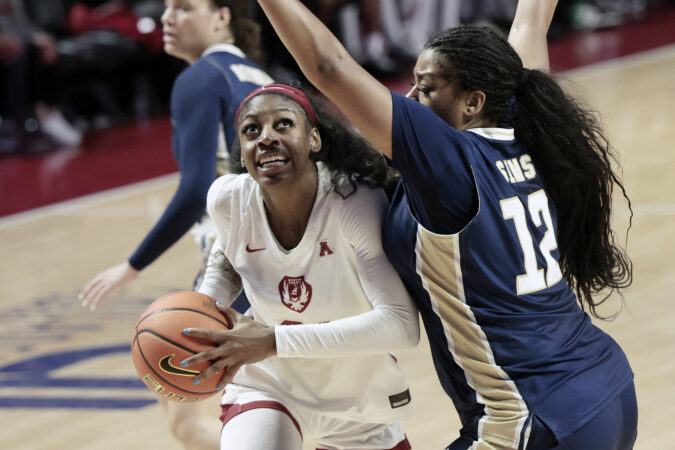
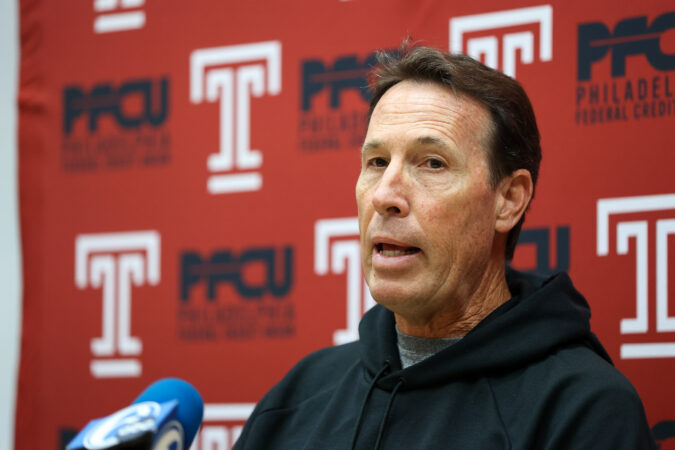
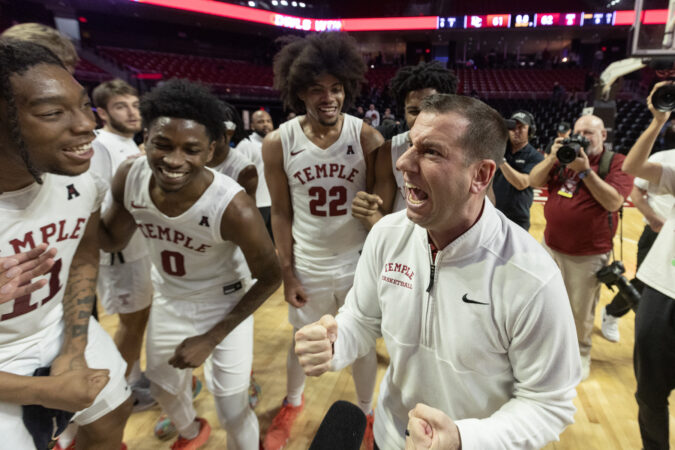
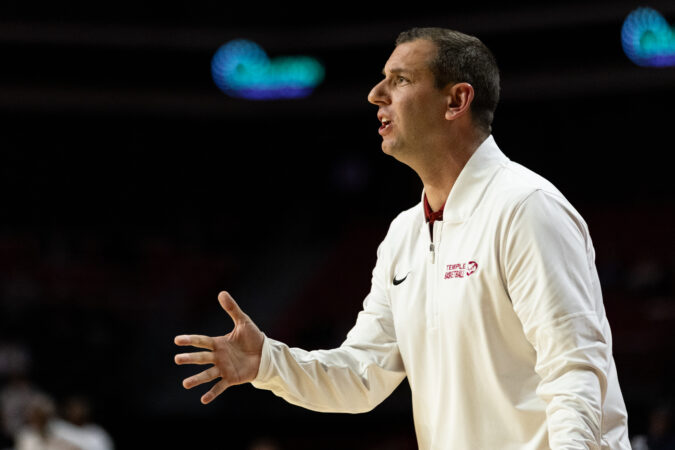
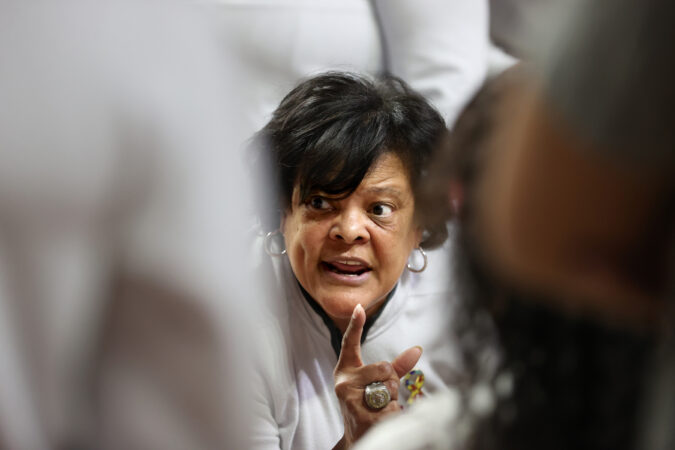
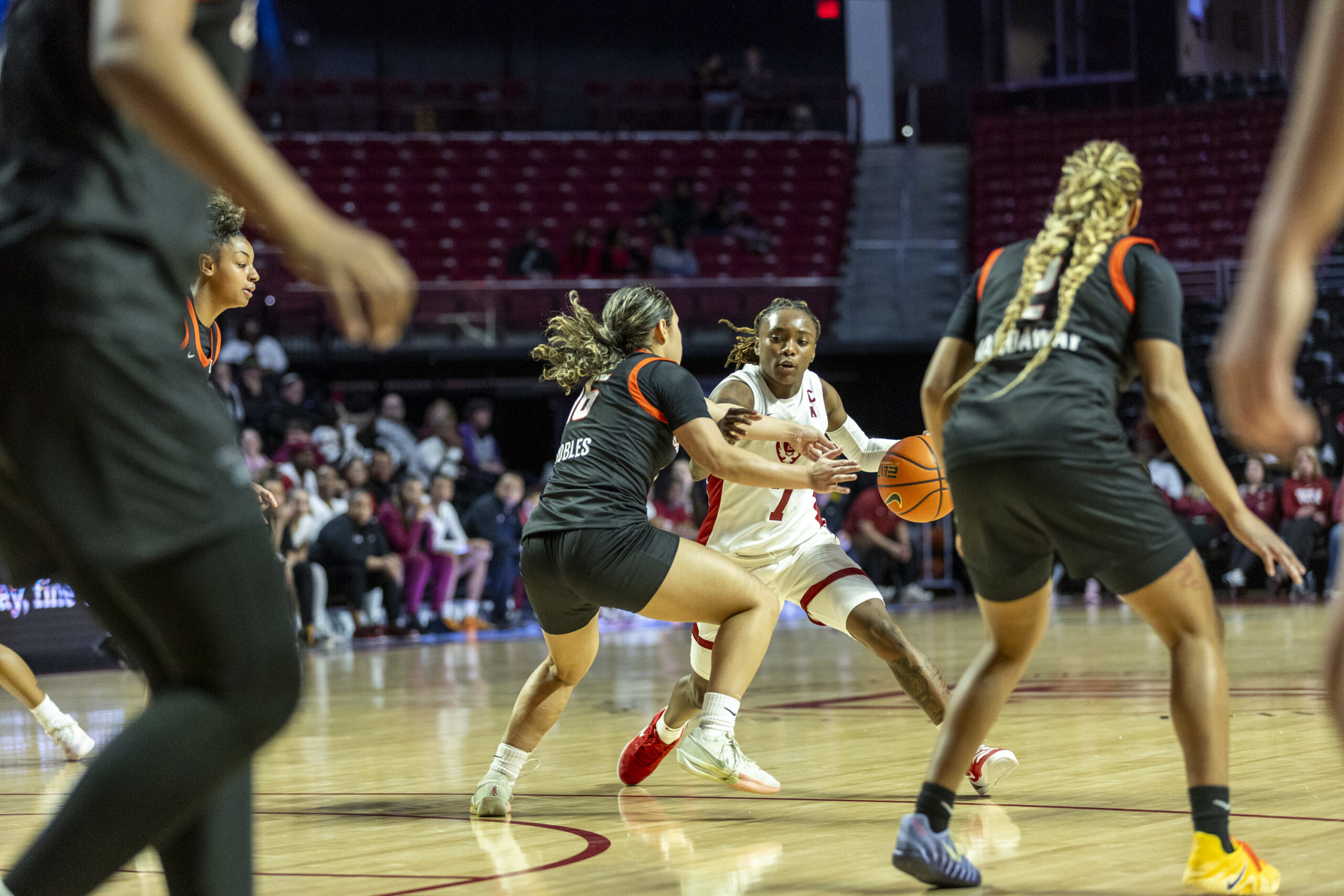
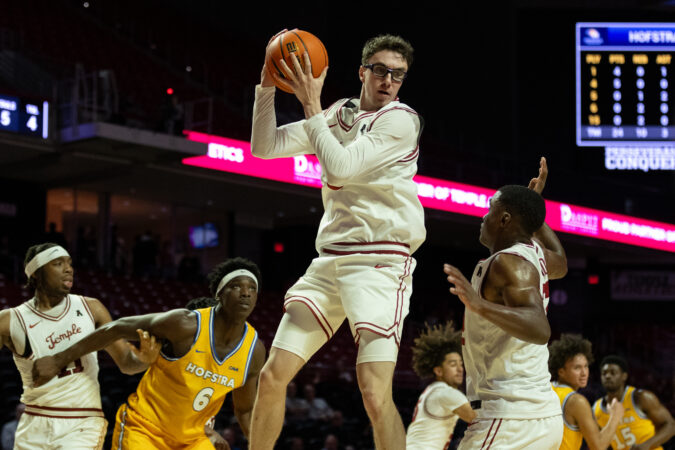
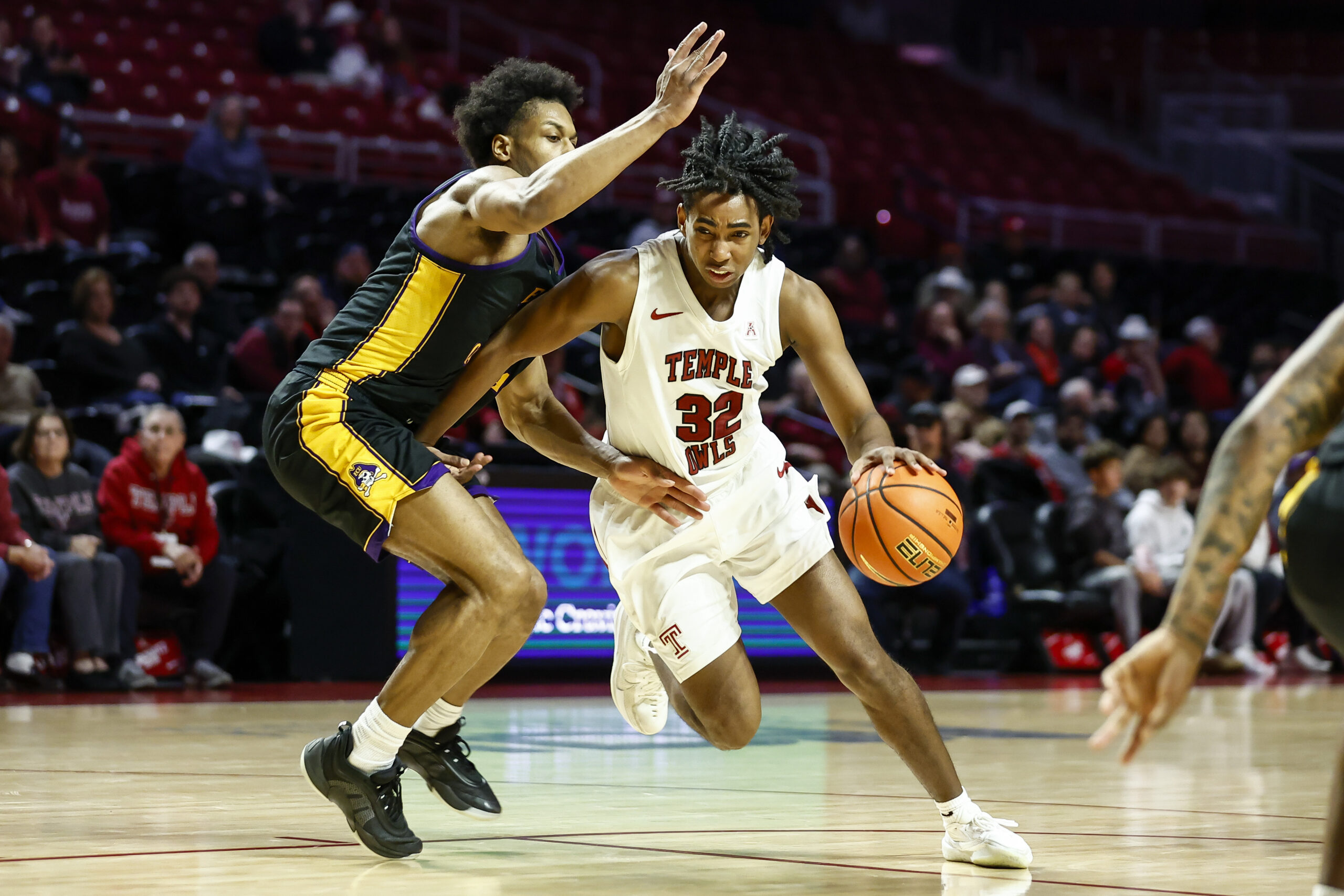
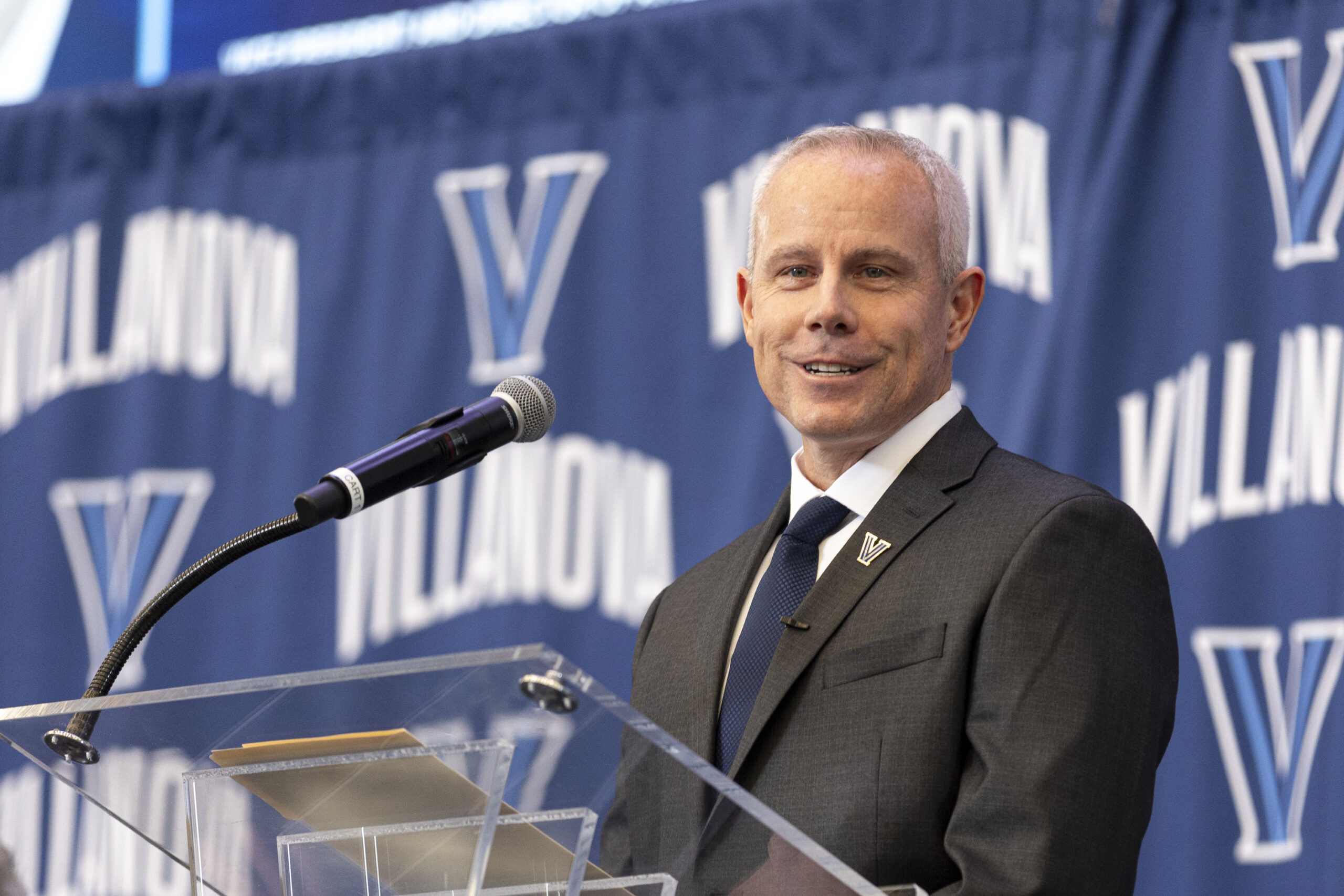
Entering Tuesday’s game against South Florida, Temple coach Diane Richardson and her staff held a meeting with the players to provide some clarity about their roles on the court.
The Owls were reeling from a three-game losing streak and fresh off a lopsided loss to East Carolina on Jan. 17. The meeting proved to be what they needed to get back on track.
Against South Florida, which entered Tuesday second in the American Conference standings, Temple played cohesively, which Richardson hadn’t seen lately. The result: an 86-83 win in which the Owls (8-10, 2-4 American) shot 52.7% from the field and had four players score in double figures.
“I’m really pleased that they stepped up and realized that we have to play together,” Richardson said. “It’s a tough conference. When we play together, it makes a big difference, and as I look at the stats, I think we did pretty well in most of the categories. The biggest one was that we only had 11 turnovers. But, again, that’s confidence in each other and playing together.”
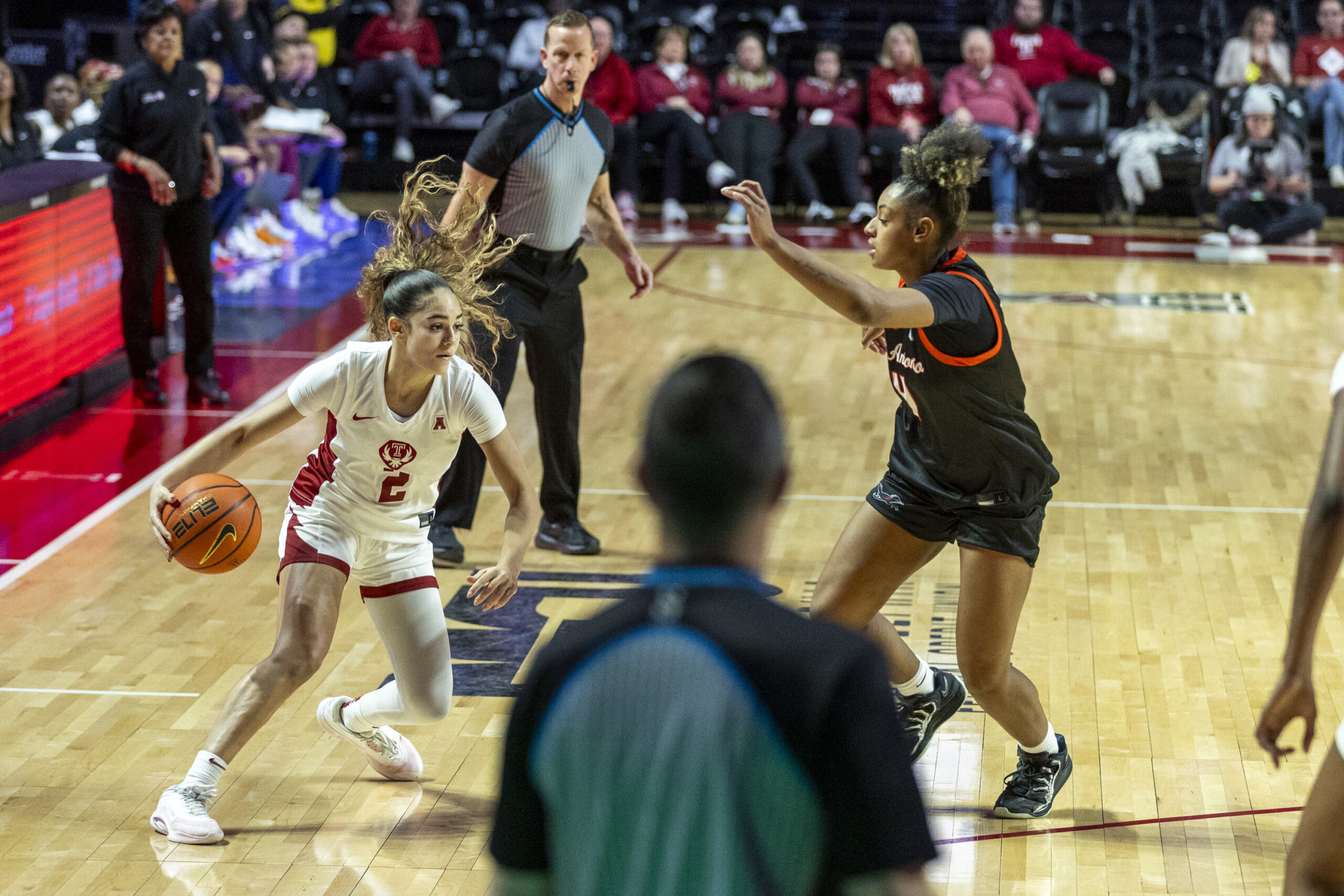
Guard Kaylah Turner was one of the main benefactors of the meeting, rediscovering her role.
The junior shot 29.8% from the field in the Owls’ first five conference games and struggled with inefficiency and taking quick shots. Turner, who was named preseason first-team all-conference, looked like herself on Tuesday.
She shot 7-for-15 from the field and found her spots to knock down jumpers. She also used her speed to get to the basket for easy layups and finished with a game-high 23 points.
“It makes it 100 times easier when my teammates are always telling me, be confident in my shot, continue to drive, even if I miss two layups or miss a three-pointer,” Turner said. “I’ve got coaches who say the same thing.”
With Temple’s leading scorer back in her groove, the rest of the offense fell into place.
Richardson wasn’t happy with Temple’s 5-of-23 shooting from three against Tulane on Jan. 13. She wanted the team to play faster and get more looks near the basket. The Owls fed the ball inside vs. South Florida, which led to a big game from forward Saniyah Craig.
The Jacksonville transfer flourished in the post and scored a season-high 22 points, including 10-for-13 shooting from the free-throw line. Despite having less of an emphasis on three-pointers, Temple still went 8-for-16 from deep, led by forward Jaleesa Molina, who made all four of her attempts and finished with 19 points.
Guard Tristen Taylor also finished with 16 points, meaning 80 of Temple’s 86 points came from four players.
“I think we were more efficient with the things that we did today,” Richardson said. “We were more efficient in ball security. We were more efficient in our shots. I think those made a difference, even though it doesn’t show on the stat sheet. That’s what I told them in the locker room, the things that are not on the stat sheet was the defense, was the intensity, and was the bench. The bench was really into the game, and they were cheering them on.”
With clarity in their roles, the Owls got back to playing their brand of basketball. Richardson’s equal opportunity offense was in full effect, her team was connected and playing together, and it resulted in a statement win.
They will look to carry their newfound momentum into the middle of American play, starting with a home game against Charlotte on Saturday (2 p.m., ESPN+).
“This is a great win, but we’re nowhere near done,” Turner said. “So we’re going to lock in the next practice, and we’re going to make sure we start the beginning of practice how we started this game, and we’re going to practice the entire way so we transfer it to this weekend.”
Added Taylor: “I think our biggest thing is just don’t be complacent right now.”
After Temple football signed the top-ranked high school class in the American Conference last month, coach K.C. Keeler said the program was just beginning its recruiting process.
The Owls started their second phase on Jan. 2 when the transfer portal opened. Temple landed 22 transfers while also retaining most of its core pieces from this season.
“There’s really three phases to this whole recruiting process,” Keeler said. “The first phase is recruiting your locker room. I thought we did a phenomenal job. We’re probably one of the only [non-Power Four] schools in the country that didn’t lose a single starter. … Then the third phase is the portal. The portal’s unique in that it’s not just like who you get in terms of what their ratings are and those things. It’s a lot [of] what your needs are and are you meeting your needs. We graduated a bunch of starters, especially on defense. I thought we did a great job of filling those needs.”
The priority for Keeler was finding a quarterback for next season. Owls starter Evan Simon and backup Gevani McCoy will graduate this spring, and third-stringer Tyler Douglas entered the transfer portal.
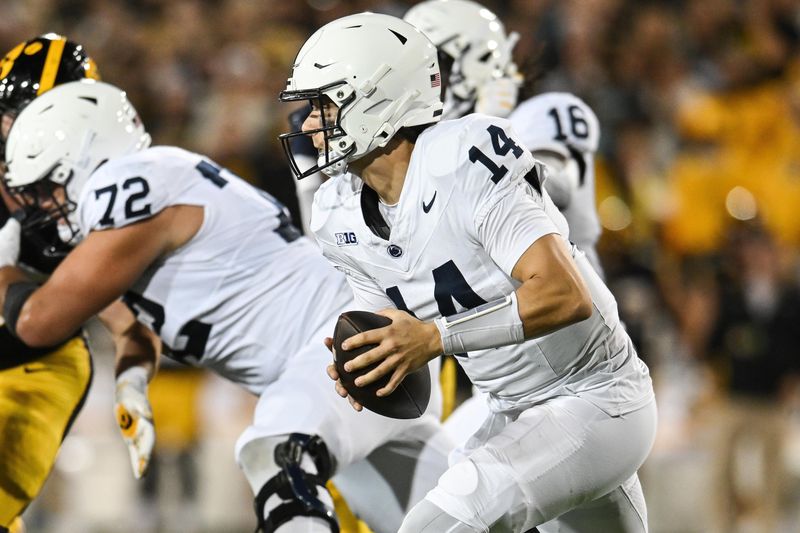
Temple landed two quarterbacks from the transfer portal in Jaxon Smolik from Penn State and Ajani Sheppard from Washington State. They will compete for the starting role. Sheppard spent two seasons at Rutgers before transferring to the Cougars last year and was recruited by the Owls when he was in the portal last season.
Temple general manager Clayton Barnes says former quarterback Jaxon Smolik didn’t get his opportunity at Penn State but has the skill set to be an elite quarterback.
Smolik visited Temple in early January and became friends with tight end Peter Clarke, who hosted him. General manager Clayton Barnes said Smolik has a similar personality to Simon.
“So [Smolik is] a guy that things didn’t time up. He was behind a three-year starter the whole time he was there” at Penn State, Barnes said. “[He] really just needed that opportunity. So when we checked the box from a skill set, personality, all that kind of stuff, he’s a guy that we felt would be a great fit for us and was one of those first few guys we got on campus. And by the time he was there, it was like, ‘Hey, this is our guy.’”
Smolik was one of four players to join Temple from Penn State during the offseason. Since the programs have the same recruiting pool, Temple often uses Penn State coaches to source intel on prospective transfers. Two former Nittany Lions, defensive tackle Kaleb Artis and safety Kolin Dinkins, are among 11 defensive players the Owls brought in.
Artis is among six brought in to bolster the defensive line after Temple lost Sekou Kromah, K.J. Miles, Cam’Ron Stewart, and Charles Calhoun to graduation or the portal.
“So you look at what we graduated from the rush spot this past year,” Barnes said. “We had two seniors that played and another guy that sought other opportunities. We knew we needed to bring in guys to play that position.”
Keeler also wanted continuity along the offensive line after losing starting right tackle Diego Barajas to graduation. Left tackle Giakoby Hills and left guard Eric King stayed with the program on multiyear deals.
The Owls also brought in offensive linemen to add depth. Former Rutgers lineman John Stone will compete for the starting center role with Grayson Mains.
“How do we bring in guys to compete for that right tackle spot? We don’t want to just rest on our laurels,” Barnes said. “We want to get better. So we brought in a couple other guys that have multiple years that not only can push those current starters, but also give us guys that can play for us next year if they don’t end up being the guy.”
With a wad of chewing tobacco in his mouth, Curt Cignetti instructed the Temple quarterback to pause the VCR and stop the game tape from rolling. Cignetti, the Owls QB coach in the early 1990s, told the quarterback to hit rewind when he wanted to see something again.
The path to Monday night’s College Football Playoff national championship has taken Curt Cignetti, 64, all across college football. He worked his way from stops at schools like Indiana University of Pennsylvania and James Madison before becoming the head coach at Indiana, where he authored perhaps the most stunning turnaround in the history of the sport over the last two seasons.
That winding path came through North Philadelphia for four seasons as he was on Temple’s staff from 1989-92. He was young but he was intense, especially if you arrived late to that cramped office in McGonigle Hall, where a spittoon was always on the desk.
Curt Cignetti has led Indiana to one of the most stunning turnarounds in the history of the sport.
“We had some guys who came in like 15 minutes late and he was freaking hot,” said Matt Baker, Temple’s quarterback when Cignetti arrived.
The Owls practiced on a piece of AstroTurf surrounded by North Philadelphia rowhouses and played Saturdays at an often-empty Veterans Stadium. Cignetti’s office did not have enough chairs for his quarterbacks — “Two of us were laying on the floor,” Dennis Decker said — and the TV didn’t even have a remote. He was a long way from college football glory.
“The only thing D1 about it was that we were playing D1 opponents,” said former offensive coordinator Don Dobes.
A basketball school
The Owls have had more gambling probes in the last 10 seasons than March Madness wins, but Temple was very much a basketball school when Cignetti arrived on North Broad Street in 1989.
Cignetti was just 28 when he came to Temple on the staff of Jerry Berndt, who was a Hall of Fame coach at Penn in the early 1980s before spending three seasons at Rice. Berndt was winless in his last season at Rice before replacing future Super Bowl champion Bruce Arians, who was fired after the Owls went 7-15 in his final two seasons while basketball dominated the landscape.
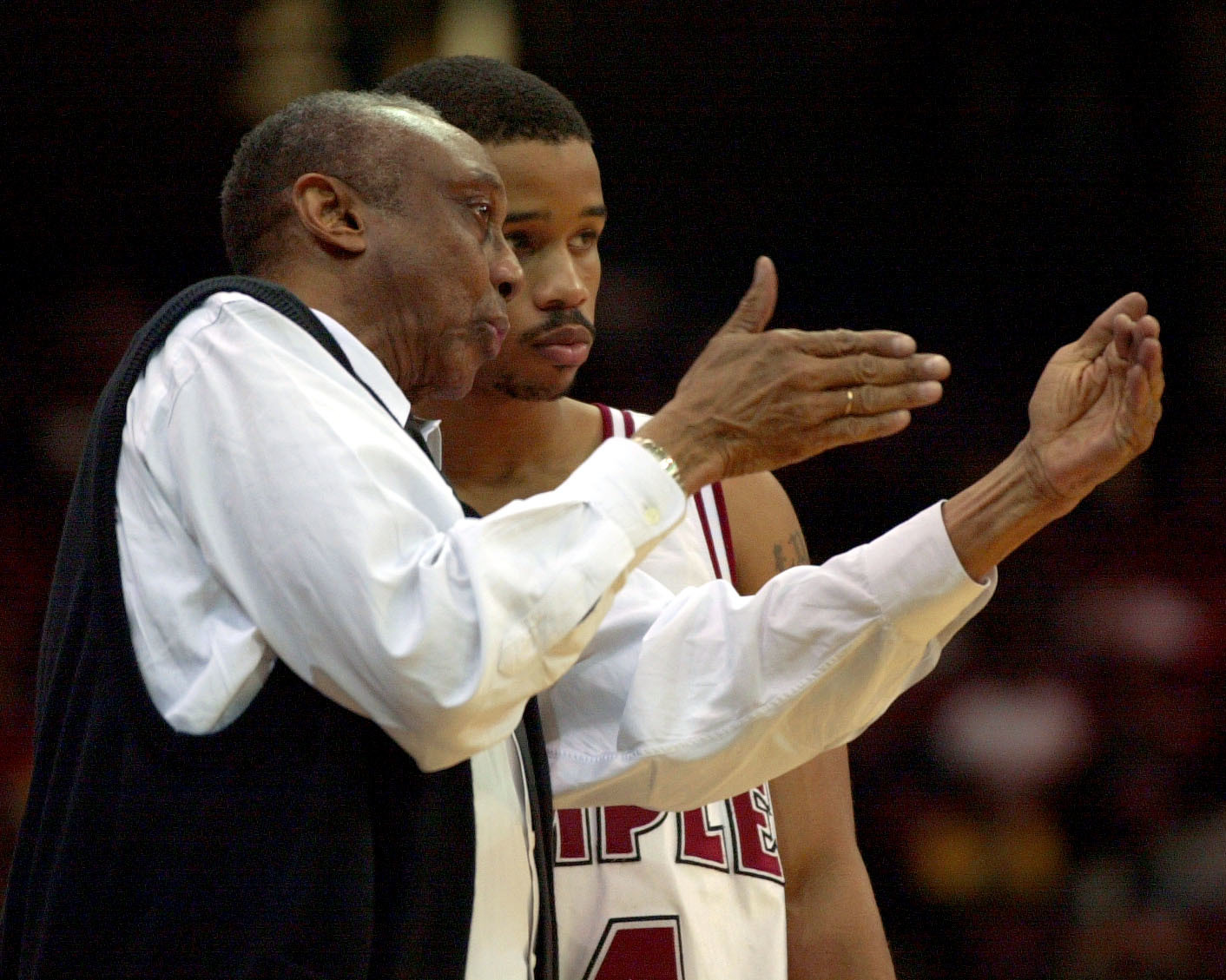
Temple coach John Chaney was at the peak of his coaching career when Cignetti joined Temple football’s staff. Cignetti and other coaches used to watch Chaney’s morning practices to gain “wisdom.”
John Chaney was at his peak, and the Owls were ranked No. 1 during the 1988 season. Cignetti and the other football coaches often started their mornings watching Chaney run practice before sunrise.
“We’d get some wisdom before we went out there and practiced in the afternoon,” said Dobes. “You want to talk about a great teacher, a great motivator, the ability to impress upon people the importance of teamwork, and sacrifice, and character. That was John Chaney.”
Perhaps coaching football at a school where hoops was king was a precursor for what Cignetti did at Indiana, where he made a basketball-crazed campus fall in love with a sport that was often just an excuse to tailgate. The Hoosiers had the worst winning percentage in college football history before they hired Cignetti in November 2023. He took the microphone a few days later at a Hoosiers basketball game and boldly trashed IU’s rivals.
“He had a lot of [guts] saying that,” Baker said. “He’s the same guy now that he was back then.”
Cignetti retooled the Hoosiers through the transfer portal and reached the College Football Playoff last year in his first season. This year, the Hoosiers are 15-0 with a Heisman Trophy-winning quarterback in Fernando Mendoza, and enter Monday’s title game against Miami as favorites despite not having any five-star recruits. Cignetti was asked in December 2023 how he planned to sell his vision.
“It’s pretty simple,” the coach said. “I win. Google me.”
That was the coach the Temple guys remembered, a straight shooter who tended to be a tad quirky.
“I remember him questioning me after I threw a touchdown pass against Wisconsin,” Baker said. “He’s like, ‘Why’d you throw that?’ I said, ‘What? What do you mean?’ He said, ‘Did you see that?’ I said, ‘Yeah, in the pre-snap I saw he couldn’t cover [George] Deveney. He had a linebacker on him.’ He said, ‘Come on, Matt.’ I’m like, ‘What?’ It was just crazy things like that. We did a lot of good things.”
The Owls won one game in Berndt’s first season before winning seven games in 1990 and gaining admission into the Big East. It was a win for a program that qualified for a bowl game that season but didn’t get picked because another school pledged to buy more tickets to the game.
The success was short-lived. The Owls missed out on local recruits — Dobes said he thought they had an in with Roman Catholic’s Marvin Harrison before he picked Syracuse — and announced their arrival to the Big East by winning three games in their first two seasons. The coaches knew the walls were closing in when they read the newspapers on the way to the airport in November 1992 for a game at No. 1 Miami.
“The headlines said ‘Berndt is burnt’,” Dobes said.
Curt Cignetti coached all over in different roles, including head-coaching stints at IUP, Elon, and James Madison.
The Owls lost that game by 48 points, and when they arrived back in Philly, the coaches were informed that their season finale, just a few days away, would be their last game. They ended the 1992 season by dropping 10 straight.
“We were all in scramble mode at that point,” Dobes said.
Cignetti, then just 31 years old, spent the next 14 seasons as an assistant at Pittsburgh and North Carolina State before spending four seasons under Nick Saban at Alabama. He often credits his time with Saban for his success. His first head-coaching gig was at Indiana University of Pennsylvania, the school an hour east of Pittsburgh, where his father had been the head coach from 1986 to 2005. Cignetti moved from IUP to Elon before landing at James Madison, where he reached the FCS national championship game and helped the Dukes transition to the FBS before being hired by the other Indiana University.
“There’s so many good coaches like him out there who never get a chance,” Dobes said. “He got a chance and made it happen.”
And there he was on New Year’s Day, beating Alabama by 35 points in the Rose Bowl. Decker, a teacher at Ridley High, told one of his coworkers that Cignetti was his coach 35 years ago. They couldn’t believe it. A few days later, the teacher’s old coach beat Oregon by 34 points to reach the national championship game. He’s the same guy, Decker said. Now, he has a remote control.
“Whoever was the low man on the totem pole had to stand up there and hit rewind, pause, play,” Decker said. “He was intense, but as a quarterback, you want that. You can’t be passive as a quarterback. He got his point across. He knew how to get his point across in the way he spoke to you. What that does is push yourself to bring the best out of you. You’re not going to be as successful as he is by being quiet and behind the scenes.”
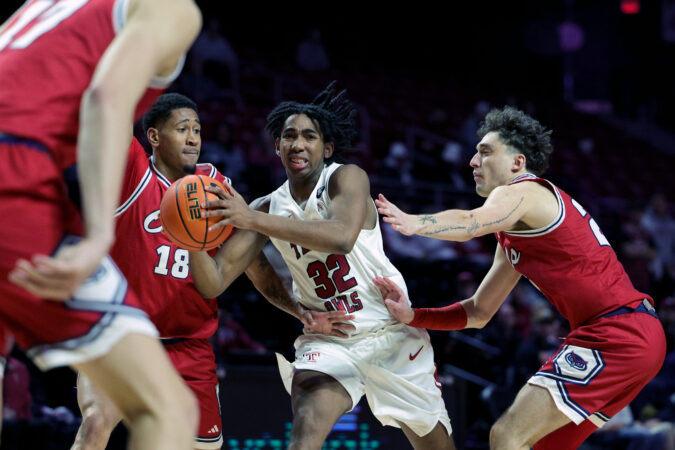
First-place Florida Atlantic proved too much for Temple to handle on Sunday as the Owls dropped a 79-73 decision at the Liacouras Center, their second straight loss. FAU outscored Temple by 10 in the final 10 minutes of the game.
“FAU is a fantastic team. They’re super talented,” said coach Adam Fisher, whose Owls lost at Memphis on Wednesday. “They’ve won their last two [against Wichita State and Memphis]. They’re playing really good basketball, a super-talented group of guards.”
One of those guards, Josia Parker, led the visiting Owls with 22 points as FAU improved to 13-6, 5-1 in the American Conference. Aiden Tobiason finished with 23 points for Temple (11-7, 3-2), which shot just 36.8% from the field.
Temple’s defense delivered, clamping down on FAU’s two leading scorers, guards Kanaan Carlyle (seven points) and guard Devin Vanterpool (12). The visitors took control as Parker scored 19 points after halftime.
Turnovers were a problem for the Owls, who coughed up the ball a season-high 15 times. Guard Jordan Mason scored just five points and finished with one assist before fouling out.
Forward Jamai Felt had a problem pulling in passes in the first half, but Temple had a 34-30 lead at the break. Felt mishandled a pass from Derrian Ford that could have bumped Temple’s lead to six.
AJ Smith’s season over
Fisher said after the game that guard AJ Smith would miss the remainder of the season with a shoulder injury that requires surgery. Smith transferred to Temple this season after playing last year at Charleston.
The senior guard averaged 7.8 points for the Owls and was a key player off the bench. He has not played since Temple lost to Villanova on Dec. 1.
“He’s had some past history of it, I think at a previous institution, and tried to play through it at the next institution,” Fisher said. “They looked at it, and we tell him, just like we do anybody, ‘Hey, these are family decisions.’”
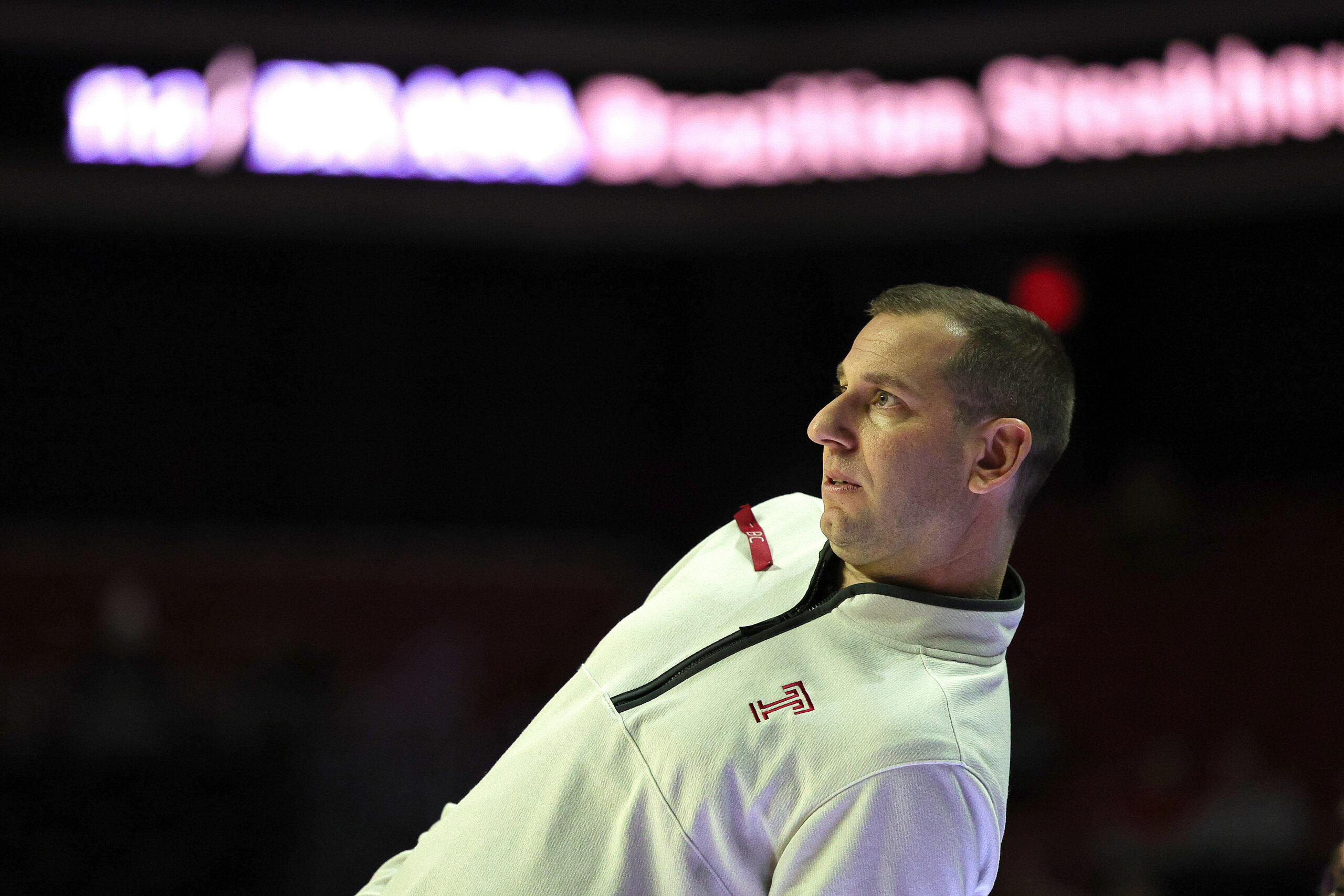
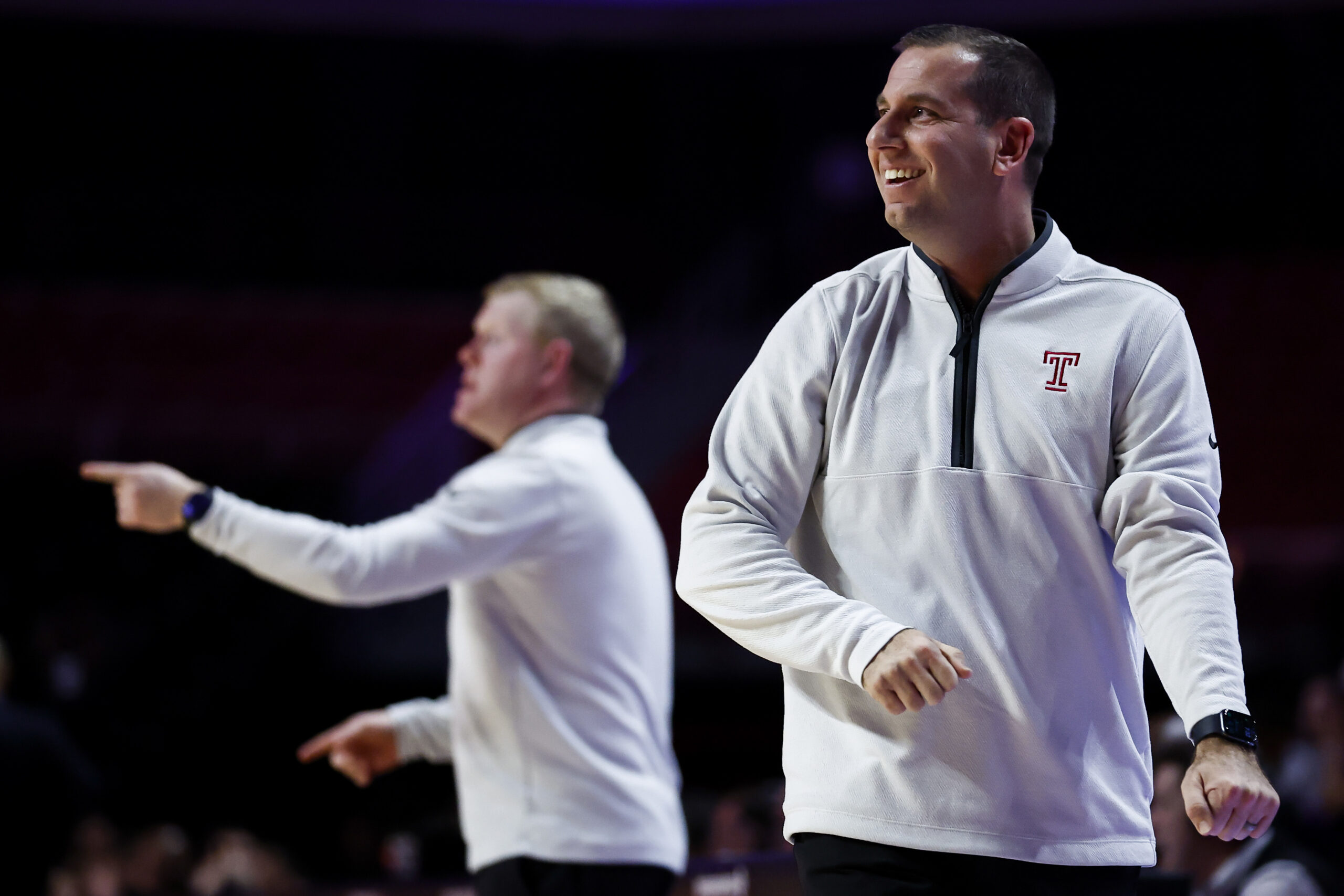
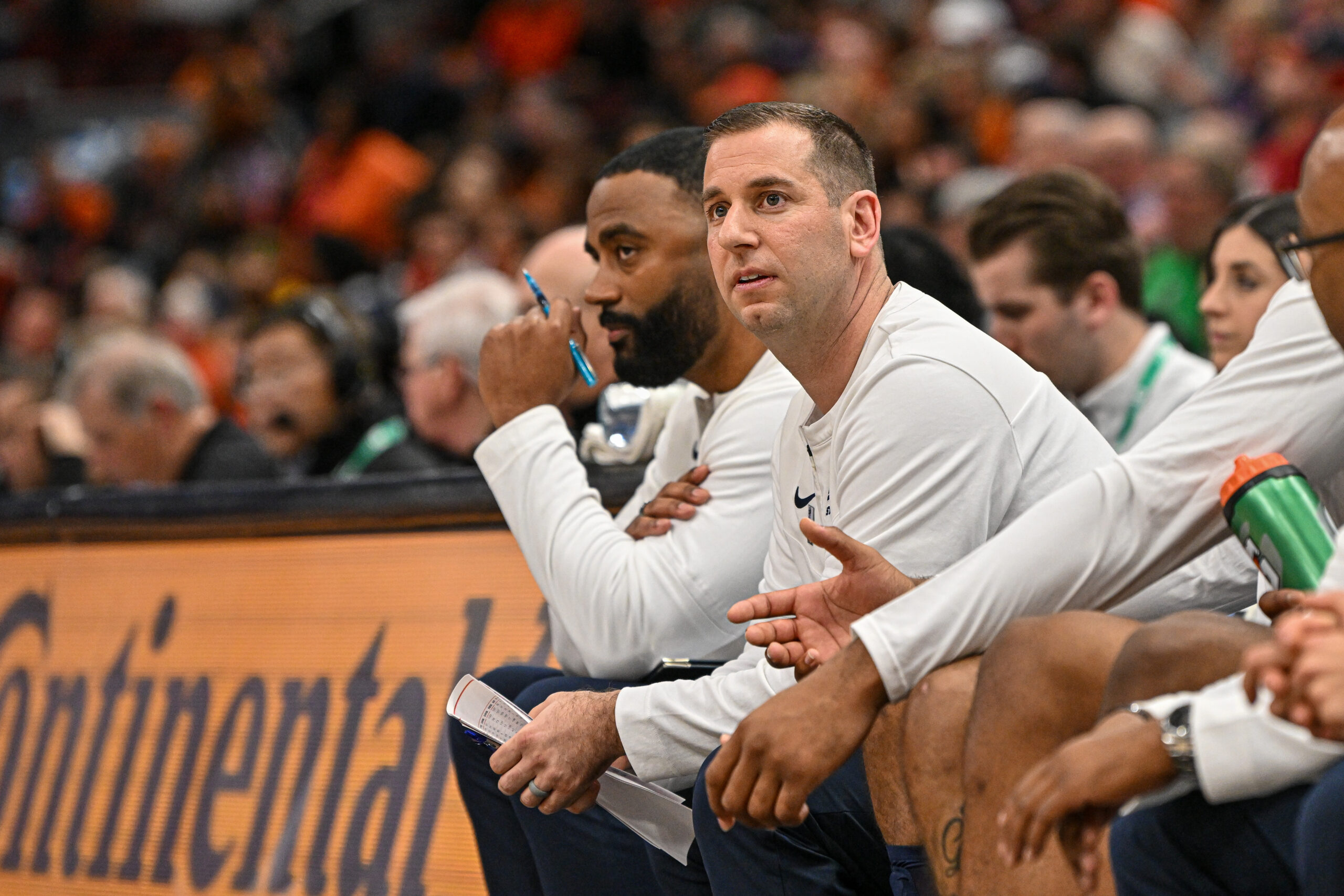
Temple coach Adam Fisher reacts as he watches a three-point shot in the second half against Florida Atlantic.
Next up
Temple will visit Rice (8-10, 2-3) on Wednesday (8 p.m., ESPN+).
When Adam Fisher was in the second grade, he was asked to write down things about himself.
Most of the questions were simple, like his favorite food. Then there was the question, “What do you want to be when you grow up?”
While most kids jotted down doctor or chef, he said, Fisher proudly wrote that he wanted to be a college basketball coach.
“Why? I have no idea,” Fisher said. “I love college basketball. I love the students when you pack an arena, I love the band, and the comradery of bringing people together that are at the university currently and then you want to go back as an alumni.”
Nearly three decades later, the Bucks County native, who graduated from Penn State in 2006 and immediately dove in the coaching world, has been living out his dream. Fisher worked under former Penn State and current Florida Gulf Coast coach Pat Chambers and Hall of Famers Jay Wright and Jim Larrañaga at Villanova and Miami, respectively.
At each stop, he grew and learned from other coaches, as he waited for the chance to lead his own team. That finally came in 2023, when he became Temple’s head coach.
Now, Fisher is in his third year, and has Temple (11-6, 3-1 American) trending in the right direction. In November, he received a two-year extension through 2030. While the program has expressed its faith in Fisher, he hopes to build the team back into an NCAA tournament contender.
Adam Fisher during a game against East Carolina at the Liacouras Center on Jan. 7.
“Every job has pressure no matter what your profession is,” Fisher said. “With this job, the pressure is the great history, the rich tradition that comes with taking over a program like Temple. For me, you got to fuel yourself on the pressure and it’s something that is there and it kind of helps motivate, to get back to where Temple basketball was … it helps fuel you to not ever be outworked, to make sure you’re doing everything you possibly can for the program and put yourself in the best situation possible.”
‘You can win and have fun’
Fisher credits his father Neil for giving him the itch to coach. Neil was he and his brother’s first coach while they played basketball, among other sports, in the Warrington Athletic Association.
Fisher’s friends still bring up the times they had Fisher’s father as a coach. Neil’s impact went beyond sports as well, as Fisher’s family owned a restaurant. He watched his father run it on his own.
“All our friends still to this day will talk about playing for my dad, and that’s really cool when you know that somebody makes that impact,” Fisher said. “I think that was when I learned I want to coach, I want to impact lives the way he did in the way he helped change people for the better. And bring people together and show that you can win and have fun and all those things.”
Adam Fisher was an associate head coach at Penn State prior to being hired as Temple’s next head coach.
Fisher bounced between schools after graduating with a kinesiology degree from Penn State. He served as a graduate assistant at Villanova under Wright, where he eventually followed then assistant coach Chambers to Boston University and Penn State, when Chambers took over those programs.
He held various roles; director of operations, video coordinator, and director of player personnel. But in 2013, he got his break.
A father figure
Former Miami assistant coach Michael Huger got in Larrañaga’s ear about a coach at Boston University. The Hurricanes had an open spot for a director of player operations and hired Fisher, who learned under Huger and Larrañaga’s tutelage.
Huger let Fisher join his recruiting visits and even let him crash in his office while he worked. Larrañaga became a father figure for the budding coach, whom he called the best director of player operations he’s ever had.
He wasn’t a bench coach yet, but he coached 35-year-olds during the summer in a fantasy camp, where he impressed with his ability to build relationships, something that would come in handy down the line.
But Fisher wasn’t someone Larrañaga could let go.
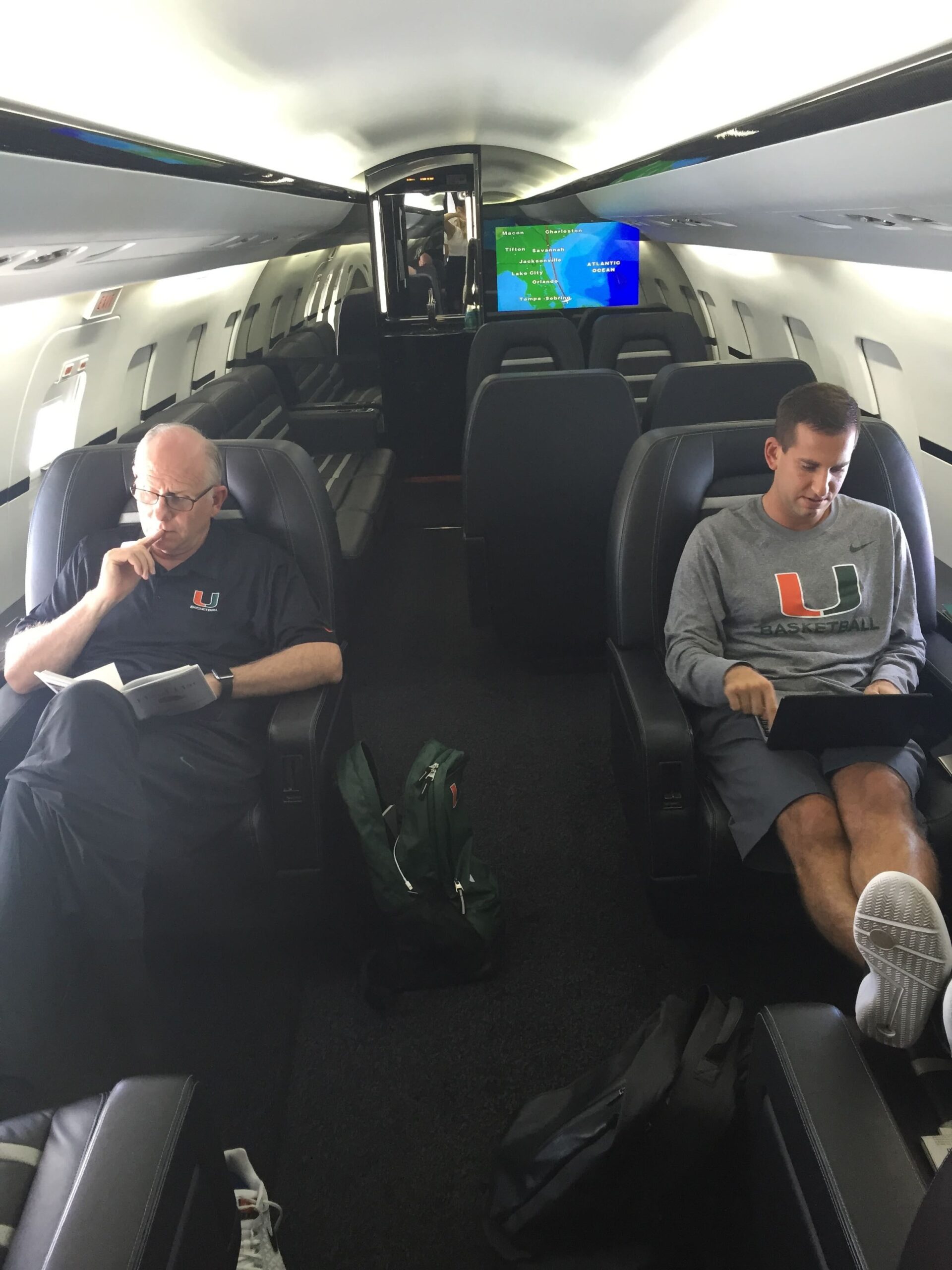
Former Miami coach Jim Larrañaga and Adam Fisher on a plane together.
“He was going to go to Bowling Green State University with Michael Huger. My wife said to me, ‘You can’t lose Adam. You speak so highly of him and you need to figure out a way to keep him,’” Larrañaga said. “So I called Adam back and said, ‘Instead of going to Bowling Green, I’d like you to stay here as the ops, but I’ll promise you, the first time one of my assistants leaves, I’ll elevate you.’”
His tenure as director of player operations didn’t last long. Assistant coach Eric Konkol was hired as the head coach of Louisiana Tech. Larrañaga stuck to his word and promoted Fisher to a bench coach, where he stayed for seven seasons.
Fisher began looking at Larrañaga as a father figure as their families became friends. When he married his wife Rebecca, Larrañaga was at the wedding. He even showed up a few days early to avoid a hurricane in Miami, while other staff members had to miss it because of the storm.
“That just shows you who he is,” Fisher said. “That’s the guy he is. I’m interviewing for the Temple job and he’s getting ready to play in the Elite Eight and he has time out of his day to call Arthur Johnson the day of an elite eight game. That’s why I think he’s the greatest. He’s a Hall of Fame coach and Hall of Fame person.”
Even after he left for Penn State in 2021 to work under Micah Shrewsberry, the two stayed in contact.
Continue to build
While at Happy Valley, it was Fisher’s job to handle recruiting in the Philadelphia area. He added players such as Jameel Brown, Demetrius Lilley, Cam Wynter, and Andrew Funk to the team, and helped the Nittany Lions reach the NCAA Tournament in 2023.
Fisher later took the head coaching job at Temple. While he began building a foundation with the Owls, he tapped back into the relationships that he made during his career.
Huger had been fired by Bowling Green that offseason, and his protégé hired him as the Owls’ associate head coach. Jimmy Polisi, who had spent a season with Fisher in Miami, was hired as the director of player operations, the same role that gave Fisher his start.
Adam Fisher, while serving as Penn State’s associate head coach, helped the team reach the NCAA tournament in 2023.
When guard Jamal Mashburn Jr. was heading into his junior season of high school, Fisher and Larrañaga camped out in a movie theater parking lot to wait for July 1 to offer Mashburn Jr. a scholarship.
Mashburn Jr. never committed to Miami, instead he went to the University of Minnesota and then New Mexico, but when he entered the transfer portal in 2024, he had a familiar face reach out — Fisher. He only spent a year with the team, but the two still talk.
“I was reaching out to him about a lot of stuff, just keeping my mind right. And, you know, he’s a positive person,” said Mashburn Jr., who competes on the Grand Rapids Gold of the NBA G League. “He’s someone who believes in me.”
Fisher still has players reach out that are no longer in the program, like Mashburn Jr. and forward Steve Settle III. Settle tries to watch every Temple game when he can.
Fisher’s first year at the helm saw Temple make a Cinderella run to the American championship game. While Temple got blown out of the tournament in the first round of the 2024-25 season, the Owls are making strides this season.
The roster looks well connected compared to the last two season. A defense that needed fixing has improved and the offense has been multidimensional.
Fisher is hopeful that his team will continue to have success, and he’s committed to get there.
“This is where my family and I want to be,” Fisher said. “We’re excited to be here and continue to build this thing. We knew it was going to take time, taking over the job and where we were in the state of college athletics, we knew this was going to be a challenge early on.
Temple guard CJ Hines is no longer with the men’s basketball team, the program announced in a statement, after being referenced in a basketball gambling indictment by federal prosecutors in Philadelphia on Thursday.
Hines transferred to Temple in May 2025 but didn’t play in a game this season after the university announced on Nov. 5 that he was under investigation for eligibility concerns prior to his enrollment at Temple.
According to the indictment, Hines, who played two seasons at Alabama State, was allegedly involved in point-shaving efforts with former teammate Shawn Fulcher during the Hornets’ 2024-25 season. Hines will be charged elsewhere if he is found guilty.
The indictment names more than two dozen players on 17 different NCAA teams in the basketball gambling scheme, which also targeted the Chinese professional league for attempting to fix games from September 2022 to October 2025.
Temple coach Adam Fisher brought Hines in to add scoring depth after Hines averaged 14.1 points and shot 37.8% on three-pointers for Alabama State last season. Hines led the Hornets to the NCAA Tournament in the 2024-25 season.
The 6-foot-2 guard amassed more than 1,500 points during his career at Faulkner and Alabama State.
Temple had high expectations entering the 2025-26 season after back-to-back 20-win campaigns.
The Owls were picked to finish fourth in the American Conference preseason poll and head coach Diane Richardson believed her team had the talent to win the conference.
After the Owls’ 71-58 loss to Tulane on Tuesday, they look far from the conference contenders they were expected to be. Temple is just 1-3 in the American and sitting in 10th place. In Richardson’s eyes, her team has not been playing “Temple basketball,” and it was especially evident against the Green Wave.
“That was a piss-poor performance,” Richardson said after the loss. “It was terrible and not Temple basketball at all. It’s got to be fixed.”
Richardson’s passionate words came after the Owls shot 32.1% from the field, including 5-for-23 in three-pointers, and were out-rebounded, 39-31. Temple was outscored, 21-12, in the final quarter, and its late-game execution ultimately cost the Owls a chance at a victory.
Temple trailed 65-58 with 22 seconds remaining. Tulane guard Shiloh Kimpson was at the free-throw line for two shots. The next 22 seconds saw Temple fail to get out of its own way.
Kimpson missed both free throws, but the Green Wave got the offensive rebound and made their next two attempts. Then, guard Tristen Taylor got a five-second call on an inbounds pass, Temple surrendered another offensive rebound from a missed free throw and then missed two free throws of its own.
The performance caused Richardson’s frustrations to fully boil over, after previous poor showings.
“No pride. No pride in going after the ball,” Richardson said. “They wanted it more than we did and the 50/50 balls killed us. They went after them and we did not. We can’t sit back and let any team come into the Liacouras Center and do what they did to us. It is unacceptable.”
Before the season, Richardson envisioned her team playing fast, getting to the basket in transition, and most importantly, playing as a team. However, that version has been absent.
The Owls have struggled with starting slow on offense, and while that wasn’t the case against Tulane, it was a major issue against Drexel in the Big 5 Classic and UTSA. Temple scored just 52 points in a seven-point loss to Drexel on Dec. 7, and Richardson mentioned her team’s lack of urgency.
Temple’s Brianna Mead during a game against UTSA at the Liacouras Center on Jan. 3.
Less than a month later, the same issue occurred against the Roadrunners on Jan. 3, and Richardson expressed more concern about the type of basketball her team was playing. Temple lost 50-47 and was largely uncompetitive until the fourth quarter.
“I don’t think we played hard enough,” Richardson said following Temple’s loss to UTSA. “I think we waited until the fourth quarter to play Temple basketball. We can not go through the conference like that, and that’s going to be a reality. It’s got to change.”
Over three games since Temple’s loss to UTSA, little has changed.
The Owls split road games with a win against Wichita State and a loss to Tulsa before returning home to face a similarly struggling Tulane team. Instead of bouncing back, Temple hit a new low.
Temple briefly took the lead in the third quarter before they collapsed in the final 10 minutes. The lack of urgency was clear. The Owls took their foot off the gas, while the Green Wave scored the last five points of the quarter to regain control.
Temple attempted to turn to the three-point line to recover in the fourth, which Richardson did not want to see happen. The Owls went 1-for-9 in three-pointers in the final frame.
“I thought we took quick shots in threes and we kept saying get to the rim,” Richardson said. “But again, that selfishness came back and they just wanted to shoot threes. You can’t expect the ball to go in when you’re shooting 21% and just keep trying.”
Richardson also called out her team for a lack of accountability, as she saw them attempt to shift blame after a mistake.
“We have to play harder and each person has to step up and do what their job is and not look around for somebody else to do it,” Richardson said. “Today, we kind of sat back and looked around to see who else was going to do something, or it wasn’t my fault because she didn’t do this. That is not playing together, and we have to play together in this conference.”
Temple’s Kaylah Turner has been the Owls’ leading scorer this season, averaging 17.1 points.
The Owls’ 1-3 American record is their worst four-game start in conference play since the 2018-19 season. The road ahead is no easy task to get back on track.
Three of Temple’s next four games will be against the top three teams in the American: East Carolina, South Florida, and Rice. Richardson has not seen her team play its brand of basketball, but she said, it has to change to remain competitive.
“Again, we have to play Temple basketball: the confidence, the grit, and the resilience. The ‘I’m going to throw my body on the line to get these 50/50 balls. I’m going to box out and get rebounds,’” she added. “We need them to take that on personally and not look to someone else to do it.”
Memphis held on for a 55-53 victory over visiting Temple on Wednesday, snapping the Owls’ seven-game win streak.
Down by as many as 13 points in the second half, Temple (11-6, 3-1 American) relied on free-throw shooting and timely defense to get within two points with 13 seconds left. Guard Jordan Mason got an open shot near the basket that would have tied the game, but he missed it to give Memphis (8-8, 3-1) the win.
Guard Gavin Griffiths’ 15 points led the Owls, who had a 41-35 rebounding advantage. The game was Temple’s first since assistant coach Bill Courtney died suddenly on Tuesday at the age of 55.
First-half struggles
Both offenses struggled in the first half, combining for just 17 field goals.
Temple forwards Jamai Felt and Babatunde Duradola picked up two fouls in the first, forcing them to sit for extended periods.
Owl guards Aiden Tobiason and Derrian Ford struggled to get into a rhythm against the pressure of Memphis, which is third in the conference in turnovers forced per game (14.3). The Tigers attacked Temple with a full-court press that set its offense out of sync and forced Tobiason and Ford into tough shots. Tobiason was 1-for-7 in the first half, and Ford was 1-for-4.
The Tigers forced eight second-half turnovers and 14 total, a season-high for Temple.
Guard Jordan Mason, shown during a Jan. 7 game against East Carolina, scored a season-low five points against Memphis on Wednesday.
Cold from three
An important factor in the Owls’ seven-game win streak was their three-point shooting. They shot over 40% from beyond the arc in every game and made at least 10 threes in three of them.
But Temple’s three-point touch disappeared against Memphis.
The Owls went just 1-for-13 from three and missed their final 10 attempts from deep in the first half. Griffiths, who entered shooting 41.4% from three and had 11 threes in the last two games, shot just 1 of 5 from deep in the first half.
Temple limited its three-point attempts in the second half, going 1 for 6 as it put more of an emphasis on driving to the rim and getting to the free-throw line. That change of pace on offense helped guide the Owls back from a 13-point deficit and nearly pull off the comeback.
Griffiths got an open look from three with 1:44 left and Temple down by two, but he missed, part of a 1-for-8 night from long range for the junior guard of the game.
Overall, the Owls shot just 2 for 19 from three-point range.
Uncharacteristic play from Mason
Mason has been a revelation for Temple’s offense since transferring in from the University of Illinois-Chicago.
He typically provides the Owls with a steady hand at point guard and excels at finding open teammates and directing traffic. His play was a major factor in Temple’s win streak as he scored in double figures in every game, including a double-double with 15 points and 12 assists against UTSA on Jan. 3.
But against Memphis, Mason shot just 2 of 9 for a season-low five points. He also committed a season-high five turnovers with three assists.
Next
Temple will host another top team in the American in Florida Atlantic (11-6, 3-1) on Sunday (noon, ESPNU).
At local colleges with major sports programs, some student athletes are now getting paychecks — from their athletic departments.
Pennsylvania State University, Temple, Villanova, St. Joseph’s, Drexel, and La Salle are among the Pennsylvania schools that have begun to directly pay athletes following a settlement last year in federal class-action lawsuits over student athlete compensation.
The move arguably ends college athletes’ status as amateurs and begins to address long-standing concerns that players haven’t fairly profited from the lucrative business of some college sports.
It also raises questions about how schools will fund the athletes’ pay and whether equity complaints will arise if all athletes are not comparably awarded. Some also question how it will impact sports that are not big revenue makers.
Locally, most colleges have been mum on how much they are paying athletes, and some have also declined to say which teams’ athletes are getting money through revenue sharing, citing competitive and student privacy concerns. Villanova, a basketball powerhouse that has 623 athletes across 24 sports, said it will provide money primarily to its men’s and women’s basketball teams.
Erica Roedl, Villanova’s vice president and athletic director, speaks during a news conference at the school’s Finneran Pavilion in 2024.
“Our objective is to share revenue at levels which will keep our basketball rosters funded among the top schools in the Big East [Conference] and nationally,” Eric Roedl, Villanova’s vice president and director of athletics, said in a June message after the court settlement.
St. Joe’s, another basketball standout, said its arrangement is also with men’s and women’s basketball athletes, like its peers in the Atlantic 10 Conference.
Temple University established Competitive Excellence Funds that allow all of its 19 teams to raise money for revenue sharing, but declined to say which teams are currently distributing money to athletes.
“Donors could, if they wanted to, make sure their money went to a certain sport,” said Arthur Johnson, Temple’s vice president and director of athletics. “They have that ability.”
Other local colleges, including St. Joseph’s and Villanova, also launched funds to help raise money for revenue sharing. And all three schools also plan to use athletic revenue.
Under the revenue-sharing framework established by the court settlement, each college can pay its athletes up to a total of $20.5 million this academic year. Football powerhouse Penn State, which has about 800 athletes, has said it intends to reach the cap, according to a June 7 statement from athletic director Pat Kraft.
“This is a rapidly evolving environment that we are monitoring closely to ensure our approach remains consistent with applicable rules, while supporting the well-being and academic success of our student-athletes,” said Leah Beasley, Penn State’s deputy athletic director for strategic engagement and brand advancement.
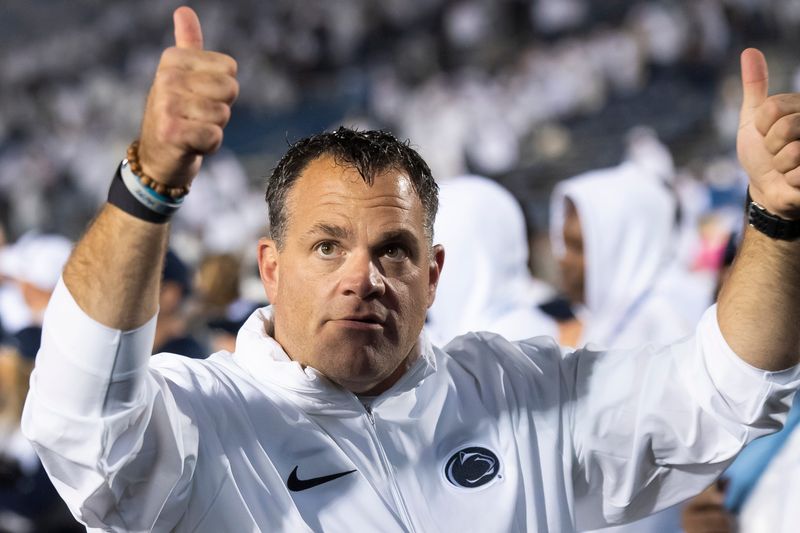
Penn State athletic director Pat Kraft gives two thumbs up to the student section following a 31-0 win in a football game against Iowa in 2023.
‘It’s a job’
To athletes, revenue sharing seems only fair, given many are so busy practicing and playing through summers and other breaks that they don’t have time to work.
“It is a job at the end of the day,” said former Villanova University basketball player Eric Dixon, who holds the Wildcats’ record as all-time leading scorer. “You put a lot of time into it every single day, every single week.”
Players get hurt and can see their sports careers harmed or halted, said Dixon, who grew up in Abington and played at Villanova from 2020 to 2025. College may be their only time to earn money for their sports prowess.
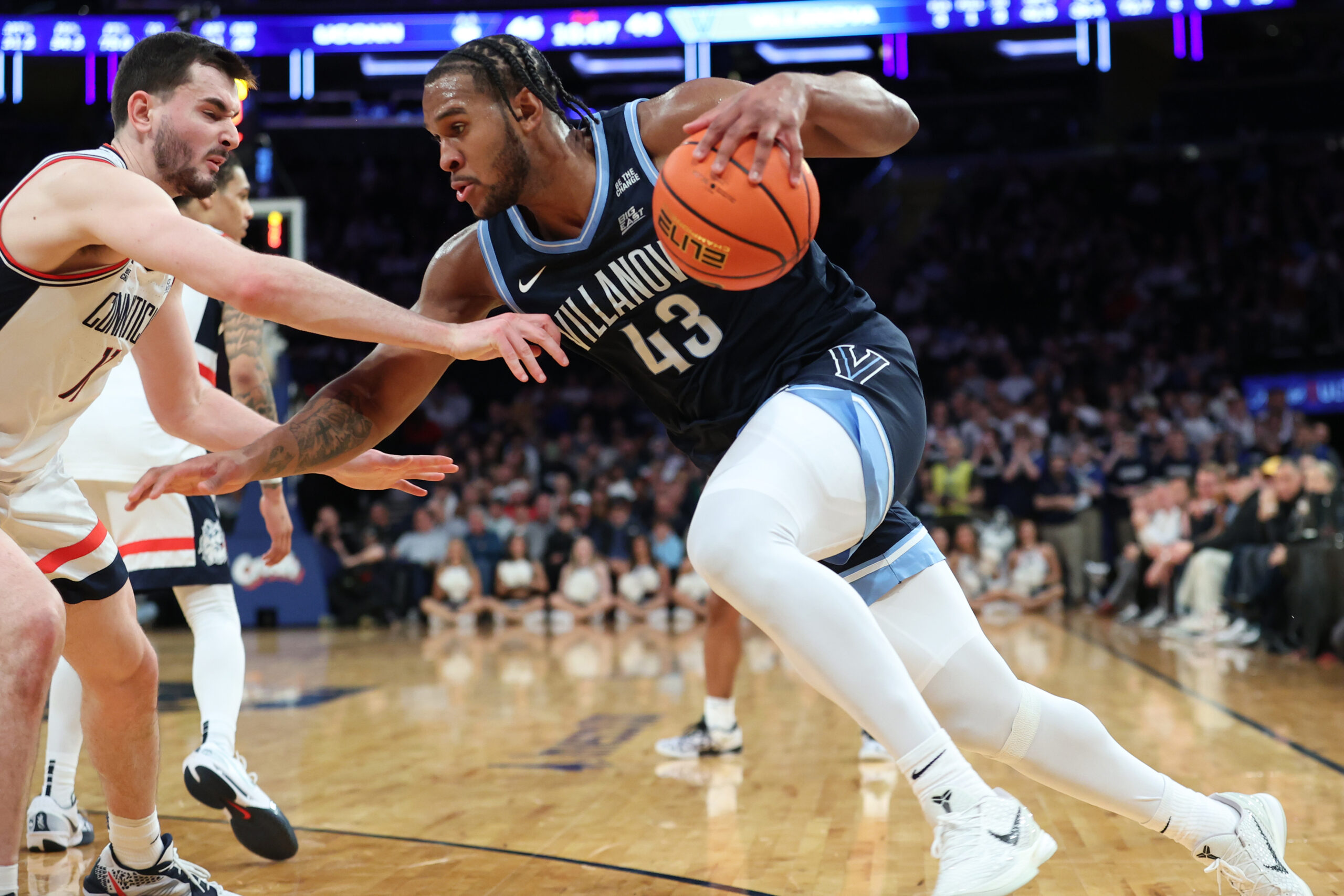
Villanova’s Eric Dixon drives against Alex Karaban of UConn during the 2025 Big East Tournament at Madison Square Garden in New York.
Dixon didn’tbenefit from revenue sharing. But he got money through external name, image, and likeness (NIL) endorsements and sponsorships that the NCAA began allowing in 2021. Dixon declined to specify how much he received, but said it was “seven figures” over four years and allowed him to help his family.
Like some other schools, Villanova, he said, provided players with financial guidance so they could make wise decisions on how to use their money.
External NIL arrangements, though, he said, were a little “like the Wild West.”(NIL compensation is allowed to continue under the lawsuit settlement, but deals of more than $600 have to be reported.) Revenue sharing from colleges will offer athletes more predictable income, said Dixon, who now plays for the Charlotte Hornets’ affiliated team in the G League.
Tyler Perkins, a Villanova junior from Virginia, currently plays for the Wildcats, who won national championships in 1985, 2016, and 2018. While he declined to say how much he is receiving, he said revenue sharing is helping him prepare for his future and “set up for the rest of my life.”
Maddy Siegrist, also a former Villanova basketball player who now plays for the Dallas Wings in the WNBA, is pleased universities are able to share revenue directly with athletes.
“It will be interesting to see how it all plays out,” said Siegrist, the Big East’s all-time leading scorer in women’s basketball and Villanova’s overall highest scorer, of men’s and women’s basketball.
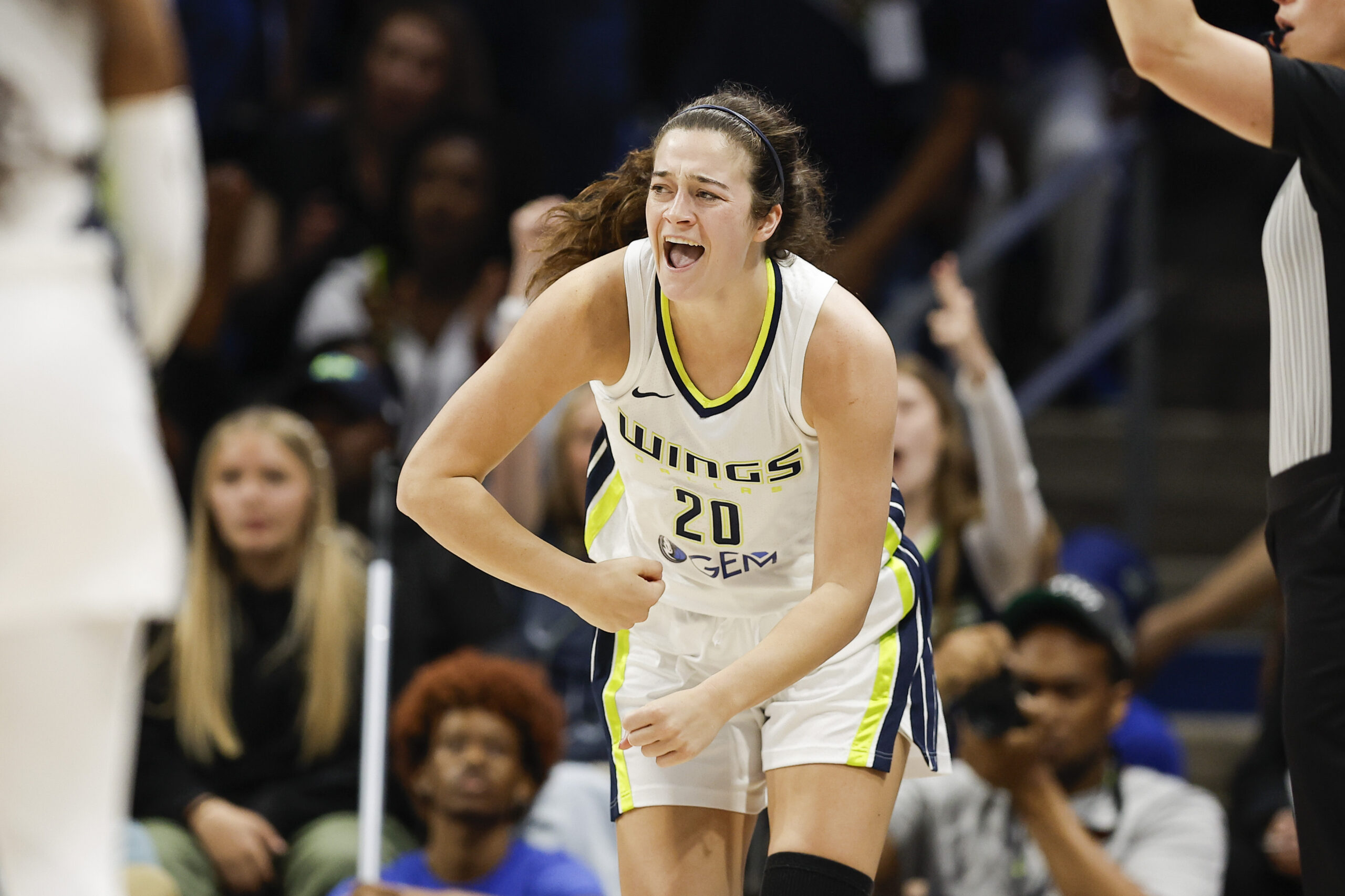
Dallas Wings forward Maddy Siegrist celebrates a three-point shot during a WNBA basketball game against the Chicago Sky in 2024 in Arlington, Texas.
While the big revenue sports are likely to see the money first, she said, “I would hope there will be a trickle-downeffect where almost every sport is able to benefit.“
A lawsuit spurs changes
For years, there have been growing concerns that athletes were not getting their fair share of the profits from college sports, which make money onbroadcast rights, ticket sales, and sponsorships. Meanwhile, coaches can be among the highest paid in a university’s budget.
In 2020, former Arizona State swimmer Grant House became the lead plaintiff in House vs. NCAA, a class-action antitrust lawsuit that argued athletes should be able to profit from the use of their name, likeness, and image and schools should not be barred from paying them directly.
The settlement approved in June of that suit and two others against the NCAA requires the NCAA and its major conferences to pay $2.8 billion in damages to current and former Division 1 athletes. Another provision gave rise to the revenue sharing.
It initially applied to the major sports conferences: the Big Ten, Atlantic Coast Conference, Southeastern Conference, and the Big 12. Penn State belongs to the Big Ten and the University of Pittsburgh to the Atlantic Coast.
But other athletic conferences, along with many of their members, decided to opt in to the agreement to remain competitive in select sports. St. Joseph’s, La Salle, Villanova, Drexel, and Temple all are part of conferences participating in revenue sharing with athletes this year.
“We support student-athletes’ ability to pursue value among their peers and to leverage commercial opportunities that may benefit them or the institution,” said Maisha Kelly, Drexel’s vice president and director of athletics and recreation.
Temple belongs to the American Athletic Conference, which said its members must agree to pay at least $10 million over three years to its athletes. Johnson, Temple’s athletic director, noted that total also includes new scholarships, not just pay.
No tuition, state dollars to be used
Pitt alumnus J. Byron Fleck has called on the Pennsylvania State Board of Higher Education to advise three state-related colleges — Penn State, Temple, and Pitt — not to use tuition dollars, student fees, or state appropriations to fund athlete payments.He also asked lawmakers to take action.
“It doesn’t relate to any educational or academic purpose,” said Fleck, a 1976 Pitt alumnus and lawyer in California.
Karen Weaver, an expert on college athletics, higher education leadership, and public policy, said the same concerns about public funds being used to pay athletes have risen in other states, including Michigan and Washington.
But Penn State, Temple, and Pitt all said in statements that they would not use tuition, student fees, or state appropriations to fund revenue sharing with athletes.
“Penn State Intercollegiate Athletics is a self-sustaining unit of the university,” said Beasley, Penn State’s deputy athletic director.
Pitt said it would use athletic revenues.
In addition to donations, Temple, too, is using athletic department revenues, such as ticket sales, but it is also looking at other “nontraditional ways” to raise money, Johnson said.
“We’re turning over every stone,” he said.
Weaver, an adjunct professor at the University of Pennsylvania, said she worries that as the caps on revenue sharing get higher and costs grow, schools, especially those tight for cash, may start raising recreation and other student fees. The University of Tennessee added a 10% student talent fee for season ticket renewals, according to the Associated Press, while Clemson is charging a $150 per semester student athletic fee, according to ESPN.
Roedl, the Villanova athletic director, said in a statement that it had launched the Villanova Athletics Strategic Excellence (VASE) Fund to raise money for the payments.
“Additionally, we are looking for other ways to maximize revenue through ticketing, sponsorships, and events, and identifying cost efficiencies throughout our department,” he said.
St. Joe’s, which has about 450 student athletes, said that it started a Basketball Excellence Fund to raise revenue and that payments also are funded by the basketball program. Athletes that receive funds “serve as brand ambassadors for the university,” the school said in a statement. “… These efforts have included community engagement — particularly with youth in the community — and marketing initiatives that directly support the Saint Joseph’s University brand.”
La Salle declined to say how much student athletes receive or in what proportion.
“We can share that any funds provided to students come from external sources and not tuition dollars,” said Greg Nayor, vice president for enrollment management and marketing.
Weaver, author of a forthcoming book, Understanding College Athletics: What Campus Leaders Need to Know About College Sports, said plans that call for the bulk of revenue sharing to go to football and basketball players would lead to legal action, charging that female athletes are not being treated equally.
“Any day now I expect we’ll see a huge Title IX lawsuit,” she said.
As college football has evolved with Name, Image, and Likeness, the transfer portal has moved to the forefront of the offseason for teams. It allows teams to rebuild rosters quickly by filling needs for college players who are looking for a fresh start.
Temple has taken advantage of the portal to refresh its team in recent years, rostering at least 30 transfers in each of the last three seasons. Some of those transfers gained significant roles and became critical players.
However, the transfer portal also gave former Owls the chance to leave the program and play elsewhere. Temple lost important transfers, including a few who turned into NFL players.
Let’s break down some of the most impactful players to transfer in and out of Temple in the last few years.
Transferred in
Evan Simon
Temple quarterback Evan Simon moves out of the pocket against Navy on Oct. 11, 2025.
Simon spent the last two seasons at quarterback and helped lead the Owls to their best season in half a decade.
The Lancaster County native spent the first four years of his career at Rutgers, where he threw five touchdowns and seven interceptions. Simon entered the transfer portal after the 2023 season and landed at Temple to compete for the starting job.
Simon lost the job to Forrest Brock out of training camp, but he took over in Week 3 of the 2024 season and never looked back. He started the final nine games and passed for 15 touchdowns and nine interceptions. Simon chose to return to Temple in 2025 and put together an even better season.
After beating out Oregon State transfer Gevani McCoy in training camp, Simon led Temple to a 5-7 record, its most wins since 2019. He passed for 2,097 yards and 25 touchdowns, the most in a season in Temple history, and had two interceptions. He also tied the program record for passing touchdowns in a game with six against UMass on Aug. 30.
Simon leaves the Owls eighth in passing yards in program history with 4,129, and tied for fifth in career touchdowns with 40.
Rock Ya-Sin
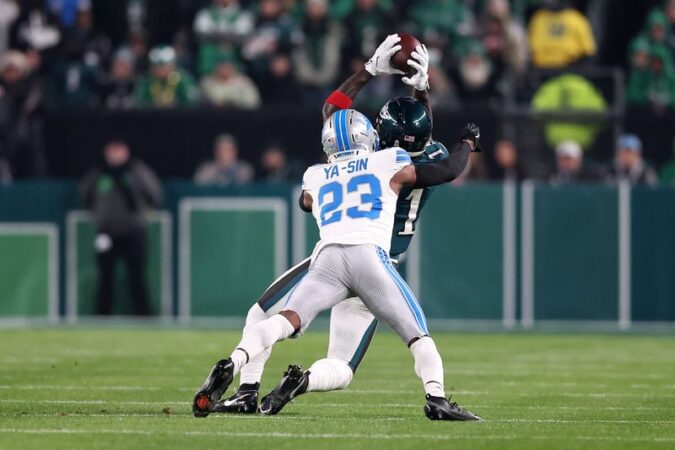
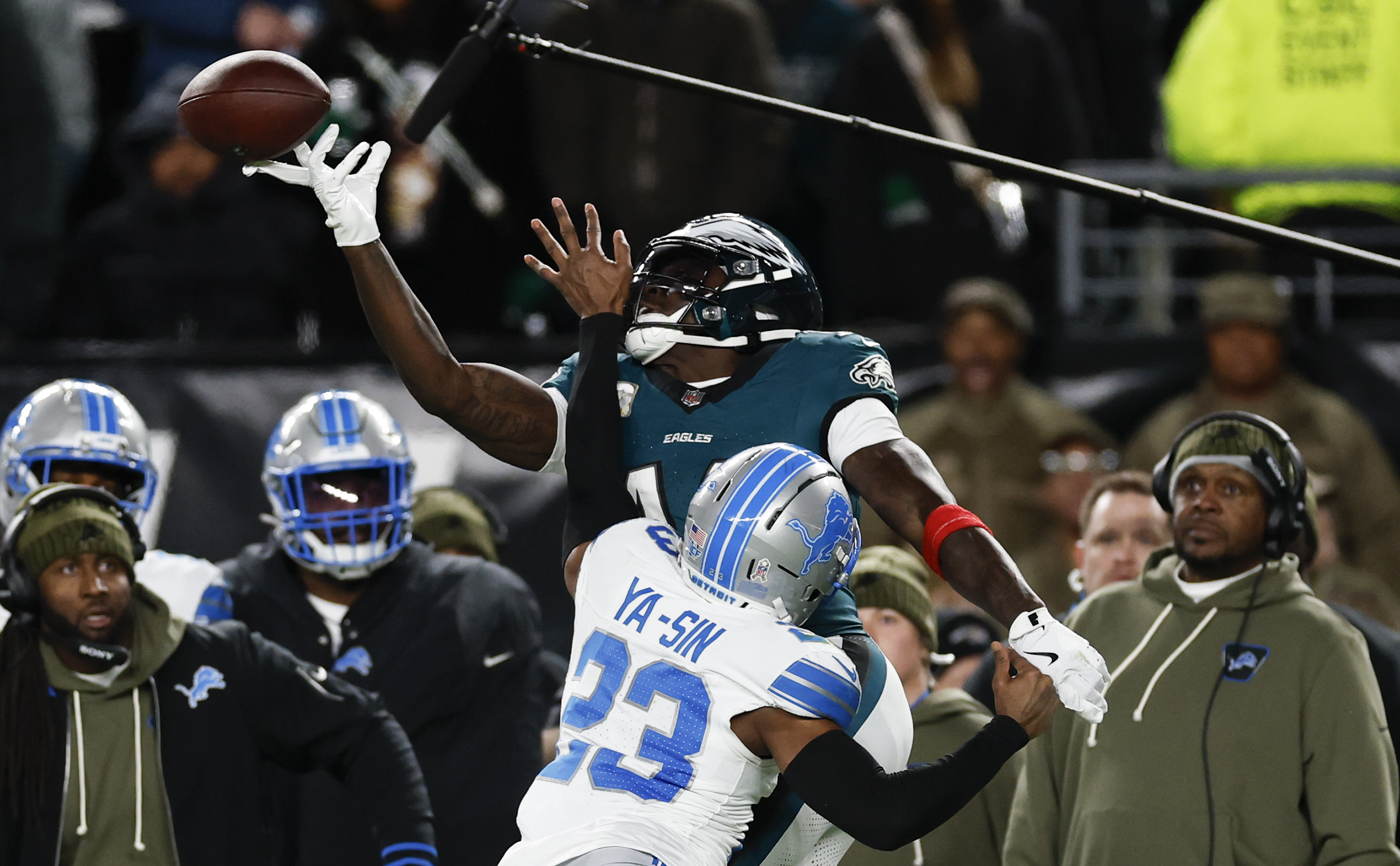
Eagles wide receiver A.J. Brown attempts to catch the ball against coverage by Detroit’s Rock Ya-Sin on Nov. 16.
Ya-Sin joined Temple as a transfer cornerback in 2018 before NIL changed how players and programs view the portal.
He spent his first three years at FCS Presbyterian College in South Carolina but chose to transfer after the program announced it would move down to Division II. Ya-Sin played one season at Temple, but he made his mark.
Ya-Sin earned a prestigious single-digit jersey number before the season. He racked up 47 tackles, two interceptions, and a team-high 12 pass breakups as the Owls finished 8-4.
The Indianapolis Colts selected him 34th overall in the 2019 NFL draft. Ya-Sin has played for five teams in seven seasons in the NFL, most recently with the Detroit Lions in 2025, when he had 47 tackles and nine passes defended.
Maddux Trujillo
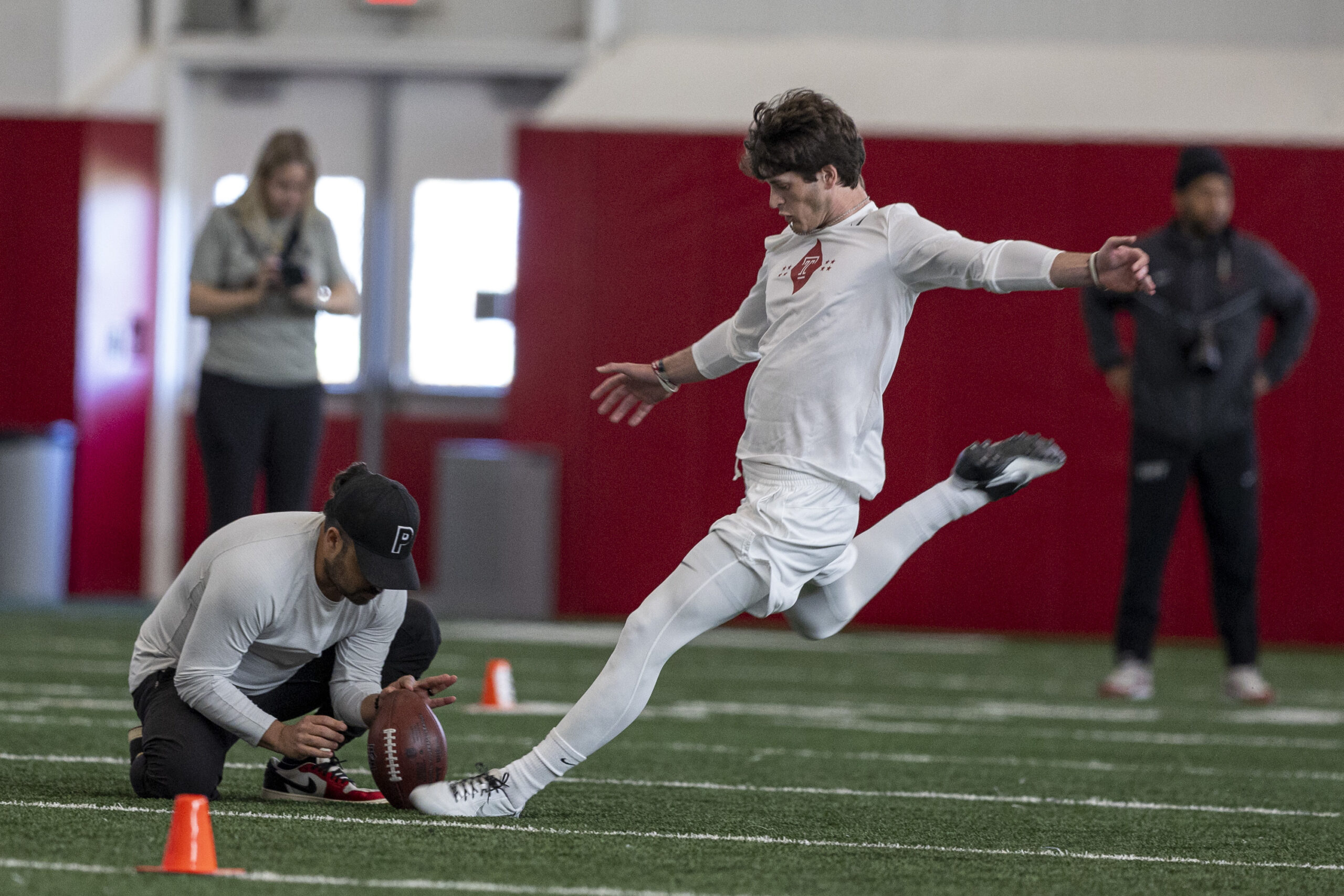
Temple kicker Maddux Trujillo during the Owls’ pro day on March 27, 2025.
While few positives emerged from Temple’s 2024 season, in which Stan Drayton was fired, Trujillo was one of the bright spots.
Trujillo spent three years at FCS Austin Peay, where he made 38 field goals. He transferred to Temple and took over as its main placekicker.
He made 16 of his 22 field goal attempts and converted all 21 point-after attempts. Trujillo made headlines in Temple’s 45-29 win against Utah State on Sept. 21, 2024, when he made a 64-yard field, the longest ever at Lincoln Financial Field. He made five field goals from 50 yards or longer.
Trujillo went undrafted in 2025 but latched on with the Colts to compete for their starting kicker spot. He lost the job to Spencer Shrader and was later cut from the team.
He spent the 2025 season as a free agent and most recently signed a reserve/futures contract with the Buffalo Bills on Jan. 6.
Dante Wright
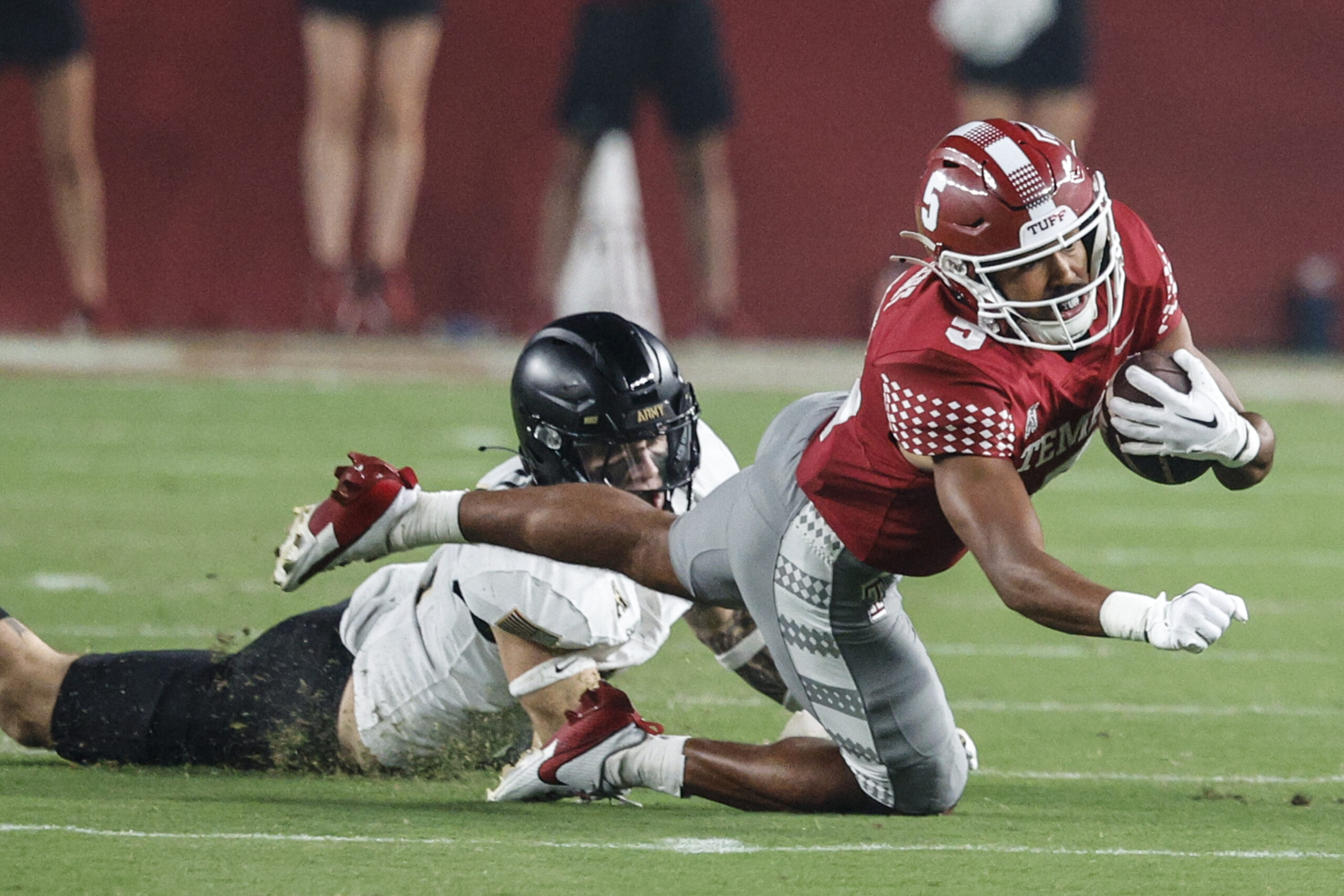
Temple receiver Dante Wright against Army on Sept. 26, 2024.
Wright was a productive wide receiver from 2019-22 at Colorado State before transferring to Temple for the 2023 season. He became an impactful weapon in the passing game during his two years with the Owls.
He had 39 catches for 507 yards and four touchdowns during his first year with the program in 2023, then became the go-to receiver in 2024.
Wright hauled in 61 catches for 792 yards and six touchdowns. He went undrafted in 2025 but earned an invitation to the Kansas City Chiefs’ rookie minicamp. Wright did not stick with the Chiefs and was a free agent this season.
Transferred out
Ray Davis
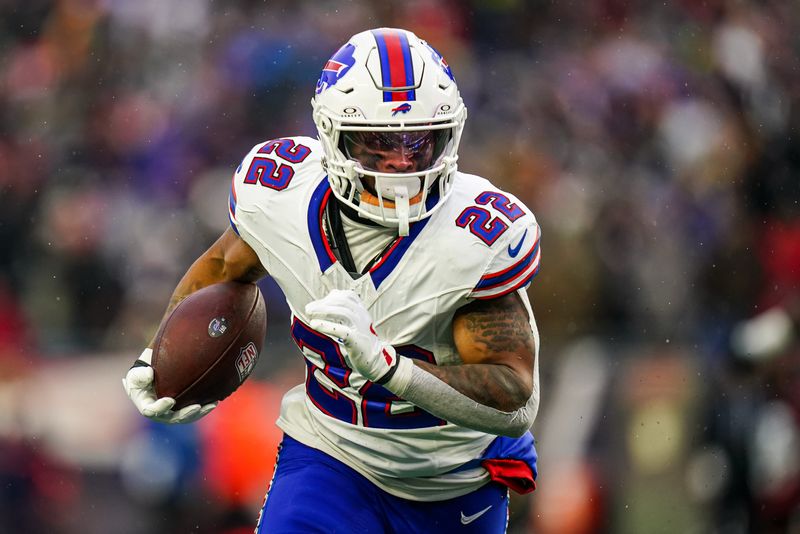
Buffalo Bills running back Ray Davis runs the ball against the New England Patriots.
Davis joined Temple as a running back out of Blair Academy in Blairstown, N.J., and showed immediate promise as a freshman in 2019. Then known as Re’Mahn Davis, he rushed for 936 yards and eight touchdowns while adding 181 receiving yards and two touchdowns. He had more than 100 rushing yards in three games and appeared to be a building block for the Owls.
However, he played just four games in the COVID-19-shortened 2020 season, when he rushed for 323 yards on 78 carries. Davis entered the transfer portal following the season and joined Vanderbilt.
Davis played three games in 2021 before truly breaking out for the Commodores in 2022. He had 1,042 rushing yards and five touchdowns, adding three more on receptions. Davis entered the portal again after the 2022 season and went to Kentucky for his final year.
He had his best season with the Wildcats, compiling 1,129 rushing yards, 14 rushing touchdowns, and seven receiving touchdowns. His 21 total touchdowns were the most in a season in Kentucky history and he earned first-team All-SEC honors.
The Bills selected Davis in the fourth round of the 2024 draft. He earned a first-team All-Pro selection this season as a kick returner.
Arnold Ebiketie
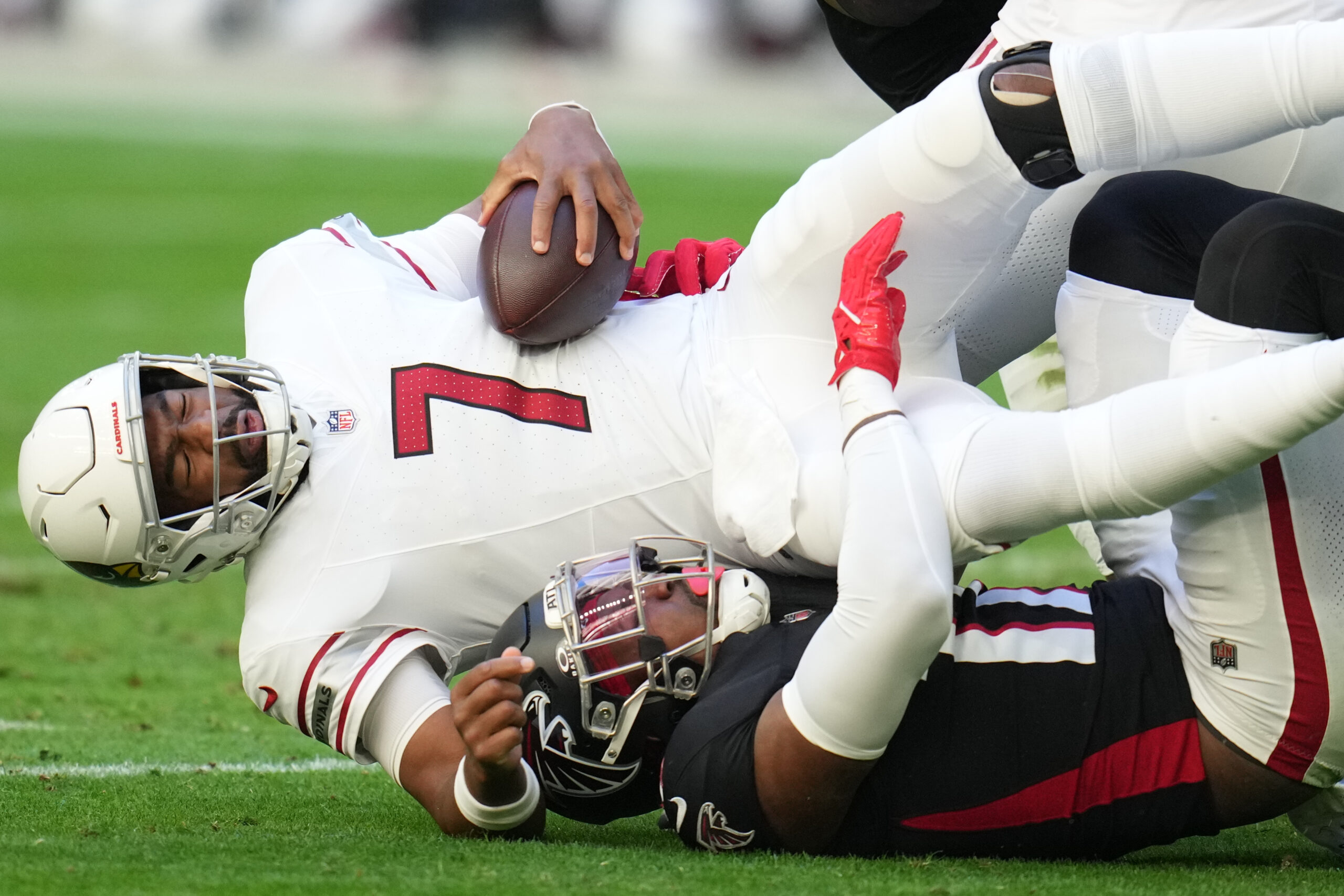
Atlanta Falcons linebacker Arnold Ebiketie sacks Cardinals quarterback Jacoby Brissett on Dec. 21.
Ebiketie played defensive end for Temple from 2017-20, serving as a rotational player for his first three seasons before breaking out in 2020.
He recorded 42 tackles, 8½ tackles for losses, four sacks, and three forced fumbles. Ebiketie earned second-team all-American Athletic Conference honors and decided to enter the portal for his redshirt senior season.
Ebiketie had a standout year at Penn State, racking up 17 tackles for losses and 9½ sacks. He earned first-team All-Big Ten honors from the coaches and media. The Atlanta Falcons drafted him in the second round in 2022 and he has recorded 16½ sacks in four NFL seasons.
Kobe Wilson
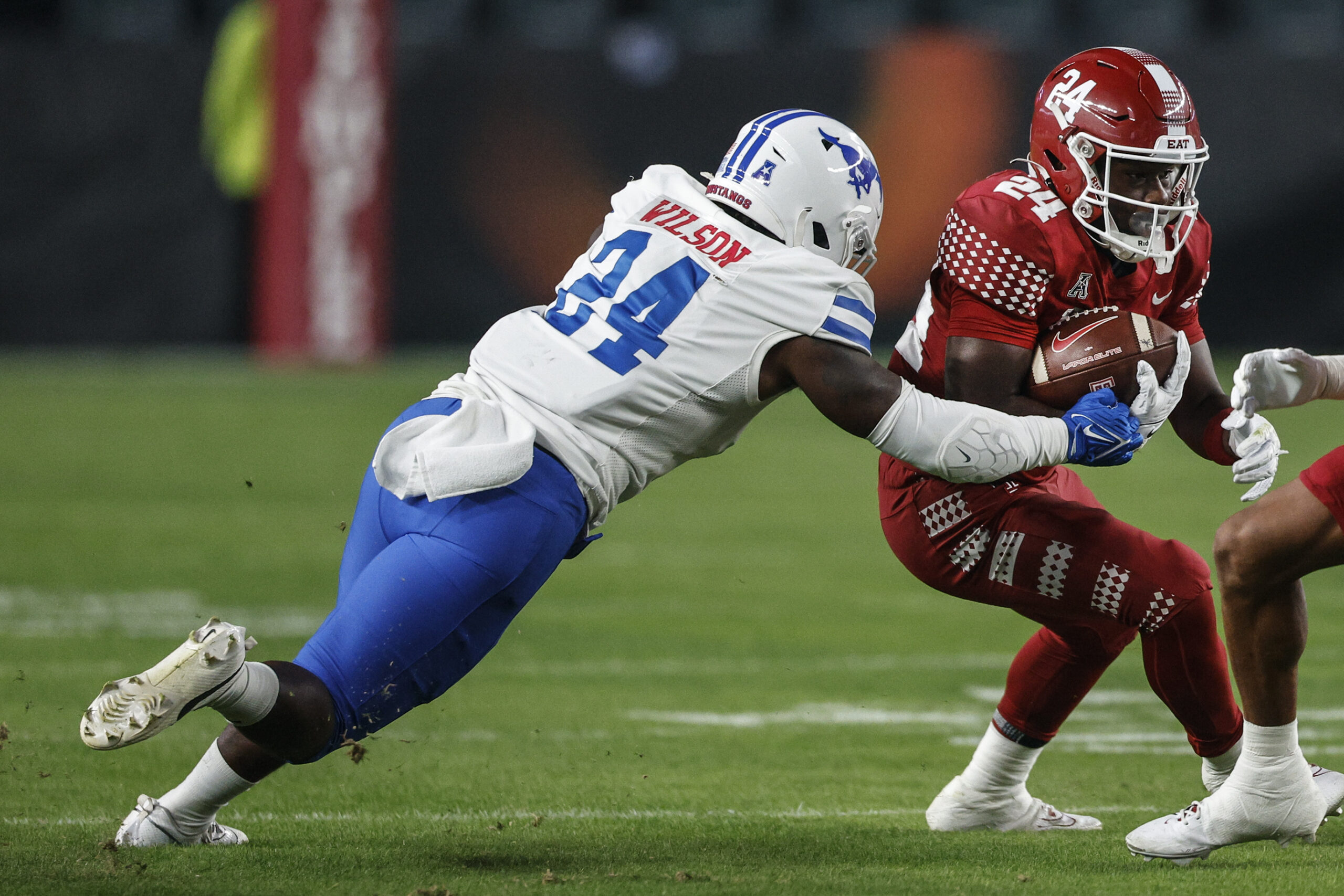
SMU linebacker Kobe Wilson makes a tackle against Temple, his former team, on Oct. 20, 2023.
Wilson joined Temple in 2020 as a linebacker out of Parkview High School in Georgia, and he spent three seasons with the Owls.
Wilson became a regular contributor on defense, totaling 124 tackles and 11½ tackles for losses. He entered the portal after the 2022 season and landed at Southern Methodist, Temple’s conference foe at the time.
He turned into one of the Mustangs’ top players over two seasons. In 2023, Wilson had 80 tackles and an interception. He had 117 tackles, three sacks, and two interceptions in the next season. He earned second-team All-AAC honors in 2024 for an SMU team that appeared in the College Football Playoff. Wilson did not receive an NFL opportunity in 2025.
Christian Braswell
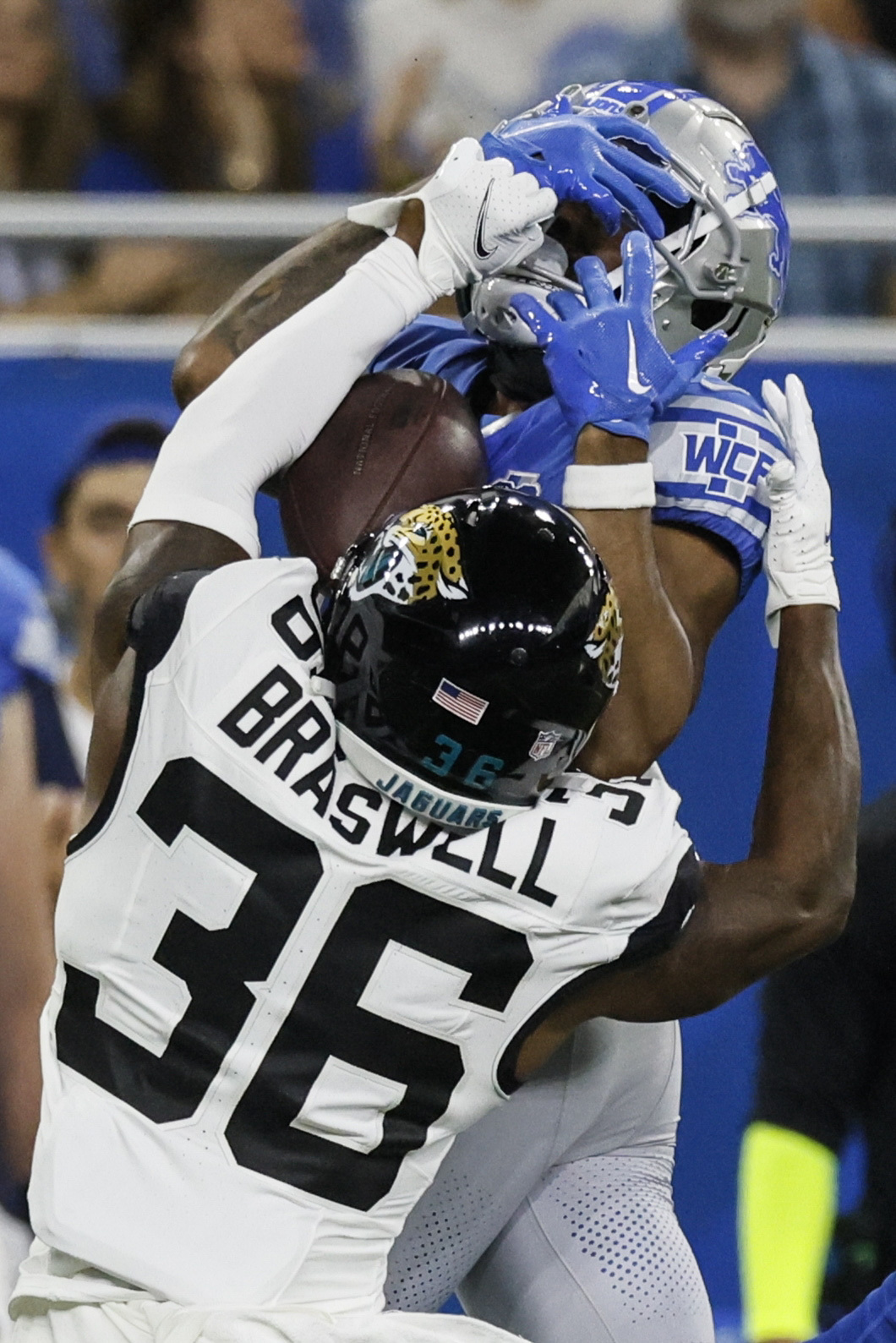
Jaguars cornerback Christian Braswell tackles Detroit’s Trinity Benson during a preseason game on Aug. 19, 2023.
Braswell was a rotational cornerback from 2018-20 at Temple, where he recorded 61 tackles, three interceptions, and 16 passes defended. The Washington native entered the portal after the 2020 season and committed to Rutgers.
He did not see game action in 2021, but the next season, Braswell had five starts and recorded three interceptions and 37 passes defended, earning second-team All-Big Ten honors from Pro Football Focus.
The Jacksonville Jaguars drafted Braswell in the sixth round of the 2023 draft and he played in all 17 games this season.