Category: Will Bunch

  • South Jersey guy becomes the face of ICE resistance | Will Bunch Newsletter

    I was cranking out the newsletter in Tuesday’s predawn darkness when we learned that the Rev. Jesse Jackson Sr., who’d been our greatest living bridge to the civil rights heroics of the 1960s and ‘70s, had died at age 84. Covering his groundbreaking 1984 campaign as a cub reporter at the Birmingham News is still a career highlight four-decades-plus later — a memory that was reinforced recently listening to Abby Phillip’s excellent new book on Jackson. He leaves us right when his victories for African Americans in arenas such as corporate hiring and college admissions are under attack, and it challenges us to fight to preserve them. RIP to an American original.

    If someone forwarded you this email, sign up for free here.

    How ICE protest by ‘an average Joe’ from Haddon Heights went viral

    “I never want to see a child run away from our own government again,” said this self-described first-time protester, Joseph Zobel from Haddon Heights, at a rally in Lindenwold, N.J., the day after children ran from a school bus stop after ICE appeared to conduct an operation in the area.

    Last Friday, “an average Joe who grew up in Haddon Heights” named Joseph Zobel was at work when he saw a viral video from the nearby South Jersey town of Lindenwold that shocked the nation, and shocked him.

    The clip from a Ring doorbell camera showed a gaggle of fourth and fifth graders running in a panic, screaming, “ICE! ICE!” as masked federal immigration agents had approached their morning bus stop the day before.

    “I just thought, ‘How can that be happening here in the United States?’” Zobel told me Monday in his first media interview, conducted by email. When he got home from work, he saw online that the group Cooper River Indivisible was holding an “ICE Out” protest at the Lindenwold municipal building at 4 p.m.

    He looked at the clock. It was 3:58.

    “Something inside of me said, ‘Go up there and stand with these people,’” said Zobel, a 36-year-old school coach who said he’s never been to a protest before in his life. “I wanted to stand for what is right.” As he dashed out, Zobel also grabbed one thing — the American flag he flies in front of his house most of the time (except during football season, when an Eagles flag replaces it).

    As many as 300 people were at the protest, as Indivisible organizer Amber Clemments asked the flag-bearing Zobel if he’d be willing to film a video. Zobel’s raw emotion, choking back tears as he said, “I watched fourth- and fifth-grade kids run away from our own government,” soon ignited across social media over the long Presidents Day weekend.

    By Tuesday morning, the 47-second clip of Zobel had been watched an astronomical 2.9 million times on TikTok — and liked by some 709,000 viewers — even as it also went viral on Bluesky, X, Threads, and other social media platforms.

    It’s not hard to understand why. Zobel, who described himself as a patriotic regular voter but never very political, instantly became the bearded, baseball hat-wearing, anguished face of a new American majority — an Everyman shocked into action by the horror of immigration raids, wondering how best to protect his neighbors.

    The two South Jersey viral videos — the one depicting the raid itself and Zobel’s raw reaction — revealed how both the terrorizing tactics of masked immigration cops and the powerful reaction from often nonpolitical Americans, dubbed “neighborism,” are spreading far beyond the Minnesota tundra where this battle was initially met.

    Indeed, local activists say Lindenwold — last stop on the heavily traveled PATCO line, just over 15 miles southeast of Philadelphia — has been under a relentless siege from U.S. Immigration and Customs Enforcement (ICE) and other federal agents since last spring, not long after Donald Trump became president. The transit hub has become a magnet for immigrants in recent years, with a local school population that is just under 60% Latino.

    Craig Strimel, a leader of Cooper River Indivisible, a local chapter of the group that organized the large “No Kings” protests, said activists first learned of the ICE activity when a Lindenwold immigrant couple escaped agents last year by taking refuge in the local high school, where the principal blocked the feds at the doorway. Since then, Strimel said, ICE watchers have seen frequent activity in and around a cluster of five apartment complexes with large immigrant populations, but few known arrests.

    “It was becoming apparent early on that this was all about creating terror,” said Strimel of the frequent ICE sightings. Some local residents stopped leaving their apartments, he said, and a once-popular restaurant in Lindenwold just closed its doors amid rumors that the couple that owned it has returned to Mexico.

    All of this set the stage for last Thursday, when masked federal agents wearing tactical gear arrived early in the morning at Lindenwold’s Woodland Village Apartments just as 44 elementary school kids were waiting for their school bus. The sighting triggered a panic that saw some kids running away and others frantically hustling onto the bus as the driver arrived. No one was apprehended or reported hurt.

    On Monday, U.S. Department of Homeland Security officials said the agents went to the complex hoping to arrest a Honduran immigrant who’d once been convicted of aggravated assault. The man was not taken on Thursday and remains free.

    Although some outlets reported the large protest was in response to the high-profile raid — which has been covered by the CBS Evening News, MS Now’s Morning Joe, and elsewhere — that took place just a day and a half earlier, the rally actually had been in the works for several weeks.

    It had been organized by a young woman from Lindenwold named Tatiana — a 20-year-old business major at Camden County Community College who spoke with me Monday on the condition that I not use her full name — who’d been seeing the ICE activity in her hometown and felt it was time local people spoke out.

    Tatiana told me that the idea behind the Lindenwold protest was “to give the community a voice — to be able to say, ‘No, we don’t stand for this.’ That’s the most important thing for me. It’s just bringing community together and deciding we’re not OK with this at all.” But she agreed the bus stop raid had given the event a boost from residents believing “that children should not be scared of federal law enforcement.”

    Zobel was one of those neighbors. In the email interview, he described himself as “just your average Joe who grew up in Haddon Heights.” He did volunteer that he’s voted in every election since he turned 18, and that his first ballot was cast for Barack Obama, “and I felt proud walking out of the booth that day.”

    Fittingly, Zobel sounded somewhat Obama-esque when he described his dismay over America’s bitter partisan divide. “We as a nation are so angry with one another, and that makes me so sad,” he said. Not surprisingly, he’s as stunned as anyone at the millions of views for Friday’s video, and somewhat concerned about the impact, saying, “I just hope this video does not divide people.”

    But Zobel’s words and teary-eyed emotion went viral because it was such a shot of hope — that in a moment when hate is on public display in the streets of the United States, “your average Joe” who’d once stood on the sidelines is now grabbing the American flag and taking the field to fight for their neighbors. An authoritarian movement dependent on rage simply never counted on the brotherly love that sent this nonpolitical Eagles fan to his first protest.

    It might not be his last. “I am always happy,” he said, “to help support humanity.”

    Yo, do this!

    • With several inches of snow still on the ground, it might shock you to hear this, but American soccer is back! The Philadelphia Union — despite winning the 2025 Supporters Shield and boasting Major League Soccer’s best winning percentage in the 2020s — radically shook things up during the offseason. With new strikers Ezekiel Alladoh and Agustín Anello looking to amp up their attack, the Union’s quest for the CONCACAF Champions Cup begins Wednesday in Trinidad against Defence Force FC at 6 p.m. on FS2. Saturday night at 7:30 p.m., it’s back to the chillier climes of Washington for the MLS opener against DC United on Apple TV (with no need in 2026 for an additional Season Pass subscription, as in past years).
    • In the quest for what’s new in American popular culture, sometimes we take for granted the established jewels in our midst. I’ve long felt that MS Now’s 9 p.m. (now just on Monday nights) host Rachel Maddow is our best TV commentator because of the way she weaves the historical past into the headlines of America’s tortured present. But since last summer, she has upped her game. Maddow’s coverage of two stories underreported in most of the mainstream media — grassroots resistance to the Trump regime, and now the push for a nationwide network of warehouse concentration camps — has created appointment television every Monday.

    Ask me anything

    Question: What is your take on the latest CBS censoring of [Stephen] Colbert? — @bcooper82.bsky.social via Bluesky

    Answer: Another Tuesday morning breaking story on deadline: The CBS overseers of Late Night with Stephen Colbert — the top-rated talk show that’s nevertheless ending this year in what critics see as genuflecting to the Trump regime that the program frequently mocks — would not air a recorded interview with Texas state lawmaker and Democratic Senate primary candidate James Talarico. The backstory here is that the Federal Communications Commission has long exempted late-night talk shows from its equal time rule about political candidates on licensed broadcast outlets, but last month, FCC chair Brendan Carr — a pro-Trump MAGA pit bull — said this is changing. That apparently was enough for CBS’s new Trump-friendly management, which would not broadcast the interview (available on YouTube, now certain to get more views than if it hadn’t been censored). This new flap just highlights what a perilous moment this is for the First Amendment and American democracy writ large. Government limits on what viewpoints you can see or hear are a sign of dictatorship, full stop.

    What you’re saying about …

    Last week’s question about a winning Democratic strategy for the 2026 midterms drew a robust response, and almost all of the replies were thoughtful and nuanced. If there was a consensus, it was that Democrats should tailor their candidates to the divergent views of the congressional districts they hope to win. As Naomi Miller stated, “I think progressive candidates should run in progressive districts, and mainstream democrats in mainstream, purple, and red districts.” Still, a number of you think America’s bad experience with MAGA extremism means a sharp left turn is warranted in response. “I’d like for the Democrats to become more progressive and combative toward Trump than they already are,” wrote Benjamin Spohn, voicing an opinion many share these days.

    📮 This week’s question: Tuesday’s passing of the Rev. Jesse Jackson is one more reminder that many icons of America’s tumultuous 20th century are disappearing. So who do you think is the current greatest living American, and why? Please email me your answer and put the exact phrase “greatest living American” in the subject line.

    Backstory on the main reason the media is not trusted
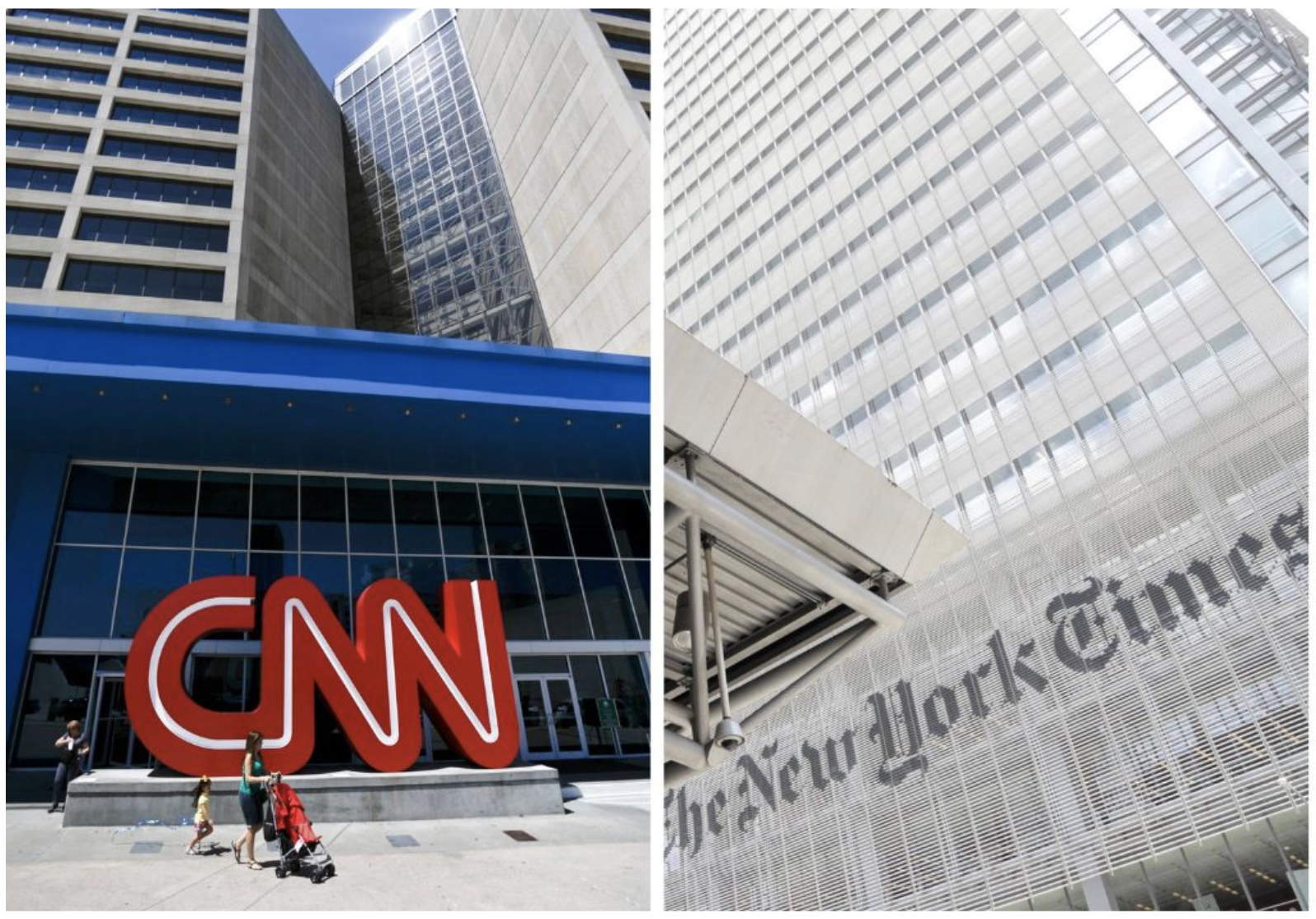
    Exterior images of CNN headquarters in Atlanta and the New York Times Building in Manhattan.
    Exterior images of CNN headquarters in Atlanta and the New York Times Building in Manhattan.

    It’s rare these days to write something that everyone can agree on, but here goes: Public trust in the media has never been lower than it is today. How low? A Gallup poll last fall found that public trust in the ability of newspapers, TV, and radio to fairly and accurately report the news had plunged to 28%, the lowest ever recorded. Why? It’s complicated. The people’s faith in every major institution has declined in the 21st century, after all. And it’s clear that in a deeply divided America, rage against the media machine looks different from the left than it does from the right.

    This weekend, in a New York Times piece largely about the broken promises of one media-mogul billionaire — Washington Post owner and Amazon founder Jeff Bezos — columnist Lydia Polgreen put forth an explanation for sinking media trust that jibes with a lot of what I’ve witnessed since graduating into full-time journalism back in 1981. I believe it’s not the only reason — but the biggest, and maybe the most misunderstood.

    Polgreen noted that the common theory for the public turning against Big Media — that journalists grew more partisan and biased after the tumult of the 1960s and ‘70s — doesn’t comport with the bigger reality. The era that peaked with the publication of the Pentagon Papers and the Watergate scandal launched a decades-long golden era of profitable news organizations spending big on investigative and accountability journalism — exactly what viewers and readers claimed they wanted.

    Yet, trust declined as that happened. Polgreen cited a study in the late 1990s that compared then-contemporary media to 1960s newspapers and found the earlier times were “naïvely trusting of government, shamelessly boosterish, unembarrassedly hokey and obliging.” Polgreen wrote that moving “away from deferential stenography and toward fearless investigation … led to declining trust in the news media. Aggressive, probing and accountability-oriented journalism held up a mirror to American society — and many Americans didn’t like what they saw.”

    I think this explanation is spot on, but before readers jump all over me, let me quickly add a couple of caveats. Starting way back in Ronald Reagan’s 1980s, there was also a response to the growing backlash — especially in elite, Beltway journalism — that resulted in too much groveling to authority, and thus stenography around government lies like the 2003 Iraq War. This has only gotten worse with the current wave of billionaire owners like the Post’s Bezos. This means many liberals now also distrust the media, but not for the same reasons as conservatives, who’ve long loathed journalism for probing America’s inequities around race or gender.

    The explanation offered by Polgreen jumped out at me because it fit with what I explored in my 2022 book, After the Ivory Tower Falls, which looked at Americans losing trust in another large institution: colleges and universities. The liberal ideas that were nurtured on campuses in the postwar college enrollment boom — including the civil rights movement — triggered the same grievance-filled, largely white working-class backlash as did journalism about social injustice. Today, the only road back for the media is to hold the powerful to account — and understand that not everyone is going to like it.

    What I wrote on this date in 2022

    People can’t say they didn’t see America’s current crisis coming. On this date four years ago, I expressed my shock and amazement that little more than one year beyond Donald Trump’s attempted coup to stay in power, the right-wing’s creation of a political fantasy world was spiraling out of control, with lies about Hillary Clinton spying on Trump’s 2016 campaign and Joe Biden giving out free crack pipes (?!!). I wrote, “[Historian Ruth] Ben-Ghiat told me that the failure of the Jan. 6 insurrection only forced the GOP to double-down on embracing alternate realities, because ‘they have to reckon with the fact that [Trump] lost, that he’s no longer the leader.’”

    Read the prescient rest:After Trump’s Big Lie, half of U.S. lives in a fantasy world. This won’t end well.”

    Recommended Inquirer reading

    • There’s been no rest on the mass deportation beat. In my Sunday column, I looked at the out-of-control lying from the Trump regime, with unbelievable fictions about everything from shootings and rampant brutality by masked immigration officers to Commerce Secretary Howard Lutnick’s whoppers about his friendship with Jeffrey Epstein. I argued that government lying is fundamentally unconstitutional and that the perpetrators need to be punished, including prison time. Over the weekend, I wrote about how, while Minneapolis was a victory for the forces resisting American authoritarianism, that won’t stop Homeland Security from putting thousands of new officers on the street and expanding its concentration camps. The fight for the soul of the nation has only just begun.
    • What was I saying higher up in this newsletter about accountability journalism? Ever since Lyndon B. Johnson’s Great Society push in the mid-1960s, community nonprofits have been a valuable source of urban renewal, yet are sometimes dragged down by waste, fraud, and abuse. It’s a problem that sadly persists, as shown last week by a major Inquirer investigation into Philadelphia’s NOMO Foundation, one of the best-funded nonprofits attacking youth violence and crime. Ace reporters Ryan W. Briggs and Samantha Melamed found that the foundation has received more than $6 million in public funds in recent years, but faced an IRS lien and eviction lawsuits while it was forced to close its housing program. This is why we have a First Amendment, so that a free press can report on the problems a corrupt or inept government refuses to deal with. Subscribing to The Inquirer gives you access to this type of essential journalism, and you’ll also feel good about supporting this vital work.

    By submitting your written, visual, and/or audio contributions, you agree to The Inquirer’s Terms of Use, including the grant of rights in Section 10.

  • Bad Bunny, MPLS, and the ‘neighborism’ saving America | Will Bunch Newsletter

    Maybe it’s because I’ve watched every blessed one of them, starting as a curious, nearly 8-year-old boy in 1967, but the Super Bowl has always felt like the ultimate barometer of where the American Experiment is at. Super Bowl LX (that’s 60, for those of you smart enough not to take four years of Latin in high school) was no exception. The actual game was something of a snoozefest, but the tsunami of commercials revealed us as a nation obsessed with artificial intelligence, sports betting, weight loss, and anything that can lift us from middle-class peonage without having to do any actual work. As Bad Bunny said, God bless America.

    If someone forwarded you this email, sign up for free here.

    Bad Bunny’s real message: From P.R. to Minnesota, we are neighbors

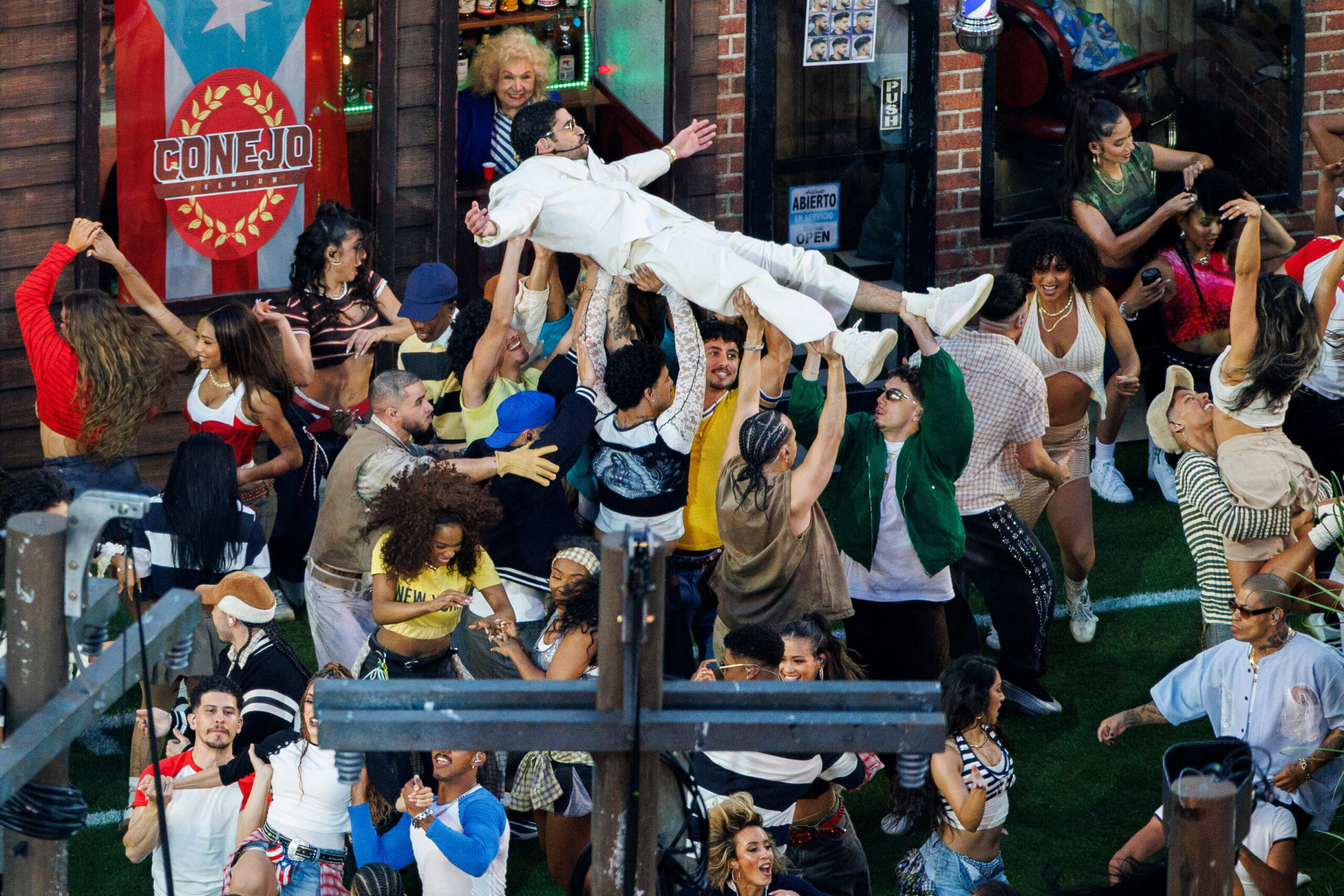
    Bad Bunny (center top) performs Sunday during the halftime show of the NFL Super Bowl XL football game between the Seattle Seahawks and the New England Patriots in Santa Clara, Calif.

    Right-wing media prattled on for months about how Bad Bunny, the Puerto Rican reggaeton superstar who is the world’s most streamed artist, would politicize and thus ruin the NFL’s halftime extravaganza at Super Bowl LX in Santa Clara, Calif.

    The babble became a scream seven days before the Big Game kicked off, when Bad Bunny won the record of the year Grammy Award and began his acceptance speech with the exhortation “ICE out!” adding, “We’re not savages, we’re not animals, we’re not aliens — we are humans, and we are Americans.”

    But on the world’s biggest stage Sunday night — seen by 135 million in the United States, a Super Bowl record — Bad Bunny sang not one word about Donald Trump, not that MAGA fans even bothered to hold up a translation app. The white-suited Benito Antonio Martínez Ocasio danced his way through the history of Puerto Rico and the Americas writ large, from the plantations of yore to the exploding power lines of the hurricane-wracked 21st century. He whirled past an actual wedding, stopped for a shaved ice, and for 13 spellbinding minutes turned a cast of 400 into what his transfixed TV audience craved at home.

    Bad Bunny built his own community — a place not torn asunder by politics, but bonded by love and music.

    Without uttering one word — in Spanish or English — about the dire situation in a nation drifting from flawed democracy into wrenching authoritarianism, the planet’s reigning king of pop delivered the most powerful message of America’s six decades of Super Bowl fever. Shrouded in sugar cane and shaded by a plantain tree, Bad Bunny sang nothing about the frigid chaos 2,000 miles east in Minnesota, and yet the show was somehow very much about Minneapolis.

    Bad Bunny finally gave voice to what thousands of everyday folks in the Twin Cities have been trying to say with their incessant whistles.

    We are all neighbors. The undocumented Venezuelan next door who toils in the back of a restaurant and sends his kids to your kids’ school is a neighbor. But Haiti is also a neighbor, as is Cuba. We are all in this together.

    The word I kept thinking about as I watched Bad Bunny’s joyous performance is a term that didn’t really exist on New Year’s Day 2026, yet has instantly provided a name to the current zeitgeist.

    Neighborism.

    The great writer Adam Serwer — already up for the wordsmithing Hall of Fame after he nailed the MAGA movement in 2018 in five words: “The cruelty is the point” — leaned hard into the concept of “neighborism” after he traveled to Minneapolis last month. His goal was to understand an almost revolutionary resistance to Trump’s mass deportation raids that had residents — many of whom had not been especially political — in the streets, blowing those warning whistles, confronting armed federal agents, and tracking their movements across the city.

    Serwer visited churches where volunteers packed thousands of boxes of food for immigrant families afraid to leave their homes during the U.S. Immigration and Customs Enforcement raids, and talked to stay-at-home moms, retirees, and blue-collar workers who give rides or money to those at risk, or who engaged in the riskier business of tracking the deportation raiders.

    “If the Minnesota resistance has an overarching ideology,” Serwer wrote, “you could call it ‘neighborism’ — a commitment to protecting the people around you, no matter who they are or where they came from.” He contrasted the reality on the ground in Minneapolis to the twisted depictions by Trump and his vice president, JD Vance, who’ve insisted refugees are a threat to community and cohesion.

    Of course, it’s not just Minneapolis, and it’s not just the many, liberal-leaning cities — from Los Angeles to Chicago to New Orleans and more — that were the incubators of the notion that concerned citizens — immigrant and nonimmigrant alike — could prevent their neighbors from getting kidnapped. Even small towns like rural Sackets Harbor, N.Y., the hometown of Trump’s border czar Tom Homan, rose up in protest to successfully block the dairy farm deportation of a mom and her three kids. It’s been like this everywhere regular folks — even the ones who narrowly elected Trump to a second term in 2024 — realize mass deportation doesn’t mean only “the worst of the worst,” but often the nice mom or dad in the house, or church pew, next to theirs.

    Only now that it’s arrived is it possible to see “neighborism” as the thing Americans were looking for all along, even if we didn’t know it. It is, in every way, the opposite vibe from the things that have always fueled fascism — atomization and alienation that’s easy for a demagogue to mold into rank suspicion of The Other.

    I’m pretty sure Bad Bunny wasn’t using the word neighborism when the NFL awarded him the coveted halftime gig last fall. But the concept was deeply embedded in his show. He mapped his native Puerto Rico as a place where oppression has long loomed — from the cruelty of the sugar plantations to the capitalist exploitation of the failed power grid — but where community is stronger.

    Then Benito broadened the whole concept. Reclaiming the word America for its original meaning as all of the Western Hemisphere, Bad Bunny name-checked “Chile, Argentina, Uruguay, Paraguay, Bolivia, Peru, Ecuador, Brazil,” and Canada, as well as the United States. These, too, are our neighbors. “God bless America,” he shouted — his only message of the night delivered in English.

    So, no, Bad Bunny never mentioned Minneapolis, but a tender moment when he seemingly handed the Grammy he’d won just a week ago to a small Latino boy had to remind viewers of the communal fight to save children like the 5-year-old, blue bunny hat-wearing (yes, ironic) Liam Conejo Ramos, who was just arrested, detained, and released by ICE. (A false rumor that the Super Bowl boy was Ramos went viral.)

    But arguably, this super performance had peaked a few moments earlier, when the singer exited the wedding scene stage with a backward trust dive, caught and held aloft by his makeshift community in the crowd below. Bad Bunny had no fear that his neighbors would not be there for him. Viva Puerto Rico. Viva Minneapolis. Viva our neighbors.

    Yo, do this!

    • Some 63 years after he was gunned down by a white racist in his own driveway, the Mississippi civil rights icon Medgar Evers has been having a moment. A fearless World War II vet whose bold stands for civil rights as local leader of the NAACP in America’s most segregated state triggered his 1963 assassination, Evers’ fight has become the subject of a best-selling book, a controversy over how his story is told at the Jackson, Miss., home where he was killed, and now a two-hour documentary streaming on PBS.com. I’m looking forward to watching the widely praised Everlasting: Life & Legacy of Medgar Evers.
    • After the Super Bowl, February is the worst month for sports — three out of every four years. In 2026, we have the Winter Olympics to bridge the frigid gap while we wait for baseball’s spring training (and its own World Baseball Classic) to warm us up. Personally, I try and sometimes fail to get too jacked up around sleds careening down an icy track, but hockey is a different story. At 2:10 p.m. on Tuesday (that’s today if you read this early enough), the puck drops on USA Network for the highly anticipated match between the world’s two top women’s teams: the United States and its heated rival Canada. Look for these two border frenemies to meet again for the gold medal.

    Ask me anything

    Question: How is it that some towns have been able to prevent ICE from buying warehouses and turning them into concentration camps, while others say they are helpless against the federal government? What does it mean that several are planned for within a couple of hours of Philly? — @idaroo.bsky.social via Bluesky

    Answer: Great question. It seems ICE and its $45 billion wad of cash are racing in near-secrecy to make this national gulag archipelago of 23 or so concentration camps a done deal. The places where they’ve been stopped, like one planned for Virginia, happened because locals were able to pressure the developer before a sale to ICE was concluded. That’s no longer an option at the two already purchased Pennsylvania sites in Schuylkill and Berks Counties. The last hope is pressure from high-ranking Republicans, which may (we’ll see) have stopped a Mississippi site. Pennsylvanians might want to focus, then, on GOP Sen. Dave McCormick. Good luck with that.

    What you’re saying about …

    It’s conventional wisdom that the best argument for a Gov. Josh Shapiro 2028 presidential campaign is his popularity in his home state of Pennsylvania, the battleground with the most electoral votes. So it’s fascinating that none of the dozen or so of you who responded to this Philadelphia-based newsletter wants Shapiro to seek the White House, although folks seem divided into two camps. Some of you just don’t like Josh or his mostly centrist politics. “I think he’s all ambition, all consumed with reaching that top pedestal, not as a public servant, but because he thinks he deserves it,” wrote Linda Mitala, who once campaigned for Shapiro, but soured on his views over Gaza protesters, New York Mayor Zohran Mamdani, and other issues. Yet, others think he’s an excellent governor who should remain in the job through 2030. “Stay governor of Pa. when good governance and ability to stand up to federal (authoritarian) overreach is dire,” wrote Kim Root, who’d prefer Kentucky Gov. Andy Beshear for the White House.

    📮 This week’s question: A shocking, likely (though still not declared) Democratic primary win for Analilia Mejia, the Bernie Sanders-aligned left-wing candidate, in suburban North Jersey’s 11th Congressional District raises new questions for the Dems about the 2026 midterms. Should the party run more progressive candidates like Mejia, who promise a more aggressive response to Trump, or will they lose by veering too far left? Please email me your answer and put the exact phrase “Dems 2026” in the subject line.

    Backstory on how the F-bomb became the word of the year

    Billie Joe Armstrong of Green Day performs Sunday before the start of Super Bowl XL in Santa Clara, Calif.

    I’m old enough to remember when the world’s most famous comedy riff was the late George Carlin’s “Seven Words You Can Never Say on Television” — its point driven home by Carlin’s 1972 arrest on obscenity charges that went all the way to the U.S. Supreme Court. A half century later, you still can’t say dirty words on broadcast TV — cable and streaming is a different story — but that fortress is under assault. In 2026, America is under seemingly constant attack from the F-bomb.

    It is freakin’ everywhere. When the top elected Democrat in Washington, House Minority Leader Hakeem Jeffries, cut a short video to respond to the president’s shocking post of a racist video that depicted Barack and Michelle Obama as apes, he said, “[F-word] Donald Trump!” If uttered in, say, 1972, Jeffries’ attack would have been a top story for days, but this barely broke through. Maybe because that word is in the lexicon of so many of his fellow Democrats, like Mayor Jacob Frey, who famously told ICE agents to “get the [F-word] out of Minneapolis,” or Minnesota Sen. Tina Smith, who begged federal agents to “leave us the (bleep) alone.” (Smith is retiring at year’s end and seems to no longer give a you-know-what.)

    The poor guys with their finger on the silence button at the TV networks, where you still can’t say Carlin’s seven words, can barely keep up. The F-bomb was dropped at this year’s Grammys, where award-winner Billie Eilish declared “(Bleep) ICE!” as she brandished her prize. The F-bomb was dropped, of course, at the Super Bowl, when the only true moment of silence during 10-plus hours of nonstop bombast came during Green Day’s pregame performance of “American Idiot,” when NBC shielded America’s tender ears from hearing Billie Joe Armstrong sing about “the subliminal mind(bleep) America.”

    We’re only about six weeks into the new year, but it’s hard not to think that Merriam-Webster or the other dictionary pooh-bahs won’t declare the F-bomb as word of the year for 2026, even if I’m still not allowed to use it in The Inquirer, family newspaper that we are. So what the … heck is going on here? One study found the F-word was 28 times more likely to appear in literature now than in the 1950s, so in one sense it’s not surprising this would eventually break through on Capitol Hill or on the world’s biggest stages.

    But the bigger problem is that America’s descent into authoritarianism and daily political outrage has devolved to such a point where, every day, permissible words no longer seem close to adequate for capturing our shock and awe at how bad things are. Only the F-bomb, it turns out, contains enough dynamite to blow out our rage over masked goons kidnapping people on America’s streets, or a racist, megalomaniac president who still has 35 months left in his term. Yet, even this (sort of) banned expletive is losing its power to express how we really feel. I have no idea what the $%&# comes next.

    What I wrote on this date in 2019

    What a long, strange trip for Amazon founder Jeff Bezos, one of the four richest people on the planet. Today, Bezos is in the headlines for his horrific stewardship of the Washington Post, which has bowed down on its editorial pages to the Trump regime, lost hundreds of thousands of subscribers, and laid off 300 journalists. It’s hard to recall that seven years ago, Bezos and Trump were at war, and there was evidence Team MAGA had enlisted its allies from Saudi Arabia to the National Enquirer to take down the billionaire. I wrote that “a nation founded in the ideals of democracy has increasingly fallen prey to a new dystopian regime that melds the new 21st century dark arts of illegal hacking and media manipulation with the oldest tricks in the book: blackmail and extortion.”

    Read how from Feb. 10, 2019: “Bezos, the National Enquirer, the Saudis, Trump, and the blackmailing of U.S. democracy.”

    Recommended Inquirer reading

    • My first and hopefully not last journalistic road trip of 2026 took me to Pennsylvania coal country, where ICE has spent $119.5 million to buy an abandoned Big Lots warehouse on the outskirts of tiny Tremont in Schuylkill County. I spoke with both locals and a historical expert on concentration camps about their fears and the deeper meaning of a gulag archipelago for detained immigrants that is suddenly looming on U.S. soil. It can happen here. Over the weekend, I looked at the stark contrast between Europe’s reaction to the Jeffrey Epstein scandal — where ties to the late multimillionaire sex trafficker are ending careers and even threatening to topple the British government — and the United States, where truth has not led to consequences so far. The Epstein fallout shows how the utter lack of elite accountability is driving the crisis of American democracy.
    • One last Super Bowl reference: Now that football is over, are you ready for some FOOTBALL? Now just four months out, it’s hard to know what to make of the 2026 World Cup returning to America and coming to Philadelphia for the very first time, and whether the increasing vibe that Donald Trump’s United States is a global pariah will mar the world’s greatest sporting event (sorry, NFL). Whatever happens, The Inquirer is ready, and this past week we published our guide to soccer’s biggest-ever moment in Philly. Anchored by our world-class soccer writer Jonathan Tannenwald and Kerith Gabriel, who worked for the Philadelphia Union between his stints at the paper, the package provides not only an overview of the World Cup in Philly, but previews the dozen teams who will (or might) take the pitch at Lincoln Financial Field, with in-depth looks at the powerhouses (France) as well as the massive underdogs (Curaçao). June is just around the corner, so don’t let the paywall become your goalkeeper. Subscribe to The Inquirer before the first ball drops.

    By submitting your written, visual, and/or audio contributions, you agree to The Inquirer’s Terms of Use, including the grant of rights in Section 10.
  • The toxic culture that killed Alex Pretti | Will Bunch Newsletter

    Dan McQuade had such a way with words that it’s almost impossible to find the right ones to contemplate a Philadelphia without Dan writing about all the bat-guano crazy things we do here. Dan, who wrote for a variety of sites including glory-days Deadspin and Defector, died from cancer last week. He’d just turned 43 — way too young. We started blogging at the same time in the mid-2000s, and I was blessed to know him from that long-lost scene. He leaves behind his wife, a 2-year-old son, and a remarkable body of work — like essential coverage of the Wildwood T-shirt scene, or his analysis of Sylvester Stallone’s absurd 30-mile run in Rocky II — that people will still be reading and talking about for many years to come.

    If someone forwarded you this email, sign up for free here.

    The twisted, deadly culture of U.S. immigration cops can’t be fixed with training

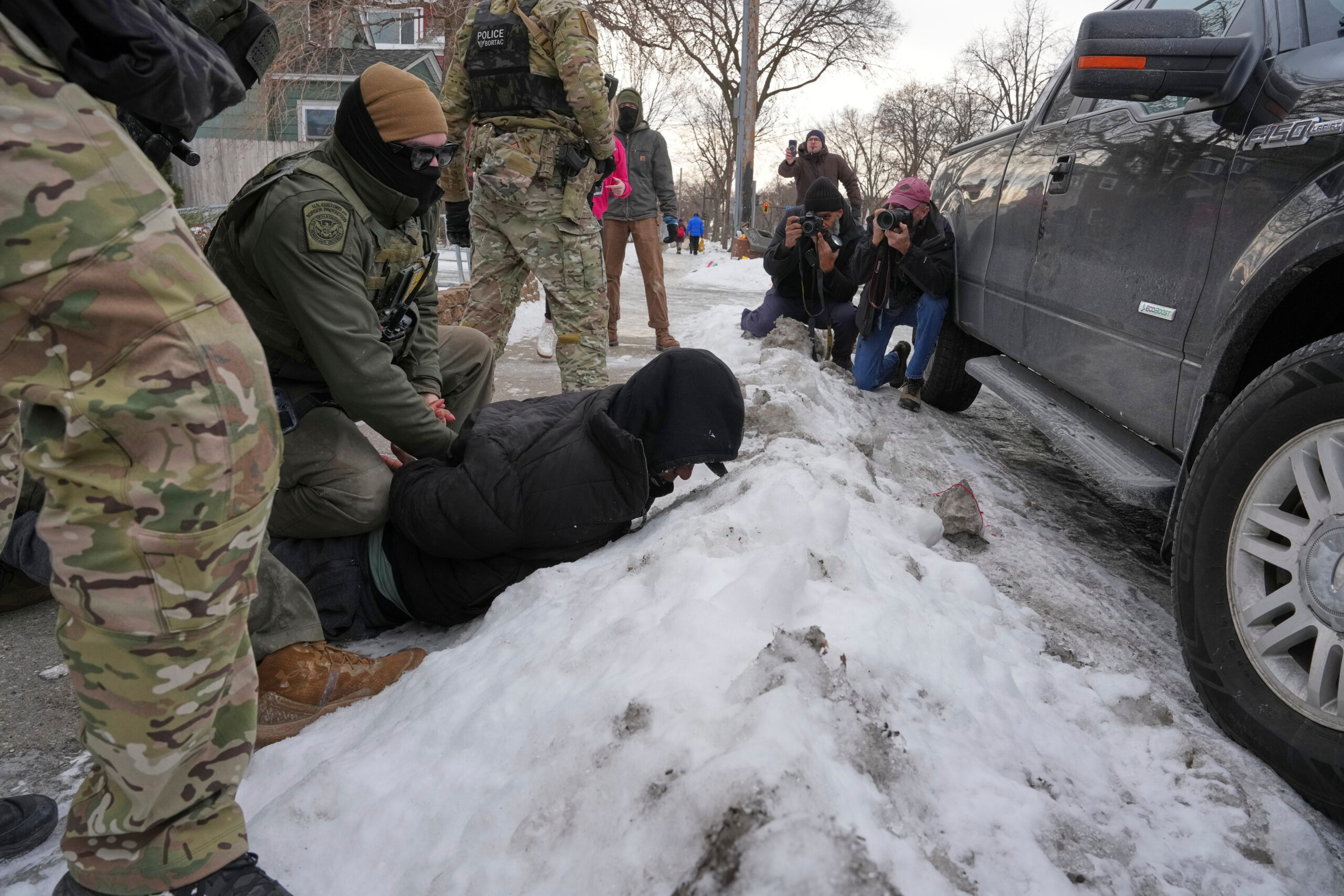
    Border Patrol agents detain a man in Minneapolis on Jan. 11.

    The fear was palpable even before the ink had dried on what Donald Trump called his “Big Beautiful Bill” — the 2025 legislation that funneled a whopping $170 billion toward immigration enforcement, including doubling the number of agents in the field from 10,000 to 20,000.

    Many warned the surge of inexperienced rookies — indeed, their training was slashed from 90 days to just 47 (or 48) days to race the new agents out into the streets — could lead to acts of police brutality, or worse, as an alphabet soup of Homeland Security agencies donned masks and went after immigrants in agitated urban neighborhoods.

    Those whispers became a scream as Americans watched the horrific videos of a masked federal agent walking in front of the family SUV driven by a Minneapolis mom, Renee Good, and then firing three shots that killed her. Seventeen days later, one of the officers in a scrum beating up observer Alex Pretti — apparently not seeing that Pretti had already been stripped of his legal handgun — fired the first blast of what became a volley of 10 shots that killed the 37-year-old Minneapolis intensive care nurse.

    On Sunday, the ProPublica newsroom revealed what the U.S. government had successfully kept secret for more than a week: the names of the two agents — both from South Texas — who fired the fusillade of shots that killed Pretti on a busy Minneapolis street.

    They were not rookies.

    Border Patrol officer Jesus “Jesse” Ochoa, 43 — who, according to his ex-wife, is also a gun enthusiast with 25 pistols, rifles, and shotguns — had his heart set on joining the federal force after earning his criminal justice degree from the University of Texas-Pan American and finally got his wish eight years ago, ProPublica wrote.

    The site reported that the other shooter, Raymundo Gutierrez, joined U.S. Customs and Border Protection in 2014 and works for its Office of Field Operations, where he is assigned to a kind of agency SWAT team, involved in high-risk operations.

    The men who gunned down Pretti were well-trained and experienced, as was Jonathan Ross, the ICE and former Border Patrol officer who shot and killed Good during their Jan. 7 encounter. Their involvement in the killings that shocked America suggests that moderates calling for reforms at ICE, but not for a radical reworking of immigration enforcement, are failing to understand the much deeper problems.

    Garrett M. Graff, a journalist and best-selling author who’s been tracking Border Patrol and its brother agencies since their expansion in the 2000s, told me on Monday that he was not at all surprised the three officers firing the deadly shots were highly experienced.

    “I do think it’s enormously relevant that the shooters all have CBP backgrounds,” Graff said. “It’s an agency that routinely uses deadly force outside of the norms of law enforcement in the U.S., and it’s not a surprise to me that in both cases we see agents quick to resort to deadly force.”

    Graff added that Ross’ fatal shooting of Good mirrored problems that have existed in the agency for years. He said it “jibes with a 2013 internal report that criticized CBP agents and officers for putting themselves in danger by stepping into the path of vehicles, and firing their guns out of ‘frustration’ rather than fear.”

    I reached out to Graff, who was a Pulitzer Prize finalist for his history of the Watergate scandal, because just two days before the ProPublica report, he offered some extraordinary history and background about CPB in testimony before an Illinois state commission that’s looking into misconduct during the 2025 immigration raids there.

    Graff’s statement went viral on social media because it detailed a toxic culture at CPB that’s highlighted by shocking levels of criminality among its agents, from on-the-job brutality to off-duty thuggery, as well as domestic violence.

    Finding that at least 4,913 Border Patrol agents and CBP officers were arrested over a 20-year period, Graff testified, “Indeed, for much of the 2010s and likely before and since, it appears the crime rate of CBP agents and officers was higher per capita than the crime rate of undocumented immigrants in the United States.”

    Ironic, huh? But why has this happened?

    A lot of the problem, Graff testified, lies in the rapid surge of Border Patrol from around 9,200 agents at the time of the 2001 terror attacks to roughly 21,000 by the Obama administration. Those new hires, he said, were hastily recruited with limited background checks, rushed into the field with minimal training, and lacked the arrest powers of more rigorous federal agencies like the FBI.

    On the job, this new cadre bonded over a culture that simmered in misogyny and racism, and then boiled over in backing an authoritarian like Trump. “Agents developed a strong tradition of frontier-style justice; its agency motto, ‘Honor first,’ is as much a statement of machismo as it is about integrity,” Graff testified.

    This culture has proved lethal long before the frigid streets of Minneapolis. Graff said that CBP agents have been involved in at least 72 deadly shootings or use-of-force incidents since 2010, making it “perhaps the nation’s deadliest law enforcement agency.”

    He’s not the only one to suggest that Border Patrol’s problem is its warped culture, not a lack of training or body cams. Jenn Budd, a former Border Patrol agent who became a whistleblower, has described CBP as plagued by abusive officers and a pervasive rape culture. In her memoir, she calls Border Patrol “a criminal organization disguised as a federal law enforcement agency.”

    America’s response to the 9/11 attacks — the birth of the U.S. Department of Homeland Security and the dramatic expansion of Border Patrol, as well as the creation of ICE in 2003 — launched a monster that has now blown back against America’s own citizens, in Minnesota and elsewhere.

    This fundamental notion — that ICE, CPB, and Border Patrol are rotten way past the point of tinkering around the margins — is what needs to be driving the debate on Capitol Hill. The incremental reforms some top Democrats are pushing, such as body cams or requiring arrest warrants, are fine as stopgap measures, but they would not have saved the lives of Pretti or Good.

    The only fix that makes sense is abolishing ICE and all the other post-2001 excesses and returning to just the essential functions that are actually needed: airport security, arresting the relatively small number of violent criminals who enter America, humanely securing the border, and processing people seeking refuge from their violent homelands.

    Abolishing ICE and radically reforming the rest of a broken system won’t bring back Good or Pretti, either, but it would be the most fitting and appropriate memorial to America’s slain martyrs of 2026.

    Yo, do this!

    • As things in America have seemed to consistently get worse since the dawn of the 21st century, there was a frequent question: Why are there no great protest songs? You can stop asking now. Bruce Springsteen has channeled the golden era of Nobel laureate Bob Dylan, who sang in outrage over injustices like the assassination of Medgar Evers, with his own instant and electric protest record, “The Streets of Minneapolis.” Recorded and released in the course of a weekend, the Boss honors ICE murder victims Renee Good and Alex Pretti and heaps scorn on their killers. Already the most downloaded song in America, it shouldn’t have taken this for Springsteen to get his first-ever No. 1 single.
    • Just as everyone predicted at the start of the season, it’s Drake Maye’s New England Patriots against Sam Darnold’s Seattle Seahawks for all the marbles when Super Bowl LX kicks off Sunday night from Santa Clara, Calif. (Yes, that was sarcasm.) Although this is one of the least appealing matchups, on paper, in the history of the Big Game, 2025-26 has — excepting our Eagles — proved the most exciting NFL season in modern memory, so hopefully these two Cinderella QBs will do their part. The real fireworks may come when Trump-unfriendly artists Green Day (!!) and Bad Bunny take the stage. Actual football commences at 6:30 p.m. on NBC.

    Ask me anything

    Question: Was the Minnesota general strike successful? And what are the prospects of a true national strike? — @exlibrophilly.bsky.social via Bluesky

    Answer: The answer to your first question would have to be a yes. It was telling that 60 Minnesota corporations felt compelled to issue a statement (albeit one I viewed as milquetoast) and that the Trump regime started making some partial concessions after thousands of Minnesotans skipped work to take to the streets. On the second part, I noticed there was chatter about a national general strike last Friday, and very little came of it. That’s because a successful nationwide shutdown — something that has never happened before — would require weeks, not days, of planning and committed, full-throated support from the top labor unions and other key organizations like the Democratic Party. Given that the real power in America seems to be economic, I would urge these power brokers to join with regular folks and make it happen.

    What you’re saying about …

    Newsletter readers feel strongly that — while there’s nothing wrong with proposed reforms such as unmasking, visible badges, marked vehicles, and the proper use of arrest warrants — U.S. Immigration and Customs Enforcement should be abolished, and immigration enforcement should be totally overhauled. Wrote Daniel Hoffman: “Any of the reforms, controls and procedures that the Democrats are likely to impose on ICE are useless as long as Donald Trump is president and he has stooges to carry out his campaigns of vengeance and nationalist bigotry.” Thomas Ceresini agreed: “Dems *should* demand that ICE be abolished immediately, and that CBP be reorganized from top to bottom, purging all the fascists from its ranks.”

    📮 This week’s question: Pennsylvania Gov. Josh Shapiro has been all over the news lately with the release of his new book and a controversial passage about the 2024 Kamala Harris campaign. But his stock for president in 2028 seems to be falling. Would you like to see him run for president, or vice president, or neither? Please email me your answer and put the exact phrase “Shapiro 2028” in the subject line.

    Backstory on the strange case of Tulsi Gabbard

    Director of National Intelligence Tulsi Gabbard enters the Fulton County Election HUB Wednesday as FBI agents seize Fulton County 2020 Election ballots, in Union City, Ga.

    Tulsi Gabbard was in the news a lot in the first couple of shocking months after Donald Trump’s 2024 election victory, and for good reason. The 47th president’s stunning pick of the former leftist as his director of national intelligence (DNI) barely made it out of the Senate on a 52-48 vote, with Democrats like Sen. Elizabeth Warren calling Gabbard a likely, if perhaps unwitting, Russian asset because of her history of statements that aligned with the Vladimir Putin regime.

    But then something even stranger happened: Gabbard largely disappeared from sight. Most notably, the nation’s intelligence chief was not heard from during the U.S. attack on Venezuela that captured and deposed its strongman leader Nicolás Maduro, and reportedly was excluded from its planning — likely because in her Democratic past, she had vehemently opposed American intervention there. But it was even more jarring when and how Gabbard resurfaced last week: overseeing an FBI raid at the Fulton County, Ga., election hub that the president has long insisted — in a Big Lie with zero evidence — was the epicenter of some type of fraud that prevented his reelection in 2020.

    Gabbard’s appearance in Georgia raised many questions, especially since the spy agencies she oversees as DNI are supposed to watch for foreign intelligence threats — not get involved in domestic policy. On Monday, Gabbard sent a letter to key Democratic lawmakers who’d demanded answers, explaining that she monitored the raid because Trump had asked her to be there, and insisting that election security is one of her duties because of the possibility of foreign interference.

    The Georgia raid, and Gabbard’s involvement, has sent off all kinds of alarm bells that the Trump regime is planning to gin up a voter fraud case — even though thorough recounts proved that Joe Biden narrowly won Georgia in 2020 — as an excuse for an unprecedented federal intervention in November’s midterm election. We also learned this week that while she was in Atlanta, Gabbard even facilitated a phone call between Trump and several FBI agents involved in the raid, a stunning breach of protocol. On Monday, Trump went on a podcast with his former deputy FBI director, Dan Bongino, and declared that “Republicans ought to nationalize the voting” in 15 unspecified key states. Such a move would mean the end of American democracy as we’ve known it.

    Meanwhile, Gabbard is back on the radar in a big way. Also on Monday, the Wall Street Journal reported that the DNI is the subject of an explosive whistleblower complaint that, according to the whistleblower’s attorney, the White House has listed as highly classified and is refusing to share with Congress. Leaders on Capitol Hill need to fight to get this secret information by any means necessary. In the increasingly fraught fight to save the American Experiment, we need to know who Gabbard is really working for.

    What I wrote on this date in 2022

    Remember affirmative action? Four years ago, the U.S. Supreme Court was still considering the legal challenge to the use of race as a factor in college admissions, which it did strike down later that year, in a foreshadowing of the Trump regime’s much wider war against diversity. On Feb. 3, 2022, I wrote that while the threat to affirmative action was indeed alarming, the existing rules were already failing African American college applicants. I wrote: “In a nation where the Black-white wealth ratio is 20-1, recruiting Black kids was a low priority. These self-inflicted wounds had little to do with the legal status of affirmative action.”

    Read the rest:Supreme Court affirmative action case pretends we haven’t already wrecked Black college access.”

    Recommended Inquirer reading

    • The fallout from the deadly ICE raids in Minneapolis remains the dominant story in America, as reflected in my recent columns. First, I wrote about the looming deep cuts in news reporting at the Washington Post and CBS News, and decried how these self-inflicted wounds — both at the hands of their billionaire Trump-favoring owners — would mean fewer eyes out in the field just as Minnesota was showing the power of bearing witness. Over the weekend, I warned of the regime’s plan for new immigration raids against the beleaguered Haitian refugees of Springfield, Ohio — a scheme that seems on hold for now after a judge ruled late Monday night to continue the protected legal status of these immigrants.
    • While we still haven’t seen all of the government’s Jeffrey Epstein files — despite the law calling for their full release last December — the massive tranche of documents that did go public last Friday is a gift that keeps on giving for those who track the follies of America’s rich and famous. Not surprisingly, America’s founding and still sixth-largest city has numerous ties to the late financier and convicted sex trafficker. So far, The Inquirer has reported that the U.S. Department of Justice files reveal a surprising relationship between Epstein and Philadelphia-born comic Bill Cosby, who at the time was battling his own flurry of sexual abuse allegations. Epstein even offered to buy Cosby’s home at one point. In a separate story, The Inquirer traced the relationship between the financier and 76ers owner and hedge-fund billionaire Josh Harris, who “had an ongoing business relationship that included numerous phone calls and at least one visit to Epstein’s home in Manhattan.” What’s more, Epstein inquired about buying a plane from a Harris business associate, University of Pennsylvania megadonor Marc Rowan. The Epstein scandal shows that all politics — especially the most tawdry — is local. There’s more to come, but you’ll be locked out without a subscription. Why not sign up today?

    By submitting your written, visual, and/or audio contributions, you agree to The Inquirer’s Terms of Use, including the grant of rights in Section 10.

  • What gutless corporations don’t get about ICE | Will Bunch Newsletter

    Is this actually an honest-to-goodness turning point in the war for the soul of America? Monday night, the deny-everything-admit-nothing Trump regime surprised observers by revealing that violence-provoking Border Patrol commander Greg Bovino has been sent home from Minneapolis and may even be retiring. That’s a giant win for the power of everyday people resisting, but turning around the battleship of tyranny will still take much more work.

    If someone forwarded you this email, sign up for free here.

    Corporate America may pay a steep price for its cowardly ICE neutrality

    Protesters gather Friday at Target’s corporate headquarters in Minneapolis.

    One of the many remarkable and lasting ideas the Rev. Dr. Martin Luther King Jr. placed into the national conversation was the concept of something he called “negative peace.”

    Although the phrase began appearing in the writings of the civil rights leader in the late 1950s, King made the idea famous in his 1963 “Letter From Birmingham Jail,” where he was locked up for fighting segregation in Alabama’s largest city. He was annoyed by a letter from eight local white clergymen, titled a “Call for Unity,” that begged King to end a civil disobedience crusade for racial integration and seek progress through negotiations and the courts.

    When an aide smuggled the newspaper into King’s cell, he began furiously scribbling his response in the margins of the ad before writing more on any scrap of paper he could find. His key passage argues that the white moderate was a greater threat to Black freedom than the KKK, because he was someone “more devoted to ‘order’ than to justice; who prefers a negative peace which is the absence of tension to a positive peace which is the presence of justice,” and who wants African Americans to wait for a “more convenient season.”

    Flash-forward 63 years, and the grand pooh-bahs of U.S. capitalism have learned nothing from this. On Sunday, 60 major corporations based in Minnesota — feeling caught in the crossfire of the federal immigration raids tearing apart Greater Minneapolis and the growing resistance movement — issued a cowardly and pathetic call for a negative peace to reduce the tensions.

    The open letter that was released through the Minnesota Chamber of Commerce was signed by the CEOs or equivalents of almost every major Gopher State brand that you could think of — including Target, 3M, General Mills, Hormel, UnitedHealth (yes, that UnitedHealth), and all five major sports franchises. Some of these firms are beginning to see real economic fallout from the U.S. Immigration and Customs Enforcement raids and protest activities, which have kept some frightened Black and brown workers at home and triggered a large general strike last Friday.

    The letter reads little differently from the Birmingham ministers’ “Call for Unity.”

    “With yesterday’s tragic news” — a vague, bloodless reference to the 10 shots fired by federal officers into a 37-year-old intensive care nurse named Alex Pretti — “we are calling for an immediate deescalation of tensions and for state, local and federal officials to work together to find real solutions,” the letter states. It notes that Minnesota business leaders have been in touch with Gov. Tim Walz, the Donald Trump White House, and others in pleading for what it hopes would be a solution to the state’s crisis.

    Pretti is never mentioned in the letter. Neither is Renee Nicole Good, the 37-year-old mother of three who was gunned down behind the wheel of her family SUV by an ICE agent as she attempted to drive away from a confrontation. In fact, ICE is never mentioned, nor are the federal agency’s most outrageous tactics, such as the seizure of a 5-year-old boy as “bait” to detain him and his father, or dragging a barely dressed Hmong refugee who is a U.S. citizen out of his home in frigid weather.

    The entire letter is remarkable not for what it says — since it says very little beyond praying this whole mess somehow goes away so they can go back to making money without thinking about such dreadful things — than for what it doesn’t say.

    There is no condemnation of the murders of two U.S. citizens who did nothing beyond legally monitoring the federal officers and their activities while on public streets. There is no condemnation of the ICE tactics in seizing hardworking migrants with no criminal records who are the backbone of the Minnesota community. There is nothing about what MLK would have called “positive peace” — a desire for real justice.

    That’s probably because positive peace requires bold choices and displays of real courage — qualities that modern corporate America seems to have misplaced in a giant warehouse somewhere.

    Exhibit A would have to be Target, the large national retailer that, with its hundreds of stores and its name slapped on the NBA’s Timberwolves’ arena, is now to many Americans the corporate face of Minnesota. Under pressure from demonstrators, including more than 100 clergy who protested outside Target’s Minneapolis headquarters on Friday, the retailer still said nothing — before the tepid group letter — about the ongoing ICE raids, or why agents have been allowed to stage operations in its parking lots and even inside stores.

    There’s a bleak history here. In 2020, Minnesota became the epicenter of the fight for racial justice when the Minneapolis police murder of George Floyd was captured on video. That time, the state’s CEOs not only expressed moral outrage but pledged to spend heavily on diversity initiatives. Five years later, the local news site Racket reported many of these firms had backtracked, and that barely a third of the pledged $550 million had been spent.

    This time, the business leaders just want the “tension” to disappear. That’s not so easy. Just ask Target. Its early 2025 move to end its diversity initiatives as Trump took office sparked calls from Black leaders for a boycott that has cut into store traffic and lowered Target’s stock price. It seems that moral surrender actually does have a price.

    Also on Sunday, the team chaplain for the Timberwolves — ironically, one of the teams that signed onto the corporate letter — issued a personal statement with loud echoes of the “Letter from Birmingham Jail,” calling out any churches that had prayed that morning for peace and unity but not for justice.

    “Peace is what the powerful ask for when they don’t want to be interrupted,” Matt Moberg wrote in a short piece that went viral on social media, adding, “Unity that refuses to name violence is just loyalty to the ones holding the weapons.”

    This wouldn’t be the first time corporate America misread the room. Sunday’s statement suggested a continued deer-in-the-headlights reaction from the shock of Trump’s return to office — even as the CEOs ignore not just the power of the Target boycotts but the recent success of economic justice campaigns against firms from Disney to Avelo Airlines, not to mention the solidarity that drove the Minneapolis general strike.

    Already, there is growing talk of a national general strike or expanded boycotts by millions of citizens who are also consumers, and who are both furious over the Good and Pretti murders and now flabbergasted by the corporate cone of silence. America’s business leaders don’t understand that cowardice has a steep cost attached.

    Yo, do this!

    • There’s no better writer about the long fight for social justice in America than historian Heather Ann Thompson. Her searing 2016 book about the 1971 Attica prison uprising — Blood in the Waterwon a well-deserved Pulitzer Prize, and locals were thrilled when it was reported that the next book from Thompson, who taught for a while at Temple, would be on the 1985 MOVE bombing. Instead, she has taken a detour. Her Fear and Fury: The Reagan Eighties, the Bernie Goetz Shootings, and the Rebirth of White Rage is out today. I just downloaded the audiobook, and cannot wait to listen.
    • It’s Academy Award season, and so — hopelessly snowed in on Sunday — I took a family break from football (!) to rent a movie … from 2009. Given my obsession with 1960s rock and roll radio, it’s weird that I’d never seen Pirate Radio, a fictional homage to the U.K.’s government-defying offshore radio stations of the British Invasion era that stars the late Philip Seymour Hoffman. The plot can be muddled at times, but it’s maybe the best movie soundtrack ever!

    Ask me anything

    Question: Why do Dem Leaders want to save ICE, when nobody really else does? What’s the motivation? — @keynesaddiction.bsky.social via Bluesky

    Answer: I wonder this, too. Both ICE and the current crew at U.S. Customs and Border Protection have been simmering for far too long in a toxic, unredeemable culture that cannot be reformed. What’s more, the shocking abuses on display in Minnesota and two killings have now convinced a plurality of U.S. voters that ICE should be abolished. Still, I can understand the Democrats’ bind, since at the moment the party has no other political leverage beyond the ability to block most Senate legislation with the filibuster. It might be best to push hard for as much as can be done in 2026, while running in the midterms on a platform of abolishing ICE when they gain power on Capitol Hill.

    What you’re saying about …

    LOL — remember that whole Greenland thing? It feels like that was five years ago, but some of you had some good responses on dealing with Trump’s bluster about an American takeover, even if things have temporarily cooled down. Tom Desmond said the Europeans “need to quit pretending that they can ‘manage’ him through flattery and soft words. Instead, they need to apply threats — i.e., whatever tariffs he imposes on Europe over Greenland they will return against the U.S. three-fold.” Jo Parker said Congress needs to reassert its powers over tariffs and declaring war, but “With the spineless [Dave] McCormick and [John] Fetterman representing us, I’m not sanguine that such actions will take place, however.”

    📮 This week’s question: Things are coming to a head in Congress over funding for ICE and the U.S. Department of Homeland Security. Should Democrats make a deal for ICE reforms, such as unmasking and requiring arrest warrants, or must they push for bigger concessions, or even abolishing ICE? Please email me your answer and put the exact phrase “ICE funding” in the subject line.

    Backstory on the day (a) Fetterman spoke out

    U.S. Sen. John Fetterman and his wife, Gisele Barreto Fetterman, await the arrival of President Joe Biden at Philadelphia International Airport in July 2024.

    I must confess that keeping up with the downward spiral of Pennsylvania’s Democratic Sen. John Fetterman since he took office in 2023 can get tiresome. At first, Fetterman’s rightward tack seemed largely a function of his zealous support for Israel, which caused him to wave off allegations of war crimes by Benjamin Netanyahu’s right-wing government. Soon, others pointed to his health woes — hospitalizations for a stroke and depression, among other things — as he endorsed more and more Trump-flavored ideas.

    Amid mounting outrage over Trump’s aggressive immigration raids, Fetterman made some comments that had his growing legion of critics wonder if the senator’s real heart issue was whether he had one. “ICE performs an important job for our country,” the Democrat posted on X last July, adding that any calls to abolish the agency were “inappropriate and outrageous.” Even after the Jan. 7 ICE killing of Renee Nicole Good in Minneapolis, Fetterman’s middle-of-the-road stance was this: “Secure the border. Deport all the criminals. Stop targeting the hardworking migrants in our nation.” In the immediate aftermath of Saturday’s killing of Alex Pretti by federal agents, even Pennsylvania’s GOP Sen. Dave McCormick had called for a congressional investigation before Fetterman said anything.

    On Sunday night, though, Fetterman issued a heartfelt and moving statement. Well, a Fetterman did.

    “For more than a decade, I lived undocumented in the US,” the senator’s wife, Gisele Barreto Fetterman, a native of Brazil, posted on X. “Every day carried the same uncertainty and fear lived in my body — a tight chest, shallow breaths, racing heart. What I thought was my private, chronic dread has now become a shared national wound. This now-daily violence is not ‘law and order.’ It is terror inflicted on people who contribute, love, and build their lives here. It’s devastatingly cruel and unAmerican.” Her post ended with an emoji of a broken heart.

    Sen. Fetterman finally issued a statement nearly a day later. He called for “an immediate end” to the ICE operations in Minnesota, adding, “It has become an ungovernable and dangerous urban theatre for civilians and law enforcement that is incompatible with the American spirit.” But Fetterman still disappointed critics of Trump’s immigration policy, insisting that while he wants ICE reforms, he still supports the embattled agency, and won’t join other Democrats in shutting down the federal government if those reforms aren’t happening.

    Pennsylvanians thought they were getting a progressive voice and a moral leader when they elected Fetterman in 2022. It feels now like we elected the wrong Fetterman.

    What I wrote on this date in 2010

    It was only 16 years ago, but at the dawn of the 2010s, there was still a robust conversation about how to save the traditional journalism outlets — especially newspapers — that had flourished in the 20th century. On Jan. 27, 2010, I criticized an idea coming from Apple that a new kind of $1,000 iPad, nicknamed “the Jesus tablet,” would fix everything. I wrote: “To survive, we need to change our whole worldview — finding ways to encourage more dialogue with readers and more community involvement so that local readers feel they have a stake in this thing. And we also need to do a better job at the thing we claim to be already good at — real journalism that makes a difference.”

    Read the rest:Apple’s iPad will NOT save journalism.”

    Recommended Inquirer reading

    • On the national beat, there’s no bigger story than the fallout from the inhumanity of the Trump regime’s mass deportation policies. In my Sunday column, I looked at the other way people are dying in ICE’s reign of terror: inside the growing network of squalid and overcrowded jails and detention camps. The death rate in these facilities so far in 2026 is already 10 times higher than it was in the last year of the Biden administration. Over the weekend, I quickly shifted gears and turned a planned column about faith leaders in Minneapolis and an America yearning for morality into a lament over the shocking ICE murder of a 37-year-old observer, Alex Pretti. The contrast between good and evil in America has never been more stark.
    • The many tentacles of the mass deportation story stretch well beyond Minneapolis and other hot spots like Maine, including stepped-up ICE enforcement activity here in Philadelphia since Trump returned to office. The Inquirer’s veteran immigration reporter, Jeff Gammage, has drilled deeply into the human stories on the front lines here. Written with colleague Michelle Myers, this week’s installment was both poignant and infuriating. A local family of four is returning to Bolivia after the dad — the prime caregiver for his 5-year-old son, being treated at Children’s Hospital of Philadelphia for brain cancer — has stopped fighting his deportation after five months in ICE detention. As his family prepares to leave, the child’s future in a South American country with substandard medical care is highly uncertain. Old-school beat reporting like this is what local community journalism is all about. You support this vital work when you subscribe to The Inquirer.

    By submitting your written, visual, and/or audio contributions, you agree to The Inquirer’s Terms of Use, including the grant of rights in Section 10.
  • Yo, Dems: You can’t ‘reform’ fascism | Will Bunch Newsletter

    On Monday, America — some of it, anyway — paused to celebrate the Rev. Dr. Martin Luther King Jr., who would have turned 97 this month. In one sense, there’s never been a rougher time for the legacy of the slain civil rights icon, with the U.S. Supreme Court perhaps poised to gut the 1965 Voting Rights Act and a president who barely acknowledged the holiday. But thousands of everyday Americans now resisting U.S. Immigration and Customs Enforcement are channeling the spirit of the man who said one has “a moral responsibility to disobey unjust laws.” Happy belated birthday, Dr. King.

    If someone forwarded you this email, sign up for free here.

    Dems, stop trying to make ICE better. Make them go away.

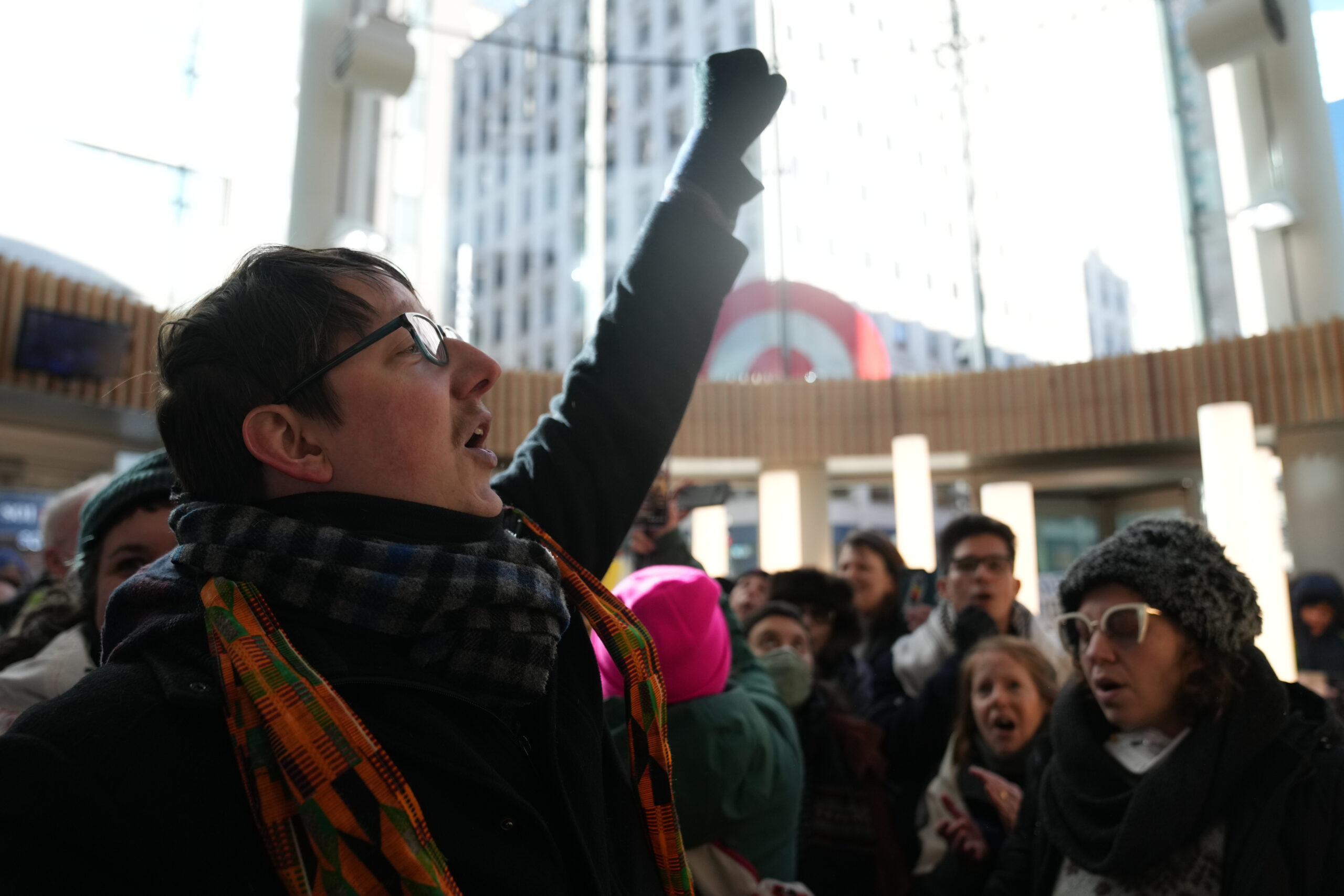
    Aliya Rahman is detained Jan. 13 by federal agents near the Minneapolis street corner where Renee Good was fatally shot by an ICE officer.

    Imagine this … and if you watch the daily stream of videos coming from the ICE raids that have roiled Minnesota since the start of the new year, it’s not that hard to imagine.

    You’re minding your own business, or maybe picking up your kid at their school, when suddenly you find yourself in the middle of a platoon of masked, armed, camouflaged government agents. One thing leads to another, and in a flash, an agent has wrestled you to the ground, and is brandishing a weapon — maybe a Taser … if you’re lucky.

    But what if I told you that lawmakers on Capitol Hill have a solution? They are proposing a brave new world, where now — flat on your back and gasping for air, and perhaps able to bravely manage to free your phone from your pocket — you could scan a federally mandated QR code on the agent’s uniform and find out the identity of the man who is currently pummeling you to within an inch of your life.

    You’re probably thinking the same thing I did when I read about New York Rep. Ritchie Torres’ new bill he called the Quick Recognition (get it?) Act, which is his big idea for how Democrats can respond to public anger over the murder of Minneapolis mom Renee Nicole Good by an ICE agent, and the raids that have led to violent encounters and made a major U.S. metropolis look and feel like a war zone.

    A four-word sentence that begins with, “What the actual …?”

    “There is nothing the Trump administration fears more than transparency and accountability,” a spokesperson for Torres, who faces a primary challenge, in part, because of his outspoken views on Gaza, said recently.

    Really? Is that true? Because everything I’ve seen is that Donald Trump is mainly terrified about a GOP bloodbath in the November midterms, which would surely lead to his impeachment, his eventual disgrace, and even a shot at the real accountability that takes place only behind prison bars. But that’s not going to happen unless Democrats can convince those midterm voters they are serious about dismantling the rotten system that murdered Good — so there are no bad guys left to scan.

    It’s tempting to write off Torres’ idea as one stray piece of almost comically misguided legislation. But the truth is that his core idea — that what’s evolved during the Trump era into an American secret police force that folks like Joe Rogan and Bruce Springsteen are openly calling “the Gestapo” can be tweaked into something great — is endorsed by Democratic leaders in Congress and many rank-and-file members.

    “Clearly, significant reform needs to take place as it relates to the manner in which ICE is conducting itself,” House Minority Leader Hakeem Jeffries (D., N.Y.) told MS Now, bloodlessly. “ICE is using taxpayer dollars to brutalize American citizens and to unnecessarily and viciously target law-abiding immigrant families and communities.”

    So you’re going to halt the flow of those taxpayer dollars, right?

    Right?

    Actually, many key Democrats — facing a Jan. 30 deadline for new appropriation bills — say they are willing to keep the dollars flowing to the embattled and increasingly unpopular agency, but with hopes of leveraging the Minneapolis controversy in return for major reforms. Sen. Chris Murphy (D., Conn.), who has been a leading critic of the Trump regime, has suggested banning masks, mandating badges, requiring warrants to make an arrest, and returning Border Patrol agents to the border.

    Most critics of ICE, Border Patrol, and any other immigration raiders under the U.S. Department of Homeland Security would agree that all of those things should have happened yesterday. But the lack of appetite for utterly dismantling the DHS regime — despite its culture of violence and disrespect for law-abiding refugees — reminds too many voters of the cowardice that branded the Dems as losers in the first place.

    Progressive attorney Aaron Regunberg mocked the stance of some mainstream Democrats as: “We are the resistance. We are also negotiating furiously to figure out how to fully fund the Gestapo.” He’s right. Under Trump, with recruitment ads inspired by white nationalist memes, ICE has become a tool of a new American fascism.

    You don’t “significantly reform” fascism. You need to crush it. As Andrea Pitzer, who literally wrote the book on the history of concentration camps, noted Monday night, “The correct response to Dachau was not better training for the guards.”

    It’s telling that — as often is the case — everyday people are way out in front of the supposedly opposition Democrats. The latest polls show that a strong majority of Americans oppose Trump’s immigration policies — with just 38% approving of them in a new AP-NORC poll, down sharply — and that, for the first time, a plurality would like to see ICE (which has only existed since 2003) eliminated. No wonder the number of Americans who now identify as liberal — 28% — is the highest since Gallup began asking in the early 1990s.

    And yes, more Democratic officials are starting to get it than ever before. More than 100 members of the House Progressive Caucus said last week that they won’t vote for any budget bill with additional funding for the immigration raid agencies without an end to their militarized policing. Arizona Democratic Sen. Ruben Gallego, who seemed to tack right on immigration issues in winning a close election in 2024, surprised political observers when he declared this weekend in a CNN interview that “I think ICE needs to be totally torn down.”

    Note that he didn’t say “abolish” — a word that causes Democrats to break out in hives. That’s OK. Call it a teardown, or a demolition, but every day, more Americans can see that the United States would function better without ICE — as it did the first 227 years of its history — and with the work that’s actually needed, like arresting the sliver of immigrants who really are violent criminals, given to all new people.

    The problem is that Democratic fecklessness isn’t limited to just the future of ICE. Our European allies are disappointed that the opposition party isn’t out manning the barricades and calling for much more forceful action to curb Trump’s bat-guano crazy demand for Greenland, apparently because he feels slighted by not getting the Nobel Peace Prize. And sure, Americans want lower coffee prices, but they care more about not having Captain Queeg with the nuclear football.

    Dismantling the ICE regime needs to be the floor, not the ceiling, and any Democrat in Congress who doesn’t get with the program can — and should — be replaced in the primaries to avoid another debacle with alienated or apathetic voters in November. Call your member and find out where they stand. You won’t even need a QR code.

    Yo, do this!

    • I didn’t feel a compelling need to memorialize one year of Trump’s second presidency, since that’s kind of what we do here every week. But M. Gessen, the Russian émigré whose understanding of how authoritarians rule has been a blessing for American readers, did write the piece that captures the fierce urgency of now. Their new New York Times column (gift link) calls on us to use our freedoms before they totally disappear. “The only way to keep the space from imploding is to fill it, to prop up the walls: to claim all the room there still is for speaking, writing, publishing, protesting, voting,” they wrote. “It’s what the people of Minnesota appear to be doing, and it’s something each of us needs to do — right now, while we still can.”
    • In a month of short, frigidly cold days, with a deteriorating political situation, the Eagles’ one-and-done, and up-and-too-often-down 76ers and Flyers, my main source of pleasure is getting under several blankets and watching football games in which I don’t much care who wins. The NFL playoffs, minus the Birds’ fiasco and one or two clunkers, have been the most compelling drama on TV in years. Don’t miss Sunday’s Final Four: Patriots-Broncos (CBS) followed by Rams-Seahawks (Fox), kicking off at 3 p.m.

    Ask me anything

    Question: One question that is top of my mind is “does this week feel like a tipping point?” Can’t shake the feeling that it is. — Marguerite Fahey (@margueritefahey@bsky.social) via Bluesky

    Answer: Marguerite, I got several variations of your question, so this is definitely on the minds of folks. But while Trump’s bizarre actions surrounding Greenland have raised questions about the president’s fitness to hold office on a level we’ve never seen before, including Watergate, it is less clear what affirmative actions can take place. It’s impossible to imagine the lackeys in Trump’s cabinet, like Kristi Noem, ever green-lighting the 25th Amendment, let alone the 20 GOP Senate votes that would be required to remove the president in an impeachment. An increasingly likely possibility is high-ranking generals refusing a Trump order to send troops to Greenland or Minnesota. Yes, it has come to this.

    What you’re saying about …

    Sometimes, readers of this newsletter still surprise me. While most of you are righteously appalled at the immigration raid abuses in Minnesota and elsewhere, many still want to see major reforms at ICE and its sister agencies rather than abolishing them altogether. “ICE doesn’t need to be abolished,” Ed Truncale wrote. “ICE is like a child that has lost their way and needs to be disciplined, redirected.” Cathie Cush agreed. “I’d feel a lot more comfortable with ‘Demilitarize ICE’ and ‘Demilitarize the police,’” she wrote. “And make them accountable. And reduce their ranks.”

    📮 This week’s question: Donald Trump’s increasingly aggressive demands for Greenland have not only threatened the post-World War II global order but raised legitimate mental health questions about the commander of the world’s largest military. But how can Europe, Democrats, and any remaining sane Republicans respond to this? Please email me your answer and put the exact phrase “Greenland response” in the subject line.

    History lesson on America’s betrayal of the Hmong

    ChongLy “Scott” Thao, a U.S. citizen, sits in his St. Paul, Minn., home Monday, the day after federal agents broke open his door and detained him without a warrant.

    A long time ago, on the other side of the world, began what would become a fraught relationship between the Hmong tribal people of northern Laos and the United States, as represented by the CIA. At the dawn of the 1960s, American spies recruited the Hmong to fight communism in their homeland and neighboring Vietnam, which proved a disastrous bet. Thousands died in the next 13 years of combat in Southeast Asia, and more would perish when the communists took over Laos in 1975, while others dodged bullets, swimming the Mekong River toward overcrowded refugee camps in Thailand.

    Fifty years ago, the United States was led by people who at least understood our deep debt to the Hmong, forged in blood. Thousands who’d escaped the slaughter were eventually resettled in the United States, and Minnesota — aided by Lutherans and other religious charities and good public housing, and despite its frigid weather — became an unlikely magnet. Today, a population of 94,000 people, with a slightly higher average salary than the state as a whole, and including the mayor of St. Paul, the state capital, makes Minnesota home to the largest U.S. Hmong population.

    It’s an immigration success story that makes the events of recent days beyond baffling. In one Minneapolis neighborhood this weekend, a witness reported that roving ICE agents who have flooded the metropolis pulled over a car and asked the driver, “Where the Hmongs at?” St. Paul Mayor Kaohly Her said: “We’ve received reports of ICE officers going door to door asking where the Asian people live … I myself have received advice to carry my passport with me because they may target me based on what I look like.”

    On Sunday, federal agents broke down the front door of a St. Paul home and took away ChongLy “Scott” Thao, also known as Saly, a Hmong American who was born in a Laotian refugee camp but is a U.S. citizen after living most of his life here. A photo of the man being led out of the house — wearing only boxer shorts and Crocs on a bitterly cold day, a plaid blanket hastily thrown over his exposed torso — went viral on social media. Family members said ICE agents drove Thao around for an hour while they questioned him, but brought him back home when they realized he was a naturalized citizen with no criminal record. Still, the episode was traumatizing, and it epitomized the big question hanging over all of this.

    What is this even for? ICE’s harsh and disruptive focus on the Hmong people of Minnesota — people who were brought here because of their support for America in wartime, with the encouragement of the federal government as well as their new prairie neighbors — makes absolutely no sense. A people who suffered in their homeland for their ties to the United States are now facing new torment in their adoptive land — judged not for the content of their character, but for the color of their skin. This is a new, shameful moment in American history.

    What I wrote on this date in 2021

    Looking back at the dawn of what’s proved to be a painful decade for America can be difficult. Tuesday is the fifth anniversary of Joe Biden’s inauguration as the 46th president, and like most Americans, I had thoughts and prayers that the deep stain of Donald Trump’s lawbreaking first term could be erased. On Jan. 20, 2021, I predicted we’d understand “this nation will not have peace without justice. That empathy is empty without accountability. And that American carnage cannot be healed until we can handle the truth.” Yeah, how did that work out? Read the rest: “After four years of ‘American carnage,’ President Joe Biden gets it: Truth must come before healing.”

    Recommended Inquirer reading

    • With so much happening, I did an NFL coin-toss move and elected to defer my Martin Luther King Jr. holiday day off until some warmer, happier time. In my Sunday column, I looked at how economic pressure campaigns against U.S. corporations aiding Trump’s immigration policies, like Avelo Airlines — which halted ICE deportation flights after months of protests and boycotts — are starting to make a difference. With boycotts getting results at firms like Disney and Spotify, can Americans do more to vote with their wallets? Over the weekend, I dug into CBS News and its new Trump-friendly regime headed by Bari Weiss, and how its slanted journalism — including a highly inflammatory and factually dubious story about the Minneapolis ICE shooting — is a bad sign for the future of democracy.
    • We now know Trump told Pennsylvania Gov. Josh Shapiro not to run for president, which normally would be tantamount to an endorsement. But that disclosure — which comes from the governor’s new autobiography, Where We Keep the Light, that is also functioning as a curtain-raiser on Shapiro’s 2028 presidential ambitions — might have been a rare case of good advice from The Donald. The Inquirer’s crack political team is already all over the book and its fallout, including Shapiro’s controversial claim that aides to Kamala Harris — vetting him as a potential 2024 running mate — asked the Jewish governor if he was “a double agent” for Israel. The book is already generating backlash and some TV punditry that Shapiro’s once-rising star has dimmed, but the broader implication remains clear. One way or the other, the road to the 48th presidency runs through Pennsylvania, and the best way to keep up is to follow our in-depth coverage in The Inquirer. Subscribe today and get on the bandwagon.

    By submitting your written, visual, and/or audio contributions, you agree to The Inquirer’s Terms of Use, including the grant of rights in Section 10.
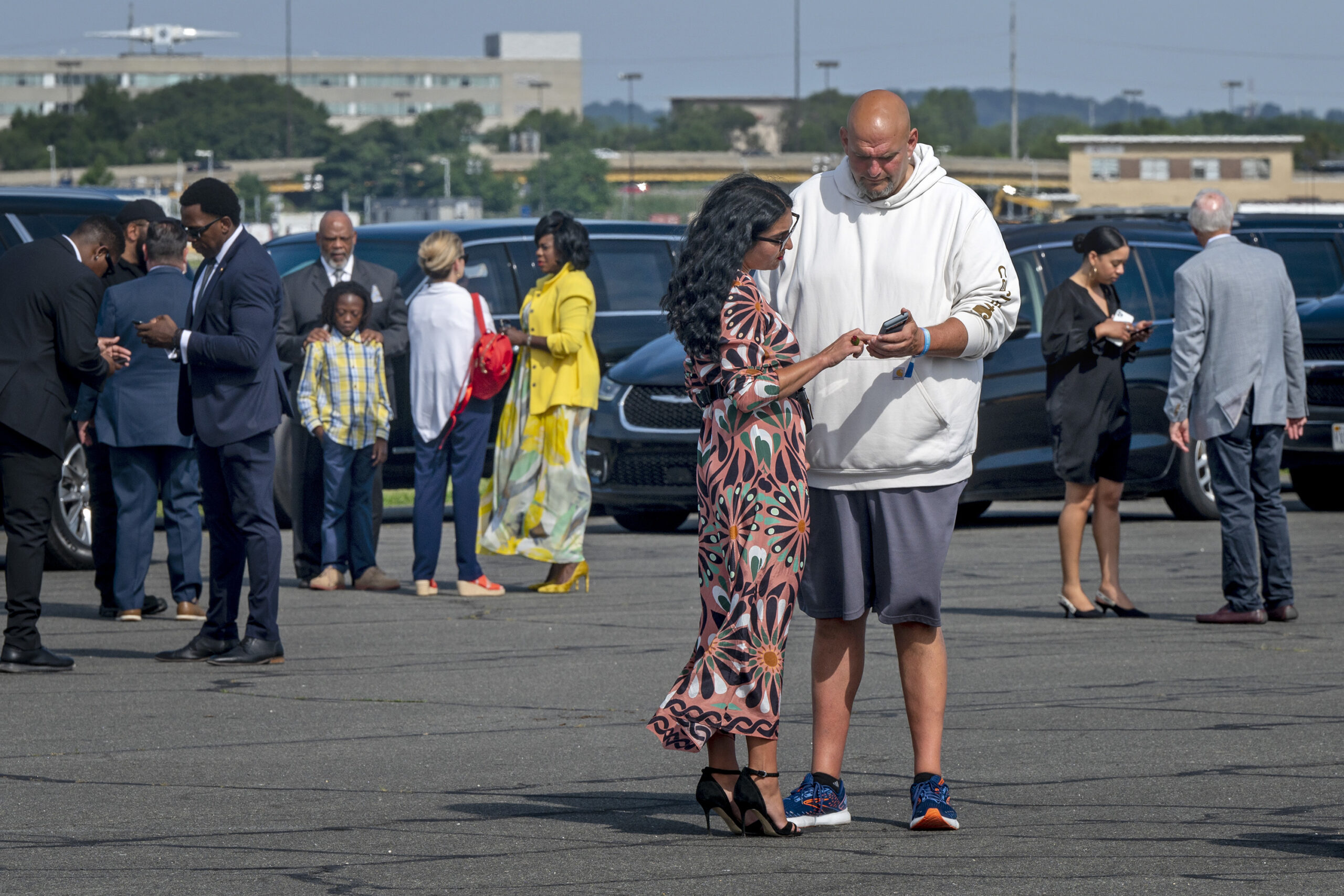
  • The other ‘insane’ thing about Trump and Venezuela | Will Bunch Newsletter

    The Eagles are who we thought they were. A team that consistently disappointed its fans despite winning the NFC East in defense of its Super Bowl crown put in a disappointing one-and-done playoff performance under a clueless offensive coordinator, with a banged-up O-line and some stars (cough, cough…A.J. Brown) perhaps past their peak. But this is what Philly fandom is all about: one battle after another.

    If someone forwarded you this email, sign up for free here.

    Dirty, toxic oil from Venezuela is the last thing that America needs

    John Beard drives near a liquid natural gas facility in Port Arthur, Texas. In addition to LNG facilities, Port Arthur is surrounded by oil refineries and petrochemical plants. Beard says Black and brown communities like Port Arthur are having to bear much of the risk posed by the facilities.

    You could say that crude oil is in John Beard Jr.’s blood. His dad worked for more than 44 years at a giant Gulf Oil refinery in the heady 20th-century days of the South Texas energy boom, and Beard then followed his father’s footsteps by working 38 years at a rival Exxon facility in Beaumont, before heading home to sleep in the shadow of Port Arthur’s own dense row of dozens of refineries.

    But today, Beard — a longtime civic activist and political leader in Port Arthur’s large Black community — is fighting to keep oil out of his neighbors’ blood, literally.

    “It was nothing to wake up the next morning and find a yellow stain against the side of your house with something had been released in the air,” Beard told me last week on the phone as he talked about growing up surrounded by tall refinery stacks. “You may have smelled it, or you may have slept through it and all and come to find out that it stained your house or whatever.”

    Although the Gulf Coast city of 55,000 was dubbed Texas’ “cancer belt” decades ago, it wasn’t until 2010 — when Beard heard about a report that Port Arthur residents are 40% more likely to develop cancer than similar towns just 25 miles upwind — that Beard became a tireless environmental activist.

    “You know how you say when the refinery has a sneeze, we get pneumonia?” he asked. “But no, we don’t get pneumonia. We get cancer.” The most-feared disease has touched pretty much every family that Beard knows in the economically struggling town.

    This was all before last week’s lightning bolt of news: that the U.S. military had bombed Venezuela and seized its indicted strongman leader Nicolás Maduro. It was quickly followed by Donald Trump announcing a scheme to bring some 30-to-50-million barrels of oil to the United States — meaning the backyards of Beard and his neighbors.

    Indeed, experts have tagged Valero’s big refinery in Port Arthur that towers over Beard’s home — heavily invested in specialized equipment to process the sour, heavy crude that comes from Venezuela — as most likely to benefit from Trump’s proposed gambit.

    Environmentalists say any new refinery jobs and U.S. corporate profits will be swamped by increased pollution of both the toxic chemicals that have already sickened Port Arthur, and greenhouse gases that threaten us all through climate change.

    When America woke up 10 days ago to news that Trump had ordered the dead-of-night assault on Venezuela and seized Maduro, there was one word that echoed among Democratic lawmakers asked for a comment. “Is anyone going to just stop for a second and be honest?” U.S. Rep. Seth Moulton of Massachusetts told CNN. “This is insane. What the hell are we doing?”

    But the first wave of critics like Moulton focused mainly on the rank illegality of Trump’s maneuver — failing to get congressional approval or even consult its leaders, over an act of unlawful aggression that killed as many as 100 people on the ground, and which seemed to lack any planning for how to deal with the aftermath of taking Maduro.

    Those problems have been amplified in the days since Moulton and others branded the operation as “insane.” It is indeed insane when Trump declares to the world that the United States is “in charge” of Venezuela and a few days later his State Department says the country is unsafe for Americans because of violent roving gangs. For that matter, it’s also meshugana to upend the global order that has reigned since the end of World War II, when the U.S. led efforts to ban wars of aggression.

    But we’re not talking nearly enough about what’s maybe most whacked-out about Trump’s splendid little war in Latin America — that by making his operation all about taking the oil, he seeks to endanger the entire planet by accelerating climate change. One expert told the Associated Press that increasing production of Venezuela’s thick, dirty crude by a target of 1 million barrels a day would also add roughly 360 million metric tons of carbon dioxide a year from the production process — a significant spike in the gases that are warming our planet.

    That Trump made it clear that his goal in making war against Venezuela was all about grabbing its oil on the one-year anniversary of the deadly Los Angeles wildfires — perhaps the most dramatic of the floods, amped-up hurricanes, and other weather catastrophes exacerbated by a hotter planet — was especially disgusting.

    Michael E. Mann, director of the Center for Science, Sustainability and the Media at the University of Pennsylvania, told me that while Trump’s initial target for Venezuelan oil seems modest, experts believe the South American nation could harbor a whopping 300 billion barrels under ground. He has written that Trump aims to make America a “petrostate,” allied with other bad actors such as Russia and Saudi Arabia in working to undermine any global consensus around fighting climate change.

    Less than a week after the Venezuela strike, the New York Times reported that Trump’s U.S. Environmental Protection Agency is dropping its longtime requirement to weigh the cost on human lives — early deaths, or chronic diseases like asthma — in regulating key air pollutants, including those from oil refineries. As a matter of policy, the U.S. government now values the dollars that Valero or Exxon can make from burning dirty oil over the very existence of Beard and his Texas community. That’s not surprising from the crew that’s dismantled an entire generation of EPA programs that once targeted the environmental racism that dumps pollutants on disadvantaged Black and brown communities like Port Arthur.

    Indeed, the 100 fatalities caused by the Trump regime’s militarism against Venezuela — although a human-rights outrage — will likely pale over time against the canopy of death and destruction that historians will blame on the president’s obsession with doubling down on fossil fuels while other nations focus on green energy such as wind or solar.

    A preview of the world’s coming attractions is arguably taking place right now on the blood-soaked streets of Tehran, where experts believe months of severe drought that sometimes left poorer neighborhoods in the Iranian capital with little or no running water has been a key trigger for the collapse of social order.

    While foreign policy experts aren’t wrong to worry about U.S. expansionism triggering World War III, Trump’s backward-looking energy policies could cause a similar or worse toll through civil war and mass migration. While top energy officials — including the Exxon Mobil CEO who called Venezuela “uninvestable” — say Trump’s Venezuela dreams are economically unrealistic, the time lost for America to reduce its greenhouse gas pollution is a clear and present danger for civilization.

    History is almost sure to judge that “insane” was far too generous a word to describe it.

    Yo, do this!

    • I’ve written about this before but I can’t say enough about the essentialness of Andrew Hickey’s long-running podcast, A History of Rock Music in 500 Songs, which currently is up to around 1969 on its long, strange trip. His latest episode — about Jimmy Cliff, “Many Rivers to Cross,” and the invention of reggae — proved unexpectedly prescient when Cliff died at age 81 just before its release. Now, the passing of the Grateful Dead’s Bob Weir has me dredging up his recent episode about the Dead, “Dark Star,” and the rise of an almost spiritual cultural phenomenon.
    • In the world of media, the mid-2020s will be remembered as the moment that intrepid independent journalists stepped up and did the work that traditional newsrooms are suddenly too cowed or too compromised to perform. Since ICE and the Border Patrol amped up their immigration raids last summer, I’ve become a big fan of Amanda Moore (@noturtlesoup17.bsky.social on Bluesky), who has birddogged Greg Bovino and his goon squad from the Big Easy to the frigid streets of Minneapolis. Check out her coverage of the far right for Mother Jones.

    Ask me anything

    Question: Please explain how the “anti-elite” [MAGA] base can continue to support all the elite personnel in charge of America’s economy in this regime? Just ONE recent example: [Pennsylvania Sen. Dave] McCormick’s wife’s Facebook promotion in charge of….“sovereign relations concerning AI…“. — @tim215.bsky.social via Bluesky

    Answer: Tim, I think the ascension of Dina Powell McCormick — the former Trump 45 aide who is also married to Pennsylvania’s Republican junior senator — to the job of president of Facebook’s parent company Meta has profoundly troubling implications. This is neither to say that Mark Zuckerberg’s new hire lacks qualifications, nor that Senate spouses should be barred from the private sector. But the move surely reflects Silicon Valley’s determination to curry favor with the personalist Trump regime by any means necessary. What bothers me even more, as a Pa. voter, is that I see the issues surrounding Meta — especially the currently unchecked rise of artificial intelligence, or AI — as requiring clear-eyed leadership. How can anyone now expect Sen. McCormick to be an honest broker?

    What you’re saying about…

    Last week’s question about the attack on Venezuela drew a robust response, as I expected, and — also as I expected — almost unanimous opposition to Trump’s policy for the troubled country. Most of you saw the military operation as illegal and unconstitutional, and share my befuddlement (see above) on the president’s assertion that taking Venezuela’s oil was the prime reason, except for Jon Elliott, who wrote: “I absolutely endorse Trump’s Pirates of the Caribbean excursion with one proviso — he performs Maduro redux in North Korea.” More typical was Tom Lees: “I was born in June 1945, two months before the dropping of the atomic bombs. The world order that has prevented WWIII seems to be in the process of being dismantled by people who should be imprisoned (Donald Trump) or institutionalized (Stephen Miller).”

    📮 This week’s question: Given the uproar over the killing of Renee Good, is “Abolish ICE” now the mainstream position, and do you support it? If so, how should the U.S. enforce its immigration laws? Please email me your answer and put the exact phrase “Abolish ICE” in the subject line.

    Backstory on the end of Newsom’s WH dreams

    California Gov. Gavin Newsom speaks during his State of the State address Thursday in Sacramento, Calif.

    One of the most anticipated stories of 2026 isn’t supposed to happen until the waning weeks of the year, when the votes from the midterm election have been counted and top Democrats beginning lining up for their shot at following Donald Trump as the 48th president. But the most consequential early moment in that Dem primary race may have already happened. On Monday, California Gov. Gavin Newsom faced a career-defining choice between the growing populism of his party’s anxious voters, or the Silicon Valley moguls who’ve been there for him in the past.

    Newsom chose the billionaires.

    At issue is a citizen initiative to place a wealth tax on California’s richest of the rich — those with a net worth of more than $1 billion — to pay a one-time levy equal to 5% of their assets, with most of the revenue targeted toward keeping troubled hospitals open and other healthcare costs. Backed by a powerful labor union, the Service Employees International Union-United Healthcare Workers West, the ballot measure reflects growing global rage over economic inequality and the current zeitgeist among Democrats likely to vote in the 2028 primaries. Not surprisingly, the push has angered Silicon Valley’s increasingly right-wing tech titans and investors like Peter Thiel or Google co-founder Larry Page who’ve threatened to move to red states like Florida or Texas.

    Newsom, who is term-limited and leaves the governor’s mansion at year’s end, has long walked a tightrope between boosting his White House ambitions by relentlessly needling Donald Trump on social media while — with considerably less fanfare — catering to the high-tech poobahs who’ve funded his campaigns and who, Newsom insists, would damage the Golden State economy by leaving. On Monday, the governor told the New York Times that he firmly opposes the proposed wealth tax and will use his bully pulpit to fight the measure if it reaches the ballot.

    “Hey idiots: You’re rich,” the independent journalist Hamilton Nolan wrote in a riposte to Thiel and Co. posted hours before Newsom’s decision. “Enjoy your lives. Pay your taxes and count your blessings. Is this the perfect life that you dreamed of for yourself — performatively kissing the ass of a dictator, giving up your home to flee the taxman, earning the enmity of your fellow man, all in service of money you will never spend?”

    Nolan’s piece may have targeted the 0.1%, but it also seemed to carry a message that Newsom and any other Democratic presidential hopefuls need to hear. Running as a performative kind of center-left Trump with viral social media posts will get you attention but not the White House. The core of rank-and-file Democrats — especially the 7 million who took to the streets last summer for the No Kings protest — wants radical changes they’re not seeing in Newsom’s California. These include limits on artificial intelligence, a major overhaul of the Supreme Court, and — especially — an end to the gross unfairness of economic inequality. Hopefully Newsom’s pals in Silicon Valley can find him new work, because 1600 Pennsylvania Ave. already looks above his future pay grade.

    What I wrote on this date in 2019

    One of the many similarities between today and the United States seven years ago is that Democrats and other progressives were already deeply divided over how best to respond to Donald Trump and threats against democracy. On this date in 2019, I put forth my own idea that I’m not sure I’d endorse in hindsight: that Bernie Sanders was the most inspiring figure in U.S. politics, yet should stand down from the 2020 election. I wrote about “a sense that white dudes from the baby-boomer-and-older generation have been running things for far too long, and that America needs some new blood.” Instead, we got the two oldest presidents in American history. Read the rest: “Bernie Sanders is the leader America needs now. Just NOT by running for president in 2020.”

    Recommended Inquirer reading

    • Late last year, I predicted that Trump’s plummeting popularity would cause him to double down on autocracy. For once, I was right. In my Sunday column, I wrote about the shocking ICE Minneapolis murder of 37-year-old poet and mom Renee Nicole Good and the broader war for the truth that was defined by the Trump regime’s instant smears against the victim. Over the weekend, I looked at how 2026’s shocking start from Caracas to the Twin Cities was punctuated by Trump’s jarring comments to the New York Times — that nothing can stop him but “my own mind” and “my own morality.” I stressed that he can and will be stopped — by our morality.
    • The nation remains on edge nearly one week after the ICE agent gunned down Good in the streets of Minneapolis, and already the resistance movement to ICE has seen some twists and turns. None has been more dramatic in Philadelphia than the unexpected return of the Black Panther Party for Self Defense, an iconic social movement that thrived in the late 1960s and early ‘70s before a government crackdown. When several armed members of the Black Power group demonstrated against ICE near City Hall on Thursday, The Inquirer’s Brett Sholtis jumped on the story and followed up with an in-depth profile of the small group, whose Philly leader, Paul Birdsong, said Good’s killing “wouldn’t have happened if we were there.” Sholtis is part of the paper’s jacked-up weekend news coverage that is supported by your subscription dollars. Local journalism is a bulwark against tyranny. Become a part of it by subscribing to The Inquirer today.

    By submitting your written, visual, and/or audio contributions, you agree to The Inquirer‘s Terms of Use, including the grant of rights in Section 10.

  • The en(bleep)ification of the Epstein Files | Will Bunch Newsletter

    In the beginning, God created the 12 days of Christmas and the bacchanalia of New Year’s Eve to get us through the dark and frigid endless nights of winter. That wasn’t nearly enough for us shivering and depressed humans, so God sent us the NFL playoffs. The hope is that the Eagles last long enough to get us to the balmy breezes of baseball’s spring training.

    If someone forwarded you this email, sign up for free here.

    Delay, deny, distract, divert attention: Inside the Epstein Files coverup

    Pages from a totally redacted New York grand jury file into Jeffrey Epstein and Ghislaine Maxwell, released by the U.S. Justice Department, are photographed last month in Washington.

    I want you all to stonewall it, let them plead the Fifth Amendment, cover up or anything else if it’ll save it — save the plan.

    Richard Nixon, White House tapes, March 22, 1973

    The newish word that best captures the 2020s is one that I’m not allowed to use in a family newspaper like The Inquirer. In 2022, the social critic Cory Doctorow coined this scatological term that I’m calling “en(bleep)ification” (it won’t take much imagination) to describe the way that products, but especially consumer-facing websites, gradually degrade themselves in pursuit of the bigger goal, higher profits.

    For example, writer Kyle Chayka wrote a popular New Yorker essay in 2024 about what he called the, um, en(bleep)ification of the music site Spotify as it devolved, in his opinion, from a place for the songs and albums you want to hear to pushing playlists that they want you to hear.

    In the political world, no product rollout had been more anticipated than the December release, forced by law upon the Donald Trump regime’s Department of Justice, of the Jeffrey Epstein Files — the investigative trail of documents about the late financier and indicted sex trafficker who also palled around with Trump in the 1990s and early 2000s.

    No one with any familiarity of Trump’s modus operandi should have been shocked by what happened when the congressionally mandated deadline for release of all of this massive cache of paperwork finally arrived on Dec. 19 — or by what has happened in the two-and-a-half weeks since then.

    Needless to say, the Epstein Files have not offered the seamless user experience that its readers — especially those hoping for bombshells that would expose the tawdry secrets of Trump’s friendship with a man who allegedly abused more than 1,000 young and sometimes underaged women — had anticipated. In the hands of the president’s minions at Justice, the Epstein Files have been en(bleep)ified.

    How so? Here’s the diabolical part. The MAGA Gang that normally can’t shoot straight managed to hit the coverup bullseye this time, not with one dramatic act to rile people up — like Nixon during Watergate with his notorious Saturday Night Massacre — but with a blend of tactics and dodges designed to frustrate and exhaust truth-seekers.

    Delay. The law, which Trump signed to avoid an embarrassing defeat on Capitol Hill, required the release of every single document — with appropriate blacked-out redactions to protect things like the names of Epstein’s victims — by that December deadline. But suddenly the Justice Department — which once had as many as 200 staffers combing the papers last spring before its original botched plan to squelch the files — lacked energy and manpower, claiming it was working as fast as it could in an initial release of just about 40,000 pages, which would seem to be a tiny fraction of more than 5 million pages believed to exist.

    The DOJ’s small-batch cooking came in two small servings right before Christmas, when most Americans consume the least news, and information about any new releases in the new year has suddenly dried up, with maybe 99% of the files still outstanding.

    Deny. The papers that have been released have included major redactions — including the completely blacked-out pages of Manhattan grand jury testimony pictured above — that violate the spirit if not the letter of the law, which demanded that any hidden passages only protect victims and not Epstein’s powerful associates and clients.

    Stunningly, DOJ actually took back and attempted to bury some 16 files from the first release, including a photo of a photo that included Trump, before a public outcry led to that file’s republishing. Meanwhile, the department also claimed that 1 million additional Epstein files were discovered in New York after the legal deadline — an incredible claim that was immediately punctured by experts.

    Deflect. The initial batch was also larded with photos of Epstein with celebrities like Michael Jackson, Diana Ross, and Walter Cronkite as well as several of a Trump predecessor and longtime enemy, Bill Clinton. The pictures were dumped without any explanation and seemed to prove only that there’s a good reason the government normally doesn’t release raw investigatory files, especially about those not charged with any crime.

    The second batch also included a lurid and bizarre apparent letter from Epstein to a fellow famed accused sex offender, the gymnastic coach Larry Nassar, penned right around the time of his August 2019 jail-cell death. It seemed unbelievable, and just hours later the FBI said: Oh yeah, we looked at this and it’s a fake. The not-subtle subtext was essentially: “We don’t know what to believe in these files, and neither should you.”

    Nearly 53 years ago, Nixon’s plan to cover up Watergate with a mix of denials, delays, purchased silence and outright lies didn’t work. But Team Trump’s efforts to “save it — save the plan” by stonewalling the Epstein files is going just swell so far.

    If this moment feels familiar, it is very much like 2018 and the long-awaited Robert Mueller report on Russian influence in the 2016 presidential campaign and potential links to Moscow’s preferred candidate, Trump. There was a Mueller Report — much like there has been a “release” of the Epstein Files — that contained damning evidence, especially about potential obstruction of justice. But the information was dribbled out, downplayed, denied, and ultimately went nowhere.

    The Epstein Files have been destined to fail from Day One. It was always what Trump himself might call a “rigged deal” — with the papers in the possession of those with the most to lose, with many ways to make sure the worst stuff stays buried until at least 2029, if it hasn’t already been shredded. But the biggest truth has already been revealed.

    The outright defiance of the law demanding full release of the Epstein Files has exposed the utter brokenness of our democracy.

    The reason that Nixon’s coverup plan failed is because America had institutions stronger than his lies, including a Congress that cared more about its strength and independence than party ID, newspapers that were not just widely read but believed, and Supreme Court justices with an allegiance to the law and not the man who appointed them.

    Trump and his DOJ are daring a comatose Congress, a cowed news media, and a judiciary already in their back pocket to do something, but so far there is no indication that the en(bleep)ification of the Epstein Files can be undone. For now, they are more like the X Files, because the truth about Trump and his Palm Beach pal is out there…but beyond our weakened grasp.

    Yo, do this!

    • These days I find “vacation” is often just another word for catching up on household chores, but during my long December break I did watch a slew of movies, including some of the ones I’d recommended previously like One Battle After Another (very good, but flawed) and Eddington (meh). I ventured to an actual theater on New Year’s Eve and saw probably my favorite movie of 2025: Song Sung Blue, the bittersweet, based-on-a-true-story saga of a Neil Diamond cover band at the end of the 20th century. As the title implies, the movie is more than just a rousing feel-good pop musical, despite cathartic moments of exactly that. Kate Hudson deserves an Oscar for her Wisconsin Nice accent.
    • If you miss the glory days of not-formulaic-or-cartoonish movies — in the spirit of Song Sung Blue or One Battle After Another, only better — you should check out a new documentary on Netflix called Breakdown: 1975, by filmmaker Morgan Neville. The film spotlights an all-too-brief golden age of the mid-1970s with clips from the era’s classics like Taxi Driver, Dog Day Afternoon, and Network, and interviews with the likes of Martin Scorsese and Albert Brooks. They could have done much more with this, but I’d still recommend it.

    Ask me anything

    Question: Do you think that there is enough of a media firestorm over Grok’s nude filter to kill it? — BCooper (@bcooper82.bsky.social) via Bluesky

    Answer: The recent, shocking news about the artificial-intelligence tool called Grok that was created for Elon Musk-owned X (formerly Twitter) is a classic example of an important story that so far has befuddled and fallen through the cracks of the mainstream media. In recent days, X users have been asking Grok to create partially clothed and sexualized AI photos of real, everyday people, including images of underage adolescents. And Grok has complied, in what would seem to be a violation of laws regarding child pornography, among other legal and ethical problems. Musk needs to shut down Grok immediately — arguably for good — but that is not enough for the harm that’s already been caused. In a nation that routinely prosecutes citizens for having this kind of material on their computers, Musk, his co-creators of Grok, and X as a corporation need to be hauled before a judge.

    What you’re saying about…

    The half-dozen or so of you who responded to December’s open-ended call for 2026 predictions had one big thing in common: Boundless pessimism. Readers of this newsletter expect the new year to bring economic collapse and a disastrous midterm election in November, either from Donald Trump stealing it to Democrats somehow blowing it in the ways that only Democrats can. Stephen R. Rourke predicted: “I believe that the American economy, and perhaps the world economy, will slide into a second Great Depression, the almost inevitable consequence of an over leveraged economy, and a lack of willingness across the board to make tough choices about how to address the American addiction to borrowed money…” Oof. Nonetheless, Kim Root stole my heart with this: “I think the Philadelphia Union will rise even with the personnel changes because they are a developer of young talent. DOOP.”

    📮 This week’s question: A no-brainer: Donald Trump’s lethal assault on Venezuela and his seizure of that country’s strongman leader, in defiance of U.S. and international law, marks a turning point in American foreign policy. Are you OK with Trump’s actions because a bad guy has been removed from power, or are you alarmed by a military assault with the stated goal of pumping more oil? Please email me your answer and put the exact phrase “Venezuela attack” in the subject line.

    Backstory on the growing crisis of ICE custody deaths

    The Federal Detention Center in Miami.

    Marie Ange Blaise, a citizen of Haiti, was 44 years old when she was arrested last February by Customs and Border Patrol officers as she attempted to board a commercial flight in Charlotte — one of the thousands swept up during 2025 amid the mass deportation drive of the Donald Trump regime.

    Just 10 weeks later, Blaise died inside a federal immigration detention center in Broward County, Fla. A South Florida public radio station reported that the Haitian woman had spoken to her son, who later told the medical examiner that “she complained of having chest pains and abdominal cramps, and when she asked the detention staff to see a physician, they refused her.” Another detainee reported Blaise’s care was “severely delayed,” even as Immigration and Customs Enforcement (ICE) insisted she’d been offered blood-pressure medication but refused.

    Blaise’s death was not an isolated incident. There was a sharp spike in ICE custody deaths during 2025, with the final tally of 31 fatalities nearly triple the 11 deaths posted during 2024, the last year of the Biden administration. Given the surge in immigration arrests after Trump took office last January, some increase was inevitable. Two of the 31 were killed by the gunman who fired on an ICE facility in Dallas. But immigration advocates say the crisis has been greatly exacerbated by inadequate medical care, bad food, and unsanitary conditions at detention centers.

    “This is a result of the deteriorating conditions inside of ICE detention,” Setareh Ghandehari, advocacy director at Detention Watch Network, told the Guardian, which recently published a comprehensive rundown of all 31 custody deaths. Many died from heart attacks or respiratory failure, with a few apparent suicides — although, in a number of cases, family members are disputing the official account. Only a few of those who died were senior citizens.

    There’s a bigger picture here. History has shown that authoritarian regimes can be hazardous to your health, and there is no American Exceptionalism. The MAGA movement’s low regard for the sanctity of human life is breaking through on multiple fronts, from the more than 100 deaths of South Americans on boats blown up by U.S. drones to the global crisis caused by the decimation of foreign aid through USAID (blamed for as many as 600,000 deaths by health experts) to the rising concern about fewer vaccinations and shrinking health insurance. A new generation is witnessing a grim reality: Dictatorship can be deadly.

    What I wrote on this date in 2021

    Jan. 6, much like Dec. 7 or Sept. 11, is a date which will live in infamy for most Americans. I had some health concerns five years ago that kept me from traveling to Washington to report on the insurrection — which I’ll always regret — but I did dash off an instant column before the smoke from Donald Trump’s failed coup had dissipated. I wrote, “When the future 45th president of the United States egged on the most violent thugs at his Nuremberg-style campaign rallies, when he yelled “get him the hell out of here” as white supporters roughed up a Black man in Birmingham, when he promised to pay the legal fees of brownshirts who beat up anti-Trump demonstrators, and when he said “I’d like to punch him in the face” to one rally insurrectionist, why are people still shocked when a riled-up mob takes Trump up on his own toxic words?” Read the rest: “Trump told us he would wreck America. Why didn’t we believe him the first time?”

    Recommended Inquirer reading

    • I returned from a long Christmas break this weekend with something brand new to write about: the Trump regime’s illegal attack on Venezuela, which killed as many as 80 people, including civilians, and resulted in the capture of that nation’s strongman leader, Nicolás Maduro, and his wife. I wrote that Trump’s war without the required constitutional approval or public support, in violation of international law against unprovoked military aggression, fulfills his ambitions to rule as a dictator. And a new world order based not on the rule of law but brute force makes all of us less safe.
    • Last June, the partially unclothed body of a young woman was discovered by police under a pallet in an overgrown lot in Philadelphia’s Frankford neighborhood. For weeks, the identity of this murder victim was unknown, which didn’t deter one determined homicide detective, the missing woman’s anguished family who’d been initially told not to file a missing-person report — or The Inquirer’s Ellie Rushing, who has written a moving account of the life and death of the woman eventually learned to be Anastasiya Sangret. This kind of essential local reporting takes time and resources, which means it needs your support. You do exactly that, and unlock all the journalism of one of America’s best newsrooms, when you start 2026 with a subscription to The Inquirer.

    By submitting your written, visual, and/or audio contributions, you agree to The Inquirer‘s Terms of Use, including the grant of rights in Section 10.

  • In 2026, America needs an anti-AI party | Will Bunch Newsletter

    Sometimes a terrible year can end with a moment of uplift. This actually happened in the last days of 1968, when Apollo 8 took the first humans in orbit around the moon and sent wonder back to a planet struggling with assassinations and riots. Alas, 2025 seems not such a year. A world already reeling from two mass shootings half a world apart learned Sunday night that Hollywood icon Rob Reiner and his wife Michele had been murdered in their home, allegedly by their own son. Boomers like me saw our own journey in that of Reiner — playing a young campus liberal, then taking down the pomposity of classic rock before both an unprecedented streak of classic movies and unparalleled social and political activism. He had more to give, and leaves a void that can’t truly be filled.

    If someone forwarded you this email, sign up for free here.

    Americans fear AI and loathe its billionaires. Why do both parties suck up to them?

    Time’s 2025 person of the year are the architects of AI, depicted in this painting by Jason Seiler. The painting, with nods to the iconic 1932 “Lunch atop a Skyscraper” photograph, depicts tech leaders Mark Zuckerberg, Lisa Su, Elon Musk, Jensen Huang, Sam Altman, Demis Hassabis, Dario Amodei, and Fei-Fei Li.

    “This is the West, sir. When the facts become legend, print the legend.”journalist in the 1962 film, The Man Who Shot Liberty Valance

    The top editors at Time (yes, it still exists) looked west to Silicon Valley and decided to print the legend last week when picking their Person of the Year for the tumultuous 12 months of 2025. It seemed all too fitting that its cover hailing “The Architects of AI” was the kind of artistic rip-off that’s a hallmark of artificial intelligence: 1932’s iconic newspaper shot, “Lunch Atop a Skyscraper,” “reimagined” with the billionaires — including Elon Musk and OpenAI’s Sam Altman — and lesser-known engineers behind the rapid growth of their technology in everyday life.

    Time’s writers strived to outdo the hype of AI itself, writing that these architects of artificial intelligence “reoriented government policy, altered geopolitical rivalries, and brought robots into homes. AI emerged as arguably the most consequential tool in great-power competition since the advent of nuclear weapons.”

    OK, but it’s a tool that’s clearly going to need a lot more work, or architecting, or whatever it is those folks out on the beam do. That was apparent on the same day as Time’s celebration when it was reported that Washington Post editors got a little too close to the edge when they decided they were ready to roll out an ambitious scheme for personalized, AI-driven podcasts based on factors like your personal interests or your schedule.

    The news site Semafor reported that the many gaffes ranged from minor mistakes in pronunciation to major goofs like inventing quotes — the kind of thing that would get a human journalist fired on the spot. “Never would I have imagined that the Washington Post would deliberately warp its own journalism and then push these errors out to our audience at scale,” a dismayed, unnamed editor reported.

    The same-day contrast between the Tomorrowland swooning over the promise of AI and its glitchy, real-world reality felt like a metaphor for an invention that, as Time wasn’t wrong in reporting, is so rapidly reshaping our world. Warts and all.

    Like it or not.

    And for most people (myself included), it’s mostly “or not.” The vast majority understands that it’s too late to put this 21st-century genie back in the bottle, and like any new technology there are going to be positives from AI, from performing mundane organizing tasks that free up time for actual work, to researching cures for diseases.

    But each new wave of technology — atomic power, the internet, and definitely AI — increasingly threatens more risk than reward. And it’s not just the sci-fi notion of sentient robots taking over the planet, although that is a concern. It’s everyday stuff. Schoolkids not learning to think for themselves. Corporations replacing salaried humans with machines. Sky-high electric bills and a worsening climate crisis because AI runs on data centers with an insatiable need for energy and water

    The most recent major Pew Research Center survey of Americans found that 50% of us are more concerned than excited about the growing presence of AI, while only 10% are more excited than concerned. Drill down and you’ll see that a majority believes AI will worsen humans’ ability to think creatively, and, by a whopping 50-to-5% percent margin, also believes it will worsen our ability to form relationships rather than improve it. These, by the way, are two things that weren’t going well before AI.

    So naturally our political leaders are racing to see who can place the tightest curbs on artificial intelligence and thus carry out the will of the peop…ha, you did know this time that I was kidding, didn’t you?

    It’s no secret that Donald Trump and his regime were in the tank from Day One for those folks out on Time’s steel beam, and not just Musk, who — and this feels like it was seven years ago — donated a whopping $144 million to the Republican’s 2024 campaign. Just last week, the president signed an executive order aiming to press the full weight of the federal government, including Justice Department lawsuits and regulatory actions, against any state that dares to regulate AI. He said that’s necessary to ensure U.S. “global AI dominance.”

    This is a problem when his constituents clearly want AI to be regulated. But it’s just as big a problem — perhaps bigger — that the opposition party isn’t offering much opposition. Democrats seem just as awed by the billionaire grand poobahs of AI as Trump. Or the editors of Time.

    Also last week, New York Democratic Gov. Kathy Hochul — leader of the second-largest blue state, and seeking reelection in 2026 — used her gubernatorial pen to gut the more-stringent AI regulations that were sent to her desk by state lawmakers. Watchdogs said Hochul replaced the hardest-hitting rules with language drafted by lobbyists for Big Tech.

    As the American Prospect noted, Hochul’s pro-Silicon Valley maneuvers came after her campaign coffers were boosted by fundraisers held by venture capitalist Ron Conway, who has been seeking a veto, and the industry group Tech:NYC, which wants the bill watered down.

    It was a similar story in the biggest blue state, California, where Gov. Gavin Newsom in 2024 vetoed the first effort by state lawmakers to impose tough regulations on AI, and where a second measure did pass but only after substantial input from lobbyists for OpenAI and other tech firms. Silicon Valley billionaires raised $5 million to help Newsom — a 2028 White House front-runner — beat back a 2021 recall.

    Like other top Democrats, Pennsylvania Gov. Josh Shapiro favors some light regulation for AI but is generally a booster, insisting the new technology is a “job enhancer, not a job replacer.” He’s all-in on the Keystone State building massive data centers, despite their tendency to drive up electric bills and their unpopularity in the communities where they are proposed.

    Money talks, democracy walks — an appalling fact of life in 2025 America. In a functioning democracy, we would have at least one political party that would fly the banner of the 53% of us who are wary of unchecked AI, and even take that idea to the next level.

    A Harris Poll found that, for the first time, a majority of Americans also see billionaires — many of them fueled by the AI bubble — as a threat to democracy, with 71% supporting a wealth tax. Yet few of the Democrats hoping to retake Congress in 2027 are advocating such a levy. This is a dangerous disconnect.

    Time magazine got one thing right. Just as its editors understood in 1938 that Adolf Hitler was its Man of the Year because he’d influenced the world more than anyone else, albeit for evil, history will likely look back at 2025 and agree that AI posed an even bigger threat to humanity than Trump’s brand of fascism. The fight to save the American Experiment must be fought on both fronts.

    Yo, do this!

    • I haven’t tackled much new culture this month because I’ve been doing something I so rarely do anymore: Watching a scripted series from start to finish. That would be Apple TV’s Pluribus, the new sci-fi-but-more-than-sci-fi drama from television genius Vince Gilligan. True, one has to look past some logistical flaws in its dystopia-of-global-happiness premise, but the core narrative about the fight for individualism is truly a story of our time. The last two episodes come out on Dec. 19 and Dec. 26, so there’s time to catch up!
    • The shock and sorrow of Rob Reiner’s murder at age 78 has, not surprisingly, sparked a surge of interest in his remarkable, and remarkably diverse, canon of classic movies. His much-awaited sequel Spinal Tap II: The End Continues began streaming on HBO Max just two days before his death. Check it out, or just re-watch the 1984 original, which is one of the funniest flicks ever made, and which is also streaming on HBO Max and can be rented on other popular sites. Crank it up to 11.

    Ask me anything

    Question: What news value, not advertising value, is accomplished by publicizing every one of Trump’s insane rantings daily? — @bizbodeity.bsky.social via Bluesky

    Answer: This is a great question, and the most recent and blatant example which I assume inspired it — Trump’s stunningly heartless online attack against a critic, Hollywood icon Rob Reiner, just hours after his violent murder — proves why this is a painful dilemma for journalists. I’d argue that Trump’s hateful and pathologically narcissistic post was a deliberate troll for media attention, to make every national moment about him. In a perfect world, it would indeed be ignored. But it was highly newsworthy that his Truth Social post was so offensive that it drew unusual criticism from Republicans, Evangelicals, and other normal supporters. We may remember this is as a political turning point. Trump’s outbursts demand sensitivity, but that Americans elected such a grotesque man as our president can’t easily be ignored.

    What you’re saying about…

    It’s been two weeks since I asked about Donald Trump’s health, but the questions have not gone away. There was not a robust response from readers — probably because I’d posed basically the same question once before. Several of you pointed to expert commentary that suggests the president is experiencing significant cognitive decline, perhaps suffering from frontotemporal dementia. Roberta Jacobs Meadway spoke for many when she lambasted “the refusal if not the utter failure of the once-major news outlets to ask the questions and push for answers.”

    📮 This week’s question: We are going to try an open-ended one to wrap up 2025: What is your big prediction for 2026 — could be anything from elections to impeachment to the Eagles repeating as Super Bowl champs — and why. Please email me your answer and put the exact phrase “2026 prediction” in the subject line.

    Backstory on how I covered an unforgettable year

    Rick Gomez, who travelled 65 hours by bus from Phoenix, Ariz., holds an AI photo composite poster of Donald Trump, in Washington, the day before Trump took the Oath of Office to become the 47th president of the United States.

    Barring the outbreak of World War III — something you always need to say these days — this is my final newsletter, or column, of 2025, as I use up my old-man plethora of vacation days. To look back on America’s annus horribilis, I thought I’d revive a feature from my Attytood blogging days: a recap of the year with the five most memorable columns, not numbered in order of significance. Here goes:

    1. A year that many of us dreaded when the votes were counted in November 2024 began for me with a sad reminder that the personal still trumps the political, when my 88-year-old father fell ill in the dead of winter and passed away on March 11. I wrote about his life, but also what his passion for science and knowledge said about a world that, at the end of his life, was slipping away: Bryan H. Bunch (1936-2025) and the vanishing American century of knowledge.
    2. Still, Donald J. Trump could not be ignored. On Jan. 19, I put on my most comfortable shoes (it didn’t really help) and traipsed around a snowy, chilly Washington, D.C. as the about-to-be 47th president made his “forgotten American” supporters wait on a soggy, endless line for a nothingburger rally while the architects of AI and other rich donors partied in heated luxury, setting the tone for a year of gross inequality: American oligarchy begins as Trump makes billions while MAGA gets left out in the rain.
    3. One of the year’s biggest stories was Trump’s demonizing of people of color, from calling Somali immigrants “garbage” to his all out war on DEI programs that encouraged racial diversity, when the truth was always far different. In February, I wrote about the American dream of a young man from Brooklyn of Puerto Rican descent and his ambition to become an airline pilot, who perished in the D.C. jet-helicopter crash. His remarkable life demolished the MAGA lie about “DEI pilots.” Read: “Short, remarkable life of D.C. pilot Jonathan Campos so much more than Trump’s hateful words.”
    4. If you grew up during the 1960s and ‘70s, as I did, then you understand the story of our lifetimes as a battle for the individual rights of every American — for people to live their best lives regardless of race or gender, or whether they might be transgender, or on the autism spectrum. I wrote in October about the Trump regime’s consuming drive to reverse this, to make it a crime to be different: From autism to beards, the Trump regime wages war on ‘the different
    5. A grim year did end on one hopeful note. Trump’s push for an authoritarian America is faltering, thanks in good measure to the gumption of everyday people. This month, I traveled to New Orleans to chronicle the growing and increasingly brave public resistance to federal immigration raids, as citizens blow whistles, form crowds and protest efforts to deport hard-working migrants: In New Orleans and across U.S., anger over ICE raids sparks a 2nd American Revolution

    What I wrote on this date in 2021

    On this date four years ago, some of us were still treating Donald Trump’s attempted Capitol Hill coup of Jan. 6, 2021 like a crime that could be solved so that the bad guys could be put away. On Dec. 16, 2021, I published my own theory of the case: that Team MAGA’s true goal was provoking a war between its supporters and left-wing counterdemonstrators, as a pretext for sending in troops and stopping Congress from finishing its certification of Joe Biden’s victory. That didn’t happen because the leftists stayed home. More than 1,000 pardons later, check out my grand argument: “A theory: How Trump’s Jan. 6 coup plan worked, how close it came, why it failed.”

    Recommended Inquirer reading

    • Only one column this week, as this senior citizen was still recovering from that grueling trip to New Orleans. On Sunday, I reacted with the shock and sadness of seeing a mass shooting at my alma mater, Brown University. I wrote that in a nation with 500 million guns, it’s a virtual lock that some day our families — nuclear or extended, like the close-knit Brown community — will be struck by senseless violence. And I took sharp issue with Trump’s comment that “all you can do is pray.” There is much that can and should be done about gun safety.
    • Sometimes the big stories are the ones that play out over decades, not days. When I first started coming regularly to Philadelphia at the end of the 1980s, the dominant vibe was urban decline. The comeback of cities in the 21st century has altered our world, for good — but a lot of us old-timers have wondered: Just who, exactly, is moving into all these new apartments from Center City to Kensington and beyond? Last week, The Inquirer’s ace development reporter Jake Blumgart took a deep dive into exactly that — highlighting survey results that large numbers are under 45, don’t own a car, and moved here from elsewhere, and telling some of their stories. Local journalism is the backbone of a local community, and you are part of something bigger when you subscribe to The Inquirer. Plus, it’s a great Christmas gift, and you’ll get to read all my columns in 2026. See you then!

    By submitting your written, visual, and/or audio contributions, you agree to The Inquirer‘s Terms of Use, including the grant of rights in Section 10.
  • The Trump regime murders that aren’t on video | Will Bunch Newsletter

    There’s this idea in the sports world that when your team wins a championship like the Super Bowl, fans can’t really complain about whatever happens in the next season or two. The author of that maxim has obviously never been to Philadelphia, which is experiencing a 1776-level revolt over the Eagles’ three-game losing streak and the increasingly erratic play of the Super Bowl MVP, quarterback Jalen Hurts. So much for brotherly love, pal.

    If someone forwarded you this email, sign up for free here.

    Trump’s body count is a lot higher than two men on a wrecked ship

    A malnourished child receives treatment at Banadir Hospital in Mogadishu, Somalia, in May.

    You might have thought it would have happened when hundreds of men — in apparent conflict with a judge’s order, and often based on nothing more than a misreading of their tattoos — were shackled and flown to a notorious El Salvador torture prison.

    Or maybe it would have been making billions of dollars on crypto investments or real-estate deals with foreign dictators while running the government. Or pretending that climate change doesn’t exist. Or pardoning hundreds of bad guys, including those who launched an insurrection against the United States on Jan. 6, 2021. Even the president’s friendship with the world’s most notorious sex trafficker wasn’t exactly it.

    No, the thing that finally caused the mainstream media to go all Watergate all the time on Donald Trump and his Pentagon chief was a lot more simple, if harder to stomach: the early September murder by drone strike of two men — their identities still unknown to the world, or most of it — clinging to a piece of ship-wreckage in the Caribbean Sea near Venezuela.

    Flip on the favorite show of the Beltway set — MS Now’s Morning Joe — and there practically is no other story than the second attack on the seemingly helpless victims of an initial drone strike that killed their nine comrades. The media is demanding to learn what did self-proclaimed “Secretary of War” Pete Hegseth know about the strike, and when did he know it. Commentators are calling the killing a war crime at best, a murder at worst. An unnamed lawmaker who saw a video of the second strike told reporters that the film is nauseating.

    Pressure on the Trump regime to release this 45 or so minutes of footage of the boat attack is intensifying, and it’s not hard to understand why. It’s a bit like 2020’s video of the excruciating cop murder of George Floyd in Minneapolis, which made a problem that activists had been talking about for decades — police brutality — so real for everyday folk that millions took to the streets.

    Likewise, people have been calling Trump names — including the “f-word,” fascist — ever since the Manhattan real-estate mogul descended the escalator at Trump Tower to run for president in 2015. But somehow the mental image of men reportedly begging to be saved seconds before an admiral gives the order to obliterate them has captured the angry imagination in a way that past Trump outrages did not. No wonder Trump has flip-flopped on releasing the video.

    Look, I’m glad the media and Congress, including some Republicans, are finally taking seriously the idea that major felonies are being committed in Trump World. Still, the two men killed in what’s called the double-tap strike came after nine other people had already been blown up, in an attack against civilians of a nation America is not at war with, who were accused of committing a crime — drug trafficking — that is not a capital offense.

    There is no legal, let alone moral, justification for this attack — and it was the first of a series of drone strikes that have killed at least 86 people. There’s a strong case that every one of these is a war crime. It’s just that the killing of the two men clinging to debris appears even more egregious.

    This highlights an even weightier issue. From Day One of Trump’s second term, there has been a callous indifference to human life — a hallmark that the current U.S. government unfortunately shares with many other authoritarian regimes throughout history. But the media, and the watchdogs, have struggled to convey this reality with so many of the deaths taking place off camera.

    So far, the worst crime has been the rash move back in the first weeks of the new administration by Trump’s billionaire then-ally Elon Musk and his so-called Department of Government Efficiency, or DOGE, to dismantle the U.S. Agency for International Development (USAID) — a once-thriving $34-billion-a-year agency that funded food, medicine, classrooms and other aid in developing nations.

    The Musk team labelled USAID as inefficient and out of whack with Trump’s new priorities like curbing immigration. This despite the fact that experts saw the American agency as the best projector of “soft power” around the globe as it saved literally millions of lives, especially for children under age 5.

    “We are now witnessing what the historian Richard Rhodes termed ‘public man-made death,’ which, he observed, has been perhaps the most overlooked cause of mortality in the last century,” Atul Gawande, a surgeon who worked with USAID in the Joe Biden years, wrote last month in the New Yorker. Gawande estimated that the wanton destruction of USAID programs that offered vaccines and fought AIDS and infectious disease outbreaks caused 600,000 needless deaths in the first 10 months of the Trump regime, with millions more to come.

    This week, the philanthropic Gates Foundation reported that for the first time in the 21st century, mostly preventable deaths of children under age 5 are rising instead of falling, and the main culprit is cuts in development aid, led by the United States. “We could be the generation who had access to the most advanced science and innovation in human history,” the billionaire philanthropist Bill Gates said, “but couldn’t get the funding together to ensure it saved lives.”

    The MAGA comebacks to cries that Trump is a fascist dictator often claim that innocent people aren’t getting slaughtered as happened under Adolf Hitler or Mao Zedong or other historic despots. The truth is that the regime’s cruelty-is-the-point demagoguery is inevitably becoming a death cult, epitomized by Musk’s chainsaw DOGE shtick. The murder happens in small batches, on boats off South America, and it also happens in big lots in places like famine-plagued South Sudan, as children die from aid cuts to badly needed health centers.

    And increasingly, Trump’s death cult is taking root here at home, from the 25 humans, and counting, who’ve died in ICE’s overcrowded detention centers this year, to individuals like Roberto Carlos Montoya Valdez, who was struck by cars while running away from immigration agents who raided a Home Depot parking lot in Southern California. This is before we know the full and likely lethal impact of alarming health policy changes from Robert F. Kennedy Jr.’s Health and Human Services Department, and the toxic anti-vaccine culture he promotes.

    We should be just as outraged by the deaths that take place out of sight, in dusty and remote places on the other side of the world, as by two premeditated murders captured in a MAGA snuff film. Understanding the nature of Trump’s cult of death is critical for folks to find the courage to rise up and stop this before it gets much, much worse.

    Yo, do this!

    • The one thing that truly sets MS Now’s Rachel Maddow apart from her peers as an opinionated late-night cable-news host is her love for history, and her ability to put today’s crisis in the context of what came before. In her second life as a top podcaster, Maddow’s sweet spot has become America before, during, and immediately after World War II, and what memory-holed stories from that era tell us about today. Her new audio series, Burn Order, is about immigration, paranoia and demagoguery — not now, but in the unconscionable internment of Japanese-Americans in the 1940s. Two episodes in, it’s her best podcast yet.
    • I’ve never really kept my promise to include great restaurants and bars in this space, but here goes. During last week’s fairly frantic journalistic sojourn to New Orleans, I took one night off and grabbed a beer in what might be the greatest American dive bar, Jake and Snake’s Christmas Club Bar. This shotgun shack of a watering hole in the middle of an otherwise residential street has to be seen to be believed, both on the ramshackle outside and in the dark interior pumping 1950s rockabilly and lit only by — what else? — Christmas lights. There is no better way to kick off your holiday season.

    Ask me anything

    Question: All things considered, the U.S. has weathered this first year of the second Trump regime OK. But three more years of this? Any guesses as to what happens between now and then? — Shawn “Smith” Peirce (@silversmith1.bsky.social) via Bluesky

    Answer: Weathered? Just barely. But I do exit 2025 slightly more optimistic than I began the year, thanks to the size of the No Kings protests and the growing resolve of citizen resistance to immigration raids. What happens in the next three years? I think 2026 will be pivotal. Trump will surely look at his sagging polls and double down on dictatorship, which could include misguided foreign wars, more aggressive use of troops at home, and efforts to somehow nullify next November’s midterms. I also think these will fail, which means a Democratic Congress in 2027 and 2028 that will certainly impeach Trump and restrain his worst impulses. If not, I may be writing this newsletter from my prison cell.

    What you’re saying about…

    The question I posed here two weeks ago about the John F. Kennedy assassination was a good, evergreen topic ahead of a long break. Maybe it was my boomer-heavy readership, but all but one respondent didn’t believe that Lee Harvey Oswald acted alone. “I also saw Jack Ruby shoot Oswald on live television, another searing memory,” wrote Laura Hardy, who was 8 in 1963. “Nothing ever added up in my mind. Still doesn’t. Was it the Russians? The CIA? The mob?” The one naysayer was Armen Pandola, who argues that “JFK was a fairly conservative Democrat at the time…Where is the motive?”

    📮 This week’s question: This has been asked before, but it’s still the most important thing going. Trump is appearing in public with a bruised, bandaged hand, prone to weird digressions or outbursts. So what is the deal with his health? Please email me your answer and put the exact phrase “Trump’s health” in the subject line.

    Backstory on an all-too fitting venue for Trump’s Pa. speech

    The Mount Airy Casino Resort in Mount Pocono, Pa.

    Donald Trump may be constitutionally ineligible to run again for president — no seriously, he can’t — but that factoid apparently isn’t stopping the 47th POTUS from campaigning in the critical swing states. Why else did Trump choose Pennsylvania — a state he visited a gazillion times as a candidate — as the location for a major speech on the economy, to convince citizens that what they are seeing in supermarket aisles is not what’s happening? I can’t even imagine what Trump will say Tuesday night, but I was stunned to learn the regime’s choice of venue: The Mount Airy Casino Resort, the former honeymoon haven in Mount Pocono.

    It’s not just that Trump is touting economic security in a casino, which seems way too fitting in an America where so many folks have decided that the only way they’ll ever get rich is through gambling, whether that’s a get-rich-quick investment in crypto or meme stocks, or by an addiction to the betting sites like DraftKings that are devouring the sports world. Or that the backdrop might remind people that Trump was the rare entrepreneur who drove his own Atlantic City casinos — supposedly a license to print money — into bankruptcy.

    The real problem is that the Mount Airy Lodge is the epitome of the real Trump economy: Public corruption. Like Trump’s real-estate empire, the original Mount Airy Lodge fell on hard times in the 1990s, and its longtime owner died from a self-inflicted gunshot wound in 1999. The supposed savior was the state’s headlong rush into casino gambling and northeastern Pennsylvania’s landfill magnate Louis DeNaples, long dogged by allegations of ties to Scranton’s organized crime family. In 2008, DeNaples was indicted on four counts of perjury tied to his casino permit application; ultimately the politically connected businessman turned over the casino to a trust chaired by his daughter and saw the charges dropped. But the Mount Airy Resort Casino remains dogged by controversy, including a recently proposed $2.3 million settlement with its table-games dealers who accused the owners of years of wage theft.

    But Trump considers DeNaples “a close friend,” and the Mount Airy casino nabbed a $50 million federal bailout loan during the COVID-19 pandemic in the final year of Trump’s first term. Five years later, is there a positive story about the Trump economy that can be told from this stage of dropped felony charges, alleged wage theft, and government largesse for the well-connected? Don’t bet your nest egg on it.

    What I wrote on this date in 2015

    Ten years ago, I was fascinated by the decades-long political rise of Vermont senator and then-White House hopeful Bernie Sanders. This left-wing curmudgeon and relic of the 1960s didn’t capture the White House but changed America, for good. On Dec. 9, 2015, I touted my Amazon Kindle Single e-book about Sanders (The Bern Identityit’s still available!) and offered highlights. I wrote: “Politics mattered then, before Chicago and Kent State and Watergate and all the cynicism, and the unvarnished, authentic voice of Bernie Sanders is bringing that feeling back for many.” Read the rest: “5 things I learned writing an e-book about Bernie Sanders.”

    Recommended Inquirer reading

    • Did I mention that I went to New Orleans? I wrote two columns from the scene of Homeland Security’s immigration raid that the Trump regime has branded “Catahoula Crunch” in a gross homage to the Louisiana state dog. The first piece looked at Day One of the operation — the Big Lie behind the raids that claim to target criminals but instead go after day laborers, usually without criminal records — and the fear that pervaded the Latino community. The second column was a much more hopeful look inside the growing citizen resistance, as I profiled the everyday folks who are taking risks to blow whistles, chase cars, and generally impede Trump’s mass deportation agenda.
    • Last week — if you could somehow make it through the sickening bromance between Donald Trump and FIFA, the world governing body of soccer — we finally learned the key groupings and early-stage matches of the 2026 men’s World Cup finals across the United States as well as our now frenemies Canada and Mexico. You won’t be surprised to know that The Inquirer’s soccer writer extraordinaire Jonathan Tannenwald was all over the key developments. We learned who the U.S. team will play: Paraguay, a to-be-determined European qualifier, and Australia, in a June 19 Seattle match I still want to attend if I can start a GoFundMe (kidding…maybe) for the astronomical ticket prices. The Philadelphia matches include perennial contenders France and Brazil as well as a Curaçao-Ivory Coast showdown that I’m excited for because I might be able to afford it. The World Cup is going to be one of the biggest stories of 2026, and you know the Inquirer will cover this like an Italian center back. This alone will be worth the price of a subscription, so what are you waiting for?

    By submitting your written, visual, and/or audio contributions, you agree to The Inquirer‘s Terms of Use, including the grant of rights in Section 10.

  • The Catch-22 around Trump’s illegal orders | Will Bunch Newsletter

    There’s an old saying — well, there ought to be one — that the surest way to jinx something is to write, “I don’t want to jinx it…” My Border Patrol tornado-chasing trip to Charlotte was doomed the moment I posted about it here — frantically canceled when I learned 17 hours before takeoff that the BP had abruptly ditched North Carolina. There is a Plan B but no way will I jinx it a second time.

    If someone forwarded you this email, sign up for free here.

    It’s better to stop Trump’s illegal orders than hope troops will disobey them

    Lt. William L. Calley Jr., center, and his military counsel, Maj. Kenneth A. Raby, left, arrive at the Pentagon for testimony before an Army board of investigation hearing into the My Lai Massacre in December 1969. Calley led the U.S. soldiers who killed hundreds of Vietnamese civilians in the most notorious war crime in modern American military history.

    A U.S. Army helicopter pilot named Hugh Thompson Jr. may be the greatest American hero you’ve probably never heard of. On March 16, 1968, Thompson — a warrant officer serving in Vietnam — and his crew were dispatched to support a “search and destroy” mission supposedly targeting the Viet Cong in a tiny hamlet called My Lai.

    Instead, the Georgia-born soldier came up upon arguably the most notorious war crime in U.S. history — with thatch hutches ablaze and countless villagers, including women and children, laying dead or dying in an irrigation ditch.

    Thompson landed and found the commander on the ground, Lt. William Calley. “What is this?” he asked. “Who are these people?”

    “Just following orders,” Calley replied. After some more back and forth, the flustered Thompson replied: “But, these are human beings, unarmed civilians, sir.”

    What Thompson and his helicopter crew did next was truly remarkable. Holding Calley and their other U.S. comrades at bay, they shielded a group of Vietnamese women, children and old men as they fled. Eventually, he loaded 11 villagers into the helicopter, and then Thompson and his men thought they detected movement in the ditch. Two fellow solders found a boy, just 5 or 6, hiding under the corpses, “covered in blood and obviously in a state of shock.” After safely evacuating the boy to a military hospital, Thompson reached a lieutenant colonel who ordered Calley to stop the killings.

    Near the end of his life, Thompson — who died in 2006 — and two comrades were recognized for their courage and the many lives they saved at My Lai, awarded the Army’s highest award for bravery not in conflict with an enemy (the Soldier’s Medal), as well as the the Peace Abbey Courage of Conscience Award. He even returned to My Lai for an emotional reunion in 1998.

    But it wasn’t like that in real time. During the war, a prominent congressman demanded that Thompson be court-martialed. “I’d received death threats over the phone,” he told CBS’ 60 Minutes in 2004. “Dead animals on your porch, mutilated animals on your porch some mornings when you get up.”

    A generation after Thompson’s death, the kind of bold action he took that day in 1968 — disobeying what he correctly understood as an illegal order — is yet again on America’s front burner. This time, the debate is fueled by a video from six veterans who now serve as Democrats in Congress ― reminding today’s soldiers about their sworn duty to disobey unlawful commands.

    That every expert in military law agrees with this principle hasn’t stopped President Donald Trump or his defense secretary, Pete Hegseth, from going ballistic — calling the Democrats “traitors” or even reposting calls for their death by hanging.

    On Monday, Hegseth kicked things up a notch by endorsing a plan for one of the six — Arizona Sen. Mark Kelly, a former astronaut and decorated Navy fighter pilot — to return to active duty, so that he can be court-martialed for taking part in the video. A statement from the Pentagon, which Trump and Hegseth call “the Department of War,” insisted that “orders are presumed to be lawful. A servicemember’s personal philosophy does not justify or excuse the disobedience of an otherwise lawful order.”

    Even as the growing controversy dominates the headlines, there is one aspect to the illegal-orders debate that practically no one is talking about. Actions like Thompson’s refusal at My Lai don’t only stand out for the soldier’s gumption. It is also the stuff of peace prizes and 60 Minutes profiles because it is so incredibly rare.

    Do your own research. It’s very difficult to find examples in America’s 249-year history of troops disobeying orders because they are believed to be illegal. To be sure, there are famous incidents of soldiers who disobeyed an order and heroically saved lives — but almost all of them were because the command was reckless or just plain stupid, which isn’t the same as illegal or unconstitutional.

    It’s not like there haven’t been opportunities. There have been American war crimes from Wounded Knee to Abu Ghraib, what Barack Obama famously called “dumb wars” like the 2003 assault on Iraq, and moments of intense moral agony, like dropping atomic bombs on Hiroshima and Nagasaki. These did produce a few whistleblowers or conscientious objectors, of course, but cases of actually refusing an order are few.

    It’s not hard to understand why. Most military orders — even ones later reviled by history — come with some veneer of legality, whether it’s an opinion from a military lawyer or a congressional authorization vote, as happened with Vietnam, Iraq, and other conflicts.

    The video recorded by Kelly and the others (including Pennsylvania Reps. Chrissy Houlahan and Chris Deluzio) focuses only on the widely accepted principle that military men and women must follow the law and the Constitution above all else, and doesn’t mention Trump or any specific disputed orders. In interviews, though, Democrats like Kelly and Houlahan have criticized Trump’s ongoing attacks on boats off South America that the regime claims are smuggling drugs.

    While almost every expert on military laws describes these attacks — which have killed at least 83 people— as extrajudicial killings lacking legal justification, the Office of Legal Counsel in Trump’s Justice Department has nonetheless written a secret classified memo to justify them. Any officer or lower-level troop ordered to blow up these boats and kill all the people on board hasn’t seen the memo. And they won’t get a medal for saying “no” — at least not in 2025. They will be court-martialed and vilified by MAGA.

    New York Times opinion writer David French, a Harvard Law grad who served as an Army lawyer in Iraq, notes the congressional video didn’t advise troops on what exactly is an illegal order, and adds: “Individual service members don’t have sufficient knowledge or information to make those kinds of judgments. When time is of the essence and lives are on the line, your first impulse must be to do as you’re told.”

    Not always, as Thompson showed at My Lai, but military matters are rarely that black and white. The Trump regime’s sending of National Guard units and even active-duty military into cities such as Los Angeles may be an unnecessary and inflammatory violation of democratic norms, but experienced judges continue to debate its legality. Expecting the rank-and-file troops to decide is asking a lot.

    It is very much in the spirit of Joseph Heller’s World War II novel and its legendary Catch-22: A soldier must disobey an illegal order, yet orders, in the heat of the moment, are almost never illegal.

    That doesn’t mean Trump and Hegseth threatening Kelly and the other Democrats with jail and possibly the noose isn’t utterly outrageous. After all, they did nothing more than remind soldiers of their obligation to the law in the same language their drill sergeants use in boot camp.

    I do also think — understanding the limitations of a MAGA-fed Congress — that good people of both parties on Capitol Hill should be doing a lot more to invoke the War Powers Act, hold hearings, debate impeachment, and do whatever else they can to prevent Trump’s reckless acts in the Caribbean and elsewhere. In other words, stop illegal orders before they’re given.

    That said, as the Trump regime deteriorates, there may come a day when right and wrong feels as obvious as it did that 1968 day in the rice paddies of Vietnam. If, heaven forbid, this government ever ordered troops to put down a protest by firing on citizens, we will need a platoon full of Hugh Thompsons and no William Calleys, “just following orders.”

    Yo, do this!

    • The writer Anand Giridharadas is the best of today’s public intellectuals, with a laser focus on the 1 Percent and the devastating role of income inequality in works such as Winners Take All, which rips apart the facade of modern philanthropy. So who better to pour through the late financier-and-sex-fiend Jeffrey Epstein’s emails and find the true meaning? His recent, masterful New York Times essay — “How the Elite Behave When No One Is Watching: Inside the Epstein Emails” — parses the small-talk and atrocious grammar of America’s rich and powerful to decipher how they rule. It is a must read.
    • Saturday was the 62nd anniversary of the day that changed America, for bad: the assassination of President John F. Kennedy as his motorcade rolled through downtown Dallas. It was also the day I was savaged by several dozen people on Bluesky for expressing an opinion shared by 65% of Americans: that we haven’t been told the whole truth about what really happened on Nov. 22, 1963. Kudos to ABC News for a new special that aired Monday looking at both sides of the endless controversy — Truth and Lies: Who Killed JFK? — that included skeptics like veteran journalist Jefferson Morley of the excellent site JFK Facts. The one hour-special is now streaming on Hulu.

    Ask me anything

    Question: Why is the Trump administration uncritically regurgitating the Russian “peace plan”? — @kaboosemoose.bsky.social via Bluesky

    Answer: That’s a great question as our president has consistently told us that the “Russia! Russia! Russia!” scandal around Vladimir Putin’s U.S. election interference and his seeming sway over the 45th and 47th president is all a massive hoax. How to explain, then, that the supposedly-Trump-drafted 28-point peace plan to end the fighting in Ukraine was translated from its original Russian, with its details hashed out in Florida by corrupt and contented Trump son-in-law Jared Kushner and Kirill Dmitriev, a U.S.-sanctioned Russian envoy? It’s probably true that liberals were naive during Trump’s first term to believe the strange ties between MAGA and the Kremlin would bring down his presidency, but it’s also true that where there’s smoke, there’s fire. We all want peace in Ukraine, but Trump and his U.S. government simply are not honest brokers.

    What you’re saying about…

    Last week’s question about the Jeffrey Epstein files, and whether they’ll ever see the light of day despite enactment of the law calling for their release, was kind of open-ended, and thus it drew an array of responses. But most agreed with my view that it’s highly unlikely we’ll see the files, or see very much. “They won’t release them because they are now investigating the Democrats in the files, thus they won’t be able to release them due to the investigation,” Rosann McGinley wrote. “Also they’d be heavily redacted, ‘nothing to see here.’” Added Judy Voois: “I would not be surprised if he declared war on Venezuela just to steer the media and public interest away from continued scrutiny of the Epstein saga.”

    📮 This week’s question: The heated reaction I received online about the JFK assassination now has me wondering what newsletter readers think. Do you believe Lee Harvey Oswald was the lone killer of John F. Kennedy, or do you think there was a conspiracy? Please email me your answer and put the exact phrase “JFK assassination” in the subject line.

    Backstory on Pennsylvania’s budget deal with the devil

    Pennsylvania Gov. Josh Shapiro speaks at a news conference at the United Association Local 524 union building in Scranton, Pa. in March 2024.

    Saturday was the 62nd anniversary of the JFK assassination, but on Nov. 22, 2025 it was the entire planet that was under fire. One researcher declared that globally it was the hottest Nov. 22 ever recorded. It didn’t feel that way at my windswept dog park in Delco, but it did from the American Southeast — experiencing a record heat wave — to Tehran, where an epic drought has seen water fountains run dry. And yet the world’s leaders were on a full-fledged retreat from climate action, from the White House, where U.S. CEOs toasted the oil dictatorship of Saudi Arabia at a posh dinner, to Brazil, where a global summit on climate change failed to take on the hegemony of fossil fuels, to Harrisburg.

    In a state that’s kowtowed to Big Oil and Gas interests since the days of John D. Rockefeller, Pennsylvania Republicans used the shame of the nation’s longest state-budget impasse to finally ram home their most cherished agenda item: gutting efforts in the Keystone State to work with our neighbors to control the greenhouse-gas pollution behind climate change. The GOP-run state Senate backed Democratic Gov. Josh Shapiro into a corner. Pennsylvania had to withdraw from Regional Greenhouse Gas Initiative (RGGI), a regional pollution-control system, or the money wouldn’t resume flowing to schools and other vital services.

    To be clear, the drivers of this giant step backward were state lawmakers who’ve been swimming in Big Oil’s tainted campaign cash for a couple of decades now. But the capitulation, even at political gunpoint, was not Shapiro’s finest hour — especially as the Democrat with apparent ambition for higher office continues to push for polluting and energy-devouring data centers that he claims will boost the economy. As the American Prospect noted in a new piece, Pennsylvania’s environmental retreat came at the same time Virginia was electing a Democratic governor in Abigail Spanberger who’d promised to restore her state to the RGGI. If Shapiro does run for president in 2028, he may struggle to explain this deal to climate-minded voters.

    The real problem, though, is that the best way to tackle climate change is by going on offense, with aggressive programs to promote alternative energy such as wind (there seems to be a lot of that around here) and solar that aren’t not only cleaner but a better deal for beleaguered consumers. While Pennsylvania — second only to Texas in natural-gas production — went all in on fracking, a 2024 survey found the commonwealth was 49th on expanding wind power and energy efficiency. With RGGI in the rearview mirror, the Shapiro administration needs to work a lot harder on green energy. That would be good for our governor’s White House dreams, but it would be a lot better for the planet.

    What I wrote on this date in 2020

    In the late fall of 2020, when I wasn’t trying to warn people that Donald Trump was planning a coup, I turned my attention to the incoming president, Joe Biden — and it’s both fascinating and sad to read how naive we were in the giddy aftermath of Trump’s defeat. In writing about Biden’s early Cabinet picks, the subhead read: “America is seeing the start of something it’s not used to: A White House that’s experienced, qualified … and boring. Could Biden’s ploy work?” NO! The answer turned out to be “no.” But still read the rest: “Biden’s Cabinet is ‘delightfully boring.’ Can reality-TV-addled America deal with it?”

    Recommended Inquirer reading

    • Only one column last week as I spent time both preparing for and then canceling the Charlotte trip that never happened. In that piece, I vented my rage at the lavish White House shindig for a monster: Saudi Crown Prince Mohammed bin Salman, who was behind the brutal bone-saw murder of Washington Post journalist Jamal Khashoggi. The man that Joe Biden all too briefly promised to make “a global pariah” was feted by the CEOs of Apple, Nvidia, GM and just about any big business entity you can think of, in a stunning embrace of corruption that should end the myth of “woke corporations.”
    • There are two things, more than anything else, that keep local news in America alive: Hometown sports teams, and restaurants. Here in Philly, it was a lousy week for the former but a remarkable moment for the latter, as restaurants in the City of Brotherly Love competed for the very first time for recognition from the world’s ultimate dining survey, the Michelin Guide. In a glitzy ceremony at the Kimmel Center, Michelin bestowed its coveted star on three Philadelphia restaurants and honored more than 30 others — and Inquirer readers were obsessed. Four of the newsroom’s top seven most-read articles online last week were about the Michelin madness — including the bittersweetness of one eatery cited just before its closing, the cheesesteak shop that was honored but not invited, and other various snubs and surprises. The Inquirer has amped up its food coverage this year, and if you live and eat in this region I don’t know how you’d survive without it. If you don’t subscribe, please sign up today.

    By submitting your written, visual, and/or audio contributions, you agree to The Inquirer‘s Terms of Use, including the grant of rights in Section 10.