Philadelphia police on Monday released images of a distinctive vehicle that injured a 9-year-old boy in a hit-and-run that happened over the weekend in Southwest Philadelphia.
Just after 12:20 p.m. Saturday, the boy was struck by a midsized crossover SUV on the 2200 block of South 56th Street, police said.
The boy was transported to Children’s Hospital of Philadelphia, where he was listed in stable condition.
Police described the vehicle as a 2010 to 2013 Honda Crosstour, mostly burgundy in color, but with a green front passenger-side door, a white rear passenger-side door, and a black passenger-side fender. The Honda also had a bicycle rack on the roof.
.@Phillypolice is seeking the public’s help in identifying the driver involved in a critical injury hit & run involving a 9-year-old boy. 2200 block of S. 56th St. 2/14 at 12:22PM Vehicle: 2010–13 Honda Crosstour (burgundy w/mismatched panels) Call 911 or 215-686-TIPS w/ info pic.twitter.com/PPjW93rZbt
The driver was described as a Black man around 25 to 35 years old, with short hair and a beard.
The boy suffered a broken leg, according to 6abc, which showed video from a doorbell camera of the boy trying to cross the street and then falling before being hit by the fast-moving Honda.
Police said anyone with information about the vehicle or driver can call 215-686-TIPS or dial 911.
Lizasuain DeJesus, 65, had received many calls from Philadelphia homicide Detective Joseph Bamberski since her daughter Iriana disappeared in 2000. But Thursday’s call was different: He was calling to tell her that the police had made an arrest in Iriana’s case.
DeJesus called her daughter Iyanna Vazques, 34, to deliver the news. “It was like a weight lifted off my shoulders,” Vazques said. She was 8 years old when her little sister disappeared, the week of her birthday.
“I lost my best friend and I remember it like it was yesterday,” Vazques said. She could recall what her sister was wearing and how her hair was done the day she disappeared. An arrest in the case felt “like a dream,” she added.
Iriana DeJesus was playing outside her home on the 3900 block of North Fairhill Street on July 29, 2000, when she went missing. She was 5 years old.
A family friend told police at the time she saw Iriana walking with a stranger.
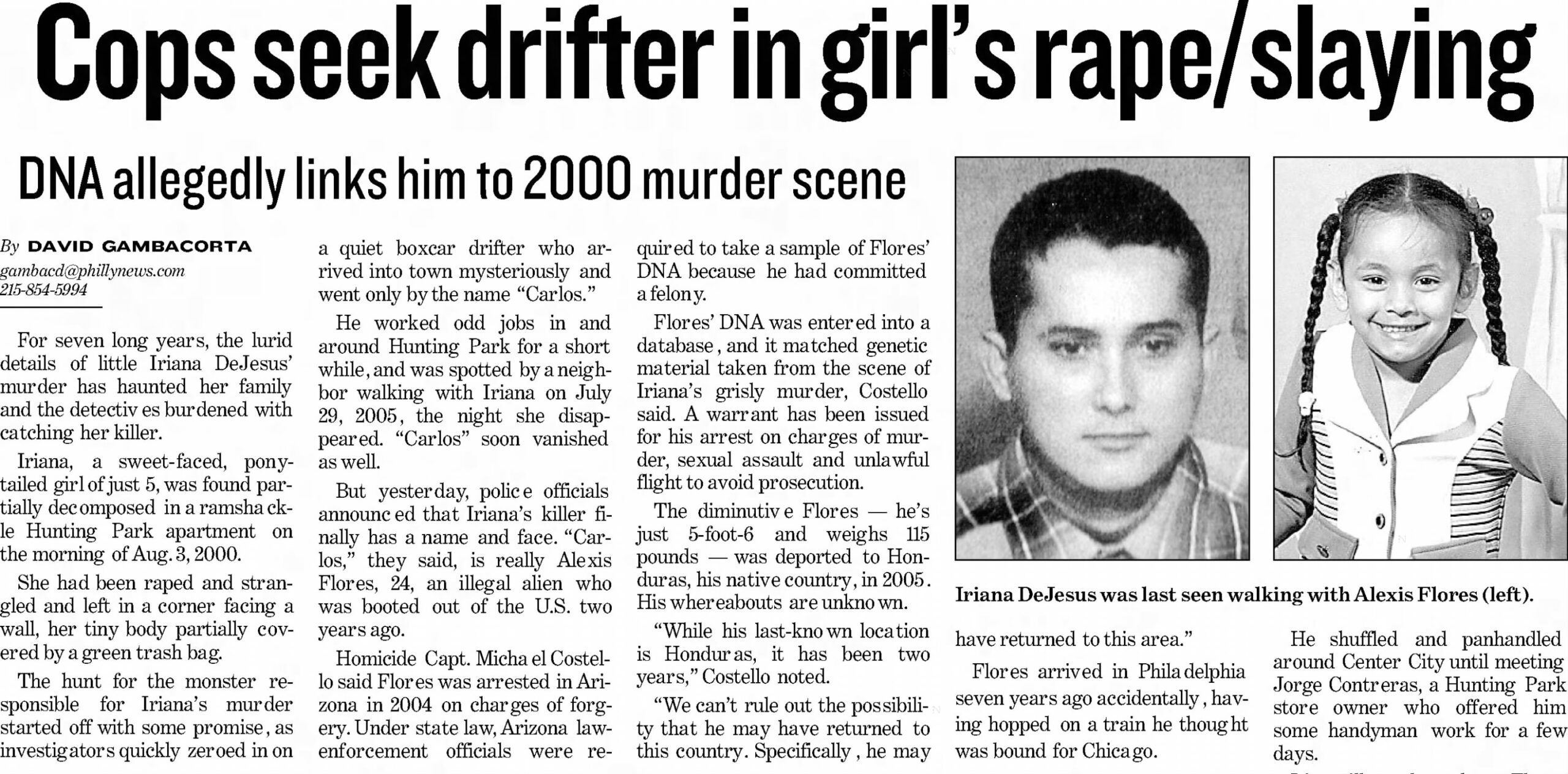
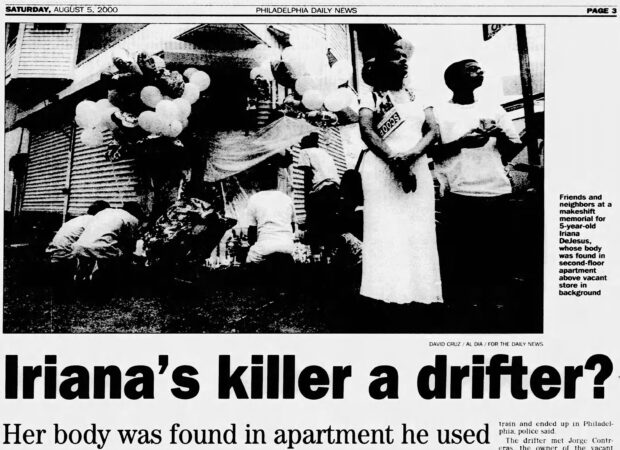
The Daily News covers the announcement of Alexis Flores as the suspect in Iriana DeJesus’ murder in March 2007.
On Aug. 3, 2000, her body was found covered by a green trash bag. Iriana had been raped and strangled to death about a block from her home, in a second-floor apartment above a vacant store on the 3900 block of North Sixth Street.
At the time, police described the perpetrator as a “drifter,” but not much else was known about him.
Authorities launched a national manhunt. But it was not until March 2007 that federal officials issued a warrant for the arrest of Alexis Flores. He had been identified through a DNA database that allowed investigators to name him as a suspect years after a November 2004 arrest on a felony forgery charge in Phoenix.
On Thursday, FBI Director Kash Patel announced Flores had been apprehended.
“After more than 25 years on the run, this arrest proves time and distance do not shield violent offenders from justice,” Patel wrote on social media.
Flores was detained on Wednesday in Honduras, Fox News reported. He was wanted for crimes including unlawful flight to avoid prosecution, murder, kidnapping, and indecent assault in connection with the Iriana DeJesus case, according to the FBI.
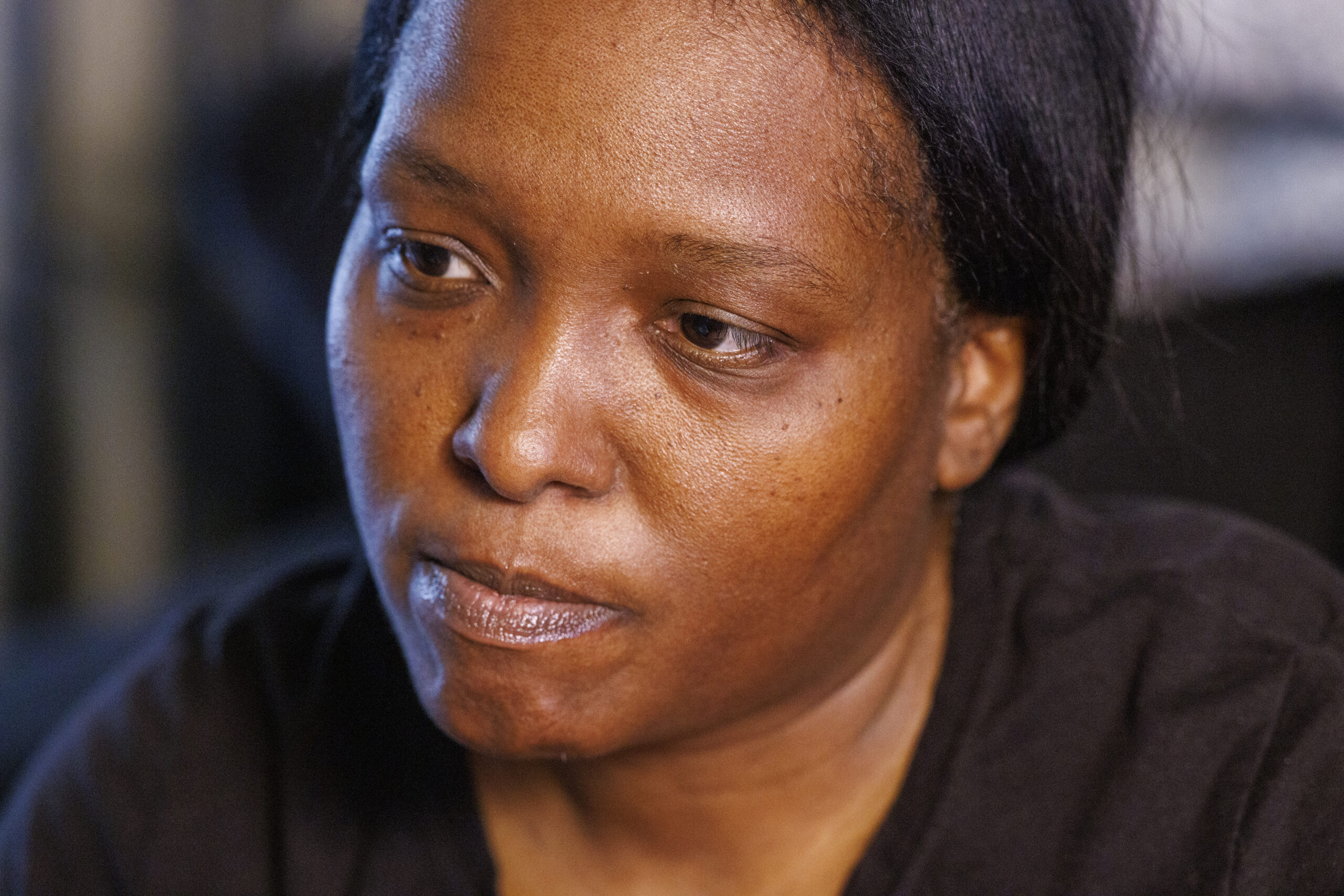
Vazques said she is choosing to focus on the love their community has provided over the long years of not knowing what happened.
“We are always going to be from this block,” DeJesus said. “These people are the reason I’m still strong, because a lot of them never gave up on us, on my baby.”
DeJesus said she still sees Iriana in many corners of her block, in the faces of little girls with pigtails playing outside, and it gives her hope. “Iriana, I love you and I will never stop loving you; you will always be in my heart.”
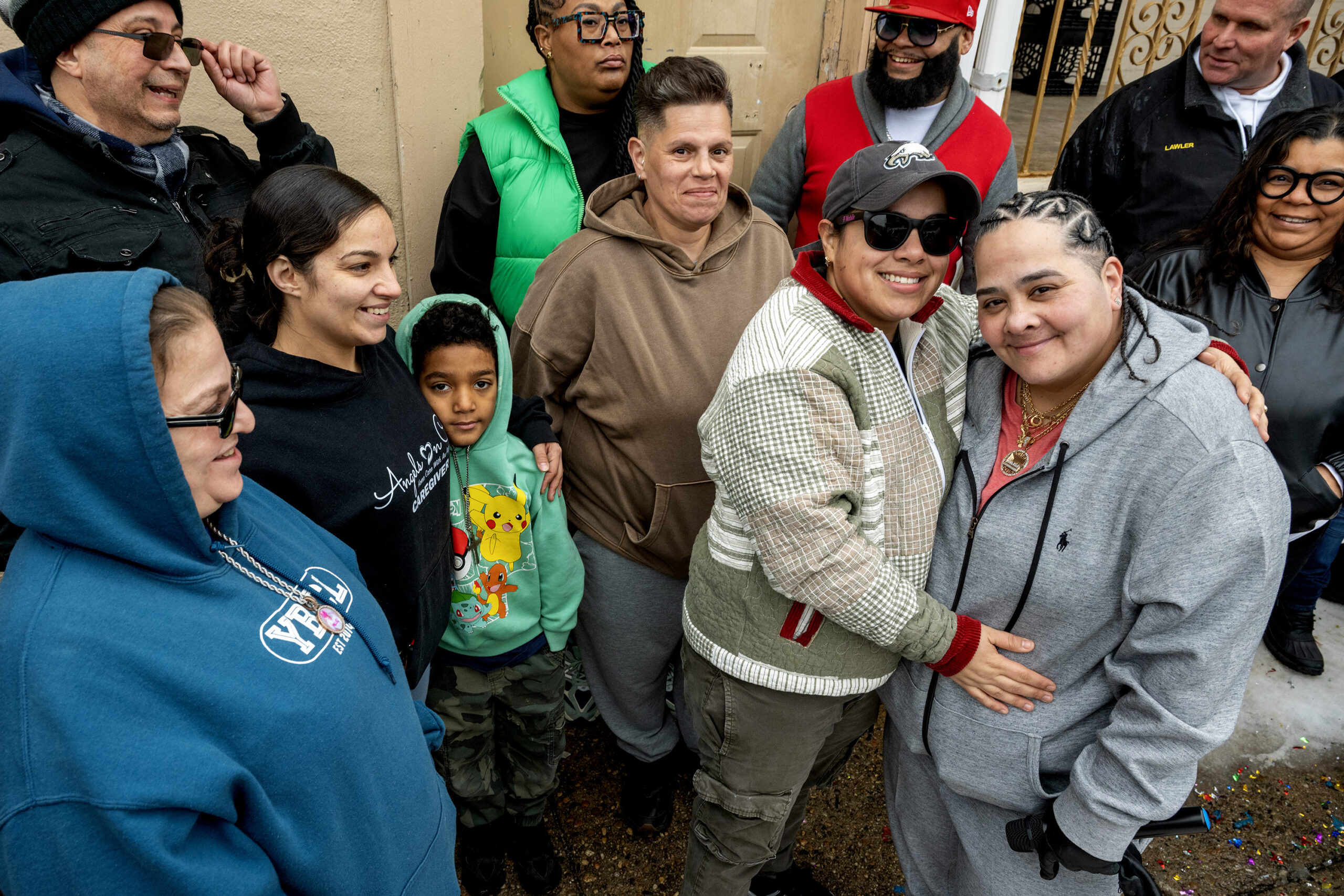
Lizasuain DeJesus (right) is with her daughter Iyanna Vazques, surrounded by friends and family, following a balloon release in memory of her daughter Iriana.
Zoraida Reyes, 65, still remembers the frenzy her Hunting Park neighborhood lived through when Iriana disappeared.
“She was a beautiful girl, happy, calm; we went mad looking for her,” Reyes said. Since then, the neighborhood has changed, she said. But people still support one another, and Iriana was never forgotten.
On Sunday, as about 100 neighbors gathered at Sixth and Pike Streets for a balloon release in Iriana’s memory, Vazques and DeJesus felt grateful. “There is nothing that will beat this feeling,” DeJesus said, as neighbors lined up to hug her. A picture of Iriana in her pigtails, with a bright smile was handed to attendees with a message: “Justice, finally.”
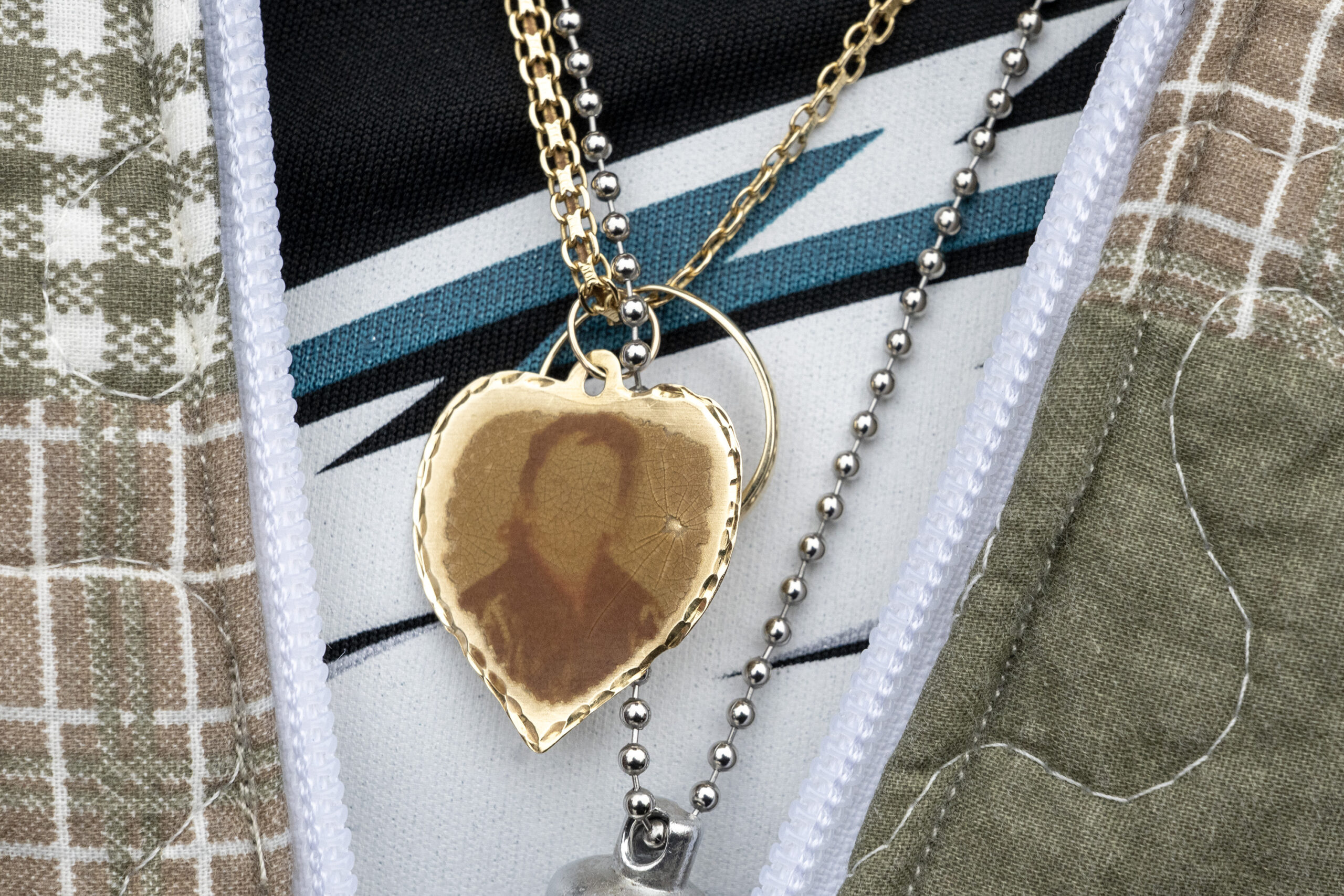
Vasques, wearing a matching Eagles shirt and hat, held on to a necklace with a now-faded picture of Iriana that her mom gave her in the ninth grade.
“I don’t take it off, it’s my everything,” Vazques said. “It reminds me of how much of a sweet soul she was.”
Iyanna Vazques wears a locket with a faded photo of her sister Iriana DeJesus during a balloon release in her memory Sunday, Feb. 15, 2026. Five-year-old Iriana was kidnapped and killed in 2000. A man has been arrested in the case after two decades on the FBI’s most-wanted list.
Staff writer Nick Vadala contributed to this article.
A Trenton man was sentenced to up to 60 years in Pennsylvania state prison for fatally shooting a bystander at a Morrisville strip club.
On Friday, Pedro E. Rodriguez, 29, pleaded guilty to third-degree murder, discharging a firearm into an occupied structure, possession of an instrument of crime, and four counts of recklessly endangering another person in the killing of 28-year-old Mekhi Norman in August 2024.
According to the Bucks County District Attorney’s Office, Norman was shot at a Morrisville nightclub while acting as a Good Samaritan. He did not know Rodriguez but was helping the club’s staff following an altercation at the doorway.
Surveillance video shown during the sentencing hearing shows Rodriguez walking to his car, getting a handgun, loading it, and returning to the club, according to a district attorney’s office statement. Then, he fired into the building as security staff were attempting to remove his nephew, according to the statement.
Norman, who was helping the staff when he was shot, was struck in the back of the head, the left thigh, and under both armpits, as 17 patrons and employees remained at the club.
Rodriguez fled but later turned himself in and was held on $5 million bail at the Bucks County Correctional Facility. He now faces between 30 and 60 years in state prison.
Rodriguez’s nephew, 22-year-old Kevin Perez, entered a guilty plea in 2025 to several counts of simple assault, disorderly conduct, and harassment for assaulting staff. The Trenton resident was sentenced to 10 to 23 months in the Bucks County Correctional Facility, followed by a year of probation.
During the sentencing hearing, Deputy District Attorney Ed Louka described Norman as a good father, a good son, and a good friend who died being a Good Samaritan, according to the statement.
Offering an account of how life has changed, the mother of Norman’s daughter told the court that the child still cries waiting for her father to call in the mornings and nights, as he used to, according to prosecutors.
“While this sentence ensures that the defendant is held accountable for his senseless and violent actions, we know it cannot fill the void left in the lives of those who loved Mr. Norman,” District Attorney Joe Khan said.
The daughter of a Northeast Philadelphia man who prosecutors say ran a human-trafficking ring for years that trapped vulnerable women, supplied them with drugs, then forced them to have sex with men across the region pleaded guilty Friday to helping manage the finances of the criminal organization.
Natoria Jones, 30, pleaded guilty to promoting prostitution after prosecutors with the Pennsylvania Attorney General’s Office said she helped her father, Terrance Jones, manage the payments of his sex-trafficking scheme for at least three weeks in 2023.
In exchange for Jones’ plea, Senior Deputy Attorney General Zachary Wynkoop withdrew felony charges of conspiracy, participating in a corrupt organization, and promoting unlawful activities.
Wynkoop asked Common Pleas Court Judge Zachary Shaffer to defer Jones’ sentencing until after the June trial of her father, Terrance Jones — the alleged ringleader of the criminal enterprise — and three of his associates.
The plea marks the latest development in the sweeping indictment brought by the attorney general’s office in 2024 in which officials charged Terrance Jones, 54, and several of his associates with operating a human-trafficking ring across the region for more than a decade.
For 12 years, Terrance Jones, of Lawndale, marketed what he called “GFE” or “the Girlfriend Experience” online and recruited women in their 20s — many battling addiction and struggling to find stable housing or income, authorities said.
When women contacted the operation, prosecutors said, Terrance Jones would impersonate a woman, raising the pitch of his voice and introducing himself as “Julie” or “Julia” to build trust. He promised to send a driver to pick them up for “dates” where they could earn more than $250 and obtain drugs, officials said. He used the women to lure other victims who were addicted to drugs into the scheme, telling one confidant that he “could ‘wash em up’ and make money with them,” according to the affidavit of probable cause for Jones’ arrest.
“He made these women feel worthless. He controlled them, manipulated them, and, in a way, programmed them to feel like this was their only option,” then-Attorney General Michelle Henry said in announcing the charges.
Prosecutors and Pennsylvania State Police began investigating in 2021 after a woman who they said had been trafficked by Terrance Jones reported the abuse.
After meeting with the woman, officials conducted wiretaps, acted as undercover sex workers and buyers, and tracked down his clients, the affidavit said. Across the three-year investigation, officials said they found that the operation crossed through the Philadelphia suburbs and into New Jersey, and that over just 10 days in 2023, Terrance Jones arranged 78 “dates” — and pocketed most of the funds.
He was charged with trafficking individuals, involuntary servitude, running a corrupt organization, conspiracy, and related crimes. He remains in custody, held on $2 million bail.
Three of Terrance Jones’ business partners — Thomas Reilly, Joseph Franklin, and Raheem Smith — are charged with running a corrupt organization, conspiracy, and related crimes, and are scheduled to go to trial with him in June.
Another associate, James Rudolph, a driver who officials said transported women to their “dates,” pleaded guilty to conspiracy to promote a house of prostitution last year. He’s scheduled to be sentenced later this month.
In a rare move, prosecutors as part of the indictment also criminally charged 16 men who paid Terrance Jones for sex with the women. While the charges against some of the men have been dismissed, at least nine have pleaded guilty to promoting or patronizing prostitution and are scheduled to be sentenced next month.
Among Terrance Jones’ business partners, was also his daughter, Natoria, who handled some of the financials and payments between the women and customers. Her attorney Jonathan D. Consadene declined to comment Friday.
Senior Deputy Attorney General Erik Olsen said several factors influenced the plea agreement.
“There’s some mitigation as to how she got pulled into this,” Olsen said, adding that more details would emerge at trial in June.
In December, Katrina Williams watched as the man who killed her brother was sentenced to decades in prison and felt, she said, as if a two-year nightmare was coming to an end.
But weeks later, another shooting took the life of her only son.
Williams’ brother, Lashyd Merritt, 21, was one of five people killed in a mass shooting in Kingsessing in July 2023, when Kimbrady Carriker walked through the Southwest Philadelphia neighborhood with an AR-15 rifle and fired at random passersby.
Then, in January, her 19-year-old son, Russell, was killed by a man who, like the Kingsessing shooter, committed a spree of crimes, police say.
“I’ll never understand it,” said Williams,43. “There’s no reason for it.”
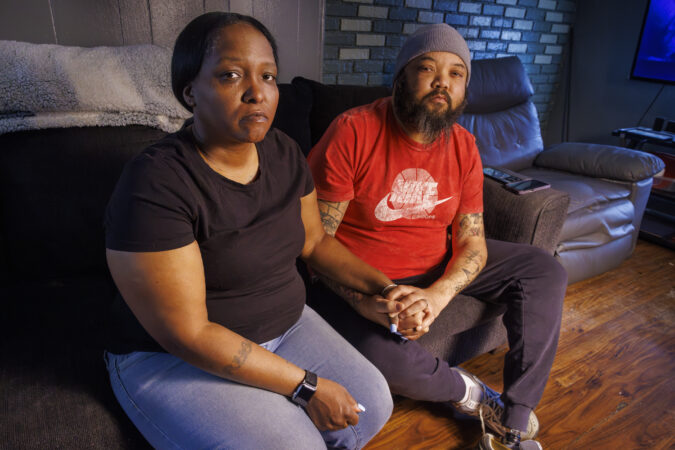
A high school photograph of Russell Williams being held by his father and mother, Katrina and Russell Williams Sr. at their home in Southwest Philadelphia on Feb. 6.
For Williams, the trauma of Merritt’s violent death never fully dissipated, she said, and the fatal shooting of her son only compounds her pain.
It’s a cycle of violence that is not unfamiliar in the city.
For others with relatives killed in the Kingsessing attack, the traumatic impact of gun violence did not end on that July day. Nyshyia Thomas lost her 15-year-old son, DaJuan Brown, to the gunfire and, while she was still mourning, her 21-year-old son, Daquan Brown, was arrested last year in connection with another mass shooting in Grays Ferry.
Asked about the evening of Jan. 28, when she and her husband, Russell Williams Sr., learned of their son’s death, Williams said two things came to mind:
“Déjà vu,” she said, and “hell.”
A seemingly random crime
Around 10 p.m. near 64th Street and Lindbergh Boulevard, police said, 19-year-old Zaamir Harris stepped off a SEPTA bus and stole a bike from the vehicle.
He rode up to Russell Williams, who was walking home from night school, where the teen was studying to become a commercial truck driver. Harris then pulled a gun and fired at Williams multiple times, striking him in the throat, police said.
Williams collapsed near 66th Street and Dicks Avenue, just three blocks from home. After the shooting,Harris ditched the bike and stole an e-scooter before fleeing, according to police.
Police tracked Harris to a Wawa at 84th Street and Bartram Avenue, where he was arrested. He was charged with murder and gun crimes. Investigators recovered three fired cartridge casings from the scene, as well as a 9mm handgun, according to police.
A spokesperson for the Philadelphia Police Department declined to say whether investigators have determined a motive for the shooting, citing the ongoing investigation.
Katrina Williams said her son did not know Harris, and a police detective told her the shooting was random.
After he was shot, Russell Williams was rushed to Penn Presbyterian Medical Center, where he died from his injuries. It was the same hospital where Williams’ brother, Merritt, was taken after being shot in Kingsessing, she said.
Katrina Williams, whose son, Russell, 19, was shot and killed not far from family home in Southwest Philadelphia.
Russell Williams had recently graduated from Philadelphia Electrical and Technology Charter School and dreamed of an entrepreneurial career in stock trading.
Like her son, Williams said, Merritt was a hard worker who wanted to better his life. He worked for the IRS, had a girlfriend, and wanted to travel the world, she said.
“We lost two great people,” Williams said. “Two of them.”
That police made an arrest in the slaying of their son has brought little solace, Williams and her husband said as they sat in their Southwest Philadelphia living room on a recentFebruary day. Family photos filled the space, and a portrait of Russell, smiling and wearing a tuxedo, hung on the wall.
As the case against her son’s accused killer proceeds, Williams said, she will be in court every step of the way, just as she was when Carriker pleaded guiltyin the death of her brother.
In December, as Carriker faced sentencing, Williams said, she could not bring herself to address the judge and ask for a long prison sentence, as relatives of other victims did. She was so overcome with anger, she said, that she feared she might physically attack her brother’s killer.
But she was in the room when Common Pleas Court Judge Glenn B. Bronson sentenced him to 37½ to 75 years in prison. In Williams’ view, Carriker should have received a life sentence for each person he killed, she said, even if no punishment could make up for the loss of Merritt.
Now, Williams is preparing to head back to court as she once again seeks justice.
Since her son’s death, Williams said, she has taken comfort in the kindness of friends and family. She was touched, she said, to see a “block full of people” gather to honor his life and release balloons in his memory. But the ache of her loss remains.
“It’s like pain on top of pain — it’s just always gonna be hard,“ Williams said. ”I just gotta deal with it the best way I can.”
Federal judges in Albany, N.Y., appointed a new U.S. attorney on Wednesday, exercising a rarely invoked legal authority to appoint top prosecutors in regions without a Senate-confirmed nominee.
Their choice lasted less than five hours on the job.
Donald T. Kinsella, a 79-year-old former prosecutor and registered Republican, was summarily fired via an email from the White House later that evening, Justice Department officials said.
The move underscored a growing point of tension between the Trump administration and courts in parts of the country where the president’s controversial picks for U.S. attorney have been unable to win Senate support.
Kinsella’s swift termination also sent a signal to judges in several other federal court districts, including the Eastern District of Virginia, who have recently announced plans to make similar replacements of Trump-installed prosecutors whose appointments have been deemed invalid by the courts.
“Judges don’t pick U.S. Attorneys, @POTUS does,” Deputy Attorney General Todd Blanche, said in a social media post late Wednesday. “See Article II of our Constitution. You are fired, Donald Kinsella.”
Kinsella did not immediately respond to requests for comment Wednesday morning. And it was not immediately clear whether federal judges in Albany had any recourse to counter the White House’s decision.
When administration officials similarly fired a new U.S. attorney whom federal judges in New Jersey appointed in July to replace Alina Habba, President Donald Trump’s former personal lawyer and pick for the position there, there was little formal response from the courts.
Typically, U.S. attorneys, who wield broad prosecutorial discretion to pursue civil and criminal matters in their districts, are nominated by the president and confirmed or rejected in a Senate vote. But federal law empowers judges to name acting U.S. attorneys when there is no lawfully serving appointee or Senate-confirmed presidential pick serving in the role.
Before his appointment Wednesday, Kinsella had most recently worked as a senior counsel to Albany-based law firm Whiteman Osterman & Hanna. He had served a previous stint in the U.S. attorney’s office in Albany from 1989 to 2002.
The judges named him to lead the office as a replacement for John A. Sarcone III — a Trump loyalist whom the Justice Department appointed to serve in the position on an interim basis in March.
Before his appointment, Sarcone had never worked as a prosecutor and most recently had served as a regional administrator for the General Services Administration.
His tenure as interim U.S. attorney has been marked by a series of controversies, including an incident in June in which he announced a knife-wielding undocumented immigrant from El Salvador had tried to kill him outside an Albany hotel.
Surveillance footage later showed the man did not come close to Sarcone with his weapon, and charges brought by a local prosecutor were downgraded from attempted murder to a misdemeanor.
Sarcone had also launched an investigation over the summer into New York Attorney General Letitia James (D), probing whether her office had violated Trump’s civil rights when it secured a multimillion-dollar fraud judgment against him and his real estate empire in 2024.
As part of a legal challenge from James, a federal judge ruled in January that Sarcone had been serving unlawfully in his position for months well beyond the 120-day limit federal law places on interim U.S. attorney picks.
But like other interim U.S. attorney picks by Trump who have faced similar disqualification rulings in Los Angeles, Nevada, New Mexico and Alexandria, Va., Sarcone refused to immediately vacate the job. He continues leading the office.
Until recently, judges in districts like Sarcone’s have been reticent to exercise their authority to appoint prosecutors counter to the Trump administration’s wishes.
Last month, though, the chief federal judge in the Eastern District of Virginia announced the courts there would be accepting applications for a U.S. attorney to replace Lindsey Halligan, another former Trump lawyer named interim U.S. attorney only to be later disqualified by the courts. She left her post in January.
The judges in Virginia have not yet named a replacement.
Federal judges in Seattle have similarly been soliciting applications to potentially appoint a new acting U.S. attorney there, after the term of the Trump administration’s interim pick expired this month.
Federal authorities have arrested a man in connection with the 2000 rape and killing of a 5-year-old Philadelphia girl, nearly two decades after the suspect was placed on the FBI’s most-wanted list.
FBI Director Kash Patel on Thursday confirmed the apprehension of Alexis Flores, whom authorities had long sought for his alleged involvement in Iriana DeJesus’ death. Iriana went missing in late July 2000 and was found dead days later.
“After more than 25 years on the run, this arrest proves time and distance do not shield violent offenders from justice,” Patel wrote on social media. “Thanks to our FBI teams and international partners, a fugitive accused of a horrific crime against a child is in custody and on a path back to the U.S. We will never stop pursuing those who harm our most vulnerable.”
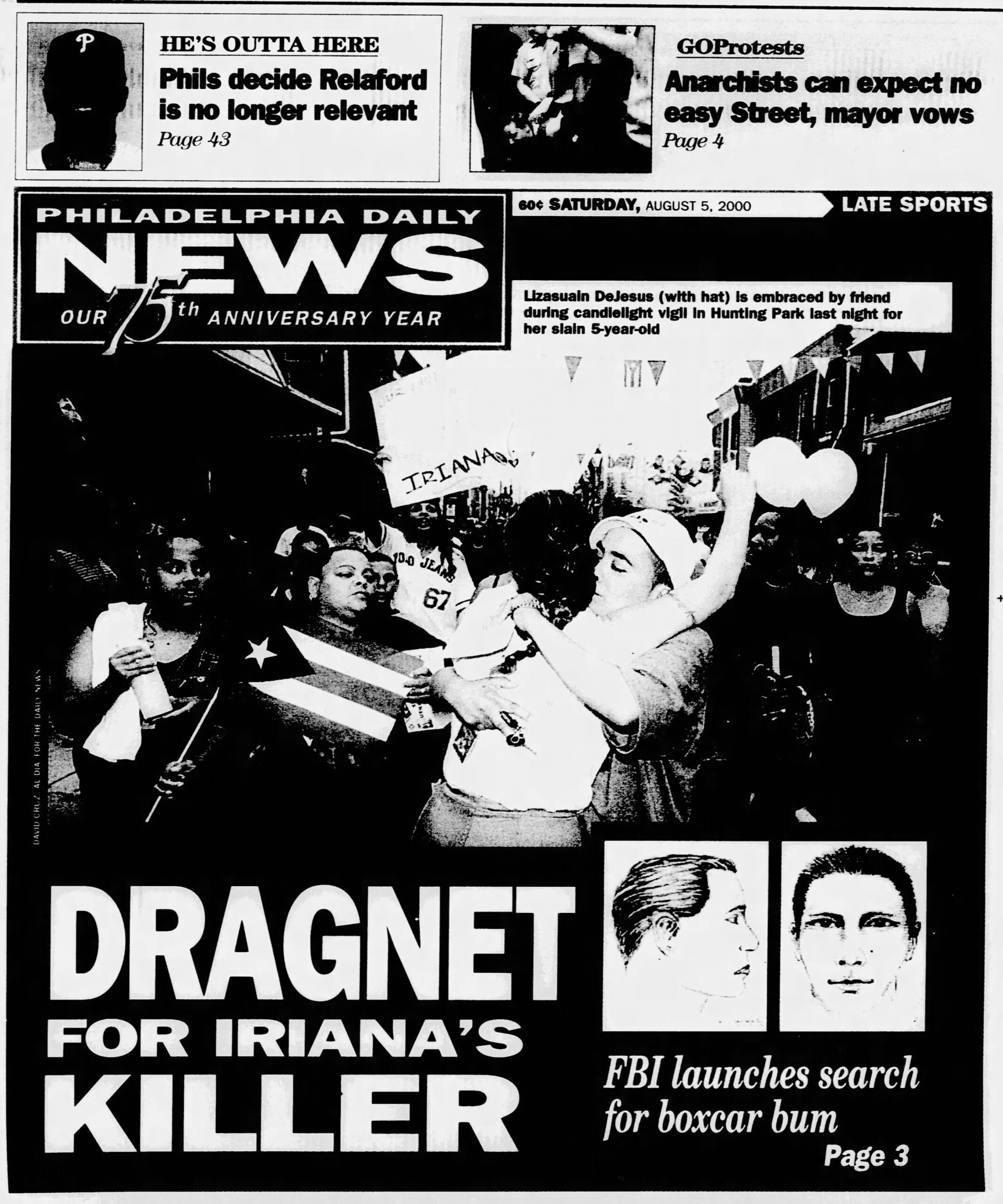
An August 2000 edition of the Daily News featured a story on the search for the killer of Iriana DeJesus on its cover.
Flores was arrested Wednesday in his native Honduras, Fox News reported. He was wanted for crimes including unlawful flight to avoid prosecution, murder, kidnapping, and indecent assault in connection with the Iriana DeJesus case, according to the FBI. Additional information about his arrest was not immediately available.
Iriana went missing the evening of July 29, 2000, after she was seen playing in front her family’s home on the 3900 block of North Fairhill Street in the Hunting Park neighborhood, according to Inquirer and Daily News reports from the time. A family friend told police at the time that she had seen the girl walking with an unknown man around the time of her disappearance.
After the girl’s mother reported her missing, authorities launched searches and issued a reward for information leading to her whereabouts. But days later, on Aug. 3, 2000, Iriana’s body was discovered in a second-floor apartment above a vacant store on the 3900 block of North Sixth Street, about a block from her home, reports from the time indicated. She had been raped and strangled to death, her body covered by a green trash bag.
Police described a suspect in the crime as a “drifter” who went by the name Carlos, but few other details were immediately available. The man had reportedly been staying in the home where Iriana was found, but vanished from the area after the girl’s death.
The Daily News covers the announcement of Alexis Flores as the suspect in Iriana DeJesus’ murder in March 2007.
Authorities launched a national manhunt days after the killing, but Flores’ identity would not be publicly announced until March 2007, when federal officials issued a warrant for his arrest. He had been identified through a DNA database that allowed investigators to name him as a suspect years after a November 2004 arrest on a felony forgery charge in Phoenix.
Arizona requires felony suspects to provide a DNA sample, leading to Flores’ later identification, The Inquirer reported. Flores, authorities told the Daily News in 2007, arrived in Philadelphia in 2000, having come here accidentally after hopping a train he believed was destined for Chicago.
By the time he was identified, Flores had been deported to Honduras, and his whereabouts were unknown, complicating his apprehension. The FBI in June 2007 added him to its most-wanted list, but removed him from it last year after a review found he no longer fit its criteria, the bureau noted online. The bureau considers factors such as lengthy criminal records, the level of danger presented to the public, and whether nationwide publicity can assist in apprehension.
At the time Flores was identified as the suspect, Philadelphia homicide Detective Joseph Bamberski, who had been investigating the case from the start, expressed relief.
“It’s been a long time coming,” Bamberski told the Daily News in 2007. “This is the one case that always bothered me.”
As of midday Thursday, Flores’ page on the FBI website had been updated with one addition — a line reading “captured” over his mugshot.
A 44-year-old man was in police custody after he allegedly stabbed his 3-month-old child late Wednesday morning in Chester County, police said.
Just after 11:35 a.m., Coatesville police were dispatched to the 2000 block of Smithbridge Drive to respond to a report on an infant that had been stabbed.
Officers took Michael Phillips into custody for stabbing his infant son in the abdomen, police said.
“After stabbing him, the father took the infant outside and threw him in the snow,” police said.
The infant was reported to be in very serious condition and was flown to Children’s Hospital of Philadelphia for surgery, police said.
Just before 8 p.m., the Chester County District Attorney’s Office said the child was out of surgery and was listed in critical but stable condition.
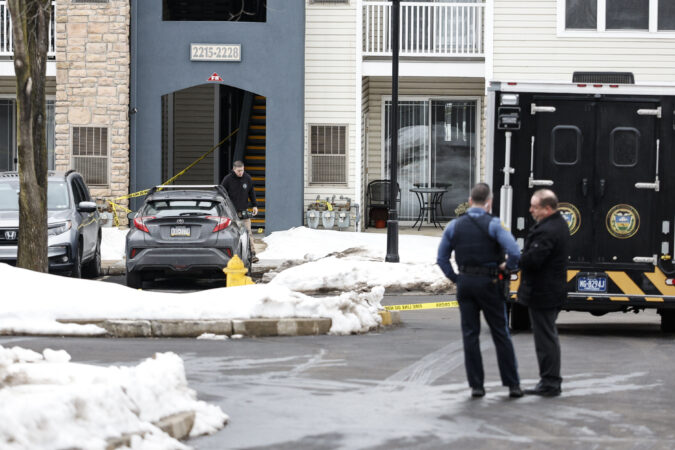
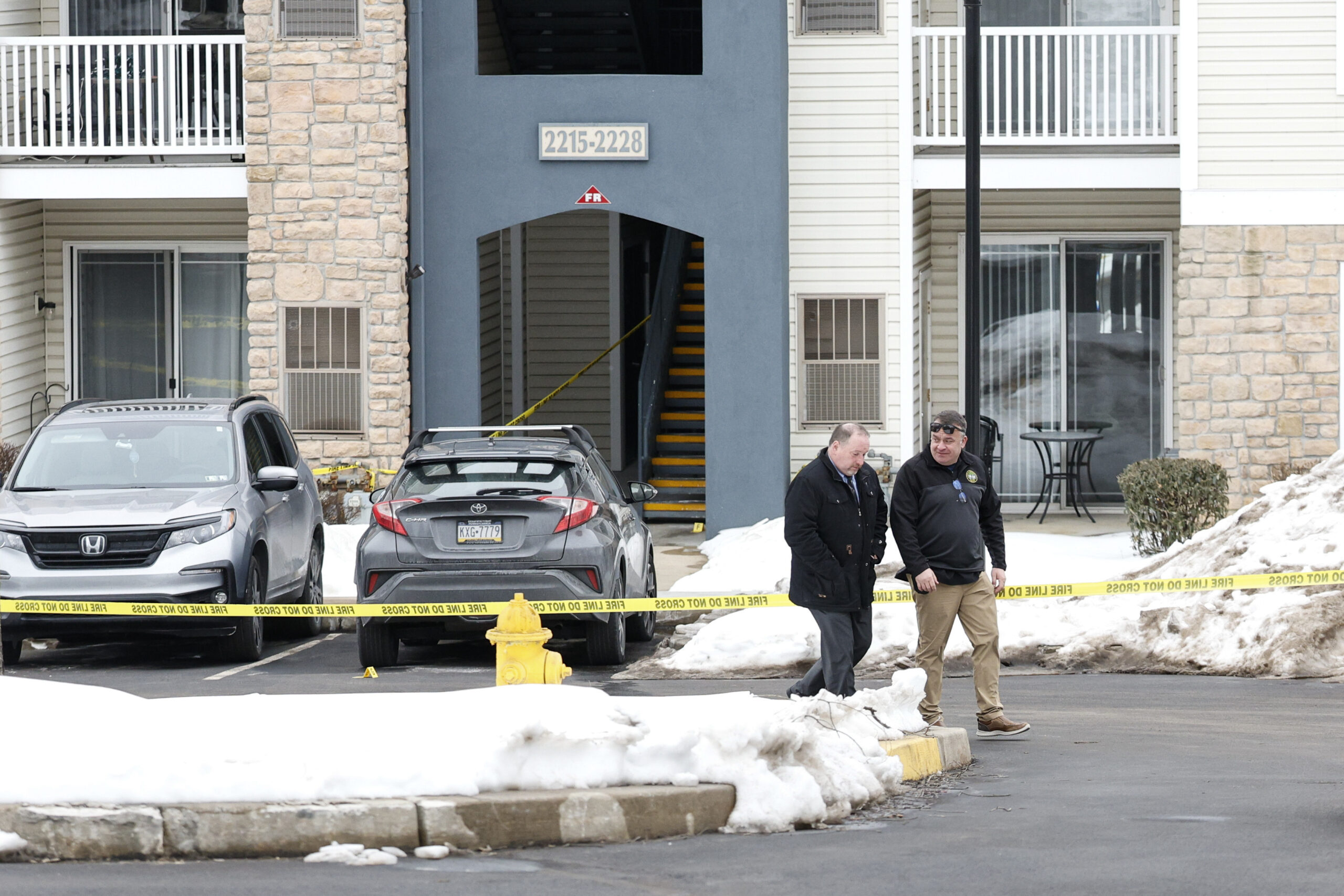
Police on the scene of a stabbing of an infant on Smithbridge Drive in Coatesville, Wednesday, February 11, 2026
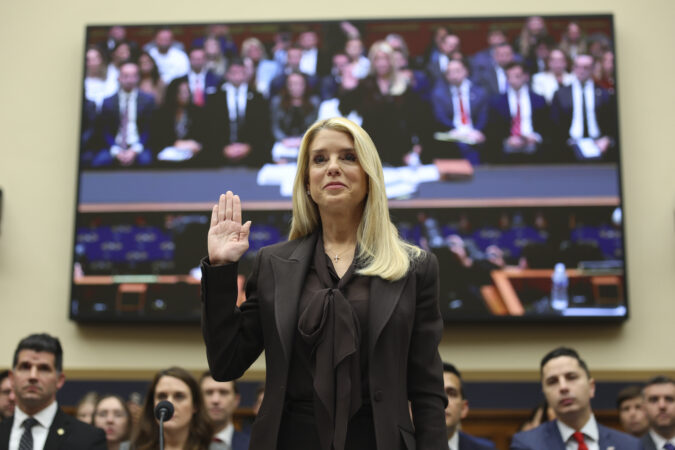
WASHINGTON — Attorney General Pam Bondi launched into a passionate defense of President Donald Trump Wednesday as she tried to turn the page from relentless criticism of the Justice Department’s handling of the Jeffrey Epstein files, repeatedly shouting at Democrats during a combative hearing in which she postured herself as the Republican president’s chief protector.
Besieged by questions over Epstein and accusations of a weaponized Justice Department, Bondi aggressively pivoted in an extraordinary speech in which she mocked her Democratic questioners, praised Trump over the performance of the stock market and openly aligned herself as in sync with a president whom she painted as a victim of past impeachments and investigations.
“You sit here and you attack the president and I’m not going to have it,” Bondi told lawmakers on the House Judiciary Committee. ”I am not going to put up with it.”
With victims of Epstein seated behind her in the hearing room, Bondi forcefully defended the department’s handling of the files related to the well-connected financier that have dogged her tenure. She accused Democrats of using the Epstein files to distract from Trump’s successes, when it was Republicans who initiated the furor over the files and Bondi herself fanned the flames by distributing binders to conservative influencers at the White House last year.
The hearing quickly devolved into a partisan brawl, with Bondi repeatedly lobbing insults at Democrats while insisting she was not “going to get in the gutter” with them. In one particularly fiery exchange, Rep. Jamie Raskin of Maryland accused Bondi of refusing to answer his questions, prompting the attorney general to call the top Democrat on the committee a “washed-up loser lawyer — not even a lawyer.”
Trying to help Bondi amid an onslaught of Democratic criticism, Republicans tried to keep the focus on bread-and-butter law enforcement issues like violent crime and illegal immigration. Bondi repeatedly deflected questions from Democrats, responding instead with attacks seemingly gleaned from news headlines as she sought to paint them as uninterested about violence in their districts. Democrats became exasperated as Bondi declined time and again to directly answer.
“This is pathetic. I am not asking trick questions,” said Becca Balint, a Vermont Democrat who tried to ask Bondi whether the Justice Department had questioned different Trump administration officials about their ties to Epstein. “The American people deserve to know.”
Bondi has struggled to move past the backlash over the Epstein files since handing out binders to a group of social media influencers at the White House in February 2025. The binders included no new revelations about Epstein, leading to even more calls from Trump’s base for the files to be released.
In her opening remarks, Bondi told Epstein victims to come forward to law enforcement with any information and about their abuse and said she “deeply sorry” for what they had suffered. She told the survivors that “any accusation of criminal wrongdoing will be taken seriously and investigated.”
But she refused when pressed by Rep. Pramila Jayapal to turn and face the Epstein victims in the audience and apologize for what Trump’s Justice Department has “put them through” and accused the Washington state Democrat of “theatrics.”
Bondi’s appearance on Capitol Hill comes a year into her tumultuous tenure that has amplified concerns that the Justice Department is using its law enforcement powers to target political foes of the president. Just a day earlier, the department sought to secure charges against Democratic lawmakers who produced a video urging military service members not to follow “illegal orders.” But in an extraordinary rebuke of prosecutors, a grand jury in Washington refused to return an indictment.
Turning aside criticism that the Justice Department under her watch has become politicized, Bondi touted the department’s work to reduce violent crime and said she was determined to restore the department to its core missions after what she described as “years of bloated bureaucracy and political weaponization.”
GOP Rep. Jim Jordan, of Ohio, praised Bondi for undoing actions under President Joe Biden’s Justice Department that Republicans say unfairly targeted conservatives — including Trump, who was charged in two criminal cases that were abandoned after his 2024 election victory.
“What a difference a year makes,” Jordan said. “Under Attorney General Bondi, the DOJ has returned to its core missions — upholding the rule of law, going after the bad guys and keeping Americans safe.”
Democrats, meanwhile, excoriated Bondi over haphazard redactions in the Epstein files that exposed intimate details about victims and also included nude photographs. A review by The Associated Press and other news organizations has found countless examples of sloppy, inconsistent or nonexistent redactions that have revealed sensitive private information.
“You’re siding with the perpetrators and you’re ignoring the victims,” Raskin told Bondi in his opening statement. “That will be your legacy unless you act quickly to change the course. You’re running a massive Epstein coverup right out of the Department of Justice.”
Republican Rep. Thomas Massie of Kentucky, who broke with his party to advance the legislation that forced the released of the Epstein files, also took Bondi to task for the release of victims’ personal information, telling her: “Literally the worst thing you could do to survivors, you did.”
Bondi told Massie that he was only focused on the files because Trump is mentioned in them, calling him a “hypocrite” with “Trump-derangement syndrome.”
Department officials have said they took pains to protect survivors, but that errors were inevitable given the volume of the materials and the speed at which the department had to release them. Bondi told lawmakers that the Justice Department took down files when they were made aware that they included victims’ information and that staff had tried to do their “very best in the time frame allotted by the legislation” mandating the release of the files.
After raising the expectations of conservatives with promises of transparency last year, the Justice Department said in July that it had concluded a review and determined that no Epstein “client list” existed and there was no reason to make public additional files. That set off a furor that prompted Congress to pass the legislation demanding that the Justice Department release the files.
The acknowledgment that the well-connected Epstein did not have a list of clients to whom underage girls were trafficked represented a public walk-back of a theory that the Trump administration had helped promote when Bondi suggested in a Fox News interview last year that it was sitting on her desk for review. Bondi later said she was referring to the Epstein files in total, not a specific client list.
A 41-year-old Upper Dublin Township man was charged with trying to hire a hit man as part of a murder scheme targeting an ex-girlfriend and two others, Montgomery County District Attorney Kevin R. Steele said Wednesday.
On Tuesday, Eric Berkowitz allegedly approached Steven Luker, another Upper Dublin resident, and offered him $5,000 to help kill three people in New York. Luker then informed Upper Dublin police, Steele said.
“I’d like to commend Mr. Luker for immediately contacting police after he was approached by the defendant to participate in this murder scheme,” Steele said in a statement. “He ultimately saved the lives of three innocent people.”
Berkowitz was charged with criminal solicitation for murder and related offenses, and was being held at the Montgomery County Correctional Facility, Steele said. No bail was set.
According to Steele, Berkowitz named as targets his ex-girlfriend and two men she had dated since her seven-year relationship with Berkowitz ended.
Berkowitz allegedly provided a Mac 11 firearm to Luker as well as a “burner” cell phone for their communication, Steele said.
The plan was for Berkowitz and Luker to drive to New York on Wednesday and meet outside near one target’s house, Steele said.
After Luker reported the scheme, he cooperated with Upper Dublin police and Montgomery County detectives to record a conversation with Berkowitz, Steele said.
During the recorded conversation, Berkowitz confirmed the plan and further stated that he would ‘take care of the girl’ himself,” Steele said.
Berkowitz was arrested after he exited his residence and entered an Uber vehicle, which was stopped by police, Steele said.
At the time of his arrest, Berkowitz allegedly was carrying a duffel bag containing a black Masterpiece Arms Grim Reaper firearm with a loaded magazine containing 23 rounds, cocaine, and a large sum of cash.
Police interviewed the Uber driver, who said Berkowitz’s destination was the address of Berkowitz’s ex-girlfriend in Endicott, N.Y., Steele said.
A preliminary hearing for Berkowitz was set for Feb. 20.