Category: Crime & Justice

  • Quakertown High School students arrested during ICE protest. Videos show them bloodied after a confrontation with police.

    Quakertown High School students arrested during ICE protest. Videos show them bloodied after a confrontation with police.

    Several students at Quakertown High School were taken into custody on Friday after a student walkout protesting federal immigration enforcement escalated into a confrontation that left at least one teenager bloodied and in handcuffs, according to witnesses and video footage from the scene.

    School officials said the episode began shortly before noon, when dozens of students left campus without permission to demonstrate along Front Street in opposition to the policies of U.S. Immigration and Customs Enforcement. What followed, according to videos posted widely on social media, was a chaotic scene involving students, an unidentified man, and local police officers.

    By late afternoon, authorities had released few details about what prompted officers to intervene or how many students were detained.

    In a letter to parents, Lisa Hoffman, the acting superintendent of the Quakertown Community School District, said 35 students left school grounds at about 11:30 a.m. to stage the protest. She said district officials were informed by the Quakertown Police Department that the students were “engaging in unsafe and disruptive behavior,” though she did not elaborate on what that behavior entailed.

    The school also went on a short lockdown as a precaution, she said.

    Quakertown police contradicted the account offered by school officials, saying in a statement that as many as 50 students were involved in the protest, which “began peacefully” but became dangerous when students entered traffic, threw snowballs, kicked cars, and damaged property, including a car’s sideview mirror.

    “Officers issued additional warnings to maintain civil,” the statement said, before “confrontation escalated, and some individuals assaulted officers.”

    Police said “five to six juveniles and one adult have been taken into custody,” but offered no additional information.

    Videos circulating online offer a fragmented glimpse of the confrontation. In one clip, a man is seen grabbing a teenage girl and placing her in a chokehold. A male student rushes in and strikes the man, after which police officers move in and take the student into custody. Other footage shows protest signs scattered across the sidewalk, speckled with blood, and a teenage girl in handcuffs with blood visible along the side of her face.

    A woman who was dining inside a restaurant along Front Street said she watched the confrontation unfold just outside the window.

    “This man was easily twice her size,” said the woman, who asked not to be identified for fear of reprisal. “She couldn’t have been much more than 100 pounds.”

    When a male student stepped in to help the girl, she said, the scene quickly spiraled. Another woman in the restaurant recalled that several adults — including police officers — forced the boy to the ground.

    “The situation completely escalated,” said the second woman, who also asked not to be identified out of fear of reprisal. “There were multiple grown men getting in the faces of the children, spit flying out of their mouths.”

    It remains unclear what role the man played in the altercation. Both women said they later saw him drive away from the scene in a police vehicle.

    The statement by police made no mention of the man, nor did it include details about any injuries sustained by the students.

    Messages seeking comment from the school district were not immediately returned Friday afternoon.

    The Buck’s County District Attorney’s Office said in a statement Friday that it was aware of the incident and was “gathering information.”

    “We are committed to ensuring public safety and will provide updates if and when legally appropriate,” the office said.

    By late afternoon, the number of students taken into custody had not been disclosed, and school officials had not said whether any would face disciplinary action.

    Videos also showed papers and books scattered on the sidewalk next to dropped and bloodied signs. “These children were thrown around and brutalized by these officers,” said one of the women.

    School officials had been aware of the planned student walk-out, according to the high school’s Facebook page, and canceled it Friday morning.

    “While we respect students’ rights to express their views, our first priority is to ensure a safe and secure environment for all,” House Principal Jason D. Magditch wrote in a letter posted on the Facebook page. “At this time, we believe canceling the protest is the most appropriate course of action in the interest of student safety and well-being.”


  • A Willow Grove man who used insider info to make $617,000 trading stocks was sentenced to two years in prison

    A Willow Grove man who used insider info to make $617,000 trading stocks was sentenced to two years in prison

    A Willow Grove man who made more than $600,000 by trading stocks based on confidential information his then-girlfriend gave him about an impending corporate acquisition was sentenced Friday to two years in federal prison.

    Carlos Sacanell, 59, apologized for his actions before U.S. District Judge Wendy Beetlestone, saying he’d made a “terrible decision” and had “profound regret” for what he did.

    “This action does not represent who I am,” said Sacanell, who pleaded guilty last year to one count of securities fraud.

    Sacanell’s crimes occurred in 2023, prosecutors said, when his longtime partner told him that her company, the Chicago-based Oak Street Health Inc., was about to be acquired by CVS Health.

    The next day, prosecutors said, Sacanell — without his girlfriend’s knowledge — bought hundreds of thousands of dollars worth of Oak Street stocks and call options.

    Sacanell adjusted his purchases over the next few weeks as his girlfriend continued sharing occasional insights about whether or not the deal might go through, prosecutors said. The woman was not aware that he was trading on the information she gave him, prosecutors said, but when the acquisition ultimately closed, Sacanell netted about $617,000.

    In April 2023, prosecutors said, the FBI confronted Sacanell — who worked as a scientist — about what they viewed as his suspicious trades, but he denied that he had any insider information about Oak Street or the deal.

    Sacanell was indicted in late 2024. His relationship with his then-girlfriend has since ended, his lawyer said, and he is now expected to report to prison in about two months.

    He is also expected to be deported once his term of incarceration ends, his lawyer said. Sacanell was born and raised in Spain before becoming a lawful permanent resident of the United States, but will now likely be deported due to his conviction.

    Sacanell said he had already repaid about $300,000 worth of his illicit proceeds, and vowed that he would not commit any similar infractions in the future.

    “I regret it every day of my life,” Sacanell said.

  • ‘I was vulnerable’: Women testify against head of Delco addiction nonprofit accused of trading money for sexual favors

    ‘I was vulnerable’: Women testify against head of Delco addiction nonprofit accused of trading money for sexual favors

    The woman, then battling an addiction to heroin, said she sought help at the Opioid Crisis Action Network, a beacon of hope for those struggling with substance abuse disorder in Delaware County.

    But instead of providing compassionate care, Larry Arata, the nonprofit’s founder, offered her gift cards in exchange for oral sex in his car in 2024, the woman testified Thursday in a Delaware County courtroom.

    The experience traumatized her, she said, and within a month she had dropped out of recovery and overdosed.

    “I was still on heroin, and I needed help,” the woman said, her voice breaking as she recalled the encounter. “I didn’t expect to have to do that.”

    As she spoke, Arata, 65, sat in the courtroom for a preliminary hearing in a sweeping prostitution and trafficking case that Delaware County prosecutors brought against him late last year.

    He has denied any wrongdoing, and his lawyers said Thursday that they would present a robust defense at trial.

    In emotional testimony, six women took the stand and accused Arata of criminal behavior. The Inquirer is not naming the women because the newspaper does not identify victims of sex crimes without their permission

    One woman said Arata hired her to clean the Opioid Crisis Action Network’s office as she was trying to get sober. Almost immediately, she said, he began complimenting her appearance. Eventually, they began having sex in Arata’s private office at the nonprofit and at a nearby hotel, she said, where he sneaked her in a back door.

    Afterward, she said, Arata would give her a $300 paycheck, as well as extra cash and gift cards.

    Other women who sought the Action Network’s help said Arata made comments about their appearance and offered them financial incentives after sexual encounters in parks, hotels, and in one case, his father’s home.

    Arata founded the Opioid Crisis Action Network after his son died of an overdose in 2017, and he became something of a figurehead for issues surrounding addiction in the suburban county.

    But Arata abused his position of influence, prosecutors said in November as they charged him with multiple counts of trafficking, patronizing prostitutes, promoting prostitution, obstruction, and one count of harassment.

    They said Arata twisted his nonprofit’s mission, using cash, gift cards, and rent payments to elicit sex from vulnerable women who relied on him for help.

    In one case, a woman testified that Arata told after a sexual encounter that “secrets are meant to be kept.” Others said he worried that his wife would find out about the sexual encounters and asked them to delete sexually explicit images they had texted him.

    And one woman — who said Arata had cornered her in his office and tried to kiss her — said that when he later learned that she had spoken to county investigators about the incident, called her a liar and told her to recant.

    Arata’s attorneys did not call any witnesses. They told the judge their client’s alleged behavior did not meet the legal standards for many of charges against him, including trafficking and obstruction.

    After hearing nearly four hours of testimony, Delaware County Court Judge Benjamin Johns said prosecutors had presented sufficient evidence for all charges against Arata to stand.

    Brandi McLaughlin, an attorney for Arata, told reporters that her team would try the case in a “courthouse, not the media.”

  • Man accused of hiding cameras in restrooms at a barbershop in South Jersey

    Man accused of hiding cameras in restrooms at a barbershop in South Jersey

    A 56-year-old man was arrested after he allegedly placed hidden cameras inside restrooms at a barbershop where he worked in Gloucester County, police said Thursday.

    Richard Doerrmann, of Mickleton, N.J., was charged with one count of third-degree invasion of privacy to record intimate body parts without consent, and two counts of fourth-degree invasion of privacy for placing recording devices in public restrooms, Mantua Township police said in a post on Facebook.

    Last Friday, the owner of Gino’s Barbershop at 670 Bridgeton Pike contacted the Mantua police to report that a spy camera had been discovered inside a restroom at his business.

    Detectives determined that Doerrmann, who worked as a barber at the business, had allegedly placed hidden cameras inside the restrooms, which are used by customers, on multiple occasions, police said.

    Police said they executed search warrants at Doerrmann’s residence and for his electronic devices.

    As of Thursday, Doerrmann was being held at the Gloucester County Correctional Facility, records show.

    The owner of the business fully cooperated with investigators, police said, adding that the investigation is ongoing and anyone with information helpful to the case can contact Detective Corporal Jeffrey Krieger at jkrieger@mantuatownship.com.

  • Two rival sex traffickers arrested in Norristown following shooting, police say

    Two rival sex traffickers arrested in Norristown following shooting, police say

    A street shooting in Norristown last week led investigators to discover two sex-trafficking operations that transported women from New York to Montgomery County to engage in prostitution, prosecutors said Thursday.

    A dispute between two men who ran rival enterprises erupted in gunfire on Feb. 13, police said, when one shot the other in the thigh during a confrontation on the 400 block of Sandy Street.

    On Tuesday, authorities arrested both men.

    Efran Flores-Rodriguez, 24, of Norristown, and Fernando Meza-Ramirez, 42, of Corona, Queens, are each charged with trafficking individuals and involuntary servitude. Flores-Rodriguez faces additional charges, including attempted murder, in connection with the shooting.

    Officers responding to reports of gunfire found Meza-Ramirez inside a bullet-riddled Toyota RAV4, police said. He had been shot in the thigh.

    Meza-Ramirez told police that a stolen white Acura TLX had followed him from Lafayette Street to Sandy Street. When he pulled over, he said, the sedan pulled up beside him and someone opened fire. A witness identified Flores-Rodriguez as the shooter, according to the affidavit of probable cause for his arrest.

    But investigators say the shooting exposed more than a personal feud.

    At the hospital where Meza-Ramirez was treated, officers found business cards in his wallet bearing photographs of scantily clad women posing on beds, according to the affidavit.

    Days later, on Feb. 17, police searched Flores-Rodriguez’s home and encountered a woman from Flushing, Queens, who told them she had worked as a prostitute under his direction last summer.

    She said Flores-Rodriguez, whom she knew as “Guerro,” drove her to Norristown six days a week, provided her a room and charged clients $60 for 10-minute sexual encounters. She told police she sometimes had as many as 15 encounters a day and kept half the money he collected.

    The woman said she also worked this year for Meza-Ramirez, whom she knew as “Leo,” under the same arrangement, according to the affidavit.

    Both men were denied bail at arraignment and are being held at the Montgomery County Correctional Facility.

  • Sledgehammer-wielding thieves stole $11,000 worth of Lululemon in Ardmore’s Suburban Square

    Sledgehammer-wielding thieves stole $11,000 worth of Lululemon in Ardmore’s Suburban Square

    Two men have been arrested after breaking into a Lululemon store in Ardmore and allegedly stealing nearly $11,000 in merchandise, police said.

    Quran Harmon, 23, and James Jordan, 49, both of Philadelphia, used a sledgehammer to break through the front door of the Lululemon in the Suburban Square shopping center on Jan. 6 at 1:52 a.m., according to the Lower Merion Township Police Department.

    Within five minutes, surveillance footage shows, Harmon and Jordan cased the Lululemon, broke the front door, and grabbed as much clothing from the men’s section as possible, said Lower Merion Police Superintendent Andrew Block. Afterward, police said, they fled the scene in a U-Haul pickup truck.

    Lower Merion detectives soon identified the suspects and, with the help of Philadelphia police, tied them to a similar sneaker burglary at a Famous Footwear store in Philadelphia the night before.

    Police served a search warrant five days after the robbery at a residence in Philadelphia, where merchandise from the Lululemon and Famous Footwear thefts was recovered, authorities said. Harmon turned himself in to Lower Merion police on Jan. 29 and is being held at the Montgomery County Correctional Facility.

    Jordan was arrested on Feb. 6 by Upper Moreland police in connection with a separate theft-related crime and is also being held at the Montgomery County Correctional Facility while awaiting burglary and theft charges in the previous robberies.

  • State police ID teen killed in Montgomery County crash while allegedly fleeing in stolen vehicle

    State police ID teen killed in Montgomery County crash while allegedly fleeing in stolen vehicle

    Pennsylvania State Police identified the teen who died in a crash while allegedly fleeing from troopers in a stolen vehicle in Montgomery County early Saturday.

    Zachery Carbo, 18, of Norristown, was pronounced dead at the scene of the crash, which happened around 12:10 a.m. on Route 422 eastbound at Route 202 in Upper Merion Township, state police said.

    Two 19-year-old men and one 20-year-old man who were passengers in the Kia Soul, which had been reported stolen in West Norriton Township, were transported to Paoli Hospital for treatment, state police said.

    Troopers had attempted to stop the Kia for traffic violations on eastbound 422 near Lewis Road in Limerick Township.

    The vehicle did not stop and a pursuit ensued, state police said.

    The pursuit ended when the Kia hit a concrete barrier on the right side of the road.

    State police said Wednesday that no charges had been filed and the investigation was continuing.

  • Judge sentences Bucks man who killed his mother and hid body beneath drugs and money to decades in prison

    Judge sentences Bucks man who killed his mother and hid body beneath drugs and money to decades in prison

    Northampton police went to the first-floor condominium on Beacon Hill Drive for a welfare check on Dolores Ingram, an 82-year-old grandmother of three known for gifting her sewn and crocheted creations to family, friends, and those in need.

    Inside, officers found the living room in disarray, a heap of household items stacked haphazardly. They moved the things aside — a flipped-over futon, glass plates, a shattered aquarium that once housed two lizards — until they uncovered a bare foot. It was cold to the touch.

    The body was that of Dolores Ingram, who authorities say died from blunt-force trauma, asphyxiation, and lacerations inflicted by her son, William Ingram, before he fled in her car.

    On Wednesday, nearly two years later, a Bucks County judge sentenced William Ingram, 51, to 30 to 64 years in prison for killing her inside the home they shared.

    Ingram pleaded guilty in December to third-degree murder in the June 2024 killing of his mother, as well as abuse of a corpse and related crimes. He also pleaded guilty to a string of drug offenses, including possession with intent to distribute.

    Investigators said that as they continued searching the pile atop Dolores Ingram that day, they found approximately six pounds of marijuana and more than $53,000 in cash — proceeds, prosecutors said, from a marijuana and psilocybin distribution business that William Ingram ran from the home.

    They also found the family’s pet reptiles dead on the floor.

    “The money you threw on top of her was more than most people make in a year in this country,” said Bucks County Court Judge Stephen Corr, adding that it illustrated Ingram’s “disrespect” for his mother.

    In court on Wednesday, Dolores Ingram’s two daughters described their mother as “generous” and “kind, a “good example of how to treat people.” She loved yard sales and thrift stores, they said. She also had “lifelong anxiety,” including over her son, who suffered from mental illness, they said.

    Authorities initially charged Ingram with first-degree murder, which carries a potential life sentence. In exchange for a guilty plea to the lesser charge of third-degree murder, Bucks County prosecutors agreed to a sentence of 26 to 54 years in state prison.

    Corr used his discretion when he sentenced Ingram to four to 10 years in prison for the drug crimes. He also sentenced Ingram to consecutive terms, calling the move “necessary” given the circumstances of the crimes and the need to “protect the community” from Ingram.

    Defense attorney Riley Downs argued that Ingram has been diagnosed with schizoaffective disorder, which went untreated in the days before the slaying.

    At the sentencing hearing, Downs asked Ingram if he missed his mother. “Yeah,” Ingram replied. He added: “I didn’t mean for this to happen. It doesn’t even seem real to me.”

    Ingram denied hitting his mother and said he did not remember piling things on top of her. However, in an affidavit of probable cause for Ingram’s arrest, Northampton Township police said he confessed to hitting his mother in the head during an argument, then throwing “all this stuff” on top of her body.

    Then, police said, Ingram stole his mother’s Honda Civic and drove to Washington. There, authorities said, he assaulted a local police officer while naked and was taken into custody about a day after the killing.

    Downs asked the judge to sentence Ingram to 26 years, arguing that he would be 75 years old at his first chance at parole — an amount of time he called “significant” for a man Ingram’s age.

    Prosecutor Monica Furber pressed for consecutive sentences. While she acknowledged Ingram’s mental illness, she countered that it “did not stop him in any way from running a criminal enterprise” or covering his mother’s body “in the drugs and proceeds.”

    Before announcing the sentence, Corr said Ingram had “turned” on “the one person who was trying to help him.”

    He added: “I hope you have an opportunity to grow while you spend what is likely the rest of your life in prison.”

  • Chester County man pleads guilty to killing a 9-month-old baby

    Chester County man pleads guilty to killing a 9-month-old baby

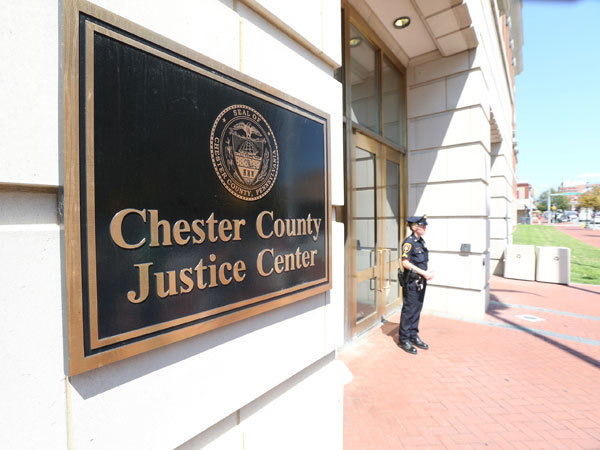
    A Chester County man pleaded guilty to murder and related crimes earlier this month after he punched a 9-month-old infant and did not seek medical care for the child, prosecutors said Wednesday.

    Enrique Lopez-Gomez, 32, of West Grove, pleaded guilty to third-degree murder and endangering the welfare of a child on Feb. 11, according to prosecutors.

    He remains incarcerated in the Chester County Prison and awaits sentencing.

    Announcing the charges, Chester County District Attorney Christopher de Barrena-Sarobe called the crime “unthinkable.”

    Prosecutors say Lopez-Gomez was the child’s caregiver at the time of the 2024 incident, when he fell on the infant at a residence in Kennett Square. As the baby began to cry in pain, Lopez-Gomez punched the child in the abdomen, prosecutors said.

    He did not seek help or tell anyone about the child’s injuries, according to prosecutors, nor did he offer medical care as the child’s condition worsened that evening.

    First responders who were later called to the scene removed the baby from the home, and the child was pronounced dead at Nemours/A.I. DuPont Hospital for Children.

    Medical examiners determined that the child had died from blunt force trauma, leading to an intestinal rupture and soft tissue bleeding, prosecutors said.

    The baby had also suffered large bruises around the abdomen.

    Prosecutors have yet to set a date for Lopez-Gomez’s sentencing. He is being held on $10 million bail.

  • Dozens more drug, gun cases tied to cops who defenders say ‘lied’ are thrown out. Some sent people to prison for years.

    Dozens more drug, gun cases tied to cops who defenders say ‘lied’ are thrown out. Some sent people to prison for years.

    More than 40 drug and gun convictions were vacated Wednesday, the latest batch in what could grow to 1,000 cases tied to three narcotics officers who prosecutors say repeatedly gave false testimony in court.

    Common Pleas Court Judge Rose Marie DeFino-Nastasi dismissed 47 cases — most involving defendants jailed because of their convictions — after prosecutors conceded that the testimony of three officers on the Philadelphia Police Department’s Narcotics Strike Force could no longer be trusted.

    In December, the district attorney’s office said that Officers Ricardo Rosa, Eugene Roher, and Jeffrey Holden were found to have repeatedly given false statements in drug-related cases after attorneys with the Defender Association of Philadelphia uncovered video evidence that contradicted their accounts.

    The defenders said the officers regularly watched live surveillance footage to monitor suspects in drug investigations, then did not disclose it to prosecutors or defense attorneys in court. The video footage showed they also testified to things that did not happen or that they could not have seen from where they were positioned, according to court filings.

    Prosecutors later said that they could no longer vouch for the officers’ credibility and are expected to dismiss scores of cases built on their testimony in the coming months.

    Nearly all the defendants at the center of the cases dismissed Wednesday were in custody, including several serving years in prison tied to their drug convictions.

    Among them is Hamid Yillah, 34, serving four to nine years in state prison, plus two years’ probation, on gun and drug charges based on the testimony of Roher and Rosa, prosecutors said.

    And Juan Lopez, 38, serving five to 10 years in prison on drug possession and conspiracy charges.

    DeFino-Nastasi vacated their convictions and sentences.

    Not everyone whose conviction was overturned will walk free. Some are also serving time for unrelated serious crimes, including murder and aggravated assault.

    But many without additional arrests could be released as a result of Wednesday’s ruling.

    The dismissals follow more than 130 convictions that were thrown out in December after prosecutors and defenders identified more than 900 cases built almost entirely on the officers’ word. Approximately 200 cases have been resolved so far.

    The officers at the center of the case remain on active duty, but have been temporarily reassigned from narcotics amid an ongoing internal affairs investigation, said police spokesperson Sgt. Eric Gripp.

    That investigation, which began in early 2024, remains incomplete because the district attorney’s office has not provided the department with the information necessary to complete it, he said.

    The district attorney’s office previously said it provided internal affairs with details of the officers’ false statements last March. But Gripp said the records and evidence offered did not appear to show wrongdoing.

    (Paula Sen, of the Defender Association’s Police Accountability Unit, said she and her colleagues have also provided internal affairs with a few dozen cases where the officers’ testimony did not match surveillance footage.)

    Since the first batch of cases was thrown out in December, Gripp said, the department has followed up with the district attorney’s office for more information about the alleged wrongdoing, including the nine cases identified in court records in which the officers were said to have given false statements.

    “To date, we have not been provided with those cases,” he said.

    Gripp said that some of the cases discharged Wednesday involved dangerous drug dealers carrying weapons, and that narcotics officers risk their lives to make arrests.

    “This work matters, and repeated dismissals without providing the department the information necessary to review and address the concerns does not advance officer accountability or public safety,” he said. “We continue to expect good faith cooperation from all partners in the criminal justice system. We remain ready to act immediately upon receipt of any substantiated information.”

    The district attorney’s office did not immediately respond to a request for comment.

    Prosecutors have stopped short of accusing the officers of lying, but said “there’s enough of a pattern of inconsistencies across testimony that we can’t rely on them as critical witnesses in court.”

    Michael Mellon and Paula Sen work in the Police Accountability Unit for the Defender Association.

    Sen and Michael Mellon, of the defenders’ Police Accountability Unit, disagreed, and said the officers “straight up lied.”

    Sen and Mellon said they first spotted a pattern of testimony discrepancies in 2019 while reviewing surveillance footage that conflicted with statements Rosa had made in drug cases. Over time, they said, they continued scrutinizing his narcotics squad and identified similar issues with testimony from Holden and Roher.

    According to the defenders, the officers relied on the city’s surveillance camera network to watch suspected drug activity in real time but did not disclose that investigative method — withholding evidence that should have been turned over to the defense.

    In court, Mellon said, the officers denied using the cameras and frequently testified that they personally observed hand-to-hand drug transactions. Video later showed those exchanges either did not occur or would have been impossible for the officers to see because the suspects were out of view.

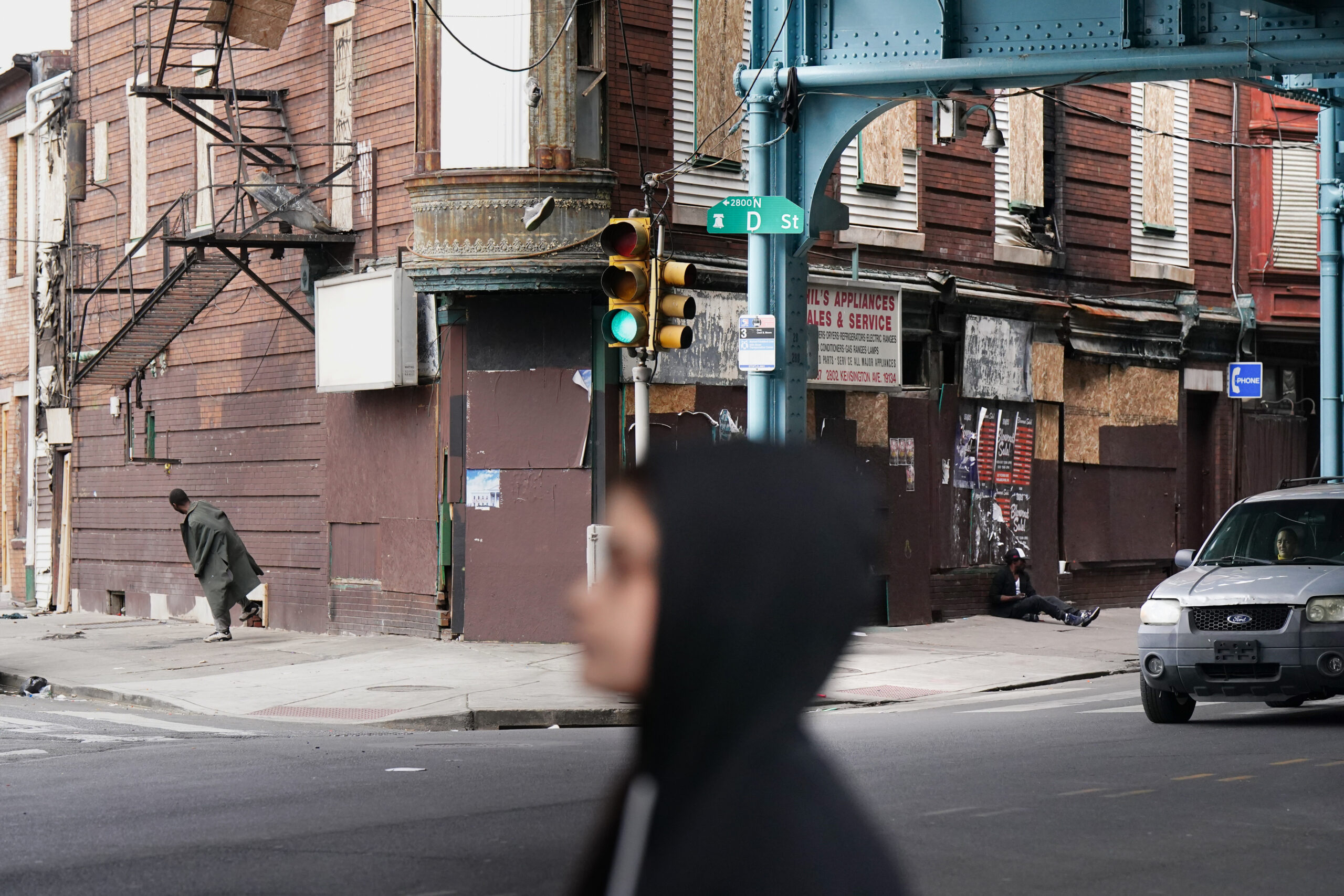
    A video camera used by Philadelphia police is positioned at the corner of D Street and Kensington Avenue.

    Sen said her office sent letters to all of the defendants whose cases were being reviewed to let them know they might be eligible for relief.

    Still, she said, the convictions often resulted in years of peoples’ lives spent incarcerated and on court supervision — time they cannot get back.

    “We are not talking about big drug busts. We are talking about the lowest of the low cases, hand-to-hand drug sales … within a quarter of a mile radius of Kensington,” she said. “That’s what makes this especially egregious.”