A man has been arrested in the theft of more than $175,000 worth of metal and mechanical components from the iconic Jersey Shore theme park Morey’s Piers.
Wildwood police said they arrested William Morelli, 67, of Wildwood Crest. Police first became aware of the heist, which occurred over several days, on Feb. 4. The reporting party provided police with a suspect and vehicle description after reviewing surveillance video.
Upon investigation, police said they identified Morelli, as the suspect who removed a large amount of metal from Morey’s temporary work site on the beach.
Morelli allegedly removed metal from the beach before selling it to an unidentified scrapyard business, according to Wildwood police. Morelli was charged with theft of movable property and later released from custody.
The theft comes at a time when the iconic Morey’s Ferris wheel is undergoing much-needed renovations at the South Philadelphia Navy Yard.
Geoff Rogers, chief operating officer at Morey’s Piers, said although work crews remain optimistic, the stolen materials bring an “unexpected and disappointing setback” to the project.
“We are heartbroken by this incident,” Rogers said. “The Giant Wheel holds deep sentimental value for not only the company and our team members, but the generations of families who have made memories on it.”
Despite the theft, Rogers said that the planned Ferris wheel renovation should be complete by the start of the 2026 summer season, as originally planned.
The Giant Wheel, a 156-foot LED-lit Ferris wheel and one of the tallest at the Jersey Shore, is disassembled, repaired, and repainted regularly, but this year’s renovation required transportation to the Navy Yard to work on its 16,000-pound centerpiece.
Designed by Dutch ride manufacturer Vekoma Rides and installed in 1985, the Giant Wheel has been a recognizable symbol of the Wildwood skyline for decades. In 2012, they upgraded it with an LED light system.
After last year’s closures of Gillian’s Wonderland in Ocean City and Wildwood’s Splash Zone Water Park, Morey’s Piers are the last beachside water parks and one of the Jersey Shore’s remaining large-scale Ferris wheels.
A 19-year-old man has been charged with murder in the death of another teen last summer in the East Germantown section of Philadelphia, police said Tuesday.
Tayvone Bibbs was taken into custody on Tuesday by a fugitive task force in connection with the shooting death of 19-year-old Michael Allen on July 3, 2025, police said.
Just after 5:30 a.m. that day, police responded to a report of a person with a gun on the 200 block of East Rittenhouse Street and found Allen lying in the street with a gunshot wound to his face. Medics pronounced him dead at the scene.
Police did not offer a possible motive for the killing or mention any other arrests.
Two weeks after Allen’s death, police released surveillance video of the minivan used in the shooting. Police noted in the video that the vehicle had at least three occupants.
In 2009, after a federal judge effectively ordered Philadelphia drug kingpin Alton “Ace Capone” Coles to die in prison — imposing a life sentence plus 55 years for convictions on a host of drug and weapons charges — Coles momentarily dropped the swaggering persona he had displayed while building his vast cocaine empire.
“I never thought it would come to this,” Coles said at the time, his voice cracking as he spoke in court. “I don’t think life is deserved for selling drugs.”
On Tuesday, another federal judge offered something close to an endorsement of that view as she ordered Coles’ sentence be reduced to 25 years in prison — meaning Coles, now 52, could be released within a few years.
Coles’ twist of fate is the result of a complicated appellate process, one that has its roots in how federal laws have changed in recent years for some drug crimes, particularly those involving crack cocaine. The penalties for crack offenses were once significantly harsher than those tied to other narcotics, leading to widespread racial disparities because most defendants in crack cases were Black.
Coles’ lawyers say his case is also a demonstration of the “remarkable” turnaround Coles has made behind bars. While Coles once oversaw a drug operation that was estimated to have poured $25 million worth of cocaine and crack into Philadelphia — all as he served as the brash face of a local hip-hop record label — in prison, his lawyers said, he has become a barber, facilitated anti-violence programs for other inmates, and served as a counselor for prisoners with thoughts of self-harm.
“Knowing that he was facing the rest of his life in prison, Mr. Coles engaged in this extraordinary effort toward rehabilitation for the sole purpose of improving his life and of those around him,” his lawyer, Paul Hetznecker, wrote in court documents.
Federal prosecutors took a starkly different view, saying that Coles was “one of the major drug kingpins in Philadelphia during the last several decades” and that his eligibility to be resentenced was the result of a “pure technicality.” Even if Coles had committed his crimes today, prosecutors said — after Congress changed criminal sentencing guidelines — his actions would still warrant a life sentence.
“Coles led an armed and violent cocaine and crack distribution gang, which distributed quantities of deadly narcotics that [the trial judge] at sentencing aptly described as ‘staggering,’” prosecutors wrote in court documents.
U.S. District Judge Kai Scott said she believed that Coles had transformed his life in prison, and that 25 years of incarceration — even if much shorter than a life sentence — was still a substantial amount of time to serve behind bars.
Discussing Coles’ growth since being convicted, Scott said: “I’ve never seen this type of post-sentence rehabilitation.”
Coles, meanwhile, apologized for his crimes, telling Scott he is determined to try to make amends for his past.
“I am not the man I once was,” he said.
Building an empire
When Coles was federally indicted in 2005, prosecutors said he had run one of the largest drug organizations in modern city history. Coles and his coconspirators, they said, helped push a ton of cocaine and a half-ton of crack into the streets over the course of more than six years.
Coles was not charged with any crimes of violence, but federal authorities said they believed his group and its members were tied to nearly two dozen shootings and seven homicides.
As he was growing his drug empire, Coles was also building his reputation in the local rap scene. He helped found the hip-hop label Take Down Records, and staged popular parties and concerts around the city.
And he and a friend, Timothy “Tim Gotti” Baukman, produced and starred in a 31-minute music video called New Jack City, The Next Generation, in which they portrayed Philadelphia drug dealers who used violence and intimidation to cement their standing in the underworld.
Authorities used that video as part of a two-year investigation into Coles and his gang, and said Take Down Records amounted to a front for Coles to wash his money. They also wiretapped hundreds of conversations between drug associates, and went on to seize dozens of weapons and hundreds of thousands of dollars in raids on members’ homes.
Coles was charged in 2005, as were nearly two dozen associates, some of whom pleaded guilty or went on to cooperate with authorities.
Coles took his case to trial and testified in his own defense, saying he was not the kingpin prosecutors made him out to be.
But in 2008, a jury found Coles guilty of crimes including conspiracy to distribute cocaine and heading a continuing criminal enterprise. U.S. District Judge R. Barclay Surrick later sentenced Coles to life behind bars plus 55 years, saying: “The amount of drugs was staggering and the money involved was even more staggering … this crime was just horrendous.”
Ongoing legal saga
The imposition of that penalty, however, was hardly the end of the legal drama connected to Coles.
After Coles was sentenced, a Philadelphia police officer was convicted and imprisoned for tipping Coles off about his impending arrest.
A federal appeals court also later overturned a conviction tied to Coles’ girlfriend, who had been accused of helping him launder drug money to buy a house.
And Coles continued to file appeals challenging his case.
In 2014, he successfully argued to have one of his two prison sentences — the 55-year term — reduced to five years because of technicalities in how evidence was used to prove certain charges. His life sentence, however, remained intact.
But in 2020, Hetznecker, Coles’ appellate lawyer, filed a new motion challenging that penalty, saying a law passed by Congress in 2018 made Coles eligible to have his life sentence reduced.
The law, known as the First Step Act, was a sweeping attempt to undo some of the tough-on-crime laws from the 1990s that caused the federal prison population to swell. The bill received bipartisan support, and was signed into law by President Donald Trump.
One of the law’s provisions allowed some people who were sentenced for crack-related offenses to have their penalties reevaluated — part of an effort to unwind the racial disparities caused by disproportionately harsh sentences being imposed on Black defendants in crack cases.
Hetznecker, in seeking to have a judge reconsider Coles’ penalty, wrote that a life sentence “for a non-violent drug offense is a draconian sentence and, given the current paradigm of criminal justice reform, counter the movement toward a more just system.”
“The underlying principles of justice and fairness require that those subjected to punishment for crimes against society, especially those convicted of non-violent offenses, be provided the opportunity for re-integration back into society as rehabilitated individuals,” Hetznecker wrote.
Scott, the judge, agreed last month that Coles was eligible for a new sentence under the First Step Act. And in imposing the new penalty Tuesday, she said she believed Coles was unlikely to commit similar crimes in the future.
“It’s clear to me that you have been deterred — you have made changes,” she said.
Coles said he recognizes that he had once been “a negative influence on society,” but said he has now committed to bettering himself and trying to help others.
Hetznecker said Coles deserves the opportunity to demonstrate that he has moved beyond the persona he once inhabited on the streets.
“‘Ace Capone’ is dead, he’s gone,” Hetznecker said. “Alton Coles has emerged.”
One night in early December, the phones of Radnor High School students started buzzing. Some freshmen girls were getting disturbing messages: A male classmate, they were told, had made pornographic videos of them.
When one of the girls walked into school the next morning, “she said everyone was staring at her,” said her mother, who requested anonymity to protect her daughter’s identity. “All the kids knew. It spread like wildfire.”
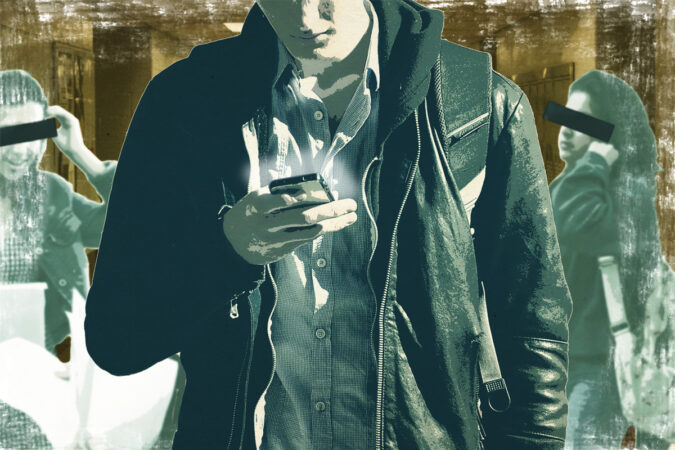
So-called AI deepfakes — pictures of a real person manipulated with artificial intelligence,sometimes with “nudify” features that can convert clothed photos into naked ones — have become the talk of school hallways and Snapchat conversations in some area schools.
As Pennsylvania lawmakers have pushed new restrictions cracking down on deepfakes — defining explicit images as child sexual abuse material, and advancing another measure that would require schools to immediately alert law enforcement about AI incidents — schools say they have no role in criminal investigations, and are limited in their ability to police students off campus.
But some parents say schools should be taking a more proactive stance to prepare for AI abuse — and are failing to protect victims when it happens, further harming students who have been violated by their peers.
In the Council Rock School District, where AI-generated deepfakes were reported last March, parents of targeted girls said administrators waited five days to contact the police about the allegations and never notified the community, even after two boys were charged with crimes.
“They denied everything and kind of shoved it under the rug and failed to acknowledge it,” said a mother in Council Rock, who also requested anonymity to protect her daughter’s identity. “Everybody thought it was a rumor,” rather than real damage done to girls, the mother said.
Council Rock spokesperson Andrea Mangoldsaid that the district “recognizes and understands the deep frustration and concern expressed by parents,” and that a police investigation “began promptly upon the district’s notification.”
Mangold said that current laws were “insufficient to fully prevent or deter these incidents,” and that the district was “limited in what we know and what we can legally share publicly” due to student privacy laws.
In Radnor, parents also said the district minimized the December incident. A district message last month said a student had created images of classmates that “move and dance,” and reported that police had not found evidence of “anything inappropriate” — even though police later saidthey had charged a student with harassment after an investigation into alleged sexualized images of multiple girls.
A Radnor spokesperson said the alleged images were never discovered and the district’s message was cowritten by Radnor police, who declined to comment.
The district “approaches all student-related matters with care and sensitivity for those involved,” said the spokesperson, Theji Brennan. She said the district was limited in what it could share about minors.
In both Radnor and Council Rock, parents said their daughters were offered little support — and were told that if they were uncomfortable, they could go to quiet rooms or leave classes early to avoid crossing paths with boys involved in the incidents.
“She just felt like no one believed her,” the Radnor mother said of her daughter.
How an investigation unfolded in Radnor
In Radnor, five freshman girls first heard they were victims of deepfakes on Dec. 2, according to parents of two of the victims who requested anonymity to protect their daughters’ identities. They said boys told their daughters that a male classmate had made videosdepicting them sexually.
In a Snapchat conversation that night, one boy said, “‘Nobody tell their parents,’” a mother of one of the victims recalled. Reading her daughter’s texts, “it quickly went from high school drama to ‘Wow, this is serious.’”
The girls and their parents never saw the videos. In an email to school officials the next morning, parents asked for an investigation, discipline for the students involved, and efforts to stop any sharing of videos. They also asked for support for their daughters.
Schooladministrators began interviewing students. The mother of one of the victims said her daughter was interviewed alone by the male assistant principal — an uncomfortable dynamic, given the subject matter, she said.
One mother said the principal told her daughter that it was the boys’ word against hers, and that he was “so glad nothing was shared” on social media — even though no one knew at that point where videos had been shared, the mother said.
The principal said the school had no authority over kids’ phones, so the girl and her family would need to call the police if they wanted phones searched, the mother said.
Brennan, the Radnor spokesperson, said that administrators contacted Radnor police and child welfare authorities the same day they spoke with families. “The district’s and the police department’s investigations have found no evidence that the images remain or were shared, posted, or otherwise circulated,” she said.
The male classmate acknowledged making videos of the girls dancing in thong bikinis, the parents said police told them. But the app he used was deleted from his phone, and the videos were not on it, the police told them.
The parents didn’t believe the admission.
“I don’t think a 14-year-boy would report a TikTok video of girls in bikinis,” said one of the mothers, who said her daughter was told she was naked and touching herself in videos.
The police told parents they did not subpoena the app or any social media companies, making it impossible to know what was created.
Radnor Police Chief Chris Flanagan declined to comment, as did the Delaware County District Attorney’s Office.
In a message sent to the district community Jan. 16 announcing the end of the police investigation, officials said a student, outside of school hours, had taken “publicly available” photos of other students and “used an app that animates images, making them appear to move and dance.”
“No evidence shared with law enforcement depicted anything inappropriate or any other related crime,” the message said.
A week later, the police released a statement saying a juvenile was charged with harassment after an investigation into “the possible use of AI to generate non-consensual sexualized imagery of numerous juveniles.”
Asked why the district’s statement had omitted the criminal charge or mention of sexualized imagery, Brennan said the statement was also signed by Flanagan, who declined to comment on the discrepancy.
Brennan said the district had provided ongoing support to students, including access to a counselor and social worker.
Parents said the district had erred in failing to initiate a Title IX sexual harassment investigation, instead telling parents they needed to file their own complaints.
“They kept saying, ‘This is off campus,’” the mother said. But “my daughter could not walk around without crying and feeling ashamed.”
Parents say girls were ‘not supported’ in Council Rock
In Council Rock, a girl came home from Newtown Middle School on March 17 and told her mother a classmate had created naked images of her.
“I’m like, ‘Excuse me? Nobody contacted me,’” said the mother, who requested anonymity to protect her daughter’s identity. She called the school’s principal, who she said told her: “‘Oh, my God, I meant to reach out to you. I have a list of parents, I just have not gotten to it’ — you know, really downplaying it.”
The mother and other victims’parents later learned that administrators were alerted to the images on March 14, when boys reported them to the principal. But instead of calling the police, the principal met with the accused boy and his father, according to parents. Police told parents they were contacted by the school five days later. The Newtown police did not respond to a request for comment.
Mangold, the Council Rock spokesperson, declined to comment on the specific timing of the school’s contact with police.
Police ultimately obtained images after issuing a subpoena to Snapchat; in total, there were 11 victims, the parents said.
Through the Snapchat data, police learned that a second boy was involved, the parents said, which made them question what was created and how far it spread.
Parents said they believe there are more pictures and videos than police saw, based on what their daughters were told — and because the delayed reporting to police could have given boys an opportunity to delete evidence.
“That’s kind of what the fear of our daughters is — like, what was actually out there?” said one mother, who also requested anonymity to protect her child’s identity.
Manuel Gamiz, a spokesperson for the Bucks County district attorney, said Newtown Township police had charged two juveniles with unlawful dissemination of sexually explicit material by a minor. Gamiz said the office could not provide further information because the case involved juveniles.
Juvenile cases are not public, but victims’ parents said both boys were adjudicated delinquent. While the boys had been attending Council Rock North High School with their daughters, the district agreed to transfer both after their cases were resolved, according to a lawyer representing four of the parents, Matthew Faranda-Diedrich.
“How can you let this person be roaming the halls?” said Faranda-Diedrich, who said it took formal demand letters in order for the district to transfer the boys.
He accused the district of mishandling the incident and “protecting the institution” rather than the victimized girls.
“They’re putting themselves above these students,” Faranda-Diedrich said.
Parents said school leaders warned their daughters against spreading rumors, and never sent a districtwide message about the incident.
“These girls were victims,” one of the mothers said, “and they were not supported.”
She and the other mothers who spoke to The Inquirer said the incident has deeply affected their daughters, from anxiety around what images may have been created — and how many people saw them — to a loss of trust in school leaders.
Some of the girls are considering switching schools, one mother said.
State law changes and a debate around education about deepfakes
Those changes came in 2024 and 2025, after a scandal over deepfakes of nearly 50 girls at a Lancaster private school.
Another bill that passed the state Senate unanimously in November would require school staff and other mandated reporters to report AI-generated explicit images of minors as child abuse — closing what prosecutors had cited as a loophole when they declined to bring charges against Lancaster Country Day School for failing to report AI images to the police. That legislation is now pending in the House.
Schools can also do more, said Faranda-Diedrich, who also represented parents of victims in the Lancaster Country Day School incident. He has pressed schools to conduct mandated reporter training for staff. “By and large they refuse,” he said.
In Radnor, parents urged the school board at last week’s committee meeting to make changes.
Parent Luciana Librandi walks back to her seat after speaking during a Radnor school board committee meeting last week.
Luciana Librandi, a parent of a freshman who said she had been “directly impacted by the misuse of generative AI,” called for timelines for contacting police following an AI incident, safeguards during student questioning, and annual education for students and parents on AI.
Others called for the district to communicate the criminal charge to families, to enforce existing policies against harassment, and to independently review its response to the recent incident.
Radnor officials said they are planning educational programming on the dangers of making AI images without a person’s consent.
There is somedebate on whether to teach children about “nudify” apps and their dangers, said Riana Pfefferkorn, policy fellow at the Stanford Institute for Human-Centered AI, who has researched the prevalence of AI-generated child sexual abuse material. Alerting kids to the apps’ existence could cause them “to make a beeline for it,” Pfefferkorn said.
While “this isn’t something that is epidemic levels in schools just yet,” Pfefferkorn said, “is this a secret we can keep from children?”
One of the victims’ parents in Radnor said education on the topic is overdue.
“It’s clearly in school,” the mother said. “The fact there’s no video being shown on the big screen in your cafeteria — we don’t live in that world anymore.”
When Yuan Yuan Lu’s boyfriend sexually assaulted her in his Pennsport home last week, her cousin said, she broke up with him and went to the police.
The 28-year-old Bucks County woman thought she was doing the right thing by reporting the crime, her cousin Natalie Truong said.
“She told me how safe she felt, how much better she felt opening up and telling the cops her story,” said Truong, who spent time with Lu the evening she reported the assault.
That was the last time Truong saw Lu alive.
On Sunday, less than 12 hours after Lu called police to say that her ex-boyfriend, Yujun Ren, had attacked her, police said, Ren, 32, stalked her. He followed her to her home in Levittown, police said, approached her as she sat in her car outside her house, and shot her in the head, killing her.
Lu’s death shook her loved ones and led to calls on social media for increased awareness of intimate partner violence.
Truong said Lu leaves behind dreams unfulfilled. Lu grew up in a small village in south China, and moved to the United States with her father in 2009 to seek a more prosperous life.
In Philadelphia, she attended Constitution High School, perfected her English, and always kept her friends abreast of her latest entrepreneurial pursuits, Truong said.
Lu went into the food business with friends, cooking homemade Asian cuisine and selling it in carts on local college campuses, and later worked in a bubble tea shop and at a nursing home.
Yuan Yuan Lu loved to eat at Philadelphia’s restaurants, according to her cousin, Natalie Truong.
She loved her pets — a corgi named Dundun and a cat named Milk Cap, after a creamy bubble tea topping. Lu and Truong frequented Philadelphia restaurants, most recently dining together at Kalaya in Fishtown, and took day trips to places like New Jersey’s Swaminarayan Akshardham, the second-largest Hindu temple in the world.
Despite the cousins’ close relationship, Truong said, Lu did not share a lot of details about her personal life, perhaps not wanting to trouble others with her concerns.
Truong said Lu did not talk a lot about her relationship with Ren, whom she had met at her nursing home job and had dated for about a year. Truong’s perception of the relationship changed the night her cousin opened up about Ren’s behavior, she said.
“She was struggling alone for a while,” Truong said, adding that initially, Lu “liked him, so we all trusted her judgment.”
On Sunday, the day after Lu reported the assault, Ren turned himself in to police in Middletown Township, and officers discovered Lu’s bodyin her white Hyundai shortly after noon, authorities said. He was charged with murder, stalking, and a firearms crime.
Ren told police that Lu had said “hurtful things” to him that day and that, in an attempt to scare her, he had brandished the firearm, which he said accidentally discharged. He was licensed to own the weapon, according to the affidavit of probable cause for his arrest.
Ren’s aunt later turned in her nephew’s 9mm handgun — a weapon Lu had told police he “carried everywhere,” leading her to fear for her safety, the affidavit said.
Truong said she wished law enforcement had had more time to investigate the sexual assault before Lu was killed. Her death was tragic, her cousin said, a life ended all too soon.
Lu’s father had recently left Philadelphia to join his wife and son in China. Truong has started a GoFundMe campaign to raise money to help the family with funeral expenses and to pay for travel to Philadelphia to attend the service.
As the family mourns Lu’s death, Truong said, they are hopeful that law enforcement officials will hold her killer accountable.
“We just want her to get the justice that she deserves, because she’s a really kind person,” Truong said. “She never thought this would happen to her — because you would never think someone you love can hurt you like that.”
Yuan Yuan Lu poses with her corgi, Dundun, and her cat, Milk Cap.