A West Philadelphia man who set a fatal fire in the midst of a tumultuous breakup, killing his ex-girlfriend’s disabled sister, was convicted Friday of first-degree murder.
A Delaware County jury ruled that Aaron Clark, 20, set the the December 2022 blaze in Darby Township that killed Olivia Drasher, the wheelchair-bound sister of his ex-girlfriend, Amira Rogers. He was also found guilty of four counts of attempted murder, one each for the other occupants in the home at the time.
Hours before the fire, Rogers ended her relationship with Clark after he choked her during an argument over his alleged infidelity, according to testimony during the five-day trial before Delaware County Court Judge Deborah Krull.
In his closing argument, Clark’s attorney, Michael Dugan, accused prosecutors of having “tunnel vision” and building the case against Clark at the insistence of Rogers and her family.
“This investigation began with a conclusion right from the jump,” Dugan said. “There was never any suspect, there was no investigation of anyone else, other than looking at this man.”
Dugan urged jurors to acquit Clark of all charges, saying a lack of eyewitness evidence and inconsistent scientific rulings on whether the fire was set intentionally introduced too much reasonable doubt.
But jurors were not swayed.
Assistant District Attorney Danielle Gallaher challenged Dugan’s assessment, telling jurors not to let the veteran defense attorney mischaracterize the evidence.
“This crime fits this defendant,” she said. “Arson is a very intimate crime, and it’s something a man who has been scorned would do.”
Gallaher said Rogers ended her 10-month relationship with Clark out of fear that he would harm her further. She reported his abuse to her local police department, and even filed a complaint with the United States Postal Service, where the two worked together in Southwest Philadelphia.
But Clark, Gallaher said, could not stand to lose Rogers.
“He tried to kill her and everyone she loved, a family who loved each other unconditionally,” Gallaher said. “The defendant wanted to take it all away because he can’t comprehend that. He doesn’t have an ounce of compassion in him.”
Dugan told jurors that prosecutors had falsely painted Clark as homicidal and vindictive and noted that while the couple had a nasty argument two days before the fire, they had reconciled, posing for pictures in front of a Christmas tree hours later.
“That’s not someone who’s in fear of her life,” Dugan said of Rogers. “That’s just someone who’s in a bad relationship.”
Dugan characterized the prosecution’s case as “full of holes.” One of Rogers’ neighbors, touted as an eyewitness, could not pick Clark out of a police lineup, he said. Arson experts said there was no evidence of any accelerant found at the crime scene.
But Gallaher said there was more than enough evidence to connect Clark to the crime. The pants he was wearing when he was arrested tested positive for a petroleum-based accelerant, and cell-phone tower data showed he was near Rogers’ home at the time the fire was set.
The most damning evidence, she said, were the text messages Clark sent Rogers in the hours before the fire, including telling her: “hope you don’t miss the show.”
“He’s telling her he’s going to create a spectacle,” she said. “He wants her to know that whatever happens, he’s responsible.
“Believe him when he says that.”
A conviction for first-degree murder carries a mandatory sentence of life in prison. Clark will be sentenced next month.
Claudio Neves Valente, 48, a former Brown student and Portuguese national, was found dead Thursday night from a self-inflicted gunshot wound, said Col. Oscar Perez, the Providence police chief.
Investigators believe he is responsible for fatally shooting two students and wounding nine other people in a Brown lecture hall last Saturday, then killing MIT professor Nuno F.G. Loureiro two days later at his home in the Boston suburbs, nearly 50 miles (80 kilometers) from Providence. Perez said as far as investigators know, Neves Valente acted alone.
Portugal’s top diplomat said Friday that the government was taken aback by revelations that a Portuguese man is the main suspect in the mass shooting at Brown and the killing of an MIT professor who was of the same nationality. Police said they were contacted by U.S. authorities Thursday once Neves Valente was named.
Foreign Minister Paulo Rangel said Portugal has provided “very broad cooperation” in the case. He said in comments to the national news agency Lusa that “the investigation is far from over.”
Brown University President Christina Paxson said Neves Valente was enrolled there as a graduate student studying physics from the fall of 2000 to the spring of 2001.
“He has no current affiliation with the university,” she said.
Neves Valente and Loureiro attended the same academic program at a university in Portugal between 1995 and 2000, U.S. attorney for Massachusetts Leah B. Foley said. Loureiro graduated from the physics program at Instituto Superior Técnico, Portugal’s premier engineering school, in 2000, according to his MIT faculty page. The same year, Neves Valente was let go from his temporary student support and faculty liaison position at the Lisbon university, according to an archive of a termination notice from the school’s then-president in February 2000.
Neves Valente, who was born in Torres Novas, Portugal, about 75 miles (121 kilometers) north of Lisbon, had come to Brown on a student visa. He eventually obtained legal permanent resident status in September 2017, Foley said. It wasn’t immediately clear where he was between taking a leave of absence from the school in 2001 and getting the visa in 2017. His last known residence was in Miami.
After officials revealed the suspect’s identity, President Donald Trump suspended the green card lottery program that allowed Neves Valente to stay in the United States.
There are still “a lot of unknowns” in regard to motive, Rhode Island Attorney General Peter Neronha said. “We don’t know why now, why Brown, why these students and why this classroom,” he said.
Tip helps investigators connect the dots
The FBI previously said it knew of no links between the Rhode Island and Massachusetts shootings.
Police credited a person who had several encounters with Neves Valente for providing a crucial tip that led authorities to him.
After police shared security video of a person of interest, the witness — known only as “John” in a Providence police affidavit — recognized him and posted his suspicions on the social media forum Reddit. Reddit users urged him to tell the FBI, and John said he did.
John said he encountered Neves Valente about two hours before the attack in a bathroom in the engineering building, which was where the shooting occurred, and noticed he was wearing inappropriate clothing for the weather, according to the affidavit. Still before the attack, he again bumped into Neves Valente a couple blocks away and saw him suddenly turn away from a Nissan sedan when he saw John.
“When you do crack it, you crack it. And that person led us to the car, which led us to the name,” Neronha said.
His tip pointed investigators to a Nissan Sentra with Florida plates. That enabled Providence police to tap into a network of more than 70 street cameras operated around the city by surveillance company Flock Safety. Those cameras track license plates and other vehicle details.
After leaving Rhode Island, Providence officials said Neves Valente stuck a Maine license plate over his rental car’s plate to help conceal his identity.
Investigators found footage of Neves Valente entering an apartment building near Loureiro’s in a Boston suburb. About an hour later, Neves Valente was seen entering the Salem, New Hampshire, storage facility where he was found dead, Foley said. He had with him a satchel and two firearms, Neronha said.
Victims include renowned physicist, political organizer and aspiring doctor
Loureiro, a 47-year-old physicist and fusion scientist, joined MIT in 2016 and was named last year to lead the school’s Plasma Science and Fusion Center, one of its largest laboratories. The scientist from Viseu, Portugal, had been working to explain the physics behind astronomical phenomena such as solar flares.
In Lisbon, he was remembered as a highly regarded researcher and instructor for “all the contributions he gave and what he could still have given, all the equations left unwritten,” said Professor Bruno Gonçalves, head of the Institute for Plasmas and Nuclear Fusion at Instituto Superior Técnico.
Gonçalves added, “It is difficult to imagine in what context someone would want to harm someone that works in this field.”
The two Brown students killed during a study session for final exams were 19-year-old sophomore Ella Cook and 18-year-old freshman MukhammadAziz Umurzokov. Cook was active in her Alabama church and served as vice president of the Brown College Republicans. Umurzokov’s family immigrated to the U.S. from Uzbekistan when he was a child, and he aspired to be a doctor.
As for the wounded, three had been discharged and six were in stable condition Thursday, officials said.
Although Brown officials say there are 1,200 cameras on campus, the attack happened in an older part of the engineering building that has few, if any, cameras. And investigators believe the shooter entered and left through a door that faces a residential street bordering campus, which might explain why the cameras Brown does have didn’t capture footage of the person.
___
Associated Press reporters Barry Hatton and Helena Alves in Lisbon, Portugal, Mark Scolforo in Harrisburg, Pennsylvania, Audrey McAvoy in Honolulu, Hallie Golden in Seattle and Matt O’Brien in Providence contributed.
Berndt, 43, was a part of an online chat group in which people discussed and shared videos of tortured animals, according to Department of Justice court filings. Among the chat’s participants, Berndt’s “focus on the most grotesque forms of torture was unsurpassed.”
“Over and over again, Berndt expressed a desire for more extreme torture that resulted in more pain, experienced over a longer period of time,” prosecutors told the judge.
Messages from the chat are included in DOJ’s sentencing memo, and show Berndt’s enthusiasm over a video of a rat burning. Despite calling the footage “awesome,” he had suggestions on how to make the torture even crueler.
“Like I want to see them maimed and miserable,” Berndt wrote under the alias Requiem Rhythm. “Killing them is great, of course, but it puts an end to it while I want them to suffer longer.”
When the group discussed monkeys, Berndt expressed his desire for the tormentors to inflict more pain and focus on the primates’ genitalia.
Berndt and his chat-mates actively commissioned footage of the torture. They’d contact so-called videographers, usually in Indonesia, who would torture monkeys following specific requests — some for as little as $10 a video.
The monkeys in videos reviewed by DOJ were long-tailed macaques, which are native to Southeast Asia.
Berndt and a co-conspirator even discussed the possibility of buying a baby monkey that was advertised for sale, DOJ said in court filings. The two daydreamed about meeting up to torture the youngster together in real life.
“Hahah you would be welcome to visit and hang out,” Berndt said in a message to his co-conspirator, according to court records. “Like watching surgical theater.”
The baby monkey that Robert Berndt and his co-conspiracy discussed purchasing to torture.
Prosecutors from DOJ’s Environment and Natural Resources Division indicted Berndt in April and he pleaded guilty in May to a felony count of conspiring to create and distribute in videos depicting animal crush videos, the legal term for causing a non-human mammal serious bodily injury. Five other co-conspirators from the chat group were indicted, at least two of whom were sentenced to serve time in prison.
Berndt’s attorney and DOJ did not immediately respond to a request for comment.
Ahead of his sentencing, Berndt’s family members pleaded with the judge to not exceed the sentencing guidelines. which provide a range of 37 to 46 months of imprisonment.
The letters and Berndt’s attorney’s sentencing memo paint a picture of a man who loved animals and was dependable whenever his loved ones needed him in the past. But Berndt changed following a sexual assault and opioid addiction, the filings say.
Family members say that Berndt became manic and treated those who loved him as enemies. He became isolated, paranoid, and drank alcohol excessively.
By 2021, most of Berndt’s social interactions were through online chat rooms, according to his attorney’s memo. He sought the approval of his new friends by escalating his rhetoric.
“His acceptance and sense of validation with the group seemed to increase when he said more and more violent and troubling things,” his attorney told the judge.
But DOJ prosecutors rebuffed the idea that Berndt was merely a follower, and note that he only stopped his engagement in the groups after he was contacted by law enforcement in 2024.
“Berndt was personally responsible for creating some of the groups, establishing the rules of behavior within the groups, and then enforcing those rules after perceived violations,” prosecutors said in a sentencing memo.
Judge Edmund Sargus Jr., of the Southern District of Ohio, sentenced Berndt to 38 months of imprisonment followed by three years of probation.
Deputies from the Philadelphia Sheriff’s Office appear to have made serious tactical errors while attempting to apprehend a wanted man at his workplace in North Philadelphia on Monday morning, which enabled him to speed away in his car,according to experts in fugitive apprehension.
Moments later, Joseph Cini, while fleeing the deputies in his Nissan Maxima, plowed into a Jeep Patriot at Ninth Street and Girard Avenue, police say, killing an Uber passenger and seriously injuring her driver.
Cini, 35, ran from the scene but turned himself in to police Tuesday night. He is facing a slew of new charges, including homicide by vehicle.
Sheriff Rochelle Bilal has declined to answer any questions about the botched arrest. She released a short statement offering her office’s condolences to the family of Angela Cooper, the 63-year-old woman who was killed.
The Inquirer, however, was able to partially reconstruct what happened based on statements the deputies have provided to Philadelphia police.
The six-person operation by the sheriff’s office turned deadly when deputies from its warrant unit approached Cini, who was wanted for a probation violation, while he was still behind the wheel — rather than waiting until he got out of his vehicle.
Cini then backed up and, because the deputies had failed to box him in, started barreling down Girard Avenue. One member of the warrant unit, in fact, told police that he moved his unmarked vehicle to make way for the suspect’s vehicle to get by.
Four experts consulted by The Inquirer said the deputies’ statements could serve as a road map of what not to do during an apprehension. Such high-risk tactics, according to those experts, put the deputies and the public in more danger than was necessary.
“A vehicle is like a gun, almost. It can be a two-ton weapon.” said Craig Caine, a retired inspector with the U.S. Marshals Service. “And it proved to be true in this case.”
A plan gone wrong
Before sunrise Monday morning, a team of four deputies and two sergeants from the sheriff’s warrant unit laid an ambush for Cini. They had received a tip he was working at a low-slung plumbing business next to a three-way intersection on the 900 block of Watts Street, just south of Girard.
After surveilling the business, the team learned that Cini was set to arrive around 7 a.m. A sheriff’s sergeant and a deputy were outside the plumbing business, waiting to get a positive ID as others moved to block Cini’s escape paths, according to statements they later provided to police.
But when the deputies received confirmation that Cini was approaching the business, they sprang the trap before he stepped out of the car.
One deputy told police she activated the emergency lights on her car, then she and another deputy approached Cini and told him to exit his vehicle.
A sheriff’s sergeant on the team provided a similar account, telling police that the warrant unit closed in on Cini while he was still in the Maxima.
Instead of getting out of the car, Cini threw it in reverse and headed north on Watts.
As Cini backed up, a sheriff’s sergeant quickly moved his own vehicle onto Cambridge, a cross street, to avoid a collision with Cini on Watts, he later told police.
The warrant unit regrouped and began heading after Cini, but he crashed into the Jeep only five blocks away, according to the deputies.
Stephen Thompson, 51, a pastor in Kensington who was driving the Jeep for Uber, was injured in the crash and is being treated at Temple University Hospital.
The impact pinned Cooper, a Peco employee who did homeless outreach, in the back seat of the Jeep. A deputy checked her pulse and found none. She was pronounced dead at 7:24 a.m.
Days later, debris from the crash remained in the middle of Girard Avenue.
At a news conference Thursday, District Attorney Larry Krasner described Cooper as a “remarkable person” who was active with her church and “was always sacrificing for others.”
“We want the families and surviving victim to know our office will do everything we can to get justice and hold this defendant properly accountable for this terrible act,” Krasner said.
Experts on fugitive tracking and apprehension say the crash was likely preventable.
Robert Almonte, who served as U.S. marshal for the Western District of Texas during President Obama’s administration, said it is unusual for a warrant unit to confront a wanted man while he is in a car if the officers had information on where he is going to be.
“I would have waited for him to go into work and grab him there,” Almonte said. “Or, if the boss didn’t want that to happen, I’d go to Plan B: Let him walk toward the front door and grab him. But don’t let him get back to the vehicle.”
Caine, who worked on a fugitive task force in New York and New Jersey, agreed. A foot pursuit, he said, is much less dangerous than a car chase.
“Wait for him inside. Don’t have any suspicious vehicles within eyesight,” Caine said, speaking generally about best practices. “Take him at the door, or wait until he gets deeper into the building. Usually we were at the door. He comes in, boom, he’s on the ground, in handcuffs, and we take him away, no danger.”
If you have to confront a fugitive in a car, Caine said, make sure he has nowhere to go, if at all possible.
“Surround the car. Box him in nice and tight,” he said.
Krasner said Thursday that Cini may have somehow “figured out” he was about to be arrested, and then decided to flee. The deputies’ accounts to police, however, make no mention of that.
Regardless, Chris Burbank, an adviser to the Center for Policing Equity and the former police chief in Salt Lake City, said the operation was a failure that put lives at risk.
“It’s Law Enforcement Tactics 101,” Burbank said. “There is absolutely no reason to do anything while he’s mobile. This was unnecessary.”
Why was Cini wanted?
Since Monday, Philadelphia police and the sheriff’s office have provided only vague explanations of why sheriff’s deputies were attempting to arrest Cini in the first place.
Cini has a lengthy criminal history, racking up at least 24 priors in Pennsylvania and New Jersey between 2001 and 2022, including for theft, robbery, assault, and domestic abuse, according to police records.
The sheriff’s office statement on Monday said only that “deputies were attempting to serve a lawful warrant.” A police department news release on Monday described it as a “warrant for domestic assault,” leaving the impression Cini was wanted for a crime not yet prosecuted.
But two members of the warrant unit told police that they were planning to arrest Cini for a probation violation.
The Philadelphia District Attorney’s Office confirmed Thursday that Cini was being sought in connection with a 2018 casein which he had already been sentenced to jail time and probation.Assistant District Attorney Bob Wainwright said Cini was “on probation at the time for a domestic violence strangulation case” and had open warrants associated with that case.
Philadelphia law enforcement agencies have been under increased scrutiny about how they handle domestic abuse cases following the October killing of Kada Scott, allegedly by a former romantic partner.
At aCity Council hearing this month, Bilal said her office was prioritizing cases linked to domestic violence.
“We are no longer operating as a passive service agency,” she said. “We are now an active coordinator and a public safety partner in the city’s domestic violence response network.”
On Thursday, however, Bilal declined to discuss what went wrong in the Cini case.
“At this time, we cannot comment on the initial findings as the matter remains under active investigation,” Teresa Lundy, a department spokesperson, said in an email.
“Our office is conducting its own review,” Lundy said, “and will await the conclusion of the Philadelphia Police Department’s investigation before providing any further response.”
A 2-year-old girl was beaten to death in South Philadelphia last week, authorities say, and three people have been charged in connection with the crime.
The girl, Key’Monnie Bean, may have been subjected to abuse before the fatal beating on Dec. 8, Assistant District Attorney Ashley Toczylowski said at a news conference Thursday.
“There are indications this was an ongoing situation this little girl had to endure,” she said.
That night, police were called to a home in the 2100 block of South Beechwood Street for a report of an unresponsive child. When officers arrived, they found the girl lying on the floor of the basement, police said. She was not breathing, and bruises covered her body, Toczylowski said.
Efforts to revive the child were unsuccessful, said Deputy Commissioner Frank Vanore. She was pronounced dead shortly before 10 p.m. at Children’s Hospital of Philadelphia.
Prosecutors are still awaiting a medical examiner’s report, Toczylowski said, but preliminary evidence suggests the child may have been beaten with objects and her airway restricted, causing suffocation. Her death has been ruled a homicide.
Sean Hernandez, also known as Raafi Gorham, the boyfriend of the toddler’s mother, was arrested Wednesday and charged with murder, police said. Gorham, 21, lives at the house where the girl was found, Toczylowski said.
Gorham’s cousin, Anthony Lowrie, 21, and Alycia McNeill, 20, were also arrested Wednesday and charged with obstruction and lying to police, Toczylowski said. Lowrie is additionally charged with giving police a fake identification. Toczylowski said the two provided conflicting and false accounts of what occurred that evening. Both live in West Passyunk.
“Everyone in that house was very reluctant” to speak with police, she said, though someone in the house had called 911.
Key’Monnie’s mother was home at the time of the alleged beating, Toczylowski said, but has not been charged in the incident.
The girl’s father, TaShaun Walls, declined to comment Thursday, citing his grief.
In a public Facebook post, Walls wrote: “I love you so much [and] miss you so much already just wish I would has been there faster but I’ll never forget you.”
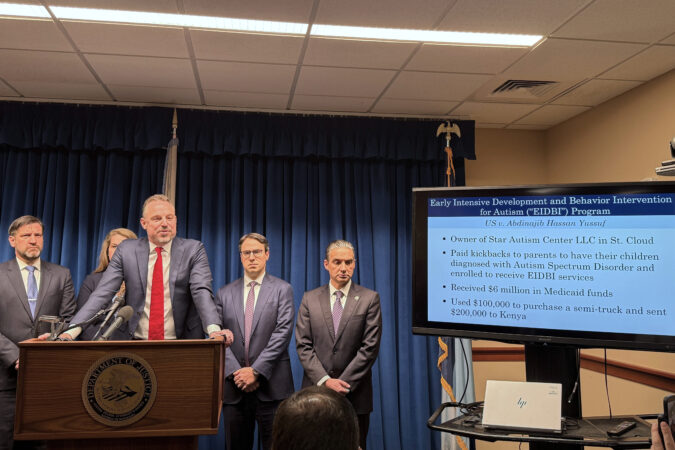
Two Philadelphia men are facing federal charges in Minnesota after authorities said the men had learned of the state’s lax controls around a government-funded housing program, then traveled there to learn how to exploit it — the latest development in a long-running fraud scandal that has enveloped Minnesota and drawn the ire of President Donald Trump.
Anthony Waddell Jefferson, 37, and Lester Brown, 53, were accused of fraudulently obtaining more than $3.5 million in government proceeds — funds that should have gone to Minnesota’s Housing Stabilization Services Program, prosecutors said, but were instead diverted to two companies the men oversaw in Philadelphia.
Jefferson and Brown “came [to Minnesota] not to enjoy our lakes, our beautiful summers, or our warm people,” Joseph H. Thompson, Minnesota’s first assistant U.S. attorney, said Thursday. “They came here because they knew and understood that Minnesota was a place where taxpayer money could be taken with little risk and few consequences.”
Jefferson and Brown each face one count of wire fraud and were charged by information, prosecutors said, which typically means a defendant intends to plead guilty.
Court records for their cases were not immediately available, and it was not clear if either man had retained an attorney.
Thompson cast their case as a novel twist in a scandal that he said was “swamping Minnesota” and had likely bilked taxpayers out of hundreds of millions of dollars intended for daycares, hunger programs, autism support, and other endeavors.
The state had become such a magnet for fraudsters, Thompson said, that Jefferson and Brown had effectively performed “fraud tourism,” visiting the state purely to learn how to take advantage of its reputation for having programs that were ripe for abuse.
The broader issues over the state’s lax disbursements have burst into national view in recent months as Trump and other Republicans have taken interest in the situation. Trump on social media called Minnesota a “hub of fraudulent money laundering activity” and, because many of those charged have ties to Minneapolis’ Somali community, said “Somali gangs are terrorizing the people of that great state.”
Republicans have also blamed Minnesota Gov. Tim Walz — the 2024 Democratic vice presidential nominee — for allowing the situation to unfold on his watch. And right-wing groups have questioned whether some funds were being disbursed to terrorist groups in Somalia or elsewhere in Africa.
Thompson said Thursday that he did not believe that was being done at a large scale, but that the exploitation of the programs was troubling and a phenomenon that had become uniquely common in Minnesota.
Fraud scandals targeting government programs date back at least a decade in that state. But they received renewed attention in 2022, when the FBI raided the offices of Feeding Our Future, a food relief nonprofit that had rapidly expanded through pandemic relief efforts.
Investigators later pointed to about $250 million in federal funding the group had received as part of the Department of Human Services’ Child Nutrition Program, some of which had allegedly been funneled into fraudulent claims for the Medicaid-backed meals program.
Prosecutors did not have evidence to show exactly how much they said had been misspent, but said last month 78 people had been charged in connection with the scheme, which they called one of the largest pandemic-related frauds in the country.
The Feeding Our Future investigation is just one of several schemes that have been fueling discourse over Minnesota’s government disbursements. The discussion has taken a dark turn in recent weeks, as Trump used the situation to insult Walz with a slur for people with intellectual disabilities, and to lash out at Somali immigrants, saying, “I don’t want them in our country.” During a speech in Pennsylvania this month, he called Somalia “about the worst country in the world.”
As for the Philadelphia defendants, prosecutors said the men created two companies — Chozen Runner LLC and Retsel Real Estate LLC — in order to submit “fake and inflated bills” for housing services that were never provided. The program they ripped off was intended to create housing for people with disabilities or substance abuse issues, prosecutors said.
Jefferson and Brown “repeatedly flew together from Philadelphia to Minneapolis,” purportedly to recruit beneficiaries for their LLCs from Section 8 housing or shelters, prosecutors said. But Jefferson and his employees created fake paperwork, sometimes listing bogus employees, to dupe insurance companies into reimbursing them.
In all, prosecutors said, they submitted $3.5 million worth of claims for services they said they provided to 230 people.
Thompson said the men and their companies had virtually no connections to Minnesota other than viewing the state housing funds as “easy money.”
Jefferson, a Brewerytown resident according to voter registration data, describes himself in social media profiles and an online biography as a serial entrepreneur — selling a line of perfumes, working as a gospel musician, while also serving as the CEO of “The Housing Guys,” a group that says it provides housing stabilization services. In a photo posted to social media last summer, Jefferson was pictured being presented with an honorary citation from City Council President Kenyatta Johnson.
Contacted Thursday by an Inquirer reporter, Jefferson hung up.
He was pursued earlier this year in Philadelphia courts over a $103,000 federal tax lien.
Brown formed Retsel — “Lester” spelled backward — in 2021, according to Pennsylvania corporate documents, using a mailing address in the West Oak Lane neighborhood.
Attempts to reach Brown for comment Thursday were unsuccessful.
A Malvern man who brought a gun and other weapons to a “No Kings” protest in West Chester over the summer — and who was rearrested days later after police found homemade bombs at his house — pleaded guilty in federal court Thursday morning.
Kevin Krebs, 32, said little while pleading guilty to a charge of possessing an unregistered firearm or explosive device. Krebs had been taken into federal custody this fall, and the U.S. Attorney’s Office charged him earlier this month by information, a process that typically indicates a defendant plans to plead guilty.
The charges against him relate to his conduct in West Chester six months ago. On June 14, Krebs was arrested by local police after other attendees at a “No Kings” protest in the borough told authorities they thought they had seen Krebs carrying a gun.
When police stopped Krebs and searched him, they found a loaded Sig Sauer handgun along with extra rounds of ammunition, a knife, a bayonet, pepper spray, and other weapons, prosecutors said. He also had an AR-15 rifle in his car nearby.
Krebs did not have a concealed carry permit for his handgun, and he was charged with illegal gun possession.
Two days later, police searched his home on Conestoga Road and found 13 homemade pipe bombs, prosecutors said, as well as components used to make detonators, tactical vests, and bullet-resistant armor. Some of the bombs had nails and screws inside, which are often added to improvised explosive devices to increase the amount of shrapnel they can generate.
Krebs was initially charged by Chester County prosecutors, who said his political beliefs or potential motives were not straightforward.
Krebs was a registered Democrat but had previously been registered as a Republican and said online that he voted for President Donald Trump. In online postings, he later said he came to regret that vote, and in the weeks preceding the “No Kings” protest he had been posting violent rhetoric aimed at Trump and police officers.
Before his arrest, Krebs was a licensed electrician and onetime Home Depot employee. His attorneys and relatives previously said he had been diagnosed with autism and Asperger’s syndrome.
Krebs is scheduled to be sentenced in March by U.S. District Judge Mary Kay Costello. He faces a maximum penalty of 10 years in prison.
Over the span of nearly a decade, the State College Police Department underreported hundreds of rapes in the central Pennsylvania community, leading to highly inaccurate publicly reported crime statistics, Spotlight PA has learned.
From 2013 to 2021, State College police reported a total of 67 rapes in crime submissions to Pennsylvania State Police, when in fact there had been 321 — a 254-case difference — according to a 10-month Spotlight PA investigation.
Those missing cases were instead classified as sex offenses, a category with lower penalties and one that is treated with less urgency by law enforcement. In response to Spotlight PA, the department conceded it had been using an outdated definition of rape until late 2022 — despite the federal government announcing a change to it in 2012, and that update being subsequently implemented by thousands of police agencies across the U.S. in 2013.
Under the old definition, “a vast array of violent, degrading, abusive sexual assaults were excluded from the data that are used to inform the public about the prevalence of rape,” said Lila Slovak, director of the Women’s Law Project’s Philadelphia office.
Crime statistics in a place like State College, nicknamed “Happy Valley,” are particularly important because it is a college town. Most Pennsylvania State University students live off campus, and federal law requires the school to report only crimes that occur on its premises, on its property, and in public places right next to it.
State College Police Chief John Gardner told Spotlight PA that he was not aware until 2022 that the FBI had updated its definition of rape. He learned when a department records supervisor that year completed a training and implemented the change. Gardner’s predecessor, Tom King, who retired from the department in 2016, said he learned about the incorrect reporting only when contacted by Spotlight PA this summer.
But the department had never acknowledged the longstanding error or disclosed it to the public until approached by Spotlight PA about potential data discrepancies. The department calculated the number of affected cases after Spotlight PA requested a review.
“The inaccurate reporting was not done intentionally,” said Gardner, who is retiring at the end of this year. “The minute we found out about it, we made the correction, and we’re open to sitting down and talking to you about it. We owned it.”
“We want to make this community safe and want people who live here to feel safe,” he said.
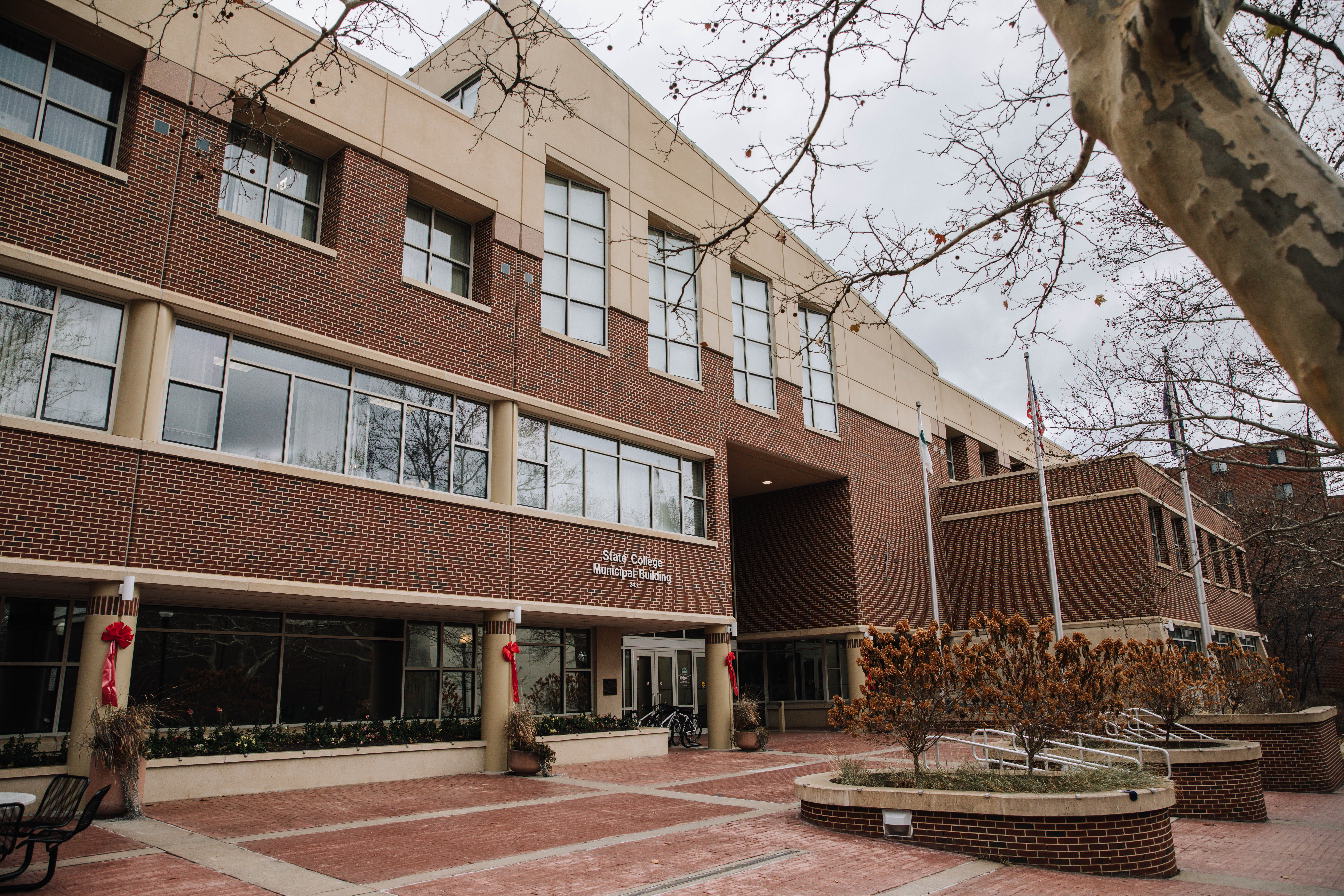
The police department is located on the first floor of the borough building in downtown State College.
Pennsylvania State Police share crime statistics from local departments, including State College, with the FBI’s Uniform Crime Reporting Program, known as UCR. Those figures influence numerous aspects of life in a community and help governments decide where to deploy resources and direct public funds.
Criminologist Eli B. Silverman, professor emeritus at John Jay College of Criminal Justice, said accurate data are also key to good policing and maintaining trust with the community.
“When crime statistics lose their credibility, the public loses confidence in the police and is less inclined to report crime,” Silverman said. “This, in turn, further diminishes the effectiveness of [a] police organization.”
Over the course of Spotlight PA’s investigation, the newsroom found other potential issues with the department’s handling of reported rapes.
For years, rape cases were habitually described as “assaults” in internal police records, Spotlight PA found. The newsroom also questioned whether factors other than the new definition made previous rape numbers appear low, especially as top officials in the department did not seem clear on how crime reporting works, and at times offered confusing or incorrect information.
Additionally, Spotlight PA identified a case in which two victims reported rapes and the police recorded only one. One police official told reporters that rapes are counted by incident, not by victim — going against well-established FBI rules and indicating a violation separate from underreporting.
Police appear to be “trying to minimize the extent of sexual assault in State College,” Cassia Spohn, a criminologist and professor at Arizona State University, told Spotlight PA. “Doing so can produce a false sense of security among potential victims, leading eventually to an increase in victimization and a decline in public safety.”
Before this investigation was published, Spotlight PA sent a detailed list of findings to police officials and State College borough.
In response, the department offered a joint statement from Gardner, King, longtime State College Borough Manager Tom Fountaine, and State College assistant police chief Matthew Wilson, expressing “a great level of dissatisfaction.”
“The information presented appears to be more representative of an op-ed article than an objective reporting piece. The information you provided for our review is largely misleading and omits perspectives from community stakeholders,” the statement said in part. Read the full response here.
‘I don’t recall’
For more than 80 years, the FBI defined rape as “the carnal knowledge of a female, forcibly and against her will.” That meant only forced attacks involving penetration of the vagina by a penis were considered rape.
This left out things like forced oral or anal sex, and sex acts that were committed against someone’s will but without force. Attacks on men or boys were also not counted.
That longstanding definition was “narrow, outmoded and steeped in gender-based stereotypes,” the Women’s Law Project wrote in a 2001 letter to then-FBI Director Robert Mueller.
In 2012, the FBI announced it would broaden its definition of rape to “ensure justice for those whose lives have been devastated by sexual violence,” then-U.S. Attorney General Eric Holder said at the time.
“This new, more inclusive definition will provide us with a more accurate understanding of the scope and volume of these crimes,” Holder added.
Leading national organizations for police and sheriffs backed the change, as did women’s organizations and anti-rape groups.
Under the new definition, rape is: “Penetration, no matter how slight, of the vagina or anus with any body part or object, or oral penetration by a sex organ of another person, without the consent of the victim.”
John Derbas, a former deputy assistant director of the FBI, told Spotlight PA that by 2015, 15,000 law enforcement agencies across the nation had adopted the reform.
David Hendler, who oversees records at the Abington Township Police Department in Montgomery County, said both he and his predecessor knew about the change when he started working in the department in 2013. Officers talked about it among themselves, he told Spotlight PA.
“Every cop I knew knew about it,” Hendler said.
Yet King, who led State College police from 1993 to 2016, said word never reached him. He was not aware that State College police were incorrectly reporting rapes until Spotlight PA contacted him this summer, he said.
“I don’t recall it. In 2025, as we sit here talking about it today, I don’t recall,” King said in an August interview. He questioned who within the department might have been contacted by Pennsylvania State Police, which ensures that law enforcement agencies across the state submit crime data that go to the FBI.
“Whoever they addressed it to, I don’t recall ever seeing any direction from the State Police to make a change, or being aware that it was changed,” said King, who became the interim police chief in neighboring Ferguson Township in October. “That doesn’t mean they didn’t. We’re talking about 12 years ago.”
A spokesperson for Pennsylvania State Police told Spotlight PA the agency alerted local police departments about the change. A December 2012 notification “outlined the new definition and instructed agencies to report offenses accordingly, starting in January 2013,” Myles Snyder wrote in an email. After that, “the responsibility for ensuring correct and timely reporting lies solely with contributing agencies,” he added.
A five-paragraph notice was sent via the Commonwealth Law Enforcement Assistance Network, or CLEAN, a platform police departments use to communicate with other agencies, on Dec. 27, 2012 — less than a week before the new requirement took effect, according to a document obtained through a public records request.
State police have “the highest level of confidence in this communication system,” Snyder said when asked if the notice reliably reached all of the roughly 2,000 local law enforcement agencies in Pennsylvania.
Agencies like the State College Police Department have to acknowledge receipt of every message sent over CLEAN, he said. It is not optional, and “lives depend on it.” The messages are kept for 10 years, Snyder told Spotlight PA, so Pennsylvania State Police cannot verify who, if anyone, confirmed receipt of the notice.
In 2014, statewide data showed a 12% increase in rapes for the 2013 annual report, Snyder said. That indicated that submitting agencies were recognizing and using the new offense classification rule.
No one from Pennsylvania State Police or the FBI told the department it had missed the memo and was reporting erroneously, Gardner said in a joint interview with King and Fountaine.
State police are legally bound to collect data from local departments, and those agencies must use the FBI’s definitions for crimes. The agency checks on two things for UCR compliance: that a police department submits data, and that the numbers add up, Snyder said.
Between 2016 and 2023, Pennsylvania State Police logged 65 instances of local departments being out of compliance. The agency did not provide information on why, but two chiefs told Spotlight PA it was because their departments did not submit any numbers. The violations, which came with the threat of losing some state grant funding, were deemed fixed by state police as long as the departments began filing monthly.
“Submitting agencies are solely responsible for the accuracy of their information,” Snyder told Spotlight PA.
Both State College police chiefs told Spotlight PA that they did not intentionally disregard the FBI mandate to report rapes accurately. “I know with absolute confidence that had I received that notification … we would have made the change,” King said.
“When crime statistics lose their credibility, the public loses confidence in the police and is less inclined to report crime,” Criminologist Eli B. Silverman told Spotlight PA. “This, in turn, further diminishes the effectiveness of police organization.”
A late revelation
The department, with 53 sworn officers today, serves over 57,000 residents in State College and neighboring College and Harris Townships. Its jurisdiction borders Penn State’s University Park campus, which has its own police force. However, many of the university’s nearly 49,000 undergraduate students live, work, and recreate off campus — so State College police regularly interact with students.
During a typical academic year, 75% of rape victims are Penn State students, Lt. Chad Hamilton, State College police detective supervisor, said.
For years, rape numbers reported by State College police were consistently low, hovering in single digits for the most part. When the department reported its 2021 crime statistics to UCR, police claimed that there was not a single rape that year.
It turns out that there were at least 30.
But instead of rapes, those cases were submitted to the Uniform Crime Reporting system as sex offenses. These are considered a “part two” crime, a category that the FBI collects less information about and rarely mentions in its regular announcements about crime in America.
In police speak, part one crimes are the most severe offenses: homicide, rape, robbery, aggravated assault, human trafficking. They are high priorities for law enforcement, often bringing with them pressure to make arrests and clear cases. These are considered indicators of the level of crime occurring in the country, according to the FBI Uniform Crime Reporting Handbook.
Rape cases should never go into part two crime counts, Spohn, the criminologist, told Spotlight PA. Sex crimes under the part two category include acts like fondling or indecent exposure, she said. The category does not include sex crimes involving penetration. “The UCR handbook is pretty specific,” she said.
But by its own admission, the State College Police Department did exactly that — incorrectly reporting at least 254 part one crimes as part two ones.
“It’s not like we weren’t reporting,” Wilson told Spotlight PA in a February interview. He said the police department was not calling these incidents rapes, but it was calling them sexual offenses. “I don’t see it as a huge deal,” he said.
Three years ago, a longtime staffer, Alecia Schaeffer, took over as records supervisor. That is the position ultimately responsible for reviewing each incident, ensuring the coding follows the rules, and submitting monthly reports to the state.
Schaeffer — who was trained and certified on Uniform Crime Reporting in 2002 — got a refresher course in December 2022, bringing back with her an urgency to update the police department’s practice.
Spotlight PA repeatedly requested to interview Schaeffer. The borough and department refused, saying they generally do not make staff available to the media.
Gardner said he was in the conversation following Schaeffer’s training but remembered “very, very little” about it — “other than the fact that she learned through training that … all these offenses were to be coded as rapes,” he said.
Fountaine, who oversees State College police in his role as borough manager, said he became aware of this change when the department was first contacted by Spotlight PA.
Experts told Spotlight PA that the way rapes are labeled matters for victims and communities.
“It’s not just about how it shows up in statistics, it’s about how people think about what’s happened to them, how other people think about what’s happened to them, how the community thinks about what’s happened to them,” said Anne Ard, former executive director of Centre Safe, a State College-based organization that supports survivors of sexual violence.
Department officials say the way the cases were coded had no impact on how police handled them.
However, between 2013 and 2023, State College police’s rate of arrests for rape was double that for sex offenses, according to a Spotlight PA analysis of data submitted to UCR.
State College police said that driving any investigation is the strength of evidence, the victim’s wishes, and input from the district attorney’s office.
“It doesn’t matter to us what is coded. It’s going to be thoroughly investigated to the best of our abilities,” Wilson told Spotlight PA.
Other potential issues
King, the department’s former police chief, told Spotlight PA that incidents of sexual violence were “very, very, very high priorities for the department.”
King said that the department applied for grant funding to address sexual violence, and that it created specialized investigative units and response teams as far back as 2006. Officials communicated with the public “over and over again” on the significance placed on these crimes, King said.
The department, with 53 sworn officers today, serves over 57,000 residents in State College and neighboring College and Harris Townships.
But throughout its investigation, Spotlight PA identified other potential issues with the way State College police handled rape cases.
One issue is the accuracy of State College’s rape numbers unrelated to the definition change.
Because the new rape definition was broader, the FBI anticipated a rise in reported rape figures nationwide — as much as 41.7% in 2013, it said. In State College, however, it saw a 222% increase for 2013. Between the years 2013 and 2020, the revised definition produced an average annual increase of 384%.
Spotlight PA asked the department about the discrepancy, whether factors other than the new definition affected the low 2013 rape count, and if the inconsistency raised concerns about previous UCR reporting.
Both chiefs emphatically defended those figures.
Spotlight PA asked the department to review cases between 2005 and 2012 to ensure compliance with the FBI’s legacy rape definition; to allow the newsroom to do so; or to make the records supervisor available for either an interview or written responses to questions. Officials declined.
Without an independent review of investigative files and records, questions about the department’s crime reporting accuracy could not be fully answered.
But one case sheds light on the long-term consequences of the department’s errors.
‘I was raped’
Standing in a parking lot by her dorm building on a summer night in 2019, Lexi Tingley, barely a freshman at Penn State, texted her mother. It was 2:44 a.m., and the worst had happened.
“Mommy.”
“I think I need to go to the ER.”
“I was raped.”
“I’m scared.”
Tingley’s mother knew the lot; she had dropped her daughter off there recently for summer sessions. Frantically, she drove Tingley and her friend, who had also been raped that night, to Mount Nittany Medical Center. Tingley was examined, was tested for sexually transmitted diseases, and met with a State College police officer at the hospital.
Tingley’s statements became the experiences of “victim 1” in the police report. Her friend, Hanna Friedenberger, was victim 3 in the report. Another friend, victim 2, witnessed the crimes and had a panic attack, but was not assaulted. (Both Tingley and Friedenberger spoke to Spotlight PA and agreed to be named.)
Both Tingley and Friedenberger said they were raped at the Legend, a student rental complex three blocks from campus. Police took both their statements.
But State College police records show that one of the rapes was not accounted for.
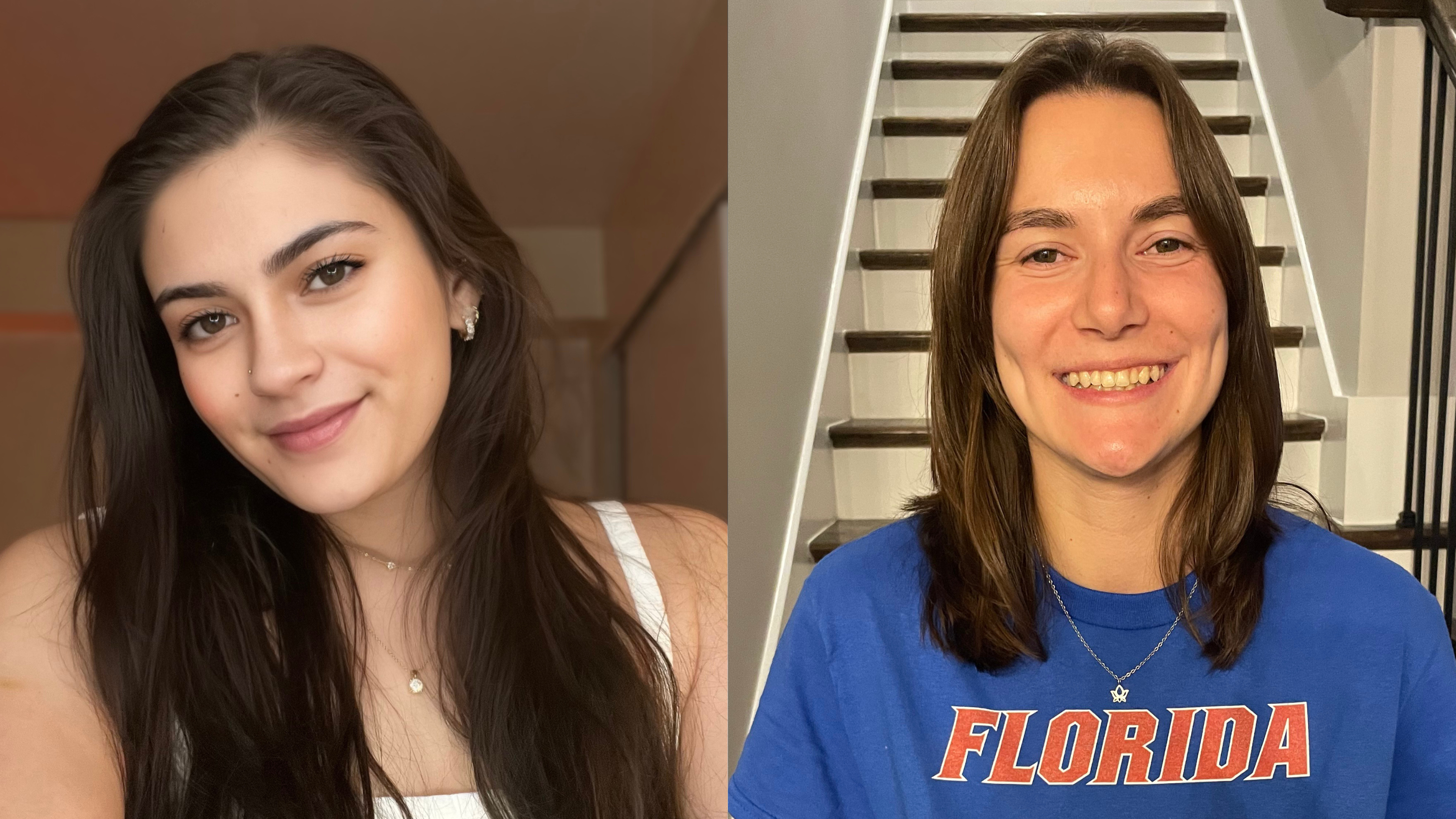
Lexi Tingley, left, and Hanna Friedenberger, right
The department keeps an internal crime log, a set of records detailing every call it responded to in the last 20 years. It’s the first draft of crime statistics that would be reviewed, cataloged, and corrected if needed before submitting to the Uniform Crime Reporting system. The log contained one rape for the day that Tingley and Friedenberger were attacked.
Wilson, the assistant police chief, said in an August email that rape cases are counted per incident, not per victim — although FBI rules say cases should be counted by the number of victims. Wilson, whose responsibilities include overseeing the department’s records operations, did not respond when Spotlight PA sought additional clarity. Wilson will become the police chief for State College’s neighboring Ferguson Township in 2026.
UCR data for that month, August 2019, show three rapes reported by State College police.
However, Gardner said in an email that there were two other rapes that month that were not related to Tingley and Friedenberger. That means the department should have reported four rapes to UCR.
In an interview, Gardner told Spotlight PA that the UCR data for August 2019 included both Tingley and Friedenberger. “You report victims to UCR, OK, we don’t do it by incident. Do you understand?”
Gardner insisted the department handled the case properly, and said he did not know the source of the discrepancy.
There is another notable problem.
The internal crime log reviewed by Spotlight PA contained four pieces of information for this incident. The time the call was received was 3:49:44 a.m. on Aug. 1, 2019. The outcome of the incident, called disposition, was “ECA” or exceptional clearance of an adult — commonly used for when prosecutors declined to file charges, as happened in the women’s case.
Additionally, there was a description and a code.
When State College police officers file incident reports, they describe the calls they respond to — for example, “burglary” or “traffic stop.” The actual criminal violation that resulted would be recorded as a four-digit code. In State College’s system, for example, 0210 is code for forcible rape. Coders in the records department — not officers — are responsible for doing that.
In Tingley and Friedenberger’s case, the report was coded 0210, referring to rape. But the description — crucial for any layperson not familiar with State College police coding to understand the nature of a case — said “assault earlier.”
For at least a quarter-century, State College police have held daily media briefings where reporters were handed daily law incident summaries, or what the department calls a press log. These documents include the description, but not the case code, of each incident.
Between 2005 and 2021, State College police in these logs described 110 cases that were ultimately classified as rapes as “assault” or “assault earlier.” That is four out of every five rapes recorded by the department during that period.
window.addEventListener(“message”,function(a){if(void 0!==a.data[“datawrapper-height”]){var e=document.querySelectorAll(“iframe”);for(var t in a.data[“datawrapper-height”])for(var r,i=0;r=e[i];i++)if(r.contentWindow===a.source){var d=a.data[“datawrapper-height”][t]+”px”;r.style.height=d}}});
Asked how residents or reporters who attended these briefings would be able to distinguish rape cases from physical fights because they were lumped together under the title of “assault,” Gardner said the officers in charge would note if any case was sexual in nature.
“It’s serious,” he said an officer in that situation would say, arguing the vagueness protected victims’ privacy.
That approach leaves the quality of State College crime data to chance.
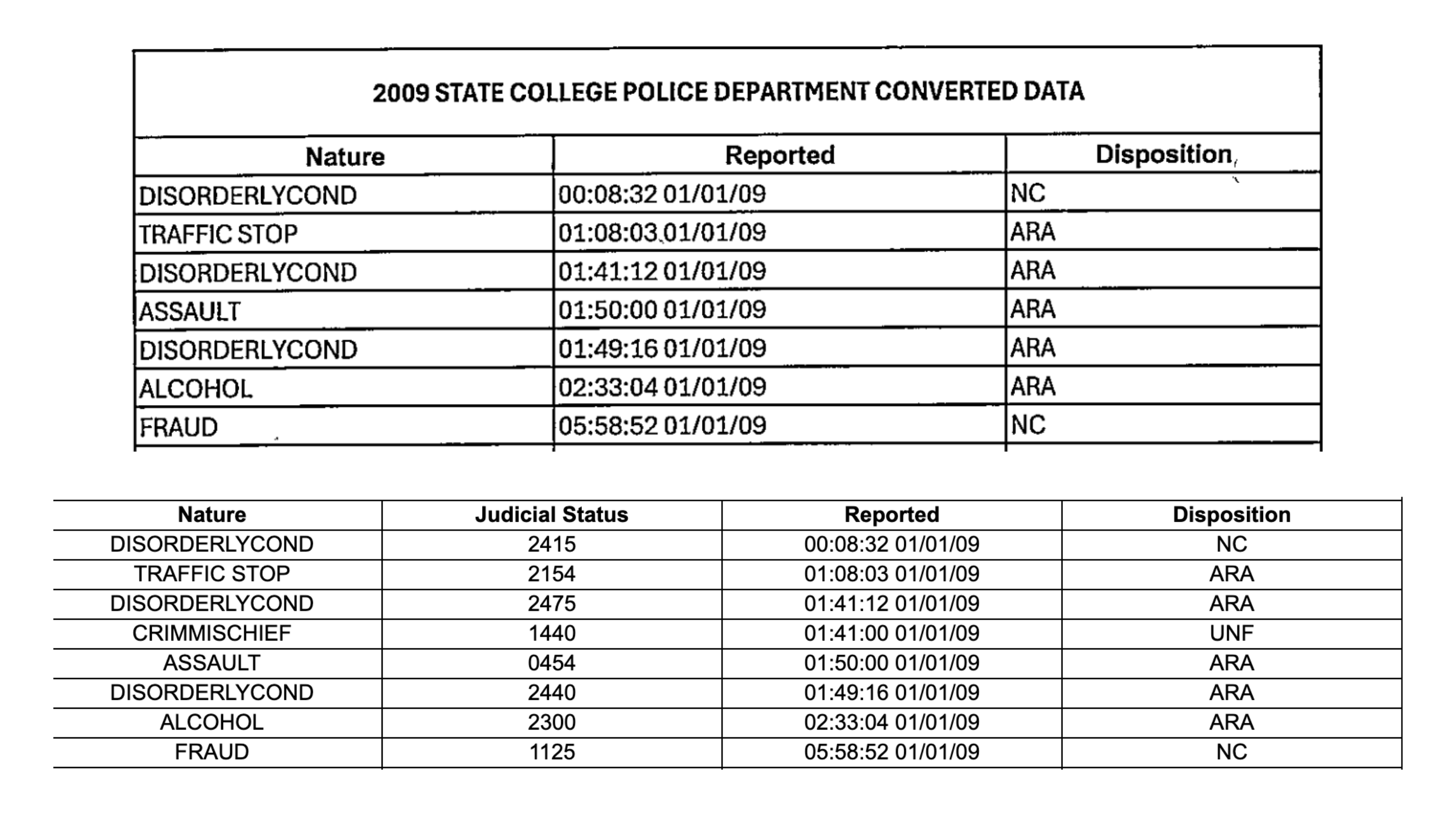
This happened when the department provided its 2009 crime log to an open-records requester this February, which was later posted online. The requester asked for the type of crime for each incident and received the crime log with the incident description listed but not the numeric case code.
No rapes were listed in the 161 pages that State College turned over. If incident codes had been included, the log would show two cases of rape that year.
Gardner serves as the police department’s Right-to-Know officer. He told Spotlight PA that the code was not given to the requester because the person did not specifically ask for it.
Spotlight PA submitted a Right-to-Know request asking for the same information as the original requester, and did not ask for the 4-digit code. But police provided both the data and the code to the newsroom.
An open records request for 2009 State College police data posted online (top), and an open records request made by Spotlight PA for the same information (bottom).
It is impossible to determine if Tingley and Friedenberger’s case was unique. The newsroom cannot determine if undercounting rape victims by using the incident count was an isolated incident or a more prevalent problem. State law does not allow public access to police investigative files, and State College police refused Spotlight PA’s request to review them.
Tingley and Friedenberger, already heartbroken over the outcome of their case, would not find out until contacted by Spotlight PA that State College police had undercounted their rapes in public crime data.
Tingley, now 24, said it is hard to separate the rape and what followed. The treatment she received from law enforcement — a “false promising,” as she called it — was “equally painful” as the worst thing that has happened to her.
SUPPORT THIS JOURNALISM and help us reinvigorate local news in north-central Pennsylvania at spotlightpa.org/donate. Spotlight PA is funded by foundations and readers like you who are committed to accountability and public-service journalism that gets results.
A former corrections officer at Philadelphia’s Federal Detention Center pleaded guilty Wednesday to sexually assaulting a female prisoner inside her cell last year — a violent attack that occurred while the victim was in protective custody because of ongoing mental health issues, prosecutors said.
Michael Jefferson, 43, said little as he entered his plea before U.S. District Judge Joshua D. Wolson. He is scheduled to be sentenced in April and faces a maximum penalty of life behind bars.
Jefferson was charged earlier this year with crimes including aggravated sexual abuse and deprivation of rights for attacking a prisoner inside the detention center on the 700 block of Arch Street on July 6, 2024.
Prosecutors said Jefferson entered the woman’s cell, where she had been sleeping; placed his hands on her shoulders and told her not to say anything; then pinned her down and sexually assaulted her.
The victim reported the assault to other guards the next morning, once Jefferson’s shift was over, prosecutors said. Evidence supported her account of having been sexually abused, prosecutors said, and showed she had been physically injured during the attack.
The victim, who was not identified in court documents, later sued Jefferson, describing the attack as a rape and saying it occurred while she was housed in isolation and on suicide watch.
Her lawyers have accused the Bureau of Prisons of failing to protect her from Jefferson, in part because they said another officer either ignored the assault or was improperly absent from his post when it occurred.
The detention center can house up to 950 prisoners, most of whom are either awaiting federal trial or serving short sentences after being convicted.
The man who walked through the streets of Kingsessing and shot people at random in 2023, killing five and wounding five others in one of Philadelphia’s deadliest mass shootings, pleaded guilty Wednesday to multiple counts of murder and was sentenced to decades in prison.
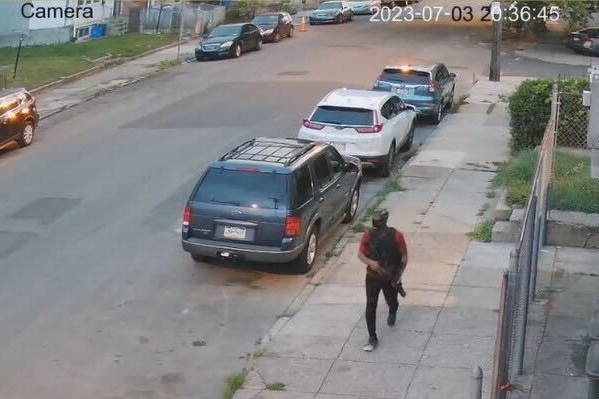
Kimbrady Carriker, 43, admitted that on the evening of July 3, 2023, he calmly walked through a Southwest Philadelphia neighborhood dressed in body armor and wearing a ski mask, and pointed his AR-15-style rifle at seemingly random passersby — then pulled the trigger.
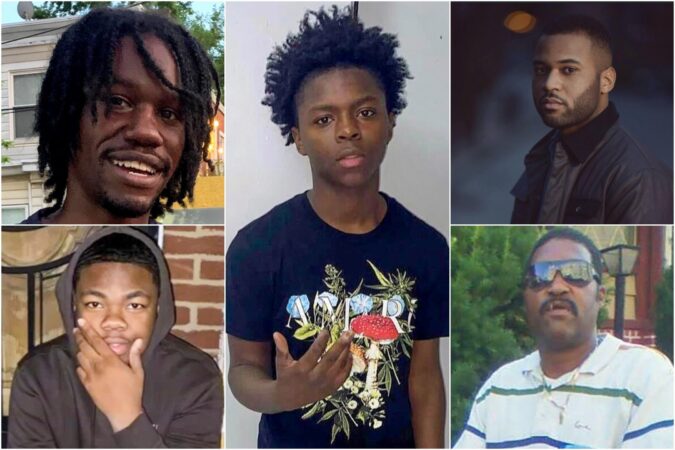
He killed five people: DaJuan Brown, 15; Lashyd Merritt, 21; Dymir Stanton, 29; Ralph Moralis, 59; and Joseph Wamah Jr., 31.
Five others were injured: a 13-year-old boy he shot multiple times in the legs, and a mother who was driving with her 2-year-old twins and 10-year-old niece when he fired more than a dozen bullets into her car.
Wamah was killed first in the early morning of July 2, targeted in his home for reasons that remain unclear. Carriker returned to Wamah’s block nearly two days later, armed with the same gun, and shot the others.
Carriker’s admission to the killings marks the end of the legal saga in a shooting that shocked the city, shattered families’ lives, and traumatized a community.
“This was 14 minutes of terror for the residents of the Kingsessing neighborhood,” Assistant District Attorney Robert Wainwright said of Carriker’s carnage.
Prosecutors say surveillance video showed Kimbrady Carriker, dressed in a ballistic vest and ski mask, walking through Southwest Philadelphia shooting people at random on July 3, 2023.
Carriker’s attorneys had been expected to argue at trial that he was legally insane when he gunned down his victims, and that he should be housed in a secure psychiatric facility for most of his life, not state prison.
Carriker suffered from “severe delusions and religious preoccupations” and “had a fixed illusion that he was working for the National Security Agency,” said Gregg Blender, assistant defender at the Defender Association of Philadelphia.
Even after he was arrested, taken to Norristown State Hospital, and medicated, he believed that he had done something wrong only because the “National Security Association personnel did not come and rescue me,” Blender said he told doctors.
Prosecutors disagreed that Carriker was legally insane and said his actions were deliberate and he should spend the rest of his life in state prison. But as they prepared for trial, an expert hired by the Philadelphia District Attorney’s Office interviewed Carriker and agreed with defense lawyers that he did not appear to know that what he was doing that night was wrong.
Prosecutors did not want to risk that a jury might find Carriker not guilty by reason of insanity, Wainwright said. So they offered Carriker the opportunity to plead guilty to five counts of third-degree murder, five counts of attempted murder, and gun crimes. They asked a judge to sentence him to 37½ to 75 years in prison.
On Wednesday, Carriker agreed.
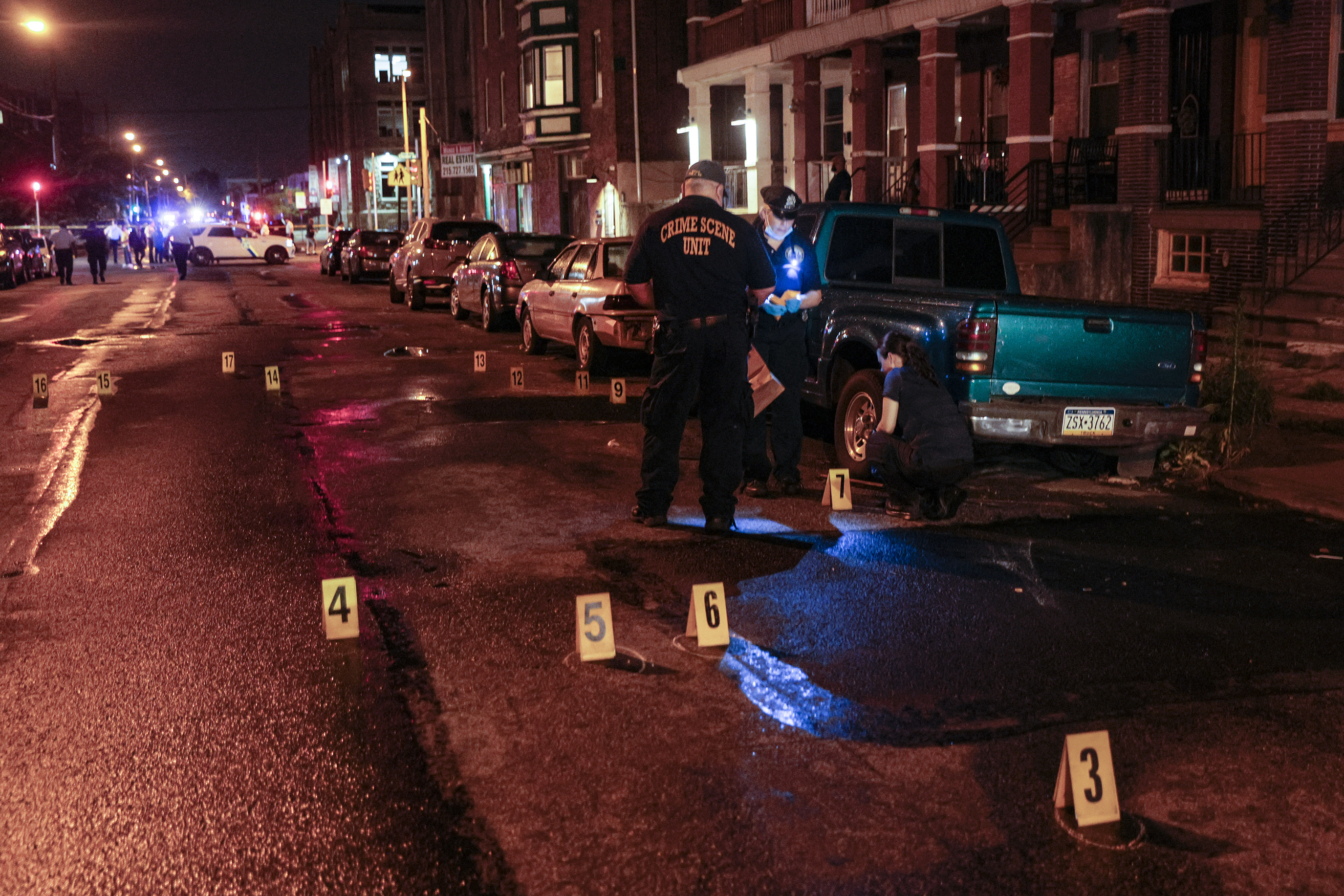
Police gather evidence near 56th Street and Chester Avenue after the mass shooting on July 3, 2023.
Common Pleas Court Judge Glenn B. Bronson sentenced Carriker to the agreed-upon decades behind bars. The judge said that, in his 15 years of handling homicide cases, this was the worst he had seen, but that he would respect the deal reached by prosecutors and Carriker’s defense team.
“It traumatized an entire community,” the judge said of the shooting. “It traumatized an entire city.”
Survivors of the shooting, and loved ones of the people who died, spoke emotionally in court Wednesday of the devastation of that July night, and the lasting impact on their lives.
The father of Joseph Wamah Jr., consumed by the trauma of finding his son’s dead body inside his home, died earlier this year. His daughter said he could not mend his broken heart, and spiraled into a health crisis.
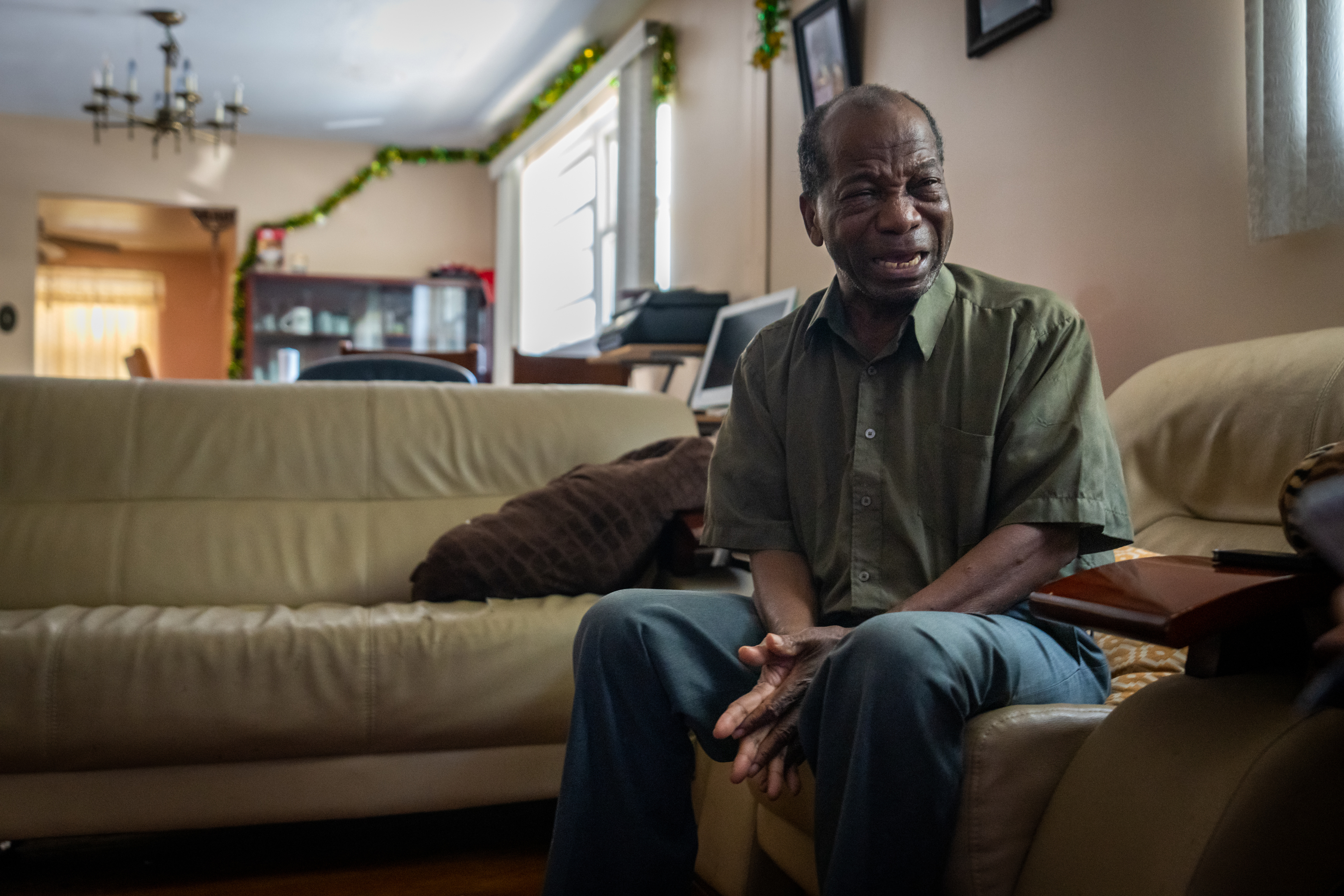
Jonah Wamah, the father of Joseph Wamah, one of the victims in the Kingsessing mass shooting, spoke of the impact of losing his son in June 2024. He died earlier this year, in September, after his family said he could not recover from the grief of his son’s killing.
“He faded in front of my eyes,” Jasmine Wamah said of her father.
Other family members spoke of being hospitalized for their mental health, of looking after children without fathers and caring for kids with bullet scars in their legs.
Odessa Brown spoke of holding her 15-year-old grandson as he bled out from his injuries.
“When DaJuan was born, he was given to me and I held him in his arms,” she said. “And that day, I held him when he was on the ground, dying, praying, asking God, please save my child.”
Ralph Moralis’ daughter, Taneisha Moralis, said that, at six months pregnant, she can’t stop thinking about how her child will never know their grandfather.
And Charlotte Clark, the girlfriend of Dymir Stanton, said she struggles to get up each day to care for their daughter, who was only 3 when her father was killed.
“I am still yearning for him from my soul. It makes me crazy,” she said, shaking.
She said she hoped Carriker would rot in prison for what he took from her family.
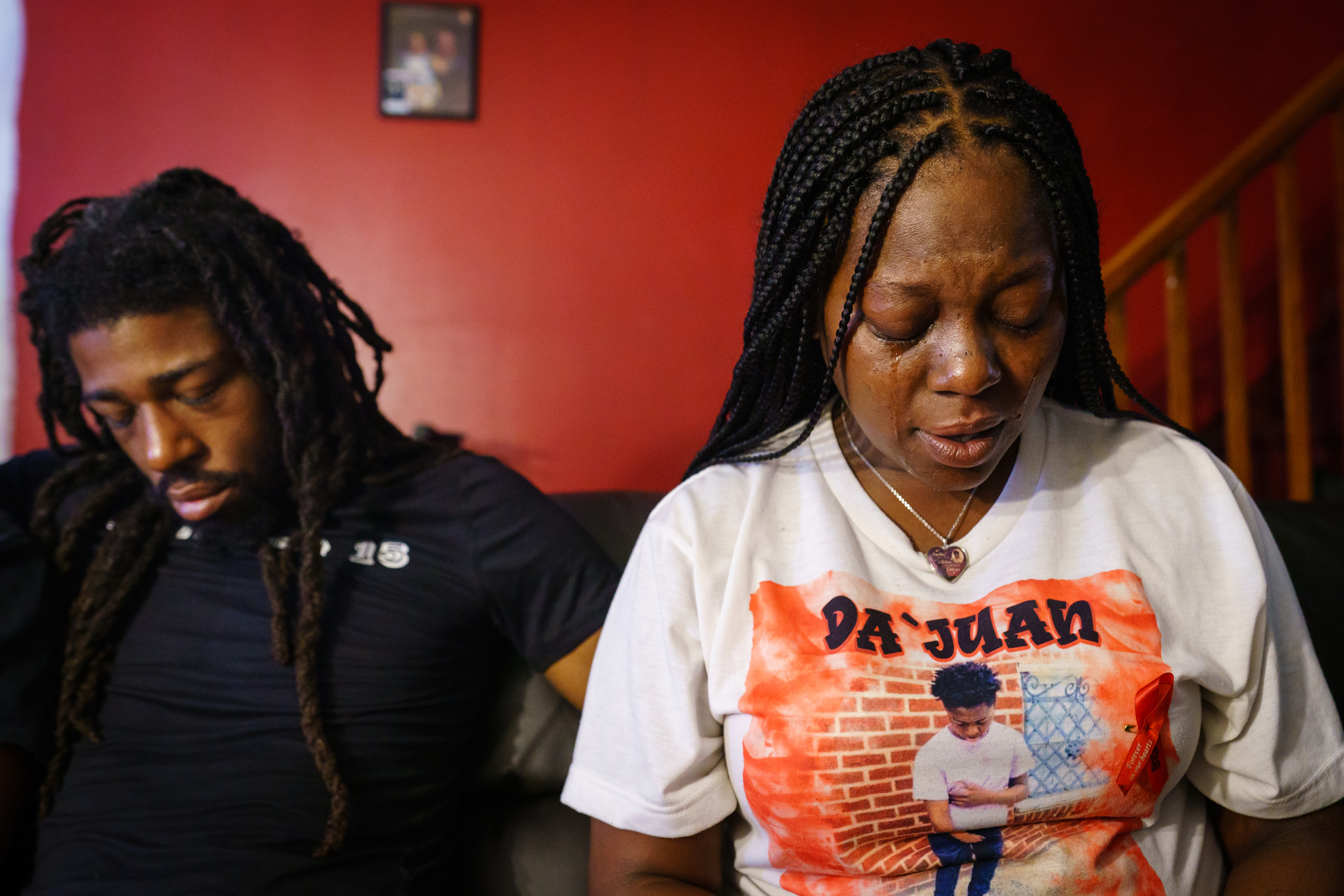
Nyshyia Thomas misses her son, DaJuan, every day. At the sentencing of her son’s killer on Wednesday, she said: “I will never get to see his face as a grown man. I will always just know the child.”
A killing spree
Carriker’s killing spree began shortly after midnight on July 2, when he showed up at Wamah’s home on the 1600 block of South 56th Street. He shot multiple bullets through the door, then walked in and shot Wamah nine times.
It remains unclear why Carriker targeted Wamah. Police did not know he had been killed until days later.
Nearly two days later, just before 8:30 p.m., Carriker returned to that block with the same rifle and a semiautomatic handgun. First, he fired 18 shots into the Jeep of Octavia Brown, a young woman driving her 2-year-old twins and 10-year-old niece to a family barbecue.
One of the toddlers was shot multiple times in the leg, and the other twin was grazed by a bullet. Glass shards exploded into Brown’s face and eye. The boys survived their injuries, but the family was traumatized. Brown said Wednesday that her son still has pain in his legs from the shooting.
As nearby police rushed to the scene, Carriker walked south down 56th Street, coming across 13-year-old Ryan Moss and shooting him multiple times in the legs. His friend, DaJuan Brown, was on his grandmother’s porch and ran out to help his friend. DaJuan and a responding officer found the boy screaming for help behind a car.
As DaJuan ran home for help, Carriker shot him multiple times, killing him.
Carriker continued on, next shooting Moralis as he got out of his car. Then, as he reached Greenway Avenue, he came to face Lashyd Merritt leaving his home, and shot him. Both men died.
Carriker then turned up South Frazier Street, where he shot and killed Dymir Stanton. Stanton’s brother, Kaadir, shot at Carriker in self-defense as he tried to get to his brother.
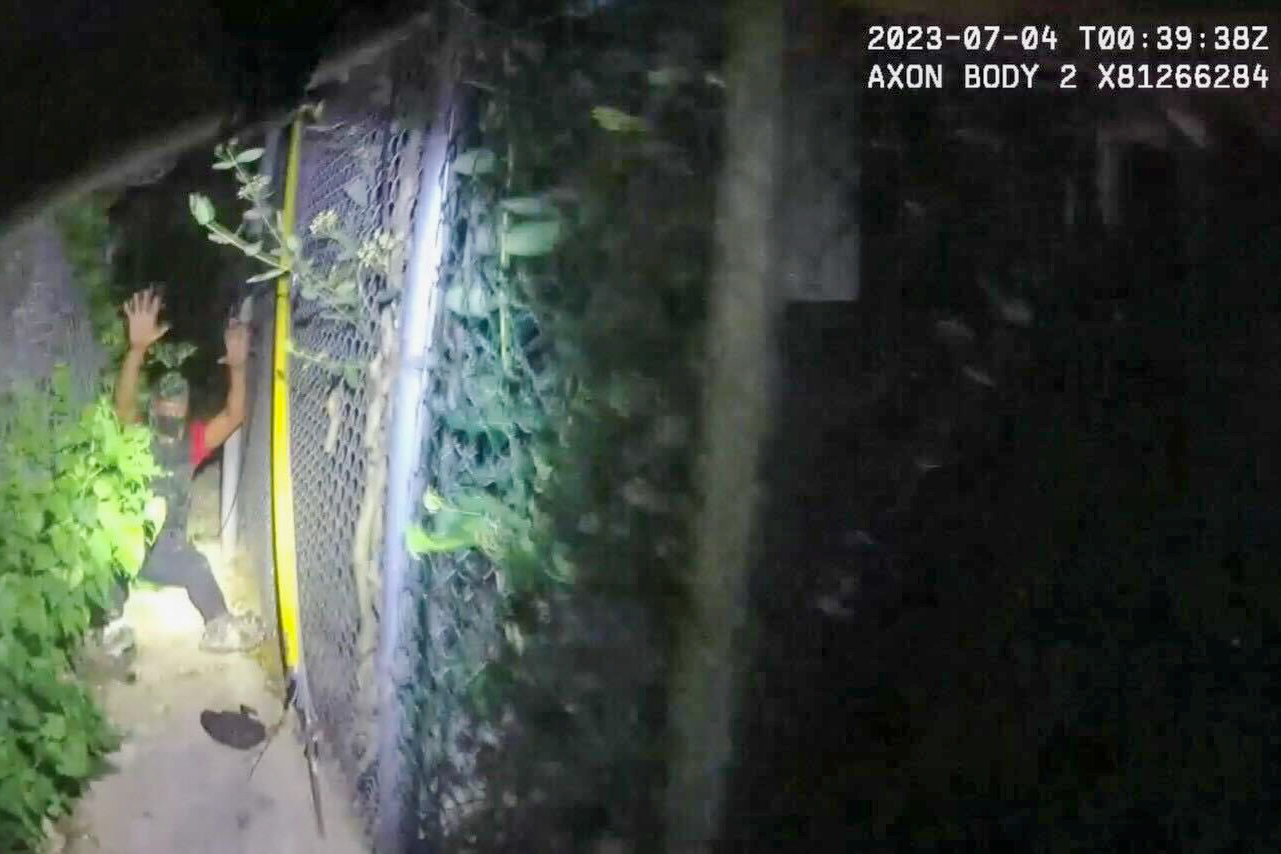
Philadelphia police responded to a sprawling scene nearly a mile long. Officer Ryan Howell ran toward the sounds of gunfire, then found Carriker in a dark alleyway. The gunman quickly surrendered.
Police Officer Ryan Howell’s body worn camera footage showed how he found Kimbrady Carriker surrendering in a narrow alleyway.
‘I am sorry’
Prosecutors said Carriker told Howell “good job” as he took him into custody, and said, “I’m out here helping you guys.” Law enforcement sources have said Carriker told police that the shooting spree was an attempt to help authorities address the city’s gun violence crisis, and that God would be sending more people to help.
Carriker’s attorneys said he was profoundly delusional and did not understand the impact of his actions.
Blender, of the defender association, said Wednesday that there was nothing he could say to comfort to the victims’ families — or the relatives of Carriker, who live with their own guilt.
“He was under a mental health disease that prevented him from understanding what was going,” Blender said. “It is not an excuse. It is not to justify this horrific, horrific behavior.”
Later in the sentencing, Carriker, dressed in a red jumpsuit, attempted to apologize.
“All I ever wanted to do was help my community. I never meant to cause this harm,” he said. “I am sorry for the pain I have caused. I would take it back, but I can’t, so I will say that I am sorry and maybe one day you can forgive me.”
After the hearing, the heartbroken families poured into the streets.
A man who said he was like a father to Carriker said: “All families are hurting. If there’s anything that we could ever say, it’s that we are sorry that this happened.”
And the loves ones of the victims left with little comfort. Wamah’s sister did not get the answer to the question that she says haunts her every day: “Why?”
When she asked Carriker in court, he said nothing.
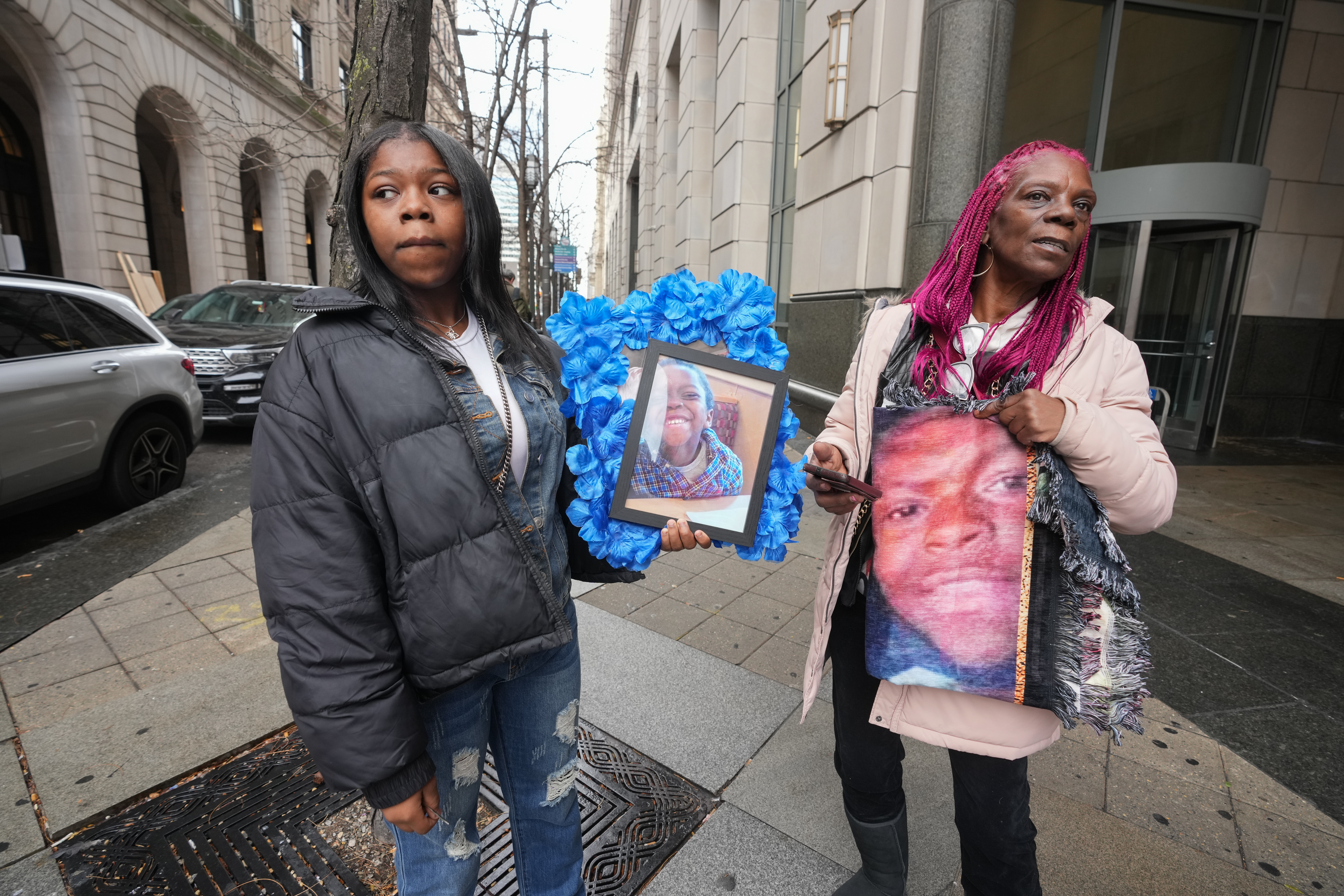
Ne’siyah Thomas-Brown, left, sister of Da’Juan Brown, and, Odessa Brown, right, grandmother, outside the Juanita Kidd Stout Center for Criminal Justice, in Philadelphia, December 17, 2025.