A man who allegedly injured an Uber driver and killed his passenger in North Philadelphia on Monday morning while fleeing sheriff’s deputies has turned himself in to police.
Joseph Cini, 35, surrendered at police headquarters Tuesday evening, Philadelphia police said.
Around 7:15 a.m. Monday, deputies from the Philadelphia Sheriff’s Office had attempted to serve him with a warrant on the 900 block of North Watts Street.
Cini took off in a Nissan Maxima and crashed into a Jeep Patriot at Ninth Street and Girard Avenue, killing Uber passenger Angela Cooper, 63, of the 1100 block of West Thompson Street, police said. The high-speed collision also injured the 51-year-old Uber driver.
The driver is being treated at Temple University Hospital.
Cini left the scene of the crash, but turned himself in Tuesday, police said. Charges related to Monday’s events have not yet been filed.
A spokesperson for the sheriff’s office said in an email Monday that the office was “fully cooperating with all investigative authorities” and that it was providing support services to the deputies involved.
MAYS LANDING, N.J. — After a week in court, attorneys delivered closing arguments Tuesday in the child abuse trial of Atlantic City Mayor Marty Small Sr.
Defense lawyers for Small, a 51-year-old Democrat who was reelected this year, said the allegations that he and his wife had abused their teenage daughter multiple times in late 2023 and early 2024 were false.
“We are not guilty,” his attorney, Louis Barbone, told jurors in New Jersey Superior Court.
Small faces charges of endangering the welfare of child, aggravated assault, making terroristic threats, and witness tampering. He has denied the charges, and testifying in his own defense last week, he told jurors he “would do anything to protect” the girl and said he did not strike her with a broom as she has alleged.
Prosecutors say Small not only struck his daughter but also attempted to cover up the abuse as he and his wife, La’Quetta, grew increasingly in conflict with the teen over a relationship with a boy they did not approve of.
They said he punched her and beat her with a belt in addition to hitting her with a broom, and later told her to “twist up” her account of the incidents to investigators to minimize his involvement.
“Violence is not a solution,” Assistant Prosecutor Elizabeth Fischer told the panel. “Abuse is not parenting.”
But Small’s lawyer, Barbone, told jurors prosecutors lacked sufficient evidence to make their case and said they had inappropriately interceded in a private, family matter in the Small household.
“Why have we taken this man’s life and made a spectacle of it?” Barbone asked. “Because they can.”
He scoffed at prosecutors’ idea that the teen had been intimidated by her father’s political power, calling the trial “extortion by the child.”
The girl, Barone said, had lied about her injuries to both doctors and investigators, conspiring with her boyfriend to secretly record her father and compromise him.
Much of the attorney’s attention fell on the January 2024 incident in which Smalls’ daughter said he struck her multiple times in the head with a broom during an argument over her attending the Atlantic City Peace Walk.
Barbone said the girl had also been holding a butter knife and that as the mayor struggled with her over the broom, the teen fell and hit her head.
The attorney said the teen then exaggerated her injuries, and he said the bristle side of a broom couldn’t do damage. He told jurors to look no further than the testimony of the girl’s nurse, who could not rule that the teen suffered a concussion as she contended.
And Barbone returned to the topic of Small’s daughter’s sexually explicit messaging with her boyfriend, which prosecutors called a “shining ball in the corner” meant to distract jurors from both the teen’s testimony of the alleged abuse and the photos of her bruises.
Barbone said the conflicts began after the Smalls discovered their daughter had sneaked the boy into the family home and had sex without their knowledge. He later displayed an emotionally charged text chain between the girl and her mother in which the teen threatens to go off birth control.
Meanwhile, Fischer, the prosecutor, asked jurors to remember the “truth” of what Small’s daughter had endured. .
Fischer said the teen had been brave to testify against her father — arguably the most powerful figure in Atlantic City government — as well as her mother, who is the superintendent of Atlantic City Public Schools. La’Quetta Small also faces a child endangerment charge in a case scheduled for trial in January.
It was “the most difficult thing a person can do,” Fischer said of the girl’s decision to testify against her parents, giving her little incentive to lie.
The prosecutor said a nurse who tended to the girl’s injuries had diagnosed the teen with a head injury, and that it was impossible to tell if she was concussed through a CT scan alone.
And a pediatrician who specializes in child abuse testified that the girl’s injuries were “nonaccidental,” Fischer added.
Prosecutors said the girl first reported the abuse to her principal, Candace Days-Chapman. They say Days-Chapman, who previously served as Marty Small’s campaign manager, did not file a report with child welfare authorities. She instead told Smalls herself, and staff at the school only learned of the abuse after the teen reported it a second time after watching a mental health presentation. Chapman was later charged with official misconduct and related crimes.
Fischer, her voice swelling with emotion, expressed disbelief that Small had allowed his attorney to characterize his daughter as both an “animal” and “Tasmanian devil” in describing their conflicts at home.
“This is offensive at its highest level,” she said.
And she told jurors that some of those who testified on behalf of the mayor had strong ties to Atlantic City government and stood to gain from the mayor’s success. And in the end, she said, they had not witnessed the conflicts between Small and his daughter.
“Character,” the prosecutor said, ”is how you act when no one is watching you.“
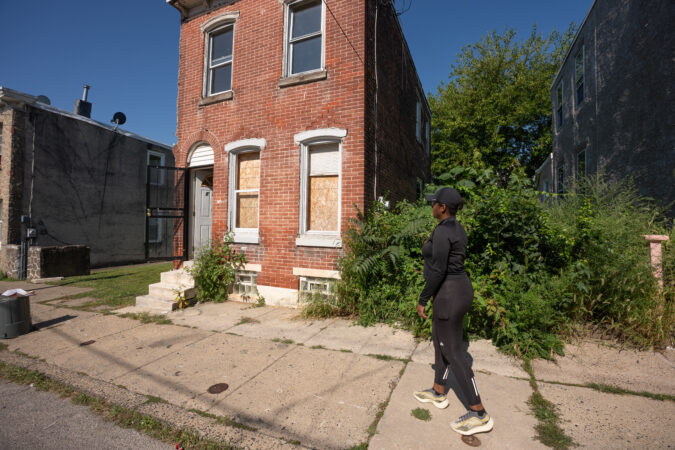
The rowhouse on East Pastorius Street no longer looked like a home.
Its doors and windows had been stripped, leaving the two-bedroom Germantown rowhouse open to the elements — and leaving Patricia Hall, the tenant and mother of four, alone inside and clutching her gun, afraid that if she left, her landlord would finally get his way and throw out everything she owned.
That night, a man slipped through the open back door, armed with a gun of his own.
Hall encountered Felipe Eskew, dressed in a mask, as she lay on her couch. They shot and killed each other.
The intimidation campaign that ended two lives began months earlier, after Hall’s landlord, Stephen Wilkins, grew determined to force Hall and her family out of the crumbling property after they fell behind on rent.
On Tuesday, Wilkins, 55, was sentenced to nine to 18 years in prison for setting in motion the events that led to the deadly confrontation.
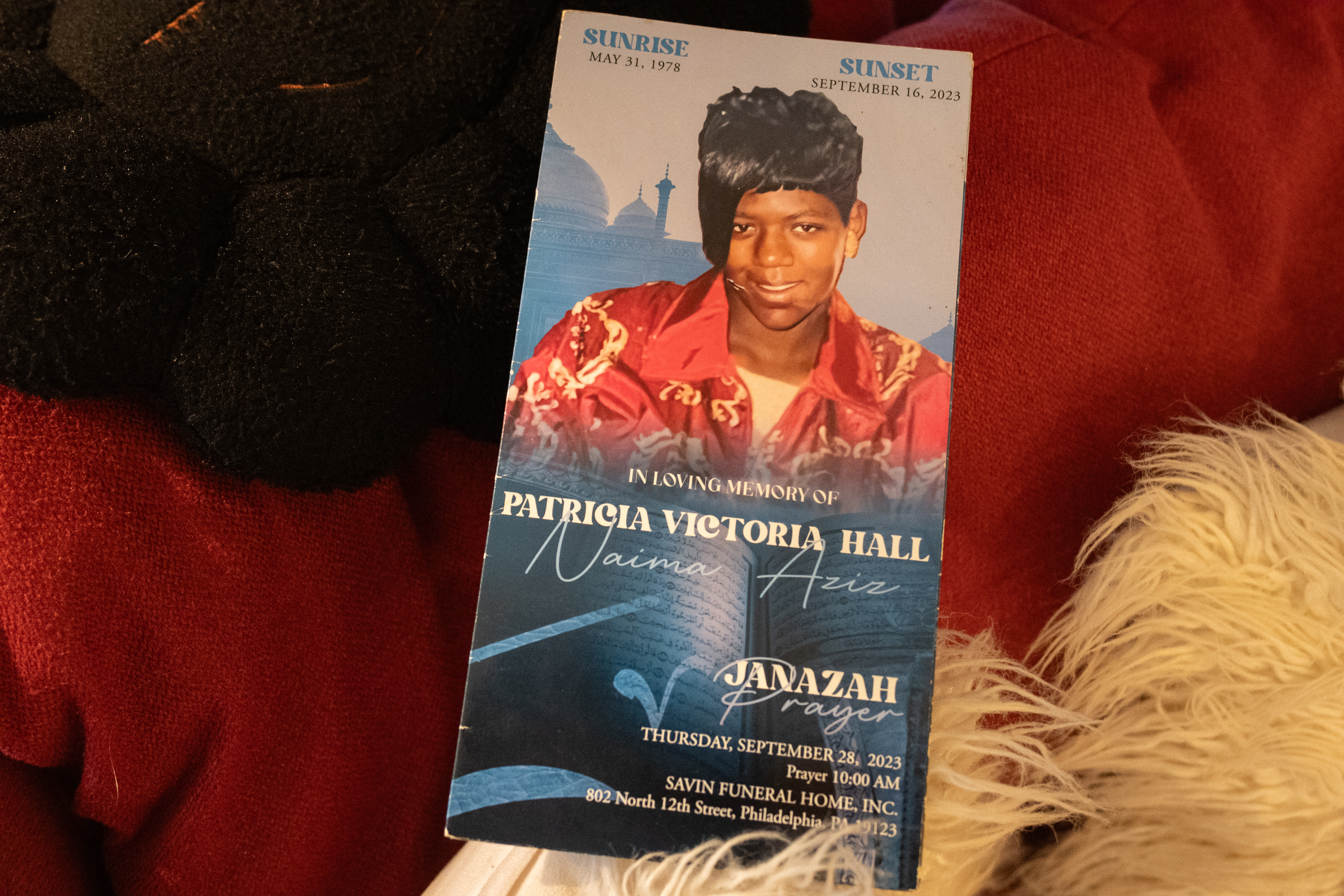
Patricia Hall’s life was not easy, her family said. She grew up without a mother, and often struggled financially. But she loved her children fiercely and tried to protect them.
Hall, 45, and her now 28-year-old daughter, Crystal, had been renting the two-bedroom at 127 E. Pastorius St. for about three years when, in early 2023, they fell behind on rent. They paid Wilkins what they could, but the shortfall was adding up.
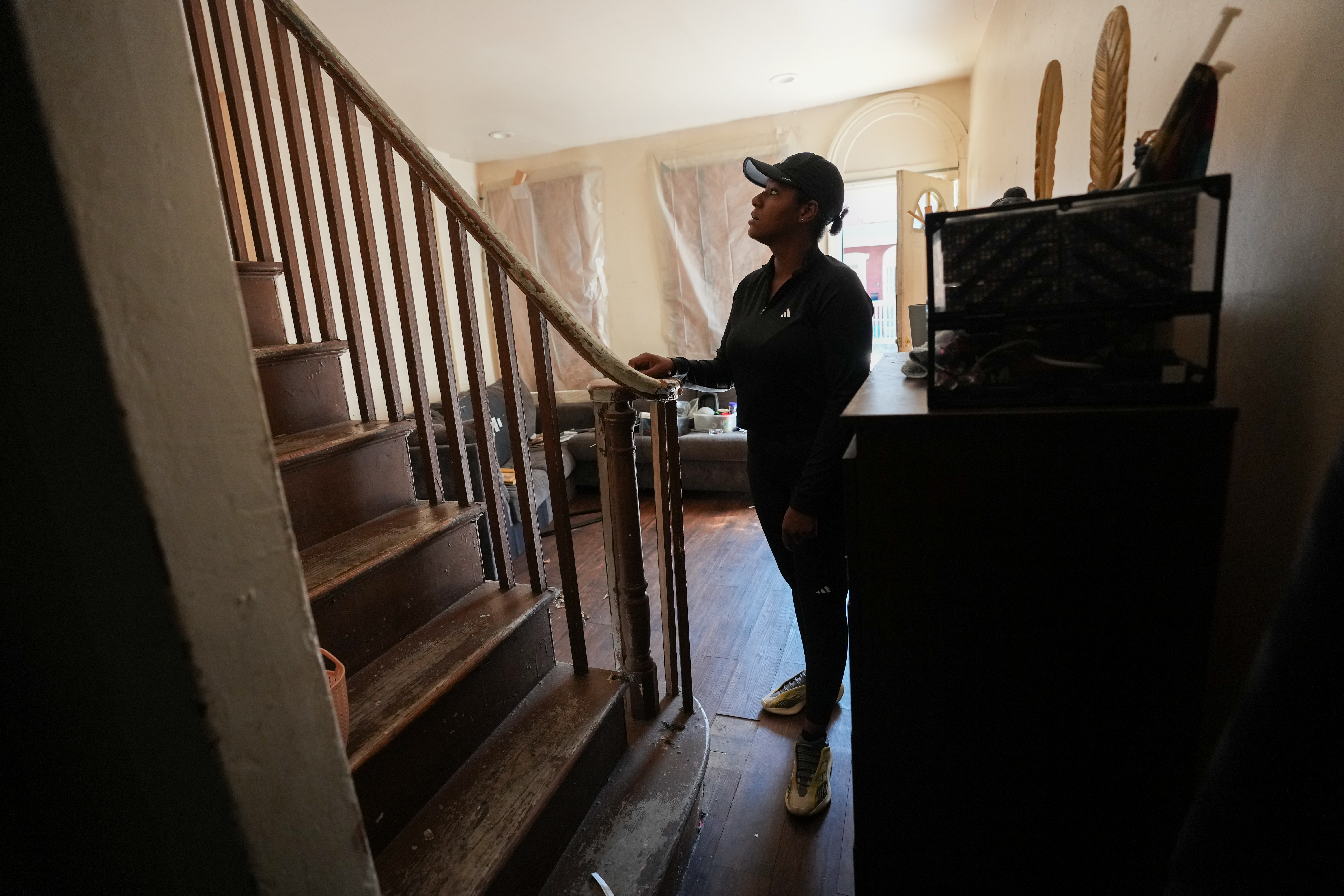
At the same time, the family said, the house was falling apart — kitchen and bathroom sinks wouldn’t drain, the stairs were crumbling, the ceiling was cracking — and Wilkins was refusing to make repairs.
Tension between the Halls and Wilkins started building. Crystal Hall said Wilkins tried to illegally force them out by shutting off the electricity and water, ripping out the electric meter and circuit breakers, and throwing a brick through their window.
After his emergency eviction filing was denied by the courts and the family still refused to leave, he went a step further and on the afternoon of Sept. 15, he removed every door and window from the home — leaving Patricia Hall and her kids inside a shell-like structure.
Hall couldn’t afford to lose the few things that she had, her daughter said, so she sent her young children to stay with a relative, and Hall remained in the house — her gun at her side, just in case.
Late that night, prosecutors said, Askew — Wilkins’ best friend — crept inside the open back door of the home, wearing gloves and black mask, and armed with a gun.
Assistant District Attorney Cydney Pope said she believes Wilkins sent Askew — who was eager to move into the Pastorius Street rowhouse himself — to the home to scare Hall into leaving, not necessarily to kill her.
Instead, when he encountered Hall and her gun, the two shot and killed each other.
Crystal Hall returned to the house where her mother Patricia Hall, was killed. Her mother was found shot multiple times behind the couch in the living room behind her.
Wilkins was charged with murder and related crimes two months later after Homicide Detective Joseph Cremen uncovered Wilkins’ trail of terror against the Hall family — a harassment campaign that culminated to the removal of the windows, and the break-in-turned killing
Wilkins was the last person Askew called just before Pope said he crept into Hall’s home and killed her.
But Pope said the evidence connecting Wilkins directly to Askew’s plans that night was limited. The two men, who had been friends for three decades, were careful never to text directly about their plans to force Hall out, she said.
Concerned that a jury could acquit him of the crimes, the prosecutor said, she offered to drop the murder charge in exchange for a guilty plea to involuntary manslaughter and solicitation to commit burglary. He agreed in September.
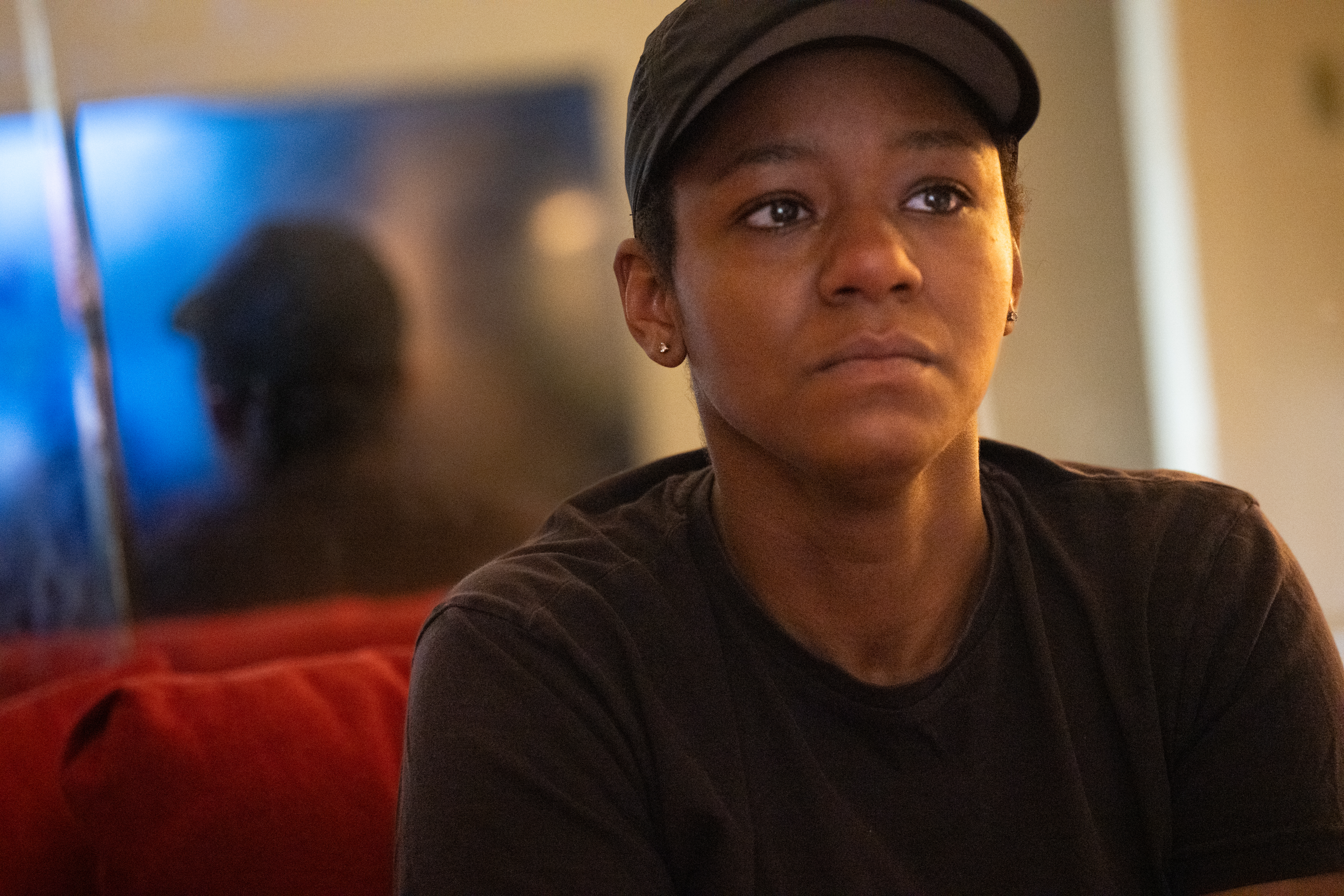
Inside the courtroom Tuesday, Crystal Hall said Wilkins’ scheme had upended her life and those of her three young siblings, now 9, 12, and 15. She has suffered emotional breakdowns in the aftermath, she said, and now takes medication for her mental health. Her youngest brother, she said, is angry and confused. Her 15-year-old sister barely speaks.
“We were all we had,” she said of her mother. “We can never get past the life that was taken.”
Crystal Hall said her mother was “our source of guidance, laughter, and unconditional live.”
She asked that Wilkins received the maximum sentence of 12½ to 24 years.
But Wilkins’ family and his attorneys, Fortunato Perri Jr. and Brian McMonagle, asked the judge for mercy for “a man who became desperate” and never meant any harm to Hall.
Teliah Wilkins said she’d seen how her husband had reflected on his actions over the 25 months he has spent in jail so far, and that he was “consumed with regret.”
“Stephen’s conduct wasn’t born of malice,” she said, “… but a series of profound misjudgments.”
But when Wilkins addressed the judge, he denied having ever sent Askew to the home.
“I never meant harm for anybody,” he said. “… I never even wanted him to go there.”
Bronson, the judge, questioned why, then, Askew was at the house that night, and why Wilkins, if he was not involved with Askew’s actions, pleaded guilty.
Wilkins said he didn’t know why Askew was there, only that “he wanted the house.” He took a plea so as not to risk spending the rest of his life in prison, he said.
As the judge stared in confusion, Wilkins began to stammer and apologize.
“Is that it?” Bronson asked.
The judge, while handing down his sentence, said he did believe Wilkins did not mean for Hall to die, but that given the circumstances of the crime, the landlord was lucky not to be facing second-degree murder and life in prison.
He ordered him to spend nine to 18 years behind bars.
Crystal Hall, in the gallery, began to sob. She whispered thanks to God. Then she walked out of court, and prepared to spend another holiday season without her mother.
A photo of a young Patricia Hall holding her daughter, Crystal, as a baby.
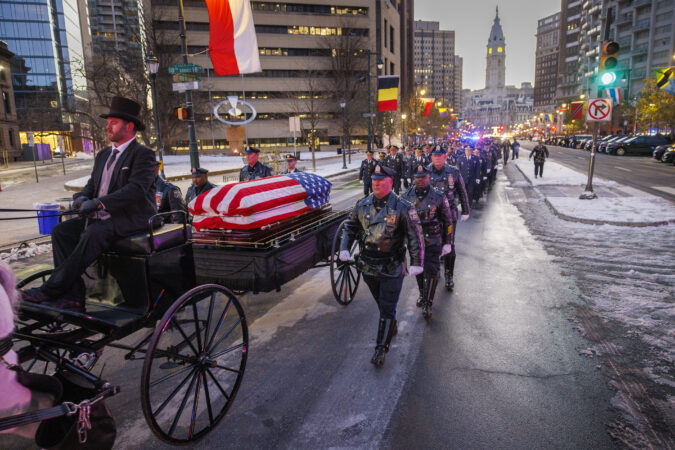
Philadelphia Police Commissioner Kevin Bethel stood at a podium behind a cherry wood coffin inside the Cathedral Basilica of SS. Peter and Paul on Tuesday and told mourners how Highway Patrol Officer Andy Chan had arrived in the afterlife: on his motorcycle, boots shining, smiling.
Then he turned to the highway patrol officers standing in the front pews. “And how,” he asked, “did Andy Chan announce himself when he arrived at the gates of heaven?”
“Highway!” they answered in unison.
Chan, 55, was laid to rest Tuesday morning, six years after a 79-year-old driver struck his patrol motorcycle near Pennypack Park, catapulting him more than 20 feet away onto the pavement and causing brain injuries from which he never fully recovered.
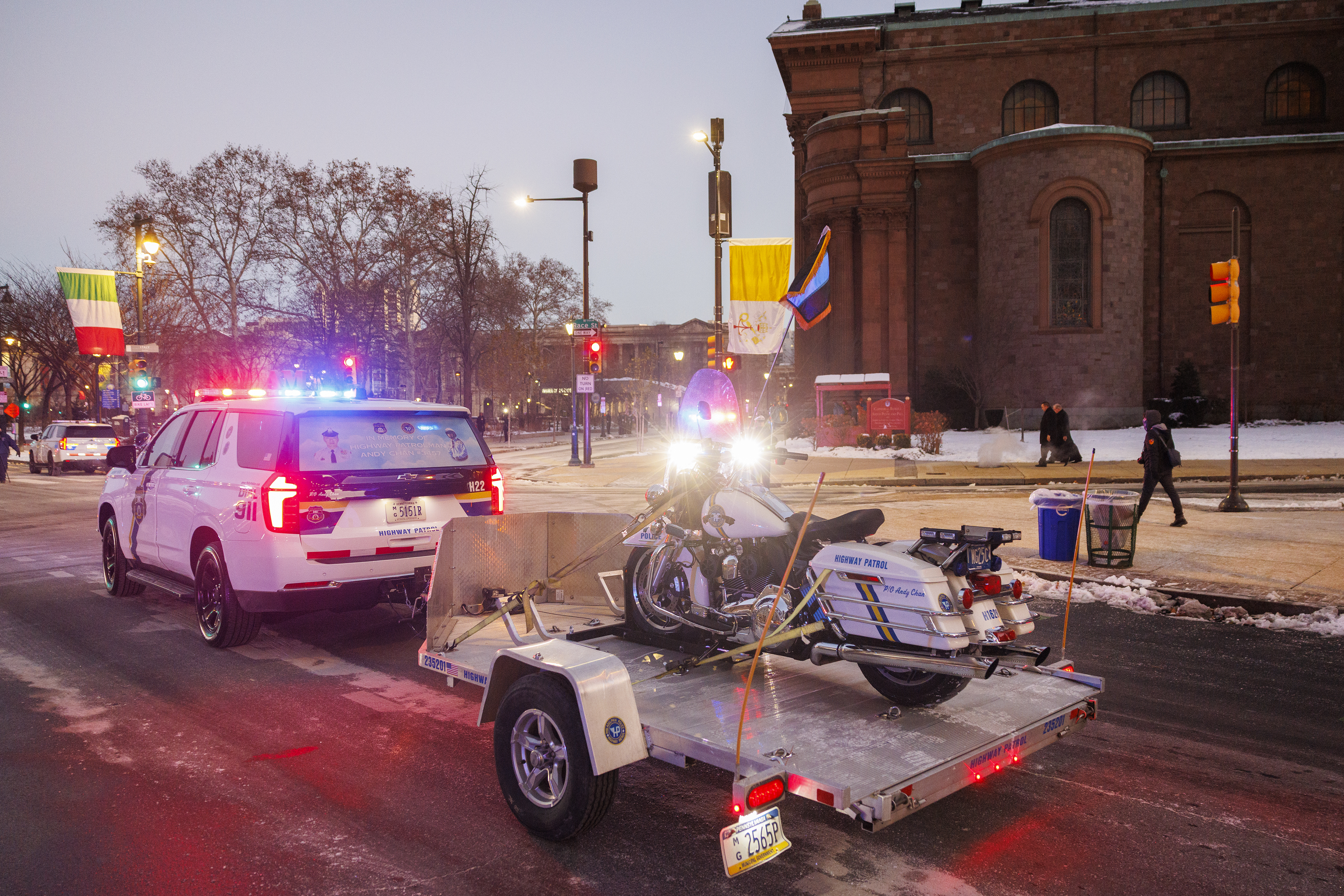
A highway patrol motorcycle leads the procession to the Cathedral Basilica of SS. Peter and Paul for the funeral of Philadelphia Police Officer Andy Chan.
Chan served 24 years on the Philadelphia police force before the crash on a quiet stretch of Rowland Avenue irrevocably altered the course of his life.
A highway patrol officer for nearly his entire career, Chan spent his working days on two wheels, patrolling neighborhoods and highways astride the bike he was known for riding with pride.
He greeted his fellow officers not with “Hello,” but with “Highway!”
Officers towed Chan’s motorcycle, still bearing his name, in a procession that stretched nearly 18 miles, from North Philadelphia to Center City and finally, to the cathedral.
Inside the gilded building, photos of Chan streamed on TVs: Beside his wife, Teng, dressed in their wedding attire, hands clasped and raised triumphantly as they walked into their reception. In a portrait studio, cradling the youngest of his three children. Standing on the grass of the National Mall in Washington, D.C., surrounded by fellow officers. His arm around a gray-haired Sylvester Stallone. On his bike, over and over again.
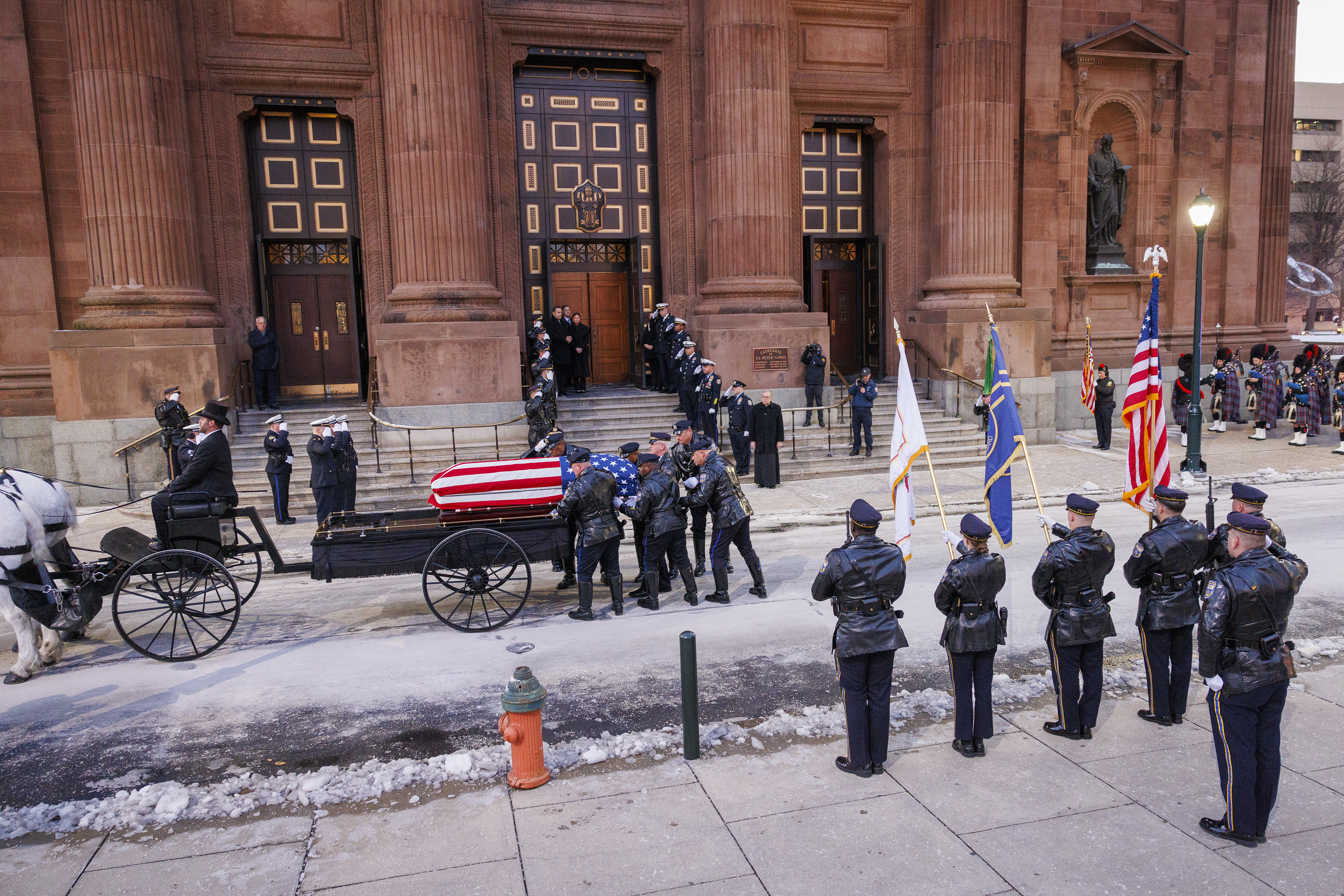
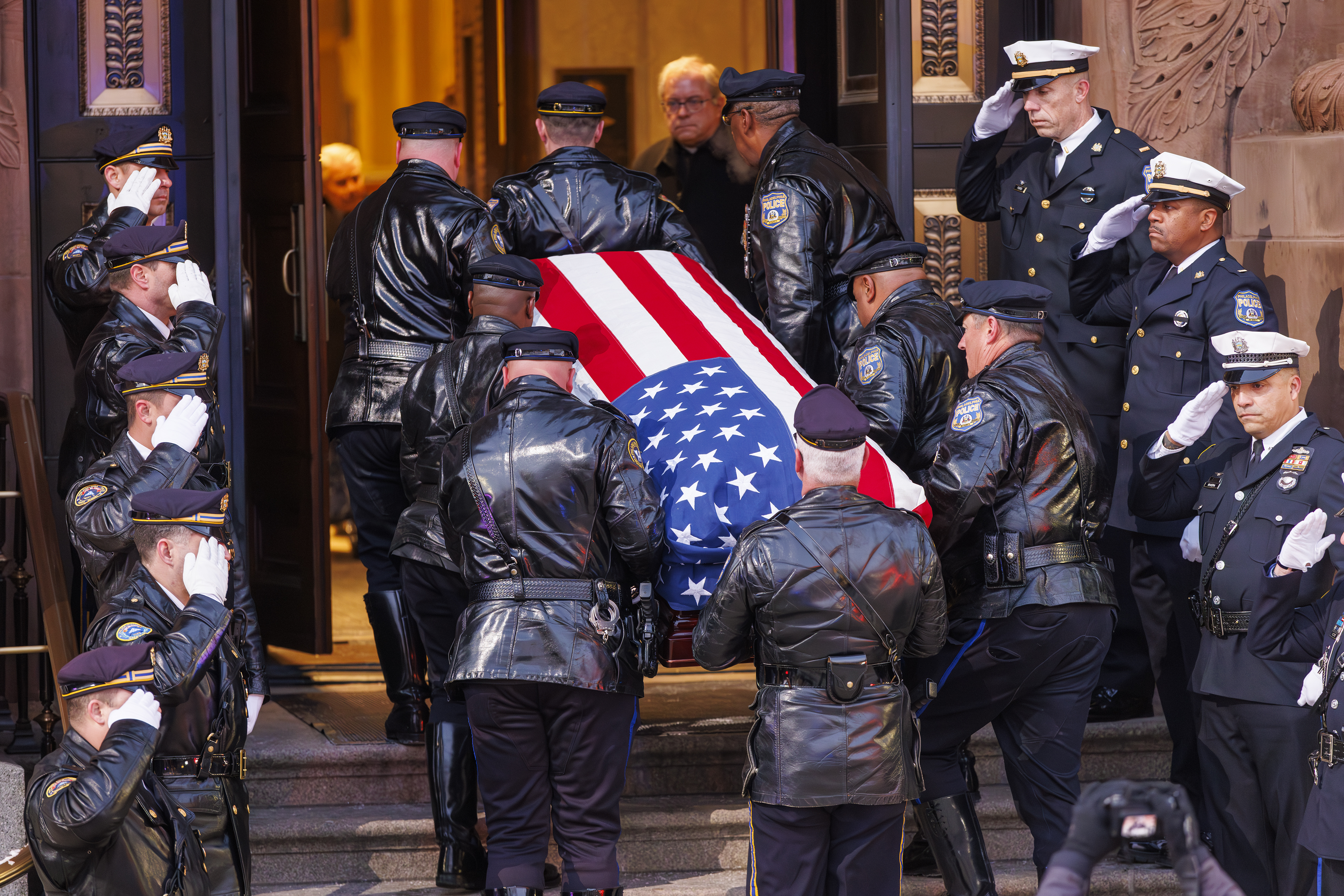
The body of Philadelphia police officer Andy Chan is lifted from Caisson after arriving at the Cathedral Basilica St. Peter and Paul, Tuesday, December 16, 2025.
Chan had wanted to be a police officer since childhood, he once said in a radio appearance. From his parents’ restaurant in Chinatown, he listened with reverence to the uniformed officers who came in to eat and swap stories with his father. “I kind of looked up to police officers,” he said.
But he was drawn especially to the thunder of their motorcycles as they passed.
After joining the department, Chan spent eight years riding the streets of the 39th District as a bicycle officer before being promoted in 2004 to the department’s elite Highway Patrol Unit.
When he introduced himself to the woman who would become his wife, he did so simply with the words: “I’m Highway.”
The casket of Philadelphia Police Highway Patrol Officer Andy Chan arriving at the Cathedral Basilica of SS. Peter and Paul on Tuesday.
Teng Chan described her husband’s “unwavering sense of purpose” as rivaled only by his love of his family. On road trips, she said, he gave long lectures to their eldest son about life, inspiring him to become a volunteer firefighter and later, join the U.S. National Guard, she said.
As for her, his wife said, “He pushed me out of my comfort zone. He made me who I am today: a better person. A fighter.”
After the Jan. 3, 2019, crash, Chan remained in a coma for weeks, reliant on a ventilator. When he awoke, he required 24-hour care from family, friends, and fellow police officers, who regularly sat by his side. Though he could no longer speak, those close to him said he showed recognition and response when loved ones were present.
“We were heartbroken every day after the accident,” Teng Chan said. “We prayed every day for recovery, for him to be restored. With his unbreakable spirit, he stayed with us.
“But,” she said, “it was time. He has a higher calling.”
When it’s time to go, it’s time to go, and perhaps nobody knows that better than Christina Solometo, whom the region nicknamed the “Delco Pooper” after she was captured on video rage-pooping on a car during a roadway dispute in April.
And so, when Solometo’s time in Delaware County Court came on Tuesday, she went, but instead of bringing her case to trial, she entered into a rehabilitation program for first-time offenders.
As part of the Accelerated Rehabilitative Disposition program, Solometo must complete 24 months of probation, community service, anger management classes, and not post about her case on social media. If she meets those conditions, the charges against her, which include indecent exposure and depositing waste on a highway, will be dismissed and she could have her case expunged and her record wiped clean.
In courtroom gallery conversations with her attorney prior to the hearing, Solometo at times seemed torn about the conditions of the program and the facts of her case as detailed by the Prospect Park Police Department. She could be heard cursing and, at one point, left the courtroom in tears.
This was a marked change in her demeanor from shortly after her arrest, when she smiled in her mugshot and laughed in front of news cameras as she was led away in handcuffs.
Solometo, 44, of Ridley Park, said little before Judge Richard Cappelli as he agreed to enter her into the diversionary program and she declined to speak to The Inquirer after the hearing, except to say “The truth will come out” and that her story would cost money. The Inquirer does not pay for interviews.
It was a rather subdued ending to what was perhaps the most absurd local news story of the year.
Prospect Park Police said it was around 4 p.m. on April 30 that Solometo got into a dispute with another driver at the intersection of Fourth and Madison Avenues in the borough.
Solometo told police that she was in a line of cars to turn left at a light and honked at a driver in front of her who did not move when the arrow was green.
According to her affidavit, Solometo said the other motorist mocked her in her rearview mirror. Solometo said she was having stomach issues, so she drove around the car and turned left. She told police she believed the other vehicle started following her, which is why she got out to confront them. The driver of the other car allegedly insulted Solometo, which she told police made her angry.
“Solometo said, ‘I wanted to punch her in the face, but I pooped on her car instead and went home,’” according to the affidavit.
Police said she later told them: “It was a clean poop. I didn’t even have to wipe.”
Cell phone video of the incident was taken by 17-year-old Greg Ferrari who testified in May at Solometo’s preliminary hearing that he was driving to his friend’s house when he was forced to stop his vehicle because two motorists were arguing in the intersection.
“I thought they were going to fight so I pulled out my phone to take video,” he said. “And one of the people ended up going to the bathroom on the other’s car.”
Ferrari’s video, which he said he shared with his baseball group chat and was then posted to Facebook by someone else, subsequently went viral and was picked up by outlets like TMZ, the New York Post, and People.
When Aaron Clark’s soon-to-be-ex-girlfriend ignored his 200 calls in December 2022, he sent her a simple text message: “Pick up before I do something crazy.”
Clark, unable to handle the impending end to what Delaware County prosecutors described Tuesday as a toxic, abusive relationship, later made good on that threat, they said.
The West Philadelphia resident set fire to Amira Rogers’ home in Darby Township, killing Olivia Drasher, her wheelchair-bound sister, and forever tearing her family apart, Assistant District Attorney Danielle Gallaher said at the beginning of Clark’s trial for murder and related crimes.
“The breakup was the match that lit this fire, and the defendant was going to burn her and everything she cared about down to the ground,” Gallaher told jurors in her opening statement.
Just after midnight on Dec. 4, 2022, Clark, 33, sprayed accelerant on the front porch of Rogers’ home on Sharon Avenue, directly underneath her sister’s bedroom, the prosecutor said. Witnesses told 911 dispatchers that the fire spread quickly, and soon the entire house was engulfed.
Rogers’ mother, other sister, and Drasher’s full-time nurse were able to escape. But Drasher died in the blaze.
Gallaher promised the jury that “physical evidence, digital evidence and the defendant’s actions” will prove Clark was the only one who had the motivation and will to target Rogers and her family.
A man wearing distinctive clothing similar to what Clark was seen wearing that day was recorded on surveillance footage near the scene of the fire, Gallaher said. And cellphone data shows he was in the area of the blaze when it was set.
But Clark’s attorney, Michael Dugan, challenged Gallaher’s theory of the case, saying investigators had “tunnel vision” and focused in on Clark at the insistence of Rogers and her family.
Authorities failed, Dugan said, to find any witnesses who said he set the fire, and instead relied on “assumption and supposition.”
“At the end of the day, this is a tragic case,” the defense lawyer said. “But also at the end of the day, you have to understand that emotion doesn’t prove a case, evidence does.”
At the start of testimony, prosecutors chronicled the tumultuous 10 months during which Rogers and Clark dated. They met as co-workers at the United States Postal Service’s facility in Southwest Philadelphia.
But their relationship turned sour toward the end of 2022.
Hours before setting the deadly blaze, prosecutors said, Clark attacked Rogers when she confronted him over his infidelity and ended their relationship. He choked her so hard, she testified Tuesday, that she was afraid he was going to kill her.
“I begged him to stop,” Rogers said, her voice filled with emotion. “I felt terrified, because I didn’t know what he was doing.”
That attack came weeks after another, similar assault, she said, in which Clark struck her so hard that he bent the laptop computer she was carrying at the time.
Rogers later took steps to avoid Clark, changing her scheduled shift at work and reporting his continued harassment to their supervisors, she said Tuesday.
For hours on the day of the crime, Clark called her nonstop, his requests to speak with her turning to demands and, eventually, threats, according to text messages displayed in court.
Clark made an Instagram account through which he shared nude photos of Rogers, and shared the account with her family and friends.
Rogers continued to ignore Clark. Then he sent her a cryptic message not long before the fire was set: “Hope you don’t miss the show.”
The trial is expected to last through Friday before Delaware County Court Judge Deborah Krull.
When Common Pleas Court Judge Scott DiClaudio sat before the Court of Judicial Discipline in October and answered questions under oath about whether he sought to influence a colleague’s decision in a case, he denied having summoned the fellow judge to his Philadelphia courtroom.
DiClaudio said he did not ask Judge Zachary Shaffer to come see him that day in June. Shaffer, he said, showed up unannounced.
“I was unaware that day he was going to walk in,” DiClaudio said. “He was unannounced and unexpected.”
But a recording captured by digital audio systems inside DiClaudio’s and Shaffer’s courtrooms and obtained by The Inquirer calls that account into question.
According to the recording, DiClaudio asked his assistant, Gary Silver, to contact Shaffer on the morning of June 12.
“Is Judge Shaffer on the bench right now?” DiClaudio asked his court staff around 11 a.m., according to the recording. “Can you call down there and see if he’s still on the bench, please?”
A few minutes later, according to a recording from the digital system inside Shaffer’s courtroom, Silver visited Shaffer.
“1001 wants to see you,” Silver told the judge, referring to the number of DiClaudio’s courtroom, according to the audio.
The recordings raise questions about DiClaudio’s sworn testimony before the disciplinary panelas he faces charges from the Judicial Conduct Board that he sought to influence Shaffer’s handling of a gun case involving a defendant with ties to Philadelphia rapper Meek Mill.
Elizabeth Hoffheins, deputy counsel for the Judicial Conduct Board, said during thehearing that DiClaudio’s conduct was so egregious that it brought the judiciary into disrepute.
DiClaudio has denied that he sought to influence Shaffer’s decision-making and said his colleague misunderstood his words and intentions on that day. He has been suspended without pay as the disciplinary case proceeds.
DiClaudio’s attorney, Michael van der Veen, declined to comment on the recordings and said the judge had done nothing wrong.
“It would not be appropriate to comment about alleged secondhand partial evidence in an ongoing matter,” van der Veen said in a statement Monday. “It remains very concerning that there are continual leaks of information somewhere in this process. As from the beginning, my client professes his innocence.”
Common Pleas Court Judge Zachary Shaffer testified that Judge Scott DiClaudio’s assistant came to his courtroom on the ninth floor of the city’s criminal courthouse and said DiClaudio wanted to see him on the morning of June 12.
The conversations were captured on a digital audio recording system embedded in dozens of courtrooms across Philadelphia to aid in the transcription of testimony and proceedings. The systems, which have been in city courtrooms since 2003, can be turned on and off between hearings at the discretion of court reporters, who transcribe hearings.
On the morning of June 12, inside courtrooms 1001 and 905, the systems captured the brief side conversations of the judges and their staff.
At the hearing in the Court of Judicial Discipline, Shaffer testified that he was seated in his ninth-floor courtroom when Silver, DiClaudio’s assistant and a former defense attorney, came in and said DiClaudio wanted to see him.
Shaffer said that during that week in June, he and his court clerk, Nicole Vernacchio, had been in touch with DiClaudio about buying T-shirts from DiClaudio’s wife’s cheesesteak shop.
About 45 minutes after Silver came by, he said, they went up to DiClaudio’s 10th-floor room, assuming the shirts were ready to be picked up.
They met in DiClaudio’s robing room and talked for about 10 minutes before DiClaudio asked Vernacchio to leave the room, he said. Vernacchio also testified that the judge asked her to step out.
After she left, Shaffer said, DiClaudio pulled out a piece of lined paper with “Dwayne Jones, courtroom 905, and Monday’s date” written on it.
DiClaudio held it out at his side, he said, then looked at him and said, “OK?”
Shaffer said he was confused, and hesitantly said, “OK.”
Then, he said, DiClaudio ripped up the paper and threw it away.
The judges then spoke casually about unrelated topics for a few minutes, he said. As he started to leave, Shaffer said, DiClaudio told him, “‘You probably would have done the right thing anyway.’”
Shaffer said he was shocked. He believed DiClaudio was suggesting that he should give a favorable sentence to Jones, who was scheduled to appear in front of him in a few days on illegal gun possession charges connected to a fatal shooting.
The next morning, Shaffer said, he reported the conversation to his supervisors, and they referred the matter to the Judicial Conduct Board. He recused himself from Jones’ case.
In September, the Judicial Conduct Board charged DiClaudio with multiple ethical violations, saying his actions on that day represented “conduct that was so extreme that it brought the judicial office itself into disrepute.”
At the October hearing, held to determine whether DiClaudio should be suspended without pay amid the ongoing inquiry, DiClaudio took the stand and vehemently denied Shaffer’s version of events.
He said he had met Jones at The Roots Picnic on June 1. During a brief conversation, he said, Jones mentioned that he had a gun case in front of Shaffer, and gave DiClaudio his business card.
“I eventually say, ‘Judge Shaffer is a good judge. He does the right thing,’” DiClaudio said he responded. “He gives me his card. I put it in my cell phone case. Then he leaves, never to be seen again.”
He’d forgotten about the conversation, he said, until he saw Shaffer on June 12 and remembered he still had Jones’ business card. He took out the card and relayed the conversation he’d had with Jones before tossing it into the trash, he said.
“I was relating the story to Judge Shaffer to give him a compliment,” DiClaudio said. “I wasn’t trying to influence a case.”
He also denied asking Vernacchio, the clerk, to leave the room.
Van der Veen asked DiClaudio whether he asked Shaffer to come to his courtroom.
“Never,” he said.
Van der Veen told the disciplinary panel that he and DiClaudio had never before heard Shaffer’s contention that his fellow judge had summoned him for a conversation and said it was “shocking.” And he noted that there was no mention of such a request in the summary of Shaffer’s interview with the investigator from the disciplinary board.
(Shaffer, for his part, insisted that he told the investigator DiClaudio had asked him to come to his courtroom. He said he did not review the summary of his conversation with the investigator before it was shared with the board and DiClaudio and his lawyer, and said the report was incomplete and in some ways inaccurate.)
Van der Veen seized on the omission. He suggested that the assertion that DiClaudio had called Shaffer to his courtroom was a “new fact” belatedly raised to support his contention that DiClaudio had sought to influence him.
“Otherwise‚” the lawyer said, “it is completely nonsensical. If you’re going to come to the theory of the prosecutors, that this was … clandestine, premeditated, and designed by Judge DiClaudio, that’s completely false if Judge DiClaudio didn’t call for the meeting.”
Hoffheins, the attorney for the Judicial Conduct Board, told the disciplinary panel DiClaudio orchestrated the meeting with Shaffer to seek a favorable sentence for Jones. The judge did so, she said, because Jones is a friend of Meek Mill. DiClaudio is also a friend of Mill’s, and has worked with him on criminal justice reform issues related to the rapper’s nonprofit.
“The nature of misconduct here is not a technical misstep. It is an abuse of judicial privilege,” she said of DiClaudio’s actions. “It was made behind closed doors, and it was an attempt to tilt the scales of justice for a personal acquaintance.”
The judicial officers on the disciplinary court agreed that the allegations were consequential. In November, they suspended DiClaudio without pay.
The case now awaits a trial before the disciplinary tribunal. If the panel finds that DiClaudio violated judicial ethics or constitutional rules, he could be censored, fined, or removed from office.
DiClaudio was elected to Philadelphia’s Court of Common Pleas in November 2015, and took the bench in January 2016. In recent years, he has mostly heard cases filed by people seeking to have their murder convictions overturned.
He has presided over many high-profile exonerations and wrongful-conviction cases and approved the release or resentencing of dozens of people who had been serving life in prison.
Over the last decade, he has faced multiple inquiries from the Judicial Conduct Board.
In 2020, the Court of Judicial Discipline determined that he violated the code of conduct for judges when he failed to report debts on annual financial disclosure forms and repeatedly defied a judge’sorders to pay thousands of dollars in overdue bills to a Bala Cynwyd fitness club. He was suspended for two weeks, and placed on probation through 2026.
Then, in April of this year, the board filed charges against DiClaudio for allegedly using his position as a judge to promote his wife’s cheesesteak shop. In so doing, the board said, he had eroded public trust in the judiciary and abused the prestige of the office for personal gain. DiClaudio has denied the allegations, and the case is pending before the disciplinary court.
DiClaudio was reelected to another 10-year term last month, though he has publicly discussed retiring after the New Year.
A 63-year-old woman riding as a passenger in an Uber vehicle was killed Monday morning when a man allegedly fleeing a warrant crashed a car into the Uber in North Philadelphia, police said.
Just before 7:15 a.m., the Philadelphia Sheriff’s Office attempted to serve a domestic-assault warrant for Joseph Cini, 35, on the 900 block of North Watts Street.
Police said Cini fled the scene in a Nissan Maxima heading east on Girard Avenue from Watts. The Maxima crashed into a red Jeep Patriot at the intersection of Ninth Street and Girard Avenue, and Cini allegedly got out of the car and ran north on Eighth Street.
The female Uber passenger was pronounced dead at the scene, police said. The 51-year-old driver was taken by medics to Temple University Hospital, where he was listed in stable condition.
Cini is now also wanted for leaving the scene of a fatal accident, and anyone who knows his whereabouts is asked to call the police Crash Investigation Division at 215-685-3181.
Tips can also be submitted anonymously by calling or texting the police department’s tip line at 215-686-TIPS (8477).
A spokesperson for the Sheriff’s Office said in an email that the agency was “fully cooperating with all investigative authorities.”
The spokesperson added: “The Office extends its deepest condolences to the victim’s family. Support services have been made available to the deputies involved.”
In the days after the killing of 93-year-old Lafayette Dailey on Dec. 3, authorities said, street surveillance cameras captured Coy Thomas behind the wheel of Dailey’s white 2007 Chrysler 300.
Then, they said, Thomas sold the car for $900.
On Monday, prosecutors with the Philadelphia District Attorney’s Office released new details in their case against Thomas, who is charged with murder, robbery, and related crimes in connection with a slaying that unfolded quietly inside Dailey’s Logan home.
Surveillance footage from that day showed a man police believe to be Thomas walking through the front door of Dailey’s house in the 4500 block of N. 16th St. About 10 minutes later, prosecutors said, the man reemerged, slid behind the wheel of Dailey’s sedan, and drove away.
Two days later, police found Dailey dead inside the home. He had been stabbed several times in the chest.
His house had also been “ransacked,” said Assistant District Attorney Ashley Toczylowski, with “things thrown around,” indicating “there was a struggle” before Dailey was killed.
Police found no signs of forced entry. Thomas’ unhindered entrance into the home suggested that the men knew one another “in a neighborly way,” Toczylowski said. Thomas, 53, previously lived near Dailey, she said.
Thomas is also accused of stealing and using Dailey’s debit card before he was taken into custody on Sunday.
District Attorney Larry Krasner called the killing “evil,” adding: “Even the mob didn’t target seniors.”
Krasner asked anyone with information about the killing to call police.
“It’s in your hands to make sure that your energy and your eyes and your ears are tuned in, so that we can prevent this next time and we can get a just and appropriate remedy this time,” he said.
William Ingram, 51, entered a plea to third-degree murder and related crimes for killing his 82-year-old mother, Dolores, as well as drug crimes for running a sizable marijuana and psilocybin mushroom-distribution business out of the condo they shared.
In a deal negotiated with Bucks County prosecutors, Ingram avoided a trial on charges of first-degree murder, and the potential it carries for life in prison.
Chief Deputy District Attorney Marc Furber said that negotiation included an agreed-upon sentence of 26 to 54 years in state prison for murder, abuse of corpse, and related crimes. But Ingram’s sentencing for the drug crimes will be up to the discretion of Common Pleas Judge Stephen Corr at a hearing in February.
Ingram’s attorney, Riley Downs, said Ingram suffers from a schizoaffective disorder, which is being treated and managed through medication while he’s incarcerated.
During his plea before Corr, Ingram admitted to the murder but initially seemed confused about some of the details.
Investigators said that after beating his mother in the head on June 16, 2024, Ingram left behind a chaotic and gruesome crime scene, with blood spattered throughout the home’s living room.
Ingram buried her body under a mountain of detritus, including a shattered aquarium that once housed his two pet lizards, which police found dead nearby.
Police found $53,000 among the items piled on top of the victim, as well as six pounds of marijuana and packaged psylocibin mushrooms. More drugs and paraphernalia, including cases of marijuana vapes, hash, and edibles, were found in Ingram’s bedroom.
A handwritten note advertised the prices for each item, according to Furber, the prosecutor.
Ingram stole his mother’s Honda Civic and fled Bucks County, driving four hours south to Washington, D.C.
Just before 1 a.m. the next day, police said, Ingram, wearing no clothes, approached a police officer sitting in a patrol car and used a skateboard to smash the car’s front passenger window. When the officer confronted him, he grabbed the officer, according to police. The officer pushed Ingram away, and he ran off.
Other officers caught up to Ingram about a half-mile away and took him into custody. He was charged with assaulting a police officer and destruction of property and was taken into custody.
While being questioned by police, Ingram admitted to killing his mother hours earlier after he said she hit him in the face, Furber said Monday.
He told the officers he left her body in their home.
“There’s tons of stuff thrown all over the place, I don’t know what the [expletive] I threw. … there’s blood, just a big mess,” Ingram said, according to court filings.