Category: Crime

  • Supreme Court wrestles with death penalty in cases of intellectual disabilities

    Supreme Court wrestles with death penalty in cases of intellectual disabilities

    The Supreme Court on Wednesday wrestled with whether to allow Alabama to execute a man with low cognitive function, a ruling that could set new rules for states to condemn those with borderline intellectual disabilities to death row.

    Roughly two hours of intense arguments did not seem to produce a consensus among the justices over how states should assess IQ tests to determine mental disability.

    In a landmark 2002 ruling Atkins v. Virginia, the court decided that sentencing a mentally disabled person to death violated the Eighth Amendment’s prohibition on “cruel and unusual punishment,” but left it up to states to come up with standards for determining who is too disabled.

    Since then, the rules states have used to determine who is ineligible for the death penalty have come before the court several times, in part because many death row inmates skirt the line of intellectual disability.

    In the current case, Alabama is asking the court to cut back on protections that those previous rulings have given to those who have borderline intellectual disabilities. The case involves how lower courts weighed Alabama’s use of multiple IQ tests to decide Joseph Clifton Smith should face death for robbing and killing a man in 1997.

    Under Alabama’s death penalty rules, a defendant is ineligible for the death penalty if he or she has an IQ at or below 70 and significant deficits in everyday skills and those issues occurred before adulthood. Many states have similar IQ thresholds.

    In Wednesday’s argument, Robert Overing, deputy solicitor general for Alabama, told the justices that lower courts, which threw out Smith’s death sentence, had placed too much weight on a single low IQ score and additional evidence of impairment, rather than considering the cumulative results of five tests that placed Smith above the IQ cutoff. He said the latter was a more accurate yardstick for his abilities.

    “He didn’t come close to proving an IQ of 70 or below … but the lower courts changed the rules,” Overing said.

    The court’s three liberal justices expressed skepticism the law required lower courts to consider the cumulative effect of multiple scores as Overing suggested.

    In previous rulings, the high court said defendants were permitted to offer additional evidence of cognitive impairment if IQ scores fell below the threshold, but Overing downplayed that idea. That drew rebukes from the liberals as well as questions from conservative Justice Brett Kavanaugh.

    “What you’ve done is shift this to be all about the IQ test, which is not supported by our case law,” Justice Ketanji Brown Jackson told Overing.

    Kavanaugh asked at another point about additional evidence: “What’s the logic or the rationale or the sense behind not having a district court or a trial court or a state court have the ability in those circumstances to go on and look at more?” he asked.

    Justice Neil Gorsuch floated the idea of a ruling that would allow states to set the threshold for a claim of mental disability, but not allow eligibility to turn solely on a single IQ test score. Any additional evidence of impairment would not be allowed to outweigh a low test score.

    But there was little agreement among the justices as they groped for the proper standard.

    Smith’s murder case began in 1997, while he was on work release from prison. Smith and an accomplice robbed a man of $140 and killed him. A jury convicted Smith of capital murder during a robbery and sentenced him to death.

    After the court’s 2002 decision in the Atkins case, Smith filed a petition in federal court arguing his intellectual disability met the criteria to bar his execution. The case has gone back and forth in the lower courts ever since.

    During an evidentiary hearing, testimony revealed Smith had scored 75, 74, 72, 78 and 74 on IQ tests over the course of his lifetime. Those were the scores Overing, the lawyer for Alabama, pointed to in arguing that the cumulative effect of the tests placed Smith slightly above the state’s IQ cutoff.

    The federal district judge considering the case, however, pointed to the test on which Smith scored 72, saying it indicated his IQ could be as low as 69, since the test had a three-point error range. For that reason, the court allowed Smith to present additional evidence of his impairment to assess his cognitive function.

    In seventh grade, Smith’s school classified him as “Educable Mentally Retarded,” meaning he had mild intellectual disability. Smith never consistently held a job, never had a bank account and had difficulty following laws, according to testimony in the lower court hearings. He also acted impulsively, and read and did math at a low level.

    The court determined Smith’s “actual functioning” was comparable to someone who was intellectually disabled so he couldn’t be sentenced to death.

    After an appeals court ruled in Smith’s favor, Alabama appealed to the Supreme Court. The high court vacated the decision, asking the appeals court to clarify whether its ruling was based solely on one low IQ score or had considered other evidence and expert testimony.

    The appeals court once again found Smith was intellectually disabled and said its decision was based on a holistic approach that considered Smith’s deficits in everyday skills along with the IQ score of 72. Alabama again appealed to the Supreme Court, which agreed to take up the case it heard Wednesday.

    Seth P. Waxman, an attorney for Smith, said the lower courts had not erred in their assessment of Smith and it was proper to consider additional evidence of his impairment.

    “Every court in Alabama … this court and every other court in every other state that I am aware of understands that raw observed test scores is not the definition of true IQ,” Waxman said.

    But Harry Graver, an attorney for the Trump administration, which backed Alabama’s position, said the lower court did not give proper weight to the multiple IQ scores.

    “Even if you look at other evidence, you still need to circle back and see how that weighs against the evidence on the other side of the scale,” Graver said.

    Smith’s case is not the first time the Supreme Court has tackled intellectual disability and the death penalty.

    In a 2014 case from Florida and a 2019 case from Texas, the high court noted that IQ tests are not precise. In the 2019 case, the court specifically said that lower courts needed to consider the possible error range in IQ scores.
  • A man and teen were killed during attempted sale of a Rolex in Germantown, police say

    A man and teen were killed during attempted sale of a Rolex in Germantown, police say

    A man and a teenager were killed Tuesday night in Germantown when, investigators believe, a meeting for the sale of a Rolex watch turned into a robbery, and a shootout erupted.

    Tyree Ware, 30, drove to the 500 block of West Queen Lane to sell a Rolex he had listed for sale online, police said. Quaneef Lee, 16, arrived with an acquaintance to purchase it, they said.

    Detectives believe Lee and the other male then attempted to rob Ware of the watch at gunpoint, according to a law enforcement source who spoke on the condition of anonymity to discuss an ongoing investigation.

    Ware also pulled a gun, the source said.

    When officers arrived, they found Ware lying in the street beside the open door of his silver Nissan Maxima. He had been shot multiple times. A 9mm handgun lay beside him.

    Officers found Lee on the ground behind the sedan, shot once in the chest.

    Ware and Lee were rushed to Temple University Hospital, where they died shortly after 5:30 p.m., police said.

    Officers recovered 11 bullet casings from the scene. Deputy Commissioner Frank Vanore said three guns were used in the shootout, but only one was recovered.

    The Rolex, Vanore said, was found inside Ware’s vehicle.

    Investigators are still working to identify the man who accompanied Lee and who may have killed Ware.

    A family member of Lee, when reached by phone Wednesday, declined to speak.

    The shooting comes as Philadelphia is on pace to record its lowest number of homicides in 60 years. Still, violence persists. Lee is one of at least 12 children shot and killed in the city this year.

  • A North Philly gang hit man, ‘the very worst’ of society, taken into custody for three killings, officials say

    A North Philly gang hit man, ‘the very worst’ of society, taken into custody for three killings, officials say

    A North Philadelphia street-gang hit man wanted in connection with three killings, including the execution-style shooting of a 16-year-old boy, was taken into custody Wednesday morning in Delaware County, officials said.

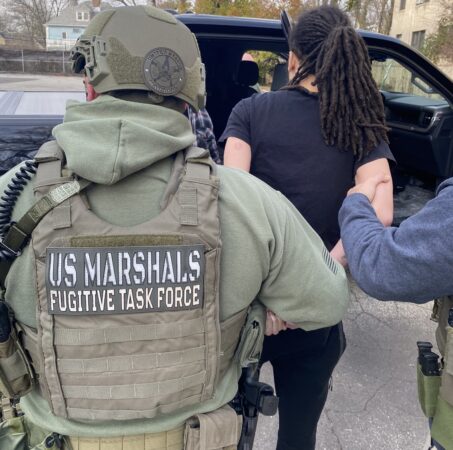
    Tyvine “Blumberg Eerd” Jones, 25, was apprehended by U.S. marshals in an apartment where he had been hiding at the Stratford Court complex in Lansdowne, authorities said. Jones was considered one of the city’s most wanted fugitives, and in October, marshals issued a $5,000 reward for information leading to his arrest.

    Eric Gartner, the United States marshal for the Eastern District of Pennsylvania, said Jones’ “unrestrained existence serves only to diminish our great city,” and his arrest demonstrates the agency’s commitment to keep Philadelphians safe.

    Investigators say Jones is a suspect in three slayings that took place between 2020 and 2022: the killings of Heyward Garrison, 16, Wesley Rodwell, 20, and Ryan Findley, 23.

    Jones is a self-identified member of the Blumberg gang, which federal prosecutors say operates in the area around the now-shuttered Norman Blumberg Apartments on Oxford Street in North Philadelphia.

    Members of the gang, including its onetime leader, Edward Stinson, have been convicted of drug trafficking in that area, and others have been tied to assaults and shootings.

    Stinson, federal prosecutors wrote in court filings, ran a round-the-clock crack cocaine distribution ring that sucked in teenagers, single mothers, and other vulnerable people.

    Jones was an associate of Anthony “Blumberg Geez” Watson, and the two recorded rap songs together. In one song, “Blow Up,” the two brag about stalking and shooting their criminal rivals.

    Like Jones, Watson, 21, was sought by investigators as a suspect in Garrison’s killing, but he was gunned down in an unrelated shooting after a year on the run.

    Garrison was found shot multiple times in the back of a Honda Pilot parked near 22nd and Diamond Streets in August 2020.

    Two years later, in May 2022, Rodwell was slain on Erie Avenue near 16th Street in a broad-daylight shooting.

    And in September 2022, Findley was killed on Creston Street near Oakland in Oxford Circle.

    Investigators say Jones was involved in all three killings. When announcing the reward for his arrest, Supervisory Deputy U.S. Marshal Robert Clark called Jones “the very worst society has to offer” and said he demonstrated a complete disregard for human life.

  • Justice Department can unseal records from Epstein’s 2019 sex trafficking case, judge says

    Justice Department can unseal records from Epstein’s 2019 sex trafficking case, judge says

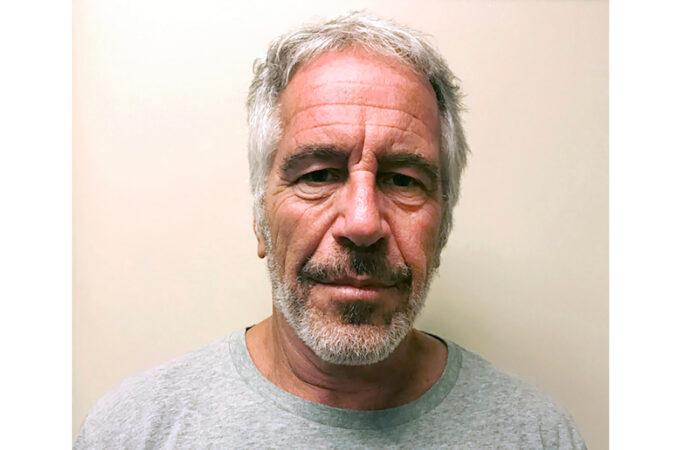
    NEW YORK — Secret grand jury transcripts from Jeffrey Epstein’s 2019 sex trafficking case can be made public, a judge ruled Wednesday, joining two other judges in granting the Justice Department’s requests to unseal material from investigations into the late financier’s sexual abuse.

    U.S. District Judge Richard Berman reversed his earlier decision to keep the material under wraps, citing a new law that requires the government to open its files on Epstein and his longtime confidant Ghislaine Maxwell. The judge previously cautioned that the 70 or so pages of grand jury materials slated for release are hardly revelatory and “merely a hearsay snippet” of Epstein’s conduct.

    On Tuesday, another Manhattan federal judge ordered the release of records from Maxwell’s 2021 sex trafficking case. Last week, a judge in Florida approved the unsealing of transcripts from an abandoned Epstein federal grand jury investigation in the 2000s.

    The Justice Department asked the judges to lift secrecy orders after the Epstein Files Transparency Act, passed by Congress and signed into law by President Donald Trump last month, created a narrow exception to rules that normally keep grand jury proceedings confidential. The law requires that the Justice Department disclose Epstein-related material to the public by Dec. 19.

    The court records cleared for release are just a sliver of the government’s trove — a collection of potentially tens of thousands of pages of documents including FBI notes and reports; transcripts of witness interviews, photographs, videos and other evidence; Epstein’s autopsy report; flight logs and travel records.

    While lawyers for Epstein’s estate told Berman in a letter last week that the estate took no position on the Justice Department’s unsealing request, some Epstein victims backed it.

    “Release to the public of Epstein-related materials is good, so long as the victims are protected in the process,” said Brad Edwards, a lawyer for some victims. “With that said, the grand jury receives only the most basic information, so, relatively speaking, these particular materials are insignificant.”

    Questions about the government’s Epstein files have dominated the first year of Trump’s second term, with pressure on the Republican intensifying after he reneged on a campaign promise to release the files. His administration released some material, most of it already public, disappointing critics and some allies.

    Berman was matter of fact in his ruling Wednesday, writing that the transparency law “unequivocally intends to make public Epstein grand jury materials and discovery materials” that had previously been covered by secrecy orders. The law “supersedes the otherwise secret grand jury materials,” he wrote.

    The judge, who was appointed by President Bill Clinton, a Democrat, implored the Justice Department to carefully follow the law’s privacy provisions to ensure that victims’ names and identifying information are redacted, or blacked out. Victim safety and privacy “are paramount,” he wrote.

    In court filings, the Justice Department informed Berman that the only witness to testify before the Epstein grand jury was an FBI agent who, the judge noted, “had no direct knowledge of the facts of the case and whose testimony was mostly hearsay.”

    The agent testified over two days, on June 18, 2019, and July 2, 2019. The rest of the grand jury presentation consisted of a PowerPoint slideshow and four pages of call logs. The July 2 session ended with grand jurors voting to indict Epstein.

    Epstein, a millionaire money manager known for socializing with celebrities, politicians, billionaires and the academic elite, killed himself in jail a month after his 2019 arrest. Maxwell was convicted in 2021 by a federal jury of sex trafficking for helping recruit some of Epstein’s underage victims and participating in some of the abuse. She is serving a 20-year prison sentence.

    Maxwell’s lawyer told a judge last week that unsealing records from her case “would create undue prejudice” and could spoil her plans to file a habeas petition, a legal filing seeking to overturn her conviction. The Supreme Court in October declined to hear Maxwell’s appeal.

    Maxwell’s grand jury records include testimony from the same FBI agent and a New York Police Department detective.

    Judge Paul A. Engelmayer sought to temper expectations as he approved their release on Tuesday, writing that the materials “do not identify any person other than Epstein and Maxwell as having had sexual contact with a minor.”

    “They do not discuss or identify any client of Epstein’s or Maxwell’s,” wrote Engelmayer, an appointee of President Barack Obama, a Democrat. “They do not reveal any heretofore unknown means or methods of Epstein’s or Maxwell’s crimes.”

  • Two windows were smashed at Philly’s federal courthouse, the U.S. Marshals said

    Two windows were smashed at Philly’s federal courthouse, the U.S. Marshals said

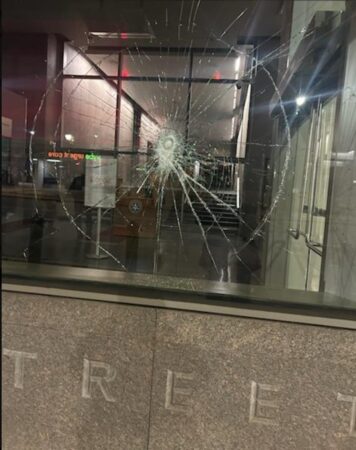
    Federal authorities are searching for someone who shattered two windows at Philadelphia’s federal courthouse this week.

    The vandalism occurred late Monday night when someone used a cobblestone brick to smash two glass windows at the front entrance of the James A. Byrne U.S. Courthouse on the 600 block of Market Street, said Supervisory Deputy U.S. Marshal Robert Clark.

    Clark said it was not clear if the attack was targeted. Authorities were also looking into whether there was any link to another report of windows being smashed around the same time that night a few blocks away in Old City, he said.

    Investigators were reviewing surveillance video in hopes of identifying a suspect, Clark said, and the brick that was used was left at the scene.

    The courthouse is where most of the region’s federal civil and criminal cases are heard. It also houses the Third Circuit Court of Appeals.

  • Man and teen boy killed in Germantown shooting

    Man and teen boy killed in Germantown shooting

    A 30-year-old man and 16-year-old boy were killed after a meeting for a possible transaction escalated into gunfire early Tuesday evening in the city’s Germantown section, police said.

    Officers responded shortly after 5 p.m. to multiple reports of a shooting at the intersection of West Queen Lane and Laurens Street and found the man and the teen lying on the ground unresponsive with multiple gunshot wounds to their upper bodies, said Chief Inspector Scott Small.

    They were both transported by police to Temple University Hospital, where they were pronounced dead around 5:30 p.m. A handgun was found on the body of the man.

    At the shooting scene, police found 11 spent shell casings from a handgun and a rifle, Small said.

    A Nissan registered to the deceased man was found at the scene with a bullet hole and the driver’s side door still open, Small said.

    A witness said the 30-year-old arrived at the location for a transaction that was reportedly not related to drugs, and the teen was with another man who apparently had the rifle, Small said. The man who arrived with the teen fled the scene.

    Police were checking for video from cameras in the area that may have recorded what happened, Small said.

  • ‘I didn’t want to get hit’: A.C. mayor’s teen daughter testifies against him in child abuse trial

    ‘I didn’t want to get hit’: A.C. mayor’s teen daughter testifies against him in child abuse trial

    MAYS LANDING, N.J. — The daughter of Atlantic City Mayor Marty Small Sr. took the stand in an Atlantic County courtroom Tuesday morning to testify against him at trial as he stands accused of physically abusing her.

    As a Superior Court judge looked on, the teen told jurors her father had beaten and punched her and struck her with a broom.

    “He put his hands on me,” she said.

    Small, a Democrat, faces charges of child endangerment, aggravated assault, and witness tampering in connection with a series of incidents in which prosecutors say he punched, beat, and threatened his then-15-year-old daughter, largely over his disapproval of her relationship with her boyfriend. He has denied any wrongdoing, and his lawyers have challenged his daughter’s credibility.

    The girl, now 17, recounted the abuse in a soft voice, calmly answering prosecutors’ questions — and rejecting suggestions by an attorney for her father that she had lied about key details.

    “My dad came home and he was like, upset,” the girl said as prosecutors asked her about crimes they allege took place in the Small family home in January 2024.

    She said her mother had recently gone through her phone and learned that she had sneaked her boyfriend into the house. Her father, she testified, was “mad and disappointed.” As she sat in a chair that she recalled as having a Philadelphia Flyers theme, she told the jury, he hit her with a belt and punched her in the legs.

    Louis Barbone, an attorney for Small, maintained that there were inconsistencies in statements the girl gave to investigators, and he disputed her account of the incident with the broom.

    Earlier in the day, prosecutors played video footage they say the teen recorded at home.

    Though the camera did not show images of Small or others, it captured the sound of the girl and her parents screaming amid what prosecutors described as the chaos that descended on the home after the teen started a relationship they did not approve of.

    Prosecutors also showed Instagram messages the girl exchanged with her boyfriend about the alleged abuse, including one in which she told him, ”I’m scared to get in the shower because my bruise is gonna burn.”

    Small’s daughter told jurors that as her father was rousing his family one January morning to attend the Atlantic City Peace Walk, she did not have her hair done and didn’t want to go. She said she and her father argued and he pushed her, so she splashed him with laundry detergent.

    Small, she said, then got a broom and struck her multiple times in the forehead. She testified that she passed out, and the next thing she remembered was her father telling her brother to get her some water.

    On cross examination, Barbone returned to a theme he struck in his opening statement to the jury on Monday — that Small was a caring father who, watching his daughter’s life veer off course because of a relationship he believed to be manipulative and inappropriate, had legally disciplined a disobedient child.

    He told jurors prosecutors did not have a recording of the incident involving a broom, and he said the girl had been wielding a butter knife and the injuries she sustained that day happened when she fell as the two wrestled for the broom.

    Barbone said the teen had exaggerated her injuries, and he noted that when initially questioned by investigators, she told them she felt safe at home.

    “I didn’t want to get taken away,” the girl said, “so I said, ‘yes.’”

    The trial is expected to continue through the end of the week.

  • Twin brothers in Absecon charged with posting online threats against ICE

    Twin brothers in Absecon charged with posting online threats against ICE

    Twin brothers from Absecon, N.J., were arrested and charged Tuesday with allegedly writing threats on social media against ICE agents and Tricia McLaughlin, the spokesperson for Department of Homeland Security Secretary Kristi Noem, DHS announced.

    Emilio Roman-Flores and Ricardo Antonio Roman-Flores are accused of writing on social media that McLaughlin should be hanged and declaring, “Shoot ICE on sight.”

    The Absecon Police Department SWAT team and DHS executed a search and arrest warrant Tuesday morning for the brothers. DHS said both were U.S. citizens.

    DHS posted a photo on the agency’s website showing a shotgun and a semiautomatic rifle and ammunition that was allegedly taken as evidence during the raid.

    Emilio Roman-Flores was charged with unlawful possession of an assault weapon, possession of prohibited weapons, conspiracy-terroristic threats, criminal coercion, threats, and cyber harassment, the department said.

    Ricardo Antonio Roman-Flores was charged with conspiracy-terroristic threats, DHS said.

    According to public records, the brothers are 26 years old.

    “If you threaten our law enforcement or DHS officials, we will hunt you down and you will be prosecuted to the fullest extent of the law,” Todd Lyons, acting director of U.S. Immigration and Customs Enforcement, said in a statement.

    According to a Fox News story that DHS promoted on social media, one of the brothers allegedly wrote in reply to something McLaughlin posted: “[The Second] Amendment is in place for moments like this. Shoot ICE on sight.”

    One of the brothers also allegedly wrote in response to McLaughlin, according to Fox News: “We Americans should find you, tar you, feather you, and hang you as we did to anyone serving tyrants before the Revolutionary War.”

    Neither the Fox News report nor the DHS announcement specified which brother made the statements.

  • She was hired to supervise troubled youth. She gave one a gun and had sex with him, Bucks DA says.

    She was hired to supervise troubled youth. She gave one a gun and had sex with him, Bucks DA says.

    A New York woman who worked as a “house mom” supervising troubled teens at a group home in Feasterville gave a 16-year-old boy money, posed in pictures with him holding a gun, and forced him into a sexual relationship, prosecutors in Bucks County said Tuesday.

    Cristal Betancourt, 30, told the teen in text messages in December 2024 that she was pregnant and asked him to buy her an emergency contraceptive, according to the affidavit of probable cause for her arrest.

    But the boy, in an electronic diary he kept on his iPhone’s Notes app, said he was afraid of Betancourt, writing that she was “crazy” and once demanded sex from him at gunpoint, the affidavit said.

    Betancourt has been charged with institutional sexual assault, corruption of minors, and related crimes. She had not been arraigned as of Tuesday afternoon. Efforts to reach her were unsuccessful.

    Investigators were first notified of the alleged abuse in January, six months after the teen was court-ordered to move into the home at 700 Ross Dr. in Feasterville.

    The property, operated by Community Service Foundation, provides housing and behavioral therapy for troubled teens, usually after they are taken into custody for criminal offenses. It operates similar to a foster home, with a full-time “house parent” who lives on the premises and supervises the teens.

    That supervisor also makes recommendations to CSF as to whether the teens are worthy of being granted “home passes” to visit family and friends.

    CSF did not return a request for comment on Betancourt or the charges she faces.

    Lower Southampton police were notified by investigators in Lancaster County, where the boy lived before being assigned to the group home, that they had a photo of the teen holding a Walther PPQ handgun and standing next to Betancourt, the affidavit said. Records show that she had purchased a gun similar to the one in the photo, the document said.

    In an interview with investigators, the affidavit said, Betancourt told them she owned two handguns, including the Walther, which she said had been recently stolen from her car. She said she had not reported the gun stolen and asked detectives to do that for her, according to the document.

    Detectives later examined the 16-year-old’s phone and found other photos of him holding both of Betancourt’s guns, the affidavit said. He told police she had taken him to a gun shop to look at firearms and then purchased a second gun, a Palmetto Arms 5.7-caliber pistol. Text messages found on the boy’s phone showed that he had bragged to his friends that he was carrying a handgun of that caliber, the document said.

    The teen’s cell phone showed that he had taken detailed notes of his sexual encounters with Betancourt inside the group home in November 2024, according to the affidavit. He wrote that he no longer wanted to have sex with her but was afraid she would “get him in trouble” or harm him if he refused, the affidavit said.

    Cell phone records revealed that Betancourt had taken the teen on unauthorized trips to Lancaster in violation of his probation, while lying and saying they were at a Costco store in Warminster, the document said, and detectives found she had sent him $600 via CashApp the week before Christmas 2024.

  • A Camden family is accused of killing a man, then dismembering him with a chainsaw

    A Camden family is accused of killing a man, then dismembering him with a chainsaw

    Harold “Hal” Miller Jr. disappeared in June, leaving behind only two clues for police to follow: his vehicle abandoned in Pennsauken and, inside, a cell phone that last dialed a contact named “E. Poker.”

    From those scant clues, investigators said, they uncovered something grim: Miller had been shot to death and dismembered with a chainsaw, they alleged, by the man whose number was saved in his phone as “E. Poker,” Everton Thomas, and two of Thomas’ relatives, in Camden.

    In September, police charged Thomas, 41, with murder, desecration of human remains, and tampering with physical evidence. His wife, Sherrie Thomas, 41, and son, Deshawn Thomas, 23, were also charged with desecrating and disposing of Miller’s remains.

    But more than five months later — after 178 days of searches, interviews, and forensic work — investigators have yet to find Miller’s body.

    “It’s a horrible waiting game,” said Miller’s ex-wife and mother of his four children, Tamika Miller.

    The case that has emerged since Miller’s disappearance is as sprawling as it is brutal: a trail of surveillance footage, internet searches, hardware-store runs, and border crossings that authorities say chart a carefully concealed killing. Court records detail a sequence of events that is at once methodical and frenzied — and has left investigators hunting for Miller’s remains even as three members of the Thomas family stand charged in his death.

    Everton Thomas denies any involvement in the crime and is expected to plead not guilty to the charges on Dec. 15, according to his defense attorney, Timothy Farrow. Attorneys for Sherrie Thomas and Deshawn Thomas did not respond to requests for comment.

    ‘An awesome father’

    Harold Miller and Tamika Miller had four children, three girls and a boy. “He was an awesome father,” Tamika Miller said.

    He swelled with pride when their son announced he would join the Navy, continuing a military tradition in his family that “flat-footed” Miller could not follow himself, she recalled. His happiest moment, she said, came when their daughter, a special-education teacher, received her bachelor’s degree.

    Miller worked in Camden’s social-services world, leading outreach for Volunteers of America and programs for Joseph House, a men’s homeless shelter. In 2017, he pleaded guilty in federal court to conspiring to sell crack cocaine and served five years in prison.

    The couple divorced in 2023. But the family still gathered for holidays, including Thanksgiving, when Miller would rent a hall large enough for 100 people and make sure four turkeys — including his favorite, fried turkey — were on the table, Tamika Miller said.

    Miller, who lived in Deptford Township, was 48 when he died. “The holidays will never be the same,” Tamika Miller said.

    The grisly crime

    Miller’s final call — placed at 11:26 a.m. on June 12 — went to the contact in his phone listed as “E. Poker.” Investigators later learned the number belonged to Everton Thomas, according to the affidavit of probable cause for his arrest.

    Street cameras caught what happened next, the document said: Miller climbing the back stairs to Thomas’ Baird Boulevard home around the time the call was placed. Minutes later, the cameras recorded the crack of a gunshot. Miller was never seen emerging from the home.

    From there, investigators say, camera footage captured an ominous procession across Camden. It shows a man they say is Thomas leaving the house in Miller’s minivan and abandoning it in Pennsauken. It shows his wife and son making a series of trips to stores, buying bleach, heavy-duty contractor bags, ice, latex gloves, duct tape, plastic sheeting — and a chainsaw, according to court filings. Later, cameras captured three people dumping large black trash bags into dumpsters behind a nearby housing complex, Tamarack Station Apartments.

    When investigators examined Deshawn Thomas’ phone, they say, they found a browser search typed in amid the chaos: whether a chainsaw could cut through meat.

    Authorities searched Everton Thomas’ house on June 20. They found a loaded Glock, and bloodstains on a doorframe leading to the basement, the affidavit said. Testing later confirmed the blood matched Miller’s DNA.

    How the two men may have been connected is unclear. Tamika Miller said they were acquaintances, not friends. “Everybody knows everybody in Camden,” she said.

    In an interview with police, Thomas told detectives that he and Miller had played poker the night before Miller vanished, and that they had spoken again around 11 a.m. on June 12. He denied knowing anything about what happened, according to the affidavit.

    By the next afternoon, investigators said, they learned Thomas had slipped across the border. Agents at Fort Erie-Buffalo reported he had entered Canada. Nearly three months later, on Sept. 8, U.S. border officers arrested him as he tried to cross back into the country. He remains in custody, awaiting a court hearing next week.

    Tamika Miller said family members held a private memorial service, where they gained some closure. “We don’t know if they will ever find him,” she said. “But we have hope.”

    Investigators, meanwhile, continue to search for clues and Miller’s body.

    “As we near the end of the year, our detectives are still seeking leads — no matter how small — that would assist with the recovery of Mr. Miller’s remains,” Camden County Prosecutor Grace MacAulay said Tuesday. “For anyone who has information, but has not yet come forward, we implore you to consider what his grieving family has been through. They deserve answers and the opportunity to properly mourn their loved one. We remain hopeful that our community does what’s right and helps bring Mr. Miller home.”

    Anyone with information is asked to contact Detective Jake Siegfried of the Camden County Prosecutor’s Office Homicide Unit at 856-225-5086 and Detective Andrew Mogck of the Camden County Police Department at 609-519-8588. Tips can also be submitted to https://camdencountypros.org/tips.