Category: Crime

  • Suspect in Canada school shooting is identified as 18-year-old who had prior mental health calls

    Suspect in Canada school shooting is identified as 18-year-old who had prior mental health calls

    VANCOUVER, British Columbia — Police on Wednesday identified the suspect in a school shooting in Canada as an 18-year-old who had prior mental health calls to her home and who was found dead following the attack that killed eight people in a remote part of British Columbia.

    Royal Canadian Mounted Police Deputy Commissioner Dwayne McDonald said Jesse Van Rootselaar had a history of mental health contact with police, and that the suspect’s mother and stepbrother were found dead in a home near the school.

    The motive remained unclear.

    Police initially said nine people were killed Tuesday in the attack, but McDonald clarified Wednesday that there were eight fatalities, plus the suspect, who authorities said shot herself. McDonald said the discrepancy arose from a victim who was airlifted to a medical center. Authorities mistakenly thought that person had died.

    More than 25 people were wounded Tuesday in the attack in the small mountain community of Tumbler Ridge, police said.

    Town is near border with Alberta

    The town of 2,700 people in the Canadian Rockies is more than 600 miles northeast of Vancouver, near the provincial border with Alberta.

    Police said the victims included a 39-year-old teacher and five students, ages 12 to 13.

    McDonald said the suspect’s mother, who was also 39, and an 11-year-old stepbrother, were found at the suspect’s home.

    The killings at the home occurred first, he said. A young family member at the home went to a neighbor, who called police.

    At the school, one victim was found in a stairwell and the rest, McDonald believed, were found in the library. The suspect was not related to any of the victims at the school, he said.

    “There is no information at this point that anyone was specifically targeted,” McDonald said.

    Police recovered a long gun and a modified handgun. McDonald said officers arrived at the school two minutes after the initial call. When they arrived, shots were fired in their direction.

    “Parents, grandparents, sisters, brothers in Tumbler Ridge will wake up without someone they love. The nation mourns with you, and Canada stands by you,” an emotional Prime Minister Mark Carney said as he arrived in Parliament.

    Deadliest rampage since 2020

    The attack was Canada’s deadliest rampage since 2020, when a gunman in Nova Scotia killed 13 people and set fires that left another nine dead.

    Carney said flags at government buildings will be flown at half-staff for seven days and added: “We will get through this.”

    Shelley Quist said her neighbor across the street lost her 12-year-old. “We heard his mom. She was in the street crying. She wanted her son’s body,” Quist said.

    Quist said her 17-year-old son, Darian, was on lockdown in the school for more than two hours. The provincial government website lists Tumbler Ridge Secondary School as having 175 students in grades 7 to 12.

    “The grade sevens and eights, I think, were upstairs in the library, and that’s where the shooter went,” she said. Her son was in the library just 15 minutes prior to the attack.

    Quist was working at the hospital down the street when the shooting started.

    “I was about to go run down to the school, but my coworker held me back. And then I was able to get Darian on the phone to know he was OK,” she said.

    Darian Quist said he knew the attack was real when the principal came down the halls and ordered doors to be closed. He said fellow students texted him pictures of blood while he remained locked down in a classroom.

    “We used the desk to block the doors,” he said.

    School shootings are rare in Canada, which has strict gun-control laws. The government has responded to previous mass shootings with gun-control measures, including a recently broadened ban on all guns it considers assault weapons.

    A video showed students walking out with their hands raised as police vehicles surrounded the building and a helicopter circled overhead.

    Village is a ‘big family’

    Tumbler Ridge Mayor Darryl Krakowka said it was “devastating” to learn how many had died in the community, which he called a “big family.”

    “I broke down,” Krakowka said. “I have lived here for 18 years. I probably know every one of the victims.”

    The Rev. George Rowe of the Tumbler Ridge Fellowship Baptist Church went to the recreation center where victims’ families were awaiting more information.

    “It was not a pretty sight. Families are still waiting to hear if it’s their child that’s deceased and because of protocol and procedure, the investigating team is very careful in releasing names,” Rowe said Tuesday.

    Rowe once taught at the high school, and his three children graduated from there.

    “To walk through the corridors of that school will never be the same again,” he said.

    The school district said the high school and elementary school will be closed for the rest of the week.

    Carney’s office said he called off a planned trip to Halifax, Nova Scotia, and Munich, Germany. He had been set to announce a long-awaited defense industrial strategy Wednesday in Halifax before heading to Europe for the Munich Security Conference.

    British Columbia Premier David Eby on Tuesday said he had spoken to the prime minister about the “unimaginable tragedy.”

    “I know it’s causing us all to hug our kids a little bit tighter tonight,” he said. “I’m asking the people of British Columbia to look after the people of Tumbler Ridge tonight.

  • Alex Murdaugh continues to insist he didn’t kill wife and son as he gets another day in court

    Alex Murdaugh continues to insist he didn’t kill wife and son as he gets another day in court

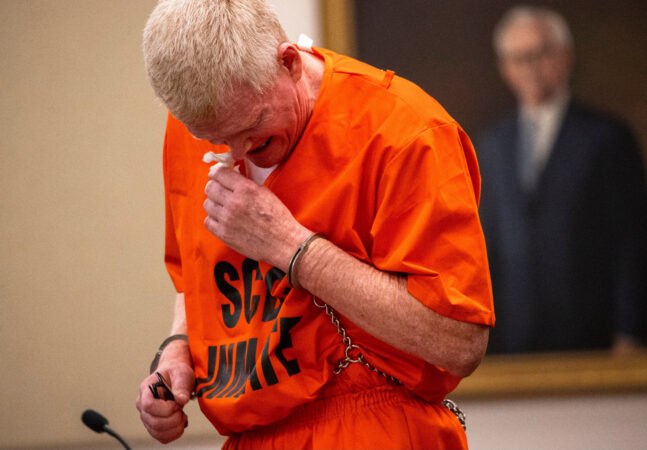
    COLUMBIA, S.C. — Alex Murdaugh has admitted he is a thief, a liar, an insurance cheat, a drug addict and a bad lawyer. But even from behind bars he continues to adamantly deny he is a killer.

    Murdaugh’s attorneys argued Wednesday before the South Carolina Supreme Court, asking the justices to overturn the two murder convictions and life sentence Murdaugh is serving for the shooting deaths of his wife, Maggie, and younger son, Paul, outside their home in June 2021.

    The defense argues the trial judge made rulings that prevented a fair trial, such as allowing in evidence of Murdaugh stealing from clients that had nothing to do with the killings but biased jurors against him. They detail the lack of physical evidence — no DNA or blood was found splattered on Murdaugh or any of his clothes, even though the killings were at close range with powerful weapons that were never found.

    And they said the court clerk assigned to oversee the evidence and the jury during the trial influenced jurors to find Murdaugh guilty, hoping to improve sales of a book she was writing about the case. She has since pleaded guilty to lying about what she said and did to a different judge.

    Prosecutors argued that the clerk’s comments were fleeting and the evidence against Murdaugh was overwhelming. His lawyer said that didn’t matter because the comments a juror said she made — urging jurors to watch Murdaugh’s body language and listen to his testimony carefully — removed his presumption of innocence before the jury ever deliberated.

    “If only the people who may be innocent get a fair trial, then our Constitution isn’t working,” Murdaugh’s lawyer Dick Harpootlian told the justices.

    Murdaugh won’t leave prison

    The case continues to captivate. There are streaming miniseries, best selling books and dozens of true crime podcasts about how the multimillionaire Southern lawyer whose family dominated and controlled the legal system in tiny Hampton County ended up in a maximum security South Carolina prison.

    Even if Murdaugh wins this appeal, he isn’t going anywhere. Hanging over the 57-year-old’s head is a 40-year federal prison sentence for stealing more than $12 million from clients intended for their medical care and living expenses after they or their relatives suffered devastating and even deadly injuries in accidents.

    “He said he deserved to go to prison for what he did financially, but he can’t accept the fact that he was convicted of murdering his wife and son, for which he constantly proclaimed his innocence,” attorney Jim Griffin said after the hearing.

    Wednesday’s state Supreme Court arguments featured the same lawyers who squared off at Murdaugh’s 2023 murder trial, although Murdaugh was not there.

    Did the court clerk influence jurors?

    Former Colleton County Clerk of Court Mary Rebecca “Becky” Hill pleaded guilty in December to obstruction of justice and perjury for showing a reporter photographs that were sealed as court exhibits and then lying about it.

    The justices pressed prosecutor Creighton Waters to say whether the trial judge, who initially rejected Murdaugh’s appeal for a new trial, was right to ignore testimony from a few jurors while believing the 11 who did not accuse the clerk of misconduct.

    Waters agreed there were problems, but said they were so isolated in the six-week trial that they had no impact. Murdaugh’s lawyers said that is impossible to figure out because jurors could be influenced subtly, without realizing it.

    “It was improper. Perhaps not improper to the point of reversal, but it was improper,” Chief Justice John Kittredge observed.

    There will be no immediate decision. Rulings usually take months to be handed down.

    “We understand the gravity of the situation and the entitlement of every individual to a fair and impartial trial,” Kittredge said.

    Prosecutors reiterate evidence for conviction

    Prosecutors have said in court papers there is no reason to throw out the guilty verdicts for murder against Murdaugh.

    They carefully recounted the case for the first 34 pages of their brief. Murdaugh’s financial situation was crumbling as he stole from clients to repay his mounting debts from his drug habit and expensive tastes. He was financially vulnerable when Paul Murdaugh caused a boat crash that killed a teen.

    The brief recalls evidence that helped convict Alex Murdaugh, who told investigators for months he hadn’t seen his wife and son for about an hour before they were killed. That story went unchallenged until investigators cracked the passcode on Paul Murdaugh’s phone and found a video with a barking dog and Alex Murdaugh’s voice admonishing it five minutes before the young man stopped using his phone.

    Defense says court allowed an unfair trial

    To establish Murdaugh’s motive at trial, prosecutors presented more than a week of testimony about his dire financial situation, including how he had stolen a multimillion insurance settlement from the son of a longtime family employee who died in a fall at the Murdaugh home. Waters said it was all critical to the big picture of a unique crime.

    “You can’t understand the boiling point if you don’t understand the slow burn that led up to it,” Waters said. “The jury could not understand the full weight of the pressure if they didn’t understand the entre criminal and financial history.”

    The chief justice asked why prosecutors piled on so much financial evidence, including pointing out the family employee also had a disabled son.

    That could have caused the jury to think “not only is he a thief with the motive for murder but he is a despicable, low-life character,” Kittredge said.

    In the insular world of South Carolina, the state Supreme Court’s decision could have impacts well beyond courtrooms. Sitting at the prosecution table on Wednesday with the case’s chief litigator was Republican South Carolina Attorney General Alan Wilson, a candidate in November’s election for the open governor’s seat.

  • Lawyers of Chicago woman shot by federal agents say documents show how DHS lies about investigations

    Lawyers of Chicago woman shot by federal agents say documents show how DHS lies about investigations

    CHICAGO — Border Patrol commander Gregory Bovino praised a federal agent who shot a Chicago woman during an immigration crackdown last year, according to evidence released Wednesday by attorneys who accused the Trump administration of mishandling the investigation and spreading lies about the shooting.

    Marimar Martinez, a teaching assistant and U.S. citizen, was shot five times by a Border Patrol agent in October while in her vehicle. She was charged with a felony after Homeland Security officials accused her of trying to ram agents with her vehicle. But the case was abruptly dismissed after videos emerged showing an agent steering his vehicle into Martinez’s vehicle.

    Her attorneys pushed to make evidence in the now-dissolved criminal case public, saying they were especially motivated after a federal agent fatally shot Minneapolis woman Renee Good under similar circumstances.

    Martinez’s attorneys are pursuing a complaint under a law that permits individuals to sue federal agencies. They outlined instances of DHS lying about Martinez after the shooting, including labeling her a “domestic terrorist” and accusing her of having a history of “doxxing federal agents.” The Montessori school assistant has no criminal record and prosecutors haven’t brought evidence in either claim.

    “This is a time where we just cannot trust the words of our federal officials,” attorney Christopher Parente said at a news conference where his office released evidence.

    That included an agent’s hand-drawn diagram of the scene to allege how Martinez “boxed in” federal agents. It included three vehicles Parente said “don’t exist.”

    Many of the emails, text messages and videos were released the night before by the U.S. attorney’s office.

    DHS didn’t immediately return a message Wednesday.

    The shooting came during the height of the Chicago-area crackdown. Arrests, protests and tense standoffs with immigration agents were common across the city of 2.7 million and its suburbs. Weeks before the Martinez shooting, agents fatally shot a suburban Chicago dad in a traffic stop.

    The government unsuccessfully fought the release of the documents, including an email from Bovino, who led enforcement operations nationwide before he returned to his previous sector post in California last month.

    “In light of your excellent service in Chicago, you have much yet left to do!!” Bovino wrote Charles Exum on Oct. 4.

    In an agent group text, others congratulated Exum, calling him a “legend” and offering to buy him beer. In previously released documents, text messages sent by Exum, appeared to show him bragging to colleagues about his shooting skills.

    “I fired 5 rounds and she had 7 holes. Put that in your book boys,” the text read.

    The latest documents are public now because U.S. District Judge Georgia Alexakis lifted a protective order last week. Federal prosecutors had argued the documents could damage Exum’s reputation. But Alexakis said the federal government has shown “zero concern” about ruining the reputation of Martínez.

    On the day Martinez was shot, she had followed agents’ vehicle and honked her horn to warn others of the presence of immigration agents. Body camera footage showed agents with weapons drawn and rushing out of the vehicle.

    “It’s time to get aggressive and get the (expletive) out,” one agent said.

    Martinez, who sat near her attorneys, was largely silent during the news conference.

    She declined an Associated Press interview request. But in recent weeks she has spoken to local media and before lawmakers.

    Earlier this month, Martinez testified before congressional Democrats to highlight use-of-force incidents by DHS officers. Members of Good’s family also spoke. Martinez is scheduled to attend President Donald Trump’s State of the Union address this month as the guest of U.S. Rep. Jesus “Chuy” Garcia.

    She was hospitalized before being taken into the custody of the FBI, which still has her car. Martinez said the incident has left her with mistrust of law enforcement, which accused her of being armed.

    Martinez has a valid concealed-carry license and had a handgun in her purse. Attorneys showed a picture of it in a pink holster at the bottom of her purse, saying it remained there during the encounter.

    “They are not targeting the worst of the worst, they are targeting individuals who fit a certain profile, who simply have a certain accent, or a non-white skin color just like mine. This raises serious concerns about fairness, discrimination, and abuse of authority,” she said during her congressional testimony. “The lack of accountability for these actions is deeply troubling.”

    Martinez’s attorneys said they’d pursue a complaint under the Federal Tort Claims Act. If the agency denies the claim or doesn’t act on it within six months, they can file a federal lawsuit.

  • Several ICE agents were arrested in recent months, showing risk of misconduct

    Several ICE agents were arrested in recent months, showing risk of misconduct

    Investigators said one immigration enforcement official got away with physically assaulting his girlfriend for years. Another admitted he repeatedly sexually abused a woman in his custody. A third is charged with taking bribes to remove detention orders on people targeted for deportation.

    At least two dozen U.S. Immigration and Customs Enforcement employees and contractors have been charged with crimes since 2020, and their documented wrongdoing includes patterns of physical and sexual abuse, corruption, and other abuses of authority, a review by The Associated Press found.

    While most of the cases happened before Congress voted last year to give ICE $75 billion to hire more agents and detain more people, experts say these kinds of crimes could accelerate given the sheer volume of new employees and their empowerment to use aggressive tactics to arrest and deport people.

    The Trump administration has emboldened agents by arguing they have “absolute immunity” for their actions on duty and by weakening oversight. One judge recently suggested that ICE was developing a troubling culture of lawlessness, while experts have questioned whether job applicants are getting enough vetting and training.

    “Once a person is hired, brought on, goes through the training and they are not the right person, it is difficult to get rid of them and there will be a price to be paid later down the road by everyone,” said Gil Kerlikowske, who served as commissioner of U.S. Customs and Border Protection from 2014 to 2017.

    Almost every law enforcement agency contends with bad employees and crimes related to domestic violence and substance abuse are long-standing problems in the field. But ICE’s rapid growth and mission to deport millions are unprecedented, and the AP review found that the immense power that officers exercise over vulnerable populations can lead to abuses.

    Department of Homeland Security Assistant Secretary Tricia McLaughlin said that wrongdoing was not widespread in the agency, and that ICE “takes allegations of misconduct by its employees extremely seriously.” She said that most new hires had already worked for other law enforcement agencies, and that their backgrounds were thoroughly vetted.

    “America can be proud of the professionalism our officers bring to the job day-in and day-out,” she said.

    Could become a ‘countrywide phenomenon’

    ICE announced last month that it had more than doubled in size to 22,000 employees in less than one year.

    Kerlikowske said ICE agents are particularly “vulnerable to unnecessary use-of-force issues,” given that they often conduct enforcement operations in public while facing protests. With the number of ICE detainees nearly doubling since last year to 70,000, employees and contractors responsible for overseeing them are also facing challenging conditions that can provide more opportunities for misconduct.

    The Border Patrol doubled in size to more than 20,000 agents from 2004 to 2011 — six years longer than ICE took. It was embarrassed by a wave of corruption, abuse, and other misconduct by some of the new hires. Kerlikowske recalled cases of agents who accepted bribes to let cars carrying drugs enter the U.S. or who became involved in human trafficking.

    He and others say ICE is poised to see similar problems that will likely be broader in scope, with less oversight and accountability.

    “The corruption and the abuse and the misconduct was largely confined in the prior instance to along the border and interactions with immigrants and border state residents. With ICE, this is going to be a countrywide phenomenon as they pull in so many people who are attracted to this mission,” said David Bier, director of immigration studies at the Cato Institute, a libertarian think tank.

    Bier, who has helped publicize some of the recent arrests and other alleged misconduct by ICE agents, said he has been struck by the “remarkable array of different offenses and charges that we’ve seen.”

    AP’s review examined public records involving cases of ICE employees and contractors who have been arrested since 2020, including at least 17 who have been convicted and six others who are awaiting trial. Nine have been charged in the last year, including an agent cited last month for assaulting a protester near Chicago while off-duty.

    Some of the most serious crimes were committed by veteran ICE employees and supervisors rather than rookies.

    While federal officials have justified ICE’s aggression, the behavior of agents is drawing scrutiny from cellphone-wielding observers and prosecutors in Democratic-led jurisdictions. Local agencies are looking into last month’s fatal shootings in Minneapolis of protesters Renee Good and Alex Pretti by federal agents, as well as the killing of Keith Porter by an off-duty ICE agent in Los Angeles on New Year’s Eve.

    Arrests have made local headlines

    Around the country, the cases have attracted unwelcome headlines for ICE, which has spent millions of dollars publicizing the criminal rap sheets of those they arrest as the “worst of the worst.”

    Among them:

    — The assistant ICE field office supervisor in Cincinnati, Samuel Saxon, a 20-year ICE veteran, has been jailed since his arrest in December on charges that he attempted to strangle his girlfriend.

    Saxon had abused the woman for years, fracturing her hip and nose and causing internal bleeding, a judge found in a ruling ordering him detained pending trial. “The defendant is a volatile and violent individual,” the judge wrote of Saxon, whose attorneys didn’t return a message seeking comment. ICE said he is considered absent without leave.

    — “I’m ICE, boys,” an ICE employment eligibility auditor told police in Minnesota in November when he was arrested in a sting as he went to meet a person he thought was a 17-year-old prostitute. Alexander Back, 41, has pleaded not guilty to attempted enticement of a minor. ICE said Back is on administrative leave while the agency investigates.

    — When officers in suburban Chicago found a man passed out in a crashed car in October, they were surprised to discover the driver was an ICE officer who had recently completed his shift at a detention center and had his government firearm in the vehicle. They arrested Guillermo Diaz-Torres for driving under the influence. He’s pleaded not guilty and has been put on administrative duty pending an investigation.

    — After an ICE officer in Florida was stopped for driving drunk with his two children in the car in August, he tried to get out of charges by pointing to his law enforcement and military service. When that failed, he demanded to know whether one of the deputies arresting him was Haitian and threatened to check the man’s immigration status, body camera video shows.

    “I’ll run him once I get out of here and if he’s not legit, ooh, he’s taking a ride back to Haiti,” Scott Deiseroth warned during the arrest.

    Deiseroth, who was sentenced to probation and community service, is on administrative leave pending the outcome of an internal investigation. “He did something stupid. He owned up to it,” said his attorney, Michael Catalano. “He’s very sorry about the whole thing.”

    Several cases of force and abuse

    The AP’s review found a pattern of charges involving ICE employees and contractors who mistreated vulnerable people in their care.

    A former top official at an ICE contract facility in Texas was sentenced to probation on Feb. 4 after acknowledging he grabbed a handcuffed detainee by the neck and slammed him into a wall last year. Prosecutors had downgraded the charge from a felony to a misdemeanor.

    In December, an ICE contractor pleaded guilty to sexually abusing a detainee at a detention facility in Louisiana. Prosecutors said the man had sexual encounters with a Nicaraguan national over a five-month period in 2025 as he instructed other detainees to act as lookouts.

    Outside Chicago, an off-duty ICE agent has been charged with misdemeanor battery for throwing to the ground a 68-year-old protester who was filming him at a gas station in December. McLaughlin has said the agent acted in self-defense.

    Other charges cited corruption

    Another pattern that emerged in AP’s review involved ICE officials charged with abusing their power for financial gain.

    An ICE deportation officer in Houston was indicted last summer on charges that he repeatedly accepted cash bribes from bail bondsmen in exchange for removing detainers ICE had placed on their clients targeting them for deportation.

    ICE said the officer was “indefinitely suspended” in May 2024, before his arrest one year later. He has pleaded not guilty to seven counts of accepting bribes and was released from custody while awaiting trial.

    Prosecutors say a former supervisor in ICE’s New York City office provided confidential information about people’s immigration statuses to acquaintances and made an arrest in exchange for gifts and other gain. He was arrested in November 2024, has pleaded not guilty and is awaiting trial.

    Two Utah-based ICE investigators were sentenced to prison last year for a scheme in which they made hundreds of thousands of dollars stealing synthetic drugs known as “bath salts” from government custody and selling them through government informants.

    Using badges to dodge consequences

    The wrongdoing often included the use of ICE resources and credentials to try to avoid arrest or receive favorable treatment.

    In 2022, ICE supervisor Koby Williams was arrested in a sting by police in Othello, Washington, while going to a hotel room to meet who he thought was a 13-year-old girl he’d arranged to pay for sex.

    Williams had driven his government vehicle, which was filled with cash, alcohol, pills, and Viagra, and was carrying his ICE badge and loaded government firearm. The 22-year ICE veteran offered a rationale that turned out to be a lie: that he was there to “rescue” the girl as part of a human trafficking investigation. Williams is serving prison time for what prosecutors called a “reprehensible” abuse of power.

    “With a duty to protect and serve,” they wrote, “defendant sought to exploit and victimize.”

  • A former Philly lawyer who tried to get a cell phone to an accused gang leader in jail was sentenced to probation

    A former Philly lawyer who tried to get a cell phone to an accused gang leader in jail was sentenced to probation

    A former criminal defense attorney was sentenced Wednesday to two years’ probation for smuggling contraband — including Suboxone and a cell phone — into Philadelphia’s Federal Detention Center last year in an apparent attempt to placate a purported gang leader.

    Paul DiMaio of Turnersville apologized for his actions during a sentencing hearing before U.S. District Judge John R. Padova, saying: “I absolutely should’ve known better.”

    DiMaio said his behavior was an ill-conceived response to a variety of pressures he was feeling at the time — including learning of a cancer diagnosis for his wife, and being afraid that the inmate who wanted the prohibited items was an accused murderer who had also been charged with attempting to arrange contract killings from jail.

    “This is not me,” DiMaio said. “I think it was, for lack of a better term, a perfect storm.”

    Padova said that 90 days of DiMaio’s probationary sentence must be served at a halfway house or similar reentry facility.

    DiMaio was indicted last year after prosecutors said he went to the detention center in February 2025 with two accordion-style folders, one of which contained a cell phone, a charging cord, strips of Suboxone, and 240 loose cigarettes.

    The materials — which inmates are not allowed to possess — were not discovered by guards overseeing entrants to the jail that day, prosecutors said. But surveillance footage later showed DiMaio taking the two folders to a visiting room, where he met with a prisoner who was associated with another inmate, Jahlil Williams, who prosecutors say was the intended recipient of the contraband.

    Williams — also known as “25th Street Bill” or “Kill Bill” — was awaiting trial for a variety of violent crimes in a sprawling racketeering case. DiMaio said he was afraid that Williams, the purported leader of the Omerta street gang, was upset over a monetary dispute involving a previous legal case, and that Williams might seek to harm him if he didn’t go along with the smuggling plot.

    “I panicked,” DiMaio said, “and I made just a horrible decision.”

    While in the visiting room at the detention center, prosecutors said, DiMaio gave Williams’ associate — who has not been charged in the case — the folder containing the prohibited items, and that man was supposed to give the materials to Williams.

    But a guard searched the folder before the prisoner got back to his cellblock and found the prohibited items inside. After an FBI investigation, DiMaio was charged with crimes including providing contraband to an inmate and aiding and abetting.

    Williams was charged as well, as were his sister Jada and his mother, Tanya Culver, who were accused of participating in the conspiracy. They are all still awaiting trial.

    DiMaio pleaded guilty last fall to providing contraband and making a false statement.

    He surrendered his law license voluntarily shortly after he was charged, he said in court. He has since been seeking to find other ways to pay his family’s bills, but said the loss of his career and his wife’s ongoing health challenges have left the couple “financially ruined.”

    Padova, the judge, told DiMaio he was involved in “serious conduct” but added: “This is the first day of the rest of your life.”

    “We’ve given you the opportunity to make the best of it,” Padova said.

  • 2 Philly men convicted in 3 gang-related fatal shootings

    2 Philly men convicted in 3 gang-related fatal shootings

    Two Philadelphia men on Tuesday were convicted of first-degree murder for gang-related shootings that left three dead and five others wounded, including a man who was paralyzed after being shot 19 times, Pennsylvania Attorney General Dave Sunday said.

    Chris Byard, 27, was found guilty by a jury of three counts of first-degree murder and related offenses, and was sentenced to serve three consecutive life terms, Sunday said.

    Daquan Bishop, 28, was found guilty of two counts of first-degree murder and related offenses, and was sentenced to serve two consecutive life terms.

    Byard and Bishop were members of the “6600” gang and they were trying to shoot members of another gang, Sunday said. The other gang was called “Greatah,” KYW reported in 2023 after both men were arrested and charged.

    Byard and Bishop were found guilty of the Nov. 27, 2021, killing of 24-year-old Angel Rivera, who was gunned down on the 500 block of West Duncannon Avenue.

    Both men were also found guilty of fatally shooting 23-year-old Tymir Johnson on the 3100 block of Barnett Street on Dec. 15, 2021. Two other men were wounded in that shooting.

    Byard was also convicted of the Jan. 11, 2022, killing of 21-year-old Rashaan Frazier, who was gunned down on the 4000 block of Aldine Street. Two other men were wounded.

    In the Frazier killing, Byard and others were targeting another man and killed Frazier by mistake.

    Byard was involved in a fourth shooting that left a man paralyzed from the waist down after being hit 19 times by bullets, Sunday said.

    Another defendant, 27-year-old Daquan Bethea, pleaded guilty in October to attempted murder and related crimes and was sentenced to up to 15 years in prison.

  • Norristown police officer who struck a naked man with his patrol vehicle has been charged with assault, authorities say

    Norristown police officer who struck a naked man with his patrol vehicle has been charged with assault, authorities say

    A Norristown police sergeant who struck a naked, unarmed man with his patrol SUV last week has been charged with assault, official oppression, and related crimes, prosecutors said Tuesday.

    Sgt. Daniel DeOrzio, 52, used unnecessary force in the Feb. 4 incident, Montgomery County District Attorney Kevin Steele said. He was placed on administrative leave after the encounter.

    Prosecutors said officers had been dispatched to the intersection of West Airy and Stanbridge Streets after reports that the naked man was yelling and damaging cars in the intersection. DeOrzio was among several officers who responded and, according to investigators, he positioned his police SUV behind a gray pickup truck blocking the roadway.

    After ordering the truck removed, authorities said, DeOrzio accelerated and struck the man, who was standing in the intersection with his hands on his hips.

    The impact sent the man airborne before he slammed onto the pavement, prosecutors said. He was taken to Main Line Health Paoli Hospital and released two days later.

    Investigators concluded that DeOrzio, the highest-ranking officer at the scene, used unnecessary force and failed to attempt basic de-escalation tactics, including verbal commands, before resorting to violence, the district attorney said.

    “This was not a necessary use of deadly force in this response incident,” Steele said in a statement.

    The incident drew criticism at a public meeting last week, where Norristown Police Chief Mike Trail fielded questions from residents upset over the officer’s actions. Trail said he would like to form a mental health co-responder program that would pair officers with mental health experts to de-escalate future situations.

    “People experiencing mental health behavioral episodes are more likely to … be subject to use of force by responding law enforcement officers because they lack the tools and the sophisticated training necessary to de-escalate,” he said.

    DeOrzio turned himself in Tuesday morning and was arraigned. District Judge Cathleen Kelly Rebar set his bail at $100,000. DeOrzio could not be immediately reached for comment.

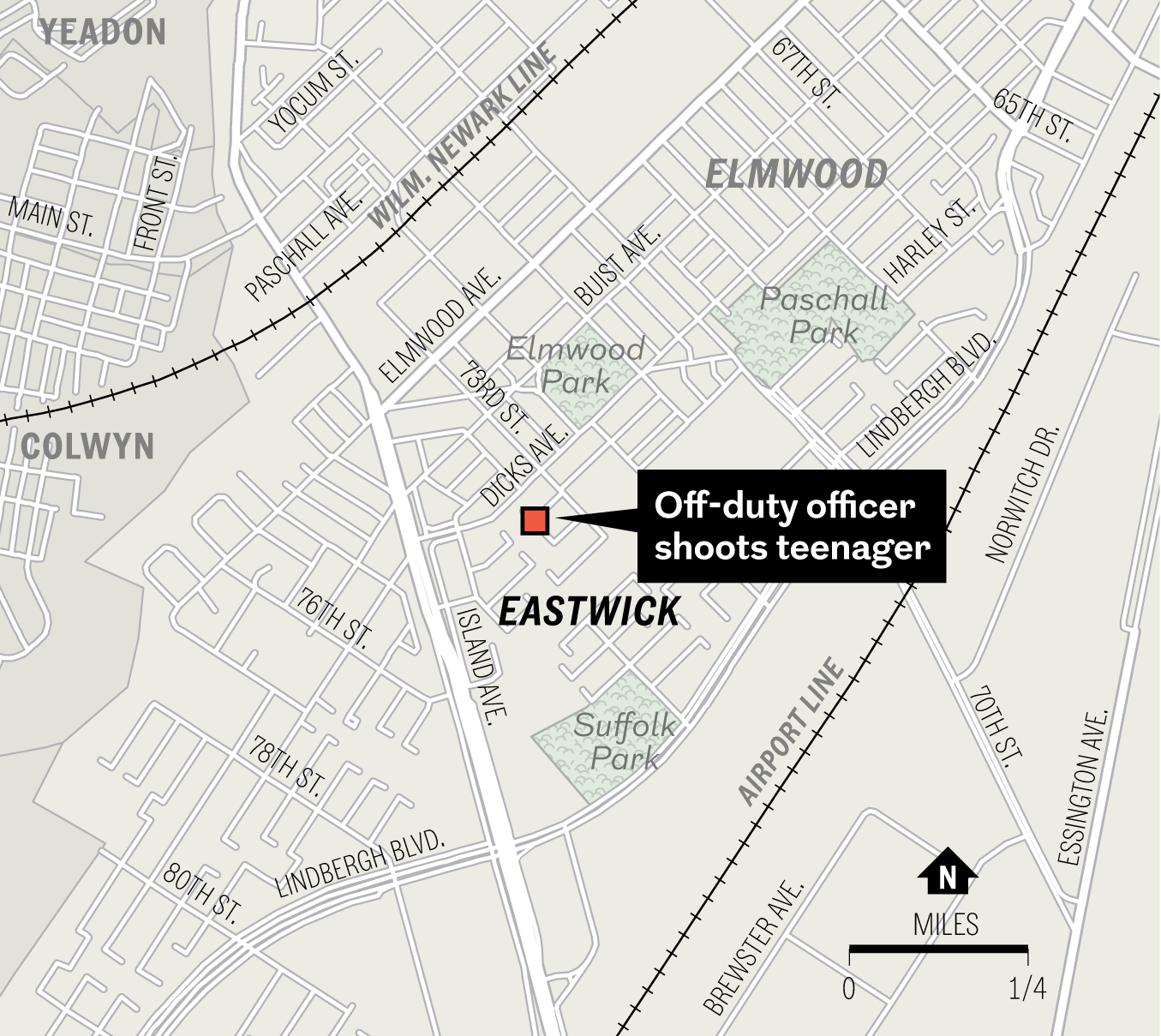
  • Off-duty sheriff’s officer shot a teen in Southwest Philly, police say

    Off-duty sheriff’s officer shot a teen in Southwest Philly, police say

    An off-duty sheriff’s officer shot a 17-year-old in Southwest Philadelphia early Tuesday morning.

    Philadelphia Police Chief Inspector Scott Small told reporters the off-duty officer saw the teenager, who has not been identified, breaking into his private vehicle around 3:32 a.m. on the 7300 block of Bunting Place.

    “For reasons unknown at this time,” the officer, and a member of the officer’s family, fired their guns at the teen inside the car, Small told reporters.

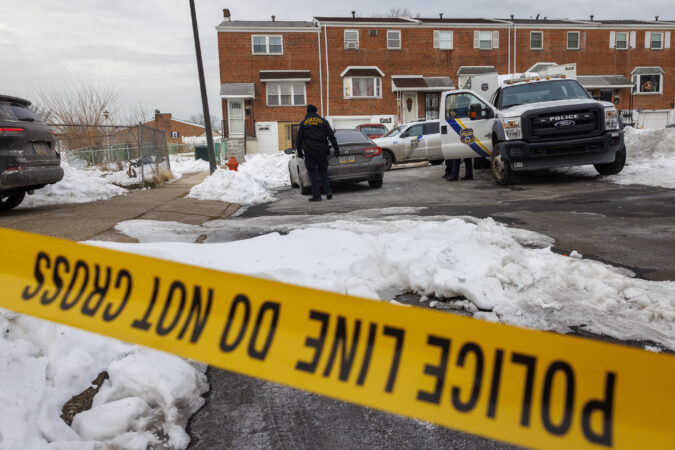
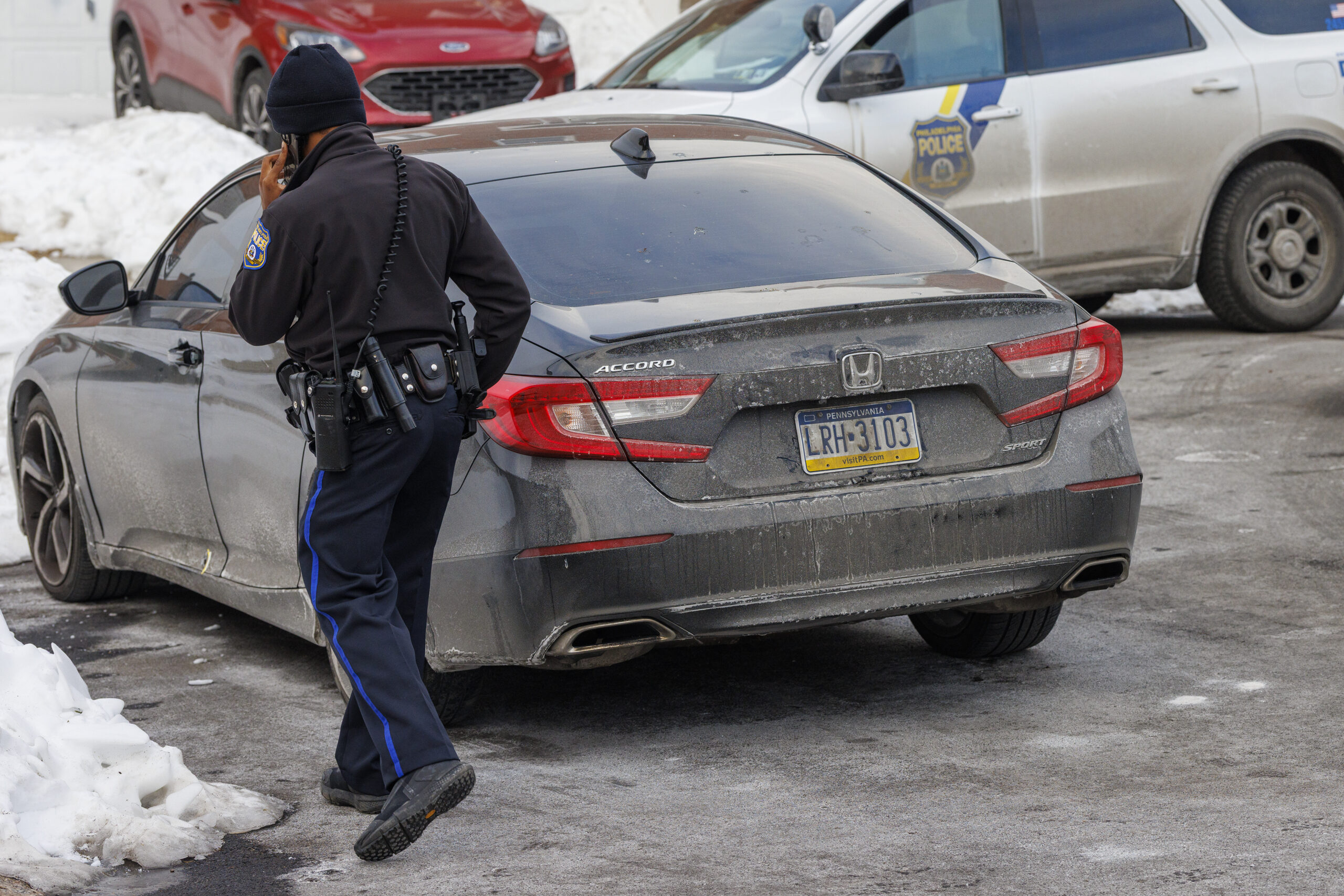
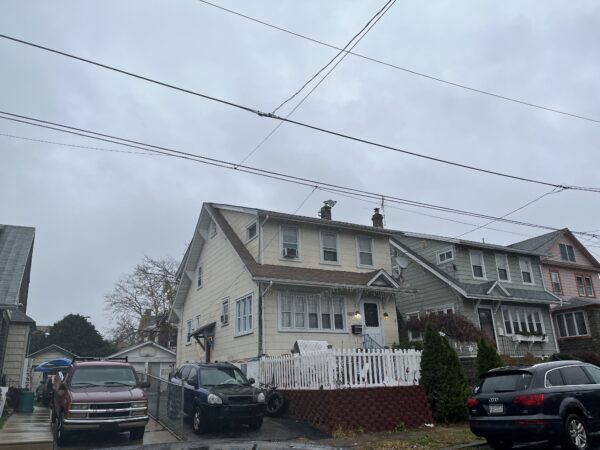
    Philadelphia police crime scene unit gathers evidence at shooting by off-duty sheriff at 7300 block of Bunting Place, early Tuesday, Feb. 10, 2026. An off-duty Philadelphia sheriff’s deputy and a family member shot a teen, allegedly trying to steal their car, a Honda Accord.

    Four shots total were fired, according to Small, before the teen fled the scene.

    Around 20 minutes later, a teenager was transported by a private vehicle to Presbyterian Medical Center, where the officer involved in the shooting identified the wounded teen. The teenager was placed in stable condition.

    Map of where an off-duty sheriff’s officer shot a 17-year-old in Southwest Philadelphia on Feb. 10.

    Small noted that the teen was in possession of commonly used car theft tools, like a screwdriver, extra key fob, and other items. He told reporters at the scene that investigators found four spent shell casings and newly broken locks on the car’s doors.

    The teenager was placed in custody at the hospital with charges pending.

    The off-duty sheriff’s officer and their family member are uninjured and cooperating with the investigation. The family member involved in the incident had a license to carry the firearm used in the shooting, Small said.

  • Man who stole nearly $250,000 from Pa. Occupational Therapy Association charged with theft

    Man who stole nearly $250,000 from Pa. Occupational Therapy Association charged with theft

    A Western Pennsylvania man stole nearly $250,000 from the Montgomery County-based Pennsylvania Occupational Therapy Association, prosecutors said Monday, and spent the money on a trip to Disney World, country club membership fees, an Outer Banks vacation rental, and other personal expenses.

    Michael Fantuzzo, 40, was charged with several counts of theft for the crimes, which prosecutors said took place between 2021 and 2024 while Fantuzzo, of Westmoreland County, served as treasurer for the nonprofit trade organization.

    In all, prosecutors said, Fantuzzo spent $246,708 of the association’s funds, effectively reducing its savings account to zero.

    Fantuzzo admitted to investigators that he used the association’s funds for personal expenses, though he initially told them he had spent $90,000 of the group’s funds and did so by accident.

    A further investigation into Fantuzzo’s spending found that the sum was much larger.

    Prosecutors say Fantuzzo spent more than $100,000 from the association’s bank account to pay off debt on a handful of credit cards opened in his name.

    And Fantuzzo charged more than $128,000 to the association’s credit card, including $10,513 to install a hot tub at his home; $7,247 for a vacation home rental in Duck, N.C.; $5,460 for his local and county taxes; $4,124 for membership to the Hillcrest Country Club; $2,040 for a limousine service; and $2,019 for the trip to Disney World.

    Members of the Pennsylvania Occupational Therapy Association, based in Plymouth Meeting at the time of the theft, realized something was wrong when newly elected board members learned the organization they inherited was experiencing “severe financial distress,” police said. They reported the suspicious payments to authorities in November.

    The association advocates for occupational therapists and provides career development and networking opportunities, among other services, according to its website.

    Investigators say they linked the spending back to Fantuzzo in a variety of ways.

    Some payments, such as the Disney World tickets, included Fantuzzo and his family members’ names on the charges. Meanwhile, the PayPal payments went to an account bearing the name of Fantuzzo’s wife. And investigators tracked Fantuzzo’s name back to invoices and rental agreements for other purchases.

    Fantuzzo turned himself in to Montgomery County authorities on Feb. 6. He was released from custody and is expected to appear in court for a preliminary hearing on Feb. 17.

  • Judge sentences man who decapitated his wife: ‘I don’t think I’ve ever seen a case like this’

    Judge sentences man who decapitated his wife: ‘I don’t think I’ve ever seen a case like this’

    Hours before Ahmad Shareef was arrested for killing his wife, he called his mother and confessed.

    “I cut her head off,” he told her, according to the affidavit of probable cause for his arrest.

    On Monday, Shareef, 37, was sentenced to 16 to 42 years in prison in the decapitation death of Leila Al Raheel inside the couple’s Northeast Philadelphia home. Shareef pleaded guilty to third-degree murder and related crimes in the November 2022 slaying.

    “I don’t think I’ve ever seen a case like this,” said Common Pleas Court Judge Charles Ehrlich.

    New details of the killing also surfaced during the hearing.

    After Shareef confessed to his mother, she asked a neighbor to go to her son’s home in the 300 block of Magee Avenue and check on Al Raheel, according to the affidavit. The neighbor found Al Raheel dead in the dining room, she later told police.

    Officers who responded to the house discovered Al Raheel’s headless body on the kitchen floor, the affidavit said. They found Shareef about four miles away, hiding in bushes in front of a house. His sweatpants, the document said, were stained red with blood.

    Inside a police interview room, Shareef waived his Miranda rights, according to the affidavit. He told detectives he’d argued with Al Raheel after she had called him names.

    Then, he said, he cut off her head with a kitchen knife.

    In court Monday, the neighbor described how discovering Al Raheel’s body upended her life. She said she has been diagnosed with post-traumatic stress disorder. “This isn’t something that time simply erases,” she said.

    No one testified on Shareef’s behalf. His mother, who had been expected to appear, was ill and unable to attend, his defense attorney, Gregg Blender, said.

    Al Raheel, who came to the U.S. with Shareef and his family in 2011, “has no family to speak on her behalf,” said the prosecutor, Maggie McDermott.

    The judge imposed a sentence slightly below the prosecution’s request of 23 to 47 years, after Shareef’s attorney urged him to consider his client’s traumatic childhood and long-standing mental illness, which he said went largely untreated.

    As a child, Shareef moved with his mother from Kuwait to Iraq and later to Syria, fleeing both war and abusive men who, Blender said, subjected them to violence. At the insistence of his family, Shareef later married Al Raheel, a neighbor, Blender said.

    In the U.S., Shareef was treated repeatedly for mental health crises, Blender said. In 2012, he was hospitalized after striking himself and cutting his wrists, and in 2019, Blender said, Shareef stabbed himself in the neck.

    Blender urged the judge to weigh what he described as his client’s “horrific upbringing” against what he acknowledged was “nothing less than a horrific crime.”

    McDermott called the killing the “peak of domestic violence” and “unspeakably awful,” and warned that Shareef posed a continuing danger. If he was capable of such violence toward someone he loved, she argued, then even strangers were at risk.

    Ehrlich said the sentence reflected both Shareef’s traumatic past and the threat he posed going forward.

    “To sever a head with a kitchen knife takes a lot of effort,” he said. “Mr. Shareef, you have lived a life of horrors. I don’t think anyone in this courtroom disputes that.” The question, he added, was what needed to be done to protect others.

    “I’m very concerned about the future — I’m going to be honest with you,” the judge said. “What happened to you as a child was not your fault. But people with this kind of damage can hurt others.”

    After the slaying, neighbors told The Inquirer that several people had been living in the house, which had become an eyesore on the block. Shareef, they said, stood out: He behaved aggressively to other residents, and sometimes appeared outside wearing only underwear.

    Since late 2016, police responded to more than 50 calls on the 300 block of Magee Street for domestic disturbances, reports of weapons, and other complaints. However, police would not disclose exact addresses, and it remains unclear how many of those calls — if any — originated from the home Shareef shared with Al Raheel, where she was eventually killed.

    The city’s Department of Licenses and Inspections also confirmed that inspectors visited the house more than a year before Al Raheel was killed, following reports that the house’s garage was being used as a living space. But the inspectors weren’t able to gain access to the property, according to the department. Instead, they issued violations for weeds and combustible storage.