A driver struck and killed a man who was crossing a street in Cherry Hill on Monday night.
Cherry Hill resident Gerald S. Yashinsky, 51, was crossing Haddonfield Road near Yale Avenue around 6:41 p.m. Monday when the driver of a northbound vehicle struck him, according to the Cherry Hill Police Department. Law enforcement officers, firefighters, and EMS personnel responded and provided medical aid.
Yashinsky was later pronounced dead.
The driver remained at the scene and was cooperating with investigators.
No additional injuries were reported.
The crash remains under investigation by the Cherry Hill Police Department, the Camden County Prosecutor’s Office, and the medical examiner’s office.
Anyone who witnessed the incident or has information is encouraged to contact Cherry Hill Police Officer Geoffrey Byrne at 856-432-8859 or traffic@cherryhillpolice.com.
Two Philadelphia police officers who drove after a fleeing drug suspect until the man crashed his car and killed a bystander are not liable under federal law for causing the fatal collision because the officers didn’t intend to harm anyone, an appeals court ruled.
In an opinion issued last week, the three-judge panel from the Third Circuit Court of Appeals said officers Christian Kane and Alexander Hernandez were forced to make a quick decision in 2020 when they sped after a man they’d seen dealing drugs in Kensington.
The pursuit of the suspect, Tahir Ellison, proceeded at a normal speed for a few blocks, court documents said, but became dangerous after Ellison drove through a red light and down a one-way street.
The episode ended in tragedy when Ellison ignored another red light and crashed into Virgen Martinez’s car at the intersection of Allegheny and Frankford Avenues, killing Martinez, a 47-year-old mother of four.
Ellison pleaded guilty in 2023 to charges including third-degree murder and was sentenced to 10 to 20 years in prison, court records show.
But Martinez’s relatives sued Kane and Hernandez, arguing in part that the decision to speed after Ellison — which violated the police department’s policy to avoid most car chases — also violated Martinez’s 14th Amendment due process rights and made the officers liable for her death. Last year, U.S. Magistrate Judge Scott W. Reid agreed that that question should be put before a jury.
The officers appealed. And in the opinion issued last week, Circuit Judge Stephanos Bibas wrote that although Hernandez’s death was a tragedy, the officers made a “snap judgment” to pursue Ellison and did not behave egregiously during the portion of the chase in which Ellison began speeding and ignoring traffic signals.
“We ask not whether in hindsight [the officers] chose rightly, but whether they intended to cause harm,” Bibas wrote.
Philadelphia police directives generally prohibit car chases, which are often dangerous for both citizens and officers. Exceptions are made only if officers are seeking to capture suspects fleeing violent felonies, or to prevent imminent death or serious injuries.
An Inquirer investigation published last year found that about half of all reported chases by Philadelphia police were in violation of department polices and that the city had spent about $20 million since 2020 to settle crash- or chase-related lawsuits involving police.
Earlier this year, the city agreed to pay $2.9 million to settle a lawsuit over a crash in which a man on a dirt bike being pursued by a city police officer struck two bystanders — including a 6-year-old girl — in Upper Darby.
In that case, however, the officer initiated the chase without witnessing any crime, continued driving after the man for nearly 10 miles, and was later accused by the department of providing false statements to a superior and falsifying official documents.
Bibas wrote that Kane and Alexander, by contrast, “had a split second” to decide whether to follow Ellison, whom they’d seen dealing drugs from his car. And the dangerous portion of the pursuit spanned about half a mile and 39 seconds before Ellison crashed into Martinez’s vehicle.
Jim Waldenberger, one of the attorneys who filed suit on behalf of Hernandez’s relatives, said he and his colleagues disagreed with the ruling.
Before the officers’ pursuit turned dangerous, Waldenberger said, they pursued Ellison at a normal speed with their police lights on for several blocks, meaning their decision to continue the chase when he sped up was not a snap judgment made under unavoidable pressure.
The department conducted an internal investigation and found that the officers violated departmental policies regarding pursuits, and each spent at least several months on administrative duty, court documents said. The documents did not specify whether either officer faced additional discipline.
Sgt. Eric Gripp, a police spokesperson, said Monday that Kane is still on the force but that Hernandez left last year. Gripp declined to comment further.
Waldenberger said he and his colleagues were still weighing whether to appeal the Third Circuit’s ruling on the officers’ liability.
The lawsuit can proceed on more limited grounds surrounding whether the city sufficiently trains police officers regarding pursuits, and whether Kane, who was driving the police car, violated state negligence laws.
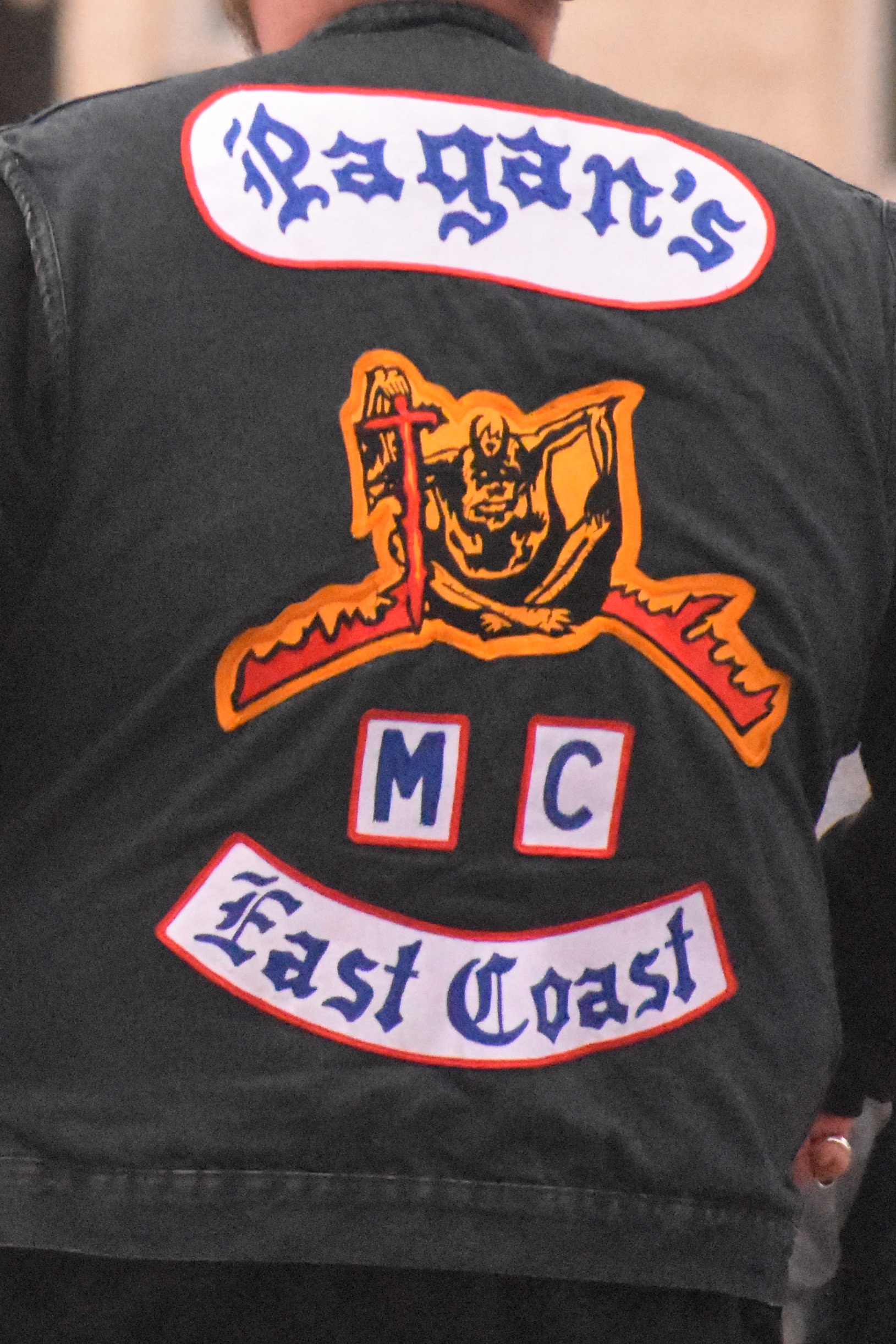
During a marathon preliminary hearing, held at the Montgomery County Correctional Facility due to security concerns, seven members of the Pagans were held over for trial by District Judge Marc Alfarano on charges including aggravated assault, conspiracy, riot, and reckless endangerment.
Those who appeared before Alfarano were: Joel Hernandez-Martinez, 36, George Hripto Jr., 50, and Jason Lawless, 45, all of Bridgeport; Manuel Baez-Santos, 34, of Norristown; Erik Dixon, 33, of King of Prussia; Luke Higgins, 29, of Dauberville; and Justin Noll, 34, of Reading.
Two other Pagans allegedly involved and facing similar charges in the incident, George Cwienk III, 51, of Bridgeport, and Erik Rosenberger, 46, of East Greenville, had their preliminary hearings continued due to a scheduling issue with their attorneys.
Assistant District Attorney Bradley Deckel said the group conspired to attack two members of the Unknown Bikers outlaw club after seeing them parked at the Wawa on Oct. 17.
Given the rules of their subculture, Deckel said, the Pagans felt they had no choice but to confront the rival club.
A gang expert testified Friday that the Pagans have a strong presence throughout Pennsylvania, and fiercely defend their territory.
“They knew what they had to do the moment they saw a group invading their territory,” Deckel said. “And they had to teach them a lesson with violence.”
But defense attorneys for the Pagans took turns sharply rebutting Deckel’s theory during the seven-hour hearing, arguing that their clients were not the ones responsible for the shooting. They asserted that prosecutors had built their case entirely on speculation and innuendo, unfairly painting their clients as dangerous in news coverage.
Further, they said, investigators could not clearly identify what role each of the nine men played in the supposed conspiracy to attack the other bikers, nor prove whether any of the Pagans were armed at the time.
Noll’s attorney, Robert J. Kirwan II, argued that the alleged targets in the case — the Unknown Bikers — were the ones who should be held accountable. Ballistics evidence showed 13 of the 14 bullets fired during the chaotic melee came from their guns.
He said he was “disgusted” that the men were not called to testify during Friday’s hearing.
“It’s astounding that the Unknown Bikers are not charged,” Kirwan said. “What we do know is that they unloaded all of their ammunition at the people present, including bystanders, and yet they’re walking free.”
After pulling into the Wawa just after 9 p.m., the Pagans encircled the other two bikers and began assaulting them. In turn, the Unknown Bikers opened fire on the Pagans with two 9mm handguns in what prosecutors described as an act of self-defense.
Three of the Pagans — Cwienk, Hernandez-Martinez, and Noll — were injured in the gunfire. Nearby, a man filling his tires with air was shot in the face as he dived for cover, and a woman smoking a cigarette outside the store was shot in the right side.
Deckel, the prosecutor, said that during the attack some members of the group strategically positioned their bikes at the gas station’s entrance, in what he described as an attempt to prevent their targets from escaping.
The Pagans’ defense attorneys denied that entirely, saying their clients were the true victims in the attack. Paul Lang, representing Dixon, said his client abandoned his motorcycle and fled as soon as the first gunshots rang out, despite the supposedly coordinated assault.
Still, Deckel said, the motive for the attack was clear: The Pagans wanted the Unknown Bikers’ “cuts,” their denim vests bearing the club logo. In the world of outlaw clubs, a biker’s cut is sacred and, therefore, a trophy sought by his rivals, according to a gang expert who testified Friday.
After the shooting, five of the Pagans were arrested during a car stop in Bridgeport. One of the motorcycles they were riding bore a bullet hole in its gas tank.
The other four were taken into custody in the following days, prosecutors said, tracked down through automated license plate readers and cell phone records.
A man was stabbed several times on a SEPTA train in Center City early Friday evening, police said.
The stabbing occurred shortly before 5:25 p.m. and the victim was taken by SEPTA Transit Police from the 13th Street Station on the Market-Frankford Line to Thomas Jefferson University Hospital, police said.
“Two people were engaged in an argument that escalated into a fight and then a stabbing that left one of them in critical condition,” SEPTA spokesperson Andrew Busch said in an email.
The victim was stabbed in the neck, police said. No further information was available about him.
More than 130 drug cases were dismissed Friday — and hundreds more are expected to collapse in the coming months — after prosecutors said three Philadelphia narcotics officers repeatedly gave false testimony in court.
Common Pleas Court Judge Lillian Ransom vacated 134 cases during the first in a series of hearings that could see nearly a thousand criminal prosecutions collapse because the testimony of three officers on the Narcotics Strike Force has been deemed unreliable.
Philadelphia Police Officers Ricardo Rosa, Eugene Roher, and Jeffrey Holden were found to have repeatedly given false testimony against people suspected of selling drugs after lawyers with the Defender Association of Philadelphia recovered video footage that contradicted their statements, the district attorney’s office said.
The defenders said the officers regularly watched surveillance cameras to monitor suspects in drug investigations in real time, then didn’t disclose it to prosecutors or defense attorneys in court, officials said. The video footage later showed they also testified to things that never happened or that they could not have seen from where they were positioned, according to court filings.
Prosecutors later conceded that they could no longer vouch for the officers’ credibility and are expected to dismiss scores of cases built on their testimony.
Michael Mellon and Paula Sen, of the Defender Association, began looking into whether officers on the narcotics squad were lying in court starting in 2019.
After a review of cases and convictions involving the officers’ testimony, lawyers for the defender association and prosecutors identified more than 900 cases and expect to ask the judge to dismiss them over the next year. It was not immediately clear how many people, if any, served time in jail, or are still in custody, as a result of the prosecutions that are now in question.
Holden, reached by phone Friday, said he was shocked to learn that his cases and testimony were under scrutiny, and said he had not been told of the move to end the cases at Friday’s hearing. He declined to comment further.
Rosa and Roher did not immediately respond to requests for comment. The officers remain assigned to their narcotics squads.
The district attorney’s office said it provided the police department’s internal affairs unit with details of the officers’ false statements in multiple cases last March.
Police Commissioner Kevin Bethel, in a statement, said the department takes “potential credibility issues with our officers extremely seriously.”
An internal affairs investigation into the matter was launched last March and remains ongoing, he said.
The department requested and reviewed cases flagged by prosecutors, he said, but “thus far we have not identified any evidence that would raise concerns of misconduct or criminal behavior on the part of those officers.”
He added: “We will, as always, take appropriate action if and when evidence supports such action, but we will not preemptively sideline officers absent some verified findings.”
Bethel said he learned of the plans to dismiss the cases on Thursday, and has asked prosecutors to provide additional information to assist with their review. He also said the police department has been working with the district attorney to develop a clearer protocol on how officers can use surveillance cameras during investigations.
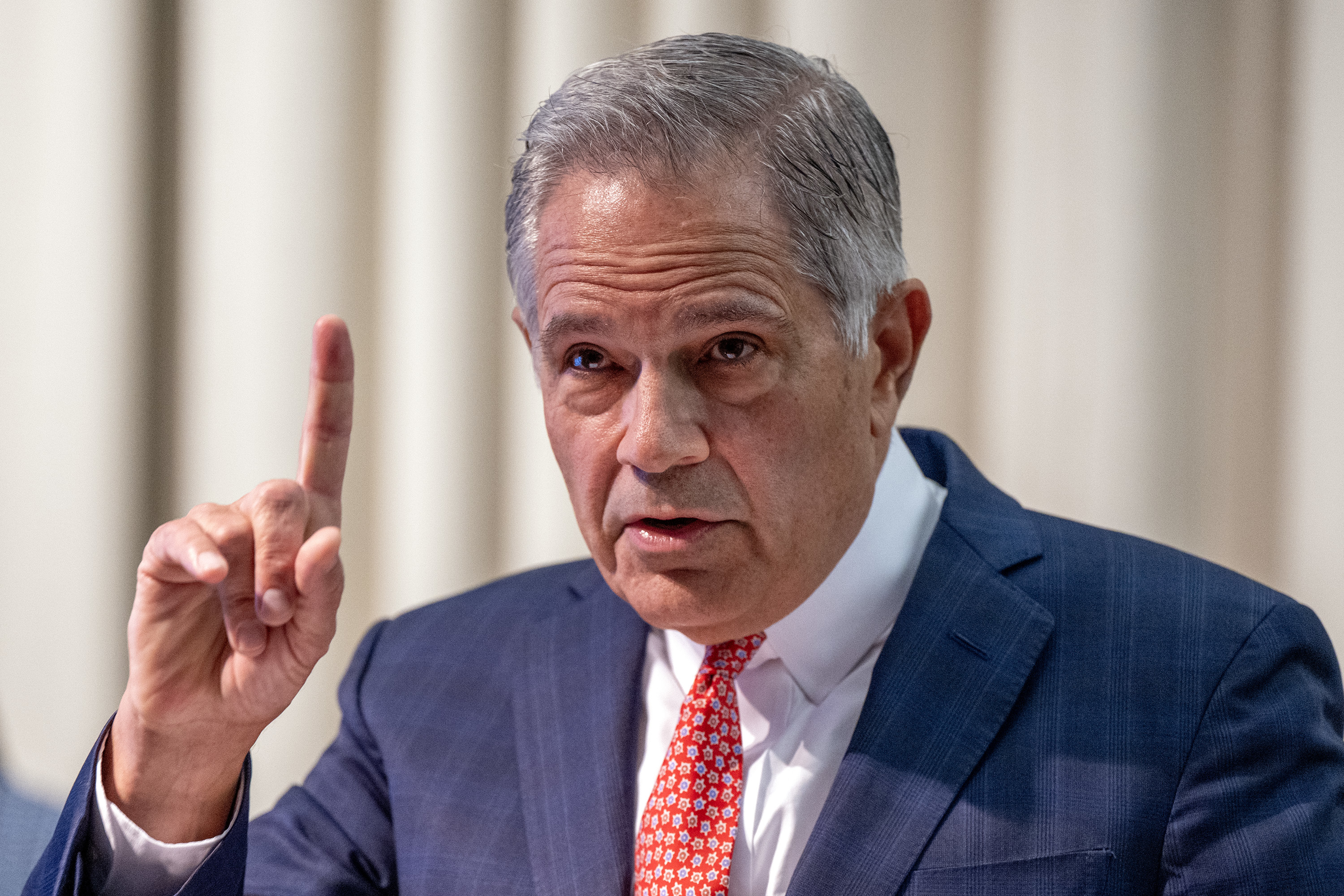
District Attorney Larry Krasner on Friday declined to say whether his office was investigating the officers’ conduct, but noted that “the statute of limitations for police officers in their capacity is much longer than the statue of limit for other offenses.”
“I have dealt extensively with Commissioner Bethel. I know he and the mayor are committed to rooting corruption, lying, stealing, and cheating out of the police department,” he said.
District Attorney Larry Krasner declined to say whether his office was investigating the officers’ conduct as criminal in nature.
‘They’re lying’
Assistant District Attorney David Napiorski, who reviewed the cases for the office, stopped short of accusing the officers of lying, but said “there’s enough of a pattern of inconsistencies across testimony that we can’t rely on them as critical witnesses in court.”
But Paula Sen and Michael Mellon of the Defenders’ Police Accountability Unit disagreed.
“It’s a fancy way of saying they’re lying,” said Sen, who has worked with Mellon to uncover the officers’ credibility issues since 2019.
The unfolding scrutiny is the latest in a series of large-scale conviction reversals in Philadelphia tied to misconduct in the narcotics unit. Over the past three decades, judges have thrown out thousands of drug cases after officers were found to have fabricated evidence, lied on the stand, or stolen money from dealers.
Bradley Bridge, a longtime public defender, was often the driving force behind those reviews and estimates he’s worked to overturn about 2,500 drug convictions since 1995.
In 2015, Bridge filed a petition to vacate more than 1,400 drug convictions tied to six ex-narcotics cops after they were charged with robbing and beating drug dealers, then altering police paperwork to cover their tracks. The officers were later acquitted by a jury and got their jobs back through arbitration, but more than 950 cases were thrown out after officials agreed they couldn’t trust their testimony.
Bridge, who returned from retirement to handle the cases tied to Rosa, Roher, and Holden, said, “Tragically, nothing is unique about this. It’s exactly the same problems that keep arising since 1995, including the lack of supervision and oversight of police officers on the street.”
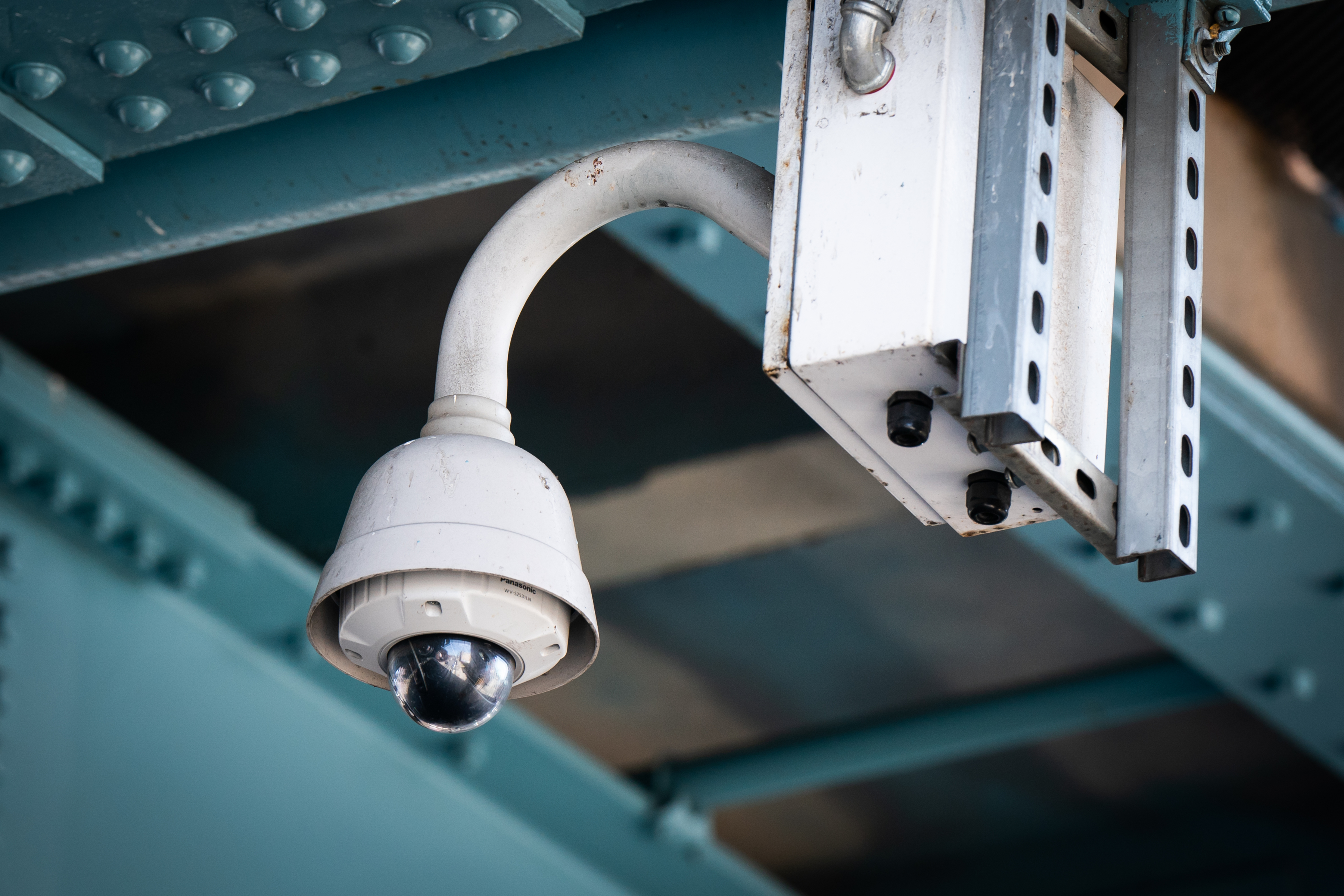
A video camera used by Philadelphia police located at Somerset Street in Kensington.
Sen and Mellon said they first noticed a pattern of false testimony in 2019 after they reviewed surveillance footage that contradicted statements Rosa gave about drug cases. As time passed, they said, they continued to monitor his narcotics squad, and found inconsistencies with Holden and Roher’s testimony, too.
They said the officers used the city’s surveillance camera systems to monitor suspected drug activity in real time, but didn’t disclose it as part of their investigation — a violation of due process because the evidence wasn’t shared with defense attorneys.
In court, the officers denied using the cameras, Mellon said, and often said they witnessed hand-to-hand drug transactions that video later showed either never happened or that they could never have seen because the suspect was out of sight.
“They just straight up lied and invented acts of criminality,” Sen said.
‘Who are they gonna believe?’
In one case, Roher said he was seated in an unmarked police car when he saw Darrin Moss sell drugs to two people near Somerset and Helen Streets in Kensington in April 2022. He said he could see Moss inside the fenced lot retrieve drugs, then hand them to a buyer and accept money in return.
Prosecutors later said in court filings that video footage captured by a surveillance camera on the end of the block showed that one drug deal never happened, and the other supposed deal was behind a building and would have been impossible to see.
The charges against Moss were withdrawn.
When prosecutors learned of the discrepancies, they asked Roher to meet and discuss the case, but he failed to appear in court twice without explanation, they said in a court filing.
Prosecutors said this became a pattern — once the officers seemed to learn their testimony was under scrutiny, they stopped showing up to court.
Court filings identify at least nine cases in which the three officers allegedly gave false testimony. Napiorski, of the district attorney’s office, said prosecutors reviewed a few dozen videos from other cases that suggested a systemic pattern of false information in court.
Sen, of the defenders association, said it was troubling that the officers remained assigned to the narcotics squad and have been able to continue making arrests.
“How is the public supposed to have trust in a department that continues to employ people who have so clearly proved themselves to be liars, that has resulted in thousands of people being arrested and jailed?” she asked.
Most of the cases dismissed Friday were drug crimes that led to a sentence of probation, prosecutors said. Seven included a gun charge.
The drug charge against Ramoye Berry was among them.
Berry, 29, from North Philadelphia, said that in April 2023, he was standing on the 1300 block of West Boston Street talking to some friends when a group of officers tackled him and accused him of selling drugs.
When they searched his car, he said, they found a small amount of weed, but he wasn’t selling it. He was charged with possession with intent to sell drugs.
Berry couldn’t recall which officer testified against him in court, but he said he remembered telling his lawyer that the officer wasn’t telling the truth.
He said he pleaded guilty to drug possession and accepted a year of probation because he didn’t think he could prove his innocence, and the court dates were challenging to keep up with. It kept him from being able to get a job, he said.
When he learned on Friday that the officer had a history of giving false information and that his conviction would be vacated, he said he felt vindicated — but frustrated by the time and jobs he lost to the case.
“This is what I was saying from the beginning,” he said, shaking his head. “But who are they gonna believe? The cops, or me?”
A Philadelphia journalist was sentenced Friday to 20 years in federal prison for possessing thousands of images and videos of child pornography.
Michael Hochman, whose work was published over the years by outlets including Visit Philadelphia, the sports website Crossing Broad, and The Inquirer — where he once contributed a freelance column — came to the attention of investigators in 2022 after they learned that he exchanged explicit messages with a teenage girl. Authorities later found that he had downloaded more than 2,000 photos and videos of children being sexually abused onto his computers and other devices, prosecutors said.
Hochman, 52, of Huntingdon Valley, compiled that collection over the course of more than a decade, prosecutors said, and did so even after he’d served prison time for sexually assaulting a teenager in Kansas in 2002.
In sentencing Hochman on Friday, U.S. District Judge Kelley B. Hodge cited that conviction as she imposed a prison term five years longer than prosecutors sought.
Calling Hochman’s actions “shameful” and “vile,” the judge said, “The level of depravity … is without words.“
Hochman was convicted of child sex crimes two decades ago after prosecutors say he had sex with a 13-year-old girl he met online. He was convicted of aggravated indecent liberties with a child and sentenced to 55 months in prison, court documents said.
In 2022, prosecutors said, a Missouri woman discovered that her 15-year-old daughter, who had developmental disabilities, had been exchanging explicit messages with an older man online. The mother alerted law enforcement, and authorities traced the messages back to Hochman.
After investigators seized six devices from Hochman’s home, the documents said, four were found to contain sexually explicit images and videos of children being abused.
In all, prosecutors said, Hochman possessed about 1,900 photos and 130 videos of child pornography, many of which depicted rapes, and some of which had been downloaded more than a decade ago.
Assistant U.S. Attorney Michelle Rotella said it was “very troubling” that Hochman began downloading materials of children being abused not long after he’d been punished for similar crimes.
“The seriousness of his crimes can in no way be argued with,” Rotella said.
Hochman’s attorney, Michael Diamondstein, said no one should be defined by their best or worst actions, but acknowledged the gravity of Hochman’s misdeeds.
“This is a bad case,” he said.
The judge noted that some of the images on Hochman’s computer depicted children as young as three.
Moreover, she said, Hochman’s exchanges with the 15-year-old girl in Missouri were “beyond offensive.”
And Hochman, she said, had a solid upbringing and was a working professional with a college degree, who had opportunities to avoid acting on criminal impulses.
“You knew better,” she said. “You know how to access help.”
Hochman apologized for his actions, saying he recognizes the harm he’s caused and will work the rest of his life to avoid doing so again in the future.
“I made these choices, and I must accept the consequences,” he said.
The mayor of Lumberton Township, who was charged earlier this year with driving under the influence, has been indicted on charges of failing to protect her then-2-year-old son who was in the car at the time of the incident, Burlington County Prosecutor LaChia L. Bradshaw said Thursday.
Gina LaPlaca, 46, was charged by a grand jury with second-degree endangering the welfare of a child and fourth-degree child abuse, Bradshaw said. LaPlaca is scheduled to be arraigned Monday.
After her March arrest, LaPlaca was censured by the township’s committee for alleged ethical violations, one of the committee members said, including allegedly driving under the influence, asking for Lumberton’s police chief while she was being arrested, and endangering her child.
NORFOLK, Va. — The Justice Department failed Thursday to secure a new indictment against New York Attorney General Letitia James after a judge dismissed the previous mortgage fraud prosecution encouraged by President Donald Trump, according to people familiar with the matter.
Prosecutors went back to a grand jury in Virginia after a judge’s ruling halting the prosecution of James and another longtime Trump foe, former FBI Director James Comey, on the grounds that the U.S. attorney who presented the cases was illegally appointed. But grand jurors rejected prosecutors’ request to bring charges.
It’s the latest setback for the Justice Department in its bid to prosecute the frequent political target of the Republican president.
Prosecutors are expected to try again for an indictment, according to one person familiar with the matter who spoke on the condition of anonymity because they were not authorized to publicly discuss the case.
James was initially charged with bank fraud and making false statements to a financial institution in connection with a home purchase in Norfolk, Va., in 2020. Lindsey Halligan, a former White House aide and Trump lawyer, personally presented the case to the grand jury in October after being installed as U.S. attorney for the Eastern District of Virginia amid pressure from Trump to charge Comey and James.
James has denied any wrongdoing and accused the administration of using the justice system to seek revenge against Trump’s political opponents. In a statement Thursday, James said: “It is time for this unchecked weaponization of our justice system to stop.”
“This should be the end of this case,” her attorney, Abbe Lowell, said in a statement. “If they continue, undeterred by a court ruling and a grand jury’s rejection of the charges, it will be a shocking assault on the rule of law and a devastating blow to the integrity of our justice system.”
The allegations related to James’ purchase of a modest house in Norfolk, where she has family. During the sale, she signed a standard document called a “second home rider” in which she agreed to keep the property primarily for her “personal use and enjoyment for at least one year,” unless the lender agreed otherwise.
Rather than using the home as a second residence, James rented it out to a family of three, allowing her to obtain favorable loan terms not available for investment properties, prosecutors alleged.
It’s the latest example of pushback by grand jurors since the beginning of the second Trump administration. It’s so unusual for grand jurors to refuse to return an indictment that it was once said that prosecutors could persuade a grand jury to “indict a ham sandwich.” But the Justice Department has faced setbacks in front of grand juries in several recent cases.
Even if the charges against James are resurrected, the Justice Department could face obstacles in securing a conviction against James.
James’ lawyers separately argued the case was a vindictive prosecution brought to punish the Trump critic who spent years investigating and suing the Republican president and won a staggering judgment in a lawsuit alleging he defrauded banks by overstating the value of his real estate holdings on financial statements. The fine was later tossed out by a higher court, but both sides are appealing.
The defense had also alleged “outrageous government conduct” preceding her indictment, which the defense argued warrants the case’s dismissal. The judge hadn’t ruled on the defense’s arguments on those matters before dismissing the case last month over the appointment of Lindsey Halligan as U.S. attorney.
U.S. District Judge Cameron McGowan Currie took issue with the mechanism the Trump administration employed to appoint Halligan to lead one of the Justice Department’s most elite and important offices.
Halligan was named as a replacement for Erik Siebert, a veteran prosecutor in the office and interim U.S. attorney who resigned in September amid Trump administration pressure to file charges against both Comey and James.
The following night, Trump said he would be nominating Halligan to the role of interim U.S. attorney and publicly implored Attorney General Pam Bondi to take action against his political opponents, saying in a Truth Social post that, “We can’t delay any longer, it’s killing our reputation and credibility” and “JUSTICE MUST BE SERVED, NOW!!!”
Comey was indicted three days after Halligan was sworn in by Bondi, and James was charged two weeks after that.
The Justice Department had defended Halligan’s appointment but has also revealed that Bondi had given Halligan a separate position of “Special Attorney,” presumably as a way to protect the indictments from the possibility of collapse. But Currie said such a retroactive designation could not save the cases.
SANTA ROSA, Calif. — A California animal welfare activist who took four chickens from a major Perdue Farms poultry plant was sentenced to 90 days in jail after being convicted of felony conspiracy, trespassing and other charges.
Zoe Rosenberg, 23, did not deny taking the animals from Petaluma Poultry but argued she wasn’t breaking the law because she was rescuing the birds from a cruel situation. A jury found her guilty in October after a seven-week trial in Sonoma County, an agricultural area of Northern California.
Rosenberg was sentenced on Wednesday and ordered to report to the Sonoma County Jail on Dec. 10. She will serve the 90 days, but 60 of those may involve jail alternates, such as house arrest, the county’s district attorney’s office said. Rosenberg will also have two years of probation, and she is ordered to stay away from all Perdue facilities in the county.
The activist with Direct Action Everywhere, or DxE, a Berkeley-based animal rights group, has said she does not regret what she did.
“I will not apologize for taking sick, neglected animals to get medical care,” Rosenberg said following her conviction.
The group named the birds — Poppy, Ivy, Aster, and Azalea — and placed them in an animal sanctuary.
Petaluma Poultry has said that DxE is an extremist group that is intent on destroying the animal agriculture industry. The company maintains that the animals were not mistreated and said Wednesday’s sentencing upholds the rule of law.
“We’re grateful that DxE has been held to account for its unlawful campaign –- training and paying staff to carry out dangerous, unauthorized intrusions onto private property,” Herb Frerichs, general counsel for Petaluma Poultry, said in a statement Thursday. “DxE’s actions show a reckless disregard for employee safety, animal welfare, and food security.”
Rosenberg testified that she disguised herself as a Petaluma Poultry worker using a fake badge and earpiece to take the birds, and then posted a video of her actions on social media.
Petaluma Poultry is a subsidiary of Perdue Farms — one of the United States’ largest poultry providers for major grocery chains.
The co-founder of DxE was convicted two years ago for his role in factory farm protests in Petaluma.
Authorities have charged two men in connection with a double fatal shooting outside a Bordentown convenience store, prosecutors said Thursday.
Justford Doe, 23, and Giovanni Varanese, 21, are charged with first-degree murder, first-degree robbery, and other offenses stemming from the Nov. 5 killing outside a 7-Eleven and Valero gas station at the intersection of Route 130 North and Farnsworth Avenue.
The shooting left Daniel Patterson, 22, and Mason Knott, 21, dead.
Bordentown Township police were called at about 11:30 p.m. to the convenience store after Patterson, a Philadelphia resident, came into the store suffering from gunshot wounds and asked for help. He was pronounced dead at the scene, according to the Burlington County Prosecutor’s Office. Knott, of Wrightstown, was transported to a hospital in Trenton, where he died.
Police said the men shot Knott in the back of the head, then stole marijuana that was in his vehicle. They shot Patterson three times and stole his Jeep, police said.
The assailants fled but crashed in Florence Township, the prosecutor’s office said.
Authorities did not say Thursday how they connected Doe and Varanese to the killings.
The men are being held in the Philadelphia Department of Prisons, but will be extradited to New Jersey to face the charges, according to the prosecutor’s office.