Category: Crime

  • Hearing in Luigi Mangione’s state murder case sheds new light on his arrest

    Hearing in Luigi Mangione’s state murder case sheds new light on his arrest

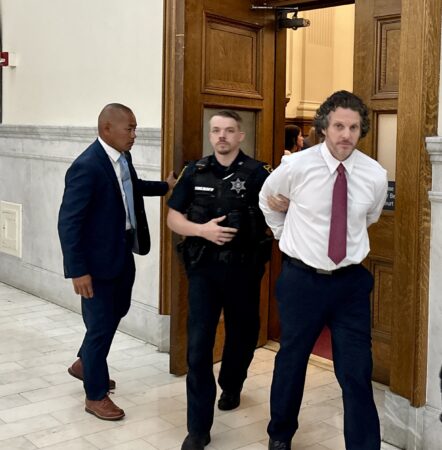
    NEW YORK — Minutes after police approached Luigi Mangione in a Pennsylvania McDonald’s, he told an officer he didn’t want to talk, according to video and testimony at a court hearing Thursday for the man charged with killing UnitedHealthcare CEO Brian Thompson.

    Although some video and accounts of police interactions with Mangione emerged earlier in this week’s hearing, Thursday’s proceedings shed new light on the lead-up to and aftermath of his Dec. 9, 2024, arrest in Altoona, Pa.

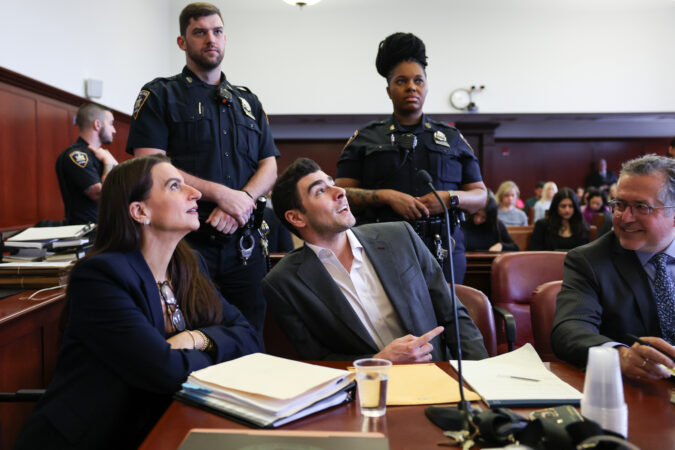
    Mangione, 27, appeared to follow the proceedings intently, at times leaning over the defense table to scrutinize papers or take notes. He briefly looked down as Altoona Police Officer Tyler Frye was asked about a strip-search of Mangione after his arrest. Under the department’s policy, that search wasn’t recorded.

    It happened after police were told that someone at the McDonald’s resembled the much-publicized suspect in Thompson’s killing. But Frye and Officer Joseph Detwiler initially approached Mangione with a low-key tone, saying only that someone had said he looked “suspicious.” Asked for his ID, he gave a phony New Jersey driver’s license with a fake name, according to prosecutors.

    Moments later, after frisking Mangione, Detwiler stepped away to communicate with dispatchers about the license, leaving the rookie Frye by Mangione’s table.

    “So what’s going on? What brings you up here from New Jersey?” Frye asked, according to his body-camera video.

    Mangione answered in a low voice. Asked what the suspect had said, Frye testified Thursday: “It was something along the lines of: He didn’t want to talk to me at that time.”

    Mangione later added that “he was just trying to use the Wi-Fi,” according to Frye.

    During the roughly 20 minutes before Mangione was told he had the right to remain silent, he answered other questions asked by the officers, and also posed a few of his own.

    “Can I ask why there’s so many cops here?” he asked shortly before being informed he was being arrested on a forgery charge related to his false ID. By that point, roughly a dozen officers had converged on the restaurant, and Mangione had been told he was being investigated and had been handcuffed.

    Mangione has pleaded not guilty to state and federal murder charges. Before any trials get scheduled, his lawyers are trying to preclude the eventual jurors from hearing about his alleged statements to law officers and items — including a gun and a notebook — they allegedly seized from his backpack.

    The evidence is key to prosecutors’ case. They have said the 9 mm handgun matches the firearm used in the killing, that writings in the notebook laid out Mangione’s disdain for health insurers and ideas about killing a CEO at an investor conference, and that he gave police the same fake name that the alleged gunman used at a New York hostel days before the shooting.

    Thursday’s proceedings came on the anniversary of the killing, which UnitedHealthcare marked by lowering the flags at its headquarters in Minnetonka, Minnesota, and encouraging employees to engage in volunteering.

    Thompson, 50, was shot from behind as he walked to an investor conference. He became UnitedHealthcare’s CEO in 2021 and had worked within parent UnitedHealth Group Inc. for 20 years.

    The hearing, which started Monday and could extend to next week, applies only to the state case. But it is giving the public an extensive preview of some testimony, video, 911 audio and other records relevant to both cases.

    After encountering Mangione, Detwiler and Frye tried to play it cool and buy time by intimating that they were simply responding to a loitering complaint and chatting about his sandwich. Still, they patted Mangione down and pushed his backpack away from him. About 15 minutes in, officers warned him that he was being investigated and would be arrested if he repeated what they had determined was a fake name.

    After he gave his real one, he was read his rights, handcuffed, frisked again and ultimately arrested on a forgery charge related to his fake ID.

    Mangione’s lawyers argue that his statements shouldn’t be allowed as trial evidence because officers started questioning him before reading his rights. They say the contents of his backpack should be excluded because police didn’t get a warrant before searching it.

    Manhattan prosecutors haven’t yet detailed their arguments for allowing the disputed evidence. Federal prosecutors have maintained that the backpack search was justified to ensure there was nothing dangerous inside, and that Mangione’s statements to officers were voluntary and made before he was under arrest.

    Many criminal cases see disputes over evidence and the complicated legal standards governing police searches and interactions with potential suspects.
  • A Montco man, jailed for killing his wife over their cat’s vet bills, was denied lifesaving care, suit says

    A Montco man, jailed for killing his wife over their cat’s vet bills, was denied lifesaving care, suit says

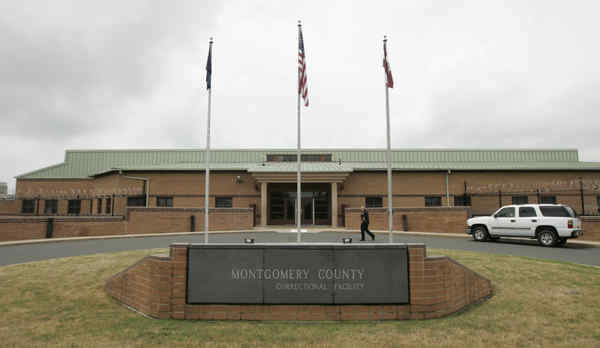
    The family of a Lower Pottsgrove Township man who was accused of beating his wife to death over the mounting cost of their cat’s veterinary care is suing Montgomery County and two medical companies, saying they denied him crucial healthcare while in the county jail, leading to his untimely death.

    Barton Seltmann, 84, died in April 2024 from urosepsis from “an undiagnosed and untreated urinary tract infection,” according to the wrongful-death lawsuit, which was filed last week in federal court in Philadelphia.

    A neck fracture that Seltmann sustained after falling in his jail cell also contributed to his death, the filing said.

    The suit names the county, as well as PrimeCare Medical and Creative Health Services, two companies contracted to provide medical care to inmates at the jail.

    Neither company responded to requests for comment. A spokesperson for the Montgomery County Board of Commissioners said the county does not comment on pending litigation.

    Seltmann was charged with murder and related crimes in November 2023 after, prosecutors said, he killed his wife, Margaret, during a dispute over the cost of their cat’s medical bills.

    In interviews after the incident, Seltmann, an Army veteran and former West Pottsgrove Township police officer, seemed to believe his wife was still alive, according to court filings. He did not grasp the reality of the incident and showed early signs of dementia.

    A month before his death, a Montgomery County judge dismissed the case against Seltmann, ruling that he was not fit to stand trial because his mental-health faculties and physical condition had deteriorated so significantly.

    But Patrick Duffy, the lawyer representing Seltmann’s children, wrote in the lawsuit that Seltmann’s marked decline in health came only while he was incarcerated.

    “Despite the obvious signs and symptoms indicating worsening progression of his condition, Mr. Seltmann was denied adequate medical care and intervention which allowed his condition … to develop into a state where it was irreversible and no further care could prevent his death,” Duffy said.

    The lawsuit asserts that jail staff did not allow Seltmann’s children to visit him due to the seriousness of the charges he faced at the time, which prevented his deteriorating health from being addressed sooner.

    Staff at the prison, including medical providers from PrimeCare and Creative Health Services, made a “calculated decision” to delay providing Seltmann with more intensive treatment in hopes he would soon be transferred to Norristown State Hospital, the suit contends.

    During intake at the jail, Seltmann appeared healthy, but by the end of his six weeks there, the lawsuit said, he was struggling to communicate, with “rambling and incoherent speech” and issues focusing.

    Seltmann developed a fungal rash on his groin and injuries to his feet and legs that later made it difficult for him to walk, causing him to fall and injure his head.

    In the suit, Duffy alleges that these issues were visible to, and known by, staff at the jail, but they refused to make a referral for him for outside care until his body temperature dropped to 86.5 degrees and he was retaining urine.

    When Seltmann was taken to Einstein Montgomery Hospital on Jan. 11, 2024, doctors found he had an acute neck fracture from his previous falls at the jail.

    He was later transferred to Jefferson Einstein Hospital in Olney, where he died months later.

  • A vocal Jeffrey Epstein accuser is urging judges to unseal his court records

    A vocal Jeffrey Epstein accuser is urging judges to unseal his court records

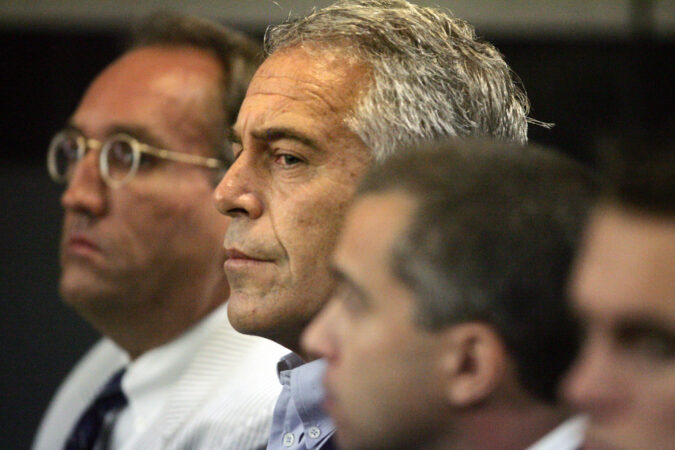
    NEW YORK — One of Jeffrey Epstein and Ghislaine Maxwell‘s most vocal accusers urged judges on Wednesday to grant the Justice Department’s request to unseal records from their federal sex trafficking cases, saying “only transparency is likely to lead to justice.”

    Annie Farmer weighed in through her lawyer, Sigrid S. McCawley, after the judges asked for input from victims before ruling on whether the records should be made public under a new law requiring the government to open its files on the late financier and his longtime confidante, who sexually abused young women and girls for decades.

    Farmer and other victims fought for the passage of the law, known as the Epstein Files Transparency Act. Signed last month by President Donald Trump, it compels the Justice Department, FBI and federal prosecutors to release by Dec. 19 the vast troves of material they’ve amassed during investigations into Epstein.

    The Justice Department last week asked Manhattan federal Judges Richard Berman and Paul Engelmayer to lift secrecy orders on grand jury transcripts and other material from Epstein’s 2019 sex-trafficking case and a wide range of records from Maxwell’s 2021 case, including search warrants, financial records, and notes from interviews with victims.

    “Nothing in these proceedings should stand in the way of their victory or provide a backdoor avenue to continue to cover up history’s most notorious sex-trafficking operation,” McCawley wrote in a letter to the judges.

    The attorney was critical of the government for failing to prosecute anyone else in Epstein and Maxwell’s orbit. She asked the judges to ensure that any orders they issue do not preclude the Justice Department from releasing other Epstein-related materials.

    Farmer “is wary of the possibility that any denial of the motions may be used by others as a pretext or excuse for continuing to withhold crucial information concerning Epstein’s crimes,” McCawley wrote.

    Epstein, a millionaire money manager known for socializing with celebrities, politicians, billionaires, and the academic elite, killed himself in jail a month after his 2019 arrest.

    Maxwell was convicted in 2021 by a federal jury of sex trafficking for helping recruit some of Epstein’s underage victims and participating in some of the abuse. She is serving a 20-year prison sentence.

    In a court filing Wednesday, Maxwell’s lawyer again said that she is preparing a habeas petition in a bid to overturn her conviction. The lawyer, David Markus, first mentioned the habeas petition in court papers in August as she fought the Justice Department’s initial bid to have her case records unsealed. The Supreme Court in October declined to hear Maxwell’s appeal.

    Markus said in Wednesday’s filing that while Maxwell now “does not take a position” in the wake of the transparency act’s passage, doing so “would create undue prejudice so severe that it would foreclose the possibility of a fair retrial” if her habeas petition succeeds.

    The records, Markus said, “contain untested and unproven allegations.”

    Engelmayer, who’s weighing whether to release records from Maxwell’s case, gave her and victims until Wednesday to respond to the Justice Department’s unsealing request. The government must respond to their filings by Dec. 10. The judge said he will rule “promptly thereafter.”

    Berman, who presided over the Epstein case, ordered victims and Epstein’s estate to respond by Wednesday and gave the government until Dec. 8 to reply to those submissions. Berman said he would make his “best efforts to resolve this motion promptly.”

    Lawyers for Epstein’s estate said in a letter to Berman on Wednesday that the estate takes no position on the Justice Department’s unsealing request. The lawyers noted that the government had committed to making appropriate redactions of personal identifying information for victims.

    Last week, a lawyer for some victims complained that the House Oversight Committee had failed to redact, or black out, some of their names from tens of thousands pages of Epstein-related documents it has released in recent months.

    Transparency “CANNOT come at the expense of the privacy, safety, and protection of sexual abuse and sex trafficking victims, especially these survivors who have already suffered repeatedly,” lawyer Brad Edwards wrote.

  • Gov. Phil Murphy asks the Indian government for help in bringing accused killer of Maple Shade mother and son to trial

    Gov. Phil Murphy asks the Indian government for help in bringing accused killer of Maple Shade mother and son to trial

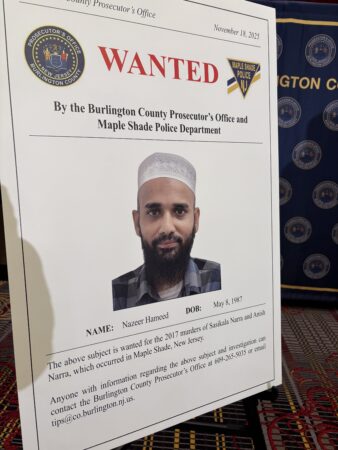
    New Jersey Gov. Phil Murphy has asked the Indian government to extradite an accused murderer to South Jersey to face criminal charges in the death of a woman and her son in Maple Shade.

    Nazeer Hameed, 38, was charged last month with killing Sasikala Narra and her 6-year-old son, Anish, in a crime that shocked the community because of its brutality.

    Narra and her son were found stabbed to death inside their home at the Fox Meadow Apartments in March 2017. The two suffered violent stab and slice wounds to their head and hands, and Anish was nearly decapitated in the attack, prosecutors said.

    Hanumantha Rao Narra, Narra’s husband and the boy’s father, found the bodies, prosecutors said.

    Investigators said Hameed waited until the woman and child were alone in the house before attacking them. Afterward, prosecutors said, Hameed fled to his native India and has remained there ever since.

    In a letter to Vinay Kwatra, the Indian ambassador to America, Murphy said it was important that Hameed face justice.

    “This heinous crime shocked our state, and for eight years investigators pursued every available lead,” the governor said.

    “This request reflects not only the seriousness of the alleged offenses, but also the enduring spirit of cooperation between India and the United States in upholding the rule of law and combating violent crime.”

    Sasikala Narra, 38, and her son, Anish, 6, were stabbed to death inside their apartment in Maple Shade in 2017.

    In announcing the charges last month, Burlington County LaChia Bradshaw said Hameed worked at the same company as Hanumantha Rao Narra, and lived near the family in their apartment complex. For weeks before the killings, Bradshaw said, Hameed “stalked” the family and took measures to hide his movements.

    She declined to describe the potential motive for the slayings.

    Local, state, and federal investigators worked the case for nearly a decade, and ultimately connected Hameed to the crime through a single drop of blood they say he left at the crime scene.

    Last year, a sample of Hameed’s DNA was finally obtained when the company Hameed works for shipped his personal laptop to South Jersey. DNA found on the computer matched the blood found at the crime scene in 2017, according to investigators.

  • Federal judge limits warrantless immigration arrests in D.C.

    Federal judge limits warrantless immigration arrests in D.C.

    The Trump administration’s escalating use of warrantless immigration arrests in D.C. this year probably violated federal law, a judge ruled Tuesday in a decision that prohibits such arrests for all migrants in the city except those at risk of escaping.

    U.S. District Judge Beryl A. Howell granted a preliminary injunction sought by the immigrant-rights group CASA Inc. and four migrants who were arrested without administrative warrants in August amid President Donald Trump’s law enforcement surge in the capital. All four had pending immigration applications at the time of their arrests and were eventually released after spending time in detention facilities.

    “They were arrested while going about unavoidable, lawful activities of daily life,” Howell said.

    The judge, in an 88-page opinion, took Trump administration officials to task for depriving migrants of their rights and basic necessities as they languished in cramped detention facilities before being released. She criticized immigration authorities’ “systemic failure” to follow the law and said top administration officials, including Chief Border Patrol Agent Gregory Bovino, had repeatedly misstated the legal requirements for warrantless arrests in public comments.

    Bovino and a spokesperson for the Department of Homeland Security had asserted that officers needed “reasonable suspicion” to conduct such arrests, but Howell said the legal standard was more stringent: probable cause. Homeland Security officials did not immediately respond to a request for comment Wednesday.

    Trump ordered a renewed crackdown on illegal immigration this year, and top administration officials set targets as high as 3,000 daily arrests of migrants. Attorneys for CASA and the four plaintiffs in the case argued that authorities began to work under an “arrest first, ask questions later” policy to comply with the high daily quotas — and began ignoring a section of the Immigration and Nationality Act that authorizes warrantless arrests only when a migrant “is likely to escape before a warrant can be obtained.”

    One of the plaintiffs, Jose Escobar Molina, a scaffolder from El Salvador, described in a court filing how he was picked up at 6 a.m. as he headed to work one morning by a group of plainclothes officers who shoved him into a black SUV, making him think he was being kidnapped. Another plaintiff, from Venezuela, said he showed his arresting officers his driver’s license, work permit and asylum application paperwork, which they disregarded.

    Warrantless arrests have skyrocketed since Trump’s surge began in August, Howell found. By one count, she said, officials conducted 943 immigration arrests over a month-long period that ended Sept. 9, which represented 40 percent of all D.C. arrests. The judge noted that being present in the country without legal authorization is not a criminal offense, but a civil violation. Entering the United States without legal authorization is a misdemeanor under federal law, and a felony for repeat offenders.

    “Viewing all immigrants potentially subject to removal as criminals is, as a legal matter, plain wrong,” Howell said, before quoting a Supreme Court ruling from 2012: “Perceived mistreatment of aliens in the United States may lead to harmful reciprocal treatment of American citizens abroad.”

    At a court hearing last month, an assistant U.S. attorney argued that an injunction would slow the Trump administration’s deportation efforts by allowing the court to micromanage arrests. As part of her ruling Tuesday, Howell ordered that immigration authorities document every warrantless immigration arrest in D.C. with “specific, particularized facts” establishing probable cause “that the person is likely to escape before a warrant can be obtained.”

    The Justice Department in a legal filing denied that immigration authorities had instituted a new policy of warrantless arrests and argued that the court did not have jurisdiction to rule on the case.

    “Plaintiffs identify no written policy authorizing the arrests that they complain of because there is none,” Assistant U.S. Attorney John Bardo said. Howell said approximately 40 migrants had submitted court declarations attesting to the warrantless arrests and said Bovino’s comments defending those arrests with inaccurate information proved that the policy existed.

    “This is a victory for the rule of law and for the people across the city, who have avoided going to work, to church, to school, to grocery stores — out of fear of being unlawfully arrested, detained, and deported,” said Joanne Lin, an official with the Washington Lawyer’s Committee, one of the groups representing the plaintiffs.

    The ruling describes some circumstances in which immigration agents can establish a migrant’s likelihood of escaping before a warrant may be obtained, but Howell said those factors could vary.

    “Some courts have found the likelihood of escape to be higher when, for example, the noncitizen presented ‘conflicting documents,’ ‘had been “picked up before,” ’ admitted that he had previously been removed, or appeared ‘extremely nervous’ as if ‘looking for an opportunity to run,’” the judge wrote. “Courts have also made the self-evident finding that the likelihood of escape is lower when the individual has resided in the country for a lengthy period of time and has strong community ties.”

    Aditi Shah, an attorney involved in the case from the American Civil Liberties Union of D.C., welcomed those conditions.

    “This requires the government to take some extra steps that it’s required to under the law before it can just grab people off the streets and lock them away in detention centers,” she said.

    Ama Frimpong, CASA’s legal director, said the ruling was a powerful memorial to one of the migrants who described his warrantless arrest and detention in a legal filing, using a pseudonym, Elias Doe. He died last week, Frimpong said. His health had worsened after he missed a dialysis treatment while detained, she said.

    “This is now part of his legacy,” Frimpong said. “It is important for impacted community members to lead this fight and show that they are not afraid.”

  • Man and woman shot dead in Kensington murder-suicide, authorities say

    Man and woman shot dead in Kensington murder-suicide, authorities say

    A man and woman were shot and killed Wednesday afternoon in Kensington in what police believe was a murder-suicide, according to a law enforcement source who asked not to be identified to discuss an ongoing investigation.

    The two, whom police did not identify, were shot on the 3400 block of Hartville Street around 1:15 p.m., according to the department. They were pronounced dead just after 2 p.m.

    Investigators believe the man shot the woman with a shotgun, according to the police source.

    Police continue to investigate.

  • University of Delaware student facing weapons charges after plotting attack on campus police, feds say

    University of Delaware student facing weapons charges after plotting attack on campus police, feds say

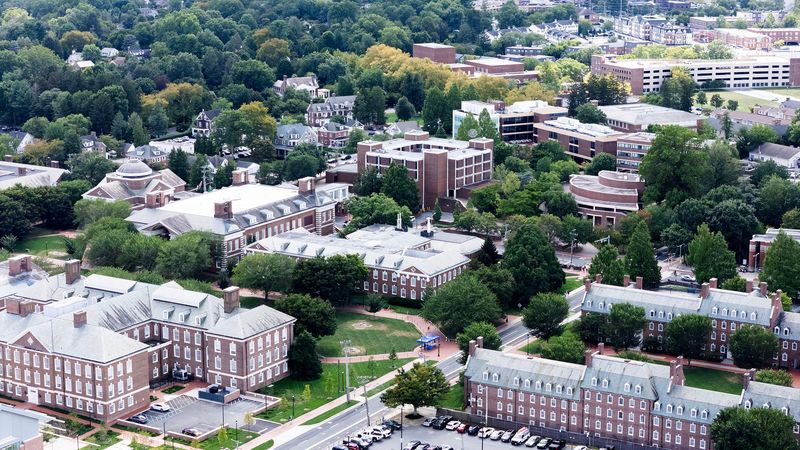
    A University of Delaware student who planned to target a campus police building with firearms was arrested last week and charged with federal weapons crimes, authorities said.

    Luqmaan Khan, 25, of Wilmington, vowed to “kill all” as he mapped out violent schemes in his journal — ones that involved Glock pistols, stun grenades, an assault rifle, and other “urban warfare setups,” according to a criminal complaint filed by the FBI.

    New Castle County police discovered the alleged plot when, authorities say, they happened upon Khan behaving suspiciously in a disc golf park late last Monday.

    When officers found Khan alone in a Toyota around midnight after the park had closed, they said, he repeatedly reached around in the vehicle and became nervous when questioned why he was there.

    Khan was arrested for resisting arrest after he refused to get out of the driver’s seat. When officers searched the car, they found a loaded Glock .357 handgun, a brace for semiautomatic pistols that have been converted into machine guns, four loaded extended ammunition magazines, body armor, binoculars, and a notebook, according to the affidavit of probable cause for his arrest.

    That notebook is now the center of an investigation being handled by agents with the FBI’s Wilmington office.

    The marble composition book was littered with references to different firearms and the ideal scenarios for their use, the affidavit said.

    Khan noted that an assault rifle was best for “open spaces,” while a Glock pistol was better for “fast transition fighting.” He suggested tear gas could be used for “room clearing,” the document said, while a sword or knife would allow for “no noise kills.”

    Khan’s notebook also included a hand-drawn map of a building that federal authorities say appears to be the University of Delaware campus police station. It included notes about entry and exit points to the building at certain times of the day, the affidavit says.

    Meanwhile, Khan named a University of Delaware police officer as a “specific target” according to the affidavit, which did not identify the officer.

    Khan, the document said, “intended to use the weapons he amassed to commit ‘ambushes’ and ‘surprise attacks’ on targets” at the university.

    Laura Carlson, the university’s interim president, said in a letter to the campus community that Khan has been “temporarily separated” from the university as the investigation continues and is barred from accessing campus buildings.

    “There are no known or immediate threats to the University of Delaware community,” Carlson wrote. “However, [police described] evidence of a plan that targeted the University of Delaware Police Department (UDPD). This is frightening to all of us.”

    Khan’s writings repeatedly mentioned becoming a “martyr,” authorities said. In an interview with the FBI after his arrest, the affidavit said, Khan told investigators that martyrdom was “one of the greatest things you can do.”

    Khan, who was born in Pakistan and emigrated to America in his youth, is a U.S. citizen who lived alone and had no criminal convictions, federal authorities said.

    Federal agents searched his residence last week and recovered an additional unregistered 9mm Glock pistol with a machine gun conversation kit, an M4 rifle with a scope and red dot sight, 10 more extended magazines, and a second body armor plate.

    Federal prosecutors charged Khan with possessing a machine gun and an unregistered firearm. If convicted, he faces a maximum sentence of 10 years in prison, according to the U.S. Attorney’s Office.

    Khan faces additional state charges for resisting arrest and other misdemeanors.

    His lawyer, Eleni Kousoulis, was not immediately available for comment.

  • A Philly man was sentenced to 33 months in federal prison for making violent and racist threats to Black women

    A Philly man was sentenced to 33 months in federal prison for making violent and racist threats to Black women

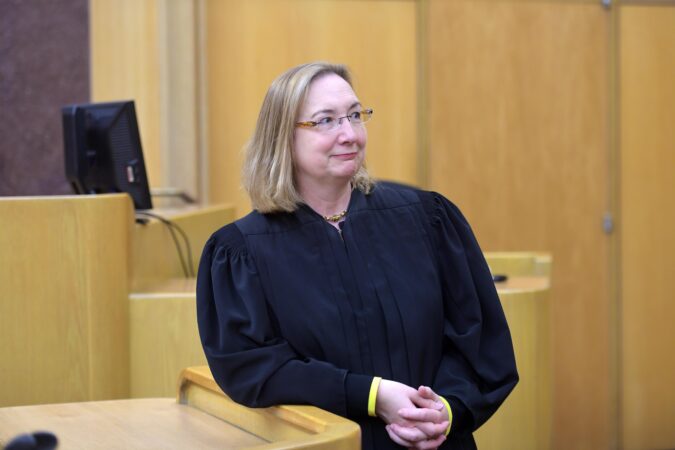
    As U.S. District Judge Gerald McHugh prepared to sentence Mark Anthony Tucci for hurling racist, violent threats at two Black women he had never met, the judge paused for a moment and teared up.

    Tucci’s vile language and promises to harm the women not only were criminally inexcusable, McHugh said, but also were a demonstration of “deeply hateful attitudes” that cannot be tolerated in society.

    “It was meant to deny their dignity and their humanity,” McHugh said. “And that’s what makes it so troublesome.”

    McHugh offered those remarks before sentencing Tucci on Tuesday to 33 months in federal prison and ordering him to pay nearly $17,000 in restitution. Tucci had pleaded guilty earlier this year to charges including threat to use a dangerous weapon, interfering with federally protected activities, and interstate communication of threats.

    U.S. Attorney David Metcalf said in a statement that the case was an example of the criminal justice system holding someone accountable for language that was both disturbing and a violation of the victims’ civil rights.

    “Every citizen is entitled to a peace and security undisturbed by the abhorrent and racist threats that took place in this case, full stop,” he said.

    Tucci’s crimes took place last year in two separate incidents: In the first, Tucci, who is white, pulled up next to a Black woman driving on I-95, rolled down his window, and threatened to kill her, court documents said. The second episode happened when he repeatedly harassed a Black employee of the Philadelphia Department of Human Services who had been assigned to an investigation involving Tucci’s daughter.

    In both instances, court documents said, Tucci used racial slurs and made bigoted, demeaning comments that played on offensive racial stereotypes. Prosecutors said he also threatened to harm both women — telling the driver on I-95 that he would kill her and throwing a coffee cup at her car, and, in the case of the DHS worker, finding her home address and cell phone number to continue his racist harassment.

    As prosecutor Samuel Kuhn, of the Justice Department’s Civil Rights Division, outlined those facts during Tuesday’s sentencing hearing, Tucci repeatedly put his face in his hands, shaking and bowing his head.

    Tucci later addressed McHugh, saying that he was embarrassed and ashamed, and that his actions were inexcusable. At the time of the crimes, he said, he had been suffering from undiagnosed mental health issues. He said that he has since been receiving treatment, and that his medications have helped him understand his past misdeeds.

    Authorities initially said Tucci had boasted during one of the episodes about his association with the far-right Proud Boys group, and his lawyer said in court documents that the group “clearly influenced” him. But there was no discussion of the group or Tucci’s politics during his sentencing hearing.

    Several of his relatives, including his mother and brother, testified and said they had seen his mental health improve over the last several months while receiving treatment in custody.

    Tucci, for his part, said he wished he could have apologized to his victims, neither of whom attended the proceeding. Kuhn, the prosecutor, read statements on their behalf. In one of them, the motorist Tucci threatened said she still experiences anxiety as a result of the attack, particularly while driving.

    “People who look like me have a right to live safely and freely,” she wrote.

    Tucci said he agreed, and lamented that there was “nothing I can do to make it right.”

    “I’m forever pegged as a racist because I said things that were racist,” he said.

    As Tucci stood to leave the courtroom at the end of the hearing, McHugh, the judge, told him: “Your future is in your hands now.”

  • A man died driving on Northwest Philly’s winding, wet roads. The neighborhood has tried addressing the danger for decades.

    A man died driving on Northwest Philly’s winding, wet roads. The neighborhood has tried addressing the danger for decades.

    A 65-year-old man died Sunday after he lost control of his vehicle on Cresheim Valley Drive in Chestnut Hill, striking a downed guardrail and flipping the car upside down into a creek. Just weeks before, another driver veered off the same road but survived.

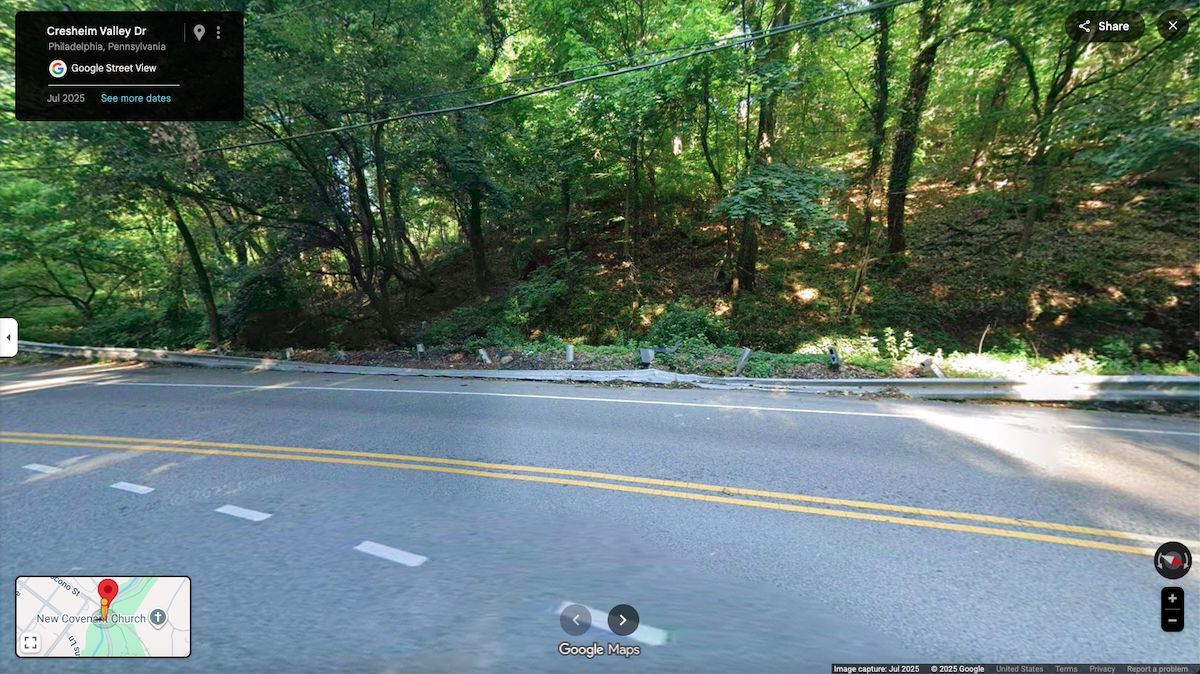
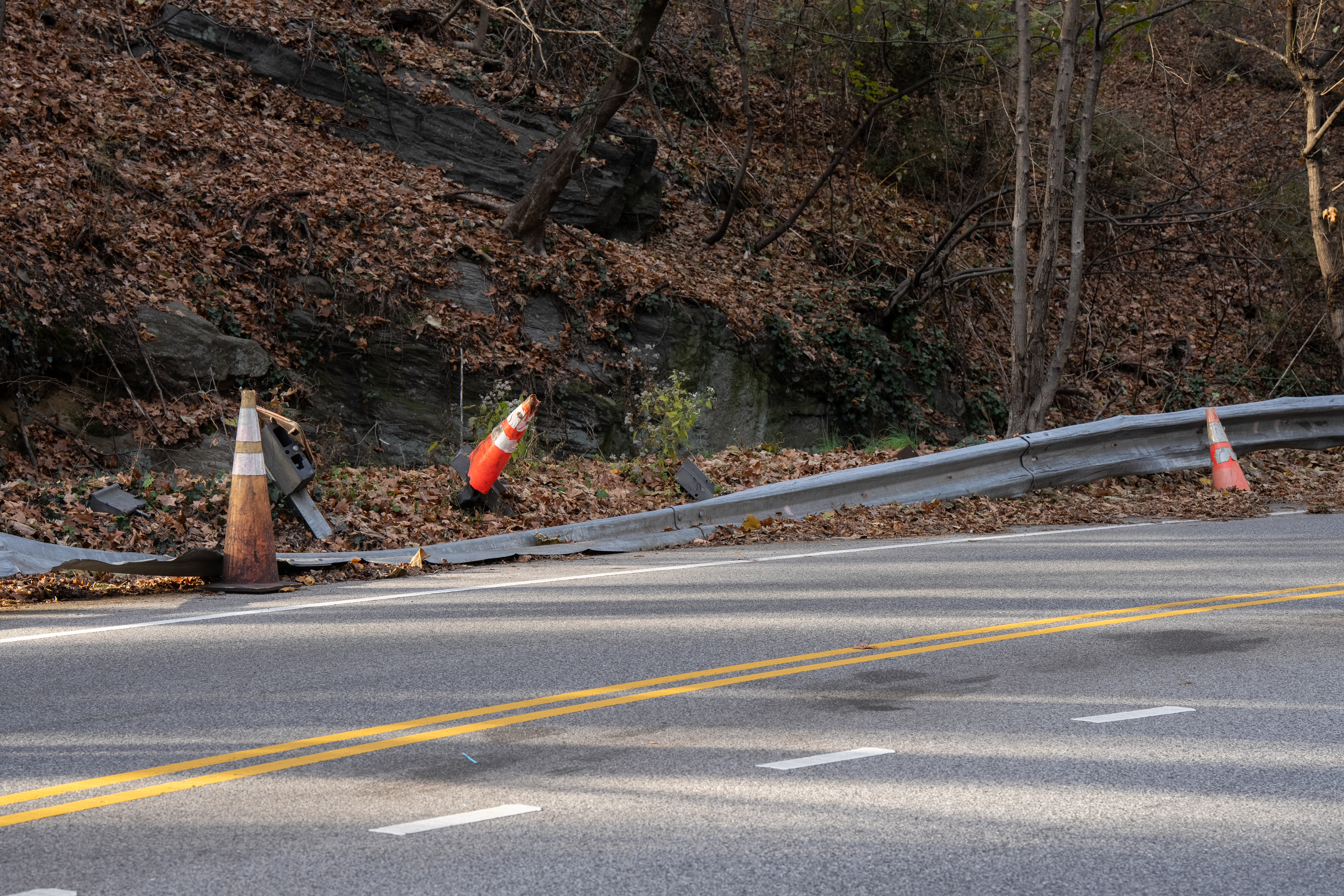
    Compounding this latest traffic death is the fact that the guardrail meant to prevent cars from swerving off the road was broken and nearly flattened from previous crashes, leaving a gap in the guardrails for months, said Josephine Winter, a Mount Airy resident and executive director of West Mount Airy Neighbors (WMAN). “The guardrail was down, and it was previously crumbled so it’s a frequent site of crashes,” she said. Images from Google Maps show the guardrail down as far back as July.

    The Philadelphia Streets Department is aware of the recent crash and is conducting an assessment of the guardrail on Cresheim Valley Road. “The streets department’s top priority is public safety,” a spokesperson said.

    A screenshot of a Google Map’s street view captured in July 2025 shows the downed guardrail on Cresheim Valley Drive in the Chestnut Hill neighborhood of Philadelphia. On Nov. 30, 2025, a 65-year-old man crashed and went over the guardrail, later succumbing to his injuries.

    Neighbors say accidents, sometimes fatal, have plagued the winding roadways in Chestnut Hill and Mount Airy for decades. These traffic safety concerns came to a head with Sunday’s deadly crash.

    “It’s a curvy, tricky road, especially when it’s wet, and people tend to speed on that road,” Winter said of roadways like Lincoln and Cresheim Valley Drives, which are lined with trees, have swooping dips and hills, and are prone to flooding.

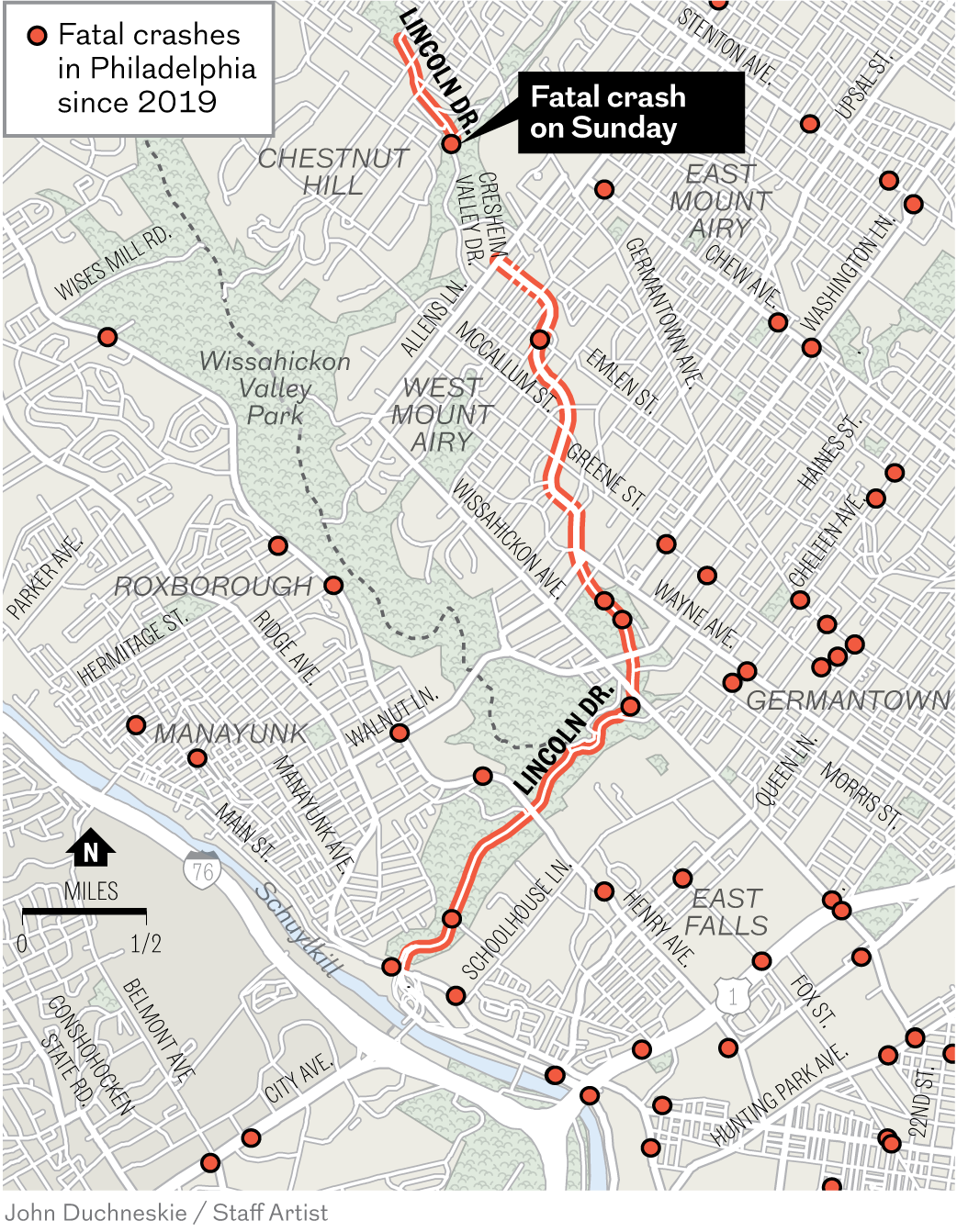
    Map of fatal crashes in Northwest Philadelphia since 2019.

    Since 2019, according to city crash data, at least five people have died while driving on the dark, winding sections of Lincoln Drive, which intersects with Cresheim Valley Drive, prompting many neighbors to fear walking down their street or leading them to invest thousands on giant boulders to protect their home and lawn.

    Winter, who leads WMAN’s traffic-calming committee, and other neighborhood organizations have petitioned for city support, urging the streets department to slow the speed of traffic on Cresheim Valley Drive, Lincoln Drive, and Wissahickon Avenue. The group’s efforts are so ingrained in the fabric of the neighborhood that, when digging through Temple University’s Urban Archives, Winter found an advertisement from 1968 stressing the need for cars in Mount Airy to “slow down to keep kids safe.”

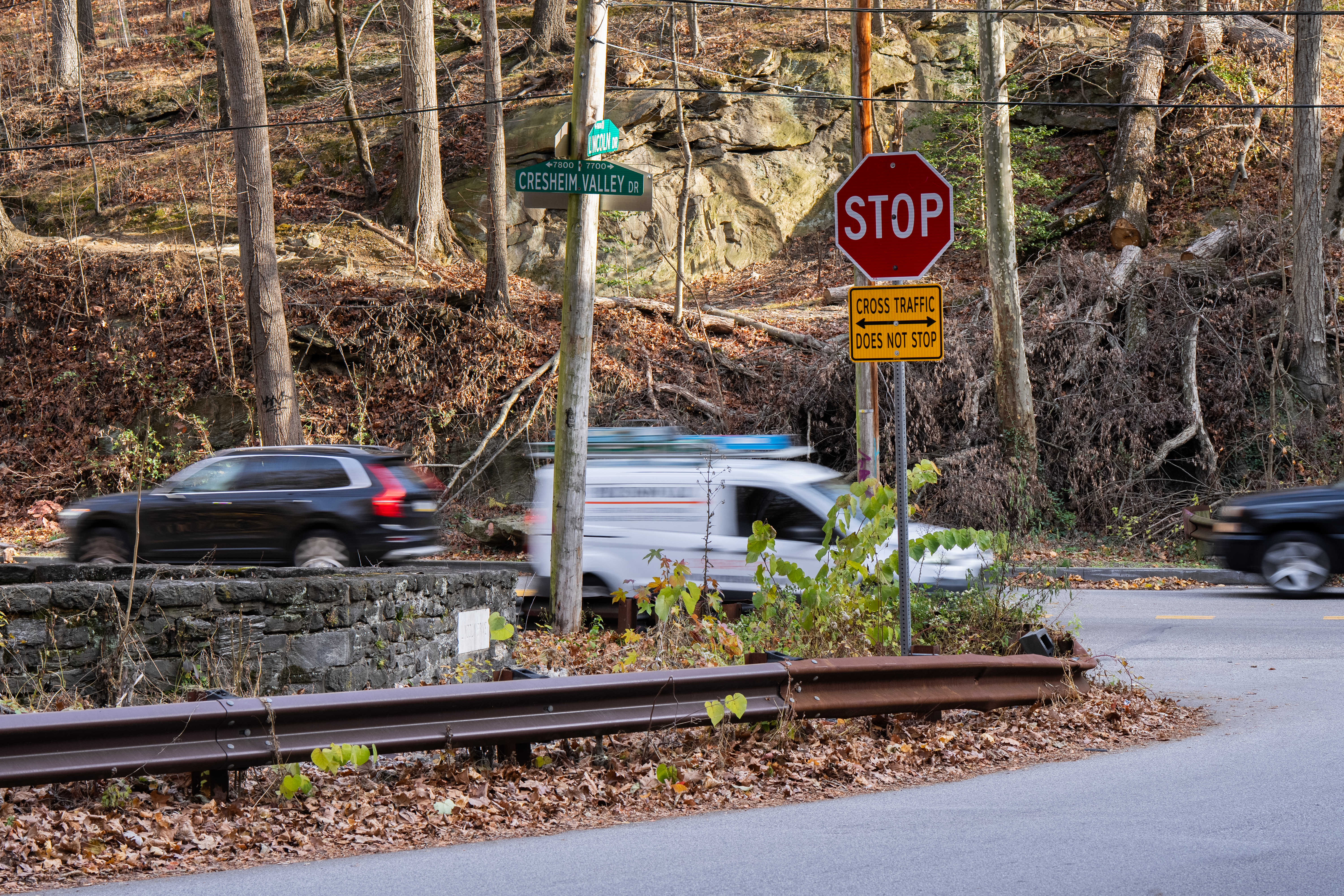
    The intersection of Cresheim Valley Drive and Lincoln Drive, in Philadelphia, PA, Dec. 1, 2025.

    The streets department installed “speed slots,” traffic-calming structures similar to speed bumps, earlier this year along Lincoln Drive between Allens Lane and Wayne Avenue. Along the same stretch of road, the Pennsylvania Department of Transportation installed rumble strips and speed tables to slow drivers down in 2023, in addition to traffic lane separators to keep drivers from using center lanes to pass other vehicles.

    In addition to the recently completed speed slots and traffic-calming measures on sections of Emlen Street, which becomes Cresheim Valley Road, signal upgrades are planned for Lincoln Drive as well.

    However, the work to improve these streets is not over, Winter said. Additionally, the streets department plans do not include changes to Cresheim Valley Drive, where Sunday’s crash happened.

    “We’ll need a collaborative approach as soon as possible to temporarily address the downed guardrail, and then see what the options are moving forward,” Winter said.

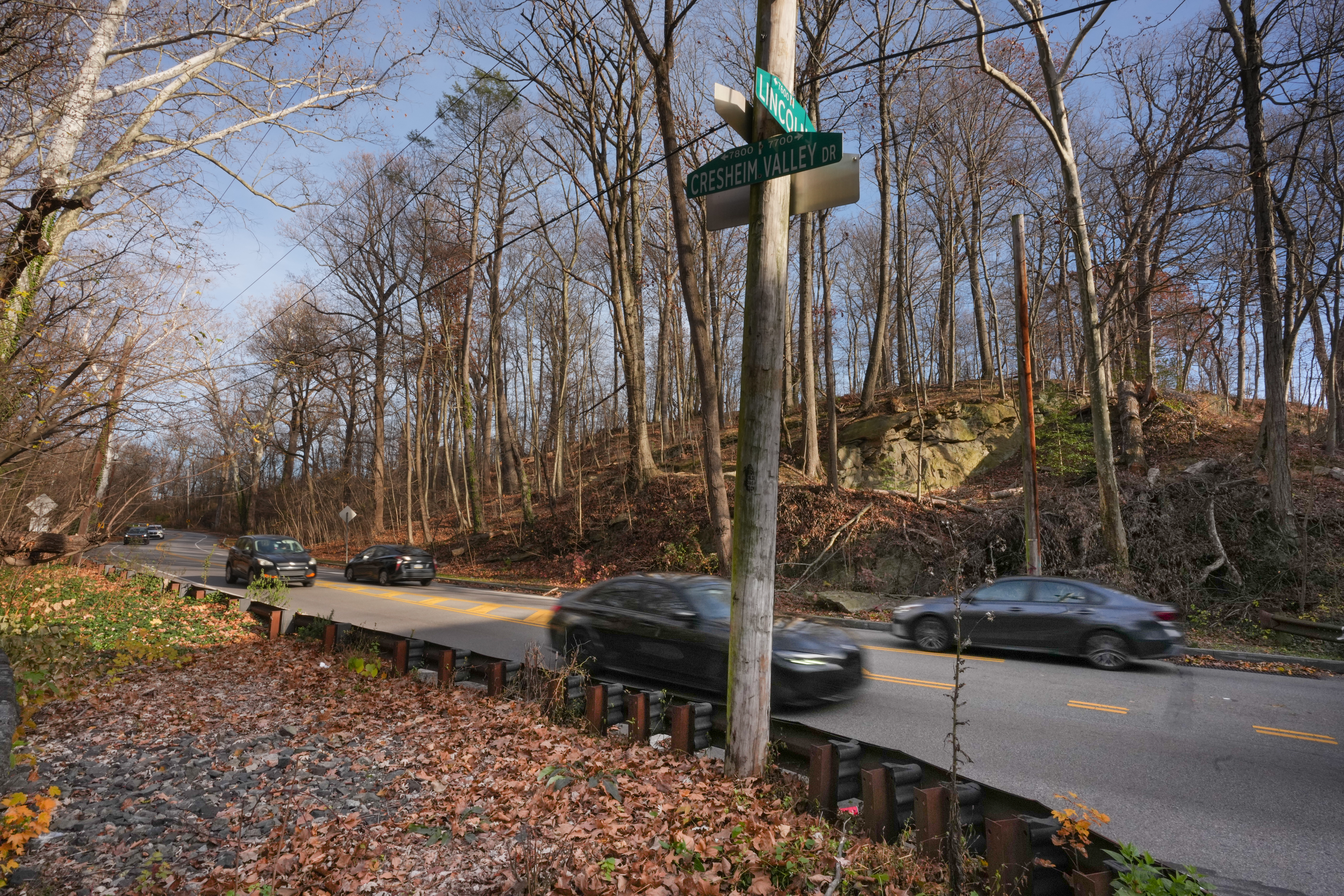
    The intersection of Cresheim Valley Drive and Lincoln Drive, in Philadelphia, PA, Dec. 1, 2025.

    Throughout the last decade, locals have suggested better-timed signals, more speed tables, and reducing the number of driving lanes from two in either direction down to one. They also want to see more roundabouts and curb bump-outs in the neighborhood to keep traffic flowing, but at a reasonable speed.

    A mere 50 to 100 feet from Cresheim Valley Drive is a parallel bike trail, where trail organizers like Brad Maule are accustomed to the crashes on the road nearby. Before Sunday’s fatal crash, he remembers two other cars that drove off the side of the road in recent months, not counting the crashes on the roadway itself. The city recently installed pedestrian crossing signs and repainted the crosswalk on nearby Cresheim Road, but Maule hopes speed bumps will follow.

    Cresheim Valley Drive near where it intersects with Lincoln Drive, in Philadelphia, PA, Dec. 1, 2025.

    While Winter said that engineers from the Philadelphia Streets Department were among the first calls she received Monday morning responding to the crash, and that the community appreciates the response, she, Maule, and other neighbors hope that more safety improvements will be considered to save more lives.

    “I’m just looking forward to the new measures of safety that come here,” Maule said. “Hopefully, people will abide by them.”

    Staff writers Max Marin and Dylan Purcell contributed to this article.

  • Pottstown man who shot officer during domestic violence call sentenced to state prison

    Pottstown man who shot officer during domestic violence call sentenced to state prison

    A Pottstown man who shot an officer in the leg with his own firearm during a scuffle last year was sentenced Tuesday to 22½ to 45 years in state prison.

    William Ciccoli Jr., 43, showed little emotion as he learned his fate, shaking his head as Montgomery County Court Judge Thomas DelRicci handed down his sentence.

    The judge told Ciccoli he was shocked by his “lack of remorse and accountability.”

    “We all saw the video, yet you claim the ‘gun went off,’” DelRicci said. “It went off because of the defendant’s actions. No other reason.”

    After the hearing, Ciccoli denied pulling the trigger on Cpl. Anthony Fischer’s sidearm as they grappled inside Ciccoli’s apartment in November 2024.

    “If I disarmed him, my prints would’ve been on that gun,” he said. “I just feel sorry for my family for what has happened, that is all.”

    When pressed, Ciccoli said he feels sorry for Fischer, but insisted that he did not shoot him.

    Ciccoli’s attorney, Frank Genovese, said he wasn’t surprised by the sentence, which he said he would appeal.

    In June, a jury convicted Ciccoli of assault on a law enforcement officer and related crimes, but acquitted him of attempted murder, ruling that he did not intend to kill Fischer when he fired the gun.

    Fischer went to Ciccoli’s home on Chestnut Street to respond to a report of a domestic-violence dispute between him and his girlfriend, prosecutors said. While speaking with the officers, Ciccoli became combative and fought with Fischer.

    During the scuffle, Ciccoli wedged his hand into the holster on Fischer’s hip and pulled the trigger on his department-issued .40-caliber handgun, according to bodycam footage played during Ciccoli’s trial in June. During the video, Fischer yells “he’s going for my gun,” shortly before a single gunshot rings out.

    The shot struck Fischer in his leg, nicking his femoral artery and causing severe injuries that the officer said still prevent him from moving without pain.

    District Attorney Kevin Steele, who prosecuted the case, said Tuesday he appreciated that the judge “recognized the seriousness of the case.”

    “I think it’s very important for everyone to understand that if you try to disarm a police officer, if you shoot at a police officer you’re going to jail for 20 years,” Steele said, adding that Ciccoli’s repeated profession of innocence is “nonsense.”

    “This is a guy that’s not taking accountability for his actions,” Steele said. “We’re here because of his actions.”