A 36-year-old man was hospitalized in stable condition after he was found with a gunshot injury inside a building used as a recording studio late Thursday afternoon in Cherry Hill, authorities said.
Shortly before 4:15 p.m., Cherry Hill police responded to a report of a shooting on the 1200 block of South Union Street and found the injured man, authorities said.
The man was transported to Cooper University Hospital.
Police reported no arrests and no other details were released.
Philadelphia police are investigating two reported sexual assaults possibly involving the same Temple University student, school officials said Thursday.
In a statement, Temple officials said the university “has received two credible reports” alleging sexual assault, “one during a social event in a residence hall and a second incident at an off-campus location, potentially involving the same suspect who was positively identified yesterday.”
The university has placed “a student of interest” on interim suspension pending investigations by the Philadelphia Police Department, Temple’s Department of Public Safety, and the university, the statement said.
While suspended, the student is prohibited from being on campus or in university buildings or classes, according to the statement signed by Jennifer Griffin, the university’s vice president for public safety and chief of police, and Jodi Bailey Accavallo, vice president for student affairs.
“As these investigations are ongoing,” the statement said, “we strongly encourage students with information or otherwise in need of support regarding any concerns of sexual misconduct to contact” Temple Police at 215-204-1234 or police@temple.edu, the Title IX coordinator at 215-204-3283 or titleix@temple.edu, or the Dean of Students Office at 215-204-7188 or dos@temple.edu.
Students and other members of the university community or members of the public can also submit an anonymous report at helpline.temple.edu.
The former chief financial officer of a Burlington County nonprofit was sentenced to eight years in state prison for stealing $2.5 million from the company for personal expenses, including settling her credit card debt and buying vacation homes and a Corvette Stingray sports car, officials said Thursday.
Colleen Witten, 56, of Buena, Atlantic County, pleaded guilty in June to theft, money laundering, and tax evasion for the scheme, which took place during her time as an executive with OTC Services, a company that provides job training for adults with disabilities.
New Jersey State Attorney General Matthew Platkin said Witten’s prosecution reflects his office’s “unbreakable commitment to pursue justice for victims and hold accountable those who abuse their positions of trust to commit crimes.”
Witten’s attorney, Brendan Kavanagh, did not immediately return a request for comment.
Prosecutors said Witten altered corporate board meeting minutes to give herself the authority to open a company bank account, and then used the account to siphon money between May 2019 and March 2024.
She disguised the theft by laundering the money through checks issued to a landscaping business she owned with her husband, and the couple failed to pay taxes on these funds.
Witten’s husband, Allan, pleaded guilty earlier this year to one count of receiving stolen property for accepting money from the nonprofit for work he knew his business did not perform. He was sentenced to three years in state prison.
A grand jury decided not to charge a police officer in Burlington County for fatally shooting a 57-year-old man who was firing a rifle during a confrontation a year ago, the New Jersey Attorney General’s Office said Thursday.
Marvin Taylor was shot by Pemberton Township Officer Kyle McQueen on Oct. 19, 2024, in a wooded area behind a residence on Woodland Avenue in the township’s Browns Mills section.
“Marvin, we are here to help you! Put the gun down now!” McQueen can be heard on bodycam video yelling at Taylor.
McQueen again orders Taylor two more times to drop his weapon. Then a single gunshot can be heard, and McQueen yells to his fellow officers, “Shots fired! Shots fired!” McQueen then fires four times at Taylor.
McQueen and other officers approach the fallen Taylor and McQueen is seen in the bodycam video picking up a rifle lying on the ground next to Taylor.
“Gun secured, suspect down,” McQueen announces.
Earlier that afternoon, volunteer firefighters and police responded to a 911 call reporting smoke coming from the residence.
A firefighter went to the backyard and encountered Taylor, who pointed a rifle at him, according to the attorney general’s statement. Responding firefighters retreated as police arrived, and a single gunshot was heard coming from the backyard.
Police used a loudspeaker to attempt to speak with Taylor, but he did not respond and officers lost sight of him, the statement said.
Pemberton Township police waited for the arrival of a crisis negotiator and tactical specialists from the New Jersey State Police. McQueen and another township officer positioned themselves in the wooded area behind the residence. Taylor was seen behind the residence armed with a rifle, the statement said.
After Taylor was shot, he was taken to Cooper University Hospital in Camden, where he was pronounced dead early that evening.
A black bolt-action rifle was found next to Taylor’s body, as well as two spent shell casings that were fired from the rifle.
The Bureau of Alcohol, Tobacco, Firearms and Explosives and state authorities investigated the initial fire and concluded that it was started after gasoline was ignited at various locations inside the residence.
After losing his son to a heroin overdose in 2017, Lawrence Arata devoted his life to helping people in addiction, founded an Upper Darby nonprofit to further that mission, and even ran a failed congressional campaign in which the opioid crisis was his tent-pole cause.
But behind the scenes, prosecutors in Delaware County said Wednesday, Arata twisted that mission, trading cash, gift cards, and other services from his nonprofit, the Opioid Crisis Action Network, for sexual favors from women who were desperate for help.
One woman told investigators that she saw the relationship as transactional: “He had what I needed, and I had what he needed,” she said, according to court filings.
Arata, 65, has been charged with trafficking in individuals and patronizing prostitutes, as well as witness intimidation for trying to coerce some of the women he victimized to recant their statements to police, court records show.
Arata, of Villas, Cape May County, was freed after posting 10% of $500,000 bail.
His attorney, Ronald Greenblatt, said Arata had done nothing wrong.
“The evidence that will come out in court will show his innocence,” he said. “Mr. Arata is a pillar of the community who turned the personal tragedy of losing his son to a drug overdose into a career of helping people.”
Delaware County District Attorney Jack Stollsteimer, in announcing the charges, said Arata “cynically and cruelly” misused opioid settlement funds to “satisfy his sexual desires.”
“I want to thank the courageous women in recovery who fell victim to Mr. Arata, as well as those working to help others find their way into recovery, for having the courage to come forward and trust law enforcement to stop this predator,” Stollsteimer said. “We heard you and we support you.”
Stollsteimer said he believes other people may have been victimized by Arata and urged them to contact his office.
Investigators learned of Arata’s alleged crimes in August, when a former program director at his nonprofit gave a statement to Upper Darby police, according to the affidavit of probable cause for his arrest.
The woman said Arata behaved inappropriately with his clients, kissed, them, touched them, and asked them to stay in hotel rooms with him. Some of the clients left the program because his behavior made them uncomfortable, she said, and she resigned from her position because of similar concerns.
Detectives later interviewed one of the women Arata had initiated a relationship with. She said that during one encounter in 2024, Arata approached her after a group meeting and said she “looked like she could keep a secret.”
At the time, the woman said, the weather had started to turn cold and, in need of a coat, she agreed to perform oral sex on Arata inside his car in exchange for gift cards. The woman told police she could not refuse, because she needed the benefits offered by OCAN to survive.
The woman said she saw Arata again in March, when he was doing outreach on 69th Street in Upper Darby. Hungry and in need of resources, she told police, she approached Arata and again performed oral sex on him inside his car.
Another woman, who lives in Atlantic City, said she and Arata had a yearslong sexual relationship. Arata met the woman while she was living in a recovery house in Chester, and she told him about her years of addiction and the time she spent as a sex worker in order to survive.
Arata began trading gift cards and cash for sex with the woman, she told police. Later, when she returned to Atlantic City, she said, Arata continued their relationship.
The woman said she needed the cash and gift cards to survive, and saw the arrangement as mutually beneficial. Earlier this month, Arata texted her from an unfamiliar phone number, saying police had confiscated his cell phone and urging her not to speak with investigators.
But Arata didn’t just assault women in recovery, police said. A therapist who worked for his organization said Arata repeatedly told her she was beautiful, asked her to visit his hotel room in Chester, and once kissed her against her will.
Later, after police had begun to investigate Arata, he pulled the woman aside, accused her of making “false allegations” against him, and demanded she retract her statement, authorities said.
Other employees of OCAN said they had raised concerns to Arata about his methods, saying the repeated use of gift cards as an incentive to clients felt tantamount to a bribe, the affidavit said. He ignored or dismissed those concerns.
Arata told The Inquirer in 2017 that the death of his son, Brendan, inspired him to raise awareness on the lack of resources for people in active addiction.
“Getting very busy on this issue was a way for me to deal with my grief,” Arata said. “This is not a partisan issue. This disease has killed Republicans and Democrats.”
A woman was killed in a hit-and-run crash early Thursday morning in University City.
Meaza Brown, 48, of South Philadelphia, was walking with coworkers when a driver in a silver Chrysler 300 with tinted windows struck and killed her at 4:17 a.m. at 33rd and Market Streets, Chief Inspector Scott Small told reporters at the scene. The woman was pronounced dead at 4:59 a.m. at Penn Presbyterian Medical Center with multiple injuries and internal bleeding.
Police later recovered the vehicle they believe struck Brown at 34th and Race Streets. No arrest was reported, and the investigation is ongoing.
Small said that the woman was hit at such a high rate of speed, “she was launched out of her sneakers.” Police say the collision propelled the woman several hundred feet down Market Street.
“The driver of the striking vehicle did not remain on scene, did not render any aid, and just fled the scene,” Small said.
The driver drove away on Market Street, heading toward 30th Street Station. No other people were hit by the car or injured, police said.
The deadly crash occurred in the heart of Drexel University’s campus, in the intersection in front of the school library and student center, and only a few blocks from 30th Street Station.
Philadelphia has experienced fewer traffic deaths in the first half of this year than in any equivalent period since 2019, according to the Bicycle Coalition of Greater Philadelphia. Fatalities have been on a downtrend for years; however, the back half of each year tends to get more deadly.
Gloria Cartagena Hart vividly remembers the scenes and sounds of her Kensington block just three years ago: The streets filled with trash. The sidewalks lined with dozens of people openly using drugs. Nightly pops of gunfire from dealers competing for turf, and the haunting screams that followed.
It was 2022, in the heart of one of the most notorious drug markets and poorest zip codes in America.
But Cartagena Hart, a longtime resident at Somerset and Jasper Streets, now says the neighborhood is experiencing something she once believed might never come.
“I see some progress,” she said.
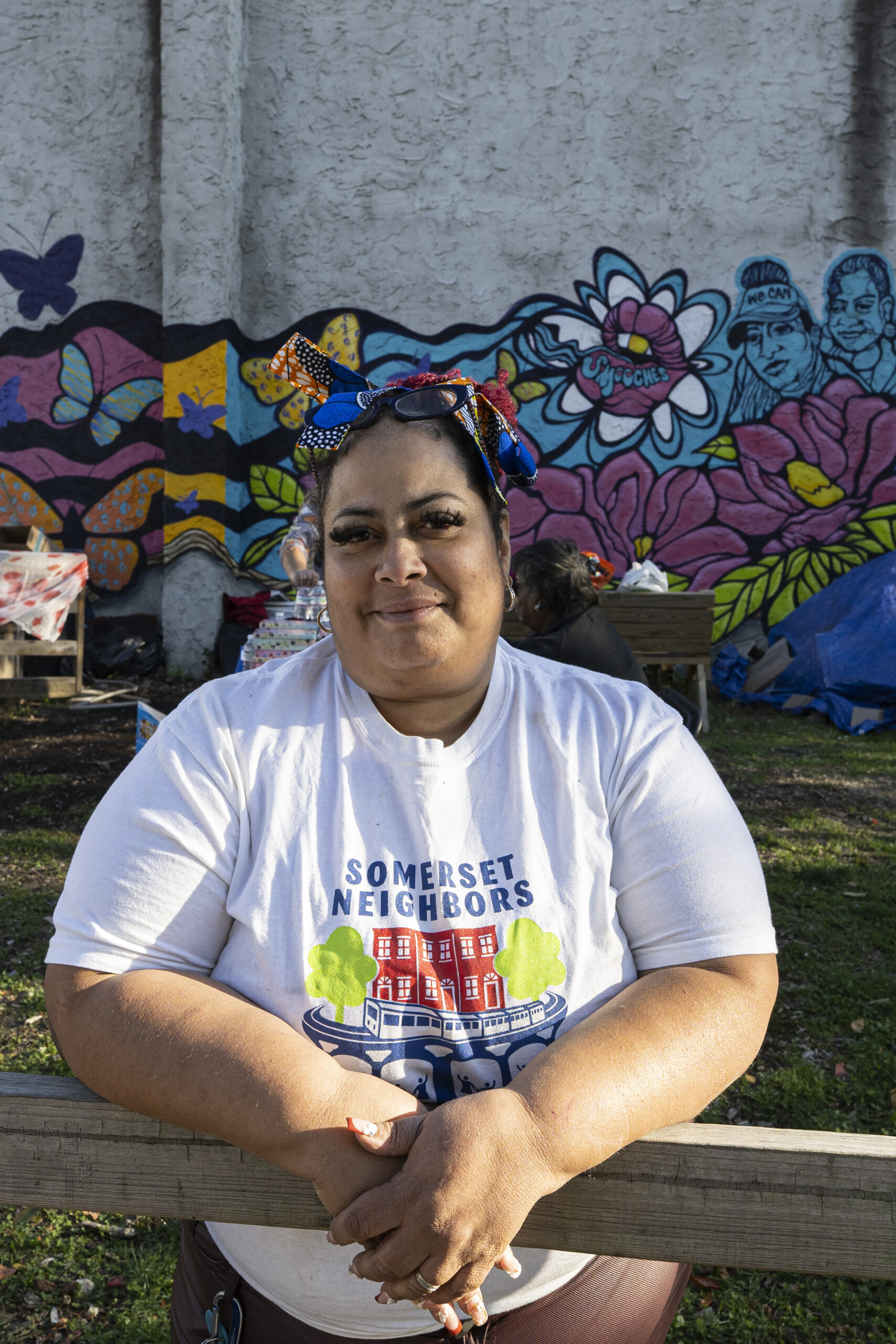
Gloria Cartagena Hart is a community organizer in Kensington who said she will never stop fighting for resources to stabilize the area.
For the first time in decades, under the renewed efforts of Mayor Cherelle L. Parker’s administration, some residents and city officials alike agree that many of Kensington’s most chronic challenges have been improving — albeit slowly.
Fewer dealers dot the corners. Three times as many police officers patrol the neighborhood, disrupting their business. Half as many people are living on the streets compared with last year, police said. Some residents say quality-of-life issues — trash pickup, abandoned car removals, 311 calls — are being addressed more quickly.
And gun violence — long a byproduct of the drug economy and fragmented crews fighting for turf — is at its lowest level in a generation.
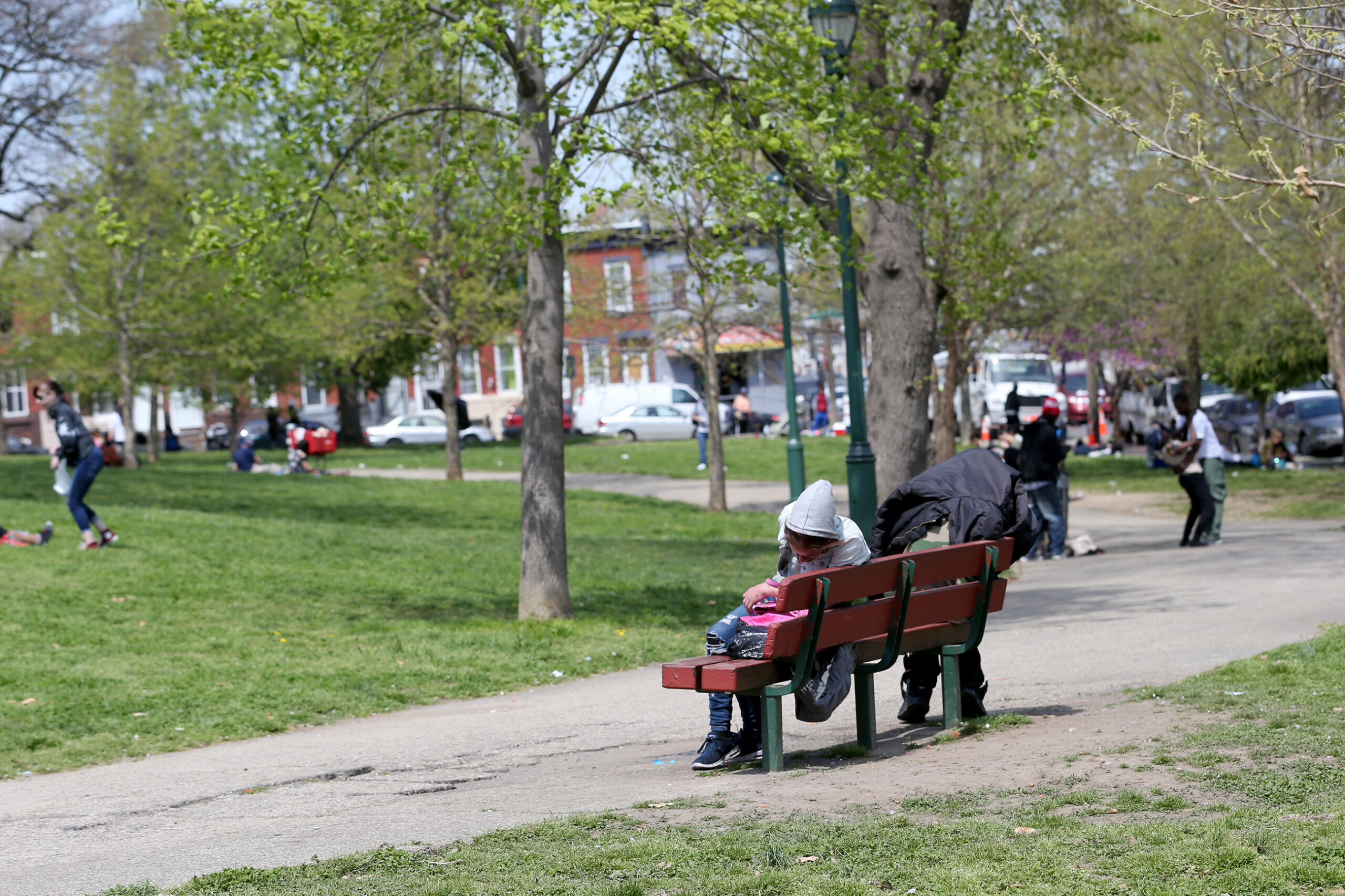
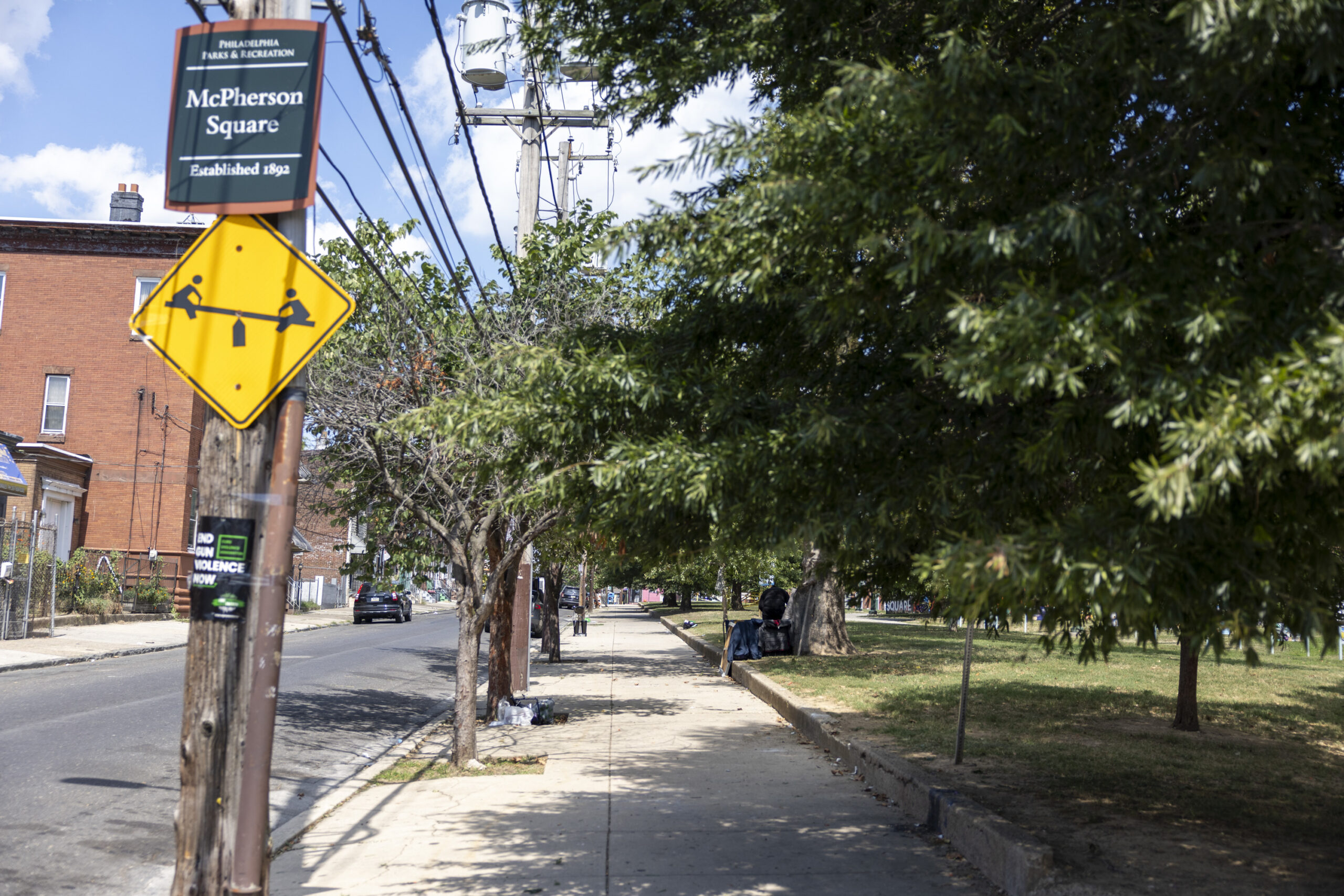
For years, McPherson Square was typically filled with people openly using drugs, as seen in this photo from April 2021. Residents could not let their children visit the park safely.This year, McPherson Square is a different scene. There are often a few people sitting along the edges, but police regularly sweep the park and ask people to leave.
City agencies and healthcare groups say they have also worked to get drug users into treatment more quickly, and have started building a network of care that they hope will keep fewer people from returning to the streets. Riverview Wellness Village, Parker’s new $100 million recovery and treatment facility, now houses about 200 people.
“Neighbors [are] telling me how many more people are sitting on their steps, how many more children are riding their bikes, how many more people may walk the commercial corridor,” Parker said this week. “To me, that’s progress. … We weren’t going to close our eyes and ignore it and walk around like it didn’t exist, or just contain it in one area.”
She’s committed to long-term change there, she said.
More dealers show up to give out free samples of drugs — and free pizza slices to go with them — in an effort to win over customers in a more competitive market, she said. She is constantly asking people to stay off her steps.
Deputy Police Commissioner Pedro Rosario sees the ongoing challenges.
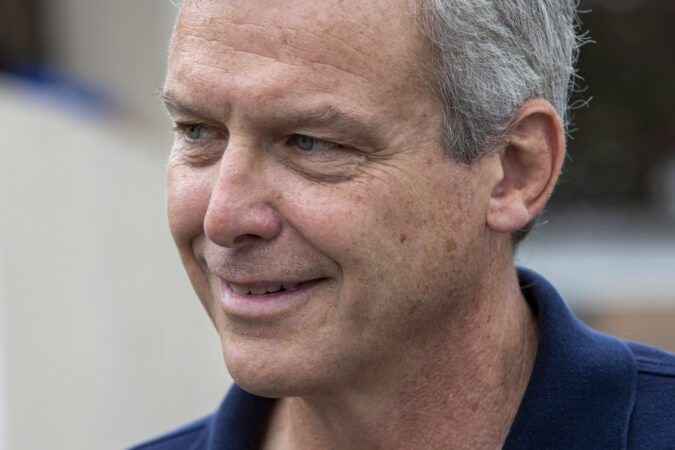
“Am I where I want to be? No. Nowhere close to it,” said Rosario, who oversees the policing strategies in Kensington. “But ‘moving in the right direction’ is not giving us enough credit.”
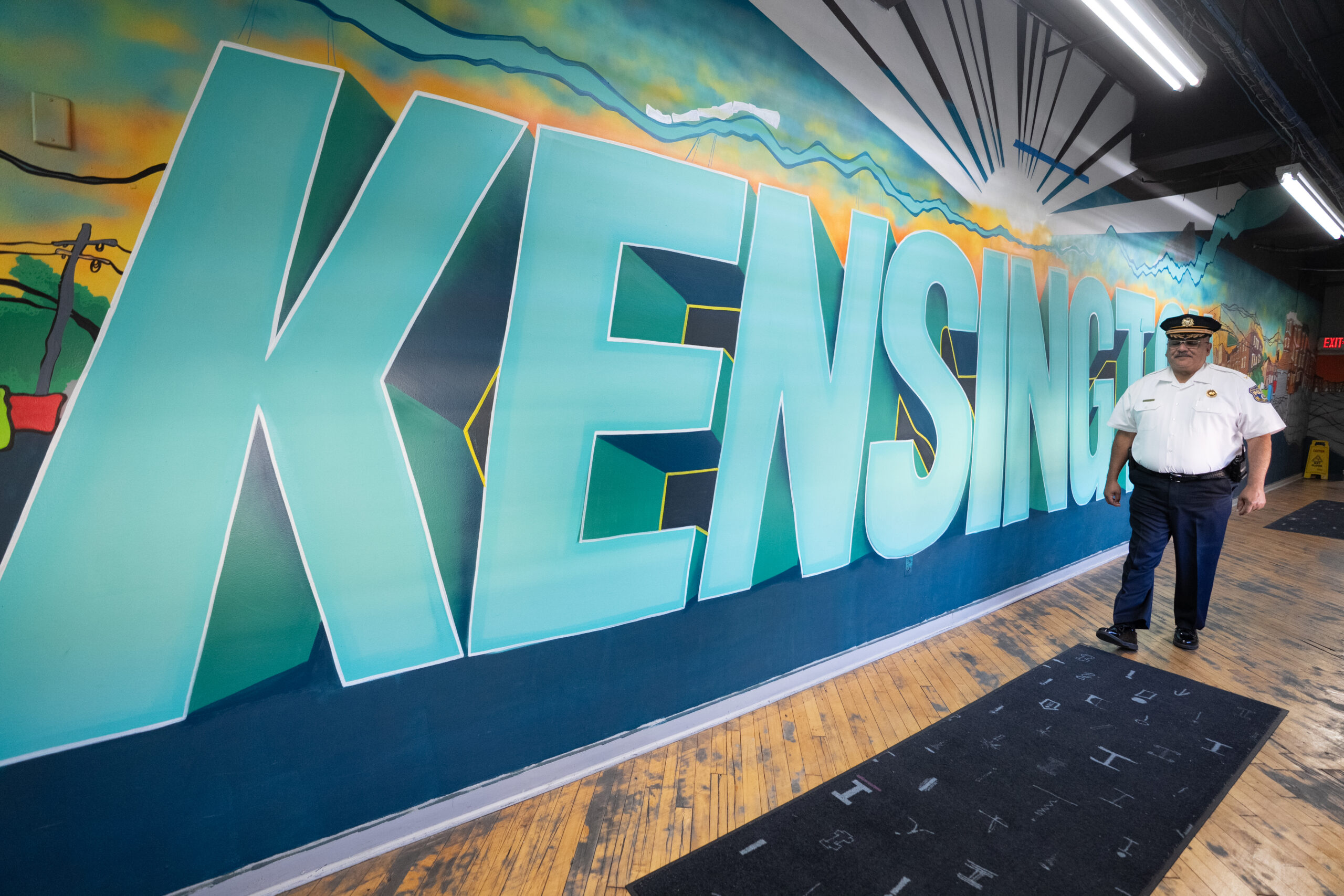
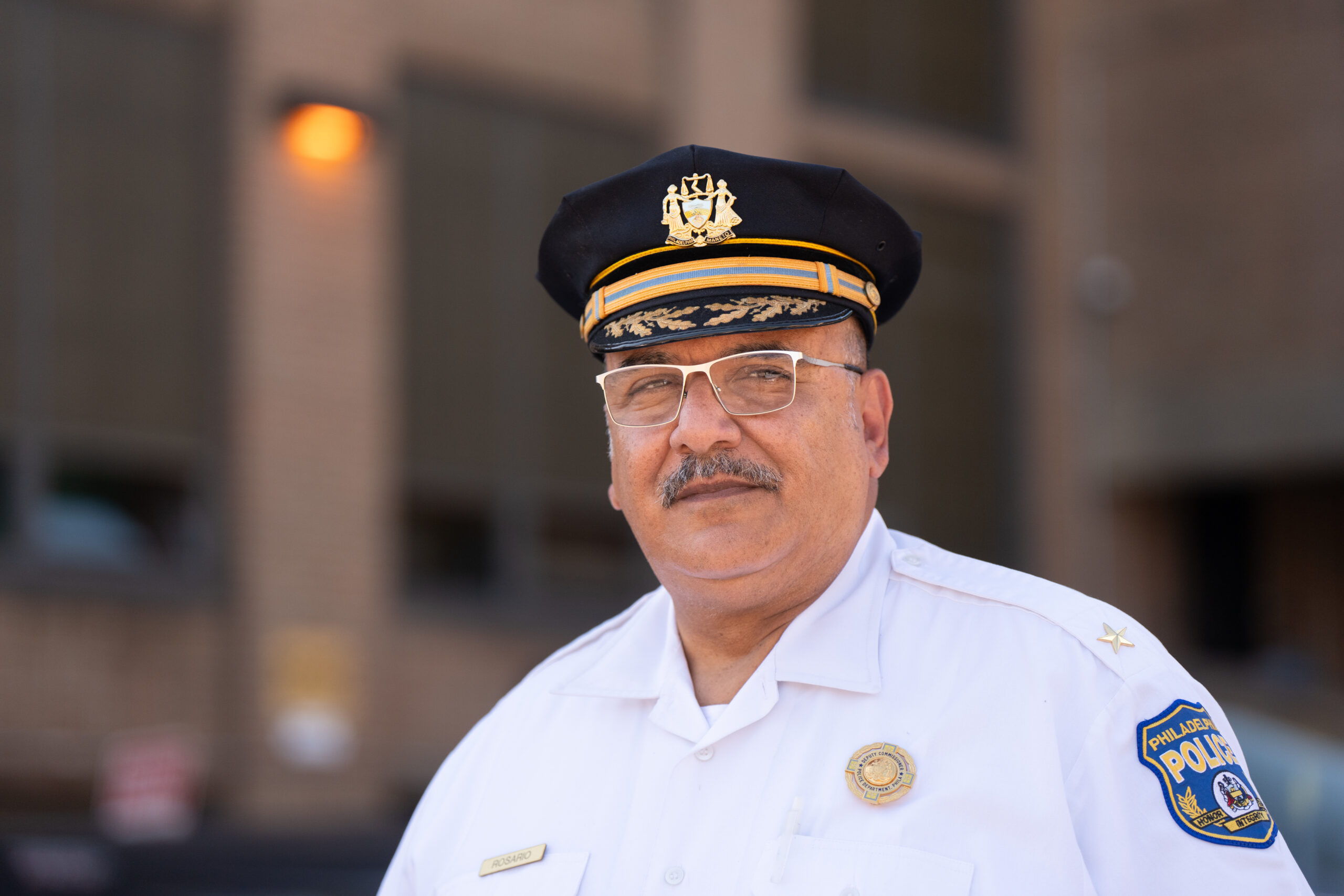
Deputy Commissioner Pedro Rosario walks through the mini police station on Allegheny Avenue.
Improvements in Kensington, he said, may always be limited by the depths of the drug crisis and economy.
“It’s never gonna be as good as everyone wants it to be,” he said, but “it’s like the first time we’re all kind of rowing in the right direction.”
Some harm-reduction groups said the progress is surface level, and criticized the city for pushing homeless people into other areas where they are harder to reach: Harrowgate, Center City, the SEPTA stops at Broad and Snyder, Erie Avenue, and 69th Street.
“They’ve made it more difficult for people to be visibly homeless,” Sarah Laurel, who heads the harm reduction organization Savage Sisters in Kensington, said of the city’s efforts. “But have they actually resolved the dire need of community members who are unhoused?”
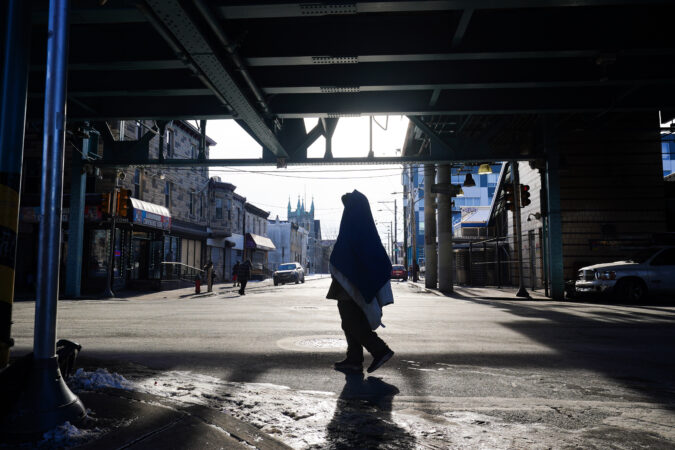
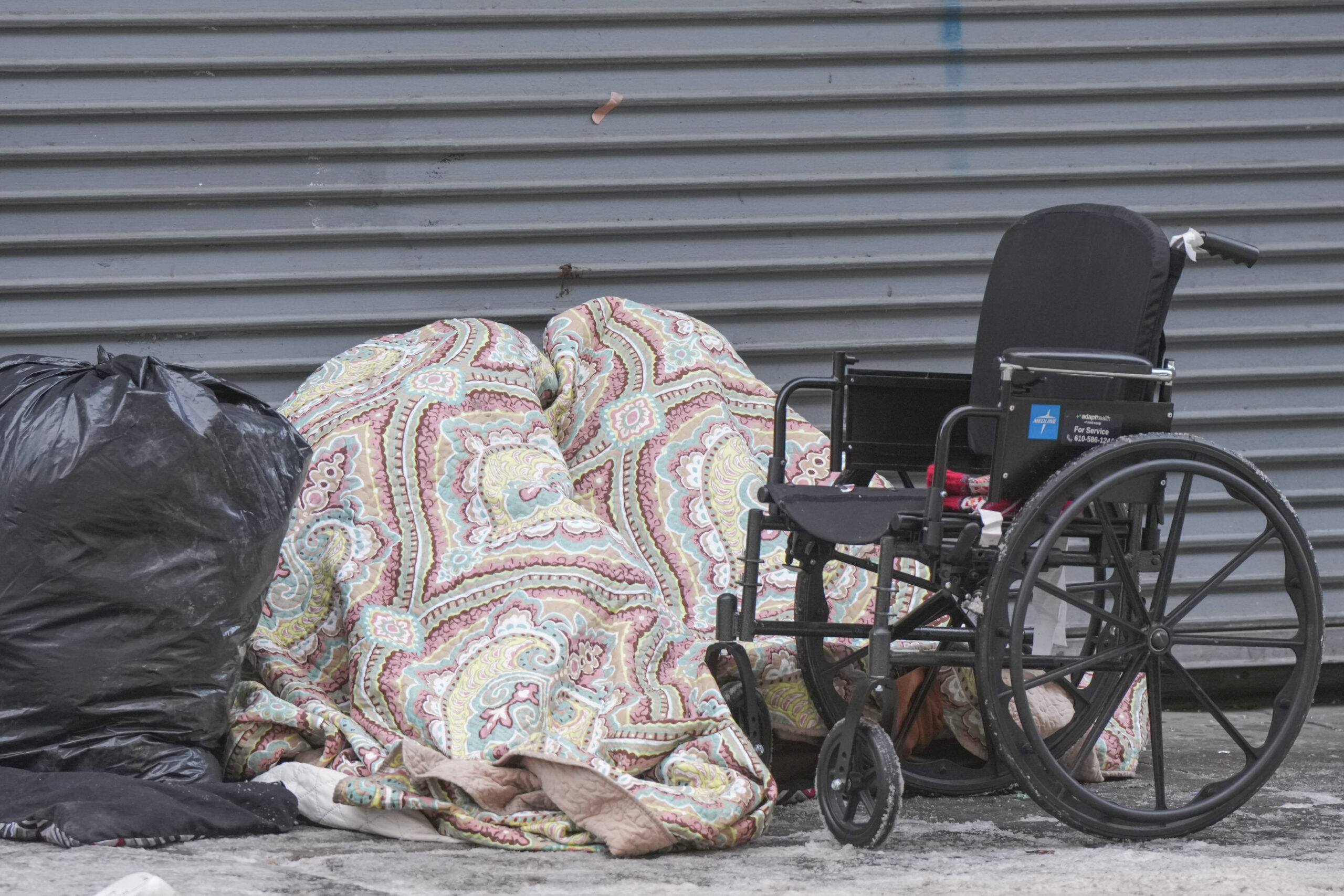
People experiencing homelessness and addiction sleep under blankets on Kensington Avenue in January.
Still, one woman in her 30s, who has come to Kensington on and off since she was 16, acknowledged the neighborhood is no longer the “free-for-all” it was at the height of the pandemic.
“It has changed,” she said, clutching a crack pipe on a quiet block away from police. “You can still get high on the street, you just can’t get caught doing it.”
And that, Rosario said, is progress.
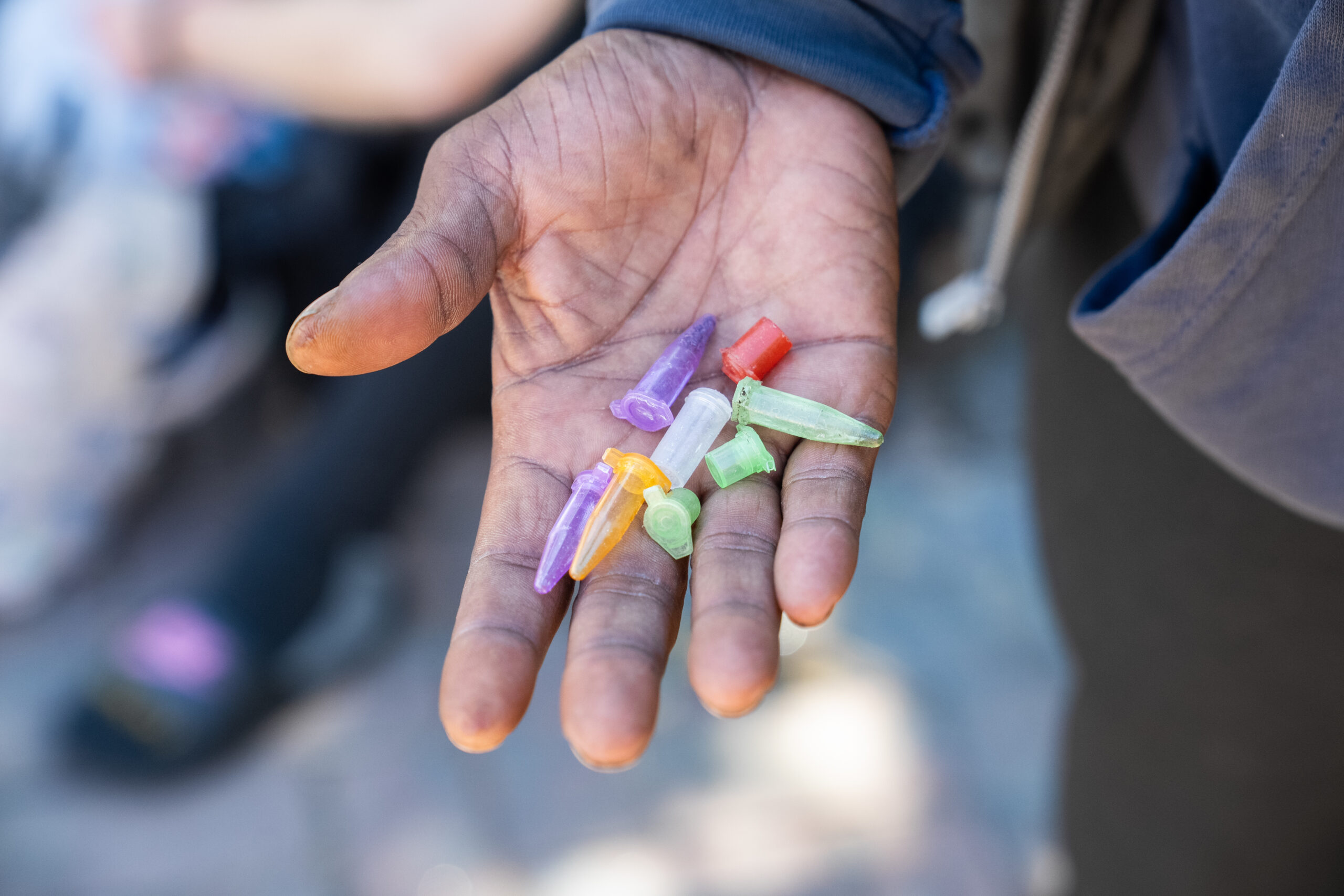
A man who sells drugs holds a collection of empty vials that typically hold meth, crack, and other illicit substances.
A drug ‘flea market’
Rosario has been a police officer in Kensington for 24 years, and saw how the neighborhood became what he calls “the flea market” of the city’s billion-dollar drug economy.
There have always been drug organizations that run specific blocks there — crews from Weymouth, Jasper, and Rosehill Streets, each with its own product, stamp, and employees to sell it.
But in the last five years, he said, blocks have been “leased out.” Someone in New York City or the Dominican Republic will often “own” a block, Rosario said, and rent it out to a local dealer to use for a week to make a stack of money and move on. Dealers even started using drug users to sell in the last few years, he said, because they are less obvious to police, can be paid less, and are seen as “expendable.”
That structure makes it challenging for police to identify and arrest the people in charge, he said. If a lower-level dealer is arrested — or killed — the top distributors can easily find a replacement.
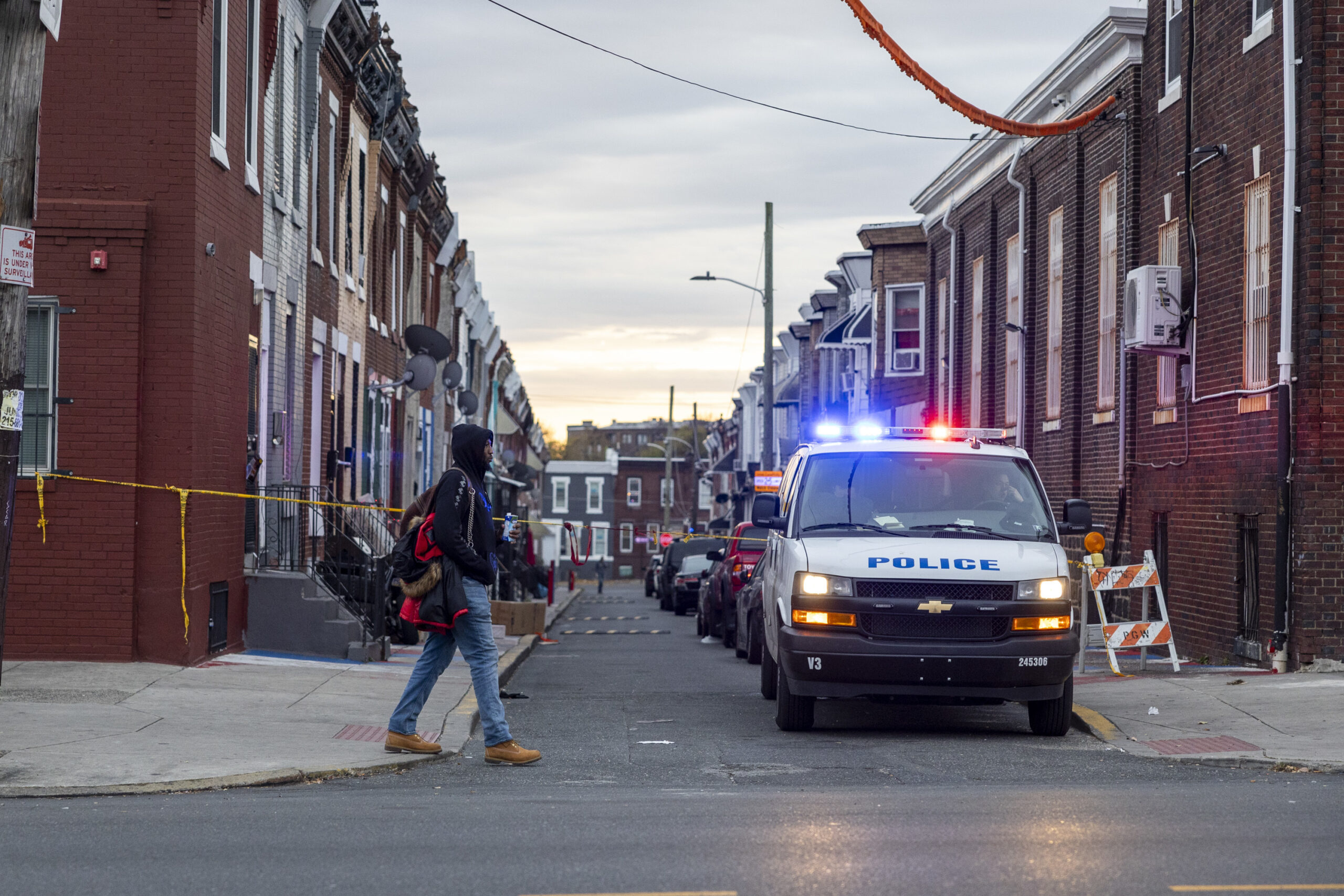
Philadelphia police officers have a shut down the 3100 block of Weymouth Street after federal agents raided the block and arrested 30 people last month.
And the dealers are fearless, he said. Just before the police department was set to open a mini station near F Street and Allegheny Avenue in November 2020, the building was firebombed, he said. He suspects it was dealers attempting to prevent a growing police presence. (The department has since opened a station at 1952 Allegheny Ave.)
Deputy Commissioner Pedro Rosario faces the challenge of overseeing the policing one of Philadelphia’s poorest and most challenging neighborhoods. He sees progress so far.
When Parker tapped Rosario to lead the police department’s plans in the neighborhood, his first order of business was to reduce the violence so that city workers felt safe enough to go into the neighborhood.
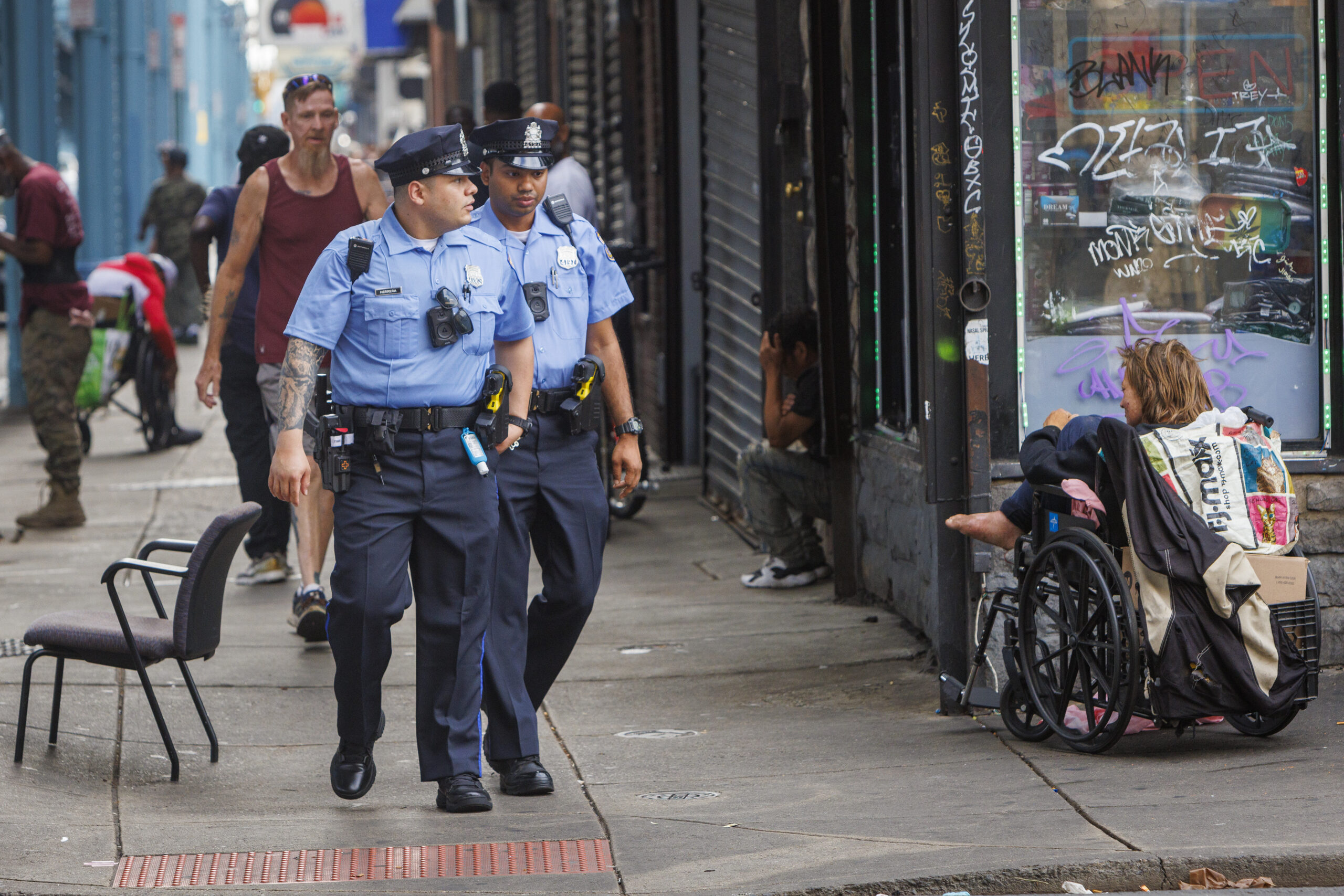
Last summer, the department assigned about 75 rookie cops to buttress existing patrols in the neighborhood, and it has continued to send in more officers. There are now three times as many police patrolling the main drag along Kensington Avenue as there were in 2021 — most of them on foot.
Rosario says the expanded police presence has contributed to a historic decline in violence.
(function() {
var l2 = function() {
new pym.Parent(‘kensington_2025’,
‘https://media.inquirer.com/storage/inquirer/projects/innovation/arcgis_iframe/kensington_2025.html’);
};
if (typeof(pym) === ‘undefined’) {
var h = document.getElementsByTagName(‘head’)[0],
s = document.createElement(‘script’);
s.type = ‘text/javascript’;
s.src = ‘https://pym.nprapps.org/pym.v1.min.js’;
s.onload = l2;
h.appendChild(s);
} else {
l2();
}
})();
While shootings citywide are down about 55% compared to three years ago, they have fallen even more in Kensington.
Through the second week of November, 46 people had been shot in the 24th Police District — an 82% drop from 2022, when, during the same time period, 259 people were shot. And there are half as many shooting victims as there were a decade ago.
“I cannot emphasize how important that is to resetting the norms in that community,” said Adam Geer‚ the city’s chief public safety director. “That is 82% less families dealing with the trauma. That is 82% less gunshots heard ringing in the night.”
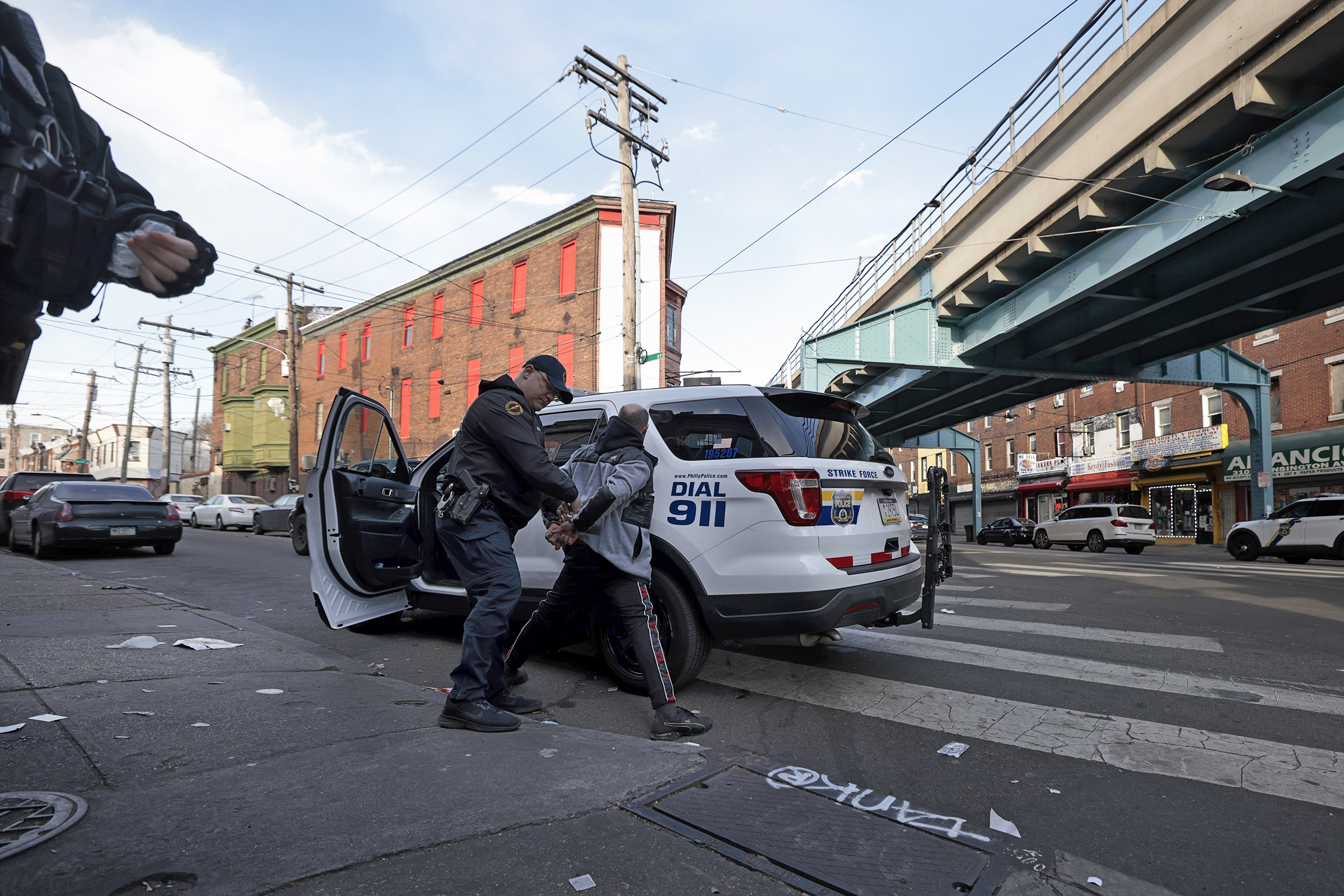
Philadelphia police take a man into custody at Kensington Avenue and G Street on March 20, 2024. Police searched the man and said they found small plastic bags containing what was believed to be illegal drugs (top left).
Through Nov. 15, arrests for drug dealing in the neighborhood were up 23% since Parker came into office. Still, overall, the city is on pace to see the fewest number of drug-related arrests in at least 15 years, city data show, and as law enforcement largely focuses in Kensington, arrests for selling drugs in other parts of the city are down about 34% compared with the 23 months before Parker was elected mayor.
Geer said the city is still in the beginning phases of its efforts. Illicit drug sales will likely always persist, he said, “but what we are really, really going after is the open, blatant, in the air using drugs and selling drugs toxic to this community.”
Rosario also said that reducing the area’s homeless population — by disbanding encampments and generally “being as disruptive as possible” — was critical to reducing the strain on the area’s services and residents, and lessening the open-air drug use and dealing.
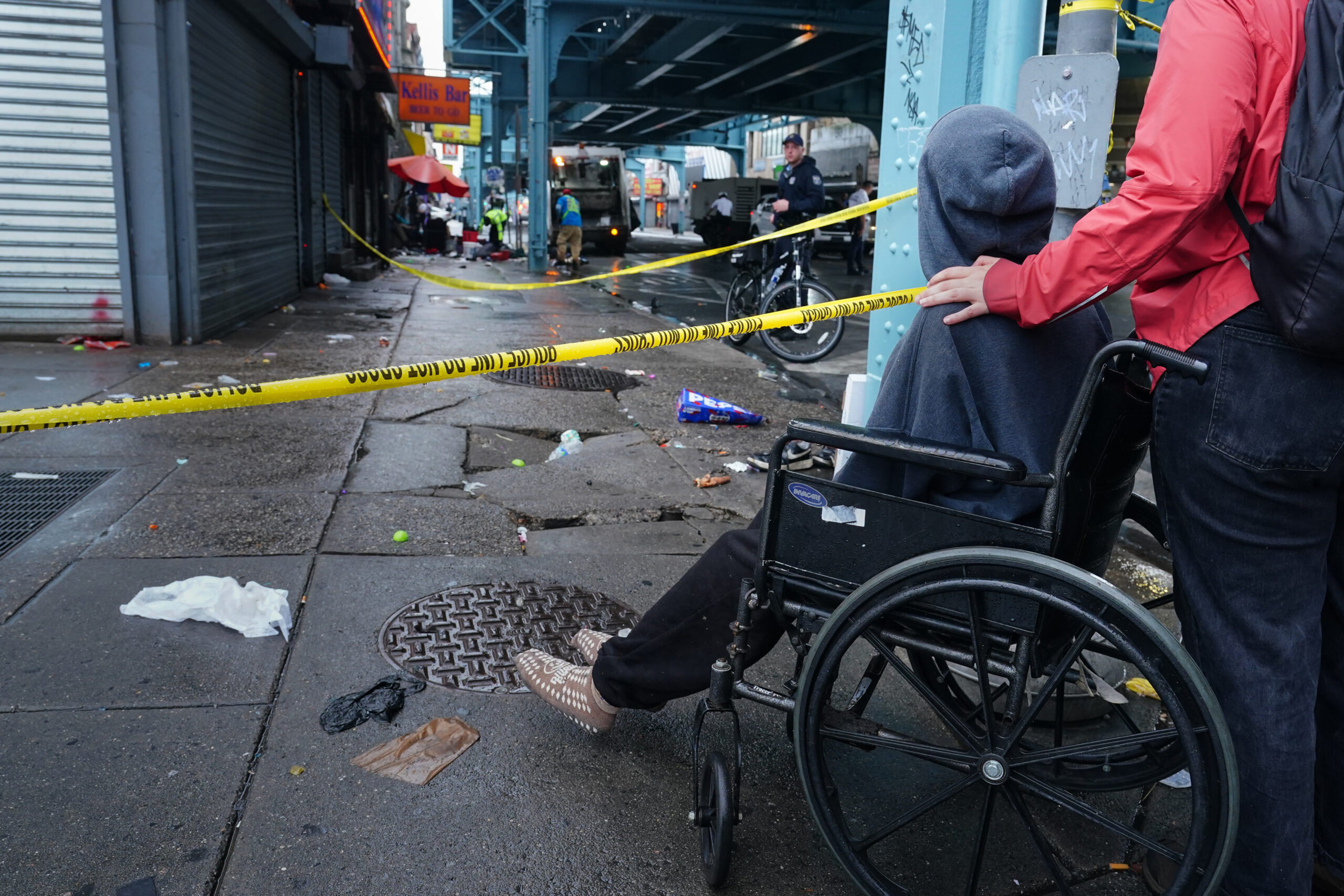
A woman in a wheelchair looks down Kensington Avenue after police cleared a large encampment in May 2024.
It has worked. Last September, there were about 750 people living on the streets in the area, according to a weekly count by police. During the same time this year, there were about 400.
But homelessness in the city generally has not improved, city data show.
There are actually about 400 more people experiencing homelessness this year than last, according to data from the Office of Homeless Services. Police and care providers believe some have simply moved to other neighborhoods to avoid the police presence.
Rosario acknowledged the dispersal, but said Kensington didn’t deserve to bear the burden of those crowds alone.
Because shutting down the drug market in Kensington, he said, “is like trying to stop a wave” at the beach.
“You can disperse it,” he said. “Maybe you can reengineer to kind of push it to a different direction.”
But you can’t stop it.
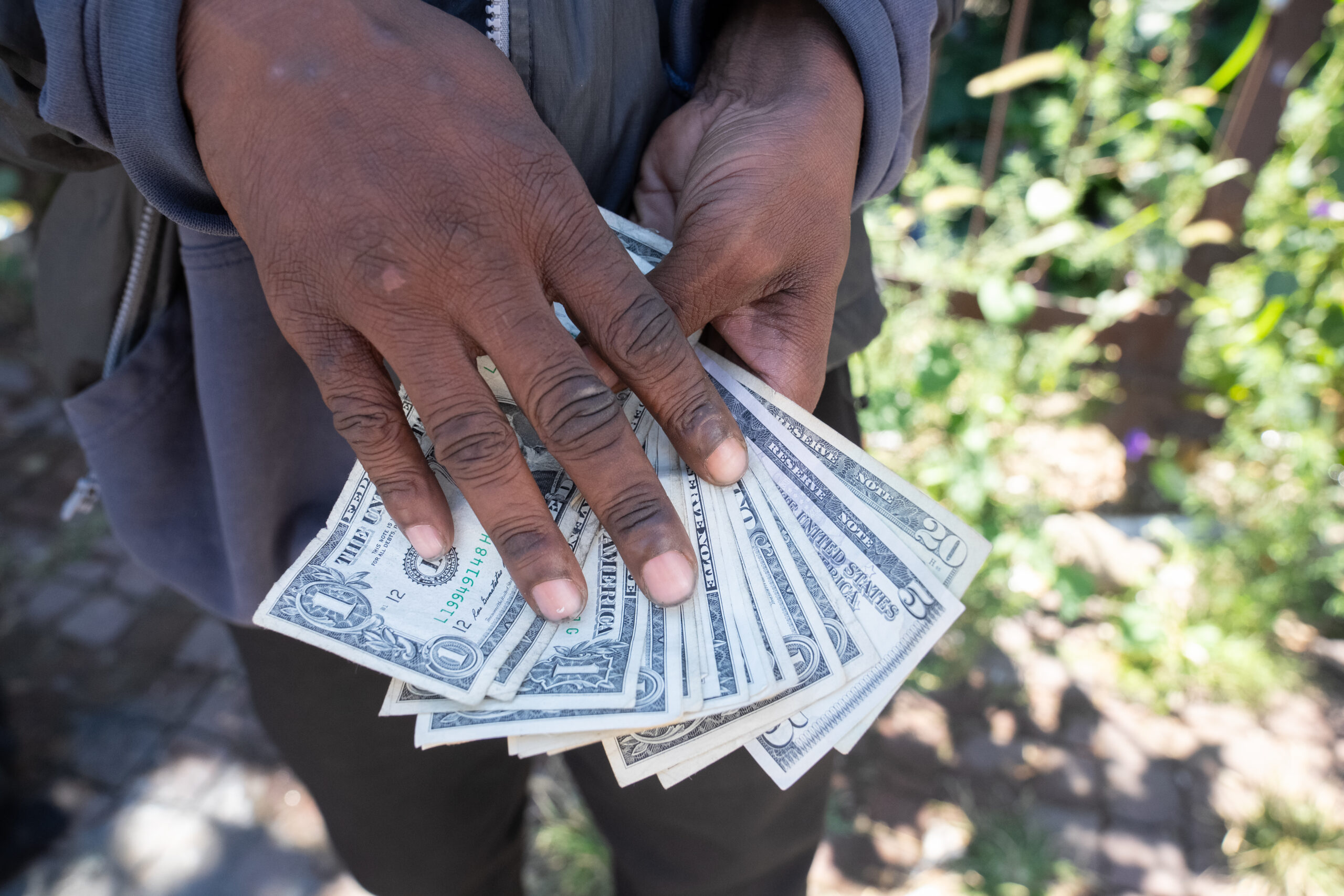
A man fans out the cash he has made on a recent day selling drugs. It’s not much — in part, he said, because there are fewer people in Kensington buying from him.
The view from the streets
One drug dealer can see the shift — and feel it in his wallet.
The 47-year-old man, who asked not to be identified because he sells illegal drugs, said he came to Kensington from New York in 2012 after serving time in prison for robbery. He’s been in the drug trade since he was 12, he said, taught by his parents, who hustled in the Bronx.
Today, he spends his days and nights on a quiet, trash-strewn corner, smoking K2 and selling crack, meth, and dope — whatever the man in the maroon Crown Victoria drops off that day.
During the pandemic, he said, business was booming. When he worked the overnight shift on Jasper Street, he said, he made at least $1,500 a week. Today, with more police on the corners and fewer customers on the streets, he’s lucky to clear $400.
A 28-year-old dealer along Kensington Avenue scoffed at the police enforcement. Where does the city expect the drug economy to go if not here? he asked. The drug trade is a constant, a viable employer with a stable customer base, and it has to go somewhere.
“They can’t put a cop on every f― block,” said the man, who asked not to be identified to discuss illegal activity.
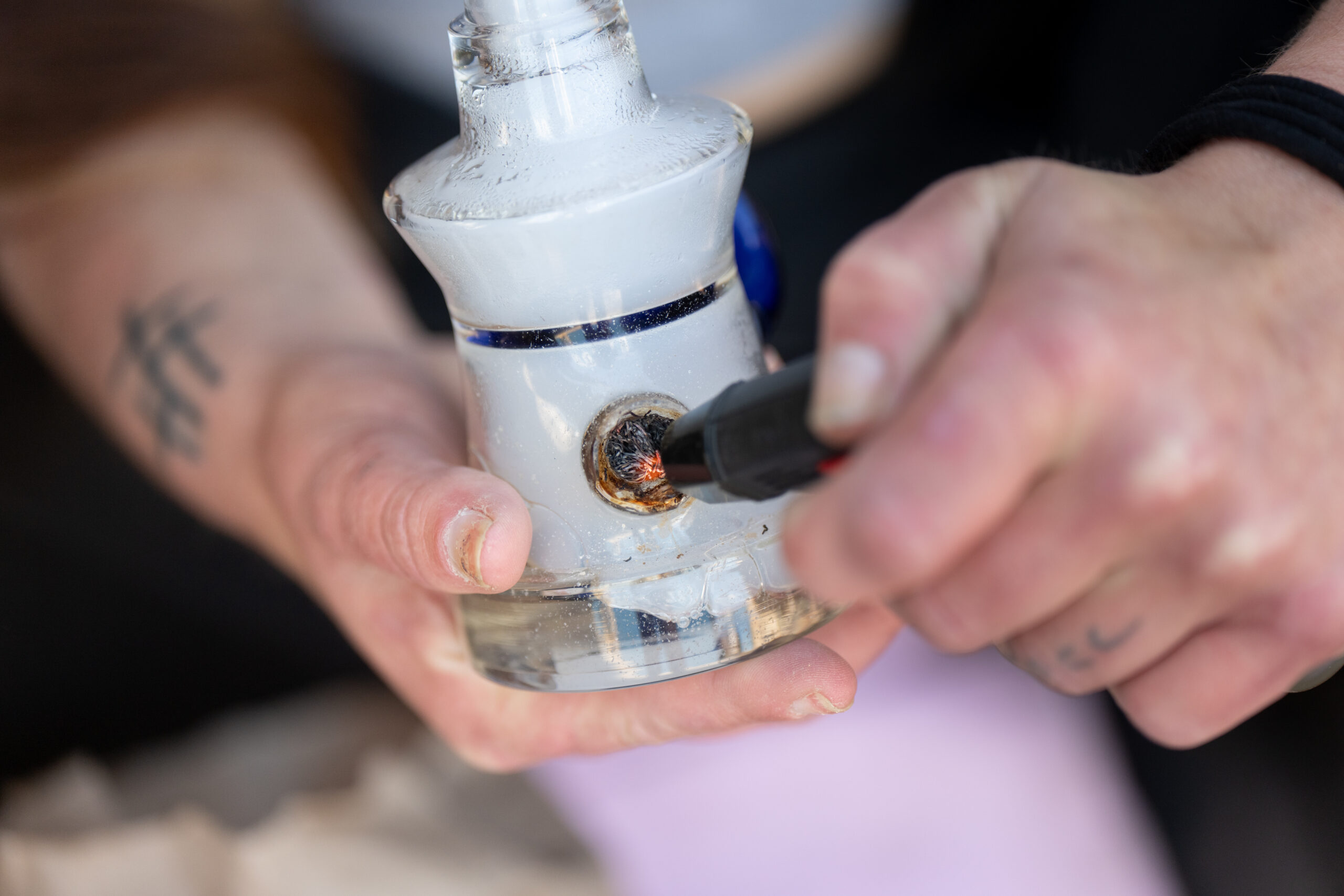
A woman smokes crack on a quiet street in Kensington.
A few streets over, a 36-year-old man who smokes fentanyl and crack said that, a year or two ago, there would be five or six dealers on the corner of Jasper Street and Hart Lane.
Now, he said, there’s one.
“It’s harder to get drugs,” he said.
As police have cracked down on retail theft — once an easy way for people in addiction to make quick cash by reselling the items — it’s also gotten harder to fuel his habit, he said. He usually gambles online on his phone to scrape together a few extra dollars, he said, getting paid through CashApp, which some dealers use to accept payment now.
Many people in addiction said life overall is harder in Kensington — police clear away their tents, shoo them out of parks, and remove the often-stolen grocery carts used to carry belongings. It makes them feel subhuman, said one 36-year-old woman who has struggled with addiction since she was 13.
“We just want to be safe and warm,” she said.
But the biggest fear on the block these days, people said, is the withdrawal.
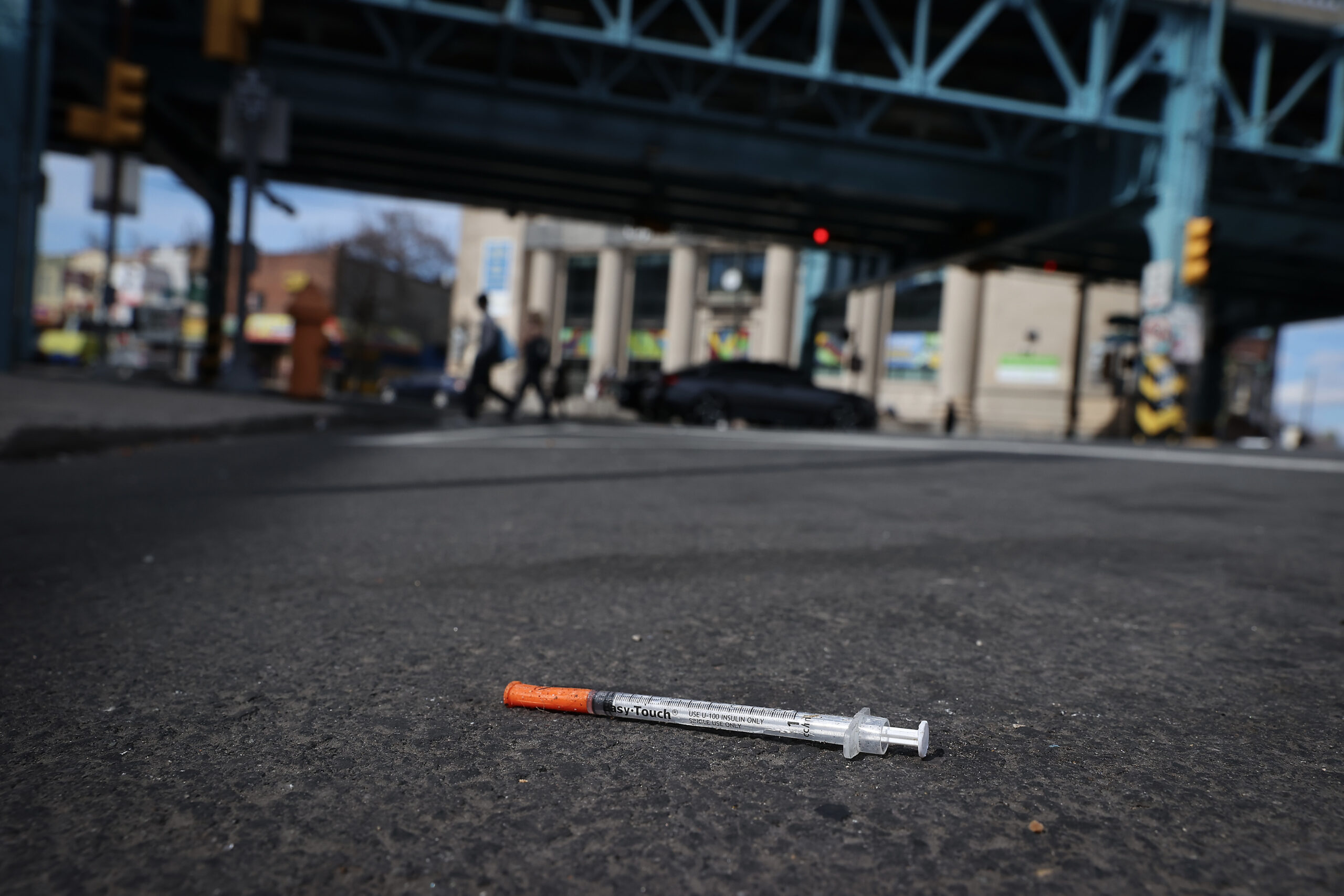
A used hypodermic needle rests on Allegheny Avenue at Kensington Avenue on March 17, 2024.
The withdrawal symptoms, which can begin within two hours, are so intense they can send people into cardiac arrest. Only hospitals can offer the most effective treatments for medetomidine withdrawal, and more people are ending up in intensive care units.
Dave Malloy, director of mobile services for Merakey, one of the city’s main addiction treatment providers, said the city has made strides in streamlining access to treatment in the last two years.
Evaluations that once required a daylong wait at a hospital can now happen in the field through mobile units like Malloy’s, getting people to rehab within hours. Doctors can also start patients on medications like Suboxone or methadone, to lessen their withdrawal symptoms, in as little as 45 minutes.
Malloy said that treatment providers, hospitals, police, and city agencies are working together better than they have in years.
“There was a realization that everybody had been siloed,” he said.
Only about 6% of the city’s homeless people who accepted help fromoutreach workers went to drug treatment and detox centers in recent years, according to city data — a statistic that, as of February, had not improved under Parker’s tenure.
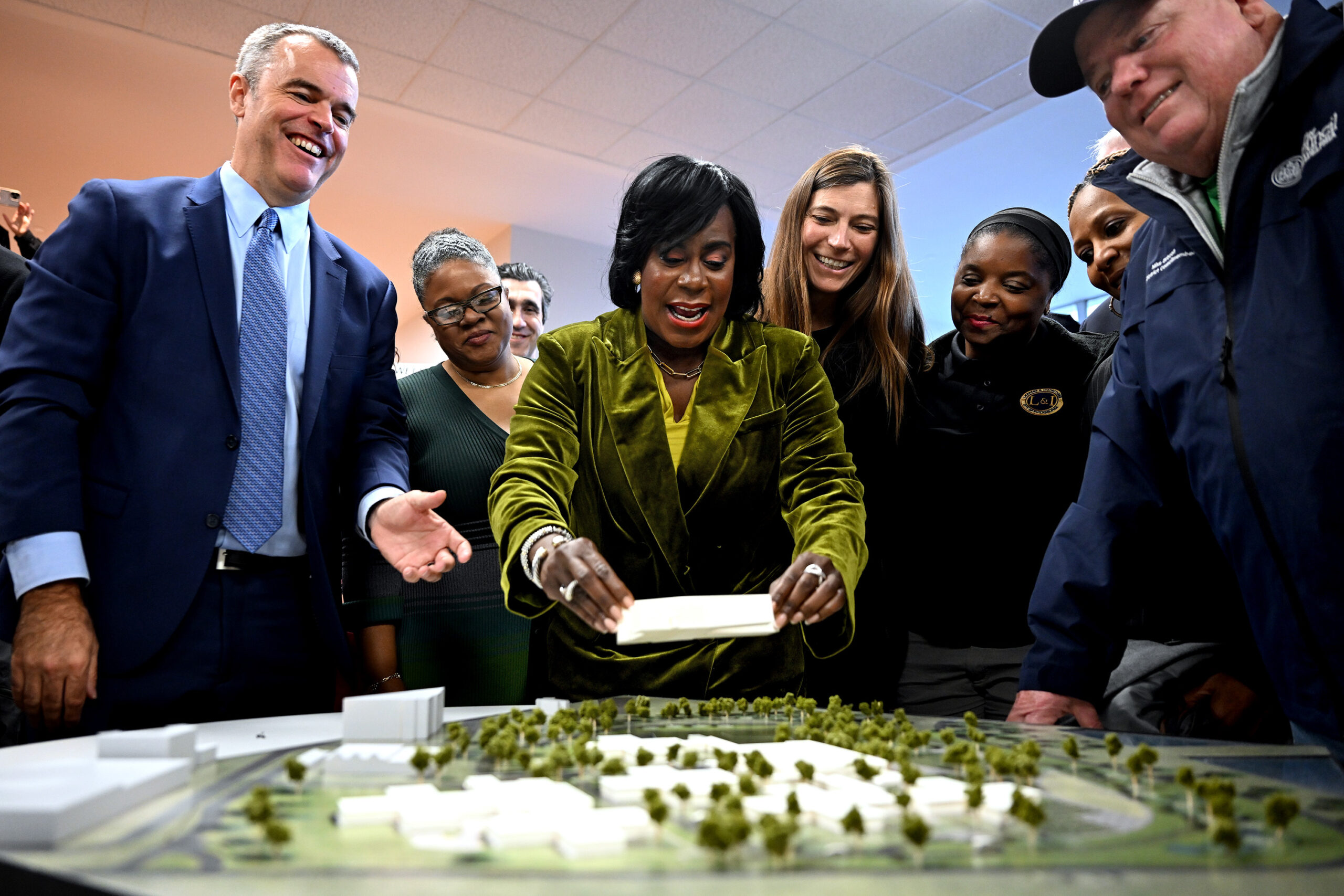
Mayor Cherelle L. Parker places a new block on the scale model of the Riverview Wellness Village Wednesday during the January unveiling of Philadelphia’s new city-operated drug treatment facility. At left is Managing Director Adam Thiel.
The city said it has also expanded the number of beds available for people in recovery by 66% through the opening of the Riverside Wellness Village, where people can live for up to a year after completing 30 days of inpatient drug treatment. Once construction is complete, the facility will house over 600 people.
Another 180 people are living in a shelter at 21st Street and Girard Avenue, which the city expanded last spring.
And the Neighborhood Wellness Court — a fast-track diversion program where people in addiction who are arrested for low-level offenses are brought before a judge the same day, in hopes of getting them into treatment more quickly — is growing.
In the first three months of the court, which Parker’s team launched in January and runs one day per week, only two of the approximately 50 people who had come through completed the program. Most who opted to go to rehab immediately left and absconded from follow-up hearings. At one point, operations were so disjointed that court leadership threatened to shut it down.
But Parker is committed to the court’s success and wants it to operate five days a week. The city recently hired a new director to oversee the court, and is in the process of hiring 14 additional staff members to provide better follow-up care.
Still, through early September, of the 187 people who had come through the court, only 10 completed the program and saw their criminal cases expunged, according to city data.
And while most people still do not come to court, the city said that it expects the situation will improve with the additional hires, and that there is success in the 130 people who have accepted some form of service through the court, even if they weren’t ready to enter recovery.
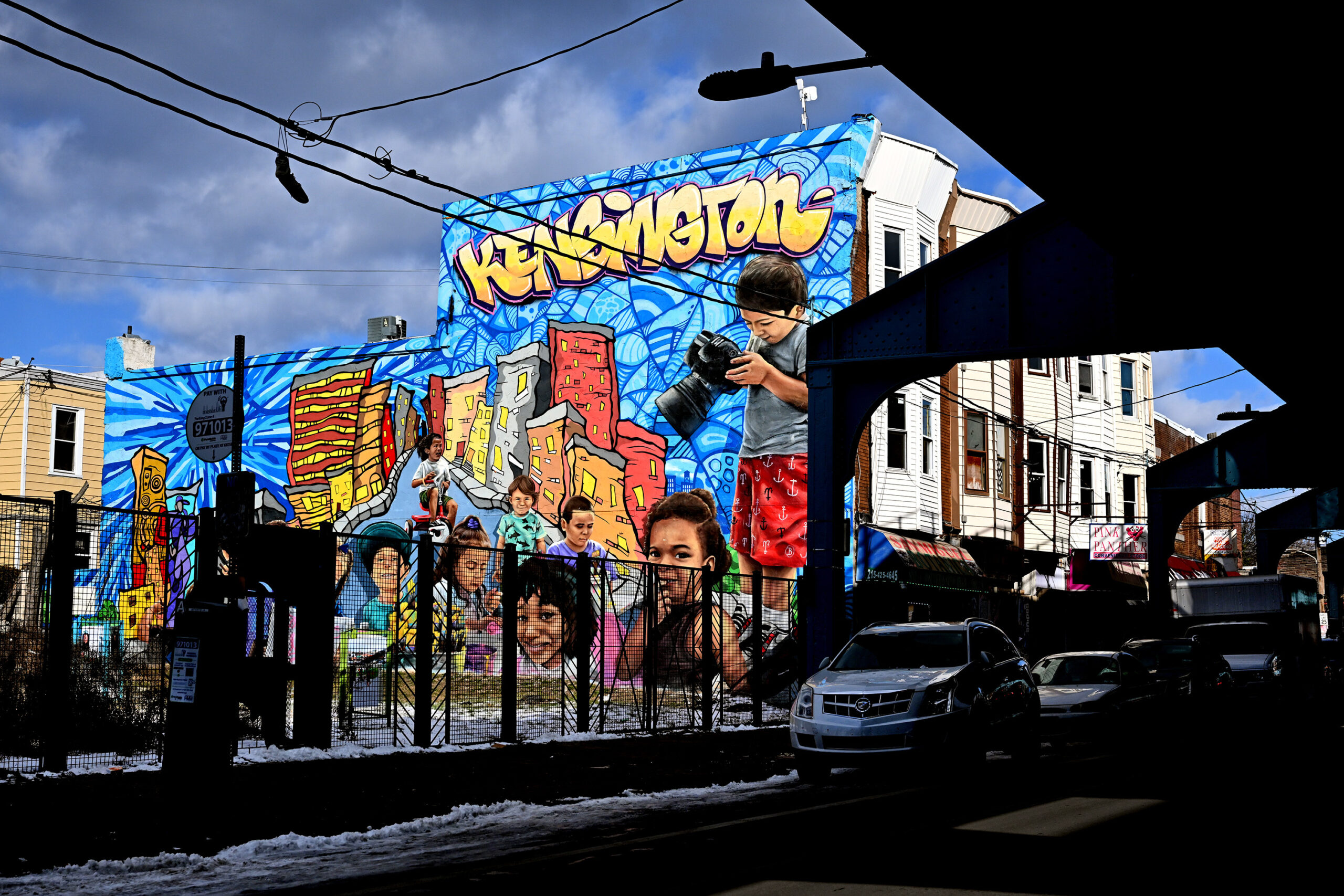
The “Lots of Lots of Love” mural by artist J.C. Zerbe is on the 3200 block of Kensington Avenue.
‘Kensington is love’
The increased police enforcement has sent more people in addiction to jail, and several people have died in police custody after they overdosed or had medical emergencies while going through withdrawal.
And not all residents feel the progress, or see the increased police presence as a good thing.
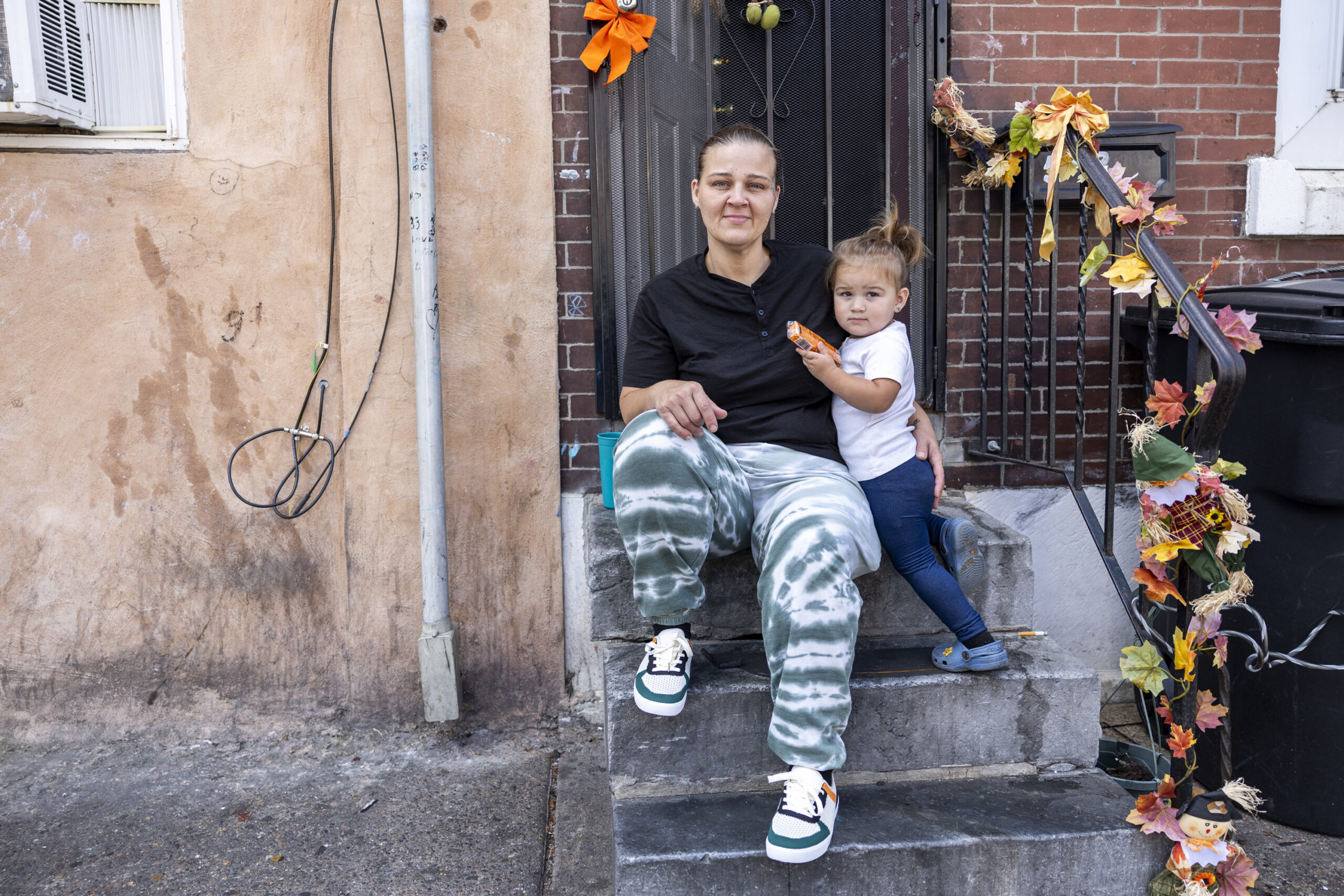
Theresa Grone, 41, who lives next to McPherson Square Park, said she and her children still cannot sit outside without someone in addiction asking them if they have free drug samples or clean syringes.
Theresa Grone, 41, and her daughter Abagail, 2, live near McPherson Square Park in Kensington.
And, she said, the police in the neighborhood have gotten more aggressive and harass people who aren’t doing anything wrong. Drug dealers and users still dominate the block.
“They’re not in the places they used to be, but they’re still there,” she said — on side streets, in abandoned houses, moving to corners as soon as the police leave.
She feels like the city is expanding resources for people in addiction more than for families like hers — a group of eight people renting a rowhouse in disrepair who want to move but can’t afford to.
But other residents, like Cartagena Hart, hope to never leave.
She said she has always seen the beauty and strength of Kensington, even at its lowest — the neighbors who care for each other’s children and feed the homeless, the police officers who will show up as soon as she texts them for help.
“Kensington,” she said, “is love to me.”
And she’s proud, she said, that her advocacy and that of her neighbors has helped city leaders finally invest in helping them.
Staff writers John Duchneskie, Max Marin, Anna Orso, Dylan Purcell, Sean Walsh, and Aubrey Whelan contributed to this article.
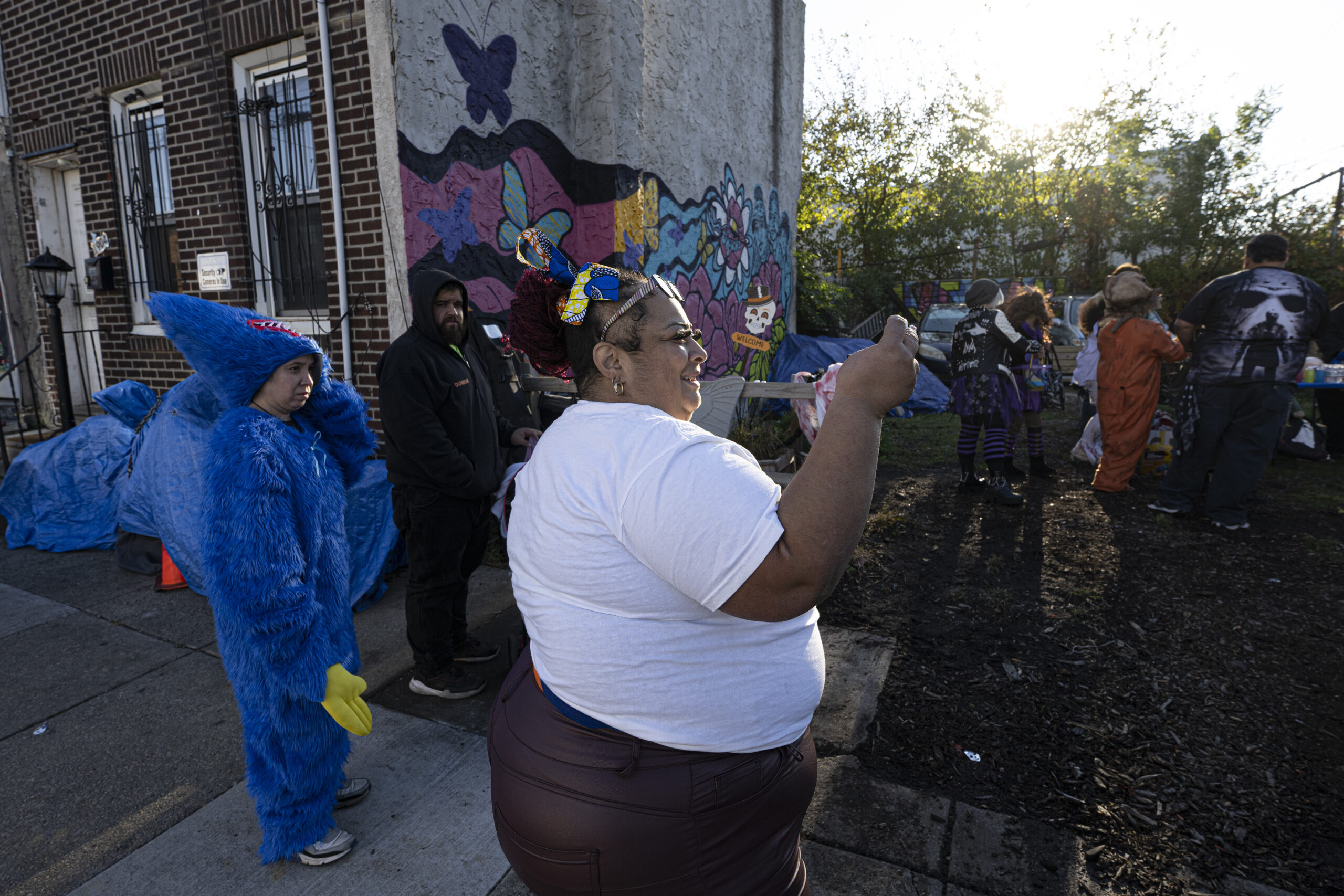
Gloria Cartagena Hart interacts with neighbors during a Halloween party and giveaway that she organized at the Butterfly Garden in Philadelphia’s Kensington neighborhood.
The New Jersey Attorney General’s Office on Wednesday identified Jose M. Martinez, 42, of Lindenwold, as the man killed in a crash caused after another man allegedly fled from police in West Deptford Township early last week.
Prosecutors also identified the police officer, West Deptford Police Patrolman Conor Goggin, involved in the attempted stop and the man, George Linard, 28, of Waltham Cross, a town north of London, England, who allegedly caused the crash. Linard initially had been identified by authorities with a different name.
On the evening of Nov. 9, Goggin was driving a marked police vehicle when he turned on his emergency lights in an attempt to stop a vehicle, prosecutors said.
Linard allegedly drove away at high speed and collided in the area of Hessian and Red Bank Avenues with a third vehicle driven by Martinez, who also was known as José M. Martínez Peguero, according to his funeral home obituary.
Martinez died and a passenger in the back seat sustained a leg fracture.
Linard, who also was injured in the crash, was charged with second-degree death by automobile, fourth-degree assault by automobile, and fourth-degree fraudulent possession of a government license.
A 26-year-old Ocean City woman who worked for U.S. Rep. Jeff Van Drew was charged with falsely reporting that she had been seriously lacerated across her upper body in a politically motivated attack when she actually paid a Pennsylvania body modification artist $500 to cut her, according to a federal criminal complaint released Wednesday by the U.S. Attorney’s Office.
Natalie Greene was charged with one count of conspiracy to convey false statements and hoaxes and one count of making false statements to federal law enforcement, acting U.S. Attorney Alina Habba said.
In a statement provided Wednesday evening, Van Drew’s office said: “We are deeply saddened by today’s news, and while Natalie is no longer associated with the Congressman’s government office, our thoughts and prayers are with her. We hope she’s getting the care she needs.”
Greene’s lawyer, Louis M. Barbone of the Jacobs & Barbone law firm in Atlantic City, said in a statement released Thursday: “At the age of 26, my client served her community working full time to assist the constituents of the Congressman with loyalty and fidelity. She did that while being a full-time student. Under the law, she is presumed innocent and reserves all of her defenses for presentation in a court of law.”
On July 23, a coconspirator called 911 shortly after 10:30 p.m. to report that Greene had been attacked by three unknown men who knew her name and that she worked for Van Drew, according to the criminal complaint, which identifies him only as “Federal Official 1.”
“They were attacking her. They were like talking about politics and stuff. They were like calling her names,” the coconspirator told 911, reporting that the attack occurred at the Egg Harbor Township Nature Preserve, the complaint said.
The coconspirator, who was not named in the criminal complaint, allegedly said the attackers claimed they had a gun. “They said that if we don’t be quiet they were going to shoot us,” the coconspirator allegedly said, also explaining that she was able to flee the men but they still had Greene.
Egg Harbor Township police arrived with a K9 dog and located Greene just off a nature trail lying on the ground with her feet and hands bound together with black zip ties, the complaint said.
Greene’s shirt was pulled over her head and the words “Trump Whore” were written with black marker on her stomach, and “[Federal Official 1] is Racist” was written on her back, the complaint said.
She had long crisscrossing lacerations on her upper chest, shoulder, back, neck, and lower right side of her face, the complaint showed with included photos.
Greene was transported to a hospital, and then later transferred to a second hospital for treatment.
Before Greene was taken to the first hospital, she was interviewed by police and asked to recount what happened. When police asked to check Greene’s Maserati SUV, her coconspirator became agitated and said she didn’t think the police needed to search the vehicle, the complaint said.
However, Greene consented to a search and police found two black zip ties similar to the zip ties used on Greene, as well as a roll of duct tape, the complaint said.
Investigators later found that location data from Greene’s phone showed that on the day of the alleged attack, she had traveled to the scarification artist’s studio in Pennsylvania, then to Ventnor, where the coconspirator lived, the complaint said.
Two days earlier, someone using the coconspirator’s phone did a Google search for “zip ties near me,” the complaint said.
Investigators later reviewed surveillance video from a Dollar General store in Ventnor that showed the coconspirator at the store 40 minutes after the Google search was made, the complaint said. The store sold black zip ties similar to what was used on Greene and the same duct tape, though the video did not show her purchasing zip ties while she did purchase other items. The surveillance video only showed the cash register area and not other parts of the store, the complaint said.
On July 25, Greene was interviewed by agents from the FBI Joint Terrorism Take Force and Egg Harbor Township police detectives, and she again reported that she was attacked and cut up by three men, the complaint said.
She also was asked to describe any threats made to Van Drew’s office.
“There’s so many. I mean. Yeah, racist um. Windmills belong on your grave. Like stupid, I mean like there, they have a bunch of little things on there that they’ll write on there. We have them all, you can look at all of them. But um. Yeah we keep em just. We keep all of our hate mail. We recently got like, a letter with like powder in it and stuff,” she said, according to the complaint
Greene was asked if the powder incident was recent.
“Yeah very recent. Like maybe a week ago. And are to the point where our Chief of Staff was like you guys need to be using gloves to open the mail. Stuff like that,” she allegedly said.
A review of phone records showed that Greene had a Reddit account that followed communities for “bodymods” and “scarification,” the complaint said.
On July 30, the FBI visited the studio in Pennsylvania and obtained a consent form signed by Greene with a copy of her New Jersey driver’s license that she allegedly provided the day of the reported attack, according to the complaint.
The FBI also obtained the receipt showing that Greene allegedly paid the studio $500 cash, as well as photos the artist took of his work on Greene’s body.
The photos showed the cuts made by the artist matched the cuts photographed at the hospital, the complaint said.
Philadelphia police are seeking to question two men in connection with the death of an American Airlines flight attendant who investigators believe was attacked inside his South Philadelphia home last week, then fell — or was thrown — out of his third-floor window.
Amadou Thiam, 50, was found lying naked on the pavement behind his home, on the 2400 block of Federal Street, with severe injuries to his face, neck, and body on the night of Nov. 10, police said. He was rushed to Penn Presbyterian Medical Center, where he later died from his injuries, they said.
The medical examiner has not yet determined the cause or manner of Thiam’s death, but homicide detectives are investigating, said Deputy Police Commissioner Frank Vanore. Vanore stopped short of saying Thiam was attacked, pending the coroner’s decision, but law enforcement sources familiar with the investigation said Thiam’s injuries, coupled with witness interviews and evidence recovered inside his home, suggest he was assaulted.
Residents of the Grays Ferry block this week recalled the harrowing moments when they found Thiam — and the chilling departing words of the men police are now looking to question.
Two neighbors, who asked not to be identified for fear of reprisal, said they heard loud noises coming from Thiam’s condo around 6:30 p.m. last Monday but assumed he was having guests over.
Then, they said, they heard a loud crash behind the building.
Shortly after, they said, they saw two men walk out of Thiam’s home.
“Is everything OK?” one neighbor recalled asking the men. “They just kind of chuckled and said, ‘We hope so.’”
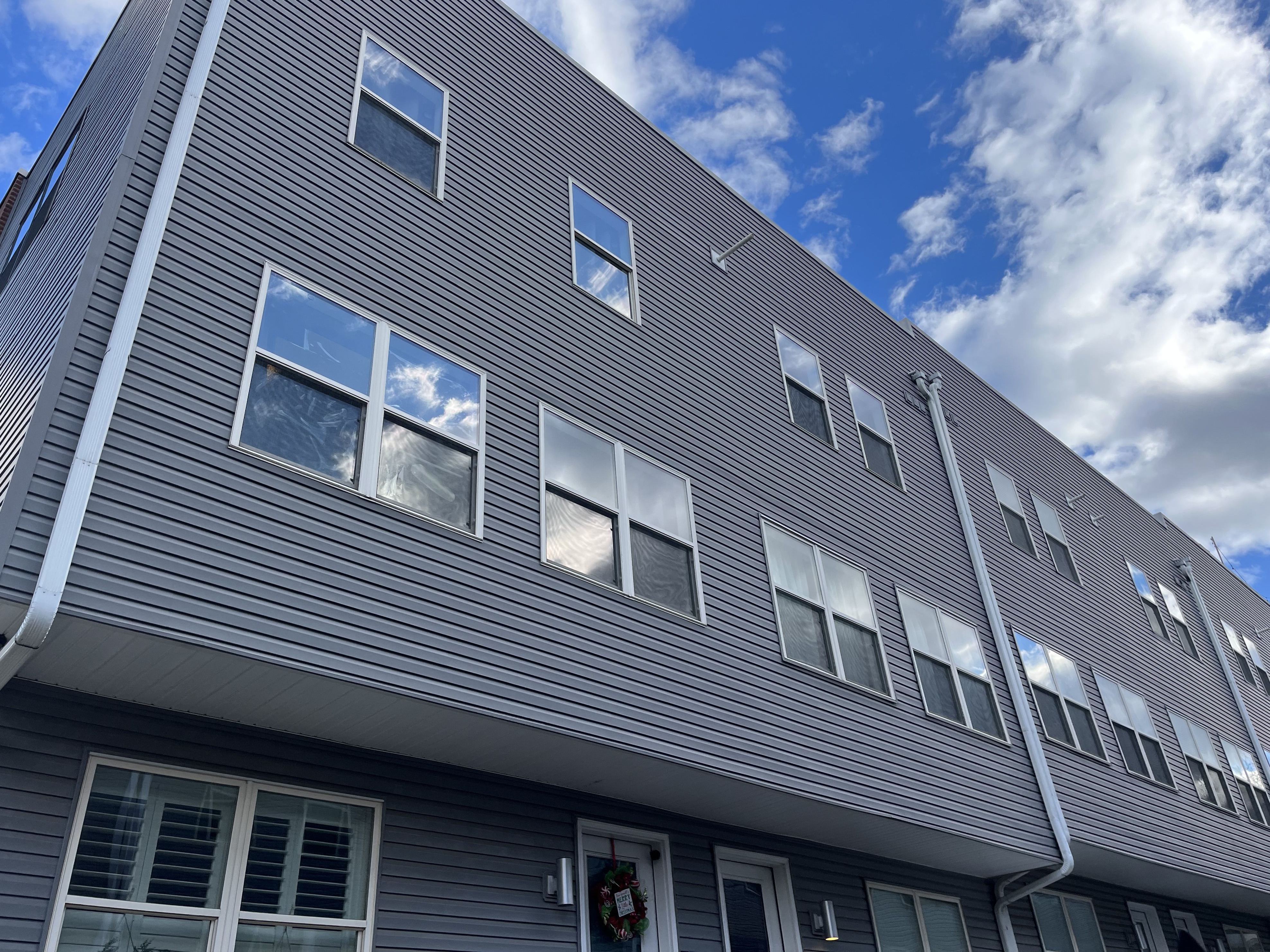
Amadou Thiam lived on the 2400 block of Federal Street. This image shows the third-story window, second from left, from which neighbors say Amadou Thiam fell on Nov. 10.
The neighbors said they approached Thiam’s door, which was left cracked open, and found blood smeared across his kitchen and third-floor bedroom. Thinking Thiam was not home, they called the police to report a burglary.
As the couple waited for police, they said, they noticed a stream of blood on the sidewalk outside. And then, they said, they saw Thiam’s body on the pavement.
Vanore said it was not clear how Thiam ended up on the ground, but police believe he went through a third-story window.
“We still don’t know if he fell or was thrown,” he said.
Thiam suffered injuries throughout his body, including fractures to his face, ribs, and skull, Vanore said.
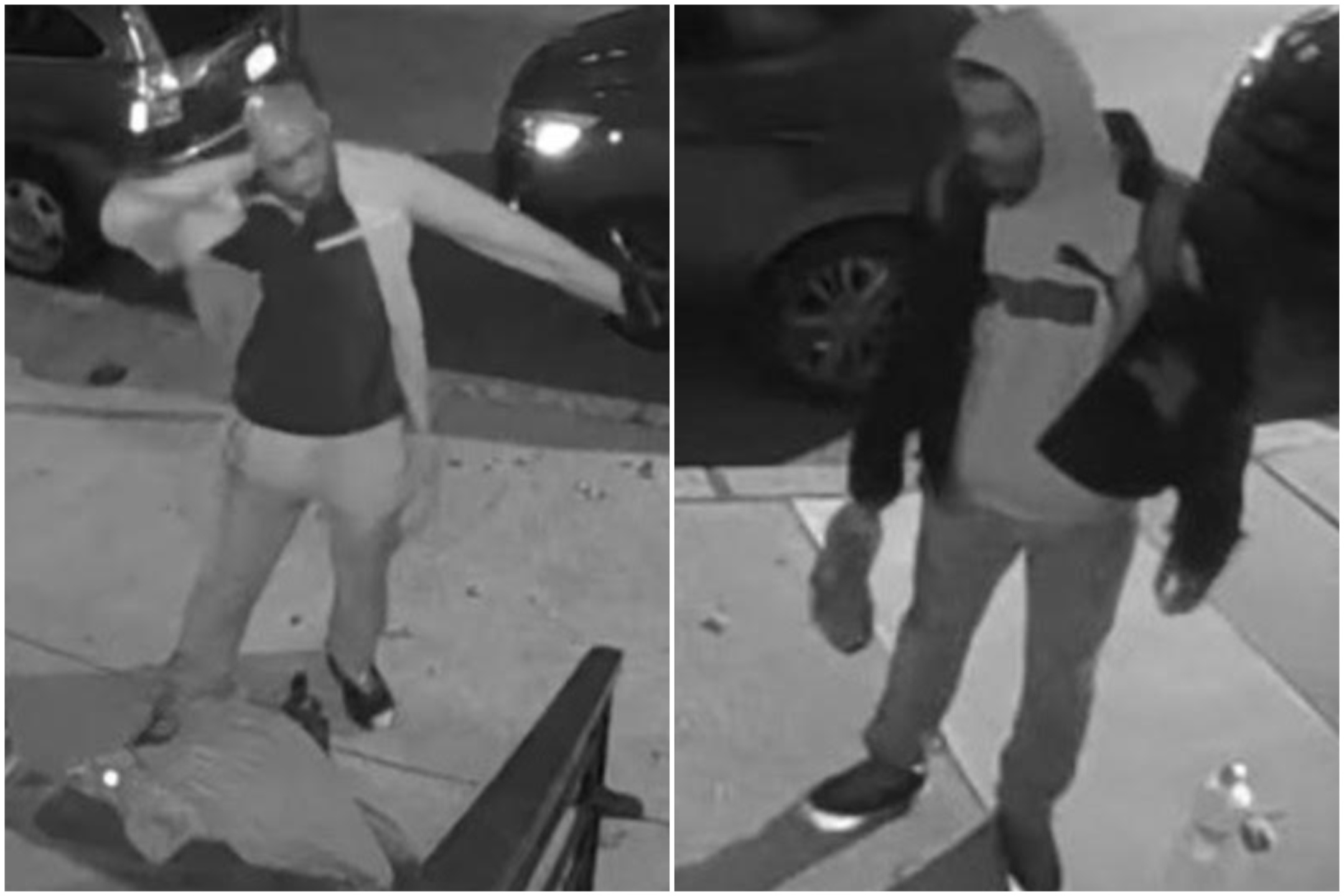
Detectives have recovered video from the block showing two men — one older, one younger — in the area around the time Thiam’s body was found, he said.
Vanore described one of the men as a thin Black male wearing a black leather jacket over a red hoodie and jeans and carrying a bag. The second man, he said, was older, bald, and wearing a gray jacket.
Philadelphia police are seeking to question two men who they believe could be connected to the death of Amadou Thiam in South Philadelphia last week.
“We’re looking to talk to them to see if they had anything to do with this,” he said.
Law enforcement sources, who asked not to be identified to discuss an ongoing investigation, said the men appeared to be carrying clothes out of the building. There were no signs of forced entry into Thiam’s home, the sources said.
Relatives of Thiam, who was originally from Côte d’Ivoire, could not be immediately reached.
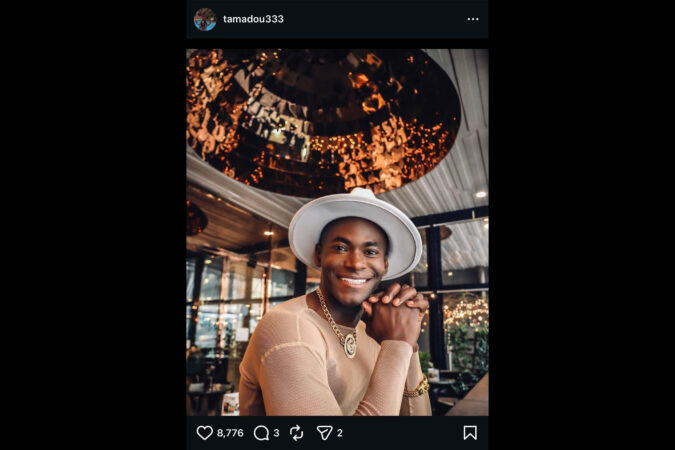
His Instagram account showed a man who enjoyed exploring the world: standing before Hôtel de Paris Monte-Carlo and the Arc de Triomphe in Paris, and eating in Key West, Fla., and Las Vegas.
His death has shocked many who knew him, including his colleagues at American Airlines.
A spokesperson for the airline did not respond to a request for comment. But in a memo shared online, an operations manager for the Philadelphia region said Thiam had worked as a flight attendant with the airline since 2011 and, as a French speaker, he frequented international flights to Paris and Zurich.
“His presence and natural charisma was always something felt throughout a room,” the employee wrote. “He was a loyal friend whose kindness, positive attitude, and radiant smile touched everyone around him.”
John Stanley, a fellow American Airlines flight attendant, said that every July, there is a benefit for flight attendants at Voyeur, a nightclub in the Gayborhood, with dancers and drag performers. He recalled how one year, Thiam dressed up as Glinda from Wicked and performed for the crowd.
“He was as well-liked a flight attendant in Philadelphia as I know exist,” Stanley said.
Thiam’s neighbors also said he was exceptionally friendly, and loved to dress in eccentric clothing. He was also a dog lover, a passion that neighbor Nicole Colamesta said they bonded over.
“Everybody is having a really hard time processing it. This is a really quiet block. Everybody just looks out for each other here,” Colamesta said. “You can’t stop thinking about it because it’s right in our backyard.”
Police asked anyone with information to contact homicide detectives at 215-686-3334 or to call the police tip line at 215-686-8477.
Staff writer Maggie Prosser contributed to this article.