A sixth person will go to trial over the September 2022 shooting outside Roxborough High School that killed 14-year-old Nicolas Elizalde and wounded four others.
Zaakir McClendon, 20, will be tried for his alleged role in the deadly ambush, which began when five young men armed with handguns burst from an SUV and sprayed more than 60 bullets at a group of boys who had just finished junior varsity football practice.
Police said a sixth person was driving the SUV. Police arrested five people in the months after the incident but did not charge McClendon until August.
At a preliminary hearing — a court process to decide whether there is enough evidence for someone to go to trial — Judge David H. Conroy reviewed video footage and cell phone records and heard from detectives.
A painting of Nicolas Elizalde, that his mother Meredith Elizalde is bringing with her as part of a small colleciton of her sons things as she packs to start a new life in Montana, two years after Nicolas was killed in a shooting, in Aston, PA, August 15, 2024.
Citing text messages, Philadelphia Police Detective Robert Daly said the shooting happened after McClendon told another defendant in Elizalde’s killing that a Northeast High School football player had assaulted a girl he knew. The Northeast and Roxborough junior varsity teams were playing a scrimmage on the day of the shooting. Elizalde, a freshman at Walter B. Saul High School who played football for Roxborough, had nothing to do with the girl, police said.
“It’s clear to me that this defendant set this all in motion,” Conroy said of McClendon.
Stephen Grace, who was a detective on the case, said police found DNA on one of the 64 cartridge casings left at the scene among the bullet fragments and discarded football equipment.
For nearly three years, police searched for the person whose DNA was found on the 9mm casing. After police in July charged McClendon with killing a 16-year old boy, and his DNA was uploaded into a criminal database, they got a match, Grace said.
Two men have already pleaded guilty and been sentenced to decades in prison for their involvement in the shooting. Three others will soon go to trial — and now, McClendon is likely to join them.
“The goal now is to link these cases and try these defendants together,” said Assistant District Attorney Ashley Toczylowski.
Lee Maniatis, 58, was one of several senior employees of Mark 1 Restoration who participated in the crimes. But prosecutors said he played a central role, influencing the Amtrak project manager, Ajith Bhaskaran, to sign off on a series of additional contracts worth tens of millions of dollars.
His prison term will be followed by three years of supervised release. Maniatis has already paid a $278,000 restitution fee, though he will also be required to contribute to a restitution fund of more than $2 million alongside his former associates.
In all, Maniatis and his colleagues funneled gifts worth more than $323,000 to Bhaskaran between 2016 and 2019, buying him luxury wristwatches and cigars, pricey vacations to India and the Galápagos Islands, Bruno Mars concert tickets, lavish dinners in Center City, and rides in limousines.
In exchange, Bhaskaran helped secure tens of millions of dollars in extra government-funded work for Mark 1 Restoration, ultimately doubling the cost of what began as a $58 million project to renovate the historic train station’s limestone facade.
While the firm did legitimate work on the property, most of the gifts were effectively subsidized by the government because Mark 1 falsely inflated its invoices by $2 million to cover the bribes. And Amtrak explicitly prohibits firms from offering gifts in exchange for favorable contracts.
Prosecutors had ample evidence linking Maniatis to the bribes. Around the time of a January 2017 dinner between Maniatis, a colleague, and Bhaskaran, the Amtrak employee was considering whether to authorize an additional $13.4 million work order for the firm. Maniatis, prosecutors said, gave Bhaskaran a Tourneau worth more than $5,000 during that meeting.
Bhaskaran approved the contract days later, and “[d]inner was worth it,” Maniatis texted an associate. Later he texted his boss: “$ ding.”
Maniatis, accompanied by his wife, appeared in federal court in Philadelphia Thursday and teared up as he read a statement to U.S. District Judge Wendy Beetlestone.
“I’m completely ashamed,” he said. “I was sick about it then, I’m sick about it now.”
The judge said the former executive’s remorse was palpable. But she said Maniatis had a choice to go to authorities over those three years — and didn’t.
“Only when federal agents raided his home” in 2019 did Maniatis admit to his wrongdoing, Beetlestone said.
“He could have resigned,” she continued. “He could have reported it to the FBI.”
Theodore T. Poulos, one of Maniatis’ defense attorneys, said he still recalls the day after that raid, when the former executive told the lawyer he’d “ruined his life.”
Poulos said Maniatis had been a victim of “misguided loyalty” to Mark 1’s owner and president, Marak Snedden, who pleaded guilty to charges of conspiracy to commit bribery and making a false claim in the scheme.
Still, U.S. Attorney Jason Grenell said, Maniatis “made a choice” to siphon public taxpayer money to “line people’s pockets.”
The attorney commended Maniatis for being the first defendant in the case to plead guilty for his crimes, swiftly admitting his guilt while his coconspirators fended off the government’s allegations in court, Grenell said.
Maniatis is not the first Mark 1 employee to face prosecution.
Early this month, Snedden, was sentenced in Beetlestone’s courtroom to 7½ years in prison. The admission made Snedden the sixth person involved to face consequences for the scheme.
Bhaskaran had been charged with unrelated wire fraud in 2019 but died of heart failure a year later.
Court documents show Bhaskaran had outsized power to approve work on behalf of the transit agency — and that his signature on “substantially overbilled” work routinely corresponded with sumptuous treatment from Maniatis and Mark 1 employees.
One such instance came in December 2017, when Bhaskaran authorized an additional $5.6 million in work for the firm. That same month, court records show, Maniatis paid $9,500 for him to visit India with a relative.
Maniatis emailed Bhaskaran tickets the following year priced at $766 for a New Year’s Eve party at Stratus, a rooftop lounge at Kimpton Hotel Monaco — a purchase investigators said Maniatis had made on his own credit card.
And when Bhaskaran decided that the Tourneau watch was not to his liking, Maniatis was ready to return it and purchase Bhaskaran an even more expensive timepiece, spending $11,294.
Beetlestone denied Poulos’ request that Maniatis be allowed to spend the entirety of his sentence on probation. He will serve his term at a prison in Lewisburg, Pa.
“Lack of fortitude is not an excuse for criminal conduct,” Beetlestone said.
Staff writer Chris Palmer contributed to this article.
A month after Keon King was charged with breaking into his ex-girlfriend’s home and attempting to strangle her, police say, his violence escalated: In January, he returned to her home with a gun, then kidnapped and assaulted her.
A warrant for his arrest was issued days later.
In the weeks that followed, King twice appeared in Philadelphia court and stood before a judge in the initial strangulation case. But no one in the courtroom seemed to know he was wanted for kidnapping.
So both times, King walked out.
In February, despite the warrant for King’s arrest, prosecutors — seemingly unaware that police said he had recently attacked their key witness — withdrew the burglary and strangulation case when the victim failed to appear in court.
Police did not go to either hearing to take him into custody, and do not appear to have alerted the prosecutor about the new arrest warrant.
And King was not formally charged with the kidnapping until April, when, for reasons that are unclear, he turned himself in.
Kada Scott, 23, was abducted from outside her workplace on Oct. 4, police said.
A review of King’sprevious criminal cases raises questions about whether police and prosecutors could have been more vigilant in holding him accountable for the earlier crimes they say he committed.
City Council has since vowed to hold a hearing examining how the city’s criminal justice system handles cases of domestic violence.
But even before the charges were withdrawn, police and court records show, there were missteps.
Marian Grace Braccia, a former Philadelphia prosecutor who is a law professor at Temple University, said she found it alarming that law enforcement failed to take King into custody when he twice stood before them in court while wanted for a violent felony.
“If this is supposed to be a collaborative effort — if there is a shared mission of public safety and victim advocacy — it sounds like everyone dropped the ball,” she said.
Detectives and prosecutors, she said, should have been aware of the arrest warrant and had officers take him into custody.
Then, she said, prosecutors could have cited the alleged kidnapping to ask a judge to increase King’s bail and keep him behind bars.
Instead, she said, “it passed by everybody, and he came in and walked out, and slipped through the cracks of the Philadelphia legal court system.”
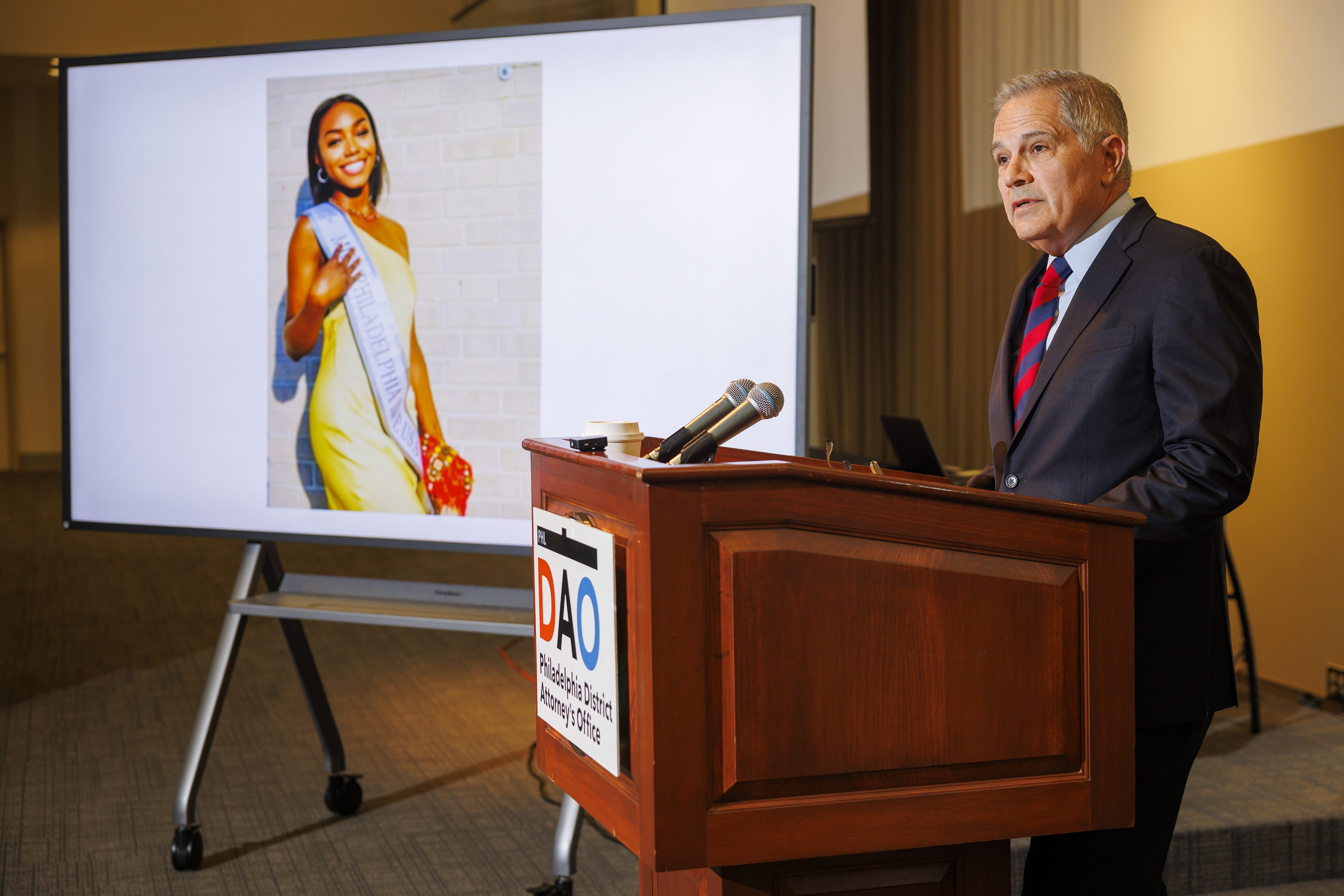
Philadelphia District Attorney Larry Krasner discusses the killing of Kada Scott at a news conference earlier this week.
Krasner said there is no system to automatically notify prosecutors when a defendant in one of their cases is arrested anew.
Similarly, there is no system to let police know that suspects in new cases have outstanding criminal matters, said Philadelphia Police Department spokesperson Sgt. Eric Gripp.
“Detectives are not automatically notified when a wanted subject is physically present in court on a different active case,” he said.
Krasner said the issues in the case underscore a lack of communication among law enforcement agencies that happens in part because their digital information systems are decades old. He said his office and other law enforcement agencies should work to update those systems.
“That is something that we can all improve together if we have the will and if we have the resources,” he said.
A wanted man walks free
Police said King first attacked his ex-girlfriend in early November of last year. He broke into her Strawberry Mansion home, then tried to strangle her, according to the affidavit of probable cause for his arrest.
He was taken into custody in December and charged with burglary and strangulation, and bail was set at $50,000. King immediately posted the necessary 10%, $5,000, and was released.
About a month later, police said, King returned to the woman’s home and tried to break in. When he could not gain entry, they said, he waited for her to step outside, then grabbed her by the hair and dragged her into his car. He drove for at least four miles, beating her along the way, before dropping her off in Fishtown, according to the affidavit for probable cause for his arrest.
A judge approved the warrant for King’s arrest on charges of kidnapping, strangulation, and related crimes on Jan. 19, court records show.
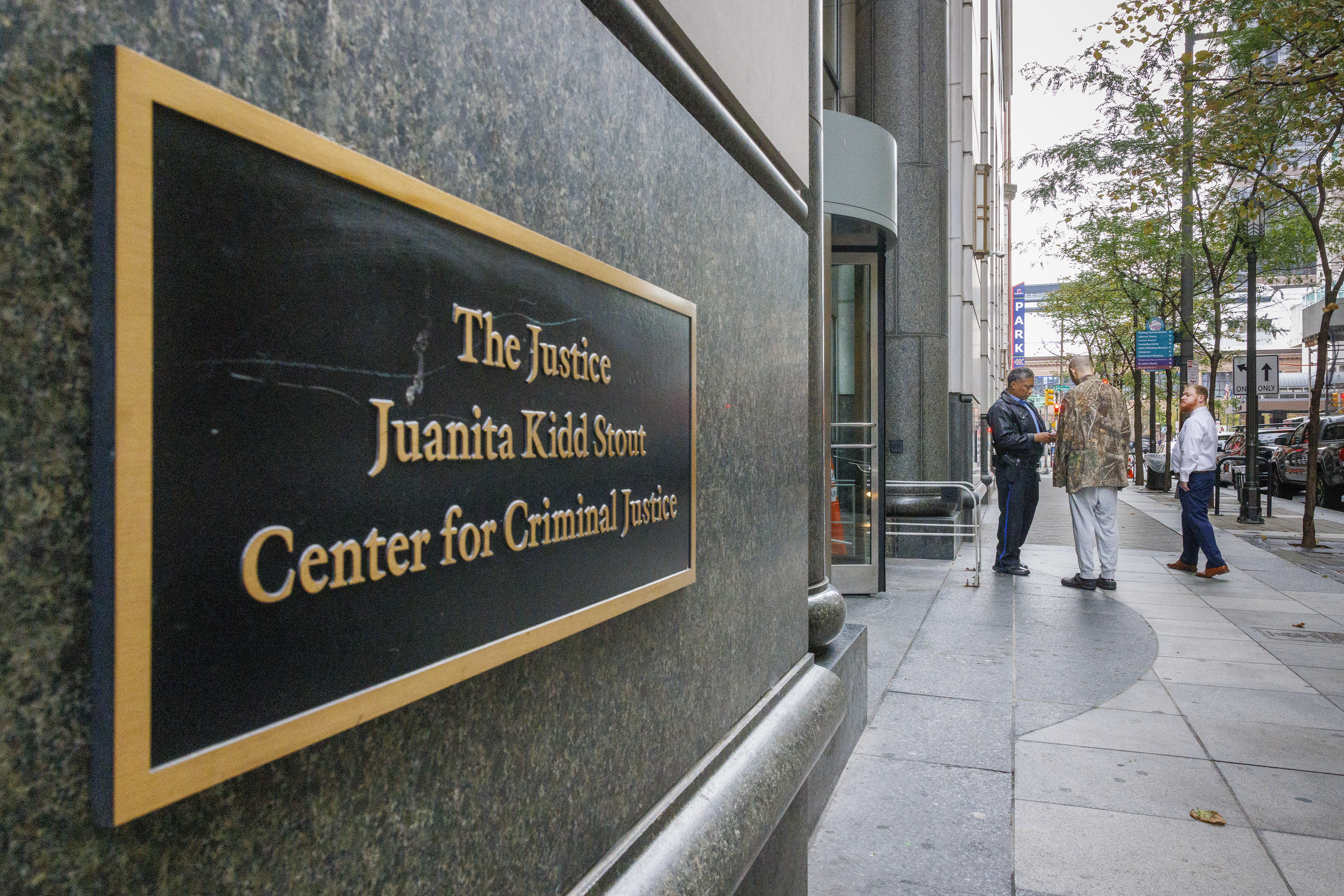
The Justice Juanita Kidd Stout Center for Criminal Justice in Philadelphia.
King — now wanted for a violent felony — appeared in court the following week for a preliminary hearing in the earlier burglary case, records show. But when the victim did not show up in court a second time, Municipal Court Judge Jacquelyn Frazier-Lyde ordered that the case had to proceed at the next listing. Prosecutors agreed.
King left court.
Meanwhile, police said, officers tried at least once to arrest him. On Feb. 11, Gripp said, police went to a home where they thought King might be, but he was not there.
Two weeks later, King was again in court for the burglary case — but police did not go there to arrest him. Once again, the victim did not show up, and prosecutors withdrew the charges
King walked out of court a free man.
Braccia, the Temple law professor, said the detective assigned to the case should have been aware of the hearing. When seeking to charge King for the kidnapping, she said, the detective should have pulled up King’s arrest history and noticed the ongoing case. He then could have flagged it to the prosecutor in the first case and gone to the hearing to arrest him.
At the same time, she said, the prosecutors who approved the kidnapping charges against King should have noticed the earlier case and told the prosecutor — particularly because it involved the same victim.
In April, King turned himself in to police to be charged with kidnapping, strangulation, and related crimes in connection with the January attack. Prosecutors asked for bail of $999,999, but the magisterial judge, Naomi Williams, set bail at $200,000, court records show. King posted the necessary $20,000 and was released.
The following month, after the victim again did not appear in court at two hearings, the kidnapping charges were also withdrawn.
Since prosecutors have refiled the charges, Krasner’s office said it has been back in touch with the woman and hopes she will testify. She declined to comment about King’s alleged crimes and the previous handling of the cases by police and prosecutors.
Six months later, King is back in custody, this time charged with murder. He is being held without bail.
The wife of the founder of Par Funding, a fraudulent and now-defunct Philadelphia-based lending firm, was sentenced Thursday to one day in jail and 60 days of house arrest for dodging about $1.6 million in taxes she should have paid on income derived from the scheme.
Lisa McElhone apologized for her conduct during a sentencing hearing before U.S. District Judge Mark A. Kearney, saying the spectacular implosion of her husband’s business — and the criminal prosecution of people associated with it — was the “most painful and transformative period of my entire life,” causing her to lose her home and her future, and watch her husband get sent to prison.
“It’s difficult, if not impossible, to express how overwhelming and life-altering this has been,” she said.
Prosecutors acknowledged that McElhone — the owner of an Old City nail salon — had almost nothing to do with Par’s day-to-day operations. And the crimes she was charged with paled in comparison to those of others associated with the business — particularly her husband, Joseph LaForte, who ran the cash-advance firm as a Mafia-style criminal enterprise that defrauded investors out of hundreds of millions of dollars, and resorted to loan shark-style tactics in efforts to collect on debts.
Still, Kearney said, McElhone, 46, did bear some responsibility by failing to question aspects of the life she was afforded that she should have known were too good to be true.
“These things only stop when good people … stop and say, ‘Hey, you’re asking me to go a step too far,’” he said. “That’s the only way these things stop. Because otherwise, if everyone falls in line, everyone goes to jail.”
Kearney said McElhone’s one-day prison stint would be Thursday. She will then serve a three-year term of supervised release, he said, and her 60 days of house arrest will begin in January 2026.
McElhone’s sentencing was notable as the final criminal proceeding for about a half-dozen people charged in connection with Par Funding, which prosecutors have called one of the biggest financial frauds in Pennsylvania history.
LaForte received the stiffest sentence: a 15½-year prison term that Kearney imposed earlier this year. LaForte founded Par to offer quick loans at high interest rates to borrowers deemed too risky to secure financing from traditional banks, but lied to investors about the company’s financial health to raise more money, used thuggish tactics to threaten borrowers who fell into default, and hid tens of millions of dollars from the IRS for his personal use.
Others charged included LaForte’s brother, who also received a lengthy prison term for participating in various aspects of the firm’s crimes. And earlier this week, two financial professionals, Rodney Ermel and Kenneth Bacon, were ordered to serve 2½ years and 6 months, respectively, behind bars for helping devise the fraudulent tax structures connected to the crimes.
Assistant U.S. Attorney Matthew Newcomer said it was perhaps fitting that McElhone’s penalty was the last to be imposed, given her limited connection to the business.
“But I think it does speak to the breadth and severity” of Par’s misdeeds, he said, “that even the least-culpable person is still on the hook for a $1.6 million tax loss.”
Par was founded in 2012 by LaForte, who was legally barred from selling securities because of previous felony convictions for financial crimes.
One way he got around that was to list McElhone as Par’s chief executive on official documents. Then, LaForte and others he recruited to work for him — including experienced financial professionals — ran radio ads and staged fancy solicitation events to raise more than $500 million, all as they portrayed the business as legitimate and lucrative.
In reality, prosecutors said, it was losing tens of millions of dollars a year. But to keep the fraud going, some of Par’s executives lied about the business’ financial health to keep raising money, and others threatened to harm or even kill borrowers who fell into default.
Still, prosecutors said McElhone was effectively uninvolved in the business, spending her workdays instead running the Old City nail salon Lacquer Lounge.
That doesn’t mean McElhone did not benefit from her husband’s grift. LaForte and his partners extracted cash from Par and spent it on things like a private jet, boats, paintings, expensive watches and jewelry, and homes in the Philadelphia area, Florida, and the Poconos.
And in the single count to which McElhone agreed to plead guilty last year, prosecutors said she knowingly signed a tax form claiming she and LaForte were living in Florida — where there is no state income tax — even though they spent most of their time that year in their $2.5 million Haverford home.
That deception led her to avoid paying about $1.6 million in taxes, prosecutors said, an amount she will now be forced to help repay.
Kearney, the judge, said that others might have been more responsible for the wide array of Par’s wrongdoing — but that she needed to be held accountable for failing to stop the wrongs that unfolded before her.
“When you get in a relationship with people,” he said, “make sure you keep your identity. Because you don’t want to be the person going to jail for their crimes.”
Keon King was charged with murder and related crimes Wednesday in the death of Kada Scott, the 23-year-old Mount Airy woman police say he kidnapped, then killed, before burying her body in a shallow grave.
The district attorney’s office approved the charges shortly after police announced that the Medical Examiner’s Office had ruled her death a homicide. Officials said Thursday that Scott died by a gunshot wound to the head.
In addition to murder, King was charged with illegal gun possession, abuse of corpse, robbery, theft, tampering with evidence, and additional crimes.
The announcement came as investigators said they believe at least one other person helped King, 21, move Scott’s body and bury it behind a closed East Germantown school in the days after she was killed, and detectives are working to identify those involved.
New court records, made public Wednesday, offered the most detailed look yet inside the investigation into Scott’s disappearance and death, including her texts with King in the days before she went missing, the police search for her body, and how others may have helped King try to conceal her killing.
A review of Scott’s cell phone records showed that on Oct. 2, a number believed to belong to King texted Scott: “Yo Kada this my new number.”
“Who dis,” Scott asked, and he responded “Kel,” according to the affidavit of probable cause for King’s arrest.
Kada Scott, 23, went missing Oct. 4.
Law enforcement sources said King appeared to use various aliases when communicating with people, including “Elliot” and “Kel.”
On the morning of Oct. 4, the document says, Scott texted King saying, “kidnap me again.”
King replied, “better be up too,” according to the filing.
What Scott meant in that text continues to perplex investigators, said the sources, who spoke on the condition of anonymity to discuss an ongoing investigation. It’s not clear, the sources said, whether Scott was joking or being sarcastic, or if King had, in fact, abducted her before.
In any case, the affidavit says, the pair made plans to meet up later that night. Scott worked the overnight shift at the Terrace Hill nursing home in Chestnut Hill, and at 10:09 p.m., the records say, she texted King to call her when he arrived outside.
According to the affidavit, Scott received 12 calls from the number believed to belong to King between 9:25 p.m. and 10:12 p.m., ending with a 43-second call.
Around that time, a coworker later told police, she overheard Scott on the phone say, “I can’t believe you’re calling me about this,” before walking toward a dark-colored car.
At 10:24 p.m., Scott’s phone line went dead, the document shows.
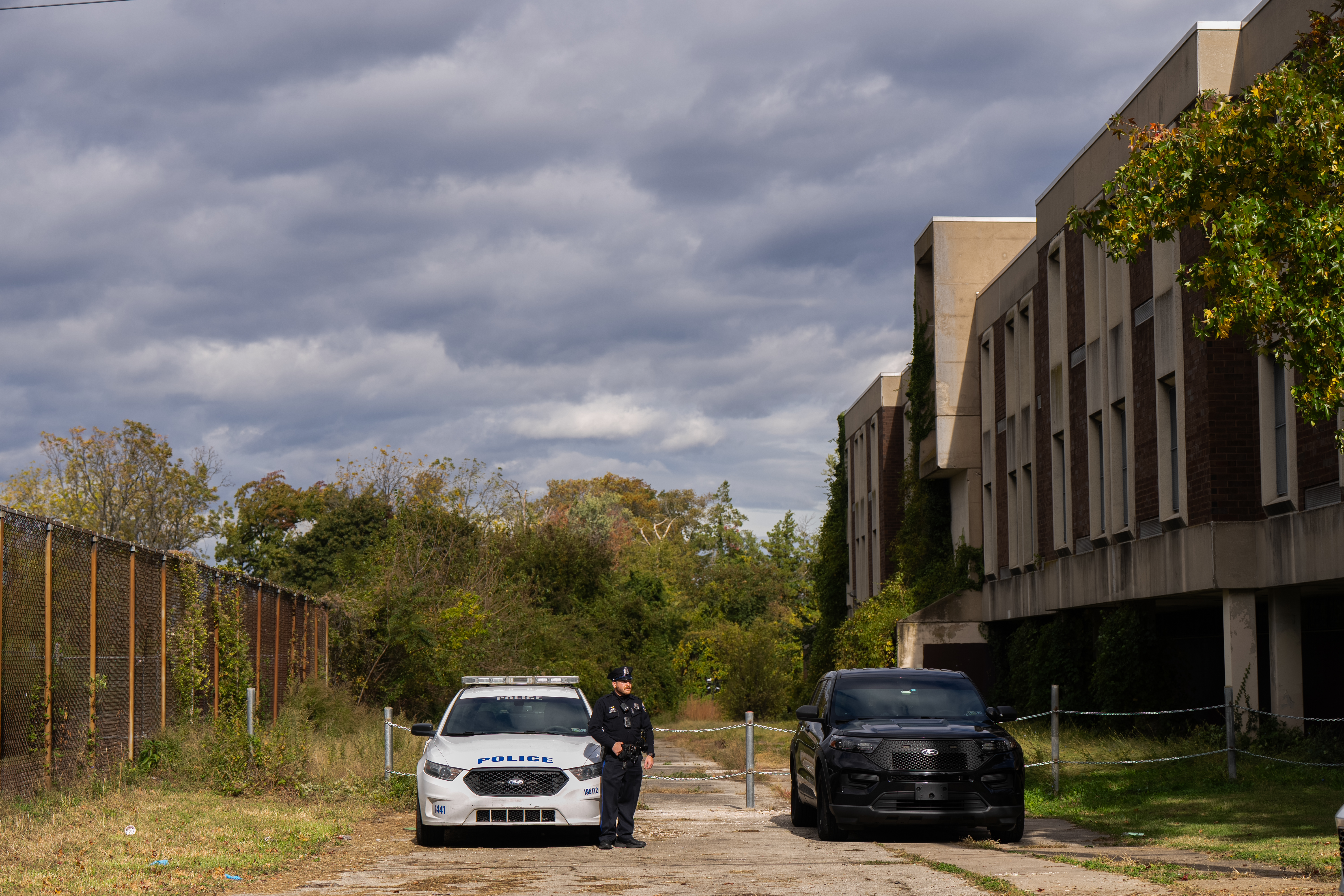
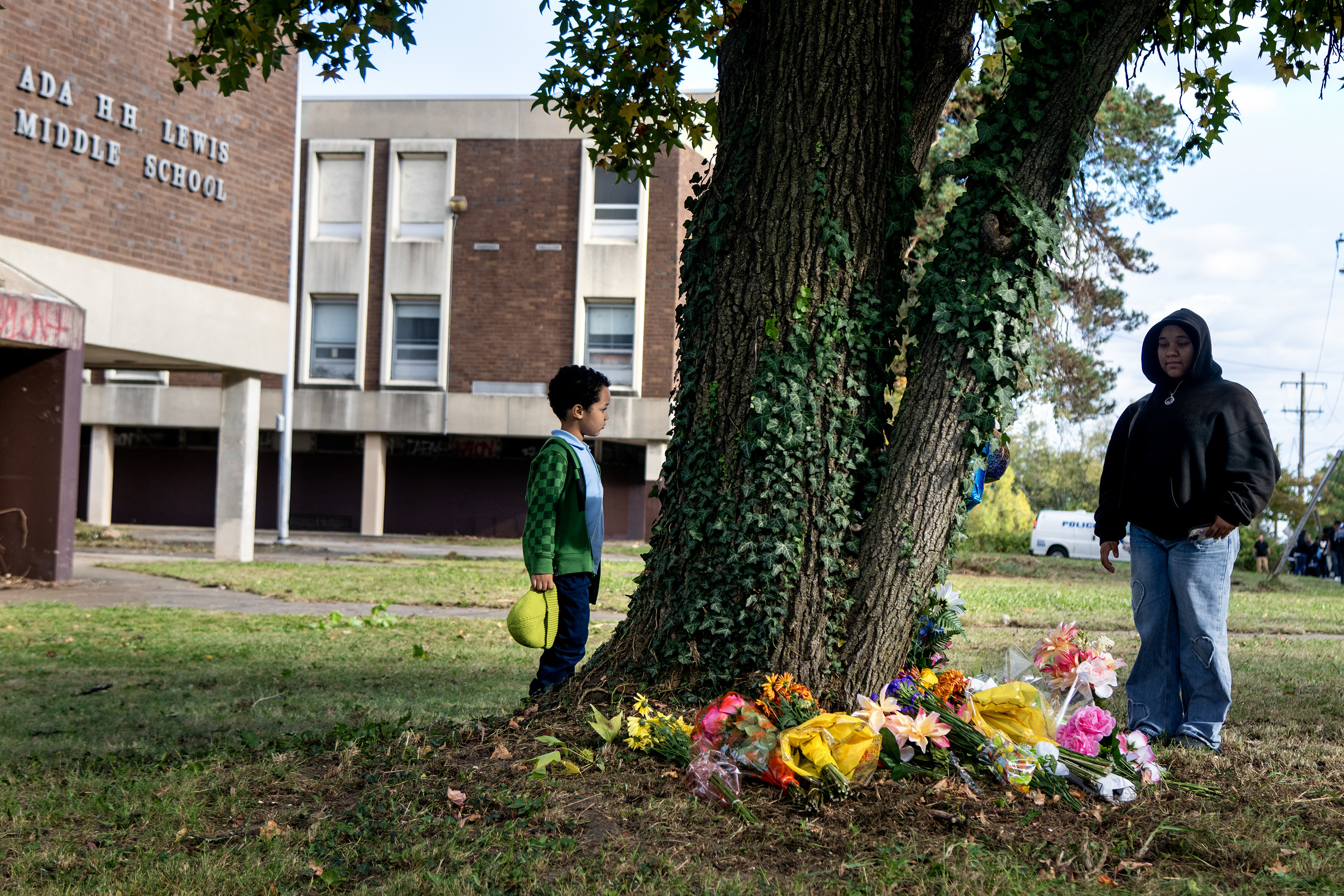
The rear of Ada H.H. Lewis Middle School, where Kada Scott’s body was found buried in the wooded area.
By 10:28 p.m., the affidavit says, surveillance cameras showed King, driving a black Hyundai Accent, pull into the parking lot of the Awbury Recreation Center. King got out of the car and left the area, the filing says.
The next day, around 11:39 p.m., two people in a gold Toyota Camry believed to belong to King went back to the recreation center, the records show. They walked toward the playground area, then returned to the car around 3:56 a.m.
The two people then opened up the Hyundai Accent and appeared to “remove a heavy object, consistent with a human body,” from the passenger side of the car. They carried the object toward the playground and returned to the vehicle a half-hour later, the records said.
On Oct. 7 at 2:48 a.m., police believe King returned to the recreation center to retrieve the Hyundai. They said the car — which had been reported stolen a few days earlier from the 6600 block of Sprague Street — was set on fire near 74th Street and Ogontz Avenue a short time later.
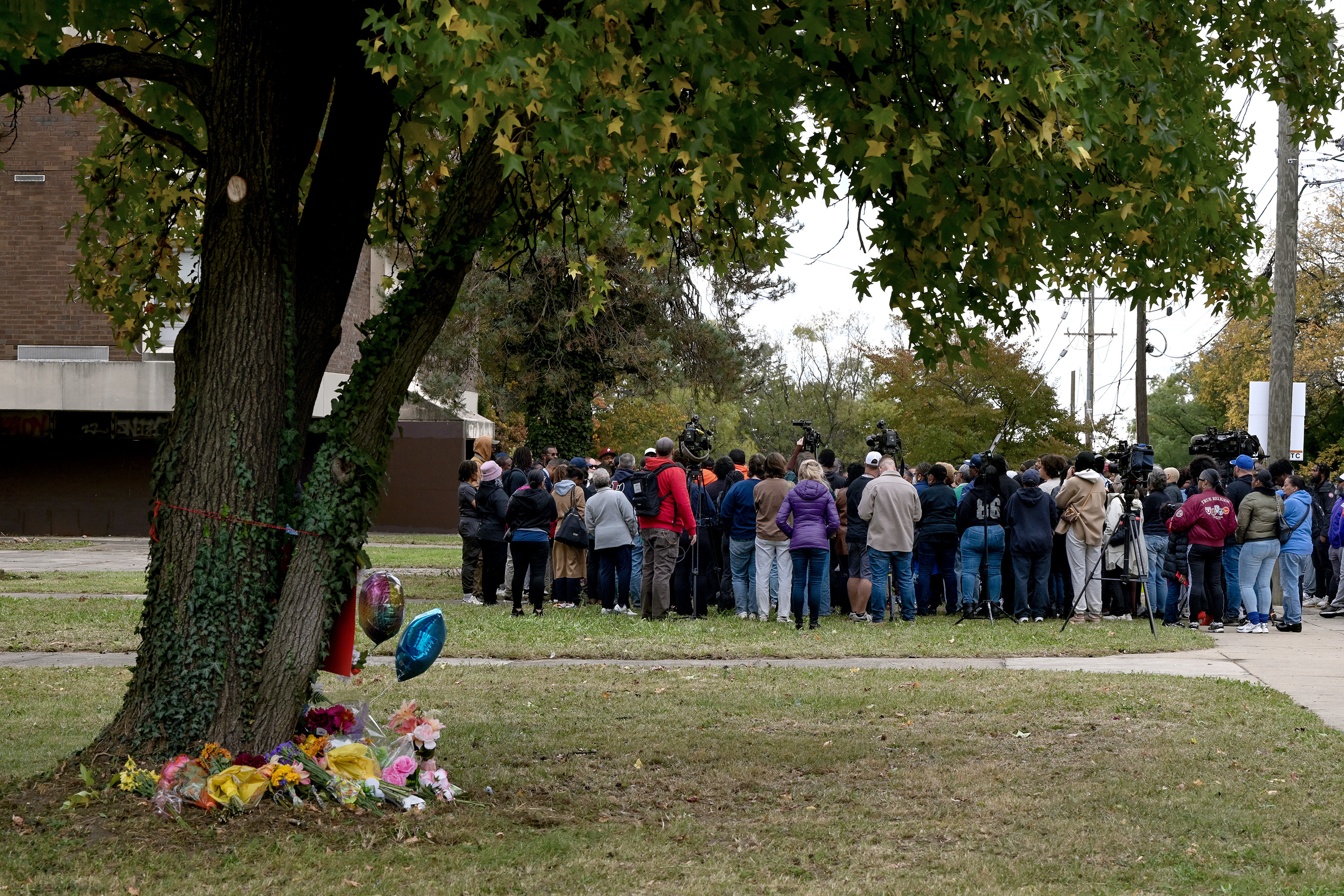
Community members attend a candlelight vigil by flowers and balloons left at a memorial for Kada Scott near the abandoned Ada H. H. Lewis Middle School on Monday.
King turned himself in to police last week to be charged with kidnapping Scott. He was held on $2.5 million bail.
Earlier this week, prosecutors also charged King with arson and related crimes for the burning of the car. Now that he is charged with murder, he is expected to be held without bail.
King’s lawyer, Shaka Johnson, could not immediately be reached for comment Wednesday.
On Wednesday evening, city leaders headed to a church in the Northwest Philadelphia community where Scott’s body was recovered, addressing a crowd of about 200 residents concerned about public safety.
Mayor Cherelle L. Parker and Police Commissioner Kevin Bethel, among other officials, offered condolences to Scott’s family and commended police for recovering her body. Residents, too, appeared relieved, breaking into applause when Bethel said murder charges had been filed against King.
Bethel, a father of three daughters, said that as the search for Scott wore on, he felt at times as if he were searching for his own child. And Councilmember Cindy Bass told the crowd that Scott “could have been your niece, she could have been your friend.”
The commissioner said the investigation was continuing as police search for those who might have assisted King. And addressing concerns over safety at the city’s abandoned buildings — including Ada H.H. Lewis Middle School — officials said the city was in the process of reviewing vacant properties.
Two men who set a Fairhill building on fire in 2022 in hopes of collecting a six-figure insurance payout — but who instead caused the structure to collapse, killing a responding Philadelphia Fire Department lieutenant — were each sentenced Wednesday to decades in federal prison.
U.S. District Judge Cynthia M. Rufe said the actions by Al-Ashraf Khalil and Isaam Jaghama, which led to the death of Lt. Sean Williamson and left five other first responders injured, were made “out of pure self-interest” and displayed “depraved indifference to human life.”
“Neither of the defendants considered at all the consequences of their actions, which proved to be far-reaching, devastating, and deadly,” she said.
She sentenced Khalil — who owned the building on the 300 block of West Indiana Avenue that he set ablaze — to serve 40 years in prison. And she said Jaghama, who participated in the arson alongside Khalil, would serve a term of 25 years behind bars. Both men are 32.
Both men had faced the potential of life sentences. And both apologized for their actions before being sentenced.
Jaghama, in a letter read by his attorney, said: “No words can describe the depth of my regret and pain.”
Khalil, meanwhile, cried as he said he wished he could take back decisions that he called selfish and weak.
“I was desperate. I was a coward. And the families of the victims are the ones to suffer for a lifetime,” he said. “I am ashamed beyond words. I pray for your forgiveness, although I know I will never deserve it.”
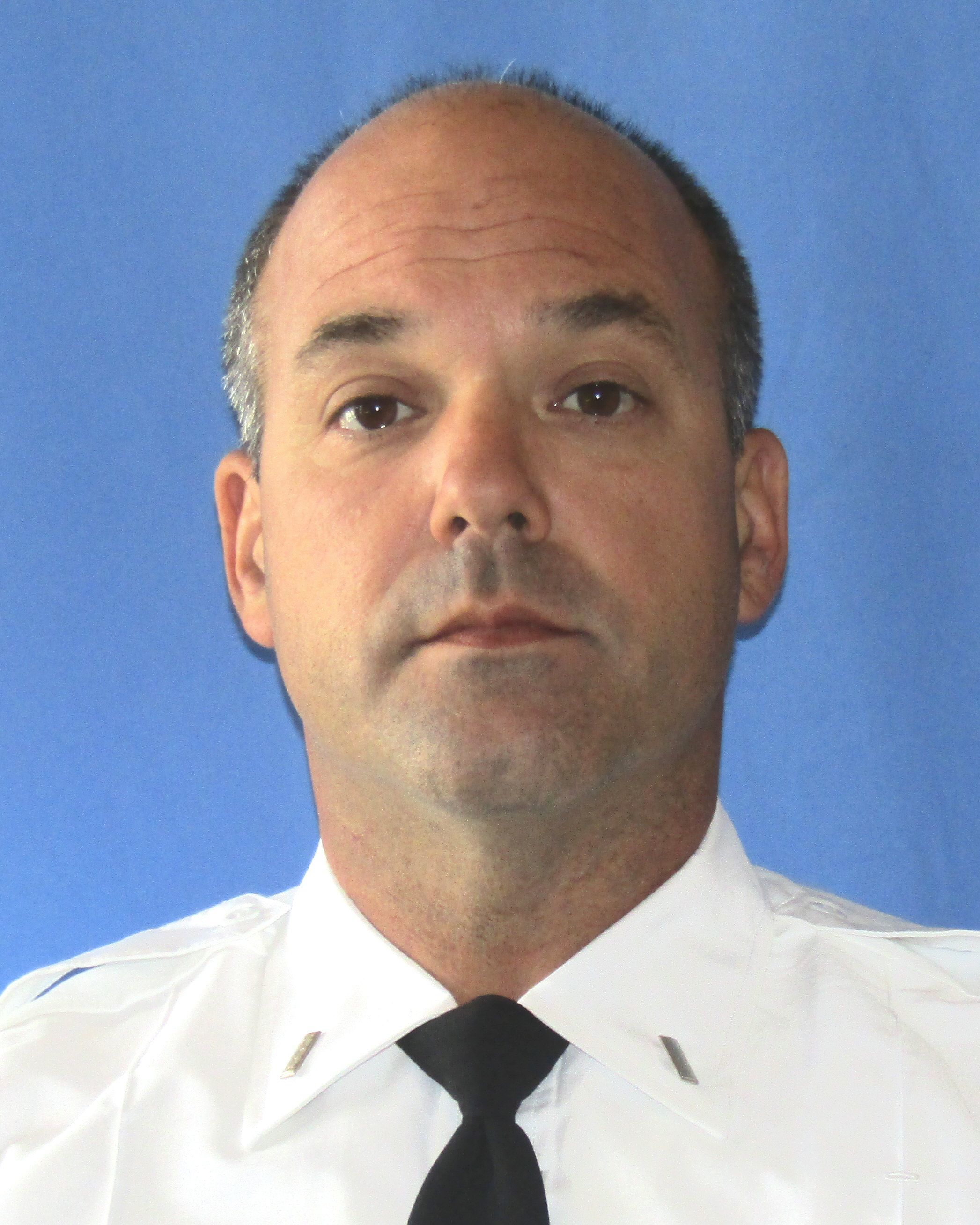
Lt. Sean Williamson, 51, was killed during a building collapse after a fire in Fairhill in 2022. He was a 27-year veteran of the Fire Department.
Assistant U.S. Attorney Amanda Reinitz said Khalil and Jaghama were too late in expressing remorse. Both men lied to authorities after the blaze, she said, Khalil tried to flee the country, and both then took their case to trial, where they tried to convince jurors that fire officials shared blame in the disaster for sending first responders into a century-old building shortly after the flames had been extinguished.
Williamson’s sister, Erin Williamson, said she viewed that as an attempt by Khalil and Jaghama to avoid accountability for causing a tragedy. A second-grade teacher, Williamson said even her 7-year-old students know that fires are dangerous and deadly.
Khalil and Jaghama “only thought about themselves,” she said, “and what they could gain.”
The fire was set early in the morning of June 18, 2022. Khalil, who co-owned a pizza shop in Juniata Park, had bought the Indiana Avenue building months earlier and was hoping to renovate it and turn a quick profit.
But when that plan appeared destined to fail, prosecutors said, he began plotting to set it ablaze, hoping that he could instead collect on an insurance policy worth nearly $500,000.
Surveillance footage discovered after the crime showed Khalil and Jaghama entering the building’s basement shortly before the blaze began, around 1:30 a.m., then leaving not long after flames erupted.
Khalil had leased apartments in the upper floors to two employees at his pizza shop, and they were inside with their young children as the fire spread. All of the tenants managed to escape unharmed, prosecutors said, but they lost nearly all of their possessions.
First responders were not so lucky.
Philadelphia fire officials honored Lt. Sean Williamson at his funeral in 2022.
Although firefighters were able to extinguish the blaze, the building was heavily damaged from smoke and water when crews were sent inside to inspect it. The building then collapsed, and Williamson, 51 — a 27-year veteran of the department — died after being trapped under the rubble. Four other firefighters and an inspector from the Philadelphia Department of Licenses and Inspections were also injured but survived.
The day after the disaster, Khalil filed a claim with his insurance company. In the ensuing days, he also tried to flee for Jordan, prosecutors said, but was arrested at John F. Kennedy Airport in New York City.
Jaghama was arrested about a year after Khalil. Reinitz, the prosecutor, said Jaghama repeatedly misled authorities while seeking to avoid being prosecuted.
Jaghama, born in the West Bank, was a legal permanent resident, meaning he is likely to be deported after his prison term.
Khalil’s wife said in court Wednesday that he was a great husband, a loving father to their three children, and a caring person whose actions in this case were not consistent with how he lived his life.
Reinitz, however, said the men’s decisions and actions were not only senseless, they were damaging for countless people whose lives were upended by a callous — and illegal — attempt to make money.
“They had absolutely no need to do this,” she said, “other than pure greed.”
Three men were convicted of first-degree murder and related crimes for a 2023 shooting at a North Philadelphia playground that left three people dead and one injured, prosecutors said Wednesday.
Tyyon Bates, 21, Quaza Lopez, 22, and Eric Reid, 23, were all found guilty this week for their roles in the crime, which brought chaos to a basketball court at Eighth and Diamond Streets on a hot summer night as children played outside.
Nyreese Moore, 22, Nassir Folk, 24, and Isaiah Williams, 22, were killed. A fourth person was shot in the abdomen and survived.
In addition to murder, Bates, Lopez, and Reid were convicted of conspiracy to commit murder, recklessly endangering others, and firearms offenses, prosecutors said.
A jury found a fourth suspect, Sufyann Kinslow, not guilty of murder and related charges, court records show. And a jury could not reach a verdict in the trial of a fifth suspect, Tynel Love, on similar charges, though prosecutors say they intend to retry that case.
Prosecutors said the Aug. 11, 2023, shooting stemmed from “vengeance” over a 2018 shooting that left Bates’ brother, Tyree, dead just several blocks away at Fourth and Diamond Streets.
“The motivation was for ‘Ree,’ Tyree Bates,” said Assistant District Attorney Cydney Pope. “And Tyyon Bates made sure he got his ‘get-back’ for him — and bragged about it.”
Investigators recovered more than 100 pieces of ballistic evidence from what prosecutors said was an unusually large crime scene involving six shooters. Surveillance video from the recreation center and a nearby vacant lot helped investigators link the men to the crime, Pope said.
Bates, Lopez, and Reid were sentenced by Common Pleas Court Judge Glenn Bronson to three consecutive life sentences in prison plus an additional 24 to 48 years in custody.
Prosecutors said that their work is not finished and that they plan to bring charges against two more people involved in the crime.
After 37 years in prison, Michael Gaynor — who was convicted of killing a 5-year-old boy in a Southwest Philadelphia candy store — could soon be released.
Lawyers from the McEldrew Purtell firm on Oct. 15 filed a petition under Pennsylvania’s Post-Conviction Relief Act (PCRA), saying that police and prosecutors suppressed crucial evidence pointing to another suspect, coerced witnesses, and relied on false testimony to convict Gaynor in 1988.
Gaynor is “wholly innocent,” lawyer Daniel Purtell told The Inquirer on Tuesday. “We request speed and transparency toward his exoneration.”
The District Attorney’s Office Conviction Integrity Unit (CIU) has also been investigating the case since late last year. The office is expected to file a brief with the court in response to the petition.
The petition to free Gaynor relies on information detailed in The Inquirer’s six-part investigative series “The Wrong Man,” published late last year. The stories uncovered evidence that Gaynor was not the gunman or even in the store where a shootout between two men took the life of little Marcus Yates. The Inquirer’s investigation was based on thousands of pages of court transcripts and police paperwork, 21 witness statements, and interviews with more than four dozen people.
For more than a year, Gaynor, now 58, has had the most unlikely supporter: Marcus’ family.
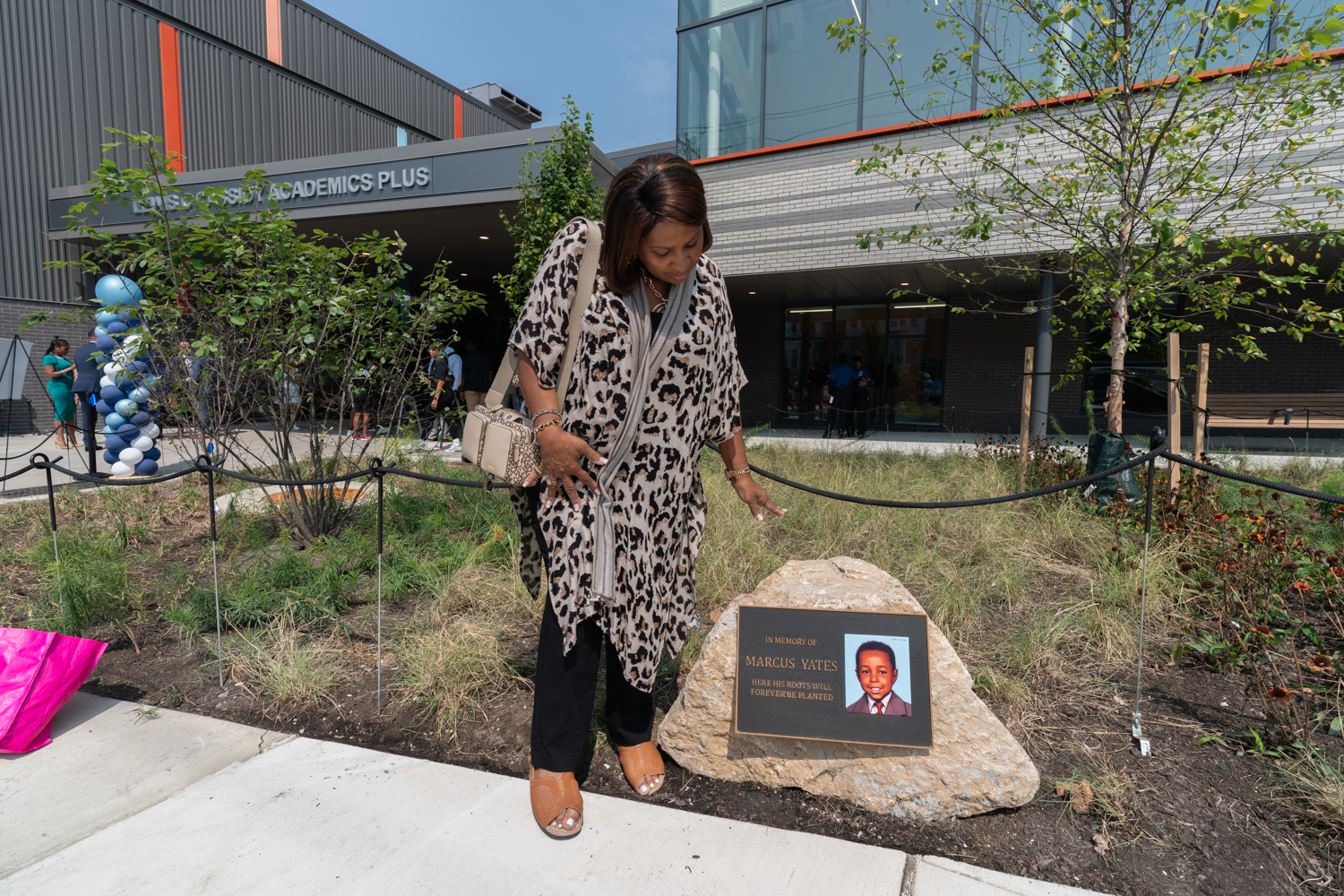
Marcus’ mom, Rochelle Yates-Whittington, remained tormented by the tragedy decades later. She said she could find peace only by telling Gaynor and Ike Johnson, who was one of the convicted gunmen, that she forgave them.
Rochelle Yates- Whittington, mother of Marcus Yates, at the new memorial for Marcus, at the .Lewis C. Cassidy Elementary Academics Plus School, in Philadelphia in 2024.
But after speaking with each of them in prison video calls last year, she said, she no longer believed the police and prosecutors’ account of the crime and told her family Gaynor was not guilty.
“I am just so overwhelmed with happiness,” Yates-Whittington said this week after hearing about the court filing. “I just want to let Michael know I’ll be there for him once he’s released. I really hope this moves fast and his release is expedited.”
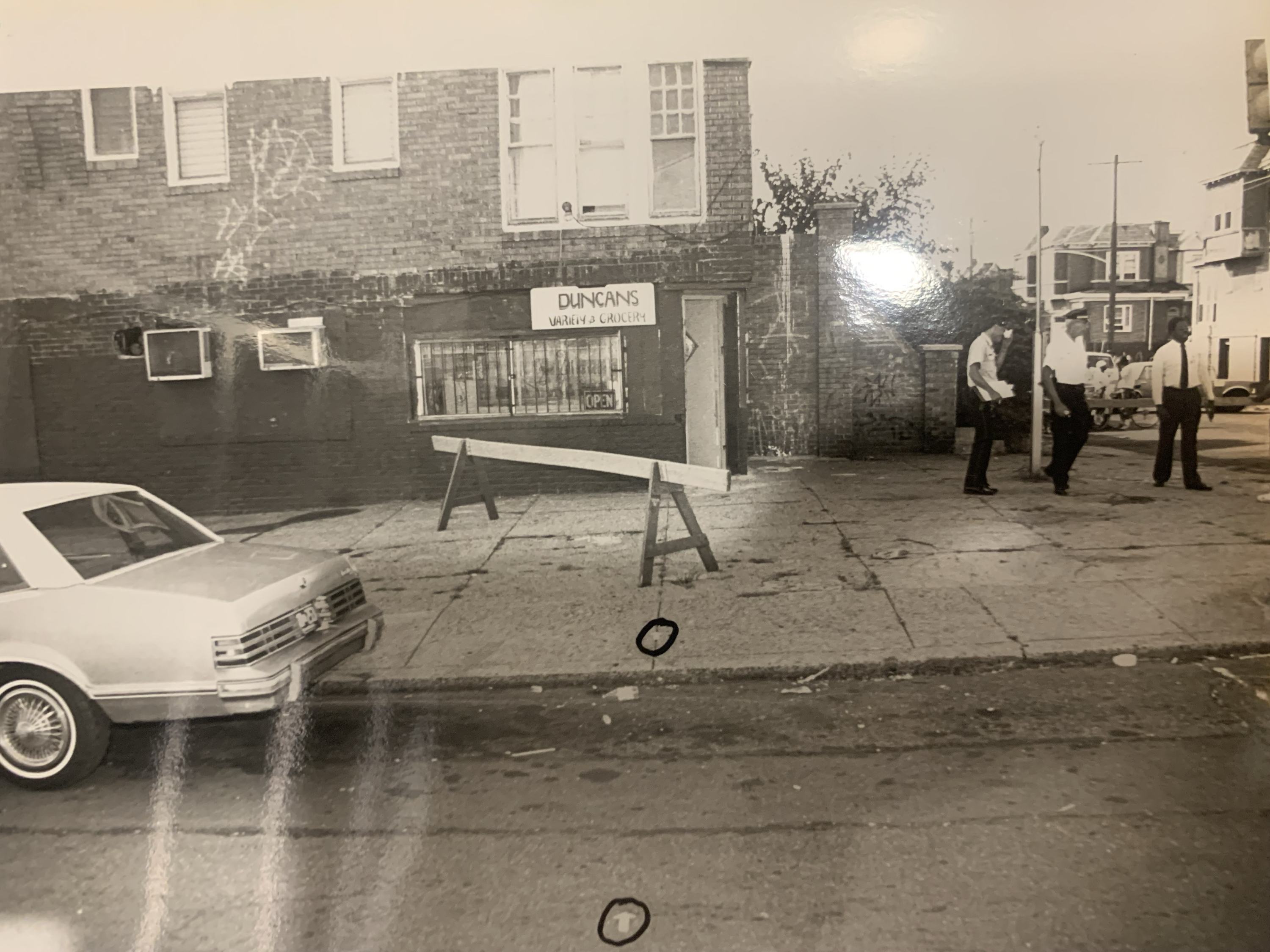
On the afternoon of July 18, 1988, Marcus, his two older brothers, and seven other children were crammed inside the tiny Duncan’s Variety & Grocery store, where they played three video games and eyed penny candy. Suddenly, two men blasted guns at each other, and the children were caught in the crossfire.
On the afternoon of July 18, 1988, police gather outside Duncan’s Variety and Grocery store in Southwest Philadelphia to start investigating the shooting death of 5-year-old Marcus Yates, and his brother and another boy, who were shot, yet survived.
Marcus, who took a bullet to the head, died at the hospital later that day. His brother Malcolm survived being shot, as did another boy.
Gaynor lived around the corner from the store and was a low-level crack dealer. He was from Jamaica, and witnesses had told police that both shooters were Jamaican.
As part of the investigation, police seized a number of cars parked near the store, including Gaynor’s 1988 Nissan 300ZX. Four days after the shooting, he called the police to claim his car and spoke to Paul Worrell, lead investigator on the case. Worrell told Gaynor to come to Police Headquarters.
Gaynor said Worrell took him into an interrogation room, placed him in handcuffs, sat him in a chair bolted to the floor, and accused him of killing the 5-year-old boy. Worrell put a plastic bag over his head, Gaynor said, held it tight, and told him he had to admit to the killing. Gaynor said he told him he would talk but wouldn’t confess to a crime he didn’t commit.
Worrell has been linked to seven murder cases in the 1980s and 1990s in which defendants allege he and his partners coerced false confessions, falsified statements, slapped suspects while handcuffed to chairs, kicked their genitals, and threatened witnesses with criminal charges if they didn’t testify. Four men in those cases have since been exonerated, and another conviction was vacated.
Worrell, now retired, declined to comment.
In an interview last year,he told The Inquirer: “I hope Michael Gaynor rots in jail.”
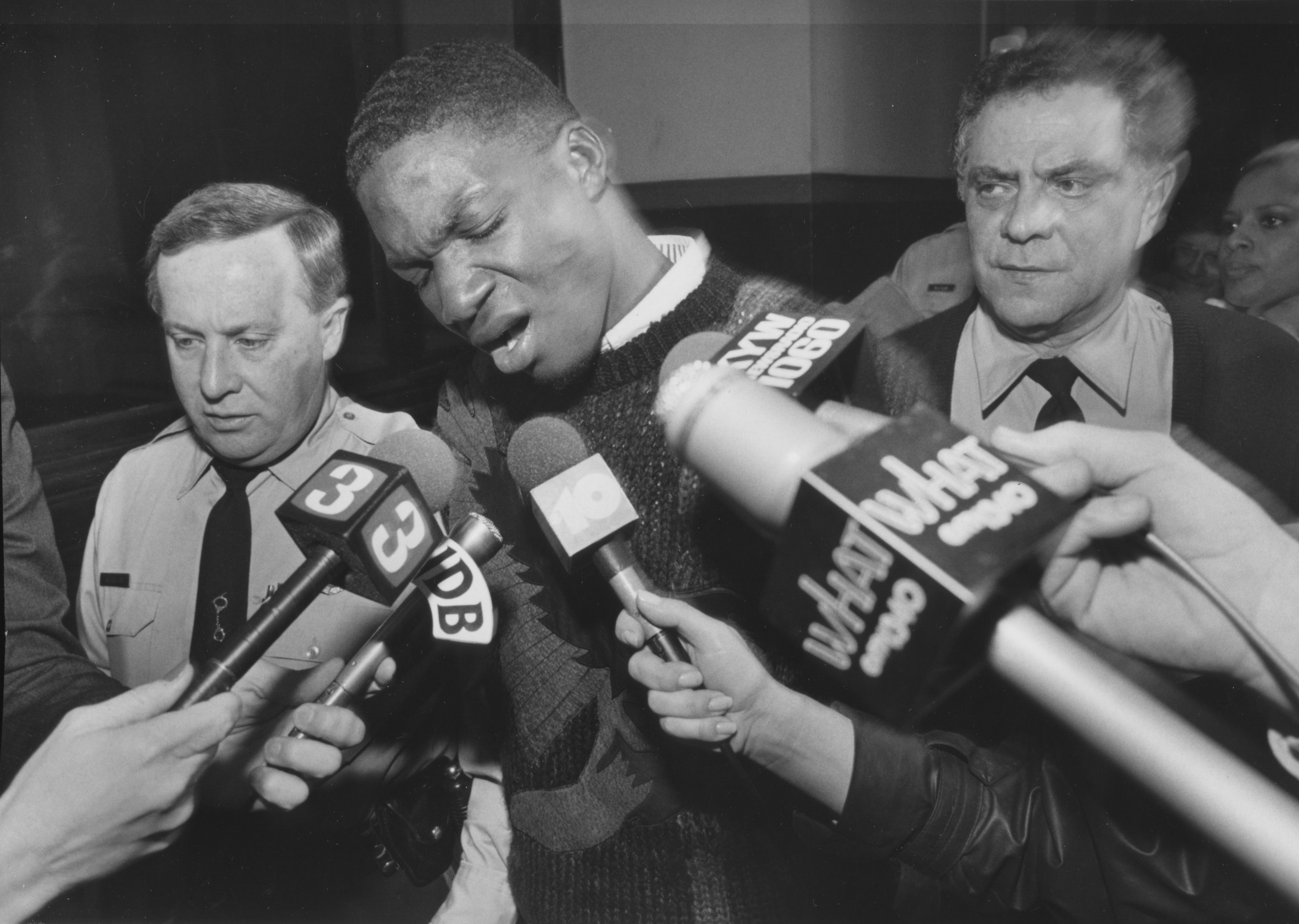
Gaynor and Johnson, also known as Donovan “Baby Don” Grant, were convicted of first-degree murder and sentenced to life without parole. Johnson and other witnesses had always maintained Gaynor was not the other shooter.
In this Feb. 20, 1990 Daily News file photograph, Michael Gaynor is escorted by sheriff deputies after receiving a life sentence from the jury.
In fact, witnesses had told police the other shooter was a man known on the street as “Harbor.” But detectives did not properly or substantively investigate Harbor.
When asked during the murder trial why police had not tried to find Harbor, Worrell replied: “I had investigated that name early on in the investigation, in the fall of 1988. …That name was a nickname. That name has never been attached to any human being that is in my capability to find nor within the New York Police Department’s capability to find. Our determination was that that person did not exist.”
The Inquirer determined that he was Paul Jacobs, also known as Peter J. Jacobs, a career criminal who was born in Jamaica and had lived in New York and Los Angeles.
Years after Gaynor and Johnson were locked up, Jacobs was shot dead on March 12, 1996, in a small ramshackle home in a South Los Angeles neighborhood wrought with street gangs and drug wars. He was 34.
Investigators knew Jacobs had faced criminal charges in New York and had an associated address that was part of the investigative records, according to the petition. Those details were concealed from the defense, the document says.
“The Philadelphia District Attorney’s Office has recently produced previously undisclosed documents confirming that Jacobs was identifiable through the New York prison system,” according to the petition.
Gaynor’s lawyers contend that suppressing that evidence amounted to misconduct that undermines the integrity of the conviction. Had it been disclosed, the petition said, “there is a reasonable probability the outcome of the trial would have been different.”
During the trial, the prosecution relied heavily on the testimony of traumatized children who identified Johnson and Gaynor in court. But three of the five children, now adults, said detectives and prosecutors had directed or coached them to do so, The Inquirer found. And police coerced Christopher Duncan, the son of the candy store owner, into recanting his original statement and adopting a false account implicating Gaynor, the petition said.
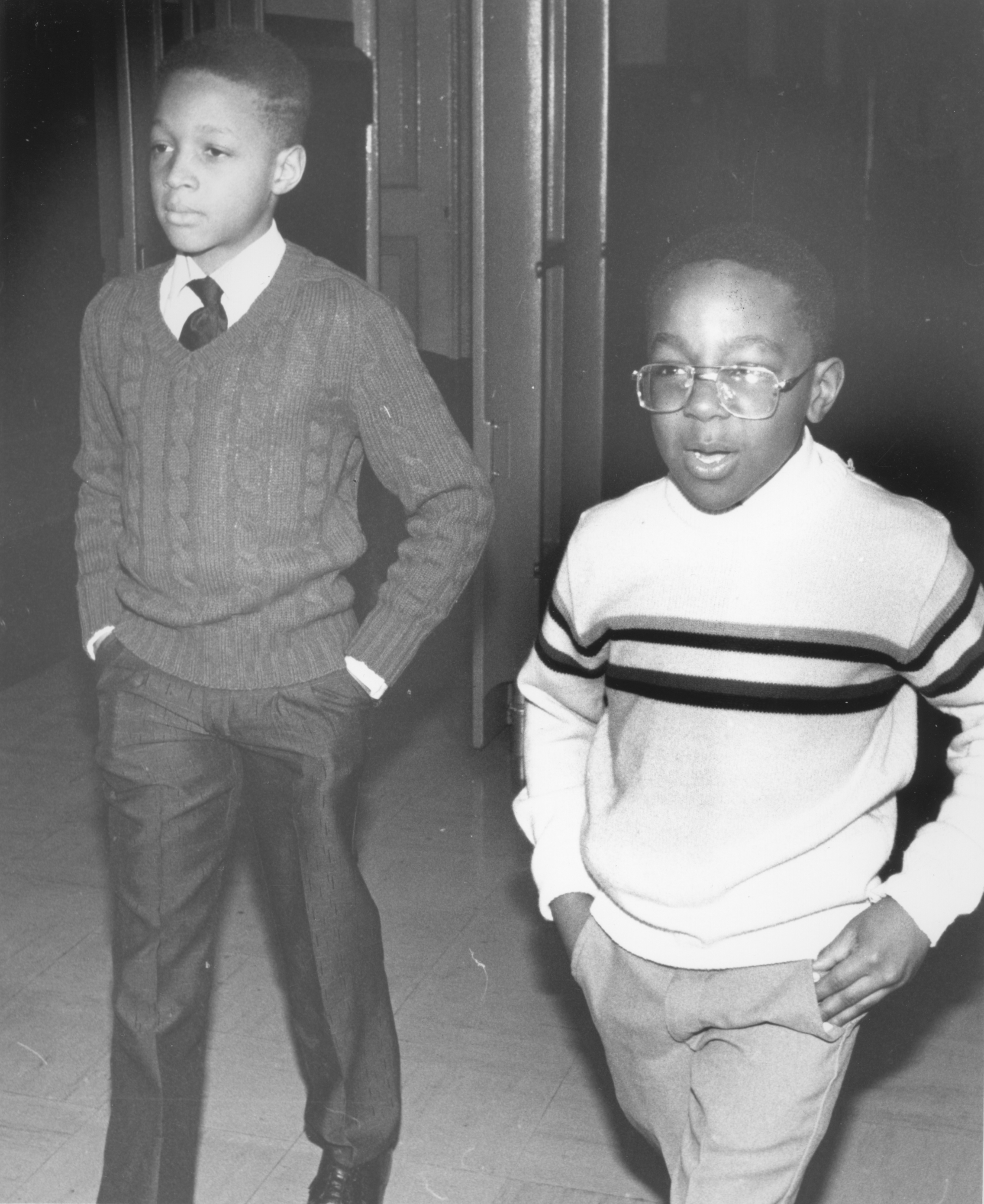
In this Feb. 6, 1990 Daily News file photograph Toney Yates, 12, and brother Malcolm Yates, 8, walk through the hall at City Hall outside of the hearing for the shooting of their brother Marcus Yates.
No forensic or physical evidence linked Gaynor to the murder.
“This was not a major lapse in judgment but a conscious decision to ignore leads that pointed away from Gaynor and toward the actual perpetrator,” his lawyers said in the court filing.
Since District Attorney Larry Krasner took office in January 2018, the convictions of 48 people have been overturned, according to data compiled by his office.
Many of the overturned cases date to the 1980s and 1990s, and police misconduct, fabricated statements, coerced confessions, and the withholding of exculpatory evidence were later cited as key factors in the wrongful convictions.
When it opened in 1973, Ada H.H. Lewis Middle School was a source of deep pride for East Germantown, the kind of state-of-the-art educational facility that only suburban kids had at the time.
But on Saturday, when police found Kada Scott’s corpse buried in a shallow grave in the woods of the long-ago vacated school grounds, ending a two-week search for the missing23-year-old Mount Airy woman, the Rev.Chester H. Williams saw only decades of failure.
“It’s a disgrace,” said Williams, a pastorwho runs a neighborhood civic group. “We were very hurt to hear that this happened.”
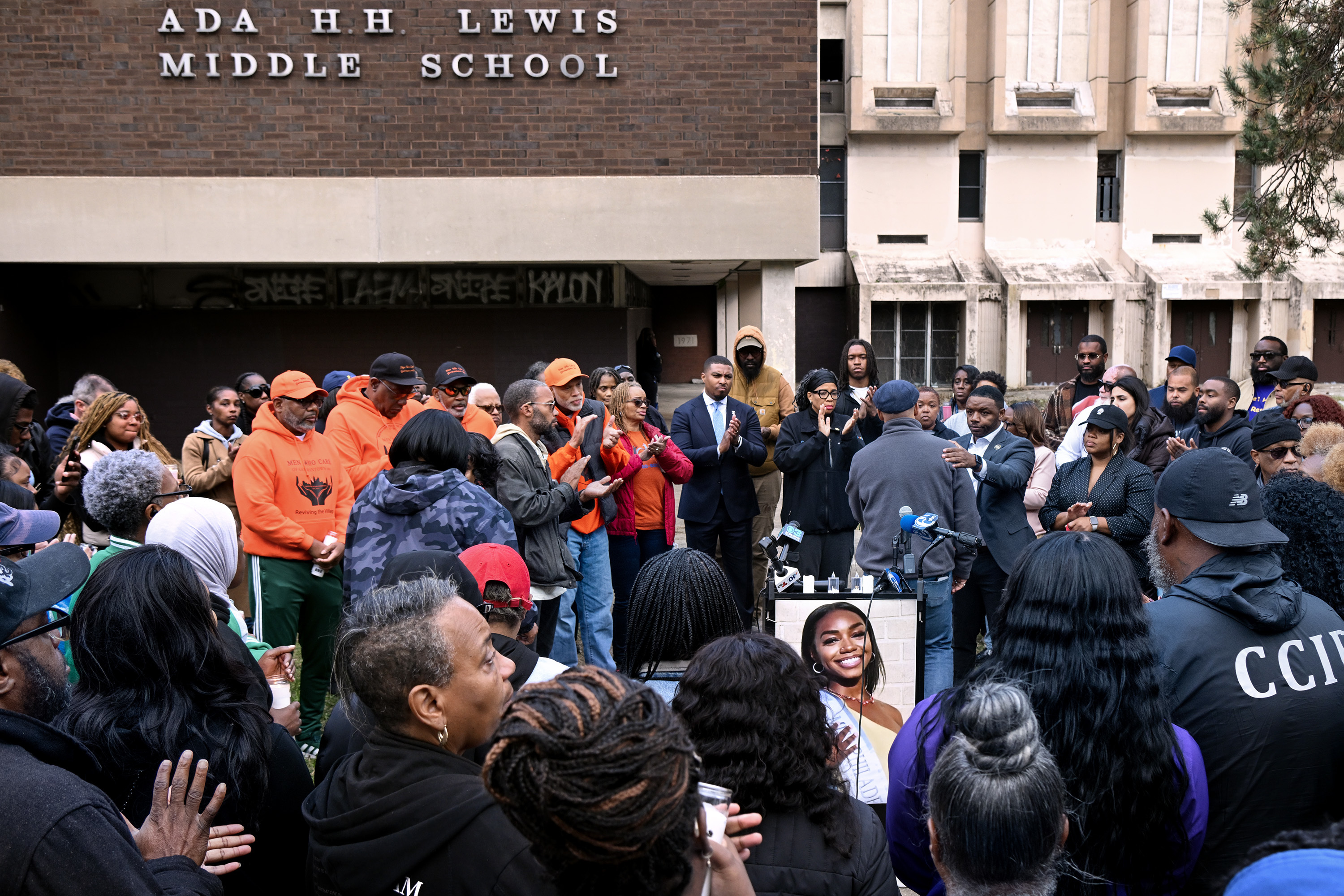
Community members gather for a candlelight vigil in memory of Kada Scott on Monday at Ada H.H. Lewis Middle School.
On top of the shock, Scott’s kidnapping and murder has renewed animus in some quarters aboutthe Philadelphia School District‘s failure to repurpose the blighted property, one of dozens of schools shuttered by the district over the last 20 years.
Since Lewis closed in 2008, local officials and civic leaders said the sprawling seven-acre campus has become a magnet for squatting, illegal dumping, and other criminal activity. City officials have cited the school district 10 times since 2020 for overgrown weeds, graffiti, and piles of trash that blanketed the property, public records show. And four years ago, the district passed on an opportunity to reverse course on the blight.
A proposal to redevelop the land into new homes, championed by neighborhood leaders like Williams, sat before the school board for approval. But the district abandoned the plan at the eleventh hour without public explanation, which the developer alleged was due to meddling byCity Councilmember Cindy Bass — a contention Bass denies.
“The school district, for some reason, we don’t know why, they put a block on anything being built there,” Williams said.
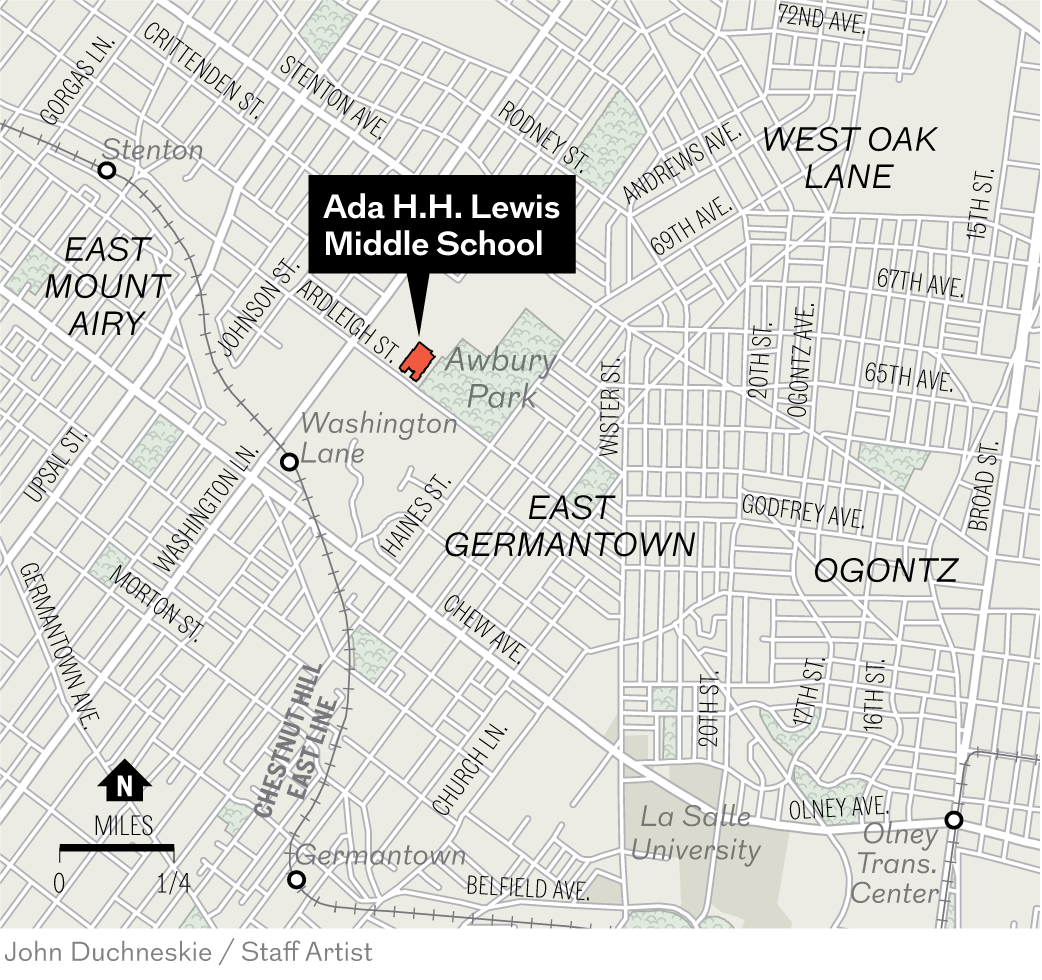
Map of the former Ada H.H. Lewis Middle School in East Germantown
Philadelphia Superintendent Tony B. Watlington Sr. extended “deepest sympathies” to Scott’s family and friends in a statement, and said the district’s operations and safety departments will review the vacant-property portfolio “to create and maintain safe and healthy spaces in every neighborhood.”
While some call Lewis “abandoned,” the district is careful to call the building “vacant,” one of 20 such properties in the district’s portfolio. It says maintenance and inspection logs are kept about work on vacant properties; details were not immediately available.
The debate over Lewis comes at a crucial time for the district: It is preparing to release recommendations about its stock of 300-plus buildings — and likely add to the list of decommissioned schools-turned-vacant public buildings. The district’s master planning process will contain recommendations for school closures and combining schools under one roof, officials have warned.
Butkovitz, in a report released that year, said district inaction around such structures was dangerous and noted that the schools were magnets for criminal activity.
Just before the pandemic hit in 2020, after years of pushback over Ada Lewis, the school district began accepting applications to redevelop the crumbling middle school. Germantown developer Ken Weinstein was one of three developers to place bids. He sought to buy the property for $1.4 million and build 76 new twin homes, at a density that neighbors felt complemented the surrounding area and resolved concerns about density brought by apartment buildings.
Weinstein said he gathered letters of support from 60 neighborhood residents and elected officials, including U.S. Rep. Dwight Evans and then-State Rep. Stephen Kinsey. The school board seemed eager to move ahead and set a final vote for the proposal in May 2021.
The vote never happened. The only explanation given that day was that “the Board had concern” about “what the long-term plan is for developing schools for the 21st century,” according to a district spokesperson.
According to Weinstein, some school board members received calls from Bass asking them to table the vote. Bass has faced criticism for interfering in development projects, including other proposals made by Weinstein, as vacant properties languished for years in her district. Her district includes the Lewis property andparts of North and Northwest Philadelphia, where Weinstein has focused his development work.
Bass, in an interview Monday, denied meddling in the vote. She acknowledged that she did not support Weinstein’s proposal because of the price of the homes — averaging around $415,000 — which she said would have triggered “immediate gentrification in the neighborhood.” But she said she had no involvement in the board’s reversal.
“That was up to the school district,” Bass said. “I don’t sit on the school board.”
While community groups in her district supported Weinstein’s project in 2021, Bass said she objected to market-rate housing as the sole alternative for East Germantown, arguing that it amounted to the district and developers saying “you should just take any old thing just so it’s not vacant.”
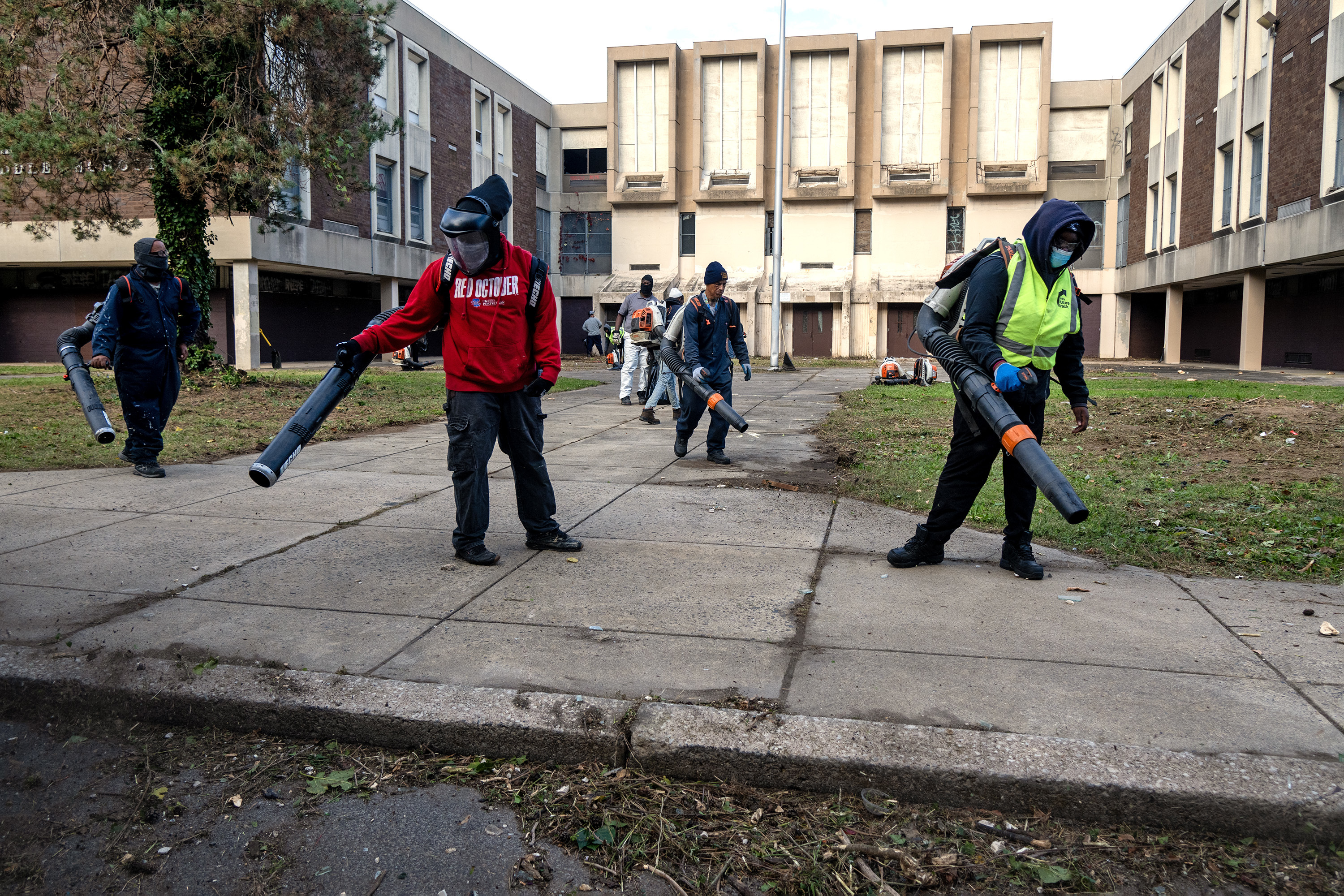
City workers clean up in front of the vacant Ada H.H. Lewis Middle School Monday, just minutes before the start of a community candlelight vigil in memory of Kada Scott.
A tragic turn for the property
In a letter dated Friday, Bass called on the school district to demolish the vacant school, saying she was troubled by the evidence that led investigators to the property during the search for Scott.
“The continued presence of this unsecured and deteriorating structure is simply unacceptable,” the Council member wrote in a statement, noting the site is now associated with “tragic violence.”
Cell phone records and tips from the public first led police to the former Ada Lewis school last week, where they found Scott’s pink phone case and debit card, but nothing else. Then, late Friday, police received a new tip saying that they had missed something on their first search of the grounds, and that they should look along the wooden fence that divides the school from the neighboring Awbury Recreation Center. Officers returned to the property Saturday and found Scott’s body, buried in a shallow grave in a wooded area behind the school.
Prosecutors expect to charge Keon King, 21, with the murder, though police continue searching for others who they believe may have helped dispose of evidence.
Bass took office in 2012,when the school wasalready vacant. She said she pushed the school district for several years to take action, as nuisances piled up at the property. She said shestill hopes that another “institution” could replace Lewis.
“I think that having something that the community wants is not hard to figure out,” Bass said. “This is what the community’s interested in — they’re interested in another institution.”
She said a proposal for a charter school is now in the works, though she said she was unable to provide details.
Julius Peden, 5, and Jaihanna Williams Peden (right), 14, pause at a memorial for Kada Scott on Monday.
A glut of vacant schools
The school district still views Lewis as a potential “swing space” — a building that could be used to house students if another district building is closed due to environmental problems.
There is precedent: The district has used other school buildings for such purposes, like Anna B. Pratt in North Philadelphia, which was also closed in 2013, to house early-childhood programs, and then students from other North Philadelphia schools whose buildings were undergoing renovation.
Still, it remains unclear how much it would cost to bring the Lewis building back to an inhabitable state.
The school system currently has about 70,000 more seats throughout the city than students enrolled. Though officials have said their first preference is to have closed schools reused for community benefit, it’s unlikely that all will be able to serve that purpose. And the timetable will surely be slow.
City officials at times have expressed frustration with the pace at which the district is making decisions about how to manage its buildings. School leaders have said the wait is necessary given the district’s capacity and the need to make correct choices and not rush the process.
Weinstein said the tragedy that culminated at Lewis reflected the conventional wisdom that blight breeds crime.
“There’s always consequences to shutting down a proposal that the community supports,” Weinstein said. “In most cases, nothing bad happens. In this case, something very bad happened.”
Staff writer Ellie Rushing contributed to this article.
The killing of Kada Scott is tragic on many levels, but hopefully, some lessons can be learned to honor her life.
Scott’s death is all the more painful for her family and friends because it could have been prevented. That’s because it appears District Attorney Larry Krasner and the Philadelphia court system failed her.
The man accused of abducting Scott had been previously charged with assaulting an ex-girlfriend twice in the last year, but prosecutors withdrew the charges after the victim did not show up for court.
After Scott’s disappearance, Krasner’s office admitted its handling of the earlier cases was a mistake. If the district attorney’s office had instead prosecuted Keon King, 21, then perhaps Scott, 23, would still be alive.
“We could’ve done better,” Krasner said at a news conference Monday, echoing earlier comments from Assistant District Attorney Ashley Toczylowski, who said last week, “Everyone involved at this point, including the [initial prosecutor], agrees that we wish this happened differently.”
To be sure, hindsight is 20/20. But a review of King’s legal entanglements indicates a series of miscues may have enabled Scott’s death.
The case also offers a window into the challenges of filing domestic abuse charges, and underscores the need for prosecutors to be more aggressive in going after the accused while doing more to ensure the safety of victims.
For starters, King’s initial assault charges last November were handled by an inexperienced assistant district attorney who was juggling multiple cases. During that incident, prosecutors said, King grabbed an ex-girlfriend by the neck and tried to strangle her after she refused to lie on the bed with him, according to the affidavit.
But after initially cooperating with the authorities, King’s accuser stopped responding to calls from prosecutors. After she failed to appear at three court hearings, the district attorney’s office withdrew the case.
In January, King tried to break into the woman’s home, but fled before police arrived, according to an affidavit. He returned later in the day and dragged the woman by her hair, shoved her in a car, and drove away before dropping her off on the side of the road.
This time, the woman and her friend captured video of King trying to get into her home. He was arrested again and charged with kidnapping, strangulation, and other charges.
But once again, the victim and her friend refused to cooperate with prosecutors, so the charges were withdrawn in May.
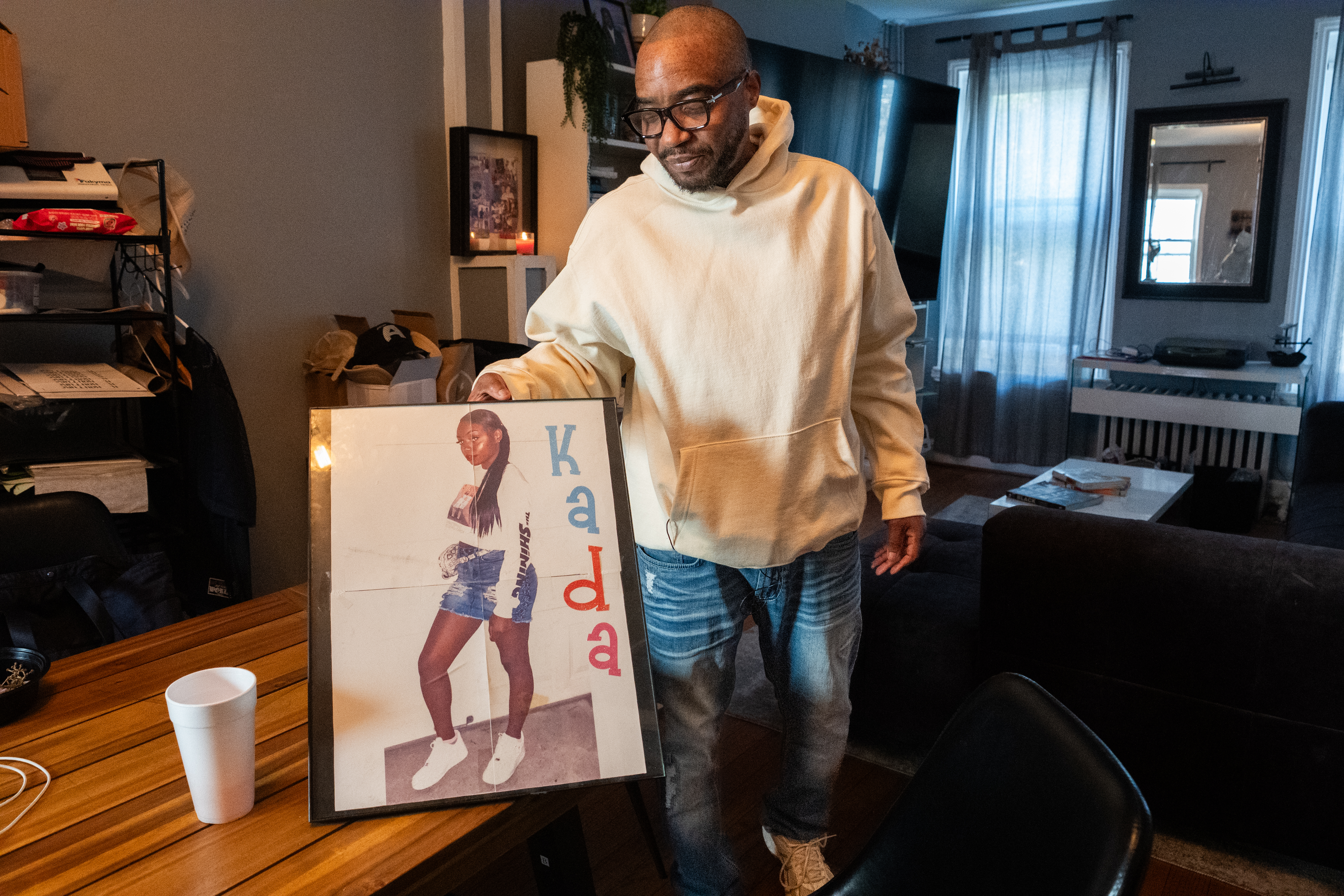
Kevin Scott, Kada Scott’s father, with a photo of his daughter.
This is not unusual, as victims of domestic violence often live in fear of the perpetrators. Reviewing the period between 2010 and 2020, researchers at the University of Pennsylvania found that 70% of victims of domestic violence cases failed to appear in Philadelphia’s courts.
A big part of the problem is that the accused are often out on bail and still threatening the victims. In King’s case, after the second set of assault charges, prosecutors requested bail of $1 million, but the magistrate lowered it to $200,000.
King posted the necessary 10% — or $20,000 — and was released in April.
Krasner blamed the magistrate for lowering the bail, but his office could have appealed the ruling.
There is a fine line in detaining suspects accused of crimes for months on end until a trial. But in domestic violence cases, the current system is not working and needs to be revamped.
Prosecutors and judges must do everything possible to guarantee the safety of victims. Victims need more support within the criminal justice system to ensure their safety.
More broadly, additional preventive steps are needed to reduce violence against women, including standing up to rape culture, empowering women, and teaching boys to respect women.
Black women disproportionately experience higher rates of domestic abuse, including rape and homicides, studies show, further underscoring the need for more awareness, training, and preventive measures.
In this instance, given that King had been charged once before, the magistrate and Krasner’s office dropped the ball.
And although the victim refused to testify, the district attorney’s office could have used the video evidence to move forward with King’s prosecution — though not having the witnesses testify certainly would have made for a tougher case.
To his credit, Krasner, a former defense attorney who faces reelection next month and has been criticized for being soft on crime, admitted his office was ultimately to blame.
Sadly, a young, vibrant woman full of promise has died, and another woman was previously assaulted and traumatized. Krasner said the public played an enormous role in Scott’s case, and asked for anyone with information to call 215-686-TIPS.
The only positive outcome will be to ensure justice is served, and a broken legal system in which victims are afraid to testify is fixed, so others do not experience the same horrific outcome.