Category: Crime

  • Penn State’s Gavin McKenna, a top 2026 NHL draft prospect, charged with aggravated assault

    Penn State’s Gavin McKenna, a top 2026 NHL draft prospect, charged with aggravated assault

    Penn State winger Gavin McKenna, the projected No. 1 pick in the 2026 NHL draft, was charged with aggravated assault and related crimes Wednesday, after allegedly assaulting a 21-year-old man during an altercation in State College over the weekend, according to a statement released by the State College Police Department.

    The arrest, first reported by Onward State, a Penn State student-run blog, stemmed from an incident hours after McKenna played in Penn State’s outdoor game against Michigan State at Beaver Stadium on Saturday afternoon. According to the local police department, at approximately 8:45 p.m. in the 100 block of South Pugh Street, he allegedly punched the male in the face twice, resulting in a fractured jaw and a lost tooth and requiring corrective surgery and his mouth being wired shut.

    McKenna, 18, has been charged with aggravated assault, simple assault, harassment, and disorderly conduct for fighting, court records show.

    The felony, which is defined as “attempts to cause serious bodily injury or causes injury with extreme indifference,” carries a 20-year maximum sentence in Pennsylvania. The misdemeanor carries a maximum of two years, and fines are also attached to each of the four counts.

    McKenna, a freshman at Penn State, was arraigned before District Judge Casey M. McClain and released on $20,000 unsecure bail. He is scheduled for a preliminary hearing the morning of Feb. 11 at the Centre County Courthouse in Bellefonte, Pa.

    Penn State officials acknowledged the arrest on Wednesday evening, telling The Inquirer, “We are aware that charges have been filed; however, as this is an ongoing legal matter, we will not have any further comment.”

    McKenna’s adviser, Pat Brisson, was not immediately available for comment.

    Penn State forward Gavin McKenna was projected to be the No. 1 pick in the 2026 NHL draft.

    Hours before the alleged assault on Saturday, McKenna scored a goal and added two assists in the No. 6 Nittany Lions’ 5-4 overtime loss to the No. 2 Spartans.

    A native of Whitehorse, Yukon, McKenna is ranked No. 1 on the NHL’s 2026 Central Scouting list among North American skaters.

    After a new rule was passed granting Canadian Hockey League players NCAA eligibility this season, McKenna left the CHL this summer to play college hockey. The freshman, who is one of the biggest recruits to ever play college hockey and one of the faces of the changing landscape of the sport, has 11 goals and 32 points in 24 games this season.

    This is a developing story. Check back for updates.

  • Fire Marshal rules that a fatal house fire in Kingsessing was intentionally set

    Fire Marshal rules that a fatal house fire in Kingsessing was intentionally set

    A 25-year-old man was pronounced dead after he was pulled from a burning house in a fire that was intentionally set early Wednesday in the city’s Kingsessing, authorities said.

    The Philadelphia Fire Department responded just before 1:45 a.m. to a report of a fire in a two-story rowhouse on the 5400 block of Regent Street, authorities said

    Firefighters battled the fire on the second floor and attempted to rescue a man from the back bedroom. He was transported by medics to Penn Presbyterian Medical Center, where he was pronounced dead at 2:29 a.m.

    The fire was placed under control at 2:01 a.m. and no other injuries were reported.

    “The Fire Marshal’s Office did determine this fire was incendiary, meaning it was set intentionally,” said Rachel Cunningham, spokesperson for the fire department.

    The case is now being investigated by police.

  • Still no suspect in the disappearance of ‘Today’ host Savannah Guthrie’s mother

    Still no suspect in the disappearance of ‘Today’ host Savannah Guthrie’s mother

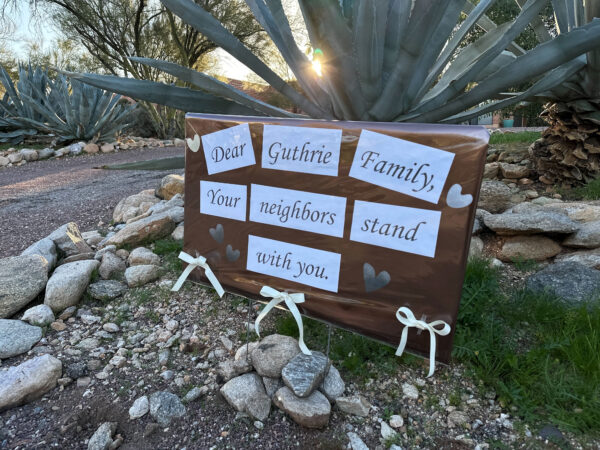
    TUCSON, Ariz. — The search for Today show host Savannah Guthrie’s mother still had no suspect or person of interest Wednesday, authorities said, four days after she disappeared with signs of forced entry at her home in southern Arizona.

    Investigators believe Nancy Guthrie was taken against her will over the weekend and Pima County Sheriff Chris Nanos has said they don’t have credible information indicating Guthrie’s disappearance was targeted. Guthrie has limited mobility, and officials do not believe she left on her own. Nanos said she is of sound mind.

    “Detectives continue to speak with anyone who may have had contact with Mrs. Guthrie,” the sheriff’s department said in a statement on social media Wednesday. “Detectives are working closely with the Guthrie family.”

    Multiple media organizations reported receiving purported ransom notes Tuesday that they handed over to investigators. The sheriff’s department has said it’s taking the notes and other tips seriously but declined to comment further.

    The Pima County sheriff and the Tucson FBI chief urged the public to offer tips during a news conference Tuesday. Nanos has said Guthrie needs daily medication and could die without it. Asked whether officials were looking for her alive, he said, “We hope we are.”

    Authorities say Nancy Guthrie was last seen around 9:30 p.m. Saturday at her home in the Tucson area, where she lived alone, and she was reported missing midday Sunday. Someone at her church called a family member to say she was not there, leading family to search her home and then call 911.

    DNA samples have been gathered and submitted for analysis as part of the investigation. “We’ve gotten some back, but nothing to indicate any suspects,” Nanos said.

    There were signs of forced entry at Guthrie’s home, evidence of a nighttime kidnapping, and several personal items were still there, including Guthrie’s cell phone, wallet and car, according to a person familiar with the investigation, who was not authorized to publicly discuss details of the case and spoke to the Associated Press on condition of an anonymity. Investigators were reviewing surveillance video from nearby homes and information from area license plate cameras and analyzing local cell phone towers data.

    Guthrie’s upscale Catalina Foothills neighborhood is quiet and mostly dark at night, lit mainly by car headlights and homes spaced far apart. Long driveways, front gates and desert plants provide a buffer from the winding streets. Saguaro cacti tower above her home’s roofline, and wispy trees partially block the view of the front door. Decorative streetlamps and prickly pear cacti dot the grassy front yard.

    Jim Mason, longtime commander of a search and rescue posse for the Maricopa County Sheriff’s Office, said desert terrain can make looking for missing people difficult. Sometimes it’s hard to peer into areas that are dense with mesquite trees, cholla cactus and other brush, he said. His group is based 175 miles (280 kilometers) north of Tucson, and is not involved in the search for Guthrie.

    On the other side of the country, Victory Church in Albany, New York, said it’s offering a $25,000 reward for information that leads to finding Nancy Guthrie.

    “Me and my wife, we watch Savannah every single morning. We’ve heard of her faith. We’ve heard of her mom’s faith. And she’s got such a sweet spirit,” Pastor Charlie Muller said.

    For a third day Wednesday, Today opened with Nancy Guthrie’s disappearance, but Savannah Guthrie was not at the anchor’s desk. NBC Sports said Tuesday that Guthrie will not be covering the 2026 Milan-Cortina Winter Olympics “as she focuses on being with her family during this difficult time.”

    The Today host grew up in Tucson, graduated from the University of Arizona and previously worked as a reporter and anchor at Tucson television station KVOA. Her parents settled in Tucson in the 1970s when she was a young child. The youngest of three siblings, she credits her mom with holding their family together after her father died of a heart attack at 49, when Savannah was just 16.

  • Democrats demand ‘dramatic changes’ for ICE, including masks, cameras and judicial warrants

    Democrats demand ‘dramatic changes’ for ICE, including masks, cameras and judicial warrants

    WASHINGTON — Democrats are threatening to block funding for the Homeland Security Department when it expires in two weeks unless there are “dramatic changes” and “real accountability” for U.S. Immigration and Customs Enforcement and other law enforcement agencies who are carrying out President Donald Trump’s campaign of federal immigration enforcement in Minnesota and across the country.

    Congress is discussing potential new rules for ICE and U.S. Customs and Border Protection after officers shot and killed two Minneapolis protesters in January. Senate Democratic leader Chuck Schumer and House Democratic leader Hakeem Jeffries reiterated their party’s demands on Wednesday, with Schumer telling reporters that Congress must “rein in ICE in very serious ways, and end the violence.”

    Democrats are “drawing a line in the sand” as Republicans need their votes to continue the funding, Jeffries said.

    The negotiations come amid some bipartisan sentiment that Congress should step in to de-escalate tensions over the enforcement operations that have rocked Minnesota and other states. But finding real agreement in such a short time will be difficult, if not “an impossibility,” as Senate Majority Leader John Thune (R., S.D.) said Tuesday.

    President Donald Trump last week agreed to a Democratic request that funding for the DHS be separated from a larger spending bill and extended at current levels for two weeks while the two parties discuss possible requirements for the federal agents. House Speaker Mike Johnson (R., La.) said this weekend that he was at the White House when Trump spoke with Schumer and that they were “on the path to get agreement.”

    But it’s unclear if the president or enough congressional Republicans will agree to any of the Democrats’ larger demands that the officers unmask and identify themselves, obtain judicial warrants in certain cases and work with local authorities, among other asks. Republicans have already pushed back.

    And House GOP lawmakers are demanding that some of their own priorities be added to the Homeland Security spending bill, including legislation that would require proof of citizenship before Americans register to vote. South Carolina Sen. Lindsey Graham and other Republican senators are pushing for restrictions on sanctuary cities that they say don’t do enough to crack down on illegal immigration. There’s no clear definition of sanctuary jurisdictions, but the term is generally applied to state and local governments that limit cooperation with federal immigration authorities.

    It’s also uncertain if Democrats who are furious over the Trump administration’s increasingly aggressive immigration enforcement operations would be willing to compromise.

    “Republicans need to get serious,” said Schumer, a New York Democrat, adding that they will propose “tough, strong legislation” in the next day.

    A look at Democrats’ demands and what Republicans are saying about them:

    Agreement on body cameras

    Republicans say they are open to officer-worn body cameras, a change that was already in the underlying homeland security spending bill. Homeland Security Secretary Kristi Noem backed that up on Monday when she ordered body-worn cameras to be issued to every DHS officer on the ground in Minneapolis, including those from ICE. She said the policy would expand nationwide as funding becomes available.

    The bill already directed $20 million to outfit immigration enforcement agents with body-worn cameras.

    Gil Kerlikowske, who served as commissioner of U.S. Customs and Border Protection from 2014 to 2017, said that most agents are “very supportive” of cameras because they could help exonerate officers. But he added that complex questions remain, including when footage should be released and when cameras must be activated.

    “When do you turn it on? And if you got into a problem and didn’t have it on, are you going to be disciplined? It’s really pretty complex,” he said.

    Schumer said Tuesday that the body cameras “need to stay on.”

    Disagreement on masking

    As videos and photos of aggressive immigration tactics and high-profile shootings circulate nationwide, agents covering their faces with masks has become a flashpoint. Democrats argue that removing the masks would increase accountability. Republicans warn it could expose agents to harassment and threats.

    “State law enforcement, local folks don’t do it,” said Rep. Bennie Thompson, the top Democrat on the Committee for Homeland Security. ”I mean, what’s so special about an ICE law enforcement agency that they have to wear a mask?”

    But Republicans appear unlikely to agree.

    “Unlike your local law enforcement in your hometown, ICE agents are being doxed and targeted. We have evidence of that,” Johnson said on Tuesday. He added that if you “unmask them and you put all their identifying information on their uniform, they will obviously be targeted.”

    Immigration officers are already required to identify themselves “as soon as it is practical and safe to do so,” according to federal regulations. ICE officials insist those rules are being followed.

    Critics, however, question how closely officers adhere to the regulations.

    “We just see routinely that that’s not happening,” said Nithya Nathan Pineau, a policy attorney with the Immigrant Legal Resource Center.

    Judicial vs. administrative warrants

    Democrats have also demanded stricter use of judicial warrants and an end to roving patrols of agents who are targeting people in the streets and in their homes. Schumer said Tuesday that they want “arrest warrants and an end to racial profiling.”

    Most immigration arrests are carried out under administrative warrants, internal documents issued by immigration authorities that authorize the arrest of a specific person but do not permit officers to forcibly enter private homes or other non-public spaces without consent. Traditionally, only warrants signed by judges carry that authority.

    But an internal ICE memo obtained by The Associated Press last month authorizes ICE officers to use force to enter a residence based solely on a more narrow administrative warrant to arrest someone with a final order of removal, a move that advocates say collides with Fourth Amendment protections.

    Democrats have not made clear how broadly they want judicial warrants used. Jeffries of New York said that Democrats want to see “an end to the targeting of sensitive locations like houses of worship, schools and hospitals.”

    Johnson said Tuesday that Democrats are trying to “add an entirely new layer” by seeking warrants signed by a judge rather than the administrative warrants that are signed by the department. “We can’t do that,” he said.

    The speaker has said that an end to roving patrols is a potential area of agreement, but he did not give details.

    Code of conduct, more accountability

    Democrats have also called for a uniform code of conduct for all ICE and federal agents similar to that for state and local law enforcement officers.

    Federal officials blocked state investigators from accessing evidence after protester Renee Good was shot and killed by an ICE agent on Jan. 7. Gov. Tim Walz, a Democrat, demanded that the state be allowed to take part, saying that it would be “very difficult for Minnesotans” to accept that an investigation excluding the state could be fair.

    Hoping for a miracle

    Any deal Democrats strike on the Department of Homeland Security is unlikely to satisfy everyone in the party. Rep. Ayanna Pressley of Massachusetts said she would never support an agreement that didn’t require unmasking.

    “I ran for Congress in 2018 on abolish ICE,” Pressley said. “My position has not changed.”

    Thune, of South Dakota, has repeatedly said it’s an “impossibility” to negotiate and pass something so complicated in two weeks. He said any talks should be between Democrats and Trump.

    “I don’t think it’s very realistic,” Thune said Tuesday about finding quick agreement. “But there’s always miracles, right?”


  • The former Prince Andrew moves to King Charles III’s private estate after Epstein document uproar

    The former Prince Andrew moves to King Charles III’s private estate after Epstein document uproar

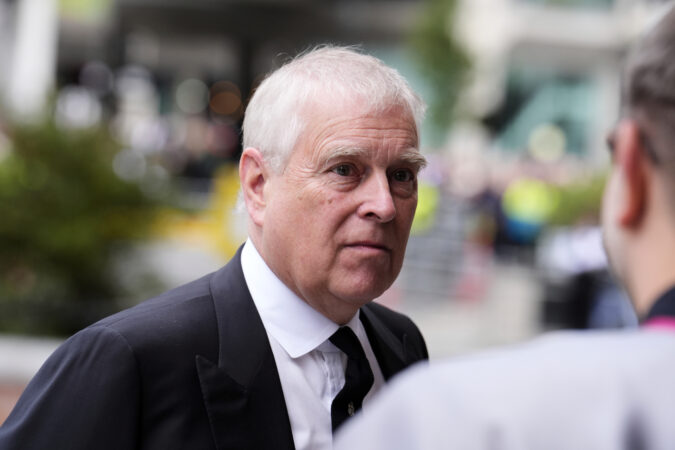
    LONDON — The former Prince Andrew has moved out of his longtime home on crown-owned land near Windsor Castle earlier than expected after the latest release of documents from the U.S. investigation of Jeffrey Epstein revived questions about his friendship with the convicted sex offender.

    The 65-year-old brother of King Charles III, now known as Andrew Mountbatten-Windsor, left the Royal Lodge in Windsor on Monday and is now living on the king’s Sandringham estate in eastern England, Britain’s Press Association reported. British media reported that Mountbatten-Windsor will live temporarily at Wood Farm Cottage while his permanent home on the estate undergoes repairs.

    Mountbatten-Windsor’s move to Sandringham was announced in October when Charles stripped him of his royal titles amid continuing revelations about his links to Epstein. But the former prince was expected to remain at Royal Lodge, where he has lived for more than 20 years, until the spring.

    The expedited departure came as Thames Valley Police announced they were investigating allegations that Epstein flew a second woman to Britain to have sex with Mountbatten-Windsor. A lawyer for the alleged victim told the BBC that the encounter took place in 2010 at Royal Lodge.

    The allegations are separate from those made by Virginia Giuffre, who claimed she had been trafficked to Britain to have sex with Andrew in 2001, when she was just 17. Giuffre died by suicide last year.

    Mountbatten-Windsor has repeatedly denied any wrongdoing in his relationship with Epstein. He hasn’t responded publicly to the new trafficking allegation.

    Mountbatten-Windsor features a number of times in the 3 million pages of documents the U.S. Department of Justice released on Friday.

    In an email dated March 23, 2011, the lawyer for an exotic dancer said Epstein and Mountbatten-Windsor asked her to take part in a threesome at the sex offenders’ Florida home.

    The woman’s legal representatives accused the pair of having “prevailed upon her to engage in various sex acts” during the alleged encounter in early 2006 after initially hiring her to dance for them. The woman was only paid $2,000, not the $10,000 she was promised, her lawyer said.

    The lawyer offered to settle the matter confidentially for $250,000.

    “My client has not pursued her claims against your client until this time because she is not proud of the circumstances of that night,” the lawyer wrote. “She was working as an exotic dancer, but she was treated like a prostitute.”

    In other correspondence between Epstein and someone believed to be Mountbatten-Windsor shows Epstein offering to arrange a date between the man and a 26-year-old Russian woman. The man, who signs off simply as “A,” later suggests that he and Epstein have dinner in London, either at a restaurant or Buckingham Palace.

    The documents do not show wrongdoing by many of those named. The appearance of famous people in the files often reflect Epstein’s extremely wide reach.

    The former prince’s residence at Royal Lodge has long been a point of contention between the king and his brother.

    After Charles became king in 2022, he tried to force his brother to move into a smaller house on the Windsor Castle estate. Mountbatten-Windsor refused, citing a lease on the property that ran through 2078.

    But the pressure for him to leave became irresistible in October as lawmakers and the public raised questions about the favorable terms of Mountbatten-Windsor’s lease on the 30-room house and surrounding estate, which is managed by the Crown Estate.

    The Crown Estate controls properties throughout the country that are technically owned by the monarchy but are managed for the benefit of British taxpayers.

    By contrast, the Sandringham Estate in Norfolk is the personal property of the king.

    Art museum official bails

    Art museum curator and director David A. Ross has left his post at the School of Visual Arts in New York after the latest release of documents about Epstein revealed his friendship with him.

    Ross, who was chair of the MFA art practice program, resigned Tuesday, the school said in a statement, adding that it was “aware of correspondence” between him and Epstein. Ross’ online page at the school was offline Wednesday.

    The resignation was first reported by ARTnews.

    In emails dating from 2009, Ross banters with, reaches out to meet and consoles Epstein, calling him “incredible” and “I’m still proud to call you a friend.”

    In one exchange in 2009, Epstein suggests an exhibition called “Statutory” that would feature “girls and boys ages 14-25 ”where they look nothing like their true ages.” Replied Ross: “You are incredible” and noted that Brooke Shields posed nude at age 10.

    Also that year, Ross wrote to console Epstein after the financier had been deposed. “Damn, this was not what you needed or deserved,” Ross wrote. “I know how tough you are, and in fact, it probably bothers me as your friend more than it does you.”

  • Police ‘buried’ footage that showed a teen didn’t kill his friend at a SEPTA station, lawsuit says

    Police ‘buried’ footage that showed a teen didn’t kill his friend at a SEPTA station, lawsuit says

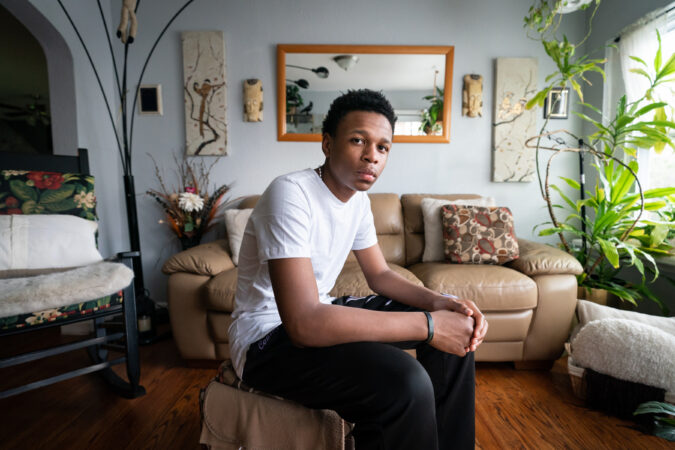
    A teenager who faced charges that were later dropped in the killing of his friend, and spent 49 days in jail before video evidence established his innocence, has sued Philadelphia and SEPTA police officers who were involved in his prosecution.

    Zaire Wilson, 18, is accusing law enforcement officers of hiding and ignoring evidence showing he did not shoot and kill Tyshaun Welles on a platform at the City Hall station on Jan. 11, 2024.

    Welles, 16, was hit in the head and his family decided to take him off life support less than a week later. The Frankford High School sophomore was not the target of the shooting, detectives said.

    Tyshaun Welles, 16, was struck in the head by a stray bullet on the subway platform at SEPTA’s City Hall station.

    Wilson and Quadir Humphrey, 20, were arrested the night of the shooting. Police said Wilson pulled out a gun and Humphrey used it to open fire at the group of teens. After Welles died, Wilson was charged with murder and held without bail at the Juvenile Justice Services Center.

    The Philadelphia District Attorney’s Office dropped the charges against Wilson in late February 2024 after prosecutors received surveillance footage from SEPTA.

    “The SEPTA surveillance video of the incident, which was not available to the DA’s Office at the time of Wilson’s arrest, shows that he was clearly not involved in the shooting and murder of Welles‚” the office said in a statement.

    Law enforcement did not share the footage with prosecutors until Feb. 26, 2024, and the district attorney’s office charged Wilson based on a criminal complaint that was riddled with errors and omissions, according to the lawsuit, which was filed last month in the Eastern District of Pennsylvania.

    It is “shocking” that “critical video evidence” was not available to prosecutors at the time of Wilson’s arrest, said Jon Cioschi, a Wiseman, Schwartz, Cioschi & Trama attorney who filed the complaint.

    “It is our view that the video footage conclusively establishes Zaire’s innocence, and that no reasonable officer, taking the evidence seriously, would or could have concluded otherwise,” Cioschi said.

    The city’s law department declined to comment on active litigation. SEPTA did not respond to a request for comment.

    Humphrey pleaded guilty to third-degree murder, aggravated assault, and related crimes, and was sentenced to 17 to 45 years in prison in July.

    What the surveillance footage shows

    Wilson and Welles spent the evening of Jan. 11 with a group of friends at LevelUp, a neighborhood organization in West Philadelphia, the complaint says.

    Surveillance footage reviewed by The Inquirer shows the group, which included the two teens and Wilson’s teenage brother, arriving at the westbound Market-Frankford Line platform at the City Hall SEPTA station around 9:15 p.m.

    As the group waited for the train, the teens chatted and played on the platform as at least four SEPTA officers stood near them.

    Wilson playfully chased a girl in an orange shirt to the east end of the platform. He saw Humphrey, who arrived to the platform separately from the teens, and the two chatted and paced together for a few seconds. As Wilson began to walk back toward the group, a train approached, and Humphrey pulled out a gun and opened fire. Wilson ran to the staircase and got off the platform while Humphrey continued to shoot.

    The teens dispersed during the pandemonium, but one dropped to the ground. After the shooting ended and Humphrey ran away, officers picked up Welles and took him off the platform.

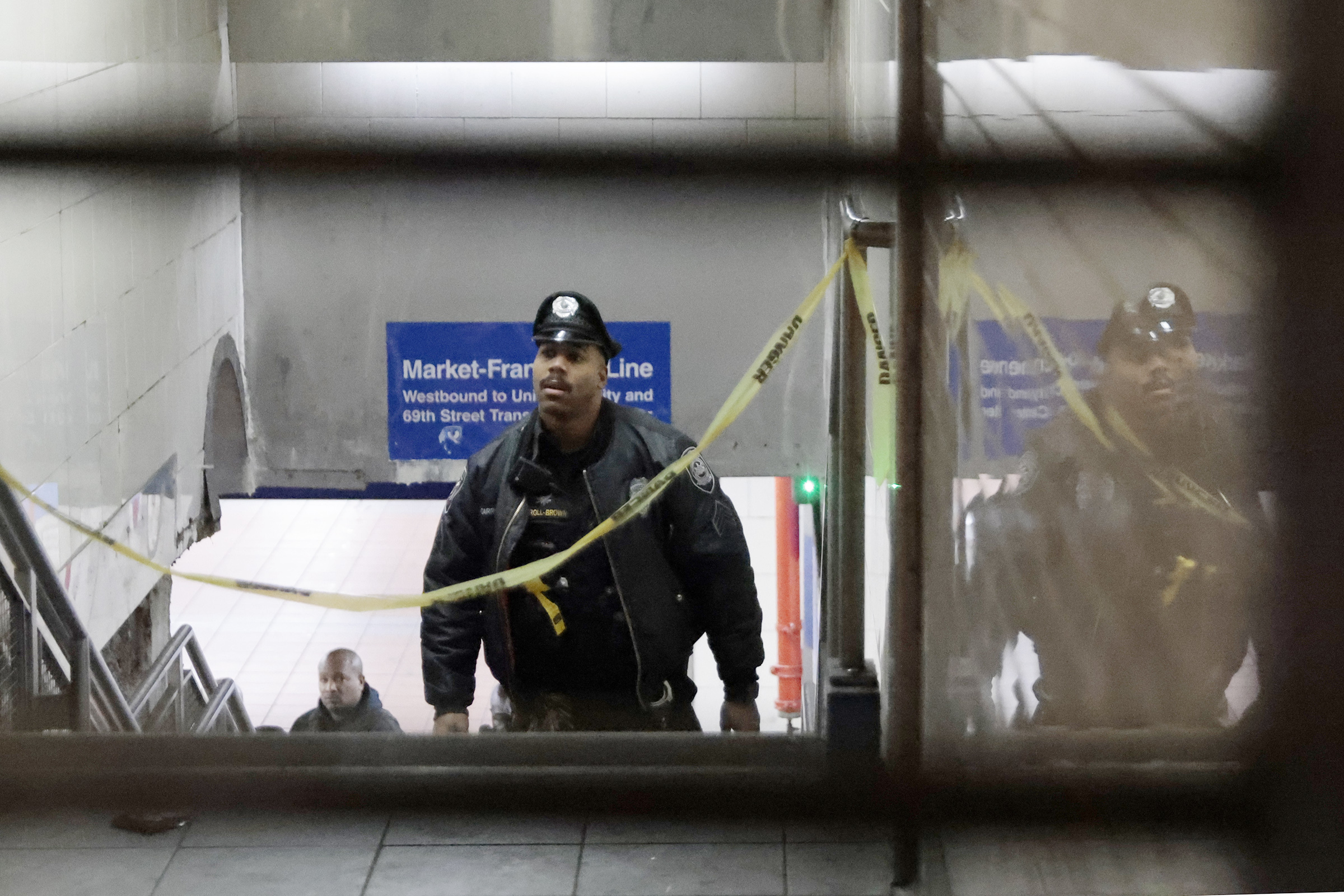
    A SEPTA law enforcement officer walks up stairs from a platform where earlier a SEPTA transit police officer reported a shooting and a victim down on the westbound platform at 15th Street Station near City Hall in Philadelphia on Thursday, Jan. 11, 2024.

    Moments after the shooting, Wilson returned to the platform. He raised his hands as officers with guns drawn rushed to him, pinned him to the ground, frisked him, and let him go. Wilson then walked down the platform where he met his brother and another teen. The three abruptly ran upstairs.

    The footage contradicts police statements that Wilson brandished a gun. That Wilson returned to the scene, where he knew a group of officers were standing, while Humphrey ran away, should have indicated his “consciousness of innocence,” the suit says.

    Humphrey himself told staff at the Juvenile Justice Services Center that Wilson had nothing to do with the shooting, according to the lawsuit, and wrote a letter to a judge on Jan. 16, 2024, days after the shooting, that said “the person I was arrested and detained with has no connection whatsoever.”

    “Rather than follow the facts,” the suit says, “defendants buried them.”

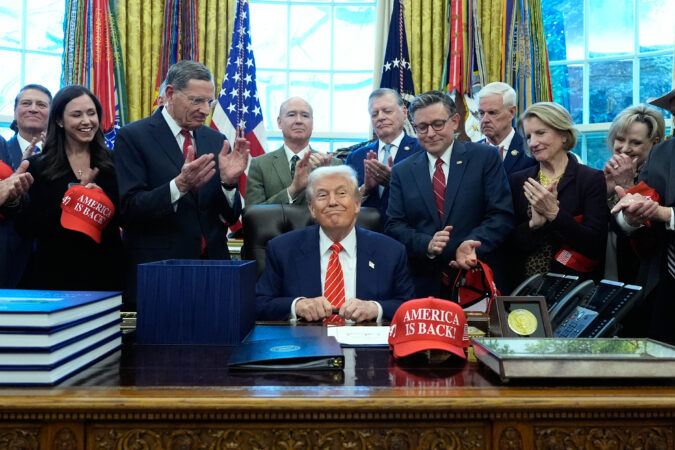
  • Judge appears skeptical of Trump’s latest bid to nix his hush money conviction

    Judge appears skeptical of Trump’s latest bid to nix his hush money conviction

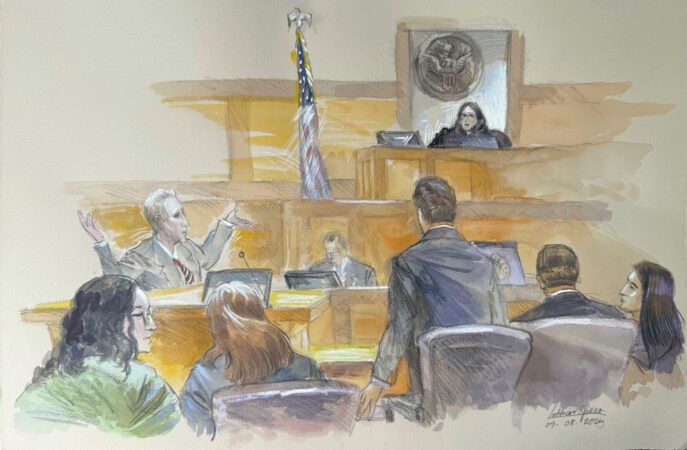
    NEW YORK — A federal judge appeared poised to again reject President Donald Trump’s bid to erase his hush money conviction, slamming his lawyers Wednesday for legal maneuvers he said amounted to taking “two bites at the apple.”

    Directed by an appeals court to take a fresh look at the matter, Judge Alvin K. Hellerstein was at turns inquisitive and incredulous in nearly three hours of arguments in Manhattan federal court. Sparring with Trump lawyer Jeffrey Wall throughout, he suggested the whole exercise was moot because the president’s legal team had waited too long after the historic verdict to seek federal court relief.

    The 2nd U.S. Circuit Court of Appeals in November ordered Judge Hellerstein to reconsider his earlier decision to keep the New York case in state court instead of moving it to federal court, where Trump can seek to have it thrown out on presidential immunity grounds.

    A three-judge panel ruled Hellerstein erred in his September 2025 ruling by failing to consider “important issues relevant” to Trump’s request to move the case to federal court. But they expressed no view on how he should rule.

    Trump, a Republican, did not attend Wednesday’s arguments.

    Hellerstein heard from Wall and Steven Wu, a lawyer from the Manhattan district attorney’s office, which prosecuted the case and wants it to remain in state court.

    Hellerstein thanked both men for their “very provocative arguments” and said he would issue a ruling at a later date.

    Trump was convicted in state court

    Trump was convicted in May 2024 of 34 felony counts of falsifying business records to conceal a hush money payment to adult film actor Stormy Daniels, whose allegations of an affair with Trump threatened to upend his 2016 presidential campaign. He was sentenced to an unconditional discharge, leaving his conviction intact but sparing him any punishment.

    Trump denies Daniels’ claim and said he did nothing wrong. He has asked a state appellate court to overturn the conviction.

    Hellerstein interrupted Wall almost as soon as Wednesday’s arguments began, injecting his thoughts and questions and telling the lawyer “I think I have to quarrel with you a bit” about the sequence of events that followed Trump’s conviction in May 2024.

    The judge took issue with the Trump legal team’s decision making after the verdict and a subsequent U.S. Supreme Court ruling that presidents and former presidents cannot be prosecuted for official acts.

    Instead of immediately seeking to move the case to federal court, Trump’s lawyers first asked the trial judge, Juan Merchan, to throw out the verdict on immunity grounds.

    Wall argued that Trump’s lawyers were in a time crunch after the Supreme Court’s July 1, 2024, ruling because Trump’s sentencing was scheduled for just 10 days later. Had Trump’s lawyers sought to bring the case to federal court at that point, the district attorney’s office, which prosecuted the case, may have criticized that as premature, Wall said.

    Trump’s lawyers did not ask Hellerstein to intervene until nearly two months later. The judge on Wednesday called that a “strategic decision” and suggested that by going to the state court first, Trump’s lawyers cost him the right to pursue remedies in federal court.

    “No, your honor,” Wall said. “It is what any sensible litigant would do” in that situation.

    “Not so,” Hellerstein replied.

    “That is a decision on your part,” the judge added. “You didn’t have to do that. You could have come right to the federal court. Just by filing a notice of removal, there would be no sentencing.”

    Trump’s lawyers “made a choice,” Hellerstein said, ”and you sought two bites at the apple.”

    Normally, such a request must be made within 30 days of an arraignment, but a federal appeals court in Washington, D.C. has ruled that exceptions can be made if “good cause” is shown.

    Wu concurred that Wall’s argument “confirms this was a strategic choice by the defendants.”

    He also said Trump’s lawyers knew they could have simultaneously submitted arguments or a letter to Merchan and still sought to transfer the case to federal court. Past rulings have made clear that “you cannot go to state court and when you’re unhappy, then go to federal court,” Wu said.

    Previous requests to move the case were denied

    Hellerstein, who was nominated by Democratic President Bill Clinton, has twice denied Trump’s requests to move the case. The first was after Trump’s March 2023 indictment; the second was the post-verdict ruling at issue at Wednesday’s hearing.

    In that ruling, Hellerstein said Trump’s lawyers had failed to meet the high burden of proof for changing jurisdiction and that Trump’s conviction for falsifying business records involved his personal life, not official actions that the Supreme Court ruled are immune from prosecution.

    The 2nd Circuit panel said Hellerstein’s ruling, which echoed his pre-trial denial, “did not consider whether certain evidence admitted during the state court trial relates to immunized official acts or, if so, whether evidentiary immunity transformed” the hush money case into one that relates to official acts.

    The three judges said Hellerstein should closely review evidence Trump claims relate to official acts.

    If Hellerstein finds the prosecution relied on evidence of official acts, the judges said, he should weigh whether Trump can argue those actions were taken as part of his White House duties, whether Trump “diligently sought” to have the case moved to federal court and whether the case can even be moved to federal court now that Trump has been convicted and sentenced in state court.

  • Man who tried to shoot Trump at a Florida golf course gets life in prison

    Man who tried to shoot Trump at a Florida golf course gets life in prison

    FORT PIERCE, Fla. — A man convicted of trying to assassinate President Donald Trump on a Florida golf course in 2024 was sentenced Wednesday to life in prison after a federal prosecutor said his crime was unacceptable “in this country or anywhere.”

    U.S. District Judge Aileen Cannon pronounced Ryan Routh’s fate in the same Fort Pierce courtroom that erupted into chaos in September when he tried to stab himself shortly after jurors found him guilty on all counts.

    “American democracy does not work when individuals take it into their own hands to eliminate candidates. That’s what this individual tried to do” Assistant U.S. Attorney John Shipley told the judge.

    Routh’s new defense attorney, Martin L. Roth, argued that “at the moment of truth, he chose not to pull the trigger.”

    The judge pushed back, noting Routh’s history of arrests, to which Roth said, “He’s a complex person I’ll give the court that, but he has a very good core.”

    Routh then read from a rambling, 20-page statement. Cannon broke in and said none of what he was saying was relevant, and gave him five more minutes to talk.

    “I did everything I could and lived a good life,” Routh said, before the judge cut him off.

    “Your plot to kill was deliberate and evil,” she said. “You are not a peaceful man. You are not a good man.”

    She then issued his sentence: Life without parole, plus 7 years on a gun charge. His sentences for his other three crimes will run concurrently.

    Routh’s sentencing had initially been scheduled for December, but Cannon agreed to move the date back after Routh decided to use an attorney during the sentencing phase instead of representing himself as he did for most of the trial.

    Routh was convicted of trying to assassinate a major presidential candidate, using a firearm in furtherance of a crime, assaulting a federal officer, possessing a firearm as a felon and using a gun with a defaced serial number. “Routh remains unrepentant for his crimes, never apologized for the lives he put at risk, and his life demonstrates near-total disregard for law,” the prosecutors’ sentencing memo said.

    His defense attorney had asked for 20 years plus the mandatory seven for the gun conviction.

    “The defendant is two weeks short of being sixty years old,” Roth wrote in a filing. “A just punishment would provide a sentence long enough to impose sufficient but not excessive punishment, and to allow defendant to experience freedom again as opposed to dying in prison.”

    Prosecutors said Routh spent weeks plotting to kill Trump before aiming a rifle through shrubbery as the Republican presidential candidate played golf on Sept. 15, 2024, at his West Palm Beach country club.

    At Routh’s trial, a Secret Service agent helping protect Trump on the golf course testified that he spotted Routh before Trump came into view. Routh aimed his rifle at the agent, who opened fire, causing Routh to drop his weapon and run away without firing a shot.

    In the motion requesting an attorney, Routh offered to trade his life in a prisoner swap with people unjustly held in other countries, and said an offer still stood for Trump to “take out his frustrations on my face.”

    “Just a quarter of an inch further back and we all would not have to deal with all of this mess forwards, but I always fail at everything (par for the course),” Routh wrote.

    In her decision granting Routh an attorney, Cannon chastised the “disrespectful charade” of Routh’s motion, saying it made a mockery of the proceedings. But the judge, nominated by Trump in 2020, said she wanted to err on the side of legal representation.

    Cannon signed off last summer on Routh’s request to represent himself at trial. The U.S. Supreme Court has held that criminal defendants have the right to represent themselves in court proceedings, as long as they can show a judge they are competent to waive their right to be defended by an attorney.

    Routh’s former federal public defenders served as standby counsel and were present during the trial.

    Routh had multiple previous felony convictions including possession of stolen goods, and a large online footprint demonstrating his disdain for Trump. In a self-published book, he encouraged Iran to assassinate him, and at one point wrote that as a Trump voter, he must take part of the blame for electing him.

  • Brothers of Renee Good, woman killed by immigration officer, call for action in Congress

    Brothers of Renee Good, woman killed by immigration officer, call for action in Congress

    WASHINGTON — The brothers of Renee Good, one of two U.S. citizens killed by federal immigration officers in Minneapolis, called on Congress to do something about the violence on American streets as a result of immigration operations, warning Tuesday that the scenes playing out are “changing many lives, including ours, forever.”

    Good, a 37-year-old mother of three, was shot and killed Jan. 7. Her death and that of another protester, Alex Pretti, just weeks later have sparked outrage across the country and calls to rein in immigration enforcement.

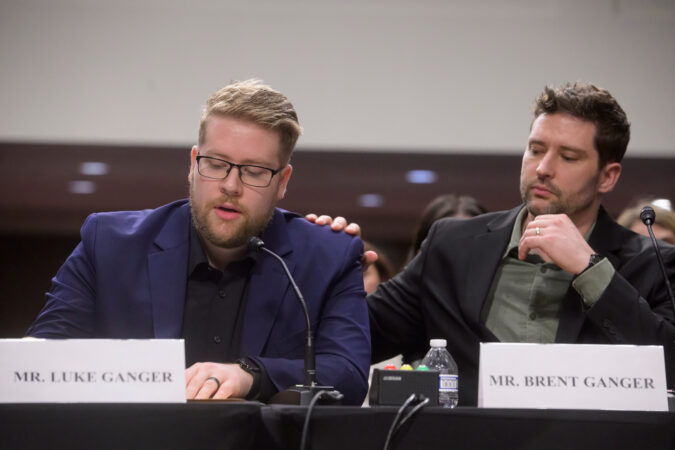
    Brothers Luke and Brett Ganger spoke during a hearing held Tuesday by congressional Democrats to highlight use-of-force incidents by officers from the Department of Homeland Security as they arrest and deport immigrants. The mood was somber as the brothers spoke, often comforting each other as they talked and listened to others speaking.

    Luke Ganger, speaking of the “deep distress” the family felt at losing their sister in “such a violent and unnecessary way,” didn’t specify what they wanted from Congress but painted his sister’s death as a turning point that should inspire change in operations such as those going on in Minneapolis.

    “The completely surreal scenes taking place on the streets of Minneapolis are beyond explanation. This is not just a bad day, or a rough week, or isolated incidents,” he said. “These encounters with federal agents are changing the community and changing many lives, including ours, forever.”

    The forum was put on by Sen. Richard Blumenthal (D., Conn.) and Rep. Robert Garcia (D., Calif.) to spotlight use-of-force complaints against Homeland Security officers tasked with carrying out President Donald Trump’s mass deportation agenda.

    Trump administration officials said Good tried to run over an officer with her vehicle. State and local officials in Minneapolis, as well as protesters, have rejected that characterization.

    The two brothers didn’t delve into the details of their sister’s death or what the administration has said about her. Instead, they spoke about her life.

    Luke Ganger said the most important thing the brothers could do was to explain to those listening “what a beautiful American we have lost. A sister. A daughter. A mother. A partner and a friend.”

    Brett Ganger shared some of the eulogy he had written for his sister’s funeral service. He compared her to dandelions that grow and bring beauty in unexpected places.

    “She believed tomorrow could be better than today. She believed that kindness mattered. And she lived that belief,” he said.

    The panel also heard from three other U.S. citizens who detailed their treatment by Homeland Security officers.

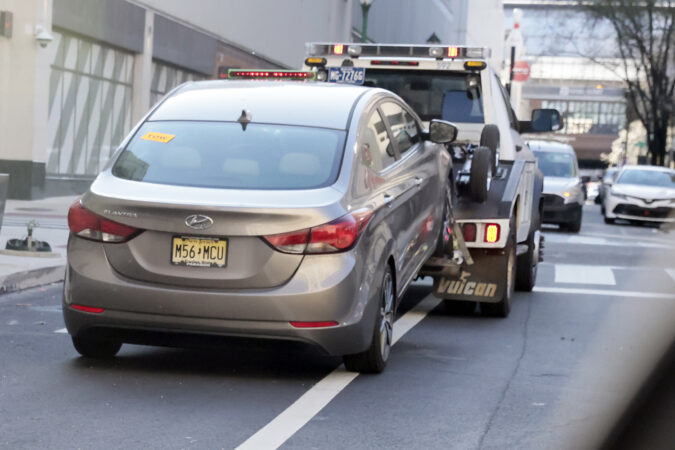
  • Police searching for ‘armed and dangerous’ suspect in killings of two men in city’s towing industry

    Police searching for ‘armed and dangerous’ suspect in killings of two men in city’s towing industry

    Philadelphia police are searching for a suspect in connection with the shooting deaths of two tow truck drivers, department officials said Wednesday.

    Najee Williams, 27, is considered armed and dangerous, police said. Homicide investigators say Williams is connected to the fatal shootings of 20-year-old David Garcia-Morales in December and 25-year-old Aaron Whitfield in January.

    Williams faces charges of murder, conspiracy, and related crimes. There is a $20,000 reward for information that leads to his arrest and conviction.

    The killings of Garcia-Morales and Whitfield, who police say worked for the Jenkintown-based towing company 448 Towing and Recovery, rattled the city and put a focus on the competitive business of towing.

    Williams is the owner and operator of N.K.W Towing and Recovery, of North Philadelphia, according to a police source who asked not to be identified to discuss an ongoing investigation.

    A Facebook page for N.K.W features photos of car accidents and messages urging potential customers to call the company.

    “INVOLVED IN A ACCIDENT OR SEE ONE CALL ME” one message says.

    Another post from 2024 says: “Left the streets in a patty wagon, came back home and got right to it! Been home for 2 years now & as I sit here and think how bless I’m to have my freedom back.”

    It was not immediately clear who made the post.

    Staff Inspector Ernest Ransom, commanding officer of the homicide unit, said forensic evidence collected from a stolen Honda used in the shooting of Whitfield led investigators to Williams.

    The department’s fugitive task force and U.S. Marshals are assisting in the search for Williams, whose last known whereabouts were in Montgomery County, authorities say.

    On Dec. 22, police were called to 4200 Torresdale Avenue to find Garcia-Morales shot and injured inside a Ford F-450 towing vehicle. He was struck in the neck and thigh, and died four days later at Temple University Hospital.

    The second shooting, which took place on Jan. 11 on the 2100 block of Knorr Street, left Whitfield dead at the scene after he was struck by gunfire in the head and body.

    Whitfield had also been sitting in a tow truck, according to police. His 21-year-old girlfriend was shot in the leg and survived her injuries.

    Philadelphia’s towing industry is competitive and drivers often traverse the city in search of car accidents, hoping to be the first to arrive at the scene.

    That practice persists despite a city policy that requires police and dispatchers to cycle through a list of approved towing companies to contact when responding to accidents.