A 60-year-old man has been accused through an indictment of drugging and sexually molesting two men who at different times rented a room from him at his home, Burlington County Prosecutor LaChia L. Bradshaw said Wednesday.
Craig M. Cardella, of Mansfield Township, pleaded not guilty on Tuesday at his arraignment in Superior Court in Mount Holly. He was charged by indictment in December with multiple counts of kidnapping, aggravated criminal sexual contact, and related offenses.
Robert M. Perry, Cardella’s lawyer, declined to comment Wednesday evening.
The charges involved two victims during separate time periods, Bradshaw said.
In late 2024, a man renting a room from Cardella contacted Mansfield Township police and said he awakened at night to find Cardella in bed with him, holding a mask over his mouth and nose and touching him sexually, Bradshaw said.
A search warrant was obtained for Cardella’s home and a safe was discovered in a closet that contained two bottles of chloroform, along with prescription sleep medication, medical masks, a camcorder and digital storage devices, Bradshaw said.
Prosecutors allege that Cardella used the chloroform to prevent his victims from waking while they were being molested.
Anyone who believes they were victimized by Cardella can contact Detective Ken Allen at allen@mansfieldpd.org.
MINNEAPOLIS — Maine became the latest target of the Trump administration’s immigration enforcement crackdown, while a federal appeals court on Wednesday suspended a decision that prohibited federal officers from using tear gas or pepper spray against peaceful protesters in Minnesota.
The 8th U.S. Circuit Court of Appeals was persuaded to freeze a judge’s ruling that bars retaliation against the public in Minnesota, including detaining people who follow agents in cars, while the government pursues an appeal. Operation Metro Surge, an immigration enforcement operation in Minnesota’s Twin Cities, has been underway for weeks.
Attorney General Pam Bondi praised the appeals court on X, saying the Justice Department “will protect federal law enforcement agents from criminals in the streets AND activist judges in the courtroom.”
Minnesota is a major focus of immigration sweeps by agencies under the Department of Homeland Security. State and local officials who oppose the effort were served with federal grand jury subpoenas Tuesday for records that might suggest they were trying to stifle enforcement.
A political action committee founded by former Vice President Kamala Harris is urging donors to contribute to a defense fund in aid of Gov. Tim Walz, her 2024 running mate.
“The Justice Department is going after Trump’s enemies,” Harris’ email said, referring to President Donald Trump.
Feds turn to Maine as next target
In Maine, the Department of Homeland Security named the enforcement operation Catch of the Day in an apparent play on the state’s seafood industry. Maine has relatively few residents who are in the United States illegally but has a notable presence of refugees in its largest cities, particularly from Africa.
Secretary of State Shenna Bellows, a Democrat, said she won’t grant a request for confidential license plates sought by Customs and Border Protection, a decision that reflects her disgust over “abuses of power” by immigration enforcers. Renee Good was fatally shot by an ICE officer in Minneapolis on Jan. 7.
“We have not revoked existing plates but have paused issuance of new plates. We want to be assured that Maine plates will not be used for lawless purposes,” Bellows said.
A message seeking comment from CBP was not immediately returned.
Portland City Council member Pious Ali, a native of Ghana, said there’s much anxiety about ICE’s presence in Maine’s largest city.
“There are immigrants who live here who work in our hospitals, they work in our schools, they work in our hotels, they are part of the economic engine of our community,” Ali said.
Conflicts emerge in shooting incident
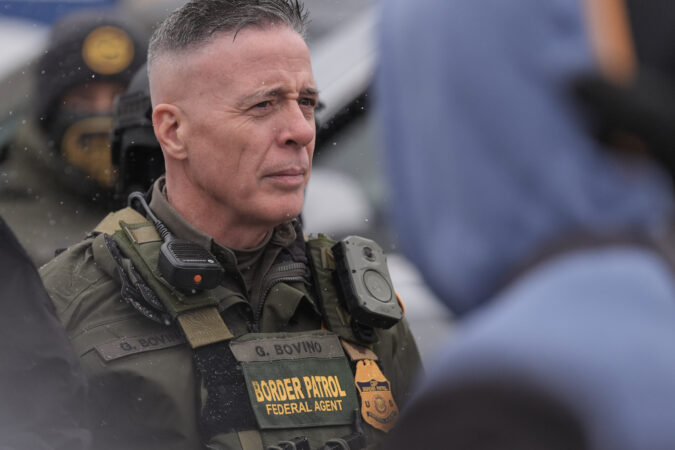
Greg Bovino of U.S. Border Patrol, who has commanded the Trump administration’s big-city immigration crackdown, said more than 10,000 people in the U.S. illegally have been arrested in Minnesota in the past year, including 3,000 “of some of the most dangerous offenders” in the last six weeks during Operation Metro Surge.
Bovino defended his “troops” and said their actions are “legal, ethical and moral.”
Julia Decker, policy director at the Immigrant Law Center of Minnesota, said advocates have no way of knowing whether the government’s arrest numbers and descriptions of the people in custody are accurate.
Separately, a federal judge said he’s prepared to grant bond and release two men after hearing conflicting testimony about an alleged assault on an immigration officer. Prosecutors are appealing. One of the men was shot in the thigh by the officer during the encounter last week.
The officer said he was repeatedly struck with a broom and with snow shovels while trying to subdue and arrest Alfredo Alejandro Aljorna following a car crash and foot chase.
Aljorna and Julio Cesar Sosa-Celis denied assaulting the officer. Neither video evidence nor three eyewitnesses supported the officer’s account about the broom and shovels or that there had been a third person involved.
Aljorna and Sosa-Celis do not have violent criminal records, their attorneys said, and both had been working as DoorDash drivers at night to avoid encounters with federal agents.
U.S. Magistrate Judge Douglas Micko said they still could be detained by ICE even if released from custody in the assault case.
The man’s body was found around 5:45 a.m. after police were called to the property, located on the 3900 block of Conshohocken Avenue.
The man, whom police did not identity, was pronounced dead at the scene at 6:40 a.m.
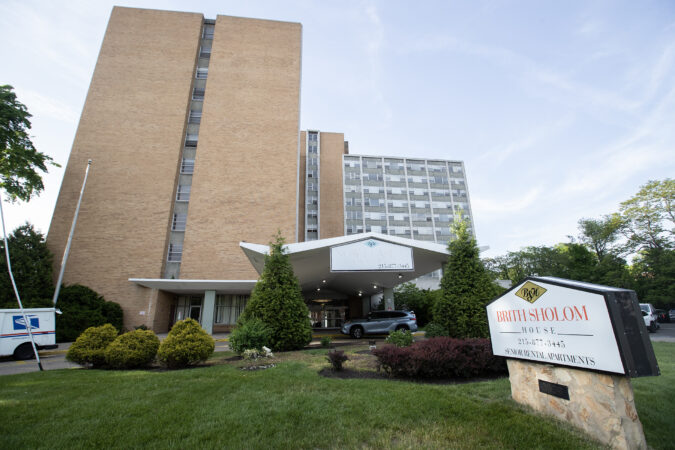
Kelvin A. Jeremiah, president and CEO of the Philadelphia Housing Authority, said the complex’s doors and windows on the lower floors have been sealed since tenants left the property, though there have been several instances in which individuals managed to enter in an attempt to steal copper wiring from within the structure.
Early Wednesday morning, a 911 call was placed from Brith Sholom by a man who told police that a contractor had gotten hurt on the job and needed assistance, Jeremiah said.
But Jeremiah said the housing authority had not authorized any such work, and no one was permitted on the property at the time.
The housing authority later learned that the man was electrocuted and died after he tried to strip copper wire from the complex’s basement. The body was found next to the switch gears, Jeremiah said.
The CEO suspects the person who called 911 was an accomplice in the break-in, though police are still investigating.
The housing authority’s security cameras were not active during the incident because much of the building’s power is off, and other cameras have been destroyed by bad actors, according to Jeremiah.
He said the individuals might have used a ladder to enter the complex through the third floor.
Just a day earlier, Brith Sholom received a much different sort of attention.
On Tuesday, Mayor Cherelle L. Parker announced that the city’s powerful building trades unions would offer PHA a sizable loan to redevelop the complex, which the housing authority purchased from its former owners in 2024 in order to preserve it.
After PHA acquired the property, it initially told its 111 residents they could remain in their units. But upon discovering some units were damaged beyond repair, officials told those residents they would need to move out and return at a later date.
The Brith Sholom project, when completed, is expected to add 336 affordable units for seniors on fixed incomes, Parker said in her announcement Tuesday.
Apalosnia Watson, 39, was arrested Jan. 14, nine months after Syvir Hill drowned in her home. She was charged with third-degree murder and endangering the welfare of a child, court records show, and was released from custody on a $500,000 unsecured bail bond as her case progressed.
Philadelphia police officers arrived at the house on the 900 block of East Schiller Street on April 15 to find medics performing CPR on an unresponsive 1-year-old, according to the arrest warrant. Watson had left Syvir and two other children alone in the bath and had gone downstairs to get food from the microwave, she told the officers that night. On her way down to the first floor, she heard “flipping in the water,” and when she returned to the second-floor room, the toddler was motionless, facedown in the water. The foster parent attempted CPR and called 911.
“I don’t want to go to jail,” Watson told the officers on the scene, according to the police report. “It happened so fast.”
S. Philip Steinberg, a Schatz Steinberg & Klayman defense attorney representing Watson, said that Watson did not act with malice, which is required for a murder charge.
“It’s a tragic accident but one that Ms. Watson would not have any criminal liability for,” Steinberg said.
The Philadelphia Medical Examiner’s Office conducted a postmortem exam the day following Syvir’s death, but the cause and manner of death remained pending for months. On Dec. 4, the office ruled that the cause of death was drowning and the manner of death was homicide.
A spokesperson for the Philadelphia District Attorney’s Office said charges were brought shortly after the homicide investigation was reopened following the ruling on the manner of death.
Death investigations can vary in how long they take due to a number of factors, saidJames Garrow, a Philadelphia health department spokesperson.
“Above all, our priority is to conduct thorough and accurate investigations,” Garrow said in a statement.
The long gap between the exam and the medical examiner’s ruling concerns A.J. Thomson, a Zafran Law Group attorney representing Syvir’s biological mother in a wrongful-death lawsuit filed in October against Watson and two child-welfare agencies.
Thomson filed a second lawsuit in November, asking a Philadelphia Common Pleas Court judge to compel the medical examiner to make a ruling. That suit accuses Lindsay Simon, the city’s chief medical examiner, of refusing to perform her mandatory public duty, “blocking the family’s ability to settle the estate, pursue insurance and benefits, and understand the cause and manner of death.”
Judge Sierra Thomas Street ordered Simon on Dec. 11 to certify the cause and manner of death within 10 days.
Thomson credited the lawsuit with pushing the medical examiner’s office to issue a finding, which ultimately came before the judge ruled.
The lawsuit from Syvir’s biological mother accuses Tabor Children’s Services and Northeast Treatment Centers of failing when they placed Syvir in the home and did not remove him even though visit notes showed a varying number of children living in the crowded house.
At the time of Syvir’s death, multiple other children lived in the home, including the 4-year-old and 2-year-old who were also in the bathtub, Hill’s 4-month-old sister, and a 17-year-old, according to the police report.
The lawsuit further alleges that after Watson left the children alone in the bath, the 2-year-old told Syvir, “you are not my brother,“ and held the toddler’s head underwater. The police report makes no such claim. The accusation comes from a child’s interview with investigators from the city’s department of human services, Thomson said.
A 17-year-old Philadelphian turned himself in on Monday in connection with the fatal hit and run of June Rodriguez, a beloved and decades-long presence at Bob & Barbara’s Lounge.
Philadelphia police said they had already obtained a warrant for the teen’s arrest when he turned himself in, accompanied by his mother and attorney.
The teen, whose name is not being released because he is a minor, was charged with multiple felonies, including homicide by vehicle, as well as involuntary manslaughter, reckless driving, driving without a license, and related offenses.
But for the victim’s son, Skye Rodriguez, the arrest brings little solace.
“I feel relieved, but I’m still angry,” he said in between sobs. “I know I’m called to forgive because that’s my faith, I just don’t know how to. It’d be different if this kid hit my dad and went straight to the police station.”
But the teen didn’t.
The younger Rodriguez said his father did everything right as he rode his bike home after a shift at Bob & Barbara’s on Dec. 20.
“My father was very cautious — he even had reflectors on his boots,” said Skye Rodriguez, who learned of the added precaution when the morgue gave him his father’s things.
June Rodriguez, 54, was turning onto North 56th Street from Lancaster Avenue in Overbrook around 3:45 a.m. when the driver of a red SUV swerved into him and drove away, according to Philadelphia police.
Rodriguez’s death devastated Philadelphia’s queer community, where he was a known DJ, and the city’s house music scene. Friends remembered Diaz as a warm, welcoming individual, and a strong ally and presence in the LGBTQ+ community, though he was straight himself.
One remembrance feature on a GoFundMe page for Rodriguez’ funeral expenses said the DJ created “a sanctuary on the dance floor.”
His death also mobilized safe-streets advocates, who noted that stretch of Lancaster Avenue is one of the city’s most dangerous, part of the 12% of city streets that account for 80% of traffic deaths and serious injuries.
Rodriguez’s son said he had yet to watch the surveillance video procured by investigators. Police have told him that his father had his reflectors on and was in the bike lane.
Still, Rodriguez doesn’t know if he wants to see the moment of impact. His father’s belongings were covered with blood, he said. He doesn’t want to see the severity of the impact play out.
For now, he is grateful to have a break in the case.
“If it wasn’t detectives or police making it a big deal, what if it had been swept under the rug?” he said.
A Philadelphia police officer opened fire on a man Monday night after the man critically injured another person in Hunting Park, police said. The man, police said, was not hit.
Officers were called about 8:30 p.m. to a Sunoco gas station in the 4100 block of North Broad Street for a report of a man with a gun, according to police Tuesday.
When they arrived, police said, the officers saw multiple men arguing. The men quickly left the gas station and walked toward the intersection of Broad and Jerome Streets, where the fight turned physical, police said.
A 29-year-old man drew a handgun and shot another man in the chest and groin. One of the officers fired at the alleged shooter, police said, but did not strike him.
The alleged shooter ran away, but the officer caught and arrested him in the 1300 block of Jerome Street, police said. Nearby, beneath a parked vehicle, officers found a 9mm handgun.
Paramedics took the victim to Temple University Hospital, where police said he was in critical condition Tuesday. His name was not released.
Police did not release the name of the alleged shooter, who had not yet been formally charged, they said.
The officer, a 36-year-old man with nine years on the police force, was not injured in the incident, police said. He has been placed on administrative duty pending an internal investigation, as per department policy when an officer discharges his gun.
Almost a decade after a 37-year-old New Jersey man was killed by home invaders, two men have been charged with his murder, the Burlington County Prosecutor’s Office announced Monday.
Norman Mosley was fatally shot in September 2016 when intruders wearing masks broke into the trailer he shared with his girlfriend in the Browns Mills section of Pemberton Township.
The investigation went on for years without arrests until detectives found DNA evidence on gloves located near the crime scene.
Kevin D’Costa, 45, of Irvington, and Daemen Hodge, 32, of Brown Mills, were charged with first degree felony murder, first degree robbery, and unlawful possession of a weapon, among other charges, after their DNA matched what was found at the scene, according to the prosecutor’s office.
Both men had already been named as suspects in the case.
D’Costa was in custody at the Essex County Correctional Facility in Newark for unrelated charges when he was served last month with his warrant. Hodge was arrested at his girlfriend’s home in Bordentown Township on Friday and subsequently held at Burlington County Jail in Mount Holly.
The next step in the case will be presenting it to a grand jury for potential indictment.
Past a marble monument for a Civil War hero, down a grass path where toppled headstones disappear into ivy and weeds and faded miniature American flags droop, lies the underground vault of James Campbell, who died in 1913 and whose remains mayhave been among the dozens stolen in one of the largest grave desecration cases ever uncovered in Pennsylvania.
Jonathan Christian Gerlach,who was charged with more than 500 offenses earlier this month and is being held in jail in lieu of $1 million bail, is accused of methodically breaking into burial vaults and mausoleums at Mount Moriah Cemetery, prying open caskets and removing human remains from Campbell’s burial ground and at least 25 other sites across the sprawling Philadelphia and Yeadon Borough cemetery.
Inside Campbell’s vault, where his family members were also entombed 12 feet beneath the cemetery’s surface as early as 1872, investigators said they found three broken caskets, crumbled marble, and a discarded pry bar. Six sets of human remains, they said, were missing.
Authorities allege that Gerlach moved through the cemetery repeatedly, at all hours, accessing sealed burial sites and removing dozens of remains over several weekswithout being detected. Large sections of the cemetery, overgrown and rarely monitored, offered long stretches of isolation — conditions investigators say Gerlach may have exploited. And as law enforcement continues to sort through the evidence, local officials and cemetery advocates are pressing for changes to prevent this from happening again.
“We were too slow to move,” said Yeadon Mayor Rohan Hepkins. “Nobody thought such a dastardly act — such an inhumane and incomprehensible act — was possible.”
Hepkins last week joined state and local officials to discuss what can be done to protect the burial grounds, where an estimated 180,000 people are buried.
He and others expressed cautious resolve that the cemeterycould be secured well enough to prevent another violation of this scale.
“I wish I could tell loved ones that I’m not critically concerned, but I am,” said State Sen. Anthony Williams, who represents the district where Mount Moriah Cemetery is located and was one of the officials who gathered to discuss preventive measures. “But I don’t know that Mount Moriah will ever be restored to the condition that they buried their loved ones in.”
Mount Moriah Cemetery, a historic landmark abandoned by its last owner and under court receivership, has long been plagued by neglect and limited oversight.
Investigators say Gerlach’s crimes unfolded over the course of months, starting in the fall and ending on the night of Jan. 6, when Yeadon detectives arrested the Pennsylvania man as he attempted to leave the cemetery.
License plate readers and cell phone towers place Gerlach near or inside the cemetery during both daylight and darkness. On Christmas Eve, for example, the technologies captured Gerlach’s vehicle or phone at least three times between 12:28 a.m. and 12:54 p.m., court records show.
The day before, on Dec. 23, a Yeadon investigator working the case saw scratch marks on the heavy stone slab sealing the underground Zeigler family vault, as if, a detective wrote in an affidavit of probable cause for Gerlach’s arrest, it had been “marked” as a target. When the detective returned on Dec. 26, the stone had been broken and nine sets of human remains stolen.
Yeadon police, who investigated the crimes alongside other authorities, have since been inundated with hundreds of calls and emails from anguished family members seeking answers, Chief Henry Giammarcco said.
Rescuing Mount Moriah
Mount Moriah Cemetery opened in 1855. Its owners, the Mount Moriah Cemetery Association, abandoned it in 2011, after years of mismanagement. The Friends of Mount Moriah, a volunteer-driven nonprofit, formed that same year with the goal of rescuing the grounds from vandalism, crime, and decay. In 2014, a Philadelphia judge appointed a receivership, the Mount Moriah Cemetery Preservation Corporation, to temporarily manage the cemetery until a permanent owner could be found.
More than a decade later, no permanent owner has emerged.
In 2018, the two groups and other stakeholders commissioned an ambitious strategic plan that called for stabilizing the cemetery’s finances, finding a permanent owner, and remaking Mount Moriah into a viable public space. The plan assumed significant investment and long-term stewardship. Neither materialized.
“There’s no clear revenue stream, and there’s significant infrastructure improvements and capital improvements that are required, on top of maintenance costs,” said Brian Abernathy, who served as chair of the preservation corporation when the plan was created.
At the time, Abernathy said, “there was a lot of hope and optimism about what we could accomplish with it. But the plan stalled over obstacles that persist today, he said, including enticing an owner when so many costly repairs are needed.
Under the court order, the corporation — a board composed of officials from Philadelphia and Yeadon, including Hepkins — is responsible for preserving the cemetery but has delegated day-to-day care to Friends of Mount Moriah.
Over the years, Friends of Mount Moriah made visible gains. Its 12-person board and volunteers hauled away abandoned cars, tires. and trash, righted toppled headstones, and uncovered burial vaults beneath thick vines, brush, and overgrowth.
“Until this happened,” said John Schmehl Jr., the group’s president, “security was not our first concern.”
<div data-analytics-viewport="autotune" data-analytics-label="visor-arcgis" id="bones"
  data-iframe-fallback="https://www.inquirer.com/resizer/ORTQkrqPSCXca2NSc4Uhl9preV8=/1400x932/smart/arc-anglerfish-arc2-prod-pmn.s3.amazonaws.com/public/5FUK4MYNPFH7LD3SAPB6X4O7TQ.jpg"
  style="width: 0; min-width: 100% !important; border: none;" data-iframe-fallback-height="509.789917082823"
  data-iframe="https://media.inquirer.com/storage/inquirer/projects/innovation/arcgis_iframe/bones.html"
  data-iframe-height="509.789917082823" data-iframe-resizable></div>
<script type="text/javascript">
  (function() {
    var l2 = function() {
      new pym.Parent('bones',
                     'https://media.inquirer.com/storage/inquirer/projects/innovation/arcgis_iframe/bones.html');
    };
    if (typeof(pym) === 'undefined') {
      var h = document.getElementsByTagName('head')[0],
        s = document.createElement('script');
      s.type = 'text/javascript';
      s.src = 'https://pym.nprapps.org/pym.v1.min.js';
      s.onload = l2;
      h.appendChild(s);
    } else {
      l2();
    }
  })();
</script>
Yet thieves knew the grounds. Last year, Schmehl said, more than $14,000 worth of lawn equipment — including mowers, weed trimmers, and hand tools — was stolen from the cemetery garage. Friends of Mount Moriah entered the growing season without the equipment needed to keep large sections of the cemetery accessible, he said.
Now, the group is scrambling to implement security improvements across the cemetery’s more than 100 acres, including repairing dilapidated fencing, launching random patrols, and installing cameras on both the Philadelphia and Yeadon sides of the property. Fencing construction began last week. Schmehl said the group is seeking a private security company to monitor the cameras around the clock.
Cemetery volunteers dwindle
The backyard of 60-year-old Robin Pitts’ house overlooks the Springfield Avenue side of Mount Moriah, where her mother, brother, and extended family are buried.
As a child, Pitts said, she played kickball on an unfenced stretch of the cemetery near where Betsy Ross — the seamstress whose burial helped cement Mount Moriah’s place in American history — rested for more than a century.
Those memories later drew Pitts to volunteer with Friends of Mount Moriah for nearly two decades, she said. On Saturdays, she said, she grilled hot dogs and hamburgers for volunteers who picked up trash and mowed the grass along Springfield Avenue.
But during the pandemic, Pitts said, the grounds began to deteriorate beyond what volunteers could manage. “I thought, ‘Enough’s enough. I can’t do this anymore,’” she said. She stopped volunteering.
Last week, Pitts walked down a path choked with waist-high grass and weeds where she once mowed. She pointed past a tangle of barren hemlock blocking a path to a tree and several headstones — some toppled, others obscured by vines and brush. “We used to clean it all the way past there,” Pitts said. “Now nobody does.”
A shrinking volunteer base has slowed progress at the cemetery, Schmehl said. Some cleanup events draw just one volunteer. “It’s a struggle, to say the least,” he said, adding that entire sections of the cemetery “have been reclaimed by nature.”
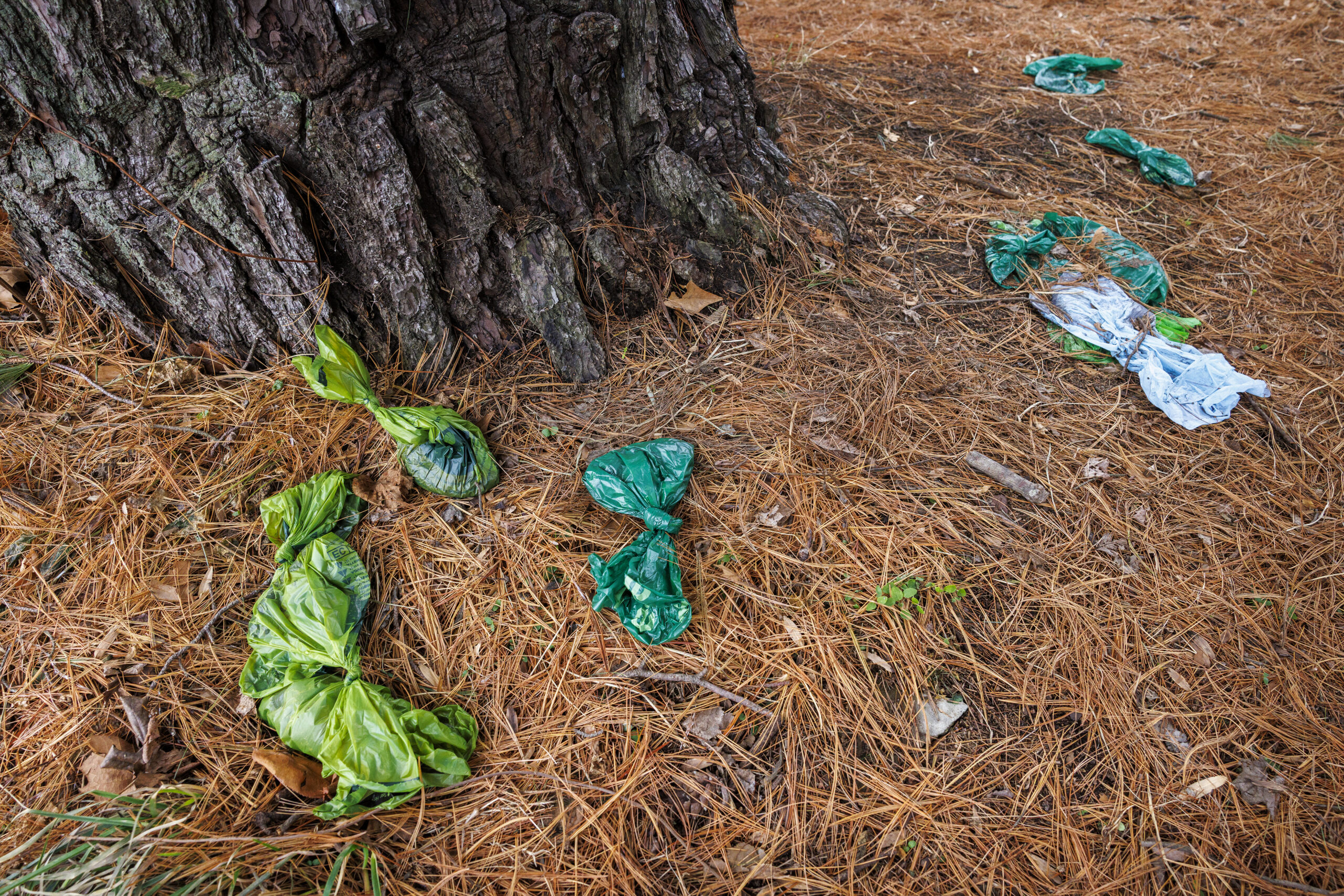
Picture of dog waste discarded on the grounds of Mount Moriah Cemetery on Wednesday, Jan. 14, 2026.
The cemetery is now open just two days a week, Saturdays and Sundays.
The costs of needed improvements are also significant. By Thursday, Friends of Mount Moriah had spent more than $20,000 of its roughly $90,000 annual budget to begin fencing construction and repairs, and secure the mausoleums and vaults that had been desecrated in the recent crimes. Additional donations, Schmehl said, will be needed to sustain the effort.
As recently as spring 2023, Mount Moriah Cemetery Preservation Corp. held more than $400,000 in its endowment, according to a letter filed in Philadelphia Orphans’ Court. Aubrey Powers,the receivership’s chair, did not respond to questions concerning the receivership’s contributions to the Friends of Mount Moriah or what the corporation will do to helpaddress security or infrastructure needs.
As a condition of the receivership, the corporation must file semiannual reports to the court. A year ago, the only reference to security was a brief note stating that the receivership “continues to encourage the Philadelphia and Yeadon Police Departments to schedule patrols in and around Mount Moriah Cemetery more frequently to deter criminal activity.”
Hepkins said increased patrols would be part of a broader strategyto reduce criminal activity and restore oversight to the cemetery. Meanwhile, a spokesperson for the Philadelphia Police Department said officers patrol the cemetery’s perimeter, not its grounds.
“There has to be some sort of intervention in order to rectify what’s happened at Mount Moriah,” Abernathy said. “And I just don’t know who’s going to provide that intervention.”
Whose remains are missing?
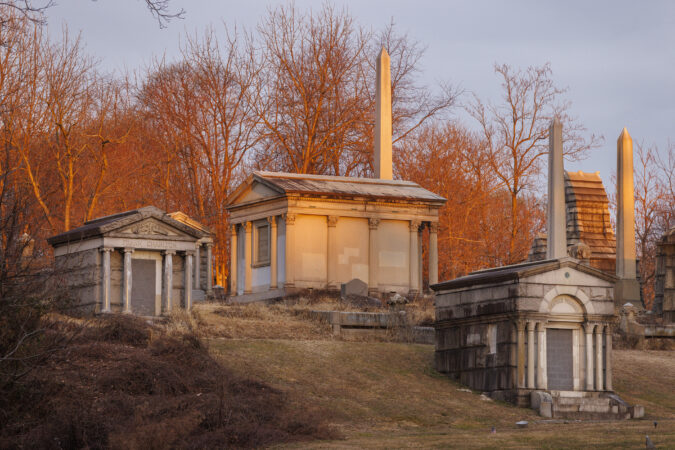
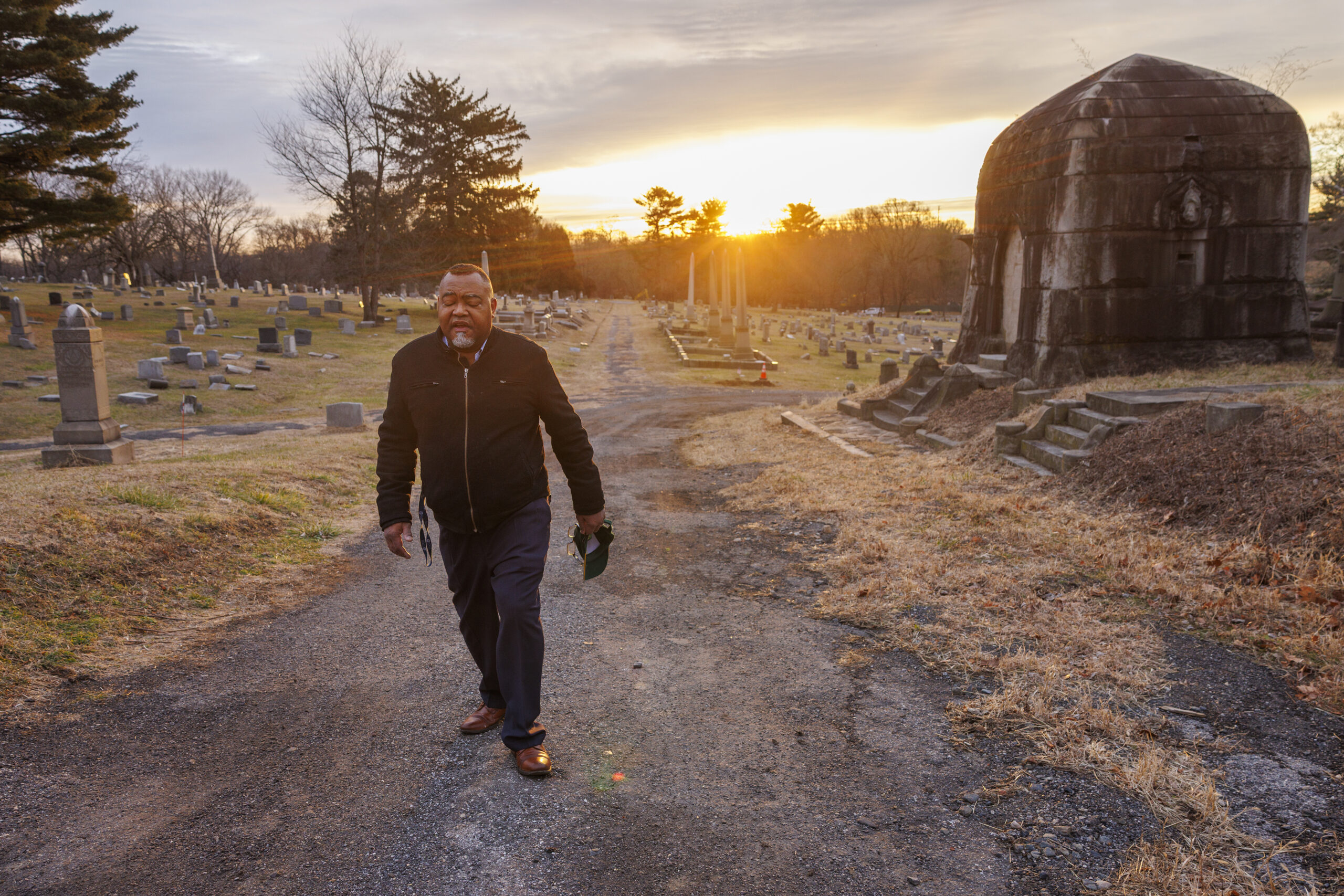
Hepkins on Wednesday climbed a steep hill from a small parking lot off Cobbs Creek Parkway to a cluster of mausoleums that Gerlach is accused of breaking into.
Yeadon Mayor Rohan Hepkins during a walking tour of Mount Moriah Cemetery, Wednesday, Jan. 14, 2026. Graves at the cemetery were allegedly robbed by Jonathan Christian Gerlach.
At the family mausoleum of John Hunter, a former president of the Mount Moriah Cemetery Association, authorities allege Gerlach smashed through a sealed cinder-block doorway and shattered the marble floor. He then rappelled 10 feet into the crypt and removed the remains of 15-year-old Martha Hunter, who died in 1869.
He left behind a length of white rope and a screwdriver, authorities said.
Just feet away, in the mausoleum of wholesale grocer Jonathan Prichard, Gerlach pulled cinder block from a sealed window and rifled through five of nine caskets inside, investigators allege. The remains of 62-year-old Mary Prichard Steigleman, Prichard’s daughter, are now missing.
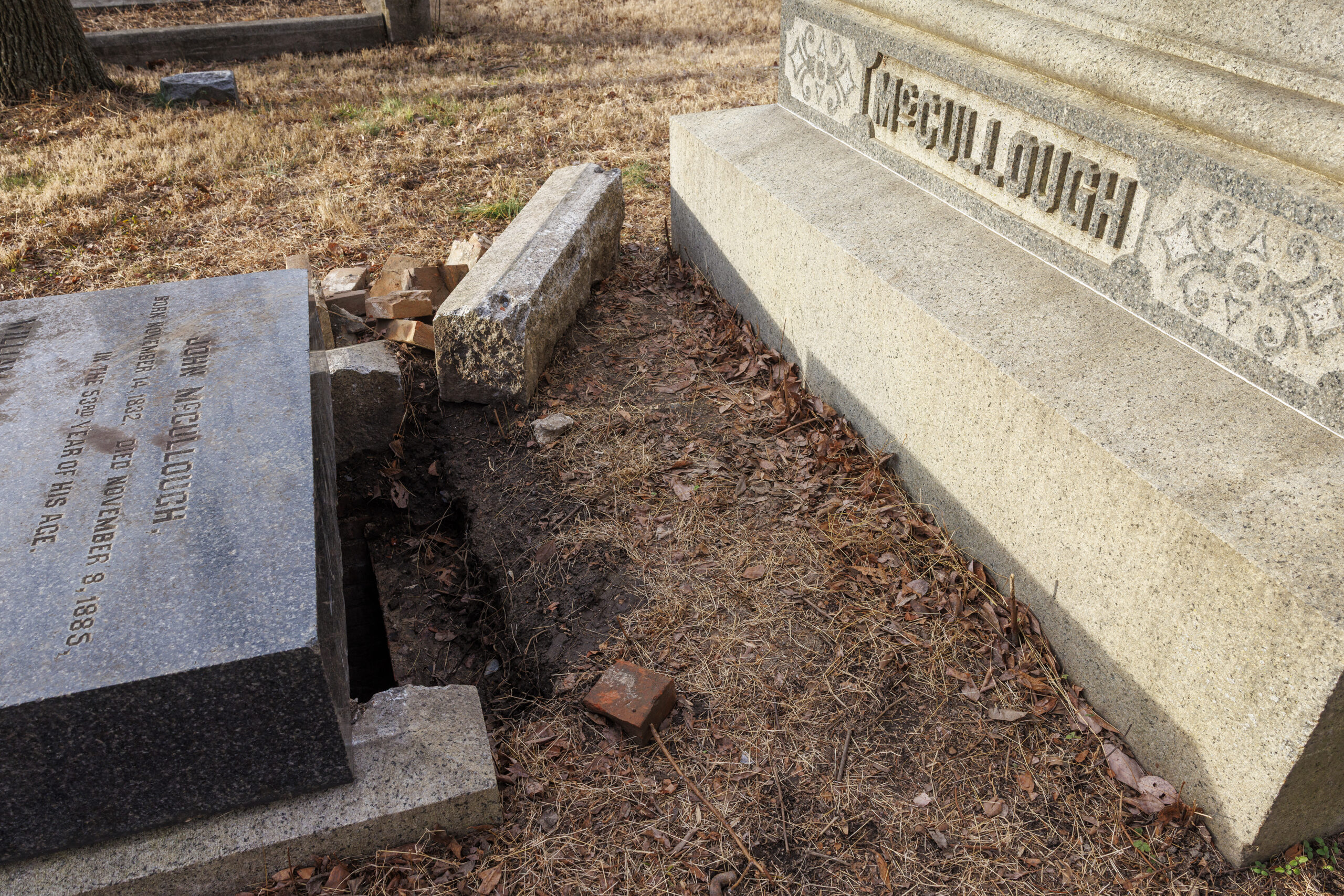
Nearby is the family vault of John McCullough, a Shakespearean actor who died in 1889. Beneath a towering monument etched with a line from Julius Caesar, authorities said they found two caskets disturbed, one tipped onto its side. Both were empty.
More than a week after Gerlach’s alleged break-in, bricks torn from the vault’s seal lay piled beside the entrance, and a foot-long hole exposed the floor below. Inside, wooden pallets that investigators believe Gerlach used to climb down cluttered the crypt.
The McCullough family burial tomb at Mount Moriah Cemetery, Wednesday, Jan. 14, 2026. This and several other graves at this cemetery were allegedly broken into by Jonathan Christian Gerlach.
A short walk away is the cemetery’s naval plot, where rows of identical white headstones mark the graves of more than 2,000 Navy officers. It’s Hepkins’ favorite part of the cemetery, he said.
Hepkins once hoped to be buried at Mount Moriah, a place he called “godly.” Now, he said, “I have to reconsider. I want my bones held somewhere in sacred perpetuity.”
By all accounts, Malinda Hoagland was the kind of 12-year-old girl who would make any parent proud.
She received A’s in school, loved unicorns and going to Wawa with her older sisters, and wrote her lunch ladies notes thanking them for stocking the cafeteria with applesauce and milk.
But her father, Rendell, clearly didn’t see that little girl, prosecutors said Friday in Chester County Court.
Instead, Rendell Hoagland and his fiancee, Cindy Marie Warren, tortured Hoagland’s daughter for months in their West Caln home, depriving her of food and medical care.
They chained her to furniture and forced her into stress positions for hours, beating her if she moved or displeased them.
Once, when the girl forgot her jacket at school, they forced her to do push-ups in the kitchen late at night, striking her with a belt. Other times, the beatings came with a metal spatula.
The lack of care ultimately killed Malinda in May 2024.
Medical examiners found the girl died from severe malnutrition, her organs atrophied from starvation. More than 70 bruises, ulcers, and sores riddled her body, which by then weighed just 50 pounds.
It was the rare type of crime that brought tears even to a judge’s eyes.
On Friday, that judge, Anne Marie Wheatcraft, accepted a guilty plea from Hoagland on one count of first-degree murder and related crimes. The 54-year-old will be confined in prison for life without the possibility of parole.
“This was calculated, sustained cruelty inflicted on an innocent child,” said Malinda Hoagland’s maternal aunt, Christine Mayrhauser, as the girl’s family read tearful victim impact statements.
Rendell Hoagland, a bald man whose size tested the limits of a red prison jumpsuit, gazed on.
“A quick execution is too good for him,” Mayrhauser said.
Warren is also charged with first-degree murder and related crimes. Her trial, scheduled for early January, has been delayed and she will receive a pretrial hearing in May.
Lead prosecutor Erin O’Brien described Malinda Hoagland’s final years as a period of abuse no child should ever endure.
After Rendell Hoagland separated from his wife, he received custody of Malinda in 2020 and moved with the girl from Monroe County to West Caln.
He enrolled the girl at school, but she soon began missing day after day of classes. By 2023, Hoagland had pulled Malinda out of school entirely, and she was completing school online under his and Warren’s near-constant supervision.
After the girl’s death in 2024, investigators recovered photos, videos, and text messages from both Hoagland and Warren that detailed the girl’s horrific life at home.
She was often chained to an air hockey table or other pieces of furniture, even sleeping there, O’Brien said, or made to run in place or do jump squats at Hoagland and Warren’s command.
They punished her with scalding showers and ice baths, forced her to hold books over her head for hours, and poured hot sauce down her throat. The couple monitored the girl through security cameras they had installed throughout the home.
They also kept locks on the refrigerator and snack cabinet, and the girl lost more than a third of her body weight in the last two years of her life. She was often sleep-deprived or suffering open wounds; by the end of her life, she struggled to do her homework because of her eye injuries, O’Brien said
The abuse ended only with death, prosecutors said.
On May 3, 2024, Hoagland called 911 claiming that Malinda had fallen off her bike and had lost consciousness at a campground in Quarryville.
But prosecutors say that the girl had been unconscious for hours, and that Hoagland had driven to CVS the night before, looking for smelling salts in an attempt to wake her up. He propped up the girl’s body so that she did not raise the suspicions of passersby.
It was a common pattern in attempted cover-ups, O’Brien said, and Hoagland and Warren were also known to use makeup to cover up the girl’s bruises for the few people they allowed to see her.
One of the last people to see Malinda Hoagland alive was William Delmedico, an emergency medical responder who wrapped the barely conscious girl in his sweatshirt as he rushed her to a hospital, where she died after surgery.
“I kept telling her she’s not alone, she’s loved, and that we’re doing everything possible to help her,” Delmedico told the court, his voice breaking.
Hoagland and Warren managed to keep the abuse hidden from Malinda’s extended family, prosecutors said, including her three older sisters, his biological children. The women were not living in Southeastern Pennsylvania during the time of the abuse, they said.
In addition to murder, “You should also be facing several counts of robbery,” said Emily Lee, Malinda Hoagland’s older sister, addressing her father. “You robbed my baby sister’s future. You took a life she deserved.”
Jamie Hoagland, another sister, said she begged her father for access to Malinda, sending her sister cards and gifts and playing Minecraft with her online when possible.
“I fought for every inch of communication,” Jamie Hoagland said. She later lamented: “Instead of taking her to the movies, I visit her grave.”
When given the chance to speak, Rendell Hoagland told Wheatcraft he had “nothing to say at this time.”
Wheatcraft said she was not surprised that Hoagland did not express remorse.
Philadelphia had a moment in the global spotlight this week as the U.S. Attorney’s Office said it had charged 26 people — including 20basketball players — with participating in a wide-ranging, international scheme to rig games on behalf of gamblers.
U.S. Attorney David Metcalf said bettors bribed players on teams in the Chinese professional league, as well as in NCAA games from Texas to New York.
So why was the case charged here? And what role did Philadelphia play in the allegations?
Below are three takeaways about the local ties of the sprawling investigation — the latest high-profile case to target alleged corruption in sports.
U.S. Attorney David Metcalf announced charges against 26 people in what prosecutors described as a point shaving operation to benefit gamblers.
Why was the case charged in Philadelphia?
Federal prosecutors have wide latitude to pursue criminal investigations as long as some aspect of the alleged wrongdoing took place in their jurisdiction, and if a suspect’s actions could be considered a violation of federal law.
In this case, prosecutors have alleged that the bets and payoffs that impacted games amounted to a criminal conspiracy between the so-called fixers and players, and also that the actions violated federal bribery and wire-fraud laws.
In addition, the indictment contends one of the key organizers of the point-shaving scheme — professional gambler Shane Hennen — lived partially in Philadelphia at the time of his alleged crimes.
And even though most of the games he gambled on took place elsewhere, Hennen is accused of placing huge bets at Rivers Casino’s sportsbook in Fishtown. One of the wagers was a $198,300 bet against a Chinese team called the Jiangsu Dragons, court documents say. Hennen had allegedly recruited one of the Dragons’ best players, Antonio Blakeney, to play poorly in exchange for bribes.
(A spokesperson for Rivers Casino declined this week to comment on the case and did not respond to questions about why Hennen was allowed to place such large wagers on relatively obscure games.)
The indictment says several other crimes took place in Philadelphia as well, including Jalen Smith — a basketball trainer and alleged organizer of the scheme — traveling to the Philadelphia International Airport to pay an unnamed player his bribe money.
Were any Philadelphia schools part of the scheme?
The indictment paints a limited portrait of connections between the point-shaving operation and Philadelphia schools or universities.
In one of the more detailed local episodes in the document, prosecutors said Smith and Blakeney in 2024 attempted to recruit players from the La Salle men’s basketball team to take bribes and underperform in a game against St. Bonaventure.
Hennen and a codefendant apparently thought the plan had succeeded — the indictment said they went on to place nearly $250,000 in bets on St. Bonaventure for that game.
But none of the bets won, prosecutors said. And no La Salle players were named or accused of accepting the bribes in relation to the contest.
A La Salle spokesperson said in a statement this week that it was aware of the allegations in the case, adding: “Neither the university, current student-athletes, or staff are subjects of the indictment. We will fully cooperate as needed with officials and investigations.”
What about any Philadelphia-based players?
The role of Philadelphia-based players was similarly limited.
While several players accused of participating in the scheme spent time in the area, none was accused of accepting bribes while playing for a Philadelphia-based school.
Former Temple University forward Elijah Gray, for example — who played for the Owls in the 2024-2025 season — participated in the scheme the year before, while he was playing at Fordham. Prosecutors said he was offered $10,000 to $15,000 to underperform on the court, and said he later recruited a teammate to participate in the point-shaving operation as well.
Gray left Temple and transferred this academic year to the University of Wisconsin, but he was dismissed from the team in the fall over what the program said were “events preceding his enrollment.” He has pleaded guilty to one count of bribery, court records show, and is scheduled to be sentenced in March.
Micawber “Mac” Etienne — who played for La Salle last year — was also bribed before he came to Philadelphia. Fixers approached Etienne in 2024, prosecutors said, while he was playing at DePaul. He agreed to help throw games, prosecutors said, which led Smith to give him and three teammates $40,000 in cash.
Etienne has also pleaded guilty to a bribery count, court records show, and is scheduled to be sentenced in April.
One current Philadelphia-based player is facing charges: C.J. Hines, a guard who transferred to Temple this year. But prosecutors said he took bribes in 2024, when he was playing at Alabama State.
Hines has been charged by information, which typically indicates a defendant intends to plead guilty.
A Temple spokesperson said the university had “previously received notice from the NCAA that Hines had potential eligibility concerns, and for that reason, he has not participated in any athletic competition since enrolling at Temple.”
What happens now?
The prosecutions will now proceed through Philadelphia’s federal courthouse in Center City.
Some defendants — such as Gray, Etienne, and Hines — will likely have their cases wrapped up relatively quickly, as they’ve already pleaded guilty or indicated an intent to do so.
Hennen has not yet entered a formal plea in the case, according to court records. If he or any other defendants plans to take the case to trial, it could be many months before the case is put before a jury.
Staff writer Isabella DiAmore contributed to this article.