Category: Crime

  • Who is Shane Hennen, the high-stakes Philly gambler at the center of the latest sports-betting indictment?

    Who is Shane Hennen, the high-stakes Philly gambler at the center of the latest sports-betting indictment?

    For Shane Hennen, the house of cards keeps folding.

    A federal indictment unsealed Thursday accuses the Philadelphia-based professional gambler of acting as a ringleader in a sweeping sports-betting conspiracy now involving the NCAA and the Chinese Basketball Association. Hennen was first arrested last January in connection with a gambling case involving a former Toronto Raptor, and was also charged separately in an October indictment in New York focused on the NBA.

    The latest charges against Hennen, known as “Sugar Shane,” brought an international angle to the existing portrait of a high-stakes gambler who prosecutors allege was willing to bribe athletes to throw games, provide devices to fix backroom card games tied to the New York mafia, and use insider betting information to place fraudulent wagers.

    In all, federal prosecutors have accused Hennen of conspiring to place fraudulent bets on ex-Raptors forward Jontay Porter and NBA guard Terry Rozier, bribing the top-scoring player in the CBA to throw games, and recruiting college basketball trainers to help rig dozens of NCAA games — much of it orchestrated from Hennen’s favorite Philly casino, Rivers. On top of it all, he is also alleged to have participated in the rigging of mob-linked poker games in New York City.

    And while the list of implicated players and conspirators continues to grow by the dozens, Hennen has remained a central figure to the bet-fixing scandals that have rocked the sports world over the past year.

    Rise of a “betfluencer”

    On social media, Hennen has cast himself as rising from a hard-luck Pennsylvania town to a self-styled “betfluencer,” flying on private jets from Las Vegas to Monte Carlo and gambling up to $1 million a week on sports and card games.

    But Hennen’s earlier record for criminality came into clearer view as result of the federal investigations. While growing up in the Pittsburgh area, he did time for drug and gambling related charges that now serve as a kind of prelude to his role in the bet-fixing scandals.

    In 2006, the Washington, Pa., native received probation in Allegheny County for charges linked to a gambling scheme. According to court records, Hennen and an accomplice rented adjacent rooms in a Pittsburgh area hotel to hold underground dice games. While gambling in one room, a partner in the next room employed a magnetic device to flip loaded dice to preferred numbers.

    Then, early one morning in 2009, a former Duquesne University basketball player was found bleeding from a stab wound in Pittsburgh’s South Side neighborhood, a popular nightlife area. The man survived and later told police that Hennen had stabbed him in the neck after the athlete confronted him about cheating in a card game. Hennen was also picked up on a DUI less than two weeks later, but was released.

    Not long afterward, Hennen was charged with two more felonies after he was caught in a parking lot with 500 grams of cocaine down the street from the Meadows Casino, near Pittsburgh.

    In subsequent court filings, Hennen revealed that he had been working with a local drug dealer for more than a year. Facing well over a decade of jail time between the drug and assault charges linked to the stabbing, Hennen agreed to testify against his dealer and participated in a federal drug sting involving a different narcotics supplier based in Detroit, court records show.

    He served just less than two-and-a-half years in prison, plus four years of supervised release.

    According to court transcripts published by Sports Illustrated in October, Hennen admitted five times under oath that he cheated other people out of money.

    During a cross-examination, Lee Rothman, an attorney for his associate drug dealer he was testifying against, stated bluntly that Hennen made “a living out of cheating people out of things.”

    “That’s correct,” Hennen said.

    After his release in 2013, Hennen traveled to Pensacola, Fla., purportedly to work as a sales rep for a seafood wholesaler. Court records show he almost immediately went back to gambling, even violating his probation to travel out of state to participate in the 2014 World Series of Poker in Las Vegas.

    When Hennen landed in Philadelphia in 2015, it was seemingly to start over. He leased an apartment near the Rivers Casino in Fishtown.

    The small casino would become Hennen’s unlikely staging ground for a new, more lucrative gambling scheme that would come to span the globe.

    From Philly to China

    Local gamblers said Hennen worked the poker and baccarat tables at Rivers, using the action to build a reputation with the house and pave the way for six-figure sports bets, the kind only gamblers with money and a track record at the casino are allowed to make.

    By 2022, Hennen had launched an online betting consultancy via an Instagram page called “Sugar Shane Wins.” On social media, Hennen posted his sportsbook picks along with glamorous photos jetting around to Vegas or Dubai, or sitting courtside at Sixers games.

    Although he marketed bets on teams familiar to U.S. gamblers, his focus — and income — was overseas, according to federal prosecutors.

    He posted courtside photos of himself at Sixers games with a Mississippi-based sports handicapper named Marves Fairley, who prosecutors say connected the gambler with Antonio Blakeney, a former Louisiana State University shooting guard who had done a brief stint on the Chicago Bulls.

    Blakeney had subsequently bounced around different international teams, including Hapoel Tel Aviv, in Israel, and the Nanjing Monkey Kings and Jiangsu Dragons, both in China. According to a federal indictment, while playing for the Dragons, Hennen and Fairley bribed Blakeney to underperform in Chinese basketball games in order to fix high-stakes bets against the team and recruit others to do the same.

    Suddenly, the slots parlor on the Delaware was seeing six-figure bets placed on multiple Chinese basketball games through its sportsbook, BetRivers, sometimes for upward of $200,000. Representatives for the casino declined to comment Thursday on the latest federal indictment.

    The gambit proved reliably lucrative. In a 2023 text message obtained by federal authorities, Hennen reassured an accomplice who had placed big bets against Blakeney’s team.

    “Nothing gu[a]rantee[d] in this world,” Hennen wrote, ”but death taxes and Chinese basketball.”

    The model would also serve as a template for a similar racket the duo would orchestrate within the NCAA.

    By 2024, the duo had recruited basketball trainers Jalen Smith and Roderick Winkler to help convince dozens of college basketball players to rig matches on their behalf.

    Ultimately, 39 players on more than 17 Division 1 NCAA teams would participate, with bettors wagering millions on at least 29 rigged games.

    Hennen took a behind-the-scenes role, authorities alleged, texting a network of straw bettors who placed big wagers on games featuring star players bribed by the trainers, and sometimes moving bribe money or splitting up winnings back in Philly.

    His rising profile started to draw unwanted attention.

    Shortly after Hennen relocated to Las Vegas in 2023, he was accused of rigging poker matches by Wesley “Wes Side” Fei, another professional gambler who claimed in social media posts that Hennen had scammed him out of millions.

    The next year, gambling industry watchdog Integrity Compliance 360 began flagging bets placed on six Temple University basketball games. One, against Alabama-Birmingham in March 2024, saw the Borgata, in Atlantic City, cancel bets for the game due to suspicious betting activity. Before the end of 2024, the National Collegiate Athletic Association had launched an investigation into the games, as rumors swirled that federal authorities were questioning Temple player Hysier Miller as part of an alleged point-shaving scheme.

    Then Porter, the Raptors center, was banned for life from the NBA, after it emerged that the league was investigating yet another bet-rigging scheme. A few months later, Porter pleaded guilty to gambling charges — the first hint at the true scope of a sprawling federal investigation that went on to consume the NCAA and NBA.

    Beginning of the end

    In January 2025, Hennen’s luck ran out.

    Authorities stopped him in Las Vegas as he was boarding a one-way flight to Panama, en route to Colombia. He had $10,000 in his pocket and claimed he was headed to South America for dental treatment.

    But investigators had already zeroed in on Hennen as the main orchestrator of the prop betting scheme involving Rozier, the former Miami Heat guard. In October, federal prosecutors in the U.S. District Court for the Eastern District of New York unsealed an indictment, accusing Hennen of working with Fairley to have Rozier throw games for a profit, sometimes using Philadelphia as a meeting point to dole out the proceeds to other bettors.

    Court records show that since then, Hennen has entered plea negotiations with federal prosecutors and relocated to a residence in South Philadelphia. (His attorney did not respond to a request for comment.)

    During the Thursday news conference unveiling the latest indictment, Wayne Jacobs, a special agent in charge of the FBI Philadelphia field office, said that Hennen and his conspirators’ actions had undermined faith in professional sports writ large.

    “We expect athletes to embody the very best of hard work, skill, and discipline, not to sell out to those seeking to corrupt the games for their own personal benefit,” he said. “The money that’s used as a tool to influence outcomes does not just taint a single game, it tears up the trust and the results that we cherish.”
  • ‘Some sort of connection’: Police investigating whether three Philly slayings tied to towing industry are related

    ‘Some sort of connection’: Police investigating whether three Philly slayings tied to towing industry are related

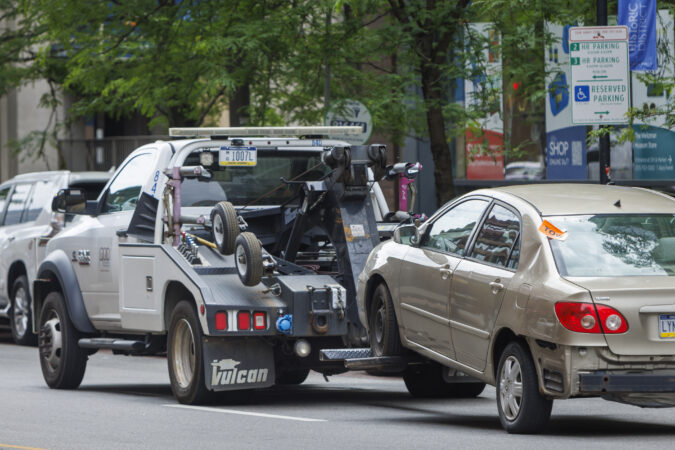
    Philadelphia police are investigating whether the separate slayings of three men, all of whom worked in the city’s towing industry, are connected, authorities said this week.

    Two of the men, who were shot and killed in December and January respectively, worked as truck operators for the Jenkintown-based company 448 Towing and Recovery, according to police.

    The other man, who was shot and killed in November, is connected to a different towing company and worked as a wreck spotter.

    Investigators began looking at a possible connection between the killings after the shooting death of 25-year-old Aaron Whitfield Jr. on Sunday, according to Lt. Thomas Walsh of the department’s homicide unit.

    “On the surface, there’s obviously some sort of connection,” Walsh said.

    Whitfield was in a tow truck with his girlfriend outside of a Northeast Philadelphia smoke shop near Bustleton Avenue and Knorr Street that evening when two men pulled up in another vehicle. They fired at least a dozen shots at the truck before speeding off.

    Whitfield died at the scene, while the woman was hospitalized with gunshot wounds to the leg.

    The shooting came after another 448 Towing and Recovery driver, David Garcia-Morales, was shot on Dec. 22 while in a tow truck on the 4200 block of Torresdale Avenue, according to police.

    Police arrived to find Morales, 20, had been struck multiple times. They rushed him to a nearby hospital, where he died from his injuries on Dec. 26.

    While Walsh could not conclusively say whether investigators believe the killings were carried out by the same person or by multiple individuals, he noted that two different vehicles had been used in the crimes.

    One of those vehicles, a silver Honda Accord used in the shooting of Whitfield, was recovered earlier this week after police found it abandoned in West Philadelphia, Walsh said.

    Meanwhile, police are investigating whether the shooting death of 26-year-old Aaron Smith-Sims in November may also be connected to the killings of Whitfield and Garcia-Morales.

    Smith-Sims, who Walsh said was connected to a different towing company, died after he was shot multiple times on the 2700 block of North Hicks Street in North Philadelphia the morning of Nov. 23.

    Investigators are now looking to question the owners of both towing companies involved, according to Walsh.

    So far, they have failed to make contact with the owner of 448 Towing and Recovery.

    “Obviously the victims’ families are cooperating,” Walsh said. “They’re supplying all the information that they have.”

    An industry that draws suspicion

    Philadelphia’s towing industry can appear like something out of the Wild West, with operators fiercely competing to arrive first at car wrecks and secure the business involved with towing or impounding vehicles.

    Police began imposing some order on the process in 2007, introducing a rotational system in which responding officers cycle through a list of licensed towing operators to dispatch to accident scenes.

    But tow operators often skirt that system, employing wreck spotters — those like Smith-Sims — to roam the city and listen to police scanners for accidents, convincing those involved to use their service before officers arrive.

    The predatory nature of the industry and, in some cases, its historic ties to organized crime make it rife with exploitative business practices and even criminal activity.

    But Walsh cautioned the public against jumping to conspiracy theories about the killings, which have proliferated on social media in the days after Whitfield’s death and the news of a possible connection between the murders.

    Those suspicions aren’t entirely unwarranted.

    In 2017, several employees who worked for the Philadelphia towing company A. Bob’s Towing were shot within 24 hours of one another — two of them fatally.

    Police and federal investigators later arrested Ernest Pressley, 42, a contract killer who was sentenced to life in prison after pleading guilty to killing six people between 2016 and 2019.

    Pressley admitted to accepting payment in exchange for killing one of the towing employees, 28-year-old Khayyan Fruster, who had been preparing to testify as a witness in an assault trial.

    Pressley shot Fruster in his tow truck on the 6600 block of Hegerman Street, killing him and injuring one of his coworkers.

    And in an effort to mask the killing — and to make it appear as if it had been the result of a feud between towing operators — Pressley earlier shot and killed one of Fruster’s coworkers at A. Bob’s Towing at random, according to prosecutors.

  • Man charged with sexually assaulting a woman in her 90s in Montgomery County

    Man charged with sexually assaulting a woman in her 90s in Montgomery County

    A 22-year-old man was charged with sexually assaulting a woman in her 90s during one of four home break-ins last year in Montgomery County, authorities said Thursday.

    John Vernon Gray of Telford was arrested Jan. 10 and was charged with rape and related offenses. He was being held without bail at the Montgomery County Correctional Facility.

    The four nighttime break-ins occurred around Towamencin Township and involved four women who Gray allegedly believed were living alone, authorities said.

    On May 10, around 2:25 a.m., a 79-year-old woman was awakened by a man trying to enter her house on Dock Drive through her bedroom window, authorities said. She screamed and scared him away.

    About an hour later, a man entered a residence in the Dock Woods Senior Living Community and sexually assaulted the occupant, a woman in her 90s, authorities said.

    On Nov. 8, two more break-ins occurred. Police responded around 3 a.m. to a home on Dock Drive where a 72-year-old woman reported being awakened by a man in her bedroom who attempted to lift her nightgown, authorities said. The woman screamed and the man fled.

    About 30 minutes later, a man entered a residence on Crosshill Court in Towamencin Township through a rear sliding glass door, entered the bedroom, and touched a 46-year-old woman, authorities said. The man fled when the woman screamed for her husband.

  • Prosecutor urges manslaughter verdict for guard who ‘did nothing’ as fellow officers killed inmate

    Prosecutor urges manslaughter verdict for guard who ‘did nothing’ as fellow officers killed inmate

    UTICA, N.Y. — A New York prison guard who failed to intervene as he watched an inmate being beaten to death should be convicted of manslaughter, a prosecutor told a jury Thursday in the final trial of correctional officers whose pummeling, recorded by body-cameras, provoked outrage.

    “For seven minutes — seven gut-churning, nauseating, disgusting minutes — he stood in that room close enough to touch him and he did nothing,” special prosecutor William Fitzpatrick told jurors during closing arguments. The jury began deliberating Thursday afternoon.

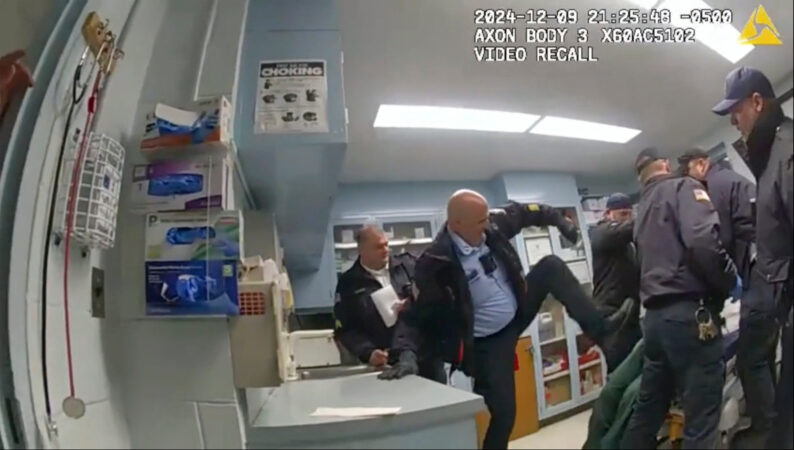
    Former corrections officer Michael Fisher, 55, is charged with second-degree manslaughter in the death of Robert Brooks, who was beaten by guards upon his arrival at Marcy Correctional Facility on the night of Dec. 9, 2024, his agony recorded silently on the guards’ body cameras.

    Fisher’s attorney, Scott Iseman, said his client entered the infirmary after the beating began and could not have known the extent of his injuries.

    Fisher was among 10 guards indicted in February. Three more agreed to plead guilty to reduced charges in return for cooperating with prosecutors. Of the 10 officers indicted in February, six pleaded guilty to manslaughter or lesser charges. Four rejected plea deals. One was convicted of murder, and two were acquitted in the first trial last fall.

    Fisher, standing alone, is the last of the guards to face a jury.

    The trial closes a chapter in a high-profile case led to reforms in New York’s prisons. But advocates say the prisons remain plagued by understaffing and other problems, especially since a wildcat strike by guards last year.

    Officials took action amid outrage over the images of the guards beating the 43-year-old Black man in the prison’s infirmary. Officers could be seen striking Brooks in the chest with a shoe, lifting him by the neck and dropping him.

    Video shown to the jury during closing arguments Thursday indicates Fisher stood by the doorway and didn’t intervene.

    “Did Michael Fisher recklessly cause the death of Robert Brooks? Of course he did. Not by himself. He had plenty of other helpers,” said Fitzpatrick, the Onondaga County district attorney.

    Iseman asked jurors looking at the footage to consider what Fisher could have known at the time “without the benefit of 2020 hindsight.”

    “Michael Fisher did not have a rewind button. He did not have the ability to enhance. He did not have the ability to pause. He did not have the ability to get a different perspective of what was happening in the room,” Iseman said.

    Even before Brooks’ death, critics claimed the prison system was beset by problems that included brutality, overworked staff and inconsistent services. By the time criminal indictments were unsealed in February, the system was reeling from an illegal three-week wildcat strike by corrections officers who were upset over working conditions. Gov. Kathy Hochul deployed National Guard troops to maintain operations. More than 2,000 guards were fired.

    Prison deaths during the strike included Messiah Nantwi on March 1 at Mid-State Correctional Facility, which is across the road from the Marcy prison. 10 other guards were indicted in Nantwi’s death in April, including two charged with murder.

    There are still about 3,000 National Guard members serving the state prison system, according to state officials.

    “The absence of staff in critical positions is affecting literally every aspect of prison operations. And I think the experience for incarcerated people is neglect,” Jennifer Scaife, executive director of the Correctional Association of New York, an independent monitoring group, said on the eve of Fisher’s trial.

    Hochul last month announced a broad reform agreement with lawmakers that includes a requirement that cameras be installed in all facilities and that video recordings related to deaths behind bars be promptly released to state investigators.

    The state also lowered the hiring age for correction officers from 21 to 18 years of age.

  • In South Philly mass shooting, friends unintentionally killed each other, but it’s still murder, prosecutors say

    In South Philly mass shooting, friends unintentionally killed each other, but it’s still murder, prosecutors say

    No one can say for certain what caused the first loud “pop” to echo down a South Philadelphia block — a single gunshot, a car backfiring, or something else entirely.

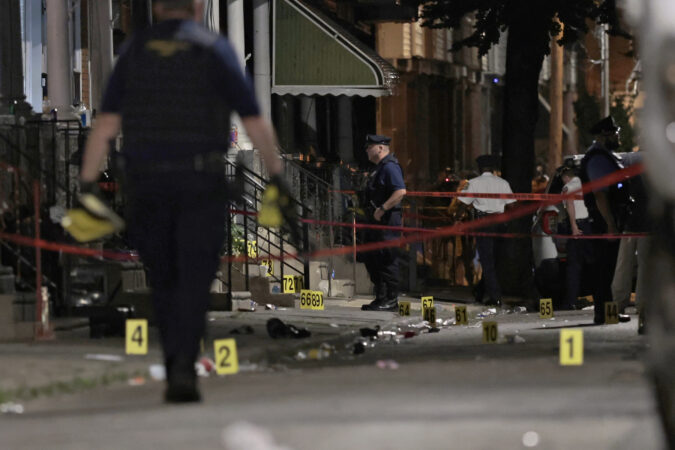
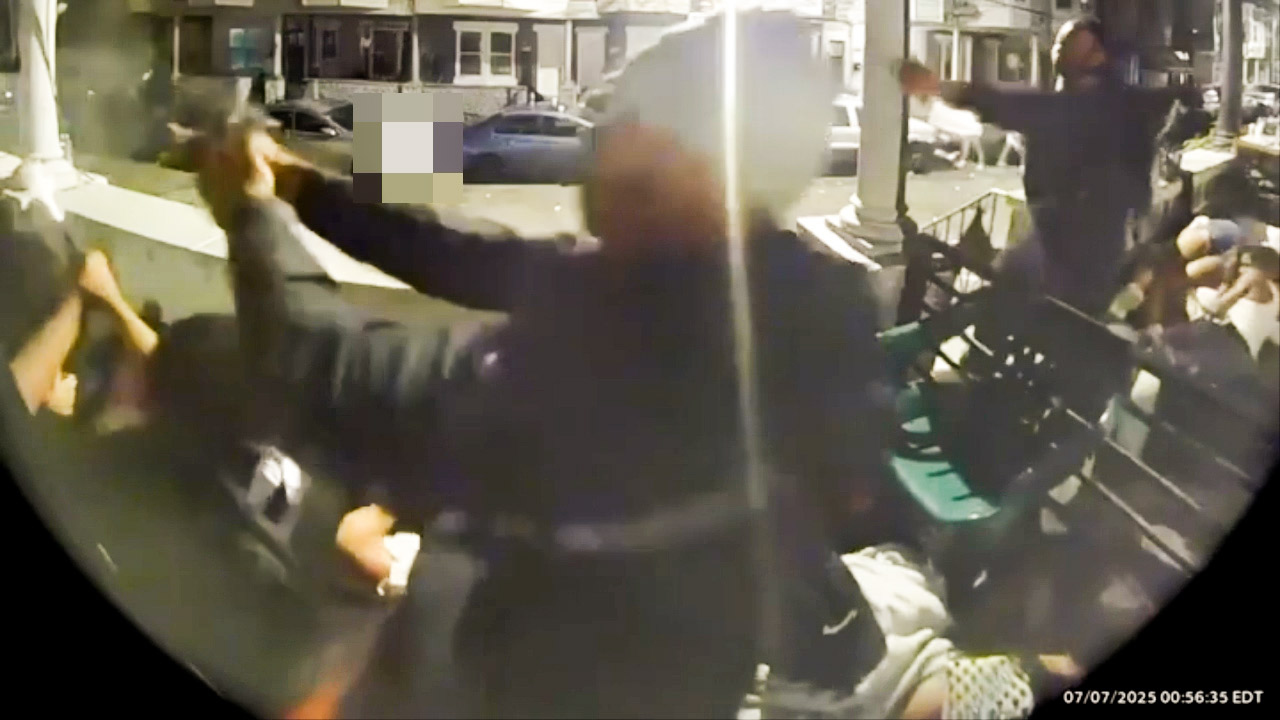
    But within seconds, at least 15 people attending a party on the 1500 block of South Etting Street pulled out guns and started shooting, a chain reaction that left three people dead and 10 others wounded.

    In the weeks that followed the July 7 mass shooting, police said they identified four people who fired weapons that night: Daquan Brown, 21, Terrell Frazier, 22, Brandon Fisher, 17, and Dieve Jardine, 45. Prosecutors charged each with three counts of murder, 10 counts of attempted murder, conspiracy, and related crimes.

    Municipal Court Judge Francis W. McCloskey Jr. on Thursday ruled that the cases against the four men could move forward to trial on charges of third-degree murder, aggravated assault, and inciting a riot. He dismissed all counts of attempted murder and causing a catastrophe.

    Throughout the nearly five-hour hearing, prosecutors, using a compilation of video and social media evidence, laid out in greatest detail yet how the shooting unfolded.

    Dozens of people had gathered on the street the night of July 7, the second block party in as many days. Gunfire erupted just before 1 a.m.

    Assistant District Attorney Cydney Pope said the shooting was driven in part by paranoia.

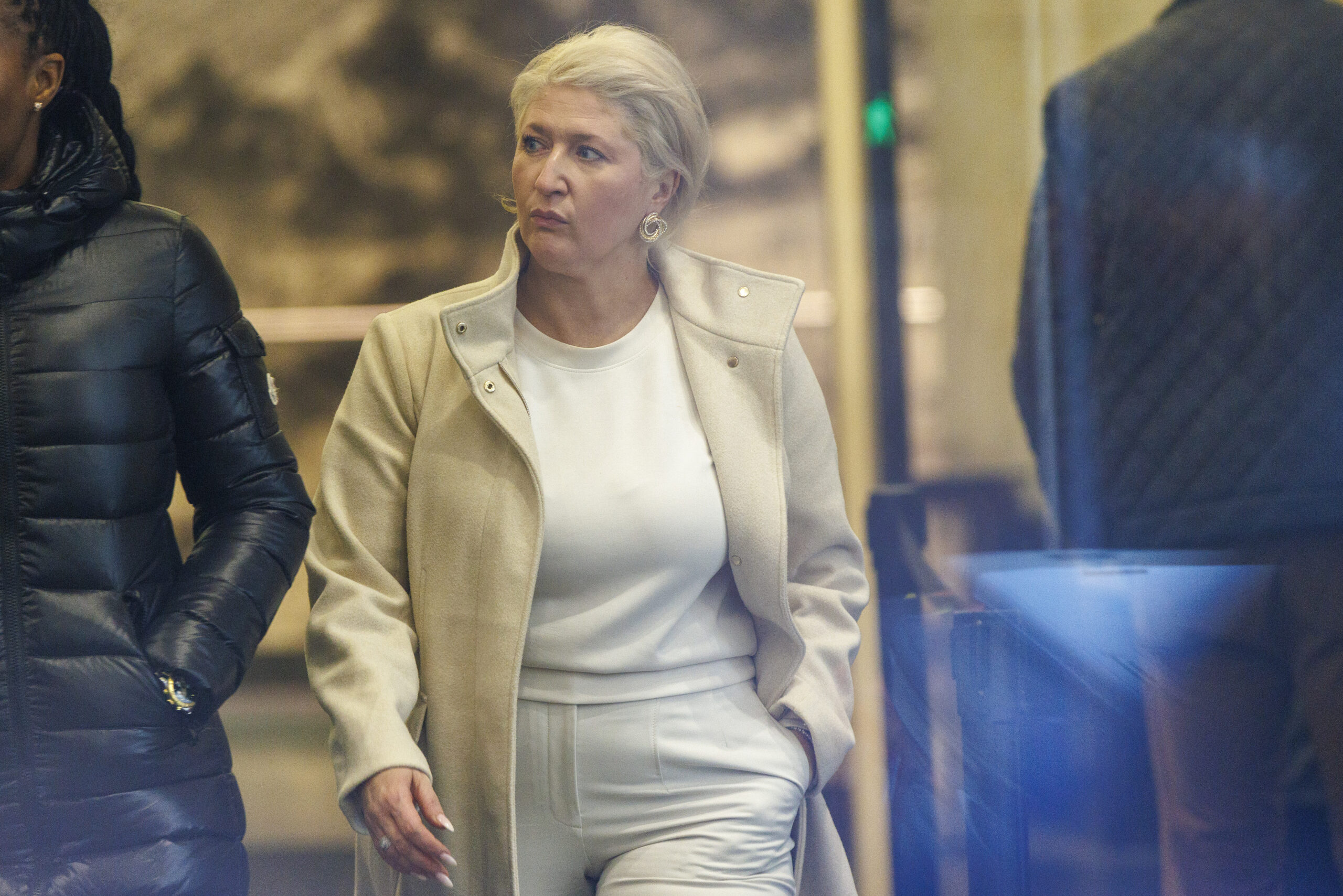
    Assistant District Attorney Cydney Pope leaving the courthouse during a November trial.

    Frazier and other young men at the party had been going back and forth with people on social media, she said, challenging someone who threatened to shoot up the party to “go ahead” in an Instagram Live video.

    Less than 10 minutes later, she said, surveillance video showed a single loud “pop” that appeared to scare partygoers, who started to run down the block.

    Eight seconds later, she said, at least 15 people at the party pulled out their guns and shot more than 120 bullets toward the end of the block.

    But there’s no evidence anyone ever shot into the party, she said. The sound they believed was gunfire, she said, was likely a car backfiring.

    “This is a tragedy because all of these defendants shot and killed their friends,” she said.

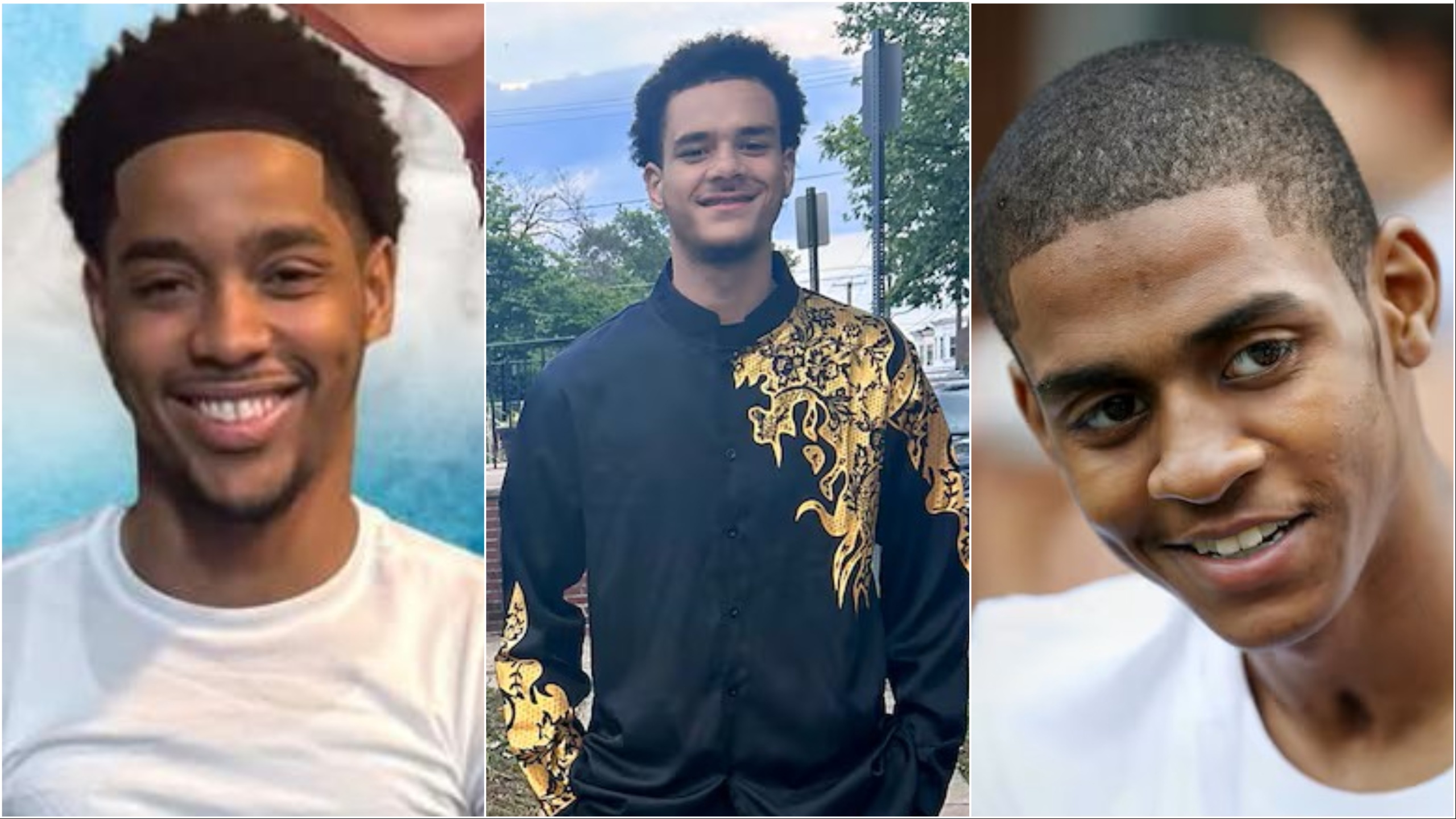
    From left to right: Zahir Wylie, Jason Reese, and Azir Harris were killed in a mass shooting on the 1500 block of Etting Street on July 7.

    Three men were killed. Zahir Wylie, 23, was struck in the chest, and Jason Reese, 19, was shot in the head. Azir Harris, 27, who used a wheelchair after being paralyzed in an earlier shooting, was struck in the back as he sought cover between two cars.

    Homicide Detective Joseph Cremen said he identified the four gunmen by combing surveillance video, phone, and social media records, and interviewing witnesses.

    Fisher, he said, was seen on the porch of one of the homes using a gun with a “switch” attachment that caused him to spray dozens of bullets down the street, appearing at times as if he couldn’t control his weapon. In the teen’s phone, he said, were pictures of him with multiple guns, as well as the clothes he was wearing the night of the shooting and messages indicating he was selling firearms.

    Police said the person directly in front of this video is Brandon Fisher, 17, using a gun with a switch on it to fire dozens of shots down Etting Street on July 7.

    And Frazier, he said, talked about the shooting in text messages. About 12 hours after the shooting, he said, someone asked Frazier where he was when Wylie was struck.

    “I was banging back,” Frazier wrote. He said the shooting was “bad,” and that Wylie “died from us.”

    “He died from a stray,” he said, according to the texts.

    Cremen said Brown admitted that he fired two shots with his legally owned gun, “then when he realized he wasn’t shooting at anything, he stopped and took cover.”

    And Jardine, also known as Dieve Drumgoole, also told investigators he fired two or three shots after he saw someone come out of an alley on the block with a green laser attachment on a gun, the detective said.

    Cremen didn’t recover video that showed anyone using a gun with a green laser beam.

    Defense attorneys for the four men all argued that their clients were acting in self-defense, and only fired their guns because they believed someone was shooting at them. Police still do not know — and may never know — whose bullets struck each victim.

    “There is no evidence that he struck anyone, there’s no evidence that he intended to strike anyone,” said Gina Amoriello, who represents Brown. “In all my years, I’ve never seen a case overcharged like this. This is extreme.”

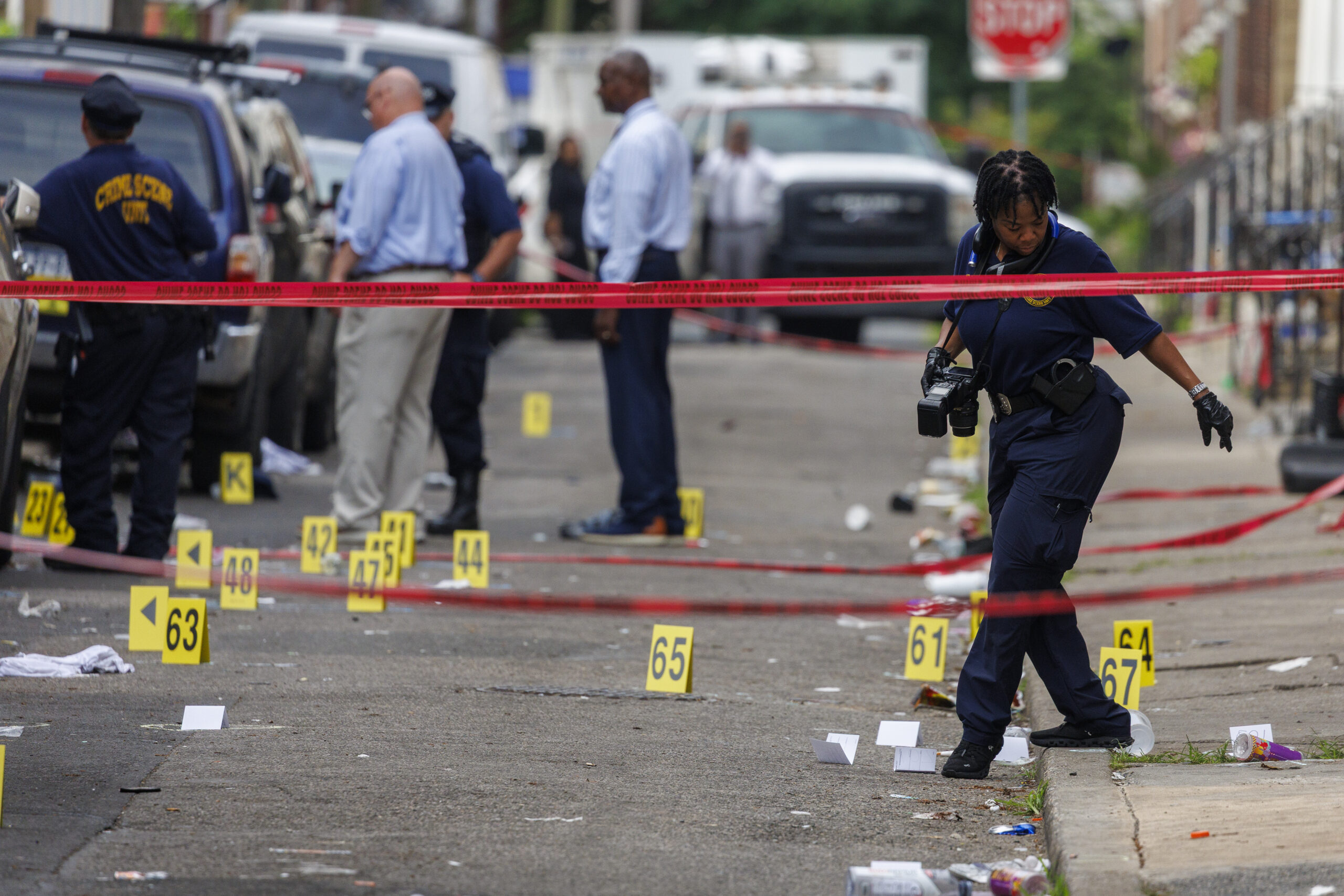
    Philadelphia Police Crimes Scene officer taking pictures at scene. Scene of an overnight shooting 1500 block S. Etting Street, Philadelphia, that sent several to hospital, fatalities, early Monday, July 7, 2025.

    John Francis McCaul, Jardine’s lawyer, said the father was “protecting his family” on the porch. Jardine’s son and nephew were also injured in the shooting.

    No one, he said, intended to kill anyone by firing their guns.

    The judge disagreed.

    “The intent goes where the bullet goes,” said McCloskey. “The intent is established by producing the gun, pointing the gun, and pulling the trigger.”

    He said it would be up to a jury or judge later on to determine whether or not the men were acting in self defense. At this preliminary stage, he said, prosecutors provided enough evidence to uphold a third-degree murder charge.

    Prosecutors plan to address charges against a fifth person, Jihad Gray, who had been charged with the shooting at a hearing next week.

    A sixth person, Christopher Battle, 24, remains at-large.

    After the hearing, the families of the victims struggled to make sense of what they had just watched — friends killing friends.

    “It’s really hard to digest,” said Troy Harris, whose son, Azir, was killed. “It was shocking. It was life changing to us. … This domino effect can hurt generations and generations.”

    “I still don’t even get it,” said Markeisha Manigault, the mother to Zahir Wylie. “I don’t understand why … my son lost his life. It was just unnecessary.”

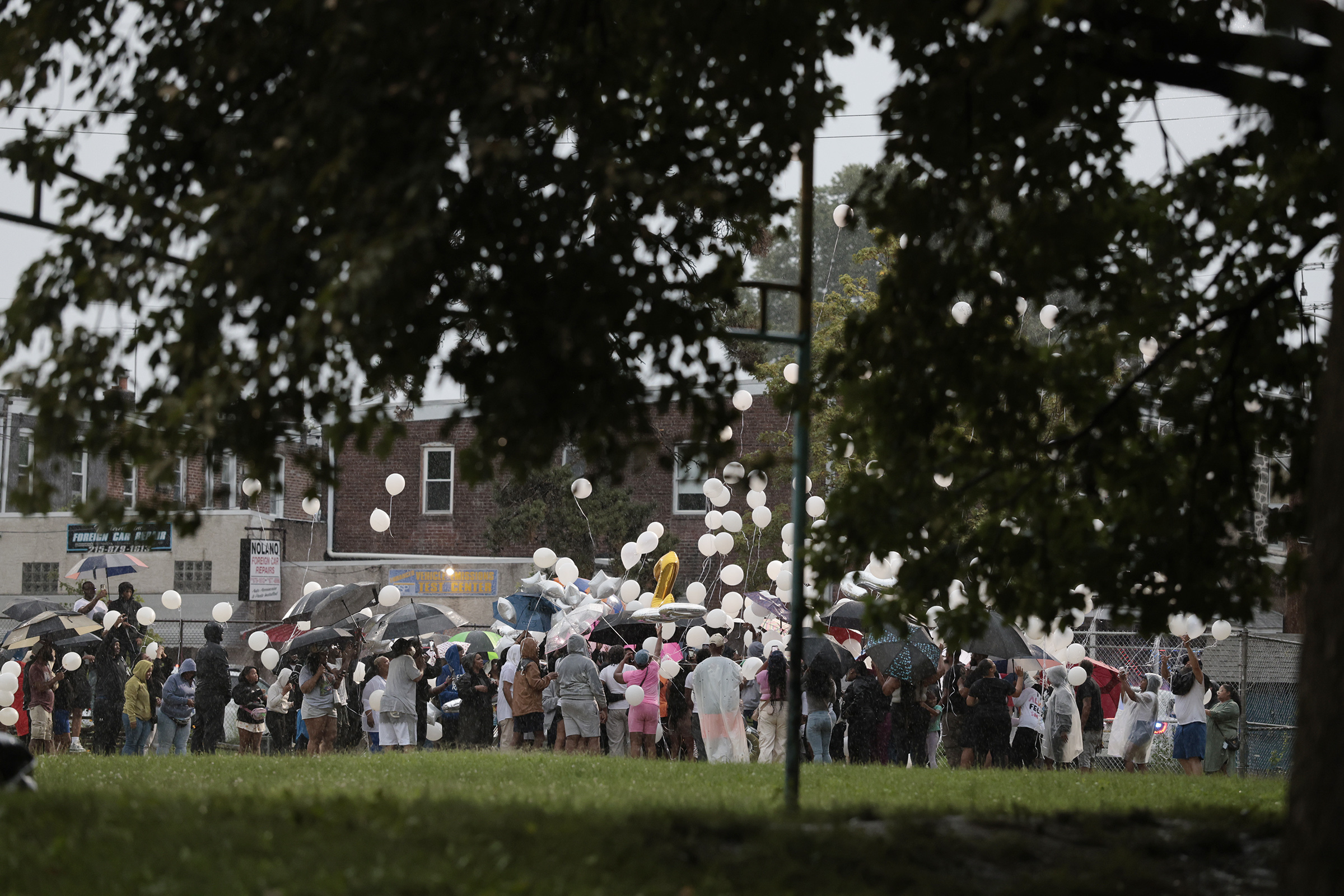
    Family and friends gather for a balloon release in memory of Zahir Wylie at the Papa Playground on July 8, 2025.
  • Dozens of people, including 20 players, were charged in a basketball gambling scandal targeting NCAA and Chinese games

    Dozens of people, including 20 players, were charged in a basketball gambling scandal targeting NCAA and Chinese games

    More than two dozen people participated in a multiyear scheme to fix basketball games in the NCAA and the Chinese professional league, federal prosecutors in Philadelphia alleged Thursday — a conspiracy that affected dozens of games and involved tens of thousands of dollars in bribes and millions in fraudulent bets.

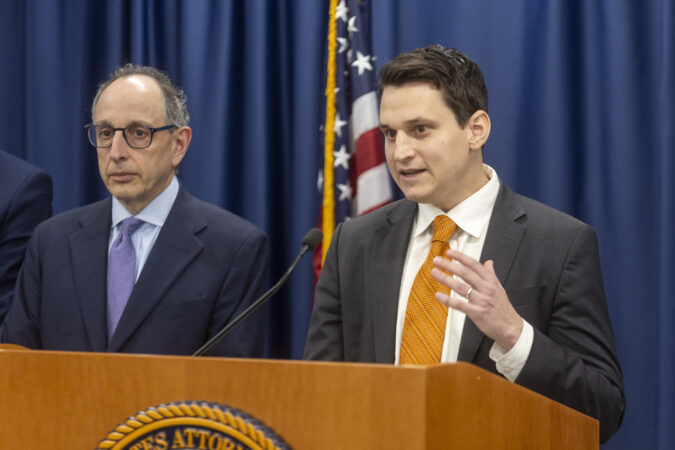
    Twenty basketball players and six so-called fixers were charged in federal court in Philadelphia with crimes including bribery, conspiracy, and wire fraud, according to U.S. Attorney David Metcalf, who described the case as “historic.”

    Metcalf said the fixers — professional gamblers or others with ties to the basketball world — would recruit players to underperform in forthcoming games, then bettors would wager against that player’s team. Players were bribed for their efforts, Metcalf said, while gamblers ultimately collected millions of dollars in illicit winnings.

    “When criminals rig the outcome of games for the purpose to lose … we all lose,” said Metcalf, who spoke at a morning news conference alongside officials including Andrew Bailey, deputy director of the FBI, and Wayne Jacobs, the FBI’s top official in Philadelphia.

    Players involved included Antonio Blakeney, a onetime Chicago Bulls player who later played for the Jiangsu Dragons in China, prosecutors said, as well as a number of Division 1 college players from programs including Tulane University, Nicholls State University, Northwestern State University, and North Philadelphia’s La Salle University.

    Antonio Blakeney, who once played for the Chicago Bulls, has been charged with accepting bribes when he later played for a Chinese basketball team to influence its games.

    In all, prosecutors said, the scheme involved 39 players on more than 17 Division 1 NCAA teams, with bettors wagering huge sums on at least 29 games. Some of the bets were placed at Rivers Casino in Philadelphia.

    The allegations are similar in theme to those leveled last fall against NBA players including the Miami Heat’s Terry Rozier, who has also been federally charged with altering his performance to benefit gamblers.

    One of the gamblers charged Thursday was Shane Hennen, a former Philadelphia resident and prolific high-stakes sports bettor who had already been charged alongside Rozier and was accused of participating in that scandal as well.

    At that time, the charges against Hennen — and the earlier dismissal of Temple University guard Hysier Miller — were rumored to extend to a more far-reaching probe into the NCAA.

    Metcalf said the new investigation was distinct from that case, which is being prosecuted in New York. In that matter, Metcalf said, Rozier and others were accused of providing confidential information to bettors — such as a player’s injury status — to help boost the odds of a wager succeeding.

    In the newest case, Metcalf said, players were directly participating in the conspiracy — and benefiting from it, even as they sought to help their teams lose.

    “There is a really important difference between wagering on predicted outcomes [based on] insider information, and wagering on determined outcomes — outcomes that you control,” Metcalf said. “The former is a crime against sports betting markets. The latter is a crime against the sport itself … and that’s what makes it different and, in my opinion, worse.”

    An American scheme in China

    In a unique twist, prosecutors said, the scheme targeting one of America’s most popular sports was launched in China.

    According to the indictment, Hennen and another professional gambler, Marves Fairley, recruited Blakeney — then playing for the Jiangsu Dragons — to join their so-called point-shaving scheme in 2022.

    Blakeney at the time was a top scorer in the Chinese Basketball Association. And, according to the indictment, Hennen and Fairley offered him bribes in exchange for deliberately underperforming and hurting his team’s chances of winning.

    After he agreed, prosecutors said, Hennen and Fairley placed large bets at the Rivers Casino sportsbook in Fishtown, known as “BetRivers.” In one instance, prosecutors said, the men wagered $198,300 on the Guangdong Southern Tigers to beat the Dragons in a March 6, 2023, game.

    Blakeney averaged 32 points a game that season, but scored just 11 in the contest, which the Dragons lost, 127-96.

    Hennen was apparently pleased with his new investment. Later that spring, the indictment said, he sent a text to another schemer offering reassurance about a game involving Blakeney.

    “Nothing gu[a]rantee[d] in this world,” Henner wrote, ”but death taxes and Chinese basketball.”

    A spokesperson for Rivers Casino declined to comment on the case.

    After the season, Fairley left $200,000 in cash in a Florida storage unit Blakeney controlled, the indictment said. In intercepted text messages, Hennen and Fairley also described “giving $20,000” to other players recruited by Blakeney to fix matches during his absence.

    The Chinese betting ring then became a template, prosecutors alleged — one that the conspirators used to begin rigging games much closer to home.

    Targeting NCAA games

    In 2024, prosecutors said, Hennen and Fairley recruited college basketball trainers Jalen Smith and Roderick Winkler to help rig NCAA games. Prosecutors said the trainers’ status in the basketball world gave them access to, and credibility with, NCAA athletes.

    The men then used that influence to recruit about 20 players from a variety of schools to participate in the point-shaving operation, prosecutors said.

    Several players had ties to the Philadelphia region, including former Temple University forward Elijah Gray, who was approached while playing at Fordham; Micawber “Mac” Etienne, who was approached at DePaul but later played for La Salle; and Delaware State University point guard Camian Shell, who is alleged to have thrown games while at North Carolina A&T State University. C.J. Hines, a current player on Temple’s roster, was also charged with taking bribes in 2024, when he was playing at Alabama State, court documents show. A Temple spokesperson said Thursday that the university was “reviewing this new information” and noted that Hines has not played for the Owls due to ongoing eligibility questions.

    The scheme worked much as in China, prosecutors contended: Hennen and Fairley would bribe players to throw games, then place bets on their opponents.

    But the gamblers took a less visible role this time, the indictment said, generally sending brief texts to a number of people who could place high-stakes bets on their behalf.

    “Queens ny -1 first half and money line,” Hennen texted a straw bettor, seeking to place a $20,000 bet that the Queens University Royals would cover the first-half spread by at least 1½ points in a March 1, 2024, game against Kennesaw State.

    The men let Smith handle much of the dirty work, the indictment said. In one example, he texted with Kennesaw State players Simeon Cottle and Demond Robinson the day of a game.

    “I need both of y’all on FaceTime with me twice today,” he wrote. “Just to make sure y’all good and really locked in … [This] money guaranteed, ima be at the game with the money.”

    In some cases, Smith is alleged to have flown to Philadelphia to pay players their bribes. In other instances, the indictment said, Smith was intensely involved with pressuring players to underperform even while games were progressing.

    In March 2024, for example, the indictment said, Smith texted DePaul’s Etienne that his teammates who were playing well needed to “chilllll [the f—] out.”

    In another episode, the indictment said, he wrote to to Alabama State players Shawn Fulcher and Corey Hines, saying: “Lose by 6 full game no excuses,” then sent a photo of a large stack of cash.

    When the players complained that they were struggling to throw the game because their opponent — the University of Southern Mississippi — was “so bad,” Smith sent an all-caps response, the indictment said.

    “LET [the Southern Mississippi players] LAY IT UP,” he wrote.

    Sports impacted by ‘monetization’

    While Hennen is accused of orchestrating many of his crimes in Philadelphia, the indictment painted a more limited picture of his role with local teams.

    In 2024, for example, Smith and Blakeney attempted to recruit players from La Salle to join the scheme for a game against St. Bonaventure, the indictment said. But prosecutors did not name any La Salle players as having done so, and they said all the bets Hennen and Fairley placed on the game were unsuccessful.

    A spokesperson for La Salle said Thursday that the university would cooperate with all investigations into the matter, and that “neither the university, current student-athletes, or staff are subjects of the indictment.”

    Metcalf said the “monetization” of college sports in recent years — and the proliferation of legalized sports gambling across the country — “furthered the enterprise in this case.”

    And he said that although college athletes can now be legally paid for their name, image, and likeness, some of those who participated in this scheme were targeted because they did not feel they were making enough money in that new landscape.

    Metcalf said many Americans are drawn to sports because they offer a venue for teams and players to participate in honest competition.

    “This,” Metcalf said, “totally flies in the face of all of that.”

    Staff writer Isabella DiAmore contributed to this article.

  • Frantic families, unidentified bones: A week after alleged grave robber’s arrest, loved ones have questions without answers

    Frantic families, unidentified bones: A week after alleged grave robber’s arrest, loved ones have questions without answers

    A week after authorities arrested Jonathan Christian Gerlach on charges of stealing human remains from Mount Moriah Cemetery, the consequences of the case continue to unfold — from a small police department fielding frantic pleas from families to a coroner’s office now responsible for safeguarding more than 100 unidentified bones and body parts.

    Since the arrest, the Yeadon Police Department has been inundated with calls and emails from relatives fearful that the graves of their loved ones were disturbed, Police Chief Henry Giammarco said. The remains recovered during the investigation — including skulls, bones, and other human fragments — were seized from Gerlach’s basement and from a separate storage unit, both in Ephrata, and are now in the custody of the Lancaster County Coroner’s Office.

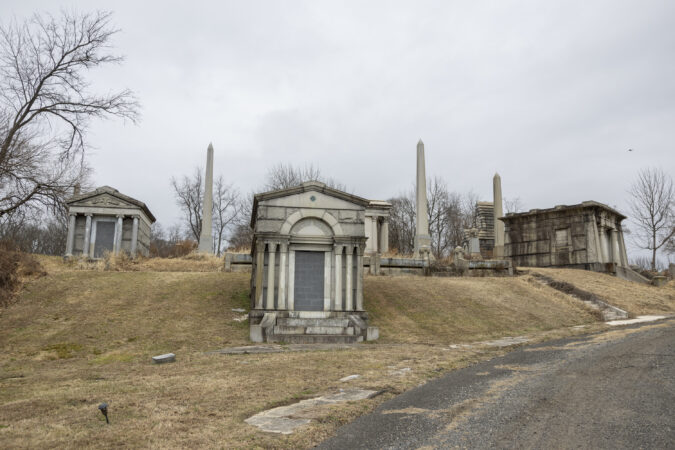
    Gerlach is accused of systematically removing skulls and bones from graves at Mount Moriah, a sprawling historic cemetery that spans Philadelphia and Yeadon Borough. The case has drawn national attention, prompting widespread media coverage and intensifying concern among families with relatives buried at the cemetery.

    (function() {
    var l2 = function() {
    new pym.Parent(‘bones’,
    ‘https://media.inquirer.com/storage/inquirer/projects/innovation/arcgis_iframe/bones.html’);
    };
    if (typeof(pym) === ‘undefined’) {
    var h = document.getElementsByTagName(‘head’)[0],
    s = document.createElement(‘script’);
    s.type = ‘text/javascript’;
    s.src = ‘https://pym.nprapps.org/pym.v1.min.js’;
    s.onload = l2;
    h.appendChild(s);
    } else {
    l2();
    }
    })();

    As of Wednesday afternoon, Giammarco said, his department had received more than 200 calls and emails from people across Pennsylvania and from as far away as Montreal and Hawaii, many asking whether authorities could confirm whether specific graves had been disturbed or whether their loved ones’ remains were among those recovered.

    Inside the coroner’s office, the remains have been cataloged and placed in secure storage, Coroner Stephen Diamantoni said. They will remain there until Gerlach’s criminal case is resolved.

    Diamantoni said his office does not plan to attempt to identify the remains — a task he described as virtually impossible given their age, their condition, and the circumstances in which they were recovered.

    When the bones were seized from Gerlach’s home and storage unit, Diamantoni said, they were not labeled or organized in any way that would indicate where they came from or whom they belonged to. In many cases, he said, remains from different individuals were mixed together, a condition known as commingling, “on a scale that I’ve never encountered.”

    Compounding the challenge, some of the remains are believed to be hundreds of years old, Diamantoni said, and are in advanced states of decay. Even under ideal conditions, identifying such remains would be difficult. In this case, he said, it would be “a herculean task” to attempt to match the bones to specific burial sites — let alone to determine whose remains they were.

    Even if that were somehow possible, Diamantoni said, identifying a living family member would present another nearly insurmountable hurdle, given the age of the remains.

    Back in Yeadon, Giammarco said he has tried to provide as much clarity as possible to families reaching out in distress. While the investigation is ongoing, he said, authorities have identified thefts only from mausoleums and underground vaults — structures that are larger and deeper than standard graves and are constructed differently. He spent much of the weekend returning calls and responding to emails, he said, hoping to ease fears.

    “If it would have been my family,” Giammarco said, “I would have wanted someone to contact me.”

    Delaware County District Attorney Tanner Rouse, whose office is prosecuting Gerlach, said Wednesday the investigation into the crimes was ongoing.

  • Federal prosecutors have requested documents tied to the Ellen Greenberg case, sources say

    Federal prosecutors have requested documents tied to the Ellen Greenberg case, sources say

    The U.S. Attorney’s Office is seeking documents and information from those connected to the case of Ellen Greenberg, whose 2011 death remains shrouded by questions about whether it was properly investigated by authorities, according to sources.

    The sources, who asked not to be identified, said federal prosecutors recently sent out subpoenas in the matter, and that the investigation does not appear to be focused on the manner of Greenberg’s 2011 death by 20 stab wounds — which was initially ruled homicide then switched to suicide. Instead, the sources said, the probe appears to be centered on questions about how a variety of agencies handled the case in the years after she died, and whether any of those missteps might amount to criminal corruption.

    Still, the scope of the potential inquiry was not clear Wednesday.

    Multiple city and state agencies have been involved in Greenberg’s case in the last 15 years, including the Philadelphia Police Department, the Philadelphia Medical Examiner’s Office, the Philadelphia District Attorney’s Office, the Philadelphia Law Department, and the Pennsylvania Attorney General’s Office.

    Spokespeople for all of those city offices would neither confirm nor deny they have received subpoenas.

    A spokesperson for the U.S. Attorney’s Office said they could “neither confirm nor deny the existence of an investigation.”

    Joseph Podraza Jr., the attorney for Greenberg’s parents, said he and his clients are “ecstatic.”

    “If that is in fact correct and accurate, that the federal government is going to investigate … this is exactly what we’ve wanted all along,” he said. “It’s unfortunate it’s taken more than seven years to get to this point but we are really grateful and thankful to the U.S. attorneys and, of course, are available to assist in any way we can in helping their investigation.”

    From homicide to suicide

    Ellen Greenberg and Samuel Goldberg in the kitchen of the Manayunk apartment they shared.

    Greenberg, 27, was found by her fiancé, Samuel Goldberg, in the kitchen of their Manayunk apartment with a 10-inch knife lodged four inches into her chest on Jan. 26, 2011.

    Investigators on the scene treated her death as a suicide because Goldberg told them the apartment door was locked from the inside and he had to break it down to get in. There were no signs of an intruder and Greenberg had no defensive wounds, police have said.

    During an autopsy the next morning, then-assistant medical examiner Marlon Osbourne noted a total of 20 stab wounds to Greenberg’s body, including 10 to the back of her neck, along with 11 bruises in various stages of healing, and ruled her death a homicide.

    By the time homicide investigators returned to the scene to conduct their investigation, the apartment was already professionally cleaned and electronic devices belonging to Greenberg had been removed by a member of Goldberg’s family.

    Shortly after the homicide ruling, police publicly disputed the findings, citing “mental issues” Greenberg may have had. Osbourne later changed his ruling to suicide, with no explanation to Greenberg’s parents, Joshua and Sandra.

    Greenberg was dealing with anxiety, had met with a psychiatrist, and was prescribed anti-anxiety and sleep aid medications. Her psychiatrist told police Greenberg felt overwhelmed at work, but “there was never any feeling of suicidal thoughts,” and according to the medical examiner’s investigation report at the time, there was nothing indicative of suicide found on Greenberg’s computers.

    She did not leave behind a note.

    The Greenbergs subsequently retained numerous independent forensic experts who have questioned authorities’ findings, as first detailed in a March 2019 Inquirer report.

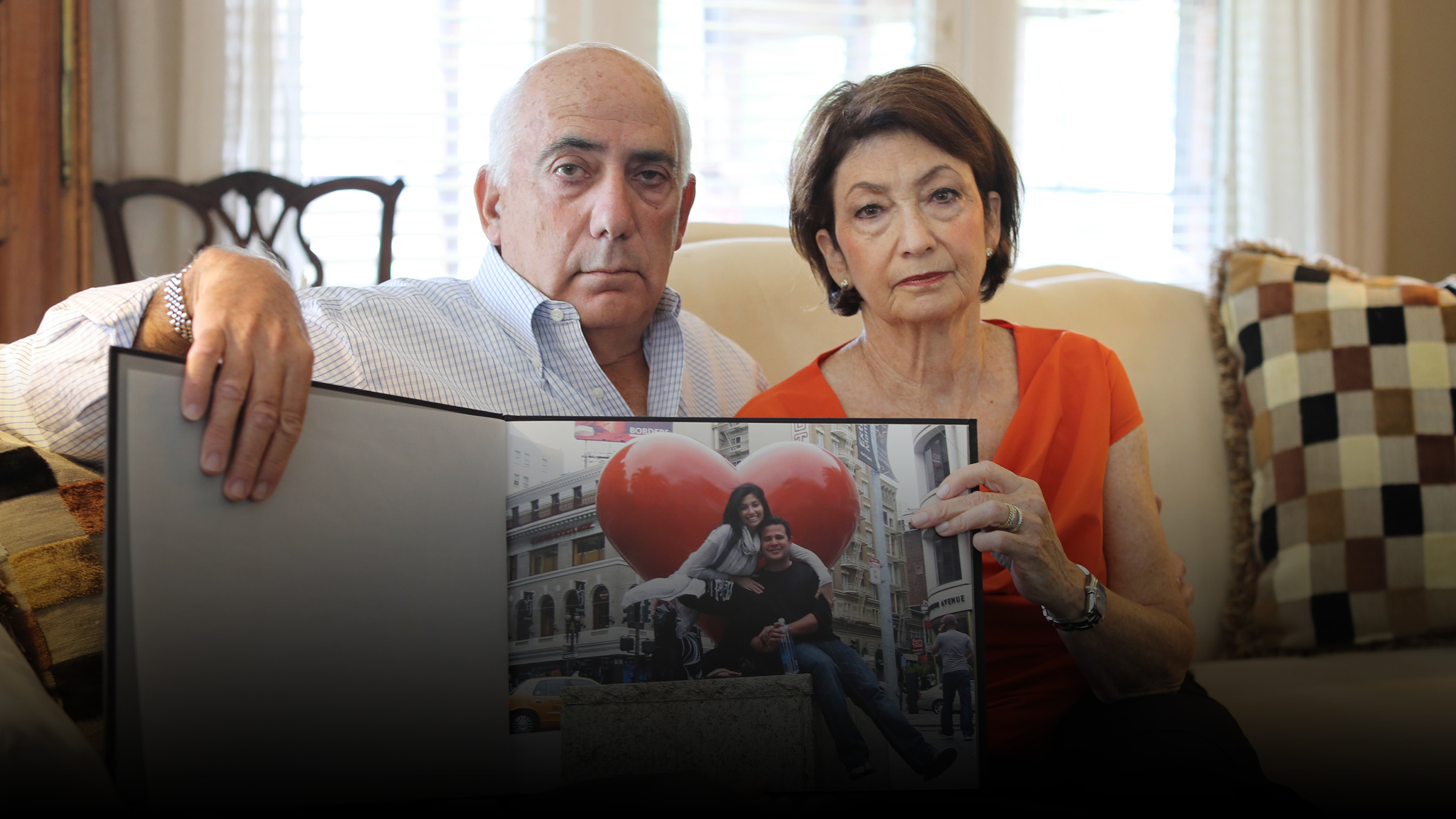
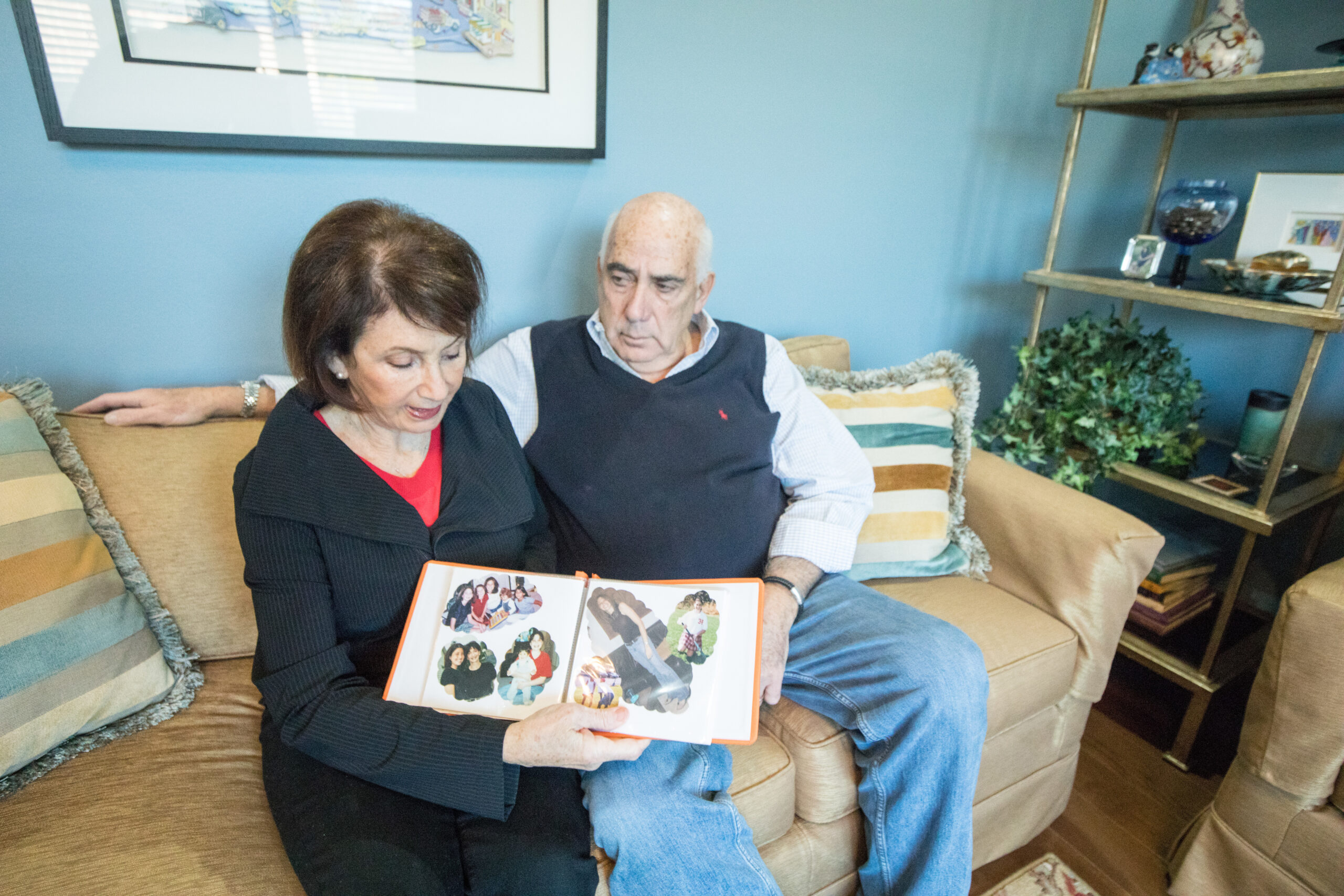
    Ellen Greenberg’s parents, Joshua and Sandra, hold a photo album of their daughter.

    In their search for answers, the Greenbergs hired then-civil rights attorney Larry Krasner in 2012. He convened a meeting for the Greenbergs with police officials and the district attorney’s office in an effort to get the investigation reopened, but nothing happened, the Greenbergs said.

    When Krasner became district attorney in 2018, the Greenbergs reached out to see if he’d reopen the investigation. Krasner referred the matter to the state Attorney General’s Office, then helmed by now Gov. Josh Shapiro, to avoid the appearance of a conflict of interest.

    Shapiro’s office had the case for more than a year. It was only when The Inquirer pressed the office for answers that Shapiro’s spokesperson at the time, Joe Grace (now spokesperson for Mayor Cherelle L. Parker), said in a 2019 statement that they had conducted a “thorough investigation,” the “evidence supports ‘Suicide’ as the manner of death,” and that the office had closed the investigation.

    Grace pointed to search history on Greenberg’s computer that included the search terms “suicide methods,” “quick suicide,” and “painless suicide.”

    When asked why the medical examiner’s 2011 report said nothing indicative of suicide was found on Greenberg’s computer, Grace said his office didn’t find the analysis in the file, so “we cannot say if anyone, police or prosecutor, ever looked at it.”

    The lawsuits

    Following the Attorney General Office’s review, the Greenbergs filed a lawsuit against the Medical Examiner’s Office and Osbourne in 2019 seeking to have the manner of their daughter’s death changed back to homicide or undetermined.

    The city law department fought to have the case dismissed and a lengthy appeals process followed. In the Commonwealth Court’s 2-1 decision in 2024, judges wrote they had “no choice under the law” but to grant the city’s appeal but added that “… this court is acutely aware of the deeply flawed investigation of the victim’s death by the City of Philadelphia Police Department (PPD) detectives, the City of Philadelphia District Attorney’s Office (DAO), and the MEO [Medical Examiner’s Office].”

    Ellen Greenberg

    While that case was ongoing, the Greenbergs filed a second suit in 2022, based on additional details about the case that came to light through the first suit, including new information about the process around how Greenberg’s death was classified.

    In the new suit, Podraza alleged the investigation into Greenberg’s death was “embarrassingly botched” and resulted in a “cover-up” by Philadelphia authorities. It sought monetary damages for intentional infliction of emotional distress.

    The city law department fought both suits until February, when Osbourne — the pathologist who initially ruled Greenberg’s death a homicide then switched it to suicide — signed a sworn statement saying he now believes her death should be categorized as something other than suicide.

    Within days, and shortly before the second case was to go to trial, the city offered to settle with the Greenbergs. The settlement included $650,000, which was paid, and an agreement that the Medical Examiner’s Office conduct an “expeditious” review of the manner of Greenberg’s 2011 death.

    Sandra and Joshua Greenberg

    As part of the settlement, the Greenbergs agreed to withdraw both of their lawsuits against the city. The first suit had been slated for a hearing before the Supreme Court of Pennsylvania last year.

    In October, Philadelphia Chief Medical Examiner Lindsay Simon delivered her review of the case, in which she said she discovered 20 additional bruises and three additional “perforations in the skin” never before documented on Greenberg’s body, raising the total number of bruises to 31 and stab wounds to 23, up from 20.

    Simon concluded that Greenberg “would be capable of inflicting these injuries herself,” and that her death “is best classified as ‘Suicide.’”

  • Haverford Township bars police from cooperating with ICE in noncriminal immigration enforcement

    Haverford Township bars police from cooperating with ICE in noncriminal immigration enforcement

    Haverford Township officials voted this week to bar the township’s police department from cooperating with U.S. Immigration and Customs Enforcement in the agency’s civil deportation efforts.

    Township commissioners overwhelmingly approved the resolution, which says Haverford police officers and resources will not be made available for ICE’s 287(g) program. The nationwide initiative allows local police departments to perform certain federal immigration duties, should they choose to enter an agreement with the agency.

    The Monday evening vote came after a weekend of anti-ICE protests in cities across the country spurred by the fatal shooting of 37-year-old Renee Good by an immigration agent during an enforcement operation in Minneapolis.

    On Wednesday, Bucks County’s sheriff ended the department’s own 287(g) agreement with ICE, saying the “public safety costs” of the partnership vastly outweighed the benefits.

    “The last thing I want to see happen is that our relationship with our police department be hurt by the reckless and criminal activity of ICE,” Haverford Commissioner Larry Holmes said before the vote. “We have the power to prevent that.”

    Local law enforcement agencies that enter a 287(g) agreement with ICE are offered a variety of responsibilities and trainings, such as access to federal immigration databases, the ability to question detainees about their immigration status, and authority to issue detainers and initiate removal proceedings.

    The program is voluntary and partnerships are initiated by local departments themselves, though some Republican-led states are urging agencies to enter them. The Department of Homeland Security recently touted that it has more than 1,000 such partnerships nationwide, as the Trump administration continues to make a sweeping deportation effort the focus of its domestic policy.

    Critics such as the American Civil Liberties Union say the program turns local departments into an “ICE force multiplier” and that the agreements, which require officers to shift from local to federal duties, are a drain on time and resources.

    Haverford Township’s police department has not made any request to initiate such an agreement with ICE, according to commissioners, who called the resolution a preemptive measure. While ICE has ramped up enforcement in Philadelphia and in surrounding communities like Norristown, there have not been sizable operations in Delaware County.

    Judy Trombetta, the president of the township’s board of commissioners, said the resolution was about protecting the civil liberties of those living in Haverford, as well as the township’s public safety.

    In Trombetta’s view, a 287(g) agreement could mean those without legal immigration status could be deterred from reporting crimes to Haverford police or showing up to court hearings, while leaving officers confused about their own responsibilities.

    And as a township, she said, it is “not our role” to act as federal immigration agents.

    “It’s our job as a township to keep people safe, [to] uphold the Constitution,” Trombetta said.

    Commissioners voted 7-2 to approve the resolution.

    The motion still requires Haverford police to cooperate with federal immigration agencies in criminal investigations. But because many cases involving those living in the country illegally are civil offenses, much of ICE’s activities are exempt.

    Commissioner Kevin McCloskey, voicing his support for the resolution, said the week after Good’s killing had been “incredibly taxing on the American people,” and in his view, it was important to adopt the resolution even if ICE wasn’t active in the community.

    But for Commissioner Brian Godek, one of the lone holdout votes, that reality made the resolution nothing more than “political theater.”

    Tensions over Good’s killing were on full display during the meeting, as both the resolution’s supporters and detractors filled the seats of Haverford’s municipal services building.

    “I do not want my tax dollars or Haverford’s resources to be used to support a poorly trained, unprofessional, and cruel secret police force that is our current federal U.S. Immigration and Customs Enforcement agency,” said resident Deborah Derrickson Kossmann.

    Brian Vance, a resident and a lawyer who opposed the resolution, said he was approaching the matter like an attorney. He questioned whether noncompliance with a federal department would open up the possibility of lawsuits, or the federal government withholding funds for the township.

    “It’s legal, it’s proper, whether we agree with it or not,” Vance said of ICE’s authority.

    After the vote, McCloskey, the commissioner, made a plea for unity to those divided over the issue.

    That included residents who said the resolution’s supporters had gotten caught up in the “emotion” of the Minneapolis shooting.

    “I just ask that you take a step back,” McCloskey said. “On some level, we should all be able to appreciate that none of us wanted to see a 37-year-old mother in a car get shot.”

  • Lawsuit alleges misconduct by state troopers investigating death of Delco girl murdered in 1975

    Lawsuit alleges misconduct by state troopers investigating death of Delco girl murdered in 1975

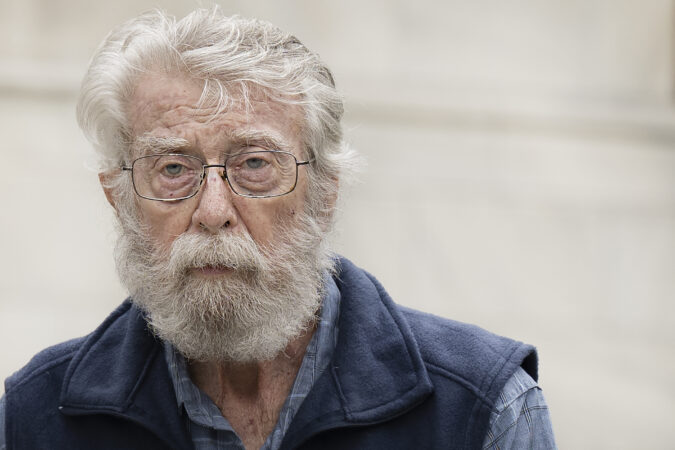
    David Zandstra, the former Marple Township pastor acquitted last year in the 1975 murder of an 8-year-old girl in Delaware County, has died, and a federal lawsuit has been filed alleging misconduct by two Pennsylvania State Police investigators in the case.

    The lawsuit said the 85-year-old Zandstra, who lived in Georgia, “has passed and his family seek redress for this extreme and immoral prosecution.”

    No further information about his death was included in the complaint. The Delaware County Daily Times, citing his death certificate, reported that Zandstra died Dec. 15 at a hospice, and the cause of death was skin cancer.

    Mark Much, one of Zandstra’s lawyers during the trial but who is not an attorney on the lawsuit, said in an e-mailed statement Tuesday night that “Zandstra passed away last month, peacefully, and surrounded by his loving family.”

    Much said that Zandstra “was a God-fearing man, unsuspecting and trustful of law enforcement, naive of their unscrupulous interrogation tactics, all in the name of ‘solving’ a cold case.”

    The defendants in the lawsuit, filed Jan. 10 in Philadelphia, are Andrew Martin and Eugene Tray, who were the most recent state police investigators for Gretchen Harrington’s murder.

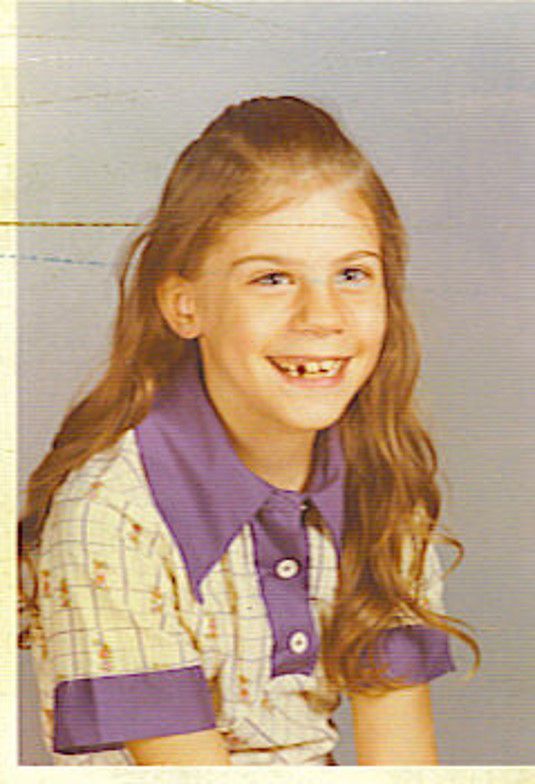
    Gretchen Harrington, 8, was found dead in 1975.

    Tray declined to comment on the lawsuit. Martin could not be reached for comment.

    The plaintiff is Margaret Zandstra, the administrator of the estate of David Zandstra, who allegedly had his civil rights violated by the defendants, the lawsuit states.

    Zandstra, who was held in custody for 18 months, was found not guilty in January 2025 by a Delaware County jury of murder and kidnapping in the killing of Gretchen Harrington. The jury took about an hour to deliberate after a four-day trial.

    In 2023, Zandstra was charged after he confessed to driving Gretchen to a secluded section of Ridley Creek State Park and beating her to death. The lawsuit says the investigators “illegally coerced an admission of guilt from Mr. Zandstra, a then-83-year-old stroke and cancer survivor.”

    Mark Much argued during the trial that state police investigators had coerced and manipulated Zandstra into confessing to a crime he did not commit. There was no physical evidence linking him to the crime and DNA found on Gretchen’s clothing belonged to two unidentified men and one unidentified woman.

    Testimony during the trial revealed that before Zandstra’s confession, the state police had developed several other suspects in the decades since Gretchen’s body was found.

    The lawsuit provides alleged details about what the investigators did before finally going after Zandstra.

    “These Defendants caused evidence of the alternative suspects and Mr. Zandstra’s exclusion as a contributor of DNA to be withheld until the eve of trial, after Mr. Zandstra had been incarcerated and his cancer had returned and gone untreated,” according to the complaint.

    Zandstra was the pastor at Trinity Chapel in Marple Township, a Christian reform church near the Harrington family home. On Aug. 15, 1975, Gretchen was last seen walking to the church for the final session of vacation Bible school before disappearing.

    Her unclothed body was found two months later near a walking trail in Ridley Creek State Park. An autopsy revealed she died from blunt-force trauma to the head.

    Deputy District Attorney Geoff Paine said during the trial that two state police investigators interviewed Zandstra after a woman who was a lifelong friend of Zandstra’s daughter told police in 2022 that he had groped her at a sleepover at his home in 1975, days before Gretchen’s disappearance. At the time, Paine said, the woman was the same age as Gretchen and looked like Gretchen.

    Much told the jury that another suspect who was investigated was Gretchen’s sister, Zoe Harrington, who in 2021 claimed to have killed her sister with a rock during an incident involving her father, who was also a pastor, and members of the congregation he led.

    Much said the state police at one point considered Harold Harrington, Gretchen’s father, a potential suspect. Harold Harrington died in 2021.

    The prosecutor told the jury that Zoe Harrington’s confession wasn’t credible because she had a history of mental-health illness.

    According to the lawsuit, Andrew Martin, one of the defendants, went to the first assistant district attorney in Montgomery County to seek a court order to allow a secretly recorded conversation between Zoe Harrington and her father, who was in poor health at the time.

    After several interviews with Zoe Harrington — including with another state trooper who is not named as a defendant — Martin signed an application to the court for a wiretap authorization on Aug. 9, 2021, according to the lawsuit. The next day, however, Zoe Harrington allegedly backed out because she said she was too afraid.

    The lawsuit states that when Martin and Tray provided their sworn affidavit supporting the arrest of Zandstra, they summarized their August 2021 activity in the investigation as: “On Aug. 9, 2021, investigators conducted an interview of Zoey HARRINGTON (sister of Gretchen HARRINGTON) relative to this investigation. Zoe HARRINGTON related that ZANDSTRA was the minister at the time, and his daughter was Gretchen’s best friend.”

    The lawsuit also says the state police had another suspect, Richard Bailey, who was investigated in 2017. Bailey was a convicted child rapist and kidnapper, who was seen a mile from where Gretchen disappeared on the day she was abducted. Bailey died in state prison in the 1990s.

    The lawsuit seeks unspecified damages and costs.