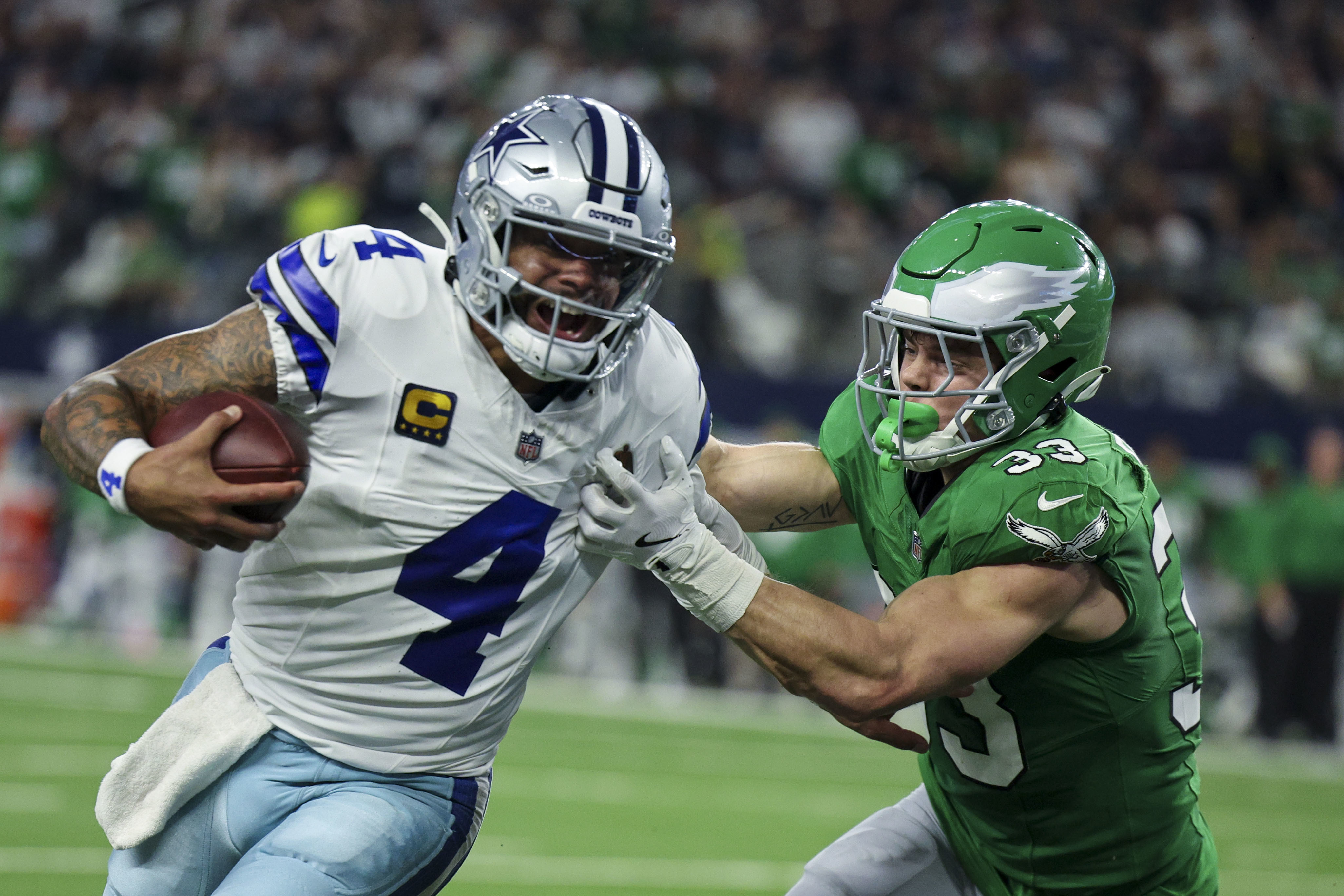
ARLINGTON, Texas — The Eagles couldn’t run the ball again, and yet, after they jumped out to a 21-0 lead, Saquon Barkley rushed on four first downs in the next five possessions.
He gained a total of 5 yards on the carries.
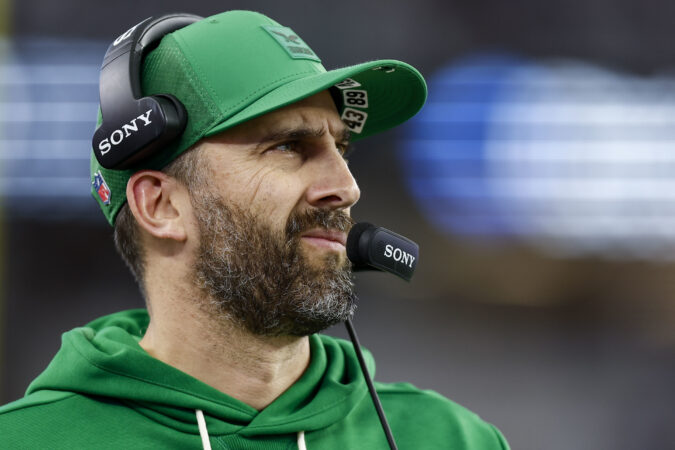
The play-calling defied logic after the offense had used an 8-18 run-pass ratio to score touchdowns on its first three drives. Offensive coordinator Kevin Patullo powered down the engine, but make no mistake, it was coach Nick Sirianni who was at the commands.
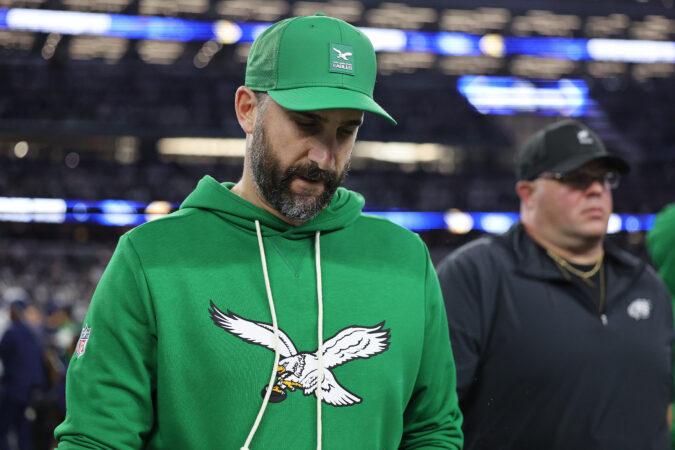
He’s the driver of the Eagles’ conservatism this season and it finally caught up to his team, which coughed up a 24-21 loss to the Dallas Cowboys on Sunday at AT&T Stadium.
There were myriad reasons for the Eagles falling to 8-3. Two uncharacteristic turnovers. Fourteen penalties — many of them unforced. And an injury-marred defense that succumbed under the weight of the offense’s ineffectiveness.
But Sirianni and Patullo turtled up when they should have pounced on the Cowboys’ sloppiness. Running the ball into five-man fronts — more on that mystery later — was puzzling. The lack of aggressiveness before the half and in fourth-down situations wasn’t as egregious, but decisions in those situations were emblematic of the overall timidness.
“We just weren’t very efficient as an offense in that second half,” Sirianni said. “I didn’t really feel that we took our foot off the gas.”
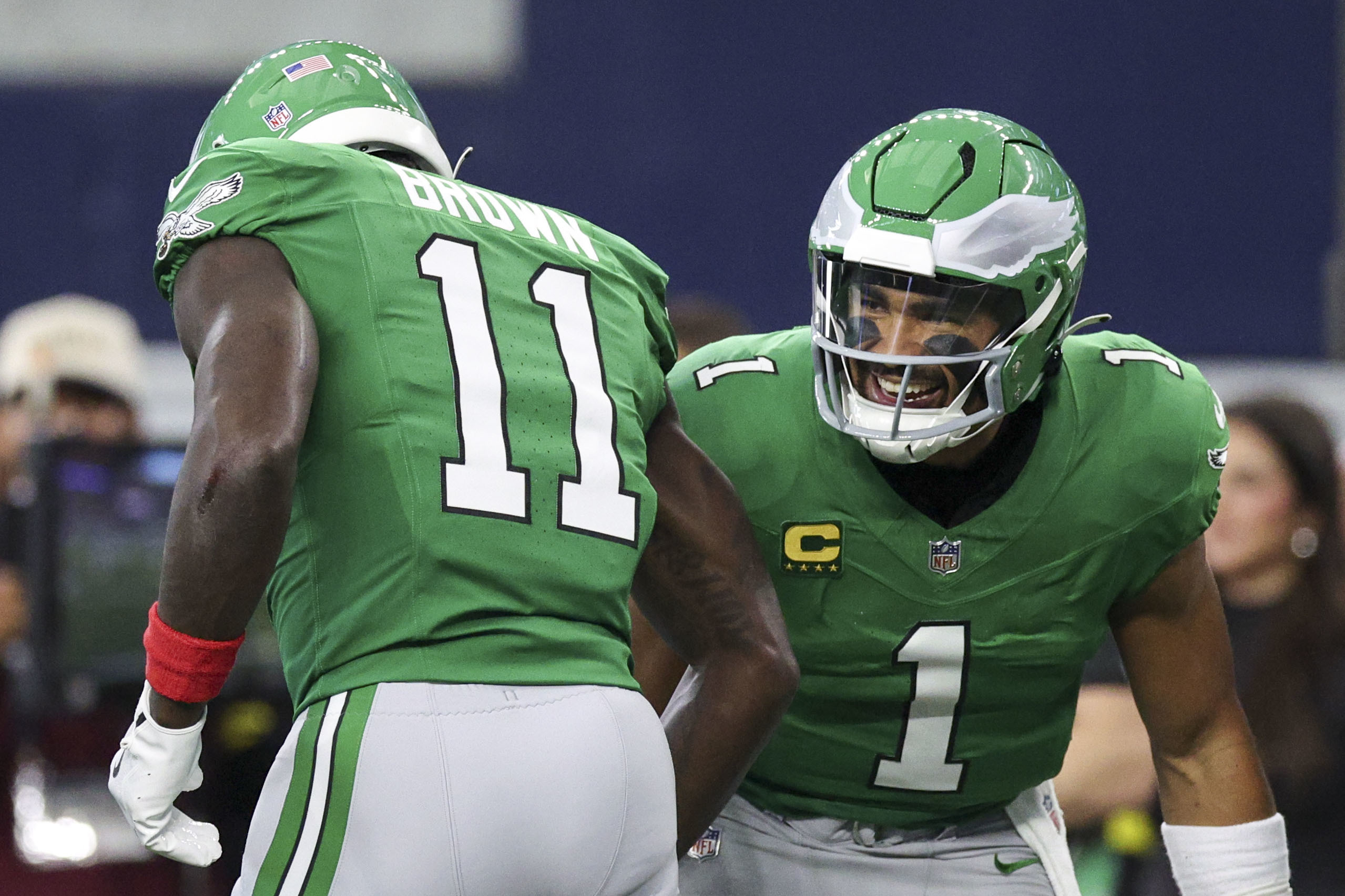
It’s been the tale of the Eagles offense for the past three months. They have spurts or even an entire half of efficiency. But consistency has been fleeting. The game plan opened with quick passes from quarterback Jalen Hurts to A.J. Brown, and eventually a downfield shot to DeVonta Smith.
There was diversity in the calls and innovation in the red zone. But the Cowboys adjusted and the Eagles failed to counter.
“They tried to take away some of the things that we were throwing to A.J. and Jalen did a good job on some of those, getting the ball down to Saquon [Barkley] in the flat,” Sirianni said. “Just a little different variations of how they played the coverages from what I’m seeing on the fly.
“Hats off to them.”
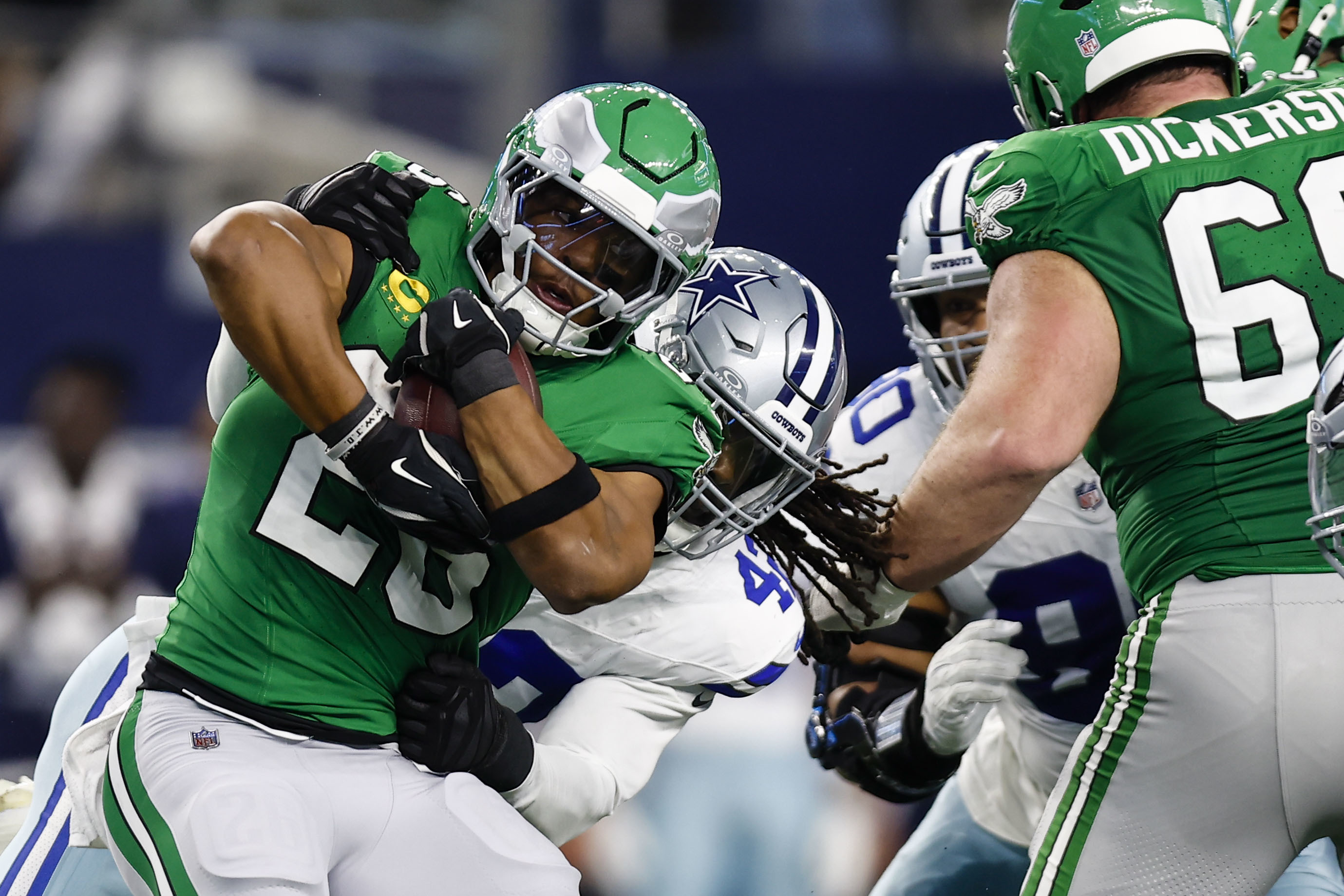
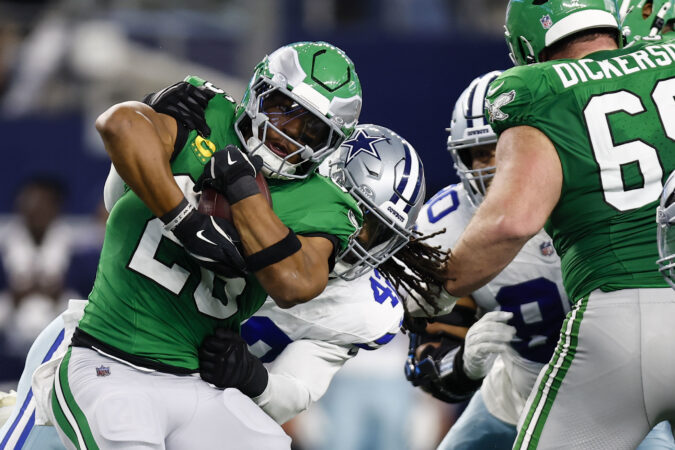
Saquon Barkley had another substandard day on the ground for the Eagles attack.
But this wasn’t a comparable defense to that of the Green Bay Packers and Detroit Lions, who held the Eagles to 16 and 10 points in the previous two games. The Cowboys’ defense entered Week 12 ranked 31st in expected points added per drive, 30th in points per drive, and near the bottom in most other statistical categories.
They’ve had marginal improvement after the trade for defensive tackle Quinnen Williams, partly due to a schematic change. Coordinator Matt Eberflus started utilizing more five-man fronts — with Kenny Clark and Osa Odighizuwa also in the interior — to help a unit that was last in the NFL in rush success percentage.
“I think that’s just how they’re built now, given the three interior defenders they have,” Hurts said. “They want to keep their best guys on the field, and it’s very effective, and it was something that we didn’t handle as good as we like to.
“So good opportunity to build if that’s something that teams show us.”
Eagles guard Landon Dickerson had a different take on Dallas’ five-man front.
“It’s not usually, typically something they were running a whole lot,” he said, “and turns out that was their flavor of the day.”
But opponents haven’t been vanilla in defending the Eagles ground game all season. They’ve been exotic and the offensive line has yet to find a blocking scheme to counter extra bodies in the box.
“I think a big thing is … time on task,” Dickerson said. “Obviously, you can’t run every play to every defense during the week, so I think we really just have to [home] in on having a game plan for every defense that a team has run, and every possible defense that they could run, and make sure that we can execute against all of them.”
This is who the Eagles are on offense now. They used to run the ball at will, especially when matched up against nickel defenses. But the O-line isn’t as strong because of injuries, a personnel change at right guard, and age.
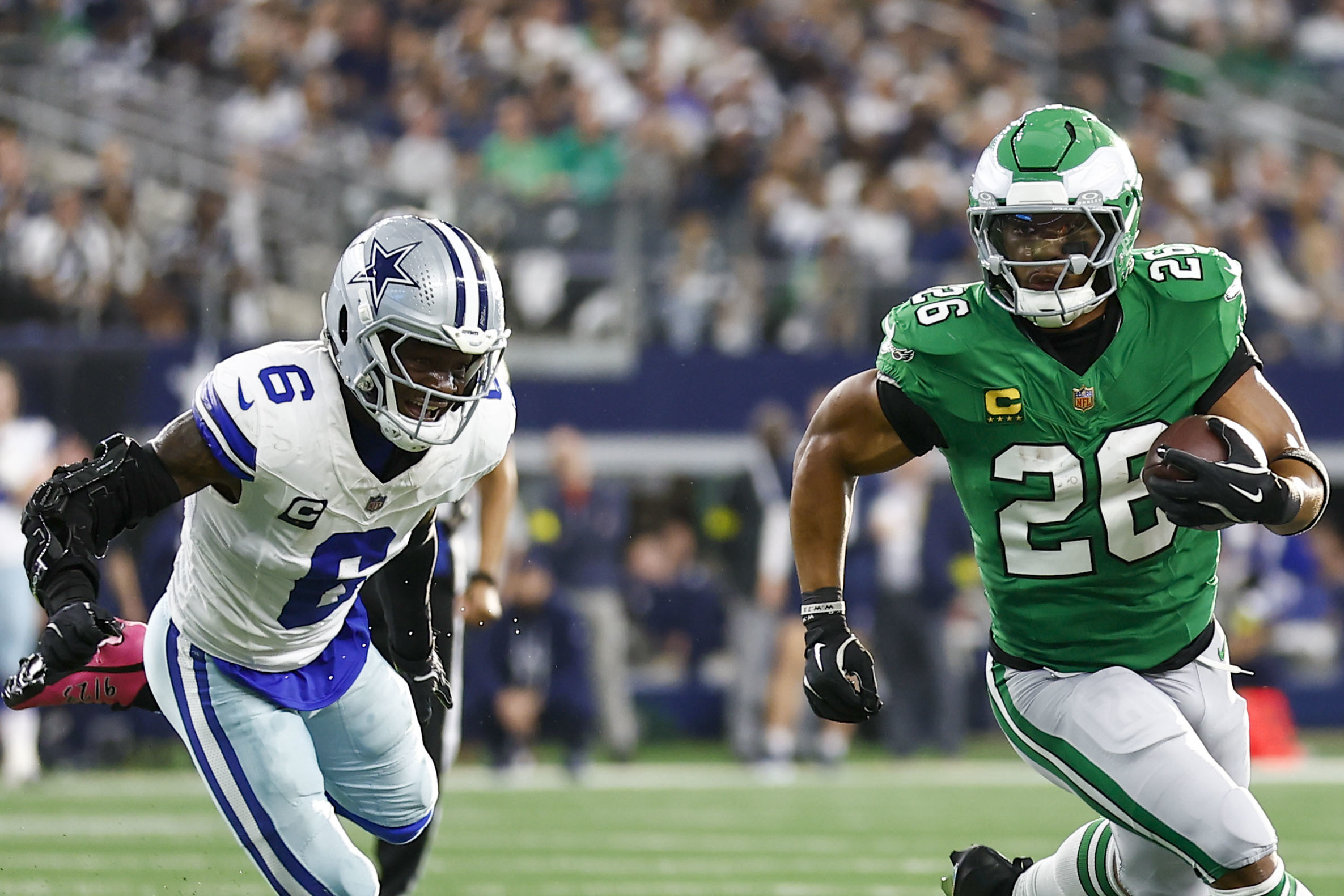
And Barkley, who gained 22 yards on 10 tries and had a costly fumble as a receiver, just doesn’t seem to have the same pop. He said he’s healthy, but he’s clearly wearing down from all the attention.
“I’m tired of the excuse of people trying to stop the run game,” said Barkley, who’s gone from last year’s 5.8-yard rushing average to 3.7. “I don’t really subscribe to that. Just got to be better. Got to make plays.”
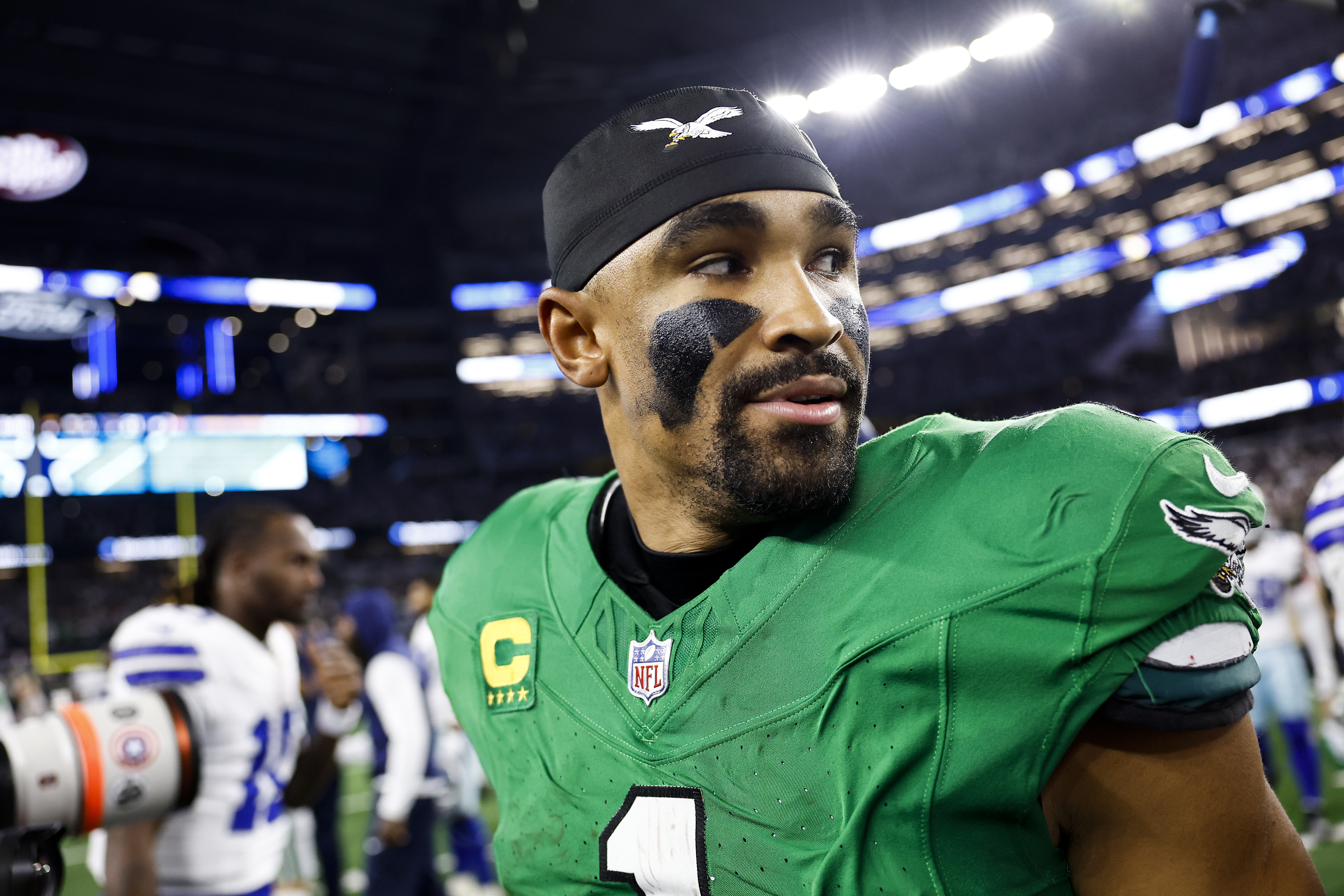
Jalen Hurts put up good passing numbers against the Cowboys and scored two TDs on the ground, but also had some notable negative plays.
And that goes for Hurts, as well, who should be able to check out of bad runs vs. heavy fronts. But more than anything, he needs to make defenses pay when they’re light in the secondary, and he and the pass offense didn’t do it enough.
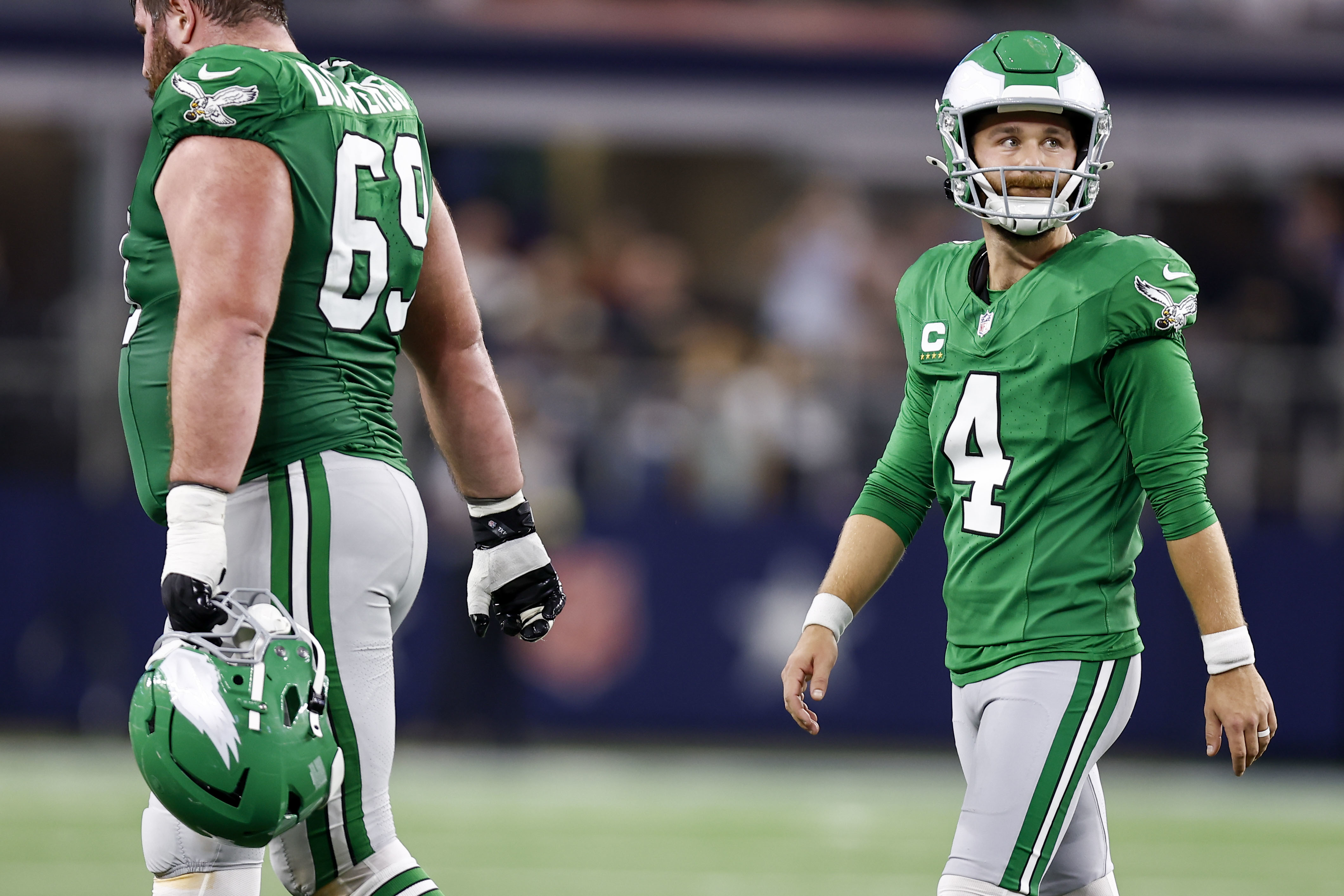
The quarterback’s numbers don’t look so bad on paper: 27 of 39 for 289 yards and a touchdown with no turnovers. Hurts also rushed for two TDs. But given the chance to lead the Eagles on a game-winning drive, he took a third-down sack after holding the ball for four-plus seconds.
“There’s nothing more you can ask for than to have the ball in your hands to go out and drive and finish the game on your terms, and we had an opportunity to do that,” Hurts said. “And I didn’t do enough.”
But this loss was more on the coaches. Fourteen penalties — for 96 yards — matched a high in the Sirianni era.
“You always put that on me,” Sirianni said. “If there’s stuff that like that that we spend time going over, obviously, I’ve got to get my message across better. So that’s got to be on me.”
Two offensive penalties negated catches for 20 and 16 yards in the second half. On the first, Matt Pryor was flagged for lining up in an illegal formation.
“I believe I was supposed to line up off the ball,” Pryor said. “Miscommunication going in. So it’s just something that I have to catch onto the formation that we call and make sure we’re aligned.”
Lane Johnson’s absence due to a foot injury forced Fred Johnson in at right tackle and meant Pryor filled the latter Johnson’s role as a sixth O-lineman. But why wasn’t he prepared in that moment?
Sirianni called the high number of penalties “uncharacteristic,” but the Eagles’ 84 penalties are the seventh-most in the NFL, and have consistently put them behind the sticks. The offense added three more three-and-outs to its league-worst total. Sirianni’s game management is seemingly an admission that he knows his once-potent unit is substandard.
Given the ball with 17 seconds left in the half and two timeouts at the Eagles 28, Sirianni had Patullo call a running play. Barkley gained a yard running off left tackle.
“We tried to run it to see if we could bounce one out of there and see what happened after that,” Sirianni said, and noted the Cowboys “had their timeouts, as well, and that kicker can make it from long range. We had a 21-7 lead.”
The score remained the same early in the third quarter when the Eagles punted on fourth-and-5 at their own 48. The Cowboys cut the margin in half two series later. Early in the fourth quarter, Sirianni elected to have Jake Elliott attempt a 56-yard field goal on fourth-and-5. The kicker missed wide right.
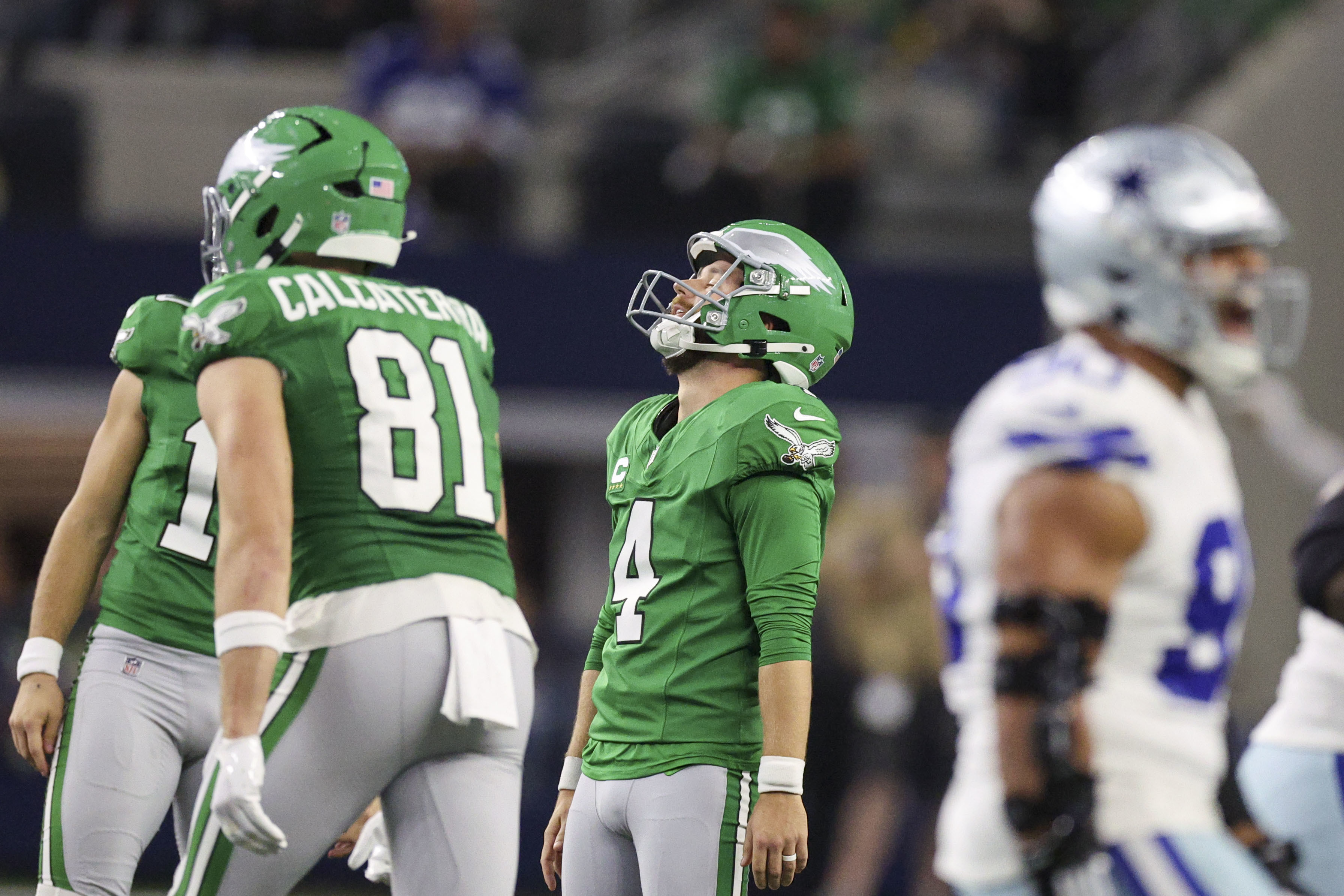
Jake Elliott’s rare field goal miss helped magnify the Eagles’ issues, and conservatism, on offense.
Both decisions can be justified. But they were indicative of a coach who has increasingly played not to lose. Even that philosophy can be defended to some degree. Sirianni won eight of his first 10 games that way.
Losing to the 5-5-1 Cowboys shouldn’t be the end of the world. The Eagles control their NFC East destiny, if no longer for the No. 1 seed in the playoffs. A win over the 8-3 Bears on a short week would right the ship.
But after 11 games, it’s difficult to see the offense at the wheel, and whether there’s someone competent on the bridge.
“I’m not going to make any sweeping judgments right this particular time,” Sirianni said. “I think it was a wide variety of things. Obviously, at the end of the day, we didn’t coach well enough, we didn’t play well enough.”
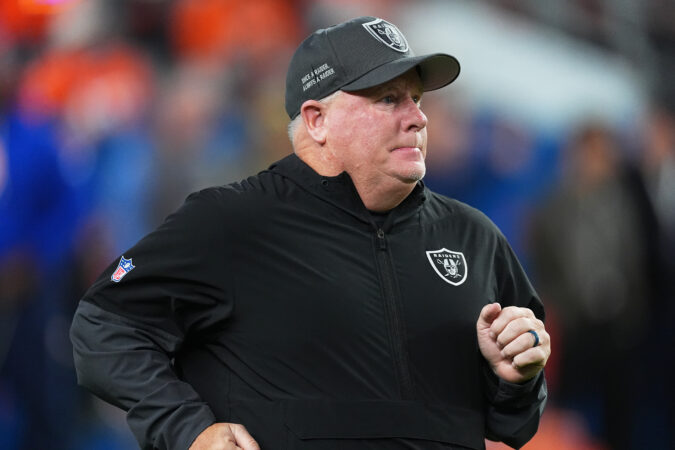
LAS VEGAS — Las Vegas Raiders offensive coordinator Chip Kelly was fired Sunday night after yet another rough offensive performance.
Kelly’s dismissal came less than four hours after the Raiders were beaten 24-10 by Cleveland. Las Vegas allowed the Browns to sack Geno Smith 10 times.
“I spoke with Chip Kelly earlier this evening and informed him of his release as offensive coordinator of the Raiders,” coach Pete Carroll said in a statement. “I would like to thank Chip for his service and wish him all the best in the future.”
Kelly was the biggest-name assistant hired by Carroll, who’s in his first year coaching the Raiders after leading the Seattle Seahawks for 14 seasons.
ARLINGTON, Texas — There was a disagreement in the visitor’s locker room at AT&T Stadium, 20 minutes and 20 feet apart.
“I’m in a little funk right now,” Saquon Barkley said at his locker stall after he totaled just 22 rushing yards on 10 carries, his lowest output in a game with at least 10 carries since 2022.
“He’s not in a funk, man,” Mailata said. “He’s hard on himself. … It’s on all of us up front.”
One thing the running back and left tackle could probably agree on, though, is that what happened Sunday — the Eagles blowing a 21-point lead in a 24-21 loss to the Cowboys — would never, could never, have happened to the 2024 Eagles.
The Eagles lost for a lot of reasons Sunday. They beat themselves with 14 penalties, which tied a high in the Nick Sirianni era. They raced to a 21-0 lead behind an opened-up and aggressive playbook and then went too conservative. They didn’t apply enough pressure on Dak Prescott. They struggled covering Dallas’ one-two punch at wide receiver, especially later in the game with a banged-up secondary.
But they lost Sunday, too, because of their yearlong problem running the football. Yes, they tried to — and sometimes with great success — get their passing game going against one of the worst pass defenses in the NFL, but they have consistently struggled this season to control a game and control the clock with what was their greatest weapon in 2024: a running game that broke records. This, with almost the same personnel.
The Eagles were without star right tackle Lane Johnson, which certainly had and will have an impact on their ability to run to the right side for as long as he is out with a Lisfranc injury in his right foot. But even with Johnson on the field this season, they have been unable to get Barkley going.
The Eagles ran four times on first down with leads of 21-0 or 21-7. The results of those runs were: 2 yards, 1 yard, 5 yards, and 1 yard. Barkley’s 2.2 yards per carry Sunday represented the third time this season he was held under 2.5 yards per tote. He had zero such games in 2024.
The Cowboys, Landon Dickerson said, utilized more five-down fronts with their new-look defensive line, something they hadn’t done a lot of prior to Sunday. It was their “flavor of the day,” Dickerson said, but the Eagles couldn’t find a way to break through on the ground. Besides Johnson’s injury, the blockers in front of Barkley have been beaten up. Cam Jurgens cleared concussion protocol in time to play Sunday, but he’s been dealing with back and knee injuries. Dickerson has had multiple injuries, too.
But Barkley said it all starts with him.
“I’m not getting the run game going, I’m not getting yards, and I’m tired of the excuse of people trying to stop our run game,” he said. “I don’t really subscribe to that. I just got to be better, got to make plays.
“I’m a big boy. I’m a man at the end of the day. I’m going to own it and get ready for next week.”
Barkley said the message on the sideline Sunday, as Dallas was mounting its comeback, was “we got to respond.”
“We didn’t do that,” he said. “We got to do a better job of putting teams away. We didn’t do that and I definitely didn’t help. Obviously last year and in other games I was a big part of that and it’s been kind of nonexistent this year. I got to figure it out for the team and I’m going to get it right. I’ll figure it out.”
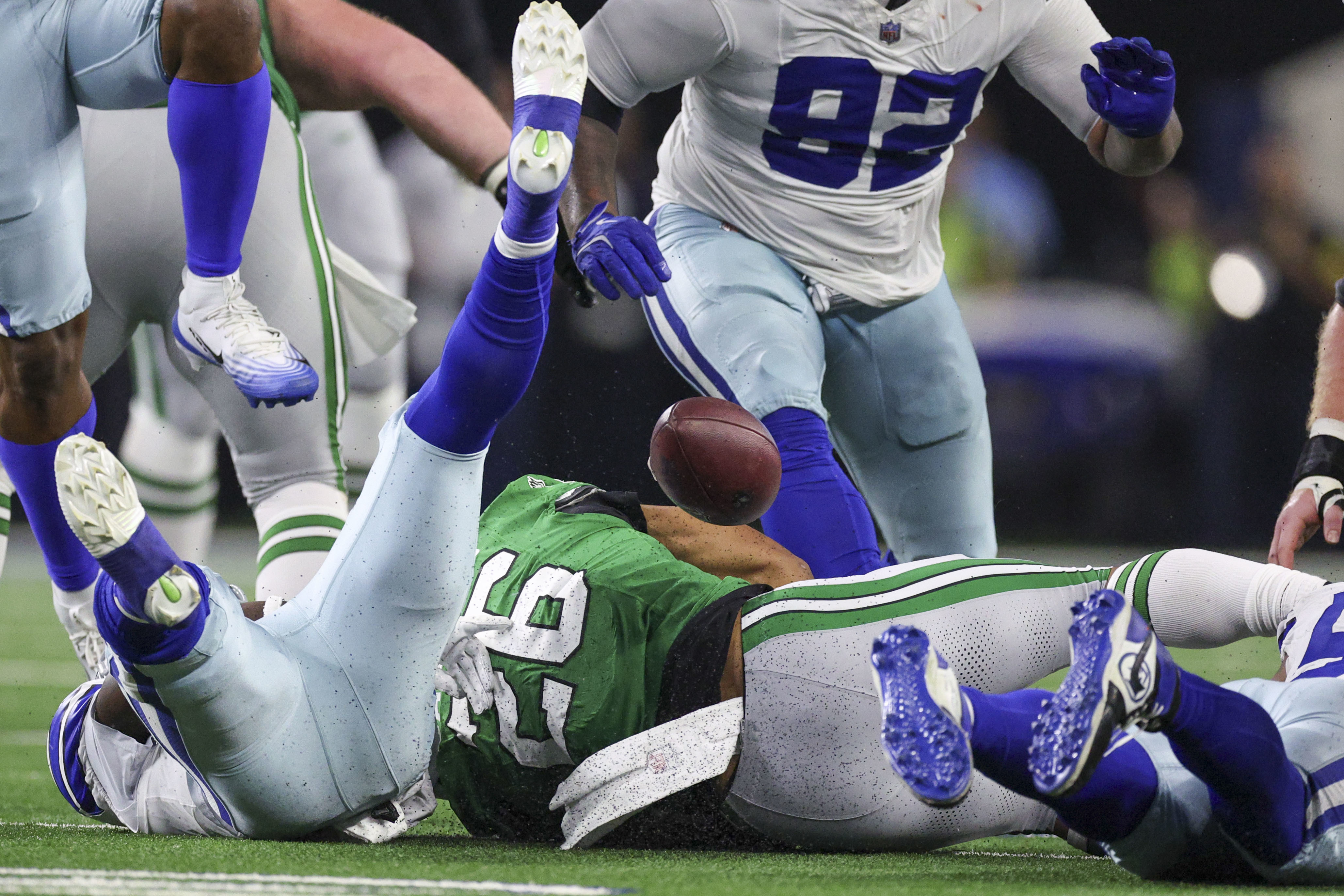
Barkley found success as a pass catcher Sunday. He had seven catches for 52 yards, but it was after a catch when he made his biggest mark on the game — a fumble with the Eagles driving in Dallas’ territory in a 21-21 game with under eight minutes to play.
“It’s the guy you don’t see,” Barkley said. “We always coach that. They made a good play. I got to be better.”
The ball pops out of Barkley’s hands in the fourth quarter on Sunday against the Cowboys.
Barkley, who has gone over 100 yards this season just once, said he doesn’t think he’s pressing. He said he is healthy, too. He’s not frustrated, he said, but is “disappointed in myself.”
The running game, he said, “starts with me, ends with me.”
There’s more to it, though, even if Barkley wants to take all of the ownership. The play call needs to be the right one and the blocking needs to be executed before Barkley does anything. Too often, Barkley has been hit behind the line of scrimmage.
Asked why he feels the need to put it all on his shoulders when so much more goes into the success of the running game, Barkley replied: “Because I’m the running back.”
Barkley said he has “had funks like this before.”
“I just got to break it,” he said. “The only way I know how is by flushing this, working my butt off, and get ready for my next opportunity.”
ARLINGTON, Tex. – Instant grades on the Eagles’ performance in their 24-21 loss to the Cowboys:
Quarterback: C
Jalen Hurts started hot, but cooled off as the Eagles became conservative after jumping out to the 21-0 lead. He had some big throws down the stretch, but he took a costly sack — the only one of the game — on third down late in the game.
Hurts completed 27 of 39 passes for 289 yards and a touchdown. He didn’t have a turnover. When there was pressure, Hurts did well to either find a receiver or throw the ball away. He found Saquon Barkley on a scramble drill and picked up 16 yards.
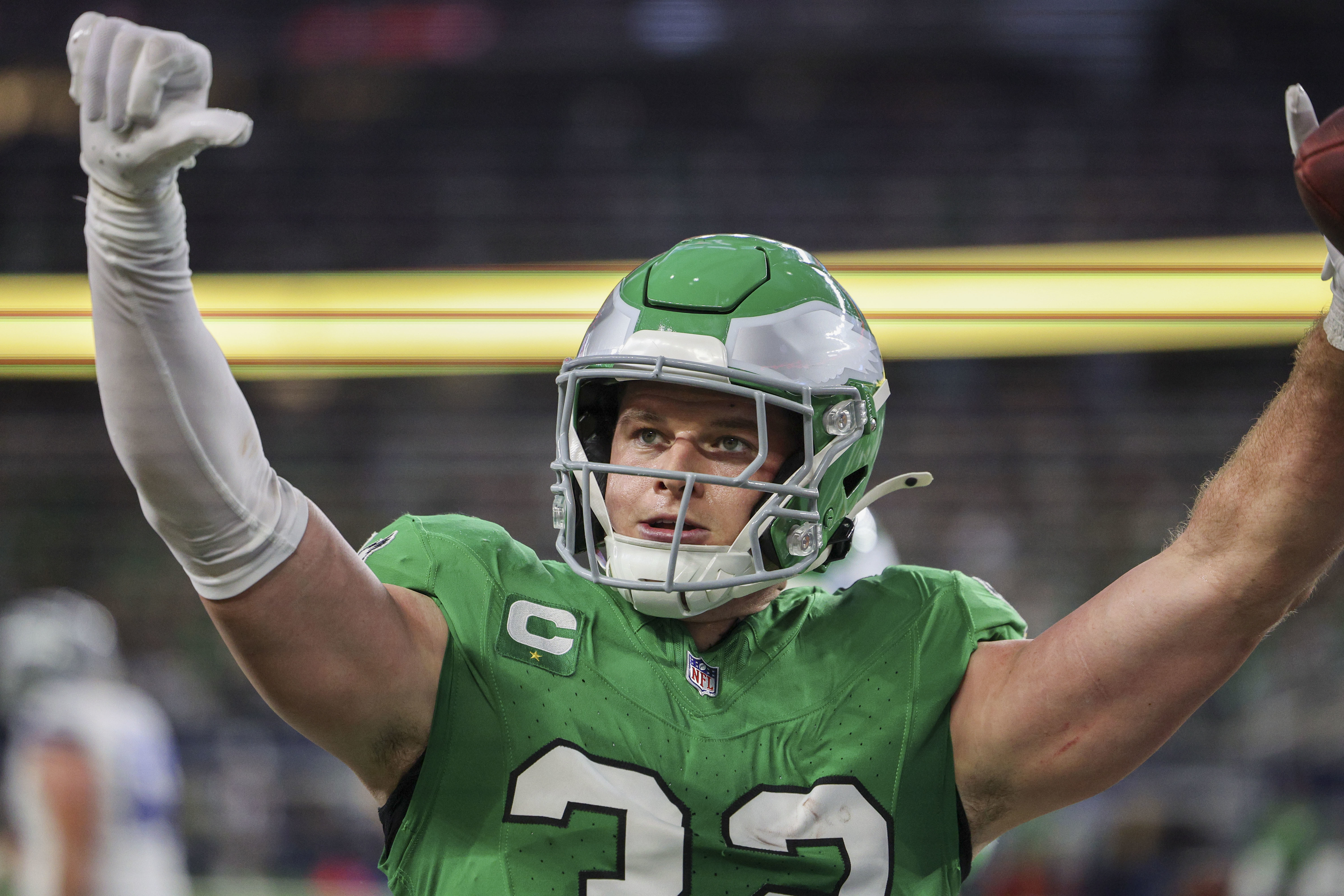
Hurts was near perfect on the opening drive, completing five of six passes for 47 yards and a touchdown. And as a runner, he broke a tackle and muscled his way into the end zone on a draw play for the Eagles’ second touchdown.
Running back: D+
Early on, the Eagles went heavy through the air and didn’t need the run game. But when they got ahead, it was again tough going for Barkley on the ground. He managed just 22 yards on 10 rushes.
Barkley was active as a receiver, catching seven passes for 52 yards. But he fumbled in the fourth quarter when Sam Williams stripped him from behind in Cowboys territory. In pass protection, he delivered a nasty chip block that knocked Cowboys defensive tackle Quinnen Williams to the ground.
Receiver / Tight end: B-
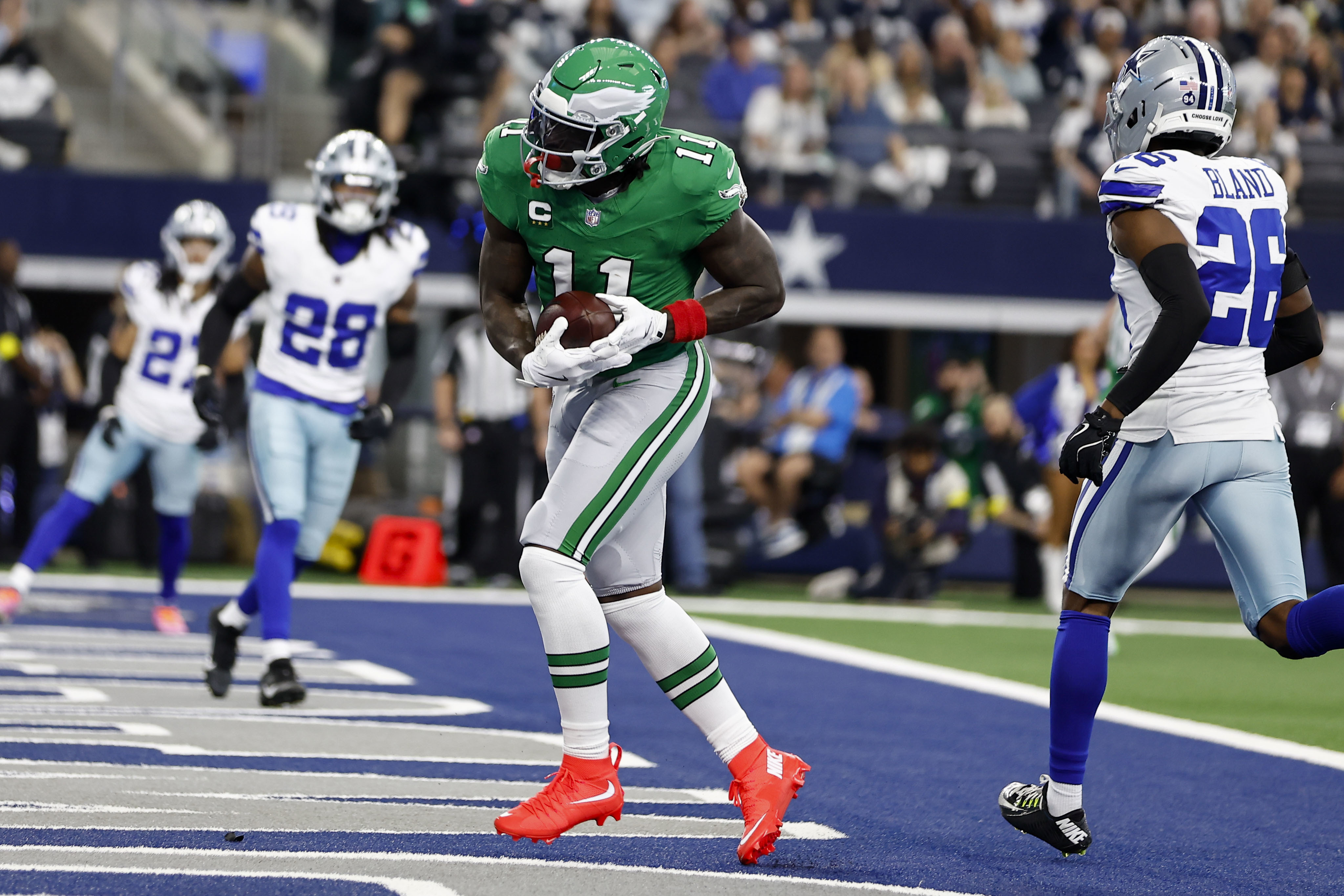
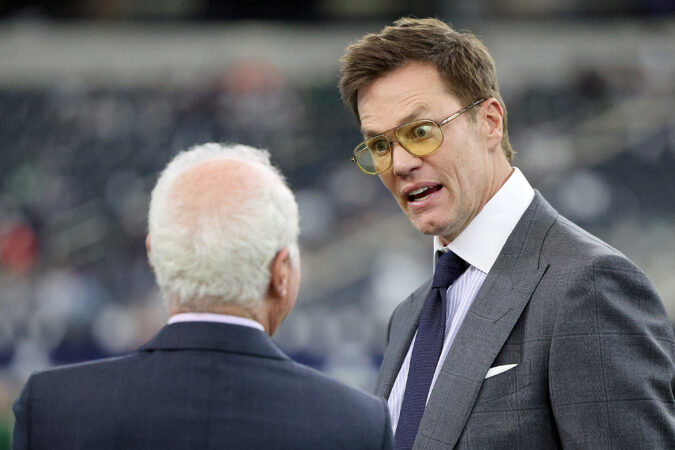
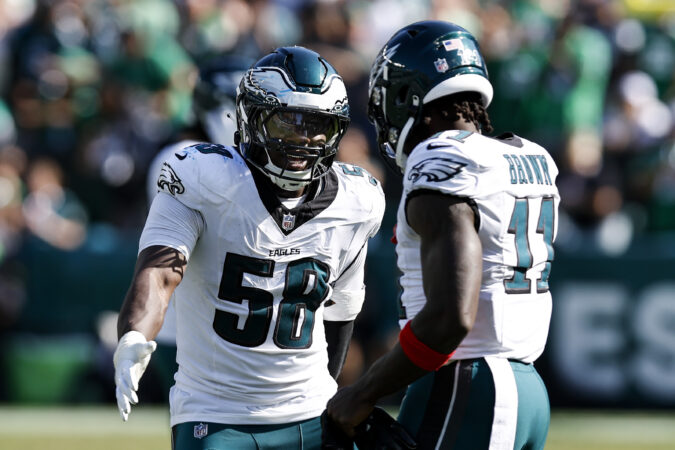
Maybe it was catching passes from Tom Brady during warmups. A.J. Brown was firing on all cylinders to open the game, catching five of six targets for 67 yards and a touchdown on the first two drives. He ended the Eagles’ opening series with a 16-yard grab in the end zone when he beat cornerback DaRon Bland on a skinny post route.
Brown broke a tackle and picked up yards after the catch on a fourth-quarter 19-yarder. He finished with eight grabs for 110 yards.
A.J. Brown had one of his best games of the season with eight catches, 110 yards, and a touchdown.
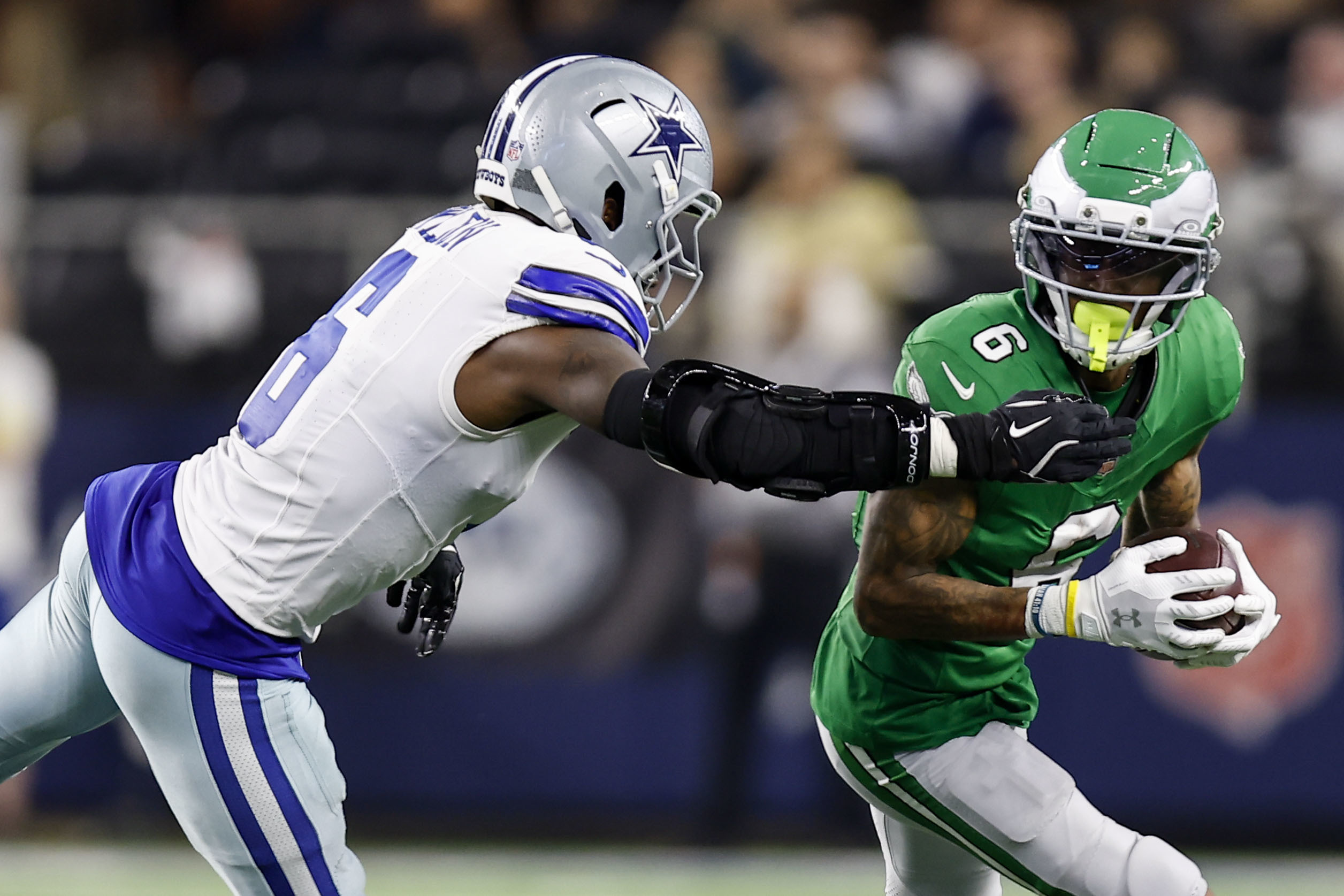
DeVonta Smith was Brown’s near equal with six grabs for 89 yards. He made a highlight-reel catch in the second quarter, contorting his body to pull in a 41-yarder. Hurts’ heave traveled 54.4 yards in the air and had a 22.9% completion probability, according to Next Gen Stats. On the next play, Smith picked up 10 yards on a jet sweep that went down to the 1-yard line.
In the third quarter, he came back for a 12-yard grab on third-and-8. Smith and Brown had back-to-back penalties — pass interference and a false start — in the fourth quarter.
Tight end Dallas Goedert shed a defender on his first catch of the game — a 13-yarder late in the third quarter. Grant Calcaterra caught his first pass since Week 5 for 8 yards.
Offensive line: C-
It’s been difficult to get much going on the ground all season against defenses primed to stop Barkley. But that doesn’t excuse the O-line’s run-blocking woes. The unit was better in pass protection, but couldn’t hold up once Hurts was forced to drop often.
Fred Johnson started in place of the injured Lane Johnson (foot) and had his struggles. He took a costly illegal use of hands penalty in the fourth quarter that brought back a 16-yard throw to Smith. He got beat inside in the first quarter and Barkley was dropped for a loss, and on the next play, false-started.
Tyler Steen got dusted by Williams up the middle in the fourth quarter and Hurts had to shovel the ball away. The right guard also had a holding penalty on a second-quarter rush.
Center Cam Jurgens had a key block on Hurts’ 7-yard draw play touchdown. In the second quarter, he was whistled for a third-down false start. Left guard Landon Dickerson just couldn’t block Osa Odighizuwa long enough before Hurts ate the sack.
Left tackle Jordan Mailata got toasted off the edge by James Houston and Hurts was forced to throw the ball away in the third quarter. A play later, Mailata allowed pressure on the middle and his quarterback was hit as he threw. Matt Pryor lined up illegally as the sixth O-lineman, negating a nicely designed 20-yard play-action pass to Goedert.
Defensive line: C+
The D-line started hot, but relented in the second half when forced to play so many snaps. Running back Javonte Williams was still held to 4.4 yards a carry on 20 rushes. In terms of the pass rush, the unit never got to quarterback Dak Prescott.
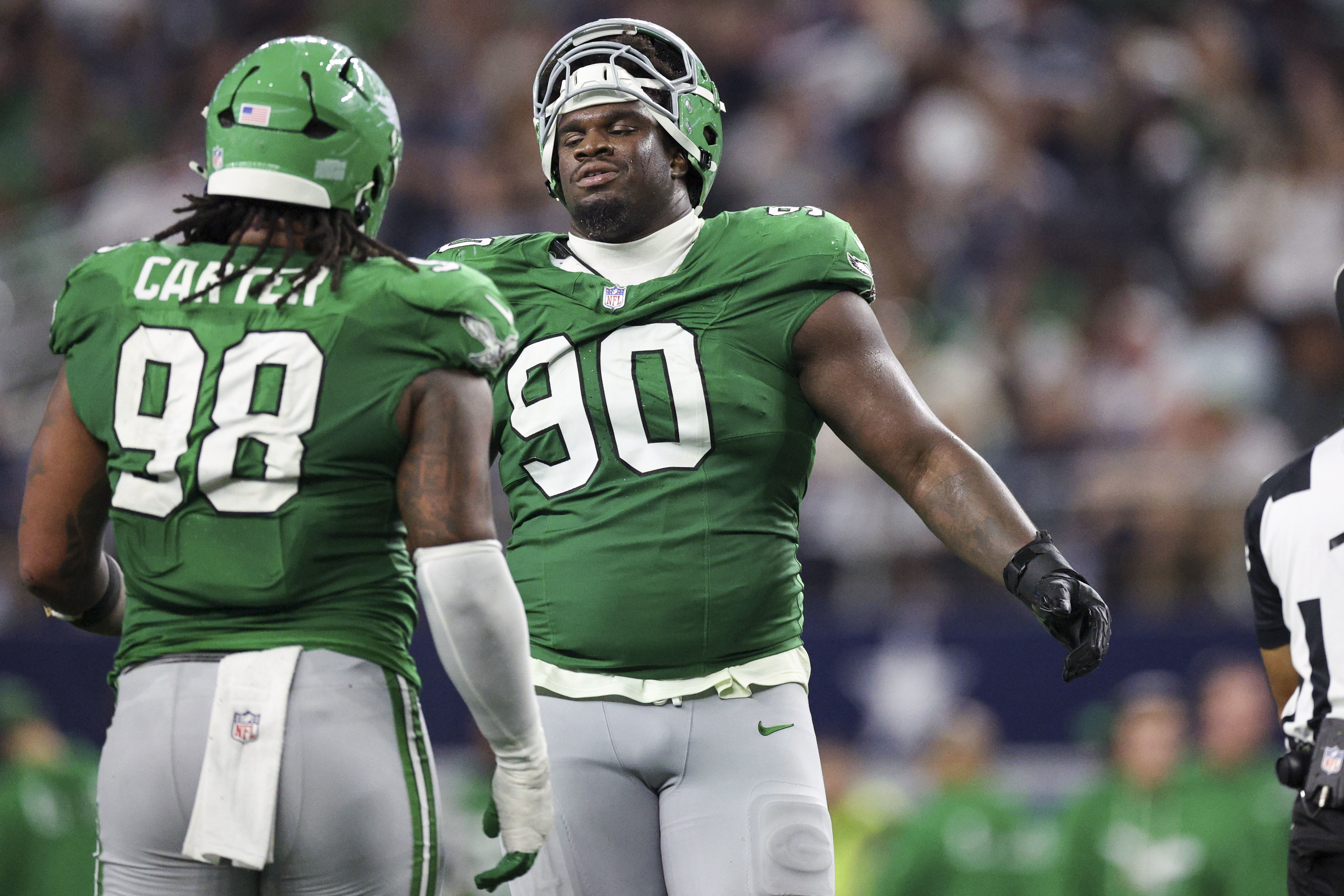
Outside linebacker Jaelan Phillips was kept in check for the first time since becoming an Eagle. He didn’t have a single tackle. Defensive tackle Jalen Carter somewhat made up for the spitting incident that got him ejected in the first meeting. The defensive tackle flashed multiple times. But it wasn’t enough.
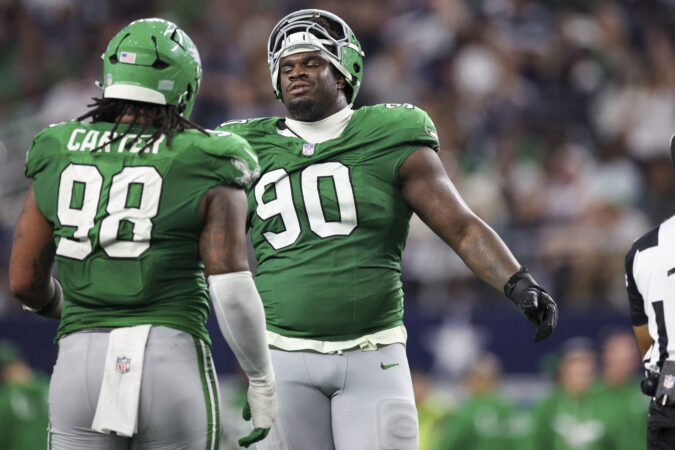
The Eagles defensive line, led by Jalen Carter and Jordan Davis, did not record a sack on Sunday.
Edge rusher Jalyx Hunt would have beaten Tyler Guyton on a rush if the left tackle didn’t kick him, resulting in a tripping penalty before the half. Hunt missed a run tackle attempt in the third quarter. Nolan Smith just hasn’t looked himself since coming back from a triceps injury. Brandon Graham couldn’t hustle off the field quickly enough before the Eagles were flagged for too many men on the field. The penalty brought back a Nakobe Dean interception. Earlier in the game, Graham got washed out on a Williams 20-yard run.
Moro Ojomo left briefly with an injury, but returned. He had a relatively quiet day. Jordan Davis dropped Williams for a 4-yard loss in the third quarter, but he didn’t do much on his rushes.
Linebacker: B
Nakobe Dean had another third-down sack when he blitzed and bowled over Williams in the third quarter. He later drew a holding penalty on another rush. Dean was in coverage when Williams couldn’t hang onto a fourth-down pass. A drive later, he was flagged for illegal contact. Dean might not have gotten deep enough on Prescott’s 17-yard pass to tight end Jake Ferguson just before the half.
Zack Baun recovered a fumble when receiver KaVontae Turpin slipped and clipped a teammate in the second quarter. He missed an open-field tackle on Ferguson in the second quarter. Williams zipped through Baun for a 12-yard gain in the third quarter. Baun let an interception slip through his hands a few plays later.
Cornerback: C
Prescott threw for over 350 yards and tossed two touchdowns against a secondary that got banged up. Adoree’ Jackson was in coverage when Pickens caught a 1-yard touchdown before the break. Jackson left with a concussion after Pickens caught a 24-yard pass in front of him in the third quarter. Cooper DeJean, who plays outside corner in base personnel, stayed there in nickel after Jackson left. He came up and made a tackle against the run not long after the switch.
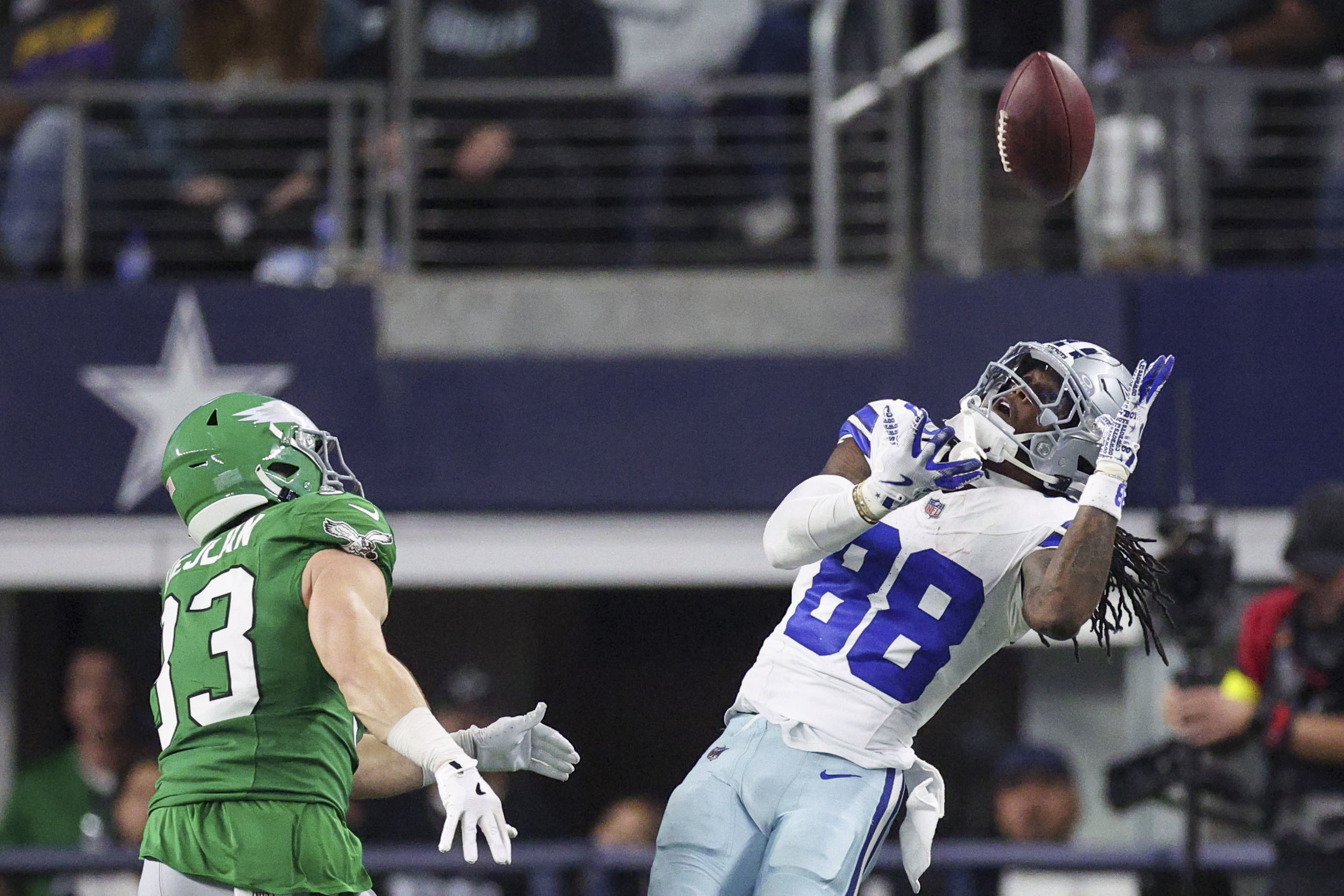
DeJean allowed Lamb to catch a 50-yard pass in which he was also flagged for interference. The Eagles wanted offensive PI. Kelee Ringo was called upon soon after, but also committed a pass interference penalty.
Cooper DeJean had an up-and-down game in coverage and was beaten once deep by CeeDee Lamb.
Earlier, DeJean might have abandoned his zone when a scrambling Prescott found Turpin for a 48-yard reception just before the half. Michael Carter took his first snaps in the slot with DeJean outside. He had good coverage downfield on his first snap.
Unlike in the first meeting, Quinyon Mitchell played the boundary side of the field rather than follow Pickens. He allowed Ferguson to pick up a first down after he stiff-armed Baun. Mitchell had a pass break-up on Lamb in the third quarter, but was flagged for pass interference on the next down.
Safety: C+
Reed Blankenship assisted on six run stops in the first half and intercepted Prescott in the end zone with a diving grab for his first pick of the season. Blankenship missed Turpin in the open field on his 48-yard catch and may have allowed too much space underneath for Ferguson to catch a 17-yarder that set up Dallas’ first touchdown.
Blankenship left in the third quarter and was replaced by Sydney Brown. Prescott dove over him on his 8-yard touchdown run in the fourth quarter. The quarterback had success going at Brown in the Cowboys’ game-winning drive.
Drew Mukuba got run over and lost tight end Brevyn Spann-Ford on his 4-yard touchdown catch in the third quarter.
Xavier Gipson’s fumble in the fourth quarter should have been a gift to the Cowboys. He probably shouldn’t have fielded the punt at the 2-yard line in the first place. Gipson got hurt on the play and had to be carted inside.
Kicker Jake Elliott missed a 56-yard field-goal attempt wide right in the fourth quarter. Punter Braden Mann came up huge in the third quarter with back-to-back impressive boots. He had a 58-yarder that flipped the field and dropped a 48-yard spinner that Sydney Brown downed at the Cowboys’ 4. The Eagles had a player step out of bounds on Mann’s 76-yard touchback punt late in the game.
Will Shipley averaged 26.5 yards on four kick returns.
Coaching: D-
This one’s on Nick Sirianni. The coach’s conservatism finally cost the Eagles. It was a close game, but there’s no excuse for coughing up a 21-point lead against a team that kept shooting itself in the foot. The Eagles were sloppy with 14 penalties — tied for the most of the Sirianni era. That’s on the coaching.
Offensive coordinator Kevin Patullo had a nice start, and a not-so-great finish. Repeated first-down runs after the 21-point lead were ill-advised. He continued to dial up successful plays in the red zone. Hurts’ draw play score came off a new wrinkle: a three-tight end set that shifted into an empty backfield.
Defensive coordinator Vic Fangio‘s unit folded under the weight of the offense’s ineffectiveness and injuries. The defense delivered a goal-line stand in the fourth quarter after Gipson’s fumble, but it relented in the end.
The Eagles went up 21-0 early in the game but allowed 24 unanswered points from the Cowboys to lose, 24-21, Sunday in Dallas. If you turned the game off in rage after the Eagles’ second-half fumbles and miscues, here’s everything you missed on the Fox broadcast …
Jalen Hurts and the Eagles’ passing offense have earned a lot of critics through the first 10 games of the season. The Birds ranked 28th in passing yards per game coming into Sunday.
But one person who’s not criticizing Hurts and Kevin Patullo’s offense? Tom Brady.
“You hear critiques about the style of the passing offense, that it’s remedial, I totally disagree,” Brady said. “He’s got a lot of full-field reads, he’s looking to the right, he did a great job earlier in this game on that comebacker to Saquon Barkley, scanning the field. He just doesn’t put the ball in harm’s way, and that’s what you need from your quarterback.”
Brady continued to praise Hurts during the game. He also complimented Hurts’ chemistry with A.J. Brown, despite the discourse off the field in recent weeks.
“It doesn’t look like there’s any issue to me,” Brady said.
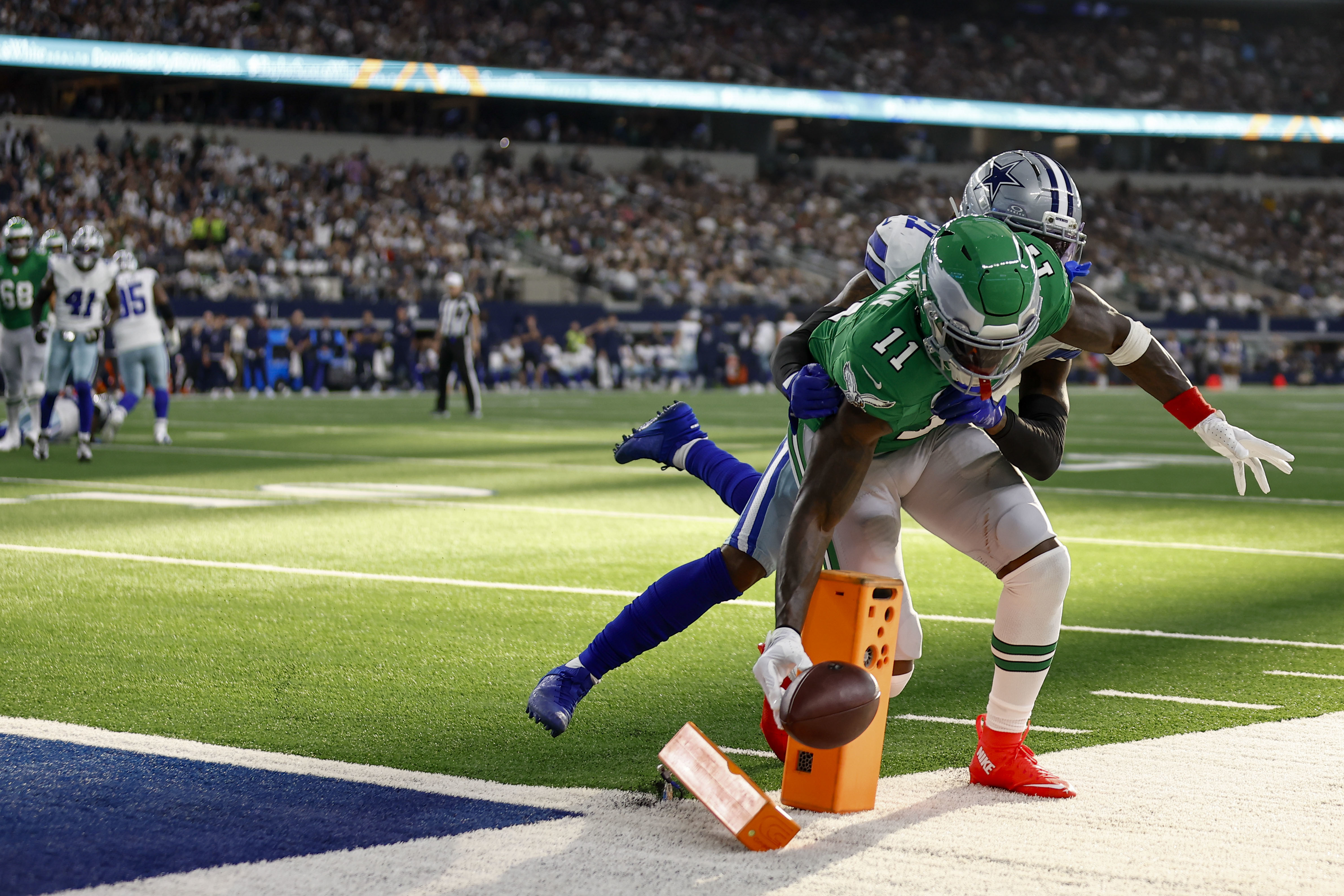
Eagles wide receiver A.J. Brown had a touchdown called back because he didn’t get his second foot down before touching the pylon.
Pylon cam
It didn’t occur to me that the pylon cam wasn’t in the actual pylon, and that there was a separate pylon that contains the camera.
But after Brown’s near touchdown was called back because he didn’t get his second foot down before touching the pylon, the instant replay clearly showed two pylons, just inches away from each other.
sometimes the pile on counts sometimes the pile on doesn’t count? #FlyEaglesFly robbed of a 2nd aj brown td #nfl refs are lost sometimes the ball can hit the pile on sometimes that doesn’t end the play lol pic.twitter.com/JKHvmeBbPo
“Really good skills to differentiate the actual pylon from the pylon cam,” play-by-play announcer Kevin Burkhardt said. “Could have knocked them both down.”
“We have way too many pylons down there. A.J. did a great job,” rules expert Dean Blandino said.
Is it necessary for the pylon cam to also be shaped like a pylon? Feels like there could be a clearer way to differentiate.
Jalen Carter lasted longer than five seconds on the field in the rematch vs. the Cowboys — unlike his early ejection in the season opener for spitting on Dak Prescott.
That doesn’t mean he cooled down with the trash talk. After Prescott’s red zone interception, Carter had a few choice words for Prescott, which got caught on the broadcast.
“Nick is definitely letting the ref know. ’It didn’t look like what it was. We weren’t trying to pick him,’” Brady joked.
The refs followed that up with a Brown false start in the fourth quarter, so clearly they were not intimidated.
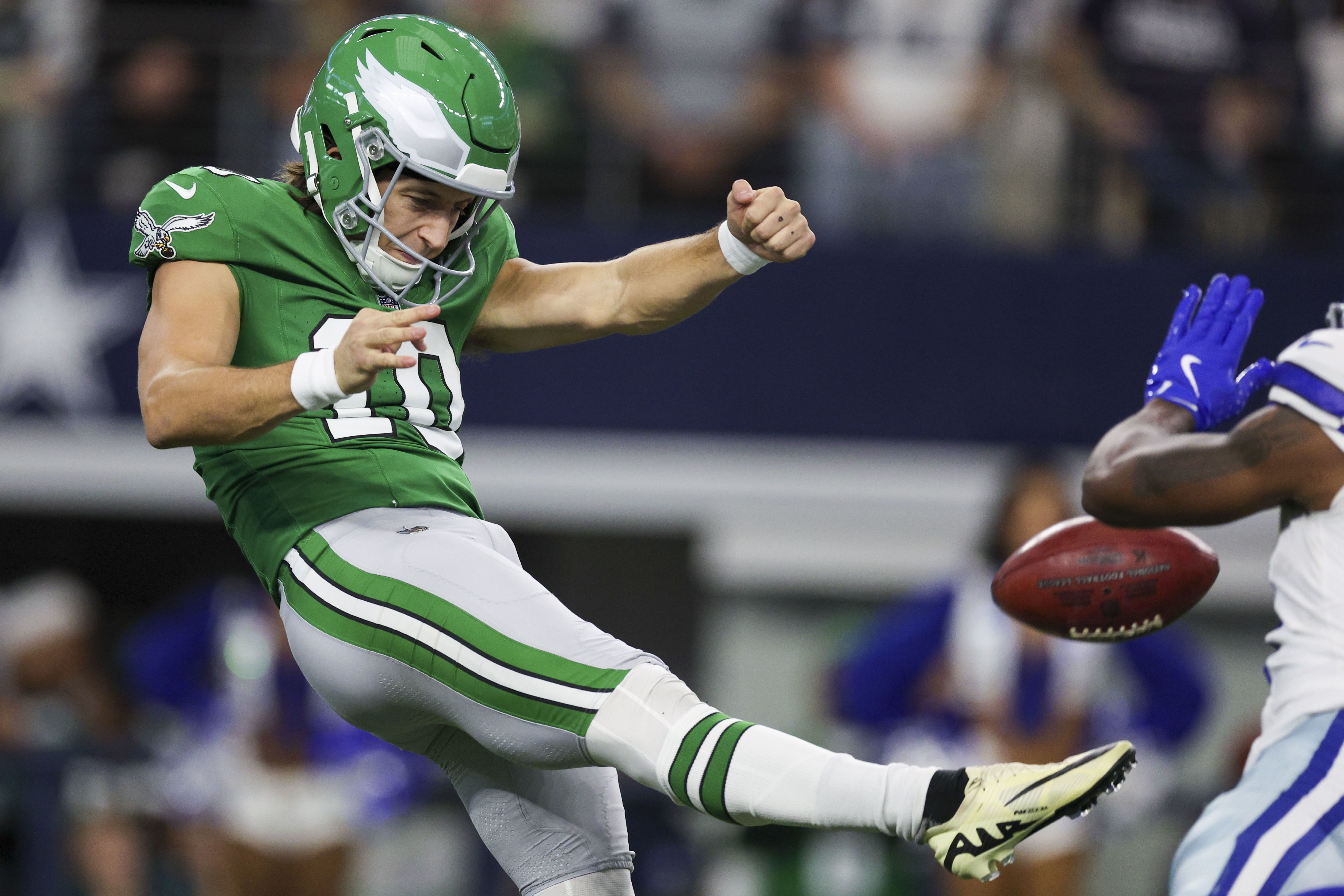
Eagles punter Braden Mann had to re-punt late in the game because of a penalty on Kelee Ringo.
Confusing re-kick
Brady and Burkhardt were confused after the Eagles had to re-punt the ball on fourth down, after Braden Mann booted one more than 70 yards.
The pair theorized the kick potentially hit the scoreboard, which is an automatic re-kick, but after reviewing the tape, they couldn’t figure out where that could have happened.
“If it hits the scoreboard, that’s basically a do-over,” Burkhardt said.
It turned out, the Eagles had committed a penalty on the play, and the Cowboys elected to have the Birds attempt another punt. It worked, and Dallas got better field position the second time around.
“They had a player going out of bounds on the play, the Cowboys took a penalty and elected to re-kick,” Blandino said.
ARLINGTON, Texas — For the first 30 minutes, the Eagles did everything necessary to win a key game in a hostile stadium. They looked like a team worthy of a title defense.
For the next 30 minutes, they did everything necessary to give it away. They looked like a team unworthy of even a division title.
Two lost fumbles.
Two huge passing plays.
Fourteen — 14! — penalties, their most this season by five, and tied for the most by the Birds since Sirianni took over in 2021.
It was, to borrow A.J. Brown’s descriptor from two weeks ago, a (bleep)-show after the first 18 minutes. Cam Jurgens’ false start crippled one drive. An illegal formation stymied another. Brandon Graham couldn’t get off the field fast enough, and that negated an interception. On consecutive snaps to start the fourth quarter, DeVonta Smith committed offensive pass interference and A.J. Brown false-started, so a promising drive ended in a long field goal miss. In the middle of the fourth quarter, at the Cowboys’ 28, Fred Johnson turned second-and-7 into second-and-17; Saquon Barkley fumbled on the next play.
By the time Dak Prescott found George Pickens for 24 yards with 35 seconds to play, all the good that had been done — the offensive breakout of the Eagles’ passing game, the stinginess of the defense early — all of it had been undone.
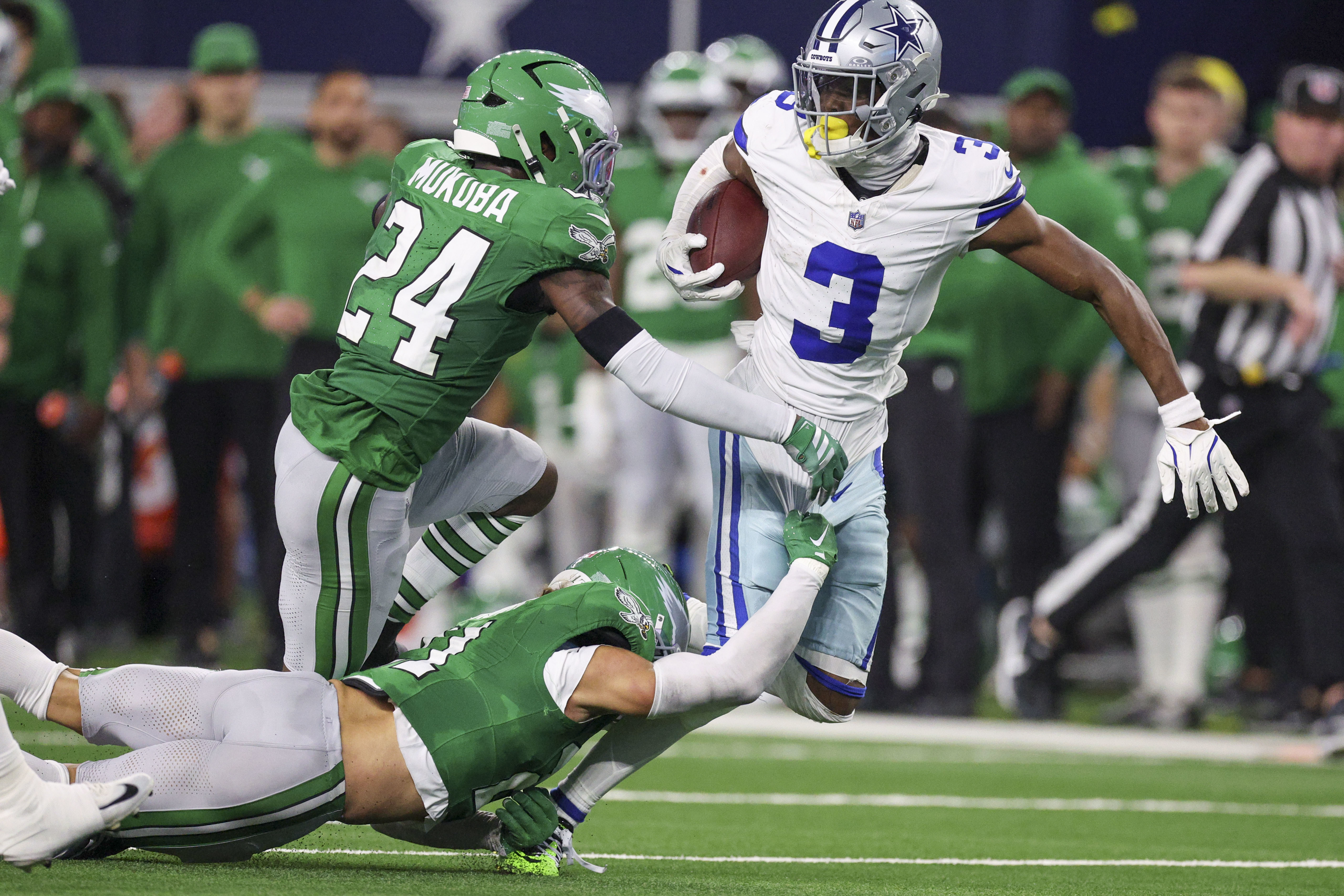
Safeties Andrew Mukuba and Sydney Brown pull down Cowboys receiver George Pickens after he made a big catch over the middle.
Brandon Aubrey kicked a 42-yard field goal as time expired Sunday, leaving the Birds 24-21 losers. They now face a short week and a Black Friday afternoon game against a hot Chicago Bears team whose 8-3 record mirrors their own.
It looked like the Eagles had their Thanksgiving turkey at halftime, perhaps drowsy with tryptophan as they sleepwalked through the Texas evening.
“All it is is a lack of focus,” said left tackle Jordan Mailata. “First, look internally, because that’s the only way we can move forward.”
Focus? Focus? From a veteran team that won a Super Bowl nine months ago? Focus, in a game against a losing team that you beat in September — a game that would virtually wrap up the NFC East title with six weeks to go?
“We’ve got to make sure we’re mastering the things that require no talent,” coach Nick Sirianni said, trotting out one of his most careworn aphorisms.
Mailata and quarterback Jalen Hurts said the same thing. Give him credit: Even if Sirianni can’t manage to scheme a running game, he can manufacture a maxim and embed it.
Mottoes won’t win another Super Bowl.
The win saved the Cowboys’ season, for the moment. Now 5-5-1, the ’Pokes have won two in a row; have made their abysmal defense respectable; and have a legitimate shot at the playoffs.
Seriously? Sure.
For all of the Eagles’ mistakes, the Cowboys made the plays winning teams make. They didn’t wilt down by three touchdowns. Prescott is now 10-5 against an Eagles franchise that is in the middle of the best decade in its history. He entered with gaudy numbers against the Birds, and burnished them with 354 passing yards, two passing touchdowns, a rushing touchdown, and, yes, another win.
Hurts fell to 5-4 against his archrival, and, despite a fine statistical performance — the Eagles’ inconsistent passing game showed its head for 45 minutes or so — he chose to wallow in the defeat.
The loss will lead to more questions about an Eagles offense that has been under siege all season.
Hurts passed for 289 yards, threw for a touchdown and ran for two more, but he sputtered after the first half. Malcontent receiver A.J. Brown caught a season-high eight passes for 110 yards, but virtually disappeared after the first half.
It was a magnificent first 18 minutes.
It was a pathetic final 42.
Eagles cornerback Cooper Dejean keeps Dallas quarterback Dak Prescott out of the end zone in the fourth quarter.
Both Barkley and punt returner Xavier Gipson fumbled in the fourth quarter.
Cornerback Cooper DeJean gave up a 48-yard bomb to CeeDee Lamb, which led to Prescott finding tight end Brevyn Spann-Ford for a touchdown from 4 yards with about two minutes to play in the third to make it 21-14. DeJean then gave up a 41-yard bomb to Pickens, which led to Prescott running 8 yards to tie it at 21 early in the fourth.
But the Cowboys went nowhere after Barkley’s fumble and punted, which led to Gipson’s gaffe, which eventually led to fourth-and-goal from the Eagles’ 2-yard line, which led to Dallas’s inexplicable decision to go for it with less than four minutes to play against an offense that had been enfeebled for the second half.
Prescott threw incomplete from the Eagles’ 2. He threw short of the goal line to tight end Jake Ferguson.
With two minutes left, the Eagles faced third-and-2 from their 37. Two Tush Pushes, right?
Nope. Straight drop back. Hurts couldn’t pull the trigger, took a 13-yard sack, gave the ball back to Dallas, and watched as the Cowboys saved their season.
ARLINGTON, Texas — Everything’s bigger in Texas, including Eagles collapses.
After going up by 21 points early in the second quarter, the Eagles gave up their three-score lead to the Dallas Cowboys. Dallas scored 24 unanswered points, capped by a 42-yard Brandon Aubrey walk-off field goal to give the Cowboys the 24-21 victory and end the Eagles’ win streak at four games.
The Eagles’ implosion was their own doing. They incurred 14 penalties, which tied the largest total in a single game in Nick Sirianni’s five-year tenure as head coach.
Here’s our instant analysis from the Eagles’ first loss since falling at the Giants in Week 6.
Defense dissipates
The Eagles defense came out strong in the first half for the most part, limiting the Cowboys to just seven points.
They dominated the turnover battle over the game’s first 30 minutes. Zack Baun had a fumble recovery early in the second quarter after Cowboys wide receiver KaVontae Turpin fumbled a handoff at the Eagles’ 31-yard line. The fumble recovery eventually set up a Tush Push touchdown from Jalen Hurts to extend the lead to 21-0. On the Cowboys’ first trip to the red zone of the afternoon, Reed Blankenship picked off Dak Prescott in the end zone on a pass intended for CeeDee Lamb.
Reed Blankenship picked Dak Prescott off in the end zone but later left the game due to injury.
Unsurprisingly, Vic Fangio’s unit wouldn’t remain flawless against the league’s second-ranked scoring offense. This time around, the Eagles defense couldn’t put a Band-Aid over the listless offense that couldn’t sustain drives in the second half.
Late in the second quarter, Turpin generated a 48-yard catch-and-run, breaking multiple tackles over the middle of the field. That play eventually led to the Cowboys’ first touchdown, a 1-yard pass to George Pickens with Adoree’ Jackson in coverage to make the score 21-7, Eagles.
The Eagles bent but didn’t break in the third quarter, as Aubrey missed a 51-yard field goal attempt.
But the Eagles defense got banged up in the second half. In the third quarter, Jackson entered the concussion protocol and Blankenship went down with a thigh injury.
Cooper DeJean took over on the outside with Michael Carter slotting in as the nickel cornerback. The 22-year-old DeJean was tested heavily, getting called for defensive pass interference on a pass intended for Lamb in the third quarter, which was declined because the receiver made a 48-yard catch.
Lamb drew another defensive pass interference two plays later, this time against Kelee Ringo, who came in for a play at outside cornerback. Ringo didn’t see the field again on defense. The Cowboys scored on the following play, a 4-yard pass to tight end Brevyn Spann-Ford to make it 21-14.
DeJean was also in coverage for Pickens’ 43-yard catch down the left sideline early in the fourth quarter. That explosive play led to yet another Cowboys touchdown, an 8-yard Prescott carry to tie the game at 21-21.
The Cowboys had an opportunity to pull ahead late in the fourth quarter after Xavier Gipson’s fumble on a punt return at his own 8-yard line. However, the Cowboys opted to go for it on fourth-and-goal from the Eagles’ 1-yard line instead of settling for a field goal. Prescott’s short pass to tight end Jake Ferguson was incomplete, leading to a turnover on downs.
Ferguson began to make up for the incomplete pass with less than a minute remaining in regulation. He caught a 19-yard pass over the middle of the field with Sydney Brown trailing behind him. Brown, the 25-year-old safety, had entered the game in relief of Blankenship.
That play, plus a 24-yard catch from Pickens two plays later, set up Aubrey’s game-winning field goal.
Saquon Barkley lost a fumble on what was another tough rushing day for the running back.
Second-half offensive struggles
The Eagles offense was far more conservative after their three straight touchdown drives to start the game. With 17 seconds remaining in the first half and two timeouts, with the drive starting from their own 28-yard line, the Eagles opted for a handoff to Saquon Barkley.
He gained just 1 yard and both teams returned to their respective locker rooms, the Eagles squandering a potential opportunity to put Jake Elliott in position to kick a field goal.
The Eagles posted just 28 net yards of offense on their first three drives after halftime, punting on all three.
After the game, Sirianni pushed back at the notion that the offense became more conservative after going up three scores.
“I didn’t think so,” Sirianni said. “Obviously, we’re always trying to be a balanced attack. So I just think, again, we’ll have to look at ourselves and look at the schemes and we’re going to have to look at the execution and see what the issues were. We just weren’t very efficient as an offense in that second half. I didn’t really feel that we took our foot off the gas.”
The group suffered from a litany of self-inflicted wounds. DeVonta Smith and A.J. Brown incurred back-to-back penalties early in the fourth quarter — an offensive pass interference and a false start, respectively. The Eagles couldn’t overcome the 25-yard deficit, leading them to settle for a 56-yard field goal attempt from Elliott. The Eagles kicker missed, giving the Cowboys the ball back at their 46-yard line.
Jake Elliott missed a long field goal that would have put the Eagles ahead, 24-14, in the second half.
The offense seemingly had a spark halfway through the fourth quarter, moving the ball 45 yards down the field (a 19-yard Brown reception made up nearly half that total). But Fred Johnson’s illegal use of hands penalty killed their momentum, bringing up second-and-17 from the Cowboys’ 38.
On the following play, Hurts dumped a short pass off to Barkley while under duress. Cowboys defensive end Sam Williams knocked the ball out of the running back’s grasp and linebacker Kenneth Murray recovered it at the Dallas 33.
While the Cowboys failed to take advantage on the following drive, they got a gift of their own on the ensuing Eagles punt return. Gipson coughed up the ball deep in his own zone and Cowboys long snapper Trent Sieg corralled it at the Eagles’ 7-yard line.
Once again, the Cowboys couldn’t score following the turnover. But Hurts took a 13-yard sack from defensive tackle Osa Odighizuwa on third-and-2 at the Eagles’ 37-yard line, forcing them to punt.
With the Eagles’ run game practically nonexistent this season, Barkley couldn’t salt away the contest in the second half as he had so many times last season. He finished the game with 10 carries for 22 yards (2.2 yards per carry is a single-game season low for Barkley). Four of those carries (for a total of 5 yards) came on first down on the five possessions that followed their 21-0 lead.
The Eagles would do some celebrating early, but the good times would not last beyond halftime.
First-half flourish
It was a tale of two halves for the Eagles offense. Through the first 18½ minutes of the game, the Eagles passing game was practically unrecognizable from their performances in the last two weeks against the Green Bay Packers and the Detroit Lions.
Hurts surpassed the 135 passing yards he mustered last week against the Lions in the first half alone. The 27-year-old quarterback threw early and often, going 13-of-19 for 163 yards and a touchdown in the first 30 minutes.
In the first half, Brown hauled in five receptions on six targets for 67 yards and a 16-yard touchdown, which occurred on the Eagles’ opening drive and gave them a 7-0 lead. Brown beat Cowboys cornerback DaRon Bland on a post route to haul in Hurts’ throw in the middle of the end zone.
The play marked Brown’s first touchdown in more than a month (Oct. 19 against the Minnesota Vikings). Against a zone-heavy Cowboys defense, the Eagles targeted the intermediate middle of the field to great success, especially on in-breaking passes to Brown.
The Cowboys defense also gave the Eagles a few early holiday gifts in the form of self-inflicted wounds. A roughing the kicker penalty on Dallas against punter Braden Mann gave the Eagles a fresh set of downs on their second possession. Hurts took advantage of their misstep, especially on a third-and-5 conversion when he connected with Brown for a 22-yard completion on an in-breaker.
The chunk play ultimately helped set up a Hurts 7-yard touchdown on a quarterback keeper, putting the Eagles up, 14-0. Hurts later added the Tush Push touchdown to give the Eagles the 21-0 lead and what would turn out to be their final points.
Smith’s acrobatic 41-yard reception on third-and-12 from the Eagles’ 48-yard line helped set up the push sneak at the goal line. But the offense couldn’t sustain its first-half firepower.
“Whatever it was, it wasn’t enough,” Hurts said of the passing game’s strides in the first half. “I think everything that we’ve been able to do hasn’t been a lack of capability. We’ve got a lot of confidence in how we can go out there and play. Ultimately, we can’t focus on that. … I can only focus on the things that we can control that didn’t go our way.”
Eagles wide receiver Devonta Smith is tackled by Cowboys safety Donovan Wilson in the third quarter.
Injury report
Gipson went down with a shoulder injury following his fourth-quarter fumble on a punt return. He was carted from the medical tent to the locker room. After the game, Gipson was in the locker room with his right arm in a sling.
With 35 seconds remaining in the game, Drew Mukuba went down after Pickens’ 24-yard catch. The rookie safety left the locker room after the game on crutches, not putting any weight on his right foot, which was in a boot.
The Eagles (8-2) can’t quite clinch the NFC East yet, but will get a lot closer with a win against the Dallas Cowboys (4-5-1) Sunday afternoon in Arlington, Texas.
Philly’s magic number remains four to clinch the NFC East. That will drop to two if the Birds defeat the Cowboys Sunday, meaning the Eagles have a chance to lock up the division on Black Friday against the Chicago Bears.
That should make HBO’s in-season Hard Knocks about the NFC East, which debuts on Dec. 2, really compelling.
NFC East standings
!function(){“use strict”;window.addEventListener(“message”,function(a){if(void 0!==a.data[“datawrapper-height”]){var e=document.querySelectorAll(“iframe”);for(var t in a.data[“datawrapper-height”])for(var r,i=0;r=e[i];i++)if(r.contentWindow===a.source){var d=a.data[“datawrapper-height”][t]+”px”;r.style.height=d}}})}();
No team has won the NFC East in back-to-back years since 2004, when Donovan McNabb and the Eagles claimed their fourth-straight division title on the way to Super Bowl XXXIX.
On the other side of the coin are the New York Giants, who could become the first team officially eliminated from the playoffs. A Giants loss paired with a win by either the Cowboys, Minnesota Vikings, or Seattle Seahawks would officially snuff out the Giants’ playoff hopes.
If that were to happen, it would be the earliest playoff exit for the Giants since 1976 and the soonest a team has been eliminated since the New York Jets in 2020, according to NFL playoffs analyst Joe Ferreira. The Giants would also become the 11th team since 1990 to be eliminated from playoff contention before their bye week.
While the Cowboys can’t be eliminated yet, they need a win to keep their playoff hopes alive. Entering Week 12, they are three back in the hunt for the NFC’s final wild card spot, and their odds of sneaking into the playoffs drop to just 4% with a loss to the Birds on Sunday, according to the New York Times playoff simulator.
Eagles (8-2) at Cowboys (4-5-1)
Where: AT&T Stadium, Arlington, Texas
When: 4:25 p.m., Sunday
TV: Fox (Kevin Burkhardt, Tom Brady, Erin Andrews, Tom Rinaldi)
Radio: 94.1 WIP (Merrill Reese, Mike Quick, Devan Kaney)
Streaming: Fox One
Cris Collinsworth’s milestone has a surprising Philly connection
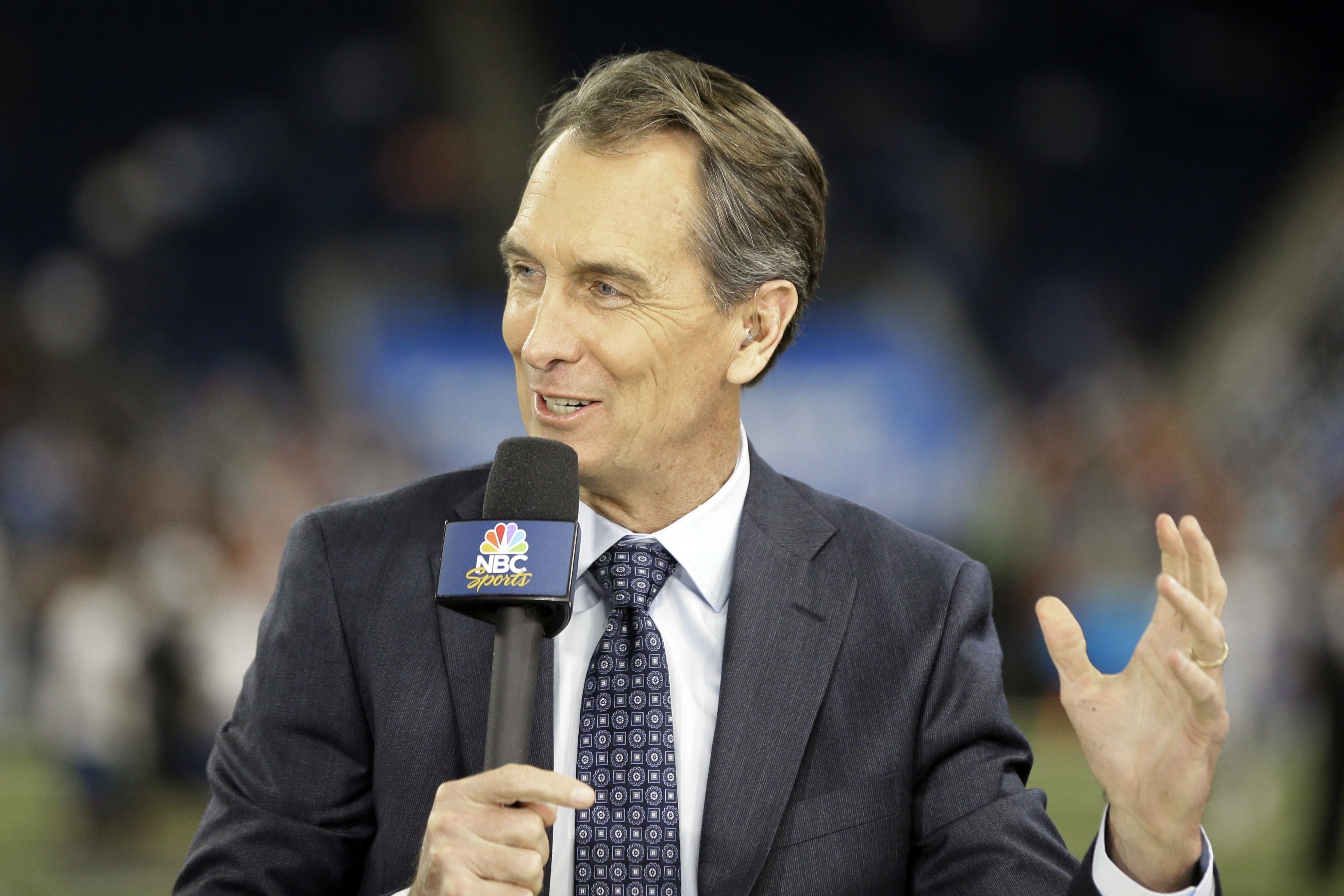
NBCs Cris Collinsworth will call his 500th NFL game Sunday.
Tonight’s Sunday Night Football matchup between the Tampa Bay Buccaneers and Los Angeles Rams is a milestone for veteran color analyst Cris Collinsworth, who will be calling his 500th NFL game.
Collinsworth, who spent eight seasons as a wide receiver for the Cincinnati Bengals, debuted way back in 1990 on NBC alongside the late Jim Donovan. During his 36-year broadcasting career, Collinsworth has called games alongside many all-time greats, including Troy Aikman, Al Michaels, Frank Gifford, and Philadelphia native Dick Stockton.
What may surprise Eagles fans is Collinsworth has called 32 games at Lincoln Financial Field, the most of any stadium in his long broadcasting career. And he’s called Eagles-Cowboys 17 times, including this season’s NFL kickoff game alongside Mike Tirico.
While the Eagles have no more Sunday Night Football games on their schedule, and a flex is highly unlikely, Collinsworth and NBC could end up with a Birds game in the playoffs — the Super Bowl, which the network is broadcasting.
Other games airing in Philly Sunday
Steelers at Bears: 1 p.m., CBS (Ian Eagle, J.J. Watt)
Giants at Lions: 1 p.m., Fox (Kenny Albert, Jonathan Vilma, Megan Olivi)
The Eagles remain in first place in the NFC entering Week 12, thanks to their win against the Los Angeles Rams back in Week 3.
The Birds hold tiebreakers against four of the top teams in the NFC — the Rams, Buccaneers, Packers, and Detroit Lions. They can add a fifth next week if they defeat the Bears on Black Friday.
While the Eagles could clinch the NFC East as soon as next week, their magic number to land the top playoff seen (and a first round bye) is seven.
window.addEventListener(“message”,function(a){if(void 0!==a.data[“datawrapper-height”]){var e=document.querySelectorAll(“iframe”);for(var t in a.data[“datawrapper-height”])for(var r,i=0;r=e[i];i++)if(r.contentWindow===a.source){var d=a.data[“datawrapper-height”][t]+”px”;r.style.height=d}}});
FORT WORTH, Texas — The Eagles didn’t place right tackle Lane Johnson on injured reserve on Saturday after they learned he wouldn’t need foot surgery and may be back earlier than original estimates, NFL sources told The Inquirer.
Johnson suffered a Lisfranc injury in the first quarter against the Lions last Sunday and didn’t return. Initial tests indicated he would miss four to six weeks, which would have likely sent him to IR until the postseason.
The inflammation in Johnson’s right foot needed to go down before he could have X-rays. The results may be the best-case scenario for the 13-year veteran and the Eagles.
If Johnson were to miss just three games, the perennial Pro Bowl offensive lineman would be back in time for the Raiders game on Dec. 14. The Eagles’ next three games are at the Cowboys on Sunday, home vs. the Bears on Black Friday, and at the Chargers on Dec. 8.
#Eagles didn’t place Lane Johnson on injured reserve today because he won’t need surgery and there’s a good chance he could return within four games after suffering a Lisfranc injury to his right foot on Sunday, NFL sources said.
Fred Johnson, who has jumped in at right tackle several times this season, will be at the position at AT&T Stadium in Arlington, Texas. The Eagles are 120-62-1 in games Lane Johnson has played and 15-24 in games he has not, including the playoffs, over his career.
He played in each of the first 10 games of this season, but has missed parts of four with various dings. Johnson has endured his share of injuries in his career, playing through many. In 2022, he delayed surgery to a torn adductor tendon in his groin until after the Eagles played in the Super Bowl.
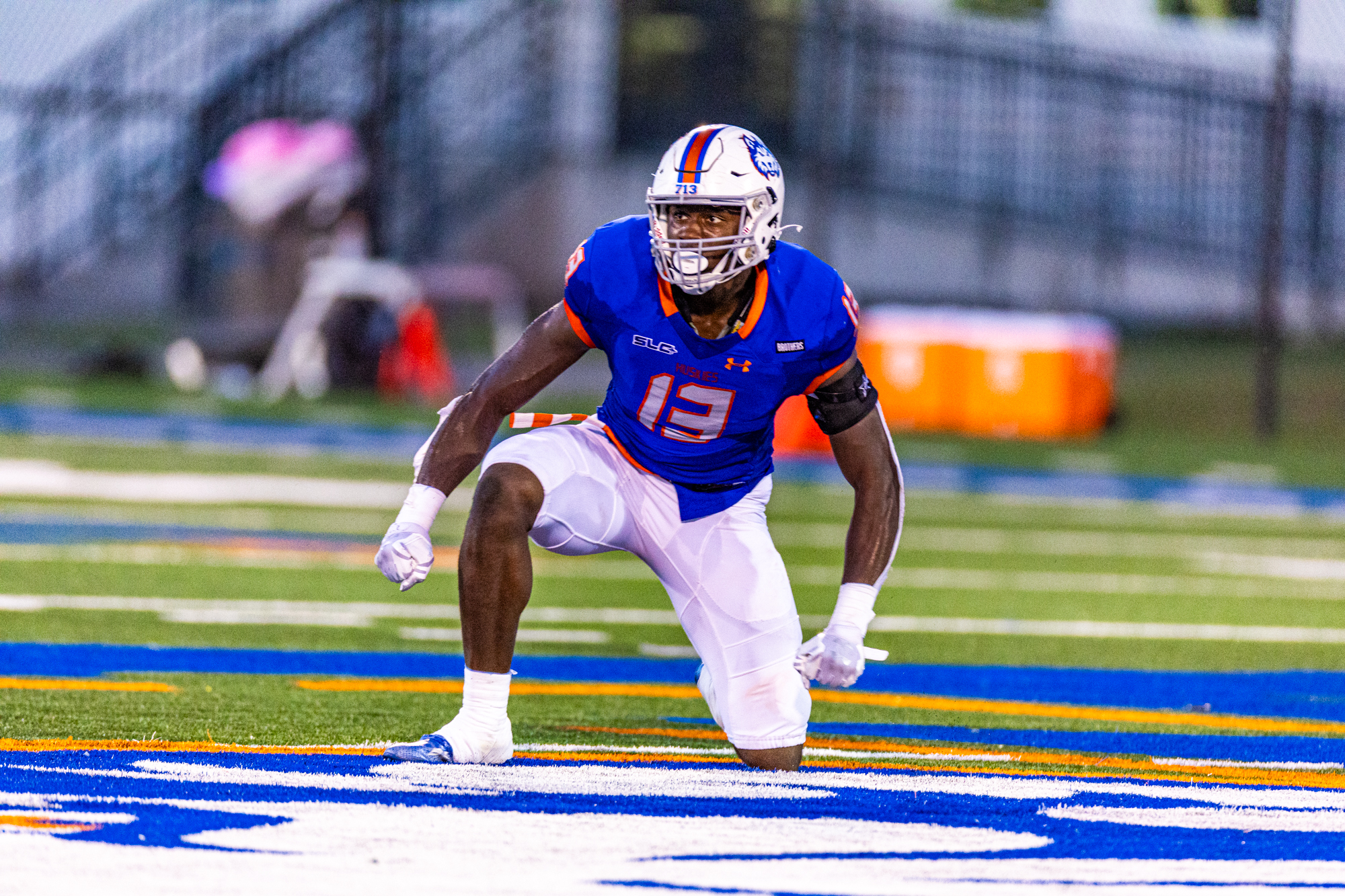
Two years into his Eagles career, Jalyx Hunt counts his blessings in pairs of cleats and gloves.
He doesn’t lack either. About a dozen brand-new white gloves wrapped in cellophane are stacked on a low shelf on the left side of his stall in the NovaCare Complex. Hunt has four pairs of cleats sitting on the racks below that shelf, but he knows that if he busts them, he can ask assistant equipment manager Craig Blake for another pair.
The 6-foot-3, 252-pound outside linebacker still isn’t used to the extravagance. He didn’t take his first charter flight with a football team until two years ago, his senior season at FCS-level Houston Christian. If he wore through a pair of cleats, the cost for new ones came out of his pocket.
Hunt, 24, picked up odd jobs to pay for those expenses integral to attaining his NFL dream, especially his training. He delivered takeout for DoorDash. He and his friends signed up to work as overnight security guards at the 24-hour library on campus, even when they had to lift in the morning.
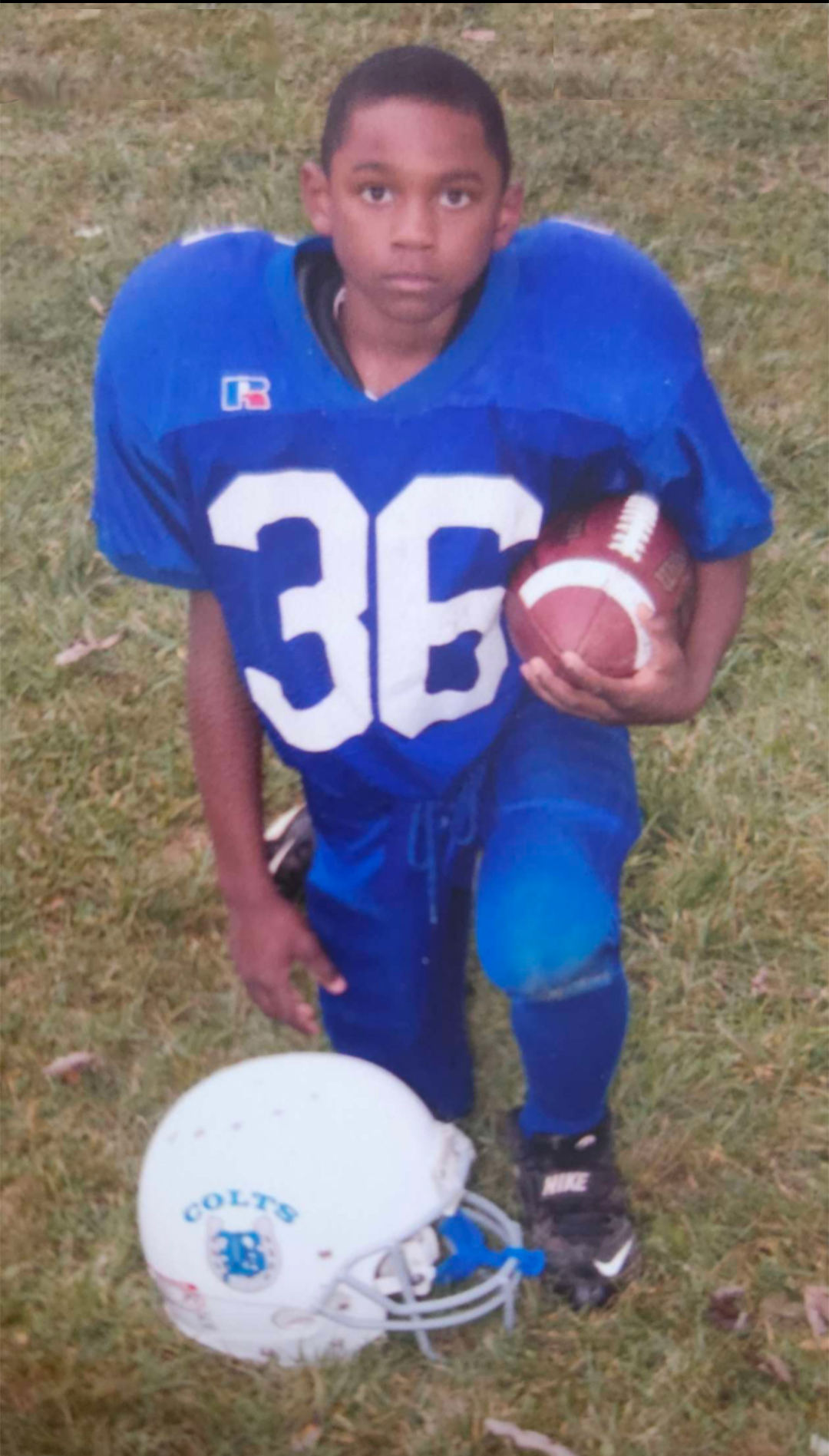
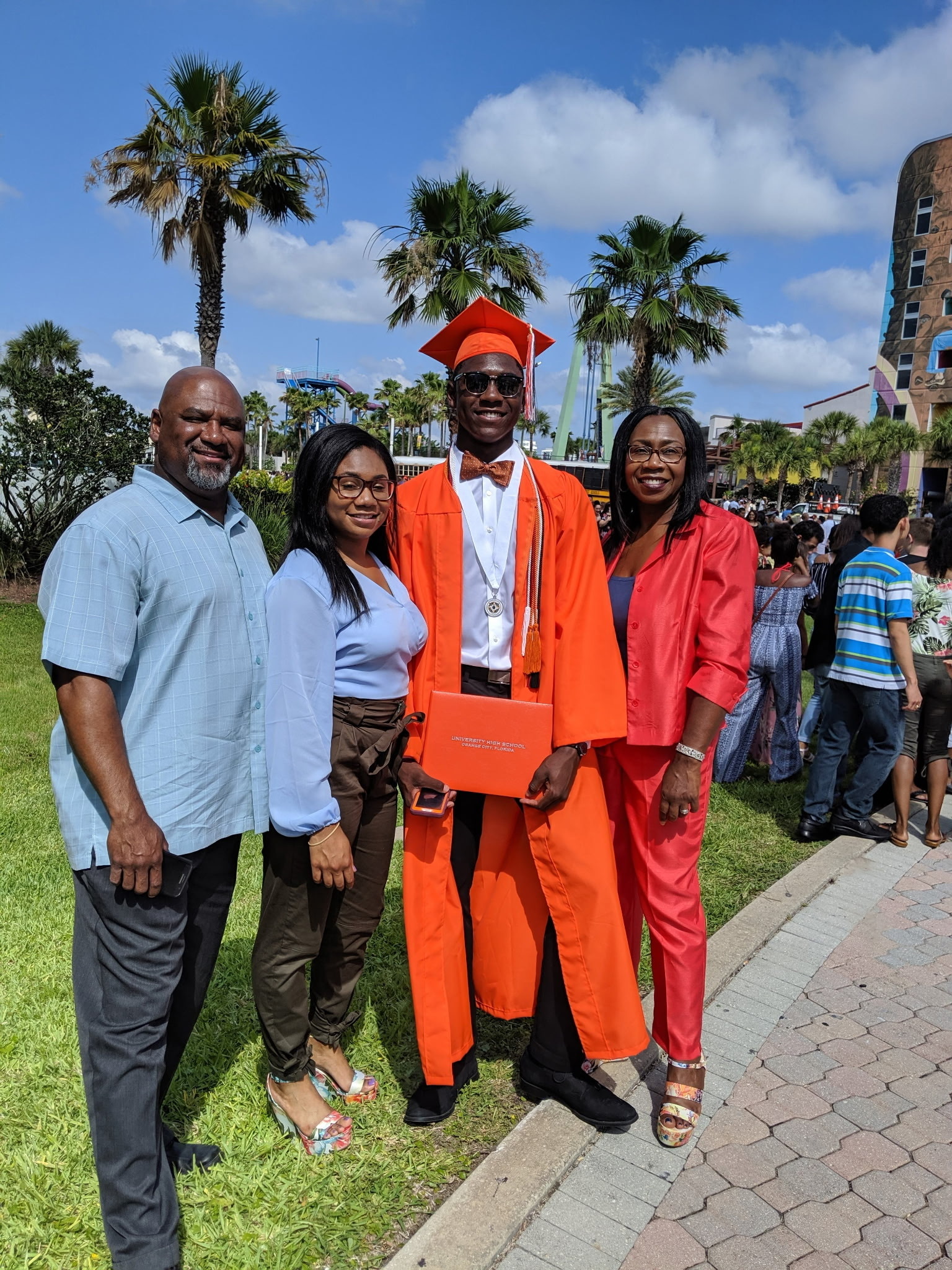
In high school in Orlando, the zero-star recruit worked nights as a janitor at the urgent care where his father, James, served as a physician’s assistant.
The experiences that shaped Jalyx didn’t magically evaporate after the Eagles selected him in the third round of the 2024 draft.
“I got a chip on my shoulder to a certain degree,” Hunt said on Wednesday. “But I also just appreciate things a lot more, because a lot of these people were able to be blessed coming out of high school. … I was like, ‘Should I be paying for training? If I have to do this, is it really that feasible?’”
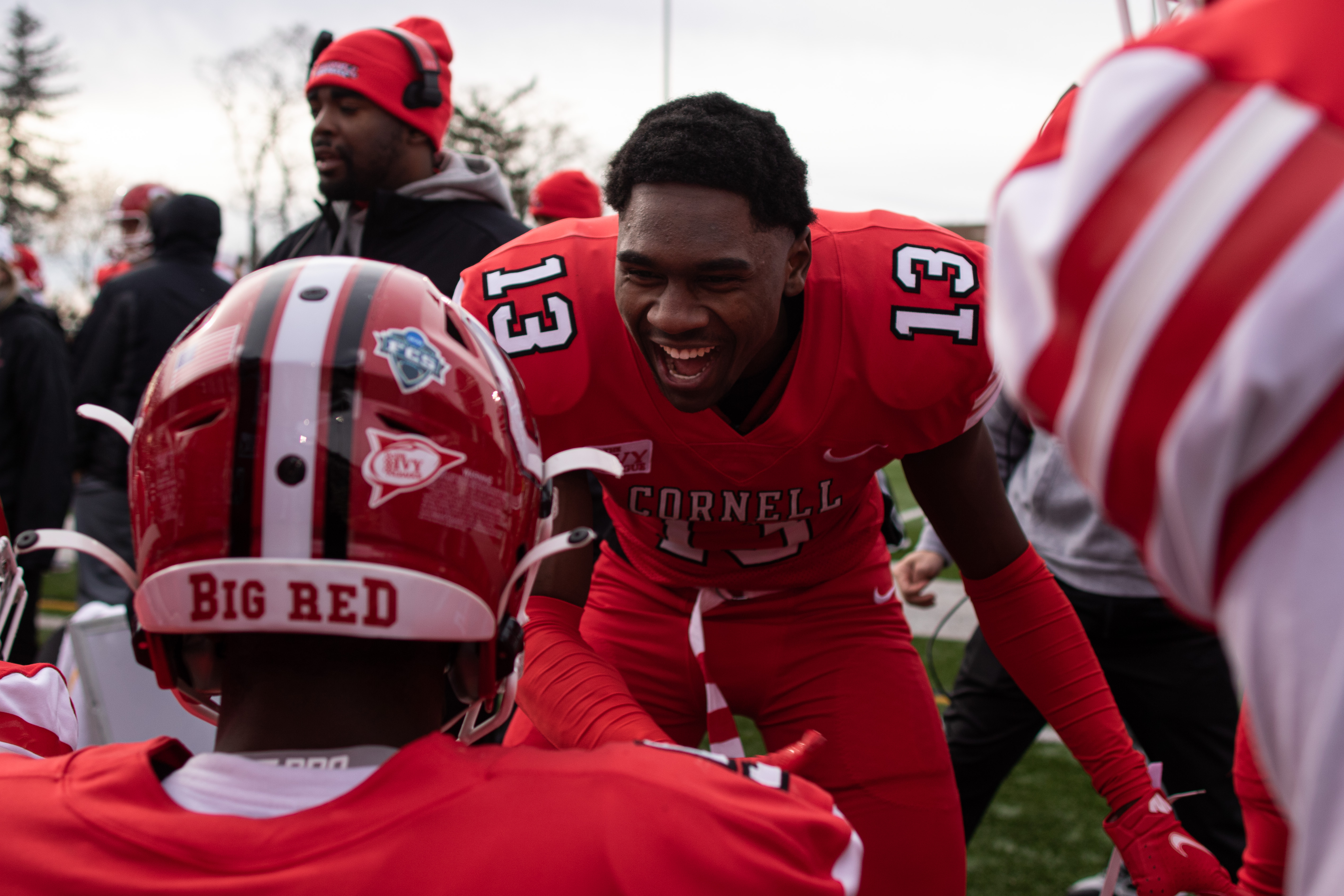
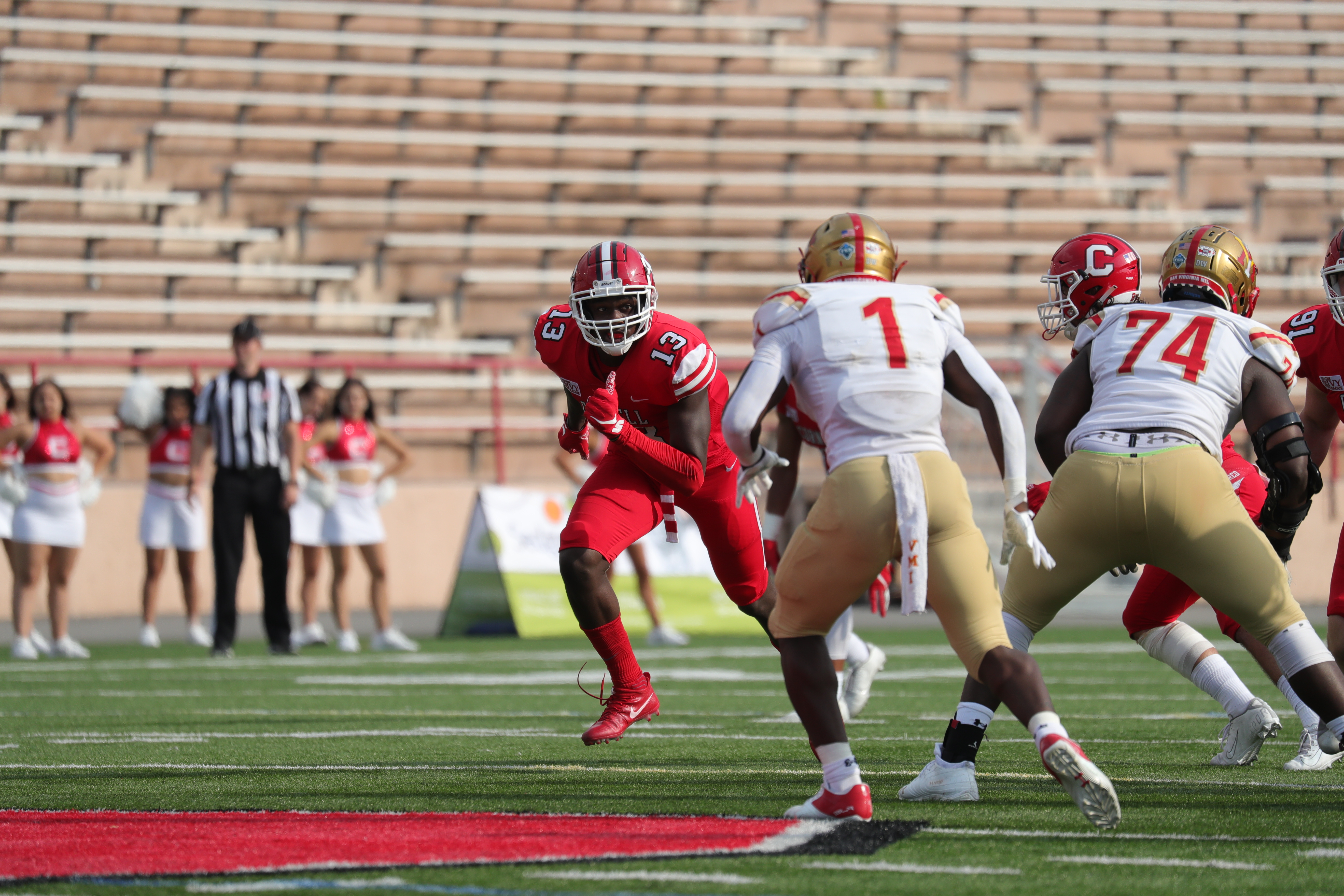
Cornell and the Ivy League gave Hunt his start as a college football player.
A cursory glimpse at his early football path suggests that Hunt’s NFL dream was a long shot. He began his collegiate career at Cornell, a struggling program not known for producing pro players. One of the rising edge rushers on the NFL’s most feared defense just four years ago could be found working as an Ivy League safety.
When Hunt entered the transfer portal in 2022, all he said he needed was an opportunity to make an impact. That, and a program that thought he had a chance to reach the NFL.
Houston Christian gave him both in earnest. A shift closer to the line of scrimmage altered the trajectory of his football journey. His perseverance in realizing a once-unlikely dream doesn’t surprise those close to him, however.
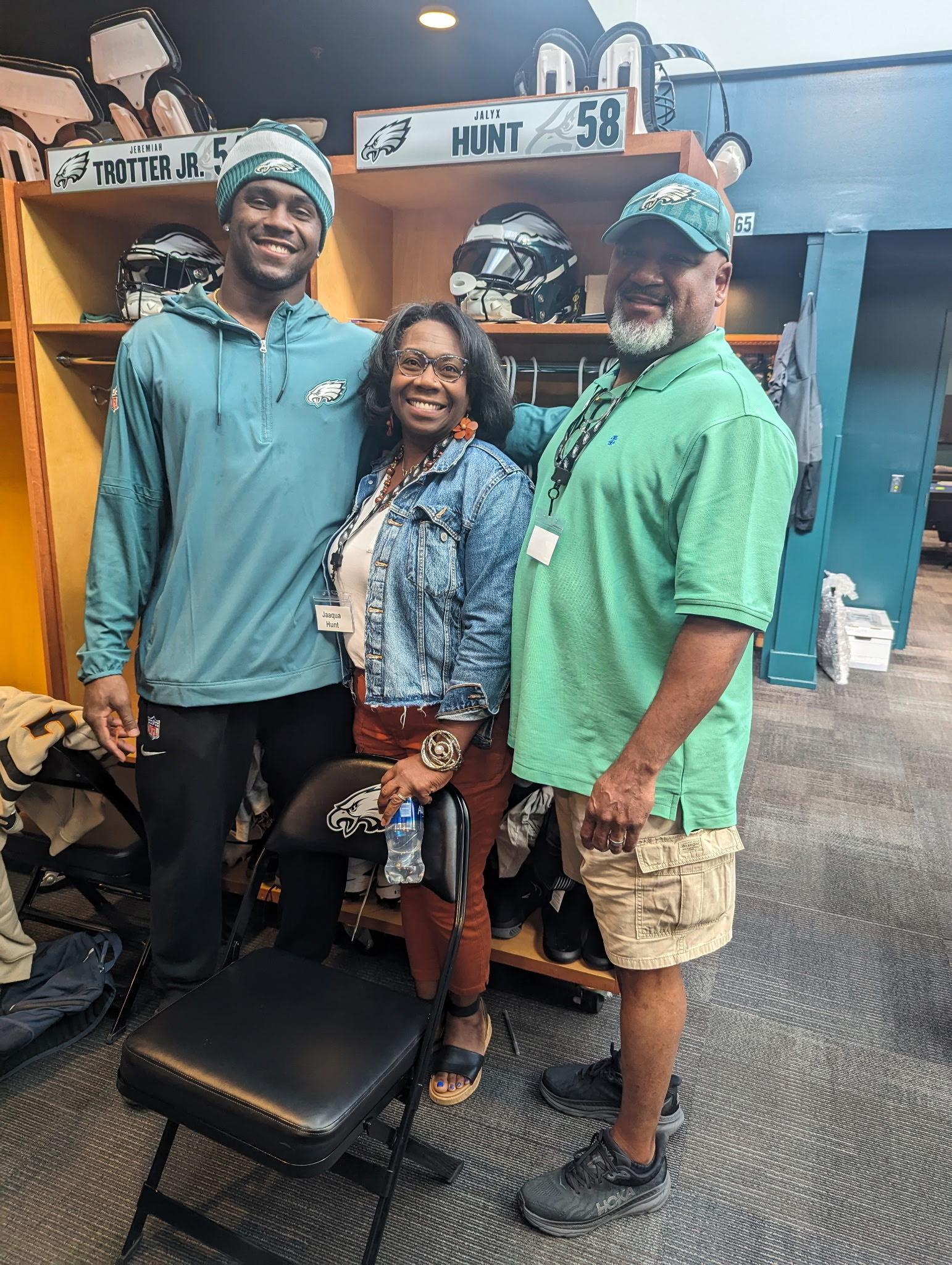
“People think I say stuff like this because he’s my son,” said James Hunt. “But I don’t. My wife will tell you I am very, very real and upfront with my son, my daughter, anybody I know, any kid trying to do something. She calls me a dream killer, because I’m going to tell you.
“But I didn’t think it would be an issue, because I truly feel you can put Jalyx anywhere and he will get it done.”
Jaaqua Hunt discovered her son’s unrelenting motor long before he charged after quarterbacks on Sundays.
Jalyx was always busy, always moving. James recalled how long it took to get him dressed in the mornings before school because he couldn’t stand still. A teacher herself, Jaaqua emphasized to his educators that he needed an activity to do after he finished his work, otherwise he would talk the ears off his classmates and no one would get anything done.
Hunt’s enthusiasm and energy for all things found a natural outlet on the football field.
“I told his doctor when he was 15 months [old] that he had ADD,” Jaaqua said. “And they said, ‘You couldn’t possibly know that now. He’s 15 months.’ And I said, ‘Yeah, I do.’ I was at home at the time. I said, ‘He doesn’t have an off switch. He hits the floor in the morning, and he is nonstop until he drops at night.’”
Behavioral therapy as a child helped Hunt learn how to channel his energy in a productive way. His therapist recommended origami, so he folded up what felt like millions of ninja stars, paper cranes, and waterbombs. Origami gave way to thousand-piece puzzles, LEGOs, the saxophone, and most recently the guitar.
Sports became an outlet for Hunt’s energy, too. He started playing basketball around age 6 at the YMCA. James served as an assistant coach for his team.
“He was really dominating these kids,” James said. “They were the same age, but he just had that ‘it.’ And he was bigger. So you kind of felt bad for that, but then you started realizing everything he did, it’s like the environment would change.”
The Hunt family moved around, spending Hunt’s adolescence in the Orlando area where James completed a physician-assistant program, then came Tennessee, Maryland, and eventually South Carolina to be closer to their daughter, Jessica, who was a track athlete at Winthrop University.
The Hunts’ frequent moves made it difficult for Jalyx to find his footing with coaches and potential recruiters.
Jalyx longed to play football, just like his father had at Alcorn State and Ole Miss. His parents encouraged it, too, believing his chances of earning a scholarship in football were greater than in basketball by sheer numbers alone. Plus, Hunt was cut out better for football, Jaaqua said.
“His dad told him he didn’t have the mentality to play D-I basketball,” Jaaqua said. “And it’s true. Jalyx is a sharer. He’s not selfish enough to play basketball. Even in high school, and all the way back to when he was 6 or 7 years old, he would get a rebound and then give it to someone who didn’t have any points so that they could try and score.”
The Hunt family moved back to Florida before his sophomore year, as James figured that every college football program in the country would recruit in the state. Still growing into his body, Hunt primarily played cornerback and eventually added receiver to his resumé in his senior year.
But he had a hard time getting on the field, finishing his senior season with 20 catches for nearly 500 yards. His recruitment was limited, James said, because he didn’t play much. James put together a highlight video and sent it out to more than 100 schools, which garnered offers from smaller programs and walk-on offers from bigger ones, such as Florida, Marshall, Boston College, and Georgia State.
Cornell was among the smaller programs. Hunt appreciated the opportunity to get an Ivy League education in addition to his football pursuits. He aspired to earn an engineering degree, which he thought would blend his hands-on personality and his affinity for math.
Ultimately, it felt good to feel wanted, and that’s how Cornell made Hunt feel.
“You loved the girl who loves you the most,” Jaaqua said. “They loved him. Simple as that.”
Hunt transitioned to serving as a big free safety in Cornell’s defense. Hunt was responsible for rolling down into the box to play outside linebacker, but would also play in the post and cover receivers downfield.
Hunt was an important part of the Cornell defense, but as a safety was ultimately playing outside of his natural position.
Hunt was still growing, though, and James always thought he played better when he was closer to the line of scrimmage. The position issue was indicative of the struggles that Hunt had faced throughout his football career.
“Part of the problem he had, his coaches didn’t know how to use his ability,” James said. “Because he was very athletic, and then when you start to grow, he was a bigger guy who had small-guy skills. What do you do with this guy? So let’s put him here. Let’s try him there. They just didn’t know where to put him.”
COVID-19 didn’t make things easier, especially from a mental health perspective. His parents could tell that the isolation — Cornell’s entire 2020 season was canceled — was taking a toll on Hunt’s wellbeing. It showed in his slipping grades, too. Hunt wanted to stick it out at Cornell, according to James, but his parents encouraged him to make a change.
Hunt entered the transfer portal after his junior year in 2021. He garnered interest from some Power 5 programs, including Texas Christian and Boston College, but Hunt was behind on class credits. Houston Christian was the only program that had a plan, on and off the field, for Hunt.
Houston Christian, a 4,700-student member of the Southland Conference, was clear during its recruitment that it viewed Hunt as a defensive lineman/linebacker rather than as a safety.
“We didn’t feel like he could dominate the game covering 20 yards down the field man-to-man,” said Roger Hinshaw, Houston Christian’s linebackers coach. “But you just could see … we [could] make him faster by just moving him closer to the ball.”
Houston Christian was prepared to bring Hunt into its summer school at the local community college so he could get back on track from an academic standpoint, too.
It didn’t matter to Jaaqua or James that they had never heard of Houston Christian (formerly known as Houston Baptist) or its nine-year-old football program. Hunt said defensive coordinator Shane Eachus displayed a sense of belief in him that no one else had.
Houston Christian believed in Hunt as a pass rusher, and he thrived quickly in the role.
“He said, ‘We think you can make it to the League,’” Hunt said. “That’s all I need to hear. Like, if you believed in me, bet, let’s go. Even if you’re lying to me, you could be lying to me, but I just needed somebody to even fake it. So, shoot, that’s why I went. That’s the only reason.”
Hunt had all of the physical traits — from his athletic ability to his size to his length — that former Houston Christian defensive line coach Isaac Mooring was looking for in an edge rusher. Hunt had a natural talent at some aspects of the position, Hinshaw said, that his coaches couldn’t teach.
“When he was lined up and the ball was snapped, he was dynamic, which is really the key to any good pass rush,” Hinshaw said. “Quite frankly, that was a DNA thing. God gave him that. Everybody doesn’t get that.”
But beyond his inherent traits, Hunt had a strong desire to learn the position and to be great. Mooring detected that desire through the residency Hunt took up in his office. He was constantly watching film, asking questions in meetings, and taking notes.
Mooring would pull NFL clips and study them with Hunt, and once the young pass rusher began to learn the requisite technique of the position, he began to point out technical nuances on film.
That diligence translated to the football field. If Hunt didn’t get a drill down pat in practice, he would stay after and work on it some more. It didn’t matter if the team had just completed a 24-period session. Hunt could be found striking the sled because he wanted to make sure his hand placement was correct.
Mooring discovered that Hunt had that same attitude after games. After Hunt’s third or fourth contest with Houston Christian, Mooring went around the locker room as he typically would to hug his players and offer words of encouragement. He couldn’t find Hunt.
Eventually, Mooring was told that Hunt was still out on the field. Sure enough, there he was, running 100-yard sprints after playing anywhere from 50 to 70 snaps. He ran sprints at home and on the road, win, lose, or draw.
“I learned to be the type of player that I feel like if we lose, it’s because of me,” Hunt said. “I feel like it’s because of me, like I could have made more plays. I could have done this, I could have done that. So it was one way for me to just think, get some lactic acid out of my legs, but also condition a little bit more.
Hunt’s explosive work as a pass rusher in the Southland Conference got him on the radar of NFL scouts.
“Sometimes, I’d get home, off the bus, and go work out, like on the field or bags, whatever the case may be, just so I could do something more. I just felt I needed to get better right now.”
Hunt gradually improved. He began to put on the weight needed to go up against 300-pound offensive tackles. He leaned on the football IQ that he had developed as a safety to understand run fits and drops in coverage when he wasn’t rushing the passer.
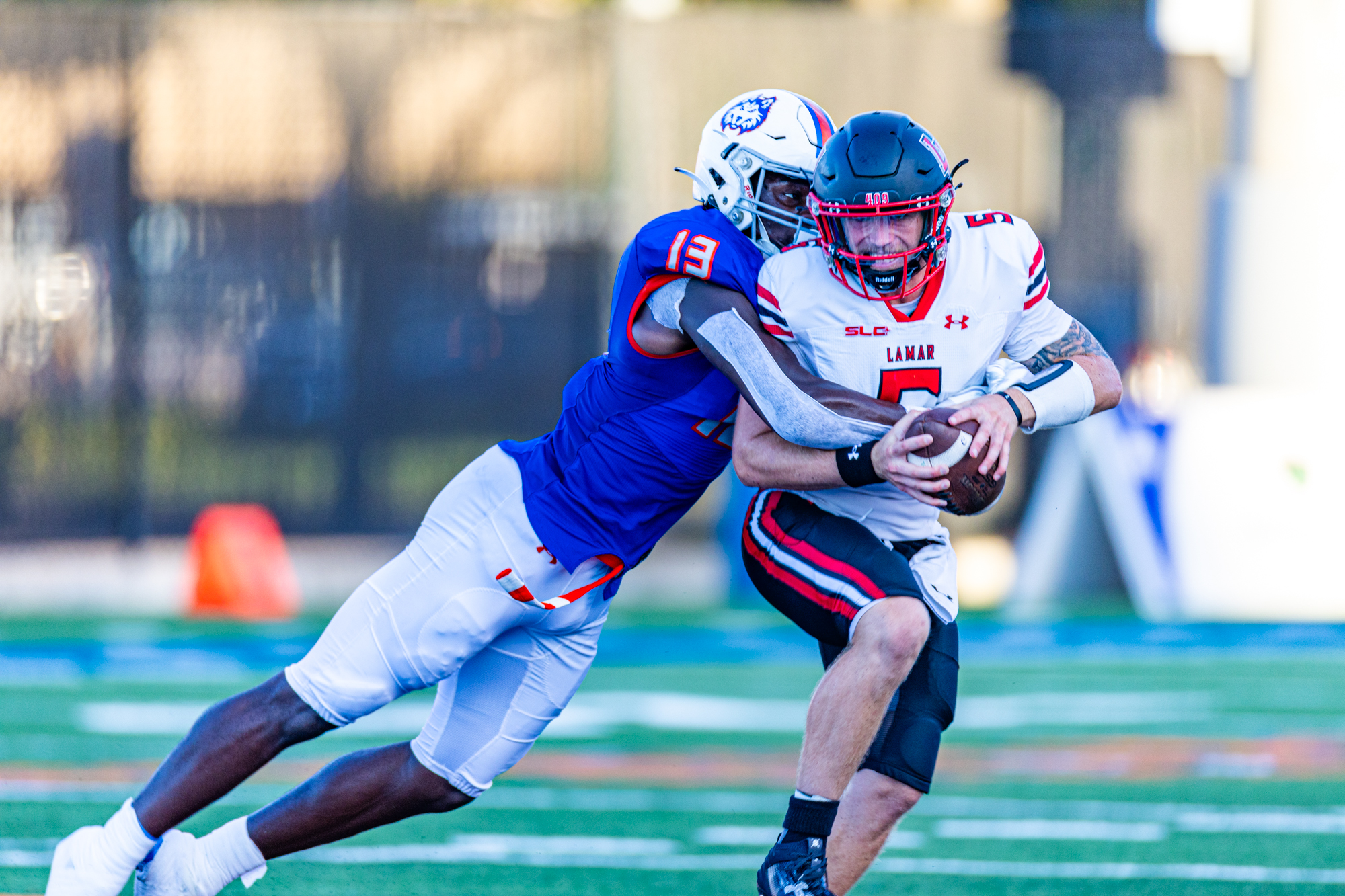
Development turned into sacks, and sacks turned into recognition from NFL teams that traveled to Houston Christian to scout him ahead of the draft. In 2022, his first season with the Huskies, Hunt led the Southland in forced fumbles (three) and tackles for a loss (11.5), and his team in sacks (seven).
The following year, he earned the conference’s defensive player of the year honors, leading the team in tackles for a loss (nine), sacks (6.5), and forced fumbles (two). He also had a 16-yard interception returnfor a touchdown.
“That just shows the guys that don’t let somebody tell you just because you’re here at Houston Christian, nobody’s going to find you,” Hinshaw said. “That’s not the case at all.”
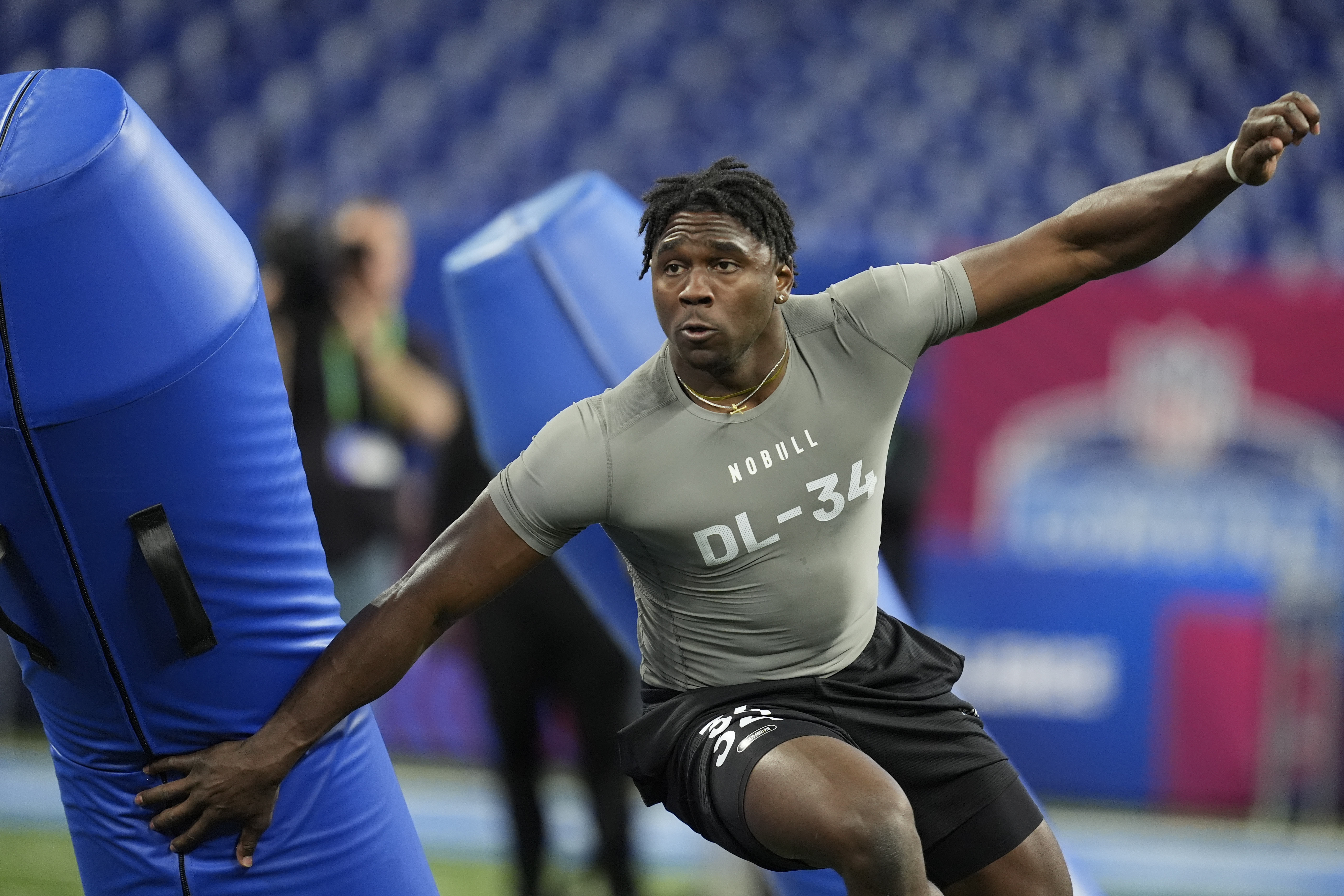
Hunt solidified himself as a second-day pick with an eye-opening performance at the 2024 combine. (AP Photo/Michael Conroy)
Patrick Johnson, the Eagles’ 2021 seventh-round defensive end out of Tulane, first met Hunt through one of his high school teammates who played for Cornell. That fall, Cornell visited Philadelphia to play against Penn.
Immediately, Johnson was struck by Hunt’s size.
“When I first met him, I was like, ‘Dang, you sure you’re a safety, not an outside linebacker?’” Johnson recalled.
Johnson and Hunt didn’t keep in touch. It wasn’t until Johnson dug into the newest Eagles outside linebacker’s film after the 2024 draft that he realized who Hunt was — and that he had made a position change.
Hunt had independently caught the eyes of both Vic Fangio and Jeremiah Washburn, the Eagles’ defensive ends/outside linebackers coach, in the lead-up to the 2024 draft. Washburn saw him at the combine — where he had a 128-inch broad jump (95th percentile among edge defenders) and a 4.64 40-yard dash (81st percentile) — and his pro day.
Hunt possessed great size and athleticism at the position, but he also had an intangible that convinced Washburn that he would be a fit for the team.
“He had intense focus,” Washburn said. “He just had a good demeanor to him, a competitive demeanor, and it just felt like he was an Eagle.”
An Eagle who helped the team win a Super Bowl in his rookie season, notching a sack in that game to boot. In hindsight, though, Hunt wasn’t satisfied with his overall performance in his rookie season, as he finished the year with 1.5 sacks.
Hunt’s emergence included a sack of Jared Goff in Sunday night’s win over the Lions.
He still isn’t this year, but Hunt is beginning to show progress. He has two sacks (five quarterback hits total) in his last three games. He said he is stronger, too, sitting at roughly 260 pounds after listed at 252 this year and last year.
In Hunt, Jaelan Phillips said he sees a “stud” with a deep toolbox of pass-rush moves, an ability to blend speed, power, and agility, with a high motor. Brandon Graham said he sees a sense of confidence in Hunt that he didn’t this time last year. Washburn said he sees a more decisive player now compared to his Week 1 performance against the Dallas Cowboys.
Hunt sees room for improvement, but said he’s learned to become patient with himself.
“It takes a lot of patience not to get [ticked] off,” Hunt said. “Like, ‘Oh, I want to get a sack right now,’ especially at the beginning of the year. I didn’t start out how I wanted to start out. But my goal, and I’ve stuck through to it, is I just want to improve on something each week. And I think if you watch my film, you can definitely see that.”
The support of mother Jaaqua and father James has helped guide Jalyx on his unusual football journey.
While Hunt has evolved as a player, the small-school chip on his shoulder hasn’t gone away. The stack of fresh gloves in his stall serves as a daily reminder of where he came from. He doesn’t just internalize his journey. He is vocal about it, too, even on the league’s biggest platforms.
In the aftermath of the Super Bowl and his sack on Patrick Mahomes, Hunt appeared on the NFL Network’s Good Morning Football. Mooring’s ears perked up when he gave his coach a shout-out for seeing a skill set in him as a pass rusher that he didn’t recognize in himself.
“That just kind of shows you even though he’s reaching all these types of heights that people only dream of, he’s still humble Jalyx where he understands his beginnings and still [gives] his flowers to people that poured into him,” Mooring said.