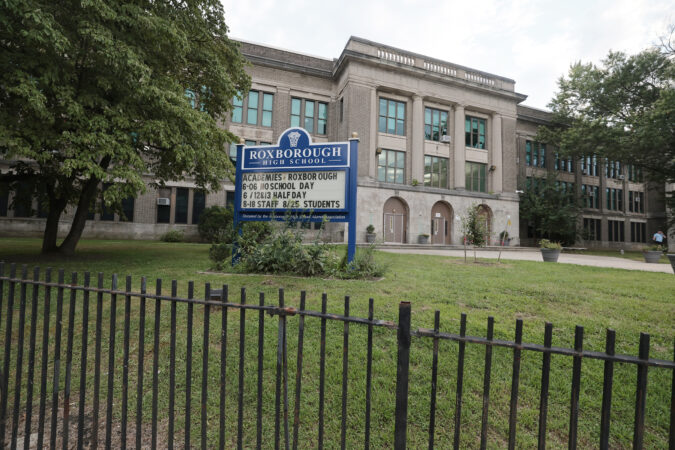
Philadelphia police seek to identify the suspect responsible for recent vandalism at Roxborough High School.
A person painted racist and antisemitic slogans across the exterior walls of the school building Sunday, which included a swastika and racial epithets.
Surveillance video caught the suspect vandalizing the walls around 5:25 a.m. Police describe the suspect as a white male, wearing an orange scarf, a green and black winter hat, a gray hooded jacket, gray pants, and a gray and black backpack.
Cameras captured the person on Jan. 4 approaching the school on foot, coming eastbound from Fountain Street toward Pechin Street. The suspect was last seen heading toward Ridge Avenue
Police asked people to call 911 if the suspect is seen. Information about this crime or suspect can also be shared with Northwest Detective Division by calling 215-686-3353
The public can also submit tips by calling 215-686-8477 or using the online form. All tips remain confidential.
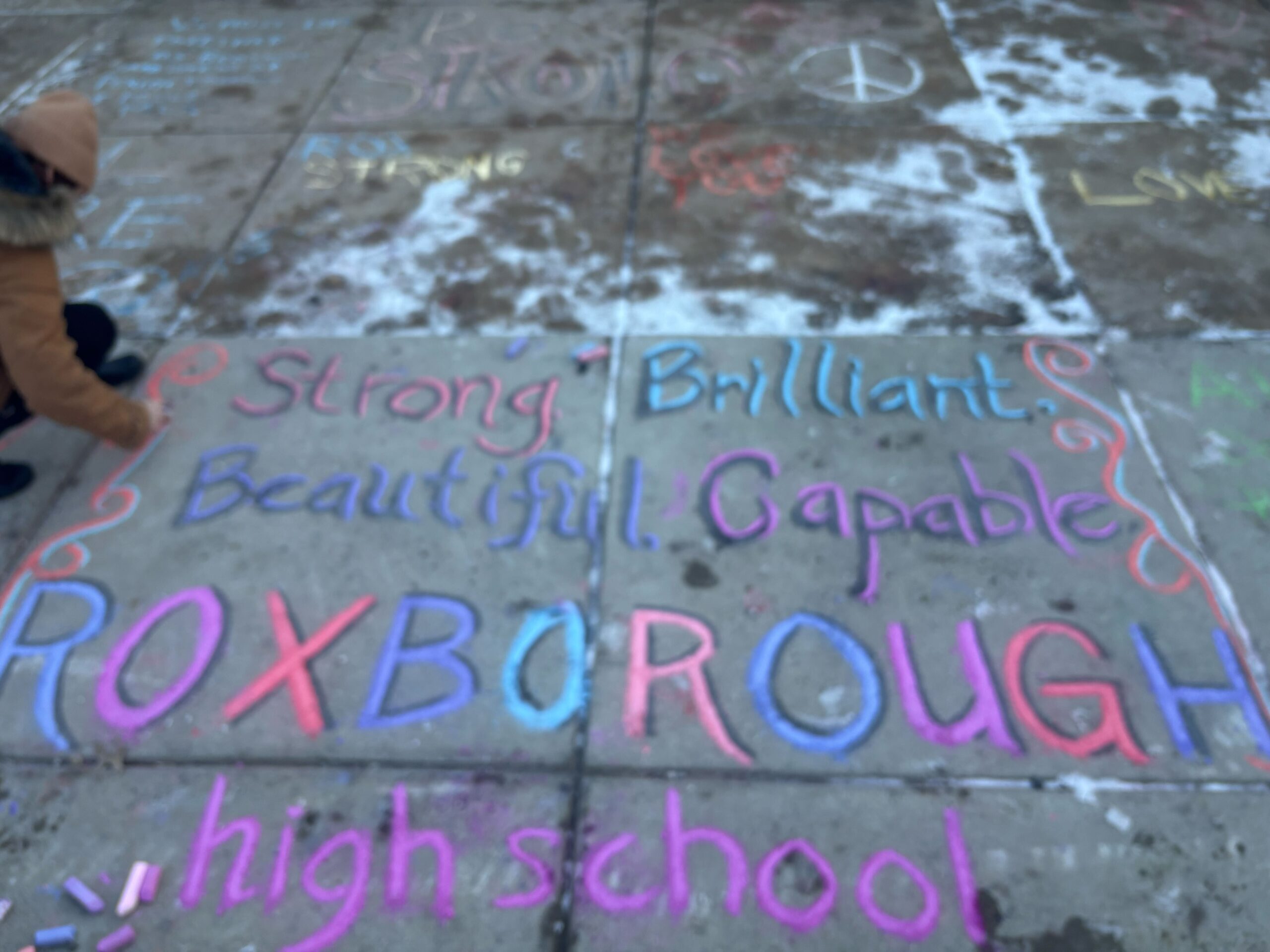
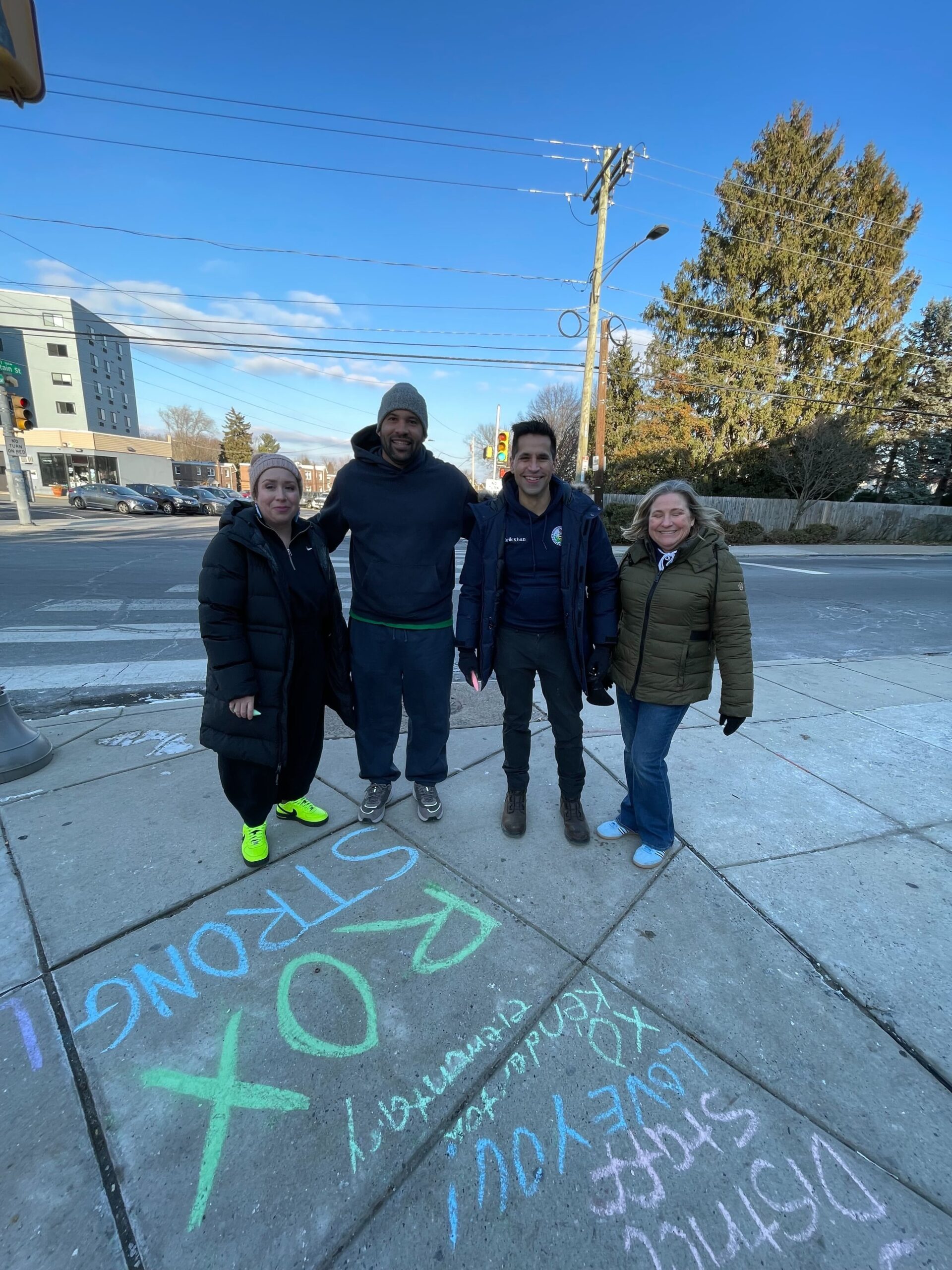
Members of the Roxborough High community chalked positive messages outside the school on Ridge Avenue after racist and antisemitic graffiti was scrawled at the school.
After officials painted over the vandalism over the weekend, Roxborough High School countered the hateful messaging with peaceful messages of their own, written in chalk.
Principal Kristin Williams Smalley said the act of hate didn’t represent the school body.
“We are deeply disappointed by these actions,” Williams Smalley wrote in a letter to the community. “We wish to remind everyone that we have a zero-tolerance policy for harassment or hate speech of any kind, and we will investigate all matters involving racist remarks and other hate speech.”
On Wednesday, the Pennsylvania Human Relations Commission condemned the “acts of hate and discrimination” and praised Roxborough’s respons as a testament to the community’s dignity, respect, and shared values.
“Racism and antisemitism are not isolated acts. These acts harm entire communities,” commission executive director Chad Dion Lassiter said. “The response at Roxborough High School shows what is possible when people refuse to be divided and instead stand together to affirm humanity, belonging, and respect. That solidarity is a powerful counter to hate.”
The topline result: Philadelphians don’t want their local schools closed.
Some urged prioritizing small classes. Others suggested adding more magnets, like Masterman; pouring more resources into neighborhood K-8s and high schools, and modernizing facilities.
But while Superintendent Tony B. Watlington Sr. promised to use the feedback to shape the district’s plan, he and other district leaders have said school closings are a given — the district has 70,000 excess seats in schools across the district of 113,000, and dozens of buildings that are in poor shape.
That process is expected to play out this year. Itinitially was to have yielded decisions in December, but Watlington said his administration needed more time to analyze data and reach out to school communities before ordering sweeping changes that they say are necessary.
Watlington now says he will present a draft facilities plan sometime this winter, with more feedback and revisions to come before a board vote. The timeline for a final vote is notclear.
In an email, he thanked those who participated in the survey and other parts of the planning process. “We have, and will continue to take your feedback very seriously, as we know these will be difficult decisions that could impact many families,” he wrote, adding that there will be additional “community conversations” before the final plan goes to the board.
The district last engaged in a similar process in 2012, closing 30 schools by 2013, a hugely controversial process that officials later said did not improve academic outcomes for students or yield significant long-lasting savings for the district. Officials have said they will undertake the process more deliberately and with different aims in this incarnation.
Boosting neighborhood high schools, strengthening K-8s
The new survey data, released by officials as winter break began, did not yield surprises, but reiterated themes that will be tough for the cash-strapped district to balance.
Officials had previously identified four main topics that have emerged from more than a year of analyzing data and gathering feedback — strengthening K-8 schools, reinvesting in neighborhood high schools, reducing school transitions for students, and expanding access to grades 5-12 criteria-based high schools.
Survey respondents rated each of those “important” or “very important” — with reinvesting in neighborhood high schools (85%) and strengthening K-8 schools (81%) at the top of the priority list.
Overall, those who responded to the survey support their local schools, want strong schools close to where they live, and want the buildings closest to where they live to berenovated, not shut down.
Respondents raised concerns around several topics districtwide: overcrowding, inadequate staffing, school safety, insufficient supports for students with disabilities, student behavior issues, facilities quality and cleanliness, and support for libraries, recess, and extracurricular activities.
Some also expressed worries about transparency in the facilities planning process, and worries that when the district says its goal is “better use of space” it means that it will close schools.
They outlined fears about potential hardships that closing schools could create, such aslonger walks to school ortough bus rides in unfamiliar or unsafe areas. And they flagged worries about merging more than oneschool into a single building and having large grade spans in a single building. (Though some said they relished the idea of having many grades in one spot.)
In their own words
Respondents had plenty of ideas for officials as they plan steps that will have implications for the city for years to come. Here are some excerpts from survey responses:
“I believe that we should stop closing schools and update areas so that we can utilize small class sizes. The ONLY way to accomplish meeting the needs of students, emotionally, physically, psychologically, and educationally is to have SMALL class sizes,” one person wrote.
“By closing buildings and combining schools, some children will have to walk an additional distance, most likely making them late or just deciding on certain days that the travel distance is just not worth it,” another respondent said.
“We need new high schools, middle schools, especially with vocational training. Current year textbooks, technology, air-conditioning, and programs for Tech and Art,” said another writer.
“Many [Philadelphia high schools] currently lack basic college-preparatory opportunities — few or no Honors or AP courses, limited world languages, and minimal enrichment options. This pushes academically motivated students into magnet schools, leaving neighborhood schools underenrolled and concentrated with students who have the highest support needs,” wrote one commenter.
“More schools like Masterman will prevent families from leaving the city if their child cannot get in through the lottery. It is beneficial to Philadelphia as a whole to keep these parents/families in the city instead of fleeing to the suburbs,” wrote one person.
Vandals scrawled racist and antisemitic graffiti outside Roxborough High School over the weekend.
Philadelphia Police Department officials and State Rep. Tarik Khan (D., Philadelphia) confirmed the existence of the graffiti, which included a swastika and a racial epithet written multiple times.
After officials painted over the messages on Sunday, school administrators and community members gathered to counter the hate, chalking positive messages onto the sidewalk.
“Welcome. Peace. Love. RHS,” people wrote in blue and yellow chalk Sunday afternoon. “Strong. Brilliant. Beautiful. Capable.”
Several members of the group said they also plan to be outside Roxborough High on Monday morning, welcoming students back to school after a long winter break.
“Let me be clear: targeting students in the middle of the night is cowardice, and it does not define us,” Khan wrote in a message shared on social media Sunday. He also came to the school to chalk messages. “Our community is bigger than a racist. … Our students are bigger. … Every student deserves to feel safe and respected when they walk into school, not have to deal with hate meant to scare and intimidate them.”
Kristin Williams Smalley, Roxborough’s principal, informed the school community about the graffiti in a letter sent Sunday afternoon.
“We are deeply disappointed by these actions,” Williams Smalley wrote. “We wish to remind everyone that we have a zero-tolerance policy for harassment or hate speech of any kind, and we will investigate all matters involving racist remarks and other hate speech.”
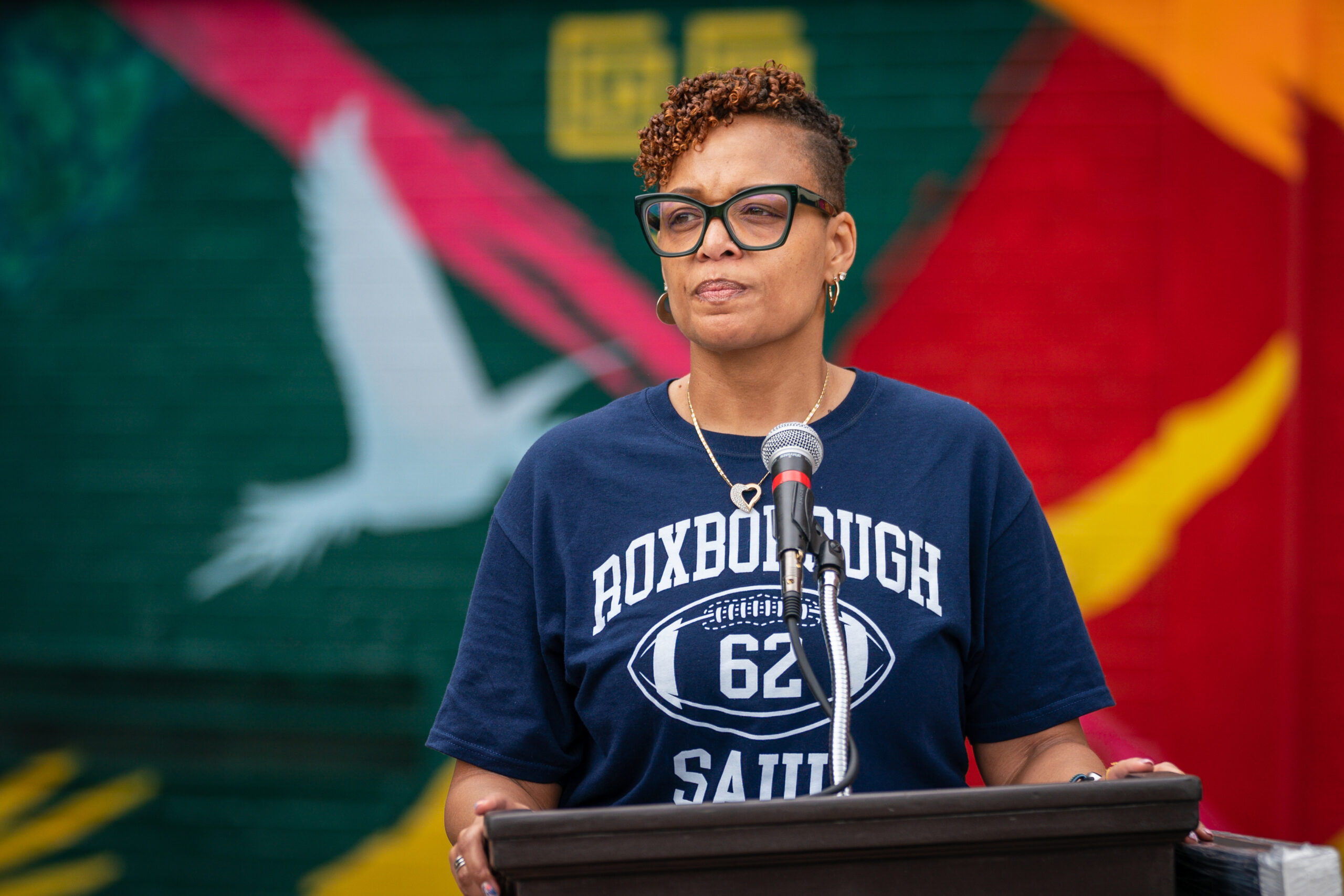
Kristin Williams Smalley, principal at Roxborough High School, is shown in this 2023 file photo speaking at a mural dedication for Nicholas Elizalde.
Roxborough — and the district — are diverse communities, and that’s a point of pride, Williams Smalley said.
“We all play a role in supporting a positive and supportive school culture. We encourage you to speak with your children and have conversations about the seriousness and potential consequences of these unacceptable behaviors.”
Students — whether alleged victims or not — should report bullying, harassment or discrimination, the principal said.
“Please keep in mind that the young people around you are watching and listening,” Williams Smalley wrote. “We encourage all of us to be the role models they deserve. Words are powerful and we truly believe that if you work to build bridges of empathy and understanding, and demonstrate respect, our young people will follow and will create a community where everyone feels valued, seen and heard.”
‘No person needs to see that’
Marge LaRue, whose grandson, Nicholas Elizalde, was shot and killed outside Roxborough in 2022, was also among the group that gathered. She and her daughter Meredith Elizalde, Nicholas’ mother, have remained involved with Roxborough staff and students since Nick’s murder.
Members of the Roxborough High community chalked positive messages outside the school on Ridge Avenue after racist and antisemitic graffiti was scrawled at the school.
LaRue and Elizalde’s immediate concern was making sure the mural, memorial garden, and scoreboard dedicated to Nick were not defaced. They were not.
But they also wanted to show up for the students and staff.
“That’s Nick’s community, the Roxborough community,” said LaRue. “Those hateful messages — I don’t know where they came from. No school, no person needs to see that, on their school, in their community.”
Roxborough High supporters, including Meredith Elizalde, Eric Chappelle, State Rep. Tarik Khan, and Megan McCarthy-May, the school’s assistant principal, stand outside the school after chalking positive messages to counter racist and antisemitic graffiti.
Police responded to the vandalism Sunday, a spokesperson confirmed, but no further information was available. School officials said city police and the district’s school safety office were investigating the incident.
Growing up in South Jersey, my siblings and I were often reminded by our mother to seek a college education to better our chances of landing a good job.
My sister Andrea and I heeded her advice and obtained bachelor’s degrees with honors a few years after high school, and began working in our professional fields.
It took my brother, William, the oldest, nearly 50 years to believe he could do it, too. We always knew he had the smarts and the grit. He had to believe it.
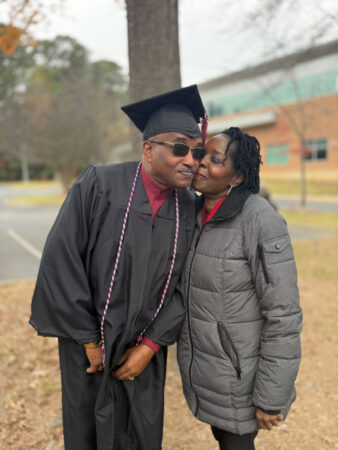
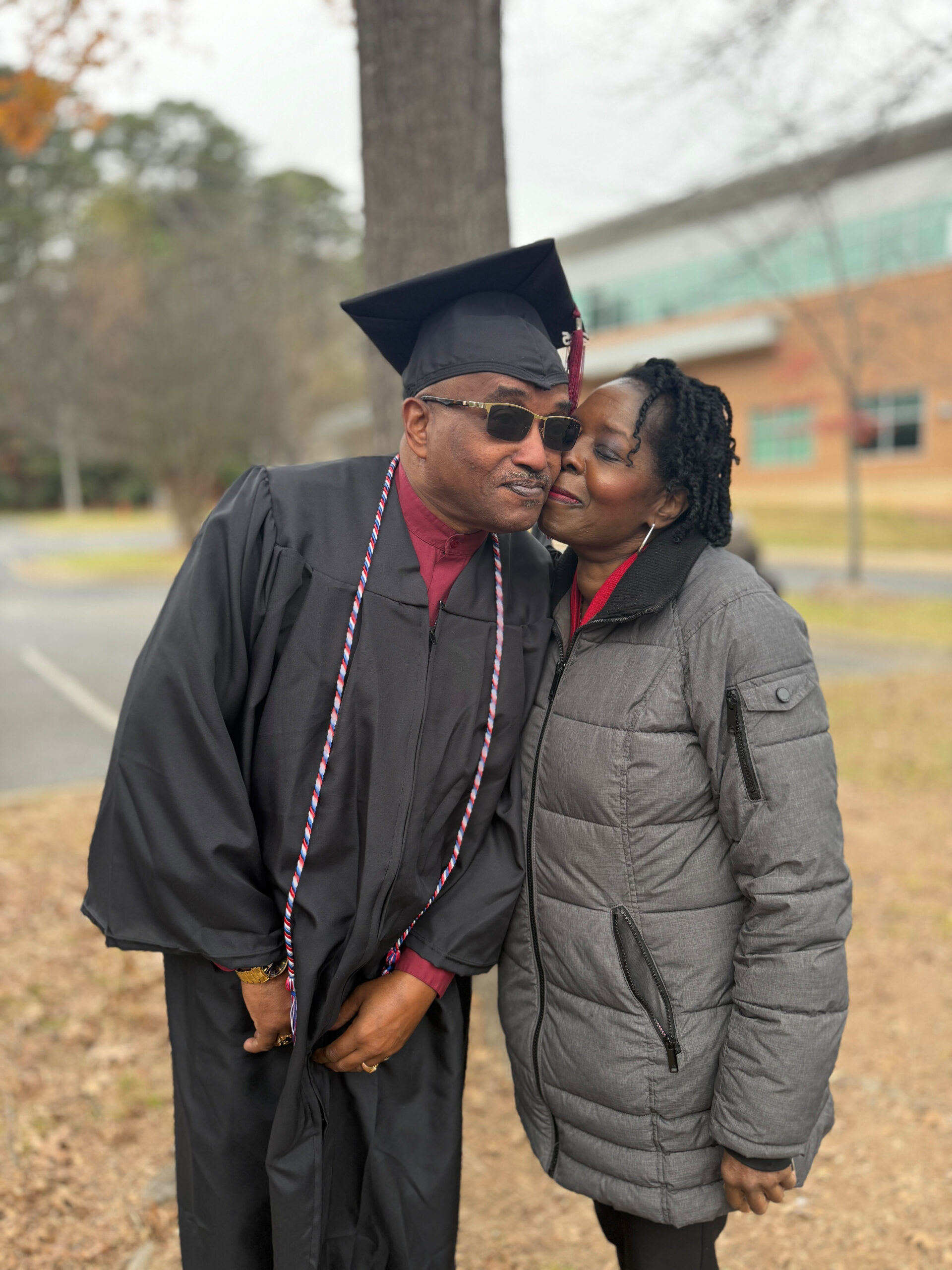
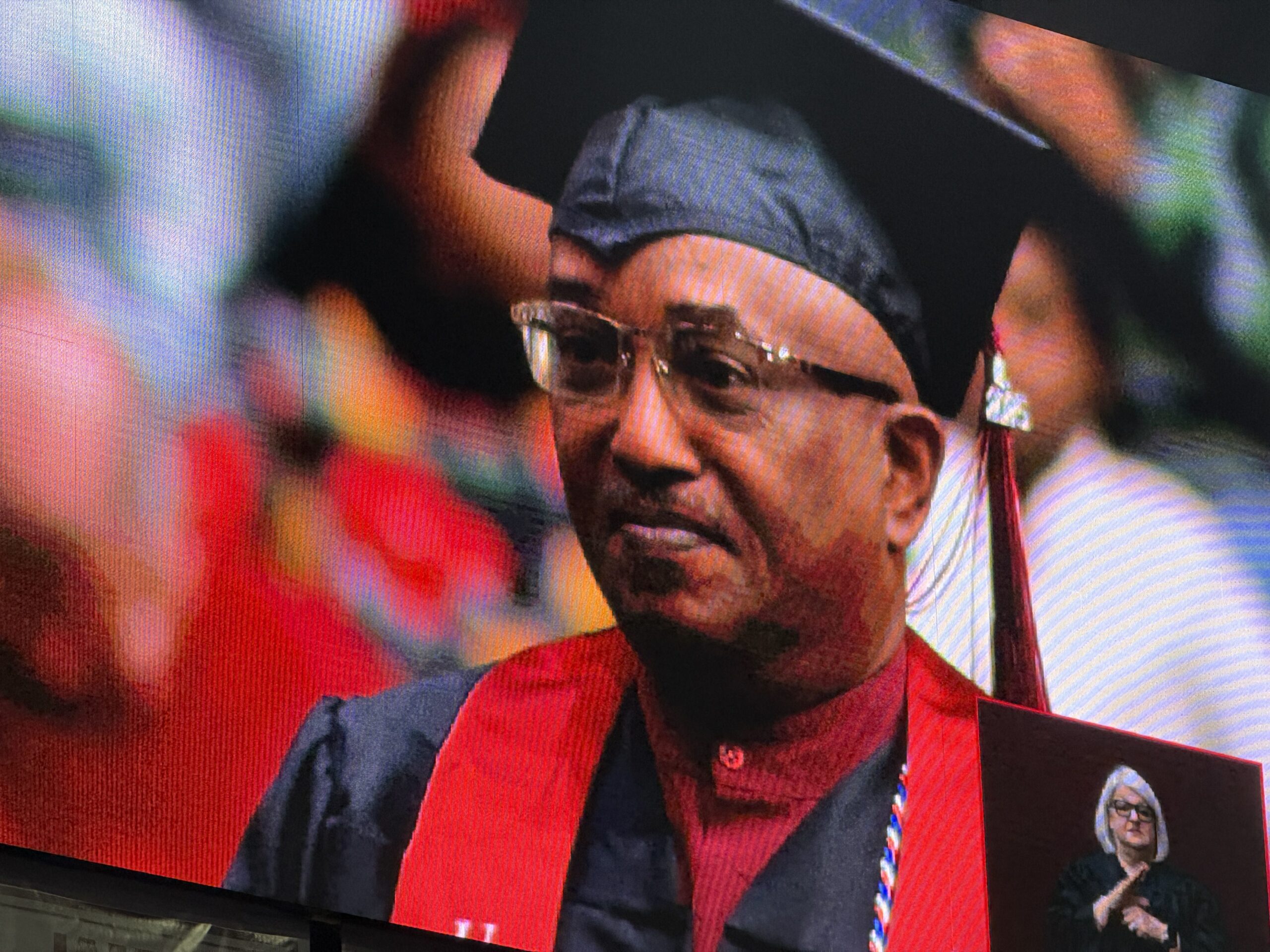
After a circuitous journey, he proved it by graduating in December from the University of Arkansas at Little Rock at 67. His extended family could not have been more proud.
‘I don’t want to give up’
He attended three colleges and took classes part time for eight years. He enrolled in remedial math, reading, and writing courses, had tutors, and took algebra four times until he finally passed after two years. He missed a semester after a major health scare in 2022, which interrupted his studies.
“I didn’t want to give up. I was the only one in the family who didn’t have a college degree,” he said. “For me, it was the sky is the limit, and you can do it.”
An increasing number of learners like Will, 35 and older, are joining younger students in college classrooms. More than four million were enrolled in postsecondary education in 2023, according to an Inside Higher Education report.
Some older learners, like my brother, are retired and want to pursue a lifelong dream to obtain a college degree. Others want to change careers or increase their earning potential.
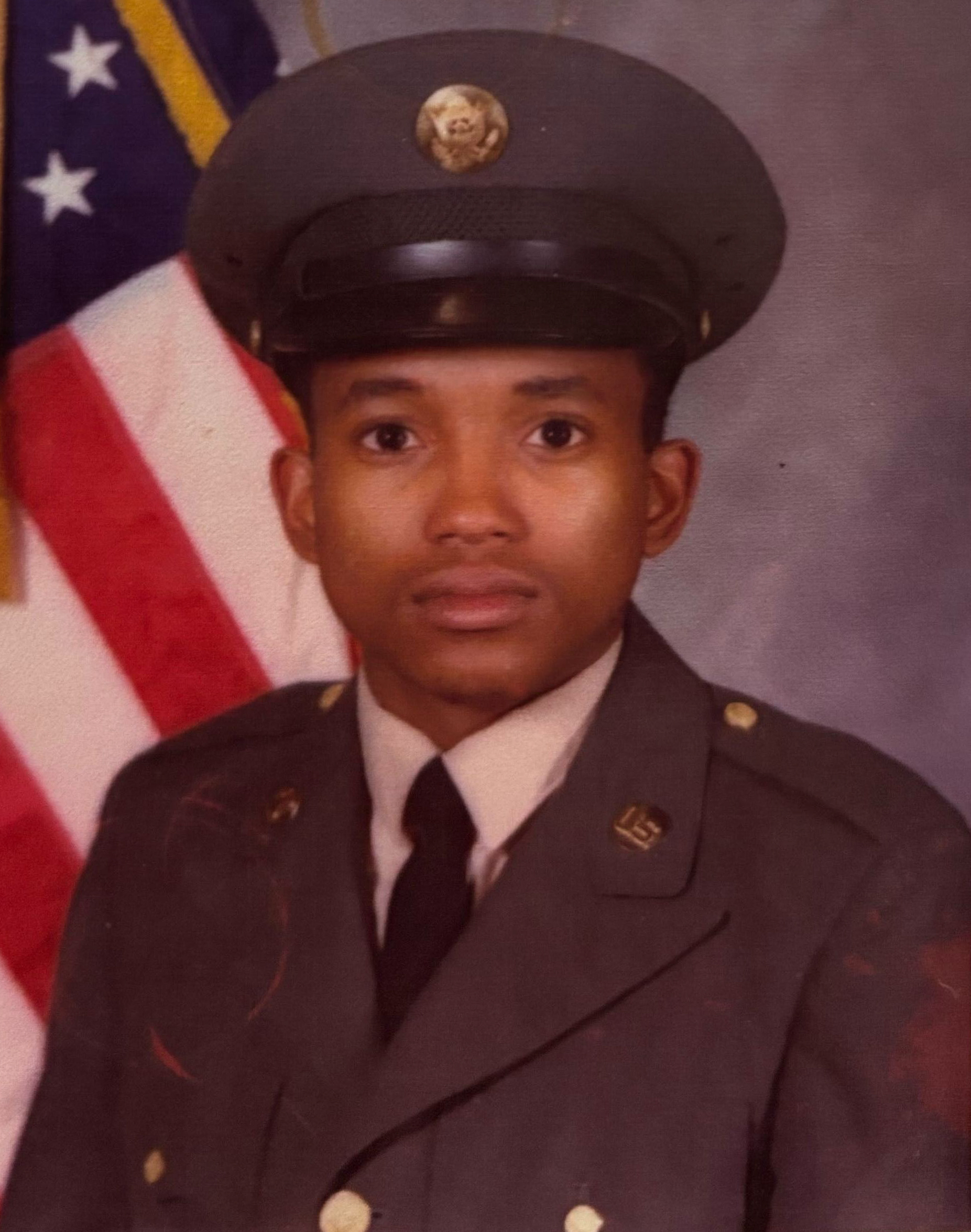
Affectionately called “Willie Will,” my brother dropped out of Bordentown Regional High School his senior year in 1976 to enlist in the U.S. Army. Because he was just 17, our mother, Eva, had to give permission.
William Burney dropped out of Bordentown Regional High School his senior year in 1976 to join the U.S. Army. He obtained a GED while serving in the military.
Bored with school and failing most classes, Will decided the military would give him a new start and ease the financial burden on our single mother. During his three-year military stint, he became a medic in the Army and obtained his GED.
Despite not having a degree, Will always landed good-paying jobs in a variety of fields. He has been a psychiatric technician, a nursing assistant, a retail store manager, a longshoreman on the Camden waterfront, a truck driver, and a corrections officer.
Along the way, he battled demons and a drug addiction that made him not always make good choices. He eventually sought treatment and has been sober for nearly three decades.
No regrets
“I don’t have any regrets,” he said. “I could have been dead three or four times, so to make it to 67, I have made it.”
Will retired from the Arkansas Department of Corrections’ Wrightsville Unit, where he had worked as a corrections officer for three years after moving to North Little Rock with his wife, Belinda, in 2008. He suffered a light stroke at work in 2015 that left his left side weakened and affected his short-term memory.
Returning to the classroom for the first time in nearly five decades wasn’t easy. He was three times as old as his classmates. The technology was intimidating: He could barely type and had never used a laptop. He took virtual classes during the pandemic.
His wife, a retired elementary teacher, became his biggest cheerleader, and his college pursuit became a family project. She found him a tutor, reviewed his research papers, and even watched Zootopia, a Disney animation, with him for an assignment.
“I was on the journey with him,” she said with a laugh. “It was something he set his mind to, and he kept on.”
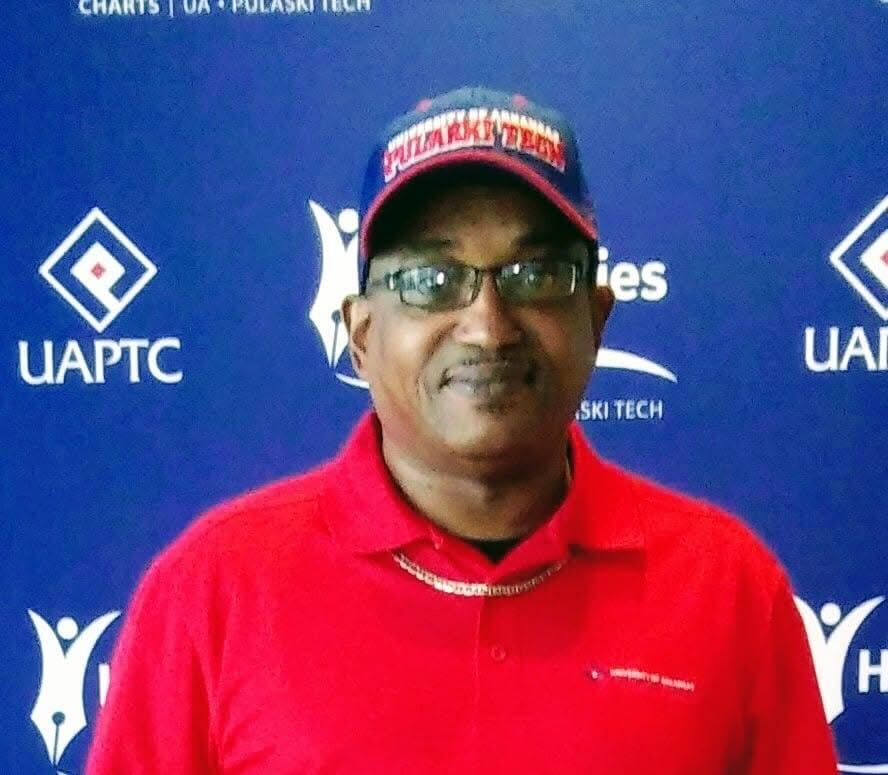
He graduated from Pulaski in 2020 with an associate degree. The family proudly watched the commencement, which was held virtually because of the pandemic. We thought that was it.
William Burney obtained an associate degree from the University of Arkansas — Pulaski Technical College in 2020. A virtual commencement was held due to the COVID-19 pandemic.
Motivated by his advisers, Will decided to pursue his bachelor’s with a vengeance. He rarely missed class, turned in assignments on time, and sought help from professors when needed to stay on track.
He missed the spring 2023 semester after undergoing open-heart surgery to replace an aortic valve. He was back in school the following semester.
When Will informed the family he was finally graduating, I was determined to witness his big day, traveling over 1,000 miles to get there. I wanted to stand in the gap for our mother, who died in 2014. Our sister, a healthcare administrator in Florida and unable to attend, said, “I’m incredibly proud of him and this monumental accomplishment.”
William Burney holds a portrait of his mother, Eva Moss, that he commissioned. She died in 2014.
From the moment we stepped on campus with my boyfriend, Jeff, I chronicled every moment, snapping photos and videos, much to Will’s chagrin. I was especially proud when he led his fellow criminal justice major graduates inside as the department’s student marshal.
“I knew I was real smart, but wasn’t using it,” he said. “It was just a matter of buckling down and doing it.”
Always a jokester, he couldn’t resist a sibling jab. “We all know I’m the smartest in the family. I had to go the long route to get there.”
The Burney family, from left, William Burney, Melanie Burney, mother Eva, sister Andrea Robinson, and her children, Jamil and Christopher Robinson (front).
During my whirlwind visit, we celebrated and reminisced about our childhood and lessons from our mother. I had a chance to learn more about the man my brother had become. It was bittersweet that our mother was not there to share the moment.
Siblings William and Melanie Burney at his graduation Dec. 13 from the University of Arkansas at Little Rock.
As we drove around Little Rock, Will pointed to the community garden he helped start in 2011 and served as the manager. He serves on the board of Jefferson Comprehensive Care Service Inc., which operates seven health clinics. He took me to King Solomon Baptist Church, where he was baptized in 2012.
Inspiring others
Will — who earned a second associate degree in addition to a bachelor’s — plans to use his experience to encourage others, especially young Black men. He’s currently weighing an offer to join the university’s faculty. He may pursue a graduate degree.
“If you get the opportunity to become a better person, learn while you can. You have to do the work.”
After taking classes for eight years, William Burney graduated in December from the University of Arkansas at Little Rock. He wants to encourage others to pursue their dreams.
Science teacher Michael Green wasn’t sure how his students would feel about the new assignment. Growing mushrooms for South Jersey restaurants had, after all, never been in his curriculum before.
They loved it, and three years later, the operation at Rancocas Valley Regional High School in Mount Holly is thriving. The project produces more than 1,000 pounds of mushroom varieties annually.
“It’s super fun,” said sophomore Lilly Sell, 16, an aspiring pediatric nurse or welder. “You don’t really get bored.”
In the classroom, Green teaches students in his biology and environmental science classes the fundamentals of a mushroom, the fleshy, spore-bearing fruiting body of a fungus. They learn about genetics, cell division, and the growing process.
“My goal is to do real science,” Green said.
Students are also learning about the farm-to-table movement by selling the harvest to local eateries and public service by donating mushrooms to a nearby soup kitchen and serving meals to the less fortunate.
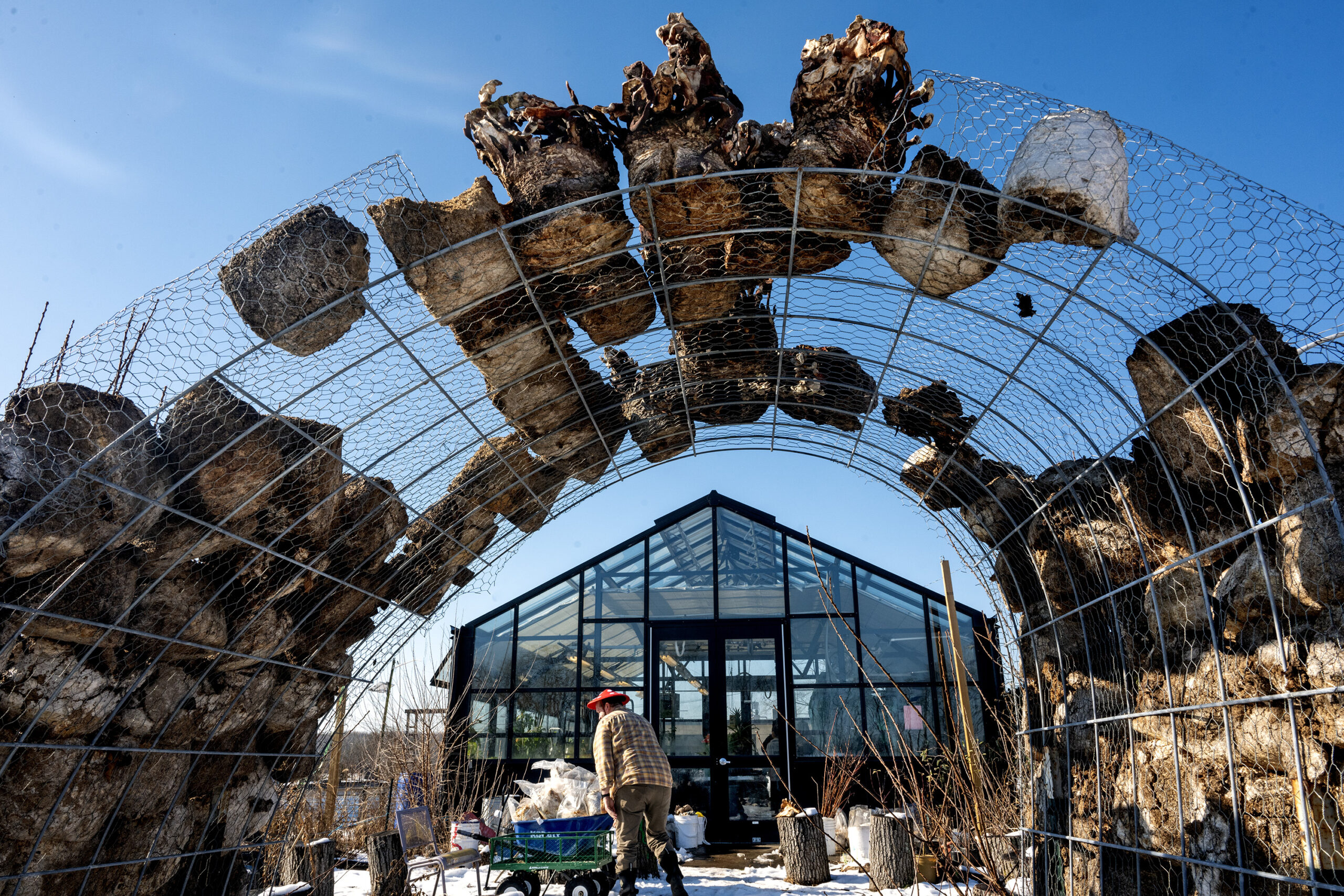
Green makes use of mushroom farming waste – spent mushroom substrate (SMS) – to decorate an archway by the greenhouse. They are producing 1,000 pounds of mushroom varieties – and almost that much waste, which they use for composting in their gardens and orchard and plan someday to sell as compost.
Outside, the students get hands-on mushroom harvesting experience inside a greenhouse located behind the annex that houses the RV PREP (Personalized Readiness and Education Program). There are also coops on the property for about 19 chickens and a handful of quail also tended by students.
Thestudentmushroom farmers harvest edible fungi varieties such as lion’s mane, blue oyster, chestnut, black pearl oyster, comb tooth, and shiitake. Their produce has become part of the supply chain for several nearby restaurants and the students’ own families, who are gifted the fungi.
Green said the operation began several years ago, when the Mycopolitan Mushroom Co. in Philadelphia was looking for a way to get rid of waste — the blocks of mycelium-laced agricultural waste where mushrooms grow. They forged a partnership and Green agreed to regularly pick up a truckload.
Three weeks after Green picked up the first load of blocks in 2022, students harvested about 20 to 30 pounds of mushrooms. The operation has grown steadily since then, Green said.
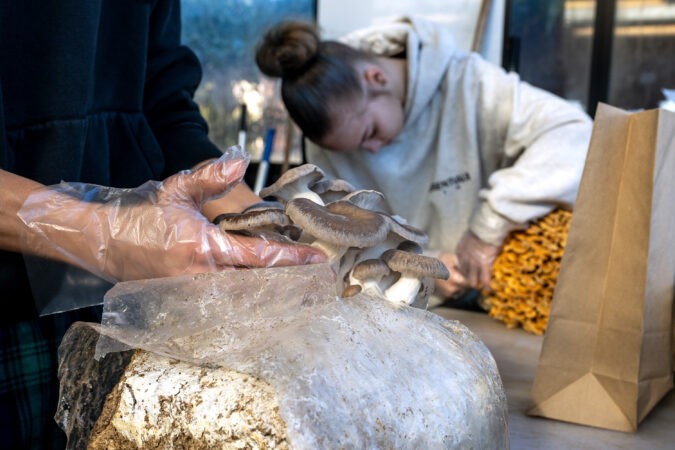
The blocks are stored in plastic bags on shelves in the greenhouse, which is temperature-controlled for the best growing conditions.After a few weeks, the bags are cut open to let in oxygen to grow the mushrooms.
Green said the blocks sit in the greenhouse in a fruiting chamber during the pinning, or growing, period. Each load of blocks yields about 200 bags of edible mushrooms, he said.
The bulk of the harvest is sold wholesale to the Robin’s Nest restaurant in Mount Holly and the Vincentown Diner in Southampton Township, Green said.
The classroom-to-table operation has been profitable for the school. It generates about $7,000 annually, which is reinvested in the school’s environmental science and biology programs, Green said.
“We use a ton of mushrooms at the restaurant,” said Robin Winzinger, who runs the family-owned Robin’s Nest. “The quality of their mushrooms are fantastic, really top-notch.”
The mushrooms are featured on the menu as “RV mushrooms,” said Winzinger, a culinary chef. They are used in the restaurant’s wild mushroom soup, quiche, and risotto, among other dishes, she said.
The school also donates about three pounds weekly to the First Presbyterian Church in Mount Holly for its community lunch program, said Jan Delgado, the director. The program serves about 300 free meals twice a week.
Delgado said the program’s chef prepares the mushrooms as a side dish sauteed with herbs. The church would not be able to offer the dish otherwise, she said.
“It’s strictly a delicacy that we are able to serve because of the school,” Delgado said. “We would never purchase mushrooms — that would be too expensive.”
Students occasionally volunteer at the church to help serve the meals prepared with the fungi — an experience Sell described as “heart-warming.”
“They love the mushrooms,” Sell said. “They go through the pans in seconds.”
After donning plastic gloves, Sell and classmate Jordan Griffin, 18, a senior, stepped into the humid greenhouse on a recent morning to inspect the latest batch of shrooms.
They pointed out different mushroom varieties that typically grow from October to March or April. Students in the school’s Environmental Club also assist with harvesting after school.
Griffin, who plans to attend a trade school to study welding or HVAC repair, said the hands-on experience piqued his interest. He’s not too fond of sampling mushroom dishes, however.
“I’m not the biggest fan of them,” Griffin said. “I won’t go crazy over them.”
Green has asked Winzinger to conduct cooking demonstrations in class, hoping to whet students’ appetites with dishes like chicken mushroom Alfredo and mushroom soup.
“I don’t know how many students would want to eat a mushroom entree,” Green said.
Sell said that while she is no fungi fanatic, she enjoys her mother’s mushrooms sauteed with garlic butter.
“There are many ways to make it to your taste,” she said.
After opening the plastic bags, Griffin and Sell carefully cut a small harvest and packaged the mushrooms in brown paper bags. The bags would be offered that day free to students and staff.
After harvest, the spent mushroom blocks are composted on site and applied to the school’s Outdoor Learning space, which includes fruit trees, rain gardens, vegetable plants, and honeybees.
Lilly Sell harvests enoki mushrooms.
Green said most of the mushrooms are harvested in bigger quantities and sold to the local restaurants. Whatever is left over is given to the community, he said.
“My goal is just to get the mushrooms out,” Green said. “The goal is to get mushrooms into people’s hands.”
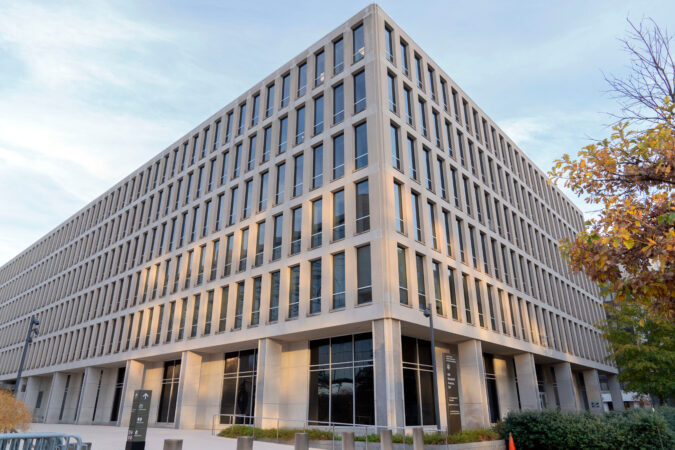
The Trump administration will begin seizing the pay of people in default on their student loans early next year, marking the first wave of new wage garnishments since the pandemic, the Education Department confirmed this week.
Starting the week of Jan. 7, the department told the Washington Post, it will notify about 1,000 defaulted borrowers of plans to withhold a portion of their wages to pay down their past-due debt. After that, the department said, notices will be sent to larger numbers of borrowers each month.
There were about 5.3 million borrowers who had not made a payment on their federal student loans for at least 360 days as of June 30, according to the latest available data from the Education Department. Many of them were in default before the federal government stopped collecting defaulted loans because of the pandemic nearly six years ago.
In May, the Trump administration resumed seizing tax refunds and Social Security benefits to recoup past-due student loan debt. At the time, the administration said wage garnishments would restart in the summer.
While the Education Department started the process over the summer, department spokesperson Ellen Keast said turning on the system after it was dormant for five years took more time than expected. She said the record-longgovernment shutdown further delayed the process.
There are several steps involved in wage garnishment, including identifying and verifying a borrower’s employer, who is ultimately responsible for withholding the money. By law, the Education Department must notify people in default 30 days before garnishing their wages. During that time, borrowers can request a hearing to challenge the order, pay the balance, or negotiate repayment terms to avoid garnishment.
The department can withhold up to 15% of a borrower’s disposable, or after-tax, income. The garnishment continues until the defaulted loans are paid off in full or the borrower takes action to get out of default.
Roughly 6 million people were at least 60 days late on their student loan payments as of August, according to an analysis of credit reporting data by the think tank Urban Institute.
The rise in delinquencies corresponds with the end of a 12-month grace period, known as the on-ramp, that allowed borrowers to ease their way back into repayment after a pandemic-related pause that lasted more than three years. Since the Biden administration’s policy ended Sept. 30, millions of borrowers have fallen behind on payments. And many of them could wind up in default.
Student loan borrowers have been spared from the most severe consequences of default since the early days of the pandemic. Back then, President Donald Trump instituted a moratorium on the collection of defaulted student loans that Congress later codified and extended in the 2020 stimulus package.
President Joe Biden’s administration extended the moratorium several times as part of the broader suspension of student loan payments. Under pressure from liberal lawmakers and student advocates, Biden allowed anyone in default on a federal loan held by the Education Department to rehabilitate the debt through an initiative called Fresh Start. While a portion of borrowers resolved their debt through the initiative, many remained in default.
Education Secretary Linda McMahon has called Biden’s policies irresponsible and blamed his administration for giving borrowers false hope of loan forgiveness that led to a rise in delinquencies.
When the Education Department announced the resumption of involuntary collection in April, McMahon said in a statement that “the Biden Administration misled borrowers: the executive branch does not have the constitutional authority to wipe debt away, nor do the loan balances simply disappear.”
Instead of promoting debt cancellation, McMahon said, the Trump administration will help borrowers return to repayment — “both for the sake of their own financial health and our nation’s economic outlook.”
The vote to fire Philip Leddy, who had been principal of Lower Gwynedd Elementary, was unanimous.
Sue Kanopka, the former Lower Gwynedd principal who had been promoted to curriculum supervisor for the school system, will return as acting principal.
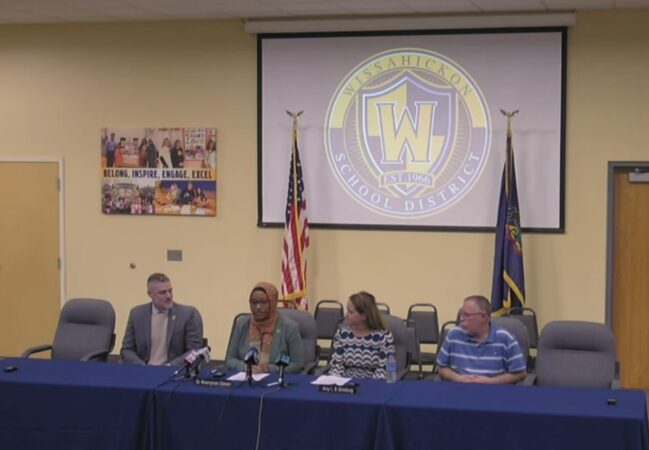
Dan Strauss, a board member who is Jewish, said at the special board meeting he was pleased with the board’s swift actions around Leddy.
“This incident was something that was extremely personal for me and my family, and I witnessed you acting swiftly and decisively, leaving no room for doubt that antisemitism has no place in our district,” said Strauss, a Democrat. “I’ve also personally had a chance to speak with the parent who received the voicemail, and they’ve shared with me that even though this has been a dark moment for their family, immediate and continued response from the district has been overwhelmingly supportive.”
Officials with the Jewish Federation of Greater Philadelphia have said that in the recording, Leddy was heard saying something about “Jew money” and that “they [Jews] control the banks.”
Leddy was asked if the parent he was speaking to was a lawyer and then remarked, “the odds probably are good.”
District officials said Leddy, who could not be reached for comment, acknowledged that he made the call, thought it had disconnected, and continued speaking.
No actions were taken Tuesday against the other staff member who was present when Leddy made his comments, but who allegedly did not report them. That staffer has been placed on leave as the matter is investigated.
No members of the community spoke in support of Leddy.
One resident, Jesse Klein, called his swift firing “a public shaming and execution,” contrasting what he saw as a difference in Wissahickon’s responses to Leddy’s comments and its response to some Jewish parents’ concerns over the district’s handing of student discourse about the Israel-Hamas war and the pro-Palestinian movement.
Klein and Danielle Parmenter, a Wissahickon resident and a rabbi, said those concerns have been minimized.
“That inconsistency is deeply destabilizing, and it erodes trust,” Parmenter said.
Leddy’s firing “was necessary,” Parmenter said. “Antisemitism must never be tolerated, especially from those entrusted with the care of children.”
Carmina Taylor, another Wissahickon resident, said the Black community is “in support of the way you’ve handled the situation, and how you’re trying to have a meeting of healing for the Jewish community, but understand that the Black community is also hurting for the way we’ve been treated over the years. … We hope that you’re mindful of our concerns as well.”
Sonia Lewis endured the worst year of her life when she was a senior in high school — her mother almost died and Lewis had to step up to take care of her family.
But the principal and teachers at her Philadelphia high school lifted her up, helped her get to college, and Lewis took care of the rest — multiple advanced degrees, a thriving career, a national profile.
As Lewis racked up accomplishments, it was always in the back of her mind to return the favor to her school, somehow.
“For me, who I am today is really a huge part is Bodine High School,” she said.
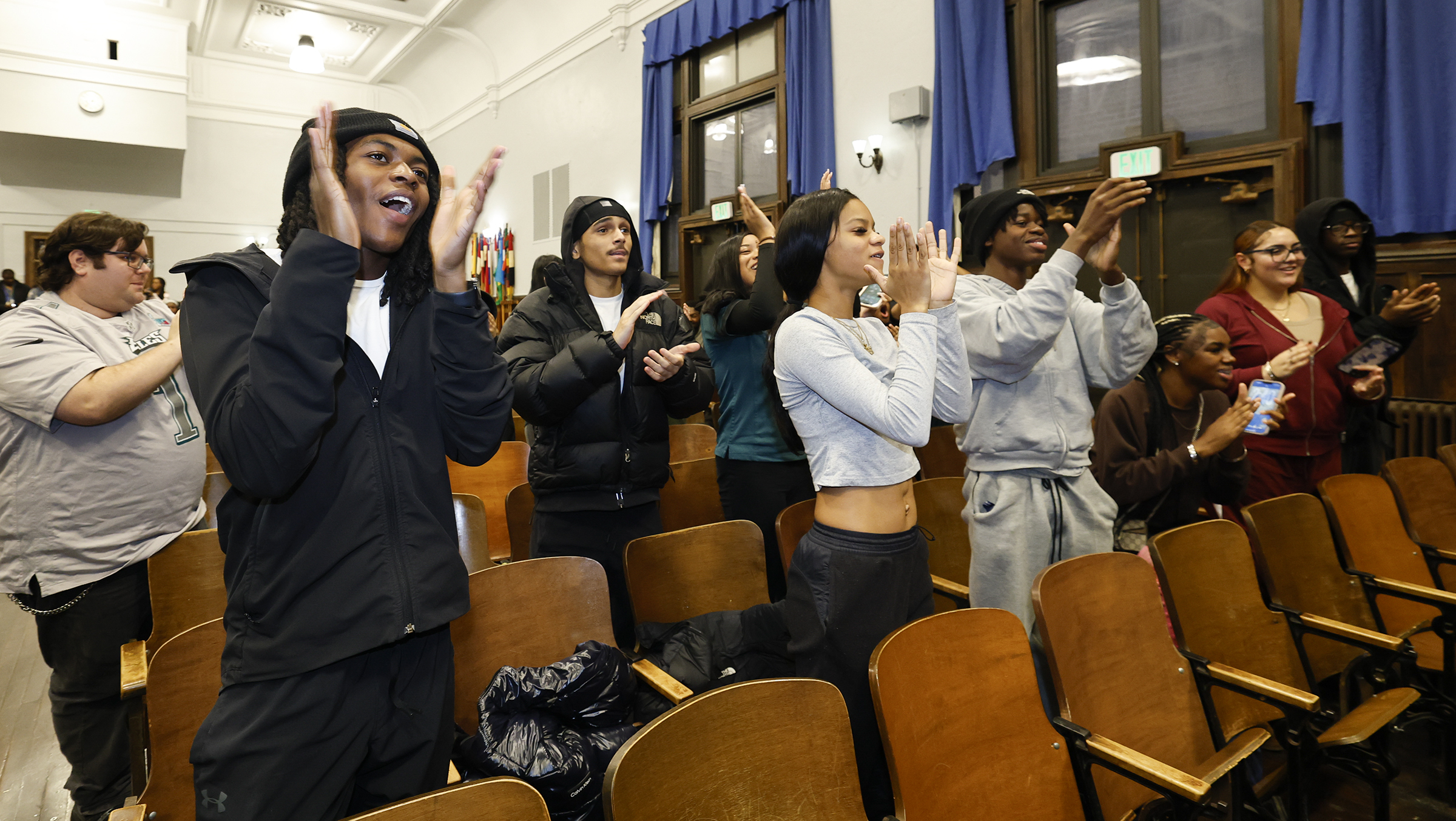
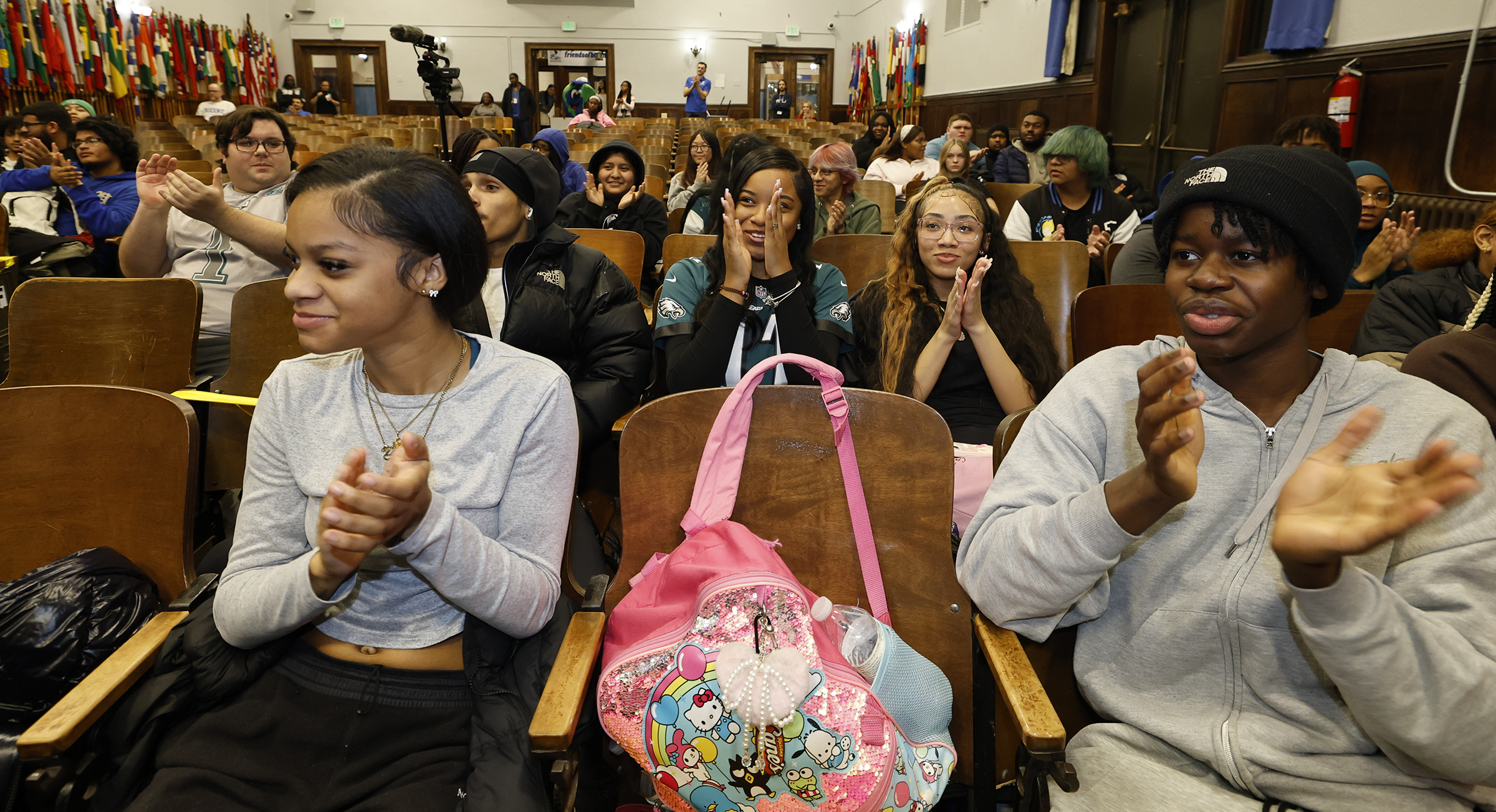
Bodine High School for International Affairs senior students cheer after learning former student, Dr. Sonia Lewis, donated $16,200 to cover senior school fees on Friday, December 19, 2025. Dr. Lewis is giving back after the Northern Liberties high school helped her during a difficult time, while she was a student 20-yrs-ago.
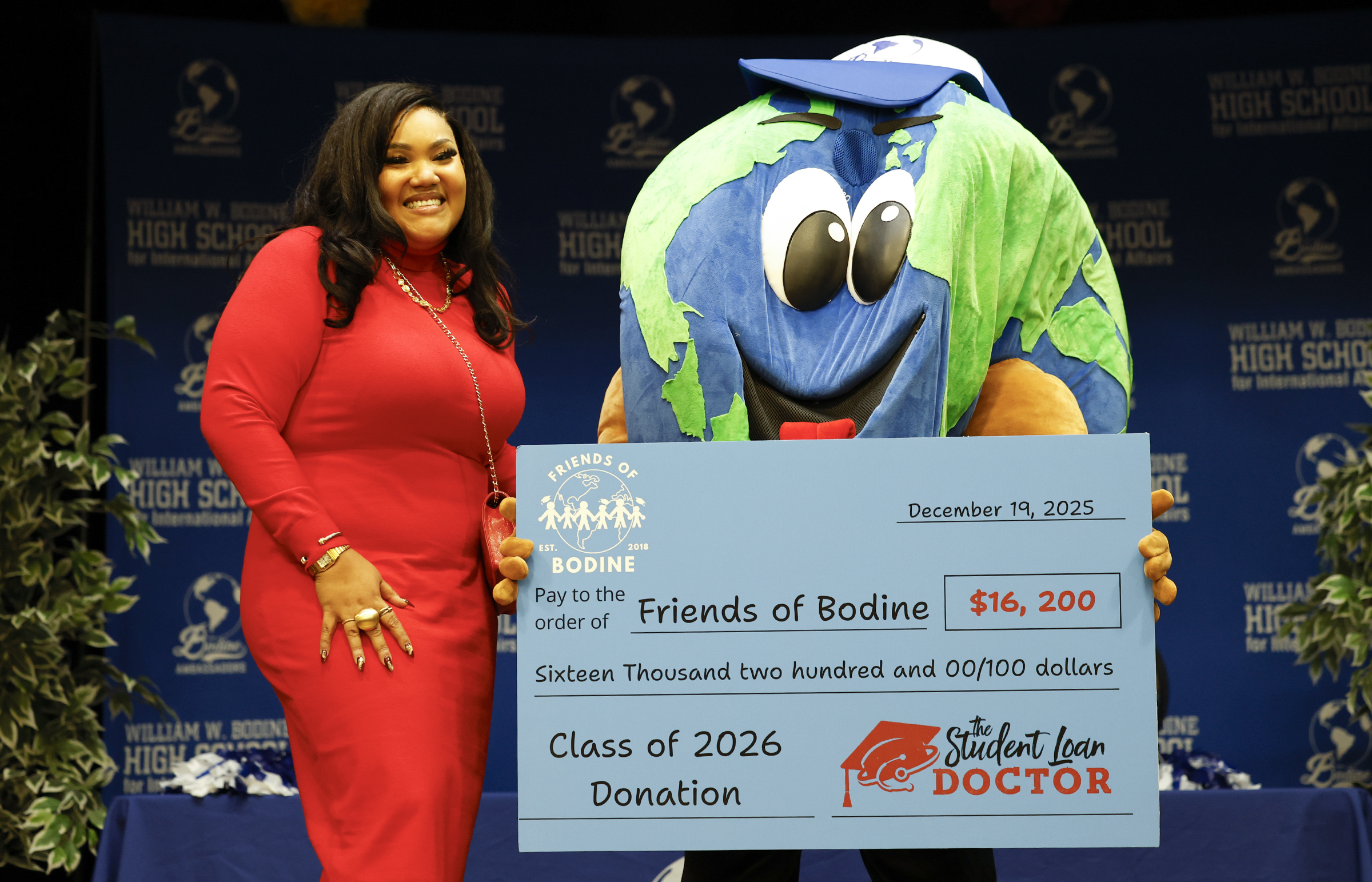
So on a December day, Lewis walked into the auditorium of the Philadelphia School District magnet school with a surprise — the largest donation ever given to the nonprofit that supports Bodine. She gave $16,200 to cover the bulk of every senior’s class dues — funds that most students struggle to pay.
Aaliyah Bolden, a Bodine 12th grader, was jubilant after the announcement.
“I’m just so grateful,” Bolden said. “Coming from an underrepresented community and having financial hardships, this just makes a big difference to me.”
‘Can you work with me?’
Lewis was a standout student at Bodine, an international affairs high school in Northern Liberties. She was class president, active in student government, a strong student in the Class of 2005, a leader.
She was raised by her single mother and grandmother, both Philadelphia teachers, told from a very young age that she was college-bound.
But when Lewis was 16, her priorities shifted, out of necessity. Her mother was gravely ill with bacterial meningitis and other complications. Her grandmother had just beaten cancer, but it fell to Lewis to advocate for her mother, to take her to appointments, to navigate the healthcare system on her behalf. She worked three jobs to help bridge financial gaps.
School just could not be at the top of her priority list.
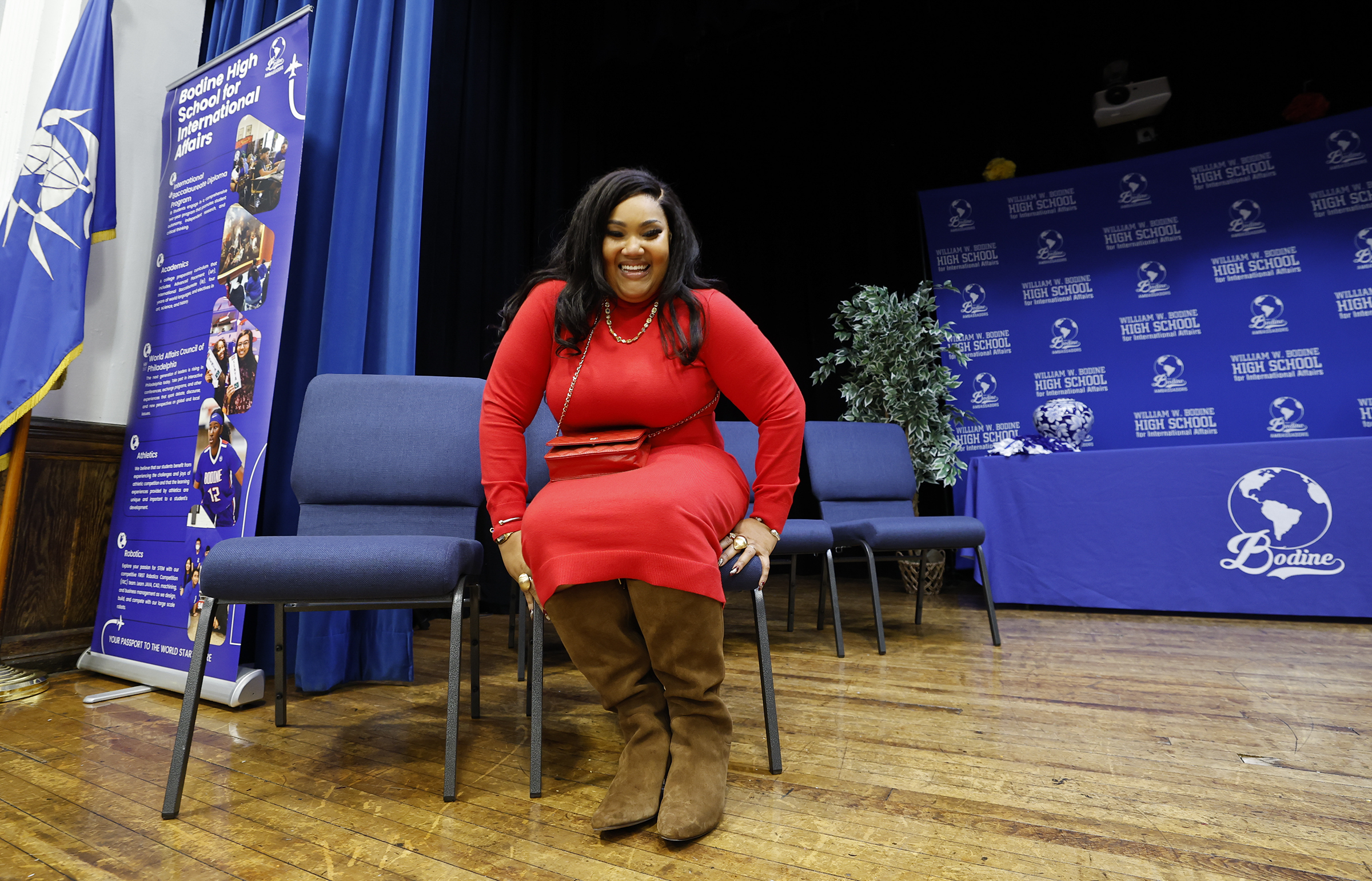
Dr. Sonia Lewis takes a seat before speaking to Bodine High School for International Affairs senior students on Friday, December 19, 2025. Dr. Lewis gifted $16,200 for the 2026 senior class, to cover senior school fees. Dr. Lewis is giving back after the Northern Liberties high school helped her during a difficult time, while she was a student 20-yrs-ago.
“I had to tell my high school, ‘These are my circumstances. I’m going to have to leave school to make some of these appointments,’” Lewis said. “I was just really clear with everyone at Bodine about what I needed, and I said, ‘Can you work with me?’”
They did. But some deadlines are firm, and Lewis missed the federal student-aid loan deadline because her mother had just gotten out of a coma, had cognitive issues, and was unable to gather the necessary information or complete the form.
“I had to become the mom,” Lewis said. “I would have to ask her, ‘Did you brush your teeth today?’ Nobody was thinking of the FAFSA.”
As students’ college acceptances were rolling in, Bodine’s principal noticed that there were none for Lewis. The principal asked her what was happening.
Lewis’ grandmother contemplated taking out a mortgage on her house to send her to college, but Lewis was too practical for that.
“I told the principal, ‘We don’t have any money. We missed the deadline,’” she said. “There was no money coming in from my mom. We had my grandmother’s retirement, but that wasn’t enough.”
Lewis figured she would work for a year, saving money and filling out the FAFSA form for the next cycle. But Karen P. Hill, the principal, just shook her head.
A busybody for good
The principal’s plan became evident at Bodine’s senior awards ceremony, Lewis remembers, when “they just kept calling my name” as prizes were announced.
At the end of the evening, Lewis walked off with an envelope full of checks totaling $16,000 — enough to allow her to enroll at Bloomsburg University and pay her first year’s tuition.
Once she got to Bloomsburg, Lewis continued to grind, working multiple jobs, earning scholarships, making connections. Then, after she earned her bachelor’s degree, Lewis moved on to working in higher education, spending time at Peirce College and elsewhere as an academic coach and in admissions.
She earned her master’s degree, and eventually her doctorate. Now, she’s “the Student Loan Doctor”; Lewis believes her 13-employee company is the first Black woman-owned student loan repayment firm in the United States.
Dr. Sonia Lewis stands with the Bodine High School for International Affairs mascot Amby during a a senior class assembly on Friday, December 19, 2025. Dr. Lewis gifted $16,200 for the 2026 senior class, to cover senior school fees. Dr. Lewis is giving back after the Northern Liberties high school helped her during a difficult time, while she was a student 20-yrs-ago.
Lewis coaches clients to create plans to pay off their student loan debt — through repayment, loan consolidation and forgiveness, and more. She’s a sought-after expert, quoted in national publications, offering free weekly classes, growing her business by the year. She has 150,000 followers on Instagram.
Lewis is allergic to sitting still. Her nickname in her sorority, Delta Sigma Theta, was “Busybody.” She has channeled that for good — the Student Loan Doctor has now served over 50,000 clients since 2016, helping get an estimated $55 million in student loans forgiven.
The business is hard work, but a joy for Lewis, who gets to know she makes a direct impact on her clients’ lives — like the surgeon who had $997,000 in loans, including loans that were in arrears.
“He didn’t know what to do,” Lewis said. “He got his loans forgiven. He wound up paying us like $300. We’re very affordable.”
The hardest worker
A few days before winter break, Lewis entered the Bodine auditorium with a massive smile on her face.
Her gift — hatched after Lewis presented a $1,000 scholarship to a Bodine graduate in the spring, then decided to go much bigger — was a surprise for the students, who knew only that a successful alum was visiting.
David Brown, the Bodine principal, reminded the students gathered in the auditorium that the small school was a special place.
“Our leaders don’t just leave with diplomas,” Brown said. “They leave with a global perspective.”
Then Marty Moyers, a Bodine teacher and president of the Friends of Bodine, a nonprofit that raises money for the school, presented Lewis: “Her journey has been a great one, and it started right here in this building,” Moyers said.
Bodine High School for International Affairs senior students cheer after learning former student, Dr. Sonia Lewis, donated $16,200 to cover senior school fees on Friday, December 19, 2025. Dr. Lewis is giving back after the Northern Liberties high school helped her during a difficult time, while she was a student 20-yrs-ago.
When he announced Lewis’ plan, there was stunned silence at first. Then, wild applause broke out. Students’ faces were jubilant.
Remember this, Lewis told them: She didn’t have a 4.0 grade-point average. But she showed up in every way possible.
“Even in my professional life as a super-successful entrepreneur, I’m not the best, but I’m a really hard worker,” Lewis said. “You guys got that. That’s the discipline and the spirit you want to have about yourselves as you’re leaving Bodine and you’re going into college, or you’re going into the workforce or entrepreneurship.”
De’Anna Drummond, a senior, is deep into her applying-for-scholarships-and-worrying-about-paying-for-college season. Class dues were another stress to think about, but she was delighted at the news that they are mostly covered, thanks to Lewis.
“Any donation is appreciated,” Drummond said. “It all adds up — senior trip, senior brunch, yearbook, everything.”
Bolden, Drummond’s friend, nodded.
“And someday,” Bolden said, “we should also give back when we can.”
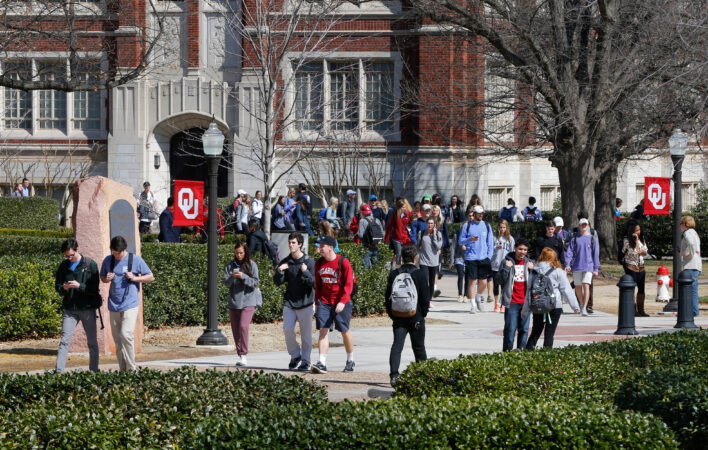
The University of Oklahoma has fired an instructor who was accused by a student of religious discrimination over a failing grade on a psychology paper in which she cited the Bible and argued that promoting a “belief in multiple genders” was “demonic.”
The university said in a statement posted Monday on X that its investigation found the graduate teaching assistant had been “arbitrary” in giving 20-year-old junior Samantha Fulnecky zero points on the assignment. The university declined to comment beyond its statement, which said the instructor had been removed from teaching.
Through her attorney, the instructor, Mel Curth, denied Tuesday that she had “engaged in any arbitrary behavior regarding the student’s work.” The attorney, Brittany Stewart, said in a statement emailed to The Associated Press that Curth is “considering all of her legal remedies.”
Conservative groups, commentators, and others quickly made Fulnecky’s failing grade an online cause, highlighting her argument that she’d been punished for expressing conservative Christian views. Her case became a flashpoint in the ongoing debate over academic freedom on college campuses as President Donald Trump pushes to end diversity, equity, and inclusion initiatives, and restrict how campuses discuss race, gender, and sexuality.
Fulnecky appealed her grade on the assignment, which was worth 3% of the final grade in the class, and the university said the assignment would not count. It also placed Curth on leave, and Oklahoma’s conservative Republican governor, Kevin Stitt, declared the situation “deeply concerning.”
“The University of Oklahoma believes strongly in both its faculty’s rights to teach with academic freedom and integrity and its students’ right to receive an education that is free from a lecturer’s impermissible evaluative standards,” the university’s statement said. “We are committed to teaching students how to think, not what to think.”
A law approved this year by Oklahoma’s Republican-dominated Legislature and signed by Stitt prohibits state universities from using public funds to finance DEI programs or positions or mandating DEI training. However, the law says it does not apply to scholarly research or “the academic freedom of any individual faculty member.”
Home telephone listings for Fulnecky in the Springfield, Mo., area had been disconnected, and her mother — an attorney, podcaster, and radio host — did not immediately respond Tuesday to a Facebook message seeking comment about the university’s action.
Fulnecky’s failing grade came in an assignment for a psychology class on lifespan development. Curth directed students to write a 650-word response to an academic study that examined whether conformity with gender norms was associated with popularity or bullying among middle school students.
Fulnecky wrote that she was frustrated by the premise of the assignment because she does not believe that there are more than two genders based on her understanding of the Bible, according to a copy of her essay provided to The Oklahoman.
“Society pushing the lie that there are multiple genders and everyone should be whatever they want to be is demonic and severely harms American youth,” she wrote, adding that it would lead society “farther from God’s original plan for humans.”
In feedback obtained by the newspaper, Curth said the paper did “not answer the questions for the assignment,” contradicted itself, relied on “personal ideology” over evidence and “is at times offensive.”
“Please note that I am not deducting points because you have certain beliefs,” Curth wrote.
WASHINGTON — The Trump administration said on Tuesday that it will begin garnishing the wages of student loan borrowers who are in default early next year.
The department said it will send notices to approximately 1,000 borrowers the week of January 7, with more notices to come at an increasing scale each month.
Millions of borrowers are considered in default, meaning they are 270 days past due on their payments. The department must give borrowers 30 days notice before their wages can be garnished.
The department said it will begin collection activities, “only after student and parent borrowers have been provided sufficient notice and opportunity to repay their loans.”
In May, the Trump administration ended the pandemic-era pause on student loan payments, beginning to collect on defaulted debt through withholding tax refunds and other federal payments to borrowers.
The move ended a period of leniency for student loan borrowers. Payments restarted in October of 2023, but the Biden administration extended a grace period of one year. Since March 2020, no federal student loans had been referred for collection, including those in default, until the Trump administration’s changes earlier this year.
The Biden administration tried multiple times to give broad forgiveness to student loans, but those efforts were eventually stopped by courts.
Persis Yu, deputy executive director for the Student Borrower Protection Center, criticized the decision to begin garnishing wages, and said the department had failed to sufficiently help borrowers find affordable payment options.
“At a time when families across the country are struggling with stagnant wages and an affordability crisis, this administration’s decision to garnish wages from defaulted student loan borrowers is cruel, unnecessary, and irresponsible,” Yu said in a statement. “As millions of borrowers sit on the precipice of default, this Administration is using its self-inflicted limited resources to seize borrowers’ wages instead of defending borrowers’ right to affordable payments.”
___
The Associated Press’ education coverage receives financial support from multiple private foundations. AP is solely responsible for all content. Find AP’s standards for working with philanthropies, a list of supporters and funded coverage areas at AP.org.