Category: Education

  • What to know about student loan repayment plans and collections

    What to know about student loan repayment plans and collections

    NEW YORK — It’s been a confusing time for people with student loans. Collections restarted, then were put on hold. At the same time, borrowers had to stay on top of changes to key forgiveness plans.

    Last year, the long-contested SAVE plan introduced by the Biden administration ended with a settlement agreement. President Donald Trump’s “Big Beautiful Bill” introduced new borrowing limits for graduates and raised challenges to the Public Service Loan Forgiveness program. While several changes for student loan borrowers will take effect this summer, other key questions remain unresolved.

    More than 5 million Americans were in default on their federal student loans as of September, according to the Education Department. Millions are behind on loan payments and at risk of default this year.

    Borrowers “genuinely struggle to afford their loans and then to hear that the administration is making it more expensive and taking away some of the tools and resources that help folks afford their loans is really, it’s panic-inducing,” said Winston Berkman-Breen, legal director at Protect Borrowers.

    Last month, the Education Department announced that it would delay involuntary collections for student loan borrowers in default until the department finalizes its new loan repayment plans. The date for this is still unclear.

    If you’re a student loan borrower, here are some key things to know.

    If you were enrolled in the SAVE plan

    The SAVE plan was a repayment plan with some of the most lenient terms ever. Soon after its launch it was challenged in court, leaving millions of student loan borrowers in limbo. Last December, the Education Department announced a settlement agreement to end the SAVE plan. What is next for borrowers who were enrolled in this repayment plan is yet to be determined.

    “Seven and a half million borrowers who are currently enrolled in SAVE need to be moved to another plan,” Berkman-Breen said.

    As part of the agreement, the Education Department says it will not enroll new borrowers, will deny pending applications, and will move all current SAVE borrowers into other repayment plans.

    The Education Department is expected to develop a plan for borrowers to transition from the SAVE plan, yet borrowers should be proactive about enrolling in other repayment plans, said Kate Wood, a lending expert at NerdWallet.

    If you are looking to enroll in an income-driven repayment plan

    Borrowers can apply for the following income-driven plans: the Income-Based Repayment Plan, the Pay as You Earn plan, and the Income-Contingent Repayment plan.

    “They all have similar criteria, and they function similarly. Your payment is set as a percentage of your income, not how much you owe, so it’s usually a lower payment,” Berkman-Breen said.

    The payment amount under income-driven plans is a percentage of your discretionary income, and the percentage varies depending on the plan. Since many people are looking to switch plans, some applications to income-driven repayment plans might take longer to process, said Jill Desjean, director of policy analysis at the National Association of Student Financial Aid Administrators.

    You can find out which repayment plan might work best for you by logging on to the Education Department’s loan simulator at studentaid.gov/loan-simulator/.

    If you’re working toward your Public Service Loan Forgiveness

    There are no changes to the Public Service Loan Forgiveness Program yet. Last year, the Trump administration announced plans to change the eligibility requirements for participating nonprofits.

    The policy seeks to disqualify nonprofit workers if their work is deemed to have “substantial illegal purpose.” The Trump administration said it’s necessary to block taxpayer money from lawbreakers, while critics say it turns the program into a tool of political retribution.

    The proposal says illegal activity includes the trafficking or “chemical castration” of children, illegal immigration, and supporting foreign terrorist organizations. This move could cut off some teachers, doctors, and other public workers from federal loan cancellation.

    “This is something that obviously is very stressful, very nerve-wracking for a lot of people, but given that we don’t know exactly how this is going to be enforced, how these terms are going to be defined, it’s not really something that you can try to plan ahead for now,” Wood said.

    While this policy is currently being challenged by 20 Democrat-led states, it’s expected to take effect in July. In the meantime, Wood recommends that borrowers enrolled in the PSLF program continue making payments.

    If your student loans are in default

    Involuntary collections on federal student loans will remain on hold. The Trump administration announced earlier this month that it is delaying plans to withhold pay from student loan borrowers who default on their payments.

    Federal student loan borrowers can have their wages garnished and their federal tax refunds withheld if they default on their loans. Borrowers are considered in default when they are at least 270 days behind on payments.

    If your student loans are in default, you can contact your loan holder to apply for a loan rehabilitation program.

    “They essentially come up with a payment plan where you’re making a reduced payment,” Woods. “After five successful payments on that rehabilitation plan, wage garnishment will cease.”

    If you’re planning to attend graduate school

    Trump’s “Big Beautiful Bill” has changed the amount graduate students can borrow from federal student loans. Graduate students could previously borrow loans up to the cost of their degree; the new rules cap the amount depending on whether the degree is considered a graduate or a professional program.

    Wood said that if you’re starting a new program and taking out a loan after July 1, you will be subject to the new loan limits.

    Under the new plan, students in professional programs would be able to borrow up to $50,000 per year and up to $200,000 in total. Other graduate students, such as those pursuing nursing and physical therapy, would be limited to $20,500 a year and up to $100,000 total.

    The Education Department is defining the following fields as professional programs: pharmacy, dentistry, veterinary medicine, chiropractic, law, medicine, optometry, osteopathic medicine, podiatry and theology.

    If you want to consolidate your loan

    The online application for loan consolidation is available at studentaid.gov/loan-consolidation. If you have multiple federal student loans, you can combine them into a single loan with a fixed interest rate and a single monthly payment.

    The consolidation process typically takes around 60 days to complete. You can only consolidate your loans once.

  • ICE operation causes students at Lindenwold bus stop to flee in panic, school district says

    ICE operation causes students at Lindenwold bus stop to flee in panic, school district says

    The Lindenwold School District reported Thursday that fourth- and fifth-grade students waiting at a bus stop ran away in a panic when a U.S. Customs and Immigration Enforcement operation occurred nearby.

    The incident happened in the morning as the students were waiting to take a bus to school from the Woodland Village Apartments, the district said in a statement.

    Superintendent Kristin O’Neil said about 44 students were waiting at the bus when unmarked vehicles arrived at the complex. Officers in tactical gear and wearing masks fanned out, she said.

    (function() {
    var l2 = function() {
    new pym.Parent(‘lindenwold’,
    ‘https://media.inquirer.com/storage/inquirer/projects/innovation/arcgis_iframe/lindenwold.html’);
    };
    if (typeof(pym) === ‘undefined’) {
    var h = document.getElementsByTagName(‘head’)[0],
    s = document.createElement(‘script’);
    s.type = ‘text/javascript’;
    s.src = ‘https://pym.nprapps.org/pym.v1.min.js’;
    s.onload = l2;
    h.appendChild(s);
    } else {
    l2();
    }
    })();

    “The presence of multiple enforcement vehicles caused significant fear and confusion, and several students ran from the bus stop. Our bus driver acted quickly and responsibly, circling back multiple times to ensure as many children as possible were safely transported to school,” the district said, also thanking the bus driver.

    A Ring video from the apartment complex provided to some news outlets shows the children running with some shouting: “ICE! ICE!”

    “Upon arrival to school, many children were understandably upset and emotional,” the district said.

    “All students currently in school are safe,” the district said. “ICE Agents are NOT at the Lindenwold School District.”

    O’Neil said the students attend the district’s school No. 5. About 20 students didn’t show up Thursday, she said. The district will work with families of students who will be marked absent, she said.

    “To us, these are our children,” O’Neil said.

    About 60% of the district’s 3,100 students are Hispanic, according to its latest school performance report. O’Neil said it is not unusual for parents to keep their children home when there are reports of ICE activity in the area.

    <iframe src="https://www.facebook.com/plugins/post.php?href=https%3A%2F%2Fwww.facebook.com%2FLindenwoldPublicSchoolDistrict%2Fposts%2Fpfbid0FnuXsFoCwr7uSvAwW9NPs4XcL4BgVQHwTVxycWvdUc5KWKJF76j389k8VMpVcsL8l&show_text=true&width=500" width="500" height="679" style="border:none;overflow:hidden" scrolling="no" frameborder="0" allowfullscreen="true" allow="autoplay; clipboard-write; encrypted-media; picture-in-picture; web-share"></iframe>

    A district leader reached out to county and state representatives to alert them about the incident and to advocate for protocols that prioritize the safety of children during any future ICE operations, the district said.

    “Our students deserve to feel safe while waiting for their school bus and while attending school each day,” the district said.

    A spokesperson for ICE could not be reached for comment Thursday night.

    U.S. Rep. Donald Norcross, (D., NJ), who represents the district, was among several dozen people who showed up Friday at an “ICE Out of Lindenwold” protest at Lindenwold Borough Hall. The protest was announced before the bus stop incident.

    “Schoolchildren are not criminals, and enforcement actions must reflect that,” Norcross said in a statement. “… Our community will not be terrorized, and we will keep fighting to protect our neighborhoods.”

    Lindenwold, located about 16 miles southeast of Philadelphia, has been among several communities in Camden County that have been subject to ICE operations.

    County Commissioner Director Louis Cappelli Jr. said in a statement Thursday night that “the absolute chaos sowed by this ICE operation in Lindenwold this morning was appalling.”

    Cappelli added that “we are short on facts and details about the intentions of ICE,” however at some point ICE called 911 to request local police assistance.

    “That said, the impact and fear that struck the children of our county was painful to watch, and I can’t imagine the anxiety and trauma that came from this incident,” Cappelli said.

    He added, “As a community, segments of our population are being terrorized and scared to leave their homes. This is no way for any of us to live.”

    County Commissioner Jonathan Young said in a statement: “As a former Lindenwold resident, I’m disgusted to watch the videos of children running in absolute terror along a busy county thoroughfare.”

    Young said that “no one wants criminals in their community,” but added that, “under Trump, ICE has been inhumane in how it conducts its operations. We’ve seen that firsthand throughout other cities in the country, and now it’s happening here.”

  • Quakertown’s superintendent goes on leave

    Quakertown’s superintendent goes on leave

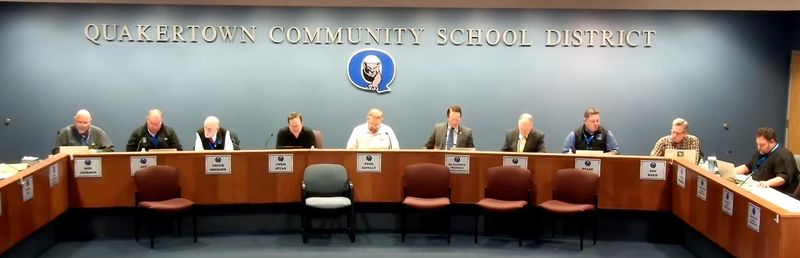
    Quakertown Community School District Superintendent Matthew Friedman is on leave effective immediately, a district spokesperson said Friday.

    The spokesperson, Melissa Hartney, said the district’s school board could not comment further.

    “Because this is a personnel matter, the board is limited in the amount of information it can share at this time,” Hartney said in a statement.

    Friedman did not return a request for comment.

    Friedman took over the 4,600-student district in Upper Bucks County in 2023, after serving as superintendent of the Ocean City School District in New Jersey.

    The Quakertown school board in November granted him a $10,000 raise, bringing his salary to $233,000, and extended his contract until June 30, 2028.

    Assistant Superintendent Lisa Hoffman is taking over day-to-day operations of the district, Hartney said.

    “The board is confident that district operations, instructional programs, and student services will continue without interruption,” Hartney said, adding that it “remains committed to transparency, accountability, and maintaining the trust of our students, staff, families, and community.”

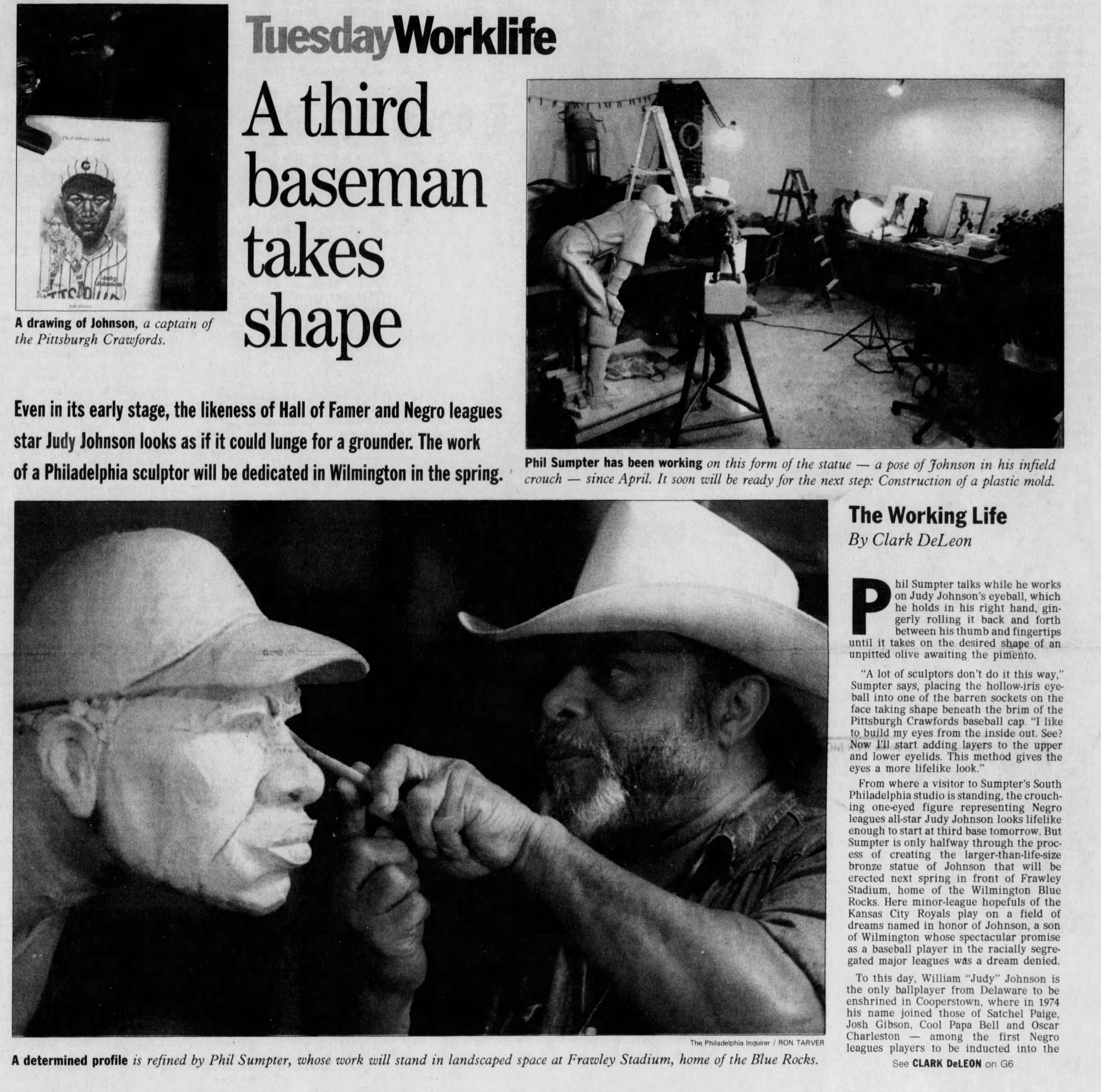
  • Phil Sumpter, celebrated sculptor, artist, and teacher, has died at 95

    Phil Sumpter, celebrated sculptor, artist, and teacher, has died at 95

    Phil Sumpter, 95, formerly of Philadelphia, celebrated sculptor, artist, art teacher, TV station art director, veteran, mentor, urban cowboy, and revered raconteur, died Thursday, Jan. 1, of age-associated decline at his home in San Juan, Puerto Rico.

    A graduate of John Bartram High School and the old Philadelphia College of Art, Mr. Sumpter taught art, both its history and application, to middle and high school students in Philadelphia for 27 years. He was an engaging teacher, former students said, and a founding faculty member at the Philadelphia High School for the Creative and Performing Arts in 1978.

    He started teaching in 1955 and, after a break in the 1960s and ’70s, finally retired in 1992. “You are very lucky to have a teacher in your life that believed in you, nurtured you, challenged you, and loved you,” a former student said on Facebook. “Mr. Sumpter did all that and more.”

    Other former students called him their “father” and a “legend.” One said: “You did a lot of good here on earth, especially for a bunch of feral artist teenagers.”

    Mr. Sumpter (left) talks about his sculpture of Underground Railroad organizer William Still in 2003.

    Outside the classroom, Mr. Sumpter sculpted hundreds of pieces and painted and sketched thousands of pictures in his South Philadelphia stable-turned-studio on Hicks Street. Prominent examples of his dozens of commissions and wide-ranging public art presence include the bas-relief sculpture of Black Revolutionary War soldiers at Valley Forge National Historical Park in Montgomery County, the action statue of baseball star Roberto Clemente in North Philadelphia, the Negro Leagues baseball monument in West Parkside, and the Judy Johnson and Helen Chambers statues in Wilmington.

    He worked often in clay and paper, made murals, and designed commemorative coins and medals. He especially enjoyed illustrating cowboys, pirates, Puerto Rican jibaros, and landscapes.

    His statue of Clemente was unveiled at Roberto Clemente Middle School in 1997, and Mr. Sumpter told The Inquirer: “I think I’ve captured a heroic image, an action figure depicting strength plus determination.”

    He was among the most popular contributors to the Off the Wall Gallery at Dirty Franks bar, and his many exhibitions drew crowds and parties at the Bacchanal Gallery, the Free Library of Philadelphia, the Plastic Club, and elsewhere in the region and Puerto Rico. He hung out with other notable artists and community leaders, and collaborated on projects with his son, Philip III, and daughter, Elisabeth.

    Mr. Sumpter worked often in clay and paper, made murals, and designed commemorative coins and medals.

    He even marketed a homemade barbecue sauce with his wife, Carmen. His family said: “He is remembered for mentorship, cultural fluency, and presence as much as for material works.”

    He founded Phil Sumpter Design Associates in the 1960s and worked on design and branding projects for a decade with institutions, educational organizations, and other clients. He was art director for WKBS-TV, WPHL-TV, and the Pyramid Club.

    “The word for him,” his son said, “is expansive.”

    Mr. Sumpter was friendly and gregarious. He became enamored with Black cowboys and Western life as a boy and went on to ride horses around town, dress daily in Western wear, and depict Black cowboys from around the world in his art. His viewpoints and exhibits were featured often in The Inquirer, the Philadelphia Tribune, Philadelphia Magazine, Dosage Magazine, and other publications.

    Mr. Sumpter (in white cowboy hat) views his statue of Roberto Clemente in 1997.

    He was an air observer for the Air Force during the Korean War and later, while stationed in England, studied sculpture, ceramics, and drawing at Cambridge Technical Institute. His daughter said: “He taught me how to open the portal to the infinite multiverse of my own imagination, where every mind, every soul can be free.”

    Philip Harold Sumpter Jr. was born March 12, 1930, in Erie. His family moved to segregated West Philadelphia when he was young, and he earned a bachelor’s degree in art education at PCA.

    He married and divorced when he was young, and then married Florence Reasner. They had a son, Philip III, and a daughter, Elisabeth, and lived in Abington. They divorced later, and he moved to Hicks Street in South Philadelphia.

    He met Carmen Guzman in Philadelphia, and they married in 2001 and moved to San Juan for good in 2003. He built a studio at his new home and never really retired from creating.

    Mr. Sumpter (second from left) enjoyed time with his family.

    Mr. Sumpter enjoyed singing, road trips to visit family in Pittsburgh, and bomba dancing in San Juan. He was a creative cook, and what he called his “trail chili” won cook-offs and many admirers.

    “He was a larger-than-life person,” his son said. “He was fearless in his frontier spirit.” His wife said: “His joy for life was contagious, as was his laughter.”

    In addition to his wife, children, and former wife, Mr. Sumpter is survived by other relatives.

    A celebration of his life was held earlier in Puerto Rico. Celebrations in Philadelphia are to be from 2 to 5 p.m. Saturday, March 14, at Dirty Franks, 347 S. 13th St., Philadelphia, Pa. 19107, and from 2:30 to 4:30 p.m. Sunday, March 15, at the Plastic Club, 247 S. Camac St., Philadelphia, Pa. 19107.

    Mr. Sumpter’s work was featured in The Inquirer in 1994.
  • Justice Department sues Harvard for data as it investigates how race factors into admissions

    Justice Department sues Harvard for data as it investigates how race factors into admissions

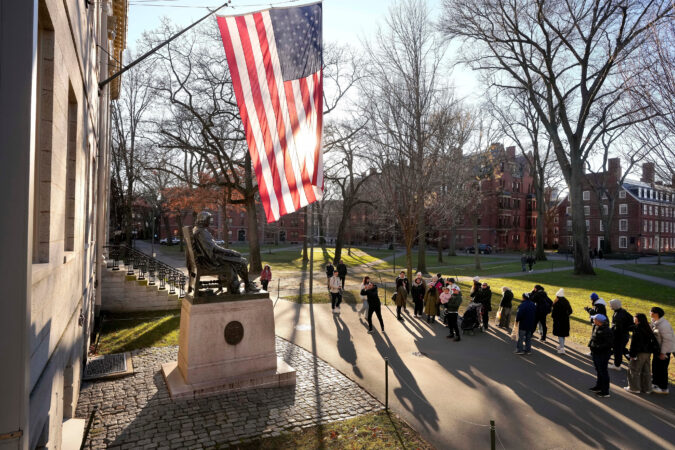
    WASHINGTON — The Trump administration is suing Harvard University, saying it has refused to provide admissions records that the Justice Department demanded to ensure the Ivy League school stopped using affirmative action in admissions.

    In a lawsuit filed Friday in federal court in Massachusetts, the Justice Department said Harvard has “thwarted” efforts to investigate potential discrimination. It accused Harvard of refusing to comply with a federal investigation and asked a judge to order the university to turn over the records.

    Harmeet Dhillon, who leads the department’s Civil Rights Division, said Harvard’s refusal is a red flag. “If Harvard has stopped discriminating, it should happily share the data necessary to prove it,” Dhillon said in a statement.

    A statement from Harvard said the university has been responding to the government’s requests. It said Harvard is in compliance with the Supreme Court decision barring affirmative action in admissions.

    “The University will continue to defend itself against these retaliatory actions which have been initiated simply because Harvard refused to surrender its independence or relinquish its constitutional rights in response to unlawful government overreach,” the university said.

    The suit is the latest salvo in President Donald Trump’s standoff with Harvard, which has faced billions of dollars in funding cuts and other sanctions after it rejected a list of demands from the administration last year.

    Trump officials have said they’re taking action against Harvard over allegations of anti-Jewish bias on campus. Harvard officials say they’re facing unconstitutional retaliation for refusing to adopt the administration’s ideological views. The administration is appealing a judge’s orders that sided with Harvard in two lawsuits.

    The Justice Department opened a compliance review into Harvard’s admissions practices last April on the same day the White House issued a series of sweeping demands aligned with Trump’s priorities. The agency told Harvard to hand over five years of admissions data for undergraduate applicants along with Harvard’s medical and law schools.

    It asked for a trove of data including applicants’ grades, test scores, essays, extracurricular activities and admissions outcomes, along with their race and ethnicity. It asked for the data by April 25, 2025. The lawsuit said Harvard has not provided that data.

    Justice Department officials said they need the data to determine whether Harvard has continued considering applicants’ race in admissions decisions. The Supreme Court barred affirmative action in admissions in 2023 after lawsuits challenged it at Harvard and the University of North Carolina.

    Trump officials have accused colleges of continuing the practice, which the administration says discriminates against white and Asian American students.

    The White House is separately pressing universities across the U.S. to providing similar data to determine whether they have continued to factor race into admissions decisions. The Education Department plans to collect more detailed admissions data from colleges after Trump signed an action suggesting schools were ignoring the Supreme Court decision.

    Trump’s dispute with Harvard had appeared to be winding down last summer after the president repeatedly said they were finalizing a deal to restore Harvard’s federal funding. The deal never materialized, and Trump rekindled the conflict this month when he said Harvard must pay $1 billion as part of any deal, double what he previously demanded.

  • Abington’s high school principal was placed on leave over social media posts

    Abington’s high school principal was placed on leave over social media posts

    The Abington School District has placed Abington Senior High School Principal Alice Swift on administrative leave amid an investigation into social media posts.

    “I am writing to inform you that, effective Feb. 12, 2026, Dr. Alice Swift has been placed on administrative leave,” Superintendent Jeffrey Fecher wrote in a message to parents Thursday. “The district received allegations of inappropriate social media posts and is investigating the matter.”

    It was not immediately clear what Swift had posted on social media that led to the district’s action. Attempts to reach Swift for comment Friday were unsuccessful.

    Fecher declined to comment further Friday, calling the issue a personnel matter. He said support was in place at the high school to ensure stability for students.

    Swift, a 1983 Abington graduate and former teacher and administrator in Maryland schools, became principal of Abington Senior High School in 2024.

    Fecher said the district “will share additional updates regarding Dr. Swift’s return as more information becomes available.”

  • Students and parents — joined by the Pa. House speaker — are fighting a plan to close Southwest Philly’s Motivation High

    Students and parents — joined by the Pa. House speaker — are fighting a plan to close Southwest Philly’s Motivation High

    Confronted with the possible closure of their beloved school, the Motivation High community came prepared to fight back.

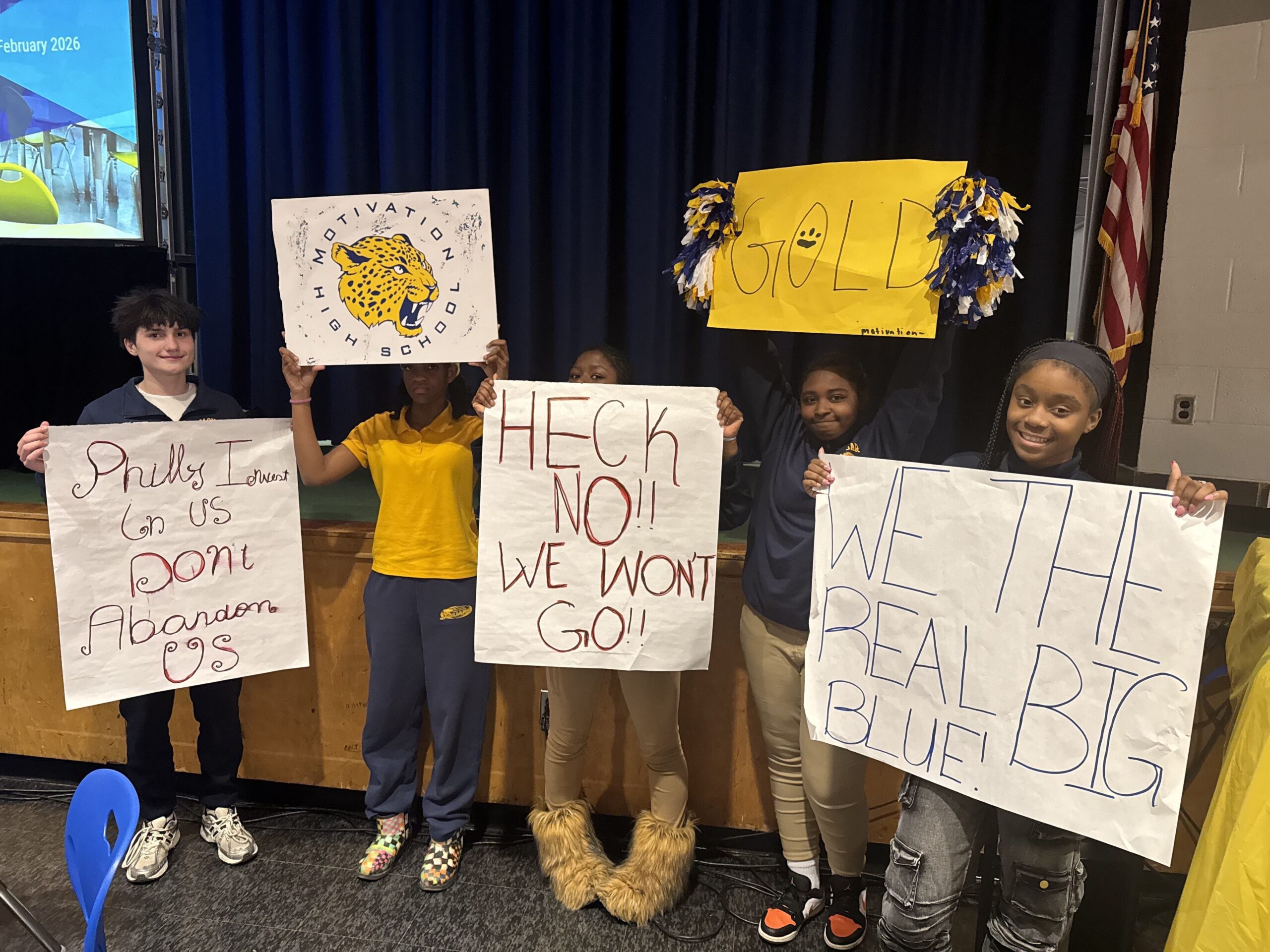
    As community members entered their Southwest Philadelphia school’s auditorium Wednesday night, students waving signs and carrying blue-and-yellow pompoms handed out leaflets: on one side were Motivation’s stats — building condition, graduation rate, attendance, suspensions.

    On the other were stats for Bartram High, the school they would be assigned to attend if their school closes in 2027, as proposed under the Philadelphia School District facilities plan. The data for Motivation, a magnet, are stronger across the board, sometimes starkly so — Bartram is a neighborhood school with no admissions criteria, and its attendance and graduation rates are lower, and its suspensions higher.

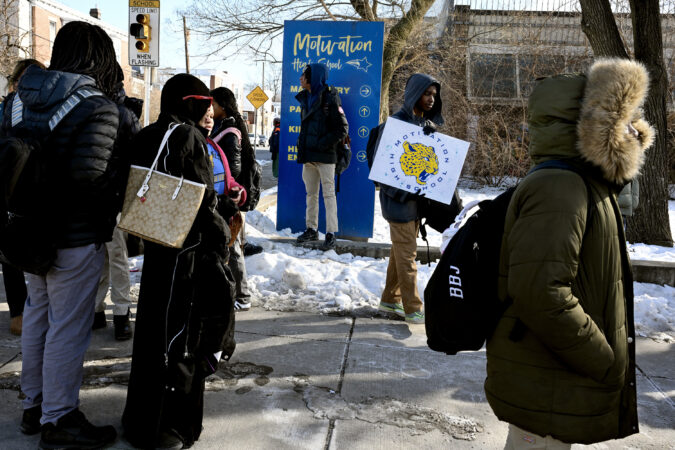
    Motivation High students hold signs they made to protest the Philadelphia School District’s planned closure of their school.

    Motivation has only 150 students enrolled this year. The school system cited low enrollment as one reason for the closure. But district officials have been clear: The recommendation was also driven by a desire to reinvigorate struggling neighborhood high schools.

    “Why are we put in with Bartram to make Bartram look good, when we stand out on our own?” one Motivation student asked district staff pointedly.

    The opposition from the Motivation community lays bare an issue at the crux of the school system’s plan: To reach its stated goal of advancing all students, the district says it must displace some. Often, that has pitted communities against one another.

    Residents in a restless crowd at Motivation on Wednesday, including one of the state’s most powerful politicians, Pennsylvania House Speaker Joanna McClinton (D., Philadelphia), said they were not having it.

    “It’s like you want us to water flowers that just weren’t growing from the beginning,” one parent told officials. “You want to uproot kids who have found their place. You can count my child right out of that plan. She ain’t going to Bartram.”

    ‘It’s the lottery system’

    Motivation began as a Bartram program, housed in a separate building, for academically talented students. But in 2004, Motivation became its own school, eventually moving to the former Turner Middle School building at 59th and Baltimore.

    Motivation thrived as the only criteria-based high school in Southwest Philadelphia. But like a number of smaller magnets, it was hit hard by 2021 changes to the district’s special admissions policy.

    The district that year moved to a centralized lottery system, taking away from principals any discretion over who got admitted to the schools. It said it did so for equity reasons and to solve for demographic mismatches at some schools — though Motivation’s student body had been representative of its neighborhood and the city as a whole.

    In the past, schools like Motivation filled most of their ninth-grade classes with students who met the district-set criteria, and also admitted students who were close but came with a strong recommendation from another school, or had compelling personal circumstances that explained why they missed meeting the magnet standards.

    Those extra admissions ended with the district policy change, and Motivation’s enrollment plummeted. It was never a huge school, by design — topping out at 400 students prior to the pandemic.

    It doesn’t seem fair, said Nehemiah Bumpers, a Motivation 10th grader.

    “Why are you guys moving us for having low enrollment scores?” Bumpers said. “It’s the lottery system that drastically changed our enrollment.”

    McClinton, who attended the Wednesday meeting, was similarly frustrated.

    “When you talk about the enrollment being diminished, it’s because you changed the playbook for principal Teli,” McClinton said of veteran Motivation principal Rennu Teli-Johnson, whom the House speaker praised.

    “She knows every one of these kids,” said McClinton, whose House district includes both Motivation and Bartram.

    Motivation students walk out

    The school board has yet to vote on the proposal to close Motivation and 19 other schools. But the possible closure has roiled the student body.

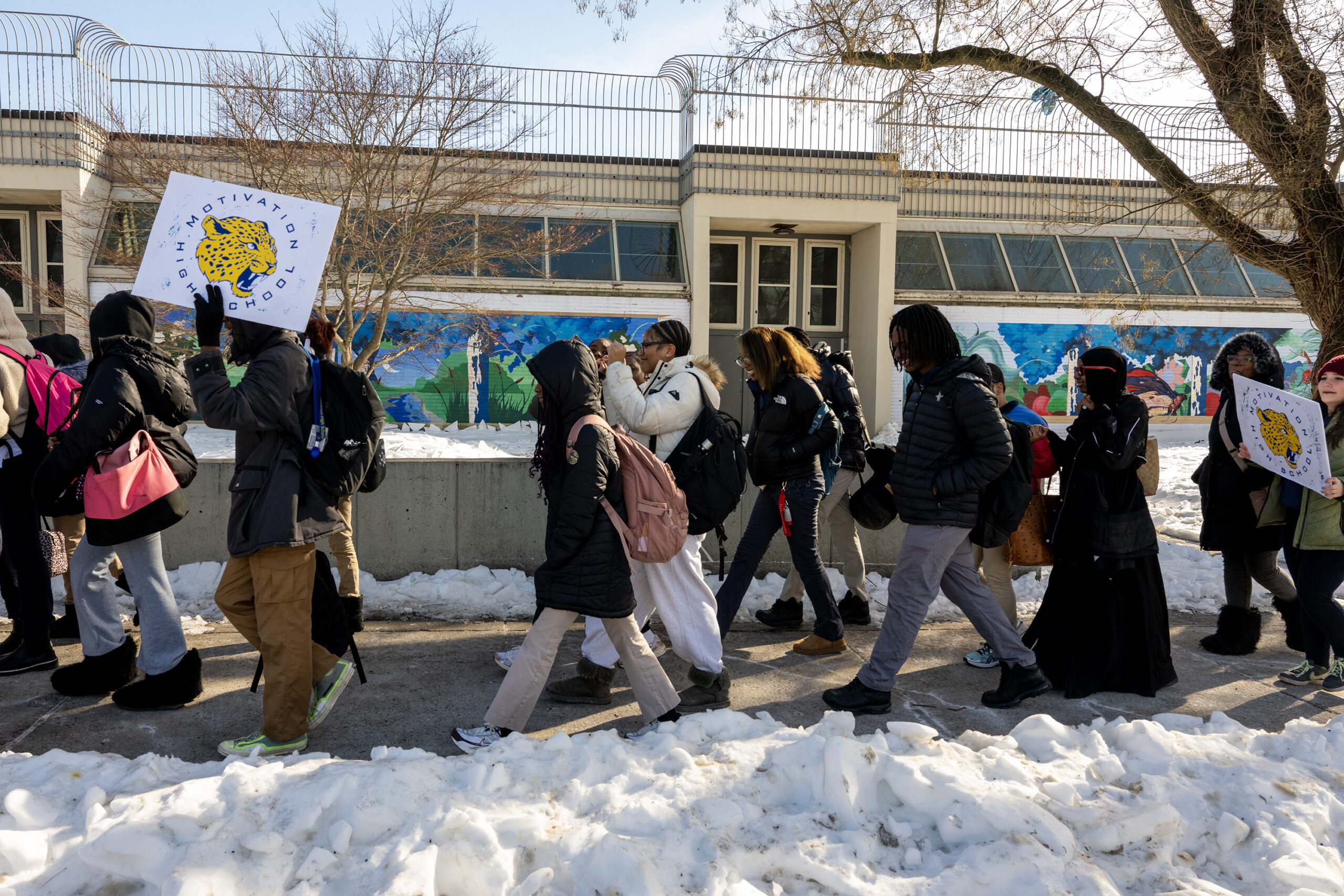
    This week, most Motivation students walked out of school, staging a protest over the district’s plan.

    Students walk out of Motivation High School in Southwest Philadelphia on Monday, protesting that their school is one of 20 that the Philadelphia School District has tagged for closure.

    Zanaya Johnson-Green, an 11th grader, said students were beside themselves, even those who will graduate before the school is planned to be folded into Bartram in the fall of 2027.

    “Motivation has given me so many opportunities, and I don’t want to see it go,” Johnson-Green said. “No one wants the school to close. This is having a bad effect on all of us.”

    The district has, in recent years, invested millions in sprucing up the Motivation building, which if the school does close would become district “swing space” — a place where schools can move to accommodate building repairs or other overflow needs.

    “Why spend all that money just to push us into Bartram and use this school as a swing space?” Bumpers asked.

    Motivation High School in Southwest Philadelphia, on Baltimore Avenue in Southwest Philadelphia, is shown in this 2025 file photo.

    But much of the energy at the meeting was spent talking about the safety at Bartram — with parents and students pressing the district on how they could guarantee staff and student welfare, and district officials saying they would use a planning year and community wisdom to address concerns.

    “Disaster!” someone in the audience shouted when Associate Superintendent Tomás Hanna talked about his hope that those with worries would step up to the plate to help plan for a Bartram transition.

    A Motivation student shook her head.

    “Why do we have to reap what you sow when you stopped paying attention to neighborhood schools all those years? Why do we have to suffer the consequences, lose opportunities?” the student said.

    Monica Allison, a Cobbs Creek neighbor and ward leader, made it clear that though she was fighting against the Bartram closure, wounds inflicted from prior school closures, dating back to John P. Turner Middle School and George Wharton Pepper Middle School, were also on people’s minds.

    “You closed John P. Turner and you didn’t ask us,” Allison said. “Now we’re back with another closure. It’s ridiculous. You keep talking about elevating Bartram at the expense of other kids. The neighbors are really tired of this.”

    The speaker speaks out

    John Young, a Motivation teacher for the last decade, said his students were living their civics lesson by protesting the district’s plan. The district is in a tough spot, he said — coping with the fallout of charter schools that took students from traditional public schools, dealing with its own decision to create greater high school choice.

    But, Young said, “this decision is going to continue that trend of pushing our students to homeschool, pushing our students to charter schools. This decision is not going to solve the problem, it is going to hollow us out.”

    Pa. House Speaker Joanna McClinton blasted the Philadelphia School District at a public meeting Wednesday night, saying its officials had disadvantaged Motivation High by changing rules around special admissions, then used low enrollment as one reason to close the school.

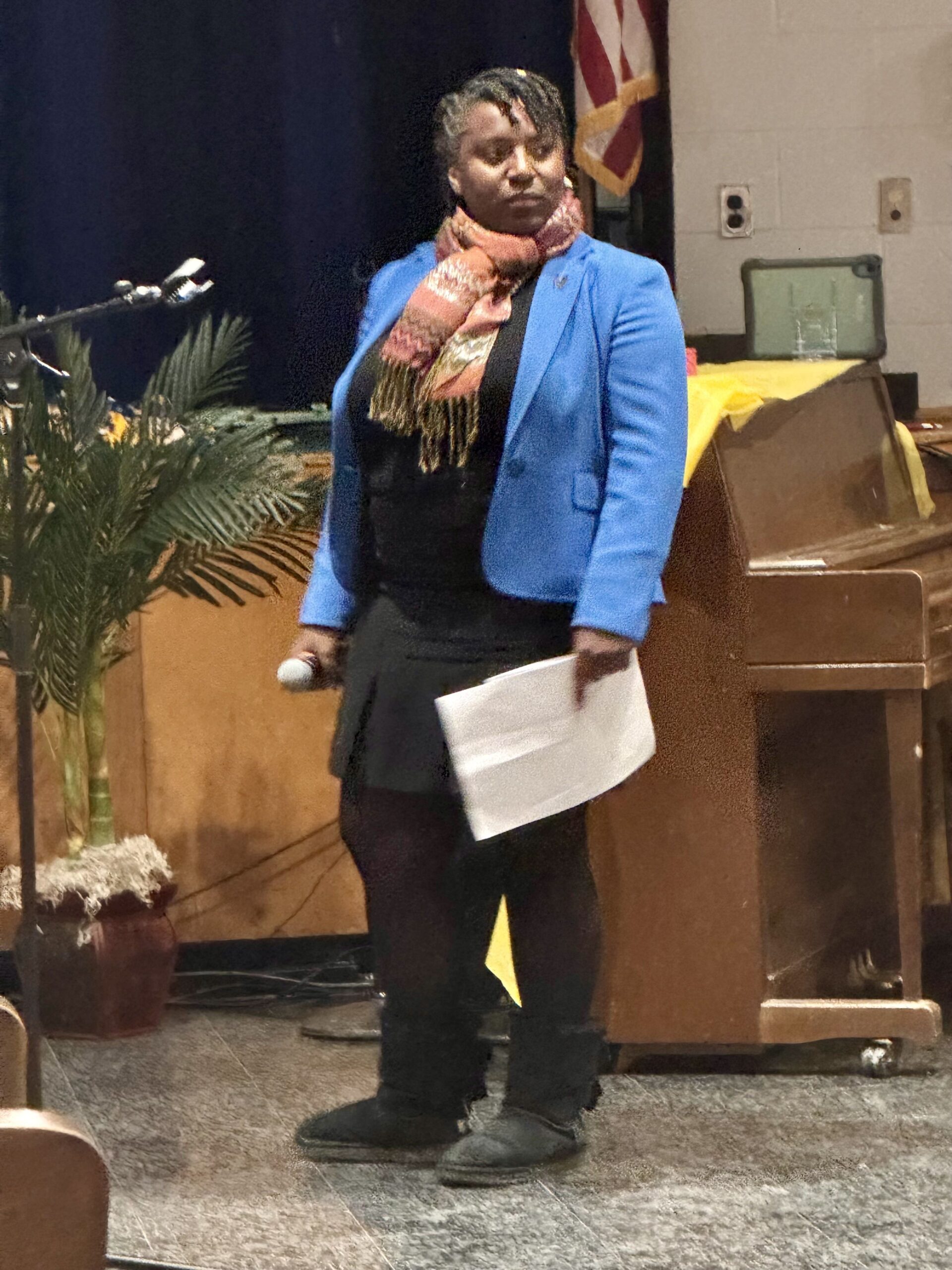
    A visibly upset McClinton spoke last on Wednesday night. The district must invest in both schools, she said — not just one.

    The district officials she addressed all had good jobs, McClinton emphasized. They could afford to send their children to whatever kind of school they felt was best for them. Southwest Philadelphia parents might not be wealthy, but they deserve to make choices, too, the speaker said.

    “It’s not fair that you’re pitting Black children in Bartram against Black children in Motivation,” McClinton said. “Not one of your children go to Motivation or Bartram. I don’t get millions of dollars in Harrisburg for you to waste it away to make this a swing space.”

  • Howard Lutnick’s name is on the library at Haverford College. Will that change after his appearance in the Epstein files?

    Howard Lutnick’s name is on the library at Haverford College. Will that change after his appearance in the Epstein files?

    As U.S. Commerce Secretary Howard Lutnick’s relationship with Jeffrey Epstein gains new scrutiny, questions have emerged on Haverford College’s campus about how to address their mega-donor’s involvement.

    Lutnick, a 1983 Haverford graduate who has donated $65 million to the college and whose name is on the school’s library, had contact with the late financier as recently as 2018, long after Epstein pleaded guilty to obtaining a minor for prostitution and soliciting a prostitute, according to documents released by the Justice Department. And during congressional testimony this week, he said he visited the sex offender’s private island with his family in 2012. That’s even though Lutnick previously said he had not been in a room with Epstein, whom he found “disgusting,” since 2005.

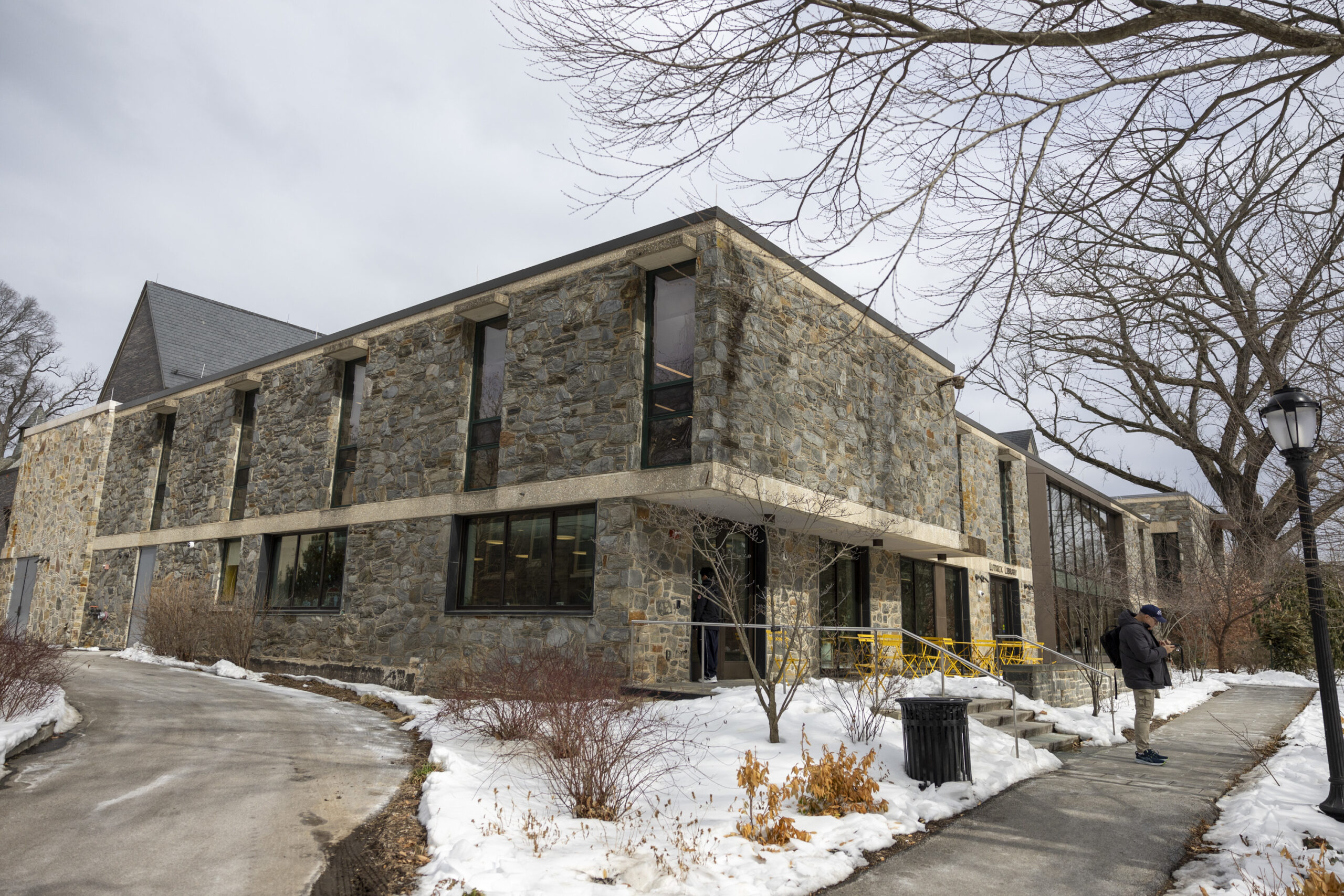
    At Haverford, where the library at the heart of campus is named after Lutnick, two students have floated a proposal to remove Lutnick’s name from the building and wrote a resolution that could be discussed at a forthcoming student-led meeting, according to the Bi-College News, the student newspaper for Haverford and Bryn Mawr Colleges. Fliers that say “Howard Lutnick is in the Epstein Files — What Now?” have been posted around campus, according to the publication.

    And in an email to campus Thursday, Wendy Raymond, president of the highly selective liberal arts college on the Main Line, said she and the board of managers are monitoring the situation.

    “We recognize that association with Epstein raises ethical questions,” she wrote. “While Secretary Lutnick’s association with Epstein has no direct bearing on the College, as an institution, we are committed to our core values and cognizant of broader ethical implications raised by these disclosures.”

    Commerce Secretary Howard Lutnick listens during an event with President Donald Trump in the Oval Office of the White House earlier this month.

    A Commerce Department spokesperson told the Associated Press last month that Lutnick had had “limited interactions” with Epstein, with his wife in attendance, and had not been accused of “wrongdoing.” Lutnick told lawmakers this week: “I did not have any relationship with him. I barely had anything to do with him.”

    Lutnick, formerly chairman of Cantor Fitzgerald L.P., a New York City financial firm that lost hundreds of employees in the 9/11 World Trade Center attacks, served on Haverford’s board for 21 years and once chaired it. In addition to the library, the indoor tennis and track center bears the name of his brother Gary Lutnick, a Cantor Fitzgerald employee who was killed on 9/11, and the fine arts building carries the name of his mother, Jane Lutnick, a painter. He also funded the college’s Cantor Fitzgerald Art Gallery.

    In making a $25 million gift to the college in 2014 — which remains tied for the largest donation Haverford has received — Lutnick told The Inquirer the college had helped him during a particularly difficult period. He lost his mother to cancer when he was a high school junior, and one week into his freshman year at Haverford, where he was an economics major, his father died as the result of a tragic medical mistake.

    The then-president of Haverford called Lutnick and told him his four years at Haverford would be free.

    “Haverford was there for me,” Lutnick said, “and taught me what it meant to be a human being.”

    Lutnick’s gift was used to make the most significant upgrades to the library in 50 years. Lutnick left Haverford’s board in 2015.

    He was confirmed as commerce secretary a year ago, after President Donald Trump took office for the second time. Since the Epstein documents were released, Lutnick has faced bipartisan calls to resign.

    Some in the Haverford community have spoken out online about Lutnick’s ties to Epstein.

    “How soon can we petition to make Magill Magill again,” one alum, who said they were at Haverford when Lutnick attended, wrote anonymously on a Reddit thread, referring to the library’s prior name. “More urgently, does Haverford plan to express compassion and support for the survivors and publicly condemn Lutnick for his involvement?”

    The Haverford Survivor Collective’s executive board, a group founded in 2023 and led by Haverford students and survivors of sexual assault, also called on the college to “re-examine” its ties to Lutnick.

    “At what point will the College confront its relationship with this individual?” the group asked. “At what point will it say, unequivocally, ‘enough is enough’? At what point does a reluctance to do so extend beyond mere negligence into a moral failing?”

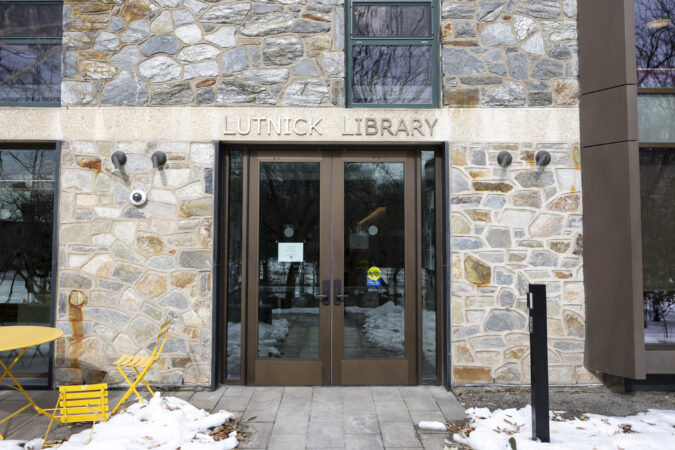
    The outside of the Lutnick Library at Haverford College

    Push to rename the library

    Earlier this month during a Plenary Resolution Writing Workshop — part of Haverford’s student self-governance process — students Ian Trask and Jay Huennekens put forth a resolution that would change the name of the library, the student newspaper reported.

    At plenary sessions, which take place twice a year in the fall and spring, the student body discusses and votes on important campus issues. On March 23, a packet of plenary resolutions will be released to the student body, with the plenary session scheduled for March 29.

    “We feel that it is important that the college reflect the values of the student body, and that those values do not align with the Trump administration or the associates of Jeffrey Epstein,” the students told the Bi-Co News.

    Attempts to reach Trask and Huennekens were unsuccessful.

    If the student resolution passes, it would go to Raymond for signing.

    But even then, it’s no easy feat to remove a name from a college building. There would be a review process involving the board of managers that could take a while.

    Under Haverford’s gift policy, the school can rename a building if “the continued use of the name may be deemed detrimental to the College, or if circumstances change regarding the reason for the naming.”

    Raymond would have to convene a committee, consider that committee’s recommendations, and make her recommendation to the external affairs committee of the board of managers and its chair and vice chair. The external affairs committee then would make its recommendation to the full board of managers.

    At nearby Bryn Mawr College, it took years before M. Carey Thomas’ name was removed from the library. Thomas, who was Bryn Mawr’s second president, serving from 1894 to 1922, was a leading suffragist, but also was reluctant to admit Black students and refused to hire Jewish faculty.

    In 2017, then-Bryn Mawr president Kim Cassidy issued a moratorium on using Carey’s name while the college studied how to handle the matter. A committee in 2018 decided students, faculty, students, and staff should no longer refer to the library using Thomas’ name, but decided to leave the inscription and add a plaque explaining the complicated history.

    The college faced continued pressure from students to take further action and removed Thomas’ name in 2023.

    Other colleges have taken similar actions. Princeton University in 2020 stripped former President Woodrow Wilson’s name from its public affairs school and presidential college.

  • Cameras will soon enforce speed limits in five Philly school zones

    Cameras will soon enforce speed limits in five Philly school zones

    Philadelphia drivers are about to get a new incentive to obey the flashing caution lights and 15 mph speed limit near schools.

    On Tuesday, the Philadelphia Parking Authority plans to turn on automated speed-enforcement cameras in five school zones, targeted because they have had a relatively high rate of crashes. All are on major roadways.

    Violators will get warnings until April 20, when the cameras start enforcing the law. Driving 11 miles faster than the school-zone speed limit will carry a $100 fine.

    “The goal is to protect students,” said Rich Lazer, executive director of the PPA. “Speed cameras work. They reduce dangerous behavior.”

    Roosevelt Boulevard has seen a 95% reduction in speeding violations and a 50% reduction in pedestrian-involved crashes since cameras went up in 2020.

    The high-priority school zones were selected based on an analysis of Pennsylvania Department of Transportation crash data by the Philadelphia Office of Transportation and Infrastructure Systems.

    From 2019 through 2023, the five locations recorded 10 crashes in which a person was killed or seriously injured, and 25 pedestrian crashes, as well as several speed-related vehicle-on-vehicle crashes, the PPA said. (Victims included people of all ages; it was not clear how many were students.)

    (function() {
    var l2 = function() {
    new pym.Parent(‘SKLZONECAMS’,
    ‘https://media.inquirer.com/storage/inquirer/projects/innovation/arcgis_iframe/SKLZONECAMS.html’);
    };
    if (typeof(pym) === ‘undefined’) {
    var h = document.getElementsByTagName(‘head’)[0],
    s = document.createElement(‘script’);
    s.type = ‘text/javascript’;
    s.src = ‘https://pym.nprapps.org/pym.v1.min.js’;
    s.onload = l2;
    h.appendChild(s);
    } else {
    l2();
    }
    })();

    “We have tried many traffic-calming methods to stop people from driving dangerously fast in school zones, but many drivers still speed,” said Michael A. Carroll, a deputy managing director for the city who is in charge of OTIS.

    “Speeding is the No. 1 cause of fatal crashes,” he said. The cameras will protect students walking to and from school, as well as crossing guards, “who often put their lives at risk,” Carroll said.

    Automated speed enforcement remains controversial, despite studies that show it is effective, particularly on major urban roadways like the Boulevard.

    The cameras are also popular in dense cities.

    Recently, the Trump administration’s Department of Transportation restricted cities from using federal road safety grants for cameras that enforce speed limits and other traffic laws, unless they are in work or school zones.

    The Pennsylvania legislature, historically skeptical of automated enforcement, in 2024 gave Philadelphia permission to use school-zone cameras through Dec. 31, 2029, on a trial basis.

    There was some hesitation last March when City Council considered an ordinance to authorize the cameras. Three members held up the measure in committee, expressing concerns about a “money grab by the city.” The members also said they did not have enough information about the bill.

    After they met with Councilmember Isaiah Thomas, the chief sponsor, the legislation was enacted.

    “Everybody thinks it’s a money grab, but it’s really not,” Lazer said. “Resources are stretched; police are dealing with a lot of things. … If we can use technology, and it works, why not? Don’t speed, and you won’t get a violation.”

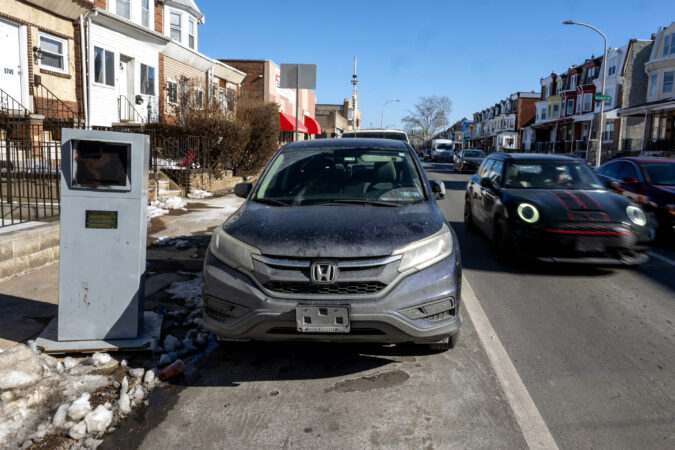
    Unlike the speed cameras on the Boulevard and those along 13 miles of Broad Street since November, the school-zone units deployed by the PPA are squat and at street level.

    Some people say they look like mailboxes or small refrigerators.

    They are meant to be portable, PPA officials said, so that cameras can be moved to other schools with problems, as long as they are operating in only five school zones at any one time.

    That limit is fixed by state law. Cameras can operate only when school zones are active, meaning weekdays when students are arriving in the morning or departing in the afternoon.

  • Cherry Hill is considering additions at two schools to ease overcrowding instead of redrawing school boundaries

    Cherry Hill is considering additions at two schools to ease overcrowding instead of redrawing school boundaries

    The Cherry Hill School District has decided against redrawing its elementary school maps to redistribute students and ease overcrowding.

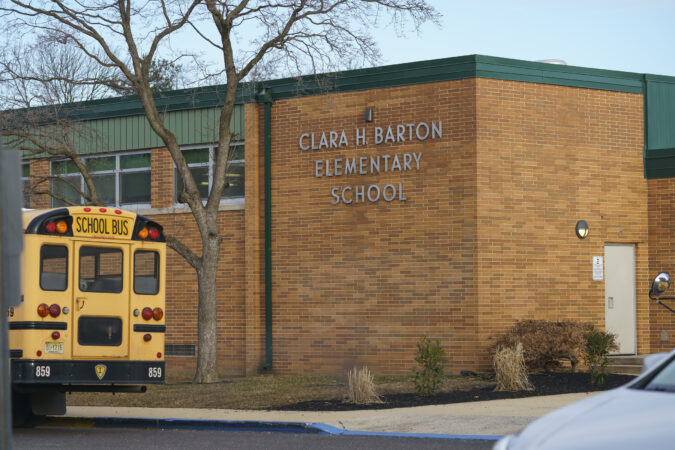
    Instead, the school board will consider adding additions to the two schools with the highest anticipated growth — Clara Barton Elementary and Rosa International Middle School — and continuing to monitor enrollment at four other elementary schools.

    The decision was announced Tuesday night when the district presented a highly anticipated report on rebalancing school enrollment. The South Jersey school system had been considering adjusting the boundaries assigned to each of its 12 elementary schools to handle an anticipated increase in students — a move that sparked opposition from some parents.

    The recommendation is “a huge win,” said Bruck Lascio, whose children attend Barton. “We’ll take their proposal.”

    What does the recommendation involve?

    “The administration is not recommending boundary adjustments at this time,” said George Guy, director of elementary education.

    Guy said both schools now potentially slated for expansion are expected to have a severe shortage of seats by the 2028-29 school year. Clara Barton would be 69 seats short, and Rosa Middle 51 seats, he said.

    The additions, if approved by the school board, would be ready for the start of the 2028-29 school year, Guy said.

    The report also recommends that the district monitor enrollment trends at Horace Mann Elementary, which is also expected to have more students than seats. And it calls for another demographic study in 2026-27 to assess needs at all schools.

    Guy left open the possibility that Mann could also get an addition to ease overcrowding. The district also plans to monitor enrollment at Joyce Kilmer, Richard Stockton, and Woodcrest Elementary Schools.

    Why was rebalancing under consideration?

    A demographic study conducted in 2024 showed that five of Cherry Hill’s 12 elementary schools are expected to have a total shortage of 337 seats in the 2028-29 school year, and prompted the school board to look into rebalancing.

    Cherry Hill began the rebalancing project with a possibility of changing the boundaries for students at five of its 12 elementary schools. Some elementary schools are nearing capacity, and a few have surplus seats.

    In developing a recommendation, Guy had to consider parameters set by the board. It was also important to consider transportation and avoid having students spend longer periods of time on buses.

    Board president Gina Winters said the board basically had two choices: shift students where there were available seats or add more capacity to keep students in their neighborhood schools.

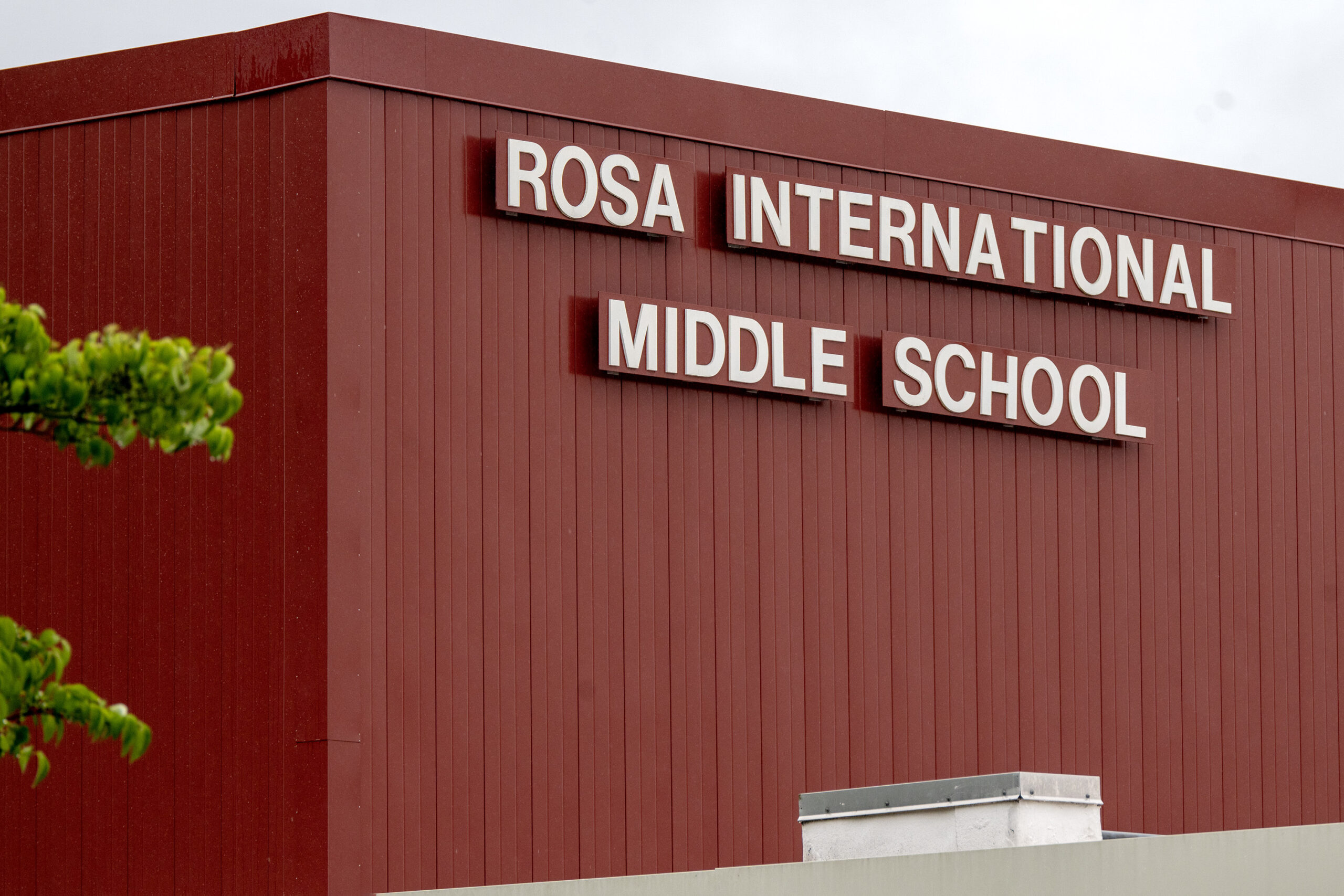
    Rosa International Middle School in Cherry Hill.

    Changing the boundaries would have affected 534 children in the district, which enrolls about 11,000 students, Guy said. Clara Barton and James Johnson Elementary Schools would have faced the biggest impact, he said.

    The sprawling 24.5-mile community of nearly 75,000 is divided into elementary school zones. Most students are assigned to a neighborhood school within two miles of where they live.

    The district also dismissed possible relocation of some special education programs to ease overcrowding because that would further stress students and staff, Guy said.

    Guy said creating new English as a second language (ESL) programs at more schools was also considered, but that option was rejected because it would not have adequately addressed the overcrowding.

    Also under consideration was converting the Arthur Lewis administration building to an elementary school, which could accommodate about 200 students.

    How much would the plan cost?

    Guy said the additions are expected to cost between $5 million and $7 million each. The cost would be funded using interest earnings from the district’s $363 million bond referendum approved in 2022, he said.

    According to Guy, the costs would not affect the property tax rate. Winters said there could be additional budget costs in the future to hire additional teachers and administrators.

    How did parents react to the proposal?

    Parents who had lobbied heavily against having their children moved because they like the convenience of neighborhood elementary schools welcomed the recommendations.

    “We love our school,” said Katie Daw, whose children attend Clara Barton in the township’s Erlton section. “This is the best-case scenario.”

    Marie Blaker said she had braced for bad news Tuesday. She is part of a Clara Barton group that has organized other parents.

    “We didn’t think it was going to go like this,” Blaker said. “I’m thrilled they listened to us.”

    What’s next?

    The nine-member board did not vote on the recommendations Tuesday night. Winters said the board appeared to support the recommendation.

    Winters said public hearings would be held at Barton and Rosa. A final plan is expected by the summer, at which point the board will vote on the proposal.

    Guy has said officials are not yet examining future enrollment needs at the remaining middle schools and high schools.

    “The reality is that we will be faced with very difficult decisions,” board member Renee Cherfane said.