You would think that freshmen at a top-ranked university could do basic math. You would be wrong. According to a recent analysis at the University of California, San Diego, one in eight cannot meet minimum high school standards. This story is repeating itself across America. As a proud product of Pennsylvania’s public schools, it pains me to say: Our nation’s public education system is failing miserably.
Fortunately, we have an opportunity to begin to fix it, thanks to the school choice tax credit passed into law in the Working Families Tax Cut Act in July.
The trick? Governors must opt in. So far, four governors — from North Carolina, Tennessee, South Dakota, and Nebraska — have signed up or signaled they will. Will Pennsylvania support giving free money to families? Or will it double down on a failing educational system that disproportionately hurts the poorest among us?
Access to a good education levels the playing field, giving students an equal opportunity to chase the American dream. It forms kids into citizens. And it not only gives students book smarts, but also the ability to wrestle with hard problems at a time when every American must be ready to adapt to a rapidly changing world.
The inverse is equally true. Trapping students in bad schools robs them of the opportunity promised to each generation and unduly harms people of color and students from lower-income families.
According to a 2024 national assessment, 45% of 12th graders could not complete even basic math. Roughly one-third of 12th graders could not read at a basic level. Pennsylvania students performed similarly: 37% of eighth graders did not have basic math skills, and 31% lacked basic reading ability. Students of color and those from low-income families struggled most.
The COVID-19 pandemic made this all so much worse and set back a generation of Pennsylvanians. The commonwealth’s children have still not recovered from the damage done by school closures foisted on them by the national teachers’ unions.
Our public school system too often puts the interests of the system over the interests of the students, Sen. David McCormick writes.
Not only are we falling behind as a nation, we’re also falling behind other states. Florida, Arkansas, and others have busted the education monopoly. By embracing this new federal tax credit, Pennsylvania’s leaders can follow suit.
One of my first acts in the U.S. Senate was to cosponsor the Educational Choice for Children Act. One of my proudest moments was voting to pass this school choice provision into law alongside childcare tax credits for working families.
The bill established a $1,700 tax credit for donations to organizations that give educational scholarships to families. The program offers families true opportunity, as these stipends can be used to pay tuition, hire tutors, buy school supplies, and otherwise expand educational opportunities for students. It could inject tens of billions of new funding for our schools.
Not everyone will agree with me. Some may say we shouldn’t take money away from public schools. Well, this tax credit doesn’t redirect any existing federal or state funds. It allows Americans to support other Americans’ right to a good education.
It also recognizes that a certain class of people already have the privilege of school choice: those who can afford it. If Pennsylvania opts into this tax credit, it will provide low- and middle-class families with the same opportunity.
Others might question the quality or accountability of private and charter schools. They have it wrong. The public education system has failed for decades without consequence. School choice introduces accountability through competition. It lets parents choose what’s best for their children instead of being forced into failing schools by fate of geography.
Finally, I understand the fears that promoting private and charter schools risks hurting teachers, but what I’m proposing is entirely pro-teacher. As the son of two Pennsylvania public school teachers and the product of the commonwealth’s public school system, I have immense respect and admiration for educators.
The problem is the system, not the teachers. Our public school system too often puts the interests of the system over the interests of the students — and educators. Teachers do the Lord’s work and deserve our thanks. They also deserve to work in schools that value their talent. This program would put more money into education and provide greater choice to teachers, too.
There are many details to iron out still, but this program has the potential to transform education in Pennsylvania at a moment of incredible change and consequence. It will both allow Pennsylvanians to support their neighbors and invite national investment in our commonwealth’s future.
The choice is clear. Pennsylvania families have been offered a door to a better education for their children. Will the governor and our leaders in Harrisburg open it?
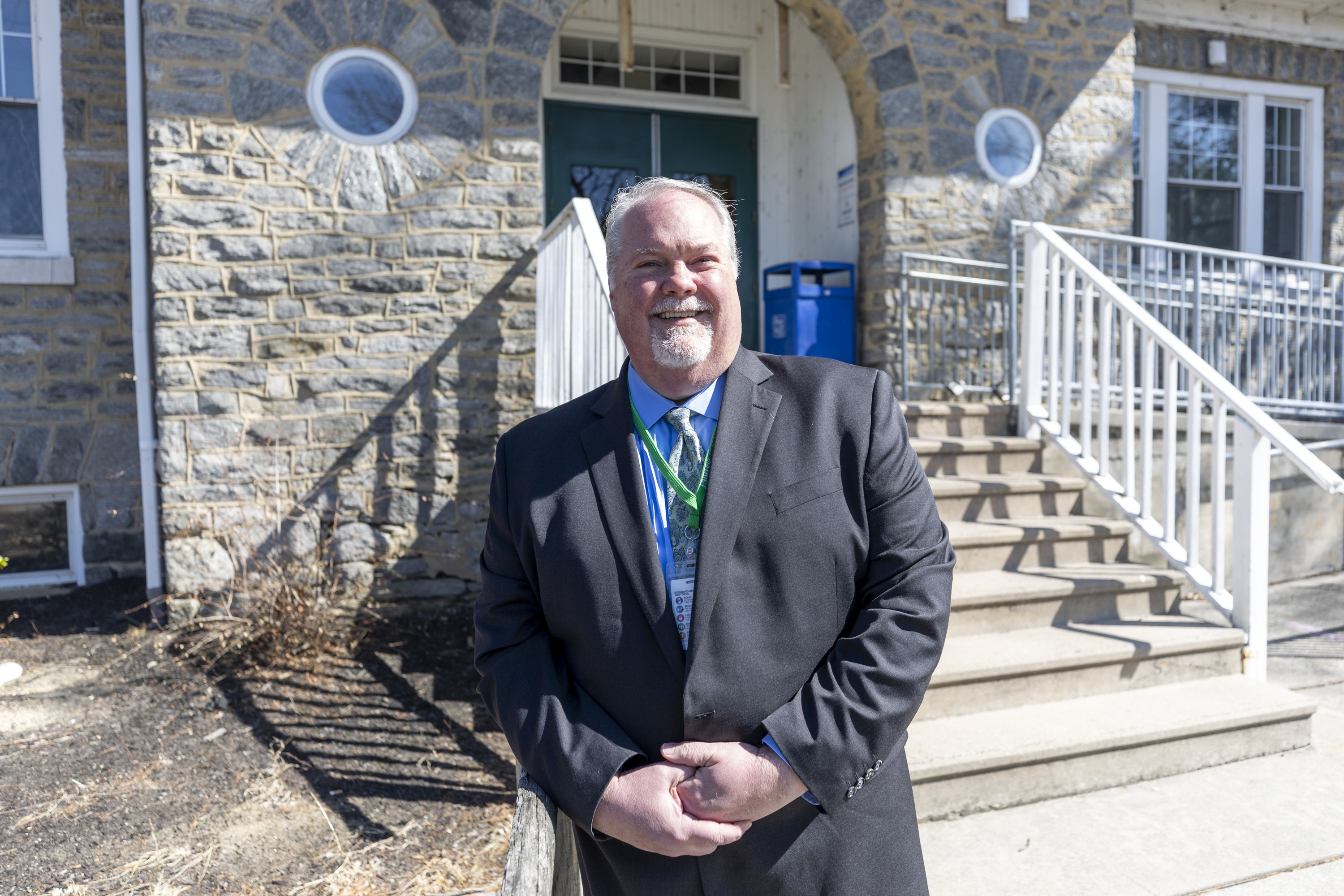
David McCormick is a U.S. senator from Pennsylvania.
The massive construction project rose outside Room 221, where 22 curious second graders peered outside their classroom daily, noting daily progress with great interest.
Sometimes, the kids at Fanny Jackson Coppin School, on South 12th Street in South Philadelphia, cheered for the workers, spurring them on as the summer heat gave way to chillier temperatures.
But they had so many questions: “What colors are for the building, and how many colors are you going to use? Red or pink?” and “How does the building not fall down?” and “When will you stop making it taller and taller?”
Teacher Kate Atkins collected the 7- and 8-year-olds’ queries, compiling them in a letter she left at the job site with her phone number. “We think you should come and tell us about construction because it is getting better and better,” the kids wrote.
Jack Delaney, the project manager on the job site, found the letter. He was charmed; he reached out to Atkins.
Zach Winters, cofounder and partner at 3rd Story Philly, second grade teacher Kate Atkins, center, and Jack Delaney, right, Project Manager at 3rd Story Philly, talk with students at Fanny Jackson Coppin School, in Philadelphia, December 05, 2025.
And on a frigid Friday, Delaney and Zach Winters, construction manager and a cofounder of 3rd Story Philly, the development and construction company working on the house project, walked into Room 221 with tools to show and energy appropriate for a roomful of enthusiastic second graders.
For 50 minutes — a long time for second-grade attention spans — the students talked about tools and examined pictures of the project in progress. They donned their own hard hats. But mostly, they gleaned information.
Zach Winters, cofounder and partner at 3rd Story Philly, left, and Jack Delaney, Project Manager at 3rd Story Philly, right, talk with students at Fanny Jackson Coppin School, in Philadelphia, December 05, 2025.
Here are some of Room 221’s greatest hits:
Question: Why did you decide to make the house bigger by making it taller instead of making it wider?
Answer: “We build additions on top of existing homes or sometimes behind existing homes, because there’s not a lot of space in the city,” Winters said. “We make the house bigger by going up.”
Q: Do you ever worry that you’re going to fall off the building?
A: “Yes, I do,” Winters said. “You should always be worried that you’re going to fall off something high. We try to be very careful. We try to stay away from the edge of the building. If we’re close to the edge of the building, we put on safety harnesses, so if we were to fall, that could catch us. But, yes, I’m worried, and my wife worries, and my mother worries.”
Students Landon Watkins, center, and Leo Horn, right, try on hard hats at Fanny Jackson Coppin School, in Philadelphia, December 05, 2025.
Q: How much will the house cost to build?
A: The project is a full remodel, with third- and fourth-story additions, basement excavation, and two roof decks.
“Often today, we are building a new construction at around $200 to $250 a square foot,” Winters said. “And it depends on how fancy the building is. A project like this is close to a half-million dollars. That’s a lot of money — but it’s a lot of house.”
Q: How long will it take to finish the house?
A: “Eight months to a year,” Delaney said.
“That depends on how many problems we have. Sometimes, it rains for a week, and we have to get the roof done,” Winters said. “Sometimes, it gets really cold, and the masons can’t work.”
The Coppin kids did not let Delaney and Winters off easy.
“Will it be done by Christmas?” one student said. No, Delaney and Winters said. The job started in March. It won’t finish until next year.
“Maybe you should try to finish it by Hanukkah,” another student said.
Q: (To Delaney) Do you do any drywall?
A: “I don’t, but the drywallers do,” Delaney said. “They are very strong. They hold up giant sheets of drywall.”
Winters interjected: Delaney knows how to drywall, but that’s not his job right now.
Delaney smiled.
“I get to say, ‘Hey, you go do the drywall,’ and then I run away,” he said.
The kids loved the level Delaney showed them. They had excellent guesses about how many bricks were used on the project.
“Four thousand million,” one girl shouted.
(Close — it’s 17,500.)
At the end of the visit, Atkins had a question for the kids.
“Who might want to work in construction someday?” she asked.
Nearly every hand shot up.
Delaney and Winters looked triumphant.
“We’ve got a labor shortage now,” Winters said. “Let’s go!”
Zach Winters, cofounder and partner at 3rd Story Philly, talks with students at Fanny Jackson Coppin School, in Philadelphia, December 05, 2025.
Craig Romanczuk’s voice barely gets above a whisper these days.
But speaking at all feels like a miracle, he said.
Five months ago, the retired Philadelphia police officer, a Philadelphia School District safety officer of nearly 20 years, was shot 11 times while driving in a marked patrol car. He almost died.
Life is crowded with medical appointments, surgeries and therapies now. But Romanczuk takes it in stride, with the kind of gruff and jovial banter born of his one-of-nine-kids-growing-up-in-Kensington roots and the near-death experience that still feels very close.
After almost dying, “you appreciate your family, your brothers and your sisters,“ said Romanczuk, pausing. ”Even though they’re still jerks. Now you get a chance to tell them that they’re jerks and you still love them.”
‘Officer, can you help me?’
It was two hours past midnight, a warm June evening, when Romanczuk wrapped up his patrol assignment, checking on a Kensington high school building just before 2 a.m.
It was a night like many others — after graduating from North CatholicHigh School, Romanczuk joined the police force at 19, spending his career in the 3rd district, in South Philadelphia, and finishing it in the 19th, in West Philadelphia. After he retired in 2004, his sister encouraged him to take the school police officer test. He spent years as an officer in schools, then took a patrol job in 2017, driving around the city to check on school buildings between 10 p.m. and 8:30 a.m.
On June 29, Romanczuk took Front Street to North Columbus Avenue on his way back to a district garage after theKensington High School for the Creative and Performing Arts job. He was stopped for a red light near the Dave and Buster’s when a car pulled up to him.
“The man said, ‘Officer, can you help me?’” Romanczuk remembered. A driver exhibiting road rage had been following the man since they were both driving on I-95, he told Romanczuk, who agreed to assist.
District safety officers are not armed; Romanczuk said he planned “to say, ‘Yo guy, knock it off, go the other way.’“
He opened his car door, stepping out onto the street. He didn’t even have time to say a word; bullets started flying immediately.
Romanczuk was shot 11 times — in the shoulder, in the armpit, through the bicep. One bullet cut across his chest, striking the cell phone in his pocket. One pierced his neck, breaking his collarbone, damaging his Adams apple and his vocal cord. One exited out of the left side of his face, breaking his jawbone and taking nearly all of his upper teeth with it. One hit the side of his face, going through the roof of his mouth and coming out of his nose.
He was wearing a bulletproof vest, but was still injured enough to nearly bleed out.
“It isn’t like a movie,” said Romanczuk. “You feel the bullets break your bones, you feel them going through your body. That’s the pain I felt. I thought, ‘I hurt too much, I’m not going to live through this.’”
Somehow, Romanczuk managed to get back into his car, an attempt to elude the shooter.
“I put the car in drive and I felt more bullets hitting the car seat. I was thinking, ‘Why am I being shot? I didn’t do anything. He’s not mad at me,’” he said. “It’s like the Hallmark movie – you think of your kids. I thought, ‘Tell them that I love them.’”
His car hit a tree. His last memory is staggering out of his patrol car.
‘This ain’t heaven’
A Philadelphia Parking Authority tow truck sat across the street, its operator watching the whole scene unfold. The tow truck driver called 911 and a buddy of his who was a school police lieutenant. City police responded, ready to scoop Romanczuk and take him to the hospital, when a fire department paramedic unit drove by.
The paramedics got Romanczuk to Jefferson. He remained unconscious for two weeks.
When he eventually woke up, he thought he was dead.
“I’m looking around, I’m on the ninth floor in a dark room. I said, well this ain’t heaven. This must be purgatory. A nurse leaned over and I went, ‘Lucifer?’ I went, ‘Where am I?’ He said, ‘Jefferson.’ I said, ‘is that hell?’”
It turns out it wasn’t hell. Romanczuk remained in Jefferson until the end of July, then spent a month at Jefferson Moss-Magee Rehabilitation Hospital in Center City, astonishing staff with his progress. He received a hero’s send-off on his release.
School Safety Officer Craig Romanczuk displays the donuts brought by son Erik Romanczuk as he is celebrated by fellow safety officers, school district officials, his care team and hospital staff Thursday, Aug. 28, 2025 as he leaves Jefferson Moss-Magee Rehabilitation Hospital. Romanczuk has been undergoing since June, when he was shot 11 times after a road rage incident when he stopped to offer assistance while heading home following an assignment. Romanczuk served close to 30 years as a Philadelphia police officer before joining the district’s Office of School Safety almost 20 years ago. He has served both as a patrol officer and been assigned to schools. Erik is a Philadelphia police sergeant.
Romanczuk is full of effusive praise for the staff at Jefferson. He’s not a hero, he said.
“The doctors and God are,” he said. “I think God was working through the doctors. They were so skillful.”
Politicians like to take credit for improving homicide rates, Romanczuk said.
“But it’s not the politicians, it’s the doctors,” he said. “They’re so good at saving people.”
‘He will do this again’
Romanczuk could not speak at all for weeks. Now that extensive therapy has allowed him to regain a quiet voice, he wants to use it.
“I think he should spend the rest of his life in prison,” said Romanczuk. “I believe if they let him out, he will do this again somewhere.”
Romanczuk worries that prosecutors leading the case against Giansteban and other alleged criminals do not think enough about the victims of violence.
He will continue to show up at Giansteban’s court appearanceswhen he can, Romanczuk said, to make his voice heard and remind people what he has suffered.
And he’ll continue to be grateful for being around to crack jokes.
Romanczuk is able to live alone at his house in the Northeast, “with my sister yelling at me, and my son,” he joked. (His son is also a city police officer.)
Until the shooting, Romanczuk had no plans to retire, but his massive injuries forced his hand. The steady stream of visits from his colleagues and his family and friends buoyed him, he said.
“I love my co-workers and my family,” he said, “and I got 20 more years to tell them so.”
MacKenzie Scott, one of the world’s richest women through her Amazon shares, has donated $25 million to Lincoln University, the college announced Friday.
The money — part of the billionaire philanthropist’s series of multimillion-dollar, unrestricted donations to historically Black colleges and universities — will support scholarships and initiatives, according to a news release.
Lincoln University officials said the no-strings-attached gift “exemplifies her confidence in the university’s mission, vision, and leadership.”
“Lincoln University was founded to break barriers and create pathways for African Americans to thrive,” president Brenda A. Allen said in a statement. “This investment honors that legacy and propels us forward, enabling us to build on 171 years of excellence and innovation.
“It is a powerful affirmation of the enduring value of Historically Black Colleges and Universities.”
A spokesperson for the university and the board of trustees could not immediately be reached Saturday for additional comment.
This is Scott’s second donation to the southern Chester County university, the first degree-granting HBCU in the nation. The ex-wife of Amazon founder Jeff Bezos gave $20 million in 2020 — then the school’s largest gift from a single donor in its history. As of June 2023, the school’s endowment was $54 million.
A number of other historically Black colleges also received money from Scott in recent weeks, including Maryland’s Bowie State and Morgan State Universities and University of Maryland Eastern Shore. Scott’s total donations to higher education institutions this year have topped $1 billion, Forbes reported.
“You don’t have to like the fact that merit pay was in there,” Hibbs said of his contract at the board’s most recent meeting. But, he said, he is legally entitled to the payment on top of his $215,000 annual base salary because he met the goals listed in his contract.
And he is not the only South Jersey superintendent who has negotiated merit pay or other bonuses as part of a contract. The measure is a little-known way for New Jersey superintendents to earn higher salaries.
About 54 of the state’s 600 public school chiefs, or about 9%, had perks negotiated in their contracts in the 2023-24 school year, according to data from the New Jersey Department of Education.
Here’s what to know about the practice of giving merit pay to New Jersey superintendents:
How many superintendents get merit pay and how much is it?
In South Jersey, at least eight of nearly 100superintendents had merit or bonus pay provisions in their contracts in the 2023-24 school year, the most recent available state data obtained under the Open Public Records Act. The information may be incomplete because it is compiled from self-reporting by districts, and some superintendents have left their jobs since the data were compiled.
Among the districts offering merit pay are: Barrington, Black Horse Pike Regional, Clayton, Salem County Vocational, Washington Township in Gloucester County, Woodlynne, and West Deptford. Merchantville had it also, but that superintendent has since left the position.
window.addEventListener(“message”,function(a){if(void 0!==a.data[“datawrapper-height”]){var e=document.querySelectorAll(“iframe”);for(var t in a.data[“datawrapper-height”])for(var r,i=0;r=e[i];i++)if(r.contentWindow===a.source){var d=a.data[“datawrapper-height”][t]+”px”;r.style.height=d}}});
How much money do superintendents make in bonus pay?
An Inquirer analysis of state data found that bonus compensation packages ranged from $2,000 to $56,989 for the 2023-24 school year.
They included additional pay granted for meeting performance goals or obtaining a doctorate, orlongevity bonuses for years of service.
The districts with the most lucrative merit packages were in North Jersey: $56,989 in Bergen County Vocational; $43,272 in Hudson, and $36,489 in Union.
Clayton Superintendent Nikolaos Koutsogiannis, in his ninth year as schools chief, received $4,350 in longevity pay. He joined the district in 2008 as a principal and is one of the longest-serving superintendents in Gloucester County.
“I enjoy my job here,” Koutsogiannis said. “They wanted to keep me here. I was more than willing to stay.”
The Barrington, Black Horse Pike Regional, Salem County Vocational, and West Deptford superintendents did not respond to numerous email messages.
Some South Jersey districtswhere superintendents are among the highest-paid in the region do not offer merit pay, including Winslow, Lenape Regional, Burlington City, Mount Laurel and Cherry Hill.
Because of the cap, dozens of superintendents left the state for higher salaries elsewhere and districts had difficulty recruiting educators. Others negotiated merit pay and bonuses to boost their earnings.
Gov. Phil Murphy speaks with members of the media after meeting with Gov.-elect Mikie Sherrill at the governor’s office in Trenton last month.
Superintendent salaries can vary, as boards negotiate contracts based on experience, district size, and other factors.
The New Jersey Department of Education must approve contracts,including merit pay provisions and goals. Executive county school superintendents review contracts for each district.
Purnell said his association, which provides guidance to more than 600 New Jersey school boards, generally steers them away from considering merit pay. Longevity pay, however, is encouraged as an incentive to keep quality superintendents, he said.
Many superintendents are less interested in pursuing additional goals because merit pay is not factored into pensions, Purnell said.
When merit pay is in a contract, the board and the superintendent establish merit goals at the beginning of the school year. At the end of the year, the superintendent must submit evidence that the goals were met. The executive county superintendent must sign off on the request before any bonuses are paid.
The state specifies quantitative and qualitative goals that may be included in merit pay. It also sets the value of each goal, a percentage of the superintendent’s base salary.
Based on a district’s needs, merit pay may be given for meeting goals such as reducing chronic absenteeism, increasing student achievement, setting up learning academies, or establishing a foundation.
Hibbs’ goals approved by the board include completing Google training presentations, taking online professional development courses, and beefing up security.
In September, records show, the executive county superintendent approved $9,072 in merit pay for Barrington Superintendent Anthony Arcodia for meeting two goals — improved parent communication and overhauling the parent-student handbook.
Barrington school board president Mark Correa said Arcodia waived his right to merit pay for the 2025-26 school year because of the district’s belt-tightening. He will be eligible for merit pay in future years, he said.
The district “believes in rewarding our high-achieving, long-serving superintendent when possible,” Correa wrote in an email this week.
Some school chiefs get a stipend for holding an additional administrative position, such as serving as superintendent and a school principal, typically in smaller districts.
What are the drawbacks of merit pay?
Purnell said merit goals can muddy the waters for districts because superintendents could become so focused on those goals that they lose sight of the overall strategic plan.
“The question would be why do you need to receive merit pay when it’s your responsibility to provide a thorough and efficient education,” Purnell said. “You don’t want the goal to become more important than the best interest of all children.”
“Student outcomes are the result of a whole system and are heavily influenced by factors outside one leader’s control,” Campbell said. “If a district uses merit pay at all, I recommend it be a small slice of compensation.”
West Deptford Superintendent Brian Gismondi poses for a portrait outside the West Deptford Child Development Center in West Deptford earlier this year.
How common is merit pay nationwide?
Merit pay does exist in other states.Earlier this year, the state-appointed superintendent for the Houston Independent School District received a $173,660 bonus based on his annual performance evaluation, which credited him with boosting standardized test scores. His annual base salary is $462,000.
Nationwide, the median salary for a school superintendent was $156,000 for the 2023-24 school year, according to the School Superintendents Association. The group does not track merit pay.
The median superintendent salary among 91 South Jersey school districts was $176,088 for the 2024-25 school year, an Inquirer analysis found.
In Philadelphia, Superintendent Tony B. Watlington Sr. recently received a contract extension that will keep him in the nation’s eighth-largest school district through 2030. He is paid $367,710. He does not get merit pay.
Philadelphia School District Superintendent Tony B. Watlington, Sr.
What’s happening with merit pay in Washington Township?
In Washington Township,Hibbs has the most lucrative merit package in South Jersey. He received $25,000 in bonus pay for the 2023-24 school year, according to district records obtained by The Inquirer under the state’s Open Public Records Act.
Hibbs has asked the board several times to approve $27,319 in merit pay for the 2024-25 school year, indicating he had met four of the five goals approved by the board. His contract allows an annual merit bonus of up to 14.99% of his salary, the maximum permitted by the state.
The request has been rejected by the board, failing to get five votes needed. The dispute is expected to lead to another legal showdown between Hibbs and the board.
During a heated exchange at a board meeting last month, Hibbs accused the board of retribution. He was suspended for five months earlier this year over an ethics complaint. A judge ordered his return and Hibbs was later cleared of any wrongdoing.
“My merit pay that was 100% approved and achieved has been consistently voted down by certain members,” Hibbs said at a recent school board meeting.
Hibbs was hired in 2023 with an annual base salary of $215,000, making him among the highest-paid superintendents in South Jersey. His contract runs through 2027.
Staff writer Kristen A. Graham contributed to this article.
Philadelphia’s principals are getting raises and, for the first time, paid parental leave.
Members of CASA — the Commonwealth Association of School Administrators, Teamsters Local 502 — overwhelmingly approved the new four-year deal on Wednesday night, and the school board sealed the deal at its meeting Thursday night.
Nearly 1,000 district principals, assistant principals, climate managers, and other administrators will get 3% raises every year, plus a $1,500 bonus this year and a $1,500 bonus in 2029.
They’ll also get five weeks’ paid parental leave, a new benefit also achieved by the Philadelphia Federation of Teachers earlier this year, and more: a take-home vehicle stipend and incentives for principals who work at hard-to-staff schools.
“We didn’t get everything we wanted, but we are leaving feeling heard, and we are leaving with a what we believe to be a fair contract, and it was never our goal to try to break the bank or not be fiscally responsible,” Cooper said.
Cooper had concerns going into the contract about little differentiation in the salary scale between new administrators and veteran ones. Adjustments to the salary schedule will help, she said.
Principals at the top of the pay scale now make $167,608 annually; at the end of the contract, they will be paid $187,720. The union’s lowest-paid workers, school safety supervisors, now start at $40,256 annually. In 2029, a brand-new school safety supervisor will make $45,087 per year.
School board members and district administrators were full of praise for Cooper and CASA.
“You and your team are always strong advocates for all of your members and deeply committed to improving the lives of students, families, and employees,” chief financial officer Mike Herbstman said. “We appreciate all that you and all of the CASA administrators do.”
In November, U.S. Rep. Tim Walberg (R., Mich.) said that the House Education and Workforce Committee — which he chairs — would probe “disturbing reports of Jewish students being harassed and subjected to open antisemitism in their classrooms and hallways” in three school systems: Berkeley Unified in California, Fairfax County in Virginia, and Philadelphia.
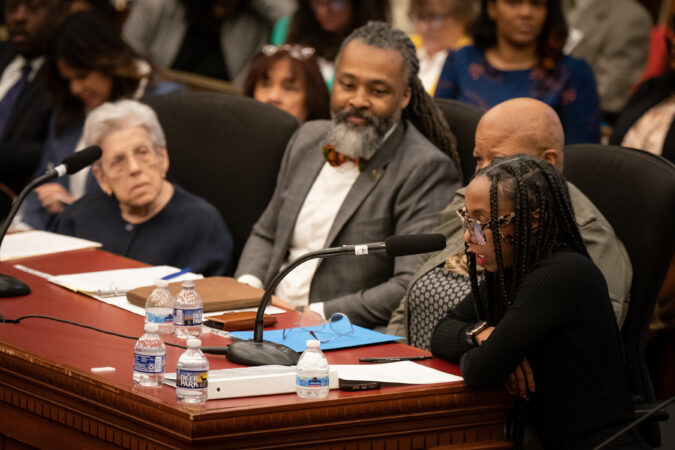
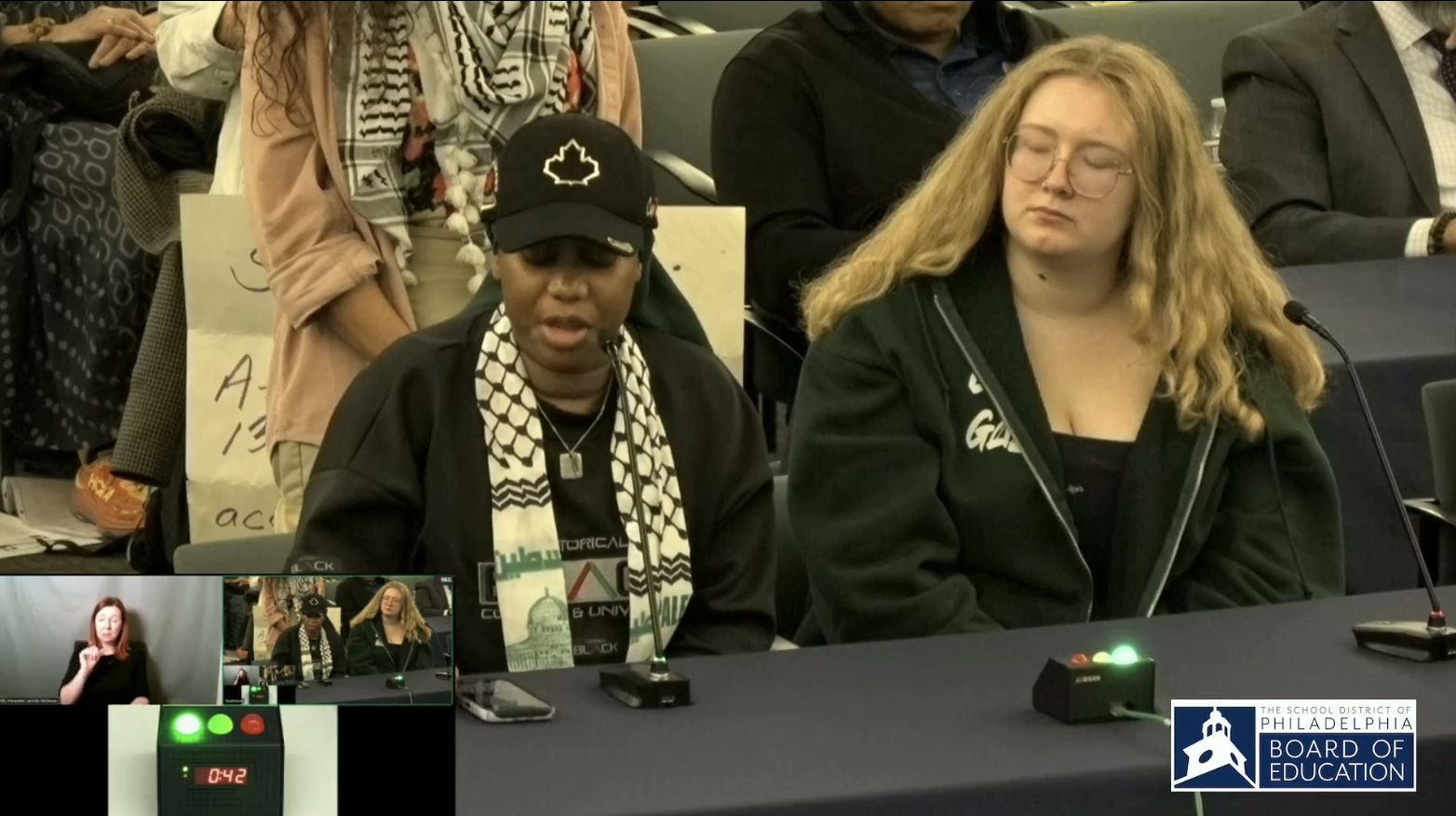
Ridgeway, who testified Thursday night, is suing the school district over alleged civil rights violations. She was suspended and ultimately disciplined after allegations of antisemitism and violations of the district’s social media policy surfaced, but is now back teaching at a district school.
“All I’ve ever wanted was to protect students in the ways that I wasn’t protected from the racism and discrimination that permeates the SDP schools,” she told the board. “While recently the district has addressed antisemitism, it has not addressed racism, Islamophobia, and anti-Palestinian discrimination with the same rigor.”
Ridgeway said the district “is at a crossroads right now, with a national spotlight looming.” She wondered whether it will “capitulate to McCarthyism tactics” or “channel the spirit of Harriet [Tubman] and Martin [Luther King Jr.] … our Black children deserve better. Our Muslim children deserve better. Our Palestinian children deserve better. Will you give it to them or will you disappoint them?”
Alex Volin Avelin, a district educator and member of Jewish Voice for Peace Philadelphia, called the congressional investigation “political theater. It’s government overreach. It is not about protecting students. It’s about intimidating and silencing teachers.”
Volin Avelin and Thomas Quinn, another district teacher, urged the district to learn from history. In the 1950s, the House Un-American Activities Committee singled out Philadelphia teachers for alleged communist ties. Twenty-six were ultimately fired.
“Looking back, we can all see the injustice and cowardice in the district’s choice to capitulate,” Volin Avelin said. “I urge the board today to learn from this shameful history and stand up for educators teaching critical content.”
Streater and Andrews stay on in leadership positions
The board, in its final action meeting of the year, also formally reorganized, setting meeting dates for 2026 and naming leaders.
Reginald Streater and Sarah-Ashley Andrews held on to their president and vice-president positions. Every board member supported Andrews’ candidacy; Streater won 8-0, with board member Crystal Cubbage abstaining. She gave no reason for the abstention.
Streater complimented his fellow board members for their work in the past year.
“We have demonstrated that steady leadership, not reactionary swings, produces real results,” Streater said.
The board has an enormous job in front of it in the next year: the facilities master planning process, which will bring school closures that will surely be unpopular.
“The responsibility is not lost on me,” Streater said, “and I gratefully accept.”
The proposed merger of Temple University and the Library Company of Philadelphia moved closer to reality this week with a nod from the library’s shareholders.
Shareholders voted Tuesday 174 to 33 in favor of the deal, and the action was followed Thursday with approval by the executive committee and finance and investment committees of Temple’s board of trustees.
But for that to happen, they must get approval for the merger from the Pennsylvania attorney general’s office and Philadelphia Orphans’ Court.
“We are delighted to help preserve one of Philadelphia’s most important educational and historical institutions through this partnership,” Temple President John Fry said in a statement. “This will help bring stability to the Library Company while also ensuring that its legacy does not just live on but also thrives. For Temple, this is also an opportunity to further enrich our academic and research resources.”
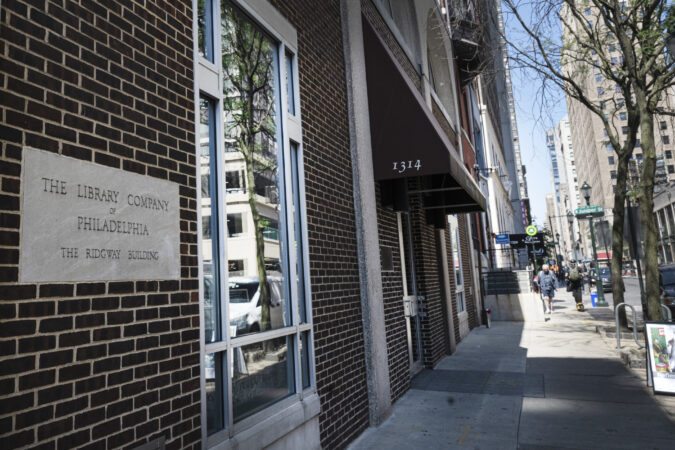
Not much will change for the Library Company’s day-to-day operations, at least immediately. It will remain at its 1314 Locust Street location in Center City and keep its collections, staff, identity, mission and programming, Temple said. It will operate as its own division within Temple Libraries and maintain its own board of visitors.
The Library Company will gain access to Temple’s research arm, grant-writing help, facilities and administrative functions, the university said.
“The Library Company has been an important resource for Philadelphians for nearly 300 years, ever since Benjamin Franklin first envisioned a shared library as a tool for advancing the self-education of his circle of artisans and tradesmen,” John Van Horne, Library Company director, said in a statement. “I am certain that Franklin would heartily approve of our expanded education mission over the last few centuries, and I have no doubt that he would also approve of this partnership with a university dedicated to serving his city and beyond.”
The move comes after the Library Company, faced with a string of operating deficits, began exploring merger possibilities with a number of other institutions. Financial data given to shareholders showed substantial operating deficits for most years since 2017, as well as projections for deficits continuing into 2030.
Officials estimated that in order to remain independent, the company would need to raise $23 million to add to existing endowment.
Van Horne previously said that raising that kind of money would be “an incredibly steep hill to climb, and probably unrealistic.”
The library houses more than 500,000 rare books, manuscripts, prints, photographs, works of art, ephemera, and other objects. It boasts items once owned by Benjamin Franklin and William Penn, and has a concentration in African American and women’s history.
Some shareholders strongly preferred that the library ― founded in 1731 as the first subscription library in the U.S. ― would have remained independent, even as they recognized the current financial bind.
Shareholder Joel Gardner was philosophical about the merger.
“I think it’s the only solution the Library Company could find. We all have to keep our fingers crossed that it works out,” he said while declining to add how he voted.
It didn’t seem likely that the Library Company would be able to raise the money required to remain independent, he said, “in a city that is not notable for having a large number of philanthropists and depends on just a few of them.”
Michelle Flamer, a shareholder who in an Inquirer opinion piece mourned the impending loss of the company’s “historical identity,” said Thursday that the deal “seemed like it was a fait accompli, and there was not very much we could do about it.”
The Library Company also will be incorporated into the university’s fundraising plans, Temple said, though the merger agreement made no promises. It calls for including the Library Company in Temple’s upcoming capital campaign, “with the goal of raising $25 million in new endowed funds to permanently and exclusively support the LCP Division.”
“This is especially significant as the Library Company will soon celebrate its 300th anniversary in 2031, which presents a major opportunity for fundraising,” the university said in its announcement.
The board unanimously approved the new contract for the principals union. A deal with the union had been struck last week after the principals spent three months working without a new contract in place.
Board approves the rest of its agenda and adjourns the meeting
And the board approved the rest of its agenda unanimously, too.
Goals and Guardrails happens this time next week, but this is the last action meeting of the year. That’s a wrap!
// Timestamp 12/04/25 6:50pm
Board member Lam requests more information from the district on controls in place to prevent cost overrun with vendors
ChauWing Lam said she’ll support a $43,390 contract with Mothers in Charge for violence prevention services, but has concerns about the cost overrun and controls in place to prevent that.
Superintendent Tony B. Watlington Sr. said there are controls in place, and promises more information.
// Timestamp 12/04/25 6:47pm
Board unanimously approves new contract for principals union
The board also approved CASA’s new contract, also with a 9 to 0 vote.
Board unanimously approves meeting schedule for 2026
Ultimately, the board decides to move forward with its schedule as written: separate action meetings and Goals and Guardrails meetings for 2026.
The vote was unanimous.
// Timestamp 12/04/25 6:35pm
Board moves from speakers into its agenda for voting
That’s the end of the speakers list. Now we’re onto voting.
The board is voting on its 2026 meeting schedule.
Board member ChauWing Lam has concerns about keeping the board’s “Goals and Guardrails” meetings separate from action meetings. She’d like more progress monitoring as part of the board’s action meetings.
Board member Crystal Cubbage says Goals and Guardrails should remain separate. She appreciates Goals and Guardrails happening in a space that’s separate, where she can think about them with a fresh mind.
Board member Whitney Jones concurs with Cubbage, and says perhaps it’s possible to pilot some Goals and Guardrails in one meeting.
Joyce Wilkerson, who was president when Goals and Guardrails was developed, said she supports keeping Goals and Guardrails separate. The board often starts its work at 9 a.m. on board days, she said, and it’s better for them to approach Goals and Guardrails with fresh eyes on a different day.
// Timestamp 12/04/25 6:28pm
Clouden family speaks to the board about the state of Philly schools
Horace Clouden, a retired district employee, wants to know the true number of underperforming district and charter schools.
“Families have no confidence” in district schools, Clouden said. Clouden is a proponent of traditional junior high schools, and believes that K-8 schools are leading to poor academic outcomes.
Mama Gail Clouden (who is married to Horace Clouden) said the district “needs to stop ignoring what we know is happening.”
“We have too many schools where people don’t know how to teach our children,” Mama Gail said.
Mama Gail suggests that the superintendent not just go out to schools for photo opportunities. Go into struggling schools, she said.
Leah Clouden, Mama Gail and Horace Clouden’s daughter, says the district is “warehousing students.”
// Timestamp 12/04/25 6:22pm
Retired teacher speaks in support of Keziah Ridgeway and Ismael Jimenez
Barbara Dowdall, a retired district teacher, said her mother was denied a job as a school librarian because she was Jewish.
She asks: “What is the school district’s lesson to students” when it mistreats educators Keziah Ridgeway and Ismael Jimenez?
// Timestamp 12/04/25 6:20pm
Retired teacher and activist tells board to stop renewing ‘substandard charters’
“More than half of district charter schools are underenrolled,” said Lisa Haver, a retired district teacher and founder of the Alliance for Philadelphia Public Schools.
“It’s not right for this board to renew substandard charter schools” but close neighborhood public schools, Haver said.
// Timestamp 12/04/25 6:17pm
District school psychologist asks the board to halt the facilities planning process
Paul Brown, a district school psychologist, asks for a re-examination of community engagement around the facilities planning process.
The current survey does not “truly capture the needs of Philadelphia,” Brown suggests.
“I’m asking the district to halt the process,” Brown said.
// Timestamp 12/04/25 6:15pm
Schools need more time for student relaxation, parent says
Toya Diggs-Clay, a district parent, says schools need more time for student relaxation and movement. They need better breakfasts and lunches, hygiene bundles going home with kids, and more.
// Timestamp 12/04/25 6:13pm
District speech language pathologist sounds the alarm on lack of pathologists
Tamara Sepe, a district speech language pathologist and parent, sounds the alarm about a lack of speech language and pathologists in the district, and asks for more transparency around the number of SLP positions in the district.
// Timestamp 12/04/25 6:10pm
Teacher wants the board to ‘resist’ the congressional investigation ‘as strongly as you can’
Freda Anderson, a district teacher, said the congressional investigation “is a witch hunt” and “does nothing to protect Jewish people.”
Anderson suggests the board and district “resist as strongly as you can.”
// Timestamp 12/04/25 6:07pm
Teacher tells the board to ‘look closely at which schools have high turnover’
Philip Belcastro, a teacher at Hill-Freedman World Academy, tells the board: “Teachers aren’t leaving students. In some cases, they’re leaving administrators.”
Belcastro: “I’m asking you again to look closely at which schools have high turnover,” and to make it publicly available.
// Timestamp 12/04/25 6:05pm
District educator calls the congressional investigation ‘political theater’
Volin Avelin, an observant Jew, said: “Don’t waste time complying with a redundant investigation.”
In the 1950s, the House Un-American Activities Committee dismissed 26 teachers for alleged Communism. “Learn from this shameful history and stand up for teachers teaching critical content,” Volin Avelin said.
// Timestamp 12/04/25 6:03pm
Schools became underenrolled because of disinvestment, parent tells the board
Melanie Silva, a district parent, tells the board: Schools became underenrolled because of your disinvestment.
Families aren’t ignoring middle schools because of transitions, Silva said, continuing: We’re ignoring them because you under-resourced them.
“We expect investment, not displacement,” Silva said.
// Timestamp 12/04/25 6:00pm
Teacher Keziah Ridgeway tells the board: ‘You are at a crossroads right now, with a national spotlight on you’
“All I’ve ever wanted is to protect students in the ways that I wasn’t protected from the racism that permeates the SDP schools,” Ridgeway said.
“Being a teacher should be heart work,” Ridgeway said. “It’s December and I probably spent $2,000 of our own money on our babies — because they are our babies.”
“You are at a crossroads right now, with a national spotlight on you,” Ridgeway said, asking if the district will “capitulate to McCarthyism.”
Keziah Ridgeway, a district teacher, speaks to the Philadelphia School Board during meeting on Dec. 4, 2025.
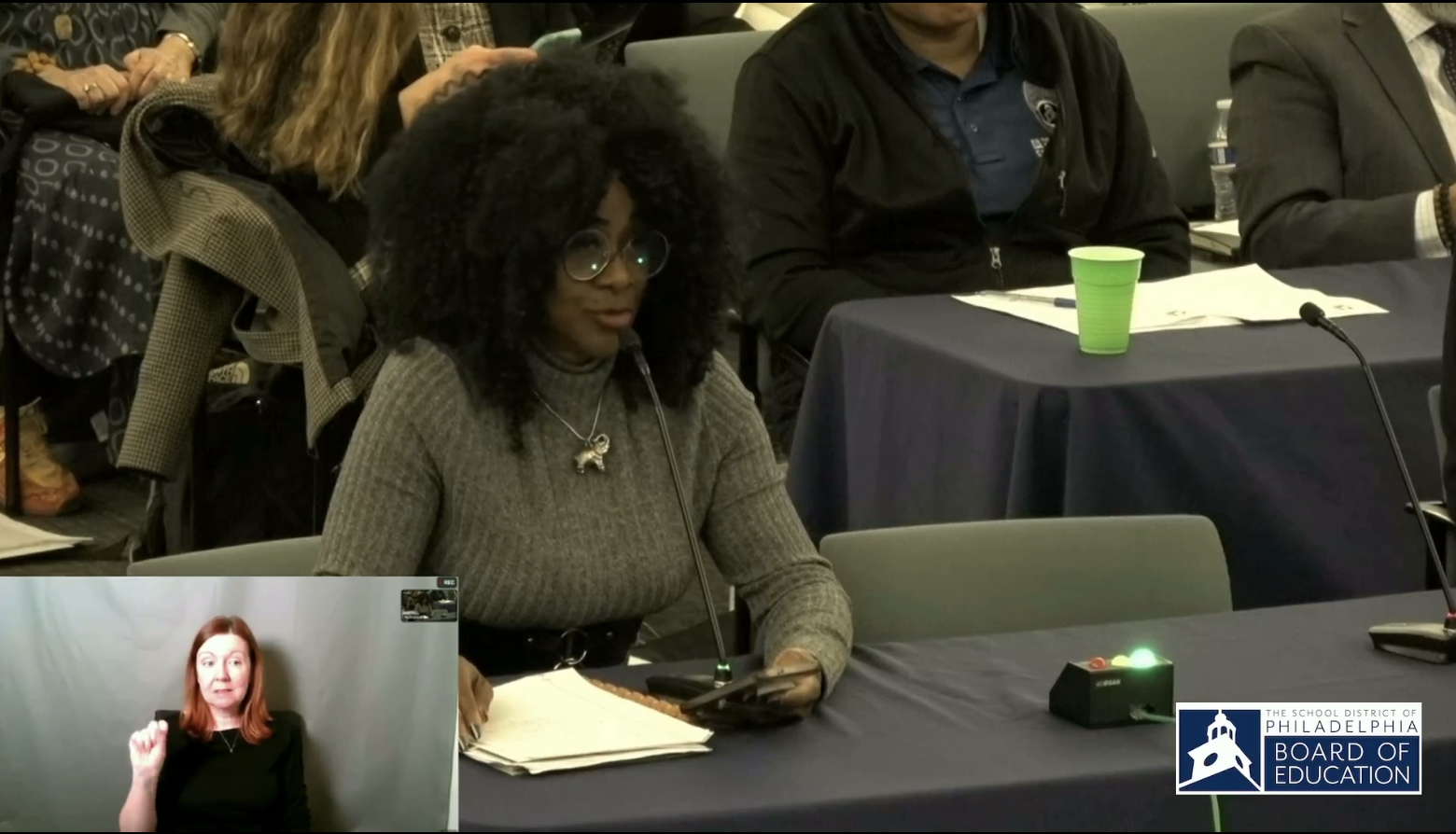
Hannah Gann, a district staff member, then spoke to the district about Ridgeway and other educators: “The baseless attacks on some of Philly’s best Black teachers” is meant to distract them, Gann said.
Allegations of Islamaphobia are just as serious as antisemitism, Gann said. “The district has far more culpability to act when its staff harms students than when its employees feel uncomfortable when they see the word Palestine on a T-shirt,” Gann said.
// Timestamp 12/04/25 5:52pm
District teacher and former teacher each testify in opposition to any school closures
Julian Prados-Frank, a district teacher, is testifying “to oppose any plan that would close schools.”
Schools represent a safe haven for students — sometimes the only place where they get nutritious meals and get social services, Prados-Frank said.
“Our students rely on their schools as a stable refuge,” Prados-Frank said. In his first period math class, many kids miss because of transportation issues. “These kids can’t miss more math,” he said.
Jess Morris-Horowitz, a former district teacher, also tells the board: “The anxiety-inducing phrase ‘school closures’ has been coming for months now.”
The district has spent millions on unnecessary changes, and let buildings languish, she said.
“I’m here to advocate for a focus on human-centered processes and decision-making,” Morris-Horowitz said. School closures will “critically disrupt” students’ and families’ lives.
// Timestamp 12/04/25 5:50pm
KIPP North parent speaks to the board in support of the charter
Pro bono librarian tells the board: ‘School librarians are not expendable.’
Deborah Herskovitz, a district parent who acts as the pro bono librarian at Vare-Washington, which has one of a clutch of “small guerrilla libraries” around the district, wants the board to know that what she provides is not the same has having a certified school librarian. “The district only has about three of those.”
“School librarians are not expendable. They are not extras,” Herskovitz said.
Suburban schools all have school librarians, she said, and these are the schools parents are leaving Philly for.
“Our library is a signal to perspective parents — we value reading here,” Herskovitz said.
// Timestamp 12/04/25 5:41pm
Another Mastery charter parent speaks in support of the school
Amberia Perkins, a parent at Mastery Charter Wister, said her kids love the school, and asks the board to support it.
// Timestamp 12/04/25 5:37pm
There is too much anti-Blackness and racism and not enough consequences, retired teacher says
Kristin Luebbert, a retired district teacher, says she witnessed many instances of racism, anti-Islamic, and anti-Palestinian behavior in the district.
“No consistent effort has been made to make white teachers interrogate their whiteness” and confront racism, Luebbert said.
“This leads to too many teachers and staff upholding racist and anti-Black attitudes,” said Luebbert, who is white.
There is too much anti-Blackness and racism, and not enough consequences, Luebbert said. The district must ensure that the staff that should be nurturing students “is not harming them instead,” she said.
// Timestamp 12/04/25 5:35pm
Teacher shares concerns about ‘politically motivated attacks’ on educators
Thomas Quinn, a district teacher, tells the board: “Right now, Philly schools are under politically motivated attacks.”
Another parent speaks in support of Mastery schools
Shavon Almodovar, a parent with children at Mastery schools, is also praising her kids’ schools. Mastery has pushed her kids to grow, given them challenging and fun content, and has developed her kids in all areas.
// Timestamp 12/04/25 5:30pm
Parent urges the board to consider standing behind KIPP North, rather than nonrenew it
“Our children … [should] be in schools where teachers truly love the work, and not just show up to do the work,” Hazel said.
“If we truly believe in equity … then we have to stand behind the places that are already doing that,” Hazel said. She asks the board to keep KIPP North open. (The board has moved to nonrenew KIPP over academic concerns.)
// Timestamp 12/04/25 5:27pm
Parents speak in support of two Mastery Charter schools
Yolanda Williams, a grandparent at Mastery Charter Clymer, says the school has done wonders for her granddaughter.
“Me, I don’t worry when I drop her off at school because she’s at Mastery. I know she’s fine, I know they’ll treat her right, and I know she’ll get her education,” Williams said.
Joyletta White, a parent at Mastery Charter Gratz, has had a positive experience at Gratz, where her son is thriving.
// Timestamp 12/04/25 5:20pm
Principals union president expresses gratitude to the board for their newly ratified contract
“It was very clear from actions over the weekend that we were heard loud and clear,” Cooper said. “Any time that men will meet with you on a Sunday — on a football Sunday — you know that a contract is in the making.”
There were no raises in the 2016 contract (though principals became 12-month employees again, as opposed to the 10-month employees they had been.) There were just bonuses.
But the board was listening this time, Cooper said. Over half of CASA’s 1,000 members voted on the contract, and 97% voted for it.
“We are partners with the district,” Cooper said. “We try to lead by example.”
“We didn’t get everything that we wanted, but we are leaving feeling heard, and we are leaving with a fair contract,” Cooper said.
Robin Cooper, president of CASA, the principals’ union, speaks to the Philadelphia school board at a meeting on Dec. 4, 2025.
// Timestamp 12/04/25 5:16pm
Public speakers begin
We’re onto public speakers now.
There’s lots of written testimony defending Keziah Ridgeway and Ismael Jimenez, district educators who were alluded to in an order for a congressional investigation into alleged antisemitism in the district.
Sarah-Ashley Andrews is unanimously reelected as vice president
Andrews is unanimously reelected vice president, 9-0.
Andrews thanks her fellow board members “for your continued trust and support, and the push. I really appreciate the push. Thank you for the opportunity to serve again.”
Streater also responds to his reelection: “This was not a box-checking moment,” and he appreciates that the board still has confidence in him.
Sarah-Ashley Andrews speaks at City Hall on April 2, 2024.
// Timestamp 12/04/25 5:04pm
Board moves on to election of vice president
Sarah-Ashley Andrews is renominated as board vice president.
Cheryl Harper speaks out for her as a hard worker and steadying force, someone who works with students and community members especially well.
Crystal Cubbage says: “She has a great sense of the city and her dedication to the residents of the city in all neighborhoods is admirable. I’d like to see her play an expanded role as our vice president if elected.”
ChauWing Lam, who joined the board at the same time as Andrews, said she admires “the proudness with which she represents this board, her hardworking nature, and the style in which she welcomes those around her, brings people in.”
Streater is now praising Andrews. “It’s been a blessing to see a young powerful Black woman show up in spaces,” he said. Streater said he sees Andrews as a future president. “I’ve seen you in action and I know you’re ready to take it to the next level,” he said.
// Timestamp 12/04/25 5:03pm
Streater is reelected as board president
Streater is reelected 8-0.
But there was a bit of a suprise: Board member Crystal Cubbage abstained from voting.
Reginald Streater spoke at City Hall on April 2, 2024.
// Timestamp 12/04/25 4:57pm
Board prepares to elect its president and vice president for 2026
We’re into the board reorg now. As secretary, Watlington presides. Reginald Streater is renominated quickly.
Streater accepted the nomination “humbly,” he said. He praises the whole board for its work in the past year. “We have demonstrated that steady leadership, not reactionary swings, produces real results,” Streater said.
The board has an enormous job in front of it in the next year: the facilities master planning process, which will bring school closures that will surely be unpopular.
“The responsibility is not lost on me,” Streater said, “and I gratefully accept.”
// Timestamp 12/04/25 4:45pm
Board members respond to superintendent’s report
Board member Cheryl Harper applauds the CASA contract. Principals, Harper said, “are the backbones pushing education in the schools…you deserve the contract, and I’m so happy that you have it.”
Lots of praise for CASA from the board, generally.
Board president Reginald Streater on district principals: “You are first in our line fighting for our babies,” he said.
// Timestamp 12/04/25 4:43pm
The district has made improvements to the school selection process, Watlington says
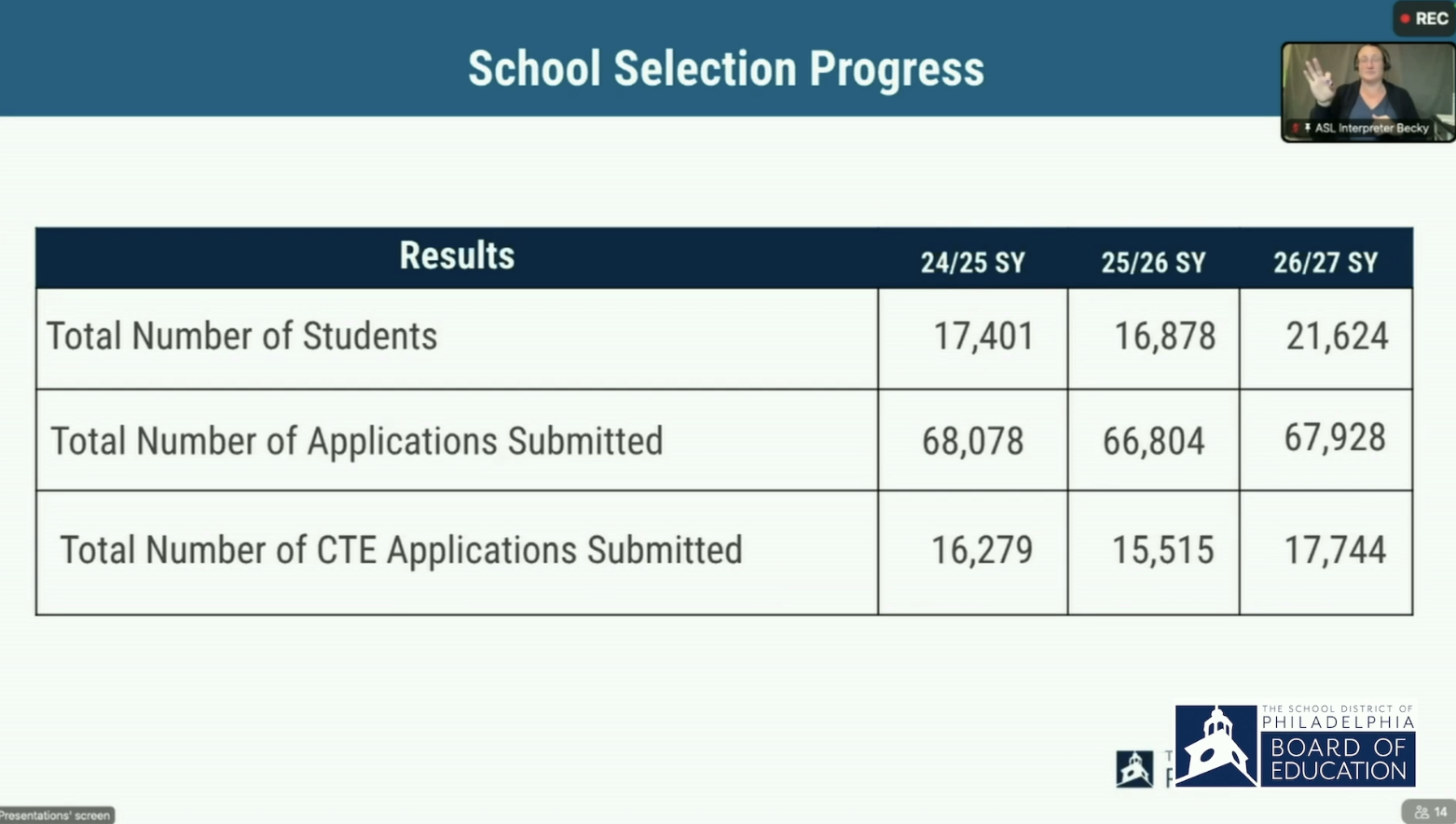
An update on school selection: The superintendent says the district has made improvements to the process, changes recommended by an outside consultant including optimizing the lottery, ranking and waitlist features, and enabling schools more leeway to select criteria for their best-fit students.
This year, 21,624 students applied to criteria-based schools, up from 16,878 students last school year. There were 67,928 total applications submitted, and 17,744 career and technical education applications submitted (that number is also up).
Superintendent Tony Watlington shared this slide on progress with the district’s school selection process during a school board meeting on Dec. 4, 2025.
// Timestamp 12/04/25 4:37pm
5,000 people have taken the facilities planning survey so far, Watlington shares
An update, now, on the facilities planning process: 5,000 people have responded to the district’s new facilities survey.
“It’s been an honor to work with Teamsters Local 502,” Watlington said, noting principals’ key role in student learning. “We ask the board for your favorable adoption of the contract tonight.”
// Timestamp 12/04/25 4:22pm
Two students share their love for KIPP North
Student speakers are up now.
First is Jovahni Hazel, a student at KIPP North. Jovahni said he never got help at his old school, but he gets lots of help at KIPP. His sister used to hate school, but she loves school at KIPP.
“Kids like me work hard, we try, we show up, we push through things most people never see … Please keep [KIPP] open.” (The board has moved to nonrenew KIPP over academic concerns.)
Timothy Fontaine, another KIPP North student, loves his school. Timothy loves music.
“At KIPP North, they’re really the ones who let me grow with it.”
A drummer, Timothy has had chances to lead music class. The staff has helped him in many ways.
“This school is more than a school to me. It’s my home.”
// Timestamp 12/04/25 4:17pm
Attendance taken as the meeting begins
All nine board members are present at tonight’s meeting.
// Timestamp 12/04/25 4:09pm
Seniors and teacher of the month are honored
Seniors of the month are Juan Aquino of Olney High School and Andre Carter of Parkway Northwest High School for Peace and Social Justice.
Teacher of the month is Cynthia Carr from Swenson Arts and Technology High School.
// Timestamp 12/04/25 4:06pm
Final school board meeting of the year begins
School board meeting, here we go!
The final school board meeting of 2025 is the annual re-organizational meeting, when officers will be elected for 2026.
School board president Reginald Streater kicks the meeting off.
Philly school board to host its monthly action meeting
// Timestamp 12/04/25 3:45pm
The Philadelphia school board is set to host its monthly action meeting — the last of 2025 — starting at 4 p.m.
Among the topics on the agenda is the election of the board’s president and vice president for the coming calendar year.
David E. Loder, 71, of Flourtown, longtime attorney at Duane Morris LLP, multifaceted trustee and board member, education advocate, mentor, and volunteer, died Thursday, Oct. 23, of complications from lymphoma and scleroderma at his home.
A graduate of Germantown Friends School and what is now the University of Pennsylvania’s Carey Law School, Mr. Loder spent 43 years, from 1982 to his retirement in 2024, as an associate, partner, and chair of the health law group at the Duane Morris law firm. He became partner in 1989 and helped the health law practice gain national recognition for its success.
Mr. Loder and his team represented the Hospital and Healthsystem Association of Pennsylvania, the Pennsylvania Trauma Systems Foundation, and other medical providers in all kinds of consequential litigation. In 2006, he helped local hospitals win a multimillion-dollar settlement with an insurance company. In 2010, he supervised a case that successfully revived a state abatement program that alleviated medical malpractice costs for physicians and hospitals.
In a tribute, former colleagues at the Pennsylvania Trauma Systems Foundation praised “his ability to see both the legal complexities and the human dimensions of every situation.”
Mr. Loder stands with Blanka Zizka , the Wilma Theater’s artistic director, at an event in 2018.
He was adept in vendor contract law, board governance, policy development, and human relations issues. He took special interest in doctor-patient relations and told the Daily News in 2016: “While it is critical that the healthcare provider convey necessary and accurate information to patients concerning their health condition, it is also important to remain sensitive to the patient’s interest and willingness to hear such information.”
Matthew A. Taylor, chair and chief executive officer at Duane Morris, said in a tribute: “He was one of the nation’s most respected healthcare lawyers.”
Mr. Loder also represented the Philadelphia Zoo, homeowners fighting increased property assessments, participants in gestational-carrier programs, and other clients. “He was a shrewd judge of character,” said his son Kyle. “He was thoughtful and strategic. He became a confidant and adviser to many of his clients.”
John Soroko, chair emeritus at Duane Morris, said in a tribute: “Dave had a unique ability to turn friends into clients. But, even more importantly, to turn clients into friends.”
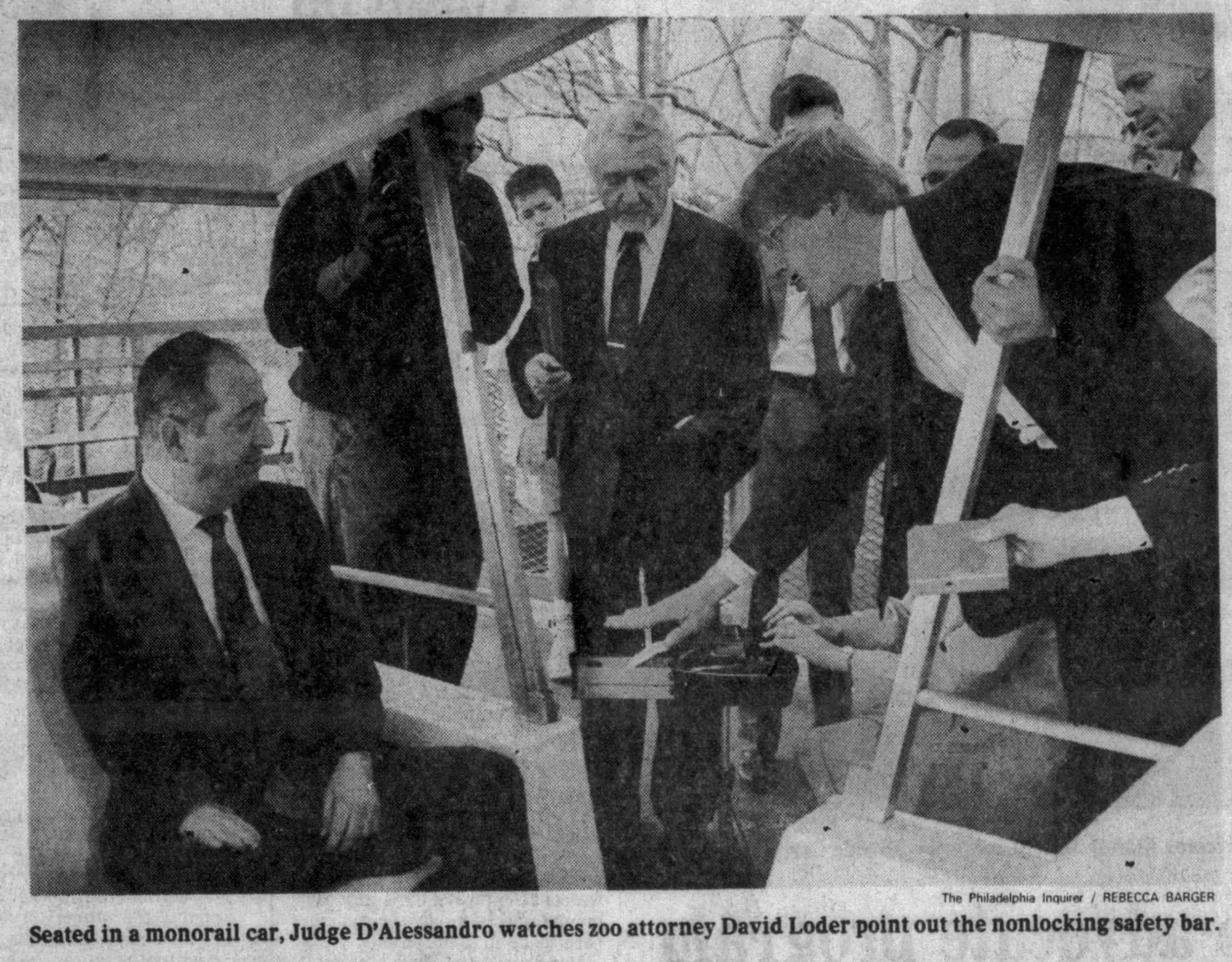
This photo of Mr. Loder (right) representing the Philadelphia Zoo appeared in The Inquirer in 1989.
Away from the law firm, Mr. Loder was chair of the board for the Wilma Theater and served on boards at Germantown Friends, the old University of the Sciences, the World Affairs Council of Philadelphia, and other groups. He was a trustee at the Dolfinger-McMahon Foundation and the Christian R. and Mary F. Lindback Foundation, and represented the Lindback regularly at its annual distinguished educators awards ceremony.
“There’s a firm belief in the importance of excellence in education in the public schools,” he told The Inquirer at the 2016 Lindback ceremony. In 2017, he said: “All of us need to recognize that the Philadelphia public schools are serving an incredibly important function.” In 2018, he said: “People need to know that there are some exceptional educators in Philadelphia public schools.”
He mentored many other lawyers and volunteered to help students in need. In online tributes, friends noted his “kind advice,” “voice of reason and compassion,” and “sense of humor, keen intellect, love of sports, and limitless knowledge on so many topics.”
In 1998, he was featured in an Inquirer story about the challenges parents face when dealing with young children stuck inside during the cold winter months. He said: “I find that if you can get the kids down by 6 p.m. and have a glass of wine in front of the fireplace, it gets you through.”
Mr. Loder enjoyed sports and the outdoors.
His family said in a tribute: “He took life seriously but never too seriously, and his warmth, humor, guidance, and generosity will be remembered.”
David Edwin Loder was born April 22, 1954, in Yalesville, Conn. His father, noted theologian Theodore Loder, moved the family to West Mount Airy when Mr. Loder was a boy, and he graduated from Germantown Friends in 1972.
He starred in football, basketball, and baseball in high school, and went on to play basketball and earn a bachelor’s degree in political science at Wesleyan University in Connecticut in 1977. He worked briefly after college as a high school history teacher, served an independent study fellowship in Poland, earned his law degree at Penn in 1981, and studied international law at the London School of Economics and Political Science.
He married Nadya Shmavonian, and they had sons Marek and Kyle, and a daughter, Julya, and lived in Philadelphia and Flourtown. After a divorce, he married Jennifer Ventresca and welcomed her children into the family.
Mr. Loder liked hiking in New York’s Adirondack Mountains and relaxing at his getaway home on Long Beach Island.
Mr. Loder enjoyed tennis, squash, and golf at the Philadelphia Cricket Club. He liked hiking in New York’s Adirondack Mountains and relaxing at his getaway home on Long Beach Island, N.J.
He doted on his family and Labrador, and played cards every month for years with an eclectic group of old friends.
“David embodied the values of faith, service, and integrity,” his family said. His son Kyle said: “He was magnetic, gracious, thoughtful, and curious. He was easy to talk to.”
In addition to his wife, children, and former wife, Mr. Loder is survived by a granddaughter, a sister, two brothers, and other relatives.
Mr. Loder “was magnetic, gracious, thoughtful and curious,” his son Kyle said.
A memorial service and celebration of his life were held earlier.
Donations in his name may be made to the Penn Medicine Scleroderma Center, Attn: Amanda Hills, 3535 Market St., Suite 750, Philadelphia, Pa. 19104.
As Swarthmore College embarks on an ambitious campaign to update its campus infrastructure, plans for a redeveloped athletic complex are taking shape. Under the college’s proposal, Cunningham Fields, a set of playing fields located off College Avenue and North Chester Road, wouldbe redesigned to include updated grass and turf fields, new tennis courts, spectator seating, and a pavilion with restrooms and team meeting areas.
As the lengthy development process between the borough and the college continues to play out, here’s what you need to know about the proposed redesign.
What is Cunningham Fields?
Cunningham Fields is a set of athletic fields located on the Swarthmore College campus, off College Avenue and North Chester Road. The complex currently includes four grass fields, six tennis courts, locker rooms, and restrooms. The fields are used for lacrosse, field hockey, soccer, rugby, and Ultimate Frisbee practice. They are open to the public when they are not in use by the college.
What does the proposed renovation look like?
The Cunningham Fields redesign proposes the construction of three new sports fields; a pavilion with restrooms, team meeting areas, a training room, and storage; additional spectator viewing areas; and the addition of six tennis courts and relocation of existing tennis courts.
One all-purpose turf field wouldbe installed for soccer, lacrosse, rugby, Ultimate Frisbee, kickball, and flag football. The all-purpose field wouldnot have lighting, a sound system, or permanent seating.
A second proposed turf field wouldbe used primarily for field hockey. That field wouldinclude spectator seating for up to 160 people, a press box, a scoreboard, a sound system, and lighting, per NCAA regulations. The field may be lit from 4 to 8 p.m., depending on the season, with the option to extend to 10 p.m. one day a week for fall night games. The use of the sound system wouldbe limited to intercollegiate games, which the college says typically occur twice a week during the season.
A new grass field wouldbe put in primarily for soccer, rugby, and other recreational activities. The field wouldnot have lighting or a sound system, and wouldbe designed as a “quiet and calm environment,” the college says.
The proposal also includes renovating existing tennis courts and adding six courts, which the college says wouldallow the men’s and women’s teams to play side by side.
Why does the college want to renovate Cunningham Fields?
The Cunningham Fields renovation is part of a larger plan for Swarthmore’s athletic facilities, which the college says are in need of major updates.
Cunningham Fields currently presents “a unique set of challenges,” according to the college. The natural grass fields require significant maintenance. Its tennis courts have poor drainage and no spectator seats and are split between two locations, creating scheduling conflicts during meets. In addition to Cunningham Fields, the college says, Swarthmore’s Lamb-Miller Field House is “at the end of its usable life” and no longer meets NCAA requirements.
A spokesperson for the college said in a statement that the proposed development is “an exciting project designed to meet the needs of our students while also serving as a resource for the broader Swarthmore College and Borough community.”
The proposed renovation follows the 2024 adoption of “Swarthmore Forward,”a strategic plan that articulates the college’s vision for nurturing “all aspects” of students’ well-being, including health and wellness.
How has the Cunningham Fields proposal changed over time?
After receiving community feedback, the college says it has made significant changes to its initial plans and is “committed to preserving a true parklike character” through modern lighting and sound technology, quiet hours, deliberate scheduling, and environmentally responsible materials, among other measures.
While the college initially planned to put lighting on all of the new fields, it now plans to light only the tennis courts and field hockey field. Plans for a new fitness court have been eliminated. Spectator seating and new netting have been pared back.
To address the complaint of buses waiting along College Avenue, the South Cunningham Lot would be used as the main entry point, and drop-off and pickup wouldtake place at a dedicated area near the parking lot entrance off South Chester Road.
Has the borough approved the renovations?
Not yet. Swarthmore College is in the middle of a development process with the borough that could take months, or longer.
When property owners want to build something that does not comply with the existing zoning code (like the Cunningham Fields proposal), they can go through one of two avenues. Developers can either request that a municipality rezone its specific parcel of land, or propose a text amendment, which changes the municipality’s zoning code at-large.
The college has gone the latter route, requesting an amendment to the borough’s zoning code. As proposed by the college, the amendment would add various permitted uses to the current IN-B Institutional District code, including changes that would affect the allowance of tennis courts, walking paths, safety netting, and scoreboards.
Before a text amendment can be passed, it has to go through the borough’s planning and zoning committee, borough council, and planning commission. At a meeting on Dec. 1, the Swarthmore Borough Council discussed traffic, environmental impacts, and noise issues, raising questions like how late the college could use its field lights and where and when spectators could park for games. The council plans to send a list of questions and concerns to the planning commission by the end of the month. The commission will then study those issues before returning with a recommendation.
If the zoning amendment is approved, the college’s development proposal would then have to go through an approval process with the county and borough, introducing another set of public meetings.
How do residents feel?
At a Nov. 20 meeting of Swarthmore’s planning and zoning commission, fears about changing neighborhood character and environmental impacts dominated public comment, according to the Swarthmorean, a community newspaper. Some residents expressed concerns about disruptive late-night athletic games, while others questioned the college’s decision to pursue a text amendment rather than a zone change.
In its statement, the college said it looks forward to “continued engagement with our neighbors and the Borough as the process moves forward and to creating a space that benefits both the College and Swarthmore residents.”
This suburban content is produced with support from the Leslie Miller and Richard Worley Foundation and The Lenfest Institute for Journalism. Editorial content is created independently of the project donors. Gifts to support The Inquirer’s high-impact journalism can be made at inquirer.com/donate. A list of Lenfest Institute donors can be found at lenfestinstitute.org/supporters.