After three days out of school buildings, Philadelphia public students and staff will be back to in-person learning Thursday.
Officials announced the call Wednesday afternoon.
Archdiocesan high schools and city parochial schools will also be back to traditional classes Thursday, officials said.
In the aftermath of a significant winter storm and sub-freezing temperatures, Superintendent Tony B. Watlington Sr. gave students and staff a full snow day Monday, with no learning or teaching obligations.
He pivoted the district’s 125,000 students to virtual instruction Tuesday and Wednesday as conditions remained tricky to navigate.
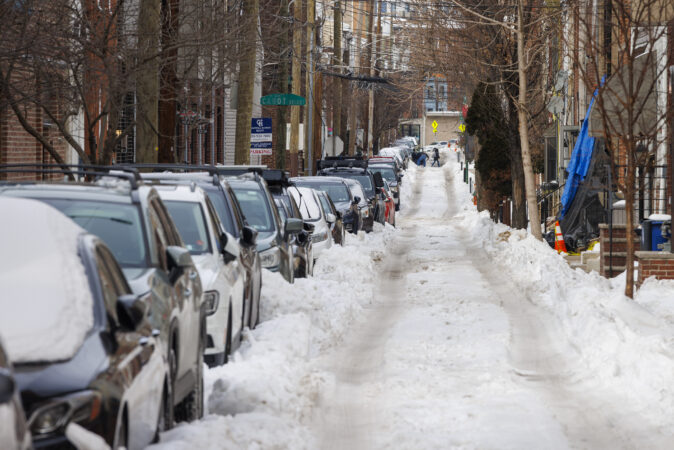
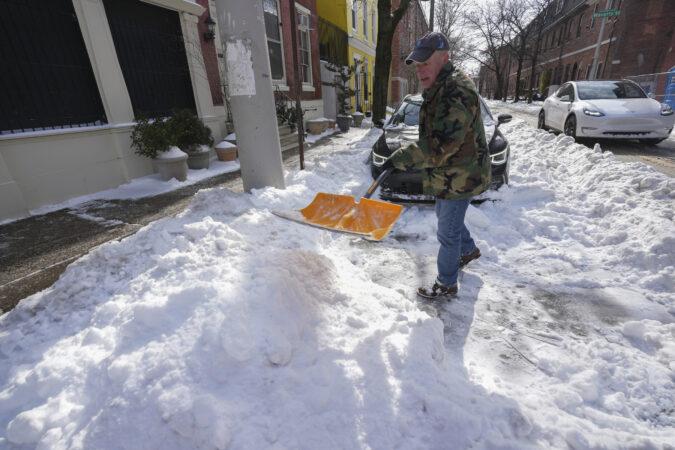
Temperatures are expected to dip even lower Thursday, and many side streets and sidewalks aren’t clear, but officials have said they prioritize in-person learning when conditions are safe for students and staff.
“School District and City of Philadelphia officials have been working around the clock to clear snow and ice from roads and walkways to support a safe return to in-person learning,” Watlington wrote in a message to families and staff Thursday.
Any students arriving late because of weather-related challenges will not have their lateness counted against them, the superintendent said. The same goes for staff not able to make it into work on time because of weather-related commuting challenges.
Yellow bus service will operate as usual, though delays might occur, Watlington said.
After school activities are on, the central office will be open, and the school-selection deadline has been extended from Wednesday to Friday so families can confer with school counselors they may have had difficulty reaching because of the snow closures.
Philadelphia’s school board meeting, also scheduled for Thursday, will also happen in person. Board members and members of the public have the chance to participate virtually, as well.
While preparing her four sons to take a dream family vacation in the Caribbean last month, Carolyn Piro carefully reviewed every detail to get them ready.
She also contacted the Royal Caribbean cruise line about accommodations for her children, because heroldest, Sean Curran, has autism, and two other sons also have developmental disabilities.
The trip ended abruptly when Curran, 31, was kicked off the Celebrity Cruise ship in Cozumel on Christmas Eve after an incident that his family says was mishandled by cruise officials who lacked understanding of his disability.
“Worst Christmas ever. Horrible,” Curran said. “I’m never going on a cruise again.”
Piro, a trauma therapist, is now on a mission to increase awareness and acceptance for people with autism. About 1 in 31 children in the United States are diagnosed with autism, according to the Centers for Disease Control and Prevention, and that number is 1 in 29 in New Jersey, according to the group Autism New Jersey.
“They have a place in our society. They have a place in our community,” Piro said.
Royal Caribbean, which advertises an “autism friendly” environment, said it had reviewed the incident and “concluded we could have been more sensitive to their needs during the debarkation process.” The company, which owns Celebrity Cruises, will provide additional training for employees, a spokesperson said.
‘Just trying to be nice’
Curran livesas independently as possible at home, Piro said. He participates in job training at Ability Solutions in Westville, has a girlfriend, sings with the Pine Barons Chorus, volunteers at an animal hospital, and enjoys dancing.
The Cherry Hill family was having a great time on a seven-day Caribbean cruise in December to celebrate Piro’s 60th birthday. It was Curran’s fourth cruise, and he knew the ropes and was allowed to roam unaccompanied.
Four days into the cruise,Curran was in a pool lounge when, he said,a teenage girl asked him to purchase her a Long Island iced tea. He said he bought the drink, unaware that it contained alcohol. His mother and brothers were not with him at the time.
According to Curran, the girl touched his chest and stomach, used profanity, and followed him to a hot tub, where he lifted her like Shrek did when he rescued Princess Fiona from a dragon in one of his favorite movies.(Piro said Curran enjoys swimming and playing in the water.)
The girl’s parents arrived and her mother began screaming, Curran said. Ship personnel escorted Curran to a security office, where he was asked to give a statement, he said.
“I have autism and I was just trying to be nice,” he wrote in the statement, given to ship personnel and provided to The Inquirer. The statement was only a few sentences of explanation Curran wrote about what happened.
Piro arrived during the questioning and saidCurran offered an apology to the girl’s parents. Curran said he asked for patience and repeated what his mother taught him to say about having autismwhen he encountered difficulty explaining.
Curran was given 90 minutes to pack and leave the ship, his mother said. She accompanied him, along with another son. Other passengers gawked and pointed as security escorted them off the ship, she recalled, saying, “Look at them: They’re getting kicked off the ship.”
“It was just so shameful,” Piro said.
Piro said shebelieves ship officials had other options, such as restricting Curran to his room, rescinding his room cardthat allowed him to buy drinks, or allowing him to disembark at their next port of call, she said.
“With all of the information about autism, there was no compassion. They treated him as a fully functioning adult,” the mother said.
Piro said the family was given only a security incident report and told that the FBI and Homeland Security would be notified. She was not allowed to speak with the girl’s family, whose full name she does not know. She said no charges were filed.
Sean Curran, 31, of Cherry Hill, boarding a Celebrity cruise ship in December for a family vacation. He has autism and was evicted from the ship after a misunderstanding.
Piro,Curran, and another of her sons who left the cruisewere reunited with two other family members several days later when the ship docked in Florida.
Piro said she accepted an apology from Royal Caribbean after returning home, complaining about the incident, and sharing her story publicly. She also said she had askedto be reimbursed for the $20,000 she spent on the cruise and expenses. Royal Caribbean declined to comment on the request.
A spokesperson said Royal Caribbean’sadditional training for its staff will “ensure this experience doesn’t happen again.” She declined to comment further.
Stacie Sherman, a spokesperson for Autism New Jersey, declined to comment about the specific incident but agreed there is a need for more awareness. She has had similar experiences as the mother of two on the autism spectrum.
“Education and awareness is key,” Sherman said.
Sherman said acceptance is slowly growing. Her daughter used to get nasty looks and comments for making loud noises or having a tantrum in public places, she recalled.
“I get way more smiles and nods, even praise and offers of help. It gives me hope,” Sherman said.
Sean Curran, 31, of Cherry Hill, plays with a dolphin during a cruise excursion in Cozumel, Mexico in December.
Seeking change to the system
When the family arrived home, Piro said, she reprimanded Curran and limited his activitiesfor a month. Piro said sheacknowledges that he did something wrong but said his intent was not malicious.
She said she contacted the cruise line a month before their vacation about her children’s special needs. In addition to Curran, two younger sons have mosaic Down syndrome and fragile X syndrome.
Piro said she requested special seating, for example, to isolate the family in the dining area from noise andlarge groups. During an excursion, she rented a cabana away from other guests, she said.
“We don’t go anywhere where people don’t stare, giggle, or make a comment,” Piro said.
Piro said she plans to monitor whether Royal Caribbean implements the additional trainingthat it has promised. She wants changes “in the system so that this doesn’t happen again.”
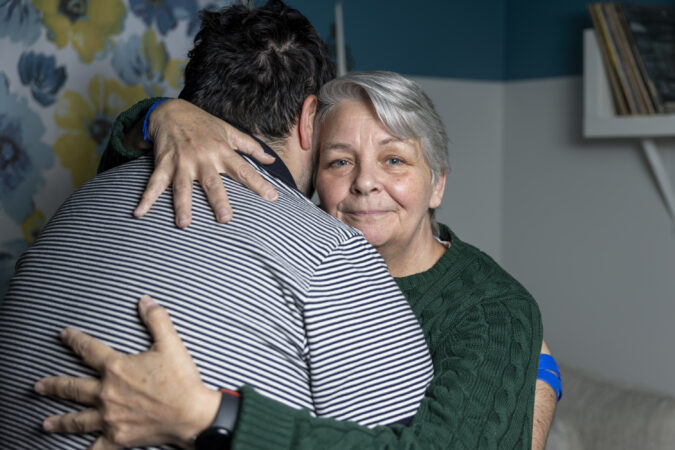
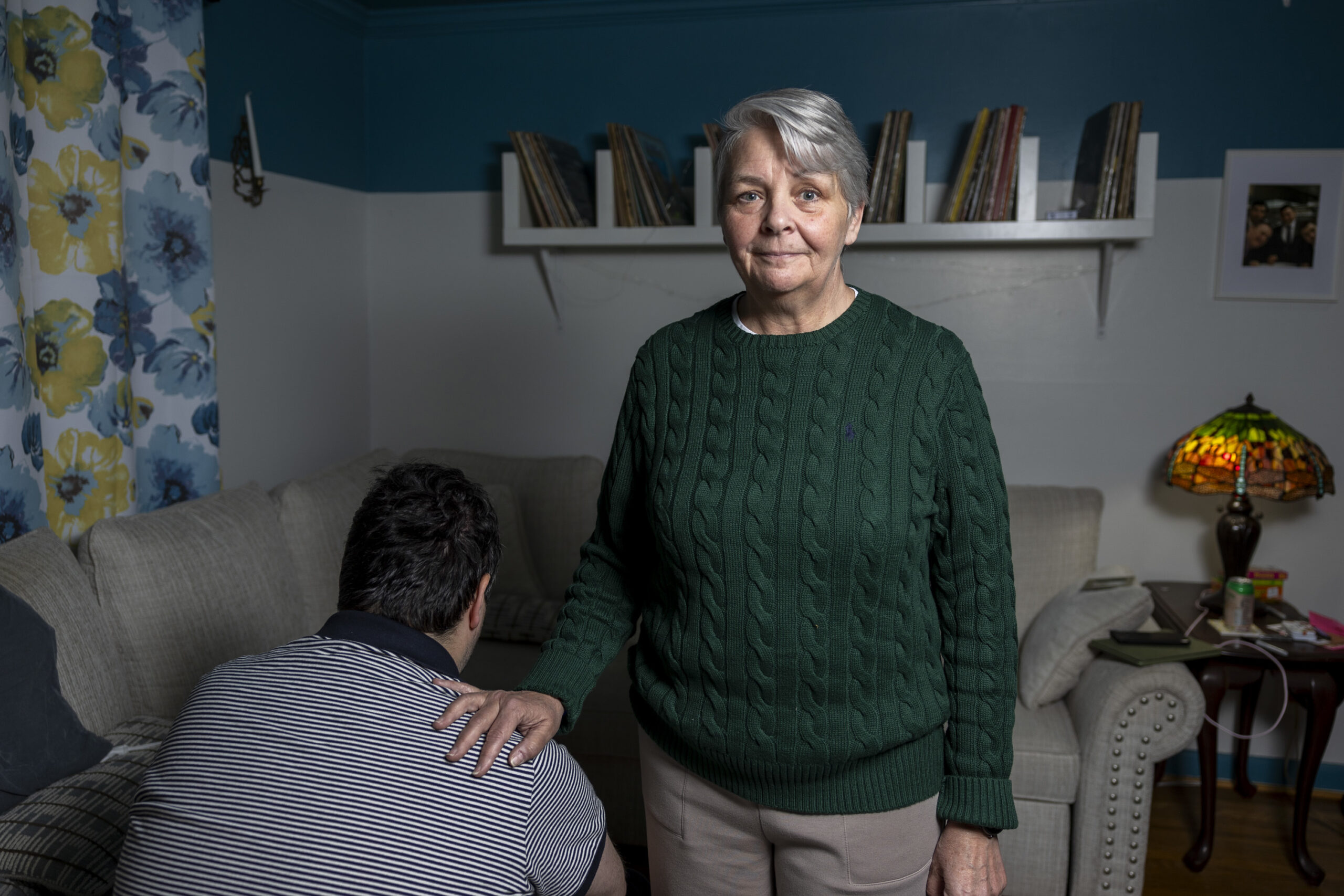
Carolyn Piro, of Cherry Hill, poses for a portrait with her son Sean, who has autism, in their home this month.
Curran said telling his story was “making me feel better.” He wants to better advocate for himself and others with autism.
“I want people to treat other people with dignity and respect, compassion, and kindness,” he said.
With streets still snowy and frigid temperatures locked in for days, Philadelphia school buildings will remain closed Wednesday, Superintendent Tony B. Watlington Sr. said.
Classes are on, though, with students expected to complete work virtually and educators required to teach.
“Based on the conditions due to the inclement weather, out of an abundance of caution and in order to ensure the safety of our entire school community, including our valued staff members who commute from various counties across the region,” the virtual call was made, Watlington said in a message to families and staff.
District offices will be operating virtually as well. No after-school activities will be held.
“The safety and well-being of our students, staff, and families is our top priority,” spokesperson Naima DeBrest said in a statement. “To the greatest extent possible, the School District of Philadelphia strives to keep schools open for in-person learning to accelerate student achievement. The recent snowstorm in the greater Philadelphia region dropped significant snow and ice, which has left slick or covered roads. It continues to impact drivers and commuters.”
The district’s plans for the rest of the week have not yet been determined, officials said. It had already planned report card conferences and early dismissals for all schools Thursday and Friday.
Archdiocesan high schools and parochial elementary schools in the city will also be virtual Wednesday.
Suburban Catholic schools typically follow the decisions of their local school districts.
Other districts have already said they will open Wednesday
Some suburban school districts are going in a different direction. Upper Darby schools will be open Wednesday, but with a two-hour delay, Superintendent Dan McGarry said in a letter to families.
“The district maintenance, facilities, and transportation departments have worked very hard to prepare our schools for students and staff,” McGarry wrote. “I also know that the township continues to work hard to clear roads as quickly and safely as possible … please be safe as you make your way to school tomorrow.”
Upper Darby is a smaller district, with just 12,500 students in 13 schools. Philadelphia, by contrast, has about 125,000 students in 218 schools. It maintains about 300 buildings.
Colonial Schools, in Montgomery County, will also be open Wednesday, operating on a regular schedule.
The federal commission seeking personal contact information for faculty and staff at the University of Pennsylvania has accused the school of engaging in an “intensive and relentless public relations campaign” to avoid complying with the subpoena.
The U.S. Equal Employment Opportunity Commission, in a court filing Monday, defended its subpoena seeking potential witnesses and victims of antisemitism at the university and said therequest is not unusual forsuch investigations. The commission is seekingemployees’ names, home addresses, phone numbers, and email addresses to further an investigation it began in 2023 over the school’s treatment of Jewish faculty and other employees regarding antisemitism complaints following Hamas’ attack on Israel.
The commission’s request has spurred a backlash from student and faculty groups, including Penn’s chapter of the American Association of University Professors and the Penn Faculty Alliance to Combat Antisemitism, arguing that the information should not be turned over. Penn has refused to provide the information, prompting the EEOC to file the lawsuit in November.
Penn’s response to the lawsuit, along with filings by other groups,“forecast highly speculative and deeply nefarious outcomes should the EEOC’s subpoena be enforced,” the commission said. “This dark prognosticating has been predictably (and immediately) reported in national, local, and campus outlets.”
The university, in a filing earlier this month, said the commission’s request was “disconcerting” and “unnecessary” and could pose a threat to employees.
“The EEOC insists that Penn produce this information without the consent — and indeed, over the objections — of the employees impacted while entirely disregarding the frightening and well-documented history of governmental entities that undertook efforts to identify and assemble information regarding persons of Jewish ancestry,” the university wrote in its filing.
The commission argued in response that Penn’s assertion of potential danger to employees is “untethered from both the law and the reality of these proceedings.”
“The EEOC seeks only to investigate allegations of serious, widespread antisemitic harassment in Respondent’s workplace,” the commission argued.
The commission, the group said, is only seeking information on faculty and staff “who complained of antisemitic harassment, who belonged to Jewish affinity organizations, or who worked in the Jewish Studies Program.” They could have knowledge of potential problems, the commission said.
Penn can provide the contact information without listing the employees’ organizational affiliations, the commission said.
Penn did not immediately comment on the latest EEOC filing.
Penn has said it provided over 900 pages of materials to the commission and offered to send notices to all employees about the EEOC’s request to hear of antisemitism concerns with the commission’s contact information, so they could reach out themselves if interested in participating.
But the commission called that offer “unworkable” and said it “would undermine the integrity of the agency’s investigation.”
“Messages from EEOC to employees filtered through an employer always risk creating confusion, fear, and mistrust among recipients,” the commission said.
That path could increase the possibility of retaliation against employees for cooperating with the investigation, the commission argued.
The university has challenged the validity of the EEOC’s charge, asserting that the commission has not identified a “single allegedly unlawful employment practice or incident involving employees.” It also “does not refer to any employee complaint the agency has received, any allegation made by or concerning employees, or any specific workplace incident(s) contemplated by the EEOC,” the university said.
While EEOC complaints typically come from those who allege they were aggrieved, this one was launched by EEOC Commissioner Andrea Lucas, now chair of the body, on Dec. 8, 2023, two months after Hamas’ attack on Israel that led to unrest on college campuses, including Penn’s, and charges of antisemitism. It was also just three days after Penn’s then-president, Liz Magill, had testified before a Republican-led congressional committee on the school’s handling of antisemitism complaints; the testimony drew a bipartisan backlash and led to Magill’s resignation days later.
Lucas, according to the EEOC complaint, made the charge in Penn’s case because of “probable reluctance of Jewish faculty and staff to complain of harassing environment due to fear of hostility and potential violence directed against them.“
The commission in its filing Monday said its practice is within itsregulations.
“This charge alleges a time frame, an unlawful employment practice (hostile work environment), the individuals potentially affected by that alleged unlawful employment practice (Jewish employees), and the publicly available sources,” the commission said.
The commission also criticized Penn’s concerns about potential leaks of employees’ contact information through the EEOC, noting the data breach that occurred at Penn last year, exposing employees’ information.
“Its concerns about the security of EEOC’s IT systems are disingenuous,” the commission said.
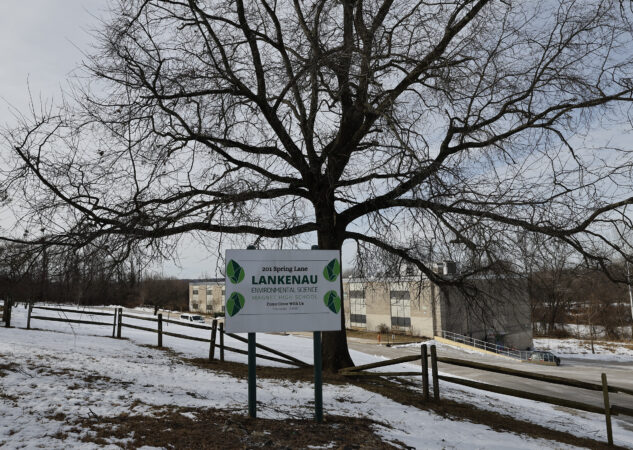
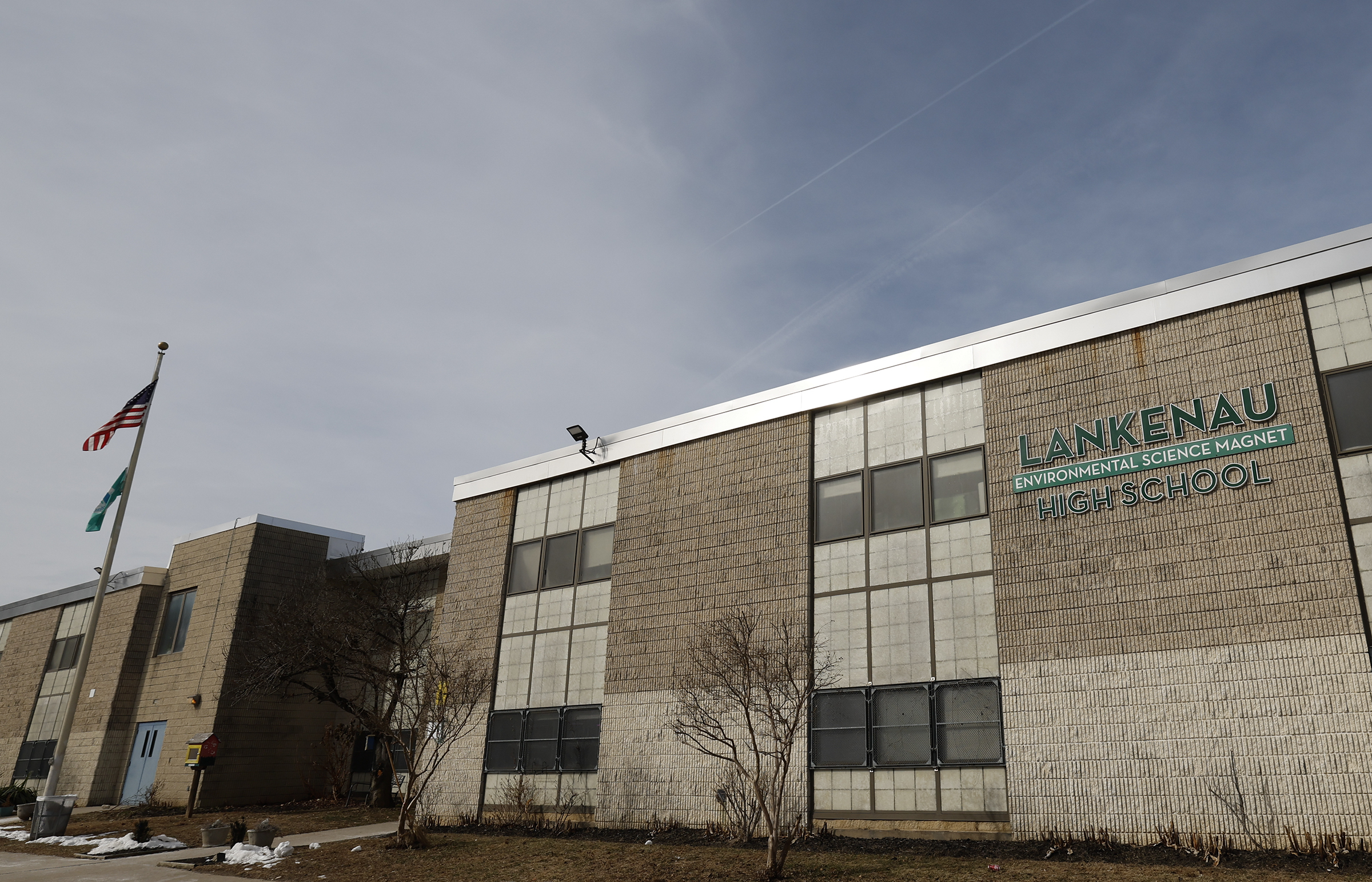
It is the city’s environmental sciences magnet school and the state’s only three-year agriculture, food, and natural resources career and technical education program. It’s set amid 400 acres of woods, with neighbors including a vast environmental center and farm that are active partners with the school. Lankenau’s students have access to dual enrollment and an impressive array of internships.
The Lankenau community is already gearing up for a fight ahead of a school board vote on the proposal, expected this winter. Community members say the school must be saved because it is one of a kind, offering immersive education in agriculture and sciences and boasting a 100% graduation rate that’s rare in Philadelphia.
Shutting “the Lank” would be a disastrous move, said Jamir Lowe-Smith, a junior at the school. The district’s proposal would merge Lankenau into Roxborough High as an honors program, but you cannot replicate what his school has built anywhere else, Lowe-Smith said.
The Lankenau Environmental Science Magnet High School in Roxborough. The district’s proposal would merge Lankenau into Roxborough High as an honors program.
“Lankenau takes education to the next level,” said Lowe-Smith, president of the school’s chapter of Junior MANNRS — Minorities in Agriculture, Natural Resources, and Related Sciences — which preps students for jobs in the growing green sciences industry.
“The environment is beautiful, the woods are — that’s another classroom,“ Lowe-Smith said. ”Nature is like therapy for a lot of people — it changed my life.”
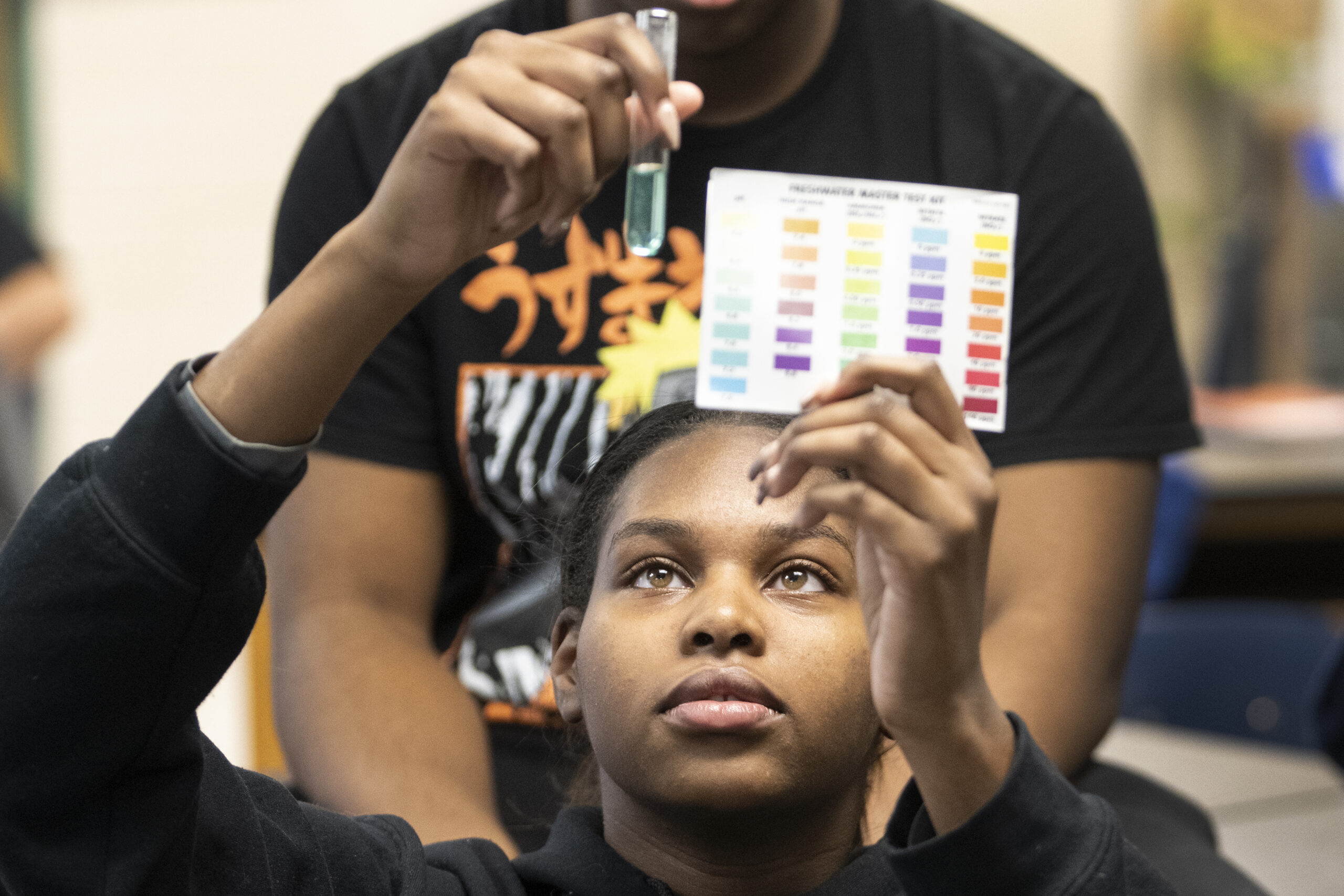
Being tucked into the woods allows for a Friday advisory bird-watching club at Lankenau and research in a stream that leads directly to the Schuylkill. It lends itself to tick drags — studies of tick species — pesticide classes that will allow students to graduate as certified pesticide applicators, and work with school beehives. Its students engage in innovative project-based learning every day.
Lankenau students all receive yellow school bus transportation because the campus is not close to any SEPTA routes — adding to the district’s expense to keep it open.
The school is small — its building, on Spring Lane in Upper Roxborough, is about half full, enrolling about 250 in a building that can accommodate 461. But the recommendations for closing need to be about more than numbers, said StateRep. Tarik Khan, a Democrat whose district includes that area.
“Respectfully, the recommendation to close Lankenau is one of those things that doesn’t make sense when you look at the full picture,” Khan said. “Right now, it’s a recommendation. Early on, it’s important just to say: This is the wrong decision. I will elevate my voice throughout this process, and I’m not alone.”
Monique Braxton, a district spokesperson, said the Lankenau recommendation “reflects the district’s commitment to reinvesting in neighborhood high schools as community anchors — a guiding theme of the Facilities Master Plan that received overwhelming support in the recent community survey. This approach expands access to high-quality academic programming and resources across neighborhoods, creating greater opportunity for more students and supporting stronger academic outcomes and postsecondary readiness.”
Firing on all cylinders
Lankenau, Khan said, is “firing on all cylinders. The school has so many opportunities for students, so many connections. To take this school out of its environment will break a lot of those connections, will break the cohesiveness.”
The school lacks a gym. But its students play flag football, hike in the woods, and practice archery. It has a 100% graduation rate, officials say, educating a student body that is primarily Black and brown, with 25% of students requiring special education services.
Jessica McAtamney, Lankenau’s principal for the last five years, stressed that the school is “doing urban agriculture in a very unique campus setting that is anchored in the space. Agriculture is Pennsylvania’s No. 1 industry. Lankenau is preparing kids to do that. This campus is what allows us to do that.”
Roxborough High School, by contrast, is in a dense, residential area. Its building, which can hold almost 2,000 students, is about three-quarters empty.
Like many in the Lankenau community, Erica Stefanovich — who teaches the only Intro to Geographic Information Systems high school course in the city, she believes — was blindsided by word that the school was earmarked for closure.
“They can say that our building condition is an issue, but how is our building a problem when we have air-conditioning, zero asbestos, and they put a brand-new roof on our school two years ago?” Stefanovich said.
In 2006, the district actually made plans to expand the Lankenau building, going so far as to contract with an architectural firm to make a model. But those plans went by the wayside as the school system hit rocky financial waters in the early 2010s.
No slight against Roxborough, Stefanovich said. It does have a park close by, but “we can’t do mussel experiments in that park. We can’t do our internships that our students love. How do we have beehives when there isn’t enough pollinator space around Roxborough High School to have beehives? Our seniors are out of the building 40% of the time; they are off doing things. If we move, we don’t have that.”
District changes yielded fewer incoming students
Lankenau used to educate more students.
Before the district changed its school selection process, in 2021, instituting a centralized lottery in the name of equity, the school had bigger incoming classes. It’s a magnet, meaning students have to have certain grades and test scores to qualify, but in the past, administrators had some leeway to let in students who were close to qualifying if they werea good fit.
And though district officials said changes to the admissions procedure were necessary to ensure that schools’ demographics mirrored the city’s, Lankenau did not have a diversity problem prior to the changes.
Lankenau had 106 ninth graders in 2020-21, before the lottery. It dipped to just 28 freshmen in 2023-24, but after a number of parents and administrators raised concerns about the process, some course corrections were made.
Its numbers are now rising again. Seventy-eight ninth graders entered this school year, and 107 students listed Lankenau as their top choice for the 2026-27 freshman class.
Even if the proposed school-closing changes go through, Wyntir Alford, a Lankenau 11th grader from West Oak Lane, will be able to graduate from the school as-is — the change is not planned to take effect until the 2027-28 school year.
But her family was clear: If the closing were happening next year, Alford would have had to transfer.
“My mom told me her first thought was, ‘There’s no way she’s going to Roxborough.’ She said, ‘The reason we put you in Lankenau is because of all the opportunities and all the nature around.’ I’m not surrounded by any nature at home. So to be able to go to a school like this is a big deal.”
A student tests a water sample in a Lankenau High school science class in this 2023 file photo.
Juniper Sok Sarom, a current Lankenau ninth grader, is not sure whether she will transfer to Roxborough if the school board approves the closure recommendation. But she knows she’s happy at a school that gives her plenty of hands-on experience.
“Our campus — it’s a special learning environment, which you wouldn’t get at any other school, not even Central or Palumbo or SLA,” Sarom said, referring to Science Leadership Academy.
She and others are gearing up to fight the changes, they said.
Charde Earley, a Lankenau paraprofessional, dealt with her own sadness the day students found out about the proposed closure, working through tears. And then she marveled at how students pivoted to problem-solving, resolving to write letters and speak at meetings.
“My motto is, respectfully, ‘Hell, no, we won’t go,’” Earley said. “We’re secluded and we’re safe. You never know what hardship our kids are going through. Imagine what this is doing to our kids.”
On Thursdays at 7 a.m., Laura Carlson is by the iconic granite and bronze sculpture of an open book on University of Delaware’s Mentor’s Circle.
As the new university president, she invites faculty, staff, students and community members to join her there and run a five-kilometer loop through campus. Typically 10 to 20 people show.
“Rain or shine, we run down to the track on South Campus, loop the track and come back,” said Carlson, 60, who began the treks as interim president last summer and is continuing them in her permanent role, which started earlier this month.
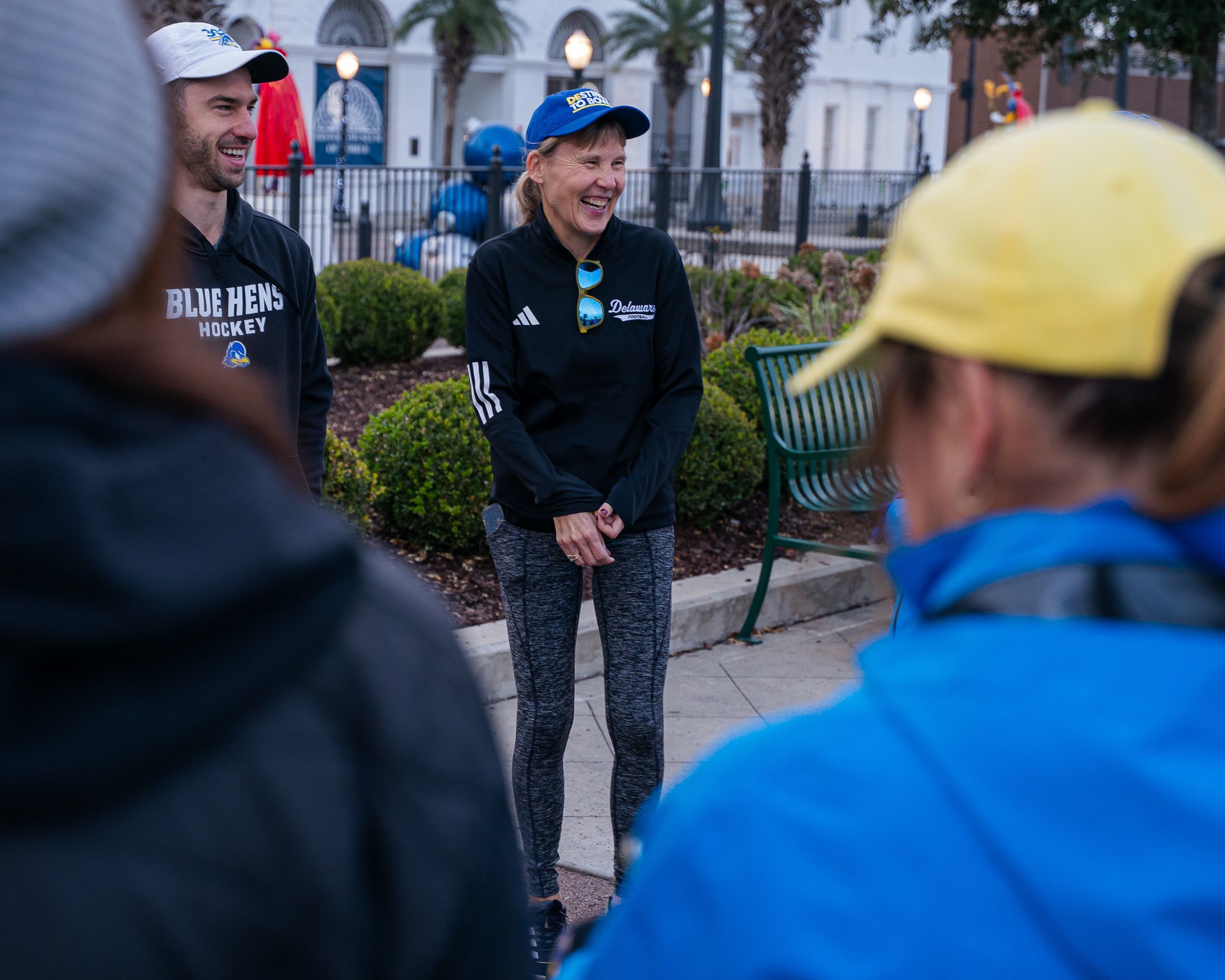
University of Delaware president Laura Carlson (right) goes on one of her Prez Runs in Mobile, Ala., where the Blue Hens won a bowl game, defeating Louisiana-Lafayette 20-13 on Dec. 17, 2025.
The “Prez Run” is just one way the psychology scholar — who plans to run her 15th Boston Marathon in April — is building relationships on campus, with alumni and with the community and state. She also runs with alumni, employees, and students during events in other cities.
“I’ve heard that the alumni association is going to put it on their bucket list of 10 things to do before you graduate,” she said.
Carlson, a Dartmouth alumna who got her doctorate in cognitive psychology from the University of Illinois Urbana-Champaign, is focused on strengthening relationships with state and local governments and internally with faculty. Finding new revenue streams to plug holes from terminated federal grants and recruiting students in new national markets also are on her list.
The Massachusetts native previously served as provost for three years, having come to Delaware after 28 years as a faculty member and administrator at the University of Notre Dame in Indiana. She’s the first internal candidate to get the presidential appointment in about 50 years.
She follows Dennis Assanis, who resigned in June and is now chancellor of the University of California at Santa Barbara.
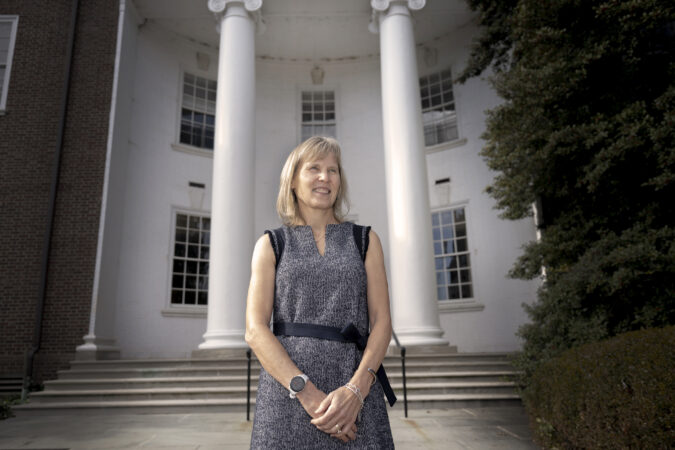
Laura Carlson, president of the University of Delaware
Carlson is visiting classes each semester, including elementary organic chemistry and mechanical engineering.
“I want to make sure I don’t feel distant from the rhythm of the academic year,” she said. “Anything we value, we should put attention on it.”
When building a team, she asks participants to pick their top 10 values, such as family, world peace, humor, and authenticity, and rank them. Her top value is always purpose.
University of Delaware president Laura Carlson talks to fellow runners during one of her Prez Runs in Mobile, Ala., where the football team won a bowl game.
“I want to live a life of purpose,” she said.
Partnering with state and local government
She’s attempting to change the way the partnership with the state is viewed.
“We lead with what does the state need from us, as opposed to what do we need from the state,” she said.
Southern Delaware, where the university has a campus in Lewes and Georgetown, has housing, healthcare, education and workforce development needs, and the university can help, Carlson said.
She said she can envisiona public-private partnership for new housing in Lewes, she said,or a classroom building with event space for the community.
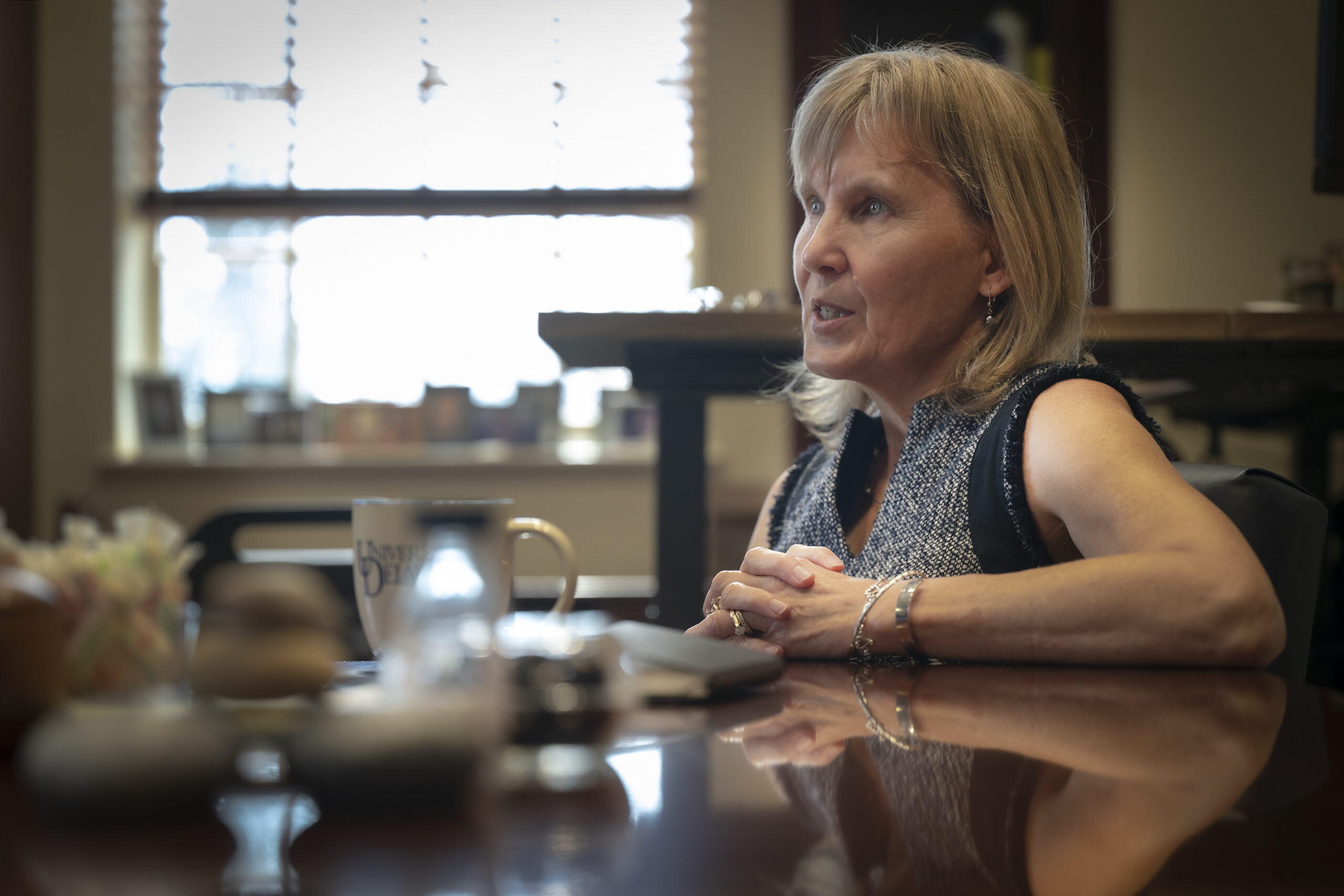
Laura Carlson, president of the University of Delaware, discusses her priorities.
“If we are a university for the whole state, we need to show up in the whole state, and we need to be responsive to the needs across the state,” she said.
She’s also looking at the possibility of more residential space for the main campus in Newark — possibly a “sophomore village” — through a public-private partnership. The university has about 7,100 residential beds in Newark.
“That would take some of the pressure off the city,” she said, noting the tight rental market, and adding that parents and students may prefer on-campus housing options.
She also wants to help Delaware Gov. Matt Meyer with his plan to bring medical education to the state. Delaware remains one of few states without a medical school. The idea is not to build one from scratch but to partner with an existing medical university, she said.
“We’ve been in conversations with Thomas Jefferson” in Philadelphia, which has a nonexclusive memorandum of understanding with the state to explore a partnership, she said. “What we offer is the classrooms, the lab space, and so on to do kind of the first part of that medical school type of training.”
Dealing with the federal government could be more challenging. The university has lost 41 grants worth $33.9 million since President Donald Trump took office last year. Those span engineering, biological sciences, arts, and sustainability, she said, and impact 117 graduate students and 27 postdoctoral students.
In total, $1.1 million in salaries and $2.1 million in stipends have been lost, though the university has been working to find other funding through foundations and industry, she said. No one has lost their job, she said.
“I’ve been really working hard on … kind of strengthening those relationships with our business community,” she said.
The school also has experienced a 19% decline in international graduate students following Trump’s pause on student visas and other policies, and the school lowered its doctoral admissions by 19.5% last year amid concerns over federal funding. What will happen with doctoral admissions this year is unclear.
“Each college is sort of looking strategically program by program and trying to figure out what is the right size for their doctoral programs,” she said. “If they’re compressing their number of students coming in, it’s because they’re trying to prioritize funding for their existing students.”
The school’s overall enrollment of more than 24,000 rose last fall and applications are up 10%, she said. But as another drop in high school graduates begins this year, the university has found success in new recruiting areas such as Colorado and Wake Forest, N.C., where the football team played as part of the school’s entry into Conference USA, she said.
“We’ve been very strategic about putting marketing in there, convening alumni and really using that as a way to establish ourselves more nationally,” she said.
Biden Institute — and a conservative counterpart
She said the university is on course to build Biden Hall, an academic building named for former President Joe Biden, a Delaware native. It will house the school’s Biden School of Public Policy and Administration and the Biden Institute on government theory and practice. The design phase likely will begin this spring.
Fundraising is also continuing for Siegfried Hall, which will include the Institute for Free Leadership and Enterprise. The donors, Robert L. Siegfried Jr., a certified public accountant and his wife, Kathleen Marie (Horgan) Siegfried, have said they wanted to bring a “conservative” vision and offer a balance to the Biden Institute.
Carlson said she doesn’t view the halls as conservative and liberal, but rather places where ideas can be vetted. She noted the Biden Institute is nonpartisan.
“Siegfried is a think tank on conservative economics, but part of that building will be also to sort of question the limits of those policies,” she said. “That’s what we do in any discipline.”
Personal life
Here are a few fun facts about Carlson, whose husband, Robert West, is a professor of psychological and brain sciences at the university.
Last book read: Chris Whitaker’s All the Colors of the Dark.
Favorite band or musical group: Bruce Springsteen.
Favorite food: Indian. Greek.
Favorite vacation spot: “I spend so little time at my house. Some of my best days on break are if you don’t even get out of your pajamas.”
“Given the conditions of the roads and the issues that the mayor and others have talked about, and out of an abundance of caution,” district offices will remain closed Tuesday, and after-school programs and athletics are also closed, Watlington said.
The superintendent prioritizes in-person learning, he said, but Tuesday “and any subsequent inclement weather days will be remote learning days.”
Virtual instruction, closures and delays beyond Philly
Districts around the region were starting to make similar calls.
Haddon Heights, in South Jersey, had already called a two-hour delay.
The Cheltenham School District is also going virtual.
“After consulting with my team, many roads remain unpassable and are likely to refreeze after dusk, making bussing on Tuesday too risky,” Superintendent Brian Scriven told families in a message Monday afternoon.
Schools have increasingly been turning to online instruction during winter storms, though some districts use a different calculus on when to go virtual. New Jersey schools do not allow for virtual instruction.
Scriven said Cheltenham administrators were “hopeful schools will return to normal operations as soon as possible,” and would communicate any additional schedule changes before Wednesday.
Upper Darby schools also announced virtual instruction.
“Unfortunately, we are going to need another day to continue to remove snow and ice,” Superintendent Dan McGarry told families Monday afternoon.
Officials with the Centennial School District in Bucks County also said they would have virtual instruction, telling community members in a message that “conditions remain challenging, and our facilities personnel are hard at work clearing lots and entryways.” Central Bucks also called a remote learning day.
The Colonial School District, meanwhile, announced a second traditional snow day Tuesday.
“More work needs to be completed on our secondary roads to make it safe for our students to travel on Wednesday,” Superintendent Michael Christian said in a message to families. In the event of more inclement weather, Christian said, the district would have virtual instruction.
Camden schools will also be closed on Tuesday. So will Cherry Hill, Winslow, Woodbury, and Washington Township, among others.
NEW YORK — Columbia University has named Jennifer Mnookin, the chancellor of the University of Wisconsin-Madison, as its next president as it tries to move forward from two years of turmoil that included campus protests over the Israel-Hamas war and President Donald Trump’s subsequent campaign to squelch student activism and force changes at the Ivy League school.
Mnookin’s appointment was announced Sunday night. She will assume her new post on July 1, becoming Columbia’s fifth leader in the past four years.
The Trump administration took aim at Columbia shortly after he took office last year, making it his first target in what became a broader campaign to influence how elite U.S. universities dealt with protests, which students they admitted, and what they taught in classrooms.
Immigration enforcement agents imprisoned some Columbia students who had participated in pro-Palestinian protests in 2024. The administration canceled $400 million in research grants at the school and its affiliated hospital system in the name of combating antisemitism on campus, and threatened to withhold billions of dollars more in government support.
Ultimately, Columbia reached a deal with the administration to pay more than $220 million to restore the research funds. It also agreed to overhaul the university’s student disciplinary process and apply a contentious, federally endorsed definition of antisemitism not only to teaching but to a disciplinary committee that has been investigating students critical of Israel.
Mnookin’s predecessor, Nemat Shafik, resigned in August 2024 following scrutiny of her handling of the protests and campus divisions. The university named Katrina Armstrong, the chief executive of its medical school, but she resigned last March, days after Columba agreed to the settlement. The board of trustees then appointed their co-chair, Claire Shipman, as acting president while they searched for a permanent leader.
Mnookin, 58, previously served as the dean of the University of California, Los Angeles School of Law before being named to her current post at the University of Wisconsin-Madison in August 2022. She received her bachelor’s degree from Harvard University, her law degree from Yale Law School, and her doctorate in history and social study of science and technology from Massachusetts Institute of Technology.
Letitia Grant was gobsmacked when she learned her daughter’s school was slated for closure.
“That can’t happen,” she said.
Penn Treaty High School, where Grant’s daughter is in the eighth grade, is one of 20 schools proposed for closure as part of a massive reshaping of the Philadelphia School District announced Thursday.
The plan — which Superintendent Tony B. Watlington Sr. said he would present in full to the school board on Feb. 26 — would affect every neighborhood in the city. In addition to closing 20 schools, it proposes colocating six others, and making changes, including renovations and grade restructuring, at an unspecified number of schools.
But Grant is focused on what it means for her daughter, who loves her teachers, her counselor, and the friends she has made at the Fishtown school.
Grant was looking forward to seeing her daughter cross a stage to collect her diploma at Penn Treaty’s 2030 high school graduation, she said. She is not sure what will come next.
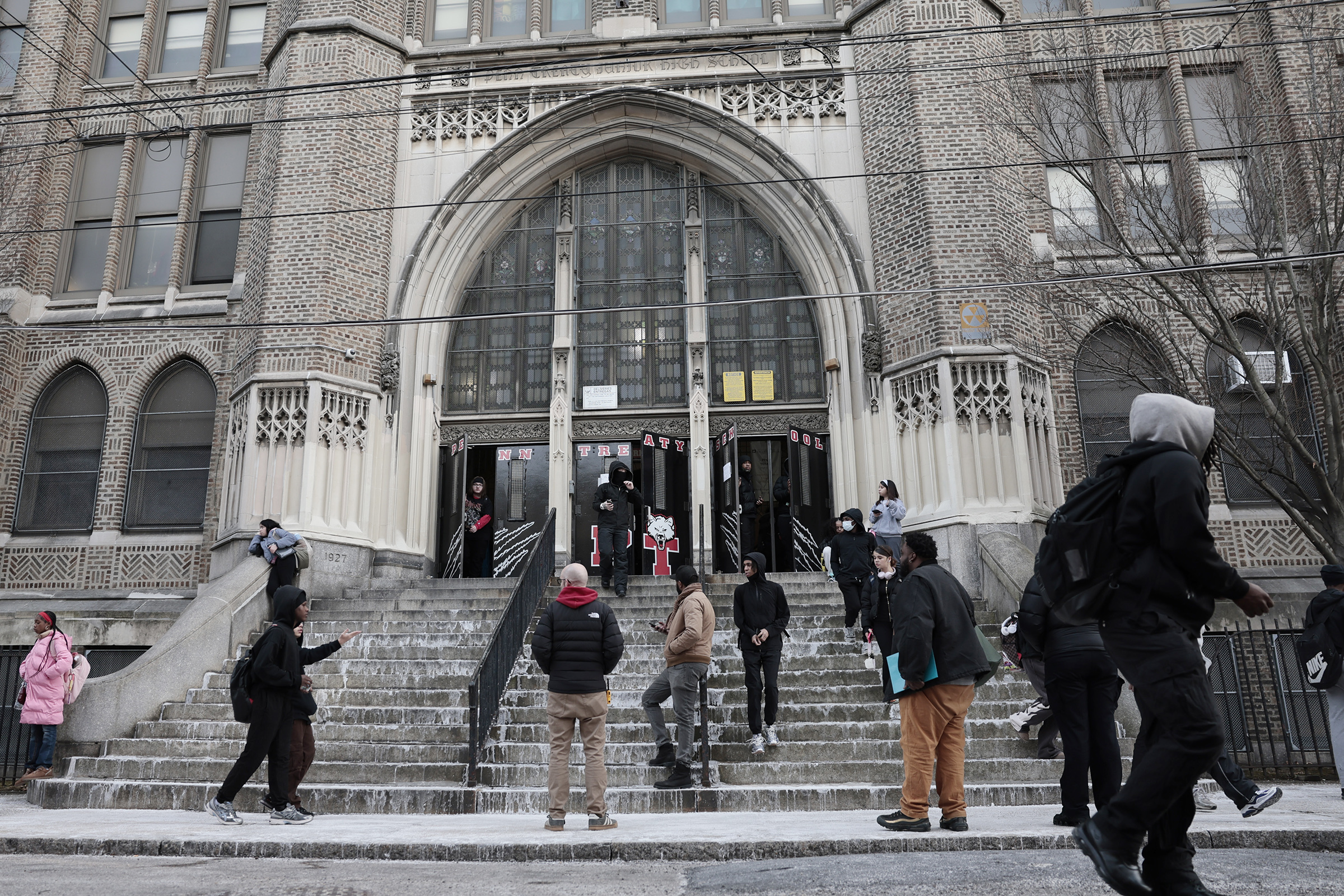
School officials stand by outside for afternoon dismissal at Penn Treaty Middle School, 600 East Thompson Street, in Philadelphia on Thursday, Jan. 22, 2026.
Penn Treaty, which now has just 345 students in grades six through 12 in a building that can accommodate 1,200, would cease to exist under the plan, and Bodine High, a district magnet in Northern Liberties, would move to the Penn Treaty building and add a middle school.
After dismissal Thursday, the day families learned of the closure, Grant’s daughter and her friend stopped their biology teacher to chat. The teacher is her daughter’s favorite, Grant said.
Grant fears the changes will meanthe district will be “piling too many kids per classroom.”
The facilities plan will touch every neighborhood in the city for years to come, with ripples for students, teachers, and families. Here are some of their stories.
At Waring, parents worry — and prepare to sound off
As parents dropped their children off Friday morning at the Laura Wheeler Waring School in Spring Garden, faces were grim.
“We’re pissed off because it’s a great school,” said Isheen Bernard, whose son attended Waring and whose daughter is a third grader there now. Waring was identified for closure; under the plan, Masterman middle school students would eventually take over the building, with Waring students sent to Bache-Martin.
Isheen Bernard, 48, poses for a portrait after dropping his child off at Laura Wheeler Waring Public School in the Spring Garden section of Philadelphia on the morning of Friday, Jan. 23, 2026. Under a new school district plan, Laura Wheeler Waring Public School would be closing in the 2027-2028 school year.
Nysheera Roberts graduated from Waring herself, and so did her mother. Now, she has children there, and her nieces and nephews also attend.
Shutting the school down would be hurtful and heartbreaking, Roberts said. Waring has just under 200 students in a building that can house 437.
“It’s a piece of our history,” she said.
Taking her daughter to Bache-Martin would be a major inconvenience for her, her children, and other neighborhood families, Roberts said. Now, she can easily drop her baby off at a nearby daycare before popping over to Waring with her children, then heading off to work. But Bache-Martin is too far for younger children to walk to from the family’s home — a problem because Roberts does not always have access to a car.
“They shouldn’t be taking our school away from these children,” she said.
Nysheera Roberts, 35, poses for a portrait after dropping her children off at Laura Wheeler Waring Public School in the Spring Garden section of Philadelphia on the morning of Friday, Jan. 23, 2026. Under a new school district plan, Laura Wheeler Waring Public School would be closing in the 2027-2028 school year.
Every Waring parent she has spoken to is upset, Roberts said. She knows the district plans to allow public comment on its plan, and thinks affected families won’t hold back.
“They’re gonna have a lot of parents speaking,” Roberts said. “And I’m gonna be one of them.”
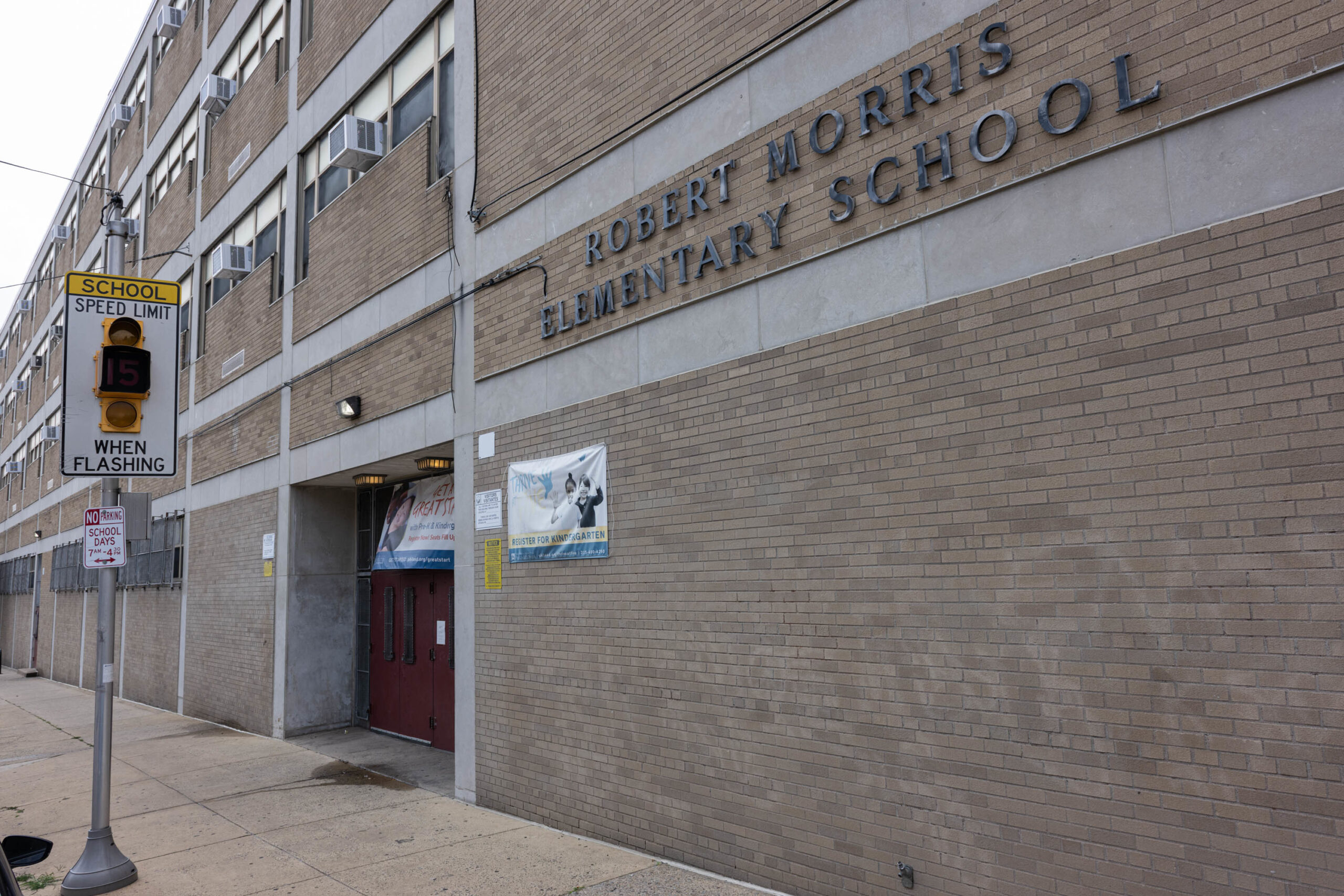
Many schools Mack attended as a child have been closed, so he was not completely surprised that Morris was identified for closure. But he worries about the effect the closing will have on the younger children at the school, who are just settling into the rhythms and routines of Morris.
“You’re telling kids who are already not used to school to go to a new environment and just kind of pick up where they might have left off,” he said. “That’s not conducive to a positive learning environment.”
Exterior of Robert Morris Elementary School on Thursday, Aug. 7, 2025, in Philadelphia.
His older children, who are in fourth through eighth grade, have not always had an easy time — often, the teacher they had in the fall left before the spring, and they had to cope with many new teachers or substitutes.
“The kids know they’ll be here longer than their teacher in many cases,” Mack said. “Teachers just pass through, and a lot of kids think that way.”
When Mack was growing up, teachers knew his parents, and they often grew up in the same community as he did, attended the same church. He understands those connections may not still be possible, but said the generational relationships schools used to build produce results.
“Schools have a lot of behavioral issues that I feel as though permanent teachers who have that longevity, of knowing your mom and having been friends with your auntie, add credibility and respect to a teacher’s voice,” Mack said.
Moving more students into existing schools will tax those schools, he said. Will they be overcrowded? Can they guarantee equal or better learning outcomes?
“I think it falls on the school district to pour more resources into teaching staff, because teachers are going to have to wrangle 30 kids in a classroom,” Mack said. “One effort I’d like to see is for the district to identify and vet teachers who want to teach in Philadelphia, in the same schools, for their career.”
Not on the closing list, but big changes are still coming to Moffet
Moffet Elementary shows up nowhere on the school closing list.
But parents at Moffet, in Kensington, learned that massive changes are planned for their school, too. Moffet families were told that children in grades K-4 will be shifted to Hackett Elementary. Moffet, now a K-5, will become a 5-8 school. Hackett is now a K-5; it will become a K-4 with a larger catchment.
“Parents are very upset,” said Katy Hoffman-Williamson, mother of a first grader and president of Moffet’s Family School Organization. “Our WhatsApp thread is blowing up.”
Moffet, she said, is “this really special gem of a school in our neighborhood. There’s only two classes per grade, the Family School Organization is super involved, and all the teachers go above and beyond what they’re supposed to do. It’s an incredibly diverse school, a really special place.”
Technically, Hoffman-Williamson’s catchment school is Ludlow, which was tagged for closure. She chose Moffet carefully and doesn’t love the idea of sending her son to a larger school, or having him transition to a new school in third grade, when he will have to start taking state tests.
“If I didn’t find a school like this, I would have moved, and there’s so many families that are like mine,” Hoffman-Williamson said. “Some families might find the transition to middle school easier, but for the most part, we’re really upset.”
Some academics are alarmed
Julie McWilliams, an anthropologist of education and codirector of the University of Pennsylvania’s urban studies program, studied past city school closings for her forthcoming book Schools for Sale: Disinvestment, Dispossession, and School Building Reuse in Philadelphia.
McWilliams, who is also a Philadelphia School District parent — her children attend Fanny Jackson Coppin in South Philadelphia — said she was not shocked by the number of school closures, based on history and the district’s messaging this time around.
But she was “horrified” by some of the choices the district made, including closing William T. Tilden Middle School in Southwest Philadelphia. The 5-8 school previously took in students from two schools in Southwest Philly that the district previously closed. And she hopes that the school board listens to the people these decisions will galvanize.
“I’m hoping that this is just a starting point to really tease out which choices here are big mistakes and actually were just thoughtless choices,” McWilliams said. “North Philadelphia got crushed in closings last time. Southwest got crushed. I know that’s where the empty seats are, but they’re going to be creating deserts in neighborhoods that have already suffered.”
Akira Drake Rodriguez, a Penn assistant professor who, with McWilliams, is part of the Stand Up for Philly Schools coalition organizing against closures, was also alarmed by the Tilden closing in particular.
“That whole neighborhood of Southwest Philly is charter schools,” Rodriguez said. “Do you really think they’re going to stay in traditional public schools when you close Tilden?”
She predicted enrollments at some schools marked for closure would plummet as parents face uncertainty around their future.
“The district hasn’t really given people a ton of confidence around managing large-scale modernization efforts,” Rodriguez said.
Edwin Mayorga, a SUPS member, an Academy at Palumbo parent, and an associate professor of educational studies at Swarthmore College, said any school closure is troubling.
“It’s about asking ourselves, ‘What are the conditions that have produced a school that has declining enrollments, or toxic conditions in the facility?’ and trying to start from there,” he said.
Students are going home from school Friday with charged computers, but Watlington, speaking at a city emergency services news conference, said he wanted students to focus on having fun.
“We’re inviting students and staff to enjoy this snowfall, which will be the most I’ve seen during my nearly four years here in Philadelphia,” the superintendent said. “Sledding is appropriate. Snow angels are appropriate, and [Police Commissioner Kevin Bethel] gave us permission to have one or two safe and fun snowball fights.”
If conditions require more days out of school buildings, “every subsequent day will be a remote learning day,” Watlington said.
Philadelphia Achdiocesan high schools and parochial elementary schools also will have a virtual day Monday.
Suburban schools prep
Philadelphia isn’t the only district that has already announced plans or warned that closures were likely.
In Upper Darby, school officials told families Thursday night to prepare for the prospect of virtual instruction on Monday, and possibly Tuesday.
“If the weather is more significant than anticipated, and there are power outages in the area, we will shift to a snow day,” with no virtual school, Superintendent Daniel McGarry said in the message.
In the Cheltenham School District, Superintendent Brian Scriven told families that “if weather conditions require us to close schools and offices,” the district will have a traditional snow day Monday. Tuesday is to be determined — and Wednesday could be virtual instruction, “if conditions are significant enough,” Scriven said.
Colonial School District Superintendent Michael Christian told parents Friday that “if the accumulation is as high as some meteorologists are projecting, we would call for a traditional snow day on Monday and quite possibly Tuesday as well.” And Wednesday could be a virtual instruction day, Christian said.
Meanwhile, the Council Rock School District said that “if school buildings must close on Monday,” students would have virtual instruction.