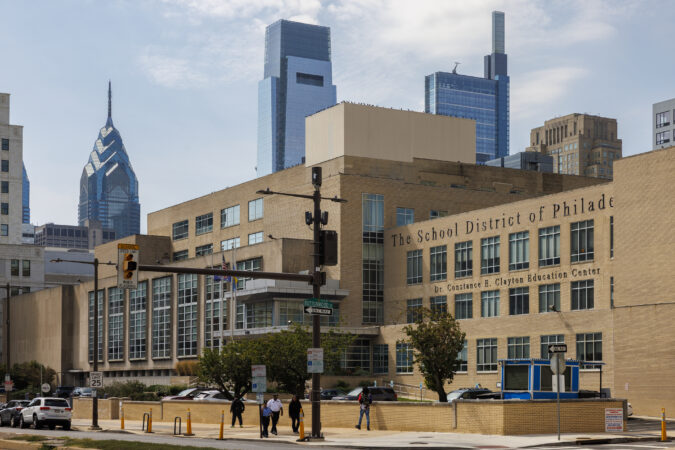
Category: Education

  • At Philly school board meeting, concerns bubbled up over the school closing process and principals working without contracts

    At Philly school board meeting, concerns bubbled up over the school closing process and principals working without contracts

    // Timestamp 11/20/25 7:23pm

    Recap: Philly school board hears concerns over the principal’s union contract negotiations, potential school closings, the district’s wellness policy, and more

    The Philadelphia School Board held its monthly action meeting at 4 p.m. Thursday. It lasted a little over three hours.

    Here are a few takeaways:

    • Principals showed up to the meeting in full force, urging the board to give them a fair contract after working without one for three months. Principal’s union president Robin Cooper spoke early in the meeting, asking the board: “What about the administrators?”
    • Many parents and members of advocacy group Lift Every Voice Philly spoke to the board about its wellness policy, emphasizing the need for guaranteed bathroom breaks, lunch time, access to recess, and more. Some took issue with Superintendent Tony Watlington’s comments at a meeting earlier in November that some parents could be making claims without evidence.
    • The facilities planning process was also a hot-button issue. Many urged the board not to close schools. The school board and superintendent asked the public to take their survey by Dec. 11 to share their concerns.

    // Timestamp 11/20/25 7:22pm

    Board approves its final item and adjourns the meeting

    And the board approved the Intermediate Unit action item unanimously. The IU item included contracts with various vendors for a school safety grant for non-public schools, worth $1.5 million.

    And now the meeting really is over! The next board meeting will be held in two weeks, on Dec. 4.


    // Timestamp 11/20/25 7:20pm

    Board approves all the items on its agenda

    The board zips through its consent agenda, adopting all items unanimously.

    The board meeting is over — but not really! In a Philly-only quirk, the board is also the board for the Philadelphia Intermediate Unit, which handles some special education matters.


    // Timestamp 11/20/25 7:18pm

    Streater tells the public: ‘We are chronically underfunded’

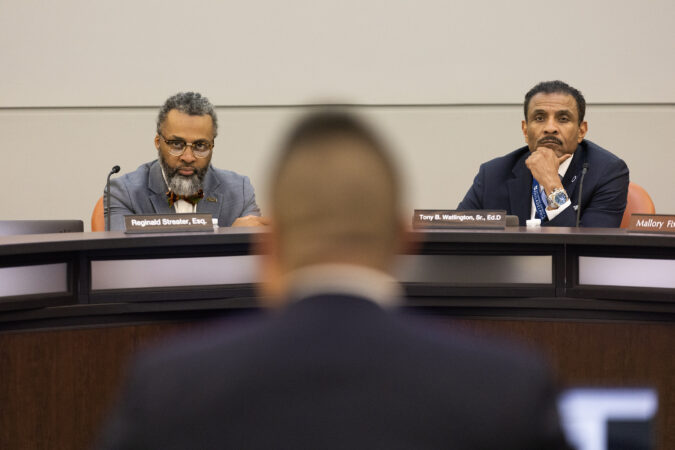
    Board president Reginald Streater wraps up public comment by reminding the public that “we are chronically underfunded” and said that everything folks asked for “has a cost.”

    But he says the board is listening, even if they don’t say anything.


    // Timestamp 11/20/25 7:17pm

    Retired district staffer speaks out about charter schools

    Lynda Rubin, a retired district staffer and a member of the Alliance for Philadelphia Public Schools, decries charter schools.


    // Timestamp 11/20/25 7:13pm

    Retired Philadelphia teacher urges board not to close schools

    Deborah Grill, a retired Philadelphia teacher and member of the Alliance for Philadelphia Public Schools: “public education is not a business. It is a civic obligation,” she said. “The school district is not a business to be rightsized.”

    “The facilities planning process has been a disaster from the start,” Grill said. A “last-minute” survey will not fix it, she said.

    “No community wants their neighborhood school closed,” she said.

    “You’re failing as a business to give the customer what they want, so my question is: What community are you catering to, because it’s not your school communities?” Grill said.


    // Timestamp 11/20/25 7:11pm

    Community member tells the board the district is ‘dooming these children to slavery’

    Leah Clouden, daughter of Mama Gail and Horace Clouden, tells the board: “K-8 in our urban area do not work.”

    “We need the basics put back in school — phonics and cursive writing,” Clouden said. Without the basics, the district is “dooming these children to slavery.”


    // Timestamp 11/20/25 7:07pm

    Mama Gail Clouden, a regular speaker at school board meetings, calls ‘on the ancestors to fix this’

    Mama Gail Clouden is “calling on the ancestors to fix this” — issues in the district.

    “We have been better, and we’re going to be better with or without you,” Mama Gail says to Watlington. Talking about the district’s accolades is great, but “when the children in my neighborhood aren’t doing well, that’s a problem.”


    // Timestamp 11/20/25 7:03pm

    Retired district building engineer urges board to consider a junior high model

    Horace Clouden, a retired district building engineer, is again emphasizing his belief that restoring a junior high model will improve the entire district.

    Students aren’t prepared for high school coming from a K-8 setting, Clouden said.


    // Timestamp 11/20/25 7:02pm

    Retired district teacher speaks to the board about Ada Lewis

    Barbara Dowdall, a retired district teacher and member of the Alliance for Philadelphia Public Schools, is talking about Ada Lewis, namesake of a now-closed school and a teacher who authored the report that helped integrate Philadelphia schools.


    // Timestamp 11/20/25 6:56pm

    Parent and Lift Every Voice member asks Watlington not to question their group’s honesty as they fight for students’ bathroom rights

    LaTi Spence, a parent of two students at Houston Elementary, stresses that there are no guarantees for student bathroom breaks, and no guidance to teachers on how to make this happen.

    “The superintendent has publicly called parents’ concerns unsubstantiated, said he has never seen a child in a diaper,” Spence said. “Lift Every Voice would never question the superintendent’s honesty. We expect the same good faith in return.”

    “Bathroom accidents are humiliating — ask any child,” Spence said. Parents send girls to school in Depends because they’re not always able to change sanitary pads when they have their periods. “This is a lived experience — this is not a rumor.”

    Parents won’t scapegoat teachers, she said. Watlington has said he knows some children need to use the bathroom multiple times a day. “Right now, the child that needs to use the bathroom seven times a day has no guaranteed right to use it even once,” Spence said.


    // Timestamp 11/20/25 6:55pm

    District parent draws attention to 88 schools with poor/unsatisfactory building scores

    Emily Pugliese, a district parent and staffer at a climate nonprofit, is drawing attention to the 88 schools that received poor/unsatisfactory building scores in the district’s assessment.

    “I hope that you will pause this process even further,” and work with the community to prioritize safety and comfort, and building upgrades.

    “We know the current administration and school board isn’t responsible” for the poor condition of many district schools. But it has a host of organizations and community members ready to help, Pugliese said.


    // Timestamp 11/20/25 6:52pm

    District climate manager asks the board for a fair contract

    Shawn Viera, a district climate manager, tells the board: “Climate managers and other members of CASA deserve a fair contract.”


    // Timestamp 11/20/25 6:49pm

    Lift Every Voice board member and Philly graduate questions Watlington over wellness issues

    Inella Ray, a community member, is questioning Watlington’s assertion from a previous meeting that he never heard a report of a student wearing diapers because they couldn’t use the bathroom.

    Parents from Lift Every Voice have been reporting this issue for years, she said.

    “Girls wear Depends because they cannot always change their pads, and we must believe them,” Ray said.

    Ray was suspended at age 12 because she asked to use the bathroom and was ignored, and when “I took care of my basic needs, my humanity was dismissed,” Ray said.


    // Timestamp 11/20/25 6:47pm

    Olney High principal says district is ‘experimenting’ with charters at the expense of traditional public schools

    Michael Roth, principal of Olney High, said he is not against charters — he used to work for one. But the district is “experimenting” with charters, Roth said, at the expense of traditional public schools.

    The board just approved a dual enrollment school to serve schools in Olney’s zip code, even though Olney offers dual enrollment.

    “Let’s support all students,” Roth said. He tells the board: Get our house in order before authorizing new schools.


    // Timestamp 11/20/25 6:45pm

    Volunteer with the Friends of Bache-Martin shares the value of school libraries

    Barbara O’Connell, a volunteer with the Friends of Bache-Martin, talks about her group’s efforts to run the school library, and how beneficial it’s been to students.

    “The library is creating kids who not only can read, but also will satisfy their curiosity, and that will transport them, and stay with them throughout their lives,” O’Connell said. She urges the board to provide school libraries for all students.


    // Timestamp 11/20/25 6:41pm

    School psychologist tells the board: ‘We need to keep our schools open’

    School psychologist Paul Brown said the facilities planning process overemphasizes efficiency and under-values sustainability.

    “The demographics of my high school is a direct result of the closing of Germantown High School in 2013,” said Brown, who works at Roxborough. There’s “unsustainable stress on our public school system. We need to keep our schools open. The goals of efficiency should not come at the expense of our most vulnerable.”


    // Timestamp 11/20/25 6:40pm

    Lift Every Voice member advocates for guaranteed bathroom and lunch breaks

    Sarah Burgess, a parent at Lea Elementary and a Lift Every Voice member, is advocating for guaranteed bathroom breaks and time to eat lunch.

    “Parents aren’t looking for scapegoats. We’re asking for a system-wide policy,” Burgess said. “I know implementation is easier said than done. I know there can be staffing challenges, and I know there are competing priorities,” but this is an issue we all agree on, she said.


    // Timestamp 11/20/25 6:35pm

    ‘When is things going to change?’ community member asks the board

    Jason Grisby, a community member, said the same issues have plagued city schools for years. “When is things going to change?” Grisby said.

    He also shared concerns about the security of schools. He walked into a city school without being questioned as an outsider, Grisby said. Superintendent Watlington tells Grisby that a security official will speak to him, and no one should be able to walk into a school.


    // Timestamp 11/20/25 6:33pm

    Community members speak to the board about using data to support schools and the importance of family engagement

    Donna Fields, a mother of three former district students and community researcher, urges the board to consider data to support schools.

    Quibila Divine, another community member, said 98% of parents in a North Philadelphia survey felt unwelcome in their child’s school. Meaningful family engagement leads to better student outcomes, Divine said, but teachers are often not trained on how to do this.


    // Timestamp 11/20/25 6:27pm

    Legislative aide for Councilmember Thomas speaks on his behalf in favor of joy campaign

    Zach McGrath, a legislative aide for Councilmember Isaiah Thomas, is reading a statement on behalf of Thomas. He supports Lift Every Voice’s joy campaign and its call for explicit promises for bathroom and water breaks for students.

    “We maintain our support for their five wellness policy recommendations,” Thomas wrote. District-wide solutions are needed for these matters.


    // Timestamp 11/20/25 6:24pm

    Activist tells the board: ‘We don’t need another survey. We don’t need another meeting.’

    Lisa Haver, of the Alliance for Philadelphia Public Schools, criticizes City Council’s recent district hearing. The questions were “insipid,” Haver said.

    “We don’t need another survey. We don’t need another meeting,” Haver said of the facilities planning process.

    She asks the crowd: Does anyone want their school closed?

    “NO,” the crowd yells.


    // Timestamp 11/20/25 6:23pm

    Community member speaks on student access to year-round swimming

    Gloria Presley, of Philly Aquatics, is also calling for indoor, year-round swimming opportunities for all students.

    “We cannot afford to wait any longer,” Presley said. “We cannot afford to turn our backs on Philly youth.”


    // Timestamp 11/20/25 6:19pm

    Roxborough High teacher urges the board not to close schools

    Daniel Reyes, a teacher at Roxborough High and member of Stand Up for Philly Schools, tells the board: “I’m here to advocate against closing schools,” Reyes said.

    Closing schools destabilizes neighborhoods, Reyes said, asking: Why is the process downsizing the district without addressing the effect of charters on the district?

    “We need stable, K-12 systems in all neighborhoods that meet the needs of all students,” Reyes said.


    // Timestamp 11/20/25 6:17pm

    Speakers address the board about student experiences, wellness, school facilities planning, and more

    Jasmine Pearson, a parent of a student at Mastery Simon Gratz High School, tells the board the school is readying her child to graduate.

    Parent Julie Krug urged the board to update its wellness policy to ensure students have access to recess, bathroom breaks, and time to eat their lunch.

    Community member Ryan Pfleger came to the board with a request: Don’t close any schools. He urged the board to reconsider closing buildings and instead invest in communities with underutilized buildings.

    Carrera Wilson-Allure spoke to the board about joy.


    // Timestamp 11/20/25 6:06pm

    CASA chief steward Deana Ramsey says their union is the ‘backbone of district leadership’

    Deana Ramsey, a district principal and CASA’s chief steward, speaks on behalf of the principals.

    The union “is the backbone of district leadership,” Ramsey said. The union represents principals, assistant principals, climate managers, and safety supervisors.

    Dozens of principals in attendance stood up to chant and hold up signs after Ramsey’s comments.

    Board president Streater said the board cannot comment on negotiations, but said he looks forward to a contract. “We’re a family, and sometimes family has disagreements,” he said.


    // Timestamp 11/20/25 5:58pm

    Parents speak in support of Mastery Wister and Mastery Clymer

    Johncarlos Quiles, a parent at Mastery Wister, is saying the school has changed his perspective on charters.

    “When I was in school, the communication was nonexistent between parents and the teachers,” Quiles said. Wister has changed that because families are very involved, he said.

    Wister has helped his son develop into a “super, super kid,” Quiles said. “We’re looking for that [charter] renewal.”

    Ahlizee Wright, a parent at Mastery Clymer, said her son’s school is a “special place.” Her son’s previous school neglected his learning and safety, Wright said.


    // Timestamp 11/20/25 5:56pm

    Head of Philly Aquatics advocates for year-round swimming opportunities

    Charisma Presley, head of Philly Aquatics, is advocating for year-round swimming opportunities for city schools. Marcus Foster and Pickett Pools are the group’s priorities.


    // Timestamp 11/20/25 5:49pm

    Principals turn out in force to the school board meeting, as union president asks: ‘What about the administrators?’

    Philadelphia principals are out in force tonight. Before Robin Cooper, president of the principals’ union, speaks, a chant breaks out. “Who are we? TEAMSTERS? What do we want? A CONTRACT! NOW!”

    Principals in the district have been working without a contract for three months.
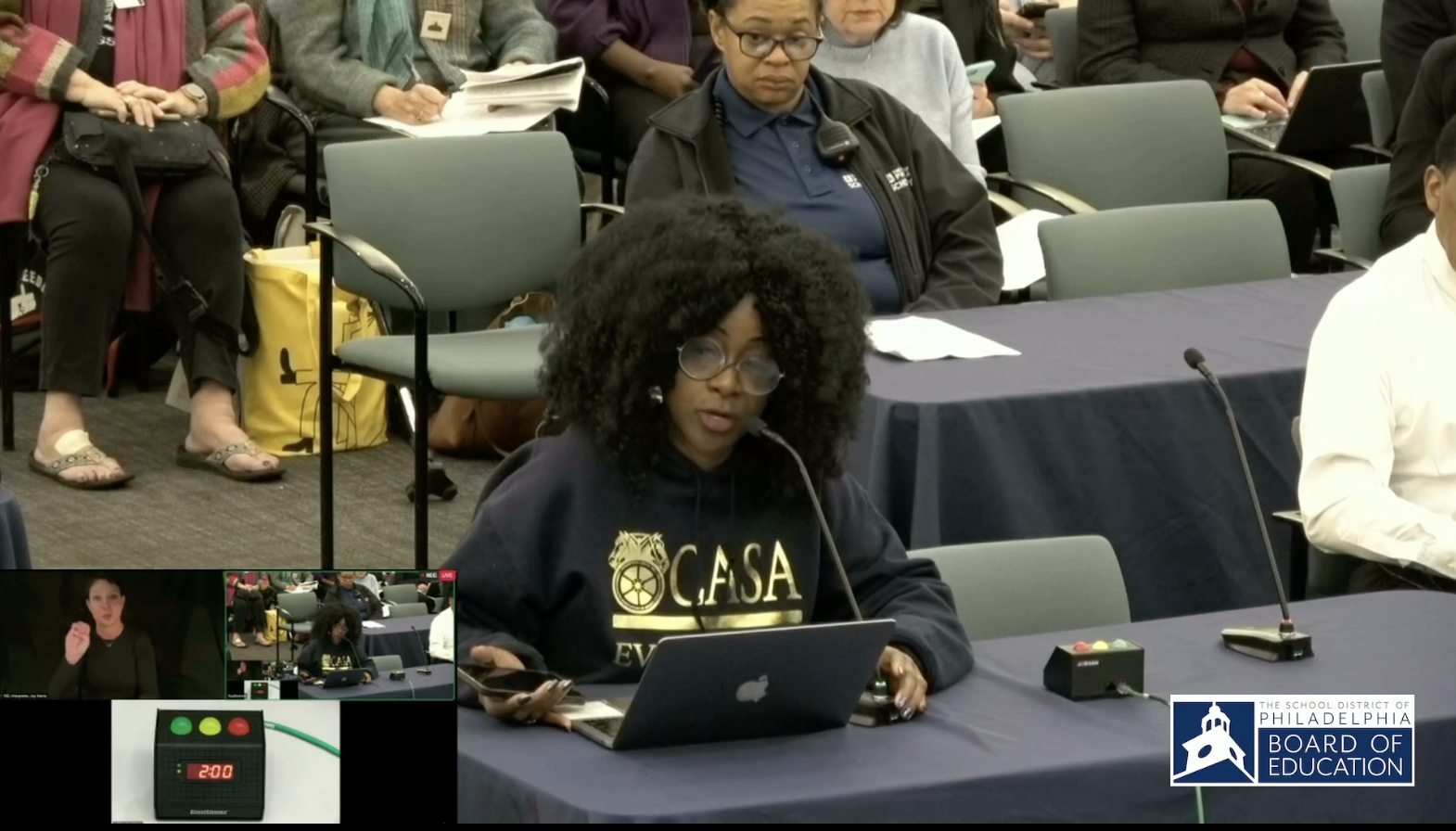
    Robin Cooper, president of CASA, the principals’ union, speaks to the Philadelphia school board at a meeting on Nov. 20, 2025.

    “I stand here in a situation that I’ve never experienced as the president- the proud president of Teamsters Local 502,” Cooper said. “I find myself not advocating for our students, not advocating for public education, not advocating for unconstitutional funding formulas, but rather advocating … to pay leaders their worth.”

    Principals have done everything they were asked for, Cooper said: boosted attendance, improve academics, market schools, advocate for their schools.

    Cooper said the district has asked for professional development funding and more. She suggests the district is not bargaining in good faith.

    “The partnership is often one-sided,” Cooper said. Board meeting after board meeting, the district gives out contracts to outside providers, but refuses to arrive at a contract for its nearly 1,000 administrators, she said.

    Cooper said that CASA is “fighting our own district.” Watlington often asks “what about the children?” CASA is now asking “what about the administrators?” Cooper said.

    “We fight, we partner, we lead, and we have been doing so with no support,” Cooper said. “I have but one ask — if we have been a good partner to the school district of Philadelphia.

    CASA and the district spent 12 hours at the table, Cooper said. They submitted multiple counterproposals, and the district came back with the same proposal. “We have given our blood, our sweat and our tears,” Cooper said.

    “I am expecting a win-win, and I hope that you are too,” Cooper said.

    Superintendent Watlington thanks Cooper and responds: “You are valued, and we’re going to get this done.”
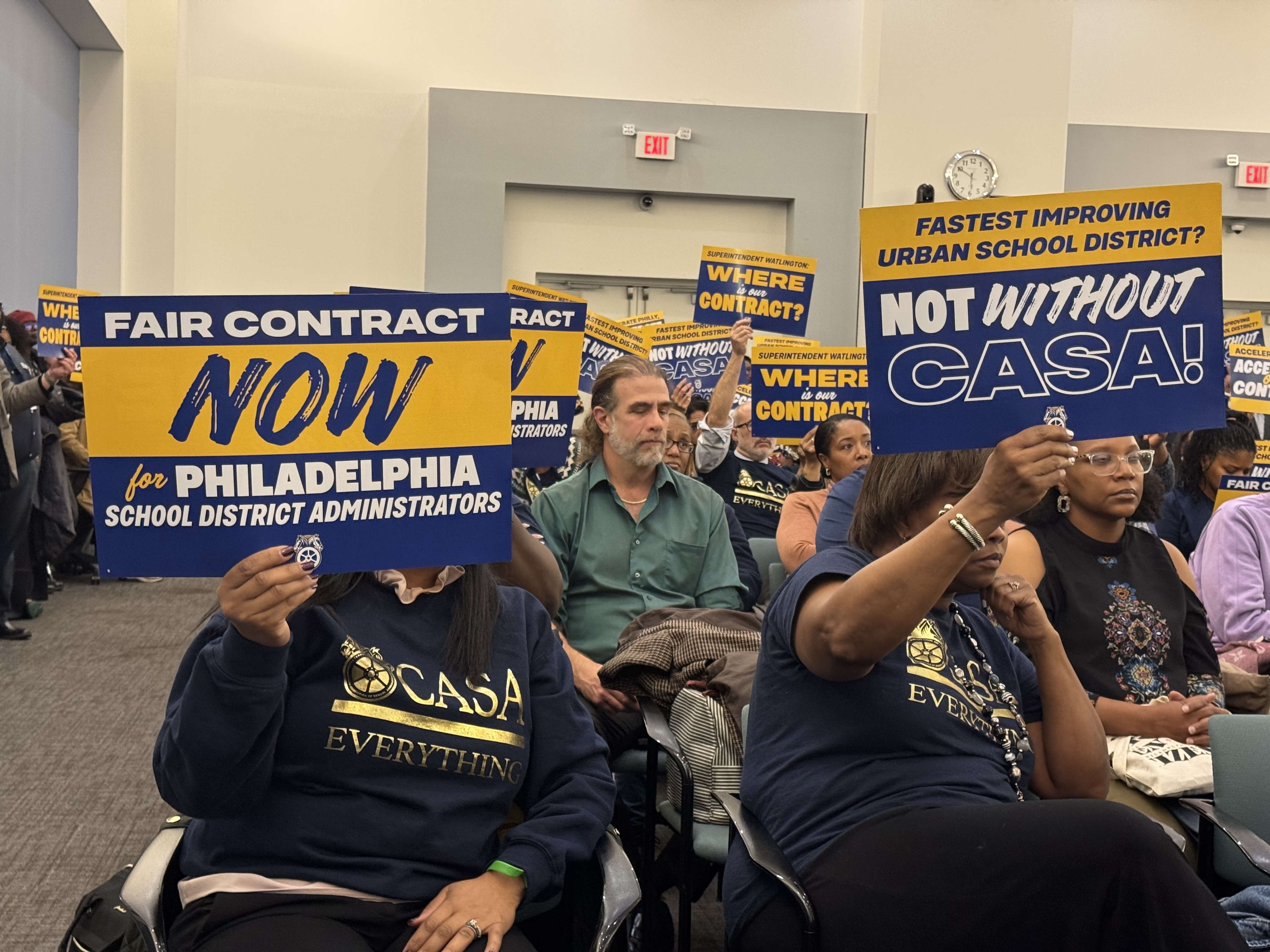
    Principals turned out in force at the Philadelphia school board meeting on Nov. 20, 2025, asking the district for a contract. They have been working without a contract for three months.

    // Timestamp 11/20/25 5:41pm

    Public comment set to begin

    Now we’re onto public comment. Thirty speakers have signed up to testify; there are four speakers on the waiting list.


    // Timestamp 11/20/25 5:38pm

    Streater urges community members to take the survey

    Streater said he completed the survey with his parent hat on — Streater has two children in a neighborhood K-8 school — and said it was easy to complete, finished in about five minutes.


    // Timestamp 11/20/25 5:37pm

    Board member applauds the district’s good financial news

    Board member Joan Stern notes the good financial news.

    “We are very proud of continuing to receive upgrades in our credit rating,” Stern said. The state budget — newly passed — is a help, but the district must be “constantly vigilant about our finances.”


    // Timestamp 11/20/25 5:36pm

    The survey is the public’s last chance to weigh in on facilities planning, board member says

    Board member Wanda Novales reminds the public that this is their last chance to weigh in on school facilities planning before decisions are made, and urges principals to push the surveys out to families.

    She also asks Superintendent Watlington to talk about how this survey is different. He says it’s more open-ended, not ranked.

    “We’re going to consider every bit of the feedback,” Watlington said.


    // Timestamp 11/20/25 5:28pm

    Board member applauds staff efforts on attendance

    Board member Cheryl Harper calls for a round of applause for principals, assistant superintendents, and staff for increases in student and teacher attendance.


    // Timestamp 11/20/25 5:25pm

    District is beginning to receive community feedback from survey

    The current survey, Watlington said, will be open until Dec. 11. The district’s data analysts “may get some external support” to process all the information received in the survey.

    The four themes emerging from feedback to far, Watlington said:

    1. Reinvest in neighborhood high schools.

    2. Expand access to schools with a 5-12 grade span.

    3. Reduce the number of school transitions (from 13 to about 6.)

    4. Increase building utilization.


    // Timestamp 11/20/25 5:20pm

    Watlington says they are committed to getting the facilities planning process right

    “We’re committed to not fumbling the football on the two-yard line,” Watlington said.

    The district wants to get facilities planning process correct and will take “just a little bit more time” to finalize the plan, which will include school closings, officials have said.

    The purpose of the facilities planning process, Watlington said, is to improve education for students citywide — to maximize offerings, to offer 21st-century learning.

    “We do not want to prepare our students for minimum-wage jobs,” the superintendent said.


    // Timestamp 11/20/25 5:19pm

    School district gets a credit rating upgrade

    “Exciting news” on the district’s financial outlook, Watlington said: The district got a credit rating upgrade, its third in three years. It’s now Baa1 rated by Moody’s.


    // Timestamp 11/20/25 5:17pm

    Fewer students have dropped out this year compared to this time last year, Watlington says

    On dropouts:

    In October this year, 384 students dropped out.

    It was 707 students in October of 2024, Watlington said.


    // Timestamp 11/20/25 5:15pm

    Student and teacher attendance is on the rise, Watlington shares with the board

    Good news on student attendance, Watlington said: 79% regular attendance in October — a 3 percentage point increase compared to last year.

    For teachers, 84% of teachers attended 90% or more. That’s up from 79% regular attendance in October of 2024.


    // Timestamp 11/20/25 5:09pm

    Board returns from recess with a poem

    And we’re back. Board president Streater allowed Frantzceska Dorvilien, the Mastery Simon Gratz High School student, to read a poem she wrote about how Gratz helped her on her journey.

    Now we’re on to Superintendent Tony B. Watlington Sr.’s presentation.


    // Timestamp 11/20/25 4:49pm

    Board takes a brief recess

    That’s the end of the student speakers list. The board is taking a five-minute recess because it’s dealing with technical difficulties.


    // Timestamp 11/20/25 4:45pm

    Students from KHSA, home of a student-built library, urge the board to invest in school libraries

    Dayniyah Little, a student at Kensington Health Sciences Academy, is asking for more access to school libraries and librarians.

    KHSA students banded together to open their own library, DreamEscape Library, but they staff it themselves. There are just a handful of certified school librarians in city schools.

    Isabella Le, another Kensington Health Sciences Academy student, says “libraries are a privilege to have in Philadelphia schools.” She’s proud of the DreamEscape library, Isabella said, which helps address the literacy crisis.

    Of libraries, Isabella said: “The absence of them in our schools hinders the possibility to expand literacy at all.”

    “We understand the budget is tight, but withholding libraries is not the answer,” Isabella tells the board.
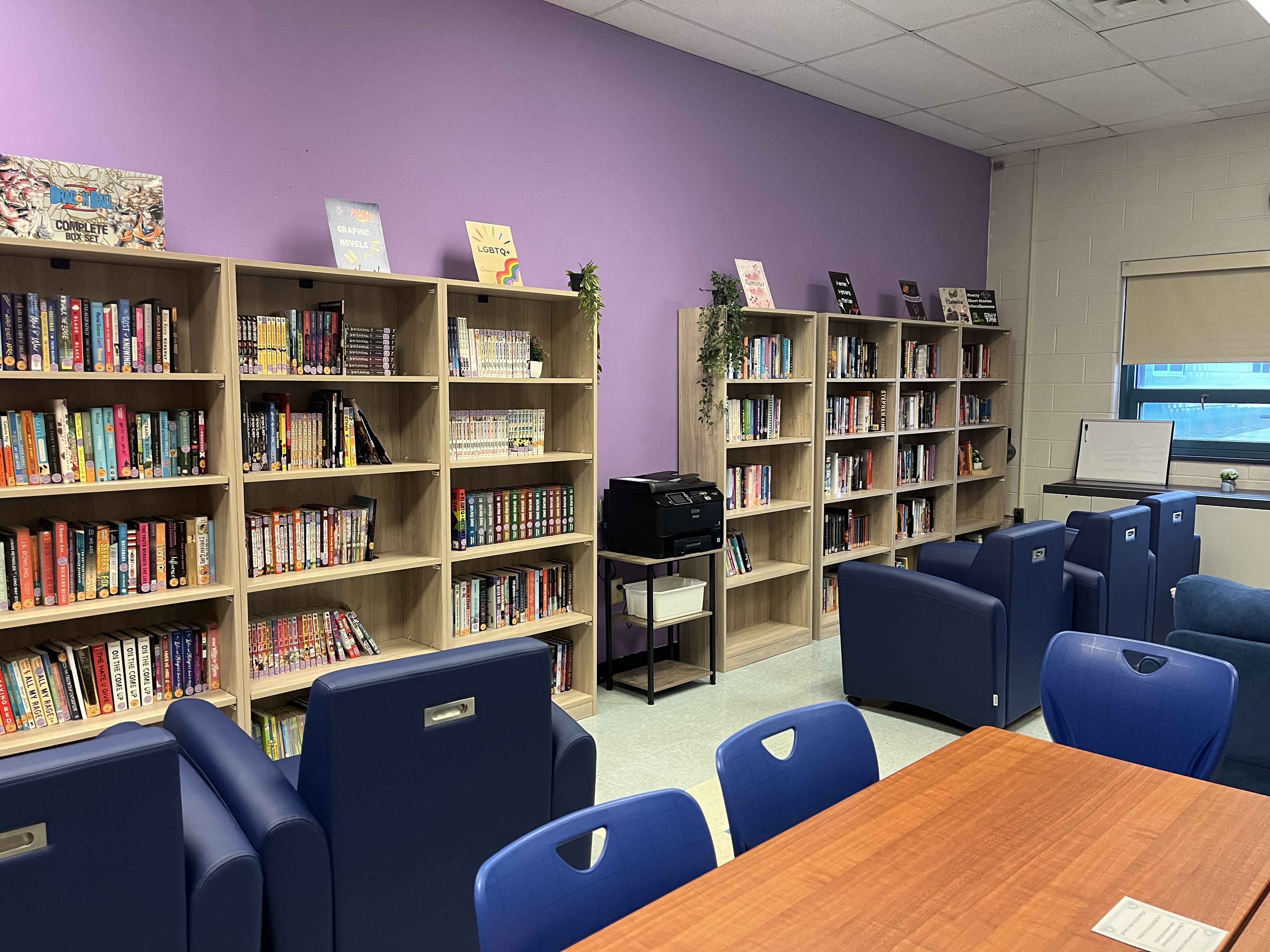
    The brand-new DreamEscape Library at Kensington Health Sciences Academy.

    // Timestamp 11/20/25 4:42pm

    Philly student shares his experience learning to swim and row at Philly Aquatics

    Whitman Dougherty, a Philadelphia student, entertains the crowd with tales of learning to swim and row. He’s a member of Philly Aquatics, a group advocating for year-round swim opportunities for all.

    “Opportunity doesn’t depend on luck. It depends on access,” Whitman says.


    // Timestamp 11/20/25 4:37pm

    Two students speak about their experiences at Simon Gratz High School

    Student speakers are on now.

    The first is Devon Choice, a senior at Mastery Simon Gratz High School. Devon says he’s been challenged and encouraged at Gratz, which offers students myriad opportunities.

    Frantzceska Dorvilien, another Gratz High School student, is testifying in Spanish through an interpreter. Frantzceska has lived in the U.S. for three years, and it hasn’t been easy, she said, but school is a bright spot — her teachers have pushed her to be the best, and supported her, regardless of challenges.


    // Timestamp 11/20/25 4:29pm

    Roll call: All members present but one

    Roll call: All board members are present for today’s meeting except Crystal Cubbage.


    // Timestamp 11/20/25 4:28pm

    Updates from the board’s executive session

    The board met in executive session to discuss several matters, including “property disposition” and confidential charter and investigation matters.


    // Timestamp 11/20/25 4:24pm

    This year’s state budget ‘moves us in the right direction,’ Streater says

    On the state budget, the board president says “this year’s budget moves us in the right direction,” but says the state must move forward more quickly to meet the educational adequacy gap identified by experts.

    “We have made meaningful progress, but Pennsylvania must keep moving toward adequacy so every student in every neighborhood has the resources they need to learn, grow and thrive,” Streater said.


    // Timestamp 11/20/25 4:22pm

    No applications for new charter schools

    Streater says the school board has not received any applications for new charter schools.


    // Timestamp 11/20/25 4:19pm

    Board honors students and teacher of the month

    One of the seniors of the month is Mario Rodriguez of Thomas A. Edison High School, who came to Philadelphia from El Salvador. Streater says he is a strong student with scholarship offers in hand already.

    The other senior of the month is Kateryna Sobolevska. A George Washington High School student who came to the U.S. from Ukraine, she’s an International Baccalaureate student who was chosen for a prestigious Princeton University journalism program.

    Teacher of the month is Takia McClendon of Bethune Elementary.


    // Timestamp 11/20/25 4:16pm

    Streater shouts out board member for recent prize

    Board president Streater reminds the crowd that board member Joyce Wilkerson recently won a prize as the nation’s top urban educator.


    // Timestamp 11/20/25 4:06pm

    School board meeting begins

    School board meeting, here we go!

    Board president Reginald Streater is detailing board visits this month: including to MYA (Middle Years Alternative), and spending time at the Council of Great City Schools‘ national conference, held this year in Philadelphia.


    // Timestamp 11/20/25 4:00pm

    Philly school board to host its monthly action meeting

    The Philadelphia School Board is set to host its monthly action meeting on Thursday at 4 p.m.

    There are a variety of issues expected to come up, including concerns over the school closing process and anger from principals who have been working for three months without a contract.

    Follow along for more updates.
  • Winslow Middle School students will remain on hybrid schedule for months due to water damage in building

    Winslow Middle School students will remain on hybrid schedule for months due to water damage in building

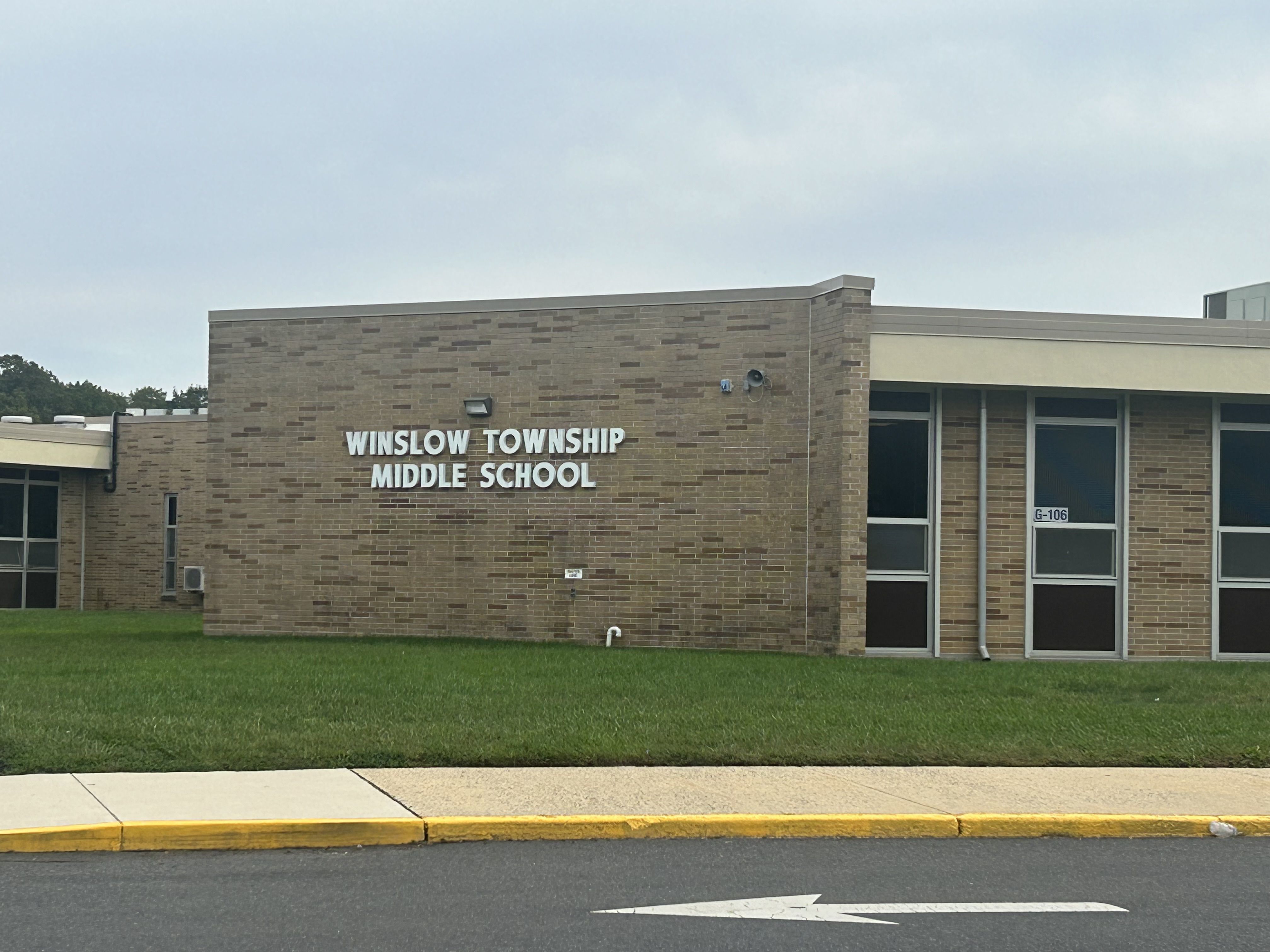
    Winslow Township interim Superintendent Mark Pease had been on the job for a week when he received an urgent message.

    A burst pipe in September at the Winslow Middle School had flooded the sprawling complex. Crews were frantically trying to manage the leak that left most sections under several inches of water.

    It was the first major challenge for Pease, who stepped into the role to replace Superintendent H. Major Poteat, who is on medical leave.

    Pease shut down the middle school for three days while experts assessed the damage. The school enrolls about 740 seventh and eighth graders. Since then, students have had a hybrid schedule, with two days in person and three virtual learning days per week because the school can accommodate only half its students at one time.

    Winslow Middle School will be closed for 30 days after a pipe burst.

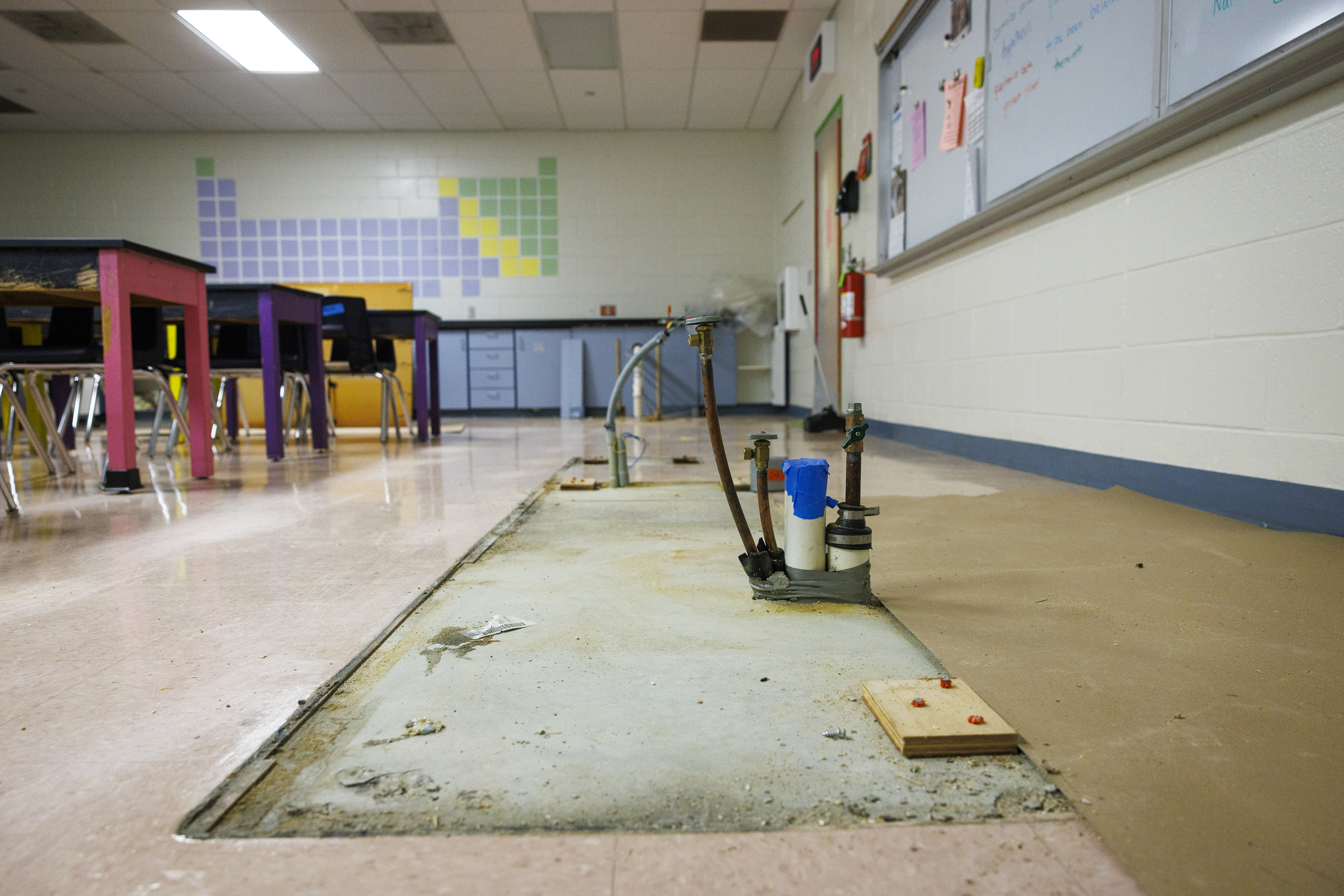
    Experts determined that the water damage was massive and would require extensive repairs to about 28 classrooms, two gyms, the library, the main office, and the entrance area.

    Initially, the project was expected to take about a month, but that timeline has been extended. The repairs, done by All-Risk Property Damage Experts Inc., which specializes in school restoration, could take until January or February to complete, Pease said.

    After removing standing water, contractors had to dry out the building and environmental specialists inspected it for mold damage and air quality, Pease said. They had to rip out drywall and flooring.

    Pease said the project is expected to cost more than $1 million. Most of it will be covered by insurance after a $5,000 deductible, he said.

    “Things are moving. They’re progressing,” Pease said in a recent interview. “We’re pushing really hard.”

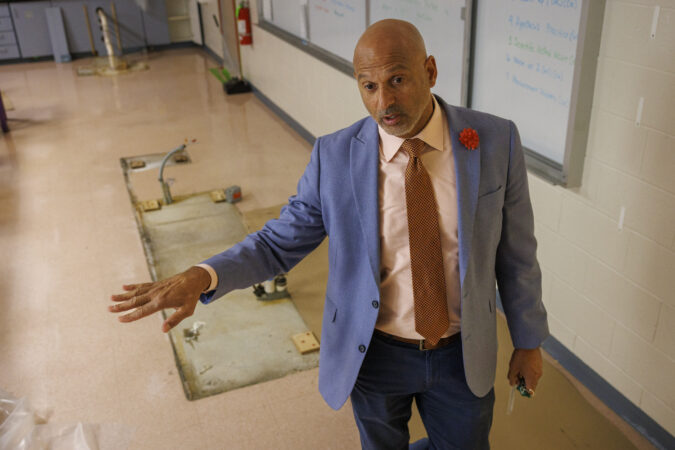
    A damaged floor in a science classroom at Winslow Township Middle School.

    It has not been determined what caused the water main break, Pease said. Custodians were in the building when the leak occurred, he said.

    “This wasn’t your normal sink or toilet overflowing,” Pease said. “This was a serious emergency.”

    On a recent morning, contractors were making repairs in the art room. Supplies were stockpiled in hallways. Pease said contractors have been working overtime and he hopes the work will be completed ahead of schedule.

    Hybrid learning

    About half of the building was not damaged by the water main break, so classes are held in that area, Pease said. The cafeteria was not affected, so meals are served to students on their in-person learning days. To-go meals are available on virtual days.

    Some parents wanted the district to move the students to another school, but Pease said there was not adequate space. The district enrolls about 5,000 students and has nine schools.

    The school day feels different with students only in person two days a week, said parent Mary Kelchner. They especially miss socializing with friends, she said.

    “The kids are struggling with it,” said Kelchner, whose daughter, Kathryn, is an eighth grader. “I feel so bad for these kids.”

    Pease said the district was able to quickly implement hybrid learning for students and staff using the model introduced during the pandemic, when schools nationwide were shut down by the coronavirus.

    The New Jersey Department of Education approved the plan but required the district to make up the three missed days. Other schools in the district remain on their normal schedule.

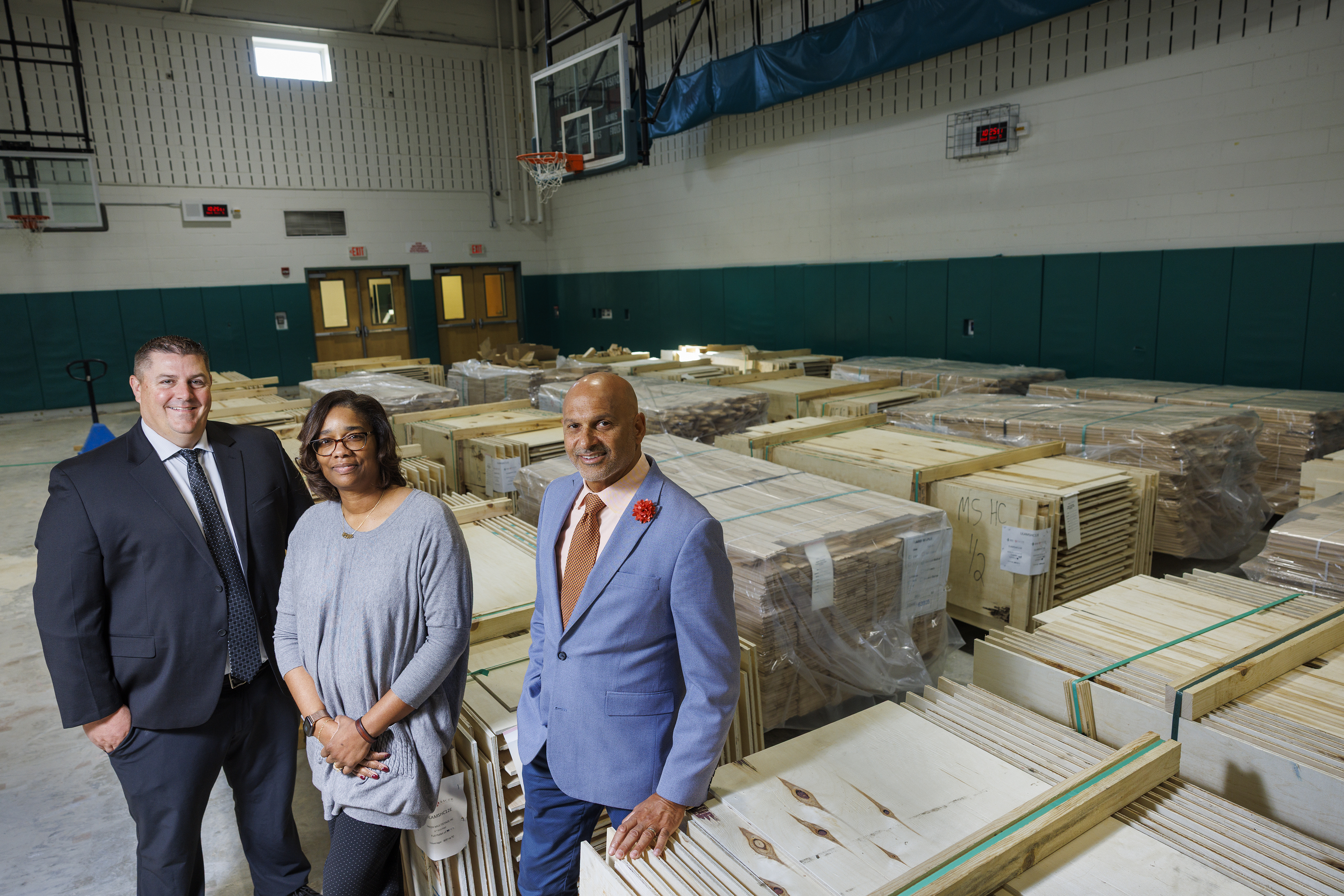
    Winslow interim Superintendent Mark Pease (right) beside subfloor and new hardwood for gymnasium. With him are school principal William Shropshire III and Assistant Superintendent Sheresa Clement.

    Parents picked up Chromebooks for students to use for the virtual learning days. Students follow an A-B schedule, with half reporting in person on Mondays and Thursdays and the other half on Tuesdays and Fridays.

    The current middle school students were first and second graders when the pandemic upended education around the country and some schools were closed for months.

    “These kids are resilient,” said Assistant Superintendent Sheresa Clement.

    Parent Karima Robinson worries about potential learning loss, as seen during the COVID-19 pandemic, when academic achievement suffered drastically. Experts say it could take years for those students affected to recover.

    “It’s definitely setting kids back,” Robinson said. Her daughter, a seventh grader, has adjusted well, she said.

    Pease said the district plans to carefully monitor students’ academic performance. Tutoring and remediation will be available if needed, he said.

    “Nothing will replace students being in a building in the face of a teacher,” Pease said. “We want them back in school.”

    Kelchner said her daughter, a straight-A student, has fallen behind in math. She said her daughter has had technical issues and difficulty hearing the teacher.

    “She absolutely hates it,” Kelchner said. “She’s having a hard time keeping up.”

    Principal William Shropshire said the school has maintained most of its extracurricular activities but had to forfeit a few home sporting events. Winter sports, which began this week, will be held at other district schools, he said.

    Shropshire said attendance has not fallen off during virtual days, averaging about 98%. During the pandemic, chronic absenteeism was a problem in some districts, with students not showing up for virtual learning.

    An educator for 32 years, Pease said this has been one of the biggest challenges in his career. He previously was employed in the Somerdale and Palmyra school districts. His contract in Winslow runs through June 2026.

    “We’re doing our best to get them back in school,” he said.

  • Temple’s head of enrollment abruptly resigns

    Temple’s head of enrollment abruptly resigns

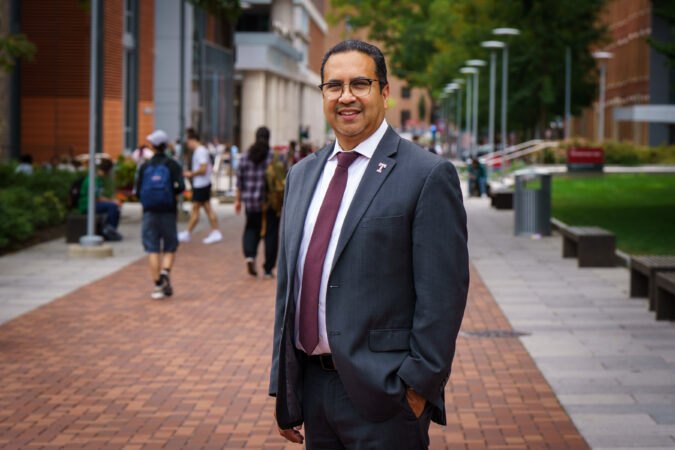
    Temple University’s vice president for enrollment and student success resigned abruptly this week after only 2½ years in the post.

    Jose Aviles’ resignation is effective Dec. 2, the university said in a message to the campus Wednesday.

    “It is very difficult to leave, but I have a life-changing opportunity that awaits me,” Aviles said, adding that he would share details when able. “Serving the Temple University community has been an extreme honor, as I am deeply grateful to have had the chance to fulfill the mission of Russell Conwell and expand access and opportunity to this world-class institution.”

    Temple did not respond to questions on why Aviles is leaving midyear, with the university in the midst of another application cycle.

    “Jose has reimagined enrollment management at the university over the last couple of years, helping move us to a modern, technology- and data-driven approach that has delivered results,” Temple president John Fry and interim provost David Boardman said to the campus community.

    They noted the university achieved growth in first-year enrollment the last two years, with this year’s group reaching a record high of 5,379.

    The university also under his tenure started the Temple Promise program, which makes tuition and fees free for first-time, full-time college students from low-income families who live in Philadelphia, and the Temple Future Scholars program, a mentoring and college-readiness program.

    Aviles, who came to Temple from Louisiana State University, where he had served as vice president for enrollment management and student success since 2017, was recently promoted from a vice provost to a vice president.

    He said in his statement that he “received great support from this university and its leaders” and would “continue to cheer on Temple from the sidelines.”

    While Temple’s first-year class was strong, the school fell short of its initial overall enrollment projection by about 700 students, which translates to about $10 million in lost revenue.

    The university had been estimating it would enroll a total of 30,100 to 30,300 students, which would have been its first enrollment increase since 2017.

    Instead, enrollment came in at 29,503, down about 500 from last year and further declining from its high of more than 40,000 eight years ago. (That does not include enrollment on its Japan and Rome campuses, which increased. Including those campuses, Temple’s overall enrollment was over 33,000, a slight increase from last year.)

    There have also been concerns about sophomore retention and a higher percentage of third- and fourth-year students not returning.

    And in September, the Temple News, the student newspaper, reported that more than 25 admissions counselors, directors, and staff left the department or were laid off over the two years that Aviles led enrollment. Students experienced delays in receiving their admissions decisions, problems with credit transfers, and difficulty with advising and financial aid packages, the Temple News reported.

    “I’m proud of the work that we’ve done,” Aviles told the Temple News at the time. “We definitely walked into a challenging time for admissions but when you look at what’s really happened in the last two years, I think I’m most proud of the foundation that we’ve set.”

  • Philly students got to be food critics, and their reviews of school lunches ranged from ‘mid’ to ‘bussin’’

    Philly students got to be food critics, and their reviews of school lunches ranged from ‘mid’ to ‘bussin’’

    An array of dishes were set out for the critics — whole-wheat lasagna rollups, veggie samosas, cheeseburger bites with dill pickle ketchup.

    The jurists did not hold back.

    “That’s bussin’,” one student said of the lasagna, indicating his approval of the dish.

    Semia Carter, a student at Crossroads Academy, tastes a burger bite while taste testing potential school lunch food on Wednesday at at Philadelphia School District headquarters.

    “Mid,” another commented on the cheeseburger dish, shrugging his shoulders to emphasize how very mediocre it was.

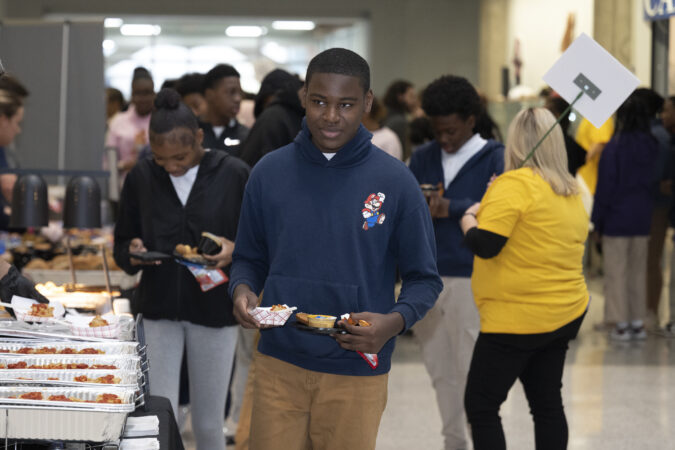
    Hundreds of city students descended on Philadelphia School District headquarters Wednesday for a food show — their chance to weigh in on dishes that might show up on their school breakfast and lunch plates next year. Thirty-three manufacturers showed off 55 products not yet in district cafeterias, from whole-grain onion rings to turkey sausage bites.

    It’s one of the biggest days of the year for Lisa Norton, the district’s executive director of food services.

    “We give the students voice to select the menu that they will eat every day,” Norton said. “It’s the dietary fuel that students need to learn.”

    Norton knows her critics won’t hold back. She was prepared for that.

    “They will tell the vendors, ‘We don’t like this,’” she said. “But that’s what we need. We want to buy food they’ll eat.”

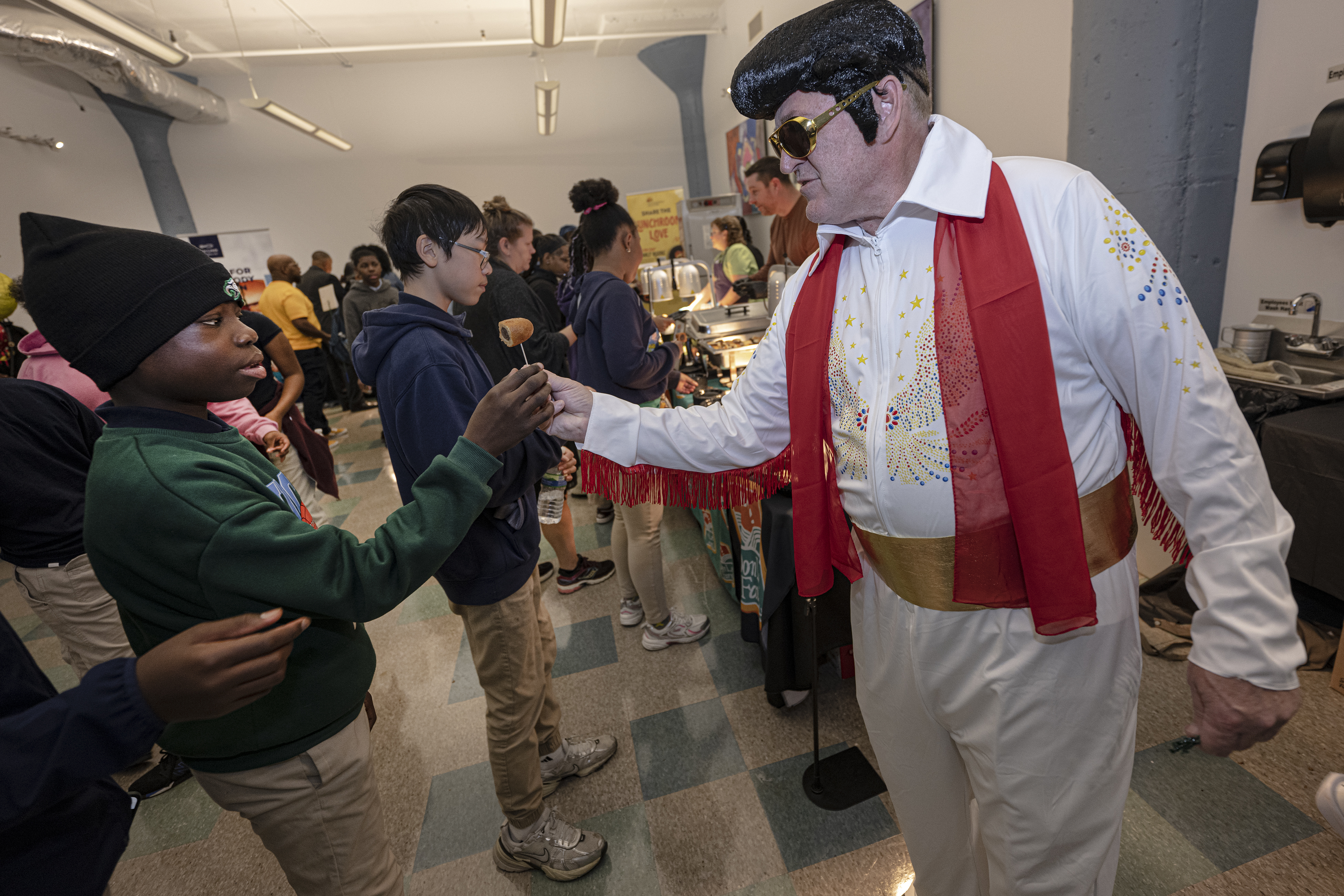
    All around Norton, students scoped out offerings, tasted things that looked good, then recorded their thoughts after scanning QR codes on their phones. At one station, a man dressed as Elvis danced and encouraged students to try more.

    Three friends from Hancock Elementary in the Northeast said everything they tried was “really good” — an improvement from the food offered in their cafeteria now. (Though Philadelphia is a “universal feeding” district, so every student receives free breakfast and lunch regardless of income, the Hancock students were like most who spoke to The Inquirer — they said they eat school food only sometimes, preferring to bring lunch from home most days.)

    “Sometimes it’s mystery mush,” sixth grader Alina Leone said of current school food offerings.

    “Sometimes it’s not bad,” said her classmate Calie Sharpe.

    “There’s pizza almost every day,” said Aislee Blaney, another Hancock friend.

    Havyn Nelson, a seventh-grade student at Lingelbach Elementary in Germantown, found the brownie bars and the taco meat tasty.

    Peyton Sanders, Havyn’s classmate, scrunched her nose when asked to describe the dishes her school offers now.

    “It’s prison food,” Peyton said.

    Jannette Carpentier of Acxion Foodservice serves Southern hush puppies to students during a taste test at the Philadelphia School District headquarters on Wednesday.

    Angelo Valvanis, who works for the company Grecian Delight, offered students beef gyro with what he marketed as “white sauce” — tzatziki sauce. His firm has dishes that students in Chicago, Detroit, and New York eat, and it was hoping to break into Philly.

    “You guys ever get gyro from food trucks? It’s really good. You know, the meat that turns, and you cut it with a knife? It’s from Greece,” Valvanis said.

    The idea of school lunch still conjures the image of tasteless, lukewarm, floppy food — hot dogs, pizza, chicken nuggets — but school meals have changed, Valvanis said.

    “These kids are much more open,” he said. “They all see these things on YouTube.”

    In front of him, a group of students nodded.

    Gabby Swaminathan, a sixth grader from Meredith Elementary in Queen Village, nibbled the gyro. It was good, she said.

    “Our food at school right now is not that good,” Gabby said. Her strategy was to rate the food she liked — the gyro, the lasagna roll-ups — really highly, with hopes those will eventually replace the food she doesn’t like.

    Chef Tony Rizzo of Chase Franklin Food Company shows Marieta pasta ahead of a student tasting session at the Philadelphia School District headquarters on Wednesday.

    Wednesday’s event was timely. Several members of Philadelphia City Council grilled district officials about the food at a Tuesday hearing on school matters, saying constituents had concerns about the quality of the meals served to students. The elected officials said they want to come to a Center City school to eat the same lunches students eat.

    Superintendent Tony B. Watlington Sr. explained the district’s conundrum — its food service program must be funded completely by reimbursements from the U.S. Department of Agriculture.

    “The dollars are not robust enough to have filet mignon everyday, but it is sustenance, and I say that very respectfully,” Watlington told Council.

    Kameron Garrick and Amaud Burton-Bullock, students at Martin Luther King High, can say definitively they have never been served filet mignon at school.

    They mostly skip school lunch, they said, and buy food at a corner store or eat at home.

    But sure, they were game to try the offerings.

    The cheeseburger bites? OK.

    “I would say it’s mid,” Kameron said. “It needs more seasoning.”

    But they found a bright spot — the cornbread bowls with chicken.

    “I would take that cornbread,” Amaud said. “It was nice and moist.”

    Kervens Orelus, a student at Lingelbach, gets a corn dog from Elvis during a testing session at the Philadelphia School District headquarters on Wednesday.
  • Wallingford-Swarthmore is facing a $2.6 million deficit. Officials blame a ‘spending problem.’

    Wallingford-Swarthmore is facing a $2.6 million deficit. Officials blame a ‘spending problem.’

    The Wallingford-Swarthmore School District is headed for a $2.6 million budget deficit, district officials said during a presentation on Tuesday night.

    At a meeting of the district’s finance committee on Nov. 18, Superintendent Russell Johnston and business administrator DeJuana Mosley presented a dire picture of the school district’s finances. Increased staffing costs, subpar inventory management, and costly building repairs have coincided with a shrinking revenue base in the district, officials said. Without implementing a “cultural shift” around spending, Mosley said, the district is staring down major fiscal problems for the 2027-28 school year.

    “Bottom line, the district has a spending problem,” Mosley said.

    Why is Wallingford-Swarthmore facing a budget deficit?

    District administrators say Wallingford-Swarthmore‘s fiscal issues are largely related to runaway spending and insufficient recordkeeping.

    The school district’s budget has increased by 18%, or around $16 million, over the last five years. Administrators said the district has had to pour resources into its security, nursing staff, and costly building repairs that had been put off for years. On top of that, Mosey outlined a lack of inventory management, describing a culture across the district of “just ordering stuff.”

    Johnston was hired earlier this year to replace former Superintendent Wagner Marseille. The school district parted ways with Marseilles in 2024 amid mounting criticism of his management style and spending decisions.

    The district’s unsustainable spending has been set to the backdrop of a decreasing tax base, officials said. The 2025 taxable assessed value in the school district is $2.6 billion, a $5.8 million decrease from 2024. The decrease resulted in a $174,000 loss in revenue.

    School districts in Pennsylvania are limited by the Act 1 Index, a formula used to determine the maximum tax increase a district can levy (without voter approval). The index is calculated using the statewide change in wages, the nationwide change in school employee compensation costs, and an individual district’s relative wealth. Wallingford-Swarthmore’s 2026-27 Act 1 Index is 3.5%.

    Unlike neighboring school districts like Rose Tree Media, which has seen continued population increases and new construction, Wallingford-Swarthmore is small and almost entirely residential. Limited construction and growth leaves few opportunities to increase the district’s tax base.

    Around 20% of the district’s revenue comes from state and federal subsidies. Mosey said poor recordkeeping had impacted state subsidy and grant revenue (the issue has since been cleaned up, she added).

    How is the district planning to balance the budget?

    If no changes are made, the school district is set to be short about $2.6 million for the 2027-28 school year. Mosley recommended the district cut the budget by double that amount ($5.2 million).

    “I know it’s alarming and it’s aggressive and it’s a lot,” she said. “We’re trying to change the trajectory of what we’re doing.”

    Johnston said the district should look at cost savings that are “furthest away from the classroom,” citing examples like professional development and travel for staff, a reduction of the size of the district’s capital plan, and a review of “potential redundancies in services and staffing.” He also suggested evaluating which services the district is required to provide and which are optional.

    “I almost have to take a deep breath when I say this out loud, but kindergarten transportation is not required,” he said, offering cutting buses for kindergartners as an example.

    Johnston emphasized that he was not making a suggestion to cut kindergarten transportation from the get-go, but was offering it as an example of an optional service the district provides.

    What happens next?

    The district has to present a 2027-28 budget draft by June of next year. Johnston and Mosley said they were deliberately bringing the budget process to the public months in advance to allow for ample conversations with teachers, staff, parents, and the school board.

    In early December, Johnston will host optional community forums with school faculty and the community. The school board’s finance committee will present a potential budget reallocation strategy at its Dec. 16 meeting. On Dec. 22, the board is set to vote on its reallocation expectations.

    This suburban content is produced with support from the Leslie Miller and Richard Worley Foundation and The Lenfest Institute for Journalism. Editorial content is created independently of the project donors. Gifts to support The Inquirer’s high-impact journalism can be made at inquirer.com/donate. A list of Lenfest Institute donors can be found at lenfestinstitute.org/supporters.

  • 3,000 protested conditions for Philly’s Black students in 1967. Here’s how these city kids remembered it.

    3,000 protested conditions for Philly’s Black students in 1967. Here’s how these city kids remembered it.

    The students walked together, chanting over the hum of Center City traffic, holding a homemade sign and shouting into a chilly November sky.

    “Hey hey!” they yelled. “Ho ho! Black history will never go!”

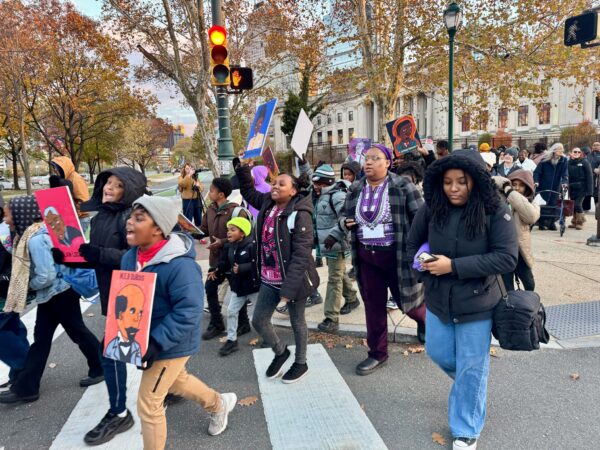
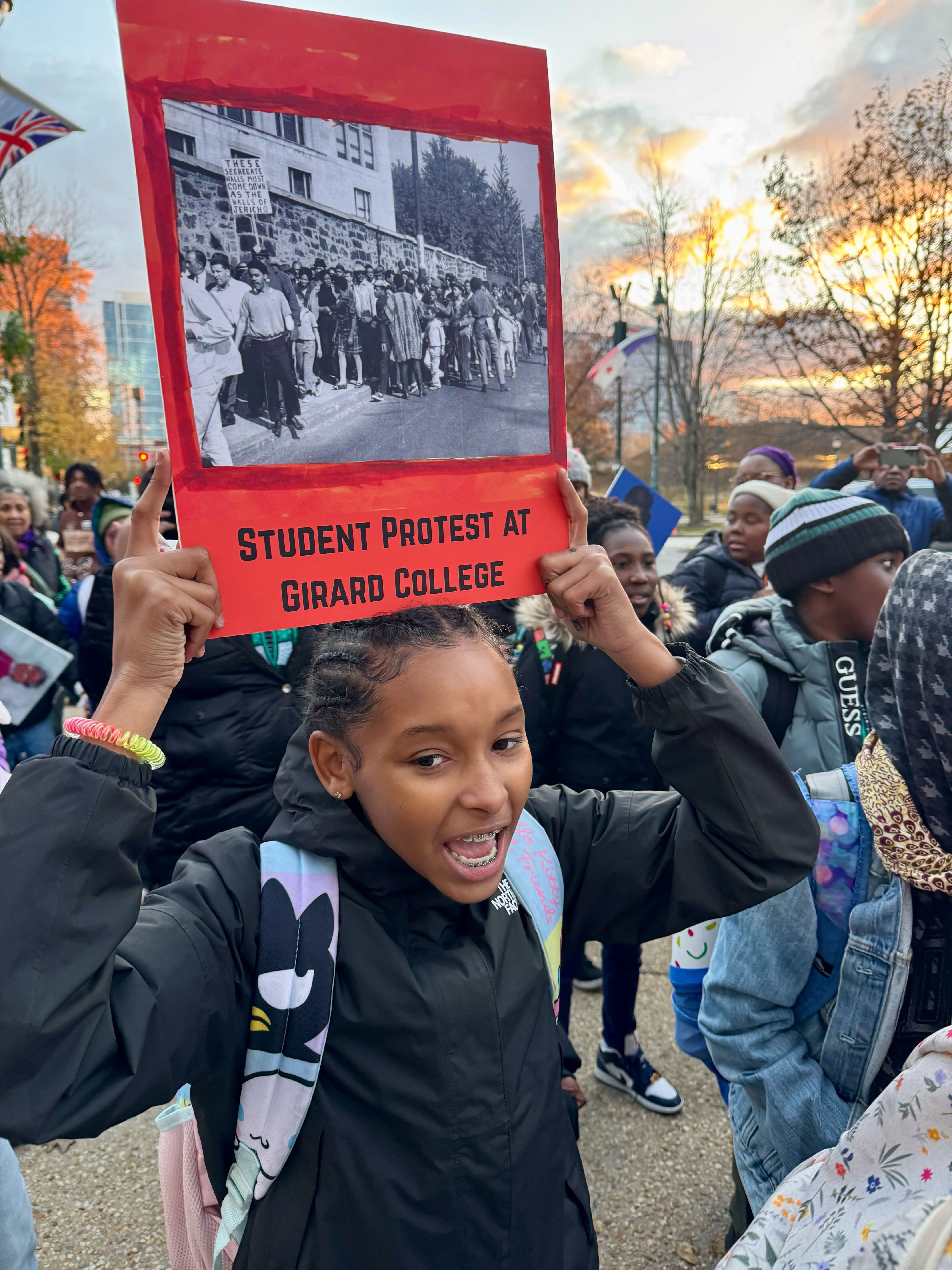
    Fifty-eight years to the day after 3,000 youth and their supporters walked out of Philadelphia School District schools to protest conditions for Black students, a clutch of kids from the Jubilee School held a march Monday to commemorate that landmark action, which historians say was a seminal moment both for the city and school integration across the country.

    Miles Matti, a fifth grader at Jubilee, a private school in West Philadelphia, walked with his brother, Theo, a third grader.

    “We’re doing it because those kids had every right to be heard,” said Miles, 10.

    Students from the Jubilee School walk to commemorate the 1967 Philadelphia student walkout, where thousands of Philadelphia School District students demanded better treatment of Black students.

    The timing of the celebration was important, organizers said — not just on the anniversary of the demonstration, but 20 years after Philadelphia became the first district in the United States to implement African American history as a graduation requirement.

    For months, Jubilee students studied the walkout. They conducted research, wrote poetry, made plans for honoring participants in the demonstration, and mapped a route — from the old School District of Philadelphia headquarters at 21st and the Benjamin Franklin Parkway, to the Free Library’s central branch, where there would be music and stories.

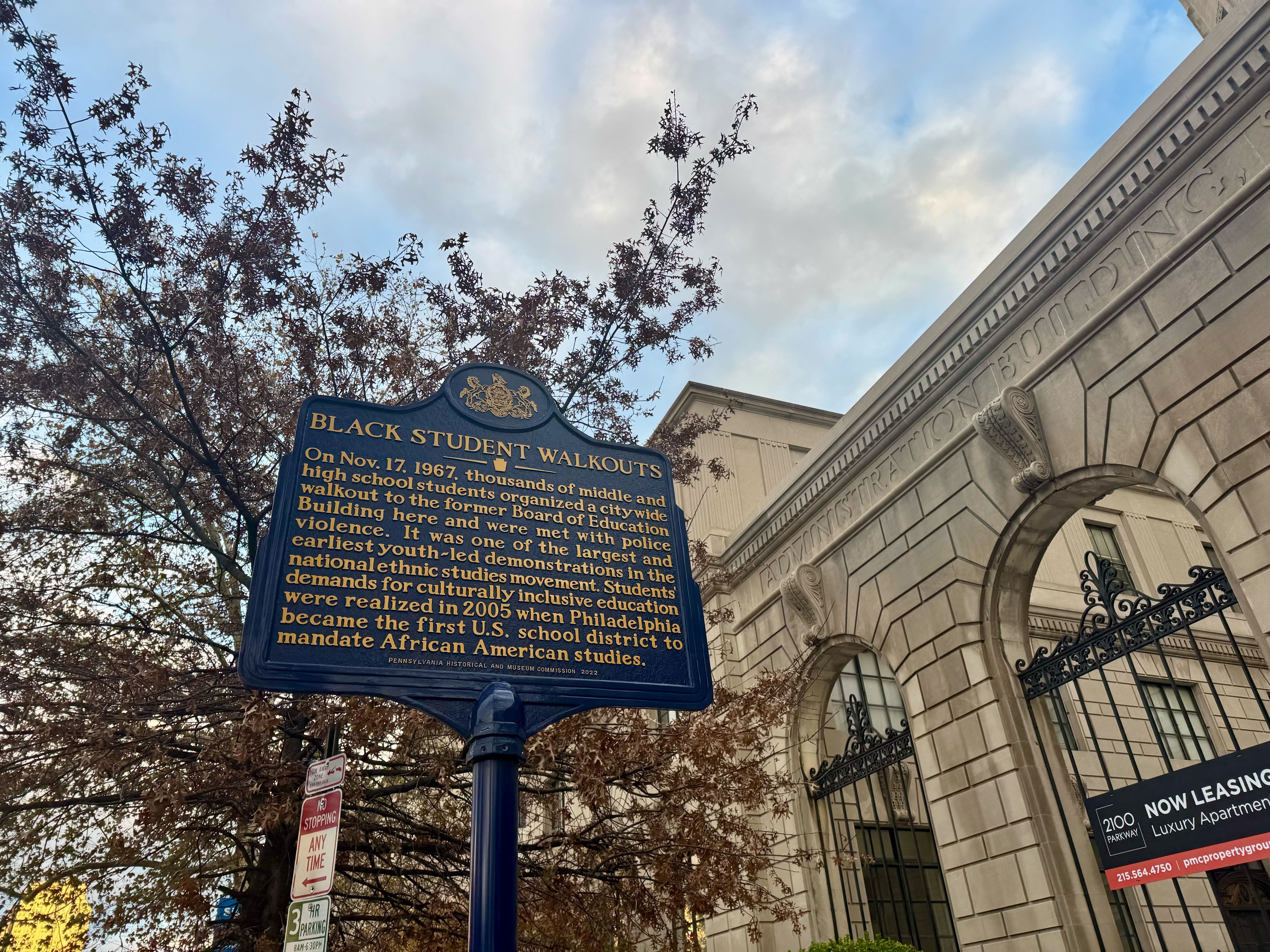
    The group honored four former Masterman students who, in 2020, won approval from the city’s Historical Commission to have a marker permanently erected outside the old district building noting the 1967 walkouts.

    Khaseem Bailey, a sixth grader with a strong voice and energy to spare, led the chants as the group, flanked by teachers, parents, and supporters, made its way down the Parkway.

    It was important to remember, Khaseem said.

    “They were marching for Black rights and student rights,” he said. “And so are we.”

    ‘It was not a flash mob’

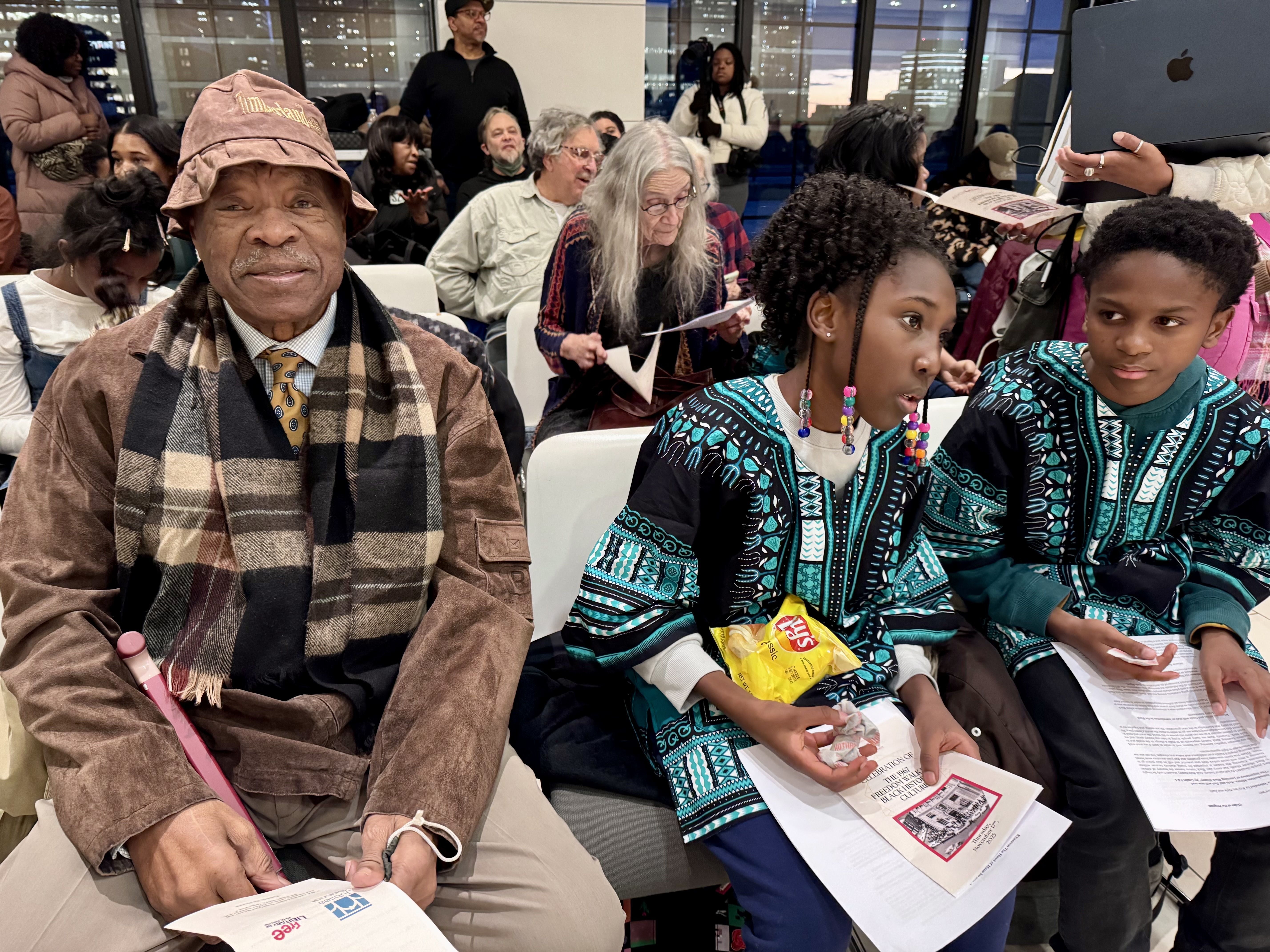
    The Nov. 17, 1967, walkout took 10 years to plan, said Walter Palmer, now 91, and one of the chief architects of the event — a decade spent organizing, teaching nonviolent strategies, training students, pairing them with elders.

    Walter D. Palmer, who helped organize the 1967 Philadelphia student walkout, was honored at a program by students from the Jubilee School, sitting next to him.

    The time seemed right that November. By that point, Black students made up the majority of the district’s pupils, and they attended integrated schools, but conditions were unequal.

    “Black students were harmed for using African names, wearing African clothing,” said Palmer.

    Organizers came up with a list of 25 demands — from allowing students to wear their hair in Afros to infusing Black history in the district curriculum.

    “It was not a mistake,” said Palmer. “It was not a flash mob. There were no cell phones; there were no microphones. These young people, they were just hungry.”

    A historical marker commemorating the 1967 Philadelphia student walkout stands outside the former offices of the School District of Philadelphia, at 21st and Benjamin Franklin Parkway.

    Students pulled fire alarms and poured out of their schools, with many meeting at the School District of Philadelphia headquarters. Representatives were chosen to speak to then-Superintendent Mark Shedd, who took their requests seriously.

    Newspaper accounts described the demonstration as being like a “picnic,” but then-Police Commissioner Frank Rizzo called in 100 officers in riot gear. They began swinging at students and releasing police dogs.

    Fifty-seven people were arrested, and dozens injured, some seriously. The event made national headlines.

    Marilyn Kai Jewett, another walkout participant, told the students their celebration was especially timely.

    “We cannot let anyone whitewash our history,” Jewett said. “We are under attack. We cannot stop — we’ve got to fight until we die. The evil will not prevail. Goodness always prevails. Just keep doing what you’re doing.”

  • EEOC sues Penn for failing to release information related to antisemitism investigation

    EEOC sues Penn for failing to release information related to antisemitism investigation

    The U.S. Equal Employment Opportunity Commission is suing the University of Pennsylvania for failing to release information related to an investigation it began in 2023 over the school’s treatment of Jewish faculty and other employees regarding antisemitism complaints.

    Penn, according to the complaint filed in federal court Tuesday, has not complied with a subpoena for information, including the identification of employees who could have been exposed to alleged harassment and the names of all employees who complained about the behavior.

    In its quest to find people potentially affected, the EEOC demanded a list of employees in Penn’s Jewish Studies Program, a list of all clubs, groups, organizations and recreation groups related to the Jewish religion — including points of contact and a roster of members — and names of employees who lodged antisemitism complaints.

    Penn usually does not comment on litigation, but in this case, the school ardently objected to the EEOC’s characterization of its cooperation and the personal nature of the material it was still seeking.

    The school said in a statement it has cooperated extensively with the EEOC, including providing more than 100 documents and over 900 pages.

    But the private university said it will not disclose personal information, specifically “lists of Jewish employees, Jewish student employees and those associated with Jewish organizations, or their personal contact information” to the government.

    “Violating their privacy and trust is antithetical to ensuring Penn’s Jewish community feels protected and safe,” the university said Tuesday.

    Penn also provided information on employees who complained and agreed that it could be shared, the school said, but the school would not provide information on those who objected.

    “Penn also offered to help the EEOC reach employees who are willing to speak with the agency by informing all employees of the investigation and how they could reach out to the agency,” the university said. “The EEOC rejected that offer.”

    The original complaint was launched by EEOC Commissioner Andrea Lucas, now chair of the body, on Dec. 8, 2023, two months after Hamas’ attack on Israel that led to unrest on college campuses, including Penn, and charges of antisemitism. It was also just three days after former Penn President Liz Magill had testified before a Republican-led congressional committee on the school’s handling of antisemitism complaints; the testimony drew a bipartisan backlash and led to Magill’s resignation days later.

    Lucas, who was appointed chair this year by President Donald Trump, also brought similar antisemitism charges against Columbia University that earlier this year resulted in the school paying $21 million for “a class settlement fund.”

    EEOC complaints typically come from those who allege they were aggrieved. Lucas, according to the complaint, made the charge in Penn’s case because of the “probable reluctance of Jewish faculty and staff to complain of harassing environment due to fear of hostility and potential violence directed against them.“

    The EEOC’s investigation ensued after Lucas’ complaint to the EEOC’s Philadelphia office that alleged Penn was subjecting Jewish faculty, staff, and other employees including students “to an unlawful hostile work environment based on national origin, religion, and/or race.”

    The allegation, the complaint said, is based on news reports, public statements made by the university and its leadership, letters from university donors, board members, alumni and others. It also cited complaints filed against Penn in federal court and with the U.S. Department of Education over antisemitism allegations and testimony before a congressional committee.

    The EEOC complaint pointed to public comments by Magill, addressing antisemitism while she led Penn.

    “I am appalled by incidents on our own campus, and I’ve heard too many heartbreaking stories from those who are fearful for their safety right here at Penn,” Magill said in 2023. “This is completely unacceptable.”

    Magill also in a message had addressed “a small number of Penn staff members” who “received vile, disturbing antisemitic emails that threatened violence against members of our Jewish community,” in November 2023.

    The complaint cited incidents of antisemitic obscenities being shouted on the campus, destruction of property in Penn’s Hillel, a swastika painted in an academic building, graffiti outside a fraternity and a pro-Palestinian encampment on the campus in 2024 that eventually was dismantled by police.

    “Throughout its investigation, the EEOC has endeavored to locate employees exposed to this harassment and to identify other harassing events not noted by respondent in its communications, but respondent has refused to furnish this information, thereby hampering the EEOC’s investigation,” the complaint said.

    Penn said it had received three antisemitism complaints, according to the federal complaint, but the EEOC questioned that number given the university’s workforce of more than 20,000. It demanded that the school provide names of all people who attended listening sessions as part of the school’s task force on antisemitism and all faculty and staff members who took the task force’s survey.

    Penn objected to the subpoena and the commission partially modified it in September, ordering the school to comply within 21 days, the complaint said.

    In its statement to The Inquirer, Penn defended its response to antisemitism.

    “Penn has worked diligently to combat antisemitism and protect Jewish life on campus,” the school said.

  • School closings are coming to Philly. Here are four themes that are emerging as leaders come closer to decisions.

    School closings are coming to Philly. Here are four themes that are emerging as leaders come closer to decisions.

    Sweeping changes are coming to the Philadelphia School District, with officials promising large-scale school closings, co-locations, grade reconfigurations, and new construction over the next several years.

    The district is launching a survey this week to gain more input into that plan after Superintendent Tony B. Watlington Sr. pushed back a November deadline to announce his recommendations amid concerns from school communities.

    But those working closely on the facilities planning process said Monday that four themes are emerging that will shape the recommendations: strengthening K-8 schools, reinvesting in neighborhood schools, reducing school transitions for students, and expanding access to grades 5-12 criteria-based schools.

    Here’s what to know about each of the themes:

    Strengthening K-8 schools

    “Many school programs with declining enrollment, or which operate in aging buildings, struggle to offer a full range of high-quality classes, activities, enrichment opportunities, and supports,” the district said.

    Students and teachers in K-8 schools need better spaces and staffing and more resources, and the district cannot achieve that in its current configuration — the district has 216 schools but about 300 buildings, many of which are in poor shape. And enrollment is unevenly distributed — some schools, particularly those in the Northeast, are overcrowded, while others have thousands of empty seats.

    Citywide, there are 70,000 excess seats in district schools.

    The district might merge two schools or co-locate multiple schools in a single building, said Claire Landau, a senior adviser to Watlington tasked with steering the facilities planning process. It might also invest in “more suitable buildings.”

    Reinvesting in neighborhood high schools

    “Some neighborhood high schools lack a full range of academic enrichment and post-high school preparation pathways, while some smaller magnet high schools lack extracurricular programs and diverse enrichment opportunities,” the district said.

    Possible outcomes for reinvesting in neighborhood high schools include “targeted building improvements,” partnerships, and theme-based or career-connected programs in the district’s traditional neighborhood high schools.

    Reducing school transitions for students

    “Transitions for schools can be disruptive to learning and community connection. Research supports that students do better when they have fewer transitions between school programs during their pre-K-12 experience,” the district said.

    There are currently 13 different grade configurations in the district; the aim is to shrink that. To achieve this, the district could increase pre-K-8 schools and adjust grade configurations.

    Expanding access to grades 5-12 criteria-based schools

    “Philadelphia community desires schools that allow students to learn in one community from middle grades through high school,” the district said. (Some of those already exist — Masterman, for instance, and GAMP.)

    To achieve that goal, the district could create more seats at existing 5-12 schools, or create new 5-12 pathways, with an eye toward neighborhood equity.

    “This is not going to be a plan that erases or proposes to move away from all of our more traditional middle school grade spans, but we will be looking for opportunities to provide more access to pre-K-through-8 programming and 5-through-12 programming — because of how much support we’ve heard for it from communities across this process as well as what the research shows as far as students doing better in these environments,” said Landau.

    The mayor weighs in

    Mayor Cherelle L. Parker weighed in on the matter at a district hearing before City Council on Tuesday, saying she was in lockstep with Watlington and the school board president.

    “We need to recreate a comprehensive plan for repurposing every underutilized school building in the city of Philadelphia,” Parker said.

    But, the mayor said, “that plan will have to include housing, and that includes housing for public servants and educators who deserve to live in the communities that they serve, along with thinking about access to the repurposing of those buildings, to aid us in our desire to build affordable and workforce housing in the city of Philadelphia.”

  • The Trump administration will announce the dismantling of multiple parts of the Education Department

    The Trump administration will announce the dismantling of multiple parts of the Education Department

    The Education Department plans to announce Tuesday that it will move multiple parts of the agency to other federal departments, an unprecedented and unilateral effort to dismantle an agency created by Congress to ensure all Americans have equal access to educational opportunity and better coordinate federal programs.

    The move was described by three people informed of the plan ahead of the announcement. Two of these people said six offices within the department would be shifted elsewhere; the third person said it was at least two.

    President Donald Trump signed an executive order in March seeking to close the department and asked Education Secretary Linda McMahon to work with Congress to do so. The agency, which was created in 1979, has long been derided by conservatives as unnecessary and ineffective. But Congress has not acted on or seriously considered Trump’s request.

    McMahon has acknowledged that only Congress can eliminate the department but vowed to do everything in her power to dismantle it from within.

    Asked for comment, an Education Department spokeswoman suggested some information provided to The Post about the plan was inaccurate, but did not offer specifics.

    Supporters of the department say that the agency is effective in coordinating multiple aspects of education in one place and keeping priorities important to students, parents and schools high on the federal agenda.

    Offices that could be moved out of the agency include the Office for Civil Rights, which investigates allegations of discrimination on the basis of race, sex and disability; the Office of Special Education and Rehabilitative Services, which administers the $15 billion Individuals with Disabilities Act program; and the Indian Education program; the Office of Elementary and Secondary Education, which administers K-12 grant programs; and the Office of Postsecondary Education.

    Federal law directs that these programs be housed in the Education Department. The Trump administration is employing a work-around, the people briefed on the matter said, whereby other government agencies would run the Education programs under a contract with the Education Department. The people spoke on the condition of anonymity because they were not authorized to discuss the changes.

    The Trump administration laid the groundwork for this change earlier this year when it signed an agreement to move career, technical and adult education grants out of the Education Department to the Labor Department. Under the arrangement, Education retains oversight and leadership while managing the programs alongside Labor, a way of sidestepping the federal statute.

    “We believe that other department functions would benefit from similar collaborations,” McMahon wrote in an op-ed essay published Monday in USA Today.

    More broadly, McMahon has argued that the recently ended government shutdown showed how unnecessary her agency is.

    “Students kept going to class. Teachers continued to get paid. There were no disruptions in sports seasons or bus routes,” she wrote. “The shutdown proved an argument that conservatives have been making for 45 years: The U.S. Department of Education is mostly a pass-through for funds that are best managed by the states.”

  • Thomas Jefferson University gets its first alma mater song 200 years later. Meet the composer.

    Thomas Jefferson University gets its first alma mater song 200 years later. Meet the composer.

    For its 201-year history, Thomas Jefferson University has been without an official alma mater song.

    Until now.

    Elizabeth Avril Barden, a customer-experience specialist at Jefferson Health Plans and recent summa cum laude graduate of the school, has written one.

    “Jefferson How We Adore Thee” will be released to the university community at its annual gala Tuesday. The university held a contest during its bicentennial last year, and Barden’s piece was selected from dozens of entries, the school said.

    Elizabeth Avril Barden, a customer-experience specialist at Jefferson Health Plans and recent summa cum laude graduate of Thomas Jefferson University, has written the school’s first alma mater song in its 201-year history. “Jefferson How We Adore Thee” will be released to the university community at a gala on Tuesday.

    “Elizabeth really captured the essence of the Jefferson community,” said Jefferson President Susan C. Aldridge “Learning, collaborating and innovating are all part of our collective DNA and I couldn’t be happier that we finally have an alma mater which captures who we are as a university as we venture into our third century.”

    Jefferson has had a handful of songs that students have written over the years and a processional theme that launched in 1974, but never an official alma mater song, said F. Michael Angelo, Jefferson archivist.

    One reason could be that at its founding in 1824, Jefferson was a medical college and over the years evolved into a university. But it was always medically focused until the school merged with the former Philadelphia University, best known for its design, engineering, and health science programs, in 2017.

    “Philadelphia University, as far as we can tell through their archives, never had an alma mater song, either,” Angelo said.

    Barden, 32, who received her bachelor’s degree in Health Services Management from Jefferson this year, said a colleague encouraged her to enter the contest. She has written about 30 songs, she said, so it wasn’t an off-the-grid venture.

    It took her just 25 minutes to write the lyrics and music for the one minute, 55-second piece, she said.

    “If you’re creative, you just flow,” she said. “You flow like water because it’s already in you, and you don’t have to overthink what’s already in you.”

    And with the help of producer Keegan Myers, who played the music while Barden sang, the chorus goes:

    It’s the Jefferson strong and true, where innovation leads us through. Together we achieve our best, as we prepare for what’s next.

    “In every step I was taking at the university, it was preparing me for the next level of life,” she said.

    Barden has been singing in front of people since age 2 and wrote her first song at 7, she said. Her parents, both Christian pastors originally from Haiti, encouraged her musical talent as she grew up in Brooklyn surrounded by gospel music, she said.

    “Me and my six siblings, we were essentially the choir,” she said.

    In high school, she won a song-writing contest and got to meet Grammy-winning R&B singer Jazmine Sullivan, who, she said, encouraged her to keep writing. She had written her high school’s alma mater song, too. And when she was a student at Delaware County Community College, she sang the national anthem at two ceremonies.

    “Any school I go to, I want to leave a piece of me there,” she said. “Music to me is connection. That’s how I connect to people.”

    For winning the Jefferson contest, she received a $200 gift card to the school bookstore, lunch with Aldridge, and a Jefferson mug.

    “But the greatest gift was my name being attached to this alma mater song,” she said.

    Barden said her aim in writing the song was to give Jefferson a gift.

    “Jefferson gave me a lot,” she said, including a scholarship. “There were moments where I needed to talk to professors because life was happening. They were always kind and patient with me.”

    Barden attended community college in New York after high school, but left when she got pregnant. When she moved to Philadelphia in 2016, she enrolled at Job Corps and then moved on to the Delaware County college. She continued on to Jefferson, while raising her four children, now ages 2 to 13.

    In 2023, she began working there, too. Her job entails focusing on the patient experience and helping patients navigate the system.

    “For the most part, I’m kind of like a clean-up person,” Barden said.

    She’s currently enrolled in a dual program at Bryn Mawr College and Jefferson to obtain her master’s degrees in social service and public health. She plans to become a licensed clinical social worker and to incorporate music therapy into her work.

    As part of her studies, she’s doing research on how music therapy can help those suffering from post-traumatic stress.

    “I do believe that the incorporation of music,” she said, “has the ability to communicate with anyone … and help them learn how to cope.”