Category: Education

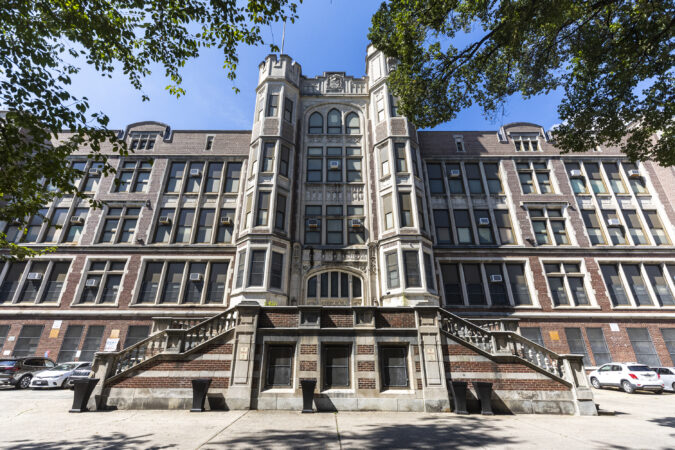
  • Stolen phones sparked a fight and ongoing tension at Frankford High

    Stolen phones sparked a fight and ongoing tension at Frankford High

    Tensions are flaring at Frankford High over the school’s cell phone policy and its ability to keep students’ property safe.

    After two fights — including one where a student was so badly injured that city EMTs responded and transported the student to a hospital — a few dozen students took to the school’s hallways Friday, vocally demanding their phones back.

    “We just want to have a say in where our property goes, where our phones go,” said one student, who asked not to be named for fear of being targeted.

    Frankford, like many schools in Philadelphia and across the country, has recently moved to get cellphones out of students’ hands during the school day.

    At first, Frankford used Yondr pouches to secure students’ phones, but those were easily broken, and the costs of the pouches rose.

    Last year, the school installed lockers outside the building, requiring students to deposit phones before the school day started. Students could purchase locks from the school for $5.00, or bring their own locks.

    But “there’s been issues,” said one Frankford staffer, who asked not to be identified for fear of reprisal. “The area where the lockers are floods; it’s not monitored.”

    (School officials said they have alerted district officials about the drainage issue.)

    Some students didn’t love the idea of the lockers, but it wasn’t until last week that significant tensions began simmering after several phones were stolen. School officials said in an email to Frankford staff that five phones were stolen, two from a locker with no lock on it.

    “That caused some serious issues in the building,” the staffer said. “A lot of the students said, ‘You’re forcing us to put our phones there, but you’re not protecting them.’”

    Believing they knew who stole the phones, some students targeted the alleged thief, spurring a fight inside the school. That student was assaulted — beaten so badly that EMTs transported the student to a hospital, according to multiple people with firsthand knowledge.

    “It was so scary,” said the student who spoke on condition they would not be identified.

    Michael Calderone, the school’s principal, addressed the issue with parents in a letter sent home Friday.

    “Two wrongs do not make a right,” Calderone wrote. “This type of retaliation and violent behavior are not tolerated here at Frankford.”

    Another fight happened the next day outside of school — with some students and some nonstudents — but Frankford officials say it was unconnected to the stolen cellphones. (The student and staffer, however, say the general anger at the school over the phone policy has ratcheted up student issues generally.)

    A peaceful student protest planned for Friday turned into a town hall with Calderone. But some at the meeting weren’t satisfied and ultimately a few did protest, walking around the school and chanting about wanting their phones back.

    “It was students screaming in the hallways,” the student said. “They were saying they felt unsafe; they were saying they were unhappy about the phone lockers.”

    Calderone, in the letter sent to families Friday, vowed action.

    “No member of our school community should ever have to worry about their items being taken, especially when the belongings are locked up,” Calderone wrote.

    The principal told parents that the school would provide stronger locks, at no cost to students, and will increase patrols and video surveillance by school security officers. He said he has requested locking gates for either side of the phone lockers.

    ‘Students don’t feel safe’

    The Frankford student said they and others were frustrated by a lack of protection for their phones and poor communication.

    The Friday town hall, the student said, yielded little information. Some students were unruly, the student said, but many were respectful and just wanted answers from the administration. (Calderone described the meeting as productive, and not unruly.)

    Calderone, according to the student, “said he wasn’t able to put the phone lockers inside the building because he didn’t have enough security and kids could just get to their phones if they were inside. That happens anyway with the phones outside.”

    Frankford is a good school where students have opportunities, the student said. But it feels restless over the phone issue.

    “Students don’t feel safe going outside to get their phones,” the student said. “There’s such a big buildup that if you bump into the wrong kid, he’s going to hit you. The fights are just people getting their anger out. We feel like they’re not listening to us.”

    Phones are a distraction, the student said; they feel like learning has improved since phone access was removed during the school day.

    “But the school district says it isn’t responsible for lost, damaged, or stolen goods, and if your mom worked for a year to get you a brand new iPhone 17 and it gets stolen, they’re not buying you a new one,” the student said.

    “Philadelphia is a dangerous place — we need our phones going to school, going home.”
  • Penn says info compromised in data breach has been ‘mischaracterized’

    Penn says info compromised in data breach has been ‘mischaracterized’

    Following a cybersecurity breach at the University of Pennsylvania last month, an anonymous hacker claimed that they had compromised data for some 1.2 million students, donors, and alumni — a figure that the school now says is inaccurate.

    “The 1.2 million number has been mischaracterized and overstates the impact,” Penn said on an information page about the incident updated Friday.

    The university said that a forensic investigation into the breach remains ongoing and that a “precise number” for the amount of records that were improperly accessed was not yet available.

    A timeline of when that investigation would be concluded was not provided, with the school noting that analysis of the breach would “take time to complete.”

    “While our investigation is ongoing, we do not currently have evidence to indicate that information involved in this incident has been used for the purposes of fraud,” the university said.

    The incident was reported Oct. 31, when students and alumni received what the school called a “fraudulent” email crudely criticizing Penn’s hiring practices. The message, which also called on recipients to stop donating money to the university, appeared to come from Penn’s Graduate School of Education.

    “We have terrible security practices and are completely unmeritocratic,” the email said.

    Since then, Penn has said that the data breach attack had been contained and that the incident was reported to the FBI.

    The breach, the university said, came as a result of “sophisticated identity impersonation commonly known as social engineering,” which is a hacking technique in which “bad actors deceive individuals into giving up confidential information.”

    Systems accessed included “Penn’s Customer Relationship Management (CRM) system (Salesforce), file repositories (SharePoint and Box), a reporting application (Qlikview), as well as Marketing Cloud,” the school added.

    Electronic medical records from Penn Medicine do not appear to have been accessed in the breach. In its update Friday, the university said that it would notify individuals whose information had been accessed once its analysis of the incident was complete.

    The data, according to the Daily Pennsylvanian, Penn’s student newspaper, included memos about donors and their families, receipts of bank transactions, and personal information. The DP said that it reviewed documents released by the alleged hacker on LeakForum and that the perpetrator claimed to have accessed data on 1.2 million Penn students, alumni, and donors.

    The Verge, a technology publication, reported that among the items obtained was personal information about former President Joe Biden, whose granddaughter had been a student at Penn. The hacker claiming responsibility for the breach told the outlet that they planned to sell some of the data before releasing it publicly.

    Beyond disputing the 1.2 million figure, Penn has not commented on what information was accessed.

    Following news of the breach, more than a dozen proposed class-action lawsuits were filed against the university in federal and state courts alleging that Penn failed to secure the personal information of those affected.

    The litigation is still in its early stages, and Penn hasn’t yet responded to the allegations in court filings. On Monday, attorneys who filed 10 of the 14 federal lawsuits in the Eastern District of Pennsylvania asked the court to consolidate the cases.

    On its information page about the incident, Penn warned school community members to “be wary of suspicious calls or emails that could be phishing attempts,” as well as “any embedded links in emails that you are not familiar with.”

    It also advised concerned individuals to take steps such as reviewing their credit reports and activating fraud alerts with major credit bureaus.

    “We recognize the severity of this incident and are working diligently to address it,” the university said.

    Staff writers Abraham Gutman and Susan Snyder contributed to this article.

  • Amy Gutmann, once Penn president, is teaching again. Here’s what it’s like to be her student.

    Amy Gutmann, once Penn president, is teaching again. Here’s what it’s like to be her student.

    The undergraduate class at the University of Pennsylvania vigorously discussed the use of affirmative action in college admissions, half the room charged with arguing one side and half the other.

    Their task, informed by the 2023 U.S. Supreme Court decision that ended the use of race-conscious college admissions, was to brief and advise a popular governor of a swing state who had not yet taken a position on the issue.

    “Guess who is the governor?” said their professor, Amy Gutmann. “I am the governor.”

    And for 90 minutes, the entirety of the class period, Gutmann guided a lively discussion in which students talked as much as she did.

    While never a governor, Gutmann has quite the leadership portfolio. She was president of Penn for a record 18 years, leaving in 2022 to become U.S. ambassador to Germany under former President Joe Biden, a post she held until 2024. She is also a Harvard-educated political scientist who cowrote the book The Spirit of Compromise and in 2018 was called one of the world’s 50 greatest leaders by Fortune magazine.

    Now, for the first time in about 25 years — since she was a politics professor at Princeton — Gutmann is back in the classroom teaching a full course this semester in the Annenberg School for Communication. Sarah Banet-Weiser, dean of Annenberg, who initially came up with the idea for the course, is her co-teacher.

    For students, the professorial star power was hard to pass up. There was a waiting list for the class.

    “It’s kind of a power duo,” said Evan Humphrey, 21, a senior communications major from Seattle. “Got to take that class.”

    Senior Evan Humphrey said she was drawn to enroll in the class because of the two professors and their distinguished careers.

    Focusing on teaching — the heart of a university — has been especially meaningful to Gutmann, and to Banet-Weiser, too, at a time when higher education has had its federal funding threatened and its approaches attacked.

    “It literally gives me life every week,” Banet-Weiser said.

    Gutmann, 75, who said she aspired to be a teacher since she was 5, said it has made her feel productive “in a way that goes to the heart of what a university is about.”

    “We should never lose sight of that heart of the university and how valuable it is,” she said.

    The goal of the class, called “The Art and Ethics of Communication in Times of Crisis,” is “to learn how and why to communicate with greater insight and understanding across differences,” while creating space “for free and open dialogue about controversial issues.”

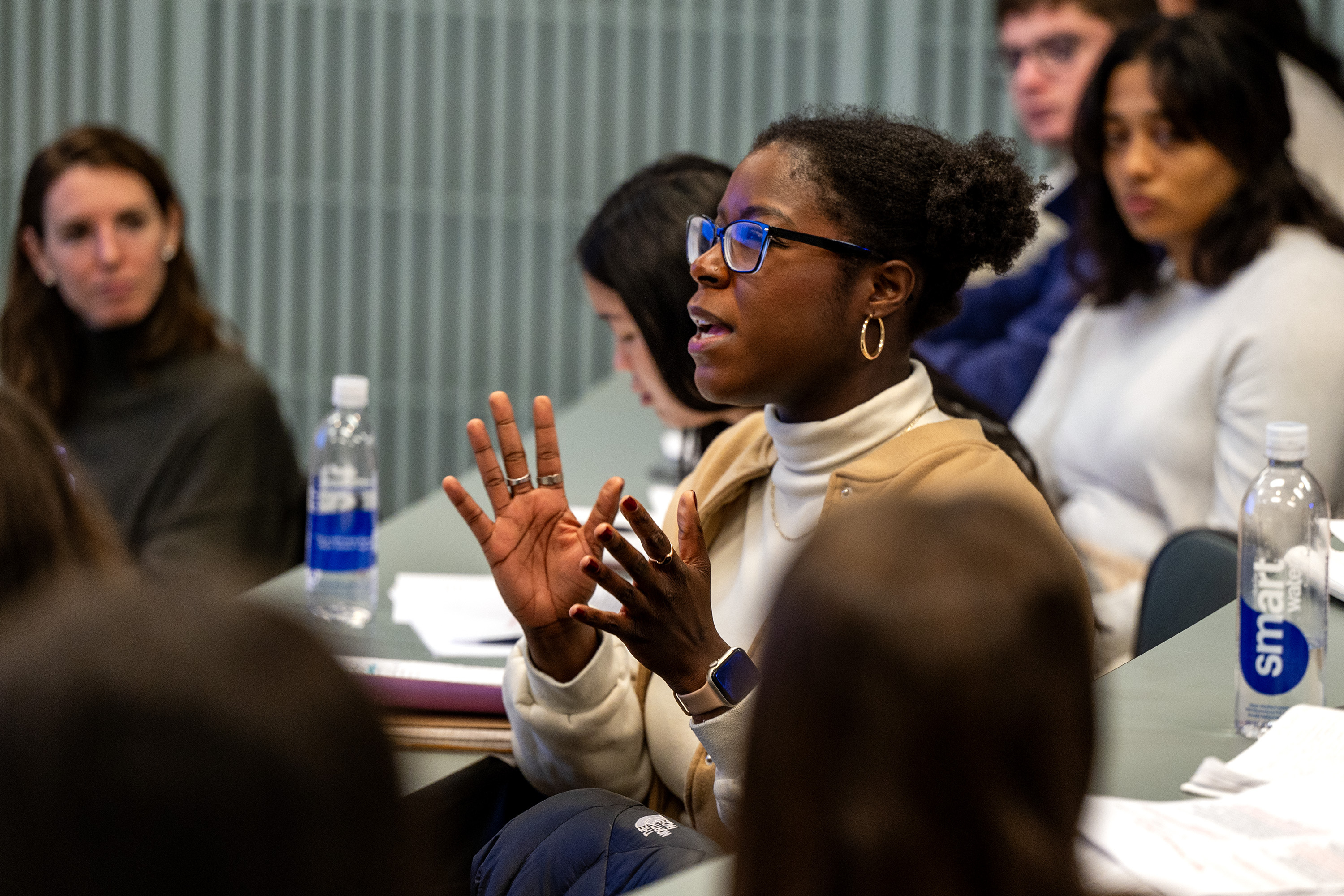
    Seniors Luiza Louback (left) and Sarah Usandivaras (right) participate in the class discussion.

    It could be a primer for the politically divided nation.

    “My pitch is that you can’t really know what you believe if you don’t know what people who disagree with you believe and what their reasons are,” Gutmann said in an interview. “I always say I don’t care what your position is. I care that you can give reasons for it and understand the strongest arguments on the other side.

    “That’s the method to search for truth, and it’s the way we serve a democracy.”

    Bringing experience to the classroom

    During class, Gutmann frequently drew on her experiences as a first-generation college student, a young professor at Princeton, a college president, and an ambassador.

    When she got her first teaching job, a male colleague congratulated her, but later she learned he told someone she got the job because she was a woman.

    “Did I take that as a compliment? Mm-mm,” Gutmann told the class.

    Humphrey said she especially likes hearing about Gutmann’s vast experiences.

    “She’s like, ‘Well, when I was the president here, this is something I dealt with,’” Humphrey said. “It’s really interesting knowing the experience she has and her background and the perspective she brings.”

    Amy Gutmann (center), president emerita of the University of Pennsylvania and former U.S. ambassador to Germany, is presented with the Weitzman National Museum of American Jewish History’s Only in America® Award during a gala at the museum this month. The award recognizes “Jewish Americans who have made enormous contributions to our world … often despite facing antisemitism and prejudice.” Among those posing with her are Ramanan Raghavendran (far right), chair of Penn’s board of trustees, veteran journalist Andrea Mitchell (next to Raghavendran), Penn President J. Larry Jameson, (to the immediate left of Gutmann), and David Cohen, former Penn board chair, (next to Jameson.)

    Gutmann’s life outside class continues to be full, too. After class Wednesday, Gutmann, whose father fled Nazi Germany, flew to Berlin to receive the Prize for Understanding and Tolerance from the Jewish Museum Berlin.

    Having returned to Philadelphia to live after leaving Germany, Gutmann said it wasn’t hard to find her stride again in the classroom. She had given one-off lectures as Penn’s president.

    “I have a lot of muscle memory on teaching,” she said.

    Her style has changed from her early days at Princeton, where she worked from 1976 to 2004. She said reading a student’s notebook left behind and open after one of her ethics and public policy lectures was a major turning point.

    “‘That’s not what I said,’” Gutmann thought. “And I realized it’s not what you teach them, it’s what they learn. At that point, I realized I needed feedback.

    “So I changed from doing the 45-minute [lecture] thing to doing five or 10 minutes, max, and then asking them questions. Then I got them to argue with one another, and once I found that, I found what I really discovered worked for learning.”

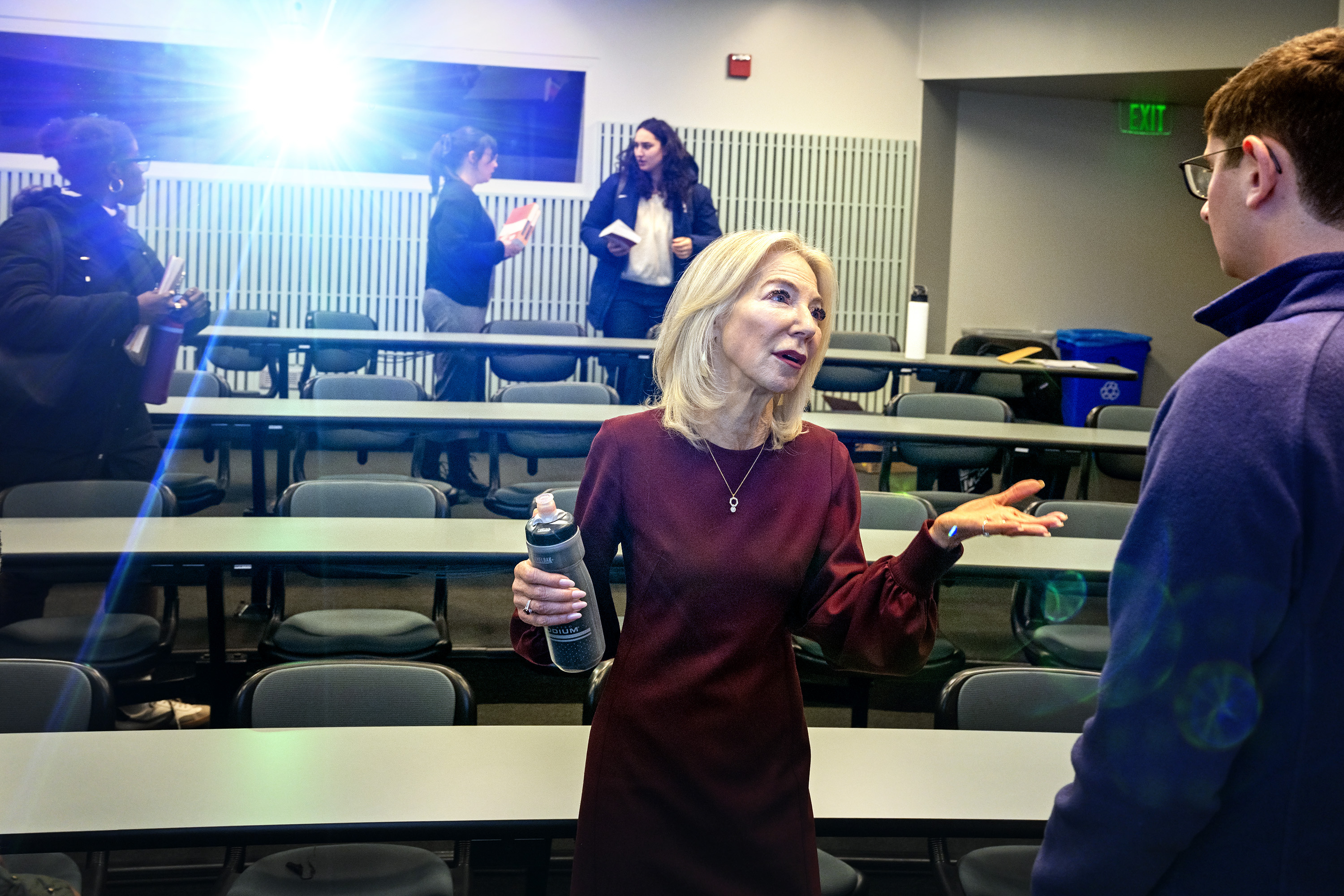
    Amy Gutmann talks with sophomore Brian Barth (right) at the end of class she co-teaches at Penn’s Annenberg School for Communication.

    Gutmann said she spends Fridays and weekends preparing for the class, which meets twice a week.

    “It’s a ton of work,” she said. “I’m really delighted to be doing it.”

    The class comes against the backdrop of fraught times for colleges. Penn earlier this year scrubbed its website of diversity initiatives after President Donald Trump’s administration threatened funding to schools employing diversity, equity, and inclusion efforts. In the summer, the school struck an agreement with the administration over the past participation of former transgender swimmer Lia Thomas, and Penn was one of nine schools originally asked to sign a compact that would have given the school preferential consideration for federal funding in exchange for complying with certain mandates affecting admissions, hiring, and other university operations. Penn declined.

    ‘One-of-a-kind’ discussions

    Gutmann and Banet-Weiser do not allow laptops, phones, or any electronic devices in class so that students completely focus on the conversation. To prepare for the affirmative action discussion, students were assigned related readings and review of the court cases.

    The two professors interacted with each other and prompted discussion among students with deep questions: Is treating people equal the same as treating them equally? Is it right to use affirmative action for only one racial group? What about other forms of affirmative action or preference, including for athletes, low-income students, and legacies whose parents attended the university?

    The approach resonated with students.

    “I wanted to take a class where I would really be encouraged to step out of my comfort zone and be able to learn not only how to understand my own beliefs and values but understand the beliefs and values of others,” said Sarah Usandivaras, 21, a senior communications and political science major who was born in New York and grew up in Paraguay.

    She found it in Gutmann and Banet-Weiser’s classroom.

    “It’s a one-of-a-kind,” she said.

    Ariana Zetlin, a doctoral student in Penn’s Graduate School of Education, is auditing the class to observe its approach.

    “The discussion and the debates are so much deeper and stronger than what I’m seeing in classrooms that don’t necessarily have these structures,” said Zetlin, 30, who is from New York.

    During class, those on both sides found common ground.

    Senior Angele Diamacoune said she was learning from the day’s lesson.

    “So I’m hearing agreement that diversity is a good thing but disagreement on how you get it,” Gutmann said.

    She asked students how many believed that having low-income and racially diverse students in class contributed to their learning. Every hand went up.

    “That to me is really striking,” Gutmann said. “There aren’t that many things that we can get unanimity on.”

    She asked students how they would advise colleges to teach the issue.

    “It would be good to teach with activities like this,” said Angele Diamacoune, 21, a senior communications major from Allentown.

    “Are you learning?” Gutmann asked her.

    “I am,” Diamacoune answered.

    “I am, too,” Gutmann said.

  • Why there’s less controversy — and less money — in this year’s school board races in Central Bucks and elsewhere

    Why there’s less controversy — and less money — in this year’s school board races in Central Bucks and elsewhere

    Personal attacks, political division, and culture wars have defined school board races in the Philadelphia suburbs in recent years.

    But 2025 feels different.

    Even as national politics are more divided than ever — and amid a federal shutdown and state budget standoff — local school board candidates from both parties are shying away from partisanship in favor of focusing on local issues like taxes and full-day kindergarten.

    The change in posture can be attributed to several factors — Republicans who ran on culture-war issues largely lost in 2023 and, while the GOP is now tackling those priorities from the federal level, local candidates said they cannot control what President Donald Trump does. Schools are also facing pressing fiscal issues amid state and federal budget cuts.

    There are some exceptions. In Souderton, candidates on the Republican slate say they want to maintain the district’s current policies that prevent transgender girls from playing sports and prioritize “parental rights” — stances Trump has also embraced. Some Democratic candidates, meanwhile, say Trump’s education policies, including plans to dismantle the federal Department of Education, motivated them to run.

    Still, those issues are not taking center stage across the Philadelphia collar counties.

    “School districts are struggling financially,” said Brittany Crampsie, a Democratic consultant. Parents “don’t want to have a debate about DEI [diversity, equity, and inclusion] anymore, they want to make sure their kids are getting a good education.”

    Moving on from ‘culture wars’ — for the most part

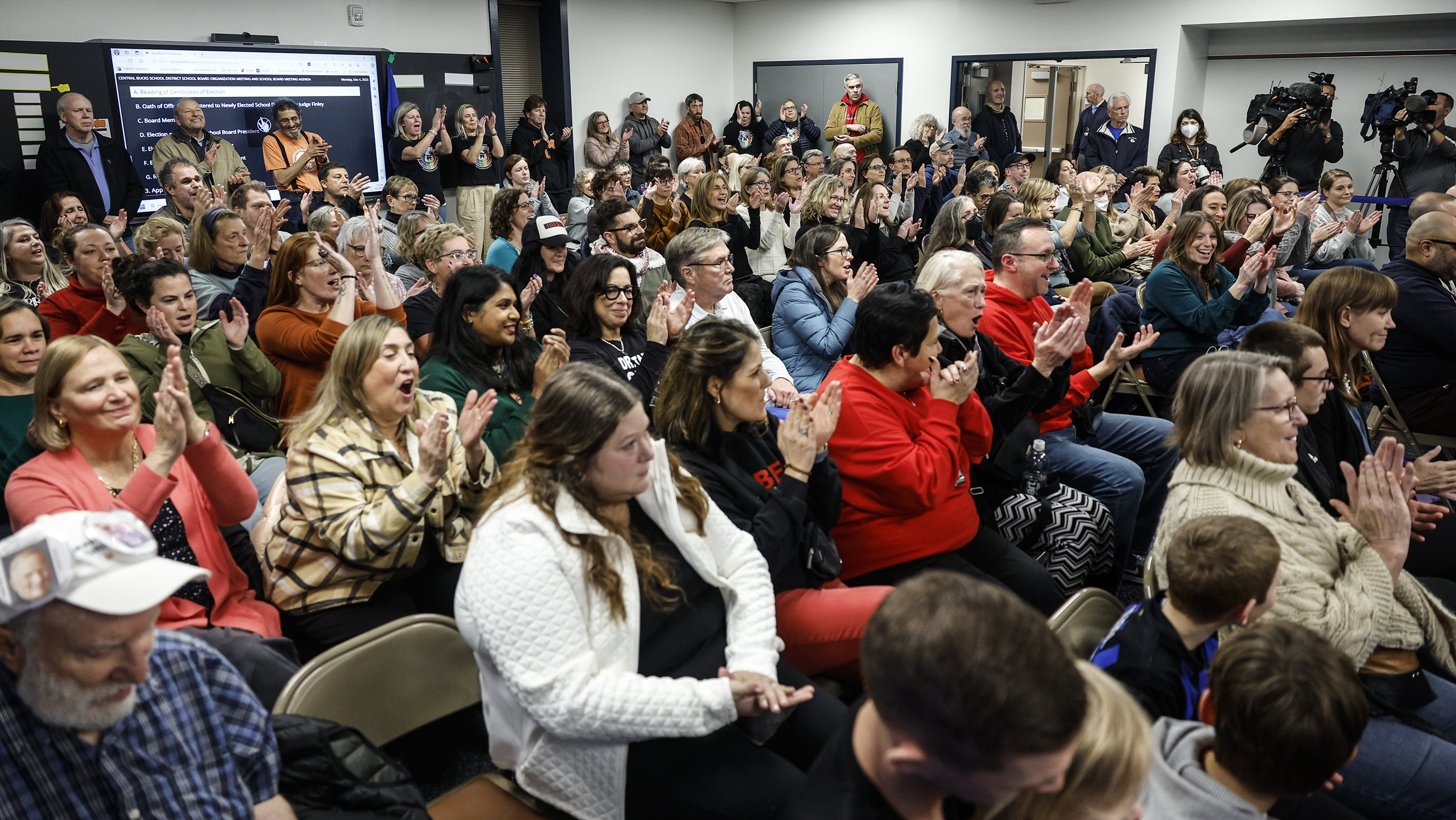
    Supporters cheer in 2023 before five new Central Bucks school members are sworn in. Democrats seized control of the board in a contentious race.

    Culture-war debates reached a fever pitch in the aftermath of COVID-19, as conservative parents voiced frustration over pandemic protocols and classroom curricula. Republicans in districts like Central Bucks won contentious races focused on those issues in 2021.

    Two years ago Central Bucks was again among the most closely watched races in the region, with spending surpassing $600,000. Democrats swept every open seat, ousting a conservative majority that had banned books and Pride flags in the district. Other suburban districts flipped to Democratic control as well.

    Now, candidates are steering clear of those hot-button topics.

    “My campaign is focused on academics, school taxes, and safety….these are the current issues of concern in Central Bucks,” Betty Santoro, a Republican, wrote in an email.

    The Democratic candidates for Central Bucks school board: Amanda O’Connor, Katrina Filiatrault, David Comalli, and Daniel Kimicata (left to right).

    Culture wars were a “distraction” from priorities for the district, said Daniel Kimicata, a Democrat running for reelection. Four of nine seats are on the ballot this year; Democrats will maintain their majority regardless of the outcome.

    Andrew Miller, a Republican running in Central Bucks, wrote in an email it’s good that things are quieter. “People are tired of the shouting and want results,” he wrote. “They want candidates who listen, not lecture and candidates who build bridges, not walls.”

    In Souderton — where Democrats say they are optimistic about their chances of gaining representation on the all-Republican board — the Republican platform also includes parental rights and student safety.

    Republican board president Stephen Nelson, who is running for reelection, said that culture-war topics are not an issue in the district, but that it would not allow transgender athletes to compete on girls sports teams should the situation arise. (The Pennsylvania Interscholastic Athletic Association this year changed its transgender athlete policy to comply with President Donald Trump’s executive order on “Keeping Men Out of Women’s Sports.”)

    “Why is that a question? It’s always been that way and we don’t quite understand why it has to be any different,” Nelson said.

    In Pennridge, where the board is Democratic-controlled, Republican candidates, in a statement, pushed back on the idea that school board races in the past centered on issues promoted by Republicans. Instead, they argued, GOP candidates were responding to Democratic-initiated policies and questioning some DEI policies and whether they were best for students.

    “Our intent was never to divide but to ensure that schools serve all students equally and that classroom priorities remain rooted in education, not ideology,” they said.

    Money, money, money

    This year, there is far less money flowing into school board races, though Central Bucks continues to attract outside fundraising.

    The Republican candidates for Central Bucks school board. Andrew Miller, Sharon Beck, Roman Szewczuk, and Betty Santoro (left to right).

    The 1776 Project PAC, a group supporting Republican school board candidates that has drawn ire from Democrats, has spent more than $86,000 on mailers and text messages in Bucks County. Approximately half that has gone toward supporting Central Bucks GOP candidates, with the rest going to candidates in Centennial School District and Pennridge, according to Bucks County campaign finance reports.

    The PAC has also spent more than $20,000 supporting candidates on Republican slates in Perkiomen Valley and Lower Merion, according to Montgomery County campaign finance filings.

    Democrats are also getting support from an outside group — Red Wine and Blue, a national group of suburban women that promotes Democratic candidates. The group has spent approximately $260 in Bucks County and $104 in Montgomery County school board races, according to county filings.

    In Bucks County, other races like district attorney and sheriff have drawn money and attention that might have otherwise gone to school boards, said Guy Ciarrocchi, a GOP analyst.

    “There’s a certain amount of fatigue that’s hitting a place like Bucks,” Ciarrocchi said.

    The Trump factor

    Democrats in suburban districts said they need to maintain majorities to best address the impacts of Trump administration policies.

    “When I realized the threat that public education was under, I decided now was the time that I had to run,” said Katrina Filiatrault, a Democrat running in Central Bucks.

    Judy Lofton, a Democrat running in Perkiomen Valley, said of her slate: “Our central unifying message is that we want to protect public education, that public education is currently under attacks from a variety of different stakeholders.”

    Republicans are striking a different tone.

    “We’re not focused on anything that’s going on outside of something that we don’t control,” said Jason Saylor, a Republican running for reelection in Perkiomen Valley. “We don’t control the federal government. We don’t control what might happen with the Department of Education. We don’t control issues at the state legislature.”

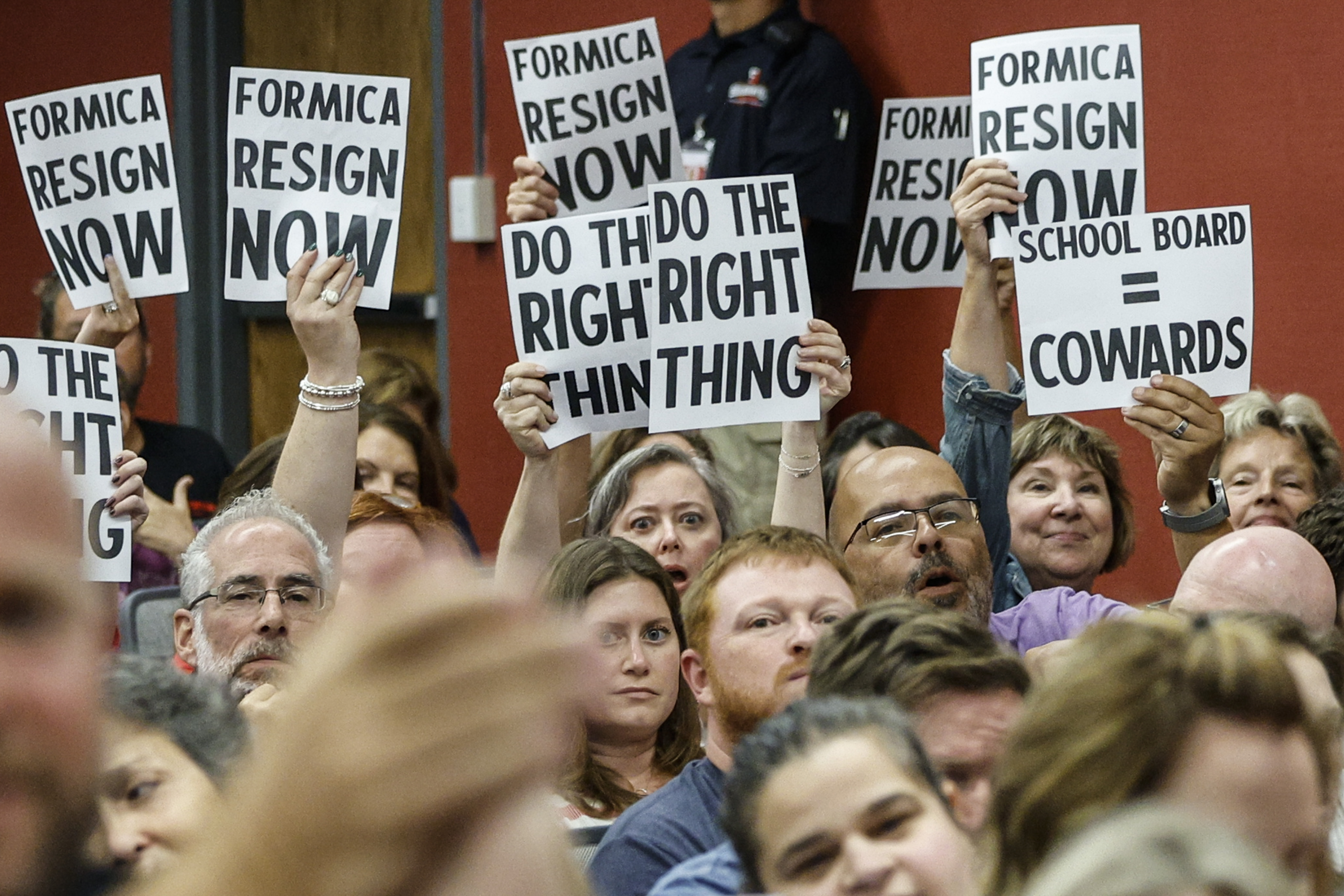
    In Souderton, controversy flared last year when Republican school board member Bill Formica made lewd comments about former Vice President Kamala Harris. He is still on the board and is not up for reelection this year.

    Residents protest at a Souderton school board meeting last year after board member Bill made a lewd social media post about then-Vice President Kamala Harris.

    “We’re talking to every voter who might be a Republican or an independent, and they’re sharing concerns at the doors about how they can’t vote for certain people anymore,” said Corinne DeGeiso, a Democrat running for the board.

    Nelson, the Republican school board president running for reelection, said Formica was protected by the First Amendment.

    His comments, Nelson said, were “rude, lewd, and unacceptable,” but there was nothing the board could do about it.

    Even in a less contentious election cycle, Chris Lilienthal, a spokesperson for the Pennsylvania State Education Association, which tends to endorse Democratic candidates, said school board elections are more important than ever this year.

    “They’re holding the line right now in this budget impasse,” he said, “and that alone should merit the attention of voters.”

    This suburban content is produced with support from the Leslie Miller and Richard Worley Foundation and The Lenfest Institute for Journalism. Editorial content is created independently of the project donors. Gifts to support The Inquirer’s high-impact journalism can be made at inquirer.com/donate. A list of Lenfest Institute donors can be found at lenfestinstitute.org/supporters.

  • Chester County prosecutors still trying to determine motive, identify suspects in Lincoln University shooting

    Chester County prosecutors still trying to determine motive, identify suspects in Lincoln University shooting

    A Wilmington man brought his mother’s gun to Lincoln University’s campus Saturday, prosecutors said, and was still holding the loaded weapon when a deadly shooting tore through the school’s homecoming celebration.

    Zecqueous Morgan-Thompson, 21, has not been charged in connection with the shooting, only with possessing the weapon without a concealed-carry permit. But investigators said they were still working Monday to determine whether his firearm was used in the incident at the historically Black university, which left one person dead and six others wounded.

    Morgan-Thompson remained in custody Monday in lieu of $25,000 bail.

    Chester County District Attorney Chris de Barrena-Sarobe said his office is trying to determine if more than one shooter was involved. Morgan-Thompson was arrested on the campus in the aftermath of the gunfire, holding a loaded Glock 28 .380-caliber handgun, according to the affidavit of probable cause for his arrest.

    The shots rang out about 9:30 p.m. Saturday on the campus in Lower Oxford Township. De Barrena-Sarobe has said he does not believe the shooting was a coordinated attack targeting the school, but instead took place as the crowd swelled on the campus.

    The motive for the shooting remained under investigation.

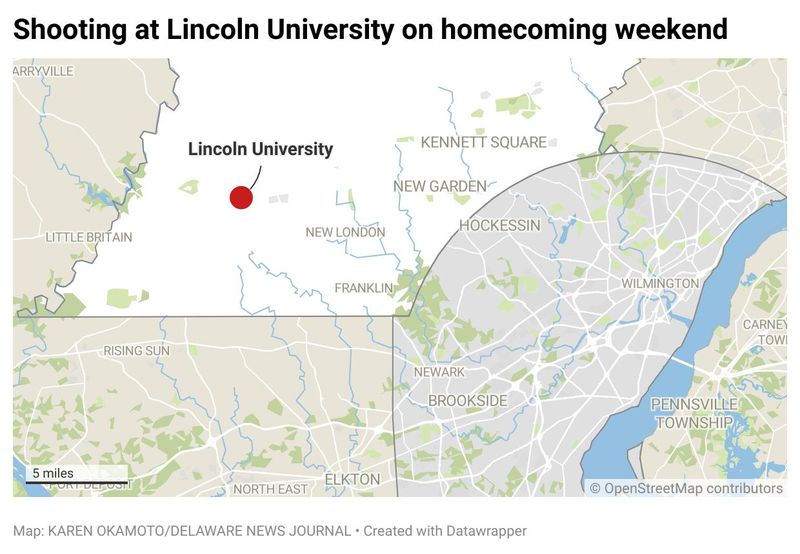
    Gunfire rang out just before 9:30 p.m. Oct. 25 at Lincoln University in the parking lot of the International Cultural Center in Lower Oxford Township in Chester County, Pennsylvania. The university is about 15 miles from Hockessin.

    Jujuan Jeffers, 20, of Wilmington, died after being shot in the head. It was unclear if Jeffers had any affiliation with Lincoln — investigators have said the victims included one alumnus and one current student.

    Jeffers’ brother declined to speak with a reporter when contacted Monday.

    The student who was hurt was recovering well, but obviously shaken, according to Chester County Commissioner Josh Maxwell, who is an adjunct professor at the school. Her injuries, he said, were not life-threatening.

    Lincoln University canceled classes Monday in light of the shooting.

    “Gun violence happens far too often in our country, and we are heartbroken that Lincoln University and its students are among the latest victims of such senseless violence,” the school said in a statement.

    The rural campus was quiet Monday afternoon as students gathered for a vigil that gave members of the university community a chance to grieve and heal.

    The service was not open to the media, and gates at various entrances to Lincoln’s campus were locked.

    Geslande Sanne, a Lincoln University junior from Oregon, was in her dorm Monday morning, still coming to terms with the chaotic scene she experienced Saturday night.

    “A lot of us on campus are processing it in our own different ways,” said Sanne, a political science and French major. “We are all reaching out to each other. Our professors are talking to each other and to us. Some students went home to be with their families. Some people are just resting.”

    She said she intended to attend the university’s community healing session on campus at noon and later go to the hospital to visit her friend, who was the only Lincoln student shot during the incident.

    Sanne recalled that she and a group of friends were on the outskirts of the crowd when they heard gunshots.

    “Everybody started running and we started running, too,” she said. “We were confused. Did something really happen? After a few minutes, the music stopped, and we knew something really happened.”

    She and her friends made a plan to get back to their dorms so they would be safe, but then decided to seek shelter inside the International Cultural Center building, not far from where the shooting took place.

    After people started banging on the windows, she said, Sanne and her friends left there and walked carefully back to their dorms.

    It all happened in about 20 minutes, she estimated.

    Sanne said she chose to attend Lincoln because she wanted to go to an HBCU and was impressed by all its prominent graduates. She said she has received much encouragement and many opportunities at the school.

    “It’s really inspired me,” she said, “that I can be a part of something positive despite everything going on in the country.”

    She said she has always felt safe on Lincoln’s rural campus, safer than she does anywhere else. And Saturday night’s shooting hasn’t changed that.

    “It wasn’t Lincoln’s fault,” said Sanne, who wants to be an international lawyer. “We do the best we can with the resources we have. It shouldn’t be an excuse to leave or disinvest in Lincoln. It’s a reason to pour in more resources and support these schools even more.”

    Staff writer Jesse Bunch contributed to this article.

  • One dead, six others shot at Lincoln University

    One dead, six others shot at Lincoln University

    A 25-year-old man from Wilmington was killed and six others — including a student and an alum — were injured in a shooting Saturday night at Lincoln University, which was celebrating homecoming weekend, according to the Chester County District Attorney’s Office.

    The man killed was Jujuan Jeffers, 25, of Wilmington, District Attorney Christopher de Barrena-Sarobe said.

    The other six shooting victims, all age 20 to 25, are expected to survive, de Barrena-Sarobe said at a news conference on campus early Sunday evening.

    Zecqueous Morgan-Thompson, 21, of Wilmington, was charged with carrying a concealed firearm without a license, de Barrena-Sarobe said. Authorities are investigating whether the gun found on Morgan-Thompson was used in the shooting, he said, but also said authorities suspect there were multiple shooters.

    Morgan-Thompson was being held at Chester County prison after his bail was set at $25,000 bail Sunday evening, according to court records. It was not immediately clear if he had a lawyer.

    “We don’t have a lot of answers about exactly what happened. What I will tell you is that today we’re operating as if this is not an incident where someone came in with the design to inflict mass damage on a college campus,” de Barrena-Sarobe told reporters during a news conference earlier on Sunday.

    He urged anyone with video from the scene or other information that could help the investigation to contact the FBI, and he repeated that request at the evening news conference. Lincoln which enrolls about 1,650 students, is the first degree-granting historically Black university in the nation.

    The shooting occurred at the university’s International Cultural Center building about 9:30 p.m. Saturday, leading to a chaotic scene.

    “It was a very packed scene,” said Dana Moore, a spokesperson for the district attorney’s office. “The festivities had gone on. … It was all fun, football game, tailgate, a lot people had set up tents. And then chaos ensued.”

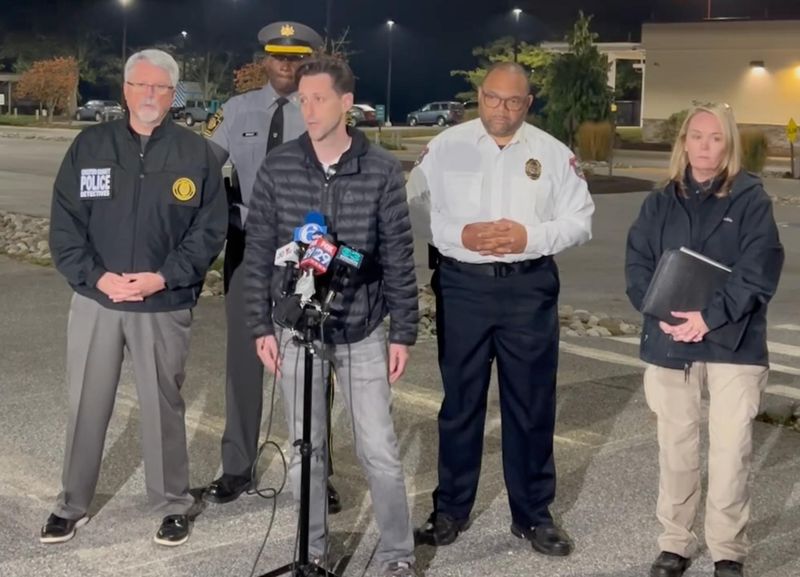
    Authorities discuss shooting at Lincoln University that left one dead, six injured.

    Moore declined to say where the injured were being treated or release their identities.

    “We are protecting all identities and locations at this time,” she said.

    The district attorney did not release other information about the injured at the evening press conference but said one victim was a student and one was an alumnus. The rest, he said, do not have direct affiliation with the university.

    “Everyone on campus is a victim in this,” he said, emphasizing the importance of healing.

    Josh Maxwell, chair of the Chester County Commissioners and an adjunct professor at Lincoln, said he knew the student who was shot and had spoken with her Sunday.

    “She said she’s had better days but she’ll be fine,” he said, noting that he planned to visit her on Monday. “She’s a phenomenal student, just an extraordinarily focused, really good kid who is hitting all the marks to have a really good life. And I expect that’s not going to be interrupted.”

    Maxwell said students choose Lincoln to get a good education.

    “There’s no downtown to walk to or bars, just the quiet borough of Oxford and beautiful farmland,” he wrote in a Facebook post. “The fact that violence could reach them here, and personally one of my students, tears at my heart.”

    The university announced in a statement Sunday afternoon that it would suspend classes Monday “for a day of healing and reflection,” though the school would remain open and staff and counseling would be available to help students and faculty.

    The university has invited the campus community to gather at noon in the Historic District, between Vail and Amos Halls, for “a moment of reflection, connection, and collective healing.”

    “Gun violence happens far too often in our country, and we are heartbroken that Lincoln University and its students are among the latest victims of such senseless violence,” the school said in the statement.

    On campus Sunday, police tape draped a parking lot strewn with trash — showing a scene of homecoming revelry abruptly abandoned.

    Investigators are on the scene outside Lincoln University’s International Cultural Center (ICC) Sunday, Oct. 26, 2025, where one person was killed and six other people were shot the night before during homecoming weekend celebrations.

    Vanessa Ayllon, who lives across the street, said she saw the chaos on her Ring doorbell camera.

    “All I see is people running and just getting into cars, just trying to leave,” Ayllon said. “It was very hectic.”

    She said cars were traveling in the same direction in both lanes on the street, nearly causing a crash as people fled.

    Terina Clark, 61, of West Philadelphia, graduated from Lincoln in 1987 and said she came to homecoming weekend to reconnect with old friends. They left shortly before the shooting, Clark said, frustrated by a crowded scene where she said alcohol flowed freely and people rolled joints and smoked marijuana not far from security officers.

    “The crowds grew like you were going to a stadium game,” Clark said, adding she wanted to see school officials held responsible for allowing things to get out of control.

    “Parents trust these kids within these walls,” Clark said. “The walls have to control what comes in.”

    Delaware State University students Darius Lawson and Jake Ferguson, who attended the Saturday night homecoming, returned to Lincoln’s campus Sunday to try to retrieve a friend’s purse that was left behind in the woods as people fled the gunfire. The two were turned away by campus police who told them the purse was now part of a crime scene.

    “Everyone just started running and falling,” said Lawson, 21. He said he saw people lying on the ground after the gunfire, as ambulances arrived.

    Lawson called it a sad end to what had been a great party. He added that Saturday wasn’t the first time he attended a homecoming party marred by violence: Last year he attended celebrations at North Carolina Central University, where two shootings occurred.

    The scene at Lincoln University’s International Cultural Center (ICC) building Sunday morning Oct. 26, 2025, where one person was killed and six other people were shot the night before during homecoming weekend celebrations.

    University officials, including Henry Lancaster II, a 1976 graduate and member of the board of trustees, were mum on details about the shooting when reached Sunday.

    Marc Partee, Lincoln University police chief, declined to answer any questions about the shooting or estimate how many people were on campus at the time. The incident happened about a half hour before festivities were due to end at 10 p.m., said Partee, who has worked at the school since 2019.

    Gov. Josh Shapiro, who received an honorary degree from Lincoln in 2023, said the state had “offered its full support” to the university and local police.

    “Join Lori and me in praying for the Lincoln University community,” he said on X late Saturday.

    Lincoln, one of four so-called state-related colleges in Pennsylvania, is in rural Chester County, about 45 miles southwest of Philadelphia.

    The university’s alumni association said in a Facebook post Sunday morning that it was sending “thoughts and prayers to Lincoln University, our students, and the victims of last night’s tragic and senseless act of violence during Homecoming.”

    “Homecoming should be a time of joy and unity,” the Alumni Association of Lincoln University posted. “Today, we stand together in grief, in strength, and in unwavering support of our beloved alma mater.”

    Philadelphia Mayor Cherelle L. Parker is a Lincoln alumna, and was on campus last week, posting to social media Saturday, “It was an honor to help kick off @LincolnUofPA‘s Homecoming earlier this week — celebrating 171 years of Black excellence and The Lincolnian’s 100th anniversary.”

    Parker did not immediately reply to a request for comment Sunday.

    She’s among several notable Lincoln alumni, a list which includes Thurgood Marshall, the first Black U.S. Supreme Court justice; Harlem Renaissance poet Langston Hughes; Robert N.C. Nix, Sr., the first Black lawmaker from Pennsylvania to serve in Congress; Sheila Oliver, former New Jersey lieutenant governor and the first Black woman to serve as speaker of the New Jersey general assembly; and Harry W. Bass, the first Black Pennsylvania state legislator.

    The school has achieved some milestones in recent years. The university in 2020 received a $20 million donation from philanthropist MacKenzie Scott, which became the largest single gift in the school’s history.

    President Brenda A. Allen at that time called the gift “transformational” for the then-2,100-student school and said it would fund new investments in teaching, research, and faculty development, as well as support need-based scholarships.

    In 2021, Allen was named one of the 10 most dominant historically Black college leaders by a national nonprofit organization that advocates for the schools, and in May, Maryland Gov. Wes Moore delivered the commencement address at Lincoln.

    But the university also has weathered controversy, including an internal battle over Allen’s leadership in 2020. The board attempted to oust her, but later decided to negotiate a new contract with her.

    The school also has been the scene of prior shooting incidents.

    In 2023, two people were shot inside a residential building on campus; the victims were not students but had been visiting the school. And in 2015, the campus tightened security after shots were fired in a dorm, though no one was hurt in the incident.

    Staff writer Kristen A. Graham contributed to this article, which also contains information from the Associated Press.

  • How to have a Perfect Philly Day, according to Superintendent Tony Watlington

    How to have a Perfect Philly Day, according to Superintendent Tony Watlington

    Tony B. Watlington Sr. took some razzing when he arrived in Philadelphia for a high-stakes job: superintendent of the city’s public school system.

    Who was this outsider hired to run the nation’s eighth-largest school system?

    Watlington was born in New Jersey — Fort Dix, to be exact — but spent most of his life and all of his career in North Carolina, with the lilting Southern accent to prove it.

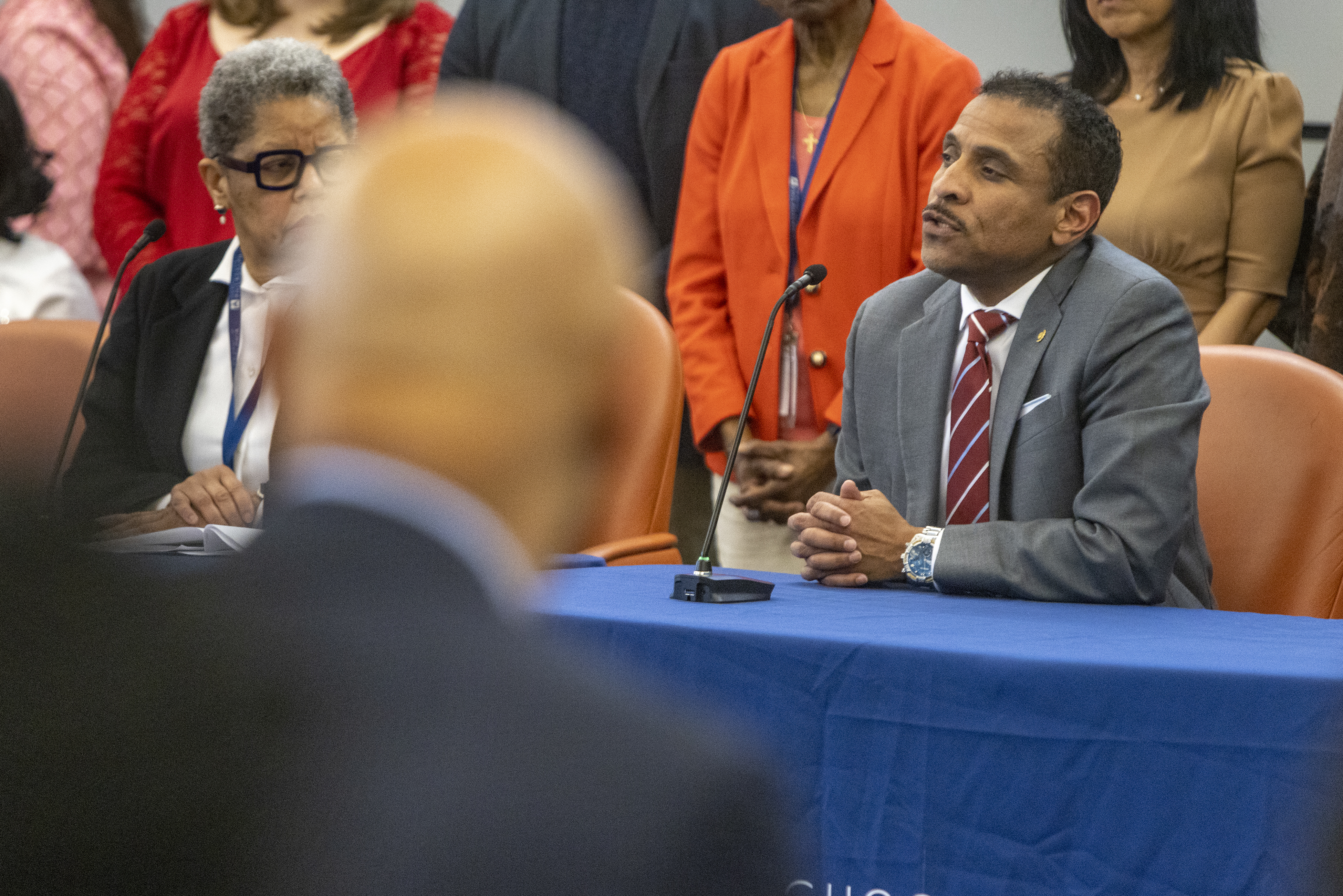
    Philadelphia School District Superintendent Tony B. Watlington, Sr. at round table discussion at Murrell Dobbins Career & Technical Education High School Sept. 2, 2025.

    But since 2022, Watlington has been a Philadelphian — a distinction he’s now proud to claim. (He’s staying around, too — the school board just extended Watlington’s contract through 2030.)

    While most Philadelphians describe their perfect day away from work, Watlington couldn’t help himself.

    5:45 a.m.

    I’m up early, and I’m either out early getting a run on the Schuylkill or doing an indoor CrossFit workout. I work out for one hour — and I make sure to spend plenty of time stretching.

    8 a.m.

    I walk into my office, and it is clutter-free. All my emails are responded to from the evening before — though some come in overnight. All of my phone calls are returned from the previous day, so I get to hit the ground running, ahead and not behind. That is really important to me.

    After I get a cup of coffee and look at that nice email inbox, I meet with the chief financial officer [Mike Herbstman] if it’s a Monday. He’s the first person I meet with every single week — we talk about district finances.

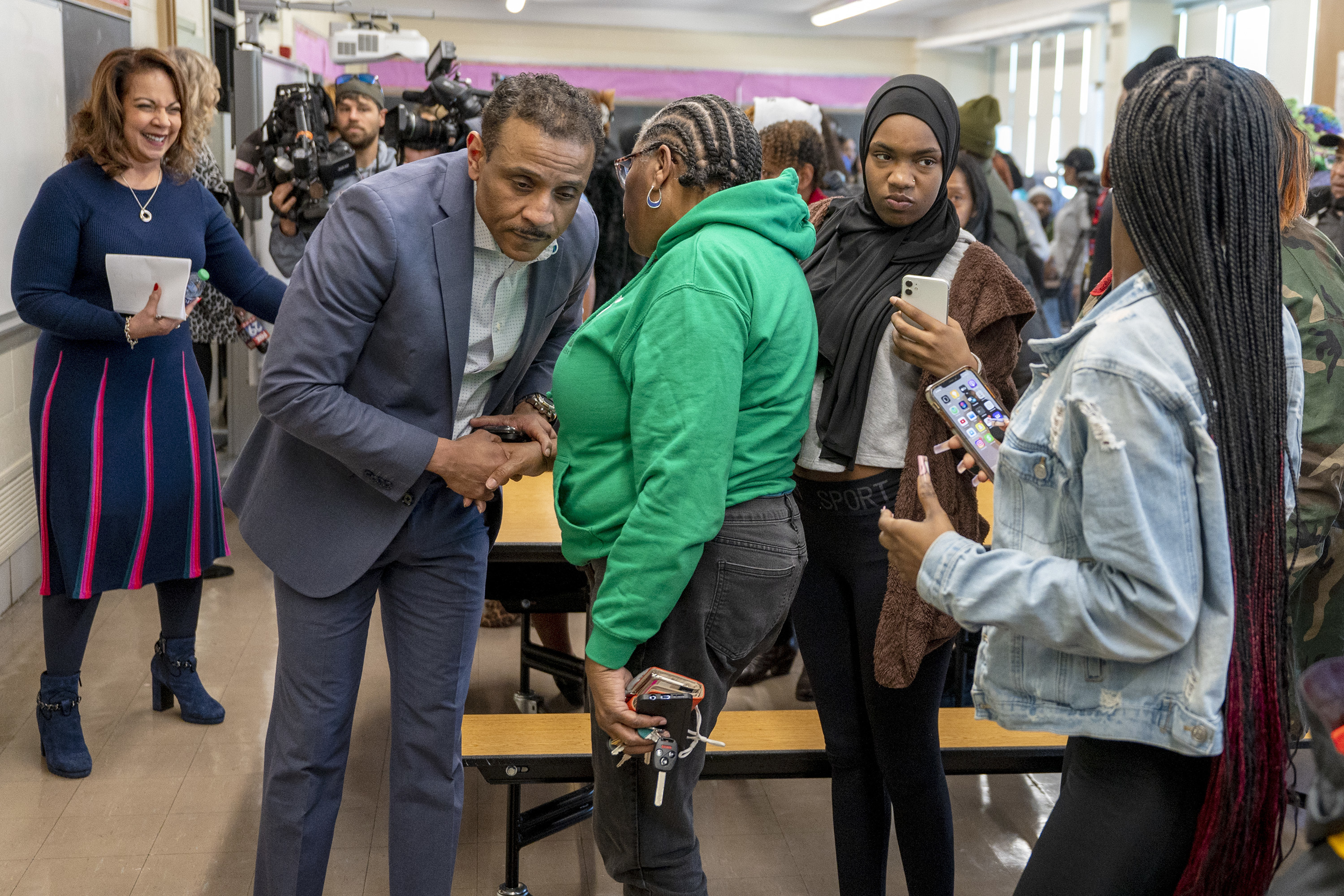
    Philadelphia School District superintendent Tony B. Watlington Sr. (left) stops to talk with Marie Williams, the grandparent of a Building 21 High School student as he leaves a meeting with families, students and staff of the school at Strawberry Mansion High School Sunday Mar. 5, 2023.

    Then I’m ready to gear up and hit the trail with district spokesperson Monique Braxton, or Deputy Chief [of Government and Community Relations Edwin] Santana, and we’re out and about. My perfect day would be to spend more than 50% of the day in schools, with teachers, principals, and students.

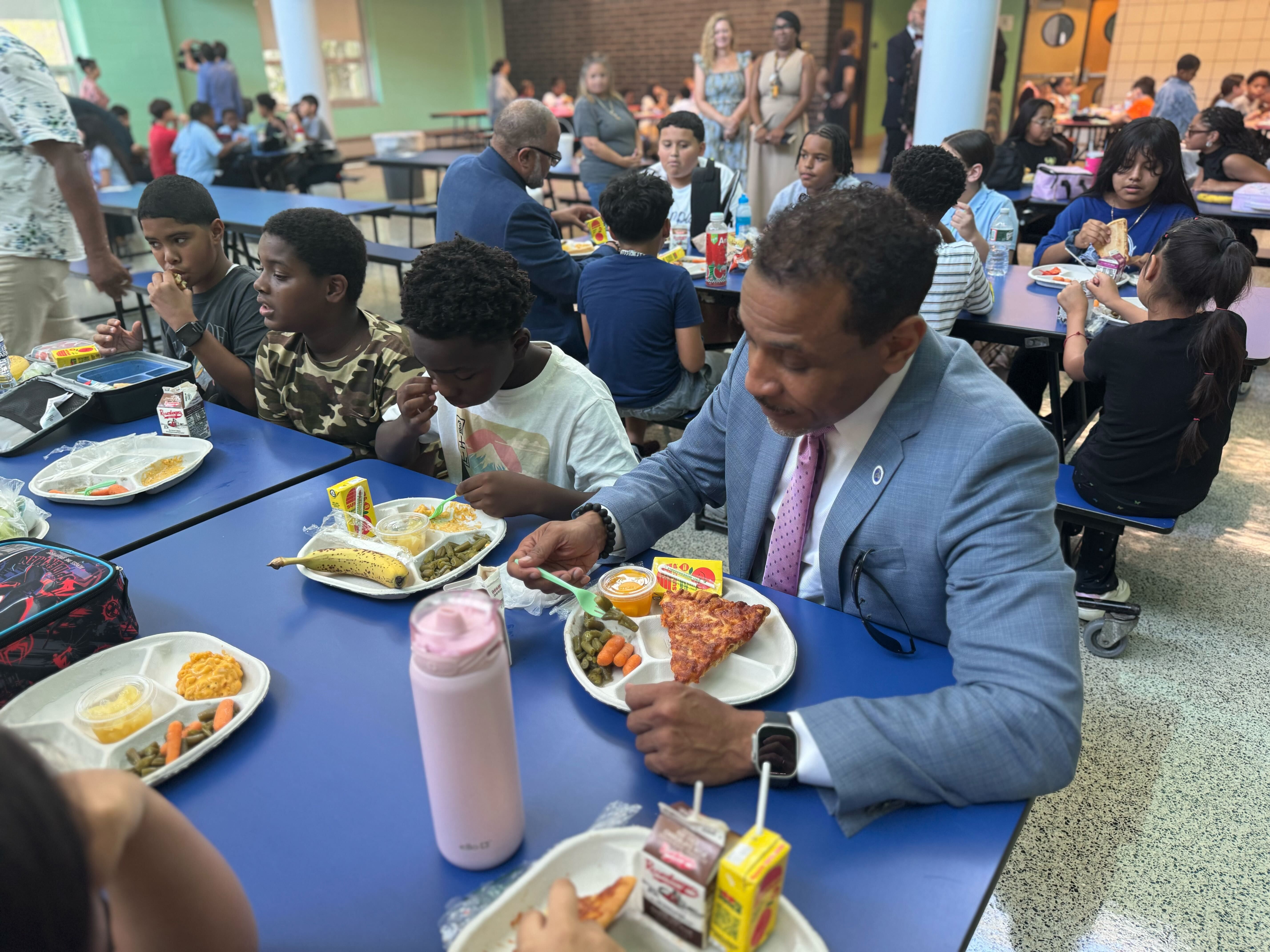
    Superintendent Tony B. Watlington Sr. eats lunch with students at Hunter Elementary in North Philadelphia: pizza, carrots and green beans, fruit cup. Watlington also drank chocolate milk and chatted with kids about the first day of school of the 2025-26 school year.

    When I’m not in schools, during that 50% of the day that I’m out of the office, I’m engaging with other external stakeholders — everything from grassroots organizations, elected officials at the city and state level, and with our federally elected officials, and also with members of the philanthropic community. I believe strongly in this notion of “nothing for us without us.”

    I want to see how well things are going, and get some real-time feedback. One thing I love about Philadelphia: you don’t have to guess what people think. We are a frank city.

    Philadelphia Eagles’ Jason Kelce shares a laugh with School District of Philadelphia Superintendent Dr. Tony Watlington on Tuesday, Dec. 10, 2024, during Operation Snowball Media Day at Shipmates in Philadelphia, Pa.The team is giving gifts to Philly school children with the money raised from the Eagles holiday album A Philly Specials Christmas Party.

    3-5:30 p.m.

    On Mondays, myself, the deputy, and associate superintendents spend the latter part of the day into the evening in a cabinet meeting. I never get home in time for the 6:30 p.m. news, which I used to like to see as a teacher sometimes.

    Evening

    I try to eat a healthy dinner, get a good night’s sleep, and drink plenty of water.

    Even though I’m an empty nester at this point, that’s the time to either get a quick phone call or check in with my family, including my three sons Tony Jr., Aaron, and Caleb, who love coming to Philadelphia.

    By the time I get to the end of the week or the weekend, I’m ready for more of the robust things in Philadelphia, like cheesesteaks.

    Superintendent Tony B. Watlington, Ed.D, during State-of-the-schools address, High School of the Future, Philadelphia, Thursday, Jan. 30, 2025. .

    I have found so many places in Philadelphia for good food. Today, I had a chicken gyro from the Reading Terminal Market.

    The other day, I went back to the first restaurant where my predecessor in Philly [William R. Hite Jr.] first took me to lunch, Talula’s Garden.

    Dr. William Hite (foreground) listens to Tony Watlington Sr., the Philadelphia Public School districts new superintendent. Photograph taken on the morning of his announcement at the School District Headquarters at 440 N. Broad Street in Philadelphia on Friday morning April 1, 2022.

    Now I’ve learned here in year four to just kind of wander around the city and so I’ve got a two-page list of restaurants. Everywhere I go, I’m always adding something new.

    If there’s time, I try to be very intentional about being able to get out and cheer for the teams here. I am a frequent visitor to the stadiums, to see the Eagles, the Phillies, and the 76ers. The only team I’ve not actually been to a sporting event for yet is the Flyers. That’s on my list for year four.

    Dr. Tony Watlington Sr. Ed.D, Superintendent of Philadelphia schools helps kick off the Ring the Bell PHL campaign at Citizens Bank Park on Tuesday, August 13, 2024. This kick off starts the community thinking about upcoming school year.
  • Cherry Hill teacher and former student enjoy Eagles football rivalry that began in class 16 years ago

    Cherry Hill teacher and former student enjoy Eagles football rivalry that began in class 16 years ago

    When special education teacher Mike Surrency decided to use football to connect with sophomore Dave Siegel, there was only one problem.

    Surrency is a big-time Philadelphia Eagles fan. Siegel is a die-hard New York Giants fan.

    Despite cheering for rival teams, the two forged a friendship that began in 2009 in history class at Cherry Hill High School East and has expanded beyond school and football.

    “I can’t get him to start liking the Eagles. I tried,” Surrency said. “He loves the Giants.”

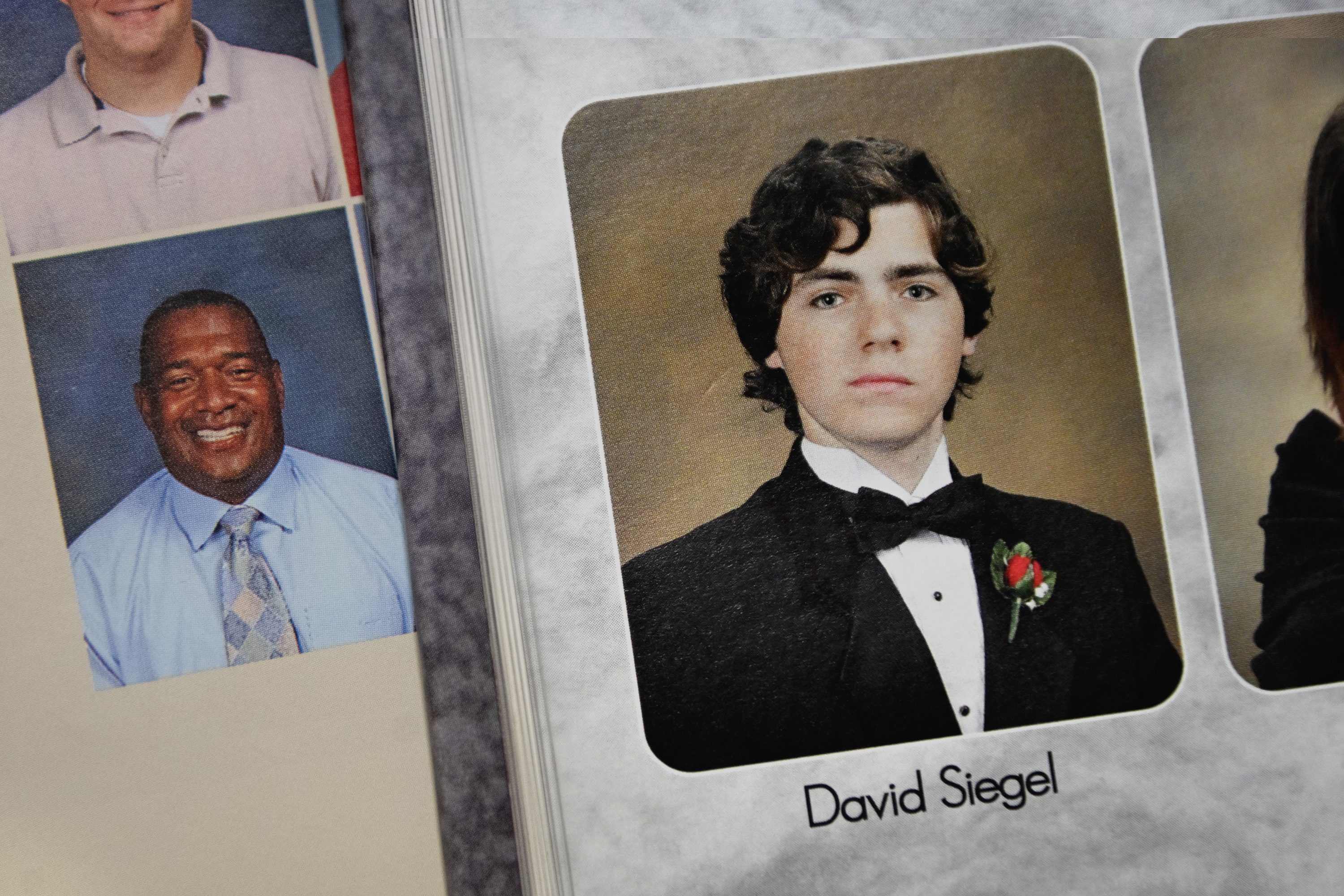
    Senior class yearbook photo of Cherry Hill High School East Class of 2010 student and New York Giants fan David Siegel (right) next to page with teacher and Eagles fan Mike Surrency. The two developed a special bond while supporting rival football teams and began attending games together when the NFC teams played in Philadelphia. They will be at the Linc Sunday for the second game between the Eagles and Giants.

    A former high school football player and coach, Surrency has been an Eagles season ticket holder since 1990. Siegel took notice when Surrency wore an Eagles jersey to school on Fridays during football season.

    Surrency thought football would help him bond with his students. As the inclusion teacher, Surrency helped ensure all students were integrated into the classroom.

    “By far, the best teacher I ever had,” Siegel said.

    One day, Siegel, then 15, asked his teacher to take him to an Eagles-Giants game at Lincoln Financial Field. (The Eagles won, 40-17.) That began a tradition that continued long after Siegel graduated in 2011.

    “It’s been history ever since,” Surrency said.

    When the NFC East rivals meet for a second time this season Sunday in Philadelphia, Surrency and Siegel will be there. The Giants upset the Eagles, 34-17, in their Oct. 9 matchup in North Jersey.

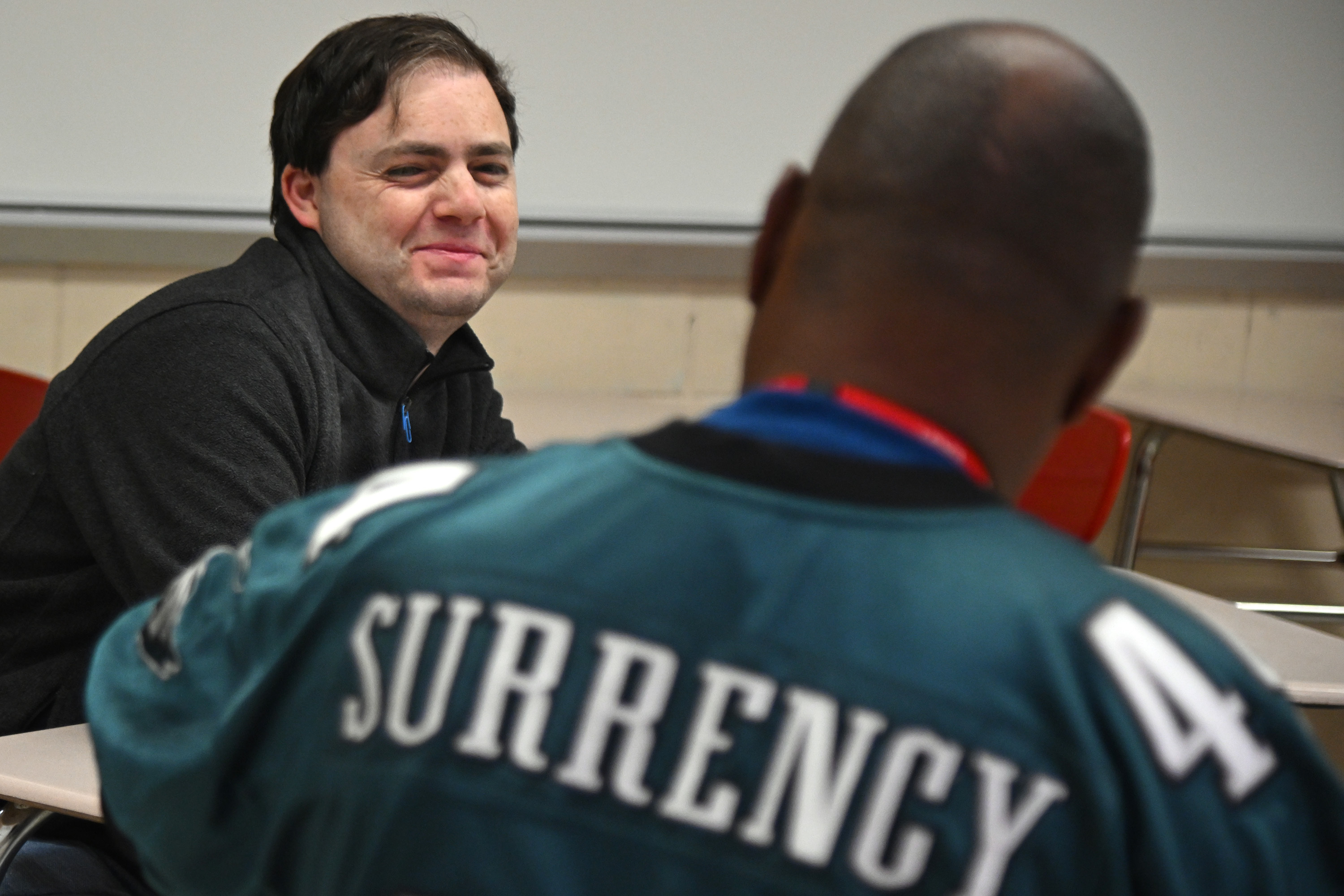
    Cherry Hill High School East class of 2010 graduate and New York Giants fan David Siegel visits teacher and Eagles fan Mike Surrency at the school this week. The two developed a special bond while supporting rival football teams and began attending games together when the NFC teams played in Philadelphia.

    ‘He’ll protect me’

    There will be plenty of traditions and trash-talking before Sunday’s game. The two plan to stop for hoagies on the way to the stadium.

    Surrency plans to wear his favorite Eagles jersey. Siegel, 33, usually doesn’t wear Giants fan gear to a game, and especially not this time.

    “As a Giants fan, I’m predicting an Eagles blowout,” Siegel said matter-of-factly. “The Eagles are at home and they want revenge.” (The Giants last won in Philadelphia in October 2013, 15-7).

    Surrency said his fellow Eagles fans in Section 228 have welcomed Siegel. At games leading up to the Giants showdown, they often ask if Siegel will be attending the big contest against their rival team.

    “Of course he’s coming. This is his seat,” Surrency responds.

    Siegel said he has no worries about possible backlash from zealous Eagles fans. He plans to wear a 76ers jersey — a favorite team for both him and Surrency.

    “I’m not afraid of the fans,” Siegel said. “I know I have Surrency. He’ll protect me.”

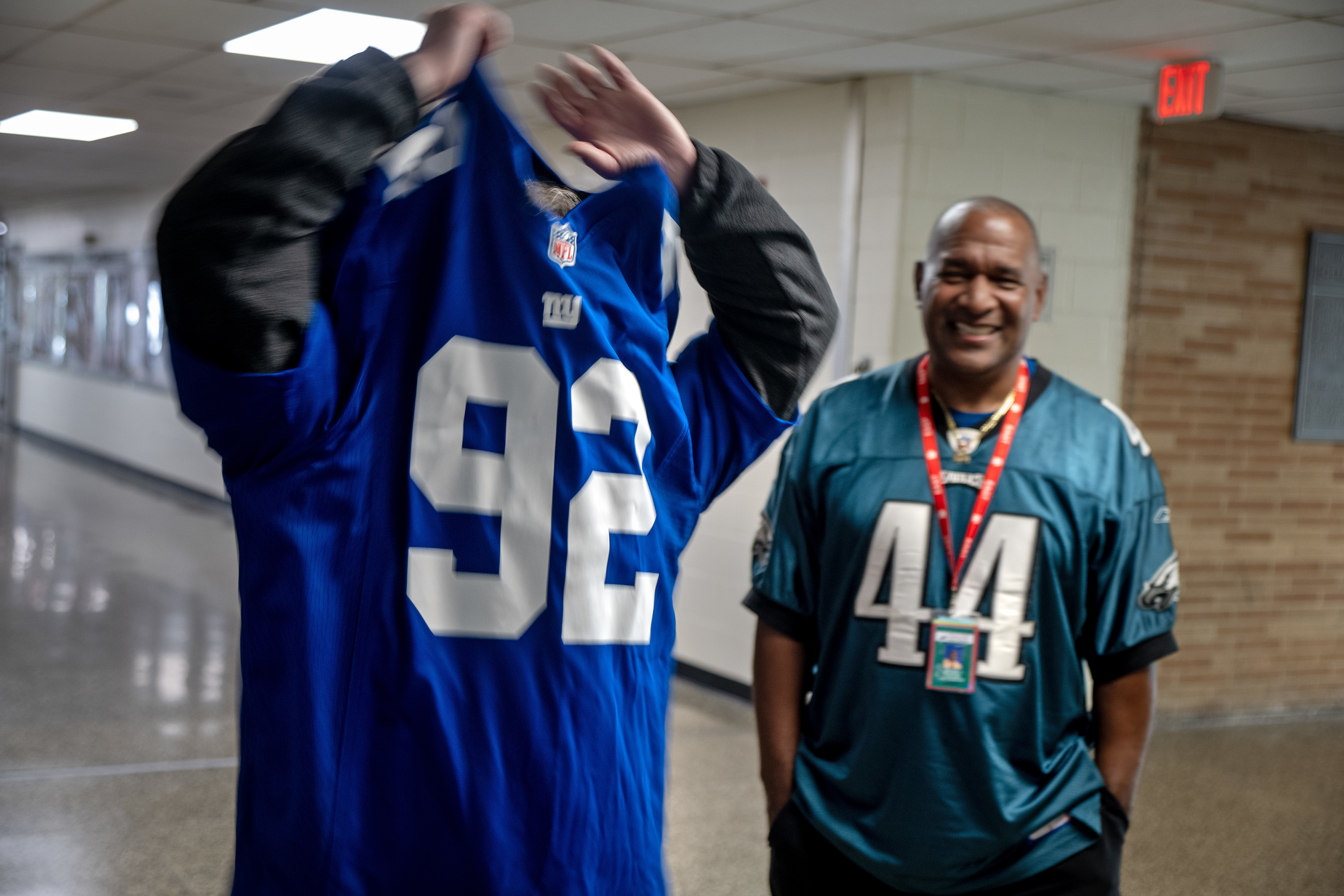
    Cherry Hill High School East Class of 2010 student and New York Giants fan David Siegel quickly removes his jersey after posing for a photo with teacher and Eagles fan Mike Surrency during a visit at the school Monday. Seigel says he “never wears the apparel after they lose,” which they did the day before to the Denver Broncos.

    Siegel can easily rattle off statistics about the Eagles-Giants rivalry. He has attended 14 games with Surrency; the Eagles won 12 of those.

    The two occasionally travel up the New Jersey Turnpike to attend Eagles-Giants games at MetLife stadium in East Rutherford. They also attend baseball and basketball games.

    Cathleen Lynch, a counselor at East, began sharing their story when she learned recently about the special bond between Surrency and his former student.

    “It gave me goose bumps,” Lynch said. “It’s amazing that they’re still doing this every year.”

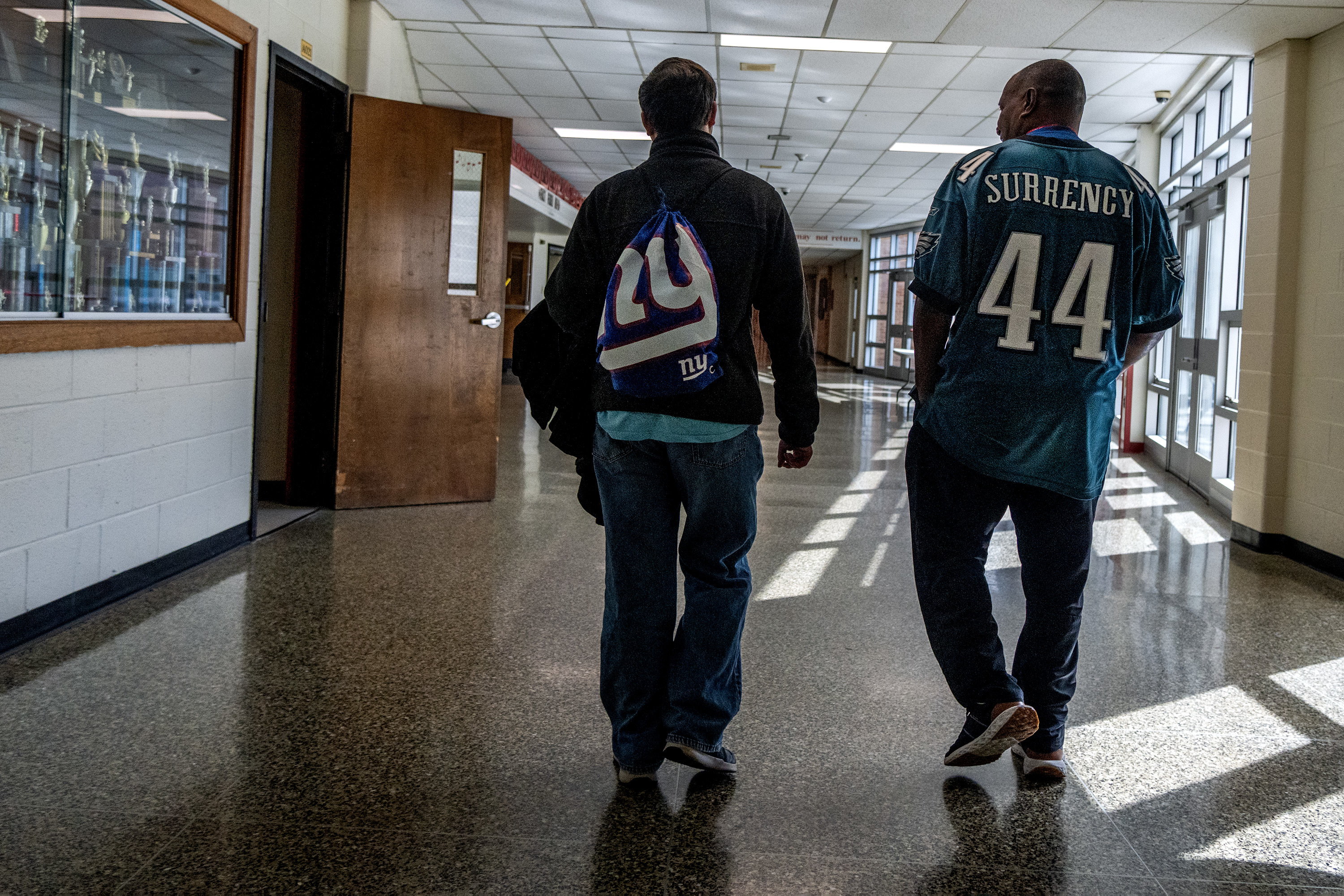
    During a recent visit at East, Siegel and Surrency traded jabs about their teams. Surrency wore a custom-made Eagles jersey with his last name and No. 44 — from his high school football-playing days. Siegel wore former Giants defensive end Michael Strahan’s No. 92.

    “I always tell people that Surrency is my mentor. I don’t see him as a teacher.”

    “This thing we have is definitely bigger than football,” said David Siegel of his former Cherry Hill High School East teacher Mike Surrency. “It’s a blessing to have someone like him in my life.”

    ‘Bigger than football’

    No matter the outcome of an Eagles-Giants game, Siegel and Surrency have a rule that they follow religiously on the ride home afterward: no trash-talking about who won.

    “This thing we have is definitely bigger than football,” Siegel said. “It’s a blessing to have someone like him in my life.”

    Siegel met Surrency in 2007 while taking summer classes. The two became close, talking about sports. They have opposing baseball teams, too. Siegel is a Mets fan, Surrency a Phillies fan.

    Two years later, Siegel was pleasantly surprised to land in Surrency’s U.S. history I class. Surrency took notes provided to all students that helped him pass all four marking periods with two A’s and two B’s and a final grade of a B, Siegel said.

    A former Sony sales rep, Surrency, 62, became a teacher when the company downsized. He has been at East for his entire 22-year teaching career.

    “It was the best thing to happen,” Surrency said.

    Surrency, the father of an adult daughter and a grandfather, said he has invited other students to Eagles games. Siegel, by far, has attended the most games with him.

    Over the years, their relationship has changed from teacher-student, he said. Siegel, a recreation therapist at a nursing home, often calls Surrency for advice.

    “I just want to make sure he’s fine in the outside world. I’m there if he needs me, no matter what,” Surrency said.

    Added Siegel: “He’s always been there for me.”

  • Penn releases letter rejecting Trump compact

    Penn releases letter rejecting Trump compact

    The University of Pennsylvania on Friday afternoon released the letter that President J. Larry Jameson sent to the U.S. Department of Education last week, explaining why the school rejected the compact proposed by President Donald Trump’s administration.

    Several other schools, including the Massachusetts Institute of Technology, Dartmouth College, and Brown University, already have released their letters rejecting the compact.

    “Our university policies and practices are already aligned with many of the core principles of the Compact…” Jameson wrote. But “we find that significant portions of the Compact and its overarching framing would undermine Penn’s ability to advance our mission and the nation’s interests.”

    The “Compact for Academic Excellence in Higher Education” was the latest attempt by the Trump administration to force changes in the way universities operate as the president tries to reshape higher education to match his vision. It offered colleges that sign preferential consideration for federal funding. It’s still not clear what penalty, if any, Penn — which receives about $1 billion annually in federal funding — will face for not signing.

    “Institutions of higher education are free to develop models and values other than [those in the compact], if the institution elects to forego federal benefits,” the compact states.

    Penn last week declined to release its letter, but Jameson in a message to the campus community Friday afternoon said “in the spirit of transparency” he would share it. He said he’d received many requests for its release.

    The university has not had further discussions with the government since rejecting the compact, Jameson said, noting “we believe there remains opportunity to advance the long-standing relationship between American higher education and the federal government which has greatly benefited our community, nation and world.”

    But he also was clear that Penn’s greatest partnership is with the public.

    “America’s great universities already have a compact with the American people,” he said. “It is built on the open exchange of ideas, merit-based selection and achievement, and freedom of inquiry to yield knowledge. It affirms that knowledge should serve the public good, that education should remain a ladder of opportunity, and that discovery should make life better, richer, and freer.”

    Jameson highlighted seven areas where he said Penn and the compact appear to be in alignment and five areas that pose concerns.

    Areas of agreement include hiring and promotion standards and “merit based admissions” that comply with the law, including the 2023 U.S. Supreme Court decision that banned the use of race-based admission, Jameson said. The university also has reinstituted a standardized test score requirement for admission; Penn like many others had paused the requirement during the pandemic. And, its undergraduate student body is 13% international, Jameson said. That’s under the 15% mark that the compact would require.

    Penn also is in compliance with federal foreign gift regulations and has “viewpoint-neutral rules” governing protests and expression, he said.

    The university last year adopted an “institutional neutrality” policy, which states that the school will no longer make statements about world events unless they have a direct effect on Penn’s operations; the compact calls for schools to adhere to institutional neutrality.

    While the university hasn’t agreed to freezing tuition for five years as the compact asks, the school has taken steps to make education more affordable, Jameson said, noting that its aid is all grants and no loans and is need based. Nearly half its students receive aid, he said.

    And, Jameson said, Penn officials “share concerns about grade inflation and believe there may be an opportunity to engage the higher education community to seek a broader solution.”

    But Penn objects to federal funding being meted out based on signing a compact, Jameson said.

    “Research and our nation are better served by competition that rewards promise and performance,” he said. “Penn seeks no special consideration beyond fair and merit-based funding.”

    The compact fails to promise or even mention academic freedom, which is “the bedrock of our national system of higher education,” Jameson said. It seeks to protect conservative thought alone, he said.

    “One-sided conditions conflict with the viewpoint diversity and freedom of expression that are central to how universities contribute to democracy and to society,” Jameson wrote.

    He also objected to the compact mandating free tuition to students in the “hard sciences.”

    “We celebrate the sciences,” Jameson wrote. “However, we focus our financial aid efforts on those who cannot afford to pay, ensuring that a Penn education is accessible to those who are offered admission.”

    Jameson also called out the compact’s financial penalties for failing to comply “based on subjective standards and undefined processes.” That could endanger teaching and research, he said.

    “Universities must be accountable for their actions,” he wrote. “We believe that existing laws and policies suffice to achieve compliance and accountability.”

    Many groups on campus had spoken out against the compact and were watching closely, given that the university had struck an agreement with the Education Department in July over the participation of a transgender athlete on the women’s swim team.

    Penn’s announcement that it would reject the compact brought praise from local and state officials, including Democratic Gov. Josh Shapiro.

  • Philly school board member Joyce Wilkerson was named the nation’s top urban educator

    Philly school board member Joyce Wilkerson was named the nation’s top urban educator

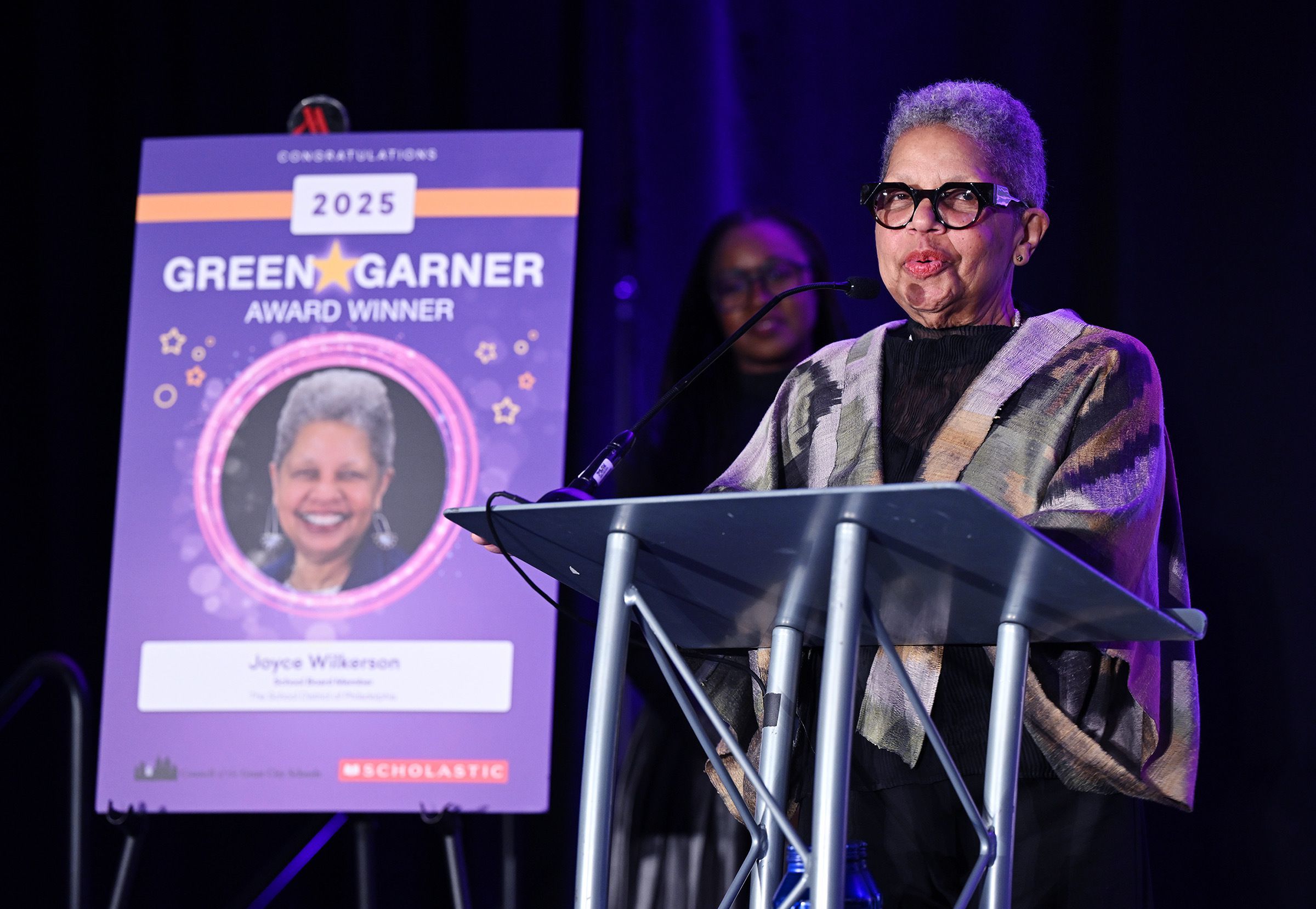
    Joyce Wilkerson, Philadelphia’s longest-serving school board member, was named 2025 Urban Educator of the Year on Thursday night.

    The Council of Great City Schools — in town for its annual conference — selected Wilkerson for “the nation’s highest honor in urban education leadership.” The award is presented in alternate years to either an outstanding school superintendent or school board member from 81 of the largest urban public-school systems in the country.

    The prize comes at a curious time for Wilkerson — when her very membership on the school board has been legally questioned, after a public battle with some members of City Council on her re-appointment by Mayor Cherelle L. Parker to the board.

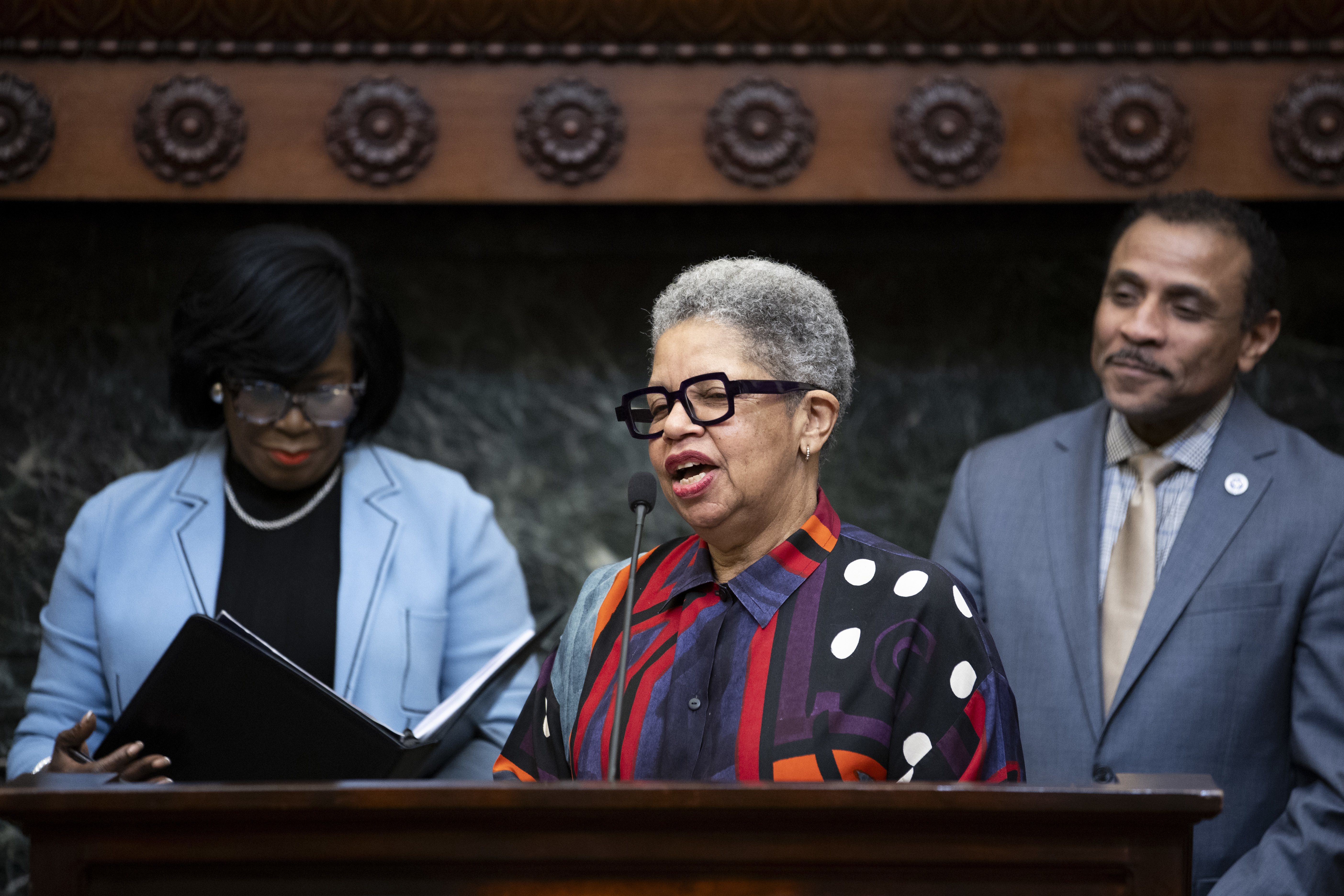
    Flanked by Mayor Cherelle L. Parker, left, and Superintendent Tony Watlington, right, Joyce Wilkerson, center, speaks during the announcement of the School District of Philadelphia Board of Education nominees at City Hall last year.

    People for People Charter School filed a lawsuit in Philadelphia Common Pleas Court in September calling Wilkerson an “illegally and unlawfully seated member of the BOE” and asking for her ouster.

    Wilkerson is not an educator by profession — she’s a lawyer who served as former Mayor John Street’s chief of staff. But she was named to the former School Reform Commission in 2016 and became the inaugural school board president in 2018, when the district returned to local control after nearly two decades of state oversight.

    Wilkerson, who also serves as a Council for Great City Schools board member, was hailed by the organization for steady leadership that helped end the Philadelphia School District’s state takeover, and for work that led the board to refocus its efforts on student outcomes. Ray Hart, who leads the Council, called those efforts “a national model.”

    Wilkerson, Hart said in a statement, “has reshaped the educational landscape in Philadelphia through her unwavering advocacy for students, along with her commitment to equity and excellence. Wilkerson’s dedication to strengthening public education has made her one of the most effective school board members in the nation.”

    As part of the prize, Wilkerson receives a $10,000 college scholarship to award to a district student.

    Joyce Wilkerson, Philadelphia’s longest-serving school board member, received the 2025 Urban Educator of the Year award from the Council of Great City Schools, a national organization whose annual conference is being held in Philadelphia this year.

    The People for People case — which came after the board voted to nonrenew the school’s charter over academic concerns — is still pending.

    It stems from a 2024 public fight over Wilkerson’s reappointment to the board. Several key Council members, including Council President Kenyatta Johnson and education committee chair Isaiah Thomas, took issue with Wilkerson.

    Her stance on charters in particular — no new charters were approved during Wilkerson’s school board presidency — rankled some on City Council.

    Council ultimately approved eight of Parker’s nine nominees, but did not act on Wilkerson’s candidacy. The mayor, though, did an end run, asking Wilkerson to serve on the board — essentially filling the seat Council denied her — until she named a successor.

    Parker ‘s administration argues the city charter allows Wilkerson to fully serve as a board member until her replacement is named, and it’s clear that the mayor is in no hurry to pick someone to replace her.

    The Parker administration, when the People for People suit was filed, said Wilkerson remains a full school board member, and said she still has the mayor’s support.