Category: Education

  • Ursinus College suddenly removes president, citing ‘best interests of the college’s long-term success’

    Ursinus College suddenly removes president, citing ‘best interests of the college’s long-term success’

    Ursinus College president Robyn E. Hannigan, who was in her fourth year at the small liberal arts school in Collegeville, was abruptly removed from the job Thursday and her Ursinus webpage was removed.

    ”I met with the board this morning,” said Hannigan, 60, who was reached by phone. “I was let go. It’s the board’s decision. It’s not for cause. The board wanted to go in a different direction.”

    She declined to disclose what the board told her at the meeting.

    In a statement, the college said it was a board decision “made in the best interests of the college’s long-term success.”

    Joseph DeSimone, chair of the college’s board of trustees and a 1986 Ursinus grad, declined in an interview to say why the board chose to part ways with Hannigan, saying it was a personnel decision. The leadership change is happening just as the college is about to celebrate homecoming weekend.

    The move comes after the college experienced a 10% decline in first-year enrollment this fall and a 6.4% decline in overall enrollment, which stands at 1,406.

    The college also was coping with financial challenges, in part because of the enrollment decline, but also because the retention rate last year for returning freshmen was 77%, six percentage points lower than the school’s average, Hannigan told the student newspaper, the Grizzly, in an interview published Oct. 2.

    “We have a structural deficit, which means that we’re not living within our means and our revenues are not enough to cover our expenses,” she told the Grizzly. “So we have to fix that.”

    She told the student newspaper that Ursinus took steps last year to “right the ship” financially and launched APEX, a program designed to better align academics with experiential learning and career prep. That is expected to bring enrollment back up, she said.

    The college is offering students up to $2,000 for internships, team-based career coaching and advising, and a week for first-year students devoted to real world problem-solving.

    The college plans to hold a town hall for faculty and staff at noon Friday.

    “This decision should not reflect in any way on the strength of the college and its direction,” Hannigan told The Inquirer. “It is the nature of the business that we are in.”

    The news stunned the campus community.

    “I was just baffled,” said senior Renee Washart, editor in chief of the Grizzly. “I did not see this coming at all.”

    She said she met with Hannigan on Monday, as she does once every month in her role as editor, and there was no indication of the change.

    “She was talking about future plans for Ursinus,” said Washart, a chemistry and English major from Frederick, Md.

    Washart said she was in class when an email came to campus about the change in leadership and her phone “started blowing up.” Her professor, she said, was hearing it for the first time, too.

    Hannigan, an academic in the sciences who holds several patents, said that she was under a contract that goes for “another couple years” and that she would be on leave for a few weeks while a separation agreement is worked out.

    DeSimone, a professor of Translational Medicine and chemical engineering at Stanford University, said in an announcement to the campus shortly before 11:30 a.m. that Gundolf Graml, the provost, will serve as interim president.

    “The board has full confidence in Dr. Graml to ensure continuity of operations and to advance the college’s strategic priorities,” the college said in a statement. “The college’s mission, values, and commitment to our students remain unchanged.”

    In an interview, DeSimone said there were no current plans to launch a search for a new president and that Graml and the executive team were well positioned to lead the college forward. Applications and donations are up, he said.

    Hannigan came to Ursinus in July 2022 from Clarkson University in Potsdam, N.Y., where she was the provost. She was the first permanent female leader of Ursinus and the first of Native American descent.

    In a 2022 interview with The Inquirer, she said she was a first-generation college student whose parents scraped to save enough to pay for her first year of college and whose older brother chose to forgo college so that she could go.

    She grew up in New Jersey and received a bachelor’s degree in biology from the College of New Jersey, a master’s in geology from SUNY Buffalo, and a doctoral degree in earth and environmental science from the University of Rochester.

    Hannigan described her departure from Ursinus as “a friendly separation.”

    “The college has been doing great work in trying to turn around and do what it needs to do to thrive in the future,” she said.

  • Tony Watlington talked about Philly’s ‘groundbreaking academic improvements’ on a national stage. Here are 3 takeaways.

    Tony Watlington talked about Philly’s ‘groundbreaking academic improvements’ on a national stage. Here are 3 takeaways.

    On Thursday, a roomful of leaders from the nation’s largest and most complex school systems stood, sat, and spilled into aisles to hear Superintendent Tony B. Watlington Sr. talk about how the Philadelphia School District has pulled off “groundbreaking academic improvements” in the eighth-largest school system in the country.

    “The nation’s historic biggest poor city for many decades is getting better,” Watlington said. “We are so proud to be accelerating performance, and we are going to put our foot on the gas, and our goal … is to get to the top of the food chain.”

    The discussion came as part of the Council of Great City Schools’ annual conference, held this year in Philadelphia. In addition to the hometown district, the Baltimore, Detroit, and Los Angeles Unified districts were also highlighted.

    Here are some takeaways from the panel that featured Watlington, Sonja Santelises of Baltimore, Nikolai Vitti of Detroit, and Alberto Carvalho of Los Angeles.

    The Philadelphia story: It’s getting better

    Watlington trumpeted the progress made since he arrived in Philadelphia in 2022: improvement in most metrics — fewer dropouts, better graduation rate, better student and teacher attendance, forward motion in most areas as benchmarked against big-city peers on the test known as the “Nation’s Report Card.”

    “We’ve been really drilling down on fourth- and eighth-grade reading and math, and in three of these areas, we’ve seen significant improvement, besting the national average, our peer districts, and, certainly, outperforming the Commonwealth of Pennsylvania,” Watlington said.

    Still, Philadelphia’s students — a diverse group, mostly from economically disadvantaged homes and mostly kids of color — have a long ways to go.

    According to preliminary data recently released by the district, 25% of district students met state standards in reading and 33% in math. (Math scores have been a particular strength of late — fourth-graders’ math scores have jumped 13 percentage points in the last three years.)

    “It’s ebbing and flowing, but over time we ought to see some appreciable improvement in student outcomes, and, yes, it ought to show up on some standardized assessments, even if those assessments are rife with cultural and racial bias,” Watlington said.

    Despite the fact that most city students do not meet the state’s standards in literacy and numeracy, there are more than just glimmers of hope in what the district has been able to accomplish in recent years, Watlington said.

    For years, Philadelphia’s performance was near the bottom of all large urban districts’. But the most recent stats from the National Assessment of Educational Progress show that the district has vaulted from near the bottom to closer to the top.

    And after years of declining enrollment amid a robust charter school ecosystem, the traditional public school system added more than 1,000 students to its rolls last year. About 117,000 children are now enrolled in district schools.

    How did the district make gains? Watlington cited several factors: new, standardized curriculum, professional development for teachers, supporting principals, strengthening family partnerships, and improving instruction.

    “We’re not just trying to serve the middle,” Watlington said. “We’re serving all students, including students who qualify for special education services.”

    Baltimore found literacy leaders in its own backyard

    Funds are scarce and needs are great in Baltimore, as they are in large urban school districts across the country.

    But Santelises, who has been superintendent of the district of 70,000 for nearly 10 years, wanted to focus on building leadership, even without a built-in infrastructure.

    “What we did was we doubled down on leadership is not a title. Leadership is a state of being. Leadership is a focus, so that means leadership is not just who gets to sit the closest to the CEO. Leadership is not who has three letters in his or her name, but leadership is actually what is your ability to identify a problem,” Santelises said.

    Empowering people in schools to see themselves as leaders worked beautifully, Santelises said. Among the strongest leaders?

    “We found actually that our paraprofessionals — majority women of color, majority from low-income neighborhoods — were actually our best literacy tutors when we looked at the data,” Santelises said. “With all due respect to any companies in the room, it wasn’t the new AI technology that got the best results. It wasn’t the newest program you’re going to put on the software. It was actually the women who were closest to our young people and their communities were then viewed as leaders, and frankly got 30 to 40% greater improvement with our first and second graders than any program we purchased.”

    LA super thinks 10% of schools should get 90% of district attention

    Alberto Carvalho, the superintendent of the Los Angeles Unified School District, said that 90% of districts’ time should be spent on 10% of its schools — the lowest performers.

    Leaders must have “the courage to say not every student shall get the same level of funding, the same level of support … they need disproportionately higher levels of funding based on equity indices.”

    (Philadelphia used to have a separate learning network for its lowest performers, with higher amounts of funding and more supports. The district broke up that network in a recent reorganization.)

    When he started in LAUSD in 2022, that school system, the nation’s second-largest, had 800 teaching vacancies. He reduced that number to zero quickly.

    Central office staffers who met Carvalho always told him how much they loved children, he said.

    “During spring break, I asked them to go love children closer to where children were,” Carvalho said. The employees who had teaching credentials were sent into schools to teach. “Yes, there are teacher shortages, but we have more of a talent-distribution problem than a talent problem, always.”

    Carvalho — a former undocumented immigrant who spent 15 years as Miami’s schools leader and had accepted the New York public school chancellor’s job but reneged, he said Thursday, “because I would have killed the mayor” — suggested that incremental progress is not nearly enough.

    “We’re not done, we can’t be done,” Carvalho said. “We have grade levels where reading performance is at 30, 40, 50%, and that means the vast majority of our kids are not learning and reading at grade level — the same for numeracy. Unfortunately, across our country, we often hide ugly truths about our own performance. And as they all said, ‘The first step in true educational reform is critical awareness of where we are.’”

  • Penn faculty group says faculty, students facing ‘unfounded accusations of antisemitism’ from the university

    Penn faculty group says faculty, students facing ‘unfounded accusations of antisemitism’ from the university

    One University of Pennsylvania faculty member was called into a university office to answer for assigning “a pedagogically-relevant reading about conflict in Palestine,” others for political posts on personal social media accounts.

    One faced questions for wearing a stole with the Palestinian flag at an off-campus event.

    These are among “unfounded accusations of antisemitism” that Penn’s chapter of the American Association of University Professors said faculty and students have endured in the last year. Chapter representatives accompanied faculty to meetings at Penn’s Office of Religious and Ethnic Interests, which called the faculty in for questioning, according to a statement the group released Wednesday.

    The religious and ethnic interests office oversees the implementation of Title VI of the Civil Rights Act, which prohibits discrimination based on race, color, national origin, or shared ancestry. It was formed following accusations of antisemitism on campus in the aftermath of Hamas’ Oct. 7, 2023, attack on Israel, when Penn was roiled by dueling complaints of unfairly treating Jewish and pro-Palestinian members of its community.

    Then-Penn president Liz Magill resigned in December 2023 following a bipartisan backlash over her congressional committee testimony regarding antisemitism complaints, and the following spring, pro-Palestinian protesters erected an encampment on the College Green that ultimately was dismantled by police.

    Since January, President Donald Trump’s administration has targeted universities that it asserts have failed to respond adequately to antisemitism complaints, and the group of Penn professors said they are worried that the university is following the president’s lead.

    “We are concerned that Penn’s own Title VI office may be responding to these external pressures in a manner that risks chilling faculty speech and potentially discriminating against faculty in violation of the law,” the group asserted in a statement published on its website Wednesday. “… Faculty members, who in some cases had already been subject to targeted harassment, felt that they were expected to take unsubstantiated accusations of antisemitism at face value and to express contrition or offer some concession to their unidentified accuser, or face the possibility of disciplinary action.”

    Penn did not respond to a request for comment. Neither did the religious and ethnic interests office.

    Penn announced the creation of the office in September 2024, noting it was the first of its kind nationally and saying it would ensure a consistent response across all of its schools.

    “Over the past year, our campus and our country witnessed a disquieting surge in antisemitism, Islamophobia, and other forms of religious and ethnic intolerance,” J. Larry Jameson, who was then interim president and was named president six months later, said at the time. “The Office of Religious and Ethnic Inclusion (Title VI) is being formed to confront this deeply troubling trend, and to serve as a stand-alone center for education and complaint resolution.”

    The office formally opened in December with the foundational goals of educating, investigating, mediating, and evaluating. Its codirectors are Steve Ginsburg, who had served over a decade as an executive of the Anti-Defamation League, and Majid Alsayegh, founder of Alta Management Services LLC, which helped clients with criminal justice reform. The office’s chief investigator is Deborah Frey, who previously served as an assistant U.S. attorney in the Eastern District of Pennsylvania, working on discrimination complaints.

    “Because of our own lived experiences as targets of bigotry, we know this work is not going to be easy,” Ginsburg had told Penn Today. “These issues are complex and require deep thought and sensitivity for those who are impacted.”

    Faculty and students were not named in Wednesday’s statement and declined to comment through an AAUP executive committee member out of fear of retribution or harassment. The AAUP did not disclose the number of faculty and students involved.

    But the reports “come almost exclusively from faculty who are Palestinian, Arab, Muslim, and/or Black,” the group said, giving rise to concerns about potential discrimination.

    The faculty and students referred to in the letter were not sanctioned or punished for their activities, but the mere act of being called in and questioned has “a chilling effect” on research, teaching, and speech, said the AAUP executive committee member, who asked not to be identified because the chapter wanted to speak with one voice.

    “For instance, in one meeting, a faculty member whose peer-reviewed research was subject to a complaint was pressured to make a modification to the presentation of that research, although their work had the support of their colleagues and dean,” the AAUP chapter said.

    In that case, the faculty member had been called in because the research “referenced a third-party resource that a complainant claimed, without evidence, promoted hatred of Israel and of Jews in the United States,” the letter stated.

    The chapter called on the office to “clarify and modify its procedures to ensure the transparency, consistency, and fairness essential to carrying out the office’s mission.”

    And it asked the office to respond to a series of questions, including about the criteria it uses to decide whether to pursue a complaint.

  • Coalition rallies against Philly’s plan to close schools, and says district should halt the process

    Coalition rallies against Philly’s plan to close schools, and says district should halt the process

    Pause the city’s facilities master planning process, a grassroots coalition said Wednesday, weeks before the Philadelphia School District has said it would release a draft of that plan — which will include school closures.

    Superintendent Tony B. Watlington Sr. and school board president Reginald Streater have said the long-promised planning process would be different than the 2013 incarnation, that they would consider the harm done then, and would use an equity lens.

    Watlington in September said “there are no fixed decisions at this point, and the short answer is we can’t answer any of those questions right now about which schools will close, but we can surely say some will.”

    Officials have also said the document — which they promise is on track for delivery sometime this fall, with a school board vote by the end of the calendar year — would also include major renovations, new school construction, and joining some schools into a single building.

    But Councilmember Kendra Brooks, who was a school activist fighting the closures on the front lines 12 years ago, said this process feels similar, despite officials’ assertions that their aim is to organize city schools in a way that best advantages children.

    Philadelphia has complex facilities needs — 70,000 excess seats in schools across the city, some schools that are more than half-empty, and some bursting at the seams. Its buildings are old, and many have environmental problems.

    “This seems like a school closure process,” Brooks said in an interview. “We’ve been here before, and the conversation should be about the future we want for our children — it should include plans for investment, not just closure.”

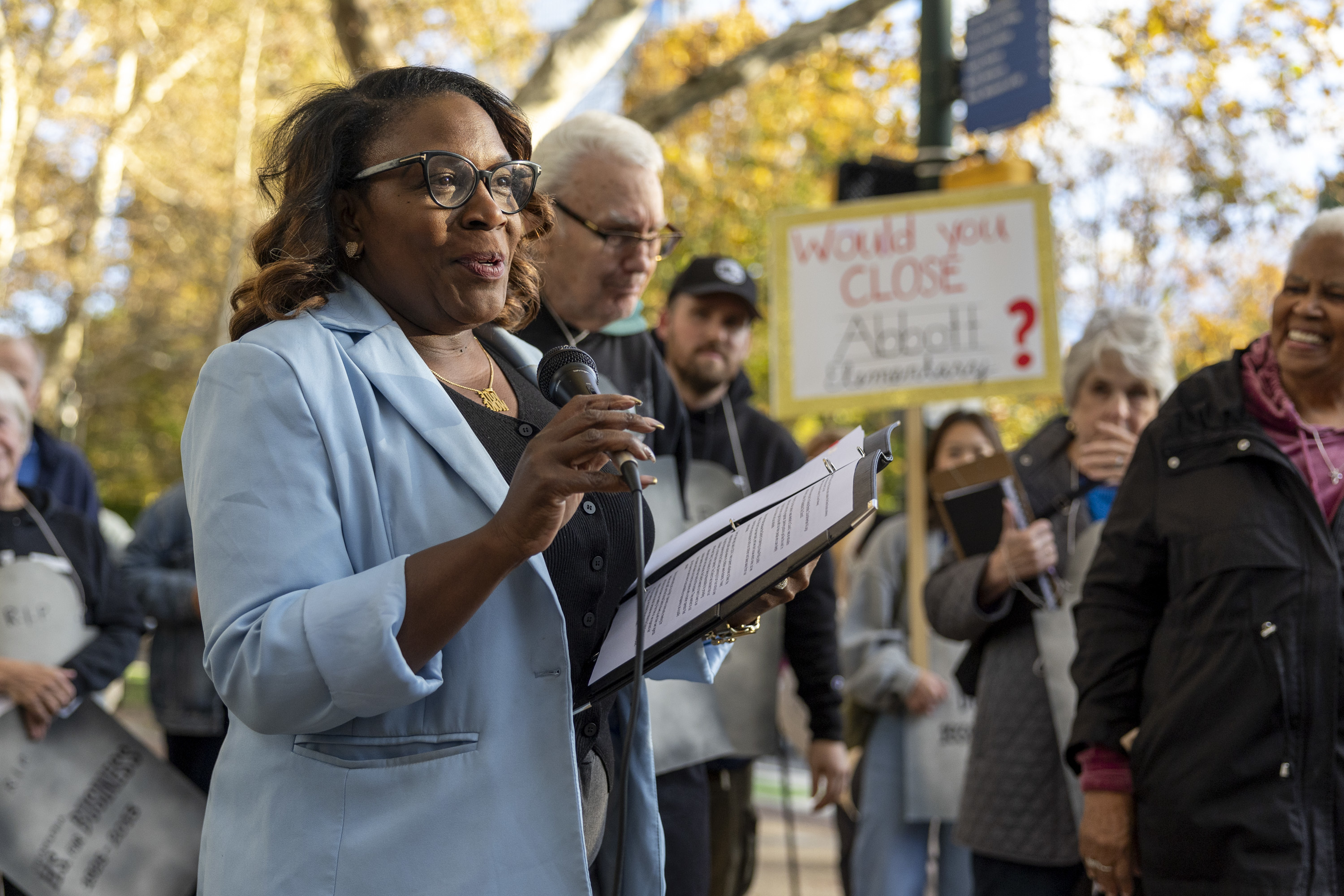
    City Council woman at large Kendra Brooks, speaks in front of parents, teachers, and public school advocates during a Stand Up for Philly Schools event in Philadelphia, on Wednesday, Oct. 22, 2025.

    Brooks joined members of Stand Up for Philly Schools — a coalition of organizations including Parents United for Public Education, the Philadelphia Home and School Council, and Asian Americans United — outside the Barnes Foundation on the Benjamin Franklin Parkway Wednesday night, where members of the Council for Great City Schools met for an opening reception.

    “We are being given an extremely limited set of options about the future of our schools. We are being told that school closures are a foregone conclusion. We’re being told to sign off on a plan that we haven’t even seen,” Brooks said to the crowd of dozens of educators, parents, students and other supporters gathered for the cause.

    “We don’t know how many, we don’t know which ones, but we know that every school closure hurts a community,” she said.

    ‘A big contraction of the school district’

    Those who rallied Wednesday made several demands of the district, which is playing host to the Council for Great City Schools conference. Those asks included pausing the planning process, creating a new strategy for public engagement, and committing at least $250 million annually to keeping district schools well-maintained.

    So far, the process has played out poorly, members of Stand Up for Philly Schools say. There’s been engagement on paper, but many in advisory groups said they felt their work was merely lip service, and community meetings have been sparsely attended.

    The school board has authorized spending over $5 million on contracts for community engagement, the planning process itself, and the construction and hosting of a data warehouse for all facilities information.

    “We feel like we’re not getting the whole picture, we feel like whatever ideas and feedback we gave are not being heeded, and we don’t think there’s enough time in this process,” said Adam Blyweiss, a district parent and teacher who sat on an advisory committee.

    Laurie Mazer, a member of Parents United for Public Education, said the process feels “weird, and rushed.”

    Getting information has ”been a real teeth-pulling exercise,” Mazer said.

    ‘When schools close, communities pay the price’

    It appeared like an early Halloween celebration at the Stand Up for Philly Schools rally.

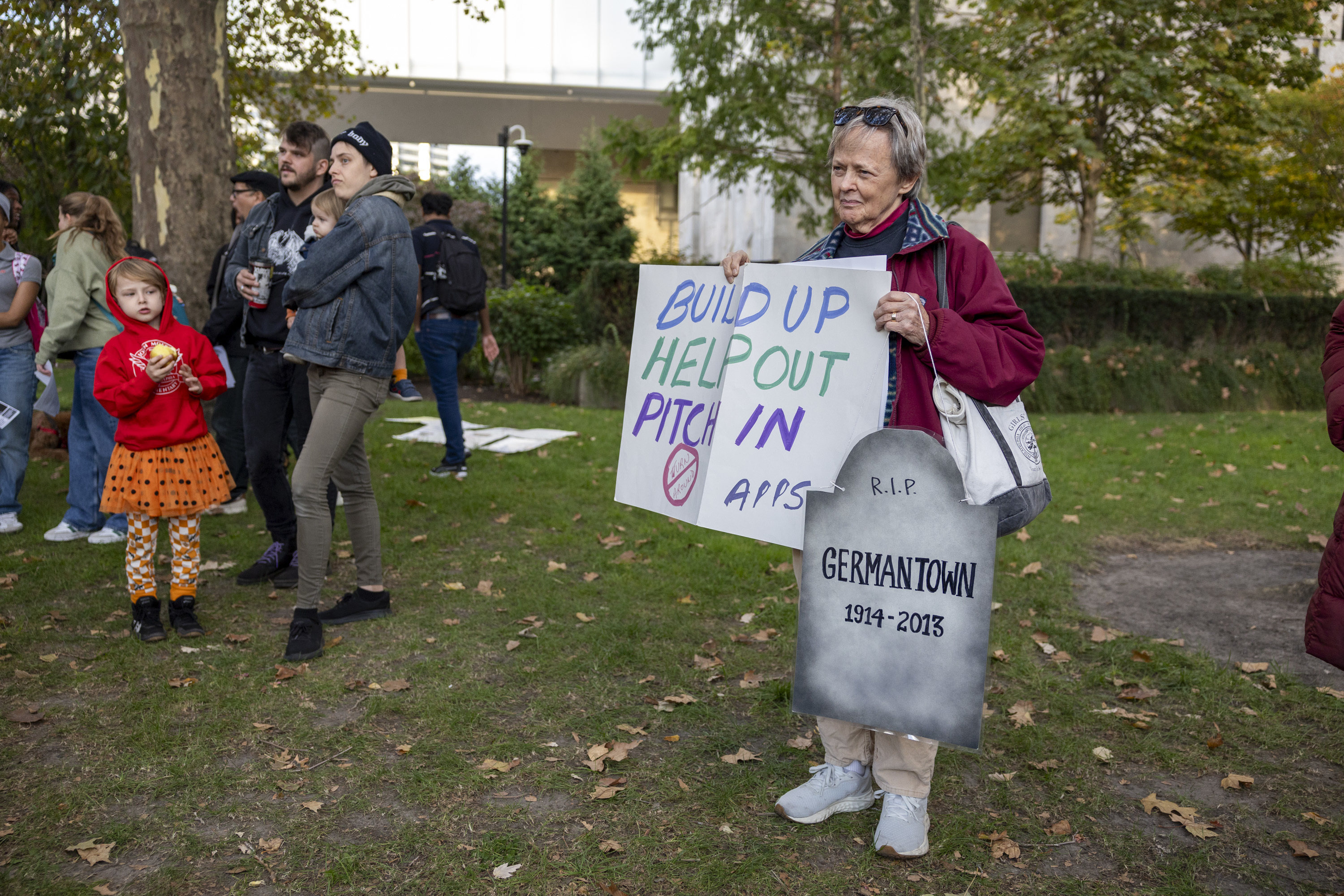
    Coalition members wore tombstone signs around their necks, each representing a Philadelphia public school that was closed during the district’s last closure plan.

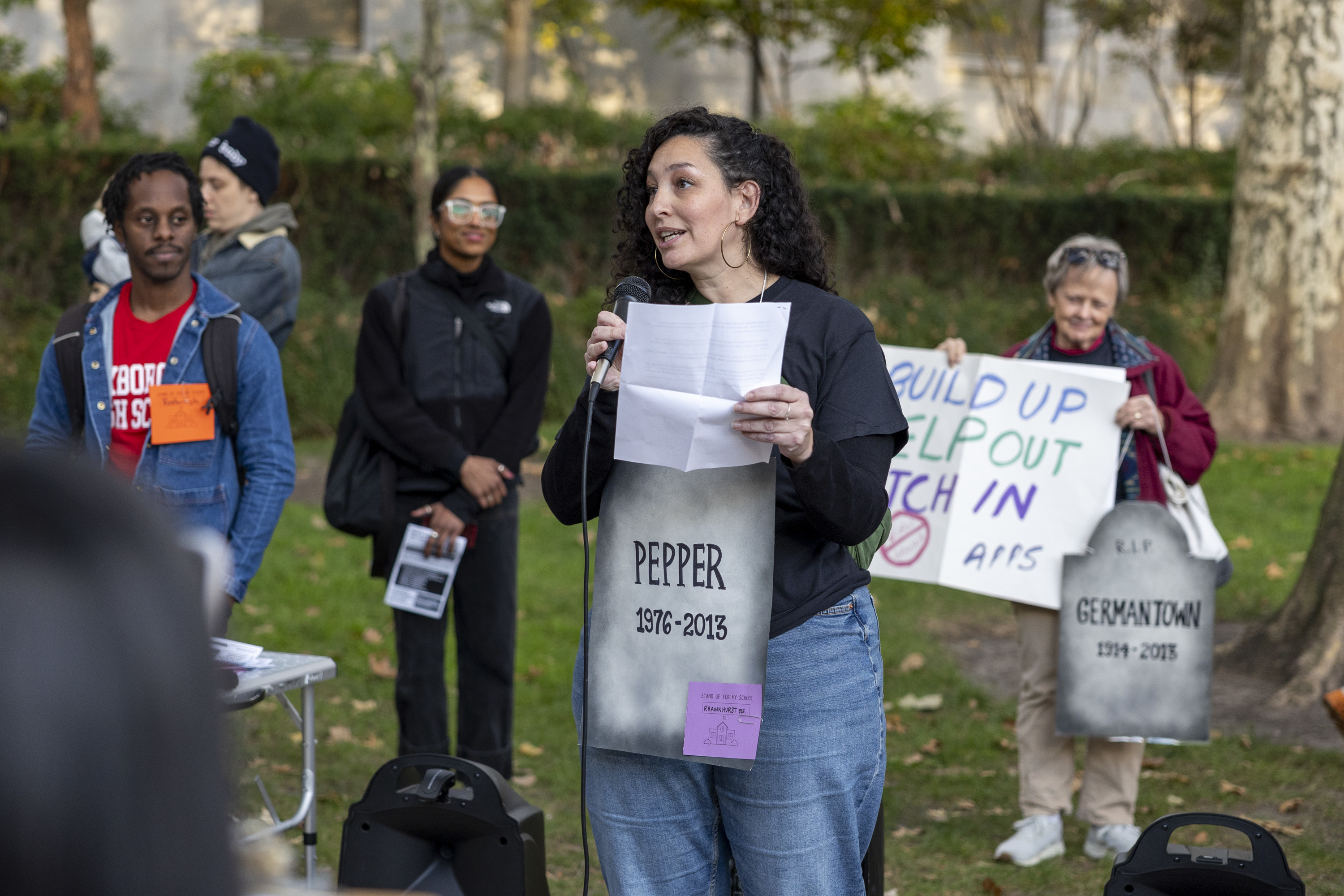
    “After months of delays and missing data, it’s clear why so many families don’t trust this process,” said Melanie Silva, the mother to a fourth grader at Rhawnhurst Elementary School in Northeast Philly and a member of 215 People’s Alliance.

    Melanie Silva, mom to a fourth grader at Rhawnhurst Elementary School, speaks during a Stand Up for Philly Schools event in Philadelphia, on Wednesday, Oct. 22, 2025.

    Wearing a tombstone sign around her neck representing George Wharton Pepper Middle School and its closure in 2013, Silva described the overcrowded and under-resourced conditions at her daughter’s school. She said the school’s library was a meeting room, and classrooms were so full there was “no room to breathe.” She said the district ought to invest in its schools rather than close them.

    “We deserve transparency, we deserve trust, and real investment, not excuses,” she said.

    Charles Hudgins, an algebra teacher at Abraham Lincoln High School in Northeast Philly, warned that the district would make problems that schools face today worse by closing more of them. He said that some of his students already travel more than an hour.

    Barbara Dowdall, of Germantown, Retired teacher of 36 years, holds up a sign to show her support for Philadelphia public schools during a Stand Up for Philly Schools event in Philadelphia, on Wednesday, Oct. 22, 2025.

    “The potential and talent of students is being lost every single day because our school system is focused on quality and numbers. The numbers we care about are the number of excellent schools where our children have opportunities to thrive, to think creatively and to pursue their passions,” said Ruth Kuriloff, 17, a senior at Science Leadership Academy at Beeber.

    She and her classmates said students would only be hurt by closing schools to save money.

    “These obvious inequities will not get better by closing schools,” said Jordyn McGriff-Laduna, 17, also a senior at the school. “Quality education should not be a privilege. It should be a promise for all students in all areas.”

  • Bette E. Landman, award-winning anthropology professor and first female president at Arcadia University, has died at 88

    Bette E. Landman, award-winning anthropology professor and first female president at Arcadia University, has died at 88

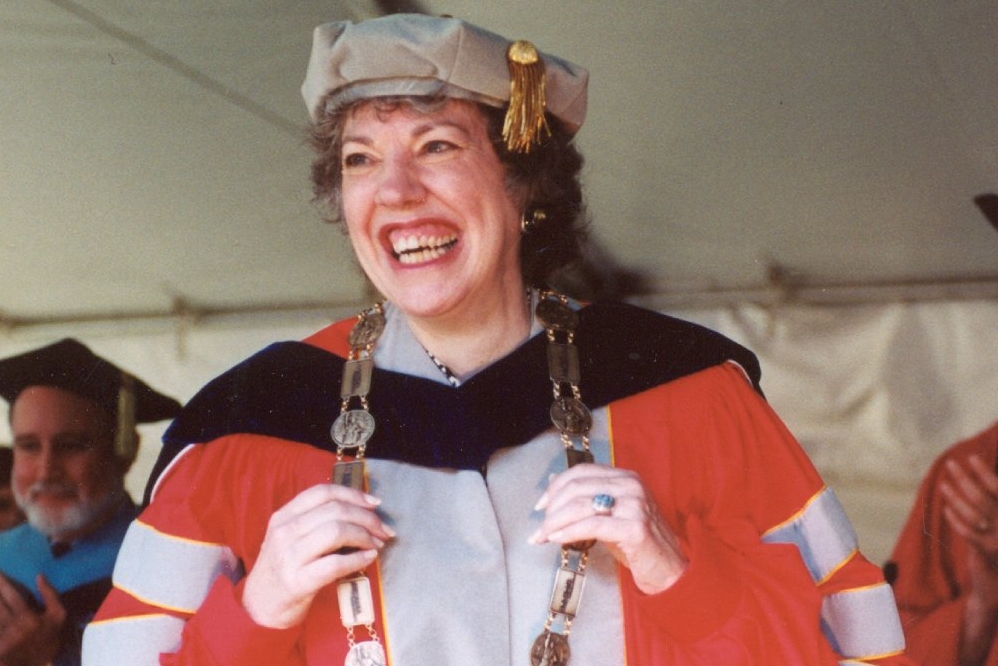
    Bette E. Landman, 88, of Glenside, Montgomery County, the first female president of Arcadia University, award-winning professor of anthropology at Arcadia and Temple Universities, longtime board member, lecturer, and volunteer, died Thursday, Oct. 16, at Jefferson Abington Hospital. The cause of her death has not been disclosed.

    An expert in cultural anthropology, Dr. Landman joined Arcadia, known then as Beaver College, from Temple in 1971 as an assistant professor of anthropology. She was promoted to dean of students in 1976 and rose to vice president of academic affairs and then acting president in 1982 before her appointment as president in 1985.

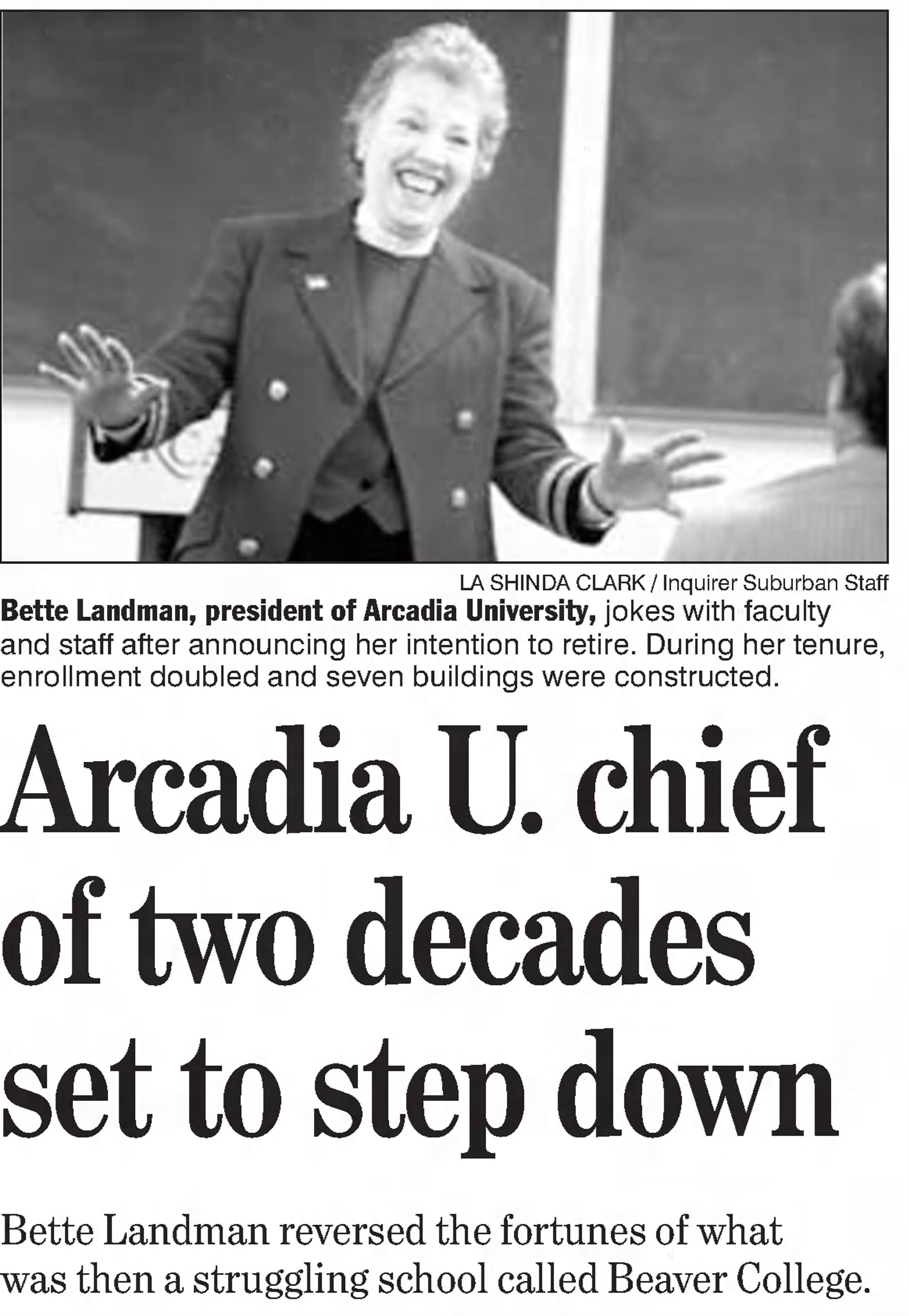
    For the next 19 years, until her retirement in 2004, Dr. Landman doubled the university’s enrollment to more than 3,000 students, increased its endowment from $267,000 to $26 million, supervised construction of seven buildings, and expanded international study programs. She also maneuvered successfully through an eight-month maintenance staff strike in 1993 and initiated the school’s name and academic status change from Beaver College to Arcadia University in 2001.

    She adroitly addressed the school’s thorny financial issues, strengthened its liberal arts program and College of Global Studies, and diversified the student body. “The school has come up from the floor, and it’s because of her,” Joseph Castle 2nd, then chair of Arcadia’s board of trustees, told The Inquirer in 2004.

    When she retired, Arcadia colleague Gene Bucci said: “It’s a sad day. Bette is the college.” Another colleague, Norman Johnston, said: “Without her, there might not even be a college here anymore.”

    In a recent tribute, current Arcadia president Ajay Nair praised Dr. Landman’s “extraordinary vision and unwavering dedication to access and inclusion.” He said: “Her spirit, vision, light, and legacy will forever remain a central part of the university.”

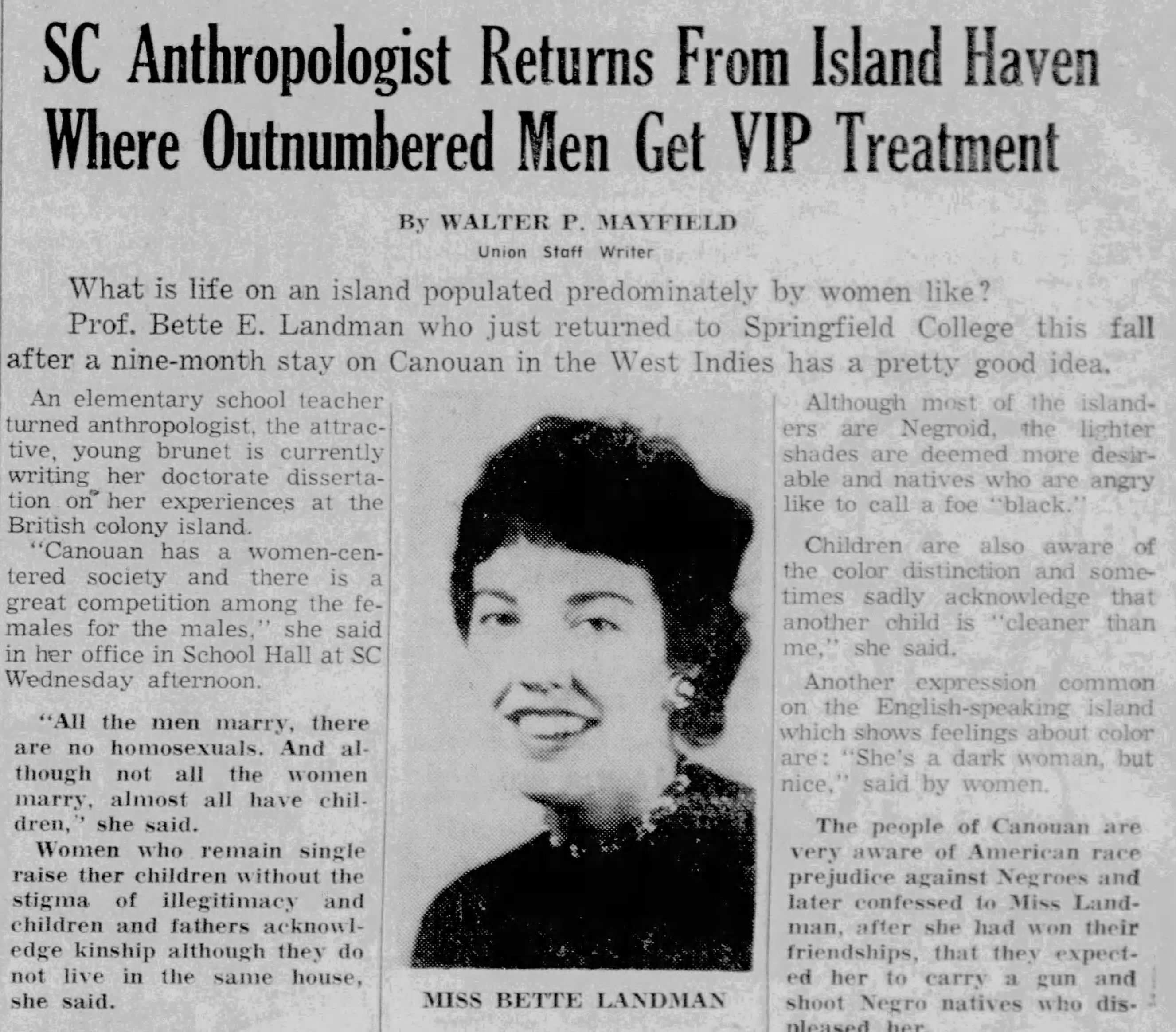
    Dr. Landman studied marriage, child-rearing, and other social constructs for nine months on the remote Caribbean island of Canouan for her doctoral dissertation in 1965 and ’66, and she lectured for decades around the country on evolution and human relationships. She evaluated academic programs and advised colleges around the world, and said often that expansive educations are vital for everyday success.

    “A baccalaureate degree must expose men and women to arts and sciences,” she told The Inquirer in 1992. “It gives breadth to what they do. I realize people work and need job skills, but the really basic skills are critical thinking, problem solving, and the ability to make judgements and effective communication, oral and written.”

    Dr. Landman became president at Arcadia in 1985.

    She was also effective in improving Arcadia’s athletic program and was inducted into its Hall of Fame in 2009. She held leadership roles in the National Collegiate Athletic Association and Pennsylvania Athletic Conference, and Arcadia officials said on the Hall of Fame website: “Bette Landman put our university on the national map in athletics.”

    Over the years, Arcadia officials named their new Landman Library in her honor, awarded her an honorary doctorate of education, and created the Bette Landman Award for students dedicated to academic success, community service, and global learning. Before Arcadia, she was an assistant professor of anthropology for five years at Springfield College in Massachusetts and then at Temple from 1969 to 1971.

    She earned a bachelor’s degree in elementary education and graduated first in her class of 1959 at Bowling Green State University in Ohio. At Ohio State University, she earned a master’s degree in physical anthropology in 1961 and a doctorate in cultural anthropology in 1972.

    “She treated every student like we were part of her family,” a former student said in a tribute. “She knew us by name. All university presidents should aspire to be like Bette.”

    Dr. Landman taught anthropology at Springfield College and Temple and Arcadia Universities.

    As a volunteer, Dr. Landman was president of the charitable Arcadia Foundation and chair of boards and commissions for the Association of American Colleges, the American Red Cross, and other groups. She was on boards for the National Association of Independent Colleges and Universities, Abington Memorial Hospital, and Wilson College.

    She was named a Distinguished Daughter of Pennsylvania in 1992 by the Foundation for Enhancing Communities and earned a lifetime achievement award in 2003 from the Pennsylvania Council on International Education. In 1992, the Pennsylvania chapter of the American Council on Education created an award in her name to honor a leader in women’s education in Pennsylvania.

    She earned a 1973 Lindback Award at Arcadia for distinguished teaching and other honors from the Boy Scouts of America, the March of Dimes, and the Philadelphia Business Journal. She also is featured in Karen Doyle Walton’s 1996 book, Against the Tide: Career Paths of Women Leaders in American and British Higher Education.

    She never really enjoyed fundraising, colleagues said, so she assembled a formidable staff around her. Her brother, Todd, said: “She was a tremendous team builder.” A former colleague said on Facebook: “Everyone who worked around Bette loved her.”

    The Springfield Union wrote about Dr. Landman’s doctoral dissertation in 1966.

    Bette Emmeline Landman was born July 18, 1937, in Piqua, Ohio. She grew up with an older sister, Patricia, and a younger brother, Todd, and she told memorable bedtime stories to her brother when they were young.

    She worked odd jobs during her high school years, earned a teaching scholarship to Bowling Green, and taught fifth grade in Ohio before joining Springfield College in 1963.

    At Arcadia, she liked to host student gatherings at the president’s residence, and her personal library was filled with books on history, art, and architecture. Friends noted her “infectious smile” and called her “a wonderful woman” and “an incredible lady.”

    Her brother said: “She was a very compassionate person. She was committed to success.”

    This article about Dr. Landman appeared in The Inquirer in 2003.

    In addition to her brother, Dr. Landman is survived by other relatives. Her sister died earlier.

    Services are to be held later.

    Donations in her name may be made to the Fund for Arcadia University, 450 S. Easton Rd., Glenside, Pa. 19038.

  • As Trump limits federal college loans, a new private lender specializes in lending to families desperate for a student to graduate

    As Trump limits federal college loans, a new private lender specializes in lending to families desperate for a student to graduate

    Colleges and universities expect the Trump administration’s new limits on government-backed student loans will drive more families to higher-cost private lenders. John Witter, CEO of industry leader Sallie Mae, expects his company will attract around $5 billion in new private loans, thanks to lifetime limits on taxpayer-backed student borrowing in President Donald Trump’s Big Beautiful Bill.

    Investors, meanwhile, are betting that private college loans will balloon under the Trump rules. But less than half of families who apply qualify for mainstream lenders’ private student loans.

    So a group of executives who used to work at Sallie Mae, which is based in Wilmington, have organized a start-up company, GradBridge, to make loans at higher interest rates to students who max out on scholarships and government loans but still hope to finish college or graduate school.

    On Wednesday, GradBridge said it had raised $20 million to speed its growth before the new loan limits begin next summer.

    The money was raised from private investors led by Acorn Investment Partners, which is managed by Los Angeles-based Oaktree Capital Management. Oaktree’s investors include the Pennsylvania public schoolteachers’ (PSERS) and state workers’ (SERS) pension funds.

    GradBridge will be a “second-look” lender for families turned down by mainstream private college lenders, said Jen O’Donald, GradBridge founder and CEO.

    O’Donald, who lives in Chester County, is a former head of products for Sallie Mae and the mother of two college students. Her top lieutenants include chief financial officer Brian Carp and chief operations officer Lisa Kaplan, also Sallie Mae veterans. Advisers include Sallie Mae Bank’s former president, Paul Thome, and former chief credit officer Dan Hill.

    After Trump’s election last year, O’Donald said, she and former colleagues reviewed the “massive disruption” the Trump platform promised in college financing and looked for business opportunities.

    Even if only some of the changes were enacted, “only about 35% to 45% of private college loans get approved,” and many students’ families are not able to get a private student loan after they have exhausted federal grant and loan programs, she said in an interview.

    With the lifetime limits on student loans enacted by the Trump administration, O’Donald sees an “overwhelming shift” away from government programs to private loans over the next few years, as students grandfathered under earlier programs graduate and new students borrow up to the new program limits.

    GradBridge expects to get referrals from colleges and mainstream lenders of borrowers who don’t fit the high-end ability-to-pay profile.

    While mainstream lenders could charge an annual interest rate from the mid-single digits to as much as 18% a year, GradBridge might charge less-bankworthy borrowers an additional 3% or 4% on top of the mainstream rate, driving monthly payment up by $30 or $40 for every $10,000 owed.

    O’Donald said GradBridge offers an alternative to “credit cards, personal loans, parents’ 401(k) accounts, home equity loans” and other costly alternatives families use to help their children stay in college.

    Federal student loans are made to applicants who apply to government-approved, mostly four-year colleges, without the kind of traditional loan underwriting used to evaluate if borrowers are likely to repay home, auto, or small-business loans.

    Not surprisingly, those student loans suffer a high loss rate, the justification lenders used to get the government to agree to prevent federal student loan debtors from having their loans discharged in bankruptcy.

    But private lenders like Sallie Mae and GradBridge consider family income and other factors that affect whether the loan will likely be paid, O’Donald said.

    Most private college loans require adult cosigners. Because they rely mostly on family income to ensure they get paid back, lenders typically don’t worry about what majors or graduate degrees a borrower pursues, she added.

    “GradBridge’s approach addresses a real market gap” for students who “fall just outside of traditional credit underwriting models,” Yadin Rozov, Acorn’s chief investment officer, said in a statement.

    GradBridge employs around half a dozen people. It plans to increase to around 30 by 2027.

    O’Donald said the Wilmington area is a national center for student lending and a good place to hire for a loan start-up.

    Besides Sallie Mae, it is home to College Avenue, another student lender founded by Sallie Mae veterans; Navient, a student-loan servicing company; and other consumer payment companies.

    With college enrollments flat or declining, O’Donald said schools are eager to forge ties with private lenders.

    “The first big impact will be next summer,“ she said. ”It will take a few years before the full impact will be seen, but schools are starting to be concerned about how they will keep kids enrolled.”

  • Community College of Philadelphia interim president is selected for permanent role

    Community College of Philadelphia interim president is selected for permanent role

    Alycia Marshall, who has been serving as interim president of Community College of Philadelphia since April, was unanimously endorsed for the permanent role Tuesday.

    The board of trustees, at an 8 a.m. meeting, approved making an offer of employment to Marshall, who had served as provost and vice president for academic and student success at CCP for nearly three years before stepping into the interim role.

    Marshall was among four finalists for the job.

    “Congratulations,” Board Chair Harold T. Epps said to Marshall during the Zoom meeting, which lasted about 10 minutes. “You have earned it through a very tough and challenging process. …We look forward to working with you.”

    Epps cited Marshall’s “stellar work” through the interim period as a factor in the board’s decision and said she had “the full confidence” of the board.

    “I’m a little bit emotional,” Marshall said at the meeting. “I’m very excited. I’m honored. I’m deeply humbled, pleased, ecstatic, and looking forward to the road ahead and the journey ahead.

    “I am fully committed to this institution, to our students, most importantly, and to the college community.”

    Alycia Marshall

    Epps said contract negotiations with Marshall would begin immediately to lead the college, which had an enrollment of 12,400 credit students and 1,381 noncredit students last spring. No terms or salary of her employment were released.

    Marshall will follow former CCP President Donald Guy Generals, who led the college for 11 years and was forced out of the job in April and placed on paid administrative leave through the end of his contract.

    Philadelphia Mayor Cherelle L. Parker congratulated Marshall in a statement.

    “The Parker administration supports CCP, Dr. Marshall, and the board in its mission,” she said.

    Maria Baez, student government president, was on the search committee and said while she liked all four candidates, Marshall was her first choice.

    Alycia Marshall speaks at a Community College of Philadelphia forum where she appeared as one of four finalists for president. She got the job Tuesday.

    “As a student, I see her passion for the students,” Baez said. “I see how connected she is with the students. Her heart is for the students.”

    Junior Brainard, co-president of the faculty and staff union, said: “As a union, we are looking forward to Dr. Marshall finally making good on the agreement we signed back in March,” referring to a contract agreement. “That includes SEPTA passes for all students, smaller class sizes, and improvements to health, safety, and working conditions that will be figured out through various committees.”

    During a finalist forum, Marshall addressed free SEPTA passes for students. While the college couldn’t offer the benefit to all students — it would cost about $2 million — a pilot will begin in the spring at the college’s West Philadelphia site, she said.

    Brainard said the college has to do better. The pilot only serves half the students at the West Philadelphia site and just 3% of the student body, he said.

    Marshall said in an interview Tuesday afternoon that the goal is to find alternative funding sources and expand the program to the entire college.

    She said among her priorities will be increasing and strengthening transfer partnerships, with the recently announced program with Cheyney University, an historically Black college in Delaware and Chester counties, as a model.

    “Many of our students have transportation issues and perhaps reasonably cannot drive the 25 miles to Cheyney University,” she said. “So Cheyney at CCP is going to provide opportunities to complete a bachelor’s while staying on our campus. It’s symbolic of where I would like to work together with faculty, staff and the administrators and the board … on really strengthening those pathways.”

    She cited workforce development and strengthening partnerships with K-12 schools, too, including expanding dual enrollment opportunities and reaching into areas of the city that the college currently is not penetrating enough.

    When Marshall was named as interim, Epps cited her “academic and organizational leadership, along with her extensive expertise in STEM, her focus on mentoring and serving underrepresented student populations.”

    Marshall, 51, received her bachelor’s in mathematics from the University of Maryland Baltimore County, her master’s in teaching from Bowie State University, and her doctorate in mathematics education from the University of Maryland.

    A native of Maryland, she started her career as an adjunct professor at Anne Arundel Community College in Maryland, near Annapolis, and later became a full tenured professor and chair of the mathematics department.

    She was promoted to associate vice president there and founded the African American Leadership Institute and spent a total of nearly 23 years at the Maryland community college. She’s also a rising presidents fellow with the Aspen Foundation, a nonprofit aimed at creating thought leaders in their fields to address critical challenges.

    Alycia Marshall, then interim president of Community College of Philadelphia, speaks at commencement in May.

    At a campus interview session for the job, Marshall said she would lead both internally and externally, focusing on faculty and staff satisfaction as well as building relationships with funders and donors.

    She said she has already met more than 20 City Council members and state legislators.

    Marshall acknowledged that an employee satisfaction survey she commissioned when she became interim president showed low morale and promised to address it “through ensuring transparency and frequent communication.” The results of that survey haven’t been publicly released.

    Marshall said that over the last six months, she learned to be comfortable not knowing what will happen next. After a board meeting earlier this month, a consultant who is the liaison to the presidential search committee said on a still-active microphone that Marshall had not been well-received on campus.

    Marshall said at the interview session that she did not agree with that and that she has developed relationships with people across the college.

    “If you have worked directly with me, you will know I am here for the students and I am here to support faculty and staff,” she said.

    Marshall, who maintains a residence in Maryland, said she would move to the city full time if selected for the job.

    The other finalists for the job were: Jesse Pisors, former president of Pasco-Hernando State College in Florida; Jermaine Wright, vice president for student affairs at City University of New York-Lehman College; and Lisa Cooper Wilkins, vice chancellor of student affairs at City College of San Francisco.

  • Discovery of Kada Scott’s body at Germantown middle school has reignited debate over the vacant building

    Discovery of Kada Scott’s body at Germantown middle school has reignited debate over the vacant building

    When it opened in 1973, Ada H.H. Lewis Middle School was a source of deep pride for East Germantown, the kind of state-of-the-art educational facility that only suburban kids had at the time.

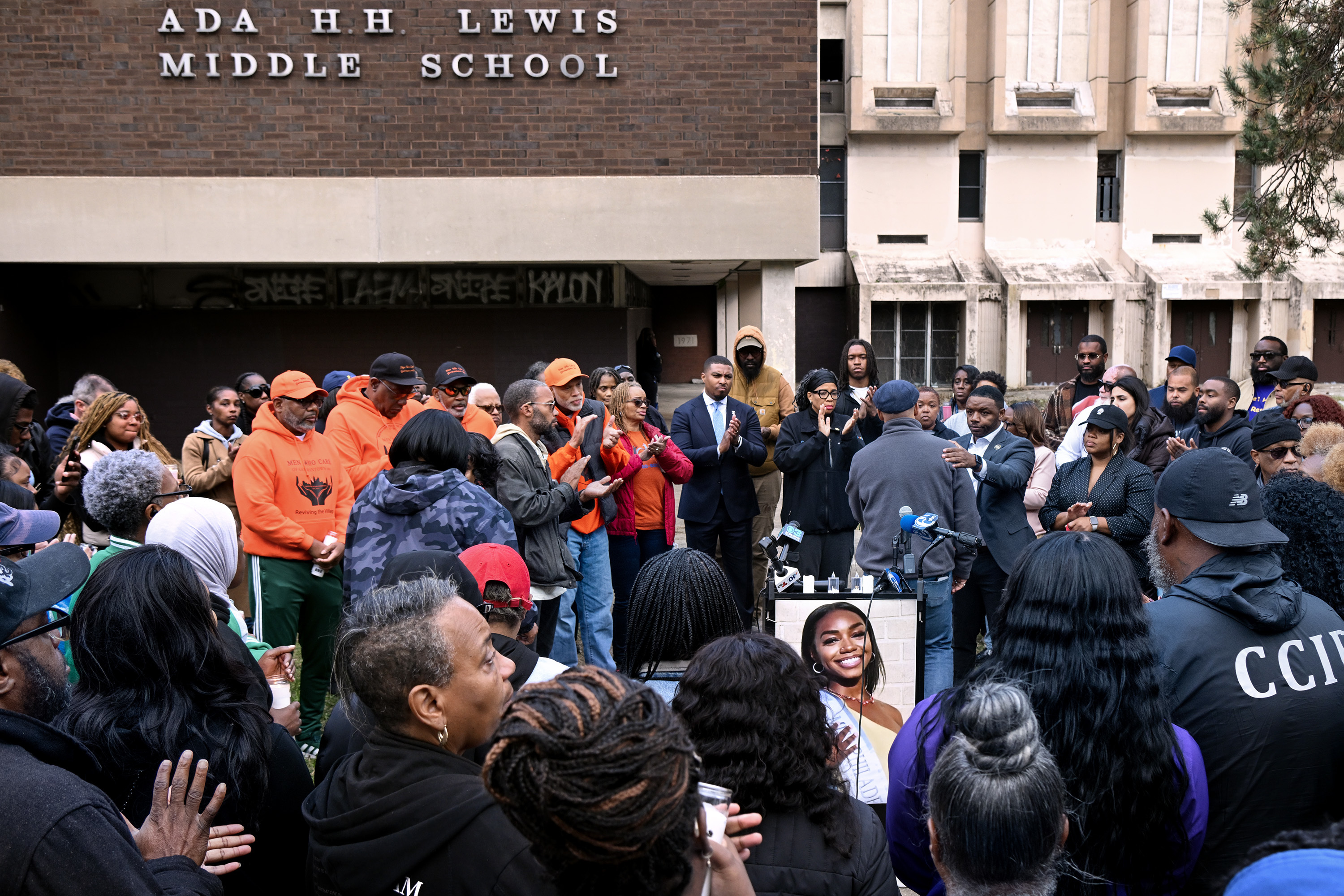
    But on Saturday, when police found Kada Scott’s corpse buried in a shallow grave in the woods of the long-ago vacated school grounds, ending a two-week search for the missing 23-year-old Mount Airy woman, the Rev. Chester H. Williams saw only decades of failure.

    “It’s a disgrace,” said Williams, a pastor who runs a neighborhood civic group. “We were very hurt to hear that this happened.”

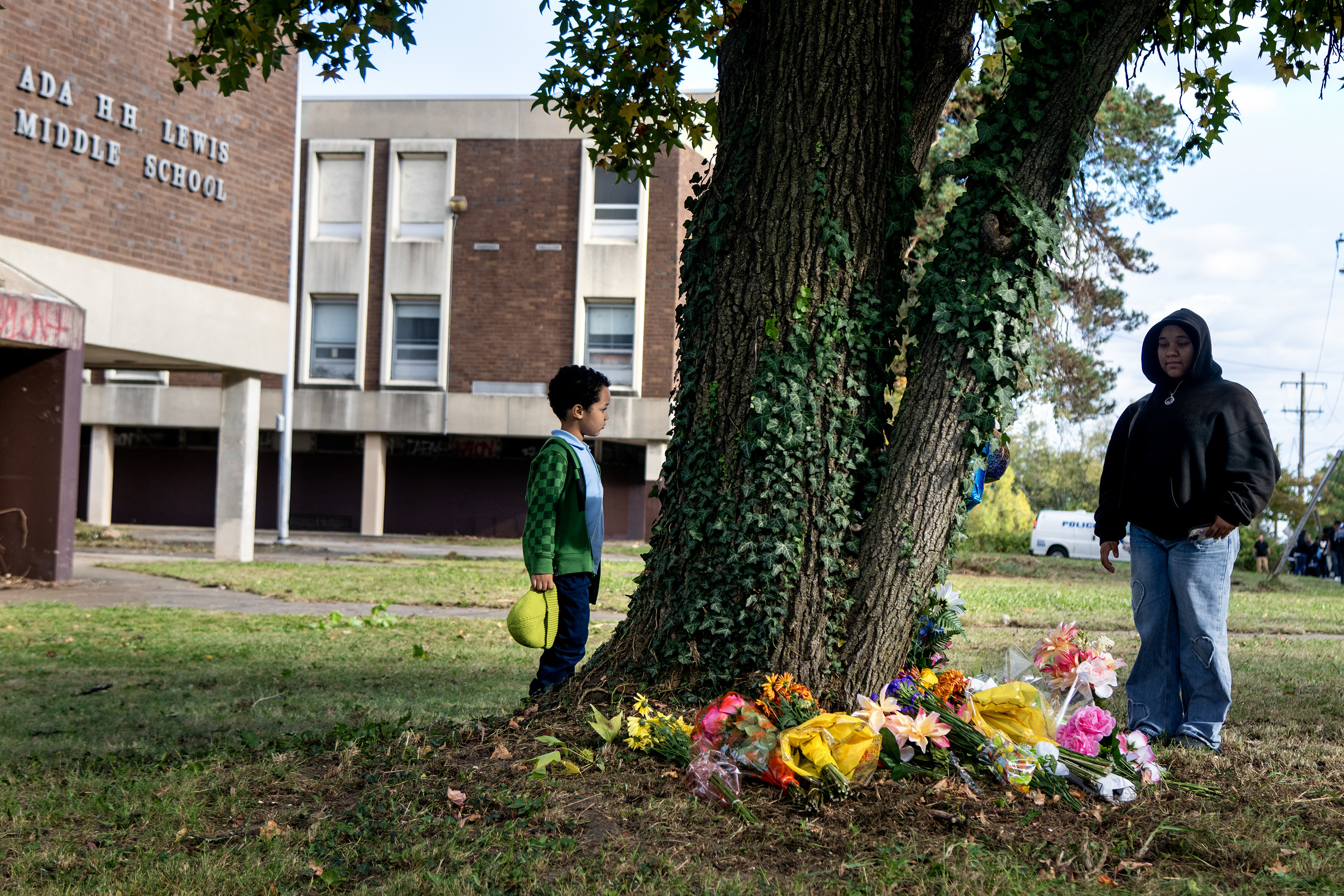
    Community members gather for a candlelight vigil in memory of Kada Scott on Monday at Ada H.H. Lewis Middle School.

    On top of the shock, Scott’s kidnapping and murder has renewed animus in some quarters about the Philadelphia School District‘s failure to repurpose the blighted property, one of dozens of schools shuttered by the district over the last 20 years.

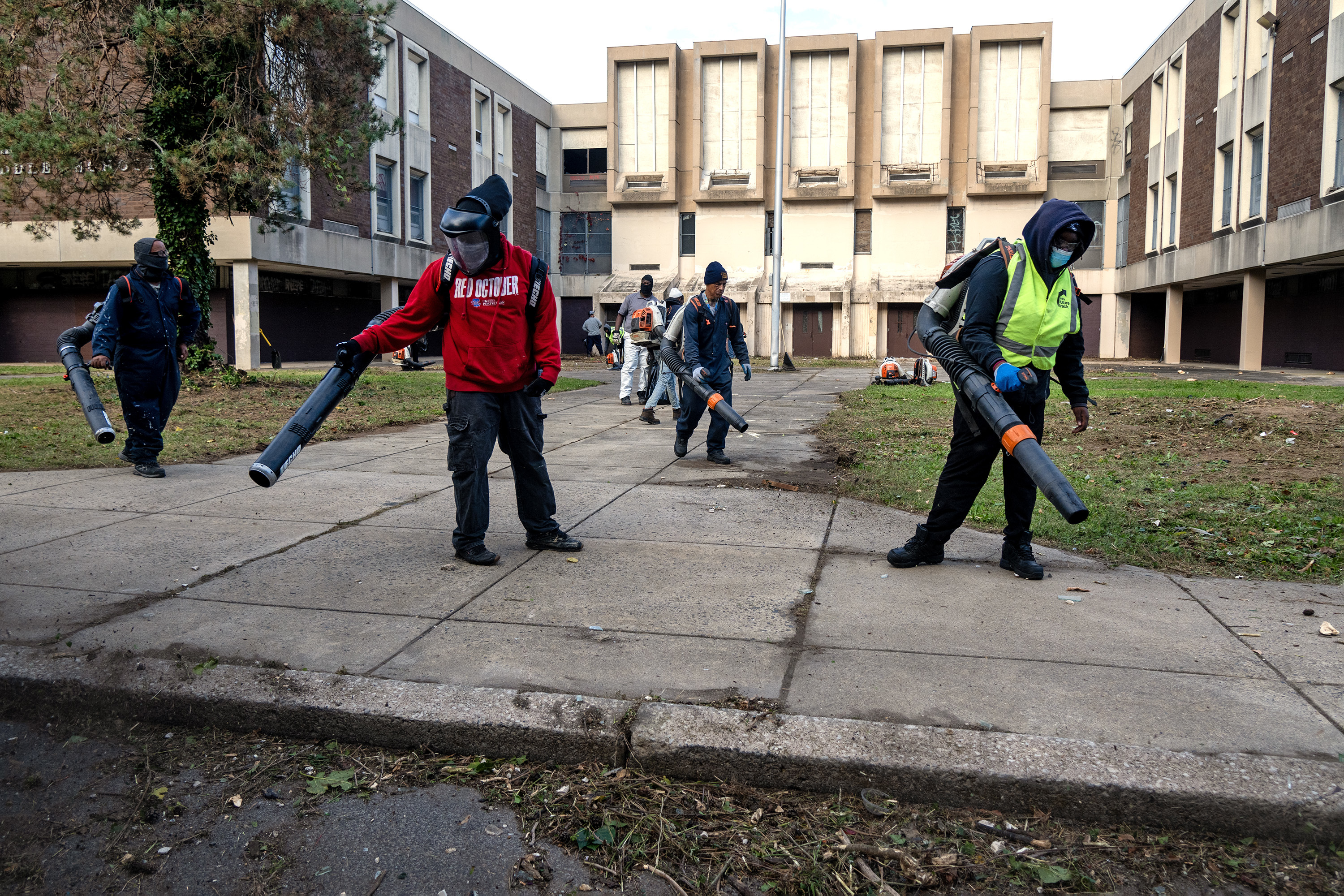
    Since Lewis closed in 2008, local officials and civic leaders said the sprawling seven-acre campus has become a magnet for squatting, illegal dumping, and other criminal activity. City officials have cited the school district 10 times since 2020 for overgrown weeds, graffiti, and piles of trash that blanketed the property, public records show. And four years ago, the district passed on an opportunity to reverse course on the blight.

    A proposal to redevelop the land into new homes, championed by neighborhood leaders like Williams, sat before the school board for approval. But the district abandoned the plan at the eleventh hour without public explanation, which the developer alleged was due to meddling by City Councilmember Cindy Bass — a contention Bass denies.

    “The school district, for some reason, we don’t know why, they put a block on anything being built there,” Williams said.

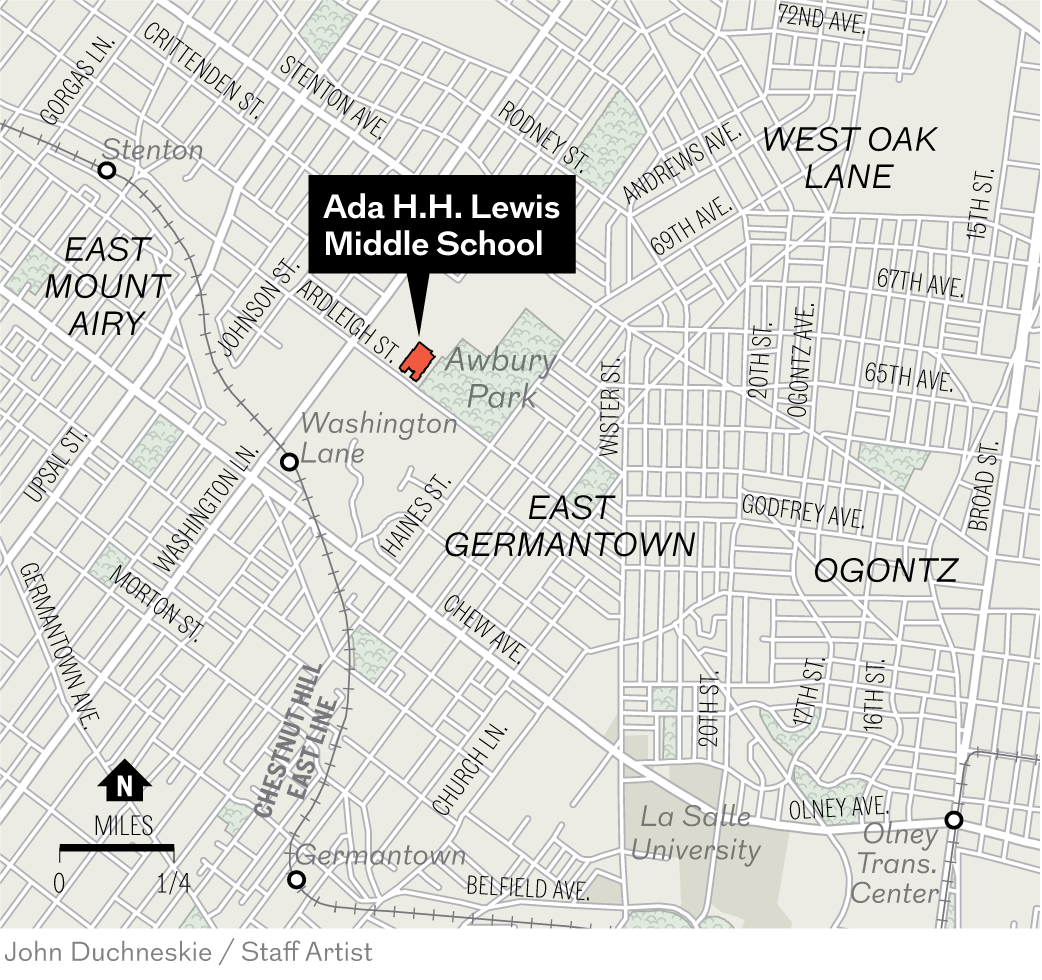
    Map of the former Ada H.H. Lewis Middle School in East Germantown

    Philadelphia Superintendent Tony B. Watlington Sr. extended “deepest sympathies” to Scott’s family and friends in a statement, and said the district’s operations and safety departments will review the vacant-property portfolio “to create and maintain safe and healthy spaces in every neighborhood.”

    While some call Lewis “abandoned,” the district is careful to call the building “vacant,” one of 20 such properties in the district’s portfolio. It says maintenance and inspection logs are kept about work on vacant properties; details were not immediately available.

    The debate over Lewis comes at a crucial time for the district: It is preparing to release recommendations about its stock of 300-plus buildings — and likely add to the list of decommissioned schools-turned-vacant public buildings. The district’s master planning process will contain recommendations for school closures and combining schools under one roof, officials have warned.

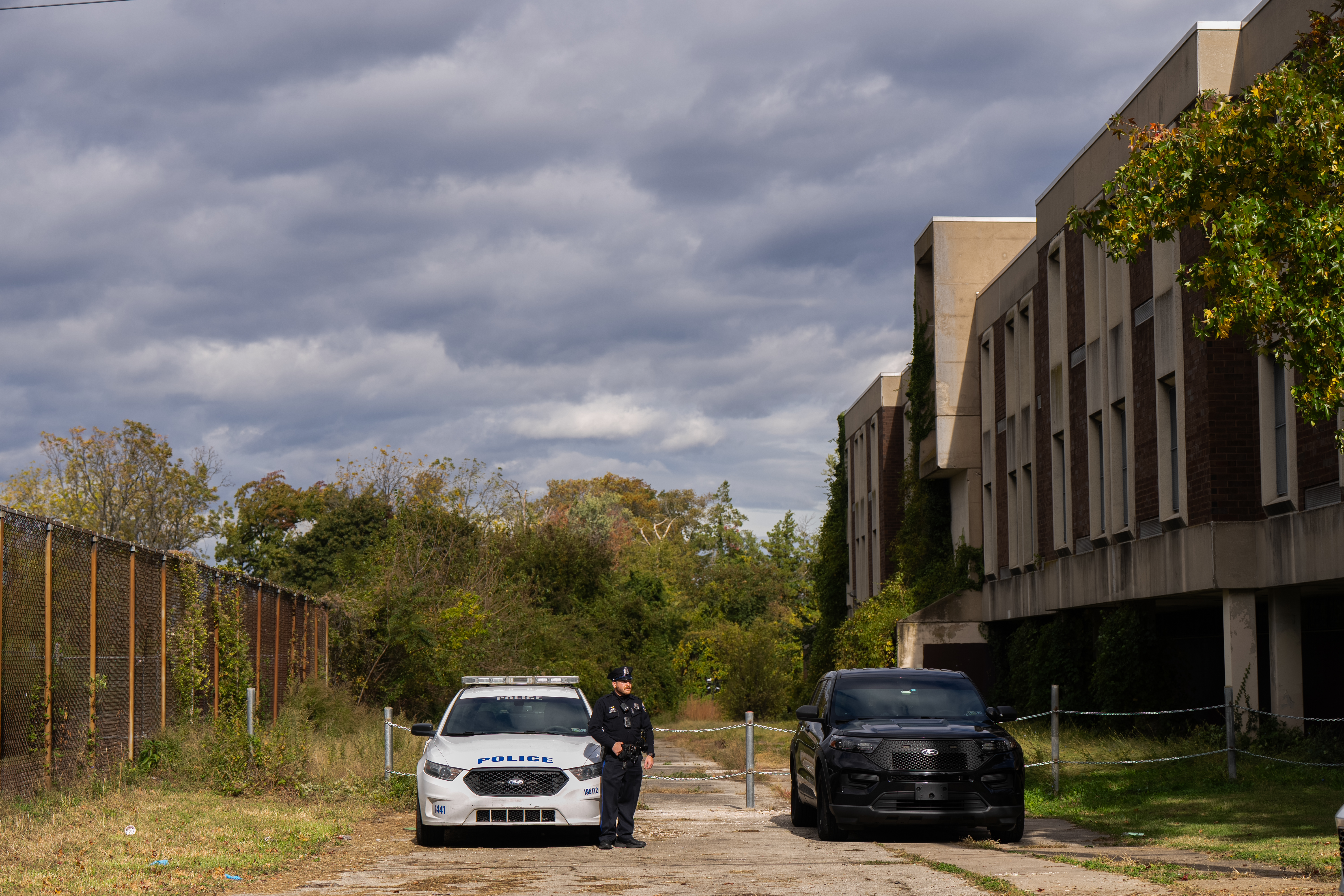
    Police at Ada H.H. Lewis Middle School.

    A fizzled redevelopment

    In 2011, then-City Controller Alan Butkovitz said the district’s vacant buildings were “catastrophes waiting to happen.

    Butkovitz, in a report released that year, said district inaction around such structures was dangerous and noted that the schools were magnets for criminal activity.

    Just before the pandemic hit in 2020, after years of pushback over Ada Lewis, the school district began accepting applications to redevelop the crumbling middle school. Germantown developer Ken Weinstein was one of three developers to place bids. He sought to buy the property for $1.4 million and build 76 new twin homes, at a density that neighbors felt complemented the surrounding area and resolved concerns about density brought by apartment buildings.

    Weinstein said he gathered letters of support from 60 neighborhood residents and elected officials, including U.S. Rep. Dwight Evans and then-State Rep. Stephen Kinsey. The school board seemed eager to move ahead and set a final vote for the proposal in May 2021.

    The vote never happened. The only explanation given that day was that “the Board had concern” about “what the long-term plan is for developing schools for the 21st century,” according to a district spokesperson.

    According to Weinstein, some school board members received calls from Bass asking them to table the vote. Bass has faced criticism for interfering in development projects, including other proposals made by Weinstein, as vacant properties languished for years in her district. Her district includes the Lewis property and parts of North and Northwest Philadelphia, where Weinstein has focused his development work.

    Bass, in an interview Monday, denied meddling in the vote. She acknowledged that she did not support Weinstein’s proposal because of the price of the homes — averaging around $415,000 — which she said would have triggered “immediate gentrification in the neighborhood.” But she said she had no involvement in the board’s reversal.

    “That was up to the school district,” Bass said. “I don’t sit on the school board.”

    While community groups in her district supported Weinstein’s project in 2021, Bass said she objected to market-rate housing as the sole alternative for East Germantown, arguing that it amounted to the district and developers saying “you should just take any old thing just so it’s not vacant.”

    City workers clean up in front of the vacant Ada H.H. Lewis Middle School Monday, just minutes before the start of a community candlelight vigil in memory of Kada Scott.

    A tragic turn for the property

    In a letter dated Friday, Bass called on the school district to demolish the vacant school, saying she was troubled by the evidence that led investigators to the property during the search for Scott.

    “The continued presence of this unsecured and deteriorating structure is simply unacceptable,” the Council member wrote in a statement, noting the site is now associated with “tragic violence.”

    Cell phone records and tips from the public first led police to the former Ada Lewis school last week, where they found Scott’s pink phone case and debit card, but nothing else. Then, late Friday, police received a new tip saying that they had missed something on their first search of the grounds, and that they should look along the wooden fence that divides the school from the neighboring Awbury Recreation Center. Officers returned to the property Saturday and found Scott’s body, buried in a shallow grave in a wooded area behind the school.

    Prosecutors expect to charge Keon King, 21, with the murder, though police continue searching for others who they believe may have helped dispose of evidence.

    Bass took office in 2012, when the school was already vacant. She said she pushed the school district for several years to take action, as nuisances piled up at the property. She said she still hopes that another “institution” could replace Lewis.

    “I think that having something that the community wants is not hard to figure out,” Bass said. “This is what the community’s interested in — they’re interested in another institution.”

    She said a proposal for a charter school is now in the works, though she said she was unable to provide details.

    Julius Peden, 5, and Jaihanna Williams Peden (right), 14, pause at a memorial for Kada Scott on Monday.

    A glut of vacant schools

    The school district still views Lewis as a potential “swing space” — a building that could be used to house students if another district building is closed due to environmental problems.

    There is precedent: The district has used other school buildings for such purposes, like Anna B. Pratt in North Philadelphia, which was also closed in 2013, to house early-childhood programs, and then students from other North Philadelphia schools whose buildings were undergoing renovation.

    Still, it remains unclear how much it would cost to bring the Lewis building back to an inhabitable state.

    The school system currently has about 70,000 more seats throughout the city than students enrolled. Though officials have said their first preference is to have closed schools reused for community benefit, it’s unlikely that all will be able to serve that purpose. And the timetable will surely be slow.

    City officials at times have expressed frustration with the pace at which the district is making decisions about how to manage its buildings. School leaders have said the wait is necessary given the district’s capacity and the need to make correct choices and not rush the process.

    Weinstein said the tragedy that culminated at Lewis reflected the conventional wisdom that blight breeds crime.

    “There’s always consequences to shutting down a proposal that the community supports,” Weinstein said. “In most cases, nothing bad happens. In this case, something very bad happened.”

    Staff writer Ellie Rushing contributed to this article.

  • This Philly charter has been roiled by upheaval and turnover. Now, its renewal is on hold.

    This Philly charter has been roiled by upheaval and turnover. Now, its renewal is on hold.

    For years, Northwood Academy Charter School was a stable Philadelphia charter — the kind of place where teachers and administrators stayed for decades, and children thrived.

    But in the last few years, the school, on Castor Avenue in Frankford, has cycled through dozens of administrators and teachers and test scores have dropped. Academics have suffered, according to interviews with a number of parents and staff, who say the school feels less safe, and staff morale is low.

    The school’s five-year charter expires this year, but Northwood’s renewal is on hold, The Inquirer has confirmed, because the district’s Inspector General’s Office is reviewing information about Northwood. The exact nature of the investigation is unclear.

    The Inquirer spoke to and reviewed testimony from more than a dozen parents and current and former Northwood staff. Nearly everyone interviewed requested anonymity for fear of reprisal; some who spoke out at meetings have received cease and desist letters threatening litigation from a consultant who provides human resources services to Northwood.

    “When we first got there, there was stability at the school — everyone was there since almost the beginning,” one parent said. “Now, in the last five years, we have had 20 administrators change over. The kids can’t get comfortable with the teachers, because they don’t know if they’re going to be there a long time.”

    Northwood, which opened in 2005, educates 800 students in grades K through 8. As a charter, it’s independently run but publicly funded; the Philadelphia school board authorizes its funding but does not manage its operation.

    School officials say the Northwood turnover is not excessive, but rather a function of its board of trustees’ move to steer the school to better outcomes.

    “Our goal here is to just move forward and help our students achieve,” said Kristine Spraga, a longtime board of trustees member who now serves as the board’s treasurer.

    The board’s challenge, human resources consultant Tracee Hunt said, “is getting the person who has that strategic focus, who doesn’t necessarily operate more like a principal than a CEO. What happens is we’ve hired what we thought were great hires, and then if they decide, ‘This is a little bit too much for me, the board doesn’t have any control over that.’”

    The board this month hired former Central Bucks School District Superintendent Steven Yanni to lead the school.

    A pivot point

    Northwood handled human resources in-house in its early days. When a principal left in 2018, there was some unrest among faculty after a number of teachers were shifted around.

    Shortly thereafter, one board member suggested bringing in Total HR Solutions, a New Jersey-based provider that had worked with some other Philadelphia charters, to manage those services.

    That was a pivot point for the school.

    Hunt was charged with examining the school’s practices. She found “a lack of fair and equitable hiring practices,” she said in an interview last week, “a massive amount of nepotism,” and inadequate staff diversity — the school educates mostly Black and Latino students but its staff was mostly white.

    “Through natural attrition, we have the opportunity to have fair and equitable hiring practices so that then you improve in your areas of diversity in just a natural way, versus feeling like you have to displace people,” said Hunt.

    Some current and former staff see things differently. The earlier version of Northwood wasn’t perfect, they said, but it was cohesive, and under Total HR, that changed.

    Adam Whitlach, a longtime Northwood school counselor, said Total HR “came in with the idea of ‘demolish, and re-create something from nothing.’ They were mixing it up for the sake of mixing it up. They treated it like it was a turnaround school, but it wasn’t, there was an existing community. They attempted to sell them a story that our school was failing and racist, but people didn’t believe that.”

    In 2021, the school’s longtime CEO, Amy Hollister, abruptly left Northwood with no notice to the staff and families with whom she had built a strong rapport.

    “It was out of the blue, and then everybody else started leaving,” another Northwood parent said. As with others, the parent asked not to be identified for fear of blowback. Parents began attending board meetings — at one, Hunt stood up, the parent said, “and began to tell us how the teachers want a more diverse school, and that’s the reason why all this upheaval was happening.”

    The parent, who is a person of color, said they were not bothered by the staff’s demographic balance. “Those teachers loved our children. Everybody knew you, you didn’t have to go past security, and they welcomed every parent, every child. There weren’t a lot of discipline issues, because they had relationships with our kids,” the parent said.

    More departures

    Changes accelerated after Hollister left.

    “Parents were grabbing me by the arm and saying, ‘Whitlach, tell me what’s going on here,’” the former counselor said. “The bullhorns came out, the security guards dressed all in black came out.”

    (Whitlach was ultimately fired after 15 years at the school after, he said, he complained publicly about the school pushing staff out. Students walked out in protest of his departure.)

    The departures affected academics too. A third parent said she was frustrated by “no curriculum, no books.”

    Administrations came and went. Audrey Powell came to Northwood as an assistant principal in 2023, following then-CEO Eric Langston, who has since left; Langston left this summer, and Powell resigned soon after.

    The reason for her departure?

    “I just didn’t agree with the direction or the choices of the board,” Powell said. She repeatedly brought concerns to the board that were ignored, she said. In particular, she was alarmed by the board’s relationship with Total HR and Hunt’s “overreach” at Northwood, Powell said.

    “I don’t think there were enough checks and balances,” Powell said. “I feel like [Total HR’s] contract incentivizes there to be turnover — she directly financially benefits from there being turnover.”

    Northwood paid Total HR $1.4 million between 2020 and 2023, according to public records. That included base fees for Total HR’s services, including an HR generalist who works at Northwood but is paid by Total HR, and also per-position search fees for administrative positions and board seats.

    “The constant turnover is a misuse of taxpayer dollars, and it’s a disservice to kids, to the teachers,” said Powell. “There can’t be progress when there is that much turnover. It’s two steps forward and four steps back.”

    Hunt dismissed the notion that she was simply out to make money.

    “We have these contracts that are negotiated,” said Hunt, whose firm works across industries. “Everything that I bring to Northwood, I bring below market rate.”

    The school district’s charter chief, Peng Chao, said Northwood’s spending on human resources appears to be more than is typical.

    “This level of spending is not what we usually see for this type of scope of work,” Chao said. “While we recognize the staffing challenges that schools are navigating, it is important for schools to remain mindful of fiscal constraints as we all work through an uncertain budget environment.”

    Yanni, who began as Northwood’s CEO Oct. 6, said while Total HR provides services, ultimately, hiring and firing decisions rest with the CEO.

    “HR is an adviser to us, so HR doesn’t make the hiring and firing decisions, they provide the guidance from the place of compliance and the law,” said Yanni.

    ‘Beyond frustrated’

    Staff and parent concerns about Northwood are not new. At board of trustees meetings, speakers often give impassioned testimony on the subject.

    At last week’s trustees’ meeting, kindergarten teacher Emily Parico told the board that “something nefarious is going on at Northwood, and you sit by, silent and complicit. Northwood used to be a learning sanctuary. It wasn’t perfect, but it was a place where students, staff, and families felt safe and loved.”

    Parico is the Northwood teachers union’s vice president. Most city charter teachers are not unionized; Northwood’s voted to form a union in 2023 amid turmoil at the school.

    Kim Coughlin, a fourth-grade teacher and the union president, said the school continues to be roiled.

    “Every day, teachers and staff are thinking of walking away, and two just did yesterday,” said Coughlin. “And our families are beginning to look elsewhere, because they feel the shift. The school that we once knew and loved has become unrecognizable.”

    Questions and threats of legal action

    When Langston, the CEO prior to Yanni, left suddenly in August, dozens of families and staff asked the board for answers, but none were forthcoming, said Kevin Donley, the school’s psychologist.

    “I’m beyond frustrated,” said Donley, who’s secretary of the union. “And deeply disappointed by the manner in which the board of trustees has governed our school in recent months and years.”

    At least 50 people sent letters to the board of trustees expressing concern about further turmoil after Langston’s departure, Donley said. As far as he knows, not one person heard back, either in a letter or any kind of message.

    Both Hunt and the board have sent letters threatening some who speak out with legal action; Hunt said she won a legal challenge against one parent who falsely said she had been fired by a previous client. (The client, Hunt said, moved HR services in-house and did not fire her.)

    “It’s not uncommon to have a few naysayers, but eventually when you start seeing the fruit of all this board’s labor, the reason I stick in here is because I watch them stay so focused on the kids,” Hunt said.

    School officials told The Inquirer that the staff and parents who have spoken out represent “a very small number of people who are quite passionate,” but not representative of all staff and parents.

    “I don’t see that the vast majority feel the same,” said Spraga, the board treasurer. “Otherwise, we would have those indicators in things like the engagement surveys, right?”

    Spraga, Hunt, and board president Warren Young said staff and community engagement surveys do not match the sentiments expressed at board meetings.

    New leadership under Yanni

    The Northwood CEO job is Yanni’s first foray into the charter sector; he was previously superintendent in the Lower Merion, Upper Dublin, and New Hope-Solebury school systems. Yanni was terminated as the Central Bucks superintendent last week over allegations that he mishandled child abuse allegations in a special education classroom — a contention he denies.

    Yanni said he’s thrilled to be at Northwood, where class sizes are small — 23, typically — and there’s a feeling of welcome.

    “There’s passion here,” Yanni said. “And it’s not just the staff, it’s the kids too — this is their school. Kids really feel like Northwood is their home, and we have engaged families.”

    Northwood is completely full, with a waitlist of 200 students per grade level, Yanni said, and applications are already coming in for the 2026-27 school year.

    In the 2018-19 school year, 64% of Northwood students met state standards in reading, and 30% in math; in the 2024-25 school year, the last year for which scores are publicly available, 31% of Northwood students hit the mark in reading and 11% in math. In 2018-19, Northwood beat Philadelphia School District scores (35% proficiency in reading, 20% in math) and in 2024-25, the district did better (34% proficiency in reading, 22% in math).

    Yanni said Northwood is a school on the rise and is beginning to implement positive behavioral supports to improve school climate. It’s also in the early days of an academic intervention process to identify and target individual students’ skill gaps.

    “I think we’re going to see dramatic gains this year,” said Yanni.

    Northwood “is a school that people stick with,” he said. And though the city has plenty of choices for families, “we’re going to start a strategic planning process, and really kind of blow the doors off. You hear about KIPP, and you hear about these large charter networks and then there’s little tiny Northwood. How do we make it the beacon, the flagship?”

  • White House hits road block in effort to get top colleges to sign deal

    White House hits road block in effort to get top colleges to sign deal

    Despite strong pressure from the Trump administration, including a call with the White House on Friday, colleges and universities are largely rejecting the president’s offer of preferential treatment for funding in exchange for compliance with his ideological priorities.

    Six of nine universities offered the deal earlier this month had publicly said no to the White House request by Monday’s deadline.

    The administration has said it is seeking to make sure the country’s schools are merit-based, but many universities and higher education advocates said the White House’s proposed agreement would undermine the merit-based process currently utilized to award research grants.

    The “Compact for Academic Excellence in Higher Education” is a new attempt by the administration to get schools to eliminate diversity, equity and inclusion policies and ensure more conservative viewpoints and values are integrated into campus life.

    The Trump administration offered it to nine colleges earlier this month, casting it as a means to gain competitive advantage for federal and philanthropic benefits and invitations to White House events in return for what the administration described as compliance with civil rights law and “pursuing Federal priorities with vigor.”

    The ideological tension was reflected during a call on Friday, which the White House organized and presented as a chance to workshop the terms of the compact in partnership with colleges and universities that had not yet responded, according to a person close to the situation, who spoke on the condition of anonymity because of the sensitivity of the matter.

    From the Trump administration, Education Secretary Linda McMahon; White House Domestic Policy Director Vincent Haley, Special Assistant Eric Bledsoe and adviser May Mailman; Josh Gruenbaum of the General Services Administration; and billionaire Marc Rowan were on the call, the person said.

    But within a day of the call, University of Virginia and Dartmouth College rejected the compact, joining ranks with MIT, Brown University, the University of Pennsylvania and the University of Southern California. The University of Texas at Austin was invited to sign on and the chair of the University of Texas System Board of Regents expressed enthusiasm. The University of Arizona and Vanderbilt University have not publicly responded.

    Echoing a term that has been often used by the Trump administration, U-Va.’s president said the agreement violated the merit-based nature of the competition for federal research funding. The federal government currently awards billions of dollars in research grants based on peer reviews and scientific merit.

    On Saturday, Dartmouth President Sian Beilock wrote to McMahon, Mailman and Haley that she welcomed further engagement on enhancing the partnership between the federal government and research universities and ensuring that higher education “stays focused on academic excellence.” But, she wrote, “I do not believe that the involvement of the government through a compact-whether it is a Republican- or Democratic-led White House-is the right way to focus America’s leading colleges and universities on their teaching and research mission.”

    White House spokeswoman Liz Huston described the Friday call as “productive.”

    “The Administration hosted a productive call with several university leaders. They now have the baton to consider, discuss, and propose meaningful reforms, including their form and implementation, to ensure college campuses serve as laboratories of American greatness,” Huston said in a statement. “These leaders are working steadfastly to improve higher education and have been invited to the table to share ideas with the Administration, and we look forward to discussing transparent ways that, together, we will produce future generations of American excellence.”

    A White House official, speaking anonymously to discuss private conversations, said universities will not lose their federal funding because they decided not to engage in the compact.

    The sweeping terms of the compact called on schools to adopt the administration’s priorities, including pledging to freeze tuition for five years, cap international enrollment at 15 percent of a college’s undergraduate student body, and bar the consideration of factors such as gender, race and political views in admissions and other areas.

    Some legal scholars said the terms were unconstitutional. Trump administration officials have insisted they are protecting free speech by compelling universities to reject a culture that suppresses far-right thought.

    Officials asked for “limited, targeted feedback” in writing no later than Oct. 20, with hopes of a signed agreement by Nov. 21.

    As schools turned it down, citing similar concerns – Christina H. Paxson, Brown’s president, wrote in a letter to the White House that provisions in the compact restricting the university’s academic freedom and institutional autonomy would impede its mission – the Trump administration invited more universities to participate. Washington University in St. Louis, the University of Kansas and Arizona State University joined Friday’s call.

    In a Monday statement, Washington University Chancellor Andrew Martin said he had not endorsed or signed on to the compact but agreed to discuss it with the Trump administration. “We believe it is in the best interest of our university, and higher education more broadly, for us to participate constructively, share our experience and expertise, and help inform policies that strengthen the nation’s research and education ecosystem,” Martin said.

    Some of the wording in the compact is vague. But the magnitude of the stakes is clear: The Trump administration has frozen billions of dollars of federal research funding at multiple colleges that it has accused of violating federal civil rights laws for issues such as having diversity, equity and inclusion policies and allegedly not doing enough to prevent antisemitism.

    At Harvard University, which has filed two lawsuits to fight the government’s actions, the administration has tried to bar international students and scholars from campus, threatened to revoke the university’s tax-exempt status and has begun an effort to block the school from receiving any federal grants.

    Faculty, alumni and students at many of the nine schools urged university leaders not to sign. Rallies against the compact occurred on multiple campuses, and student leaders from seven of the nine original schools issued a joint statement opposing it. More than 30 higher education associations issued a statement of opposition Friday, saying “the conditions it outlines run counter to the interests of institutions, students, scholars, and the nation itself.” A coalition formed of alumni groups opposed to the compact.

    President Donald Trump wrote on social media that the administration would continue efforts to swiftly enforce federal law at universities that “continue to illegally discriminate based on Race or Sex,” but that “those Institutions that want to quickly return to the pursuit of Truth and Achievement” were “invited to enter into a forward looking Agreement with the Federal Government to help bring about the Golden Age of Academic Excellence in Higher Education.”