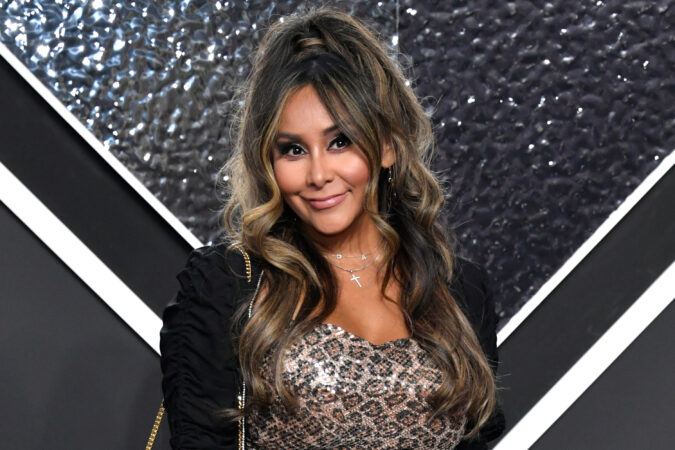
The former “Jersey Shore” star said in a video posted to TikTok that a biopsy had revealed the stage one cancer.
“Obviously not the news that I was hoping for,” she said, sitting in her car between medical appointments. “But also not the worst news, just because they caught it so early, thank freaking God.”
She urged her followers to get Pap smears, and said she is likely to have a hysterectomy after her initial treatment.
“So 2026 is not panning out how I wanted it to,” she said.
Polizzi became one of the breakout stars of “Jersey Shore” from its debut on MTV in 2009. She was on the reality show for six seasons and appeared in the later spinoffs “Snooki & JWoww” and “Jersey Shore: Family Vacation.”
Now 38, she still lives in New Jersey, has been married for 11 years and has three children.
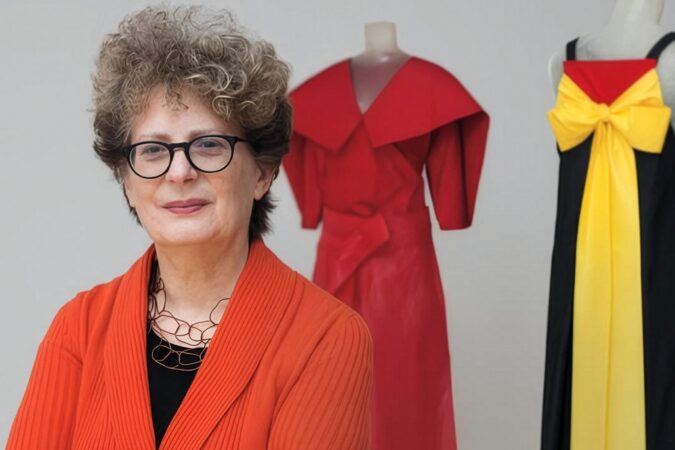
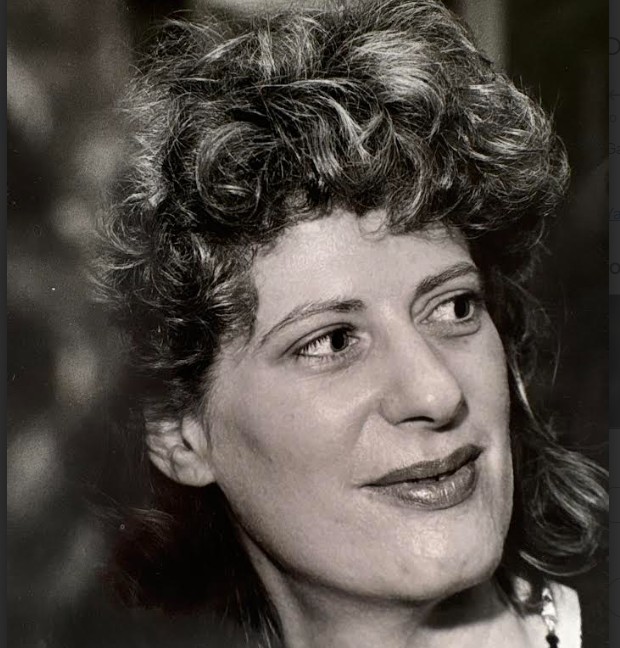
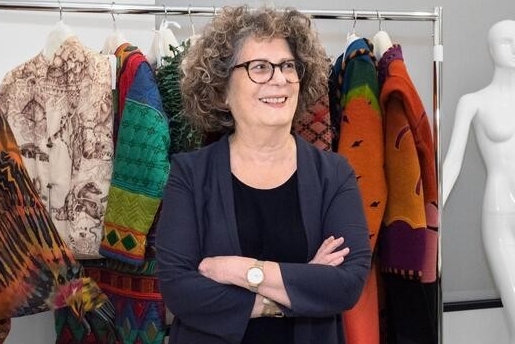
Dilys E. Blum, 78, of Philadelphia, senior curator emeritus of costume and textiles at the Philadelphia Art Museum, author, lecturer, mentor, and world traveler, died Saturday, Dec. 27, of complications from cancer at Thomas Jefferson University Hospital.
For 38 years, from 1987 to her retirement in 2025, Ms. Blum served as the museum’s curator of costume and textiles. In that role, she organized the museum’s vast treasure trove of textile artifacts, traveled the world to research noted fashion designers and eclectic collections, and created more than 40 memorable exhibitions about Renaissance velvets, contemporary fashion, Asian textiles, carpets, African American quilts, and dozens of other curios.
She was cited as the world’s foremost authority on avant-garde Italian fashion designer Elsa Schiaparelli, and her 2003 exhibition “Shocking! The Art and Fashion of Elsa Schiaparelli” drew 83,000 visitors. Francesco Pastore, the heritage and cultural projects manager at the House of Schiaparelli in Paris, said: “Her remarkable research, her generosity in sharing knowledge, and her contribution to fashion studies have deeply enriched our field.”
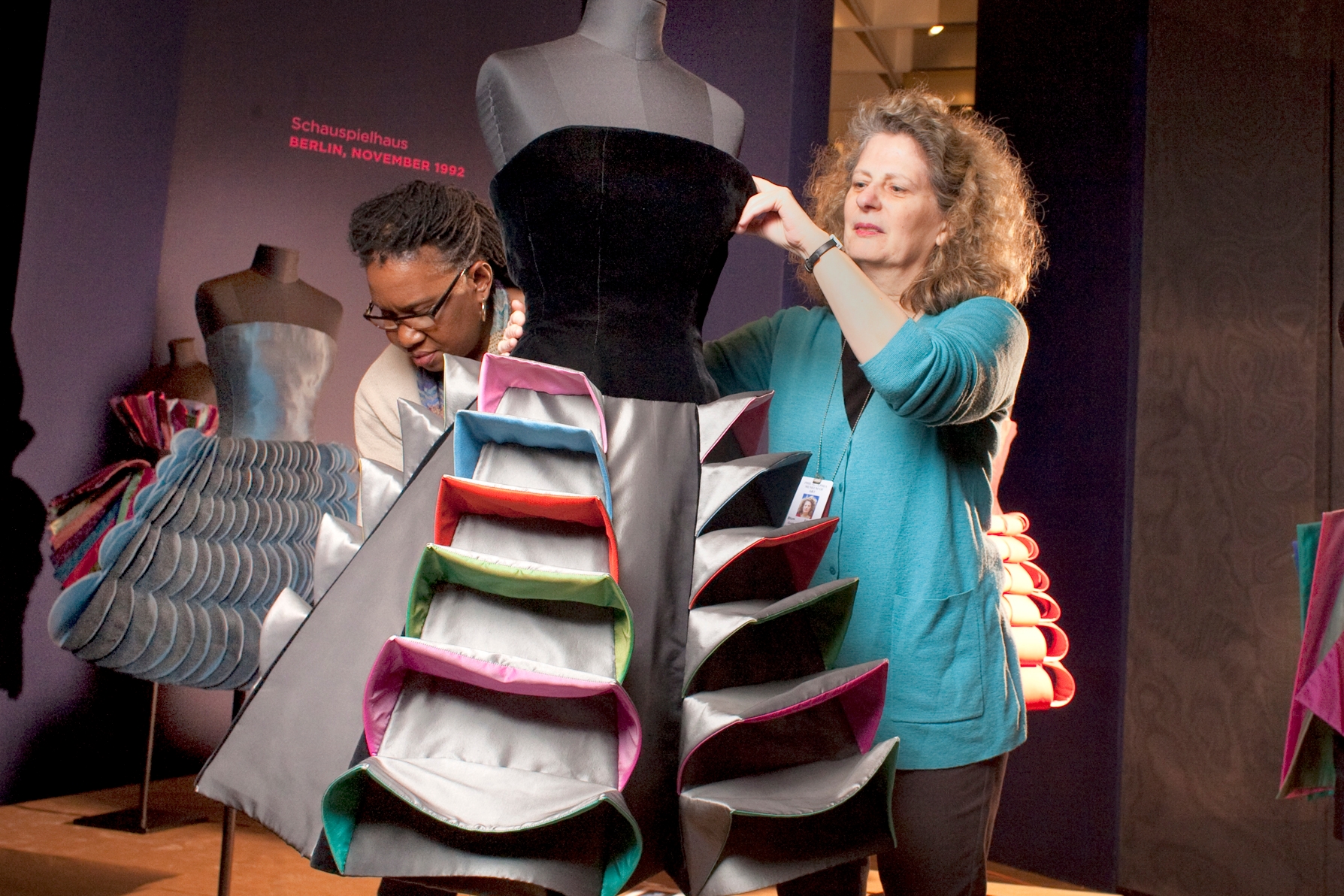
Ms. Blum (right) and colleague Monica Brown tend to a museum exhibit in 2011.
In a recent tribute, former museum colleagues marveled at her “technical expertise and cultural insight,” and credited her for reinvigorating the once-neglected textiles collection. Daniel Weiss, director and chief executive officer of the museum, said: “She transformed this museum’s costume and textiles department into a program respected around the world.”
She told The Inquirer in 1990: “We wanted to remind them that we were here.”
Before Philadelphia, Ms. Blum was a textile conservator at the Chicago Conservation Center and the Brooklyn Museum, and senior assistant keeper of the costume and textile department at the Museum of London. She earned a bachelor’s degree in art history at Connecticut College and studied afterward at the University of Manchester in England and the Courtauld Institute of Art at the University of London.
“She was fearless in her pursuit of perfection in her work,” said her sister Galen. Her sister Sydney said: “She was dedicated to her craft and scholarship.”
Ms. Blum (left) was close to her sisters Sydney (center) and Galen.
An avid reader and writer, Ms. Blum wrote and cowrote several books about textiles and designers, and 2021’s Patrick Kelly: Runway of Love, coauthored with former colleague Laura L. Camerlengo, earned a 2023 honorable mention publication award from the Costume Society of America. She also wrote essays for exhibition catalogs, served on editorial boards for journals, lectured around the world, and was active with the International Council of Museums, the Association of Art Museum Curators, and other groups.
In 2025, to celebrate Ms. Blum’s retirement, Camerlengo praised her “deep knowledge, creative vision, and contagious passion for the field.” She said: “Dilys is one of the most influential figures in the world of fashion and textile arts.”
Ms. Blum’s work and fashion viewpoints were featured often in The Inquirer. In 1997, she said: “People don’t dress up anymore.” In 1999, she said: “I think we’ve lost the joy in dressing. There’s this trend away from clutter in dress and decorating. It’s pared down to the point of visual boredom.”
In 2001, she said it was easy to differentiate between New Yorkers and Philadelphians. “New Yorkers,” she said, “will invariably be wearing the accessory of the moment, a pashmina shawl, a Kate Spade bag, a Prada loafer.”
Ms. Blum left “an enduring legacy woven through the art museum and the generations of scholars and visitors who now see costumes and textiles as central to the story of art,” former museum colleagues said.
Dilys Ellen Blum was born July 11, 1947, in Ames, Iowa. She and her parents moved to Hamilton, N.Y., when she was 1, and the family traveled with her father, an economics professor at Colgate University, on teaching sabbaticals abroad. When she was 12, Ms. Blum spent a year with her parents and sisters living in Norway and touring Europe in a Volkswagen Beetle.
Her mother was an artist and seamstress, and she and Ms. Blum spent many nights poring over clothes patterns on their dining room table. She enjoyed reading murder mysteries and traveling the world in search of new museum-worthy artifacts.
She lived in South Philadelphia, was diagnosed with cancer three years ago, and talked often with her sisters on the telephone. “I admired her seriousness and humility,” Sydney said. Galen said: “From my perspective, I was in awe of her.”
In addition to her sisters, Ms. Blum is survived by a niece, Juniper, and other relatives.
A memorial service is to be held later.
Former museum colleagues said Ms. Blum’s writing “consistently amplified the makers and wearers of extraordinary objects, and their intertwined relationships.”
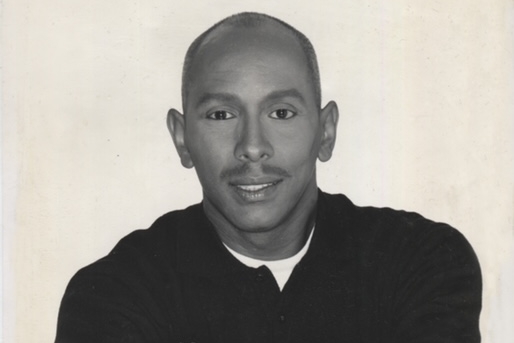
Jeffrey A. Woodley, 71, formerly of Philadelphia, internationally celebrated celebrity hairstylist, scholar, youth track and field star, mentor, and favorite uncle, died Wednesday, Dec. 10, of complications from acute respiratory distress syndrome at Mount Sinai West Hospital in Manhattan.
Reared in West Philadelphia, Mr. Woodley knew early that he was interested and talented in hairstyling, beauty culture, and fashion. He experimented with cutting and curling on his younger sister Aminta at home, left Abington High School before his senior year to attend the old Wilfred Beauty Academy on Chestnut Street, and quickly earned a chair at Wanamakers’ popular Glemby Salon at 13th and Chestnut Streets.
He went to New York in the mid-1970s after being recruited by famed stylist Walter Fontaine and spent the next 30 years doing hair for hundreds of actors, entertainers, models, athletes, and celebrities. He styled Diahann Carroll, Whitney Houston, Aretha Franklin, Anita Baker, Angela Bassett, Halle Berry, and Tyra Banks.
He worked with Denzel and Pauletta Washington, Eddie Murphy, Jasmine Guy, Lynn Whitfield, Pam Grier, Melba Moore, Jody Watley, and Karyn White. His hairstyles were featured in GQ, Vanity Fair, Ebony, Jet, Essence, Vibe, Vogue Italia, and other publications, and in advertising campaigns for L’Oréal and other products.
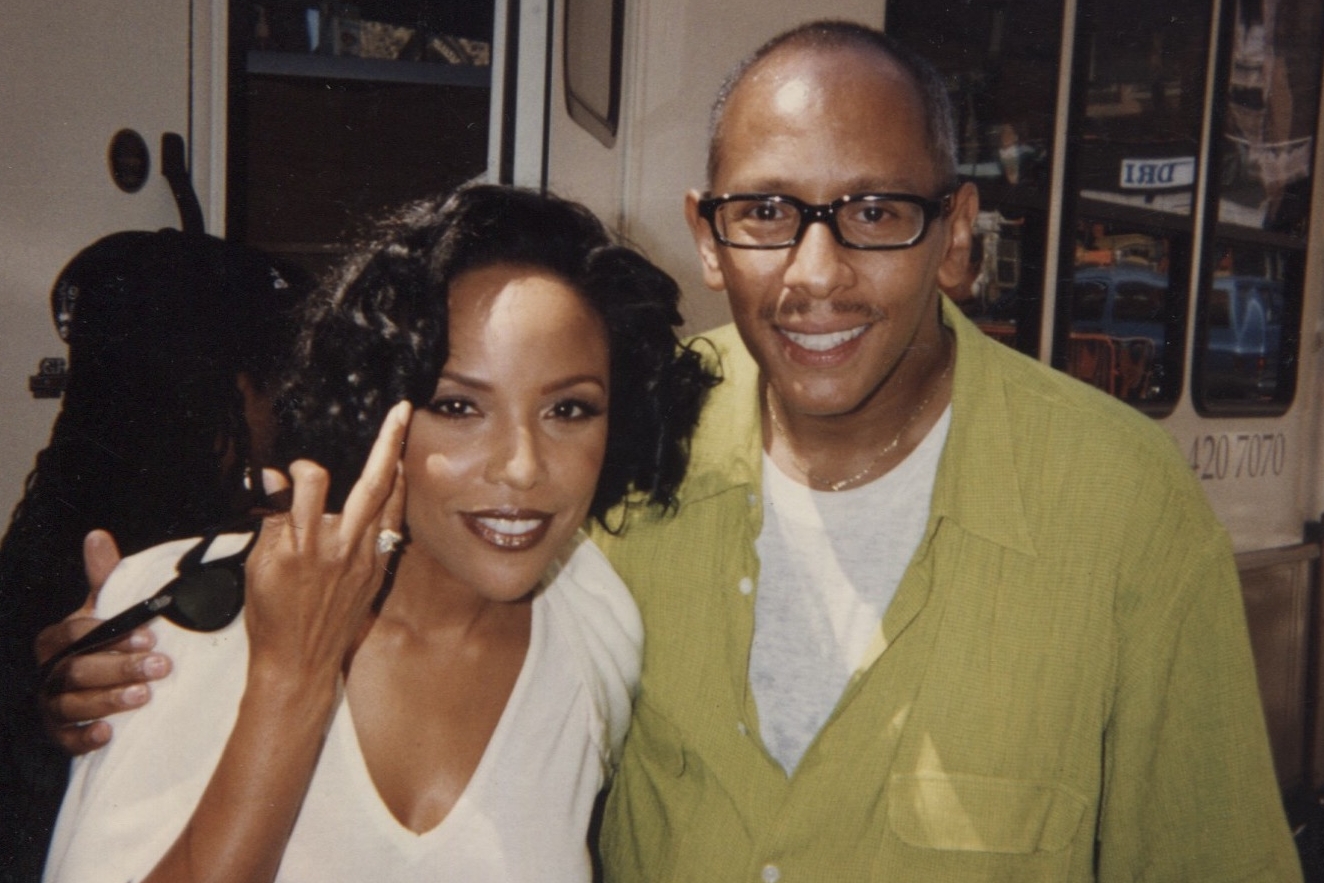
Mr. Woodley poses with actor Lynn Whitfield.
For years, actor Terry Burrell said, “He was the go-to hair stylist for every Black diva in New York City.” Pauletta Washington said: “He was responsible for so much of who I became as an artist and a friend.”
Mr. Woodley worked for Zoli Illusions in New York, Europe, Africa, and elsewhere around the world, and collaborated often with noted makeup artists Reggie Wells and Eric Spearman. Model Marica Fingal called Mr. Woodley “uber talented” on Instagram and said: “He was one of the most skilled artists, creating stunning, innovative styles for models and celebs alike.”
Friendly and curious, Mr. Woodley told Images magazine in 2000 that learning about the people in his chair was important. “A woman’s hairstyle should take into account the type of work she does, her likes, her dislikes, and her fantasies,” he said. “I’m a stylist, but I never impose hair styles on any client. When we arrive at our finished style, it’s always a collaboration.”
His hairstyles appeared on record albums and at exhibitions at the Philadelphia Art Museum and elsewhere. He was quoted often as an expert in coiffure and a fashion forecaster. In 1989, he told a writer for North Carolina’s Charlotte Post: “Texture is the key. … Cut will still be important, but the lines will be more softened and much less severe.”
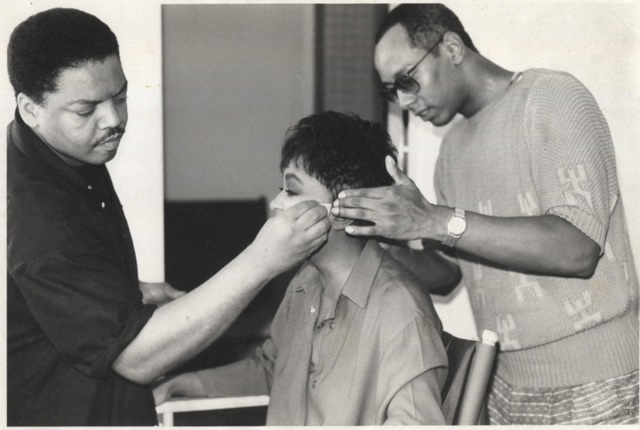
Mr. Woodley (right) handles hair styling for singer Anita Baker while makeup artist Reggie Wells attends to her face.
In 2000, he told Images that “low maintenance is the way of the future.” He said: “Today’s woman is going back to school. She has the corporate job. She has children that she needs to send off to school. She doesn’t have time anymore to get up and spend 35 to 40 minutes on her hair. She wants something she can get up and go with.”
He retired in 2005 after losing his sight to glaucoma. So he earned his General Educational Development diploma, attended classes at the Borough of Manhattan Community College, and studied literature, Black history, and spiritual writing.
“The entirety of his life was inspired by an insatiable thirst for knowledge,” said his friend Khadija Kamara.
He was working on his memoir and still taking classes when he died. “He lived life on his own terms,” Burrell said, “and my respect and admiration for his determination will forever be inspiring.”
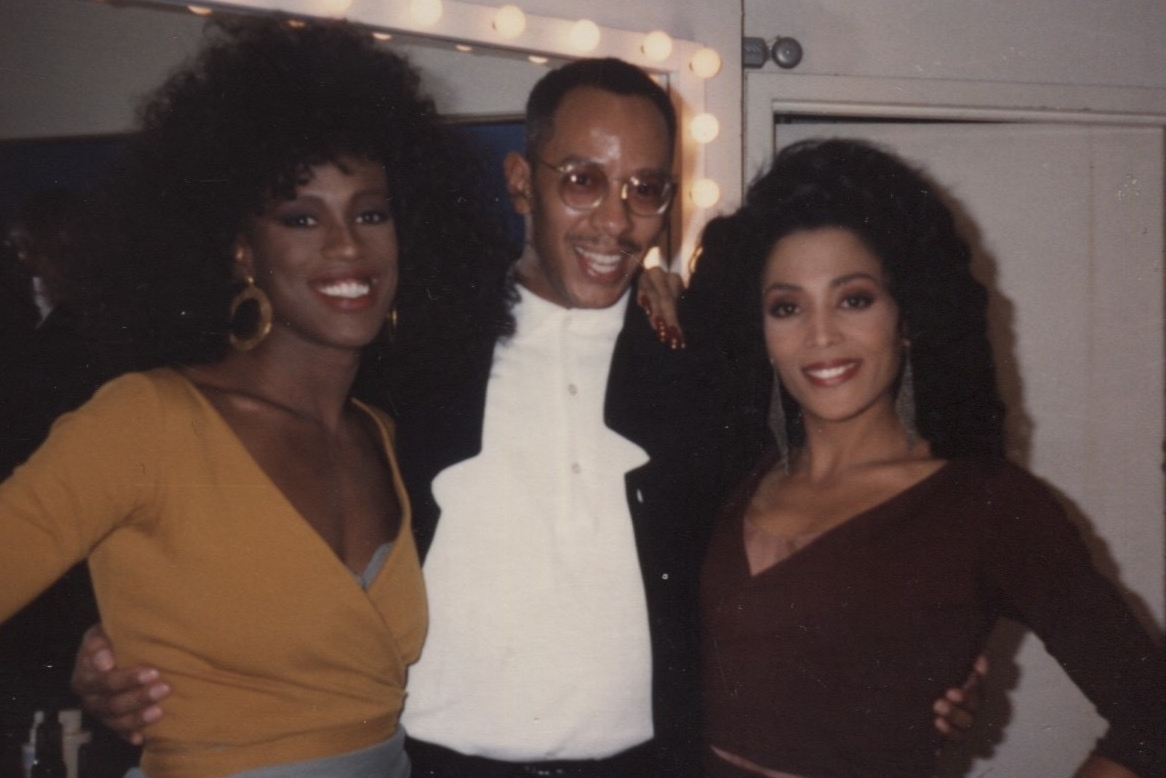
Mr. Woodley smiles with track stars and celebrities Jackie Joyner-Kersee (left) and Florence Griffith Joyner.
As a youth, Mr. Woodley excelled in sprints, relays, and the high jump at St. Rose of Lima Catholic School and Abington High School, and for the Philadelphia Pioneers and other local track and field teams. He ran on Abington’s 440-yard relay team that won the PIAA District 1 championship race at the 1970 Penn Relays and helped set a meet record in the four-lap relay at a 1971 Greater Philadelphia Track and Field Coaches Association indoor meet.
Family and friends called him authentic, generous, and proud of his Philadelphia roots. He mentored his nieces and nephews and hosted them on long visits to his home in New York.
“He was one of the most talented people around and always a lot of fun,” a friend said on Facebook. “A beautiful soul and spirit who made others beautiful.”
Jeffrey Alan Woodley was born May 30, 1954, in Philadelphia. He had an older brother, Alex, and two younger sisters, Aminta and Alicia, and ran cross-country as well as track in high school.
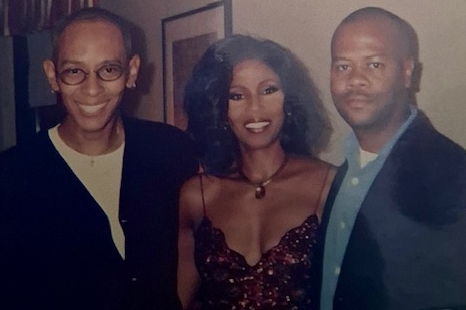
Mr. Woodley (left) worked with actor and musician Pauletta Washington and makeup stylist Eric Spearman.
He was always an avid reader and loved dogs, especially his guide dog Polly. He was a foodie and longtime member of the Abyssinian Baptist Church choir in Harlem. His close family and friends called him Uncle Jeff.
“He was a fun-loving, spirited, and passionate individual,” his brother said. “Uncle Jeff loved the Lord and poured his heart into his work as well as family.”
At the beginning of “Eras Tour” rehearsals, in a Before-Travis Kelce (BTK) timeline, the Berks County native is shown wearing a gray oversized Eagles sweatshirt as she walks into a practice space.
Paparazzi have spotted Swift repping the crew neck before, which is fitting since she’s discussed at length over the years her memories of her dad watching Eagles games and her love for the team.
This is a very important reminder to everyone that Taylor Swift is an Eagles fan. 🦅 pic.twitter.com/Sw4viIt8MV
In fact, on her first Philadelphia night of the “Eras Tour,” Swift sang “gold rush” as a surprise song and confirmed the lyric “my Eagles T-shirt hanging from the door,” was in fact about the team and not the band.
“I love the band the Eagles, but guys, like, come on, I’m from Philly,” Swift said that night in 2023 (and yes, a celebratory Birds chant did break out from the crowd).
It’s also worth noting that Swift’s Eagles sweatshirt appears to be unofficial — the team’s house style dictates that the eagle profile should always face left, with the plumage forming a subtle letter ‘E.’
Of course as the docuseries progresses, we see an After-Travis Kelce (ATK) style evolution, and a lot more red and gold — gross.
2. The audiobook
At a point in the series where Swift is trying to calm her nerves, she lies on a couch and starts listening to an audiobook.
It turns out, that book excerpt was from none other than South Philly author Liz Moore’s The God of the Woods.
Moore and her book, which is a multigenerational mystery drama set in the Adirondacks, are having a good year. The God of the Woods was on multiple book club shortlists, including Barack Obama’s, and was just announced for a Netflix adaptation last week. Moore will serve as a co-showrunner, writer, and executive producer.
Swift wasn’t alone in her book selection. The God of the Woods was the most checked-out print book of the year across all of Philadelphia’s library branches. (We don’t know about audiobook stats because those are managed by a third party.)
3. Scenes from Philly shows at the Linc
In the portion of the series that discusses the sheer pandemonium that the “Eras Tour” caused, with epic tailgates (known as Taylorgates), economic boosts, and overall good vibes, it seems only right that footage from outside the Philly shows were used as the ultimate visual aid.
The docuseries even relies on a Philly voice to summarize things best:
“I’ve never seen this before in my life,” Jon McCann, a local content creator who goes by The Philly Captain, says in a perfectly thick regional accent. “It’s like Woodstock but without the drugs.”
4. The directors and post-production
The End of an Era was directed by Don Argott and Sheena M. Joyce, the local duo behind films including Rock School, Batman & Bill, and notably, Kelce — the documentary about Swift’s soon-to-be brother-in-law and former Eagle, Jason Kelce. The directors are both based in Philadelphia.
All six episode credits also list Philadelphia as a post-production location.
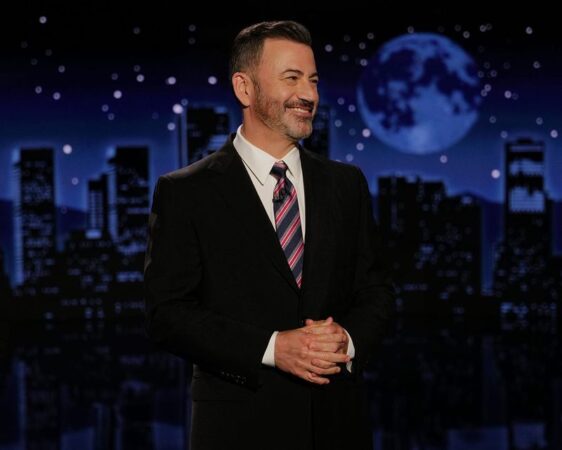
Despite President Donald Trump’s wishes, Jimmy Kimmel won’t be going off the air any time soon.
ABC announced the network signed a one-year contract extension with the late-night host on Monday.
Kimmel’s previous, multiyear contract was set to expire in May. The extension means Jimmy Kimmel Live! will continue through at least May of 2027.
The news comes on the heels of Kimmel’s temporary suspension following remarks he made about the assassination of conservative activist, Charlie Kirk. Trump praised the suspension at the time.
Following a public outcry, ABC lifted the suspension, and Kimmel returned to the air with stronger ratings than he had before.
Since then, Trump has continued to take jabs at Kimmel, who has resumed making jokes and digs at the president’s expense, performing a 10-minute monologue on Trump and the Jeffrey Epstein files in one episode and ragging on his approval ratings.
“I’ve watched some of the people that host,” Trump said. “Jimmy Kimmel was horrible, and some of these people, if I can’t beat out Jimmy Kimmel in terms of talent, then I don’t think I should be president.” (Kimmel has never hosted the Kennedy Center Honors. He has hosted the Oscars four times.)
Trump has continued to set his sights on other late-night TV hosts, including Stephen Colbert — whose show will end in May with CBS citing financial reasons for its cancelation — Jon Stewart, and, most recently, Seth Meyers.
Stewart will remain at his weekly post on The Daily Show for another year, Paramount, a Skydance Corporation, announced last month. Meyers’ Late Night with Seth Meyers is under contract with NBC through 2028.
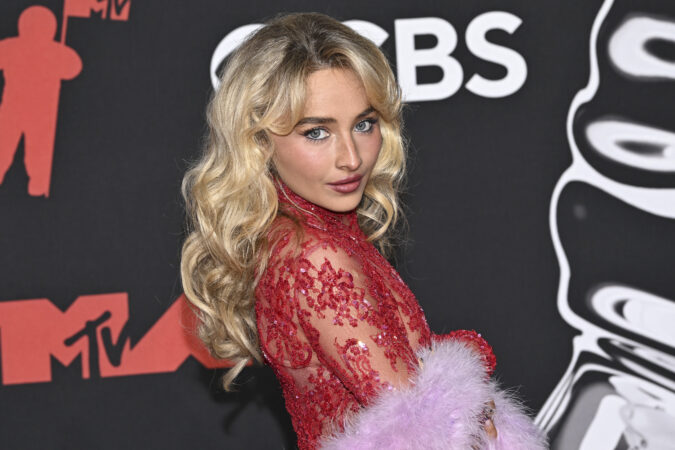
Sabrina Carpenter’s not mincing words when it comes to the Trump administration using one of her songs in a video promoting ICE and the Department of Homeland Security.
On Tuesday, the pop princess condemned the White House for posting a video featuring ICE arresting protesters and undocumented immigrants to one of her songs. The video, which was published on the White House’s X account one day earlier, was captioned “Have you ever tried this one?“ alongside the hearteye emoji and was paired with Carpenter’s track ”Juno.”
It’s a nod to a scene in Carpenter’s just-wrapped “Short n’ Sweet” tour, where she would playfully “arrest” someone in the crowd “for being so hot,” giving them a souvenir pair of fuzzy pink cuffs before performing “Juno.”
Carpenter, a Bucks County native, replied to the post, “this video is evil and disgusting. Do not ever involve me or my music to benefit your inhumane agenda.” Her response has been viewed more than 2 million times.
this video is evil and disgusting. Do not ever involve me or my music to benefit your inhumane agenda.
It’s the latest in a series of similar incidents, where artists ranging from Beyoncé to the Rolling Stones have objected to the White House using their music in videos promoting the Trump administration’s agenda without their consent.
Last month, Olivia Rodrigo had a similar exchange in the comments of a White House Instagram video demanding that undocumented immigrants self-deport over the singer’s track “All-American Bitch.” Rodrigo, who is Filipino American, commented at the time, “Don’t ever use my songs to promote your racist, hateful propaganda.”
The White House also used a song by Carpenter’s friend and musical collaborator, Berks County’s Taylor Swift, last month. Fans of Swift’s called out the use of “The Fate of Ophelia” in a video celebrating President Donald Trump, despite the president’s repeated slights toward the pop star. Swift herself did not comment on the video, but she has previously criticized Trump for posting AI photos of her on his social platforms.
Carpenter, 26, worked with HeadCount on her “Short n’ Sweet” tour, registering 35,814 voters — more than any other artist the nonpartisan voter registration group worked with in 2024. She’s been vocal about her support for LGBTQ+ rights and has publicly donated to the National Immigration Law Center.
When Trump won last year, she took a moment during her concert to say “I’m sorry about our country and to the women here, I love you so, so, so much.”
“Here’s a Short n’ Sweet message for Sabrina Carpenter: We won’t apologize for deporting dangerous criminal illegal murderers, rapists and pedophiles from our country,” White House spokesperson Abigail Jackson told the New York Times. “Anyone who would defend these sick monsters must be stupid, or is it slow?”
It’s OK if you don’t want to admit how many times you listened to “Golden” from KPop Demon Hunters — Spotify will tell us, anyway.
Spotify Wrapped — the music platform’s annual, aesthetically pleasing deep dive into users’ listening habits — is back again with the feature dropping Wednesday morning.
The 11-year-old feature is both beloved and feared by users for its unflinchingly honest view into users’ favorite music over the last year-ish. So much so, last year, U.S. Rep. Josh Gottheimer of New Jersey admitted that he manipulated his Wrapped results to be Bruce Springsteen-forward.
Features include users’ most-listened-to songs, artists, and albums, as well as the duration of time spent listening to music. There are also some bragging rights involved — in the past, users within an artist’s top 1% of listeners could access a special video message and sometimes purchase exclusive merch.
Across social media, users share parodies of their Spotify summary, saying things like “You spent 25,684 minutes this year complaining about Nick Sirianni.” Know Your Meme says the meme format dates back to about 2017.
Wrapped is considered one of Spotify’s signature calling cards and a major driver for user engagement and customer retention. This year, it dropped at the same time some users are boycotting Spotify entirely citing ads heard on the platform and its CEO’s investments.
Here’s more on that and Wrapped 2025:
When did Spotify Wrapped results drop?
Spotify Wrapped was released on Wednesday morning.
Historically, the feature usually drops the week after Thanksgiving, around the first week of December.
How do I see and share my Spotify Wrapped results?
Once Spotify Wrapped is live, here’s how you can see your results. Use the service’s mobile or web browser versions. It is not available on the desktop app.
Here are the steps:
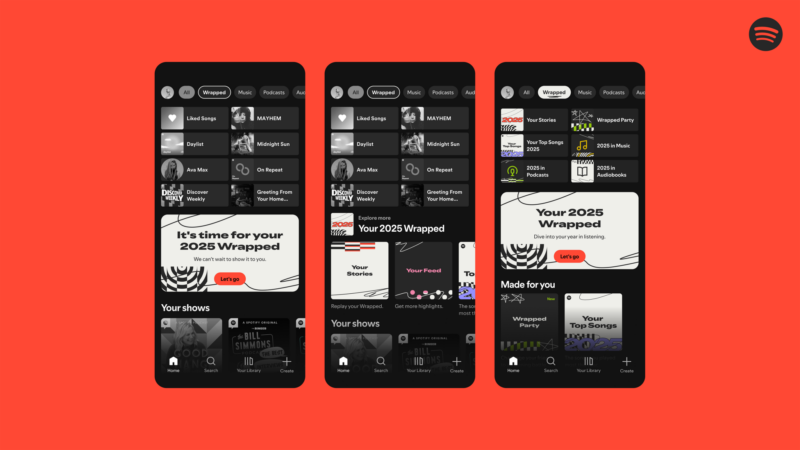
Open Spotify on your phone. A prompt to see your 2025 Wrapped should be visible from the homepage of the app. If it isn’t, or you’re using a web browser, visit www.spotify.com/us/wrapped.
Find the “Wrapped” section in the top navigation bar, a featured playlist, or by typing “Wrapped” in Spotify’s search bar.
This year’s Wrapped results include a “report” and assign listeners to a club based on their listening habits, like the Serotonin Club or the Grit Club. It also has a visual component that shows artists racing for the top of your streams month by month. With bold black and white designs and colorful fonts, it walks you through your listening journey, featuring your total minutes spent listening to music, top songs, artists, genres, and podcasts. One new feature includes users’ “listening age” based on how trendy their picks are among generations.
Each slide of the Wrapped Story has a “share” button at the bottom. Click that button to save each individual slide to your camera roll or post on social media. At the end of your Wrapped Story, there will be a second opportunity to save your Top Artists summary.
What’s the time frame for Spotify Wrapped data?
It’s fuzzy. While Spotify spokespeople previously said data was analyzed between January and October, the streaming platform said in 2023 that Wrapped was still counting past Halloween.
The announcement sparked light controversy among audiophiles — the last week of October was once treated like the ultimate good-music-curating season to ensure impressive results.
Spotify users would also treat November and December like open season, free to blast holiday music on repeat without fear of it reflecting on their “cultural report card.”
But with an indefinite cutoff date, users remain left in the dark when it comes to how their listening habits will be reflected when Wrapped drops. Last year, the company again promised that data collection would happen past Halloween, but hasn’t disclosed a firm deadline.
We don’t know exactly when listening data stopped being collected this year. But we can guess it was sometime in mid- to late November.
Can I modify my results? What does ‘excluding from my taste profile’ really mean?
Where’s the fun in that?
There’s no way to modify your Wrapped results (unless you’re the aforementioned U.S. rep and opt to photoshop them). You get what you get, guilty pleasure songs and all — unless you plan ahead.
Spotify has a feature you can opt out of, including some elements from your listening data.
While using Spotify, users can click the ellipses next to a playlist and select “exclude from your taste profile.” For example, you can exclude your nightly “10 hours of ocean waves” playlist or your kid’s Disney playlist to keep those tracks from influencing your weekly Discover playlists and annual Wrapped data, Spotify says.
The caveat here is this only works for playlists, not individual songs, artists, or albums. A loophole could be curating a playlist of every sleep song, white noise track, guilty pleasure bop, or kids’ music that isn’t yours and excluding that entire playlist from your taste profile. But you’d have to do this ahead of time.
You can’t make edits to your Wrapped results after the fact.
What can I do with my Spotify Wrapped data?
You can post it on social media to brag about your incredible taste, obviously.
Beyond that, there are several third-party sites you can link your Spotify account to that will analyze your Wrapped data and roast you even more.
How Bad is Your Spotify is an AI bot that will judge your music taste. And be warned, it’s kind of harsh. Some results include: “Your spotify was tay-tay-fangirl-cling-clang-pots-and-pans-music-ponytail-pop bad,” “Your spotify was bon-iver’s-impact-escape-room cabincore bad,” and “Your spotify was folklore-evermore-dumbledore-witch-pop-escape-room-has-a-1975-lyric-tattoo bad.” You get the idea.
Receiptify reports your top songs in the form of a shareable shopping receipt graphic, while Instafest conceptualizes a music festival lineup based on your top artists.
What’s up with the Spotify boycott?
In recent months, Spotify’s received backlash over reports that its CEO, Daniel Ek, invested $693.6 million in the European defense technology start-up Helsing. The tech has been criticized for its role in driving the military-industrial complex and ethical concerns over surveillance technology.
Around the same time, reports came out that Spotify — and other streaming services — were running ICE recruitment ads. A spokesperson for the company said the ads were part of a wider ad campaign by the U.S. government running across multiple platforms.
Rolling Stone reported that the Spotify users hearing the ads were using the streaming platform’s free ad-supported tier and that other streaming platforms running the same ad campaign included Amazon Music, Hulu, Max, YouTube, and Pandora as early as April. Apple Music did not run the ads, but it’s a paid-only service with no free ad-supported tier.
Is there a version of Spotify Wrapped for Apple or Amazon Music?
Yes and no. For the first time last year, Amazon Music launched 2024 Delivered, its clapback to the Spotify Wrapped experience. The feature gives a graphic breakdown of users’ listening habits. Amazon Music users can access it by opening the Amazon Music app and tapping a banner that says “2025 Delivered” in their Library.
Apple Music has a feature called Replay, which is available all year and allows users to see a detailed view of their listening habits. Similar to Wrapped, Replay has a “year-end experience.” The Replay year-end experience debuted in 2023. Critics said at the time that Apple’s version lacked in the shareable experiences and themes that Spotify does so well.
YouTube Music also offers a “year in review” recap with breakdowns of users’ top songs, albums, artists, and total listening time over the year.
But none of them feel quite like Wrapped, which is praised for its extra pizazz.
Representatives behind Philly’s three Michelin starred restaurants are lauded for their culinary skills, hospitality, and showmanship. But the men involved with each of them also have this shared trait: They’re all certified Wife Guys.
For those uninitiated, a wife guy is a colloquial way to refer to someone who is all about their marriage and finds ways to talk about their devotion whenever possible. (There are some instances where this phrase is used snarkily, but in this case, we mean it genuinely as a compliment and in earnest.)
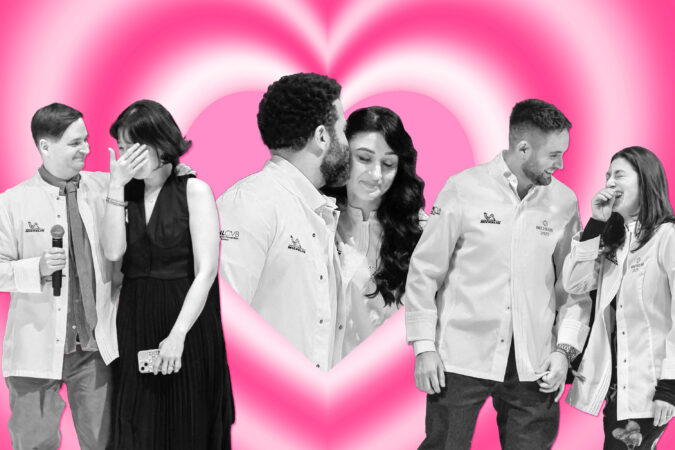
When chefs Amanda Shulman and Alex Kemp stepped on stage to receive Her Place Supper Club’s one-star honor, Kemp stepped to the side, opting not to be photographed alongside the Michelin Man.
“Amanda is the hardest working woman in show business,” Kemp told The Inquirer on Wednesday. “She deserves this. I felt super proud of her, but I didn’t want to take her thunder.”
While Kemp is part-owner of Her Place, Shulman founded the restaurant and is the face (and chef) of the project.
Emcee for the night, Java Ingram, remarked on stage how Kemp’s gesture to step aside was “classy.”
He wasn’t the only one paying tribute to his wife that night.
Power couple Chad and Hanna Williams, who are behind star-winning restaurant Friday Saturday Sunday, also displayed their love for each other. Chad Williams could be seen on stage holding his wife and kissing her cheek after they received their award and Michelin jackets.
“Love and partnership is the foundation of this restaurant,” Williams later told The Inquirer of his display. “We got married in the kitchen for God’s sake. To have earned a Michelin star is my greatest accomplishment but to have done it with my wife is a dream come true.”
Finally, there was Provenance, the surprise of the night, pulling off a star within the atelier’s first year of opening.
Michelin international director Gwendal Poullennec asked Nicholas Bazik on stage what his inspiration was. While holding the mic, he pointed to his wife, Eunbin Whang. “She’s right over there,” Bazik said as the crowd erupted in “aws.” Whang demurely approached Bazik on stage, covering her face, tearful and proud as Bazik draped his arm around her.
“There would be no Provenance without my wife,” Bazik told The Inquirer, citing her influence on his “culinary identity,” blending French and Korean culture and cuisine.
So is love a prerequisite to getting a star?
Bazik seems to think so.
“Everybody needs a constant, something that can help center them. This is a hard job that oscillates between insanity and reality checks. Love is that thread.”
Kemp concurs.
“Or maybe it’s being a ‘family guy,’” he quipped when asked by The Inquirer for his take. “Amanda is a very easy person to love. She’s my best friend. We do everything together. We spend every moment of the day talking or working together.”
He added, “I love being a wife guy. It’s cool being a wife guy.”
Those watching the Eagles’ winning matchup against the Detroit Lions on Sunday may have caught a glimpse of something absolutely “thrillifying.”
As the NBC Sunday Night Football broadcast headed to a commercial break, hosts pointed out a flyover view of Philadelphia’s iconic Boathouse Row. Only this time, the boathouses along the Schuylkill were lit up in pink and green.
Announcers said the special color treatment was brought to viewers by Wicked: For Good, the anticipated musical-to-film finale starring Cynthia Erivo and Ariana Grande (plus West Philly’s own Colman Domingo as the Cowardly Lion).
On social media, viewers were surprised and delighted by the marketing play.
“What do you mean ‘Wicked: For Good’ sponsored by Boathouse Row?” one X user wrote. “Boathouse Row being lit up in Wicked colors is HUGE for my brand,” said another.
It marks the latest effort in the film’s megamarketing campaign, which has ranged from Wicked dolls, to deodorant, to laundry detergent, to make up kits, to Swiffers, to cereal, and everything in between. Truly, no stone has been left un-greenified. And now that approach appears to extend to extremely hyperlocal stops, like Boathouse Row.
It also appears to be Boathouse Row’s first foray into paid movie promotions.
So how did this all pan out? And does it mean Wicked has paid the Fairmount Park Conservatory and Boathouse Row a boatload of sponsorship dollars?
Here’s what we know.
How do the Boathouse Row lights work?
The Boathouse Row lights debuted in 1979 and quickly became a beloved feature along the stretch of 19th-century historic homes. The strip is listed on the National Register of Historic Places.
In 2005, the homes transitioned to LED lights, according to the Fairmount Park Conservancy, which manages Boathouse Row. In 2023, the homes temporarily went dark as part of a $2 million refurbishing project. They were re-lit in March 2024.
According to the conservancy’s website, 6,400 individual LED lights are installed along 10 of the historic boathouses. The light configurations, which were installed by Philly-based firm The Lighting Practice can make 16 million color combinations.
Can anyone make a Boathouse Row light change request?
Surprisingly, yes.
After the homes’ lighting upgrades, Boathouse Row announced that seemingly anyone could become a “Boathouse Row Lighting Partner,” and make a special request in exchange for payment to the Fairmount Park Conservancy.
Of course, the conservancy gets first right of refusal, and there are some exceptions. According to its website, political events and observances, campaigns that conflict with City of Philadelphia laws, religious figures or organizations, and campaigns or events deemed “inappropriate” will not be considered.
You can also check on Boathouse Row’s website to see what color the lights are each day.
How much does a special lighting request cost?
It depends on the level of razzle-dazzle and its duration.
According to Boathouse Row’s website, prices range from $750 to $2,500 per day, depending on the display’s complexity. Fees go directly to the Boathouse Row’s ongoing maintenance. The limit for a display is one week.
How much did Wicked pay Boathouse Row to go green and pink?
It’s unclear exactly how much the Wicked display costs. The lighting scheme aired during Sunday’s broadcast. In reality, that B-roll was filmed in advance on Friday evening, a spokesperson with the Fairmount Park Conservancy said. It lasted about 20 minutes.
The conservancy declined to disclose the exact amount NBC paid. Wicked is a Universal film, which is under the NBC and Comcast umbrella. NBC also broadcasts Sunday Night Football.
Have other movies or marketing campaigns worked with Boathouse Row before?
It looks like this is the first movie campaign.
“We don’t think it’s ever been done before,” conservancy spokesperson Cari Feiler Bender said.
But there are no other mentions of entertainment-related tributes. (This week’s Wicked tribute did not make the row’s Instagram feed, which posts light color updates.)
Boathouse Row has traditionally lit up in color schemes to celebrate local teams or to observe special causes like breast cancer, Alzheimer’s awareness, and Pride months.
The spokesperson added that Boathouse Row would welcome future marketing partnerships to “help keep the lights on.”
“Is it funny?” “Am I just old?” “What does it actually mean?”
Those are common questions you’ll come across while searching for “six-seven” (or “6-7”), a phrase that has eclipsed internet obscurity and made its way into everyday speech, filling timelines, classrooms, and group chats in a way only the chronically online could understand.
The numbers, said out loud together, are really just that. It’s not code, or sexual innuendo. In reality, it’s just a lyric lifted from a song by Kensington-based rapper Skrilla.
The 27-year-old rapper, whose legal name is Jemille Edwards, has over 130 million streams across platforms and continues to rise in popularity.
In 2023, he signed with Priority Records — a Los Angeles-based label significant within the rap scene that worked with N.W.A and Ice Cube. Last year, his album Zombie Love Kensington Paradise earned praise in the industry.
The 19-track album, which he rereleased this year as a deluxe version with eight additional songs, underlines Edwards’ “affinity for the neighborhood while displaying his vocal flexibility and off-kilter delivery,” Pitchfork said in its mostly positive review, calling him likely “on the road to rap stardom.”
Philly rapper Tierra Whack has repeatedly shouted out Skrilla’s work while North Philly’s Lil Uzi Vert has collaborated with him.
In August, Edwards was arrested by Philadelphia Police during a music video shoot where he used a toy gun filled with gel pellets to shoot at an officer. He was charged with assaulting a police officer and related offenses.
One particular single by Skrilla has raised the rapper’s internet prominence.
Where did ‘six-seven’ come from?
Skrilla raps the lyric “six-seven” in his song “Doot Doot (6 7),” a track from the deluxe version of Zombie Love Kensington Paradise about life on the streets, fast cars, money, violence, and loss.
It’s a high-energy track that nods to Skrilla’s drill-rap style. The song’s chorus includes the lines, “6-7, I just bipped right on the highway,” and “pull up, doot-doot.”
What does ‘six-seven’ mean?
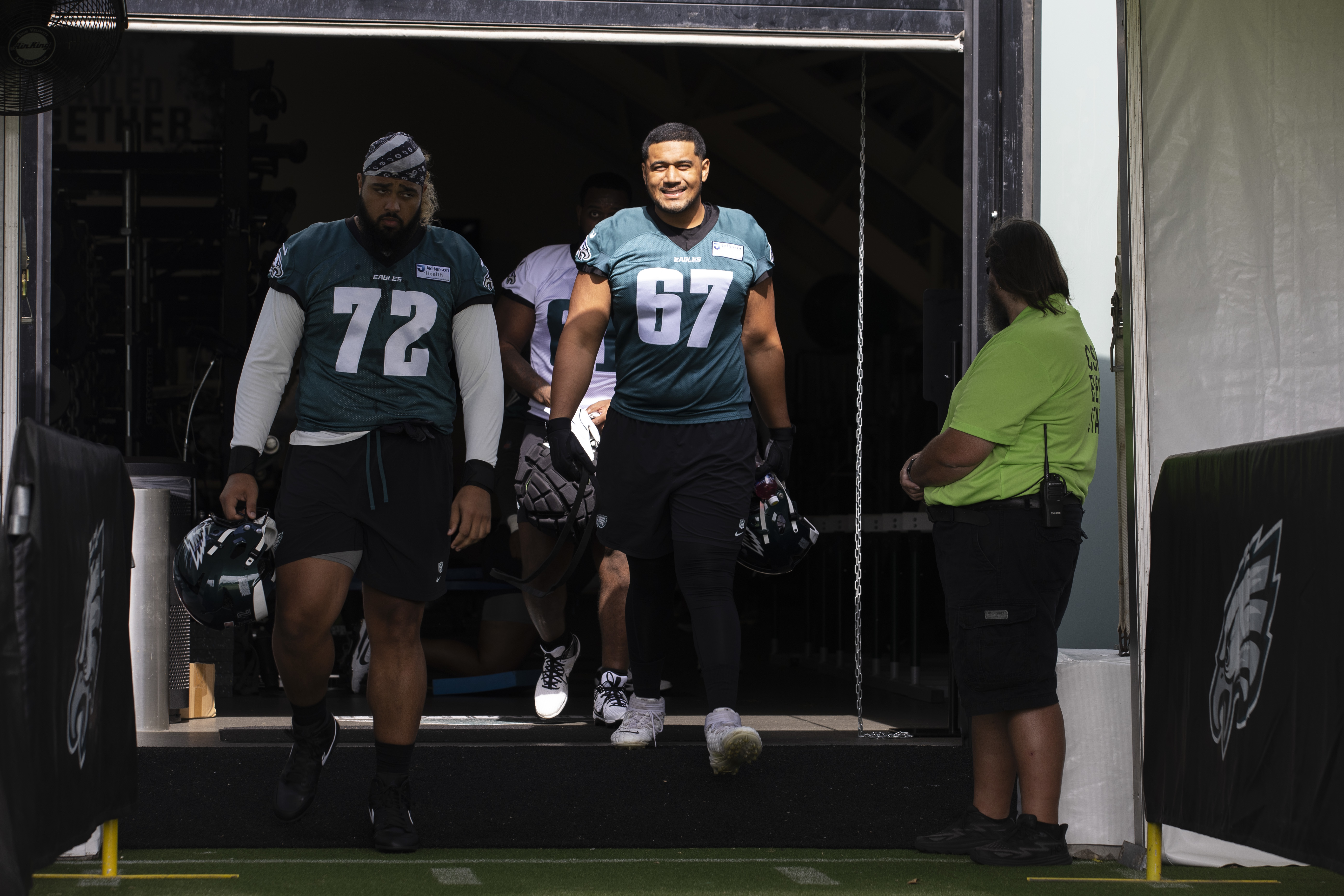
Philadelphia Eagles offensive tackle Laekin Vakalahi smiles while taking the field during the first day of Eagles Training Camp at the NovaCare Complex on Wednesday, July 23, 2025 in Philadelphia.
Well, it’s ambiguous. And Skrilla has said in interviews that he kind of likes it that way.
Meme lovers and unofficial lyric decoders have theories. Many think it refers to 67th Street in Philly, where Skrilla grew up (that’s what the Washington Post went with).
Owen Carry with Know Your Meme believes the Philadelphia ties are “largely speculative.”
Others think that it’s a nod to 67th Street in Chicago, where he has family. Taylor Jones, a linguistics and African American English expert, suggested it might be a nod to police radio code, where 10-67 is used to notify of a death. A contributor on Genius, a site dedicated to annotating song lyrics, theorized it was a reference to burial plots, six feet under and seven feet apart.
“Everybody else got their own different meaning,” Skrilla told Complex recently. “But for me, it’s just ‘negative to positive.’”
The most important part here is that it doesn’t really matter.
“Six-seven” has taken on a life of its own in recent months due to the pedestal it’s been placed on across TikTok and other social media platforms.
Why is ‘six-seven’ so popular?
The meme’s origins date back to late last year when Skrilla unofficially released “Doot Doot (6 7)” via Instagram as a leftover track from Zombie Love Kensington Paradise. It quickly started making the rounds on TikTok.
Content creators were using the line from the chorus in different, playful, extremely unserious ways: edits of a 6-foot-7 basketball player, lip dub memes, and scenarios that force someone to say the two numbers together. The creators are often nonsensical and copy Skrilla’s vocal pattern, a singsong “six-seven,” usually coupled with an open-palmed hand gesture.
Experts at Know Your Meme, who have been tracking the phenomenon since its inception, say videos surrounding “six-seven” have been viewed millions upon millions of times.
“The trend started with a series of bait-and-switch LaMelo Ball (of the Charlotte Hornets) edits late last year, which would intro with a random clip that included someone saying, ‘six-seven,’ and then switch to a Ball highlight reel,” said Carry, associate editor at Know Your Meme. “Skrilla’s ‘6-7′ lyric was used to queue the transition (Ball is 6 feet, 7 inches, which is relevant to why he was chosen).”
In turn, Carry said, young boys especially have been saying the numbers on camera in hopes of becoming the next NBA TikTok edit star.
“Six is a perfect number, and seven is a prime number, but only a glutton for punishment would put them together in front of a bunch of 13-year-olds,” the Wall Street Journal wrote in a piece about how the meme is wreaking havoc across campuses.
It’s safe to say the phrase has officially made its way into the mainstream.
“South Park” continued a buzzy season with its latest episode, “Twisted Christian,” on Oct. 15.
“Six-seven” was mentioned in a recent South Park episode where the kids can’t stop using the phrase, leading to an assembly about the Antichrist and satanic numerology.
Pro wrestler Je’Von Evans wore a “67″ jersey during his walk-in entrance last week, Shaq has given the trend his blessing (though he admits he doesn’t totally get it), and Skrilla claims the song will be included in the Grand Theft Auto VI soundtrack, though that hasn’t been made official yet.
Skrilla also performed the track in Philly last month when millennial icon Natasha Bedingfield, who was performing at the Theatre of Living Arts, pulled him on stage for a guest appearance. Bedingfield told Complex she’s a fan of the rapper and would like to get on a remix of “Doot Doot (6 7).”
Skrilla will be back in town at the Fillmore on Nov. 30.
What has Skrilla said about it?
In an interview this week with the Washington Post, he suggested the song referred to 67th Street in Philly, a block where a lot of his friends lived. It’s worth noting there isn’t a 67th Street in Kensington.
“We just rode by a truck that had ‘6-7’ written on it in dust, in Arizona, all the way out here,” the rapper said, speaking from a gas station on the way to Los Angeles.
The Inquirer couldn’t reach Skrilla for additional comment.
Will ‘six-seven’ still be cool by the time I start saying it?
Probably not.
With its place solidified in the mainstream — being analyzed by linguistic experts, printed on merch, and reported on by multiple newspapers (including this one), it’s safe to say the trend is likely on its way out the door.
But at least, for a fleeting moment, you can say you know what it means — which is nothing.