Category: Bars

  • The boozy business of the American Revolution went down in Philly bars

    The boozy business of the American Revolution went down in Philly bars

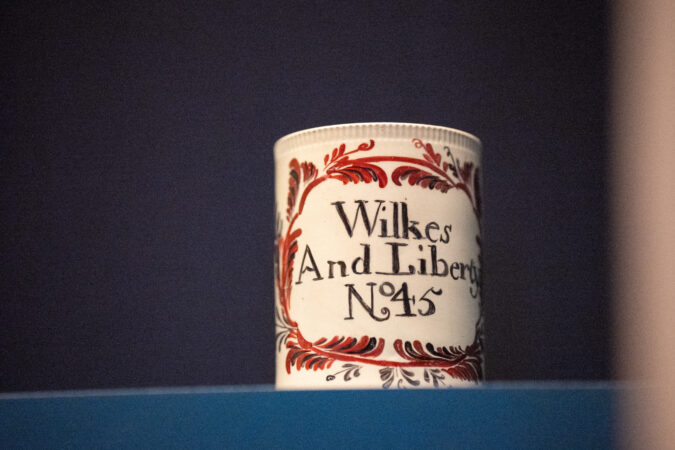
    The Founding Fathers never suffered sobriety. When they weren’t sweating out independence at Independence Hall, they were bending elbows at City Tavern — pretty much around the clock.

    George Washington developed such a hankering for a rich, malty, Philly-brewed Robert Hare’s porter, he had kegs of the stuff shipped to Mount Vernon.

    John Adams, once virulently anti-tavern, effusively extolled the Philly bar scene in letters to his wife, Abigail. At one “most sinful feast,” Adams recalled sipping what would become his favorite Philly cocktail, the “Whipped Sillabubs.” A popular choice of the colonial-era Philly cocktail set, the boozy, creamy concoction was made from sherry, wine, and lemons.
    Items related to drinking at the Museum of the American Revolution, in Philadelphia, PA, November 18, 2025,

    Thomas Paine, the working-class poet, whose thunderous pamphlet Common Sense helped roar in a revolution, oiled up his writing hand with Philly rum.

    It has long been accepted that Thomas Jefferson spent those sweltering summer weeks of 1776 drafting the Declaration from the favored Windsor chair of his Market Street lodgings. But records show he actually spent more time than ever at City Tavern at Second and Walnut. A minor, if tantalizing, historical development, which hints that perhaps the world’s most famous freedom document came fortified by fortified wine.

    Benjamin Franklin, polymath of the Revolution, inventor, scientist, printer, statesman, and lover of French wine (if in moderation), affectionately penned a Drinker’s Dictionary. The tippling tome contained 229 of Franklin’s favorite phrases for drunkenness, including buzzy, fuddled, muddled, dizzy as a goose, jambled, halfway to Concord, and Wamble Cropped.

    ‘Boozy business of revolution’

    Franklin and his ilk were not ringing up 18th-century expense accounts for the hurrah of it. They were doing the boozy business of revolution.

    Revolutionary-era Americans consumed staggering amounts of alcohol compared with today, said Brooke Barbier, historian and author of the forthcoming book Cocked and Boozy: An Intoxicating History of the American Revolution.

    By the end of the 18th century, when beer and spirits were a staple of daily life, the average colonist swilled about 3.7 gallons of hard liquor per year. A dizzying amount, not counting beer and cider, that must’ve set many a patriot’s tricorn hat spinning.

    By comparison, Americans now consume about 2.5 gallons of all alcohol, from beer to whiskey to wine, per year, said Barbier.

    Historians believe booze and bar life played an outsize role in stoking the embers of insurrection.
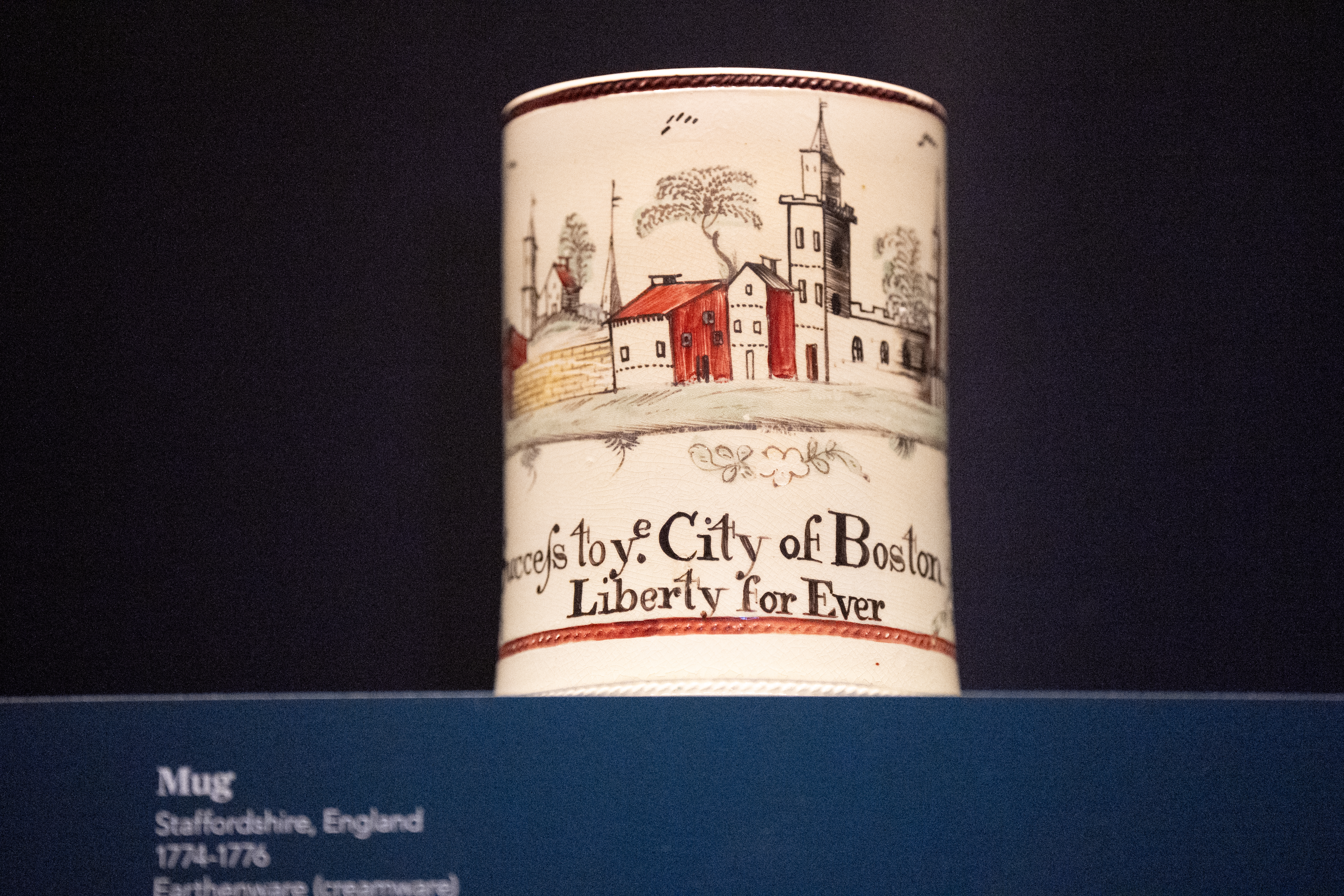
    Items related to drinking at the Museum of the American Revolution, in Philadelphia, PA, November 18, 2025,

    “Tavern culture was essential to the American Revolution,” said Barbier. “It was not a part of the sideshow. It was part of where the discussions about revolutionary ideas happened. Where spies met. And where others, who weren’t directly involved in politics, gathered to discuss the growing political crisis. Opinions were formed in taverns.”

    Nowhere was this work done more than in Philadelphia.

    By 1776, Philadelphia boasted roughly 200 licensed and illegal watering holes — or about one for every 150 citizens, said Tyler Putman, senior manager for gallery interpretation at the Museum of the American Revolution.

    Revolution with a twist

    The fare of colonial-era drinking spots was as diverse as the budding port town.

    There were posh spots like the newly constructed City Tavern, located blocks from the waterfront, and where the delegates of the First and Second Constitutional Congress drank nightly like fish. Ensconced in an upstairs space, known as the “Long Room,” the Founding Fathers debated liberty over libations late into the night, while imbibing copious amounts of Madeira, whiskey, punch, and everybody’s favorite Robert Hare porter.

    There were taverns and flophouses, where tradesmen and sailors learned of Britain’s newest outrage from newspapers read aloud, or the latest traveler. And there were scores of unlicensed disorderly houses, grungy forebears of the modern dive bar.

    In 2014, three years before opening, the Museum of the American Revolution conducted a large archaeological dig, discovering thousands of artifacts from a Revolutionary-era disorderly house buried beneath its future Old City home. Among the mounds of mutton bones, glassware, and broken bottles unearthed from the privy of Benjamin and Mary Humphreys’ living room tavern was a broken windowpane inscribed with the initials and names of customers.
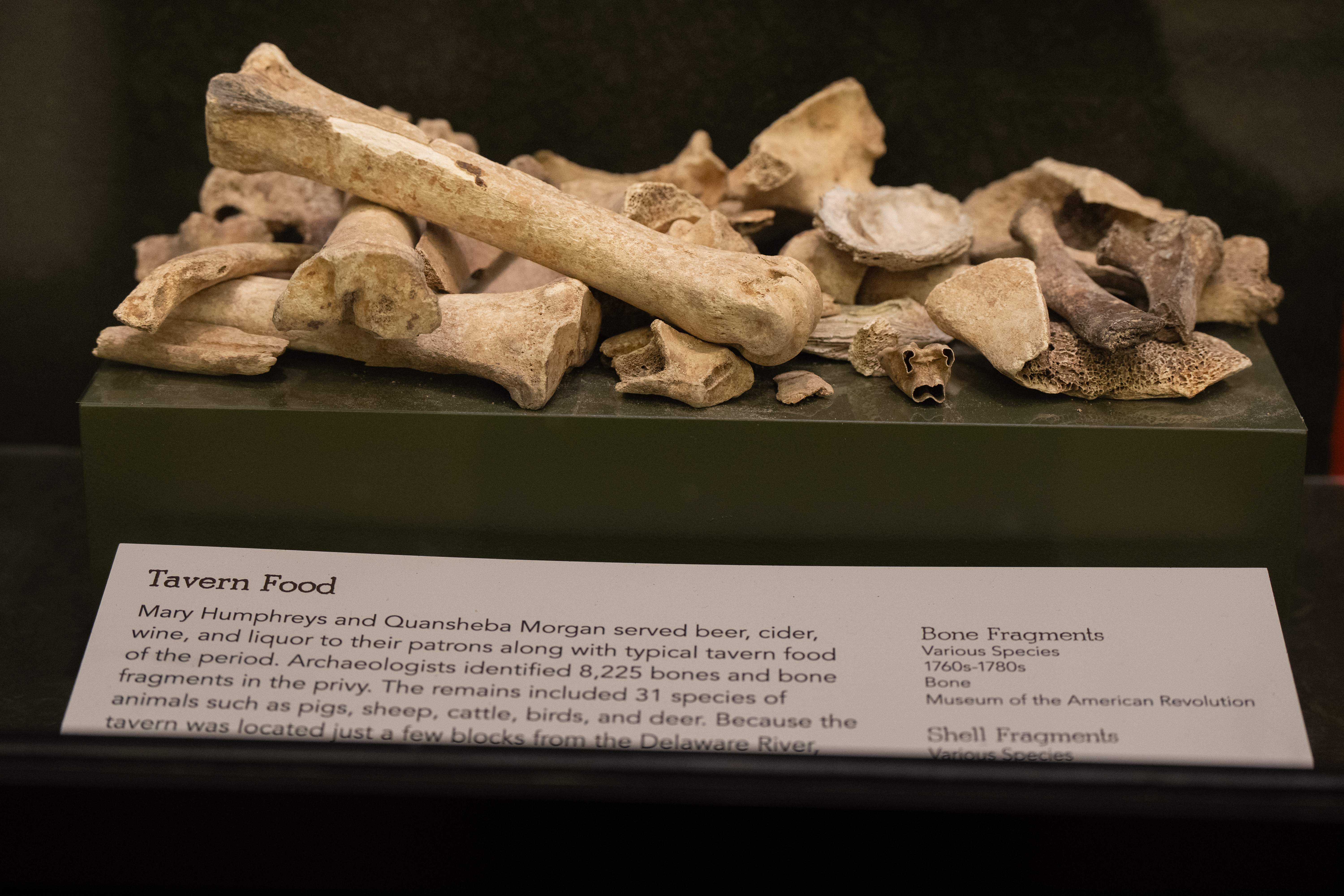
    Bones from Tavern food at the Museum of the American Revolution, in Philadelphia, PA, November 18, 2025,

    In what can only be the earliest example of Philly barroom graffiti, one dreamy patriot etched a quote attributed to the ancient Roman senator Cato into the clouded glass: “We admire riches and are in love with idleness.” The etching was meant as a barb toward the British, Putman said.

    “They were obsessed with ancient Rome,” he said, of the American revolutionaries. “They were thinking a lot about, ‘How do you go back to some sort of idealized republic?’”

    A nation born in taverns

    Just as the nation strived to become democratic, its taverns became more undemocratic.

    “In Philadelphia, the elites who are cooking up one version of the revolution are not drinking with the rabble who are cooking up what maybe would become a different version,” Putman said.
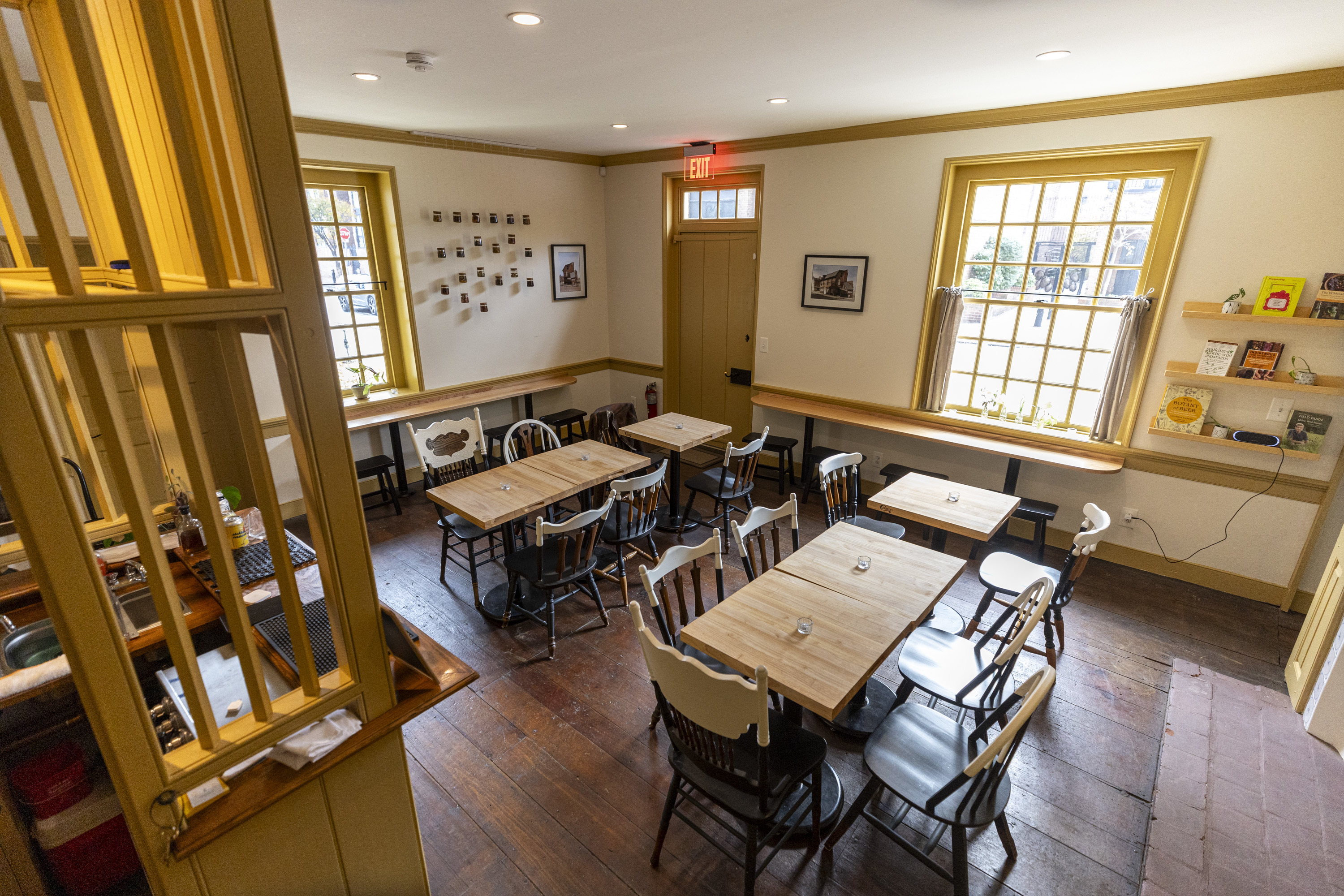
    The newly-renovated Man Full of Trouble Tavern in Society Hill on Saturday Dec. 7, 2024.

    Revolutionary-era drinking and tavern life, and its role in America’s founding 250 years ago, will be explored in full at a Nov. 21 after-hours event at the Museum of the American Revolution. Dubbed “Tavern Night,” the sold-out cocktail reception and boozy symposium serves as a twist to the museum’s grand exhibition celebrating the national milestone, also known as the Semiquincentennial, “The Declaration’s Journey.”

    “Unlike today’s bars, taverns were meeting places at a time when few others were available,” said Dan Wheeler, who last year reopened Philly’s only remaining colonial-era tavern, A Man Full of Trouble, and will join Barbier in speaking at the event. “Revolutionary thoughts were conceived and refined in taverns, and a nation was born.”

    Colonial keggers and the bonds of liberty

    Booze was the social lubricant of the Revolution, said Barbier, a Boston-based historian who also runs tours of Revolutionary-era taverns, who pored over the Founding Fathers’ diaries and account books in recreating their raucous time in Philly.

    The historical record provides no evidence that the nation’s founders were fully loaded — or “cock-eyed and crump-footed,” as Franklin might’ve said — as they went about forming the republic, she said.

    “When you hear someone accusing someone of being drunk, it’s in an overly negative way,” she said.

    Still, she was surprised by just how much the Founding Fathers drank.
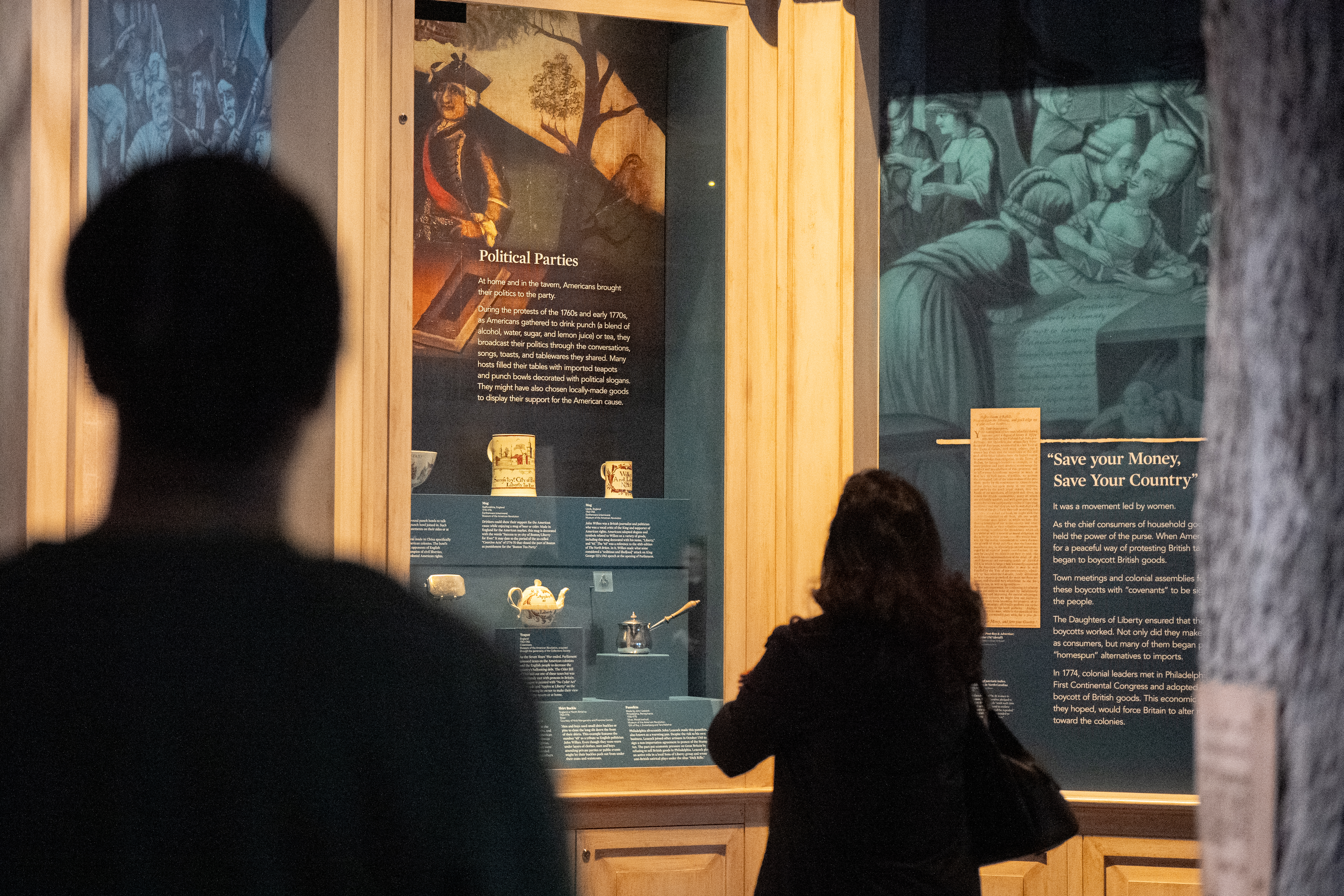
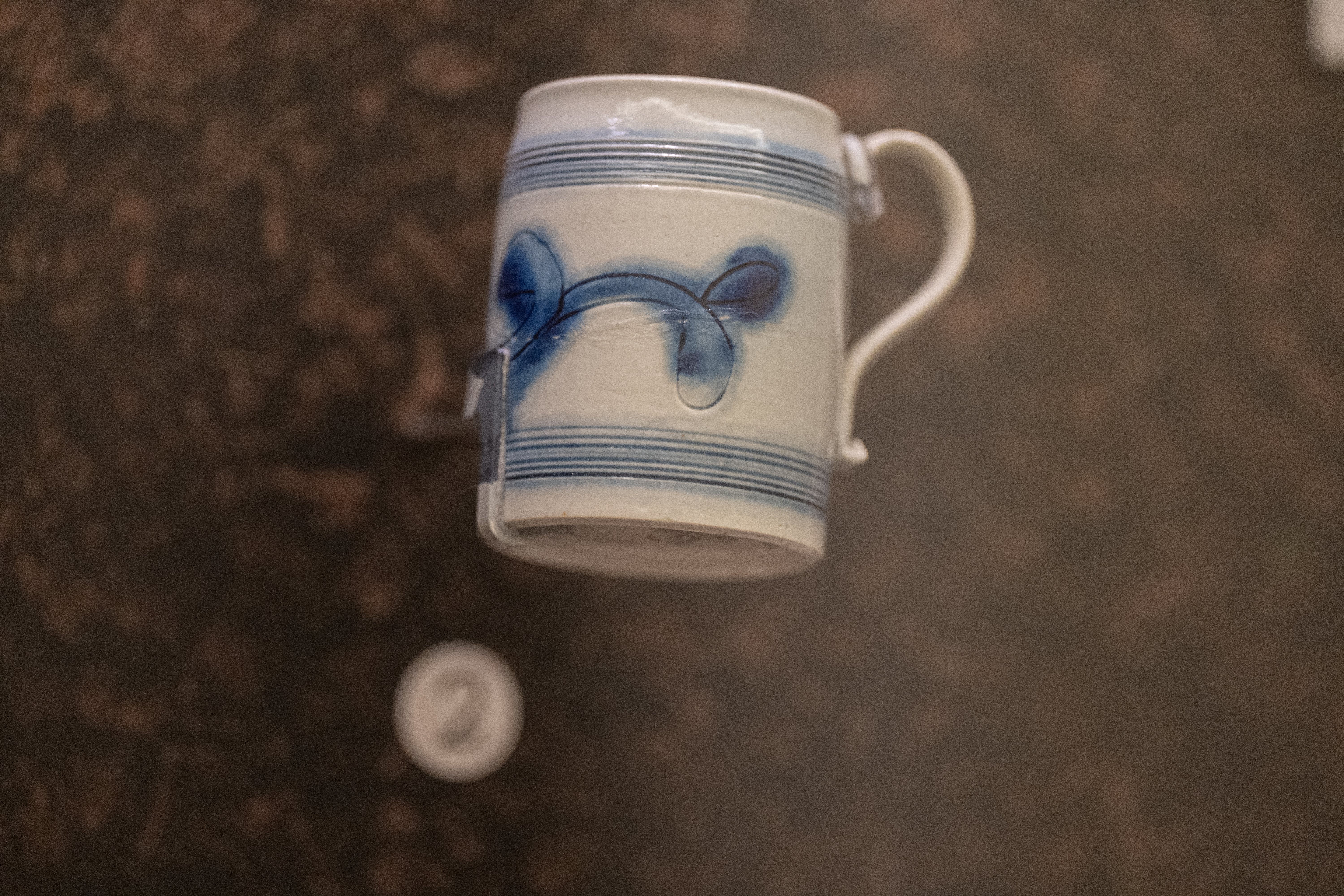
    Items related to drinking at the Museum of the American Revolution, in Philadelphia, PA, November 18, 2025.

    Hard cider and small beer, the 18th-century version of light beer, more or less, accompanied breakfast, she said. The midday meal, known as dinner, boasted cider, toddy, punch, port, and various wines. When their workday wrapped up in the late afternoon, the delegates’ drinking began in earnest.

    “There’s certainly a lot of drinking happening in these taverns,” said Barbier, whose book includes recipes of the Founding Fathers’ preferred aperitifs. “I don’t drink and not eventually feel tipsy. Certainly the same would be true for people in the past.”

    Barbier notes the downside of all the drinking, like booze-fueled mob violence that spilled into the streets. And neither will she say that Jefferson, who kept all his receipts, actually penned the Declaration at City Tavern.

    “He was there more frequently than ever during this time,” she said. “Maybe he needed to take a break from his writing, and go there. And sometimes when you’re on break, you develop your best ideas.”

    The Founders’ endless toasting of tankards — including a rager for the ages marking Paul Revere’s arrival in Philly, and held in 1774, the night before a critical vote toward independence — provided crucial trust-building, Barbier said.

    The men who founded America arrived in Philly as strangers, agreeing on little. After so much boozing, they bonded as brothers in liberty, and left a new nation in their wake.

    “Ultimately, this comradery and social bonding leads to the consensus that leads to the Declaration of Independence,” Barbier said.

  • At Philly’s first and only vampire beauty pageant, contestants compete for cash and a chance to feel immortal

    At Philly’s first and only vampire beauty pageant, contestants compete for cash and a chance to feel immortal

    There were Irish step-dancing vampires and opera-singing vampires. Vampires who claim to hunt billionaires and vampires who moonlight as emergency medical technicians. And, in at least one instance, a vampire who doubled as a heavyweight champ.

    Such was the lineup of the first-ever Miss American Vampire Philadelphia pageant, where 13 wannabe bloodsuckers donned their best vampiric drag to compete inside heavy metal bar Doom Friday night. Contestants were thirsty to show that vampires contain multitudes (and, perhaps, for a little bit of blood).

    Doom owner and former Royal Izakaya general manager Justin Holden decided to go all in on the unorthodox pageant after bartender Sonja Delgado showed him a black-and-white photo of Miss American Vampire New Jersey staring hauntingly at the camera during her 1970 crowning.

    Back then, MGM hosted the regional beauty competition to promote the movie House of Dark Shadows, with finalists going on to compete in Los Angeles for title of Miss American Vampire and a guest-starring role on the long-running vampire soap opera Dark Shadows. Native American activist Sacheen Littlefeather won the crown, though she never redeemed her prize.

    The stakes of Doom’s pageant were far lower than a TV appearance and eternal life, though just as competitive. Contestants were judged by a panel of full-time goths and burlesque performers on their creativity and vampiric presence as they competed in the standard pageant categories: A costume parade, an interview, and a dark art — or talent with a touch of the occult.

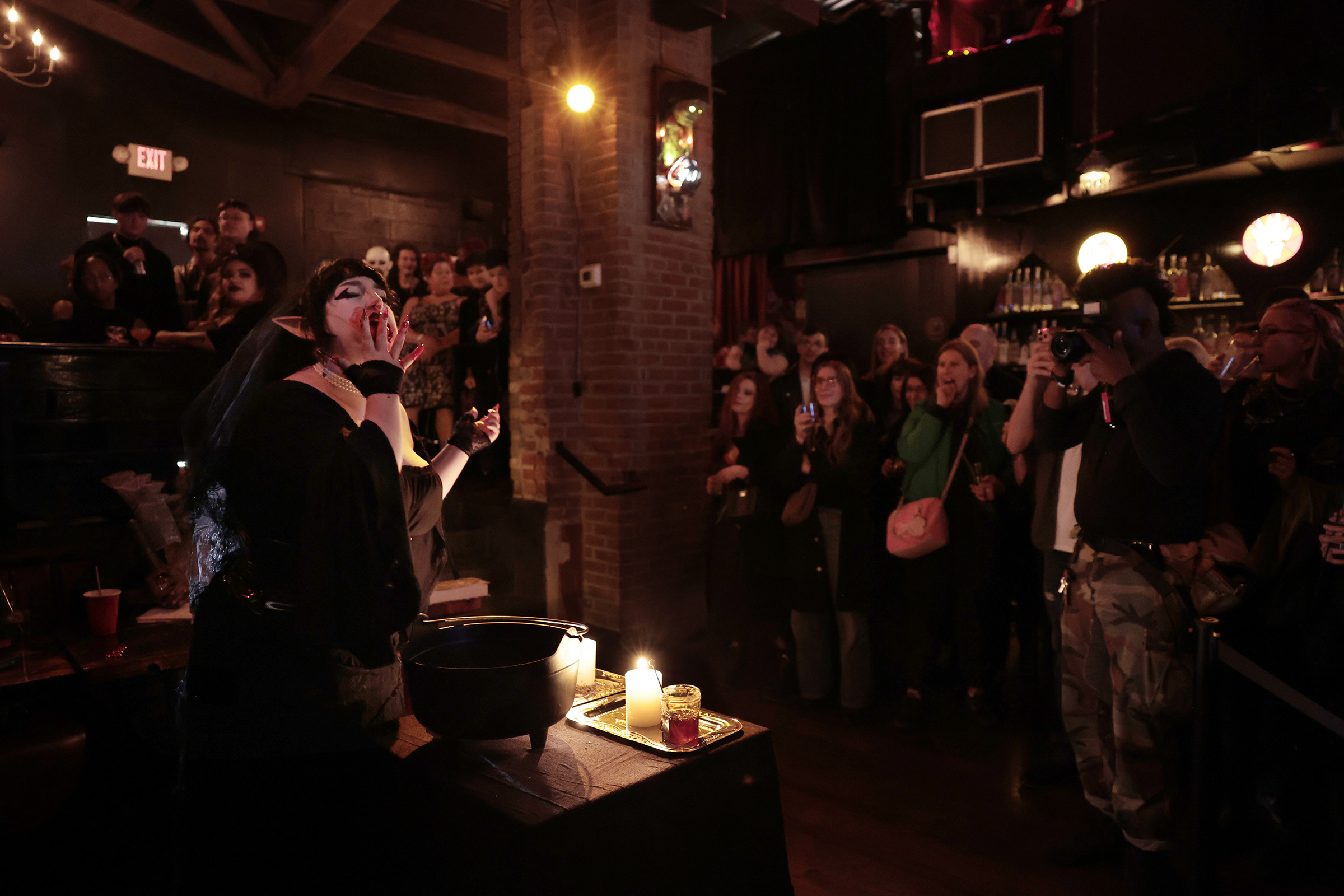
    The crowd reacts as Ezra Markel’s vampire persona “Isolde the Saturnine” eats the human heart she concocted during the talent portion of the Miss American Vampire Pageant at heavy metal bar Doom in Philadelphia on Friday, Oct. 24, 2025.

    Prizes included $100 cash, a new set of fangs, and comic books donated from Atomic City Comics. Skull and mixed metal artist Sue Moerder prepared a Bob Mackie-inspired gothic crown, with feathers and pearls sprouting from an arrangement of ornate obsidian gems.

    “Vampires represent the alternative, the occult, the bat-brained, the gothic … [people] on the outskirts of civilization,” Delgado told The Inquirer. “We just wanted to show that this bar is a safe cave for vampires to commune.”

    Both floors at 421 N. 7th St. were packed as contestants flitted across the makeshift stage in costumes that highlighted the full expanse of vampire-dom. There were homages to both the German and Transylvanian versions of Dracula in peasant blouses and bejeweled collars, as well as more contemporary interpretations, with floor-length evening gowns, corseted waistlines, and lots of red lips.

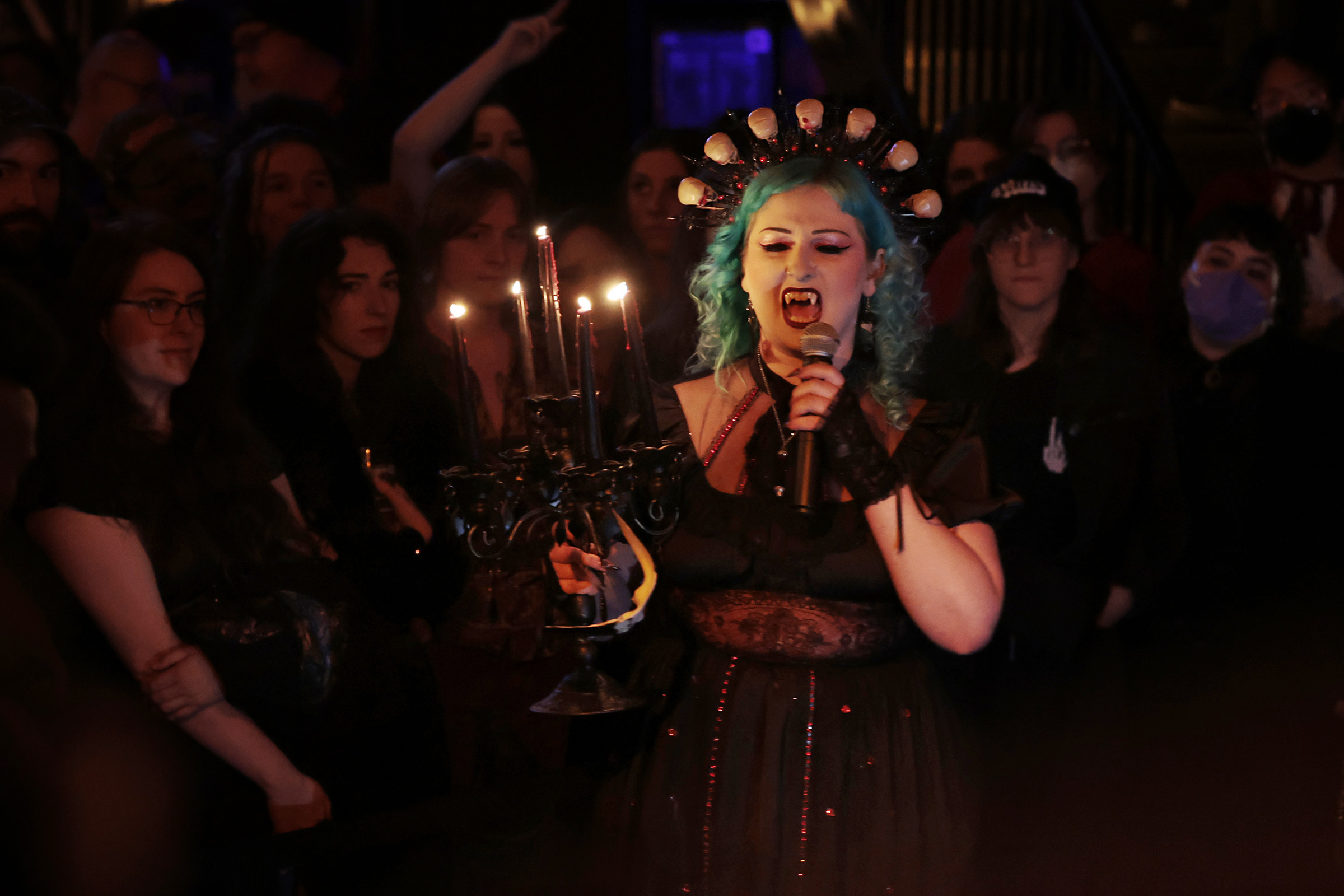
    Lilith Lobotomy — a blue-haired vamp whose bio alleged she bakes cakes and stalks billionaires — was an immediate favorite, earning thunderous applause when she turned away from the audience to drop her floor length duster. Emblazoned in sparkling blood red font on the back of her black dress was the phrase “Eat the rich.”

    Logan Laudenslager performs as “Lilith Lobotomy” during the talent portion of the Miss American Vampire pageant held at Doom. She performed a rendition of “Phantom of the Opera.”

    Madame Lobotomy would go on to win the coveted title of Miss Off Putting — Delgado’s spin on Miss Congeniality — after belting out the song “The Phantom of the Opera” while twirling a lit candelabra.

    She was still no match for Norah Morse, who took home the Miss American Vampire Philadelphia crown after shocking the judges with her interview. When asked how she prepared for the competition, Morse scoffed.

    “I don’t know what you mean,” she said in a thick Transylvanian accent. “I’m a vampire and I showed up.”

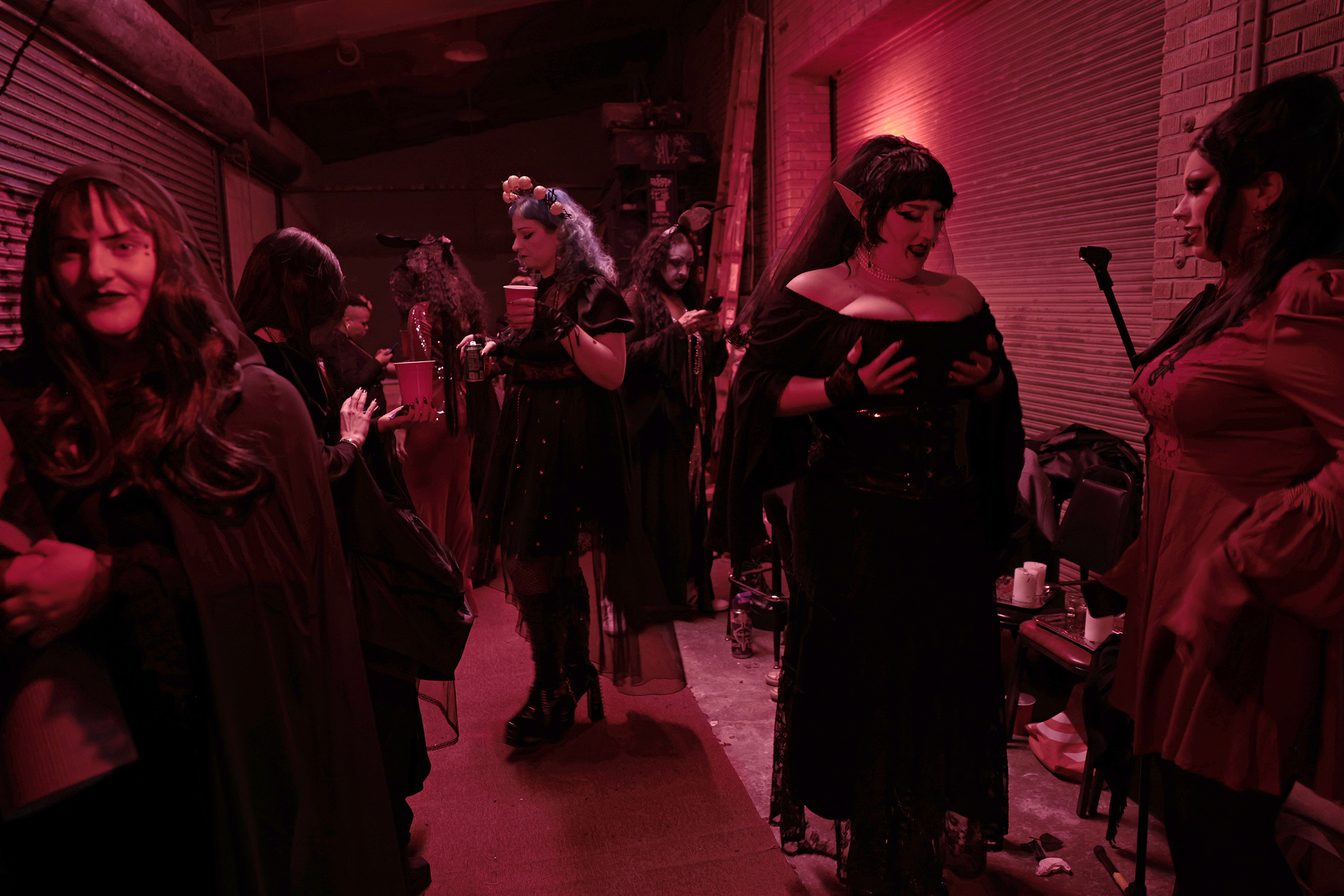
    Contestants get ready backstage to performing during the Miss American Vampire Pageant at heavy metal bar Doom.

    Judge and burlesque performer Caress Deville said Morse represented the commitment she was looking for. “I was gagged,” Deville said. “That’s exactly how you would answer if you were a real vampire.”

    During her crowning, Morse’s human mother rushed to the front of the crowd to take photos. Even vampires, it seems, yearn for mom’s approval.

    In the world of us mortals, Morse goes by Alex Decker, a 29-year-old from Bellmawr who has been drawn to vampires since she was a child. Decker lives with contamination OCD, she said, and envies the freedom of the undead.

    “Life would be a lot easier if I was a vampire who could just drink blood all the time,” Decker said. “I have been weird and creepy and insane my entire life.”

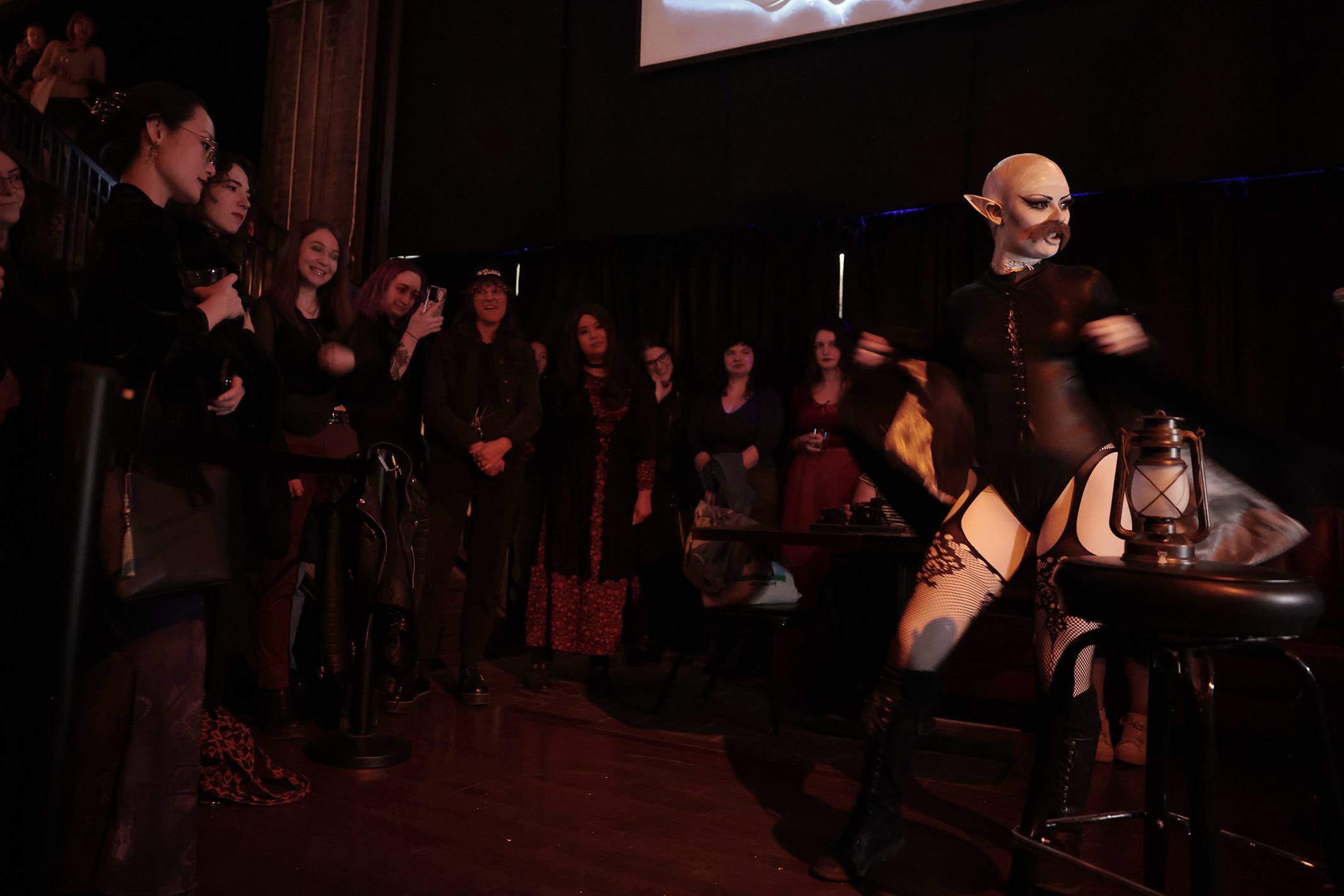
    Jenna Painter, of Willow Grove, performed as a naughty ‘Count Orlok” during the Miss American Vampire Pageant at heavy metal bar Doom, throwing off a trench coat to reveal a leotard and garters.

    Competing to be America’s next top vampire

    For some contestants, Miss American Vampire Philadelphia was an opportunity to transform their mortal selves into bolder and braver versions that were battle-tested from centuries of living.

    When Doom announced the pageant on Instagram in early October, the post received more than 4,500 likes, Delgado said, and hundreds of shares. More than 50 hopefuls sent in applications via a Google form that asked for their vampiric backstory and talent, forcing Holden and Delgado to spend hours deliberating.

    Delgado was unsurprised that the pageant took off. They were, however, shocked by the lack of trolling.

    “I didn’t know how serious everyone who applied was at first,” Delgado said. “It’s supposed to be campy.”

    On Friday, the beauty competition toed the line between a drag show and an actual Miss America preliminary. The judges pressed contestants on tough questions, such as how they choose their victims, and if it’s ethical to let them live post blood-sucking.

    For Mira Castigin, of Camden, the most important quality to look for in a vampire is fun.

    “What’s the point in being immortal if you let life pass you by?” she told the crowd.

    Castigin’s vampiric persona is Elmira, a bewitching goth girl who shares Castigin’s day job as an EMT in hopes of atoning for her sins. The competition was an excuse for Castigin to air out some special pieces from her vintage clothing collection, including a petticoat and a pair of London Underground shoes.

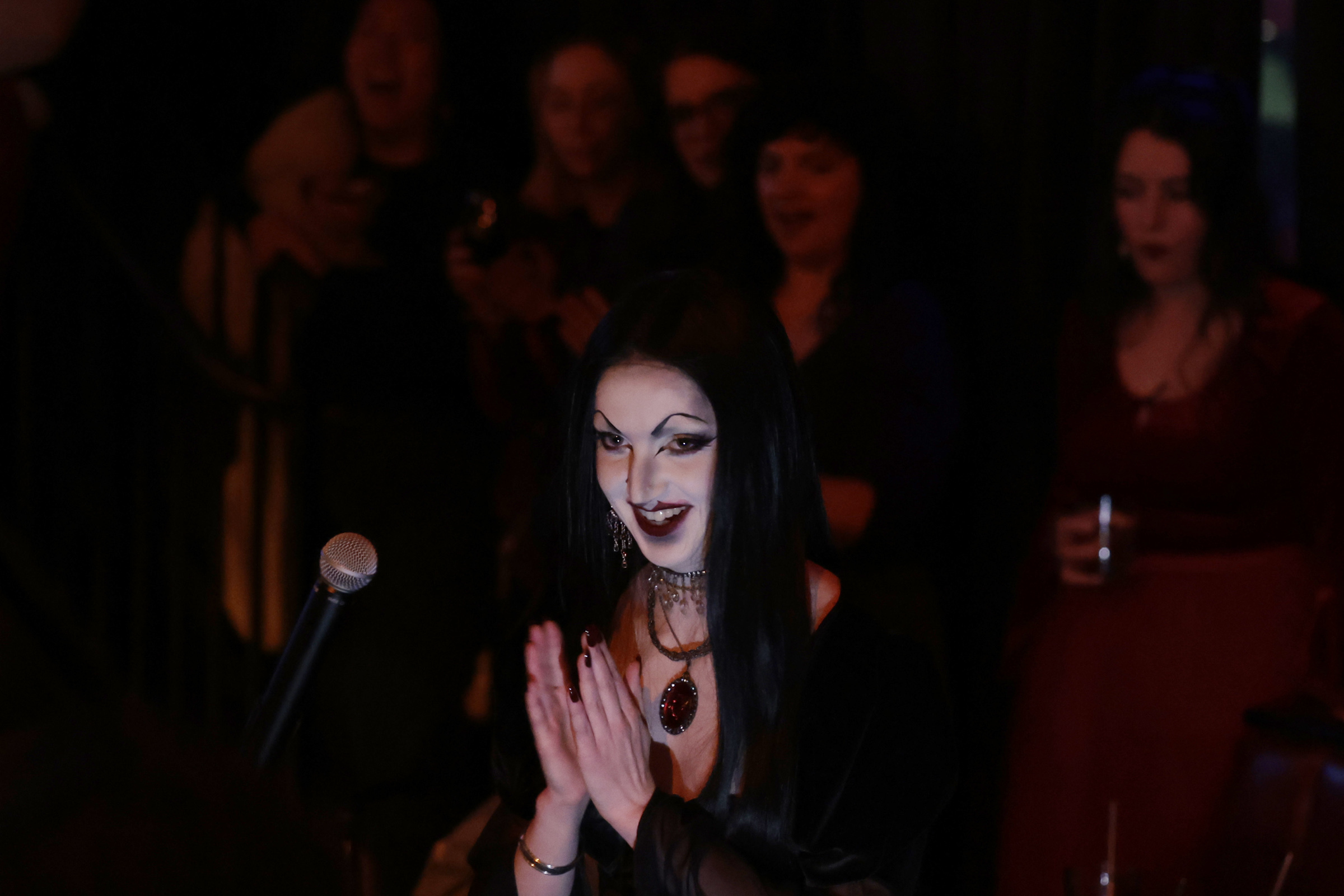
    Mira Castigin’s vamprie persona “Elmira” is applauded after performing during the Miss American Vampire Pageant at heavy metal bar Doom. For her talent, Castigin sang opera.

    “I think it’s always fun to do your makeup and get dressed up no matter what day it is,“ Castigin, 25, of Camden, said. ”And this is like a more thought-out version of that.”

    Castigin opened the talent portion by singing an operatic aria, setting up the audience for a night of bewitching tricks. One vampire played the violin, while another danced an Irish jig to a Type O Negative song. Cassius King — a silent movie star turned vampire — wowed the audience by performing feats of strength, at one point picking up his assistant and turning him upside down.

    Rachel Rushmore — aka “Vampire Rachel” of Philadelphia — waits backstage during the Miss American Vampire Pageant at heavy metal bar Doom.

    Rachel Rushmore, 34, of Fishtown, had a simpler talent, using sleight of hand to summon a tiny bat. Rushmore said she felt called to compete after 15 friends — including several who don’t even live in Philly — sent her Doom’s Instagram post.

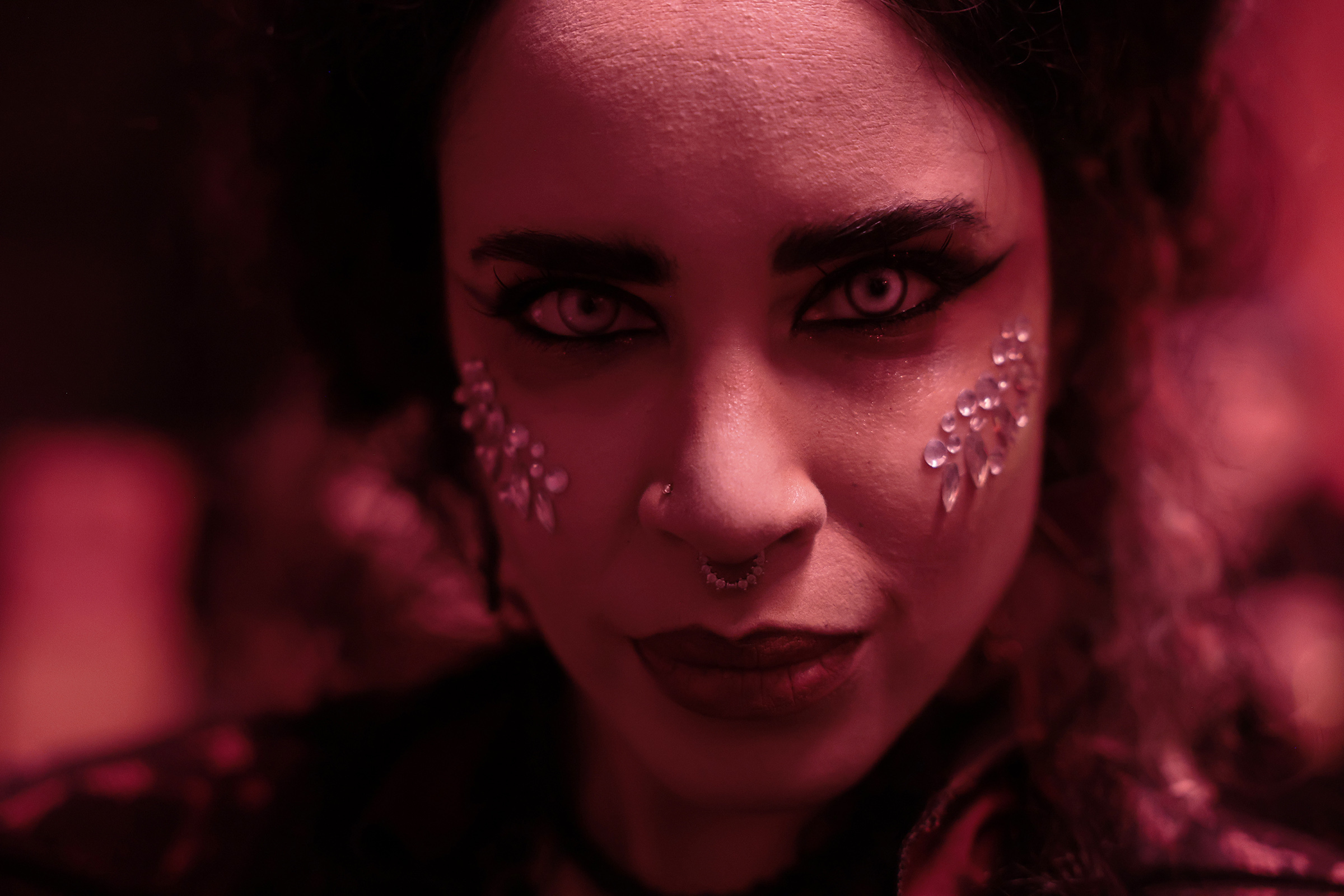
    Onstage, Rushmore transformed from mortal Rachel to Vampire Rachel, a temptress and philanthropist who had been around since “the age of powdered wigs and Ben Franklin.” Vampire Rachel wears maroon floor-length gowns and bedazzles her face with gems borrowed from Marie Antoinette. The real-life version works in children’s book publishing and had never performed in front of a crowd before.

    “I called myself Vampire Rachel because it’s hard for me to be somebody who I’m not,” Rushmore said. “Tonight I’m Rachel, but more.”

  • Inside the Neon Clown Dream Lounge, a Kensington bar that takes clowning seriously

    Inside the Neon Clown Dream Lounge, a Kensington bar that takes clowning seriously

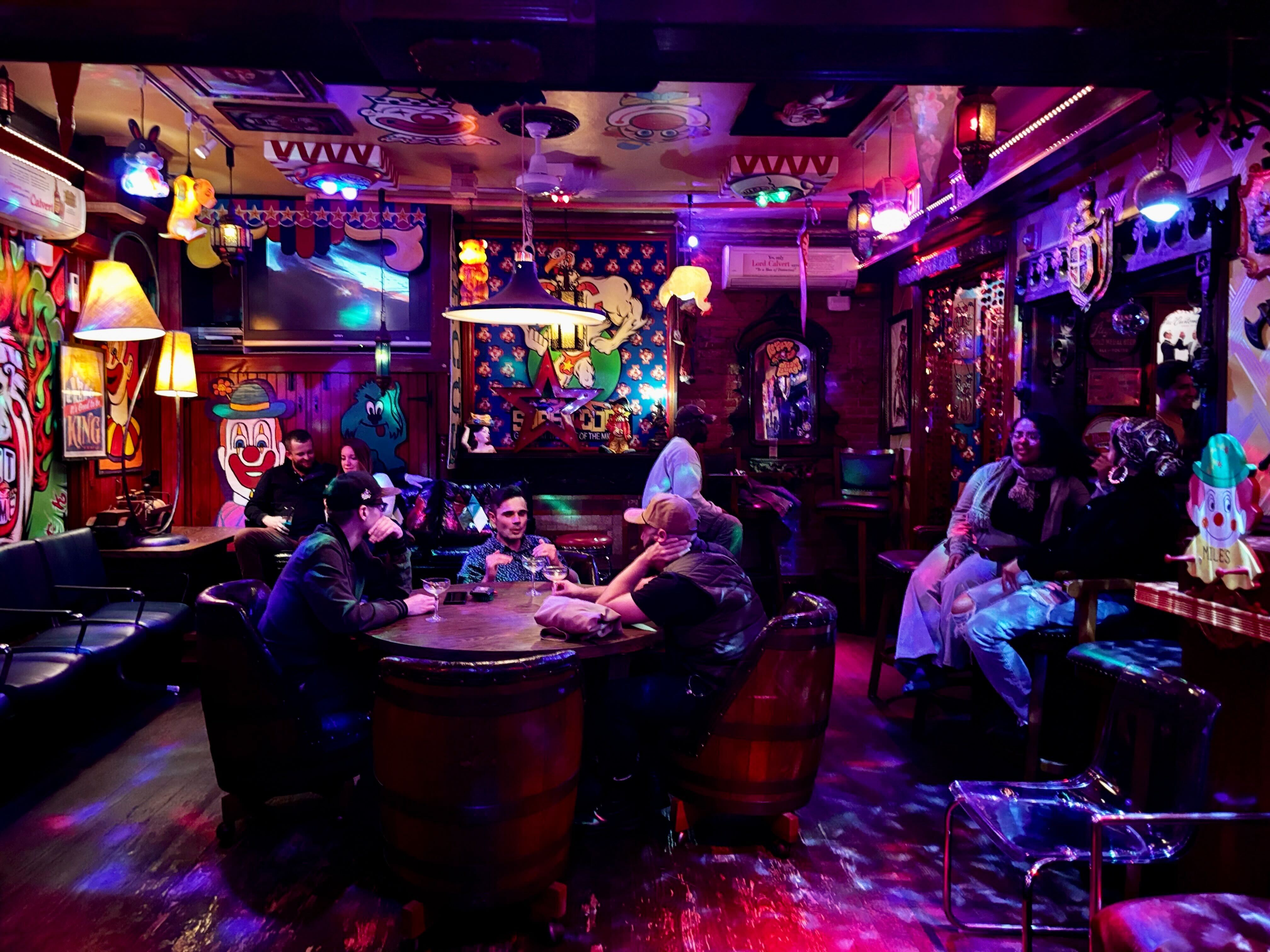
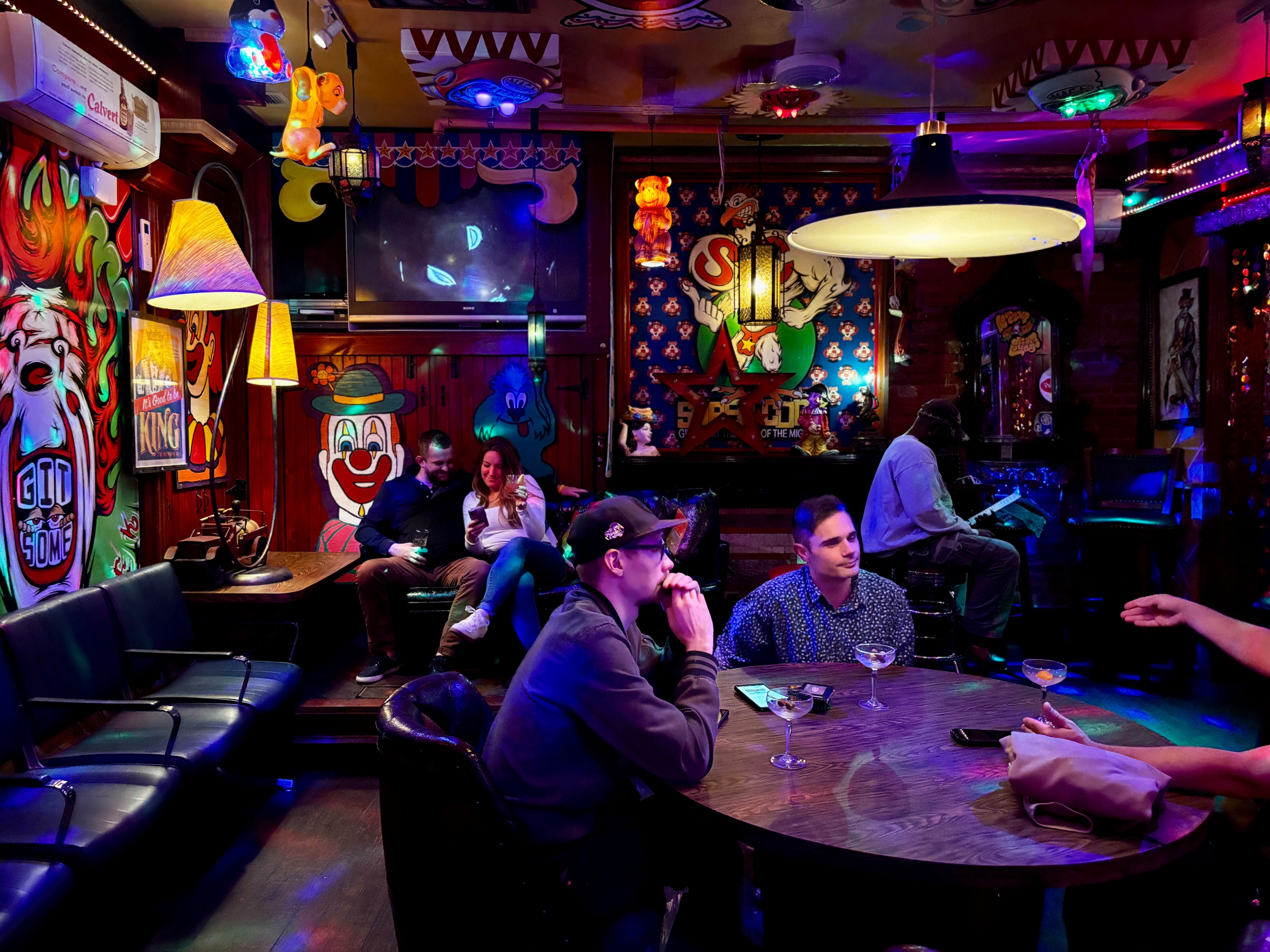
    If you’re looking to clown around, look no further: Philadelphia’s quirkiest bar is a cross between a retro living room, an amusement park’s dumpster, and a clown collector’s dream.

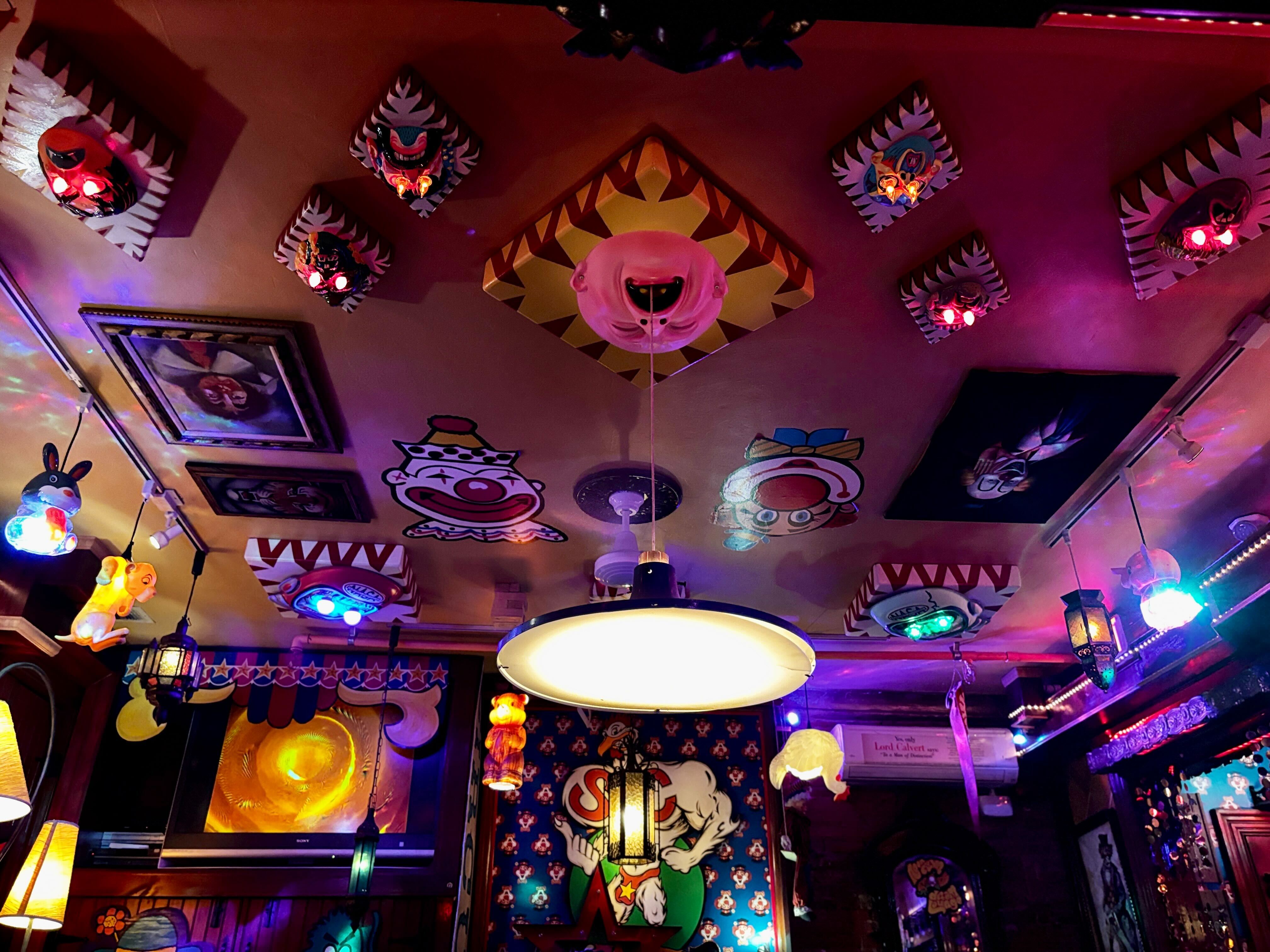
    Located above Kensington bar Kung Fu Necktie at 1248 N. Front St., the Neon Clown Dream Lounge has roughly 120 salvaged works of clown art competing for attention across the walls, the counters, and even the ceilings.

    And yet, the bars’ owner — a man who would only refer to himself as Chicken (real name James Herman) — said the Neon Clown is not a shrine to the professional red-nosed jokers, despite its name and decor. Rather, Philly’s clown lounge is an ode to a few of Chicken’s favorite things: art deco furnishings, upcycled industrial trash, and a touch of clownery.

    Chicken’s clown fascination began in the 1990s when he was building his career as an artist and gallerist inspired by Bernard Buffet, a French expressionist painter whose work often depicted downtrodden and almost skeletal clowns. Since then, the painted jokesters have flitted in and out of Chicken’s life. They became subjects of his own art and a bit for his band, Plaque Marks, which performs in full clown suits.

    The main dining area inside Kensington’s Neon Clown Dream Lounge, which owner Chicken estimates contains roughly 120 different clowns.

    “How can you cancel a clown?” Chicken, 64, said while knocking back his first of several tequila and ouzo cocktails over a recent interview. “There’s no prospect of offending anybody with a clown … Some people love them and some people dislike them, but there’s still a level of whimsy.”

    The second-story space served as Kung Fu Necktie’s no-frills music venue until 2018, when Chicken said a Department of Licenses and Inspections officer ordered the second floor to close. The closure — coupled with the pandemic — gave the Kung Fu Necktie owner what he called the “perfect” opportunity to make something useful out of the salvaged wares he’d been collecting for decades from abandoned churches, condemned buildings, and going-out-of-business sales at theme parks.

    When the Neon Clown Lounge opened in September 2024, it “was like a relief valve,” Chicken said. “I’ve had some of this s— for 30 years.”

    @rochestermeetsphilly Neon Clown Dream Lounge, you were first up. Any suggestions for cool bars/bars that decorate for Halloween in Philly is appreciated ✨ #NeonClownDreamLounge #PhillyBars #BarsInPhilly #Philly #Philadelphia ♬ original sound – Rayven | Philly Creator

    The clown bar was an apartment before it was anything else. The living room was replaced by the bar’s main seating area, where a leather couch and a row of vintage seating from one of LaGuardia Airport’s lounges sit beneath a cluster of clown masks Chicken retrofitted into ambient light fixtures. The parlor was knocked out in favor of a stage paneled with leftover wood from a now-demolished house on Front Street; the room is outfitted with a disco light that spins above couches fit for a conversation pit.

    The rest of the space is peppered with clown portraits and figurines both large and small, including a trio of eerily childlike wooden cutouts Chicken purchased from Obnoxious Antiques, a warehouse that mines amusement parks for treasure in Burlington, New Jersey.

    There’s no criteria for what makes a good piece of clownery, Chicken said, other than that it captures the aura of the 1970s. The decade was a golden age for clowns in popular culture, not long after Barnum & Bailey opened the first clown college to train people to emulate characters like Bozo and Ronald McDonald.

    The ceiling of Kensington’s Neon Clown Dream Lounge is covered with clown masks that owner Chicken retrofitted into lighting fixtures.

    “I could’ve put out a bunch of crap you can buy at the dollar store,” said Chicken. “We want stuff that’s one-of-one and authentic. Something that is of the era, not replicated.”

    A space for clowns, tended by the ‘clown neutral’

    Bar manager Evan Madden — who self-identifies as “clown neutral” — said he tries to imbue the drinks program with the energy of a clown. Both, after all, are very serious about doing what some consider unserious work.

    The Neon Clown Dream Lounge never has a cover, and the only food on offer are $2 hot dogs. The drink menu has 12 cocktails with names that conjure up images of killer clowns and carnival food, like “Endless Nightmare,” “Witching Hour,” or “Tropical Hot Dog Too.”

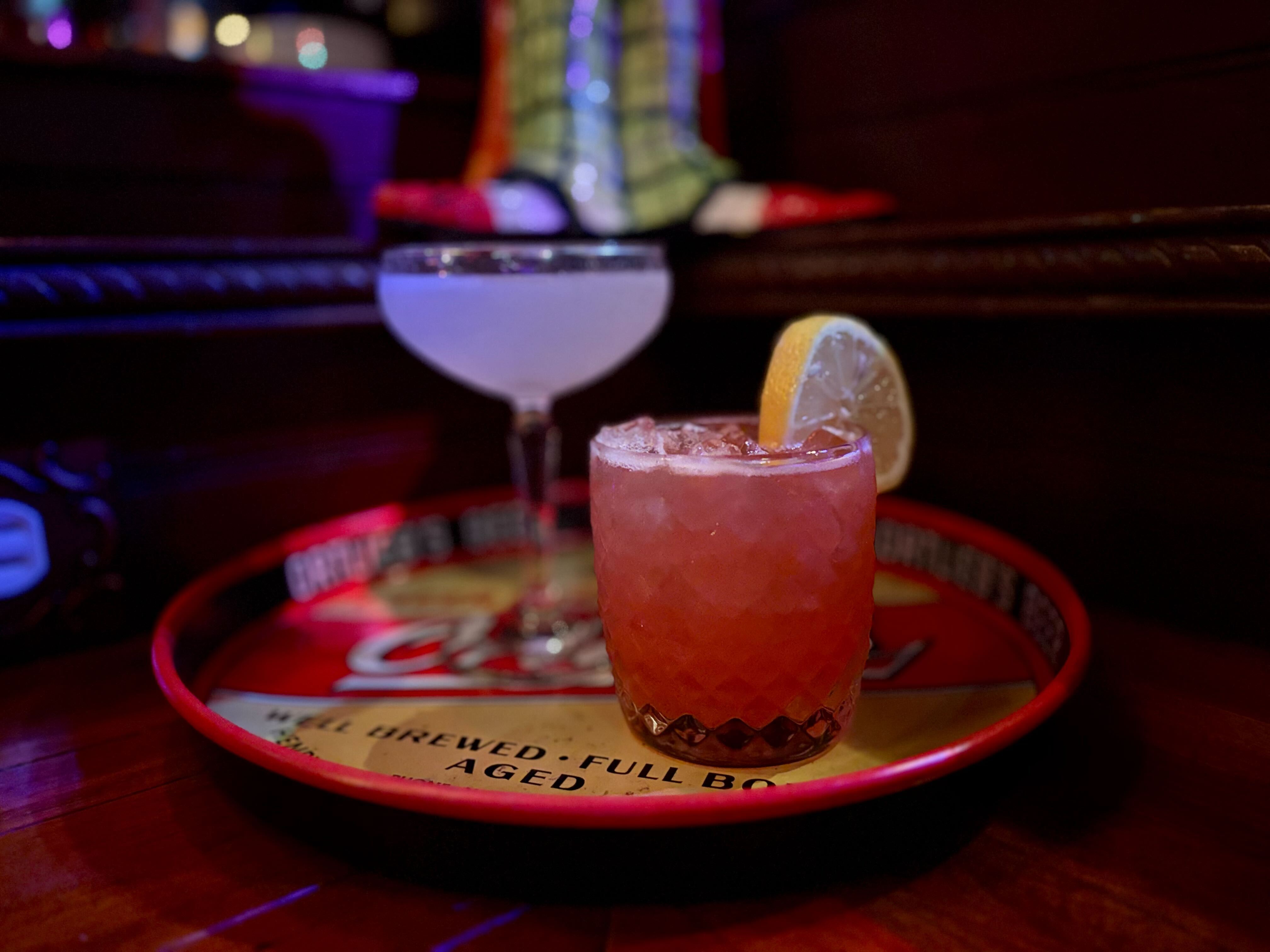
    The Tropical Hot Dog Too (left) and Endless Nightmare (right) cocktails from Neon Clown Dream Lounge.

    The Endless Nightmare is the lounge’s house margarita and uses Espolón tequila that Madden says spends just under a week marinating in a pineapple-lime mixture; on good weeks, the bar goes through six to eight 25-ounce bottles of the mix. The Witching Hour comes across as a spiked coffee, combining cold brew with rum, amaretto, mint extract, and a shot of dry Curacao for a citrus-y aftertaste. Tropical Hot Dog Too mixes smoky mezcal with a vermouth that spends hours steeping in a mixture of chilies, limes, and grapefruit liqueur.

    Roughly once a month, Madden said, a group of clowns will sit at the bar in full costume and imbibe. “They’re appreciative of the space,” he continued. “There’s not a lot of clown bars in Philadelphia.”

    Nearly every piece of decor inside the Neon Clown Dream Lounge has been thrifted or salvaged from abandoned homes, churches, or amusement parks.

    Or anywhere, really. Outside of Philadelphia, the clown lounge’s only competition in the United States is Creepy’s in Portland, Ore., which has animatronic dolls and pinball, but only a fraction of Chicken’s clowns.

    Still, not everyone is a fan, said Chicken: When the bar first opened, one customer left a review saying there weren’t enough clowns. Tough nuts, Chicken said with another cocktail in hand.

    The clown lounge is “like a sanctuary … a safe zone,” Chicken said. “We want to make the space feel open and comfortable.”