Category: Craig LaBan

  • A Delco restaurant gem is born, fueled by Mexican family flavors

    A Delco restaurant gem is born, fueled by Mexican family flavors

    There is something magical about the mole poblano at Tlali in Upper Darby, but it took me a moment to register what it is.

    The Sandoval family’s mole, at first glance, is as deep a brown as any other you might have encountered from the state of Puebla, the result of a blend of dried chilies, fruits, and bittersweet Mexican chocolate. But when I swipe a juicy morsel of prime seared rib eye through the luxuriously dark puree, what I’m struck by is its ethereal lightness, both of the texture and the complexity of flavors. It’s so elegantly balanced, I taste each note — the smoky dry heat of chipotle meco peppers in the background, the fruity sweetness of ripe plantains and raisins, the nutty richness of walnuts and sesame seeds, a whiff of canela and bay leaf — all flowing into one earthy harmony of measured sweetness and spice.

    What I’m tasting here, in fact, is Alberto Sandoval’s memory as a 10-year-old come to life. He vividly recalls the moment when his mother, Teresa Hernandez, was cooking that same mole for his father’s birthday in San Mateo Ozolco and held up a spoonful for Alberto to see.

    “Your mole has to be this consistency — really light, not too thick, not too spicy. This is a good mole.”

    Decades later, after a career rising through the ranks of some of Philadelphia’s most vaunted kitchens, including Striped Bass, Lacroix at the Rittenhouse, Le Bec Fin 2.0, Volvèr, Suraya, and Condesa, he and his brother, Efrain, are leaning into those memories of home for the menu at Tlali.

    “These recipes represent who we are and where we came from,” says Alberto.
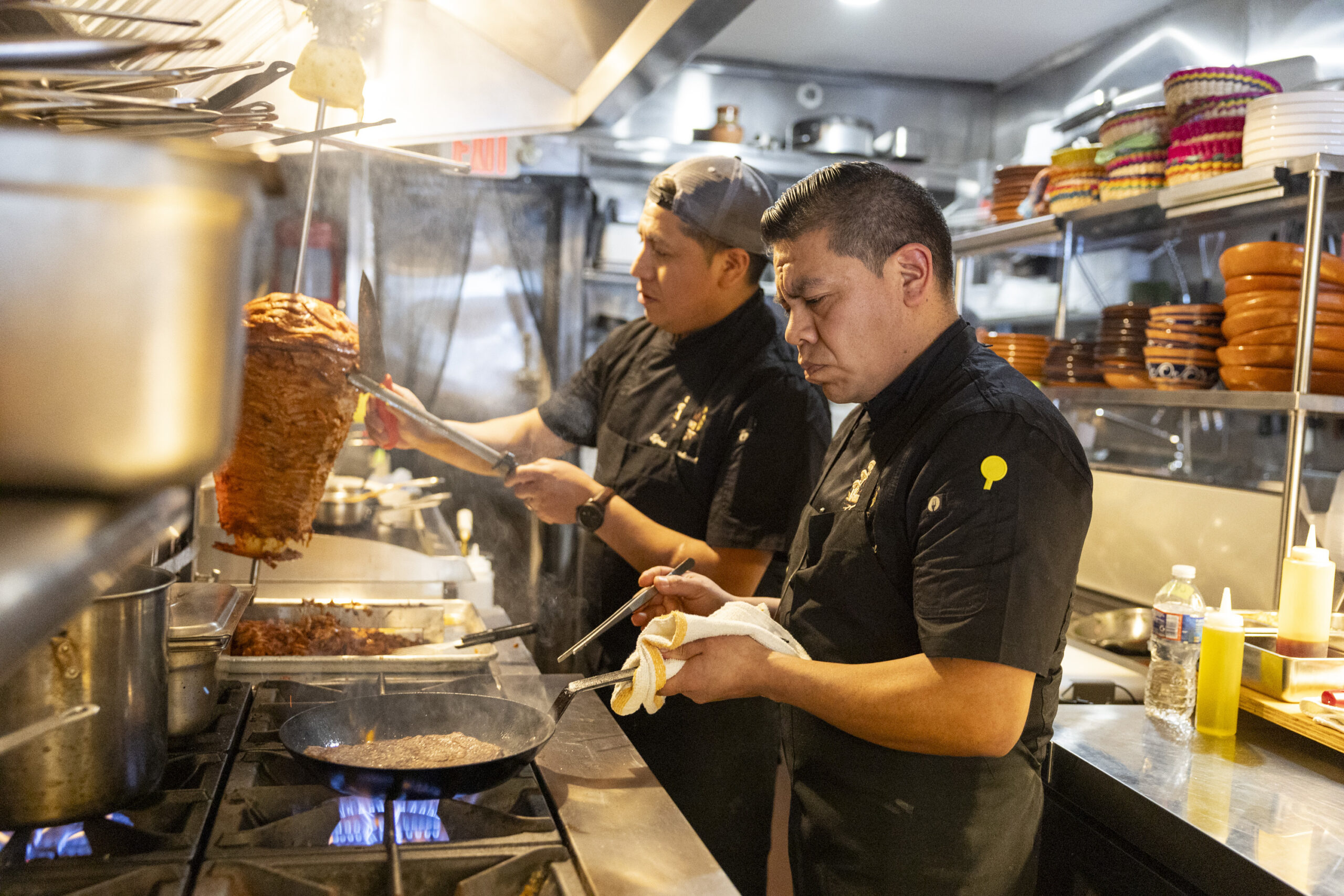
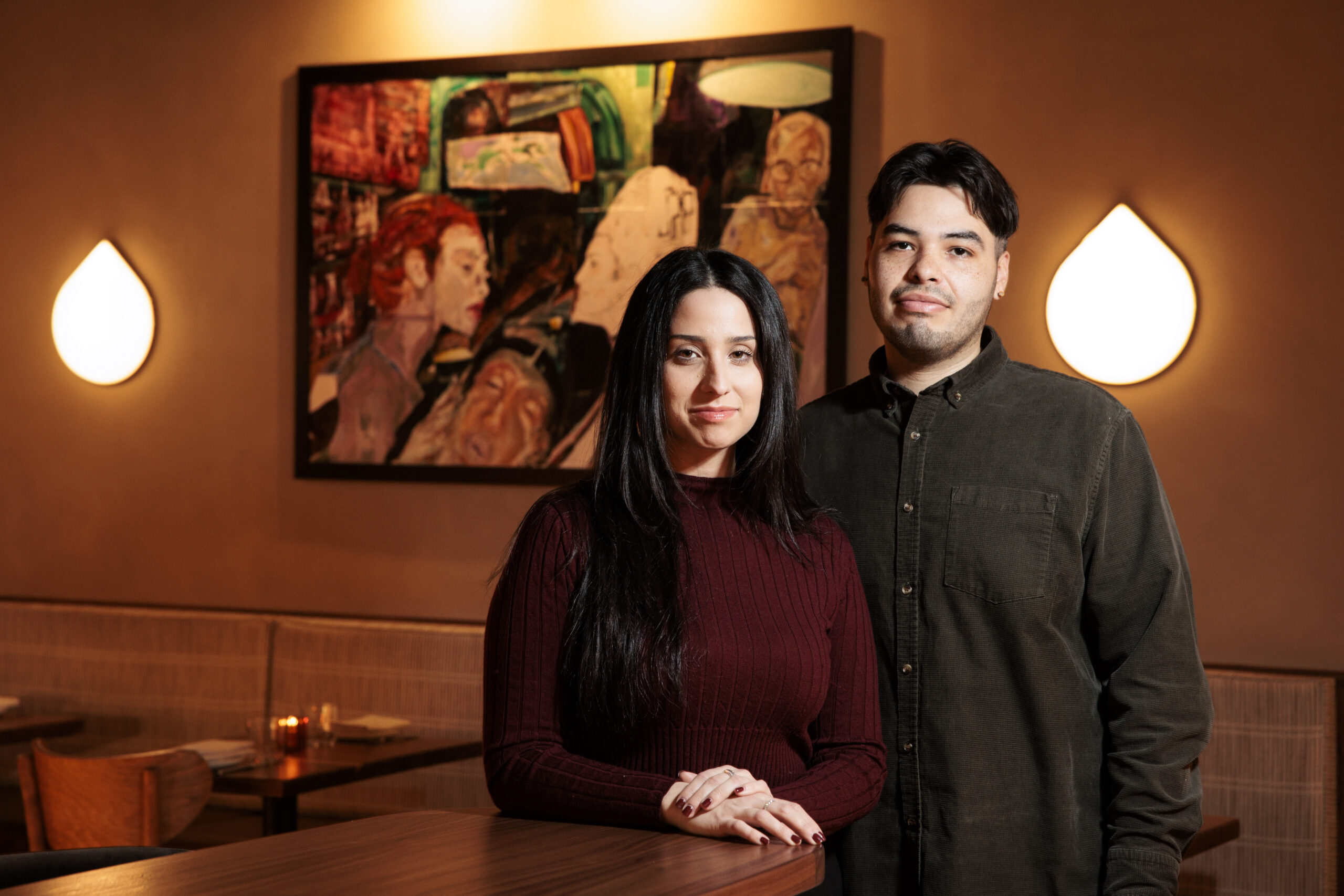
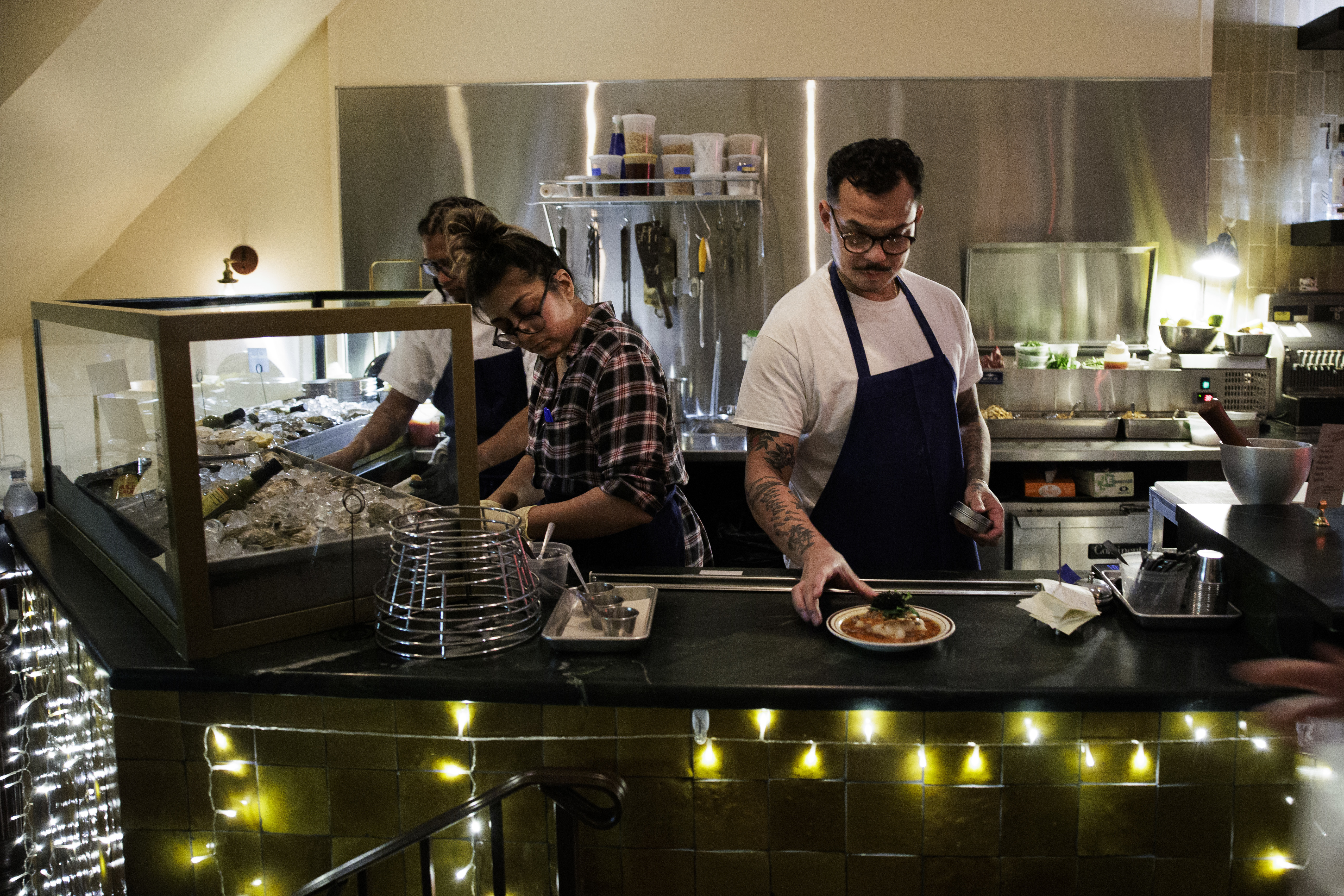
    Alberto Sandoval (right), chef and co-owner of Tlali, and his brother and partner, Efrain Sandoval, working in the kitchen preparing a dish in Upper Darby Pa., on Thursday, Feb. 5, 2026.
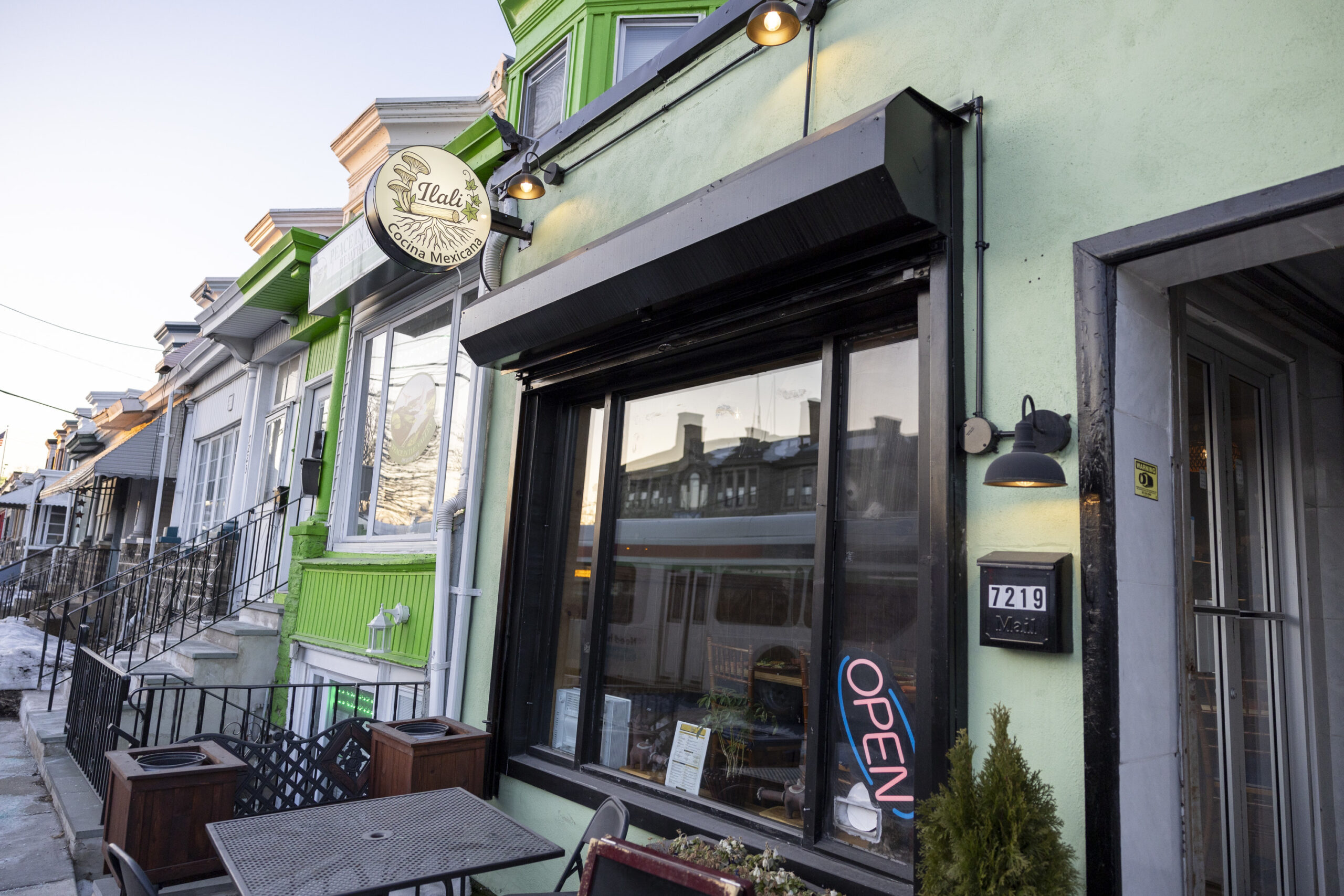
    The outside of Tlali in Upper Darby Pa., on Thursday, Feb. 5, 2026.

    The base of that mole — which their mother still makes over the course of two days in Mexico and sends to her sons, who rehydrate and simmer it to completion with chicken stock — is only the beginning. Everything about this charming 18-seat BYOB the brothers opened in August inside a renovated pizzeria is a tribute to their birthplace in San Mateo Ozolco, the tiny town on the side of an active volcano in Puebla from which much of South Philly’s Mexican population immigrated. There’s an image of Popocatépetl, its volcanic peak ever fuming, depicted on a colorful woven mat that hangs above the open kitchen here. The hand-painted terra cotta ceramics that decorate the walls and deliver the food were all imported from Puebla.

    The brothers have cut no corners in crafting the flavors on this menu, especially with another key building block: the tortillas. They are patiently made from blue and yellow heirloom Mexican corn that’s nixtamalized overnight then ground into fresh masa, resulting in pressed tortillas that have a velvety suppleness when cooked to order off the plancha.
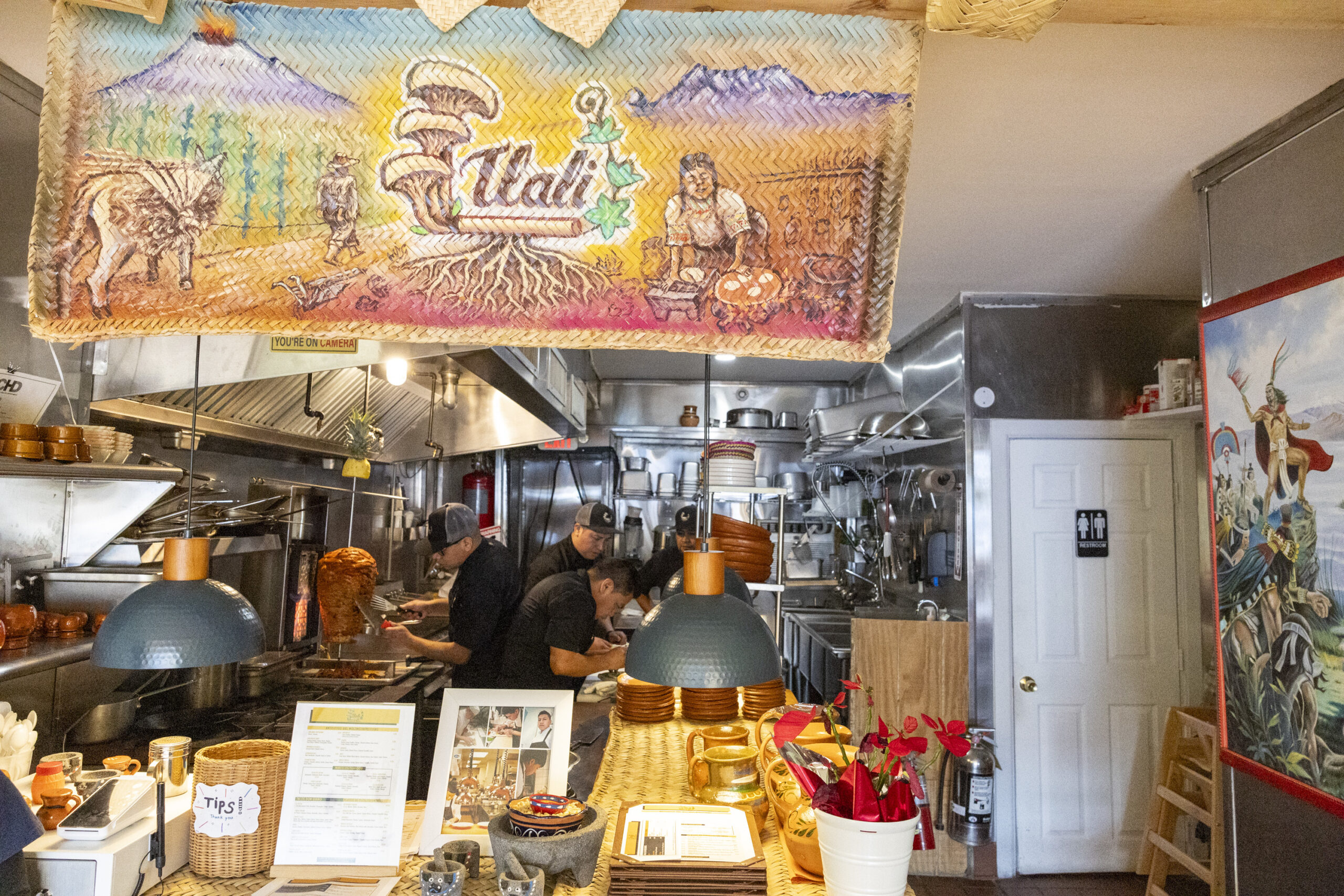
    Alberto Sandoval, Chef and Owner of Tlali, is with his brothers working at their restaurant in Upper Darby Pa., on Thursday, Feb. 5, 2026.

    You can taste this in the enmoladas, in which the tortillas are coated in that mole before being folded into half-moon bundles over tender shreds of chicken. The tortilla’s toasty corn flavor also powers the bright orange puree of Tlali’s tortilla soup. They’re fried into shatteringly crisp rounds for antojito starters like the irresistible mashed-to-order guacamole and tostadas topped with chipotle-stewed chicken tinga.

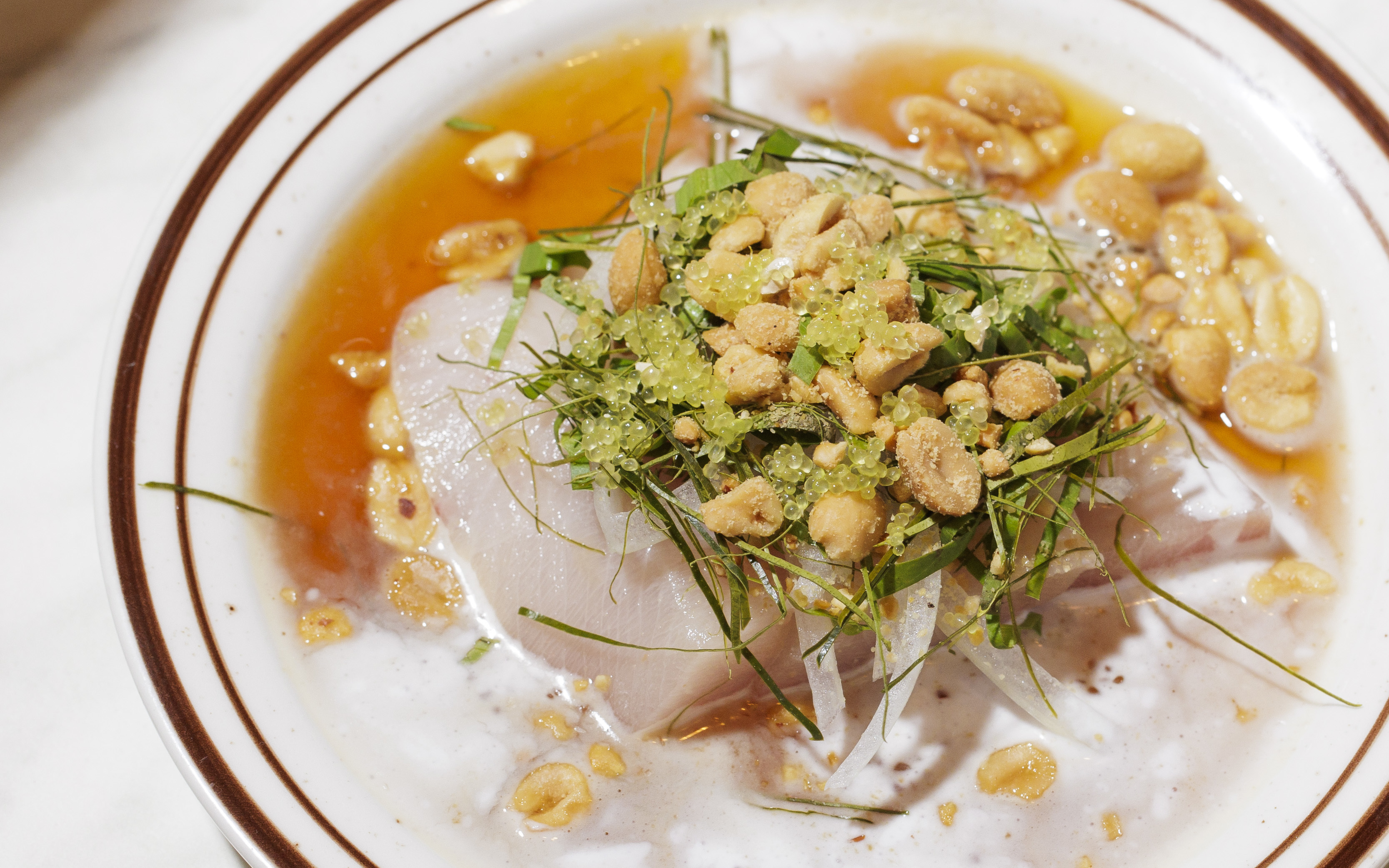
    Those crispy discs also accompany the striking aguachile negro, making the perfect cracker on which to layer slices of raw kanpachi that have been bathed in a spicy brew of citrus and olive oil tinted black with charred habaneros and onions. Scattered with green tufts of cilantro and crunchy matchsticks of radish, it’s the single most refreshing starter on a list of other seafood cocktails that are solid but lack a little spark. A notable exception was Dorito Nayarit, in which poached shrimp striped with Valentina hot sauce and crema are served atop crispy pork belly crackers known as chicharrónes preparados. (A tuna tostada topped with a spoonful of frumpy poached tuna salad, though, was the one dish at Tlali where the extra-homey approach left me truly underwhelmed.)
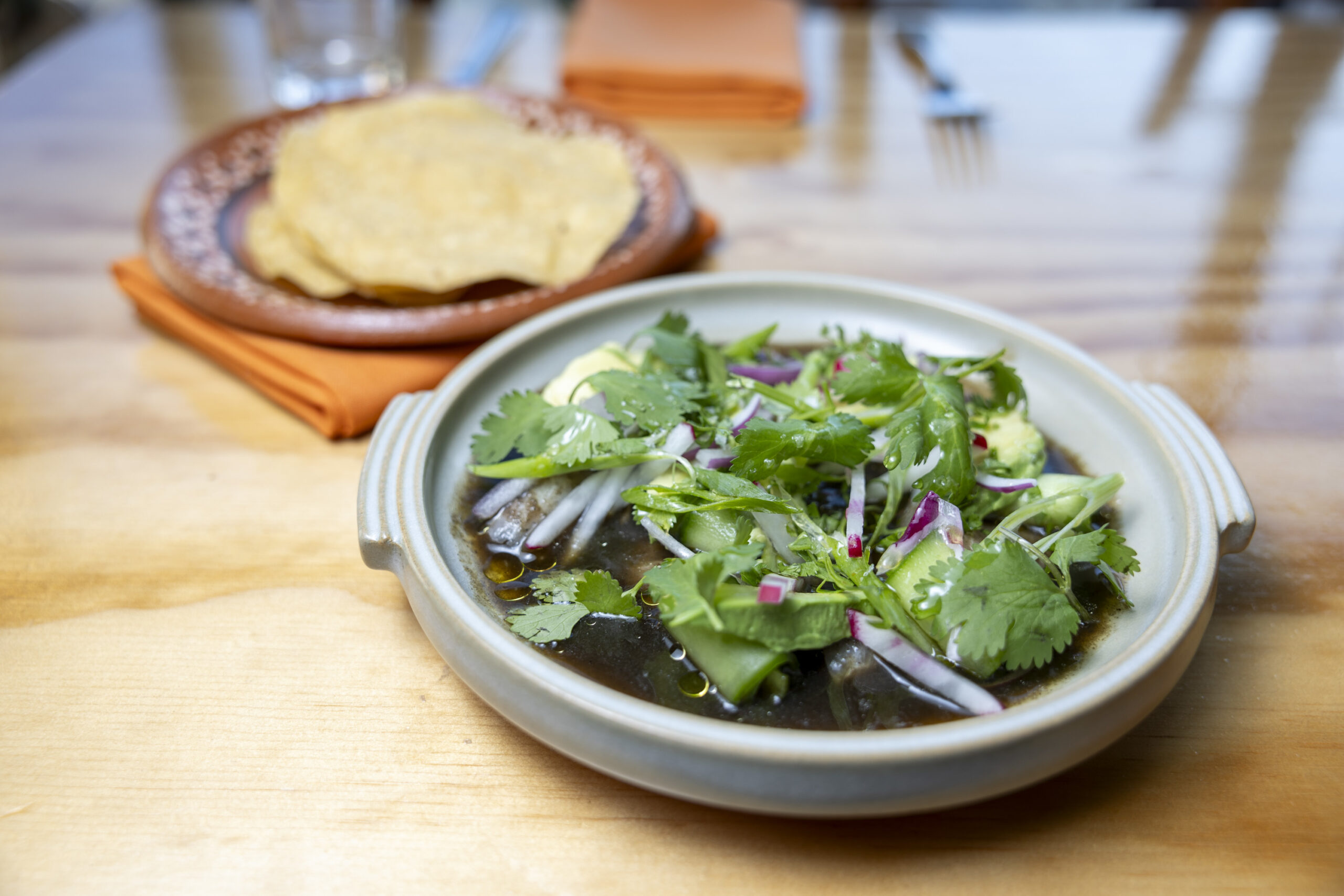
    The aguachile negro at Tlali in Upper Darby Pa., on Thursday, Feb. 5, 2026.

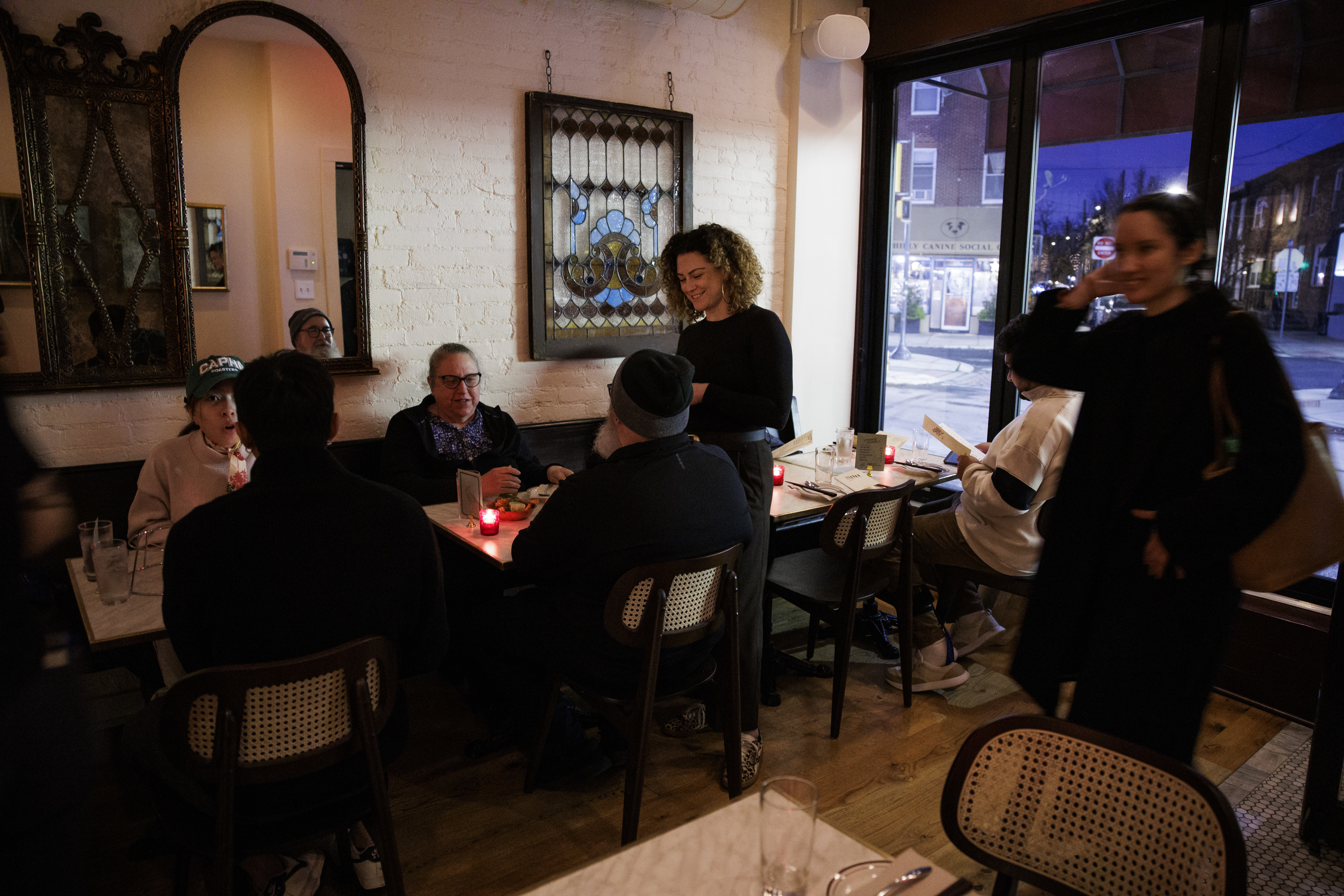
    Tlali, which means “land” in Nahuatl, the Indigenous language of Puebla, occupies a simple space on West Chester Pike that took a significant investment to completely rehab. It lacks the design frills of the high-style dining rooms where the brothers have largely worked, including Stephen Starr’s LMNO, where Alberto is still the chef de cuisine. There is nonetheless a comforting warmth to the pale green walls and natural wood wainscoting in Tlali’s dining room, bolstered by hospitality from the restaurant’s single server, Melanie Ortiz. She deftly sorted out a sticky situation by convincing a couple to move to a two-top after she’d accidentally sat them at the only remaining table reserved for a party of four (which happened to be us).

    It’s clear from the many emails and messages I’ve received since this restaurant opened in Upper Darby — a multicultural nexus of international dining, but not previously known for Mexican food — that Tlali has a devoted clientele rooting for it to succeed.

    Alberto Sandoval, chef and owner of Tlali, with his family members in Upper Darby Pa., on Thursday, Feb. 5, 2026.

    After diving much deeper into the menu, it’s easy to see why. Tlali is in many ways a sequel to the small restaurant the two brothers used to co-own in South Philadelphia, La Fonda de Teresita, which closed during the pandemic. But the Sandovals have both since continued to grow as chefs and have taken their pursuit of family flavors to the next level. That includes a tribute to their father, Don Guero, who ran a taqueria in Mexico City by the same name where Alberto got his first taste of kitchen life as a teen mincing mountains of onions and cilantro.

    Don Guero’s recipe for Chilango-style carnitas — whose pork belly and shoulder are simmered for hours in a large copper cazo pot bubbling with lard, orange juice, Coca-Cola, and herbs — produces meltingly soft, flavorful carnitas that are among the best I’ve had. But even that takes second place to the al pastor, a vertical spit of stacked pork shoulder marinated with three kinds of chilies, pineapple juice, achiote, and bay leaves; the pork roasts on a turning trompo fueled by real fire that flows through the perforated bricks that Don Guero himself gifted them from Mexico shortly before he died two years ago. The family taqueria lives on here.
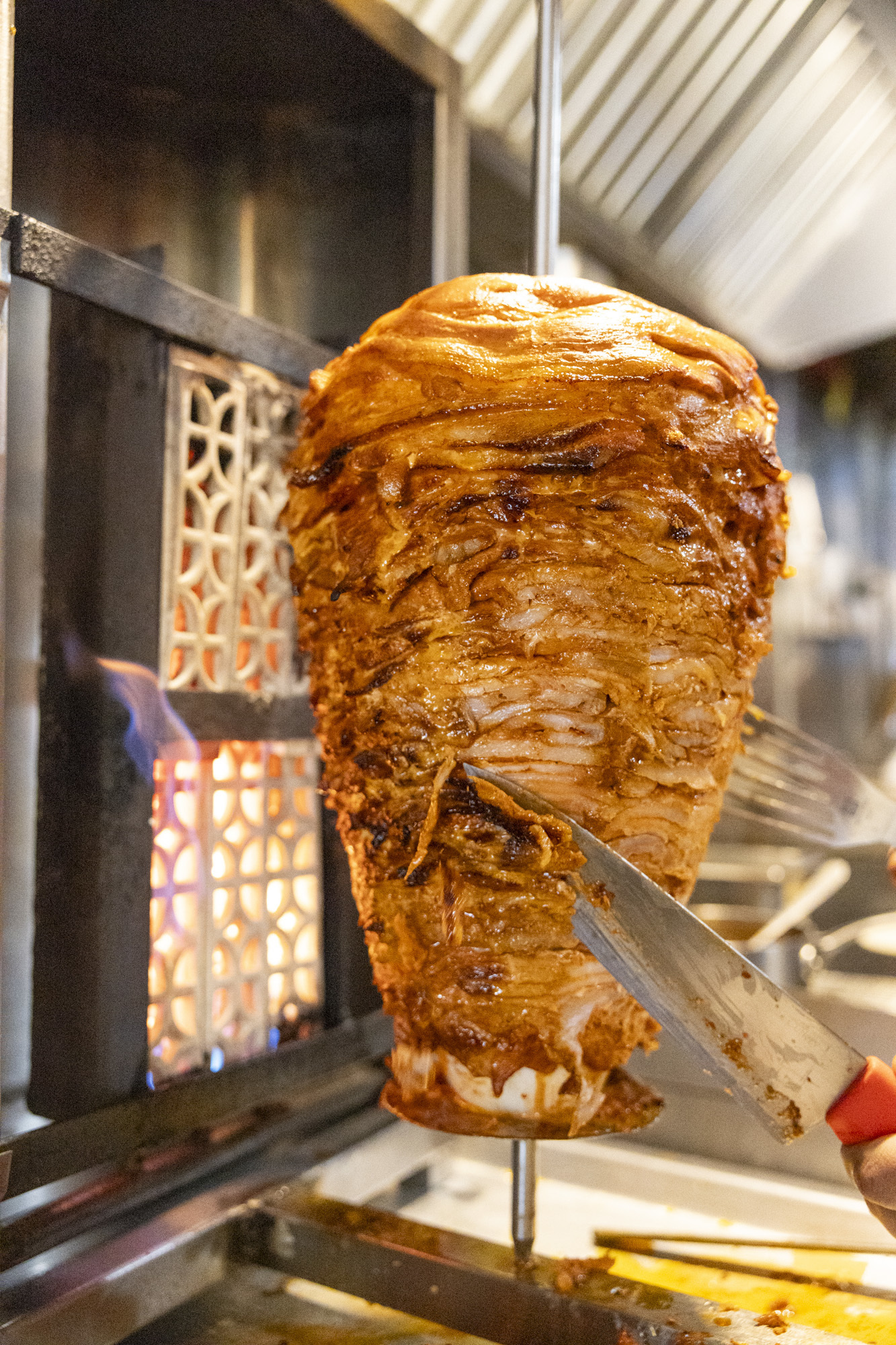
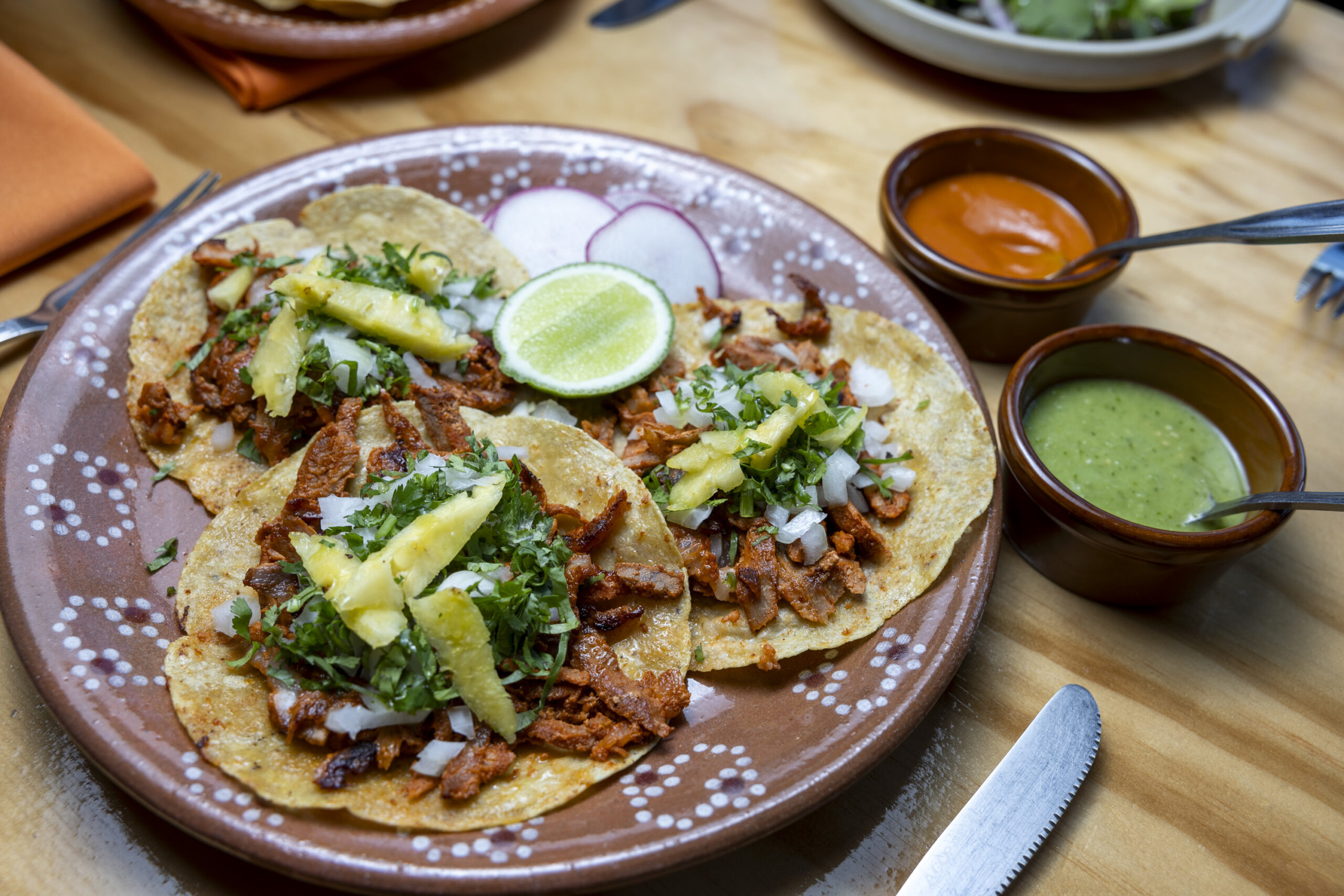
    The al pastor used for the tacos at Tlali in Upper Darby Pa., on Thursday, Feb. 5, 2026.
    The al pastor tacos at Tlali in Upper Darby Pa., on Thursday, Feb. 5, 2026.

    The entree section of the menu noted as “Platos de Ozolco” offers a handful of other standout dishes that showcase the brothers’ hometown flavors in both traditional and modern ways. I was especially fond of the classic mixiote: When the maguey leaf-wrapped bundle of steamed chicken rubbed in adobo spice was cut open tableside, the fragrant cloud of guajillo-scented steam that enveloped us brought me straight back to my own 2023 visit to San Mateo with chef Dionicio Jiménez of Cantina La Martina, where mixiote was the first thing we were served at his mother’s home — the ultimate dish to welcome a special guest.

    I was also intrigued to see Alberto and Efrain stretch their chef chops to reinterpret traditional flavors in inventive ways. That includes the michmole, which steeps a dried fish from Puebla in a tomatillo-chile salsa for deep marine flavor, then discards the bony remains for a golden sauce that gets topped with nopales and a gorgeous fillet of pan-roasted branzino (also lightly brined) to retain just enough of the traditional dish’s brackish edge.
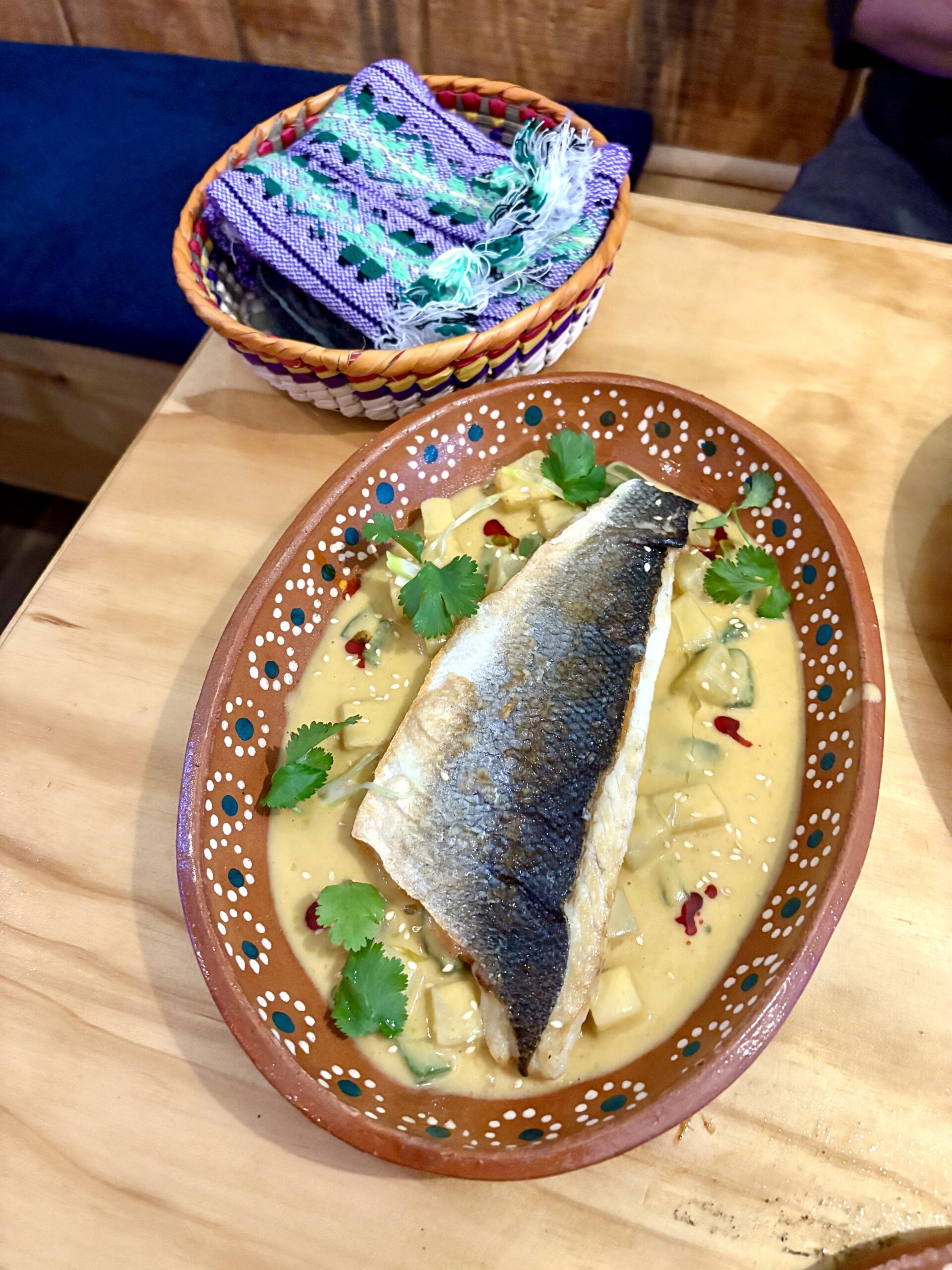
    A fillet of branzino is served over a seafood michmole sauce with cactus and potatoes at Tlali in Upper Darby.

    Another distinctive offering pairs the chefs’ love of fresh pasta with head-on shrimp and a zesty ragù of house chorizo simmered in a lightly creamed chipotle salsa. It’s a unique dish that bridges the Sandoval brothers’ origin story with their current status as longtime contributors to Philadelphia’s contemporary dining scene. As they continue to grow their audience in this tiny Upper Darby dining room, I wouldn’t be surprised if more such creations appear.

    I have no doubt that those future plates will remain somehow rooted in the memories of their mother’s table in San Mateo Ozolco, which not only give Tlali’s owners a proud reservoir of traditions, but an elusively distinctive and delicate family touch that will always be their own.
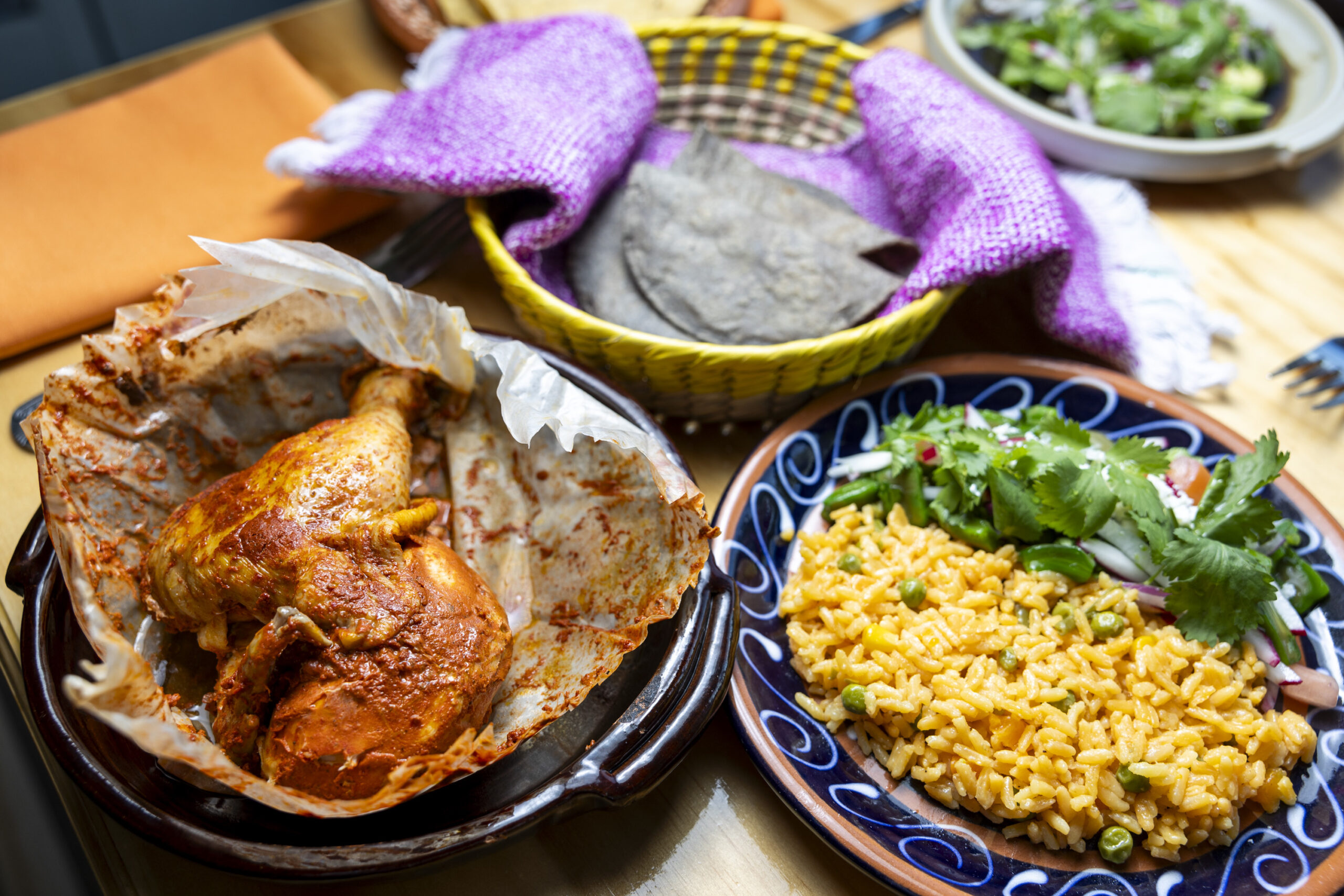
    The mixiote at Tlali in Upper Darby Pa., on Thursday, Feb. 5, 2026.

    Tlali

    7219 West Chester Pike, Upper Darby Township, 484-466-3593, instagram.com/tlalirestaurante

    Full menu served daily, noon to 10 p.m.

    Entrees, $12-$38

    BYOB

    Street parking only.

    Not wheelchair accessible. There are two steps at the entrance and the narrow bathroom is not accessible.

    Almost the entire menu is gluten-free, except for the cemita sandwiches.

    Menu highlights: guacamole; empanadas; albóndigas; sopes; sopa de tortilla; aguachile negro; coctel de campechano (shrimp and octopus); tacos al pastor; carnitas tacos al estilo Chilango; res en mole Poblano; huarache Teresita; mixiotes de pollo; michmole; pappardelle with shrimp en chorizo ragù.
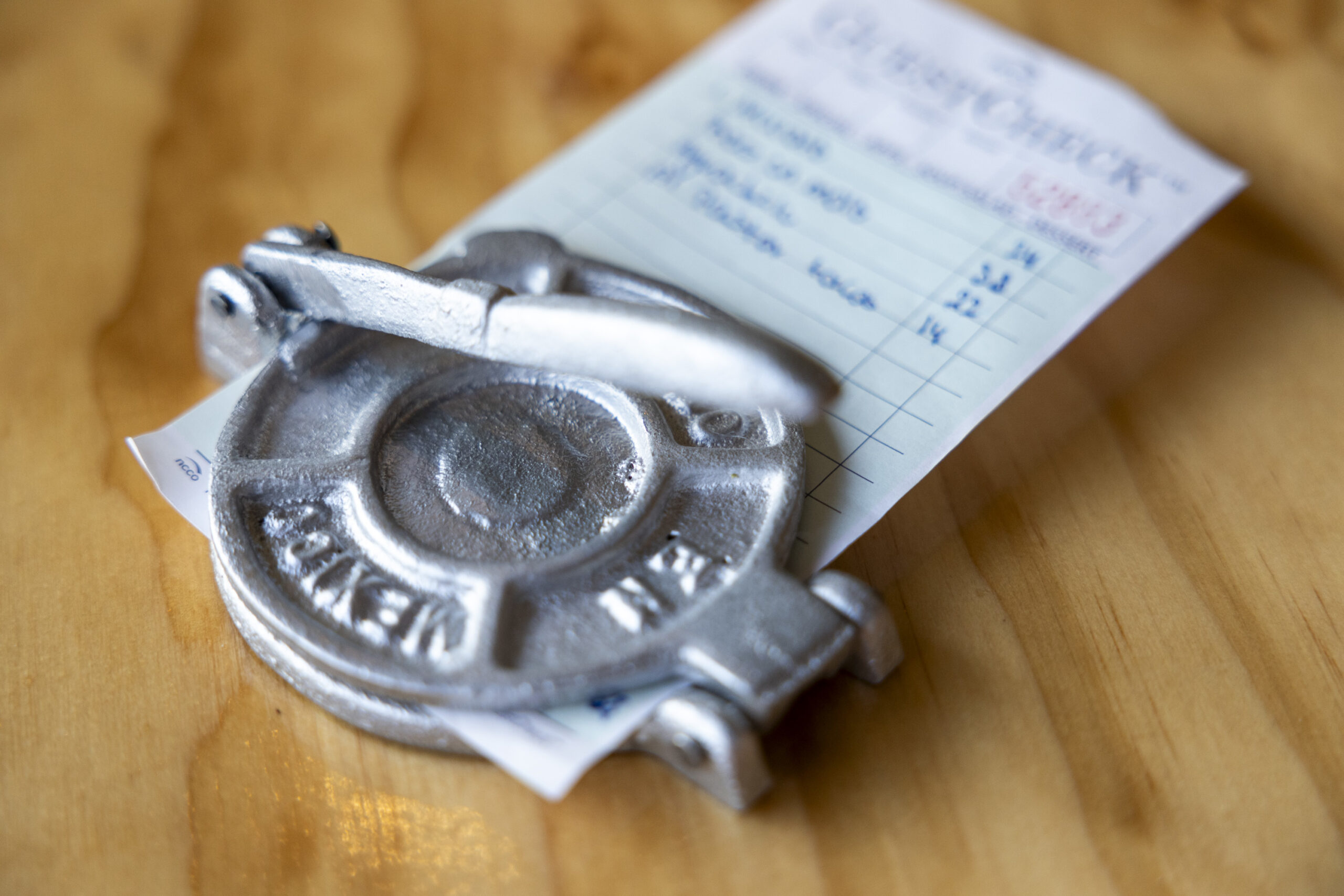
    A tiny tortilla press used for the dinner checks at Tlali in Upper Darby Pa., on Thursday, Feb. 5, 2026.
  • A South Philly garage is reborn as a date-night destination for oysters, cocktails, and polished vibes

    A South Philly garage is reborn as a date-night destination for oysters, cocktails, and polished vibes

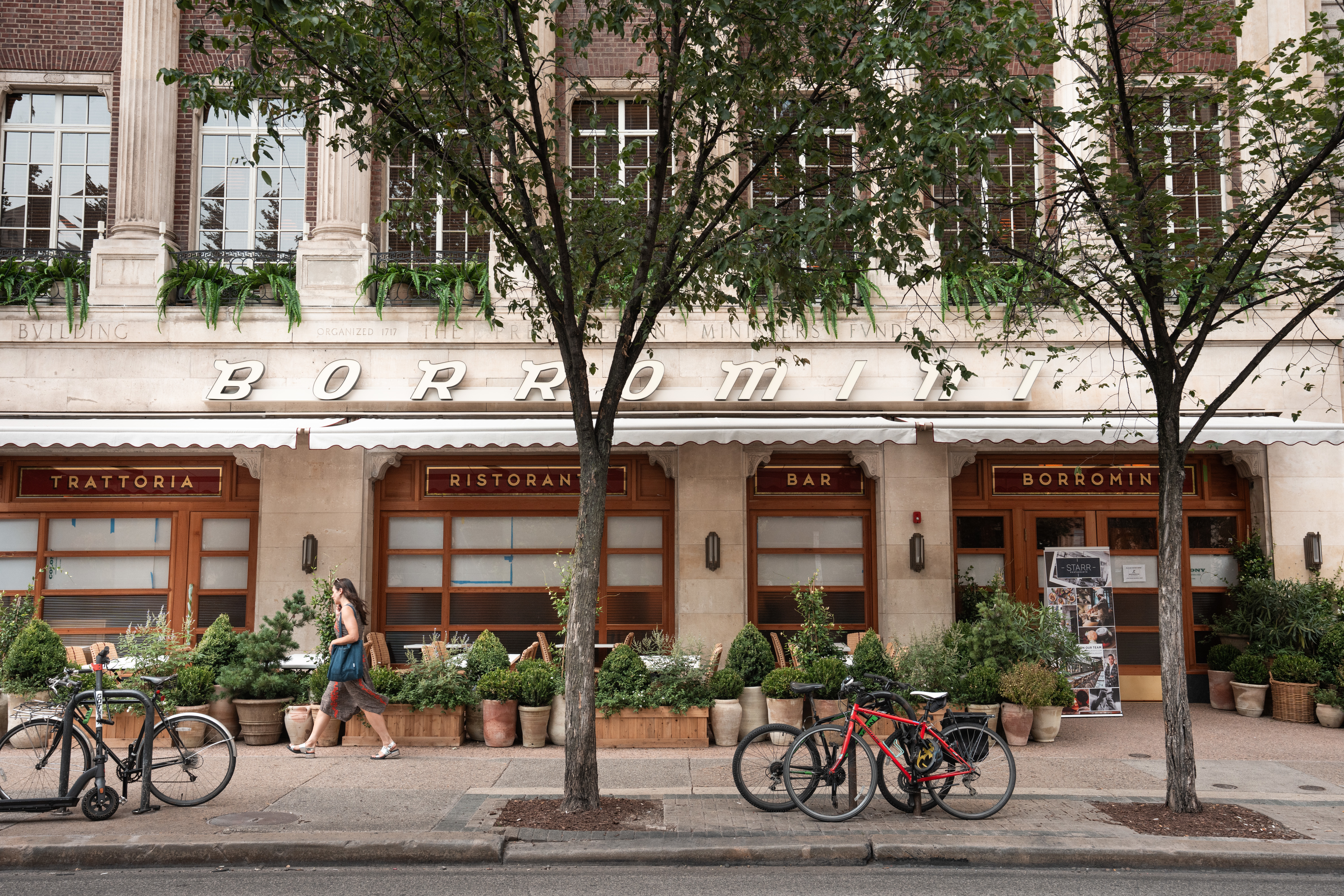
    My chatty Uber driver was born and raised in South Philly and so, as we threaded our way through the cozy rowhouse blocks east of South Broad Street, he reveled in reciting the personal histories behind every deli, seafood market, corner taproom, and red-gravy pasta joint we passed. But even he seemed to be momentarily flummoxed as we pulled up to Tesiny, on the 700 block of Dickinson Street.

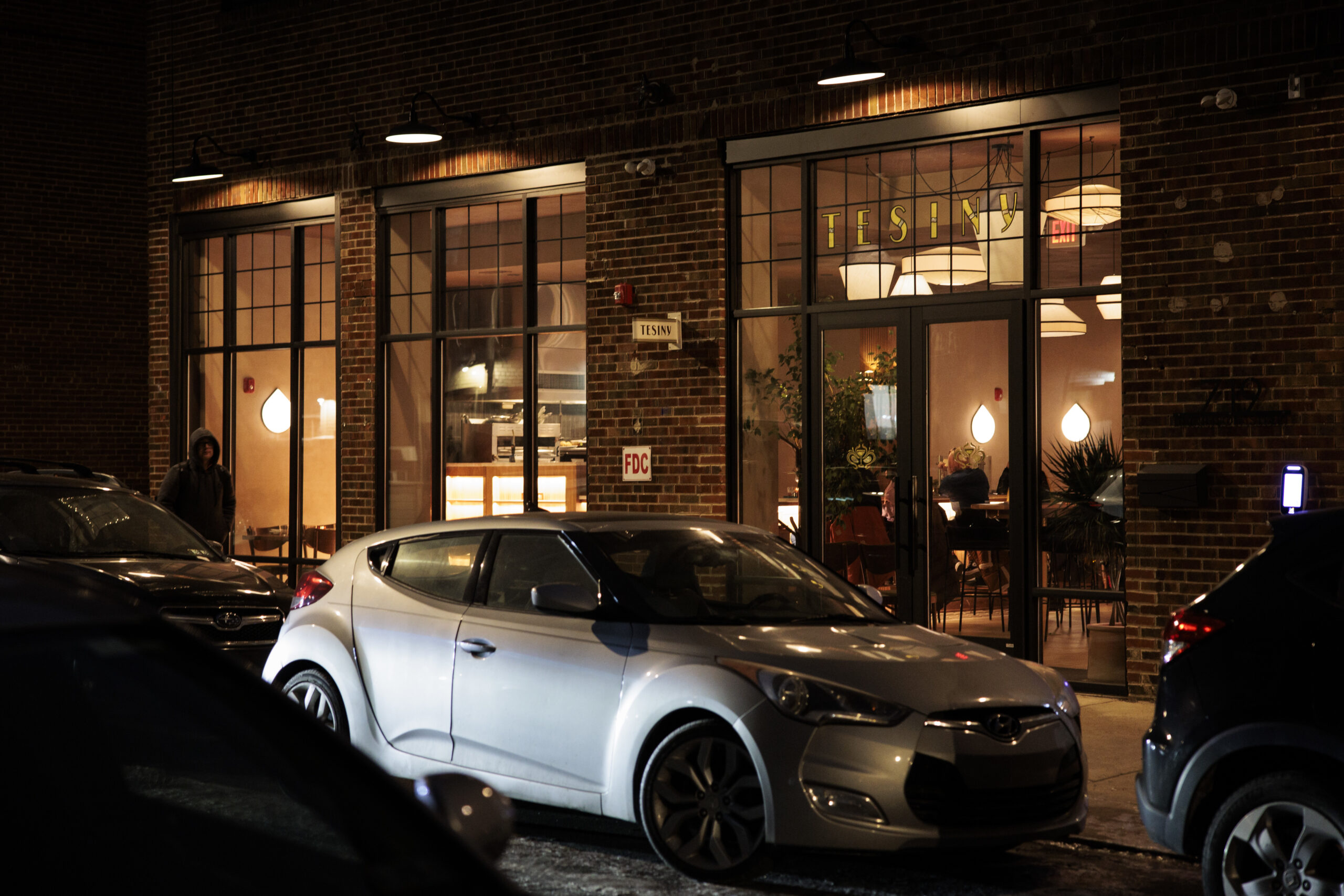
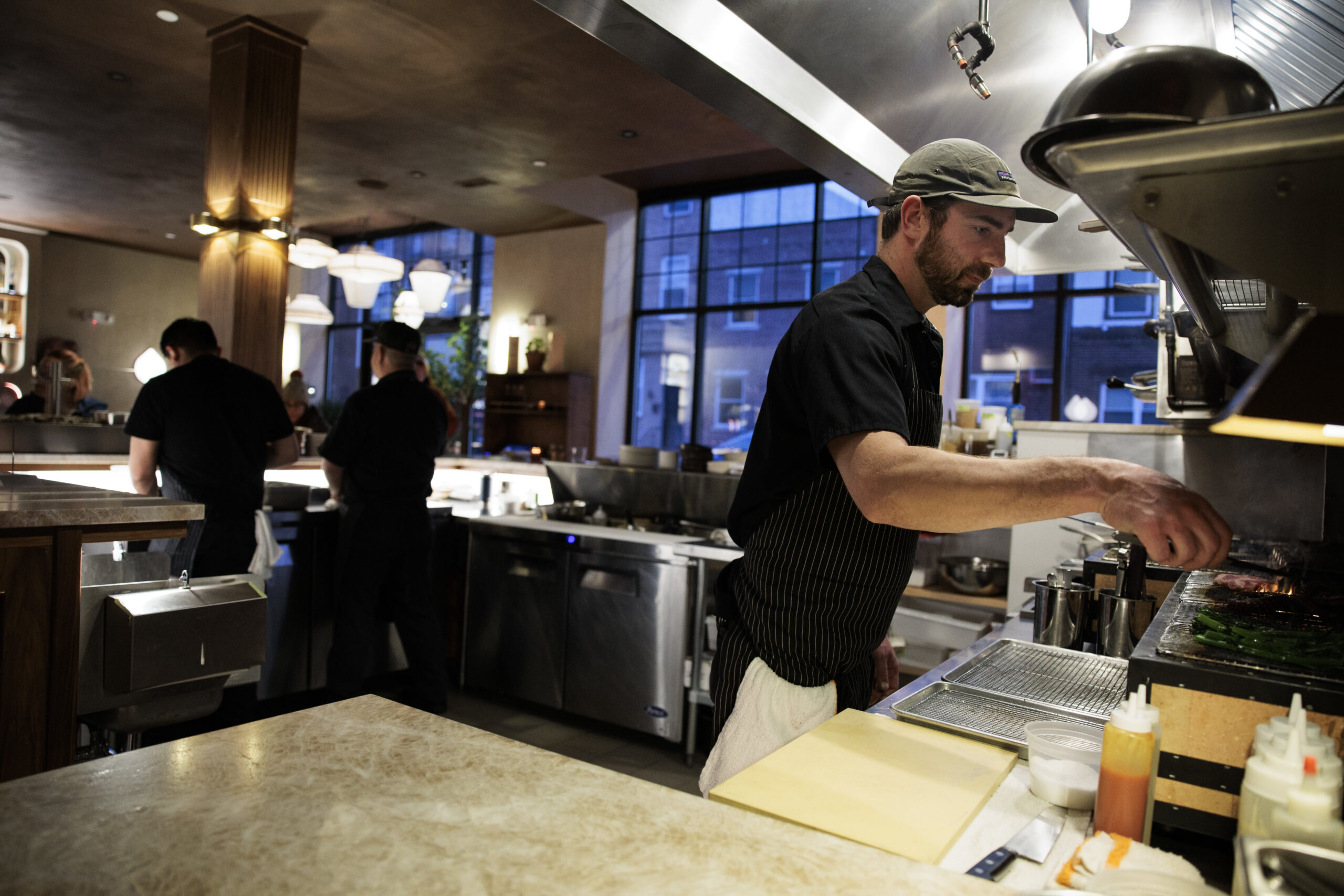
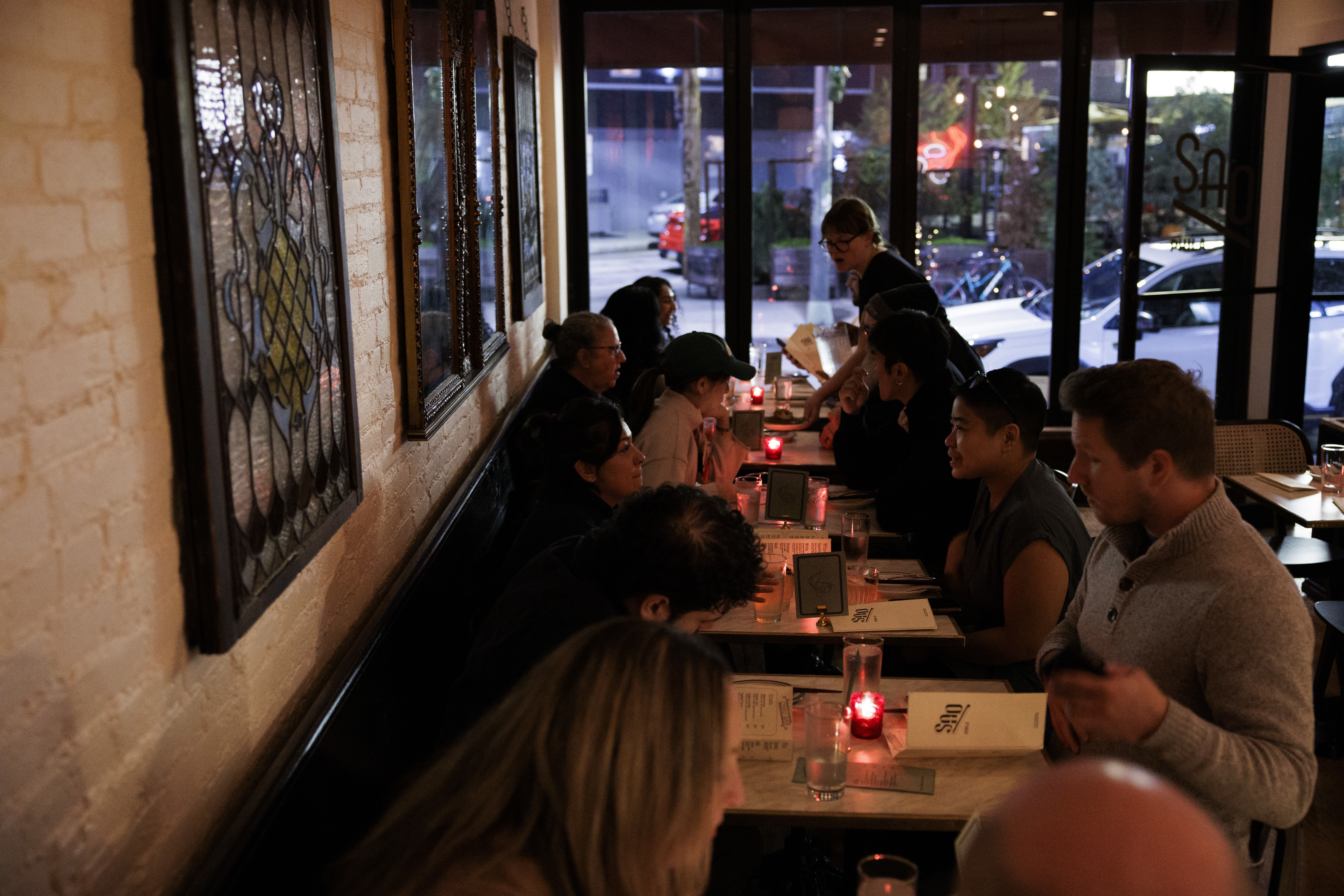
    A century-old corner brick building that for much of its life was an auto-repair shop had been completely transformed. Its garage doors were replaced with broad paned windows that glowed amber with the inviting tableau of a bustling restaurant inside. Diners clinked glasses of pink martinis. Chefs were illuminated by the flicker of a live-fire grill in the central open kitchen, where oysters were being shucked at the U-shaped counter, to be dispatched on icy plateaus to date-night duos across the room.

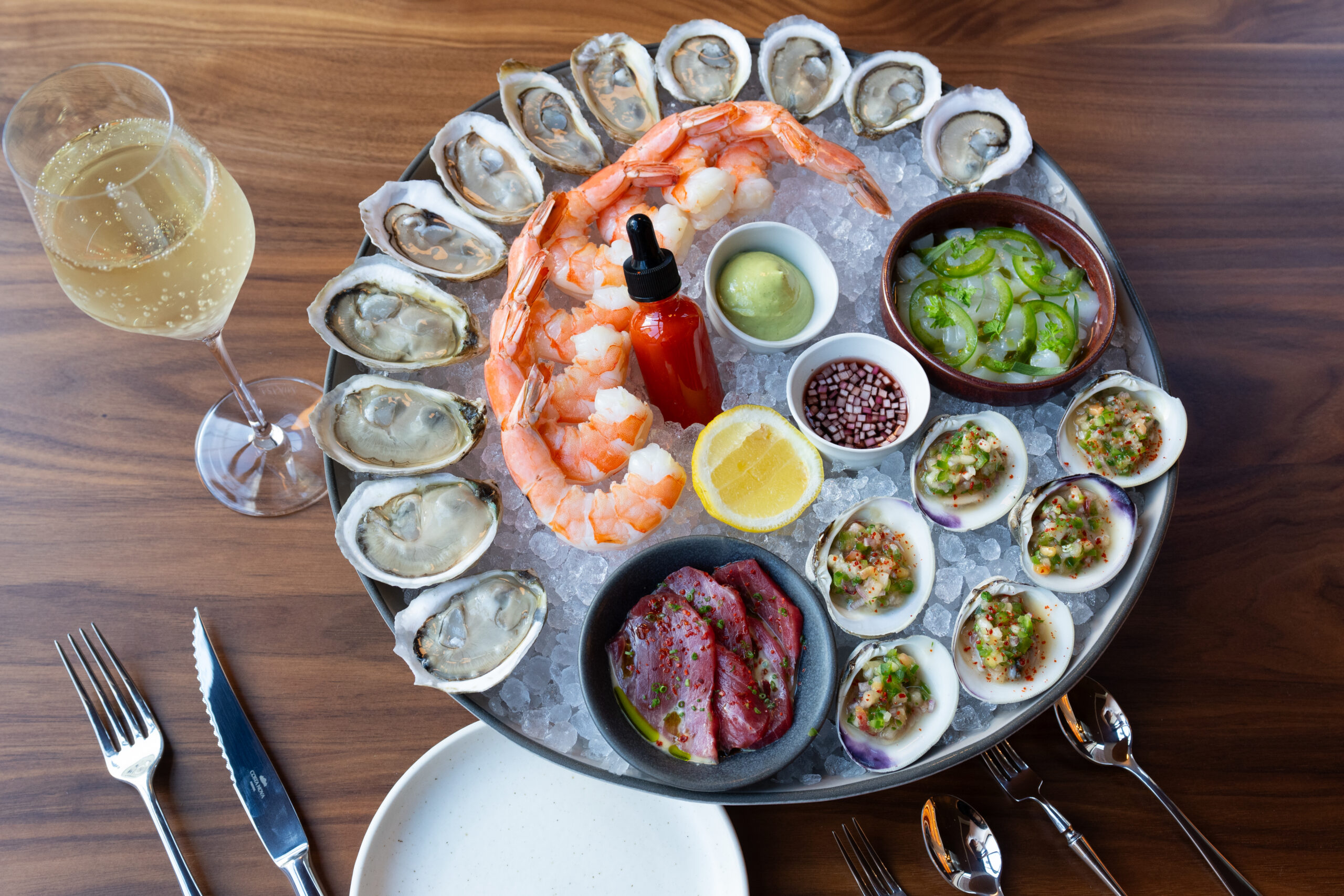
    Large seafood plateau with shrimp cocktail, clams ceviche with peach and jalapeño, three types of oysters, scallop crudo with melon water, and bluefin tuna with corn vinaigrette. Sauces are cilantro tarragon aioli and rosé mignonette, at Tesiny.

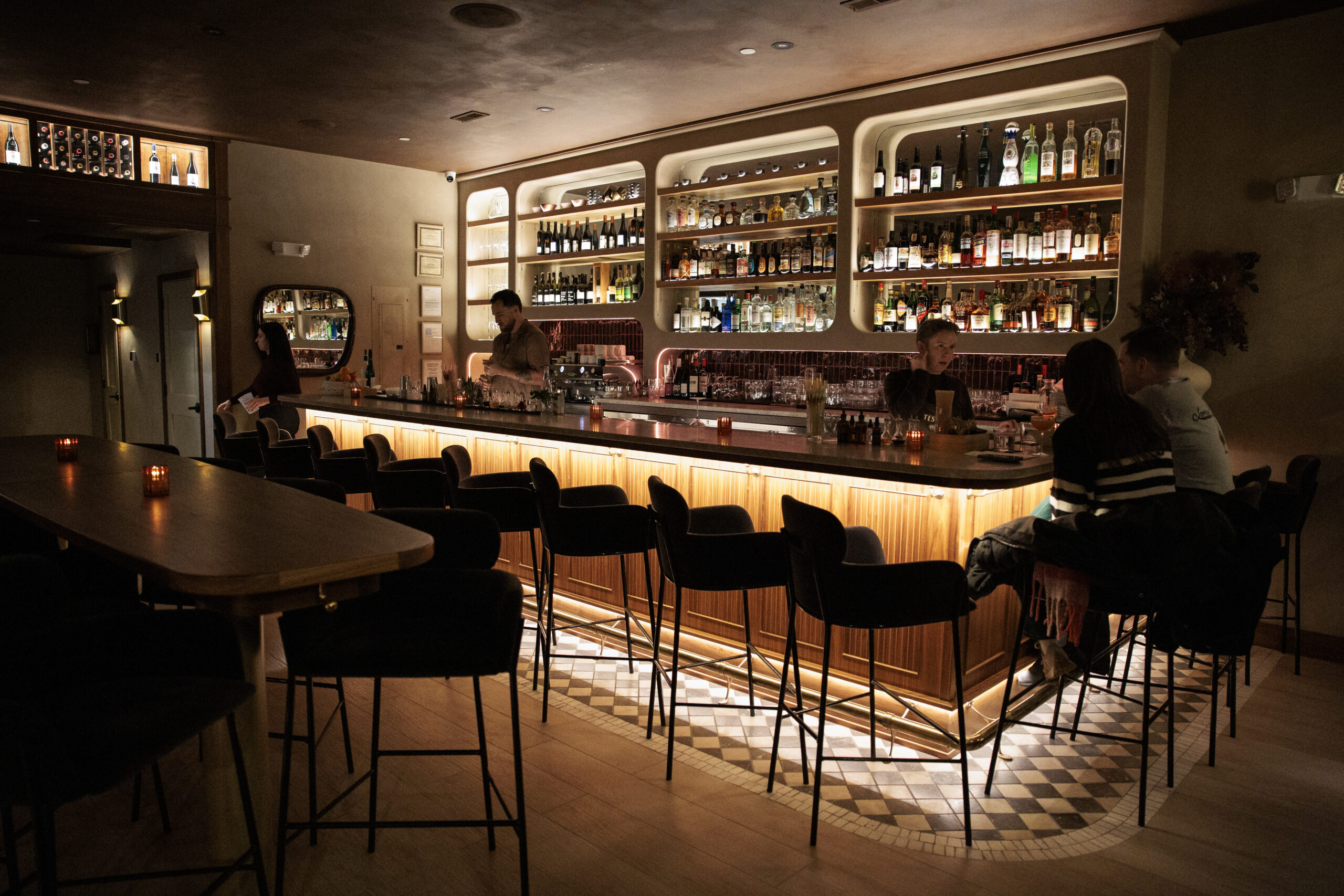
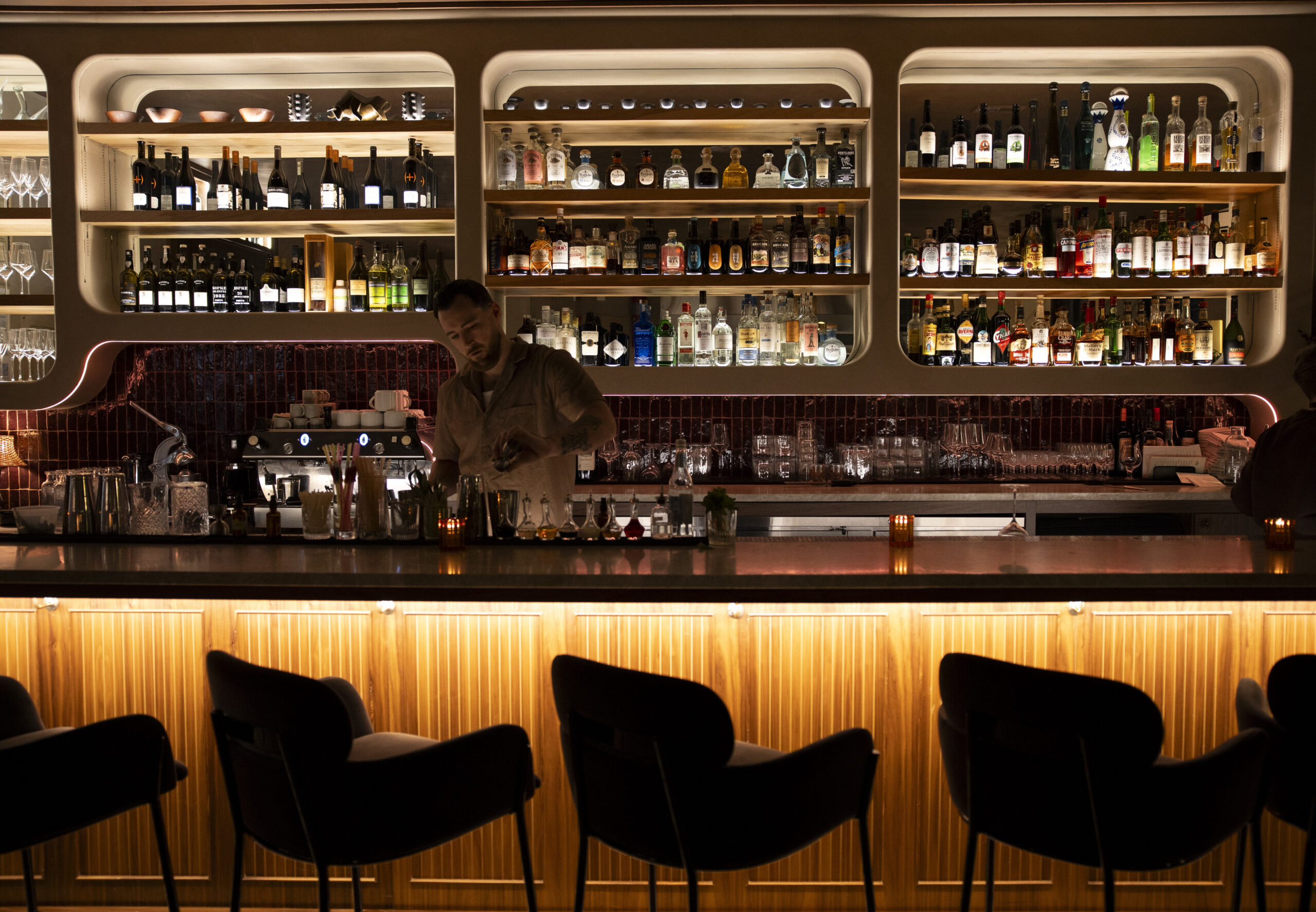
    The long bar near the entrance, deftly lit to illuminate its soigné design touches — the rich walnut wood accents, the purple-and-white tiled floor, the smooth curves of a backbar stocked with uncommon sherries — radiated a magnetic glamour.

    “Let me know how it is!” he said, as I exited the Uber. I promised a full report.

    In a dynamic old city constantly reinventing itself, we could do far worse than watching an industrial space be reborn as such a lovely restaurant. More specifically, you should be so fortunate to have Lauren Biederman be the one to do it.

    The exterior of Tesiny on Wednesday, Jan. 21, 2026 in Philadelphia.
    The bar at Tesiny on Wednesday, Jan. 21, 2026 in Philadelphia.

    Biederman, 30, is a bright talent who knows how to turn her quirky hunches into success. She’s best known as the area’s lox-and-caviar queen, after pursuing a “weird idea that popped into my head while driving” — that what Philly really needed was an old New York-style boutique market for hand-cut smoked salmon, fresh bialys, and brunch boards. In fact, we did. Five years after opening Biederman’s in the Italian Market, she’s now also serving caviar bumps from a kiosk beside the Four Seasons Hotel and about to open another Biederman’s near Rittenhouse Square, where Jewish prepared foods will be sold alongside the smoked fish.

    But Biederman was a restaurant person before her retail success. The Vermont native worked at Oloroso, where she found her passion for wine, then got into bartending, working at Zahav and several Schulson Collective restaurants, including Osteria, where she met Devon Reyes-Brannan, 30, now her longtime boyfriend and partner at Tesiny. (The name, pronounced “TESS-iny,” is a reference to her late grandmother’s address in Connecticut. The two shared a love of seafood.)

    Co-owners Lauren Biederman and Devon Reyes-Brannan at Tesiny on Wednesday, Jan. 21, 2026 in Philadelphia.

    Biederman designed the room and nailed the elegantly sultry mood, with the dark brown ceiling and light floors keeping it cozy while the mellow soundtrack shifts throughout service from Sinatra to Sadé, then to hip-hop beats for the livelier later hours. Good spacing between tables keeps conversation possible.

    There’s an admittedly amorphous, on-trend quality to Tesiny — the raw bar, craft cocktails, and a chef’s-counter grill turning out shareable plates that resist easy classification as appetizers or entrees — that could just have easily landed in a buzzier restaurant district like Fishtown or Rittenhouse Square. But there’s an extra pulse of intimacy in finding this polished 50-seat oasis in the heart of residential Dickinson Narrows, a hotly debated neighborhood within a neighborhood just east of East Passyunk. It’s upscale, averaging $80 per person for food and drinks, but already resonating as a destination, with up to 100 diners on busy nights.

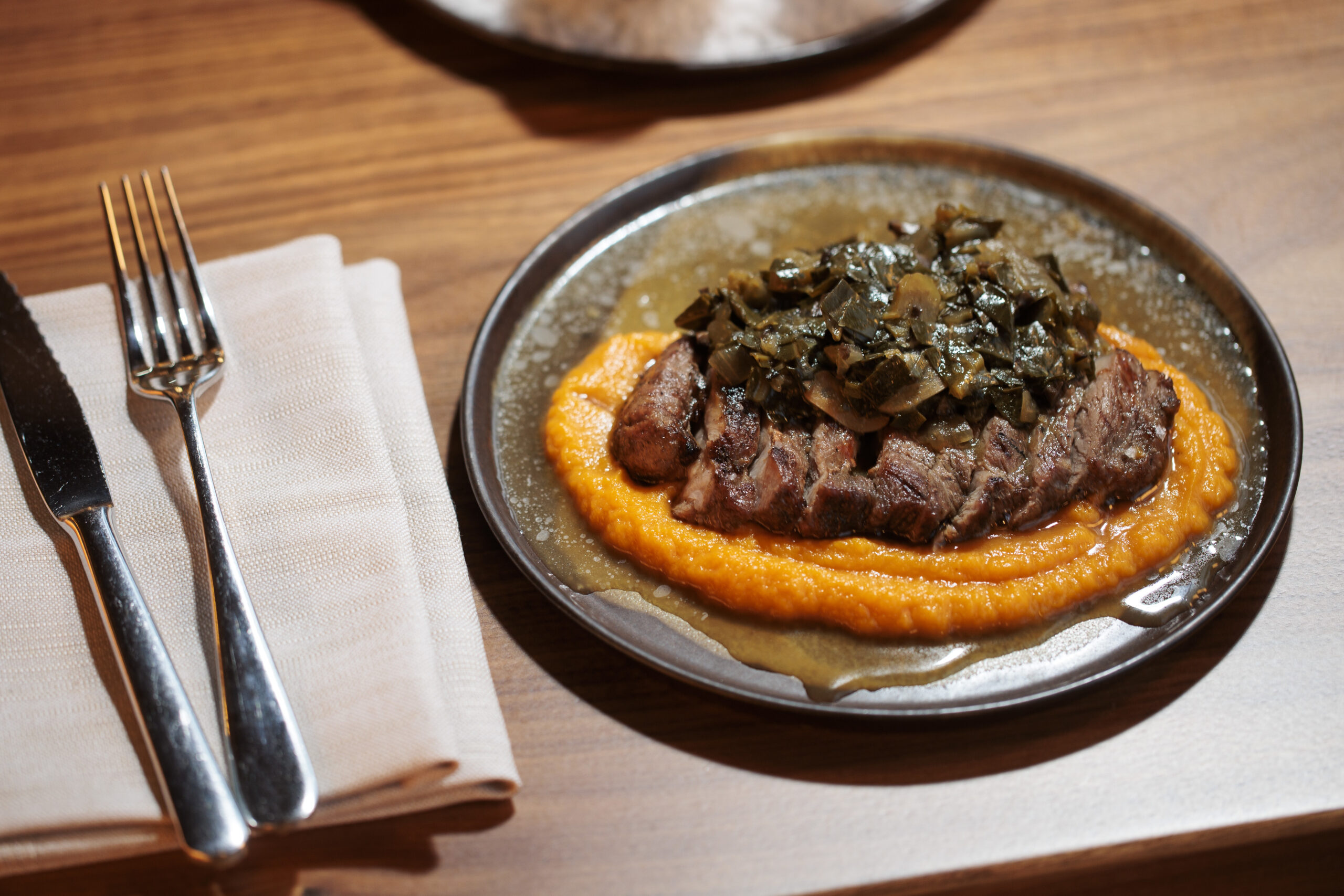
    The Iberico pork at Tesiny on Wednesday, Jan. 21, 2026 in Philadelphia.
    Chef Michael Valent works in the open kitchen at Tesiny on Wednesday, Jan. 21, 2026 in Philadelphia.

    It succeeds on its posh vibes, but also the skill of its players to strike the right tone, from the well-informed (but never pushy) servers to chef Michael Valent, 36, with whom Biederman worked at Zahav. There’s nary a noodle on his menu — a rarity in this neighborhood.

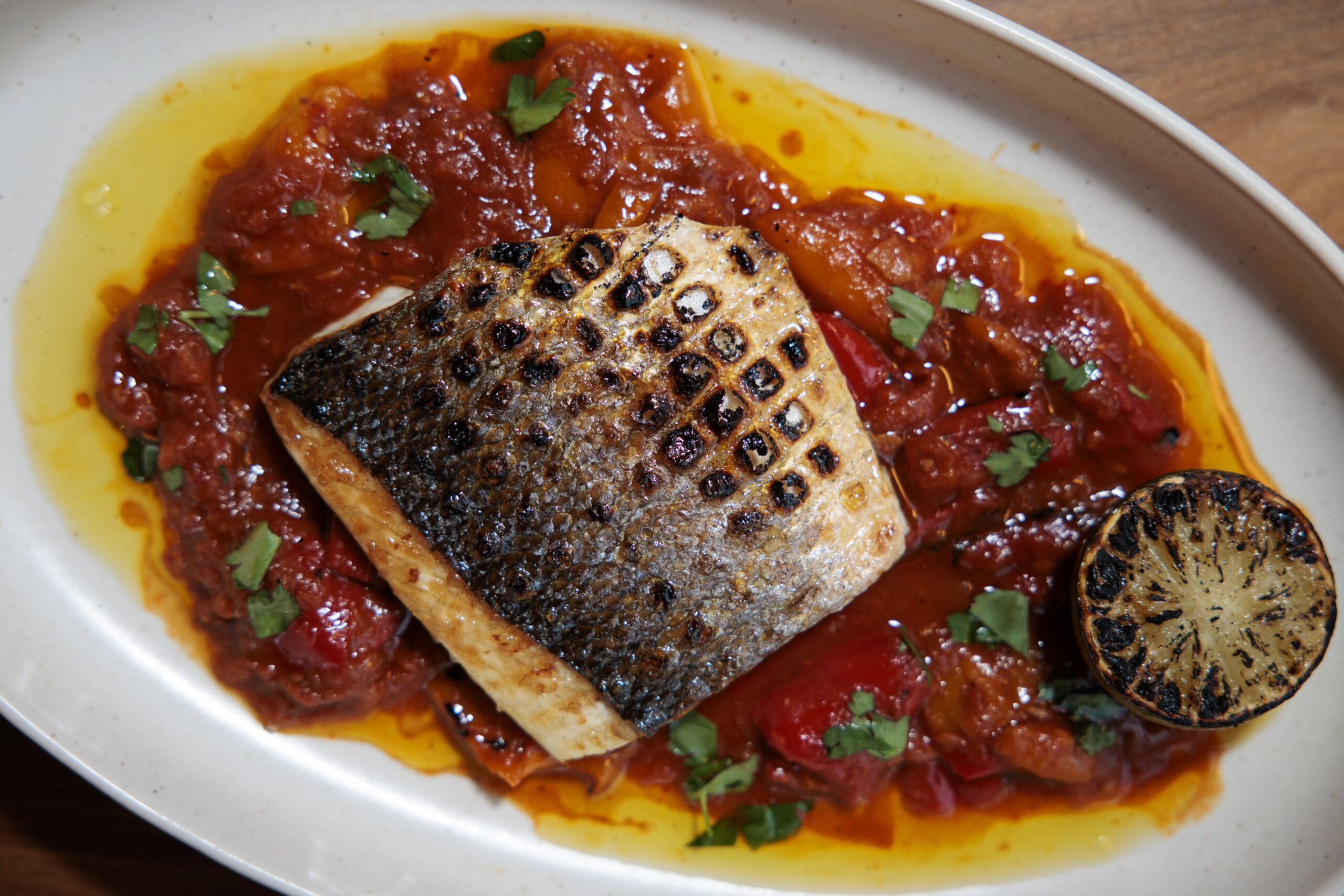
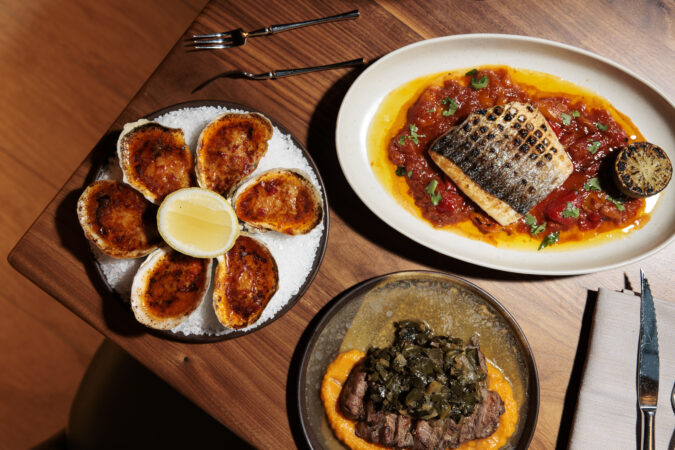
    Valent instead deftly draws on an array of multicultural influences without the food ever feeling overly contrived, largely due to the breadth of his experience, including time in Boston, New Orleans, and Philly (at the French-themed Good King Tavern, Superfolie, and Supérette). One moment you’re savoring a tuna crudo dusted with coconut and aji chile spice. The next you’re savoring a tender grilled Ibérico pork collar with silky pureed squash and smoky collards that recall Valent’s stint in New Orleans working for Donald Link at Cochon. Another favorite, a crispy-skinned branzino fillet over a Basque-style pipérade of Jimmy Nardello peppers, is an inviting jaunt to the Mediterranean.

    The branzino at Tesiny on Wednesday, Jan. 21, 2026 in Philadelphia.

    The raw bar is always a smart place to start. The trio of ever-rotating East Coast oysters, from Canadian Eel Lakes to Sunken Meadows from Massachusetts, comes with a classic mignonette that benefits from being composed à la minute every time, so the shallots retain their bite (rather than pickle) in the rosé vinegar and still-fragrant fresh-cracked peppercorns. The shrimp cocktail was notably tender and flavorful from a citrus-scented poach. And the crudos were also tasty, although I preferred the juicier early version of the scallop crudo, bathed in jalapeño-spiced honeydew-cucumber water, to the more sparely dressed current setup, with smoked olive oil and Korean chile flakes.

    A starter of creamy crab salad laced with chorizo oil conveniently cradled in endive spears was solid, but also perhaps a bit boring in a passed-hors d’oeuvres kind of way. It reflected an occasional finger-food aesthetic here, a propensity to lend familiar favorites extra polish for elevated, no-fuss nibbling; that never, however, came with any culinary shortcuts.

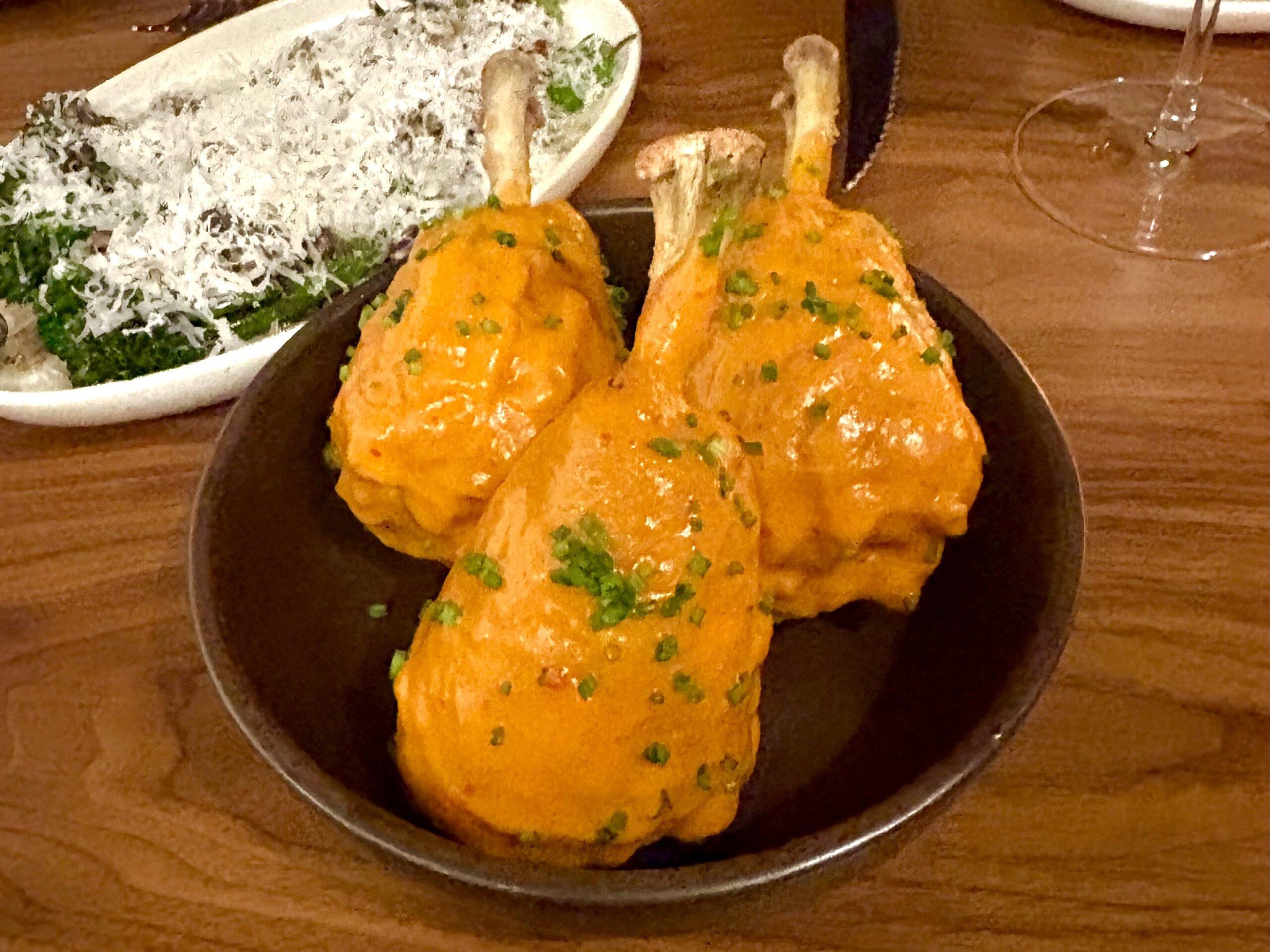
    The tidiness impulse is especially clear with Tesiny’s labor-intensive chicken lollipops. Drumsticks of Green Circle chicken are “Frenched” to offer a clean bone handle for the poultry mallets that are double-crisped in rice flour, like Korean fried chicken. Glazed in an orange hot sauce made with Fresno chilies and infused with seafood trim (shrimp shells and scallop “feet”), the lollipops are visually appealing. But for a dish that also wants to evoke Buffalo wings, the sauce’s subtle flavors aren’t quite punchy enough for the maximum impact.

    The chicken lollipops at Tesiny are double-fried and glazed in a chile-tomato sauce that’s also infused with seafood trim.
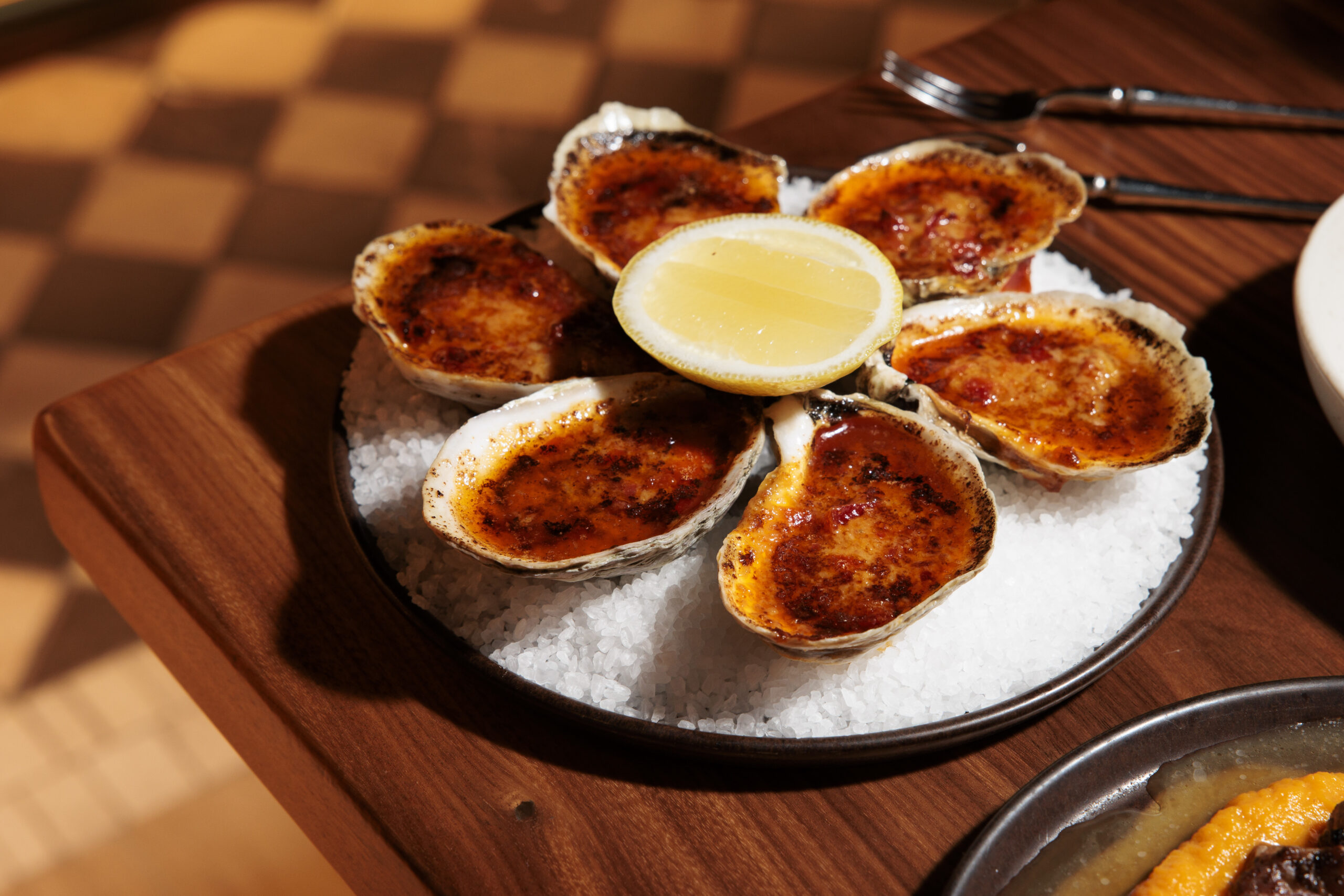
    The broiled oysters at Tesiny on Wednesday, Jan. 21, 2026 in Philadelphia.

    Restraint was not the issue with my favorite seafood starter here: a platter of charbroiled Indian Cove oysters that arrive in a pool of Calabrian chile butter, which requires at least one order of Mighty Bread sourdough to mop up from the shells. Whatever crusts are left over, you can swipe through the silky white bean purée that sits beneath the tender grilled octopus topped with harissa-spiced olives and fennel.

    Valent’s winter green salad was also remarkably and unexpectedly delicious, its crunchy Little Gem and frisée greens dressed in a citrusy Champagne vinaigrette balanced by toasted almonds and the nutty Alpine richness of shaved Comté.

    The bar at Tesiny on Wednesday, Jan. 21, 2026 in Philadelphia.

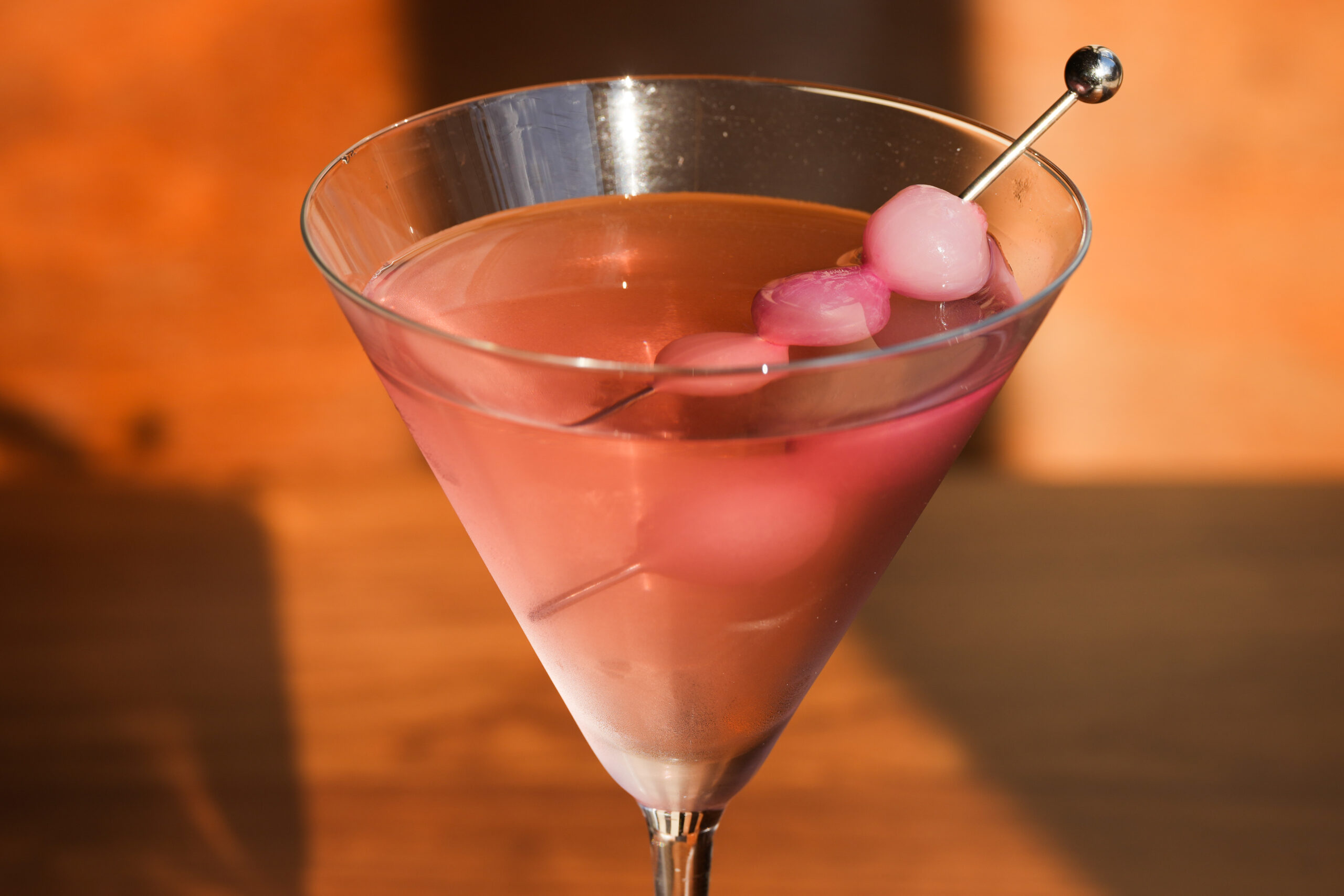
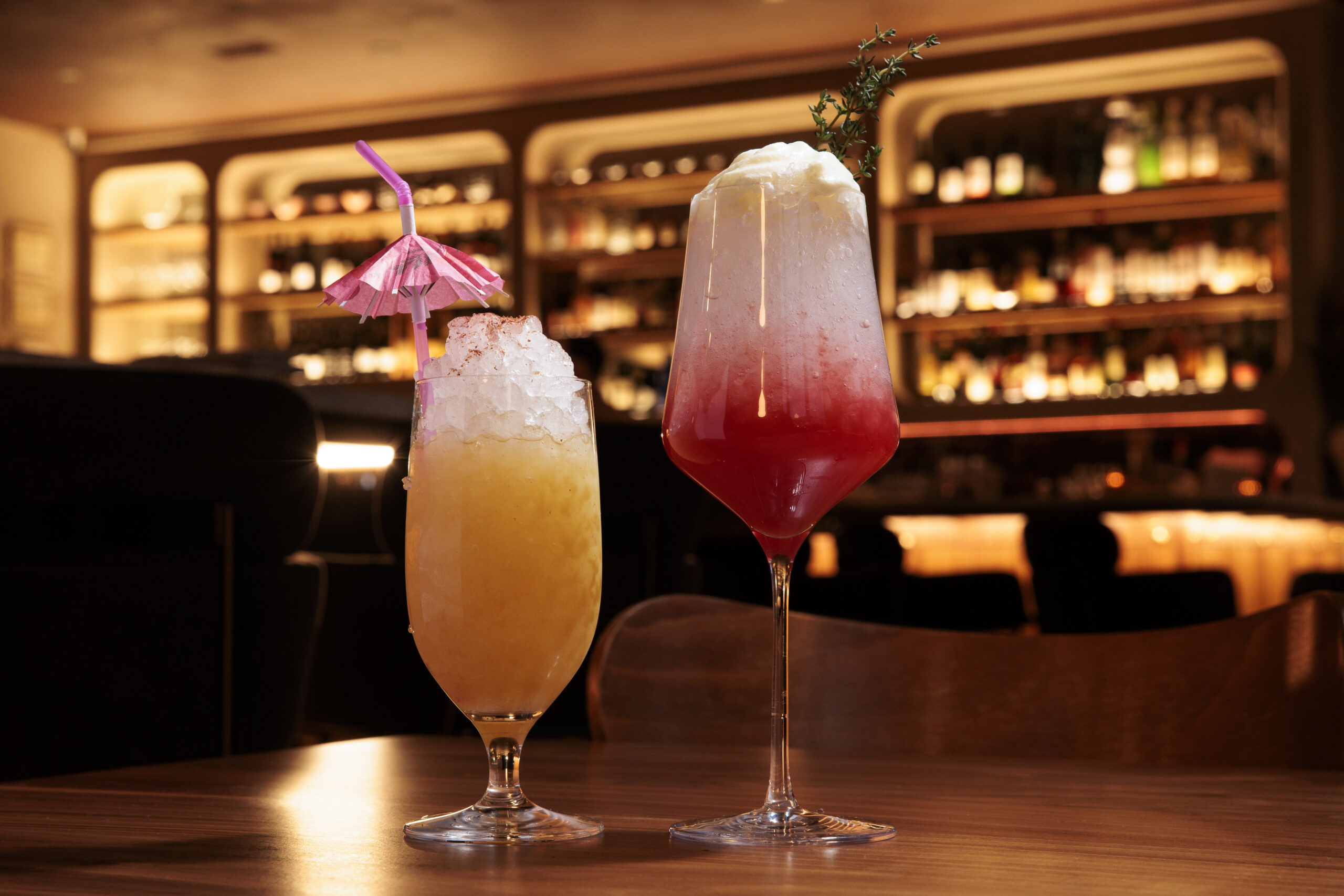
    What to order from Tesiny’s gorgeous bar to accompany all this food? The well-crafted cocktails, many infused with fortified wines, are the most popular place to start. I especially enjoyed Not a Fender, a briny pink riff on a Gibson martini made with pickled red onions, olive oil-washed gin, and a splash of manzanilla sherry. And Tesiny’s thoughtful nonalcoholic offerings were so appealing that we ordered the blood orange-thyme fizz topped with creamsicle foam — and loved it — after spotting another couple order it across the chef’s counter.

    The pink Gibson: Olive-oil washed vodka and gin, pickled red onion brine, manzanilla sherry.
    The Return of Saturn cocktail and Fizz mocktial at Tesiny on Wednesday, Jan. 21, 2026 in Philadelphia.

    To pair with the handful of larger plates clustered at the bottom of the menu, it’s worth exploring the wines, an interest of both Biederman (who’s passed her Level 3 Wine and Spirits Education Trust exam) and Reyes-Brannan, a front-house veteran from Tria and Laser Wolf. Reyes-Brannan is partial to the food-friendly acidity of high-altitude wines from Europe, but he’s also been an enthusiastic ambassador for a Mexican version of nebbiolo from Casa Jipi. Lighter and juicier than Italian iterations, it’s a fine match for the juicy Wagyu culotte steak topped with cornmeal-fried oysters. It works equally well with the earthy grilled mushrooms that came dusted with chimichurri over a plate of warm polenta (recently updated to farro risotto).

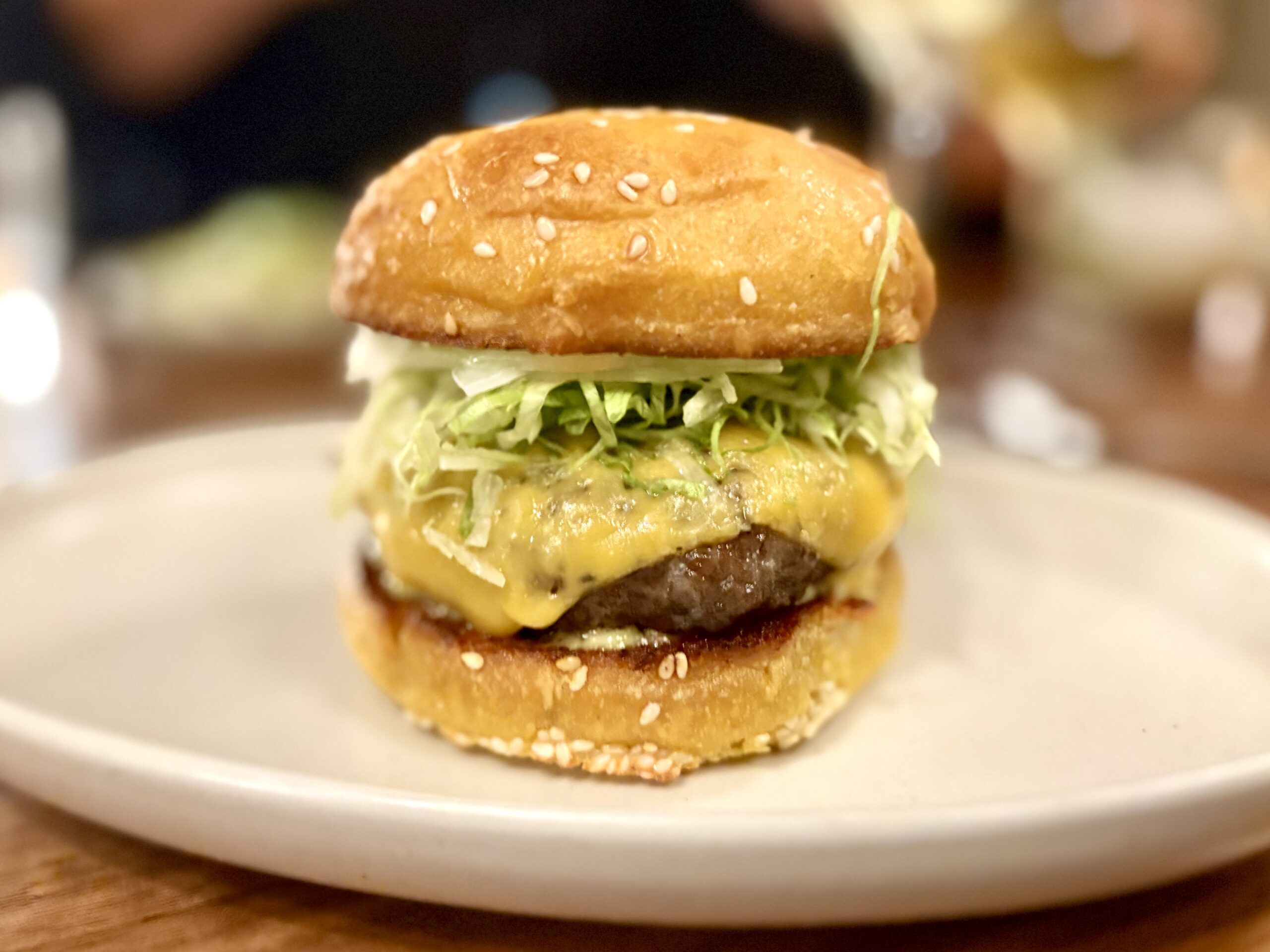
    The nebbiolo was also a good match for Tesiny’s single best bite: a 5-ounce burger special called the Lil’ Kahuna, made from the trim of bluefin tuna belly and Ibérico pork shoulder. It’s a remarkably meaty patty with a subtle shade of rich tuna on the finish that shows off Valent’s ability to experiment with something new. It’s limited to just eight or so per night, which means it’s worth coming early. The effort also bodes well as Tesiny prepares to grow its menu and take some chances with larger plates for two, perhaps as soon as this spring.

    The Lil’ Kahuna burger from Tesiny, a blend of bluefin tuna and Ibérico pork.

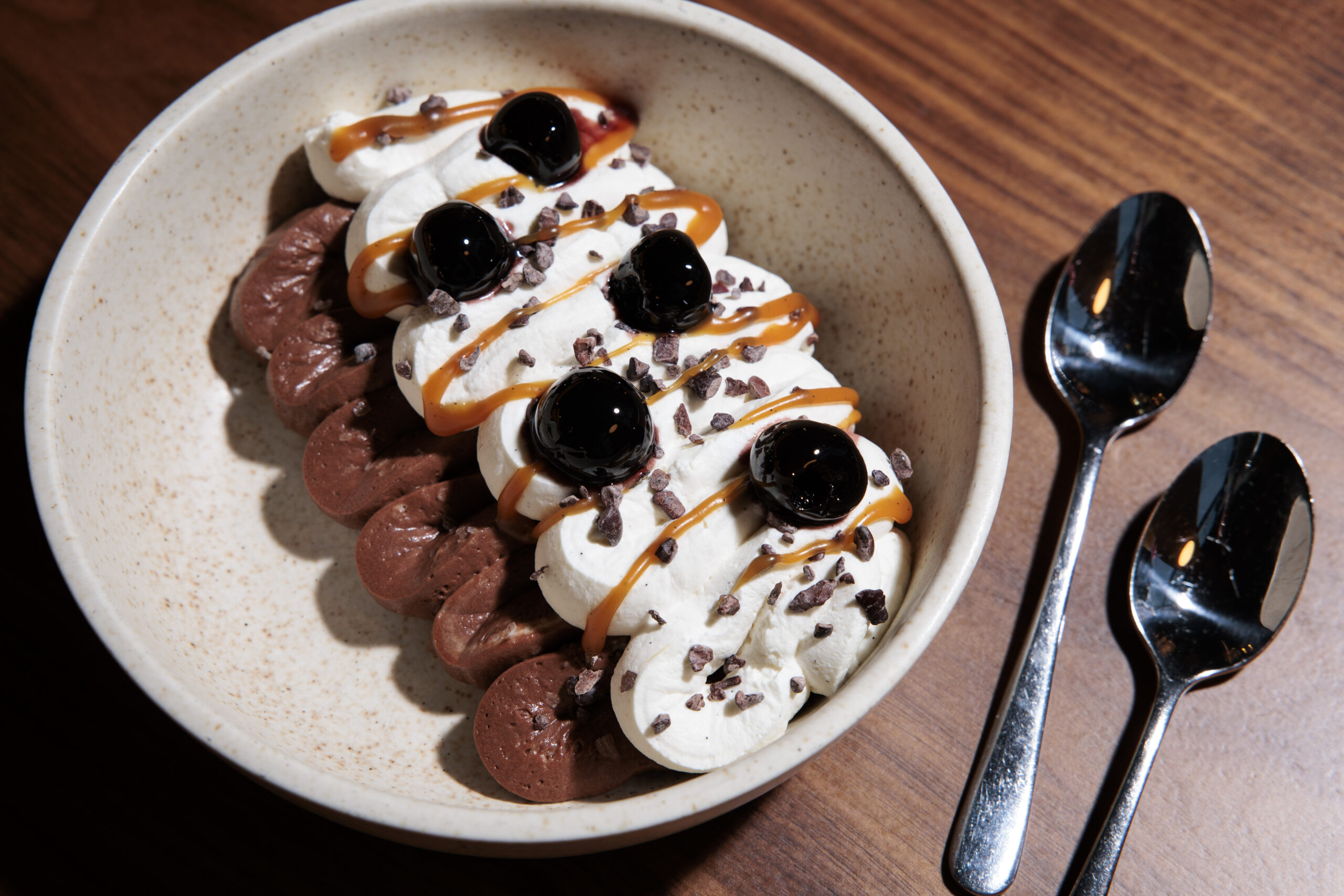
    Dessert for two here is already a thing. And you’ll likely be dueling spoons for the espresso-chocolate mousse that Valent serves like a sundae topped with a wave of whipped cream, caramel cocoa nibs, and real maraschino cherries. Order a raisiny sweet pour of Pedro Ximénez from the impressive list of fortified wines — another quirky passion of Biederman’s, rooted in her days of studying abroad in Mallorca and her time at Oloroso.

    Is Philly ready for a renaissance of Bual Madeira and vintage Kopke Port? If Lauren Biederman has a hunch, I wouldn’t bet against her. Tesiny is more proof she has a vision worth paying attention to.

    The Chocolate Coffee Mousse at Tesiny on Wednesday, Jan. 21, 2026 in Philadelphia.

    Tesiny

    719 Dickinson St., 267-467-4343; tesiny.com

    Dinner Wednesday through Saturday, 5-10 p.m.

    Sharing plates, $15-$38

    Wheelchair accessible

    Menu highlights: raw bar (raw oysters, shrimp cocktail, tuna crudo); broiled oysters; winter salad; chicken lollipops; charred branzino; Ibérico pork; grilled mushrooms; Lil’ Kahuna tuna burger special; chocolate-coffee mousse.

    At least 75% of the menu is gluten-free or can be modified.

    Drinks: Creative and well-crafted takes on classic cocktails, frequently made with fortified wines, are the main draw. The wine program is deliberate in its focus on oyster-friendly Euro classics (Sardininian vermentino; muscadet), with an appealing collection of sparklers (try Red Tail Ridge from the Finger Lakes). Finish with a pour of vintage port or Madeira from one of the city’s better collections of fortified wines.

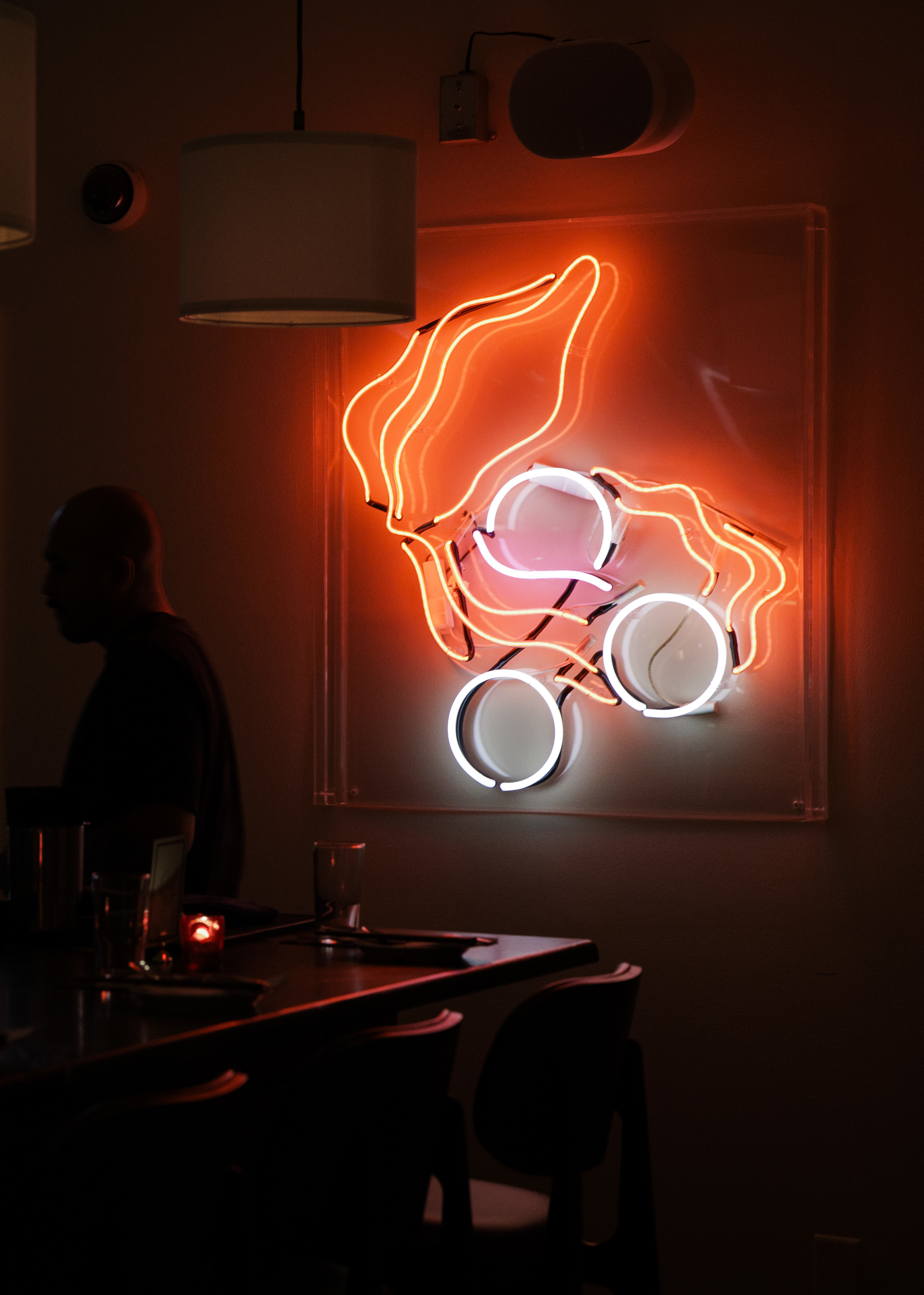
    The logo on the door at Tesiny on Wednesday, Jan. 21, 2026 in Philadelphia.
  • Craig LaBan visited Tokyo’s shrine to Philly culture. Does its cheesesteak pass muster?

    Craig LaBan visited Tokyo’s shrine to Philly culture. Does its cheesesteak pass muster?

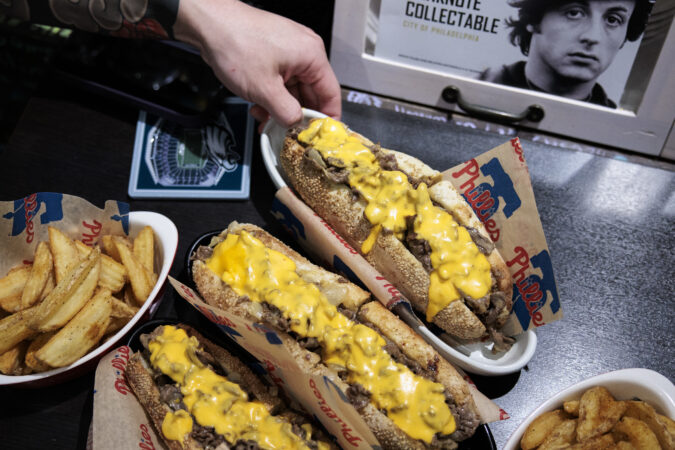
    TOKYO — I’ve never gone out of my way to eat a cheesesteak far outside of Philadelphia. For one thing, I can devour a great one anytime I want when I’m home. I’d rather experience the flavors of different cultures when I travel. The cheesesteak is also one of those iconic foods that almost inevitably tastes wrong outside its home regions: The farther away you roam from its birthplace, the more chance that a false detail — the wrong roll, ingredient combo, precooked shortcut, or even menu description (the sandwich is not called a “Philly”) — is likely to result in something as soulless as a Subway replica.

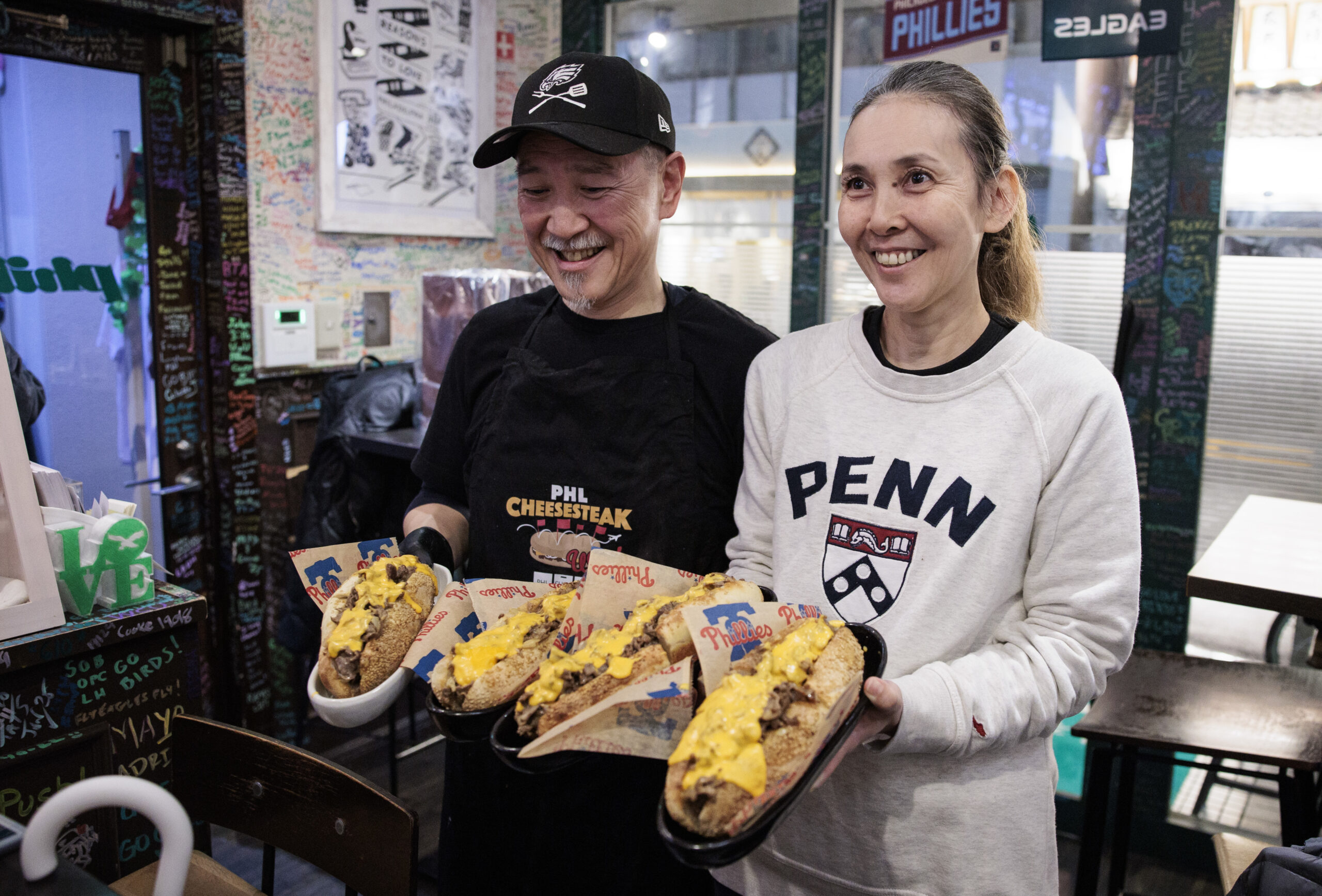
    Of course, I needed to travel all the way to Japan to be proven wrong. At Nihonbashi Philly, a restaurant in one of Tokyo’s business districts, a “Go Birds!” sign glowing kelly green out front is just a tease of the Brotherly Love vibes being conjured inside. There, I found Tomomi Chujo in a Penn sweatshirt hand-shaping dough for rolls in her tiny basement prep kitchen, coating them in sesame seeds, and proofing them to be baked fresh for our sandwiches to come.

    Kosuke Chujo and his wife, Tomomi, with cheesesteaks at Nihonbashi Philly in Tokyo, Japan.

    Tomomi and her husband, chef Kosuke Chujo, are pretty much international Philly celebrities by now. Their efforts to create a faithful cheesesteak on the other side of the globe were brought to the world’s attention by Philly expat social media in 2023 and profiled a year later in The Inquirer by my colleague Jenn Ladd. They drew more than 1,000 hungry Philadelphians who lined up in hopes of tasting their cheesesteaks at a Kensington-Fishtown pop-up at Liberty Kitchen in May, when they were also honored by Philadelphia City Council for their efforts to rep Philadelphia abroad.

    Considering I’m reluctant to wait in long lines for a cheesesteak even at Angelo’s, it’s no surprise I didn’t attend the Chujos’ Fishtown pop-up. But, like so many Philadelphians I know who’ve recently made the cheesesteak pilgrimage while visiting Japan, I was not going to waste a good trip to Tokyo without finally checking out Nihonbashi Philly. We waited until the final night of our trip. After nine days of consuming my weight in sushi, ramen, 7-Eleven onigiri, katsu, and yakitori skewers, I was ready for a little taste of home before actually boarding a plane back.

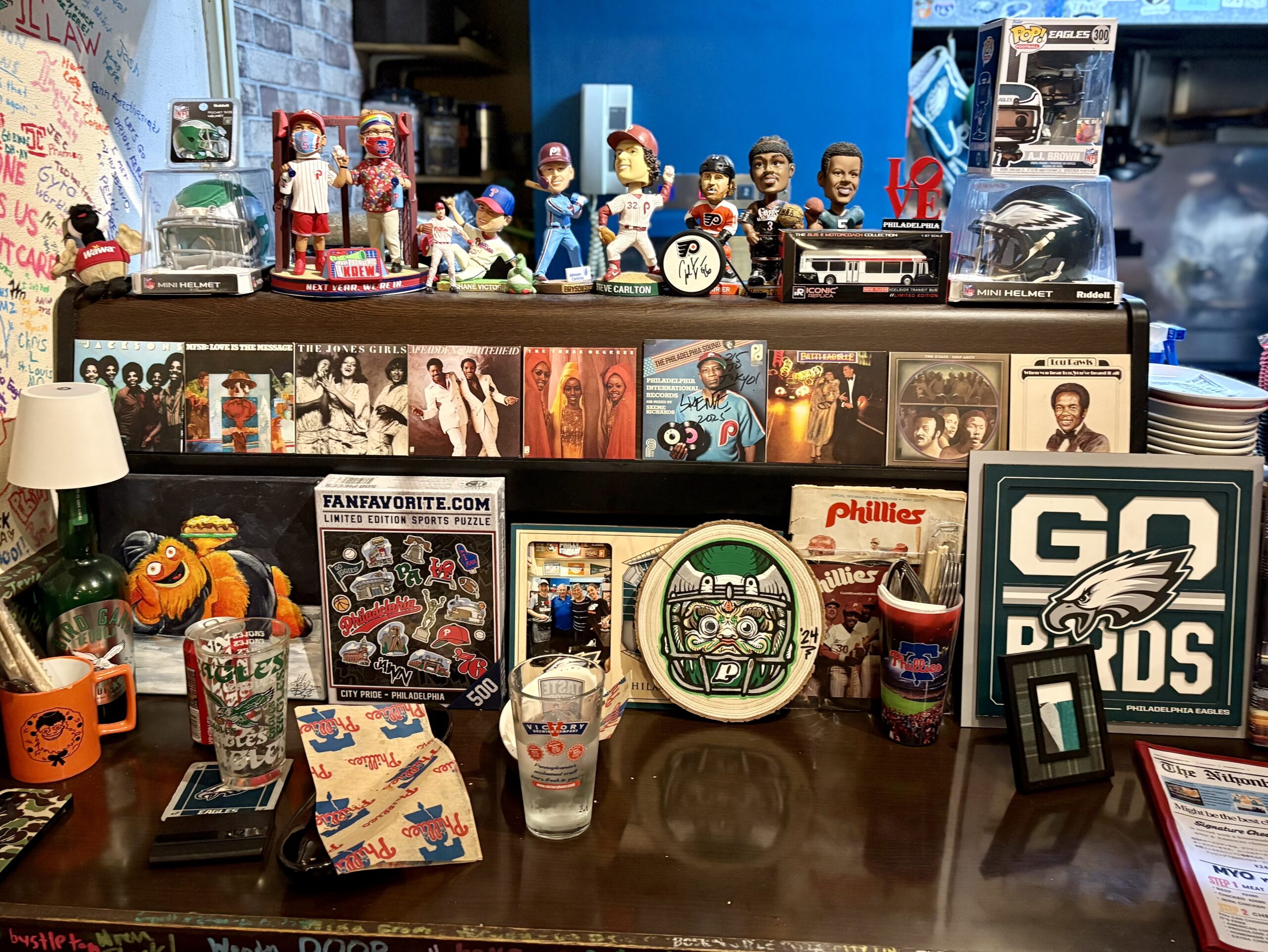
    A collection of Philadelphia soul music, bobbleheads, and Philly-themed paraphernalia grows every time an expat visits the Chujos’ restaurant.
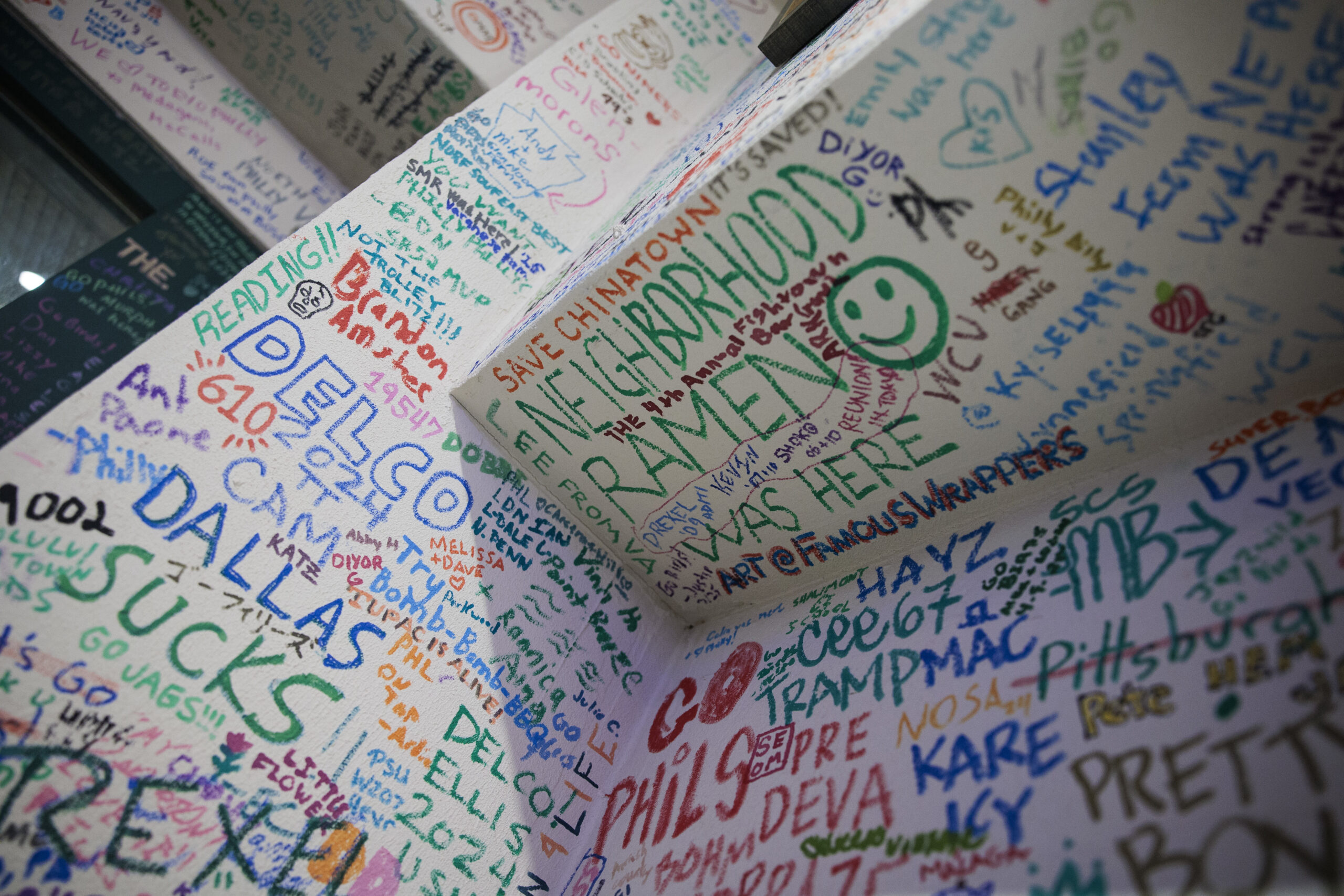
    Handwritten messages decorate the walls at Nihonbashi Philly.

    Inside the Chujos’ snug two-story restaurant and bar, I found a space bursting with so much Philly-themed memorabilia, it was almost like passing through the Portal in LOVE Park (at least before it was removed due to vandalism). There are empty Bird Gang whiskey bottles that have been converted into lamps, Kosuke’s extensive CD collection of favorite Philly singers (hello, Patti LaBelle), copious Wawa swag, Gritty art, SEPTA shot glasses, customer-scrawled walls etched with “Dallas Sucks” flair, and a bobblehead shrine of Philly sports figures that’s been transported here from the Elkins Park childhood bedroom of now-Tokyo-based sports journalist Dan Orlowitz, one of the Chujos’ earliest local cheerleaders: “That’s authentic Philly dust!” he says, nudging Donovan McNabb’s spring-loaded noggin into an enthusiastic wobble. “I don’t even have to go home anymore.”

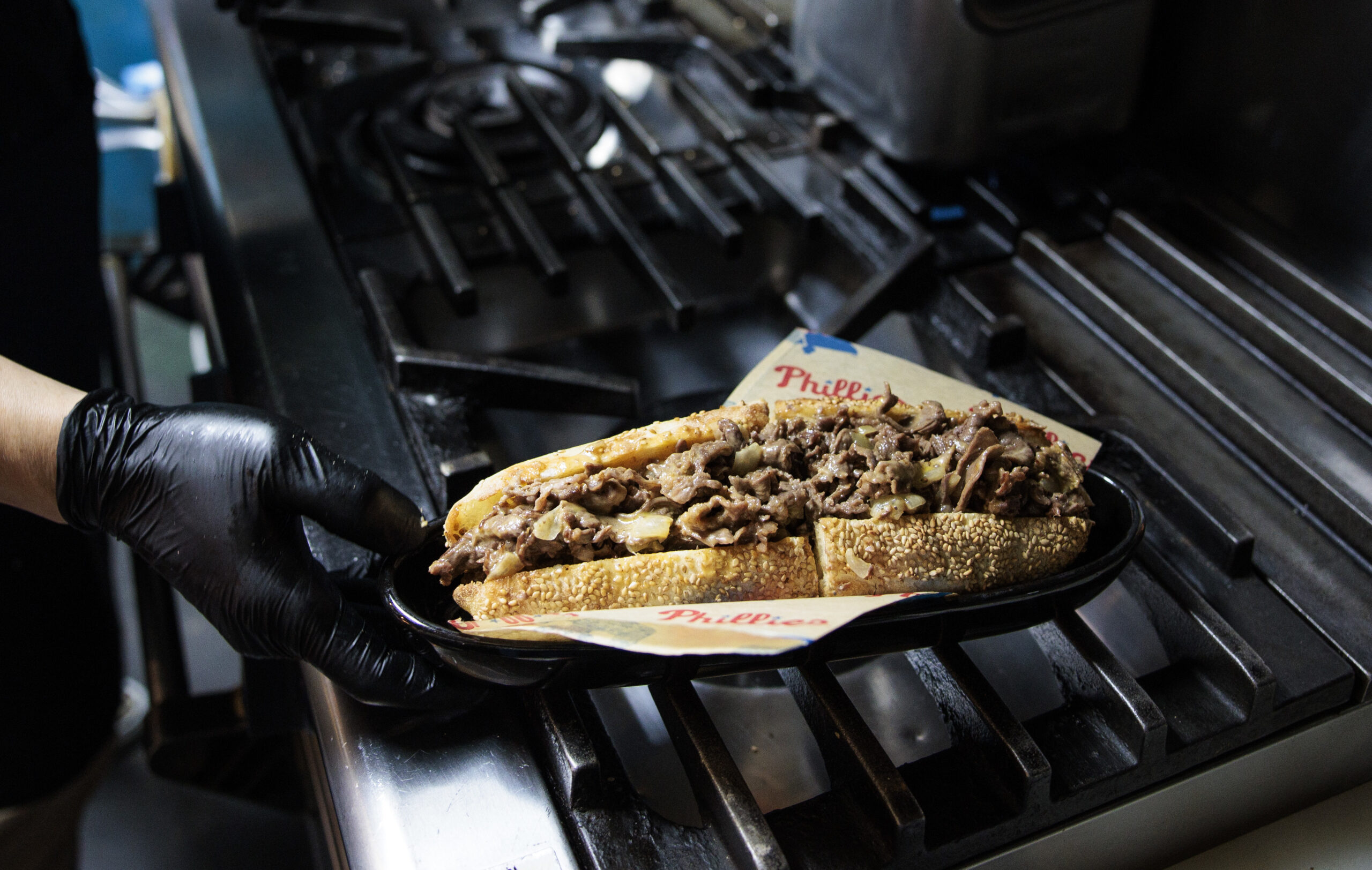
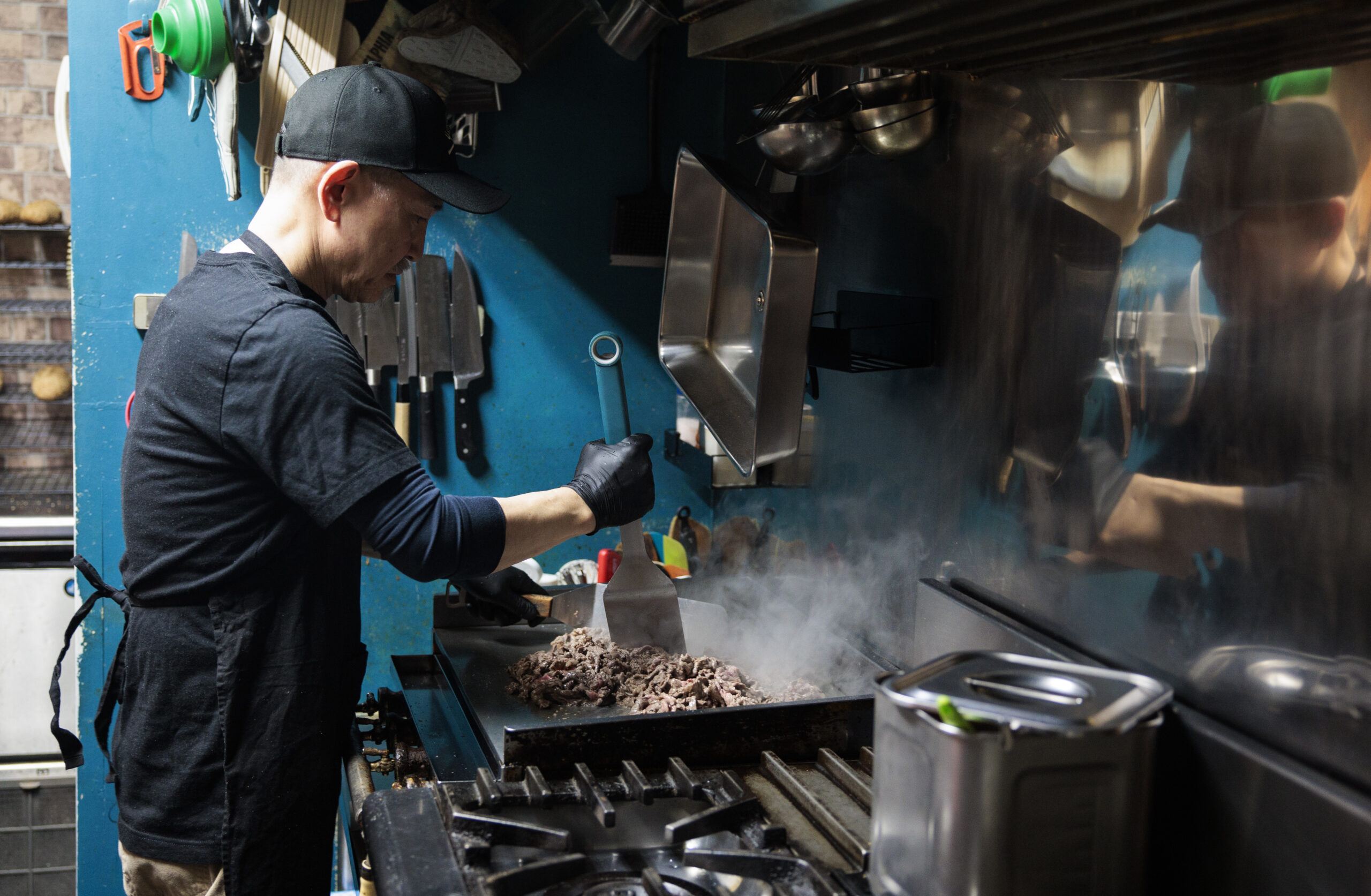
    Orlowitz, in fact, was mostly talking about the food. And I was impressed with Kosuke’s work at the griddle, as he rough-chopped good American rib eye and onions without overcooking them, using chopsticks to taste for proper seasoning, melting in cheese, and then scooping it all into Tomomi’s roll for a juicy sandwich that was hearty enough to share. It was a satisfying cheesesteak, even if the cheese was not quite right — slices of American cheese that lacked the creamy flow and piquant savor of the now-standard Cooper Sharp, currently unavailable in Japan. (The Chujos also make their own version of whiz, but, considering I’ve always been a whiz hater, the finishing yellow drizzle on our sandwiches didn’t help. Next time, I’ll go for provolone.)

    Kosuke Chujo makes a cheesesteak at Nihonbashi Philly on Sunday, Nov. 9, 2025 in Tokyo, Japan.
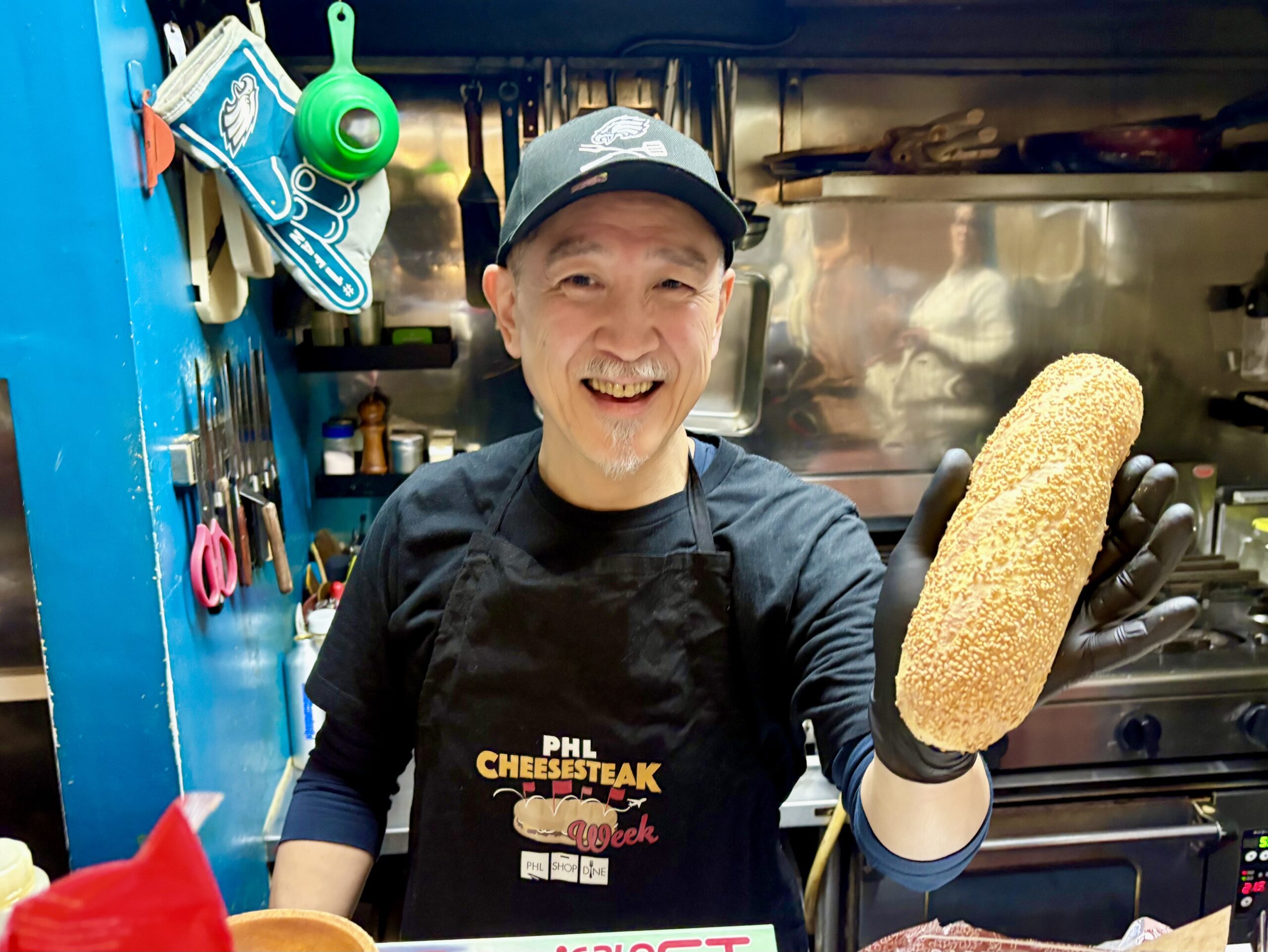
    Kosuke Chujo holds a seeded roll baked fresh by his wife and partner, Tomomi Chujo, before preparing a cheesesteak at their restaurant.

    Tomomi’s fresh rolls are the outstanding X factor. The Chujos have been vacationing in Philadelphia since 2021, and in between reconnaissance visits to at least 100 different cheesesteak places, she has studied the art of the long roll at old-school Sarcone’s Bakery as well as modern outfits such as Lost Bread Co. and Ursa Bakery.

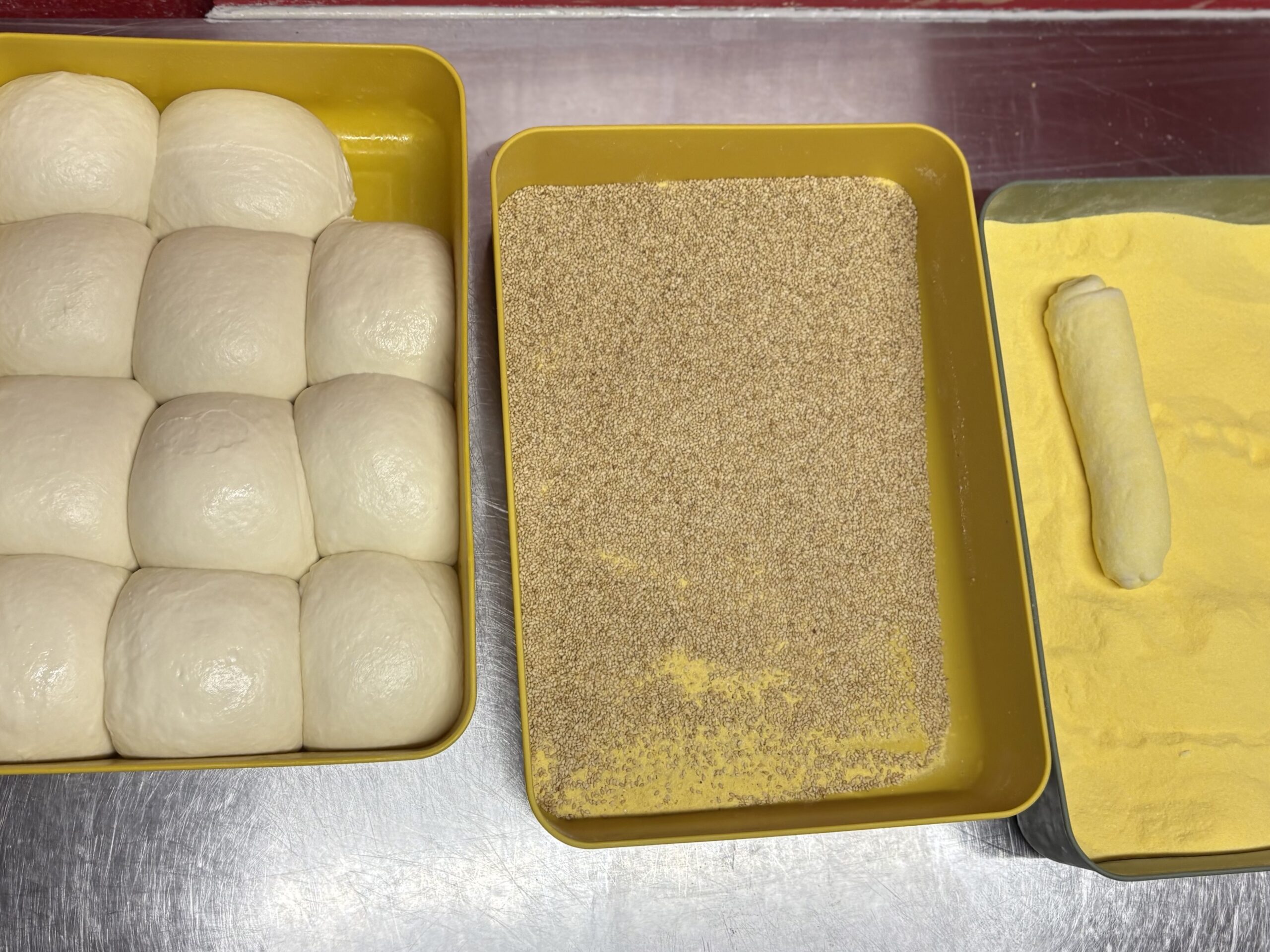
    The bread here is softer than typically crusty Philly rolls because more finely ground Japanese flour (ideal for tender shokupan milk bread) doesn’t have as much gluten as its American counterpart. Tomomi compensates for the texture by fully encrusting her rolls in Japanese sesame, which has rounder and more flavorful seeds that add their own distinctive, toasty crunch. It’s so noticeable, in fact, one friend said the sesame conjured for him unexpected tahini backnotes.

    Fresh rolls are prepped for cheesesteaks in the basement of the restaurant called Philly in the Nihonbashi district of Tokyo. Once shaped by hand, their bottoms are dusted in corn meal before they get encrusted in sesame seeds and then baked.
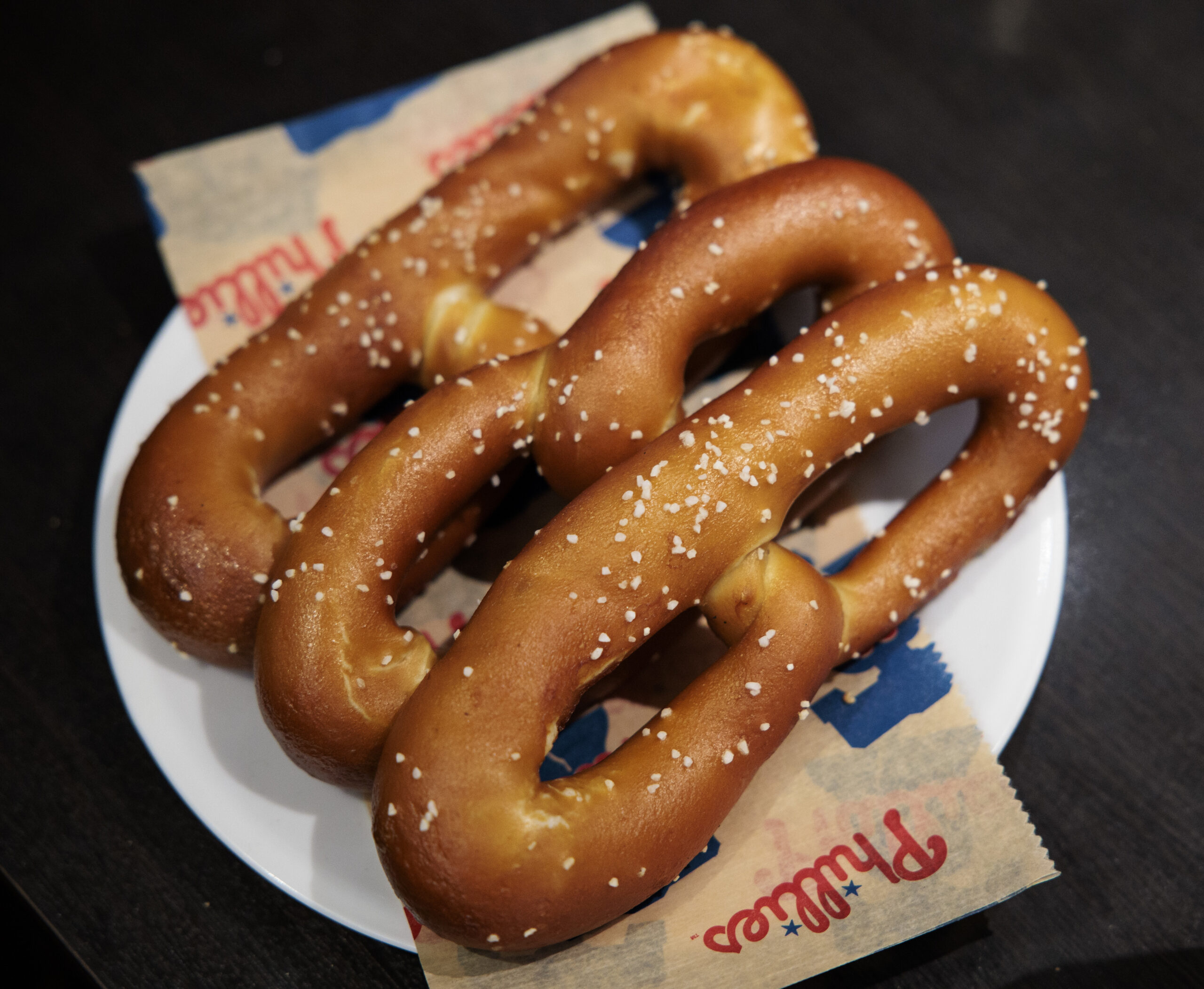
    Tomomi Chujo’s fresh-from-the-oven salt-speckled soft pretzels.

    Cheesesteak obsessives (myself included) will dwell on such minutiae, but I consider such natural variations part of the sandwich’s essential evolution as a living tradition, both in its many thrilling international interpretations among Philadelphia’s immigrant communities, and in the recent boom of house-baked rolls that distinguish some of Philly’s next-gen best.

    So much artisanal craft goes into what the Chujos make that, with better cheese, their version would easily land among the upper tier in Philadelphia itself. (Tomomi’s soft pretzels — fresh from the oven and salt-speckled — meanwhile, are already elite.)

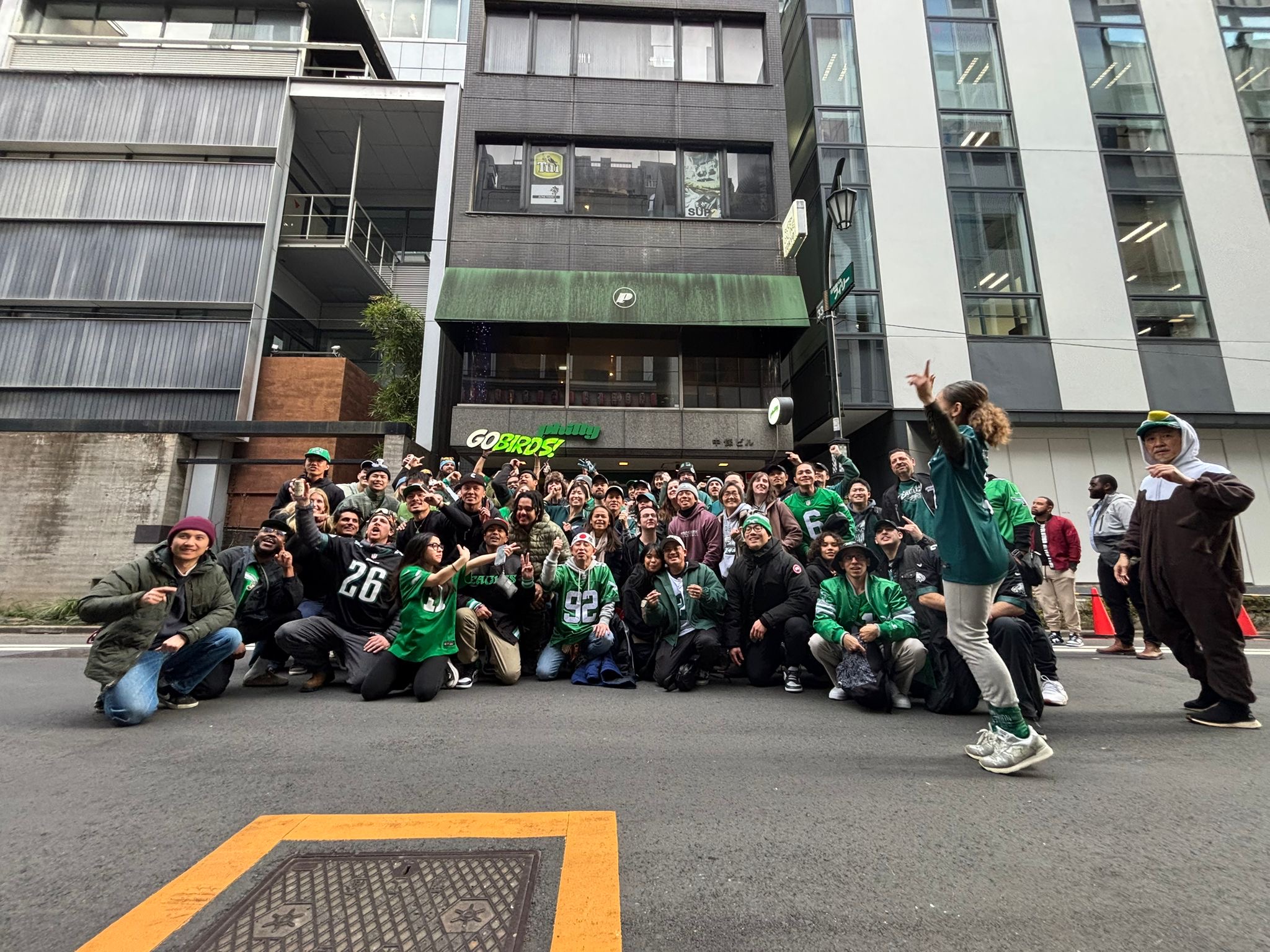
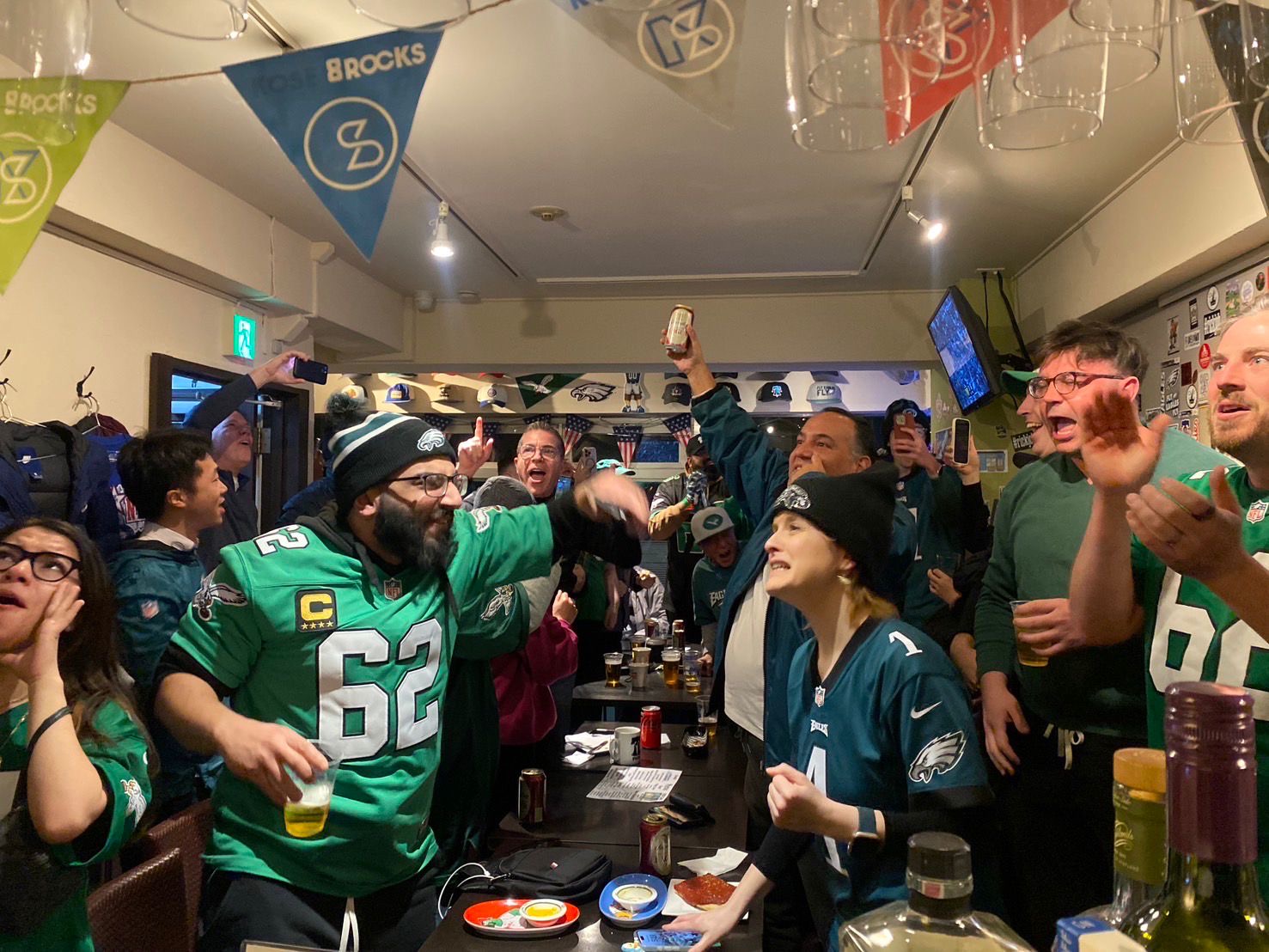
    But what makes a visit to Tokyo’s Philly so special is not really even the cheesesteaks. (Though the sandwich has seen a recent boost in interest among Japanese customers since Shohei Ohtani praised it during the Dodgers-Phillies playoff series.) It is the Chujos’ genuine embrace of Philadelphia’s culture and people, from the music to the Eagles watch parties they regularly host, culminating in full-throated “E-A-G-L-E-S Eagles!” victory chants outside that occasionally startle their quiet-loving Tokyo neighbors.

    Eagles fans outside Nihonbashi Philly, in Tokyo, during a recent Eagles game.
    The Chujos regularly host Eagles watch parties at the restaurant.

    “We want to be part of the community,” says Tomomi. The Chujos are planning another Philly visit this summer during America’s Semiquincentennial to celebrate their 15th anniversary with wedding photos on the Rocky Steps and in front of City Hall.

    For the proud residents of a city with a long tradition of embracing scorn from the wider world — a city whose unofficial anthem is “No one likes us and we don’t care!” — it is touching to see ourselves reflected with so much love and effort in a sandwich created by friends abroad who regard us with nothing but admiration.

    This wasn’t merely the rarity of a good cheesesteak far afield, it was a cheesesteak of affirmation: When someone likes us enough to cook our birthright sandwich properly, we actually do care! Deeply.

    “The bread on that cheesesteak and those pretzels were so good,” agreed chef Jesse Ito of Royal Sushi & Izakaya, who also came along to Nihonbashi for the meal. “But just to see another culture pay so much respect to something so Philly, if you love where you come from, you almost have to go.”

    Kosuke Chujo makes a cheesesteak.
  • Philly’s ramen power couple, now living in Tokyo, are thriving in noodle paradise

    Philly’s ramen power couple, now living in Tokyo, are thriving in noodle paradise

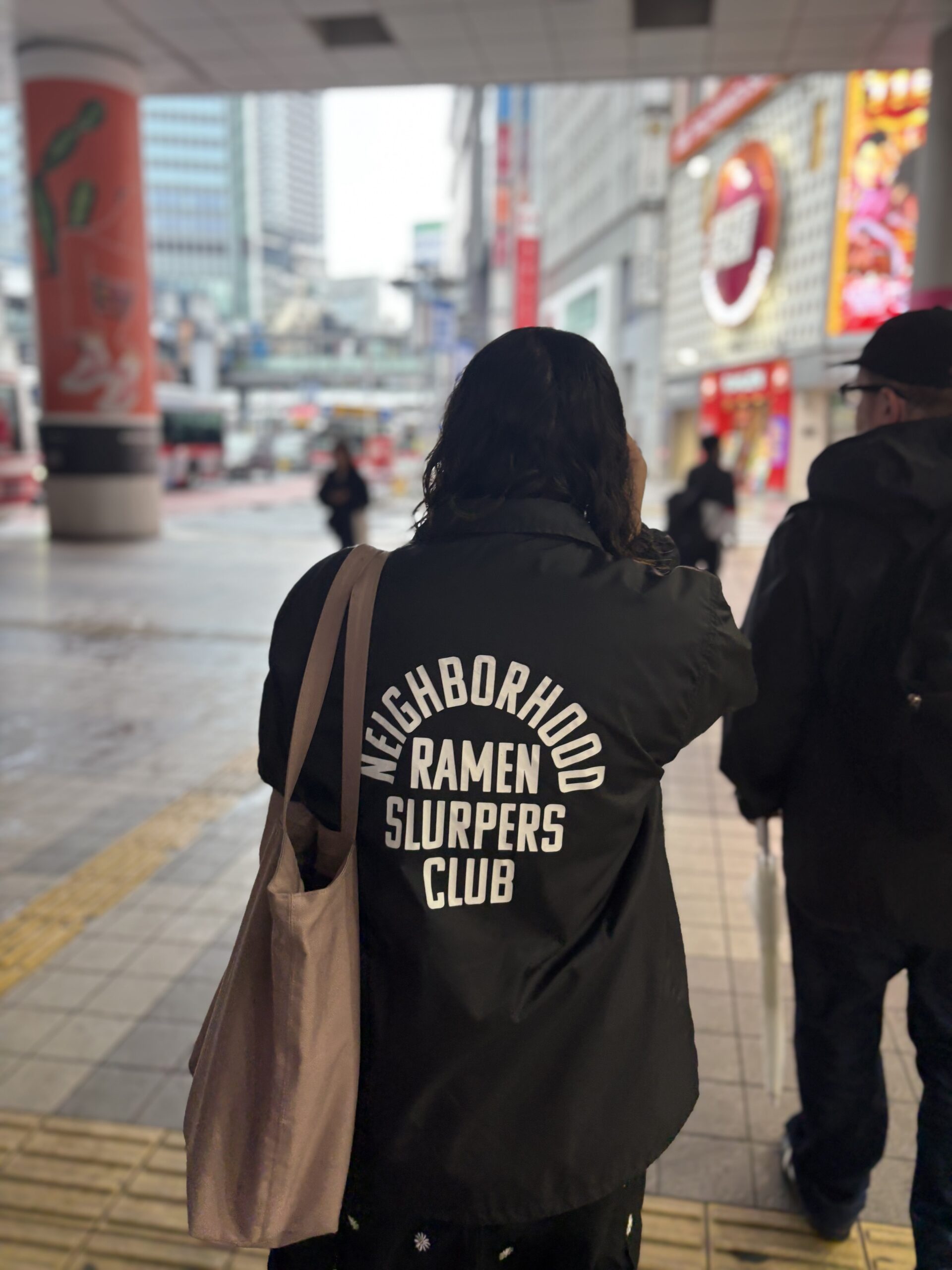
    TOKYO — Lindsay Mariko Steigerwald and Jesse Pryor set the gold standard for ramen in Philadelphia during their five-year run at Neighborhood Ramen. But when the couple announced the closure of their beloved Queen Village restaurant at the end of 2024, they also teased an audacious bit of news: They were moving to Japan with plans to reopen their shop in the ramen capital of the world.

    “This is the next chapter for Neighborhood Ramen!” said Steigerwald, 35, as we stood in a blustery November rain beside Shibuya Scramble Crossing, the famously chaotic, neon-lit intersection in Tokyo where we rendezvoused for a day of noodle slurping across the city.

    The couple had arrived from Philadelphia just 10 days earlier — following a year of planning (and a pop-up venture called ESO Ramen Workshop in Society Hill). They’d already begun their classes at Japanese language school and launched the arduous visa process that must be settled before they can begin working on their own restaurant. It will likely still be many months before Neighborhood Ramen fires up its stockpots and noodle machine in Tokyo.

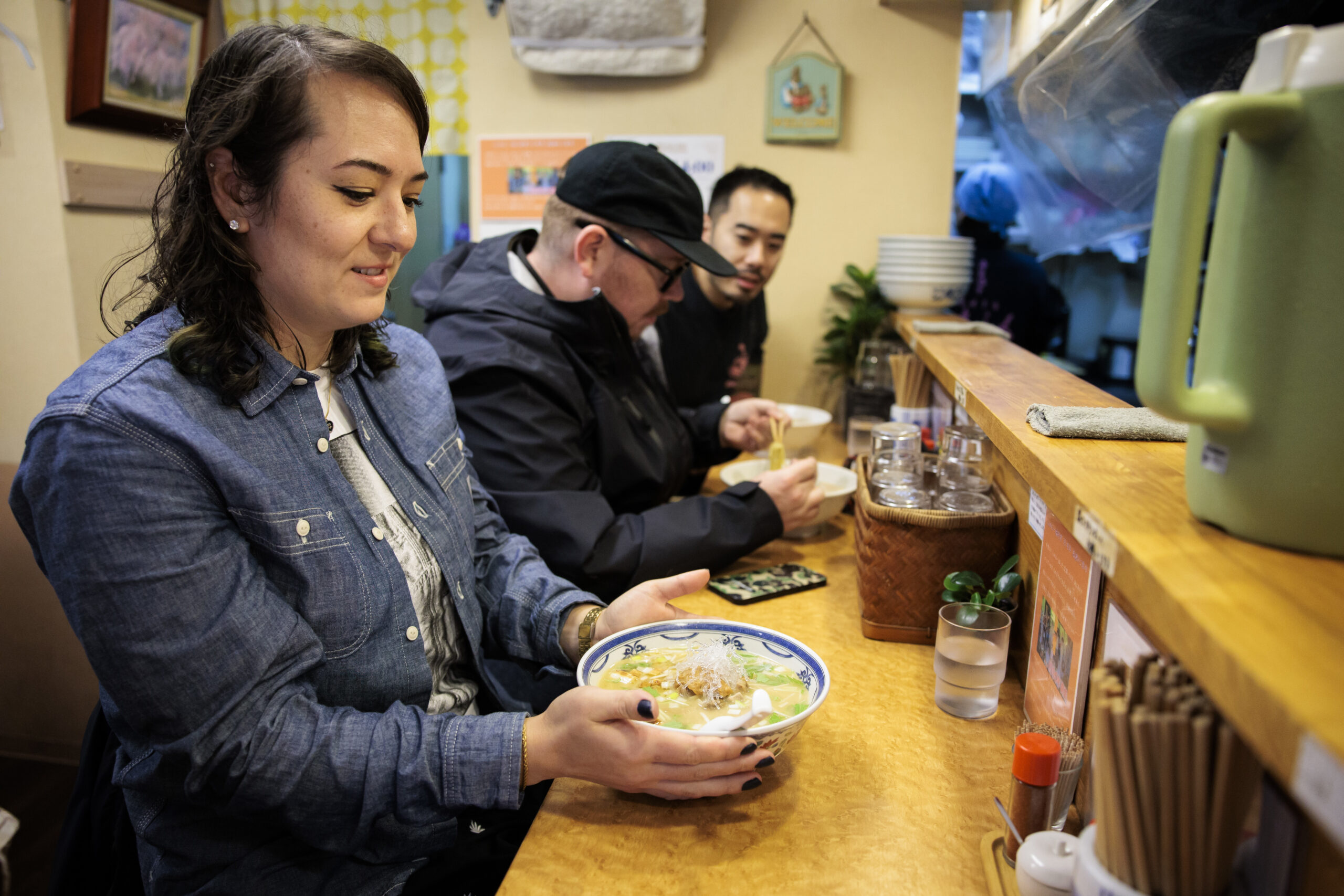
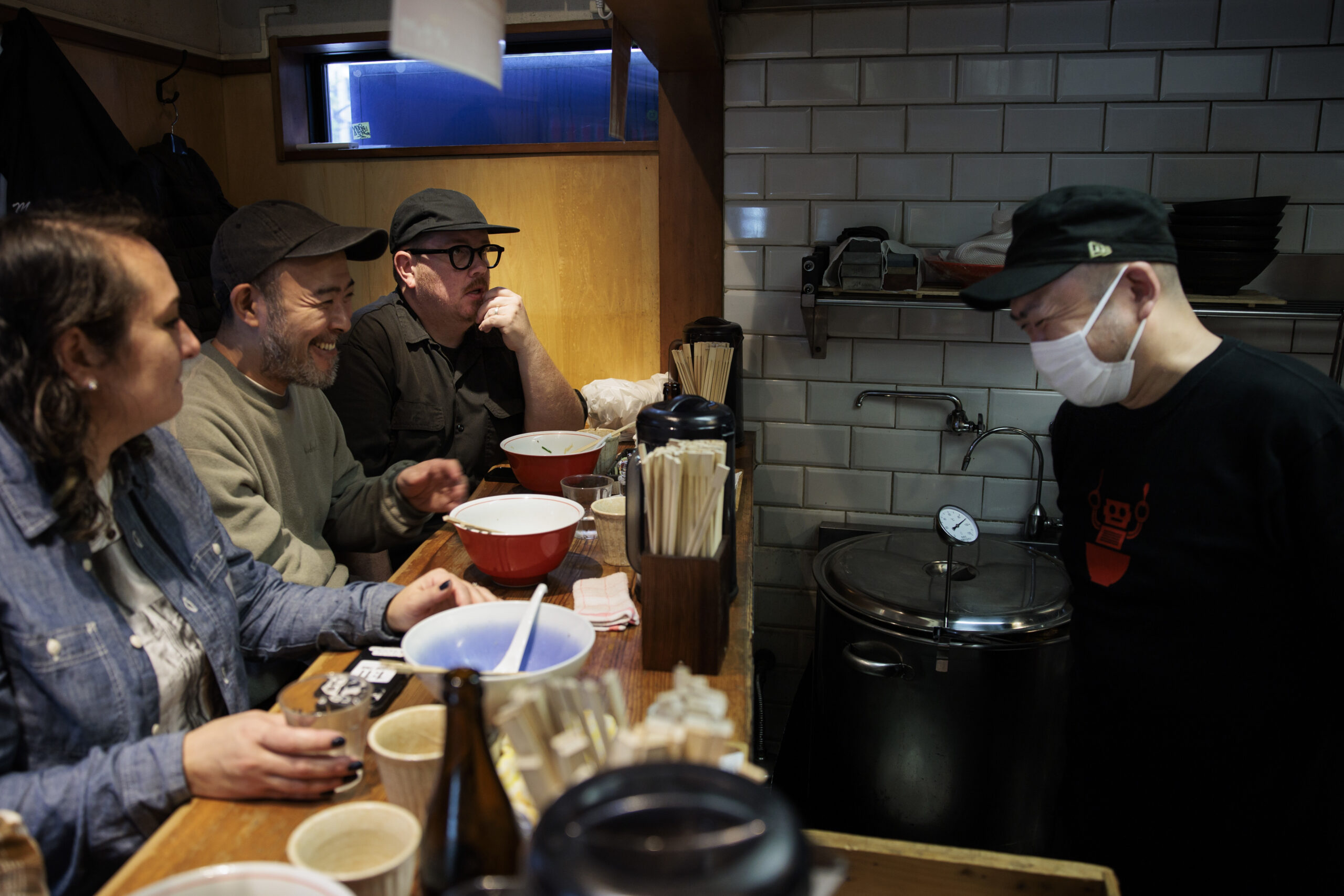
    Lindsay Mariko Steigerwald (from left), Jesse Pryor, and Jesse Ito sit at the counter at Ramen Ichifuku in November in Tokyo.

    Their move was precipitated by a long-simmering goal to practice their craft alongside the best, but also a desire for “a better quality of life” they’ve come to love over the course of multiple visits to Tokyo, says Steigerwald.

    Equally motivating is the couple’s passion for consuming ramen regularly; it’s every bit as intense as their drive to make it.

    “I want to eat ramen every day,” says Pryor, 38. “I want to go to different shops all the time, be inspired and just soak it up. It’s hard to do that in Philadelphia.”

    He’d already eaten 14 bowls of ramen in the first nine days since landing in Tokyo in November — on top of the 300 ramen shops the couple had visited during their 10 previous visits to Japan. By the end of December, Pryor was up to 80 bowls of ramen at 70 different places. (Steigerwald has been keeping pace with ramen, too, but she documents her own obsession — dumplings — on her GyozaKween Instagram account.)

    That’s still just a fraction of the 10,000 ramen shops in Tokyo serving myriad variations: rich tonkotsus cloudy with the emulsified essence of slow-simmered pork bones; crystalline shio salt broths and shoyus tinted amber with soy; creamy miso ramens; and gyokai ramens punchy with seafood umami. Pryor’s quest for soupy inspiration here, he says, is “infinite.”

    “Jesse is a true ramen hunter,” says Steigerwald. “At night he’s game planning what bowls he’s going to eat the next day.”

    “The ramen comes first,” he says, “and then the rest of the day just fills in around it, you know?”

    Ramen-hopping rules

    We were about to learn firsthand, as the couple, who’ve begun a fledgling ramen tour business, had mapped out an afternoon of visits to some of their favorites. There were rules. Our group must be small (ideally two to three guests max) because the best ramen counters are often tiny. Also, come hungry.

    “It’s expected each person that steps foot in the shop orders their own ramen and finishes the bowl. … Doggie bags are not a thing,” says Pryor.

    The last edict was especially daunting considering the belly-filling richness of ramen. Consume three bowls and you’re in for a long nap. In addition, eating ramen like a pro is a full-contact sport — a messy, broth-splashing endeavor for which there is not only a recommended dress code (“Jesse’s entire wardrobe is black,” Steigerwald says), but also an almost athletic eating technique: the power slurp.

    Ramen with shark cartilage at Ramen Ichifuku.
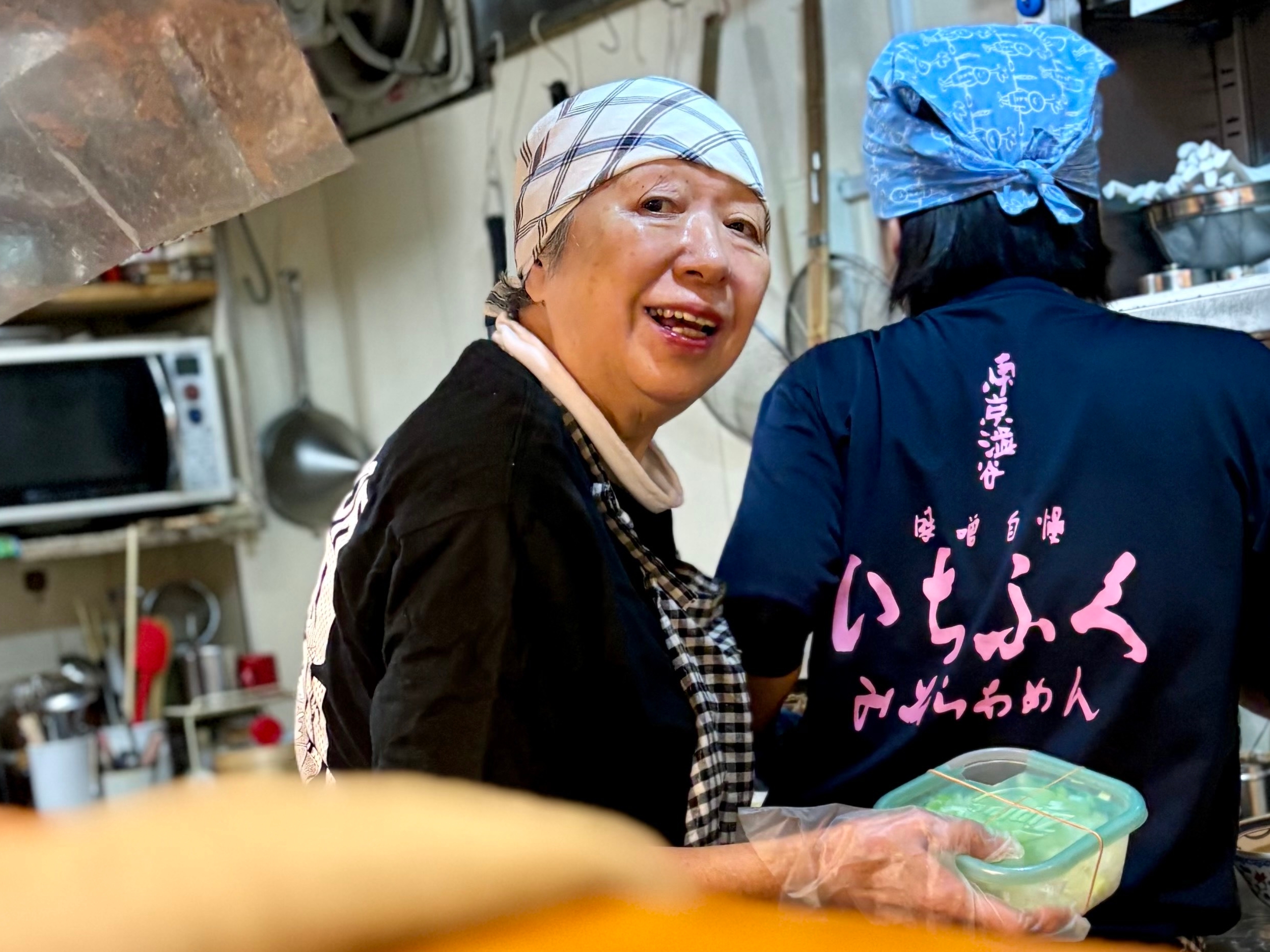
    Chef and owner Kumiko Ishida of Ramen Ichifuku in the Honmachi neighborhood of Shibuya, Tokyo, looks back across the counter while making miso ramen.

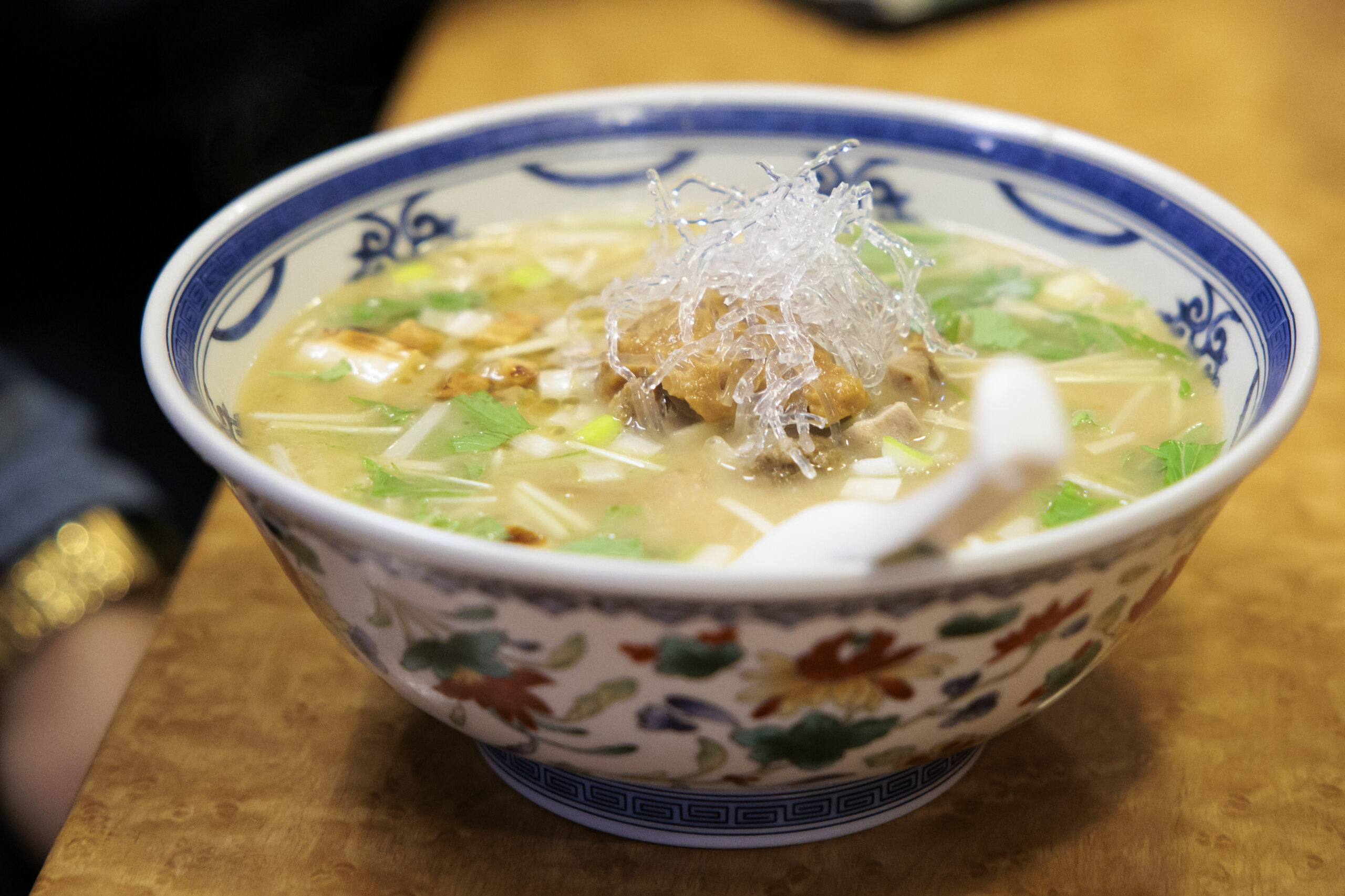
    As the bowls landed before us at Ramen Ichifuku, our first stop in the Honmachi neighborhood of Shibuya, I marveled at the nutty aroma of the tan broth of an irorimen-style ramen, enriched with three kinds of miso, tender pork, tangy sake lees, and translucent threads of shark cartilage bundled over top.

    I was just as mesmerized by Pryor and Steigerwald, though, as they locked onto their bowls with trancelike focus, then pounced, their faces hovering just inches above the steamy rims. As they began to slurp, columns of noodles steadily streamed upward into their open jaws. The jazz soundtrack of Hiromi’s Sonicwonder playing “Yes! Ramen!!” was punctuated by a gurgling roar reminiscent of shop vacs inhaling shallow pools.

    “We call it ‘hitting the zu’s,’” says Steigerwald, noting the reference to zuru zuru, the onomatopoeia for slurping ramen in Japanese comics.

    “It’s like turbo tasting, because you get the flavor of it up into all your sensory crevices,” says Pryor, who typically eats a bowl in five minutes or less, to consume each element at its peak.

    I leaned over and gave it my best slurp — only to scorch my too-tightly pursed lips with hot broth while the noodles refused to rise. I resorted to my usual leisurely pace, savoring what was nonetheless the best bowl of ramen I’d ever eaten.

    It was a comforting collage of firm but slippery noodles glazed in a nuanced broth with a parade of so many other textures — velvety pork, snappy bamboos shoots, tiny crunchy croutons. If only I could learn to properly slurp, it might be even better.

    Steigerwald give me a sympathetic look: “We’ve had a lot of practice.”

    Philly restaurant romance leads to Japan

    Philly’s ramen power couple met at CoZara in 2016, where Steigerwald tended bar, and Pryor, a former news photographer from Delaware turned line cook at Zahav, had become a regular for the restaurant’s $5 Japanese riff on a citywide (Orion beer and a shot of sake).

    “I saw them falling in love at that bar,” says Mawn chef Phila Lorn, who was CoZara’s chef de cuisine at the time.

    Steigerwald, who grew up in New Jersey near Fort Dix and McGuire Air Force Base with two half-Japanese parents who are both kung fu masters, found Pryor’s budding obsession with ramen endearing: “Cool, the guy I’m dating is into the food of my culture.”

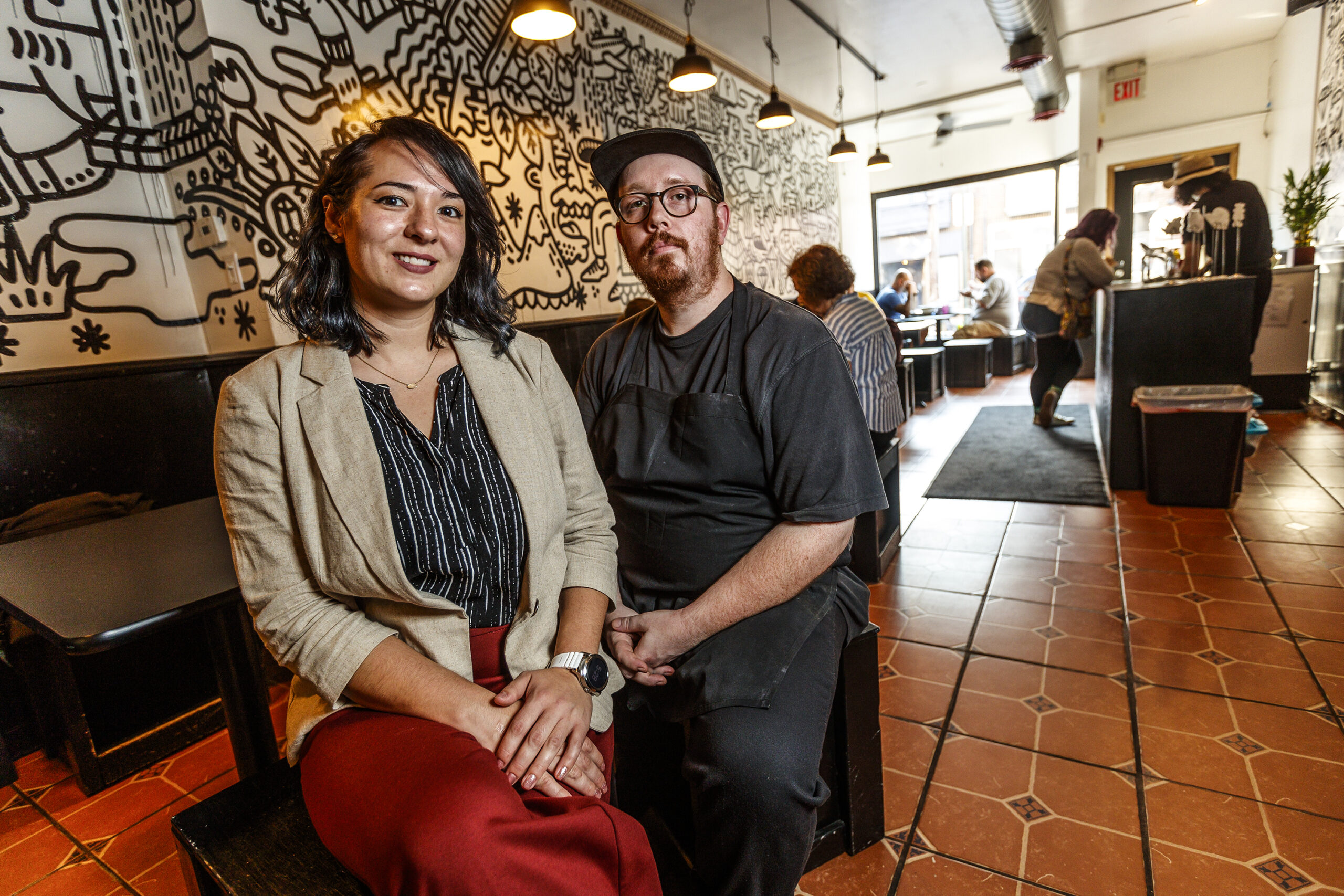
    Lindsay Mariko Steigerwald (left) and Jesse Pryor co-owned Neighborhood Ramen on Third Street in Queen Village. They are pictured in their dining room shortly after opening in 2019.

    She studied business management at college in Texas with an eye toward opening a Japanese restaurant, so it wasn’t long before they launched one of the city’s early pop-up sensations in 2016, dishing out bowls of intense tonkotsu and spicy tantan from his apartment between shifts at Cheu Noodle Bar, Morimoto, and Zahav.

    When they finally opened their Queen Village shop in 2019, they instantly raised the city’s ramen bar. They acquired a used ramen machine in 2022 to begin making their own noodles (a rarity, considering the process is more involved than Italian pasta), raising the local standard once again.

    But over the course of their research visits to Japan — where they were entranced by the abundance of quality ingredients as well as a public sense of order that keeps the streets tidy, safe, and tranquil — their pipe dream steadily bloomed into a determination to actually move.

    “We did our thing for 10 years in Philly, but between the political climate and inflation there, the more we visited [Japan], we realized that this was where we want to be,” says Steigerwald. “We just want to make a modest living, be happy, and be proud of what we do.”

    Steigerwald is eager to bring her family’s Japanese roots full circle, closing the loop that brought her two grandmothers to the United States after World War II: “My aunt in Texas finds it interesting that [my grandmothers] moved to America for a better life in the 1950s and that we are moving back to Japan to find a better life 70 years later.”

    Steigerwald is pursuing a Nikkei visa for Japanese descendants. She hopes that the couple, who eloped in August — “moving to a new continent, we figured it was time,” she says — can open their shop in Koenji, a neighborhood known for its counterculture. It reminds them of South Street.

    Tokyo transplants

    In the meanwhile, they’ve been having rewarding ramen encounters everywhere. That included a spontaneous detour to Honmachi’s bustling and futuristic Denny’s, where ordering is automated and the food is delivered by a fleet of beeping musical robots.

    “Honestly, I’d be hyped to eat that tantan anywhere,” says Pryor, gazing approvingly at a bowl of noodles whose broth is rich with sesame paste, ground pork, and orange puddles of chili oil. (Japanese Denny’s are owned by the same company as the country’s celebrated versions of the 7-Eleven, explaining the impressive confluence of quality and value.)

    The duo’s exploration of the upper echelons of Tokyo’s artisan ramen world, however, has gone a long way toward building a community of friends and peers. When we arrived at Ichifuku, chef Kumiko Ishida was wearing a Neighborhood Ramen T-shirt. The 15-seat restaurant in a homey, living room-like space is one of the very few ramen shops in Tokyo owned and operated by a woman, and Steigerwald and Pryor had named one of their regular specials in Philadelphia “Mama Miso” in the chef’s honor.

    The source of their inspiration did not disappoint, even if Ichifuku would not divulge how (or from what) she makes her signature croutons, which remain a subject of ramen-world speculation because they never turn soggy in broth.

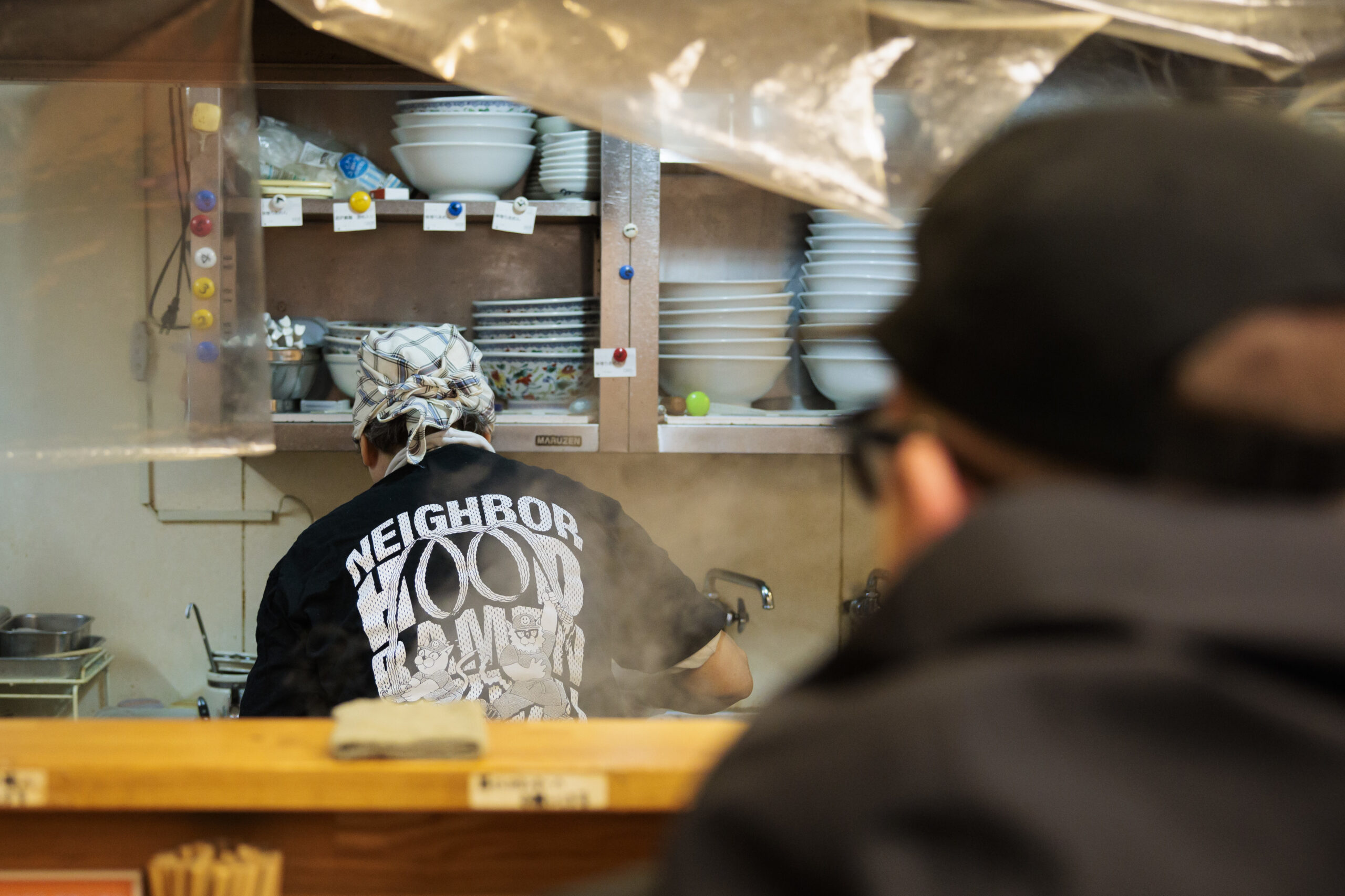
    Chef Kumiko Ishida wears a Neighborhood Ramen T-shirt while cooking at her restaurant, Ramen Ichifuku. It is one of the very few ramen shops in Tokyo owned and operated by a woman.

    Such minuscule details are the fodder for constant discussion among ramen hunters like Pryor and chef friends like Hiroshi “Nukaji” Nukui of Menya Nukaji in the Shibuya section of Tokyo, where Neighborhood staged a well-received pop-up in 2023. Nukui, who joined us for part of our journey, said he was thrilled the couple had decided to make the move to Tokyo.

    “Their passion is so strong. Many Japanese have not been to the amount of ramen shops they’ve been to,” Nukui said. And their status as foreigners might also be an advantage, he suggested. “Japanese ramen chefs typically work under a famous chef and end up following in that tradition. But [Pryor and Steigerwald] are not boxed into a style or lineage.”

    In fact, Pryor plans to focus on a ramen style similar to Nukui’s, a double-brothed ramen (also called “W soup”) that blends rich pork tonkotsu with an intense seafood broth called gyokai. While Nukui is known for his tsukemen style — in which noodles are served on the side for dipping into a broth as thick as gravy — Pryor intends to serve his noodles soup-style.

    “This style is so impactful,” Pryor says, “you eat it and you’re like ‘Whoa!’” (I tried Pryor’s gyokai tonkotsu at both Neighborhood Ramen and Eso, and it is one of the most powerful, smoky, ocean-flavored broths I’ve ever tasted.)

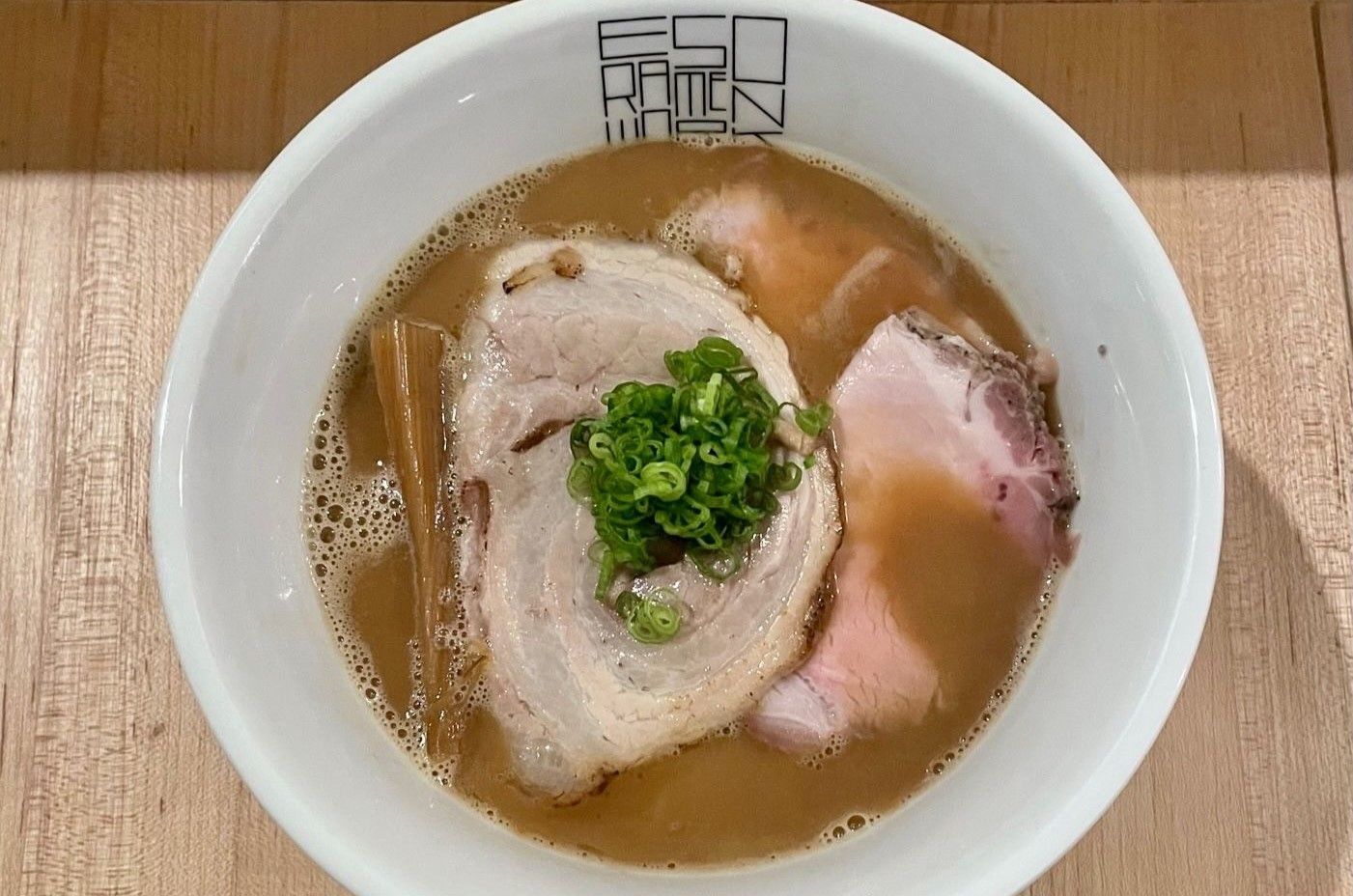
    Gyokai tonkotsu ramen at ESO Ramen Workshop, 526 S. Fourth St.

    “Their ramen is no joke,” agrees Kosuke Chujo, the griddle master of Nihonbashi Philly, Tokyo’s shrine to Philly culture. “They are very, very good. The broth, of course. But also the fact they make their own noodles. Your average Japanese ramen maker does not do what they do.”

    Indeed, high-quality noodles are so widely available in Japan that few ramen shops bother; there are so many other details to refine in composing a great bowl. At our final stop of the day, Ramenya Toy Box in Minowa, we were given a master class in the art of ramen’s two most elemental styles: shio (clear broth seasoned with salt) and shoyu (clear broth seasoned with soy).

    As we stood in line outside the small white building, Pryor warned us of a solemn dining experience to come. It sounded like the polar opposite of the relaxed atmosphere at Ichifuku. “Yamagami-san is strict. His vibe is very serious, and the cooks stand at attention,” he said, referring to owner Takanori Yamagami, who studied under famed “Ramenbilly” chef Junichi Shimazaki, the pompadour-coiffed social media sensation whose shop is known for its no-talking rule.

    Lindsay Mariko Steigerwald (from left), Hiroshi Nukui, and Jesse Pryor laugh with chef and owner Takanori Yamagami during a meal at Ramenya Toy Box in November. “I think it’s a great thing,” Yamagami says of Steigerwald and Pryor’s move to Tokyo. “If their ramen is good, people will go.”
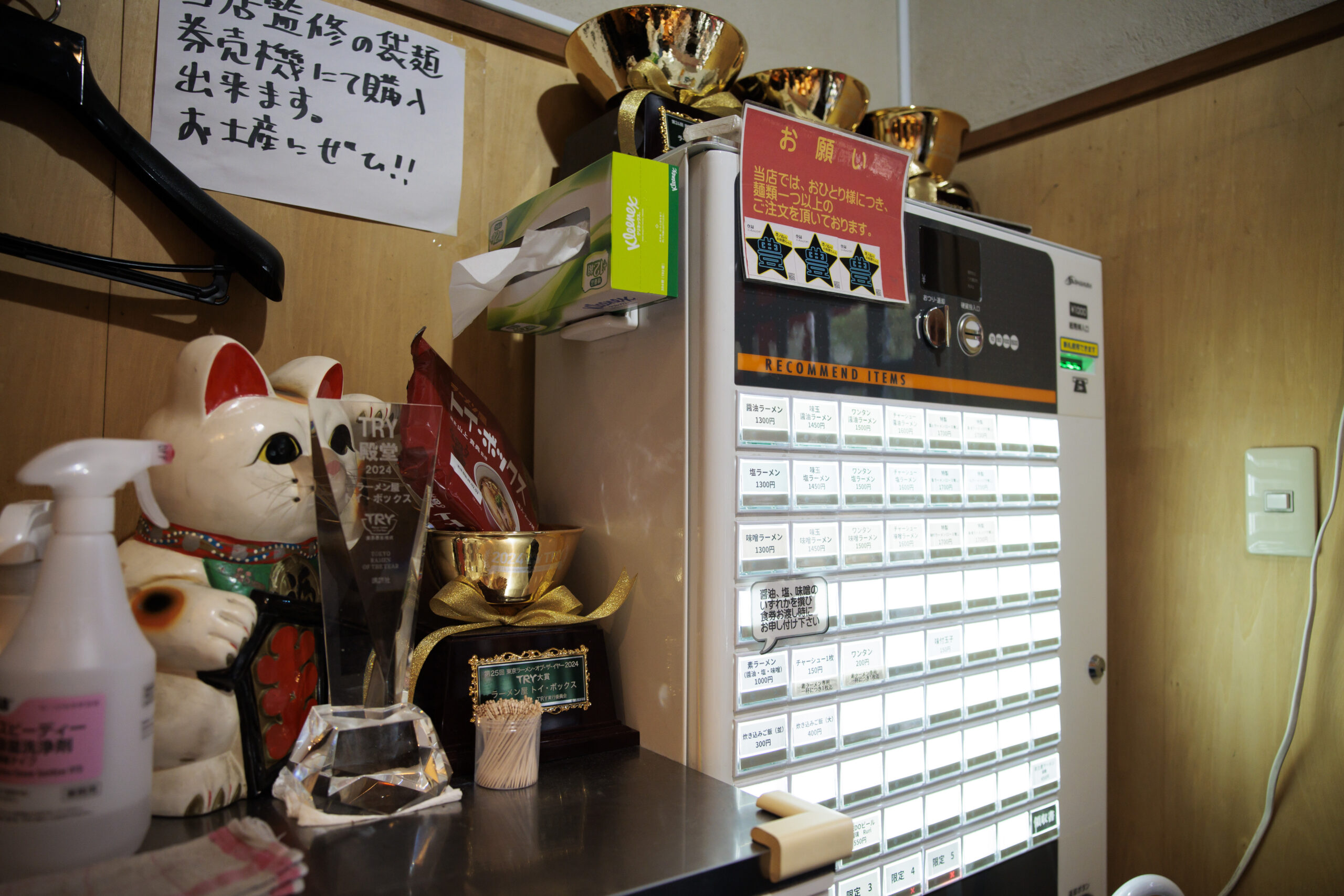
    A ticket vending machine is used to pay for ramen at Ramenya Toy Box. Gilded trophy versions of the shop’s bowls attest to its reputation as one of Tokyo’s best ramen destinations.

    Yamagami has made his own name in this tiny space, where the counter wraps like an elbow around the open kitchen. Pristine renditions of three classic styles won him induction into the ramen hall of fame in 2024.

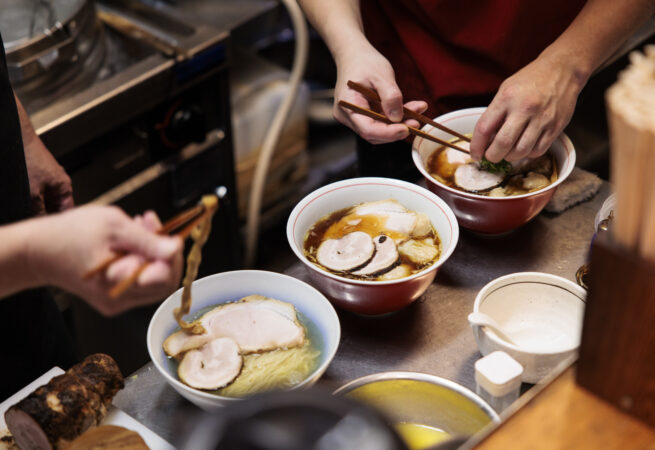
    The small team worked silently alongside him, prepping the “tare” seasoning base while the chef drained baskets of noodles in both hands, shaking off cooking liquid with almost-musical syncopation. A flick of his chopsticks coaxed the noodles, placed in bowls, into a perfect comb-over wave, to be swiftly layered with two kinds of chashu (pork belly and loin), a perfect egg, a curl of bamboo shoot, and a final spoonful of rendered chicken fat that glinted like gold.

    The intense broth of just chicken and water is the true source of Toy Box’s magic, drawn from a slow-cooking cauldron in back that appears to be more chopped-up bones than liquid. Three kinds of heritage chickens contribute different properties of richness, collagen, aroma, and flavor. In the bowl, the most straightforward shio ramen is seasoned only with salt, thinly shaved scallions, and a dusting of tart sudachi citrus zest; it’s one of the most vivid yet delicate distillations of chicken I’ve tasted.

    Yamagami’s shoyu ramen — seasoned with six kinds of soy sauce, including several fermented in wood vats — begins with that same vivid chicken flavor, then blooms with earthy umami.

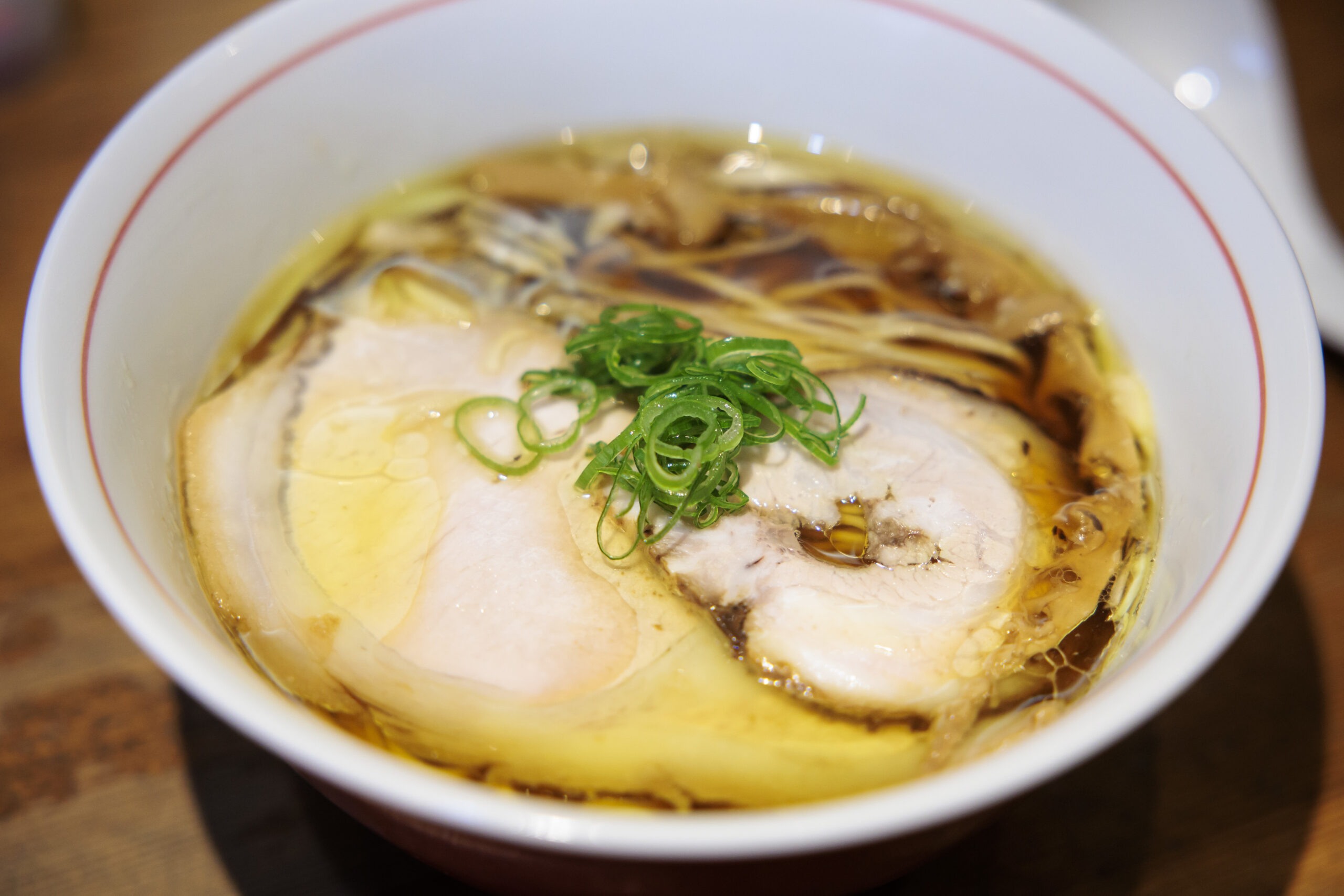
    Shoyu ramen at Ramenya Toy Box.

    I lean in, inhale, and — at last — execute a proper slurp, the firm, slippery noodles swiftly rising up past my lips with a velocity and snap that fans the flavor volume even higher. I can understand why Pryor, who usually visits new shops daily, has returned to Toy Box a dozen times.

    The respect is clearly reciprocal. Yamagami is eager to see the Neighborhood Ramen couple plant their flag in Tokyo. And, as if to punctuate that thought, he reached over the counter and gifted Pryor one of the white bowls lined with sky blue that he uses for his signature shio ramen. It’s like watching a great athlete hand his jersey to a rising star.

    “It’s inspiring for us, too,” Yamagami says of their arrival. “I think it’s a great thing. If their ramen is good, people will go.”

    The gesture isn’t lost on Pryor or Steigerwald, who clearly cannot wait to begin sharing their own ramen talents with Tokyo. They sold their coveted ramen machine before leaving Philadelphia (to the forthcoming Tako Taco) and have plans to buy a new one here soon, so Pryor can get his hands back in the dough.

    The couple intend to level up to the standards of their new noodle landscape. “We want it to be fun, welcoming, and chill — not intimidating,” says Steigerwald, who imagines a space with fewer than a dozen seats.

    But so many hurdles remain, from visa bureaucracy to finding the perfect location. So they have stayed focused on what’s next: their first holidays in Tokyo, a trip to the ramen museum in Yokohama, and a big test at their Japanese language school.

    They already have a post-exam celebration plan in place. Not surprisingly, said Steigerwald, it will involve “one monstrous bowl of ramen.”

    Lindsay Mariko Steigerwald and Jesse Pryor, formerly the owners of Neighborhood Ramen in Philadelphia, lead the way on a ramen crawl across Tokyo, where they moved toward the end of 2025.
  • Fleur’s brings ambitious French fare and a much-awaited chef comeback to Kensington

    Fleur’s brings ambitious French fare and a much-awaited chef comeback to Kensington

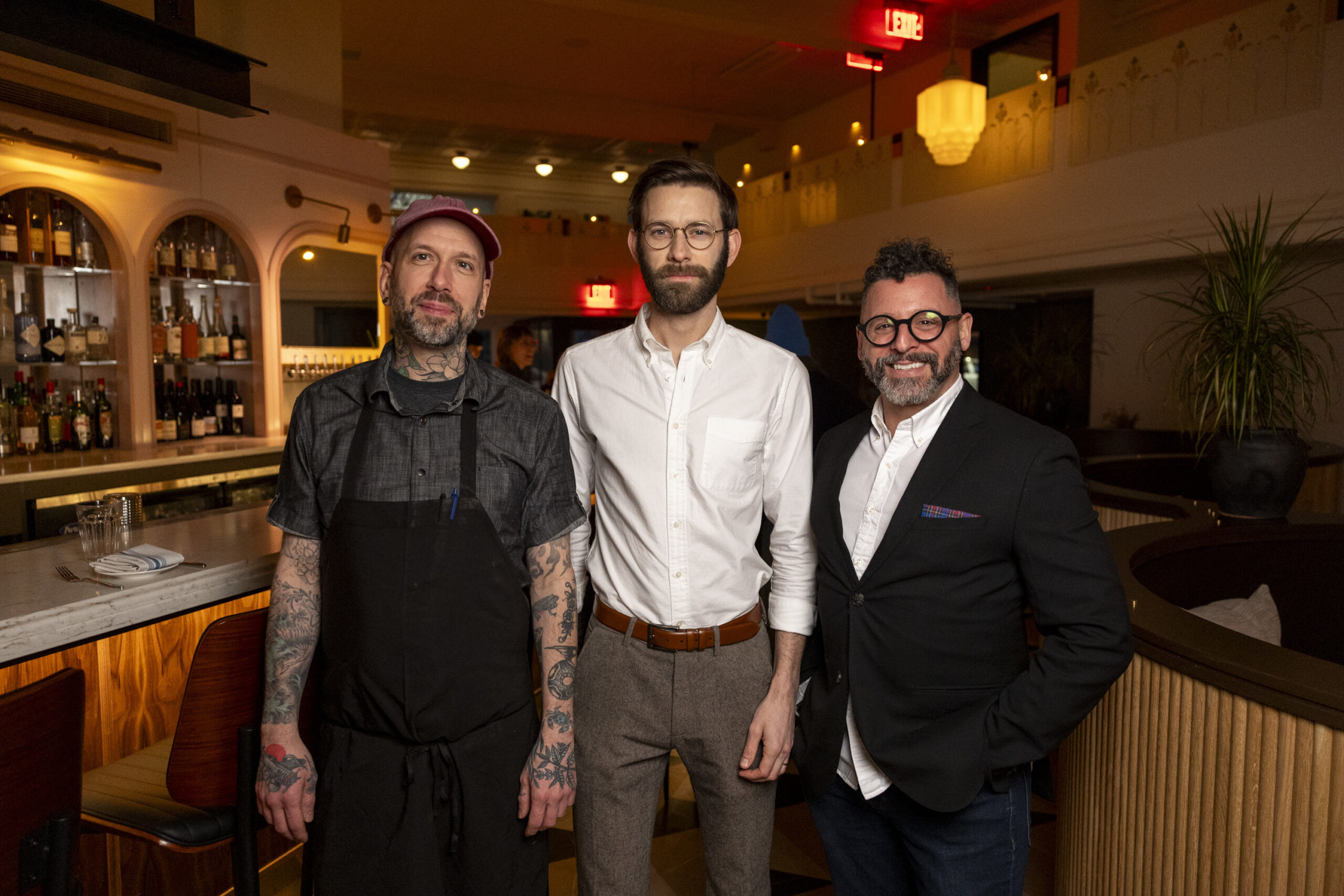
    A chef’s career rarely follows a straight line, but as I settled into one of the cushy circular nooks at Fleur’s for a memorable meal, it was clear to me that George Sabatino’s story had detoured away from the spotlight for far too long.

    Now a chef-partner at this gorgeous new Kensington restaurant, Sabatino was one of the most promising and inventive young chefs in Philadelphia a decade ago, spinning “herbivore” tasting menus, sous-vide shrimp ceviches, and crispy lamb rillettes at Aldine, his chef-owner debut near Rittenhouse Square that earned three bells in 2015.

    When that restaurant closed three years later, however, Sabatino embarked on a journeyman’s path that never quite found sustained footing. He dipped back into his previous home in the Safran Turney universe for a spell as culinary director (reopening Lolita, helping with Bud & Marilyn’s at the airport, Good Luck Pizza Co., and Darling Jack’s), tried his hand at farming, worked as a private chef, and then helped stabilize Rosemary in Ridley Park.

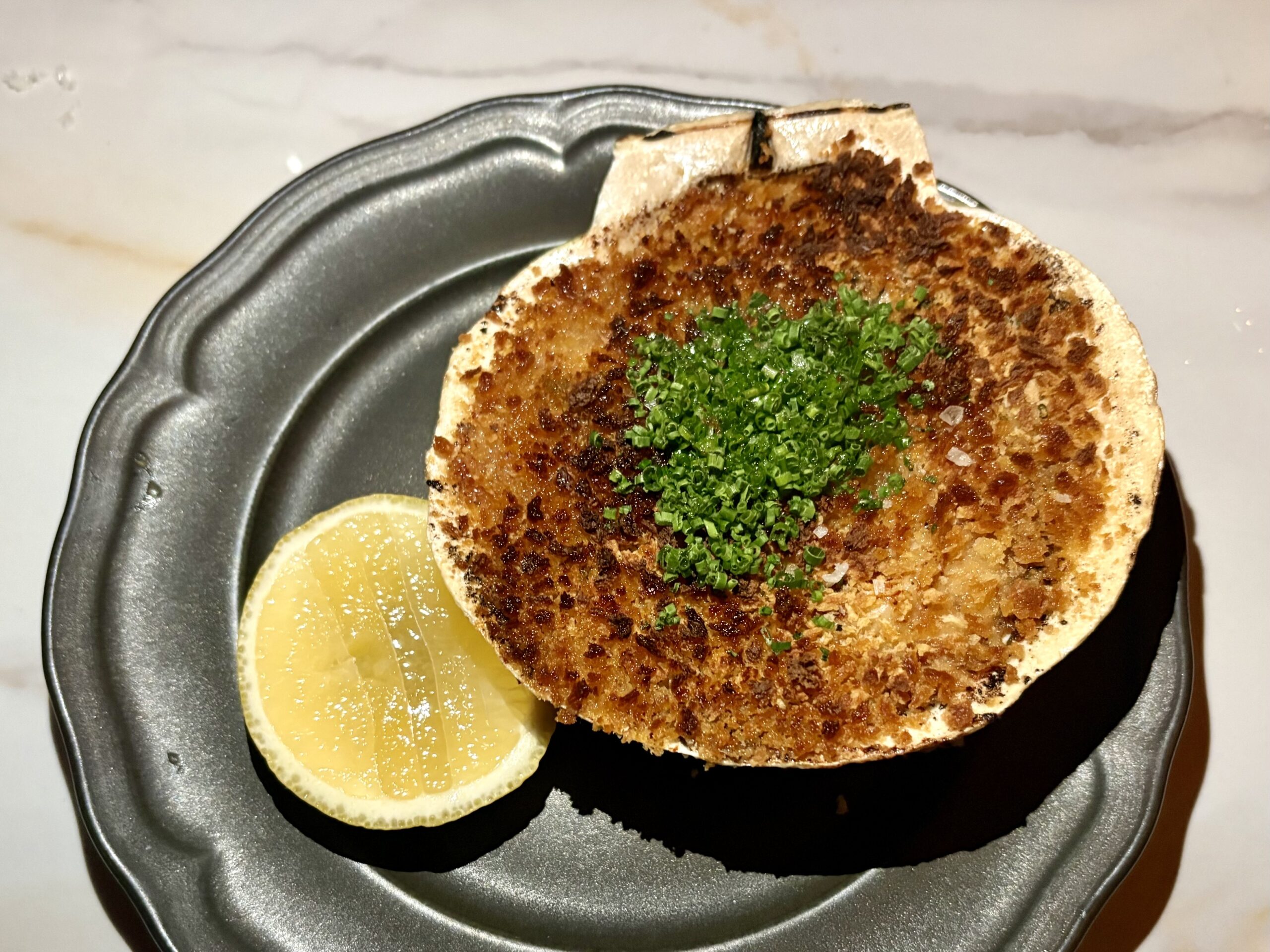
    The scallop gratin at Fleur’s in Kensington suspends the sweet mollusks in a puree of celery root soubise and nixtamalized corn miso.

    But Fleur’s is the first time in eight years Sabatino has been able to cook his own food — a style that’s now matured beyond the molecular gastronomy tricks of his youth. He’s now focused more on using seasonality and fermentation to elaborate on some classic French ideas. A scallop gratin cradled in its shell, for example, appears familiar enough, evoking Fleur’s brasserie theme with an aromatic whiff of truffle butter. But when I cracked its toasty crumb surface, those sweet scallops were enveloped in a silky puree that traveled to unexpectedly earthy depths thanks to a celery root soubise touched with nixtamalized corn miso. This was just the first of many bites that reminded me why I had been looking forward to Sabatino’s comeback for some time.

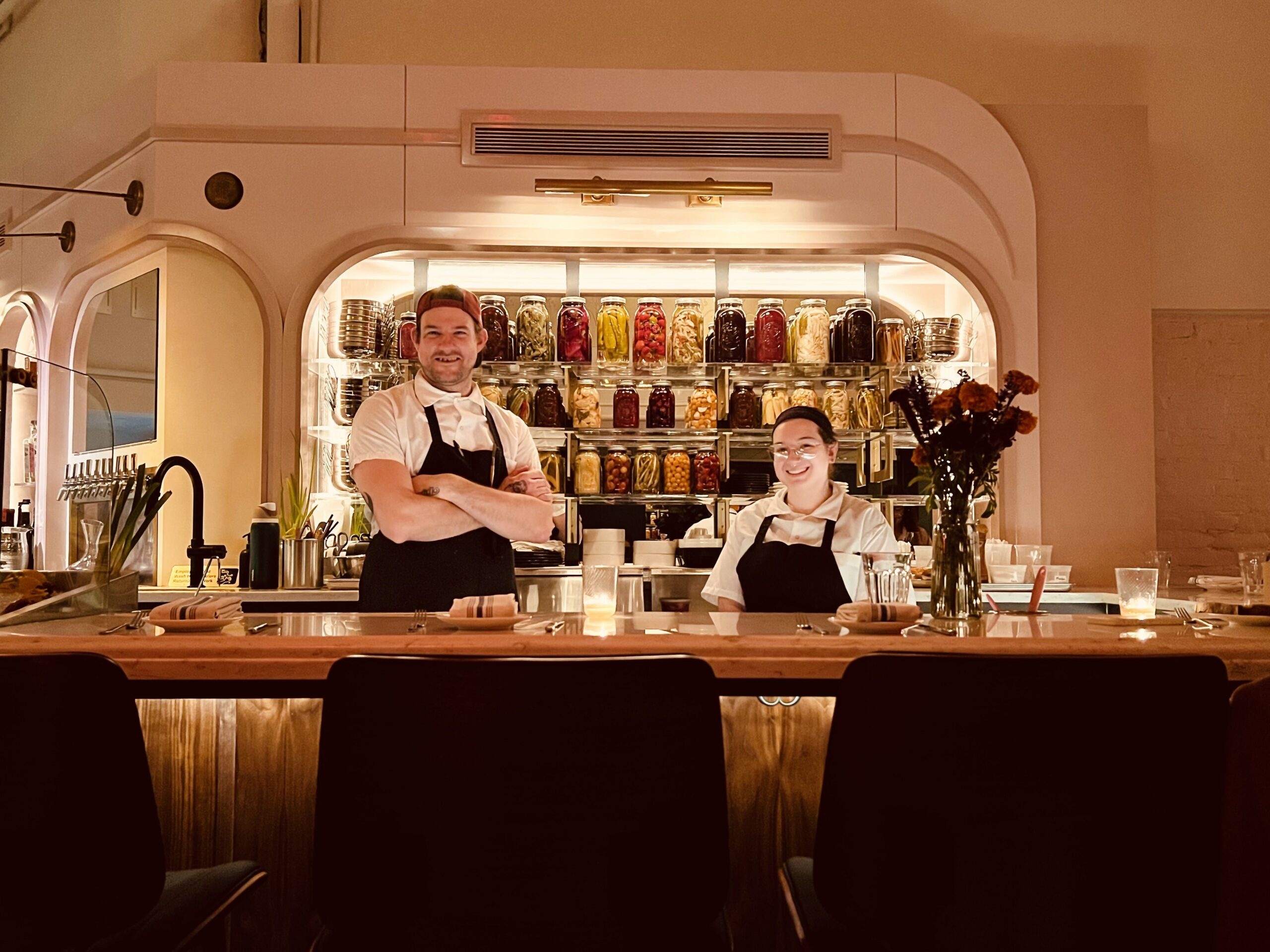
    An impressive larder of canned produce displayed in jars behind the bar adds inspiration across the menu. There’s watermelon vinegar in the mignonette for raw Island Creek and Savage Blonde oysters, a vivid memory of distant summer soon to be replaced with the tart essence of fall pumpkin. A custardy mustard infused with seasonal fruits — preserved peaches at a recent visit — comes layered beneath a perfect terrine of pork and pistachio wrapped in bacon with crunchy beet-pickled vegetables à la Grecques.

    Even a platter of briny middleneck clams on the half shell get a boost from a house-fermented hot sauce made from Fresnos and dried ancho chiles; the simple combination of tangy spice and ocean spray elevates this often-undervalued mollusk into a star-worthy role at Fleur’s.

    The raw bar’s shucking window sits at the crook of the long bar, which bends to follow the elbow-shaped contour of this historic space that is, in many ways, having a comeback of its own.

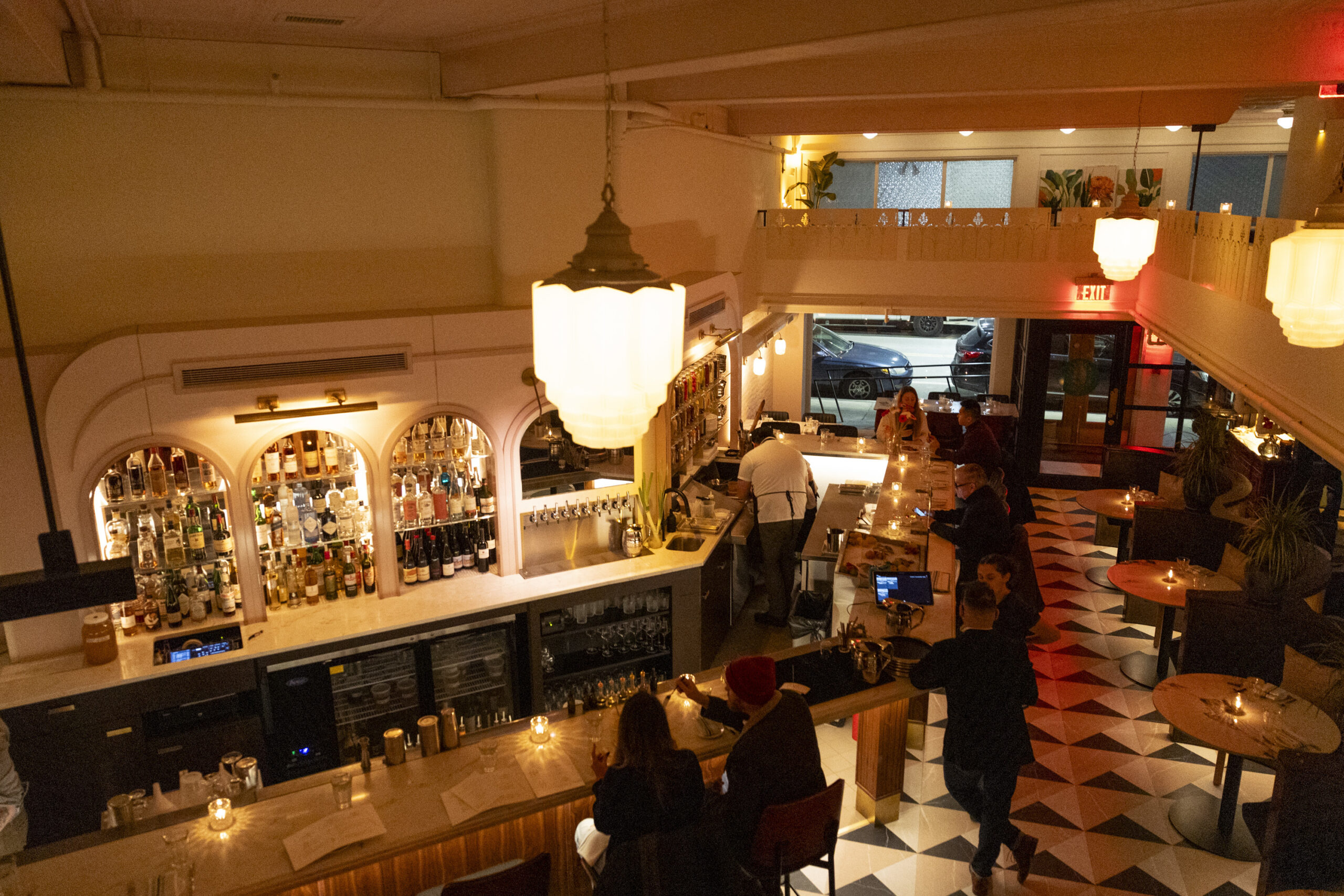
    The inside dining at Fleur’s in Philadelphia on Friday, Jan. 2, 2026.
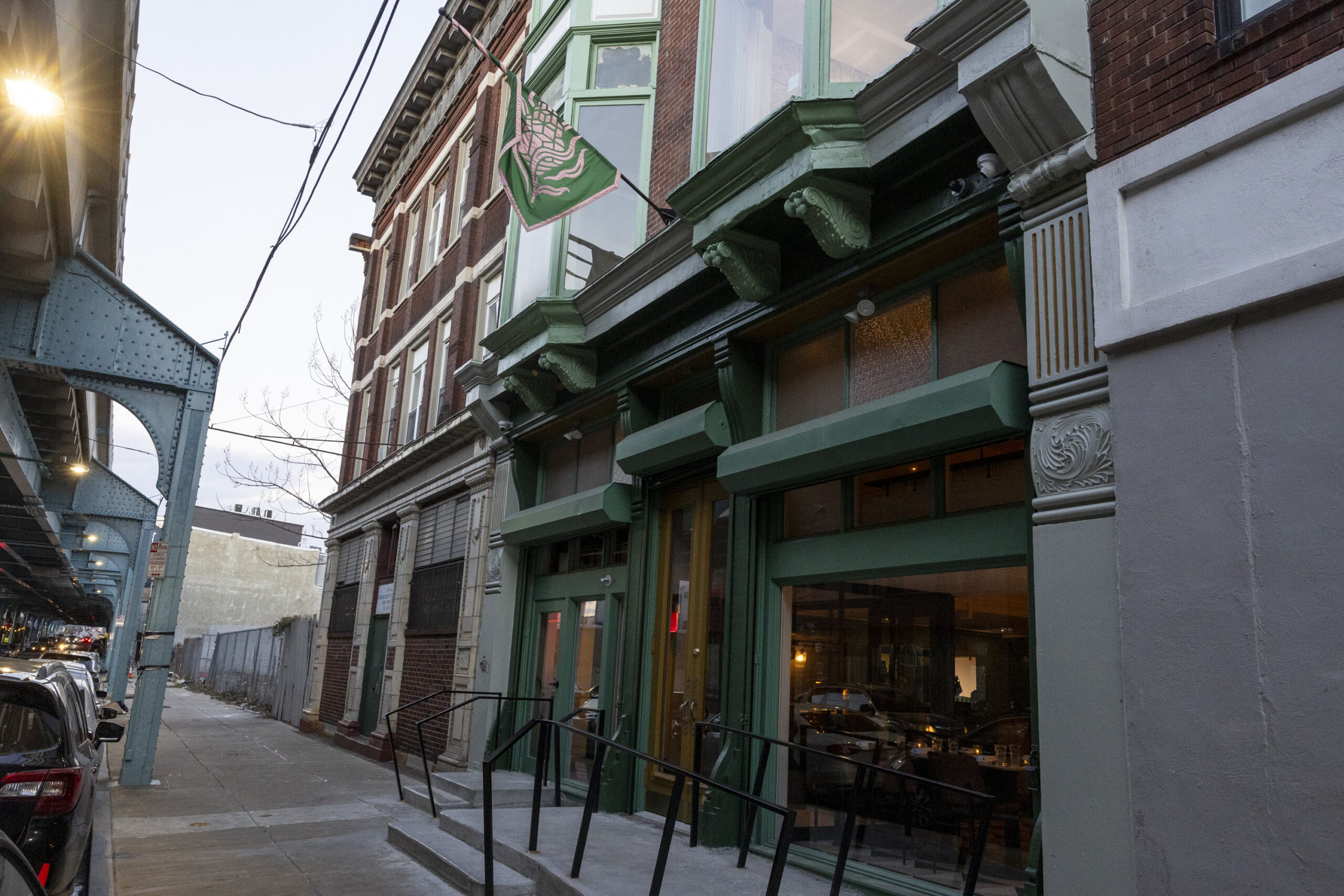
    The outside of Fleur’s in Philadelphia on Friday, Jan. 2, 2026.

    You could easily miss the understated green facade of this five-story building on North Front Street, its entrance partially obscured by the rumbling girders of the Market-Frankford El. Even friends of mine who live mere blocks away were unaware that the old Fluehr’s Fine Furniture store — active from the 1880s through the early 2000s, but vacant for 17 years — had been renovated and revived, with plans to transform the L-shaped building into a boutique hotel, restaurant, and roof-deck event space.

    Aside from the spelling modification to make the name sound French, it took plenty of vision for Sabatino’s partners, Starr alums Joshua Mann and Graham Gernsheimer, to conjure an upscale brasserie as an anchor for this project. One of the city’s best Puerto Rican restaurants, El Cantinflas Bar and Taco Place, has been a mainstay around the corner. But in 2022, when Mann and Gernsheimer first walked in and fell in love with this quirky space, none of the places that have since marked gentrification’s steady march northward into Kensington — Starbolt, Lost Time Brewing, Rowhome Coffee, American Grammar, Lee’s Dumplings and Stuff — had opened.

    The inside dining at Fleur’s in Philadelphia on Friday, Jan. 2, 2026.
    Renderings of the Fluehr’s Furniture Store building re-envisioned as a boutique hotel.

    The restaurant is phase one of the building’s ongoing development. And designer Lisa A. Calabro of cfTETTURA projects did a stellar job reimagining the deceptively large room into an inviting 130-seat space, preserving the mezzanine and art deco pendant lamps from Fluehr’s, then lining the dining room floor with geometric tiles and a chain of plush, semicircular teal banquettes that lend the dining experience an uncommon coziness.

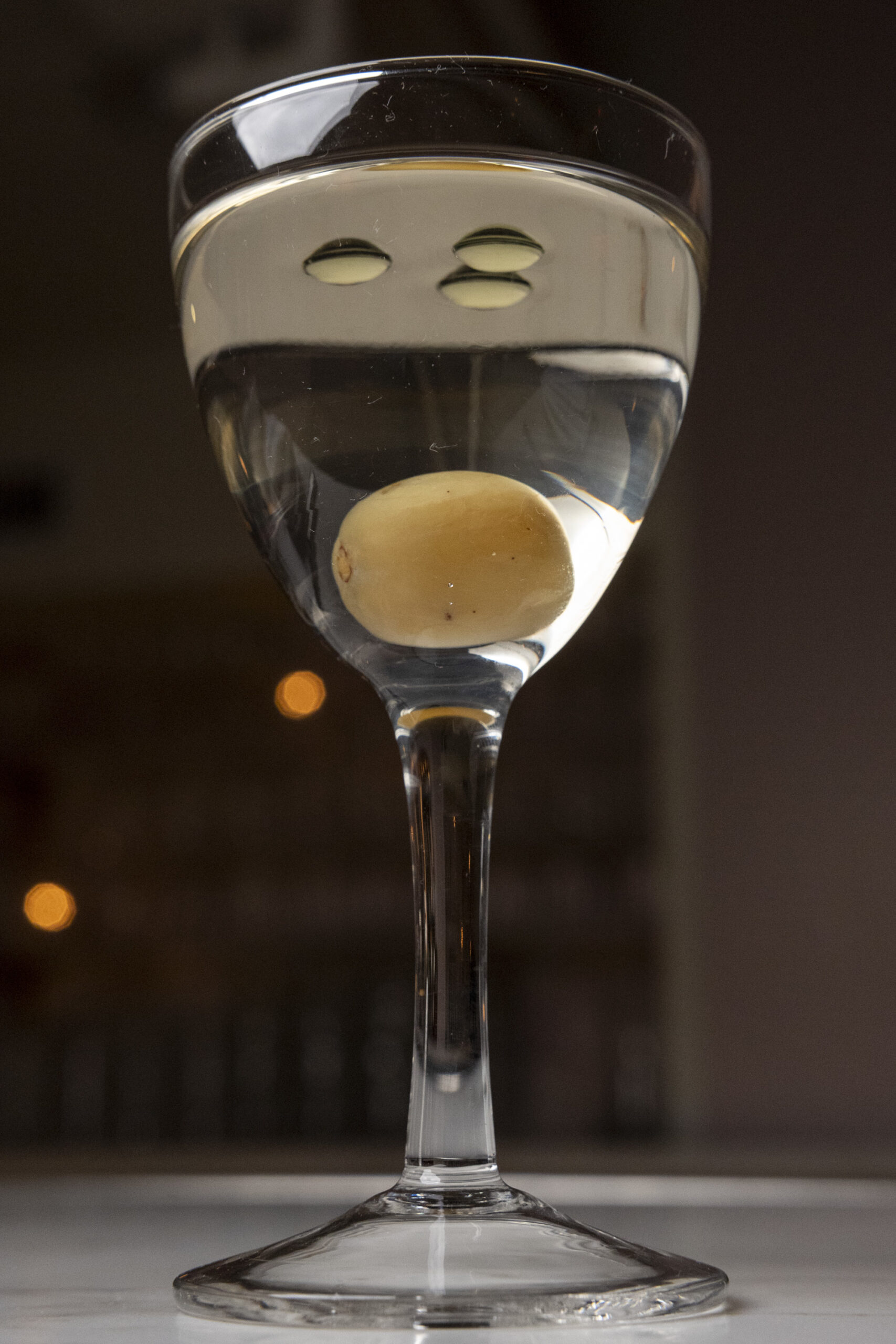
    Even more intimate is the “hot tub,” a partially enclosed room for up to eight diners in back. It’s an intriguing nook where conversation is easy and the well-informed, outgoing servers drop details on everything from the smoked beef heart grated over the roasted carrots with puffed amaranth to the pickled-grape prize at the bottom of Fleur’s signature martini (exceptionally aromatic with a French-y touch of Pineau des Charentes). Ultimately, I preferred being part of the date-night energy in the main dining room, even if midweek crowds have been light.

    The Fleur’s martini in Philadelphia on Friday, Jan. 2, 2026.

    That’s perhaps no surprise, given that the check average of $71 (before tip and tax) hits a splurge level this corner of Kensington hasn’t seen to date. There’s solid value in the daily happy-hour specials, when you can snack on gluten-free frites crisped in beef tallow ($6) or a generous petite plateau from the raw bar ($40) to go with $8 glasses of French wine.

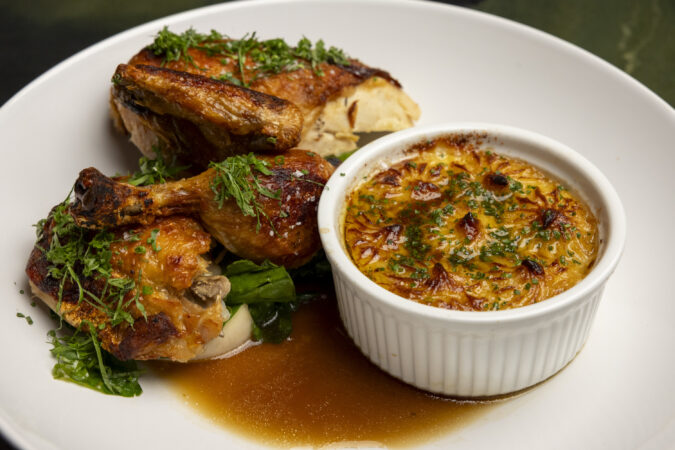
    But Fleur’s regular dinner menu may oblige some light price-adjusting until it hits the sweet spot to attract a steady flow of neighborhood regulars. Sabatino’s roasted half chicken, for example, has instantly strutted into the top tier of my favorites, cured with duck fat-koji butter for a few days before it’s roasted to a crisp alongside a tub of impossibly good Duchesse mashed potatoes laced with Gruyère cheese. But at $39, it’s more expensive than similarly excellent chickens at Vernick Food & Drink, Parc, Honeysuckle, and Picnic.

    Executive sous chef Ryan Connelly and line cook Emma Lombardozzi at the raw bar at Fleur’s, 2205 N. Front St., on Oct. 25, 2025.

    Sabatino’s cooking is generally good enough to merit destination status, with a few exceptions. But in the tradition of ambitious new restaurants becoming pressure tests for the spending limits of a neighborhood in transition, Fleur’s will be an intriguing case to follow.

    As it stands, aside from the chicken and a tasty cod in brown-butter meunière garnished with multiple varieties of pickled beans and caper berries, the entrees weren’t necessarily the highlights of my meals. The hanger steak frites, cooked sous-vide then finished to order, lacked the satisfying chew of a good steak properly cooked from raw. The Parisian gnocchi, the menu’s only sub-$30 entree, were a fine vehicle for a delicious ragout of Mycopolitan mushrooms, but the deep-fried plugs of choux pastry dough themselves were dry.

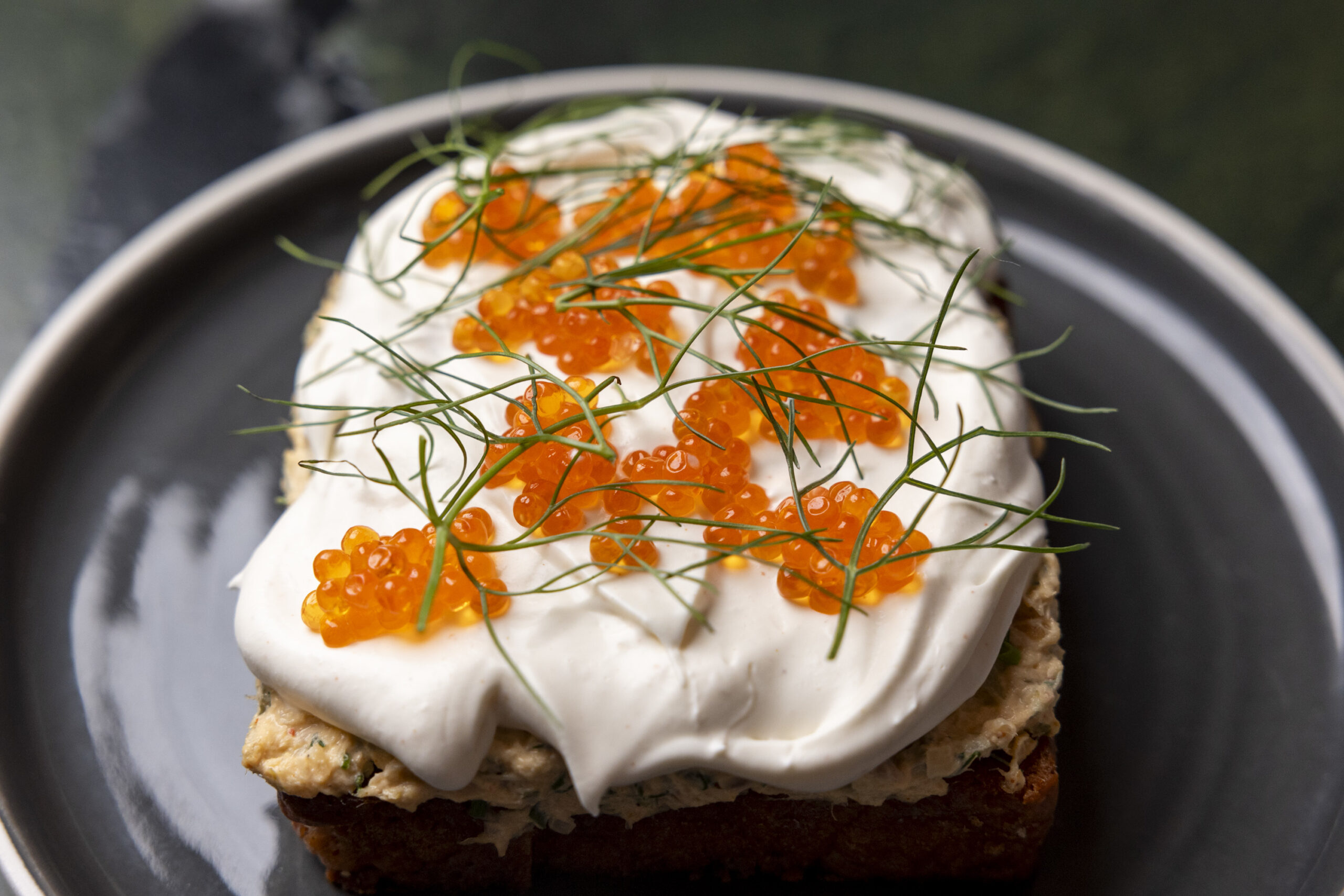
    The whitefish tartine is a wonder of textures and subtle flavors.

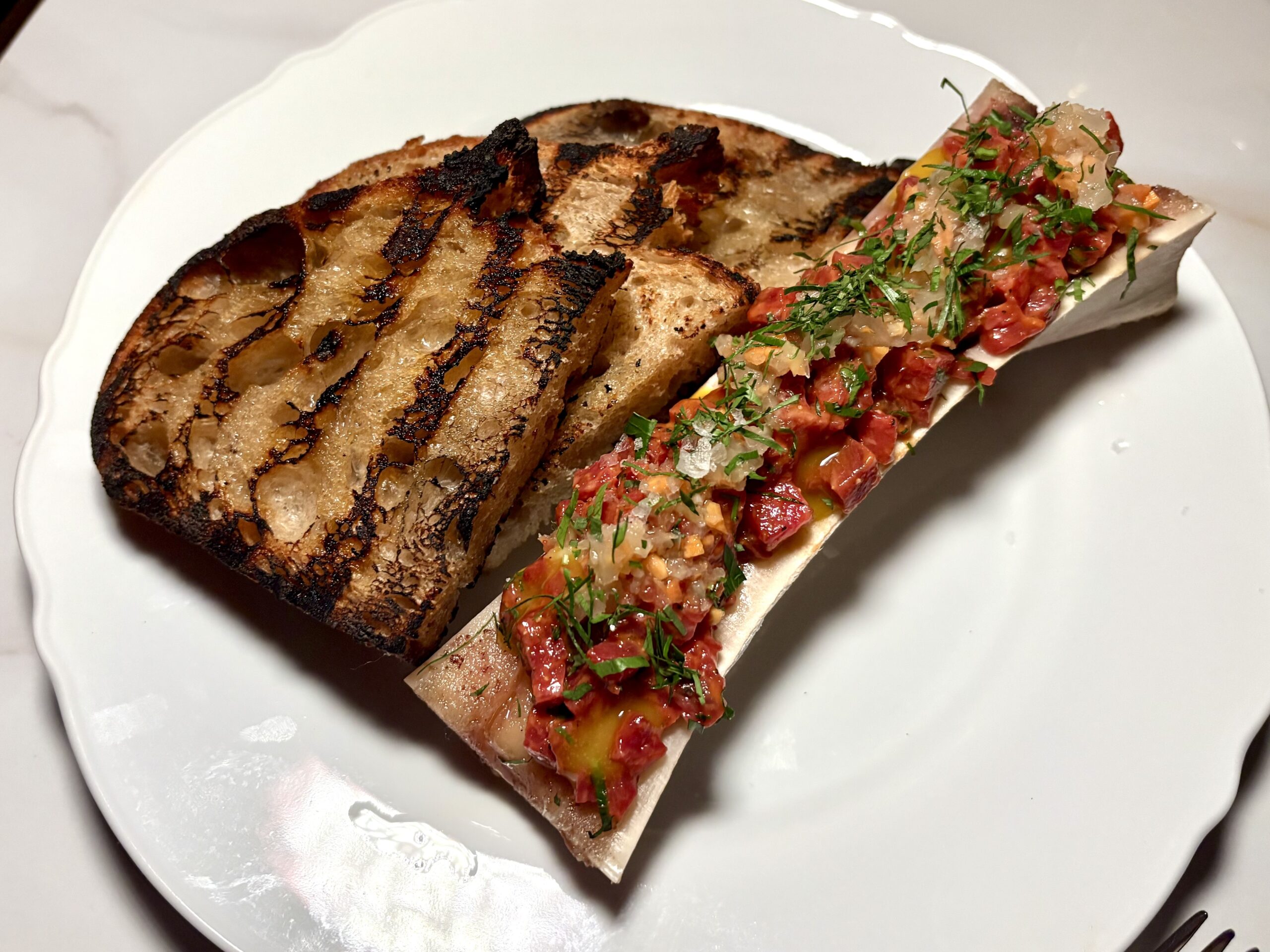
    The most exciting bites here can be found among the more affordable small plates and raw bar offerings. Sabatino’s whitefish tartine is a wonder of textures and subtle flavors — the smoked fish salad layered between a bavarois cloud of fennel-steeped whipped cream beaded with salty trout roe and a toasty slice of duck fat brioche so good that I was stunned to learn it’s also gluten-free. There are tart shells stuffed with creamy uni custard. The dashi-poached shrimp cocktail is butter-tender and full of flavor. The zesty, hot-sauce spiked beef tartare comes decadently mounded over a roasted bone of melty marrow.

    Beef tartare is served over roasted bone marrow at Fleur’s in Kensington.

    Sabatino’s talent with vegetables is also on full display, with half-moons of deeply caramelized onion tarte Tatin enriched with Gruyère and more of that corn miso (made for Sabatino by Timothy Dearing of the Ule supper club). Roasted rounds of sumac-cured sweet potatoes are encrusted with sunflower seeds drizzled in a sauce gribiche. Grilled caraflex cabbage is served “à l’orange” with pickled green tomatoes, preserved ginger relish, spiced peanuts, and herbs.

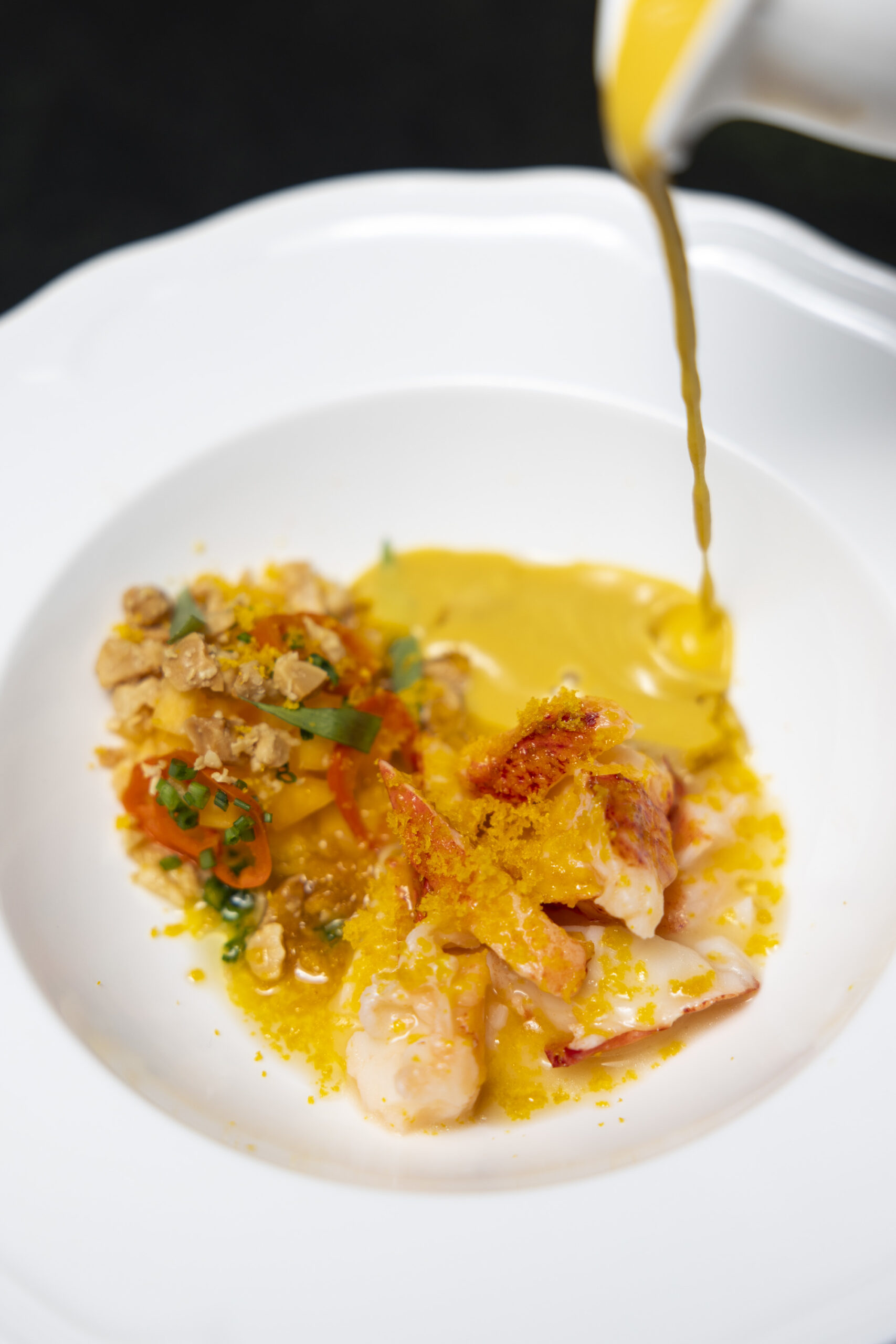
    The lobster soup with a squash broth at Fleur’s in Philadelphia on Friday, Jan. 2, 2026.

    Pumpkin is also transformed into a luxuriously creamy soup with the fermented Japanese rice brew called amazake, poured tableside as an orange velouté over butter-poached lobster and crushed marcona almonds, chiles, and pickled pumpkin.

    For dessert, you might go for the cheffy croissant stuffed with foie gras and white chocolate topped with sour cherry marmalade. But that croissant was even better blended with other bread scraps into a holiday bread pudding soaked with a rummy egg-nog crème anglaise garnished with brandied whipped cream.

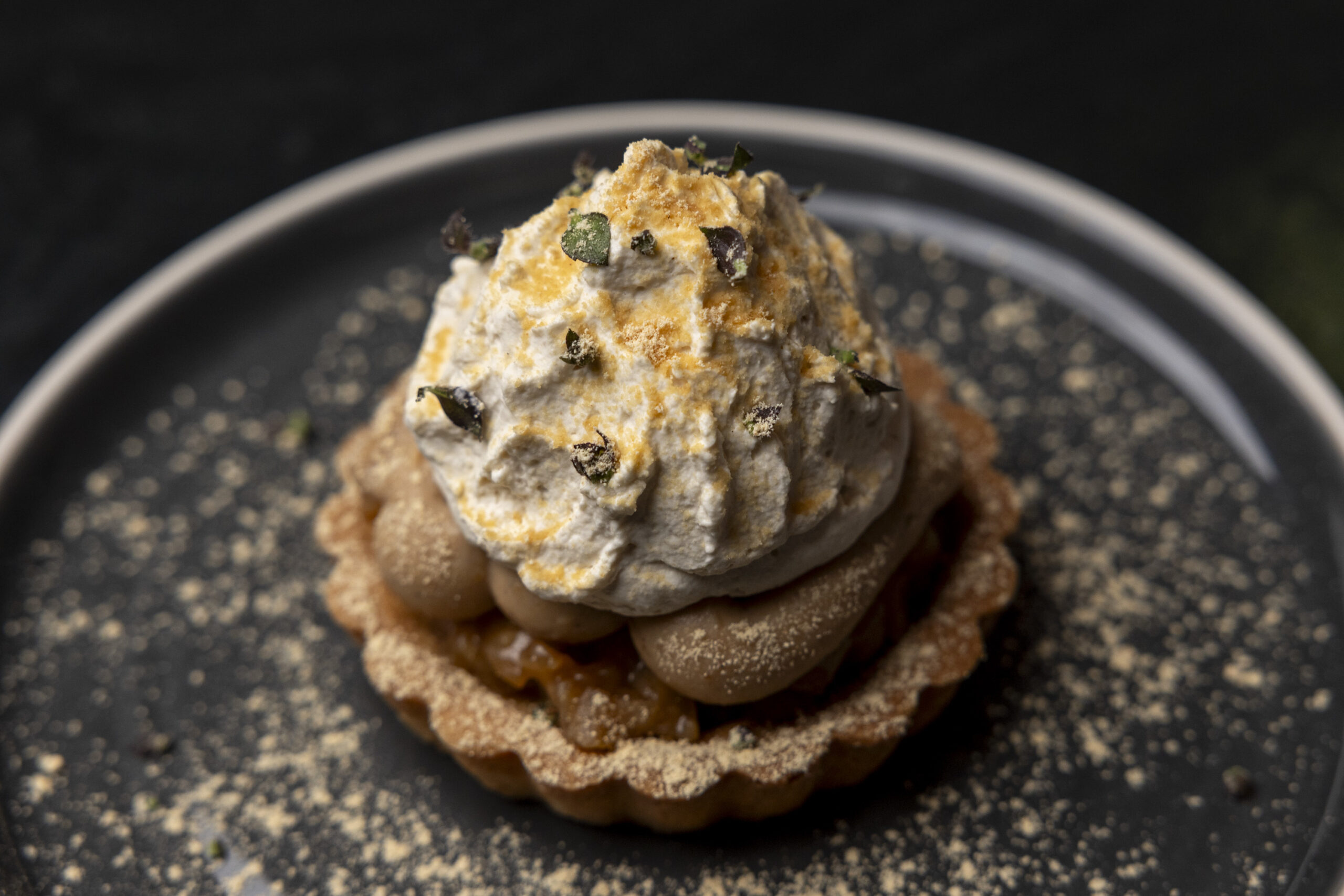
    My favorite finale here, courtesy of sous-chef Zoe Delay, is a regal take on the Mont Blanc, a brown-butter shortbread shell filled with brandied apples and a mountain of piped chestnut crème diplomate frosted with a peak of ginger whipped cream. The pastry first found popularity in France in the late 1800s.

    Coincidentally, that’s around the same time the Fluehr’s family was opening its furniture store on North Front Street — just as Kensington was earning its industrial reputation as the “workshop of the world.” How fitting that it should mark the sweet revival of this venerable space. It’s a delicious comeback in every sense of the word.

    The Mont Blanc at Fleur’s in Philadelphia on Friday, Jan. 2, 2026.

    Fleur’s

    2205 N. Front St., 215-278-7675, fleursphilly.com

    Dinner daily, 5 to 10 p.m.

    Entrees, $25-$44.

    Wheelchair-accessible.

    About 85% of the menu is gluten-free or can be modified, but highlights include gluten-free frites and gluten-free brioche for the whitefish tartine.

    Menu highlights: scallop gratin; smoked whitefish tartine; clams on the half-shell with house hot sauce; pork and pistachio terrine; squash velouté with lobster; marrow bone beef tartare; grilled sweet potato; roasted carrots with grated smoked beef heart; roast chicken; cod; Mont Blanc tart.

    Drinks: The French theme and focus on seasonality and fermentation extends to the beverages, beginning with cocktails like the house martini kissed with Pineau des Charentes and a pickled grape, or the French 75-ish Esprit de Corps with sage syrup and cognac infused with Lancaster County trifoliate oranges. The wine list is entirely French, focused on lesser-known indie bottles, like a petit salé blend from Château Roquefort. Considerable effort has also been poured into zero-proof options such as the clarified chocolate-beet-ginger punch called Coupe Rouge.

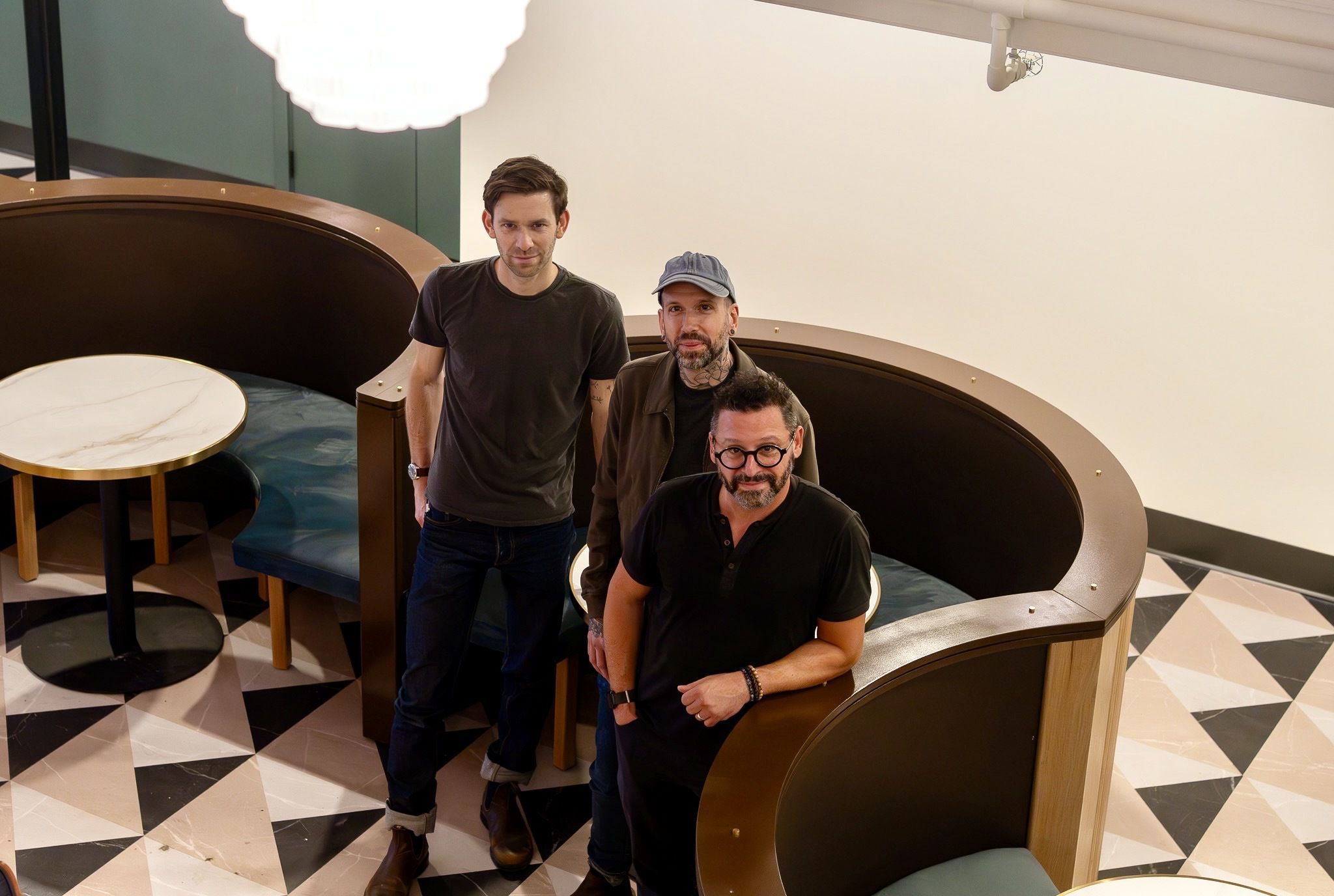
    At Fleur’s, partners Graham Gernsheimer (from left), George Sabatino, and Josh Mann in the dining room. The glass lighting fixture is original to the building.
  • Five Philly restaurants worth watching

    Five Philly restaurants worth watching

    All year, when dinner goes exceptionally well, a big question pops into my mind: “Is this one of Philadelphia’s Top 10 restaurants?”

    That’s a lofty status to consider for any place, no doubt, but when you eat at nearly 400 restaurants a year as I do, it arises more frequently than you might expect. The quality of the cooking around here has simply gotten better than ever, in a vast range of styles and price points. So when I set out each year to define an elite group to represent that moment in Philly restaurant time, my mind is open to wherever the most magical dishes take me, to places old and new, where a kitchen’s creative touch pairs with genuine hospitality to elevate a mere dinner date into something truly special.

    The process begins with the year’s first-review meal bites, then truly kicks into gear during summer, when I begin circling back for revisits through at least two dozen promising candidates. Consistency and continuous growth matters.

    Inevitably, an all-star lineup emerges that I’m thrilled to present. And you’ll see it when it lands next week.

    But today I offer another list: Five special places that, for a variety of reasons, are still on the cusp of making the leap to the next level. This isn’t an honorable-mention group so much as a future-cast of exciting places on the rise to watch, along with some standbys still worth celebrating. I’d leap at a dinner invite to any one of them.

    The hush puppies at Honeysuckle

    Honeysuckle

    Honeysuckle’s bold move this year, from a West Philly market-cafe into a sprawling, art-filled space on North Broad Street, complete with an inventive bar and special-occasion prices, has given the chef duo of Omar Tate and Cybille St.Aude-Tate the room to fully realize their dynamic vision of an immersive destination celebrating the culture of the Black American diaspora. One moment you’re eating house-cured country ham over airy hush puppies, the next you’re devouring Haitian-spiced roast chicken or Mississippi Delta-style hot tamales — stuffed here with wagyu beef cheeks and oxtail. Yes, the $65 “McDonald’s Money” burger is an audacious stack of truffled, gold-foiled caviar bling, but it’s also a wry Eddie Murphy reference and a juicy emblem of Honeysuckle’s potential. An anticipated shift from the original $95 prix fixe to an a la carte menu in 2026 shows Honeysuckle is still seeking the ideal format for its new home. An expected 15% dip in check average should fill more seats, while a revival of its ambitious “UNTITLED.” tasting menus assures this uniquely creative kitchen will still be pushing boundaries. 631 N. Broad St., 215-307-3316, honeysucklephl.com

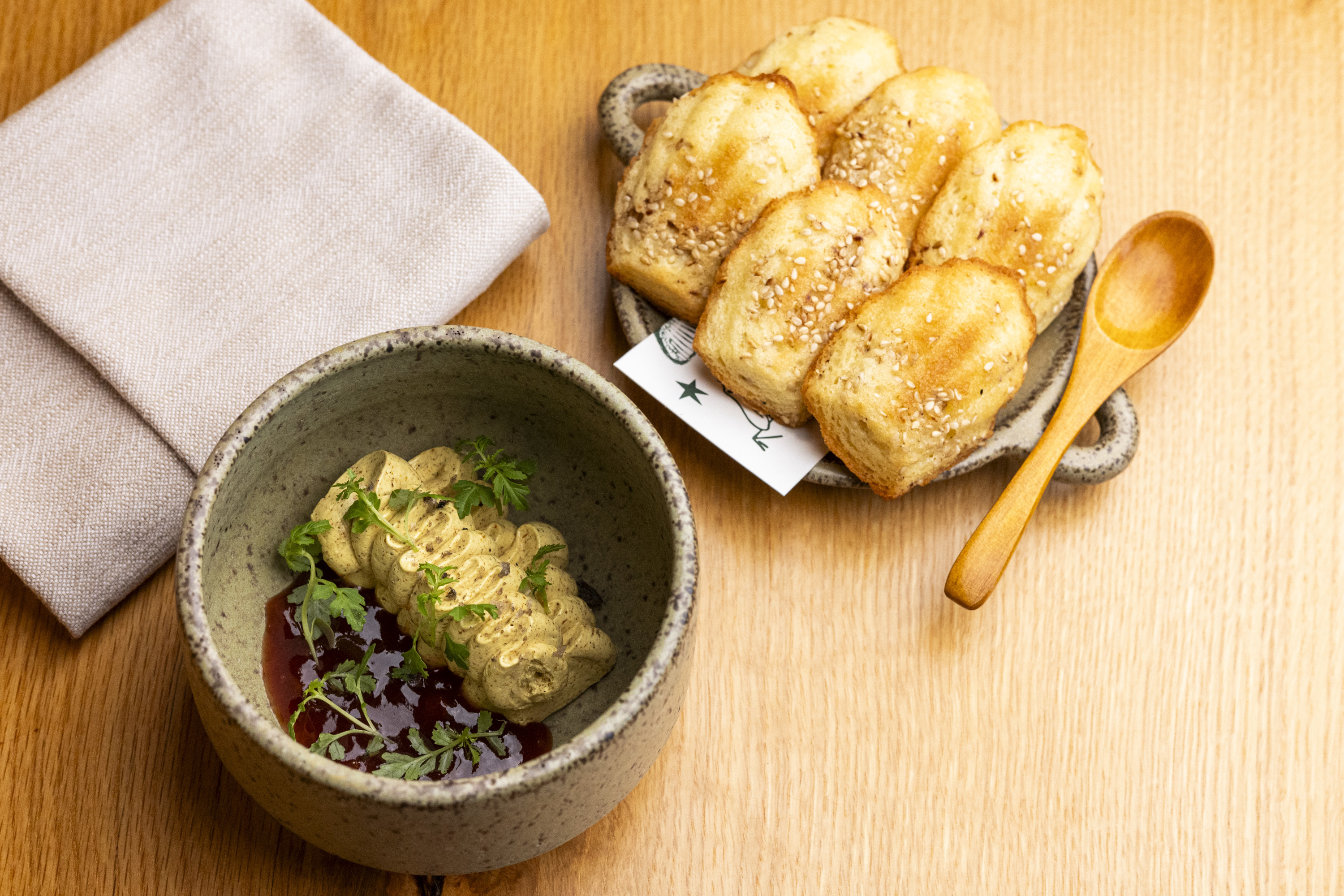
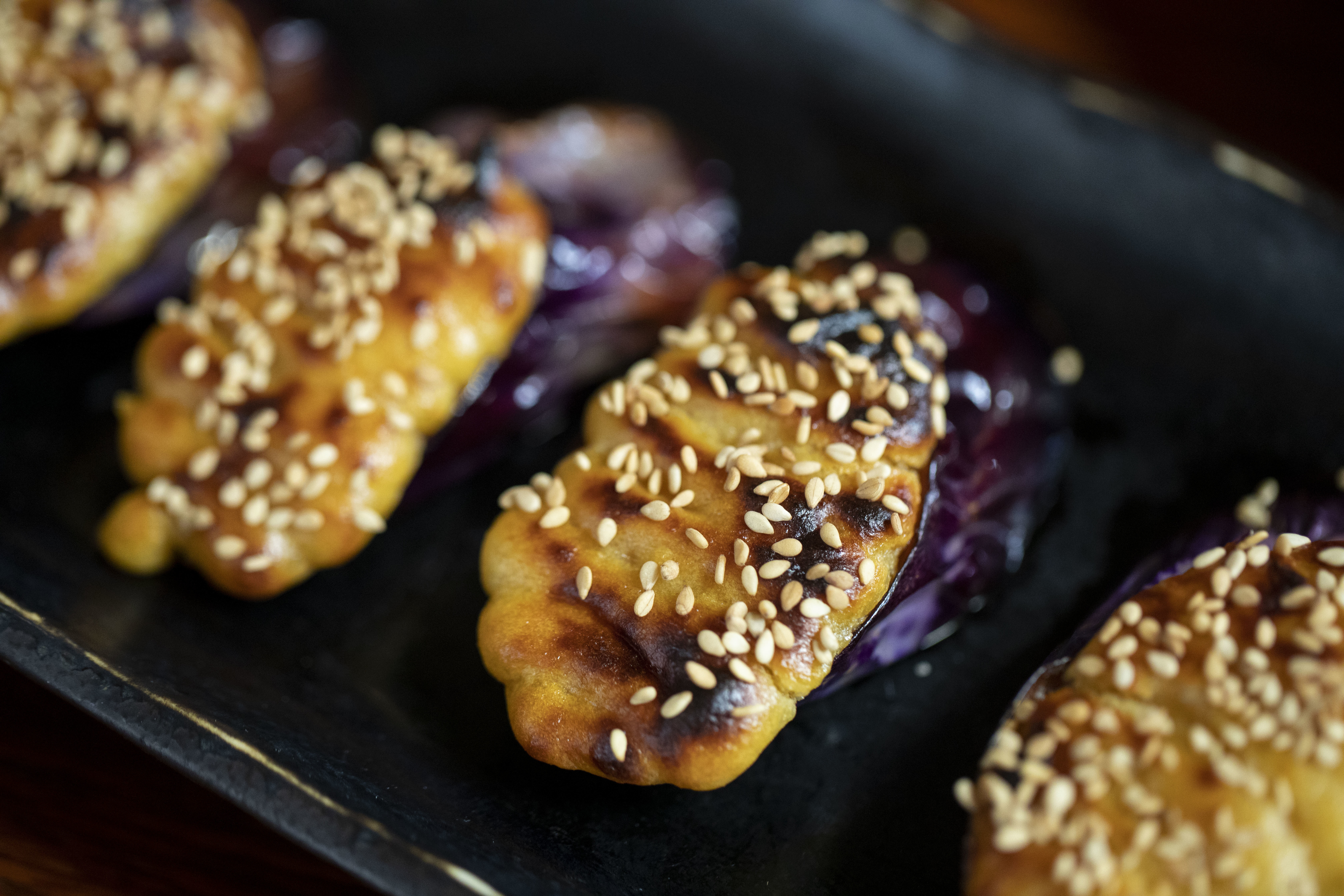
    Sesame madeleines with ras el hanout butter at Emmett

    Emmett

    Philly already has a vibrant Mediterranean dining scene, but Emmett, one of the year’s best new restaurants, offers an original take, from warm sesame madeleines with smoked vadouvan butter to dumplings stuffed with cuminy sujuk sausage. Here you’ll find sticky toffee pudding in Turkish coffee caramel and clever nods from chef Evan Snyder to his love of Jewish deli (wagyu tartare in horseradish-dusted rye tartlets? Yes!). With polished service and a thematically tuned drink program dusted with Levantine spice, this intimate Olde Kensington corner once occupied by Cadence feels like a special-occasion destination again. If Snyder continues refining his sometimes overly busy plates, Emmett can take the next step. 161 W. Girard Ave., 215-207-0161, emmettphilly.com

    Assorted dishes including the Wood Fire Pulpo at Ama on Wednesday, July 16, 2025, in Philadelphia.

    Amá

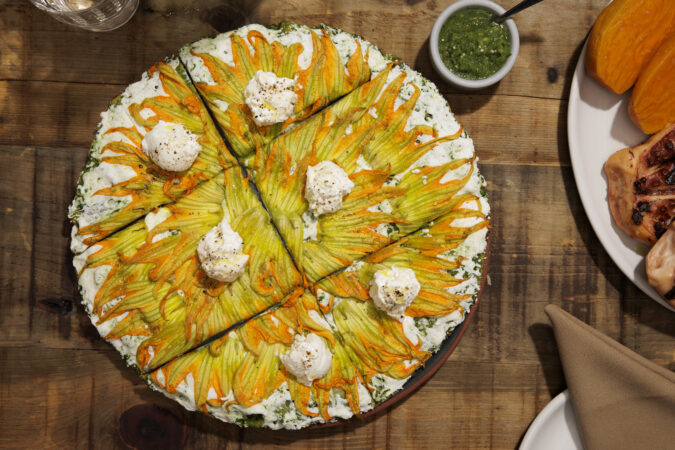
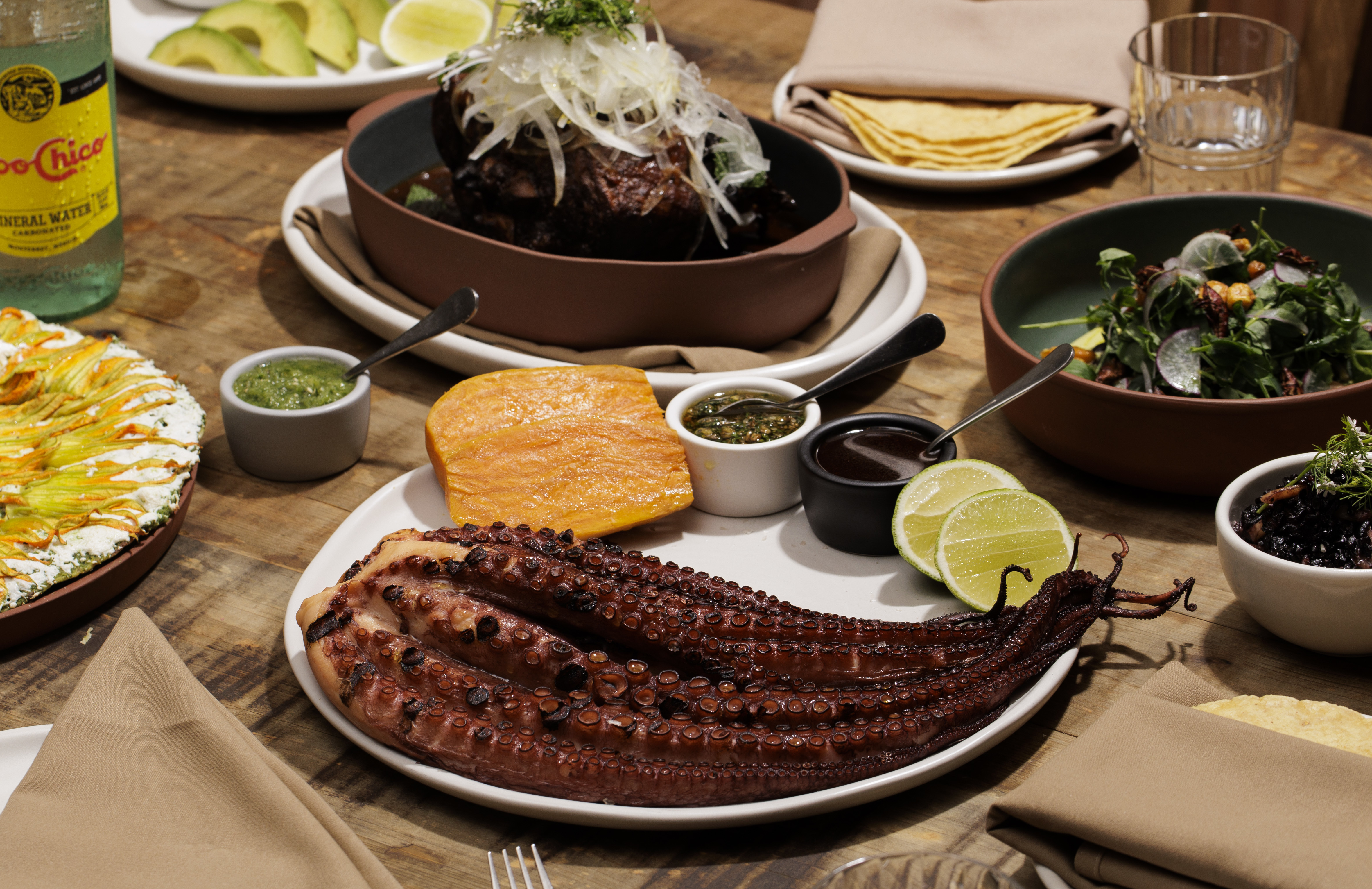
    Frankie Ramirez turned out some of the most memorable and beautiful dishes of the year — squash blossom tlayudas, lamb neck barbacoa — from the live fires of his chef-owner debut, a stylish, modern Mexican newcomer in Fishtown. The chef’s growth since his previous post at LMNO has been stunning, with food that is both personal and daring, like the milpa salad laced with huitlacoche and grasshoppers. The majestic grilled whole octopus that arrives beside a dish of gingery black coconut rice mixed with smoky bits of octopus head is simply a showstopper. This restaurant is large, and it’s not yet as complete as it can be, but with a little more time to hone its service and beverage program, Amá stands to become the upscale Mexican restaurant Philadelphians brag about most. 101 W. Oxford St., 215-933-0707, amaphl.com

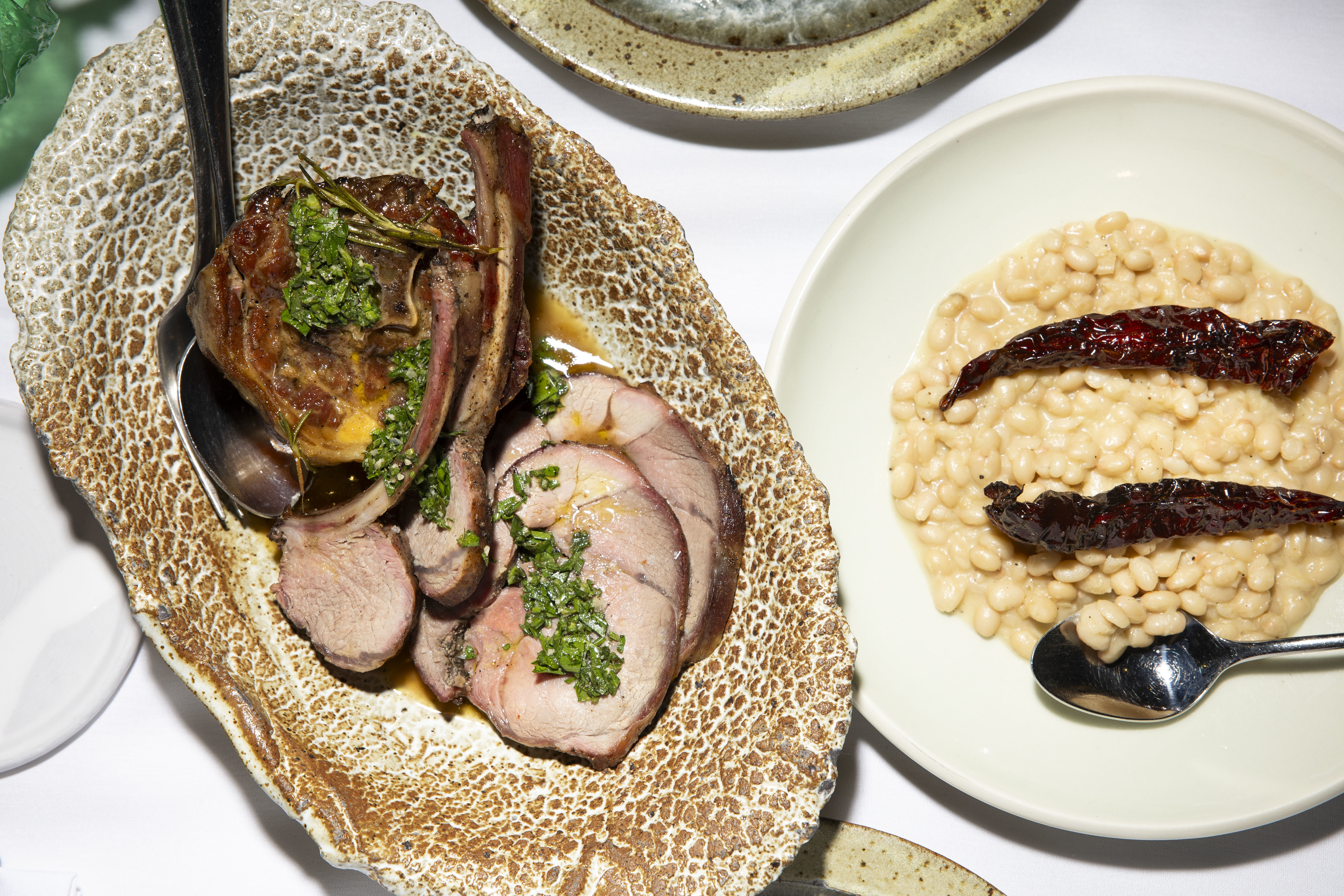
    Lamb with purgatorio beans and peperoni cruschi at Andiario in West Chester

    Andiario

    Every meal at this gem in downtown West Chester is an inspirational experience of handcraft, restraint, and intimate hospitality, as chef Anthony Andiario’s team cooks weekly-changing four-course menus that spontaneously channel the best of Pennsylvania’s seasonal bounty through a rustic Italian lens. My revisit this fall lived up to that standard, with toothy, hand-rolled rigatoni in ‘nduja-sparked roasted pepper sauce and a succulent strip steak roasted over the live fire hearth. Add in outgoing service, a cushy dining room, and exceptional wines chosen by the chef’s wife and partner, Maria Van Schaijik, and dinner at Andiario is still a delight. It hasn’t regressed at all — it was a resident on my Top 10 list the past two years — but competition this year for an ever-evolving group was simply tighter than ever. 106 W. Gay St., West Chester, 484-887-0919, andiario.com

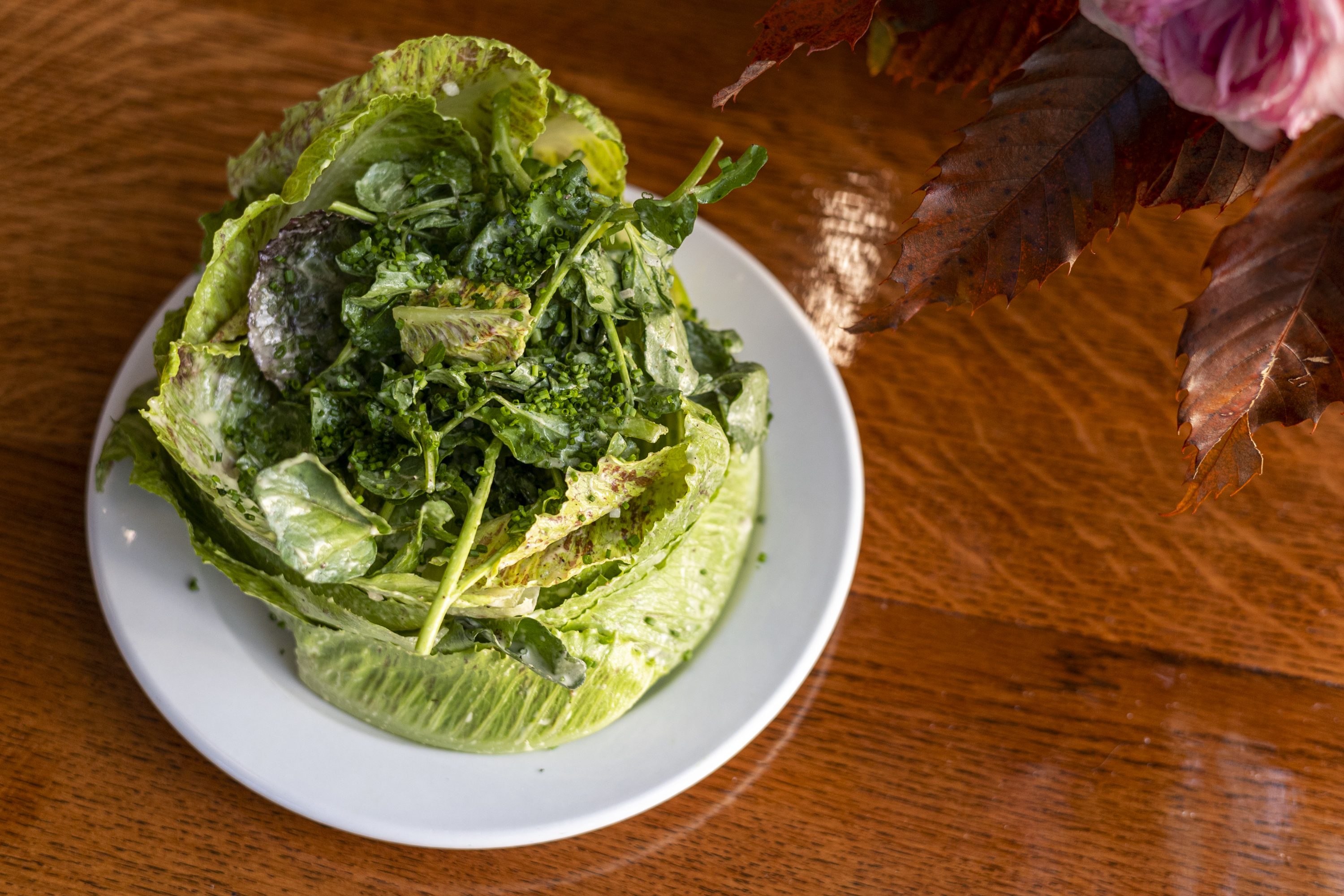
    The green salad at Meetinghouse

    Meetinghouse

    While many Philadelphia chefs are now ratcheting up their gastro ambitions and tasting menus to reach for Michelin stars, Drew DiTomo is focused on polishing the simple, affordable neighborhood bar — an essential source of sustenance and down-to-earth character for this city’s food soul. Meetinghouse is just that kind of place, where the candlelit vibes are warm and cozy, the drink program is impressively focused and quirky, and the “less is more” aesthetic is deliberate in revived retro dishes that are as good as they can be, from a roast beef sandwich and baked clams to turkey cutlets, broiled cod, and a destination-worthy green salad. Thursdays are baked cheeseburger nights! 2331 E. Cumberland St., no phone, meetinghousebeer.com

  • The 14 best whiskeys to give this holiday season

    The 14 best whiskeys to give this holiday season

    Technically it’s always whiskey-sipping season in my house. But there is something extra cozy about the December chill that sparks the spirit of giving whiskey, too. The glint of colorful lights on a big ice cube rattling through a tumbler of amber elixir. The toasty vanilla perfume of barrel char, the punchy spice of distilled rye, a whiff of peat smoke from a faraway land. A great bottle that captures this kind of magic is the definition of a win-win gift because, hopefully, whoever receives it will be in the cheerful mood to crack it open right there and share! That’s just good manners.

    That is exactly what I did recently when I gathered a group of thirsty friends, neighbors, and spirit nerds for an afternoon tasting to determine the stars for my annual holiday bottle list. This year we sniffed, sipped, and selected 14 winners from a competitive collection of 33 bottles from across the world, including intriguing entries from two countries not yet known for whiskey — Mexico and Korea — as well as a pleasant surprise from a music icon more famous for her Billboard hits than her high-rye mashbill. All of these bottles are currently available retail in Pennsylvania and South Jersey, and they suit a wide range of tastes and price points, from a half-dozen sub-$50 values to a handful of triple-digit splurges.

    One noticeable trend is the continued swing toward high-proof spirits, and in particular, whiskeys categorized as bottled-in-bond. This legal designation was created in 1897 to certify purity — with no additives other than water — and that the whiskey in question is produced by one distillery, aged no fewer than four years, and bottled at 100 proof. While the Bottled in Bond Act was launched as an integrity initiative when late 19th-century rectifiers were adding ingredients like creosote and wintergreen to their booze, the reasons for the current resurgence is unfortunately economic.

    America’s craft industry is in the midst of a major implosion, with nearly 25% of America’s craft distillers closing over the past year due to a variety of reasons, from a rise in legalized cannabis and GLP-1 drugs that have cut into liquor consumption to the double-whammy of rising costs and plummeting exports due to tariffs. The net effect, says Rob Cassell of New Liberty Distillery in Northeast Philly, has been a wave of distillers unloading their more expensive aged inventory as the industry consolidates. That’s concerning for whiskey fans.

    The flip side is that I also happen to be a fan of the 100-proof category, which offers more punch (and, often, more flavor) than standard bottlings typically in the 80- to 90-proof range. So I was happy to do my part and support the cause, putting several of these intriguing bottles on my annual tasting table and now passing them along as recommendations. While the industry confronts the sobering facts of its new reality, we can at least drink well.

    Scotch

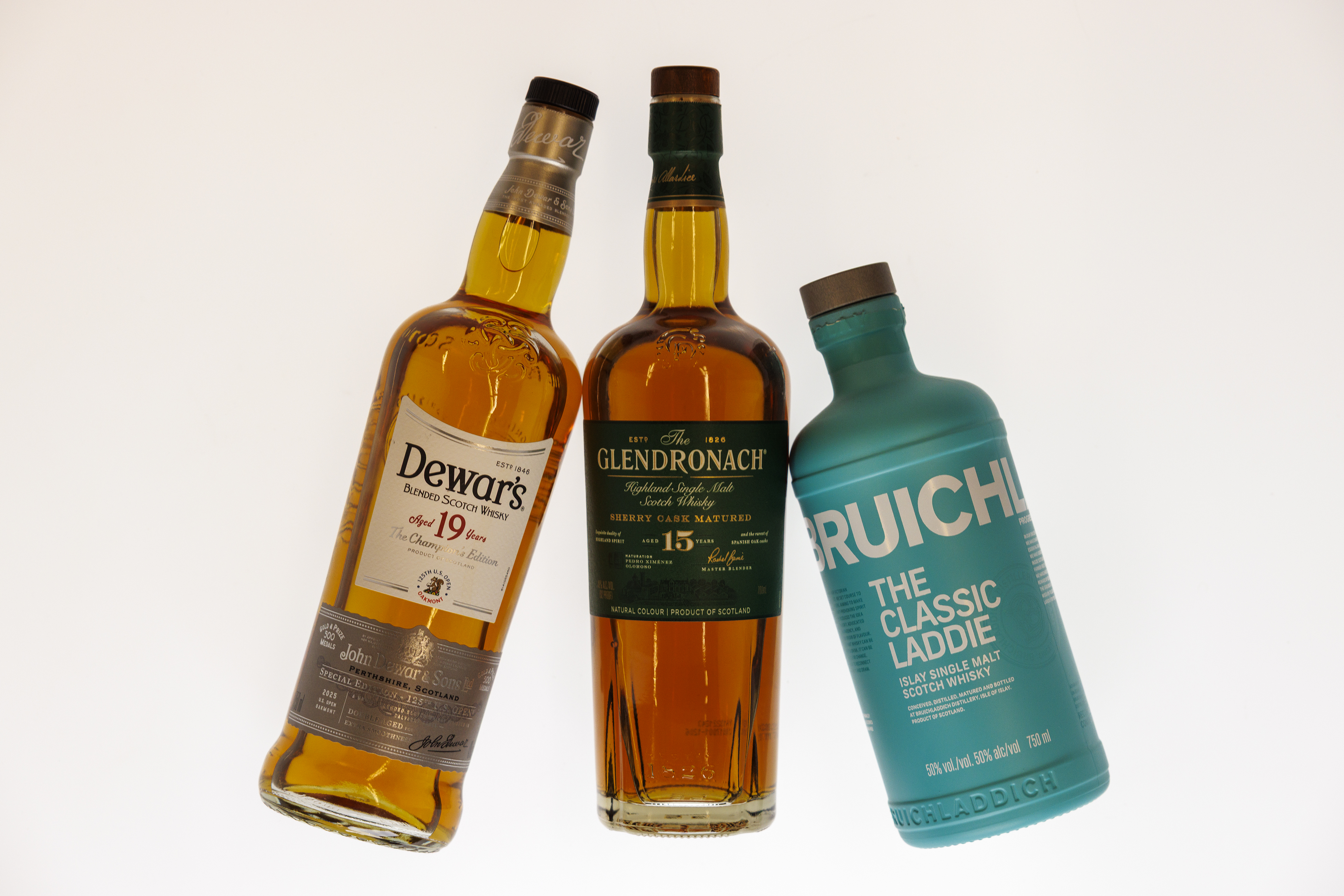
    From left: Dewar’s Blended Scotch Whisky, The Glendoronach Highland Single Malt Scotch Whisky, and Bruichladdich Islay Single Malt Scotch Whisky.

    Bruichladdich The Classic Laddie

    The eye-catching teal blue bottle is only one sign this whisky is different. Bruichladdich, a once-fallow Victorian-era distillery, was revived in 2001 by emissaries of the French wine industry with a modern aesthetic and a focus on locally grown barley, which always comprises at least a portion of the mashbill. It’s one of the only distilleries on Islay (the smoke-shrouded home of Laphraoig) that makes some of its whiskies without peat-smoked malts. (Some of its bottles, like Octomore and Port Charlotte, are actually quite peaty). The Laddie is its signature elegant bottling. It smells of lemon and honey on the nose, then coats your palate with a fresh, clean flavor that evokes a breezy field of grain, then blooms into the fruity flavor of a Bosc pear glazed in salted dark caramel. Remarkably smooth for a 100-proof dram. Bruichladdich The Classic Laddie, 100 proof, 750ml, on sale in Pennsylvania in December ($3 off) for $54.99 (PLCB Item # 000096308)

    Dewar’s Blended Scotch 19-year-old, Champions Edition Oakmont label

    My dear late mother-in-law was a devoted Dewar’s drinker, and what’s fascinating is that even in its fancied-up form, such as this 19-year-old collectible for the U.S. Open Golf Championship, the traditional sweet side notes of this classic blended Scotch hold true: bananas and chocolate, tanged with citrus and baking spice. That profile reads deeper and more resonant in this slightly higher-octane edition (86 proof vs. the usual 80), which also has the added notes of apple brandy from the Calvados barrels used for aging. Apparently, because this 2025 golf tournament was held at Oakmont Country Club in Pittsburgh, Dewar’s wanted to honor Pennsylvania’s long affinity for the fruit, and it landed with my judges. “Smells like Mott’s apple sauce!” said one after a big sniff, while another, who added a splash of water, noted it took on a lovely butterscotch finish. Dewar’s Blended Scotch 19-year-old, The Champions Edition Oakmont label, 86 proof, 750ml, $79.99 (PLCB item #100047823)

    The Glendronach 15-year-old Sherry Cask

    This 15-year-old Highland malt looks and smells like burnished old copper, and delivers a decadent fruitcake of deliciousness on the palate — fudgy chocolate, bitter oranges, toasty walnuts, candied cherries, and figs, all wrapped up in a minty finishing puff of pipe smoke. Aged in Pedro Ximénez and Oloroso sherry casks, which accounts for the nutty and dark caramel notes, this 92-proof dram is both smooth and brawny, so a small splash of water only lengthens the flavors rather than dilutes them. A worthy splurge for the single-malt collector in your life. The Glendronach 15-Year-Old Sherry Cask, 92 proof, 700ml, $114 (PLCB Item #100043250)

    Asian whiskeys

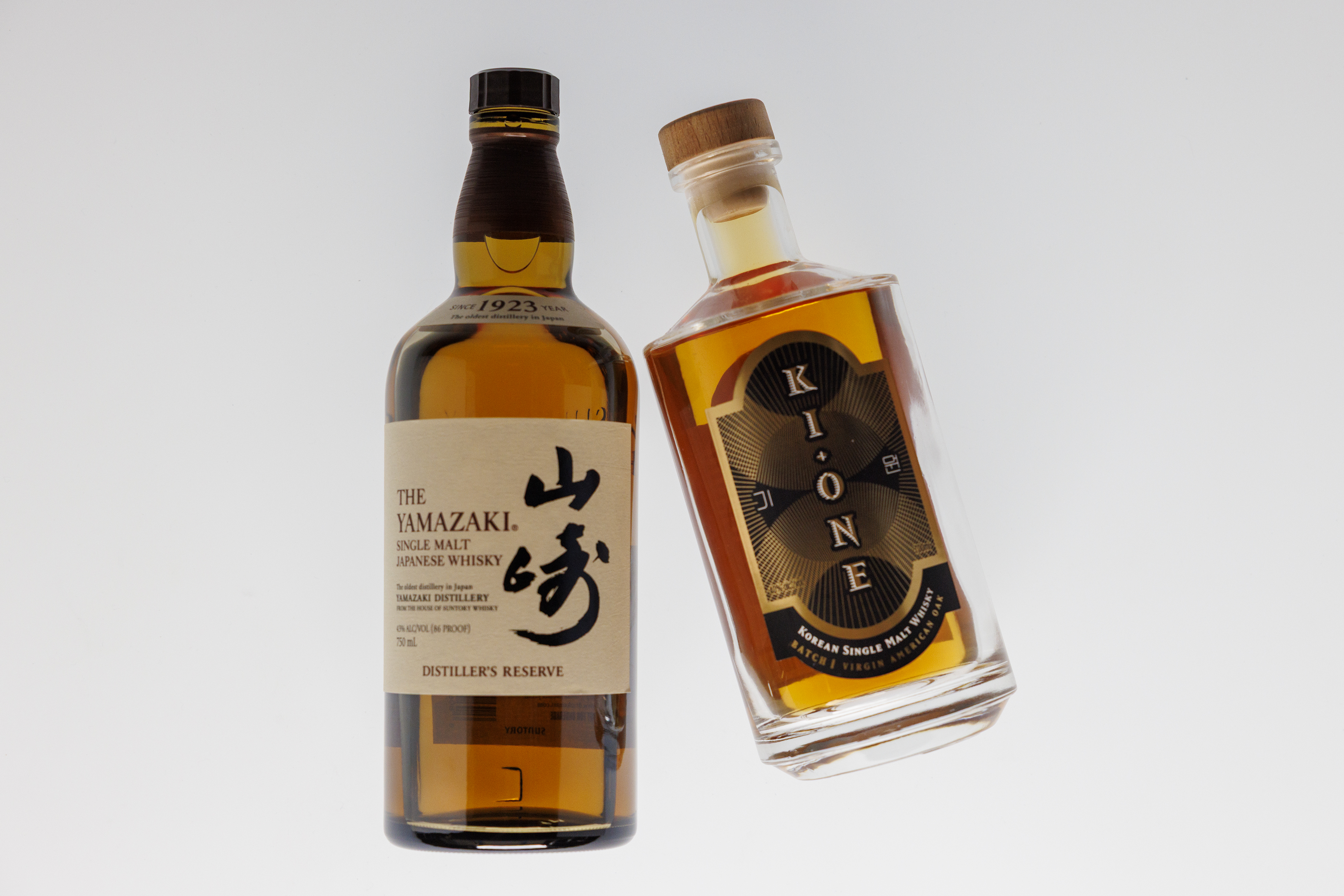
    From left: The Yamazaki, Single Malt Japanese Whiskey and Ki One Single Malt Korean Whiskey.

    Ki One Korean Single Malt Whisky

    The single most fascinating whisky in this year’s tasting came from Ki One, South Korea’s first single-malt distillery, founded in 2020 by Korean American Bryan Do, who quit his job as a Microsoft exec to pursue his passion for spirits. He and master distiller Andrew Shand, who’s worked in both Scotland (Glenlivet) and Japan (Nikka), wanted to create a whisky that spoke to Korea’s love of spice, achieved largely through the choice of casks and the fast-aging properties of the region’s heat. This “Batch 1” edition aged in virgin American oak gets there beautifully, with deep caramel color and tropical fruit notes on the front — bananas, passion fruit, green Gage plums — along with a sweetness that phases into a tingly finish with a peppery, fermented tang reminiscent of gochujang. Not for everyone, considering the price, but well-made and utterly unique. Ki One Korean Single-Malt Whisky, 80 proof, 700 ml, $124.99 at Benash Liquors & Wines, 2405 NJ-38, Cherry Hill, N.J., 856-667-3539, benashliquors.com

    Yamazaki Distiller’s Reserve

    Any good Japanese whiskey under $100 is worth a second look, but especially one from the Yamazaki, Japan’s pioneering single-malt distillery built in 1923. The Distiller’s Reserve is Yamazaki’s entry-level bottling, but it’s still a gloriously smooth and complex sipper that will convey much of what makes the brand so coveted. The use of Japanese mizunara oak casks, along with American and Spanish wood, lends a subtle incense-scented component to the mix. Each sip is like a lovely pastry of beguiling flavors, with spiced stone fruit and caramel-vanilla on the nose segueing to strawberries and toasted coconut on the palate, shaded by a soft backdrop of peated malt. This is the kind of whiskey that coats your teeth in the best way. Its aromatics are also lovely when they sparkle atop the icy fizz of a luxury highball. The Yamazaki Distiller’s Reserve, 86 proof, 750ml, $94.99 (PLCB Item #100051645)

    Mexican whiskey

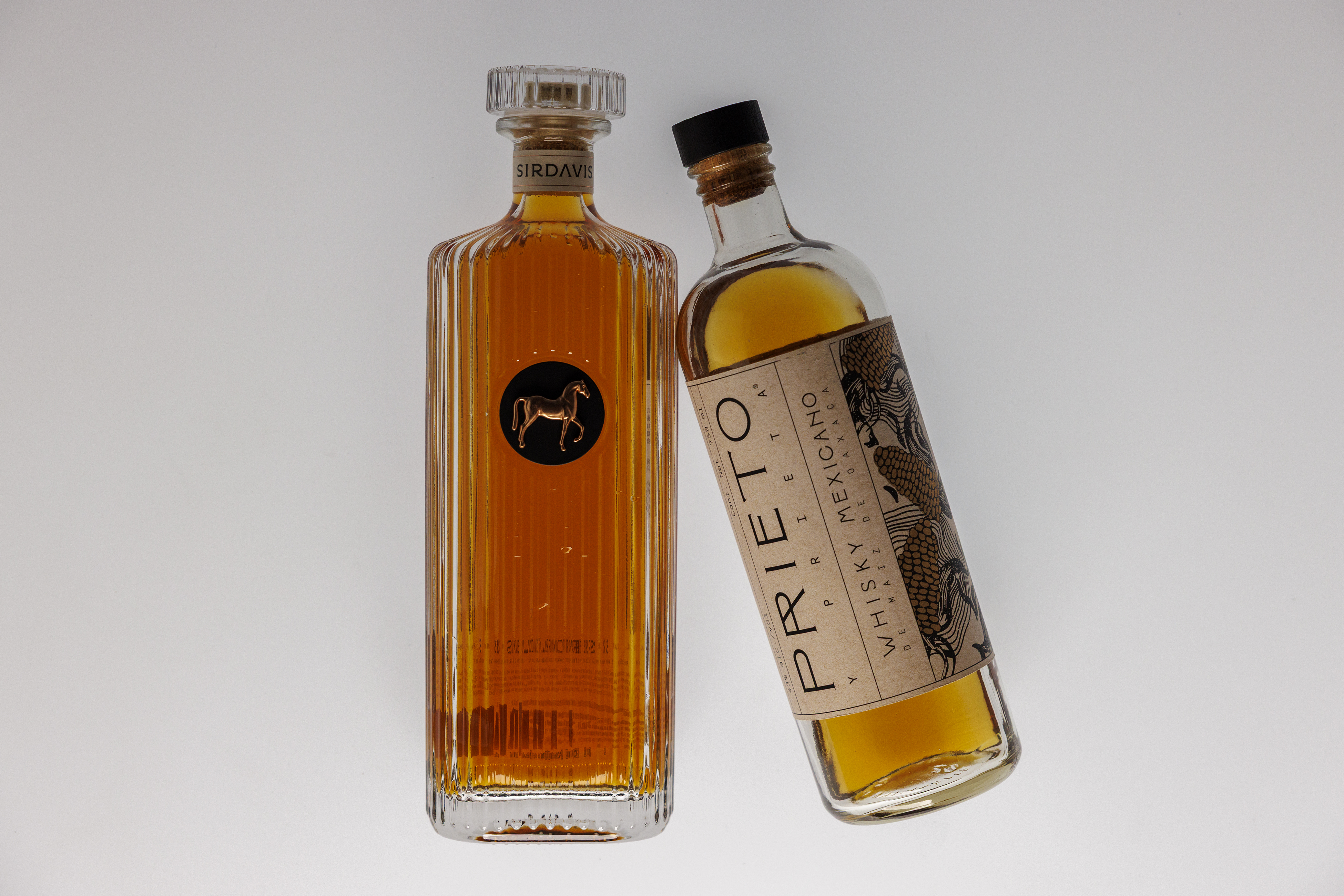
    Prieto y Prieta

    When I think of Mexico, I naturally think of agave spirits, but Mexico’s deep relationship to corn is also inspiring, so why not whiskey? This unique, brassy-colored whiskey de maiz shows what can be done with four heirloom varieties of corn from Oaxaca, and the results are intriguing. Caramel corn, grilled corn husks, and cinnamon are the most obvious aromas that hit you first, but what makes this whiskey so cool are the intensely earthy flavors that emerge on the palate, evoking mushrooms, green peppercorns, and a soft hibiscus tang. Your first instinct might be to add a splash of water to this 86-proof spirit, but that only seemed to dilute the character of its best traits. The label, featuring ears of corn with gilded kernels, will look pretty on any bar cart. Prieto y Prieta Mexican Whisky, $49.99, 86 proof, 750ml, at Benash Liquors & Wines

    From left: Sirdavis Rye Whiskey Finished in Sherry Casks and Preito y Preita Whisky Mexicano.

    American whiskey

    SirDavis American Whiskey

    On the subject of beautiful packaging, the tall, fluted shoulders of SirDavis’ bottle — topped with a cut crystal-style stopper and embossed with a bronze horse — stood out like an oversized bottle of luxury perfume. The soigné Western-themed look made sense once I told the tasting team this American whiskey was created by Beyoncé Knowles-Carter in collaboration with Moët Hennessy in the midst of her Cowboy Carter glory. I did not reveal that fact, however, until after we sipped. And this brilliant copper-hued spirit rose on its own merits. It wore its high-rye spice proud, lending some needed backbone to the pretty flavors of barley malt that followed with toffee-caramel sweetness, baking spice, and a raisiny finish thanks to Pedro Ximenez barrels.

    Celebrity bottles almost always fall flat. But Queen Bey is no ordinary celeb. She also has whiskey roots, paying tribute here to her great-grandfather, Davis Hogue, a Prohibition-era moonshiner for whom SirDavis is named. Not really a profound whiskey, but given the pedigree, far better than it has to be. SirDavis American Whiskey, 88 proof, 750ml, $98, available online at sirdavis.com

    Bourbon

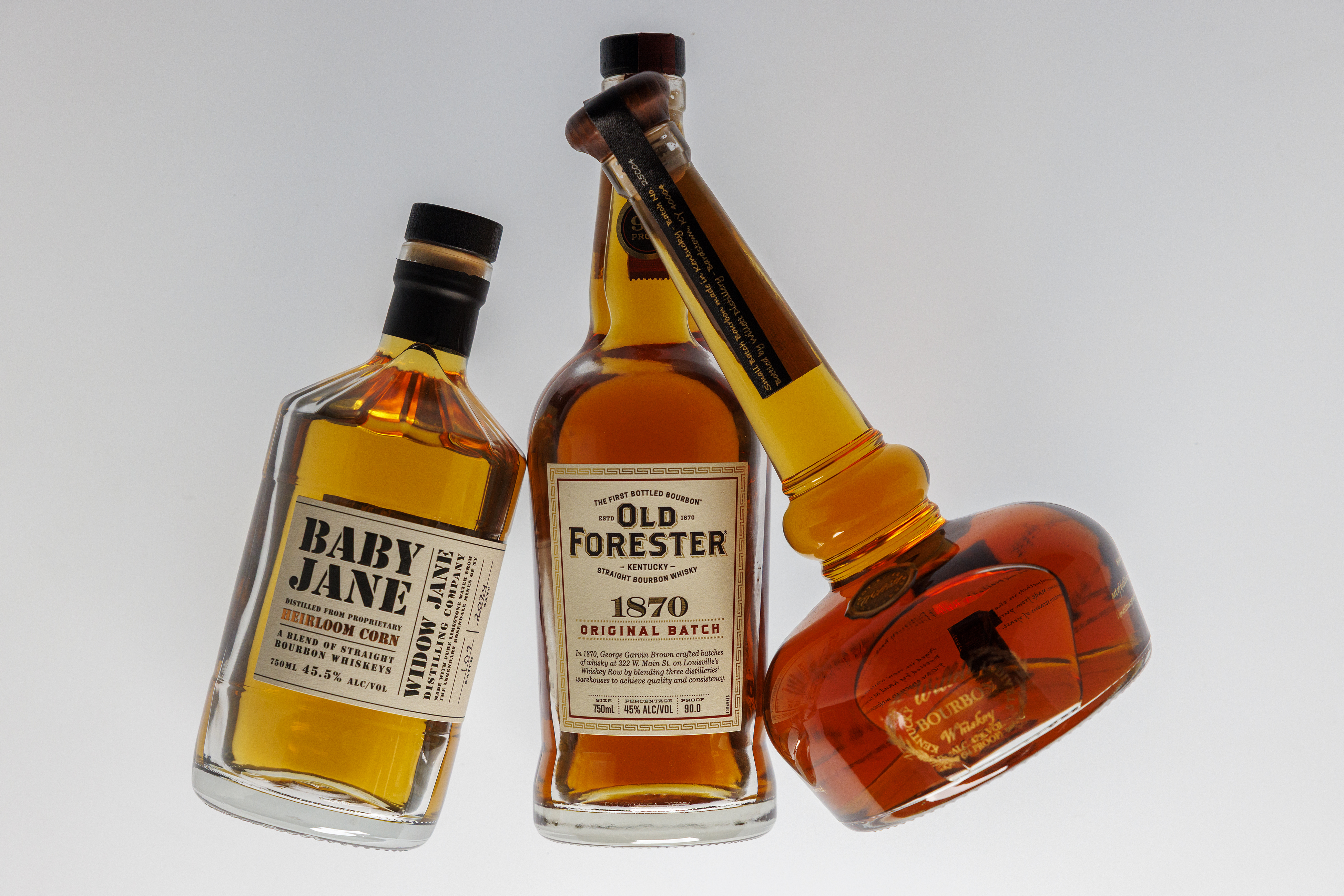
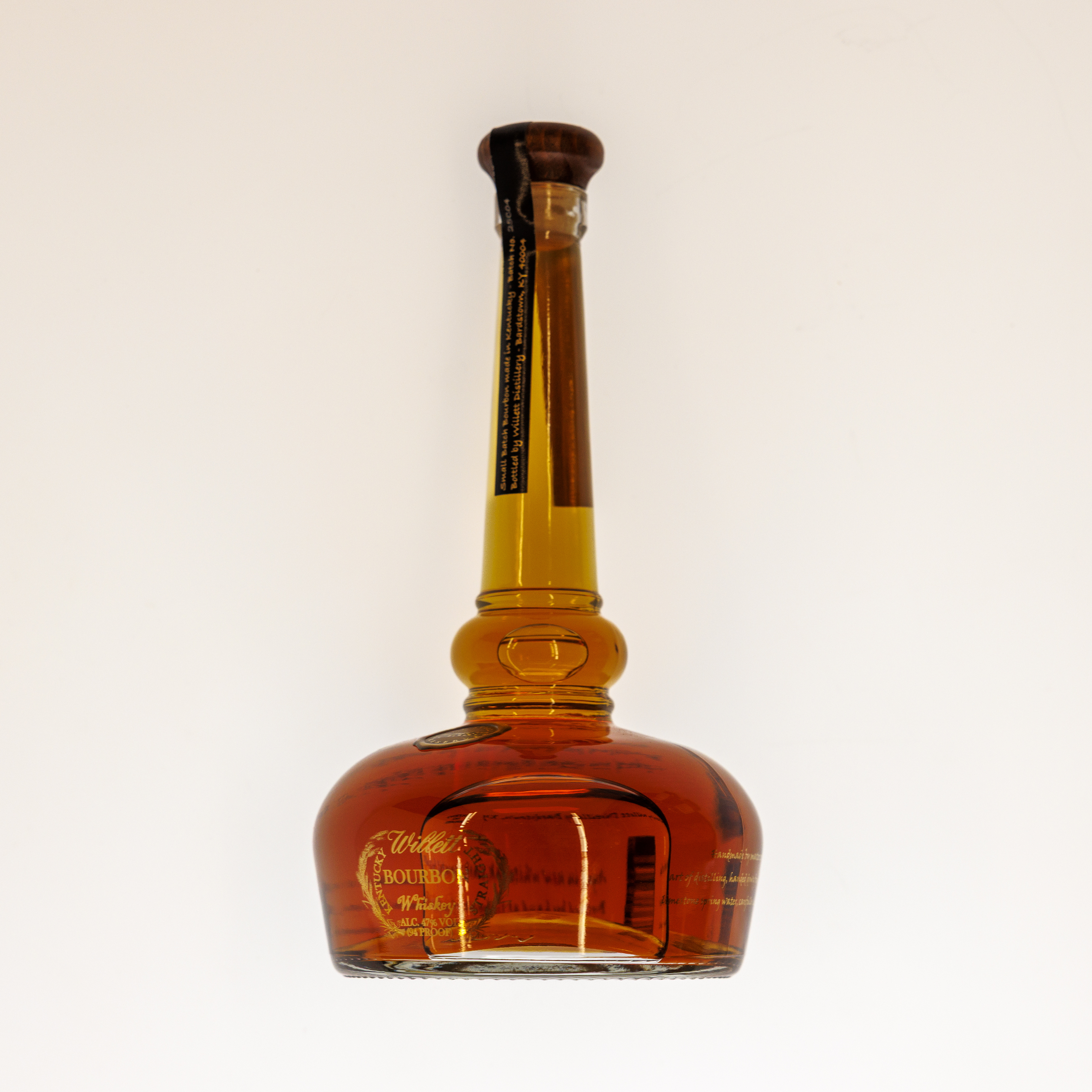
    From left Baby Jane Bourbon, Old Forester Kentucky Straight Bourbon 1870, and Willett Bourbon

    Old Forester Straight Bourbon 1870

    This version of Old Forester is made to the original mashbill and shines like a copper penny in the glass. It’s an easy drinker that shows the brand’s classic chocolate-and-cherry notes, but also floral aromas, citrus, and baking spice. Old Forester aficionados will debate which bottling of its age-dated series is best (I’m still partial to the chocolate-cake goodness of the 1920 label), but this bottle — a stellar sub-$50 value that’s perfect over a big ice cube or two — satisfies every time. Old Forester Straight Bourbon 1870, 90 proof, 750ml, $44.99, (PLCB Item # 9882)

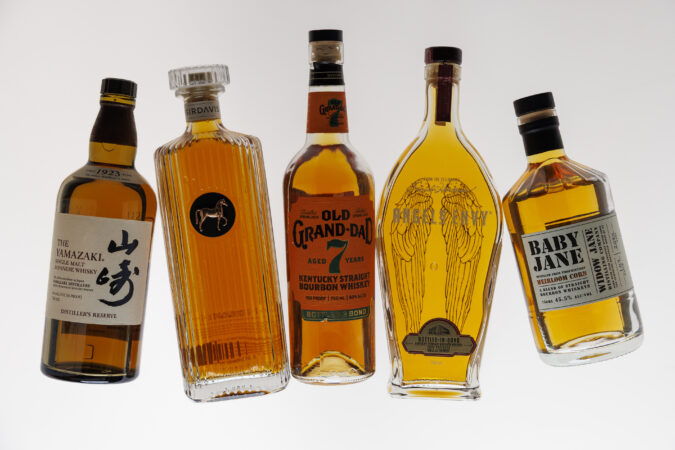
    Widow Jane Baby Jane Bourbon

    The “Baby Jane” edition from Brooklyn’s Widow Jane is the first bourbon that includes whiskey made at its Red Hook distillery in New York. Named for the proprietary Baby Jane breed of heirloom corn that lends this bourbon both creamy and spicy notes, it’s blended with sourced whiskey from Kentucky and limestone mineral water from the abandoned Widow Jane mine in Rosendale, N.Y. (the distillery’s namesake). The nose offers a bright combo of sweet corn and crushed red apple skins, while the flavors channel the advertised duo of sweetness and spice — think strawberry shortcake topped with lots of whipped cream, plus several grinds of black pepper and sea salt. One taster found the name “too creepy,” but the rich texture and balance of this small-batch whiskey, at just under $50, is a worthy gift to give or receive. Widow Jane Baby Jane Bourbon, 91 proof, 750ml, $49.99 (PLCB item # 35053)

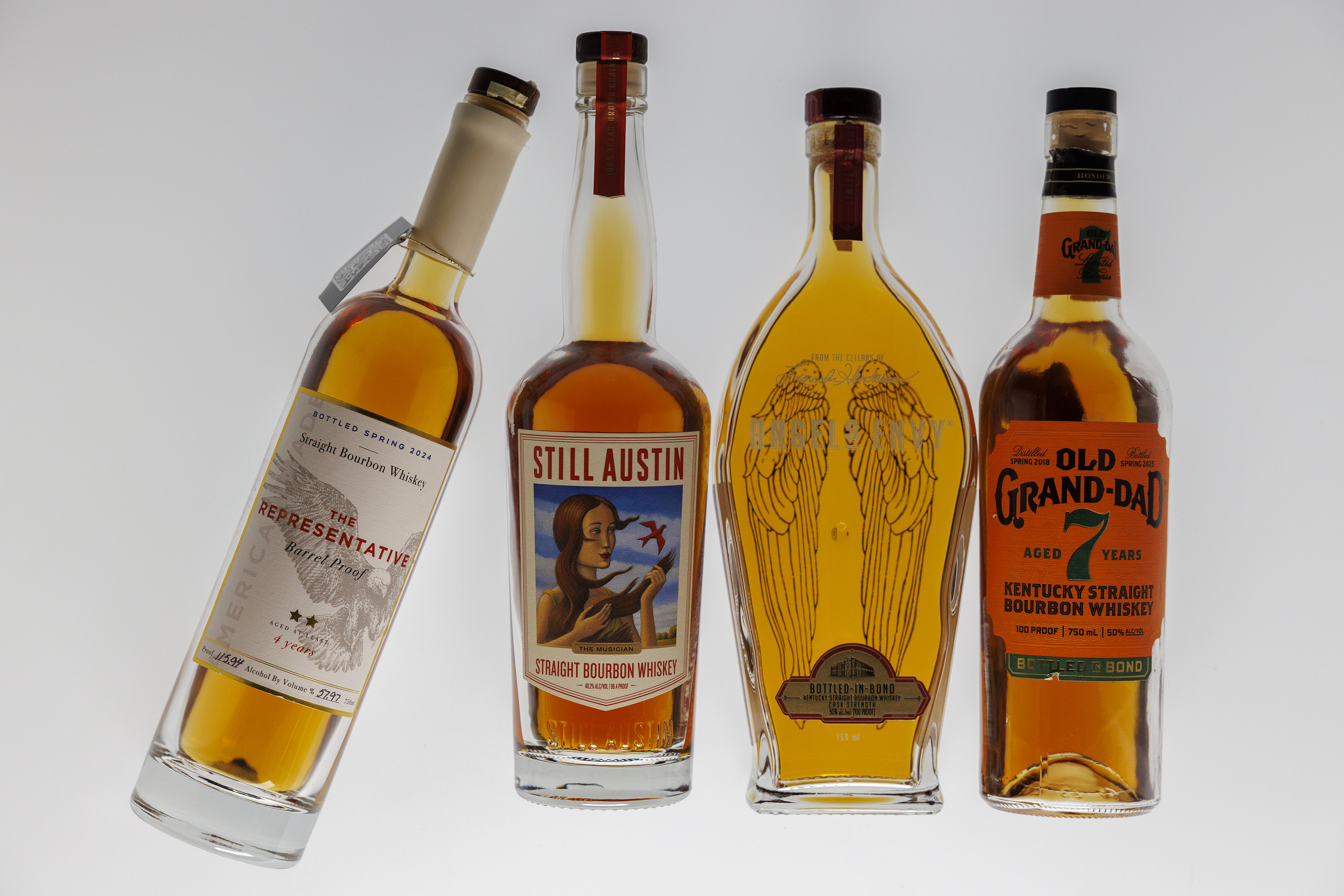
    From left The Representative Straight Bourbon Whiskey, Still Austin Straight Bourbon Whiskey, Angels Envy Kentucky Straight Bourbon Whiskey and Old Grand Dad Kentucky Straight Bourbon Whiskey for Craig Laban, studio, Tuesday, December 9, 2025

    Still Austin “The Musician” Straight Bourbon

    This relatively new distillery from Texas’ Hill Country impressed the tasting panel last year with a rye (“The Artist”) that landed on our final list for its combination of character and value. No surprise Still Austin’s straight bourbon earns another recommendation. This also features a relatively high rye mashbill (25%) among its all-Texas grain, which lends some peppery spark to the honeyed, toasty nose of this deep amber juice. More fruit and nuts rise on the palate, shaded by a finish tobacco, baking spice, and tea. Overall, it’s impressively smooth for a young whiskey (aged just two years) that clocks in just shy of 100 proof. Still Austin “The Musician” Straight Bourbon, 98.4 proof, 750ml, $42.99 at Total Wine (Cherry Hill), $44.99 (PLCB Item #52349)

    Old Grand-Dad Straight Bourbon Bottled in Bond 7-year-old

    The seven-year-old Bottled-in-Bond expression of Old Grand-Dad is a relatively limited seasonal release for this standby bourbon brand. It’s also a step up in character over the basic bargain label associated with Old Grand-Dad, which was founded in 1840 by the grandson of whiskey legend Basil Hayden Sr., also the namesake Jim Beam’s popular (and much more expensive) small-batch whiskey. This 2018 edition is somewhat restrained on the nose, but the initial flavors of grainy graham cracker sweetness open up into a zingy plume of caraway and pepper spice, with a lingering lime-zest acidity that flashes and lingers on the tongue. Those savory elements step forward even more with a splash of water. This would make a fantastic julep. The panel also gave a collective “Wow!” of surprise when I revealed the price: This thrifty Old Grand-Dad rings in just under $40. Old Grand-Dad Straight Bourbon Bottled in Bond 7-year-old, 100 Proof, 750ml, $39.99, (PLCB Item # 100050572)

    Angel’s Envy Bottled in Bond Bourbon

    This is the first bottled-in-bond edition from Angel’s Envy, which also happens to be its first cask-strength spirit, a six-year-old whiskey that is decadent and rich from first sniff to final sip. Its nose of vanilla custard and caramelized Demerara sugar led one taster to declare it “the crème brûlée of bourbons!” On the palate, the dessert notes take a different and fruity turn — like chocolate-covered apricots — that just keep going. Don’t be tempted to add water. Despite the high proof (actually relatively low for a cask-strength), this whiskey is perfect as is. Angel’s Envy Bottled in Bond Bourbon, 100 proof, 750ml, $64.99 (PLCB Item #53715)

    Proof and Wood Straight Bourbon “The Representative”

    I never thought about Congress in terms of whiskey until I encountered this series of Washington-themed spirits from Proof and Wood, which ages whiskeys according to political terms in office, from the “Senator” (six years) all the way up to the Presidential Dram (eight years). The “Representative,” aged “at least two Congressional terms,” is a four-year-old powerhouse distilled in 2020 that blends sweetness and spice with impressive balance considering it’s bottled at 114.8-proof cask strength. (When diluted to 80 proof, the same mashbill becomes Proof and Wood’s Deadwood bourbon.) It’s eminently sippable as is, but a splash of water accentuates the buttery sweetness and also teases forward some of its more interesting notes — sassafras, licorice, and an herbal bitterness reminiscent of amaro. It’s delicious on its own terms, but for a cask-strength whiskey at $50, it’s an absolute deal. Proof and Wood Straight Bourbon “The Representative”, 114.8 proof, 750ml, $49.99 Benash Liquors & Wines

    Willett Pot Still Reserve Small Batch Bourbon

    Despite its slightly elevated heat at 94 proof, this straight bourbon from Bardstown, Kentucky, is an easy sipper that rides the smooth caramel notes of a mashbill that’s mostly corn and wheat, giving off the elegant tang of a moist lemon cake soaked in vanilla syrup. An herbal whiff and salty wave rise just enough to keep the finish peppery and interesting. (“I’d love this in a Manhattan!” opined one judge.) The elegant bottle — shaped like a long-necked pot still — is a major selling point on its own for gift-giving in the $50 range. Even better, this whiskey comes in 50-milliliter minis that makes it perfect for stuffing your stockings with the magic of bourbon, too. Willett Pot Still Reserve, Small Batch Bourbon, 94 proof, 750ml, $46 at Total Wine; 50 ml for $9.49 at Total; $54.99, 750ml in Pennsylvania (PLCB Item #: 30489)

    Willett Bourbon Whiskey
  • Sao brings Mawn’s ‘no rules’ energy to the oyster bar, with intriguing and delicious results

    Sao brings Mawn’s ‘no rules’ energy to the oyster bar, with intriguing and delicious results

    Philadelphians can’t get enough of Rachel and Phila Lorn. At Sao, their sultry new oyster bar on East Passyunk Avenue, diners pull up at the counter for warm corn cakes soaked in honey and bejeweled with roe, oysters splashed with Cambodian peppercorn fish sauce mignonette, and barrel-aged “Jabroni Negroni” cocktails tinged with Islay whiskey smoke to wash them down.

    Owners Phila and Rachel Lorn at Sao in Philadelphia.

    You’ll find the same high-voltage “no rules” pan-Asian cooking here that propelled this married couple’s first restaurant, Mawn, to an incredible string of local and national accolades (including a spot on The Inquirer’s Top 10 list, a new edition of The 76, a “Best New Chefs” award for Phila from Food & Wine, and a similar nod from the James Beard Foundation). Considering the constant reservation traffic jam of wannabe diners angling to nab one of Mawn’s 28 seats, why open a second restaurant with room for just 33? Surely, this couple could fill a much larger space.

    “Rachel and I have enough, we don’t need more,” says Phila, 39. “I still have that old-school mentality that we protect our family and we funnel our lives through this [little] store of ours. I never wanted to be a rock star or be recognized at Target. We just opened restaurants because that’s what we know how to do.”

    The fact they do it so well is a blessing and a curse. At Sao, the monthly scrum for tables offers the same exercise in reservation-app frustration as Mawn, and the long line for the 30-or-so walk-ins that find their way into Sao over the course of an evening understandably vexes the gift shop next door, whose manager emerged to politely redirect us from blocking her storefront on this lively stretch of Passyunk Avenue.

    The exterior of Sao on Wednesday, Nov. 26, 2025 in Philadelphia.
    Owner Rachel Lorn speaks with diners at Sao.

    Once inside, however, the virtues of Sao’s intimate setting are clear, as diners lean into their crudos and cocktails at candlelit banquette tables along a whitewashed brick wall hung with mirrors and stained-glass panes. Another 10 guests — in my opinion, the lucky ones — perch in the red neon glow of the bar counter, where the action unfolds on multiple stages.

    To my right, bartender Steph Liebetreu manages to simultaneously rattle a cocktail shaker in her left hand and stir a crystal decanter of martinis with her right, all while dancing in perfect syncopation to Sao’s soulful soundtrack mix of vintage R&B, Cambodian rap, and Frank Sinatra. To my left, shucker Davina Soondrum (also a talented pastry chef) festoons our icy oyster plateau clockwise from “lemon wedge o’clock” with plump Japanese Kumamotos, tiny-briny BeauSoleils from Canada, and Jersey’s finest, Sweet Amalias. Each one is oceanic perfection on their own, but they become electric when splashed with that Cambodian mignonette, or a spicy-tart jolt of Lao sauce sparked with lime and crushed cilantro stems. Amid Philly’s current boom in new oyster bars, those vivid sauces are part of what make Sao unique.

    Chef Phila Lorn places a crudo at the pass at Sao on Wednesday, Nov. 26, 2025 in Philadelphia.
    The dry-aged hamachi crudo at Sao.

    Front and center, meanwhile, there’s chef Phila himself butchering a whole dry-aged hamachi mid-service to serve raw with fish sauce, coconut milk, and vinegared onions — a salute to the beloved nearby soup hall, Pho 75. He’s slicing thick pink tiles of bluefin tuna and stacking them like a deck of sashimi cards doused with soy sauce and lime beneath fistfuls of roasted green chilies and crushed marcona almonds.

    As I waver on which crudo to order next (perhaps the spot prawns with brown butter and prawn-head oil?), he pours sweet and spicy orange chili jam over an ivory mound of raw scallops, apples, and pepita seeds and I have my answer: “That’s Phila’s favorite,” confides Rachel as she patrols the narrow dining room, ever-playing Tetris with seats to accommodate more walk-ins.

    The Dayboat Scallop Crudo at Sao on Wednesday, Nov. 26, 2025 in Philadelphia.

    That scallop-and-chili jam combo will be familiar to anyone who’s dined at Mawn, where Lorn workshopped many of these dishes for months. There are other overlaps here of Mawn’s greatest hits, like the crispy soft-shell shrimp in fish sauce caramel, or the awesome 20-ounce rib eye piled high with “Cambodian chimichurri,” boosted with lime juice and fermented prahok fish paste.

    One standard you must order, though, is the intricate papaya salad, a colorful crunch-fest of long beans, peanuts, candied shrimp, and shredded green papaya lashed with blasts of sour tamarind, chile, and shrimp paste. It dials your taste buds up to a certain base level of funk and sour heat before moving the conversation to more contemporary flights of fusion fancy.

    The Honey Butter Hoe Cake at Sao on Wednesday, Nov. 26, 2025 in Philadelphia.

    Sao’s menu is more an extension of Mawn’s repertoire, rather than something entirely new, with a greater emphasis on raw seafood and an even more playful approach to cooked dishes rooted in tributes to favorite restaurants. Perhaps the most memorable dish at Sao, in fact, is a direct corn cake homage to Boston’s Neptune Oyster bar, whose signature johnnycake is remade here as a warm, honey butter-soaked hoe cake enriched with dashi then topped with cool smoked trout salad and beads of roe, which Phila tends to piles onto Sao’s plates by the spoonful. The lacy crunch of that warm sweet cake against the savory pop of roe, amped by the saline burst of a supplemental scoop of caviar, was one of my favorite bites of the year.

    Sao’s menu is full of Easter eggs for the keen-eyed diner, including an irresistible tuna carpaccio topped with fried shallots, cured chile rings, and a sizzling finish of sesame oil that’s an ode to the “bronzizzle” roll at Zama, where Phila spent some formative years. There’s also a nod to the beloved late-night cutlet from Palizzi Social Club that’s transformed with Southeast Asian pickled cucumbers, Thai basil, and fish sauce caramel. The chef, who grew up just a few blocks from East Passyunk, also pays tribute to South Philly’s Italian “crab gravy” tradition with his own take, a blend of red and green coconut milk curries steeped with crab shells that comes topped with crisply fried scallops.

    The Mawn Cutlet at Sao on Wednesday, Nov. 26, 2025 in Philadelphia.

    A frequent chicken skewer special, whose meat is marinated in kreung spice paste, is grilled over binchotan coals as Phila’s nod to the weekend Khmer barbecues at the Southeast Asian Market. The mee caton is a straightforward stir-fry of velvety soft beef, Chinese broccoli, and fat rice noodles kissed with sesame oil that’s a throwback to one of the best home dishes made by his mother, Sim Khim. (I also loved the seafood rendition.)

    Nostalgia for family and neighborhood pervades every corner of Sao, from the vintage bathroom door with textured glass and wavy panes that replicates the vestibules of many South Philly rowhouses (including the Lorns’ house), family pictures, and an antique cash register from the Atlantic City Boardwalk hotel once owned by Rachel’s grandparents.

    Even the restaurant’s name channels a sense of place: It’s a phonetic representation of how Phila’s mother, a Cambodian refugee, pronounces the “South” in South Philly. Her son, famously, is also named for the family’s adopted city, although Khim and everyone else pronounce it “Pee-la.” The sign hanging out front — Sao Phila — has multiple meanings.

    An old school cash register from Rachel Lorn’s family at Sao on Wednesday, Nov. 26, 2025 in Philadelphia.

    With the added element of a liquor license at Sao, the Lorns’ business partner and close family friend, Jesse Levinson, designed an opening drink list that follows on theme. The chicory-scented, coconut-creamed Vietnamese coffee martini, Wing Phat Plaza, is named for the bustling Asian strip mall on Washington Avenue nearby. The Angkor Baby borrows a michelada from South Philly’s lively Mexican scene, then adds the Asian touches of ground Kampot peppercorns and a rice vinegar tang.

    The Wing Phat Plaza and Angkor Baby cocktails at Sao.

    Levinson says the drink menu will keep evolving as Liebetreu and her fellow bartender, Lillian Chang, begin to take creative control, supplementing the small but trendy selection of natural wines. I also expect Sao’s sake selection to take a big leap once general manager Kelly Brophy, formerly the lead omakase server at Royal Sushi, begins to share her expertise.

    Indeed, so much is still evolving here, including the tasty but limited dessert selection of crème brûlée and whoopie pies from Soondrum (when she’s not shucking shellfish), that I’m certain we’ve only seen the beginning of what Sao can truly become.

    “We’re locked and loaded for more because we have room to grow,” says Phila, referring mostly to desserts. If only they also had room to grow more seats! Philadelphia’s diners, no doubt, would quickly snap those up, too.

    Diners fill the space at Sao on Wednesday, Nov. 26, 2025 in Philadelphia.

    Sao

    1710 E. Passyunk Ave., saophilly.com; no phone, but staff responds to messages on Instagram or OpenTable.

    Open Wednesday through Saturday, 5 to 10 p.m.

    Reservations are highly suggested, but a handful of walk-in seats are available.

    Not wheelchair-accessible. There is a step up into the restaurant, as well as at the bathroom.

    About 90% of the menu is naturally gluten-free, while certain dishes that typically use the fryer (like the scallops in crab gravy) can be modified to avoid cross contamination.

    Menu highlights: Crudos (aged hamachi; scallops with chili jam); bluefin tuna carpaccio; Cambodian papaya salad; honey butter hoe cake; Mawn cutlet; scallops in crab gravy; mee caton; grilled chicken skewers; crème brûlée.

    Drinks: Cocktails are well-made with a South Philly twist (like the barrel-aged mellow Jabroni Negroni) and on-theme Asian accents, such as Cambodian Kampot peppercorns for the Angkor Baby riff on a michelada, or the chicory-flavored Viet coffee martini named after Washington Avenue’s Wing Phat Plaza.

    A neon oyster sign at Sao on Wednesday, Nov. 26, 2025 in Philadelphia.
  • Is Michelin’s Bib award for Royal Sushi a snub? Chef Jesse Ito takes the izakaya’s honors in stride.

    Is Michelin’s Bib award for Royal Sushi a snub? Chef Jesse Ito takes the izakaya’s honors in stride.

    There were chef tears of joy, stunned looks from some unexpecting winners, and the silent sting of award-show snubs as the Michelin Guide announced its first-ever round of accolades for the Philadelphia restaurant scene Tuesday night.

    But there was also some lingering confusion that followed the much-anticipated Kimmel Center ceremony. One of the biggest gasps of baffled surprise rippled through the crowd when Royal Sushi & Izakaya, a favorite predicted by many to earn a star, was instead awarded a Bib Gourmand.

    The Bibs are widely coveted as Michelin’s nod to restaurants with “exceptionally good food at moderate prices.” Ten Philly restaurants were awarded Bib Gourmands, including Angelo’s, Dizengoff, and Pizzeria Beddia.

    But how does Royal Sushi & Izakaya — where a seat at chef Jesse Ito’s omakase counter now clocks in at a city-high $355 — qualify? Is it now the world’s most expensive Bib Gourmand?

    Chef-owner Jesse Ito at Royal Sushi & Izakaya on Aug. 11, 2023.

    Michelin, which is renowned for secrecy, would not clarify its reasoning: “The Michelin Guide doesn’t reveal specifics,” said spokesperson Carly Grieff.

    The answer, most logically, is that Royal has always been two distinct restaurants under a single name and roof, and the Bib most logically applies to the more casual one: the lively izakaya-style tavern that anchors the front of the Queen Village building, where a relatively affordable a la carte menu of cooked Japanese classics and sushi is served to a walk-ins-only crowd, with cooked items ranging from $6 to $38.

    Ito’s luxury sushi tasting counter, meanwhile, hums along in a separate room in back, where Ito handcrafts every bite with artistry using some of the world’s most expensive ingredients. Such omakase counters are prime candidates for Michelin stars, including at least two (Boston’s one-star 311 Omakase and New York’s three-star Sushi Sho) that picked up accolades at the recent ceremony in Philadelphia.

    The sesame-crusted eggplant at Royal Izakaya on Aug. 18, 2022. Royal Izakaya is located at 780 South 2nd St.

    But the 16 nightly seats of Ito’s omakase counter are so locked down with devoted regulars — who can rebook their seats for another meal before leaving their dinner — that even Michelin’s anonymous inspectors, it appears, could not score a reservation.

    “They only ate at the izakaya,” surmises Ito from Michelin’s review, a glowing assessment of the izakaya’s menu range and high-quality ingredients, with only a passing mention acknowledging its “exclusive” omakase counter.

    Ito was hardly a loser at the Michelin ceremonies, even if he didn’t win a star, because he was thrilled with the Bib acknowledgment: “I’m super-proud of the izakaya and this is very fitting for what it does … The stars are really great and obviously every chef wants that, but the Bibs will also prove useful once tourists come, especially next year for the FIFA World Cup and Philadelphia’s 250th anniversary.”

    Diners inside Royal Izakaya on Aug. 18, 2021.

    Nonetheless, the uncertainty of how Michelin might handle his dual-concept space has weighed on the chef, who knows the roller-coaster emotions and anxiety of awards program recognition more than most.

    He’s experienced tremendous highs, such as this fall when his restaurant was named the 32nd best restaurant in North America by World’s 50 Best. He’s also repeatedly dealt with the disappointment of coming up just short with the James Beard Foundation, being named a finalist eight times — only to miss out every year, including once again this spring.

    Ito said he’s considered various ways to more clearly separate the two concepts, or at least make the reservation process for the omakase more accessible.

    “But I wouldn’t even know how to do that,” said Ito, who’s worked through some alternatives and fears that bots would ultimately snap up seats for scalping. “I’m able to have regulars this way, and we have the best guests with whom we’ve created real relationships over time. But I love having new people, too, and that definitely still happens.”

    The exclusive nature of the omakase, and the unintended fallout from such limited reservations — especially with hopeful guests, including possibly judges for potential awards — was never intended. It just happened.

    Chef Jesse Ito and Mia Colona at the Michelin Guide announcements at the Kimmel Center on Nov. 18.

    “I didn’t think about any of this award stuff when I was opening this restaurant nine years ago at age 27 on limited resources,” said Ito, whose initial goals were to support his parents and create something for himself.

    As the restaurant continued to evolve and garner national attention, however, he’s had to learn to cope with the anxiety of increasing acclaim. And no matter how veteran the chef, the nerves always tighten the gut at an awards ceremony, when the announcement draws near. He’s learned the hard way to find a silver lining in whatever the results.

    “Just because you’re not [ultimately] a winner doesn’t mean you’re not deserving,” says Ito. “That’s part of losing the Beard award eight times! You come away with the ability to enjoy the moment of just being recognized.”

    The Royal Toast from the Royal Sushi Omakase at Royal Izakaya on Aug. 18, 2022.

    Ito says he owes much of his current attitude to getting sober five years ago.

    “Beforehand, I used to always crave that external hit, that numbing sensation of having fun. But now in my life, I find happiness in my routine and relationships, my business and personal journey. The awards? I’m happy to be a part of them — but they are not what defines us.”

    What drives Ito is his passion for turning raw fish into edible art for the devoted customer base he values, and “to improve myself and the omakase a little bit each day,” he says, citing the Japanese philosophy of kaizen.

    Chef-owner Jesse Ito at work at Royal Sushi & Izakaya on May 31, 2024.

    So, once the Michelin ceremony concluded — “a weight was lifted from my shoulders,” he says — and it was back to what he loves most. He went straight to dancerobot, his new restaurant in Rittenhouse Square where a Resy-sponsored after-party was in full bloom. He put on his apron and immediately busted out the premium uni and caviar to top hundreds of aka-taka toro rolls brought in from the izakaya, and strolled through the crowd with a tray, handing out $75 bites for free.

    “Everyone was so relieved [it was over], we were just celebrating and having fun,” he said.

    And then out came his secret weapon: the karaoke mic, an important Ito ritual for every post-awards party, no matter the result.

    “I sang ‘Creep‘ by Radiohead,” he said, his usual song. “Then I left when the party was still bumping, because I didn’t want to go to bed too late.”

    He had another busy day to prep for service at Royal Sushi & Izakaya ahead.

    Chef Jesse Ito of Royal Sushi & Izakaya hands out aka-taka tuna belly and pickled radish rolls topped with salmon roe, uni, and caviar to guests at an afterparty for the Michelin awards held at his new restaurant, dancerobot.
  • Stephen Starr’s Borromini should be a showstopper. Instead, it’s a shrug.

    Stephen Starr’s Borromini should be a showstopper. Instead, it’s a shrug.

    Borromini’s 100-layer lasagna looks like a miracle of noodle engineering. It’s the kind of “more is more” pasta spectacle that commands its own showcase box on the menu, puts curious diners in chairs, and requires a team of three dedicated attendants in Borromini’s vast kitchen to meticulously construct its layers — a tall stack of pasta sheets alternating with microscopic schmears of ricotta, creamy béchamel, and tomato sauce — that get baked, sliced, then crisped on one side, to be served atop a puddle of pomodoro.

    Its intricate ridges are beautiful to behold. But to eat, this lasagna is more like a doorstop than a showstopper. The layers are so tightly compressed, it’s closer to a muddled mush than a deck of delicate harmonies, a squidgy blur of cheese and dough whose individual virtues could have been more compellingly conveyed in 10 layers rather than 100. Add a slow-cooked, jammy tomato sauce that leans sweet rather than bright and lively, and the final effect is one-dimensional. It has subtly evolved over the course of my multiple visits, but each time it prompted a disappointed shrug.

    The 100-layer lasagna at Borromini has been constantly evolving. This version, eaten in November, three months after opening, has been called “the final version” by owner Stephen Starr.
    Borromini, 1805 Walnut St., on Aug. 16, 2025.

    That’s not the thrill I expected from the marquee dish at this glitzy $20 million, 320-seat trattoria, whose dramatically lit column facade glows red over the northern edge of Rittenhouse Square. Stephen Starr’s first major hometown restaurant in years (and his 41st overall) is arguably the biggest opening in Philly in 2025. He went all out transforming the former Barnes & Noble into what many have aspiringly dubbed “the Italian Parc,” a two-story Roman-themed palace with vaulted ceilings, an intricate stone chip floor, and walls lined with 3,000 bottles. Starr brought on legendary New York restaurateur Keith McNally to design the space (Starr has syndicated McNally’s Pastis bistro to multiple cities since they partnered to revive it in 2018).

    He also enlisted a hive of respected culinary minds to create the menu over the course of 90-plus tastings, with his corporate food team and Borromini’s executive chef, Julian Alexander Baker, collaborating with Mark Ladner, the former chef of New York’s now-closed Del Posto, where Starr first tasted a magical rendition of that lasagna many years ago.

    Stephen Starr (left) and chef Mark Ladner discuss Borromini’s version of Ladner’s signature 100-layer lasagna during a menu tasting at Borromini on July 15, 2025.

    Ladner initially declined to recreate that decades-old hit when first asked. Starr should have listened. But Ladner — now the chef at Babbo, which Starr reopened in New York in October (and where a meaty version of that lasagna is also a menu feature) — ultimately gave in.

    There are plenty of other, more admirable dishes on the menu here, including the focaccia di Recco from another consulting chef, Nancy Silverton, the LA star with whom Starr runs Osteria Mozza in D.C. The hot crisp of her flatbread’s wafer-thin rounds sandwiching tangy stracchino cheese is the one dish I order every time. I loved the contrast of silky braised oxtail that gathered in the frilly-edged ribbons of the house-extruded mafaldine. And the calamarata pasta loops, paired “Sicilian lifeguard”-style with look-alike rings of tender squid, chili spice, and golden raisins, is exactly the kind of delicious, obscure regional dish that shows how infinitely surprising the world of pastas can be.

    The focaccia di Recco at Borromini is layered with tangy stracchino cheese.
    The “Sicilian lifeguard” calaramata with calamari and golden raisins at Borromini in Philadelphia, on Thursday, Nov. 13, 2025.

    But Borromini is more about polishing the familiar than unearthing regional quirks. And that big lasagna has become an apt metaphor for why Borromini’s food too often seems off. No matter how grand the ambitions of a dish (or this restaurant in general) may be, stellar Italian food comes down to finesse, touch, and soul — elements that a kitchen-by-committee cannot engineer. In a town with exceptional Italian restaurants in varied styles, not to mention a population with a deep reservoir of red-gravy family nostalgia, the room for error is slim for a dining experience that averages just under $80 per person (before tax and tip).

    The crisply fried squash blossoms stuffed with lemony ricotta and the hamachi crudo dressed simply with Meyer lemon and olive oil were tasty, if not necessarily distinctive. The arugula with shaved raw artichokes would be my salad pick. The massive, fork-tender osso buco, a 1-pound shank drizzled with brown jus over saffron risotto with a marrow spoon poking skyward from its bone, is as close to textbook Milanese perfection as Borromini gets.

    The osso bucco at Borromini in Philadelphia, on Thursday, Nov. 13, 2025.

    Borromini’s kitchen, however, struggled with consistency on several other traditional dishes. My favorite of the restaurant’s minimalist Roman-style pastas is the bucatini all’Amatriciana that’s brought to the table in the pan. But will you receive the version I tasted most recently, its simple tomato sauce vividly infused with the juniper- and pepper-sparked savor of properly rendered guanciale? Or will it taste bitter from the scorched nubs of cured pork I encountered at a previous meal?

    The pasta all’Amatriciana at Borromini in Philadelphia, on Thursday, Nov. 13, 2025.
    People dining in at Borromini in Philadelphia, on Thursday, Nov. 13, 2025.

    I might agree with my Italian server, Thomas, that Borromini’s carbonara is one of the best I’ve tasted in Philly, its mezze rigatoni tubes glazed in a golden shine of well-tempered eggs and guanciale fat. Too bad it was already cold when I took a bite the moment it arrived at my table.

    A number of the pastas were notable, including a spaghetti bright with lemon, butter, and pasta water, a deft display of minimalist satisfaction. I was also a fan of the Sardinian gnochetti with blue crab, uni, and tomatoes that brought a burst of seafood savor some other pastas lacked — like the linguine with clams that was virtually brothless, or the lobster spaghetti that was bountiful with crustacean but whose sauce lacked depth. The short rib agnolotti might have been excellent had their dumpling dough not been so thick.

    The cacio e pepe has been consistently disappointing. Its peppercorn-speckled noodles were pasty and dry, with no halo of creamy sauce to spare. The clam pizzetta was a floppy round of spongy dough piled high with chopped Italian clams that radiated raw garlic. The $125 bistecca alla Fiorentina, a 2-pound prime porterhouse centerpiece for sharing, was so achingly oversalted, it wasted an otherwise stellar slab of beef that had been lovingly massaged with confit garlic butter.

    The kitchen’s other stations turned in mixed results, as well. I much preferred the crispy-skinned dorade with salsa verde to the branzino with white beans, which was also horrendously oversalted. The eggplant parm was stiff with too much breading, though the splurge-worthy bone-in veal parm for $72 was good (unfortunately, they’ve since resorted to a boneless version). The lamb chops with salsa verde were more memorable, as was the rabbit cacciatore served in its metal crock with peppers and Castelvetrano olives, a rustic gem inspired by feedback from yet another consulting voice, the legendary Lidia Bastianich.

    The mafaldine with braised oxtail ragu at Borromini.
    Folks dining in at the bar at Borromini in Philadelphia, on Thursday, Nov. 13, 2025.

    It would be wrong to call Borromini a total bomb. Any place with a steady deluge of crowds putting it on target to generate $20 million in annual revenue has to be doing something right, and that would be its La Dolce Vita vibes. These sprawling rooms are a boisterous and glamorous crossroads for a broad swath of Philadelphians out for a night in their finest — fueled by flutes of “mini-tinis” (which my guest gleefully declared “filthy” with salty burrata brine), sweet-side Negronis, and Cynar-spiked espresso martinis.

    Starr’s greatest talent may be his gift for building energetic public spaces that feel as if they’ve always been there. And while Borromini lacks the corner space and open cafe windows that allow Parc in its al fresco moments to become part of the fabric of Rittenhouse Square, McNally has crafted a Fellini-esque stage set of leather booths, honeyed light, and linen-draped wooden tables that feels magnetic — especially the undulating copper bar on the ground floor, where an intriguing collection of 100-plus amari and digestivi awaits.

    All my servers — five different people over the course of my visits — were personable, outgoing, and well-prepared to make smart pairing suggestions.

    I should have stuck with their suggestions to indulge those digestivi with desserts. The airy tiramisu here backfired, its lightweight cloud of whipped mascarpone lacking the richness to counter an overzealous cocoa shower and the wickedly acidic twang of ladyfingers soaked in espresso.

    My favorite finish was sour in the best way possible: a hollowed-out lemon stuffed with sweet-tart lemon sorbetto. You’ve maybe seen something just like this in your neighborhood Italian place, brought in from the Italian frozen dessert powerhouse Bindi. But this was Borromini at its best, transforming something familiar into a better, fresher, more elegant version of itself. It will make you smile even as it puts a pucker on your face.

    The lemon sorbetto served inside a hollowed-out lemon at Borromini in Philadelphia, on Thursday, Nov. 13, 2025.

    Borromini

    1805 Walnut St., 215-596-1000, borrominiristorante.com

    Lunch served Monday through Friday, 11 a.m. to 3 p.m. Dinner served Sunday through Wednesday, 5 to 10 p.m.; Thursday through Saturday, until 11 p.m. Brunch Saturday and Sunday, 10 a.m. to 3 p.m.

    Dinner pastas and entrees, $19-$72.

    Wheelchair accessible.

    There are several gluten-free options, including high-quality gluten-free pasta, which can be substituted with most sauces.

    Drinks: The bar program offers 19 Italian wines by the glass, ranging from $12 house wines to $27 Franciacorta, a deep bottle list with more prestige options, Italian cocktails heavy on the expected spritzes and Negroni variations, and a list of nearly 100 amari and digestivi.

    Menu Highlights: focaccia di Recco, squash blossoms; hamachi crudo; artichoke-arugula salad; pastas (spaghetti al limon, gnochetti sardi with crab, oxtail mafaldine, spaghetti all’Amatriciana, carbonara, “Sicilian lifeguard” calamarata); polpetta; rabbit cacciatore; dorade; osso buco; sorbetto al limon.

    Borromini, the new Italian restaurant on Rittenhouse Square, in Philadelphia, July 29, 2025.
    Some of the first-floor dining area at Borromini in Philadelphia, Pa., on Tuesday, August 12, 2025.