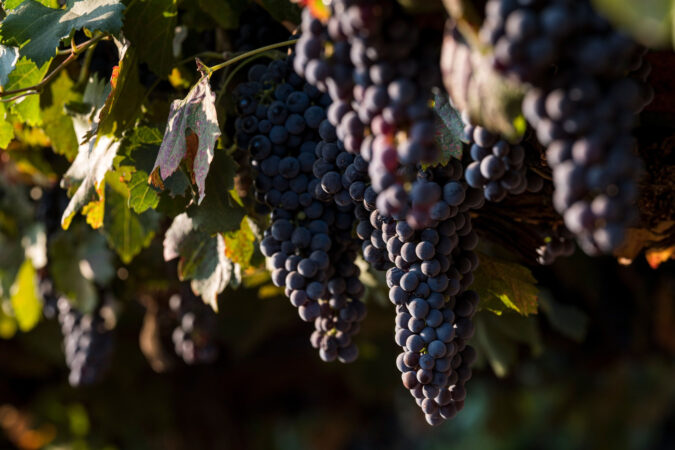
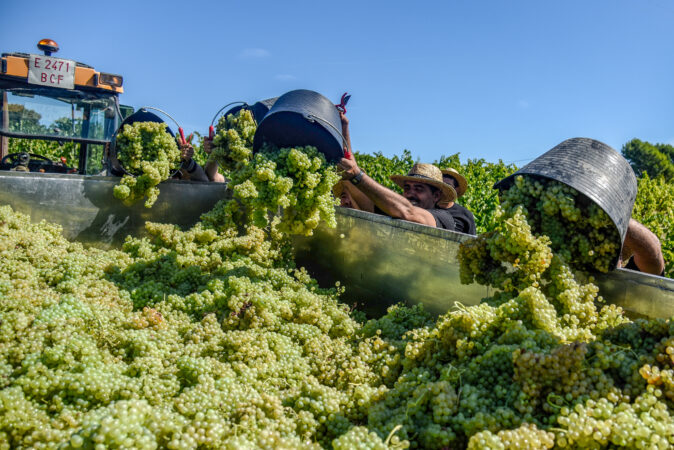
Red wines may look dark as night in the glass, but they taste like bottled sunshine. That’s because it takes extra sunlight during the summer months to fully ripen dark-skinned grapes. Plants use photosynthesis to turn light into energy, and this process helps explain why Washington state has a natural advantage over California when it comes to making bold and concentrated merlots, like this value-priced example.
During this time of year, Philadelphia gets the same amount of sunlight per day as Napa in California’s wine country — roughly 15 hours per day. Washington’s Columbia Valley is more than 700 miles north, which adds up to almost 10 degrees of difference in latitude. This differential provides Washington vineyards with an extra hour of sunlight in the critical weeks of the summer growing season.
With more sun, vines don’t just ripen faster. They also produce more of the dark phenolic compounds in grape skins, which add color, flavor, and antioxidant properties to wine. The resulting difference is quite subtle in wines made using the very thickest-skinned red wine grapes — like cabernet sauvignon and syrah — but the effect is more noticeable in wines made using merlot.
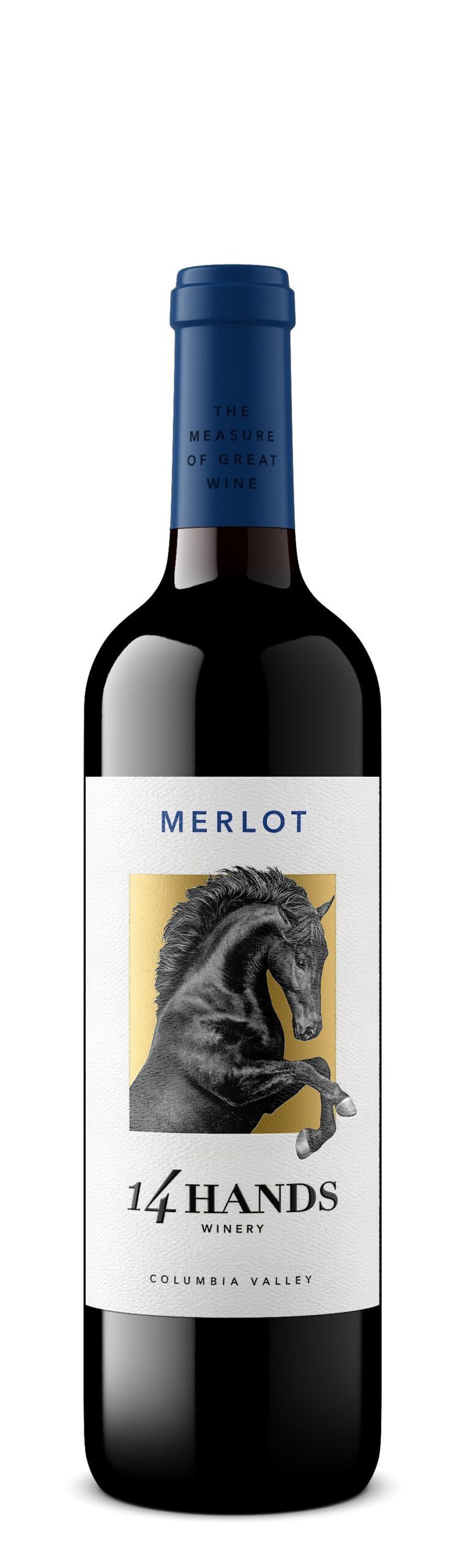
It would be difficult to find a California merlot that delivers this much concentration and substance for the dollar, with enough tannic grip on the palate to handle a juicy steak off the grill. Its flavors of blackberries and black plums taste fresh with only a hint of oak influence, similar to a light dusting of cocoa.
14 Hands Merlot
14 Hands Merlot
Washington; 13.5% ABV
PLCB Item #98025 — $10.99 through Aug. 2 (regularly $13.99)
Also available at: Moorestown Super Buy Rite in Moorestown ($9.49; moorestownbuyrite.com), WineWorks in Marlton ($9.98, wineworksonline.com), and Total Wine & More in Claymont and Wilmington, Del. ($9.99, totalwine.com).
As the most popular dinner reservation times trend earlier and daycaps (aka late afternoon drinks) replace post-dinner cocktails, some Philadelphia bars and restaurants are forgoing happy hour for something with a chiller, convivial vibe: aperitivo.
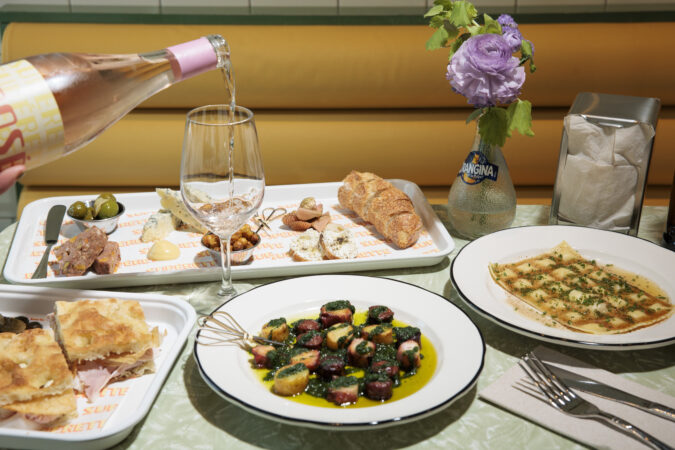
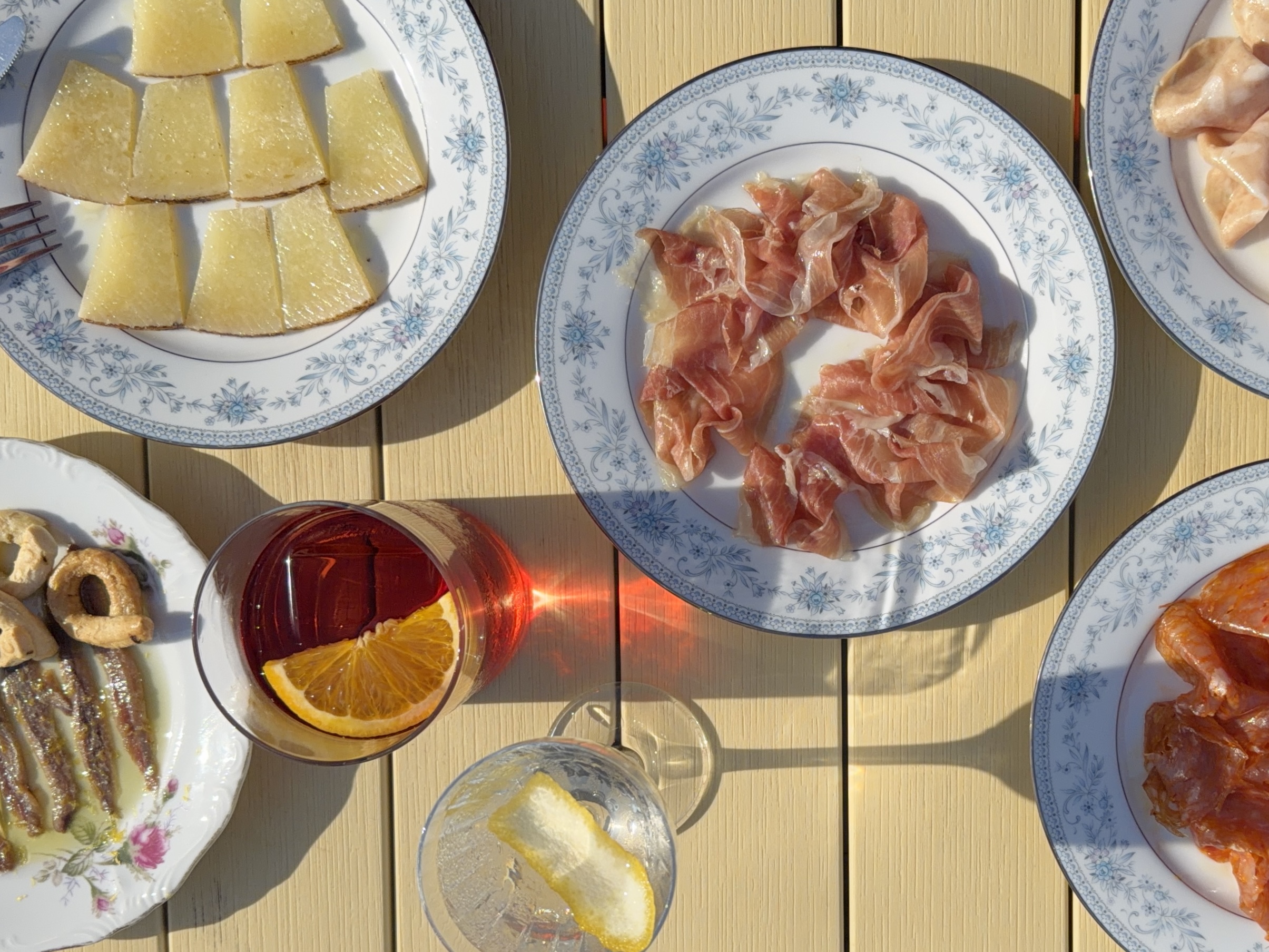
A longstanding European tradition, aperitivo — which means “to open” in Italian — refers to the late afternoon and early evening hours ripe for lighter-paced drinking and snacking. While other countries have their own words for it (“apéro” in France, “la hora del Vermut” in Spain), the menu always includes fortified wines, bittersweet cocktails and liqueurs, and small bites meant to stimulate appetites.
The ritual is a natural fit for Philadelphia, the so-called “Frenchest city in America,” and its rise of Euro-American-inspired bars and restaurants. Operators are leaning into food-driven aperitivo hours to stretch out the day longer and cater to diners that are going home earlier and drinking less. Signature aperitivo drinks — classic negronis, savory vermouths, and bittersweet amaris — aren’t as heavy or fast-paced as half-priced beer and shot specials, and often come with sidecars of salty snacks, like cured meats, olives, and bread. Others, like an Aperol spritz or an Americano perfecto (a spaghett-style cocktail with beer, Vermouth, Campari, and an orange slice), tend to be lower in ABV.
People are “drinking earlier, coming right from work, and getting a small spritz, a snack, and then going to dinner,” said Benjamin Kirk, the beverage director at Michelin-key Hotel Anna & Bel, which offers an aperitivo menu three days a week at its cocktail lounge, Caletta. “You don’t see people out as late as you normally would since the pandemic.”
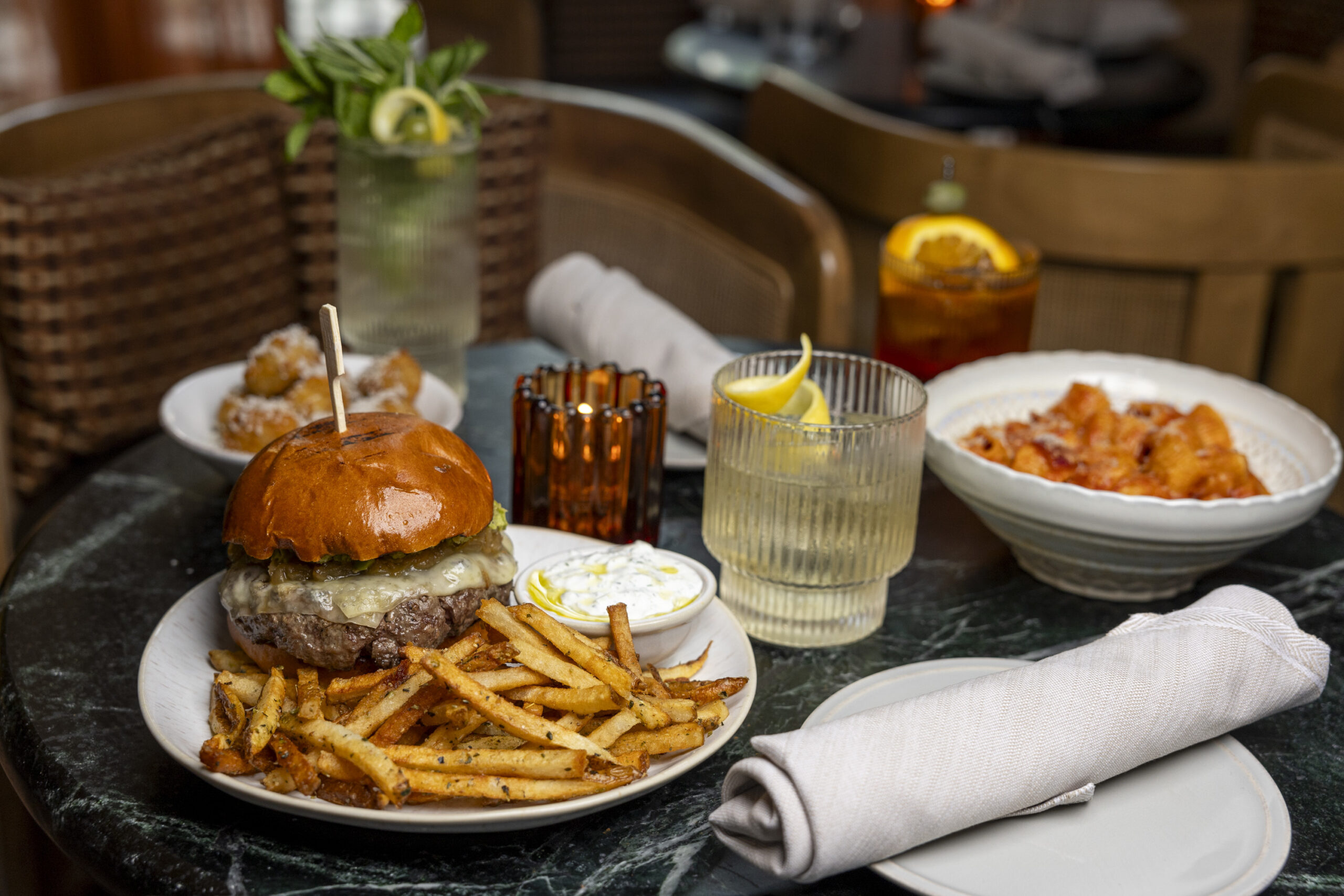
A cheeseburger and fries, the rigatoni all Amatriciana, and croquettes are all part of the aperitivo menu at Caletta in Fishtown.
Aperitivo is also more casual, less hurried, and lower pressure than a sit-down dinner or an after-work date. Reservations aren’t required, and it’s not uncommon to see friends popping in and out for a drink or kids joining family at the table.
“It’s a lot easier to roll into aperitivo with a stroller and get a glass of wine with kids while you are catching up with friends rather than going to a bar,” said Chris DiPiazza of the South Philly bakery Mighty Bread, which started offering aperitivo hour in August 2024.
Apéro is also “a marathon, not a sprint,” said Chloé Grigri, whose bars Superfolie, the Good King Tavern, Le Caveau, and Supérette all offer some version of late afternoon drink and food deals year-round. For Grigri, the purpose is less about pushing discounts so customers can drink more than it is about finding ways to intertwine French culture with happy hour. In Bella Vista, for example, the Good King Tavern is expanding daily apéro deals from 3 to 6 p.m. during the World Cup games (and beyond) to include discounted charcuterie, tartines, and “Frenchie-Americana” drink specials like Suze and Mountain Dew highballs and whiskey and Kronenburg citywides. “It’s the sort of thing you’d stumble across in Paris today in my opinion, but better,” she said.
The Americano? Americano!, a vermouth cocktail that’s available only during aperitivo at Caletta.
Still, prices at aperitivo tend to hover at $8 to $16 — roughly between the cost of a beer or glass of wine — which can attract customers during slower weekday business hours, said Le Virtù general manager Chris O’Brien. In the restaurant on East Passyunk Avenue’s monthly wine club newsletter, O’Brien said that 2026 has been “our busiest year on record by a long shot” with an uptick in patio reservations, where its all-you-can-eat northern Italian aperitivo events take place.
Similarly at Fishtown’s Caletta, Kirk said he’s seen a midweek bump with more guests requesting aperitivo hours even during offseason months. Grigri also noted the timing of the World Cup this summer has worked well for her businesses across the board. “Le Caveau had an immediate noticeable uptick,” in business, she said, alongside Good King Tavern and Supérette, where aperó has had a steadier and slower build. “It’s about getting people in right before our normal busy hours,” said Grigri.
Here are eight places to sip, linger, and graze al fresco for aperitivo in Philly.
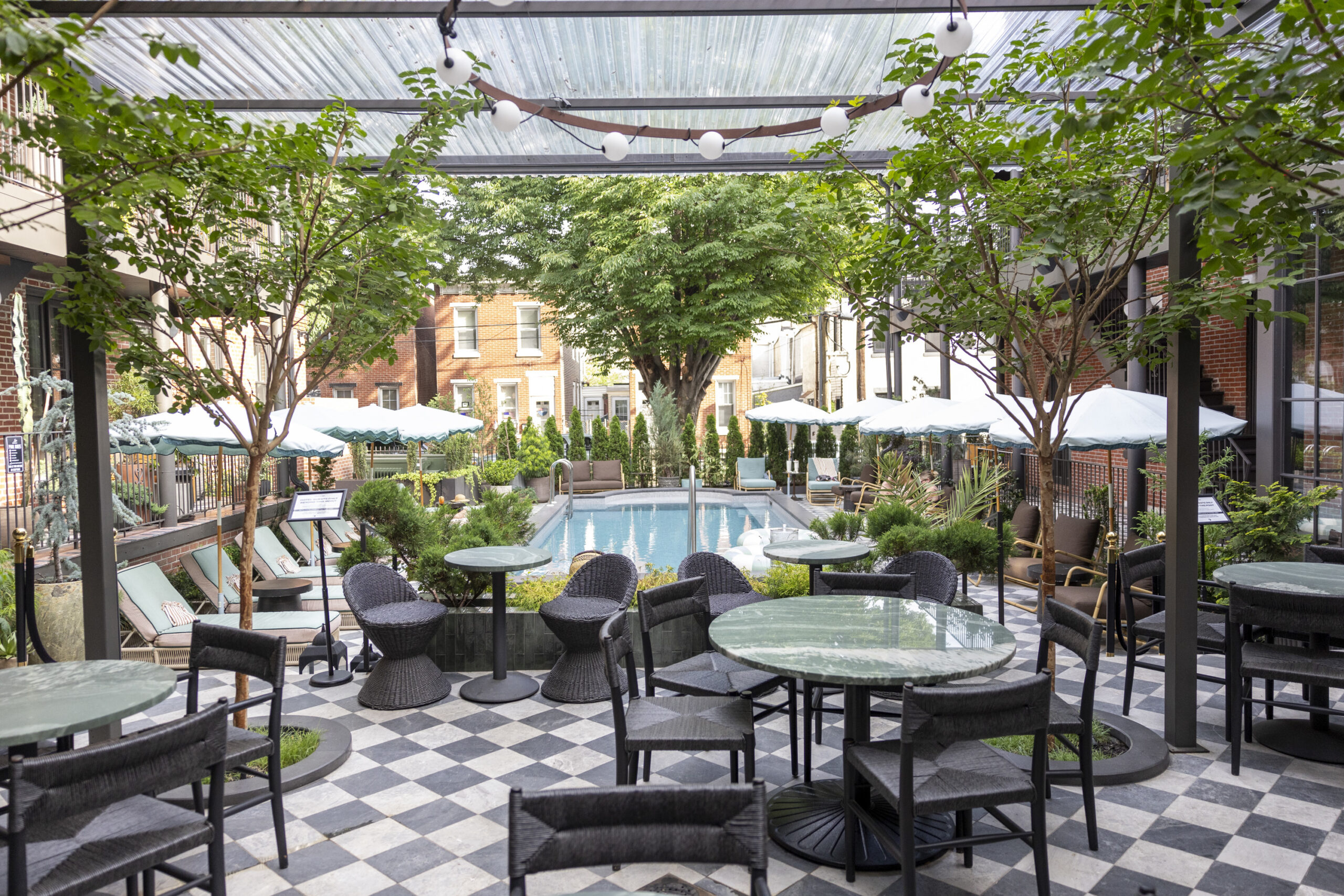
Outdoor seating at Caletta, which offers an aperitivo menu from 4 to 7 p.m. Wednesdays through Fridays.
Where to find aperitivo in Philly
Caletta
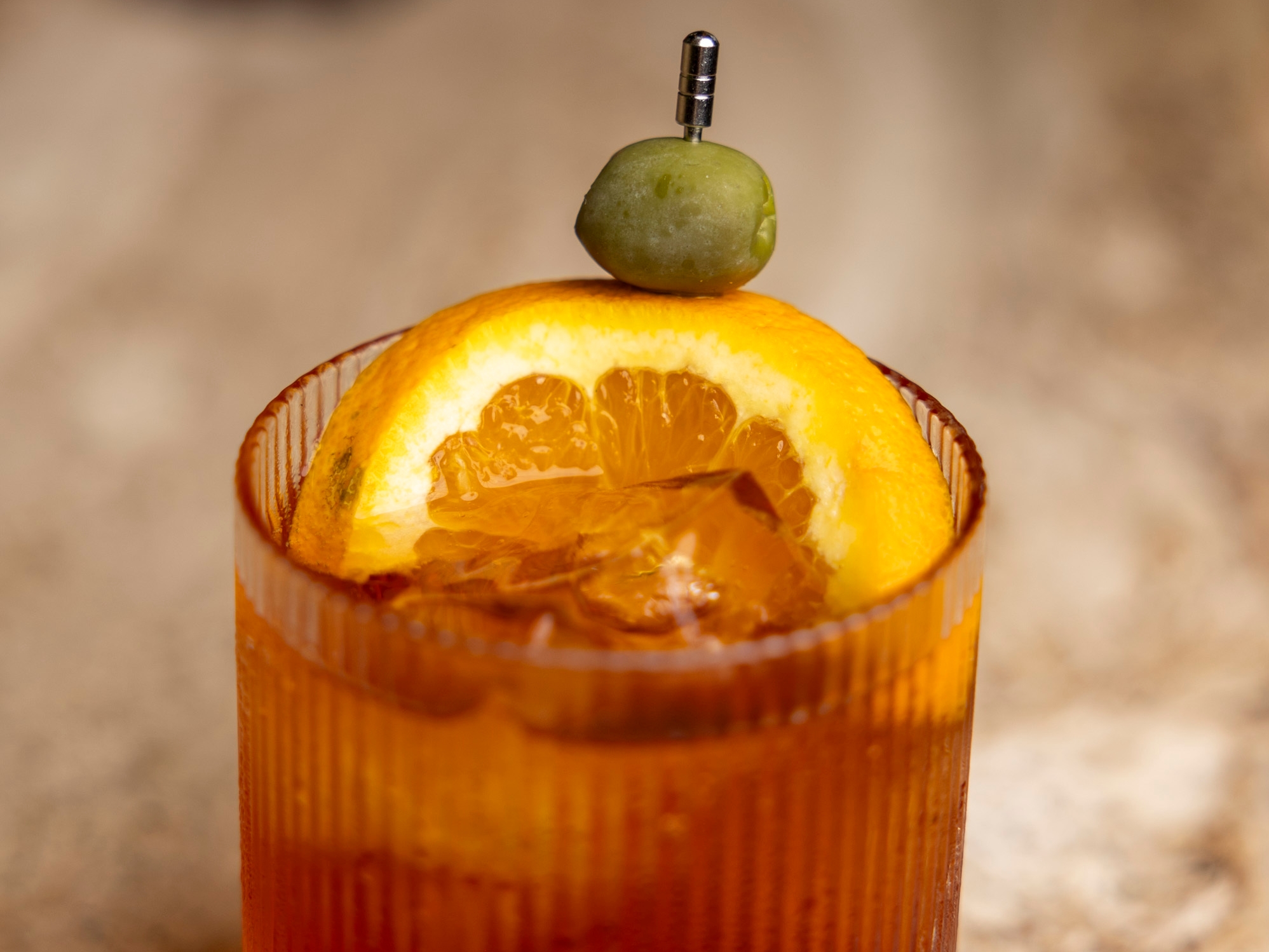
Caletta’s patio aperitivo (Wednesday through Friday from 4 to 7 p.m.) transports you from a quiet Fishtown block to the Mediterranean coastline. At this hotel bar, the cocktails include split-based, lower ABV drinks that use house-made liqueur blends and fortified wines, like the “Americano? Americano!,” which includes a mix of coffee liqueur, sweet vermouth, red bitters, orange, and olive. A bonus: Your first drink comes with a complimentary salty snack dish of mixed nuts, roasted peppers, or salami with house-made focaccia.
📍1401 E. Susquehanna Ave., Philadelphia, Pa. 19125, 📞267-682-8253 🌐 calettafishtown.com
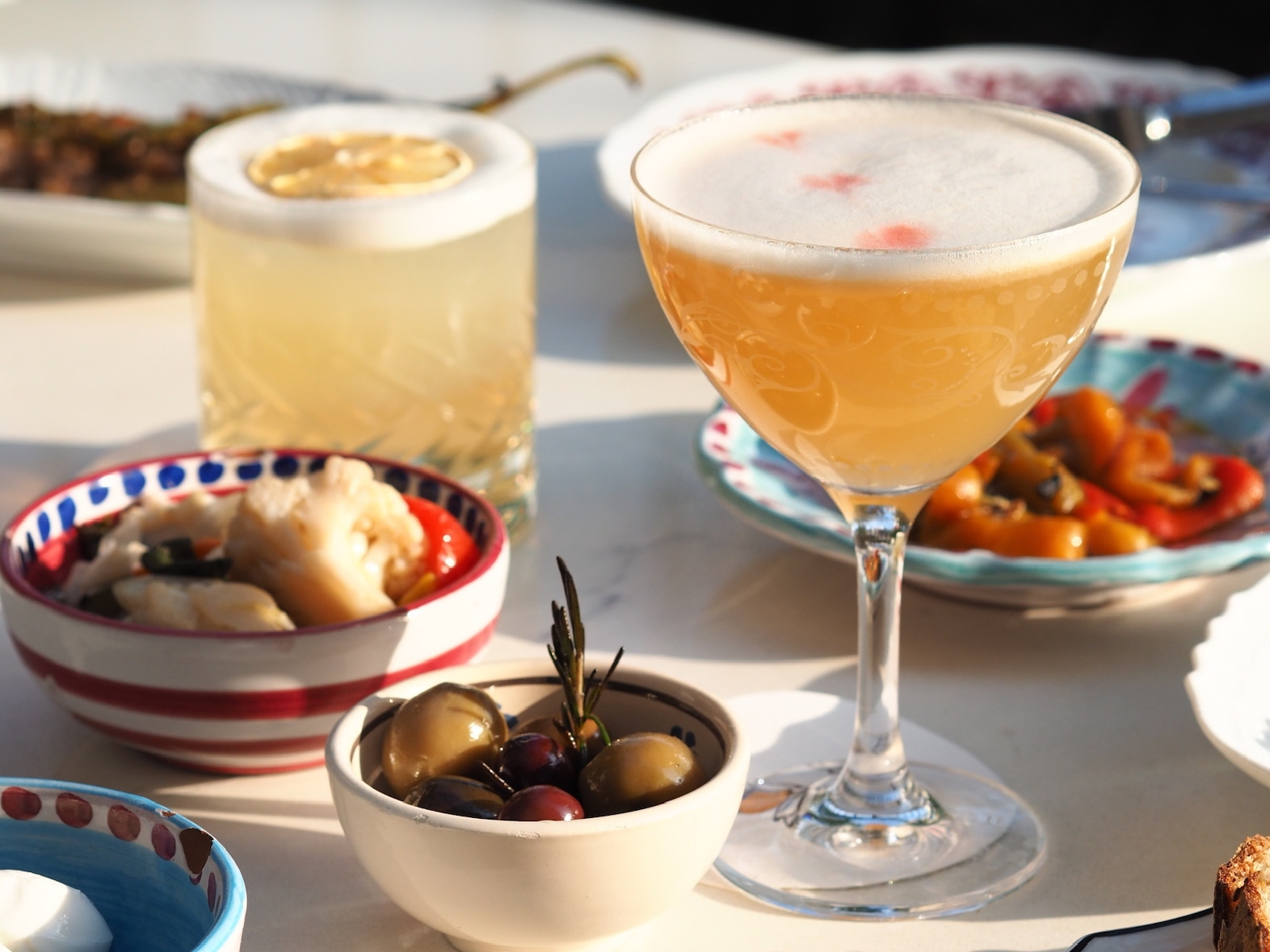
A selection of complimentary aperitivo snacks alongside two cocktails at Sorellina, 699 N. Broad St.
Sorellina
At owner Joe Cicala’s casual pizzeria in the Divine Lorraine, aperitivo is baked into the regular menu. Every table gets a few olives and tuna-stuffed peppers to snack on while deciding what to order for dinner. Italian-style bitter cocktails, imported beers, and amari anchor the bar program, though Cicala has noticed more customers ordering nonalcoholic bitter sodas — perhaps influenced by summer Euro trips, he noted.
Banshee’s dedicated aperitivo section features Spanish-style small plates of croquettas and patatas bravas, among others, plus drink specials from 5 to 6 p.m. daily. The Mediterranean-inspired bar in Graduate Hospital folds cocktails from Spain (Kalimotxo), France (Kir), and Italy (the not-discounted-but-still-excellent Spring Americano with strawberry vermouth and rhubarb aperitivo) into one concise menu. Our recommendation: Order everything, including a side of the house-made sourdough.
📍1600 South St., Philadelphia, Pa. 19146 📞 267-876-8346 🌐 bansheephl.com
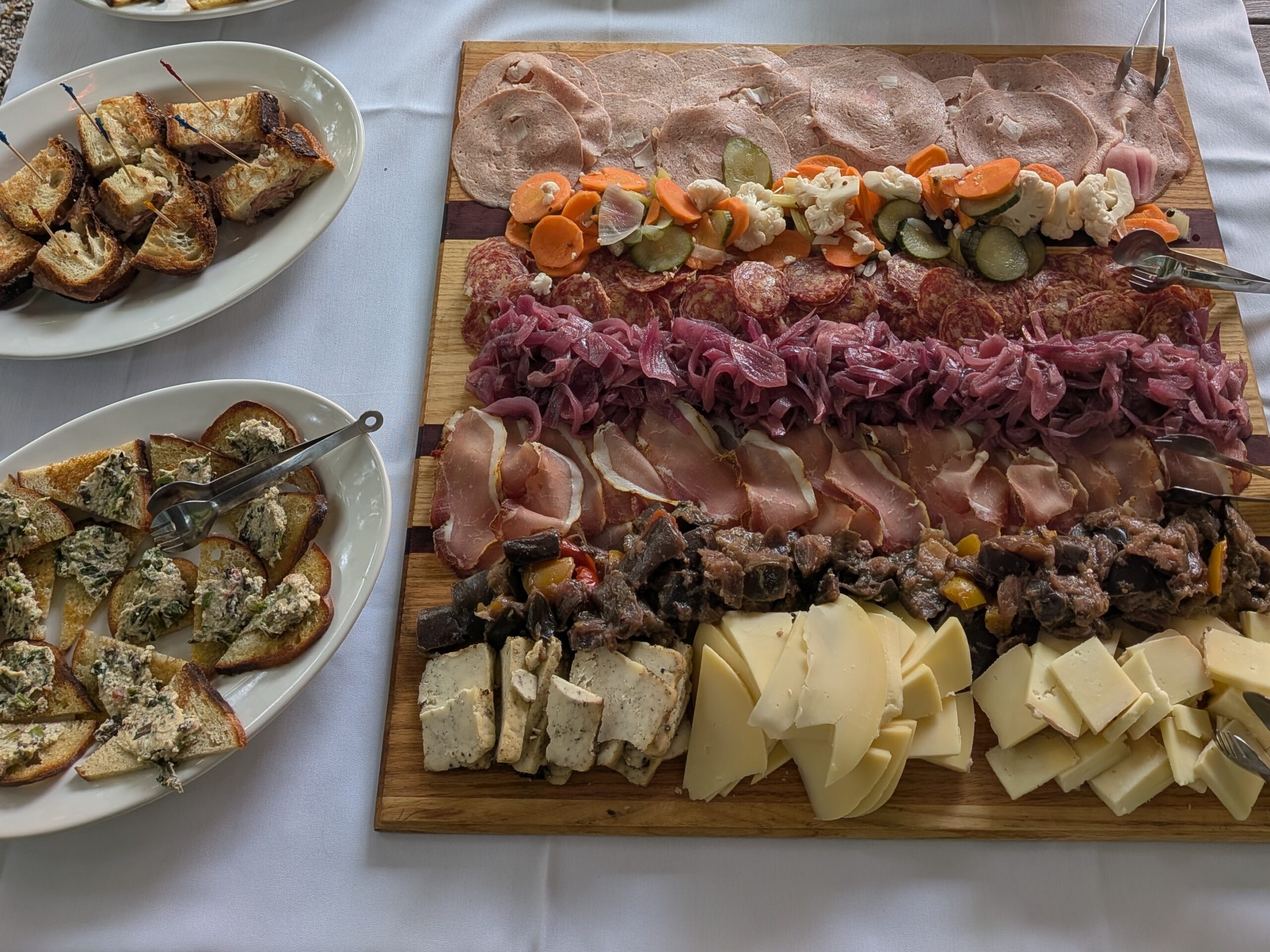
A spread of stuzzichini (bite-size appetizers from Northern Italy) at one of Le Virtú’s summertime aperitivo events.
Le Virtù
For a glimpse of more communal-style aperitivo, East Passyunk’s Le Virtù hosts one-off seasonal patio gatherings throughout the summer that draw from the culture of Abruzzo, Italy, where owner Francis Cratil-Cretarola is from. Programming — typically on a Wednesday, weekend afternoon, or early evening — is lightly curated with unlimited buffet-style stuzzichini (bite-sized northern Italian appetizers) for $35 and $14 wines by the glass in collaboration with a rotating mix of producers and importers. Follow @levirtuphila on Instagram for upcoming events.
This retail shop, tasting room, and cocktail bar adjacent to the Gayborhood lets you choose your aperitivo experience — order a drink and stay awhile or buy bottled-in-state products for at-home concoctions. Either way, you can’t go wrong with its “Slayborhood Spritz,” featuring Apologue persimmon liqueur, Kyro pink gin, prosecco, and club soda or a lemon herbaceous amaro with Fast Penny Spirits Americano Bianca.
Light bites and negroni cocktails from Irwin’s aperitivo menu, which runs Wednesday through Friday from 5 to 7 p.m.
Irwin’s
Nothing beats a rooftop hang — especially with classic Sicilian drinks and snacks. Irwin’s, just across the hall from Bok Bar, hosts aperitivo hour inside and out on the roof every Wednesday through Friday from 5 to 7 p.m. during the summer. Everything on the menu is $13 or less: Negroni cocktails, charcuterie and formaggi, anchovies, tomato pie, and eggplant caponata (a chef Michael Ferreri family recipe for an antipasto vegetable stew).
This James Beard Award-nominated South Philly bakery is home to a family-friendly aperitivo. On weekdays year-round (except Tuesdays) from 4 to 6 p.m. you can enjoy Philly-Italian bites, cocktails, beer, and wine inside or in the courtyard. Snacks highlight bread in various forms: “Mighty Munch” with baguette chips, candied nuts, and seasoned pretzel chips; focaccia; and scallop toast with fermented aji chili butter. There are easy-sippers with Pennsylvania-made spirits, too, like Char & Stave coffee Amaro and soda, a ready-to-drink sparkling wine spritz, and Mighty Bread’s own Italian semolina pilsner, Amici Del Pane.
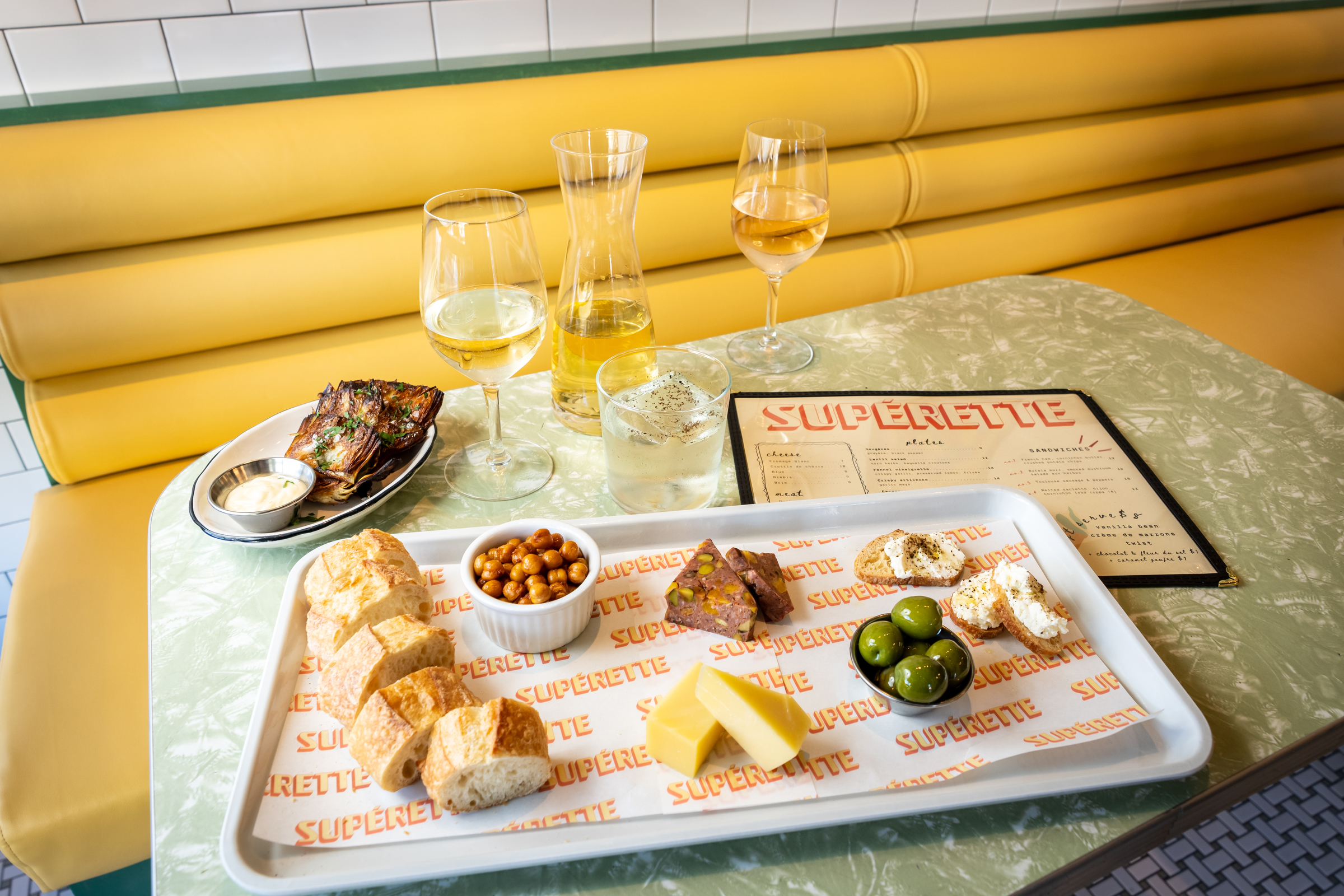
A snack board at Supérette, a restaurant, bottle shop, and wine bar on East Passyunk Avenue.
Supérette
Supérette captures that quintessential French-style apéro energy: Customers drift in and out the door, shopping for natural wine in the bottle shop or sipping highballs at the bar. The day-to-night vibes at Chloe Grigi’s épicerie and wine bar on East Passyunk Avenue invite spontaneous meetups fueled by olives, mini-chip-filled jambon-and-beurre sandwiches, and Frenchie disco fries (aka nachos with shredded cheese, local spam, cornichon relish, and crème fraîche). Better yet: Apéro is every weekday year-round from 3 to 6 p.m.
It’s the 250th anniversary of the signing of the Declaration of Independence in Philadelphia, and this week is packed with activities to celebrate. It’s also the 10th anniversary of another historic event: The 2016 frosé — or frozen rosé — frenzy that kicked off when New York City’s Bar Primi put the drink on their cocktail menu and nearly broke the internet.
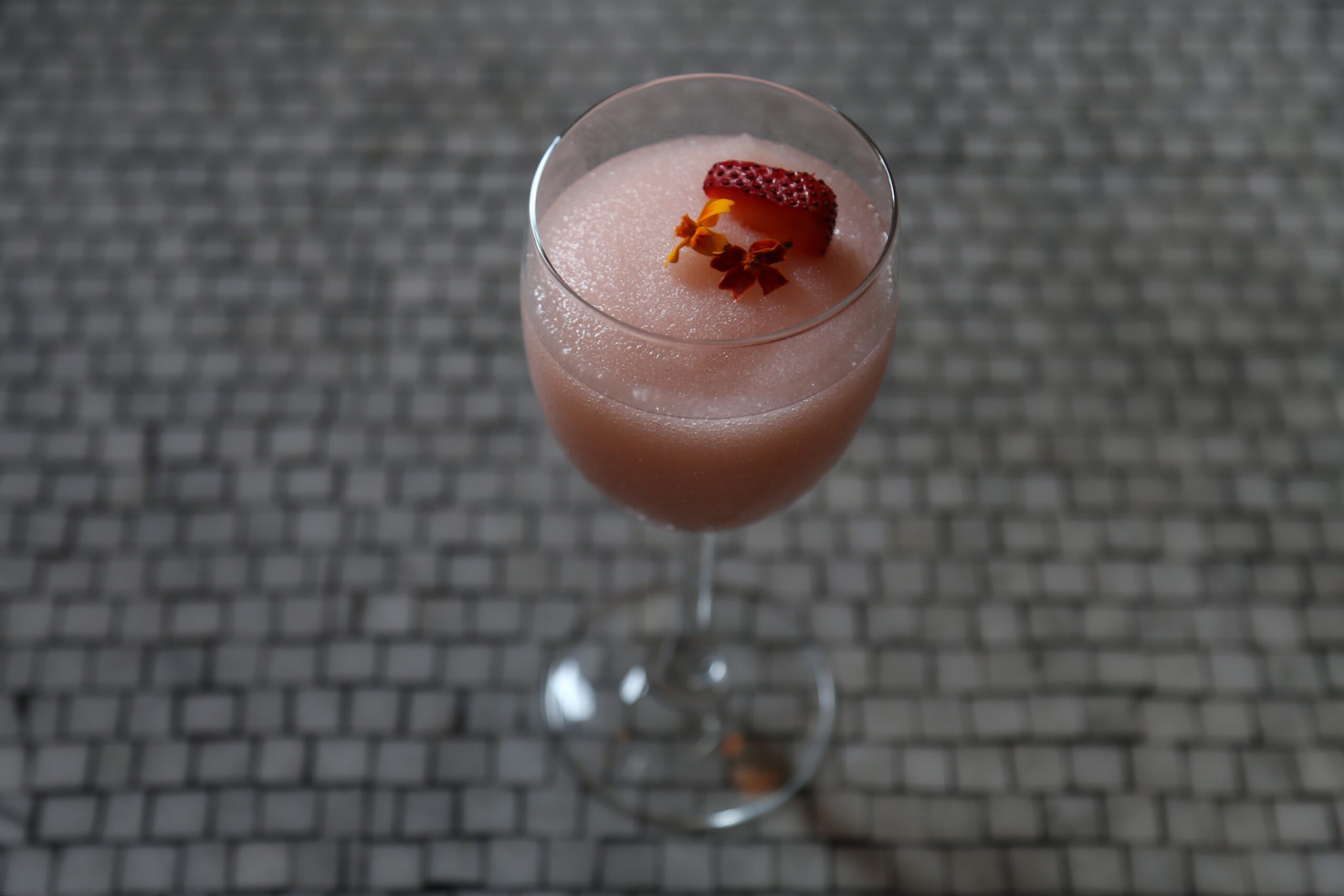
Concocted in a slushie machine, the eye-catching frozen treat became an instant social media sensation, leading Bon Appétit magazine to publish a variation on the recipe that summer that topped their charts for months on end. Since July 4th weekend looks like it will be a scorcher, now is the perfect time to make frosé at home to celebrate both of these important contributions to the pursuit of happiness.
Frosé at Parc.
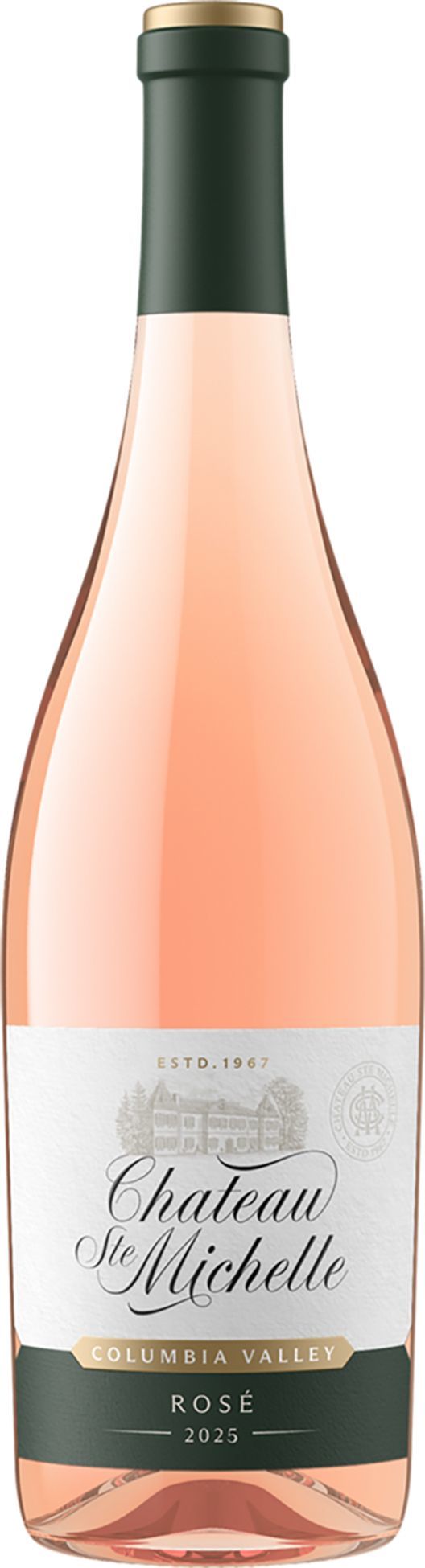
Frosé is not the place for pricy rosés, so save the pale, understated beauties of Provence in the south of France to be enjoyed on their own. The frozen cocktail needs wines with bolder flavors and deeper colors to overcome the dilution and serving temperature, so opt for one with a color that pops on the shelf, like this wine from Washington’s Columbia Valley. There, darker grape varieties like syrah and cabernet sauvignon dominate the blend.
The simplest way to frosé at home is the smoothie method: Fill your blender with frozen strawberries or watermelon and pour in enough rosé wine to cover the fruit and blend, adding sugar to taste as needed. For a more sheer and polished texture, make the drink with ice in place of frozen fruit and stick to clear ingredients. You may also need to spike with vodka and sweeten with a fruit liqueur to overcome the dilution.
The original Bon Appétit recipe explains how to dissolve sugar in water with strawberries and lemon juice on the stovetop to make a simple strawberry syrup suitable for flavoring your frosé and deepening its color, which yields a refined and faithful variant on the Bar Primi classic. If you like your wines pure, undiluted, and dry, and you just happen to own an ice cream maker, your method is much easier. Pour this bottle in and churn about 20 minutes to get the perfect slushie machine texture you know and love.
Chateau Ste Michelle Rosé
Chateau Ste. Michelle Rosé
Columbia Valley, Wash.; 12.5% ABV
PLCB Item #98215 — $10.99 through July 5 (regularly $13.99)
Also available at: Moorestown Super Buy Rite in Moorestown ($10.99; moorestownbuyrite.com) and Hopewell Super Buy Rite in Pennington ($10.99; hopewellbuyrite.com).
If you were to distill the energy of a South Philly summer into a cocktail, it might look like water ice shaken with vodka in a martini glass, garnished with a pretzel stick. It would taste like the syrupy-sweet melted ice left in the cup and be crushable enough to knock back on a hot afternoon.
That’s the water ice martini, a cocktail invented in the early 2000s at one of the neighborhood’s most famous red sauce joints. The drink was a hidden gem for decades, but has found new life this summer as copycats and riffs emerge at bars around Philly and down the Shore that are looking to stand out in a sea of Hugo spritzes, espresso ‘tinis, and soft serve margaritas.
“Anyone that’s grown up in South Philadelphia grew up on water ice with pretzel sticks and pumpkin seeds. Its been a thing in my family for three generations,” said Vera Masi, the sales manager at Popi’s Restaurant in Packer Park, where the cocktail recently went viral. “Pairing that with a martini is a guaranteed hit.”
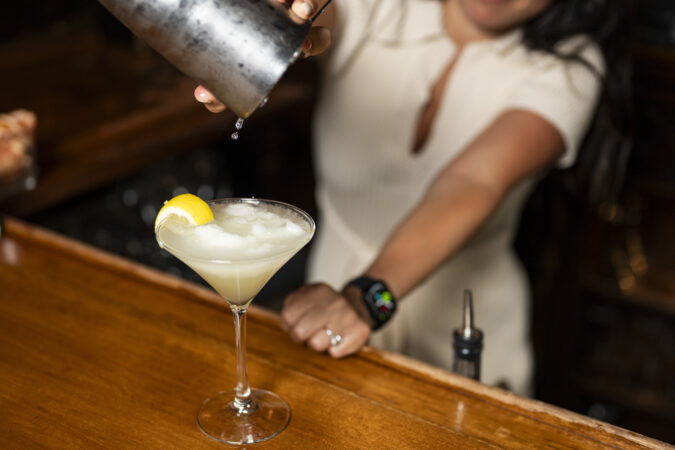
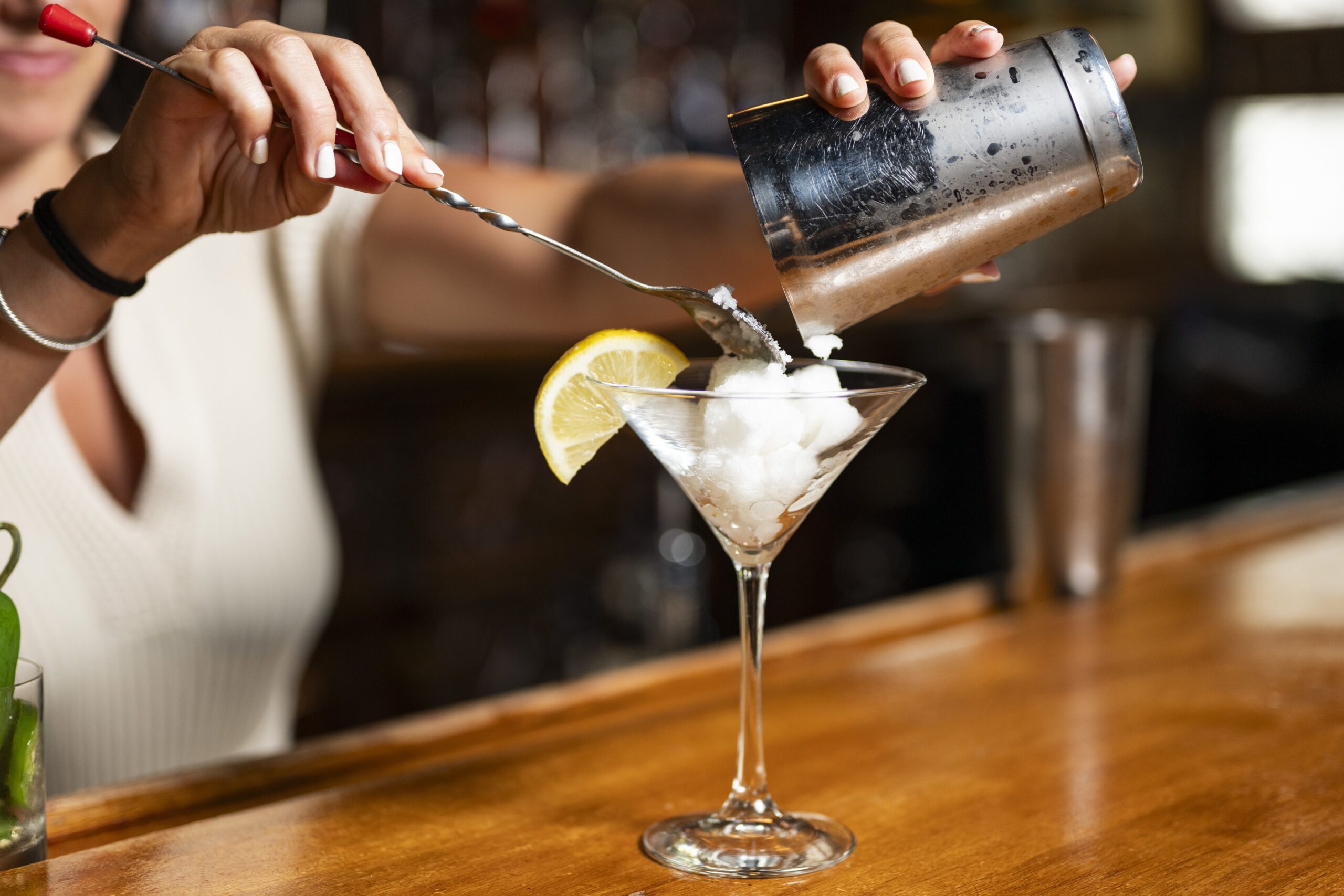
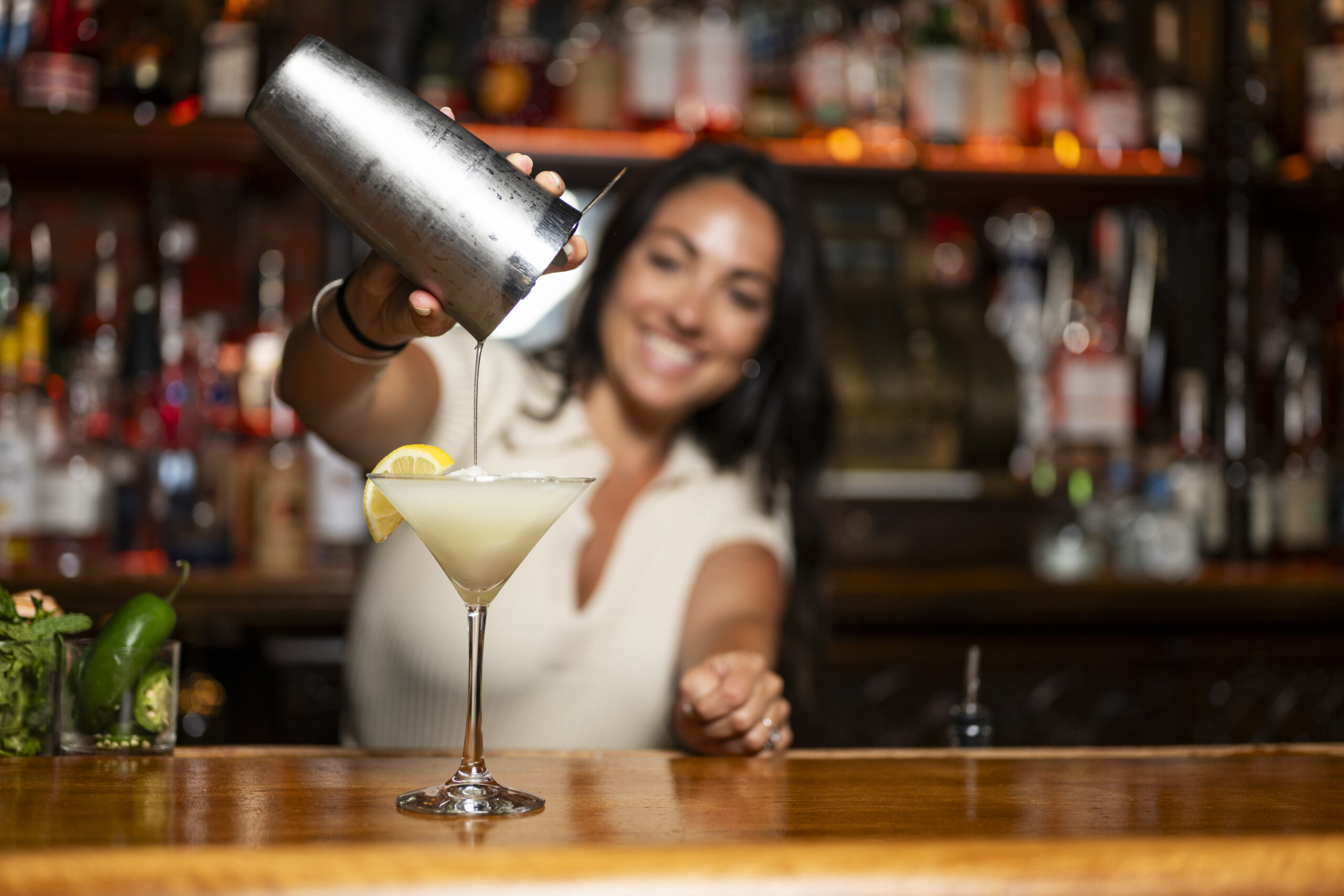
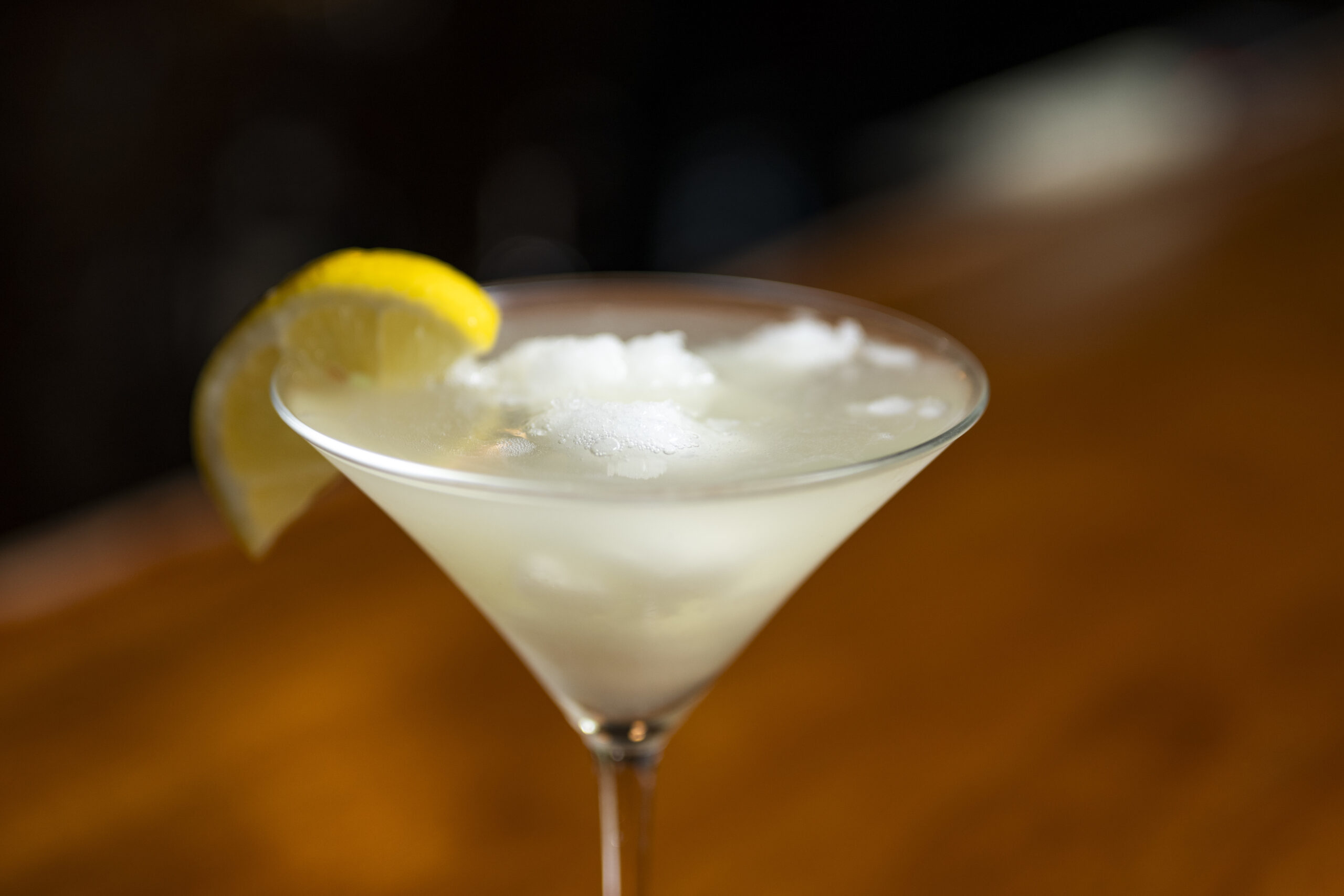
The first water ice martini on record was poured in 2002 at Saloon by Anthony Cardullo, the third-generation John’s Water Ice owner who was then just a bartender. Called the Iceberg, the drink involves adding a scoop of John’s lemon water ice to a shaker with limoncello and Ketel One Citreon vodka. It then gets poured over a second scoop of lemon water ice in a glass.
Gigi Bello, bar manager at Saloon, makes an Iceberg martini using lemon water from John’s. The cocktail has remained a bestseller since they started serving it in 2002.
It’s the restaurant’s most enduring cocktail hit, according to manager Frankie Santore. Saloon sells at least 150 Icebergs per week in the summer, he said, making it their bestseller. To keep up, Cardullo has to drop off gallons of fresh made water ice each week.
Other versions have cycled through Saloon — a pineapple ice painkiller and a melon ice midori sour, to name a few— but the Iceberg is the only one that has lasted, most recently inspiring a dupe that uses Cardullo’s recipe at the Ventnor Social in New Jersey. The restaurant has “never for a second” thought to use anything other than John’s water ice for its cocktails.
“It’s all fresh fruit,” Santore said. “Anthony’s squeezing the lemons himself.”
Gigi Bello, bar manager at Saloon, pours an Iceberg martini.
Popi’s started serving their own versions of the water ice martini last summer after getting the idea from Rowhome Magazine editors Dorette Jackson and Dawn Rhodes. The 33-year-old Italian restaurant sources its water ice from Pop’s for two reasons, owner Gina Rucci said: It’s down the street, and “our names went together.”
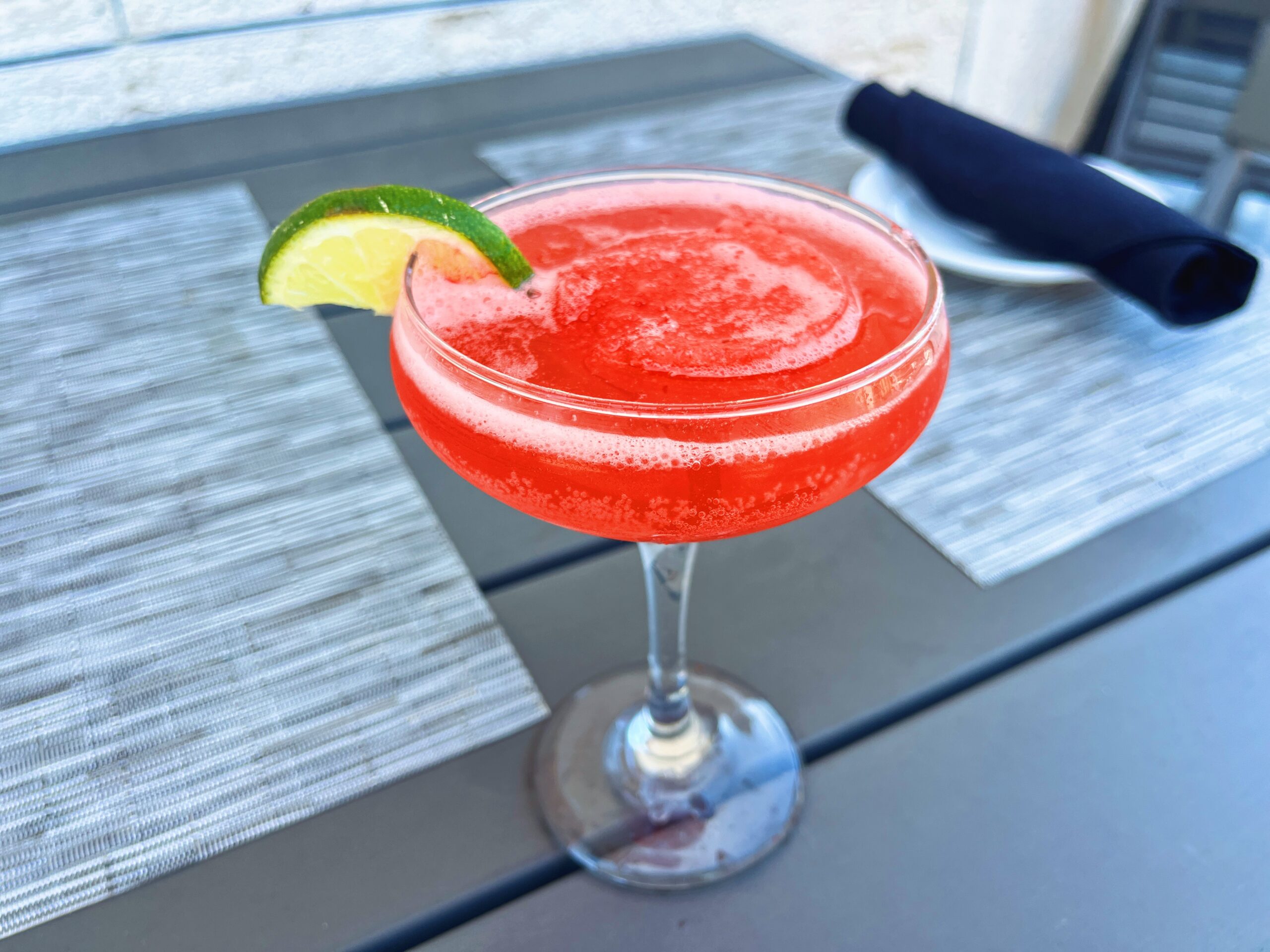
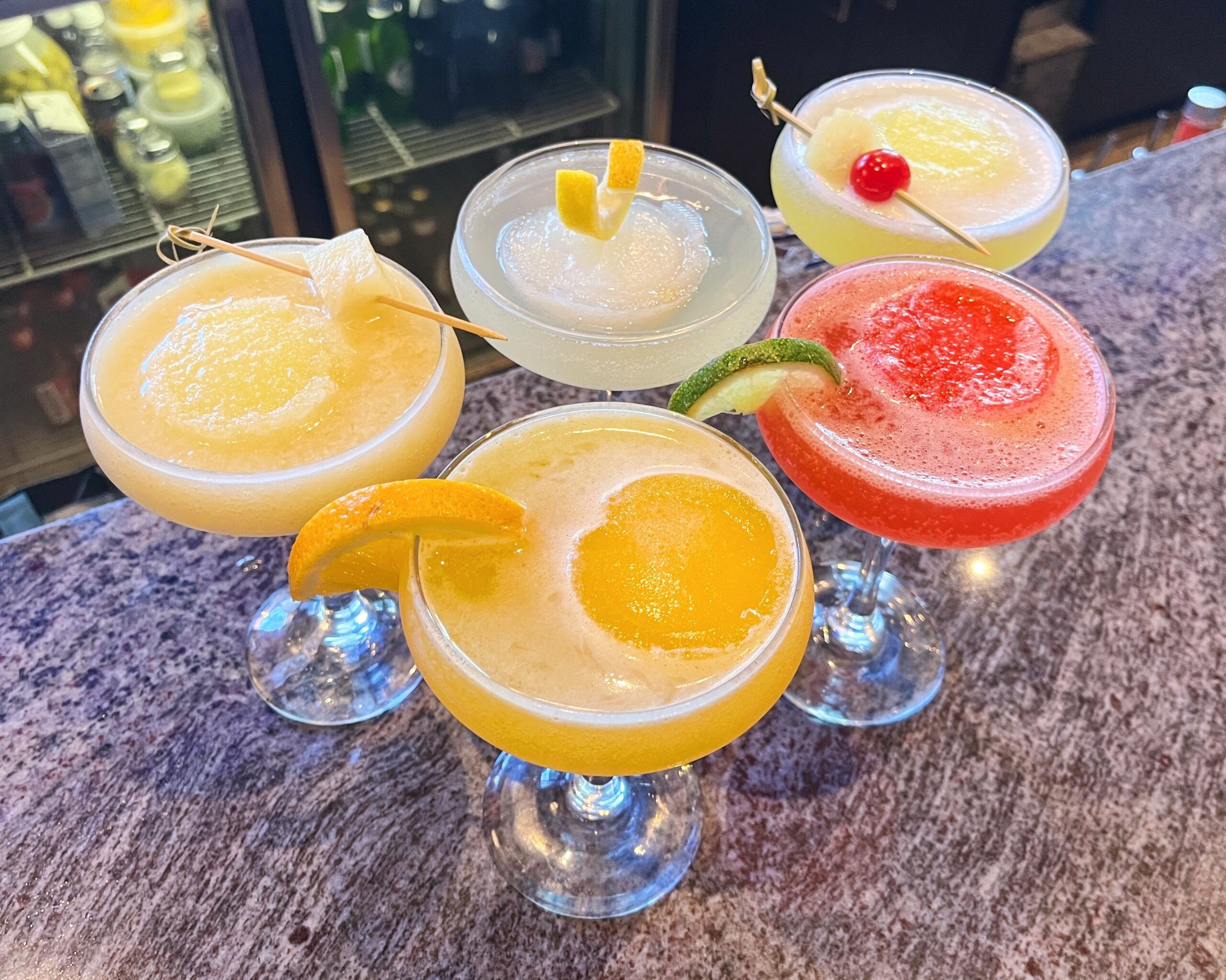
Popi’s has its own version of a lemon ice martini (aptly called the Limoncellotini), but its other offerings pull from the colors of the rainbow, like a neon orange mango water ice martini called the Gritty and a vibrant red strawberry water ice daiquiri. The restaurant used to sell about 20 a day last summer, said bar manager Laura Kreschollek. Now, they’re averaging 50.
“People were coming in just for these,” said Masi. “We kept running out of water ice and were sneaking out to Pop’s in the middle of the day.”
A strawberry daiquiri made with Pop’s Homemade Italian Ice at Popi’s Restaurant, 3120 S. 20th St.
Naturally, the evolution would continue with spiked gelati. Philly could get its first in the early fall, when James Beard Award-winning South Jersey bartender Danny Childs aims to open his bar Field Day in Northern Liberties.
Childs told The Inquirer he plans to serve the treat year round using his signature Slow Drinks approach. While the vanilla soft serve will come from 1-900-ICE-CREAM, Childs said, the boozy water ice will be made from scratch with local and foraged produce that change with the season. He’s envisioning a lineup of cherry, blueberry, and pawpaw (a fruit native to the Mid-Atlantic that tastes like a mango) to start.
The cocktail-dessert hybrid was driven by a mix of nostalgia and peer pressure. Childs wanted a nod to his childhood in Delaware County, where he grew up using a soft pretzel as a spoon to scoop up water ice. He also wanted to one-up the alcohol-infused ice creams already on the market.
“I was like, ‘Someone is going to do spiked gelati before us,’” Childs said. ”We have to hurry.”
The Iceberg martini from Saloon, which was created by current John’s Water Ice owner Anthony Cardullo.
Here are four places where you can find boozy water ice in all its forms, from vodka-infused scoops to martinis.
Where to find boozy water ice in Philly
Saloon
This classic Italian joint in Bella Vista has been serving its signature $18 Iceberg martini since 2002, when current John’s Water Ice owner Anthony Cardullo invented it while working at the restaurant’s bar. It does indeed look like icebergs disintegrating into the Arctic as it melts, but the drink goes down easy — sweet, icy, and citrusy without tasting artificial. Also be on the lookout for Cardullo’s nightly water ice cocktail specials.
A lineup of water ice martinis made with Pop’s homemade Italian ice at Popi’s Restaurant. Clockwise from left: The Pineapple Pizzaz, Limoncellotini, piña colada, strawberry daiquiri, and the Gritty.
Popi’s Restaurant
At Popi’s, the pours are heavy and the water ice is extra sweet. This 33-year-old Italian restaurant near the sports complex in Packer Park gained a new reputation in 2025 when it started serving brightly colored cocktails sweetened with Pop’s homemade Italian ice. Normally $16 and $20 during the World Cup, the cocktails run the gamut from the Gritty (a vodka martini with orange juice and mango water ice) and Pineapple Pizzaz (a pineapple vodka martini with pineapple water ice) to a strawberry daiquiri with a disk of — you guessed it — strawberry water ice floating in the middle. If you’re not susceptible to a sugar rush, it’s easy to have several in one sitting.
Best known for its excellent vegan wings and cheesesteaks, Triangle Tavern also serves scratch-made boozy water ice year round. Flavors rotate seasonally and range from mango and pomegranate in the summer to pumpkin spice in the fall and crisp peppermint in the winter. Spun in a slushie machine with a handle of vodka, the $12 cocktails are served in a pint glass garnished with a hard pretzel rod for an extra dose of South Philly flair.
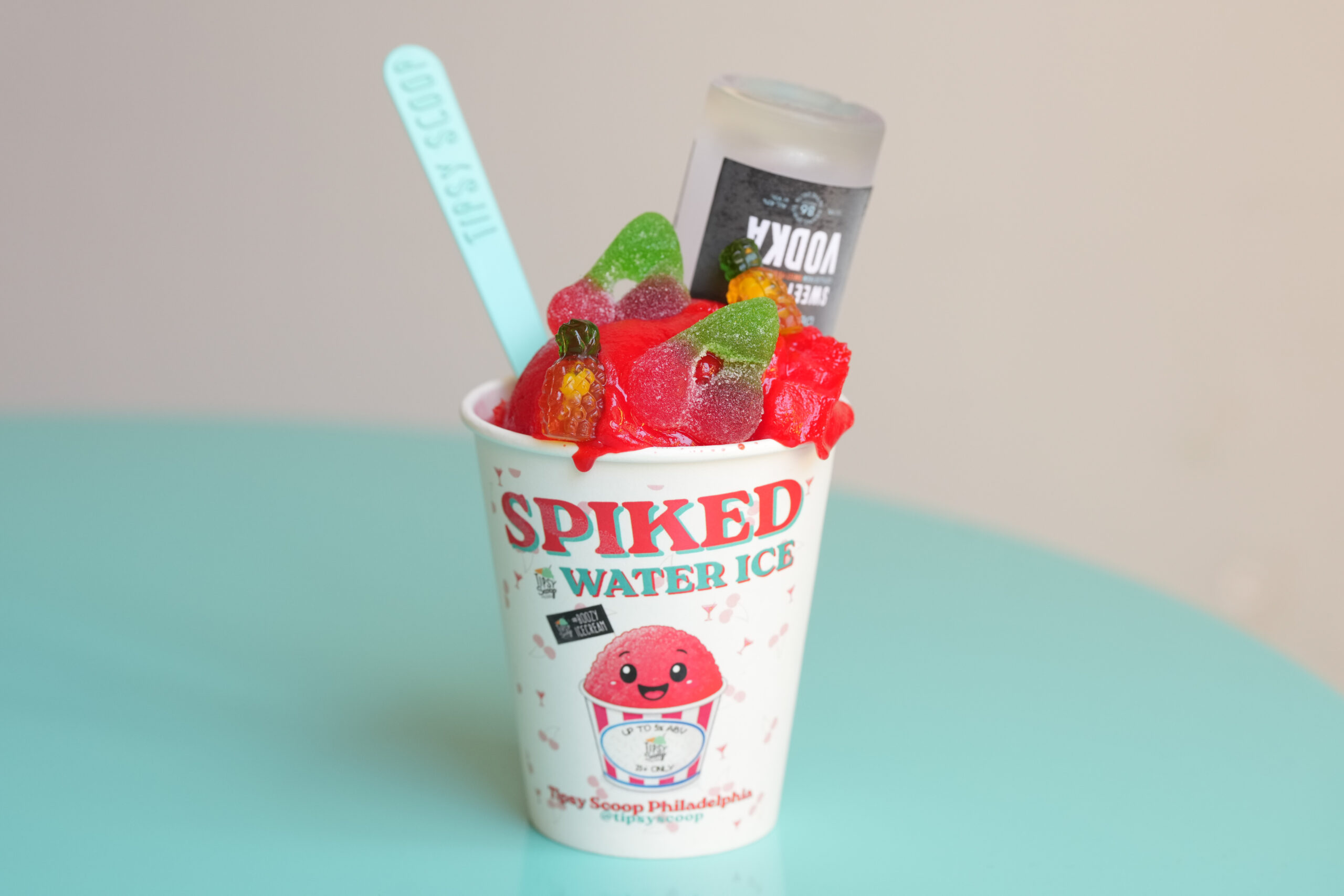
The Philly Phreeze sundae at Tipsy Scoop in Rittenhouse Square, which is comprised of vodka-infused cherry water ice topped with gummy candies.
Tipsy Scoop
This New York City-based ice cream chain has been infusing ice cream and sorbet with alcohol since 2013. After opening its first Philly outpost inside the Rittenhouse Square BOTLD location, the brand added a cherry water ice spiked with vodka to its menu. Our suggestion: Order the $14 sundae version — which comes topped with chewy cherry and pineapple gummies in a novelty cup — and consider springing for the chilled vodka shooter. It’s entirely too much in the best way possible, and the water ice is delightful despite being made by a New Yorker. Red enough to stain your tongue, it tastes like a handful of maraschino cherries.
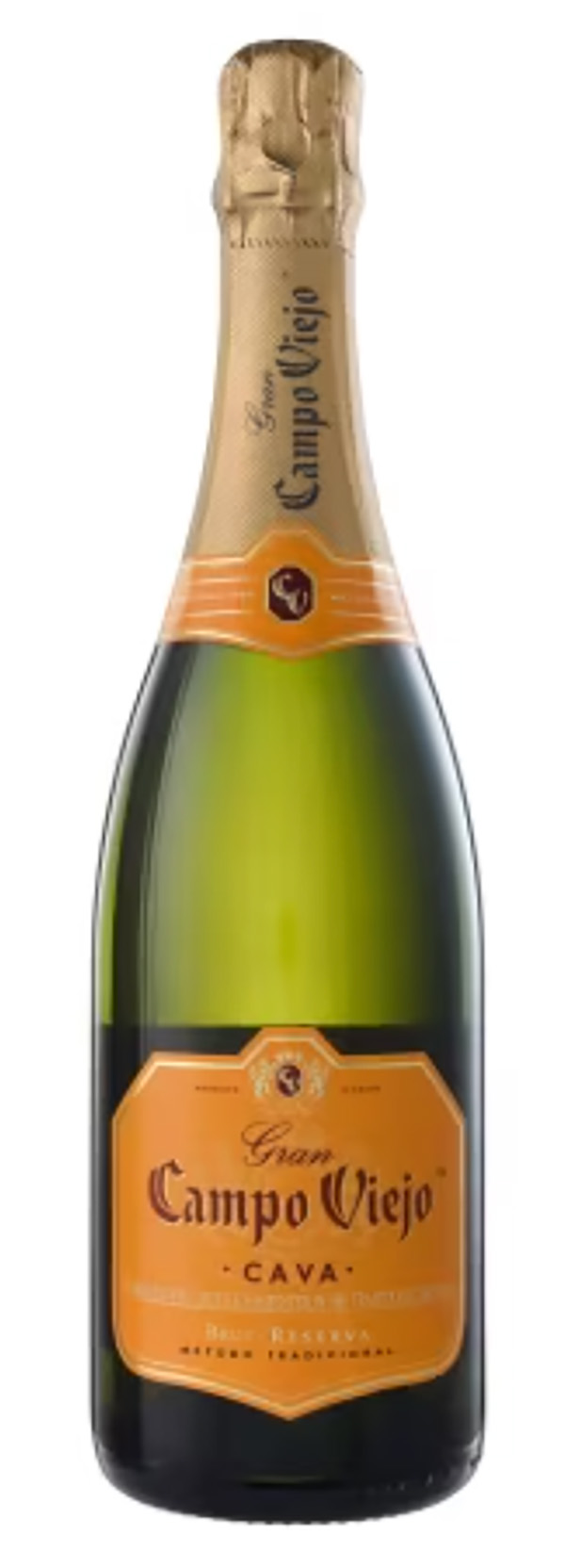
Sparkling wines are having a moment, and it’s hard to beat Spain in this category when it comes to great value. The country may be most commonly associated with red wine, but sparkling, white, and even rosé wines from Spain are all seeing significant growth in total exports. While there are other sparkling wine appellations in Spain, the vast majority — including this example — are labeled as cava.
Where most wine appellations take their name from a place — think Champagne from France’s Champagne region — cava is different. The term means “cave” or “cellar,” referring to how it is made. Cava wines must, by law, follow the same traditional method of production as Champagne, which involves a second fermentation that takes place inside each bottle. The mechanism for adding the bubbles and letting the wine patiently age in a cellar is also central to its quality.
Cava’s appellation was first conceived as a means for wineries across Spain to be able to sell a high-quality sparkling wine regardless of their region. In practice, however, most cava is grown and produced in northeastern Catalonia, near Barcelona, using native Spanish grapes such as macabeo, parellada, and xarel-lo. That’s the case for this wine as well, which is labeled under the name of a Rioja-based brand better known for their reds. In Spain, it’s not uncommon for large wineries in one region to extend their range by sourcing wines from partners elsewhere.
Cava wines can be found at every level of ambition and price, from the cheap and cheerful to the ambitious and gastronomic. This wine falls at the simpler end of the continuum (as the price might suggest), with a delicate mouthfeel and refreshing flavors of apple, lemon, and blanched almond. It’s an ideal choice for relaxed day-drinking — mimosas highly recommended.
Gran Campo Viejo Cava Brut Reserva
Gran Campo Viejo Cava Brut Reserva
Spain; 11.5% ABV
PLCB Item #6563 — $10.49 through July 5 (regularly $13.49)
A non-alcoholic Philly spirits brand is finding early success by doing everything — from blending to bottling — by hand.
Cult of Trees is a new line of alcohol-free aperitifs produced at Maken Studios in Kensington. Inside the sunny production space, founder Meredith Sheehy spends hours each week distilling homemade herb blends into a line of zero-proof cocktails that taste like fizzy spritzes.
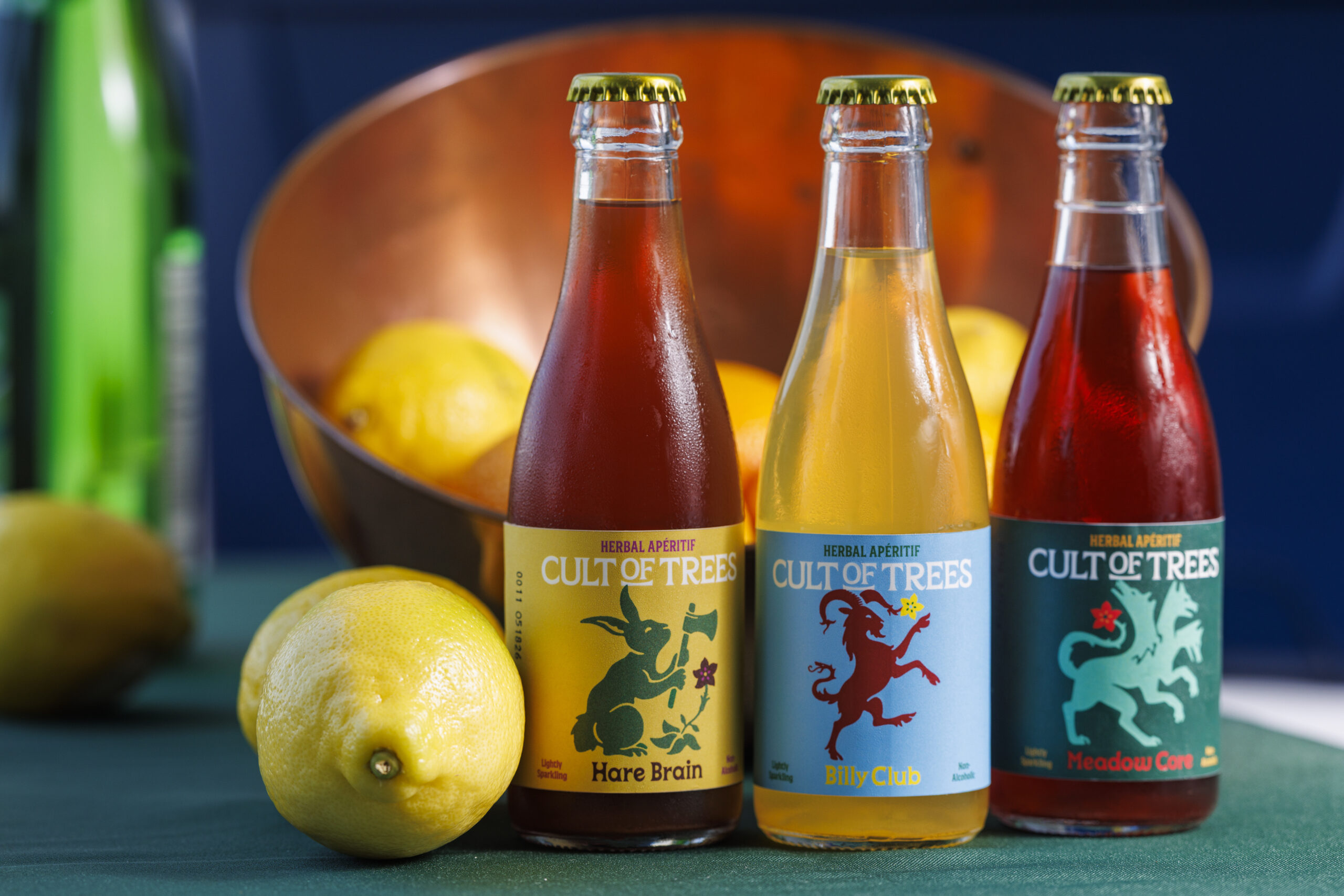
The brand’s three flavors include Hare Brain, which is akin to a cola-spiked negroni; Meadow Core, a citrusy and floral blend of red fruits; and Billy Goat, which tastes like rolling in a field of wildflowers thanks to a mixture of herbs, honey, and elderflower. Since sales began in January, Cult of Trees has been selling well at local grocery stores and bars, such as Solar Myth and Enswell, where the drinks are served straight or floated with sparkling water or cold brew.
For Sheehy, who moved to Philly in 2022, the city is as much an inspiration for the brand as the ingredients themselves. After closing her Brooklyn-based Mezcal bar La Loba Cantina due to the pandemic, Sheehy began bartending at Philadelphia Distilling. Philly, she said, had a refreshing scene.
“People will answer questions and pour tastes of curiosities on their back bars, with genuine excitement to share,” said Sheehy. “It’s a beautifully welcoming culture here.”
From left: Hare Brain, Billy Club, and Meadow Core, Cult of Trees’s three flavors of non-alcoholic aperitifs. Bottles are sold at Riverwards Produce in Old City and Herman’s Coffee in Pennsport.
Fascinated by distilling alcohol, yet increasingly conscious of her own dwindling consumption, Sheehy was inspired by the growing sober curious movement to start her own non-alcoholic cocktail brand.
Sheehy wanted to create something that wasn’t just about emulating the experience of drinking alcohol. Abstaining “shouldn’t mean that you need to take away flavor or an interesting story,” she said.
At Cult of Trees, each aperitif is made with ingredients sourced from Pennsylvania farms and requires a multiday routine of distillation, carbonation, and bottling. It’s an analog process that contrasts with that of large scale brands, which Sheehy said often rely on commercial flavor extracts — as opposed to dried botanicals or herbs — to quicken production and lower costs.
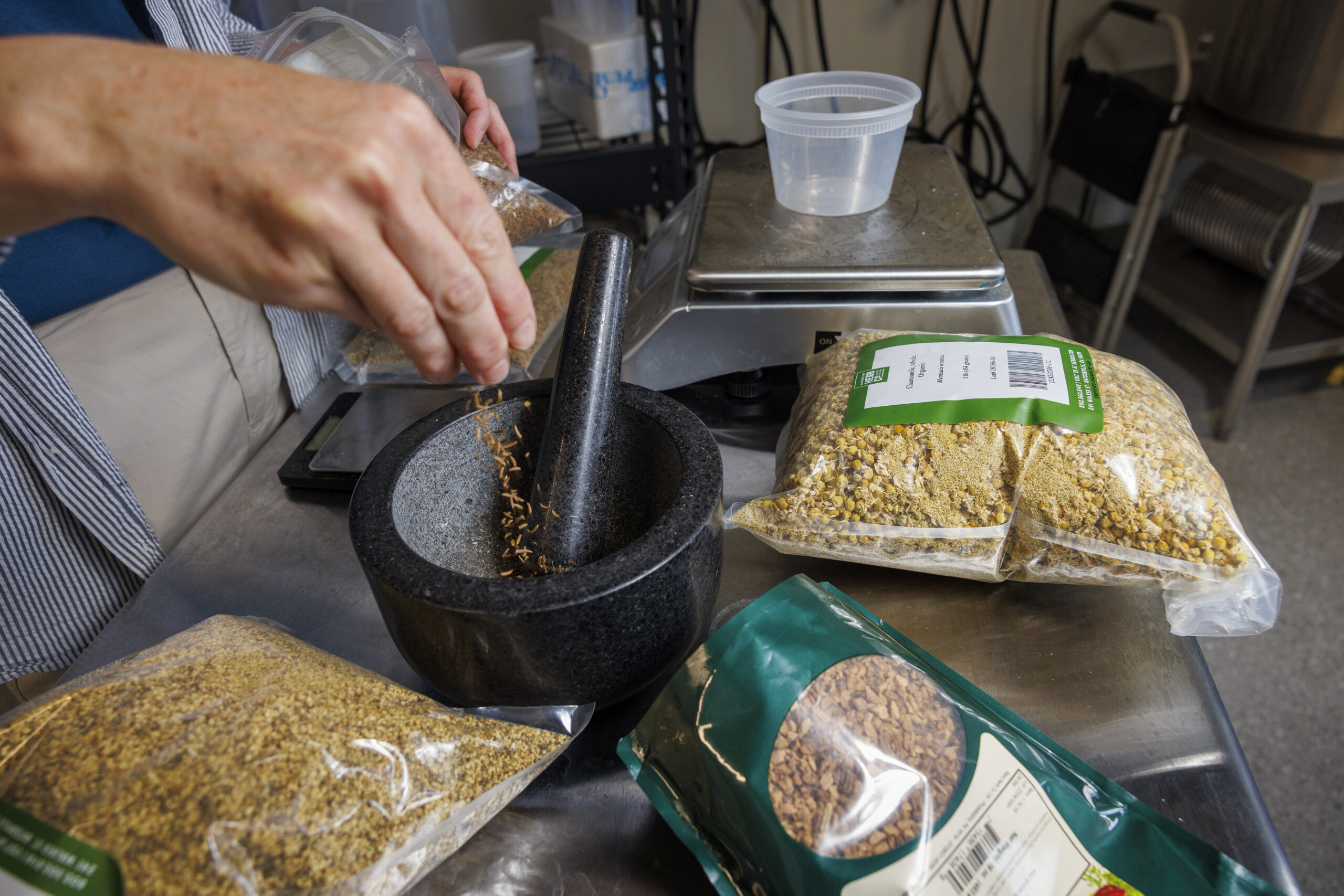
Meredith Sheehy, owner of Cult of Trees, sprinkles caraway seed into a mortar and pestle to make one of the herb blends for her line of zero-proof spirits.
Getting started, then getting set back
While at Philadelphia Distilling, Sheehy became close with Jack Falkenbach, the expert distiller and legendary Philly bartender that died last year at 44. Falkenbach, she said, was always “willing to explain specialized process details at the distillery. We both liked deep-diving on things like acid phosphate,” she said. “I deeply trusted his style of drink making and technical know-how.”
Falkenbach was among Cult of Tree’s earliest supporters, Sheehy said, and one of the first people she involved in building the company. Around this time last year, the pair was making test batches together; Falkenbach was focused on nailing the carbonation as Sheehy refined the packaging.
Then the first real workday arrived. Falkenbach did not.
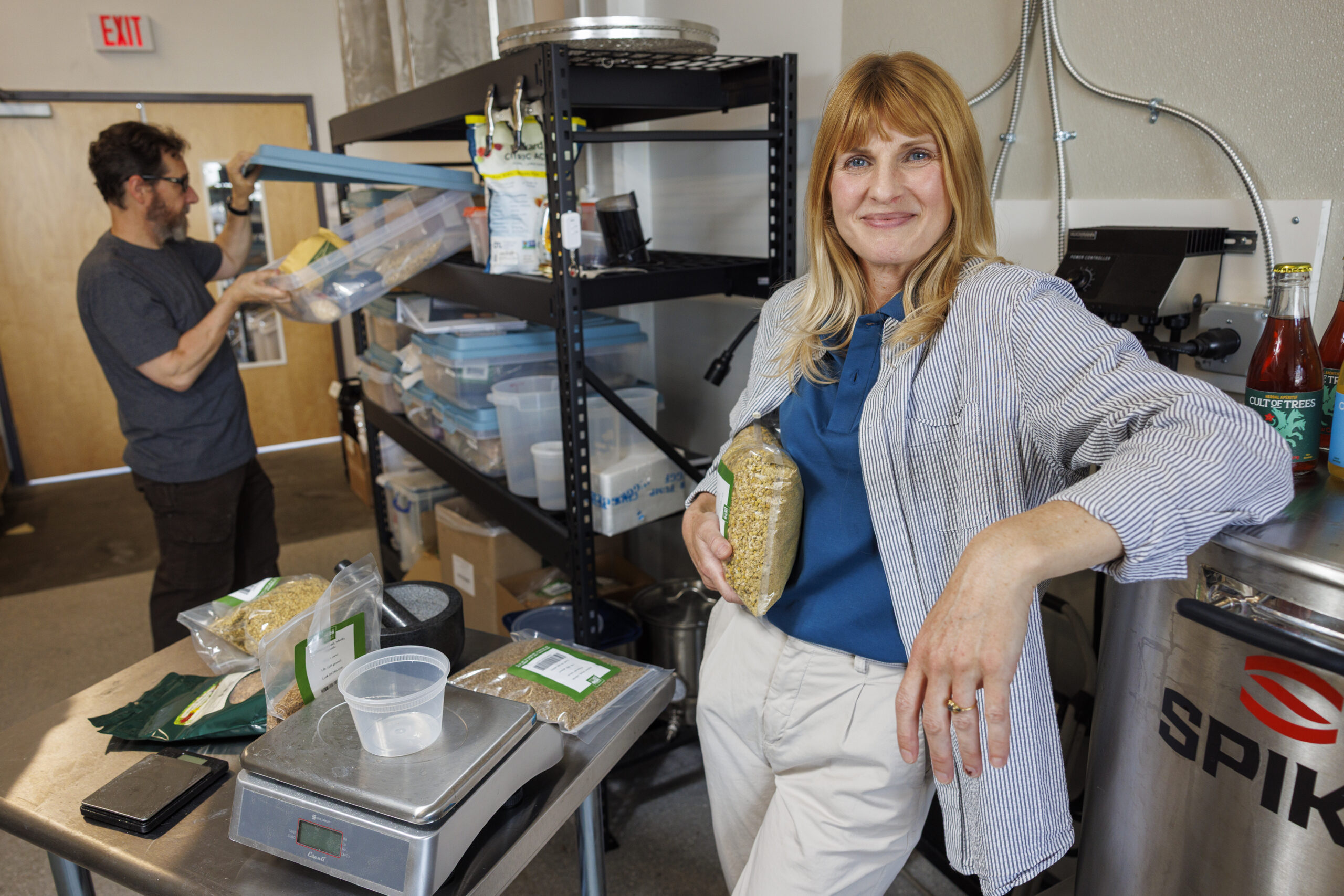
Meredith Sheehy, owner of Cult of Trees, poses for a photo while preparing one of the herb bases for her line of zero-proof spirts, which is based at Maken Studios in Kensington.
His passing, Sheehy said, was doubly “heartbreaking,” but launching Cult of Trees left little time to grieve. “I did what all business owners have to do,” she said. “You recover and pivot, or you don’t and you lose the idea.”
Sheehy went on to launch the business with a single employee: Gordon Grubb, a veteran brewer who had been put out of work by Iron Hill’s sudden closures. Together, they make each batch of aperitifs.
Hand-bottled and hand-carbonated
Zero-proof spirits still require distillation to get the right flavors and mouthfeel, which is why many come with a higher price tag.
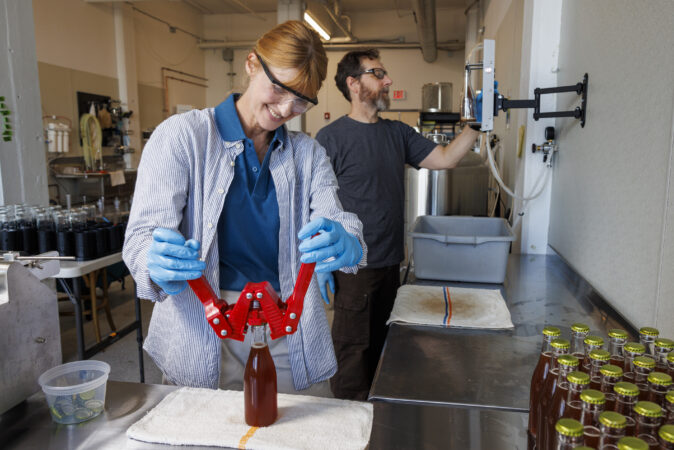
Each batch of aperitifs takes at least three days to produce, Sheehy said, and begins with her macerating and boiling the original herb blends that serve as the base for each beverage. Distillation is the longest part of the make process and can take upwards of several hours. After, Sheehy andGrubb carbonate and bottle each beverage by hand.
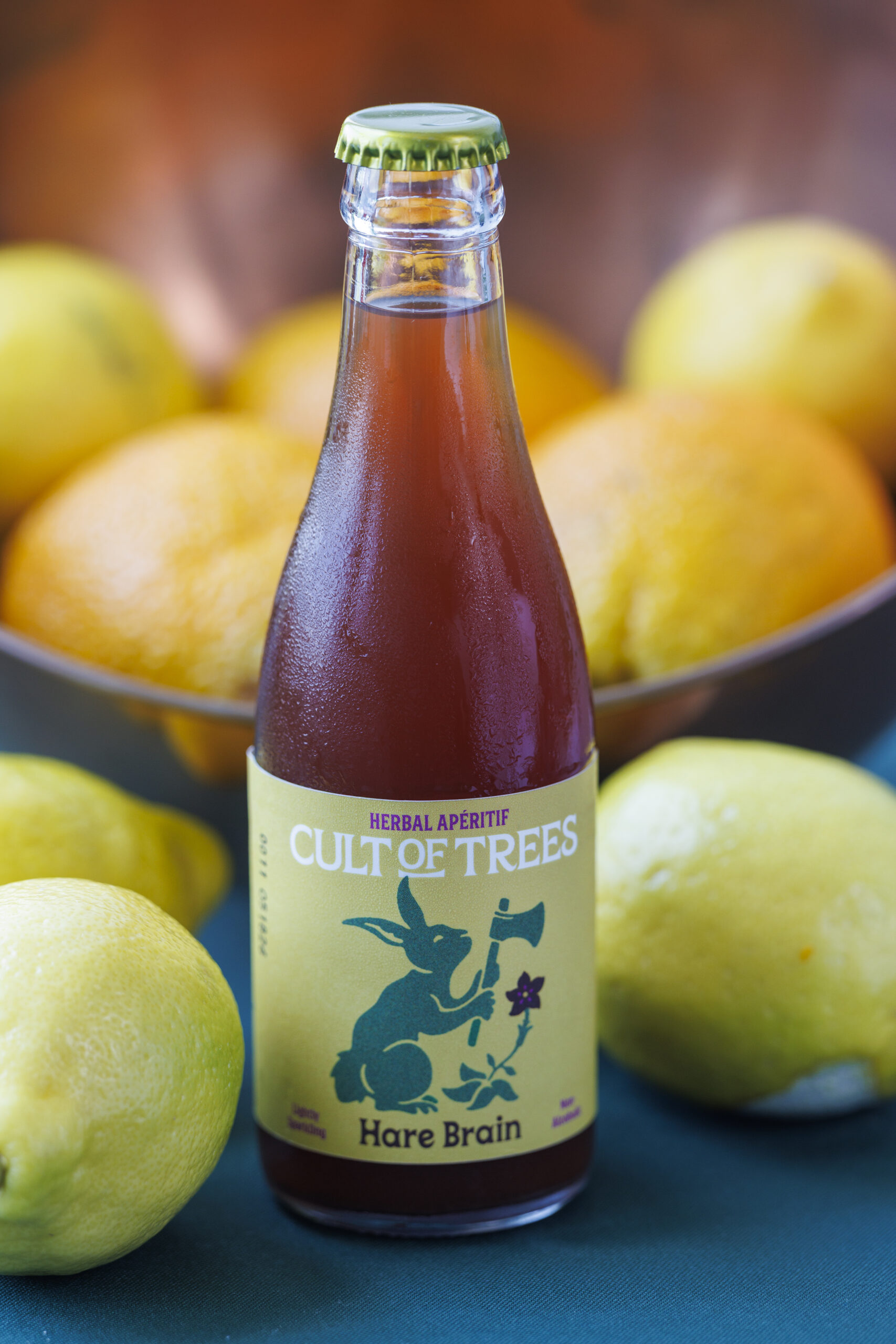
Hare Brain from Cult of Trees, a zero-proof aperitif that tastes like cola.
A single batch yields only 18 to 20 cases, according to Sheehy. “It’s labor intensive right now,” she said, “but will start to get more turnkey as we grow and are able to incorporate more equipment.”
“It’s a popular suggestion from our entire team when guests are looking for a unique and local NA option,” said Enswell manager Chelsea Boyer, who often pairs Hare Brain with Rival Bro’s Whistle & Cuss espresso. “The bitter nature and gentle carbonation of the Hare Brain pairs perfectly with the candied nuttiness of the espresso.”
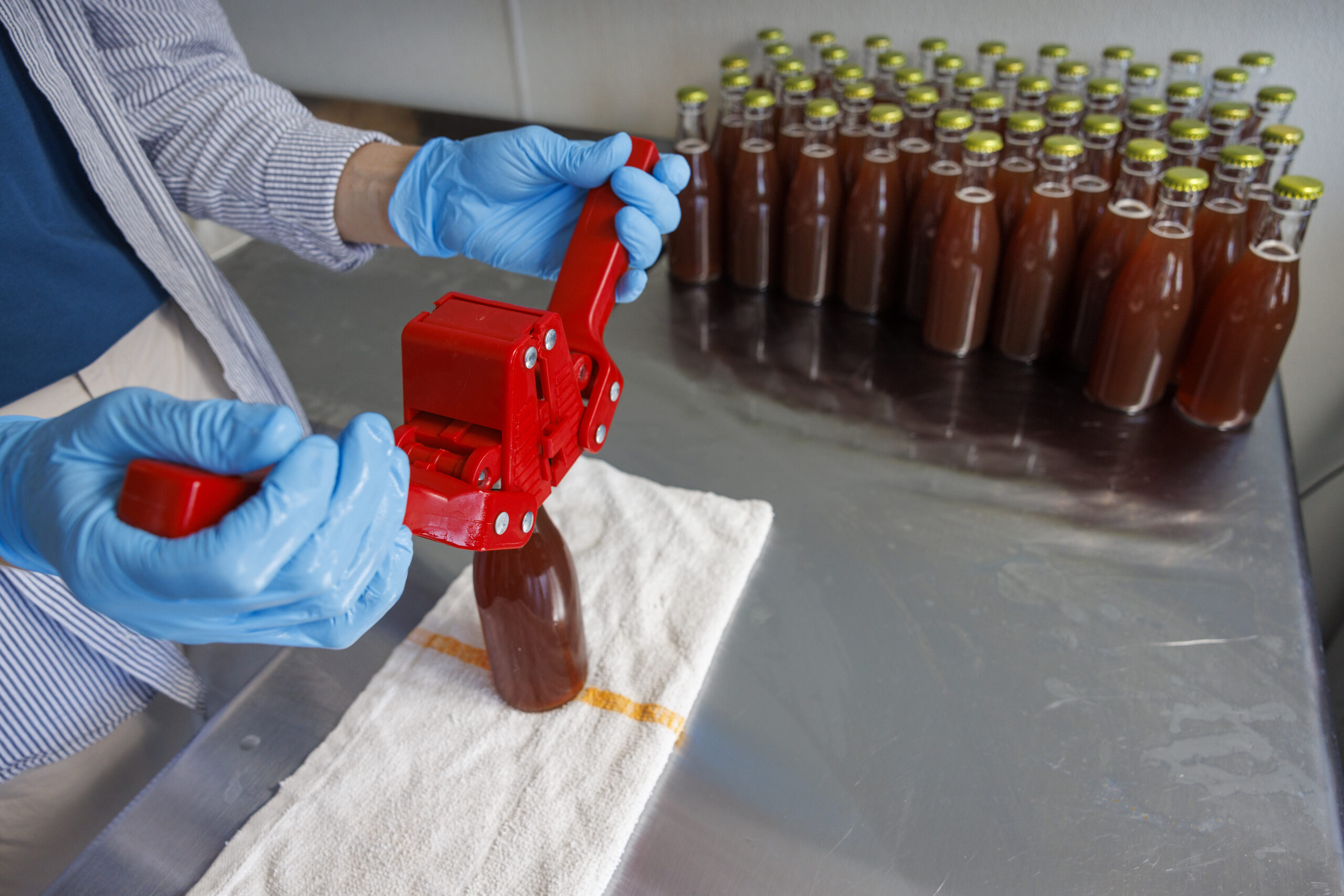
Meredith Sheehy, owner of Cult of Trees, caps a bottle of Hare Brain at her Kensington production facility. Each bottle of the non-alcoholic spirit is packaged by hand.
The drinks have been selling well at Riverwards’ Old City location, said CEO Dan Morgan, buoyed by an April pop-up where Sheehy poured samples for guests. “I think their great flavors and beautiful packaging will really help them stand out,” Morgan said.
Cult of Trees production manager Gordon Grubb fills bottles of Hare Brain during the carbonation process at the brand’s Kensington studio.
Sheehy is betting on the same. “In my opinion, consumers increasingly want transparency, local sourcing, and a story behind what they drink,” she said. “That’s what we’re trying to do.”
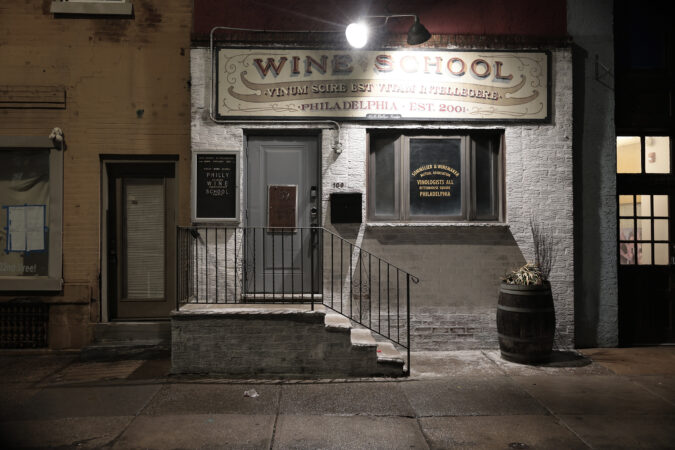
Philadelphia’s oldest wine school says a competitor is attempting to erase its existence from the internet through a “cyberbullying” campaign and trademark infringement, according to a federal lawsuit.
In the suit, PhillyWine LLC alleges that Keith Wallace and Alana Zerbe, the husband-and-wife duo behind the Wine School of Philadelphia, took extraordinary steps to confuse customers and piggyback on PhillyWine’s prestige, causing PhillyWine economic and reputational damage. The suit, filed Feb. 26 in the Eastern District of Pennsylvania, also accuses Wallace, the founder of the Wine School of Philadelphia, of fabricating his credentials and using aliases to open businesses that promote his school.
Wallace and Zerbe “have made it their mission to destroy” PhillyWine “by attempting to erase its existence and take over its name,” the suit says. The two schools have coexisted since the early 2000s — “although not always peacefully,” the suit notes — but tensions escalated at the end of 2025, when Wallace secured what the suit calls a “fraudulently obtained trademark” for the name “Philly Wine School.”
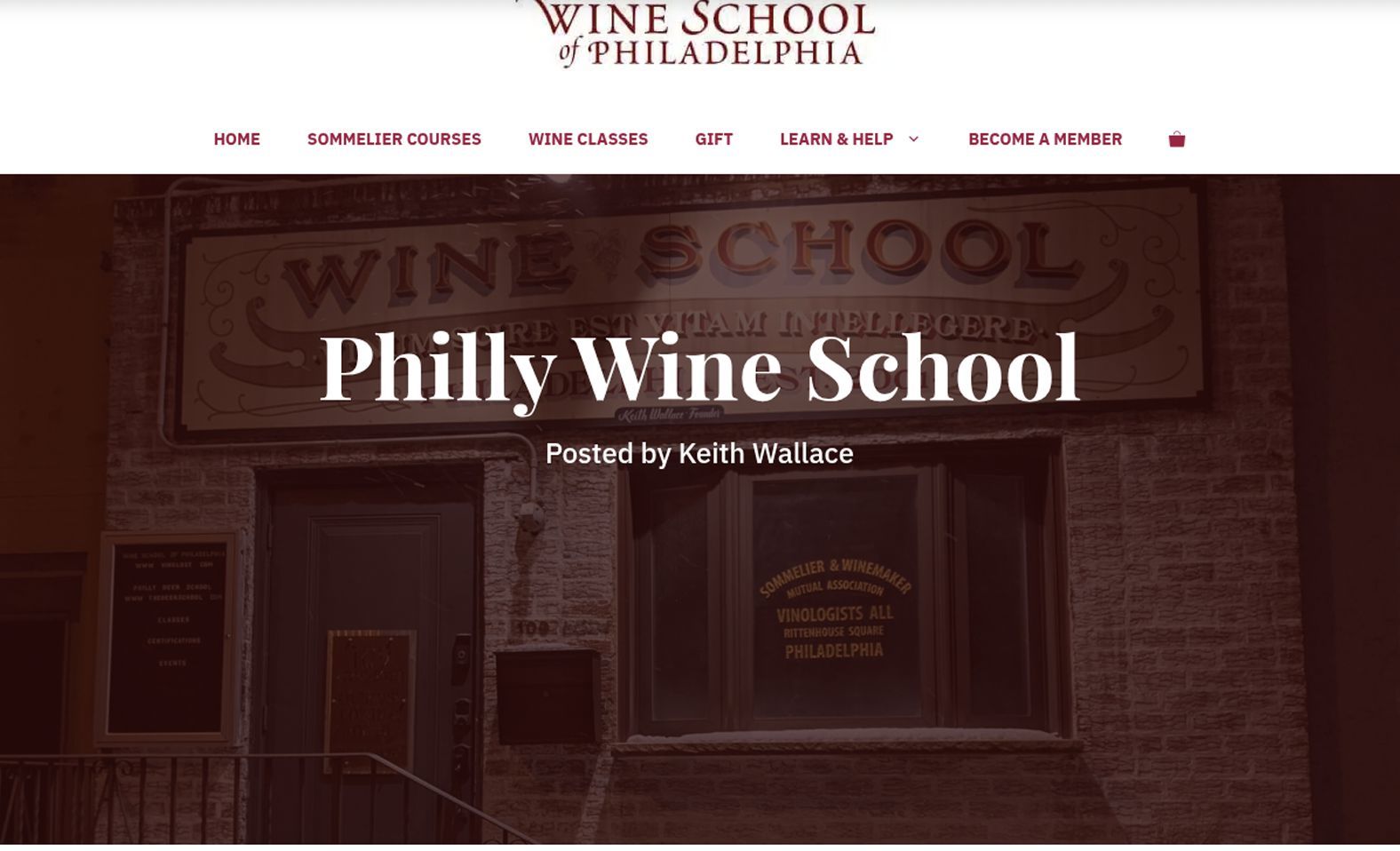
A screenshot from the Philadelphia Wine School’s website using the Philly Wine School name, which PhillyWine alleges infringed on their brand.
Armed with the trademark, Wallace convinced Instagram to suspend PhillyWine’s account in December, according to the complaint, and he has since attempted to take over the school’s Google business listing and shut down its website. Meanwhile, he was propping up his own business through a “self-legitimizing web of deception,” the suit says.
PhillyWine’s enrollment and attendance have been down since December, co-owner Matt Kirkland said in an interview, declining to share specific figures.
“The name confusion has disrupted student registration and appears to be redirecting traffic” to Wallace’s sites, said Kirkland. “I think there needs to be clarity in naming and clarity for students so they sign up for the classes they think they’re signing up for.”
PhillyWine is asking a federal judge to issue an injunction that would prohibit Wallace from using Philly Wine School, or any other confusingly similar name, and from attempting to disable PhillyWine’s online accounts. Without an injunction, the request said, PhillyWine would face an “existential threat.”
“These attacks must end now, and PhillyWine must be allowed to resume its business under normal conditions without further harassment,” the LLC said in court filings.
The lawsuit seeks profits the Wine School of Philadelphia earned from misappropriating PhillyWine’s name through trademark infringement, unfair competition practices, and false advertising. It also asks a judge to nullify the trademark.
Wallace denied the allegations and characterized the complaint as a way for PhillyWine to “bully” him out of the business he spent decades building.
A wine war ferments
Created by former owner Neal Ewing in 1999, PhillyWine is the city’s only wine educator fully accredited by the Wine & Spirits Education Trust, a nonprofit organization which sets international standards for alcoholic beverage education. PhillyWine is one of 47 programs globally — and the only in the tri-state area — approved to teach the trust’s full wine diploma, which PhillyWine has leveraged to host classes with Drexel and James Madison universities.
The Wine School of Philadelphia, founded in 2001 by Wallace,is not accredited by the Wine & Spirits Education Trust. It hosts wine tastings as well as semester-long sommelier courses using curricula from the National Wine School, which Wallace also founded. About 3,000 people attend Wine School of Philadelphia classes annually, according to Wallace.
In 2019, the education trustsent Wallace a letter asking him to cease comparing his school with PhillyWine on his site, the suit says. Wallace said he had “no idea” if he ever received such a letter.
When Ewing retired in 2022, he sold the business to current co-owners Kirkland, a Penn surgeon, and Noelle Allen, a former banking executive andcertified wine educator. Then, a digital wine war began to ferment.
That August, the school learned that Wallace had claimed the Instagram handle @PhillyWine to “antagonize” Ewing, the suit said, and it had to compromise for the now-defunct @PhillyWineSchool. The account @PhillyWine currently has a photo of Wallace as its profile picture and features videos of Wallace and Zerbe filming their wine podcast.
Wallace denied obtaining the Instagram handle togrind an axe, but acknowledged a rift between the two wine schools. “Everyone knows — including my wife and therapist — that I have a sharp tongue, and I have always been critical of certain ways of [teaching] … but I have never said anything nasty or even a little mean” about PhillyWine, he said. “They just do not like me.”
In late 2024, Wallace filed an application with the U.S. Patent and Trademark Office to trademark “Philly Wine School” for use alongside food and wine classes. He obtained the name in December; it had no prior trademarks.
Themove blindsided PhillyWine’s owners. “We frankly saw no reason and anticipated no need for a reason to try to trademark something,” Kirkland said.
The lawsuit alleges Wallace lied in his trademark application by attesting that the Philly Wine School name “has acquired distinctiveness in the marketplace through nearly two decades of continuous use.” But there is no evidence he used that name on his school’s website before filing the application in November 2024, according to the suit.
Wallace chalked the sudden use of “Philly Wine School” on his website up to pride in having the trademark. “When you get something, you show it off,” he said.
Bringing a ‘bazooka’ to a ‘wine fight’
Once the trademark was issued, Wallace “immediately used the document to inflict cyberbullying on PhillyWine,” the suit said.
Wallace successfully asked Instagram tosuspend PhillyWine’s account, according to the complaint, and has attempted to claim the school’s Google Business profile. He also filed a takedown request with SquareSpace, the host of PhillyWine’s website, and created a Google Maps listing for a “Philly Wine School” at 109 S. 22nd St., the Wine School of Philadelphia’s address. Kirkland said the latter action has led to PhillyWine, which teaches three blocks away at the Fitler Club, receiving negative reviews for classes taken at Wallace’s Wine School of Philadelphia.
“A review like that — where someone posts about us and they’re not our student and have never taken our classes — is direct reputational damage,” said Kirkland. Lawyers representing PhillyWine sent a cease and desist on Dec. 31, asking Wallace to abandon his trademark and “discontinue his efforts to take over” or remove the school’s online accounts,according to documents reviewed by The Inquirer.
Wallace confirmed receiving the cease and desist, but rejected allegations of using the trademark to bully PhillyWine or its owners. Instead, Wallace said, he’s the true victim.
“If they wanted these things, they could’ve done them too,” Wallace said. “We’re nothing but peace, love, and happiness. They just have this tiny little lawsuit, and they filled it with all this nastiness.”
A negative PhillyWine review on SOMM, a website operated by Keith Wallace, owner of The Wine School of Philadelphia.
The lawsuit also alleges that Wallace has been untruthful about his credentials and used aliases to start businesses such as the National Wine School and the website somm.us in order to promote his school. (Wallace said he founded somm.us in 2015 and maintains a relationship with the website, but doesn’t control its ratings or content.)
Wallace’s biography on the Wine School of Philadelphia website previously stated he graduated from University of California Davis and was a professional winemaker in Napa Valley. Neither are true, according to the suit.
Wallace declined to say when he matriculated at or graduated from UC Davis or elaborate on his stint in Napa Valley. UC Davis has no record of a person with Wallace’s name or date of birth ever attending, a representative for the university said via email.
The lawsuit’s allegations, he said, have him fearful for the future of his school.
“They brought a bazooka to a knife fight,” Wallace said. “This isn’t even a knife fight, it’s a wine fight.”
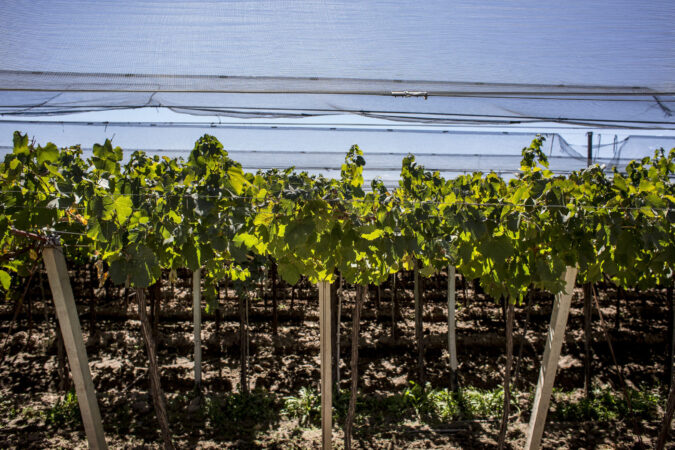
Most of the wine regions located outside of Europe grow the same roster of famous French grapes, because those were in greatest demand when their vineyards first began trying to compete with the classics on quality. That’s why the top grapes of Burgundy and Bordeaux are so ubiquitous; almost every country of the Americas and southern hemisphere offers mostly chardonnay and sauvignon blanc for white wines and cabernet sauvignon, merlot, and pinot noir for reds. However, there are some exceptions, as with the singular case of Argentina, whose signature malbec grape is rarely grown anywhere else, and was chosen for that role the old-fashioned way.
All fine wine grapes belong to one single species and most European regions make wine from their own local “varieties.” These varieties reflect natural genetic variation, but in Europe, those that became dominant in any given place are those that have proven themselves over time to be well-suited to that region’s terrain, climate, and soil types.
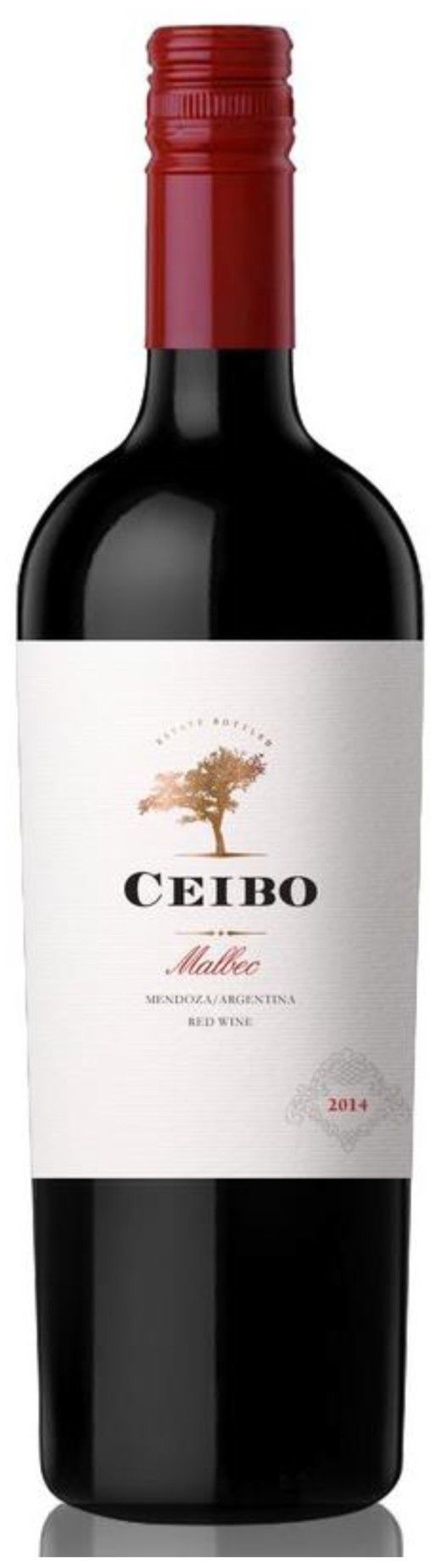
While most New World wine regions simply adopted the most successful European varieties, one man in Argentina — a French agronomist — was determined to figure out first what grapes would perform best. Michel Aimé Pouget brought in cuttings of many European vines in the 1850s and established the country’s most influential wine institution. Malbec was then an obscure grape that was in decline in its native France but proved itself in trials to be ideally suited to the sun-drenched slopes of the Mendoza region. From that point forward, malbec was relentlessly promoted to growers as the safest bet for vineyard plantings, resulting in malbec becoming Argentina’s gift to the wine world. Bursting with flavors of black cherries and blackberry jam, this example features malbec’s distinctive purple color, velvety mouthfeel, and faintly floral scent of candied violets.
Ceibo Malbec
Ceibo Malbec
Mendoza, Argentina; 14% ABV
PLCB Item #100034251 — on sale for $11.99 through March 1 (regularly $13.99)
No alternate retail locations within 50 miles of Philadelphia according to Wine-Searcher.com.
A battle of the beer festivals is brewing in Philadelphia, and it’s set to come to a head next weekend, when Philly Bierfest and Philly Beer Fest — two completely unrelated beer festivals with names that are homophones — take place on the afternoon of Saturday, Feb. 28.
This isn’t a coincidence, according to some members of Pennsylvania’s beer scene who claim the New York City-based organizers of the two-year-old Philly Beer Fest are deliberately trying to capitalize on the good name of Bierfest, a long-standing event with deep local roots.
“It’s a very pointed move,” said Meredith Megan Rebar, the founder of Home Brewed Events, which plans major food and drink festivals in the Philly region. “They’re just doing this intentionally to mess with the event that’s been around longer.”
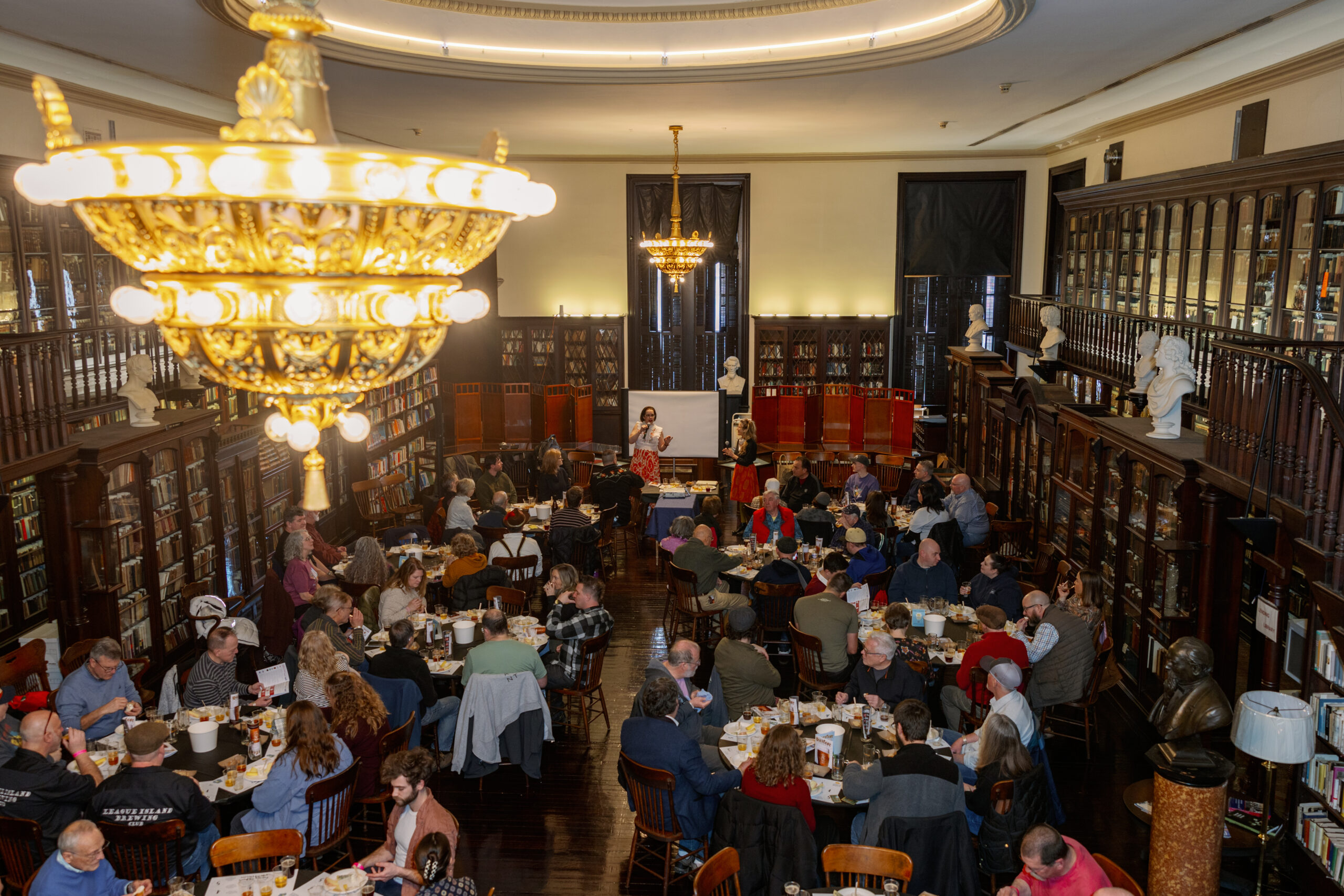
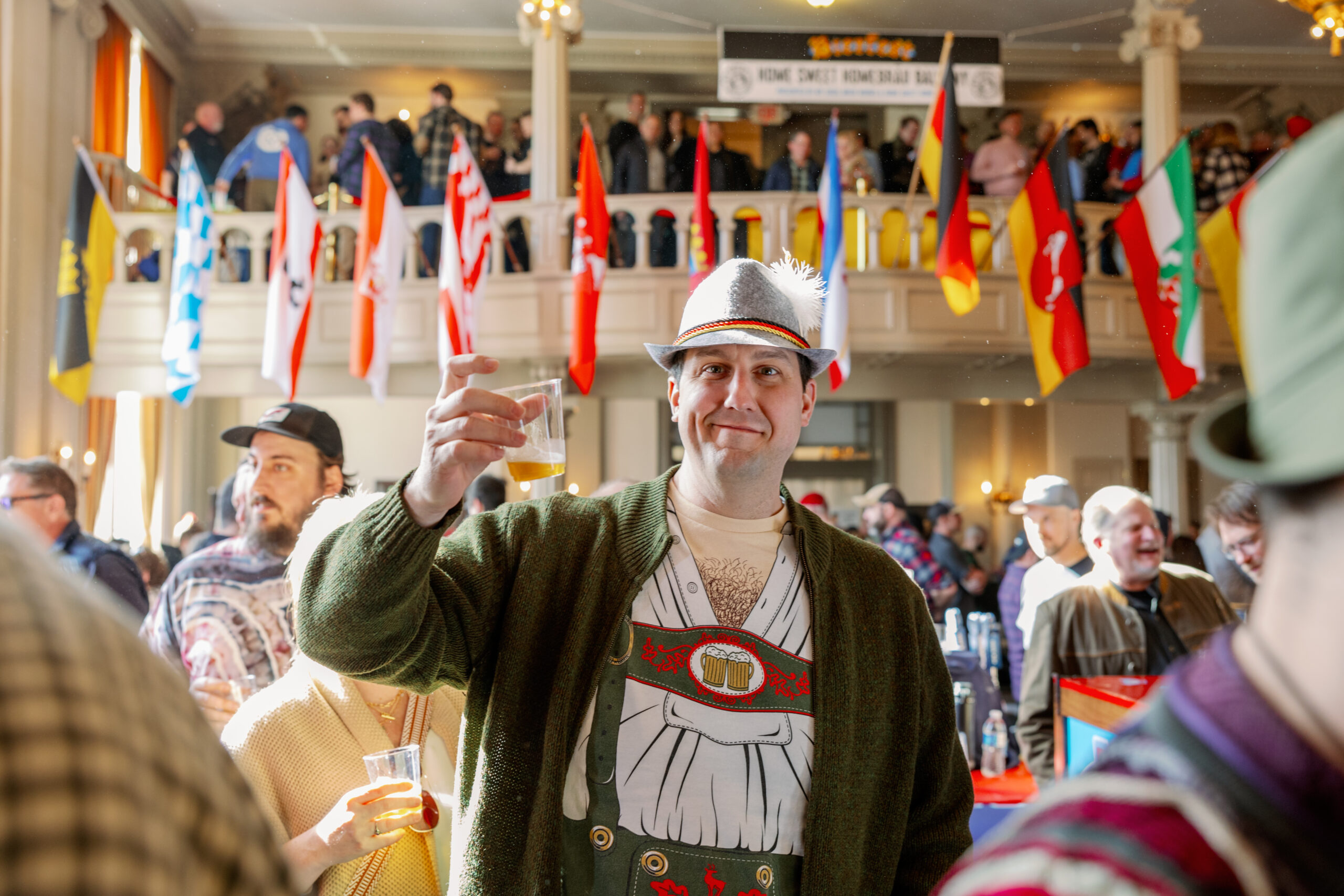
The 2024 Philly Bierfest, held at the German Society of Pennsylvania at 611 Spring Garden St. The event spans two buildings and includes a food hall, beer classes, and burlesque performances, among other things.
Philly Bierfest was created in 2013 by Northern Liberties-based nonprofit the German Society of Pennsylvania and Marnie Old, a local wine author and longtime freelance columnist for The Inquirer. It began as a way to honor the state’s rich tradition of brewing German-style beers, such as pilsners, kölsches, and lagers.With a deep benchof Pennsylvania- and Germany-based brewers — there are 45 pouring at this year’s event — the festival sells out each year, and was named one of the best beer festivals in the U.S. by USA Today in 2023. The event’s proceeds have gone to the Philly Roller Derby and Brewers of PA since its inception.
Philly Beer Fest, on the other hand, is hosted by by Craft Hospitality, a national events company headquartered in New York City that organizes beverage festivals across the U.S., including the Philadelphia Zoo’s Summer Ale Festival. Craft Hospitality launched Philly Beer Fest at the 23rd Street Armory in 2024. Just over 30 Philadelphia-area beverage makers are featured this year, and proceedspartially benefit the Trauma Survivors Foundation.
In 2024 and 2025, Craft Hospitality scheduled Beer Fest on the weekends immediately before and after Bierfest, which hasbeen held on the last Saturday of February for 13 years (save for a pandemic-induced disruption).
This year’s identical scheduling hasn’t necessarily hurt Bierfest, Old said, noting that tickets sold out this week. But it has caused some headaches. Bierfest’s barbecue vendor accidentally showed up to the wrong venue for a site visit, and Old has spent a great deal of time confirming with vendors that they’re signed up for the right event. In past years, Old has heard from some disappointed Beer Fest attendees who showed up to their event expecting it to be the German-themed Bierfest.
The nonprofit-run festival tried to get ahead of any confusion this year.Prior to Bierfest selling out, it had a pop-up on its website that read: “Friends don’t let friends get the wrong tickets. Share this link to ensure pals get tickets to the original, authentic Philly Bierfest and not the other similarly named event.”
Old isn’t sure if the warnings entirely worked.
“We don’t hear from anyone who got tickets to the wrong festival until after our event,” she said. “I don’t know what their intention is because I’m not on their team, but misleading [the consumer] does seem to be the end effect.”
Craft Hospitality denies scheduling Beer Fest for Feb. 28 as a way to undercut its preexistingcompetitor. In a statement, the company attributed the scheduling snafu to the event being held at a National Guard facility, which limits scheduling.
“Event dates are determined based on venue availability and planning logistics, and are often set by contract approximately 12 months in advance,” the statement read. “Philadelphia has an incredibly active event calendar — this year especially with the World Cup … Overlap between events is not uncommon.”
This isn’t the first time Craft Hospitality’sBeer Fest has been accused of riding Bierfest’s coattails.
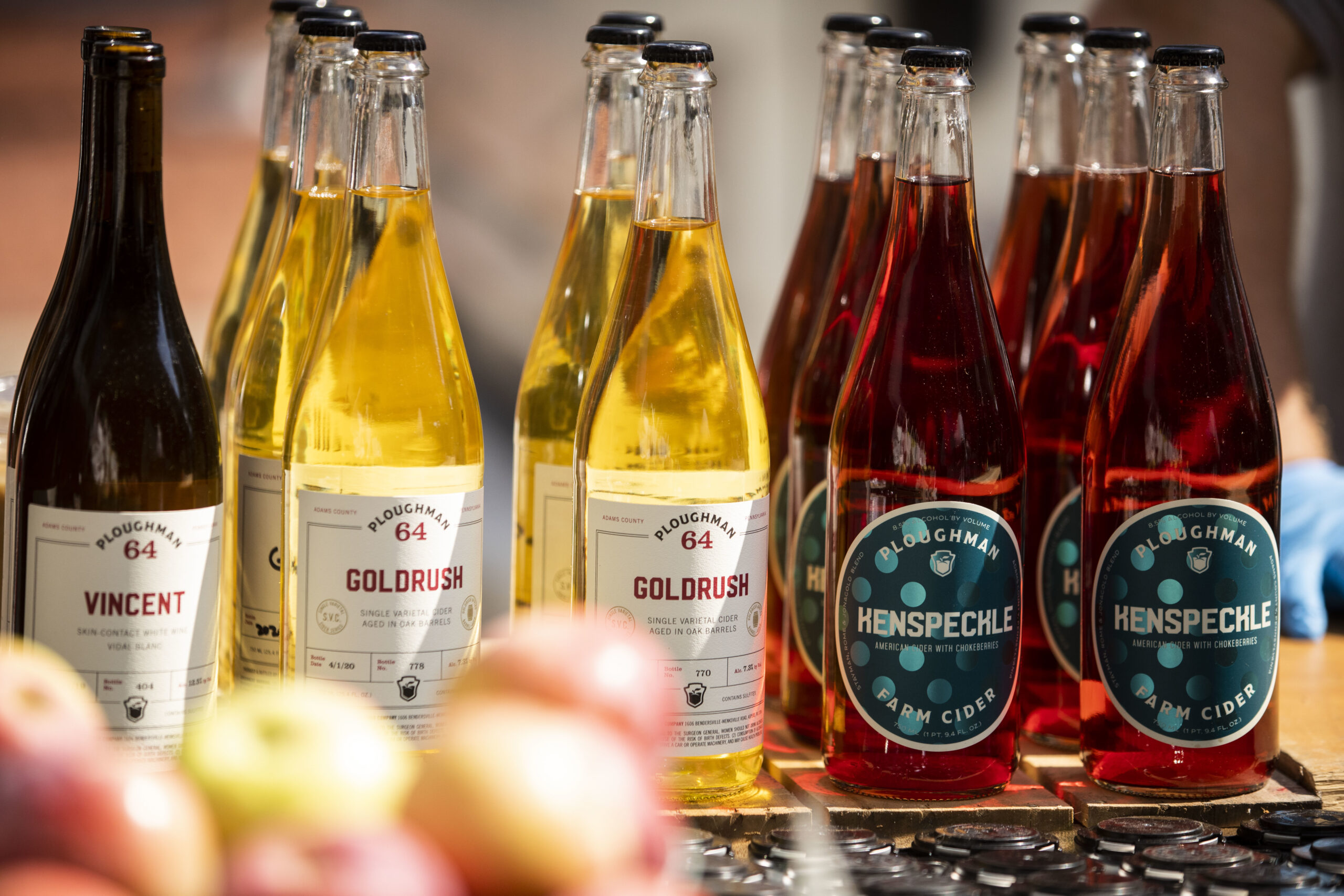
After a Craft Hospitality employee emailed Ploughman Cider owner Ben Wenk in Nov. 2023 to gauge interest in vending at the first Philly Beer Fest — then scheduled for Feb. 17, 2024 — Wenk said his cidery would boycott all future Craft Hospitality events over what he felt was the company’s “intentional and malicious” attempt to deceive.
Scheduling a beer festival with an identical-sounding name just a week before its established competitor, Wenk said, went too far.
“Our people and our brand won’t be devoting any further resources towards an organization such as yours that is so brazenly and transparently willing to act in such a predatory way towards an established event like Philly Bierfest, who, by our estimation, have done nothing to deserve it,” Wenk emailed the Craft Hospitality employee in February 2024.
Another Craft Hospitality employee replied to Wenk days later. “No one else has ever mentioned this other beer fest to me personally. Brands have just signed up fairly easily but I do see the conflict you’re pointing out. I will be looking into this,” they wrote.
No one followed up with him, Wenk said, and Craft Hospitality didn’t respond to questions about this interaction.
“Why is this New York events company coming down here to Philadelphia and thinking they can get one over on us?” Wenk said. “It just feels predatory to me.”
Ploughman Ciders, of Adams County, Pa., is boycotting Philly Beer Fest and all other Craft Hospitality events.
Bierfest co-creator Old had also directly flagged issues to Sam Gelin, Craft Hospitality’s founder. Shortly after both beer festivals wrapped in 2024, Old learned Craft Hospitality had scheduled its 2025 Beer Fest on the same day as Bierfest. When she asked Gelin if he would consider moving his event out of concern that it would confuse customers and vendors, Old recalled that Gelin said it would be “desirable” for the events to share the date. Still, Gelin obliged. Philly Beer Fest 2025 took place one week after Bierfest.
“After that conversation and then for this year, I didn’t think I needed to follow up with them. I assumed that they would continue choosing a different date,” Old said.
When she learned in September that this year’s Beer Fest was once again set for same exact date as Bierfest, Old figured it wasn’t worth reaching out to Gelin again.
“If you’re renting your venue, it’s too late to change by that point. Six months is cutting it too close to make any changes,” she said. “And it was clear to me at that stage that [Craft Hospitality] saw having [its] event on the same date as ours as a benefit.”
Craft Hospitality did not respond to questions about whether its founder had been contacted by Old. “Philly Beer Fest is not affiliated with Philly Bierfest,” they said in their statement. “They are separate events with different producers, different names, different socials, different formats, different pricing, different breweries, different cultural focuses, different venues, and overall different experiences.”
Festivals with different aims
The different vibes are part of the problem, according to Rebar,the festival organizer who specializesbeer festivals.
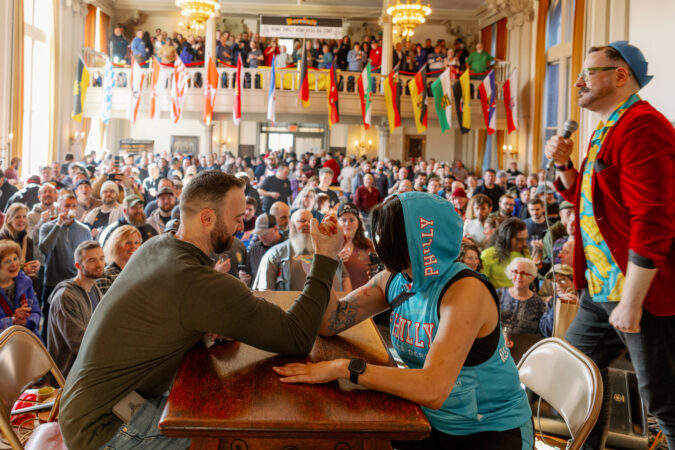
Bierfest typically draws “real beer enthusiasts,” who are there to drink but also to deepen their understanding of German brewing techniques and beer culture. The festival’s format includes beer seminars, a food hall showcasing traditional German eats by local makers, a German Masskrugstemmen (stein-holding) strength competition, and performances from Bavarian folk dancers.
An attendee at the 2024 Philly Bierfest, which has been held on the last weekend of February since its inception in 2023.
Beer Fest, said Rebar, is for people who want to party. The festival is a hodgepodge of beer, hard seltzer, and spiked tea purveyors compared to Bierfest’s lineup of respected German beermakers and Pennsylvania brewers making traditional German beer styles.
“There’s no educational standards to it. It’s just a generic festival, and it’s not [organized] by anybody local,” said Rebar, who attended the first Beer Fest in 2024. “Philly Bierfest has been around for so long, has a really good representation, and has a very clear mission.”
Craft Hospitality did not respond to questions about whether it would provide refunds to attendees who showed up thinking they were at Bierfest and are dissatisfied with their experience.
And while Rebar concedes that it would’ve been difficult for Craft Hospitality to reschedule given the impact on vendors, she said the winter months are typically slow for beer-industry events.
“There’s plenty of other weekends in January, February, [and] March when there’s not a lot going on,” Rebar said.
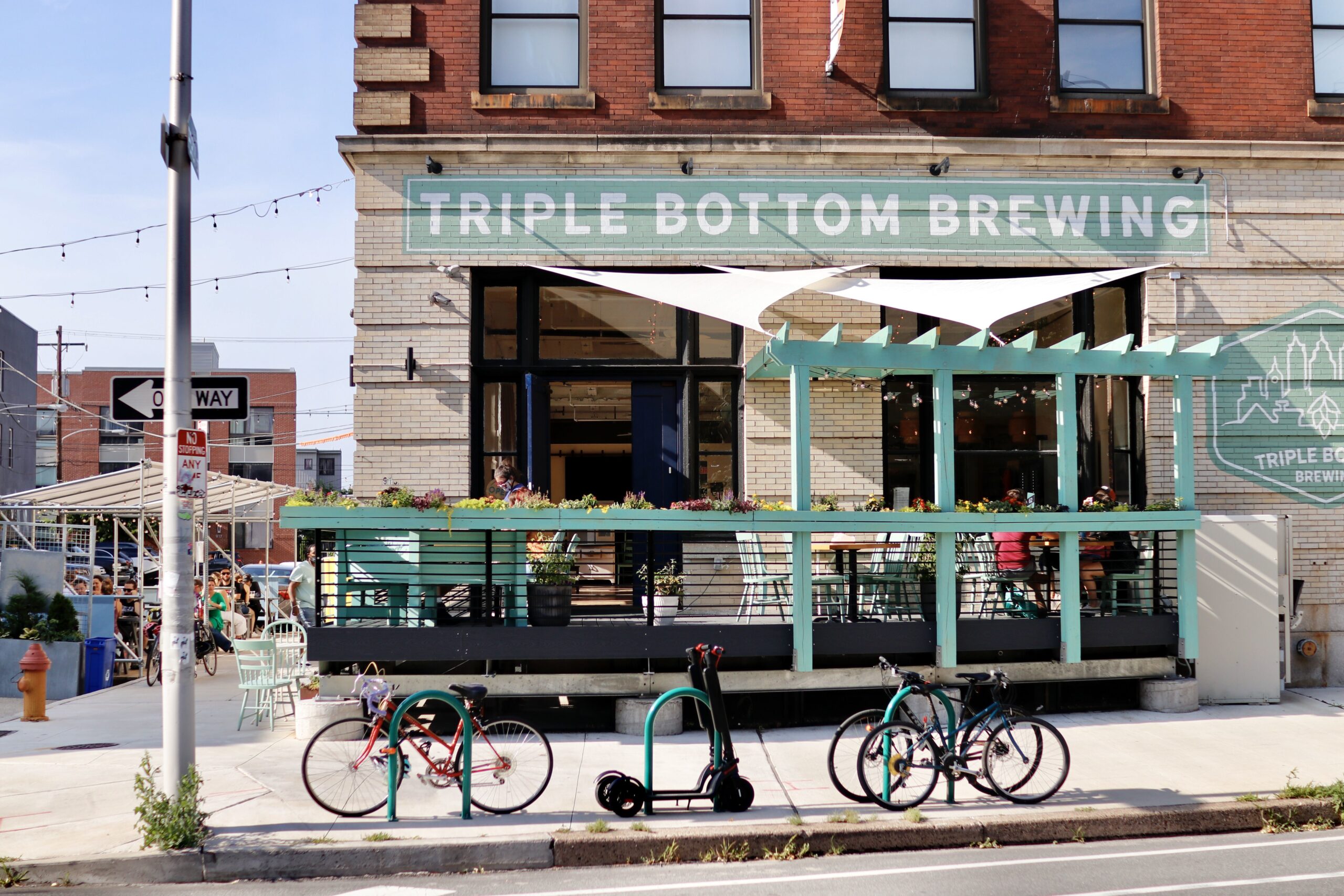
Not everyone views the festivals as being in competition. Currently three local breweries are participating in both festivals: Norristown’s Von C Brewing, Broad Street Brewing in Bristol, and Triple Bottom Brewing in Spring Garden.
Old said she didn’t force any vendors to choose between the two events. “I hate to put my vendors in an awkward situation … We do not have a problem with anyone being registered for both.”
Triple Bottom Brewing is one three breweries participating in both Philly Bierfest and Philly Beer Fest on Feb, 28, 2026.
Triple Bottom Brewing co-owner Tess Hart has found a silver lining to the fest-on-fest drama. The six-year-old brewery has repeatedly participated in both festivals. The dual events kick off Triple Bottom’s 16-week brewer apprenticeship program for individuals impacted by the justice system and housing insecurity, she said.
This year’s 10-person cohort started last week, Hart said, and they’ll be staffing both festivals concurrently. The challenge, she thinks, will be rewarding.
“We’ll be stretched a little thin on Saturday,” Hart said. “But this will be a good opportunity to get them out of the taproom and really well-practiced about talking about beer in a high-volume situation. For us, that’s a big benefit.”
A new all-day lounge in Old City is betting on kava and kratom — two controversial psychoactive plants — to pull crowds away from bars.
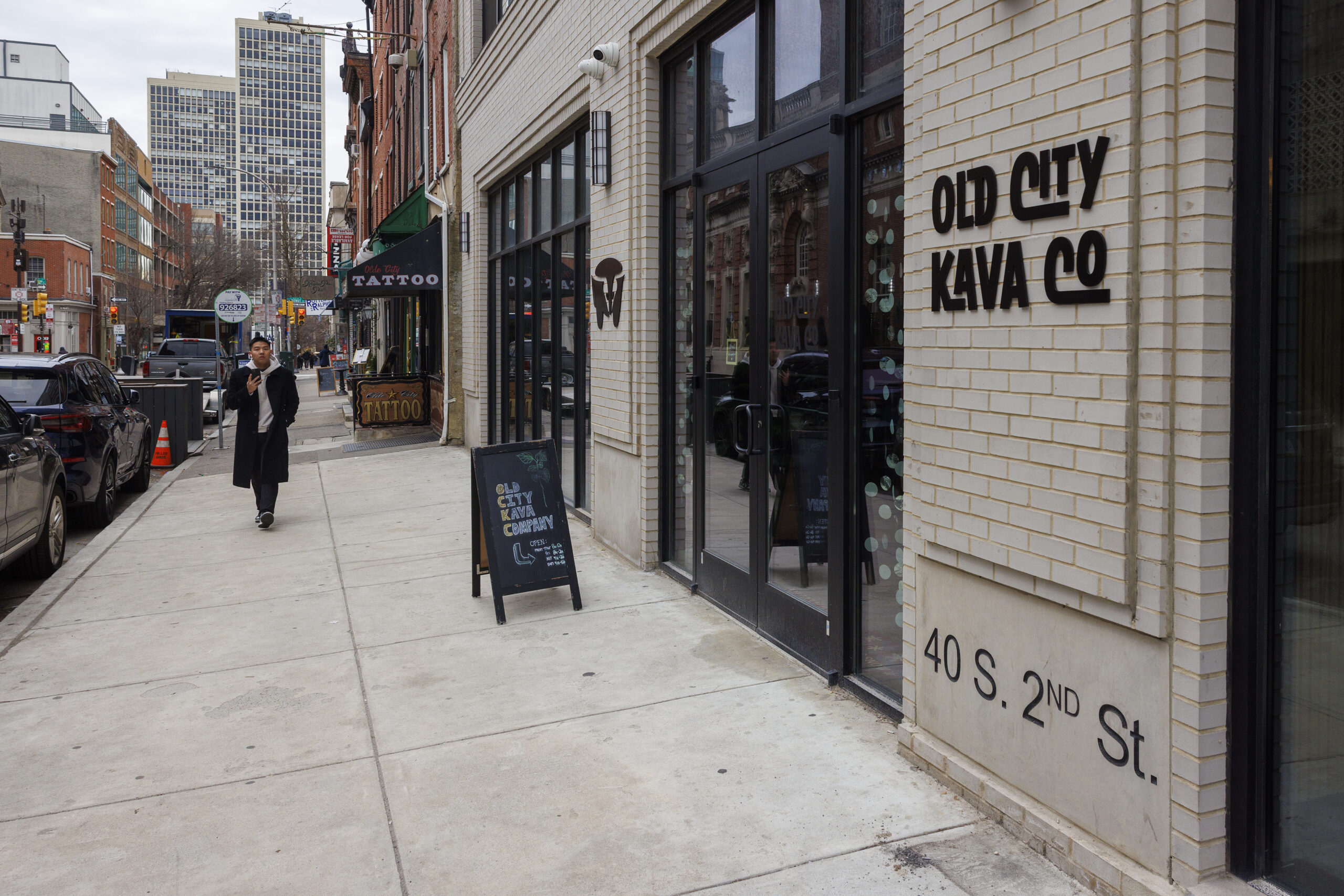
Old City Kava Company opened in December at 40 S. Second St., across from a Fine Wine & Good Spirits and a honky-tonk bar. The lounge specializes in kava and kratom mocktails intended to boost mood and lower inhibitions, not unlike knocking back a couple of drinks. The establishment’s co-owners, Luca Kobza and Adam Lagner, believe the substances can open up a new social scene in Philly — namely, one that isn’t centered on alcohol.
“We’ve had groups of people showing up who I otherwise believe would’ve been at bars … maybe having a cocktail and then regretting it the next day,” said Kobza. Customers have told them the space is a welcome change from bars and nightclubs, Kobza said.
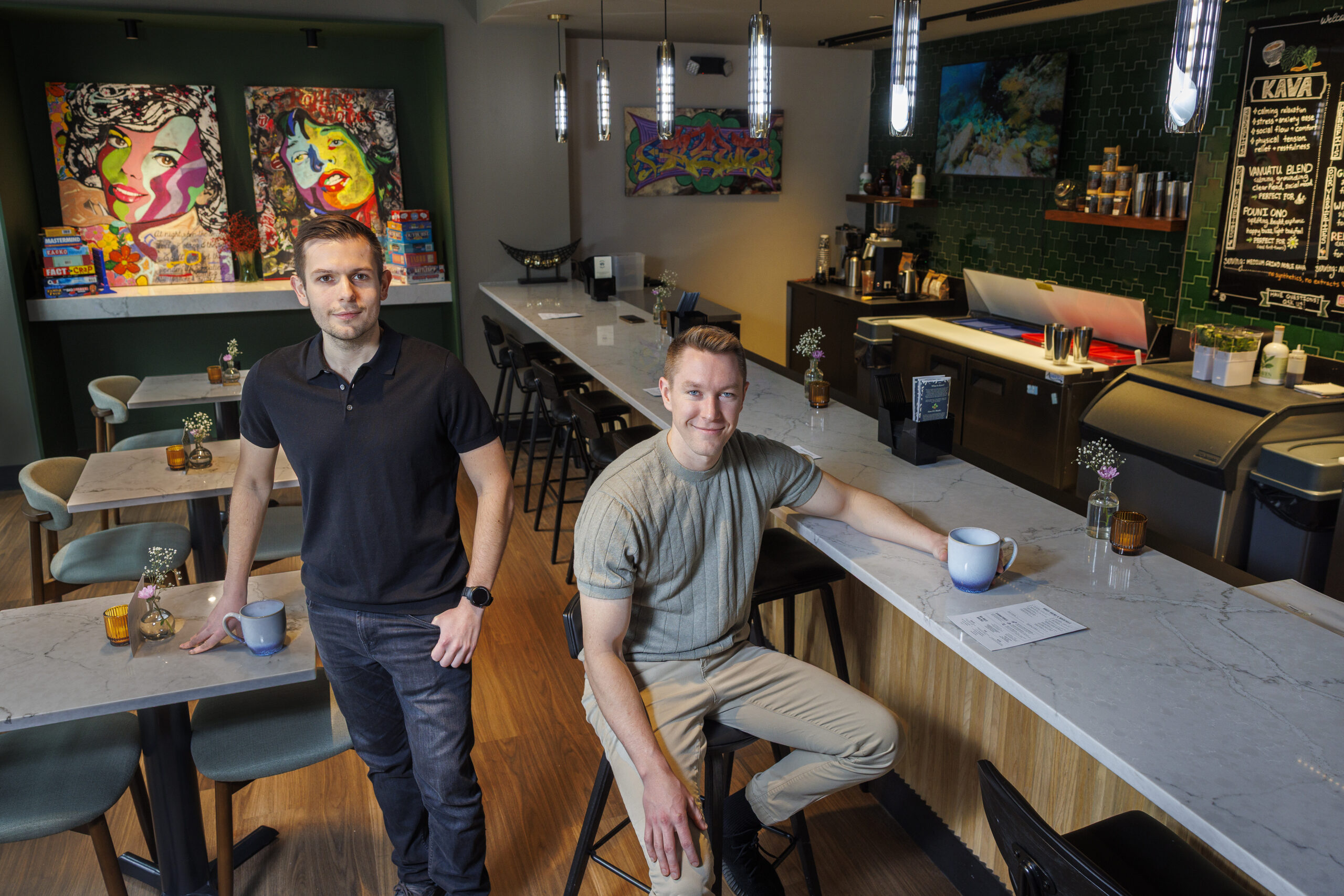
Old City Kava Company co-owners Luca Kobza (left) and Adam Lagner (right) met in college at the University of Miami and ran a kava bar in Naples, Fla. before moving to Philly.
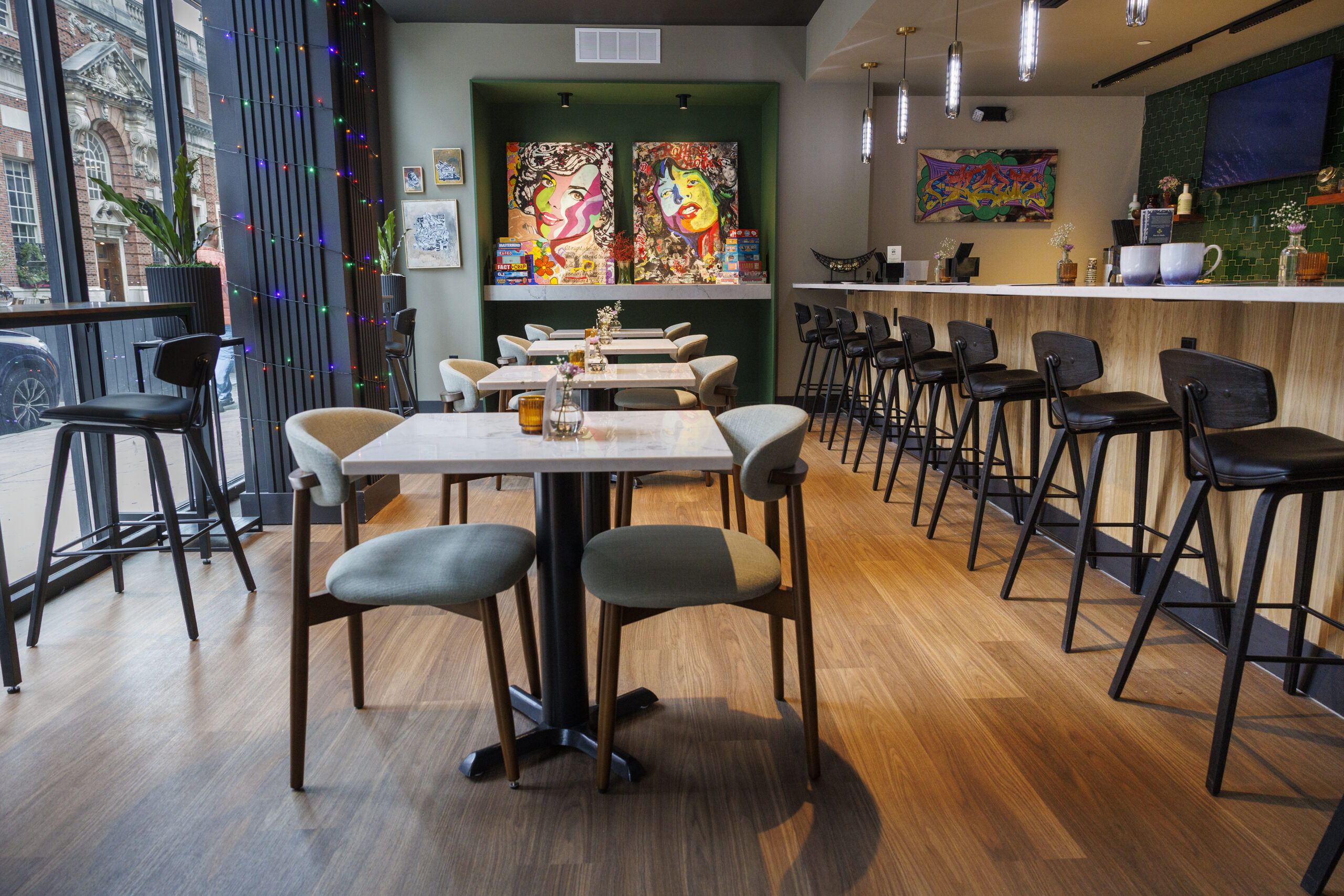
The 1,900-square-foot lounge is designed for lingering, with 60 seats between its bar, two-top tables, and plush jeweled-toned couches. The space has a small-yet-serviceable board game collection, plus a rotating display of contemporary art for sale from Kensington’s Vizion Gallery.
Old City Kava opens at 10 a.m. daily, serving its kava and kratom-infused mocktails alongside drip coffee from ReAnimator, teas from Random Tea Room, and a selection of pastries from wholesaler Au Fornil. By day, it largely functions as a coworking space.
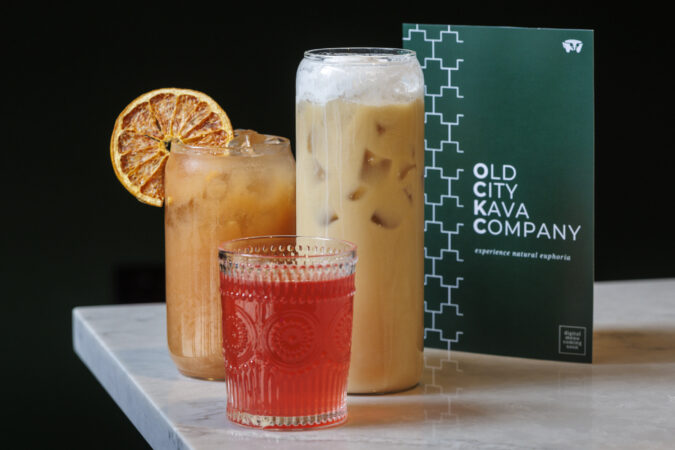
The atmosphere shifts at night. Open till midnight on weekdays and 2 a.m. on weekends, the space feels cocktail bar-adjacent, with a menu of 16 kava and kratom-infused mocktails. They range from a kava-lemongrass-and-guava paloma to a kratom-kombucha-ginger beer mule and a matcha tonic shaken with kava and kratom. Lagner and Kobza have already hosted run clubs, singles events, and book clubs to highlight the spectrum of Philly’s sober-curious scene.
The interior of Old City Kava Company at 40 S. 2nd Street.
What are kava and kratom?
Old City Kava sources kava — derived from the leaves of the piper methysticum, a large plant that grows in Hawaii and other South Pacific islands — from Fiji, Tonga, and Vanuatu and kratom from Vietnam, Thailand, and Malaysia. They brew both as teas, adding roughly a tenth of an ounce to each mocktail.
The lounge’s eight employees had to undergo 15 hours of in-house “kava-tending” training, which mostly involves learning how to educate first-timers. Lagner hated kava the first time he tried it.
“It’s bitter, earthy. I was very off-put,” said Lagner. At the age of 30, he now prefers drinking it straight.
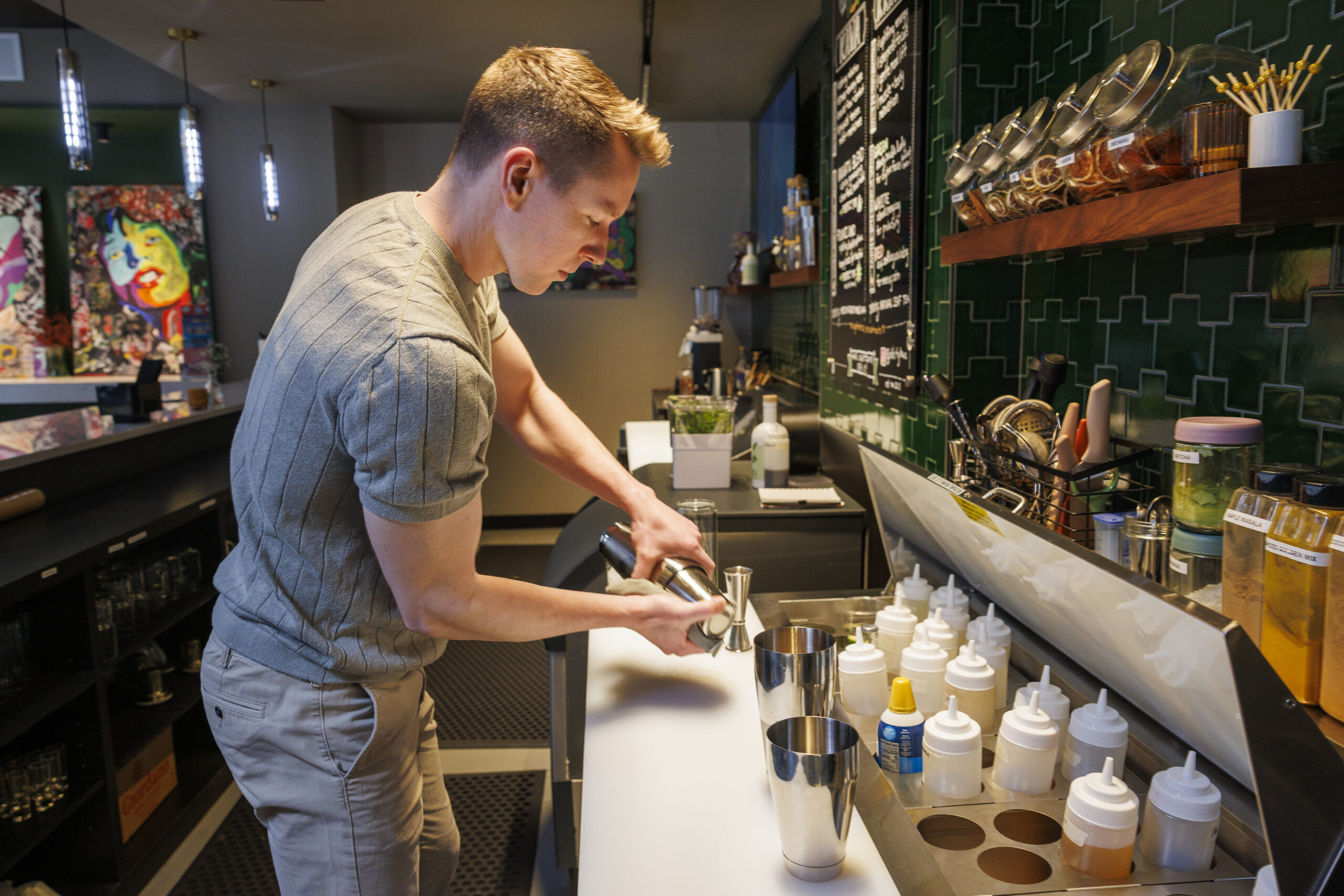
Adam Lagner making Old City Kava Company’s Lemongrass Paloma, which swaps alcohol for kava.
A visit to the lounge starts with a kava-tender offering samples of pure kratom or kava tea, the latter of which makes your lips tingle with a mild numbness. Despite having no real relationship with one another, kava and kratom often come as a package deal in kava bars across the U.S., which have exploded in popularity as an alternative to traditional bars during a time when fewer young people are choosing to drink.
These laws and the FDA’s plan include carve-outs for the botanic kratom from the leaf — which Old City Kava uses in its mocktails. The varieties are fundamentally different, Lagner said.
“A lot of people conflate the two … when they hear ‘kratom,’ they think of the products you’re seeing in gas stations,” he explained. “We serve natural kratom leaf tea how it’s been consumed safely for centuries in Southeast Asia. They’re much less potent in their natural form.”
That may be true, but experts still have concerns about botanic kratom. According to Dr. Adam Scioli, chief medical officer of Wernersville, Pa.’s Caron Treatment Centers, botanic kratom is five to 20 times less potent than its synthetic counterpart.But it still carries an addiction risk, Scioli said, and can cause other health issues, such as nausea, high blood pressure, a racing heartbeat, and averse drug interactions, particularly when consumed with sedatives.
“What concerns me most clinically is that kratom is often perceived as ‘natural and therefore safe,’” said Scioli. “History has repeatedly shown us that natural substances can still carry significant addiction risk, especially once commercialized.”
A bar, but not
Lagner, a Blue Bell native and La Salle High School grad, met business partner Kobza, also 30, when they were both students at the University of Miami. The duo would study together at kava bars on South Beach, and after graduating in 2018, opened their own, called Nektar Lab, in Naples, Fla.
Lagner and Kobza sold their stakes in Nektar in 2022. They moved to Philly shortly after, where they found a far less vibrant scene than what they were used to in Florida, the kava capital of the U.S. (Philly has only one other kava bar, Queen Village’s Lightbox Cafe.)
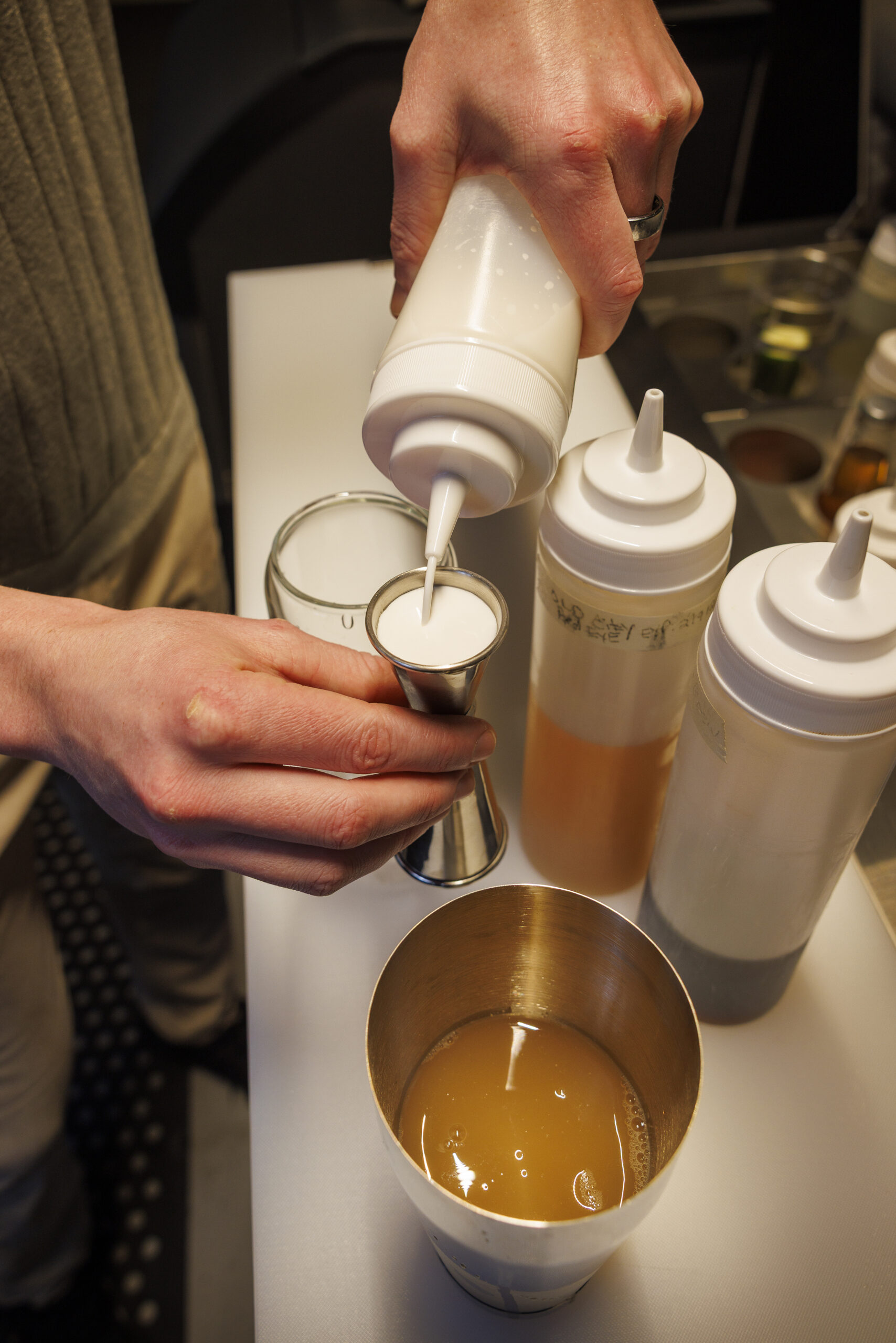
Adam Lagner pours a shot of creamer for Old City Kava Company’s Old City Red Eye, a coffee drink that includes kava and kratom.
“Most kava bars around the country are very grungy and tiny,” said Lagner. “And there haven’t been enough concepts [in Philly] to show people that this can be a nice alternative to the social scene that revolves around alcohol and can also fill gaps in some of the daytime third-space sort of sphere.”
Old City Kava’s bestseller is the Old City Red Eye: kava and kratom tea shaken together with ReAnimator cold brew, oat milk creamer, agave, and vanilla syrup. “You would think the kava and kratom cancel each other out because, at face value, it’s an upper and a downer in the same drink,” said Kobza. “But in reality they complement each other. The kava takes the edge off the coffee … the [kratom] just adds a mild euphoria.”
Kobza said first-timers shouldn’t have kava or kratom on an empty stomach, or try too many cocktails at once. (That’s what this Inquirer reporter did, and she ended up with a splitting headache plus lingering nausea.)
The exterior of Old City Kava Company at 40 S. 2nd Street.
Carissa Kilbury, 24, goes to Old City Kava weekly. Sometimes, she spends full workdays at the lounge, sipping a few infused drinks while at her computer. A slow drinker, Kilbury said she doesn’t feel much other than mild relaxation.
“When I’m stressed at work, I feel a little bit less stressed, which is nice,” she said. “It feels like a bar without really being a bar. I like that vibe.”
Old City Kava Company, 40 S. Second St., 215-402-7047, oldcitykava.com. Hours: 10 a.m. – 12 a.m. Sunday through Thursday; 10 a.m. – 2 a.m. Friday and Saturday.