Category: Michael Klein

  • 🥃 What Craig LaBan is gifting this year | Let’s Eat

    🥃 What Craig LaBan is gifting this year | Let’s Eat

    Tough job, evaluating nearly three dozen whiskies for gift-giving. Craig LaBan and friends went there.

    🔔 Note that this is the last “Let’s Eat” newsletter of 2025. I’ll be back in your inbox Jan. 7.

    Also in this edition:

    Mike Klein

    If someone forwarded you this email, sign up for free here.

    Craig LaBan’s favorite gift bottles of whiskey
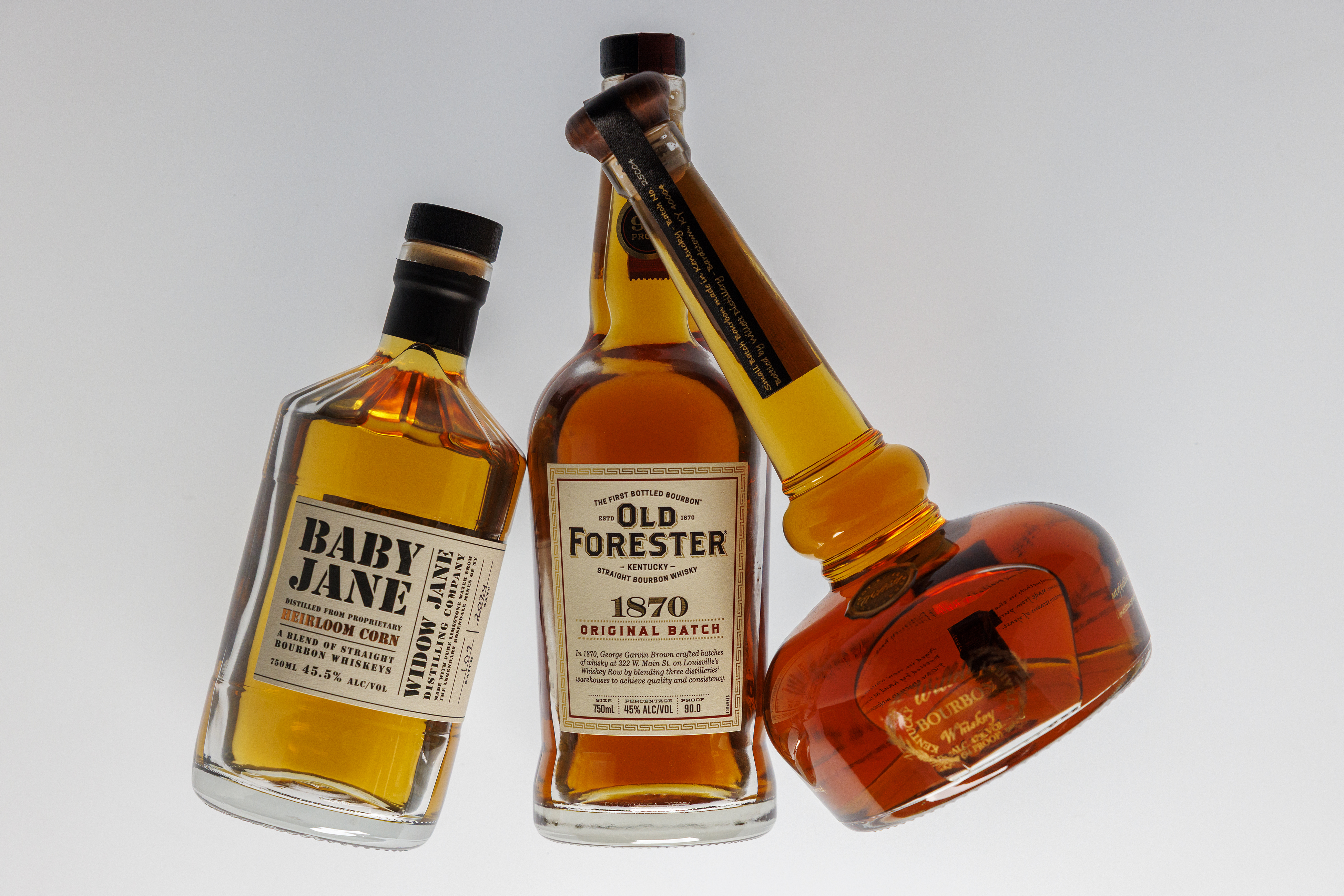
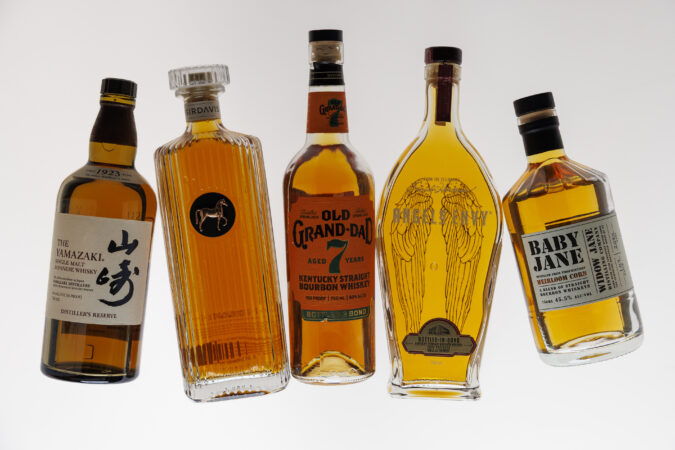
    Craig LaBan and his whiskey-loving friends sniffed and sipped their way through 33 bottles from across the world — even one from Beyoncé. Here are 14 he’d be happy to give and get.

    🍷 Also: Here are the best wine shops in the region.

    New restaurant from a Michelin-starred chef couple
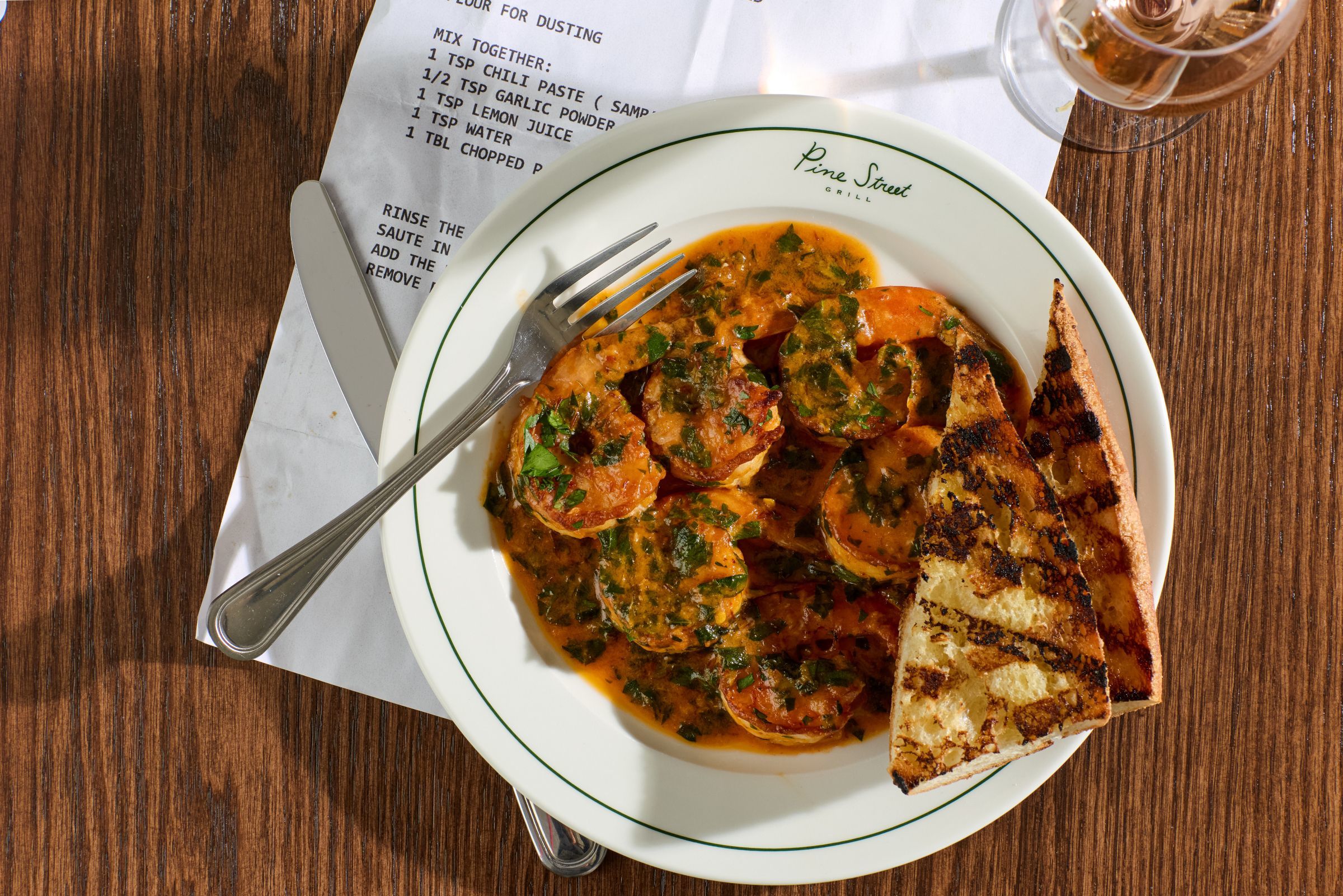
    Fresh off their Michelin glory, chef couple Amanda Shulman and Alex Kemp have opened the casual Pine Street Grill. We took a first look.

    Pine Street Grill is on a former site of a Dmitri’s restaurant. In tribute, the couple is serving a riff on Dmitri Chimes’ popular shrimp pil pil appetizer.

    Shop at this honky-tonk bar
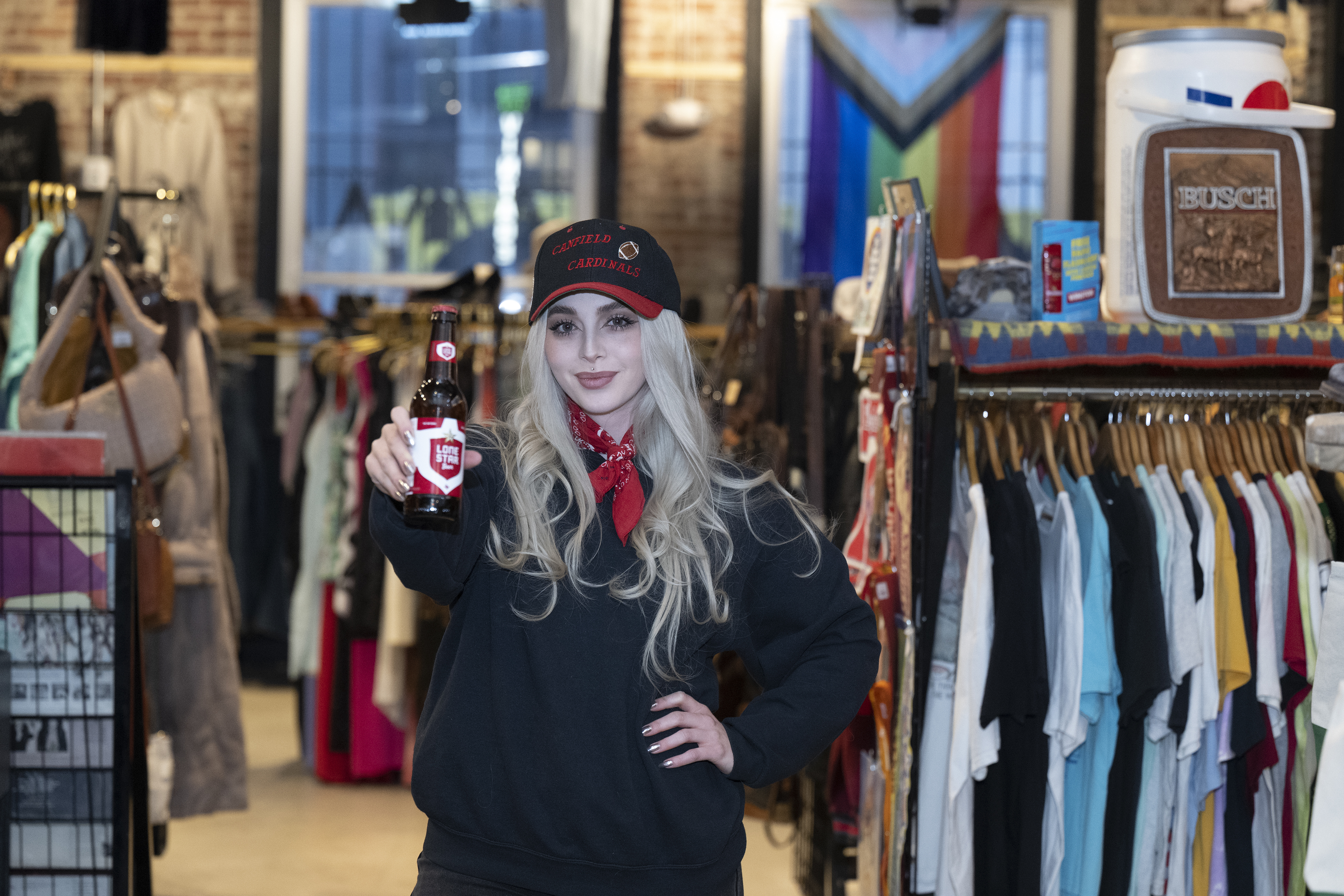
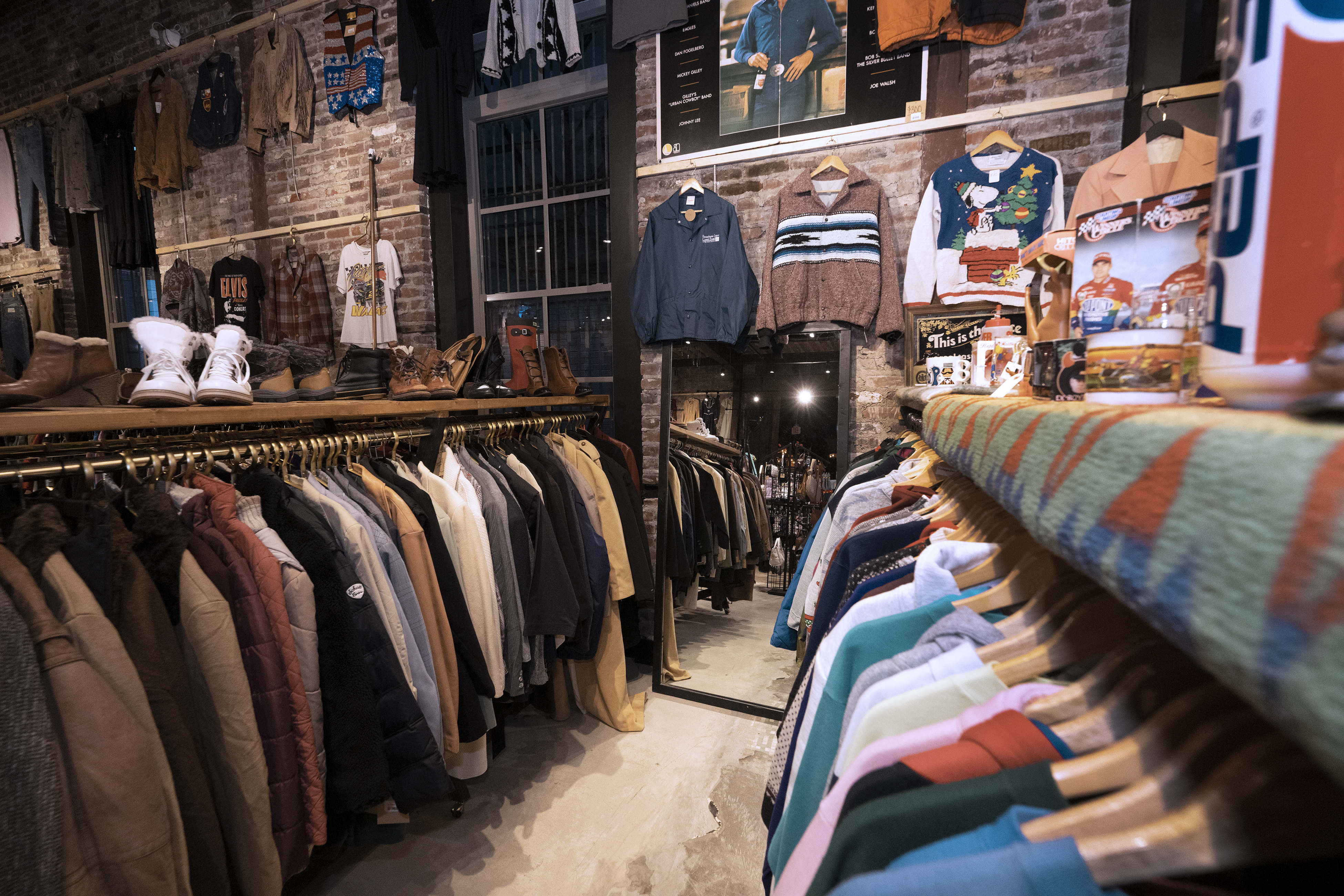
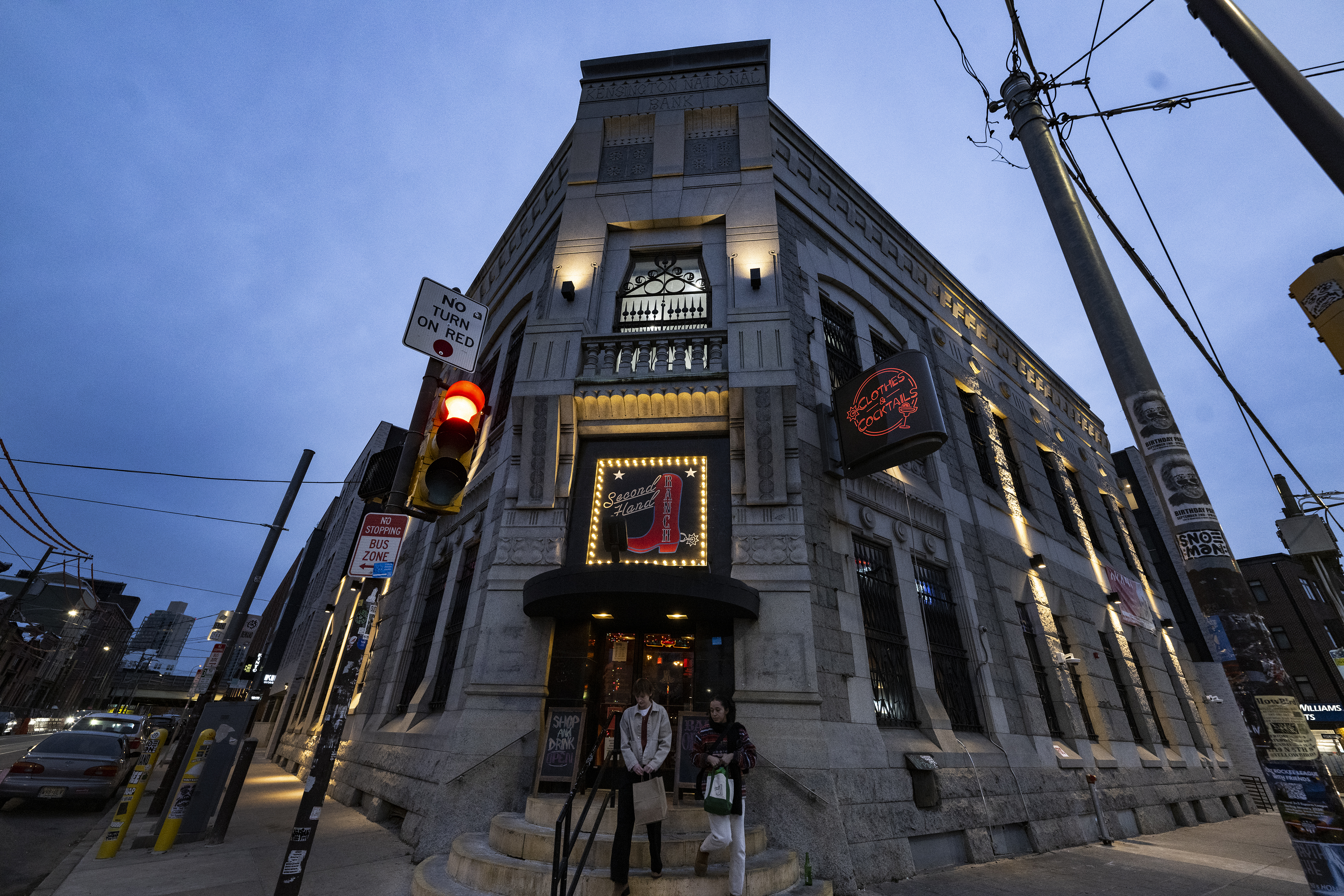
    Secondhand Ranch has a secondhand/vintage shop on one side, and a honky-tonk bar on the other, and it’s all deep in the heart of Fishtown.

    Kombucha for your face
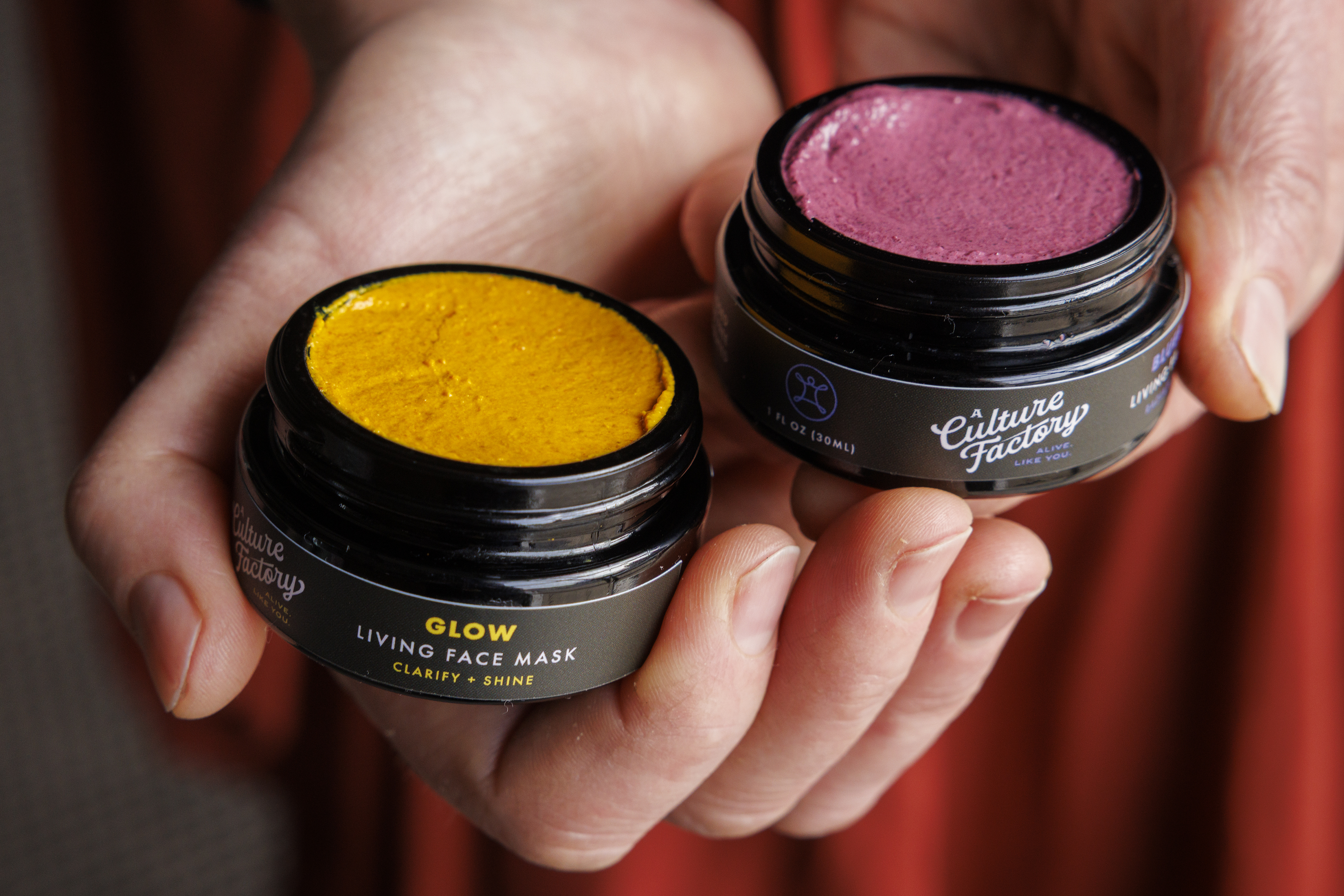
    “Our skin is alive,” says Olga Sorzana, founder of Phoenixville’s popular Baba’s Brew. She’s infusing her kombucha into a line of skincare products.

    How a holiday bar has ruined the idea for one reporter
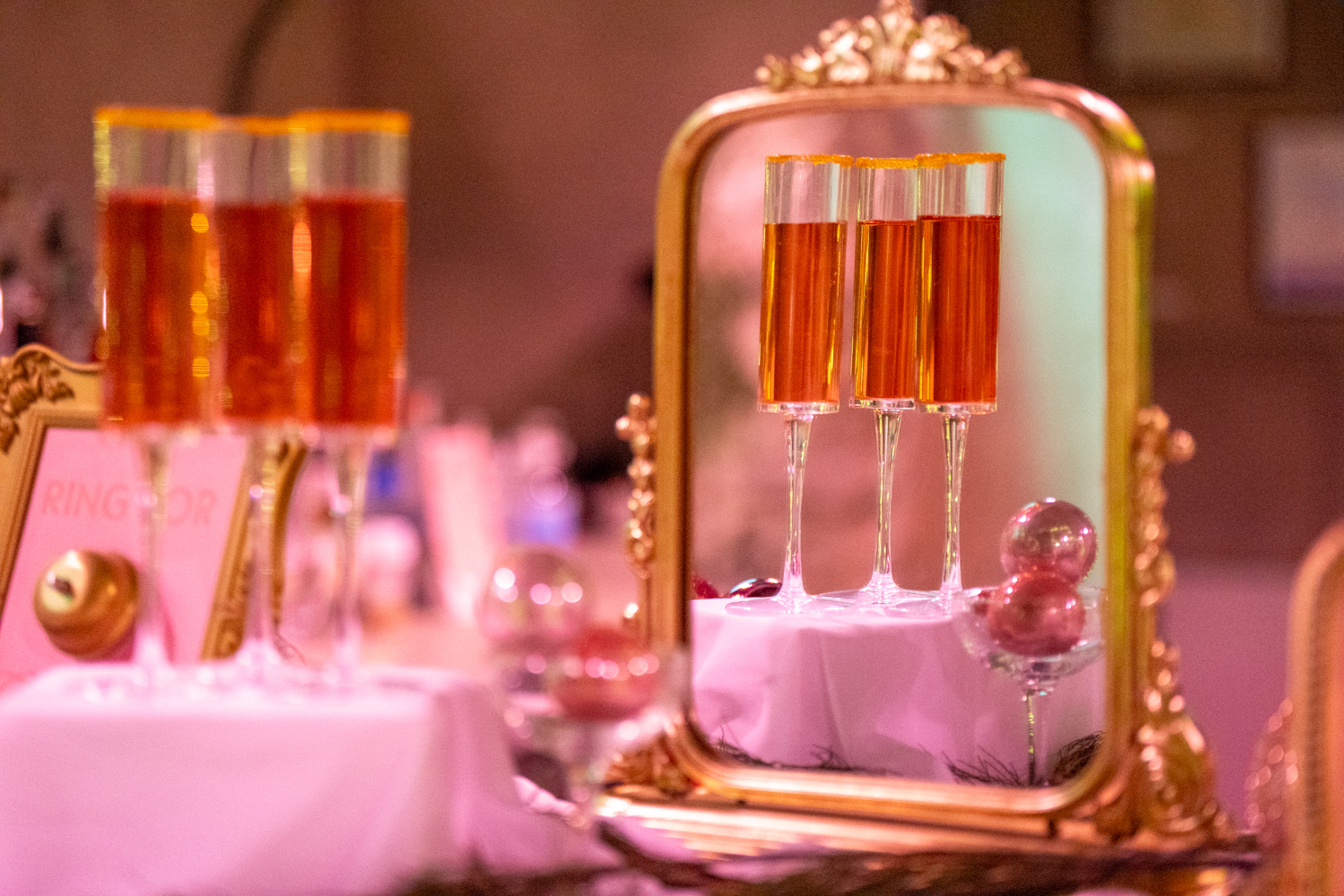
    Beatrice Forman says she went to Bucket Listers’ Emo Christmas bar in search of whimsy and holiday cheer — but “I left $139 poorer and feeling like a poser.” Bah, humbug.

    🎅 There is no shortage of holiday bars.

    The best things we ate last week
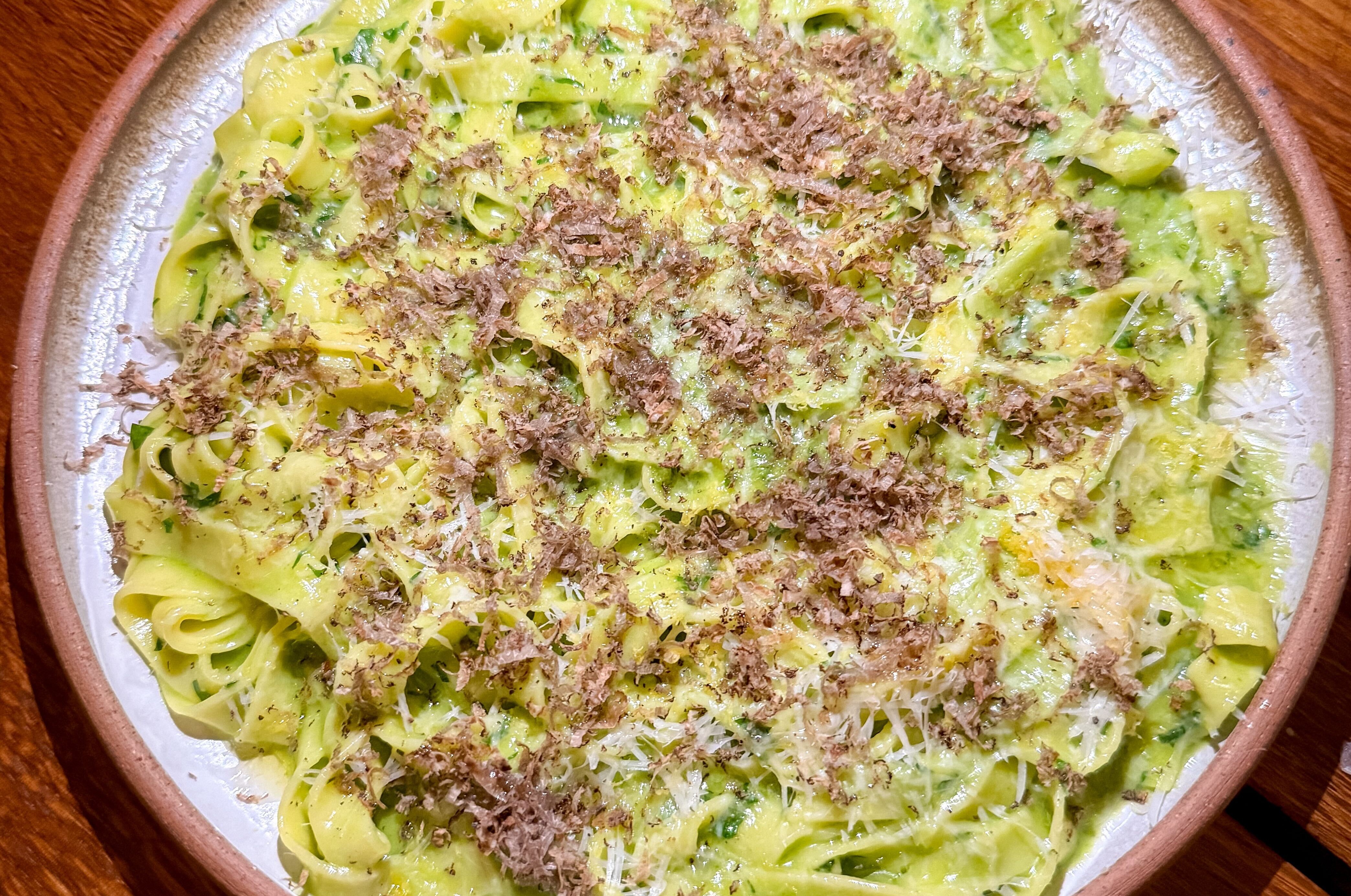
    On our plate this week: Tagliatelle at Alice, plus a burrata-topped brunch dish at the Love and our first bites of a PopUp bagel before the hyped chain comes to town.

    🤤 Want more of this weekly feature? Get caught up here.

    Scoops
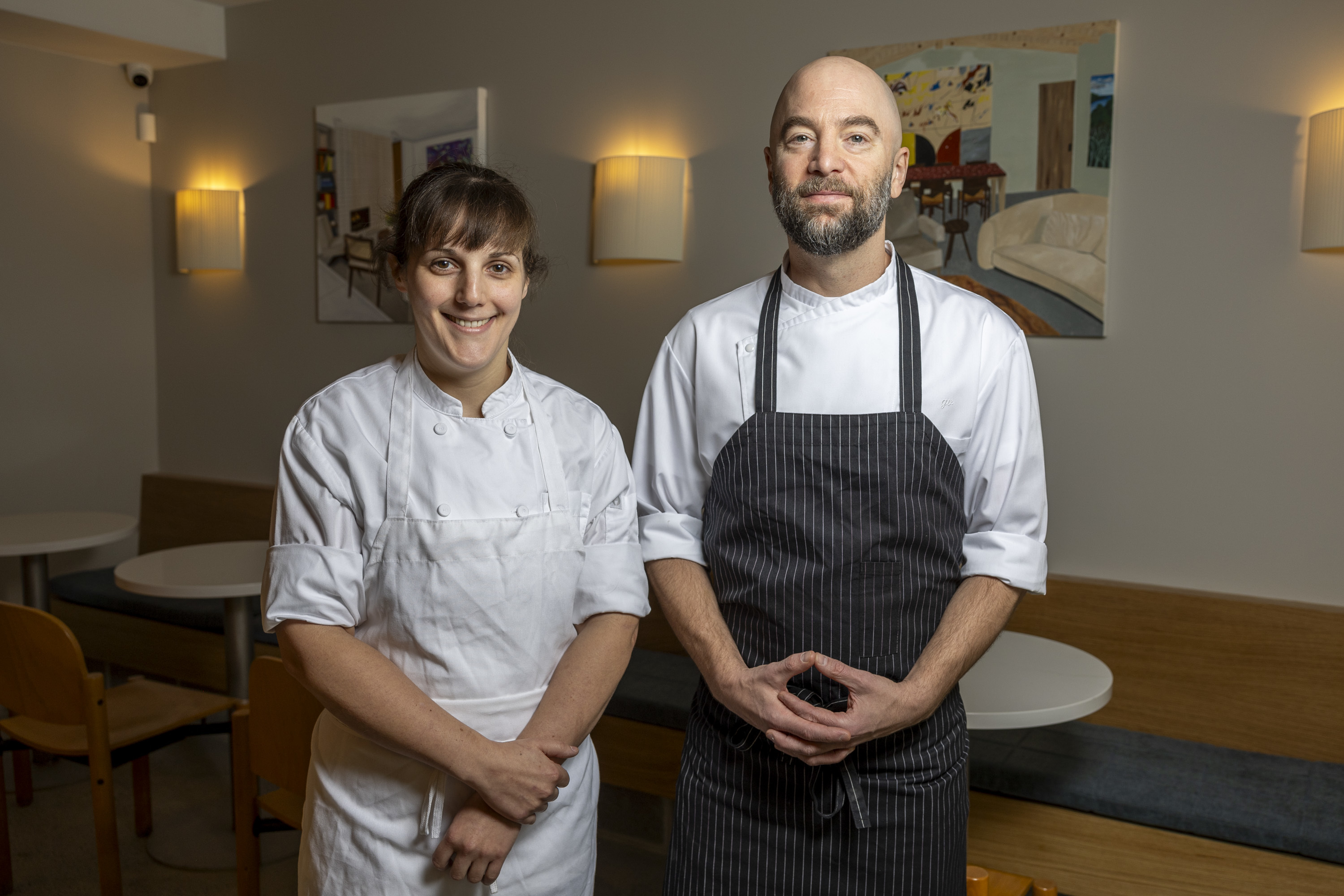
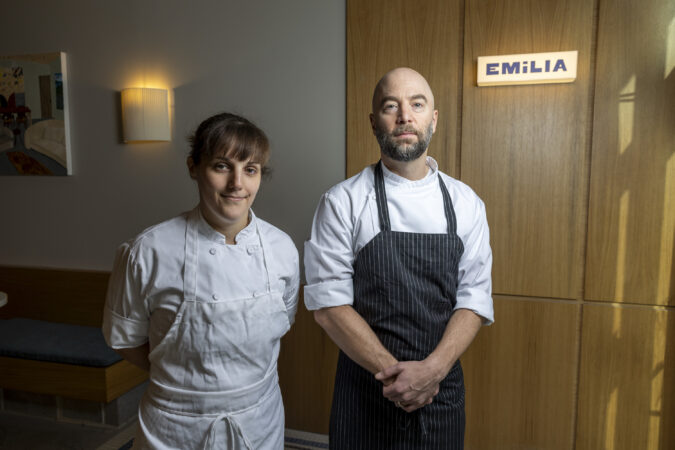
    Greg Vernick has a fourth restaurant on the way, and he’s headed to Frankford Avenue in bustling Kensington. Emilia will feature the Italian stylings of longtime Vernick Food & Drink chef de cuisine Meredith Medoway in an unfussy setting.

    If you had your ear to the ground, you’d know that the bar set to replace Roxborough’s former Tavern on Ridge will be called Hop Lil Bunny. Prospective owner says it’s just a hare early to discuss specifics.

    Restaurant report
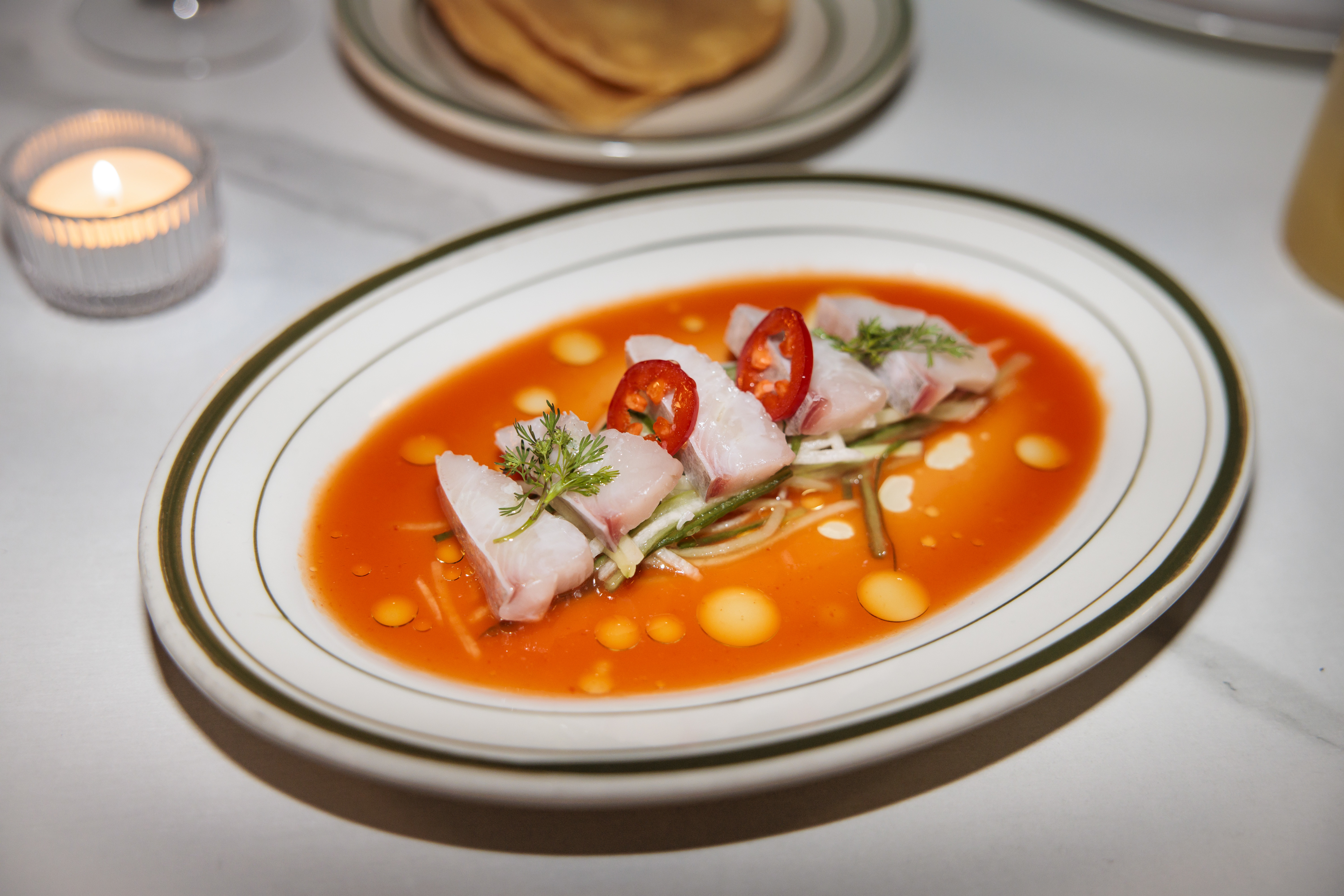
    Casa Oui. A French pastry chef and a Mexican restaurant manager fell in love, and the result is Queen Village’s newest all-day café. You can get coffee and pastries in the daytime and cocktails and Mexican fare (like the aguachile shown above) at night.
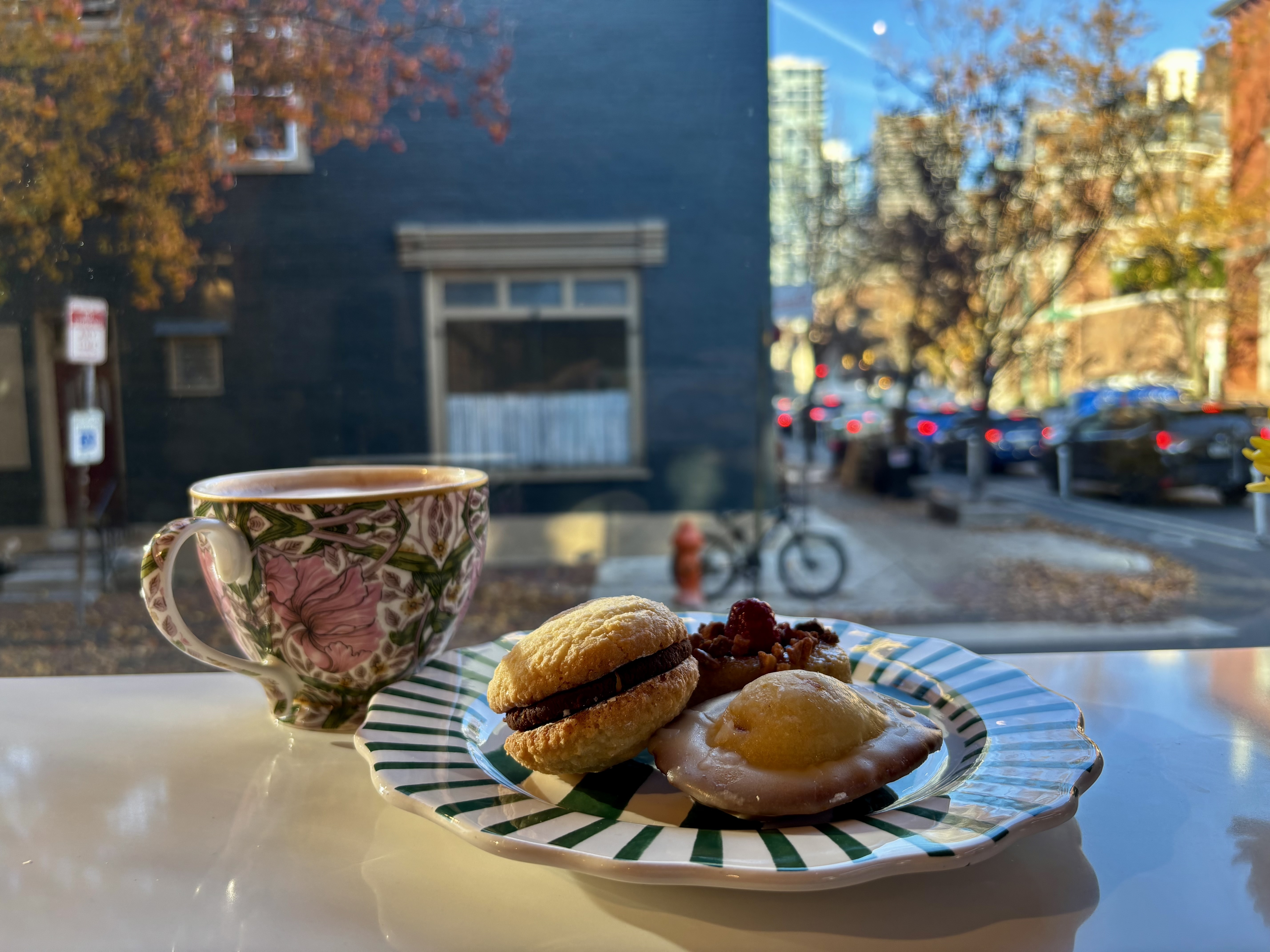
    La Maison Jaune. Zahra Saeed’s cozy, new French-style cafe near Fitler Square combines her two passions: delicious food and beautiful design. She plans to expand, which would send her line of pastries, including macarons de Nancy, financiers, and madeleines, all around the city.

    Among the openings on tap: Side Eye, the neighborhood bar coming to the former Bistrot La Minette space at 623 S. Sixth St. in Queen Village, and Bikini Burger at 44 Rittenhouse Place in Ardmore.

    Briefly noted

    Nine categories, four nominees in each: It’s the 2026 edition of the Tasties, the Philly restaurant awards handed out by the “Delicious City” podcast. The gala will be Feb. 1 at Live Casino, and the nominees are here.

    Manny’s Restaurant’s eight-year run in Holland’s Gateway Center will end Jan. 4 as the partners focus on their smaller deli at Willow Grove Pointe Shopping Center in Horsham.

    Zsa’s Ice Cream marks its finale Sunday after 14 years in Mount Airy. A year ago, Danielle Jowdy announced the shop’s “grand closing” as she sought to find a buyer. Final hours will be 3 to 9 p.m. through Friday, and noon to 9 p.m. Saturday and Sunday.

    Hunger-relief group Sharing Excess estimates that one truckload of food costs $1,290 to deliver and can feed 80 families for a month. For each $1,290 sponsorship, Sharing Express gives the donor a branded toy truck (like those Hess trucks). Details are here.

    ❓Pop quiz

    The Pennsylvania Farm Show will have a special feature when it starts in early January. What is it?

    A) red, white, and blue milkshakes

    B) a butter sculpture shaped like Saquon Barkley

    C) cow-tipping contests

    D) mushroom cheesesteaks

    Find out if you know the answer.

    Ask Mike anything

    Is 333 Belrose in Radnor ever coming back? — Marty P.

    Opened in 1999, this bar and grill tucked off King of Prussia Road has been closed since June as owners majorly remodel not only the interior but the menu. Reopening is targeted for mid-January. I’ll have more info on this and dozens of other openings in my “what’s coming in 2026″ feature just after New Year’s.

    📮 Have a question about food in Philly? Email your questions to me at mklein@inquirer.com for a chance to be featured in my newsletter.

    By submitting your written, visual, and/or audio contributions, you agree to The Inquirer’s Terms of Use, including the grant of rights in Section 10.
  • The new Pine Street Grill pays a tasty tribute to the long-gone Dmitri’s and an iconic Philly dish

    The new Pine Street Grill pays a tasty tribute to the long-gone Dmitri’s and an iconic Philly dish

    Restaurants are not around forever, so it is special when a signature dish takes on new life well after last call.

    Take the Milan salad, essentially a deconstructed BLT with shrimp dressed in a distinctive Italian-Russian dressing, popularized by Jimmy’s Milan. Three decades after the Rittenhouse supper club’s closing, it lives on two blocks away at D’Angelo’s. (Cofounder Tony D’Angelo was Milan’s chef.) Order the D’Angelo’s salad, take a bite, and enjoy the time warp.

    Restaurateur Jeffrey Chodorow, who will open the swank Mr. Edison at the Bellevue next year, told me that he plans to revive other Philly classics, including Georges Perrier’s galette de crabe, the Le Bec-Fin chef’s take on a Maryland crab cake.

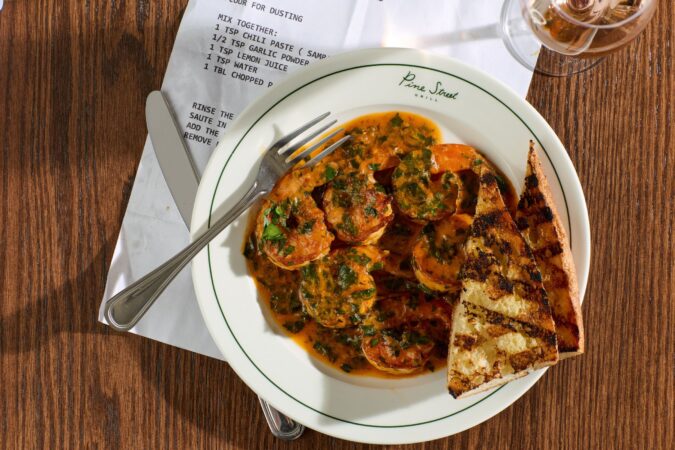
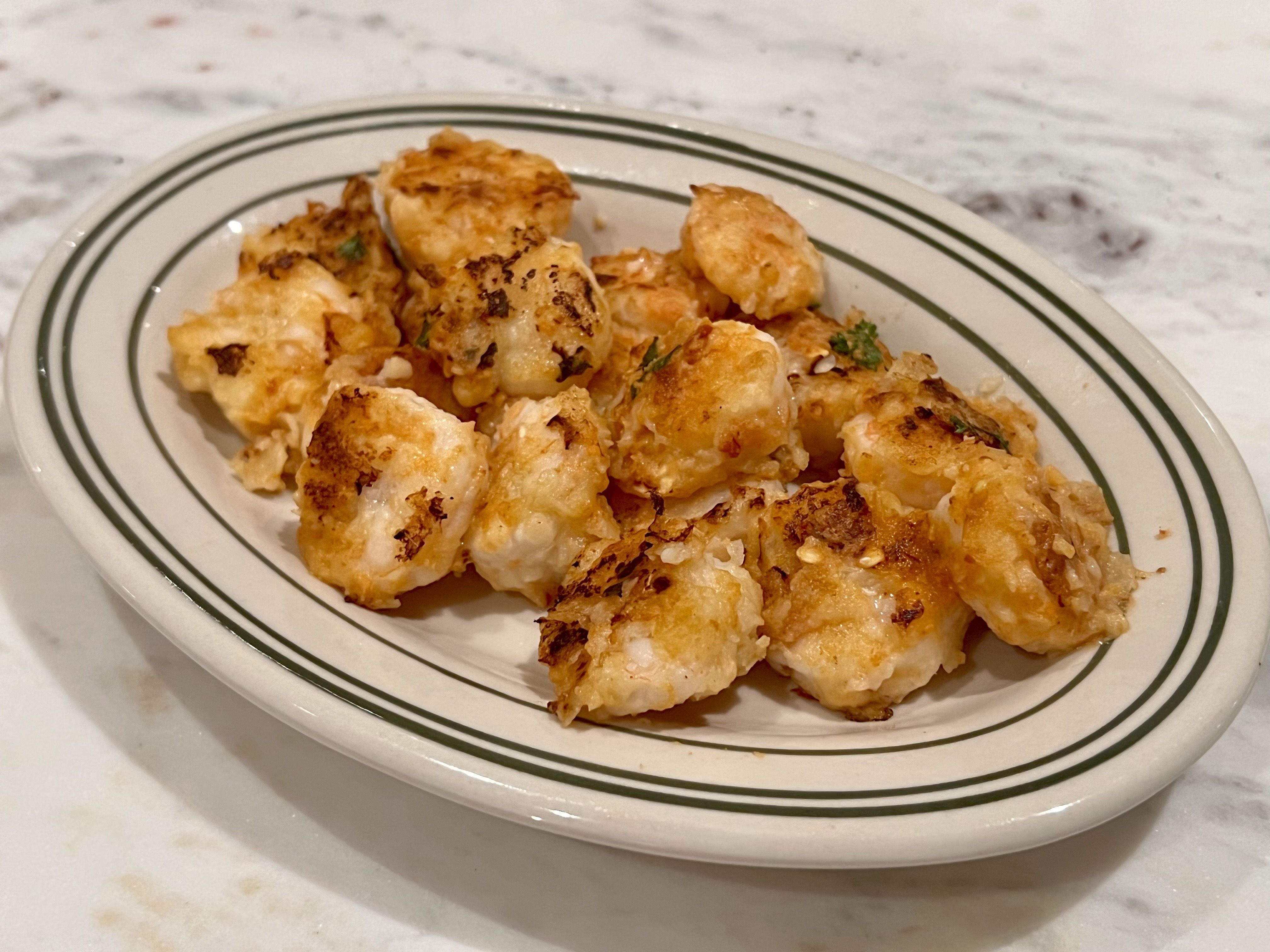
    Now let’s consider shrimp pil pil, which restaurateur Dmitri Chimes introduced in the mid-1990s at Pamplona, his Washington Square West tapas bar, and later served at all of the locations of Dmitri’s, his no-frills Greek taverna. The appetizer delivered a one-two punch of chili and garlic with a burst of lemon to prep you for your entrée — perhaps the smoky chargrilled octopus or a rich bowl of cioppino.

    When chefs Amanda Shulman and Alex Kemp were planning their new Pine Street Grill at 23rd and Pine Streets — which housed a Dmitri’s from 1999 to 2014 — they asked their Fitler Square neighbors what they wanted in a restaurant. “They all kept referring back to Dmitri’s,” Shulman said.

    Kemp said he called Chimes, who still lives in the neighborhood. “He hand delivered us the recipe,” he said. “We’re just super-excited to keep a part of his legacy going. I will say that ours is more of an homage since we know it could never be exactly the same. We started with Dmitri’s recipe as a base and then iterated it a bit, but inherently, it has [the] same ethos and qualities.”

    Kemp and Shulman have done justice to this classic.

    Pamplona/Dmitri’s recipe called for large shrimp. At Pine Street, they’re going big with six jumbo shrimp, topping them with an abundant sauce that is far creamier and more herbaceous than I remember. They’re also thoughtfully adding grilled bread to ensure plate-cleaning.

    Now perhaps they’ll consider adding spanakopita or baklava to the menu …

    Shrimp pil-pil, as prepared from Dmitri’s recipe.
  • With a new Michelin star in hand, chefs Amanda Shulman and Alex Kemp open another restaurant

    With a new Michelin star in hand, chefs Amanda Shulman and Alex Kemp open another restaurant

    Chefs Amanda Shulman and Alex Kemp have each built distinct destination restaurants — the newly Michelin-recognized Her Place Supper Club and My Loup. This week, they opened one together.

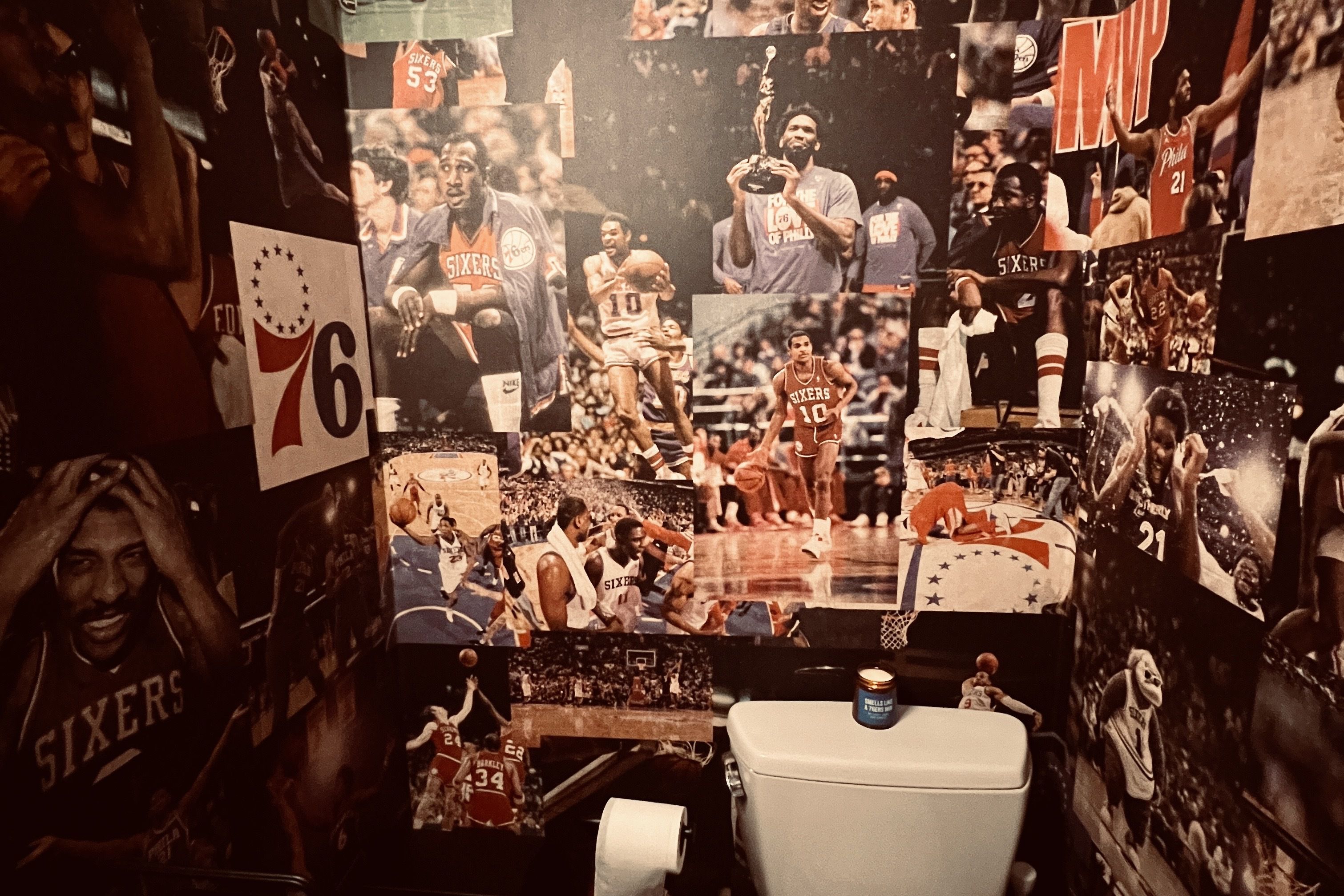
    Pine Street Grill, across from Fitler Square at 23rd and Pine Streets, is their take on a neighborhood restaurant. It’s a comfortable, restrained setting with white stamped-metal ceiling, Streamline Moderne-style schoolhouse light fixtures, white walls, and a long bar running through the narrow space. The two single-occupancy restrooms are intentionally contrasting: One is entirely pink, while the other is a tribute to the Sixers, from the photo-collage wallpaper down to the “Smells Like a Sixers Win” candle on the toilet tank and basketball-shaped soap dispenser on the sink. Fitler Square-based contractor Kaman Global built the restaurant, with Philadelphia firm Canno Design consulting.

    One restroom at Pine Street Grill has a 76ers theme.

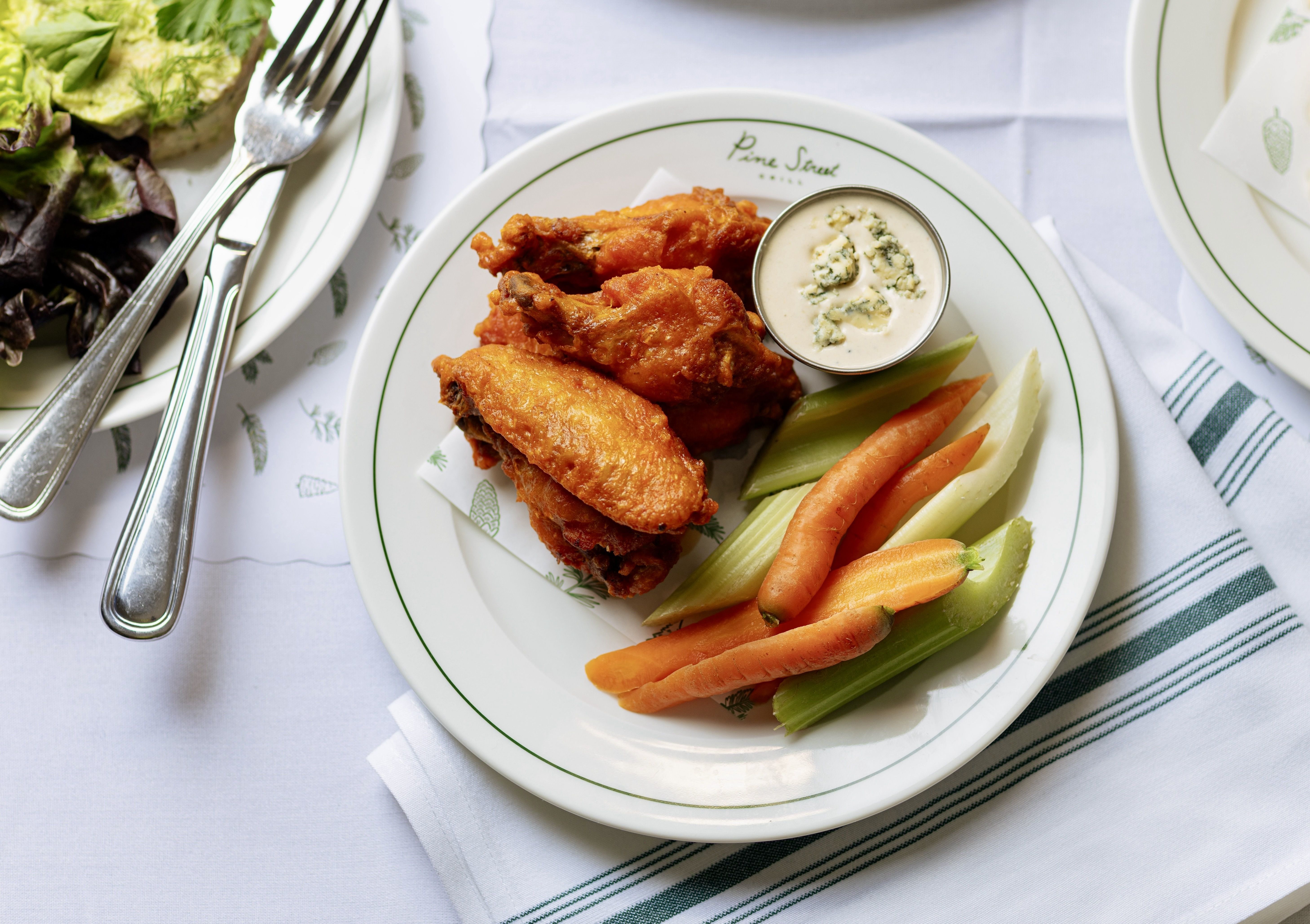
    The menu, by Shulman, Kemp, and chef de cuisine Jonathan Rodriguez, is timeless American. For starters, there’s a snack plate of mortadella-stuffed cherry peppers, olives, and spelt crackers ($11); shrimp Louie served in little gem lettuce cups with avocado and pickled onion ($16); wings in brown-butter hot sauce with Stilton blue cheese ($14); and a small soft pretzel with hollandaise mustard ($10). There also are Philly Balls, croquettes filled with roast pork, provolone, broccoli rabe, and spicy relish ($12 for two) that previously appeared on My Loup’s opening menu.

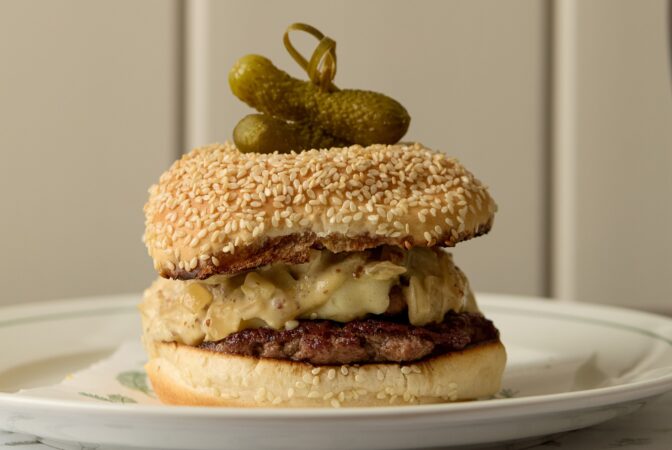
    Sandwiches include a turkey club with maple bacon on multigrain ($16) and a signature double dry-aged smashburger with Cooper Sharp and onion condiment on a seeded milk bun ($22).

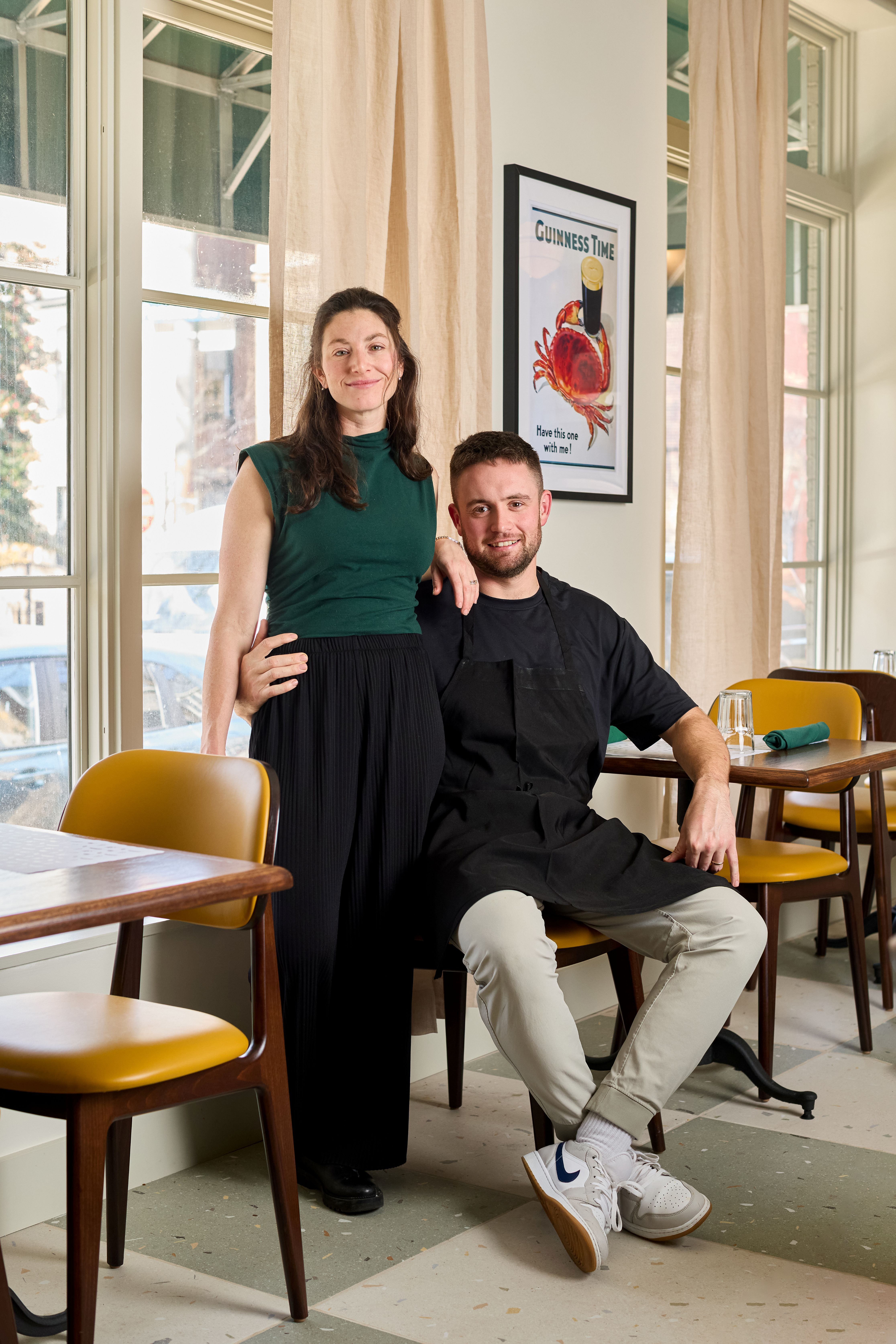
    Pine Street Grill owners Amanda Shulman and Alex Kemp.

    There’s a chopped Greek salad with Persian cucumbers, marinated feta, tomato, red onion, and oregano ($15) and a root-vegetable salad with chicories, aged cheddar, cranberries, and praline vinaigrette ($16). Entrées include hanger steak with pot-roast jus ($30); half a rotisserie chicken with gravy ($28); grilled salmon with piccata and spinach ($27); and eggplant Parmesan ($26).

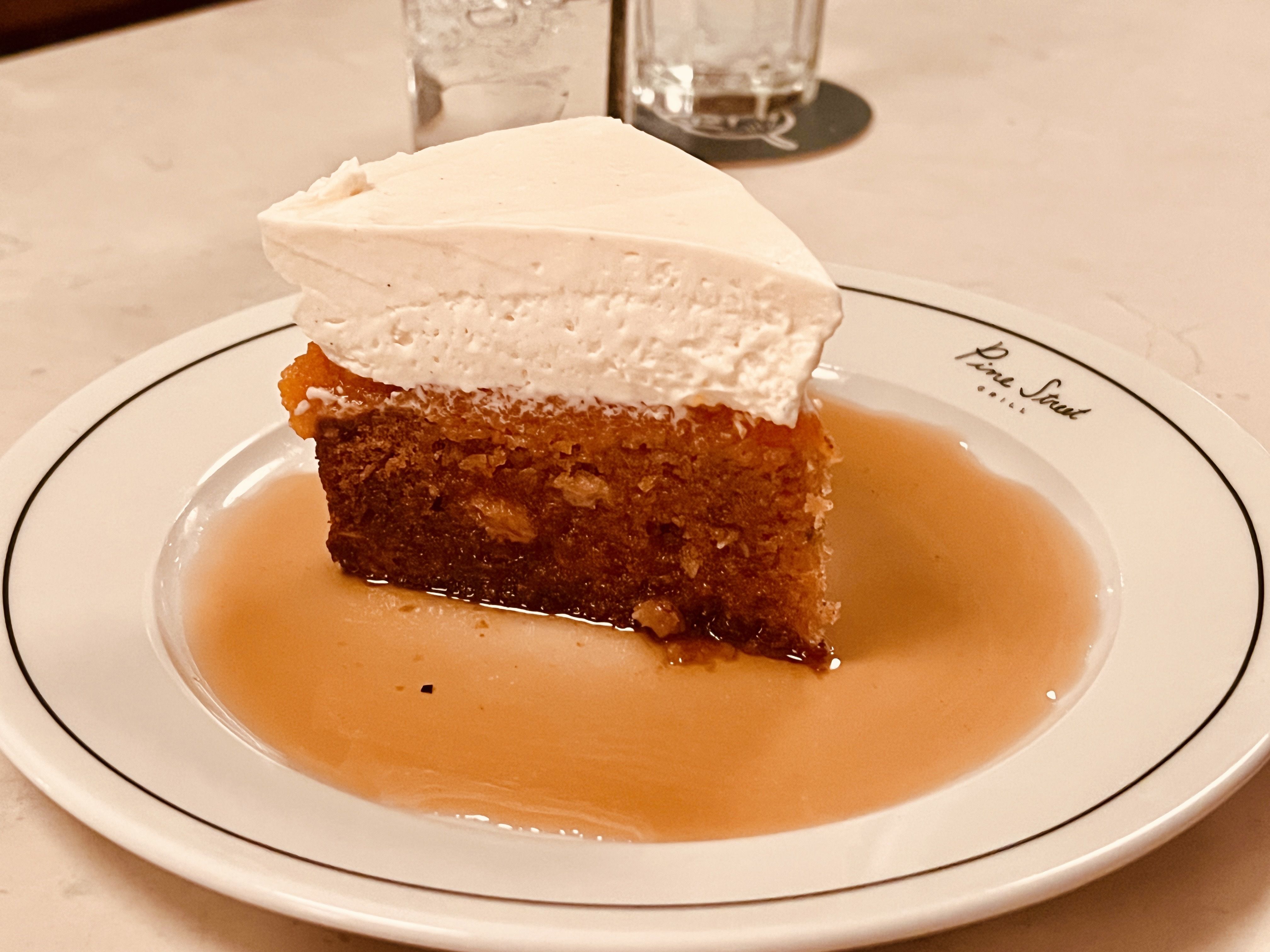
    Desserts include a nut-free carrot cake ($13) with rum raisins, carrot jam, and cream-cheese mousse; sourdough chocolate-chip cookie skillet ($12) with vanilla ice cream — the same cookie Shulman serves at Her Place; and a sundae ($14) of malted-milk ice cream with brownie bites, spiced walnuts, hot fudge, and a cherry.

    Carrot cake at Pine Street Grill.

    There’s even a children’s menu, dubbed Belle’s Bites, after their daughter’s middle name: $10 each for nuggets and fries, grilled cheese, crudités and ranch, and red or white shells.

    The late-night special for grown-ups, offered from 9:30 to 10:30 p.m., is any draft beer and the burger.

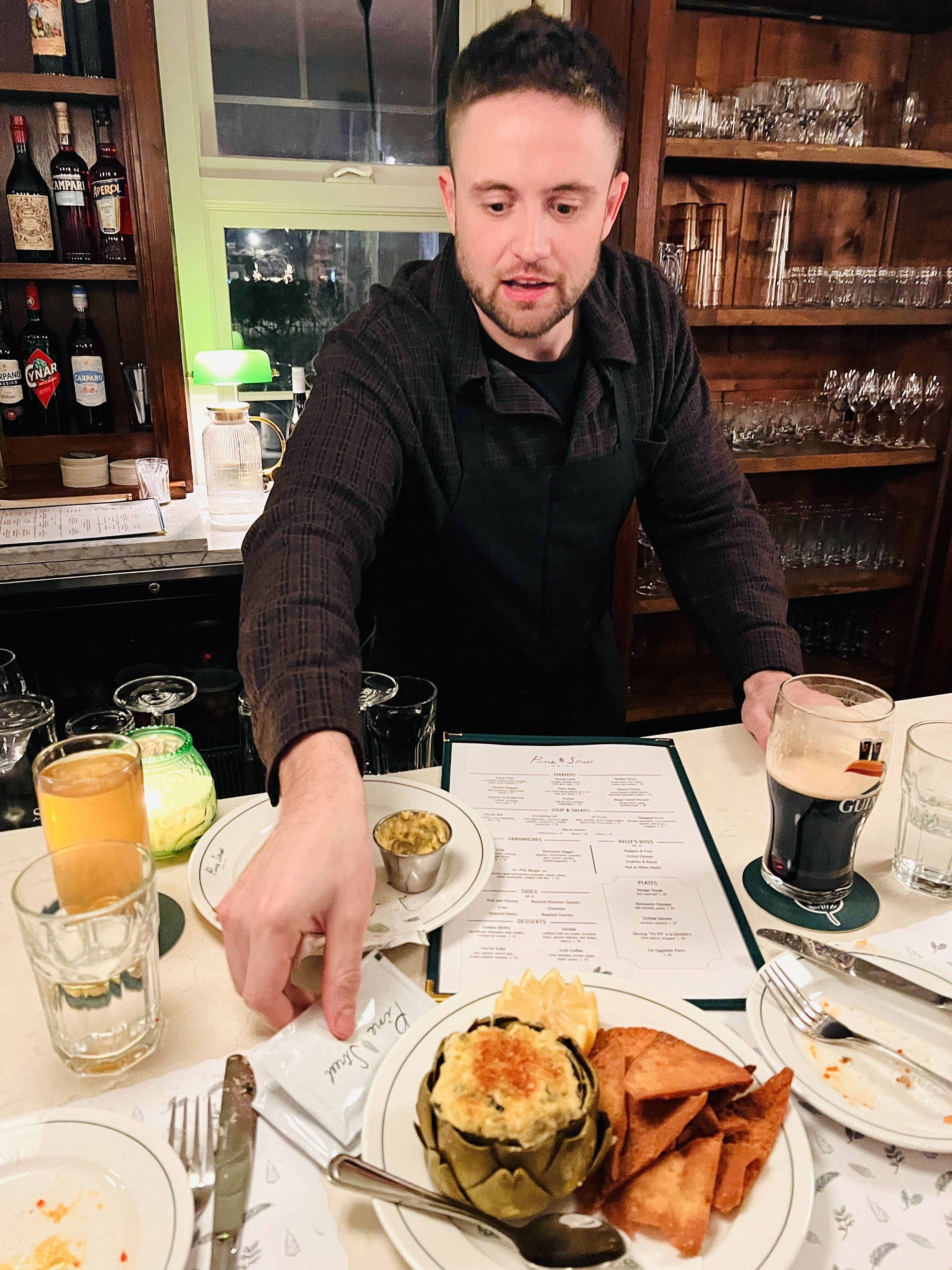
    Co-owner Alex Kemp serves an artichoke dip appetizer at Pine Street Grill.

    Jillian Moore, bar director of My Loup and bar consultant for the group, developed a cocktail list that includes a freezer martini made with local vermouth, a John Daly cocktail (a boozy Arnold Palmer) on draft, and Irish coffee. There’s Guinness, Strongbow cider, and birch beer on tap.

    Nicole Sullivan, Her Place’s beverage director, set up the wine list, which draws inspiration from European tavern culture. General manager Allyson Allen has worked with Shulman and the couple’s Libbie Loup group for several years, including at Her Place and Amourette, their 2024 summer pop-up.

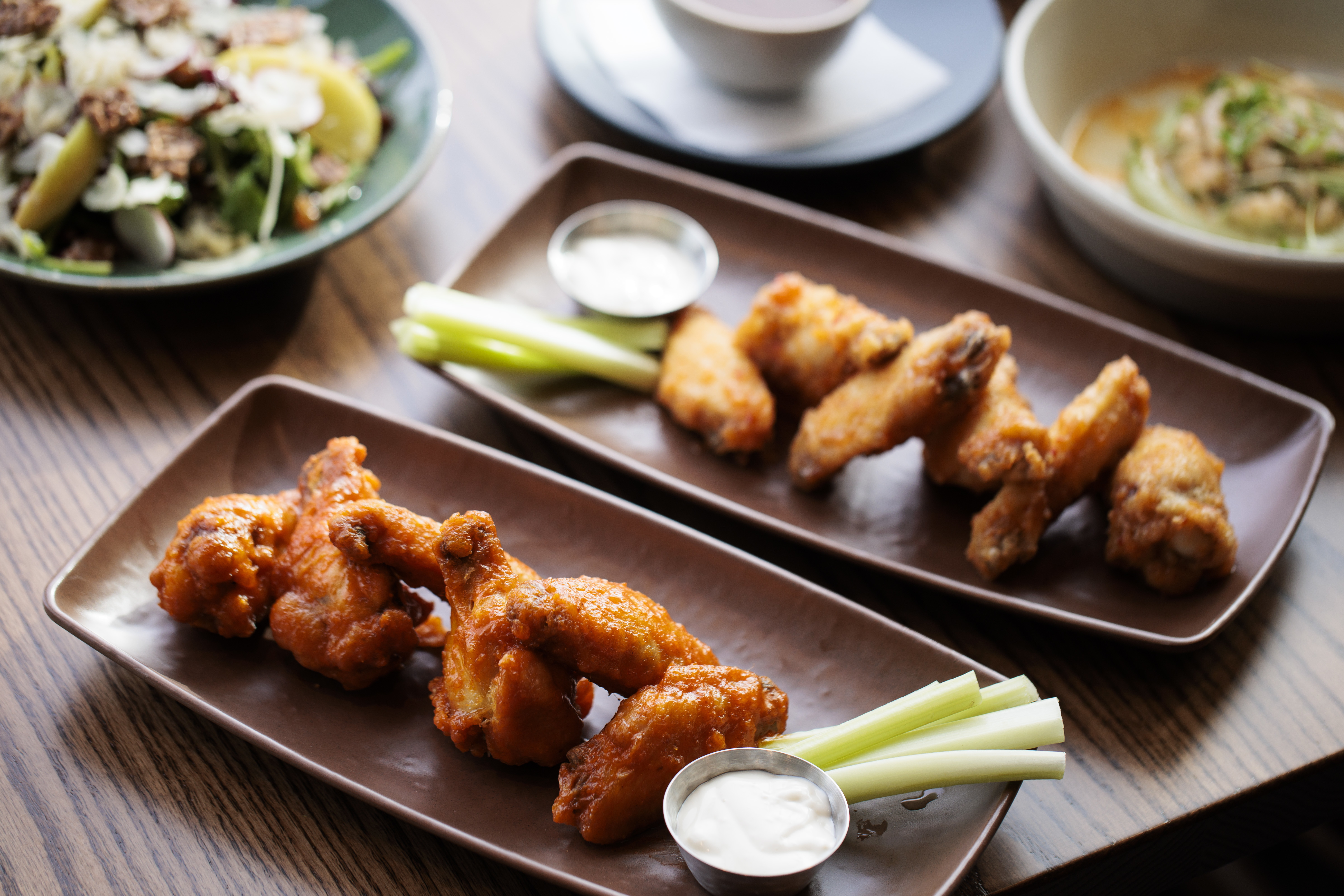
    Buffalo wings at Pine Street Grill, 2227 Pine St.

    Pine Street Grill’s corner space has had a busy history: It housed Stix, a vegetarian restaurant, from 1997 to 1999; a location of Dmitri’s from 1999 to 2014; a branch of wine bar Tria from 2015 to 2017; and most recently Cotoletta, which closed last year after a five-year run.

    Shulman, a Connecticut native and Vetri alumna, burst onto the Philadelphia dining scene in 2021 with Her Place, offering versions of the homespun dinner parties she hosted in her student apartment at Penn. She and Kemp opened My Loup in 2023, three months before their wedding. Shulman has received multiple James Beard Award nominations, including Emerging Chef nominations in 2022 and 2023 and Best Chef Mid-Atlantic in 2025. Kemp, who is Canadian-born, previously worked at Montreal’s Joe Beef and New York’s Eleven Madison Park. The couple met at Momofuku Ko in New York.

    Pine Street Grill, 2227 Pine St., no phone, pinestreetgrill.com. Hours: 4 to 11 p.m. Wednesday to Monday; kitchen closes at 10:30 p.m. Half of the dining room is reservable via OpenTable for parties of up to eight; remaining tables are held for walk-ins. Happy hour: 4 to 6 p.m. weekdays, with a discounted food menu and $2 off draft beverages.

  • Emilia will be chef Greg Vernick’s new restaurant, opening soon in Kensington

    Emilia will be chef Greg Vernick’s new restaurant, opening soon in Kensington

    With two acclaimed restaurants and a high-end coffee bar in Center City, chef Greg Vernick wasn’t looking to expand two years ago when a close friend introduced him to developers working in the Fishtown-Kensington corridor.

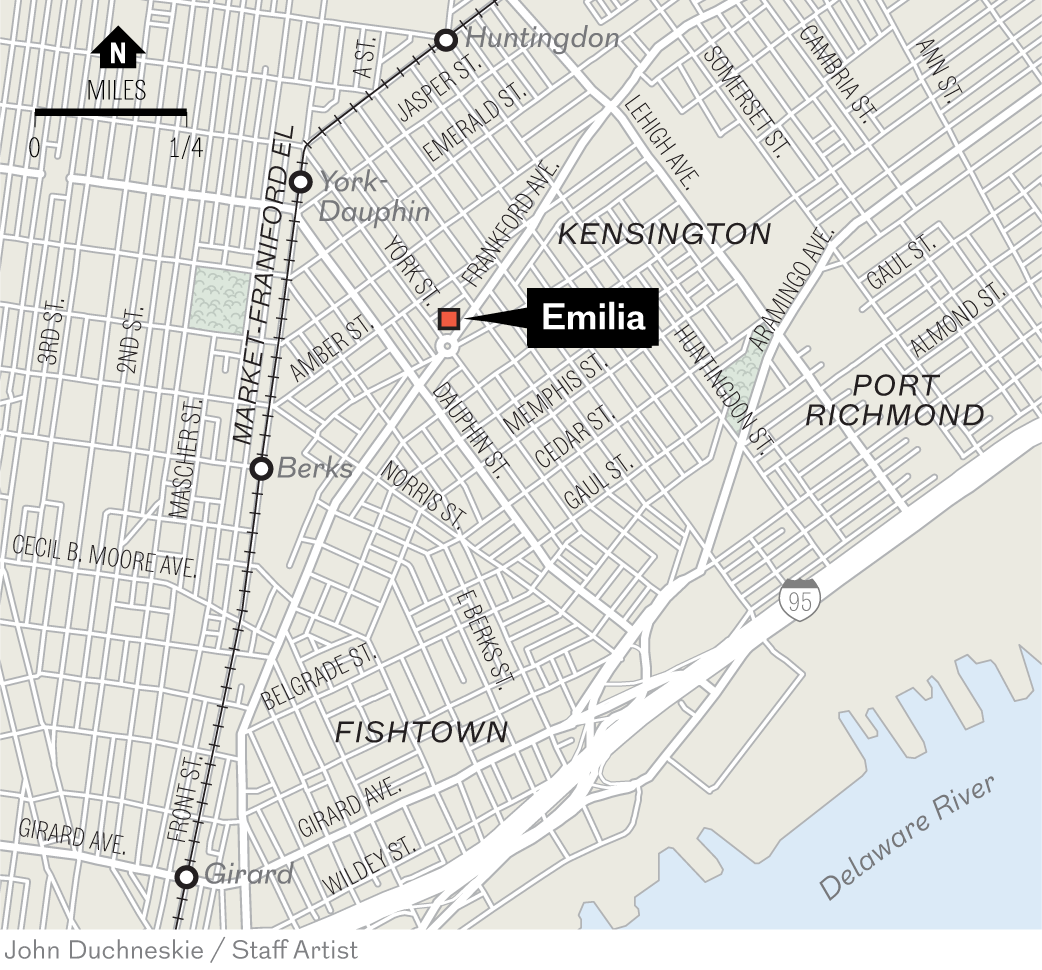
    They had a mixed-use building going up on Frankford Avenue, just north of the York Street roundabout. Vernick walked the neighborhood. “It reminded me of the East Village — a place you want to hang out at night, but also a real community,” he said. Still, Vernick was not entirely sold on the project until he and his wife, Julie, started spending more time nearby, dining at Fiore across the street and around the corner at Picnic and Zig Zag BBQ.

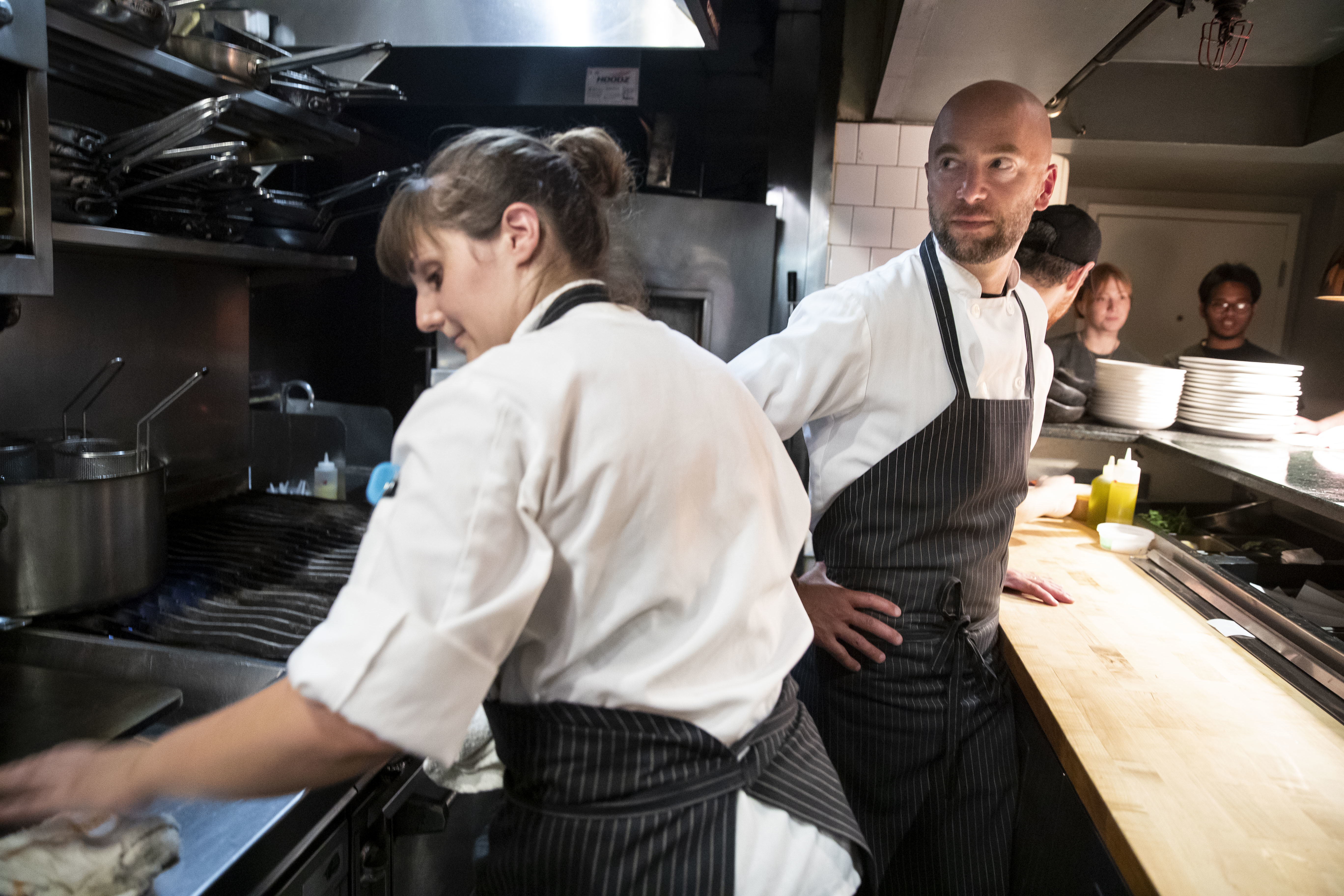
    Chef de cuisine Meredith Medoway and chef Greg Vernick in the kitchen at Vernick Food & Drink in 2022.

    The developers — Henry Siebert, Ryan Kalili, and Michael Dinan, all Vernick regulars — were keen on having an Italian restaurant in the building, at 2406 Frankford Ave. Vernick’s thoughts naturally turned to Meredith Medoway, the longtime chef de cuisine at his Vernick Food & Drink on Walnut Street. “Her heart has always been in pasta and Italian food,” Vernick said. “She took our pasta program from really good to great. So I started thinking: This could be the right person.”

    They’ve targeted “early 2026” for Emilia, a neighborhood trattoria featuring a seasonally flexible menu built around house-made pasta and live-fire cooking. (Vernick’s connection to the project has not previously been made public, and the restaurant’s name, recently set into tiles at the entrance, has been a subject of speculation on community Facebook groups.)

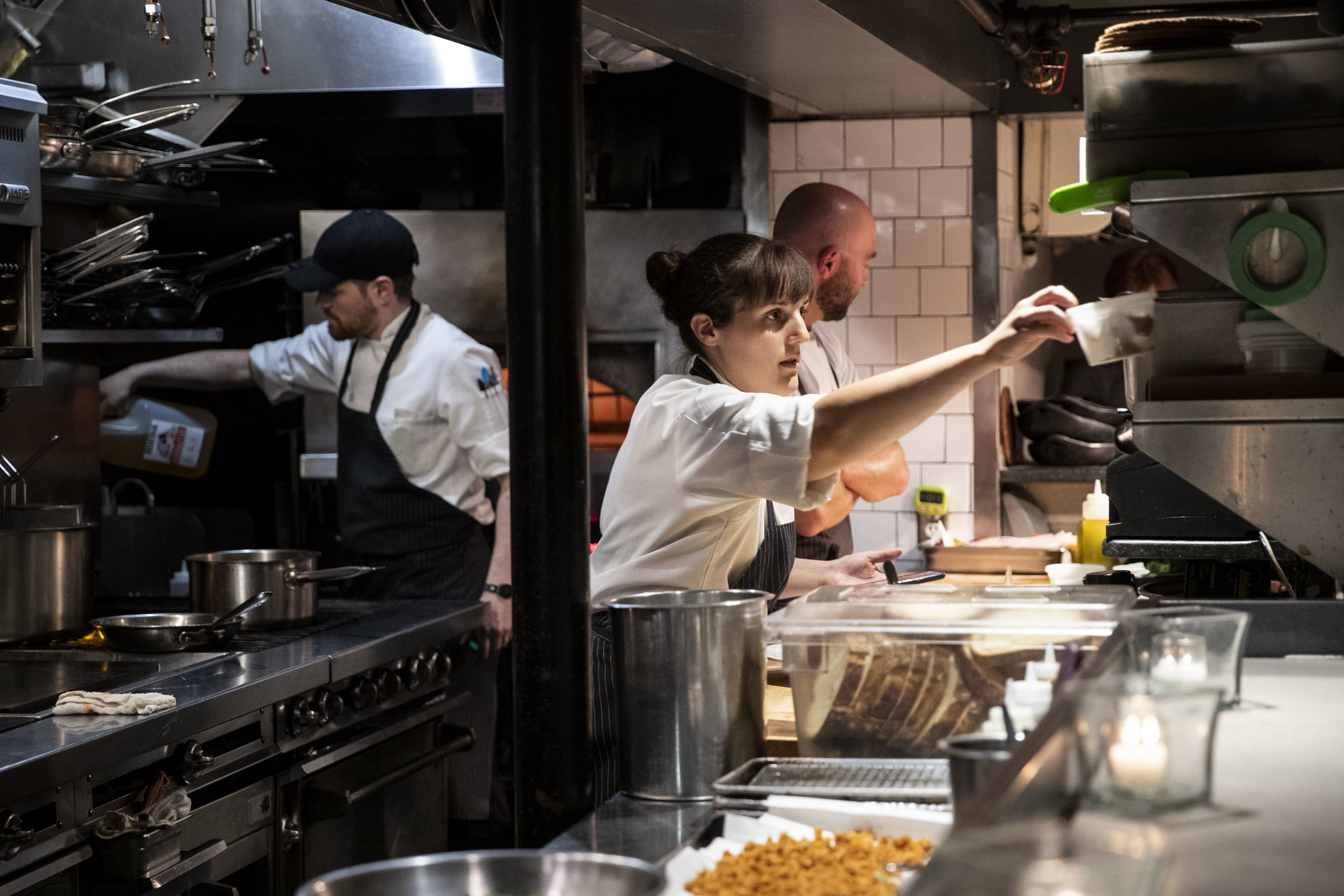
    Chef de cuisine Meredith Medoway working in the kitchen at Vernick Food & Drink in 2022.

    Canno Design’s Carey Jackson Yonce, who worked on Emilia with California-based designer Bob Bronstein, said they were going for “calmness, cleanliness, and contrast,” using contrasting materials, such as cinderblock on the bar’s front, spruce slats lining the ceiling, and oak panels on the walls. (During a visit last week, Vernick declined a request to photograph the space, as it was not completed.)

    “I wanted it to feel like the kind of place where you walk in and exhale and relax,” Vernick said. “Industry-friendly, not precious. We want to hit two markets from day one: the neighborhood and the industry. If you get those right, everything else falls into place.”

    Emilia restaurant is at 2406 Frankford Ave.

    There will be seating for about 60 in the dining room, with 20 additional seats in a lounge area and 10 at the bar. The bar and lounge are intended for walk-ins, while the main dining room will lean more heavily on reservations.

    The 33-year-old Medoway — a Cherry Hill native like Vernick, who is 45 — studied political science at American University in Washington, D.C.

    During one college summer, she worked at Hinge Café in Port Richmond and fell in love with cooking. She interned at Vernick Food & Drink, stayed on, worked every station, and moved to Hearthside in Collingswood for its 2017 opening. She spent three months cooking in Calabria, and flew back to the United States to work at Vernick Fish at its opening in 2019. She returned to Vernick Food & Drink in 2021.

    Greg Vernick and chef Meredith Medoway in the lounge at Emilia.

    At Emilia — a purely made-up name (Vernick said he was tired of putting his own name on restaurants) — Medoway will work on a 48-inch grill fueled by charcoal and oak. The menu is intentionally restrained: about six small plates, six pastas, and six large dishes, supplemented by nightly specials.

    Medoway said the pasta dishes are rooted in personal experience rather than strict regional rules. One anchor will be tortellini in brodo, based on a handwritten family recipe she received while staying in Emilia-Romagna. Another is what they’re calling chicken ragù bianco — a white ragù made with hand-cut chicken and offal — inspired by a staff meal that they ate at the American Academy in Rome during a tour of Italy.

    “It was the best pasta we had on that trip,” Vernick said. “Simple, balanced, and deeply satisfying.”

    Elsewhere, the menu leans toward lighter preparations and Vernick’s bold style, with brothy sauces, acidity, and restrained use of fat rather than heavy butter-and-cheese finishes. Subtle char from the grill will appear throughout the menu, even in dishes that do not come directly off the fire. Proteins include rabbit prepared in cacciatore style with orange, rotating fish dishes, shellfish stew, and a nightly steak special.

    Bread service will be complimentary: house-made focaccia, the imported Italian breadsticks known as grissini, and Mighty Bread’s sesame ciabatta. A separate bread course, the crunchy carta da musica, will be offered as a menu item.

    “We want the neighborhood to feel like this is their place,” Medoway said. “You shouldn’t need a reservation just to come in for a drink and a snack.”

    The wine list will focus exclusively on Italian bottles. The cocktail program is still being finalized but is expected to emphasize lighter, simpler drinks.

    Emilia is expected to employ between 40 and 50 people. Vernick said opening a restaurant today requires tighter menus and less waste than a decade ago, but also greater attention to staff experience — from locker rooms to staff meals — as an essential part of operations.

    “We’re building this deliberately,” Vernick said. “It’s taken time — but that’s the point.”

  • Grab a drink and go on a treasure hunt at Fishtown’s new Secondhand Ranch, a thrift store inside a honky-tonk

    Grab a drink and go on a treasure hunt at Fishtown’s new Secondhand Ranch, a thrift store inside a honky-tonk

    Waylon Jennings drawls as customers cradle bottles of Lone Star beer while browsing the racks at Secondhand Ranch — the latest attraction deep in the heart of Fishtown.

    The rough-hewn, outlaw-country theme bar paired with a retail store specializing in secondhand clothing and vintage merchandise opened Dec. 6. It’s set behind saloon-style swinging doors inside the Frank Furness-designed former bank building at Frankford and Girard Avenues, across from Garage, Joe’s Steaks, and Johnny Brenda’s.

    This retail-bar pairing dates to 2020, when founder Josh Sampson opened Garage Sale Vintage in Denver. Sampson describes the idea as “a love letter to the circular economy — with salt on the rim.”

    The three pillars, he said, are sustainability, a focused margarita program, and partnerships with local vendors. He later expanded it to two locations, with a tacos-and-tequilas menu, in Nashville and then to New York.

    Decor items and clothing are shown at the thrift store inside the new Secondhand Ranch in Fishtown.

    Seeking a space in Philadelphia last year, he struck a deal with Alterra Property Group for the Fishtown building. Soon after, he became embroiled in a copyright lawsuit with the operators of Garage, the bar across the street.

    Sampson changed the name and concept for the Philadelphia location. Rather than strictly vintage items, he decided that Secondhand Ranch would be a country bar paired with secondhand retail, with a smattering of vintage items.

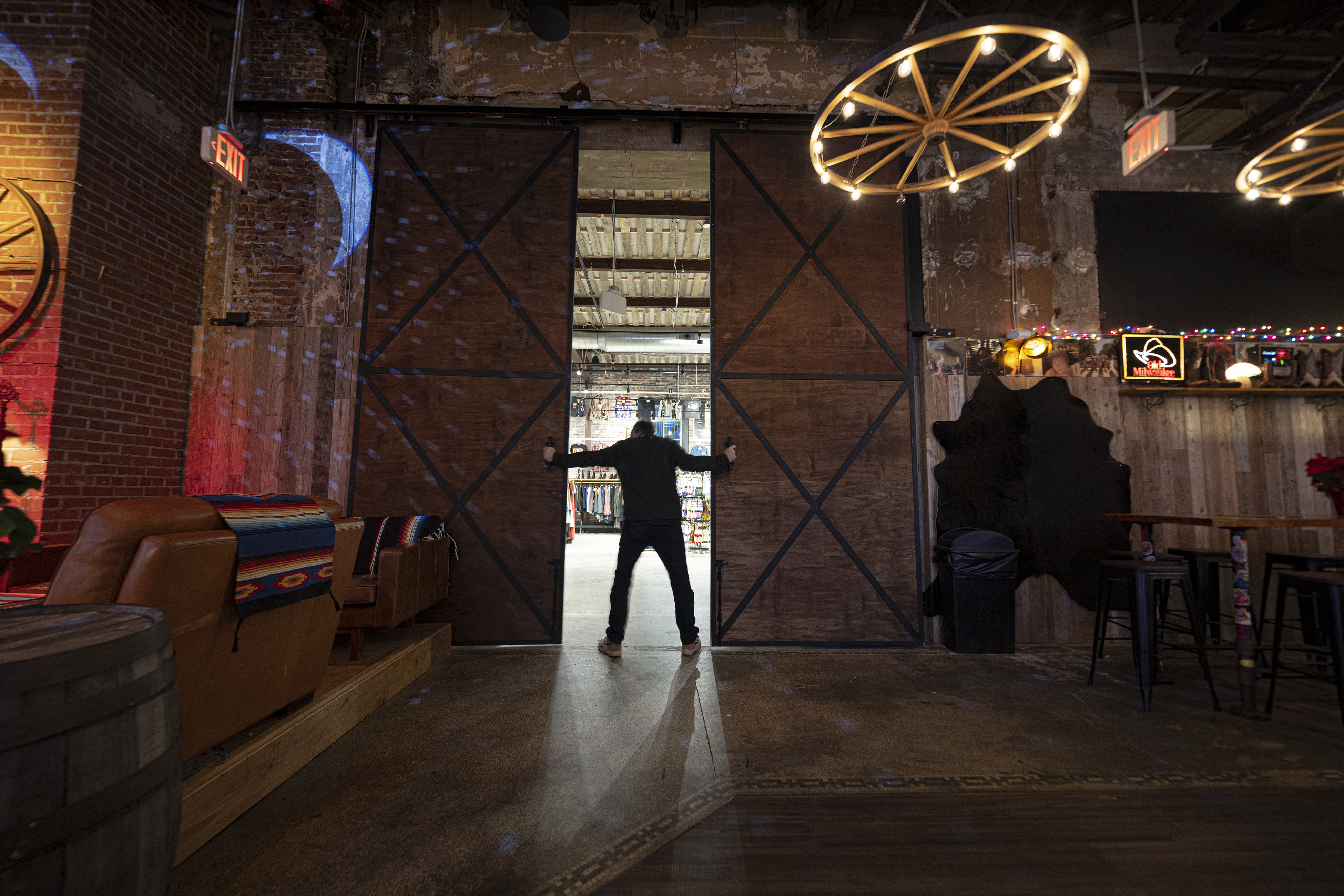
    Barn doors separate the bar and retail at Secondhand Ranch in Fishtown.

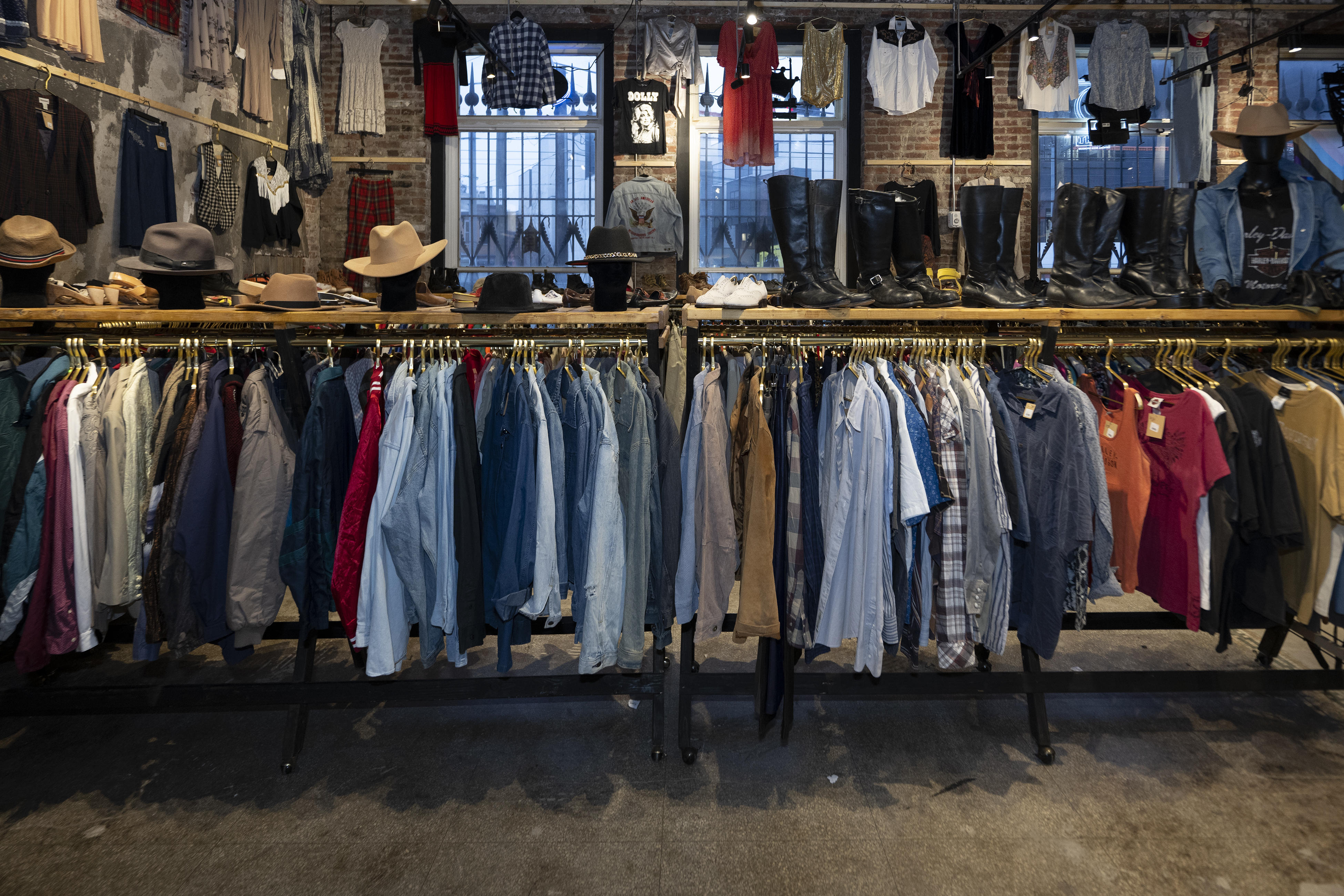
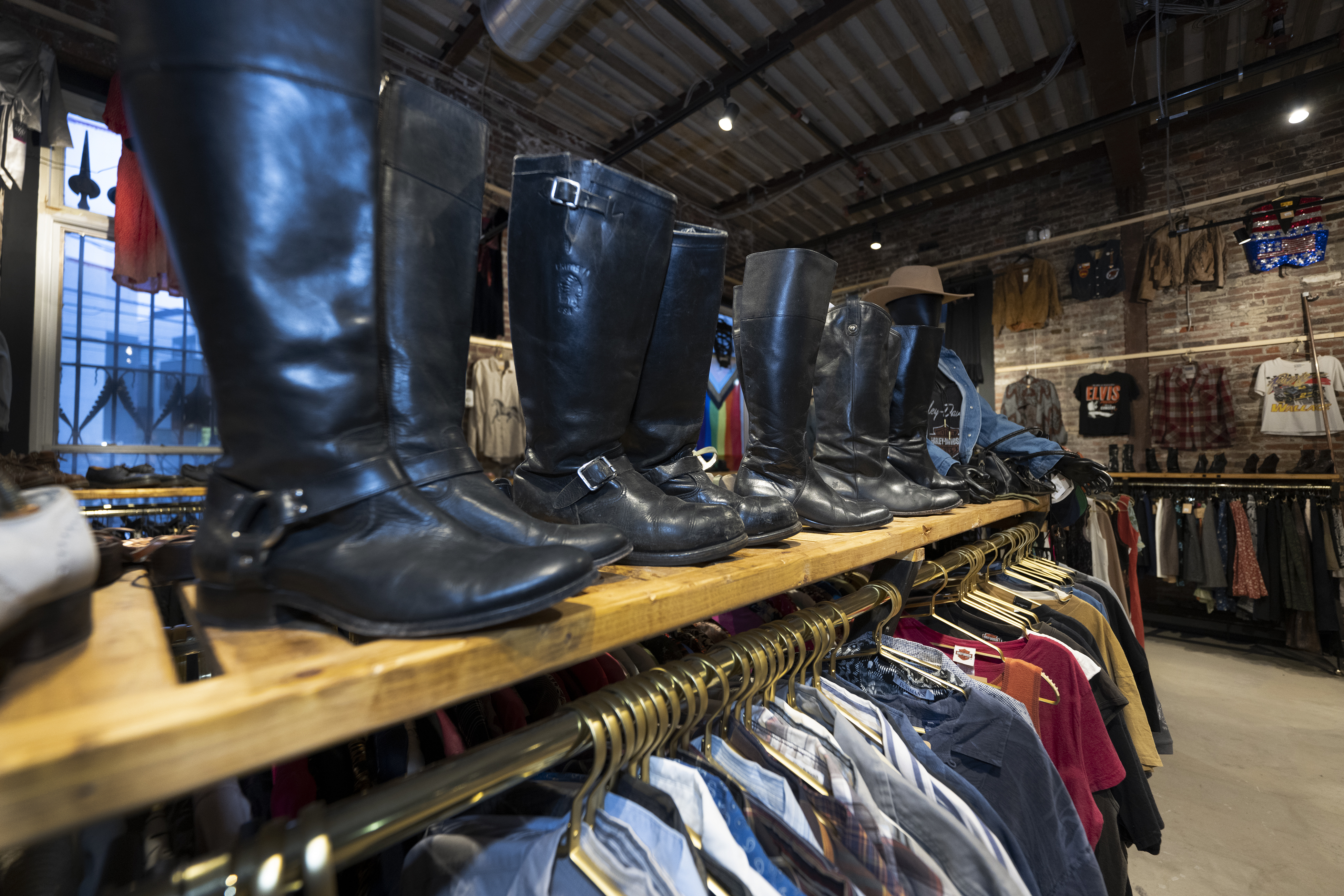
    The distinction between secondhand and vintage is crucial: “Secondhand is a much broader category,” Sampson said. “With vintage, it’s simple — everything has to be 20 years old or more. Secondhand lets us focus more on sustainability and diverting usable goods from landfills. It also allows for lower price points and a different kind of fun.” Think racks upon racks of T-shirts, sweaters, hats, jeans, button-down shirts, as well as a rodeo’s worth of cowboy boots — all secondhand.

    The retail operation, behind barn doors, is split evenly between in-house curation and a vendor collective, said manager Nikki Gallipoli. Each vendor (such as Zac Cowell, known as VintageZac) manages its own rack in the store — “they come in, sort it, and keep it updated,” she said. Inventory includes vinyl records, books, and knickknacks.

    Decor items and clothing are shown at the thrift store inside the new Secondhand Ranch in Fishtown.

    “Part of the experience is grabbing a drink and going on a treasure hunt,” Gallipoli said.

    A retro-style gift shop within the space focuses on new, non-clothing merchandise such as accessories, novelty items, stickers, matchbooks, and handmade goods. Much of that inventory is sourced from small independent businesses online rather than strictly from Philadelphia suppliers. “The clothing itself isn’t always handmade, but it is always secondhand,” she said.

    Decor and clothing items are shown at the thrift store inside the new Secondhand Ranch in Fishtown.

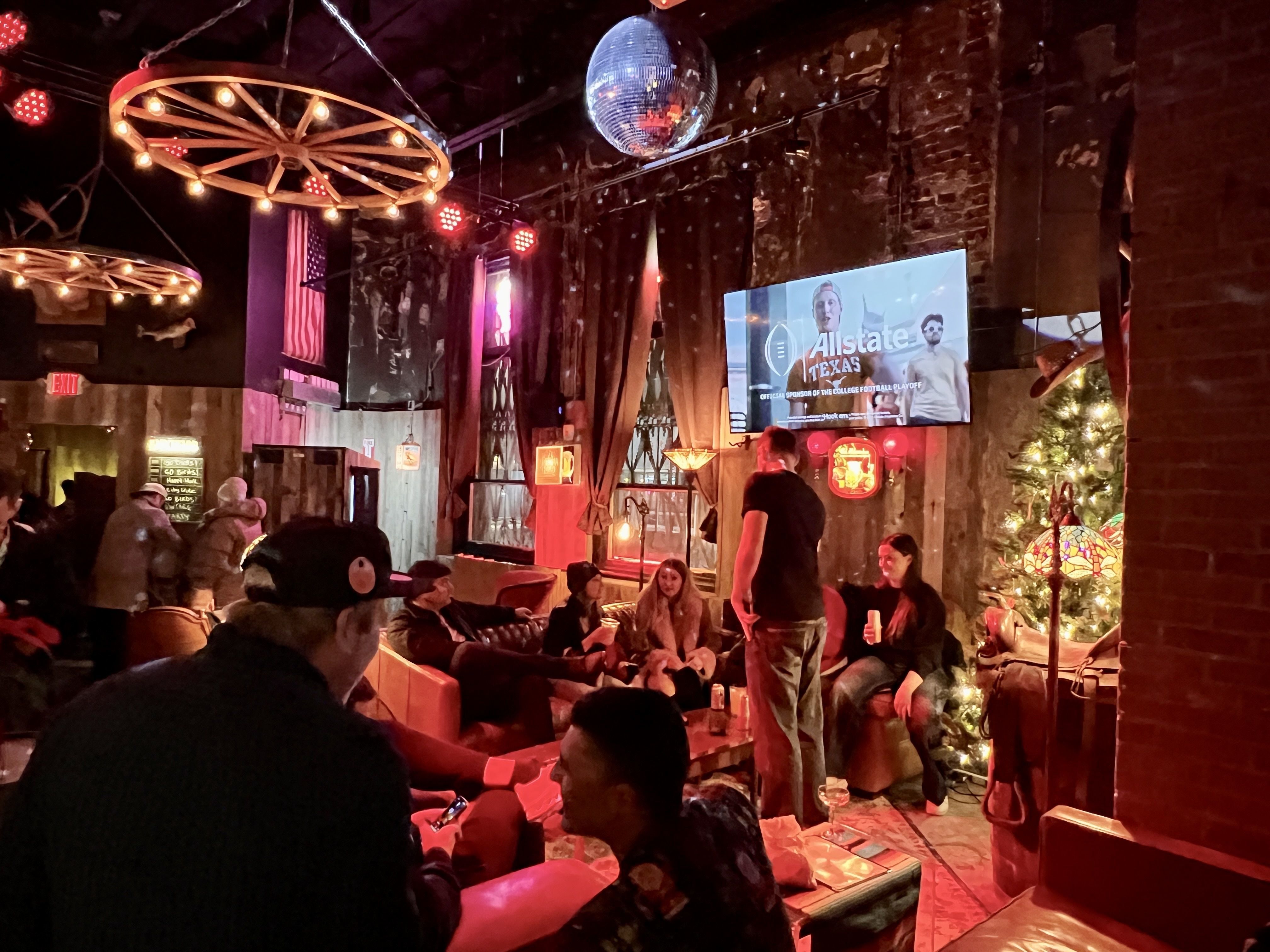
    Secondhand Ranch leans fully into honky-tonk aesthetics and sound for what Sampson calls “very much the kind of vibe you’d see in Austin or Nashville.”

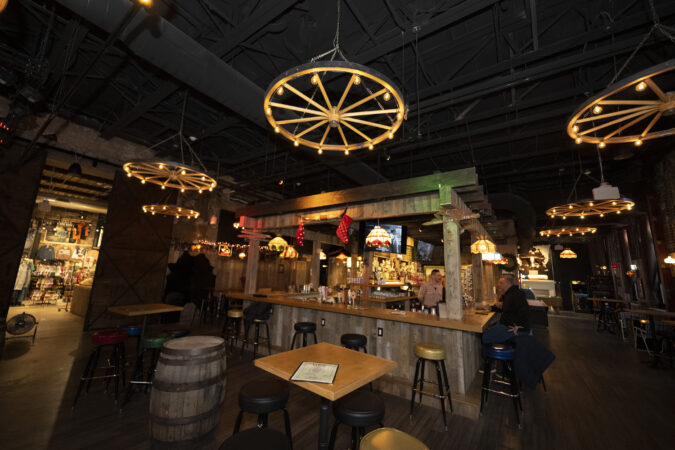
    The massive bar, set beneath wagon-wheel chandeliers, seats about 30, with an additional 30 to 40 seats spread throughout the room. The former bank vault has been preserved and now functions as cold storage for beer. There are old-fashioned coin-operated games in one corner, and a stage that’s now set up with den-style furniture.

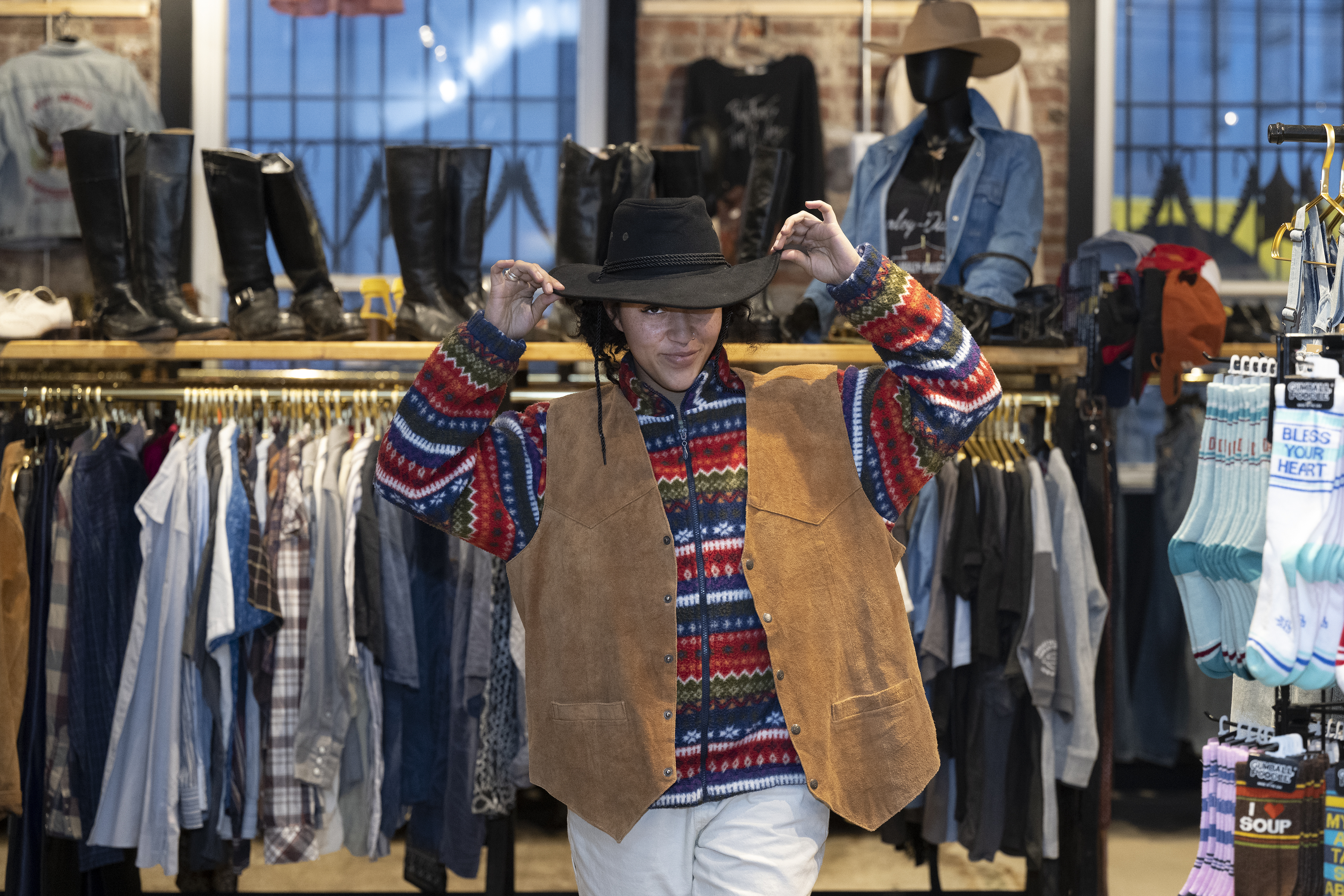
    Jordan Sims tries on a cowboy hat at the thrift shop inside Secondhand Ranch in Fishtown.

    The stage will host live music, scheduled to begin in early February, when the food menu — primarily wild-game sausage, nothing fancy — launches. Right now, hot peanuts are served.

    Lone Star is the beer of choice; it’s part of the citywide special ($10), paired with an infusion shot.

    Customers gather in the lounge at Secondhand Ranch in Fishtown on Dec. 6, 2025.

    “One fun goal we set for ourselves is trying to become the No. 1 Lone Star beer account,” Sampson said. There are 12 beers on tap. Besides Lone Star, the bottle list includes Star and Shiner Bock from Texas, plus elevated local craft options like Tonewood Brewing’s Freshies. “It’s exactly what you’d expect at a honky-tonk,” Sampson said.

    Classic and seasonal margaritas anchor the cocktail program, along with zero-proof options. Programming will include DJ sets, pop-ups, and “Trade-In & Sip” nights, designed to connect the drinking and shopping experiences while emphasizing community engagement. Vendor applications will open online, and a pop-up showcase with margarita specials is planned as part of opening festivities in February.

    Secondhand Ranch, 1148 Frankford Ave., 267-807-13450, is open from noon to midnight Monday, Wednesday, and Thursday, and 11 a.m. to 2 a.m. Friday, Saturday, and Sunday. Closed Tuesdays through December. The retail store closes at 10 p.m. Friday and Saturday, and at 9 p.m. the other days.

    Secondhand Ranch in Fishtown.
  • Tater tots, cocktails, and tee time: There’s a new restaurant at the revived Cobbs Creek Golf Course

    Tater tots, cocktails, and tee time: There’s a new restaurant at the revived Cobbs Creek Golf Course

    The long-awaited revival of Cobbs Creek Golf Course on the edge of West Philadelphia is taking shape not just on the fairways, but at the table.

    Little Horse Tavern — a full-service restaurant, bar, and event space named in honor of Charlie “Little Horse” Sifford, the Black golfer who led the integration of the PGA tournament in the 1960s — opens Monday. The Fitler Club and Strother Enterprises are overseeing it.

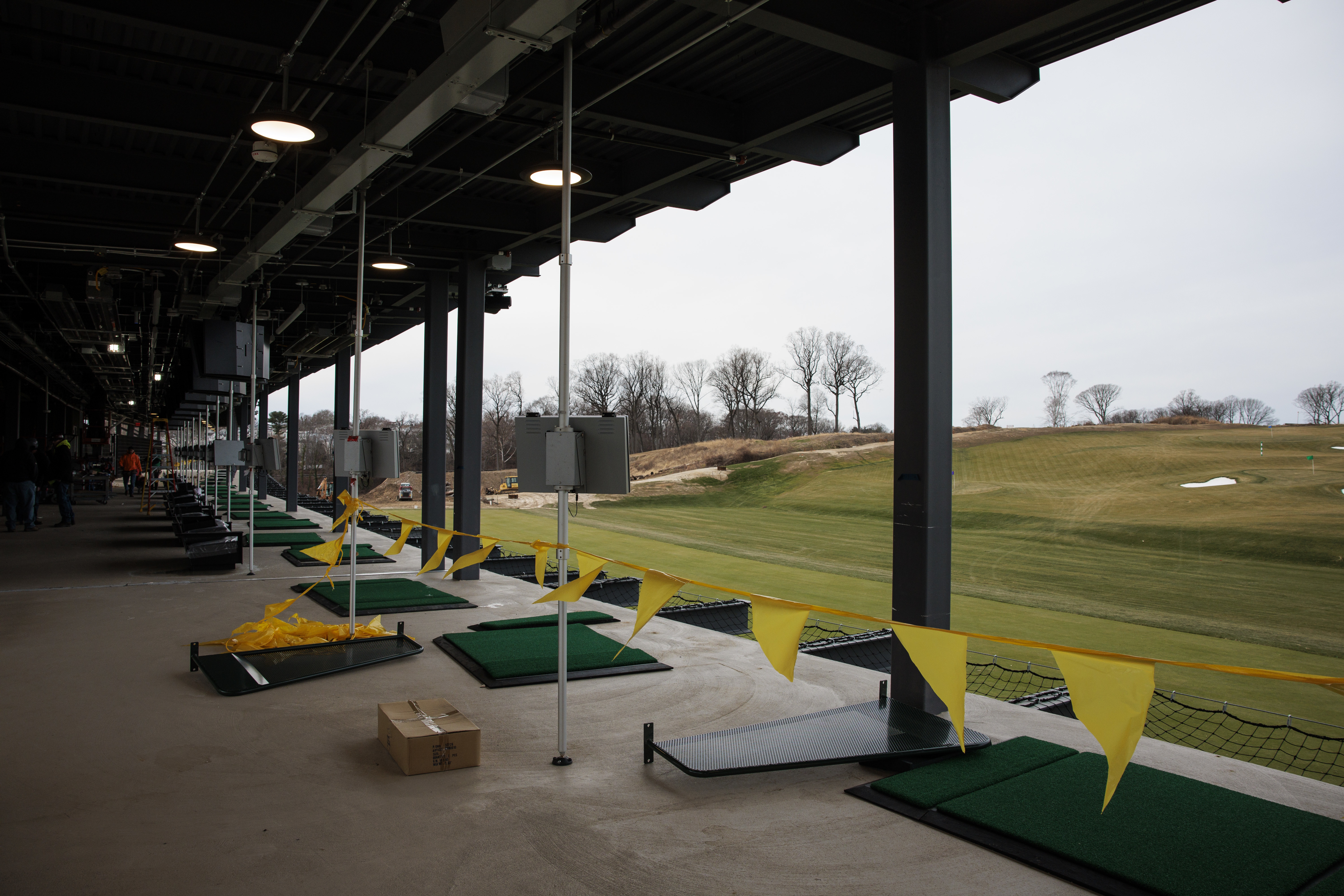
    The tavern, in a new building on Lansdowne Avenue called the Lincoln Financial Center, is next to a heated, 68-bay driving range, similar to a Topgolf. (Buckets of balls start at $10.) Nearby is a nine-hole short course designed for beginners and families, and — expected to open in 2027 — the renovated 18-hole championship-level course known as the Olde Course.

    All told, the $180 million effort aims to transform Cobbs Creek into a premier public golf destination. The club, founded in 1916, offered access to players when the game was largely off-limits to anyone but white men who could afford memberships at private clubs.

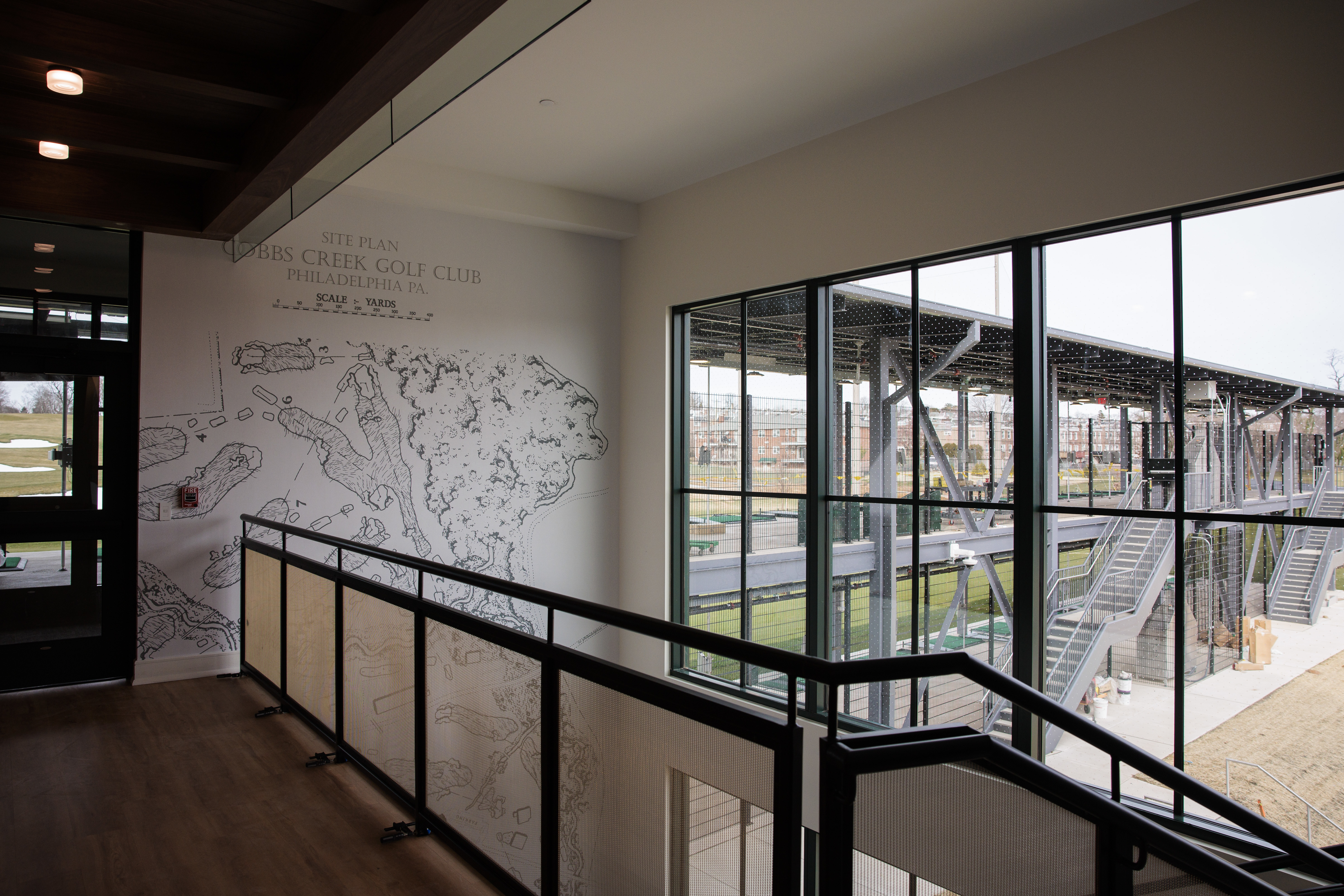
    A map of Cobbs Creek Golf Course decorates a wall at Little Horse Tavern.

    Cobbs Creek was Sifford’s home course in the 1950s. Sifford — who got his nickname because of the horse pendant he wore — went on to win two PGA Tour events and was inducted into the World Golf Hall of Fame in 2006; he died in 2015 at age 92.

    The course fell into disrepair in the 2000s and was closed in 2020. Shortly after, “a group of people who loved Cobbs Creek started asking, ‘What if this could be Philadelphia’s Bethpage Black?’” said Fitler Club president Jacob Smith, referring to the celebrated public course on Long Island that hosted the 2025 Ryder Cup.

    The driving range, seen in its pre-opening phase on Dec. 8, at Little Horse Tavern.

    That idea grew into the Cobbs Creek Foundation, which raised money and secured partnerships with Troon, the large golf-management company, and the Tiger Woods Foundation, which operates the adjacent TGR Learning Lab, aimed at teaching the game to schoolchildren.

    In addition to its public dining room and bar, there’s a private event space upstairs that can host up to 200 people.

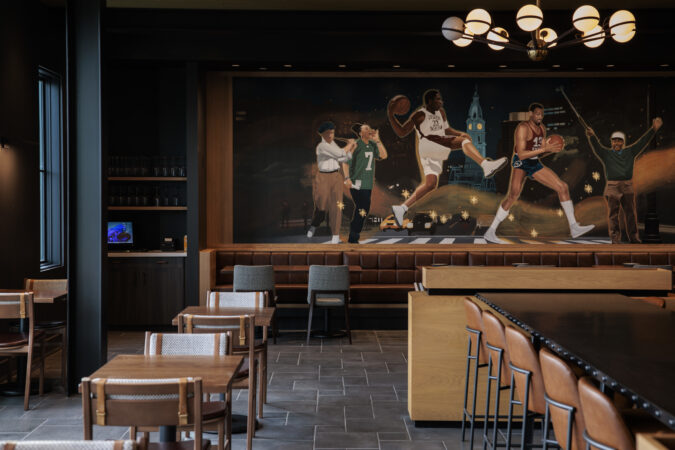
    The tavern is decorated with murals; one depicts Sifford and fellow local sports figures Johnny McDermott, Dawn Staley, Kobe Bryant, and Wilt Chamberlain.

    The Tavern Wings at Little Horse Tavern on Monday, Dec. 8, 2025 in Philadelphia. Little Horse Tavern serves as the main restaurant and bar at Cobbs Creek Golf Course. The restaurant, catering, and refreshment carts on the course are a collaboration between Fitler Club and Strother Enterprises.

    Fitler manager Clancy Smith oversees the restaurant as food and beverage director. Chef Adam Carson is putting out a something-for-everyone mix in his all-day menu, which starts at noon.

    There are tater tots, a basket of chicken tenders and onion rings, and wings (choice of six sauces). Sandwiches, accompanied by tots, onion rings, salad, or fries, include a double smash burger, turkey club, fried chicken, and truffle chicken salad.

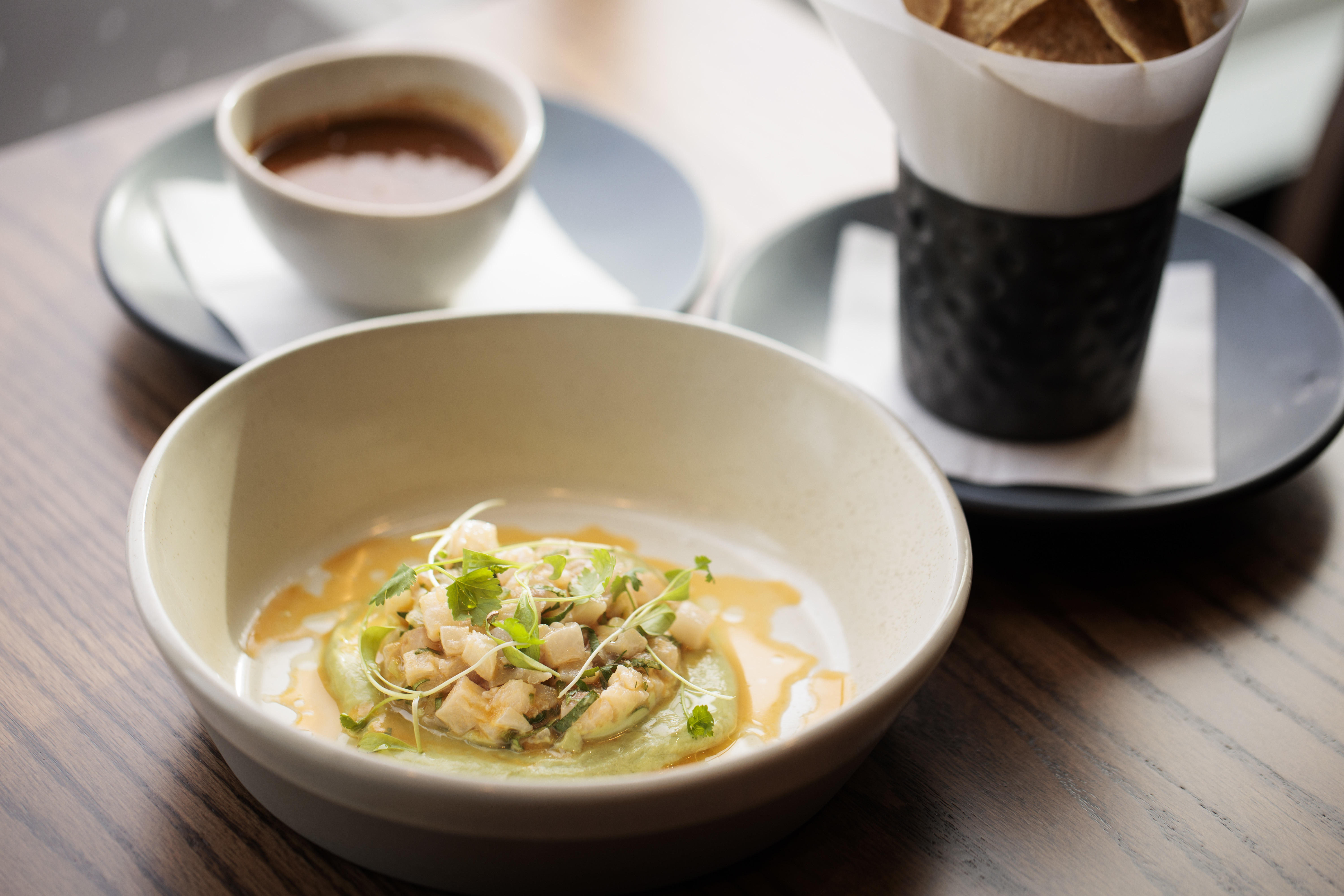
    The ceviche at Little Horse Tavern on Monday, Dec. 8, 2025 in Philadelphia. Little Horse Tavern serves as the main restaurant and bar at Cobbs Creek Golf Course. The restaurant, catering, and refreshment carts on the course are a collaboration between Fitler Club and Strother Enterprises.

    He’s also aiming a bit higher with esquites guacamole; huarache pizza; yellowfin tuna ceviche dressed in leche de tigre and avocado mousse; and a mixed green salad including fennel, radish, compressed apple, golden raisins, Cabot clothbound cheddar, sunflower brittle, and lemon vinaigrette. Top price is $20 for the cheesesteak. (Michael Franco, Fitler’s vice president of operations, says he expects to lower it to $18 once beef prices drop.)

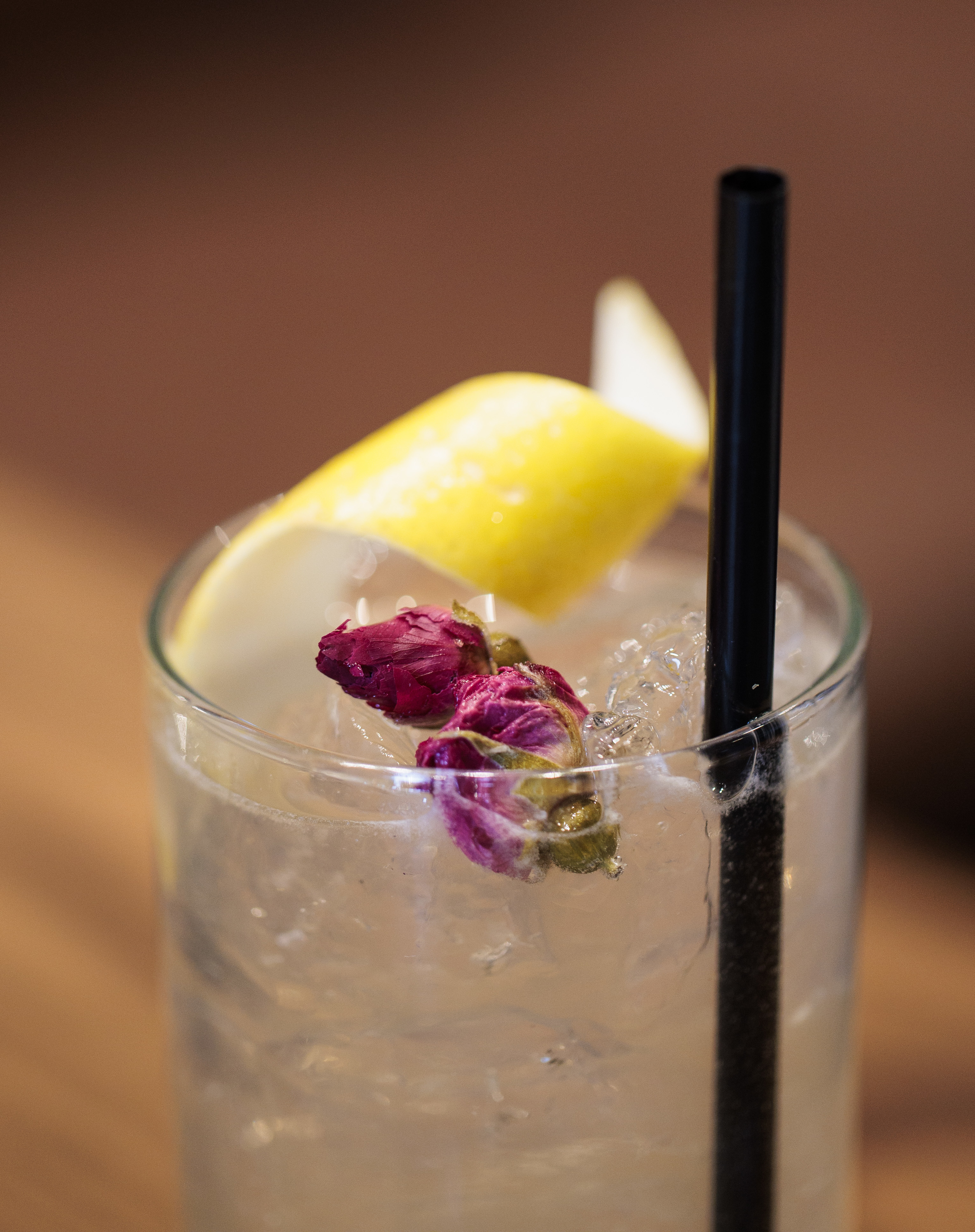
    There’s a full bar, including beer, wine, and nine cocktails. Rose Is a Rose, named after Sifford’s wife, is a floral spritz featuring gin, honey, lemon, sparkling rose wine, and a dash of rose water, and it’s garnished with an expressed lemon twist and dehydrated rose buds.

    The Rose is a Rose cocktail at Little Horse Tavern.

    Fitler’s involvement grew out of its interest in projects with civic impact. Though best known as a members-only club in Center City, Fitler wants to expand its hospitality expertise beyond its walls.

    “We look for opportunities where we can contribute something meaningful to the city,” said Smith, whose golf handicap is 13. “This was at the top of the list.”

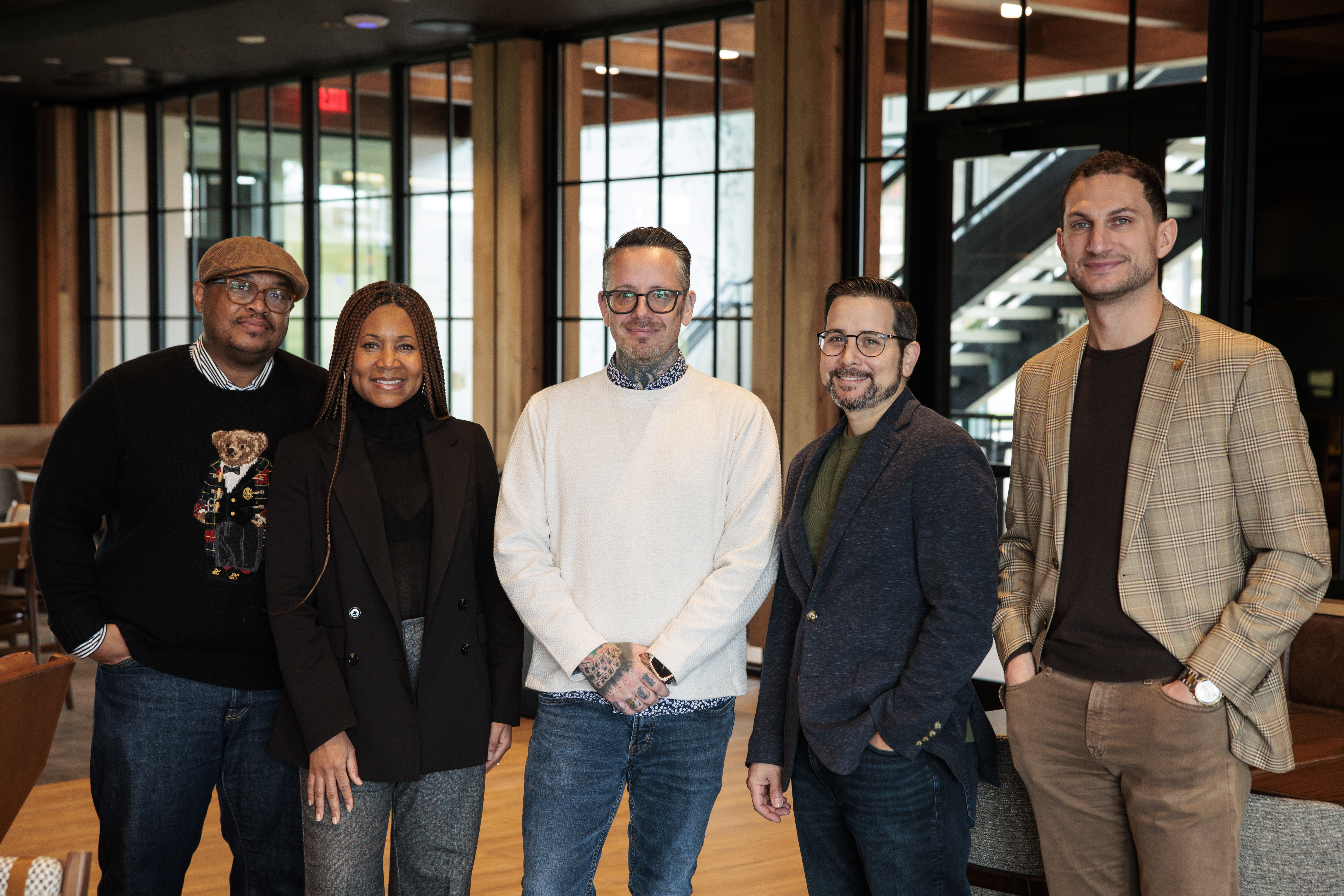
    At Little Horse Tavern (from left): Robert A. Strother, Cobbs Creek manager for Strother Enterprises; Natasha Strother Lassiter, chief strategy officer for Strother Enterprises; Clancy Smith, director of food and beverage; Michael Franco, vice president of operations for Fitler Club; and Jacob Smith, Fitler Club president.

    For Strother Enterprises, a family-run food service company that began as a catering business in West Philadelphia, the connection is deeply personal. Robert A. Strother and Natasha Strother Lassiter are first cousins whose fathers — Ernest Strother and Robert Strother Jr. — worked as certified caddies at Cobbs Creek when they were teenagers.

    “This was one of their first jobs,” Strother said. “They carried bags here all day, multiple rounds a day. Cobbs Creek was part of their upbringing.”

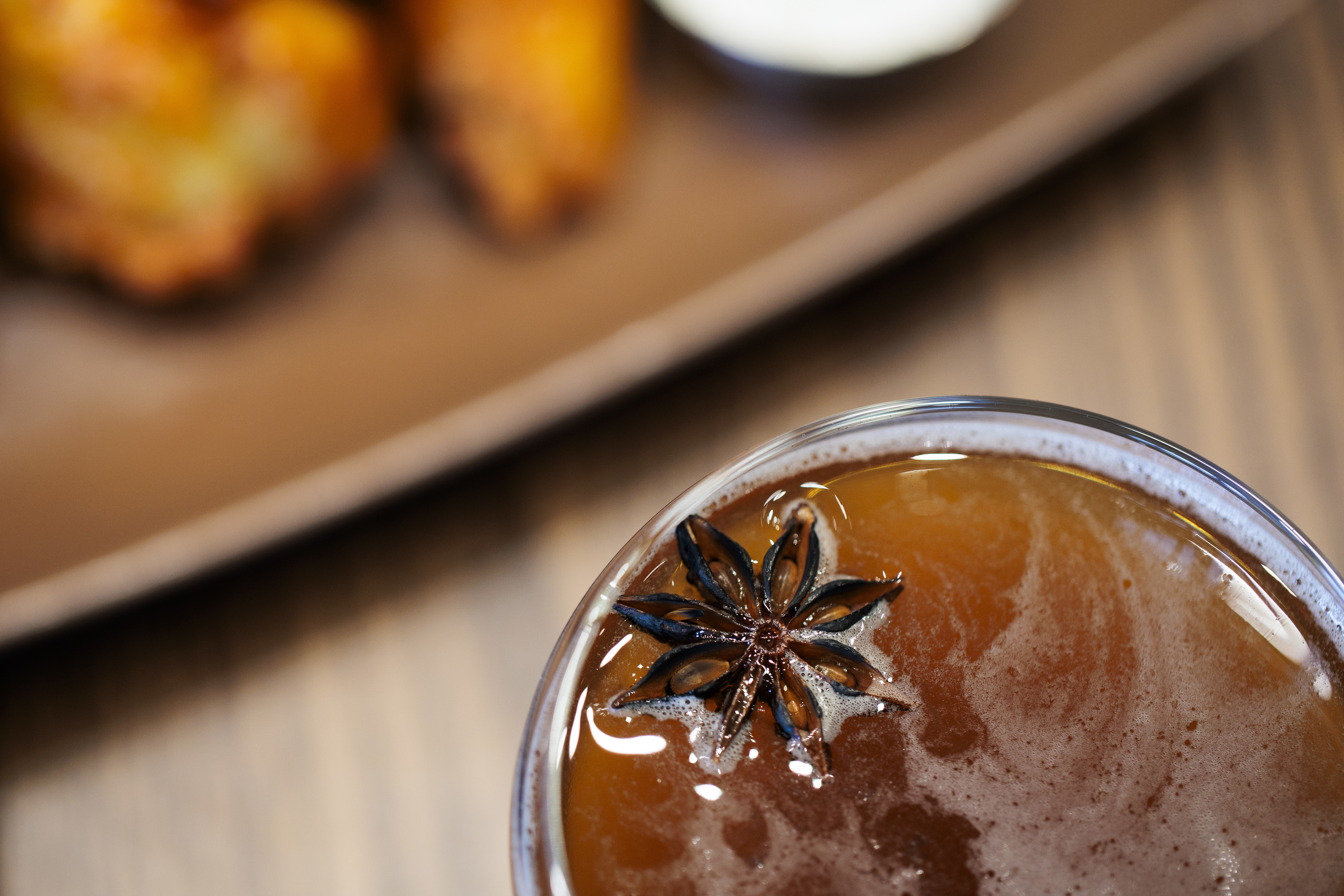
    The Shotgun Start cocktail, garnished with absinthe-soaked, torched star anise, at Little Horse Tavern.

    Lassiter said returning to the course as partners in its rebirth brings the family’s story full circle. “Being from West Philly, seeing this space restored, and being able to contribute to it in a meaningful way — it’s emotional,” she said. “This isn’t just another project for us.”

    Strother manages day-to-day operations and oversees the after-school snack program at the TGR Learning Lab.

    “This project isn’t just about hospitality,” Lassiter said. “It’s about community, education, and access.”

    Little Horse Tavern, 7403 Lansdowne Ave., 267-900-3740, cobbscreekgolf.org. Initial hours: noon to 8 p.m. daily.

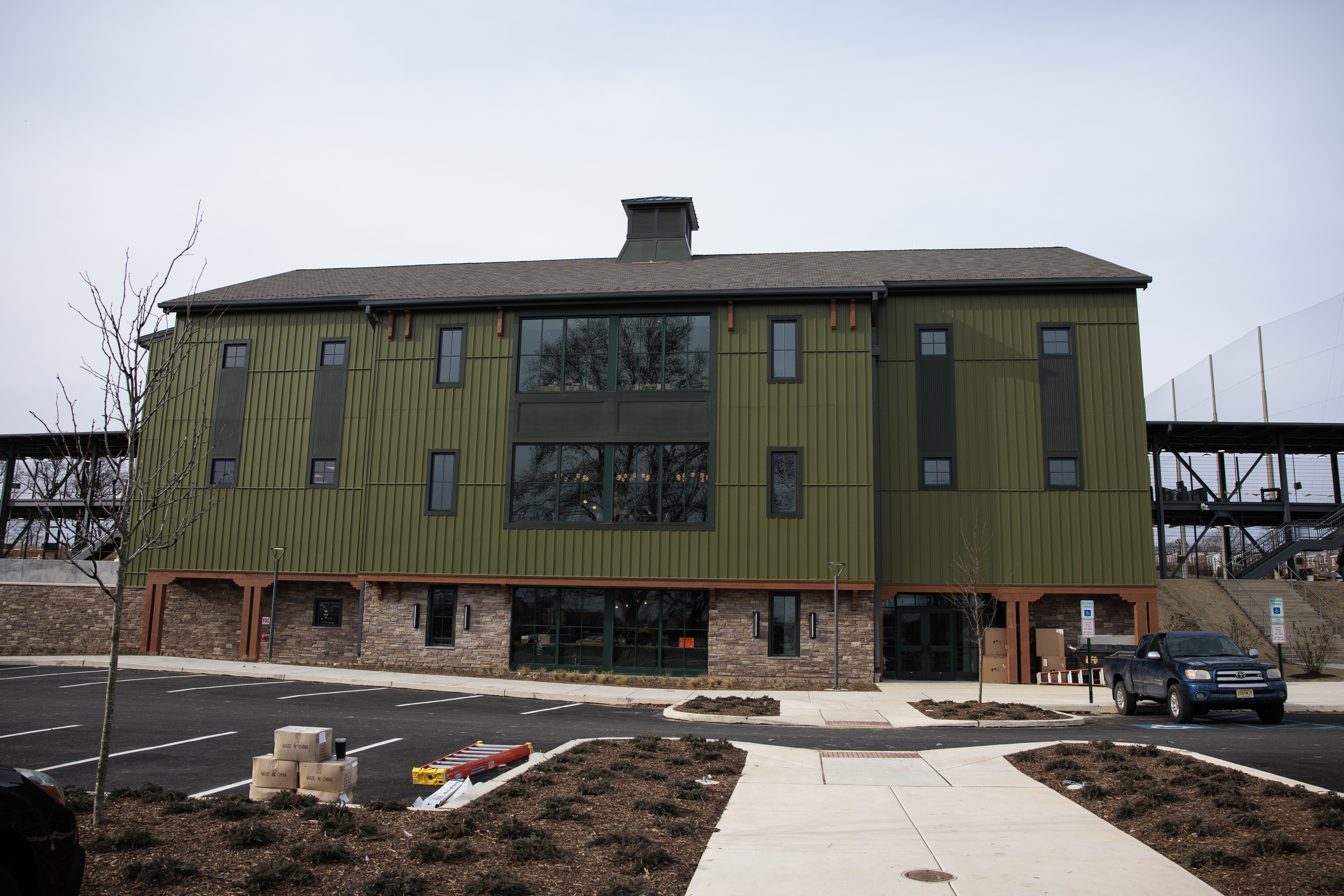
    Little Horse Tavern, as seen from Lansdowne Avenue, on Dec. 8.
  • A Philly restaurant came clean about its Health Department shutdown. Was that the right call?

    A Philly restaurant came clean about its Health Department shutdown. Was that the right call?

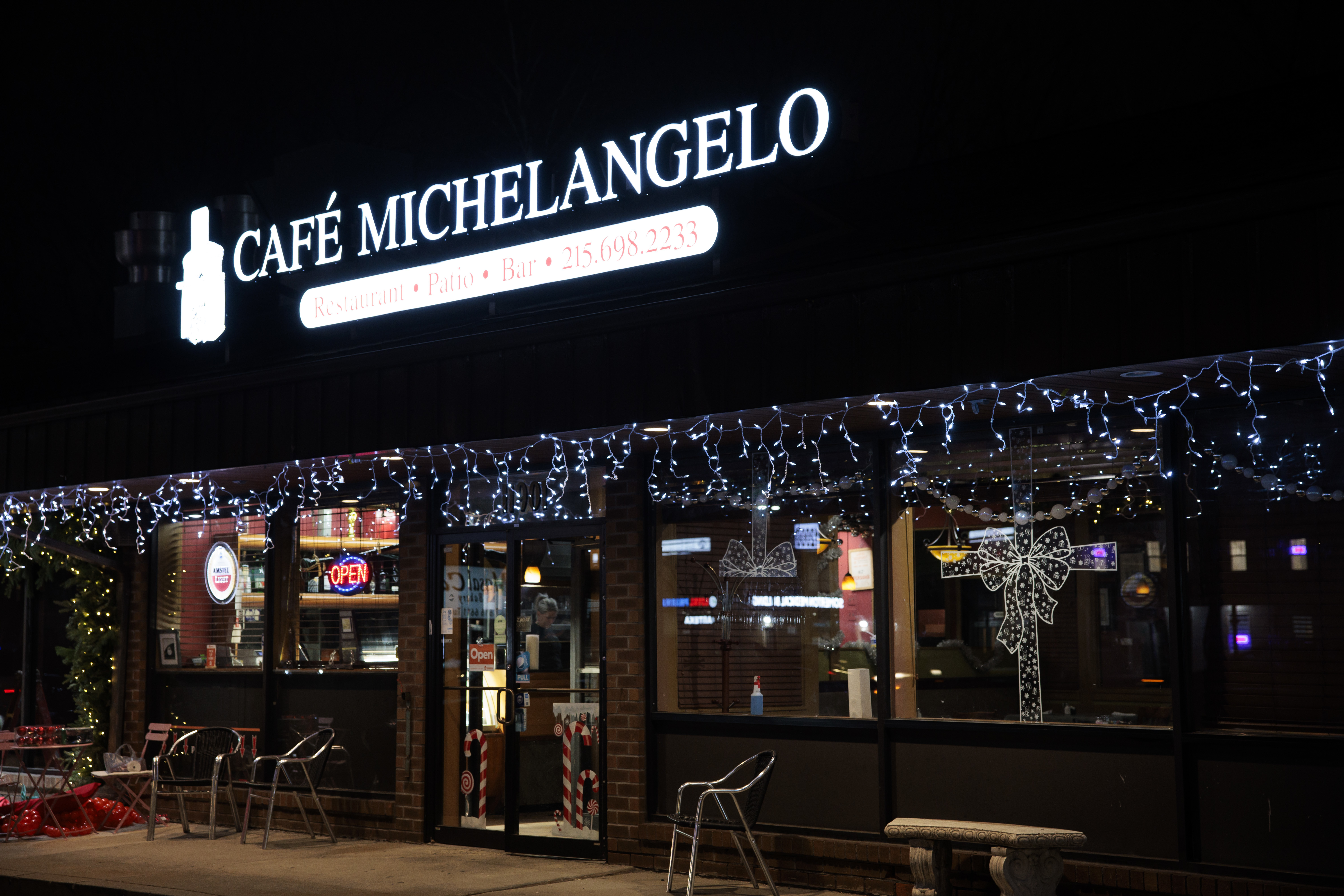
    As the health inspector left Cafe Michelangelo in the Far Northeast last week, she affixed a “cease operations” sticker to the front door, ordering the restaurant to close for at least 48 hours.

    Co-owner Giuliano Verrecchia got an idea.

    He would come clean.

    Chastened by the report’s findings and mindful of his restaurant’s previous dodgy health inspections this year, Verrecchia decided to go public and explain all 16 violations, one by one.

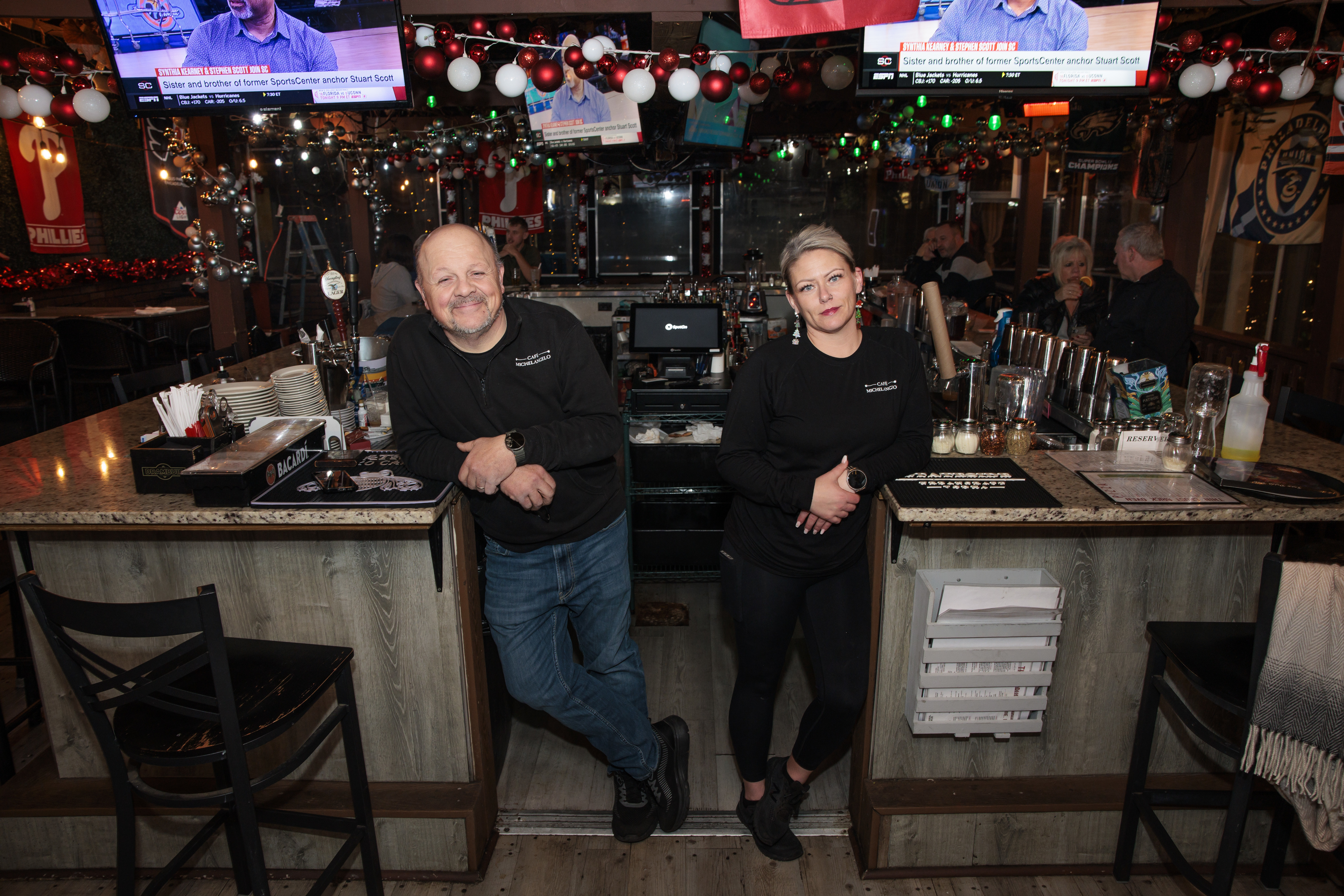
    Co-owner Giuliano Verrecchia and manager Danielle Runner at Cafe Michelangelo on Dec. 9, 2025.

    This would be a bold, uncommon strategy. Typically, as word of a shutdown spreads through social media, restaurateurs play defense while users pillory the establishment.

    “I wanted to put my side out there and be transparent,” Verrecchia said, adding that he considered some of the cited issues “a bit misleading.” He and his manager, Danielle Runner, printed out the inspection report, added commentary, and posted it to Michelangelo’s Facebook page on Dec. 4, the day after the shutdown.

    Addressed to “all of our amazing customers,” the post on Michelangelo’s profile paired the exact wording of the health report’s violations with Verrecchia’s own explanation (and redress or occasional rebuttal). He detailed 16 violations, including “peeling paint observed on walls in one of the women’s restroom areas” (“Bathrooms and storage areas were repainted yesterday,” he explained) and “ice build-up observed in the first-floor walk-in cooler unit” (“removed ice build-up,” he wrote).

    Reaction to the post was mostly positive. Customers replied with words of support. Some commenters — several of whom identified as food-service industry workers — downplayed the inspector’s finding, describing them as minor.

    (In a Facebook post earlier that day, the restaurant described the violations as “non-hazardous,” which was not entirely accurate.)

    On Friday, Dec. 5, Michelangelo passed its reinspection, paid a $315 fee, and prepared to reopen. Verrecchia held his breath. Would the public respect his attempt at transparency?

    A Northeast Philly staple

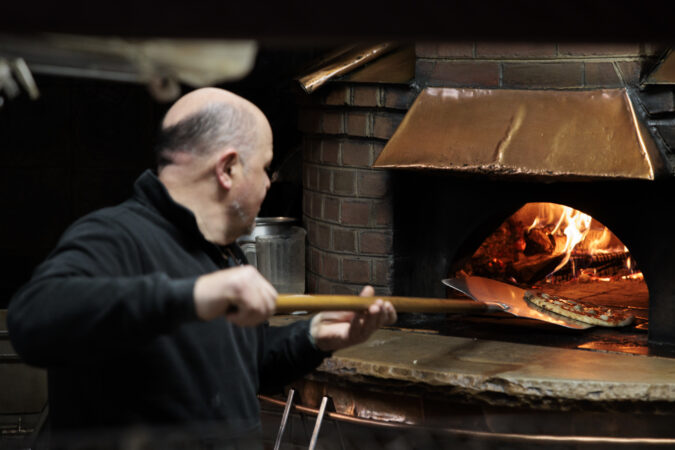
    In 1992, brothers Michael and Angelo DiSandro combined their names to open a family-friendly Italian restaurant, complete with bocce courts and room for 250 guests, in a Somerton strip center. By Northeast Philadelphia standards, Cafe Michelangelo was years ahead of its time, serving espresso and brick-oven pizza. Angelo DiSandro died in 2012, and Michael has stepped aside from the day-to-day operation.

    Cafe Michelangelo, 11901 Bustleton Ave., on Dec. 9.

    Verrecchia, 56, a nephew, oversees the restaurant, which has a bar in a rear dining room as well as a newer second bar on a covered, heated patio. There’s live music at least three days a week. Michelangelo’s business, like that at many older restaurants, hasn’t been the same since the pandemic. Rising food prices and labor costs have cut margins, and competition has become keener. Customers can get a world of cuisine delivered via apps.

    To boost traffic, Verrecchia offers a $15 lunch buffet Tuesday to Friday with two pastas, two proteins, salads, and pizza. Over dinner, the calamari, the parm dishes, and pizzas still move, but he said his customers are cautious about spending. He still sells bigger-ticket items — steak, rack of lamb, whole fish — “but I’m not charging you $45,” Verrecchia said. “I’m charging you $37 and I’m not making money on it, but if you want a steak and the kid wants pizza? You got a home run.”

    The aftermath

    Michelangelo reopened the same day it passed its reinspection. The phone rang over the weekend. It was a group of teachers canceling their large annual party. Then another big order fell through.

    Neither cited a reason. Business was down about 25% on Friday, the restaurant’s first day back, and remained soft Saturday. There was a slight improvement Sunday. The restaurant is closed Mondays. Tuesday was slow again, which Verrecchia partly attributed to cold weather. He said it was too soon to tell what was driving this.

    Timeline of inspections

    In interviews, Verrecchia said he acknowledged that some of the inspector’s findings required attention, but added: “I don’t think those issues put customers in jeopardy.”

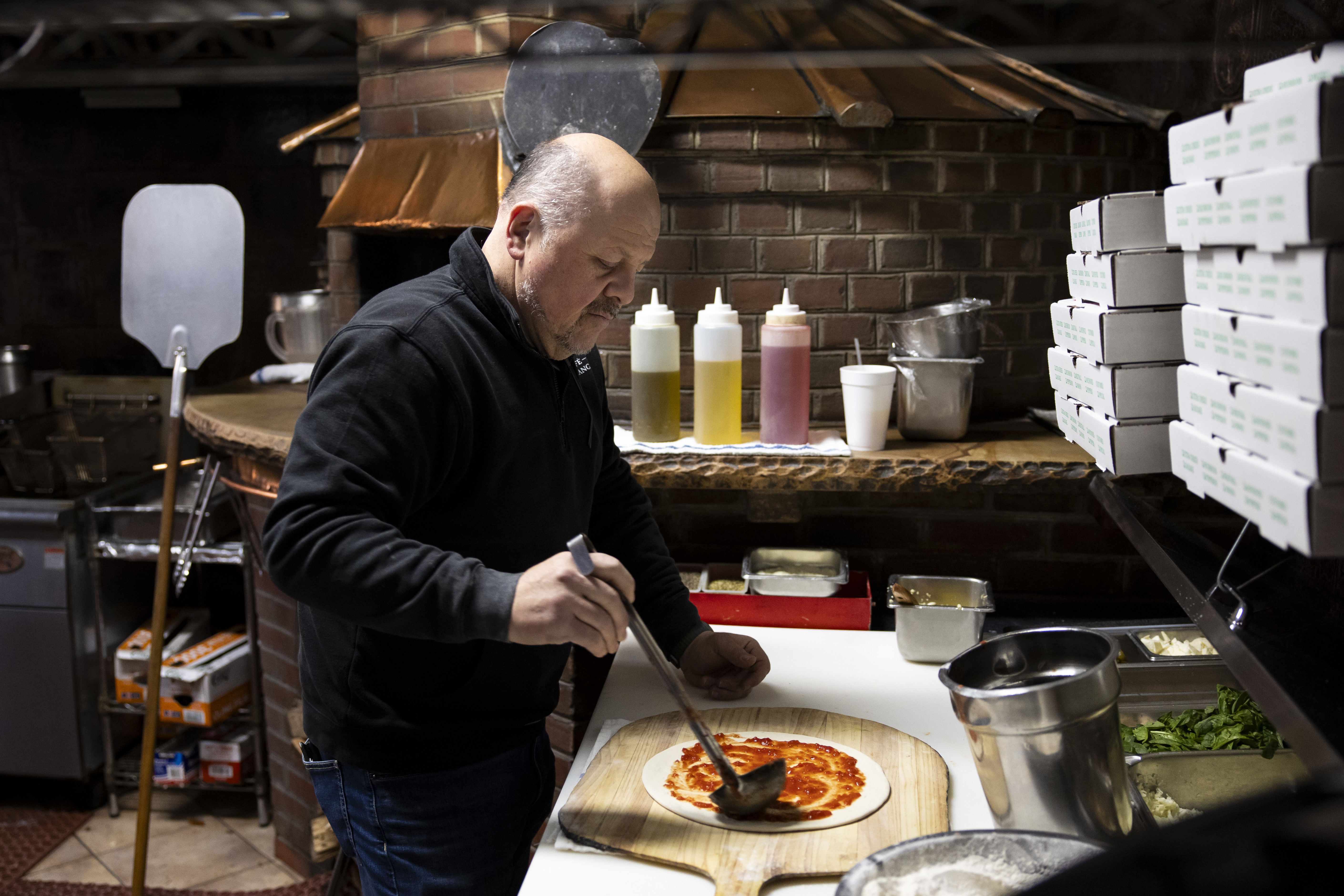
    Giuliano Verrecchia sauces a Margherita pizza at Cafe Michelangelo.

    “You as a layman read what they wrote and you get scared,” he said. “I wanted to explain what’s really meant.”

    He cited rules about labeling containers as an example. “If [the inspector comes in] at 11:30 [a.m.] and my guys are prepping, some things won’t have labels because they have to open them up,” he said.

    Verrecchia said he was cited for some issues that had been addressed previously, including cracked floors observed in the kitchen preparation area. “I had already fixed it and showed her,” he said. The report called out a chest freezer that was not commercial-grade. “I fixed that, too, but it still showed up again as if nothing had been done.”

    “She made some valid observations,” he said. “I’m not denying that. But the wording in those reports can sound scarier than it really is if people don’t understand the terminology.”

    But given its inspections in 2025, Cafe Michelangelo’s record showed mounting problems.

    This also was not the restaurant’s first involuntary closure. In February 2023, an inspector cited repeated violations, including improper food labeling, missing temperature controls, rodent activity, improper food storage, and sanitation problems such as grease on walls near the hood, food debris and mouse droppings in the basement, damaged flooring, and missing wall tiles. The restaurant also was cited for using plastic crates to elevate beverages in the takeout area.

    Cafe Michelangelo was allowed to reopen four days after that 2023 reinspection, and a follow-up two months later found no serious violations.

    At the next inspection, Feb. 27, 2025, four risk-factor violations were noted: missing handwashing supplies, a dirty ice machine, missing date-marking, and unlabeled chemicals. All were corrected on site.

    By Sept. 11, the violation count had risen to six and included flies throughout the facility, shellfish storage and record-keeping problems, and significant structural and equipment issues. The Health Department ordered a reinspection.

    On Oct. 29, many of the same issues appeared again as repeat violations, and a certified food-safety manager was not on-site at the start of the inspection.

    On Dec. 3, the inspector pointed out unsafe cooling of salads and onions, along with unresolved pest, handwashing, and facility problems — all what are deemed “imminent health hazards.” She also logged six risk-factor violations, which include any violation that increases the likelihood of foodborne illness; three of them were repeats. Two and a half hours after the inspector walked in, Michelangelo was shut down.

    Corrections and changes

    Verrecchia said the inspection issues were a wake-up call. He said he has tightened oversight throughout the restaurant, which employs about 30 people.

    “I’m on it every single night now,” he said. “I’m re-educating my team. I’ve got to be more diligent. If I [mess] up, I admit it. I [messed] up. I’m human.”

    He is now conducting mock inspections at the end of the day. “I walk through everything, write up what’s wrong, and then go over it with the staff in the morning,” he said.

    He also has begun purchasing new equipment, including wall-mounted metal shelving and fruit-fly traps where required.

    Verrecchia said he is standing by his decision to go public.

    “If I didn’t think it was right, I wouldn’t have done it,” he said. “I can’t afford to shut down again — and I’m not going to.”

  • At South Street’s new Banshee, Cheu alums find they’re ‘all grown up’

    At South Street’s new Banshee, Cheu alums find they’re ‘all grown up’

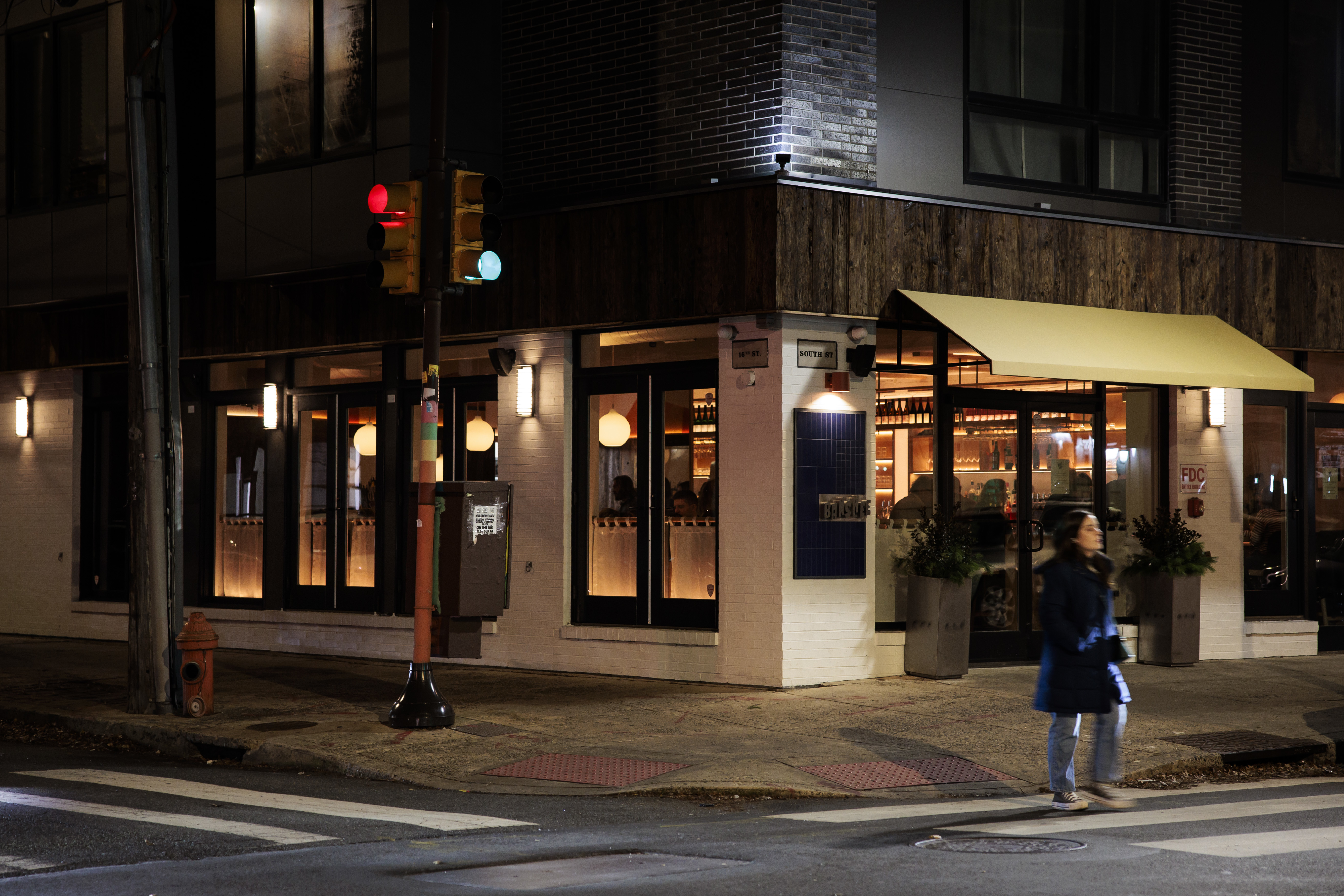
    The door of Banshee at 16th and South Streets will be unlocked Thursday, welcoming patrons for crispy onion tarts, chicory salad, and a saucy Spanish mackerel dish you can mop up with house-made sourdough. They can then polish it all off with a sip of draft wine or a sesame- and pineapple-laced whiskey sour.

    The cozy, modern American bistro is a refined addition to the Graduate Hospital neighborhood. And although two of its backers will be familiar to followers of Philly’s restaurant scene, Banshee marks a clear break from the Asian-inspired street food and graffitied airs that defined their earlier work.

    Shawn Darragh and Ben Puchowitz, who founded Cheu Noodle Bar (2013), Cheu Fishtown (2017), Bing Bing Dim Sum (2015), and Nunu (2018), have brought on two key former employees as partners: twin brothers Kyle and Bryan Donovan, 34.

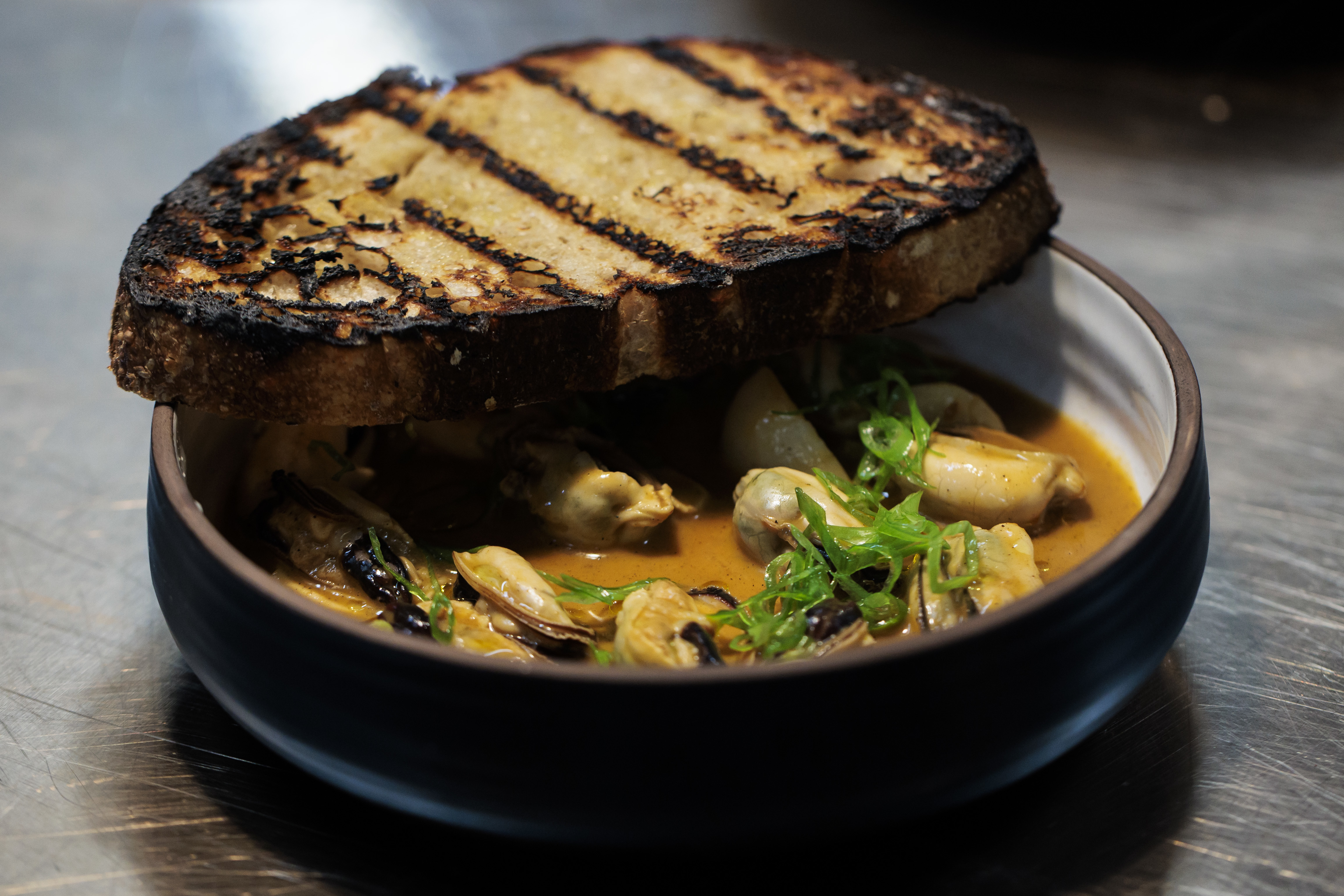
    Mussels in harissa with hakurei turnips in coconut milk, beneath a lid of grilled bread, at Banshee.

    Kyle Donovan — who started at the original Cheu near 10th and Locust and later managed Bing Bing on East Passyunk until it closed in 2024 — is Banshee’s general manager, overseeing 12 walk-in-only bar seats and about three dozen seats in the dining room.

    Banshee executive chef Bryan Donovan was opening sous chef under Puchowitz at Cheu Fishtown before he went on to cook at Sqirl in Los Angeles and Contra, Wildair, and the Four Horsemen in New York City.

    Darragh and Puchowitz, now in their early 40s, have moved on from the day-to-day of restaurant work. Darragh, the front-of-the-house/marketing guy, runs a construction company. Puchowitz — who as a 23-year-old ran the kitchen at the late, great Rittenhouse BYOB Matyson — works in real estate.

    “It’s fair to say we’re all grown up now,” Darragh told me. “We’re trying to carry over that neighborhood spirit but take it a step further — maybe a little more refined but still fun.”

    The visual shift, not only from their former restaurants but also from the building’s previous occupant, Tio Flores, is obvious. Stokes Architecture + Design created a warm, Scandinavian-inspired space with natural woods, curtains, table lamps, pendant lights, and a mushroom-wood accent wall. The up-lit bar anchors the room.

    Winter citruses at Banshee.

    Banshee was originally planned for the former Bing Bing space on East Passyunk Avenue at 12th Street, but that deal fell through. Chefs Biff Gottehrer and Kenjiro Omori are renovating it for a new restaurant called Tako Taco.

    Mediterranean, Basque, and modern American flavors

    Don’t expect ramens or dumplings at Banshee. The menu leans Mediterranean/Basque — chef-driven but not inaccessible. Premium ingredients include Berkshire pork collar ($25) and Lady Edison ham ($17) with persimmon and fromage blanc. The center-of-the-table dish is a half chicken ($39) with pickled peppers and buttery Marcona almonds.

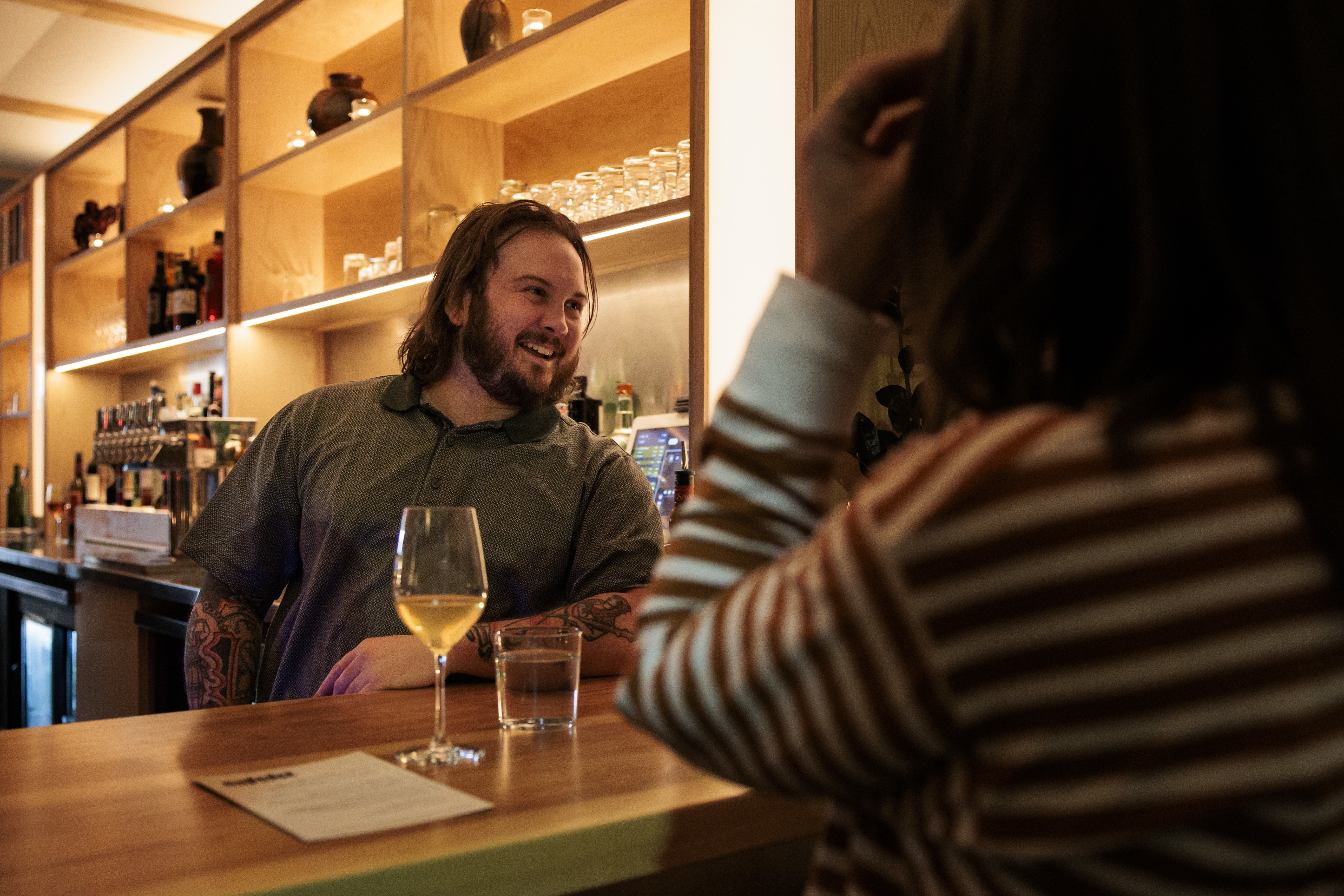
    Kyle Donovan at the bar at Banshee.

    Vegetables take center stage: braised leeks with boquerones, pepitas, and Comté ($14); grilled Kyoto carrot with txakoli sabayon ($15); and a chicory salad with dijonnaise, pear, and nutty, creamy Midnight Moon cheese ($15). Fermentation-driven umami shows up in red kuri rice with koji butter and nori, as well as a winter citrus salad finished with brown butter, pine nuts, and umeboshi. About half the menu is vegetarian, and five dishes are vegan or easily made vegan.

    The tarte flambée ($15) is one of the most distinctive dishes on the menu. It starts with a yeasted semolina dough that’s rolled through a pasta sheeter, cut into squares, and baked on olive oil-lined sheet trays. It’s topped with smoked crème fraîche, caramelized onions, raw onions, maitake mushrooms, chives, and hot honey, and finished with a leek-and-parsley powder made from dehydrated leek scraps. Crispy and bold, “it’s layered onion flavor all the way through,” Bryan Donovan said.

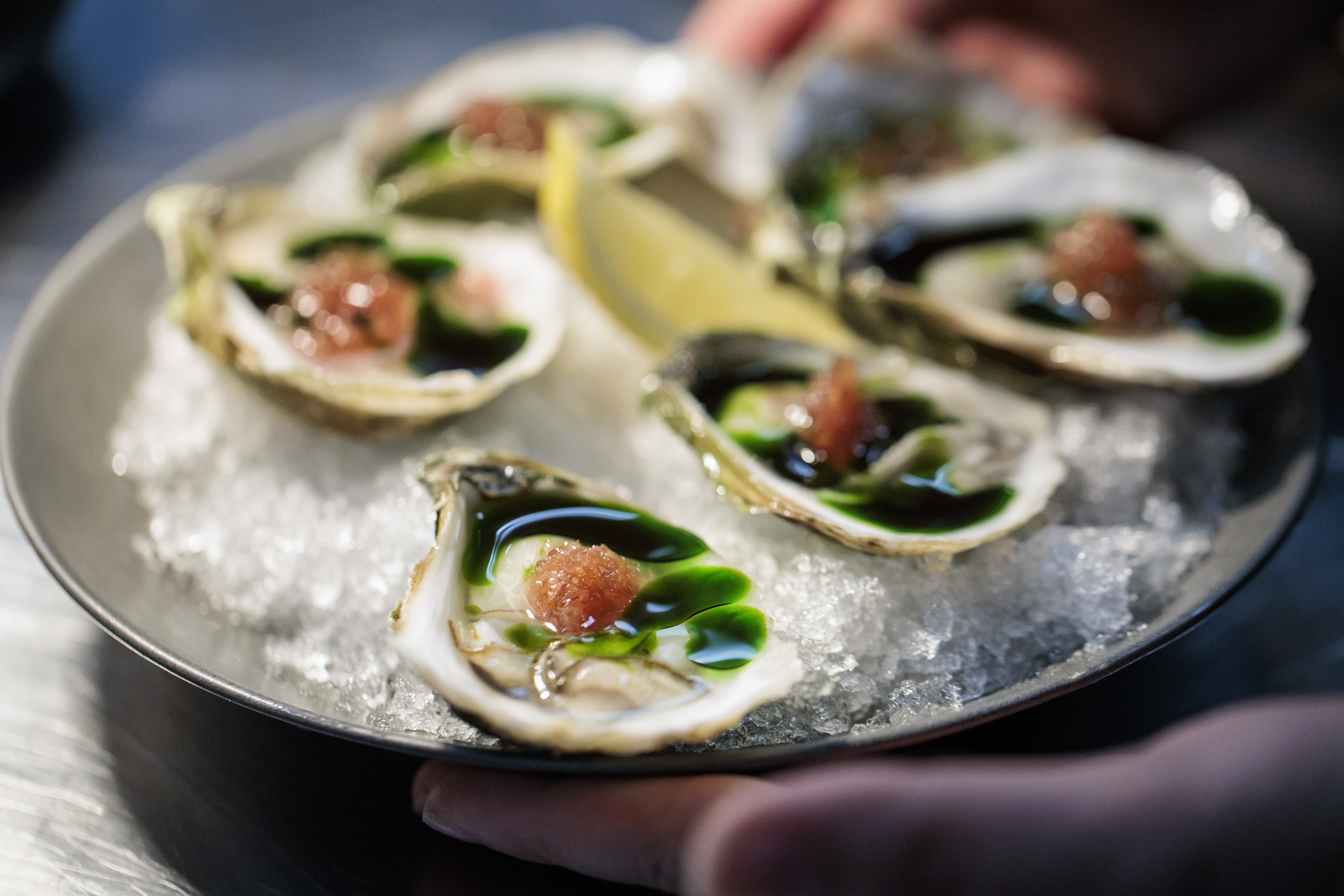
    Barnstable oysters in dill mignonette at Banshee.

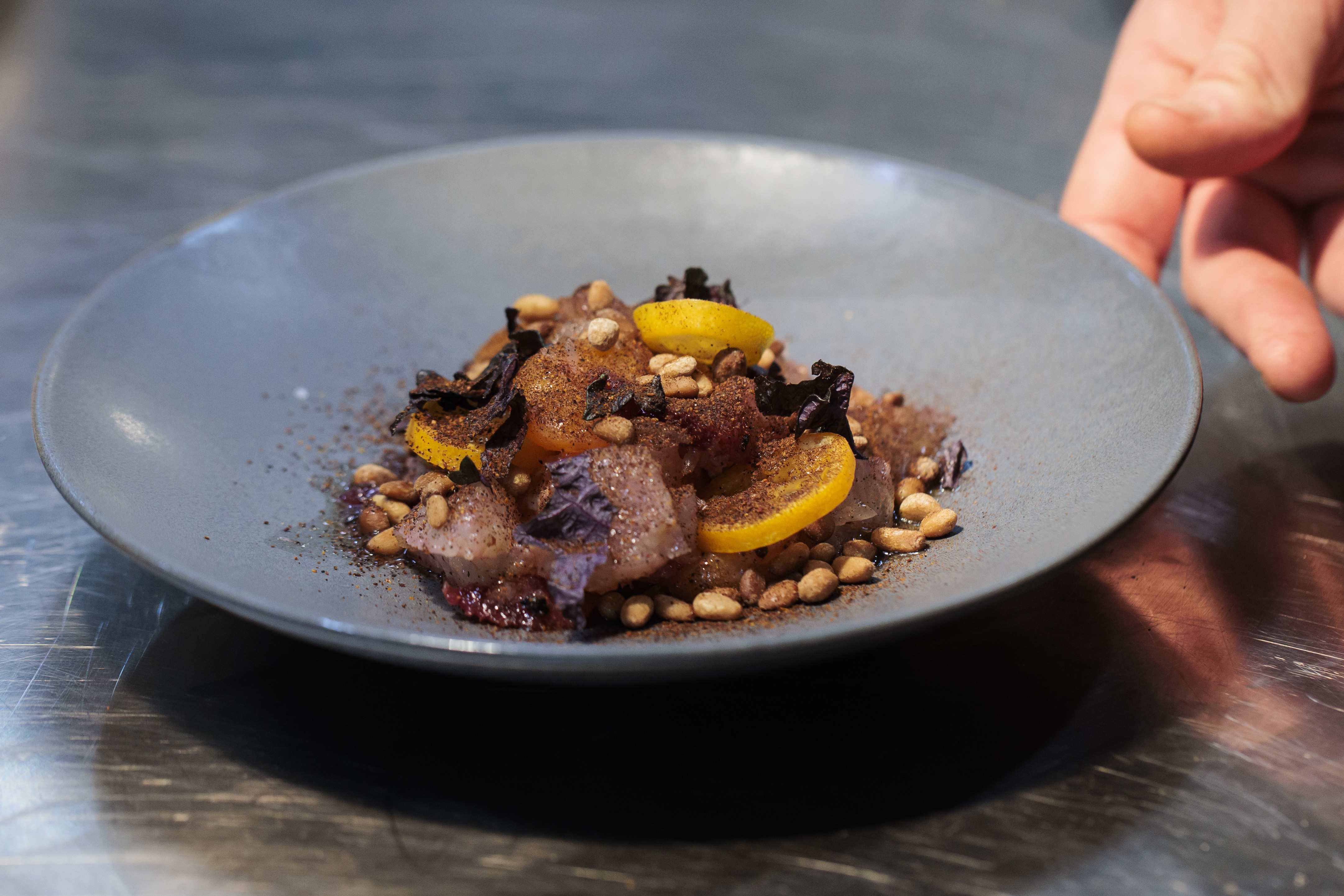
    A dill mignonette brightens the Barnstable oysters ($22). Hamachi crudo ($18) is sliced thick to highlight the fish’s natural fat and paired with a bright, acidic sauce made from minced peppers, passion fruit puree, shio koji, and white verjus. “The sauce actually came first, and then we tailored the fish to it,” Donovan said.

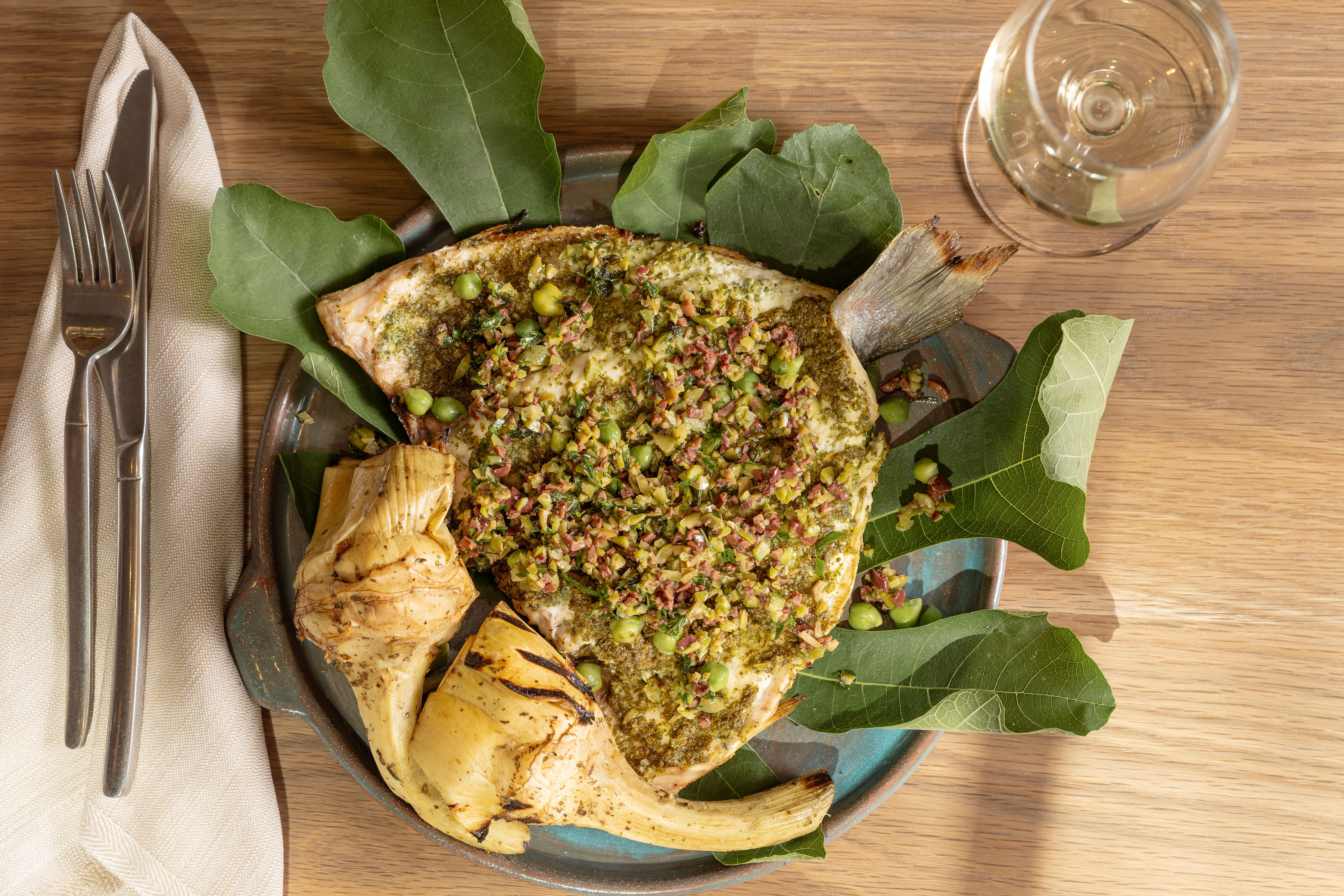
    A larger plate of Spanish mackerel ($24) is served over grilled Brussels sprout leaves tossed in a smoked clam emulsion with thyme and tamari, finished with olive oil tapenade and pickled golden raisins.

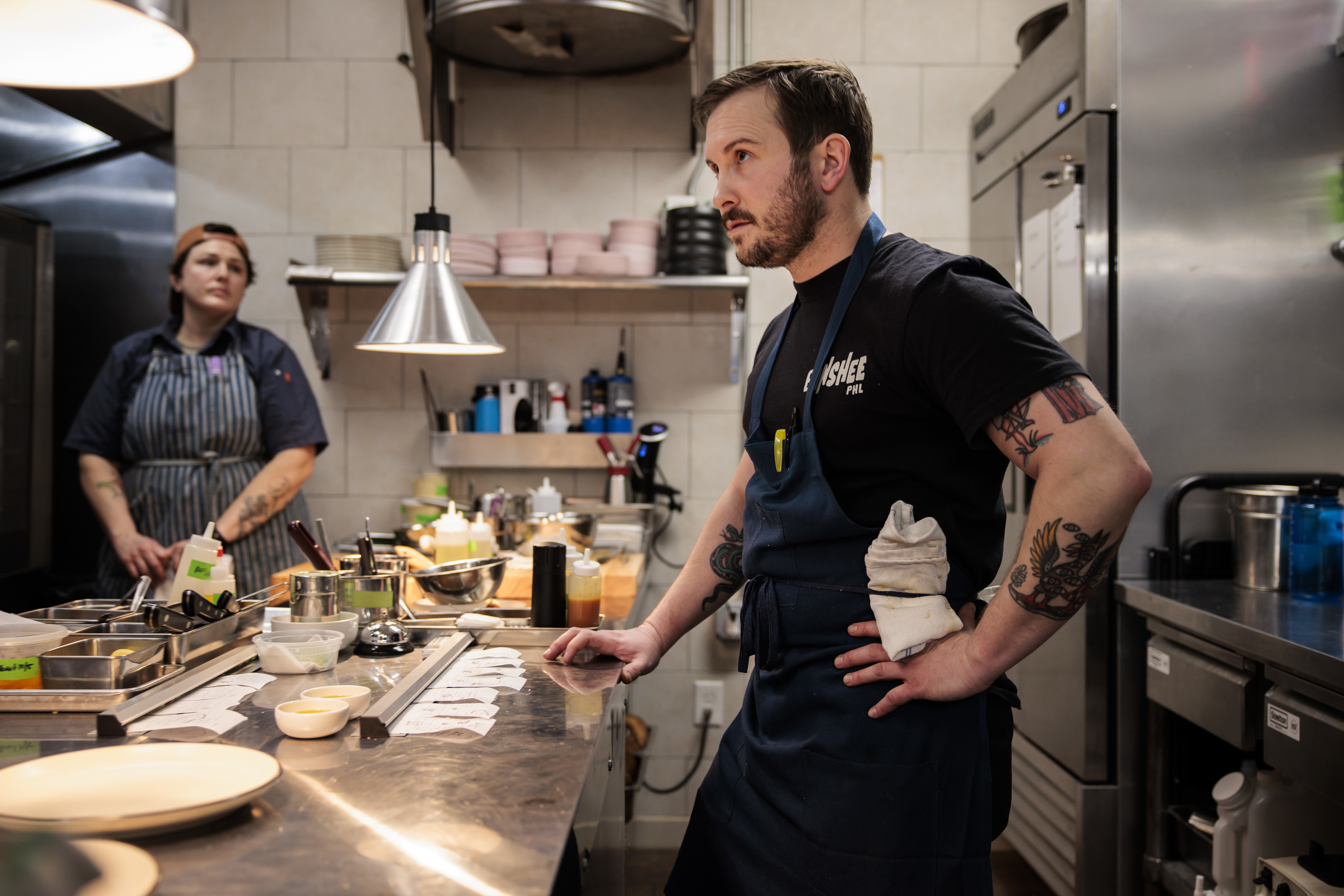
    Chef Bryan Donovan juggling orders in the kitchen at Banshee.

    “We’ll change vegetables seasonally and add more snacky, fried, and skewer-style items as we settle in,” Donovan said. “Spontaneity and experimentation are part of the spirit of the place.”

    There’s a baked Alaska (not done tableside) and a butterscotch Krimpet filled with boysenberry jam for dessert.

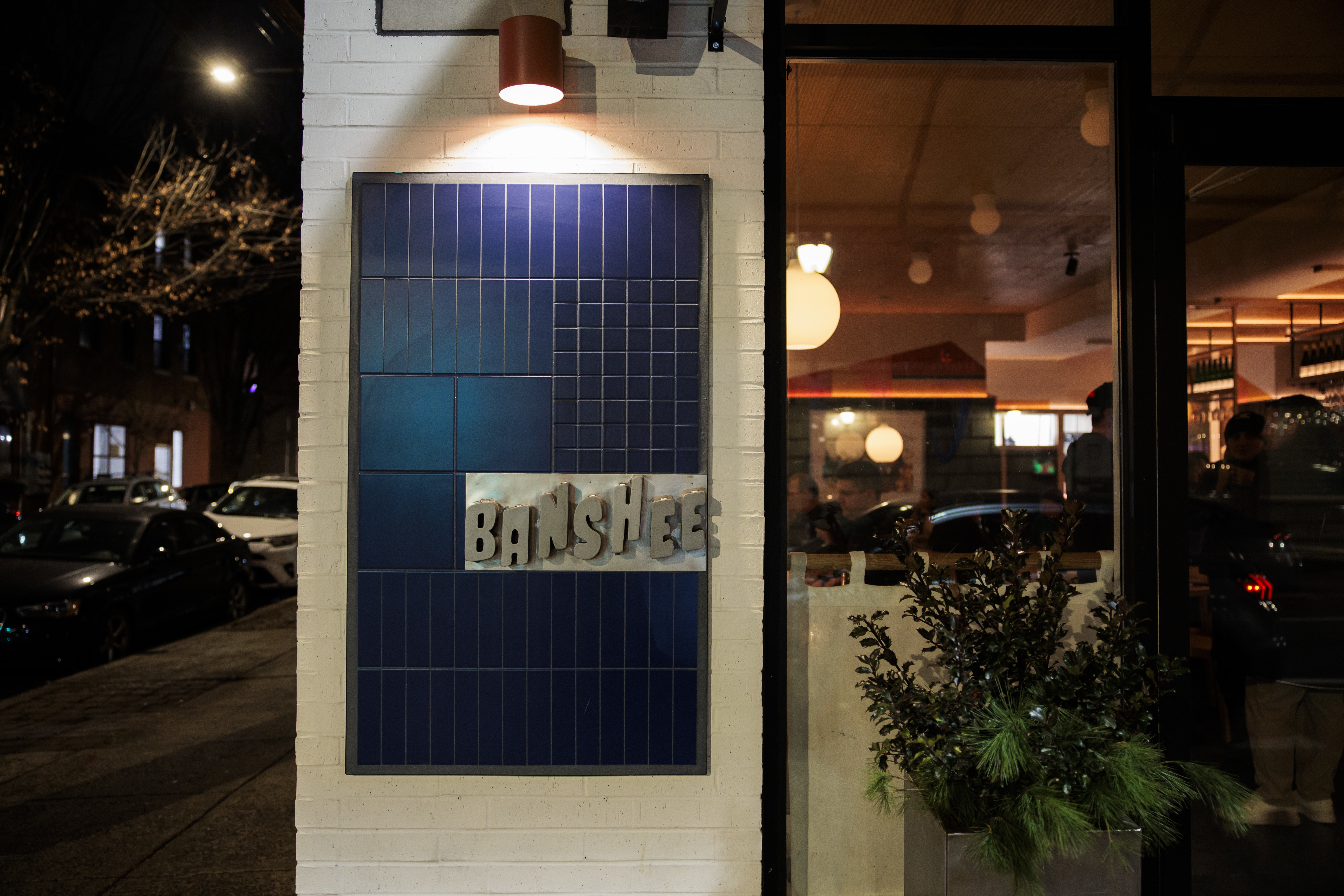
    The exterior of Banshee at 1600 South St.

    Check average is projected at $70 to $75 per person for two to three dishes and one drink.

    The Banshee partners brought in lead bartender Mary Wood to build the cocktail program, working alongside assistant manager Madeline Anneli. “None of us are professional bartenders, so we wanted real expertise on cocktails,” Kyle Donovan said.

    Wood’s list draws from home-cooking influences and ingredients already used in the kitchen. The Dirty Banshee ($16) — olive oil-infused vodka, garlic fino, and blue cheese olive — leans deeply savory. Beet imbues the Crowd Work ($15), a sparkling gin cocktail with lemon and quinine. The bar also offers low-ABV drinks, nonalcoholic options, fermentation elements such as tepache, and an accessible beer lineup.

    Hours are 5 to 10 p.m. Thursday through Monday. Reservations are available on Resy on a rolling 30-day basis.

    Banshee, 1600 South St., 267-876-8346, bansheephl.com

    The exterior of Banshee on Monday, Dec. 8, 2025 in Philadelphia.
  • 🍷 Philly’s best indie bottle shops | Let’s Eat

    🍷 Philly’s best indie bottle shops | Let’s Eat

    Whether you know a lot about wine or very little, you’ll love these 11 independent shops.

    Also in this edition:

    • Seven fishes: A guide to the traditional feasts.
    • Gorgeous coffee house: The new Trung Nguyên Legend even has a roof deck.
    • The best things we ate: Sweet, salty, hearty — and sticky.
    • West Philly restaurant drought? Read on and I will explain.

    Mike Klein

    If someone forwarded you this email, sign up for free here.

    Where to find that special wine bottle

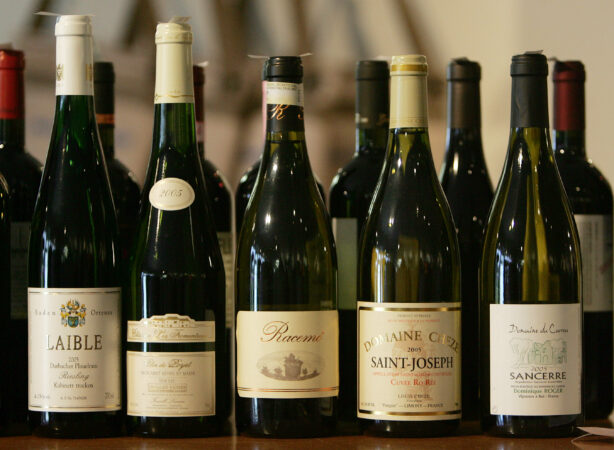
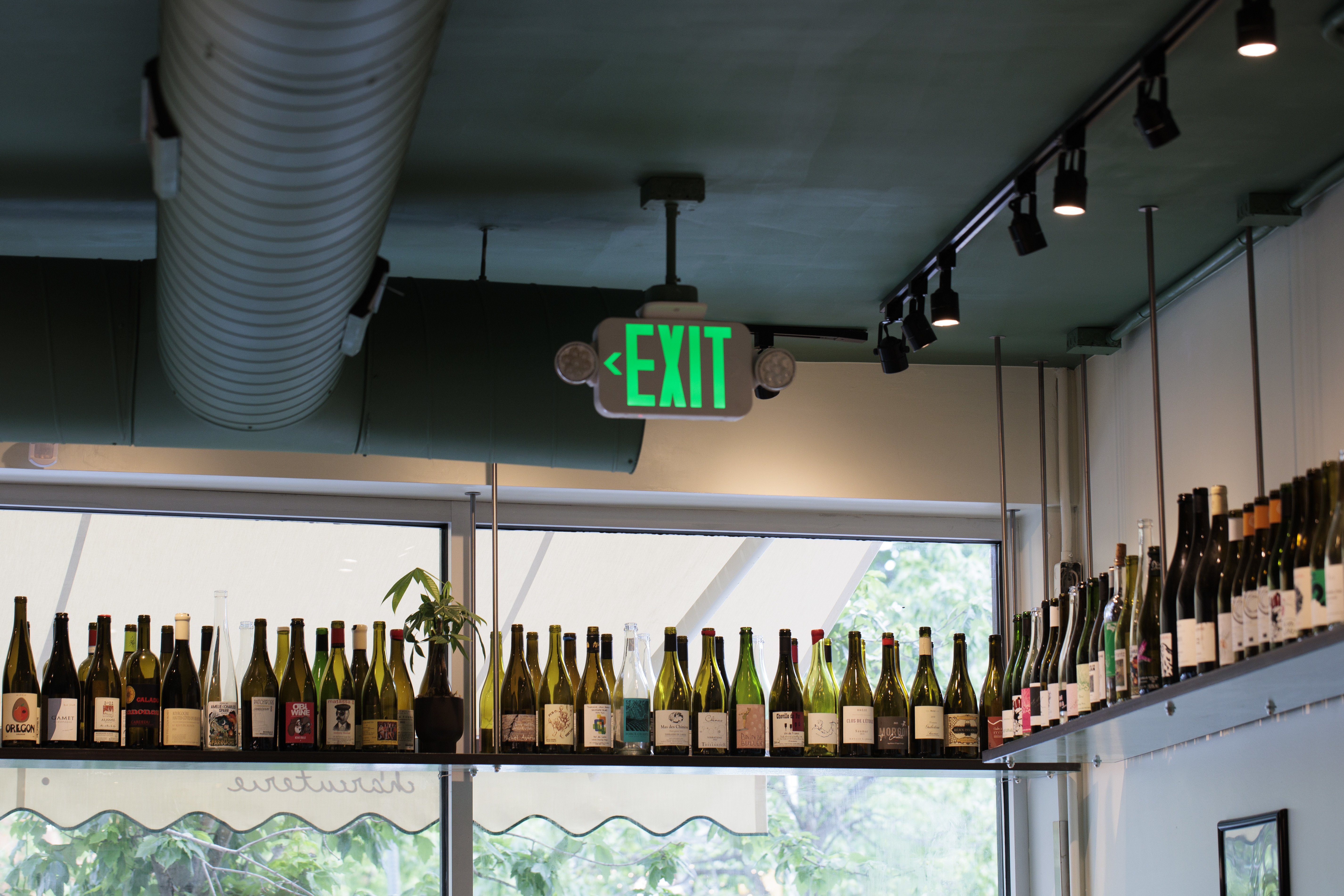
    It’s easier than ever to swing by a neighborhood shop and leave with a special wine bottle at a friendly price. Sande Friedman shares her favorite indie wine merchants in Philly and the suburbs.

    🍷 In these cold days, here’s a luxe Chardonnay worth warming up to, says Marnie Old.

    Where to feast on the seven fishes

    If you’re after squid ink risotto, surf and turf, or mostly just pasta, Kiki Aranita has you covered for this year’s crop of seven fishes feasts with an array of festive, mostly fishy Philly restaurants.

    Coffee shop that’s ‘something gorgeous’

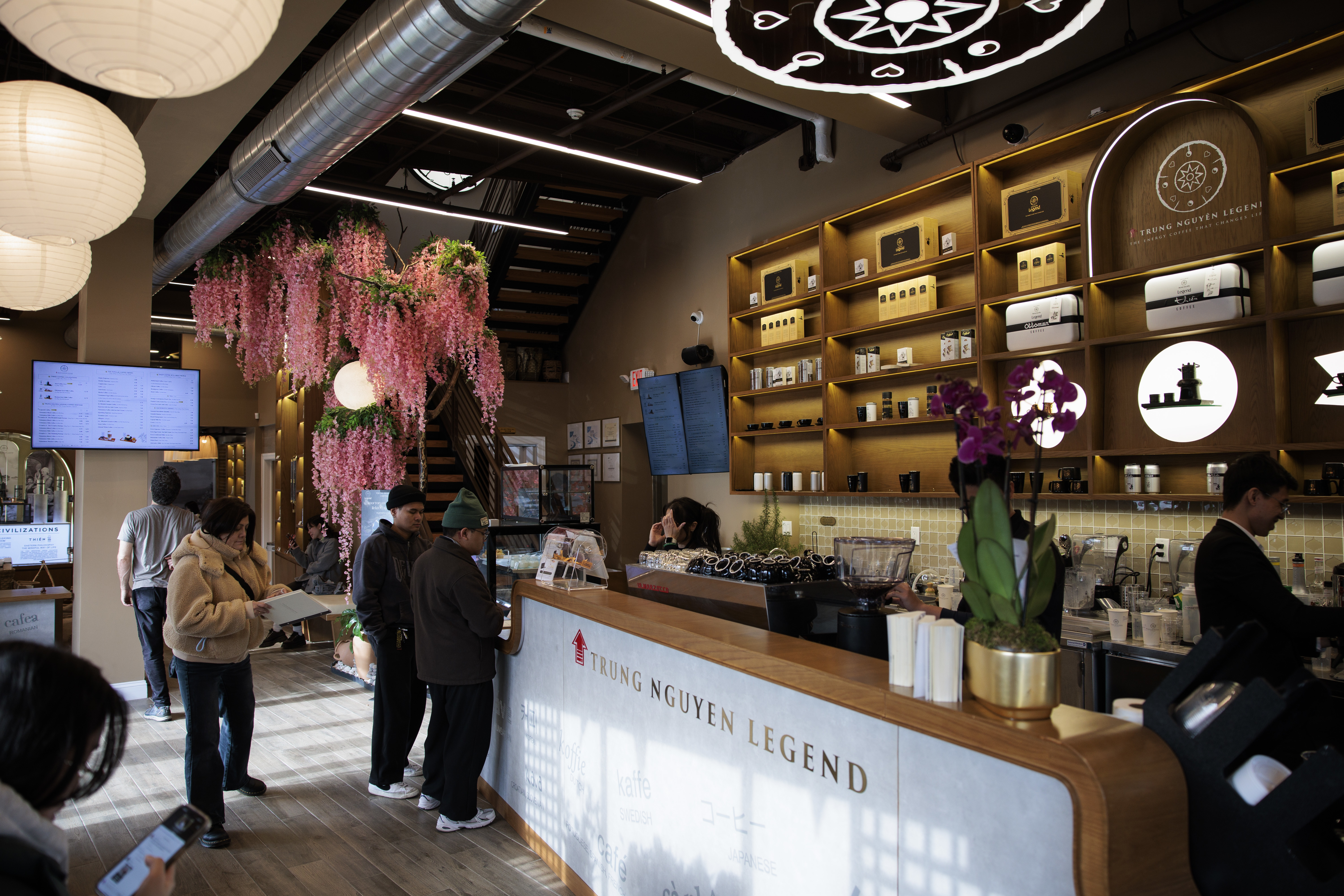
    The largest U.S. location of the Vietnamese coffee brand Trung Nguyên Legend has opened near the Mummers Museum in Pennsport. Beatrice Forman stopped to visit the onetime cabinetry showroom, now a two-story destination with a year-round roof deck for espresso tonics, Vietnamese egg coffees, and phin pour-overs.

    Craig LaBan on Sao: ‘No rules,’ plenty of energy

    Critic Craig LaBan found much to enjoy at Phila and Rachel Lorn’s Sao — a love letter to Philly, set to a soundtrack mix of vintage R&B, Cambodian rap, and Frank Sinatra.

    An accolade for Omar Tate

    Chef Omar Tate, who co-owns the Michelin-recommended Honeysuckle on North Broad Street with his wife, Cybille St.Aude-Tate, just received an $85,000, no-strings-attached grant from the Pew Center for Arts & Heritage. Pew says the grants support timely and compelling new projects and long-term stability. “Tate uses food as a medium for storytelling and cultural preservation,” it blurbed. “His curated culinary experiences assert cooking as a fine art that can express complex narratives about identity, memory, and history. In his visual artworks, collaborations with other artists, and his Philadelphia restaurant Honeysuckle, Tate connects people with Black creative lineages and cuisine.”

    The best things we ate last week

    A sweet (and spicy) Market Street pop-up … belly-warming Indian food … a sticky dessert at Paffuto … a Greek spin on American Sardine Bar’s namesake food. Read on to see where we’ve been eating.

    Scoops

    Barcelona Wine Bar, the syndicated Spanish tapas house, appears to be in the initial stages of planning a second Philadelphia location, complementing its eight-year-old spot in East Passyunk. A real estate solicitation mentions Barcelona as a tenant in an adaptive reuse of an old warehouse on North Lee Street in Fishtown, next to Pizzeria Beddia and Hiroki and across from the new Pip’s, the cider bar by Ploughman Cider. No comment from a Barcelona rep.

    Vons Chicken, a South Korean-rooted chain big on the West Coast, ventures east next month to open at 1714 Washington Ave., next to AutoZone. Vons’ menu includes Korean fried as well as baked chicken, plus sides such as mandu and tteokbokki. Local franchisee Thao Le, who found Vons in California while visiting family, has assorted restaurant experience, including serving at Pietro’s Italian in Center City.

    Restaurant report

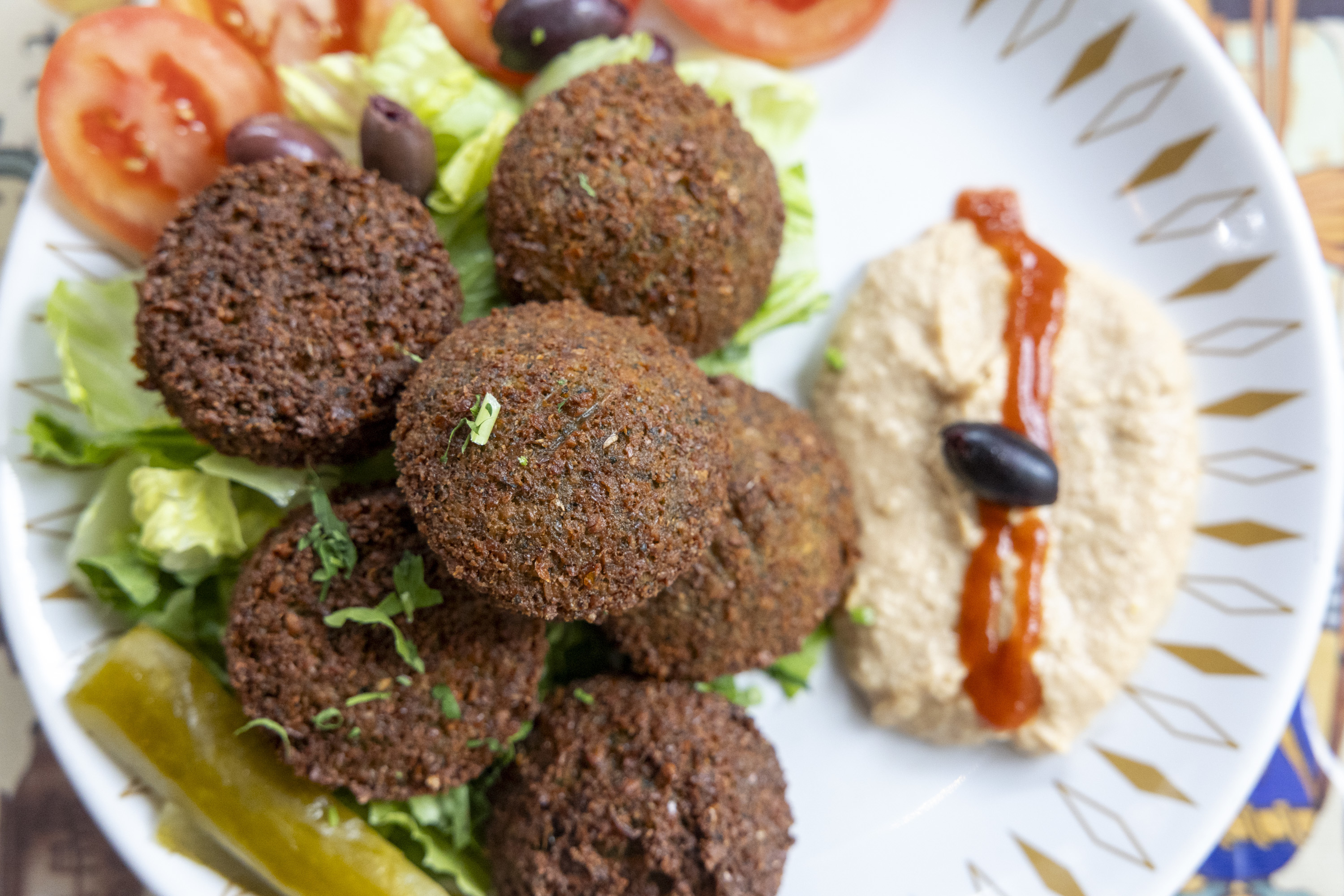
    Hira Qureshi tried falafel at more than 20 restaurants while scouting Middle Eastern cuisine for The Inquirer’s 76. Here’s her rule: good falafel = good restaurant. She maps her picks.

    Briefly noted

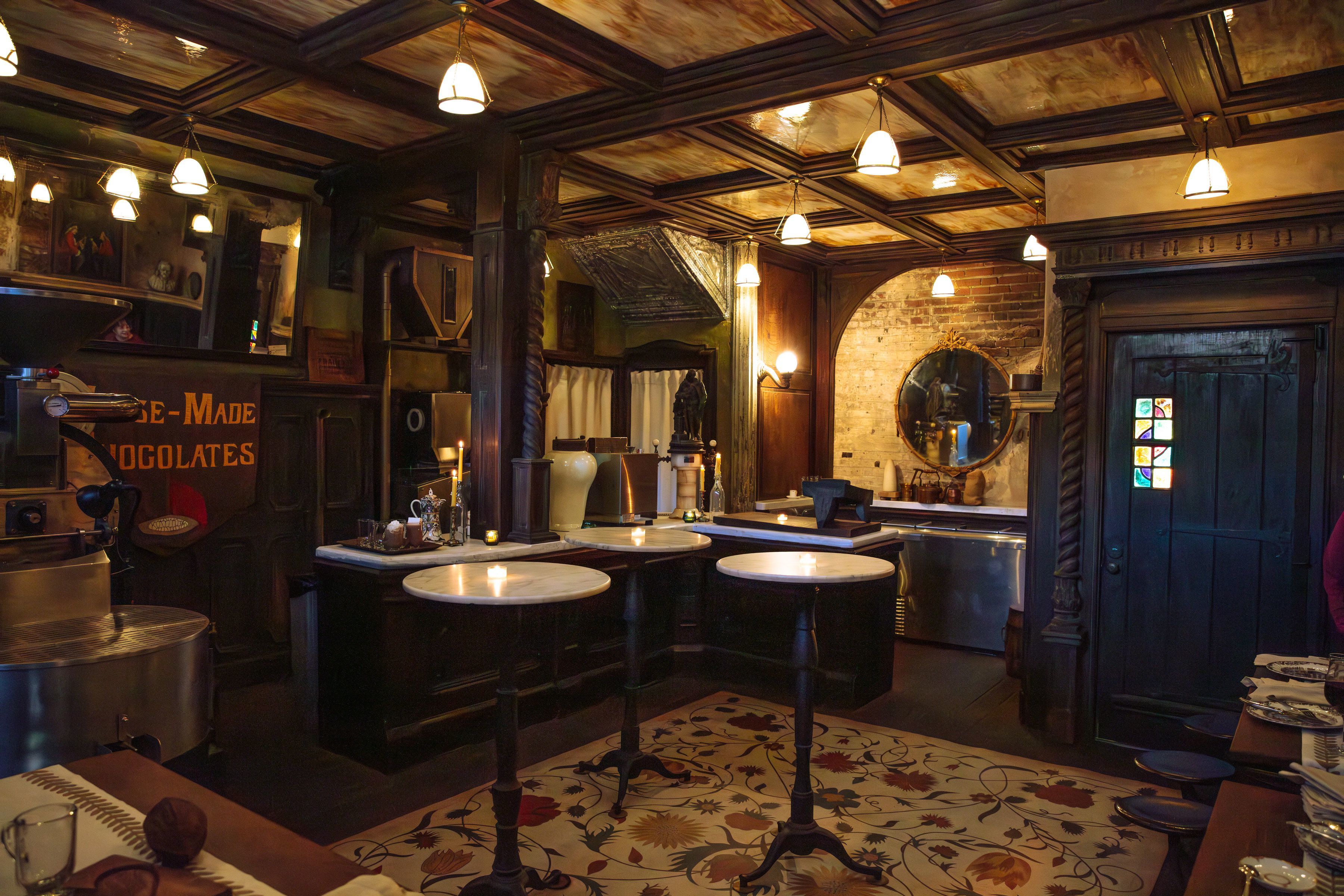
    Eric Berley of Old City’s Franklin Fountain and Shane Confectionery now has a third business on the block. The Cacao Pod — a private event space that doubles as head chocolate maker Kevin Paschall’s chocolate roastery — rocks the same ye olde look at 104 Market. The space, which fits 24 guests (18 seated), is equipped with an ice cream counter, soda fountain, and hot chocolate bar.

    Bombay Express completes its move from Marlton to 219 Haddonfield-Berlin Rd., the Centrum Shoppes in Cherry Hill, opening Thursday.

    Homegrown 215 opens its second location, at the former Bison Coffee shop at 1600 Callowhill St. (enter on Carlton), on Saturday.

    The Concourse at Comcast Center (1701 JFK Blvd.) has two openings teed up for Dec. 15: Pagano’s Market (Italian classics, prepared foods, and desserts) and Kenny’s Wok (a fast-casual pan-Asian concept creating dishes using robotic-wok technology; it’s a version of InstaFooz, the Chinatown shop Poon owns with David Taing).

    Panchoʼs Mexican Taqueria in Atlantic Cityʼs Ducktown neighborhood — which has been running 12 hours a day, seven days a week, for 20 years — will close for what owner Josh Cruz predicts will be a five-week-long renovation.

    Sisterly Love Collective, the alliance of women in the food and hospitality industries, will host a pop-up holiday market from noon to 4 p.m. this weekend at the old High Street Bakery space (101 S. Ninth St.).

    Oyster House’s latest guest chef in its lobster-roll series is Amá chef Frankie Ramirez. His roll ($39), whose proceeds will benefit PAWS, includes butter-poached lobster, salsa macha, refried beans, and cilantro macho on a split-top bun, served with hand-cut fries. It’s on through Saturday.

    Red Gravy Goods is a new gift shop from Valerie Safran and Marcie Turney (of Barbuzzo, Bud & Marilyn’s, Little Nonna’s, and Darling Jacks) at 1335 E. Passyunk Ave., across from Cartesian Brewing/CJ & D’s Trenton Tomato Pies. Kitchen wares are part of the line and the big sell is a hat patch bar: about 100 patches designed by Safran and team that can be applied on-site.

    Center City District Restaurant Week returns Jan. 18-31 with 100-plus restaurants offering three-course, prix-fixe dinners for $45 or $60 and two-course lunches for $20. (The district skipped the promotion this fall for the first time in 22 years.) Here’s the rundown.

    ❓Pop quiz

    A bar is on the way to Center City whose specialty will be:

    A) “the most tequilas under one roof in Philadelphia”

    B) 50 varieties of Champagne, plus caviars

    C) an espresso martini fountain

    D) snacks whose names all start with the letter “G”

    Find out if you know the answer.

    Ask Mike anything

    I would have thought that with the college campuses nearby and booming University City business in general, the big spaces that formerly housed Pod, Distrito, and City Tap House would have been taken over by new restaurants already. Why do you think that is not the case? — Lyndsey M.

    My real estate sources say the main force that makes large spaces tougher to fill in University City are the colleges’ schedules, which create slow summers and winter breaks. One also cited a lack of older architecture (which restaurateurs gravitate toward) and the surfeit of new construction, which tends to make rents more expensive.

    On the bright side, I’m hearing that a tenant may be on the way to the Pod space next to the Inn at Penn (3636 Sansom St.). This year, the UCity/West Philly area has seen the new Gather Food Hall at the Bulletin Building, as well as a slate of smaller destinations: Out West Cafe (5127 Walnut), Corio at uCity Square (37th and Chestnut), Haraz Coffee House (3421 Chestnut), and Good Hatch Eatery (4721 Pine). Next year’s crop will include Mi Casa and a Tous Les Jours bakery at Schuylkill Yards.

    📮 Have a question about food in Philly? Email your questions to me at mklein@inquirer.com for a chance to be featured in my newsletter.

    By submitting your written, visual, and/or audio contributions, you agree to The Inquirer’s Terms of Use, including the grant of rights in Section 10.
  • Center City’s newest bar plans to serve caviar and $600 glasses of Champagne

    Center City’s newest bar plans to serve caviar and $600 glasses of Champagne

    Center City hoteliers Ken and Vittoria Schutz are celebrating their love of Champagne and caviar with a lounge called Bar Caviar inside Dwight D Hotel, their boutique hotel at 256 S. 16th St., a few doors from Monk’s Cafe near Rittenhouse Square.
    At the heart of the concept, expected to open next spring, is a Champagne list that is expected to read more like a collector’s catalog than a bar menu: 50 selections in total, with 15 by the glass.

    One headline-grabber is Salon, the ultrarare Champagne produced only in exceptional years from a single village and a single grape. Bar Caviar plans to offer it by the glass, at what Ken Schutz estimates at $600 per pour. Nonvintage options will start at $15.

    Rather than provide a short list of familiar labels, Schutz said he wants guests to experiment and learn. Schutz is a level 3 sommelier who is also working on a masters in Champagne from the Wine Scholar Guild.

    “Champagne is the original slow drink,” he said, explaining that it takes multiple stages to make, including two fermentations and aging on the lees for at least 15 months. “Time is really what you’re paying for,” he said. “It’s a complex process that doesn’t always get the attention it deserves.”

    Schutz said they want to offer a spectrum — from grower champagnes using innovative techniques and single-plot expressions, to the large houses that specialize in blending for consistency year after year. “There’s a lot of room to explore,” he said.

    The food program will be equally refined, with the opening menu featuring five varieties of caviar served in classic presentations and as part of composed dishes, alongside small plates and a rotating selection of oysters and crudo. The early months will emphasize raw and cold preparations, with a broader hot menu expected to begin later.

    “We wanted to do something distinctive, so Champagne and caviar felt like a perfect pairing,” Schutz said. “Both celebrate craftsmanship and heritage, and they share this idea of time. Both are slow, deliberate products.”

    He said his wife visited farms in Europe and selected producers that raise sturgeon in environments that mimic natural habitats, not concrete tanks.

    The couple are taking their inspiration from the counters of London or Paris, “where you can sit at a counter and enjoy caviar service in an elegant but relaxed way,” Schutz said.

    They’re aiming for what he called a “minimalist, approachable vibe” rather than luxury. Vittoria Schutz, who studied at Cabrini University and Moore College of Art, designed the 11-room hotel, which opened in 2014. Set in an 1840s rowhouse, it blends antique and modern design.

    “We want people to feel comfortable coming in, not intimidated,” he said.