Category: Michael Klein

  • A classic South Philadelphia restaurant gets new life as an old-time nightclub

    A classic South Philadelphia restaurant gets new life as an old-time nightclub

    “Heaven … I’m in heaven … and my heart beats so that I can hardly speak.”

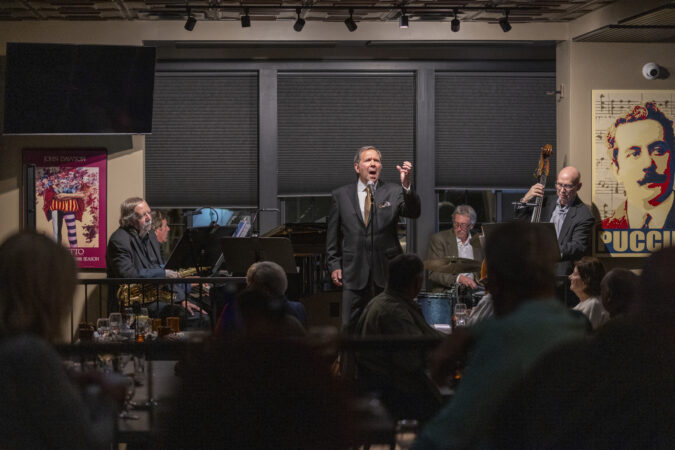
    Harry Barlo, in a crisply tailored black suit, bronze tie, and matching pocket square, bopped jauntily to the Fred Astaire standard, his quartet swinging effortlessly behind him, the crowd nodding and foot-tapping.
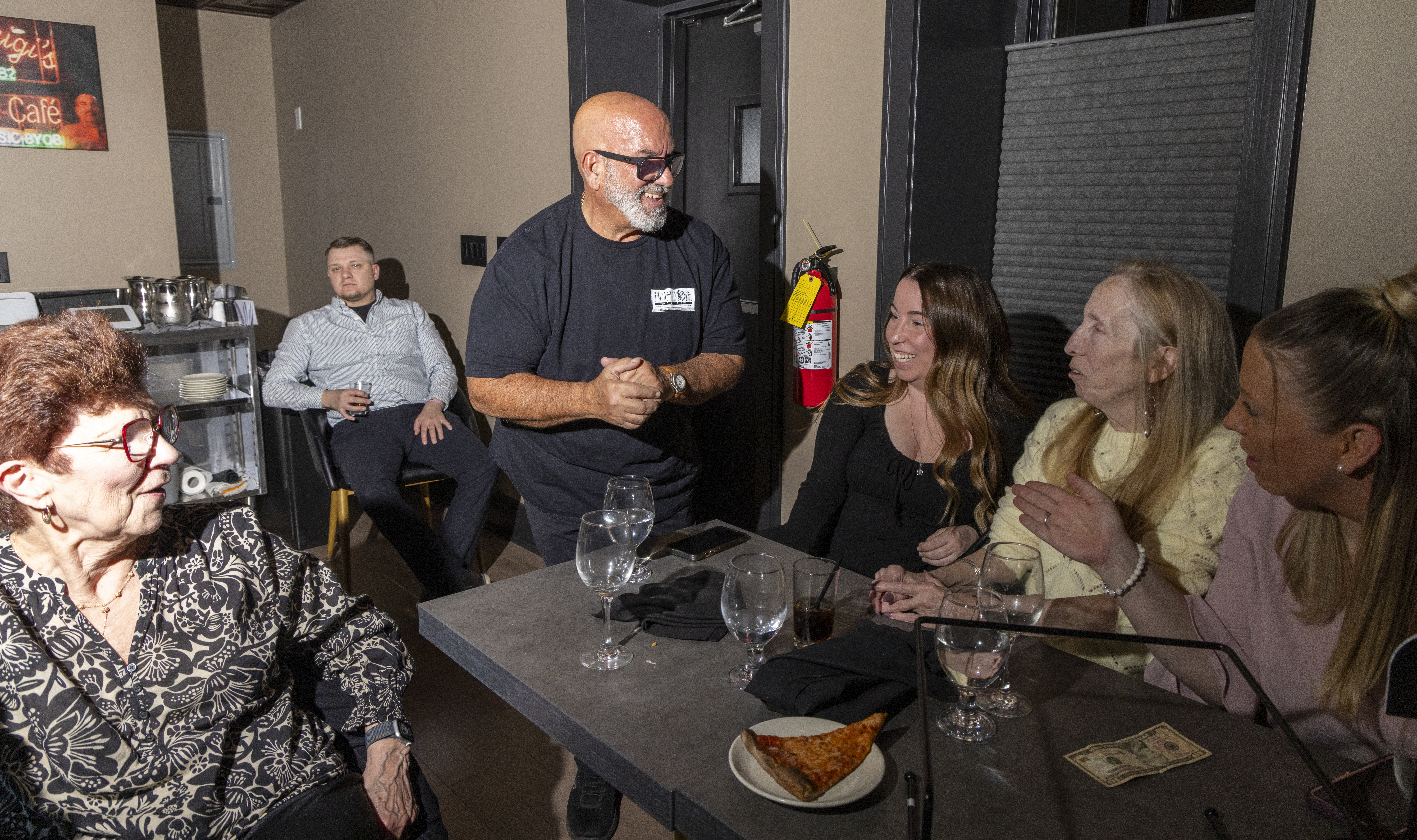
    High Note Caffe owner Franco Borda works the room during the Nov. 8 show.

    At that moment — for a moment, anyway — Franco Borda’s right knee quit acting up. Beaming from the back of his revived High Note Caffe in South Philadelphia, Borda took it all in: 64 people dressed up for a Saturday night out, sitting in his restaurant, eating his eggplant rollatini and his son Anthony’s pizza, enjoying live music.

    “You see this?” he said in amazement.

    Borda, 64, wants to create the sort of supper club that barely exists anymore — intimate, aimed at a boomer audience, with drinks and an informal menu.
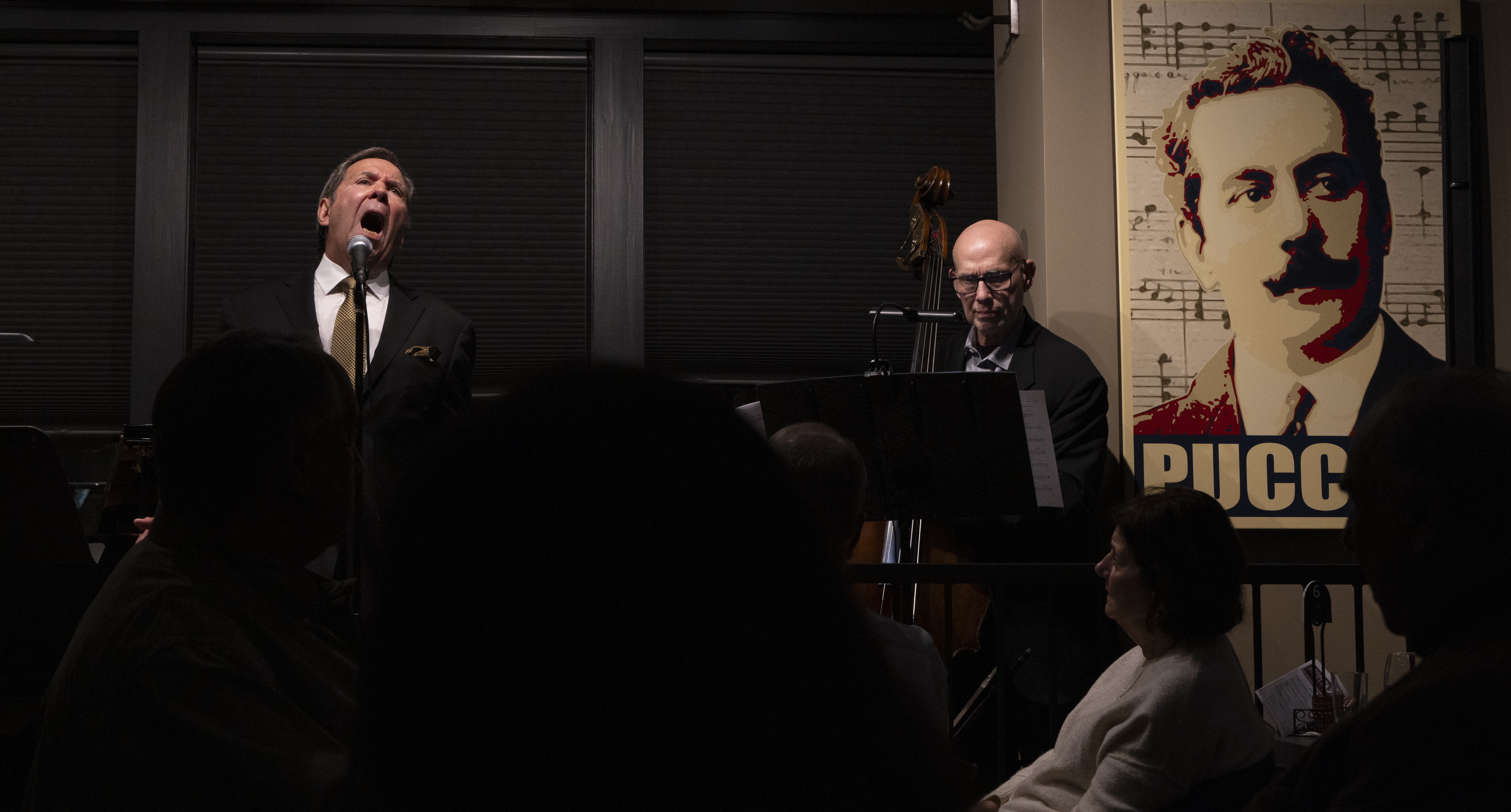
    Harry Barlo hits a note at High Note Caffe.

    It’s an all-new act for the High Note — an update on Borda’s previous restaurants at 13th and Tasker over the last 35 years.

    Borda, who grew up three blocks away, has been singing opera all his life. In the days he ran Francoluigi’s with his former business partner, he would pop out from the stove to sing an aria, and he’d bring in other amateur singers. Sometimes, Phil Mancuso, who owned Mancuso’s cheese shop, and Frank Munafo, a nearby butcher, would show up, and they’d bill themselves as the Butcher, the Baker & the Cheesemaker.

    Over the years, however, Borda found that younger diners were less interested in opera overtaking their meals. He switched gears at High Note Caffe. Jazz stayed, but opera became occasional.

    In March 2020, when the pandemic shut down the High Note and other restaurants at the outset of the pandemic, Borda stepped back altogether. He hired an engineer and an architect, removed a wall, expanded the room, slid the kitchen back, and secured assembly and entertainment licenses.
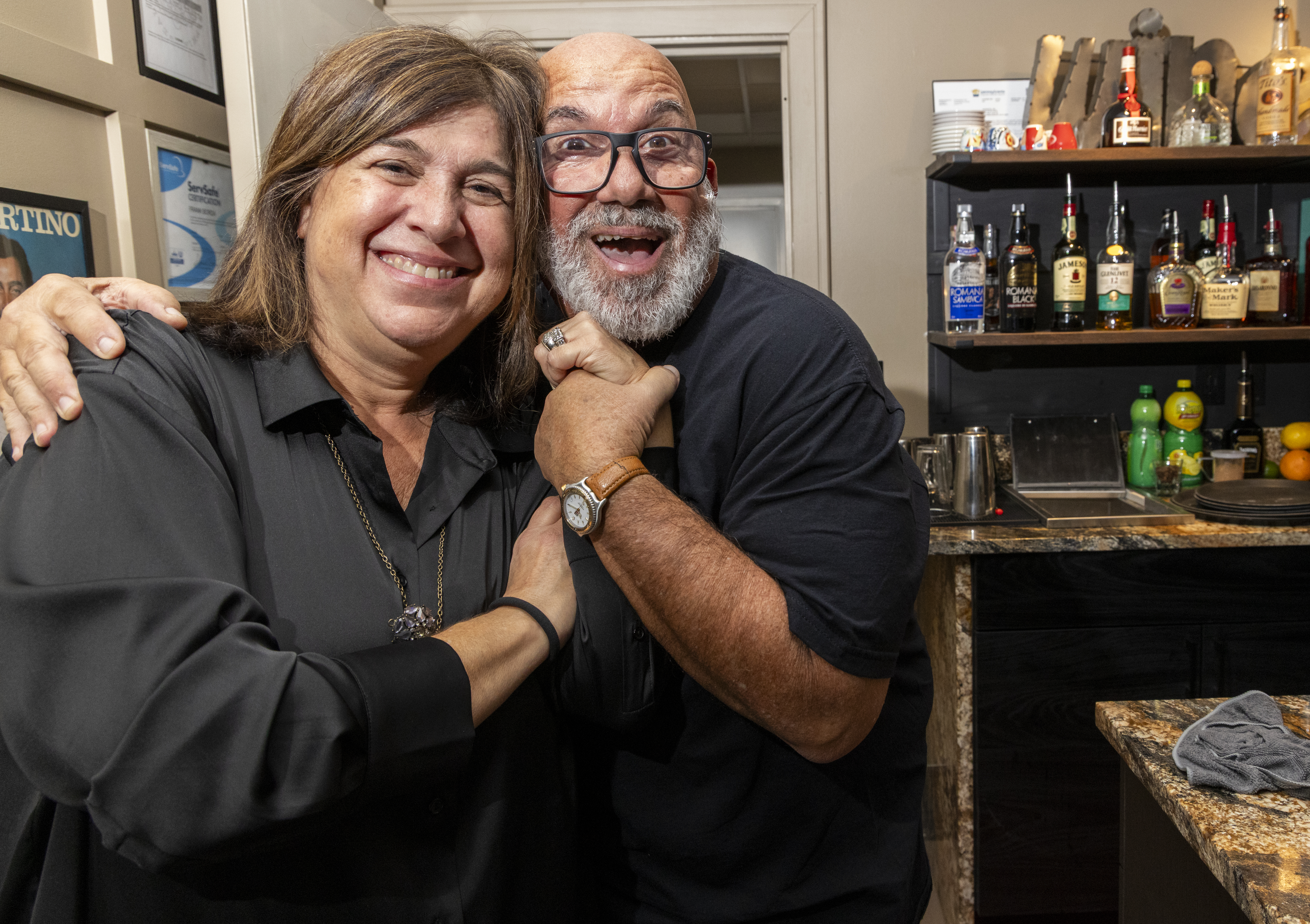
    Franco Borda embraces his wife, Teresa, to sing to her after the Harry Barlo show.

    His wife, Teresa, said she thought he was crazy. “You need knee surgery,” she reminded him.

    Borda countered: “I got 10 more years in the kitchen, you know, and I love it.”

    In 2022, Borda’s son Anthony — who started making pizzas with his pop while in kindergarten — opened Borda’s Italian Eats, a walk-up shop on the Tasker Street side of the property (now closed). That was a temporary setup until the rest of the place could be finished.
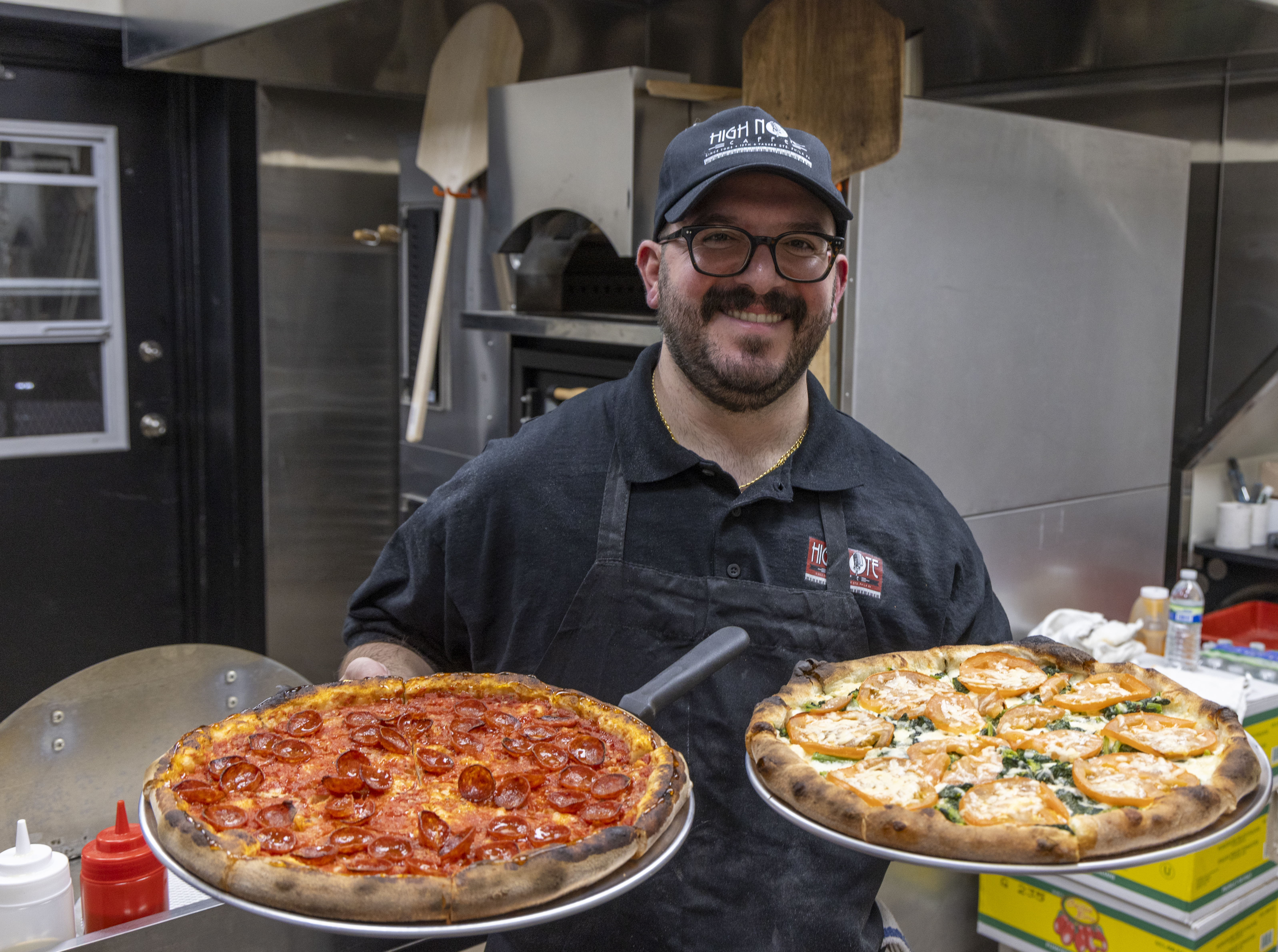
    Anthony Borda, son of High Note Caffe owner Franco Borda, with a pepperoni pizza and a white “Pavarotti” pizza (sliced tomato, broccoli rabe, and sharp provolone).

    “I really wanted to focus on the entertainment,” Franco Borda said. “We want to give people a place in South Philly where you can sit down and enjoy some jazz and eat a little bit and not get banged over.”

    Ticket prices vary but are reasonable. It’s $25 for the Dec. 12 show by the Jack Saint Clair Quartet. All told, you’re looking at a date night for just over $100, with a pizza ($20 or $25), a plate of mussels red ($18.95), $15 cocktails (White Russians! Sloe Gin Fizzes!), and a $7 tiramisu you should not miss.

    “I’m not doing this as a business,” Borda said.
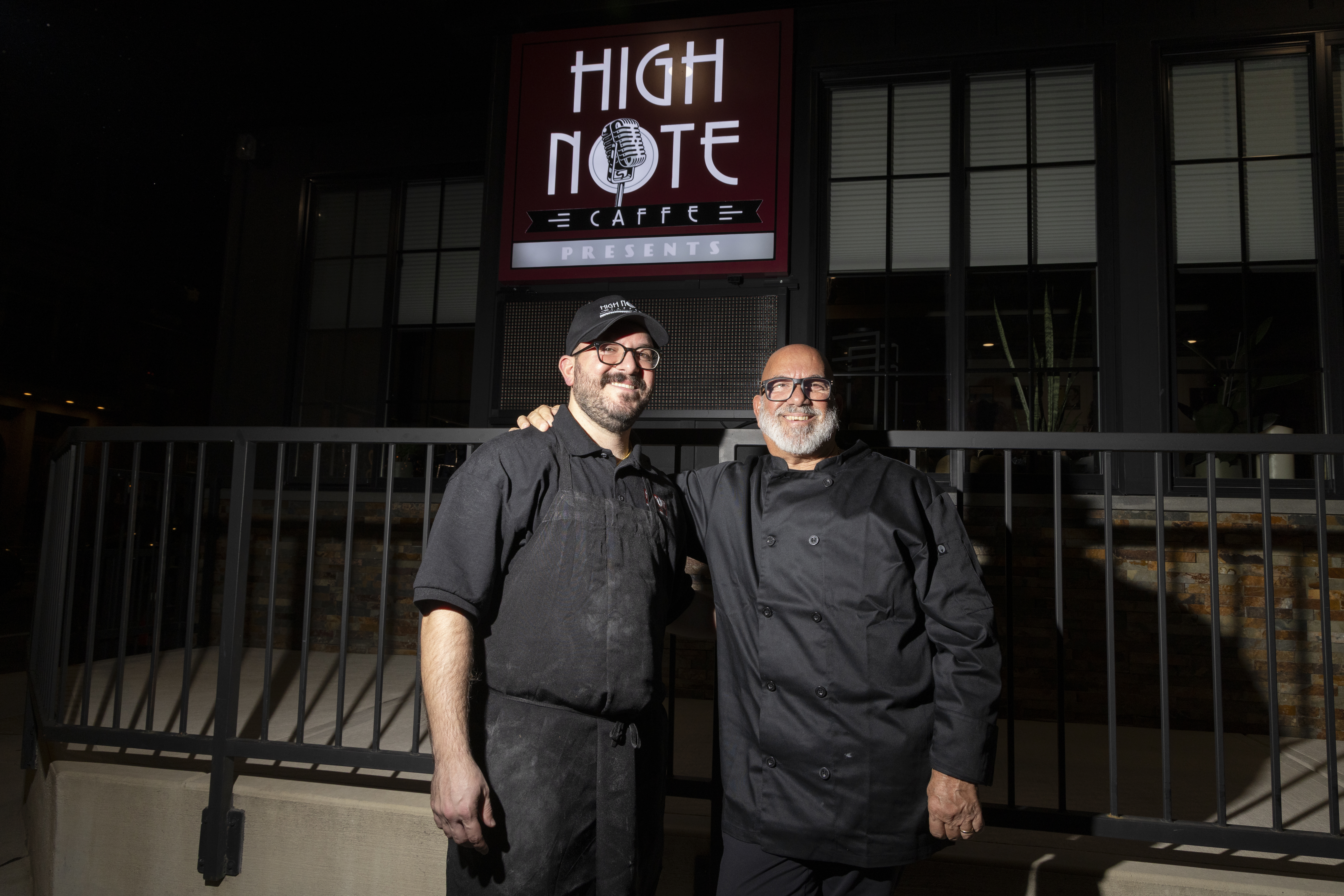
    Franco Borda (right) and his son, Anthony, outside High Note Caffe.

    That much is clear. For now, he is booking only about two shows a month, with tickets sold online and no walk-ins. After the Jack Saint Clair show, vibraphonist Tony Micelli will perform on Dec. 13. On Jan. 30, George Martorano — who served 32 years in federal prison for a drug conviction before his release in 2015 — will do a one-man show to talk about his time in custody.

    Borda said the idea is to not run a conventional restaurant again, rather to provide a venue to musicians who rarely get a platform.

    Eventually, when Borda’s knee gets straightened out, he said he wants to get himself back into vocal shape, get up on stage, and do some opera.

    For now, he said, “I want to find some tenors and sopranos who want to be exposed and come out and sing their [hearts out].”

    People like Harry Barlo.
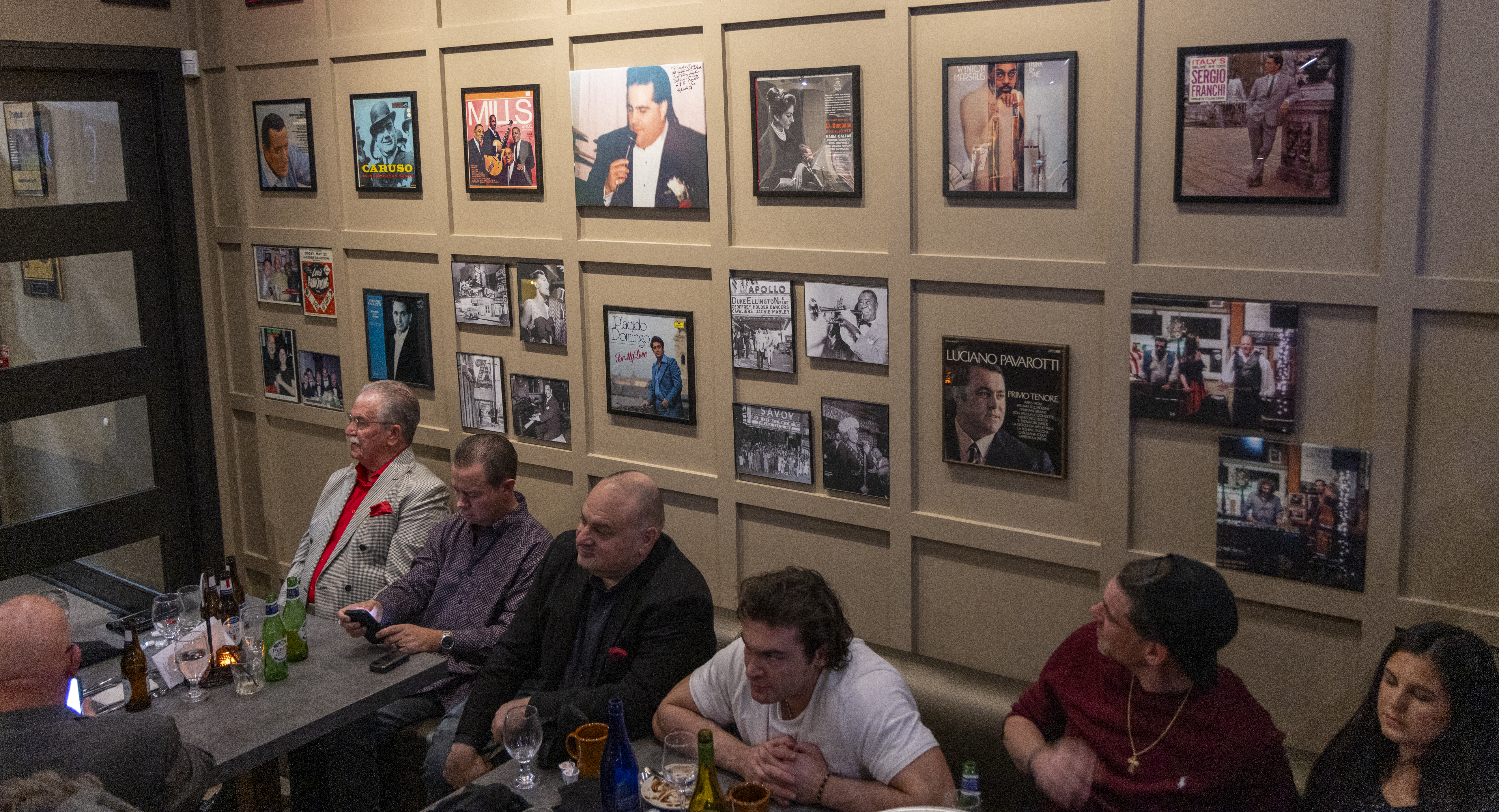
    Owner Franco Borda decoarated his new High Note Caffe with music photos and album covers.

    Barlo — born Harry Schmitt — spent 21 years on the Philadelphia police force before retiring in 1992. All the while, he sang in clubs. “I balanced show business and my other jobs because I had to eat,” he said.

    Twenty years ago, in his early 50s, he chased his dream and moved to Las Vegas, where he sang in a doo-wop group in casino lounges before switching to the Great American Songbook under the nom de croon Golden Voice Harry.

    “Las Vegas — that was the dream of a lifetime,” he said. ”Show business is a tough business. It only fed me for a while.” After returning to Philadelphia, he got into recording and, later, streaming, he said.

    Barlo said he had gigs lined up before COVID-19 dried up live music. Now a casino compliance representative with the Pennsylvania Gaming Control Commission, he said he thought his performing days were over. Then he heard from Benny Marcella, a friend of Borda’s.
    Part of the audience at Harry Barlo’s performance at High Note Caffe on Nov. 8.

    Barlo said he was initially unsure about playing at High Note. “Benny said, ‘Go down and look at the place.’ So I met Franco, we talked, and Franco said, ‘Why don’t you stand on the stage and see what you think.’ When I stood on that stage, he had me. That’s the perfect room for me. I like working in an intimate setting.” Marcella helped round up the musicians, and it was showtime.

    “Are the stars out tonight? I don’t know if it’s cloudy or bright. I only have eyes for you, dear…”

    Ken Moyer nailed his sax solo, backed by Bill Tesser on drums, Marty Mellinger on piano, and Steve Varner on bass. Barlo’s eyes swept the room. His kids were there, watching with their friends. “I first saw him perform when he sang to me for my 16th birthday,” said his stepdaughter Danielle DeAngelis. “And all these years later, it never gets old. He’s still amazing.” He dedicated “I’ve Gotta Be Me” to her.
    Harry Barlo’s stepdaughter Danielle DeAngelis smiles as Barlo dedicates “I’ve Gotta Be Me” to her at the High Note Caffe.

    Barlo, who is booked at the High Note for Valentine’s Day, said High Note reminded him of the rooms at the Sahara and the Stardust. “They were intimate lounges,” he said. “I’m an old-style guy — you get a lot of feedback from the audience when you’re close to them. A friend of mine who was there that night said, ‘Harry, you finally found your niche.’ He’s right. Franco’s got a great idea, and I hope it works.”
  • Philly’s splashy new December restaurants include a honky-tonk and a Michelin star-winner’s third venture

    Philly’s splashy new December restaurants include a honky-tonk and a Michelin star-winner’s third venture

    The Philadelphia area’s December restaurant forecast is on the light side, compared with previous months, but this crop of newcomers is an intriguing mixture: a Euro-inflected bistro with a Bing Bing/Cheu pedigree, a colorful pizza bar, a honky-tonk vintage shop, a Filipino riff on Outback Steakhouse, the makings of an Indian brewpub, and the eagerly awaited casual corner spot from Michelin-starred Amanda Shulman and Alex Kemp .

    Banshee (1600 South St., opening Dec. 11): Twin brothers Bryan and Kyle Donovan, partnered with Bing Bing/Cheu alums Shawn Darragh and Ben Puchowitz, are ready to unveil their sleek South Street West bistro offering casual cuisine influenced by Paris, London, and Basque wine bars. Menu sampling: Barnstable oysters (kiwi mignonette); tarte flambee (smoked crème fraîche, maitake, caramelized onion); Berkshire pork collar (Tarbais beans, Savoy cabbage, bearnaise); and a Butterscotch Krimpet filled with Boysenberry jam.

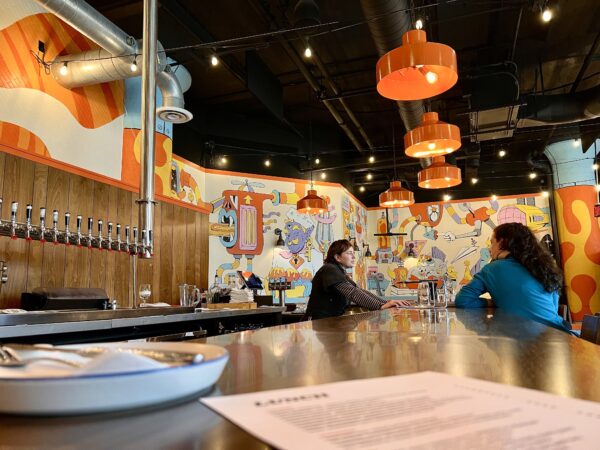
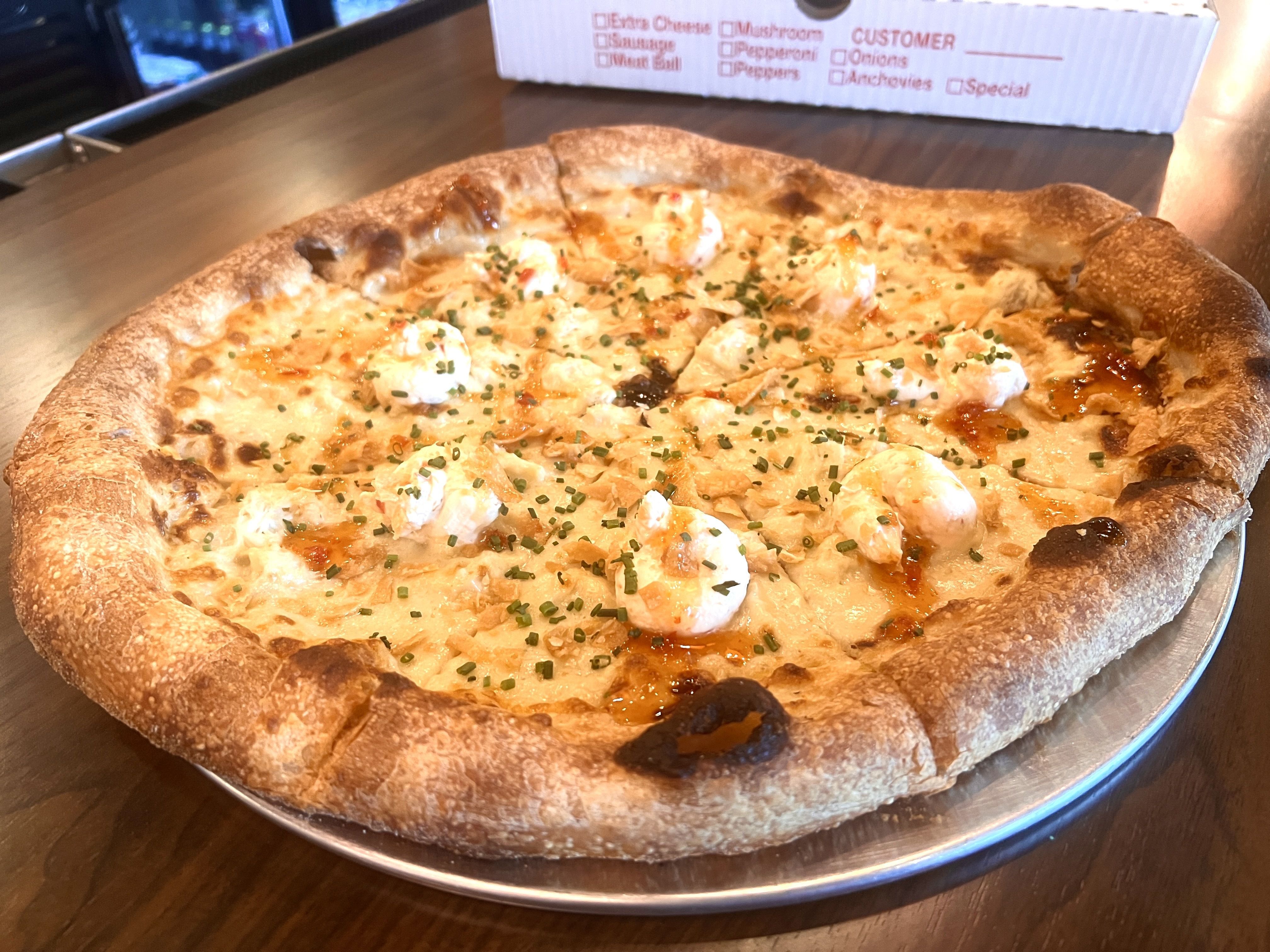
    Cerveau (990 Spring Garden St.; now open): Finally operating full bore with its liquor license, this Mediterranean-leaning newcomer from Pizza Brain cofounder Joe Hunter rocks colorful — almost surreal — surroundings with murals and columns resembling lava lamps. The menu mixes pizzas, pastas, small plates, and the mini-sandwiches known as tramezzini, with attention to vegetarian and vegan options. A full bar, including zero-proof cocktails, supports a plan to evolve into an all-day café-style hangout. Do not miss the crab rangoon pizza, which is exactly what it sounds like.

    Crab rangoon pizza at Cerveau, 990 Spring Garden St.

    LeoFigs (2201 Frankford Ave.; opens “later in December”): Shannon Leocata Figueras and Justice Figueras’ urban winery, cocktail bar, and restaurant in Fishtown is built around the idea of “unpretentious deliciousness” with a warm living room setting. In addition to house-made wines and ciders and cocktails, menu leans toward comfort-driven small plates. (The couple was not above creating a cheeky ruse on the neighborhood recently.)

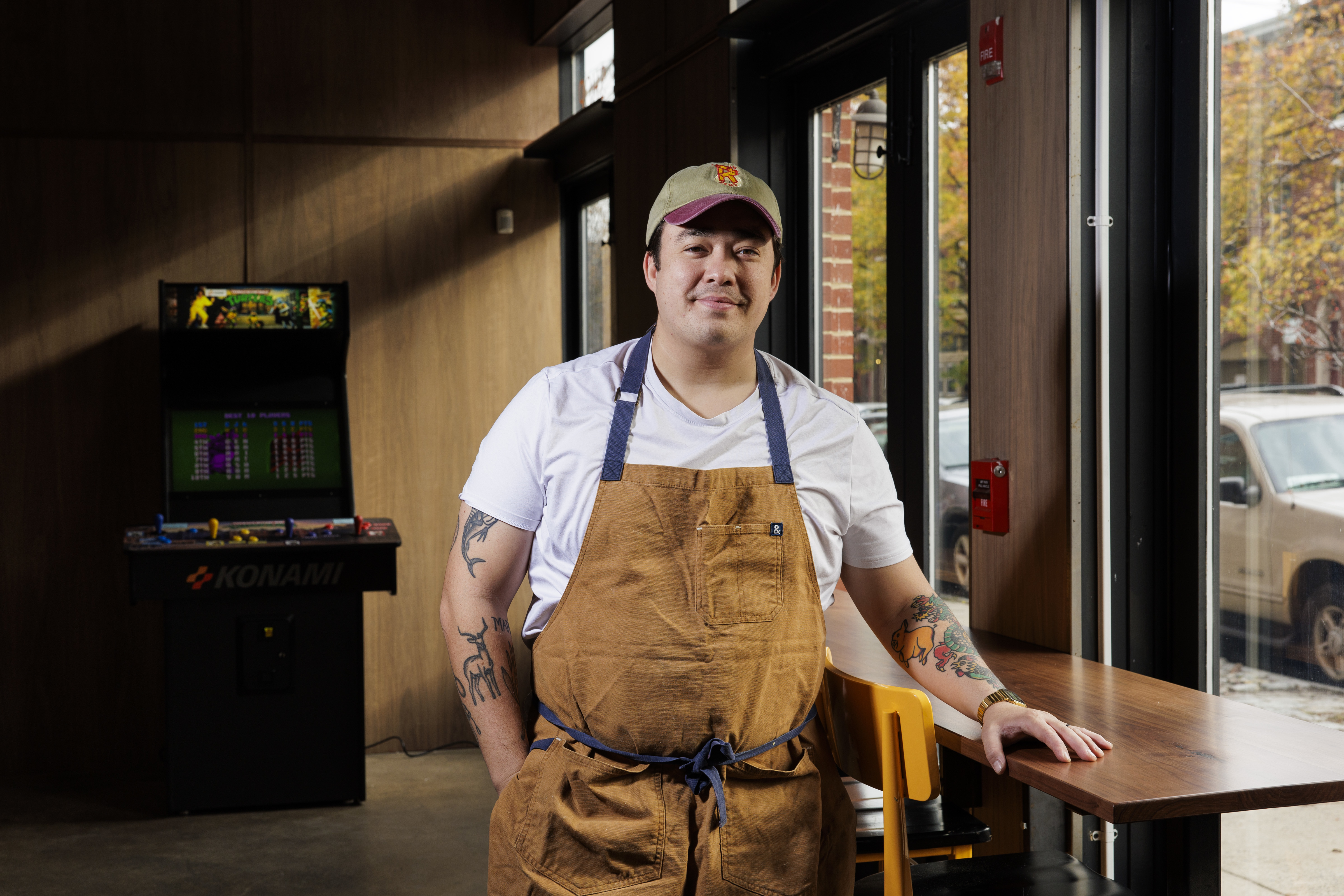
    Chef Chance Anies at Manong.

    Manong (1833 Fairmount Ave.; opens Dec. 5): Chef Chance Anies follows up his South Philadelphia hit Tabachoy with an interpretation of Outback Steakhouse — “that is,” writes Kiki Aranita, “if the chain restaurant existed in a Filipino alternate universe.”

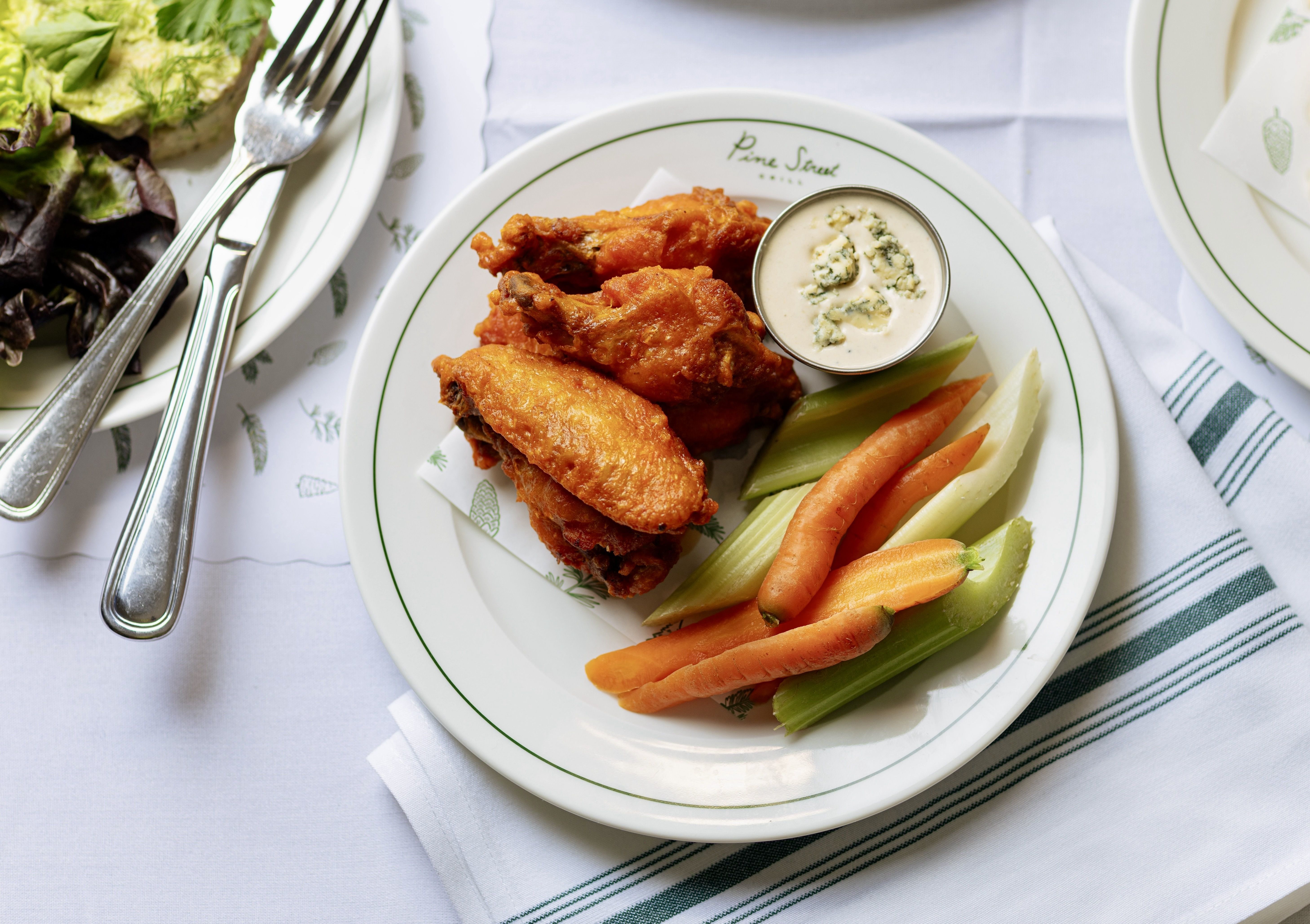
    Buffalo wings at Pine Street Grill, 2227 Pine St.

    Pine Street Grill (2227 Pine St.; “this month”): Amanda Shulman and Alex Kemp’s neighborhood spot in the former Cotoletta space in Fitler Square — a more casual counterpoint to Her Place Supper Club and My Loup — will serve “timeless American food made with care,” such as matzo ball soup, spinach-artichoke dip, Greek salad, French dip, and rotisserie chicken, and a drinks program of classic cocktails, beer on tap (including birch!), and wines “with no pretense” at a variety of price points.

    Secondhand Ranch (1148 Frankford Ave.; soft opening Dec. 6 with a grand opening in January): Here’s what happens when a vintage shop and a honky-tonk bar have a baby in a former bank building at Frankford and Girard in Fishtown. This mash-up hosts independent vendors selling secondhand finds, while the bar slings beer, cocktails, and simple saloon fare like sausages and hot dogs, all while rocking a Western-outlaw vibe. It’s meant as much for hanging out as for thrifting.

    Side Eye (623 S. Sixth St.; “later this month”): Queen Village gets a neighborhood bar serving “French-ish” food, classic cocktails, European-leaning wines, and beer at approachable prices in the former Bistrot La Minette. Owner Hank Allingham leads a team including chef Finn Connors (formerly of Sally and Wilder) and beverage director Ryan Foster (Messina Social Club). The menu has house-made breads, fresh pasta, frites, French onion soup, mussels, and a late-night raw bar.

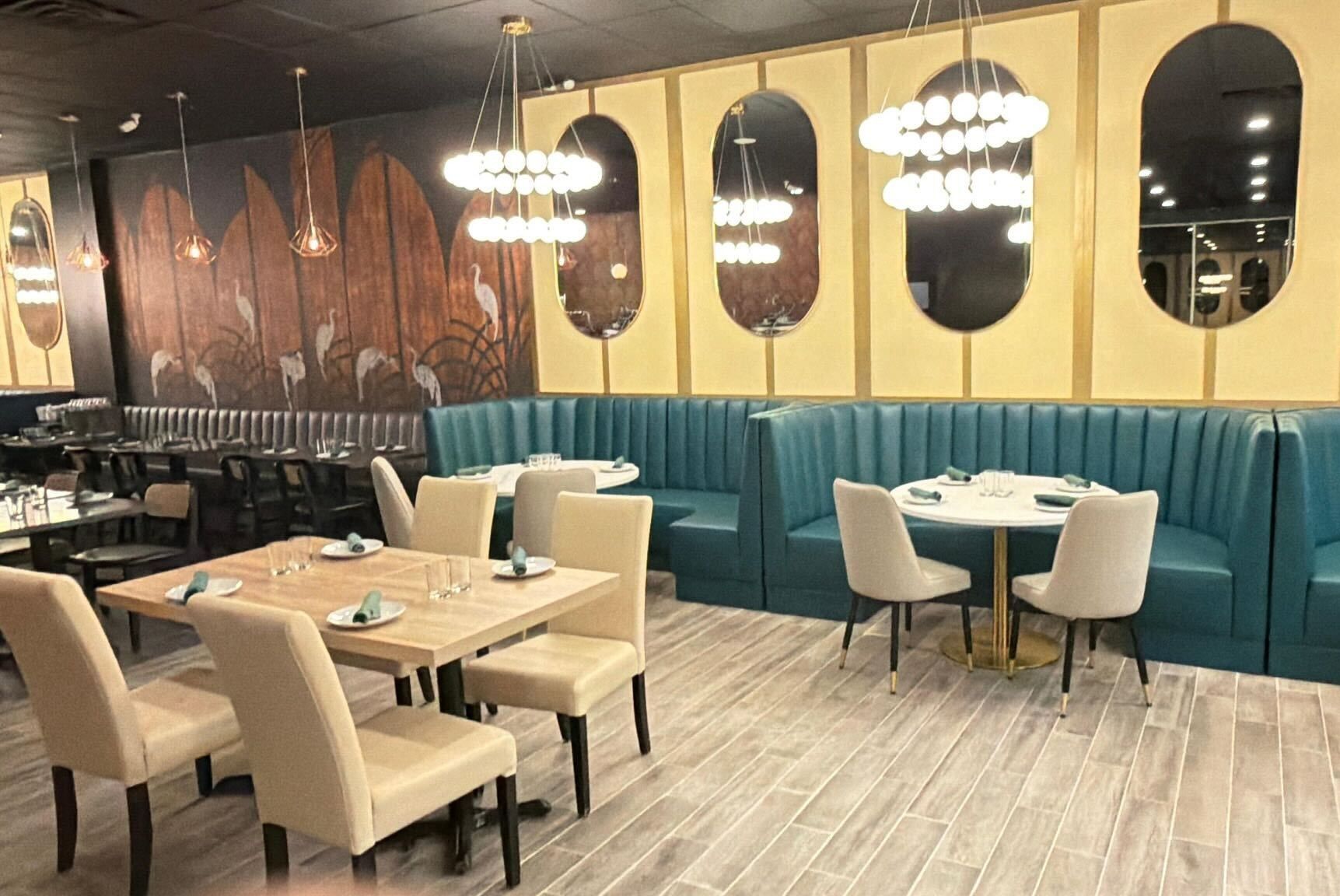
    Dining room at Vibe Haus, which opened Dec. 1, 2025, at 402 Swedesford Rd. in Berwyn.

    Vibe Haus Indian Plates & Taps (402 Swedesford Rd., Berwyn; opened Dec. 1): Karthic Venkatachalam and Gopal Dhandpani of the well-regarded Nalal Indian Cuisine in Downingtown and Adyar Cafe in Exton have taken over the long-shuttered Lotus Inn with what they intend as an Indian brewpub for the western suburbs. Though the on-site brewery is at least several months away, they’re now teasing out a pub menu of Indian-meets-American favorites, such as Madras nachos (papdi chips layered with spiced queso, black beans, masala corn, and cilantro crema), tandoori mushroom flatbread, and butter chicken bao buns.

  • Blackfish BYOB plans to close after 19 years in Conshohocken

    Blackfish BYOB plans to close after 19 years in Conshohocken

    Blackfish BYOB’s 19-year run in Conshohocken will end New Year’s Eve. Chef-owner Chip Roman said the decision to close the restaurant did not come from financial strain or burnout.

    He said he, his wife, Amanda, and their four children are doing well, and business on Fayette Street is good.

    Why then?

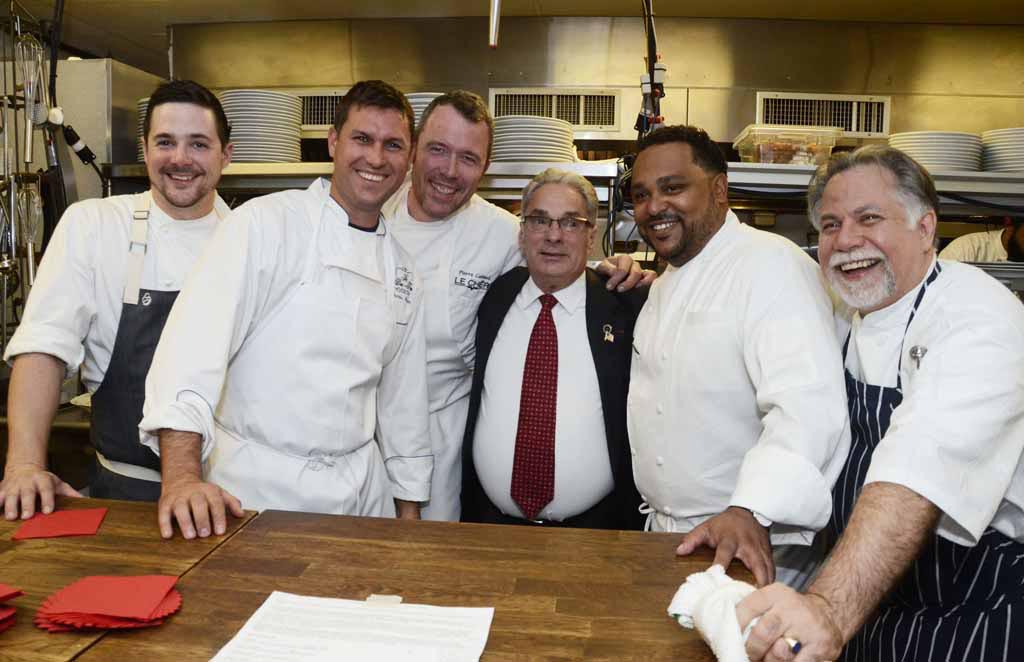
    Chip Roman (second from left) at a 2014 tribute dinner for chef Georges Perrier (center) with fellow chefs (from left) Nicholas Elmi, Pierre Calmels, Kevin Sbraga, and Al Paris.

    “It’s hard to put into words. I’ve always felt that I’m here for a bigger purpose, like there’s more for me to do rather than cook,” he said in an interview Tuesday. “I could probably go on for another 20 years, but I don’t feel like that’s my ultimate calling. If I don’t follow what’s in my head and my heart, I’m going to regret it. On paper, it’s really stupid, but you only live once.”

    Roman, 46, grew up in Fishtown, attended culinary school at Drexel University, and worked for Marc Vetri at Vetri Cucina and Georges Perrier at Le Bec-Fin. At 22, he arrived on Fayette Street in Conshohocken to take over a restaurant called Maya Bella, where he set up a catering business before opening Blackfish in fall 2006.

    For his review in early 2007, Inquirer critic Craig LaBan praised Roman for brightening the rooms with “a vaguely nautical air” and “producing a stellar bistro-plus menu full of clever surprises, from foie gras streaked with cinnamon oil to seafood flavored with spruce.”

    Chip Roman (left) with fellow chef Josh Lawler on a fishing trip off Ocean City in 2011. Roman enjoyed cooking his catch at his restaurants.

    Over the years, Roman opened Blackfish locations at the Jersey Shore, a BYOB in Chestnut Hill called Mica, and a bistro in Center City called the Treemont. A dedicated fisherman, he would cook his catch at his restaurants. He also was a partner in Tradestone Confections, a candy business.

    He said that he began thinking about a post-chef career after his father, Charles, died in February.

    Roman has real estate investments and said he can always return to a kitchen if he misses the work. He feels pushed toward a different path. “Whatever there is, it’s putting all these opportunities in front of me and leading me down certain paths,” he said. “I’m starting to see clues. I’d be a fool not to explore it.” He emphasized that he is fortunate — “God’s given me a lot of blessings,” he said — and believes it is time to give something back.

    Roman acknowledged that stepping away from Blackfish when the business is healthy makes him feel “crazy,” particularly when so many restaurateurs close under duress. “That’s not my situation.” Roman said he has watched others stay too long in a role that no longer fits them, and he wants to avoid that.

    In a Facebook post, he and his wife wrote: “This is not a decision I made lightly — this restaurant has been a defining part of my story, my work, and my heart. What made Blackfish truly special was never just the food or the space. It was you — our guests — who showed up year after year, celebrating milestones, sharing meals with loved ones, and trusting us with your most important moments.

    “And it was our extraordinary staff, past and present, whose talent, dedication, and passion brought Blackfish to life every single day. They are the soul of this place, and I am endlessly grateful for everything they have given.”

  • One of Chinatown’s best restaurants is coming to East Passyunk Avenue

    One of Chinatown’s best restaurants is coming to East Passyunk Avenue

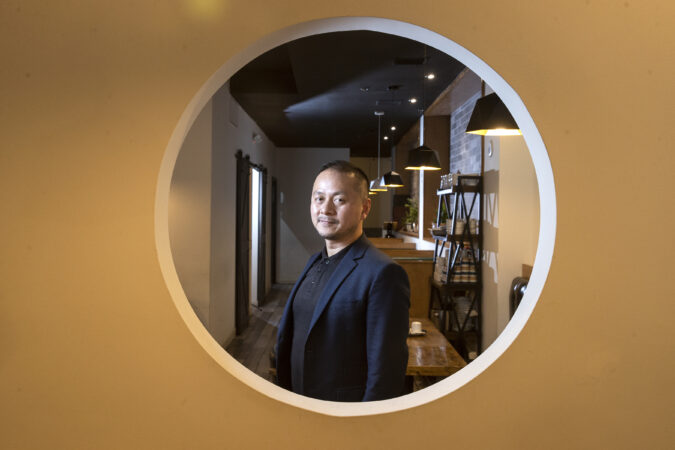
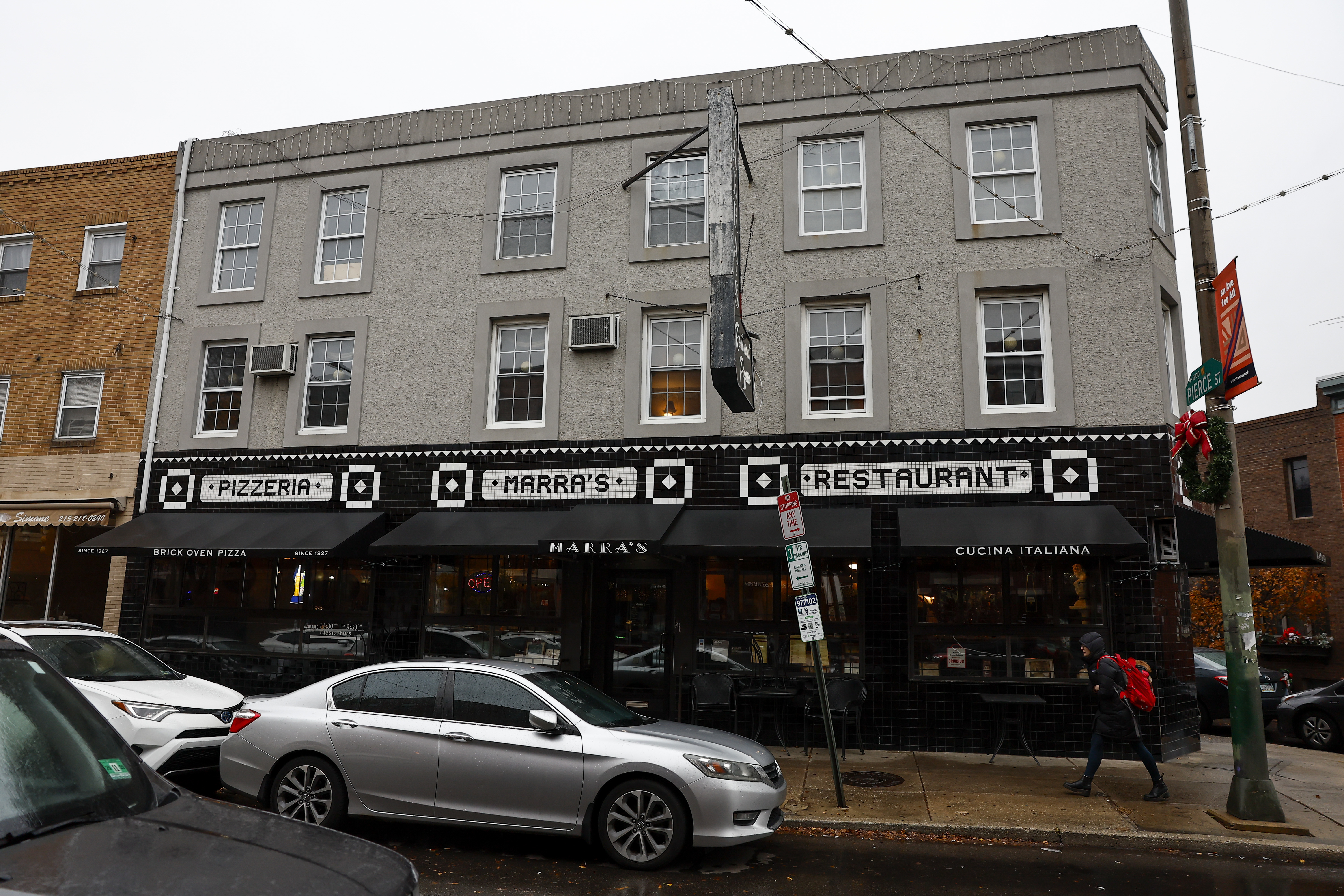
    One of Philadelphia’s most acclaimed Sichuan restaurants is expanding beyond Chinatown. With his purchase of the landmark Marra’s Restaurant & Pizzeria on East Passyunk Avenue, EMei owner Dan Tsao has set his sights not only on South Philadelphia but also to the Main Line and beyond.

    Several months ago, Tsao purchased the former John Henry’s Pub property on Cricket Avenue in Ardmore, where hopes to open another EMei next summer.

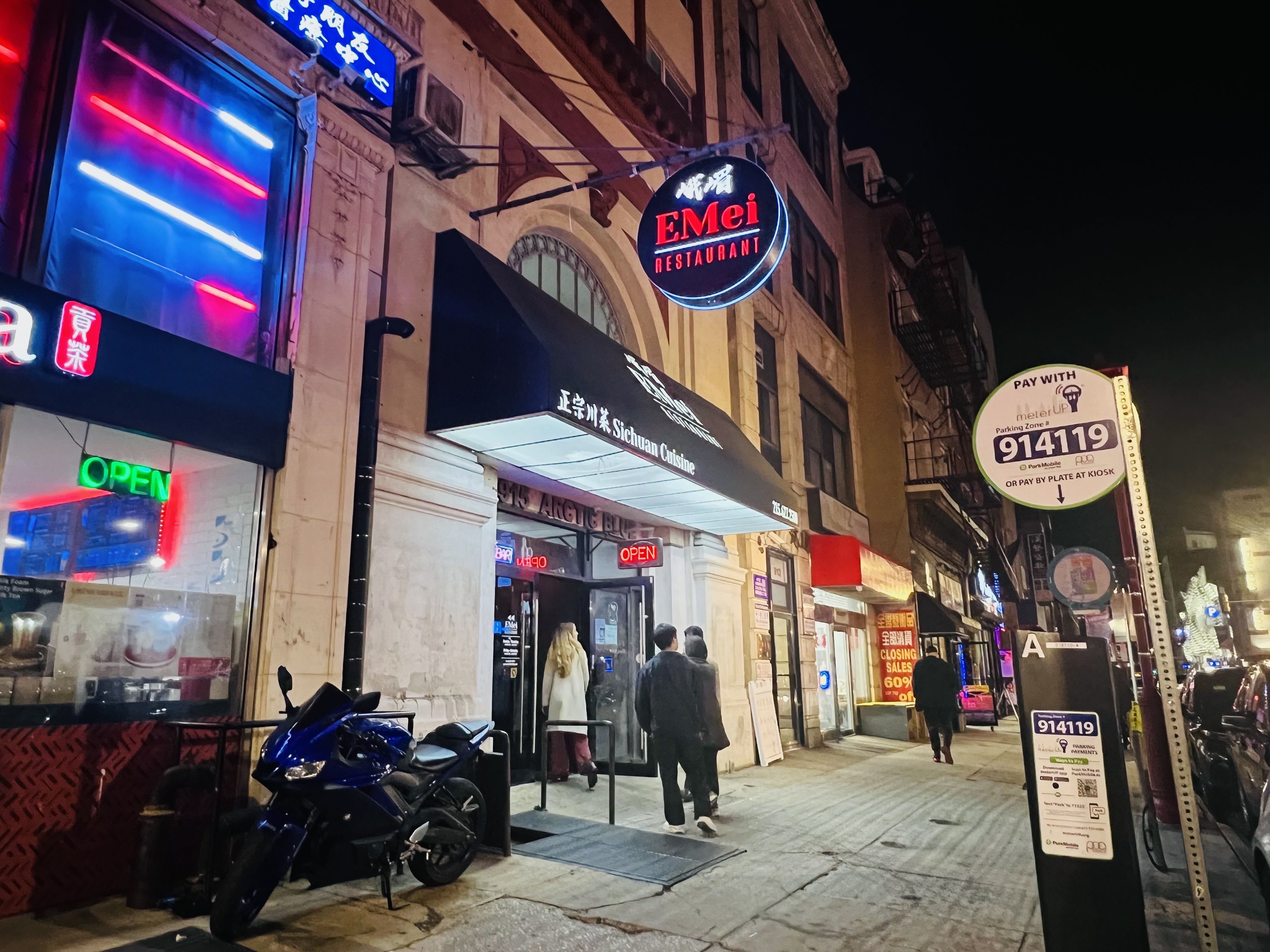
    Dan Tsao’s restaurant EMei at 915 Arch St. in Chinatown on Nov. 8, 2025.

    Tsao said the East Passyunk EMei would roll out in phases, with takeout and delivery launching in February during renovations and full dine-in service targeted for summer 2026. He said he wants to become part of the Passyunk Avenue community for decades to come.

    Real estate broker Greg Bianchi, who represents the family that owned the Marra’s building at 1734 E. Passyunk Ave., called the deal “a win-win for everybody. [Tsao is] going to bring more people and business to the other businesses. People don’t realize what a force he is in the Chinatown community.”

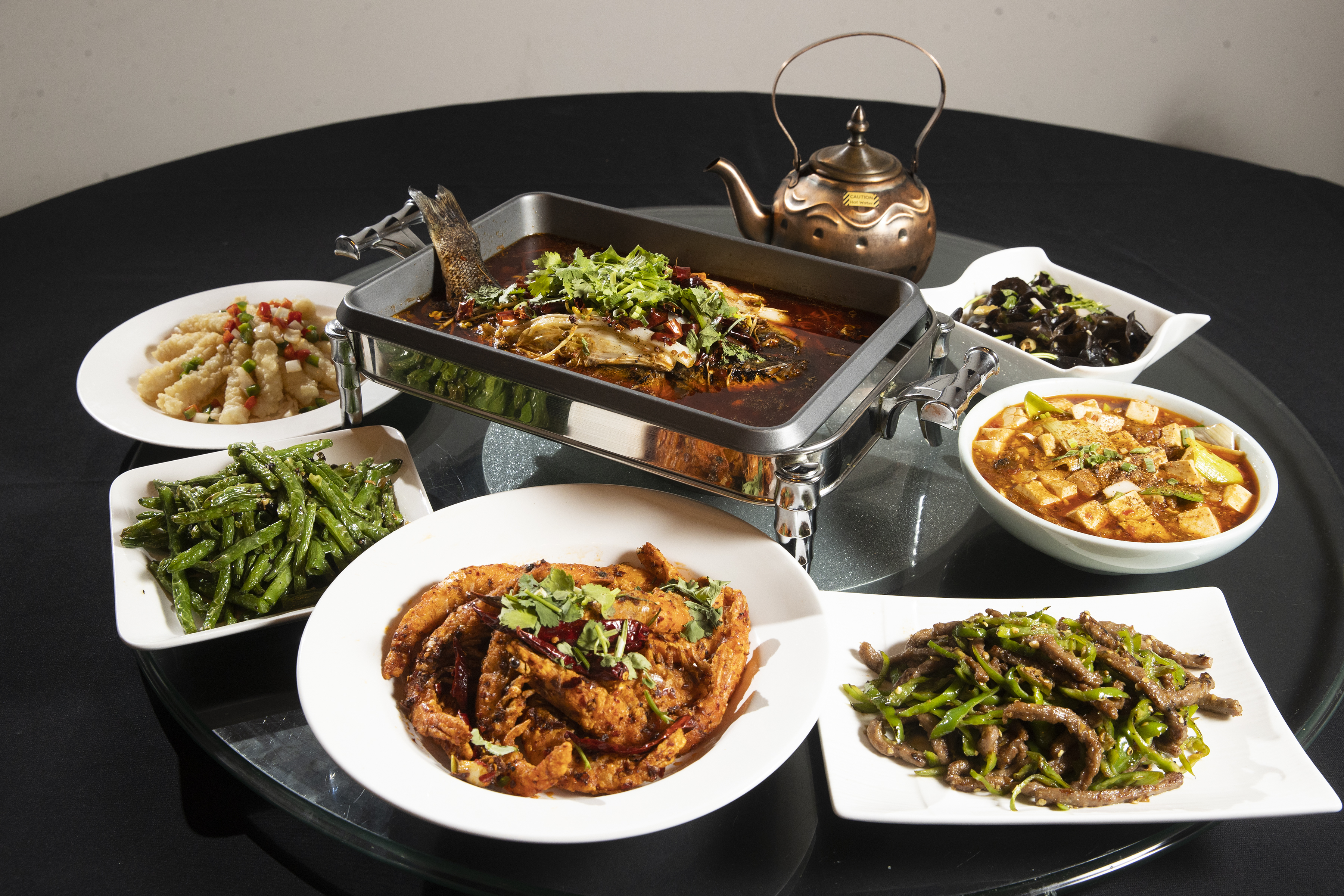
    Dishes served family style at EMei, 915 Arch St.

    Besides operating EMei, Tsao — who immigrated from China after high school and graduated from Penn State in 1999 — has been a newspaper publisher for 18 years. His New Mainstream Press operates Metro Chinese Weekly and Metro Viet News, offering deeper news coverage than the typically ad-heavy publications that had dominated the local Asian-language media.

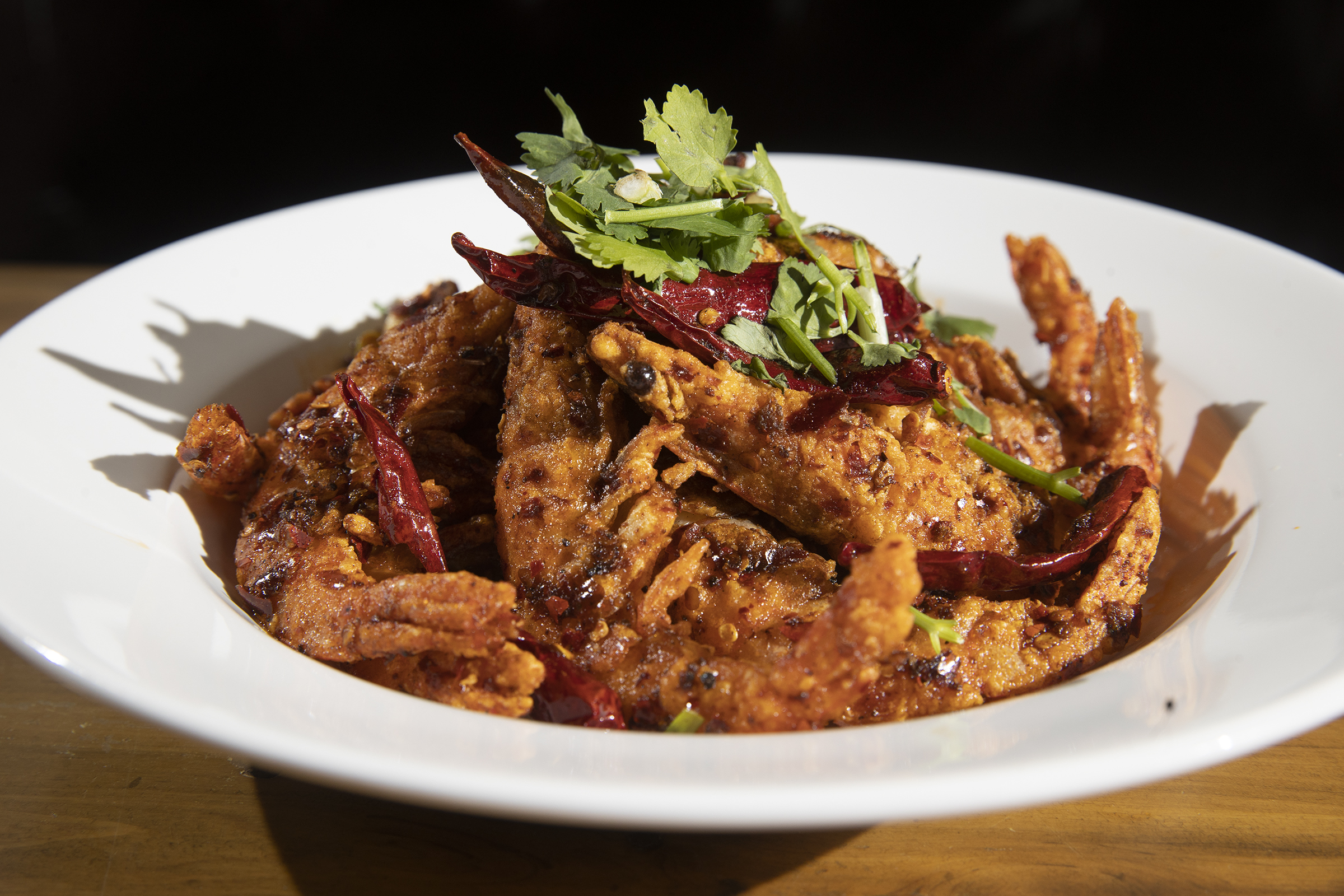
    EMei (pronounced “E-may”), which Tsao’s mother-in-law opened in 2011, draws a loyal base of native Chinese patrons for its Sichuan specialties, including mapo tofu, Chongqing spicy chicken, dry pot, tea-smoked duck, dan dan noodles, and whole fish. Its accolades include a 2024 placement on The Inquirer’s 76 most vital restaurants list and the top ranking in the Daily Pennsylvanian’s Best of Penn student survey. Recently, chef Amanda Shulman cited EMei in Food & Wine as her favorite restaurant.

    EMei on the rise

    The kitchen at 915 Arch St., entirely in the basement, is now at capacity. Even after recent upgrades, including six new wok stations, 18 new kitchen staffers, and robots delivering foods to the tables, “growth requires new space,” Tsao said.

    Tsao analyzed sales data and found that many customers hail from Lower Merion, where he lives with his family — hence the opening in Ardmore. He also noticed that EMei is especially popular in South Philadelphia, whose four ZIP codes account for more than 20% of delivery volume.

    This made East Passyunk a natural site for expansion. He said he was immediately drawn to the Marra’s building and was surprised that it had been on the market for more than four years.

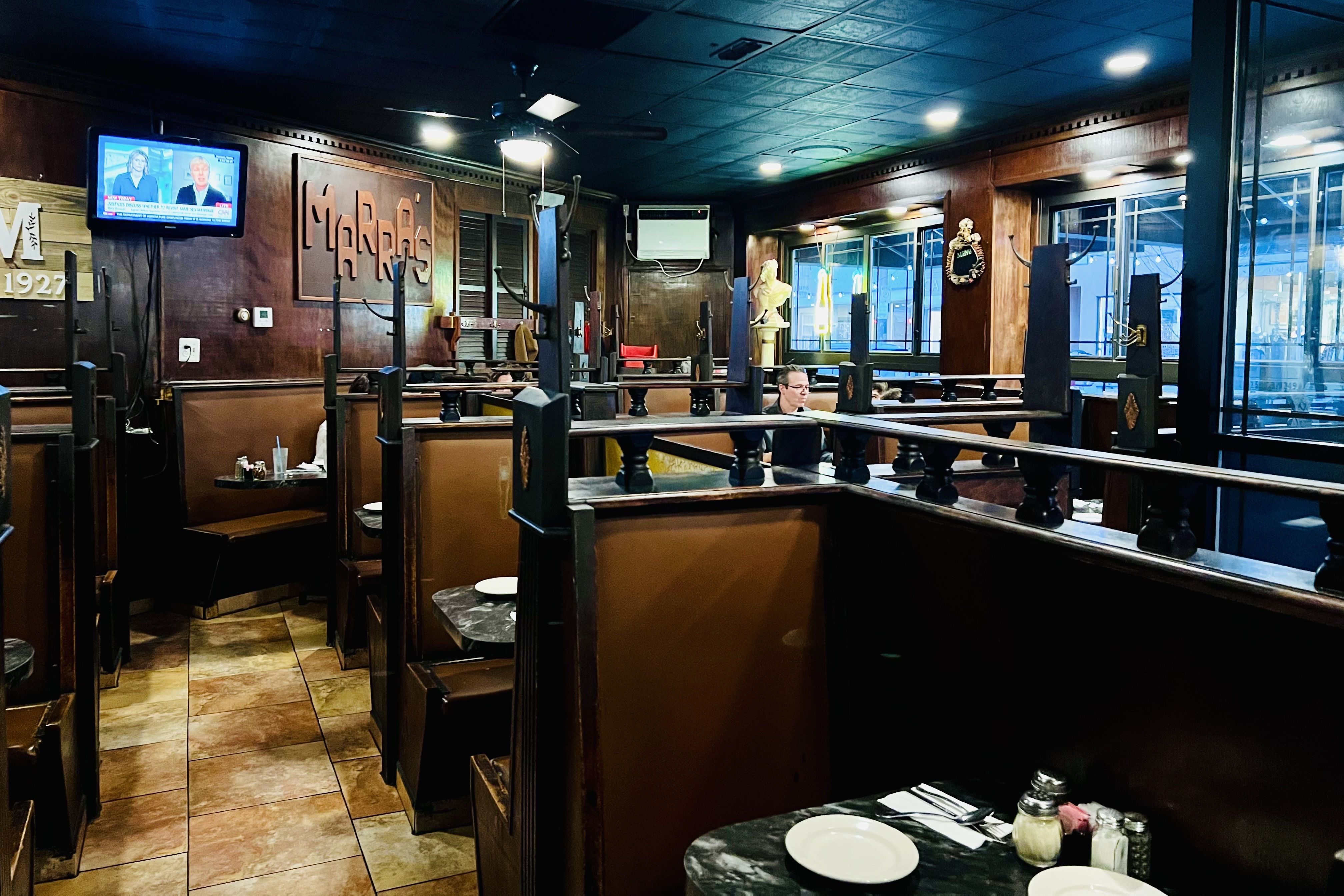
    Marra’s restaurant, as seen on Nov. 30, 2025, its last day.

    When Tsao learned that co-owner Robert D’Adamo — a grandson of Marra’s founder Salvatore Marra — was preparing to retire, Tsao saw parallels in his own experience: Before the pandemic in 2020, his mother-in-law, Jinwen Yu, and her business partner, chef Yongcheng Zhao, were looking to step aside; Tsao became an unlikely restaurateur, buying out partners and taking on responsibilities he had not expected.

    “My father spent his entire career as an executive at a food enterprise in our hometown in Zhejiang, and in college I worked every position in a Chinese takeout restaurant,” Tsao said. “Through my newspaper and digital platforms, I’ve also worked with more than 200 restaurant clients. I always knew this was a hard business. But I didn’t fully understand the challenges until I took over EMei.”

    He recalls fixing sewage backups until 2 a.m., working overnight with contractors to maneuver a 1,200-pound wok station into the basement, and spending hours after service refining the menu with chefs. “The industry is brutal,” he said. “If you stay mediocre, or stay in the comfort zone of only serving a niche customer base, you will struggle — even if the restaurant doesn’t close. I knew we had to evolve EMei into something much bigger.”

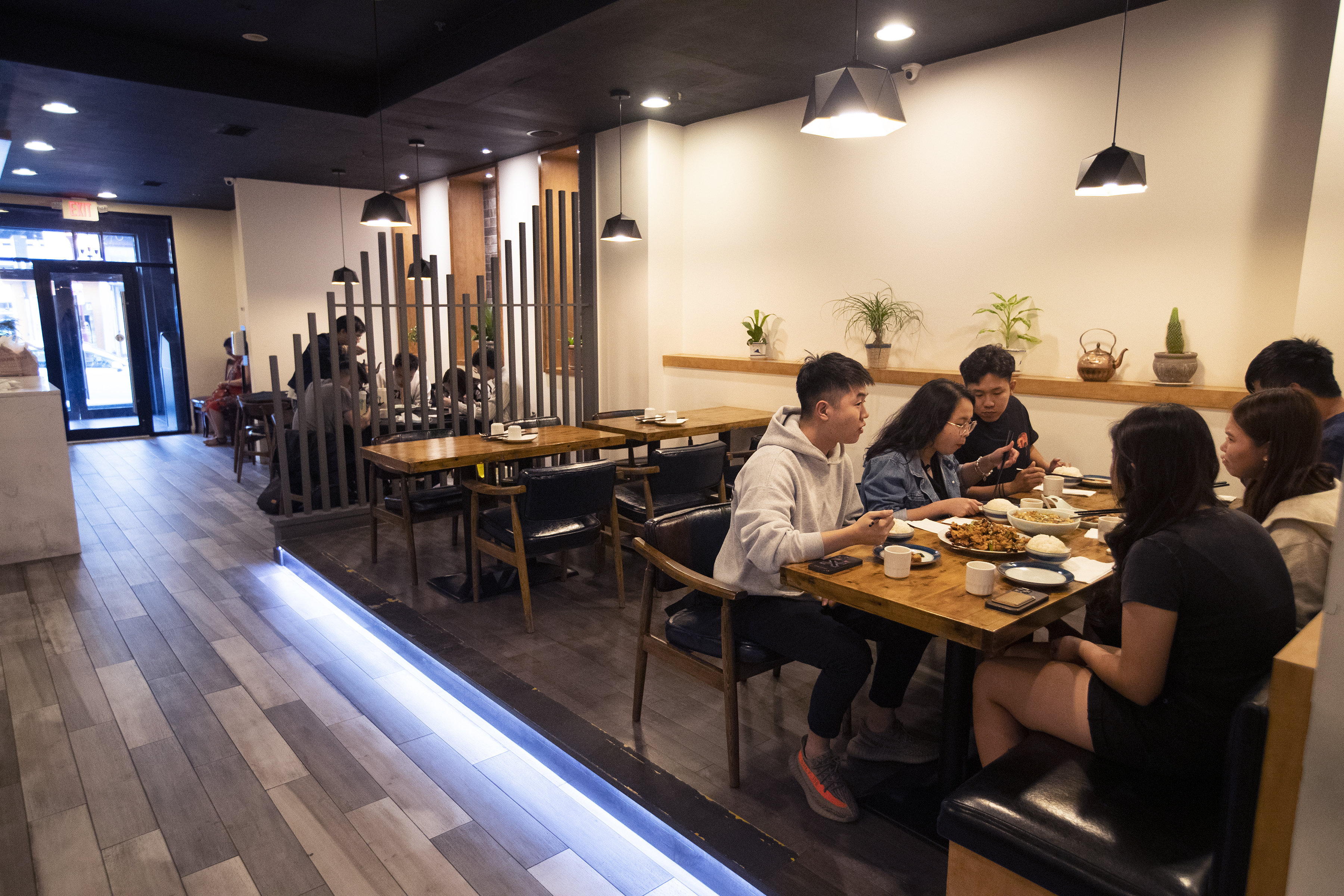
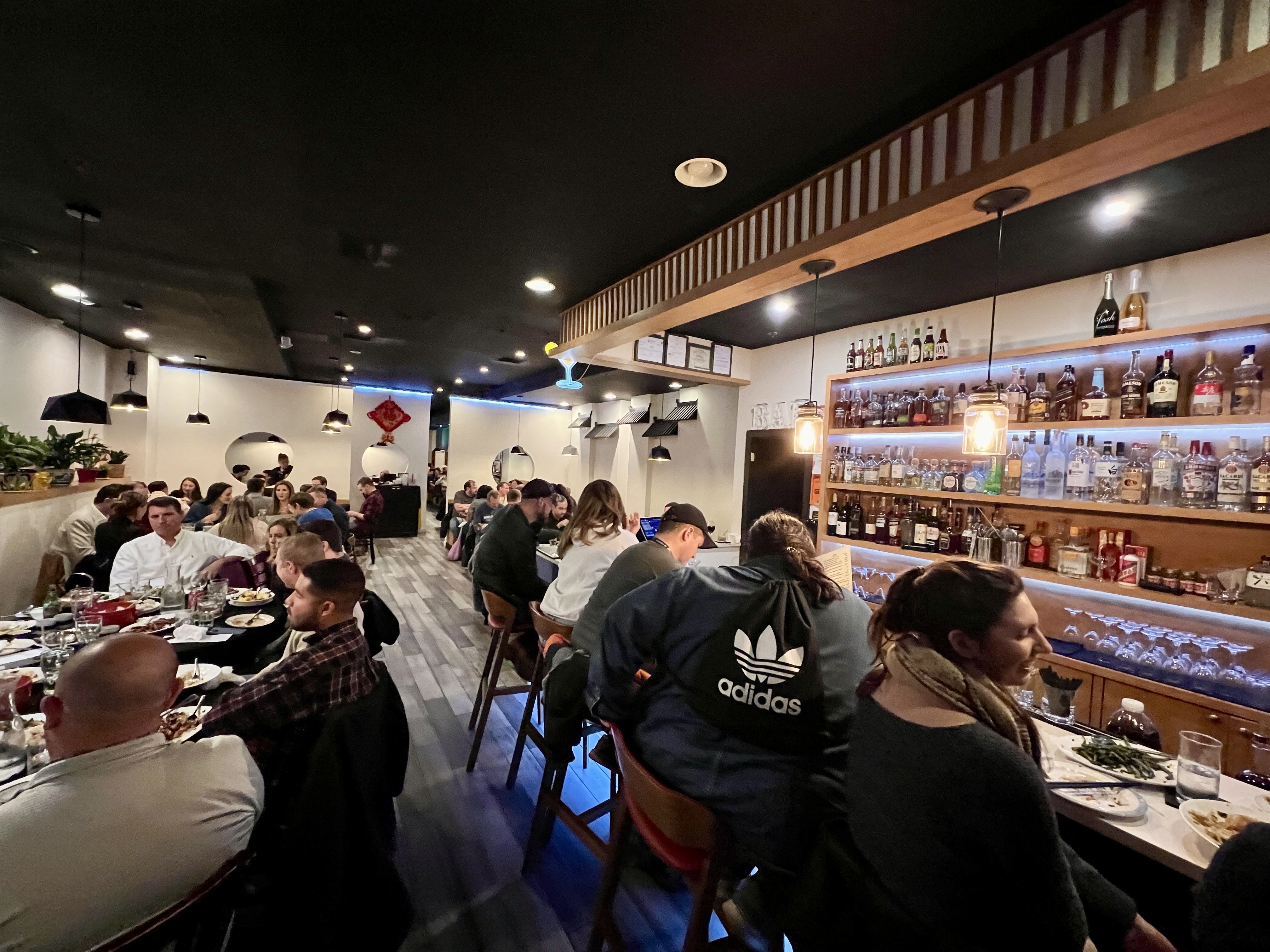
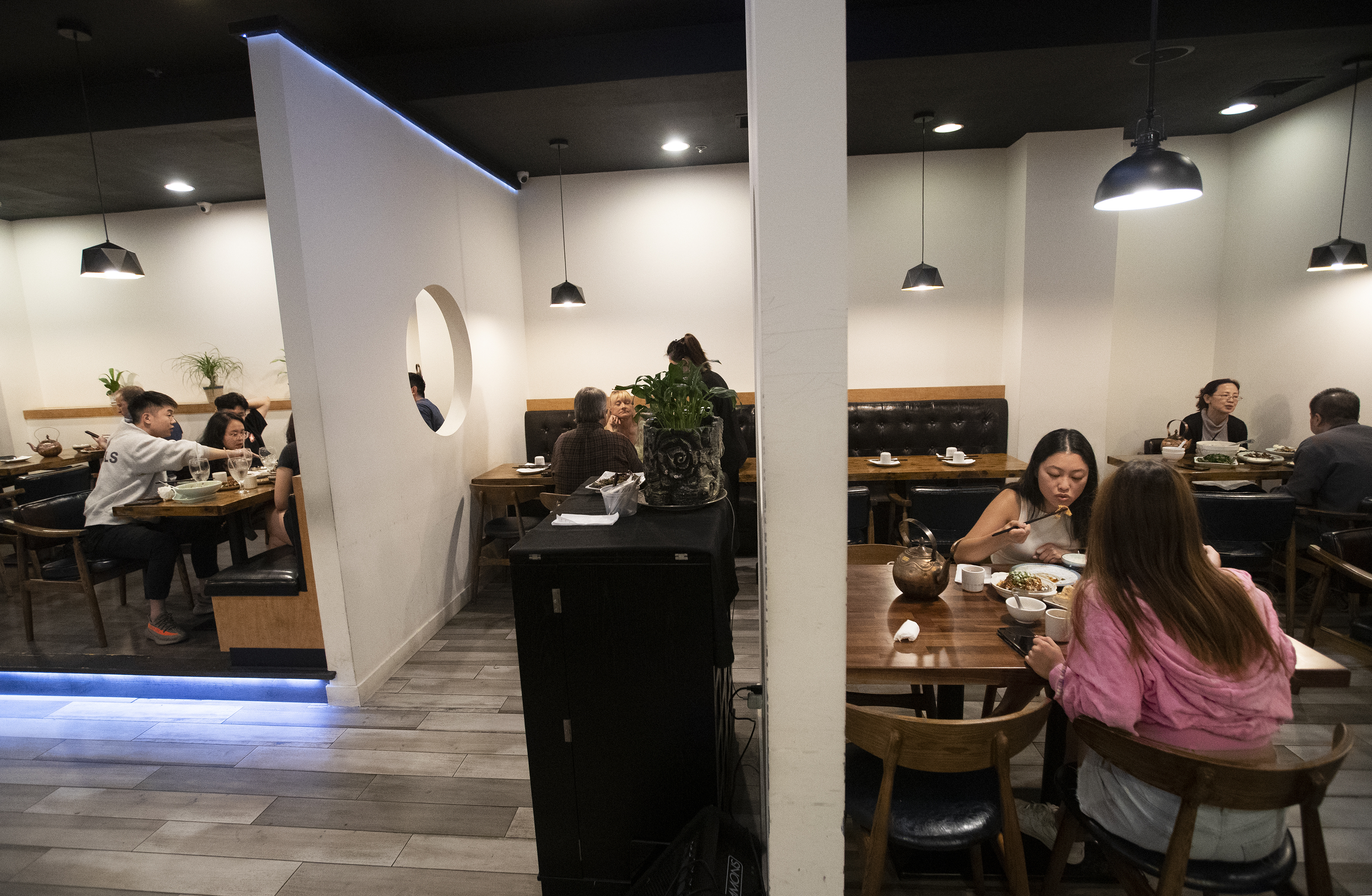
    The dining room of EMei at 915 Arch St.

    In 2019, he and his wife, Ting Ting Wan, closed the restaurant for two months to renovate. During the first two years of the pandemic, when sales dropped 50%, the entire family worked more than 60 hours a week to keep the business alive.

    Tsao also pulled two assistants from his media company to build formal back-office systems that later enabled EMei to scale. During the pandemic, Tsao launched RiceVan, a delivery and distribution service that transported Chinatown meals to suburban households and provided jobs for refugees and new immigrants.

    EMei restaurant at 915 Arch St., which opened in 2011.

    EMei has since grown from 11 full-time employees to 37, and sales have increased more than 300% compared with pre-pandemic levels, Tsao said.

    Tsao credits the restaurant’s founders — Yu and Zhao — for staying involved. “They still come in every day, even now,” he said. “Part of it is that retirement can be boring. But it’s also because once we took responsibility for operations and finances, they were able to relax, work fewer hours, and focus purely on the culinary side.”

    The dining room of EMei, 915 Arch St.

    A historic building reimagined

    The Marra’s building will undergo substantial structural and mechanical upgrades, Tsao said. Plans include a first-floor restroom to resolve long-standing ADA issues; full replacement of HVAC and electrical systems; and removal of window units in favor of central air.

    The vintage booths will be reupholstered. The bar will shift to the Pierce Street corner to improve flow. The second-floor private dining room will get new lighting and finishes; the third floor may be converted into a multipurpose or staff area. Tsao said he intends to address minor structural concerns while preserving the historic masonry and architectural character.

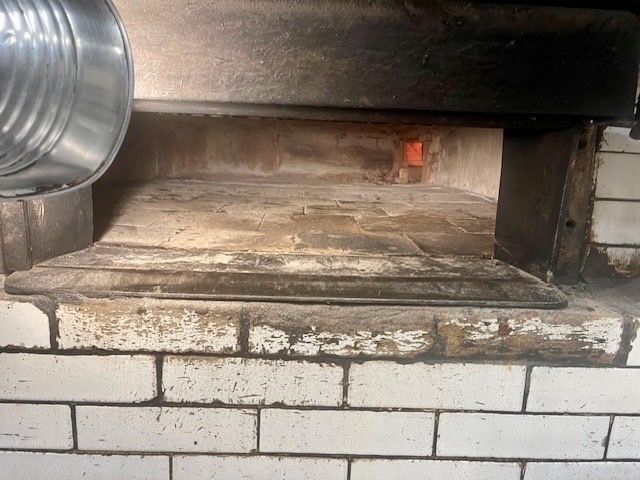
    One open question is the fate of Marra’s nearly century-old brick pizza oven, which Marra’s family member Mario D’Adamo said was failing. EMei will test whether it can be used. If removal becomes necessary, Tsao said the bricks, sourced from Mount Vesuvius, would be saved and possibly given to the D’Adamo family, the East Passyunk Business Improvement District, or incorporated into the renovation.

    “Our model has evolved — instead of putting over half a million dollars into leasehold improvements that don’t belong to us, we’d rather put that money into a building that becomes part of the company’s foundation,” Tsao said. “Restaurants come and go, but great restaurant buildings with stories — like this one — can last generations. We want to be the next chapter in that story, not just a tenant passing through.”

    The jumbo shrimp in hot peppers at EMei at 915 Arch St. on Sept. 15, 2022.

    What to expect on EMei’s menu

    The East Passyunk menu will reflect the Chinatown original while serving as a testing ground for contemporary Sichuan cooking – “lighter, seasonal, more ingredient-driven interpretations that show how Sichuan cuisine continues to evolve,” Tsao said.

    Roast duck and possibly Shanghai soup dumplings are under consideration, filling a void left by the closure of Bing Bing Dim Sum nearby. Some heritage dishes removed from the Chinatown menu will return there, helping differentiate the three locations while keeping them unified. EMei’s gluten-free program, including a separate fryer, will continue.

    Tsao said the neighborhood feels like home to his family. “I took my three kids — ages 6, 14, and 17 — to the East Passyunk Fall Fest again this year, and they instantly connected with the neighborhood’s energy,” he said. “They spent nearly 30 minutes exploring Latchkey Records, each leaving with something they picked out themselves. Watching them fall in love with the street the same way we did really made it feel like home.”

  • Marra’s, Philadelphia’s oldest pizzeria, has closed after 98 years on East Passyunk Avenue

    Marra’s, Philadelphia’s oldest pizzeria, has closed after 98 years on East Passyunk Avenue

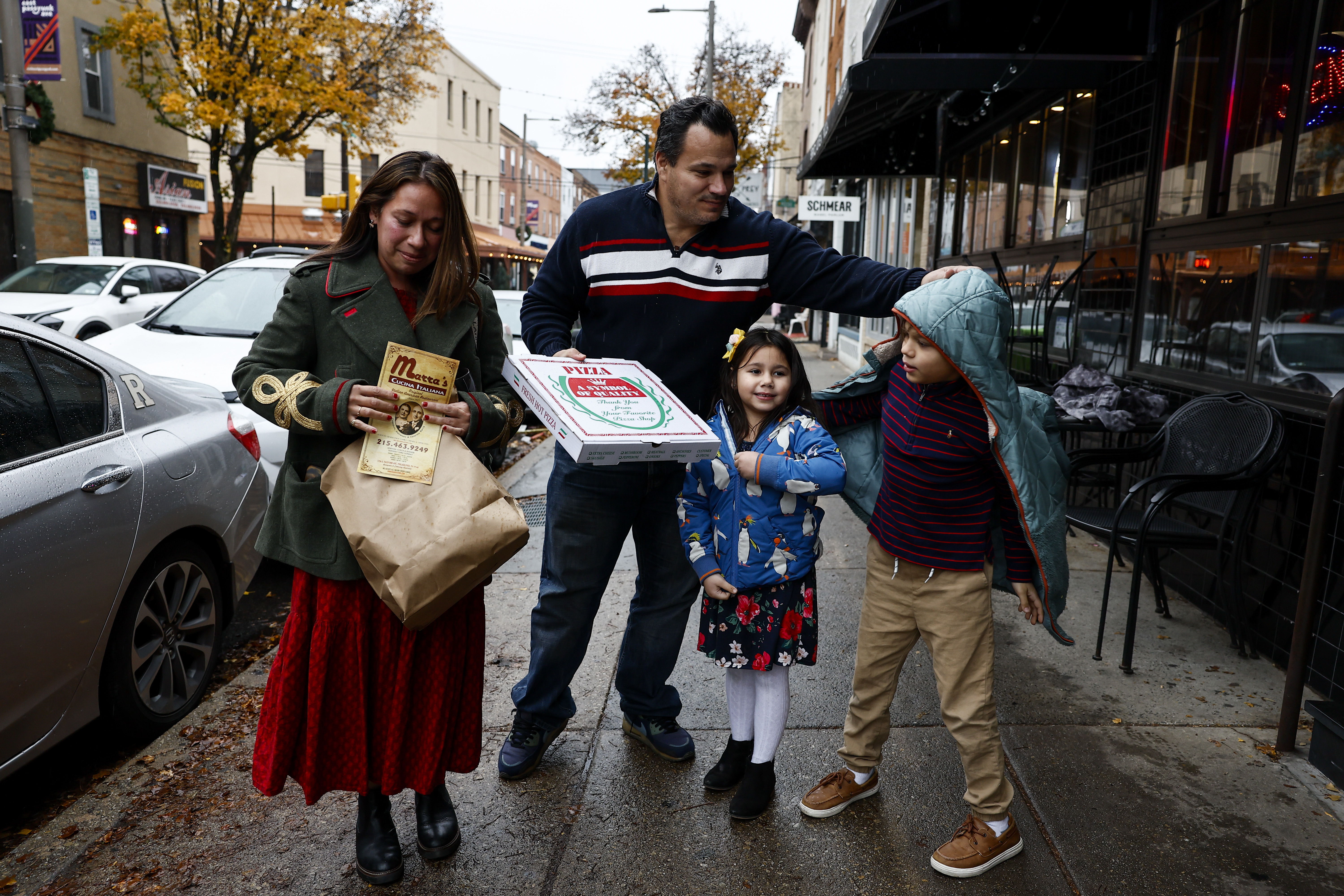
    Antoinette and Chris Caserio walked out of Marra’s on Sunday afternoon with their children, a menu, a pizza box, and a bag of leftovers they called “their last supper.”

    “It’s super sad,” Antoinette Caserio said. “My dad’s 80 and this was his spot.”

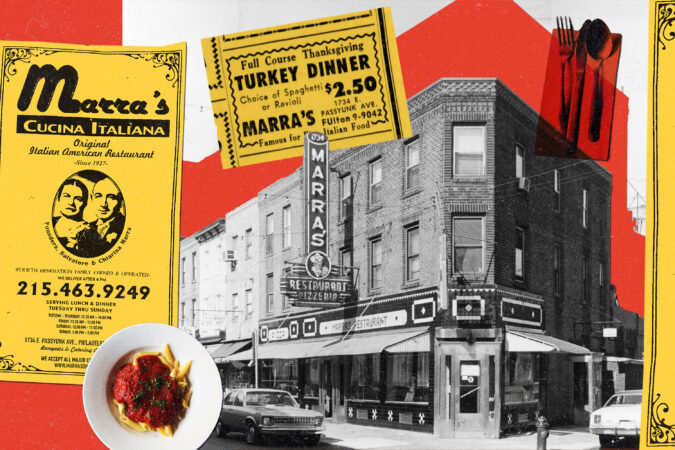
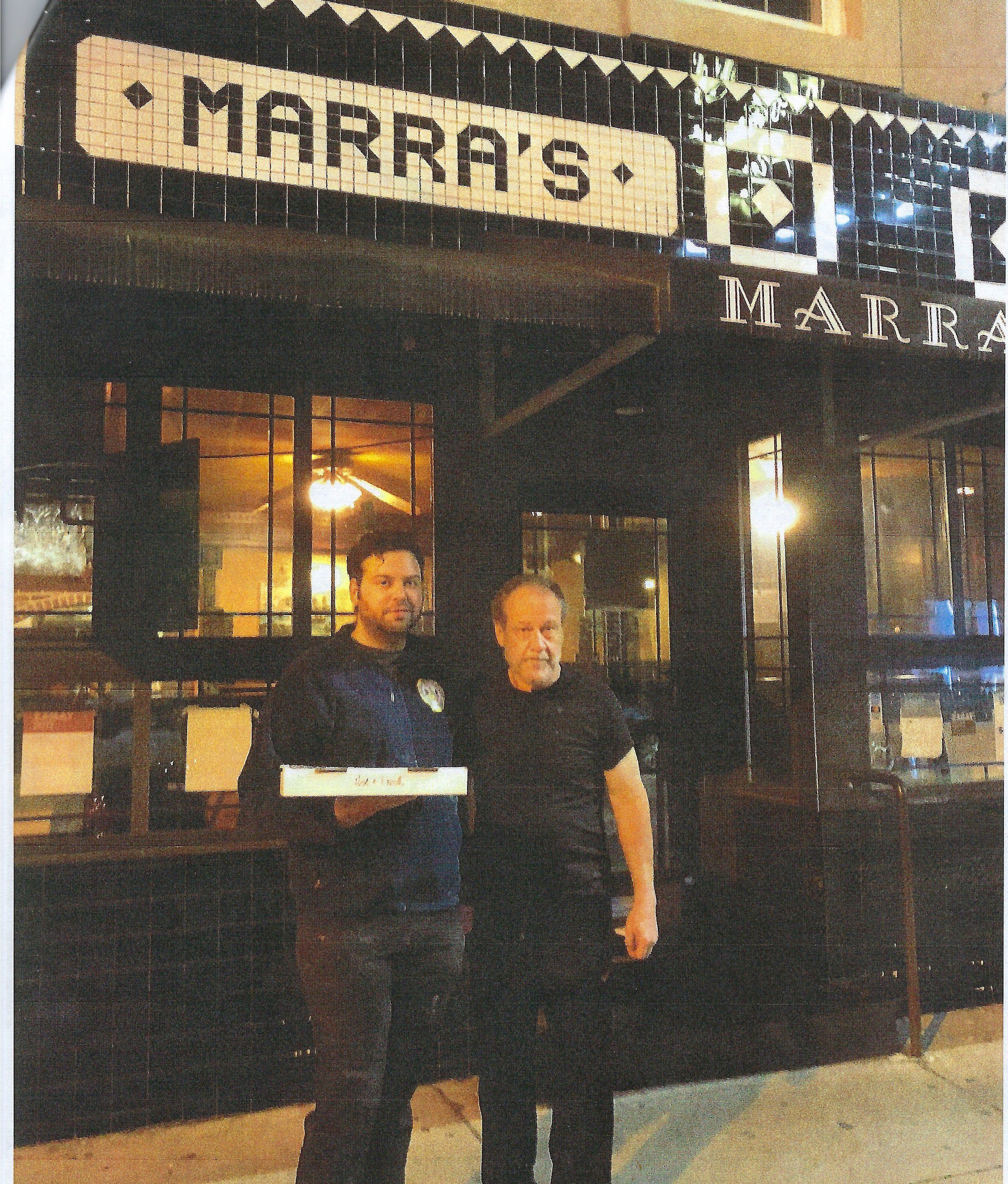
    Marra’s, the family-run restaurant widely considered Philadelphia’s oldest pizzeria, closed Sunday after 98 years — a day in advance of the sale of its iconic black-and-white-tiled building at 1734 E. Passyunk Ave. in South Philadelphia. The property had been on the market for several years.

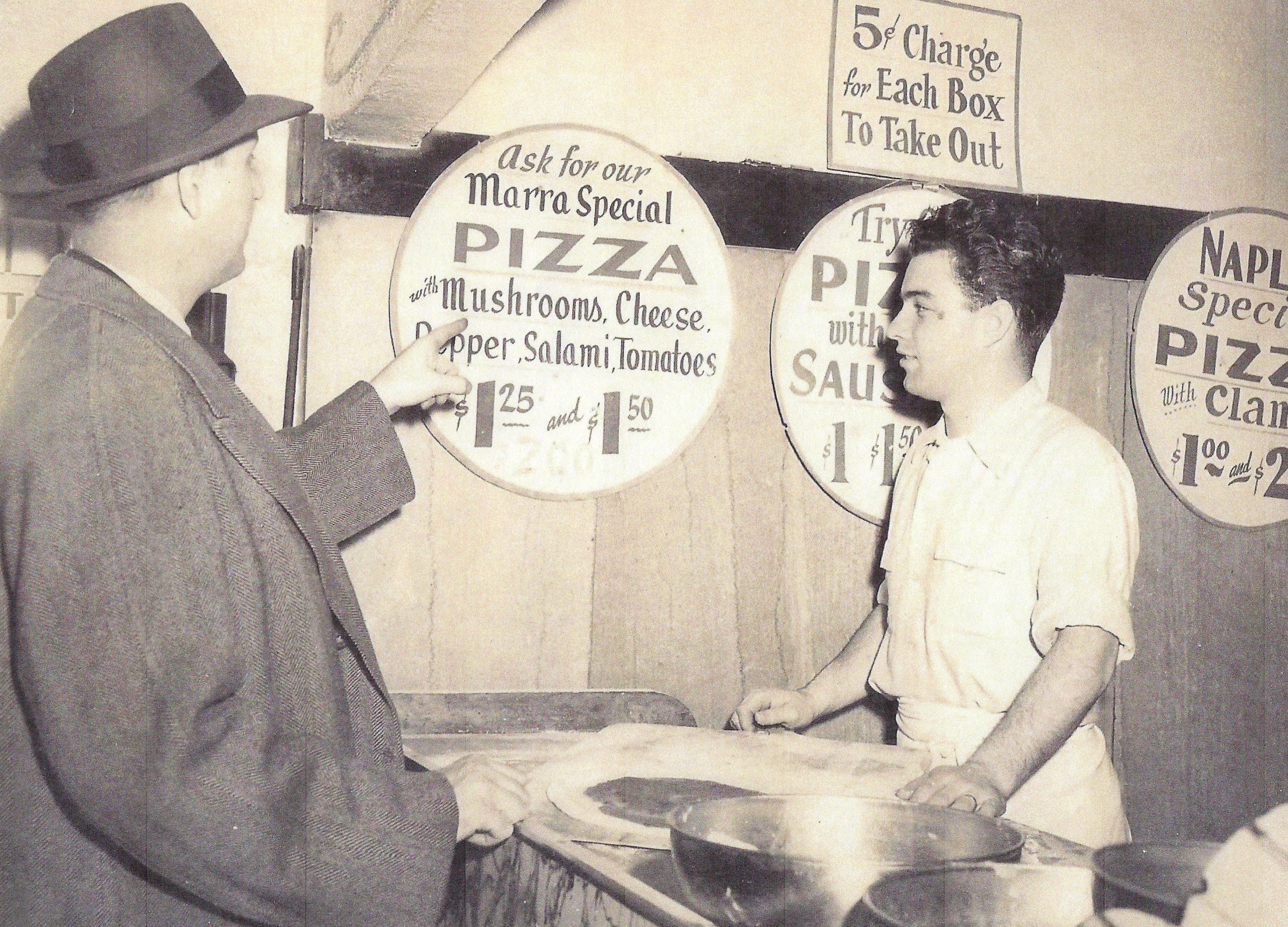
    Mario D’Adamo Sr. (right) with a Marra’s customer just after World War II.

    The buyer, Chinatown restaurateur and publisher Dan Tsao, said he plans to open a branch of his popular Sichuan restaurant EMei next year.

    Marra’s was one of the last remaining links to East Passyunk Avenue’s featured role in the Italian American immigrant experience of the early 20th century. It also marks a transition for the founding Marra and D’Adamo families, who say they are exploring a new location for the restaurant, which opened in 1927.

    Mario D’Adamo Jr., a grandson of founders Salvatore and Chiarina Marra and brother of co-owner Robert D’Adamo, said business had dipped after the pandemic, but that wasn’t the impetus for the sale. “The biggest killer was parking,” he said by phone while searching for a spot Sunday. “Small restaurants can survive that; large places can’t.” With 160 seats, including its 80-seat banquet room on the second floor, Marra’s lost a lot of business because of it, D’Adamo said.

    Robert D’Adamo, 75, and cousin Maurizio DeLuca, 61, who took over ownership in 2000, declined to speak with The Inquirer over the last few weeks as word spread of the impending sale, citing their emotions. In a statement, they said they were prepared to move on with “the same love that has always defined us — just in a location that better serves our guests.”
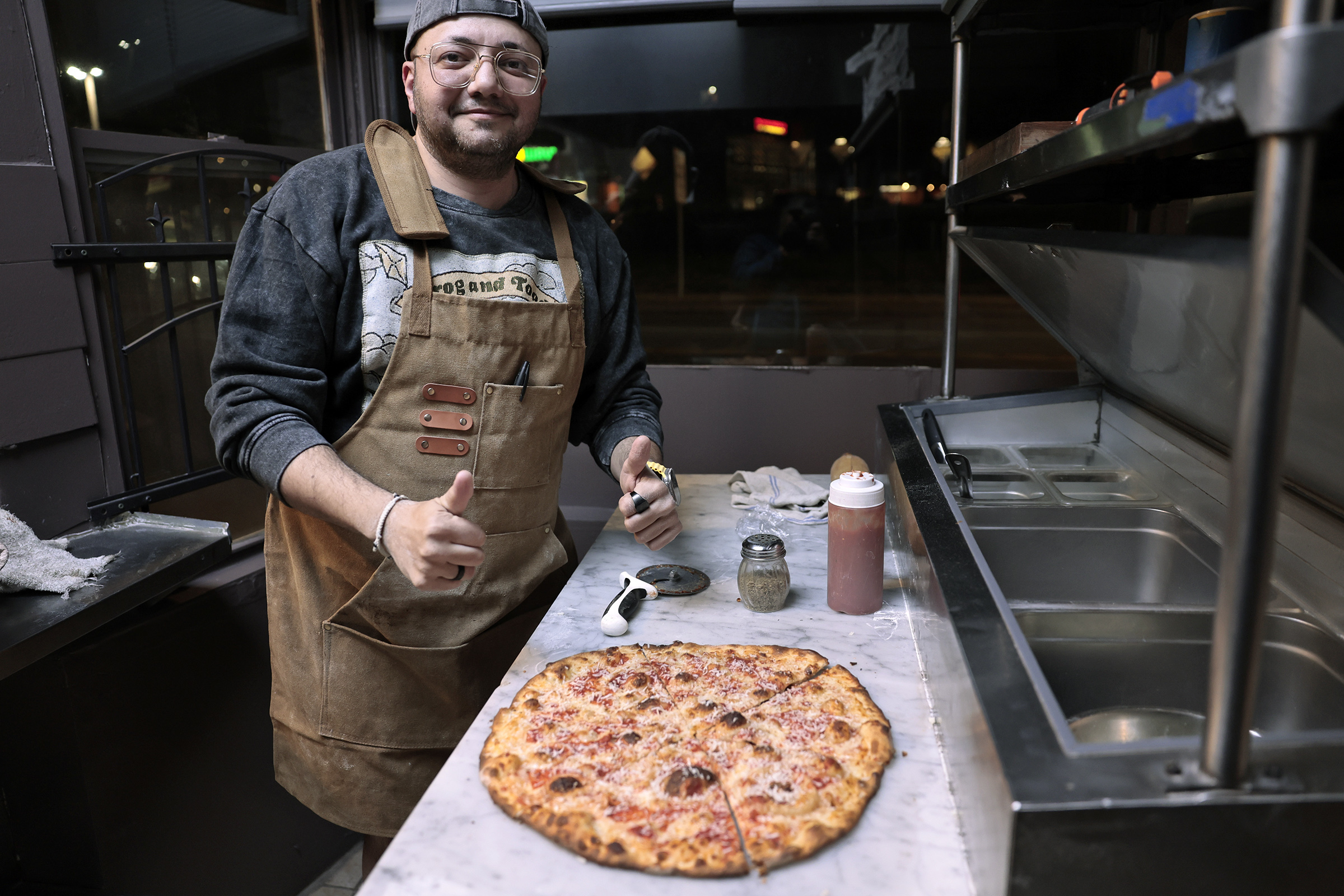
    Antoinette and Chris Caserio and children Kira and Chris leaving Marra’s on Nov. 30, 2025.

    Mario D’Adamo Jr., 71, a lawyer and deputy court administrator for Philadelphia’s Family Court, sold his stake about 25 years ago but retains an interest in the Marra’s name.

    With the sale to Tsao, the building will remain a restaurant. Tsao has said he intends to renovate the building while respecting its look and feel.

    The front dining room at Marra’s, 1734 E. Passyunk Ave., on Nov. 7, 2025.

    Marra’s oil-fired brick oven, believed to be one of the city’s oldest, may not be salvageable, D’Adamo said.

    The life of the bricks is about 100 years and the inside is collapsing, even though an artisan patched it about two years ago. “The oil flame is so hot that the bricks are now pulverizing,” he said.

    Marra’s backstory

    The families of Salvatore Marra and Chiarina Daniele were baking pizza in Naples before the turn of the 20th century.

    Shortly after the couple married, they set out for the United States.

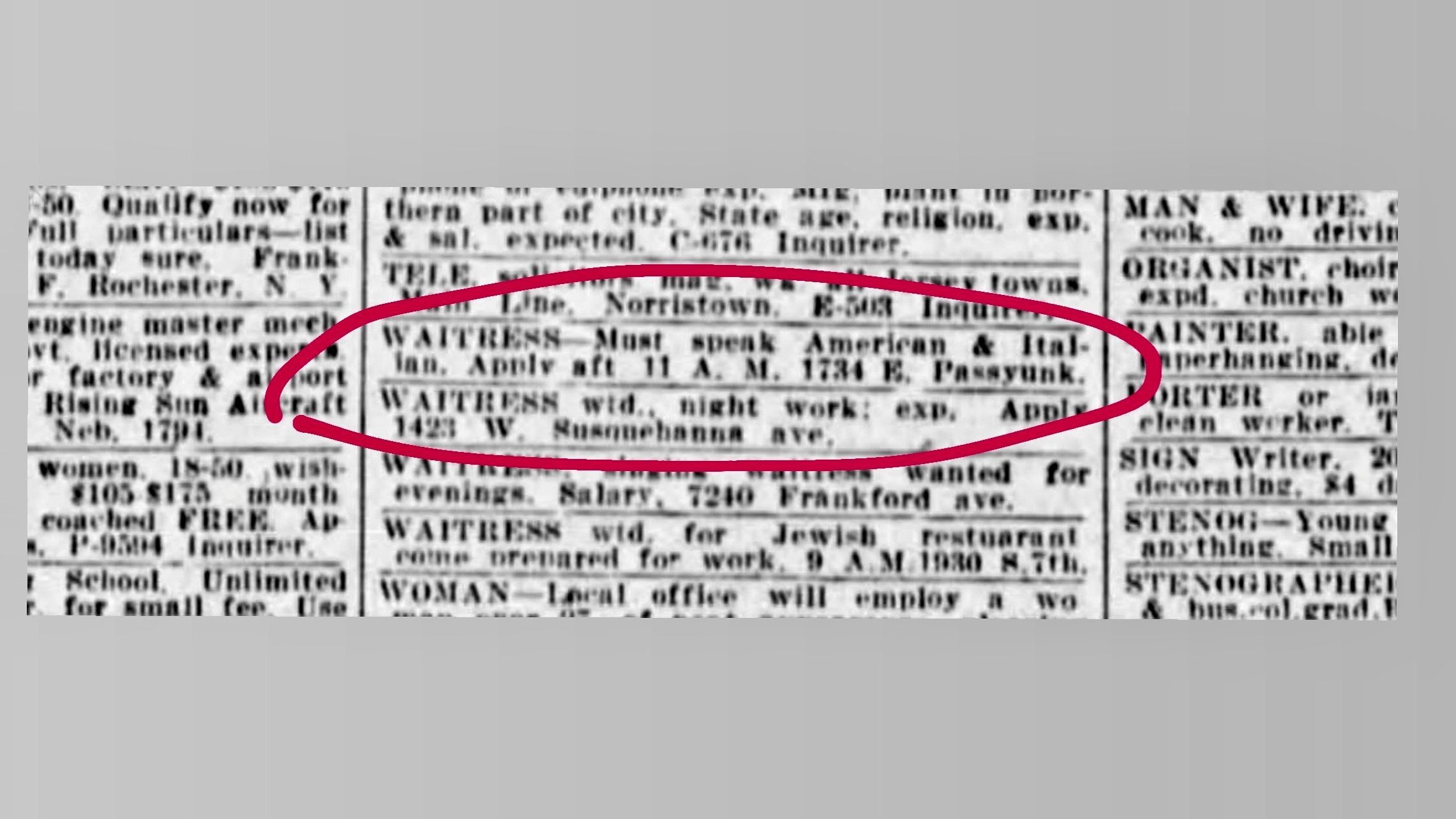
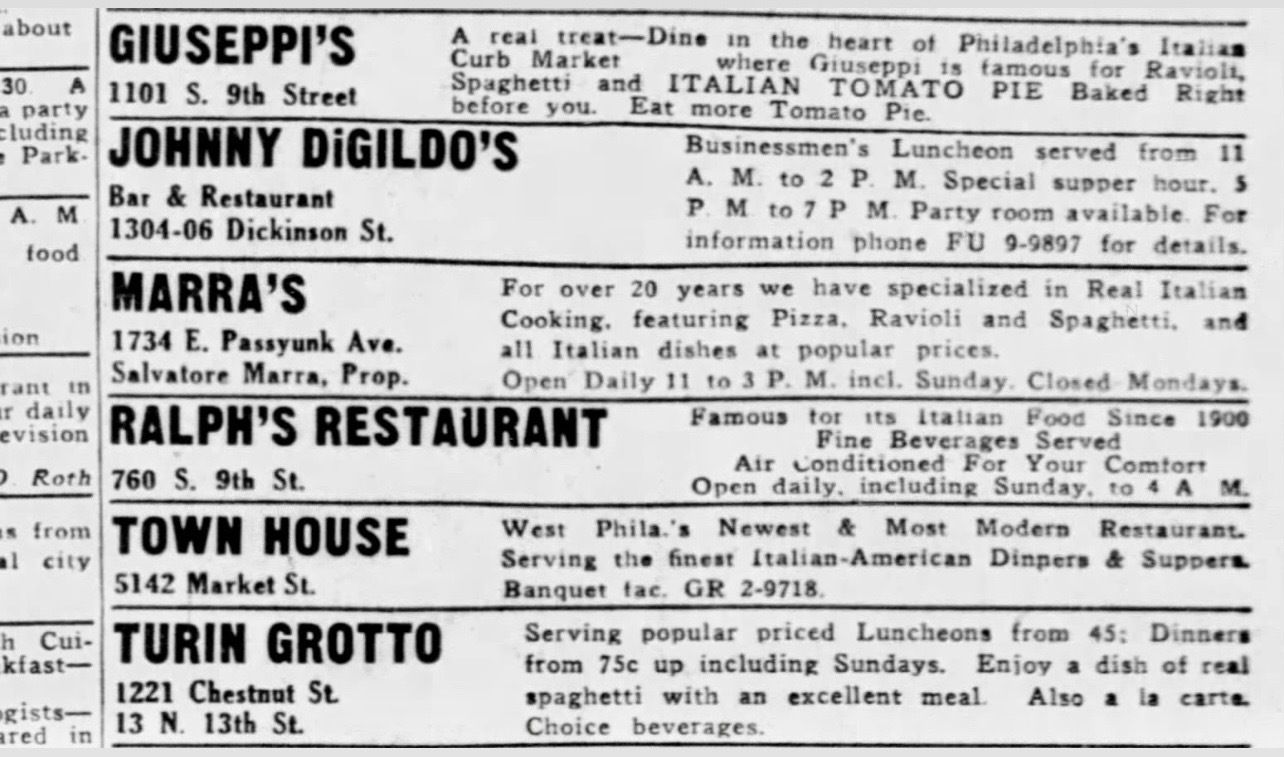
    Marra’s help-wanted ad from The Inquirer on March 14, 1934, seeking a waitress who “must speak American & Italian.”
    Marra family lore holds that Salvatore arrived at Ellis Island in 1921 with a single dime — likely a 10-centesimi coin — which he tossed into New York Harbor so he could say that he had begun his life in America with nothing. Chiarina joined him soon after.

    His early attempts to recreate Neapolitan pizza were discouraging — first in Brooklyn and then Chicago. He thought that the pies were lacking and blamed the ovens.

    The century-old brick oven at Marra’s on Nov. 30, 2025.

    Back in Naples, the ovens were lined with lava bricks from Mount Vesuvius, which radiated and retained heat in a way he couldn’t replicate. When the Marras moved to Philadelphia, he ordered bricks from Naples and had the oven built for their first pizzeria, which opened in 1924 at Eighth and Christian Streets in South Philadelphia. This time, the pizza tasted right.

    In 1927, when the Marras bought a former butcher shop at 1734 E. Passyunk Ave., the oven was dismantled brick by brick and rebuilt there.

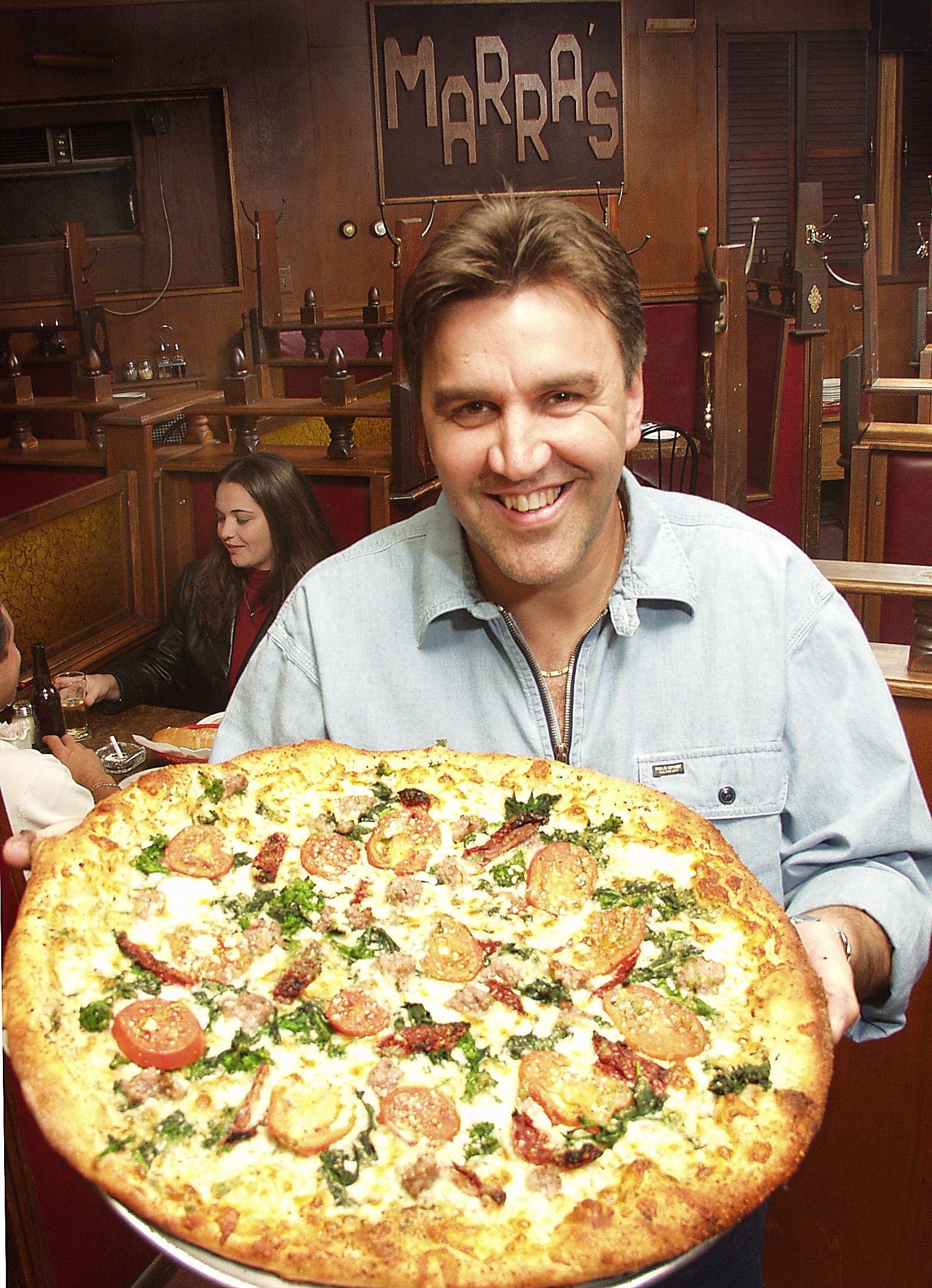
    At Marra’s, co-owner Maurizio DeLuca holds a pizza fresca on Oct. 10, 2001.

    The neighborhood was teeming with immigrants, and East Passyunk’s diagonal path through the city’s rowhouse grid — historically, it was a Lenape trail — had made it a natural commercial strip. For generations, families bought their church clothes, shoes, furniture, and sundries on the Avenue.

    Salvatore and Chiarina still lived on the restaurant’s third floor after their retirement in 1947. She died in 1973 at age 73. Salvatore, in his usual fedora, was a familiar presence on the Avenue until his death in 1984 at age 89.

    Marra’s ad in The Inquirer on Feb. 28, 1948.

    Their children, Bianca and Vincent Marra, carried Marra’s business forward after Salvatore and Chiarina’s retirement. By that time, Bianca had married Mario D’Adamo Sr., a Marra’s busboy who lived around the corner. (Their children, Robert, Mario Jr., Linda and Marlene, represented the next generation.)

    Bianca D’Adamo, known as “Mama D’Adamo,” became one of the restaurant’s most visible figures. In a 1980s interview with The Inquirer, she recalled a particularly loud regular from years past: a kid named Fred Cocozza. “He’d come in, stand right over there, and sing at the top of his lungs,” she said. “Papa would come out of the kitchen and tell him to get out. He thought it was bad for business.” In 1947, he performed for 20,000 people at the Hollywood Bowl and signed a film contract with MGM as Mario Lanza.
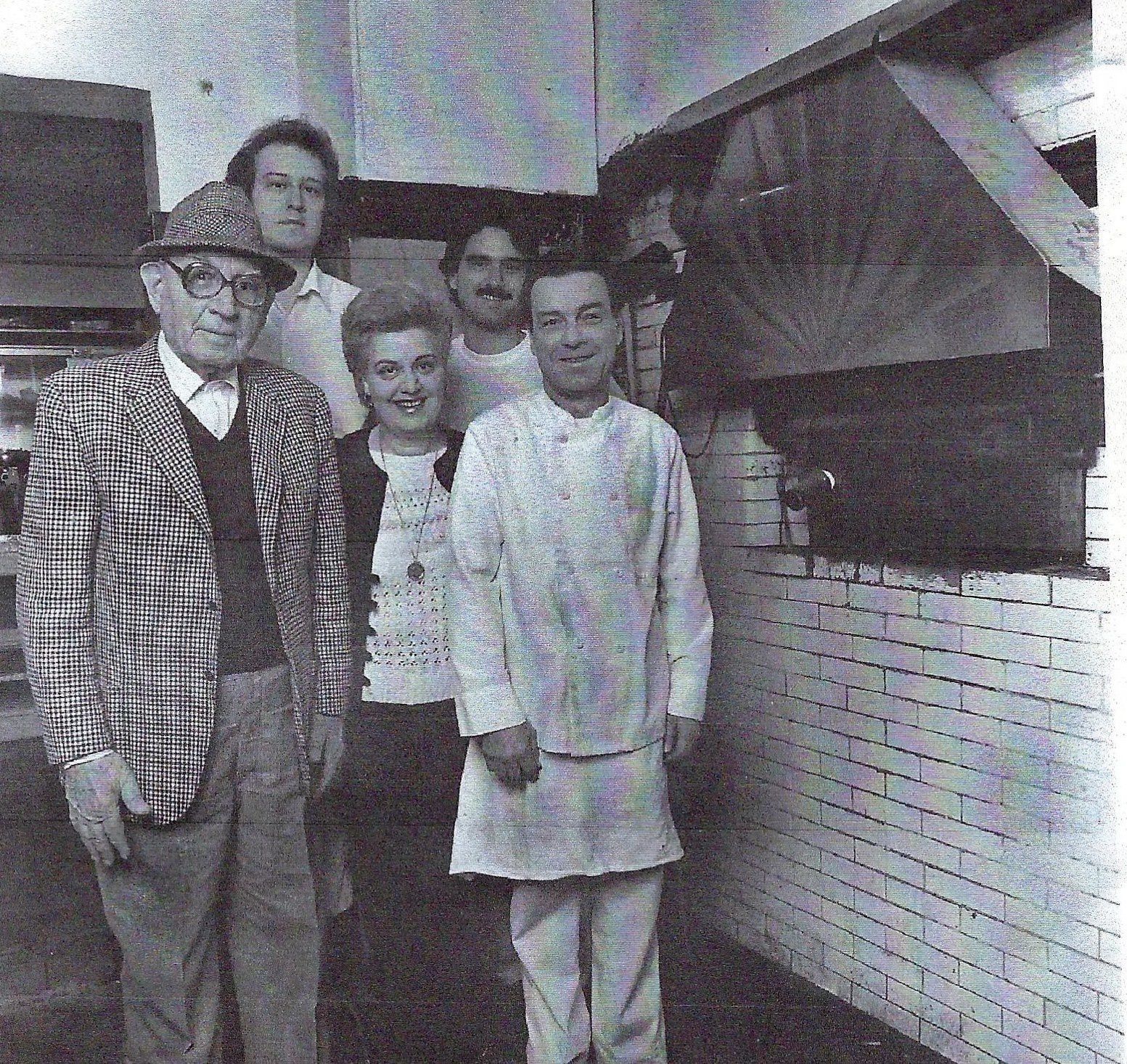
    Patriarch Salvatore Marra with his daughter, Bianca, grandsons Robert (rear left) and Mario Jr., and son-in-law Mario Sr.

    In 1950, Bianca and Vincent bought the bakery next door and expanded the restaurant. Vincent Marra opened his own Marra’s restaurant on Baltimore Pike in Springfield, Delaware County, in 1954.

    Marra’s fame

    During Bianca and Mario’s oversight, Marra’s began attracting the spotlight. For National Pizza Week in 1955, Salvatore Marra was named Pizza Man of the Year. In 1977, Eastern Airlines’ in-flight magazine, Pathways, cited Marra’s as one of the five best pizzerias in the country. Philadelphia Magazine named it South Philly’s top pizzeria in 1985 — the same year Villanova University won the NCAA men’s basketball championship. That year, coach Rollie Massimino, a regular, inspired the dish known as Rollie’s ziti in white, a bowl of ziti and broccoli in garlic sauce, that remained on the menu till the end.

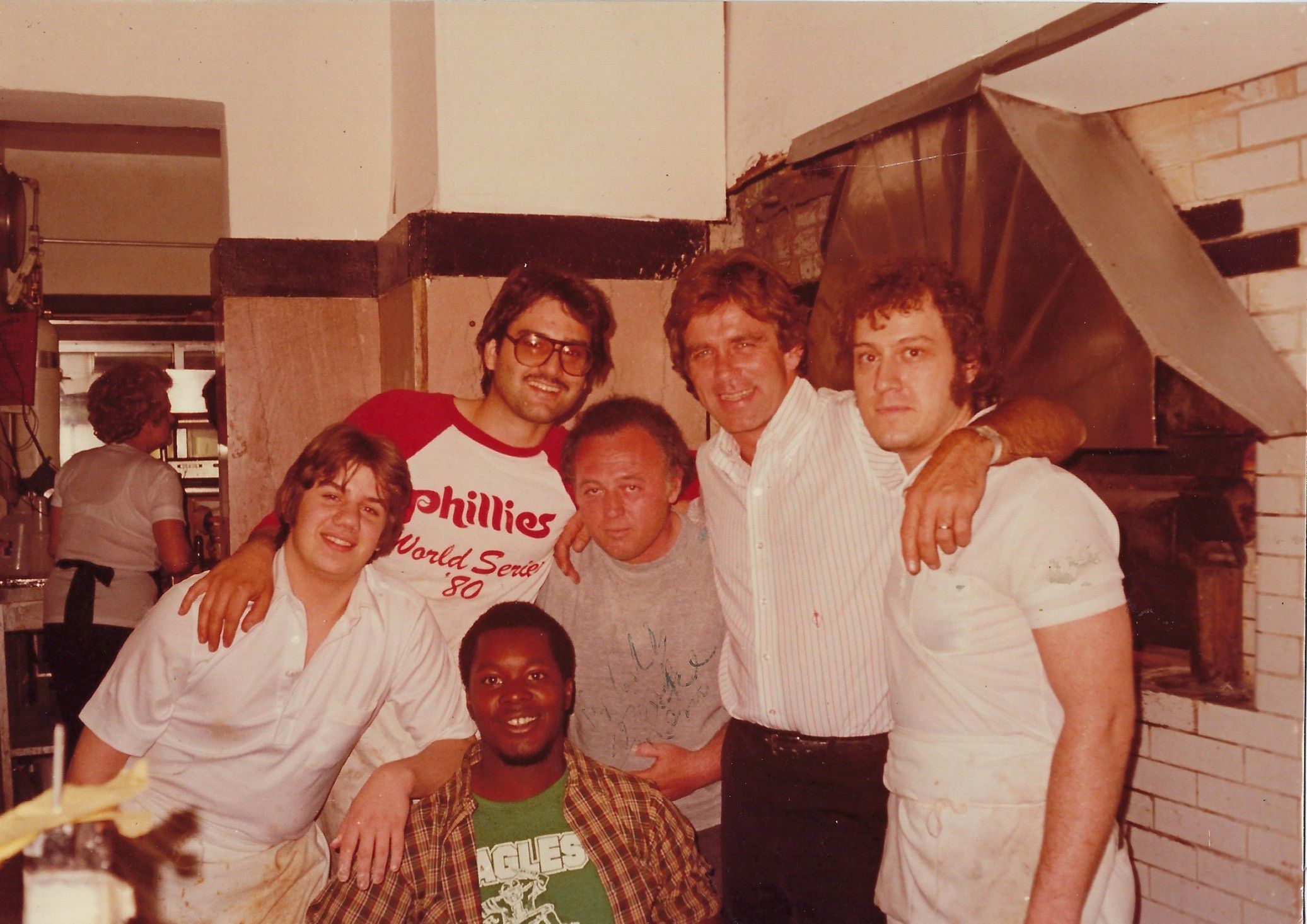
    Baseball great Tim McCarver (second from right) with Mario D’Adamo Jr. (in Phillies shirt) and Robert D’Adamo (right) at Marra’s in the early 1980s.

    Marra’s celebrity guest list read like an index of 20th-century American entertainment: Mickey Rooney, John Wayne, Frank Sinatra, Frankie Avalon, Eddie Fisher, Jimmy Darren, Bobby Rydell, Al Martino, John Travolta, Eugene Ormandy, Conan O’Brien.

    When Passyunk Avenue’s fortunes began dipping in the 1990s, a group now known as Passyunk Avenue Revitalization Corp. began buying and rehabbing distressed properties. (PARC was originally created in 1991 as Citizens’ Alliance for Better Neighborhoods, but later became embroiled in a scandal that brought down former state Sen. Vincent Fumo.)

    The early 2000s saw a new wave of residents moving in from outside the neighborhood as PARC’s work helped spark an influx of chef-driven restaurants and bars to join such traditional spots as Mamma Maria and Mr. Martino’s (which opened in 1992) and Tre Scalini (1994).

    Le Virtù, serving the rustic cuisine of Abruzzo, opened in 2007 in a former community newspaper office at 1927 E. Passyunk. That year, Fiore’s, which fed generations in a low-slung building where Passyunk crosses 12th and Morris Streets, became a Mexican restaurant, Cantina Los Caballitos.

    Restaurants continued to usher in change along the Avenue as the years went on. The distinctive curved building at 1709 E. Passyunk morphed through the years from an appliance store to a bank and then to a men’s clothing store before opening in 2017 as Barcelona Wine Bar. What is now Rice & Sambal, an Indonesian BYOB at 1911 E. Passyunk, was a photographic-supply shop for years after World War II.

    Marra’s co-owner Robert D’Adamo (right) with his nephew, Michael D’Adamo, in 2023.
    The last pizza baked at Marra’s, 1734 E. Passyunk Ave., on Nov. 30, 2025.

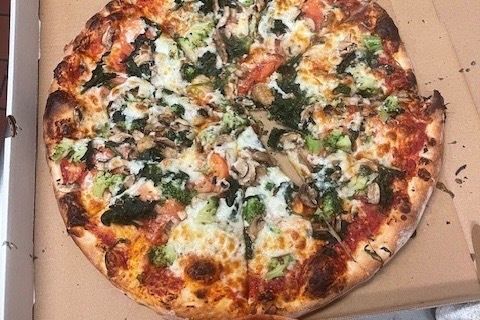
    Marra’s closing is painful to Mario D’Adamo Jr., as he recounted late Sunday after the last pizza — topped with spinach, broccoli, tomatoes, and mozzarella — slid out of the oven. Like his brother, he grew up on the third floor of the restaurant’s building.

    “It became part of your DNA,” he said. “We used to close at 2 or 3 in the morning. My whole life, I heard the jukebox playing Sinatra, Dean Martin, Tony Bennett. I still go to bed late because of that. Some of my earliest memories are my father coming up the steps, tired, smelling like the restaurant, folding his apron over the banister.

    “Other families watched football. We watched cooking shows,” D’Adamo said. “Everything in your mind connects back to the restaurant.”

    Brothers Robert D’Adamo (left) and Mario D’Adamo Jr. in the kitchen at Marra’s on Nov. 30, 2025.
  • The eagerly awaited PopUp Bagels plans a pop-up sale in advance of its Philly-area opening

    The eagerly awaited PopUp Bagels plans a pop-up sale in advance of its Philly-area opening

    PopUp Bagels, the viral bagel chain that is on its way to the Philadelphia area, will preview its arrival with a one-day pop-up event Sunday at Di Bruno Bros.’ flagship store near Rittenhouse Square.

    PopUp will take over Di Bruno’s second floor from 9 a.m. to 1 p.m., offering an early taste of its “grip, rip, and dip” bagels — and a limited-edition collaborative schmear — while raising money for charity.

    PopUp’s location in Suburban Square in Ardmore, across from Shake Shack, is due to open in early 2026.

    Bagels will be available by preorder only, with sales launching Monday on popupbagels.com. Franchisee Brian Harrington said 300 dozen bagels would be available at Di Bruno’s, 1730 Chestnut St.

    Harrington said that for one of his new stores in Boston earlier this year, PopUp tied a preview to the Boston Marathon. “We put them online for preorder and they sold out in 16 minutes,” Harrington said. As people arrived for their bagels (six for $24), they were feted with music and PopUp swag to stimulate buzz.

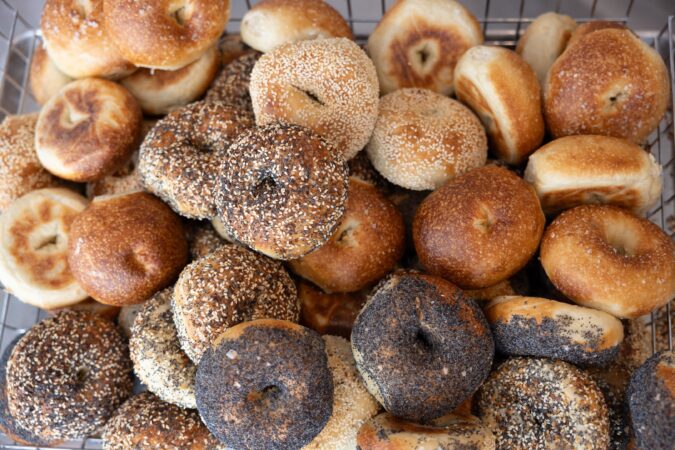
    PopUp, conceived in a Connecticut backyard in 2021, does not make sandwiches or even offer sliced bagels — rather, the bagels are sold hot and whole with cups of cream cheese “schmears” or butter for dipping.

    In Philadelphia, customers will be able to preorder a six-pack of mixed bagels — plain and everything flavors — along with classic plain and scallion schmears. The highlight will be a third schmear: a limited-time-only collaboration blending Di Bruno’s Abruzzi cheese spread with PopUp’s classic cream cheese.

    Proceeds from the day will benefit the Eagles Autism Foundation and the Travis Manion Foundation.

    After Ardmore, PopUp is planning for three locations in the Philadelphia market in 2026 and as many as seven or eight overall in the longer term.

    PopUp Bagels was launched during the pandemic by Adam Goldberg, a bored flood-mitigation specialist who started baking sourdough bread at his home in Westport, Conn. He turned that into a bagel recipe, settling on a light, soft bagel, as opposed to the chewy New York style. The backyard project drew attention and led to pop-up shops in New York City.

    Social media attention and investors quickly followed. Fans of the chain line up outside locations across Connecticut, New York, and Massachusetts to film TikToks of them ripping apart bagels and dipping them into cream cheeses.

  • I’m obsessed with the pizza at this one-man shop in Elkins Park

    I’m obsessed with the pizza at this one-man shop in Elkins Park

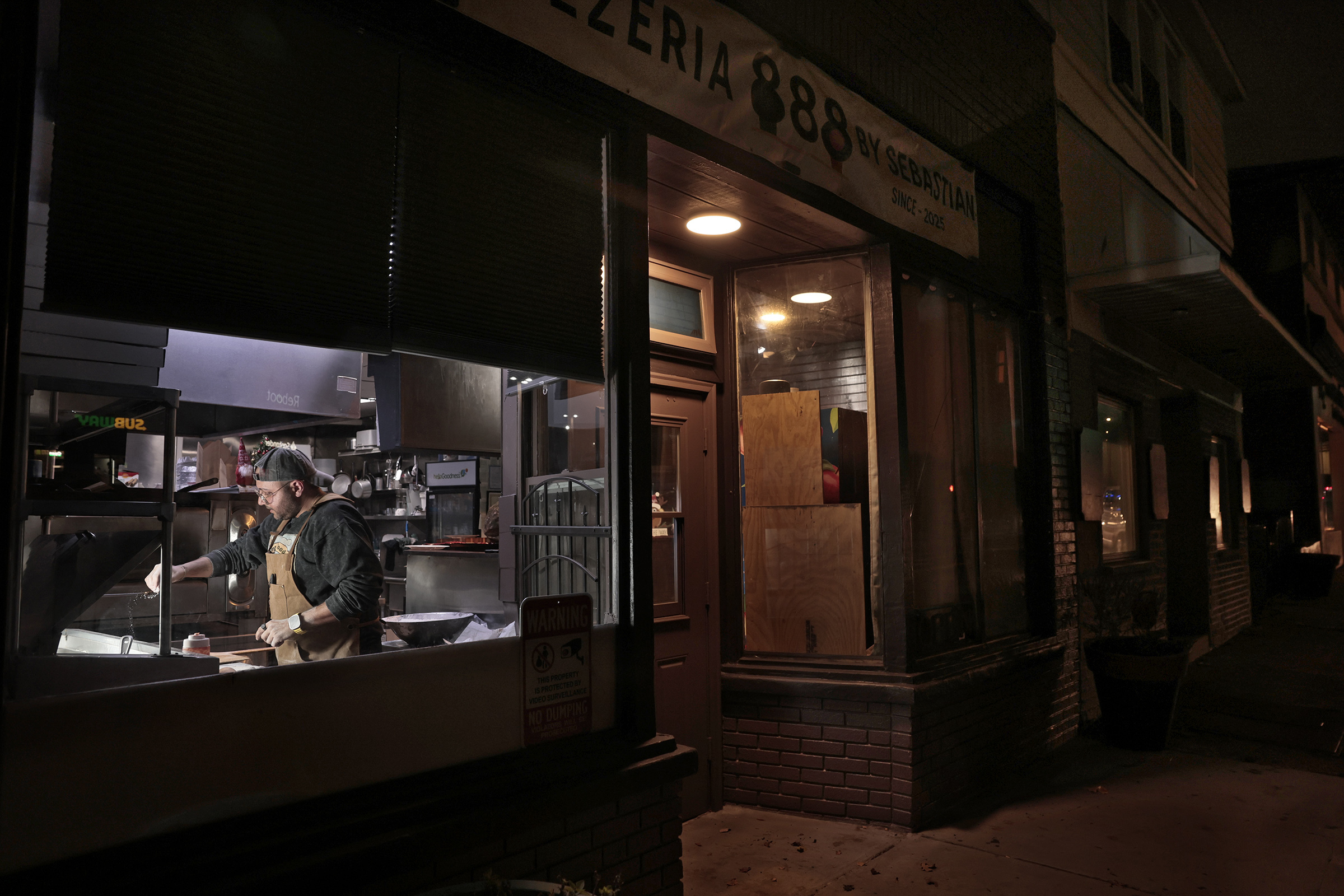
    Pizzerias crave visibility, but there’s no sign pointing to Apizzeria 888 by Sebastian. It’s a true hole in the wall you’ll likely blow right past while trying to keep up with traffic whizzing along Old York Road in Elkins Park.

    Sebastian doesn’t care.

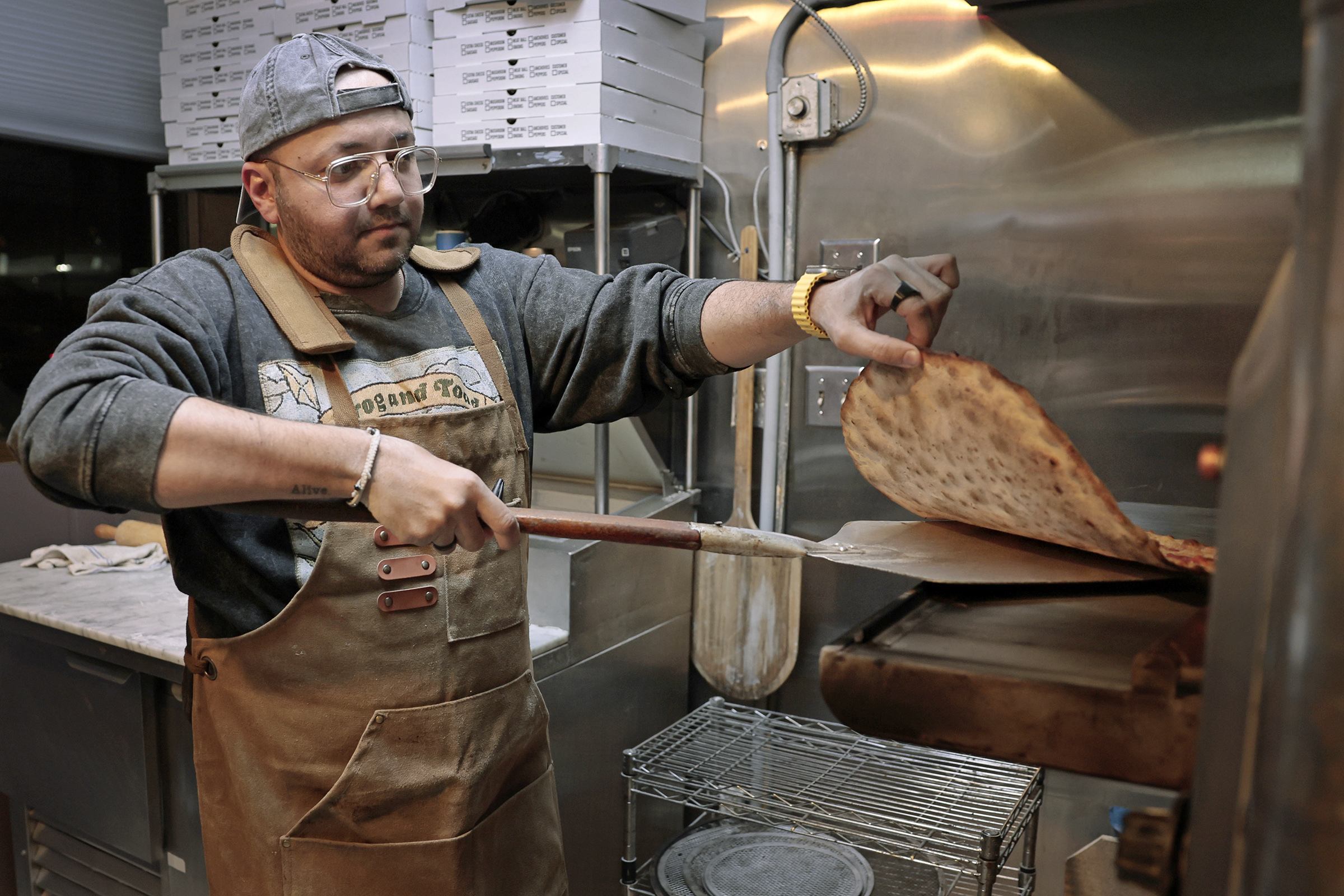
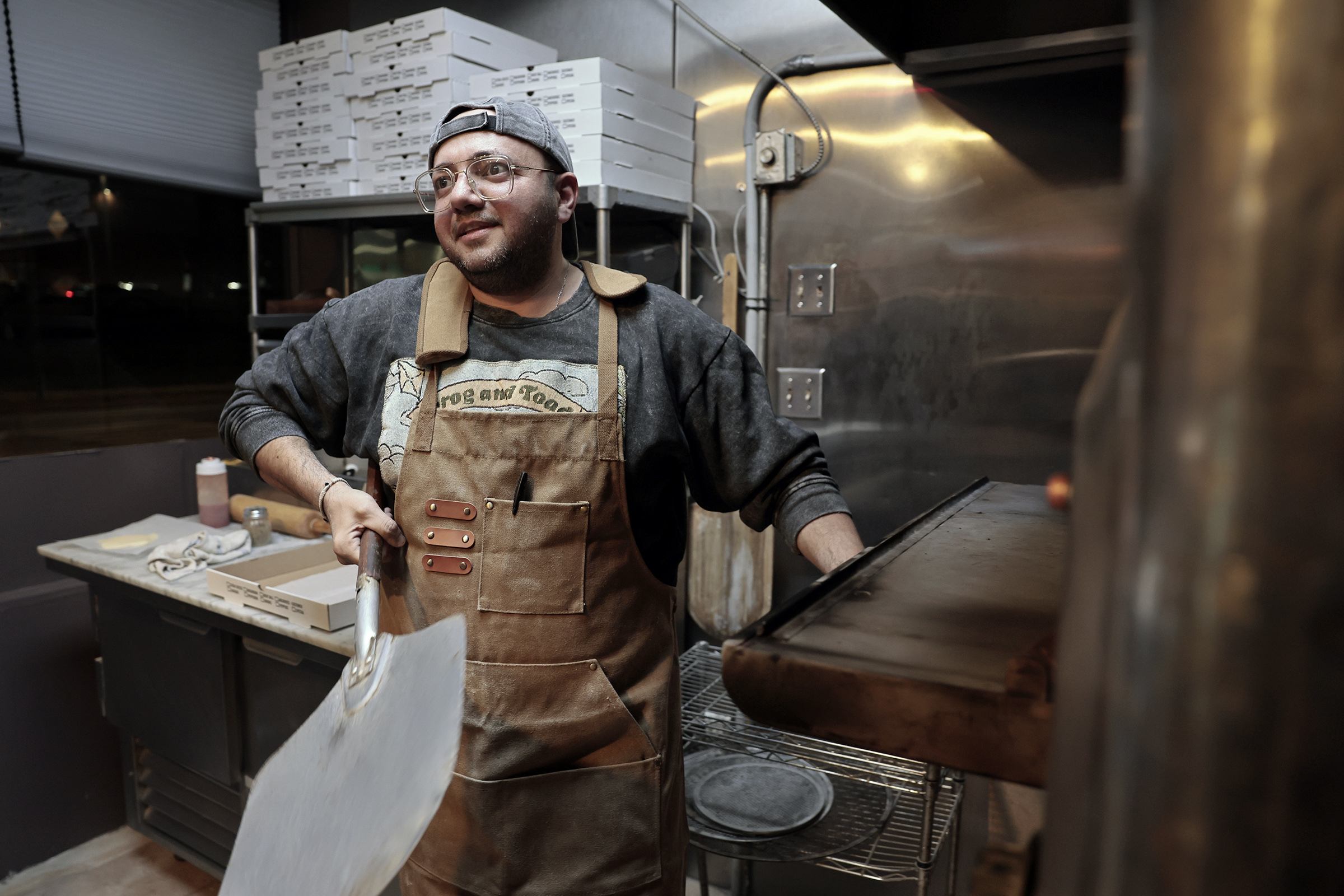
    Right now, Sebastian Besiso is working for himself and by himself: 40 pies a night, walk-in or call-in, pickup only, limited menu, and no third-party delivery after he got frustrated with UberEats’ fees one night and smashed the order tablet to bits.

    Sebastian Besiso checks the undercarriage of a pizza at Apizzeria 888 by Sebastian.

    Besiso has an endgame — and Apizzeria is more of a lab than a pizzeria. He views it as a test ground for something bigger — what he cryptically calls part of a “social media interactive platform that will drive people directly to a restaurant.” It won’t be a delivery service, he said, but will offer the technology to give pizzerias better control over their business.

    That would also mean moving beyond Apizzeria’s cramped takeout setting. “I want a real dine-in experience where people can come, sit down, enjoy themselves, eat Roman and Neapolitan pizza, and drink halal beer,” he said. “This current setup is not sustainable long-term.”

    “I’m not saying I’m better,” says Sebastian Besiso. “I’m saying this is my style.”

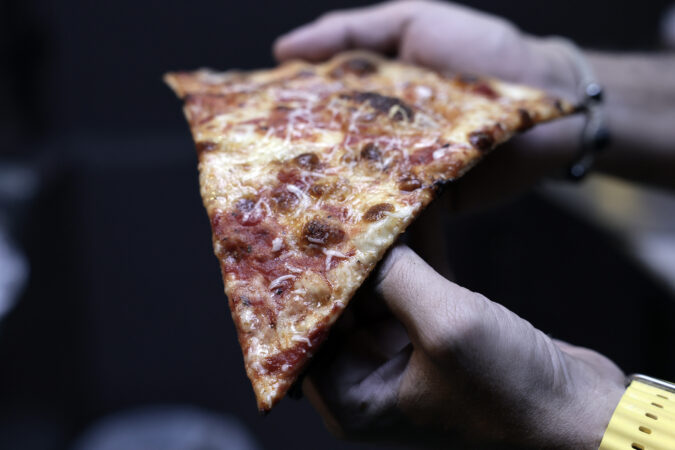
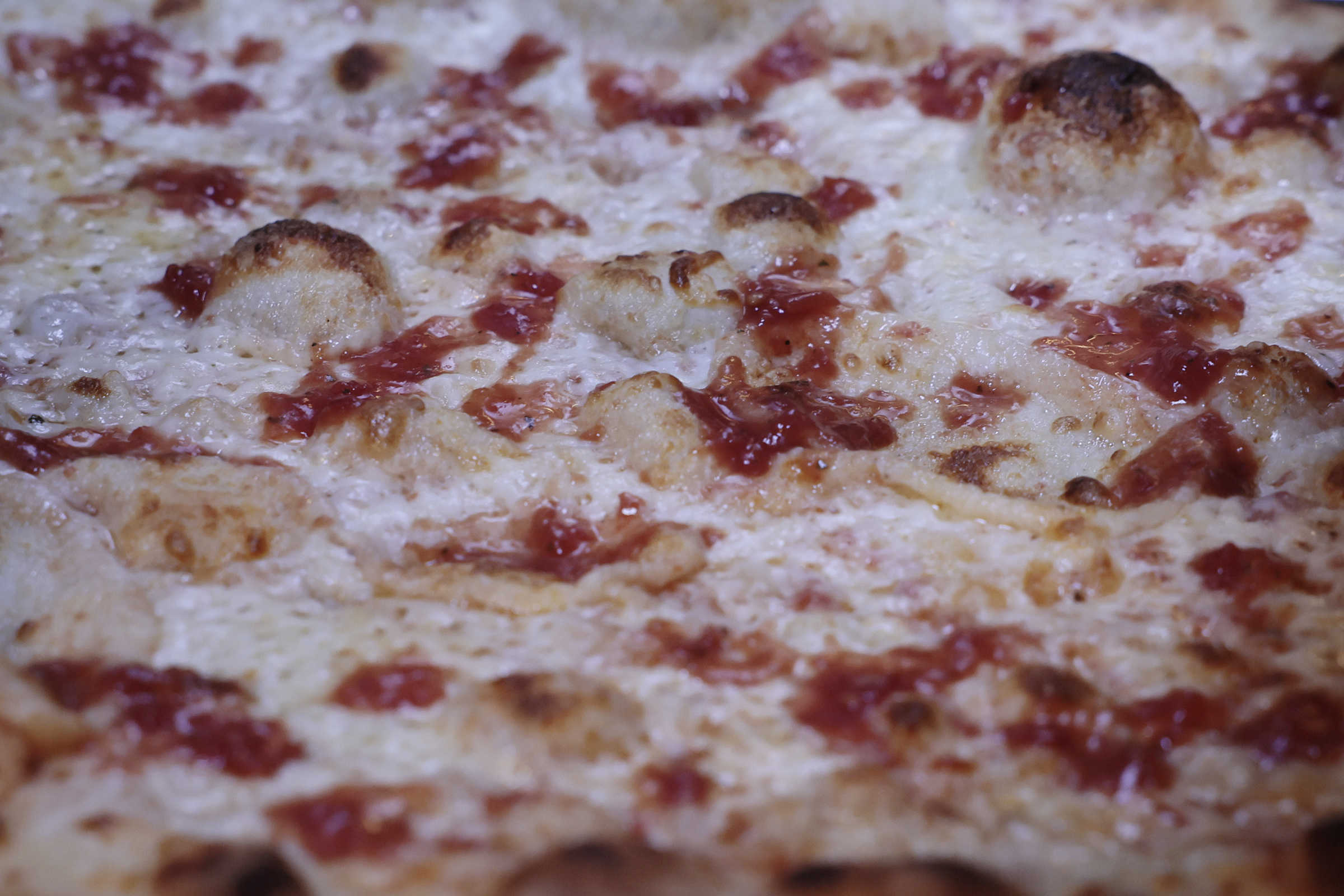
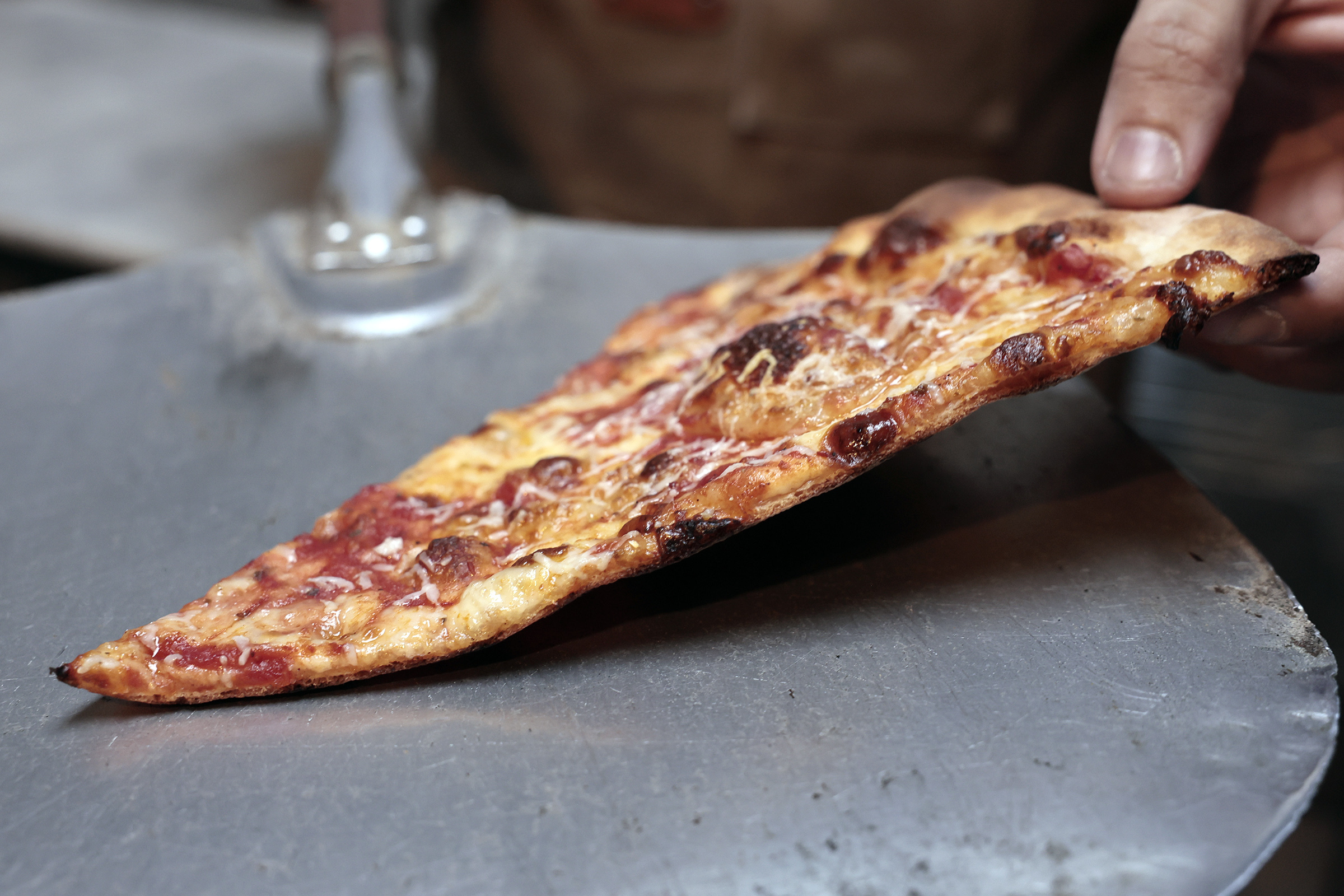
    Besiso is the first to say that you may not like his pizza, especially if you prefer more conventional New York or Neapolitan styles, as many of his Elkins Park neighbors seem to. His “Roma” has two kinds of aged cheese, a smear of a slightly sweet tomato basil sauce, and an almost impossibly thin crust that shatters around the edges as you bite in. There is no flop whatsoever. It has the crunchy, cheese-on-the-bottom qualities of Chicago tavern-style, though Besiso slices his pies into conventional eighths, not party squares. Toppings include beef pepperoni and sausage crumbles.

    His pizzas are well-done. “People around here will say, ‘You burned my pizza,’” he said. “I tell them, ‘Just take a bite.’”

    A pizza just out of the oven at Apizzeria 888 by Sebastian.

    His customers — and I am one — take a bite and love it. I’m obsessed.

    “I’m not saying I’m better,” Besiso said last week, rolling out a 7-ounce dough ball into a 14-inch round — about half the weight of what’s used in a conventional New York-style pizza of the same size. “I’m saying this is my style.”

    That restraint can confuse customers. “They look at a $25 price for a 14-inch pizza and feel cheated,” Besiso said. “They judge by quantity, not quality.”

    An experimental pizza crust made by Sebastian Besiso of Apizzeria 888 by Sebastian.

    I asked Gregorio Fierro, a local consultant well versed in pizza styles and parlors around the world, to tag along on a visit. “You can easily finish a 14-inch pie and not feel weighed down,” he said, impressed. “It’s not one of those heavy pizzas where you feel stuffed.”

    Besiso, 42, started in the pizza business 20 years ago before he went to Drexel for chemical engineering. While building his career, he worked at the Pizza Gourmet, a parlor in Northeast Philadelphia, before buying Brandywine Pizza in Spring Garden with his brother. In 2020, he took over his current location, then called New Venice Pizza, across from Elkins Park Square. During the pandemic, he opened the shop for overnight deliveries. In his idle moments, he began tinkering with hydration, fermentation, yeast, and oven temperature and fell down the pizzaiolo rabbit hole.

    Note the thinness of Sebastian Besiso’s Roma pizza at Apizzeria 888 by Sebastian.

    After working overseas on an engineering job, he came back and last month rebranded the shop; “888” is a lucky number.

    Besiso keeps everything close to the vest: He says he “ages” his dough at least two weeks and uses just a speck of yeast and much lower hydration than other shops. The Roma’s base is a low-moisture mozzarella blend. (“Let’s leave it at that,” he said.) A grated cheese goes on top. “People assume it’s Parmigiano Reggiano, but it’s not,” he said. (Fierro suspects it’s Pecorino Romano.)

    Sebastian Besiso pauses at his Apizzeria 888 by Sebastian in Elkins Park.

    Besiso’s real talent is his mastery of his 60-year-old Blodgett deck oven. He pulls out each pizza near the end, lets it rest, and then slides it back for the final few seconds. Even that tiny step makes the pizza crunchier. When the pie is done, he sets it on a rack — not a pan — for cutting to preserve even more snap.

    Besiso’s cardboard pizza box also plays a role. He hand-punctures each with rows of small holes for ventilation. “Steam is not your friend,” Besiso said. “You close the box, drive 10 or 15 minutes, and the steam ruins everything.”

    If you’re not local, the smart move is to call in your order, park in the lot around back, get paper plates, snag a Mexican Coke or a Fanta from the fridge, and enjoy the pizza on the hood of your car. You can take home the pizza and pop it into a hot oven for two minutes, if you must.

    Right now, Besiso is developing his own panuozzo — a flat, pizzalike bread — for a line of sandwiches. If you like those, you like them, he said. “And if you don’t, you don’t.”

    Apizzeria 888 by Sebastian, 8021 Old York Rd., Elkins Park, 215-635-1200. Hours: 5 to 8 p.m. Tuesday to Thursday, 4:30 to 8:30 p.m. Friday and Saturday.

    Sebastian Besiso is seen through the front window at Apizzeria 888 by Sebastian.
  • For the love of God, use your restaurant gift cards

    For the love of God, use your restaurant gift cards

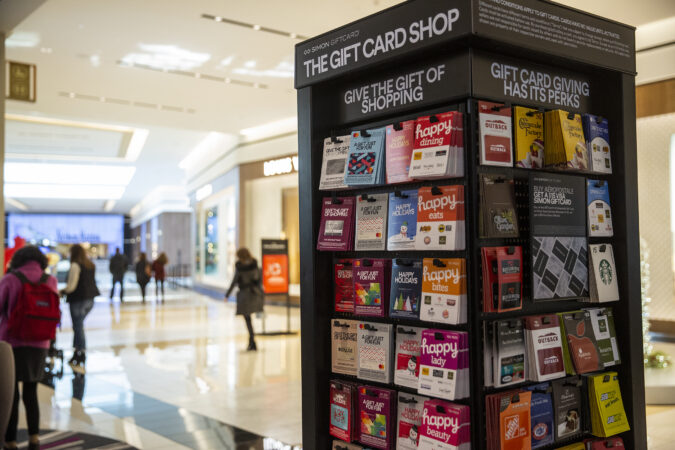
    Restaurant gift cards begin as a thoughtful gesture — a birthday envelope, a holiday token, a “you deserve a night out.” So often, however, they migrate to a junk drawer or coat pocket, resurfacing in a moment of hopeful nostalgia:

    “Hey, remember this place?”

    But that cool restaurant has become a vape store, a Pilates studio, or a bubble-tea shop with a plastic vine selfie wall accented by the phrase “Let’s Make Pour Decisions.” written in neon.

    That $75 that you thought would buy a roasted half chicken and a glass of natural wine from a “carefully curated” list has become a relic of a business that thrived briefly and then disappeared.

    If you’re receiving a restaurant gift card this holiday season, there’s one important thing to bear in mind:

    Use it. Fast. Not “soon.” Not “when it feels right.” Not after you’ve coordinated three calendars and a celestial alignment. Treat it like arugula, not heirloom jewelry. And if you’re giving one, attach an affectionate nudge: Go immediately.

    Gift card horror stories

    One-off, independent restaurants — the mainstay of Philadelphia’s mighty restaurant scene — depend on gift card sales. Ben Fileccia, senior vice president with the Pennsylvania Restaurant & Lodging Association, calls restaurant gift cards “one of the best ways to support the local businesses that bring our communities together.” He considers them a “direct investment in the neighborhood restaurants that show up for our schools, charities, and local events. Most restaurants honor every card they sell, and gift cards continue to be a reliable, meaningful way to support the hospitality businesses you love.”

    But temper that with the idea that restaurants come and go.

    Some restaurants wind down operations and stop selling gift cards months before the shutdown, publicly advising customers to use them promptly. One case in point is Laurel in South Philadelphia this year, which enjoyed a six-month countdown. Just last week, Rocco’s at the Brick shut down without warning during a dispute with the landlord; the owner graciously is refunding outstanding gift cards.

    Others are not so ethical. On Christmas Eve 1994, a popular Center City bistro called Odeon was selling gift certificates — they were paper back then. Odeon never reopened after New Year’s and the gift certificates became bookmarks. The rumor was that the reservationist sold them, not knowing that the restaurant was closing.

    Buying from a restaurant chain can be safer. But just two months ago, Iron Hill Brewery & Restaurant — a pillar of the region for three decades — shuttered three locations and, two weeks later, closed the remaining 16 and then filed for bankruptcy protection. If you have an Iron Hill gift card, you’re at the very back of the line.

    J. Alexander’s, a contemporary steakhouse chain, shut down its King of Prussia location without notice last year. Gift cards can be honored at the closest remaining locations in Clifton, N.J., or Annapolis, Md. Grand Lux Cafe’s Cherry Hill location closed in 2020, directing customers to its King of Prussia location, which closed a year later. If you still have a Grand Lux Cafe card, plan a day trip to Paramus, N.J., or Garden City, N.Y. (Cheesecake Factory owns Grand Lux but does not accept its cards.)

    Bertucci’s is slowly, quietly exiting: The suburban locations in Bryn Mawr, Langhorne, Marlton, Mount Laurel, and beyond went dark, leaving only Springfield, Delaware County, and Newark, Del. Houlihan’s vanished from Philadelphia and its suburbs altogether, and Ruby Tuesday has done the same slow fade, retreating from malls and roadside plazas that once seemed permanent.

    The numbers

    Total gift card spending is expected to reach $29.1 billion, up from $28.6 billion in 2024, according to the National Retail Federation. Consumers plan to purchase between three to four gift cards and expect to spend an average of $171.32 per person. Restaurants remain the most popular gift card type (27%), followed by bank-issued cards (25%), department stores (25%), and coffee shops (20%).

    As you might imagine, restaurants do not mind selling cards. By industry estimates, 5% to 15% of restaurant card value is never used — a concept known as “breakage.”

    In Pennsylvania, the law prohibits gift cards from expiring in less than two years and bans dormancy fees; after five years without redemption the value is presumed abandoned and may be sent to the state. In New Jersey, the law requires that gift card value remain fully available for at least 24 months and restricts inactivity fees during that period.

    What else to do

    Universal gift cards, like those issued by Visa and Mastercard, are the safest bet if you want to give something other than cold, hard cash. Although there’s usually an upfront fee with their purchase, they travel with the recipient, not the business. They survive concept changes, closures, disputes, and chef departures. Perhaps give the recipient one of these gift cards with a list of suggested restaurants. (For inspiration, I might suggest including a copy of The Inquirer’s 76 Magazine, our guide to the restaurants that are defining dining in the region, available through The Inquirer’s online store.)

    Or consider a donation in your friend’s name to a Philadelphia hunger-relief nonprofit, such as Share Food Program, Sunday Love Project, and People’s Kitchen, which work magic turning even modest gifts into many meals.

    Of course, you could skip giving a gift card altogether. Instead, pick a date, make a reservation, and treat the recipient to a meal — and to your company.

  • 🍸 Cheers to the holiday bars | Let’s Eat

    🍸 Cheers to the holiday bars | Let’s Eat

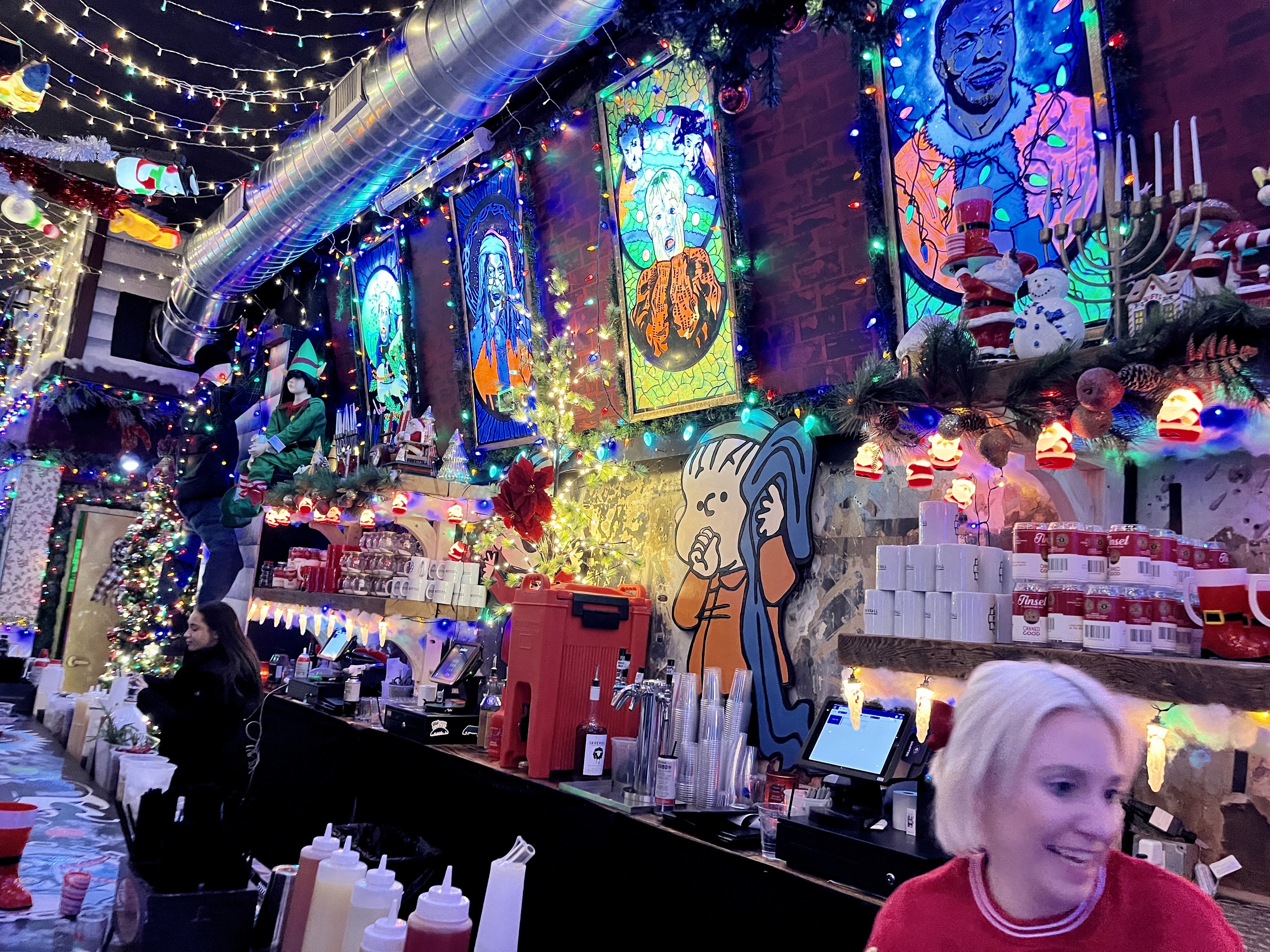
    Cheers, Grinches! We’ve rounded up 18 Christmas pop-up bars.

    Also in this edition:

    Mike Klein

    If someone forwarded you this email, sign up for free here.

    All the bars dressed in holiday style

    Bar, humbug! Beatrice Forman scoped out the Philly watering holes that are decking their halls (or booths) with garlands, nutcrackers, and more string lights than you can count.

    The Michelin effect

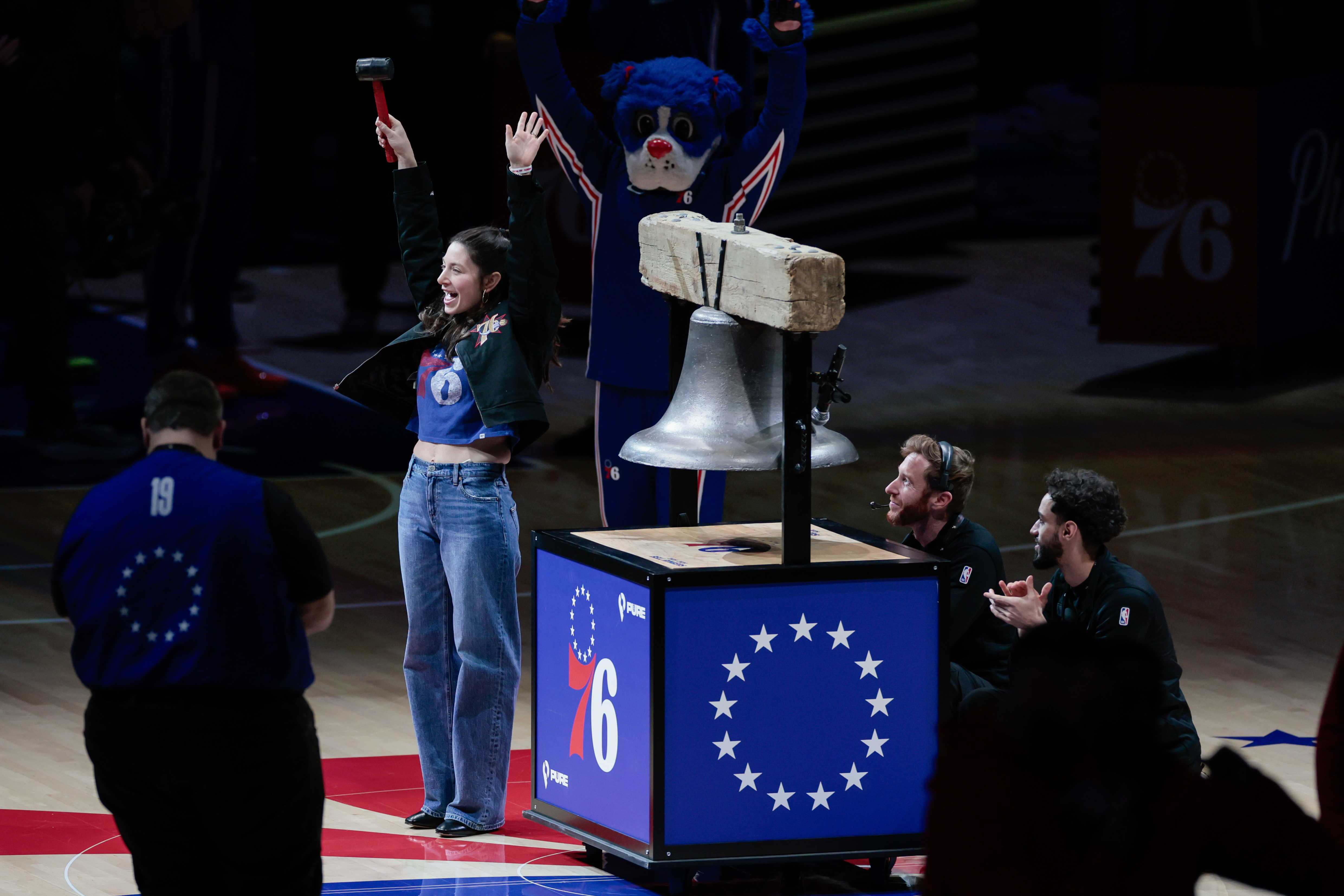
    ⭐ It’s been a bell-ringer of a week for the chefs at Michelin-approved restaurants, including Amanda Shulman at the one-star Her Place Supper Club, who was front and center before a Sixers game. Can Philly’s good vibes last?

    Dalessandro’s, one of three cheesesteak shops to be awarded a Michelin Bib Gourmand, learned the news almost by accident.

    👨‍❤️‍💋‍👨 Philly’s Michelin men are all “wife guys.

    👍 What do we think of the Philly Michelin-approved restaurants?

    Tales of three closings

    🍰 The acclaimed Essen Bakery is closed for good, and owner Tova Du Plessis explains why it took so long for her to come to grips with the decision.

    🥩 Rocco’s at the Brick, a busy Bucks steakhouse, was apparently forced to shut down on the weekend before Thanksgiving.

    😢 Mama’s Pizzeria, the Main Line landmark, is in its final days. Owner Paul Castellucci Sr. says he’s facing health issues.

    Four ideas for wine under $20

    Wine specialist Sande Friedman recommends small, independent wine shops in the Philly-area offering four great values on sparkling, white, orange, and red.

    Center City has a cutting-edge cocktail bar

    Kiki Aranita puts the exclamation point on Static!, the followup from the owners of the Fishtown lounge Next of Kin. She says she found cocktails concocted by some of the nerdiest, most process-driven bartenders in Philly.

    Scoops

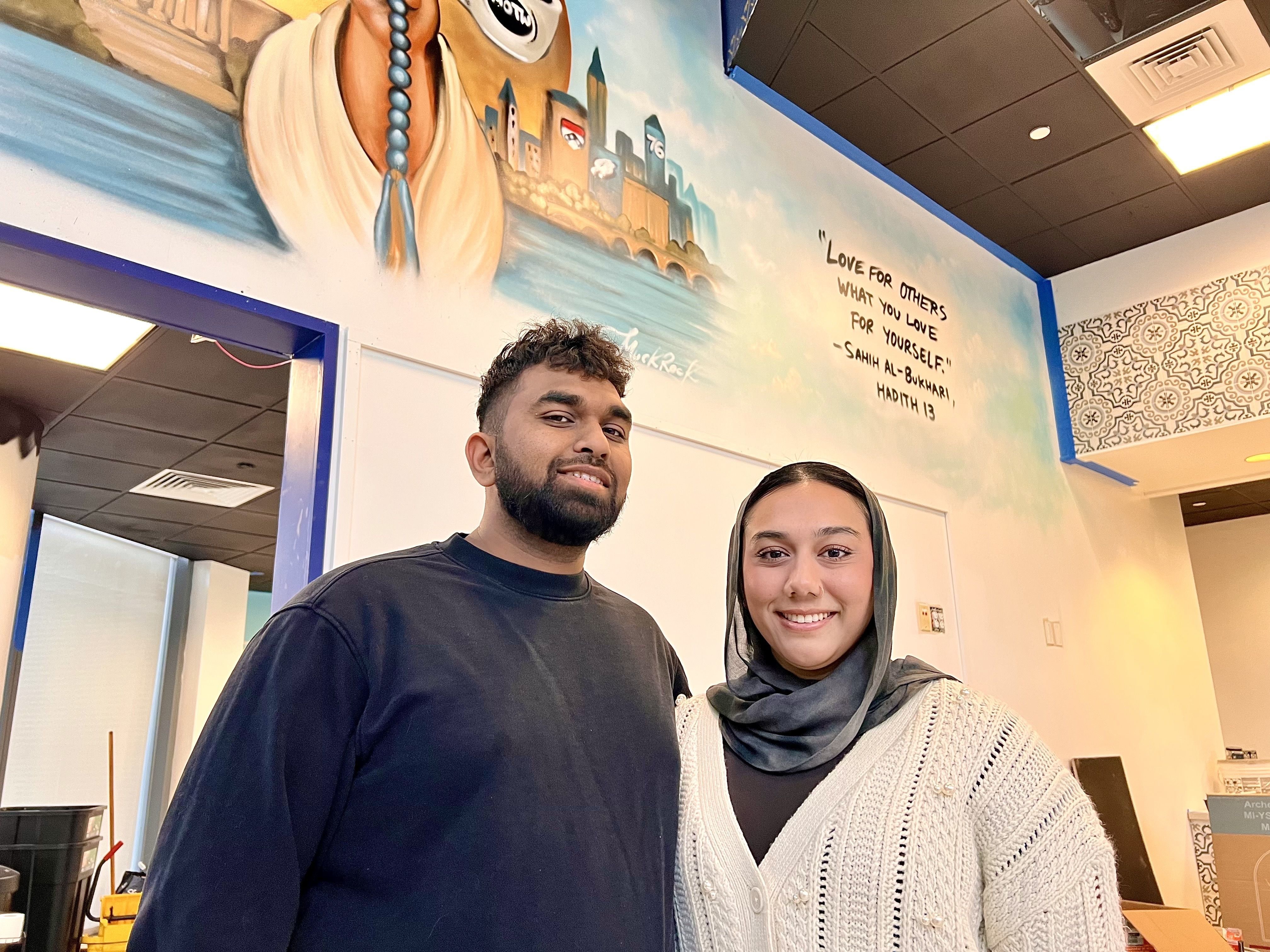
    Muslims of the World Coffee & Pastries, the Indiana-based cafe extension of the social-media storytelling/philanthropic project founded by Sajjad Shah in response to post-9/11 stereotypes, is setting up its first Philly location at the Murano at 21st and Market Streets. They hope to open next month. MOTW’s local operators are newlyweds Mahmood Islam and Samina Akbar (above), the chain’s first Bengali franchisees, who say they envision a space where no one will feel out of place. Akbar, who recently left her job as a scientist for Johnson & Johnson, will run the day to day. Islam works for his father’s Lansdale-based company (Electronic Mechanical Services) and runs Global Tech Systems, which focuses on electronic-waste recycling and donations to schools and foundations in developing countries. They’ll source foods from all over, including local pastries from Au Fournil. “This isn’t just a business,” Islam said. “It is something to be proud of.”

    Wild Yeast Bakehouse, the sourdough bread bakery of Main Line resident John Goncher, has a brick-and-mortar retail location in Wayne teed up for spring. A self-taught baker with a career in corporate finance, Goncher launched Wild Yeast out of his home kitchen in 2021, starting with 10 bread-share customers. As he expanded to the farmers market circuit and wholesale, he converted his Rosemont living room into an (entirely legal) commercial kitchen. When Jenn Ladd profiled his business in 2024, Goncher was firmly committed to staying in his living room. Now baking more than 600 loaves a week, he tells her he’s leased a storefront in the Eagle Village Shops complex so he can stop storing 2,000 pounds of bread flour in his house. Wild Yeast plans to continue to supply its bread share and wholesale customers, as well as its farmers market audience, in addition to expanding production to baguettes, babka, scones, and cookies.

    Ponder Bar will replace the Penalty Box at Coral and Sergeant Streets in Kensington. Owner Matt Kuziemski, backed by Leighton Phillips (ex-Hiroki, Fork, Friday Saturday Sunday), is keeping details under wraps — including an opening date, other than “coming soon.”

    Restaurant report

    Sally. Two weeks ago on a pizza walkabout, I popped into Sally, the pizzeria/wine shop near Fitler Square, to see what new chef David Kupperberg was up to. (And then, wouldn’t you know it, the Michelin Guide awarded it a Bib Gourmand.)

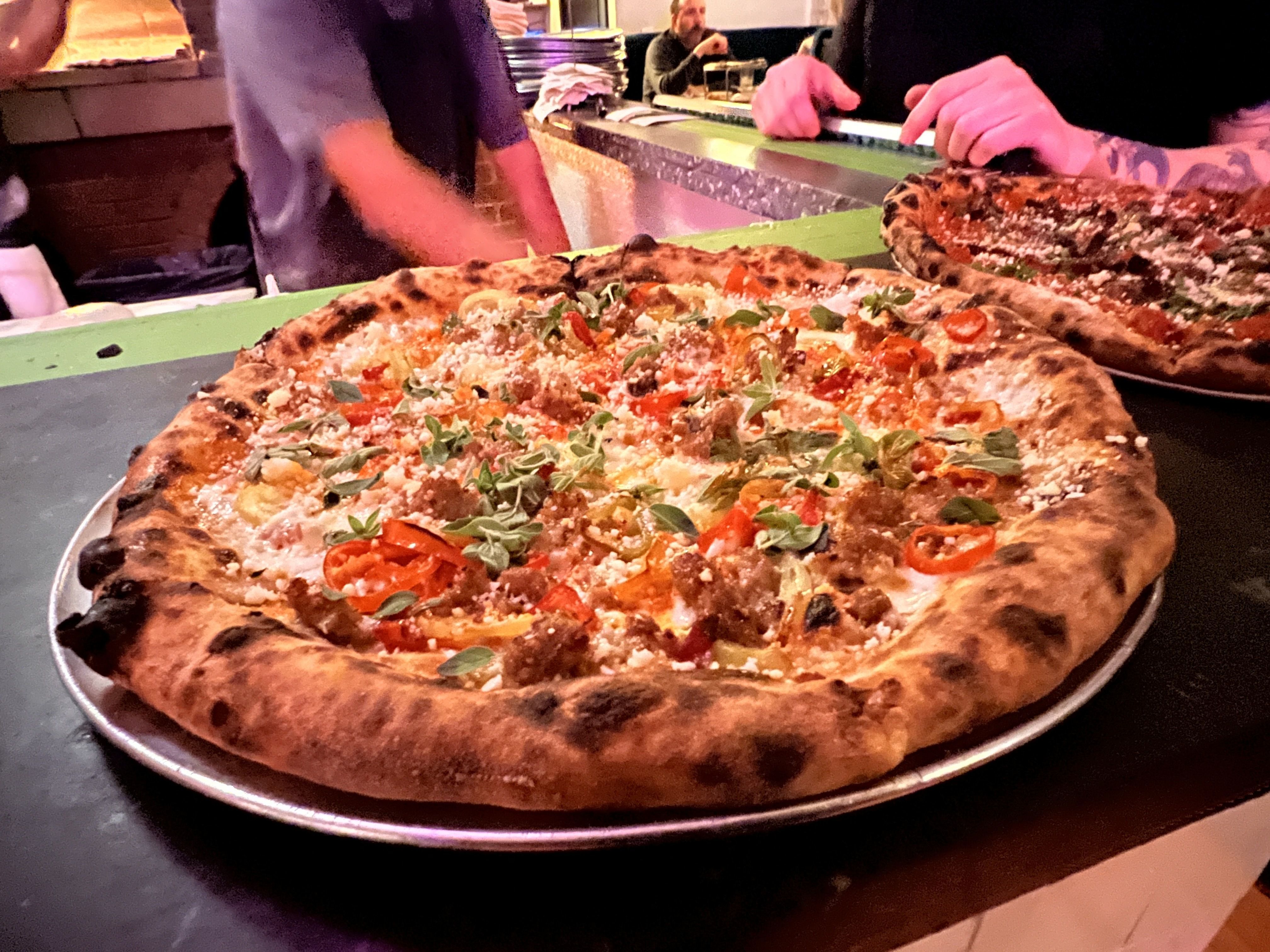
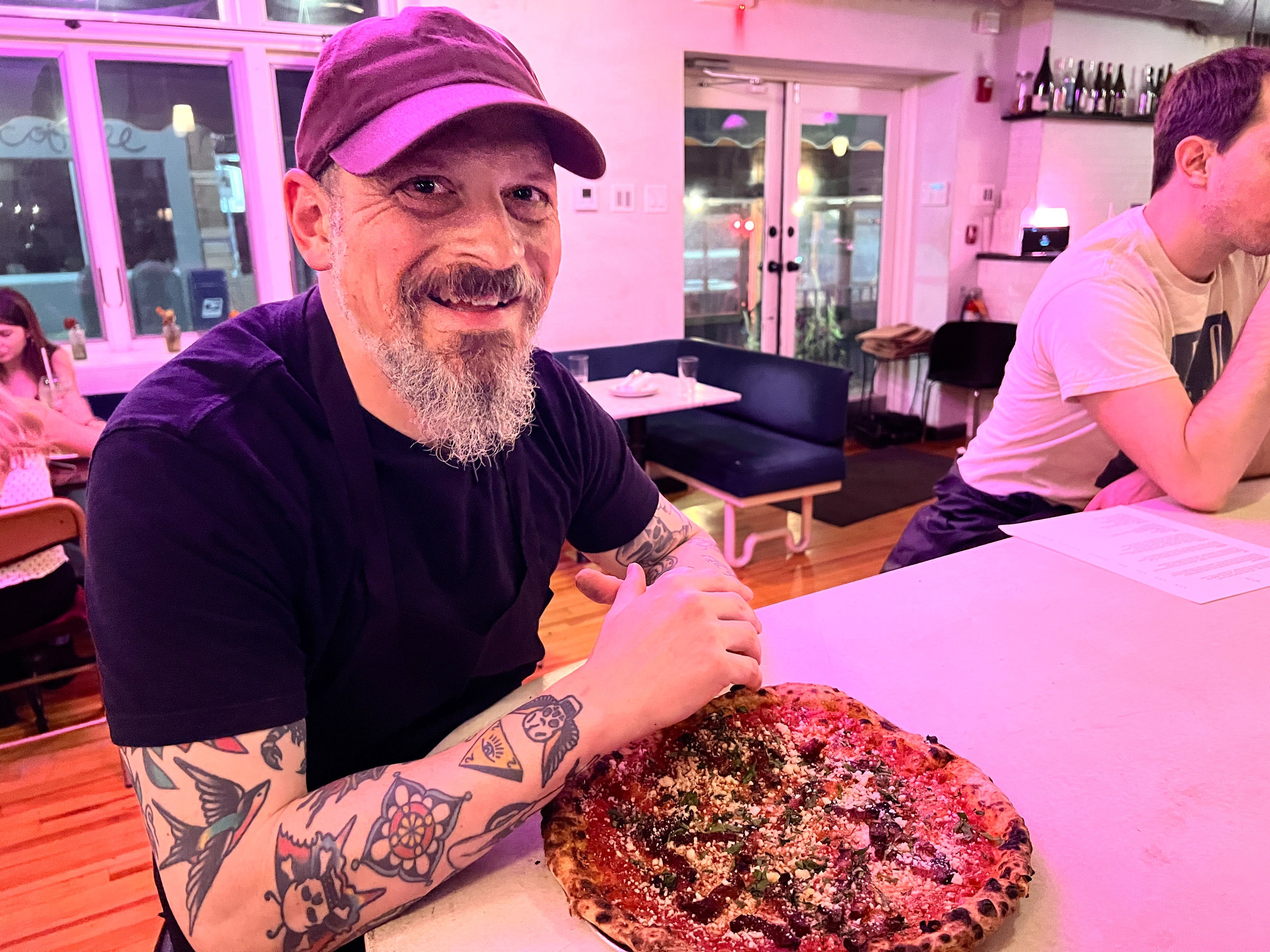
    With only eight sourdough, wood-fired rounds on the menu (including a plain cheese, a red, and a white), Kupperberg is going for bold: There’s a “LOUD” red with arrabbiata sauce; a deeply savory mushroom pie layered with porcini, béchamel, and Comté; a soppressata with earthy Fat Cat cheese and pepper jelly; and the pepper-packed Pepper Pie (pork sausage, Calabrian chili, pickled Jimmy Nardellos, cubanelles, mozzarella, provolone, and pecorino, shown above). Below is Kupperberg with an All’Amatriciana — a pizza version of the classic bucatini dish.

    Sally, 2229 Spruce St. Hours: 4:30-10 p.m. daily, plus 11 a.m.-2:30 p.m. weekends for brunch. Closed Nov. 26 and 27.

    Briefly noted

    Watch Party PHL, the group planning a women’s sports bar and community space to open in 2026, may not have a location yet but it has announced its name: The Stoop Pigeon. This will be Philly’s second such bar, following the recent opening of Marsha’s at 430 South St.

    Mod Spuds, with a menu of loaded-jacket potatoes, is the latest residency from chef Ange Branca and Kampar. It’s a month-long stay at Comfort & Floyd (1301 S. 11th St.) on Mondays (5-9 p.m.) and Tuesdays (11 a.m.-9 p.m.) starting Dec. 8. Branca is inspired by the potato bars she frequented during her university days in 1990s Scotland. Sample toppings: chili con carne, chorizo, chicken tikka masala, barbecue jackfruit. Mod Spuds will preview at Dec. 5’s First Friday at the Barnes, along with drinks from Kampar Kongsi. (Tickets for that one are here.)

    Throwing snowballs at Santa (that overblown incident from a 1968 Eagles game) will be part of the festivities at a Dec. 8 Eagles watch-party fundraiser at Sports & Social at Live! Casino & Hotel in South Philly to benefit Easterseals. The event, sponsored by law firm Zarwin Baum, runs from 5 p.m. through the final whistle of the Eagles-Chargers game, featuring unlimited food, drink tickets, raffles, silent auction, and fan activities. General admission tickets are $100, VIP is $125.

    RJ Smith, the Drexel University culinary student-turned- chef of Ocho Supper Club, will partner with chef Yun Fuentes for a one-night Caribbean-style Feast of the Seven Fishes at 7 p.m. Dec. 16 at Fuentes’ Bolo in Center City. Reservations via OpenTable: $150pp. (Ocho dishes will be available during happy hour at the first-floor rum bar from 4–7 p.m.)

    ❓Pop quiz

    Based on Craig LaBan’s review of Borromini on Rittenhouse Square, how many restaurants does Stephen Starr now own?

    A) 29

    B) 41

    C) 50

    D) 72

    Find out if you know the answer.

    Ask Mike anything

    What do you know about the opening of Santucci’s Pizza in University City?

    Alicia Santucci says Santucci’s will soft-open next week at 38th Street and Powelton Avenue. Since Santucci’s serves square pizza, perhaps it’s fitting that the building is Anova uCity Square.

    🤔 Read on as my colleagues and I answer a batch of your questions, including: “Is the Philly restaurant scene reaching a point of saturation?”

    📮 Have a question about food in Philly? Email your questions to me at mklein@inquirer.com for a chance to be featured in my newsletter.

    By submitting your written, visual, and/or audio contributions, you agree to The Inquirer’s Terms of Use, including the grant of rights in Section 10.

  • One of Philly’s most acclaimed bakeries has permanently closed

    One of Philly’s most acclaimed bakeries has permanently closed

    Facing mounting personal, legal, and financial pressures, acclaimed baker Tova Du Plessis has permanently closed Essen Bakery and said she is considering filing for bankruptcy protection, six months after she and her husband announced unexpectedly that they were “hitting pause for a few days.”

    The four-time James Beard Award nominee’s shops, on East Passyunk Avenue in South Philadelphia and Berks Street in Kensington, never reopened after the announcement on May 31, which blindsided her estimated two dozen employees.

    In late July, Tova Du Plessis told The Inquirer that she and her husband, Brad, were “navigating deeply personal challenges” and hoped to reopen in September. Meanwhile, disgruntled former employees and investors had been left in the dark.

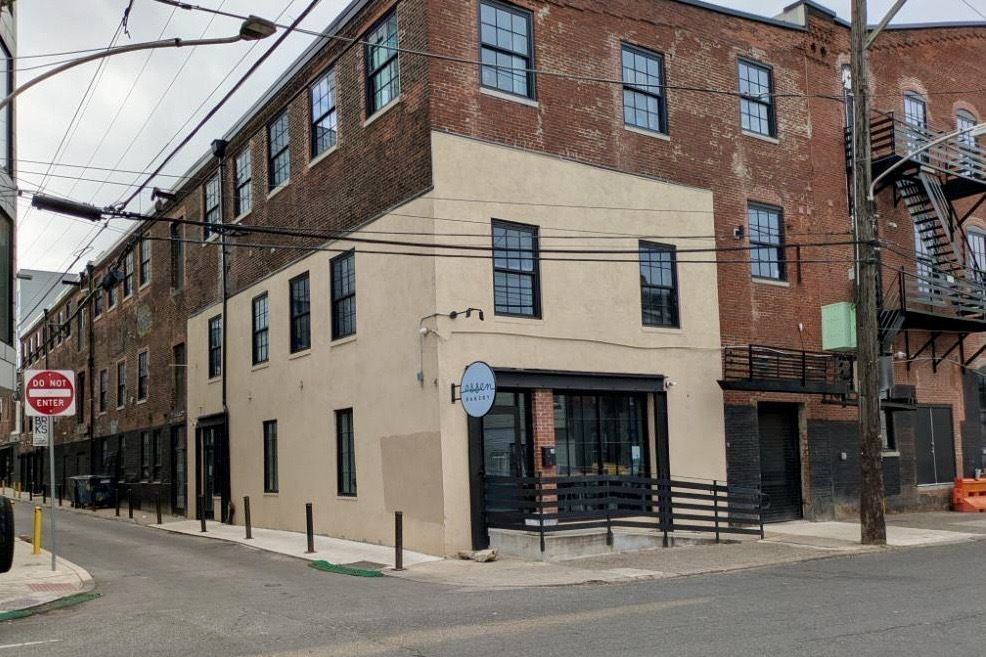
    Essen Bakery’s location at 110 W. Berks St. on Oct. 29, 2025.

    Du Plessis said it took a long while before she realized that reopening was not an option. “I don’t think that I can really pull off what I need to — not just to be open, but to make it financially sustainable,” she said. “There always was that potential, but after what I experienced, I just don’t have the confidence, the head space, and the people in place.” She also said her struggle with narcolepsy, the chronic interruption of the sleep cycle, had worsened.

    Du Plessis said she had explored different plans to relaunch or restructure Essen but couldn’t make any of them work. “I think I just needed to come to terms with that,” she said.

    The early days

    Du Plessis, who turned 40 last summer, grew up in a kosher home in Johannesburg, baking challah for Shabbat each week. She and Brad, her high school sweetheart, relocated to the United States while she pursued a biology degree at the University of Houston with a goal of becoming a doctor. Following a trip to Paris, she pivoted toward cooking. They headed to California, and she enrolled at the Culinary Institute of America’s Greystone campus in Napa Valley, where she specialized in baking and pastry arts.

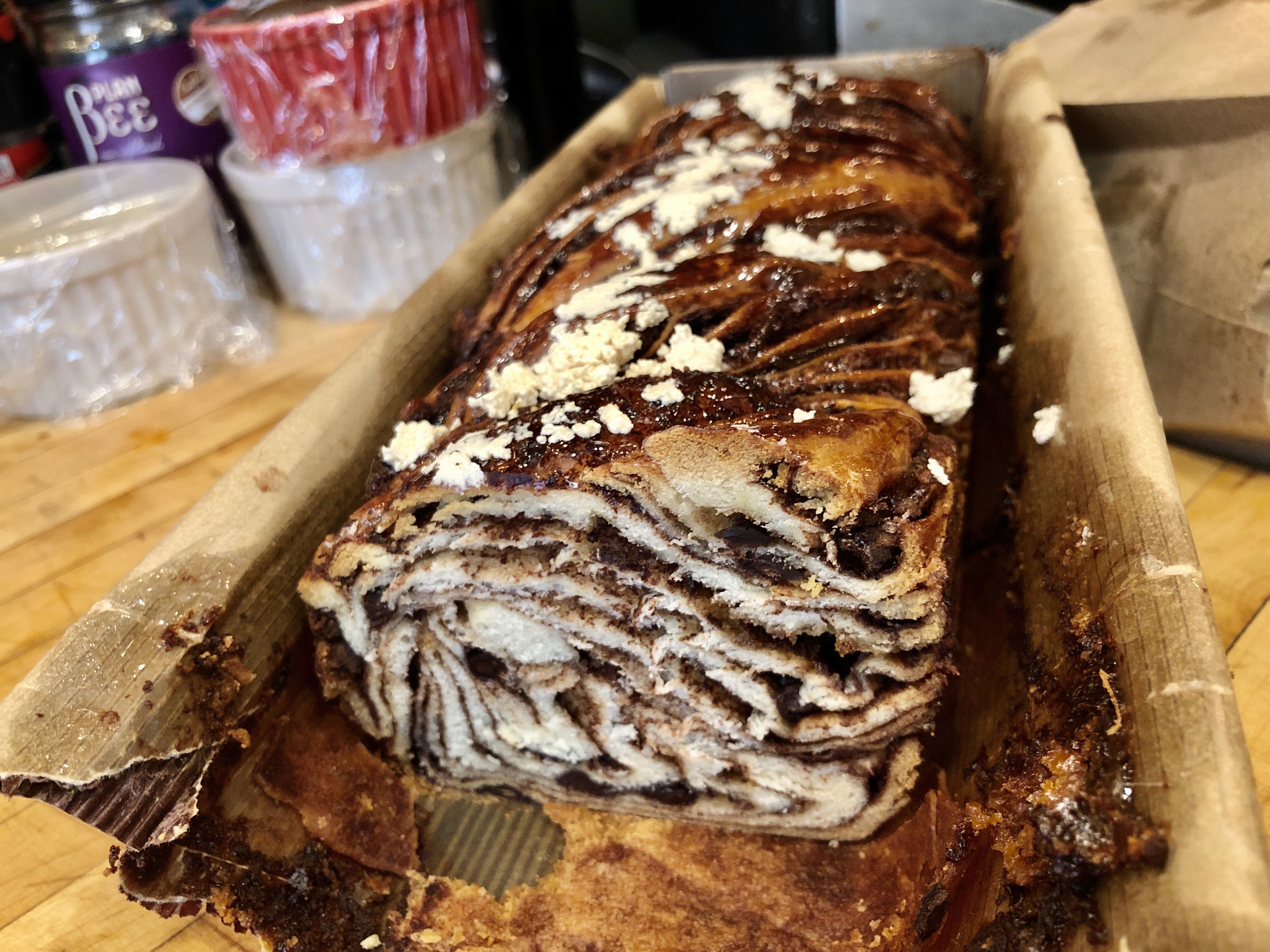
    Chocolate-halva babka, one of the specialties at Essen Bakery.

    While working at the Restaurant at Meadowood in Napa, she met chef Michael Solomonov during his visit as a guest chef in December 2011. Soon after, she and her husband moved to Philadelphia, where she worked as a line cook at Zahav before becoming sous chef at Citron & Rose, the Main Line kosher restaurant that Solomonov and Steve Cook briefly consulted on. She then served as executive pastry chef at the Rittenhouse Hotel.

    In 2016, she leased a storefront on East Passyunk Avenue near Dickinson Street to launch Essen, which became known for its challah, babka, laminated pastries, and seasonal breads. Great reviews followed, including four James Beard Award semifinalist nominations for Outstanding Baker between 2017 and 2020.

    By 2022, with Essen outgrowing Passyunk Avenue, Du Plessis began looking for a second, larger location. In January 2023, she signed the lease on a newly constructed building on Berks Street, a half-block from the Market-Frankford El near Norris Square, at the corner of Berks and Hope.

    Brad du Plessis and Tova du Plessis at the Kensington location of Essen Bakery, 110 W. Berks St.

    Financial strain

    Tova Du Plessis said financial pressures began mounting last spring. She is facing a lawsuit filed by their Berks Street landlord over unpaid rent, and the space, just off Front Street, is being shown to prospective tenants. The landlord of Essen’s East Passyunk Avenue location has found a new tenant, Du Plessis said last week.

    The Du Plessises are also in arrears on a loan repayment to Frank Olivieri, owner of Pat’s King of Steaks. Olivieri said he and his wife, Nancy Schure, had provided a “substantial” amount of money last year to help fund the Berks Street shop, which opened in November 2024 after nearly a year of delays Du Plessis attributed to contractor issues and permitting. Initially investors, Olivieri and Schure later converted their ownership stake to a loan, he said.

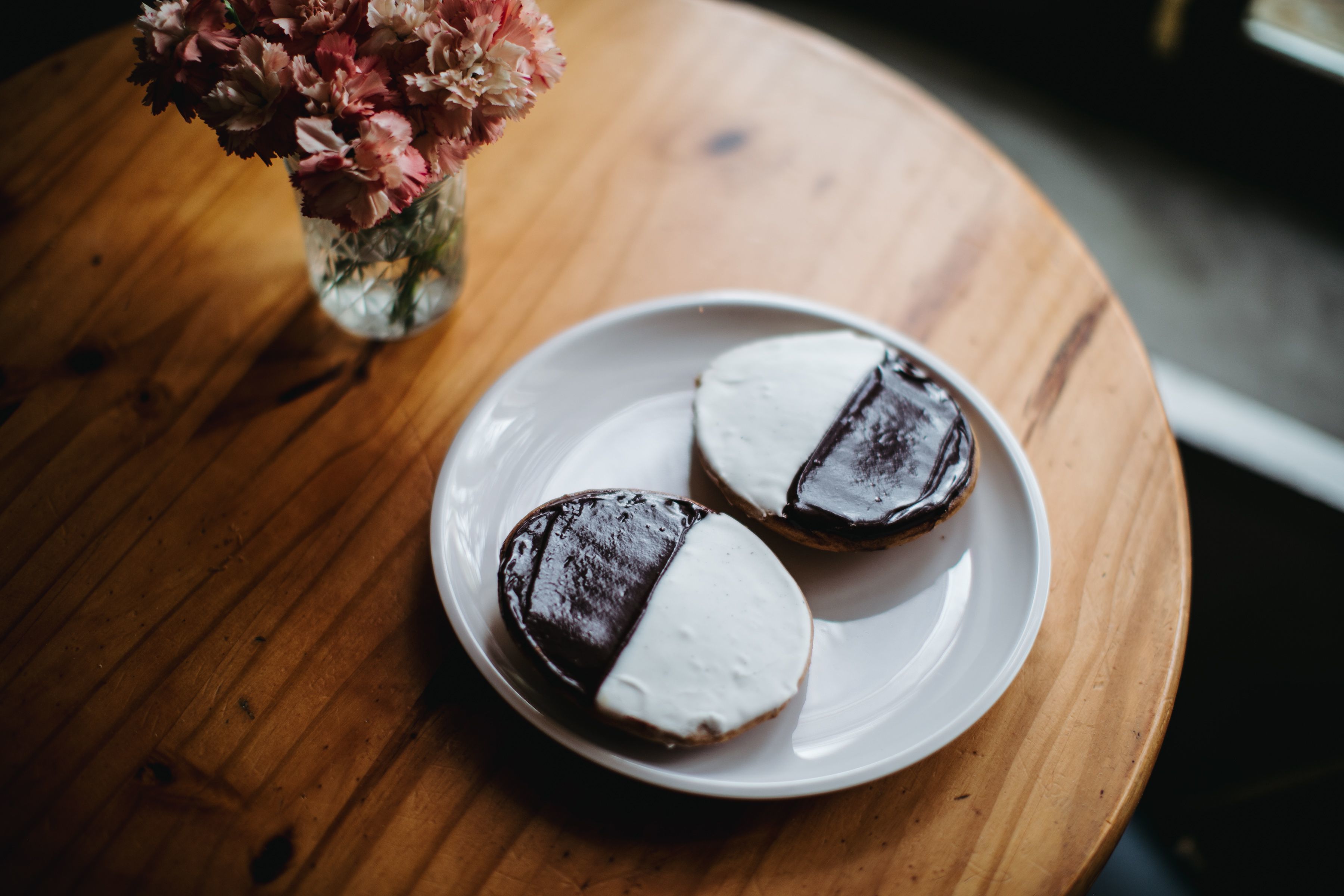
    Essen Bakery’s signature black-and-white cookies.

    Olivieri said they had been customers of the Passyunk Avenue location when Brad Du Plessis contacted them last year to ask if they would be interested in investing. Olivieri said he noticed issues with day-to-day operations, and eventually, he said, “It just seemed like we were becoming more like counselors rather than investors.”

    Later, Olivieri said, the couple ignored his advice and grew silent. “You have to have an open line of communication to be successful, and unfortunately that’s one of the components that was missing,” he said.

    Employee fallout

    It was the silence that distressed the idled Essen employees, too. They told The Inquirer over the summer, after its July report that the bakery owners hoped to reopen, that they were given no clues about the business’ future. Several former employees disputed the couple’s assertion to the newspaper that they had been taken care of during the shutdown.

    In the days after the closing, one former employee said, workers messaged the couple to say that they couldn’t pay their rent and were desperate to learn when they would be able to work again. “After several promised reopening dates came and went with no opening, they simply stopped responding to staff,” said the worker, who asked for anonymity because they wanted to move on with their life.

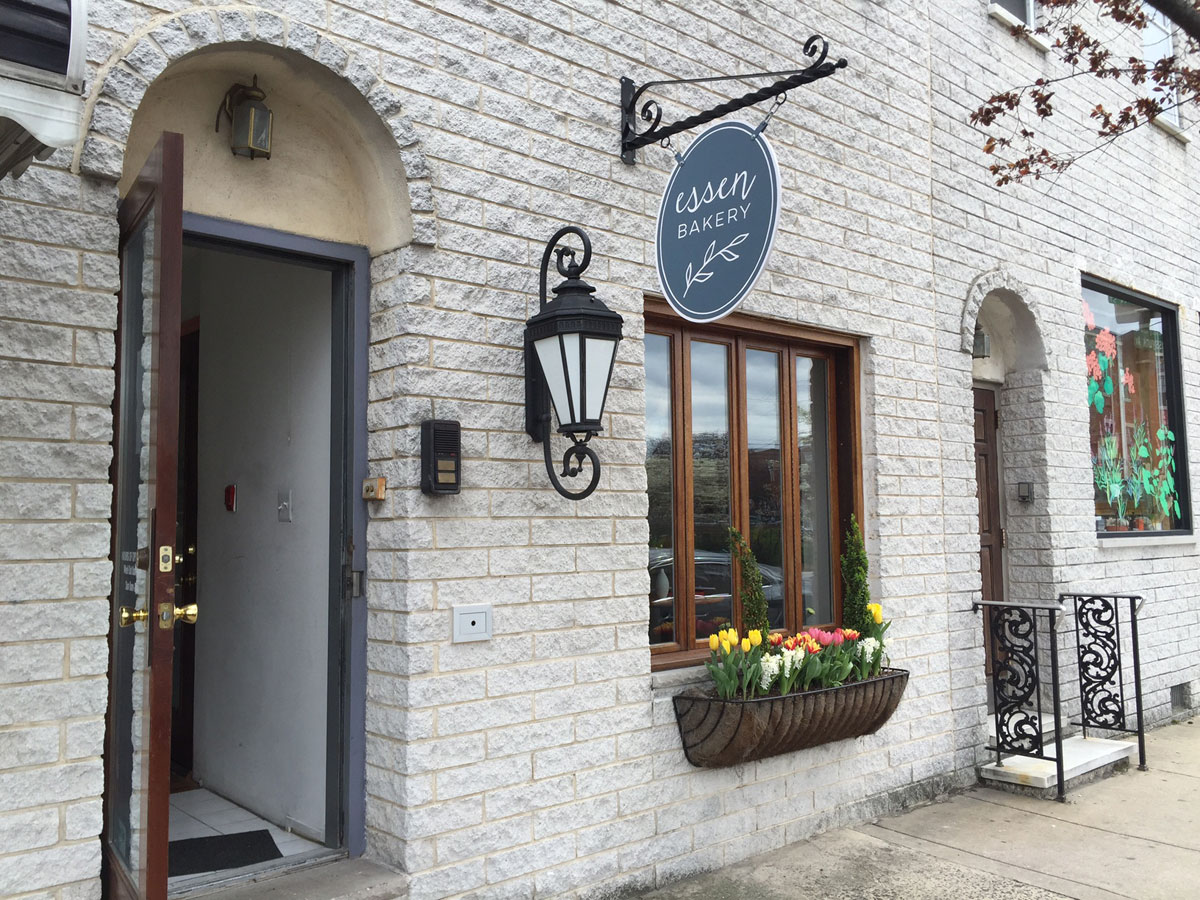
    Essen Bakery’s first location opened in 2016 at 1437 E. Passyunk Ave.

    Another employee, who had worked at Essen from September 2024 until the shutdown, aired her grievances in a TikTok video. Others told PhillyVoice, in an article published Aug. 13, that they were suffering and that the Du Plessises were blocking the accounts of people who discussed the situation on social media.

    Personal strain

    Tova Du Plessis said that just before the shutdown, she and her husband were “discovering issues in our relationship that we didn’t understand, and it was impacting the business in such a drastic way. Running the business was our escape from dealing with our issues.”

    The stress in their marriage “was just magnified because we were running a business together,” Du Plessis said. “It was undeniable — it was a problem we had to face head-on.”

    Initially, they thought that a brief shutdown would suffice, “but as we tackled those issues, we were discovering how deep and difficult they were,” she said.

    The loss of income added further stress. Brad Du Plessis, who had left his job in wine sales in April 2024 to work with his wife, got a new job over the summer. “But then I had to face the reality that I didn’t have another partner or investor,” she said. “I didn’t feel I could do it on my own.”

    Looking ahead

    Last week, Du Plessis said she was attempting to sell all of Essen’s baking equipment. She said she believed that bankruptcy was the next step.

    Despite Essen’s failure, Du Plessis said she remains proud of what it accomplished. “It made me really feel like I’m part of a community,” she said.

    She said she wants to take several months before making her next move. “I’m still too affected by the burnout and the loss,” she said. “It’s not just giving up the business. It’s a whole bunch of family and relationships.” Du Plessis said she wants to return to baking, possibly even for someone else. Brad Du Plessis, who declined to comment for this article, is working again in the wine business. “He’s really in the position he should be in,” she said.

    “For a long time, I was afraid I’d be looking at bankruptcy and divorce — and I’m happy to say I’m probably just looking at bankruptcy,” Du Plessis said last Friday. “To me, that’s a happy ending, or a beginning, depending on how you want to see it. I actually feel like this experience may have saved our marriage.”

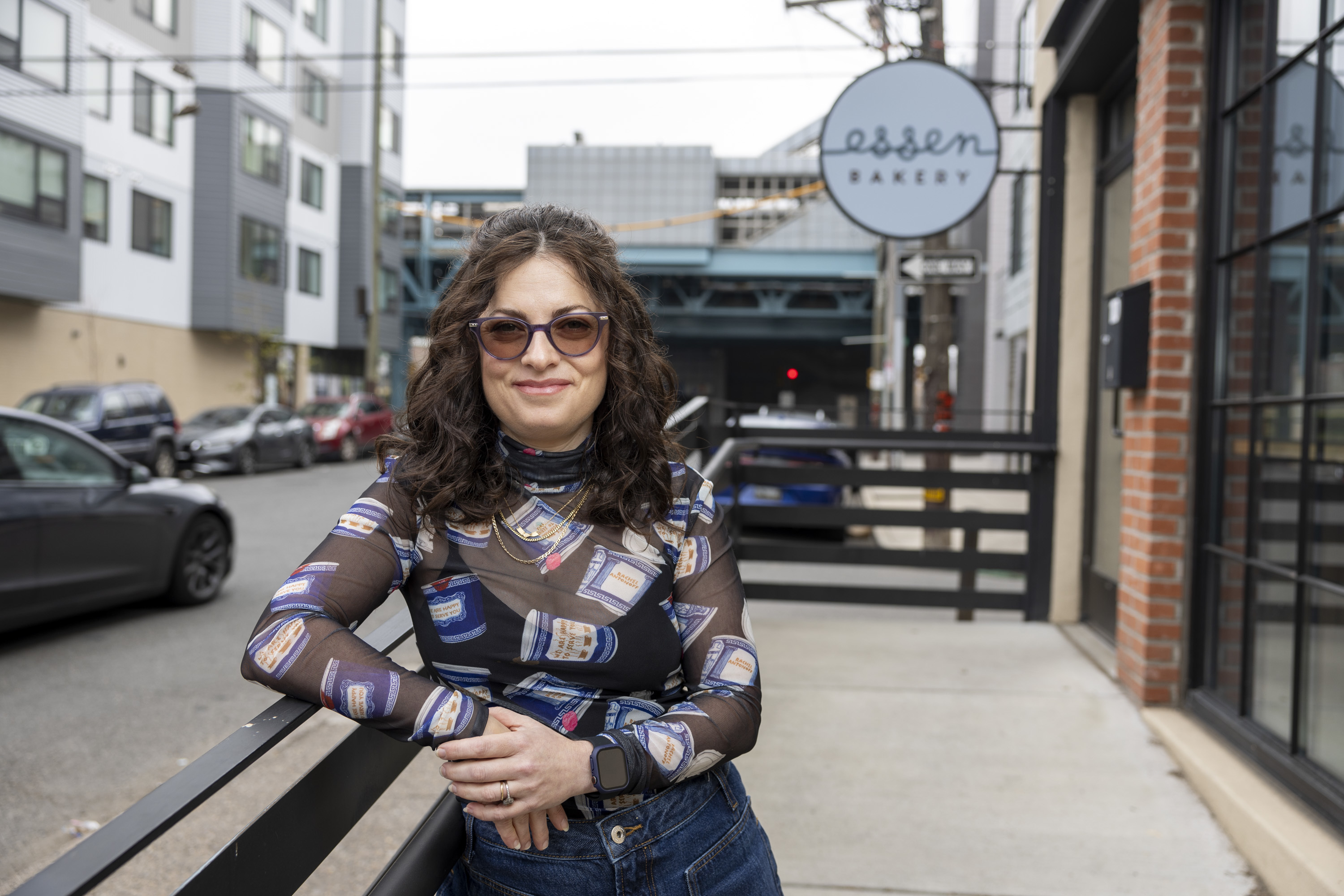
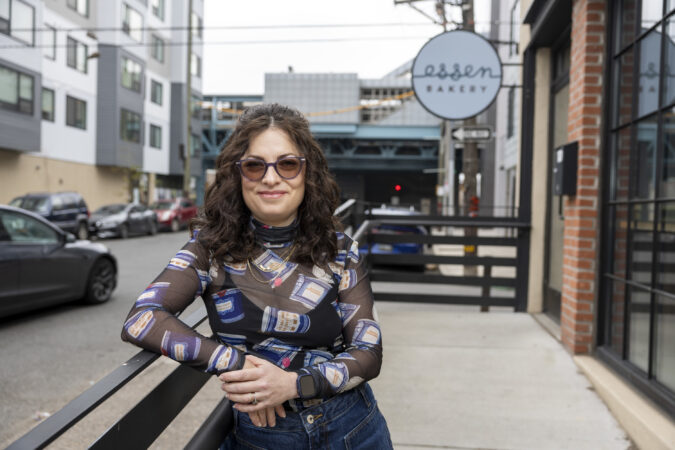
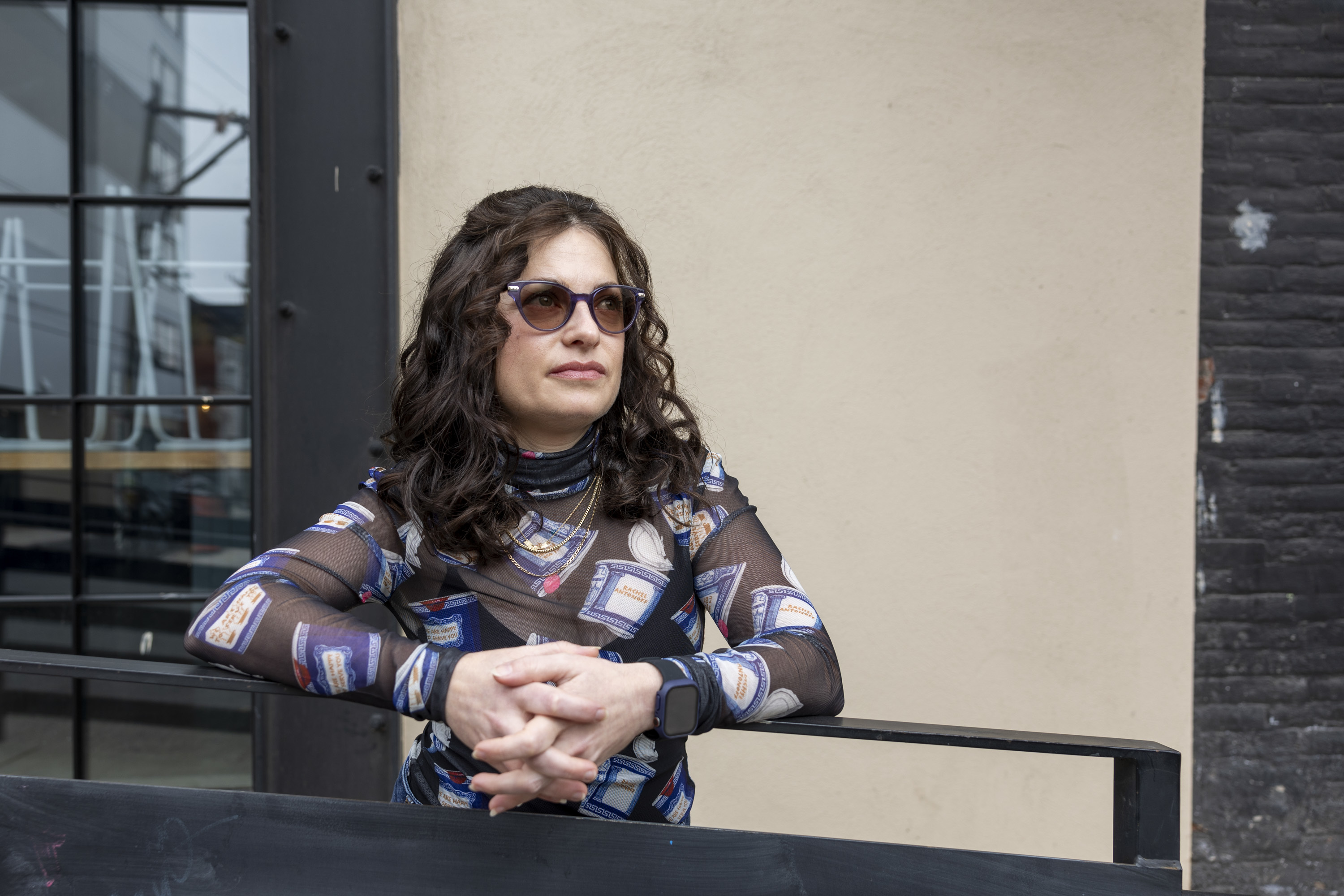
    Tova Du Plessis, owner of Essen Bakery, poses for a portrait in front of her former bakery in Philadelphia, on Friday, Nov. 21, 2025.