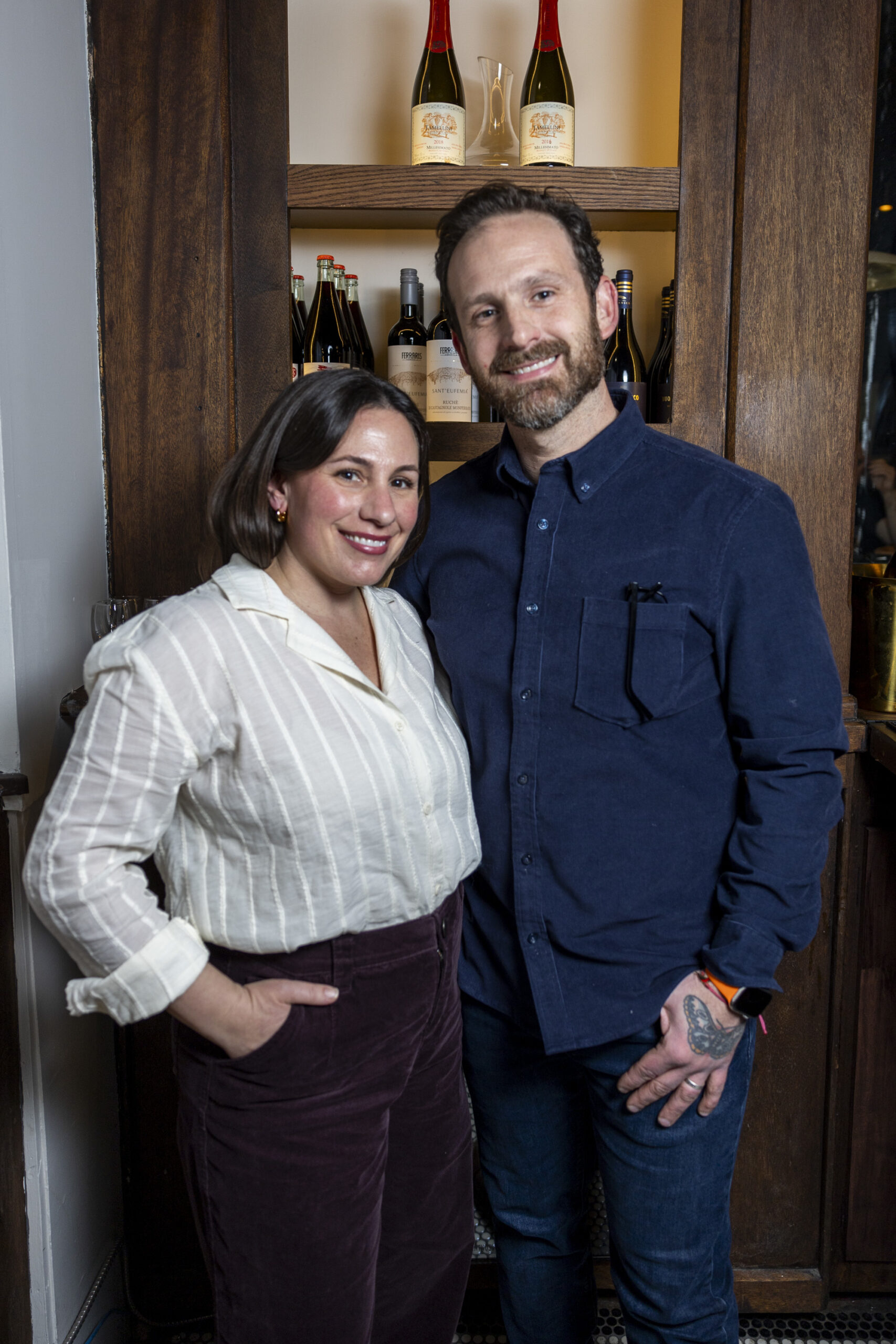
Piccolina is the newest entry from restaurateurs Michael and Jeniphur Pasquarello, and it may also be their most personal.
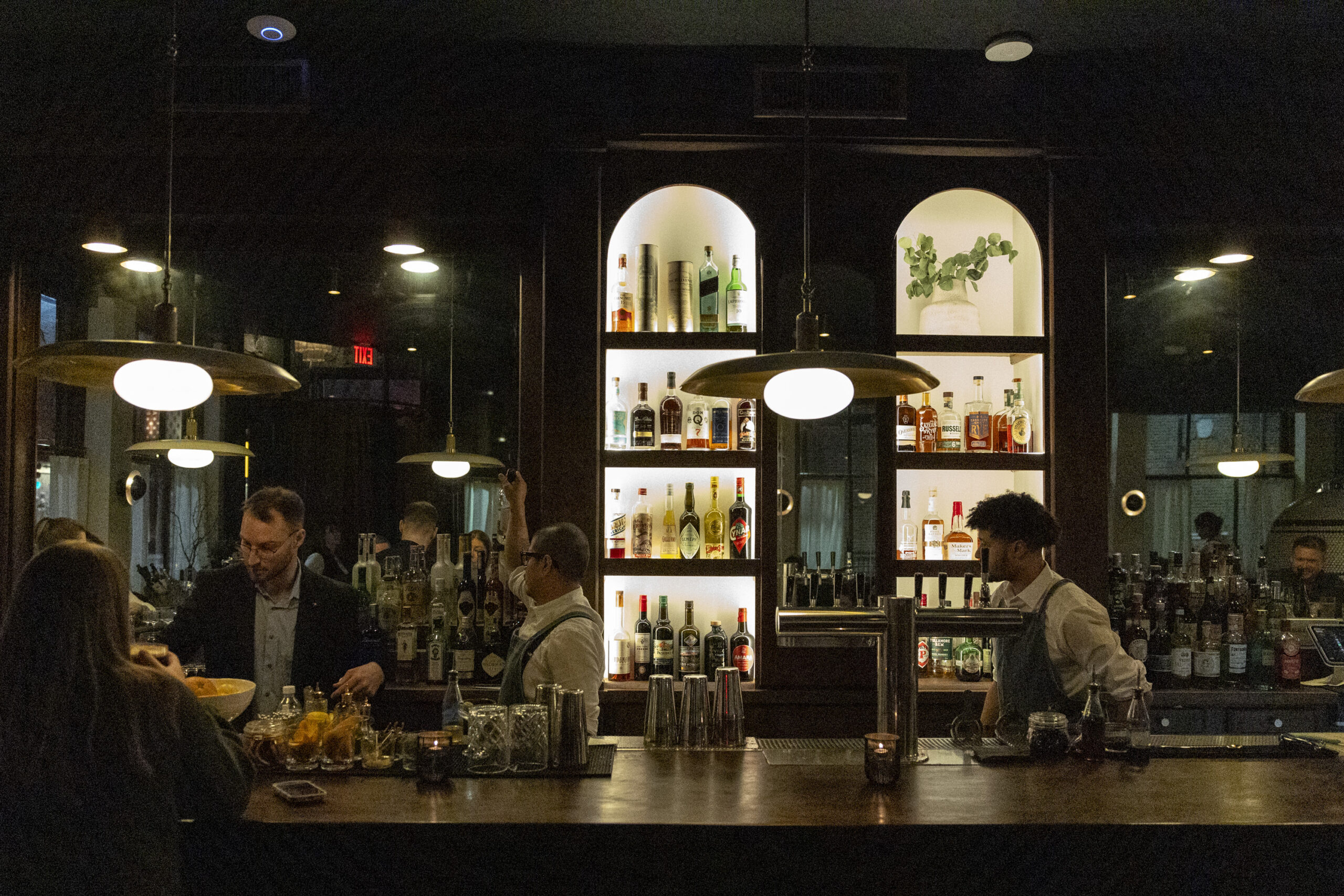
The Italian restaurant opened Monday inside the Society Hill Hotel at Third and Chestnut Streets, occupying a compact spot that was originally an oyster bar in 1830. The corner restaurant is anchored by the big-bellied, handmade brick Marra Forni pizza oven installed by the hotel’s owners, who closed their own restaurant in the space in December. At night, the bar glows against warm brick and plaster, giving the room a sense of intimacy.
Guests dining in and at the bar at Piccolina in Philadelphia, Pa., on Friday, Feb. 13, 2026. .Michael and Jeniphur Pasquarello at their restaurant Piccolina in Philadelphia, Pa., on Friday, Feb. 13, 2026.
For the Pasquarellos — whose restaurant history dates to 2003, when they opened their first Cafe Lift bruncherie in Callowhill — Piccolina marks a shift in focus. Over the years, the couple added a Cafe Lift in Haddonfield and moved the original location to 12th and Spring Garden (after closing a short-lived branch in Narberth), and opened the nearby concepts Prohibition Taproom (corner bar) and La Chinesca (Mexican). They also had a six-year run of the wood-fired pizzeria Bufad, and a decade in Fishtown with the beef-, then fish-centered Kensington Quarters.
Piccolina is a return to the Pasquarellos’ South Philadelphia roots: He grew up near Chadwick and Shunk Streets, and she grew up two blocks away, at 17th and Ritner. Her grandparents, the Bernardinis, ran Bruno’s luncheonette — later Brunic’s. (Brunic’s lives on, under different owners.)
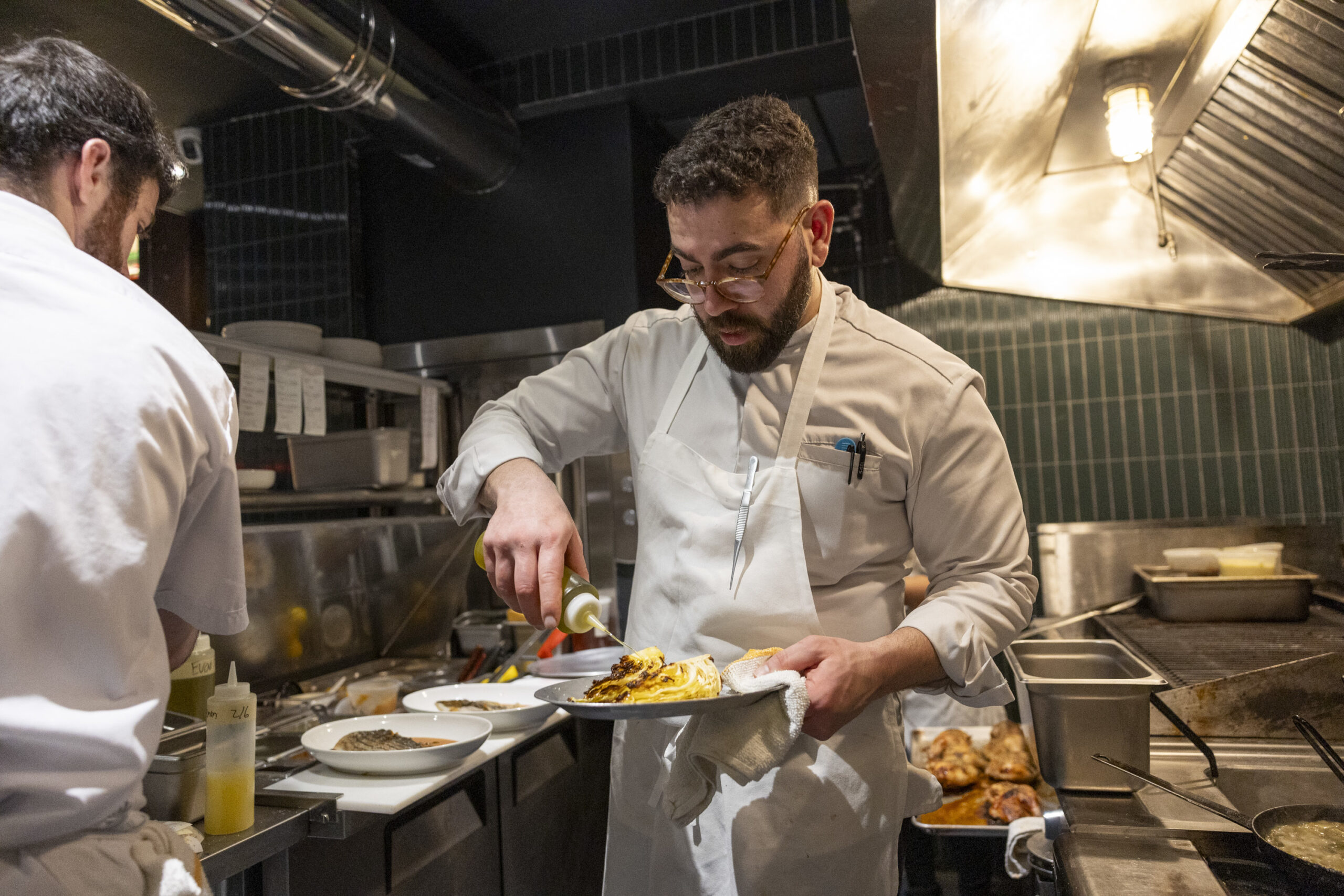
Chef Alex Vazquez working during service at Piccolina in Philadelphia, Pa., on Friday, Feb. 13, 2026.
“It’s tapping into memory and the feeling of where it all came from,” Michael Pasquarello said. But although the menu includes flavors they grew up with, Piccolina is not a South Philly red-gravy house. “We took all of that and then we let Alex put it through his filter.”
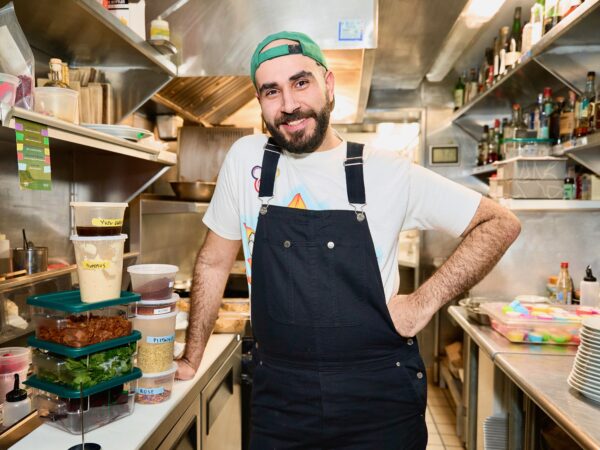
Alex is chef Alex Vazquez, whose resumé includes Vernick Food & Drink and Friday Saturday Sunday, where he rose over a five-year run from garde manger to sous chef.
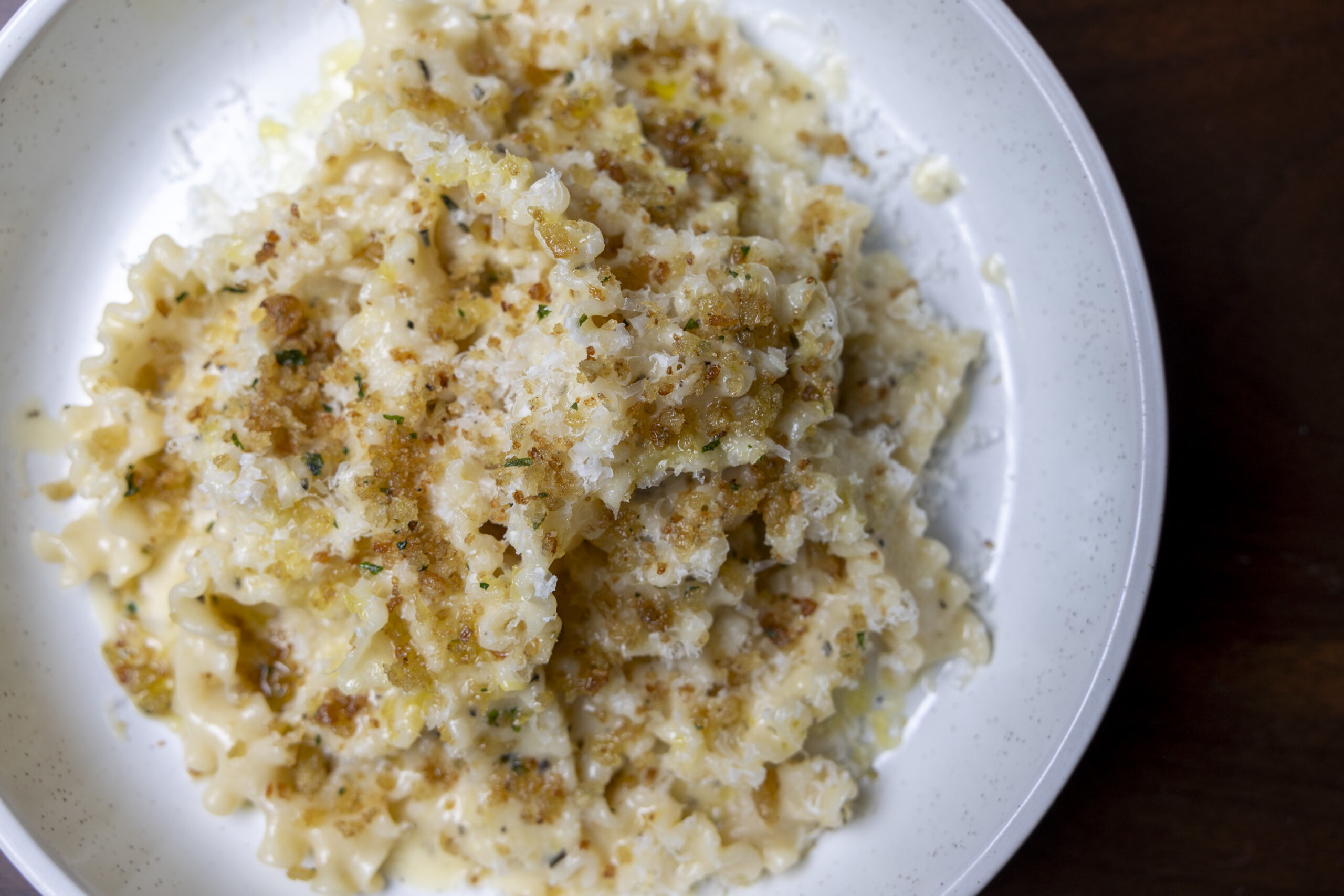
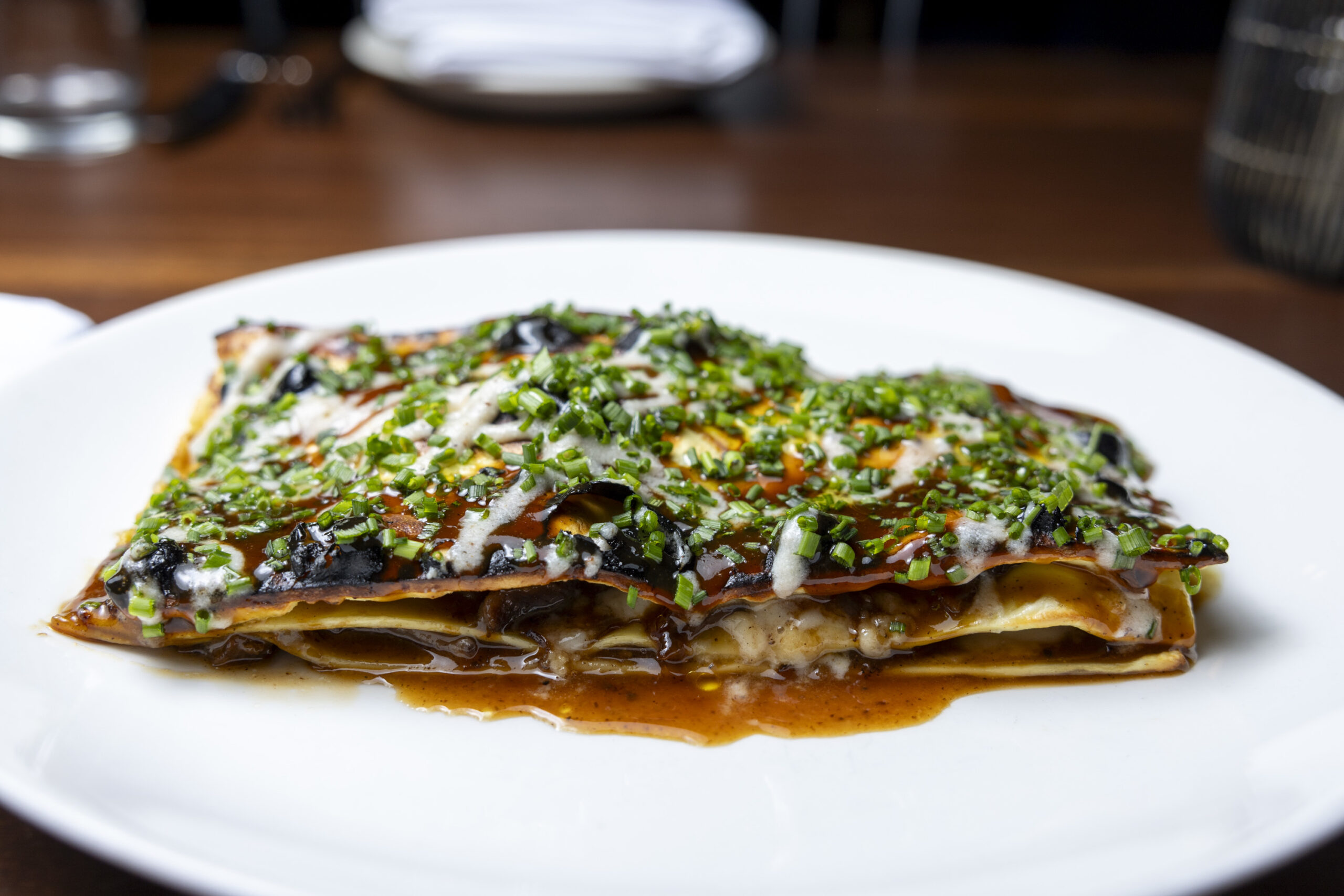
At Piccolina, Vazquez is turning out traditional pastas like bucatini amatriciana and malfadine al limone. Stracciatella is folded into the campanelle vodka just before plating, giving the sauce a loose, creamy pull rather than a heavy coat, Michael said. There’s oxtail lasagna, too, built with just three layers of fresh pasta — a technique Pasquarello traces back to Kensington Quarters.
The Malfadine Al Limone at Piccolina in Philadelphia, Pa., on Friday, Feb. 13, 2026.The Oxtail lasagna at Piccolina in Philadelphia, Pa., on Friday, Feb. 13, 2026.
“We used to do these thin lasagnas because we wanted crispy edges,” Michael said. “Alex loved that idea. So we do braised oxtail, a really rich tomato sauce, drizzle Alfredo through it, then fire it in the brick oven so you get those crisp edges.”
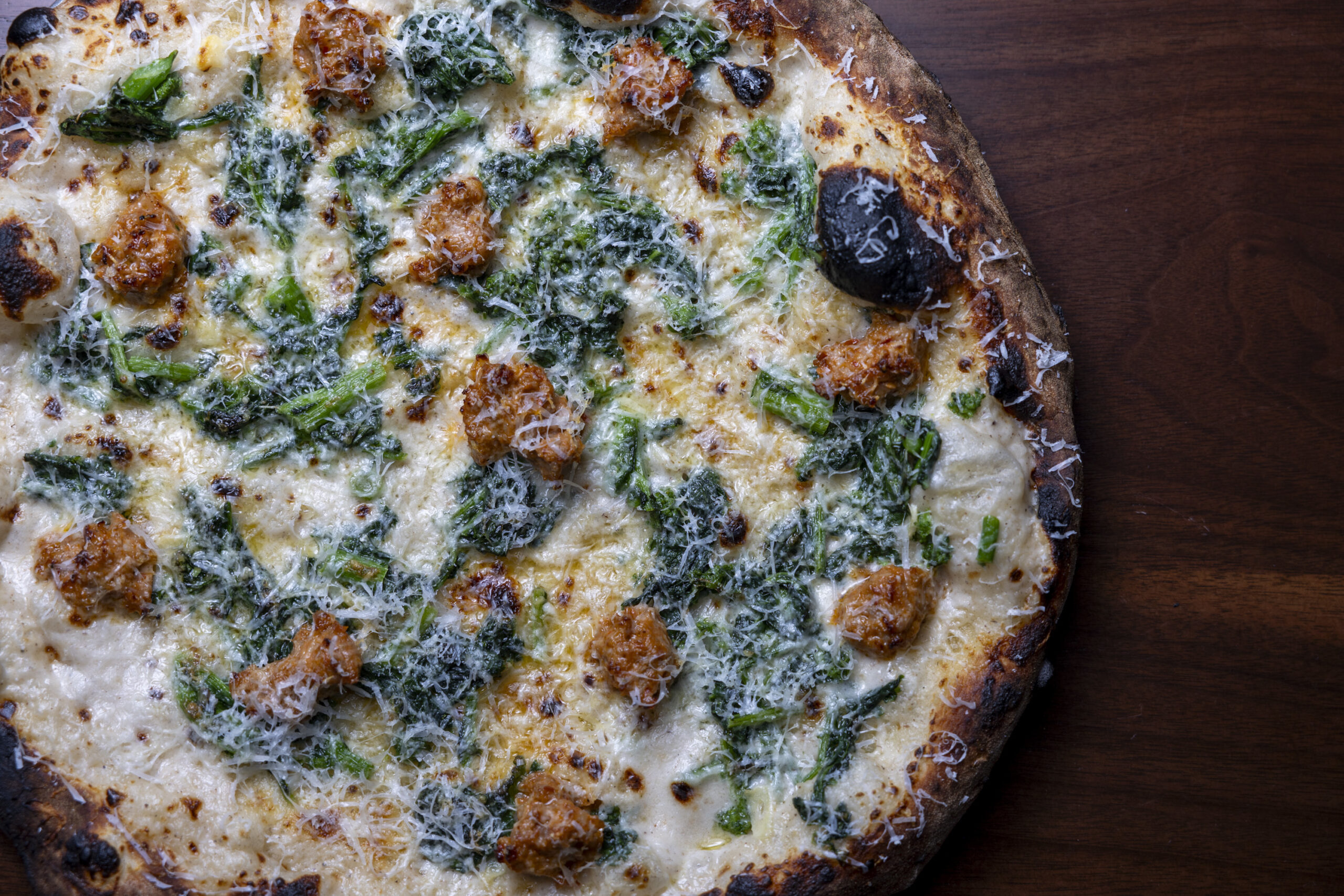
Vazquez’s Neapolitan pizzas are sturdy-crusted, all the better to keep up with a load of toppings. Inspired by Bufad, there’s a sausage pie finished with béchamel, broccoli rabe, and shaved pecorino, as well as a mushroom pizza that had developed a following before the restaurant closed at the end of 2018.
The Sausage Pizza at Piccolina in Philadelphia, Pa., on Friday, Feb. 13, 2026.
The larger plates push the “memory through a chef’s lens” idea most clearly, Michael said. The half-chicken marsala starts with dry-aged birds that are brined, air-dried, and cooked, then finished with a deep marsala sauce and hearth-fired mushrooms.
“I remember my mom making chicken Marsala for us,” he said. “So the idea was, what does that look like when you take it [more] seriously?”
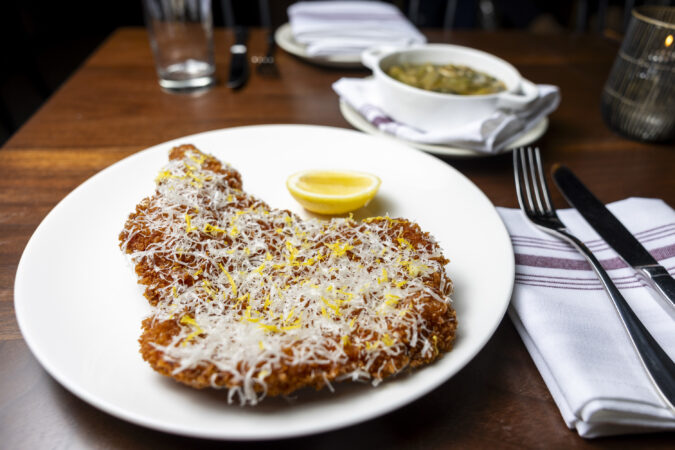
The pork Milanese follows a similar logic. Vazquez brines the pork for 24 hours with coriander, fennel, garlic, and peppercorns before breading it in panko and frying it crisp. It’s served with a hearty crock of escarole and beans — a dish Michael describes as almost universal in South Philadelphia kitchens. “That dish is home to me,” he said.
“I love red-sauce places,” Vazquez said. “It’s so Philly. I just wanted to put my spin on what I want to eat — a red-sauce, pizza, pasta place that’s a little nicer.”
Piccolina serves dinner daily, with lunch and brunch expanding the menu into panini, egg dishes, and sweets like maritozzi French toast stuffed with mascarpone whip. The full bar includes six beers on draft, negroni and other cocktails, and an Italian-only wine list.
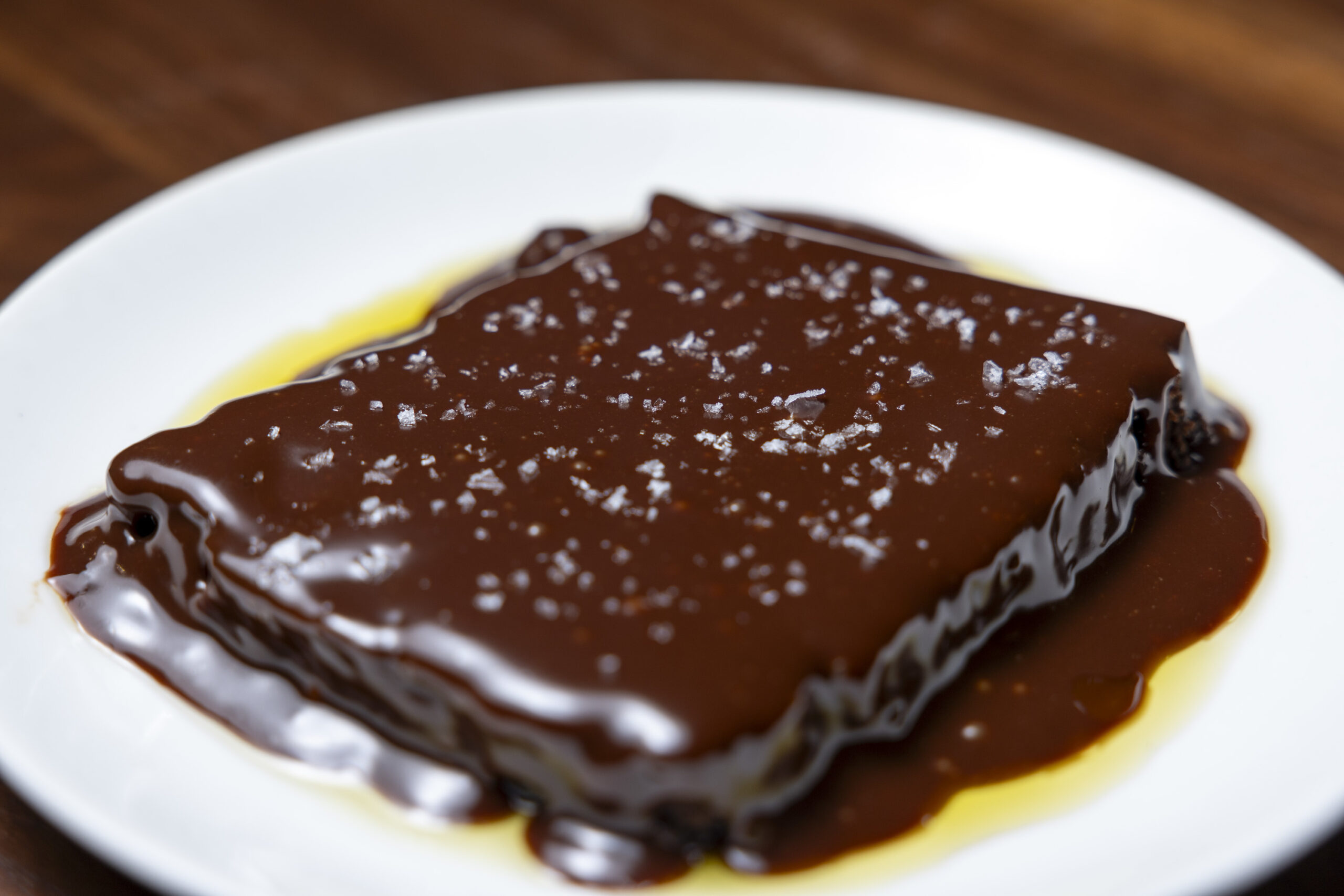
A chocolate cake at Piccolina in Philadelphia, Pa., on Friday, Feb. 13, 2026. .
Piccolina, 301 Chestnut St., 267-761-4120, piccolinaphl.com. Hours: 5 p.m. to 1 a.m. for dinner. Lunch (noon to 4 p.m. Monday to Friday) starts Feb. 17 and weekend brunch (11 a.m. to 4 p.m.) starts Feb. 21.
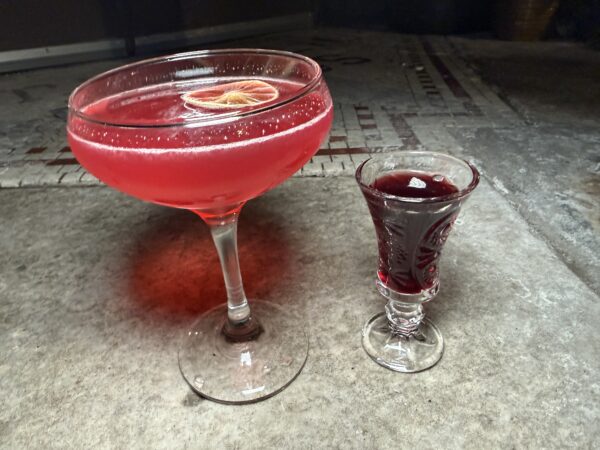
During a recent snowstorm, Philly bar owner Chris Fetfatzes dashed around the bustling bar at Sonny’s Cocktail Joint, delivering platters of burgers and fries alongside 1-ounce pours of house-made liqueurs served in tiny, cut-crystal glasses.
One liqueur in particular glowed ruby red, and a sip showed that it had a careful balance of sweetness and tang, its fruitiness cutting through the richness of Sonny’s cracker-thin pizzas. It served as both a pick-me-up and a digestif on a bitter-cold day.
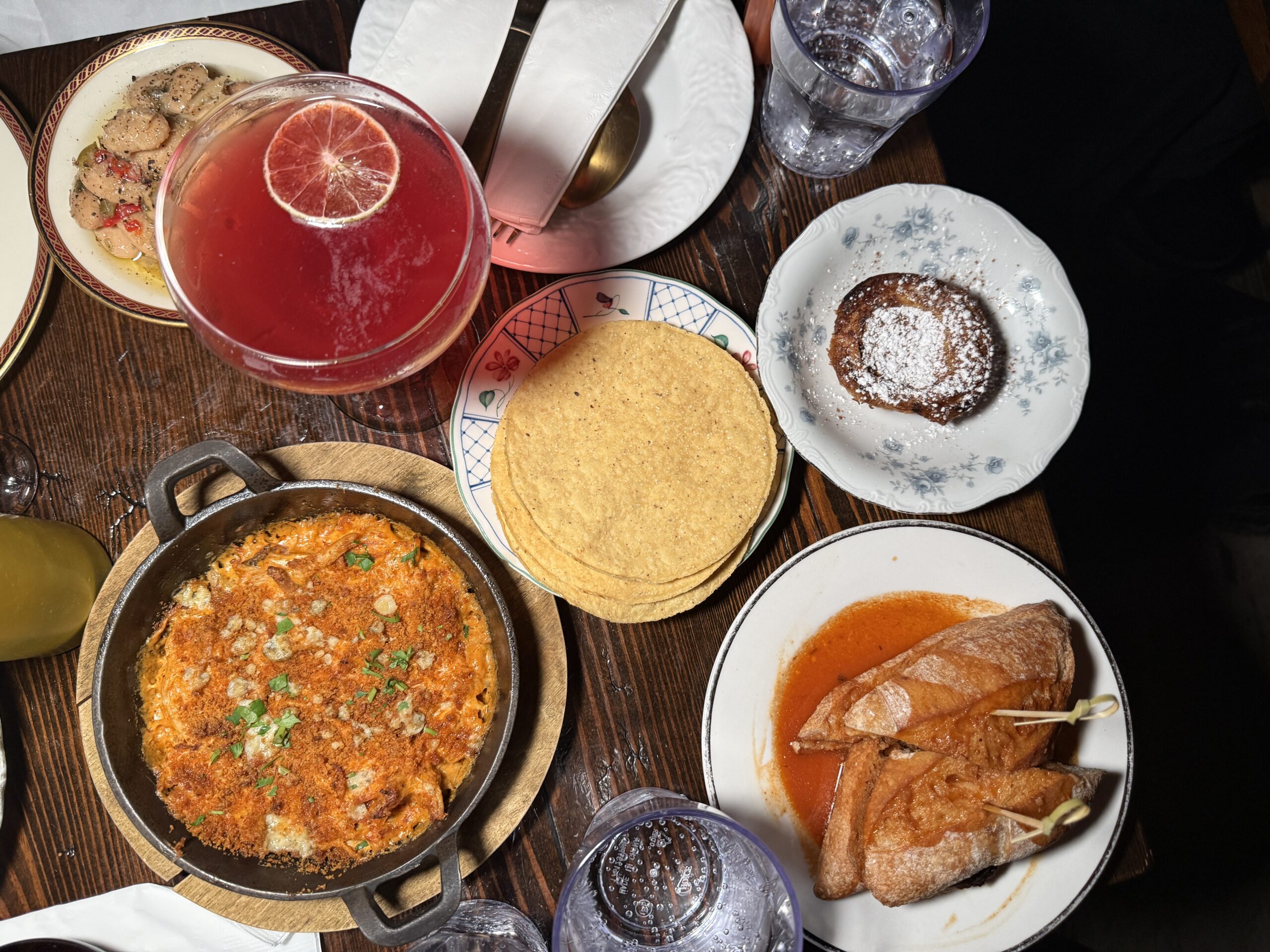
A spread of menu items at Grace & Proper with Portuguese influences: piri piri buffalo chicken dip, a bifana, pasteis de nata, gigantes, and the pink street cocktail.
This sunny spirit was a classic sour cherry Portuguese liqueur called ginjinha (“zhin-ZHEEN-yah”). In its home country, you can drink it at the sidewalk-facing counters of historic, pocket-sized stores scattered throughout Lisbon. In the Philly area, you’ll be hard-pressed to find it at most establishments — except for the bars owned and operated by Fetfatzes’ Happy Monday Hospitality: Sonny’s on South Street, Grace & Proper in Bella Vista, and WineDive in Rittenhouse.
The restaurants also make their own green alpine liqueur, chocolate liqueur, coffee liqueur, falernum, fernet, Swedish punsch, and pumpkin tequila, with more to come. (As with ginjinha and house-made amari and vermouth, these all involve steeping botanicals and produce in alcohol, not distilling fresh spirits.)
But the ginjinha is near and dear to Fetfatzes’ heart. The 44-year-old South Philadelphia native is a first-generation American whose mother was Portuguese and father was Greek, and the delicate glasses of liqueur served in his restaurant group’s establishmentsare part of a quiet legacy of Portuguese immigration to Northeast Philly.
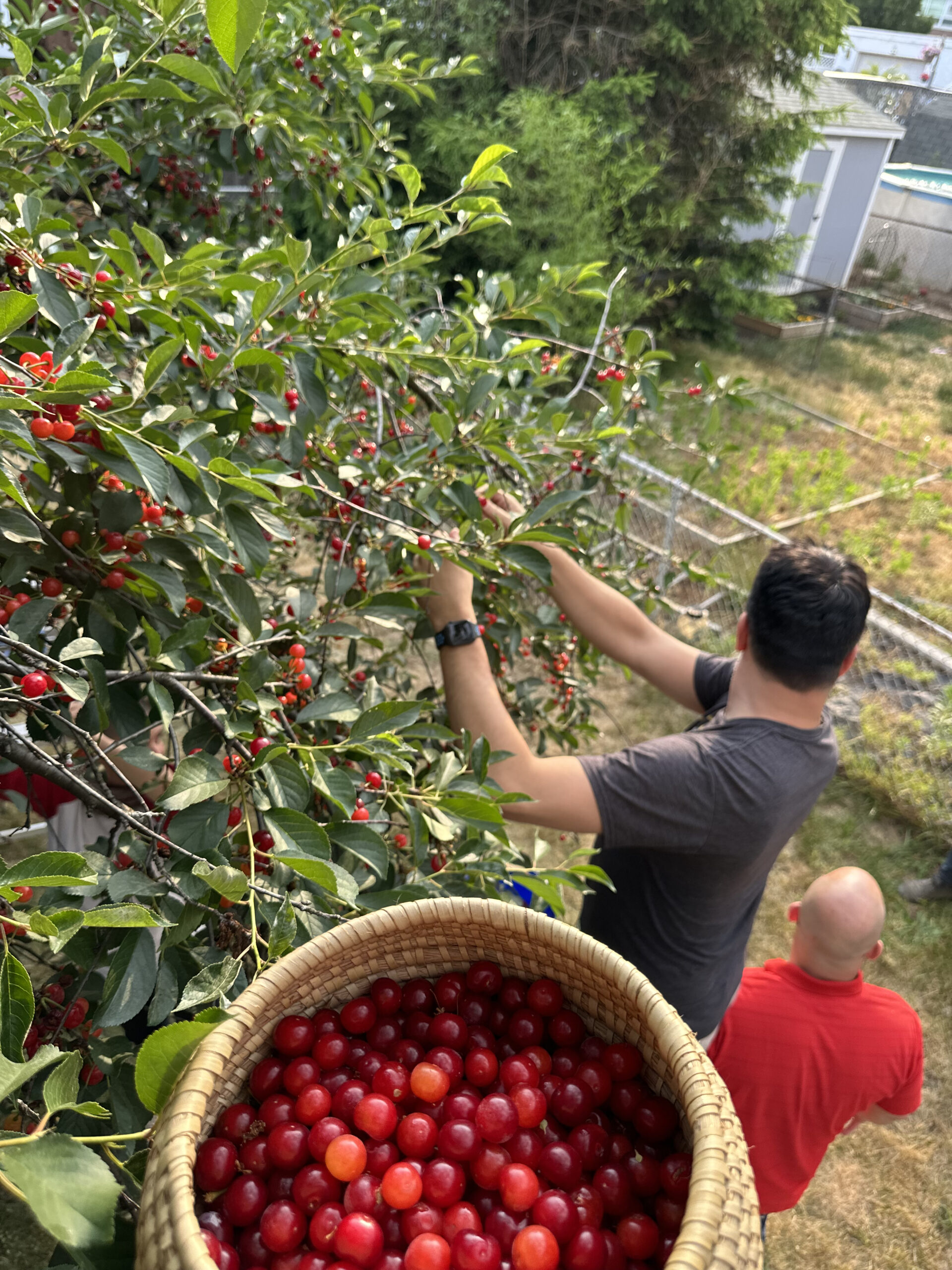
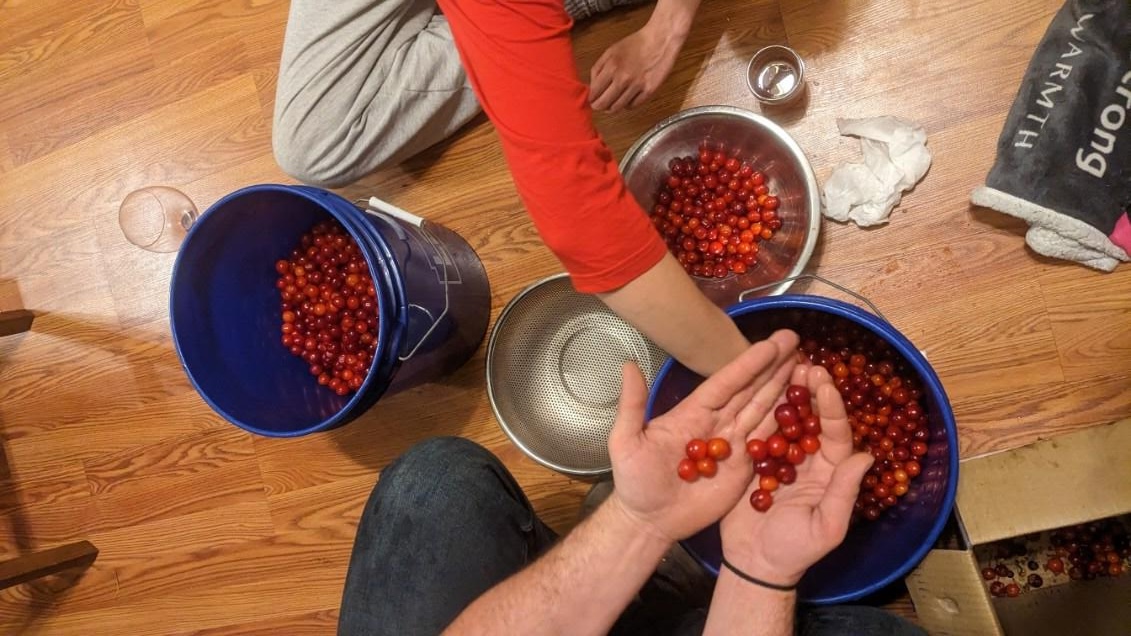
Picking morello cherries in Philly.
Happy Monday’s ginjinha contains the DNA of Fetfatzes’ original batch, made in 2023 from the fruit of a morello cherry tree that aPortuguese friend planted as a sapling in the Northeast after migrating to the U.S. Fetfatzes and his team harvested 20 gallons of cherries from the tree, grown specifically for ginjinha, in 2023. The fruit was macerated with sugar in a blend of young, unaged brandy and Portuguese red wine for several days, with the occasional agitation to redistribute the cherries.
“It’s [somewhat] like a sangria, as it is a wine-based product,” said Fetfatzes, though it is much sweeter and stronger than typical, easy-drinking Spanish sangria.
The ginjinha recipe was developed through trial and error by Fetfatzes and his beverage director, Scott Rodrigue, who is also of Portuguese descent. “We got a base, messed around with it and branched out to make it our own,” Fetfatzes said. The sour cherry liqueur conjures up the big family parties he partakes in every year when taking his own family back to his mother’s home country.
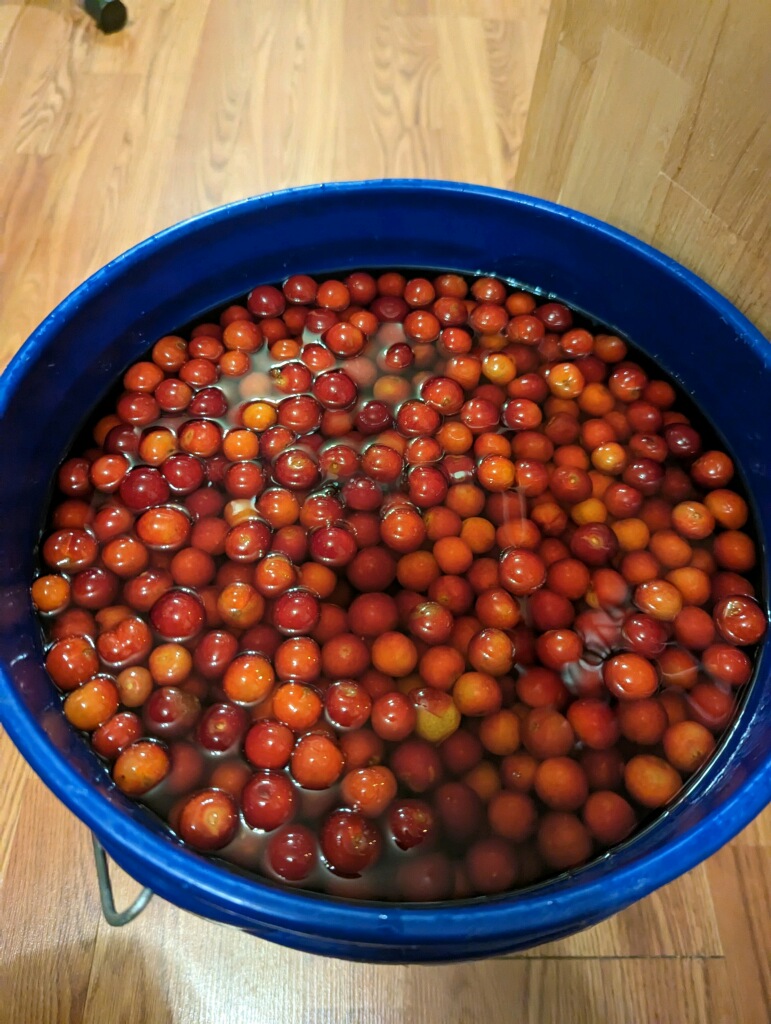
Washing freshly picked morello cherries grown in Philly.
After landing on a base recipe, subsequent batches of ginjinha — made every three weeks for Happy Monday’s bars — have used flash-frozen cherries sourced from wherever it’s cherry season, whether it’s California, Portugal, Central Europe, or the Middle East.
Fetfatzes and his staff employ the solera method of fractional blending, which is also used to make Champagne and fortified wines like sherry. The 2023 batch has become a “mother” for all of Fetfatzes’ ensuing batches, “like a starter yeast for sourdough,” he explained.
Sorting morello cherries.
“Like the Italians, we’re peasants living off the land,” said Fetfatzes, whose own mother followed a similar migration path to that of the original batch’s tree. “My mom’s village town was Vergada in the Mozules. She came over solo as a seamstress in 1974.”
The ginjinha is popular at Sonny’s, where several customers who’ve traveled to Portugal like to order it, but it is perhaps best enjoyed at Grace and Proper, where there’s a rotation of homesick Portuguese regulars. They come in for the tiny pours of ginjinha, or have it shaken up with vodka and fresh lime juice for a cocktail called the “Pink Street” ($12), a Portuguese interpretation of a cosmopolitan, along with a bifana sandwich ($7) — one of the best sandwich deals in town — consisting of pork marinated with white wine, garlic, and paprika, and soaking through crusty Portuguese bread.
The ginjinha’a sweetness balances out the sandwich’s salt-kissed meatiness. The flavors, twisted together, balance one another. “Ginjinha has got this pomegranate-like tart-sweet punch that cuts through the garlicky richness of our bifana. It resets your palate, jiving with the bifana’s piri-piri heat and bite of mustard,” said Fetfatzes.
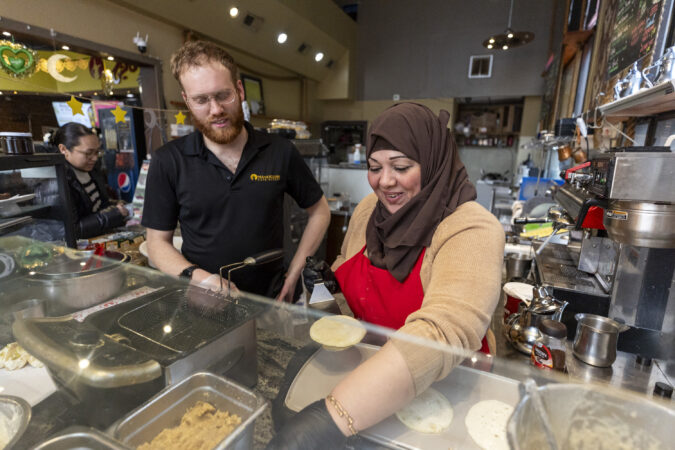
After 15 years in its West Philadelphia location, Manakeesh Cafe Bakery & Grill has built a loyal customer base, general manager Adam Chatila said.
But when the Lebanese restaurant announced it was closing its location at Walnut and 45th Streets, Chatila did not anticipate the outpouring of support on social media.
Longtime customers asked what they could do to support the business.
“You have been such a pillar of our community and neighborhood,” one typical commenter wrote on Instagram. “Is there anything we can do to help? We love you guys.”
“I was really touched by that,” Chatila said.
While the location is closing, the business isn’t. Manakeesh will continue online with a smaller menu, as the owners scout out a new location.
Chatila said the closing was not by choice – the business was leasing its space, and the rent had become too high.
While Manakeesh wasn’t the first restaurant offering this cuisine in the area — Saad’s Halal Restaurant is across the street — it introduced the community to a wider range of options for breakfast and lunch, with its namesake manakeesh flatbreads being a customer favorite.
“It’s a social hub, you know, they would come and have their meetings and dates and … to come hang out,” Chatila said. “Manakeesh is kind of like a Lebanese Panera.”
He said that while it’s had its ups and downs, business has largely been consistent in recent years. Customers kept coming back for staples, like hummus and baklava, as well as specialties like chicken tawook kabob, which is grilled in front of patrons.
“We really put our heart into our dishes; we’re not just, you know, taking something that someone else prepared for the most part and just like repackaging it and selling it. We make our dough from scratch. We get a lot of our Lebanese ingredients imported from Lebanon, like the za’atar,” he said.
Chatila said the business is looking for a space in the same neighborhood, though it may not be as elegant as the former bank building that has been its home since his father, owner Wissam Chatila, opened the restaurant in January 2011. Adam Chatila described what they’re hoping for:
“Something similar, maybe a slightly smaller scale operation but it gives off the same effect of, you walk in and you feel like you’re in a different country, in the Lebanese country,” he said.
While Manakeesh will become a “cloud kitchen” in the short term, Chatila said, it will continue to deliver out of a physical location — the family’s other restaurant, Toomi’s Shawarma, a fast-food-style place in Upper Darby. It won’t have the entire menu, Chatila said, but it will have many of the most popular dishes.
Chatila said the restaurant has relied on many of its staff members for years, including one since the day it opened.
“We treat them like a family, so we’re going to do our best to try to retain the workforce,” he said. “We’re going to see how things go the first month, and try to accommodate for them, and hopefully we’ll be able to make it work.”
Chatila said he teared up at the decision to close the location.
“And then to notice (on social media) that they also had that feeling: It makes us feel like we were not just a restaurant. We are community members.”
The closing on Sunday, marked by a party, comes just ahead of Ramadan, the Muslim month of fasting and prayer, and a special time of year for Manakeesh, which would open at sunset to serve many customers when they break their fast with special Ramadan dishes.
In 1976, when Bill Loughery was a rookie bartender at Cherry Street Tavern, the old-world saloon seemed as abandoned as the neighborhood around it. Back then, the streets around 22nd and Cherry in Logan Square were littered with abandoned warehouses, rusting textile mills, and crumbling body shops.
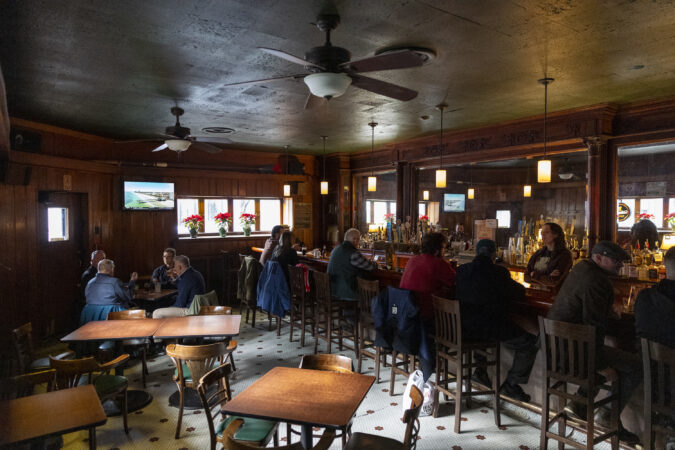
First operated as a bar around 1902 and surviving Prohibition as a barbershop — at least one where regulars swilled hooch in the back room — the tavern had retained much of its bygone charms into the ’70s. It had an elaborately carved mahogany backbar, vast beveled bar mirrors, pearly white tiled floors, and an old-timey phone booth. Even the tiled water trough running the length of the floor under the bar — a no longer operational relic from the barroom’s pre-World War II days designated for fedora-sporting patrons to spit tobacco juice and relieve themselves — had survived the decades.
But like the neighborhood, business had faded.
Bill Loughery, then 24, and his younger brother, Bob, had scored the bartending gigs from their former coach and mentor, legendary La Salle High School football coach John “Tex” Flannery, who purchased the bar in the early 1970s. Serving 25-cent Schaefers, rocking their favorite Grateful Dead tunes, and warmly greeting the newbies filling the barstools, the Lougherys brought life to Cherry Street Tavern, eventually buying it from Flannery in 1990.
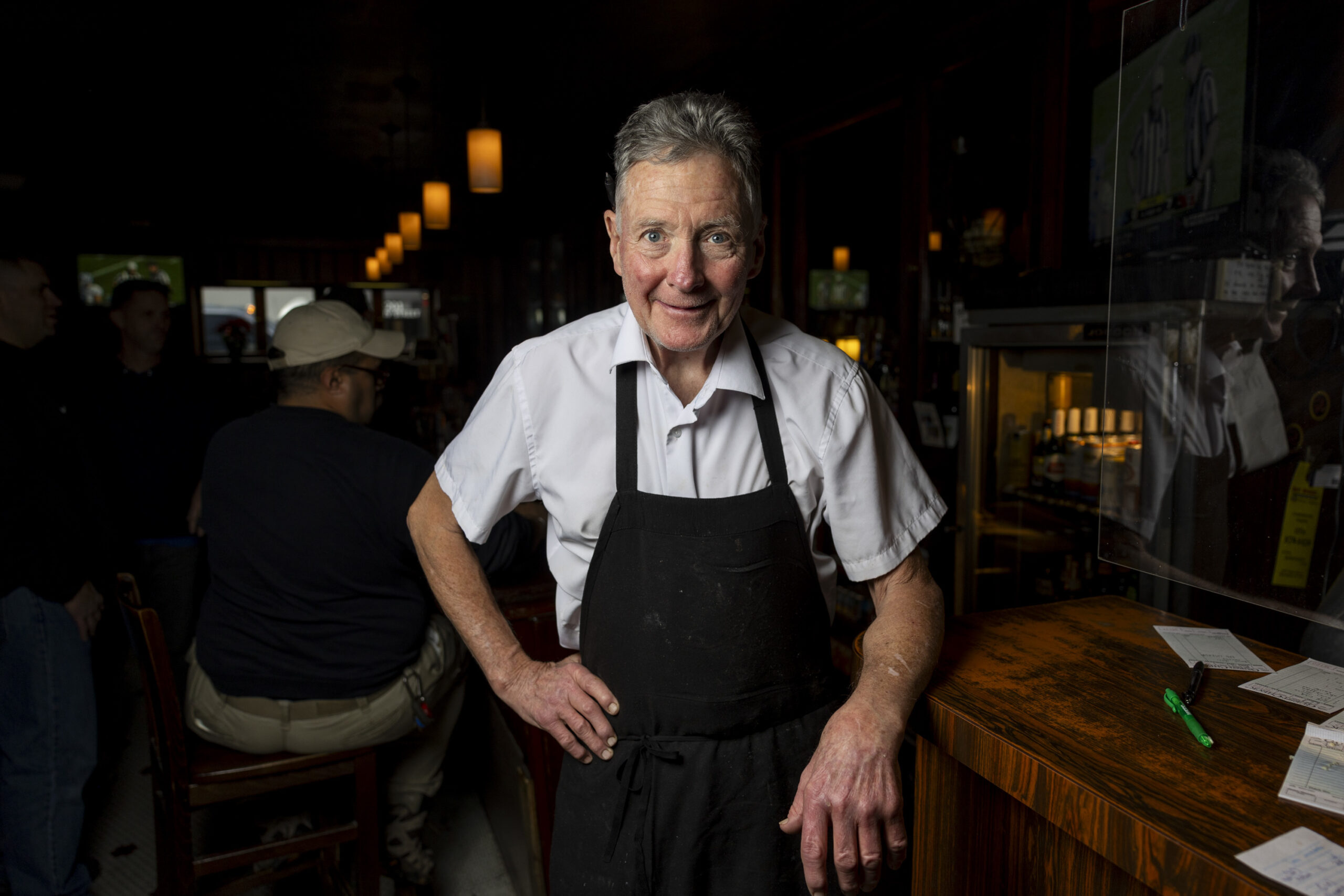
Bill Loughery, co-owner of Cherry Street Tavern, inside his bar in Philadelphia on Friday, Dec. 19, 2025.
While burnishing its old-world grace, they had transformed the timeworn taproom into a thriving, in-the-know spot for eating and drinking, with a diverse, dedicated, and colorful cast of regulars from all over. Everyone from construction workers and electricians to lawyers and bankers to art students and professors came to the bar — even rock icons like Jimi Hendrix, who, as the legend goes, knocked on the side door wearing a cape in 1968 after playing a show at the original Electric Factory, just blocks away; he palmed the bartender $100 for a case of Bud and a bottle of Jack Daniels. There were also visiting sports legends like Larry Bird, who would drink at Cherry Street with his staff when he came through town as a coach in the 1990s and 2000s.
“He’d say, ‘Billy, let me know when you’re closing that kitchen,’” Bill Loughery remembers. “And then he would go back to the Four Seasons with bags of roast beef and roast pork.”
And always, there were Bill and Bob Loughery, either toiling in the tavern’s tiny kitchen before dawn to prepare steaming cauldrons of Irish potato soup and huge slabs of beef for the bar’s signature sandwiches, or working the wood until closing.
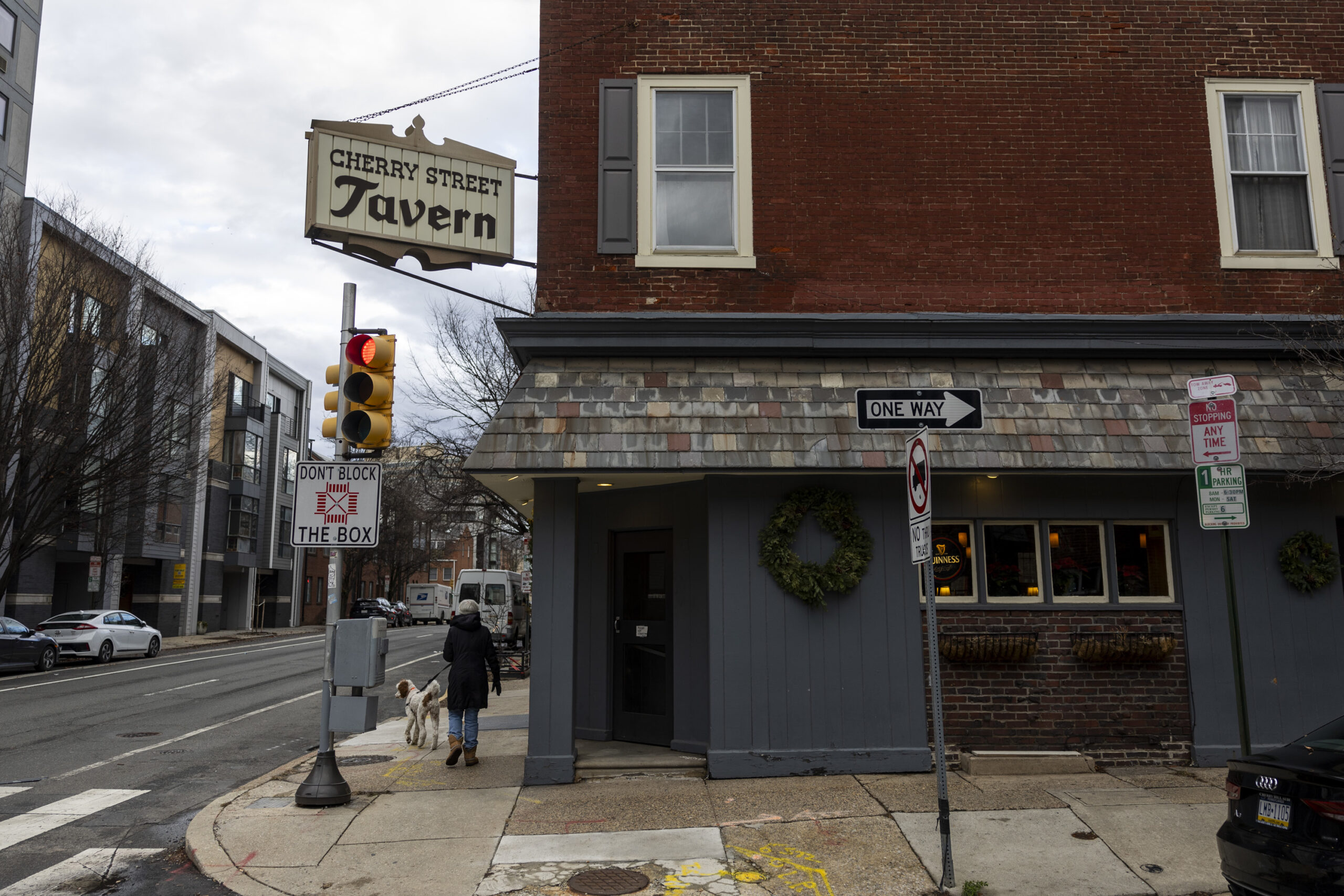
The outside of Cherry Street Tavern in Philadelphia on Friday, Dec. 19, 2025.
After 50 years devoted to a tavern that always felt more like a labor of love — and bearing witness to the change all around it — Bill and Bob Loughery have decided it’s time.
“Time to take off the apron,” said Bill Loughery, taking a quick break on a recent afternoon to sit in the soft sunlight slipping through Cherry Street’s bottle-height barroom windows. “It’s just time.”
History, for sale
It’s been time for a few years, but the Lougherys— wanting to preserve the understated elegance and identity of the shot-and-a-beer saloon, especially after revitalizing the bar once again as a popular meeting spot for locals after COVID-era restrictions dried up lunchtime and commuter crowds — have never officially listed the tavern and its upstairs apartment for sale. They began whispering to friends and regulars about selling around 2024.
“People were always asking us to let them know when we were ready,” Bill Loughery said.
After months of talks with prospective purchasers, the Lougherys are now in talks with a buyer who theysay is interested in expanding the bar’s kitchen and making other renovations.
The Lougherys’ efforts to find a buyer committed to keeping the spirit of the bar alive have eased the worries of regulars old and new, and loyal staff.
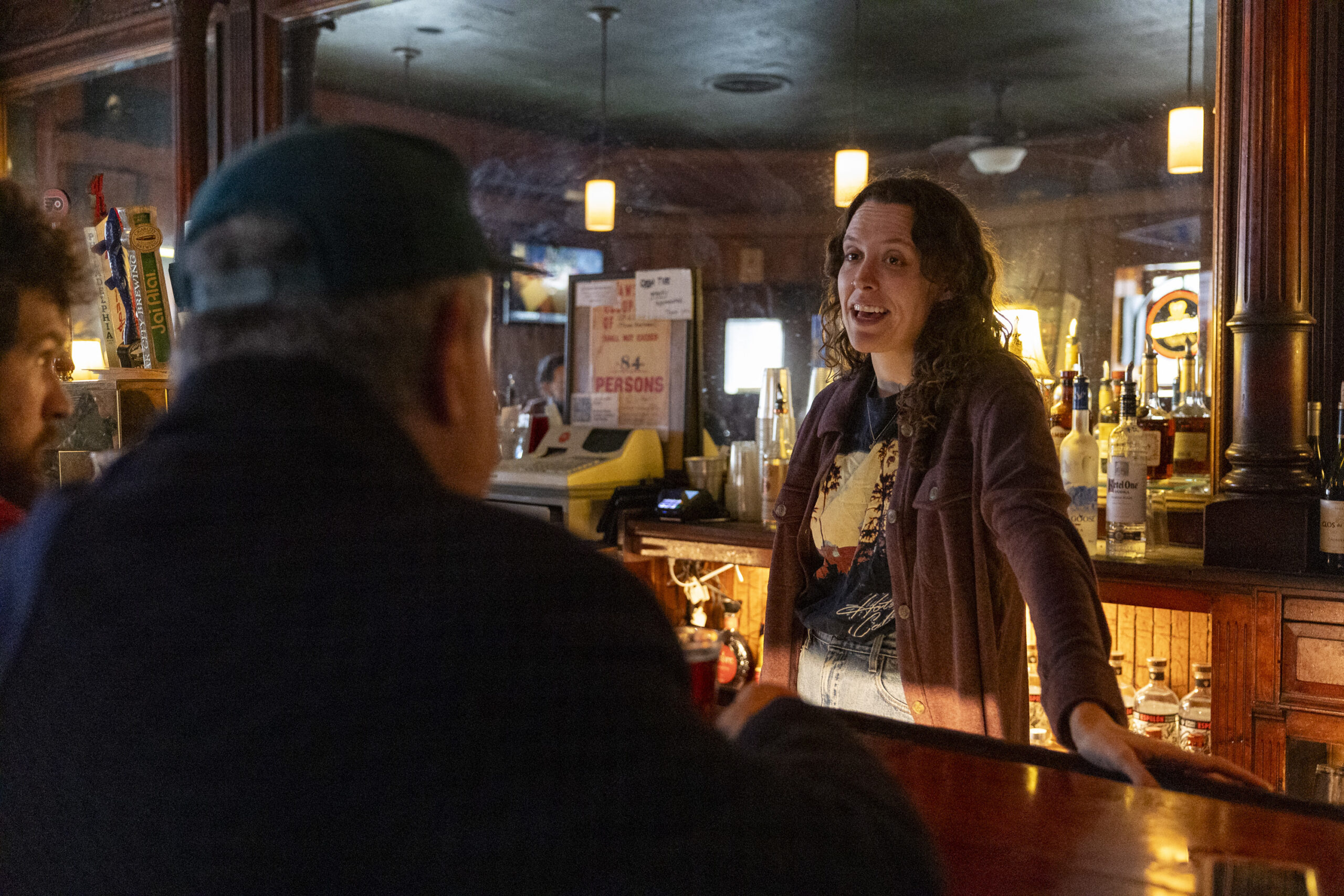
Kira Baldwin, 27, chats and makes drinks for folks at Cherry Street Tavern.
“There’s just something sacred about the place,” said Kira Baldwin, 27, of Ardmore, who tends bar at Cherry Street Tavern, along with her brother, Jack, 24, and her mother, Juanita Santoni, with whom she sometimes shares a shift.
For Baldwin, it’s personal. As a child, she cherished special occasions when her mother allowed her to visit the bar. (Santoni has worked nights and weekends at Cherry Street Tavern since 1991, when she was a part-time child life therapist at CHOP.) On those nights, Baldwin would do her homework in the quiet of the ancient phone booth and swing from the brass dining rails. At the annual Christmas parties, when Bill Loughery hired Moore College of Art & Design students to paint the windows for the holidays, she and her brother received gifts from a regular dressed up as Santa.
Now, she watches new regulars fall in love with a bar she’s been coming to since “the womb.”
“People treat it with reverence,” she said. “When they come in, they understand it completely. They have a deep and profound respect for the place.”
Prohibition, the food, and the regulars
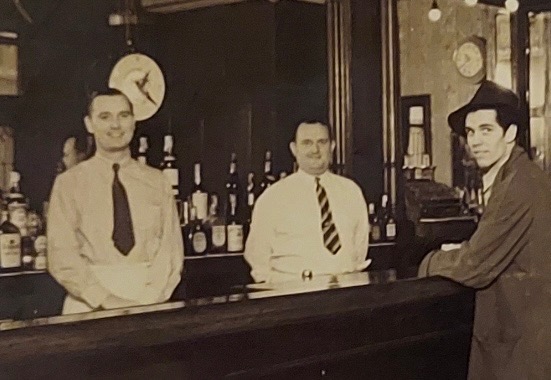
Little is known about Cherry Street’s earliest days, but by Prohibition, it was known as Dever’s, operated by John “Jack” Dever, a dapper barman who lived above the tavern with his wife and two children, and whose father, Joseph, had run it before him. (Like Flannery and the Lougherys after him, Dever happened to be a La Salle High alum.)
The barbershop speakeasy had been Jack Dever’s idea, said his grandson, Michael Dever.
Before it became Cherry Street Tavern, John “Jack Dever (left) operated the tavern for years, living upstairs with his family, and eventually dying behind the bar.
“The story always went that, when Prohibition came about, he closed the front door and opened the back door,” said Dever. “It became dangerous. The story was that you were either buying from the mob or dirty politicians.”
Dever reopened the bar after Prohibition, sponsoring a bar baseball team. But dangers persisted. In 1940, two robbers broke into the bar while Dever and his family slept upstairs, briefly making off with 25 quarts of high-quality whiskey before their bulging bag of booze crashed to the pavement. Nearby patrolmen ran to the scene, “their noses guiding them unerringly as the liquor spilled into the gutter,” The Inquirer reported.
Dever, who soon moved his family out of the upstairs apartment, ran Cherry Street until 1967, when he died of a heart attack behind the bar, according to granddaughter Maureen Ginley. At first, customers assumed her grandfather had just stepped down a hatch behind the bar, leading to a liquor cellar.
“But he didn’t,” she said.
After keeping the bar afloat for five years, Dever’s widow, Mary, sold the bar to Flannery. A local high school football legend who coached at La Salle for nearly 30 years, Flannery operated a no-frills, old-school establishment, refusing to allow a jukebox. Under Tex, the tavern’s old-world grace peeked out from behind a dusty veneer and faded Venetian blinds.
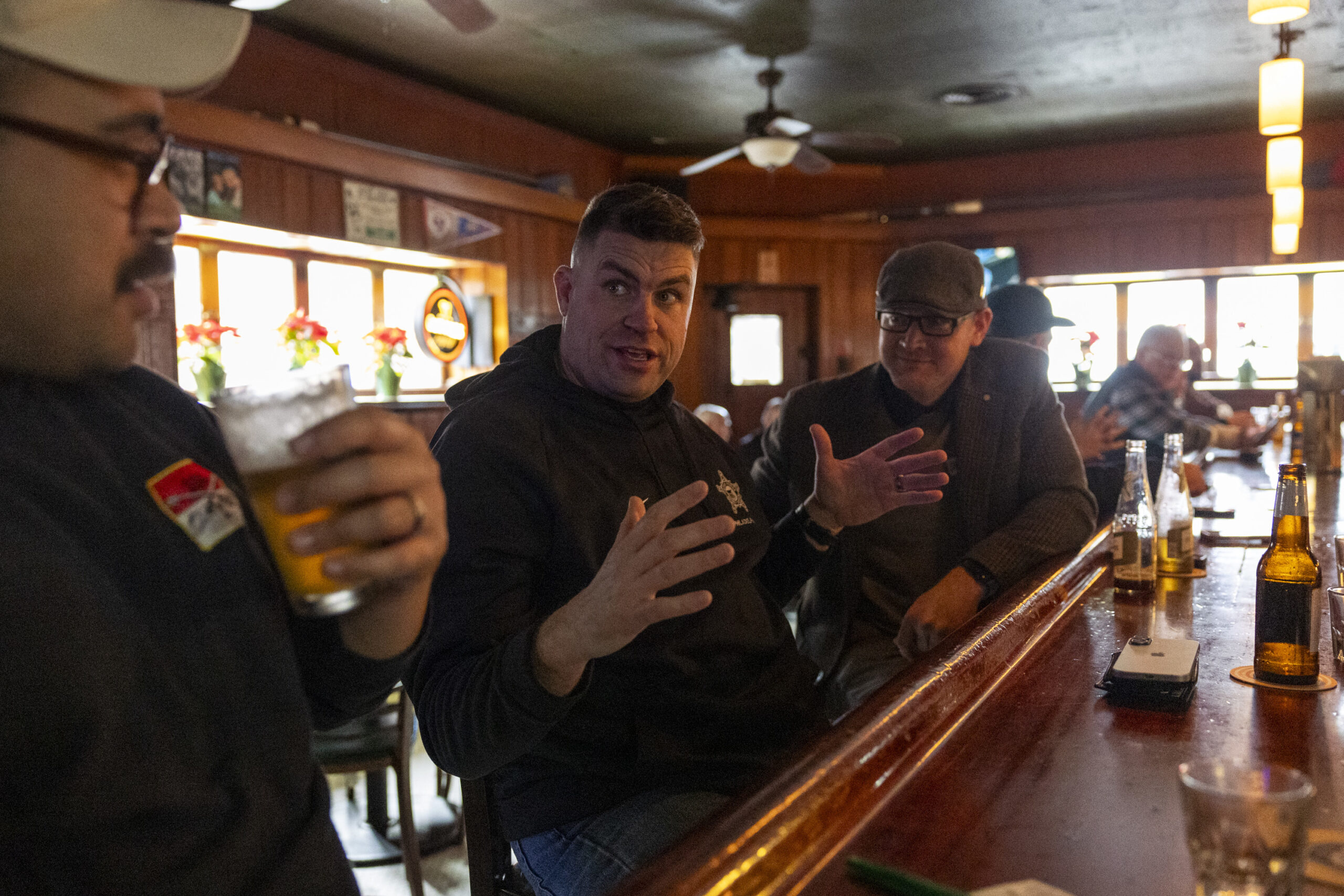
Kevin Sanders, of Quakertown, Pa., first time at the bar, sharing a story with friends as they enjoy drinks at Cherry Street Tavern in Philadelphia on Friday, Dec. 19, 2025.
A 1981 Daily News article described the bar “as cave-dark, cave-cool, cave-quiet.”
“Let’s face it, a guy comes in here, he wants to drink,” the article quoted Flannery.
For a while, it was just the old-timers, said Bill Loughery.
“We had the senior citizens from the neighborhood who started drinking right in the morning and went home before lunchtime,” he remembered.
One Friday during Lent in 1977, Flannery summoned the brothers to a sit-down fish cake dinner and laid it out straight. “He said, ‘Listen, the future of the bar business isn’t 25-cent beers,’” remembers Bill Loughery. “‘You got to come up with a food angle.’”
With the help of a regular, Bill and Bob Loughery introduced the tavern’s signature hot roast beef and roast pork sandwiches, chili, and daily soups.
A roast beef sandwich at Cherry Street Tavern in Philadelphia on Friday, Dec. 19, 2025.
By the 1980s, when condos and townhomes and office buildings and new life began to fill the neighborhood, the Lougherys were ready.
Soon, the expanded back room was packed at lunch and the stools were filled with regulars who Bill Loughery blessed with nicknames: Happy Bob and Sleeping Charlie, Big Tom and Buddy Bud, Catfish and Canadian John (who eventually became American John). Joe Watson — a beloved old-timer who lived upstairs, and became a “patron saint” to the bar, said Bill Loughery — took a busload of regulars to a Phillies game for his 89th birthday. There were St. Patrick’s parties and fishing trips and softball teams and marriages and births and deaths. It was their “Cheers,” one regular said.
“What’s Cheers?” Bill Loughery would ask, unironically.
It was Bill and Bob who brought everyone back, said Frank Oldt, 81, who has been a Cherry Street regular since the days of Tex.
“They just made it such an easy place to be,” he said.
It’s bittersweet, said Santoni, who remembers how the bar regulars threw her not one — but two — baby showers when she was pregnant with Kira. She has been trying to get Bill and Bob Loughery to slow down for years. But she understands the special pull of the place.
“It gets in your bones,” she said.
Last call
It all took a toll on Bill Loughery’s bones, who still works 12-hour shifts, splitting days and nights with his brother. Bill’s back is hunched from those endless hours in the kitchen. He doesn’t want to become the second person to die behind the bar at Cherry Street. Sitting down, he flipped through photo albums from the bar’s heyday. They’ll be the last things he takes with him when he leaves, he said.
“It’s like the Old and New Testament,” Bill Loughery said, opening a near-to-bursting photo album.
For a few minutes, he allowed himself to recall the faces and the nicknames and the good times.
In recent years, a string of the state’s iconic diners have shuttered their doors. New state legislation aims to keep the lights on at those still in business.
The bill, which was introduced in the New Jersey Senate in January, would provide some diners and other historic restaurants with tax benefits.
“Diners, and specifically historic diners, are a cornerstone of our great state, having served residents and visitors for many decades. They are part of our culture and our history, and we have a duty to help them thrive,” State Sen. Paul Moriarty of Gloucester County, a sponsor of the bill, said in a statement Thursday.
The legislation, which would establish a registry of historic diners and restaurants, would give the businesses a tax credit of up to $25,000. Only diners and family-owned restaurants operating for at least 25 yearswill qualify.
The bill has been referred to the Senate Budget and Appropriations Committee.
“It has been heartbreaking to see so many of these well-known establishments close or dramatically cut their hours,” Moriarity said.
Where have diners closed in New Jersey?
The origin of the modern diner can be traced back to a horse-drawn lunch wagon in 19th-century Rhode Island and the model has evolved since then. New Jersey has been coined the “diner capital” of the U.S. but has seen closures in recent years due to increased operating expenses, the challenge of finding employees, and the impact of the pandemic.
The Cherry Hill Diner closed in 2023 after 55 years in business and following the co-owner’s unsuccessful search for a buyer. South Jersey’s Gateway Diner in Gloucester County closed that same year amid construction of the Westville Route 47 Bridge and the state’s acquisition of the site. The Red Lion Diner in Burlington County also sold, making way for a Wawa.
In January 2024, the Star View Diner in Camden County closed. Last year, the Collingswood Diner shut its doors in August, to be replaced by a marijuana dispensary.
The trend extended in Philadelphia where the Midtown III closed in 2020. Last year, the Mayfair Diner in Northeast Philadelphia was listed for sale.
I’ve never arrived to Exton’s Malgudi Cafe and not found a line out the door, whether for a late-night dinner or a blizzard-weekend brunch. That initially surprised me considering Malgudi appears at first glance to be an unassuming restaurant in a Chester County strip mall.
But this cafe is a special place, not only because it’s one of the region’s few Indian restaurants dedicated to vegetarian cooking, but because it may also be the only one focused specifically on the cuisine of the city of Bangalore, in the South Indian state of Karnataka.
I have loved virtually everything I’ve ordered here, from the crunchy stuffed pani puri puffs with sour-and-spicy green mint water to pour inside, to the lacy-crisp crepe roll of its onion rava dosa. But for a true immersion into the homey essence of Malgudi, which was launched in 2023 by four South Indian families, dive into a tray of bisi bele bath.
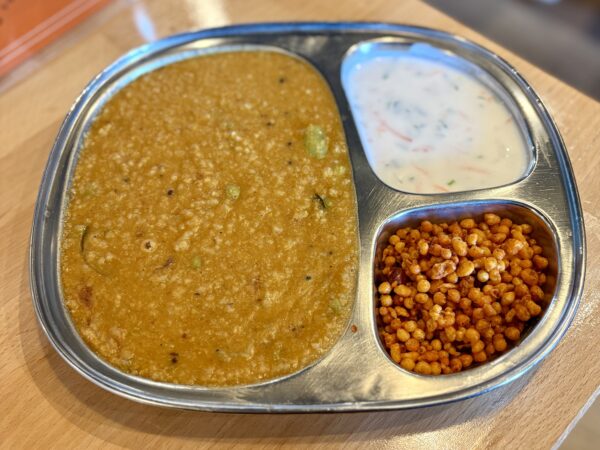
Known by its loyal customers as “Triple B,” this Karnataka comfort classic is a soulful stew of rice and toor dal (split pigeon peas) that are cooked down with seasonal vegetables until they essentially melt together into a soothing porridge. While the word “bisi” means “hot” in Kannada, this one-pot dish is not fiery so much as it is vivid with fragrant spice — tangy with tamarind and tomatoes then flared with the aromatics of Malgudi’s house masala, a punchy blend of dried red chilies, cinnamon, cloves, and coconut ground fresh. Served hot on a stainless-steel thali tray, there are sides of tart raita yogurt and crunchy boondi pastry beads to add more textures and flavors. On the off chance they’re already out of Triple B (as they were on my first visit), go for the khara pongal porridge of yellow moong lentils cooked down with cumin, cashews, chilies, and curry leaves. Malgudi Cafe, 10 W. Lincoln Hwy., Exton; 484-874-2124, malgudicafe.com
— Craig LaBan
Crab cakes at the Bomb Bomb, the classic Italian seafood joint revived by chef-owner Joey Baldino in deep South Philly.
Crab cakes at Bomb Bomb Bar
There’s a loose guideline followed by many people who dine out a lot: Get the most adventurous things on the menu. They’re often the best reflection of the kitchen’s passions.
So it was with a little sheepishness that I ordered, among other items, the “classic crab cake” at Bomb Bomb Bar, the deep South Philly institution that Zeppoli and Palizzi Social Club chef-owner Joey Baldino revived last fall. Crab cakes are frequently delicious, but they are also extremely common and seldom edgy, especially next to, say, whole Dungenesse crab and mom’s stuffed calamari.
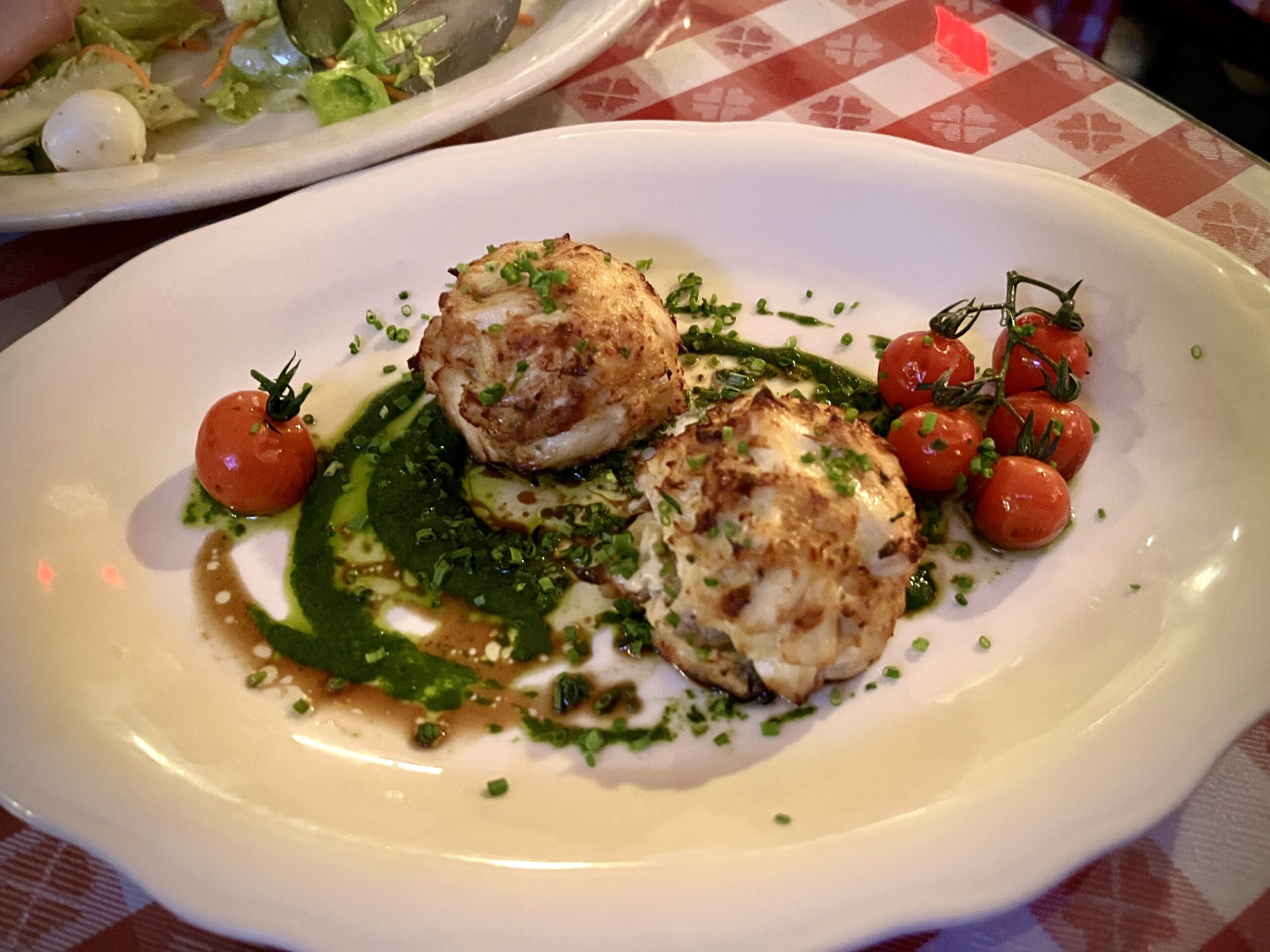
But I’ll be forever content with my decision-making, for chef Max Hachey’s crab cakes are maybe the best ones I’ve ever had — a paean to blue crab, simply treated. To make them, Hachey combines crab meat from three different parts of the crab with reduced, onion-infused cream plus Dijon mustard, roasted-garlic aioli, chives, lemon zest, egg, and some crumbled Club Crackers (“just a few to held hold it together,” Hachey says). The mixture is scooped into dumpling-sized parcels, brushed with butter, then broiled. The cakes are plated, two to an order, on top of a swirl of basil vinaigrette, then garnished with confit cherry tomatoes still clinging to their crispy vines.
The meal at Bomb Bomb was full of hits, from the zippy antipasto salad to the oil-slicked Italian tuna spaghetti and the lobster and shells in a blush sauce, not to mention those torpedoes of sausage-stuffed squid doused in deep-red gravy. We were too full for dessert, but I didn’t feel so bad skipping it, as it was about as approachable as it gets: an ice cream sundae. Bomb Bomb Bar, 1026 Wolf St., bombbombbar.com
— Jenn Ladd
Goat in spicy scallop creole at a recent Honeysuckle x Kabawa collaboration dinner in Philadelphia.
Goat with spicy scallop creole at Honeysuckle x Kabawa popup
After eating an extremely gamey Kashmiri goat curry in high school, I had given up eating goat. I use the past tense because more than a decade later, I have relented on my goat fast. Last week, North Broad Street’s Honeysuckle restaurant hosted a popup with chef Paul Carmichael, who runs Kabawa in New York City’s East Village and presented some of his signature Caribbean dishes.
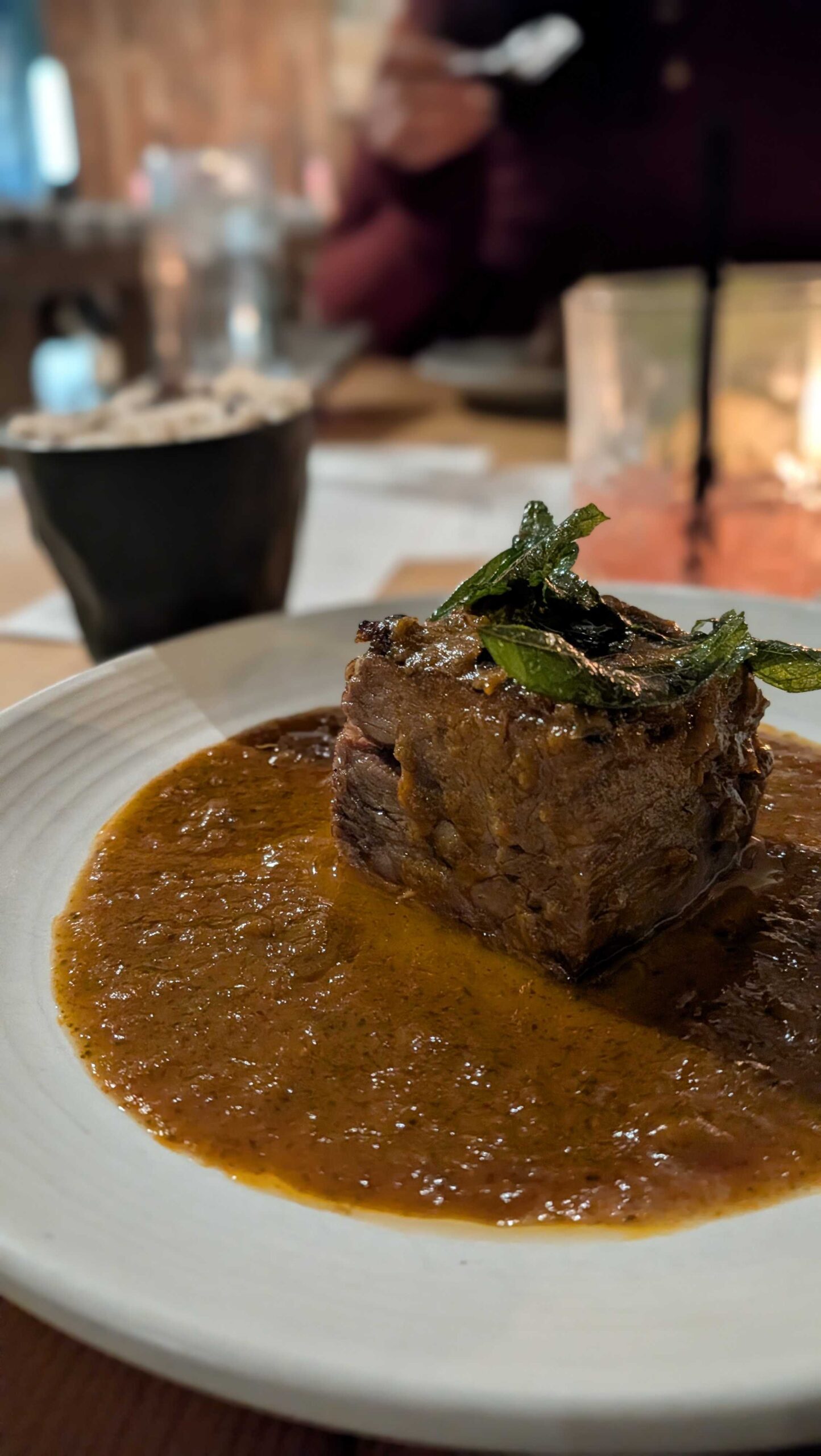
The goat shoulder was a perfect cube of meat, slow-cooked and succulent, bathed in a fiery gravy of habaneros and dried scallop. Glistening like a crown on top of the cube were fried curry leaves. It was absolute perfection, complemented beautifully by the collaborative dessert by Carmichael and Honeysuckle chef-owners Omar Tate and Cybille St.Aude-Tate: a decadent, mousse-y Marquise au Chokola dessert with rum, chocolate, dulce de leche, and djon djon — a rare mushroom from Haiti. Honeysuckle Restaurant, 631 N. Broad St., 215-307-3316, honeysucklephl.com
Miled Finianos grew up between Miami and Zgharta, Lebanon, until he moved to South Philly in 2019. The 30-year-old rising chef runs Habibi Supper Club and lives in an East Passyunk rowhouse with a lovely modern kitchen, where his recipe ideas come to life.
Loyal diners and first-timers consistently book out his supper club as soon as he drops the reservation link on social media for five- to six- course menus showcasing the flavors of his roots — think spreads of shish barak, warak enab, and kibbeh.
“Having left Lebanon 14 years ago, and I would say it’s important to me to preserve the recipes and the experiences that are attached to these dishes because a lot of Levantine culture is passed down by word-of-mouth,” he said. “So when the mouth gets farther away, it becomes hard to preserve the culture. Habibi Supper Club has brought me closer to my culture than ever before — that’s what fuels me to keep going.”
Here’s how Finianos would spend a perfect day in Philadelphia. “Habibi has no scary Sundays if I follow this exact itinerary,” he added.
8 a.m.
I used to wake up earlier when I was still at my corporate job, but now I sleep in a little longer to make up for some of the later hours of my supper clubs and workshops. Now I can sit in bed, check emails, messages, and socials — I’m a notorious quick responder; it kills me to leave things overnight.
9 a.m.
I’m out the door, dressed for the weather, and walking up Passyunk Ave. to find coffee. We are blessed in South Philly with a plethora of coffee shops, each better than the next. My rotation is usually between Herman’s, Shot Tower, or Rival Bros. Today we’re hitting up Shot Tower for an iced americano — no matter the temperature outside.
Miled Finianos’ perfect Philly day includes a stop to see friend and chef Kenan Rabah at Majdal Bakery.
10:30 a.m.
After sipping on coffee and reading the newspaper at Shot Tower, it’s time for breakfast. The only breakfast spot for me is Majdal Bakery, where my friend [and owner/chef] Kenan [Rabah] is slinging the flavors I grew up with. (This is a public plea for him to bring back the za’atar manouche with makdous.) With Fairouz playing, I feel like I’m back home [in Ehden, Lebanon] for a bit. He won’t let me leave without trying something one of his new pastry inventions and I will always happily say yes.
11:30 a.m.
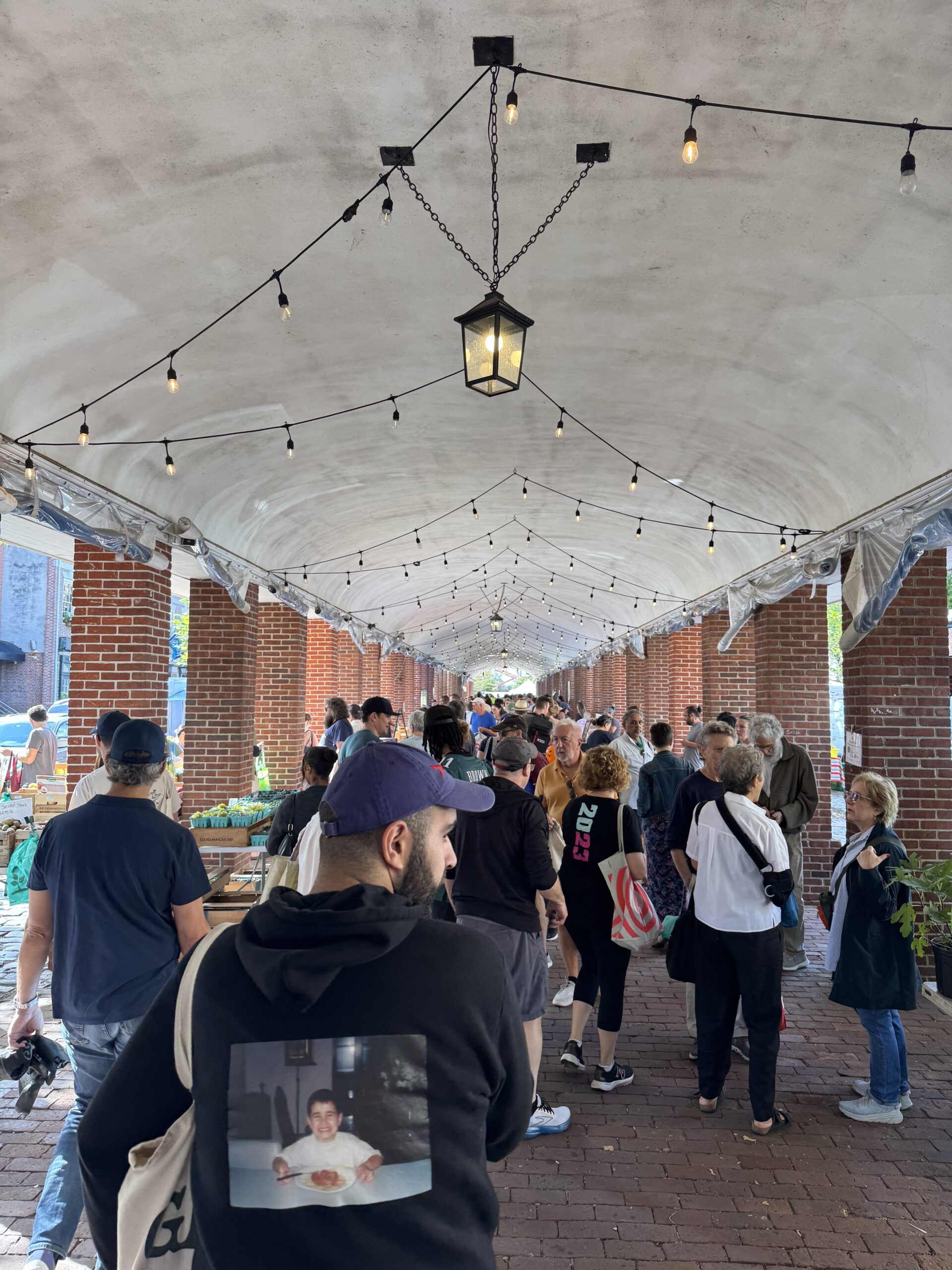
Sundays in Queen Village means the farmer’s market at Headhouse is in full swing. Armed with my tote and a debit card, I’ll peruse the market goodies, often while on FaceTime with my teta (grandmother) or mother. I show them what’s in season — but low-key, I’m farming for ideas of what they would do with what I buy. Then I head home with my goods and plot some personal menu ideas, along with some Habibi [Supper Club] R&D for whatever event is coming up.
1 p.m.
Hunger hits again, and lately I have been on a Vietnamese kick. I walk back up to either Pho Ha or Cafe Diem for a dry rice noodle bowl to satisfy that craving. We really are so lucky to have such a diverse authentic food scene in South Philly.
Miled Finianos visits the Headhouse Square farmers markets.
2:30 p.m.
Now, assuming I don’t have prep work to do, I’ll head back down Passyunk Ave., find another coffee, and sit with my laptop. If the weather is nice, I’ll park myself outside and people watch, daydreaming about a car-free Passyunk Square. This is the time I think of menu ideas, work on future events, and just soak in gratitude for being able to do this as a full-time gig.
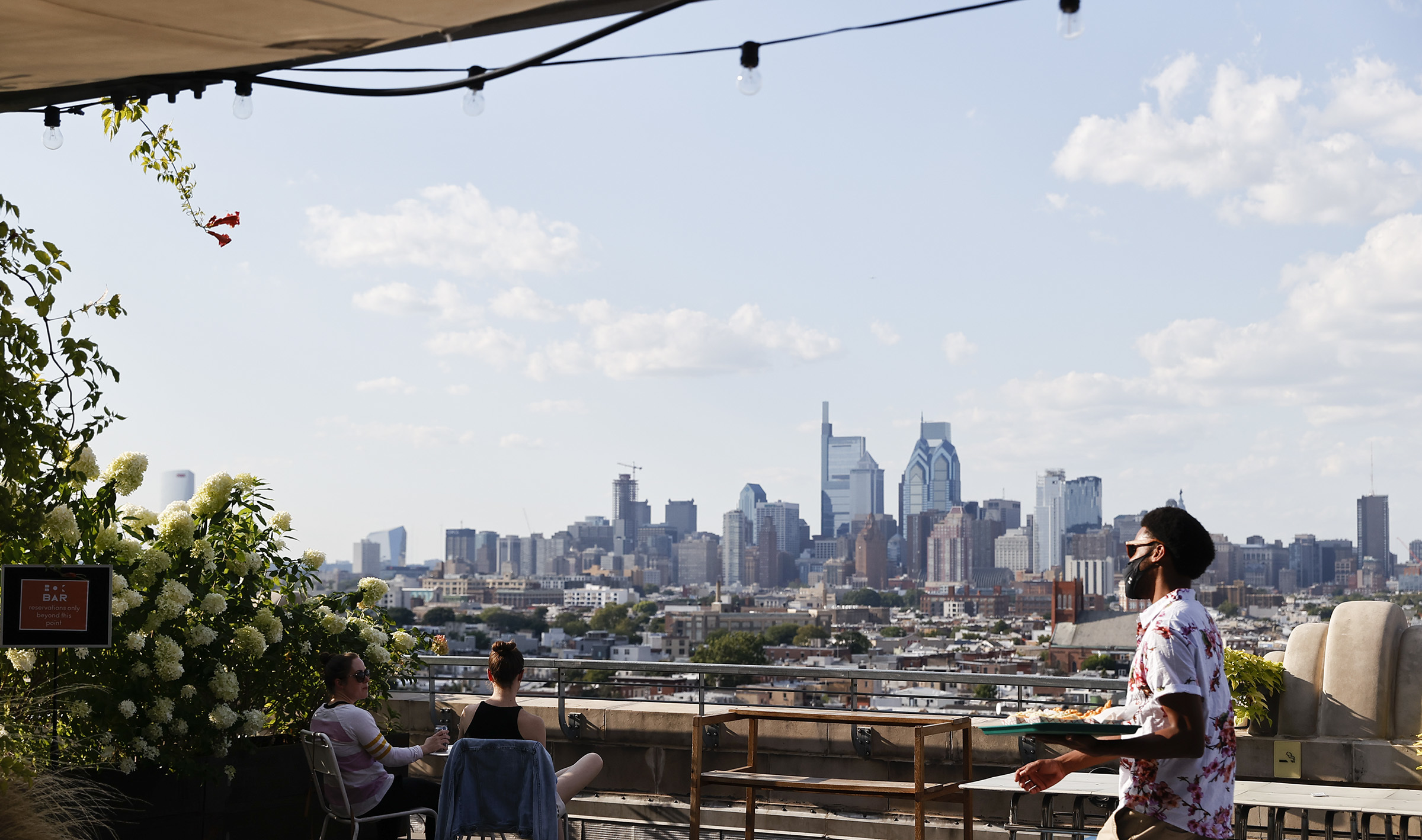
View of Center City Philadelphia from the Bok Bar atop the Bok Building in South Philadelphia in 2021.
6 p.m.
Now, my social itch is itching. If this is a day off, I usually have plans with a friend — or 12. I like to keep it local, so drinks and snacks at Grace & Proper and Royal Tavern. Or if it’s open, Bok Bar, my favorite place in Philadelphia — the view of the city paired with the delicious pop-up of the month just makes my heart full.
9 p.m.
One last drink at my fave dive bar, The Jim. I have been ending my nights with a nice shot of Fernet Branca because anything else gives me acid reflux — that’s just too much information to be sharing, but oh well.
As you can probably tell now, the perfect day for me is devoid of any chores or errands because that’s what Mondays are for.
As such, Philly is also a pretzel town, Jim Mueller says. While he was growing up in Northeast Philadelphia in the late 1990s, soft-pretzel bakeries dotted neighborhoods across the city. He and his family bought pretzels from the now-closed Ben Franklin Pretzels on Kensington Avenue near Ontario as well as Federal Pretzel Baking Co. at Seventh and Federal.
Jim Mueller with pretzels at Pretzel Day Pretzels.
Five years ago, Mueller was working as a UX designer and was craving a fix. “It kind of hit me that there were no pretzels to be gotten that weren’t straight from the [Philly] Pretzel Factory,” Mueller said of the ubiquitous Bensalem-based franchise. “I wanted to make them the way I remembered them tasting: buttery, rich, and flavorful.”
Mueller began studying recipes, and he and his wife, Annie, started a side project called Pretzel Day Pretzels. They began doing pop-ups and deliveries.
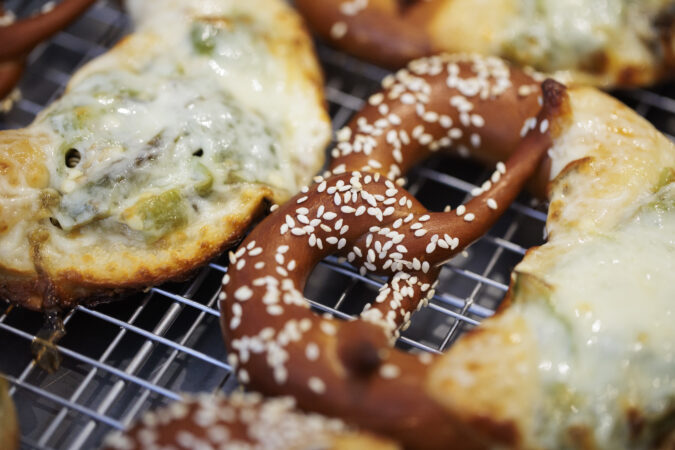
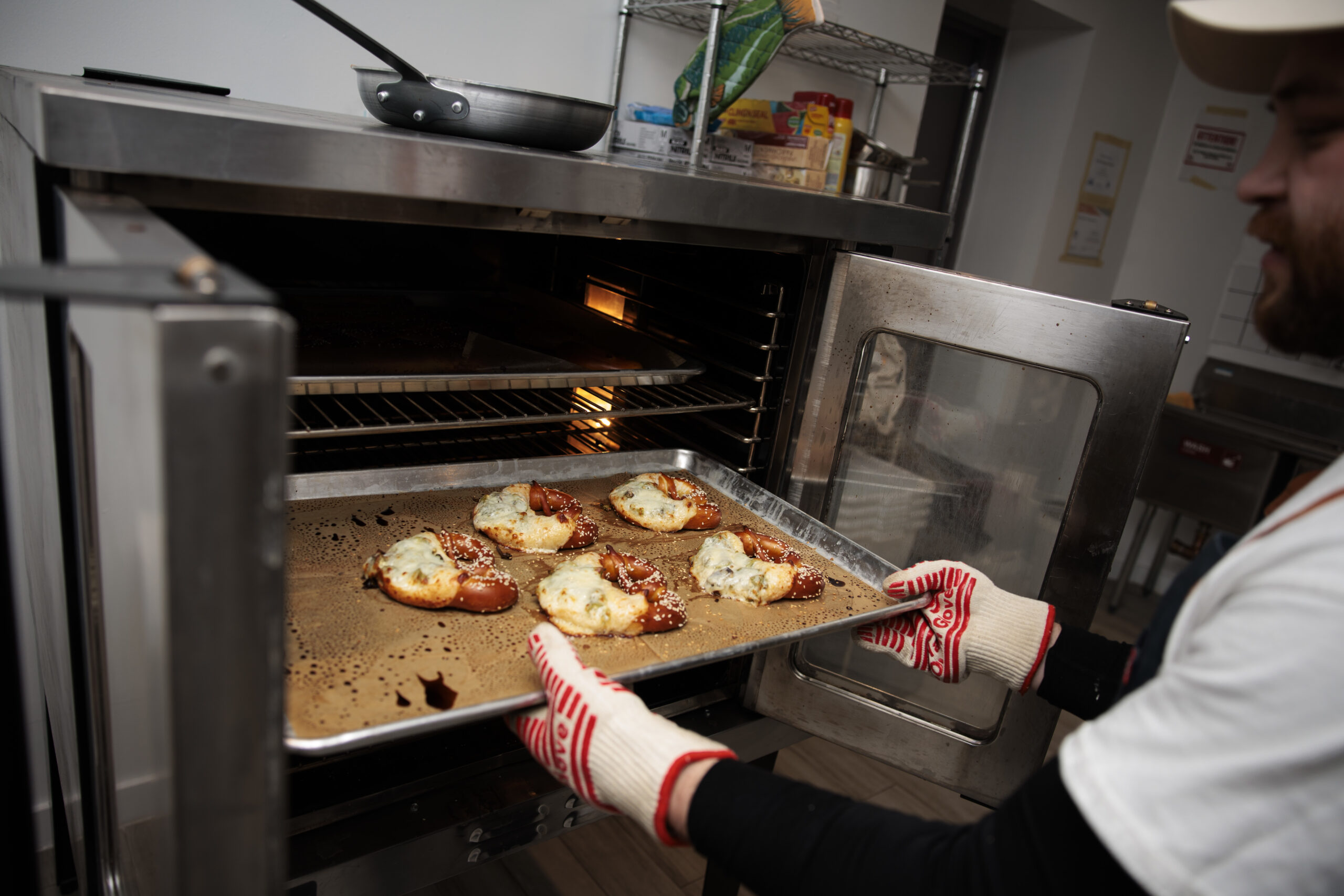
Jim Mueller pulls pretzels with long hots and provolone from the oven at Pretzel Day Pretzels.
On Saturday, Pretzel Day Pretzels went the brick-and-mortar route at Fifth and Dickinson Streets in South Philadelphia, opening at the former Milk & Sugar space with a simple setup: takeout only and morning-to-early-afternoon hours.
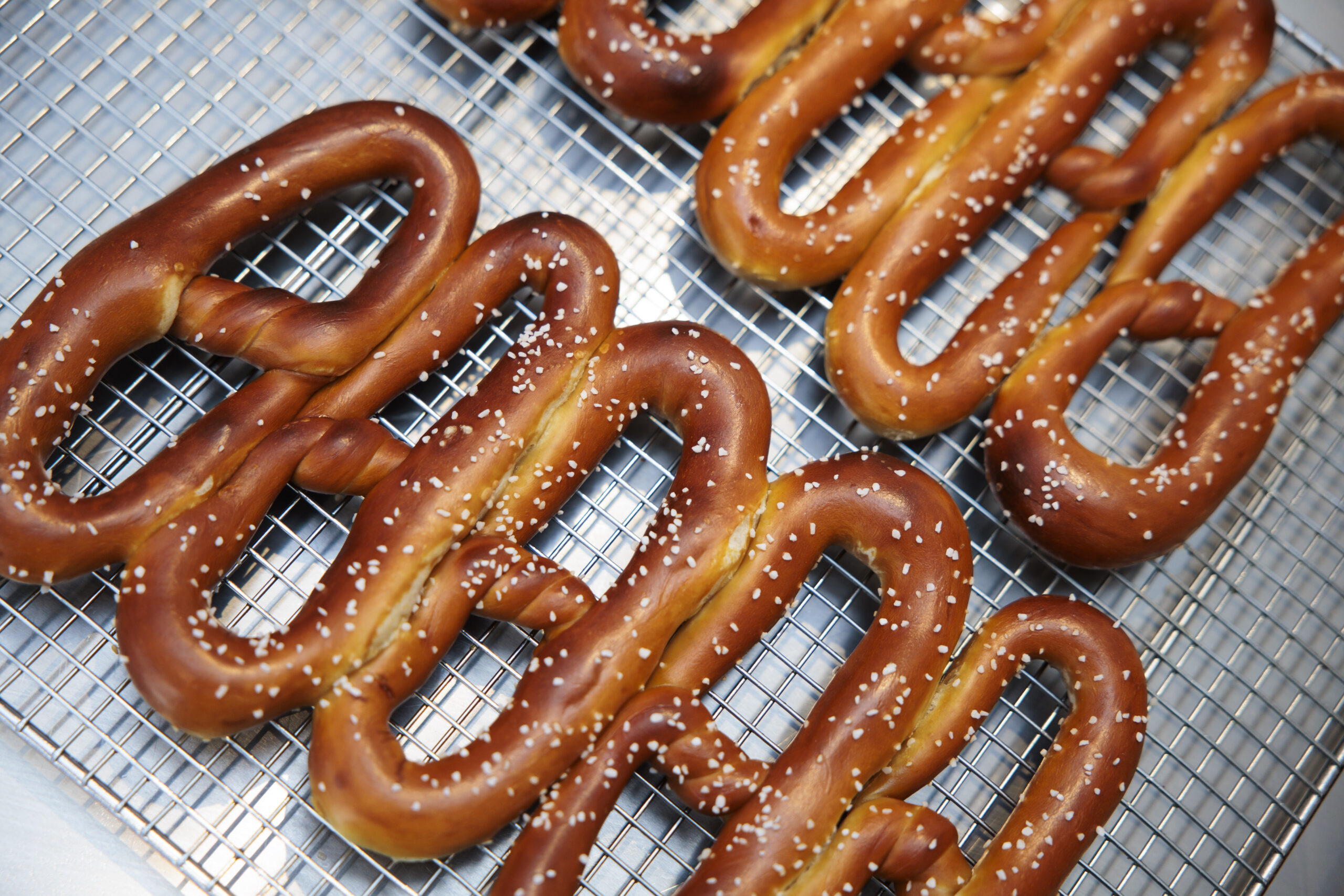
Mueller rolls and bakes standard-issue soft pretzels, but his specialties are stuffed pretzels and German varieties that you don’t really see around here, particularly Swabian pretzels.
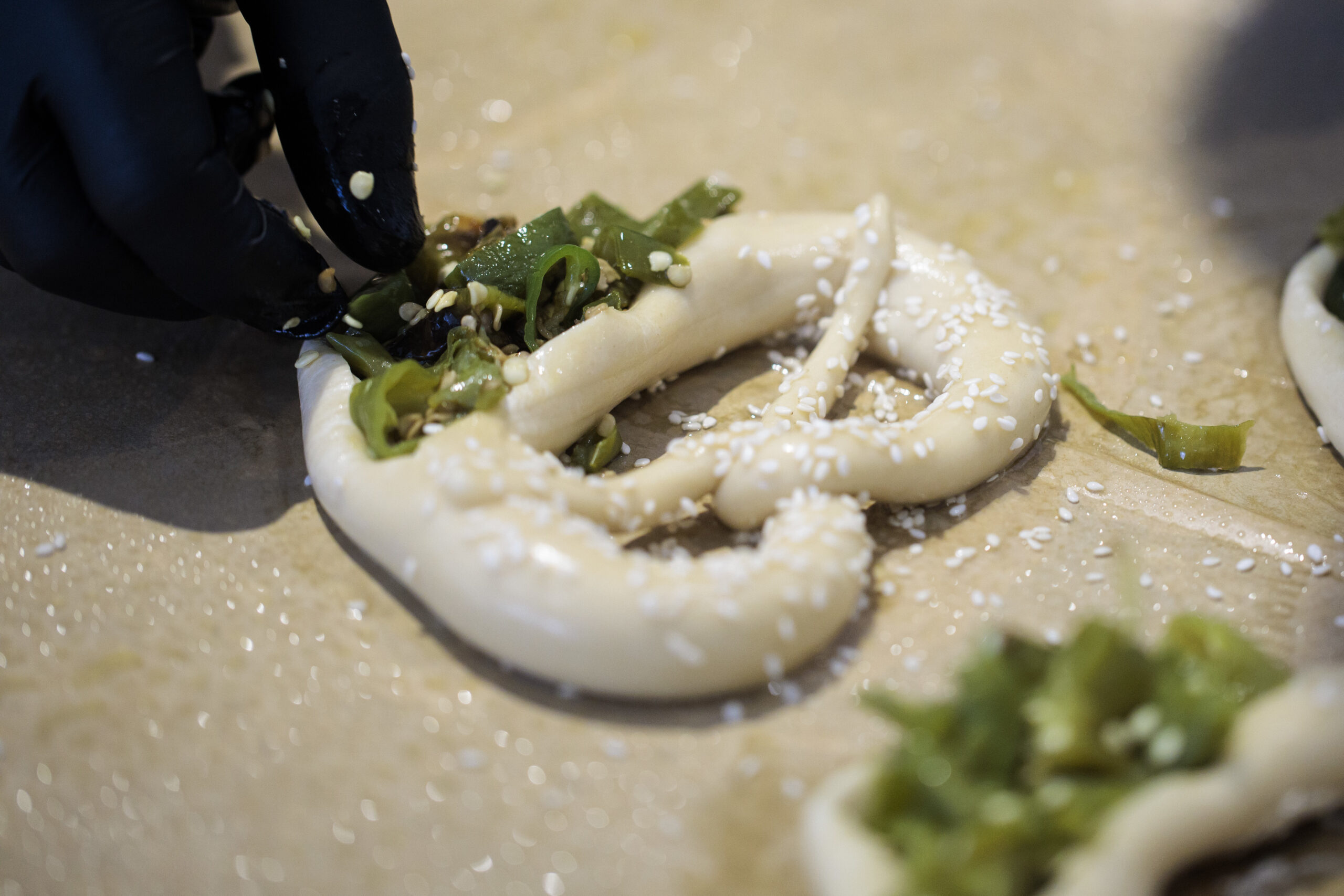
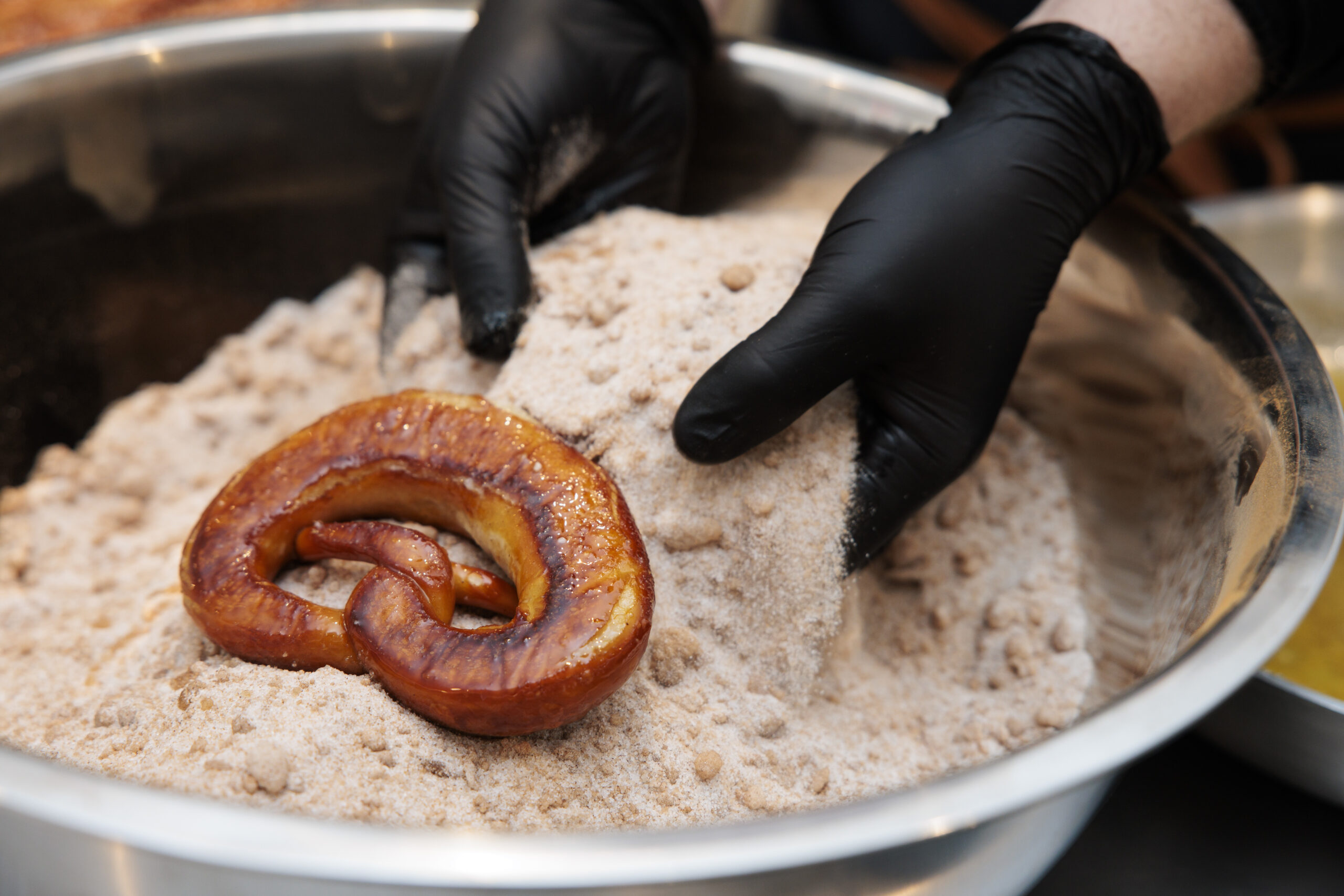
Jim Mueller stuffs pretzels with long hots and provolone at Pretzel Day Pretzels.Pretzels are tossed with cinnamon sugar at Pretzel Day Pretzels.
“It’s a little different from a Bavarian,” Mueller said. “Bavarians are what most people are familiar with — thick all around. Swabians have a big belly and skinny arms, and the arms get a little crunch to them. You can split the belly and stuff them. You can do more with them than a regular pretzel, and it opens up a lot of possibilities to experiment.”
Stuffing is where Pretzel Day Pretzels leans hardest into variety. The most popular option is the long hot-provolone pretzel, with other offerings including chili pretzels, pizza pretzels, bialys, cinnamon-sugar pretzels, and, on some days, pretzel dogs and Bavarian cheese logs. The lineup will shift slightly week to week, Mueller said, “but we’ll always have the core stuff.”
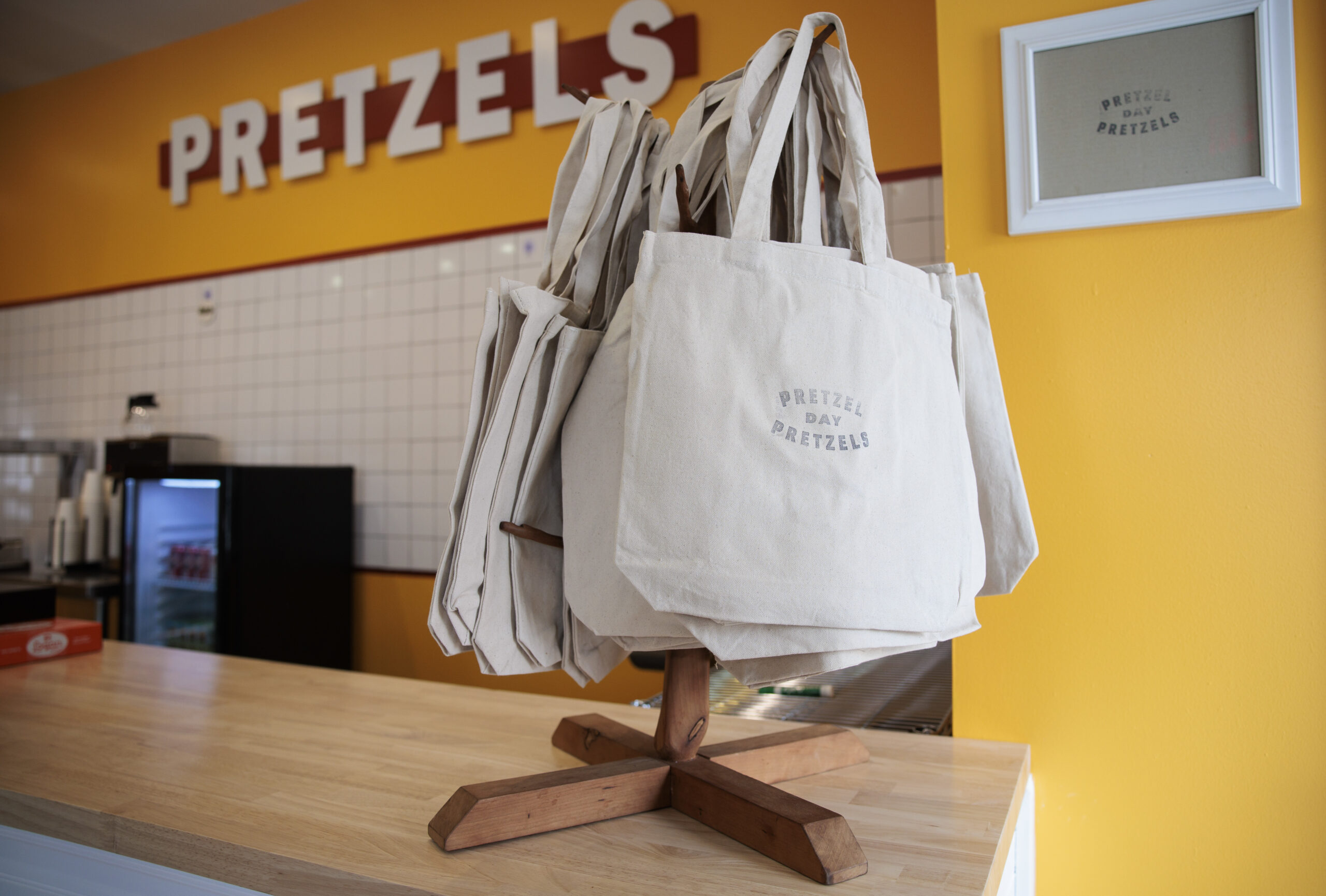
Merch on display at Pretzel Day Pretzels.
Saturday’s opening was low-key, with small giveaways such as heart-shaped pretzels and tote bags. The shop will offer coloring pages for kids that can be redeemed for a free pretzel.
“I just want it to be a pretzel shop for everyone,” Mueller said. “I don’t want it to feel high-end or bougie — just a neighborhood pretzel shop.”
As he sees it, Pretzel Day is meant to feel less like a concept and more like a missing piece put back into place.
“You always hear that Philadelphia’s a pretzel town,” he said. “But then you think — where are all the pretzel shops? I never thought I’d open one when I started doing this, but here we are.”
Pretzel Day Pretzels, 1501 S. Fifth St., instagram.com/pretzeldaypretzels. Hours: 8 a.m. to 3 p.m. Wednesday through Saturday, and 8 a.m. to 1 p.m. Sunday.
Pretzels from the oven at Pretzel Day Pretzels on Feb. 12, 2026.
There is something magical about the mole poblano at Tlali in Upper Darby, but it took me a moment to register what it is.
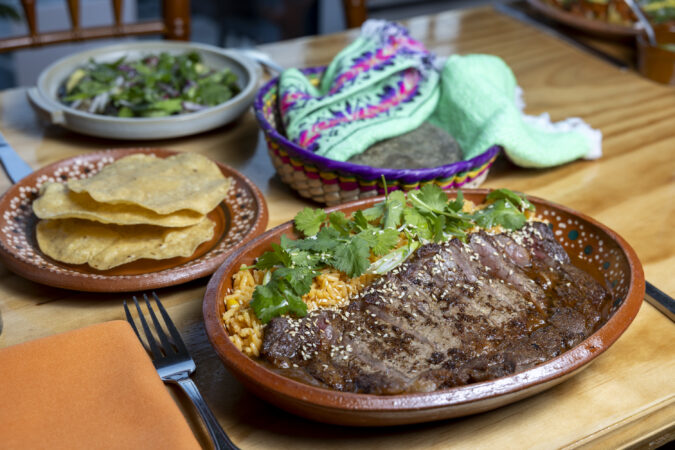
The Sandoval family’s mole, at first glance, is as deep a brown as any other you might have encountered from the state of Puebla, the result of a blend of dried chilies, fruits, and bittersweet Mexican chocolate. But when I swipe a juicy morsel of prime seared rib eye through the luxuriously dark puree, what I’m struck by is its ethereal lightness, both of the texture and the complexity of flavors. It’s so elegantly balanced, I taste each note — the smoky dry heat of chipotle meco peppers in the background, the fruity sweetness of ripe plantains and raisins, the nutty richness of walnuts and sesame seeds, a whiff of canela and bay leaf — all flowing into one earthy harmony of measured sweetness and spice.
What I’m tasting here, in fact, is Alberto Sandoval’s memory as a 10-year-old come to life. He vividly recalls the moment when his mother, Teresa Hernandez, was cooking that same mole for his father’s birthday in San Mateo Ozolco and held up a spoonful for Alberto to see.
“Your mole has to be this consistency — really light, not too thick, not too spicy. This is a good mole.”
Decades later, after a career rising through the ranks of some of Philadelphia’s most vaunted kitchens, including Striped Bass, Lacroix at the Rittenhouse, Le Bec Fin 2.0, Volvèr, Suraya, and Condesa, he and his brother, Efrain, are leaning into those memories of home for the menu at Tlali.
“These recipes represent who we are and where we came from,” says Alberto.
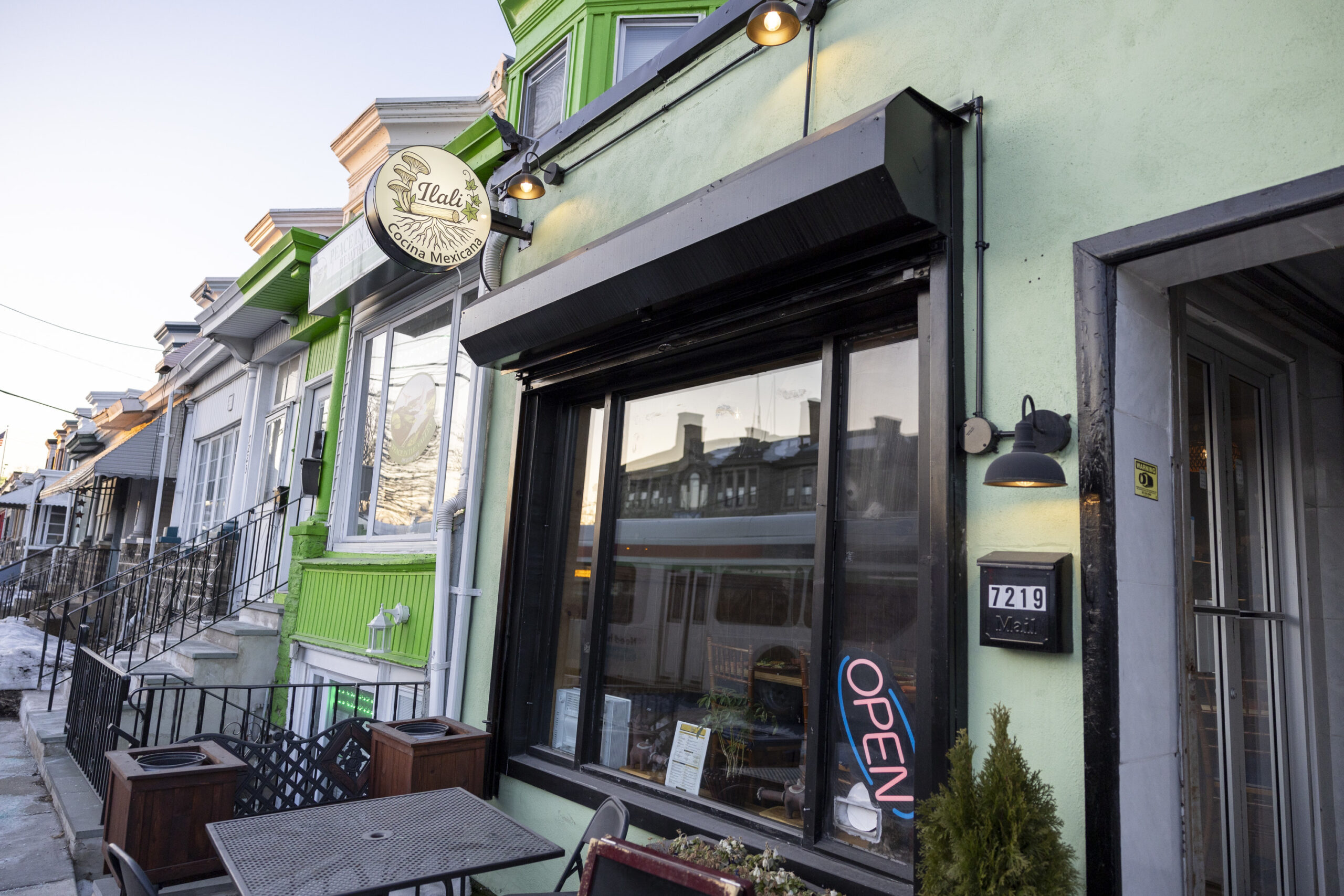
Alberto Sandoval (right), chef and co-owner of Tlali, and his brother and partner, Efrain Sandoval, working in the kitchen preparing a dish in Upper Darby Pa., on Thursday, Feb. 5, 2026.The outside of Tlali in Upper Darby Pa., on Thursday, Feb. 5, 2026.
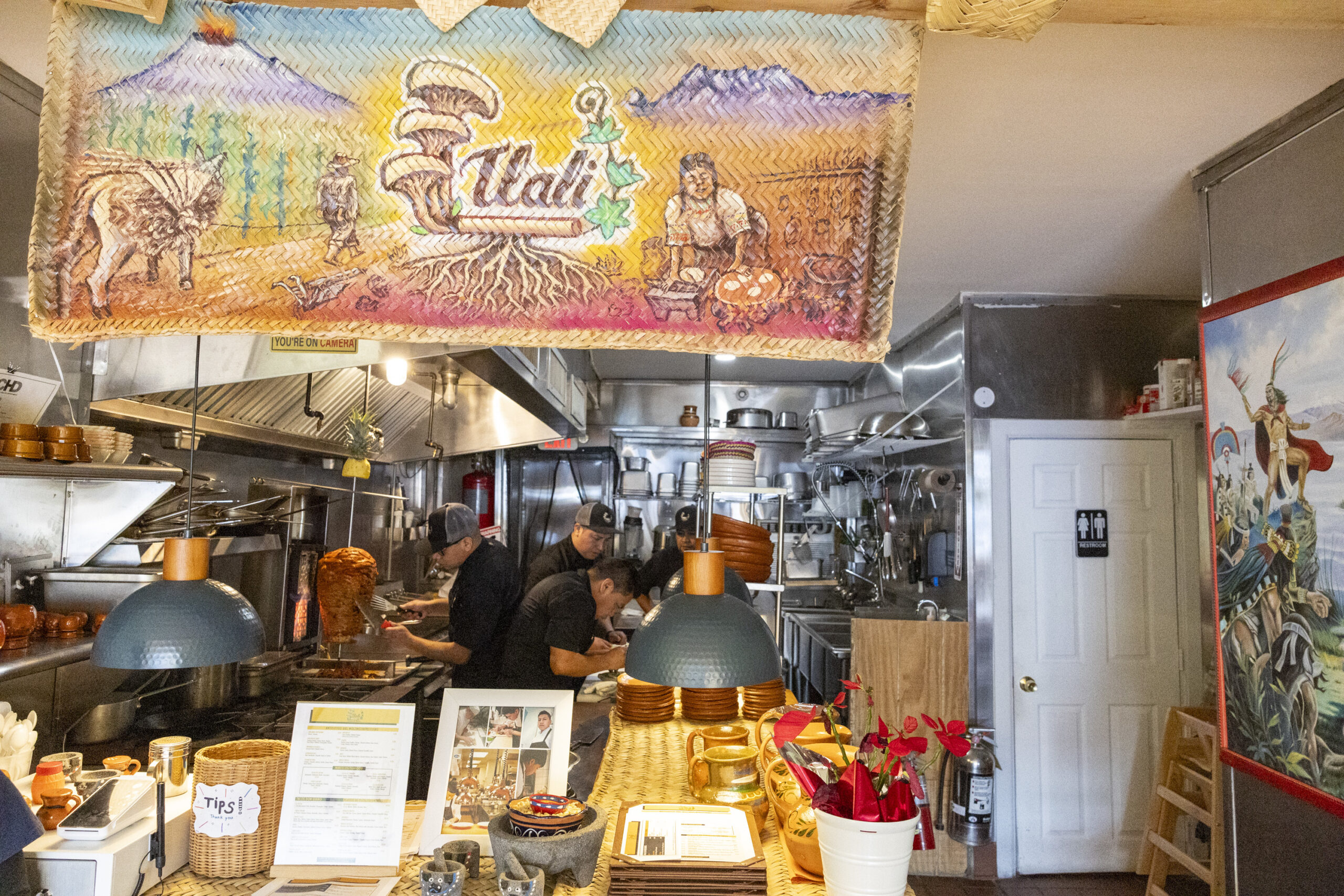
The base of that mole — which their mother still makes over the course of two days in Mexico and sends to her sons, who rehydrate and simmer it to completion with chicken stock — is only the beginning. Everything about this charming 18-seat BYOB the brothers opened in August inside a renovated pizzeria is a tribute to their birthplace in San Mateo Ozolco, the tiny town on the side of an active volcano in Puebla from which much of South Philly’s Mexican population immigrated. There’s an image of Popocatépetl, its volcanic peak ever fuming, depicted on a colorful woven mat that hangs above the open kitchen here. The hand-painted terra cotta ceramics that decorate the walls and deliver the food were all imported from Puebla.
The brothers have cut no corners in crafting the flavors on this menu, especially with another key building block: the tortillas. They are patiently made from blue and yellow heirloom Mexican corn that’s nixtamalized overnight then ground into fresh masa, resulting in pressed tortillas that have a velvety suppleness when cooked to order off the plancha.
Alberto Sandoval, Chef and Owner of Tlali, is with his brothers working at their restaurant in Upper Darby Pa., on Thursday, Feb. 5, 2026.
You can taste this in the enmoladas, in which the tortillas are coated in that mole before being folded into half-moon bundles over tender shreds of chicken. The tortilla’s toasty corn flavor also powers the bright orange puree of Tlali’s tortilla soup. They’re fried into shatteringly crisp rounds for antojito starters like the irresistible mashed-to-order guacamole and tostadas topped with chipotle-stewed chicken tinga.
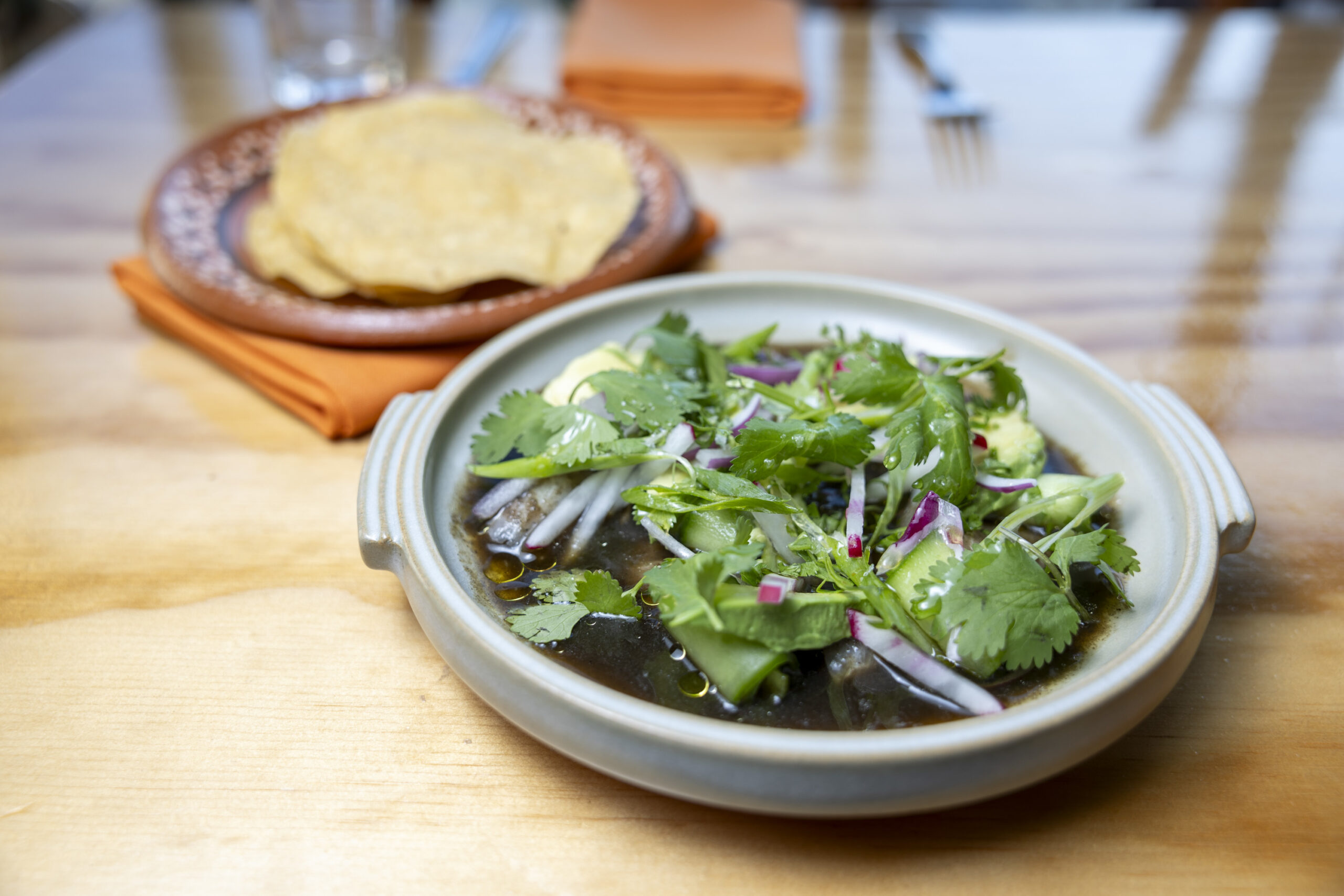
Those crispy discs also accompany the striking aguachile negro, making the perfect cracker on which to layer slices of raw kanpachi that have been bathed in a spicy brew of citrus and olive oil tinted black with charred habaneros and onions. Scattered with green tufts of cilantro and crunchy matchsticks of radish, it’s the single most refreshing starter on a list of other seafood cocktails that are solid but lack a little spark. A notable exception was Dorito Nayarit, in which poached shrimp striped with Valentina hot sauce and crema are served atop crispy pork belly crackers known as chicharrónes preparados. (A tuna tostada topped with a spoonful of frumpy poached tuna salad, though, was the one dish at Tlali where the extra-homey approach left me truly underwhelmed.)
The aguachile negro at Tlali in Upper Darby Pa., on Thursday, Feb. 5, 2026.
Tlali, which means “land” in Nahuatl, the Indigenous language of Puebla, occupies a simple space on West Chester Pike that took a significant investment to completely rehab. It lacks the design frills of the high-style dining rooms where the brothers have largely worked, including Stephen Starr’s LMNO, where Alberto is still the chef de cuisine. There is nonetheless a comforting warmth to the pale green walls and natural wood wainscoting in Tlali’s dining room, bolstered by hospitality from the restaurant’s single server, Melanie Ortiz. She deftly sorted out a sticky situation by convincing a couple to move to a two-top after she’d accidentally sat them at the only remaining table reserved for a party of four (which happened to be us).
It’s clear from the many emails and messages I’ve received since this restaurant opened in Upper Darby — a multicultural nexus of international dining, but not previously known for Mexican food — that Tlali has a devoted clientele rooting for it to succeed.
Alberto Sandoval, chef and owner of Tlali, with his family members in Upper Darby Pa., on Thursday, Feb. 5, 2026.
After diving much deeper into the menu, it’s easy to see why. Tlali is in many ways a sequel to the small restaurant the two brothersused to co-own in South Philadelphia, La Fonda de Teresita, which closed during the pandemic. But the Sandovals have both since continued to grow as chefs and have taken their pursuit of family flavors to the next level. That includes a tribute to their father, Don Guero, who ran a taqueria in Mexico City by the same name where Alberto got his first taste of kitchen life as a teen mincing mountains of onions and cilantro.
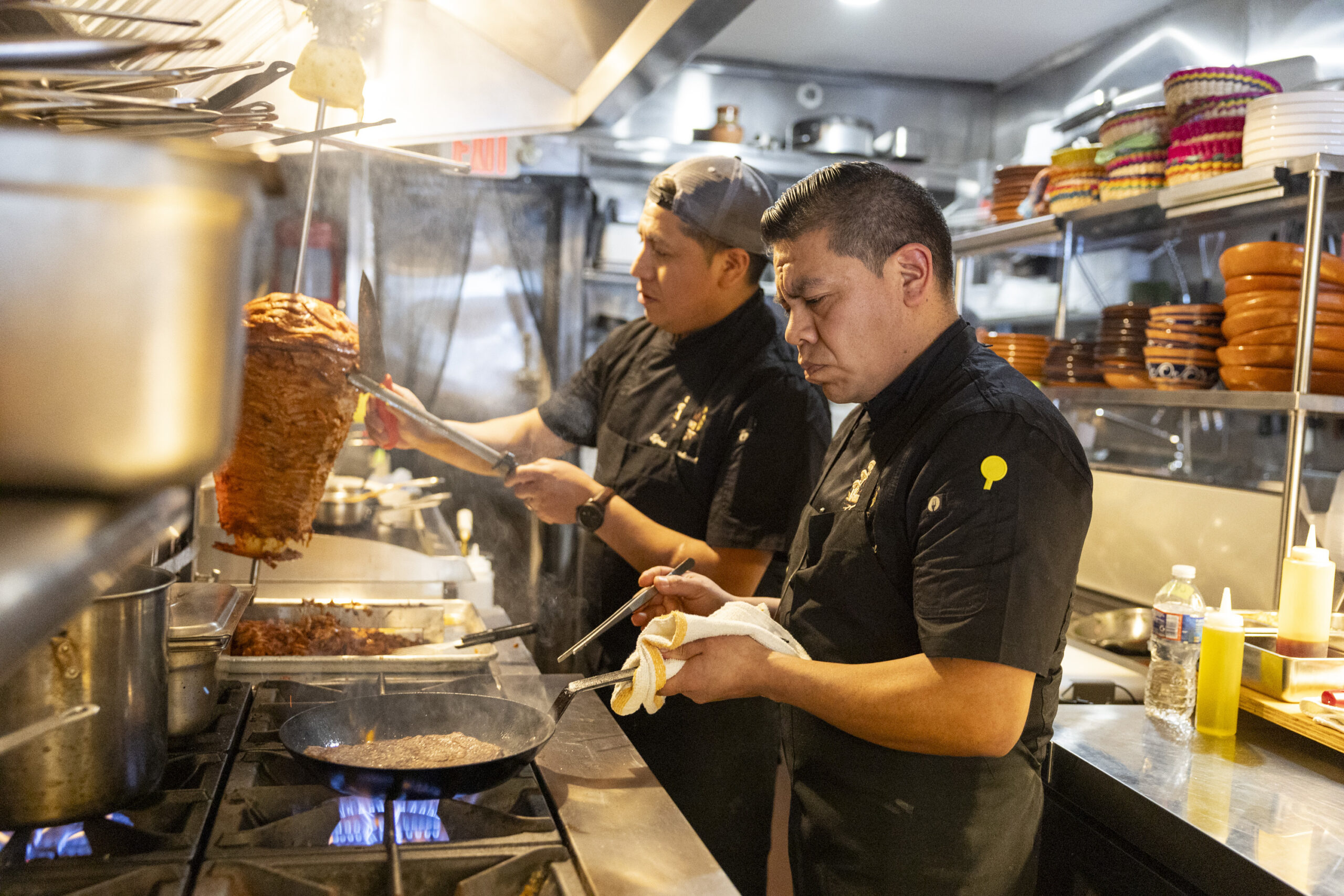
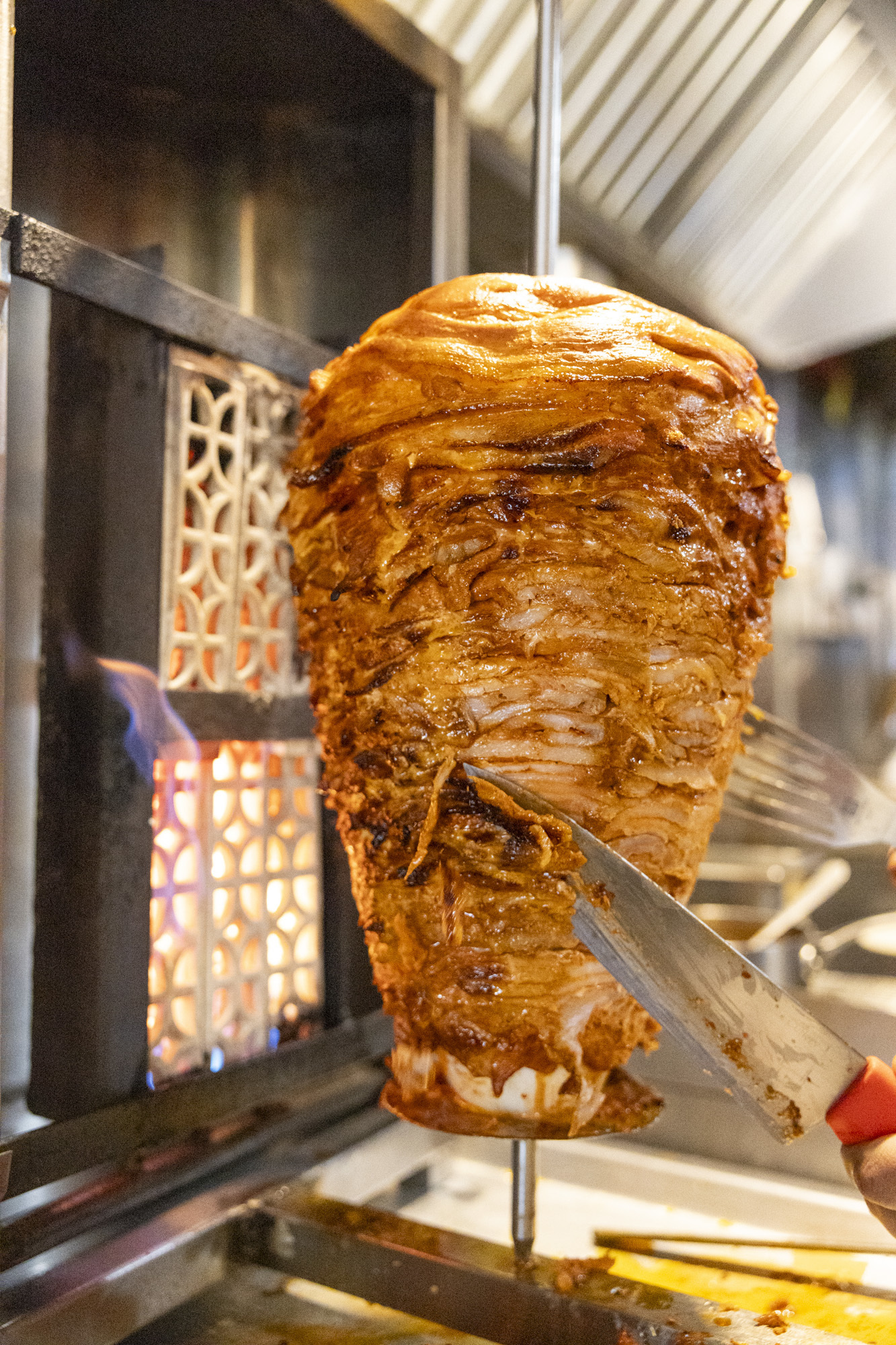
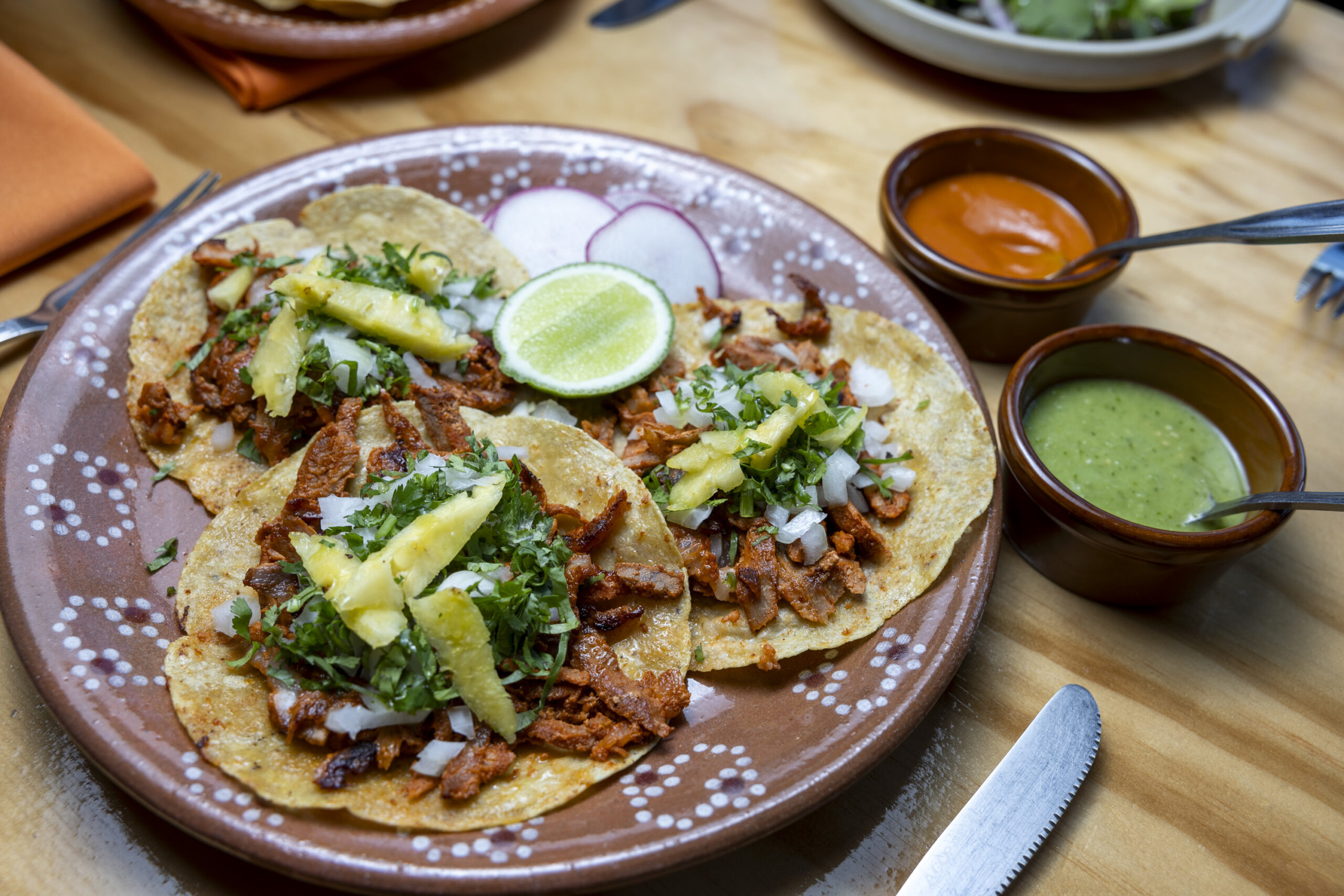
Don Guero’s recipe for Chilango-style carnitas — whose pork belly and shoulder are simmered for hours in a large copper cazo pot bubbling with lard, orange juice, Coca-Cola, and herbs — produces meltingly soft, flavorful carnitas that are among the best I’ve had. But even that takes second place to the al pastor, a vertical spit of stacked pork shoulder marinated with three kinds of chilies, pineapple juice, achiote, and bay leaves; the pork roasts on a turning trompo fueled by real fire that flows through the perforated bricks that Don Guero himself gifted them from Mexico shortly before he died two years ago. The family taqueria lives on here.
The al pastor used for the tacos at Tlali in Upper Darby Pa., on Thursday, Feb. 5, 2026.The al pastor tacos at Tlali in Upper Darby Pa., on Thursday, Feb. 5, 2026.
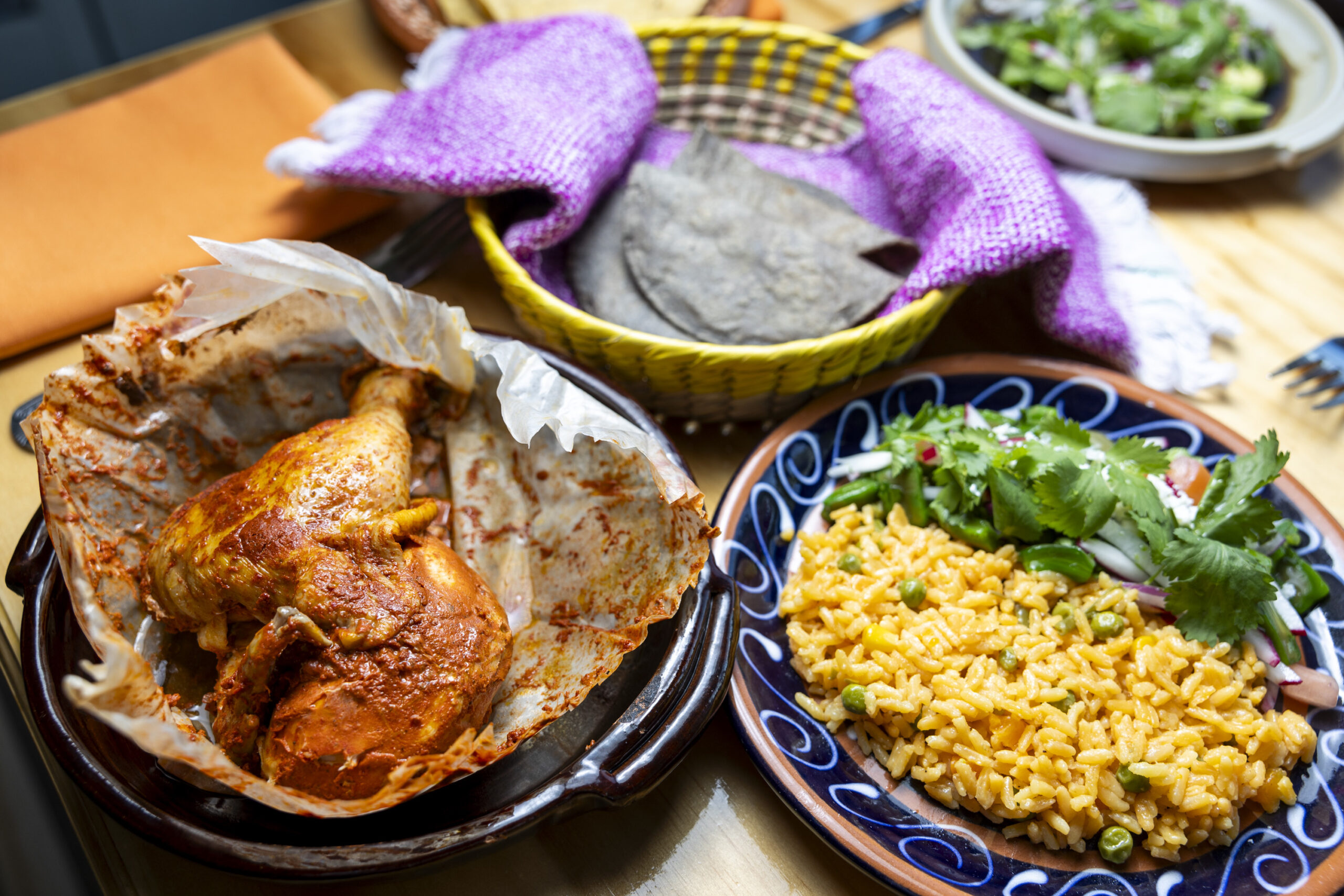
The entree section of the menu noted as “Platos de Ozolco” offers a handful of other standout dishes that showcase the brothers’ hometown flavors in both traditional and modern ways. I was especially fond of the classic mixiote: When the maguey leaf-wrapped bundle of steamed chicken rubbed in adobo spice was cut open tableside, the fragrant cloud of guajillo-scented steam that enveloped us brought me straight back to my own 2023 visit to San Mateo with chef Dionicio Jiménez of Cantina La Martina, where mixiote was the first thing we were served at his mother’s home — the ultimate dish to welcome a special guest.
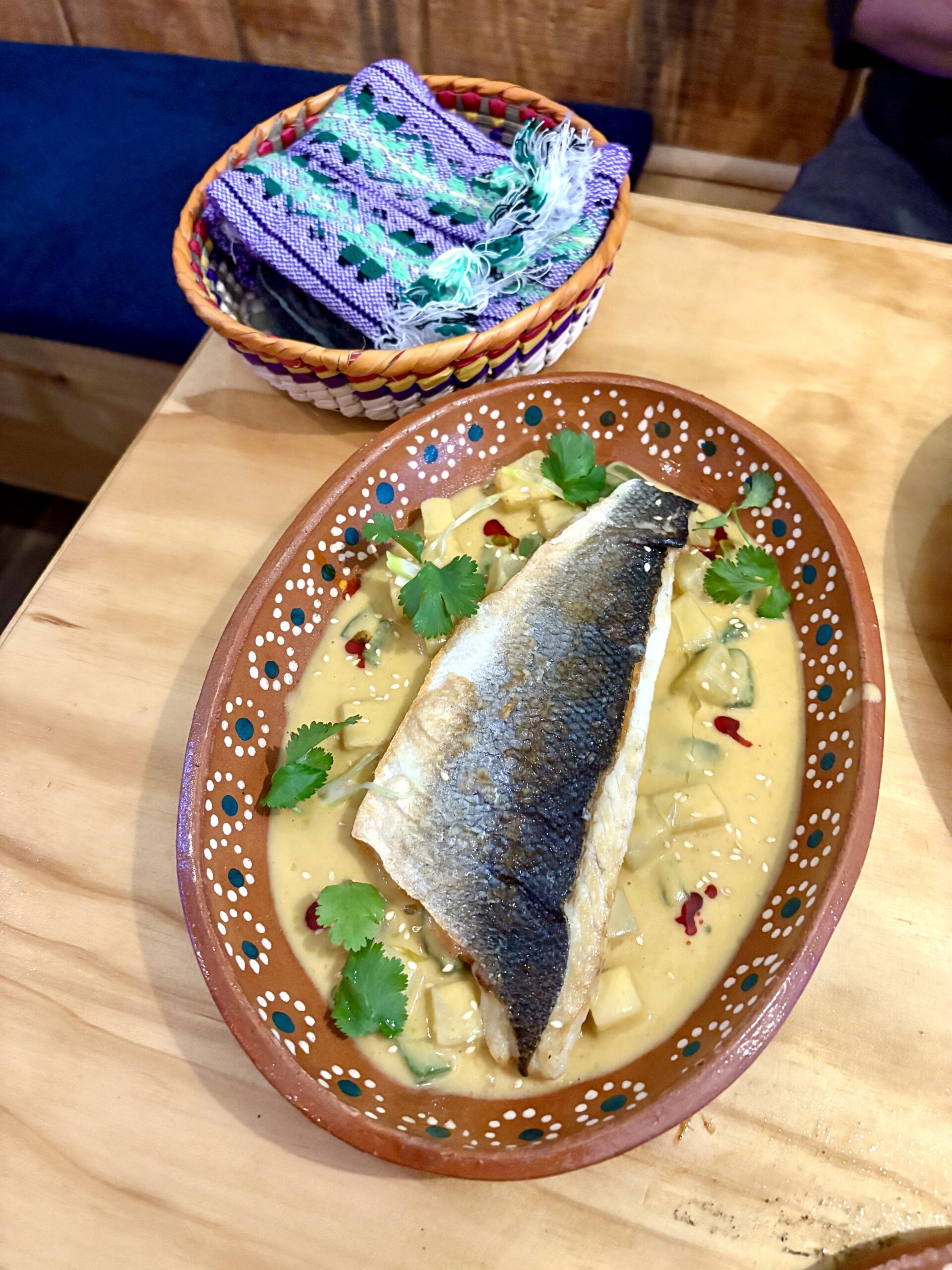
I was also intrigued to see Alberto and Efrain stretch their chef chops to reinterpret traditional flavors in inventive ways. That includes the michmole, which steeps a dried fish from Puebla in a tomatillo-chile salsa for deep marine flavor, then discards the bony remains for a golden sauce that gets topped with nopales and a gorgeous fillet of pan-roasted branzino (also lightly brined) to retain just enough of the traditional dish’s brackish edge.
A fillet of branzino is served over a seafood michmole sauce with cactus and potatoes at Tlali in Upper Darby.
Another distinctive offering pairs the chefs’ love of fresh pasta with head-on shrimp and a zesty ragù of house chorizo simmered in a lightly creamed chipotle salsa. It’s a unique dish that bridges the Sandoval brothers’ origin story with their current status as longtime contributors to Philadelphia’s contemporary dining scene. As they continue to grow their audience in this tiny Upper Darby dining room, I wouldn’t be surprised if more such creations appear.
I have no doubt that those future plates will remain somehow rooted in the memories of their mother’s table in San Mateo Ozolco, which not only give Tlali’s owners a proud reservoir of traditions, but an elusively distinctive and delicate family touch that will always be their own.
The mixiote at Tlali in Upper Darby Pa., on Thursday, Feb. 5, 2026.
Not wheelchair accessible. There are two steps at the entrance and the narrow bathroom is not accessible.
Almost the entire menu is gluten-free, except for the cemita sandwiches.
Menu highlights: guacamole; empanadas; albóndigas; sopes; sopa de tortilla; aguachile negro; coctel de campechano (shrimp and octopus); tacos al pastor; carnitas tacos al estilo Chilango; res en mole Poblano; huarache Teresita; mixiotes de pollo; michmole; pappardelle with shrimp en chorizo ragù.
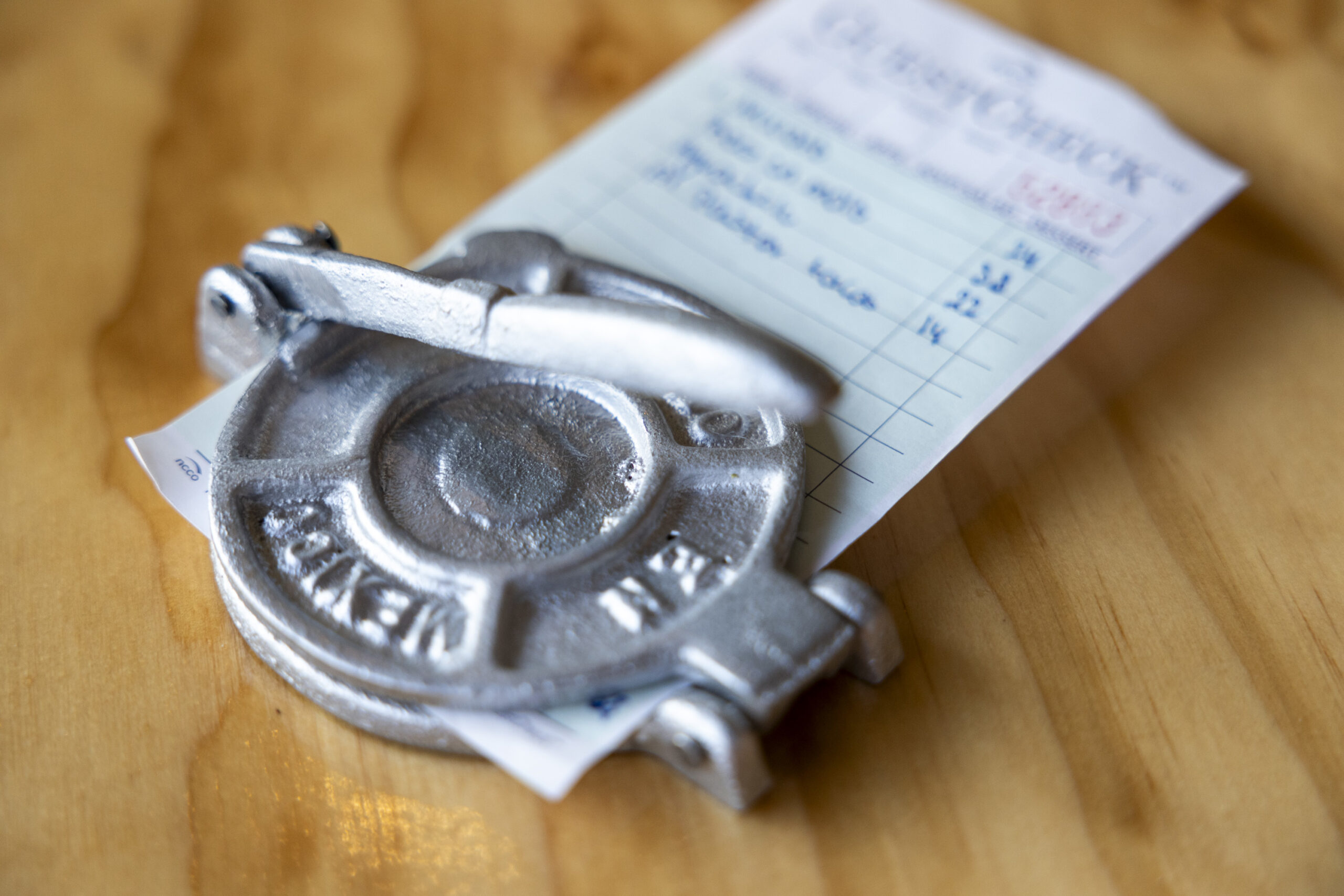
A tiny tortilla press used for the dinner checks at Tlali in Upper Darby Pa., on Thursday, Feb. 5, 2026.
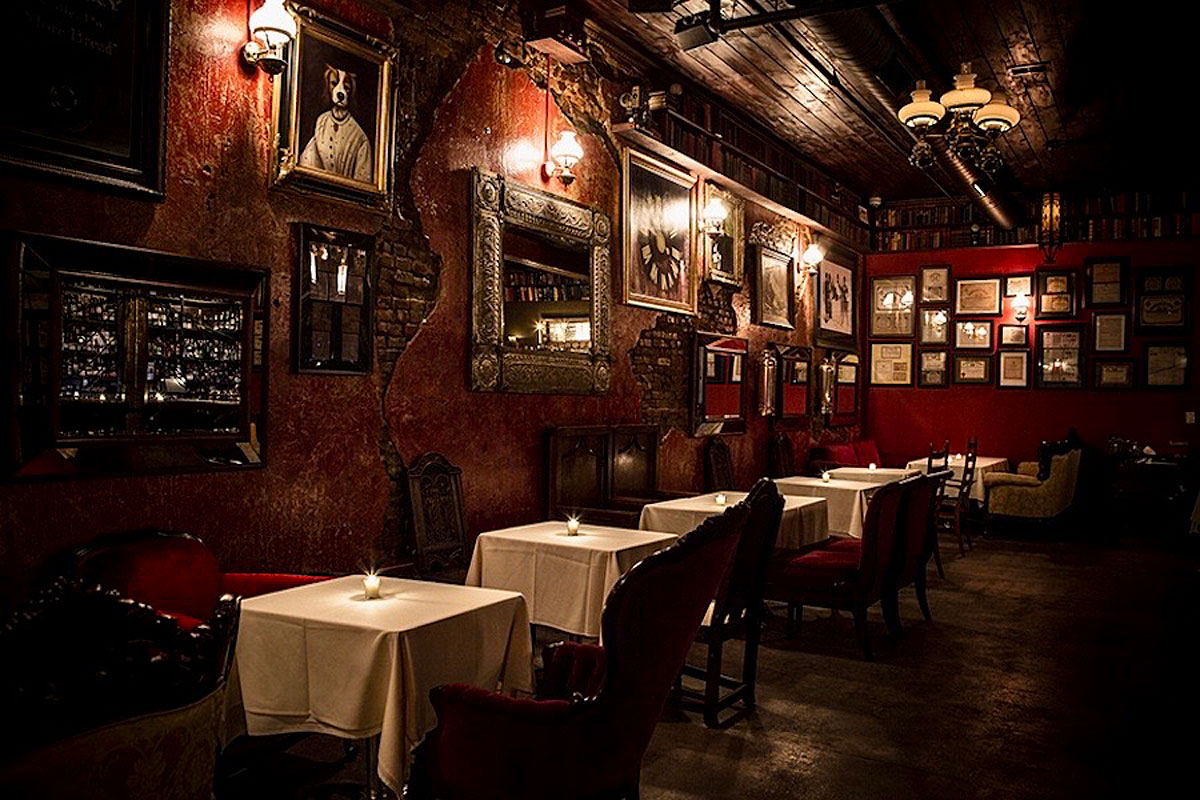
For nearly 14 years, the speakeasy-style Chinatown cocktail bar has operated under the authority of its enigmatic owner, who goes by Lê, and his house rules, which are as well known as the drinks: No photos. No cellphones. No flip-flops, sandals, or shorts. Cash only. Entry begins at the metal gate on Race Street, where aspiring customers hand over their photo IDs, which are scanned before they are allowed inside.
Those on Lê’s banned list — the 6,600 people he’s barred for breaking rules or tipping poorly — are turned away.
The payoff for entry is a table in Hop Sing’s Old World library setting, where one can order cocktails made with fresh mixers and high-end liquor.
Hop Sing Laundromat, which opened in 2011 at 1029 Race St.
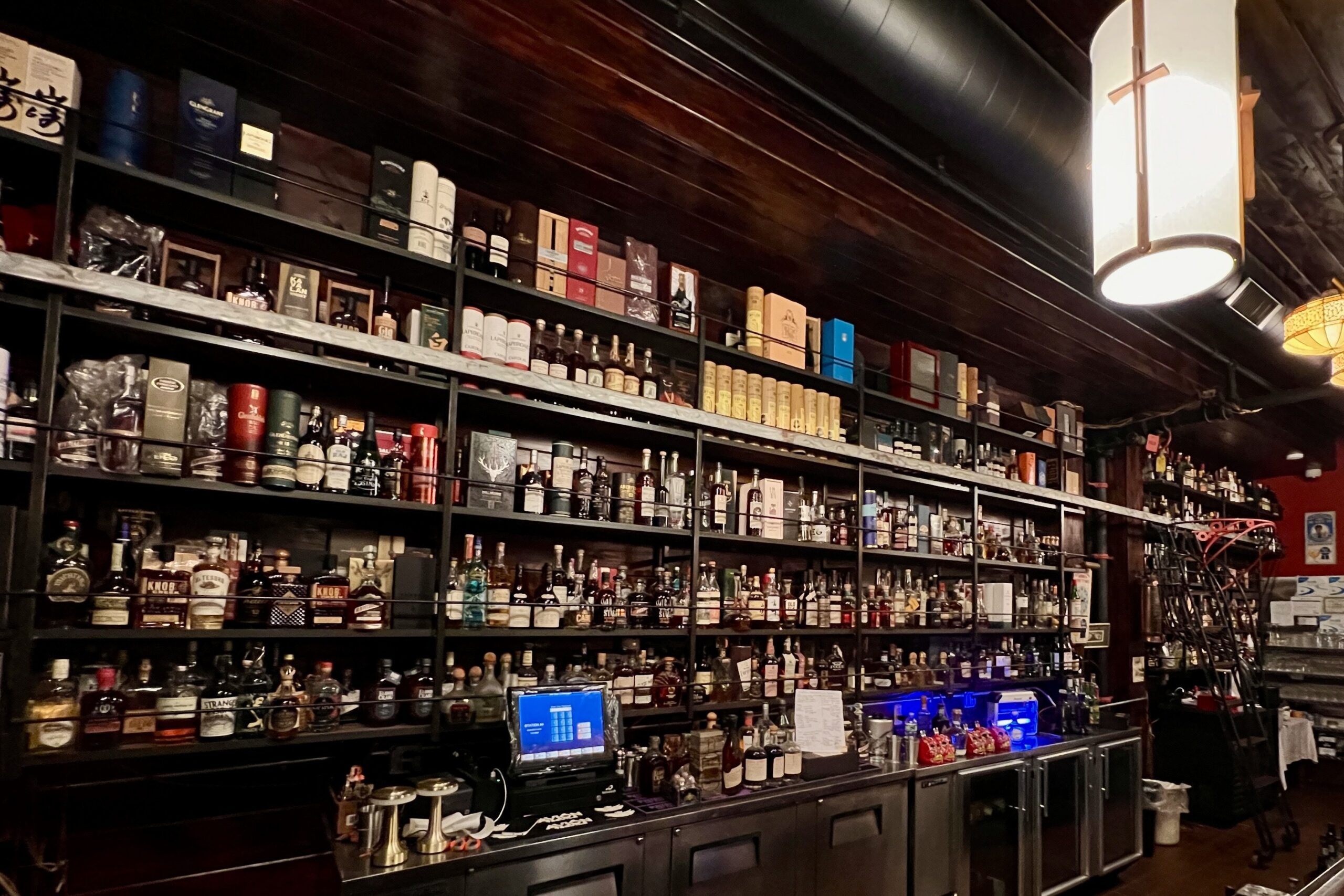
As Hop Sing expands its Friday and Saturday schedule to include Thursdays, Lê wants to begin moving his inventory of high-end spirits — particularly tequilas and American and Japanese whiskies — at below-market prices.
Regulars know about this list, which includes about 30 whiskies and 20 tequilas, typically offered neat or on the rocks in 2-ounce pours.
They also know that Lê is a bit of a hoarder.
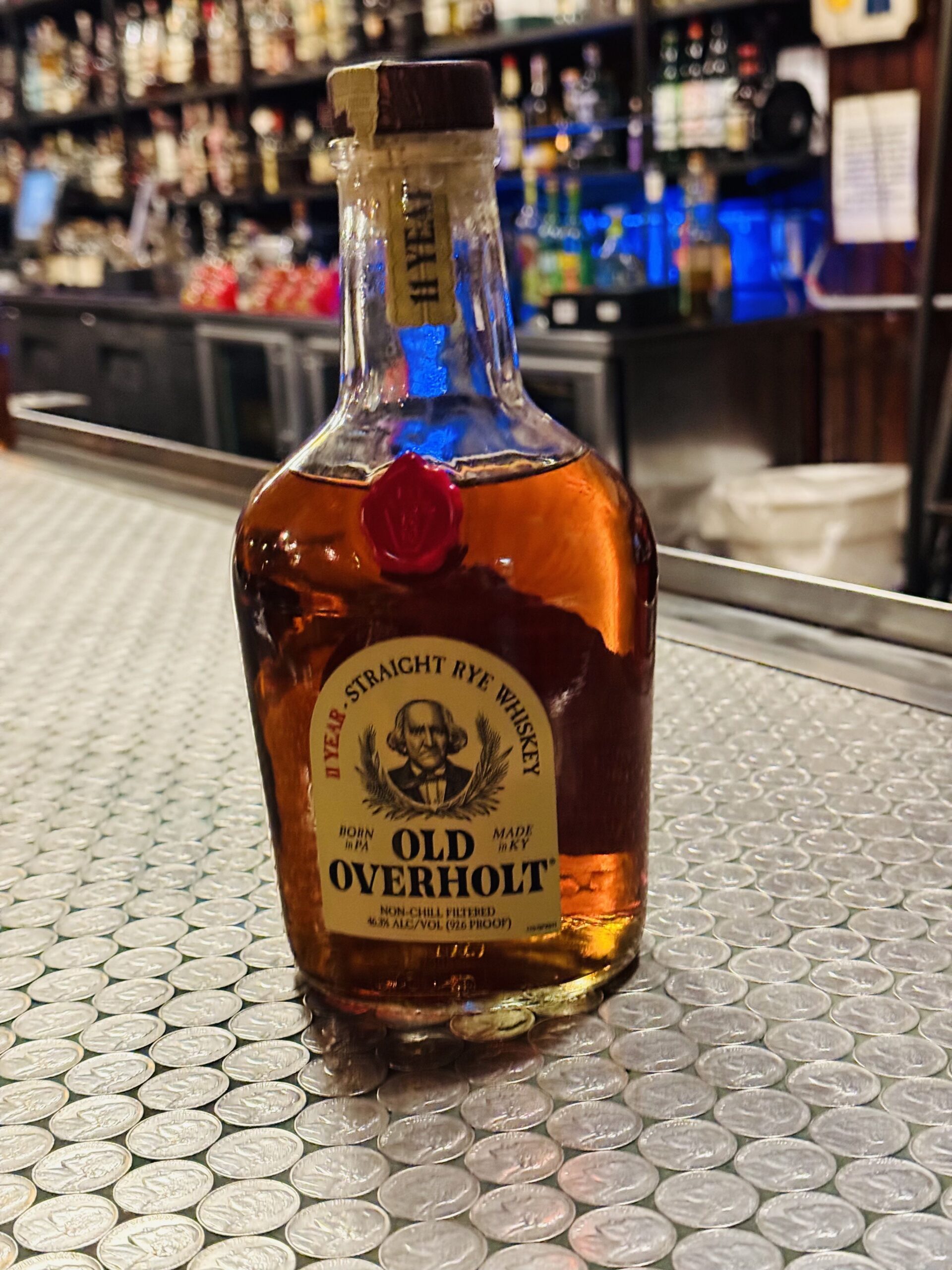
One example: Old Overholt 11-year-old rye, a limited-release bottle that Bourbon Culture gave an 8.5/10 (“a flavorful sipper that is all about balance”).
A bottle of Old Overholt 11-year-old rye, one of the cache of 835 bottles that Hop Sing Laundromat purchased through the Pennsylvania Liquor Control Board in 2022.
You cannot get it anywhere else in Pennsylvania because Lê effectively bought out the state’s remaining supply of the whiskey several years ago — all 835 bottles at $75 each.
Michael Betman, a sales manager for Suntory Global Spirits, said Lê first bought 10 cases and then asked how much was left. “Once he realized how limited it was, he said, ‘I want all of it,’” Betman said.
Betman called the Pennsylvania Liquor Control Board to request the bottles. “They were stunned,” Betman said. “But they made it happen.”
High-end spirits fill the shelves behind the bar at Hop Sing Laundromat at 1029 Race St.
The PLCB gathered bottles from stores all across Pennsylvania and delivered them to Hop Sing. “At first people thought Lê might be joking,” Betman said. “But he was completely serious.”
Hop Sing is going through its supply. Lê declined to specify how much he had left, but given the bar’s limited hours, it’s likely a lot.
Bottle math
At Hop Sing, Lê charges $18 for 2 ouncesof the Old Overholt. Although $18 sounds expensive, it’s modest by industry standards.
A 750-milliliter bottle yields about 12 pours. Multiply $18 times 12, and each $75 bottle grosses about $216 — a 188% markup before accounting for labor, breakage, overhead, overpours, and comps. Many bars aim for 200% to 300% markups, often while pouring 1½ ounces instead of 2.
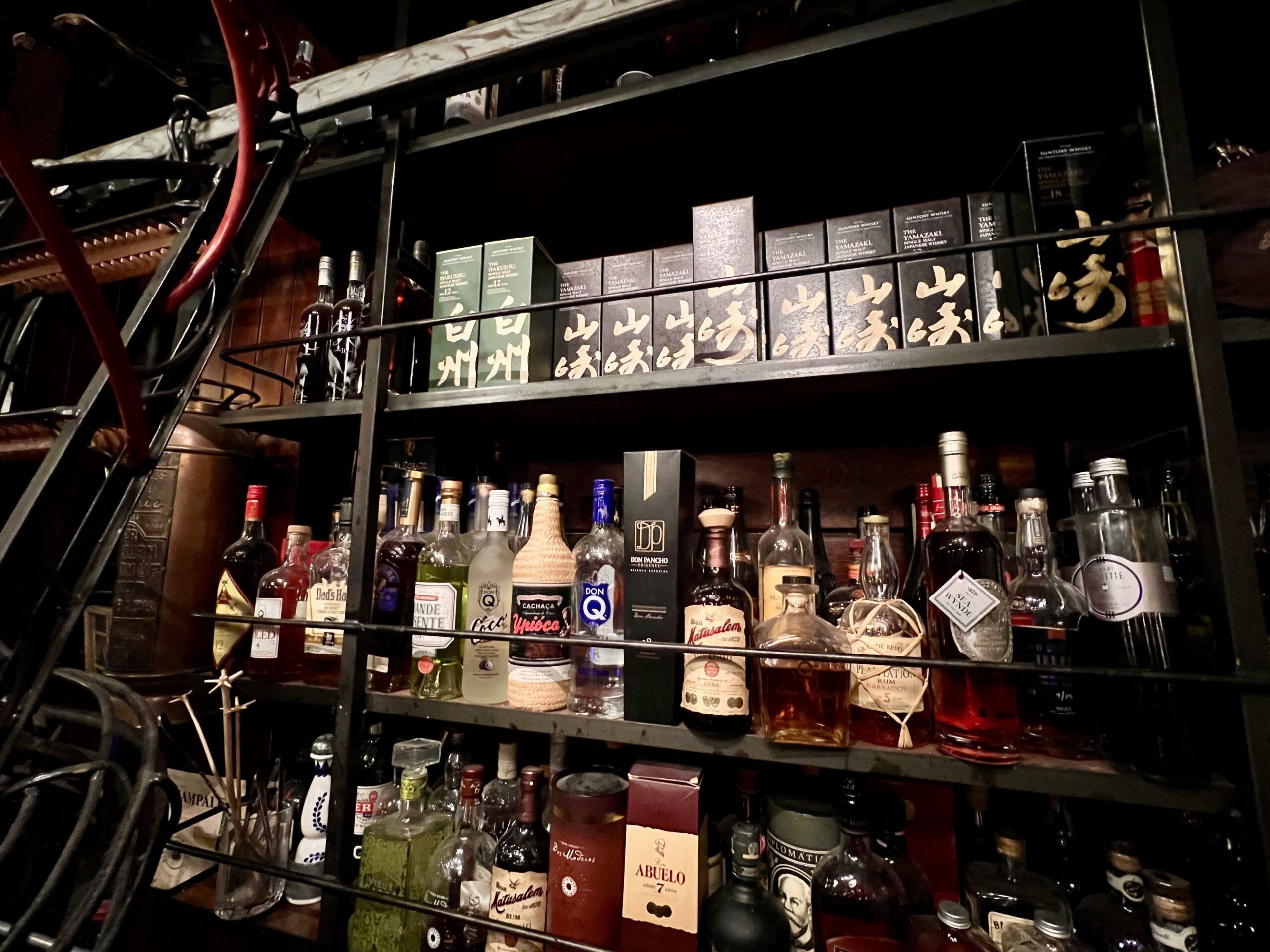
Bottles of high-end Japanese whiskies line the top shelf at Hop Sing Laundromat at 1029 Race St.
Lê said he was happy with this math, which extends to his cocktail list. (An old fashioned made with 2 ounces of Booker’s straight bourbon, for example, is priced at $20 — a relative bargain for a bottle that retails for $100.)
This approach comes from a bar owner who no longer drinks. Lê said he tastes cocktails during development but hasn’t had a full one in 15 years.
“This isn’t about me drinking it,” he said. “It’s about letting people experience it.”
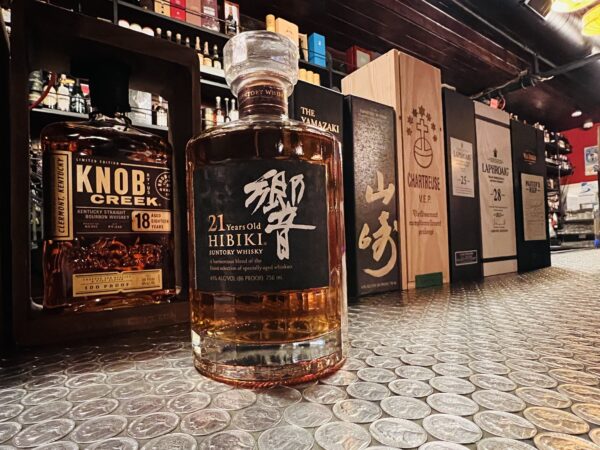
That philosophy shows up across the pour list. Among the tequilas, there’s a 2014 Herradura Reposado Scotch Cask at $35 and Casa Dragones at $45. On the whiskey side, Yamazaki 12-year is $35. Knob Creek 18 is $35. Elijah Craig 18 is $42. Hibiki 21 and Yamazaki 18 — which have become scarce amid the Japanese whiskey boom — are $100 per pour. While $100 may seem way out of kilter, consider that the Hibiki and Yamazaki bottles retail for $750 — and Hop Sing has rows of them on its top shelf.
Many of these bottles now circulate almost entirely through secondary markets, where prices can climb multiple times above retail.
Lê said the goal is to pour whiskies that people read about but rarely see, without turning curiosity into a financial stunt.
“I’ve been collecting these bottles for years,” Lê said. “At some point, it’s time to let them go.”
Hop Sing Laundromat, 1029 Race St. Hours: 5 p.m. to 1 a.m. Friday and Saturday. Thursday hours, also 5 p.m. to 1 a.m. No reservations, cash only.