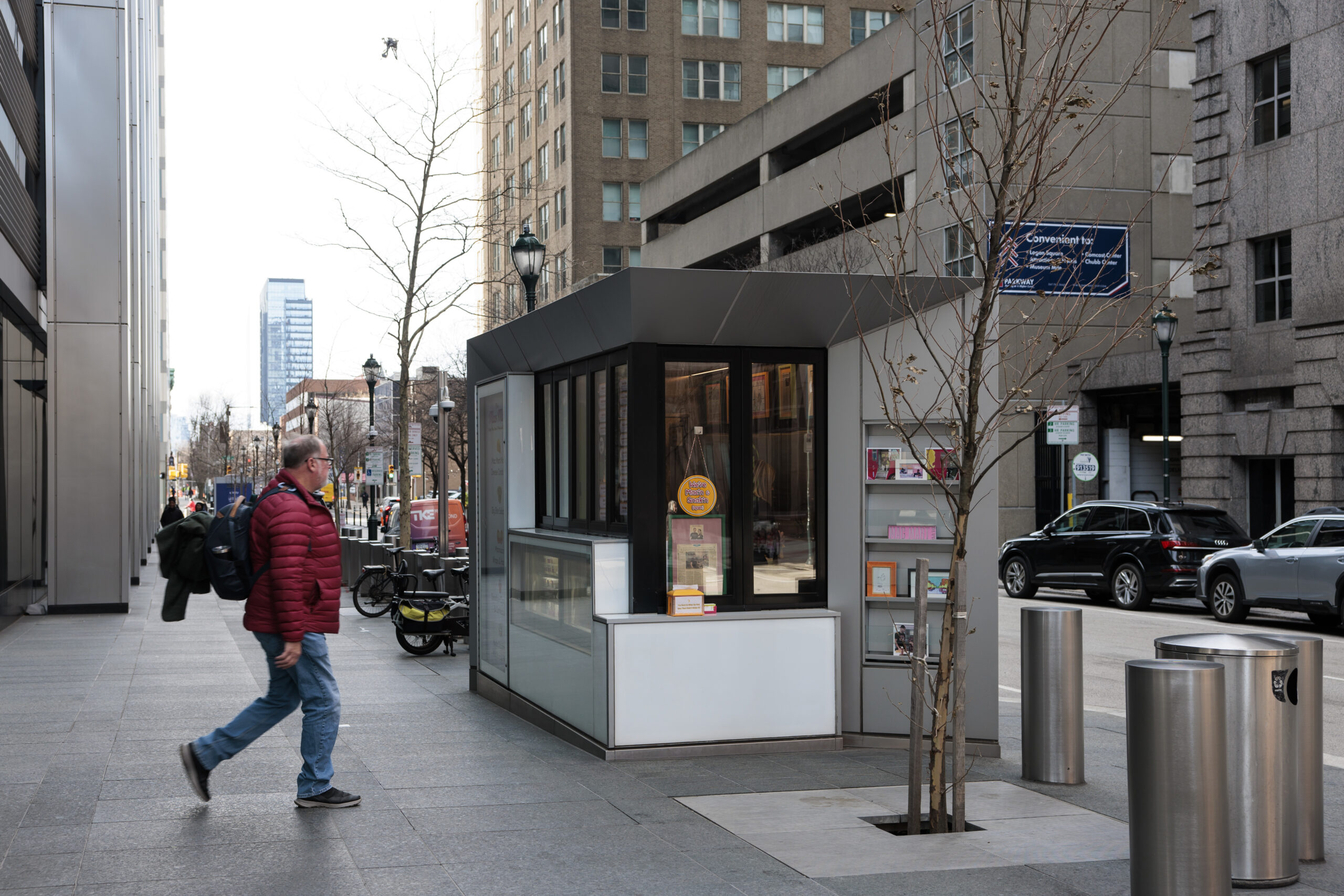
Mac Mart, the mac-and-cheese cafe, has left its Rittenhouse storefront location of nearly a decade in favor of a kiosk three blocks away.
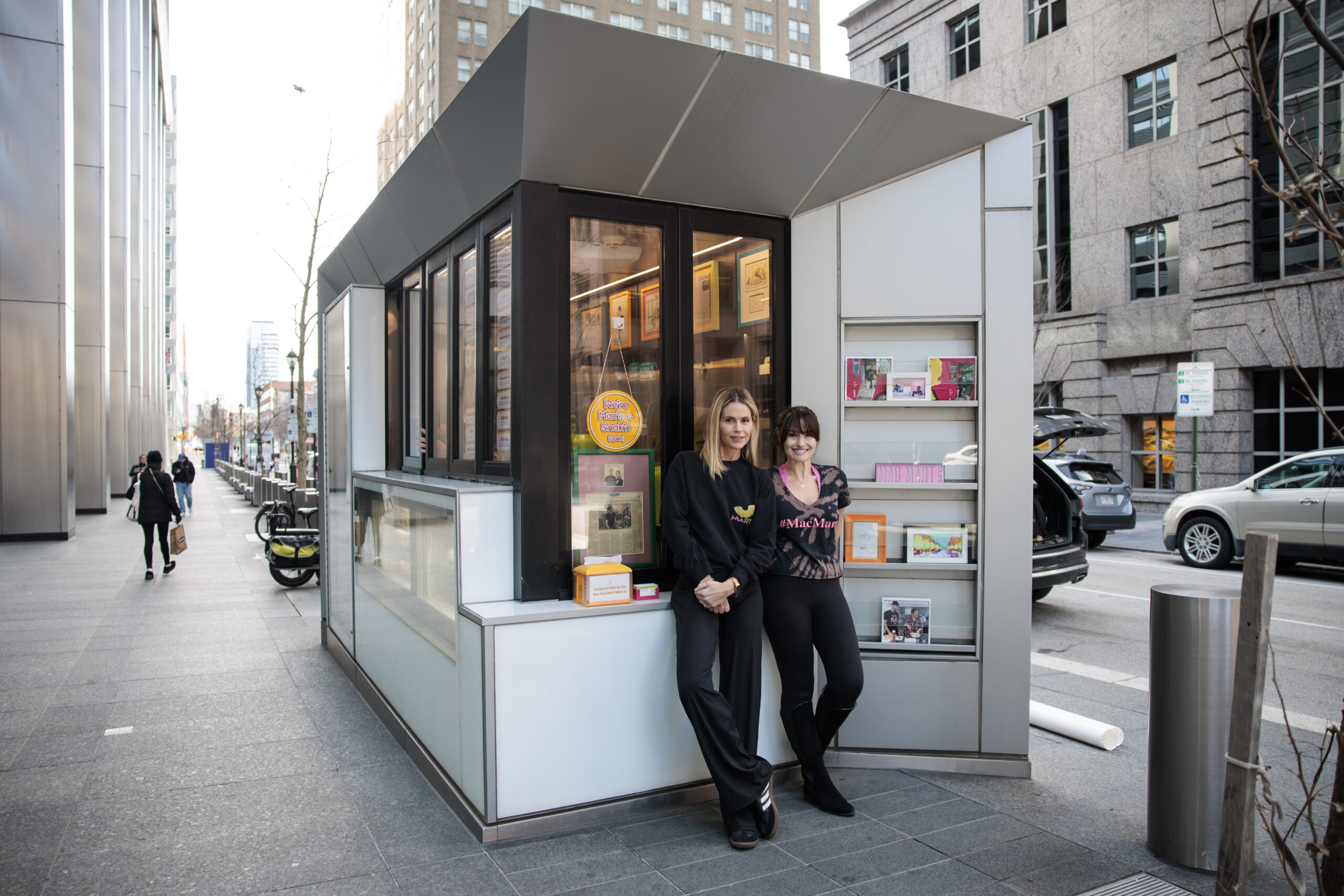
Mini Mac Mart — as sisters Marti Lieberman and Pam Lorden call their Center City stand — soft-opened Thursday at 18th and Arch Streets, outside the Comcast Technology Center and down the block from Biederman’s caviar kiosk.
Marti Lieberman (left) and Pam Lorden outside the Mini Mac Mart kiosk on Arch Street near 18th.
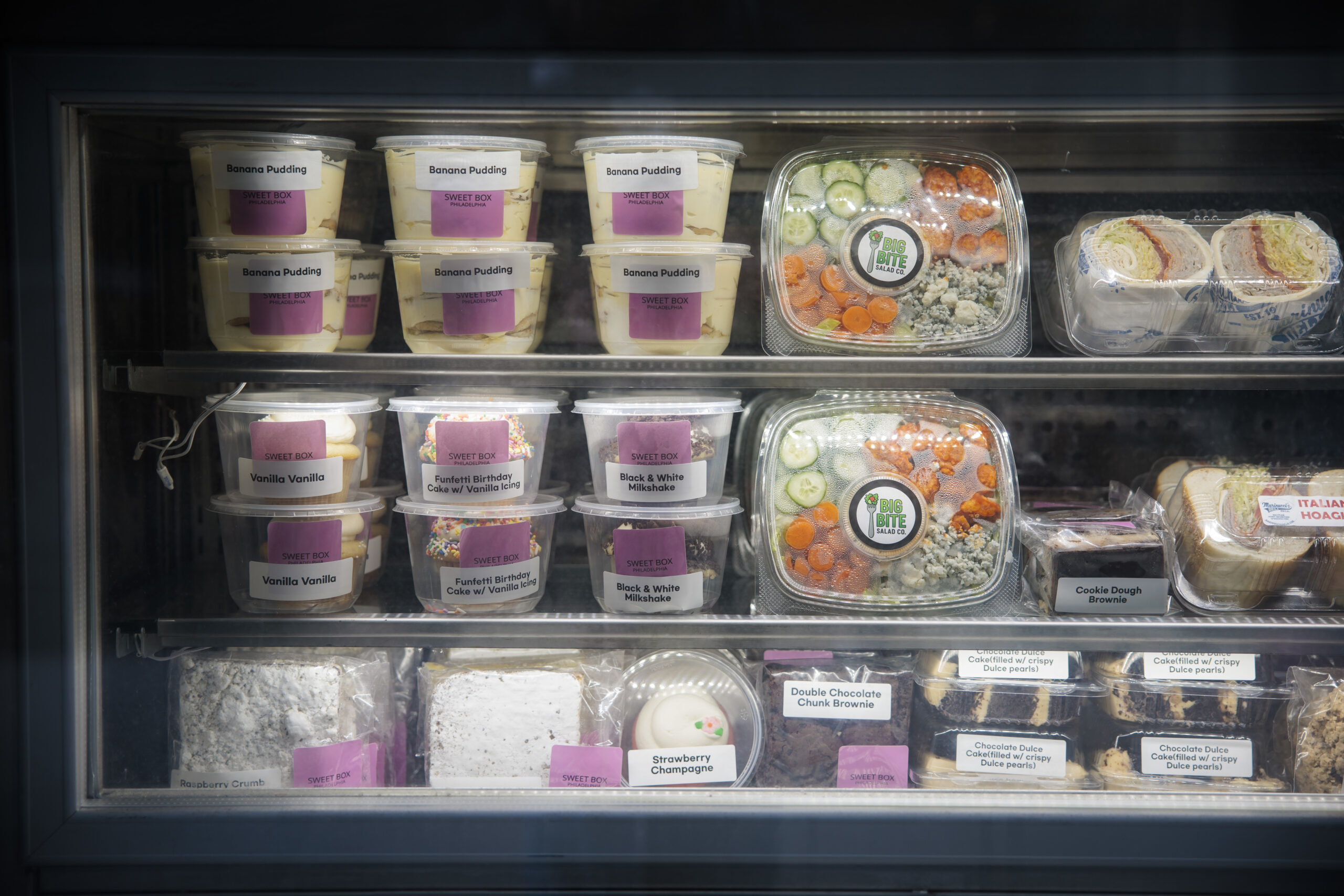
Although they’re working in a smaller space, Lieberman and Lorden have expanded their product line beyond their various mac-and-cheese bowls to include snacks and foods from local businesses, such as cinnamon milk buns from Huda, cupcakes and sweets from Sweet Box, fresh fruit lemonades from Dillonades, hoagies and wraps from Marinucci’s Deli, and salads from Big Bite Salad Co. (the sisters’ in-house brand). The lineup will vary depending on availability.
Lieberman, 36, launched Mac Mart in January 2013 as a food truck on the Drexel University campus, and Lorden, 39, joined her soon after. The store opened in May 2016 in a former shoe-repair shop on 18th Street near Chestnut; it closed last month.
Assorted refrigerated items are available at the Mini Mac Mart kiosk.
Lieberman said challenges on 18th Street forced them to rethink the storefront. Since the pandemic, she said, foot traffic and catering orders from offices had dropped. With fewer people on the street at night, she said, the business’ front door and window became a frequent target of vandals.
Besides, Lieberman acknowledged, “we’re very niche. People have to really want a one-pound bowl of mac and cheese, and that narrowed our audience.”
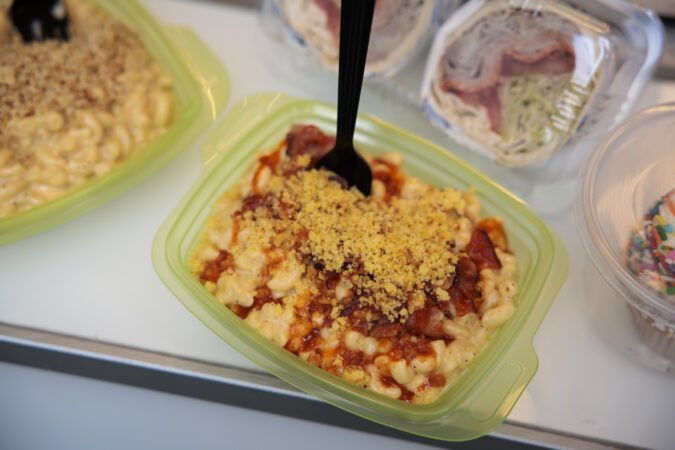
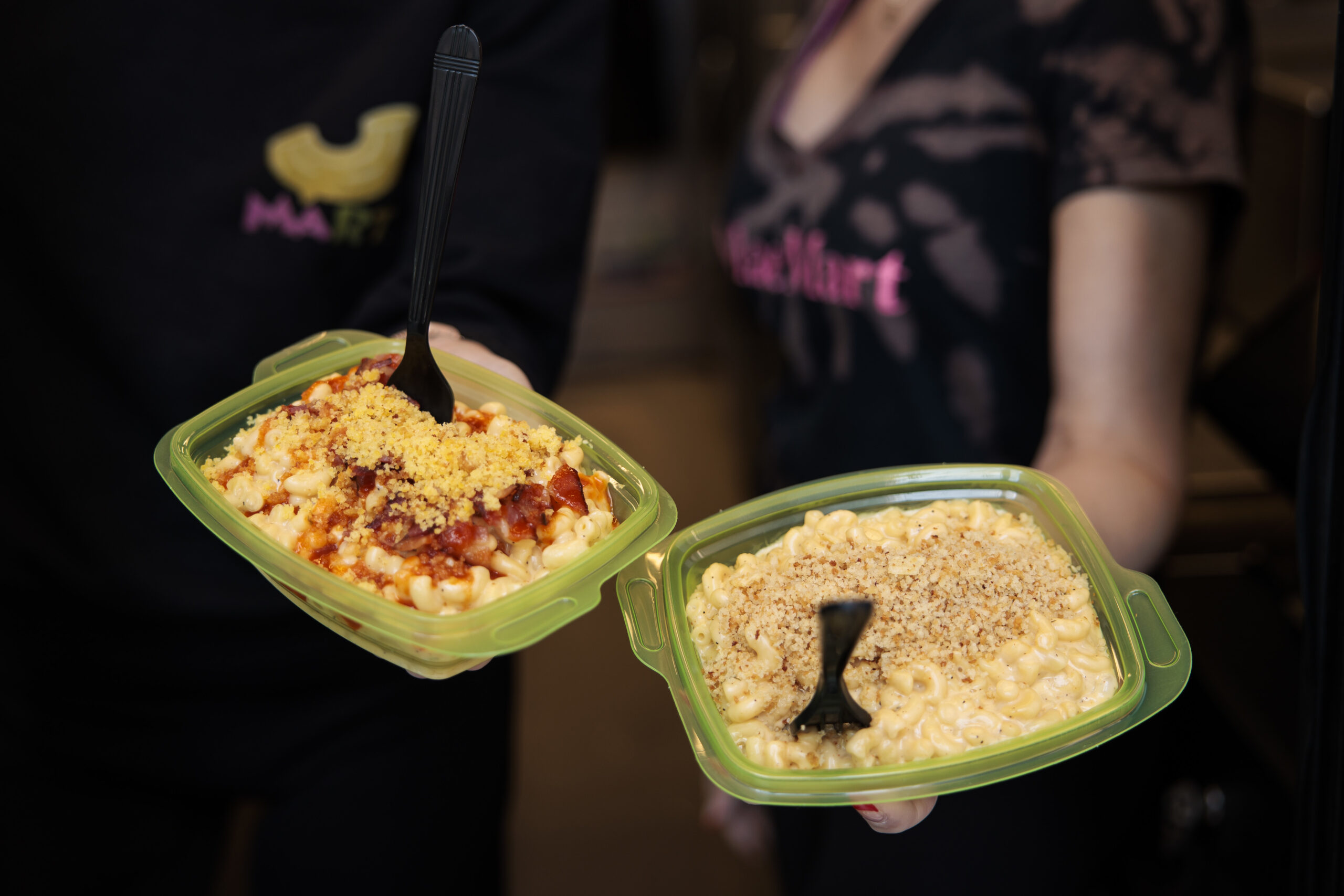
A BBQ Bacon Bowl and Mart’s Mac (plain) at the Mini Mac Mart kiosk.
In response, Lieberman and Lorden launched Munch Machines, a vending-machine operation that stocks with food from local small businesses.
The machines are located at Evo at Cira Centre South, an apartment complex near 29th and Chestnut Streets, and at Motto by Hilton in Rittenhouse.
“That model has continued to grow for us over the past 4½ years,” Lieberman said. “So when it came time to close Mac Mart, rebrand it, or pivot, we leaned into what we knew worked.”
Mini Mac Mart draws directly from that vending-machine approach, combining Mac Mart’s core product with a broader mix of ready-to-eat food in a kiosk that can be buttoned up tightly after hours. Customers can see items through the front window and order off the side window.
Mini Mac Mart kiosk near 18th and Arch Streets, as seen on Jan. 12, 2026.
Over the next year, Lieberman and Lorden plan to focus on refining the kiosk model while continuing catering, market pop-ups, and Munch Machines.
“If this small model works, which we’re confident it will, we could bring it into other small spaces — airports, amusement parks, college campuses,” Lieberman said. “This time, we know we don’t need 400 square feet or more. We can operate efficiently in a very small footprint and still serve a quality product.”
Mini Mac Mart, 18th and Arch Streets. Hours: 10 a.m. to 7 p.m. Monday to Friday.
Pssst. Wanna buy a hot table? Reservation scalpers are popping up in Philly’s online world, commandeering seats at popular restaurants. When one tried selling dinner bookings at Mawn, management fought back. Beatrice Forman will tell you the story.
Philly ramen power couple Jesse Pryor and Lindsay Mariko Steigerwald of the now-shuttered Neighborhood Ramen decamped to Tokyo last year, and they’ve launched tours. On a recent trip to Japan, Craig LaBan went slurping with them.
It’s Dry January, and Hira Qureshi offers the ultimate guide to sober-curious drinking in Philadelphia — plus word of a Dry January bar crawl this weekend.
Amari and other bitters are being made in-house at more local bars than ever. Kiki Aranita explains who’s making them and what’s behind the trend.
The PLCB has a rare-whiskey lottery running this week.
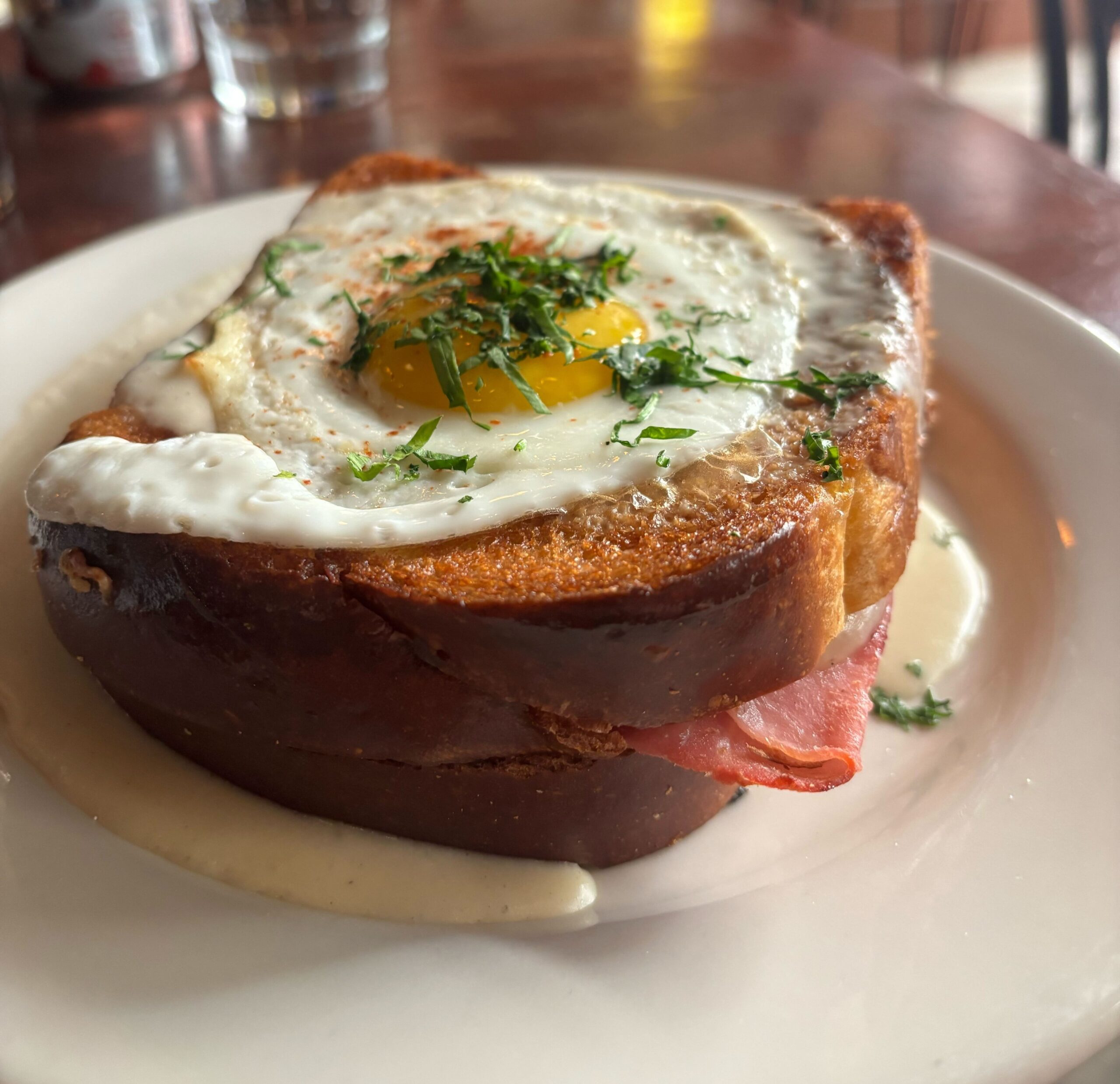
“If ever a sandwich deserved a place in the Louvre, this was it,” writes Stephanie Farr about this croque madame — one of three dishes that caught our palates.
😋 Egg tarts — those wiggly, lightly gelatinous conveyors of joy — are all over. Kiki Aranita will direct you to her favorite Portuguese pasteis de nata, flaky Chinese egg tarts, and cookie-style shortcrust egg tarts.
Scoops
El Toro, chef Edward Strojan’s taco spot at Reunion Hall in Haddon Township, will add location numero dos at 1437 E. Passyunk Ave., the former Essen Bakery. He’s aiming at early February.
River Twice’s Randy and Amanda Rucker are planning an expansion next door into the shuttered former Manatawny Still Works tasting room on Passyunk just off Tasker. They’re mum on concept and timeline.
The Juice Pod has leased the former Joe coffee space at 1845 Walnut St. for a spring opening.
Restaurant report
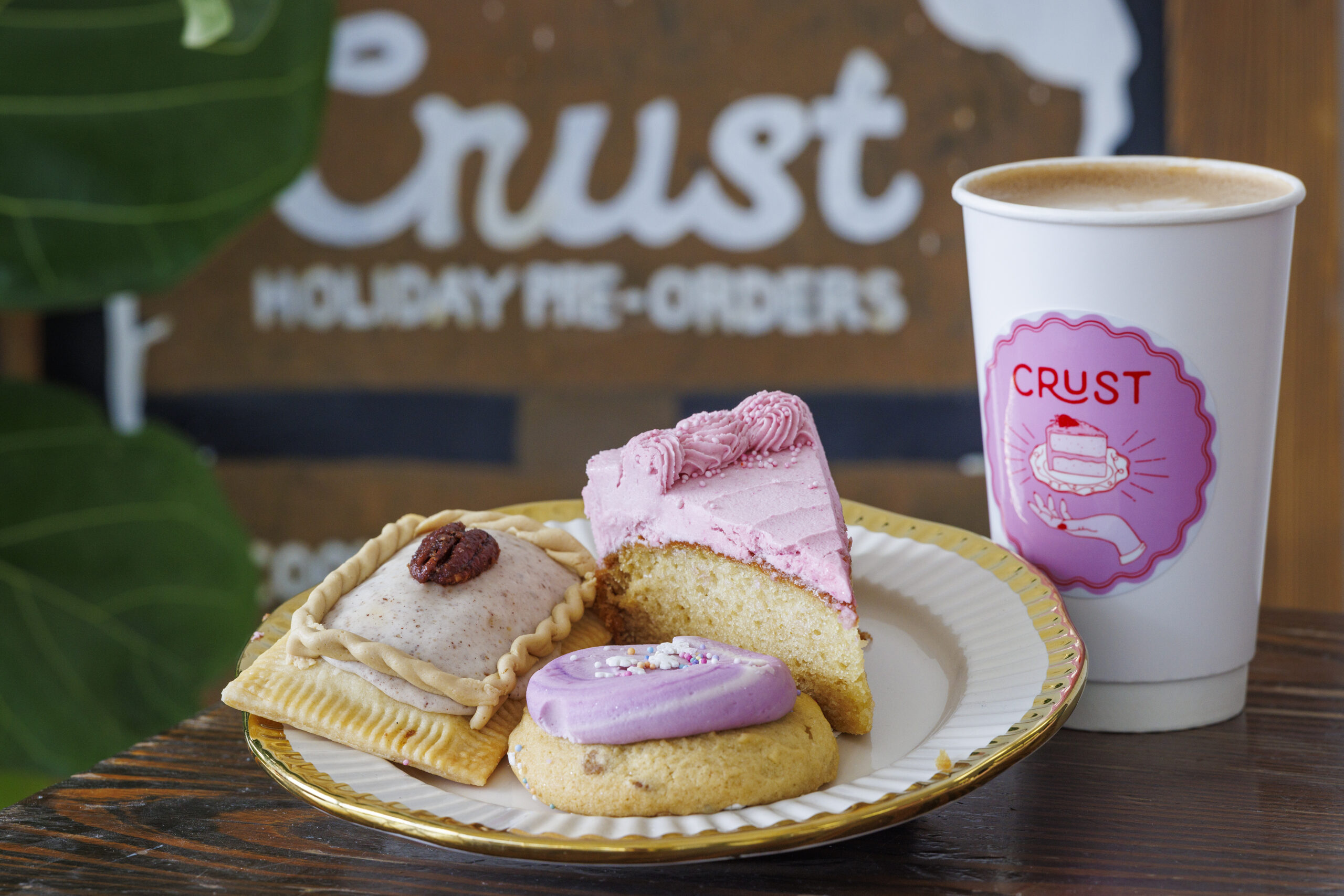
Crust Vegan Bakery — known for its picture-perfect pop-tarts — has merged its retail store and commercial kitchen into a new storefront in East Falls. “I wanted to create a place where people think, ‘Oh, I can get everything I need there,’” owner Meagan Benz told Beatrice Forman.
Falafel Time in the Graduate Hospital neighborhood has had an if-you-know-you-know menu since it opened in 2019. One dish — a crispy wrap stuffed with chicken shawarma, thin pickle slices, and garlic sauce — is now making the shop TikTok-famous. Hira lets you in on this now-open secret.
Kennett Square is getting an artsy restaurant and cocktail bar next to a boutique hotel. Brooke Schultz has the details on Birch Street, intended as an anchor for the block.
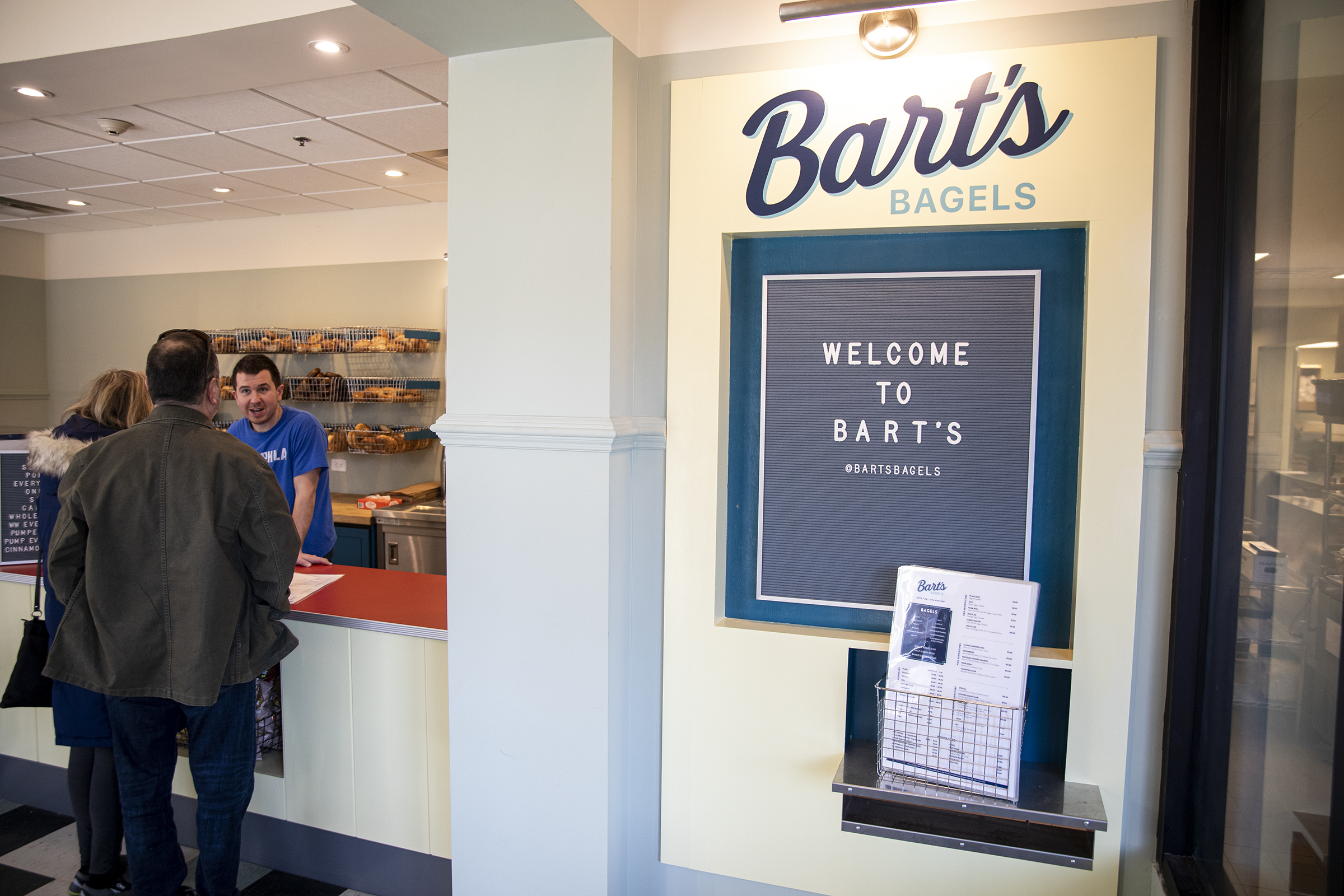
Bart’s Bagels, which launched in West Philadelphia and expanded to South Philadelphia, is headed to Bala Cynwyd next.
Briefly noted
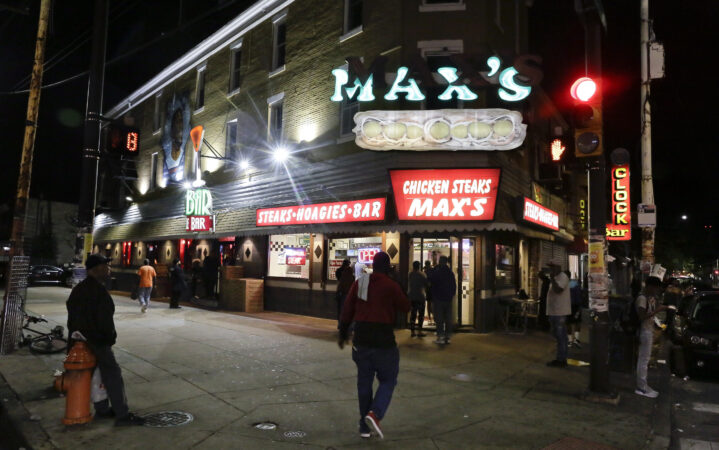
Max’s Steaks, the North Philly eatery with an attached bar that got screen time a decade ago in the Creed movies, has been sold.
McGillin’s Olde Ale House, Philadelphia’s oldest tavern (1860!), is hosting a reunion for couples who met at the bar, had their first date at the bar, or got engaged there. It’s Feb. 3, starting at 5:30 p.m. The $30-per-couple ticket includes a talk about the bar’s book Cheers to McGillin’s: Philly’s Oldest Tavern, drink tickets, appetizer buffet, discounted beers, and more. Details are here.
❓Pop quiz
A national restaurant chain has opened a “classic” location in Pennsylvania, decorated with nostalgic touches. Name it.
Gazzos’ Ardmore location has not been open for over a month. I tried reaching out to the Pottstown location about whether it is permanently closed, but received no response. There is no sign or message. Are you able to learn anything? — James D.
Gazzos co-owner Joe Lewis told me that the Ardmore sandwich shop, which opened last July at 2528 Haverford Rd., will return late this month (target is Jan. 28) after upgrades that will expand the menu.
📮 Have a question about food in Philly? Email your questions to me at mklein@inquirer.com for a chance to be featured in my newsletter.
By submitting your written, visual, and/or audio contributions, you agree to The Inquirer’s Terms of Use, including the grant of rights in Section 10.
OpenTable has begun adding a 2% service charge on transactions made through the reservations site, including no-show penalties, deposits, and prepaid dining experiences such as special events.
An OpenTable spokesperson said the restaurants can absorb the 2% charge or pass it along to customers. The fee is part of what OpenTable called an overhaul that began rolling out to most U.S. restaurants in the second half of 2025, with the remainder scheduled for early 2026.
As before, patrons are not being charged directly for ordinary reservations; the restaurants continue to pay OpenTable to use the platform as part of their service agreement.
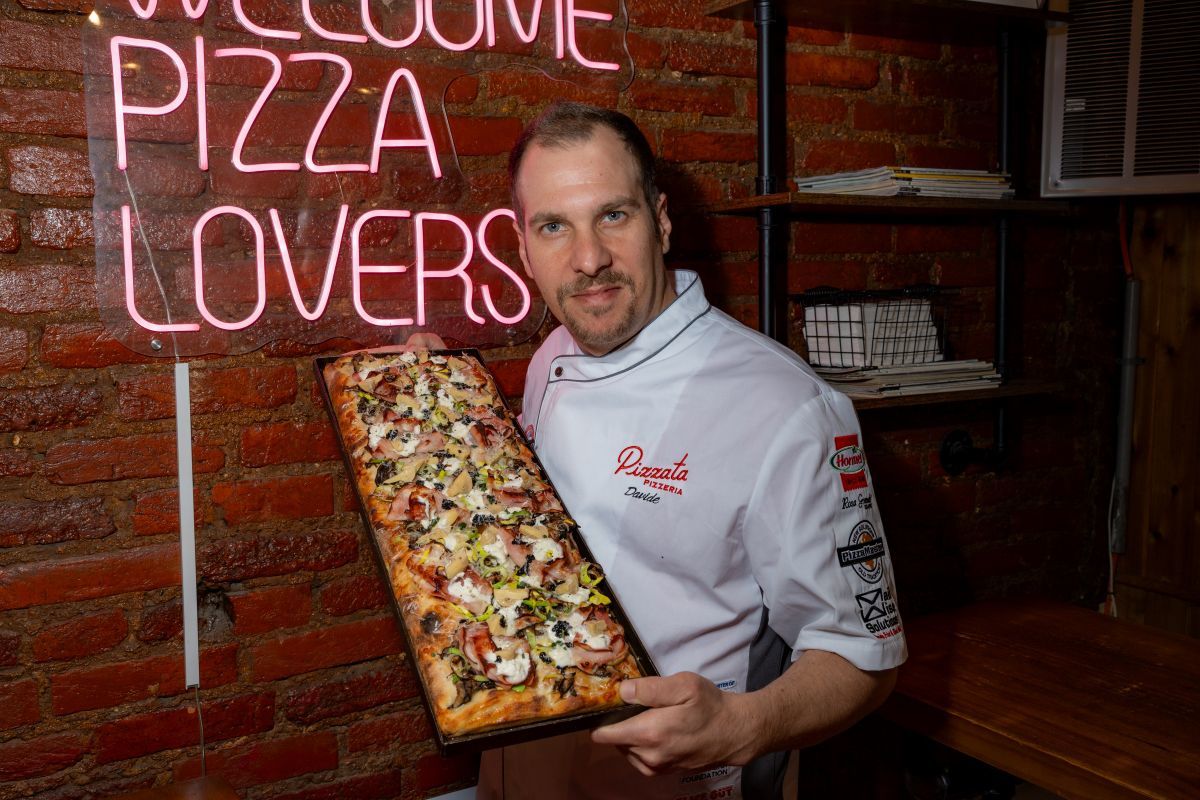
Davide Lubrano of Pizzata Pizzeria & Birreria with a Roman pizza, topped with mixed organic wild mushrooms, organic leeks, low-moisture mozzarella, prosciutto cotto Italian ham, stracciatella, pickled chiodini mushrooms in oil, chives, aged Parmigiano Reggiano, and truffle caviar pearls.
“Online payments are important for restaurants and, together with our restaurant partners, we’ve learned that they help reduce no-shows, improve cash flow, and increase revenue,” the OpenTable representative said. “By applying a standard service fee structure across all transaction types, we can continue to support new tools that help restaurants protect and unlock revenue.”
At Pizzata Pizzeria & Birreria on East Passyunk Avenue in South Philadelphia, co-owner Davide Lubrano said the restaurant recently turned to OpenTable in an effort to control persistent no-shows.
With just 48 dining-room seats split between two floors — plus a 12-seat bar that is first come, first served — missed reservations ripple through Pizzata’s service.
“What was happening is that we were turning away walk-ins, and then the reservation wouldn’t show up,” Lubrano said. “We ended up losing tables, basically.”
Pizzata just began requiring a credit card to hold OpenTable reservations, which call for a $15-per-person no-show fee.
But Pizzata is generous about it. Lubrano said customers get a 20-minute grace period, along with three reminder texts and a courtesy call. “If you don’t respond to the texts and don’t answer the call, that counts as a no-show, and that’s when the charge applies,” he said. “But if you answer and say you need to cancel, there’s no charge.”
As for the new 2% fee that would be tacked on to the $15 no-show charge, Lubrano emphasized that OpenTable and not the restaurant is assessing it.
He added that diners who prefer to avoid entering a credit card online can still call the restaurant directly. “You can always call us and avoid a credit card fee, and we put a reservation in for you,” he said.
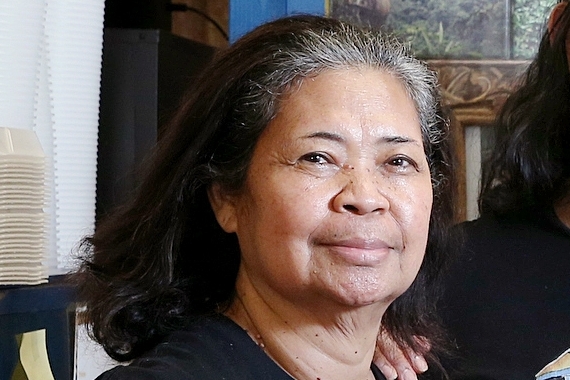
Ena Widjojo, 73, of Philadelphia, owner and longtime celebrated chef atthe Hardena restaurant in South Philadelphia, mentor, and mother, died Wednesday, Dec. 24, of cancer at her home.
Born and reared in Java, Indonesia, Mrs. Widjojo came to the United States in 1969 when she was 17. She opened a cantina at the Indonesian Consulate in New York in 1977, worked as a caterer in the 1990s after the cantina closed in 1989, and moved to Philadelphia in 2000 to open Hardena with her husband, Harry.
Over the next decade and a half, until she retired in 2017, Mrs. Widjojo grew Hardena, described by the Daily News in 2007 as “a postage-stamp-size luncheonette at Hicks and Moore Streets in a gritty section of South Philly,” into a culinary and cultural connection for thousands of local Indonesians and other diners who enjoyed her homemade Southeast Asia cuisine.
The corner restaurant’s name is a blend of their names, Harry and Ena, and features Indonesian specialties such asgolden tofu, goat curry, saté chicken, beef rendang, and tempeh. “It’s the best Indonesian food in Philadelphia, a great mix of Indian and Chinese flavors,” elementary schoolteacher Aaron MacLennan told the Daily News in 2007.
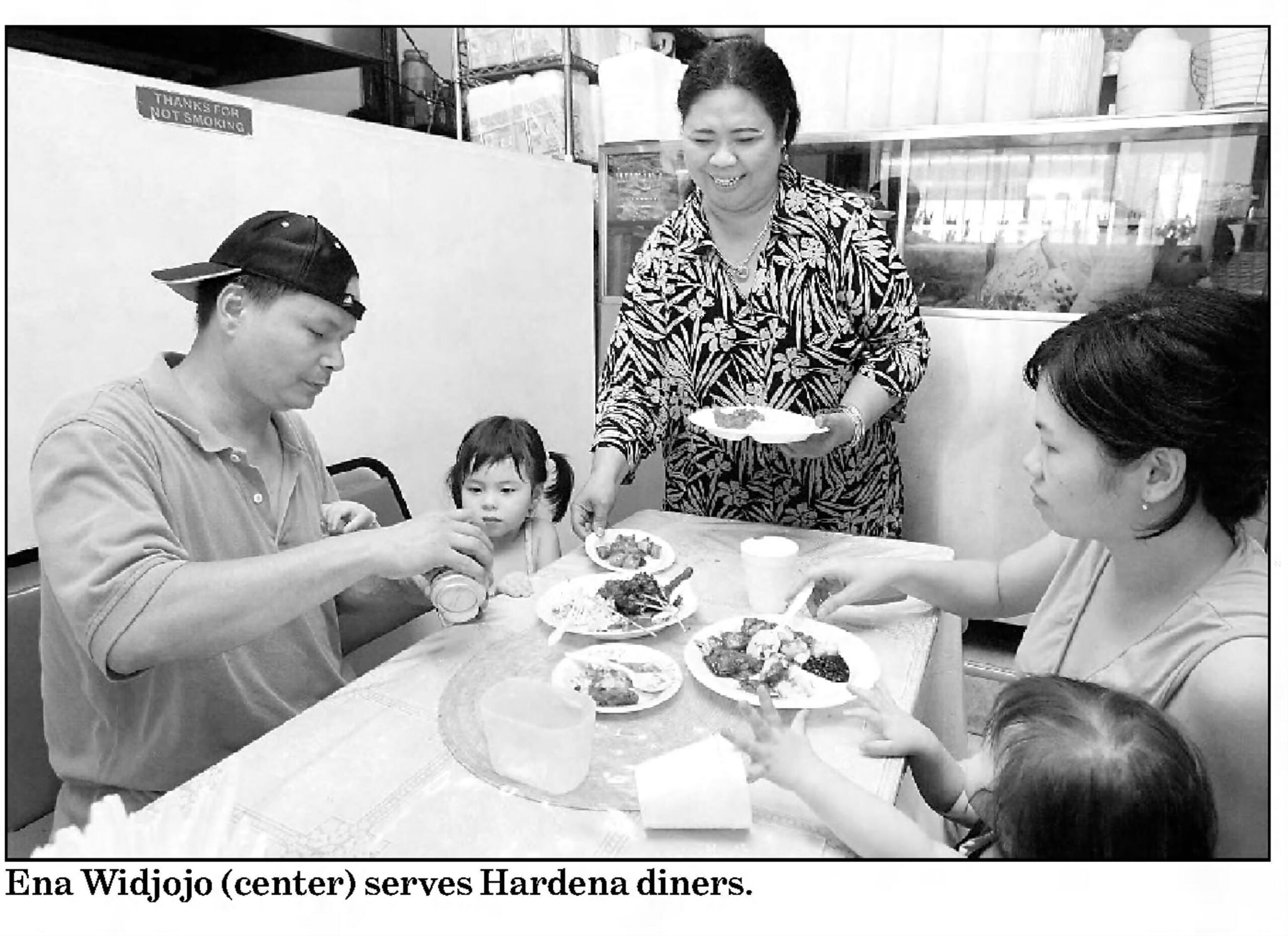
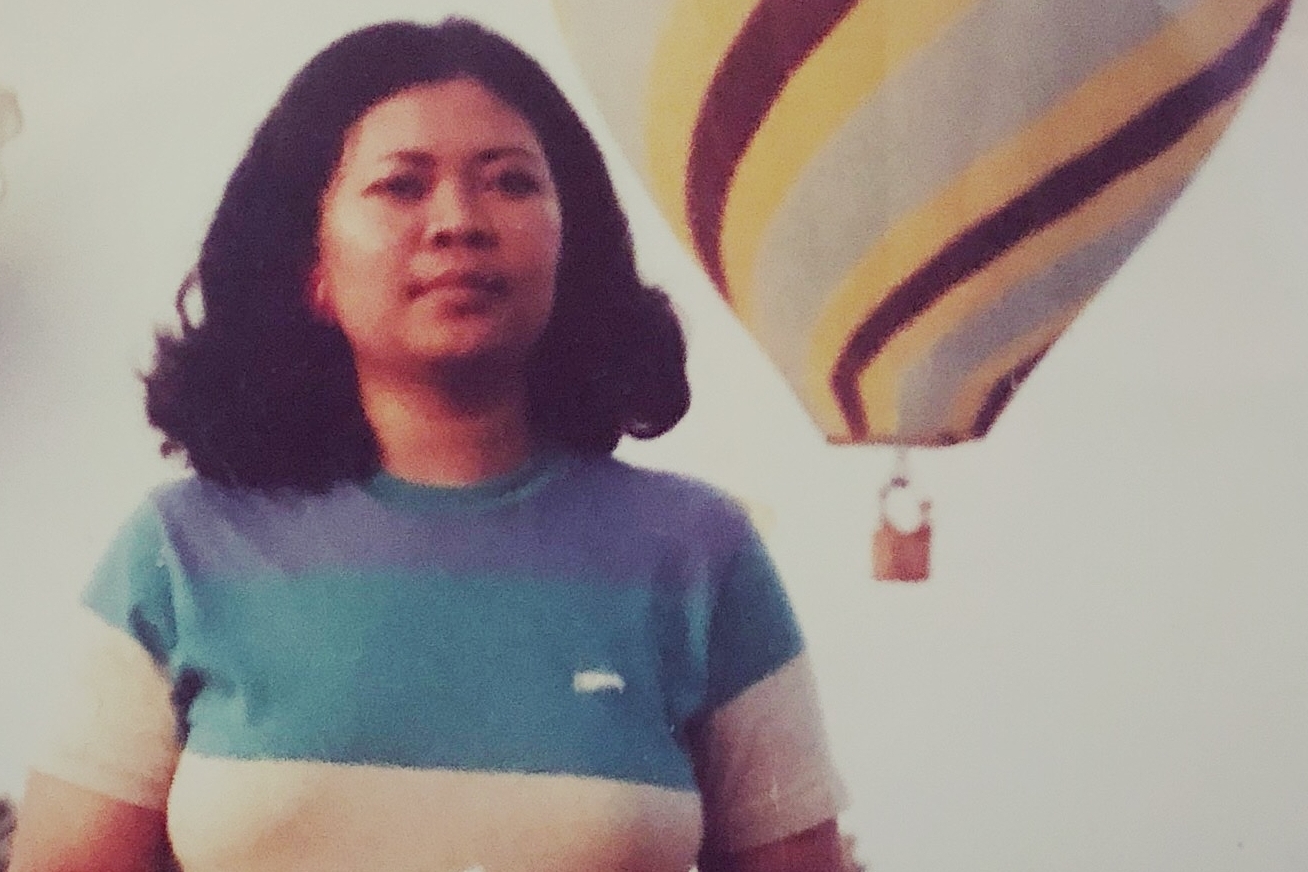
This photo of Mrs. Widjojo appeared in the Daily News in 2007
Friendly and ever present at the lunch and dinner rushes, Mrs. Widjojo was known as Mama to many of her customers and friends. She learned how to bake and cook from her mother, a culinary teacher in Java, and later incorporated many of her mother’s recipes into her own memorable melting pot of Indian, Chinese, Arab, Portuguese, Spanish, English, and Dutch dishes at Hardena.
“She served me greens once, and I felt like I was at home,” a friend said on Instagram.
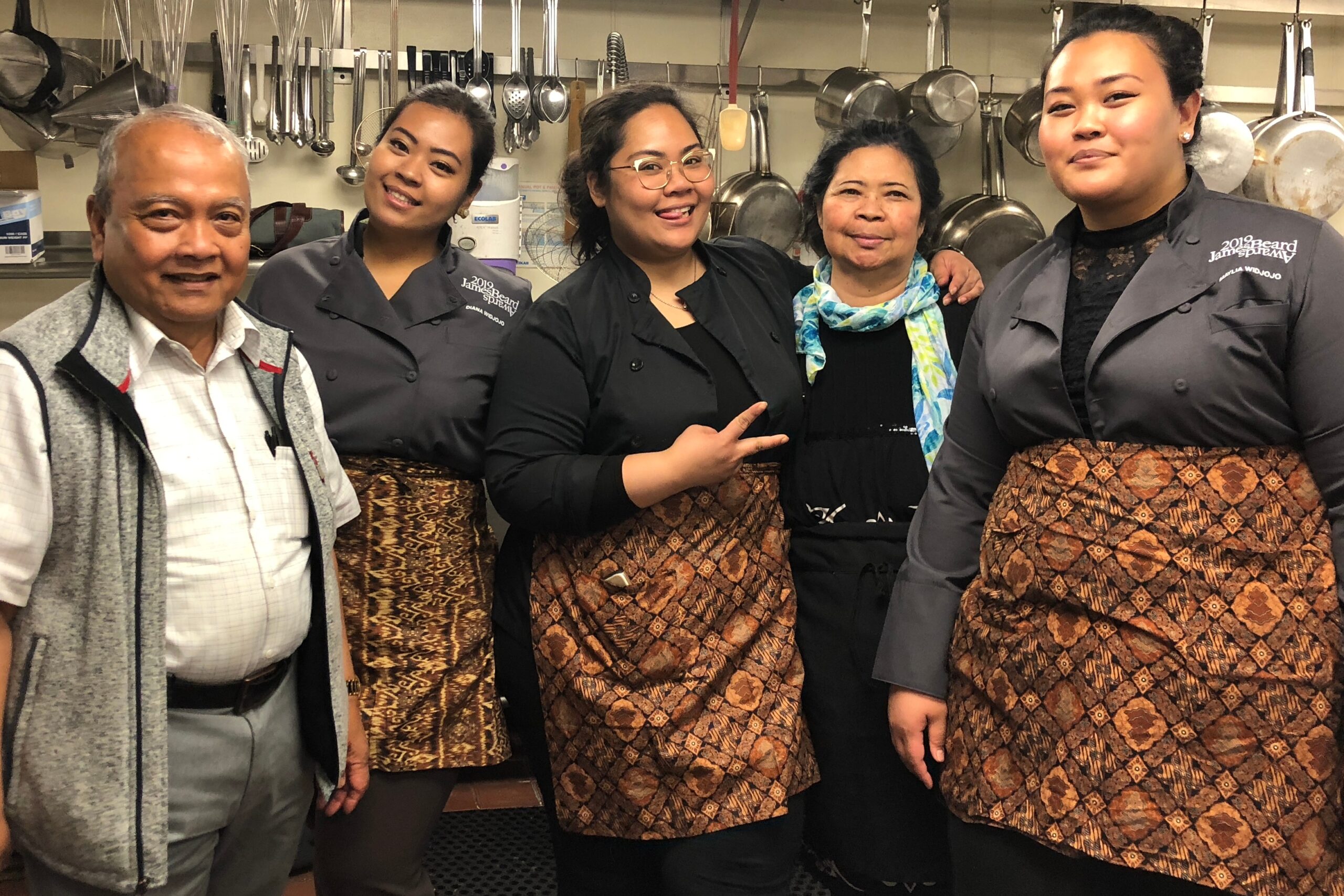
She and her husband traveled weekly between Philadelphia and Queens while their daughters — Diana, Maylia, and Stephanie — finished school in New York. Maylia and Diana assumed control of Hardena when Mrs. Widjojo retired, and Diana opened the restaurant Rice & Sambal on East Passyunk Avenue in 2024.
Earlier, at the consulate in New York, Mrs. Widjojo made meals for former Secretary of State Henry Kissinger and former Indonesian President Suharto and his large entourage. “I cooked for all the diplomats.” she told The Inquirer in 2018.
Mrs. Widjojo (second from right) smiles with her husband and three daughters.
She grew chili peppers and lime trees in her South Philly backyard, was happy to share kitchen tips and cultural traditions with visitors and cooking classes, and helped her daughters cater the 2019 James Beard Foundation’s annual Media Awards in New York.
She worked six days a week for years and told edible Philly in 2017 that her retirement was good for her daughters. “If I’m cooking all the time,” she said, “they’re not learning.”
Ena Djuneidi Juniarsah was born April 24, 1952. She baked cakes in a charcoal oven for her mother in Java and sold cookies and pastries after school when she was young. “
Her mother was strict about cooking, Mrs. Widjojo said in 2018, and discarded any and all imperfect creations. “Like me, with my kids’ cooking,” she said, “if you’re not good, that’s no good.”
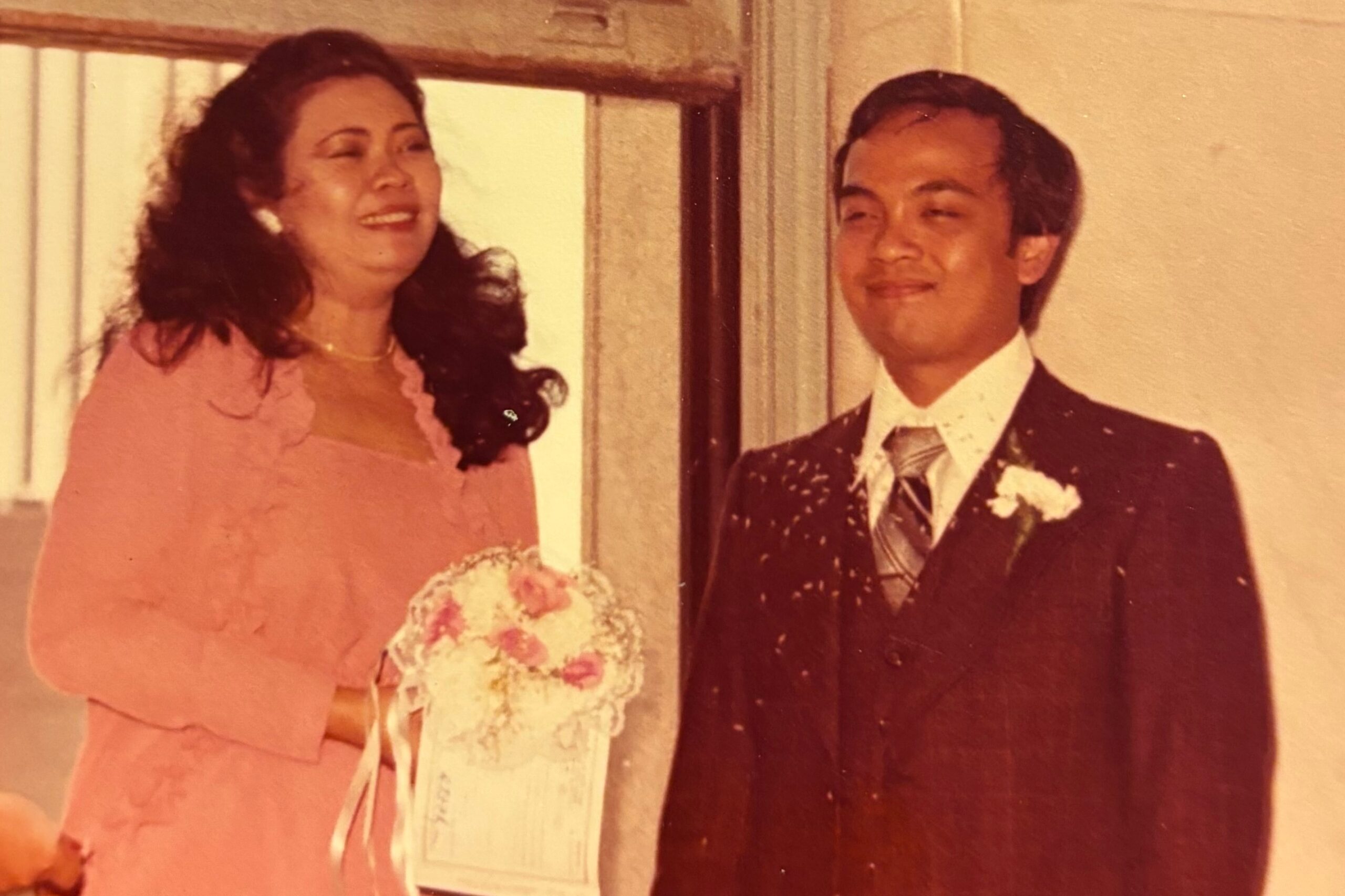
She married fellow restaurateur Harry Widjojo in New York and spent time as a singer, beautician, florist, and nanny before cooking full time. Away from the restaurant, she enjoyed drawing, painting, crocheting, and family strolls in the park.
Mrs. Widjojo and her husband, Harry, were married in New York.
She could be goofy, her daughters said. She sang “You Are My Sunshine” when they were young and served as their lifelong mentor and teacher.
Friends called her “sweet,” “amazing,” “a beautiful soul,” and “warm and welcoming” on Instagram. She was diagnosed with cancer in 2015.
“Her life, generosity, and talent enriched the hearts of all who met her,” her family said in a tribute. “She taught us that feeding people is one of the purest ways to show love, have pride in our culture, and support our family.”
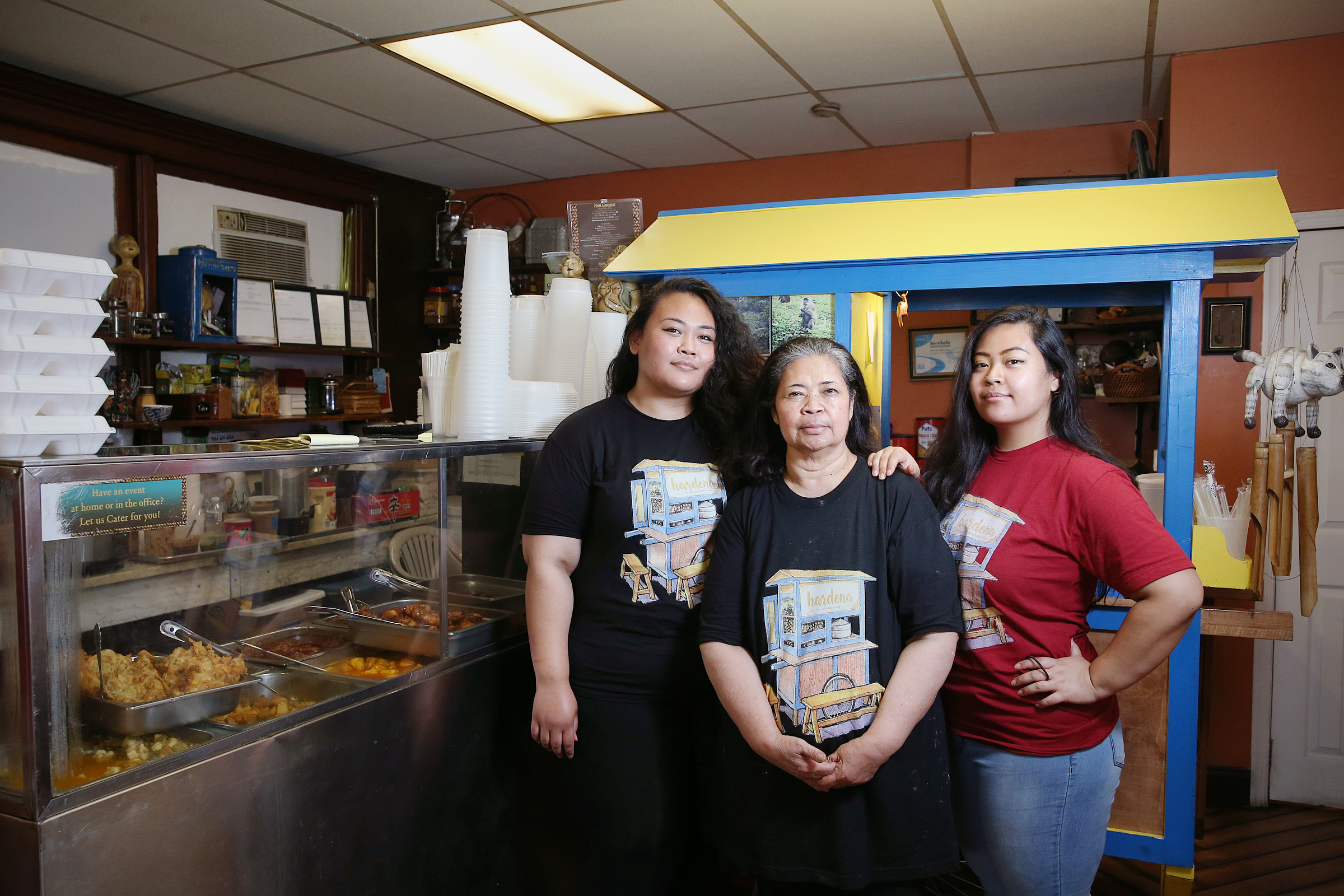
Mrs. Widjojo (center) stands in Hardena with her daughters Maylia (left) and Diana in 2020.
Diana said: “She saw the world with open arms and an open heart. She was a wonder woman.”
In addition to her husband and daughters, Mrs. Widjojo is survived by two grandchildren, a sister, two brothers, and other relatives. A sister and two brothers died earlier.
The New York-style bagel shop, which currently has locations in West and South Philadelphia, is bringing its fresh bagels, smoked meats, egg sandwiches, and unique schmears to 273 Montgomery Ave.
The Main Line outpost is expected to open this summer.
While the new storefront marks a major expansion for the local bagel shop, it’s also a homecoming for cofounders and brothers Brett and Kyle Frankel, who grew up in Bala Cynwyd.
“We know the area very, very well,” Brett Frankel said.
Brett Frankel, co-owner of Bart’s Bagels, helps customers at Bart’s Bagels on Wednesday, Jan. 22, 2020. Bart’s is expanding to Bala Cynwyd later this year.
Brett, 34, and Kyle, 41, both Lower Merion High School graduates, grew up a five-minute walk from their newest location. Brett Frankel says he remembers hanging out at the soon-to-be Bart’s Bagels storefront after middle school, back in the days when it was Bravo Pizza.
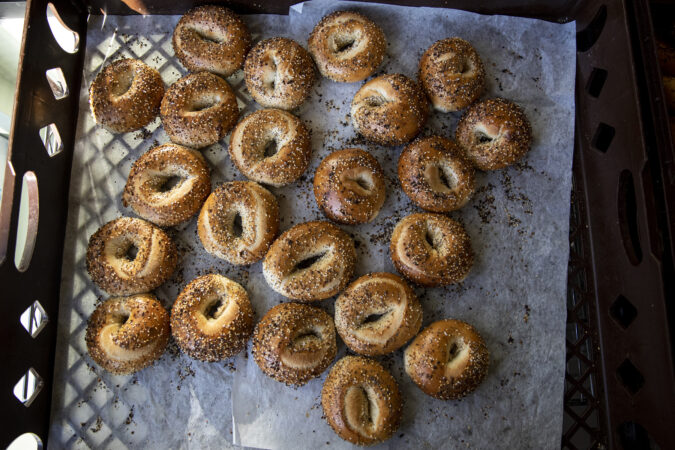
Main Line patrons will be able to expect all of the same kettle-boiled bagels and fixins’ that Bart’s is known for, from pumpernickel bagels to pastrami smoked salmon and beet-horseradish cream cheese.
While Bart’s city-based locations are grab-and-go only, there will be a few seats in the new Bala Cynwyd shop.
The unique part of Bart’s, Brett Frankel said, is that patrons can see bagels being made in front of them through the open kitchen.
“You’re kind of immersed in it,” he said.
The Frankels say their love for good bagels was forged through regular trips to New York’s Upper West Side to eat at the famed Zabar’s and H&H Bagels.
Looking to get their fix closer to home, Brett Frankel taught himself how to make bagels while working as a business analyst for a software company. He traveled to Denver, New Jersey, and Detroit to learn the ins and outs of the bagel industry.
Bart’s started as a wholesale operation in late 2019, selling to Di Bruno Bros., Middle Child, Elixr Coffee, White Dog Cafe, and other local restaurants. The Frankels brought chef Ron Silverberg on board, and they opened the first Bart’s in West Philly in January 2020. Their South Philly location opened in July 2024.
Bart’s is not the only new bagel place coming to Lower Merion this year.
This suburban content is produced with support from the Leslie Miller and Richard Worley Foundation and The Lenfest Institute for Journalism. Editorial content is created independently of the project donors. Gifts to support The Inquirer’s high-impact journalism can be made at inquirer.com/donate. A list of Lenfest Institute donors can be found at lenfestinstitute.org/supporters.
Max’s Steaks — the North Philadelphia sandwich shop known for its 2-foot sirloin cheesesteaks, quirky next-door bar advertising “the largest drink in Philly,” and star turn in the Creed movies — is being sold after three decades.
Pennsylvania Liquor Control Board records show a recent license transfer application from corporations controlled by longtime bar owner Chuck Weiner to veteran restaurateur Rob LaScala, whose diverse holdings include the fast-growing LaScala’s Fire Italian restaurants as well as numerous steak shops and pizzerias in Philadelphia and South Jersey.
Weiner, who also owns Chuck’s Alibi at the Five Points intersection in Northeast Philadelphia, did not return a message seeking comment that was left with a family member last week.
Rob LaScala of LaScala Restaurant Group.
LaScala, who has been managing Max’s under a contract, said he also was Weiner’s longtime tenant at Chubby’s, his popular Roxborough steak shop. “He’s always been a good landlord to me,” LaScala said Friday. “Max’s is exactly like Chubby’s — right up my alley. I love those kinds of places.”
“We bought it because it’s a staple in the community, and I love high-volume places,” LaScala said. “I want to get it back to the volume it used to have.”
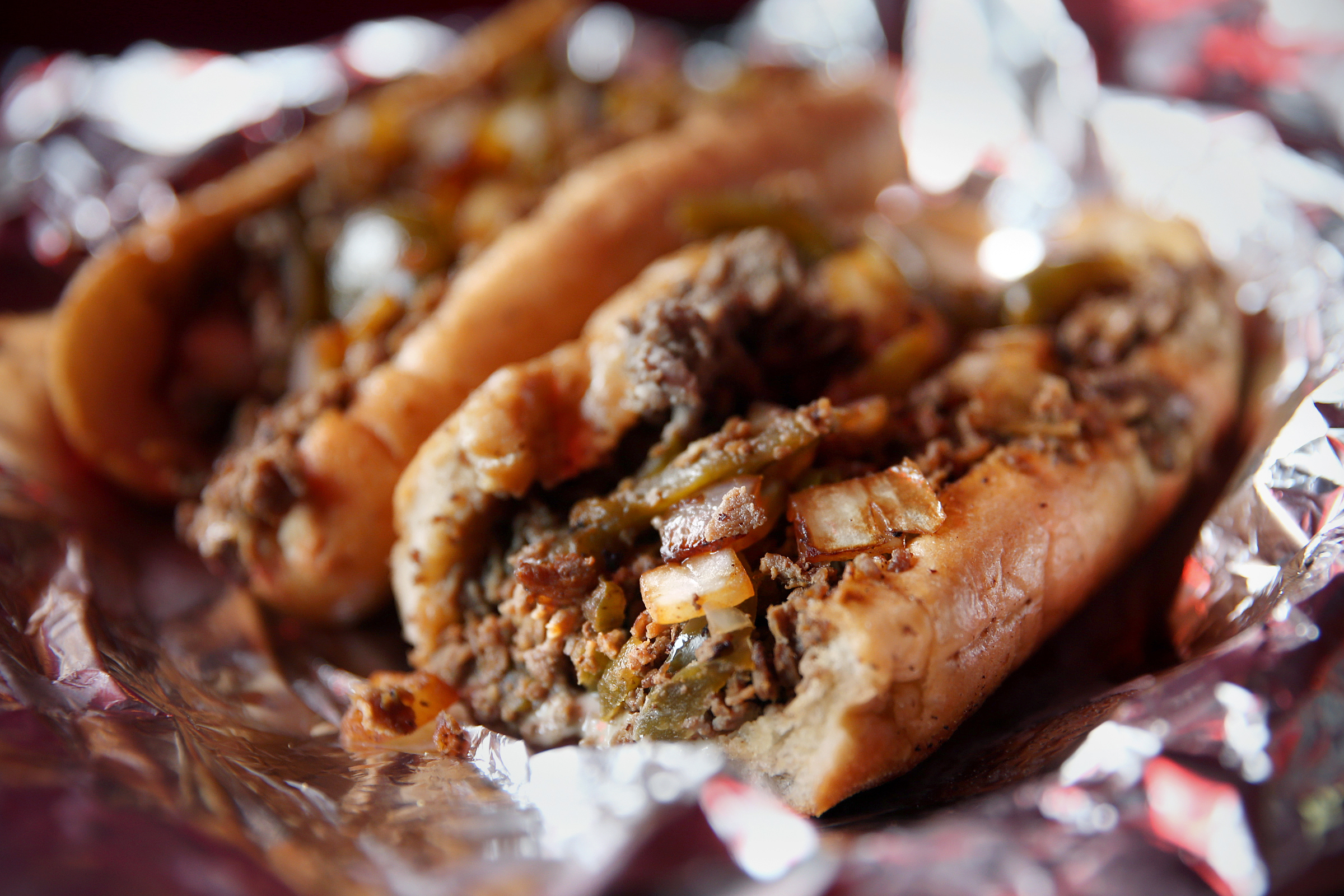
A cheesesteak with onions and peppers at Max’s Steaks in 2018.
LaScala said his company was rebranding Max’s. “We already renovated the place and we’re doing a bigger renovation over the next six months,” he said. “We’re doing brand recognition — shirts, hats, logos. Menu-wise, we’re expanding a little. Before, it was mostly cheesesteaks and hoagies. We added fries, wings, specialty sandwiches, and some bar food since there’s a bar. We’re not changing what it is — we’re just making it better, more efficient, and better quality.”
Weiner told Philly Voice in a 2016 interview that he got the idea for Max’s after watching the crowds at Jim’s South Street circa 1990 while eating across the street at Lickety Split, then a popular restaurant where MilkBoy is now. Max’s — named after Weiner’s son — opened in 1994 at 3653 Germantown Ave. in Nicetown, at the busy Broad Street-Erie Avenue hub. The adjacent Eagle Bar, with its Naugahyde booths, oversized cocktails, and neon signs, is Max’s de facto seating area.
LaScala said he was not involved with the neighboring Clock Bar, also part of Weiner’s holdings.
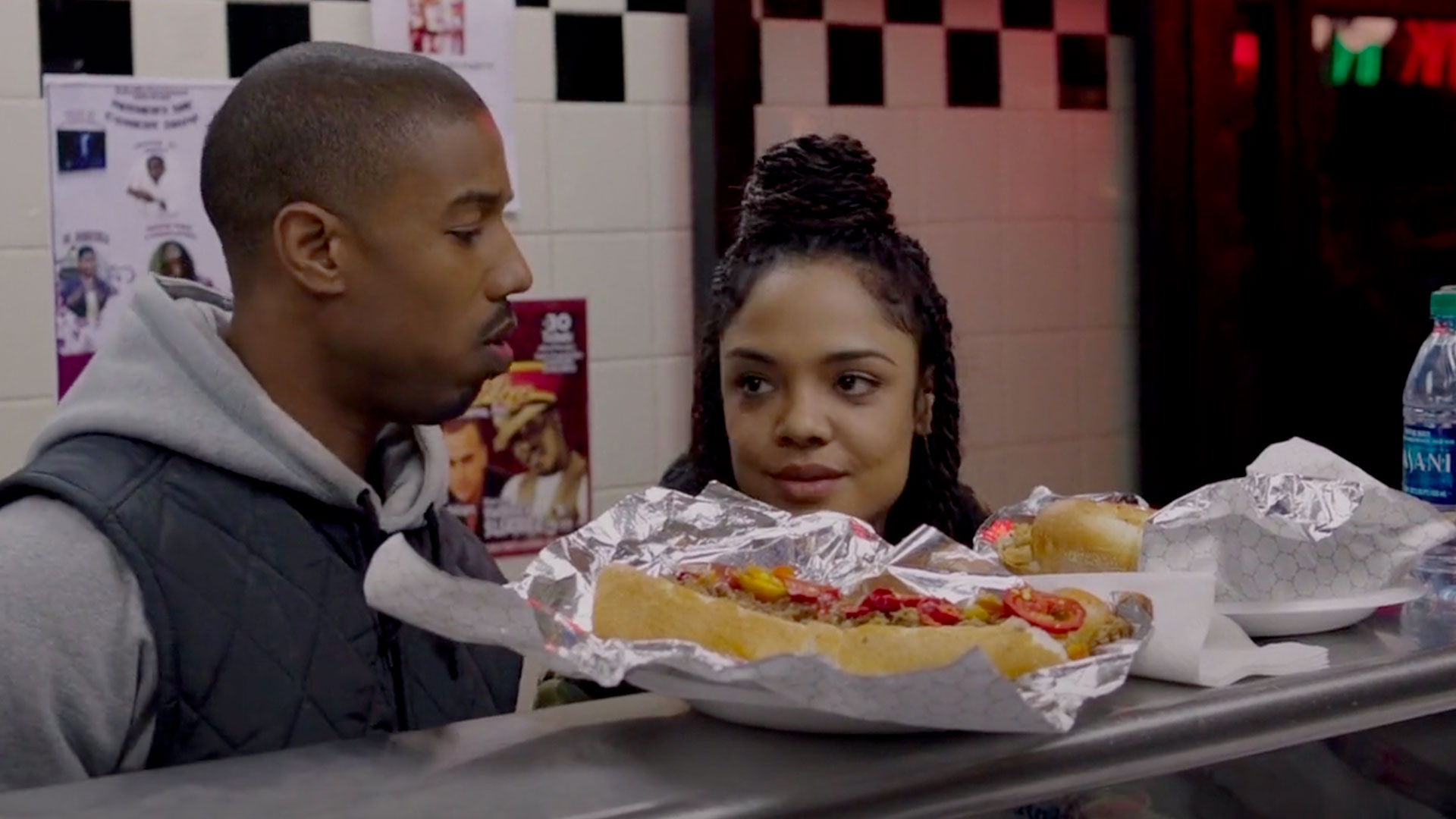
Michael B. Jordan and Tessa Thompson at Max’s Steaks in “Creed.”
In part because of its location far from tourist hubs, Max’s reputation spread primarily by word of mouth rather than guidebooks.
That changed dramatically in 2015, when Max’s appeared in the Rocky sequel Creed. This is where Adonis Creed (Michael B. Jordan) ate his first Philly cheesesteak under the adoring eye of Bianca Porter (Tessa Thompson) and learned that he would box Viktor Drago. The shop also had a cameo in Creed II, the 2018 sequel.
In 2017, Philadelphia marked Kevin Hart Day with a party at Max’s, located a block from the comedian’s childhood home.
TOKYO — Lindsay Mariko Steigerwald and Jesse Pryor set the gold standard for ramen in Philadelphia during their five-year run at Neighborhood Ramen. But when the couple announced the closure of their beloved Queen Village restaurant at the end of 2024, they also teased an audacious bit of news: They were moving to Japan with plans to reopen their shop in the ramen capital of the world.
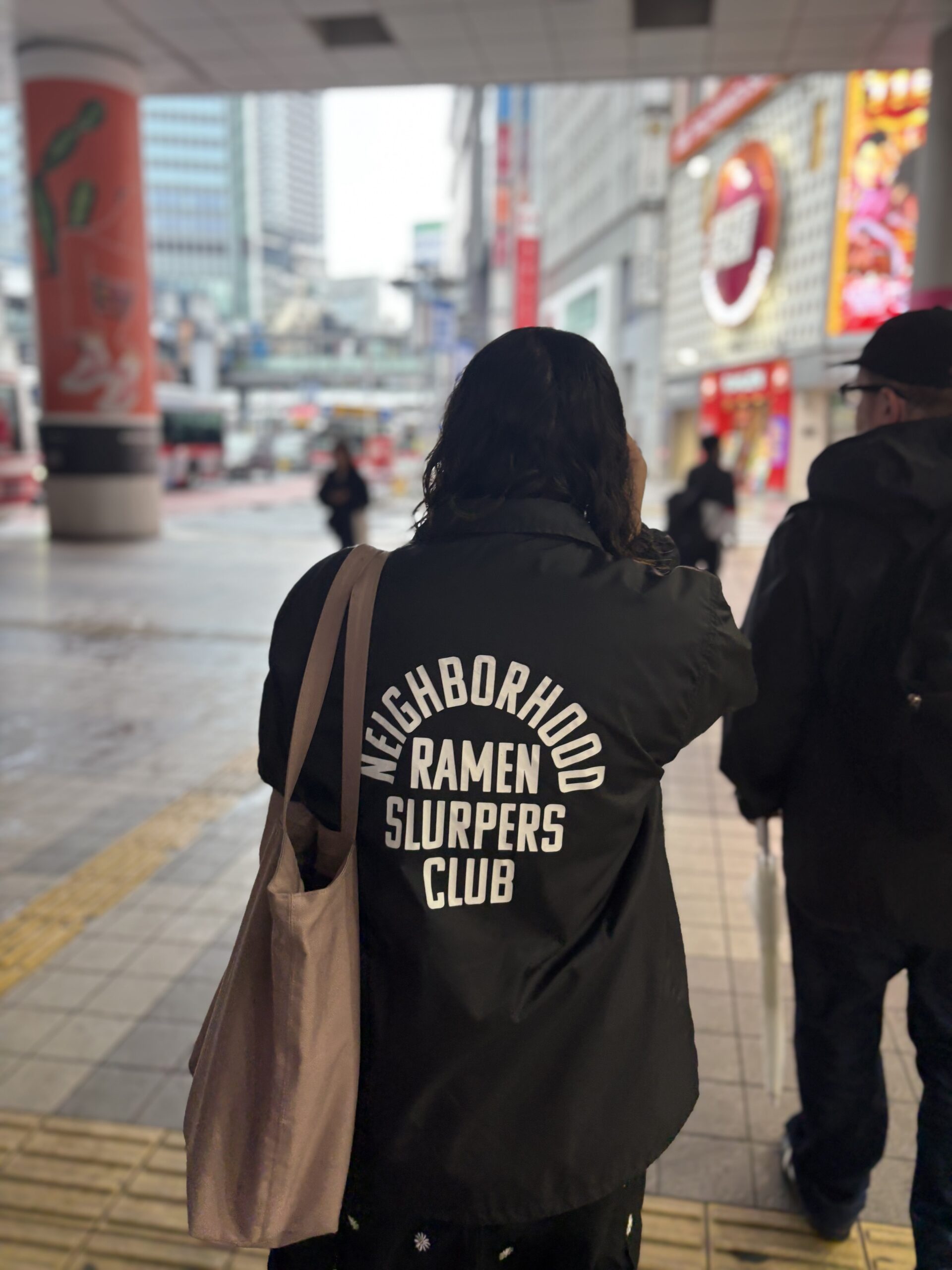
“This is the next chapter for Neighborhood Ramen!” said Steigerwald, 35, as we stood in a blustery November rain beside Shibuya Scramble Crossing, the famously chaotic, neon-lit intersection in Tokyo where we rendezvoused for a day of noodle slurping across the city.
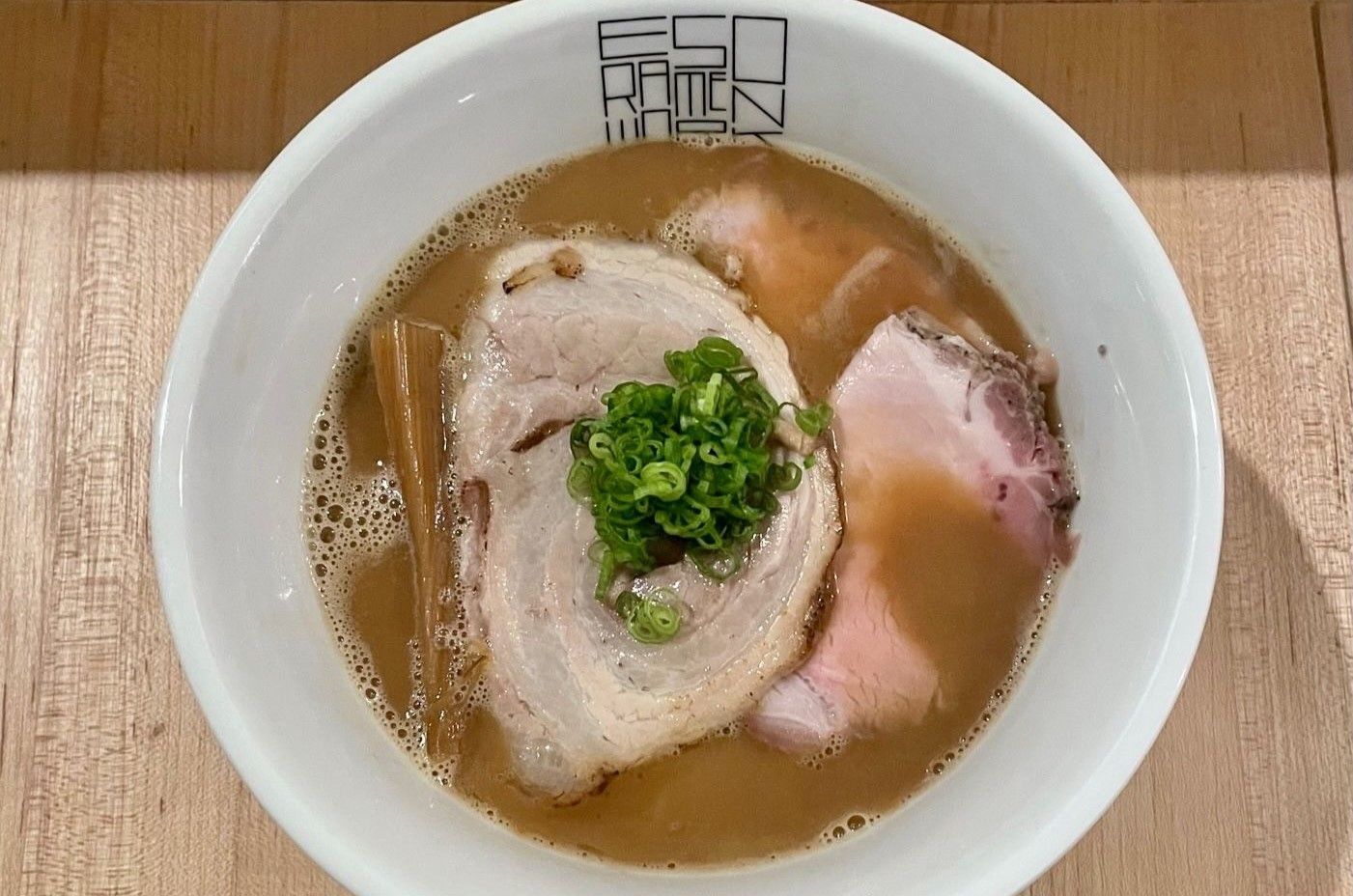
The couple had arrived from Philadelphia just 10 days earlier — following a year of planning (and a pop-up venture called ESO Ramen Workshop in Society Hill). They’d already begun their classes at Japanese language school and launched the arduous visa process that must be settled before they can begin working on their own restaurant. It will likely still be many months before Neighborhood Ramen fires up its stockpots and noodle machine in Tokyo.
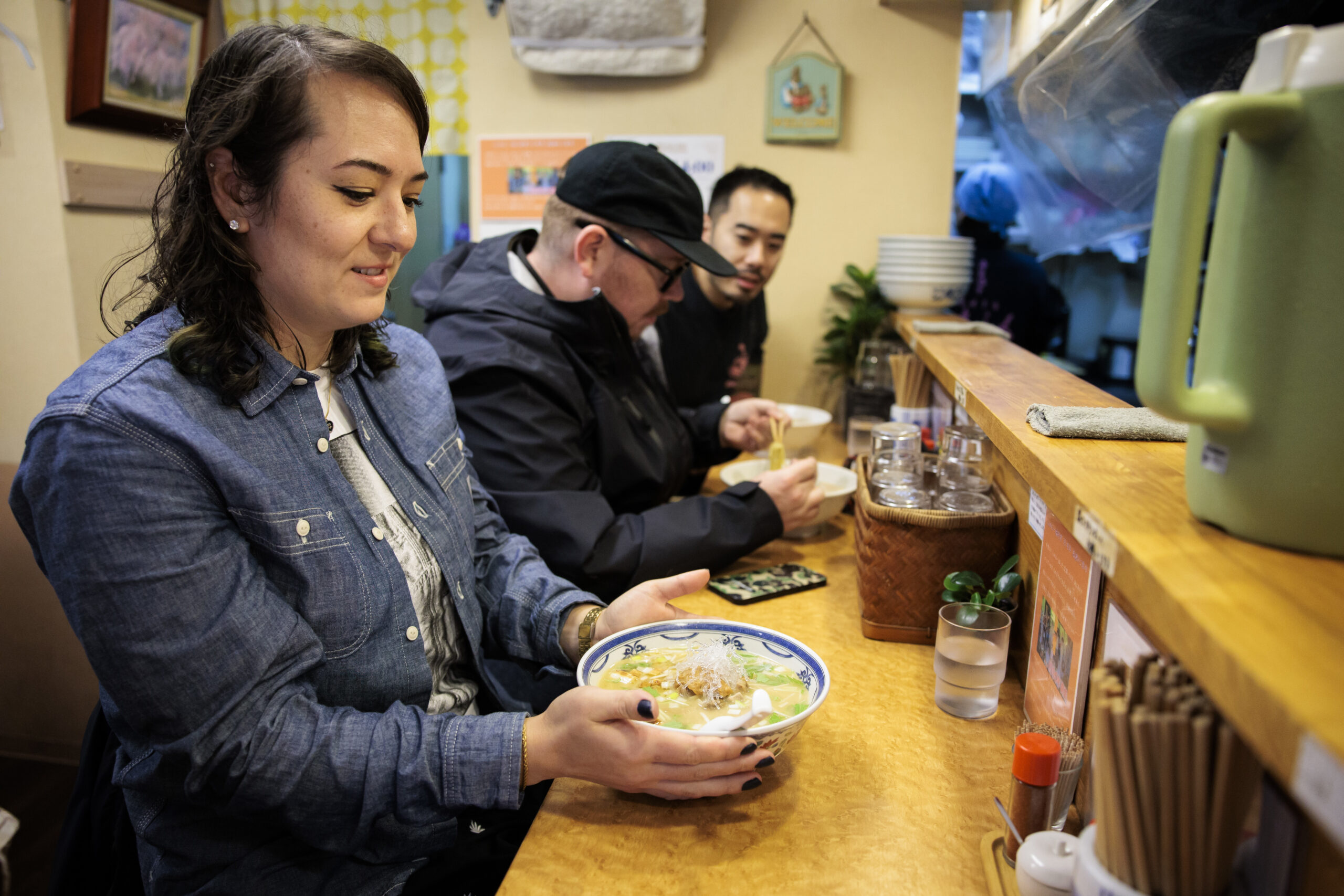
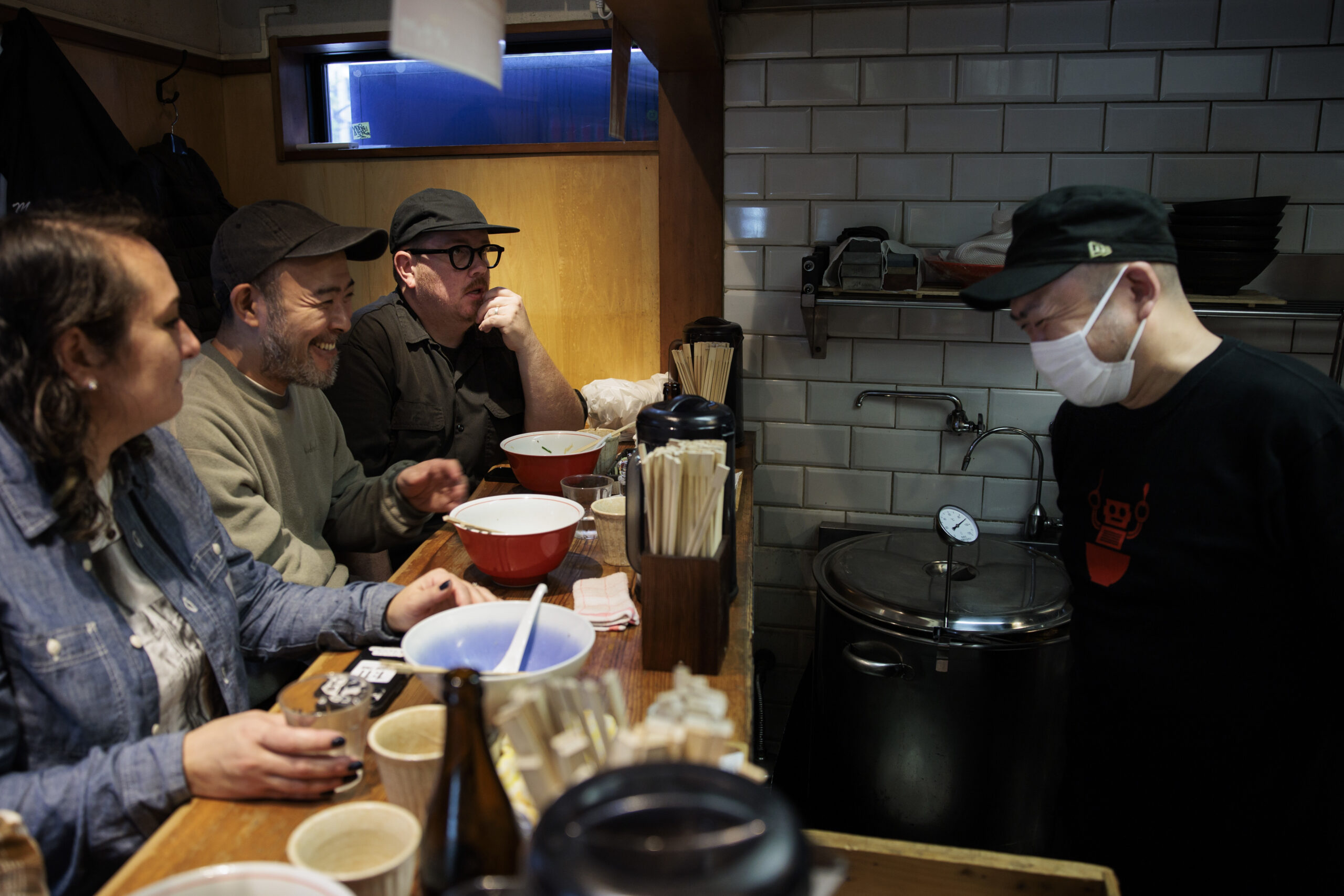
Lindsay Mariko Steigerwald (from left), Jesse Pryor, and Jesse Ito sit at the counter at Ramen Ichifuku in November in Tokyo.
Their move was precipitated by a long-simmering goal to practice their craft alongside the best, but also a desire for “a better quality of life” they’ve come to love over the course of multiple visits to Tokyo, says Steigerwald.
Equally motivating is the couple’s passion for consuming ramen regularly; it’s every bit as intense as their drive to make it.
“I want to eat ramen every day,” says Pryor, 38. “I want to go to different shops all the time, be inspired and just soak it up. It’s hard to do that in Philadelphia.”
He’d already eaten 14 bowls of ramen in the first nine days since landing in Tokyo in November — on top of the 300 ramen shops the couple had visited during their 10 previous visits to Japan. By the end of December, Pryor was up to 80 bowls of ramen at 70 different places. (Steigerwald has been keeping pace with ramen, too, but she documents her own obsession — dumplings — on her GyozaKween Instagram account.)
That’s still just a fraction of the 10,000 ramen shops in Tokyo serving myriad variations: rich tonkotsus cloudy with the emulsified essence of slow-simmered pork bones; crystalline shio salt broths and shoyus tinted amber with soy; creamy miso ramens; and gyokai ramens punchy with seafood umami. Pryor’s quest for soupy inspiration here, he says, is “infinite.”
“Jesse is a true ramen hunter,” says Steigerwald. “At night he’s game planning what bowls he’s going to eat the next day.”
“The ramen comes first,” he says, “and then the rest of the day just fills in around it, you know?”
Ramen-hopping rules
We were about to learn firsthand, as the couple, who’ve begun a fledgling ramen tour business, had mapped out an afternoon of visits to some of their favorites. There were rules. Our group must be small (ideally two to three guests max) because the best ramen counters are often tiny. Also, come hungry.
“It’s expected each person that steps foot in the shop orders their own ramen and finishes the bowl. … Doggie bags are not a thing,” says Pryor.
The last edict was especially daunting considering the belly-filling richness of ramen. Consume three bowls and you’re in for a long nap. In addition, eating ramen like a pro is a full-contact sport — a messy, broth-splashing endeavor for which there is not only a recommended dress code (“Jesse’s entire wardrobe is black,” Steigerwald says), but also an almost athletic eating technique: the power slurp.
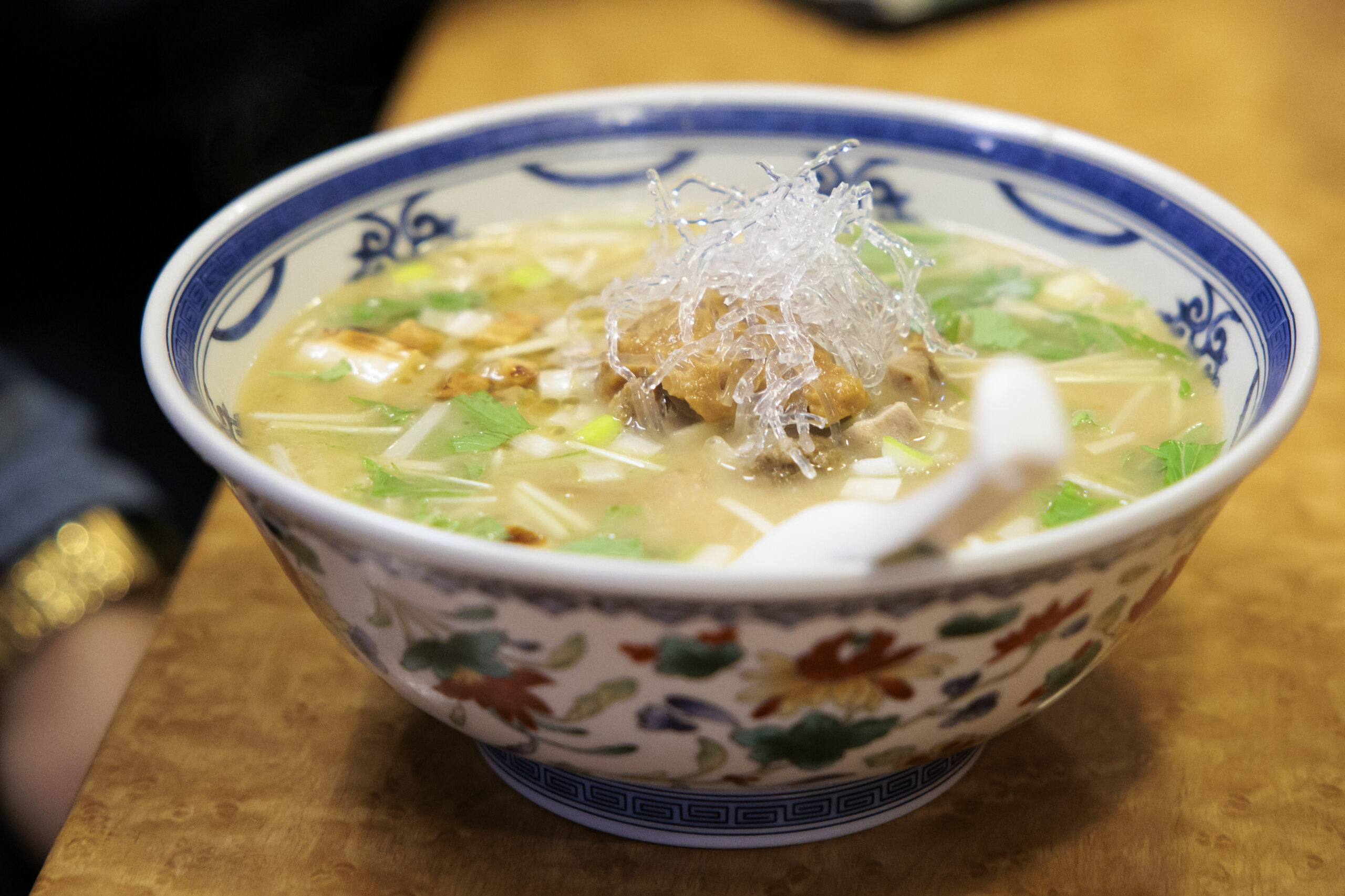
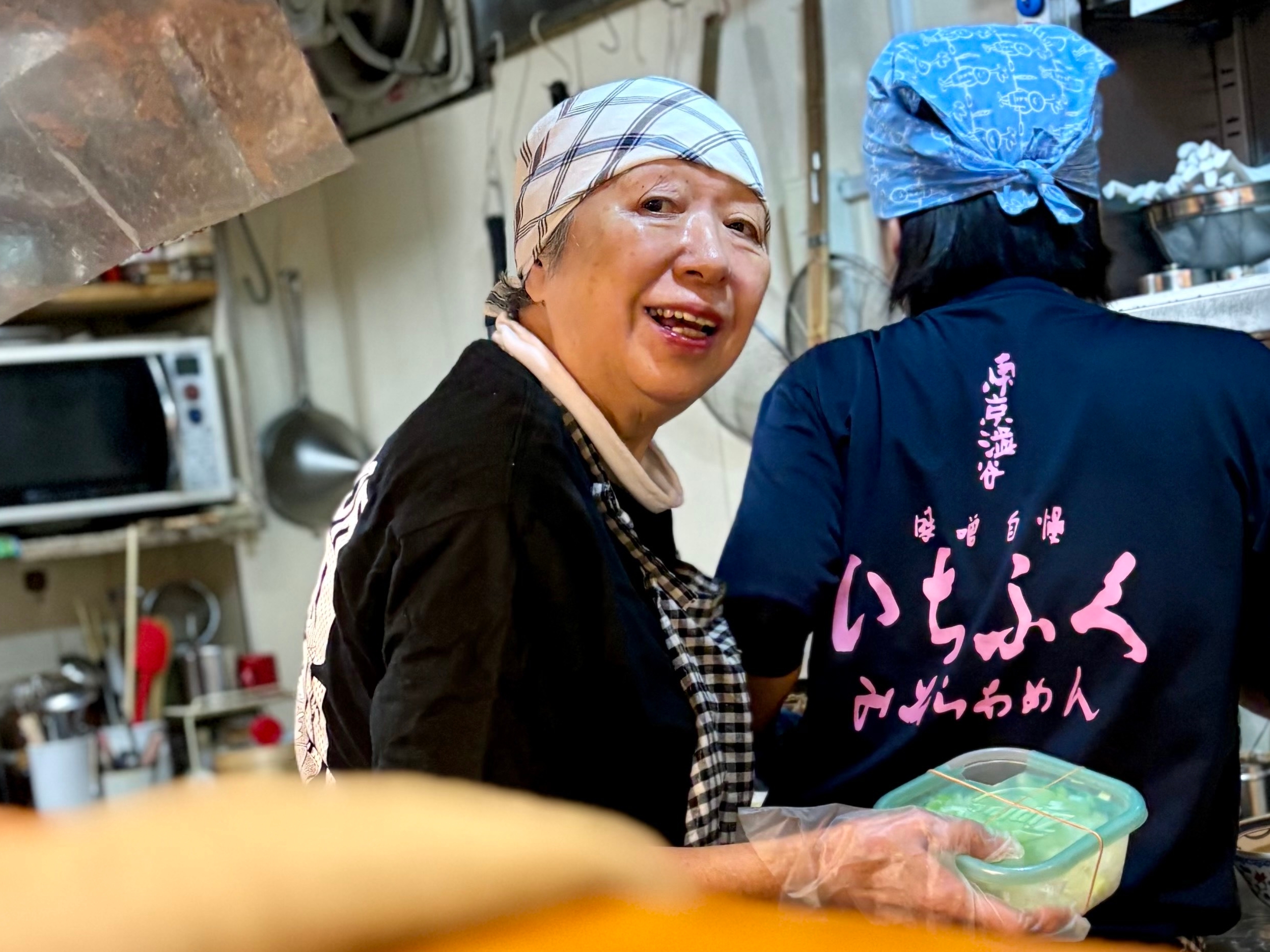
Ramen with shark cartilage at Ramen Ichifuku.Chef and owner Kumiko Ishida of Ramen Ichifuku in the Honmachi neighborhood of Shibuya, Tokyo, looks back across the counter while making miso ramen.
As the bowls landed before us at Ramen Ichifuku, our first stop in the Honmachi neighborhood of Shibuya, I marveled at the nutty aroma of the tan broth of an irorimen-style ramen, enriched with three kinds of miso, tender pork, tangy sake lees, and translucent threads of shark cartilage bundled over top.
I was just as mesmerized by Pryor and Steigerwald, though, as they locked onto their bowls with trancelike focus, then pounced, their faces hovering just inches above the steamy rims. As they began to slurp, columns of noodles steadily streamed upward into their open jaws. The jazz soundtrack of Hiromi’s Sonicwonder playing “Yes! Ramen!!” was punctuated by a gurgling roar reminiscent of shop vacs inhaling shallow pools.
“We call it ‘hitting the zu’s,’” says Steigerwald, noting the reference to zuru zuru, the onomatopoeia for slurping ramen in Japanese comics.
“It’s like turbo tasting, because you get the flavor of it up into all your sensory crevices,” says Pryor, who typically eats a bowl in five minutes or less, to consume each element at its peak.
I leaned over and gave it my best slurp — only to scorch my too-tightly pursed lips with hot broth while the noodles refused to rise. I resorted to my usual leisurely pace, savoring what was nonetheless the best bowl of ramen I’d ever eaten.
It was a comforting collage of firm but slippery noodles glazed in a nuanced broth with a parade of so many other textures — velvety pork, snappy bamboos shoots, tiny crunchy croutons. If only I could learn to properly slurp, it might be even better.
Steigerwald give me a sympathetic look: “We’ve had a lot of practice.”
Philly restaurant romance leads to Japan
Philly’s ramen power couple met at CoZara in 2016, where Steigerwald tended bar, and Pryor, a former news photographer from Delaware turned line cook at Zahav, had become a regular for the restaurant’s $5 Japanese riff on a citywide (Orion beer and a shot of sake).
“I saw them falling in love at that bar,” says Mawn chef Phila Lorn, who was CoZara’s chef de cuisine at the time.
Steigerwald, who grew up in New Jersey near Fort Dix and McGuire Air Force Base with two half-Japanese parents who are both kung fu masters, found Pryor’s budding obsession with ramen endearing: “Cool, the guy I’m dating is into the food of my culture.”
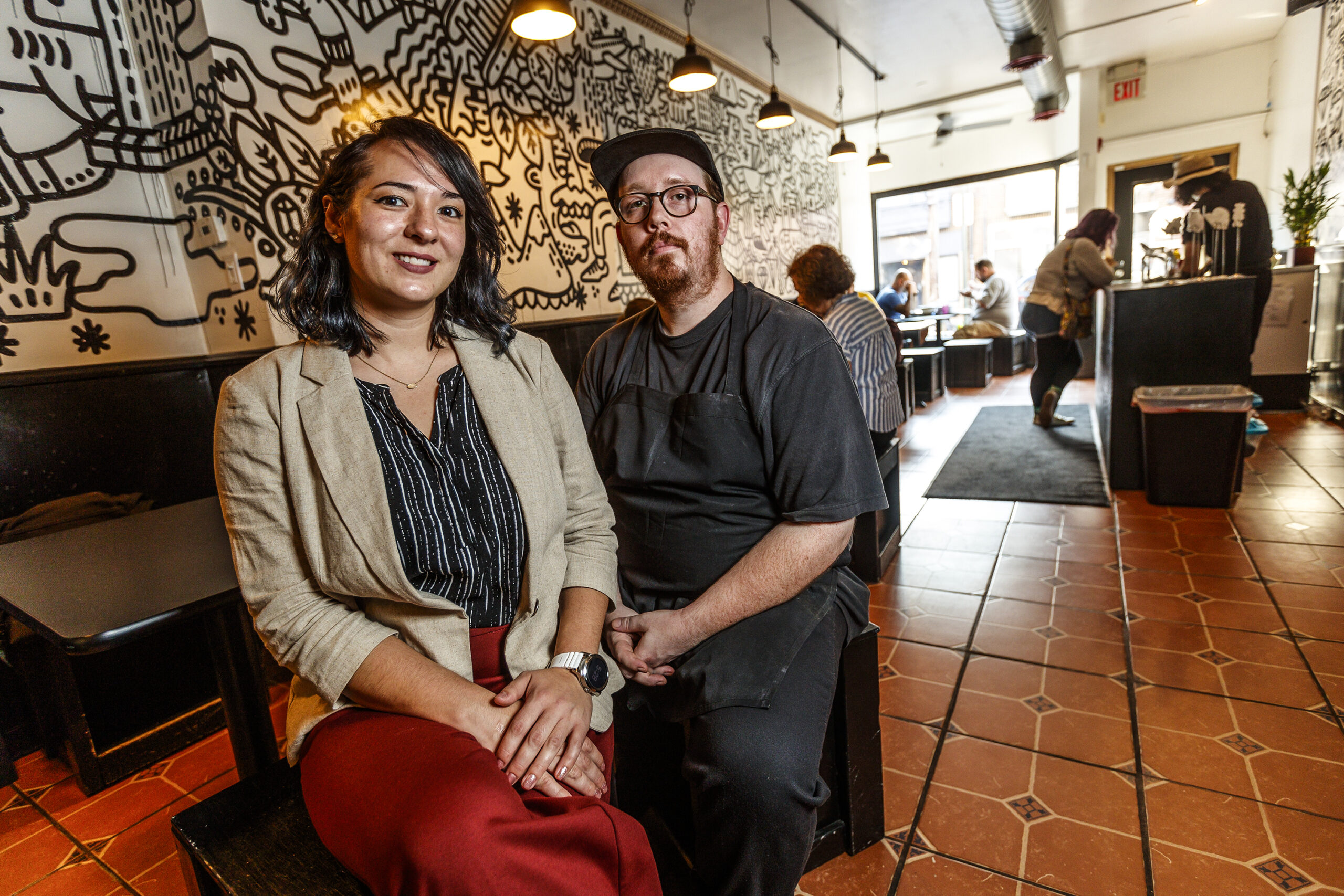
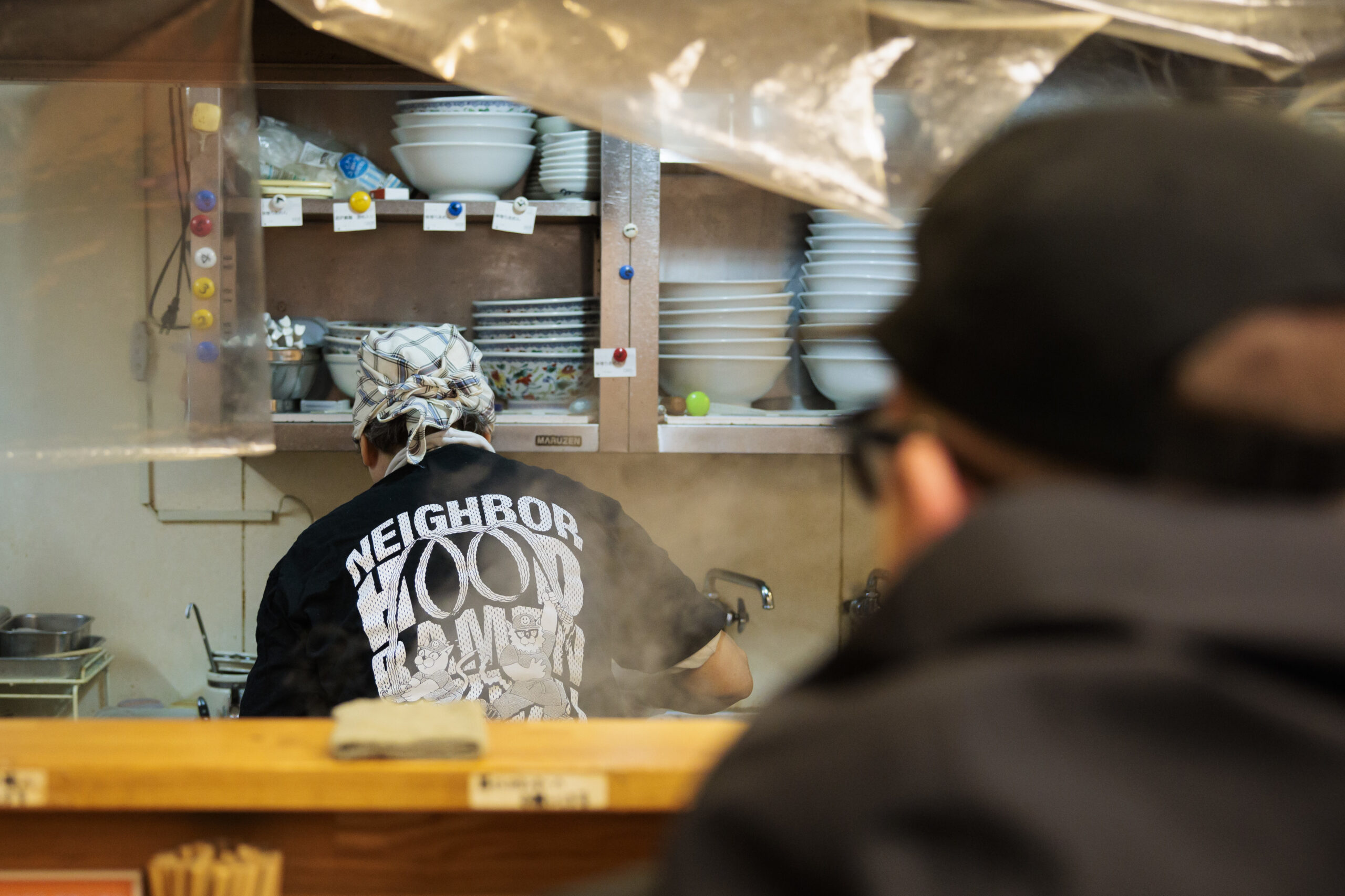
Lindsay Mariko Steigerwald (left) and Jesse Pryor co-owned Neighborhood Ramen on Third Street in Queen Village. They are pictured in their dining room shortly after opening in 2019.
She studied business management at college in Texas with an eye toward opening a Japanese restaurant, so it wasn’t long before they launched one of the city’s early pop-up sensations in 2016, dishing out bowls of intense tonkotsu and spicy tantan from his apartment between shifts at Cheu Noodle Bar, Morimoto, and Zahav.
When they finally opened their Queen Village shop in 2019, they instantly raised the city’s ramen bar. They acquired a used ramen machine in 2022 to begin making their own noodles (a rarity, considering the process is more involved than Italian pasta), raising the local standard once again.
But over the course of their research visits to Japan — where they were entranced by the abundance of quality ingredients as well as a public sense of order thatkeeps the streets tidy, safe, and tranquil — their pipe dream steadily bloomed into a determination to actually move.
“We did our thing for 10 years in Philly, but between the political climate and inflation there, the more we visited [Japan], we realized that this was where we want to be,” says Steigerwald. “We just want to make a modest living, be happy, and be proud of what we do.”
Steigerwald is eager to bring her family’s Japanese roots full circle, closing the loop that brought her two grandmothers to the United States after World War II: “My aunt in Texas finds it interesting that [my grandmothers] moved to America for a better life in the 1950s and that we are moving back to Japan to find a better life 70 years later.”
Steigerwald is pursuing a Nikkei visa for Japanese descendants. She hopes that the couple, who eloped in August — “moving to a new continent, we figured it was time,” she says — can open their shop in Koenji, a neighborhood known for its counterculture. It reminds them of South Street.
Tokyo transplants
In the meanwhile, they’ve been having rewarding ramen encounters everywhere. That included a spontaneous detour to Honmachi’s bustling and futuristic Denny’s, where ordering is automated and the food is delivered by a fleet of beeping musical robots.
“Honestly, I’d be hyped to eat that tantan anywhere,” says Pryor, gazing approvingly at a bowl of noodles whose broth is rich with sesame paste, ground pork, and orange puddles of chili oil. (Japanese Denny’s are owned by the same company as the country’s celebrated versions of the 7-Eleven, explaining the impressive confluence of quality and value.)
The duo’s exploration of the upper echelons of Tokyo’s artisan ramen world, however, has gone a long way toward building a community of friends and peers. When we arrivedat Ichifuku, chef Kumiko Ishida was wearing a Neighborhood Ramen T-shirt. The 15-seat restaurant in a homey, living room-like space is one of the very few ramen shops in Tokyo owned and operated by a woman, and Steigerwald and Pryor had named one of their regular specials in Philadelphia “Mama Miso” in the chef’s honor.
The source of their inspiration did not disappoint, even if Ichifuku would not divulge how (or from what) she makes her signature croutons, which remain a subject of ramen-world speculation because they never turn soggy in broth.
Chef Kumiko Ishida wears a Neighborhood Ramen T-shirt while cooking at her restaurant, Ramen Ichifuku. It is one of the very few ramen shops in Tokyo owned and operated by a woman.
Such minuscule details are the fodder for constant discussion among ramen hunters like Pryor and chef friends like Hiroshi “Nukaji” Nukui of Menya Nukaji in the Shibuya section of Tokyo, where Neighborhood staged a well-received pop-up in 2023. Nukui, who joined us for part of our journey, said he was thrilled the couple had decided to make the move to Tokyo.
“Their passion is so strong. Many Japanese have not been to the amount of ramen shops they’ve been to,” Nukui said. And their status as foreigners might also be an advantage, he suggested. “Japanese ramen chefs typically work under a famous chef and end up following in that tradition. But [Pryor and Steigerwald] are not boxed into a style or lineage.”
In fact, Pryor plans to focus on a ramen style similar to Nukui’s, a double-brothed ramen (also called “W soup”) that blends rich pork tonkotsu with an intense seafood broth called gyokai. While Nukui is known for his tsukemen style — in which noodles are served on the side for dipping into a broth as thick as gravy — Pryor intends to serve his noodles soup-style.
“This style is so impactful,” Pryor says, “you eat it and you’re like ‘Whoa!’” (I tried Pryor’s gyokai tonkotsu at both Neighborhood Ramen and Eso, and it is one of the most powerful, smoky, ocean-flavored broths I’ve ever tasted.)
Gyokai tonkotsu ramen at ESO Ramen Workshop, 526 S. Fourth St.
“Their ramen is no joke,” agrees Kosuke Chujo, the griddle master of Nihonbashi Philly, Tokyo’s shrine to Philly culture. “They are very, very good. The broth, of course. But also the fact they make their own noodles. Your average Japanese ramen maker does not do what they do.”
Indeed, high-quality noodles are so widely available in Japan that few ramen shops bother; there are so many other details to refine in composing a great bowl. At our final stop of the day, Ramenya Toy Box in Minowa, we were given a master class in the art of ramen’s two most elemental styles: shio (clear broth seasoned with salt) and shoyu (clear broth seasoned with soy).
As we stood in line outside the small white building, Pryor warned us of a solemn dining experience to come. It sounded like the polar opposite of the relaxed atmosphere at Ichifuku. “Yamagami-san is strict. His vibe is very serious, and the cooks stand at attention,” he said, referring to owner Takanori Yamagami, who studied under famed “Ramenbilly” chef Junichi Shimazaki, the pompadour-coiffed social media sensation whose shop is known for its no-talking rule.
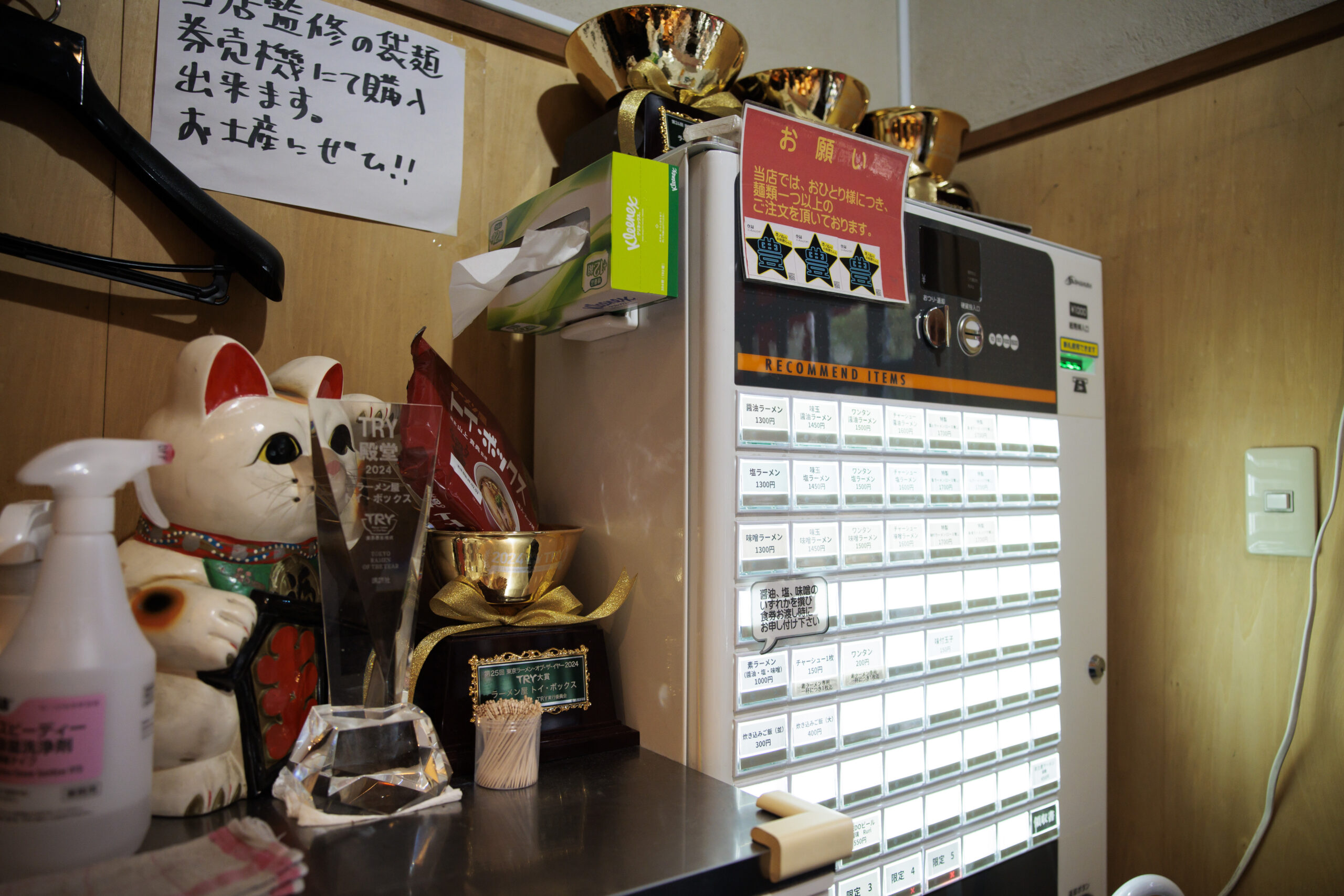
Lindsay Mariko Steigerwald (from left), Hiroshi Nukui, and Jesse Pryor laugh with chef and owner Takanori Yamagami during a meal at Ramenya Toy Box in November. “I think it’s a great thing,” Yamagami says of Steigerwald and Pryor’s move to Tokyo. “If their ramen is good, people will go.” A ticket vending machine is used to pay for ramen at Ramenya Toy Box. Gilded trophy versions of the shop’s bowls attest to its reputation as one of Tokyo’s best ramen destinations.
Yamagami has made his own name in this tiny space, where the counter wraps like an elbow around the open kitchen. Pristine renditions of three classic styles won him induction into the ramen hall of fame in 2024.
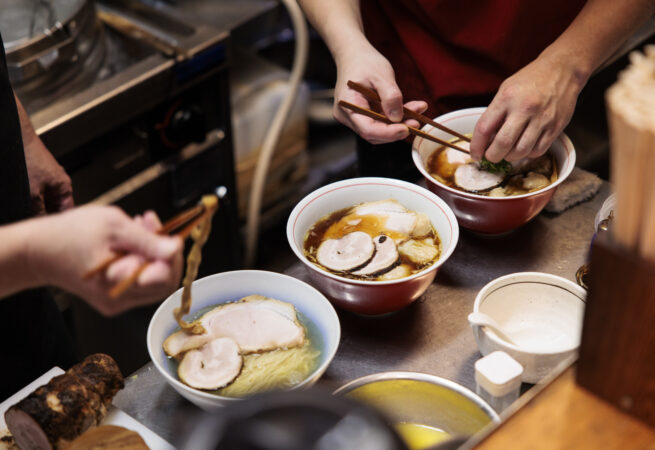
The small team worked silently alongside him, prepping the “tare” seasoning base while the chef drained baskets of noodles in both hands, shaking off cooking liquid with almost-musical syncopation. A flick of his chopsticks coaxed the noodles, placed in bowls, into a perfect comb-over wave, to be swiftly layered with two kinds of chashu (pork belly and loin), a perfect egg, a curl of bamboo shoot, and a final spoonful of rendered chicken fat that glinted like gold.
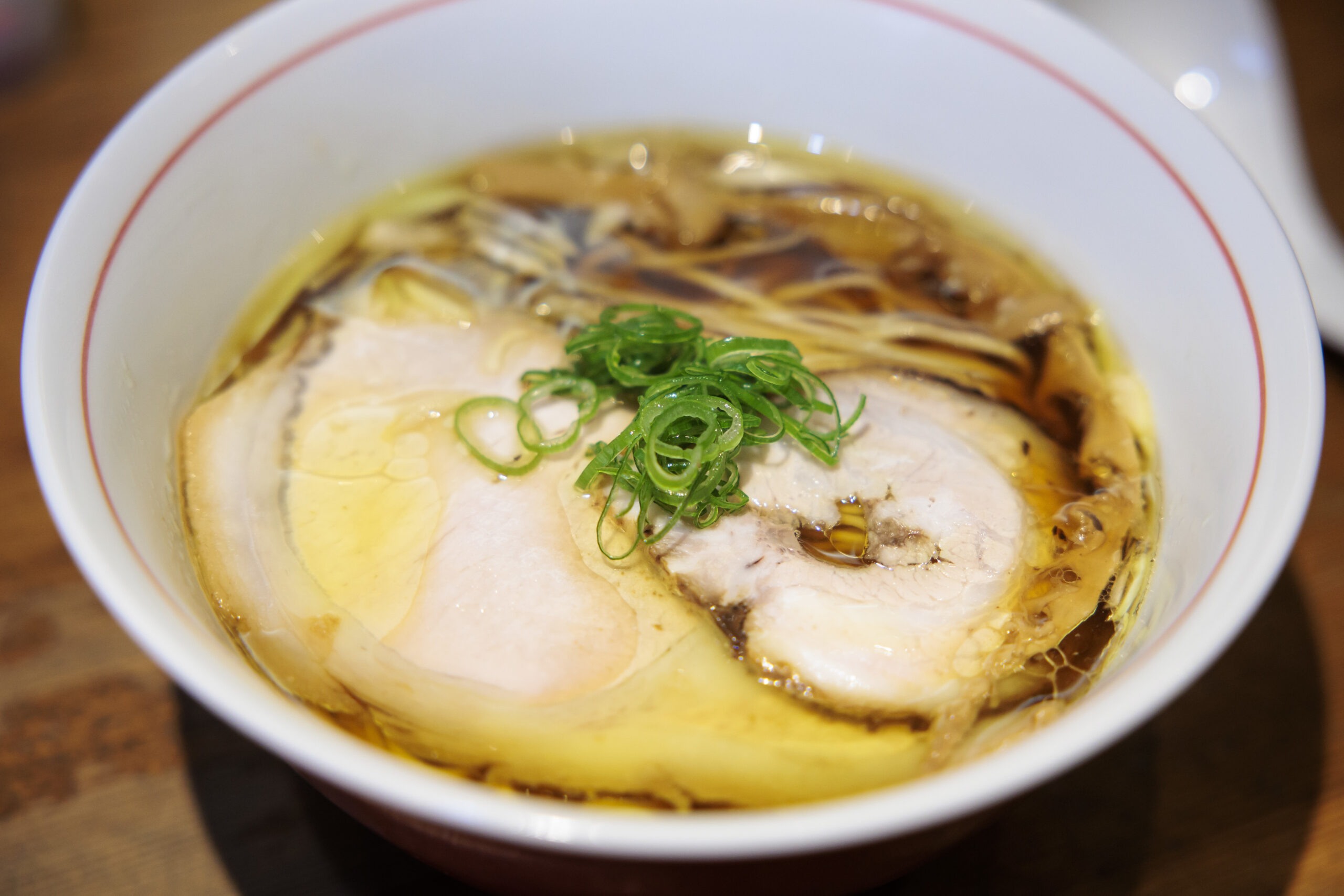
The intense broth of just chicken and water is the true source of Toy Box’s magic, drawn froma slow-cooking cauldron in back that appears to be more chopped-up bones than liquid. Three kinds of heritage chickens contribute different properties of richness, collagen, aroma, and flavor. In the bowl, the most straightforward shio ramen is seasoned only with salt, thinly shaved scallions, and a dusting of tart sudachi citrus zest; it’s one of the most vivid yet delicate distillations of chicken I’ve tasted.
Yamagami’s shoyu ramen — seasoned with six kinds of soy sauce, including several fermented in wood vats — begins with that same vivid chicken flavor, then blooms with earthy umami.
Shoyu ramen at Ramenya Toy Box.
I lean in, inhale, and — at last — execute a proper slurp, the firm, slippery noodles swiftly rising up past my lips with a velocity and snap that fans the flavor volume even higher. I can understand why Pryor, who usually visits new shops daily, has returned to Toy Box a dozen times.
The respect is clearly reciprocal. Yamagami is eager to see the Neighborhood Ramen couple plant their flag in Tokyo. And, as if to punctuate that thought, he reached over the counter and gifted Pryor one of the white bowls lined with sky blue that he uses for his signature shio ramen. It’s like watching a great athlete hand his jersey to a rising star.
“It’s inspiring for us, too,” Yamagami says of their arrival. “I think it’s a great thing. If their ramen is good, people will go.”
The gesture isn’t lost on Pryor or Steigerwald, who clearly cannot wait to begin sharing their own ramen talents with Tokyo. They sold their coveted ramen machine before leaving Philadelphia (to the forthcoming Tako Taco) and have plans to buy a new one here soon, so Pryor can get his hands back in the dough.
The couple intend to level up to the standards of their new noodle landscape. “We want it to be fun, welcoming, and chill — not intimidating,” says Steigerwald, who imagines a space with fewer than a dozen seats.
But so many hurdles remain, from visa bureaucracy to finding the perfect location. So they have stayed focused on what’s next: their first holidays in Tokyo, a trip to the ramen museum in Yokohama, and a big test at their Japanese language school.
They already have a post-exam celebration plan in place. Not surprisingly, said Steigerwald, it will involve “one monstrous bowl of ramen.”
Lindsay Mariko Steigerwald and Jesse Pryor, formerly the owners of Neighborhood Ramen in Philadelphia, lead the way on a ramen crawl across Tokyo, where they moved toward the end of 2025.
A chef’s career rarely follows a straight line, but as I settled into one of the cushy circular nooks at Fleur’s for a memorable meal, it was clear to me that George Sabatino’s story had detoured away from the spotlight for far too long.
Now a chef-partner at this gorgeous new Kensington restaurant, Sabatino was one of the most promising and inventive young chefs in Philadelphia a decade ago, spinning “herbivore” tasting menus, sous-vide shrimp ceviches, and crispy lamb rillettes at Aldine, his chef-owner debut near Rittenhouse Square that earned three bells in 2015.
When that restaurant closed three years later, however, Sabatino embarked on a journeyman’s path that never quite found sustained footing. He dipped back into his previous home in the Safran Turney universe for a spell as culinary director (reopening Lolita, helping with Bud & Marilyn’s at the airport, Good Luck Pizza Co., and Darling Jack’s), tried his hand at farming, worked as a private chef, and then helped stabilize Rosemary in Ridley Park.
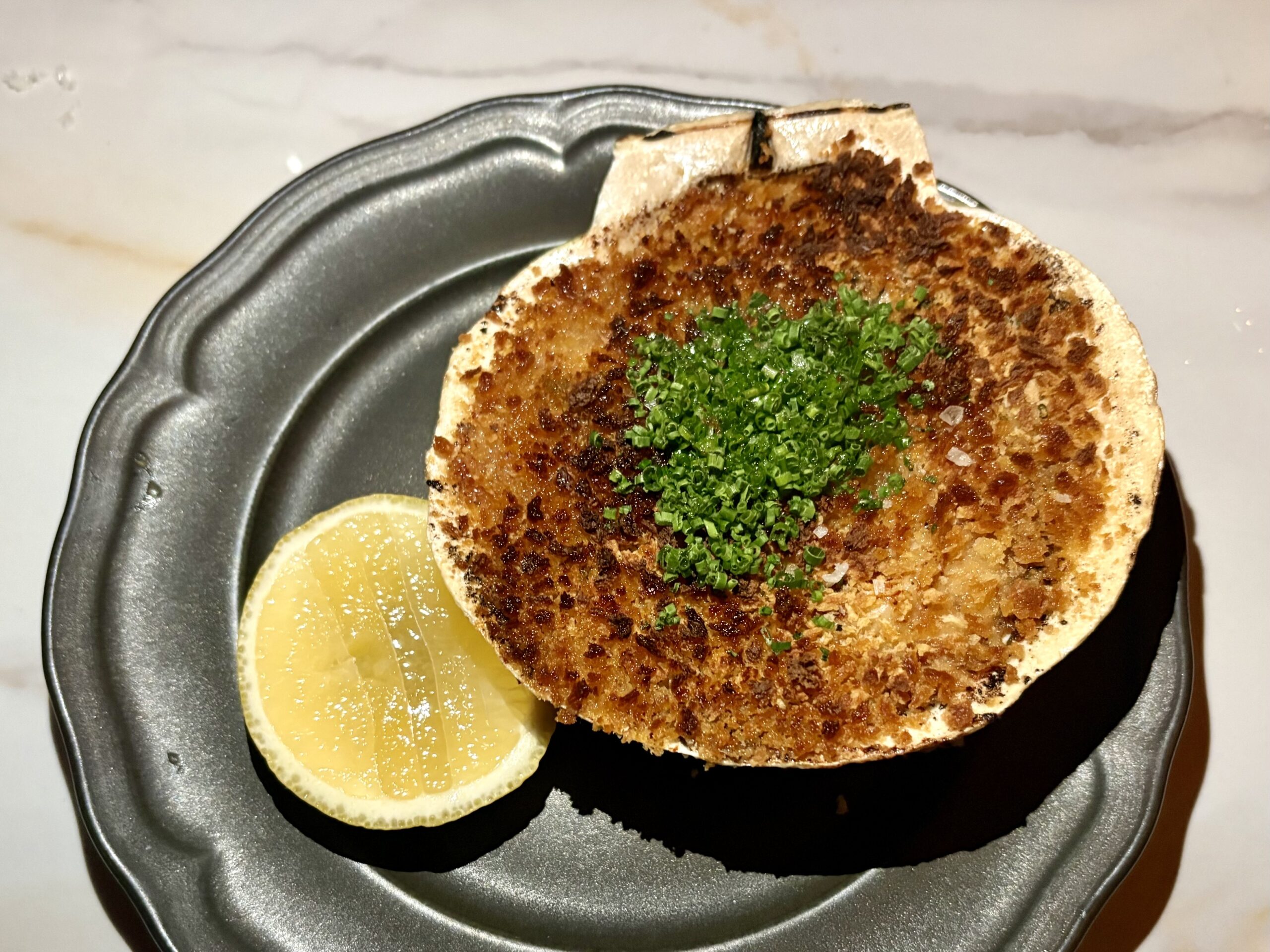
The scallop gratin at Fleur’s in Kensington suspends the sweet mollusks in a puree of celery root soubise and nixtamalized corn miso.
But Fleur’s is the first time in eight years Sabatino has been able to cook his own food — a style that’s now matured beyond the molecular gastronomy tricks of his youth. He’s now focused more on using seasonality and fermentation to elaborate on some classic French ideas. A scallop gratin cradled in its shell, for example, appears familiar enough, evoking Fleur’s brasserie theme with an aromatic whiff of truffle butter. But when I cracked its toasty crumb surface, those sweet scallops were enveloped in a silky puree that traveled to unexpectedly earthy depths thanks to a celery root soubise touched with nixtamalized corn miso. This was just the first of many bites that reminded me why I had been looking forward to Sabatino’s comeback for some time.
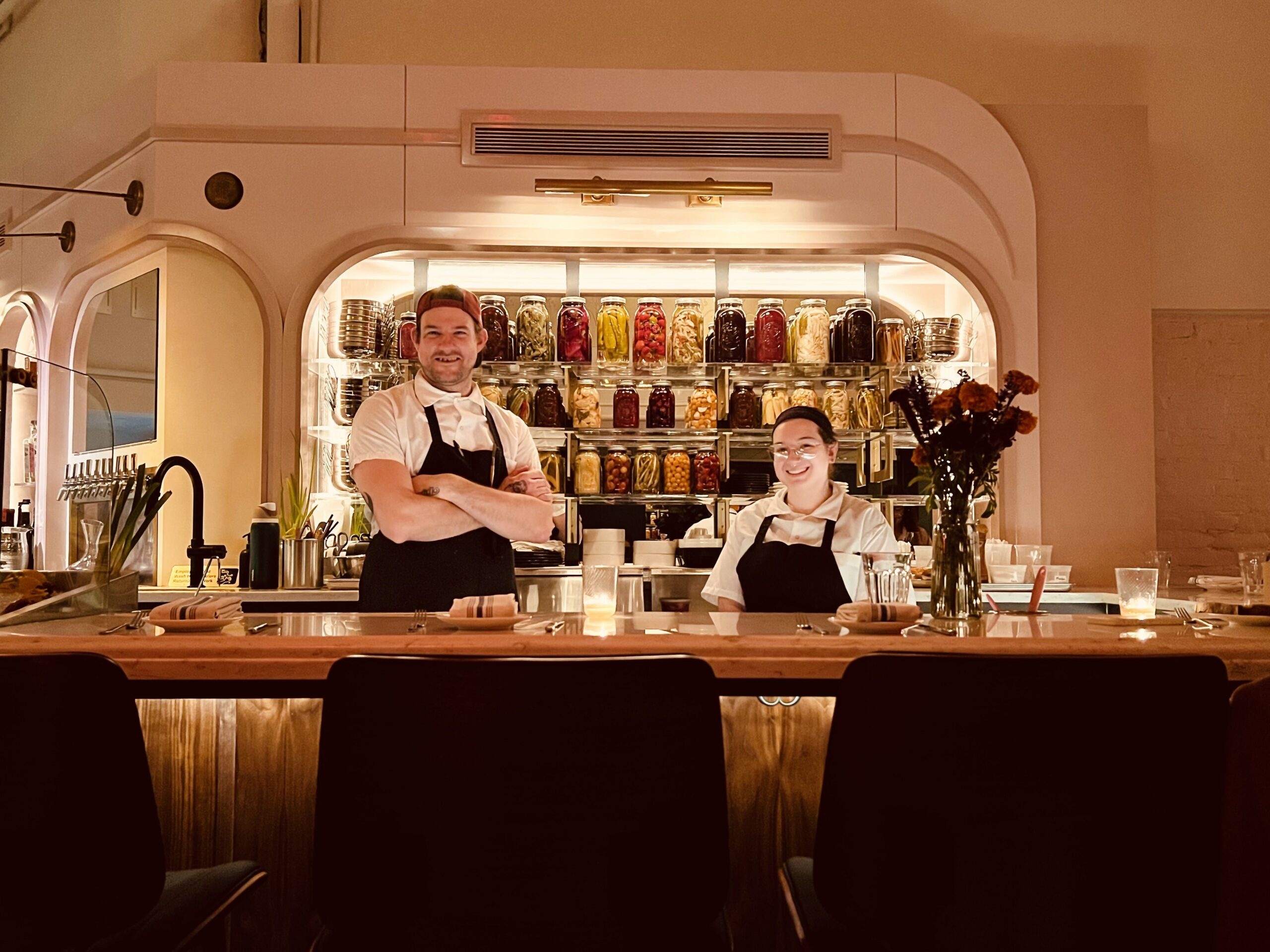
An impressive larder of canned produce displayed in jars behind the bar adds inspiration across the menu. There’s watermelon vinegar in the mignonette for raw Island Creek and Savage Blonde oysters, a vivid memory of distant summer soon to be replaced with the tart essence of fall pumpkin. A custardy mustard infused with seasonal fruits — preserved peaches at a recent visit — comes layered beneath a perfect terrine of pork and pistachio wrapped in bacon with crunchy beet-pickled vegetables à la Grecques.
Even a platter of briny middleneck clams on the half shell get a boost from a house-fermented hot sauce made from Fresnos and dried ancho chiles; the simple combination of tangy spice and ocean spray elevates this often-undervalued mollusk into a star-worthy role at Fleur’s.
The raw bar’s shucking window sits at the crook of the long bar, which bends to follow the elbow-shaped contour of this historic space that is, in many ways, having a comeback of its own.
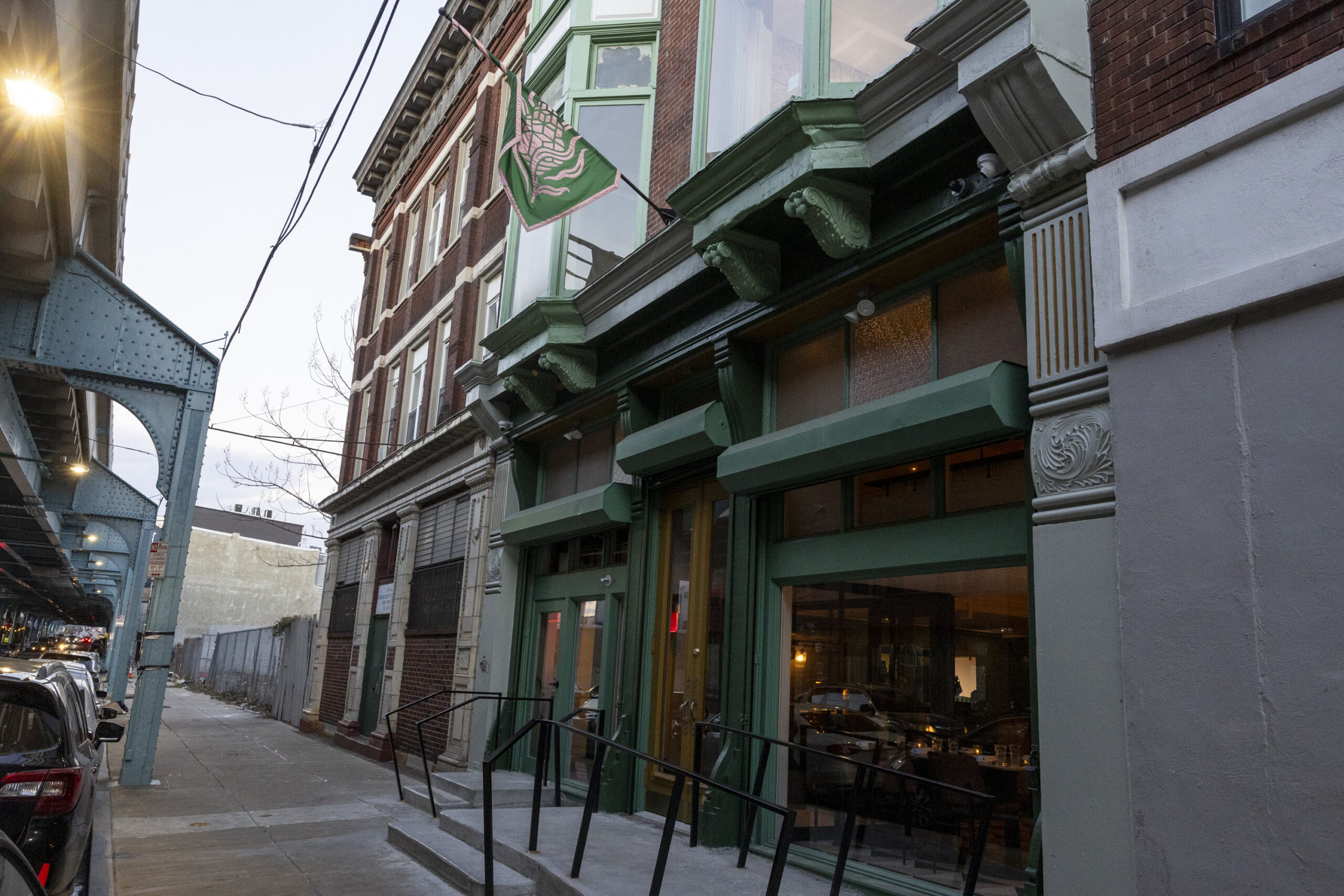
The inside dining at Fleur’s in Philadelphia on Friday, Jan. 2, 2026.The outside of Fleur’s in Philadelphia on Friday, Jan. 2, 2026.
You could easily miss the understated green facade of this five-story building on North Front Street, its entrance partially obscured by the rumbling girders of the Market-Frankford El. Even friends of mine who live mere blocks away were unaware that the old Fluehr’s Fine Furniture store — active from the 1880s through the early 2000s, but vacant for 17 years — had been renovated and revived, with plans to transform the L-shaped building into a boutique hotel, restaurant, and roof-deck event space.
Aside from the spelling modification to make the name sound French, it took plenty of vision for Sabatino’s partners, Starr alums Joshua Mann and Graham Gernsheimer, to conjure an upscale brasserie as an anchor for this project. One of the city’s best Puerto Rican restaurants, El Cantinflas Bar and Taco Place, has been a mainstay around the corner. But in 2022, when Mann and Gernsheimer first walked in and fell in love with this quirky space, none of the places that have since marked gentrification’s steady march northward into Kensington — Starbolt, Lost Time Brewing, Rowhome Coffee, American Grammar, Lee’s Dumplings and Stuff — had opened.
The inside dining at Fleur’s in Philadelphia on Friday, Jan. 2, 2026.Renderings of the Fluehr’s Furniture Store building re-envisioned as a boutique hotel.
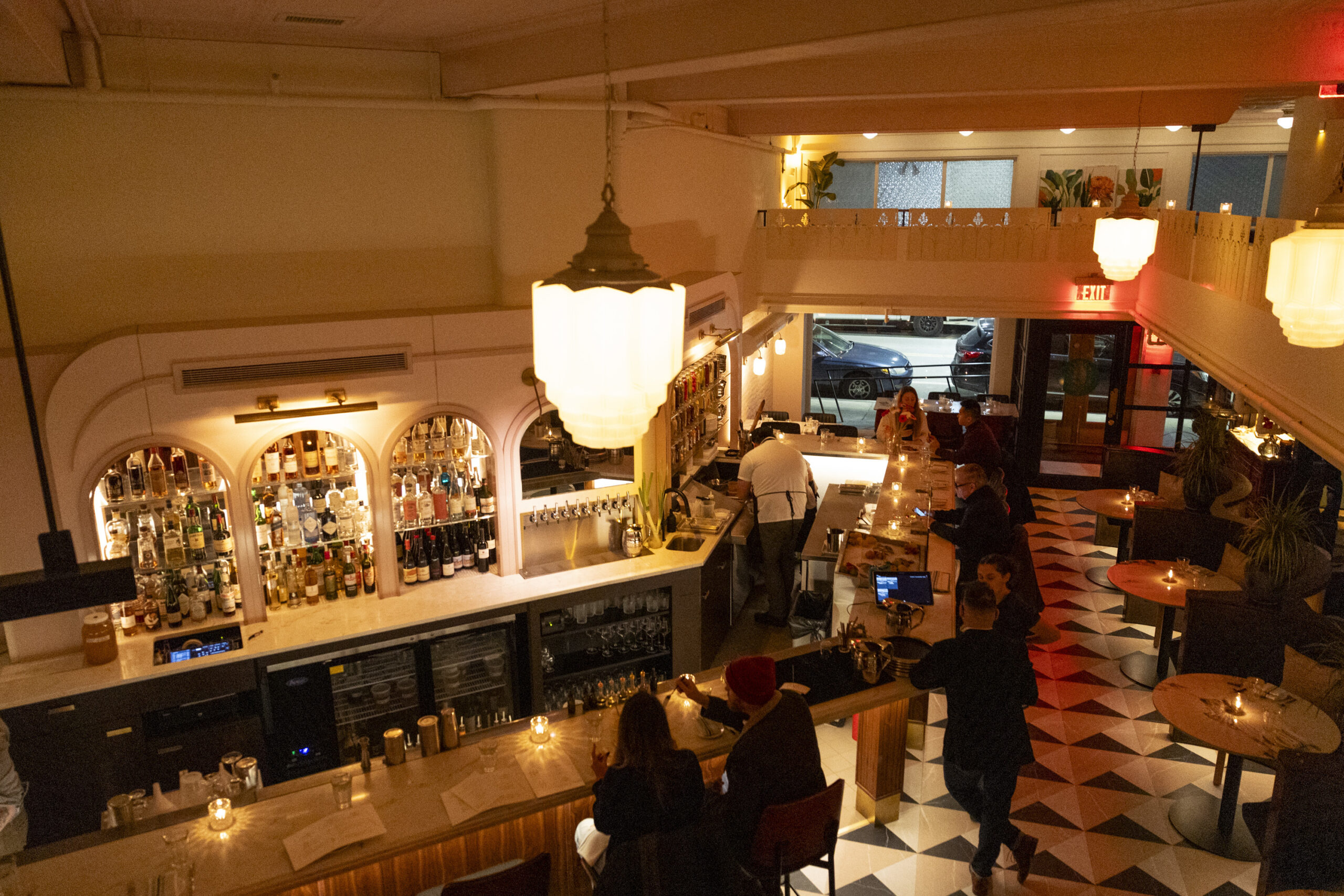
The restaurant is phase one of the building’s ongoing development. And designer Lisa A. Calabro of cfTETTURA projects did a stellar job reimagining the deceptively large room into an inviting 130-seat space, preserving the mezzanine and art deco pendant lamps from Fluehr’s, then lining the dining room floor with geometric tiles and a chain of plush, semicircular teal banquettes that lend the dining experience an uncommon coziness.
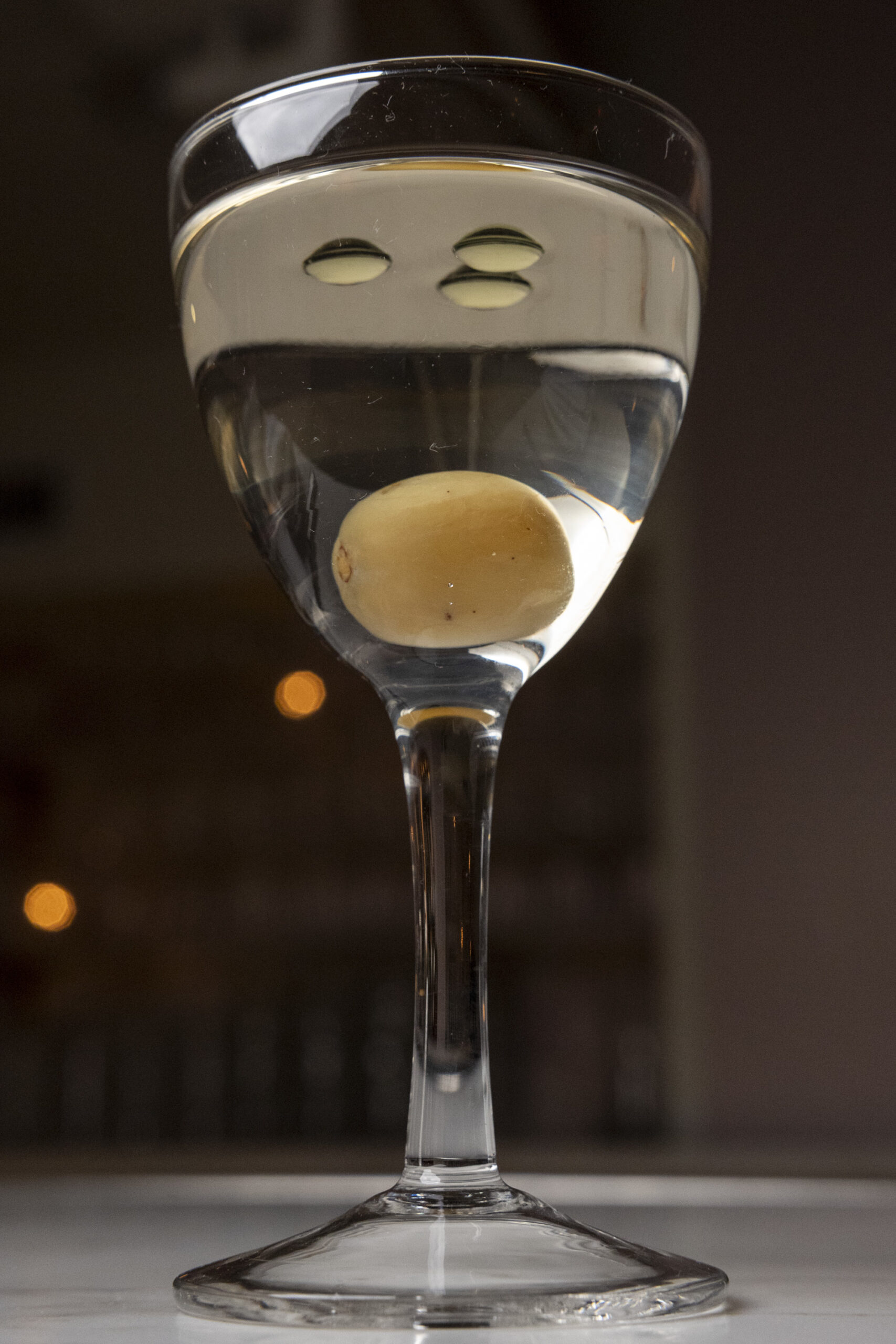
Even more intimate is the “hot tub,” a partially enclosed room for up to eight diners in back. It’s an intriguing nook where conversation is easy and the well-informed, outgoing servers drop details on everything from the smoked beef heart grated over the roasted carrots with puffed amaranth to the pickled-grape prize at the bottom of Fleur’s signature martini (exceptionally aromatic with a French-y touch of Pineau des Charentes). Ultimately, I preferred being part of the date-night energy in the main dining room, even if midweek crowds have been light.
The Fleur’s martini in Philadelphia on Friday, Jan. 2, 2026.
That’s perhaps no surprise, given that the check average of $71 (before tip and tax) hits a splurge level this corner of Kensington hasn’t seen to date. There’s solid value in the daily happy-hour specials, when you can snack on gluten-free frites crisped in beef tallow ($6) or a generous petite plateau from the raw bar ($40) to go with $8 glasses of French wine.
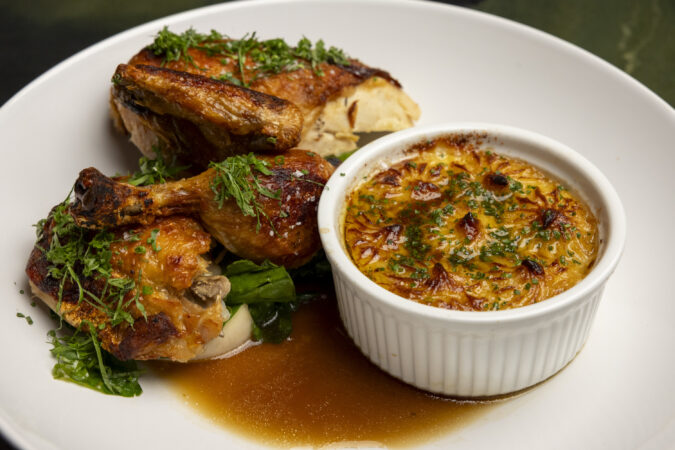
But Fleur’s regular dinner menu may oblige some light price-adjusting until it hits the sweet spot to attract a steady flow of neighborhood regulars. Sabatino’s roasted half chicken, for example, has instantly strutted into the top tier of my favorites, cured with duck fat-koji butter for a few days before it’s roasted to a crisp alongside a tub of impossibly good Duchesse mashed potatoes laced with Gruyère cheese. But at $39, it’s more expensive than similarly excellent chickens at Vernick Food & Drink, Parc, Honeysuckle, and Picnic.
Executive sous chef Ryan Connelly and line cook Emma Lombardozzi at the raw bar at Fleur’s, 2205 N. Front St., on Oct. 25, 2025.
Sabatino’s cooking is generally good enough to merit destination status, with a few exceptions. But in the tradition of ambitious new restaurants becoming pressure tests for the spending limits of a neighborhood in transition, Fleur’s will be an intriguing case to follow.
As it stands, aside from the chicken and a tasty cod in brown-butter meunière garnished with multiple varieties of pickled beans and caper berries, the entrees weren’t necessarily the highlights of my meals. The hanger steak frites, cooked sous-vide then finished to order, lacked the satisfying chew of a good steak properly cooked from raw. The Parisian gnocchi, the menu’s only sub-$30 entree, were a fine vehicle for a delicious ragout of Mycopolitan mushrooms, but the deep-fried plugs of choux pastry dough themselves were dry.
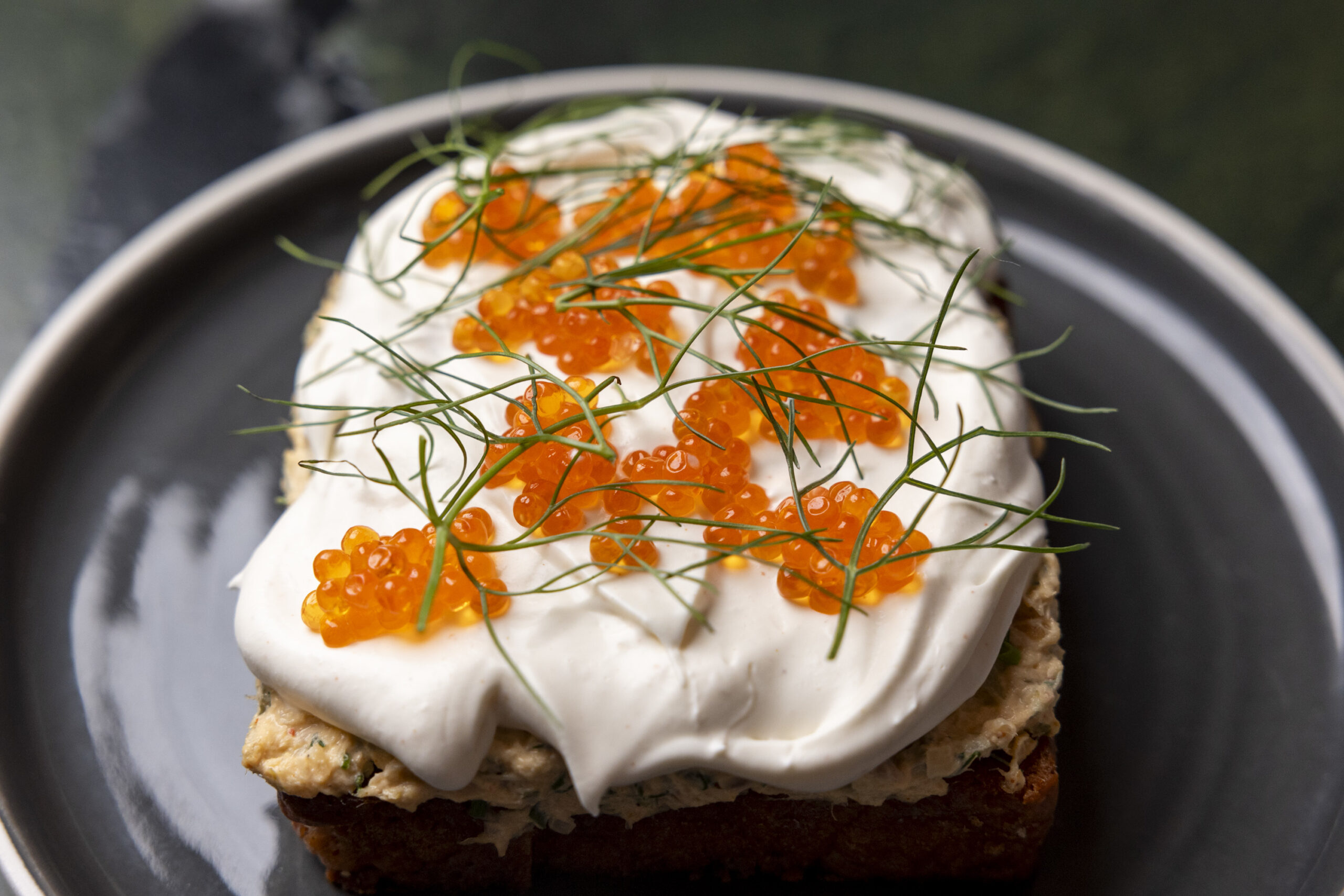
The whitefish tartine is a wonder of textures and subtle flavors.
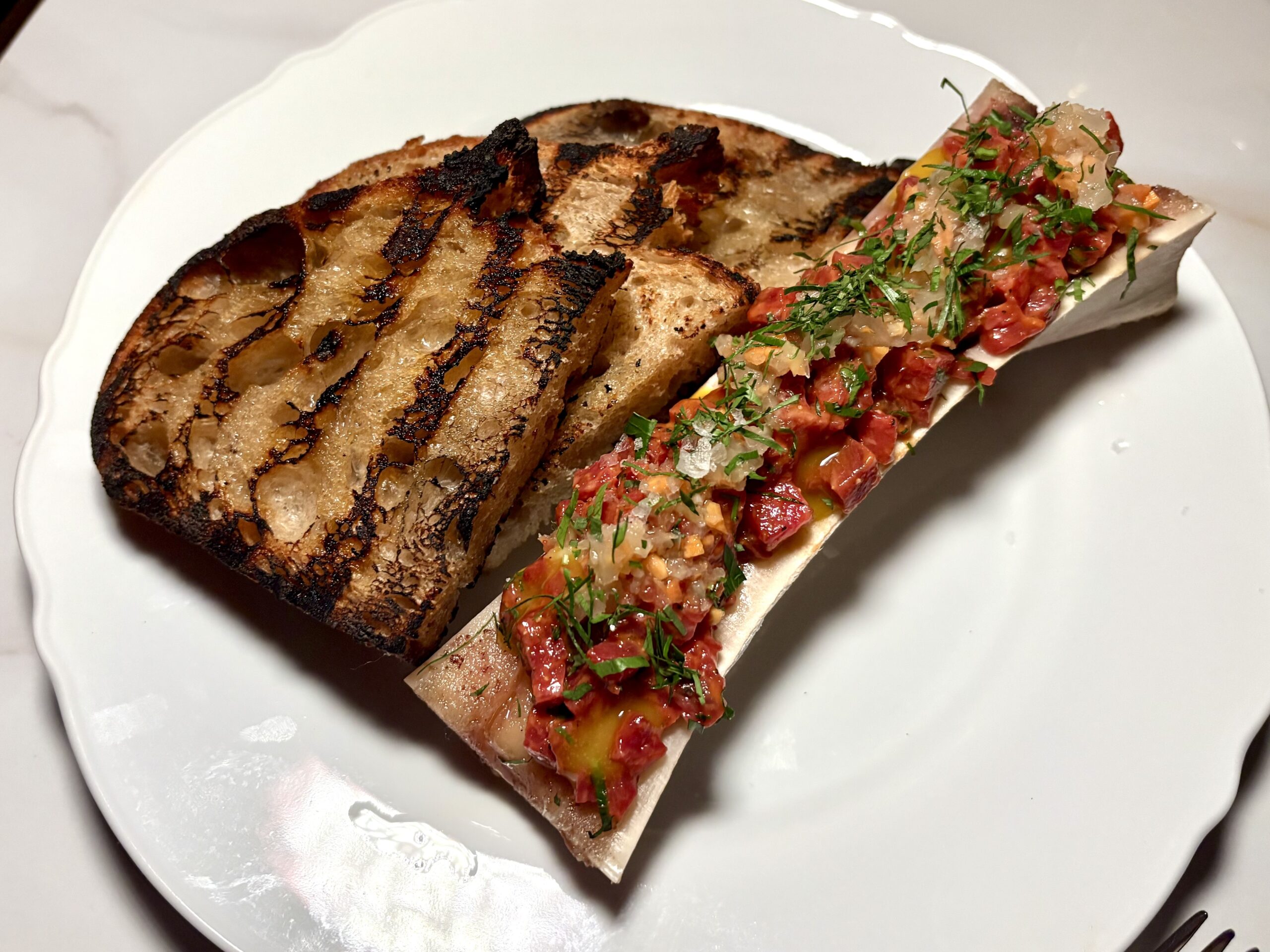
The most exciting bites here can be found among the more affordable small plates and raw bar offerings. Sabatino’s whitefish tartine is a wonder of textures and subtle flavors — the smoked fish salad layered between a bavarois cloud of fennel-steeped whipped cream beaded with salty trout roe and a toasty slice of duck fat brioche so good that I was stunned to learn it’s also gluten-free. There are tart shells stuffed with creamy uni custard. The dashi-poached shrimp cocktail is butter-tender and full of flavor. The zesty, hot-sauce spiked beef tartare comes decadently mounded over a roasted bone of melty marrow.
Beef tartare is served over roasted bone marrow at Fleur’s in Kensington.
Sabatino’s talent with vegetables is also on full display, with half-moons of deeply caramelized onion tarte Tatin enriched with Gruyère and more of that corn miso (made for Sabatino by Timothy Dearing of the Ule supper club). Roasted rounds of sumac-cured sweet potatoes are encrusted with sunflower seeds drizzled in a sauce gribiche. Grilled caraflex cabbage is served “à l’orange” with pickled green tomatoes, preserved ginger relish, spiced peanuts, and herbs.
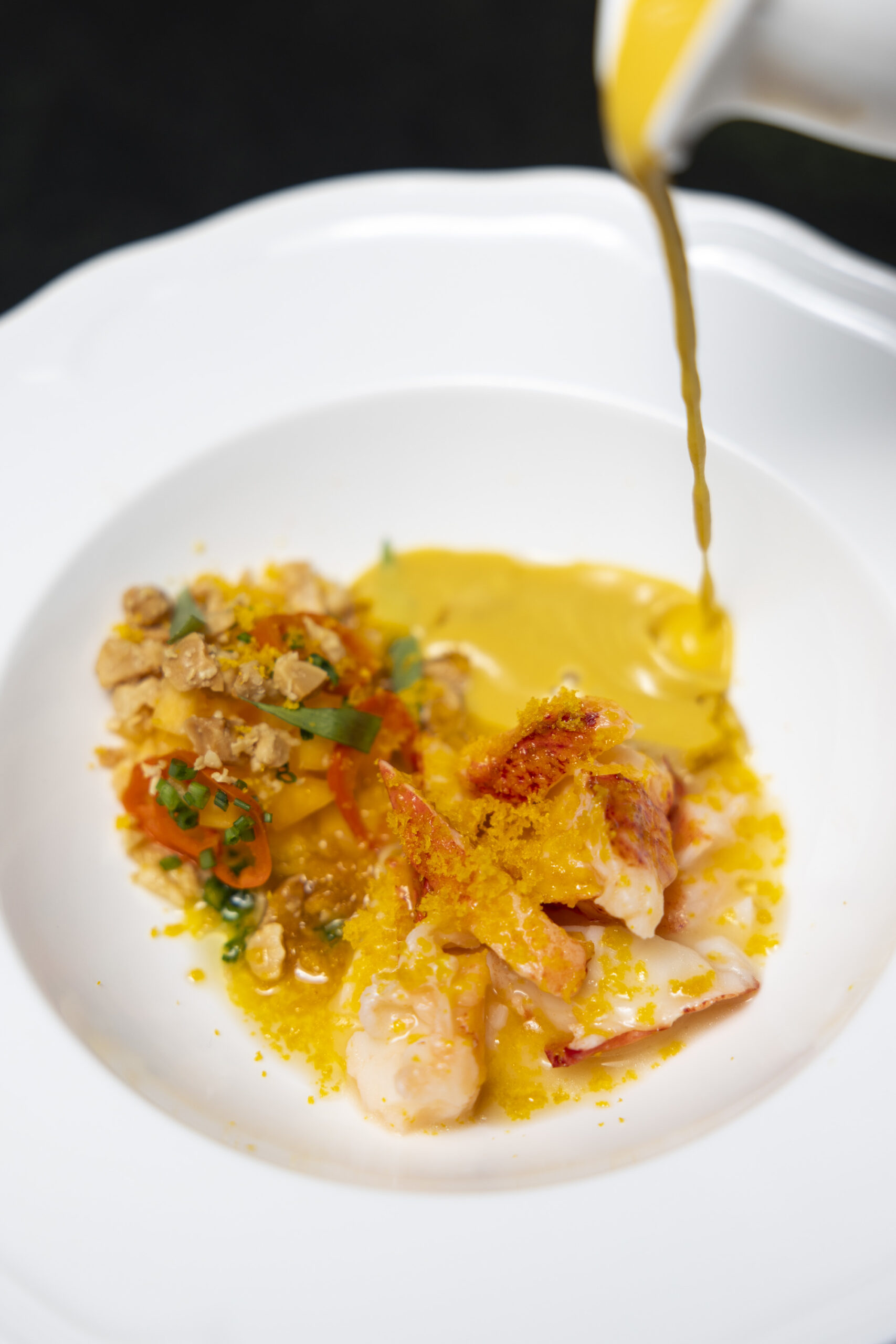
The lobster soup with a squash broth at Fleur’s in Philadelphia on Friday, Jan. 2, 2026.
Pumpkin is also transformed into a luxuriously creamy soup with the fermented Japanese rice brew called amazake, poured tableside as an orange velouté over butter-poached lobster and crushed marcona almonds, chiles, and pickled pumpkin.
For dessert, you might go for the cheffy croissant stuffed with foie gras and white chocolate topped with sour cherry marmalade. But that croissant was even better blended with other bread scraps into a holiday bread pudding soaked with a rummy egg-nog crème anglaise garnished with brandied whipped cream.
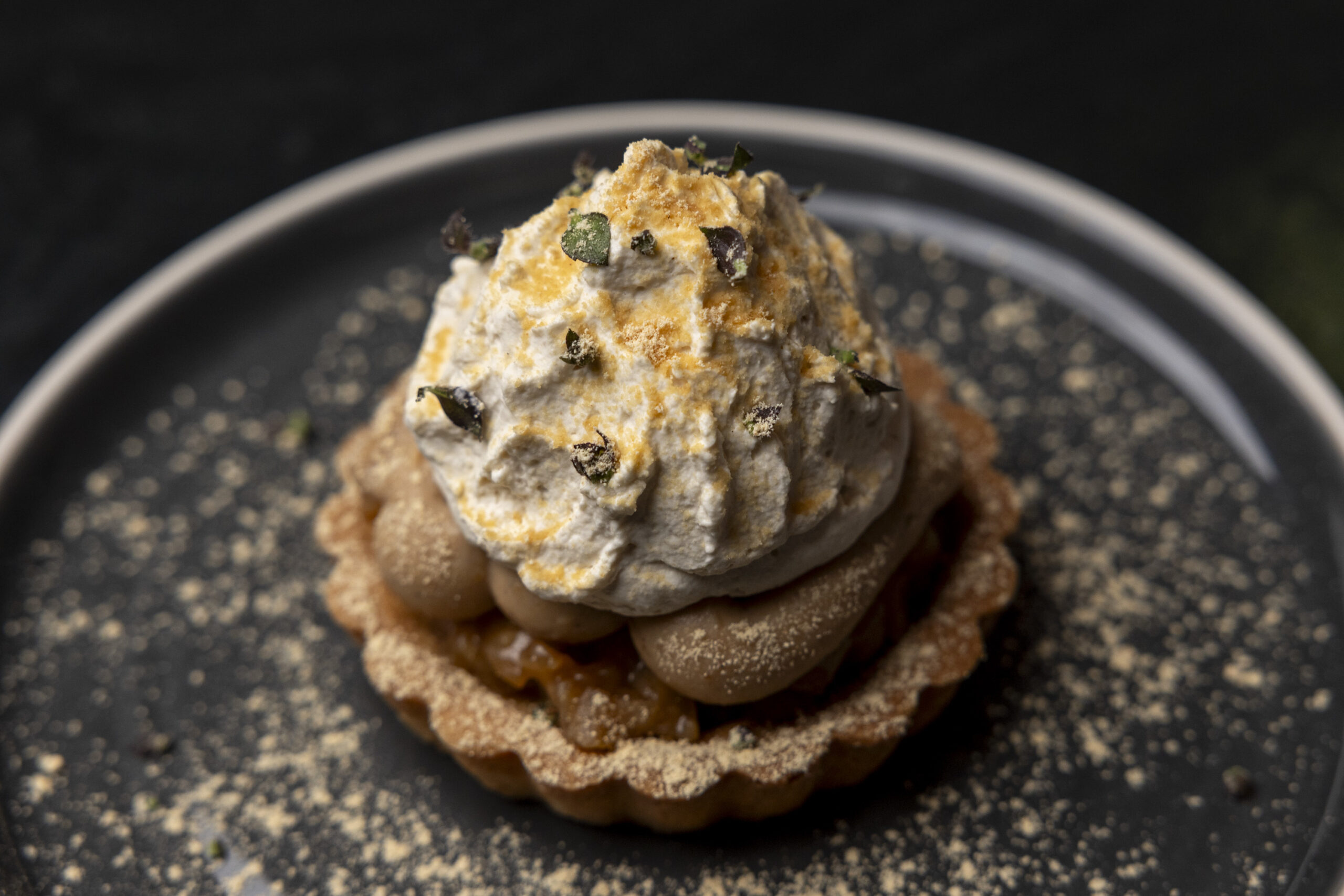
My favorite finale here, courtesy of sous-chef Zoe Delay, is a regal take on the Mont Blanc, a brown-butter shortbread shell filled with brandied apples and a mountain of piped chestnut crème diplomate frosted with a peak of ginger whipped cream. The pastry first found popularity in France in the late 1800s.
Coincidentally, that’s around the same time the Fluehr’s family was opening its furniture store on North Front Street — just as Kensington was earning its industrial reputation as the “workshop of the world.” How fitting that it should mark the sweet revival of this venerable space. It’s a delicious comeback in every sense of the word.
The Mont Blanc at Fleur’s in Philadelphia on Friday, Jan. 2, 2026.
About 85% of the menu is gluten-free or can be modified, but highlights include gluten-free frites and gluten-free brioche for the whitefish tartine.
Menu highlights: scallop gratin; smoked whitefish tartine; clams on the half-shell with house hot sauce; pork and pistachio terrine; squash velouté with lobster; marrow bone beef tartare; grilled sweet potato; roasted carrots with grated smoked beef heart; roast chicken; cod; Mont Blanc tart.
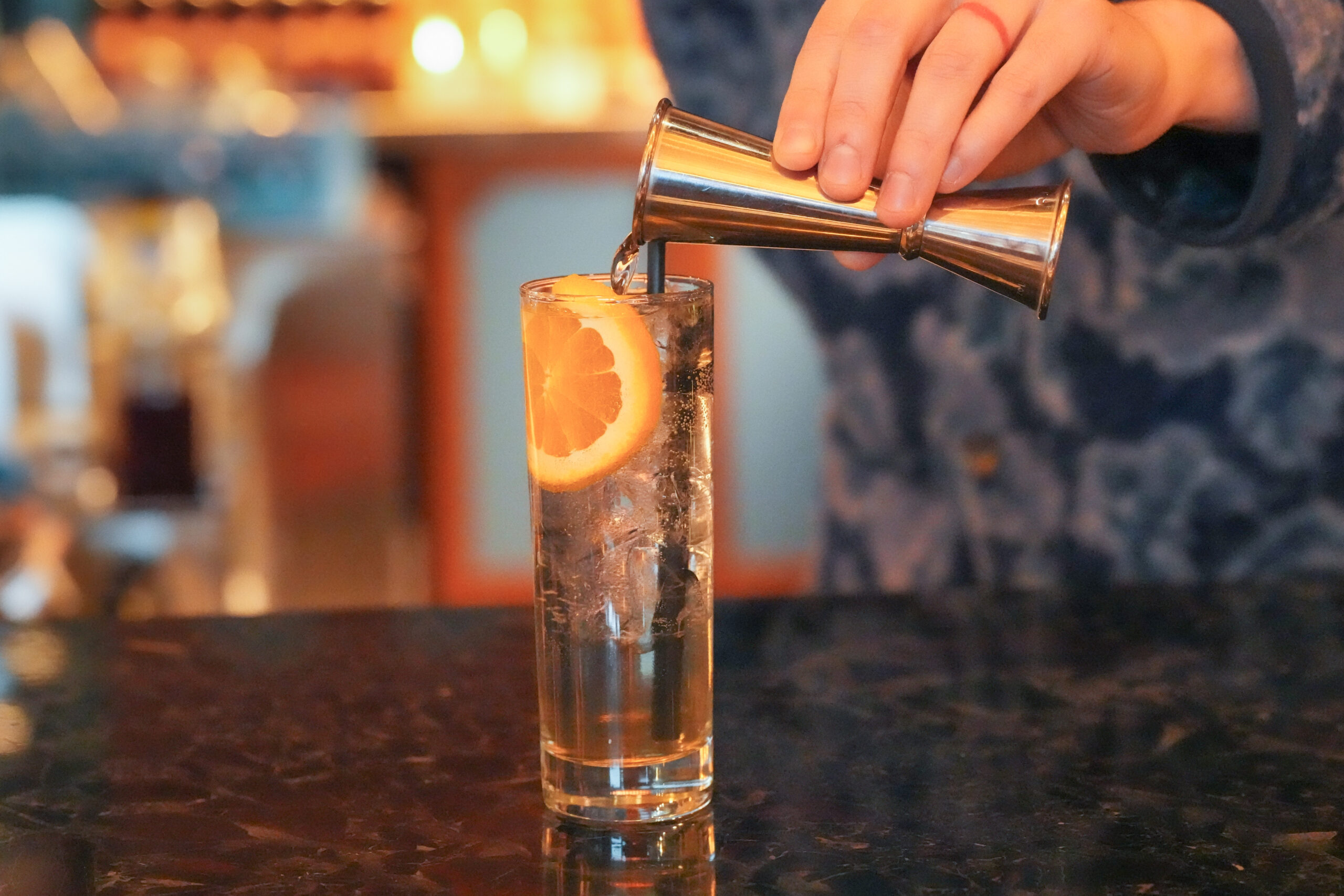
Drinks: The French theme and focus on seasonality and fermentation extends to the beverages, beginning with cocktails like the house martini kissed with Pineau des Charentes and a pickled grape, or the French 75-ish Esprit de Corps with sage syrup and cognac infused with Lancaster County trifoliate oranges. The wine list is entirely French, focused on lesser-known indie bottles, like a petit salé blend from Château Roquefort. Considerable effort has also been poured into zero-proof options such as the clarified chocolate-beet-ginger punch called Coupe Rouge.
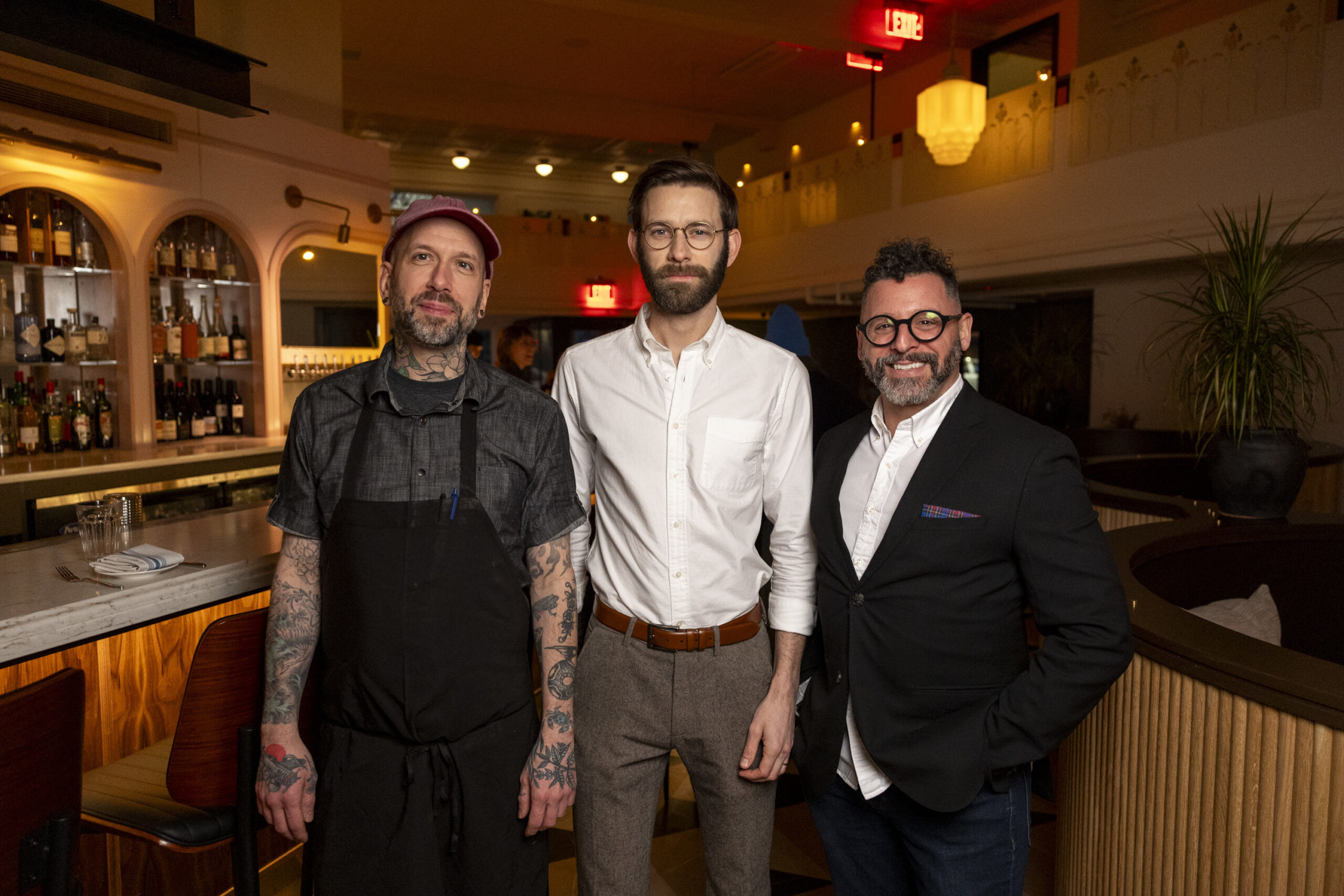
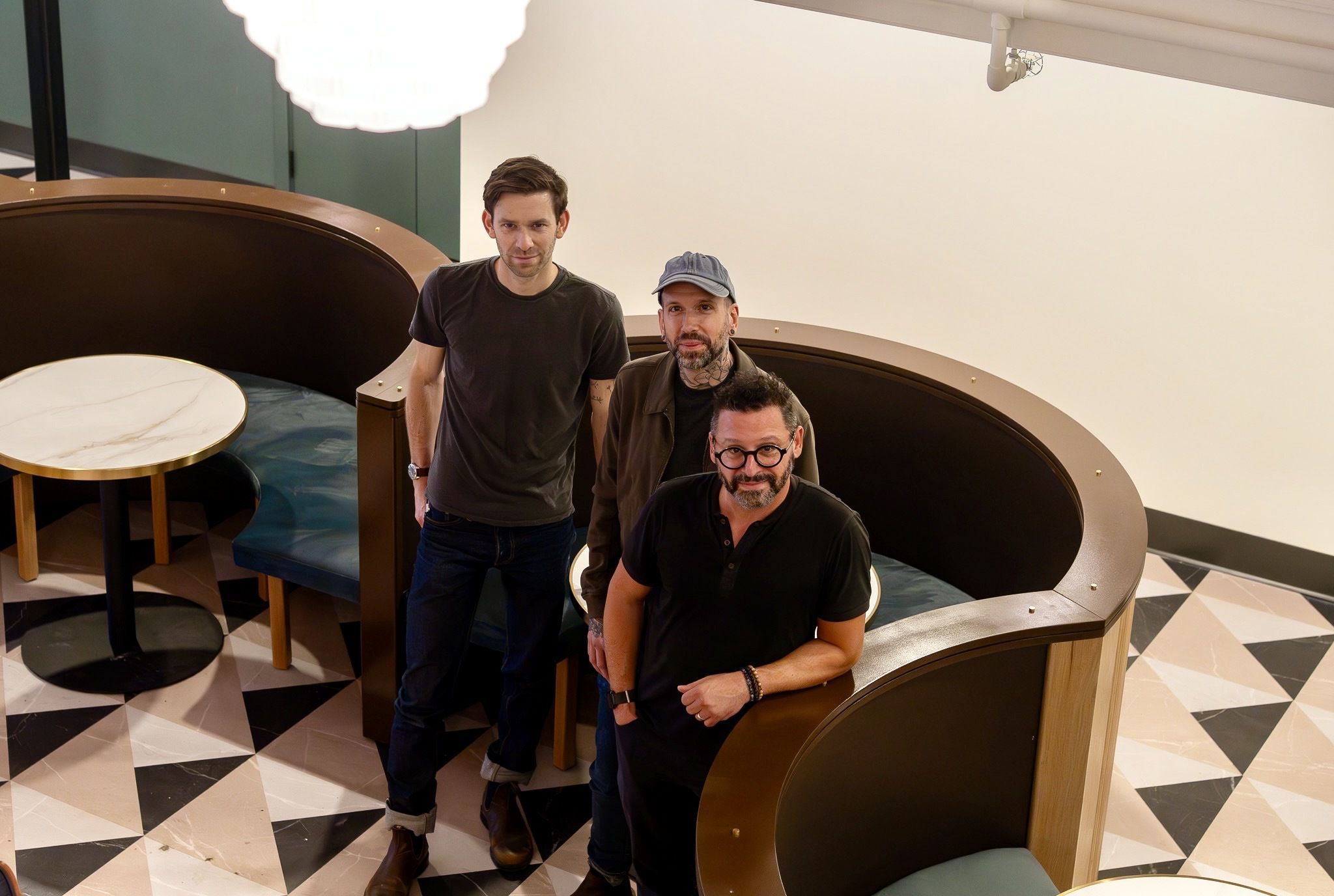
At Fleur’s, partners Graham Gernsheimer (from left), George Sabatino, and Josh Mann in the dining room. The glass lighting fixture is original to the building.
Rob Lucas Jr. is not exactly sentimental about the 27-inch walrus penis bone that for decades has adorned the bar he inherited from his father.
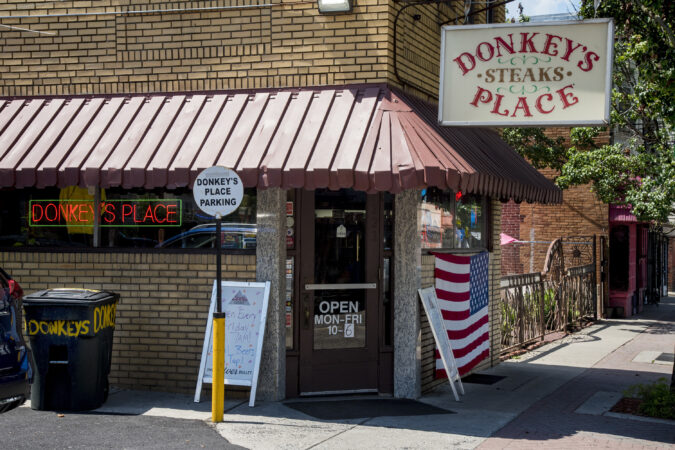
But on Dec. 29, a patron was captured on video stealing the Donkey’s Place oddity, Lucas said, and it’s not something he takes lightly.
He wants his walrus penis bone back on his bar stat.
“I do have a credit card, but I can’t get the information from my credit card company unless I file a police report and that would mean going down to the police station and spending hours,” he said Wednesday. “We’d rather just get it back.”
The provenance of the bone is unknown to Lucas, third-generation owner, who grew up in the local cheesesteak spot and bar.
His grandfather, Leon “Donkey” Lucas, a heavyweight boxing contender in the 1928 Summer Olympics, opened the bar more than 80 years ago.
Donkey’s got a major boost in 2015 when Anthony Bourdain featured it in an episode of his travel food show Parts Unknown. Bourdain said “the best cheesesteak in the area might well come from New Jersey,” referring to the Donkey’s Place staple served on a seeded Kaiser roll.
Donkey’s ambience has not changed much since Bourdain’s visit. It has the feel of a bar where everyone knows your name, cozy and packed to the gills with random decor, from beer memorabilia, boxing gloves, a megalodon tooth, and of course, the walrus penis bone, also known as a walrus baculum, for the citizen scientists.
Lucas grew up with the megalodon tooth and walrus bone but never learned what they actually were until he took the bar over from his father about a decade ago and endeavored to take stock of what he had on his hands.
Since then, the bone has been a great conversation piece — patrons guess what it is and pose for photos with it — and just another part of the local cheesesteak spot’s charm.
It’s why the waitress working a Dec. 29 shift didn’t think anything of the three men’s interest in the bone. Lucas said they spent a few hours at the bar while the waitress juggled patrons and the grill that’s within sight of where the patrons were sitting.
“They weren’t wasted or anything, but they had some sandwiches, bought some merchandise, and then walked out with the walrus bone,” he said.
But after paying their tab, Lucas said security footage shows one of the men wrapped the bone in a large pashmina-like scarf and walked out.
Little is known about the men. Lucas said they told the waitress they’d come to the area for HiJinx Fest, the two-day dubstep, electronic music festival, held at the Pennsylvania Convention Center across the river. Lucas said the man who took the bone claimed he was a traveling tattoo artist, originally from Cleveland.
By Wednesday, Donkey’s Bar had posted a public plea on its TikTok account, asking for help in finding the bone, sharing screenshots of the trio walking out of the restaurant, bone in scarf.
The local response has been swift so far and one of downright indignation. Lucas said some tattoo friends have circulated the story and NJ Advance Media published an article about the search. Lucas imagines internet sleuths will do their own digging, though he does not want to get anyone in trouble.
“They could mail it back if they want,” he said of the trio. No questions asked.
What’s hot in 2026: French bars, bagels, and the Main Line, to point out just a few observations from my rundown of the more than 100 restaurants due to open this year in Philadelphia and the area. Read on for more analysis of this year’s dining forecast.
🍴 Here is the full picture: New restaurants are coming from Ellen Yin, Greg Vernick, Teddy Sourias, and dozens more.
Welcome back from the holidays!
Let’s recap what The Inquirer’s food team has been up to over the last few weeks:
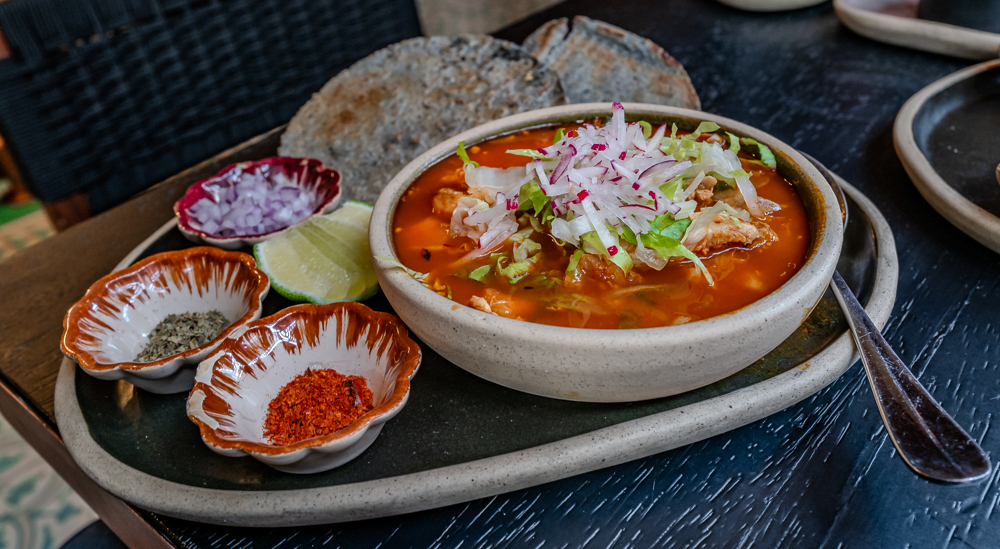
The hearty, body-warming stew/soup that is pozole comes in the colors of the Mexican flag: rojo, verde, and blanco, with regional variations of each. The good news, Kiki says, is that you don’t have to go all the way to Mexico City for excellent pozole. Here are her picks.
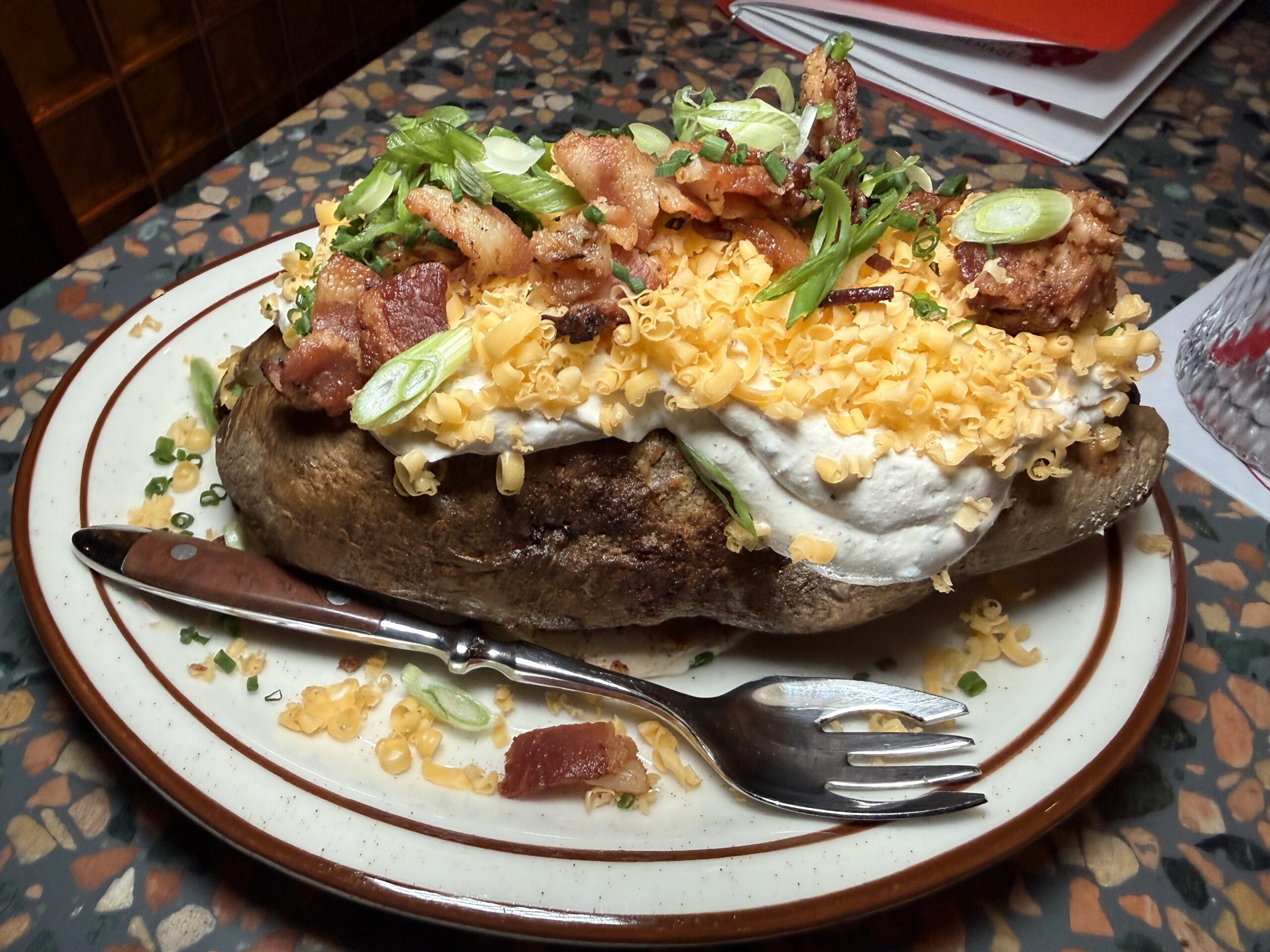
The baked potato is having its moment, Kiki says. The Idaho spud served at Wine Dive is no small potato. It’s roughly the size of her Chihuahua and comes topped with sour cream, cheddar, bits of bacon, and scallions.
The best things we ate last year
Best dishes of 2025
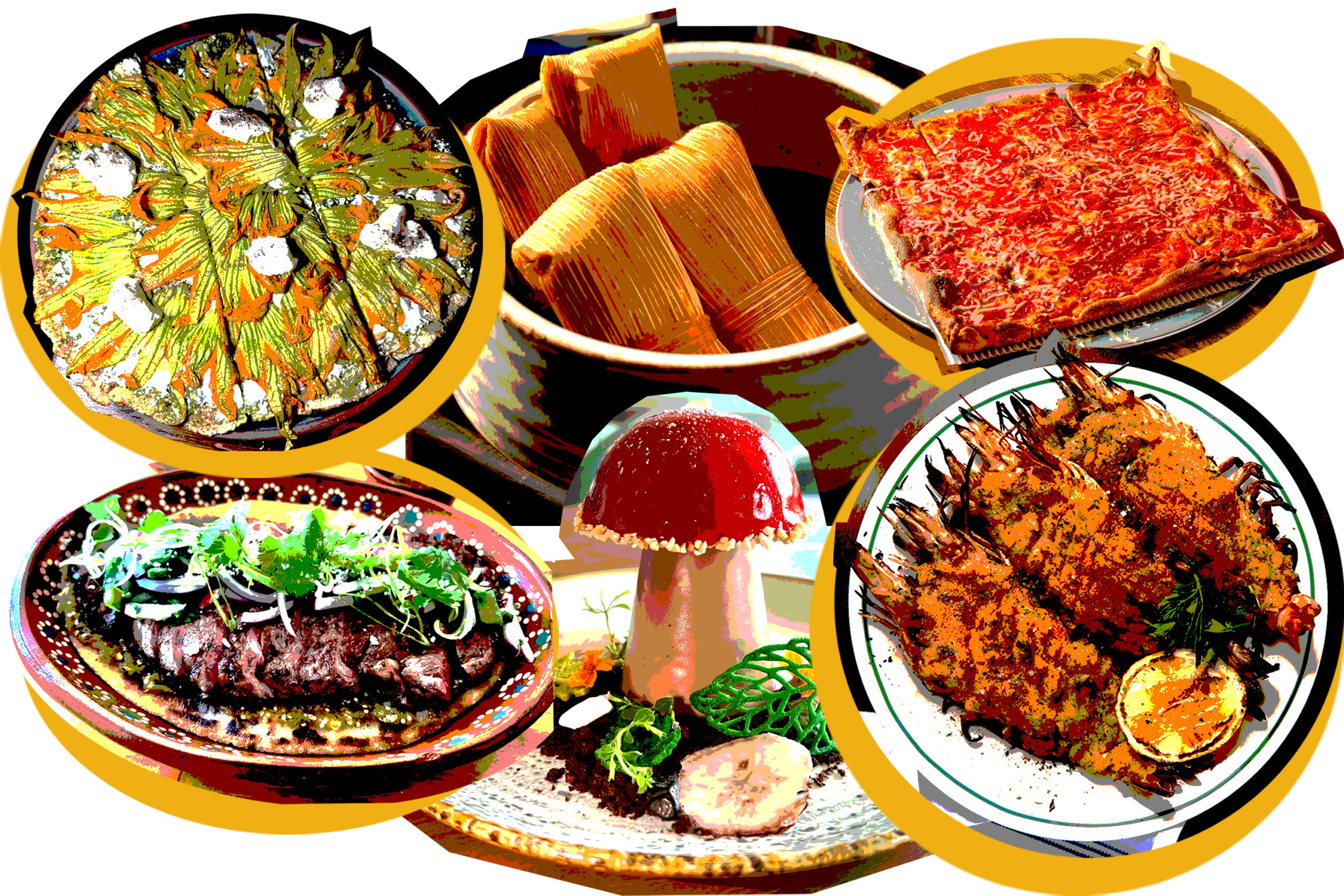
We all dined out a lot last year (perhaps so did you). Here are our 21 favorite dishes of 2025, including a Hyderabadi paneer curry so hot it made Craig LaBan’s ears ring and left his face temporarily numb. And that was one of his favorites?! Read on to see what else made an impression.
Restaurant report
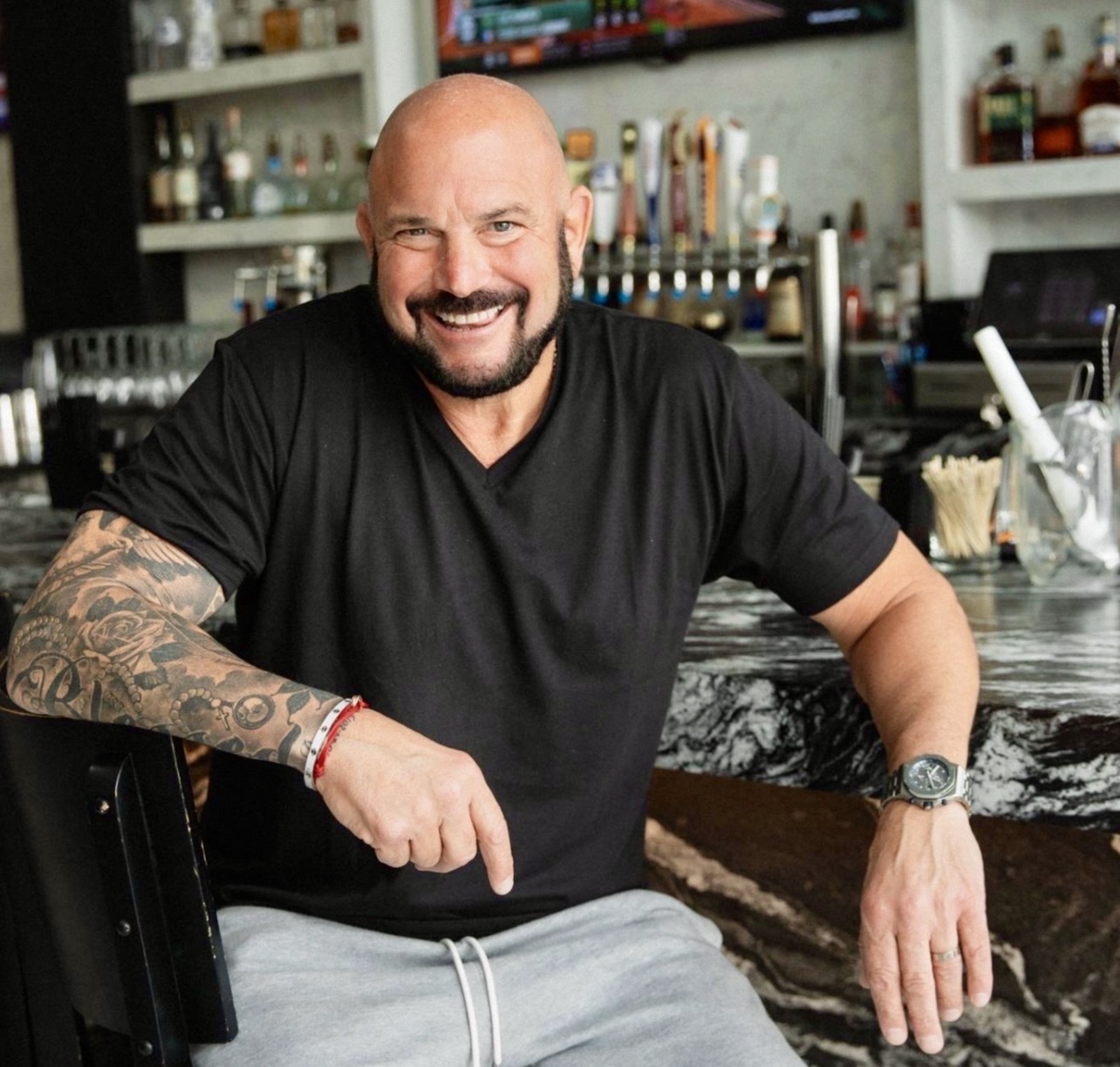
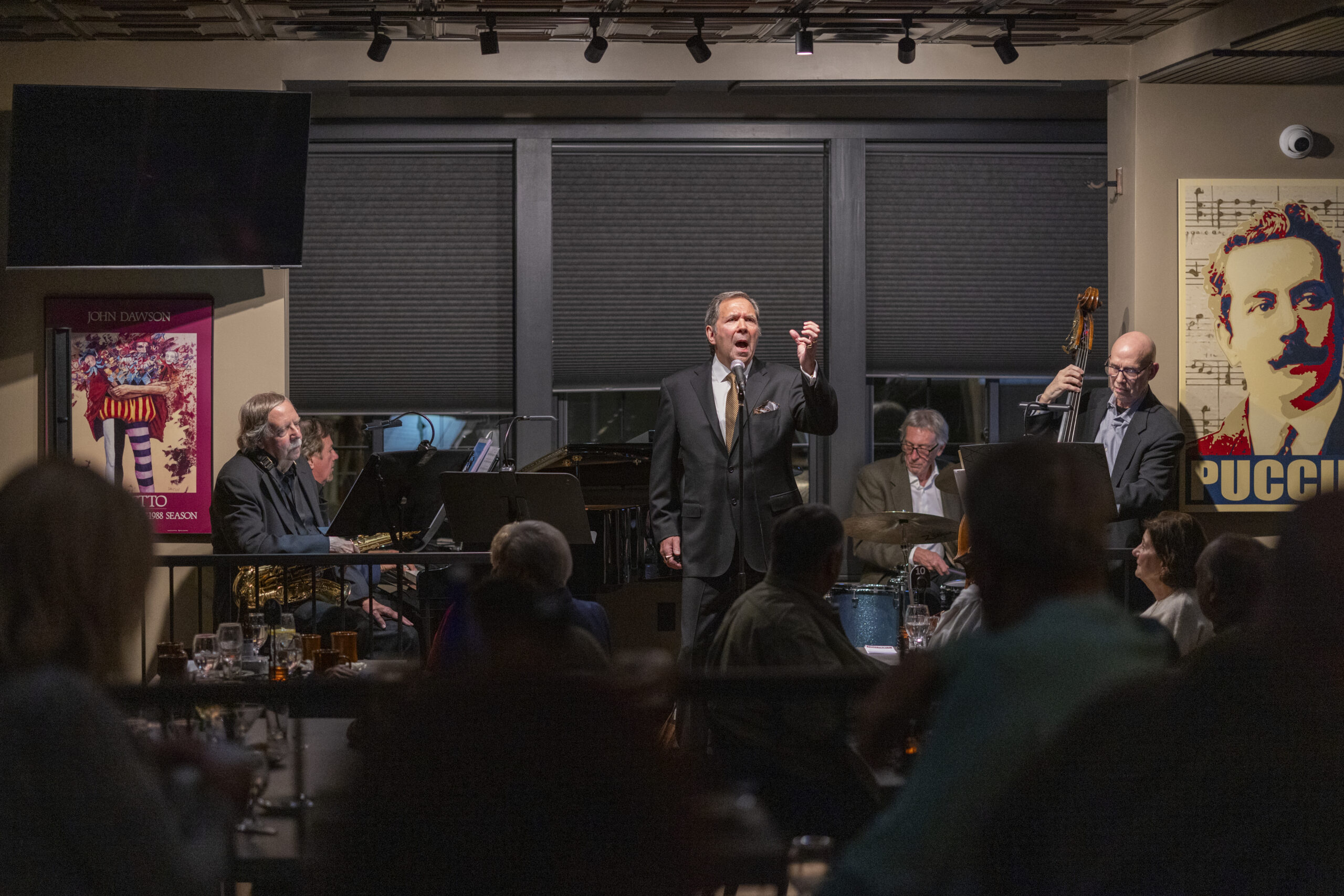
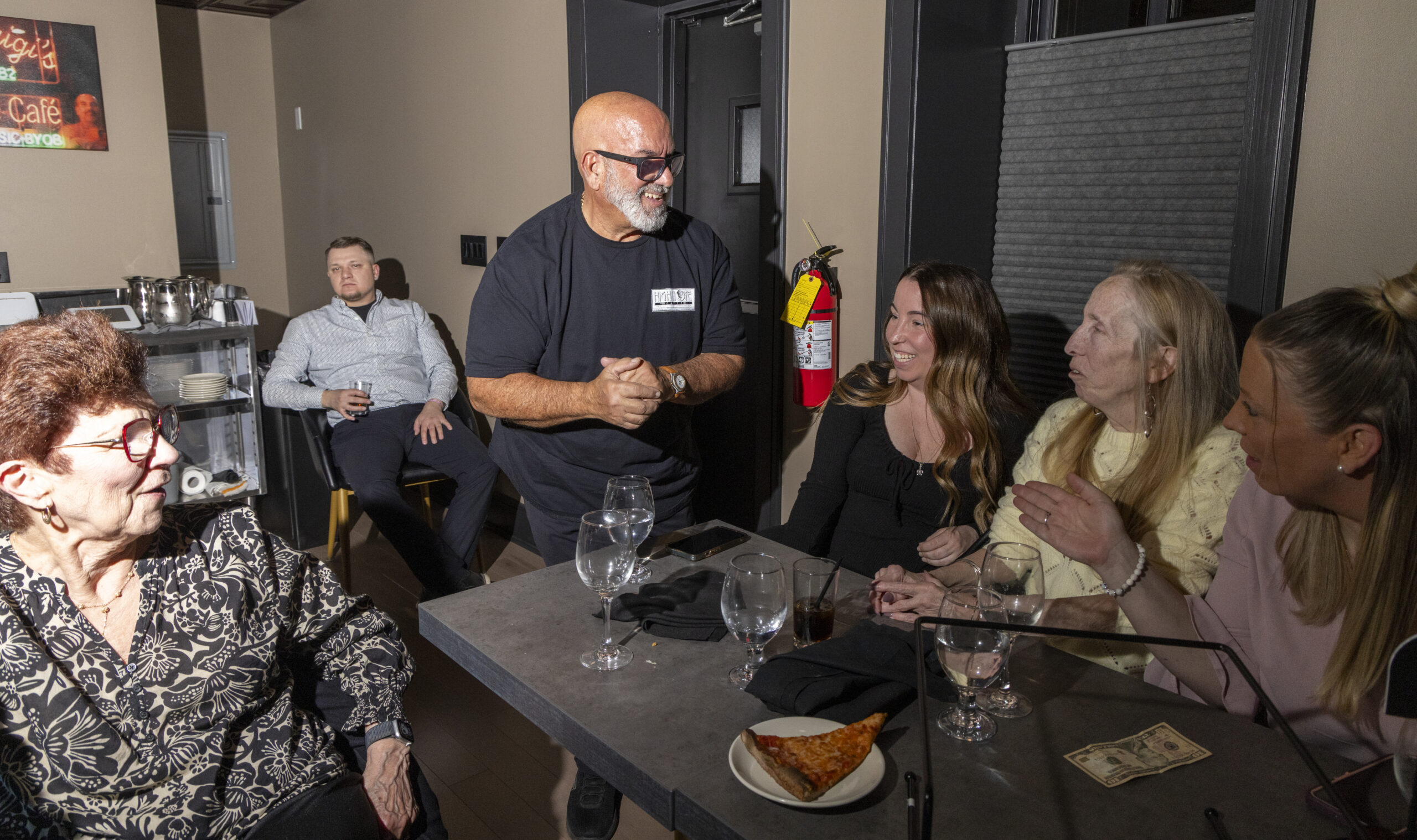
Restaurateur Franco Borda (that’s him shown below) loves Italian food, opera and jazz music, and South Philly. So after he closed his High Note Caffe during the pandemic, he decided to turn the joint into a nightclub. Five years later, the High Note is back, with a stage. I stopped recently to catch crooner Harry Barlo’s act, and the experience was an old-time delight. Dinner and a show for 50 bucks?
Briefly noted
Center City District Restaurant Week returns Jan. 18-31 with 100-plus restaurants offering three-course, prix-fixe dinners for $45 or $60 and two-course lunches for $20. Here’s the rundown.
Yum Grills,opening this weekend at 1135 Vine St., comes from Shahezad “Shah” Contractor and the crew from Cousin’s Burger Co. The halal shop will sell smash burgers, chicken sandwiches, chicken over rice, and wings out of a Shell station; at the Jan. 10 grand opening (1 p.m.), the first 100 people will get a double smash burger, fries, and soda.
Gluten-free bakery Flakely is opening a proper storefront in Bryn Mawr.
Emmett in Kensington has secured a full liquor license, allowing it to broaden its wine and spirit list beyond Pennsylvania labels. The new era starts Thursday.
Why is the food sold at Pennsylvania Turnpike’s rest stops so … um … mid? Brett Sholtis found out.
❓Pop quiz
Why is McDonald’s being sued this time? Not over coffee, but…
A) The ice cream machine gave the plaintiff trust issues after being “temporarily unavailable” for the 400th consecutive visit.
B) The plaintiff alleges that the McRib sandwich is not made from pork rib meat.
C) A Happy Meal did not make the plaintiff happy. Just nostalgic and sad.
D) The “two all-beef patties” jingle has been stuck in the plaintiff’s head since 1994, causing permanent mental occupation.
I’m wondering if there is a list of restaurants that take reservations but aren’t on the two major services. I always feel like I’m missing some good places out there. — Chuck L.
You may also check Tock for restaurants not on OpenTable or Resy. For years, OpenTable was the big player. Then Resy came online and started cherry-picking popular newcomers. Then OpenTable sweetened the deals for restaurants and began to recapture the market. (My editor Jenn Ladd wrote a fascinating article about this a year ago.) Tock has been a solid No. 3, but that’s where you’ll find tables at such places as DanDan, Elwood, South, and Barcelona Wine Bar. Some restaurants — such as Uchi, Scarpetta, and Cuba Libre — use SevenRooms on their back end, so you must book through the restaurant’s individual websites.
📮 Have a question about food in Philly? Email your questions to me at mklein@inquirer.com for a chance to be featured in my newsletter.
By submitting your written, visual, and/or audio contributions, you agree to The Inquirer’s Terms of Use, including the grant of rights in Section 10.