Category: Restaurants

  • 2025 in pizza: The best new slices and pies in the Philly area

    2025 in pizza: The best new slices and pies in the Philly area

    What a year for the Philly-area pizza scene. To recap 2025’s newcomers, we saw full-service settings that treat pizza as one pillar of a modern Italian restaurant, such as Cerveau in Spring Arts, Corio in University City, Scusi in Northern Liberties, and the hypermart Eataly in King of Prussia. Fishtown’s roster expanded with Marina’s Pizza, from the grandson of a local pizza magnate. The late-night scene, moribund for the last five years, now has 15th Street Pizza & Cheesesteak in Rittenhouse. Other newcomers include Angelina’s in deep South Philly, Rhythm & Spirits in Suburban Station, Puglia on South Street, and Italian Family Pizza on the Parkway.

    New social rooms treat pizza as an anchor for hanging out (the Borough in Downingtown, the Pizza Pit in Bensalem, and Gloria Sports & Spirits in Warrington). Expansion was also on the table: The Main Line hit Johnny’s Pizza opened an offshoot in Wayne, and Santucci’s tacked on new spots in University City and Deptford.

    The burbs saw ambition from Anomalia in Fort Washington, Antica in Warrington, Barclay Pies in Cherry Hill, Classic Pizza in Bala Cynwyd, Not Like the Rest in Pine Hill, Taco-Yote in Moorestown, and Genova Pizza 2 Go in a Williamstown gas station. There was even a nerdy newcomer: Apizzeria 888 by Sebastian, a “pizza lab” in Elkins Park that feels like a cult favorite in the making.

    N.B. The 2026 pizza scene commences with the Jan. 1 opening of Assembly Pizza Co. at University City’s Gather Food Hall.

    Philadelphia proper

    Angelina’s Pizza

    Saloon alumnus Marty Angelina and Franco & Luigi veteran Brian Cunningham serve abundantly topped New York-style pizza along with a menu of sandwiches, chicken cutlets, pastas, and stuffed long hots wrapped in bacon from this Seventh and Oregon Avenue space, formerly the Pizza Shop and Ralph & Rickey’s. The pizza that gets the most attention is the Honeyroni, a mix of pepperoni, ricotta, and hot honey, available by the slice or the pie. Its location makes it an easy jump to the sports complex. (Bonus: John’s Water Ice has a pickup window here in season.)

    Cerveau

    Pizza Brain cofounder Joe Hunter is behind this neighborhood drop-in disguised as a colorful playground in the 990 Spring Garden building, with a cicchetteria menu (small plates and the mini-sandwiches known as tramezzini), plus a few large plates at dinnertime. The stars are the puffy-crusted, 16-inch Neapolitan-ish pizzas, which are on the cheffy side: The French Onion, with mornay, caramelized onions, and comte, is a winner of a white, and nostalgics should find a soft spot for the Crab Rangoon — a take on the Chinese takeout staple — topped with cream cheese and lump crab with a swirl of sweet chili.

    Corio

    They’re creating in University City these days, and not just at the high-tech “innovation district” that Drexel University and Wexford Science + Technology are putting together. Chef Dave Feola puts out some traditional, thin-crusted 14-inch pies at this comfortable Market Street bistro, such as a Margherita with a San Marzano base and buffalo mozzarella and a spicy sausage Bolognese. But the seasonal selections get wilder, like braised rabbit in a tomato sauce dotted with ricotta and Calabrian chili oil, or the hazelnut pesto with roasted poblano and pecorino over béchamel.

    15th Street Pizza & Cheesesteak

    When it’s creeping past 2 a.m. and the bars are letting out, you need a munchie run: That is what drove brothers Andrew and Michael Cappelli, who own Cappelli’s, a late-night pizzeria on 13th near Locust, to open this corner parlor and cafe in the former Starbucks at 15th and Latimer. It’s open till 3 nightly, with a case that’s stocked with slice options. The plain cheese and the pepperoni are the big sellers, as you’d imagine, but they sell plenty of the buffalo chicken ranch (rounds and Sicilians), broccoli spinach ricotta (rounds), and Margherita Sicilians. If pizza isn’t singing your song, they’ve got overloaded cheesesteaks coming off the flattop.

    Italian Family Pizza

    You may have to tilt the pizza box slightly to navigate the doorway of Steven Calozzi’s rustic parlor in the former Subway shop at 17th and the Parkway. Calozzi, a pizzeria lifer from Bucks County (by way of Seattle), is turning out whopping, 24-inch Trenton-style pies: cheese on the bottom, with a thin, crispy crust. (A 12-inch is available, too.) There’s a tomato pie drizzled with pecorino and olive oil, a sauceless white pizza, a cheese pie (heavy on the toppings), and a Sicilian. Dine-in on two levels is a plus when you have a family attending an event on the Parkway.

    Marina’s Pizza

    Mason Lesser is 24, but he’s been around the pizza world all his life through his maternal grandfather, Angelo Lancellotti, who owned dozens of local pizzerias over the decades. Lesser, who named his Fishtown storefront after his mother and grandmother, offers thin-crusted New York-style pies (18-inchers for whole, 20-inchers for slices) that meld both fresh and low-moisture mozzarella with minimal sauce (a simple combo of tomatoes, salt, basil, and olive oil); all pizzas get a finishing dusting of pecorino-romano and glug of EVOO. His upmarket pie is the Riviera, with pepperoni, creamy stracciatella, basil hot honey, and basil. It’s open for dine-in or pick-up.

    Puglia Pizza

    Cosimo Tricarico left Philly (and his Caffe Valentino in Pennsport) a few years ago for his native Puglia. In his Philly comeback, he’s set up Puglia at Ninth and South, turning out an assortment of football-shaped Romans, traditional rounds, plus sfilatini —thin, pressed baguette sandwiches with fillings like meatballs and vegetables. It’s open for dine-in.

    Rhythm & Spirits

    Lee Sanchez’s something-for-everyone menu at his mod bistro inside the Suburban Station building (aka One Penn Center) includes five pizzas — all thin-crusted 14-inch rounds with sturdy bottoms and good crunch. There’s plenty of heat from the Trevi, with spicy pepperoni cups, pickled serrano peppers, hot honey, and blobs of whipped ricotta. Also of note is the Funghi, whose wild-mushroom mix gets a topping of Dijonnaise, fresh mozzarella, and rosemary gremolata.

    Santucci’s

    It’s hip to be square at this old-Philly institution — now up to 14 locations (including new outposts in University City and Deptford) under one branch of Joseph Santucci’s family. The pan-baked square crusts envelop a firm, crackly bottom, and the sharp sauce stays bright, ladled on top of the cheese.

    Scusi Pizza

    Chef Laurent Tourondel, the New York restaurateur behind an international portfolio of steak houses, Italian restaurants, and pizza concepts, is behind this sophisticated pizzeria/cocktail bar in Northern Liberties’ Piazza Alta. For the French-born chef, pizza is personal. “I was telling my staff that I cooked for a living, but pizza for me was always a hobby.” Twenty years ago, after Michelin awarded a star to BLT Fish, Tourondel’s chef de cuisine announced that he was quitting to open a pizzeria, a growing category. Inspired, Tourondel trained in Naples and returned to New York to launch La Mico and later take over a longtime pizzeria on Long Island, where he refined a crispy, airy-crusted style. At Scusi, chef de cuisine Georgeann Leaming offers a by-the-slice pizza bar as well as two Sicilian pies, along with calzones, salads, sandwiches, and soft-serve for dessert. Tourondel is also behind Terra Grill, a wood-fired grill restaurant, planned next door for early 2026.

    Pennsylvania Suburbs

    Anomalia Pizza

    The phrase that pays at this humble, stand-alone slice shop near the Fort Washington SEPTA station is “drunken grandma”: That’s Frank Innusa’s crispy, almost buttery-bottomed squares topped with fresh mozzarella and ribboned with a thick, creamy vodka sauce amped with pancetta. Other hits include the stromboli and the uncommon mozzarella in carrozza — basically, a mozzarella stick in sandwich form (cheese tucked inside bread, crusted with bread crumbs, and fried). There’s seating for dine-in.

    Antica Pizza Co.

    Whether you’re after thin or thick crusts, 12- or 16-inch, there’s something for everyone among the grandmas, Sicilians, and New York pizzas at this roomy, contemporary strip-mall spot in central Bucks County. If you’re indecisive, there is the capricciosa, which has a little bit of everything on top. The oven also turns out pinsa (the Roman-style flatbread) and schiacciata for Tuscan-style sandwiches.

    Apizzeria 888 by Sebastian

    Owner/pizzaiolo Sebastian Besiso is the first to say that you may not like his pizza, especially if you prefer more conventional New York or Neapolitan styles. His “Roma” — available in limited qualities at his one-man hole-in-the-wall takeout in Elkins Park — is built with two kinds of aged cheese, a smear of a slightly sweet tomato basil sauce, and an almost impossibly thin crust that shatters around the edges as you bite. There is no flop whatsoever. Apizzeria pies have the crunchy, cheese-on-the-bottom qualities of Chicago tavern-style, though Besiso slices them into conventional eighths, not party squares.

    The Borough

    This newcomer in Downingtown is many things: a family restaurant and sports bar downstairs, with a sushi bar and event space upstairs. It’s also a serious pizza destination thanks to consultant Ptah Akai, whose pies are puffy, neo-Neapolitan-ish, with sturdy crusts and a light char. The sliced garlic gave a subtle roast to a cheeseless tomato pie that he made for me off-menu. His Forager, with basil pesto and three kinds of mushrooms, was balanced and did not sink under the mozzarella. There’s also a plain cheese, pepperoni, and a Margherita. Important, non-pizza-related tip: The adjacent parking lot is not the restaurant’s, and tow trucks abound; park across the street in the municipal lot.

    Classic Pizza

    Staten Island-born pizzaiolo Paul Brancale has taken over the Bala Cynwyd location of EVO Pizza for a slice shop built around old-school New York styles, including thick, soft Sicilians; crispy-crusted, rectangular grandmas; and 18-inch round pies that are thin and crispy, in the Joe & Pat’s/Rubirosa tradition. He’s making his own fresh mozzarella from curds, and the sausage comes from Martin’s at Reading Terminal Market.

    Eataly

    Pizza at this massive Italian emporium in KoP Mall splits cleanly into two lanes. The full-service restaurant, La Pizza & La Pasta, serves classic, whole Neapolitan pies in a classy setting. For something faster, the marketplace counter sells Roman-style pizza by the slice; with a small seating area, it’s built for both lingering or grabbing a quick square mid-shop.

    Gloria Sports & Spirits

    It would be easy — and wrong — to write this place off as a sports bar. What matters is the pizza: light yet sturdy 13-inch pies from Vetri alum Brad Daniels, whose resumé also includes the high-end Tresini in Spring House. The toppings show real thought, from a saganaki-inspired pie with preserved lemon, feta, and oregano to the broccoli-forward “Brock Party” with ricotta sauce and roasted garlic. Even the red pies are dialed in, finished with restrained Bianco DiNapoli sauce and fior di latte instead of generic mozzarella.

    Johnny’s Pizza

    Having wowed our tasters for The Inquirer’s 76, John Bisceglie has added a Wayne outpost to his bustling Bryn Mawr pizzeria. Located in a strip center near the farmers market, it’s set up mostly for takeout, but there’s a comfy dining room to enjoy unforgettable pies both thick and thin(ish), rectangular and round, red and white. We’re particularly fond of the white pies, topped with fresh mozzarella, lemony ricotta, caramelized onions, pecorino-romano, and parsley and baked on a sesame-seed crust.

    The Pizza Pit

    The no-frills, 14-inch pies — especially the upside-down (with provolone on the bottom) and the cheeseless tomato — pair well with the brews on tap at this counter setup inside the industrial-looking “mixing room” at Bensalem’s Broken Goblet Brewing, run by veteran pizza man Bob Meadows and his business partner, Chris Margarite.

    South Jersey

    Barclay Pies

    This cheery, spacious spot offers gluten-free crusts (using Caputo’s flour) along with a line of conventional pies, plus other foods (chicken tenders, wings, fries, cookies) that are gluten-free from inception. The lineup: five red pizzas (plain, pepperoni, sausage, pineapple, and a vegan Margherita featuring cashew milk mozzarella cheese by Miyoko’s Creamery) and four whites (arugula, mushroom, broccoli, and buffalo chicken). Allergen info and protocols are up on their Instagram. Plain and pepperoni slices are available over lunch.

    Genova Pizza 2 Go

    Come for a fill-up at this branch of Audubon’s Genova Pizza, tucked inside Marathon Gas. The grandma pies, with their crispy, olive oil-slicked crusts, the thicker-crusted Sicilians, and deep dish are the big draws. If you’re on your way somewhere, note that you can eat at the counter, if you’d care to spare your car’s interior.

    Knot Like the Rest Pizzeria

    Gary Lincoln’s latest South Jersey pizzeria is not like the rest: It’s all online for delivery, and walk-in customers must use kiosks for slices and pies, available also for dine-in. Highlights include the Pickle (pickles, bacon, cheddar, mozzarella, ranch dressing), Zinger (secret sauce, steak, banana peppers, mozz, American cheese), and Knotty Vodka, with its edges ringed with garlic knots.

    Taco-Yote

    There are seven Mexican pizzas on the menu at this vibrant taqueria in downtown Moorestown from Carlos Melendez of Conshohocken’s Coyote Crossing. The 16-inch rounds (not too thick or thin) aren’t just getting “taco toppings,” either; there’s mole poblano with pulled chicken, red onions, and toasted sesame seed; birria topped with guajillo and morita-seasoned brisket, with consommé on the side, and a sweet-and-savory al pastor with achiote and the kick of chile de árbol salsa.

  • Iron Hill Brewery in West Chester is officially seeking a new tenant

    Iron Hill Brewery in West Chester is officially seeking a new tenant

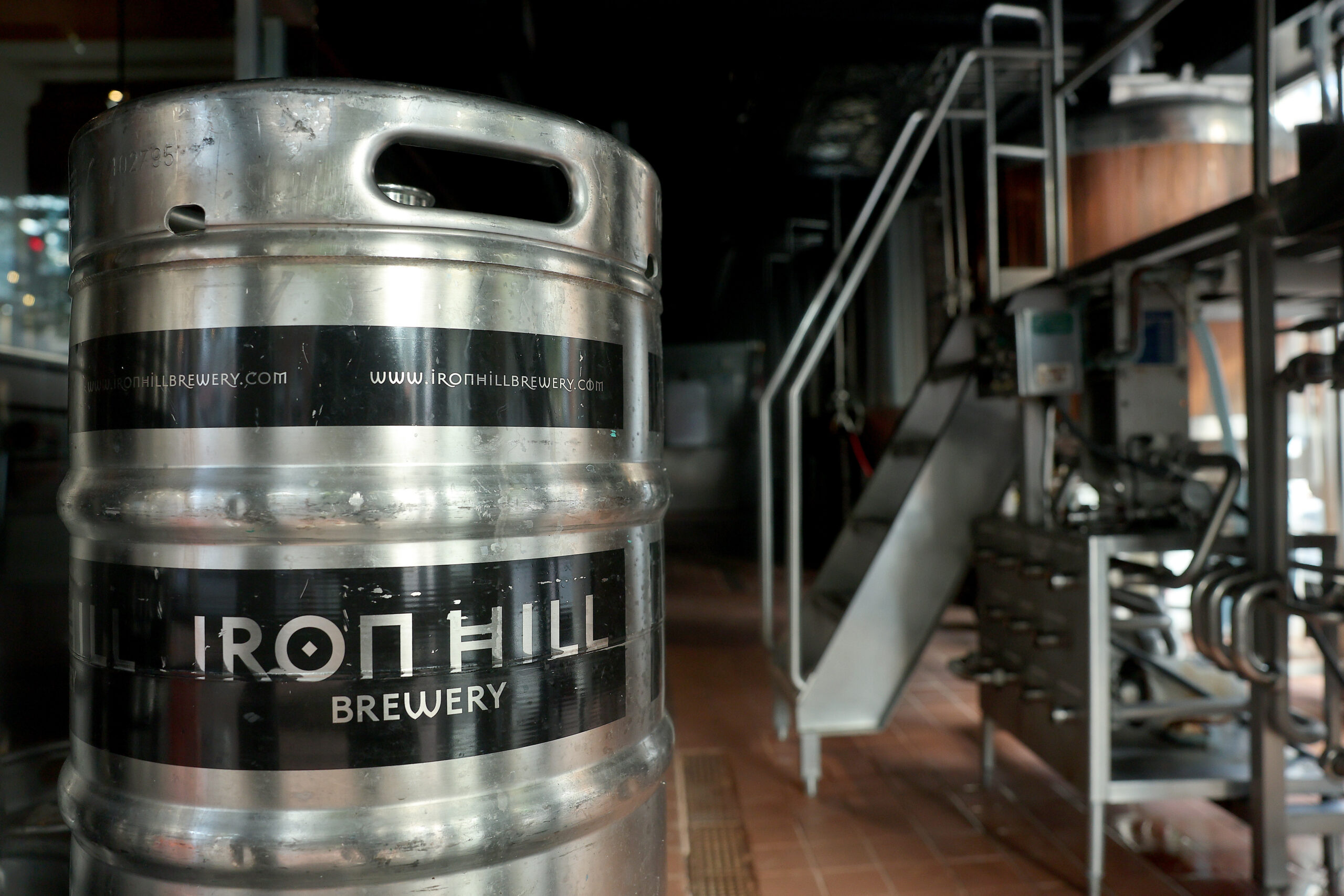
    The search is on for a new restaurateur to take over the shuttered Iron Hill Brewery in West Chester, after the building’s owner bought the assets from the former CEO of Famous Dave’s BBQ.

    John Barry, a Massachusetts-based real estate investor who owns the building, and Jeff Crivello, the ex-CEO of Famous Dave’s, said Friday that Barry purchased the liquor license and all assets inside the former West Chester Iron Hill, one of 16 locations that closed abruptly this fall when the regional chain filed for bankruptcy.

    In November, Crivello had said he intended to revive the West Chester Iron Hill, under the same name or as a new concept, after a bankruptcy judge approved his offer to buy the assets of the location and nine others in Pennsylvania, Delaware, and South Carolina.

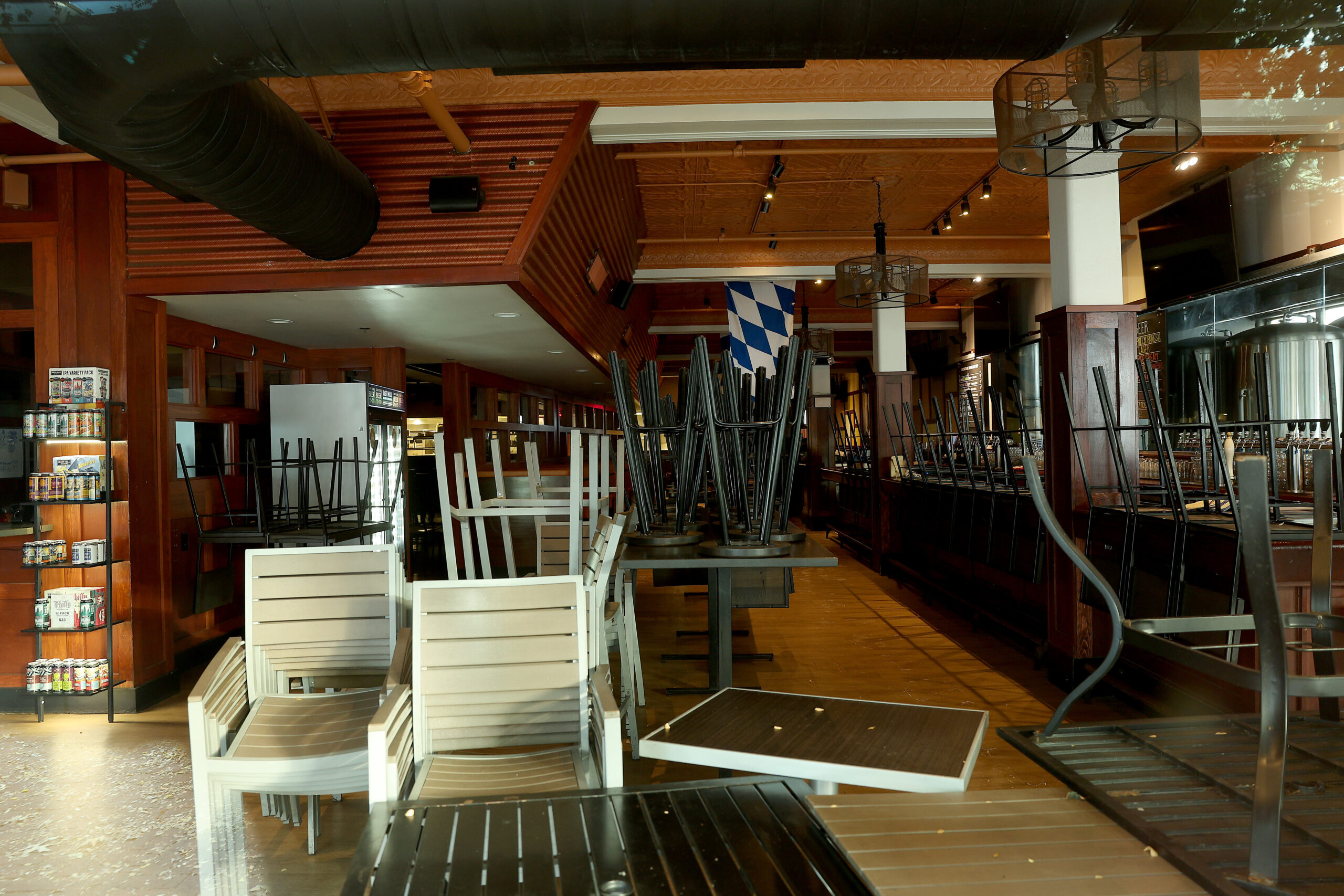
    A view from the outside looking in of the closed Iron Hill Brewery in West Chester in October.

    Both Barry and Crivello declined to disclose financial details of the West Chester deal, which was finalized on Christmas Eve. It was first reported Wednesday by Hello, West Chester, a local news website.

    “As a landlord, I was hoping to have a chance to purchase the assets,” Barry said Friday in an interview. “I wanted to buy and keep the liquor license with the building. It allows me to get a better tenant in there that is probably going to pay a little bit more in rent.”

    Iron Hill had anchored the old Woolworth’s building since 1998, when the brewery founders opened their second location there. Many local business owners credit Iron Hill with sparking a restaurant renaissance in the borough, as the brewery did in other Philadelphia suburbs.

    Situated at West Chester’s central corner of High and Gay Streets, Iron Hill had a 30-year lease, with a 15-year extension, Barry said.

    Barry, a West Chester native who now lives outside Boston, purchased the nearly 30,000-square-foot building for $8.25 million in 2022, according to Chester County property records.

    Barry said the next anchor tenant would take over a new lease for the now-vacant 10,000-square-foot space that can seat 300 people. He declined to specify what the lease terms might be.

    “It will not be reopening as Iron Hill Brewery,” said Barry, who didn’t buy the rights to the name. “My goal would be to find something similar,” though not necessarily a brewery.

    In buying the assets, Barry said the restaurant is essentially turnkey, with all the furniture and kitchen and brewing equipment still inside. A new tenant, however, may want to redesign, he said, or the space could even be subdivided for a restaurant and a retail space.

    A view from the outside looking in the now closed Iron Hill Brewery in West Chester in October.

    “It’s really important to me that we find the right tenant for the West Chester community,” Barry said. “It’ll take a little bit of time.”

    But, he added, “my hope is we get somebody in there and operating by the summer.”

    Elsewhere, Crivello said there is still hope that the Iron Hill brand could get another life.

    “We’re working with a couple buyers that want to reopen [closed breweries] as Iron Hill,” Crivello said. He declined to say which locations could be resurrected.

    In November, Crivello got the OK to acquire the assets of former Iron Hill brewpubs in Center City, Huntingdon Valley, Newtown, Wilmington, Lancaster, Hershey, and Rehoboth Beach, as well as West Chester and the two locations in South Carolina.

    Crivello said Friday that he has since sold the assets of the former Iron Hills in Columbia and Greenville, S.C., to Virginia-based Three Notch’d Brewing Co. He said plans for the other locations were still in the works.

  • Taco-Yote is the new taqueria in Moorestown from Conshohocken’s Coyote Crossing

    Taco-Yote is the new taqueria in Moorestown from Conshohocken’s Coyote Crossing

    In late 1996, Carlos Melendez took a chance on a watering hole off the beaten path in Conshohocken and created Coyote Crossing, still one of the suburbs’ most popular Mexican restaurants. Ten years later, he opened what proved to be a short-lived outpost in West Chester before deciding to double down by expanding the original restaurant.

    And that seemed to be enough until one night last year when he and his wife, Steffany, were out to dinner at Maurizio’s Bistro, near their home in Moorestown. Melendez struck up a conversation with owner Maurizio Randazzo.

    “He told me, ‘You know what, Carlos? I’m tired. I’m having knee surgery, and I just don’t want to do this anymore. I’d like to sell it,’” Melendez said.

    Melendez initially was reluctant to open another restaurant, but his wife urged him to look at it as a creative exercise. “And she was right,” he said.

    Taco-Yote — a mashup of “taco” and “coyote” — opened Dec. 12. It’s a deliberate shift from Coyote Crossing. Moorestown is dry, so there is no bar. It’s also much smaller, with a lower price point and a menu engineered for takeout and delivery as much as for dine-in.

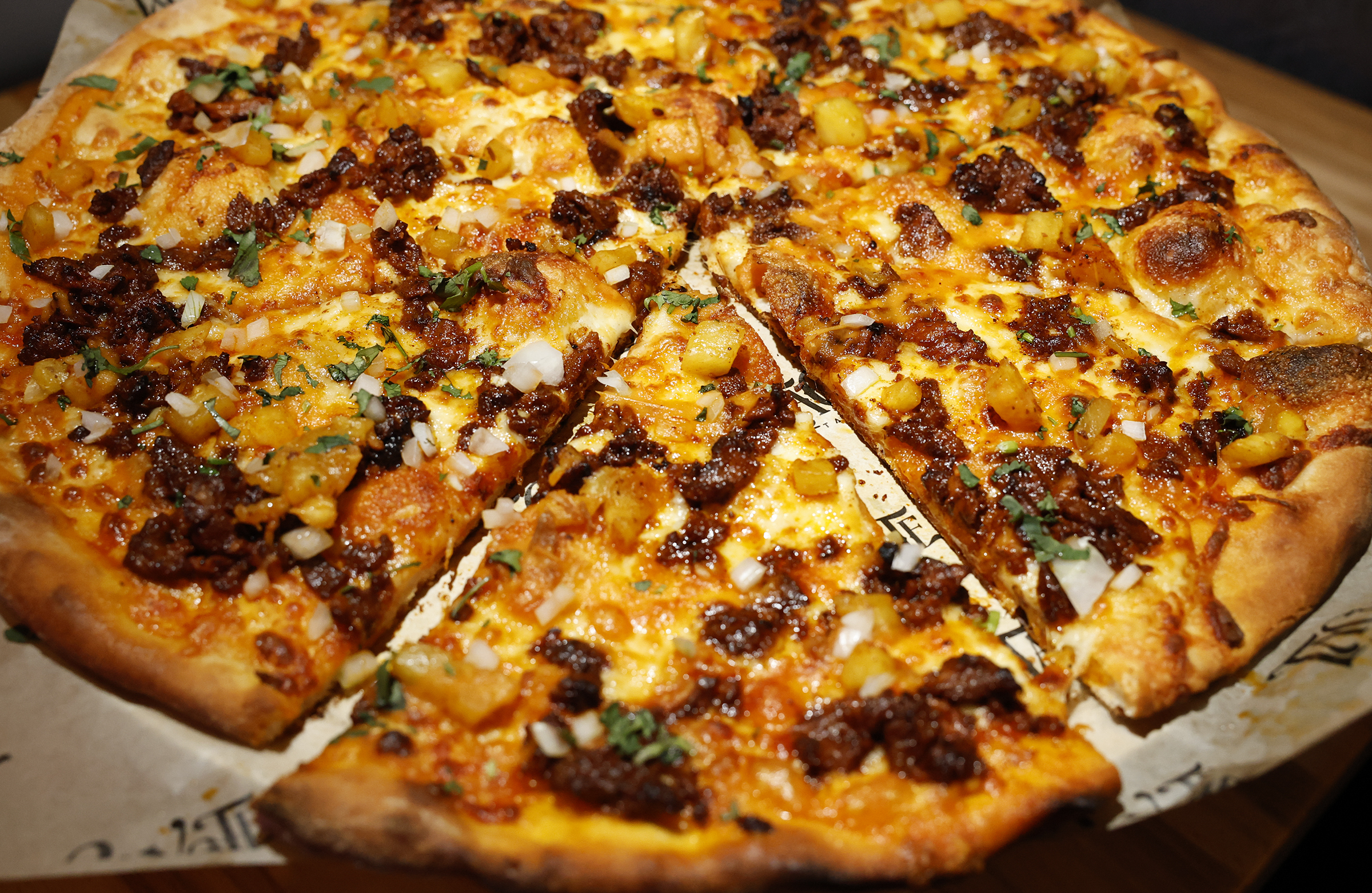
    The al pastor pizza at Taco-Yote in Moorestown.

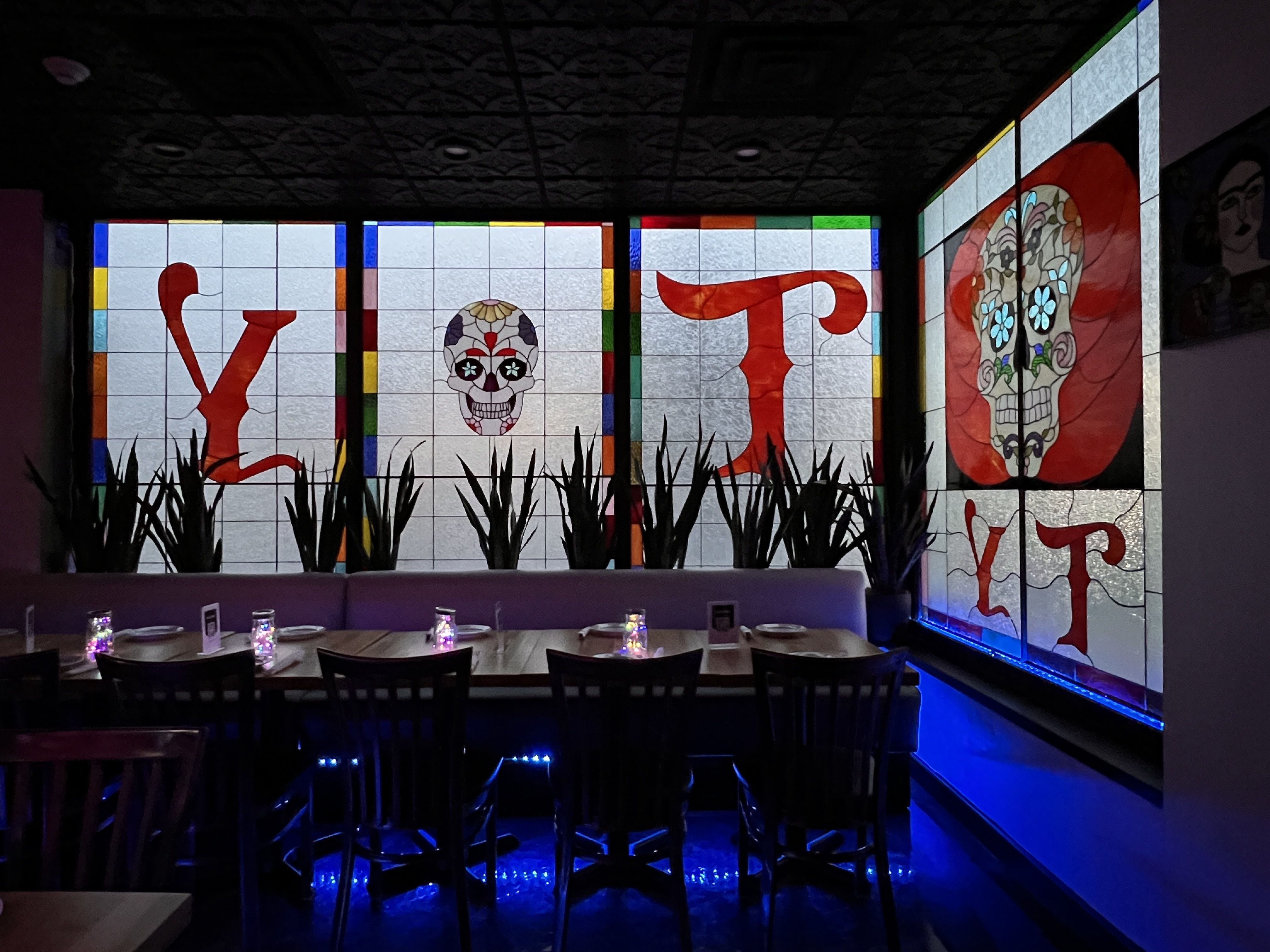
    The food reflects Melendez’s upbringing in Mexico City and his decades in restaurants — he worked with Tequilas founder David Suro at the Carlos ‘n Charlie’s chain many years ago. The design is bold with hand-painted artwork and an intimate feel.

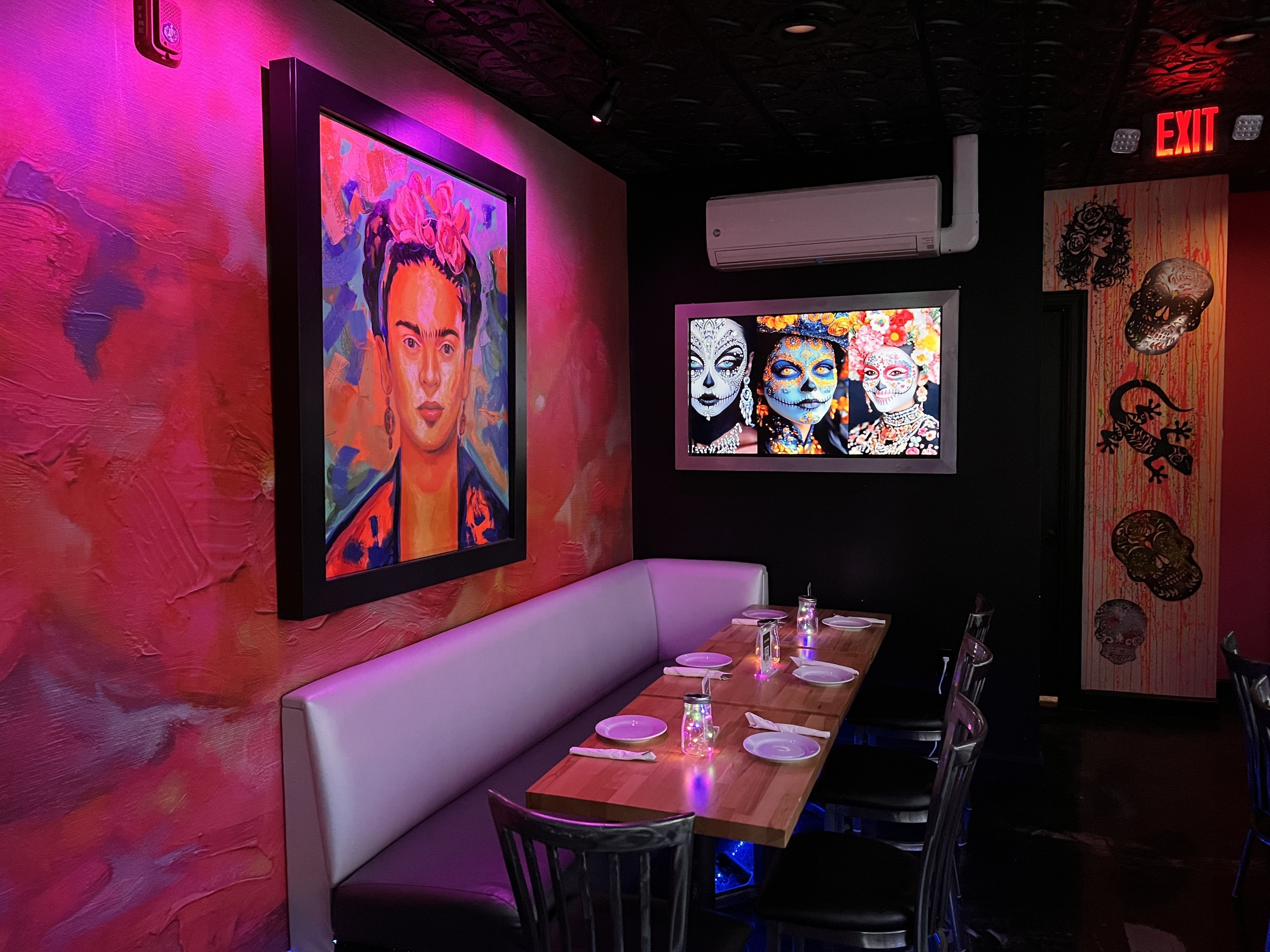
    His mother-in-law, Ada Marina Estela, painted several pieces in the restaurant, including a prominent Frida Kahlo-inspired portrait in the main dining room. Steffany Melendez, a fashion designer, is behind “everything you see — the colors, the artwork, the aesthetic — that’s all her,” Carlos Melendez said.

    Dining room at Taco-Yote in Moorestown. The portrait of Frida Kahlo was painted by Ada Marina Estela, mother of Steffany Melendez.

    Central to chef Oscar Velasquez’s menu is a custom grill designed by Melendez and built by a fabricator in Tennessee, similar to one at Coyote Crossing. Fueled by charcoal and wood, it allows for live-fire cooking.

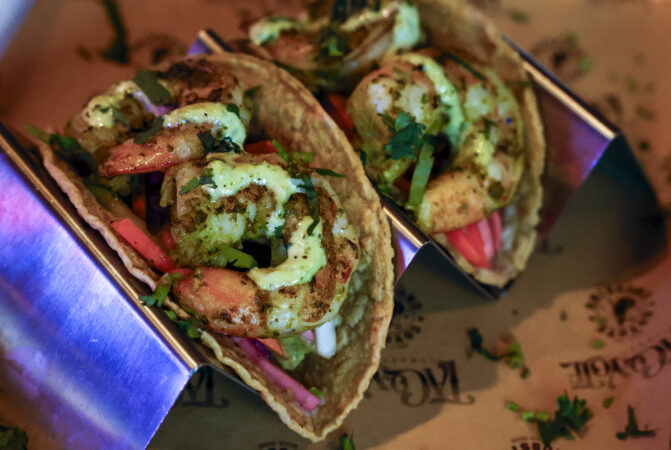
    Maurizio’s pizza oven is now pumping out pizzas inspired by Mexican street food: tacos al pastor, mole poblano, shrimp, birria (with consommé on the side), and rajas poblanas.

    Dining room at Taco-Yote in Moorestown.

    “One of the biggest challenges with Mexican food is how it travels,” Melendez said. “If you order tacos, no matter where they’re from, by the time they arrive the tortillas are soggy, so we package it differently. We separate the protein from the tortillas. You get the protein, you get the fixings, and you get freshly made corn tortillas. That way, when you assemble the taco yourself, the tortilla hasn’t had time to absorb moisture.”

    He said they apply similar thinking to pizza. “If you put sauce directly on the dough, it eventually makes the pizza soggy during transport,” he said. “We put the cheese down first. That way, the sauce isn’t in direct contact with the dough, and the pizza travels much better.”

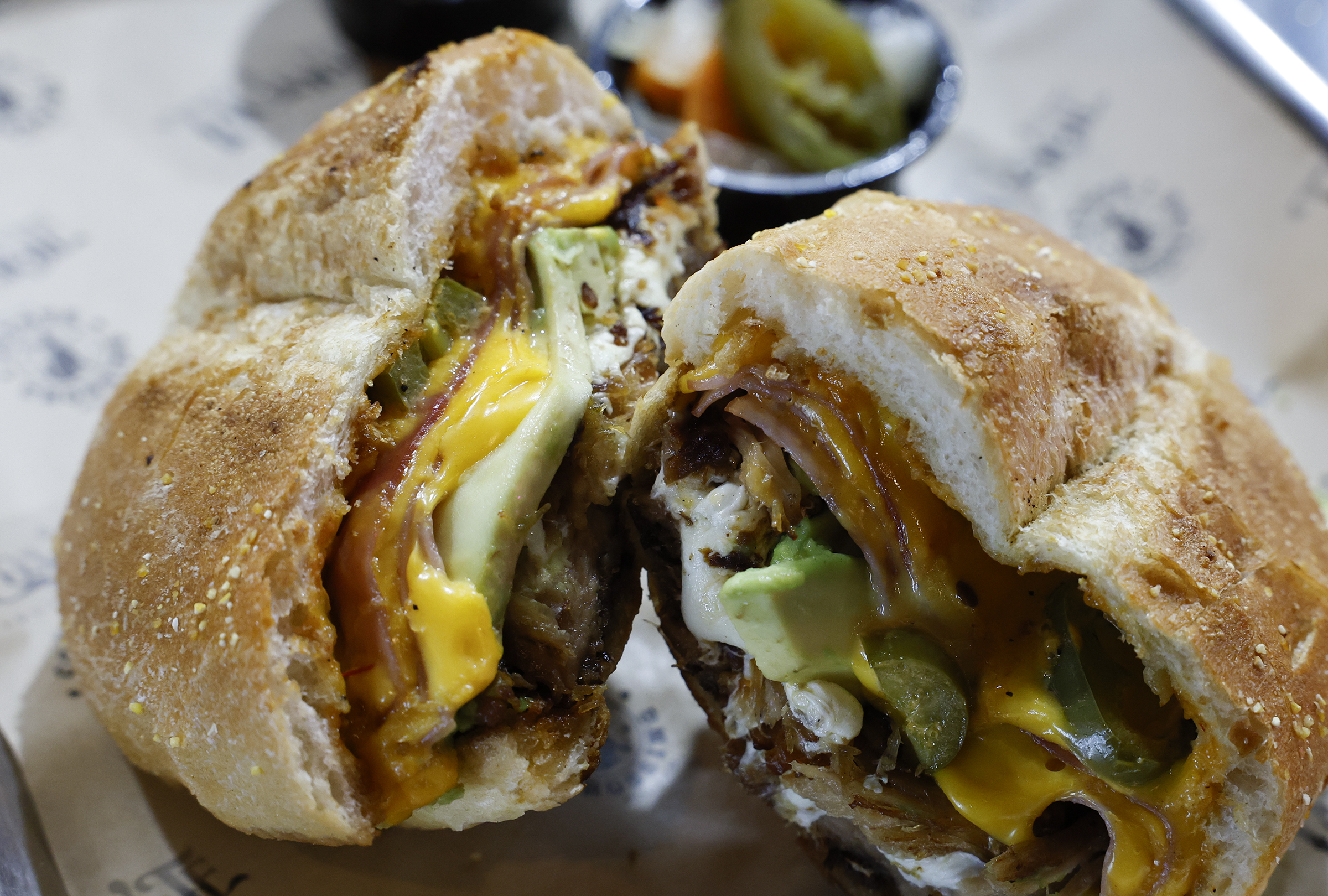
    The Cuban sandwich at Taco-Yote in Moorestown.

    The menu also includes family-style meals — fajitas and similar dishes — where everything is packaged separately so customers can assemble them at home.

    And then there is a Cuban sandwich.

    “When I was a kid, my father [the actor Carlos Duran] would visit occasionally. My mom would drop me off at this sandwich place in Mexico [Tortas Don Polo] while we waited for him, because he was always one or two hours late. I’d sit at the counter and watch them make Cuban sandwiches for hours. I memorized the whole routine. That sandwich stayed with me. It has American cheese, Oaxaca, queso fresco, and Chihuahua cheese, pulled pork, chipotle dressing, avocado, and — very important — pickled jalapeños.” The bread is lightly buttered and heated so it’s soft.

    “We put that sandwich on the menu because it’s personal,” Melendez said. “I’ve been making it for myself for years.”

    Taco-Yote, 33 E. Main St., Moorestown, 856-323-5500. Hours: noon to 9 p.m. Monday to Thursday, noon to 10 p.m. Friday and Saturday, and noon to 8 p.m. Sunday.

  • The best restaurants in Philadelphia this year

    The best restaurants in Philadelphia this year

    When you’re building a list of great restaurants to represent a major metropolitan dining scene, the number you pick defines your roster’s ambitions and has implications. In The 76, The Inquirer’s annual dining guide that’s built around a very Philly number, we can paint a broad picture of what moves a city’s appetites. That landscape spans from the coveted seasonal tasting menus of Her Place Supper Club to the Poblano cemitas of El Chingón and the Tibetan momos of White Yak, three personal favorites I got to scout for this year’s guide alongside a hungry cohort of 17 Inquirer eaters.

    My annual Top 10 list asks a different question: Which places are producing meals that capture the most special energy in Philly restaurants right now? This list reflects singular dining experiences that can only happen here, the kinds of magical flavors and hospitality that resonate in my mind after I leave the table and linger in my imagination for days to come. The sparks came when I least expected them: a seemingly simple dish of grilled mushrooms painted in porcini miso over sweet corn at Pietramala that was, in fact, a profound rumination on the shifting seasons; the snap of a tawny crepe perched over Mawn’s banh chow salad, hiding the electric funk and joyful zing of herbal Khmer greens; the mind-expanding creativity of the pasta omakase at Vetri Cucina, where a one-bite Wagyu cheesesteak wrapped inside a grilled pasta coin showed one of the city’s kitchen godfathers still pushing limits, setting standards, and having fun. (For the first time in six years, Vetri is back on my end-of-year list of favorites.)

    This year may go down as Philadelphia’s best ever for ambitious new restaurants — including a couple, Little Water and Tequilas/La Jefa, that are first-timers on this list. But I was heartened to see over the course of several hundred meals that excellence is still being served at several long-standing stars, from the ever-dazzling tasting menu and bar program at Friday Saturday Sunday to the Southern Thai fireworks at Kalaya and to Royal Sushi & Izakaya, where the omakase may be next-to-impossible to book, but every morsel sends a sushi shiver down my spine.

    Each restaurant on this list represents a unique snapshot of what makes Philly a world-class restaurant city. And since I love a succulent lamb kebab as much as a whipped sturgeon doughnut piled high with caviar, here’s another important fact about the number on this list: My Top 10 remains unranked.

    Friday Saturday Sunday

    I rarely use the word “perfection” to describe any meal, let alone a pricey tasting menu with a dozen intricate creations. But the moment I bit into the warm beignet stuffed with tender oxtail and smoked yam purée, I hungrily began scanning our table at Friday Saturday Sunday for the next treasure to devour. A thimble-sized nori pastry stuffed with a tartare of tuna, veal, and caviar? Gone like a Scooby snack. Sweet Hokkaido scallops and long hot pepper jam hiding in a fluted shell beneath a creamy mist of smoked coconut sabayon? Sluurrrp!

    Chad and Hanna Williams haven’t rested on their accolades — a Michelin star, a No. 16 ranking in North America by World’s 50 Best, and a run of James Beard kudos. Their townhouse tasting-menu oasis off Rittenhouse Square has gotten better every year since the couple bought this now 52-year-old landmark a decade ago. That’s true whether you are seated in the plush upstairs dining room or the leopard-print ground-floor Lovers Bar, where walk-in regulars dine a la carte on irresistible FSS classics (smoked herring spaghetti, octopus and beans) and sip brilliantly original cocktails while Aretha Franklin and Herbie Hancock play in the background.

    I marvel at how Williams and his team, including chef de cuisine India Rodriguez, continuously reinvent the tasting menu with globe-hopping inspirations that never feel contrived. Somehow fusilli noodles darkened with allium ash and glossed in luxurious lobster stock seem like the ideal prelude to the next dish, a pairing of sweetbreads and plantains in a buttery vin blanc froth. A deeply savory grilled short rib is slow-poached sous vide for days in lemongrass and shrimp paste before it’s grilled and served with the spark of a chili crunch. I’m still dreaming of the unexpected rice course — a soulful cup of koshikari grains cooked in duck stock with Filipino adobo, studded with smoky bacon, and draped with a rosy, honey-glazed slice of duck breast.

    Pastry chef Amanda Rafalski enters the picture with a palate-cleansing cashew custard topped with pretzel crumbles and a rose-scented granita, and then delivers the tart to end all tarts: an almond pastry shell filled with duck egg semifreddo, strawberry jam, fresh berries, and tangy strawberry top tea. Perfection? This tart — and this whole meal — was it.

    Kalaya

    Philadelphians know Chutatip “Nok” Suntaranon as an underdog success story: the former Thai flight attendant who launched her cooking career in a Bella Vista BYOB, then soared to fame on the wings of hand-pinched, bird-shaped dumplings and the uncompromising fire of her towering tom yum.

    Now the rest of the world knows Suntaranon, too. She was recently crowned “best female chef in North America” by North America’s 50 Best Restaurants, which also named Kalaya the seventh best restaurant on the continent. It’s the latest in a string of awards since her 2022 move to the airy, palm-fringed space of a former Fishtown warehouse for a much grander Kalaya 2.0. The James Beard Foundation, Netflix’s Chef’s Table, and Time100 innovators list have all chimed in.

    Kalaya still delivers spectacularly because Suntaranon is America’s most passionate ambassador for the bold flavors of her native Southern Thailand. Earthy goat and lamb curries. Majestic wok-fried river prawns in shrimp paste and brown butter. Crispy squid with a turmeric-fried crust that unleashes waves of curry, lime, and long hot pepper spice. Those are just a few dishes that make Kalaya so singular.

    Now three years into its current location and Suntaranon’s partnership with the team behind Suraya and Pizzeria Beddia, Kalaya as an operation is in fine-polishing mode, assuring the family recipes are consistent every time, and refining its format so servers can more easily convey a menu of regional specialties unfamiliar to many Americans. The tasting menu option, a three-course feast for $75 that’s the default on weekends, is designed to help guide diners toward a meal of balanced flavors. (Too spicy? There are tropical cocktails and fun shaved-ice desserts to quench the heat.)

    I would start with the crispy chive dumplings and blue flower-shaped shaw muang dumplings. Try the sour fish curry tart with pineapples for a taste of Suntaranon’s mother’s favorite dish (the restaurant, after all, is named for her). There are other favorites I don’t want to miss: the grilled chicken glazed in tamarind, coconut milk, and soy; the whole branzino in fish sauce and lime; the tangy-sweet Mangalitsa pork chop. But Suntaranon is always working new dishes into the mix, like the fisherman’s pot of squid ink-blackened rice jeweled with colossal crab, shrimp, and calamari that tastes like the Andaman Sea. One day, Nok may even get Philadelphians to go for the rustic punch of the fish-innard curry she craves whenever she visits home. If history is any indicator of Nok’s magic touch, we’re going to love that, too.

    Little Water

    At Little Water, where the shrimp cocktail comes beneath stripes of smoked catsup piled high with fresh-shaved horseradish, the swordfish Milanese cutlets are encrusted in potato chips, and the “Caesar-like” salad is dusted with nori, Philadelphia’s once-grand fish house tradition has gotten the modern update it deserves.

    This restaurant, launched a year ago from chef Randy and Amanda Rucker, the married couple behind River Twice, has re-energized a corner bar near Rittenhouse Square. Wrapped in glass cafe walls and pressed tin ceilings, Little Water rides the fine line between neighborhood haunt and destination splurge. You can pop by the bar (always reserved for walk-ins) for the “Low Tide” happy hour of $2 Sweet Amalia oysters splashed in Alabama white sauce and a kombu-infused martini for $10. Or you can dive deep into one of the most innovative raw bars in town — scarlet crab claws dabbed with black walnut mustard, little toasts with tuna ’nduja, a tin of caviar with hush puppies and ricotta — and then embark on a considerable feast.

    If River Twice has remained Randy’s intimate atelier for modernist experimentation, the 78-seat Little Water is geared to be a bit more accessible, with a menu that taps the couple’s residence in coastal regions from Texas to New England. Two recent hits: a bowl of creamy pencil cob grits topped with luscious chunks of lobster and caramelized cippolini onions, and a steak tartare riff on oysters Rockefeller dressed with a Pernod reduction and topped with cornmeal-fried oysters. A massive fried bass over Sea Island peas remains one of my favorite whole fish of the year. And hash browns topped with Jonah crab salad and Maine uni are a must when it’s urchin season, ideal with a glass of sparkling Crémant de Bourgogne or a Müller dry riesling from the concise but smart Euro wine list.

    I go for the turmeric sparkle of the nonalcoholic Golden Hour during Little Water’s mellow lunch service. The midday menu is as ambitious as ever, whether one of Rucker’s peerless gumbos, a meaty Texas redfish roasted “on the half shell” with its char-roasted scales still on, or a juicy chicken-fried chicken on toast. Its tawny crust is drizzled in a buttermilk dressing beaded with smoked trout roe then spiked with a toothpick stack of bread-and-butter pickles. All you need to complete the coastal-picnic vibe is the snappy tang of Little Water’s key lime tart for dessert.

    Mawn

    The Cambodian-inspired flavors are so electric at Mawn, where the funky spice of wild boar prahok dip sometimes comes atop Khmer chili dogs and the fried head-on shrimp are glazed in fish sauce caramel, it can be hard to know where to start.

    That’s when it’s time to go “puck & see,” the Cambodian expression for “eat and drink.” That’s also your cue to skip Mawn’s a la carte menu and let the kitchen produce a family-style feast of multiple dishes that, for $65 a person, is an incredible value.

    “It’s a way for us to create a mixtape for you, so you can understand our music,” says chef Phila Lorn, who co-owns this 28-seat BYOB sensation with wife, Rachel Lorn.

    Just as the restaurant’s own soundtrack bounces from classic Khmer crooners like Sinn Sisamouth to Cambodian rapper VannDa, Mawn’s cuisine is dynamic, ranging from traditional flavors that echo the Southeast Asian Market in FDR Park (amazing lemongrass-marinated beef skewers) to multicultural influences gleaned from Phila’s time in Japanese restaurants and beyond, from Zama and CoZara to Stock.

    Mawn calls itself a “noodle house with no rules,” and there are noodle-based highlights, including the signature schmaltz-enriched chicken soup spiked with chili jam. But I think about Mawn’s salads even more, especially the sour and spicy papaya salad made famous on a Food & Wine cover in September, when Phila was named one of America’s “Best New Chefs” following a similar nod from the James Beard Foundation. Other irresistible salads include a Burmese melon salad dusted with lime leaf powder and crispy shallots, and the banh chow, a crispy half-moon crepe that recalls a Southeast Asian tuile inlaid with ground chicken and shrimp, placed atop a tangle of lettuce and minty backyard herbs lashed in Phila’s mom’s galangal vinaigrette.

    And then the free-flowing tasting menu brings pristine raw scallops in chili jam dusted with peanuts, a glimpse of what’s popping at their new oyster bar, Sao. More scallops — seared this time — arrive over a red curry infused with shrimp paste and Japanese chocolate, inspired by a mole lunch at nearby Casa Mexico in the Italian Market. We happily clear space for the “all-star fried rice,” topped with a treasure chest of seafood that’s been wok-fried with crab fat butter. And then my dream steak: a 20-ounce rib-eye piled high with a salad of Thai eggplants and turmeric-roasted tomatoes splashed in lime juice punchy with fermented prahok fish paste.

    Mawn is so bold, boisterous, and tinged with nostalgia for Phila’s South Philly childhood that it’s no wonder Philadelphians cannot get enough of it. Neither can I.

    My Loup

    My Loup burst onto the scene in 2023 with its epic côte de boeuf and jars of pickled shrimp, already primed as the hotly anticipated sequel to Her Place Supper Club from star chef Amanda Shulman and her husband, chef Alex Kemp. The emergence of the Montréal-born Kemp as the kitchen’s driving force, however, has shaped My Loup into the rollicking French-Canadian bistro of my dreams, where the garlic knots explode with escargot, the summer cherry and peach tarts harbor a savory custard of foie gras, and Philly’s farm market seasonality informs every move, down to the cocktails.

    The bar, presided over by gregarious beverage manager Jillian Moore, is one of my preferred places to dine at My Loup. I’ll order her lemon-honeyed Bees Knees, anise-scented fall sangria, or mezcal bijou while devouring the slender razor clam stuffed with the salami-and-olive muffuletta fixings, or Maine sea urchins tucked into their bristly shell cups beneath an orange cloud of sweet potato mousse tart with apple cider vinegar.

    Kemp, who worked at Montréal’s Mon Lapin as well as Manhattan’s Eleven Madison Park, pairs elite culinary chops with a sense of whimsy that brings a welcome touch of levity to French cuisine. “Caviar and donuts” is a revelation of unexpected indulgence that offers a tin of ossetra alongside incredibly airy fritters made with smoked sturgeon, accompanied by a sour cream dip with seaweed and chive that builds layers of oceanic savor into every bite. Kemp’s team debones whole rabbits then reassembles them into bacon-wrapped saddles with garlic sausage and peaches. Juicy roasted chickens appear over mustardy spaetzle beneath truffles and fistfuls of chanterelles.

    In a town once dominated by French chefs, Kemp is one of the few remaining standout sauciers in that genre, with a knack for lightweight-yet-flavorful updates of classics like a silky white blanquette sauce for an osso bucco with sweet baby turnips, or an orchard-bright Calvados brandy reduction that illuminates the novel surf-and-turf pairing of seared scallops with blood sausage.

    My Loup’s menu can lean rich, but the servers are as adept at helping guests order with balance as they are at guiding them through the deep French cellar. Desserts are so straightforward the right answers are self-evident: a stunning bittersweet chocolate layer cake with a polished ganache mirror glaze, and a soft-serve sundae whose flavor combos swirl with the season’s spirit. There was corn and cherry in summer, a fall pairing of caramel apple and graham, and now? I’ve got My Loup on frequent repeat, because I want to try them all.

    Pietramala

    Ian Graye has figured out one of the secrets of becoming a great chef: focusing his energy on polishing one essential combination rather than cluttering plates with too many flourishes. And it has allowed him to unlock greater depths of flavor from vegetables at Pietramala than most chefs can tap from a wide-open world of meats and animal products. But don’t let the minimalist look fool you. The creations at this cutting-edge vegan kitchen in Northern Liberties are almost always the result of days, if not months, of labor — fermenting, dehydrating, smoking over the coals.

    This is the case with his game-changing veggie burger, a special made from smoked mushrooms, heirloom beans, house-made tamari, and miso that has triggered monthly lines down Second Street. Another stunning dish this year essentially paired two ingredients: sweet corn and oyster mushrooms. But Graye teased out a rare complexity by cooking each ingredient within different versions of themselves, simmering whole kernels of Lancaster corn inside their creamy corn puree, then topping the result with a grilled mushroom painted in mushroom miso that’s fermented for months. This duo captured the poetry of shifting seasons: the fleeting sweetness of summer and autumnal umami united onto one haunting plate.

    That sense of wonder here is common. A smoked eggplant in au poivre sauce (with Dad’s Hat rye and creamy onion soubise) will make you forget it’s inspired by the classic steak dish, though it is every bit as satisfying. A corno di toro pepper glazed in orange Jimmy Nardello pepper romesco sauce and stuffed with smoked walnuts, local rice, and foraged lobster mushrooms elevated a potentially frumpy stuffed pepper to a special event.

    Graye’s growth in the three years since Pietramala opened has been impressive. He’s refined his craft and cultivated a vast larder of condiments for maximum flavor control. The intimate restaurant has also evolved, with a steady team in the open kitchen as well as a gracious front-of-house staff. The addition of a winery license for this former BYOB through Northeast Philly’s Camuna Cellars has also allowed Pietramala to add natural wines made from local grapes (the “Let’s Go Swimming” orange wine and blaufrankisch were my favorites) and cocktails with Pennsylvania spirits, lively nonalcoholic shrubs, and ingredients like fresh wormwood, summer plum, and birch bark. The license has also given a 20% revenue boost to this intimate 36-seat gem, which, of course, addresses one of the other key secrets of becoming a great chef: a sustainable business model.

    Royal Sushi & Izakaya

    There’s a practical case to be made for the Royal Sushi part of Royal Sushi & Izakaya to be left off this list. It is as close to a private club as a public restaurant can be. While a handful of newcomers do, in fact, make it off of Resy’s daunting waiting list each week — snagging one of the 16 seats at Jesse Ito’s coveted omakase counter — you otherwise need to persuade a regular to loan you their standing reservation.

    But there’s a reason to keep singing its praises. This is one of the most magical dining experiences Philadelphia has to offer. Ito’s toro-carving artistry is one of the reasons he sets Philadelphia’s omakase gold standard.

    On a recent visit, I took a bite of glistening pink mackerel belly (a gloriously extra-extra-fatty toro sawara) and its fruity tang and buttery richness flooded my body with a pleasure wave of omega-3s. (“Oh yeah…right?!” said a friendly stranger at the counter beside me, as we shared a mackerel moment.) There was the alabaster-smooth scallop dusted with yuzu zest cradling a nub of perfect nigiri rice, each warm grain distinct and full of flavor. A scarlet carabinero prawn melted away like sweet ocean butter.

    Royal Izakaya, the low-lit tavern that occupies the front of this Queen Village building, is a destination on its own, with seating for walk-ins only, serving “tuna-guac,” fish collars, chirashi buns, and Japanese-themed cocktails. Ito’s latest, dancerobot, a playful Rittenhouse Square collaboration with chef-partner Justin Bacharach, is pure Japanese comfort-food fun. But Royal Sushi’s $355-per-head sushi counter (gratuity included), where Ito handcrafts every morsel in tandem with exceptional sake pairings, resides on its own level. Ito’s style is ever-evolving, having graduated beyond the “bro-makase” cliché of pile-it-high luxuries to a more personal, nuanced style.

    His latest creative riff on bibimbap, a nod to his Korean mother, is a treasure hunt through buttered seaweed rice, uni, and cured Jidori egg yolk down to a hidden bottom layer of bluefin, sea bream, and king salmon. The tangy dashi dressing for lusciously thick slices of buri (adult hamachi) exuded a savory whiff of fish sauce, an ode to Ito’s Thai best friend. And then came the A5 Wagyu rib-eye, marinated galbi-style before it’s torched — an extraordinarily beefy add-on that prompted my new counter friend and I to share another knowing glance. “Don’t tell my mother,” he told me, noting his own Korean heritage, “but it’s better than hers.”

    Tequilas/La Jefa

    The Tequilas legacy could have disappeared altogether after a 2023 kitchen fire closed the restaurant for two years. Instead, the Suro family has blazed back to glory this spring with a remarkable vision for an all-day modern Mexican oasis fueled by agave spirits and the aroma of heirloom corn. The realization of this plan honors the traditions of a Philly pioneer, but also celebrates the present and future of one of the city’s most vibrant dining categories with contemporary creativity.

    From fresh-baked hibiscus conchas and morning lattes dusted with tortilla salt to artful ceviches, tequila-splashed langostinos, and cutting-edge cocktails at night, the range of delights here is vast. ¡Bienvenidos a Guadaladelphia! But first, understand how much the institution launched by David Suro Sr. 40 years ago has evolved. As noted in my colleague Kiki Aranita’s review, the revitalized Tequilas is now three places in one: A dining room, an all-day cafe, and a hidden mezcal bar inside that cafe. This Locust Street mansion’s gorgeous dining room, with its 19th-century Baccarat chandelier shimmering over a teal floor of handmade Mexican tile, has been largely preserved. This is where longtime patrons will find some of the restaurant’s classics (the cochinita and a lava rock molcajete bubbling with beef tenderloin and cheese in a chile-fired stew) deftly updated by consulting chef Fabián Delgado Padilla of Guadalajara’s palReal, and executed beautifully here by chefs and cousins Eduardo Moreno Sanchez and Jessica Sandoval.

    Tequilas’ former rear dining room, meanwhile, has been transformed by Suro’s children — David Jr., Elisa, and Dan — into La Jefa, an airy all-day cafe accessed from Latimer Street, offering single-origin Mexican coffees and inventive brunches. Tucked in the back of La Jefa is a moody cocktail lounge called Milpa, which has a modern Mexican menu all its own, aside from its tightly curated (and world-class) mezcal collection, avocado soda, and fascinating drinks (try the shaved ice Raspado or the $27 “Agave Cocktail,” a not-margarita made from premium Cascahuín tequila, Colima salt, lime, and house-made roasted agave syrup).

    Delgado has brought elegant updates to much of Tequilas’ original menu, including a crackling-edged pork belly shingled over sweet mole dulce, an airy guacamole cloud hiding raw tuna at the bottom of a bowl, and an incredibly delicious Tapatía barbacoa made with brisket and dried chilies.

    But La Jefa and Milpa are where the contemporary Mexican flavors really shine. The guacamole comes with house-dried cecina beef jerky instead of chips. A stunning quesadilla made from inky black masa harbors tender squid inside molten quesillo cheese. A soft tetela, or triangular masa pastry, showcases the mind-blowing subtlety of a sweet plantain stuffing against the nutty spice of a pipián verde sauce. La Jefa’s spiced lengua pastrami sandwich is my Mexi-Jewish deli fantasy come true, and the soft huevos verdes are what I crave for brunch.

    Tequilas is part of a wave of thrilling Mexican projects that landed in Philly this year, but its exceptional veteran service team — many with three decades of service — sets it apart. They all returned after two years away because the Tequilas experience is really about them, too, especially as this institution strides into an even more exciting future.

    Vetri Cucina

    “Hug the noodle” has become Marc Vetri’s new favorite slogan. It’s a cooking directive, of sorts, to describe the magic moment when sauce suddenly thickens around pasta just enough to cling to each morsel, forming a creamy halo of cacio e pepe or zesty duck-and-olive ragù.

    But the saying also describes a life’s calling for Vetri, whose nationally acclaimed career has revolved around his passionate embrace of noodlecraft. Vetri radiated pure joy behind the chef’s counter recently as he dazzled a handful of lucky diners with his coveted monthly “pasta omakase,” a 15-course parade of exquisite pasta creations inspired by the sushi tasting format of Japan, where Vetri owns a restaurant in Kyoto. Snappy tagliolini strands arrive in sake butter beneath creamy sea urchin and caviar. Gnocchi clouds come stuffed with lobster mousse. A culurgione of carob dough wrapped around an X.O.-spiked stuffing of duck confit in a citrusy meat reduction sauce was essentially duck à l’orange as a dumpling. Finally, a pasta coin arrived cinched around grilled wagyu beef and Cooper Sharp for a whimsical one-bite wonder that redefined the fancy cheesesteak.

    Even if the limited omakase isn’t accessible to a wide audience, it’s become an essential creative outlet for the chef and his crew at Vetri Cucina to keep evolving after 27 years in this elegant Spruce Street townhouse. It has also helped refresh and inspire Vetri’s regular menu, which is still very much worth your time — and perhaps even more so of late.

    It’s been six years since this Philly fine-dining classic made my end-of-year favorites list. But a pair of recent visits, including for the standard $165 four-course menu, convinced me Vetri is once again having a buzzy moment — hugging the noodle, if you will — as the team’s best new ideas (sweet potato cavatelli with crab and apple) rise seamlessly alongside time-tested standards (melt-away spinach gnocchi).

    With one of Philadelphia’s most gracious service staff drawing from an exceptional collection of Italian wines, the complete experience here goes well beyond pasta. There’s housemade salumi to start the meal, along with a savory pear tarte Tatin with radicchio and Gorgonzola. The kitchen can produce alta cucina at its most precise, with lobster mousse dumplings wrapped in mustard greens or a rosy-hued venison glossed in raisiny Amarone sauce. It can also deliver rustic satisfaction with perhaps my all-time Vetri favorite: smoked baby goat over house-milled polenta. Revived recently after years off the menu, the goat’s crispy-skinned tenderness and earthy simplicity has been a revelation for the latest generation of line cooks. Yes, the cutting-edge pastas are still a major draw. But at Vetri, what’s old is new and beautiful again, too.

    Zahav

    There’s always something new to savor at Zahav, the shimmering glass box in Society Hill Towers whose live-fire interpretations of modern Israeli flavors have transfixed Philadelphians for 17 years and earned national destination status.

    Its standards are still so superb its 100 seats remain among Philly’s toughest to book. But the more co-owners Steven Cook and Michael Solomonov grow their company — now with 14 restaurants in three states (plus 10 Federal Donuts) — the more committed they remain to maintaining their crown jewel as a living, breathing project. Some of that involves constantly improving ingredients, like the newly acquired “oyster cut” of lamb that has taken Zahav’s iconic pomegranate-braised and smoked lamb shoulder to another level of earthy tenderness. Or the vividly fresh Turkish sumac, unavailable when Zahav first opened, that lends a tangy lift Solomonov likens to “sour cherry pink lemonade” for the juicy chicken shishlik with stone fruit amba and crispy chicken skin.

    The prime energy boost, though, flows from a steady infusion of kitchen talent, including cochefs Natasha Sabanina and newly arrived Aiden McGuiggin, formerly of D.C.’s Tail Up Goat. McGuiggin’s talent for preservation contributed to recent memorable bites, including a poppy-encrusted cobia crudo, whose firm white flesh crunched against snappy tiles of locally grown Asian pears compressed with turmeric and fruity yellow jalapeños. Some lusciously rare lamb carpaccio, meanwhile, was elevated by dried, cured, and smoked summer tomatoes dusted in the green chili-cilantro zing of Shabazi spice. And just when I thought the kebabs here couldn’t be more delicious, I forked into a juicy new ground lamb skewer tinted green with crushed pistachios, almost fluffy from the leavening sparkle of ginger beer, alongside a black garlic toum.

    Zahav’s dining room has also gotten a gentle makeover, with a second bar to speed the arrival of za’atar-dusted gin and tonics and sesame-infused bourbon drinks into thirsty diners’ hands, but also to add a few extra seats where lucky walk-ins can order a la carte (even if the four-course mesibah tasting menu remains a great value for $90). A new wooden structure in the central dining room has also added linen-draped cubbies for a touch more intimacy in this boisterous space lined with Jerusalem limestone. There’s even the promise of new acoustic treatments to finally allow easier conversation over the high-energy classic-rock soundtrack. What might people be saying? At my table it was this: Zahav is somehow still exciting and aging gracefully at the same time.
  • 🥃 What Craig LaBan is gifting this year | Let’s Eat

    🥃 What Craig LaBan is gifting this year | Let’s Eat

    Tough job, evaluating nearly three dozen whiskies for gift-giving. Craig LaBan and friends went there.

    🔔 Note that this is the last “Let’s Eat” newsletter of 2025. I’ll be back in your inbox Jan. 7.

    Also in this edition:

    Mike Klein

    If someone forwarded you this email, sign up for free here.

    Craig LaBan’s favorite gift bottles of whiskey

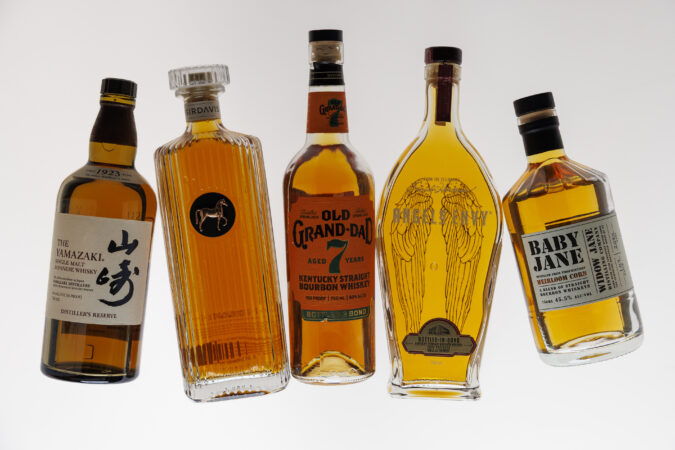
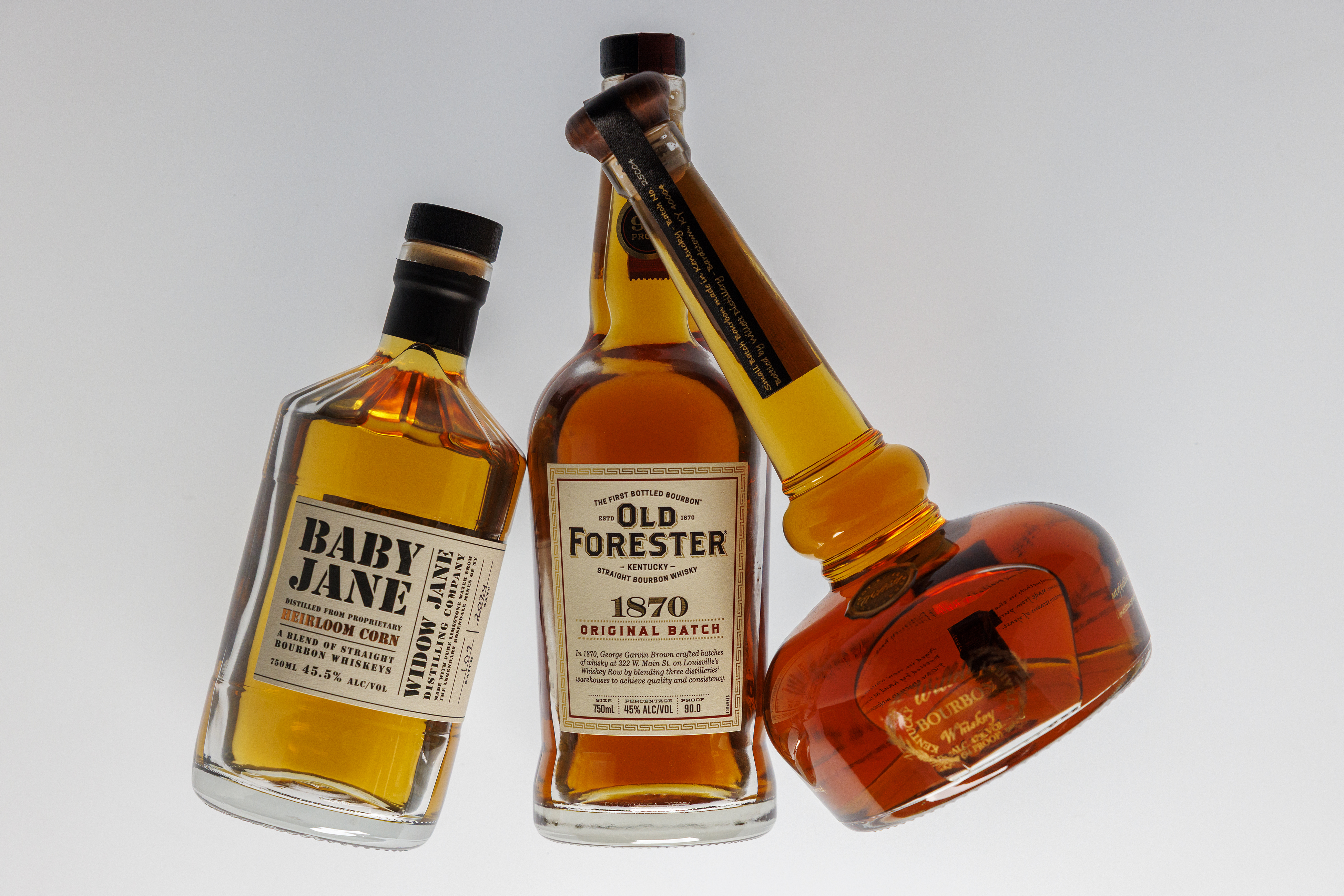
    Craig LaBan and his whiskey-loving friends sniffed and sipped their way through 33 bottles from across the world — even one from Beyoncé. Here are 14 he’d be happy to give and get.

    🍷 Also: Here are the best wine shops in the region.

    New restaurant from a Michelin-starred chef couple

    Fresh off their Michelin glory, chef couple Amanda Shulman and Alex Kemp have opened the casual Pine Street Grill. We took a first look.

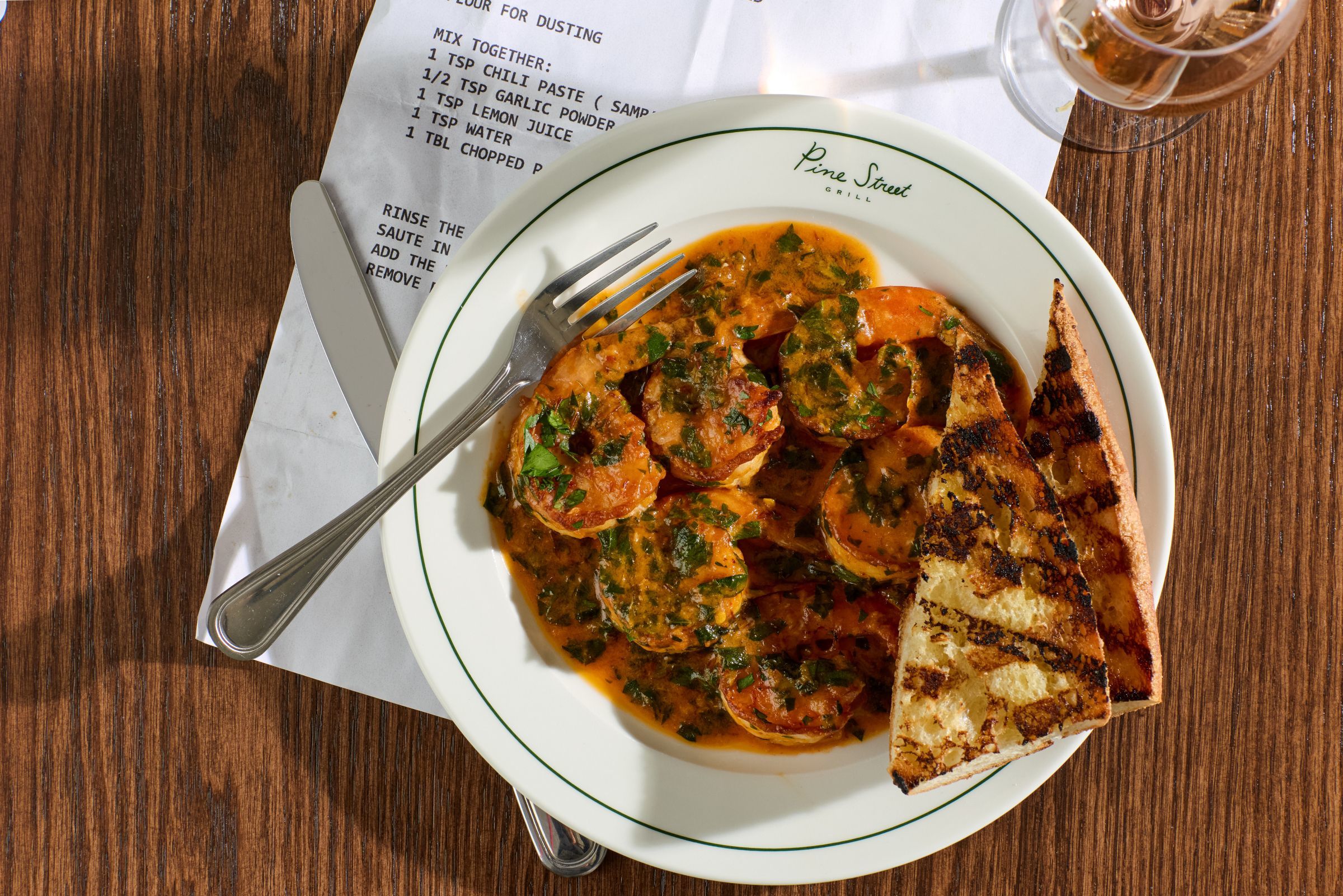
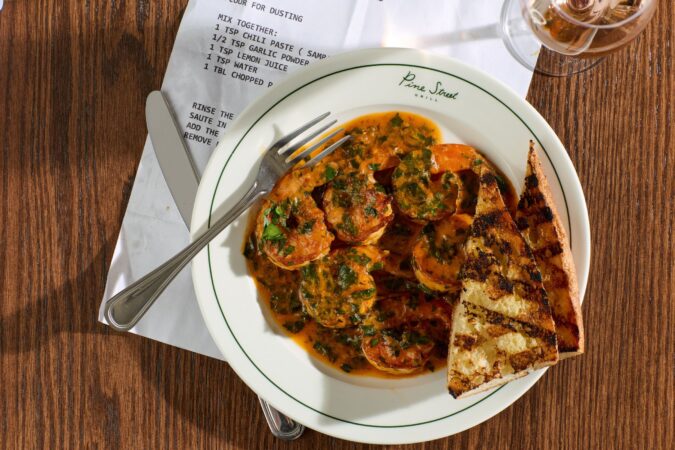
    Pine Street Grill is on a former site of a Dmitri’s restaurant. In tribute, the couple is serving a riff on Dmitri Chimes’ popular shrimp pil pil appetizer.

    Shop at this honky-tonk bar

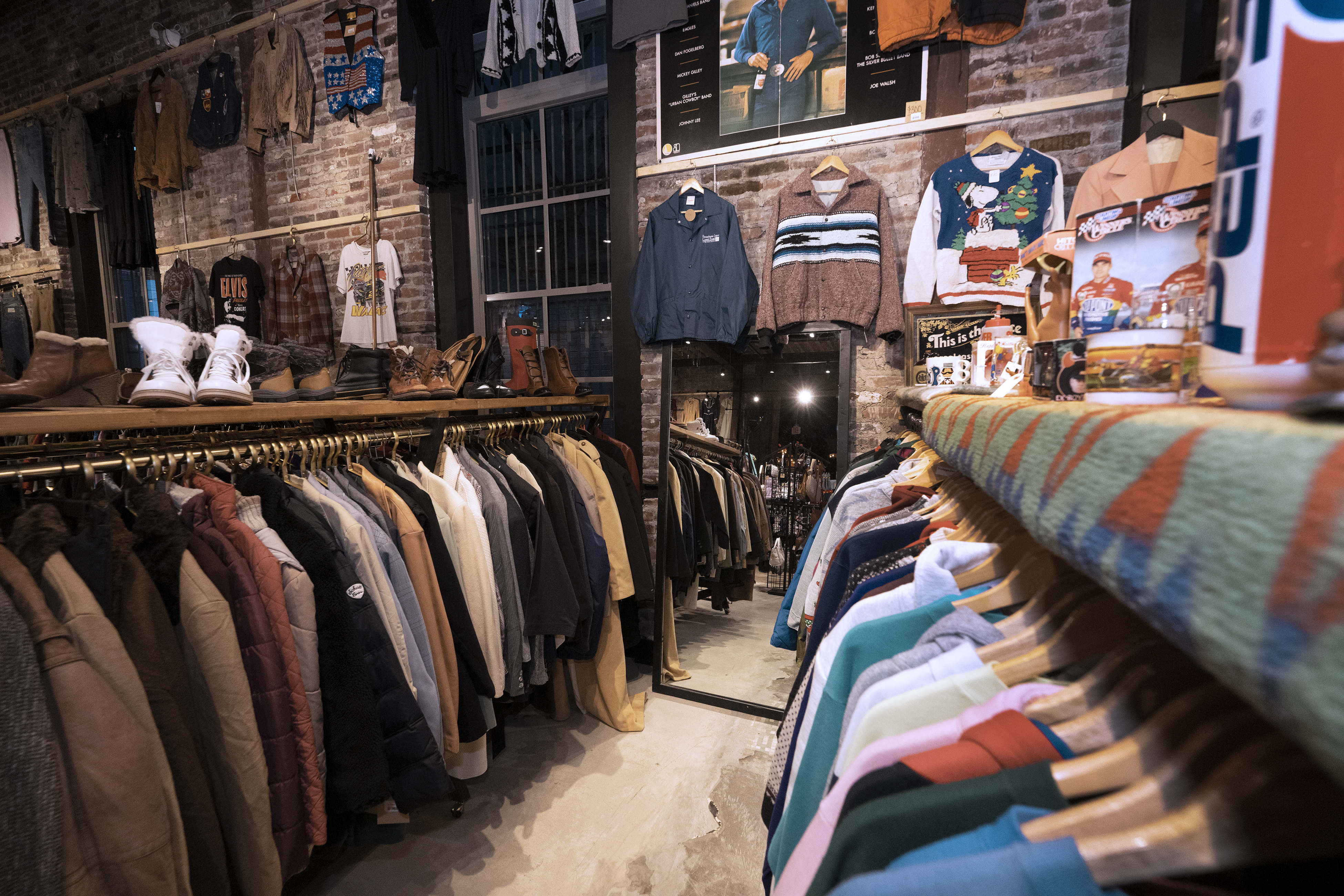
    Secondhand Ranch has a secondhand/vintage shop on one side, and a honky-tonk bar on the other, and it’s all deep in the heart of Fishtown.

    Kombucha for your face

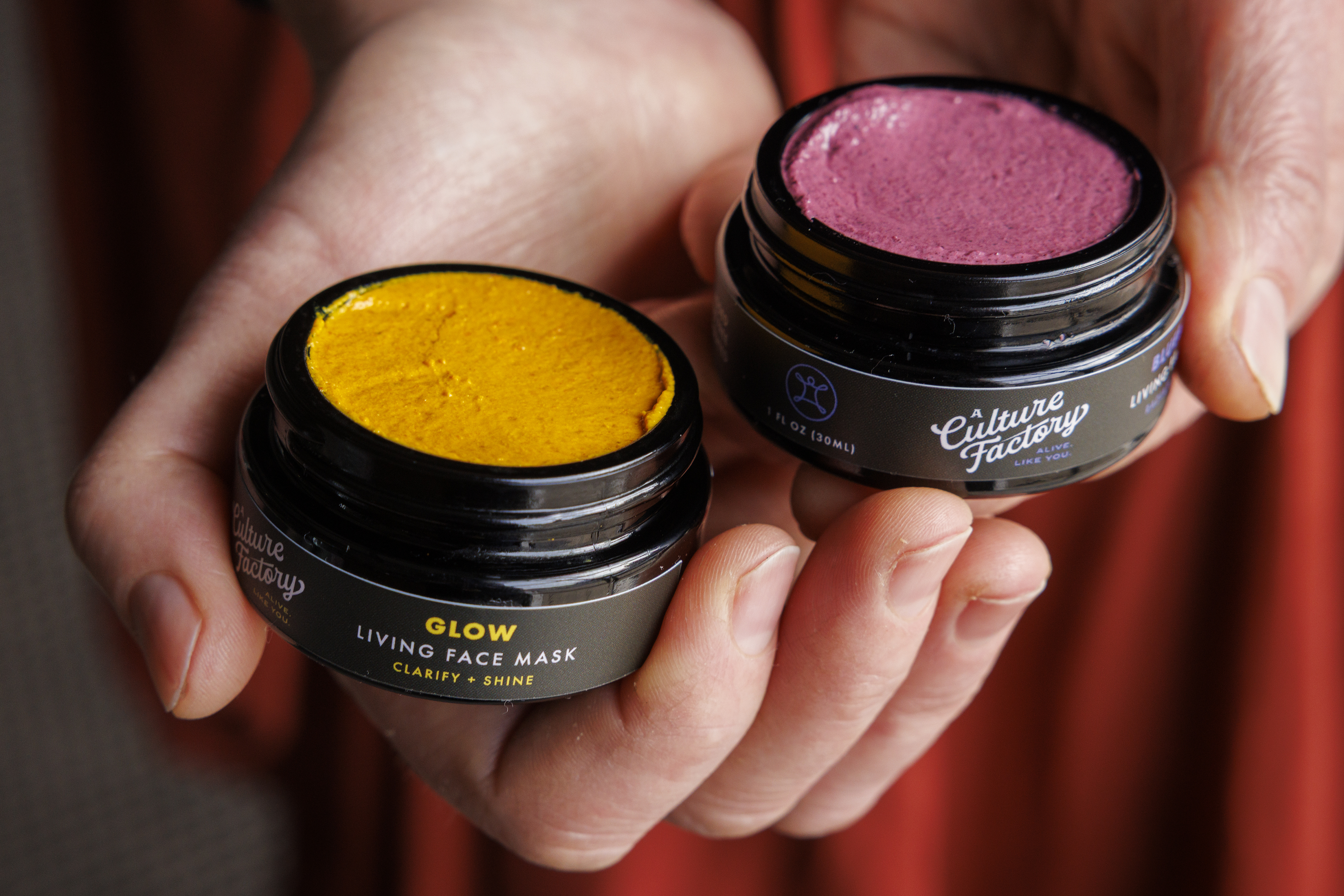
    “Our skin is alive,” says Olga Sorzana, founder of Phoenixville’s popular Baba’s Brew. She’s infusing her kombucha into a line of skincare products.

    How a holiday bar has ruined the idea for one reporter

    Beatrice Forman says she went to Bucket Listers’ Emo Christmas bar in search of whimsy and holiday cheer — but “I left $139 poorer and feeling like a poser.” Bah, humbug.

    🎅 There is no shortage of holiday bars.

    The best things we ate last week

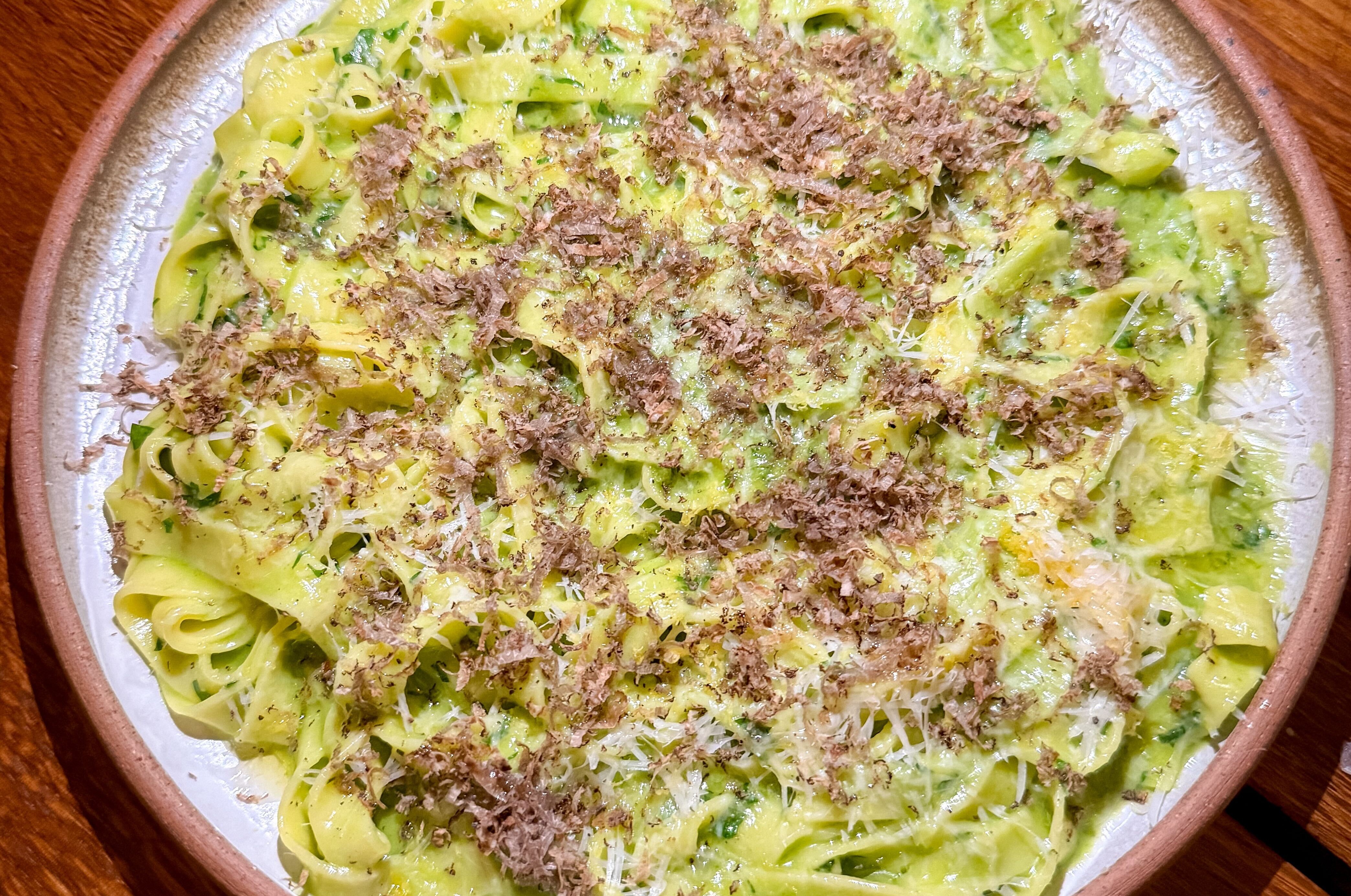
    On our plate this week: Tagliatelle at Alice, plus a burrata-topped brunch dish at the Love and our first bites of a PopUp bagel before the hyped chain comes to town.

    🤤 Want more of this weekly feature? Get caught up here.

    Scoops

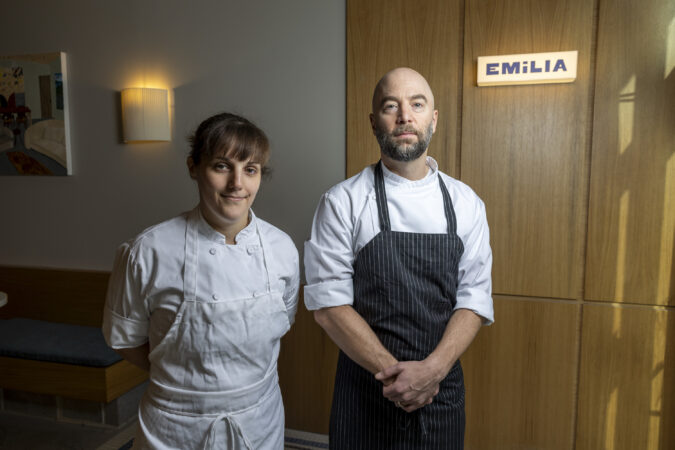
    Greg Vernick has a fourth restaurant on the way, and he’s headed to Frankford Avenue in bustling Kensington. Emilia will feature the Italian stylings of longtime Vernick Food & Drink chef de cuisine Meredith Medoway in an unfussy setting.

    If you had your ear to the ground, you’d know that the bar set to replace Roxborough’s former Tavern on Ridge will be called Hop Lil Bunny. Prospective owner says it’s just a hare early to discuss specifics.

    Restaurant report

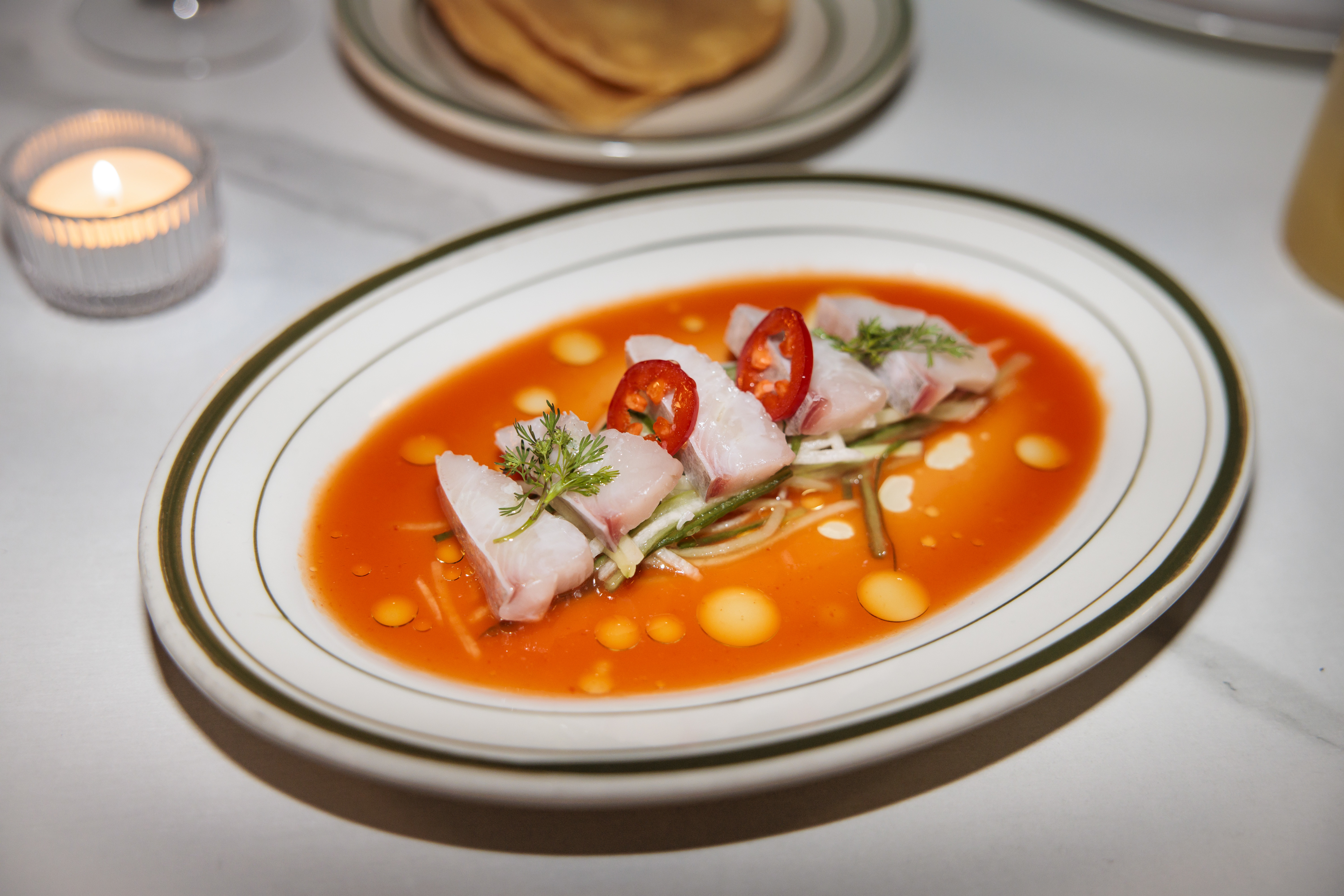
    Casa Oui. A French pastry chef and a Mexican restaurant manager fell in love, and the result is Queen Village’s newest all-day café. You can get coffee and pastries in the daytime and cocktails and Mexican fare (like the aguachile shown above) at night.

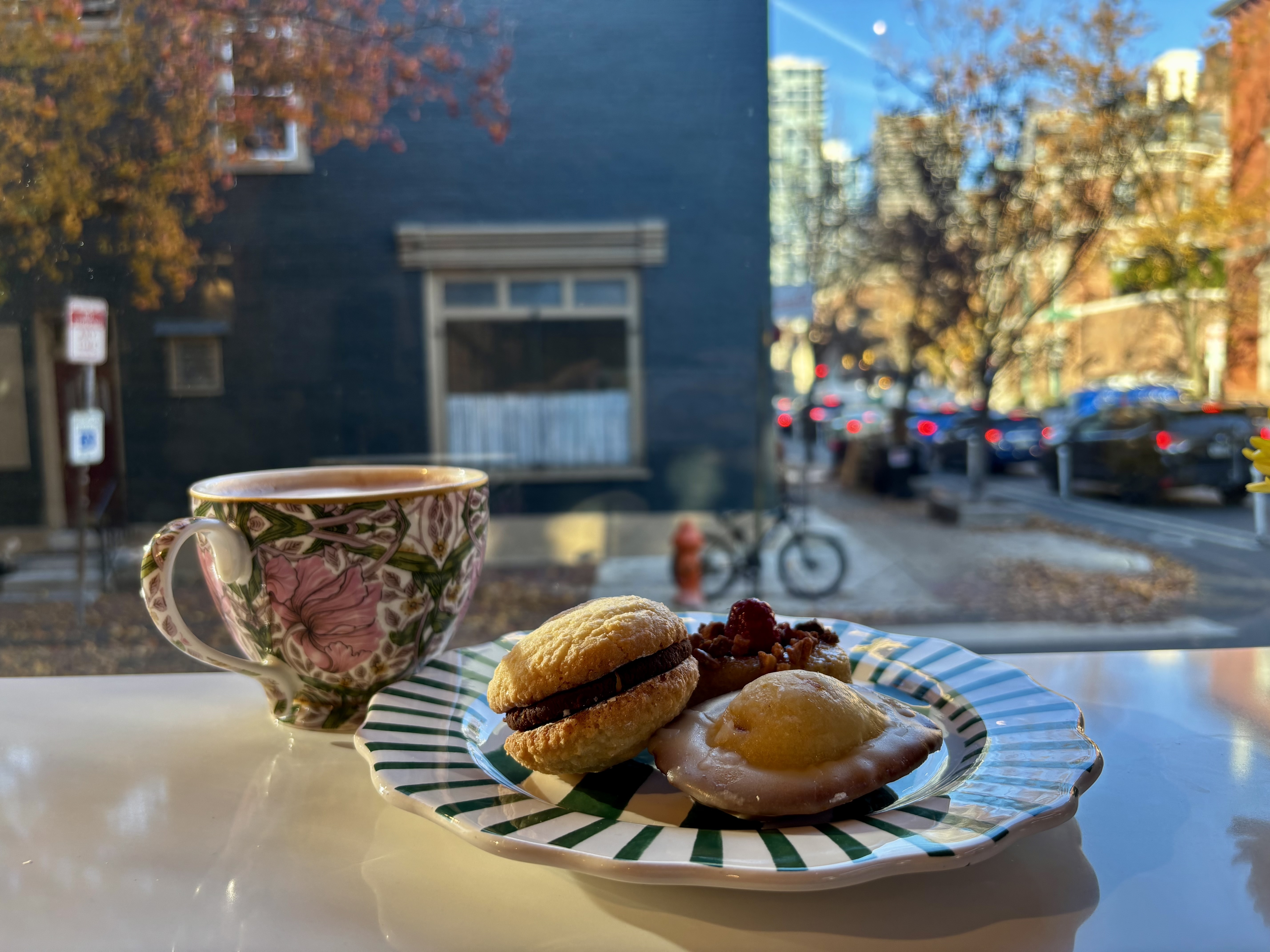
    La Maison Jaune. Zahra Saeed’s cozy, new French-style cafe near Fitler Square combines her two passions: delicious food and beautiful design. She plans to expand, which would send her line of pastries, including macarons de Nancy, financiers, and madeleines, all around the city.

    Among the openings on tap: Side Eye, the neighborhood bar coming to the former Bistrot La Minette space at 623 S. Sixth St. in Queen Village, and Bikini Burger at 44 Rittenhouse Place in Ardmore.

    Briefly noted

    Nine categories, four nominees in each: It’s the 2026 edition of the Tasties, the Philly restaurant awards handed out by the “Delicious City” podcast. The gala will be Feb. 1 at Live Casino, and the nominees are here.

    Manny’s Restaurant’s eight-year run in Holland’s Gateway Center will end Jan. 4 as the partners focus on their smaller deli at Willow Grove Pointe Shopping Center in Horsham.

    Zsa’s Ice Cream marks its finale Sunday after 14 years in Mount Airy. A year ago, Danielle Jowdy announced the shop’s “grand closing” as she sought to find a buyer. Final hours will be 3 to 9 p.m. through Friday, and noon to 9 p.m. Saturday and Sunday.

    Hunger-relief group Sharing Excess estimates that one truckload of food costs $1,290 to deliver and can feed 80 families for a month. For each $1,290 sponsorship, Sharing Express gives the donor a branded toy truck (like those Hess trucks). Details are here.

    ❓Pop quiz

    The Pennsylvania Farm Show will have a special feature when it starts in early January. What is it?

    A) red, white, and blue milkshakes

    B) a butter sculpture shaped like Saquon Barkley

    C) cow-tipping contests

    D) mushroom cheesesteaks

    Find out if you know the answer.

    Ask Mike anything

    Is 333 Belrose in Radnor ever coming back? — Marty P.

    Opened in 1999, this bar and grill tucked off King of Prussia Road has been closed since June as owners majorly remodel not only the interior but the menu. Reopening is targeted for mid-January. I’ll have more info on this and dozens of other openings in my “what’s coming in 2026″ feature just after New Year’s.

    📮 Have a question about food in Philly? Email your questions to me at mklein@inquirer.com for a chance to be featured in my newsletter.

    By submitting your written, visual, and/or audio contributions, you agree to The Inquirer’s Terms of Use, including the grant of rights in Section 10.

  • The new Pine Street Grill pays a tasty tribute to the long-gone Dmitri’s and an iconic Philly dish

    The new Pine Street Grill pays a tasty tribute to the long-gone Dmitri’s and an iconic Philly dish

    Restaurants are not around forever, so it is special when a signature dish takes on new life well after last call.

    Take the Milan salad, essentially a deconstructed BLT with shrimp dressed in a distinctive Italian-Russian dressing, popularized by Jimmy’s Milan. Three decades after the Rittenhouse supper club’s closing, it lives on two blocks away at D’Angelo’s. (Cofounder Tony D’Angelo was Milan’s chef.) Order the D’Angelo’s salad, take a bite, and enjoy the time warp.

    Restaurateur Jeffrey Chodorow, who will open the swank Mr. Edison at the Bellevue next year, told me that he plans to revive other Philly classics, including Georges Perrier’s galette de crabe, the Le Bec-Fin chef’s take on a Maryland crab cake.

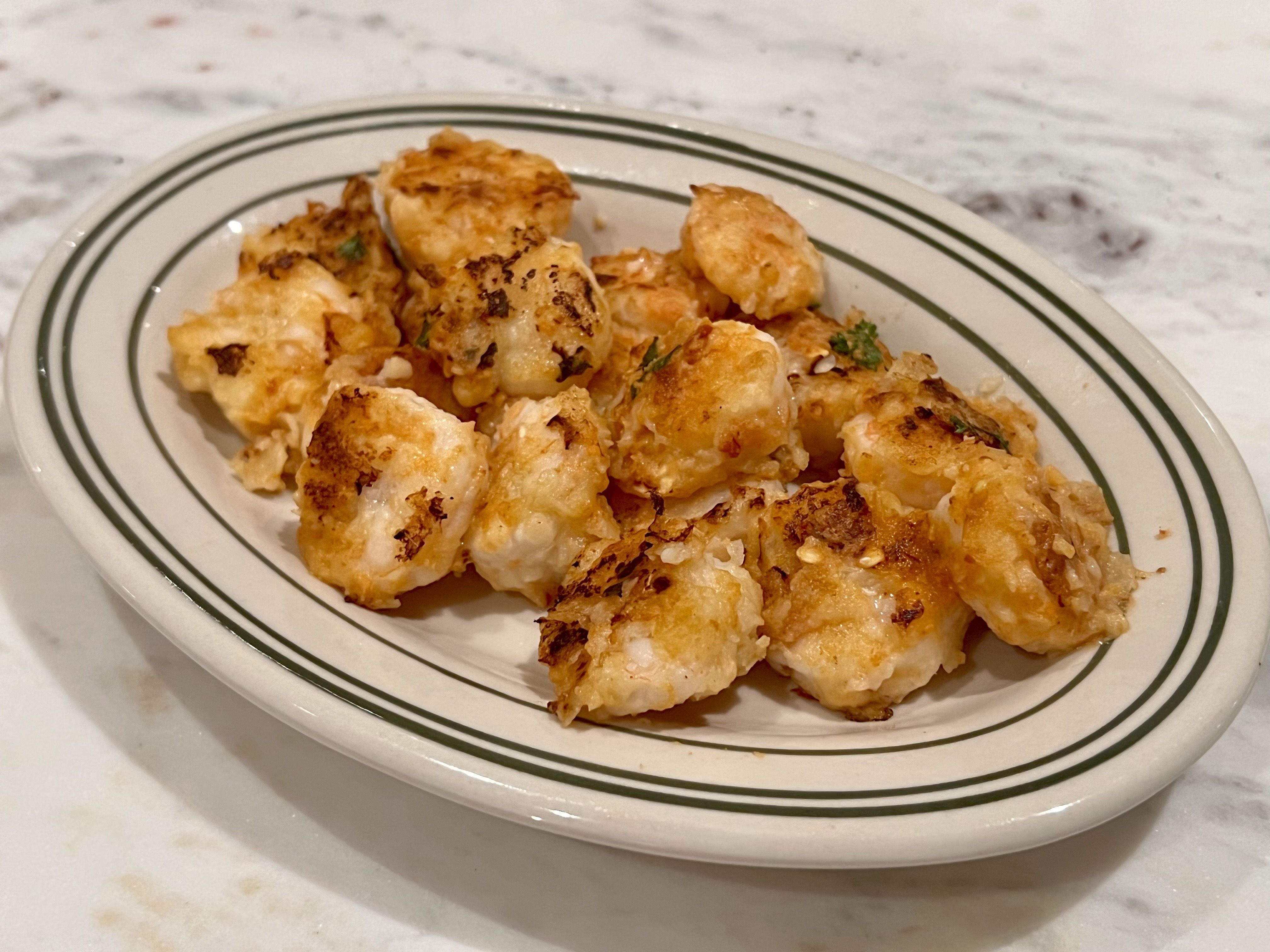
    Now let’s consider shrimp pil pil, which restaurateur Dmitri Chimes introduced in the mid-1990s at Pamplona, his Washington Square West tapas bar, and later served at all of the locations of Dmitri’s, his no-frills Greek taverna. The appetizer delivered a one-two punch of chili and garlic with a burst of lemon to prep you for your entrée — perhaps the smoky chargrilled octopus or a rich bowl of cioppino.

    When chefs Amanda Shulman and Alex Kemp were planning their new Pine Street Grill at 23rd and Pine Streets — which housed a Dmitri’s from 1999 to 2014 — they asked their Fitler Square neighbors what they wanted in a restaurant. “They all kept referring back to Dmitri’s,” Shulman said.

    Kemp said he called Chimes, who still lives in the neighborhood. “He hand delivered us the recipe,” he said. “We’re just super-excited to keep a part of his legacy going. I will say that ours is more of an homage since we know it could never be exactly the same. We started with Dmitri’s recipe as a base and then iterated it a bit, but inherently, it has [the] same ethos and qualities.”
    Kemp and Shulman have done justice to this classic.

    Pamplona/Dmitri’s recipe called for large shrimp. At Pine Street, they’re going big with six jumbo shrimp, topping them with an abundant sauce that is far creamier and more herbaceous than I remember. They’re also thoughtfully adding grilled bread to ensure plate-cleaning.

    Now perhaps they’ll consider adding spanakopita or baklava to the menu …

    Shrimp pil-pil, as prepared from Dmitri’s recipe.
  • With a new Michelin star in hand, chefs Amanda Shulman and Alex Kemp open another restaurant

    With a new Michelin star in hand, chefs Amanda Shulman and Alex Kemp open another restaurant

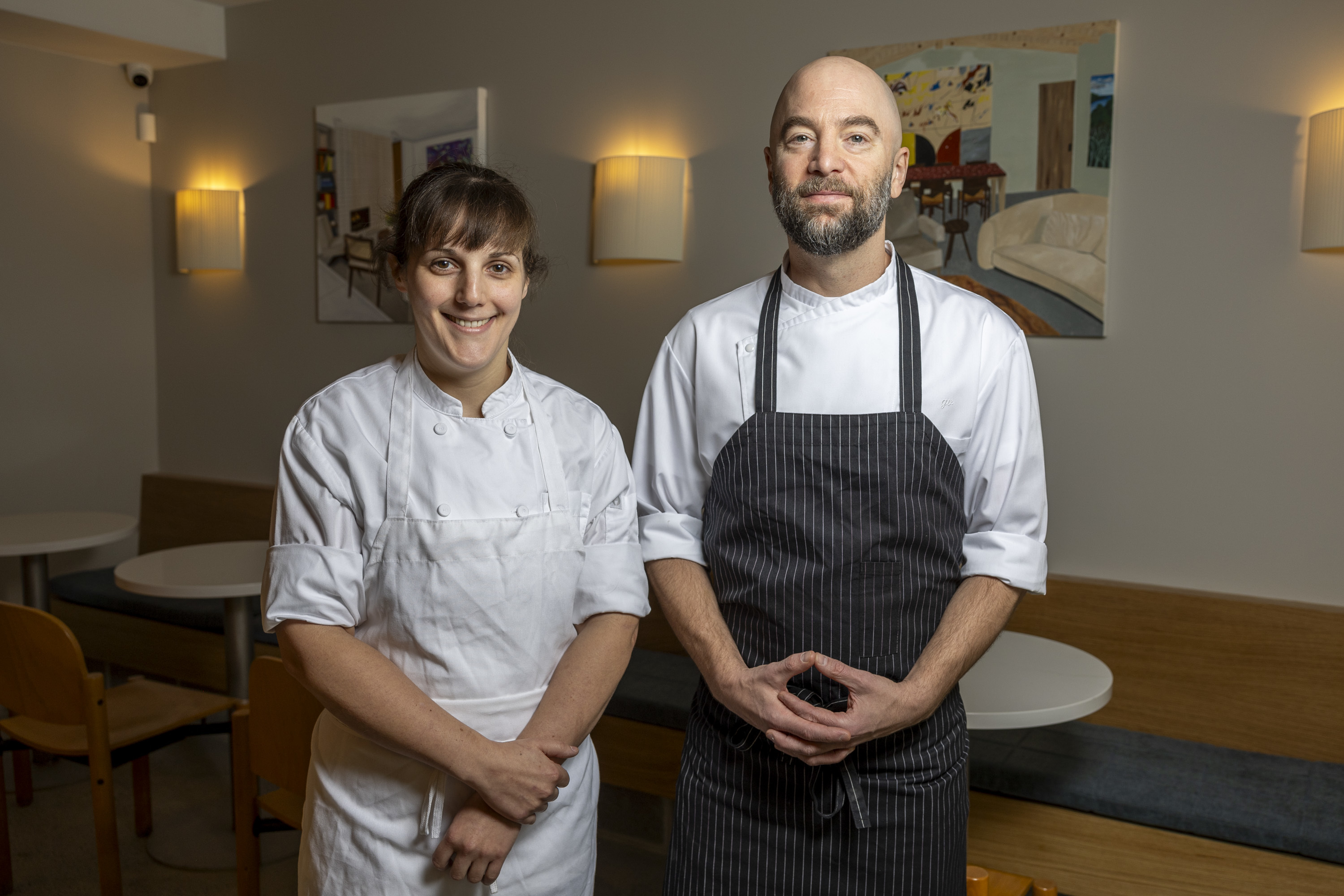
    Chefs Amanda Shulman and Alex Kemp have each built distinct destination restaurants — the newly Michelin-recognized Her Place Supper Club and My Loup. This week, they opened one together.
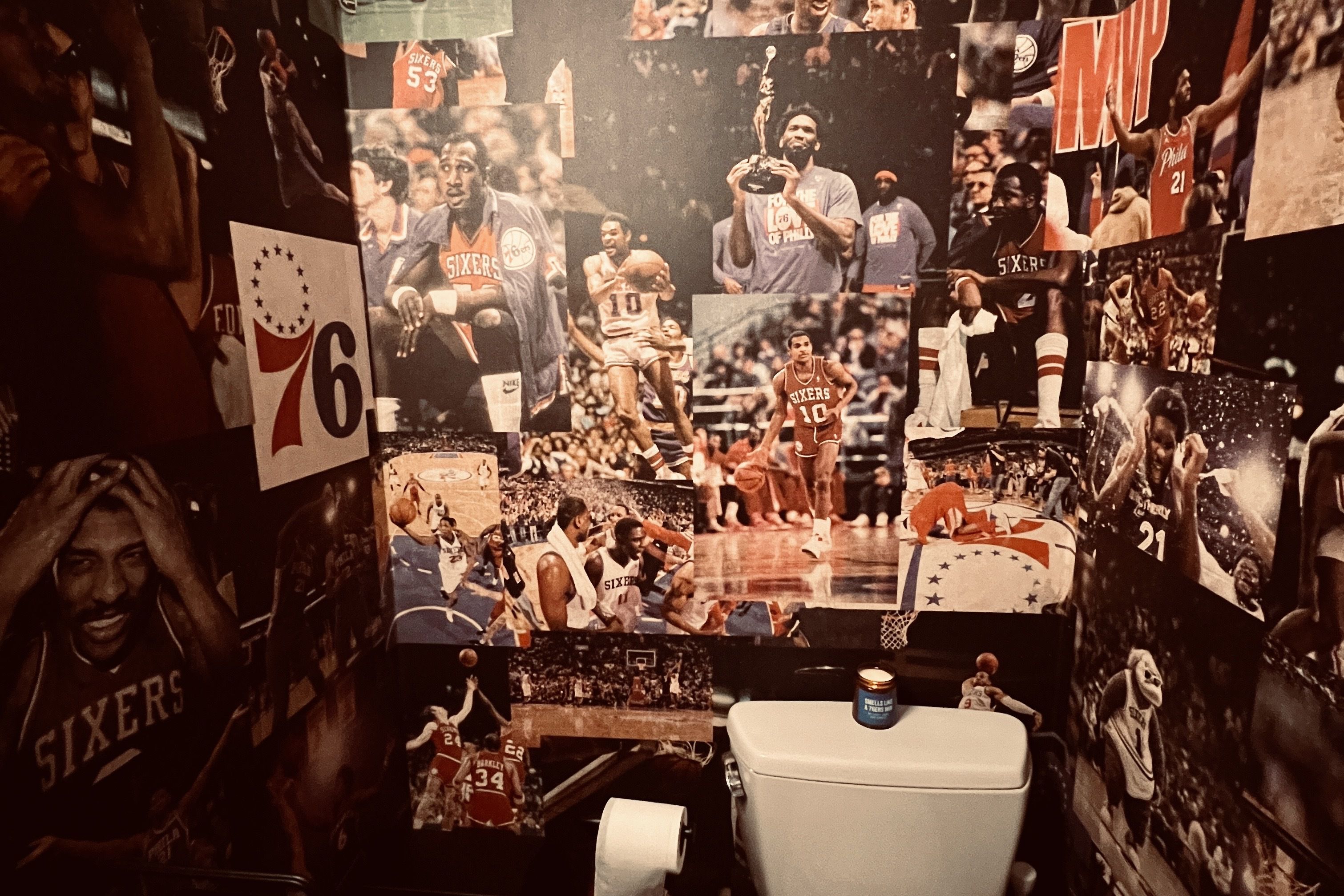
    Pine Street Grill, across from Fitler Square at 23rd and Pine Streets, is their take on a neighborhood restaurant. It’s a comfortable, restrained setting with white stamped-metal ceiling, Streamline Moderne-style schoolhouse light fixtures, white walls, and a long bar running through the narrow space. The two single-occupancy restrooms are intentionally contrasting: One is entirely pink, while the other is a tribute to the Sixers, from the photo-collage wallpaper down to the “Smells Like a Sixers Win” candle on the toilet tank and basketball-shaped soap dispenser on the sink. Fitler Square-based contractor Kaman Global built the restaurant, with Philadelphia firm Canno Design consulting.

    One restroom at Pine Street Grill has a 76ers theme.

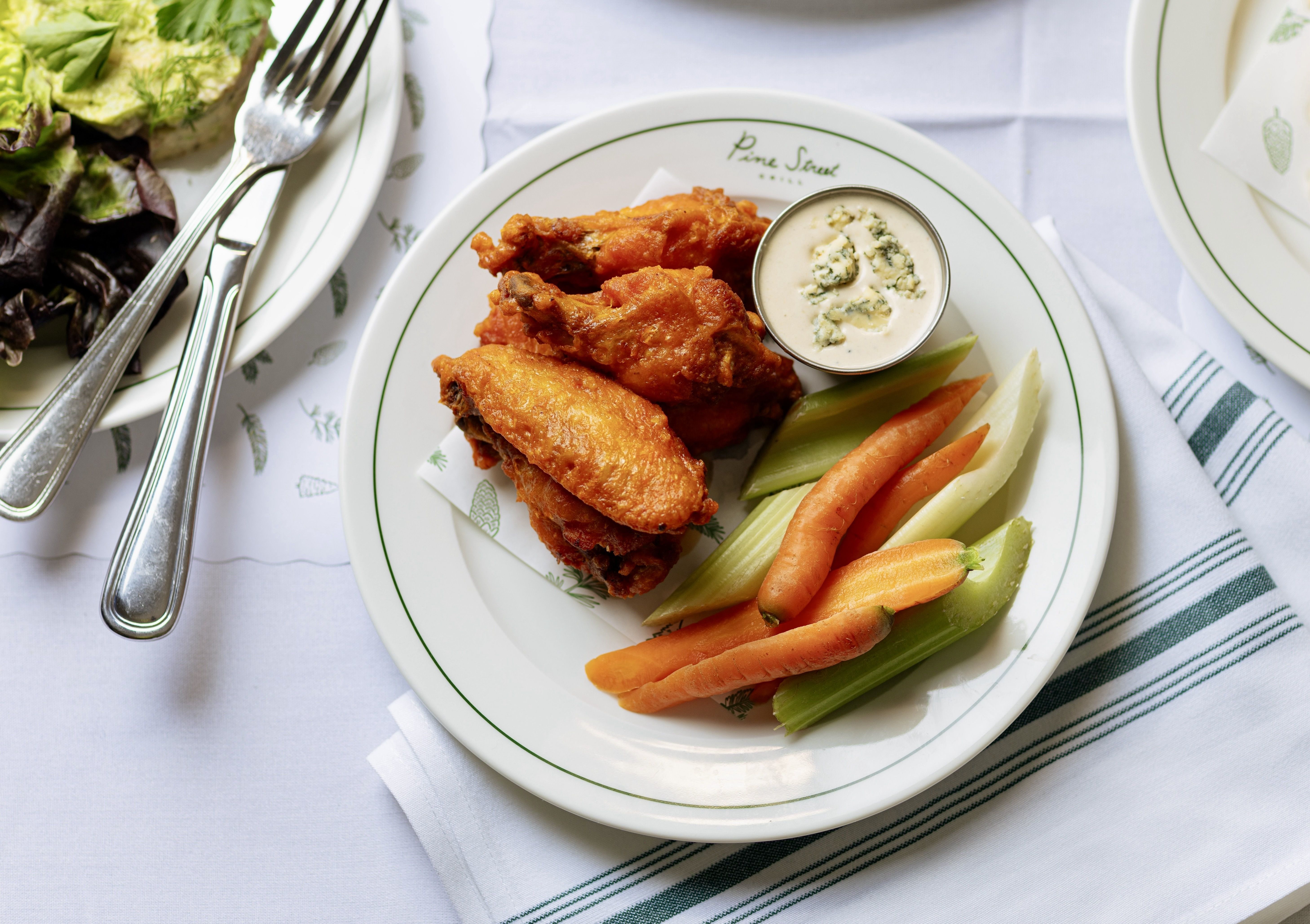
    The menu, by Shulman, Kemp, and chef de cuisine Jonathan Rodriguez, is timeless American. For starters, there’s a snack plate of mortadella-stuffed cherry peppers, olives, and spelt crackers ($11); shrimp Louie served in little gem lettuce cups with avocado and pickled onion ($16); wings in brown-butter hot sauce with Stilton blue cheese ($14); and a small soft pretzel with hollandaise mustard ($10). There also are Philly Balls, croquettes filled with roast pork, provolone, broccoli rabe, and spicy relish ($12 for two) that previously appeared on My Loup’s opening menu.

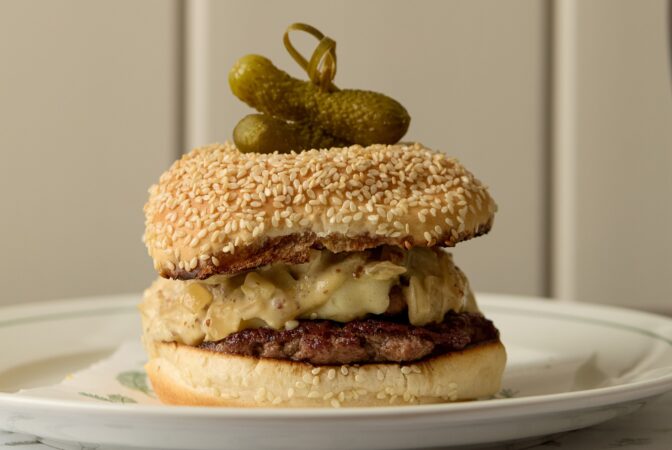
    Sandwiches include a turkey club with maple bacon on multigrain ($16) and a signature double dry-aged smashburger with Cooper Sharp and onion condiment on a seeded milk bun ($22).

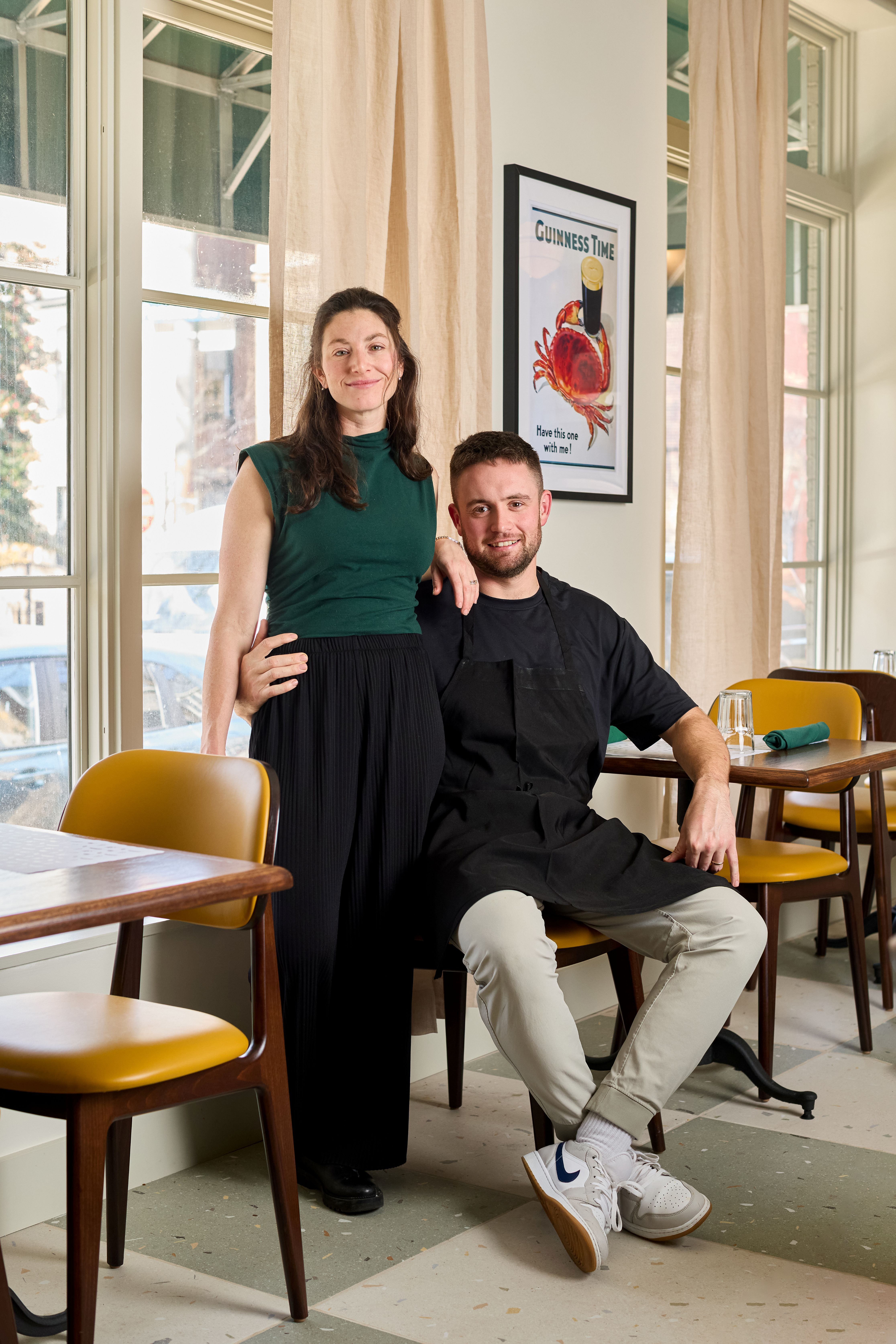
    Pine Street Grill owners Amanda Shulman and Alex Kemp.

    There’s a chopped Greek salad with Persian cucumbers, marinated feta, tomato, red onion, and oregano ($15) and a root-vegetable salad with chicories, aged cheddar, cranberries, and praline vinaigrette ($16). Entrées include hanger steak with pot-roast jus ($30); half a rotisserie chicken with gravy ($28); grilled salmon with piccata and spinach ($27); and eggplant Parmesan ($26).

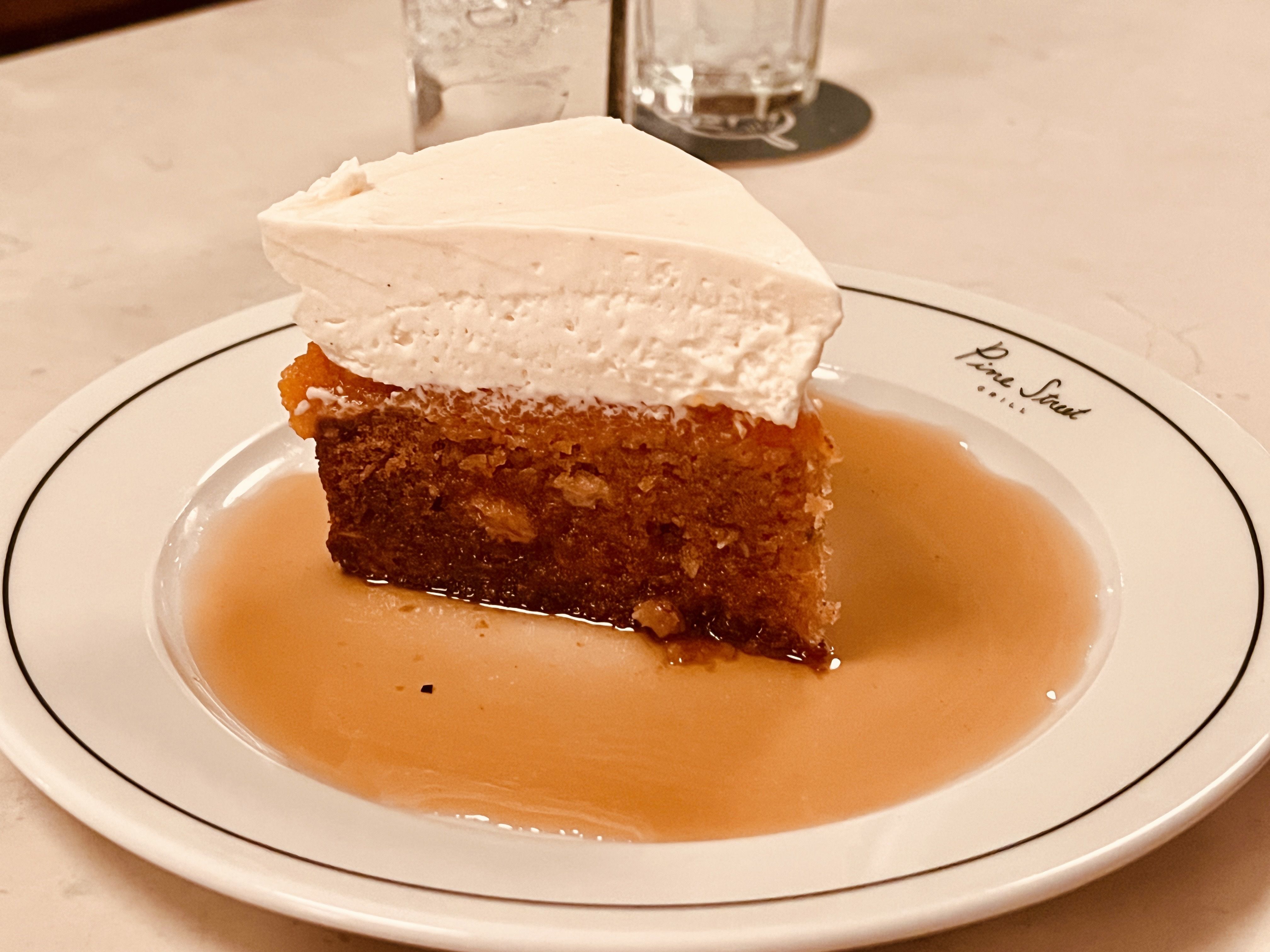
    Desserts include a nut-free carrot cake ($13) with rum raisins, carrot jam, and cream-cheese mousse; sourdough chocolate-chip cookie skillet ($12) with vanilla ice cream — the same cookie Shulman serves at Her Place; and a sundae ($14) of malted-milk ice cream with brownie bites, spiced walnuts, hot fudge, and a cherry.

    Carrot cake at Pine Street Grill.

    There’s even a children’s menu, dubbed Belle’s Bites, after their daughter’s middle name: $10 each for nuggets and fries, grilled cheese, crudités and ranch, and red or white shells.

    The late-night special for grown-ups, offered from 9:30 to 10:30 p.m., is any draft beer and the burger.

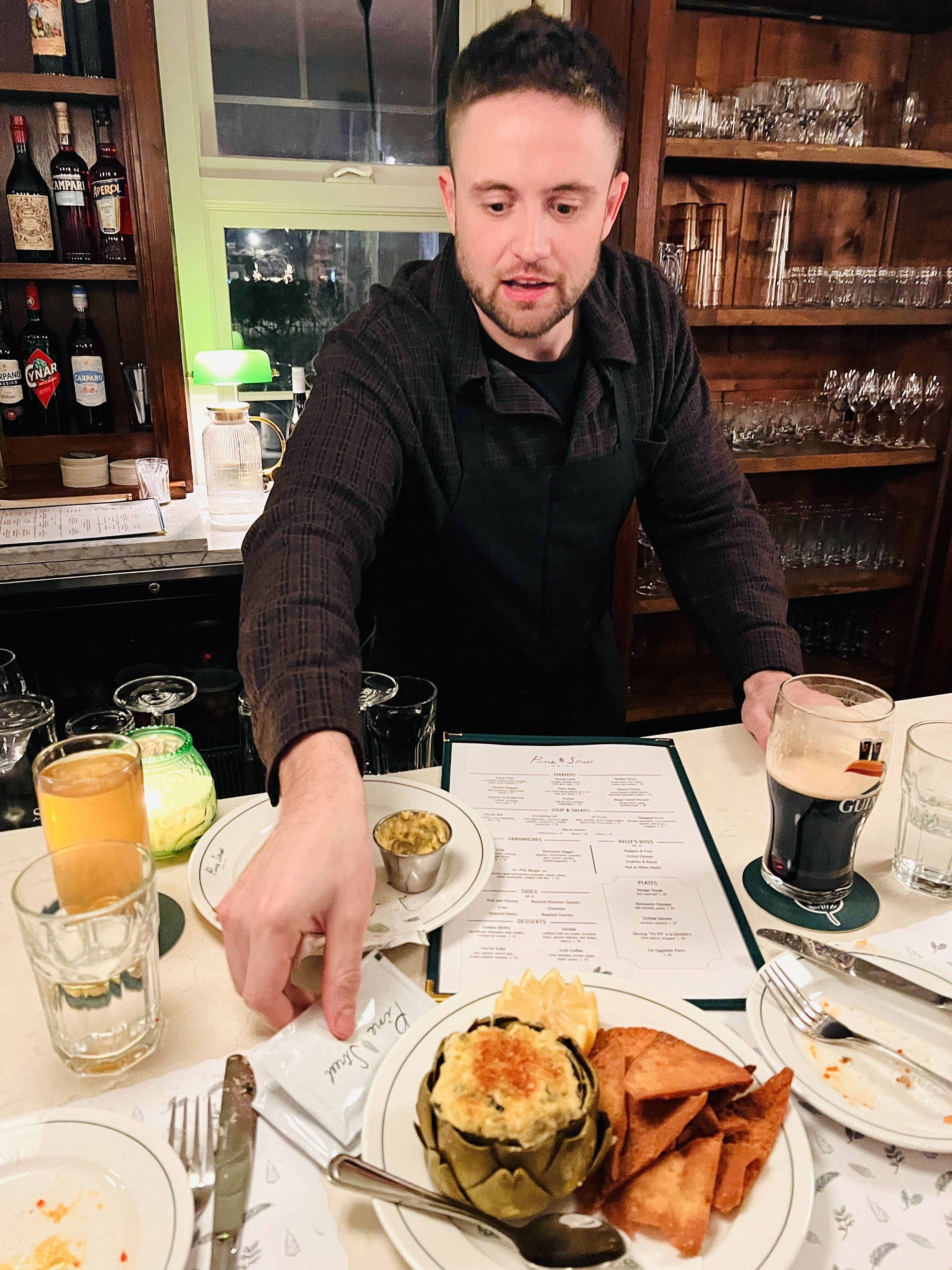
    Co-owner Alex Kemp serves an artichoke dip appetizer at Pine Street Grill.

    Jillian Moore, bar director of My Loup and bar consultant for the group, developed a cocktail list that includes a freezer martini made with local vermouth, a John Daly cocktail (a boozy Arnold Palmer) on draft, and Irish coffee. There’s Guinness, Strongbow cider, and birch beer on tap.

    Nicole Sullivan, Her Place’s beverage director, set up the wine list, which draws inspiration from European tavern culture. General manager Allyson Allen has worked with Shulman and the couple’s Libbie Loup group for several years, including at Her Place and Amourette, their 2024 summer pop-up.

    Buffalo wings at Pine Street Grill, 2227 Pine St.

    Pine Street Grill’s corner space has had a busy history: It housed Stix, a vegetarian restaurant, from 1997 to 1999; a location of Dmitri’s from 1999 to 2014; a branch of wine bar Tria from 2015 to 2017; and most recently Cotoletta, which closed last year after a five-year run.

    Shulman, a Connecticut native and Vetri alumna, burst onto the Philadelphia dining scene in 2021 with Her Place, offering versions of the homespun dinner parties she hosted in her student apartment at Penn. She and Kemp opened My Loup in 2023, three months before their wedding. Shulman has received multiple James Beard Award nominations, including Emerging Chef nominations in 2022 and 2023 and Best Chef Mid-Atlantic in 2025. Kemp, who is Canadian-born, previously worked at Montreal’s Joe Beef and New York’s Eleven Madison Park. The couple met at Momofuku Ko in New York.

    Pine Street Grill, 2227 Pine St., no phone, pinestreetgrill.com. Hours: 4 to 11 p.m. Wednesday to Monday; kitchen closes at 10:30 p.m. Half of the dining room is reservable via OpenTable for parties of up to eight; remaining tables are held for walk-ins. Happy hour: 4 to 6 p.m. weekdays, with a discounted food menu and $2 off draft beverages.

  • Emilia will be chef Greg Vernick’s new restaurant, opening soon in Kensington

    Emilia will be chef Greg Vernick’s new restaurant, opening soon in Kensington

    With two acclaimed restaurants and a high-end coffee bar in Center City, chef Greg Vernick wasn’t looking to expand two years ago when a close friend introduced him to developers working in the Fishtown-Kensington corridor.

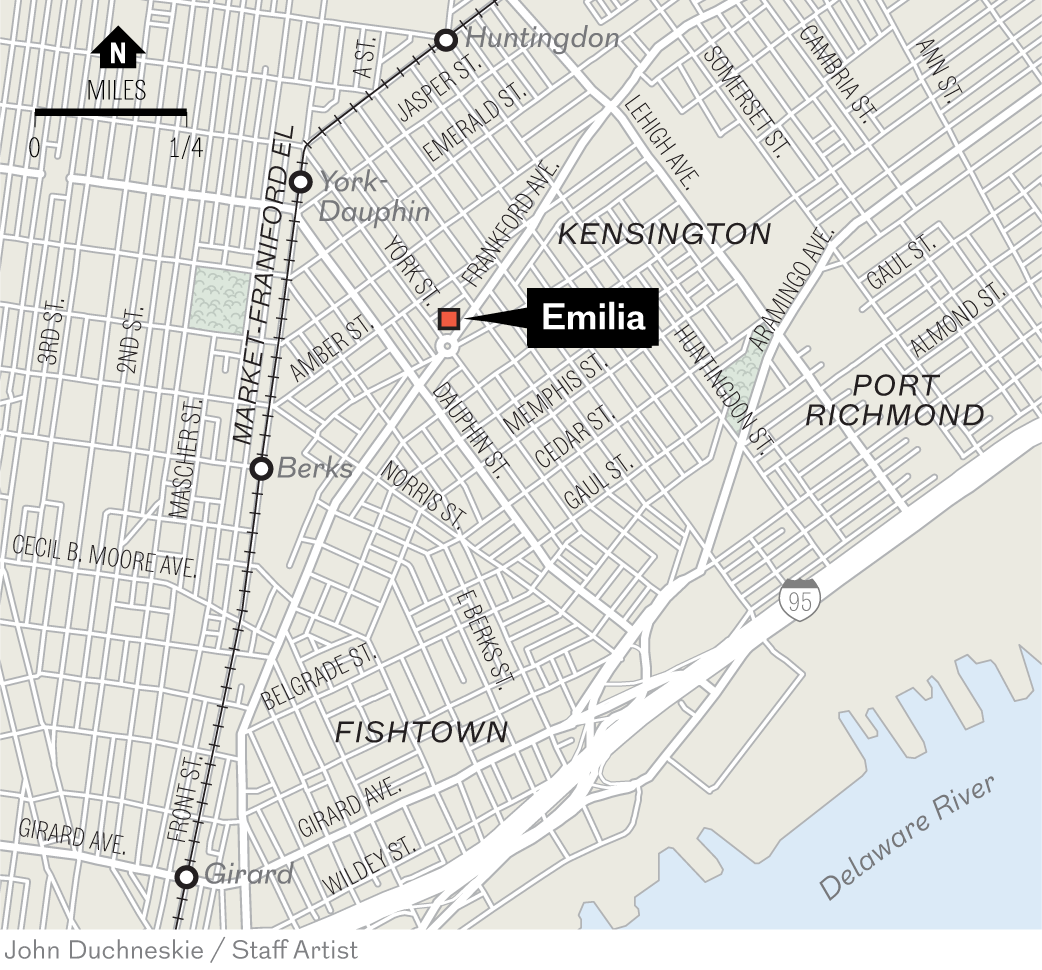
    They had a mixed-use building going up on Frankford Avenue, just north of the York Street roundabout. Vernick walked the neighborhood. “It reminded me of the East Village — a place you want to hang out at night, but also a real community,” he said. Still, Vernick was not entirely sold on the project until he and his wife, Julie, started spending more time nearby, dining at Fiore across the street and around the corner at Picnic and Zig Zag BBQ.

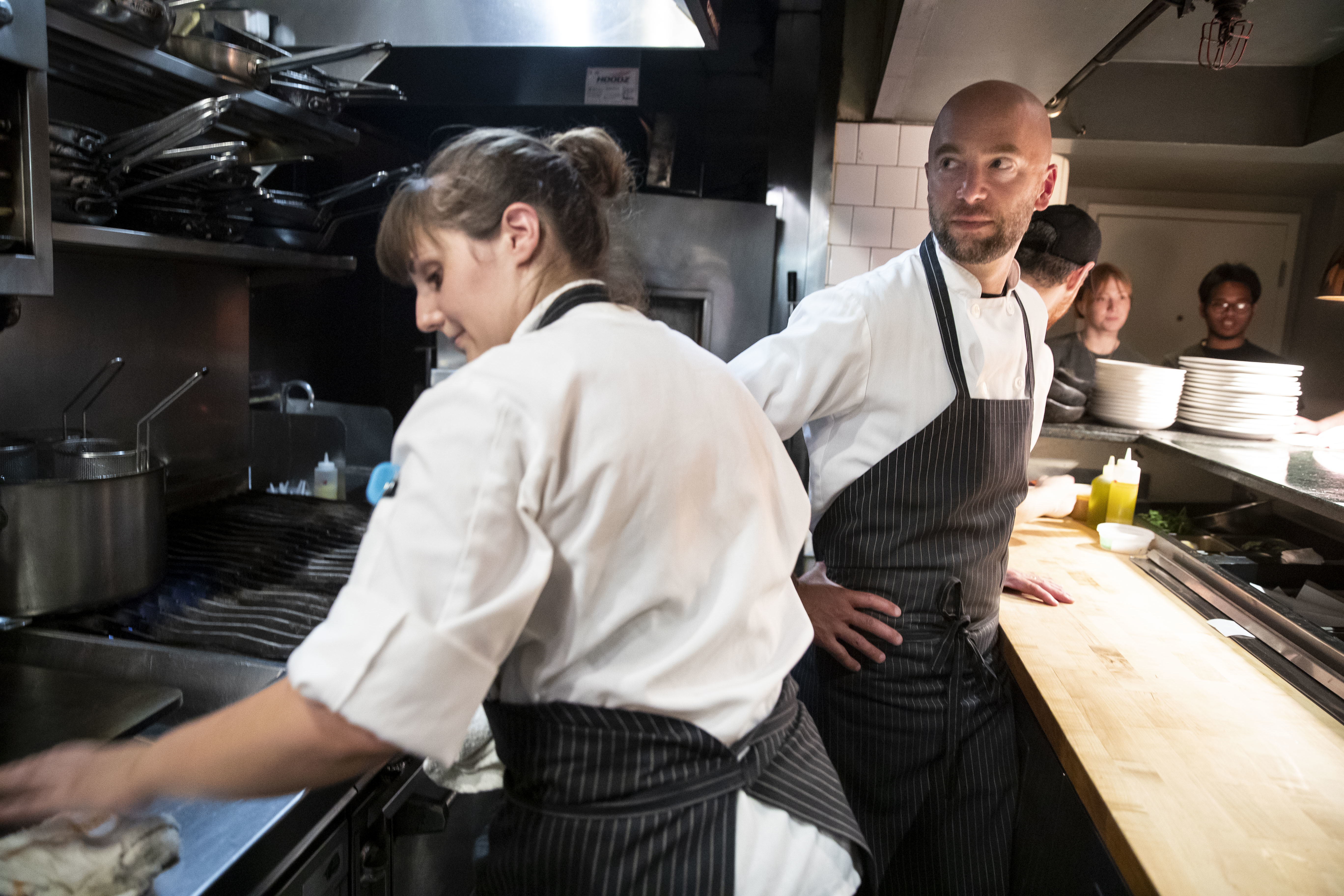
    Chef de cuisine Meredith Medoway and chef Greg Vernick in the kitchen at Vernick Food & Drink in 2022.

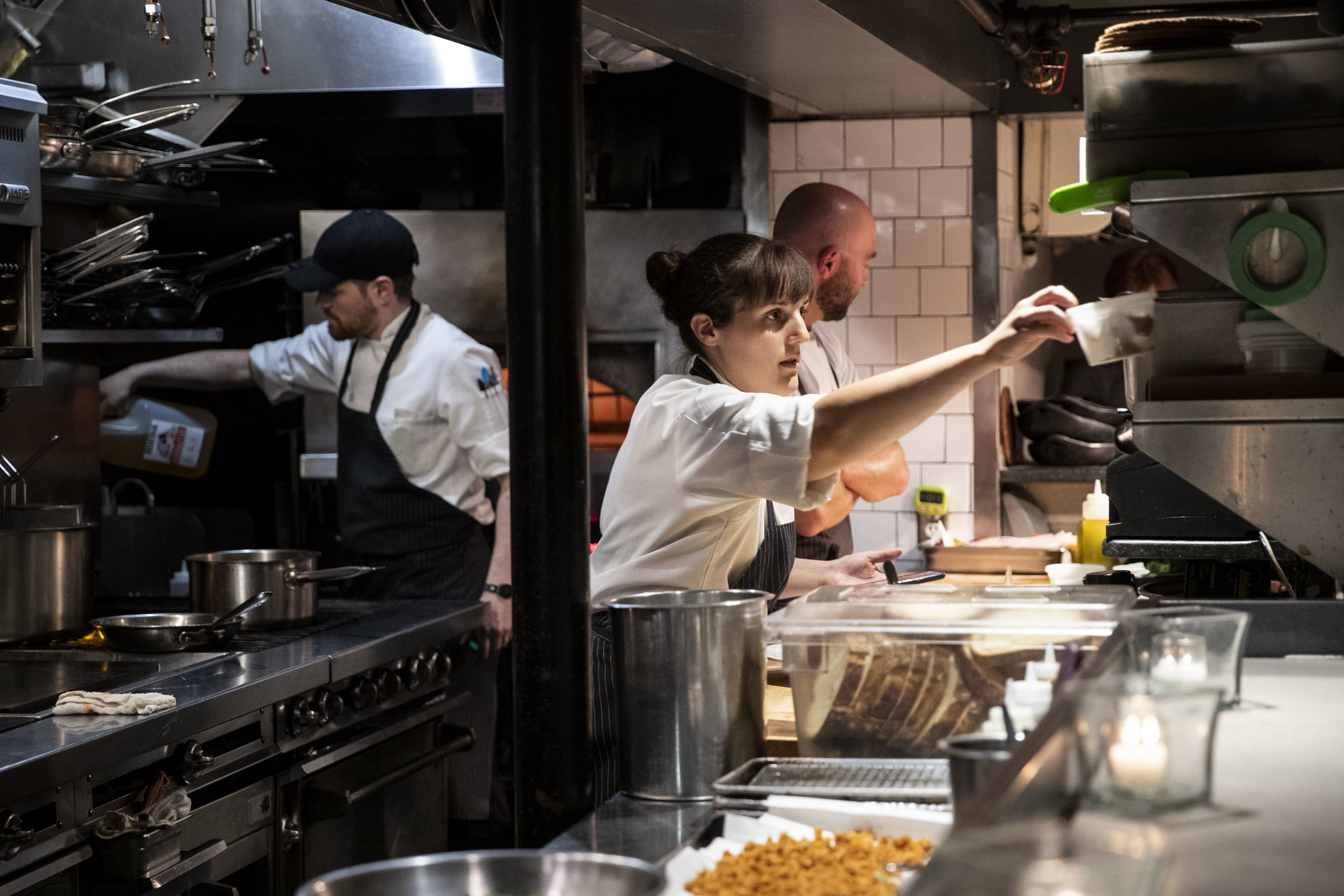
    The developers — Henry Siebert, Ryan Kalili, and Michael Dinan, all Vernick regulars — were keen on having an Italian restaurant in the building, at 2406 Frankford Ave. Vernick’s thoughts naturally turned to Meredith Medoway, the longtime chef de cuisine at his Vernick Food & Drink on Walnut Street. “Her heart has always been in pasta and Italian food,” Vernick said. “She took our pasta program from really good to great. So I started thinking: This could be the right person.”

    They’ve targeted “early 2026” for Emilia, a neighborhood trattoria featuring a seasonally flexible menu built around house-made pasta and live-fire cooking. (Vernick’s connection to the project has not previously been made public, and the restaurant’s name, recently set into tiles at the entrance, has been a subject of speculation on community Facebook groups.)

    Chef de cuisine Meredith Medoway working in the kitchen at Vernick Food & Drink in 2022.

    Canno Design’s Carey Jackson Yonce, who worked on Emilia with California-based designer Bob Bronstein, said they were going for “calmness, cleanliness, and contrast,” using contrasting materials, such as cinderblock on the bar’s front, spruce slats lining the ceiling, and oak panels on the walls. (During a visit last week, Vernick declined a request to photograph the space, as it was not completed.)

    “I wanted it to feel like the kind of place where you walk in and exhale and relax,” Vernick said. “Industry-friendly, not precious. We want to hit two markets from day one: the neighborhood and the industry. If you get those right, everything else falls into place.”

    Emilia restaurant is at 2406 Frankford Ave.

    There will be seating for about 60 in the dining room, with 20 additional seats in a lounge area and 10 at the bar. The bar and lounge are intended for walk-ins, while the main dining room will lean more heavily on reservations.

    The 33-year-old Medoway — a Cherry Hill native like Vernick, who is 45 — studied political science at American University in Washington, D.C.

    During one college summer, she worked at Hinge Café in Port Richmond and fell in love with cooking. She interned at Vernick Food & Drink, stayed on, worked every station, and moved to Hearthside in Collingswood for its 2017 opening. She spent three months cooking in Calabria, and flew back to the United States to work at Vernick Fish at its opening in 2019. She returned to Vernick Food & Drink in 2021.

    Greg Vernick and chef Meredith Medoway in the lounge at Emilia.

    At Emilia — a purely made-up name (Vernick said he was tired of putting his own name on restaurants) — Medoway will work on a 48-inch grill fueled by charcoal and oak. The menu is intentionally restrained: about six small plates, six pastas, and six large dishes, supplemented by nightly specials.

    Medoway said the pasta dishes are rooted in personal experience rather than strict regional rules. One anchor will be tortellini in brodo, based on a handwritten family recipe she received while staying in Emilia-Romagna. Another is what they’re calling chicken ragù bianco — a white ragù made with hand-cut chicken and offal — inspired by a staff meal that they ate at the American Academy in Rome during a tour of Italy.

    “It was the best pasta we had on that trip,” Vernick said. “Simple, balanced, and deeply satisfying.”

    Elsewhere, the menu leans toward lighter preparations and Vernick’s bold style, with brothy sauces, acidity, and restrained use of fat rather than heavy butter-and-cheese finishes. Subtle char from the grill will appear throughout the menu, even in dishes that do not come directly off the fire. Proteins include rabbit prepared in cacciatore style with orange, rotating fish dishes, shellfish stew, and a nightly steak special.

    Bread service will be complimentary: house-made focaccia, the imported Italian breadsticks known as grissini, and Mighty Bread’s sesame ciabatta. A separate bread course, the crunchy carta da musica, will be offered as a menu item.

    “We want the neighborhood to feel like this is their place,” Medoway said. “You shouldn’t need a reservation just to come in for a drink and a snack.”

    The wine list will focus exclusively on Italian bottles. The cocktail program is still being finalized but is expected to emphasize lighter, simpler drinks.

    Emilia is expected to employ between 40 and 50 people. Vernick said opening a restaurant today requires tighter menus and less waste than a decade ago, but also greater attention to staff experience — from locker rooms to staff meals — as an essential part of operations.

    “We’re building this deliberately,” Vernick said. “It’s taken time — but that’s the point.”

  • Grab a drink and go on a treasure hunt at Fishtown’s new Secondhand Ranch, a thrift store inside a honky-tonk

    Grab a drink and go on a treasure hunt at Fishtown’s new Secondhand Ranch, a thrift store inside a honky-tonk

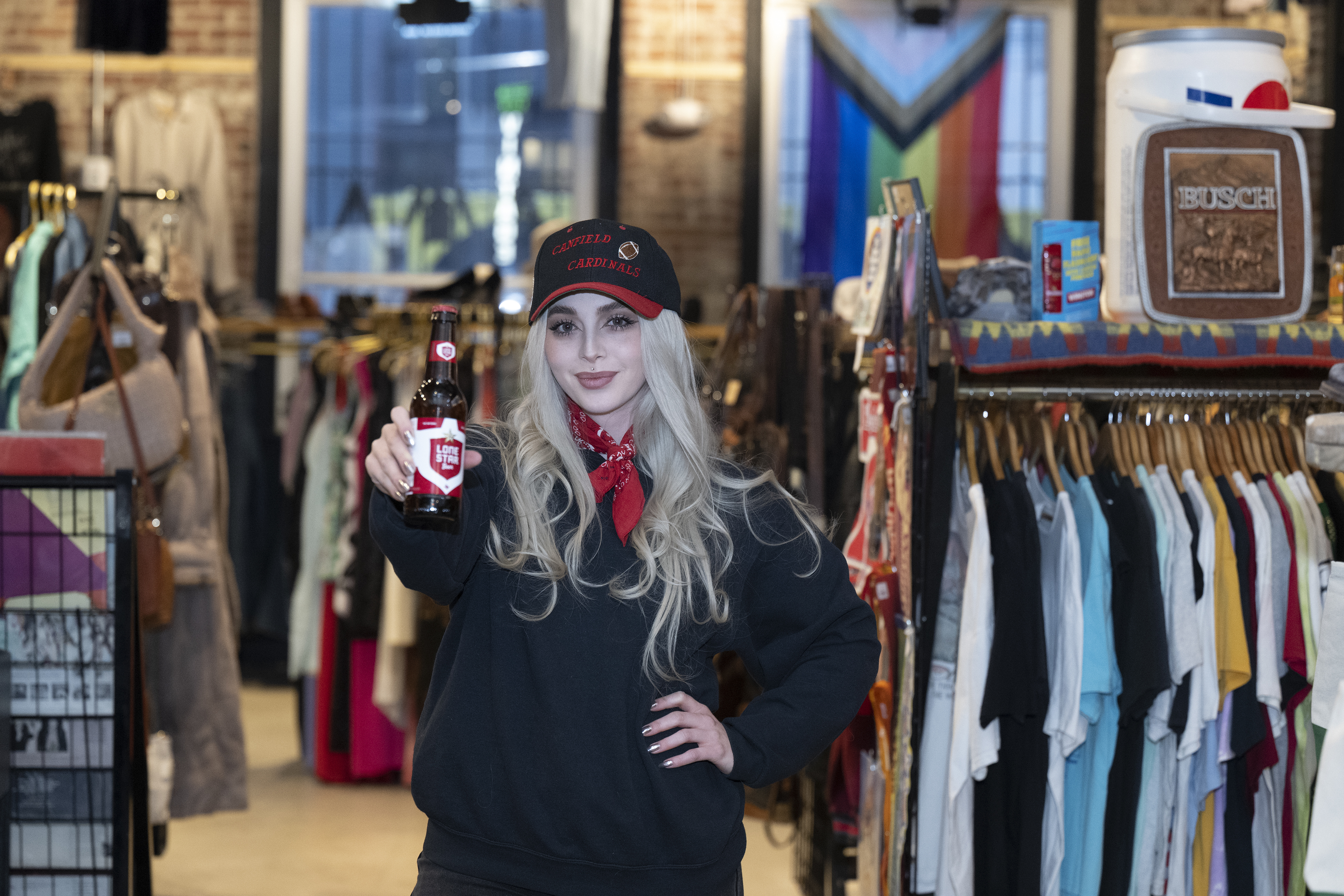
    Waylon Jennings drawls as customers cradle bottles of Lone Star beer while browsing the racks at Secondhand Ranch — the latest attraction deep in the heart of Fishtown.

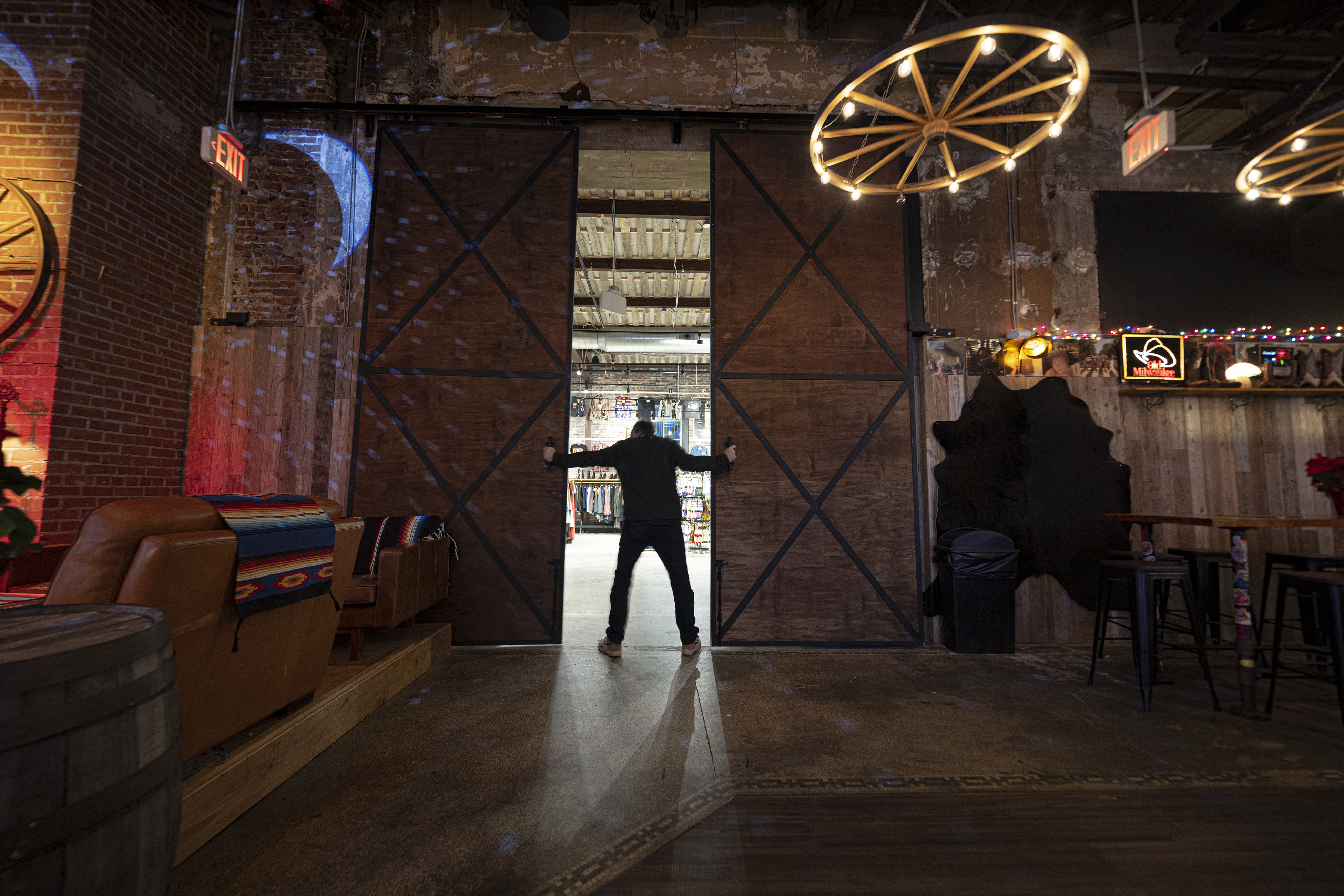
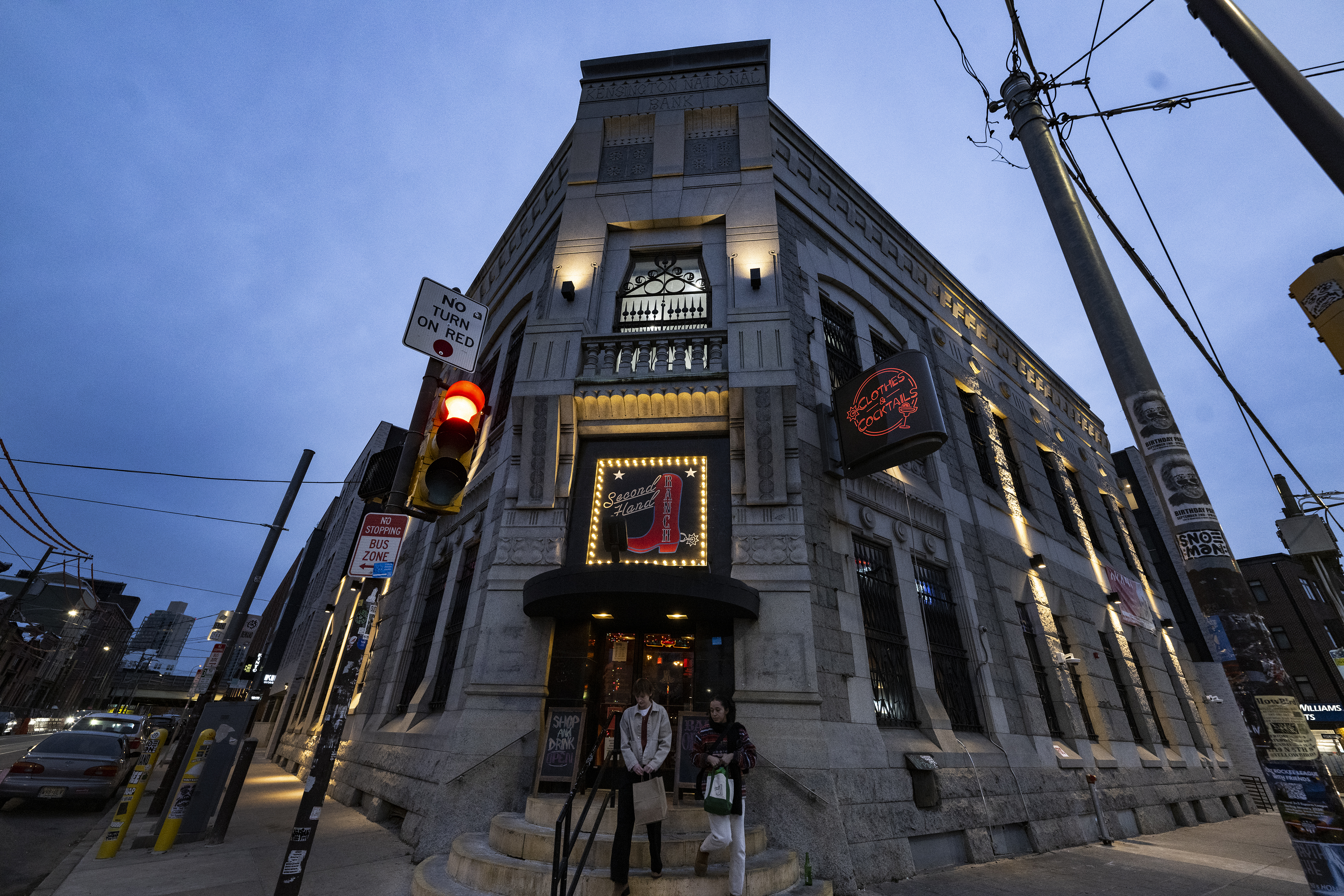
    The rough-hewn, outlaw-country theme bar paired with a retail store specializing in secondhand clothing and vintage merchandise opened Dec. 6. It’s set behind saloon-style swinging doors inside the Frank Furness-designed former bank building at Frankford and Girard Avenues, across from Garage, Joe’s Steaks, and Johnny Brenda’s.

    This retail-bar pairing dates to 2020, when founder Josh Sampson opened Garage Sale Vintage in Denver. Sampson describes the idea as “a love letter to the circular economy — with salt on the rim.”

    The three pillars, he said, are sustainability, a focused margarita program, and partnerships with local vendors. He later expanded it to two locations, with a tacos-and-tequilas menu, in Nashville and then to New York.

    Decor items and clothing are shown at the thrift store inside the new Secondhand Ranch in Fishtown.

    Seeking a space in Philadelphia last year, he struck a deal with Alterra Property Group for the Fishtown building. Soon after, he became embroiled in a copyright lawsuit with the operators of Garage, the bar across the street.

    Sampson changed the name and concept for the Philadelphia location. Rather than strictly vintage items, he decided that Secondhand Ranch would be a country bar paired with secondhand retail, with a smattering of vintage items.

    Barn doors separate the bar and retail at Secondhand Ranch in Fishtown.

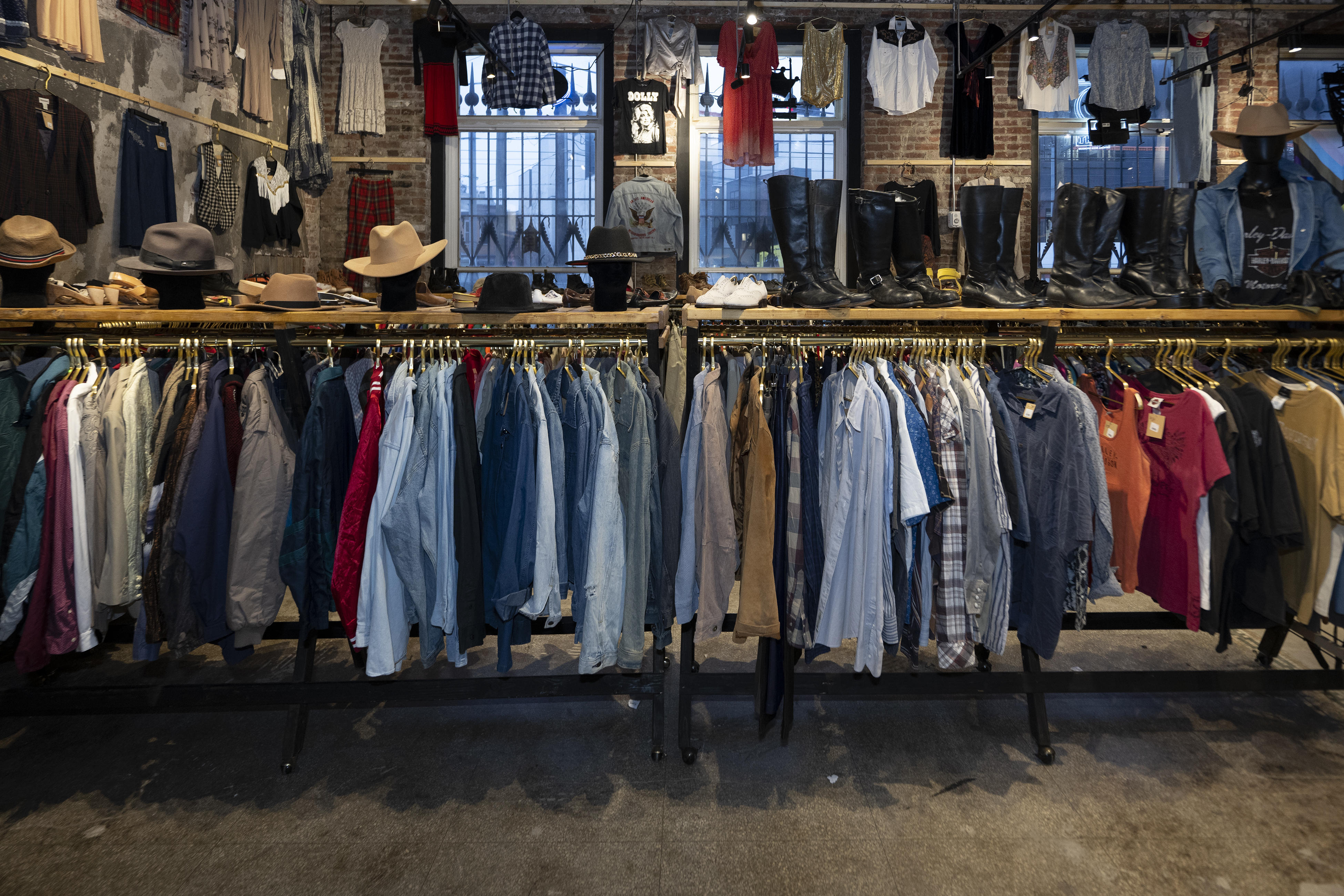
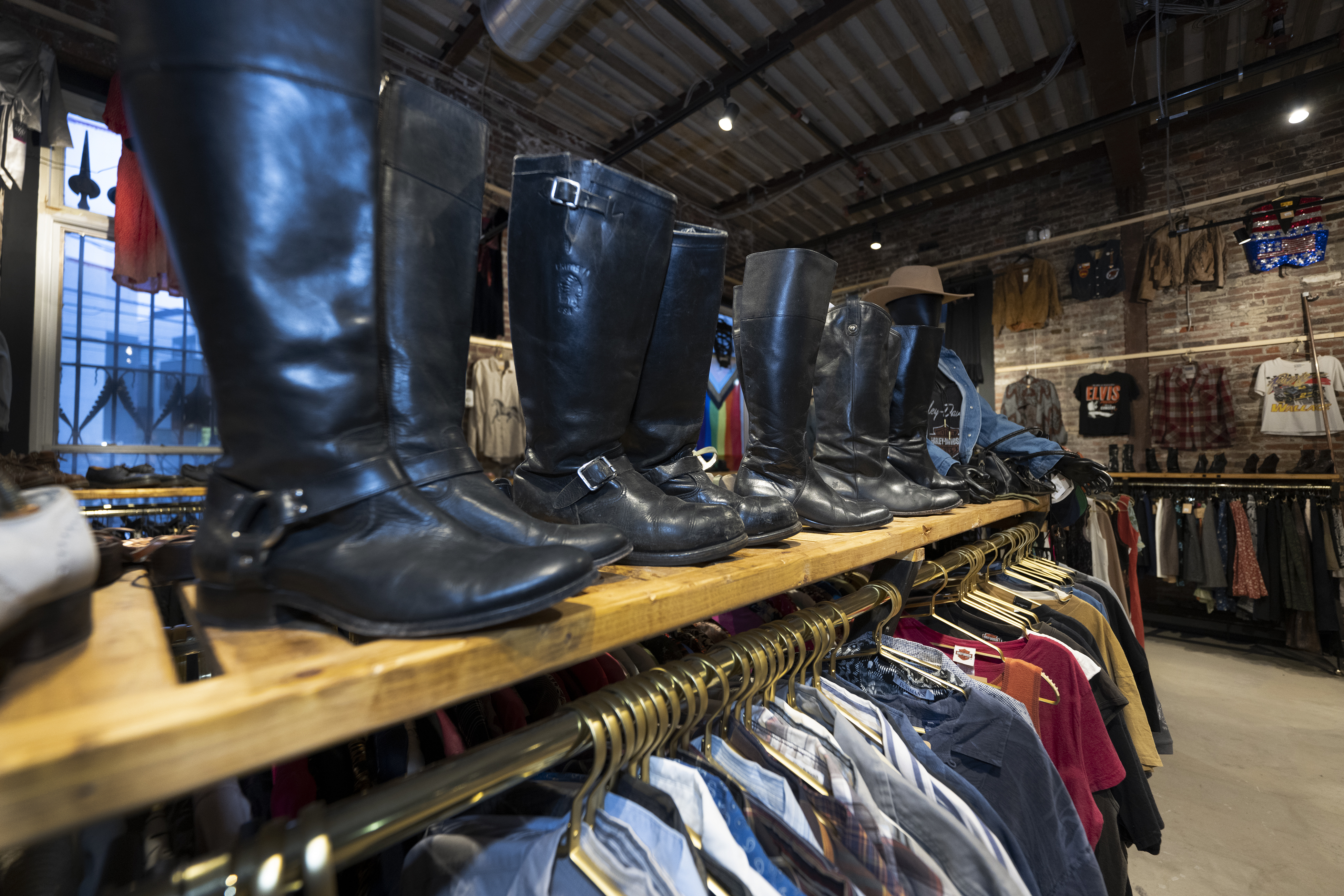
    The distinction between secondhand and vintage is crucial: “Secondhand is a much broader category,” Sampson said. “With vintage, it’s simple — everything has to be 20 years old or more. Secondhand lets us focus more on sustainability and diverting usable goods from landfills. It also allows for lower price points and a different kind of fun.” Think racks upon racks of T-shirts, sweaters, hats, jeans, button-down shirts, as well as a rodeo’s worth of cowboy boots — all secondhand.

    The retail operation, behind barn doors, is split evenly between in-house curation and a vendor collective, said manager Nikki Gallipoli. Each vendor (such as Zac Cowell, known as VintageZac) manages its own rack in the store — “they come in, sort it, and keep it updated,” she said. Inventory includes vinyl records, books, and knickknacks.

    Decor items and clothing are shown at the thrift store inside the new Secondhand Ranch in Fishtown.

    “Part of the experience is grabbing a drink and going on a treasure hunt,” Gallipoli said.

    A retro-style gift shop within the space focuses on new, non-clothing merchandise such as accessories, novelty items, stickers, matchbooks, and handmade goods. Much of that inventory is sourced from small independent businesses online rather than strictly from Philadelphia suppliers. “The clothing itself isn’t always handmade, but it is always secondhand,” she said.

    Decor and clothing items are shown at the thrift store inside the new Secondhand Ranch in Fishtown.

    Secondhand Ranch leans fully into honky-tonk aesthetics and sound for what Sampson calls “very much the kind of vibe you’d see in Austin or Nashville.”

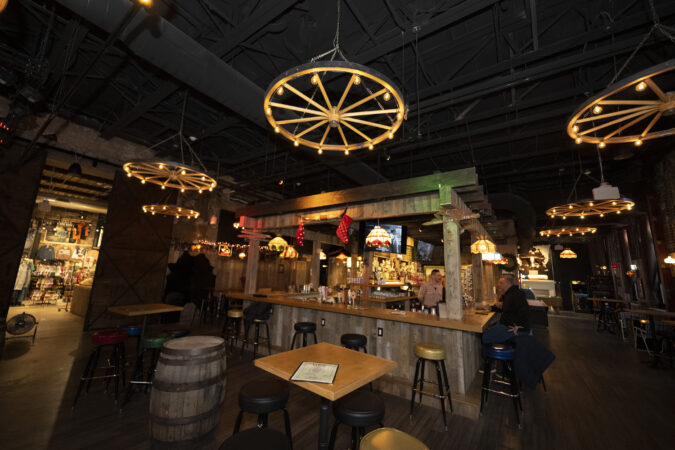
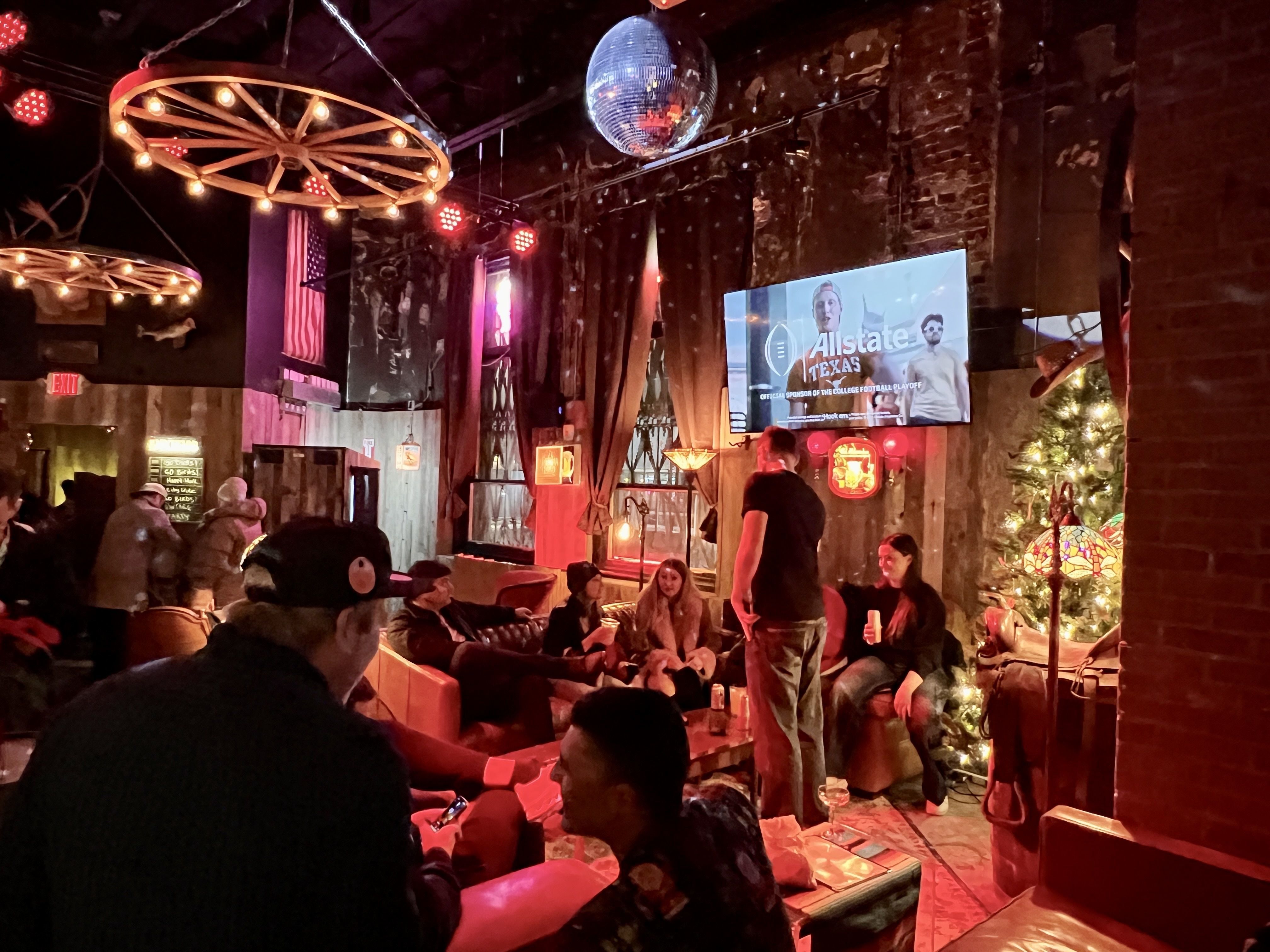
    The massive bar, set beneath wagon-wheel chandeliers, seats about 30, with an additional 30 to 40 seats spread throughout the room. The former bank vault has been preserved and now functions as cold storage for beer. There are old-fashioned coin-operated games in one corner, and a stage that’s now set up with den-style furniture.

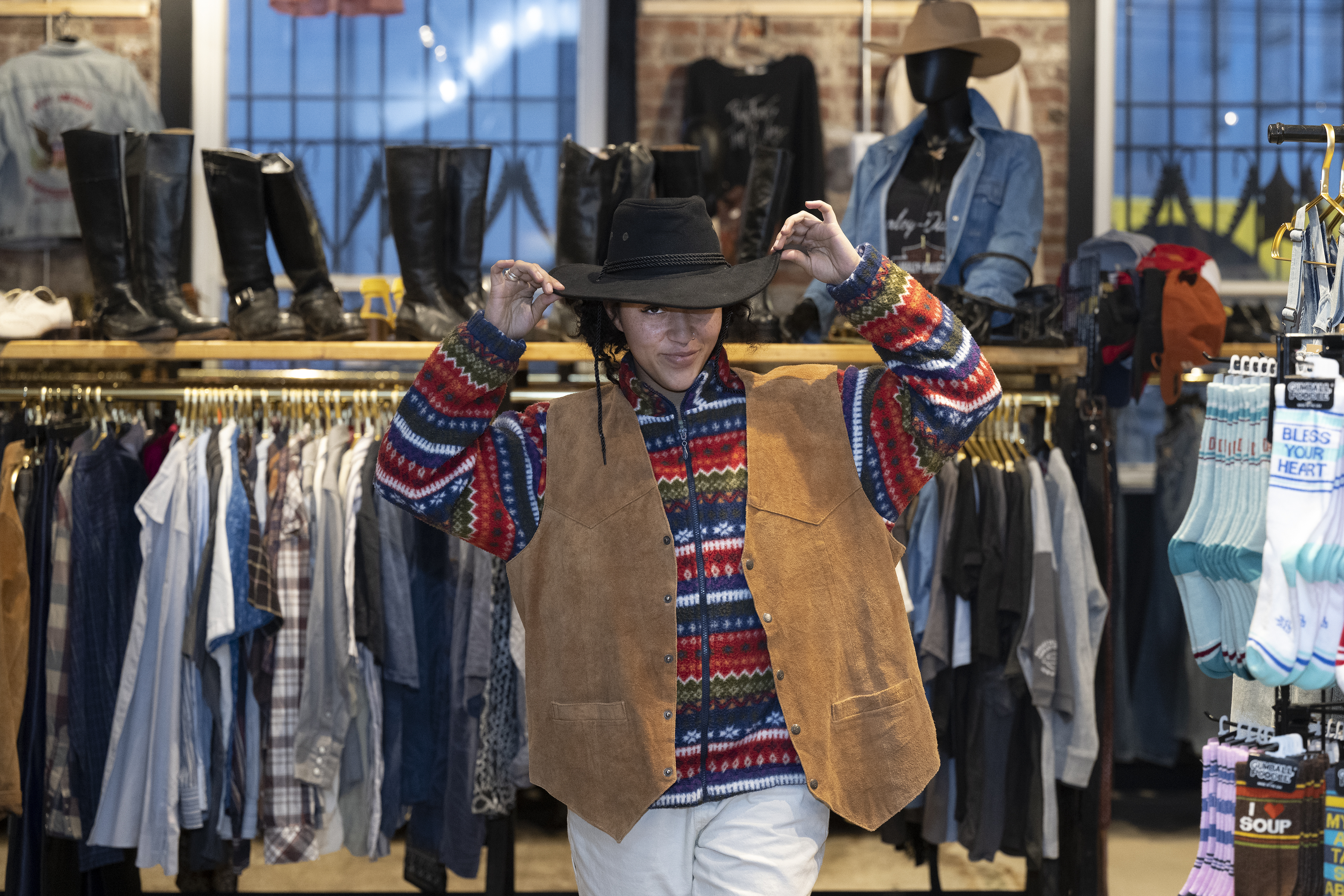
    Jordan Sims tries on a cowboy hat at the thrift shop inside Secondhand Ranch in Fishtown.

    The stage will host live music, scheduled to begin in early February, when the food menu — primarily wild-game sausage, nothing fancy — launches. Right now, hot peanuts are served.

    Lone Star is the beer of choice; it’s part of the citywide special ($10), paired with an infusion shot.

    Customers gather in the lounge at Secondhand Ranch in Fishtown on Dec. 6, 2025.

    “One fun goal we set for ourselves is trying to become the No. 1 Lone Star beer account,” Sampson said. There are 12 beers on tap. Besides Lone Star, the bottle list includes Star and Shiner Bock from Texas, plus elevated local craft options like Tonewood Brewing’s Freshies. “It’s exactly what you’d expect at a honky-tonk,” Sampson said.

    Classic and seasonal margaritas anchor the cocktail program, along with zero-proof options. Programming will include DJ sets, pop-ups, and “Trade-In & Sip” nights, designed to connect the drinking and shopping experiences while emphasizing community engagement. Vendor applications will open online, and a pop-up showcase with margarita specials is planned as part of opening festivities in February.

    Secondhand Ranch, 1148 Frankford Ave., 267-807-13450, is open from noon to midnight Monday, Wednesday, and Thursday, and 11 a.m. to 2 a.m. Friday, Saturday, and Sunday. Closed Tuesdays through December. The retail store closes at 10 p.m. Friday and Saturday, and at 9 p.m. the other days.

    Secondhand Ranch in Fishtown.
  • Tater tots, cocktails, and tee time: There’s a new restaurant at the revived Cobbs Creek Golf Course

    Tater tots, cocktails, and tee time: There’s a new restaurant at the revived Cobbs Creek Golf Course

    The long-awaited revival of Cobbs Creek Golf Course on the edge of West Philadelphia is taking shape not just on the fairways, but at the table.

    Little Horse Tavern — a full-service restaurant, bar, and event space named in honor of Charlie “Little Horse” Sifford, the Black golfer who led the integration of the PGA tournament in the 1960s — opens Monday. The Fitler Club and Strother Enterprises are overseeing it.

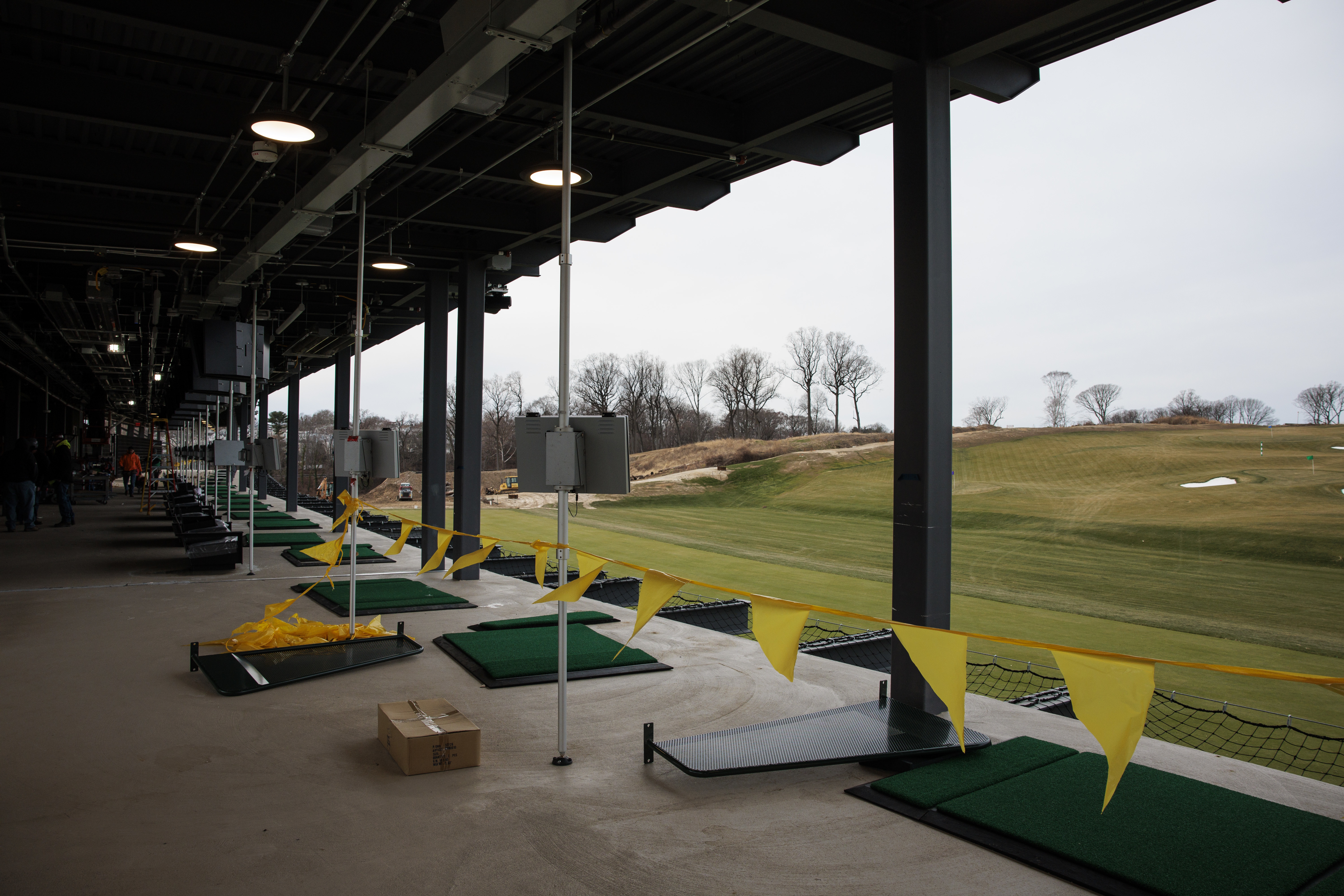
    The tavern, in a new building on Lansdowne Avenue called the Lincoln Financial Center, is next to a heated, 68-bay driving range, similar to a Topgolf. (Buckets of balls start at $10.) Nearby is a nine-hole short course designed for beginners and families, and — expected to open in 2027 — the renovated 18-hole championship-level course known as the Olde Course.

    All told, the $180 million effort aims to transform Cobbs Creek into a premier public golf destination. The club, founded in 1916, offered access to players when the game was largely off-limits to anyone but white men who could afford memberships at private clubs.

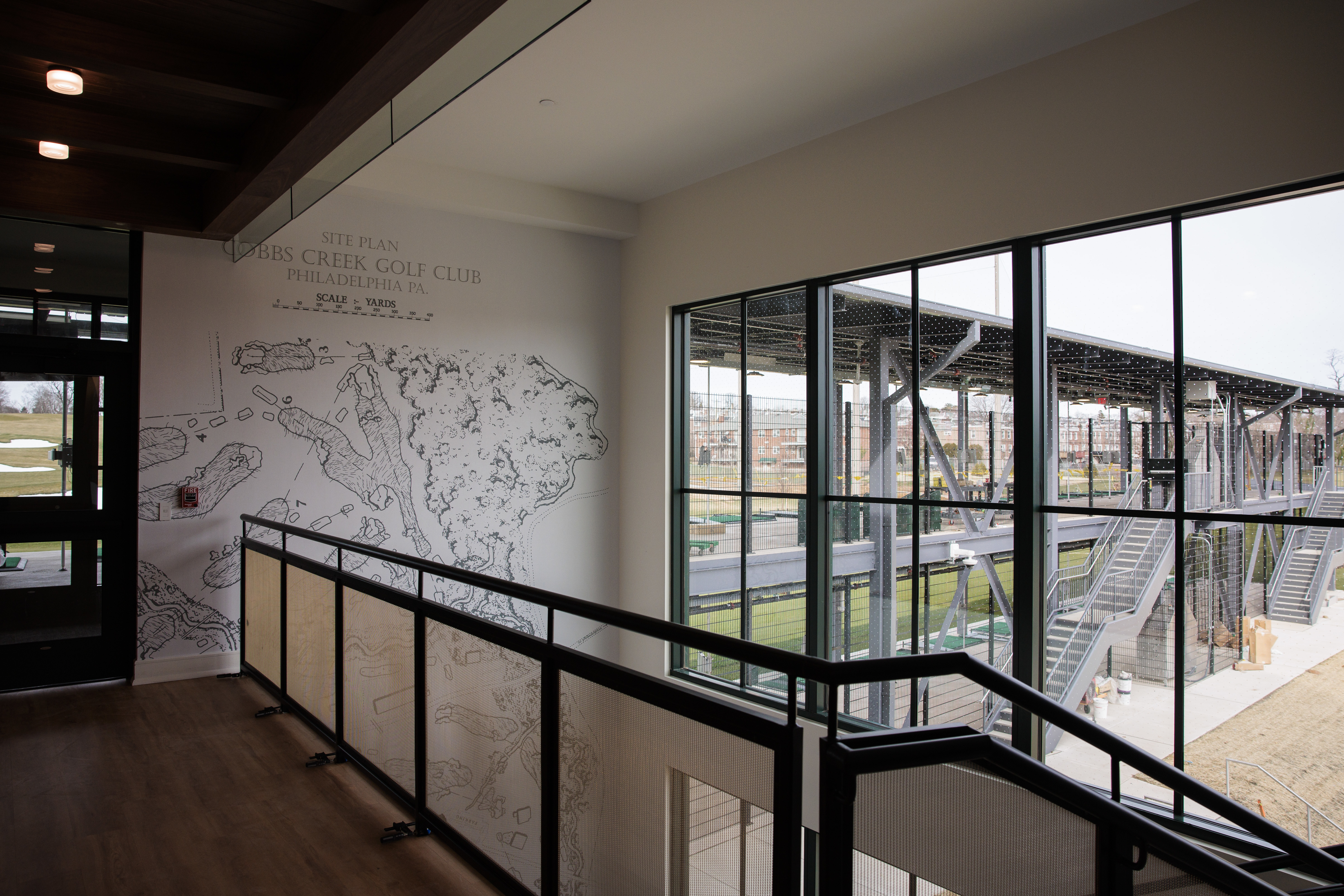
    A map of Cobbs Creek Golf Course decorates a wall at Little Horse Tavern.

    Cobbs Creek was Sifford’s home course in the 1950s. Sifford — who got his nickname because of the horse pendant he wore — went on to win two PGA Tour events and was inducted into the World Golf Hall of Fame in 2006; he died in 2015 at age 92.

    The course fell into disrepair in the 2000s and was closed in 2020. Shortly after, “a group of people who loved Cobbs Creek started asking, ‘What if this could be Philadelphia’s Bethpage Black?’” said Fitler Club president Jacob Smith, referring to the celebrated public course on Long Island that hosted the 2025 Ryder Cup.

    The driving range, seen in its pre-opening phase on Dec. 8, at Little Horse Tavern.

    That idea grew into the Cobbs Creek Foundation, which raised money and secured partnerships with Troon, the large golf-management company, and the Tiger Woods Foundation, which operates the adjacent TGR Learning Lab, aimed at teaching the game to schoolchildren.

    In addition to its public dining room and bar, there’s a private event space upstairs that can host up to 200 people.

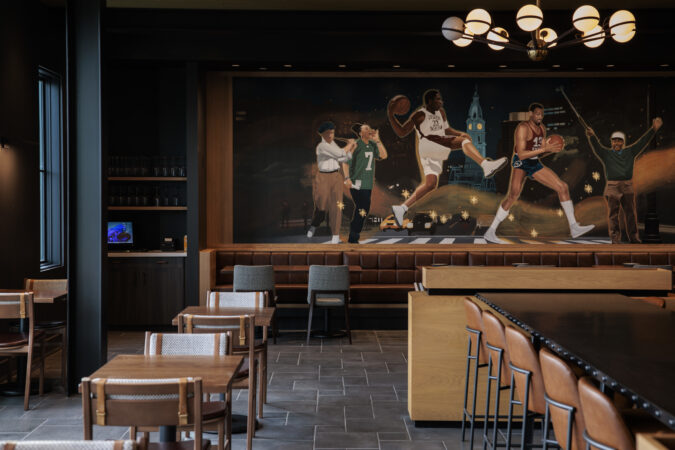
    The tavern is decorated with murals; one depicts Sifford and fellow local sports figures Johnny McDermott, Dawn Staley, Kobe Bryant, and Wilt Chamberlain.

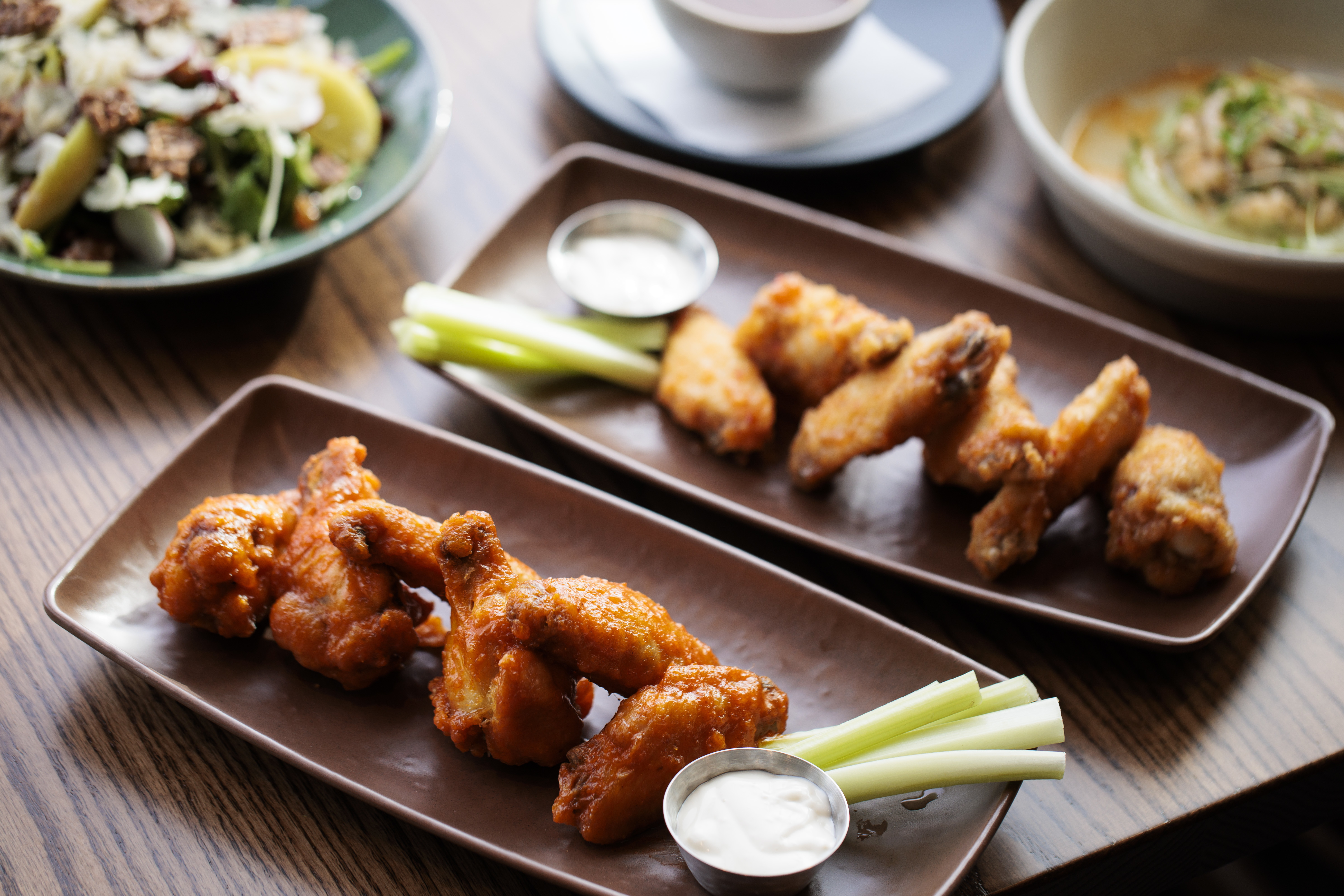
    The Tavern Wings at Little Horse Tavern on Monday, Dec. 8, 2025 in Philadelphia. Little Horse Tavern serves as the main restaurant and bar at Cobbs Creek Golf Course. The restaurant, catering, and refreshment carts on the course are a collaboration between Fitler Club and Strother Enterprises.

    Fitler manager Clancy Smith oversees the restaurant as food and beverage director. Chef Adam Carson is putting out a something-for-everyone mix in his all-day menu, which starts at noon.

    There are tater tots, a basket of chicken tenders and onion rings, and wings (choice of six sauces). Sandwiches, accompanied by tots, onion rings, salad, or fries, include a double smash burger, turkey club, fried chicken, and truffle chicken salad.

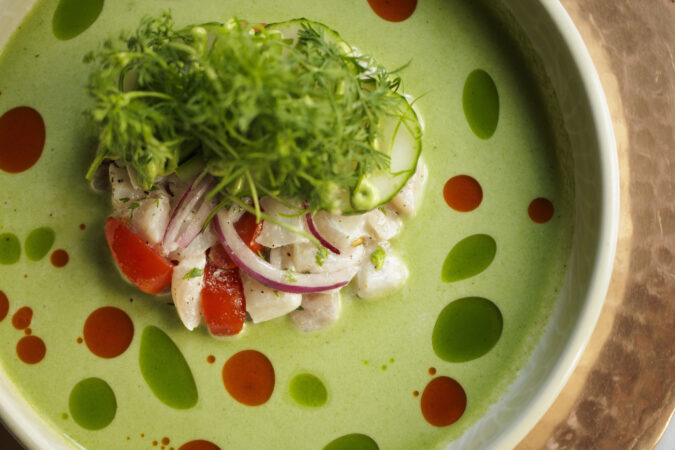
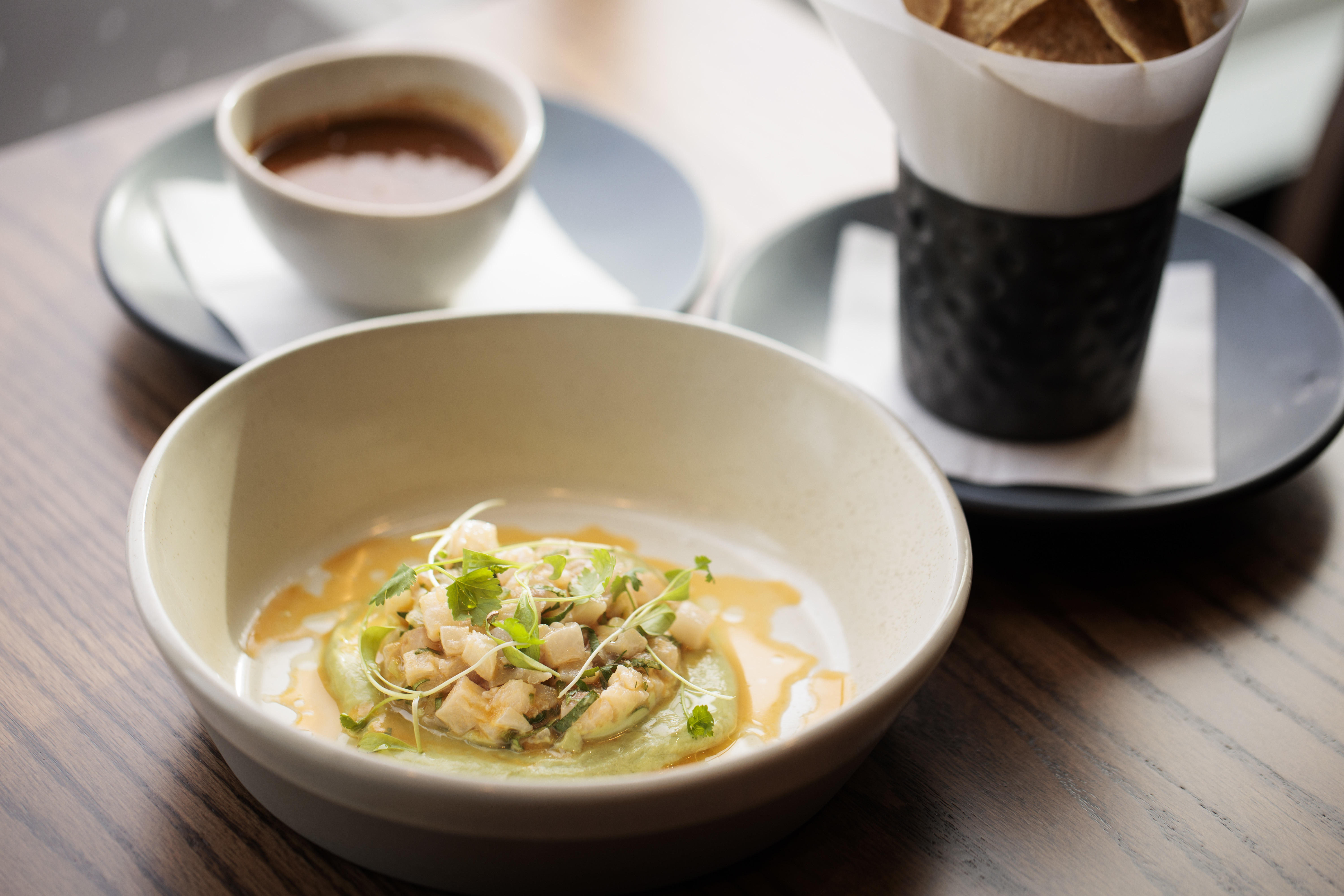
    The ceviche at Little Horse Tavern on Monday, Dec. 8, 2025 in Philadelphia. Little Horse Tavern serves as the main restaurant and bar at Cobbs Creek Golf Course. The restaurant, catering, and refreshment carts on the course are a collaboration between Fitler Club and Strother Enterprises.

    He’s also aiming a bit higher with esquites guacamole; huarache pizza; yellowfin tuna ceviche dressed in leche de tigre and avocado mousse; and a mixed green salad including fennel, radish, compressed apple, golden raisins, Cabot clothbound cheddar, sunflower brittle, and lemon vinaigrette. Top price is $20 for the cheesesteak. (Michael Franco, Fitler’s vice president of operations, says he expects to lower it to $18 once beef prices drop.)

    There’s a full bar, including beer, wine, and nine cocktails. Rose Is a Rose, named after Sifford’s wife, is a floral spritz featuring gin, honey, lemon, sparkling rose wine, and a dash of rose water, and it’s garnished with an expressed lemon twist and dehydrated rose buds.

    The Rose is a Rose cocktail at Little Horse Tavern.

    Fitler’s involvement grew out of its interest in projects with civic impact. Though best known as a members-only club in Center City, Fitler wants to expand its hospitality expertise beyond its walls.

    “We look for opportunities where we can contribute something meaningful to the city,” said Smith, whose golf handicap is 13. “This was at the top of the list.”

    At Little Horse Tavern (from left): Robert A. Strother, Cobbs Creek manager for Strother Enterprises; Natasha Strother Lassiter, chief strategy officer for Strother Enterprises; Clancy Smith, director of food and beverage; Michael Franco, vice president of operations for Fitler Club; and Jacob Smith, Fitler Club president.

    For Strother Enterprises, a family-run food service company that began as a catering business in West Philadelphia, the connection is deeply personal. Robert A. Strother and Natasha Strother Lassiter are first cousins whose fathers — Ernest Strother and Robert Strother Jr. — worked as certified caddies at Cobbs Creek when they were teenagers.

    “This was one of their first jobs,” Strother said. “They carried bags here all day, multiple rounds a day. Cobbs Creek was part of their upbringing.”

    The Shotgun Start cocktail, garnished with absinthe-soaked, torched star anise, at Little Horse Tavern.

    Lassiter said returning to the course as partners in its rebirth brings the family’s story full circle. “Being from West Philly, seeing this space restored, and being able to contribute to it in a meaningful way — it’s emotional,” she said. “This isn’t just another project for us.”

    Strother manages day-to-day operations and oversees the after-school snack program at the TGR Learning Lab.

    “This project isn’t just about hospitality,” Lassiter said. “It’s about community, education, and access.”

    Little Horse Tavern, 7403 Lansdowne Ave., 267-900-3740, cobbscreekgolf.org. Initial hours: noon to 8 p.m. daily.

    Little Horse Tavern, as seen from Lansdowne Avenue, on Dec. 8.