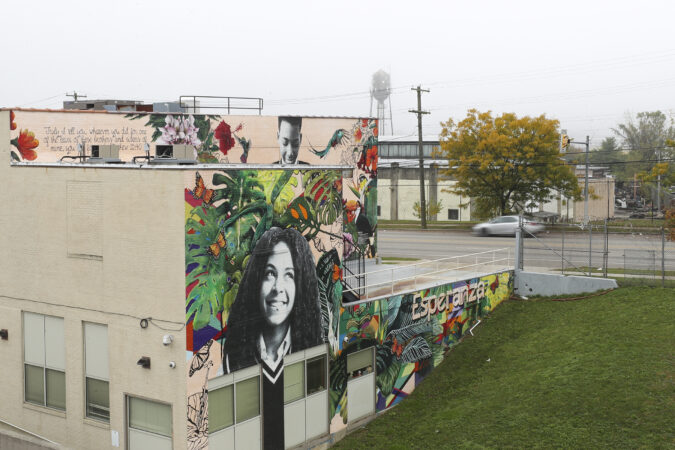
Esperanza Academy Charter High School teachers and staff have unionized.
The brand-new Esperanza High School Collective, a chapter of the American Federation of Teachers, now represents nearly 80 staff at the school.
The move comes during a period of turmoil at the school, after some employees were laid off abruptly in December. Current and former staff say there have been sudden and arbitrary changes at the school, including larger class sizes and fewer staff working directly with children.
Union recognition was hard fought — a majority of the staff signed union cards in the fall, but the Esperanza administration declined to voluntarily recognize the collective.
Instead, the AFT had to go through the National Labor Relations Board, which held an election in late January. In all, 87% of the Esperanza Academy Charter High School staff voted to unionize. (Staff at Esperanza’s elementary and middle schools have not unionized.)
Wendy G. Coleman, president of AFT Pennsylvania, said the organization was “thrilled” to welcome Esperanza Academy high school staff.
“These dedicated educators and staff work tirelessly to ensure that their students receive the best possible education, and AFTPA is ready to work just as diligently to help them secure better class sizes, higher wages, and adequate resources for every member in their first contract,” Coleman said in a statement. “As we know, our members’ working conditions are our students’ learning conditions, and we’re excited to see what the future holds for the Esperanza High School Collective in their first contract.”
Esperanza is the sixth of Philadelphia’s 81 charter schools to form a union; the vast majority of Pennsylvania charters are not unionized.
A Pennsylvania law prohibiting employment discrimination against people with criminal convictions has gotten a boost from a federal appeals court.
A three-judge panel of the Third Circuit Court of Appeals held that regardless of how a prospective employer learned about an applicant’s criminal background, Pennsylvania law prohibits rejecting the application as long as the crime was not related to the job for which they are applying.
The Jan. 28 ruling resolves a dispute in federal cases over the wording of a 1980 law that some employers argued applied only when the criminal information came from official files of state agencies.
The Third Circuitopinion came in the case of Rodney Phath, a Philadelphia resident who in 2023 applied to work as a truck driver at Central Transport’s Montgomery County facility. Phath had experience as a truck driver and held the needed license and credential.
He also had a 2008 criminal conviction for armed robbery, and had served six years in prison.
Phath told the Michigan-based trucking company during an interview about the conviction and was immediately rejected from the job.
The company didn’t deny that it rejected Phath because of his criminal background. The law prohibits employers using “information collected by criminal justice agencies,” Central Trucking argued, and did not apply because Phath disclosed his conviction himself.
Because the law bans employers from obtaining formal criminal records and using the information in them for hiring decisions,it did not apply when Phath self-disclosed his criminal background, the judge concluded.
Padova wasn’t the first judge to interpret the law literally, as applying only when an official file from a government agency sits on an employer’s desk — or at least in a computer desktop.
A Georgetown Law professor, Brian Wolfman, offered to assist in Phath’s appeal with his students.
The literal interpretation renders the law “meaningless,” the appeal argued, and creates a Catch 22. If an applicant with a criminal record discloses it, they are no longer protected. But if they don’t mention it when asked, they can be rejected for lying in the application process.
“If that’s true the act would have no force at all, and that can’t be right,” Wolfman said in an interview.
Phath won his appeal last week, with Third Circuit Judges Stephanos Bibas, Anthony Joseph Scirica, and D. Brooks Smith finding that the law prohibits prospective employers from using information that is included in a criminal history file regardless of how it came about.
The judge’s opinion could be appealed to an expanded panel of the court, which has the discretion to pick its cases. But if it stands it would be binding precedent in Pennsylvania’s federal court. The case now returns to the Eastern District of Pennsylvania, where it will head toward trial.
The attorney who represented Central Trucking in the appeal did not respond to a request for comment.
Phath’s lawsuit was filed in federal court because Central Trucking is based out of state. But Pennsylvania employees suing in-state employers won’t have the benefit of the binding ruling, although it can be cited in an effort to convince local judges.
The one in four Philadelphians who have a criminal record also are protected by the city’s Fair Chance Hiring Ordinance, which was updated in the fall.
The ordinance prohibits employers from considering a misdemeanor after four years from an arrest or release from incarceration, and seven years for a felony. Before that time period, it allows rejecting applicants based on the criminal history only if the employer can show a specific record leads to a specific risk related to that specific job.
Jamie Gullen, managing attorney of Community Legal Services’ employment unit, said the Philadelphia ordinance is one of the strongest in the country.
Her unit represents 2,000 people a year who face employment barriers because of a criminal record. The most effective way to prevent this type of discrimination is to seal criminal records, Gullen says.
The Clean Slate Act, which allows people with certain convictions to have their criminal records sealed by filing court petitions, has long waiting periods and doesn’t cover every offense. So Gullen was glad to see an appeals court acknowledge the barriers people with a criminal history face in the job market.
“Fair hiring laws are a really important piece of the puzzle,” the attorney said.
The union that represents about 3,400 University of Pennsylvania graduate student workers says they will go on strike Feb. 17 if they do not reach a contract deal with the university by then.
“We love our jobs, but Penn’s administration is leaving us no choice but to move forward with a strike,” said Nicolai Apenes, a Ph.D. candidate and research assistant in immunology, in a statement shared by the union Tuesday. “We are ready to stand up and demand that our rights are respected.”
Penn’s graduate student workers voted to unionize in 2024. The union has been negotiating with the university since October 2024 for a first contract, and some tentative agreements have been reached on a number of issues.
Sticking points in bargaininginclude wages, healthcare coverage, and more support for international student workers.
In November the teaching and research assistants voted to authorize a strike if called for by the union, which is known as Graduate Employees Together-University of Pennsylvania (GET-UP) and is part of the United Auto Workers (UAW).
A spokesperson for the University of Pennsylvania said in a statement Tuesday that Penn has engaged in good faith negotiations with the union, and has reached 23 tentative agreements through 39 bargaining sessions with additional sessions planned.
“We believe that a fair contract for the Union and Penn can be achieved without a work stoppage, but we are prepared in the event that the Union membership strikes,” said the Penn spokesperson. “Efforts are underway to ensure teaching and research continuity, and the expectation is that classes and other academic activities will continue in the event of a strike.”
“While we hope that Penn comes to the table and negotiates a fair contract for these essential workers, we know that these workers are a powerful force that Penn cannot break,” said Daniel Bauder, Philadelphia AFL-CIO president, in a statement Tuesday. “We are proud to stand with them and the broader Coalition of Workers at Penn as they fight the biggest employer in the region and bring union power to the University of Pennsylvania.”
The region has also seen a couple other university strikes in recent years. In 2023 graduate workers at Temple University walked off the job for 42 days amid contract negotiations, and in a separate action at Rutgers University, educators, researchers, and clinicians went on strike for a week.
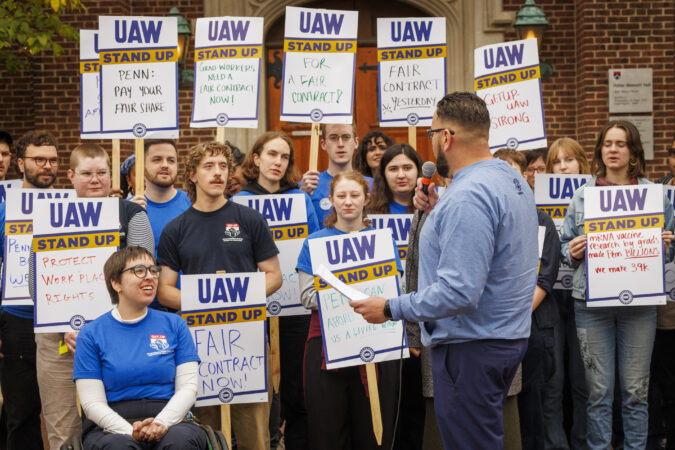
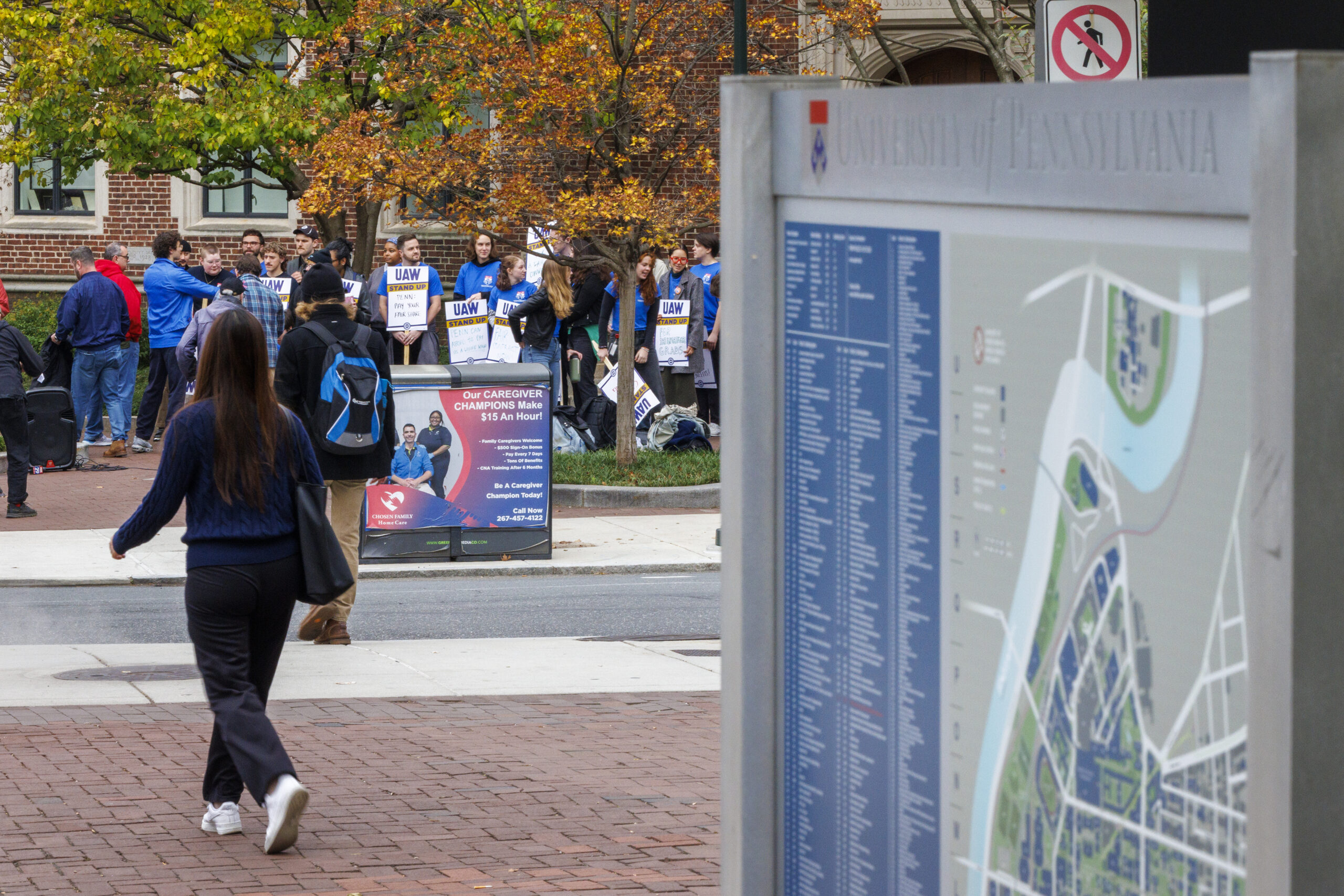
University of Pennsylvania graduate students hold a press conference and rally calling for a strike vote against the university at the corner of South 34th and Walnut Street, Monday, Nov. 3, 2025.
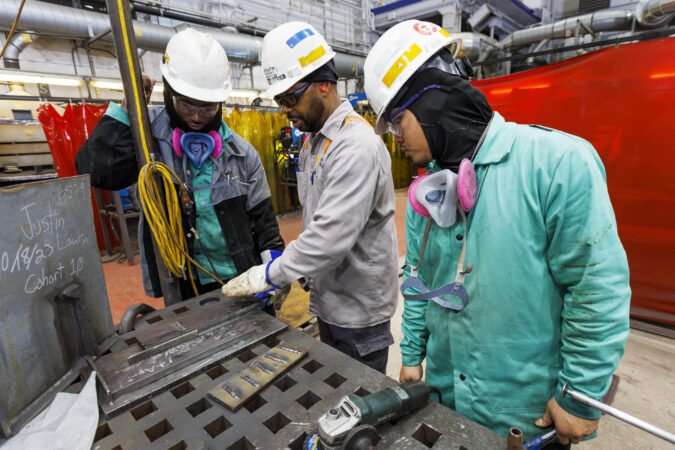
A consortium set up in 1996 to train future shipyard workers at the former Philadelphia Navy Yard says a new U.S. Department of Labor grant will prepare workers for Korean-owned Hanwha Philly Shipyard. The group hopes to quadruple apprenticeship graduates from around 120 workers a year to around 500.
“In line with President [Donald] Trumpʼs executive orders, these projects will help train our next generation of shipbuilders,” U.S. Labor Secretary Lori Chavez-DeRemer said in a statement.
Led by Delaware County Community College, the effort includes other area colleges, partnered with Hanwha and the nonprofit Collegiate Consortium for Workforce & Economic Development.
The Delco-led effort will set up “a new model of education and training for U.S. shipbuilding that will include sending U.S. instructors and workers overseas to learn advanced shipbuilding techniques” to be used at yards including Hanwha’s in South Philadelphia, the college said in a statement.
The money will help pay for training simulation models, online courses, and other programs for “an internationally recognized curriculum for shipbuilding skilled trades” to help trade unions, schools, and shipyards prepare new apprentices and more-experienced journeymen union workers, veterans, welders, steelworkers, electricians, steamfitters, and carpenters.
The partners “will accelerate the transfer of proven global shipbuilding practices to the U.S.,” Hanwha Philadelphia Shipyard chief executive David Kim said in a statement.
The consortium is chaired by Marta Yera Cronin, who is also the Delco community college president.
Hanwha sends workers from its giant shipyards on Geojedo island, South Korea, to help complete work on civilian ships in Philadelphia.
The company has pledged to invest $5 billion in the yard, backed by U.S. government grants and loans. It says it wants to boost output from the current one ship every eight months to 10 to 20 a year.
Trump has said he’d like to see Hanwha technology used by U.S. workers to build nuclear submarines and battleships in Philadelphia.
That would require extensive new dry docks, cranes, power plants and other large capital investments, and a lot more ground and dock space than the 118-acre Hanwha-owned yard or the neighboring former Navy site where family-owned Rhoads Industries repairs and fabricates parts for General Dynamics, a major Navy submarine builder.
A separate $5.8 million Labor Department grant is going to the Massachusetts Maritime Academy, one of several civilian officer training schools slated to receive Korean-designed training vessels that the Philadelphia yard has been building in recent years. That money will develop additional shipbuilder training with foreign partners.
Under current contracts with the Philadelphia metalworkers’ union group that represents yard workers — itself a joint effort of the boilermakers, operating engineers, carpenters, and other unions — newly qualified workers can earn around $30 an hour. Experienced workers can qualify for as much as $100,000 a year, including overtime.
According to the consortium, community colleges have added trades education following a drop in U.S. public school shop classes and a shortage of U.S. workers interested in industrial work, including shipbuilding, which involves high-heat tools, dangerous materials, and outdoor work in all weather.
The grant will speed expansion of the consortium, which has received grants from Citizens Bank and support from port-related agencies in past years.
The college says it has trained more than 600 apprentices in all fields over the past 20 years. It stepped up its focus on shipbuilding beginning in 2017.
Armed and unarmed guards who weren’t paid for some of their hours patrolling Philadelphia public housing developments and other buildings have filed class-action complaints against their former employer, Sovereign Security LLC, owner Richard D. Cottom, and manager Maurice Dupree.
The guards are seeking back pay for unpaid work, sick and vacation days, overtime violations, damages under state law, and the return of uniform deposits.
The guards, led by plaintiff Shirell Williams, say Sovereign violated the state Minimum Wage Act and Wage Payment Collection Law and breached employment contracts over four years, starting in late 2021. Williams worked for Sovereign at PHA and at the city-owned Philadelphia Gas Works, the Navy Yard business center, the Philadelphia Department of Human Services, and the former Delaware County Memorial Hospital.
Through their attorney, Center City labor lawyer Josh Dubinsky, the guards seek unpaid wages, damages, interest, and attorneys’ fees stemming from “systemic wage abuse” while working at Sovereign. They seek certification as a class including more than 100 current and former Sovereign staff.
Cottom, a former Drexel University security executive who founded Sovereign in 2004, and other Sovereign officials didn’t return calls seeking comment.
The lawsuit also named a Sovereign manager, Maurice Dupree, as codefendant. Guards have described Dupree as their off-site supervisor, who managed assignments, hired and fired, and scheduled their work, and who they turned to for help when paychecks were late or bounced.
Pennsylvania’s wage and hour law requires companies to set regular paydays and meet them. Sovereign’s contract with PHA required it to comply with city rules and applicable laws.
PHA renewed Sovereign’s contract last spring even after The Inquirer reported on late and bounced Sovereign paychecks.
The housing authority canceled Sovereign’s contract on July 9, giving owner Cottom two days to stop work and file final reports.
The official cancellation letter stated only that PHA and its property management unit had determined “that it is in the best interest” of the agencies to terminate Sovereign.
Correspondence collected under an Inquirer Right to Know request also shows PHA had warned Cottom that “it has come to the attention” of PHA that Sovereign “may be delinquent in paying its employees in a timely manner,” that late payment was “a breach of the contract,” and that it is “imperative” to ensure guards are paid and show up.
That letter was dated Jan. 27, 12 days after The Inquirer first reported on the late payments.
Sovereign had held the largest of at least three outside security guard contracts at PHA, which also has its own police department and a staff security force. PHA has paid Sovereign more than $7 million since 2021.
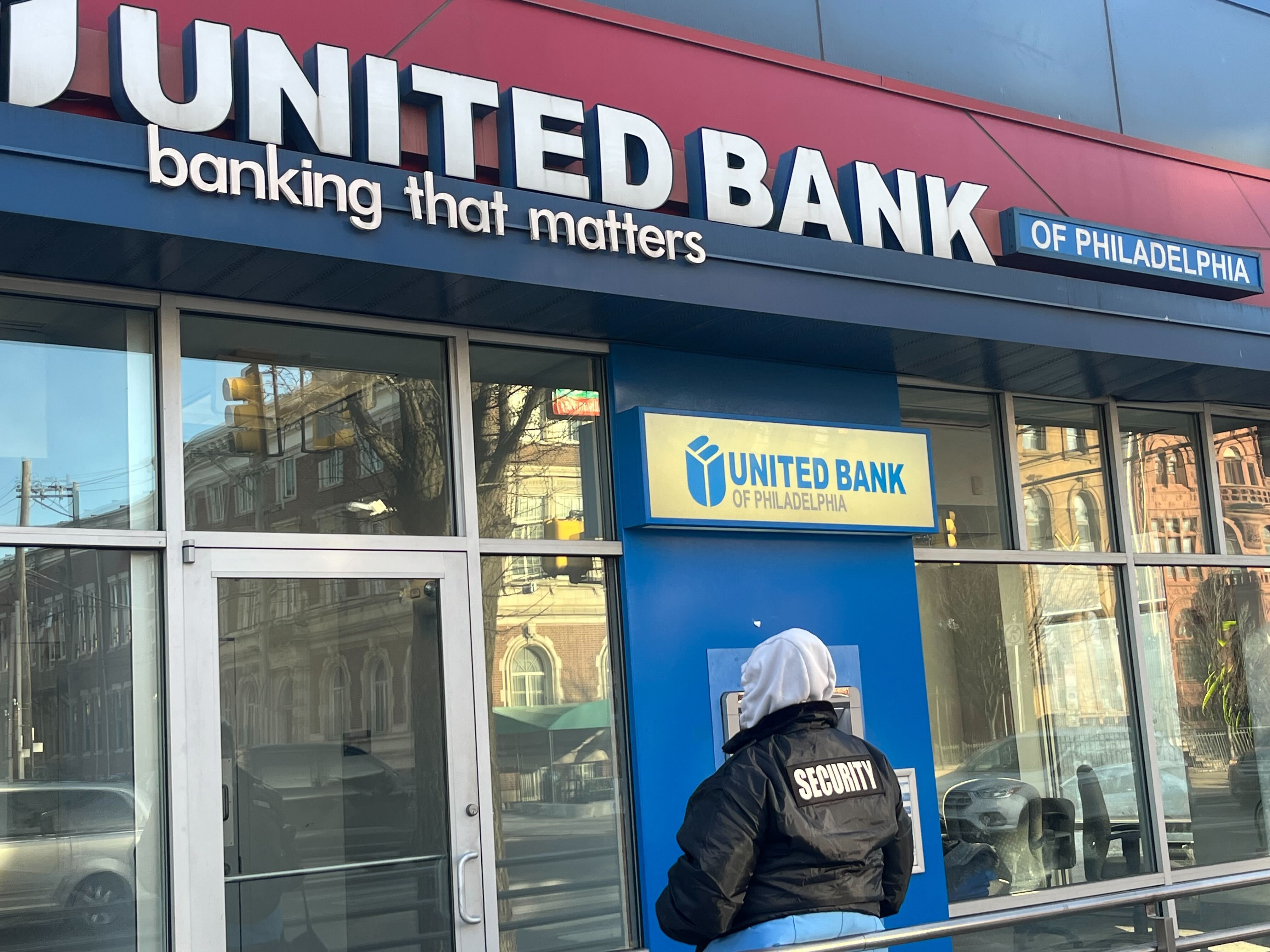
Tahazha Woodard, a guard at a jointly operated PHA and School District site in North Philadelphia, was the first in a stream of Sovereign Security LLC employees who tried to cash delayed Sovereign paychecks on Jan. 10. United was one of the few Philadelphia institutions willing to cash Sovereign checks at that time, after incidents when the company left its accounts underfunded and paychecks bounced, according to guards.
PGW ended its agreement with Sovereign in 2023. As of last summer, Sovereign no longer worked at the Navy Yard either.
The guards in the suit say a trial would show whether Sovereign had a “pattern or practice” of shorting their pay, failing to pay overtime, and not refunding uniform deposits. Other issues are whether Sovereign violated state wage laws and failed to keep required time and pay records, and the damages they are owed.
Williams, the lead plaintiff, was paid $14.40 an hour when she started in 2022.
Besides back pay,the suit also seeks to collect $500 or 25% of wages due for each violation, plus attorneys’ fees, under provisions of state law.
Nearly a year after Philadelphia Whole Foods workers voted to form a union, becoming the first group in the grocery chain to do so, their union’s ability to move forward and negotiate a contract is locked in a procedural standstill.
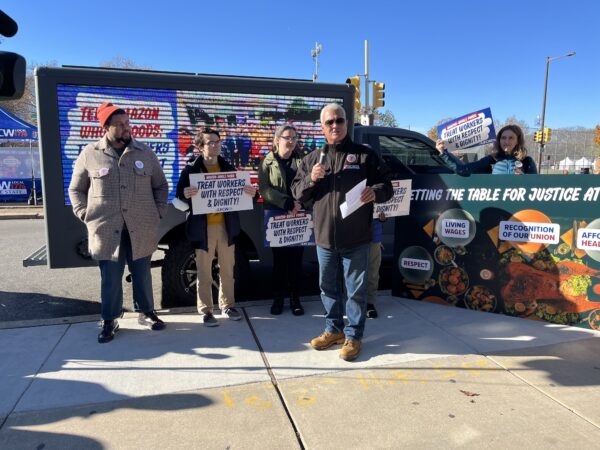
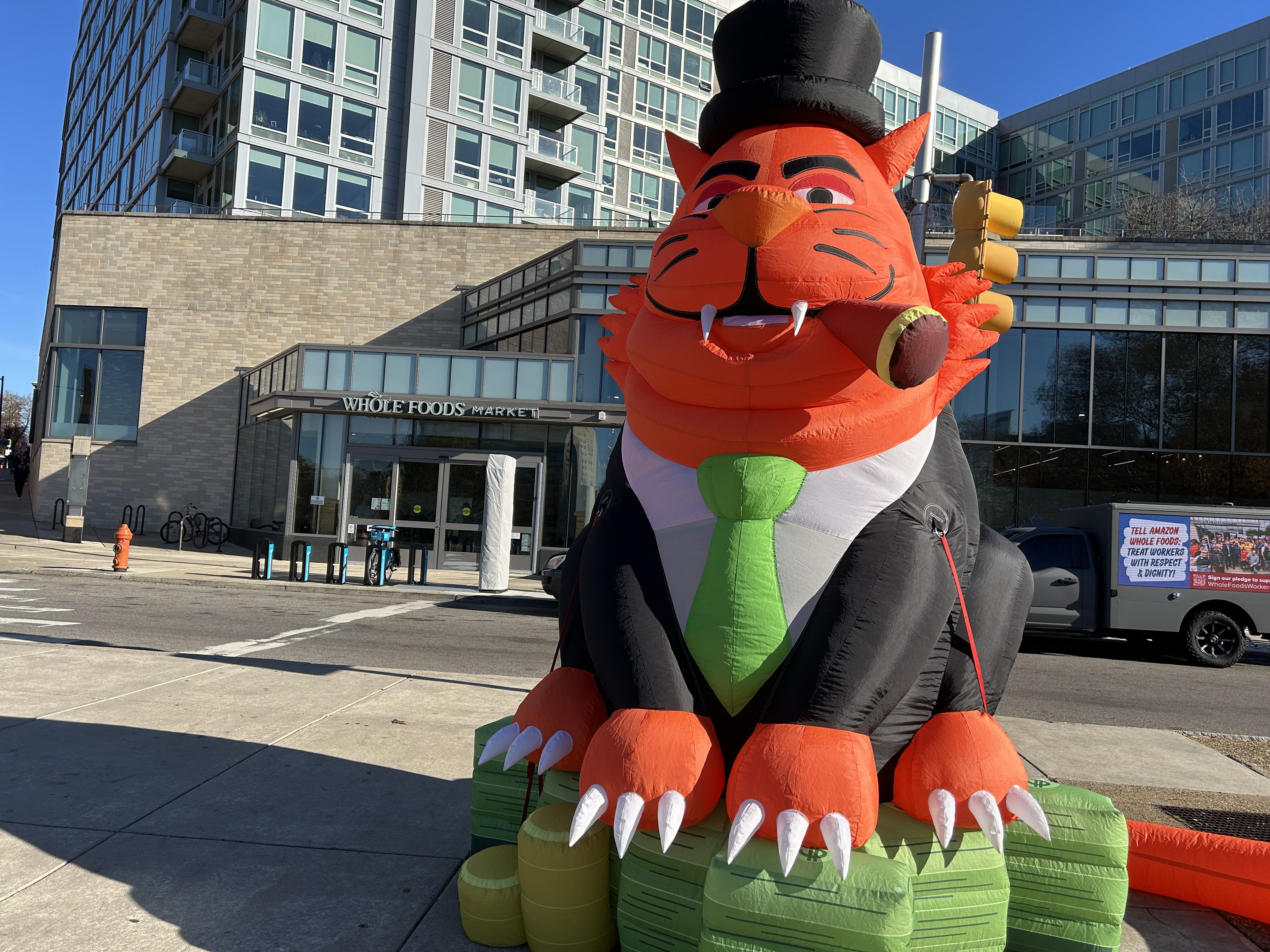
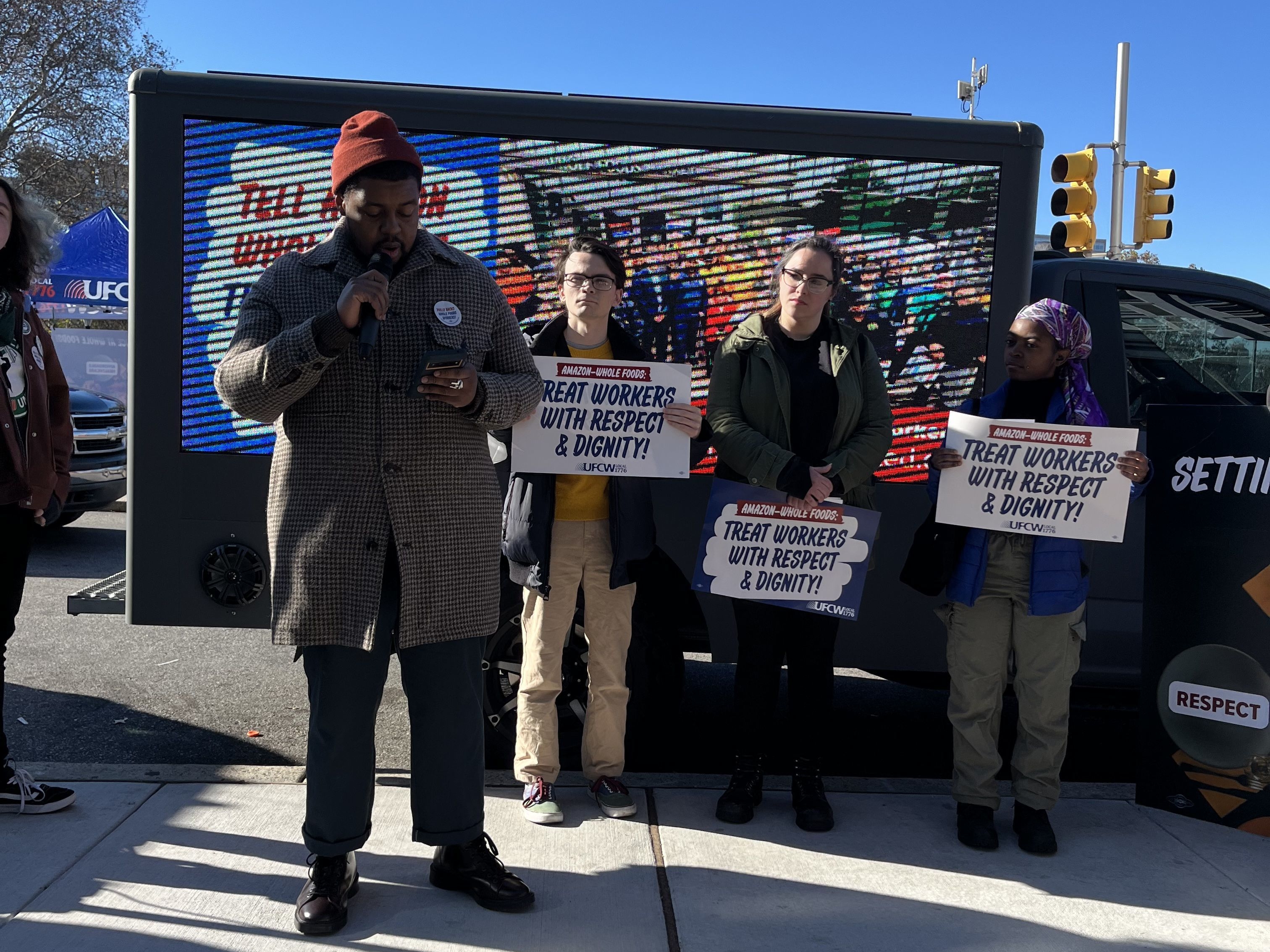
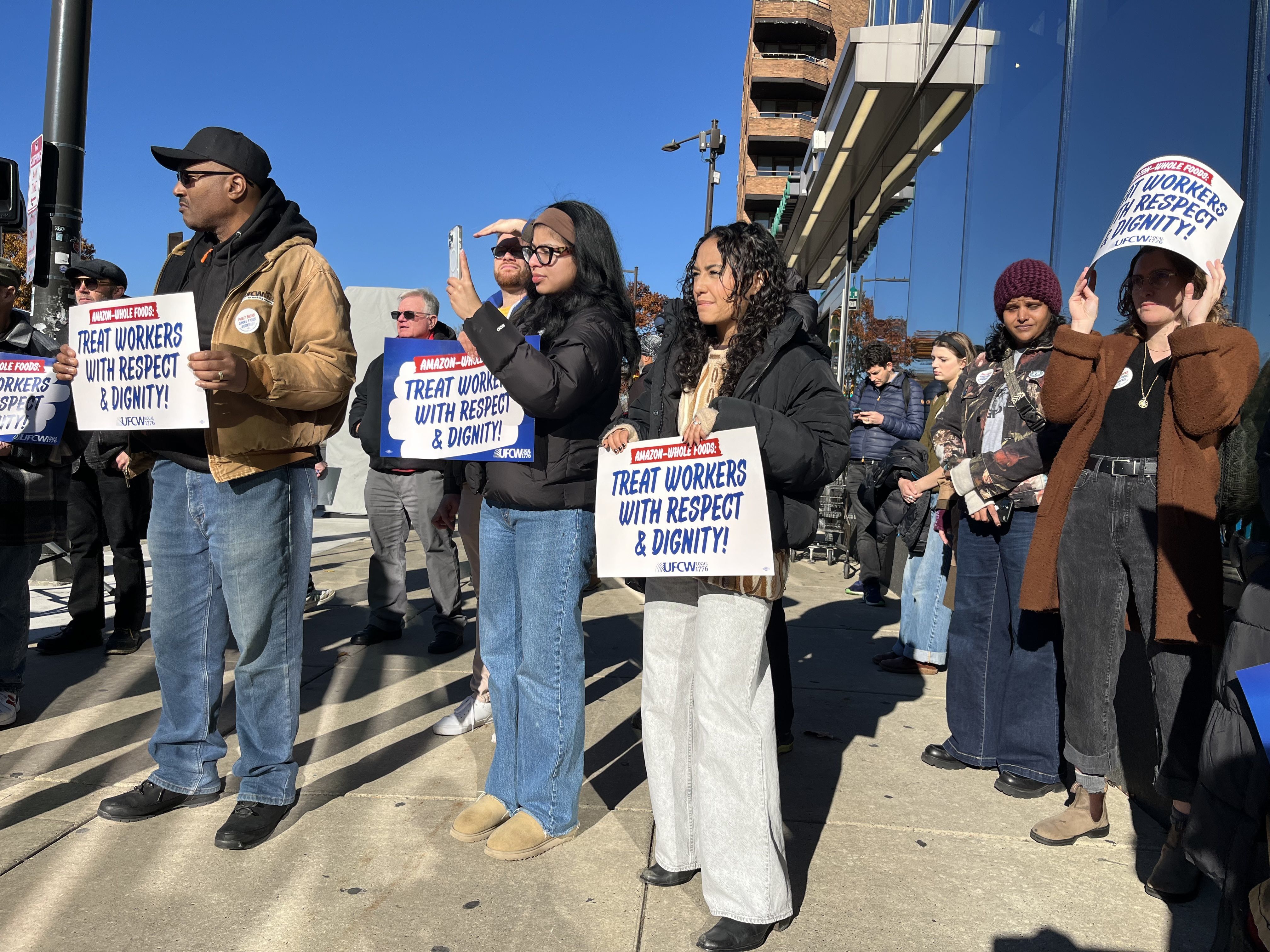
The Monday before Thanksgiving, workers and supporters gathered outside the Pennsylvania Avenue store, holding signs that read “Amazon-Whole Foods: Treat workers with respect & dignity!” Nearby, an inflatable “fat cat,” used by labor organizers and often denoting a person who uses wealth to exert power, stood tall outside the Whole Foods store.
Edward Dupree, who has been employed at Whole Foods for over nine years and works in the produce department at the Philadelphia store, told the crowd that in the 1970s, unionized grocery employees could maintain a middle-class family, but today workers are facing rising housing and healthcare costs as well as uncertainty in the economy.
“There’s been a concerted effort by billionaire business class — folks like [Amazon and Whole Foods owner] Jeff Bezos — to crush working class power by fighting unions like this,” said Dupree. “For 50 years, we’ve seen the worsening of living standards in tandem with the drop of unionization rates. It’s been long due for us to stand up for one another and fight back for a better future.”
Workers at the Philadelphia grocery store filed a petition to unionize with the National Labor Relations Board in November 2024 and made history in January as the first company store to successfully vote to unionize.
Employees want the company to begin negotiating a first contract, but for now, the case is at a standstill. Whole Foods has challenged the union election, and resolution of the issue lies with the National Labor Relations Board, which for months has been without the required quorum to make a decision since President Donald Trump fired a board member.
“We want Whole Foods to do what they’re obligated to do. What’s right to do is sit down and bargain a contract,” said Wendell Young IV, president of UFCW Local 1776, the union that Whole Foods workers elected to join. “We understand there’s a give and take in that process, but that’s from both sides. They’re refusing to even sit down and begin those discussions for a contract.”
An inflatable fat cat is seen outside the Whole Foods at 2101 Pennsylvania Ave. on Nov. 24, marking a year since workers first filed their intention to form a union with the National Labor Relations Board.
Why is the Whole Foods case at a standstill?
Whole Foods raised multiple objections to the worker union election earlier this year including alleging that the union promised employees would get a 30% raise if they voted for a union.
In May, the National Labor Relations Board’s regional director dismissed the challenge by Whole Foods, but the company asked for that decision to be reviewed. The union, for its part, has tried to block that review, but the board can’t make a decision either way without the required quorum.
“As previously stated, we strongly disagree with the regional director’s conclusion, and as demonstrated throughout the hearing earlier this year, including with firsthand testimony from various witnesses, the UFCW 1776 illegally interfered with our team members’ right to a fair vote at our Philly Center City store,” a spokesperson for Whole Foods Market said via email.
A union spokesperson said via email that they must wait until the board again has at least three members to review the case and added, “We expect that we will be successful at that time.”
Young, the president of the union local, has said in the meantime that the company is hiding behind the situation at the NLRB “to refuse to bargain.”
Edward Dupree, a Whole Foods worker, gathers with colleagues and supporters outside on Nov. 24 asking that the company come to the bargaining table and negotiate a first contract.
In the 1960s and into the 1970s, when it was not uncommon in the U.S. to see grocery workers strike or threaten to, Republicans and Democrats in office understood that unions were a permanent part of the economy, said Francis Ryan, a labor history professor at Rutgers University who has been a member of UFCW local 1776. The NLRB “provided some balance between the company and the union,” acknowledging that both parties “had an important role to play in our society,” he said.
“What we have in more recent years is a much more polarized political context, where the National Labor Relations Board is sometimes stocked with people who are aggressively anti-union,” said Ryan.
The Trump administration firing an official at the NLRB and not replacing them “is a deliberate attempt to make the process of collective bargaining and also organizing much more difficult,” said Ryan, adding that this is playing out in the case of Whole Foods.
Whole Foods workers and supporters outside the Center City grocery store on Nov. 24.
UFCW Local 1776, which Whole Foods workers in Philadelphia elected to join, represents thousands of workers across Pennsylvania and neighboring states in drugstores and food processing facilities, among other areas of work. The union represents grocery employees at ShopRite, Acme, and the Fresh Grocer.
Under the ownership of Amazon, the quality of work life at Whole Foods has deteriorated, said Young, adding that the company has unrealistic expectations and doesn’t compensate workers fairly in terms of wages, healthcare, retirement security.
“These people have no say in any of that — and that’s what led them to organize,” he said.
Whole Foods has said employee benefits include 20% off in-store items, as well as a 401(k) plan that offers a company match. The company also says it evaluates wages to ensure it is offering a competitive rate.
The number of unionized workers at grocery stores grew in the 1950s and 1960s in large part because areas of the U.S. were becoming more suburban and adding new grocery stores in the process, according to Ryan.
“You had thousands of workers in these new supermarkets that were unionized, and they made the retail clerks union one of the largest unions in the United States by the time you get to the 1970s — and Philadelphia was one of the real centers of supermarket unionization.”
It wasn’t unusual in the 1960s and 1970s for someone to make a living as a supermarket worker, although it was not uncommon for workers to have more than one job, said Ryan. In some cases, workers would stay at a grocery store for decades, he says, where they made decent wages and had a stable job indoors, adding that between 1965 and 1975 the wages of retail workers in Philadelphia nearly doubled.
Since then, it’s become much harder to make a living overall in the service industry, says Ryan.
But having unionized grocery stores amid other nonunion stores today can help shape the economy of the industry, says Ryan. A business that wants to maintain a nonunionized workforce might try to pay their workers the same starting rate that union workers make in wages, for example.
Unionized grocery stores “have a hidden-planet kind of role: They have this gravitational pull on the industry that actually raises conditions for everyone,” Ryan said.
While the Whole Foods store in Philadelphia is the first of the company’s locations to vote to form a union, others seem to be following.
“We now have active organizing going on, not only in other Whole Food stores in the area and around the country, but other grocery stores,” said Young.
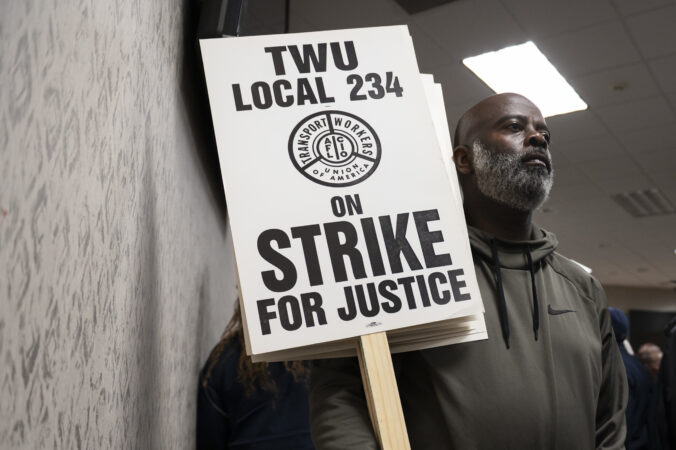
Members of the Transport Workers Union Local 234 on Sunday, Nov. 16 voted to authorize a strike if union and SEPTA negotiators can’t reach an agreement on a new contract.
Shortly before the current contract ran out at 11:59 p.m. on Nov. 7, TWU’s new president, Will Vera, urged union members to stay on the job. In an unusual move, he delayed a strike vote at the time of contract expiration, saying he had hope that a deal could be reached without the usual brinksmanship.
“We’re asking you to please continue to come to work and put money aside. We want you to be prepared in case we have to call a work stoppage,” he told members in a video at the time.
Local 234 leaders say they’re prioritizing a two-year deal with raises and changes to what the union views as onerous work rules, including the transit agency’s use of a third party that Vera said makes it hard for members to use their allotted sick time.
In a statement, SEPTA said it was aware of the authorization vote and is committed “to continue to engage in good-faith negotiations, with the goal of reaching a new agreement that is fair.”
2023 Fraternal Order of Transit Police Lodge 109 (three days)
SEPTA police officers walked off the job after bargaining with the transit agency for almost nine months, largely over the timing of a 13% pay raise for members. The agreement, partially brokered by Gov. Josh Shapiro, came amid heightened fears about safety on public transit and a funding crisis for SEPTA.
TWU Local 234 walked off the job for six days; the biggest issue was retirement benefits. SEPTA’s contributions toward union members’ pensions did not rise in tandem with wages when workers made more than $50,000. Managers’ pension benefits were not capped. The union also wanted to reduce out-of-pocket health-care costs and win longer breaks for bus, trolley, and subway operators between shifts and route changes.
SEPTA and the union reached an agreement Nov. 7, the day before the general election. Democrat Hillary Clinton’s presidential campaign was worried about voter turnout, and the city sought an injunction to end the strike. It proved unnecessary.
Talk about leverage. TWU was ready to strike just before the first home game of the World Series between the Phillies and the New York Yankees. Gov. Ed Rendell pushed the two sides to continue talking, and the transit workers waited to walk out until three hours after the end of Game 5, the last in the series played at Citizens Bank Park.
It was a bitter strike, coming just a year after the stock market’s meltdown started the Great Recession. TWULocal 234 President Willie Brown called himself “the most hated man” in Philadelphia. Mayor Michael Nutter was harshly critical. Brown called him “Little Caesar.”
The strike was settled Nov. 7 with a deal on a five-year contract. Transit workers got a $1,250 bonus, a 2.5% raise in the second year, a graduated increase in SEPTA pension contributions from 2% to 3.5%, and the maximum pension benefit was raised to $30,000 from $27,000.
2005: TWU Local 234 and United Transportation Union Local 1594 (seven days)
Negotiations collapsed mostly over SEPTA’s insistence that workers pay 5% of medical insurance premiums. At that point, the authority paid 100% of the workers’ premiums for family coverage.
In the end, it was solved by Gov. Rendell, a Democrat who had been Philadelphia mayor in the 1990s. He agreed to give promised state money to SEPTA early, so it could pay premiums in advance, reducing its costs.
In the resulting four-year deal, the unions had to pay for 1% of their medical premiums. They also received 3% yearly raises.
Pedestrians and cars in a chaotic dance at the intersection of Market and 30th Streets during the afternoon commute on the first day of the SEPTA city workers’ strike Nov. 1, 2016.
1998: TWU Local 234 (40 days)
City transit workers’ contract expired in March, but they did not strike until June — and then stayed out for 40 days. The two sides reached an agreement in July, but it fell apart. TWU members had returned to their jobs and kept working under an extension of their old contract. A final agreement was signed Oct. 23.
The union agreed to SEPTA’s demand that injured-on-duty benefits be limited. The old contract gave them full pay and benefits while on leave after a work injury. SEPTA wanted to hire an unlimited number of part-time workers. The union agreed to 100 part-timers to drive small buses.
SEPTA’s chief negotiator was David L. Cohen, famous for reining in unions representing city workers during Philadelphia’s bankruptcy in 1992, as Rendell’s mayoral chief of staff.
A two-week strike stilled city buses, trolleys and subways until an agreement was reached April 10. Transit workers would get 3% raises per year over the three-year span of the new contract, as well as increases in pension benefits and sick pay.
The union agreed to several cost-reduction measures, including a restructuring of SEPTA’s workers compensation policies.
Mayor Ed Rendell, a villain to many in labor for winning givebacks from city unions in 1992, pushed SEPTA to offer more generous terms to TWU than it had initially. Cohen, who was his chief of staff, crunched the numbers to make it work. Three years later, out of the city administration and working as a lawyer, he was hired as SEPTA’s chief negotiator.
1986: TWU Local 234 (four days) and UTU Local 1594 (61 days)
When TWU struck the city transit division in March 1986 over a variety of economic issues and work rules, some bus drivers pulled over mid-route and told passengers to dismount, The Inquirer reported.
Members were particularly incensed at what they considered SEPTA’s draconian disciplinary procedures. Union leaders said the issue was a basic lack of respect. The strike was settled in four days.
Drivers for 23 suburban bus routes, two trolley lines in Delaware County and the Norristown High-Speed Line — all members of the United Transportation Union — struck for just over two months, affecting about 30,000 passengers a day.
Employees in what was then known as SEPTA’s Red Arrow Division — after the private transit company that used to own the routes and lines — made considerably less than their city counterparts and had weaker pension benefits. They won raises and pension changes that brought them closer to parity.
1983: Regional Rail (108 days)
Thirteen separate unions walked off the job on the commuter rail lines that SEPTA had taken over at the beginning of the year from Conrail, successor to the bankrupt Pennsylvania and Reading Railroads.
In addition to wages, a key issue was SEPTA’s demand that union train conductors accept pay cuts. The authority had already cut the number of those workers by more than half.
Eventually SEPTA reached deals with a dozen of the unions. The 13th local, which represented 44 railroad signalmen, held out longer. Main issue: Whether SEPTA had the right to contract with outside firms for some types of signal work.
The Regional Rail strike remains SEPTA’s longest work stoppage since 1975.
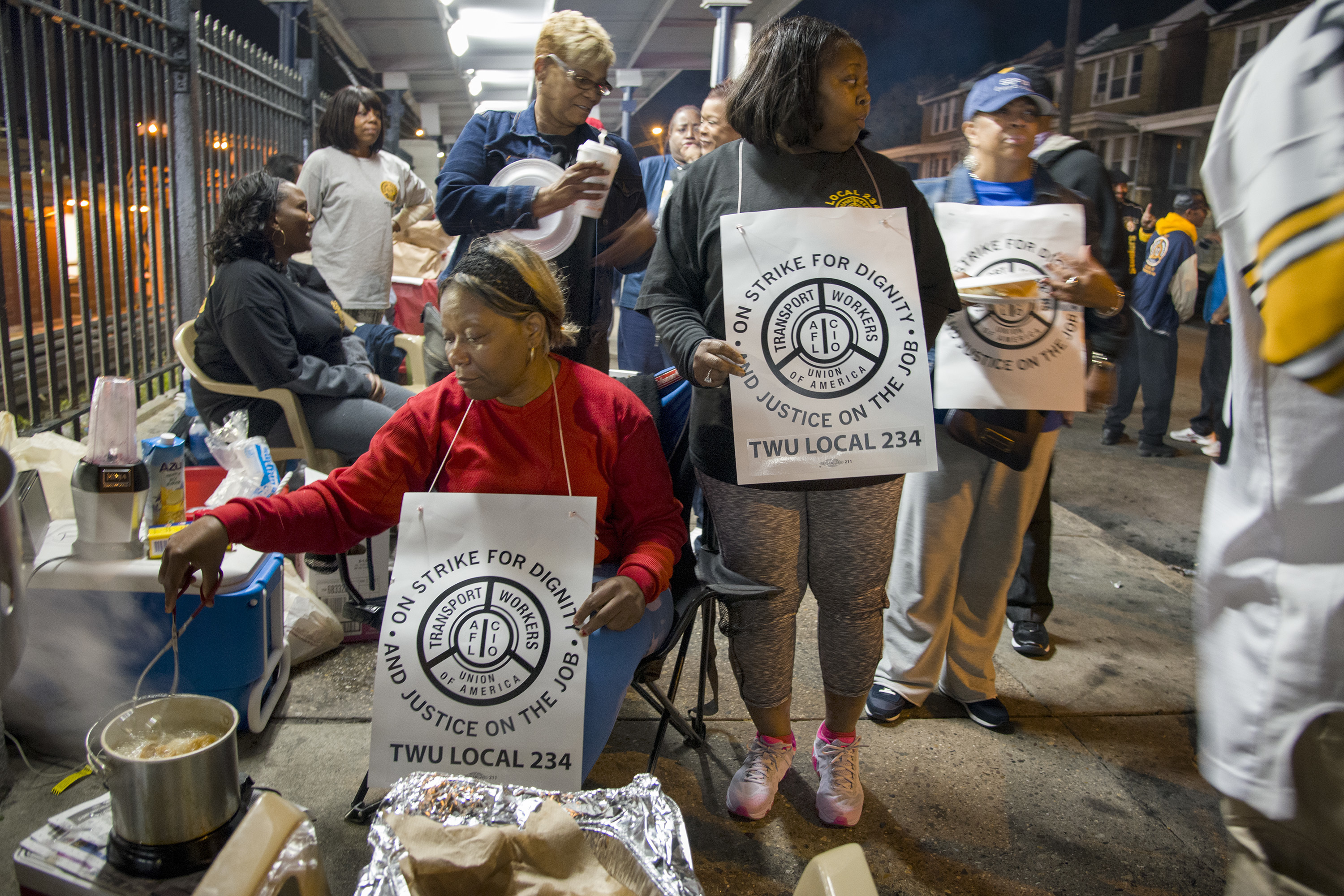
Joyce Woodford (center), a 25-year veteran cashier on SEPTA’s Broad Street Line, serves up fried fish for her fellow striking cashiers outside the Fern Rock Transportation Center during dinnertime on the third day of the SEPTA strike in 2016.
1982: TWU Local 234 (34 days)
About 36 suburban bus drivers and mechanics operating routes primarily in Montgomery County, and some routes in Bucks, won an 8.5% wage increase over three years.
The bus routes were the descendants of the Schuylkill Valley Lines and the Trenton-Philadelphia Coach Lines, which SEPTA acquired in 1976 and 1983, respectively. Service has grown, and the collection of bus routes is known as the Frontier Division today.
1981: TWU Local 234 (19 days) and UTU Local 1594 (46 days)
Transit workers shut down buses, trolleys and subways in the city on March 15, seeking job security in the form of a no-layoff clause, wage increases and a bar on SEPTA hiring part-time workers.
And the Red Arrow division went out for 46 days seeking higher wages and better medical benefits. SEPTA also backed down a demand for permission to hire private contractors for some work on the suburban buses, trolleys, and the Norristown High Speed Line.
1977: TWU Local 234 (44 days)
After a bitter strike, union members who run the city transit division got higher wages and more benefits, after rejecting an arbitrator’s proposed contract that was portrayed in news reports as generous.
A furious Mayor Frank Rizzo told reporters the strike “can last 10 years for all I care.” He said of the union’s rejection of the earlier offer: “It is outrageous, and I hope the people won’t forget it.”
1975: TWU Local 234 (11 days)
Transit workers, concerned about the ravages of inflation, wanted a clause giving them cost-of-living increases and enhancements to health-care benefits. Those were granted after Rizzo agreed to add $7.5 million to the city’s annual SEPTA contribution. Perhaps that’s one reason the mayor was so annoyed two years later.
Staff writer Erica Palan contributed to this article.