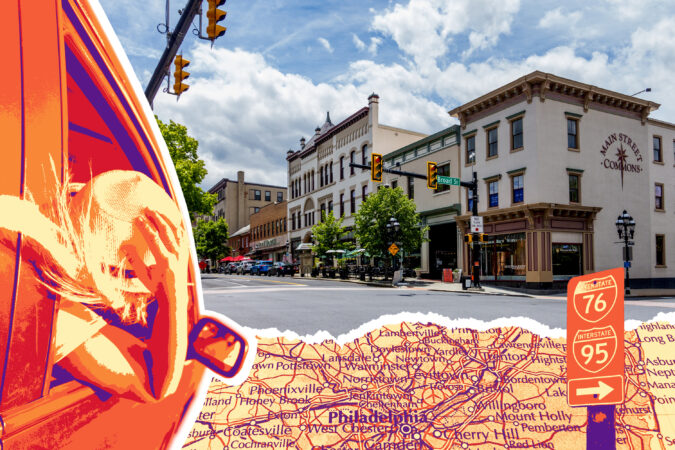
O little town of Bethlehem, how we see thee as just a place to visit during the holidays.
It’s true that the former steel city, tucked between Allentown and Easton along the Lehigh River, leans into — and has built a whole tourism industry around — its Christmas-themed name and roots, but there’s much more to Bethlehem than carols and holly.
The forest and river beckon in summer, and the city’s position along the Delaware and Lehigh Trail, which parallels the Lehigh Canal, puts visitors within easy access of both.
There’s an old-fashioned ice cream parlor, a grand historic hotel, a blueberry festival, even a UNESCO World Heritage Site. And if you really, really need a dose of holiday spirit, Christmas in July is right around the corner.
Bethlehem’s main street (literally, Main Street) twists up from the Lehigh River and stretches like taffy into a long straightaway lined in shops and cafes. At the foot of this drag is Hotel Bethlehem, built atop the 1741 foundation of the First House of Bethlehem and later the 1823 Golden Eagle Hotel. It has operated as Hotel Bethlehem — through periods of both glamour and neglect — for more than a century. Today, its crimson neon sign glows above the brick facade, while its rooms blend industrial touches with classic historic design. Across the street, a collection of modern suites houses the hotel’s spa. The property has been named the nation’s best historic hotel by USA Today, for five years running.
Cross the river to the South Side Historic District for breakfast — think vanilla-cinnamon French toast or loaded home fries bowls — or lunch, with options like a Cuban sandwich or cheddar-jalapeño burger. Cafe the Lodge is more than a charming cafe with a courtyard garden and art gallery. Since opening in 2012, it has provided transitional employment and housing opportunities for adults living with mental health diagnoses.
📍 427 E. Fourth St., Bethlehem, Pa. 18015
See: Moravian Church Settlements
Long before the Protestant Reformation, the Moravians were establishing a religious movement in Central Europe. Fast-forward a few centuries, and the Moravian church established an American foothold in Bethlehem whose well-preserved 18th-century buildings, cemetery, and museum now form part of the only transnational UNESCO World Heritage Site in the U.S. (sister settlements in Ireland, Denmark, and Germany comprise the collective). The Moravian Church Settlements tour explores this fascinating history, whether you’re interested in religion or simply great storytelling.
You gotta love a small-town summer fruit festival, and Bethlehem goes all in on blueberries every July. The 39th annual Bethlehem Blueberry Festival returns to Burnside Plantation the weekend of July 18 with blueberry pie, ice cream, coffee cake, lemonade, doughnuts, strudel, and just about every other indigo-colored treat imaginable. There are also live musicians, blacksmithing demonstrations, baby-goat snuggling and, naturally, a pie-eating contest. Resist the urge to yell, “Violet, you’re turning violet, Violet.”
📍 1461 Schoenersville Rd., Bethlehem, Pa. 18018
Move: Historic Bethlehem River Tours
There’s no need to decide between a paddle down the Lehigh River or bike along the Delaware and Lehigh Trail with Historic Bethlehem River Tours. Their Glendon Dam Discovery package, which launches from the Nagy’s Landing trailhead just east of downtown, pairs a peaceful two-mile downstream paddle with a six-mile bike ride to the dam’s overlook. It’s beginner-friendly and unguided, meaning you can go at your own pace, with HBRT providing all the equipment (and a shuttle back if you’re feeling lazy).
Named after a wild mushroom, Bolete isn’t just one of Bethlehem’s best restaurants. It’s one of Pennsylvania’s best restaurants. Chef-owner Lee Chizmar serves an exactingly prepared, terroir-driven menu in a stone-walled former country inn dressed with maximalist wallpaper and antique lighting. Depending on the season, you might find smoked pork chop with cherries and shiitakes, or foie gras paired with funnel cake, blueberries, and Valley Milkhouse fromage blanc.
If a town has a historic ice cream stand, and it’s summer, you should proceed immediately there for dessert. Bethlehem’s is the Bethlehem Dairy Store, a low-slung diner with neon sundaes and hot dogs in the windows that’s giving Nifty Fiftys. But “The Cup,” as locals call it, far predates Nifty, opening way back in 1927. Hand-dipped ice cream, soft serve, frozen yogurt, and sherbet comprise the roster of frosty treats, coming in flavors like dulce de leche, lemon cookie crunch, chocolate raspberry truffle, and mint Oreo.
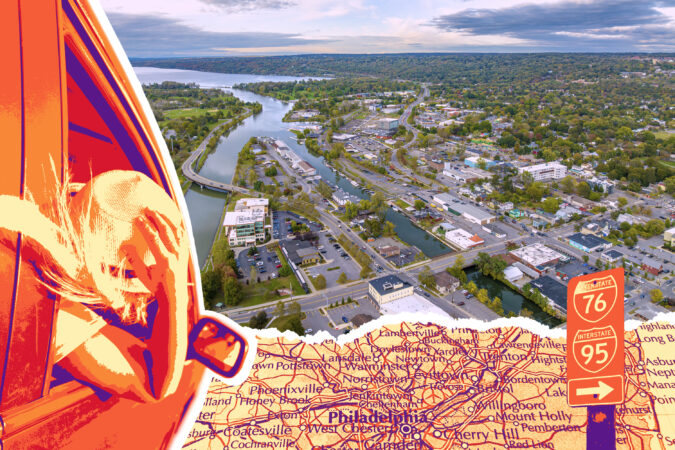
Eleven long, skinny bodies of water comprise New York’s Finger Lakes, a wine region and resort destination for two centuries. Collectively they cover a wide swath of northern New York, with the easternmost and westernmost lakes over 90 miles apart.
Since it takes more than four hours to get here from Philly, this itinerary focuses on just one finger, Cayuga Lake, at the southern end of which sits the Ivy League town of Ithaca, home to Cornell University. The trip also detours to Seneca Lake next door for some exciting natural wines.
Expect waterfalls, eagle-spotting, ice cream, and plenty of outdoors. Start the car.
Check into the Inn at Gothic Eves (10 out of 10, no notes on the dramatic name), located 15 minutes from downtown Ithaca on the western shore of Cayuga Lake. Divided between two buildings linked by a two-acre landscaped patio, the resort’s eight suites take their names from the lakes they sit between — Cayuga and Seneca — and various grape varietals and wine regions. There’s a cozy spa with rock-walled treatment rooms and two hot tubs, nightly s’mores by the firepit, and epic breakfasts with house-made jams and locally sourced bacon.
📍 112 E. Main St., Trumansburg, N.Y. 14886
Hike: Cascadilla Gorge Trail
The barrier between downtown Ithaca and nature is barely there. The head of the Cascadilla Gorge Trail begins right off a residential neighborhood, tucked between a church and dentist’s office. This 1.3-mile trail, stewarded by Cornell since 1909, connects downtown with the university’s Botanical Gardens and travels through ancient bedrock ravines and past six waterfalls.
📍 Cascadilla Gorge Trail, Ithaca, N.Y. 14850
Snack: Mama Said Hand Pies
On Press Bay Alley, a pedestrian micro-mall built from a row of former storage units, Mama Said Hand Pies (another 10 out of 10 name) folds fillings like spiced peaches and Oaxaca cheese with mushrooms into flaky half-moon pastries. Drop in for a snack, and, if you’re lucky, some live music. As if you need another reason to like the place, a member of a recent bluegrass quintet can be seen on Mama’s Instagram performing in a Phillies shirt.
📍 118 W. Green St., Ithaca, N.Y. 14850
Sip: Osmote
About 30 minutes west of Ithaca, near the shores of Seneca Lake, a simple wooden pavilion overlooks the water. This is where Osmote hosts picturesque tastings of its low-intervention wines. Four pours cost just $20 and may include bottles like the fizzy Cayuga White pét-nat or Marquette, whose tasting notes include “crunchy blackberry” and “cherry Pop-Tart.” The wines are made with locally sourced grapes while Osmote’s own vineyards, planted in 2024, mature.
📍 3879 Marcia Ln., Burdett, N.Y. 14818
Paddle: Paddle-N-More
On summer Saturday nights, about an hour before sunset, single and tandem kayaks launch from Myers Park, on the east shore of Cayuga Lake. Join the two-hour guided eco-themed trip by Paddle-N-More, a popular outfitter with locations all around the lake. They provide the gear and the expertise, you provide the manpower (not that much) to cruise along the lakeshore, spotting bald eagles and herons.
A national pioneer of vegetarian cooking and the local-organic movement, Moosewood Restaurant opened in 1972 and, impressively, continues to this day. While the restaurant is no longer worker-owned — Danica Wilcox, daughter of one of the founding members, took over in 2022 — the ethos that earned Moosewood three James Beard Awards and inspired a shelf full of cookbooks remains intact. Order the New York cheeseboard, oyster mushroom scampi, and, for dessert, the famous fudge brownie that Wilcox’s mother once baked for the restaurant.
Conveniently situated in the same building as Moosewood, Cayuga Lake Creamery is how you should end an Ithaca evening. This location opened in 2020 — the flagship, dating to 2004, is further up the lake in Interlake — and gives Cornell’s famous Dairy Bar a run for its money. Twenty to 30 house-made flavors rotate through the case, including tiramisu, Seneca Salt Caramel, and dark cherry sorbet dosed with Finger Lakes merlot.
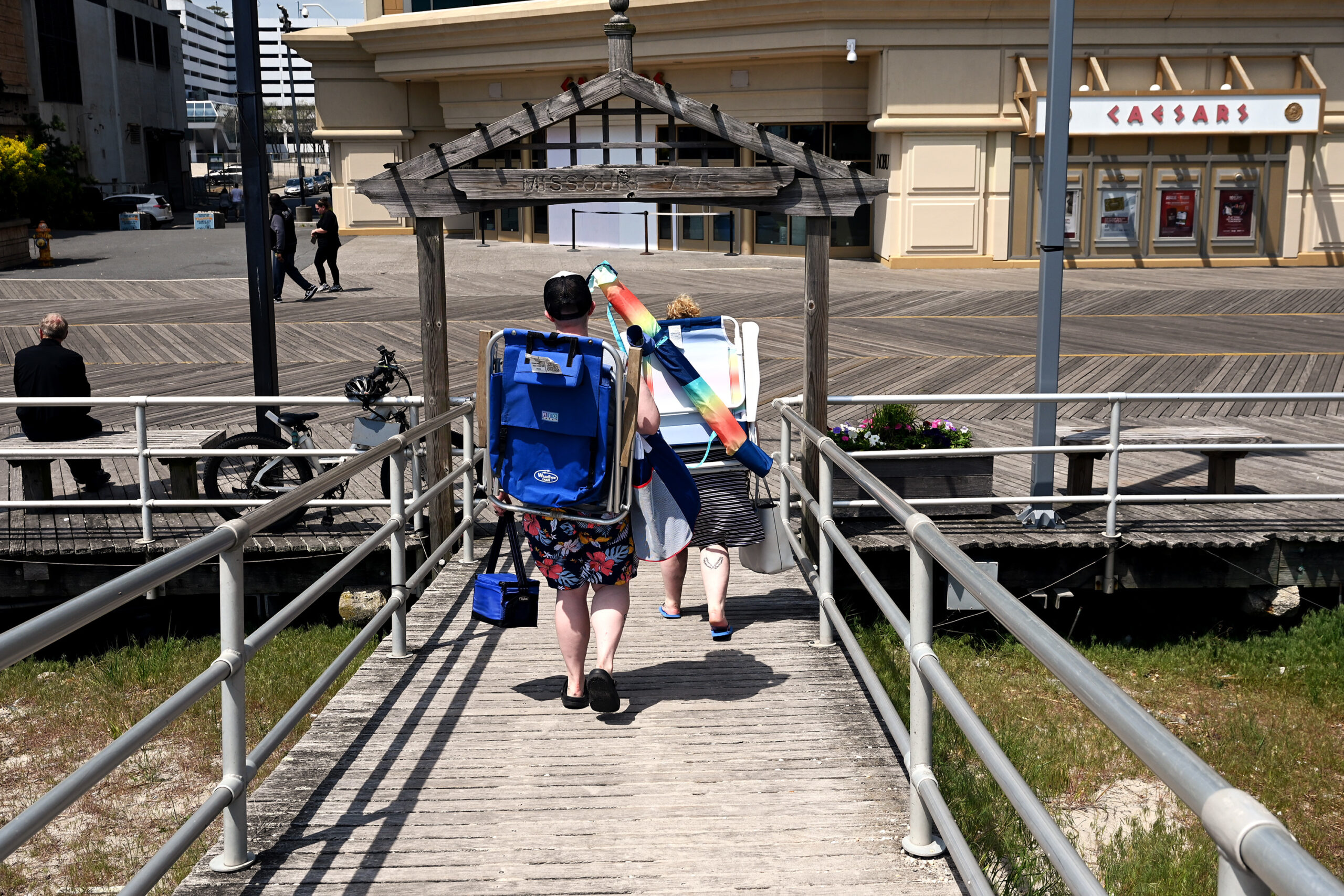
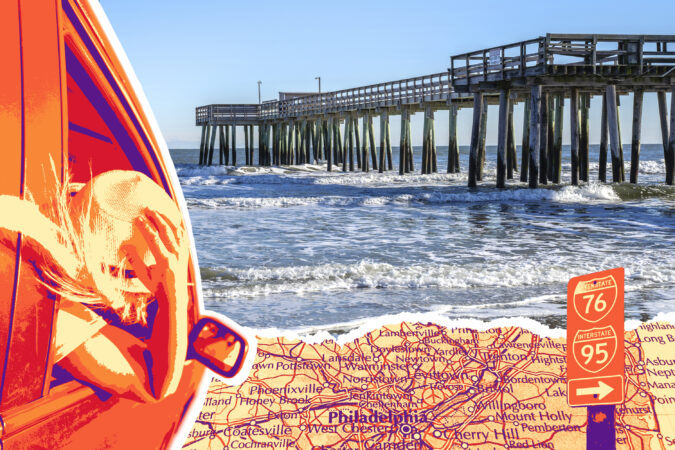
Planning a beach trip? I’m sure you considered the cost of fuel and snacks already, but be sure you’re aware of required beach badges, too. These are prepaid entrance fees for visitors.
Most beaches charge weekday and weekend rates, or offer seasonal tags, but a few of them are free. For instance, no beach tags are required at Atlantic City, Corsons Inlet State Park, North Wildwood, Sandy Hook, Strathmere, Wildwood, and Wildwood Crest.
🌊 P.S. Be sure to check out my colleague Amy Rosenberg’s Down the Shore newsletter. From town happenings to debates about playing loud music on the sand, she’s got it all covered. Sign up here.
Last time, I asked you to tell me where you go for a moment of calm. Bonnie Zetick wrote in with her pick, the Winterthur Museum, Garden & Library:
Winterthur! Calm, something different blooming every time you go, trails or tram to get around.
When I was working, if I had half a day off, let alone a whole day, I would head to Winterthur on Route 52 near Wilmington, Del. Winterthur now has a self-guided museum of the American Decorative Arts, permanent as well as temporary exhibits so always something to see that I’ve never seen before. Then you have the gardens! Lovingly developed and planned by Henry Francis du Pont, you will see spectacular colors, birds you may never have seen before, seasonal displays of azaleas (think Mother’s Day), mums, the house of 175 rooms (not all accessible to the public) dressed up for Yuletide, trees, some of which are very old — all lovingly cared for by knowledgeable, courteous, and committed staff. Winterthur also plays a leadership role in conservation, the latest techniques for care of these gardens, and research in their stewardship of this beautiful place. I love Winterthur!
Breathe in … and breathe out. I filmed this by the Schuylkill River along Kelly Drive.
👋🏽 This newsletter is taking a break in observance of the Fourth of July. Rest assured, we will be back July 10. Until then, have fun and be safe out there.
By submitting your written, visual, and/or audio contributions, you agree to The Inquirer’s Terms of Use, including the grant of rights in Section 10.
Yes, Memorial Day weekend is the official start of summer, but there’s a pleasant lull down the Shore between then and when kids get out of school. These are the final moments to enjoy the excellent weather and relative serenity of the microseason, and Seven Mile Island — home to the bougie siblings of Stone Harbor and Avalon — has rolled out the white-sand carpet.
These towns contain some of the most expensive real estate at the Jersey Shore, and in the height of the summer, staying anywhere nice is prohibitively expensive for anyone who is not on a Comcast C-suite salary or whose grandparents didn’t buy a house in 1975. This is another benefit of visiting before July 4. Rates are lower, reservations are easier, and the line at Springer’s is only slightly less insane.
Situated right in the center of Seven Mile, at the southern end of Avalon, beachfront ICONA has the location edge over the island’s other luxury hideout, the Reeds at Shelter Haven, which is convenient to Stone Harbor’s 96th Street shopping district. Both properties are expensive, but you can still find some lingering June rates under $400 a night. ICONA’s beach is beautiful and peaceful, with a breezy bar and lounge between the property and the shoreline, and Avalon Brew Pub is a popular canteen for locals and Shoobies alike.
The origins of Pete Smith’s Surf Shop lie in Virginia Beach, but the boutique has been part of the Jersey Shore for decades. The Stone Harbor location, spread across two storefronts, stocks men’s and women’s swimwear, woolly shackets for chilly nights, and enough Sun Bum for the entire summer. Pick up a branded T-shirt; Pete’s releases a new design every Christmas.
📍 285 96th St., Stone Harbor, N.J. 08247
Learn: The Wetlands Institute
Whether you’re visiting the Shore with kids or simply marine-curious, the Wetlands Institute, located just before crossing the bridge into Stone Harbor, makes a perfect stop. Learn about the local terrapin turtles, pet a sea star in the touch tank, or walk along the marsh trail and elevated boardwalk for views of an integral Jersey ecosystem that most of us rarely see up close.
📍 1075 Stone Harbor Blvd., Stone Harbor, N.J. 08247
Surf: Avalon Surf Camp
Don’t be dissuaded by the multitude of kids on Avalon Surf Camp’s website. Their instructors teach wannabe surfers of all ages and experience levels through group and private lessons on 12th Street beach at the north end of Avalon. The camp provides everything you need: boards, wetsuits, and a working knowledge of the ocean’s mercurial temperament before ever getting in the water. With a little luck and a little wind, you’ll be up on a board by noon.
Because surfing is a workout, and because you’re a good person who deserves nice things, book a treatment with 7 Mile Island Massage. This isn’t a spa but a mobile studio that comes to you. Owner and therapist Nik Pattantyus, who’s also a registered nurse and avid stand-up paddleboarder, will set up in your hotel suite, on the back porch of your rental house, or wherever else you happen to be staying. In addition to deep-tissue, reflexology, and other massage styles, he’s recently added manual lymphatic drainage to the menu.
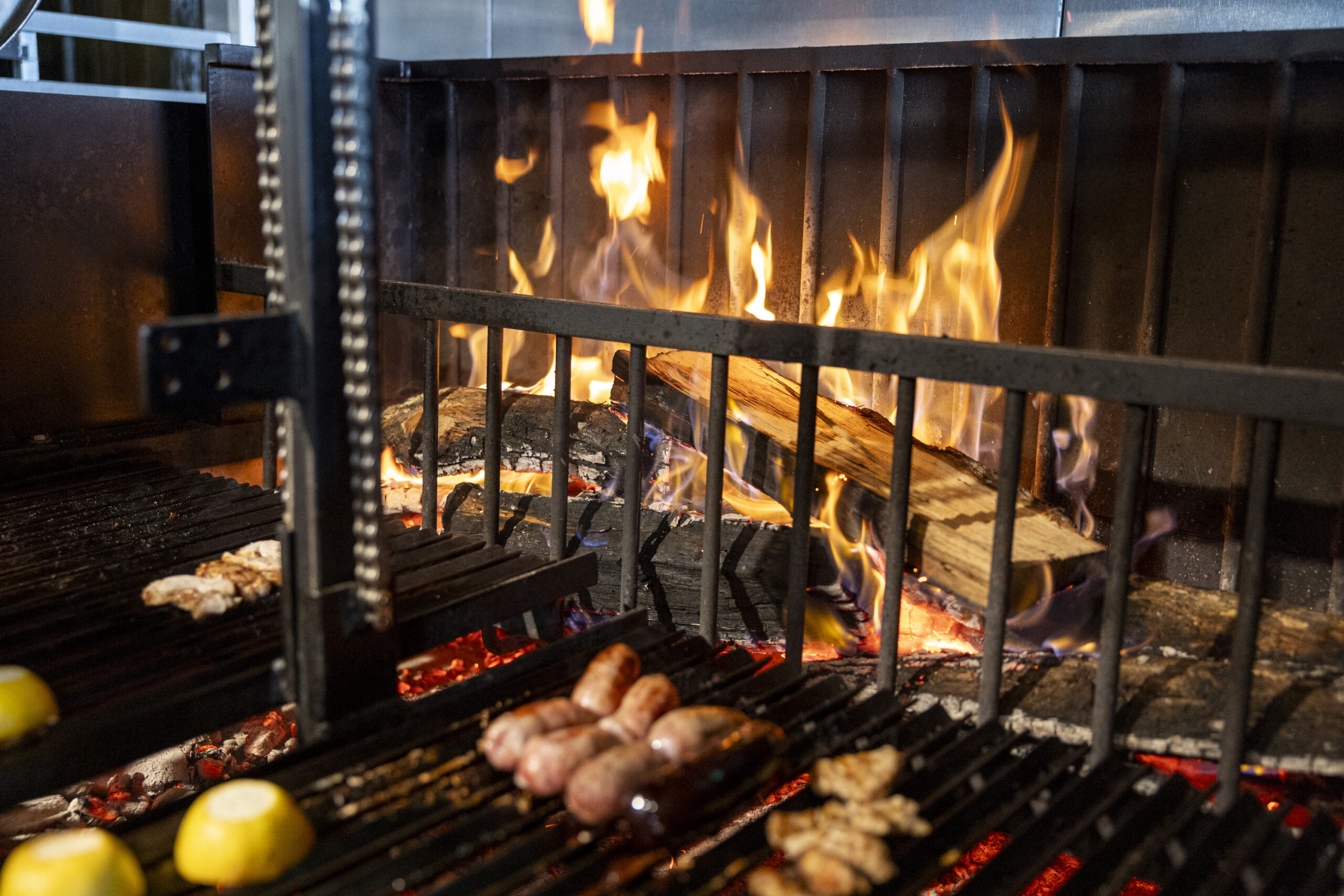
The fire wood grill cooking various meats at La Portena in Stone Harbor, N.J., on Thursday, June 12, 2025.
Dine: La Porteña
Lucas Manteca has been cooking down the Shore for two decades, and La Porteña, a few blocks from his Quahog’s seafood tavern, is his most personal project yet. The menu and family-style format draw from the chef’s Argentine heritage. Every table receives a spread of snacks and salads to share, including Manteca’s famous empanadas, followed by each diner’s choice of entrée: New York strip, short ribs, Iberico pork secreto, and more. At the time of this writing, dessert is dulce de leche rice pudding with compressed rhubarb. Make reservations.
The line stretching from the white-sided front porch of Springer’s Homemade Ice Cream down Third Avenue is legendary. You might run into your college lacrosse coach, the kids you babysat who are now disconcertingly grown and lifeguarding on 88th Street, or the local girl you spent that one magical summer with in 10th grade. Springer’s has been scooping since the early 1900s, and the nostalgia it inspires is as much a part of the appeal as flavors like banana fudge, the slightly salty butterscotch brickle, and Cookies in My Coffee, crushed Oreos veined through dark coffee ice cream. Worth the wait, always.
The future of a family farm in rural Salem County was at stake, and after multiple meetings and hours of presentations, questions, pleas, and complaints, a local planning board was set to vote.
Before the vote, one longtime resident of Mannington Township came to the podium with a warning. In preparation for this crowded, mid-March meeting, Alice Waddington, 98, said she’d made a list of dairy farms she remembered from her decades in the little town.
At one time, she said, there were close to a dozen.
“There’s only one farm left milking cows,” Waddington told the board, “and that’s the Cadwalladers.”
The Cadwalladers were struggling in the volatile dairy industry, though, and believed a large solar project could be a lifeline, a way to avoid shuttering and selling to developers eager to build warehouses, data centers, and housing in the nation’s most densely populated state.
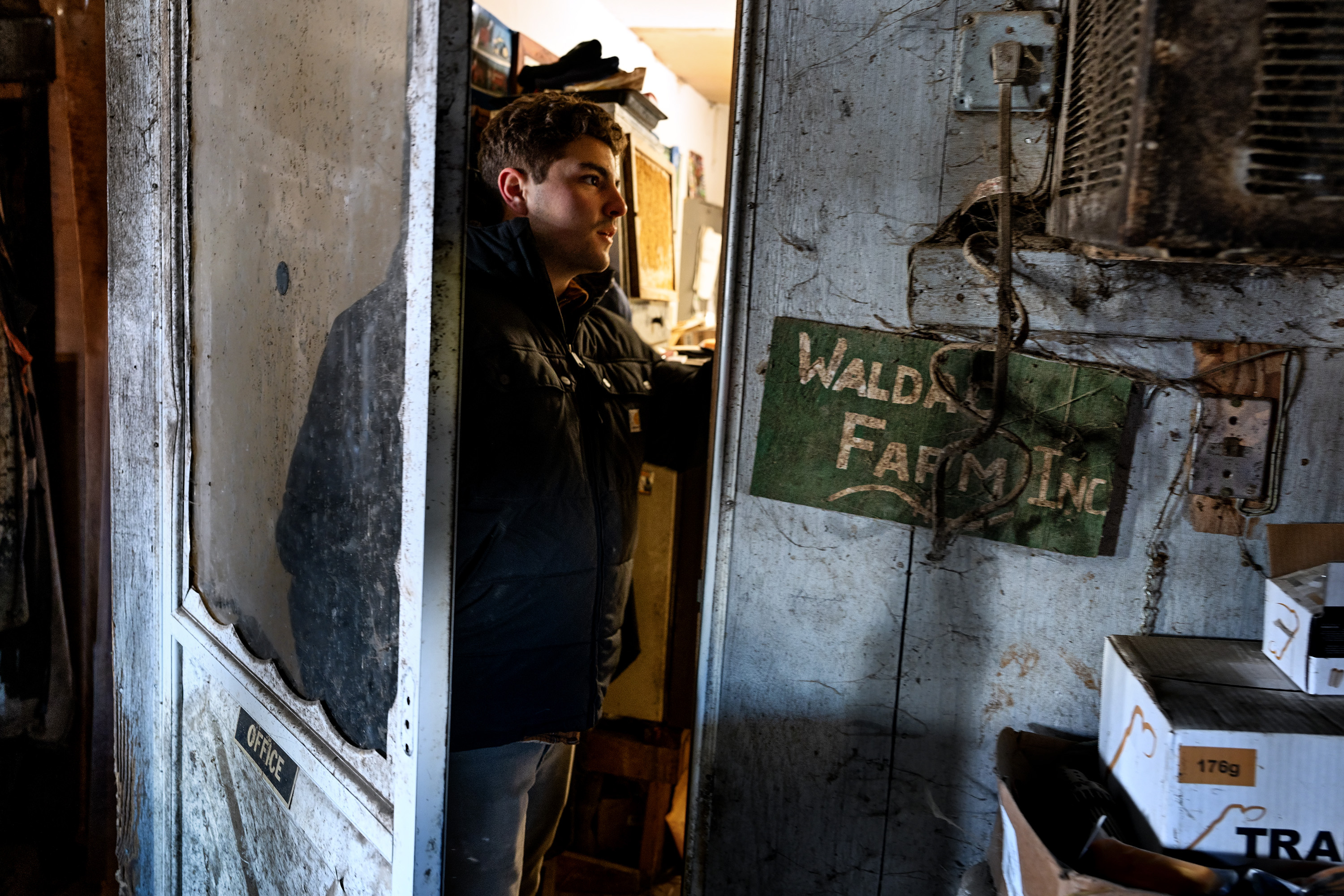
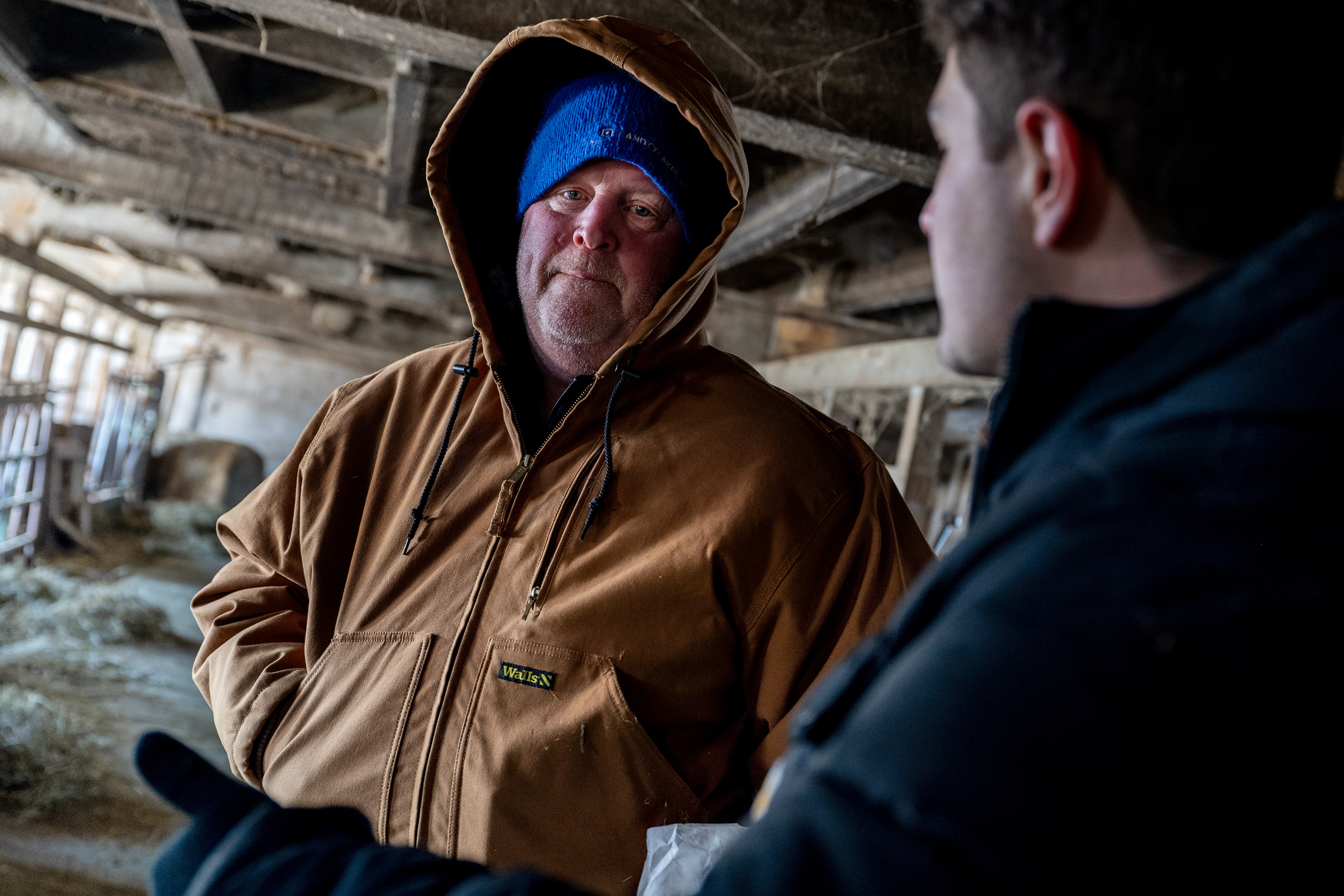
Farmer David Cadwallader at Waldac Farms in Salem, N.J., on Jan. 29.
This was the fourth Mannington Township planning board meeting for the Cadwalladers, who were seeking a variance to install 300 acres of solar panels on Waldac Farm that would, eventually, generate enough energy to power 19,000 homes annually.
Some board members and locals questioned the environmental impacts, whether it would affect the soil, injure the abundant wildlife in the area, or taint the nearby Delaware River watershed. Representatives from AES Corp., a Virginia company that would build the solar project and pay a lease to the Cadwalladers, had answers for all of them.
“Whether we all, in this room, agree with it or not, it is the state’s policy to advance these types of solar energy uses to meet the energy demands that we need,” Keith Davis, an attorney representing AES, told the planning board.
What they couldn’t seem to quell, however, were the repeating concerns about how a solar farm would look in New Jersey’s most rural county. Those concerns raised open-ended, philosophical questions: What’s a working farm supposed to look like? What exactly does rural mean?
“It will destroy property values and will be an eyesore for our township,” a neighbor of the Cadwalladers commented on a 2025 Facebook post about the project.
Similar situations have played out nationwide. A recent Associated Press story from Ohio highlighted a struggling farmer’s solar project that also faced community pushback and was ultimately blocked.
In Salem County, Mannington planning board member Joanne Wright was the most vocal at the meeting. She mentioned, often, that Mannington’s master plan called for maintaining “scenic vistas” and its rural, agricultural characteristics.
The Cadwalladers said they would plant pollinator habitats and plants on the solar farm, and introduce roughly 300 sheep to graze around and under the panels. The combination of solar and agriculture — “agrovoltaics” — is supported by the New Jersey Farm Bureau, Andrew Cadwallader pointed out.
Wright, however, thought solar panels would break up the township’s “contiguous farmland.”
“I’m just wondering how you see that the positive outweighs the negative,” Wright asked representatives from AES.
Farmer Andrew Cadwallader at Waldac Farms in Salem, N.J., on Jan. 29.
A picturesque farm
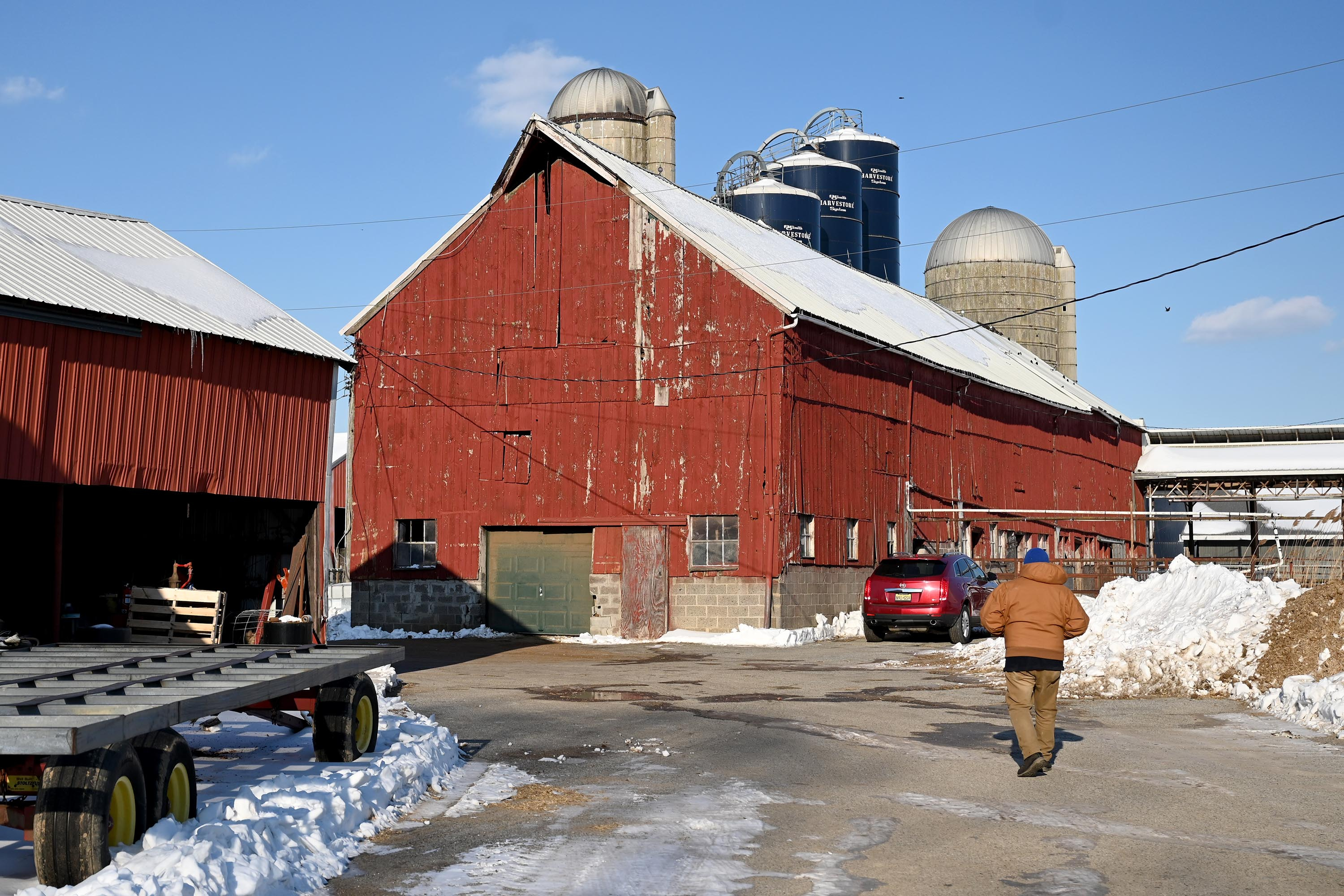
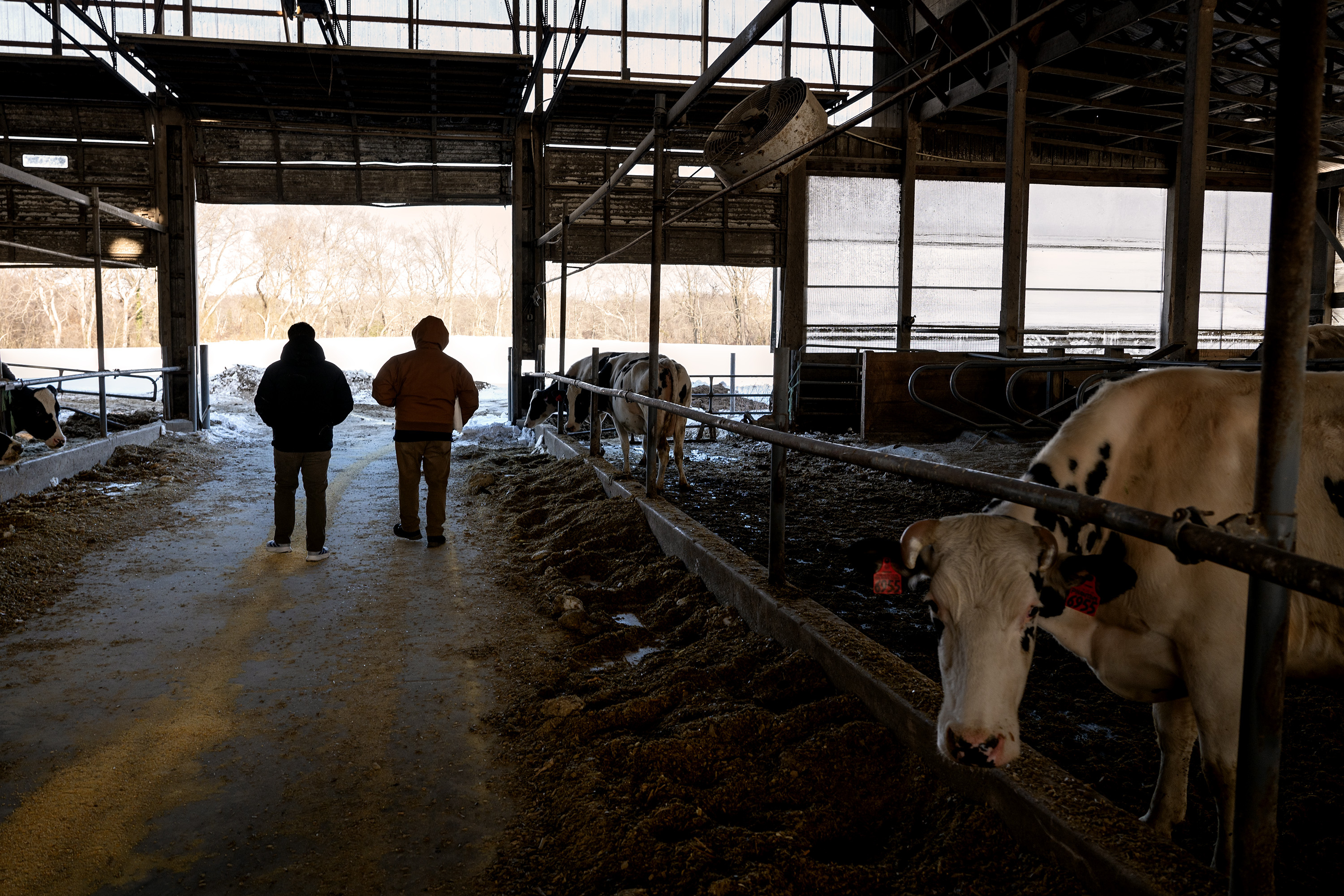
The Cadwallader family has been farming since the 1860s, and Waldac Farms certainly looks the part: There’s a circa-1790 farmhouse down a long dirt road, a slew of silos dotting the flat landscape, and big red barns, faded by time, that are full of cows and cats.It was mostly silent there, too, aside from the winter wind.
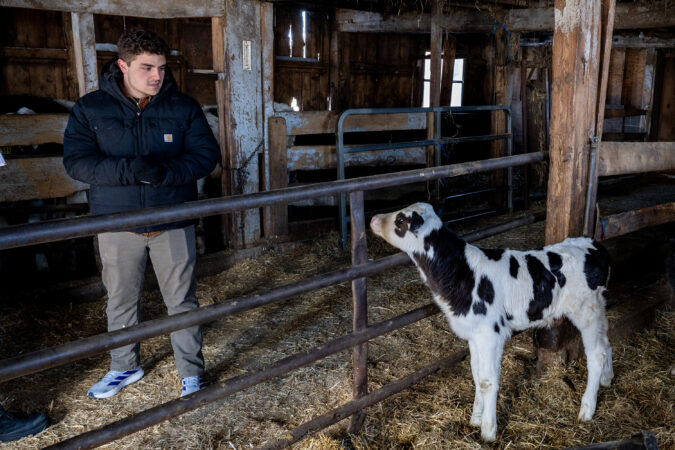
The only thing that seems out of place on the family farm on a frigid afternoon is Andrew Cadwallader. The college senior looks younger than 22, and his sneakers and pants were impeccably clean.
Andrew’s been milking cows since before his baby teeth fell out, though.
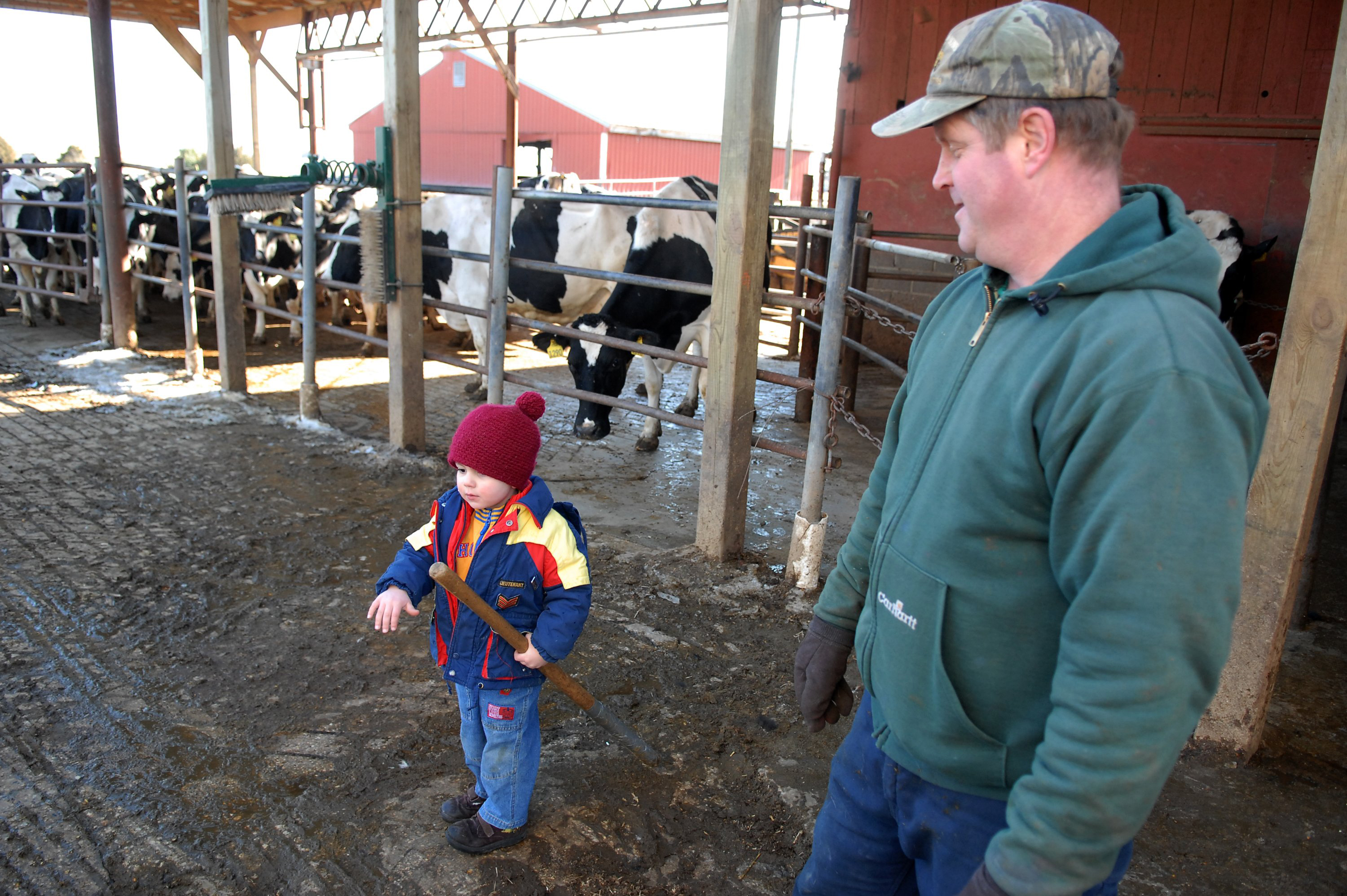
In 2007, a South Jersey newspaper visited the Cadwalladers to discuss the dismal state of dairy farming at the time. The newspaper took a picture of Andrew, then 3, surrounded by cows in a pen. His father, David, told the newspaper he’d love to pass the farm down to his son.
“If he wants it,” David Cadwallader said.
From the Press of Atlantic City on March 12, 2007: The state is trying to revitalize its dairy farm industry. With his 3-year-old son Andrew, David Cadwallader prepares his cows for their 3 p.m. milking at Waldac, his Woodstown dairy farm.
Andrew is set to graduate from Haverford College with a degree in political science. He’s merged his life history — agriculture and geology — with his interests in politics and government, and recently began an internship for CNN’s Michael Smerconish, a Bucks County native.
Andrew’s an only child, and, yes, he wants to farm, bucking a trend that’s seen the average age of farmers, 58.1, rise steadily, according to the 2022 U.S. Census of Agriculture Data.
“I’m coming back here after I graduate,” he said.
Nationwide, small dairy farms like Waldac have continued to shutter at a rapid rate since Andrew was in the local newspaper.
Overall, milk production is up in the United States. That’s because modern genetics has produced cows that make more milk than their ancestors. Those big production numbers are coming from massive farms with large herds, too.
The Cadwalladers milk about 130 dairy cows on approximately 500 acres, and small farms like theirs have been decimated. In 2005, according to the USDA, there were 78,295 dairy farms in the United States. In 2025, that number was 23,609, a 70% decrease in just 20 years.
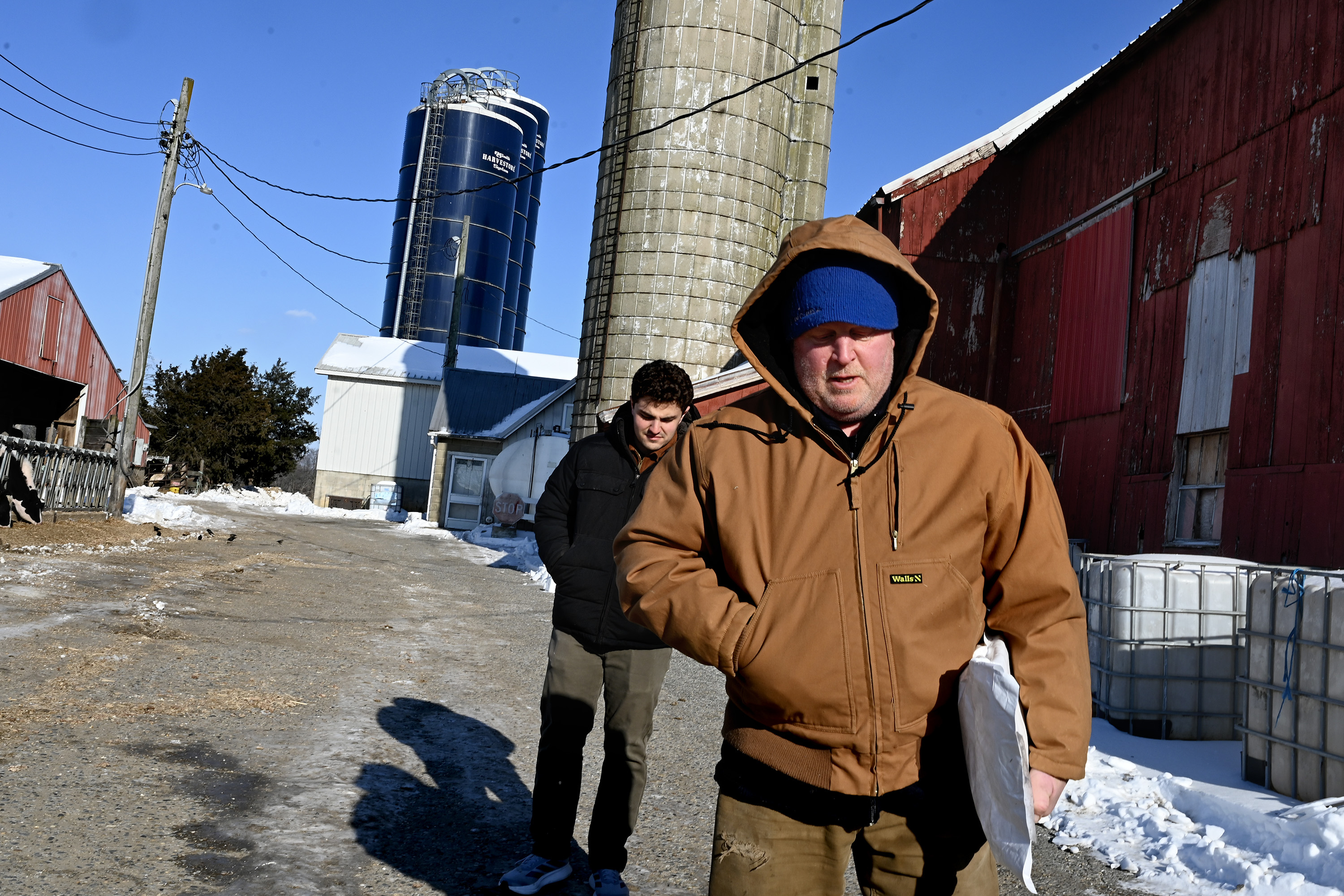
Farmers Andrew Cadwallader and his father David Cadwallader (front) at Waldac Farms in Salem, N.J., on Jan. 29.
Andrew Cadwallader declined to go into exact figures but said the family would be “paid well” by the AES lease. Waldac Farms would pivot to sheep and the sale of their lambs, while possibly still milking cows on a smaller scale.
“We have been losing money for the last 10 years,” Andrew said of the dairy operation.
AES approached the family about “solar grazing” during the pandemic, Andrew said, and as they sought a use variance from the Mannington planning board to move forward, he became the project’s public face. Andrew made numerous, lengthy Facebook posts in local groups about the project to be transparent.
“Will we continue to hope that the price of milk goes up and risk failure, or will we pivot and change?” Andrew wrote in the Salem County Advocates group in November.
Many comments were supportive or neutral, in a libertarian “it’s your land” way. There was plenty of pushback, though, and Andrew said it was disheartening to see how many comments focused on visual impact.
“I’m glad people can worry about the look of the farm,” he said in late January. “We have to worry about making a living.”
Cadwallader said flat farmland is not a natural part of landscapes in South Jersey. People have just gotten used to seeing it. His farmland was likely cleared of trees by the native Lenni-Lenape centuries ago, he said. Barns and tractors are industrial buildings and commercial machinery, he said, not quaint antiques.
“They are prioritizing the look, and it’s not reality,” he said. “It’s not a natural feature.”
Still, Cadwallader felt confident, on a late January afternoon on his farm, that the planning board might approve the project.
Jennifer Kugler, founder of the nonprofit South Jersey Preservation, visited Andrew’s farm shortly before the planning board meeting with her children and wrote a lengthy Facebook post in support of his plan that received 573 likes.
“The Cadwalladers want to evolve,” Kugler wrote. “This means new solutions are necessary to ensure the continued viability of the farming operation. For farmers, this can be incredibly scary.”
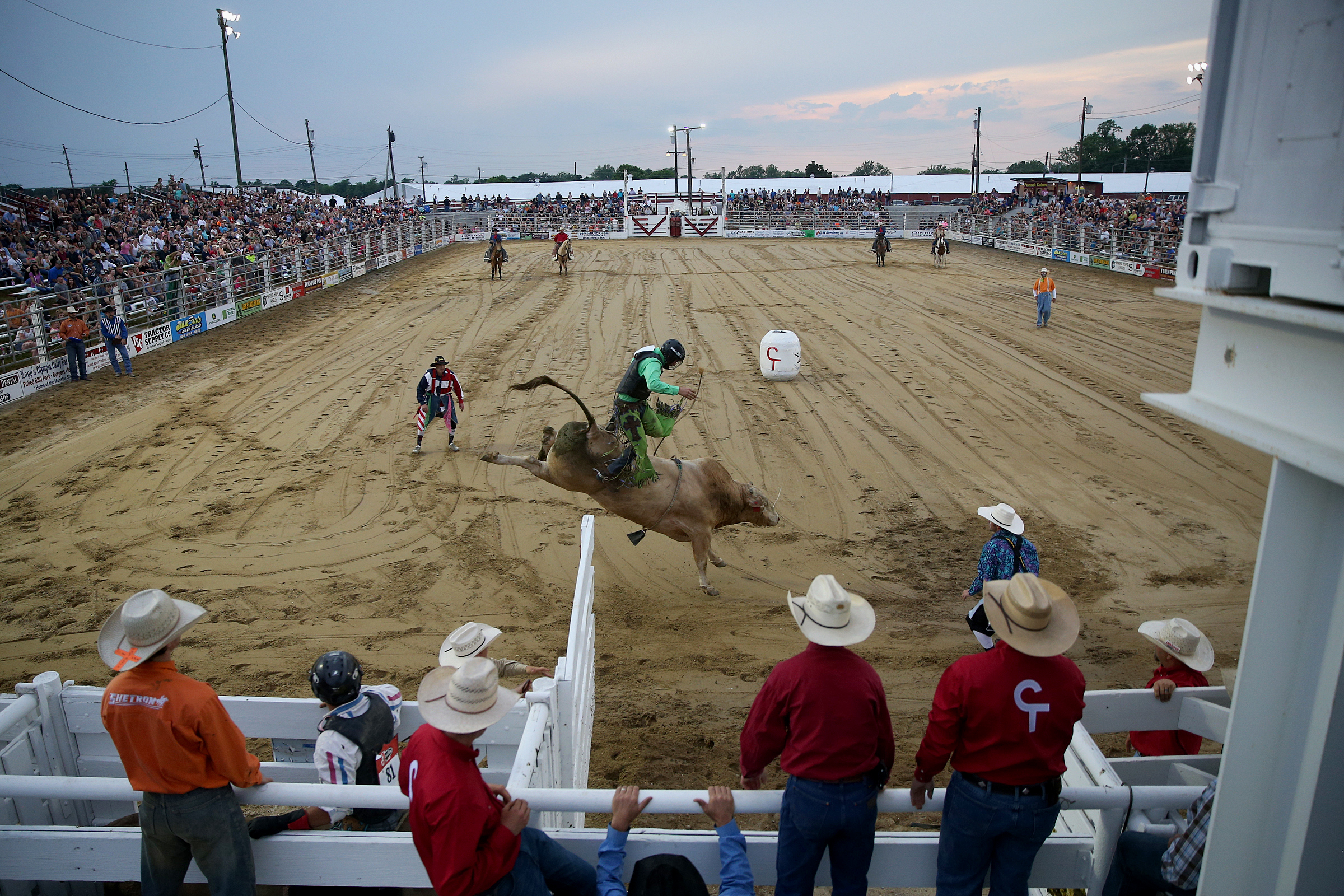
Kugler, 42, lives in Pilesgrove, Salem County, home to America’s oldest continuously-operating rodeo. She was raised on a dairy farm in Lackawanna County. That farm closed in the 1990s and never reopened, and part of her goal with South Jersey Preservations, she said, is to prevent more small farms from folding.
“We support farmers continuing to farm,” she told The Inquirer.
Farmers Andrew Cadwallader and his father David Cadwallader (left) at Waldac Farms in Salem, N.J., on Jan. 29.
To preserve or not to preserve
While the Cadwalladers would prefer the solar project, there are other options to keep farms afloat in New Jersey. The state’s Farmland Preservation Program is a common way to ensure that housing and warehouse developers don’t buy up farms. It’s a relatively simple process.
The program uses a combination of federal, state, county, municipal, and nonprofit funds to buy a farm’s development rights. The purchase price, according to the program’s website, is “based on the difference between what a developer would pay for the land and what it is worth for agriculture.”
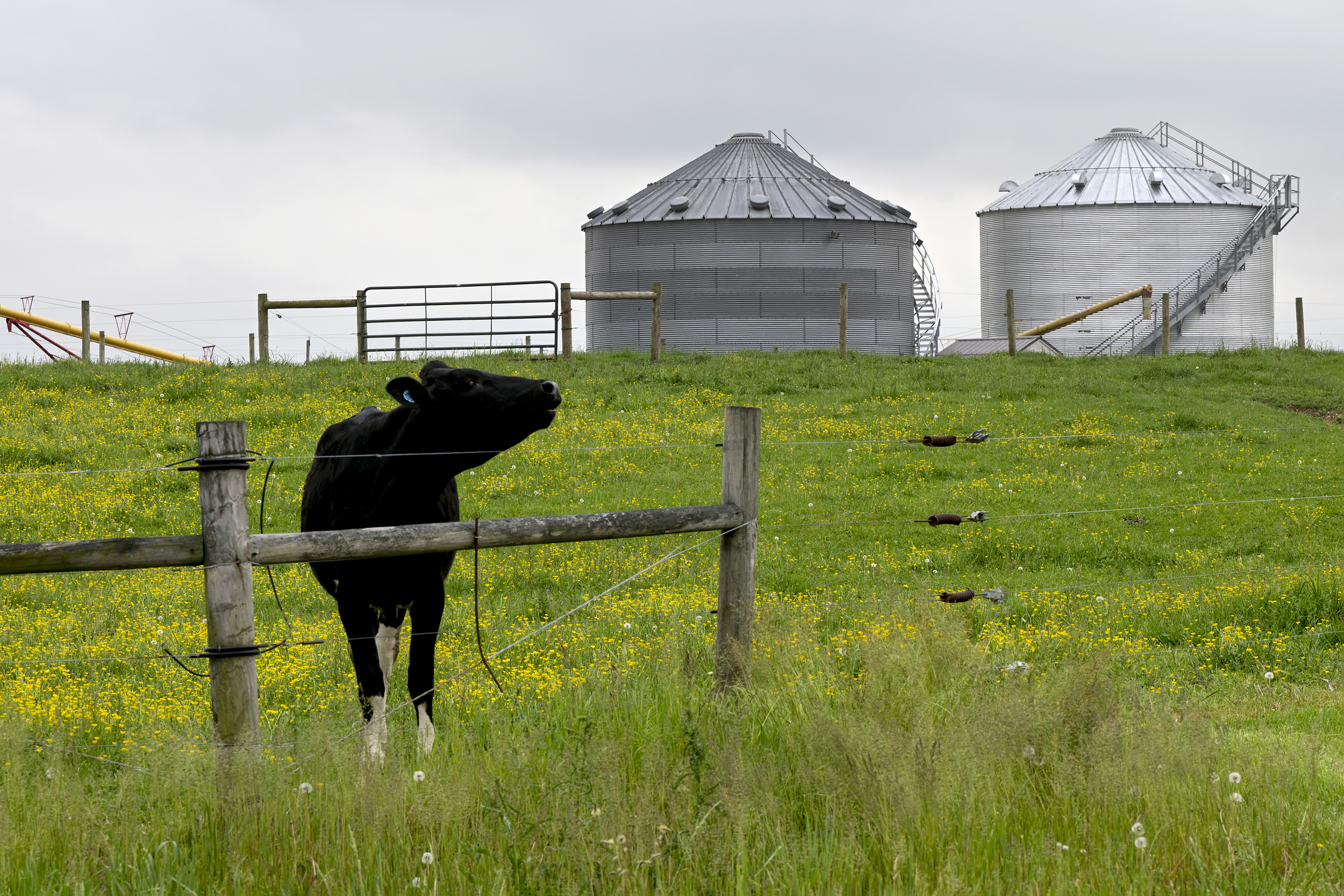
A cow at a farm along Route 49 in Salem County, N.J., on May 6, 2024.
In turn, farmers get a much-needed payout while keeping their agricultural operation running. If those farmers choose to sell their land someday, deed restrictions require the property to be used for agricultural purposes or otherwise remain undeveloped.
“You can’t do additional residential or commercial improvements. You can’t turn it into a housing development or a Walmart,” said Charles Roohr, executive director of the New Jersey State Agriculture Development Committee.
Since the program began in 1984, Roohr said New Jersey has preserved 250,000-plus acres, with a goal of 500,000 acres. Salem County leads the way among counties, with more than 43,000 preserved acres.
The family has not ruled out farmland preservation if the solar project is rejected, but they were concerned about some of the potential restrictions and complications.
“It’d be like a bailout, but we have 500 acres,” Andrew said on the farm in late January. “We need to figure out what the heck we’re going to do with the 500 acres that’s going to actually make us some money.”
Cowtown Rodeo in Pilesgrove, N.J.
A complicated farmland preservation issue played out right in Mannington in recent years, when Mannington Deputy Mayor Robert DiGregorio filed a civil rights lawsuit against local and county officials in 2021. According to the lawsuit and Transparency NJ,, DiGregorio was holding weddings, private parties, and nonprofit functions on his preserved, 78-acre farm, but was told by officials that he would need variances and site plan approvals or waivers to continue. The back-and-forth between those officials and DiGregorio, according to Transparency NJ, almost grew physical.
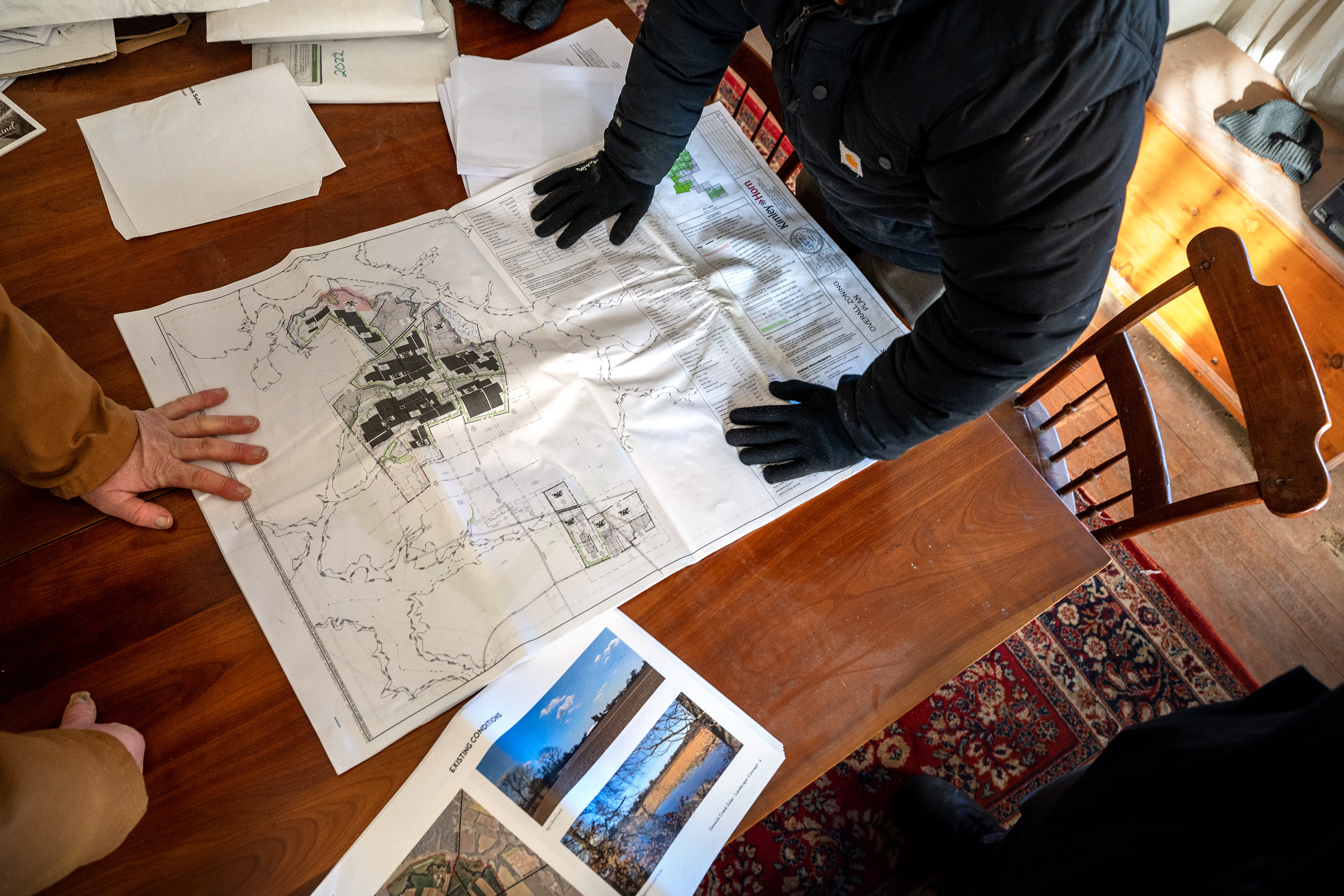
Farmers Andrew Cadwallader and his father David Cadwallader (left) with plans at Waldac Farms in Salem, N.J., on Jan. 29.
In April, Mannington agreed to pay DiGregorio $55,000 to end the lawsuit, according to an article in NJ.com. Neither DiGregorio, who is on the planning board, nor his attorney returned requests for comment. It’s unclear if he will continue to host events on his farm.
Roohr, commenting on farmland preservation restrictions in general, said events are allowed if “the purpose of the event is to sell the things that you’re producing on your farm.”
A tomato festival on a tomato farm would be fine, for example. A folk festival on a tomato farm would probably require a special-use permit.
“If the main purpose of the event is some other focus and your stuff ‘might’ get sold as a side benefit, then we consider that a non-agricultural use. And so the greatest example of that would be a wedding.”
Roohr said the preservation program is more important than ever, as data centers look to build in rural areas nationwide.
“We have over 200 applications [for farmland preservation] in our office right now,” he said.
The Cadwalladers said they have no plans to sell to a developer.
Farmers Andrew Cadwallader and his father David Cadwallader (right) at Waldac Farms in Salem, N.J., on Jan. 29.
The vote
Along with Alice Waddington, numerous others spoke at the March planning board meeting. Union officials said the solar project would bring jobs (AES put the number between 75 and 100). Some spoke in support of Andrew Cadwallader and his love for the ecosystem. Still, others talked about protecting Mannington’s “rural identity” and fears that the project could affect property values.
Andrew Cadwallader was the last member of the public to speak.
“As a family, we’re at a crossroads,” he said. “We can’t risk volatility anymore as a family and as a farm.”
When he was finished, Davis gave a final summation on behalf of AES and the Cadwalladers. Minutes later, the planning board made a resounding 6-1 vote, shooting down the project.
Cadwallader hung his head and gave a half-smile and some quiet “thank yous” to the attendees who patted his shoulder and shook his hand.
Laura Kellogg, a development manager for AES, said the team was disappointed but would continue to “evaluate next steps for the project.”
A week later, Andrew Cadwallader said he and the family were still dealing with the disappointment and contemplating their next move.
“People like this area so much, but we love it. No one loves this land more than my family,” he said. “People have to understand that a working farm is not a museum.”
Cadwallader’s life was getting busier at Haverford, too. He was taking geology classes and working on a senior thesis about preserving “the agricultural viability of mid-sized farming operations in the United States.”
Andrew drives the 38 miles south from college, back to Salem County, every weekend. A week or so after the meeting, though, Alice Waddington’s warning to the planning board, and the people of Mannington, proved prophetic.
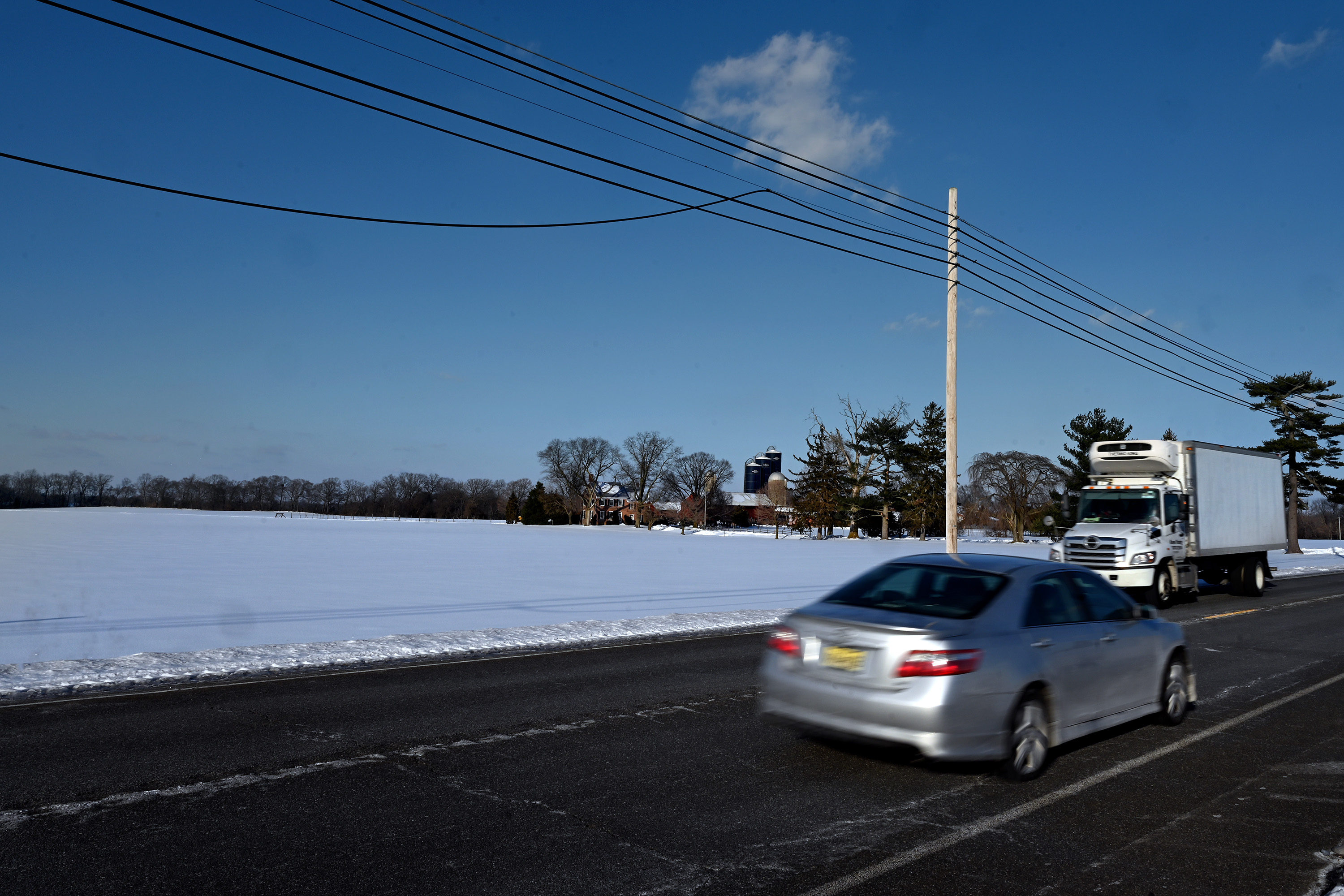
Waldac still looked like a farm to neighbors and motorists passing by, but the Cadwalladers had stopped milking cows.
Correction: This article has been corrected to reflect that AES Corp. is based out of Virginia.
Most Philadelphians’ experience with Jersey City begins and ends at the mouth of the Holland Tunnel on the way into Lower Manhattan. Except for those who know food.
Jersey City is one of the state’s best towns for eating and drinking, supported by long-standing immigration and cross-river relocation from New York. Between meals, you’ll find a city that’s at turns gritty and lovely, neighborly and human-scale in a way that makes it feel, to Philadelphians, as warm and familiar as a Champion sweatsuit. (It also has a really nice waterfront from which we could learn a thing or two.)
It’s only 90 miles and about 90 minutes away, depending on traffic. And if you must, you can easily pair it with a visit to New York.
A hotel with a story to tell — whether it’s luxurious or eccentric or charming — is always ideal for a weekend getaway. But when corporate keys are what’s available, you can do much worse than Hyatt’s Hyatt House sub-brand. Jersey City’s Hyatt House is relatively new and reliably clean, with great beds, a rooftop deck, and a modicum of style. What more could you ask for? How about a skyline view? Upgraded rooms facing Manhattan are bookable in April for under $300.
“Bakery” is a limiting descriptor for what Rick Easton does at Bread and Salt on Palisade Avenue, opposite the Hoboken border. Sugared bomboloni, esoteric Italian cookies and crostadas, suppli, thin-crusted pizzas, cups of stewy beans begging for a heel of crusty bread, curly punatarelle salad, Lent-friendly fish specials on Fridays. It’s an inspiring operation. Get more than you think you need. Then get more to bring home.
📍 435 Palisade Ave., Jersey City, N.J. 07307
Stroll: Liberty State Park
Hemmed in by the NJ Turnpike extension and the Hudson River, Liberty State Park encompasses 1,200 acres of greenspace (about half under ongoing revitalization) and miles of scenic waterfront trails perfect for spring strolling. Pause at the 9/11 Empty Sky Memorial. If you’re traveling with kids (or adult dinosaur fans), check out the immersive T. Rex Experience at Liberty Science Center, whose planetarium dome you’ve probably seen from the Turnpike driving home from New York.
Ellis Island and the Statue of Liberty are typically associated with New York, not New Jersey, but the sites actually fall under an unusual joint-custody arrangement. It’s also much less of a headache to visit from Jersey City; no downtown traffic to get through, way thinner crowds. The ferry departs right from the Liberty State Park and visits both islands in a single ticketed experience.
No one: You know what we really need in Jersey City? An Irish-Mexican cocktail bar. The acclaimed Dead Rabbit crew: Bienvenidos a San Patricios. Open last year, the cantina/pub celebrates the little-known 19th-century brotherhood between Ireland and Mexico. Stop in before dinner for something thematic: a palmona spiked with Irish moonshine, frozen horchata café con leche with Lost Irish Whiskey, or the Countess, a rum-and-Guinness hibiscus mule.
📍 8 Erie St. A, Jersey City, N.J. 07302
Dine: Razza
At Razza, Dan Richer makes some of the best pizzas in the county, a mix of reliables (the fermented chile-flamed Calabrese; the yellow-and-red tomato pie dusted in 36-month-old Parm-Reg) and hyperseasonal creations like last spring’s mosaic of mozzarella, asparagus, nettles, spinach, and ramp pesto. Bread and butter might seem redundant when you’re having pizza for dinner, but you cannot miss the tawny, crusty sourdough, served with tangy house-cultured butter made from grass-fed Pennsylvania cows.
Family-owned and spanning three generations, Torico Ice Cream is the charming scoop shop every neighborhood wishes it had. Towering atop house-made waffle cones, you’ll find classics like chocolate-marshmallow, mint-chip, and a notably excellent strawberry, but Torico’s secret sauce is the tropical ice creams and sorbet like passionfruit, guava, and soursop that nod to the Berrios clan’s native Puerto Rico.
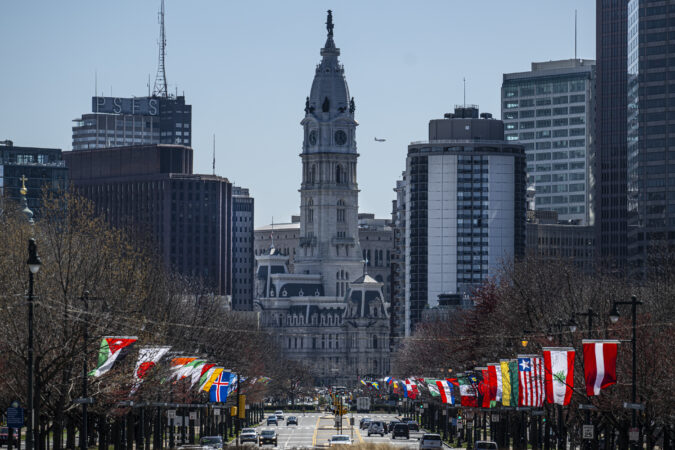
But what some Philadelphians may not know is that the 109 country flags are taken down multiple times every year. In this week’s case of the missing flags, it’s just the city’s biannual replacement job for new custom-made flags with reinforced stitching, a city spokesperson said.
The flags will be back up in time for the St. Patrick’s Day Parade.
The Inquirer responded to this reader question in December through the Curious Philly question portal, where readers can ask Inquirer journalists to look into peculiarities around town.
We found out that the flags are overseen by the city’s Department of Public Property and are regularly replaced about twice per year, or as needed.
Crews perform weekly checks to monitor them for wear and tear, especially during strong weather and winds, which stress the flags the most, the department said. Extended exposure to the sun can also wither the flag’s liveliness. The bungles holding the flags to the poles are also screened for damage during these checks.
Philadelphia first mounted the flags in 1976, taking inspiration from Paris’ Champs-Élysées, as part of the U.S. Bicentennial celebration. The original 90 flags were meant to represent the various populations of people living in Philadelphia. The city added 19 more in 2010. Arranged in alphabetical order, the flags line the Parkway from 16th Street up to the Eakins Oval out front of the Philadelphia Museum of Art.
Staff writer Nate File contributed to this article.
In the 1790s, a coterie of Western Pennsylvanians rose up against a federal tax on whiskey. Unlike the Boston Tea Party, these protesters had representation in our young nation, but they still didn’t appreciate the taxation on the valuable product made from their excess grain. President George Washington rode in and staged a 13,000-strong militia outside Bedford — a settlement that had already played a vital role in the French and Indian War andwas in its infancy as a tourism destination thanks to its salubrious mineral springs — and squashed what became known as the Whiskey Rebellion.
For such a small town (less than 3,000 residents), Bedford casts an outsize historical shadow in Pennsylvania. Add one of America’s oldest luxury resorts still in operation, robust trout fishing, and pristine wilderness, and you’ve got an ideal spring road trip, about three and a half hours west of Philly.
Bedford is a one-horse town when it comes to hotels, but that’s no diss on Omni Bedford Springs Resort & Spa. A bucolic compound of Greek Revival and Victorian buildings, this National Historic Landmark got its start in the late 1700s, when local doctor John Anderson bought the land and began building accommodations around its mineral-rich springs. (Thomas Jefferson was a fan.) Today, it’s a sprawling resort with more than 200 rooms, a botanical-inspired spa, two pools — the indoor one ranks among the oldest in the country — and grand lawns studded with firepits where families gather with s’mores and mountain pies.
📍 2198 Sweet Root Rd., Bedford, Pa. 15522
Fish: Yellow Creek
Dozens of streams and creeks slice through the woods of Bedford County, making it a hugely popular fly-fishing spot in the spring. Yellow Creek, a trout-stocked limestone tributary of the Raystown Branch of the Juniata River, runs 10 miles through Loysburg and Hopewell, just northeast of Bedford. If you’ve got your own gear, you can fish independently, but for more of a guided experience, book a tour with local outfitter Trout Yeah.
📍Yellow Creek, Bedford County, Pa.
Cross: Hall’s Mill Covered Bridge
Historic covered bridges crisscross the waterways of Bedford, and you can visit nine of them in the county’s Covered Bridge Driving Tour. Not officially on the tour but near Yellow Creek, the circa-1884 Hall’s Mill Covered Bridge spans the water in a charming white-and-red Burr Truss design that looks like it could’ve taken out the Maitlands in Beetlejuice.
Hundreds of millions of years ago, an inland sea covered this land. When the water receded, it left behind the Coral Caverns, a subterranean limestone labyrinth under the town of Manns Choice, just west of Bedford. The fossil-rich complex includes a little museum on the site’s history and artifacts uncovered in the cave. Tours are private and available by appointment only.
📞 Call or text 814-977-9570 to book.
📍 Coral Caverns Private Driveway, Manns Choice, Pa. 15550
Visit: Fort Bedford Museum
Opened in 1958 and modernized into an impressive institution between 2015 and 2025, the Fort Bedford Museum presents the history of the titular 1758 fortification (a key site in the French and Indian War), and offers context on the area of Bedford and beyond. A quick walk from the museum takes you to the actual footprints of the original fort, tucked between the historic Anderson House and the river.
📍 110 Fort Bedford Dr., Bedford, Pa. 15522
Drink: Whiskey River Pub
Before dinner, cosplay a thirsty member of the Whiskey Rebellion at the Whiskey River Pub, a low-slung, family-owned tavern that sits right on the water. Locals and tourists sit on swiveling barstools at the long bar, and a mural of whiskey barrels covers one wall. There’s a pool table, live music, and a deep cocktail menu that includes the Whiskey Rebellion Smash, Smoked Old Fashioned, and Bedford Blackberry Whiskey Sour. For a snack, don’t miss the house-made potato chips covered in blue cheese and balsamic.
📍 537 E. Pitt St., Bedford, Pa. 15522
Dine: Horn O Plenty
Horn O Plenty calls itself a “freshtaurant,” which would be incredibly concerning if this old-timey, log-and-stone cabin on the outskirts of downtown were not so dedicated to local sourcing and from-scratch cooking. Many of the menu’s items have a “house” in front of them: house-made sodas (Italian vanilla cream, orange rosemary), house-blended teas, house-fermented kimchi. The beef for the burgers and steaks is pasture-raised. The restaurant uses its own eggs, grows stone fruit, and forages for wild goodies.
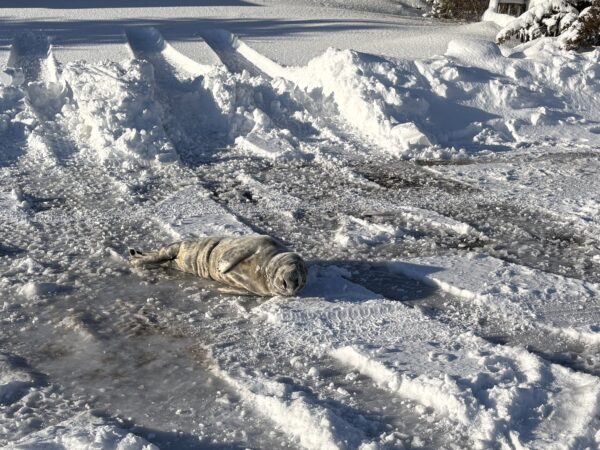
Why did the little seal pup leave the ocean, wander up the beach path, go one block up Middlesex Avenue, then cross three lanes of Long Beach Boulevard in Harvey Cedars?
Who knows?
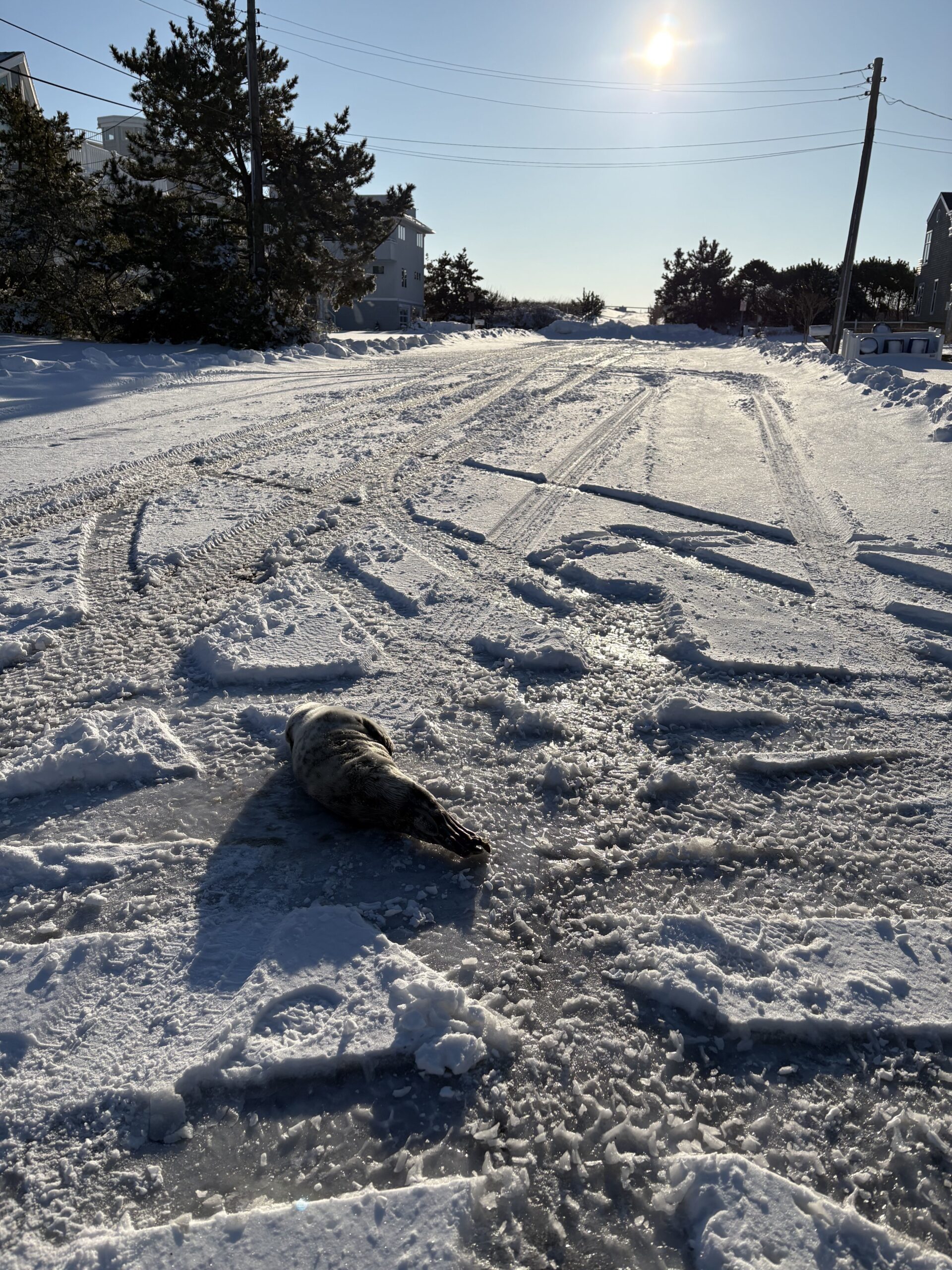
Maybe it was just the long slick surface of post-storm snow and ice that urged the seal to keep going until a sunny spot in this beach town’s southbound slow lane invited her to stretch out.
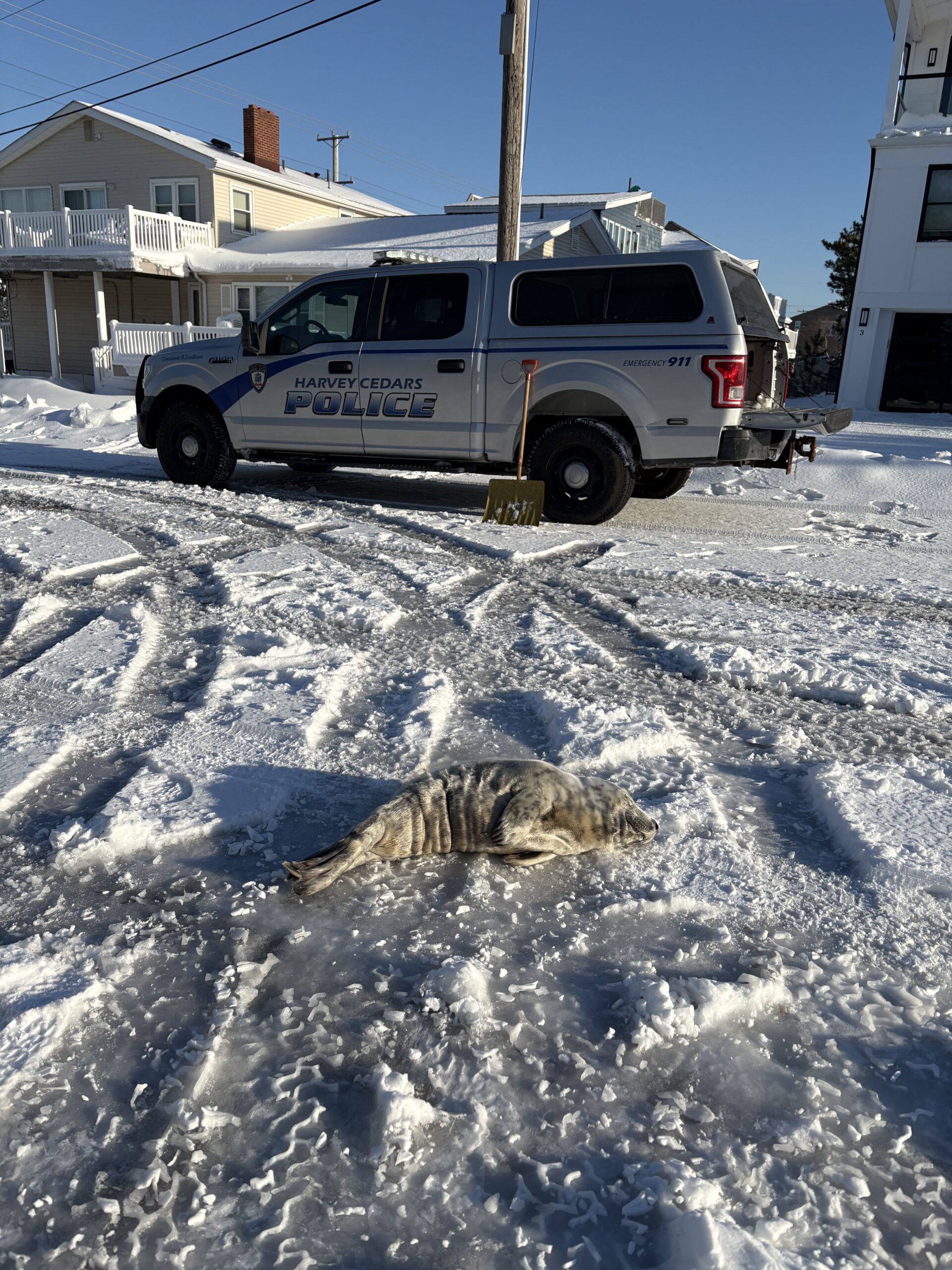
Luckily for the gray seal pup, a landscaper on his way to plowing snow did not mistake her for a chunk of snow, and pulled over to block the roadway and help, Harvey Cedars Police Chief Robert Burnaford said Tuesday.
“At approximately 7 o’clock, an innocent bystander was driving by and saw the seal laying in the Boulevard,” Burnaford said by telephone.
“They called us, and the officers confirmed the seal was kind of just relaxing in the slow lane of Long Beach Boulevard,” the chief said. “Literally it crossed over three lanes of traffic to where it was finally hanging out.”
A member of Public Works wrapped the seal in his jacket and moved her to Middlesex Avenue, out of traffic, Burnaford said. The Marine Mammal Stranding Center responded and carried her to their truck, and then to their hospital in Brigantine.
A gray seal pup wandered off the beach in Harvey Cedars and ended up in the middle of Long Beach Boulevard on Tuesday, Feb. 24, 2026, a day after a snowstorm dropped a foot and a half of snow on the island.
The Stranding Center put it this way on Instagram: “POV: When your nap shuts down a whole street.”
The center said in social media statements that the pup had no injuries but was in “thin overall body condition.”
“She is currently resting comfortably in Pen 2 of the Pool House,” the center wrote.
Seal beachings are not uncommon at the Jersey Shore, but the animals rarely end up off the beach. Burnaford said that a seal once ended up in the driveway of an oceanfront home.
“They beach themselves to sun themselves,“ Burnaford said. ”Maybe she was sick and tired of the weather, trying to find another place.”
A gray seal pup wandered off the beach in Harvey Cedars and ended up in the middle of Long Beach Boulevard on Tuesday, a day after a snowstorm dropped a foot and a half of snow on the island.
Official totals put towns on Long Beach Island at around 18 inches of snow.
“It was icy and maybe [the seal] was able to slip and slide easier,” the chief said.
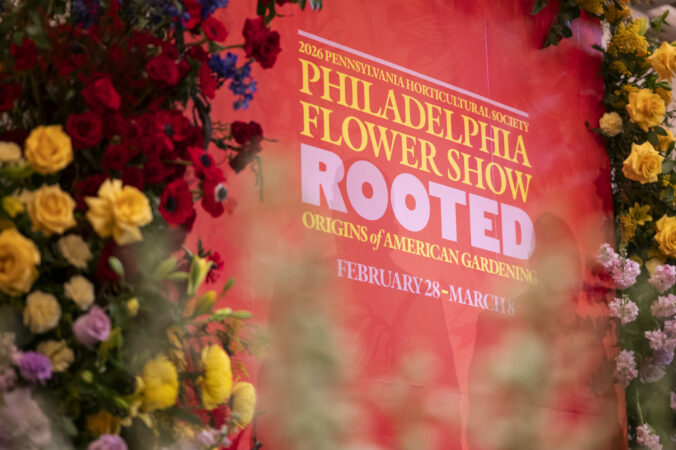
The iconic Philadelphia Flower Show returns Feb. 28-March 8, bringing a massive, immersive garden world blooming to life within the Convention Center. And more than ever, it promises to be historic.
The show’s theme, “Rooted: Origins of American Gardening,” honors the people, places, and traditions that have shaped gardening — and invites visitors to consider where their own gardening stories began. The 2026 show will debut a reimagined Marketplace shopping destination and expanded Artisan Row.
America’s oldest flower show, which began in 1829, the internationally renowned event draws thousands to Center City each year, and represents the Horticultural Society’s biggest fundraiser, supporting its greening efforts across the city.
Here’s what you need to know if you’re planning to attend.
Location and schedule
📍 Pennsylvania Convention Center: 1101 Arch St., Philadelphia, PA 19107
📅 Feb. 28 to March 8
⏰ Hours:
Feb. 27: Noon — 4 p.m. Members only Preview
Feb. 28 — March 8, 2026
Open daily 10 a.m. — 8 p.m., until 6 p.m. on March 8
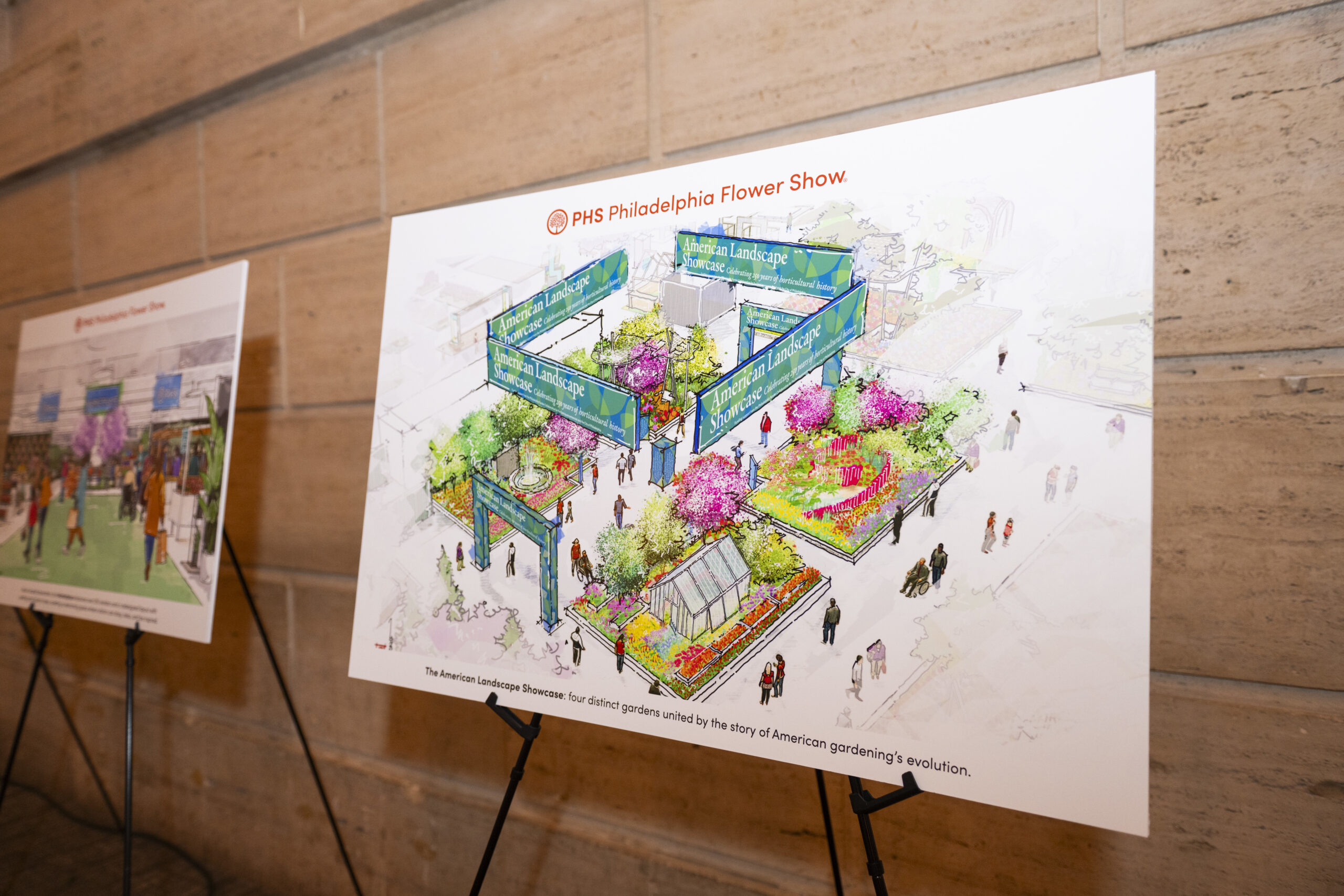
A rendering of the 2026 Philadelphia Flower show is on display during a Jan. 14 news conference at Union Trust. The theme of this year’s flower show is called “Rooted: Origins of American Gardening.”
Tickets are available online at tickets.phsonline.org and at the Convention Center. Online tickets are cheaper than those purchased at the door, and weekday tickets cost less than weekend tickets. Group discounts are offered to groups of 25 adults or more.
Online pricing:
Adult:
Student (18-24 with valid student ID):
Children (5-17):
Twilight (after 4 p.m.):
Any-Day Flex Pass — $60, one-time, any day admission
Floral Fanatic Pass — $100 unlimited daily entry for entire run
In-person pricing:
Adult:
Student (18-24 with valid student ID):
Children (5-17):
Twilight (after 4 p.m.):
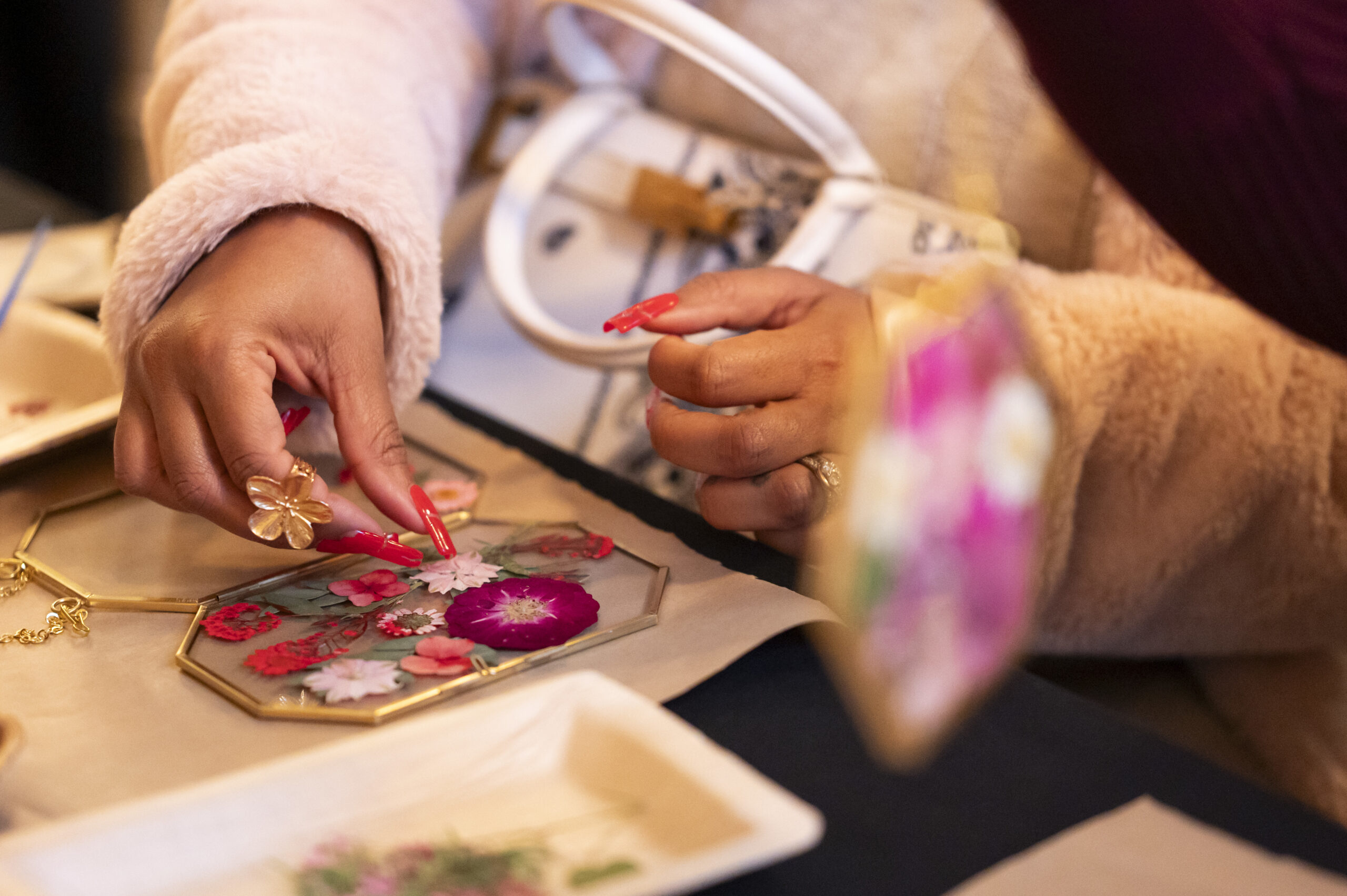
A participant creates pressed flower art following a Jan. 14 news conference at Union Trust for the unveiling of a first look at the 2026 Philadelphia Flower Show, “Rooted: Origins of American Gardening.”
A sprawling, misty forest floor creation drawing on the diverse inspirations of American gardens, and featuring mossy stonework, Zen-like sculptural plantings, water displays, and crowned with a towering, twisting root structure.
The American Landscape Showcase: Special exhibition celebrating America’s 250th anniversary.
This year’s special exhibition celebrates the national milestone, also known as the Semiquincentennial, with four gardens highlighting how gardening has shaped communities and evolved over 250 years.
First Bloom — Rooted in Memory
Four acclaimed international florists— Gábor Nagy, Alex Segura, Chantal Post, and Conny van der Westerlaken — showcase the origin moments that sparked their passion for flowers.
Design Gallery
Presents floral arrangements crafted for themed challenges, highlighting skill, creativity, and artistic power.
Hamilton Horticourt
Each year, thousands of exhibitors compete in more than 900 classes or categories, ranging from horticulture and arrangement to design and photography. With no age limits, winners receive a “Blue Ribbon.” Competitive Class categories are on the show floor, including miniatures, pressed flowers, and specialty plants.
Artisan Row
The 2026 show features anexpanded Artisan Row, where guests can work alongside nearly 40 vendors and craftspeople to create everything from fresh floral crowns to dried bouquets and terrariums and candles and jewelry and more.
Marketplace
A new highly visible, street-level Marketplace below the main exhibit halls, with more than 200 vendors offering a curated selection of live plants, florals, garden tools, decorative wares, and more.
Create your own flower arrangements under the guidance of Tu Bloom, the official botanical artist for the Grammys. $20 per person (reserve attickets.phsonline.org/events).
Hundreds of native and exotic butterflies, including zebra longwings, morning cloaks, and bright blue morphos dance and paint the air with color in the iconic butterfly tent exhibit. Many are happy to land on visitors’ feeding sticks for nectar and sugar water.
Know to Grow
Speaker series featuring horticultural experts exploring topics including heirloom and early American gardens, native bees and pollinator habits, resilient ecological design, and the cultural histories that have shaped American gardening traditions.
Plant People Place
Interactive area where guests can connect with expert gardeners and industry specialists for advice and insight.
Buy tickets for the March 1 show for a day designed for young families, with educational experiences, playful floral design, coloring, and more. Free with admission, recommended for all ages.
A celebration of beauty, well, and natural healing, including yoga classes, opportunities to work with wellness experts, and mediation. Purchase required for yoga class, all other activities are free with admission. Recommended for all ages.
Fido Friday
March 6: 5 — 8 p.m.
Bring your best four-legged friend to explore the florals. Proof of current rabies vaccination required.
The Flowers After Hours dance party transforms the show into an enchanted, fairytale forest setting with themed cocktails and dancing. Guests are encouraged to wear “fantasy-inspired attire,” planners said. Purchase required. Must be 21.
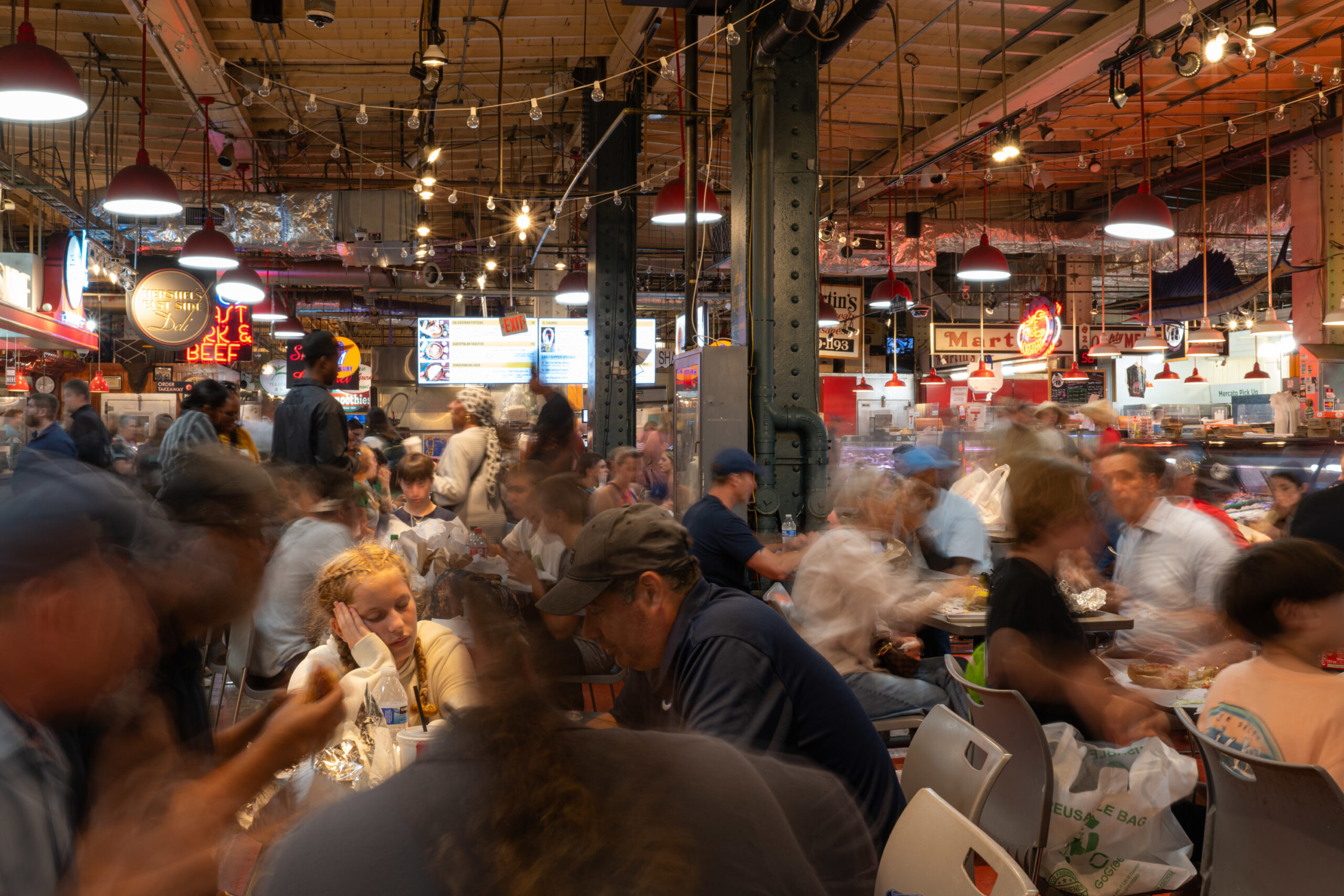
A young woman falls asleep during the lunch rush at Reading Terminal Market on June 11, 2025, in Philadelphia.
Food & drinks
In addition to the convention center’s Saxby’s Coffee and the Overlook Cafe, there are concession areas managed by Aramark serving light bites, snacks, and drinks on the show floor.
Guests are encouraged to get their hand stamped before exiting the building, if they decide to take a short walk to some of Philadelphia’s famous food destinations.
Download the free Inquirer mobile app forAppleandAndroid devices. Find hundreds of nearby restaurants, read Inquirer critic reviews, and learn more about the places you visit through the app’s “Discover” feature.
How to get to the Flower Show
🚴 Bike: 19 minutes from South Philly, about 30 minutes from North or West Philadelphia.
SEPTA is running extra trains on these Regional Rail lines on Saturdays and Sundays during the show — March 1-2 and March 8-9:
Where to park for the Philadelphia Flower Show
The Convention Center recommends parking at one of the lots closest to the show that are run by ABM Parking, E-Z Park, iParkit Philadelphia, Park America, Parking Facility, Parkway Corp., or SP+ Parking.
The Autopark at the Fashion District: 📍45 N. Ninth St., 💰 $35 for 24 hours, ⌚ 6 a.m. to midnight, 🚶♀️ three minutes.
The Autopark at Jefferson: 📍10th and Ludlow Streets, 💰 $36 for 24 hours, ⌚ 5 a.m. to 11 p.m., 🚶♀️ 10 minutes.
Parkade on Eighth: 📍801 Filbert St., 💰$32 for 24 hours, ⌚ 24/7, 🚶♀️ six minutes.
Gateway Parking Garage: 📍1540 Vine St., 💰 $16 for 1 hour, $30 for 24 hours, ⌚ 24/7, 🚶♀️ five minutes
Where does the money for the PHS Flower Show go?
Proceeds from the Flower Show go directly to the Pennsylvania Horticultural Society to disburse among its regional programming. This includes neighborhood programs, city tree-tending, low-cost gardening programs, water conservation, designing and maintaining public gardens, and more.