Category: Made By History

  • Reflecting Pool’s algae bloom and peeling paint reflect Trump’s treatment of U.S. history

    Reflecting Pool’s algae bloom and peeling paint reflect Trump’s treatment of U.S. history

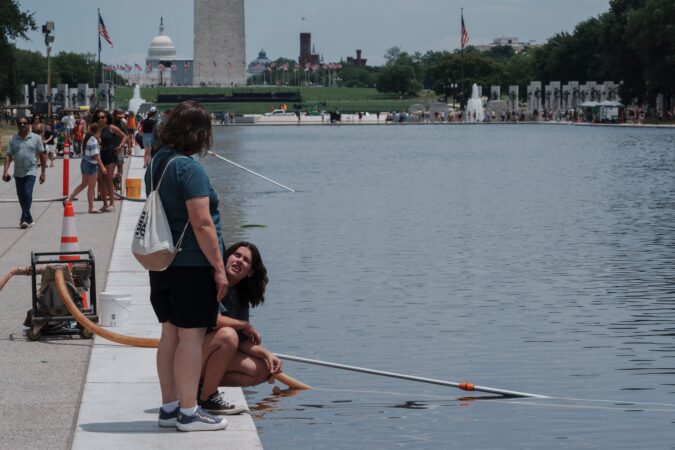
    President Donald Trump’s latest D.C. renovation, painting the Lincoln Memorial Reflecting Pool “American Flag Blue,” to celebrate the country’s 250th birthday has instead turned the symbolic heart of the National Mall Algae Bloom Green. The paint is peeling, and the water is a swampy muck.

    Trump has asserted, without evidence or corroboration, that vandals cut a 250-foot gash into the new lining and poured corrosive chemicals into the basin. Yet, the explanation for what has happened appears to be more mundane and predictable than the cloak-and-dagger sabotage Trump has suggested. Rosalina Stancheva Christova, an aquatic ecologist from George Mason University’s Algal Ecology Laboratory, sampled the water and found an ordinary, non-toxic bloom — the kind any ordinary swimming pool owner has fought in their own backyard.

    And yet, the problem with the renovation runs far deeper than all of this. Trump’s painting project reflects a fundamental lack of understanding of the original purpose and vision for the reflecting pool. For more than a century, the basin has functioned as a civic mirror, a place where visitors could see themselves reflected alongside the monuments that commemorate the nation’s story. Today that possibility is gone.

    The roots of the reflecting pool lie in the “City Beautiful” movement of the late 19th and early 20th centuries. The Gilded Age and decades of laissez-faire growth had left many of America’s cities in disrepair, full of tenement districts, boss-run wards and blight.

    American architects Daniel Burnham, Charles McKim, Frederick Law Olmsted Jr. and Augustus Saint-Gaudens wanted to change that, and they were inspired by European urban renewal projects like Baron Georges-Eugene Haussmann’s redesign of Paris. In 1893, at the World’s Columbian Exposition in Chicago, they explored the principles that spawned their movement to reimagine American cities — demonstrating how monumental architecture and carefully designed landscapes could express civic ideals.

    Their experience in Chicago helped to convince the men that beautiful, orderly, civic space could repair the disordered industrial cities the Gilded Age had left them. Their vision reflected a broader Progressive Era faith that urban renewal and public investment could address the social problems of industrial America while restoring civic pride through monumental construction projects designed to project an image of a robust and resilient nation.

    In 1903, all four architects became members of the Senate Park Commission (McMillan Commission) whose mandate was to replace decades of haphazard development in Washington D.C. with a coherent civic plan.

    They set their sights on the National Mall, which was, at that time, a disunified Victorian garden punctuated by marshland with a public green transected by a railroad depot and tracks.

    The commission’s 1901 report complained that the mall “has been diverted from its original purpose and cut into fragments, each portion receiving a separate and individual informal treatment, thus invading what was a single composition.” Their redesign plans aimed to unify the space into a legible and cohesive civic story and the reflecting pool eventually became the spine for that narrative.

    Over the next two decades, the McMillan Plan gradually reshaped the mall.

    Architect Henry Bacon was charged with designing the Lincoln Memorial. In 1911, he completed his first sketches, and he incorporated the commission’s vision by extending the mall’s central axis westward and anchoring it with the reflecting pool. Bacon imagined the pool as a mirror reflection, where visitors could see both the Washington Monument and the Lincoln Memorial. As a result, Bacon created a linear and legible connection between the man who presided over the creation of the republic at one end and the man who led the nation through the war for its preservation at the other.
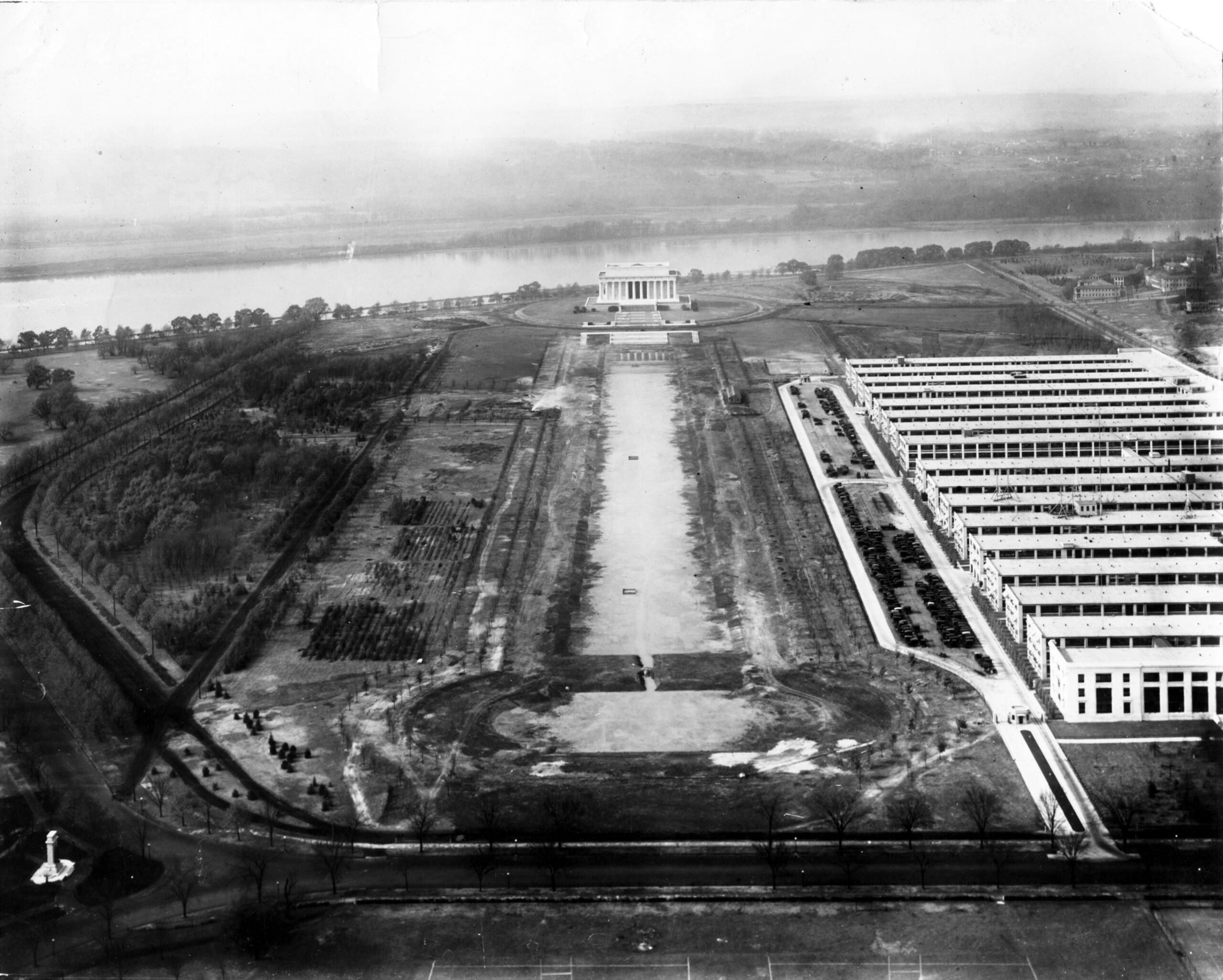
    The future Reflecting Pool site facing west toward the Lincoln memorial in 1921.

    In 1919, the Army Corps of Engineers began excavating a former Potomac marshland known as the Kidwell Flats, to enable construction of the pool. The project took four years and was still under construction at the time of the Lincoln Memorial’s dedication in 1922.

    The pool quickly became a symbolically rich venue for crucial moments in U.S. history. In 1939 the African American contralto Marian Anderson sang from the memorial steps to a crowd of approximately 75,000 people massed along the pool after the Daughters of the American Revolution refused to let her perform at Constitution Hall.
    Made By History sponsors. FOR USE ON MADE BY HISTORY STORIES ONLY.

    Twenty-four years later, a quarter million people lined both banks of the pool to hear the Reverend Dr. Martin Luther King Jr. proclaim his dream, to challenge the nation to complete the unfinished journey toward racial equality and achieve a meaningful resolution of the issues that had nearly destroyed the nation.
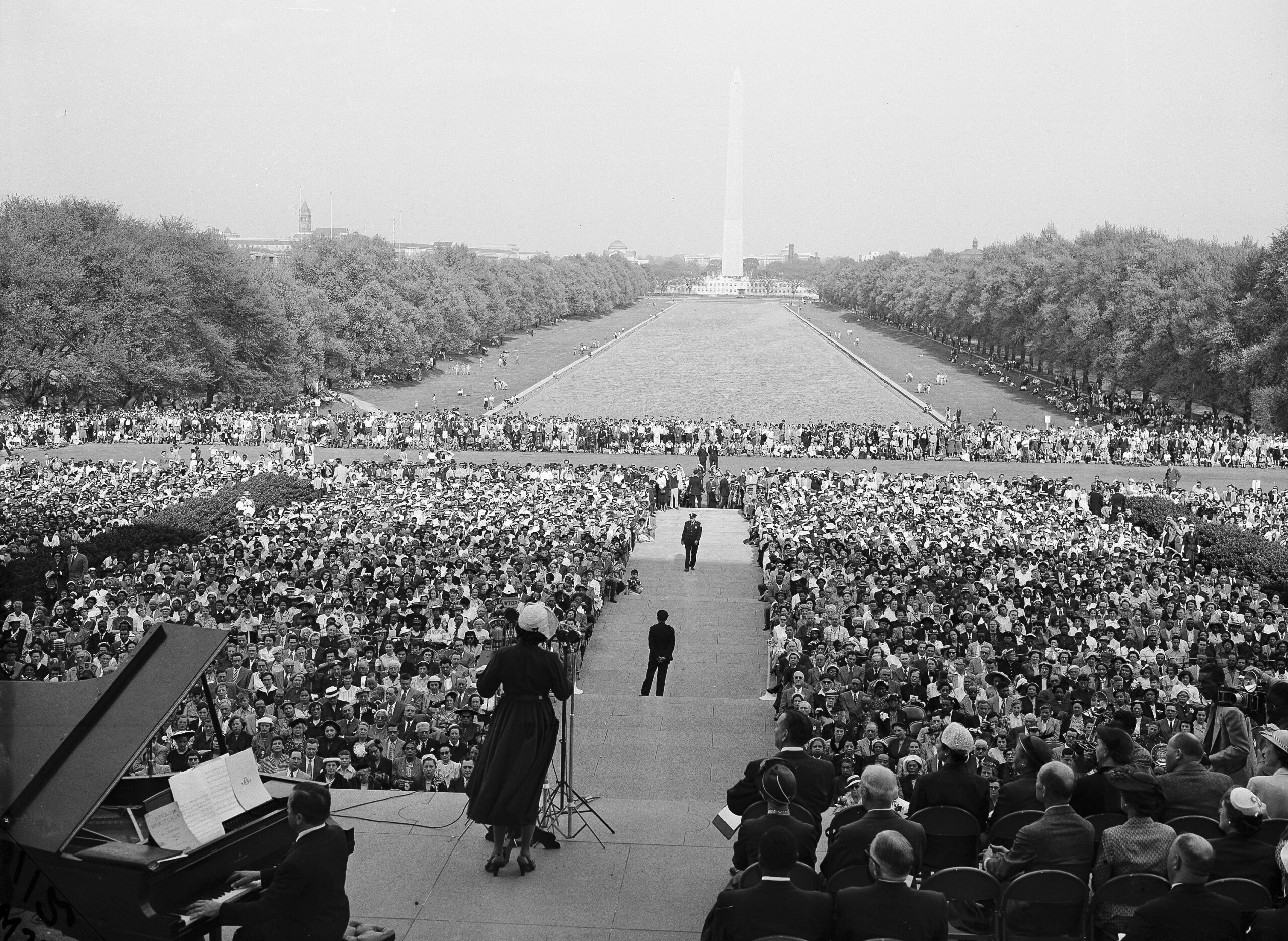
    Marian Anderson performs from the steps of the Lincoln Memorial in Washington on April 20, 1952, in this image showing the Reflecting Pool and the Washington Monument. . Anderson’s accompanist is Franz Rupp, lower left, at piano. (AP Photo/Henry Griffin, File)

    The pool reflected those crowds, those moments and those movements only while they occupied the space. Each reflection vanished and was replaced by another individual, another gathering, another episode in the nation’s story.

    Yet, despite its symbolic significance and its success as a site for large scale civic dialogue, from a physical standpoint, the pool faced problems almost from day one. At issue was the soggy foundation created by the choice of marshlands for the reflecting pool’s site.
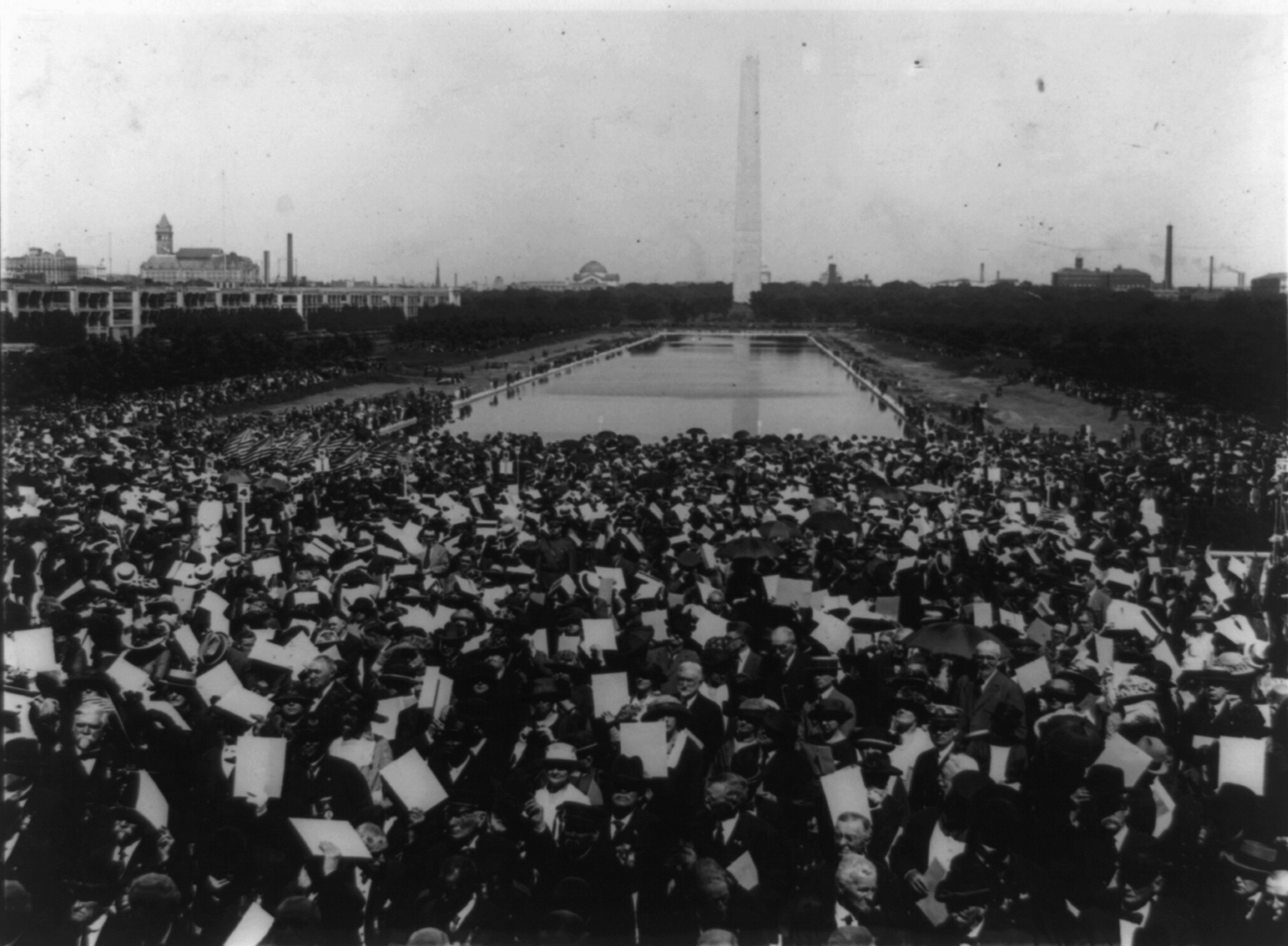
    This 1922 photo was taken at the dedication of the Lincoln Memorial. Nearly from the start, the Reflecting Pool faced structural problems.

    During its construction, the Army Corps of Engineers had attempted to mitigate the potential problem with concrete support beams and a drainage system undergirding the pool. But almost immediately these mitigation systems proved inadequate. The result was cracks and leaks that have plagued the pool for its entire lifetime.

    Numerous administrations have tried to solve the issues. In 1986, the Reagan Administration drained the pool and poured an entirely new concrete foundation. Even this did not solve the problem. The pool continued to leak nearly 30 million gallons per year.

    In 2011, Barack Obama’s administration undertook another round of renovations. While matters improved, the pool still leaks 16 million gallons of water per year.

    The current issue with the reflecting pool and Trump’s response to it, however, go well beyond structural inadequacies and sabotage theories. They reflect a lack of understanding about the pool’s purpose.

    In April, Trump posted a doctored image of himself and his officials in swimsuits lounging in the reflecting pool, a woman in a bikini reclining in the water beside them. But the pool is a mere 18 inches deep, not swimming pool/ lounging depth and Bacon never intended anyone to use it that way. He built a basin you stand beside because its work happens in the mind of the person at the rim. Trump’s artificial intelligence revisionism gets the object exactly wrong — an instrument of contemplation made over into the feature of a tacky resort.

    Trump directed the Department of the Interior to repaint the pool in time for the nation’s 250th anniversary and used an emergency exemption to award a no-bid contract to a company that specialized in painting swimming pools. The result essentially took an area that was a swamp, before its transformation into a civic mirror, and returned it to a swamp. An algae-greened surface now sits where the reflection used to be, and the connection the pool held, the citizen to the monuments, individual to the national story, has been severed.

    When the pool functions as a mirror surface, it is a monument that embodies an evolving republic rather than a finished one. Trump’s swamp has transformed it into a static, murky image that defies the idea of a nation moving forward. As this history makes clear, the health of the republic depends on its ability to see itself clearly, and Trump’s algae-infested reflecting pool is a symbolic reflection of a nation and a history he and his administration continue to try to obscure from clear view.

    Susan Deily-Swearingen holds a Ph.D. in history from the University of New Hampshire, and has taught at multiple universities since 2015. She has a forthcoming book about the persistent legacies of the U.S. Civil War in contemporary politics and society, and frequently writes about historical memory and the echoes of the past in the modern world.

    Made by History takes readers beyond the headlines with articles written and edited by professional historians. Opinions expressed do not necessarily reflect the views of The Inquirer.
  • The history of American Jews exposes the fundamental questions of citizenship

    The history of American Jews exposes the fundamental questions of citizenship

    The history of American Jews’ citizenship makes the president’s case to eliminate birthright citizenship, now awaiting a Supreme Court decision, no surprise—but this should offer little comfort.

    The central plotline of the story of Jews in the United States tends to revolve around citizenship: Jews arrived, gained citizenship, the end. Yet this story accounts for neither how citizenship has worked for Jews nor how it works in general. A far more accurate history of Jewish citizenship in the United States exposes the persistent political questions asked, answered, and unresolved when policymakers try to decide who is and isn’t “American.”

    For the past 250 years, American leaders have used citizenship law to draw and re-draw the lines of individual belonging through collective categories. From the beginning, Congress granted “any alien being a free white person” access to citizenship, writing into naturalization law in 1790 broad thresholds for membership. In 1868 the Fourteenth Amendment revolutionized citizenship by opening it to “all persons born or naturalized in the United States.” Yet Congress also legislated that for the purposes of naturalization, “all persons” only included “free white persons” and “aliens of African nativity…and African descent,” not Chinese people or “Asiatics.”

    Jews who immigrated from Europe tended to gain access to naturalization as “white” under citizenship law, but government officials found Jews a useful—and sometimes confounding—guide to help them apply the law, even when Jews were not directly involved.

    Take a 1909 naturalization appeal from four men, described in their rejected application as “Armenians by race.” The men were not Jewish, but Judge Henry Cabot Lowell, who presided over their appeal, nonetheless found himself contemplating Jewish citizenship. Harvard-educated and hailing from an elite Boston family, Lowell consulted scientific treatises to conclude that “Hebrews” and Armenians were both “Asiatic” in origin. Prevailing scientific racism of the day convinced him that neither met the threshold of whiteness. As he wrote in his decision, it was “hard to find loophole for admitting the Hebrews” to citizenship. But at least until Congress acted, he saw no reason to exclude Armenians if Jews could benefit from the loophole.

    Jewish leaders panicked when they witnessed high-level government officials slotting them into racialized categories other than “white.” They understood that the historical fact of citizenship would not necessarily protect Jews in years to come, especially as eugenicist ideas gained traction among policymakers designing new restrictive immigration laws. In the early 20th century, elite Jews lobbied politicians, filed reports, intervened in naturalization cases, and testified at congressional hearings to bolster Jews’ claims to citizenship. Their efforts met partial success. As passed in the 1920s, immigration quota laws dropped the classification of Jews as “Hebrews,” instead counting Jews among others of their same “national origin.” Still, the countries from which most Jews immigrated, such as Russia and Poland, now faced some of the harshest restrictions.

    In practice, the new quota laws reduced the number of Jews who could naturalize and raised suspicion about those who did. Foreign-born Americans from many different backgrounds experienced discrimination that legal status did not avert.

    But accusations of foreignness and dual loyalty clung to Jews in unique ways, as illustrated by a remarkable case from 1947. That year, a naturalized Jewish man sought to return to the United States after living in British-mandate Palestine for over a decade. Detained by U.S. border control agents, the Ukrainian-born man learned that his American passport had been revoked under a 1940 law that prohibited naturalized citizens from living abroad for over five years. Native-born citizens were not subject to the same law. The ACLU, American Jewish Committee, and American Jewish Congress seized on this fact to call the law unconstitutional and defend the Jewish man on his appeal. But for the Jewish organizations, the constitutional violation was a piece of a much larger threat to Jewish citizenship in the United States. When Congress authorized the 1940 statute, it did so under pressure from a State Department official who insisted that “these Zionists” regularly manipulated the protections of American citizenship for their own nationalist ends.

    The court rejected the Jewish man’s appeal, and in doing so diminished the distinctly Jewish dimension of the case by tying him to other naturalized Americans, such as Japanese-Americans, whose constitutional rights to equal protection could be overridden by national interests according to recent Supreme Court precedent.

    Citizenship debates routinely entangled Jews’ status with that of other groups because the categories of citizenship were neither self-evident nor self-executing. Only in motion, by scrutinizing groups, comparing them to one another, and gauging the changing winds of national interests, did government officials bend citizenship to their will.

    In a remarkable exchange on the Senate floor in the spring of 1964, two senators debated the exclusion of religion from proposed anti-discrimination legislation targeting federally-funded programs. Albert Gore, Sr., a Democrat from Tennessee, contended that Jews lacked shelter under the law’s categories of “race, color, or national origin” because Jews were a religion. Joseph Clark, a fellow Democrat from Pennsylvania, countered that those categories protected Jews just fine because many Jews lacked any faith, so whatever discrimination they faced must be race-based. Signed into law that summer as Title VI of the Civil Rights Act, the statute (unlike many others in the same law) did not include religion among its protected categories.

    For many decades, the question of Jews’ standing under Title VI seemed to be resolved in practice, as government officials and Jewish leaders agreed that its jurisdiction did not include Jews. But it was only a matter of time before the answer faded back into a question.

    Over the last two decades—and especially since Oct. 7, 2023—government officials and many Jewish leaders have argued that Jews should have standing in anti-discrimination laws on the basis of race, color, or national origin. Detractors argue that Jews—or certain expressions of Jewishness such as Zionism—do not fit squarely into those categories. The arguments matter because the categories of citizenship law are consequential, but their answers aren’t intrinsic to citizenship. Rather, citizenship remains a tool to ask questions about belonging; as political aims change so too will its meaning.

    Made By History sponsors. FOR USE ON MADE BY HISTORY STORIES ONLY.

    For American Jews, citizenship has not offered a singular point of arrival or a final answer to the puzzle of national belonging. This lesson from the history of American Jews may offer some reassurance that Trump’s bid to overturn birthright citizenship is just another stop on a zig-zagging journey. Whether the Supreme Court endorses the administration’s tendentious reading of the 14th Amendment or not, the twisted and entangled process of arguing over citizenship will continue.

    A less sanguine lesson from the same history should warn all American citizens that an attack against birthright citizenship is an attack against them. No one is naturally or natively a citizen, wherever they were born. Political leaders are constantly remaking citizenship—just look at how the categories used to define, question, or defend Jews have changed over time. The protections of citizenship are as mutable as they are unreliable.

    Faith in any fundamental meaning of citizenship not only misses the point but also carries profound risk. Even the most capacious understanding of citizenship will not resolve the question of human belonging, but the starkly narrow one on offer from the Trump administration today threatens our ability to keep asking the question.

    Lila Corwin Berman is a professor of history at NYU and author of Who Is American? Belonging and the Question of Jewish Citizenship.

    Made by History takes readers beyond the headlines with articles written and edited by professional historians. Opinions expressed do not necessarily reflect the views of The Inquirer.

  • The Savannah Bananas are building on one of baseball’s oldest traditions, barnstorming

    The Savannah Bananas are building on one of baseball’s oldest traditions, barnstorming

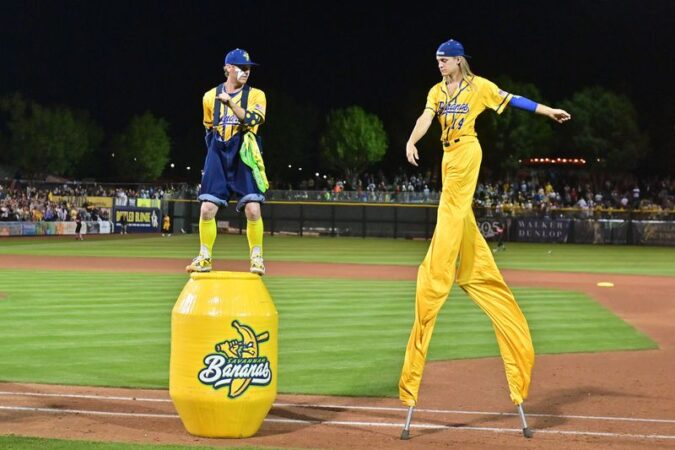
    One of the more striking sports stories of the last few years has been the dramatic rise in popularity of the Savannah Bananas. Founded as a collegiate summer league team in 2016, the Bananas began playing exhibition games in 2018, when they debuted their signature “Banana Ball,” a fast-paced, acrobatic, comedic, participatory style of baseball. Since 2023 they have dedicated themselves entirely to traveling exhibition games against other “Banana Ball” teams, and their popularity has continued to grow. On May 2, as part of the ongoing Banana Ball World Tour, they played before their largest audience yet, a crowd of 102,000 at Kyle Field in College Station, Texas.

    The Bananas and Banana Ball represent a compelling innovation in baseball and American sports—but at the same time, they’re building on one of the sport’s oldest and most enduring traditions: barnstorming, alternatives to professional and major leagues that have long brought community and inclusivity to baseball and America.

    Most histories of baseball focus on its professional leagues: the U.S. Major Leagues and sometimes other prominent professional organizations such as the Negro Leagues and Japan’s Nippon Professional Baseball. But starting in the mid-19th century, there was an equally popular alternative version of baseball that existed outside of those more established sites. Known as barnstorming, probably because many of its games took place in rural communities that might well have featured farm structures, the reference that also connected these baseball teams to other traveling performers who also used the term. This version of baseball saw touring collections of players—sometimes part of an established team, but just as often cobbled together from across multiple teams—visit communities and stage exhibition games. These games were played against local teams and players, fellow barnstorming teams, or as part of other unique entertainments.

    In the first half of the 20th century barnstorming came to be especially associated with the Negro Leagues and represented a way both for those Black athletes to showcase their talents in front of more diverse and widespread audiences. It also allowed them to play against—and, even at times, alongside—white athletes during a time in which the Major Leagues excluded Black players. Building on the legacy of late 19th century, Black barnstorming teams like Bud Fowler’s All-American Black Tourists, legendary 20th-century players like the great Satchel Paige organized teams that toured constantly and brought baseball to every corner of the nation. It also inspired one of the great sports movies, 1976’s The Bingo Long Traveling All-Stars & Motor Kings, with Billy Dee Williams’s Bingo a clear Satchel Paige type.

    In the 1920s and 30s another American community that was excluded from the era’s professional leagues formed their own prominent barnstorming teams and leagues. Japanese baseball dated back to both Hawaii and Japan in the late 19th century, and the first Japanese American semi-pro clubs formed on the mainland United States in the early 1900s. But it was with the rise of barnstorming teams in the late 1920s that these Japanese American players gained truly national and international fame.

    In 1935, the Japanese World Series prominently featured the Japanese American barnstorming team, the Los Angeles Nippons, in a best-of-three series against Japan’s famous Tokyo Giants. Although the Tokyo squad took two of the three games, at the end of their barnstorming tour of the U.S. a team spokesperson noted that “the Los Angeles Nippons were the best of the Japanese Nines.”

    These early 20th century barnstorming teams and games also captured the attention of the sport’s biggest stars. In October 1927, just after winning the World Series and at the height of their success and fame with the New York Yankees, Babe Ruth and his teammate Lou Gehrig took part in a highly competitive barnstorming game in Fresno against Japanese American semi-pro stars, including the powerful slugger Johnny Nakagawa who was known as the “Nisei Babe Ruth.” With each captaining a different team, and as the only white players in the game, Ruth and Gehrig played both against and alongside the Japanese American players, a reflection of how much barnstorming could break down the period’s policies and practices of segregation.

    The single most famous barnstorming baseball team, the House of David, broke down such barriers consistently and purposefully. Formed in the late 1910s by members of the Michigan religious commune of the same name, the House of David—famous for its long hair and equally impressive beards—gained a reputation for baseball prowess over the next four decades before it dissolved in 1955. It featured former Major Leaguers like Grover Cleveland Alexander, other famous athletes like Mildred “Babe” Didrickson and Satchel Paige, and rising stars like Jackie Mitchell, the teenage pitching phenom who was the first woman to play for a minor league team.

    The House of David also partnered with Negro League teams and players: traveling together, playing exhibition games against each other, and challenging segregation policies inside and outside the stadium along the way. Before the House of David would take on the local team, they demanded a chance to play the Negro League team with whom they had arrived (a request smartly made after the audience was already in the stadium to watch the featured exhibition game). They then ate in the same restaurant and stayed at the same hotel with them as well, pushing the boundaries of racial segregation.

    Made By History sponsors. FOR USE ON MADE BY HISTORY STORIES ONLY.

    The House of David ended its barnstorming tours in 1955 for the same reasons the practice largely faded out during that decade: the racial integration of the Major Leagues. Beginning with Jackie Robinson in 1947, integration meant that more of the best players had the chance to join the Majors; and the growing popularity of television allowed audiences around the country to see those players and games. Some Japanese American semi-pro teams did continue to barnstorm, as Japanese Americans didn’t join Major League teams until the late 1960s, a continued legacy of the earlier segregation policies. But by the late 20th century the practice was generally found only in historical depictions like Bingo Long.

    Recently, the Savannah Bananas announced the reforming of a historic Negro Leagues team, the Indianapolis Clowns, against whom they’ll play barnstorming exhibition games. In that way, as in so many others, this 21st-century team builds on the legacies of barnstorming baseball, on the important role of athletes of color in making it more inclusive, and of the communal and inclusive sides of the sport and nation it represents.

    Ben Railton is Professor of English and American Studies at Fitchburg State University, and the author of six books, two podcast seasons, and numerous columns on the worst and best of American history and identity.

    Made by History takes readers beyond the headlines with articles written and edited by professional historians. Opinions expressed do not necessarily reflect the views of The Inquirer.
  • Invading Cuba would be a disaster, and history proves it

    Invading Cuba would be a disaster, and history proves it

    Recently, President Donald Trump declared “I do believe I’ll have the honor of taking Cuba.” He mused that, “whether I free it, take it, I think I could do anything I want with it.” Trump’s increasingly hostile rhetoric has led to a debate over whether the U.S. should invade Cuba and remove the island nation’s government from power.

    History suggests that the answer is no. An intervention by the U.S. in Cuba will end badly for both Americans and Cubans. It may prompt a flood of Cuban Americans returning to the island, and the very sort of economic development that, in the past, produced a revolution and ignited a chain of events that led to the current situation.

    U.S. intervention in the Caribbean to “bring democracy” or promote American corporate interests is nothing new — and Cuba is no exception.

    In 1898, the U.S. took control of Cuba after it won a quick victory in the Spanish-American War. What most Americans do not know is that Spain’s defeat was just the epilogue to a Cuban war for independence that had raged for three years.

    The American victory meant that, instead of the independence for which Cubans had been fighting, they became an American colony. Worse, a series of independence wars, dating back to 1868, had left the fledgling Cuban government and landowners bankrupt as the warring factions destroyed property in an effort to break the other’s morale. As a result, many previously wealthy Cubans sold off their properties to American investors.

    U.S. business owners and companies poured money into the island, purchasing some of the best properties in the agricultural zones, as well as telecommunications, mining and railroad infrastructure. These purchases gave Americans dominance over the Cuban economy. At one point 70% of Cuba’s foreign trade was with the United States, and U.S. companies and investors owned 90% of the telephone and telegraph industry, 83% of the railways and 42% of sugar production.

    U.S. industries, like the United Fruit Company, primarily hired Americans to work in upper management, which limited the upward mobility of Cubans. They built enclaves for their managers that frequently segregated them from the Cuban population-at-large except for the laborers who provided services. Often, they even built infrastructure, including railroads and ports, to extract goods and wealth from Cuba rather than serve the people of the island.

    Even worse, as historian Louis A. Pérez, Jr. has eloquently argued, this economy paved the way for a corrupt political system fueled by patronage and pay offs. Engaging in the system became the principal pathway to wealth for Cubans.

    Four years after the occupation, in 1902, the U.S. granted Cuba independence — sort of.

    The U.S. agreed to withdraw its troops, but only after Cuba signed a treaty allowing the U.S. to militarily intervene when its self-interests were imperiled — the so-called Platt Amendment. Cuba also agreed to lease to the U.S. in perpetuity a vast tract of land around Guantanamo Bay for use as a naval base. The lease could only be voided if both parties agreed to end it, which gave the U.S. veto power.

    In 1906, the U.S. demonstrated that Cuba’s “independence” was illusory. Concerned by a faltering Cuban government, the U.S. dispatched troops who would occupy the island until 1909. In 1912, U.S. Marines again invaded eastern Cuba to help put down a local uprising.

    The interventions sent the unmistakable message: Cuban officials had to maintain U.S. support. Accordingly, every Cuban government until 1933 sought to please the U.S. government and powerful American economic interests.

    When the government did try to boost Cuban industries, it often had to reverse course after Washington balked to protect American corporate interests.

    Cubans resented an economy that served U.S. companies well, but not Cubans. They also resented their government for putting American interests ahead of Cuban ones. That led to a powerful backlash typified by the slogan “Cuba for Cubans.” In 1933, Cubans finally revolted.

    The uprising produced some economic and political reforms, including the establishment of an eight-hour work day, a minimum wage, guarantees that industries would maintain a minimum percentage of Cuban workers and the abrogation of the Platt Amendment.

    However, in the ensuing years, the U.S. meddled in Cuban politics in an attempt to temper the revolutionary fervor. Behind the scenes, the U.S. Embassy worked with political groups to try to ensure a compliant Cuban government. They went so far as to help rig the 1936 presidential election to secure victory for a candidate favorable to military dictator Fulgencio Batista (who ruled the island on several occasions between the 1930s and 1950s) and the military. American officials saw the dictator as a stabilizing force in Cuban politics.

    Made By History sponsors. FOR USE ON MADE BY HISTORY STORIES ONLY.

    The U.S. also maintained economic dominance over the island by purchasing most of Cuba’s primary export: sugar. That made it impossible even for democratic Cuban governments to undertake the substantial land reform necessary to create economic prosperity for small farmers. Such reform would have taken land from American owners and therefore risked an U.S. boycott of Cuban sugar or other economic sanctions. The loss of their primary market would have devastated Cuban tenant farmers.

    In 1952, however, the U.S. made a fatal mistake. After an eight-year absence from power, Batista led a coup against democratically elected president Carlos Prio Socarrás. The Eisenhower administration quickly recognized Batista’s government, failing to grasp that it had little popular support.

    Enter Fidel Castro, who quickly built a strong opposition movement, precipitating the Cuban Revolution in 1959. During a visit to the U.S. a few months after his triumph, Castro described his revolution as “humanist.”

    Yet, the Eisenhower Administration suspected that Castro was a Communist at heart. The new leader confirmed their worst fears when he presented a modest land reform plan in June 1959 that would distribute unused parcels of land to tenant farmers. This proposal led to a rapid escalation of American sanctions against Cuba. The Cuban government responded by seizing property owned by American business interests. The escalating bellicosity from the U.S. drove Castro into a closer relationship with the Soviet Union. In April 1961, this cycle of escalation culminated in the fiasco that was the Bay of Pigs invasion by Cuban exiles, backed by the U.S.

    Scholars have long debated whether Castro was a Communist when he took power, but it was not until the day before the Bay of Pigs that he made it official by declaring this is a “socialist and democratic revolution of the humble, by the humble and for the humble.”, In October 1962, the conflict between the two nations culminated in the Cuban missile crisis, when the Soviet Union placed nuclear weapons in Cuba. After 13 days of brinkmanship between the U.S. and Soviet Union, the Soviets agreed to withdraw the missiles. As part of the deal, President John F. Kennedy pledged never to invade Cuba.

    Over decades, however, memory of the cycle that led to the Cuban Revolution — and the rise of a government hostile to the U.S. — has faded. And that has left Americans and Cubans, once again, at a crossroads.

    Cuba, already impoverished by government mismanagement, is being squeezed further by a fuel blockade and new economic sanctions imposed by the U.S. The Trump Administration is seeking a collapse of the Cuban Government. It has not ruled out direct military intervention either to capture former President Raúl Castro (Fidel’s brother) or displace the government.

    Yet, the history of Cuban-American relations suggests that such a move would be a mistake. It is easy to envision Miami Cubans flooding back to the island, some with property claims dating back more than 65 years, and others with mucho dinero ready to invest in Cuban tourism and other economic opportunities. Investment sounds like a great idea but as the first half of the 20th century demonstrated, investment from Americans and American interests probably will not focus on what is good for Cubans.

    If the U.S. recreates an economy dominated by outsiders like it did after the Spanish-American War, trampling all over Cuban sovereignty in the process, that will fuel resentments and anti-American sentiment, and could sow the seeds of revolution once again. If history is any guide, the result will be catastrophic for Cubans and Americans alike.

    Frank Argote-Freyre is a Latin American history professor at Kean University, Argote-Freyre’s first book, Fulgencio Batista: From Revolutionary to Strongman, was published in 2006. He is the author of dozens of scholarly works, journalistic articles, and public policy papers on a wide variety of topics from mental health to housing to public education. He is currently working on his next book, Fulgencio Batista: From President to Dictator.

    Made by History takes readers beyond the headlines with articles written and edited by professional historians. Opinions expressed do not necessarily reflect the views of The Inquirer.

  • The 1966 day in the other Philadelphia that showcased the greatness of Martin Luther King Jr.

    The 1966 day in the other Philadelphia that showcased the greatness of Martin Luther King Jr.

    “This is the day he will die,” thought Roy Reed, a reporter for the New York Times.

    On June 21, 1966, Reed was standing behind Martin Luther King Jr., who was surrounded by about 300 hostile white people in Philadelphia, Miss. King had led a delegation from the Meredith March Against Fear to commemorate the second anniversary of the killings of the civil rights activists James Chaney, Andrew Goodman and Mickey Schwerner.

    King was trying to navigate a rocky path full of obstacles: the threats of southern racists, a frayed alliance with President Lyndon B. Johnson and dissent within the civil rights movement.

    His response showcased his greatest gifts — and his actions on June 21 painted a nuanced picture of what made King so influential. Much of our historical memory of the civil rights leader deifies him, a marker of the nation’s racial progress. It also, however, dramatically oversimplifies the man and the movement he helped lead. It cloaks the divisions within the civil rights movement, along with King’s struggle to harness different factions and tactics toward his goals.

    The enshrinement of King also prevents Americans from seeing just how he married the ideals of American democracy with the righteous struggles of Black Americans. It eludes how he exhibited both spiritual power and political acumen. Looking at King’s actions during the Meredith March, by contrast, spotlights three of his most important roles in the civil rights movement: as an icon of moral courage, as a lodestone for Black activism and as an architect of sustainable ideals for a social justice movement.

    All of these qualities were on display on the extraordinary day of June 21, 1966.

    The Meredith March began on June 5 with one man, James Meredith, who had planned to walk from Memphis to Jackson, encouraging voter registration. On the second day, he got shot, and though he survived, the major civil rights organizations transformed his quest into a mass march.

    By the time King gathered with the activists in Mississippi two weeks later, the big story was Black Power. On June 16, Stokely Carmichael introduced the new slogan as a message of self-determination. It implicitly criticized King’s bedrock values of nonviolence and racial integration.

    On the morning of June 21, King met the marchers at a Black church — and he looked scared, with good reason. Philadelphia, in west-central Mississippi, was off the main route of the march. Instead of protection from the state police, the marchers were under the jurisdiction of Cecil Price, the deputy sheriff at the center of the federal conspiracy trial the three civil rights activists’ killing.

    During their procession to Philadelphia’s town square, the marchers were jeered, spat upon and sprayed with hoses. The air was thick with danger.

    Surrounded by his flock and his foes, King steeled himself. “I am not afraid of any man,” he proclaimed. “We are going to work together for freedom. We are here to save America.”

    Despite the hostile crowd, King didn’t duck the heinous violence that the march was commemorating. He remembered the movement’s martyrs. “I believe in my heart that the murderers are somewhere around me,” he intoned.

    “They’re right behind you!” shouted a white boy. The mob hooted. Price smirked.

    As the activists left, the mob tossed eggs, rocks and bottles. Scuffles broke out. The marchers reached the Black district just before some white toughs arrived, brandishing knives, wrenches and ax handles.

    Made By History sponsors. FOR USE ON MADE BY HISTORY STORIES ONLY.

    Confronted by murderous hatred, he was a model of resolve and principle. His fortitude reassured his fellow marchers and it projected the movement’s integrity to the broader public.

    After his speech in Philadelphia, King boarded a tiny, twin-engine plane for Sunflower County, in the Mississippi Delta, to speak at a voter registration rally.

    “It was like a messiah walking through the community,” recalled local organizer Charles McLaurin. Alongside the legendary Fannie Lou Hamer, McLaurin had led a 10-mile march from the town of Sunflower to the county courthouse in Indianola.

    There, King revealed his magnetic power. Wherever he went, Black folks followed. Because he was in Indianola, over 300 people attended the rally. As was the case throughout King’s life, his reputation attracted a big turnout and his charisma compelled political participation. More than any other figure, he drew people into the southern civil rights movement.

    King’s day was not yet done. He got back on the plane, headed for Yazoo City, on the southern edge of the Delta, where the Meredith Marchers had stopped for the night.

    King arrived for a nighttime rally in a public park. Radical activists gave speeches promising bloody retaliation if white people attacked them again. They won roars from the large crowd. Black Power, with its vows for self-defense and independence, struck emotional chords that exposed the widening fault lines in the movement.

    Yet, even as the crowd cheered the rhetoric of Black militants, it reserved its greatest adoration for King. To reach the podium, he waded through the masses. Old ladies jostled each other to touch him, while weathered farmers pressed their palms into his.

    And as this tumultuous, grueling day turned into a sweaty, bug-filled night, King painted a vision for the movement. He understood the need for Black political power. He acknowledged that Mississippi was afflicted by oppression. But segregation and violence were plagues on everyone, Black and white. To survive, to thrive, Black people needed a “coalition of conscience.”

    “Now,” he said, “I’m ready to die myself.” In his classic style, he weaved together the rhythms of the pulpit with the ideals of American democracy.

    “When I die I’m going to die for something, and at that moment, I guess, it will be necessary, but I’m trying to say something to you, my friends, that I hope we will all gain tonight, and that is that we have a power.” He recalled the movement’s great triumphs and celebrated their destiny to redeem the nation. In the process, he touched people’s souls.

    By insisting on his ideals, and by summoning his greatest oratorical powers, King maintained his slippery grasp on the march’s message. In its final days, the Meredith March encountered more violence, including a tear gas attack in the town of Canton. Yet amid the cries of Black Power, the marchers maintained the discipline of nonviolence. They arrived in the capital city of Jackson for the largest civil rights demonstration in the history of Mississippi, signaling the resonance of mass protest in the lives of Black Americans

    On the Meredith March, King illustrated why his birthday is a federal holiday, a memorial in the National Mall’s Tidal Basin celebrates his legacy and nearly 1,000 streets bear his name. He was neither a saint nor the movement’s single leader. But he exhibited the qualities of leadership, in the service of forging a genuine democracy.

    King demonstrated profound courage, setting a meaningful example. He pulled followers into his orbit, articulating principles that resonated with people. And he insisted that a crusade for justice demanded the best of its advocates, investing their cause with the deepest meaning.

    Throughout his glorious and tragic journey with the civil rights movement, King shared these blessings. Sometimes he did it all on one single day.

    Aram Goudsouzian is the Bizot Professor of History at the University of Memphis. His books include the award-winning Down to the Crossroads: Civil Rights, Black Power, and the Meredith March Against Fear.

    Made by History takes readers beyond the headlines with articles written and edited by professional historians. Opinions expressed do not necessarily reflect the views of The Inquirer.