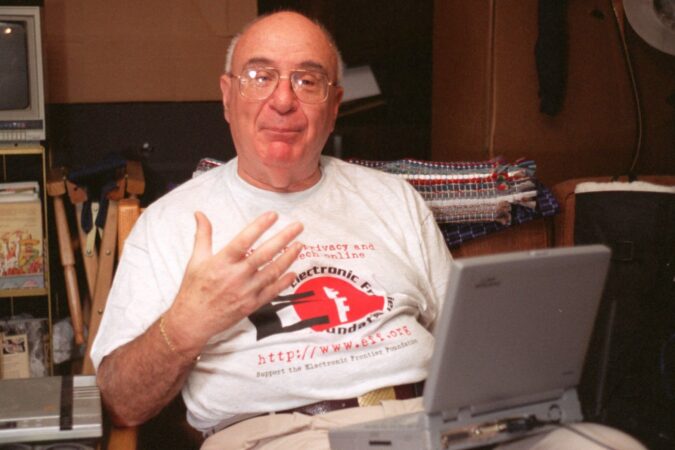
David J. Farber, 91, formerly of Landenberg, Chester County, celebrated professor emeritus of telecommunication systems at the University of Pennsylvania, former professor of computer science at Carnegie Mellon University and the University of Delaware, professor at Keio University in Japan, award-winning pioneer in pre-internet computing systems, entrepreneur, and known by colleagues as the “uncle” and “grandfather” of the internet, died Saturday, Feb. 7, of probable heart failure at his home in Tokyo.
A longtime innovator in programming languages and computer networking, Professor Farber taught and collaborated with other internet pioneers in the 1970s, ’80s, and ’90s. He helped design the world’s first electronic switching system in the 1950s and ’60s, and the first operational distributed computer system in the 1970s.
His work on the early Computer Science Network and other distributive systems led directly to the modern internet, and he taught many influential graduate students whom he called the “fathers of the internet.” He was thinking about a World Wide Web, he said in a 2013 video interview, “actually before the internet started.”
“Farber may not be the father of the internet. But he is, at least, its uncle,” Penn English professor Al Filreis told the Daily News in 1998. “Few have paid such close attention for so long to new trends in the information age.”
Colleagues called him “part of the bedrock of the internet” and a “role model for life” in online tributes. Nariman Farvardin, president of the Stevens Institute of Technology in Hoboken, N.J., said: “Professor Farber did not just witness the future, he helped create it.”
In 1996, Wired magazine said Professor Farber had “the technical chops and the public spirit to be the Paul Revere of the Digital Revolution.”
He joined Penn as a professor of computer science and electrical engineering in 1988 and was named the endowed Alfred Fitler Moore professor of telecommunication systems in 1994. He left Penn for Carnegie Mellon in 2003 and joined Keio in 2018.
Gregory Farrington, then dean of Penn’s School of Engineering and Applied Science, told The Inquirer in 1996: “He’s one of the most engaging, imaginative guys who sometimes alternates between great ideas and things that sound nuts. And I love them both. His life is an elaboration on both.”
He was a professor at Delaware from 1977 to 1988 and at the University of California Irvine from 1970 to 1977. Among other things, he created innovative computer software concepts at UC Irvine, studied the early stages of internet commercialization at Delaware, and focused on advanced high-speed networking at Penn. He also directed cyber research laboratories at every school at which he worked.
Stevens Institute also created a “societal impact award” in 2003 to honor Professor Farber and his wife, Gloria. “I think the internet has just started,” he said in 2013. “I don’t think we’re anywhere near where it will be in the future. … I look forward to the future.”
Professor Farber earned grants from the National Science Foundation and other organizations. He received patents for two computer innovations in 1994 and earned a dozen appointments to boards and professional groups, and an honorary master’s degree from Penn in 1988.
He advised former President Bill Clinton on science and engineering issues in the 1990s and served a stint in Washington as chief technologist for the Federal Communications Commission. Clinton called him a “pioneer of the internet” in a 1996 shoutout, and Professor Farber testified for the government in a landmark technology monopoly court case against Microsoft Corp.
Professor Farber (left) worked with Professor Jiro Kokuryo at the Keio University Global Research Institute in Tokyo.
He championed free speech on the internet, served on technical advisory boards for several companies, and wrote or cowrote hundreds of articles, papers, and reports about computer science.
He was featured and quoted often in The Inquirer and Daily News, and lectured frequently at seminars and conferences in Japan, Europe, Australia, and elsewhere around the world. He wrote an email newsletter about cutting-edge technology that reached 25,000 subscribers in the 1990s, and he liked to show off his belt that held his cell phone, pager, and minicomputer.
He cofounded Caine, Farber, & Gordon Inc. in 1970 to produce software design tools and worked earlier, from 1957 to 1970, on technical staffs for Xerox, the Rand Corp., and Bell Laboratories. In a recent video interview, he gave this advice: “Learn enough about technology so that you know how to deal with the world where it is a technology-driven world. And it’s going to go faster than you ever imagined.”
David Jack Farber was born April 17, 1934, in Jersey City, N.J. Fascinated by gadgets and early computers in the 1940s, he built radios from wartime surplus components as a boy and helped make a unique relay device with a punch card in college. “The card reader was three feet big, but it worked,” he told the Daily News in 1998.
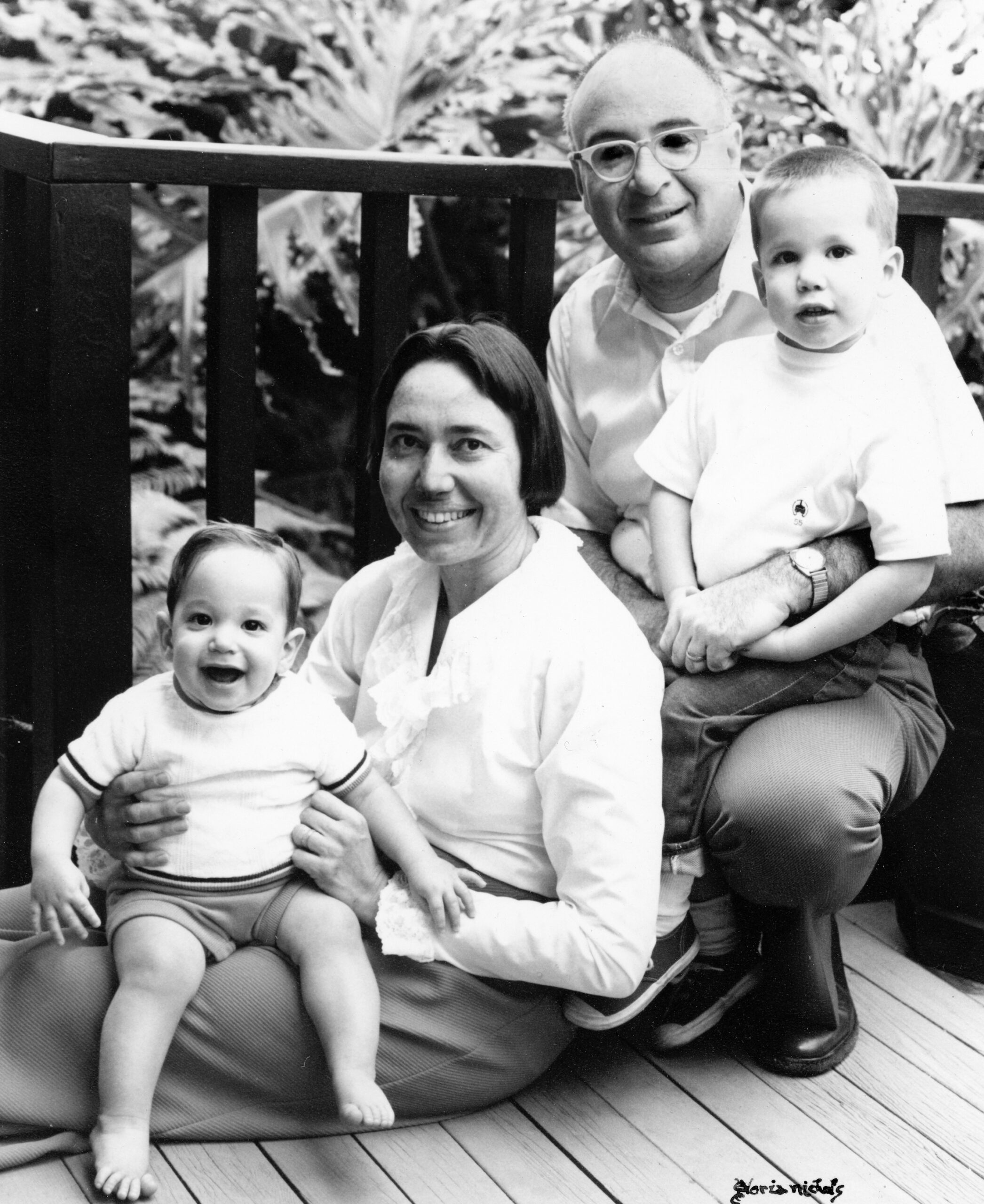
Professor Farber enjoyed time with his family
He considered being a cosmologist at first but instead earned a bachelor’s degree in electrical engineering and a master’s degree in math at Stevens.
He met Gloria Gioumousis at Bell Labs, and they married in 1965. They had sons Manny and Joe, and lived in Landenberg from 1977 to 2003. His son Joe died in 2006. His wife died in 2010.
Professor Farber enjoyed iced coffee and loved gadgets. He was positive and outgoing, and he mixed well-known adages into humorous word combinations he called “Farberisms.”
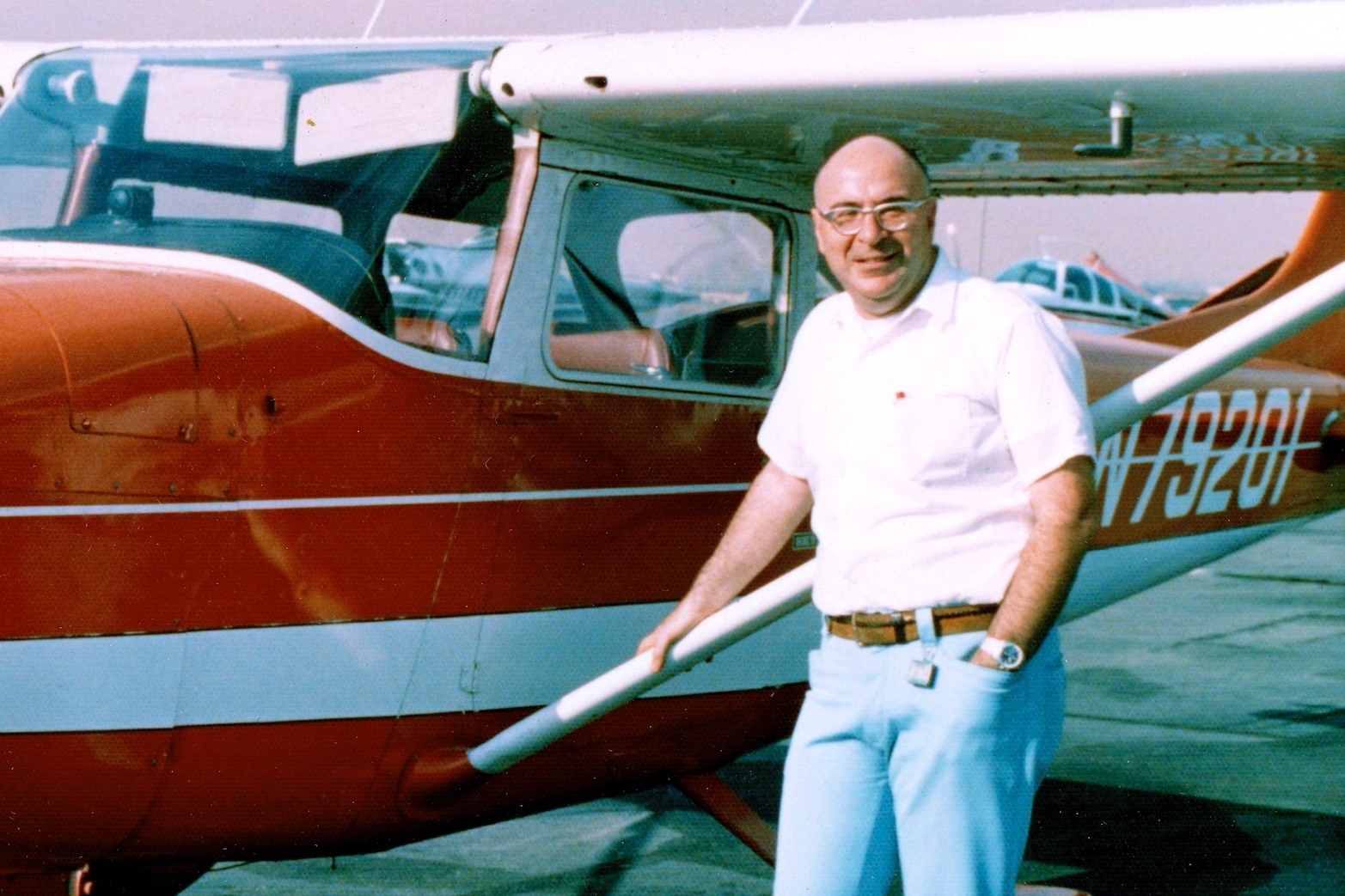
He was an experienced pilot and an avid photographer. In 2012, to honor his son, he established the Joseph M. Farber prize at the Stevens Institute for a graduating senior.
Mr. Farber was an experienced pilot who could fly solely on cockpit instruments.
“He was bold,” his son Manny said. “He connected to a lot of people and was close to his friends. He worked on big projects, and it wasn’t just theoretical. He built things that work.”
In addition to his son, Professor Farber is survived by his daughters-in-law, Mei Xu and Carol Hagan, two grandsons, and other relatives.
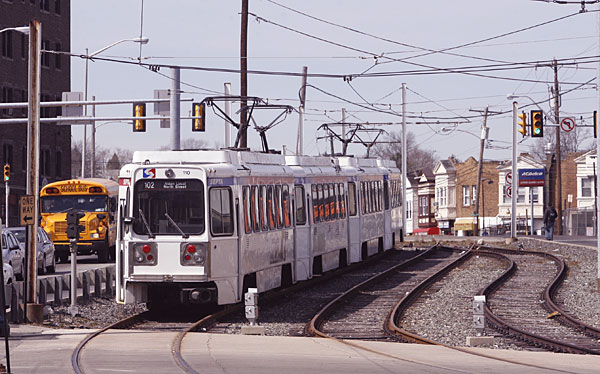
Rides on the two trolley lines serving Delaware County promise to be safer but longer with a modern signal system scheduled to go live on Monday, SEPTA said.
The upgraded signals on the D1 and D2 trolley lines will require operators to make more gradual accelerations and decelerations. They will also enforce speed limits and stop signals with automatic braking if needed.
“It will reduce the possibility of operator error,” SEPTA general manager Scott A. Sauer said. “They won’t be able to speed and risk derailment. They won’t be able to violate stop signals or misaligned switches.”
But the computer won’t replace the judgment of the people operating a trolley, Sauer said. Operators will get an alert, and the system provides backup if they cannot correct it in time, he said.
Trips will be up to 15 minutes longer on the D1 route and 10 minutes on the D2 route, depending on where a passenger boards and gets off the trolley.
The trolleys operate between Media and the 69th Street Transportation Center in Upper Darby, and between Sharon Hill and the transit hub. They were formerly called Routes 101 and 102.
SEPTA accounted for the increased Delaware County trolley travel times in the new schedules, which begin Monday.
It took about a decade and $75 million to install the system, called Communications-Based Train Control, on the Delco trolleys, said John Frisoli, SEPTA’s top rail signals engineer. Radios communicate between the control system and the trolleys.
A similar system has operated in the Center City trolley tunnel since 2005. SEPTA has been adding safety features to its rail-signal systems for about 20 years, including the installation of Positive Train Control on Regional Rail, which controls train speed and applies automatic brakes to prevent crashes caused by human error.
Two men have been arrested after breaking into a Lululemon store in Ardmore and allegedly stealing nearly $11,000 in merchandise, police said.
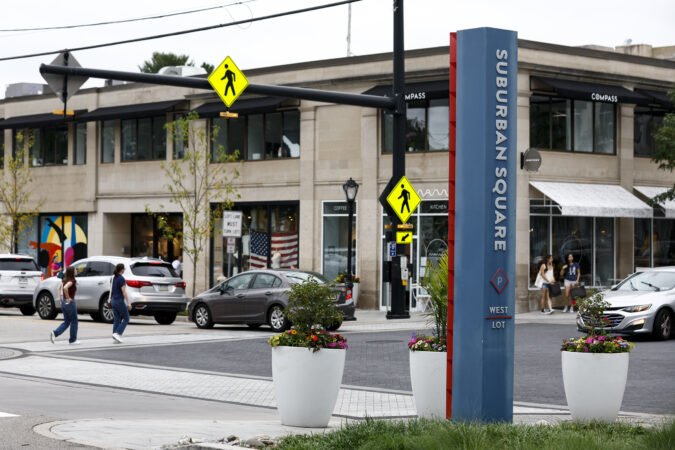
Quran Harmon, 23, and James Jordan, 49, both of Philadelphia, used a sledgehammer to break through the front door of the Lululemon in the Suburban Square shopping center on Jan. 6 at 1:52 a.m., according to the Lower Merion Township Police Department.
Within five minutes, surveillance footage shows, Harmon and Jordan cased the Lululemon, broke the front door, and grabbed as much clothing from the men’s section as possible, said Lower Merion Police Superintendent Andrew Block. Afterward, police said, they fled the scene in a U-Haul pickup truck.
Lower Merion detectives soon identified the suspects and, with the help of Philadelphia police, tied them to a similar sneaker burglary at a Famous Footwear store in Philadelphia the night before.
Police served a search warrant five days after the robbery at a residence in Philadelphia, where merchandise from the Lululemon and Famous Footwear thefts was recovered, authorities said. Harmon turned himself in to Lower Merion police on Jan. 29 and is being held at the Montgomery County Correctional Facility.
Jordan was arrested on Feb. 6 by Upper Moreland police in connection with a separate theft-related crime and is also being held at the Montgomery County Correctional Facility while awaiting burglary and theft charges in the previous robberies.
You may have read this somewhere before: Computer models are seeing the potential for a significant winter storm to affect the Philly region on yet another weekend.
Those ingenious machines continue to predict that a storm will intensify off the Southeast coast Sunday into Monday. But “a large amount of uncertainty” remains about whether it will generate accumulating snow in the Philadelphia region, the National Weather Service said in its morning discussion Thursday. In the early going, areas south and east of Philly were the likeliest targets.
Based on past experience, not to mention the nonlinear chaos of the atmosphere, about the only thing certain was that they would be changing their stories multiple times in the next few days, as would their virtual peers.
In the short term, it is highly likely that, along with a certain dreariness, the region will be getting something that has been mighty scarce lately — rain. Philly’s rain total this month is under 15% of normal. Over the last 60 days throughout the region, it has been 40% to 50% below normal.
The forecast for the rest of the workweek in Philly
Our Trenton snow observer photographed these yesterday… inverse snow tracks! The snow was walked in when it was changing to sleet (ice pellets) back on January 25th, then the footprints filled up with sleet, and now the softer snow around them is melting faster than the sleet. pic.twitter.com/rLJvruzZrb
Atop the remnants, generally light winds have been aiding and abetting a rather stagnant air mass. A “code orange” air quality alert was in effect for South Jersey Thursday, and health officials advised those with respiratory conditions to limit outdoor exposure.
The primary irritants were tiny particulates, about 30 times smaller in diameter than a human hair.
Rain is likely to be in the air Thursday night into Friday, and it could be a substantial amount, on the order of a half-inch or more. So far this month, officially 0.25 inches have been measured at Philadelphia International Airport.
The moist air and the rain should erase more of the snowpack, “but we don’t want the snow and ice to melt too quickly,” said Ray Martin, a lead meteorologist at the National Weather Service Office in Mount Holly. No significant flooding is expected, just some potential damage to footwear.
Temperatures are expected to top out in the 40s Thursday and Friday.
About the weekend storm potential
It may hit 50 degrees on Saturday with an appearance of the sun. So much for the easy part.
Come Sunday, “there could be some rain or snow,” said Matt Benz, senior meteorologist with AccuWeather Inc.
A storm is due to slide across the South and eventually regroup off the Atlantic coast on Sunday.
But Benz pointed out that a key feature of the potential storm still was over the Pacific and not due to make landfall until sometime later Thursday, when it would be captured by land-based observation and give the machines a clearer idea of its intentions.
And it is not at all clear how much cold air would be available for snow, Benz said, but if the storm intensifies sufficiently, “it can manufacture its own cold.” Another factor is just where off the coast the storm would be when it matured.
In case you’re wondering why the atmosphere seems to pick on Sundays, having storms show up in seven-day cycles is a common phenomenon.
They often migrate in 3½-day cycles, which has to do with the rhythms of storm movements as they travel across the country, and it so happens that the more significant one has been arriving on the seventh day.
It keeps happening until it doesn’t, and it’s still very possible that it doesn’t this time around.
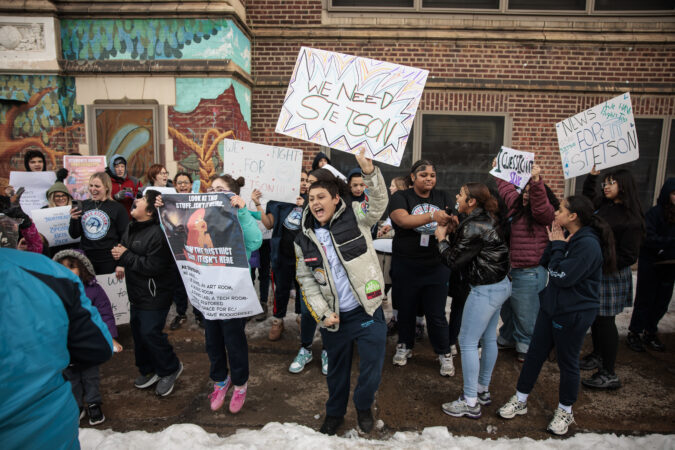
As cars whizzed by on B Street, one student banged a drum and another struck a cymbal. Others waved signs and marched in circles.
“Save our school!” the group of about 50 middle schoolers shouted outside Stetson Middle School in Kensington last week. “Save Stetson!”
Stetson is one of 20 schools Superintendent Tony B. Watlington Sr. has proposed closing as part of a $2.8 billion facilities plan. Officials say closures are necessary to improve educational outcomes and equity system-wide, and to balance enrollment in a district that has 70,000 empty seats.
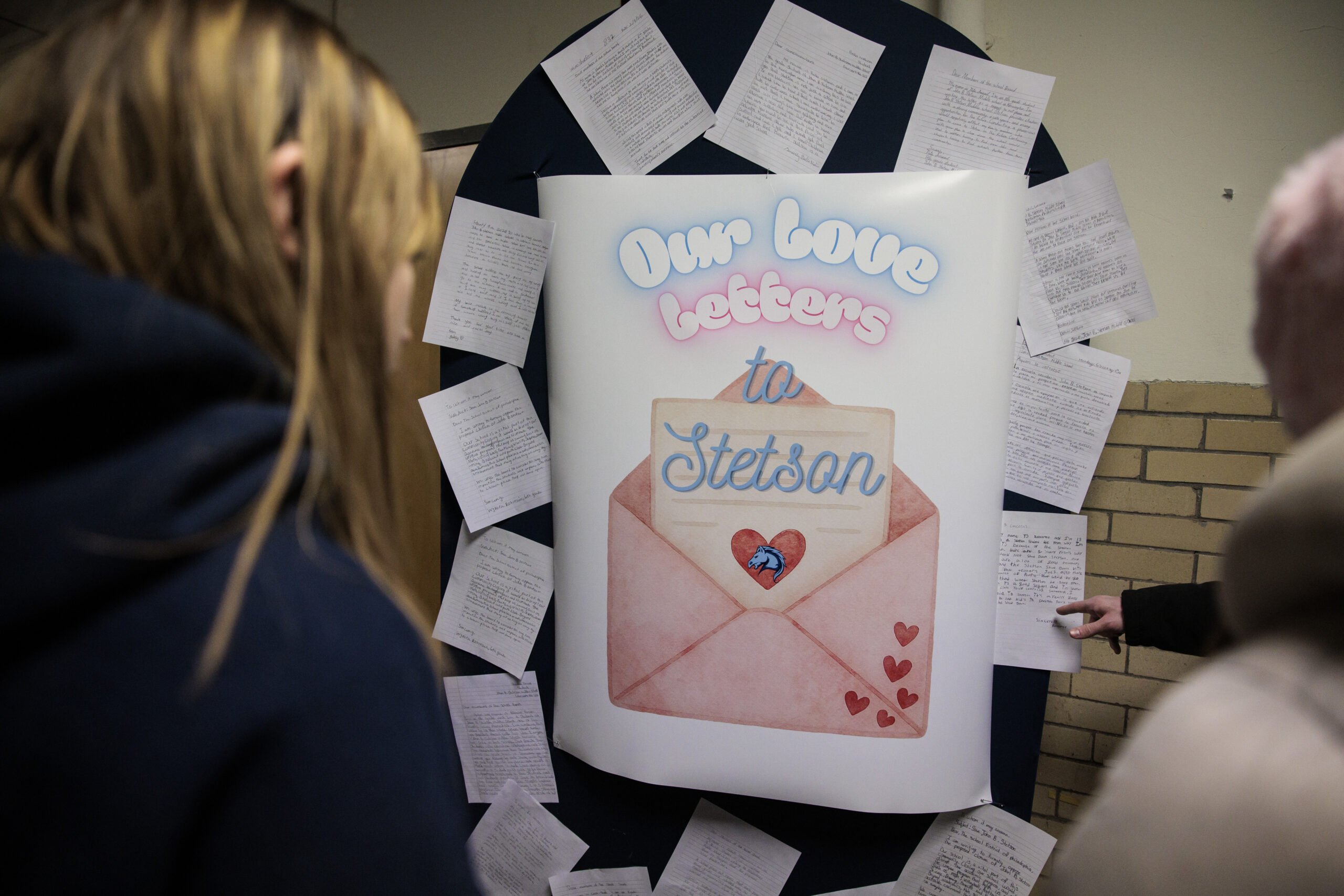
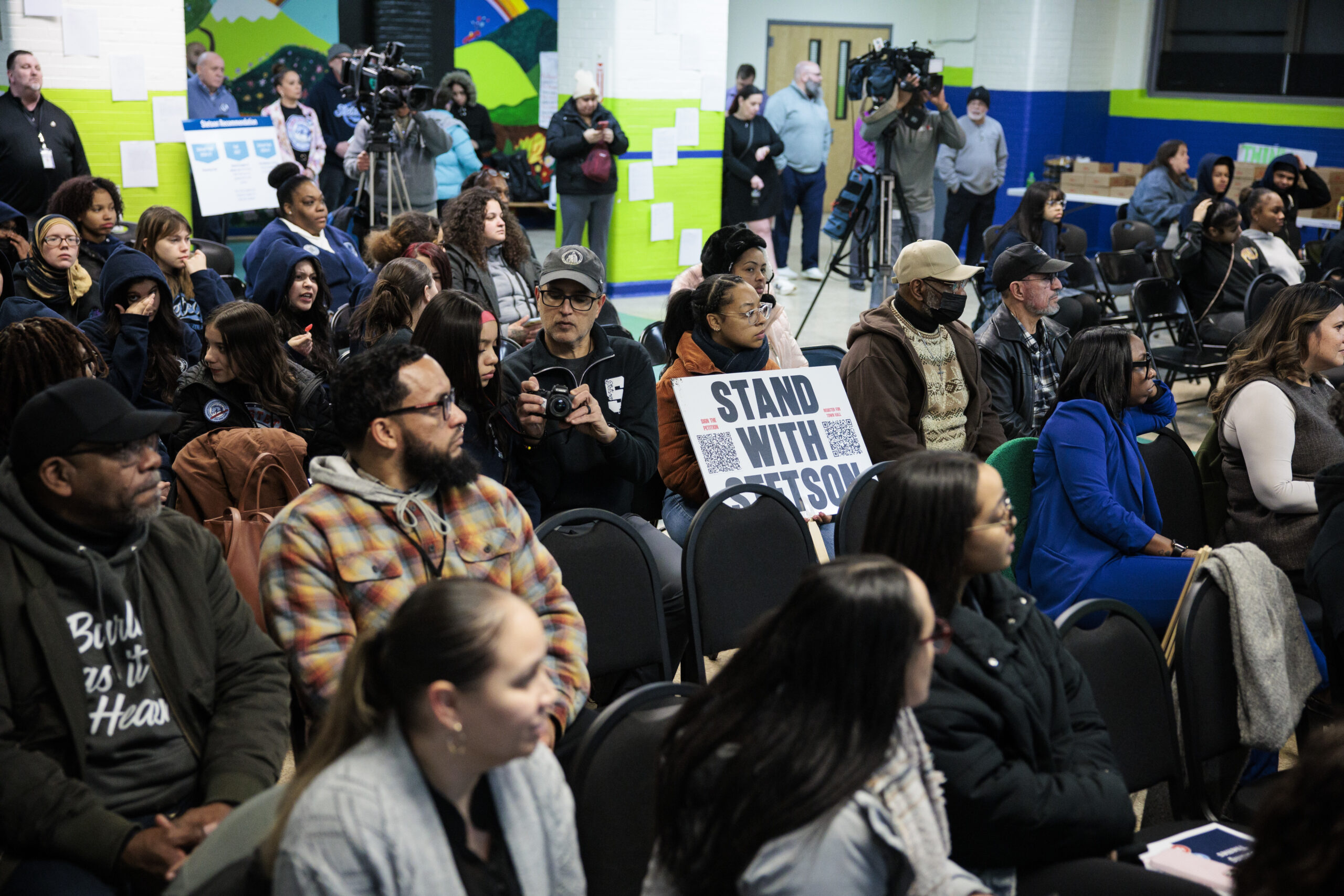
Love Letters to Stetson decorate the hallway during a community meeting at John B. Stetson Middle School in Kensington last week. Stetson is one of 20 Philly public schools facing closure.
But Stetson isn’t going down without a fight.
The school is 59% occupied, by the district’s calculations, and its building is in “unsatisfactory” condition. Stetson also scored “poor” on program alignment, a measure that takes into account a school’s ability to offer “appropriate spaces” for things like art, music, physical education, and career and technical education.
Its supporters say Stetson has been left to languish and that their neighborhood is overrepresented on the closure list. The district, they say, is taking away a community that’s been a constant for families in a struggling neighborhood at the center of the city’sopioid crisis.
“You tell this community that they are not worth investment,” one Stetson studentsaid at a meeting at the school last week. “How is it equitable to shut a school in a neighborhood that already lost so much? If this building needs repair, fix it for the children, not for the administration.”
Twelve requests to fix a leaky roof
The district has said it plans to hold on to the Stetson building and operate it as “swing space” — a building that can be used to relocate students from other schools that must temporarily shut down to accommodate repairs.
Instead of closing soon, the district is proposing phasing Stetson out gradually. The school would stop accepting new fifth graders in 2028, and close in 2030.
Students who previously would have gone to Stetson will go to Cramp and Elkin elementaries, which will grow to accommodate middle grades. Both schools are less than a mile from Stetson.
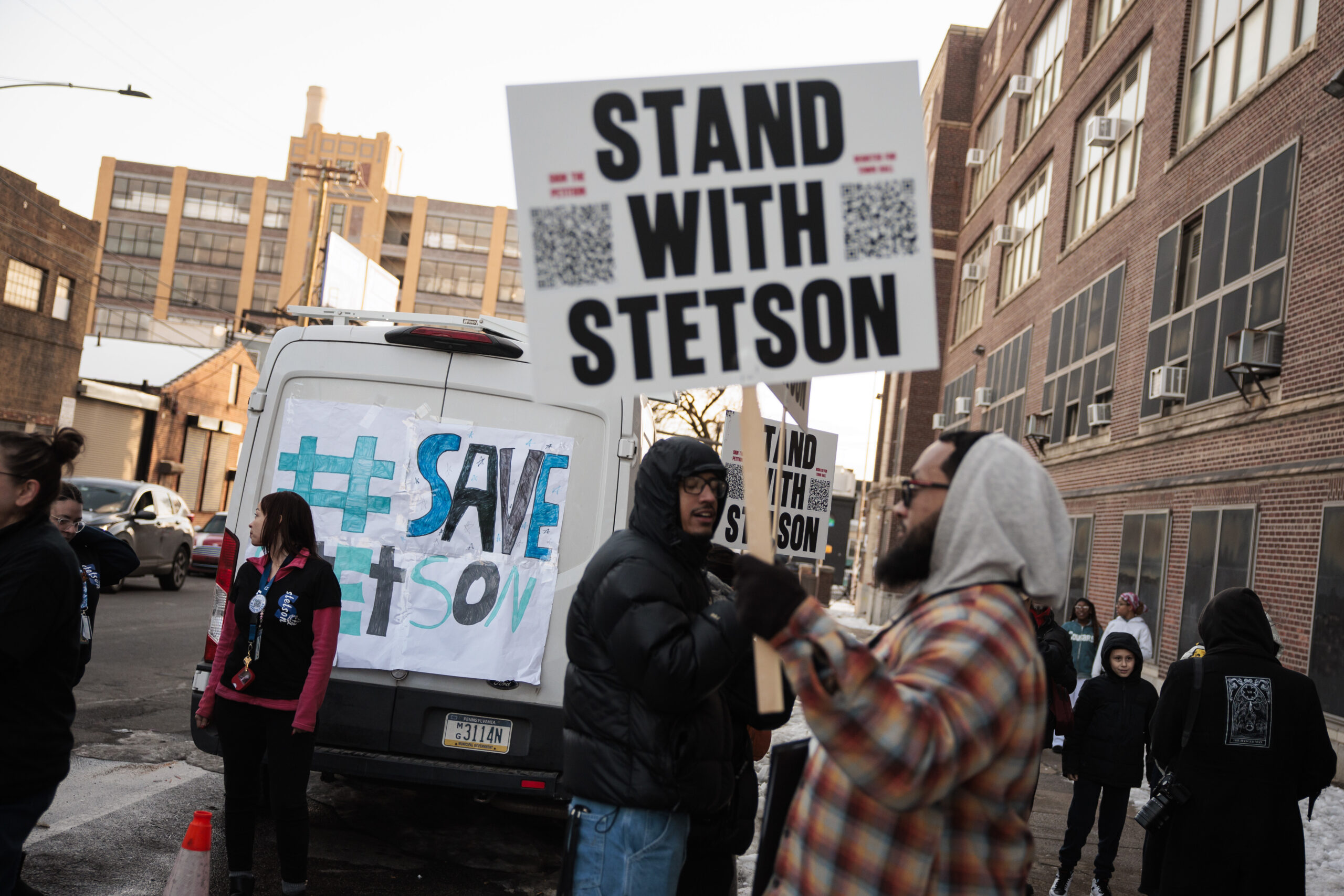
Students, teachers and supporters rally before a community meeting at John B. Stetson Middle School on Thursday, Feb. 12, 2026 in Philadelphia. Stetson is one of 20 Philly public schools facing closure.
Officials have also said the move to shut downStetson is part of a larger strategy of movingaway from middle schools and focusing instead onK-8 schools.
Community angst spilled over at the closing meetinglast week, with audience members booing district officials who were there to present information and answer questions, and applauding for those who spoke up for Stetson.
If the district has money to spend on fixing up buildings, why not spend on Stetson’s building, students asked.
Students and attendees listen during a community meeting at John B. Stetson Middle School last week.
“We have a fourth floor,” one sixth grader said. “Y’all could just fix that, y’all could fix the pipes, y’all could fix everything.”
Another student said she was frustrated by mold in the school, and a leaky roof.
“I heard that it’s your fault,” the student said.
Later, at a Tuesday City Council hearing, Councilmember Quetcy Lozada told Superintendent Tony B. Watlington Sr. that Stetson staff have put in 12 separate requests to fix the leaking roof.
“That roof is still leaking,” a frustrated Lozada said. “Can I have someone please today commit to going to Stetson and checking their leaking roof?”
Watlington said he would “make that happen.”
‘The void that it’s going to leave behind’
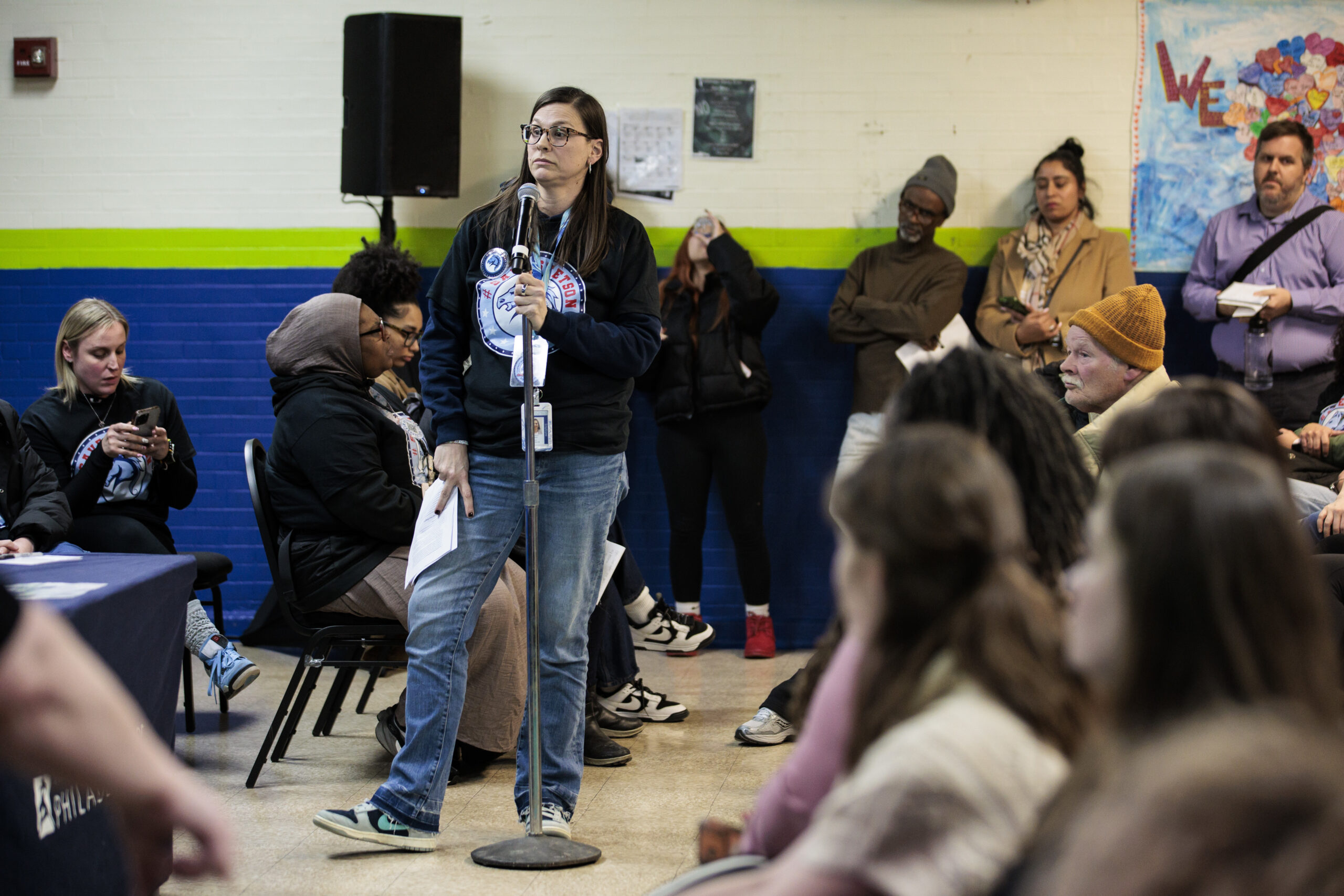
The district got the Stetson call wrong, said Kathryn Lajara, a special-education teacher at the school.
“Our school is being penalized for allegedly lacking space — P.E., special education, art,” Lajara said. “These conclusions are based on incomplete and misleading information, not on lived reality of what happens in our building every single day.”
Special ed coordinator Kathryn Lajara speaks during a community meeting at John B. Stetson Middle School last week. Lajara and others spoke out against the recommendation to close the school in Kensington.
Stetson has an art lab, rooms for piano class, dance, a music room, anda photography room, Lajara said. And it serves 140 students with disabilities, despite the district saying it had inadequate special-education spaces.
Lajara was also frustrated by the district’s upkeep of the building.
“We fight the dripping water every day from the roof that you continue to neglect,” Lajara told district officials at the community meeting.
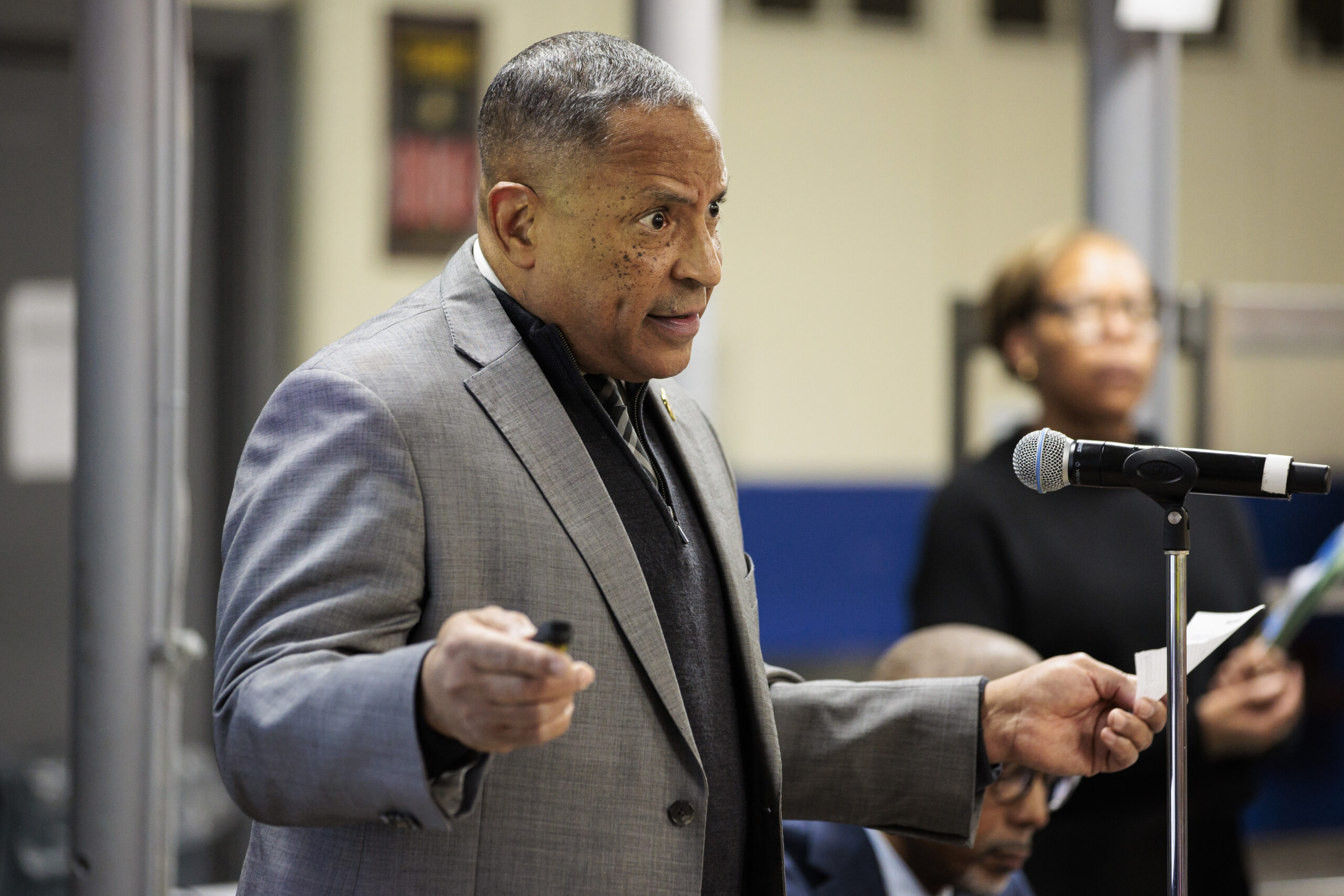
“I’m going to admit to you: We have neglected this building over decades,” Deputy Superintendent Oz Hill told the audience.
Lajara looked at Hill.
“Instead of continuing to neglect, how about we decide that our community and our students are best to invest in?” she said.
Deputy Superintendent Oz Hill speaks during a community meeting at John B. Stetson Middle School last week.
Crystal Pritchett, another Stetson teacher, suggested the district’s decision to send students to Cramp and Elkin was not in tune with neighbors’ wishes about safety and comfort.
Families have safety concerns about sending their kids to other schools, Pritchett said.
“You know nothing about this community,” Pritchett said. “You aren’t listening.”
Stetson opened in 1915 and was a district schoolfor nearly 100 years. It turned into a charter school runby the nonprofit Aspira in 2010, but the district took it backin 2022 after Aspira failed to meet district standards.
Abandoning it altogether is unthinkable, said the Rev. David Orellana, a pastor at CityReach Church in Kensington.
“I don’t think we’re taking into account the negative impact and the void that it’s going to leave behind,” Orellana said. “Taking Stetson away is taking the heartbeat of this community.”
Raymond and Anna Wakeman had returned from dinner early on a Saturday night and were relaxing on the couch with their two rescue dogs in their Northeast Philadelphia home. Cricket, a pit bull, rested his head on Raymond’s shoulder. Jax, a miniature pinscher, was curled up next to Anna.
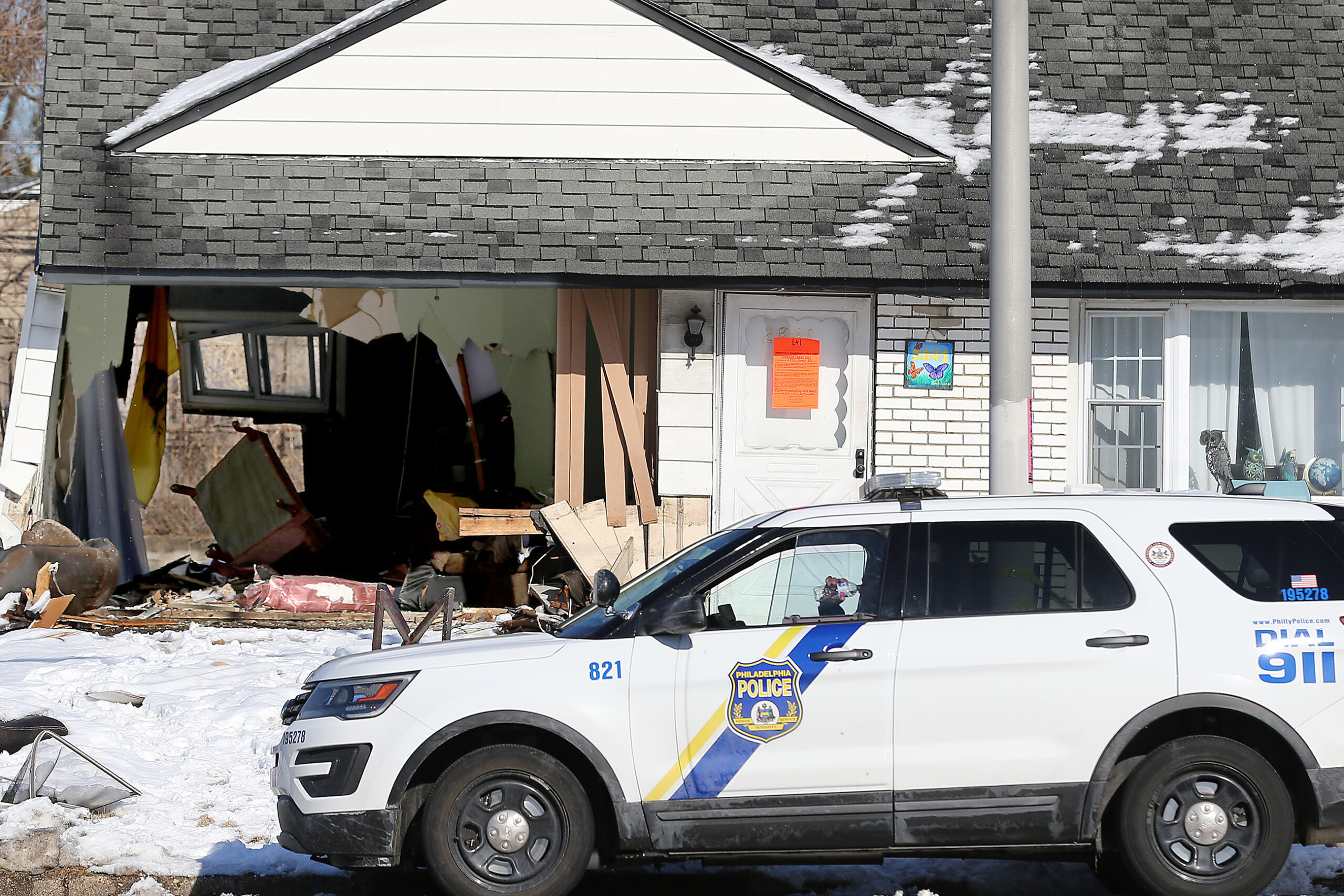
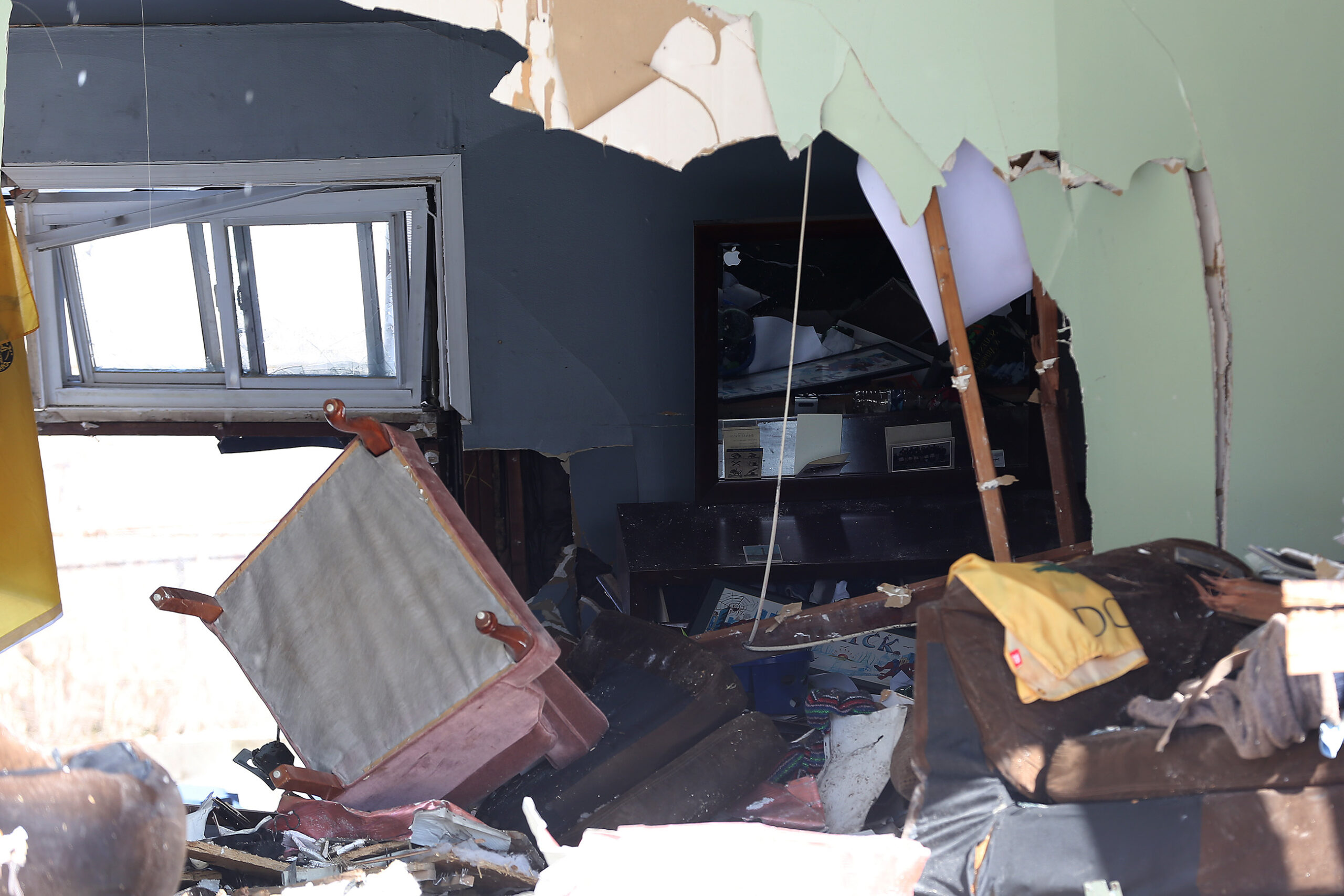
In an instant, a 2014 Dodge Dart exploded through the front of the Wakemans’ home and into their living room.
Firefighters arrived to find Anna in another room, pinned under the silver Dodge and gravely injured. Rescuers worked feverishly to free her from the wreckage and rush her to the hospital. Jax was dead. Cricket underwent emergency surgery, but died soon after.
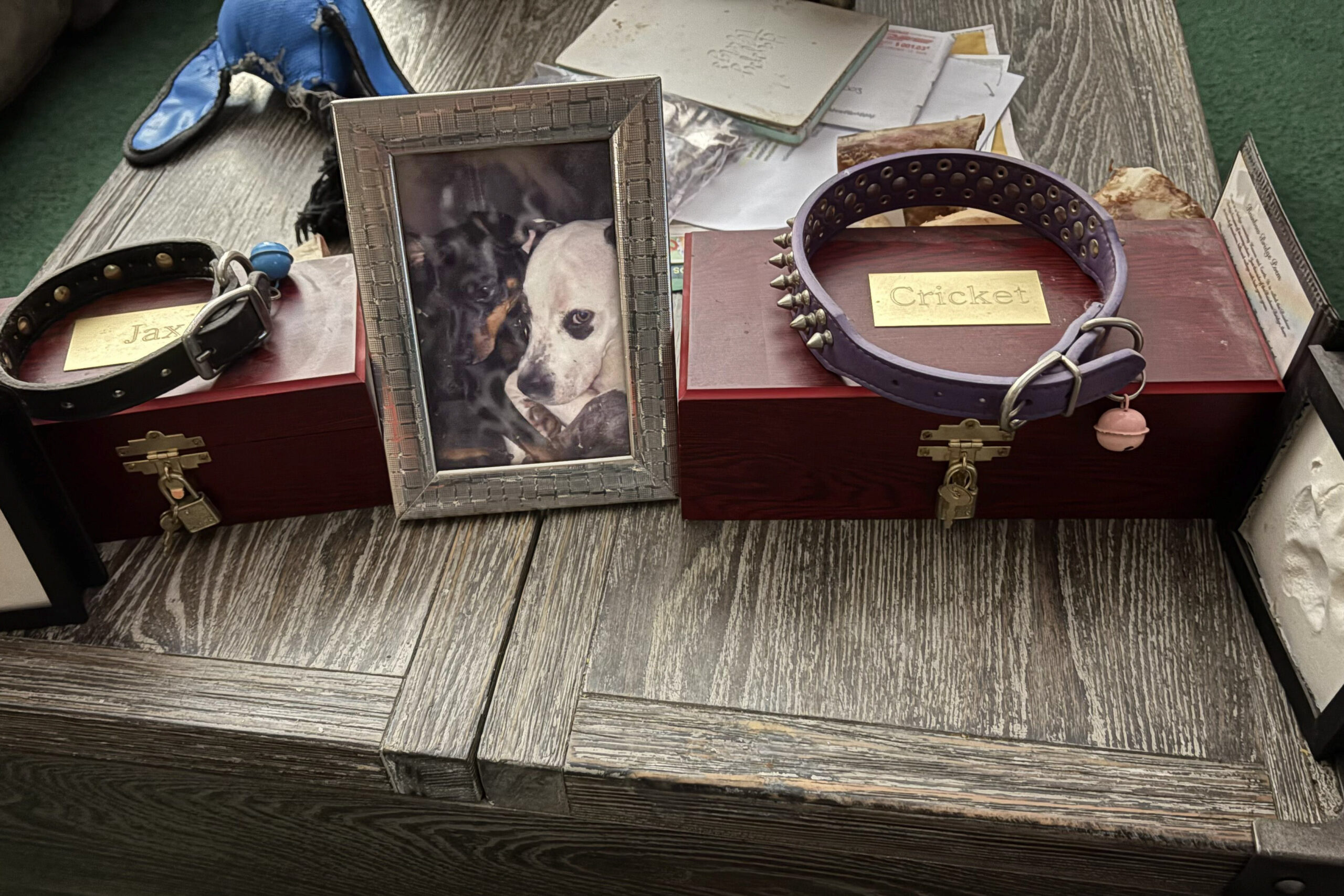
Anna Wakeman assembled a memorial to the family’s two rescue dogs, Jax and Cricket, who were killed by a Gregory Campbell, a Philadelphia police officer who crashed his car into her home in 2021. Campbell spent hours consuming alcohol at a bar operated by the Fraternal Order of Police Lodge 5.
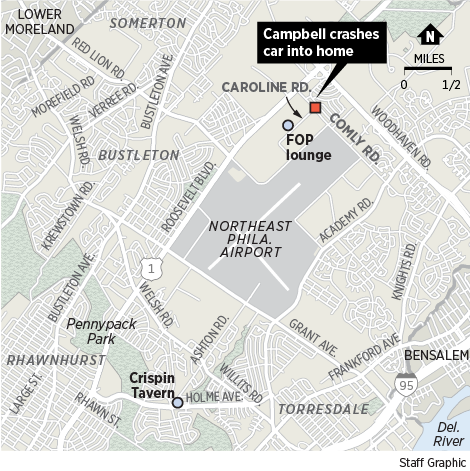
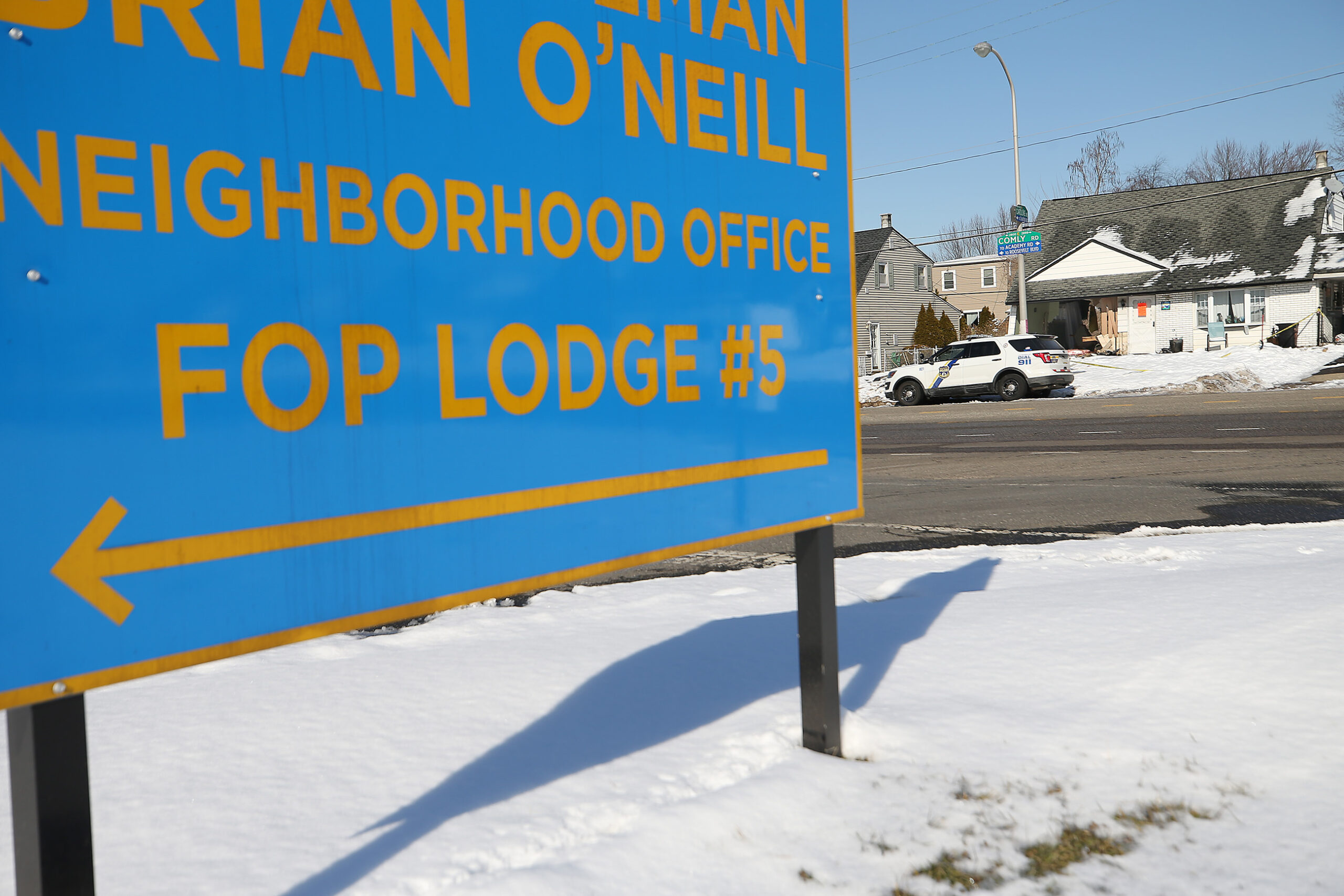
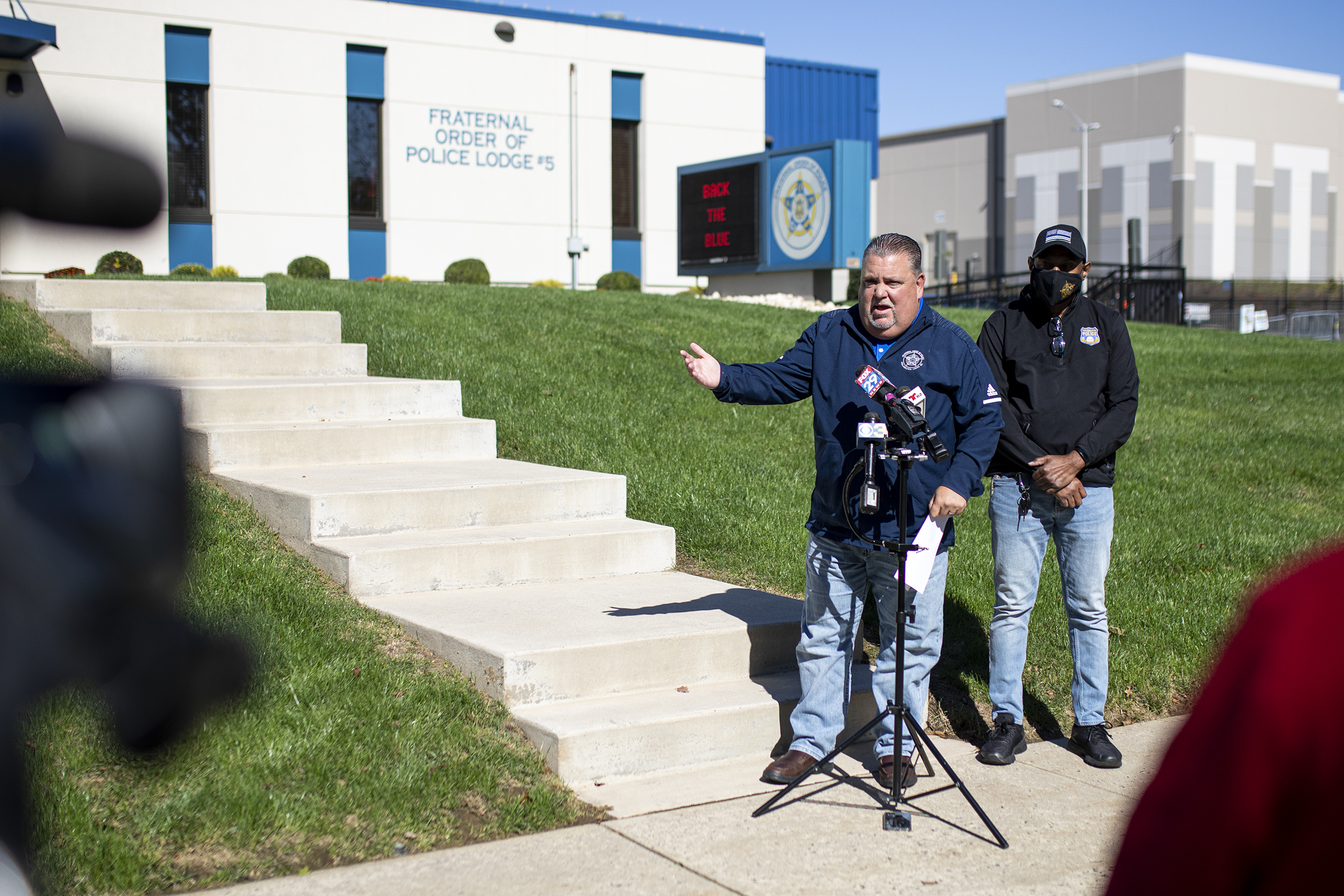
The driver, off-duty Philadelphia Police Officer Gregory Campbell, had been drinking since midafternoon on Feb. 6, 2021, and a lawsuit would later allege he had consumed as many as 20 alcoholic beverages. He had most of them where he ended his evening, at the 7C Lounge, a members-only club for active and retired cops operated by the Fraternal Order of Police Lodge 5, inside the union’s headquarters.
Campbell was arrested and fired from the police force after the crash. In June 2022, a Common Pleas Court judge sentenced him to 11½ to 23 months in prison.
“I am so sorry,” Campbell told the Wakemans in court, “for everything I’ve put you and your family through.”
Campbell’s accident and subsequent trial were widely covered at the time. But an Inquirer investigation has found troubling new details about that crash and the aftermath that were never made public, and identified two additional auto accidents tied to the 7C Lounge. The findings raise questions about how drunken-driving cases are investigated when they involve a powerful police union operating its own bar.
Records show that after crashing into the Wakeman house — and while it was still unclear whether Anna Wakeman had survived — Campbell was allowed to confer with FOP representatives and delay a blood-alcohol test for nearly six hours.
Gregory Campbell’s Dodge Dart sped from the parking lot outside the FOP’s 7C Lounge into the Wakemans’ home, killing the family’s two dogs and almost killing Anna Wakeman.
The delay was an apparent violation of Pennsylvania law, which requires suspected drunk drivers to undergo testing within two hours of being behind the wheel unless good cause is given. The records include no explanation for the delay.
An officer in the police department’s Crash Investigation District later testified in a deposition that he had never before encountered a person accused of driving under the influence who was allowed to seek guidance from his labor union before undergoing blood testing.
When Campbell’s blood was finally tested, his alcohol level registered at 0.23%, almost three times the 0.08 legal threshold for drunken driving. A toxicologist later estimated Campbell’s blood-alcohol content at the time of the accident was as high as 0.351%, more than four times the legal limit.
The Wakemans filed a lawsuit in Philadelphia Common Pleas Court against Campbell, the 7C Lounge, and Lodge 5. The couple’s attorney hired a liquor liability expert — a former police officer who had been an investigator for the New Jersey Division of Alcoholic Beverage Control for 11 years — who concluded that there was “overwhelming evidence” that the 7C Lounge had overserved Campbell and failed to monitor him or intervene.
The “actions and inactions were negligent and reckless” and “contributed directly to the accident, damages and injuries sustained by the Wakeman family,” the expert, Donald J. Simonini, wrote in his 23-page report.
On the night of the crash, a Philadelphia police accident investigator attempted to interview employees working at the 7C Lounge but was unable to do so because the bar had closed hours earlier than scheduled. The investigator said subsequent attempts to obtain information from the employees were also unsuccessful.
A manager later testified that he was “following orders” when he shut down the bar early.
An aerial view of Lodge 5’s headquarters, the 7C Lounge, and Anna and Raymond Wakeman’s home.
At that time, Lodge 5 was led by its longtime president, John McNesby. His chief of staff, Roosevelt Poplar, was vice president of the union’s Home Association, a nonprofit that operates the 7C Lounge.
Neither McNesby nor Poplar responded to requests for comment.
State law grants regulators broad authority to crack down on bars found to have overserved customers, with sanctions ranging from fines to suspension or revocation of a liquor license. Yet the FOP’s bar has faced no regulatory repercussions during the 16 years it has operated at its Northeast Philadelphia headquarters.
Paul Herron, a Philadelphia lawyer who specializes in liquor licenses and enforcement, said that the Pennsylvania State Police Bureau of Liquor Control Enforcement (BLCE) has “very stringent requirements” and that most establishments tend to have at least minor violations, such as improper recordkeeping. He said it is “very unusual” that the 7C Lounge has a clean slate given the severity of the Campbell case.
Campbell “had consumed monumental amounts of liquor, and for that to just not show up anywhere is awfully strange,” Herron said. “I would expect that if this happened to another place, that this would come to light, to the knowledge of the bureau, and they would ultimately issue a citation.”
In another incident tied to the 7C Lounge, regulators did not open an investigation because the union did not report what had happened.
The Inquirer viewed two minutes and 40 seconds of surveillance footage of the 7C Lounge parking lot from the evening of Nov. 22, 2021. The recordings come from three separate cameras and show a patron walking out of the 7C Lounge and getting into the driver’s seat of a compact SUV. At 11:21 p.m., the driver backs up, then accelerates forward into a parked truck, hitting it hard enough to slam the truck into the front bumper of an SUV parked behind it.
The motorist pauses a few seconds, reverses, then accelerates past the damaged vehicles and runs over two orange cones. The driver then plows through the FOP’s fence on Caroline Road, destroying a section of it, before disappearing from the camera’s view.
A source with firsthand knowledge of the incident said Poplar reviewed the footage of the parking lot crashes and took notes, including “4 cars hit” and “fence,” with the time each object was hit.
Roosevelt Poplar won a heated reelection battle for the FOP’s presidency in 2025. He previously served as the vice president of the union’s Home Association, a nonprofit that operates the 7C Lounge.
A police spokesperson said there is no record that the crashes in the 7C Lounge parking lot had ever been reported to authorities.
Herron said a typical bar would have almost certainly reported that type of incident.
“It’s just not something that would have happened maybe if it didn’t involve the police or the FOP,” he said.
‘I was dizzy’
There are potential conflicts of interest if law enforcement officers with arresting powers own establishments that serve alcohol. In fact, state law prohibits police officers from holding liquor licenses because they are responsible for enforcing liquor laws.
But that restriction does not extend to the FOP’s Home Association because it is considered part of a fraternal, nonprofit organization. State law defines such entities as “catering clubs” — much like a VFW post or an Elks Lodge — and permits them liquor licenses.
It’s a loophole in the law that Anna Wakeman, who barely survived the accident with Campbell’s Dodge, doesn’t understand.
“The cops can drink as much as they want there,” Wakeman, now 58, said. “The bartenders serve them till they’re blackout drunk and let them leave.”
When Campbell crashed into the Wakemans’ home, it was the second time the family’s property had been damaged by a patron who left the FOP’s bar impaired. Less than two years earlier, a former Philly cop had left the 7C Lounge, got into his car, and smashed into Anna Wakeman’s SUV, which was parked in her driveway.
Anna Wakeman and her husband couldn’t stomach the idea of returning to their Northeast Philadelphia home after the 2021 car crash, fearing it could happen again. They moved instead to West Virginia.
On a Sunday night in April 2019, an ex-Philly cop named Damien Walto worked as a DJ at the 7C Lounge, which has an expansive bar with gleaming dark wood and big-screen TVs. Walto was no longer an active member of Lodge 5: He had been fired from the police force in 2010 for allegedly assaulting a woman while off duty, and was later sentenced to three to six months in prison.
Walto left the bar just after 10 p.m. in his GMC Envoy. Rain was falling, the roads were slick, and Walto told a reporter that he lost control of his SUV when he tried to steer past a tractor-trailer on Caroline Road. He careered through the intersection at Comly Road and smashed into Anna Wakeman’s Chevrolet Equinox, which was sitting in her driveway.
The force of the impact crumpled the rear of the Equinox like an accordion and propelled it into Raymond Wakeman’s parked Chevrolet Silverado.
The Wakemans watched Walto stumble out of his Envoy, dazed and disoriented, then stagger along the sidewalk while clutching an Easter basket.
In a recent interview with The Inquirer, Walto said he does not remember if he drank any alcohol at the party, perhaps because he struck his head hard against the steering wheel.
“I was dizzy and messed up,” he said. “I didn’t know what was going on.”
Walto returned to his GMC and fumbled with a screwdriver in an attempt to remove an FOP-marked license plate from his SUV, the Wakemans said. He toppled over and the license plate remained in place, they said.
Walto said he was not trying to hide his link to the police union. “My tag fell off and I was trying to put it back on,” he said.
Police officers arrived at the scene and noted that Walto appeared to be under the influence of drugs or alcohol. They arrested him, and medics transported him to the hospital for chest pain, according to a police report. There is no mention in the report of Walto having suffered a head injury.
At the time of crash, Walto was also facing DUI charges in Montgomery County, court records show. In August 2019, he pleaded guilty there to driving under the influence and was sentenced to up to six months in prison; he spent 72 hours behind bars, he says.
His Philadelphia case was later dismissed.
The fact that the 7C Lounge has been connected to multiple drunken-driving incidents is troubling, experts say.
The 7C Lounge closed for business early the night Campbell crashed into the Wakemans’ house.
“The more accidents that result from serving alcohol at any bar, owned by the police union or anyone else, the more the public would be ordinarily concerned about the continuing operations of that establishment,” said Mark Carter, a longtime employer-side labor attorney and a member of the U.S. Chamber of Commerce’s Labor Relations Committee.
“Here, you’ve articulated a pattern of behavior that would create a legitimate interest by the city or the prosecutor’s office about the continuing operations of that establishment.”
The state BLCE, which has the authority to issue sanctions, would not confirm or deny the existence of any investigation.
‘Watch our boy’
Hours before the Wakemans were nearly killed in their home in 2021, off-duty Philly cops had gathered for what was supposed to have been a somber affair: paying tribute to James O’Connor IV, a police corporal who had been shot and killed in the line of duty in March 2020.
The Crispin Tavern, a small bar on Holme Avenue in Northeast Philadelphia, staged a beef-and-beer fundraiser for O’Connor’s family that afternoon. Among the bar’s patrons was Campbell, who recalled drinking about six beers there before he climbed into his car and drove to the 7C Lounge, court records would later show.
He arrived at the FOP’s bar just after 5:20 p.m. His next three hours inside the establishment are detailed in a report written by Simonini, the liquor liability expert, who watched video footage from the bar’s security feed.
Campbell, who had been on the police force since March 2018, joined a table of five. Nearby, a man in a white shirt had trouble standing and nearly fell several times as he struggled to get his jacket on. He took a swing at another customer who tried to steady him.
Simonini noted that a server walked by the stumbling man four times but did not once ask if he was OK.
During a deposition, an attorney representing the Wakemans asked the 7C Lounge’s bar manager, Ernie Gallagher, about the stumbling man’s apparent intoxication.
Gallagher theorized that instead of being drunk, the man might have suffered from a neurological disorder.
“A lot of times we have a lot of people come in who don’t even drink, and, you know, they have [multiple sclerosis],” Gallagher said. “They fall and they go, ‘He wasn’t even drinking.’”
When reached for comment recently, Gallagher said: “I have no recollection. I have no comment. I have nothing.”
Simonini wrote that Campbell was drinking what appeared to be bottled beer, Twisted Tea, and mixed drinks out of plastic cups. In one 36-minute period, Campbell downed both his own drinks and others served to people at the table.
This consumption went unnoticed by 7C staff, Simonini wrote.
Gallagher said in his deposition that he considers “two drinks an hour” a safe amount to serve a patron.
“Clearly, Campbell and his party were served far more than ‘two drinks an hour,’” Simonini wrote.
At 7:40 p.m., Campbell returned to the bar, where it appeared Gallagher waved him off. Gallagher said in his deposition that he told Campbell, “Yo, you’ve had enough,” and he thought he told a bartender, “Watch our boy, Greg.” That bartender said in a deposition that he had no recollection of Gallagher’s comment.
Simonini wrote in his report that the 7C bartenders “served Campbell and his party 6-7 drinks at a time, and never watched where the drinks were going and to whom.”
Around 8:10 p.m., Campbell finished a bottle of beer and drank from a plastic cup at the bar. He headed to a bathroom but appeared unsteady, Simonini wrote.
Campbell then went outside. Surveillance video appears to show him losing his balance while walking around a snow bank toward his Dodge Dart.
Lawyers showed Campbell footage from the nearly three hours he spent at the 7C Lounge. Asked in his deposition whether he should have been refused alcohol, he answered, “Yes, based on my blood level of intoxication, yes.”
“Could you safely operate a motor vehicle when you left that bar?” the Wakemans’ lawyer asked.
“No,” he replied.
‘Gurgling on blood’
Campbell got behind the wheel at 8:17 p.m. He pulled onto Caroline Road and drove north toward Comly Road.
The posted speed limit in the area is 30 mph.
Campbell’s Dodge rocketed to 82 mph.
He zoomed past a stop sign, then crossed four lanes of traffic before striking a curb at 70 mph. The Dart thundered over the Wakemans’ snow-covered front yard.
As smoke and dust filled his home, Raymond Wakeman stood up, in shock at the devastation that surrounded him. Shards of crushed glass cut his bare feet.
“The car went right by my face and took my dog,” Raymond recalled. “It took Anna and Jax.”
Campbell climbed out of his car, but didn’t seem to “know where he was or what happened,” Raymond said.
Raymond couldn’t find his wife. But he heard faint sounds coming from the undercarriage of the car, which had come to rest in their son’s bedroom.
“She was gurgling, breathing, but gurgling on blood or something,” he said.
Raymond ripped vinyl siding off his house and used it to shovel rubble and debris from the front of Campbell’s car.
Finally, he saw her battered face.
“There was blood coming out of her ears, nose, and mouth,” he said. “Her leg was hanging off. She was barely breathing.”
Medics transported the Wakemans to Jefferson Torresdale Hospital. When the couple’s 17-year-old son, Patrick, arrived at the hospital, a doctor told him his mother was unlikely to survive the night.
“Honestly, I thought that was going to be the last time I’d ever see my mom,” he said.
Police arrested Campbell outside the splintered remains of the Wakemans’ house and transported him to Jefferson Torresdale, where he was handcuffed to a bed and treated for a cut to his forehead. He was dazed and there was a stench of alcohol on his breath, the police report said.
Then he received special visitors at his bedside, according to court records: unnamed FOP representatives.
Poplar, in his deposition for the Wakemans’ lawsuit against the FOP, was asked how the union is notified after an officer is arrested.
FOP President Roosevelt Poplar (right) said in a deposition that the union was contacted shortly after Gregory Campbell crashed into the Wakemans’ home.
“So, this is just like an extra benefit that if you’re a cop that gets locked up, they call your union rep, 911 actually does?” the Wakemans’ lawyer asked.
“Yeah, that’s the only way we could get notified,” Poplar replied.
“I mean, look. There’s a lot of unions out there. Is there a 911 call going to the Teamsters if they get locked up to their union rep?” the lawyer asked.
“I don’t know,” Poplar replied. “I doubt it.”
Shortly after Campbell’s car bulldozed into the Wakemans’ home, a union representative called the 7C Lounge and told the staff to close for the night — even though closing time was not until 3 a.m. — because an officer had been involved in an accident after drinking there.
“I was following orders,” 7C Lounge bartender Andrew Reardon said in a deposition.
A.J. Thomson, the Wakemans’ attorney, alleged in court documents that the bar was closed to “prevent an investigation by Philadelphia Police and for any witnesses to be allowed to disperse prior to interviews. This was a possible homicide investigation that the FOP actively worked to torpedo.”
The FOP denied those allegations in a response to the Wakemans’ lawsuit, and its attorneys argued that bartenders did not serve Campbell while he was visibly intoxicated and did not cause the crash. The union vehemently denied allegations of negligence, recklessness, or carelessness.
At Jefferson Torresdale, Campbell conferred with Lodge 5 representatives and refused to take a blood-alcohol concentration (BAC) test.
Accident investigators obtained a warrant to draw Campbell’s blood, a process that took four hours. His blood was finally drawn and tested at 2:34 a.m., nearly six hours after his arrest.
Even with that delay, Campbell’s blood-alcohol level was almost three times the 0.08 legal threshold.
Those with a level between 0.25% and 0.40% are considered in a “stupor,” meaning they may be unable to stand or walk, and could be in an impaired state of consciousness and possibly die, according to Michael J. McCabe Jr., a toxicologist and expert on the effects of alcohol, who filed a report in the Wakeman lawsuit.
Herron, the liquor license lawyer, said in a case like this, he would expect the State Police Bureau of Liquor Control Enforcement to investigate and issue a citation. An administrative law judge would subsequently hear the case and decide what sanctions to impose.
The minimum fine for serving a visibly intoxicated person is $1,000.
“For more serious cases, if someone is injured, the administrative law judge has the discretion to impose larger fines or suspensions,” Herron said. “The problem with this case is that any investigation was sort of thwarted. It never really got to the point where there was an investigation.”
‘I should have died’
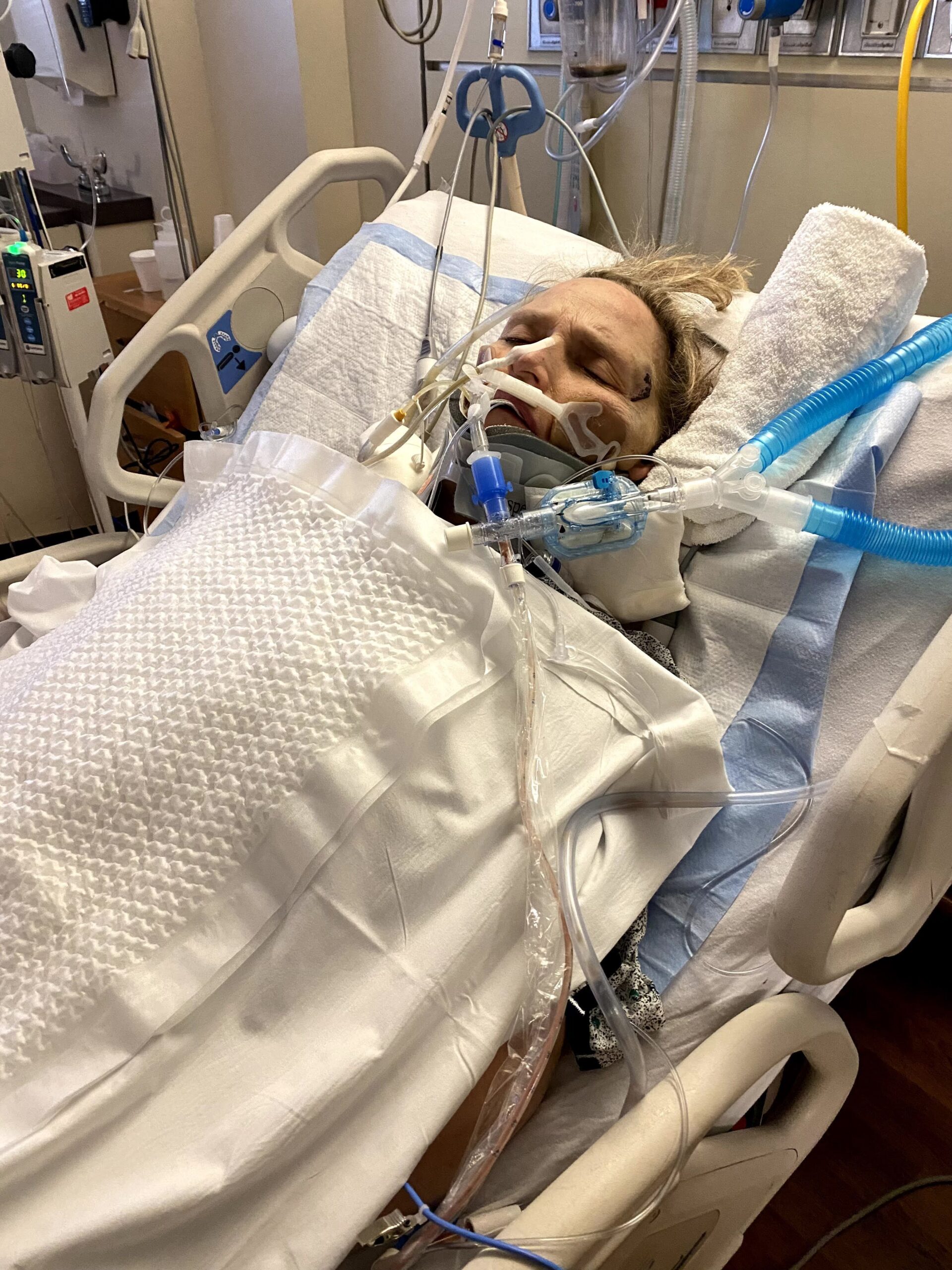
Anna Wakeman spent more than two months in a coma.
She had suffered a collapsed lung, a brain bleed, and a badly bruised heart muscle. Her spleen and her kidney were lacerated. Her sternum, thoracic vertebrae, collarbone, and 13 ribs were broken, along with her left leg.
She remained hospitalized for several weeks, then needed physical therapy.
Anna Wakeman spent more than two months in a coma after she was struck and dragged by Campbell’s car.
“I should have died,” she said. “The only reason I’m here is God was breathing for me.”
The Wakemans’ insurance company paid off the mortgage on their severely damaged home. The couple couldn’t stomach the idea of ever setting foot again inside, so they sold the property to a developer and moved to West Virginia.
They each spoke at Campbell’s sentencing hearing in June 2022.
“I was normal before this,” Anna said through tears, telling the judge she still suffers from a traumatic brain injury and lives in constant pain.
Campbell spent about a year in prison, and then was placed on house arrest.
“The man who did this to me walks free,” Anna Wakeman said in a recent interview “But I don’t have peace. We lost everything. I’m in pain all the time every single day. I’m in prison in my own body.”
The Wakemans sued the FOP under Pennsylvania’s Dram Shop Law, which holds bars liable if they serve alcohol to a drunk patron and that decision leads to injuries or damages.
In 2024, the case was settled for an undisclosed amount.
Records the Home Association filed as a 501(c) nonprofit do not require the kind of specificity that would show how the organization paid the Campbell settlement, or whether any payments were made related to the 2019 Walto crash or the unreported 2021 parking lot incident. An August investigation by The Inquirer found that while the union controls an array of nonprofits — including the Survivors’ Fund, Lodge 5, and the Home Association — its finances are opaque and difficult to track, in part because large amounts of cash move through the organizations.
Nearly five years after the accident that upended her life, Anna Wakeman still questions why 7C Lounge bartenders didn’t stop serving Campbell, or at least call him a cab, that evening.
“They let him leave knowing he was going to get behind the wheel,” she said. “These are officers of the law. They should hold the law sacred. There shouldn’t be different rules for them.”
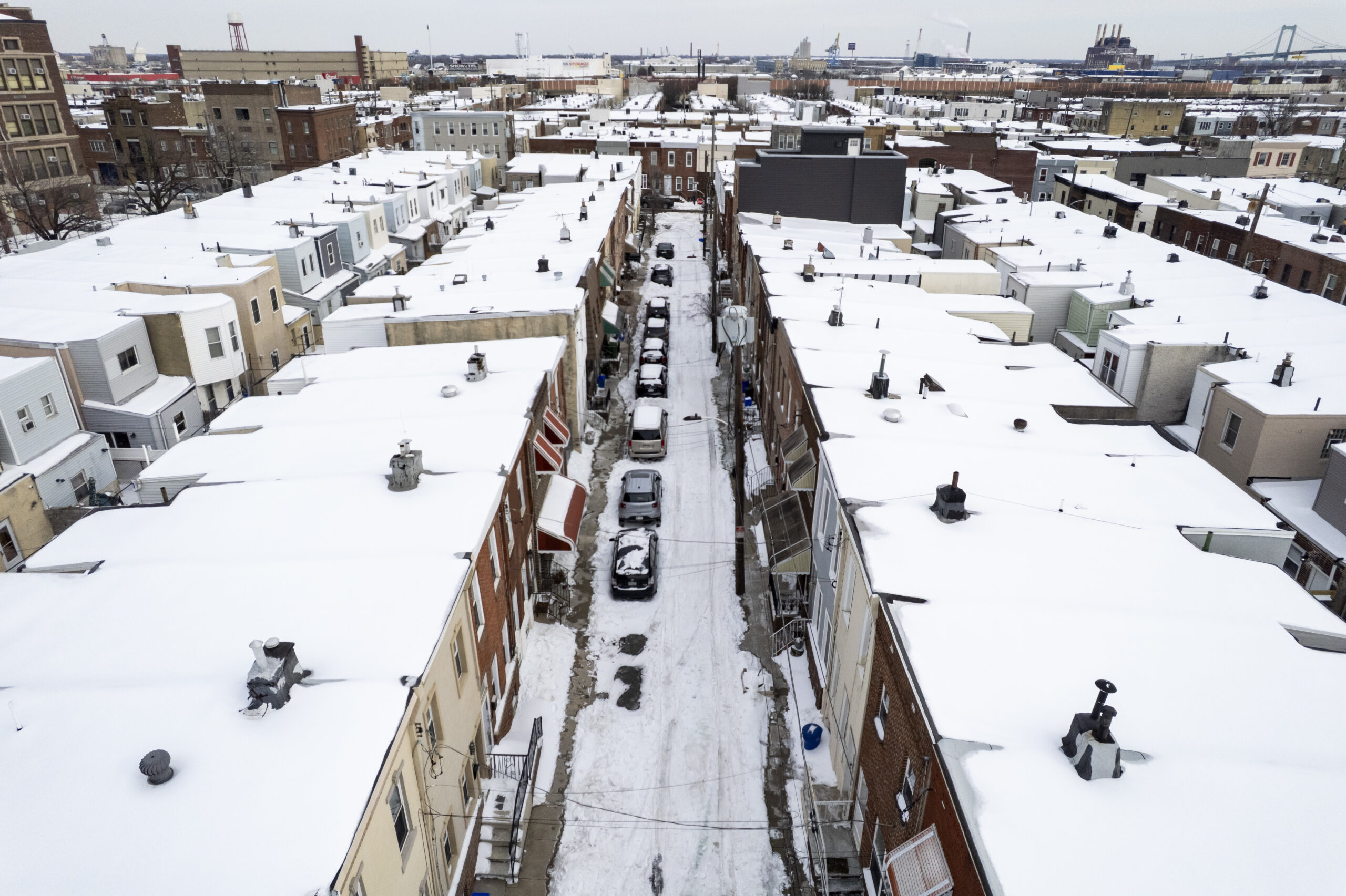
With the arrival of above-freezing temperatures, Philadelphia is declaring an end to an emergency response that lasted 26 days, closing the chapter on an all-hands-on-deck mobilization of various city departments that navigated the biggest snowfall in a decade and the persistent cold snap that followed.
The city’s “enhanced code blue” response began the Friday before a winter storm that blanketed Philadelphia with 9.3 inches of snow and sleet on Jan. 25. The designation allowed the city to deploy support services across departments for some of the city’s most vulnerable, living on the streets.
A preliminary estimate by the city puts the cost of the storm response at about $59 million, which officials said reflects the intensity of the storm and conditions that followed.
“A tremendous City workforce, outreach teams, first responders, nonprofit partners, and community stakeholders came together without hesitation,” Mayor Cherelle L. Parker said in a statement Tuesday. “Because of their coordination, compassion, and commitment, lives were protected during some of the harshest conditions we have faced this winter.”
Amid a bitter cold that hampered snow-removal efforts, the city embarked on a cleanup operation that lasted more than two weeks and combined heavy machinery and old-fashioned manual digging.
Here are some key numbers highlighting how various city departments mobilized and the costs they accrued.
Heavy machinery and dump trucks collecting piles of snow from Germantown and Thompson Street, Philadelphia, Wednesday, Jan. 28, 2026.
$46,021,516 in snow removal
The city crafted its $4.1 million snow operations budget for fiscal year 2026 using a rolling-year average of prior costs.
But the storm brought about a slew of unanticipated expenses and challenges, including snow removal, ice control, and other emergency operations.
The city looked to contractors to bolster its workforce as it launched a massive effort to treat and plow streets.
Contractor plowing and salting operations during the storm cost $13.9 million, while the post-storm contractor cleaning and lifting operations cost $31.8 million. The remainder of the expenses came from snow-related operations across departments, such as the activation of warming centers.
Part of what made the storm so costly was the uncooperative temperatures.
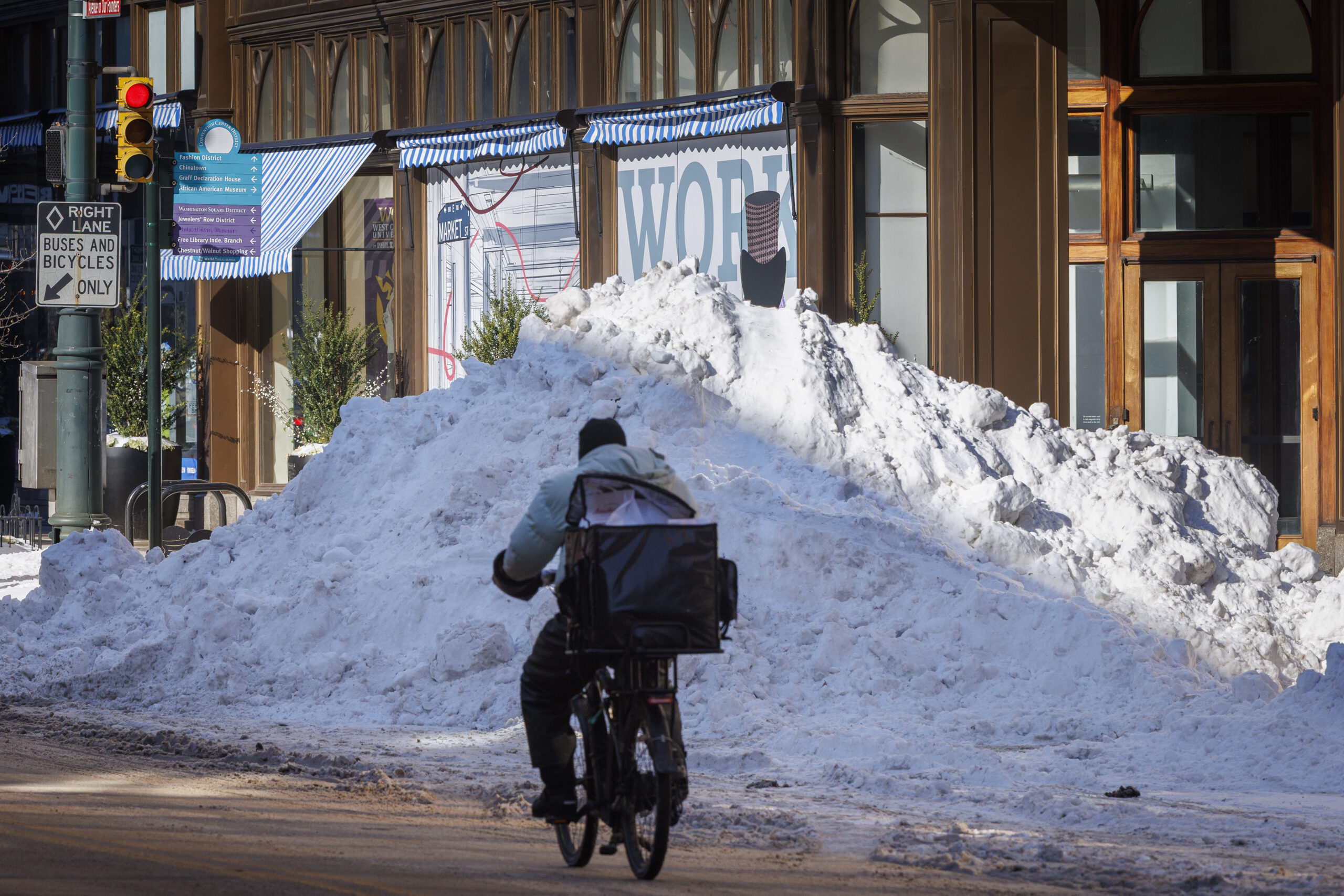
Amid complaints from residents over what was perceived as a slow cleanup, the city noted that the below-freezing temperatures created increasingly tightly packed ice that had nowhere to go.
The city even brought in a snow melter from Chicago, which eliminated 4.7 million pounds of snow in the first two days after the snowfall. The costs of melting, which is considered a specialized service, ran more than $139,000.
After the initial snow removal, the city moved to what it called its lifting operations.
Snowplows, compactors, front-end loaders, and backhoes took part in an intricate operation where snow was placed in dumpsters before being shipped off to more than 30 dumping sites.
The Philadelphia Streets Department mobilized up to 300 pieces of equipment on any given day in an effort to leave no street untreated.
The city went through 15,000 tons of salt through the three-week cleanup amid other challenges, such as an icy Delaware River that temporarily blocked additional salt orders, and the rising cost of salt post-storm.
The cost of salt was more than $1.2 million.
Emily Street is still covered in snow near Furness High School (top left) on Wednesday, Jan. 28, 2026 in South Philadelphia.
18,340 ramps cleared
The massive cleanup had the city looking at creative ways to boost the number of workers clearing streets.
The streets department tapped participants in its Future Track Program for snow-removal efforts early on. These are trainees, typically at-risk young adults, who are not enrolled in higher education and are unemployed. They get job experience, as well as other services, and they help in beautification projects.
The trainees cleared hundreds of ADA ramps across Philadelphia.
But more than a week after the storm, the city was still being flooded with complaints about inaccessible crosswalks and SEPTA stops piled with ice.
That’s when officials tapped into a city program that pays people the same day for their work, deploying 300 people to help chip and sweep away the hardened ice with shovels and brooms.
The city assembled a more than 1,000-person workforce for cleanup efforts this way, deploying a mix of city employees, contractors, and participants from the same-day pay program.
In all, the city said, the crews worked nearly 2,300 intersections, clearing 18,340 ADA ramps and about 2,800 SEPTA stops.
The use of contractors, however, was met with pushback from American Federation of State, County and Municipal Employees District Council 33, the city’s largest municipal workers union, which said the decision was made without consulting the union.
“Our members are the trained, dedicated workforce responsible for this work, and it is disheartening to see the administration move forward without even a discussion on how best to manage these challenges,” DC 33 president Greg Boulware said in a statement in early February.
(function() { var l = function() { new pym.Parent( ‘phillysnowcosts__graphic’, ‘https://media.inquirer.com/storage/inquirer/ai2html/phillysnowcosts/index.html’); }; if(typeof(pym) === ‘undefined’) { var h = document.getElementsByTagName(‘head’)[0], s = document.createElement(‘script’); s.type = ‘text/javascript’; s.src = ‘https://pym.nprapps.org/pym.v1.min.js’; s.onload = l; h.appendChild(s); } else { l(); } })();
22 warming centers
The cold snap presented another life-or-death challenge for the city: how to get people living on the streets indoors.
Between Jan. 20 and Feb. 14, homeless outreach teams worked nonstop distributing more than 2,800 warming kits, 4,000 fleece blankets, 700 cases of water, and 35,000 food items while trying to get people to take a shelter bed or go to one of the city’s 22 so-called warming centers.
The code blue designation allowed the city to activate some libraries and recreation centers as hubs for people looking to escape the cold.
The warming center operation was seen as lifesaving, largely supported by library staff. Between Jan. 19 and Feb. 11, New York City recorded at least 18 cold-related deaths; Philadelphia had three over a similar time frame.
Still, after 20 days of 12-hour operations, staff at the daytime centers described a lack of support from the city when it came to dealing with people who had medically complex issues requiring behavioral health support and wound care. (One library staffer said more city-assigned support staff showed up at the daytime centers after The Inquirer published a report about workers’ concerns.)
Philadelphia officials said more than 100 people from more than 20 city and partner organizations helped support the warming centers.
Nighttime warming centers had about 4,400 overnight guests, according to the city.
Mount Market Street at 7th Street, Center City Philadelphia, Tuesday, Jan. 27, 2026. Large pile of snow on northeast corner of Market and 7th.
$50 million from general fund
Because snow operations exceeded the initial amount allotted in the budget, the city plans to transfer $50 million from its general fund to its transportation fund.
Even so, the city said its general fund remains higher than projected in its five-year plan because of a larger-than-anticipated general fund balance in the previous fiscal year.
More than 40 drug and gun convictions were vacated Wednesday, the latest batch in what could grow to 1,000 cases tied to three narcotics officers who prosecutors say repeatedly gave false testimony in court.
Common Pleas Court Judge Rose Marie DeFino-Nastasi dismissed 47 cases — most involving defendants jailed because of their convictions — after prosecutors conceded that the testimony of three officers on the Philadelphia Police Department’s Narcotics Strike Force could no longer be trusted.
In December, the district attorney’s office said that Officers Ricardo Rosa, Eugene Roher, and Jeffrey Holden were found to have repeatedly given false statements in drug-related cases after attorneys with the Defender Association of Philadelphia uncovered video evidence that contradicted their accounts.
The defenders said the officers regularly watched live surveillance footage to monitor suspects in drug investigations, then did not disclose it to prosecutors or defense attorneys in court. The video footage showed they also testified to things that did not happen or that they could not have seen from where they were positioned, according to court filings.
Prosecutors later said that they could no longer vouch for the officers’ credibility and are expected to dismiss scores of cases built on their testimony in the coming months.
Nearly all the defendants at the center of the cases dismissed Wednesday were in custody, including several serving years in prison tied to their drug convictions.
Among them is Hamid Yillah, 34, serving four to nine years in state prison, plus two years’ probation, on gun and drug charges based on the testimony of Roher and Rosa, prosecutors said.
And Juan Lopez, 38, serving five to 10 years in prison on drug possession and conspiracy charges.
DeFino-Nastasi vacated their convictions and sentences.
Not everyone whose conviction was overturned will walk free. Some are also serving time for unrelated serious crimes, including murder and aggravated assault.
But many without additional arrests could be released as a result of Wednesday’s ruling.
The dismissals follow more than 130 convictions that were thrown out in December after prosecutors and defenders identified more than 900 cases built almost entirely on the officers’ word. Approximately 200 cases have been resolved so far.
The officers at the center of the case remain on active duty, but have been temporarily reassigned from narcotics amid an ongoing internal affairs investigation, said police spokesperson Sgt. Eric Gripp.
That investigation, which began in early 2024, remains incomplete because the district attorney’s office has not provided the department with the information necessary to complete it, he said.
The district attorney’s office previously said it provided internal affairs with details of the officers’ false statements last March. But Gripp said the records and evidence offered did not appear to show wrongdoing.
(Paula Sen, of the Defender Association’s Police Accountability Unit, said she and her colleagues have also provided internal affairs with a few dozen cases where the officers’ testimony did not match surveillance footage.)
Since the first batch of cases was thrown out in December, Gripp said, the department has followed up with the district attorney’s office for more information about the alleged wrongdoing, including the nine cases identified in court records in which the officers were said to have given false statements.
“To date, we have not been provided with those cases,” he said.
Gripp said that some of the cases discharged Wednesday involved dangerous drug dealers carrying weapons, and that narcotics officers risk their lives to make arrests.
“This work matters, and repeated dismissals without providing the department the information necessary to review and address the concerns does not advance officer accountability or public safety,” he said. “We continue to expect good faith cooperation from all partners in the criminal justice system. We remain ready to act immediately upon receipt of any substantiated information.”
The district attorney’s office did not immediately respond to a request for comment.
Prosecutors have stopped short of accusing the officers of lying, but said “there’s enough of a pattern of inconsistencies across testimony that we can’t rely on them as critical witnesses in court.”
Michael Mellon and Paula Sen work in the Police Accountability Unit for the Defender Association.
Sen and Michael Mellon, of the defenders’ Police Accountability Unit, disagreed, and said the officers “straight up lied.”
Sen and Mellon said they first spotted a pattern of testimony discrepancies in 2019 while reviewing surveillance footage that conflicted with statements Rosa had made in drug cases. Over time, they said, they continued scrutinizing his narcotics squad and identified similar issues with testimony from Holden and Roher.
According to the defenders, the officers relied on the city’s surveillance camera network to watch suspected drug activity in real time but did not disclose that investigative method — withholding evidence that should have been turned over to the defense.
In court, Mellon said, the officers denied using the cameras and frequently testified that they personally observed hand-to-hand drug transactions. Video later showed those exchanges either did not occur or would have been impossible for the officers to see because the suspects were out of view.
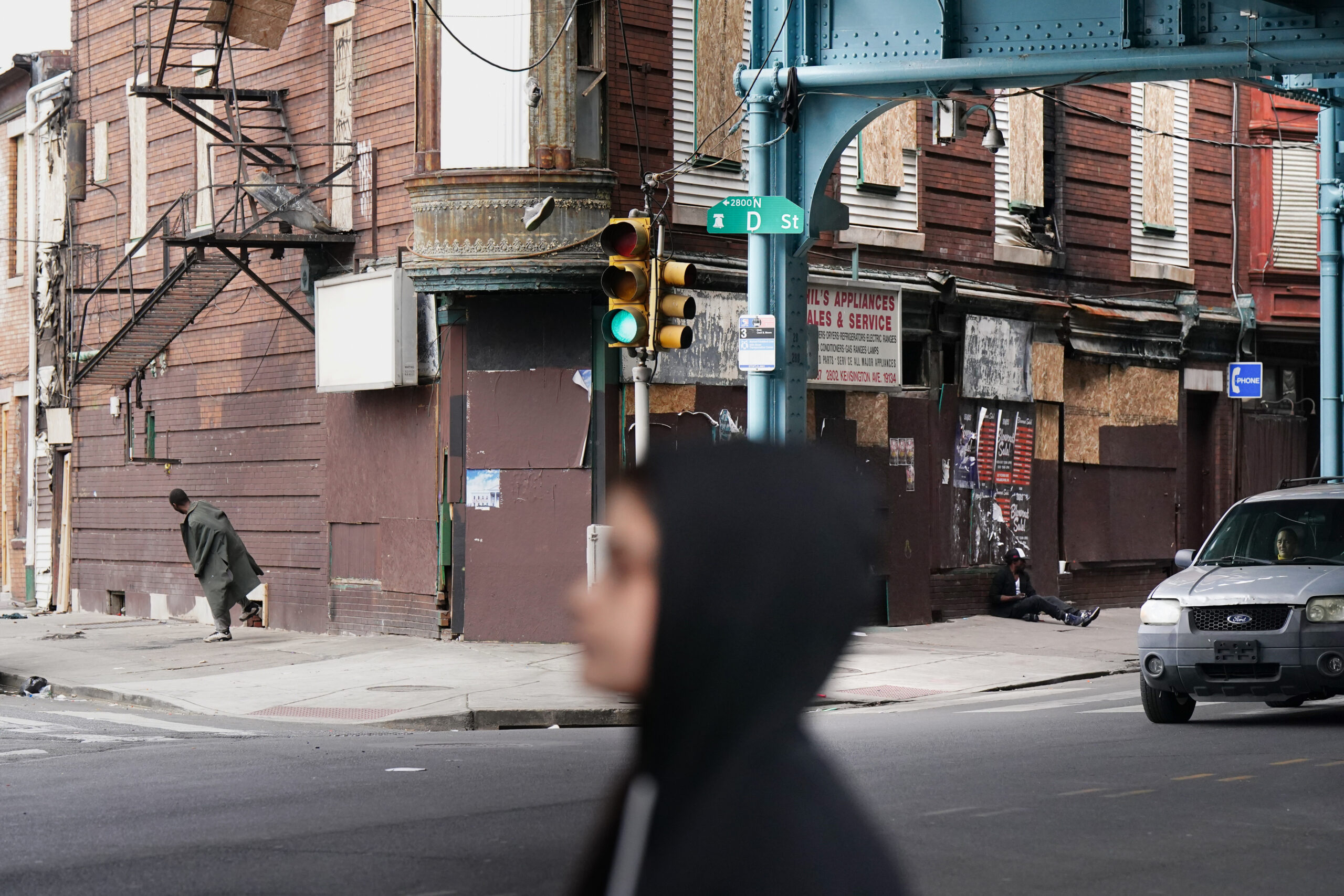
A video camera used by Philadelphia police is positioned at the corner of D Street and Kensington Avenue.
Sen said her office sent letters to all of the defendants whose cases were being reviewed to let them know they might be eligible for relief.
Still, she said, the convictions often resulted in years of peoples’ lives spent incarcerated and on court supervision — time they cannot get back.
“We are not talking about big drug busts. We are talking about the lowest of the low cases, hand-to-hand drug sales … within a quarter of a mile radius of Kensington,” she said. “That’s what makes this especially egregious.”
Rufe wrote that the deadline follows the agencies’ “failure to comply” with the injunction’s instruction to take action “forthwith,” which is often defined in law to mean as soon as possible or within 24 hours.
National Park Service staff were at the President’s House site on Wednesday morning to hose down the walls, which are covered with protest signs in lieu of the exhibits, and place barricades around them.
The National Park Service did not respond to questions about the activity.
A spokesperson for the White House, Taylor Rogers, said in a statement Wednesday that the lawsuit brought by Philadelphia was “premature” because the removal of the exhibits from the President’s House and other national parks is not final.
“The Department of the Interior is engaged in an ongoing review of our nation’s American history exhibits in accordance with the President’s executive order to eliminate corrosive ideology, restore sanity, and reinstate the truth,” Rogers said.
Staff writer Fallon Roth contributed to this article.
Philadelphia residents can now consult a new online dashboard to gauge outdoor air quality before heading outto a park, going for a run, or cycling through the city.
The city unveiled a real-time air quality network that collects data from solar-powered sensors at 76 strategic locations, blanketing every neighborhood. The systemcan warn residents whenpollution spikes — for instance, if a junkyard fire sends particulate levels surging.
“Starting now, every resident in Philadelphia will be able to see, almost in real time, the air quality in their own neighborhood,” said Philadelphia Mayor Cherelle L. Parker.
What does the system measure?
The weatherproof sensors, bolted to utility poles at 1.5-mile intervals,track two primary pollutants:
Fine particulate matter (PM2.5), tiny particles that can penetrate deep into the lungs and cause respiratory issues.
Nitrogen dioxide (NO2), a component of ozone.
Parker, along with City Council members and officials from the Philadelphia Department of Public Health’s Air Management Services (AMS), introduced the Breathe Philly initiative Wednesday at Stinger Square Park in Grays Ferry.
The monitoring system, manufactured by Clarity Movement Co., will cost the city $90,000 annually. It is currently funded through the nonprofit Philadelphia City Fund.
The new network operates independently from the city’s existing 10‑sensor system that supplies data to the U.S. Environmental Protection Agency.
Parker said it represents a significant step toward environmental justice, especially in neighborhoods that previously lacked adequate monitoring. Some of the sensors will begin monitoring for ground-level ozone as soon as spring.
Ozone is a potent pollutant formed from chemical reactions between vehicle, power plant, and industrial emissions in the presence of sunlight.
“You can check it on your phone, your tablet, your computer,” she said. “You can access up-to-date information about the air that you and your family are breathing right where you live.”
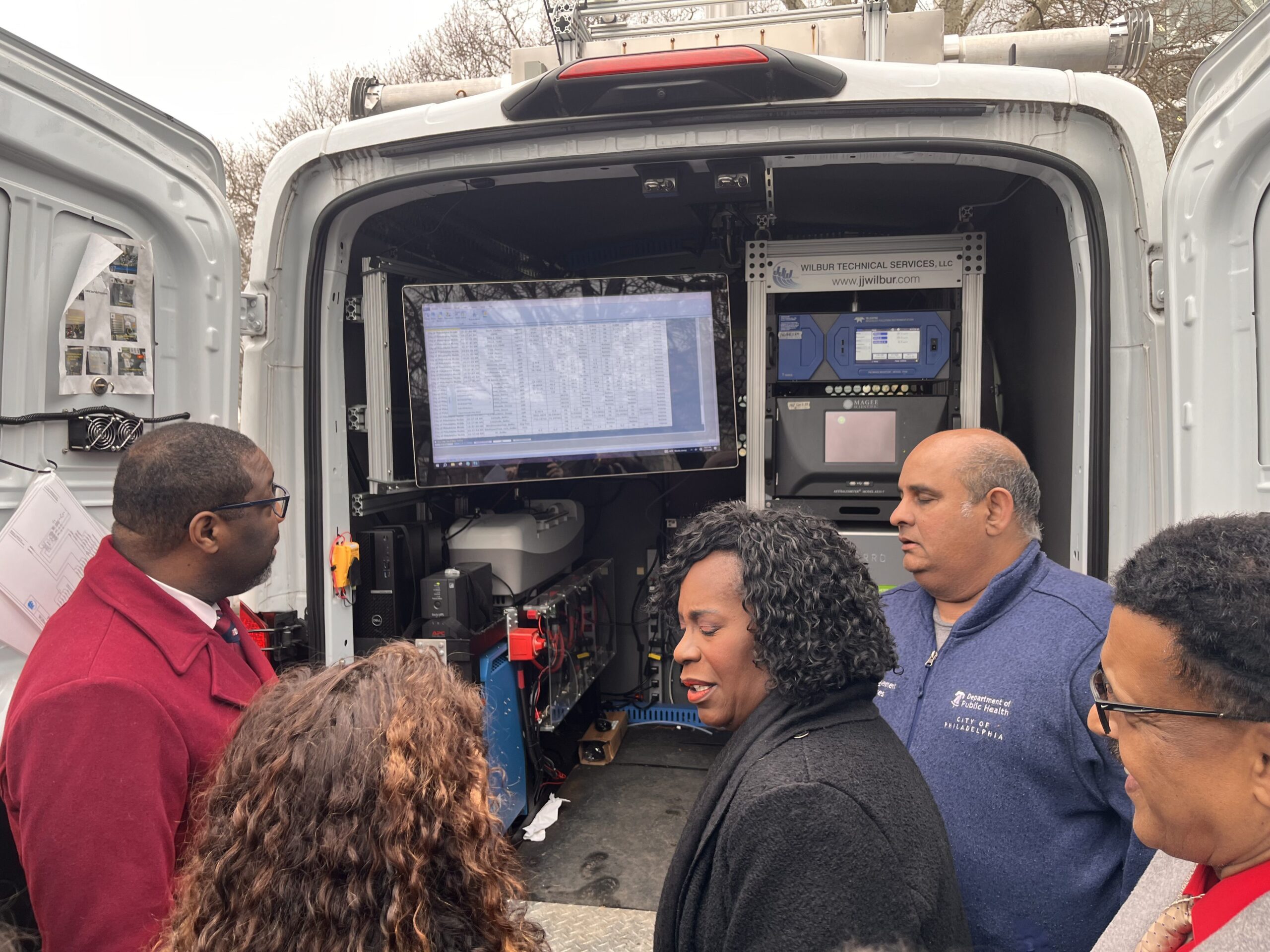
Paresh Mehta (right), an engineer with Philadelphia’s Air Management Services, explains to City Council President Kenyatta Johnson (left) and Mayor Cherelle L. Parker how air quality data is collected.
‘We knew right away’
Palak Raval-Nelson, the city’s health commissioner, said the new air monitoring network has been in the works for years. The project is overseen by the health department’s AMS.
“It’s amazing to finally see that it’s here,” she said.
The system detected the air quality as poor during a fire last week, Raval-Nelson said.
“The monitor went off, and we knew right away that we needed to communicate information,” Raval-Nelson said.
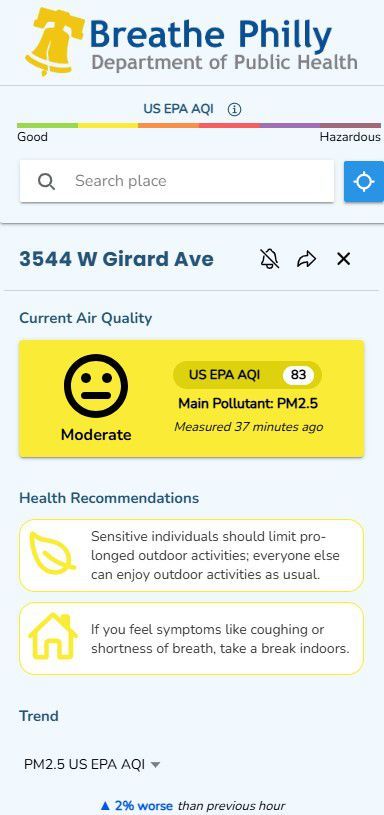
The monitor displays colored circles and squares indicating the air quality at each monitor. Colors range from green, the best, to purple and mauve, the worst.
A sample of the Breathe Philly online dashboard that gives residents real-time data on air pollution from 76 sensors placed around the city.
The sensors detect levels of particulate matter, which are tiny particles in the air that can cause health risks. PM2.5 is the result of the burning of fossil fuels, such as by vehicles or power plants. They sensors also measure NO2, a gas also emitted by burning fossil fuels.
Both chemicals can cause respiratory issues.
“It is a concrete step to help keep all of us and our loved ones safe,” Raval-Nelson said of the new sensor system.
Council President Kenyatta Johnson, who grew up in Point Breeze, said the system will help provide real-time information in the event of a disaster, such as the PES Refinery explosion and firein 2019.
And it will help those with breathing issues like asthma decide whether it is safe to go outside for extended periods.
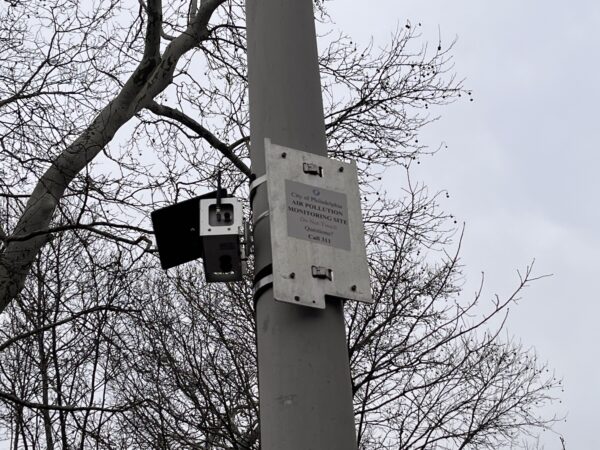
One of 76 solar-powered sensors made by Clarity Movement Co. for a new network of real time air quality data available for Philadelphia residents.
A new layer of safety
Alex Bomstein, executive director of the nonprofit advocacy group Clean Air Council, said the network adds a new layer of safety for city residents.
“You can’t go very far in the city without encountering a monitor, which is wonderful, because that means that everybody in the city is being protected,”Bomstein said.
He fears pollution will worsen in the future as the administration of President Donald Trump continues to roll back environmental rules and regulations, such as those governing vehicle tailpipe emissions.
Sean Wihera, a vice president with Clarity Movement Co., said the company was founded in 2014 as a start-up at the University of California, Berkley. Similar systems have been installed in Los Angeles and Chicago, he said.
The company owns the sensors and is responsible for them if they break or are stolen. The sensors are upgraded after three years for the latest technology. Wihera said it is possible that Philly’s system could monitor for benzene in the future.
“We’ve been working now in 85 different countries, hundreds of cities,” Wihera said. “But this is one of the most successful integrations that we’ve seen.”