For Shane Hennen, the house of cards keeps folding.
A federal indictment unsealed Thursday accuses the Philadelphia-based professional gambler of acting as a ringleader in a sweeping sports-betting conspiracy now involving the NCAA and the Chinese Basketball Association. Hennen was first arrested last January in connection with a gambling case involving a former Toronto Raptor, and was also charged separately in an October indictment in New York focused on the NBA.
The latest charges against Hennen, known as “Sugar Shane,” brought an international angle to the existing portrait of a high-stakes gambler who prosecutors allege was willing to bribe athletes to throw games, provide devices to fix backroom card games tied to the New York mafia, and use insider betting information to place fraudulent wagers.
In all, federal prosecutors have accused Hennen of conspiring to place fraudulent bets on ex-Raptors forward Jontay Porter and NBA guard Terry Rozier, bribing the top-scoring player in the CBA to throw games, and recruiting college basketball trainers to help rig dozens of NCAA games — much of it orchestrated from Hennen’s favorite Philly casino, Rivers. On top of it all, he is also alleged to have participated in the rigging of mob-linked poker games in New York City.
And while the list of implicated players and conspirators continues to grow by the dozens, Hennen has remained a central figure to the bet-fixing scandals that have rocked the sports world over the past year.
But Hennen’s earlier record for criminality came into clearer view as result of the federal investigations. While growing up in the Pittsburgh area, he did time for drug and gambling related charges that now serve as a kind of prelude to his role in the bet-fixing scandals.
In 2006, the Washington, Pa., native received probation in Allegheny County for charges linked to a gambling scheme. According to court records, Hennen and an accomplice rented adjacent rooms in a Pittsburgh area hotel to hold underground dice games. While gambling in one room, a partner in the next room employed a magnetic device to flip loaded dice to preferred numbers.
Then, early one morning in 2009, a former Duquesne University basketball player was found bleeding from a stab wound in Pittsburgh’s South Side neighborhood, a popular nightlife area. The man survived and later told police that Hennen had stabbed him in the neck after the athlete confronted him about cheating in a card game. Hennen was also picked up on a DUI less than two weeks later, but was released.
Not long afterward, Hennen was charged with two more felonies after he was caught in a parking lot with 500 grams of cocaine down the street from the Meadows Casino, near Pittsburgh.
In subsequent court filings, Hennen revealed that he had been working with a local drug dealer for more than a year. Facing well over a decade of jail time between the drug and assault charges linked to the stabbing, Hennen agreed to testify against his dealer and participated in a federal drug sting involving a different narcotics supplier based in Detroit, court records show.
He served just less than two-and-a-half years in prison, plus four years of supervised release.
According to court transcripts published by Sports Illustrated in October, Hennen admitted five times under oath that he cheated other people out of money.
During a cross-examination, Lee Rothman, an attorney for his associate drug dealer he was testifying against, stated bluntly that Hennen made “a living out of cheating people out of things.”
“That’s correct,” Hennen said.
After his release in 2013, Hennen traveled to Pensacola, Fla., purportedly to work as a sales rep for a seafood wholesaler. Court records show he almost immediately went back to gambling, even violating his probation to travel out of state to participate in the 2014 World Series of Poker in Las Vegas.
When Hennen landed in Philadelphia in 2015, it was seemingly to start over. He leased an apartment near the Rivers Casino in Fishtown.
The small casino would become Hennen’s unlikely staging ground for a new, more lucrative gambling scheme that would come to span the globe.
From Philly to China
Local gamblers said Hennen worked the poker and baccarat tables at Rivers, using the action to build a reputation with the house and pave the way for six-figure sports bets, the kind only gamblers with money and a track record at the casino are allowed to make.
By 2022, Hennen had launched an online betting consultancy via an Instagram page called “Sugar Shane Wins.” On social media, Hennen posted his sportsbook picks along with glamorous photos jetting around to Vegas or Dubai, or sitting courtside at Sixers games.
Although he marketed bets on teams familiar to U.S. gamblers, his focus — and income — was overseas, according to federal prosecutors.
He posted courtside photos of himself at Sixers games with a Mississippi-based sports handicapper named Marves Fairley, who prosecutors say connected the gambler with Antonio Blakeney, a former Louisiana State University shooting guard who had done a brief stint on the Chicago Bulls.
Blakeney had subsequently bounced around different international teams, including Hapoel Tel Aviv, in Israel, and the Nanjing Monkey Kings and Jiangsu Dragons, both in China. According to a federal indictment, while playing for the Dragons, Hennen and Fairley bribed Blakeney to underperform in Chinese basketball games in order to fix high-stakes bets against the team and recruit others to do the same.
Suddenly, the slots parlor on the Delaware was seeing six-figure bets placed on multiple Chinese basketball games through its sportsbook, BetRivers, sometimes for upward of $200,000. Representatives for the casino declined to comment Thursday on the latest federal indictment.
The gambit proved reliably lucrative. In a 2023 text message obtained by federal authorities, Hennen reassured an accomplice who had placed big bets against Blakeney’s team.
“Nothing gu[a]rantee[d] in this world,” Hennen wrote, ”but death taxes and Chinese basketball.”
The model would also serve as a template for a similar racket the duo would orchestrate within the NCAA.
By 2024, the duo had recruited basketball trainers Jalen Smith and Roderick Winkler to help convince dozens of college basketball players to rig matches on their behalf.
Ultimately, 39 players on more than 17 Division 1 NCAA teams would participate, with bettors wagering millions on at least 29 rigged games.
Hennen took a behind-the-scenes role, authorities alleged, texting a network of straw bettors who placed big wagers on games featuring star players bribed by the trainers, and sometimes moving bribe money or splitting up winnings back in Philly.
His rising profile started to draw unwanted attention.
Shortly after Hennen relocated to Las Vegas in 2023, he was accused of rigging poker matches by Wesley “Wes Side” Fei, another professional gambler who claimed in social media posts that Hennen had scammed him out of millions.
The next year, gambling industry watchdog Integrity Compliance 360 began flagging bets placed on six Temple University basketball games. One, against Alabama-Birmingham in March 2024, saw the Borgata, in Atlantic City, cancel bets for the game due to suspicious betting activity. Before the end of 2024, the National Collegiate Athletic Association had launched an investigation into the games, as rumors swirled that federal authorities were questioning Temple player Hysier Miller as part of an alleged point-shaving scheme.
Then Porter, the Raptors center, was banned for life from the NBA, after it emerged that the league was investigating yet another bet-rigging scheme. A few months later, Porter pleaded guilty to gambling charges — the first hint at the true scope of a sprawling federal investigation that went on to consume the NCAA and NBA.
Beginning of the end
In January 2025, Hennen’s luck ran out.
Authorities stopped him in Las Vegas as he was boarding a one-way flight to Panama, en route to Colombia. He had $10,000 in his pocket and claimed he was headed to South America for dental treatment.
But investigators had already zeroed in on Hennen as the main orchestrator of the prop betting scheme involving Rozier, the former Miami Heat guard. In October, federal prosecutors in the U.S. District Court for the Eastern District of New York unsealed an indictment, accusing Hennen of working with Fairley to have Rozier throw games for a profit, sometimes using Philadelphia as a meeting point to dole out the proceeds to other bettors.
Court records show that since then, Hennen has entered plea negotiations with federal prosecutors and relocated to a residence in South Philadelphia. (His attorney did not respond to a request for comment.)
During the Thursday news conference unveiling the latest indictment, Wayne Jacobs, a special agent in charge of the FBI Philadelphia field office, said that Hennen and his conspirators’ actions had undermined faith in professional sports writ large.
“We expect athletes to embody the very best of hard work, skill, and discipline, not to sell out to those seeking to corrupt the games for their own personal benefit,” he said. “The money that’s used as a tool to influence outcomes does not just taint a single game, it tears up the trust and the results that we cherish.”
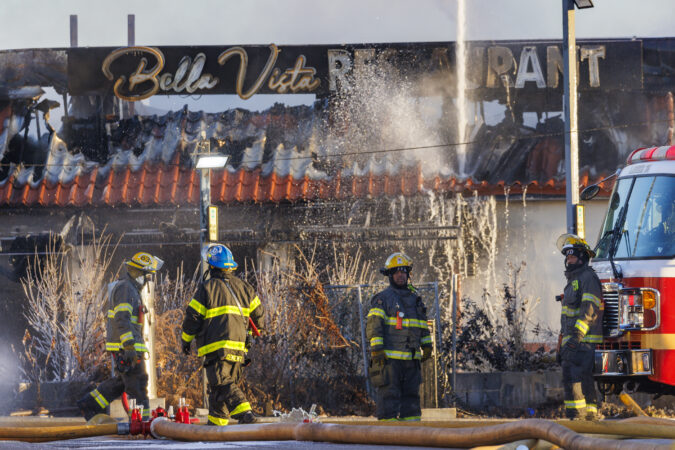
North Philadelphia restaurant Bella Vista is temporarily closed after a fire caused severe damage to the building on Friday morning.
The Philadelphia Fire Department responded to a report of a “heavy fire” at the surf and turf restaurant, located on Whitaker Avenue, just before 4 a.m.
“Thankfully, there are no reported injuries,” said PFD spokesperson Rachel Cunningham. “Philadelphia Fire Department members are still on scene making sure all hot spots are extinguished.”
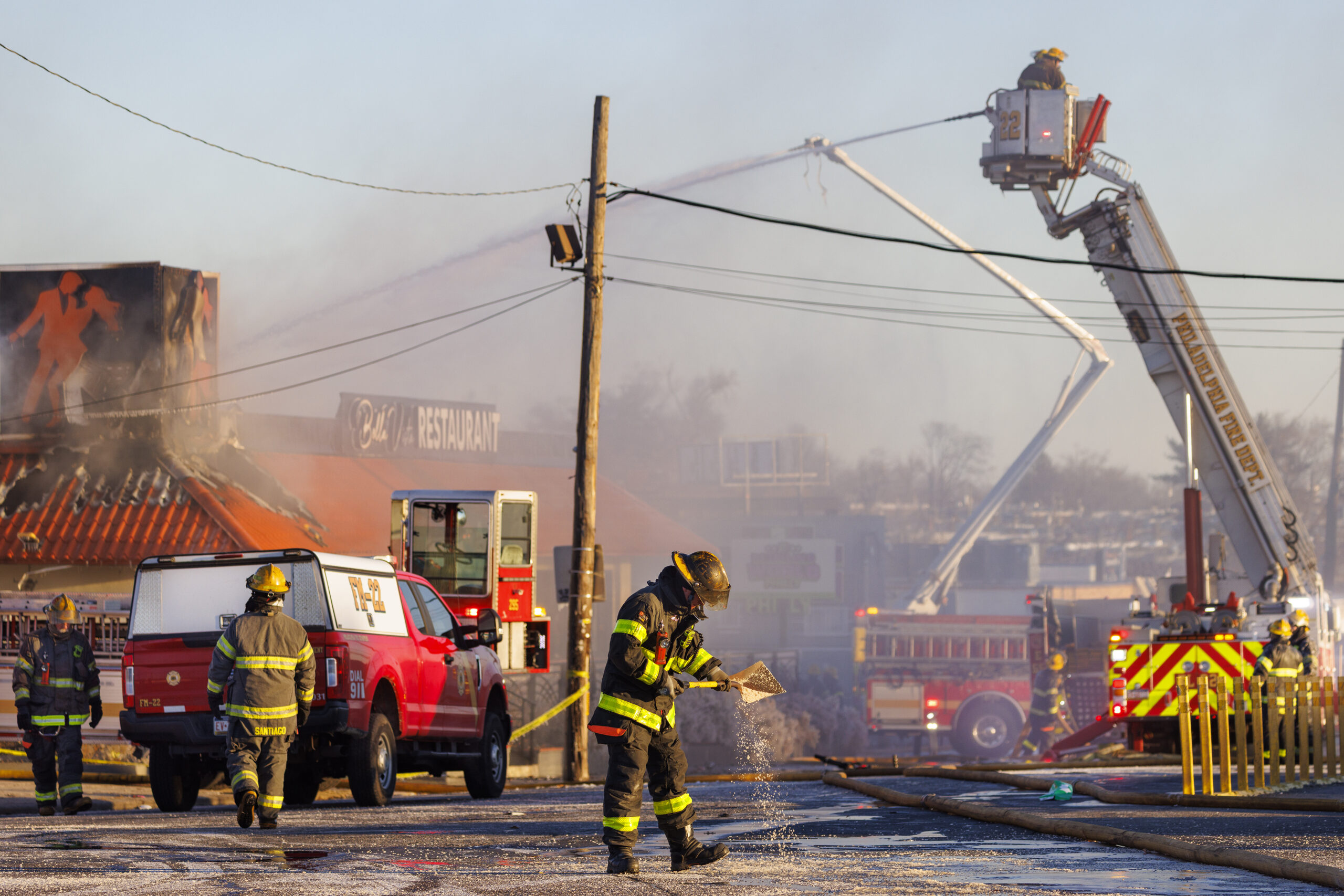
A Philadelphia firefighter salts the roadway at a fire at Bella Vista Restaurant on Whitaker Avenue at Hunting Park Avenue, in Philadelphia, Friday, Jan. 16, 2026.
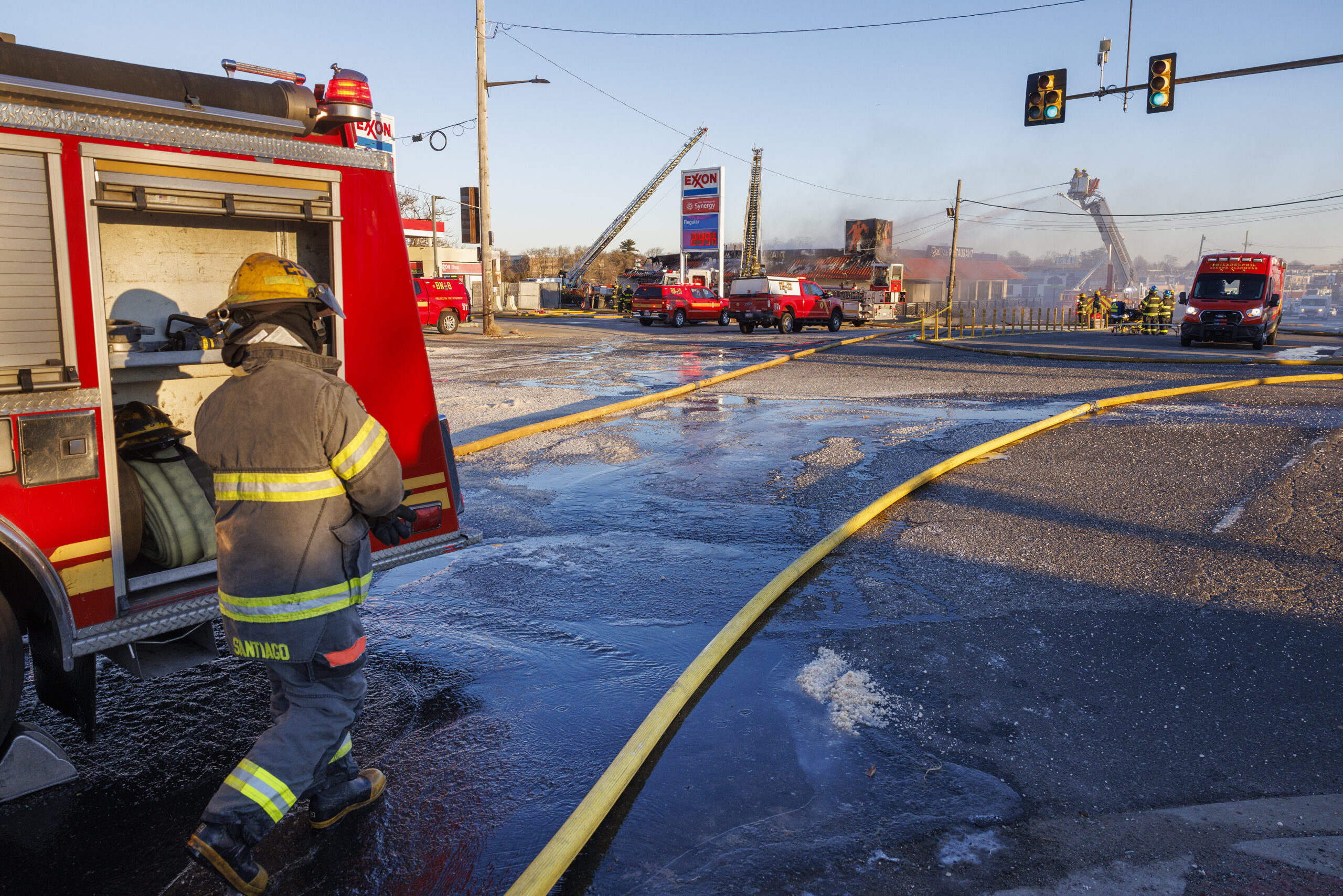
The fire’s size required the responding crew, Battalion 10, to place all hands in service. They also called for three more engine companies and another ladder company, according to a PFD spokesperson. A total of 80 firefighters and support staff placed the fire under control at 6:26 a.m.
Large sections of the restaurant’s roof were caved in and blackened from the fire, and the building’s “Bella Vista Restaurant” sign was charred. Bella Vista’s owners could not be reached for comment.
Philadelphia firefighters work at Bella Vista Restaurant, Whitaker Avenue near Hunting Park Avenue, Philadelphia, Friday, Jan. 16, 2026.
PGW and PECO were also contacted to ensure that no electricity or gas-related issues occurred. The Fire Marshall’s Office is investigating the cause of the fire.
A rooftop fire next to the award-winning Fishtown restaurant, Suraya, forced the Lebanese restaurant to temporarily close two weeks ago. It reopened the following day.
Philadelphia police are investigating whether theseparate slayings of three men, all of whom worked in the city’s towing industry, are connected, authorities said this week.
Two of the men, who were shot and killed in December and January respectively, worked as truck operators for the Jenkintown-based company 448 Towing and Recovery, according to police.
The other man, who was shot and killed in November, is connected to a different towing company and worked as a wreck spotter.
Investigators began looking at a possible connection between the killings after the shooting death of 25-year-old Aaron Whitfield Jr. on Sunday, according to Lt. Thomas Walsh of the department’s homicide unit.
“On the surface, there’s obviously some sort of connection,” Walsh said.
Whitfield was in a tow truck with his girlfriend outside of a Northeast Philadelphia smoke shop near Bustleton Avenue and Knorr Street that evening when two men pulled up in another vehicle. They fired at least a dozen shots at the truck before speeding off.
Whitfield died at the scene, while the woman was hospitalized with gunshot wounds to the leg.
The shooting came after another 448 Towing and Recovery driver, David Garcia-Morales, was shot on Dec. 22 while in a tow truck on the 4200 block of Torresdale Avenue, according to police.
Police arrived to find Morales, 20, had been struck multiple times. They rushed him to a nearby hospital, where he died from his injuries on Dec. 26.
While Walsh could not conclusively say whether investigators believe the killings were carried out by the same person or by multiple individuals, he noted that two different vehicles had been used in the crimes.
One of those vehicles, a silver Honda Accord used in the shooting of Whitfield, was recovered earlier this week after police found it abandoned in West Philadelphia, Walsh said.
Meanwhile, police are investigating whether the shooting death of 26-year-old Aaron Smith-Sims in November may also be connected to the killings of Whitfield and Garcia-Morales.
Smith-Sims, who Walsh said was connected to a different towing company, died after he was shot multiple times on the 2700 block of North Hicks Street in North Philadelphia the morning of Nov. 23.
Investigators are now looking to question the owners of both towing companies involved, according to Walsh.
So far, they have failed to make contact with the owner of 448 Towing and Recovery.
“Obviously the victims’ families are cooperating,” Walsh said. “They’re supplying all the information that they have.”
An industry that draws suspicion
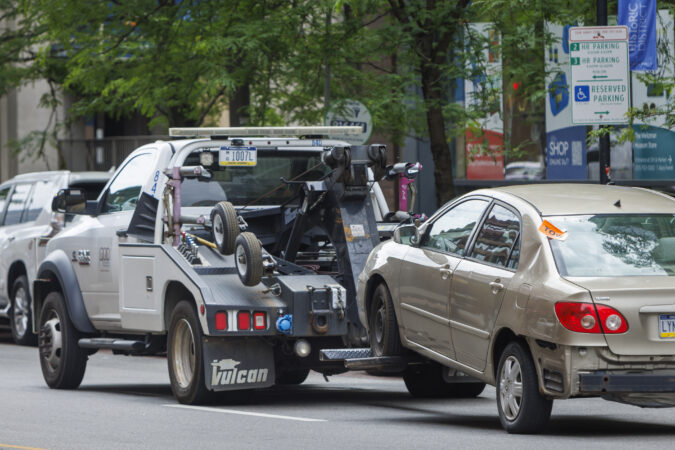
Philadelphia’s towing industry can appear like something out of the Wild West, with operators fiercely competing to arrive first at car wrecks and secure the business involved with towing or impounding vehicles.
Police began imposing some order on the process in 2007, introducing a rotational system in which responding officers cycle through a list of licensed towing operators to dispatch to accident scenes.
But tow operators often skirt that system, employing wreck spotters — those like Smith-Sims — to roam the city and listen to police scanners for accidents, convincing those involved to use their service before officers arrive.
The predatory nature of the industry and, in some cases, its historic ties to organized crime make it rife with exploitative business practices and even criminal activity.
But Walsh cautioned the public against jumping to conspiracy theories about the killings, which have proliferated on social media in the days after Whitfield’s death and the news of a possible connection between the murders.
Those suspicions aren’t entirely unwarranted.
In 2017, several employees who worked for the Philadelphia towing company A. Bob’s Towing were shot within 24 hours of one another — two of them fatally.
Pressley admitted to accepting payment in exchange for killing one of the towing employees, 28-year-old Khayyan Fruster, who had been preparing to testify as a witness in an assault trial.
Pressley shot Fruster in his tow truck on the 6600 block of Hegerman Street, killing him and injuring one of his coworkers.
And in an effort to mask the killing — and to make it appear as if it had been the result of a feud between towing operators — Pressley earlier shot and killed one of Fruster’s coworkers at A. Bob’s Towing at random, according to prosecutors.
Philadelphia students are performing the best they have in math in years, showing steady improvement since the pandemic.
Still, just a quarter of city third through eighth graders passed Pennsylvania math assessments, with 25.1% of students scoring proficient or advanced on the 2024-25 exam, up from a 22% pass rate the prior year and 18.9% in 2016-17.
That means the district surpassed the school board’s goal of a 22.2% pass rate for last school year — but fell well below the 2029-30 target of 52% proficiency.
Philadelphia students still lag Pennsylvania averages considerably, though — for the 2024-25 year, 41.7% of students in grades three through eight statewide passed math tests.
Scores are slightly stronger in the lower grades. Overall, 33.7% of Philadelphia third graders passed the state test, compared to 27.4% the prior year. The board’s third-grade target is 57.5% for 2029-30; it was 28% last year, a nod to prior performance.
Officials said the jumps are due in part to the new math curriculum the district adopted in 2023-24.
The school board devoted its full Thursday night progress monitoring session to examining math goals. The highlighted findings include:
Attendance correlates with math scores
Students’ attendance generally correlates to their math performance. Of pupils who attended school 90% of the time or more, the highest percentage of students were at or above benchmark (29%) and the lowest percentage needed the most intense interventions (24%).
The reverse is true for students who are considered “chronically absent” — those who attend school less than 80% of the time. In that category, more than half of students — 52% — needed intense interventions, and just 7% scored proficient or above.
Improvements for students learning English
English language learners’ math skills are improving, as measured by Star tests, which the district gives periodically throughout the school year to measure student learning.
The math proficiency of third grade English learners, for example, was up year-over-year as marked by the winter Star exam. This school year, 23% of English learners passed the test, compared with 18% at the same point in 2024-25.
Slight improvements for students with disabilities
Students with disabilities scored lower. Overall, 11% of students with disabilities passed the winter Star exam, up slightly from 10% last year.
Focus on early math skills
Officials said gains were made in part because of a focus on building foundational math skills.
Students in kindergarten and first and second grades all saw jumps from fall to winter in mastering skills such as numeral recognition, addition to 10, and subtraction to 10, as measured by Star tests. The district showed significant gains in third grade performance this year.
Think you know your news? There’s only one way to find out. Welcome back to our weekly News Quiz — a quick way to see if your reading habits are sinking in and to put your local news knowledge to the test.
Question 1 of 10
Erin Andrews’ coat at the Eagles-49ers game stole the show. What was it made of?
CorrectIncorrect. XX% of other readers got this question right.
Andrews’ coat appears to be a completely faux fur $950 statement piece from the brand Auter. Despite the internet haters, the jacket was seemingly functional and fashionable for a 30-degree and windy wild-card game at Lincoln Financial Field.
Question 2 of 10
Food writer Kiki Aranita says this little treat, with roots in Mexico and China, is the talk of the town right now:
CorrectIncorrect. XX% of other readers got this question right.
The story of Mexican conchas and Chinese bo lo bao predates “little treat culture” by hundreds of years. Crackled, cookie-like crusts sit on top of round, fluffy milk bread, sometimes filled with cream or jam, or custard and char siu, or vibrant red Cantonese roast pork. Versions of the treats are available across Philly.
story continues after advertisement
Question 3 of 10
Wawa is closing a store on Drexel University’s campus after it was remodeled to test this concept:
CorrectIncorrect. XX% of other readers got this question right.
The location was remodeled in 2023 to test the new store format, a digital-only concept that required customers to order all items on a touch screen, with no shelves of products to browse. The pilot was not a success, leading to the store’s planned closure, said a company statement.
Question 4 of 10
New Jersey Gov. Phil Murphy vetoed a bill, despite near-unanimous legislative support, that would’ve allowed a legal carveout for:
CorrectIncorrect. XX% of other readers got this question right.
New Jersey's Milltown is struggling to continue its Groundhog Day celebrations because of a lack of access to live groundhogs. A bill to carve out exceptions for groundhog imports was vetoed. Gov. Phil Murphy said the bill was inappropriate, citing public safety concerns, including rabies.
Question 5 of 10
A $150 million streetscape project will transform South Broad Street’s Avenue of the Arts by adding more:
CorrectIncorrect. XX% of other readers got this question right.
A $150 million streetscape project will transform South Broad Street’s Avenue of the Arts with trees, public art, traffic calming, and redesigned medians and sidewalks, starting this month.
Subscribe to The Philadelphia Inquirer
Our reporting is directly supported by reader subscriptions. If you want more journalism like this story, please subscribe today.
Eagles fan and content creator Robert Williams III kept the faith all season by cranking out parody songs about the Birds. His videos have caught the attention of celebrities ranging from Questlove to Hall and Oates. What artist does he find himself covering more times than not?
CorrectIncorrect. XX% of other readers got this question right.
Williams (also known as Billy Soul) puts on a strawberry blond wig and spoofs songs like the 1984 Billy Joel hit: “For the Longest Time.” He says his Joel covers seem to perform the best. “My favorite genres of music are hip-hop and R&B so those parodies are easy to me,” Williams said. When I’m doing Billy Joel, I’m challenging myself.”
Question 7 of 10
A Philadelphia woman’s fliers around the region seeking help went viral. She was asking for someone of which trade to perform what act?
CorrectIncorrect. XX% of other readers got this question right.
The flier said: “Seeking: Experienced Witch to Curse My Ex.” The woman set up an email — for serious inquiries only. Experts say wishing a curse on your ex is part of a tradition dating back to antiquity.
Question 8 of 10
Restaurant scalping is a growing trend nationwide that business owners would like to stop. A Philly restaurant took to social media, announcing it had canceled someone’s reservations and wanted to ban them after they were caught trying to flip reservations for a profit. What restaurant was it?
CorrectIncorrect. XX% of other readers got this question right.
Mawn’s owners, Phila and Rachel Lorn, took to the restaurant’s Instagram to lambaste a woman attempting to sell coveted dinner reservations on the “Buy, Sell, Trade” section of Philaqueens, a private Facebook group with 75,000 members. “Eww. Gross … Don’t play with us,” the owners wrote on Mawn’s Instagram story, sharing a screenshot of the Facebook post that included the seller’s name. “All 11 of this person’s reservations are canceled.”
Question 9 of 10
This Philly-based comedian went viral on TikTok for her ASMR-style videos, where she whispers about this local favorite:
CorrectIncorrect. XX% of other readers got this question right.
Of all the things Betsy Kenney thought she might go viral for, whispering about Wawa wasn’t one of them. But the 38-year-old comedian’s Philly “ASMR” videos have taken off on TikTok and Instagram, turning Kenney — who spent more than a decade pursuing a comedy career in New York City — into an unlikely local celebrity. Kenney’s videos have racked up millions of views and even earned an endorsement from Kylie Kelce.
Question 10 of 10
Retro enthusiasts and nostalgia lovers are thrilled about a chain restaurant location in Tunkhannock, a small town in the Endless Mountains of Wyoming County, about 140 miles northeast of Philadelphia. That’s because it was restored to look and feel like versions of this spot did decades ago. Which restaurant is it?
CorrectIncorrect. XX% of other readers got this question right.
The Pizza Hut location has been in a shopping center parking lot for decades, but was restored into a classic version, complete with the red, angled roof. “No touchscreen kiosks, no sleek redesign, just the classic dine-in Hut experience you thought was gone forever. It’s more than pizza. It’s a full-blown childhood flashback served with breadsticks and a plastic red cup!” a fan wrote on Facebook.
Your Results
You have skipped .
You scored XX out of 10.
The average reader scored XX out of 10
Seems like you’ve been skimming more than reading there, buddy. There’s always next week.
You’ve read some articles (or made some educated guesses) but we wouldn’t come to you first for our local news recaps. Better luck next week!
Do you work here? You’re a local news stan with the latest updates on Philly happenings. Your friends definitely ask you for summaries on what’s going on and it shows.
Martin Luther King Jr. Day, a federal holiday honoring the civil rights leader’s legacy, is Monday and it brings with it changes to schedules across the Philadelphia region. From government offices and post offices to trash collection and banks, many services will operate on adjusted hours or close entirely.
Here’s what you need to know so you can plan your Monday with confidence.
❌ TD Bank, Bank of America, Wells Fargo, and Chase bank will be closed.
PHARMACIES
CVS
✅ CVS locations will operate on normal business hours. Call your local store before visiting or view its hours at cvs.com/store-locator/landing.
Walgreens
✅ Walgreens locations will be open for regular business hours. Check your local store’s hours at walgreens.com/storelocator.
TRASH COLLECTION
❌ There is no trash or recycling pickup on MLK Day. But trash pickup will resume a day later than scheduled. To find your trash and recycling collection day, go to phila.gov.
✅ Lowe’s stores are open for normal business hours. Check your local store’s hours at lowes.com/store.
Home Depot
✅ Home Depot locations will be open during normal business hours. Check your local store’s hours at homedepot.com/l/storeDirectory.
SHOPPING MALLS
✅ The Shops at Liberty Place, Fashion District Philadelphia, Franklin Mall, Cherry Hill Mall, and King of Prussia Mall will be open for their regular hours.
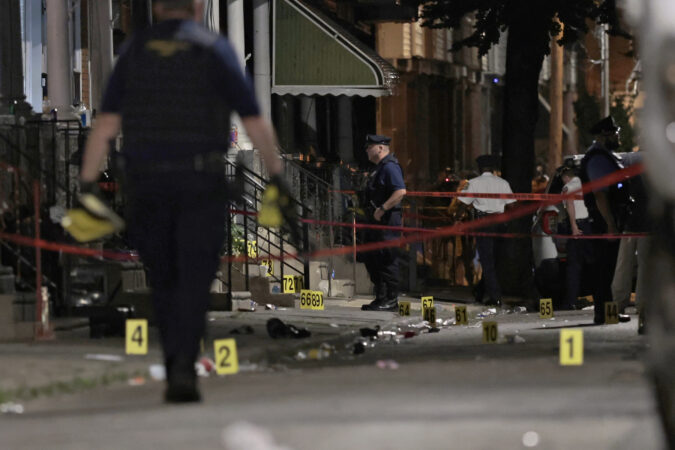
No one can say for certain what caused the first loud “pop” to echo down a South Philadelphia block — a single gunshot, a car backfiring, or something else entirely.
But within seconds, at least 15 people attending a party on the 1500 block of South Etting Street pulled out guns and started shooting, a chain reaction that left three people dead and 10 others wounded.
In the weeks that followed the July 7 mass shooting, police said they identified four people who fired weapons that night: Daquan Brown, 21, Terrell Frazier, 22, Brandon Fisher, 17, and Dieve Jardine, 45. Prosecutors charged each with three counts of murder, 10 counts of attempted murder, conspiracy, and related crimes.
Municipal Court Judge Francis W. McCloskey Jr. on Thursday ruled that the cases against the four men could move forward to trial on charges of third-degree murder, aggravated assault, and inciting a riot. He dismissed all counts of attempted murder and causing a catastrophe.
Throughout the nearly five-hour hearing, prosecutors, using a compilation of video and social media evidence, laid out in greatest detail yet how the shooting unfolded.
Dozens of people had gathered on the street the night of July 7, the second block party in as many days. Gunfire erupted just before 1 a.m.
Assistant District Attorney Cydney Pope said the shooting was driven in part by paranoia.
Assistant District Attorney Cydney Pope leaving the courthouse during a November trial.
Frazier and other young men at the party had been going back and forth with people on social media, she said, challenging someone who threatened to shoot up the party to “go ahead” in an Instagram Live video.
Less than 10 minutes later, she said, surveillance video showed a single loud “pop” that appeared to scare partygoers, who started to run down the block.
Eight seconds later, she said, at least 15 people at the party pulled out their guns and shot more than 120 bullets toward the end of the block.
But there’s no evidence anyone ever shot into the party, she said. The sound they believed was gunfire, she said, was likely a car backfiring.
“This is a tragedy because all of these defendants shot and killed their friends,” she said.
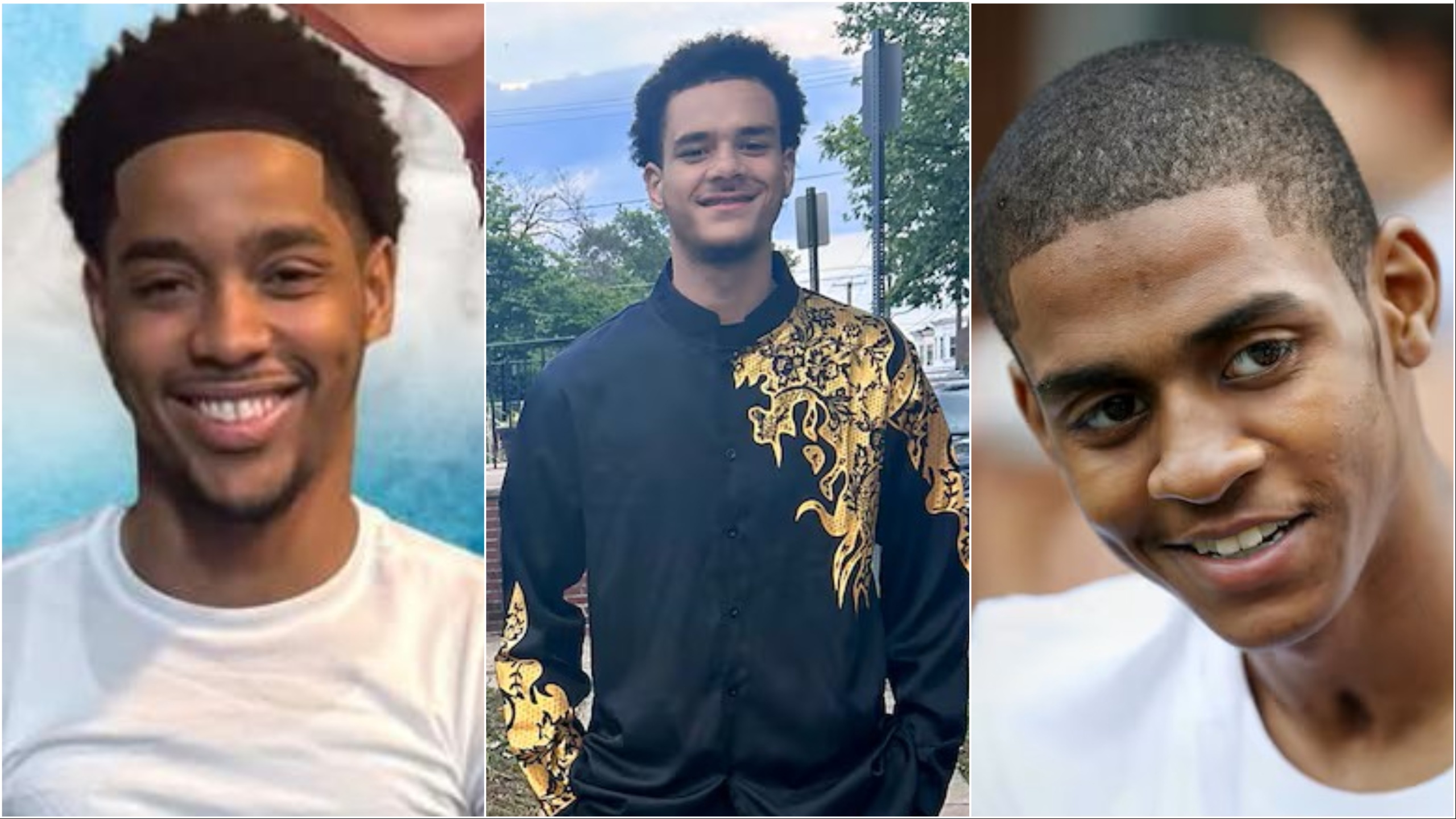
From left to right: Zahir Wylie, Jason Reese, and Azir Harris were killed in a mass shooting on the 1500 block of Etting Street on July 7.
Homicide Detective Joseph Cremen said he identified the four gunmen by combing surveillance video, phone, and social media records, and interviewing witnesses.
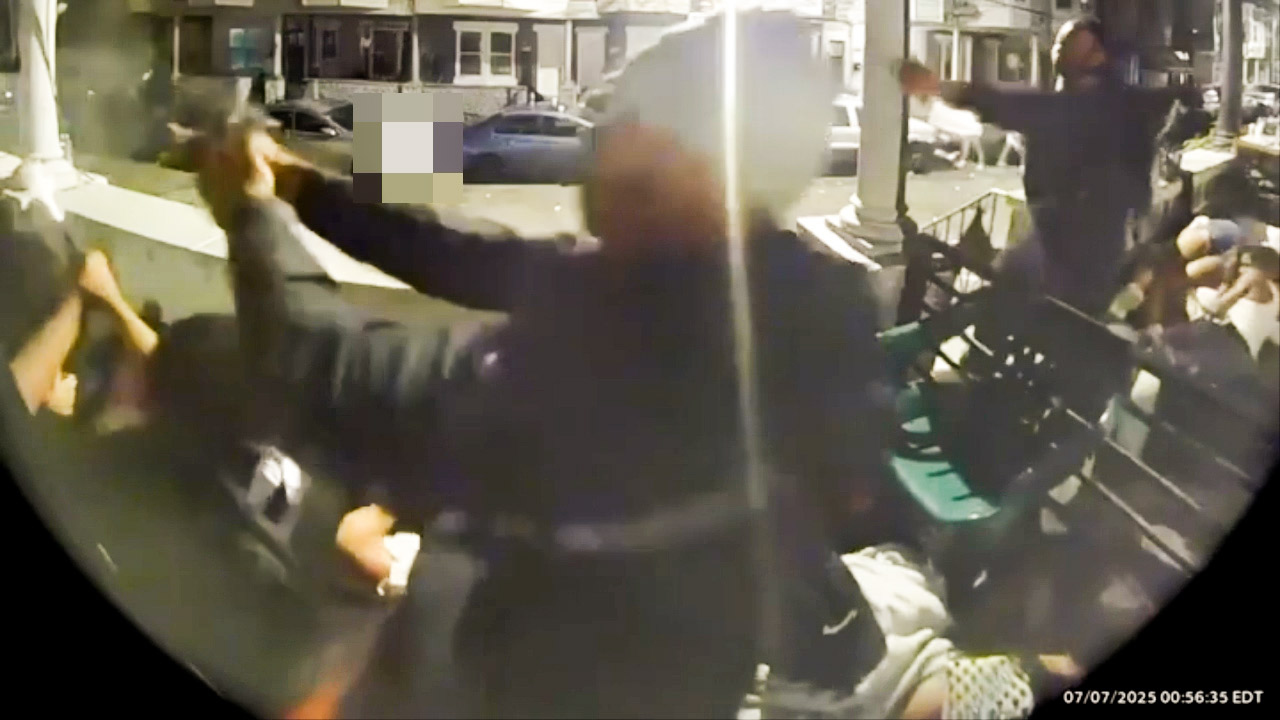
Fisher, he said, was seen on the porch of one of the homes using a gun with a “switch” attachment that caused him to spray dozens of bullets down the street, appearing at times as if he couldn’t control his weapon. In the teen’s phone, he said, were pictures of him with multiple guns, as well as the clothes he was wearing the night of the shooting and messages indicating he was selling firearms.
Police said the person directly in front of this video is Brandon Fisher, 17, using a gun with a switch on it to fire dozens of shots down Etting Street on July 7.
And Frazier, he said, talked about the shooting in text messages. About 12 hours after the shooting, he said, someone asked Frazier where he was when Wylie was struck.
“I was banging back,” Frazier wrote. He said the shooting was “bad,” and that Wylie “died from us.”
“He died from a stray,” he said, according to the texts.
Cremen said Brown admitted that he fired two shots with his legally owned gun, “then when he realized he wasn’t shooting at anything, he stopped and took cover.”
And Jardine, also known as Dieve Drumgoole, also told investigators he fired two or three shots after he saw someone come out of an alley on the block with a green laser attachment on a gun, the detective said.
Cremen didn’t recover video that showed anyone using a gun with a green laser beam.
Defense attorneys for the four men all argued that their clients were acting in self-defense, and only fired their guns because they believed someone was shooting at them. Police still do not know — and may never know — whose bullets struck each victim.
“There is no evidence that he struck anyone, there’s no evidence that he intended to strike anyone,” said Gina Amoriello, who represents Brown. “In all my years, I’ve never seen a case overcharged like this. This is extreme.”
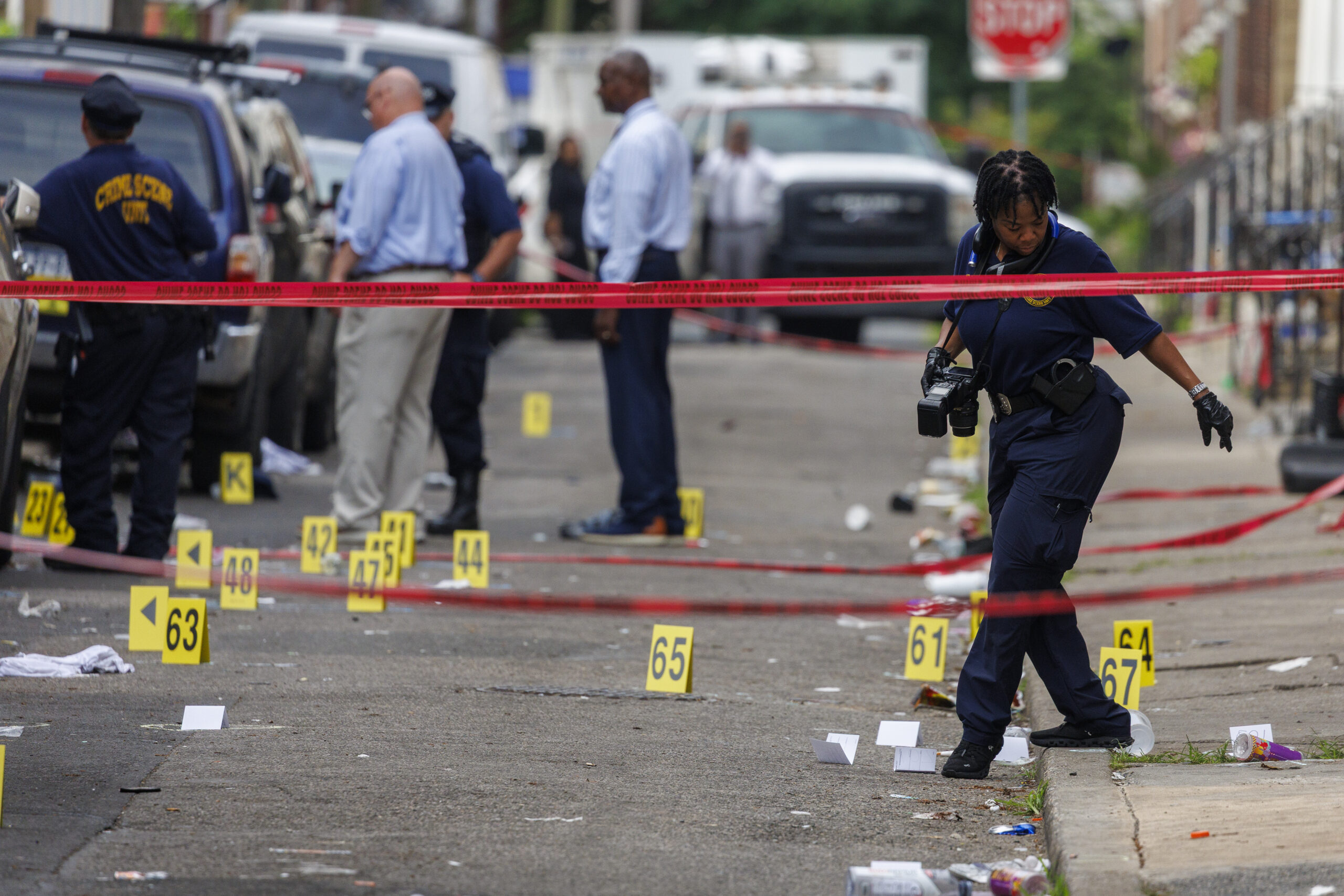
Philadelphia Police Crimes Scene officer taking pictures at scene. Scene of an overnight shooting 1500 block S. Etting Street, Philadelphia, that sent several to hospital, fatalities, early Monday, July 7, 2025.
John Francis McCaul, Jardine’s lawyer, said the father was “protecting his family” on the porch. Jardine’s son and nephew were also injured in the shooting.
No one, he said, intended to kill anyone by firing their guns.
The judge disagreed.
“The intent goes where the bullet goes,” said McCloskey. “The intent is established by producing the gun, pointing the gun, and pulling the trigger.”
He said it would be up to a jury or judge later on to determine whether or not the men were acting in self defense. At this preliminary stage, he said, prosecutors provided enough evidence to uphold a third-degree murder charge.
Prosecutors plan to address charges against a fifth person, Jihad Gray, who had been charged with the shooting at a hearing next week.
A sixth person, Christopher Battle, 24, remains at-large.
After the hearing, the families of the victims struggled to make sense of what they had just watched — friends killing friends.
“It’s really hard to digest,” said Troy Harris, whose son, Azir, was killed. “It was shocking. It was life changing to us. … This domino effect can hurt generations and generations.”
“I still don’t even get it,” said Markeisha Manigault, the mother to Zahir Wylie. “I don’t understand why … my son lost his life. It was just unnecessary.”
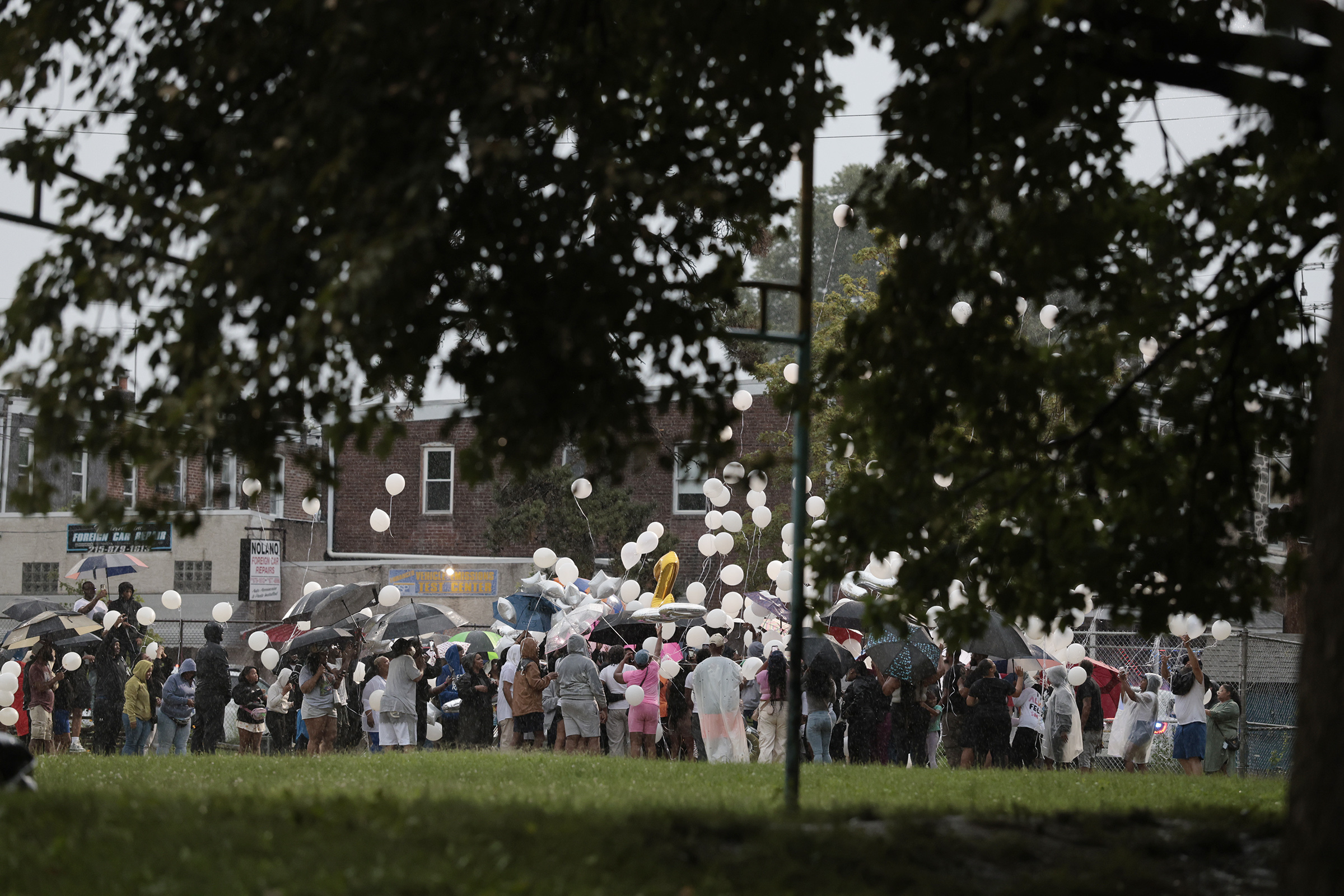
Family and friends gather for a balloon release in memory of Zahir Wylie at the Papa Playground on July 8, 2025.
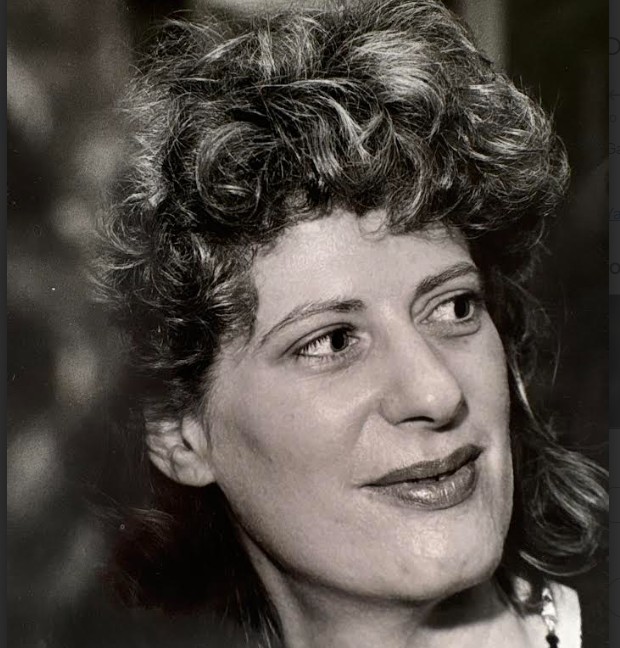
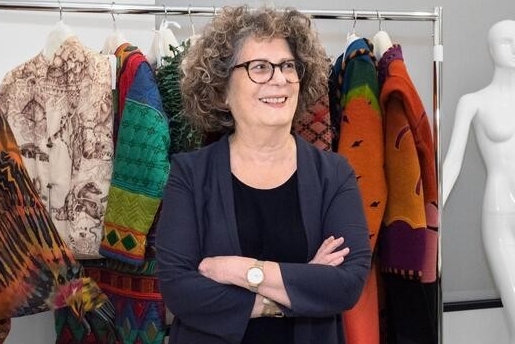
Dilys E. Blum, 78, of Philadelphia, senior curator emeritus of costume and textiles at the Philadelphia Art Museum, author, lecturer, mentor, and world traveler, died Saturday, Dec. 27, of complications from cancer at Thomas Jefferson University Hospital.
For 38 years, from 1987 to her retirement in 2025, Ms. Blum served as the museum’s curator of costume and textiles. In that role, she organized the museum’s vast treasure trove of textile artifacts, traveled the world to research noted fashion designers and eclectic collections, and created more than 40 memorable exhibitions about Renaissance velvets, contemporary fashion, Asian textiles, carpets, African American quilts, and dozens of other curios.
She was cited as the world’s foremost authority on avant-garde Italian fashion designer Elsa Schiaparelli, and her 2003 exhibition “Shocking! The Art and Fashion of Elsa Schiaparelli” drew 83,000 visitors. Francesco Pastore, the heritage and cultural projects manager at the House of Schiaparelli in Paris, said: “Her remarkable research, her generosity in sharing knowledge, and her contribution to fashion studies have deeply enriched our field.”
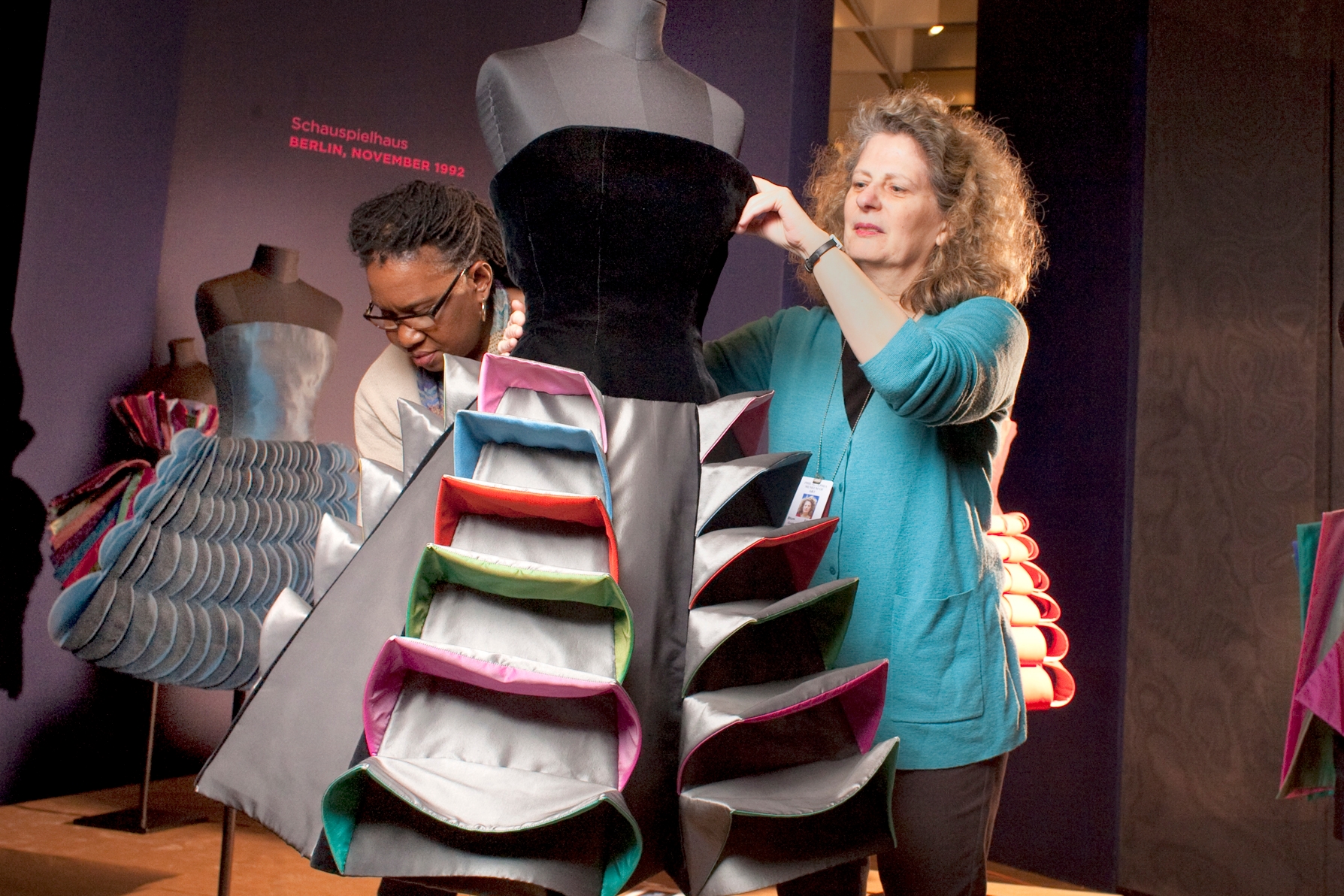
Ms. Blum (right) and colleague Monica Brown tend to a museum exhibit in 2011.
In a recent tribute, former museum colleagues marveled at her “technical expertise and cultural insight,” and credited her for reinvigorating the once-neglected textiles collection. Daniel Weiss, director and chief executive officer of the museum, said: “She transformed this museum’s costume and textiles department into a program respected around the world.”
She told The Inquirer in 1990: “We wanted to remind them that we were here.”
Before Philadelphia, Ms. Blum was a textile conservator at the Chicago Conservation Center and the Brooklyn Museum, and senior assistant keeper of the costume and textile department at the Museum of London. She earned a bachelor’s degree in art history at Connecticut College and studied afterward at the University of Manchester in England and the Courtauld Institute of Art at the University of London.
“She was fearless in her pursuit of perfection in her work,” said her sister Galen. Her sister Sydney said: “She was dedicated to her craft and scholarship.”
Ms. Blum (left) was close to her sisters Sydney (center) and Galen.
An avid reader and writer, Ms. Blum wrote and cowrote several books about textiles and designers, and 2021’s Patrick Kelly: Runway of Love, coauthored with former colleague Laura L. Camerlengo, earned a 2023 honorable mention publication award from the Costume Society of America. She also wrote essays for exhibition catalogs, served on editorial boards for journals, lectured around the world, and was active with the International Council of Museums, the Association of Art Museum Curators, and other groups.
In 2025, to celebrate Ms. Blum’s retirement, Camerlengo praised her “deep knowledge, creative vision, and contagious passion for the field.” She said: “Dilys is one of the most influential figures in the world of fashion and textile arts.”
Ms. Blum’s work and fashion viewpoints were featured often in The Inquirer. In 1997, she said: “People don’t dress up anymore.” In 1999, she said: “I think we’ve lost the joy in dressing. There’s this trend away from clutter in dress and decorating. It’s pared down to the point of visual boredom.”
In 2001, she said it was easy to differentiate between New Yorkers and Philadelphians. “New Yorkers,” she said, “will invariably be wearing the accessory of the moment, a pashmina shawl, a Kate Spade bag, a Prada loafer.”
Ms. Blum left “an enduring legacy woven through the art museum and the generations of scholars and visitors who now see costumes and textiles as central to the story of art,” former museum colleagues said.
Dilys Ellen Blum was born July 11, 1947, in Ames, Iowa. She and her parents moved to Hamilton, N.Y., when she was 1, and the family traveled with her father, an economics professor at Colgate University, on teaching sabbaticals abroad. When she was 12, Ms. Blum spent a year with her parents and sisters living in Norway and touring Europe in a Volkswagen Beetle.
Her mother was an artist and seamstress, and she and Ms. Blum spent many nights poring over clothes patterns on their dining room table. She enjoyed reading murder mysteries and traveling the world in search of new museum-worthy artifacts.
She lived in South Philadelphia, was diagnosed with cancer three years ago, and talked often with her sisters on the telephone. “I admired her seriousness and humility,” Sydney said. Galen said: “From my perspective, I was in awe of her.”
In addition to her sisters, Ms. Blum is survived by a niece, Juniper, and other relatives.
A memorial service is to be held later.
Former museum colleagues said Ms. Blum’s writing “consistently amplified the makers and wearers of extraordinary objects, and their intertwined relationships.”
Several groups at the University of Pennsylvania representing Jewish students, faculty, and staff are seeking to protect their names and personal information from beingturned over to the U.S. Equal Employment Opportunity Commission, which is suing Penn for the data.
The EEOC filed suit in November after the Ivy League university refused to comply with a subpoena seekinginformation for an investigation it began in 2023 over the school’s treatment of Jewish faculty and other employees regarding antisemitism complaints.
In its quest to find people potentially affected, the commission demanded a list of employees in Penn’s Jewish Studies Program, a list of all clubs, groups, organizations, and recreation groups related to the Jewish religion — including points of contact and a roster of members — and names of employees who lodged antisemitism complaints.
In a legal filing in federal court this week, several groups argued that their personal information should be kept private.
“In effect, these requests would require Penn to create and turn over a centralized registry of Jewish students, faculty, and staff — a profoundly invasive and dangerous demand that intrudes deeply into the freedoms of association, religion, speech, and privacy enshrined in the First Amendment,“ the groups charged in the filing.
The motion was filed on behalf of the American Academy of Jewish Research — the oldest organization of Jewish studies scholars in North America — Penn Carey Law School’s Jewish Law Students Association, the national and Penn chaptersof the American Association of University Professors, and the Penn Association of Senior and Emeritus Faculty. All the groups include Jewish students, faculty, and staff whose information could be affected, according to lawyers involved in filing the motion.
No matter the EEOC’s motives, “creating a list of Jews in an era where data security is questionable, against the backdrop of rising antisemitism … and white supremacy, is terrifying,“ Amanda Shanor, a Penn associate professor of legal studies and business ethics and one of the lawyers who filed the motion, said in an interview.
The groups argued that providing the personal information to the commission could harm future membership.
“The prospect that the subpoena or a similar future subpoena could be enforced will chill the Jewish community members’ willingness to join and participate in these organizations for years to come,” the filing said.
And while Penn has resisted compliance, the groups worry that could change if President Donald Trump’s administrationapplies financial or other pressure, according to the filing.
Penn last summer entered into an agreement with the Trump administration over transgender athletes after $175 million in federal funding was paused. Penn agreed to apologize to members of its women’s swim team who were “disadvantaged” by transgender swimmer Lia Thomas’ participation on the team in the 2021-22 season and remove Thomas’ records, giving them instead to swimmers who held the next-best times. The school also agreed to abide by Title IX — the civil rights law that prohibits sexual harassment and discrimination — “as interpreted by the Department of Education” in regard to athletics and state that all its practices, policies, and procedures in women’s athletics will comply with it.
Lawyers for the groups in the EEOC case pointed to that settlement in their filing.
“The proposed intervenors cannot leave their rights to chance and must be permitted to protect their rights,” lawyers for the groups said in their filing this week.
Shanor said while Penn “has been very firm on this in a way that I am very struck by and impressed with,” it is important for the faculty and students to “assert those interests directly and explain to the court from the people who actually would be harmed by this why this is unconstitutional.”
Steven Weitzman, a professor of religious studies at Penn, said he got involved in part because the EEOC was seeking the names of faculty and staff who participated in confidential listening sessions as part of Penn’s task force on antisemitism.
“We promised the participants it would be confidential,” said Weitzman, who, as a member of the task force, helped set up the listening sessions.
Penn provided notes from the sessions, but not participants’ identities, he said.
As part of the Jewish studies program, his information also would have been vulnerable to the EEOC’s demand. He said even though Penn did not provide the information, the commission somehow got his personal cell number and called last week. He does not intend to call back, he said.
Asking the university to compile a list of Jewish faculty and staff is wrong, he said.
“Even if their motives are perfectly benign, they can’t guarantee they will always control that information, and it’s setting a dangerous precedent,” he said.
Penn declined to comment on the groups’ filing, but in a statement in November, the school said it had cooperated extensively with the EEOC, including providing more than 100 documents and over 900 pages.
But the private university refused to disclose the personal information.
“Violating their privacy and trust is antithetical to ensuring Penn’s Jewish community feels protected and safe,” Penn said.
Penn provided information on employees who complained and agreed to be contacted, the school said, and offered to reach out to employees and make them aware of the EEOC’s request to speak with them.
The original complaint was launched by EEOC Commissioner Andrea Lucas, now chair of the body, on Dec. 8, 2023, two months after Hamas’ attack on Israel that led to unrest on college campuses, including Penn, and charges of antisemitism. It was also just three days after Penn’s then-president, Liz Magill, had testified before a Republican-led congressional committee on the school’s handling of antisemitism complaints; the testimony drew a bipartisan backlash and led to Magill’s resignation days later.
Lucas, whom Trump appointed chair last year, also brought similar antisemitism charges against Columbia University that resulted in the school paying $21 million for “a class settlement fund.”
EEOC complaints typically come from those who allege they were aggrieved. Lucas, according to the complaint, made the charge in Penn’s case because of the “probable reluctance of Jewish faculty and staff to complain of harassing environment due to fear of hostility and potential violence directed against them.“
The EEOC’s investigation ensued after Lucas’ complaint to the commission’s Philadelphia office that alleged Penn was subjecting Jewish faculty, staff, and other employees, including students, “to an unlawful hostile work environment based on national origin, religion, and/or race.”
The allegation, the complaint said, is based on news reports, public statements made by the university and its leadership, letters from university donors, board members, alumni, and others. It also cited complaints filed against Penn in federal court and with the U.S. Department of Education over antisemitism allegations and testimony before a congressional committee.
“Penn has worked diligently to combat antisemitism and protect Jewish life on campus,” Penn said in its November statement about the EEOC lawsuit.
As it approaches halftime, the meteorological winter around here so far has been about as inconsistent as the Philadelphia Eagles’ offense, but it is about to get decidedly colder, if not snowier.
Temperatures on Thursday are due to hover around freezing with a brisk westerly wind gusting up to 30 mph (sympathies to all bikers and runners and those who are navigating those Center City wind tunnels), and then drop into the 20s after sunset with windchills in the teens.
Then, after a modest warmup Friday and Saturday, the forecast turns decidedly colder and potentially more intriguing, as computer models have been going back and forth on snow potential for the Philly region.
Philly’s coldest stretch of the winter so far to begin Sunday
Readings are expected to warm into the 40s on Saturday, but then drop off dramatically during the holiday weekend and may not reach freezing again until Thursday.
They may not get out of the 20s on Tuesday — when wind chills could fall to 0 in Philly — and Wednesday, with overnight lows in the teens.
A few alarm bells went off Wednesday afternoon when the main U.S. computer model suggested potential major snowstorms along the coast all the way to the I-95 corridor on Sunday.
However, other computer guidance wasn’t buying it, nor were forecasters. The computer food fight continued Thursday.
The U.S. model, said Paul Pastelok, longtime seasonal forecast specialist with AccuWeather Inc., “goes wacky all the time.” Maybe not all the time, but a subsequent run of the European model kept the storm offshore.
“We’re kind of in a waiting game,” said Pastelok.
Opined the National Weather Service Office in Mount Holly in its afternoon forecast discussion, the potential system has “high-end potential but also could end up being nothing.”
In other words, situation normal.
The winter so far in Philly and United States
Oddly, the raw stats for the first half of the meteorological winter — that’s the Dec. 1-Feb. 28 period — are not too far from normal for snowfall and temperature.
December temperatures finished at 3.6 degrees below normal at Philadelphia International Airport. And in the first two weeks of 2026, they were 3.6 degrees above normal. Snowfall in December was about an inch above average, but with a paltry 0.3 inches so far this month, the 4.8 total is very close to where it should be.
The early season coolness in Philly and much of the rest of the East was a surprise, said Owen Shieh, warning coordination meteorologist with NOAA’s Weather Prediction Center, in College Park, Md. The West, conversely, was quite warm.
The contrasts were the result of “pattern persistence,” said Tony Fracasso, a weather center meteorologist.
In the East, “This winter started quite strong,” he added, compared with recent winters. “It was not record cold,” but, “it sure felt cold for us.”
What’s ahead the rest of the winter of 2025-26
That likely will be the case early next week, and NOAA’s Climate Prediction Center has chances favoring below normal temperatures and above-normal precipitation in the Jan. 22-28 period.
Pastelok said that upper-air patterns are aligning in such a way that favors importing cold air from northwestern Canada.
The Climate Center’s Laura Ciasto said she does not see a major invasion of the polar vortex in the next few weeks. The vortex circles the Arctic, imprisoning the planet’s coldest air. But on occasion, the winds weaken, the freezer opens, and the contents spill southward.
She said the vortex winds are slightly weaker than normal but are expected to strengthen.
It is possible that lobes of the vortex may stretch on occasion, resulting in short-lived periods of cold in the Northeast, said Judah Cohen, research scientist with the Massachusetts Institute of Technology.
A period to watch would be the first week in February, when a significant disruption of the vortex is possible, Pastelok said.
A sudden stratospheric warming in the high atmosphere in the Arctic, which can lead to cold outbreaks in the contiguous United States “is not out of the question” late in the winter, Ciasto said.
Philadelphia’s peak snow season typically occurs in late January through mid-February.
Of the 10 biggest snowfalls in the city’s history, only three have occurred before Jan 22.