Category: Philadelphia News

  • Philly schools return to in-person classes on Wednesday

    Philly schools return to in-person classes on Wednesday

    After two days of virtual classes, the School District of Philadelphia will return to in-person instruction on Wednesday.

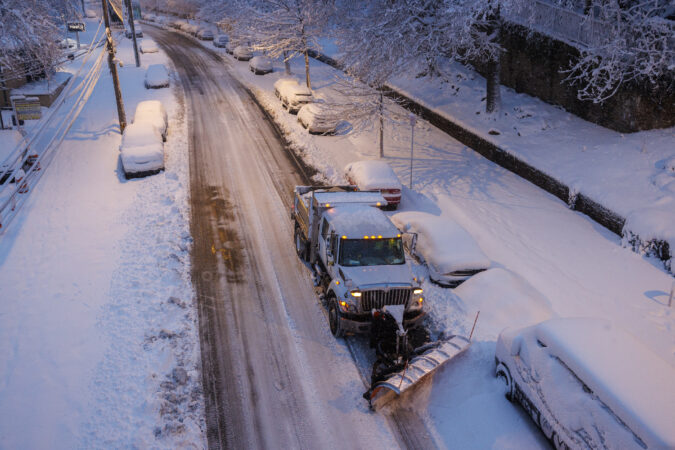
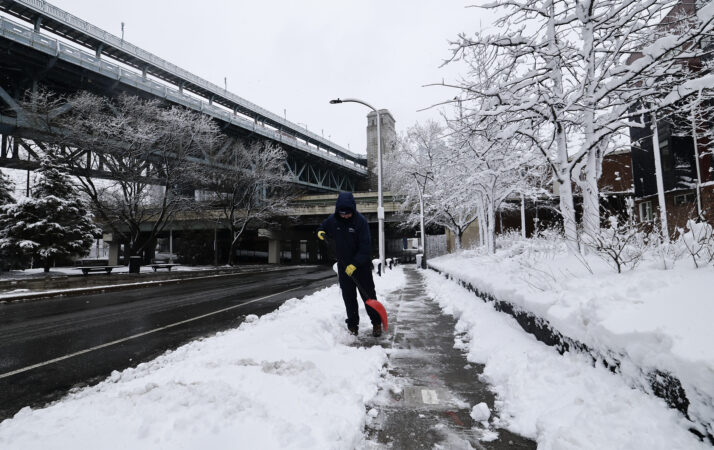
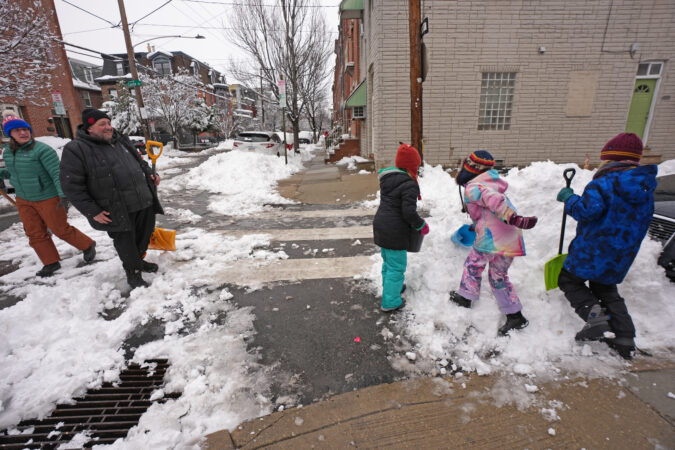
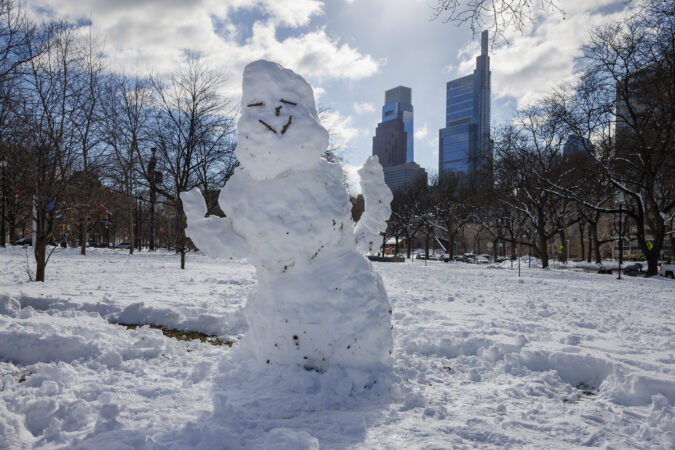
    More than a foot of snow was dumped across the city Sunday into Monday morning, prompting widespread closures. However, warmer temperatures on Monday helped to speed up snow removal.

    The city offices and courts reopened on Tuesday, but the School District decided to stay virtual one more day.

    Philadelphia trash and recycling collections will also resume Wednesday on a two-day delayed schedule, officials said.

  • Light snow may top the black ice in the Philly region Wednesday as storm recovery continues

    Light snow may top the black ice in the Philly region Wednesday as storm recovery continues

    At this point, the prospect of a barely measurable snow Wednesday morning may seem like so much drizzle in the ocean.

    However, given that a coating of snow could cover another harvest of stealth black ice in the morning as the snow melt refreezes overnight, motorists and pedestrians might want to exercise a measure of caution.

    The forecasts are calling for a half-inch to maybe an inch in the Philly area.

    While potentially hazardous, this won’t upstage what happened earlier in the week, when totals of 20 inches or more were common in South Jersey and southeastern Bucks County, and on Tuesday the aftermath recovery was proceeding.

    For the record, the official total at Philadelphia International Airport was 14 inches. Of that, 7.5 inches fell on Monday, setting a record for the date. It was No. 16 on the all-time snowstorm list, and the first time in 33 years that a foot or more had fallen so late in the season.

    The seasonal total now stands at 30 inches, one of the snowier years in the 142-year period of record.

    The post-storm issues included contending with scores of downed trees throughout the region. A fallen tree in Radnor Township, Delaware County, still was affecting service on the Norristown High Speed Line.

    Service still was still suspended on the Cynwyd Regional Rail line, SEPTA said, and other lines were operating with delays.

    Airport operations were getting back to normal, said spokesperson Heather Redfern, flights having resumed Monday afternoon.

    As for schools, they were opting for a variety of options from virtual learning (Philadelphia) to two-hour delays (Cherry Hill, Moorestown), to party’s over, get here on time (Upper Darby).

    This may be the week of black ice in Philly

    Invisible and insidious black ice, a dangerous slipping hazard, in all likelihood will be present through the workweek as the snow melt picks up speed during the day, with highs in the 40s, and temperatures falling below freezing at night.

    More light snow, rain, or a snow-and-rain mix is possible Thursday into Thursday night, the weather service said. But odds are the immediate Philly area will see mostly rain, said Eric Hoeflich, a weather service meteorologist in Mount Holly.

    After a modest warmup on a dry weekend, some computer models were hinting at more snow early next week as a storm moves east, but “not all the guidance is showing a significant system,” the weather service said in its afternoon discussion. “It’s definitely on our radar,” the agency said, but it doesn’t “appear to have potential for a ‘major’ event.”

    In short, anything rivaling the Sunday-Monday storm would be, at the very least, unlikely.

    Hoeflich said he spent 30 hours in the Mount Holly office, not leaving until 2 p.m. Monday. He said that the weather service provided air mattresses for him and other staffers and that his colleagues came armed with soft pretzels.

    Sarah Johnson, the warning coordination meteorologist, brought pizza. Evidently carbs are a sine qua non of storm forecasting.

    Said Hoeflich, “We certainly didn’t go hungry.”

  • Paul F. Engstrom, award-winning pioneer in cancer prevention and control at Fox Chase Cancer Center, has died at 89

    Paul F. Engstrom, award-winning pioneer in cancer prevention and control at Fox Chase Cancer Center, has died at 89

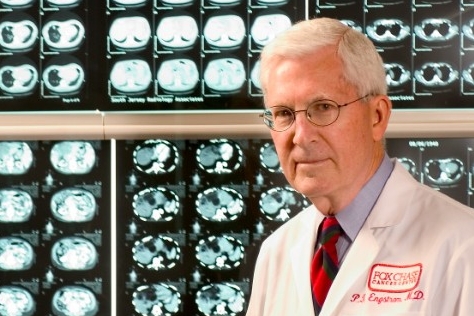
    Paul F. Engstrom, 89, formerly of Ambler, Montgomery County, celebrated pioneer in cancer prevention, education, and treatment, former chair and professor emeritus of the hematology and oncology department at Fox Chase Cancer Center, retired vice president of cancer control and senior adviser to the president at Fox Chase, Army veteran, and mentor, died Friday, Dec. 26, of Parkinson’s disease at Normandy Farms Estates in Blue Bell.

    The son of a small-town doctor, Dr. Engstrom accompanied his father on house calls in Minnesota when he was young and assisted sometimes on routine procedures. Later, after earning his medical degree at the University of Minnesota, he excelled at identifying cancer-related health problems and creating solutions.

    Starting in the 1960s and ’70s, Dr. Engstrom noticed large gaps in cancer prevention programs and treatment strategies. So he compiled comprehensive clinical care guidelines for cancer doctors and hospitals around the world, forged sustainable oncology research networks and community education partnerships, and established one of the country’s first cancer prevention and control programs at Fox Chase.

    “Most doctors and oncologists in the 1970s were training to treat cancer, not necessarily to prevent it,” former Fox Chase colleague Carolyn Fang said in a 2018 story for Fox Chase’s Forward magazine. “He was one of the first to recognize that prevention was important.”

    In 1991, Dr. Engstrom told the Daily News: “Changing the behavior of the public is only part of my job. We must change the physicians, too.” In 2000, he told The Inquirer: “Nowadays, the trend is toward identifying high-risk individuals and treatments we can give to prevent cancer from ever starting.”

    Dr. Engstrom was adept at organization and collaboration, former colleagues said in online tributes. He recruited other cancer experts to Fox Chase and established cutting-edge programs for cancer screening, smoking cessation, and education at hospitals, schools, private companies, and other organizations.

    He taught clinical science classes, secured vital grants from the National Cancer Institute and other groups, and made seminal clinical trials available to many more patients. “He was really aware of the need to integrate the community into this work.” Fang said in 2018.

    Dr. Engstrom joined the old American Oncologic Hospital in Philadelphia in 1970 and oversaw its merger with the Institute for Cancer Research in 1974 to become the Fox Chase Cancer Center. He was named vice president of cancer control and continuing education in 1984, and head of community cancer program activities in 1989.

    Dr. Engstrom (center) earned many awards over his long career.

    He was also vice president for population science and held the Samuel M.V. Hamilton endowed chair in cancer prevention. He specialized in treating gastrointestinal cancers and neuroendocrine tumors. He retired in 2018 but continued as a special adviser to the Fox Chase president.

    He cofounded the National Comprehensive Cancer Network and was a fellow of the American College of Physicians and longtime member of the American Association of Cancer Research and other groups. He served on many boards and earned a clinical care achievement award in 2013 from the Association of Community Cancer Centers.

    In 2016, Dr. Engstrom and his wife, Janet, were honored by Fox Chase colleagues for their combined 80 years of service to the center. In 2020, colleagues published a series of articles about his career in the journal Cancer Prevention Research. In 2023, friends, colleagues, patients, and his family established the Paul F. Engstrom professorship in oncology at Fox Chase.

    Dr. Engstrom edited, wrote, or cowrote hundreds of research papers and lectured around the world. He was drafted into the Army in 1967, rose to the rank of major, and served three years as head of hematology and oncology at Tripler Army Hospital in Honolulu.

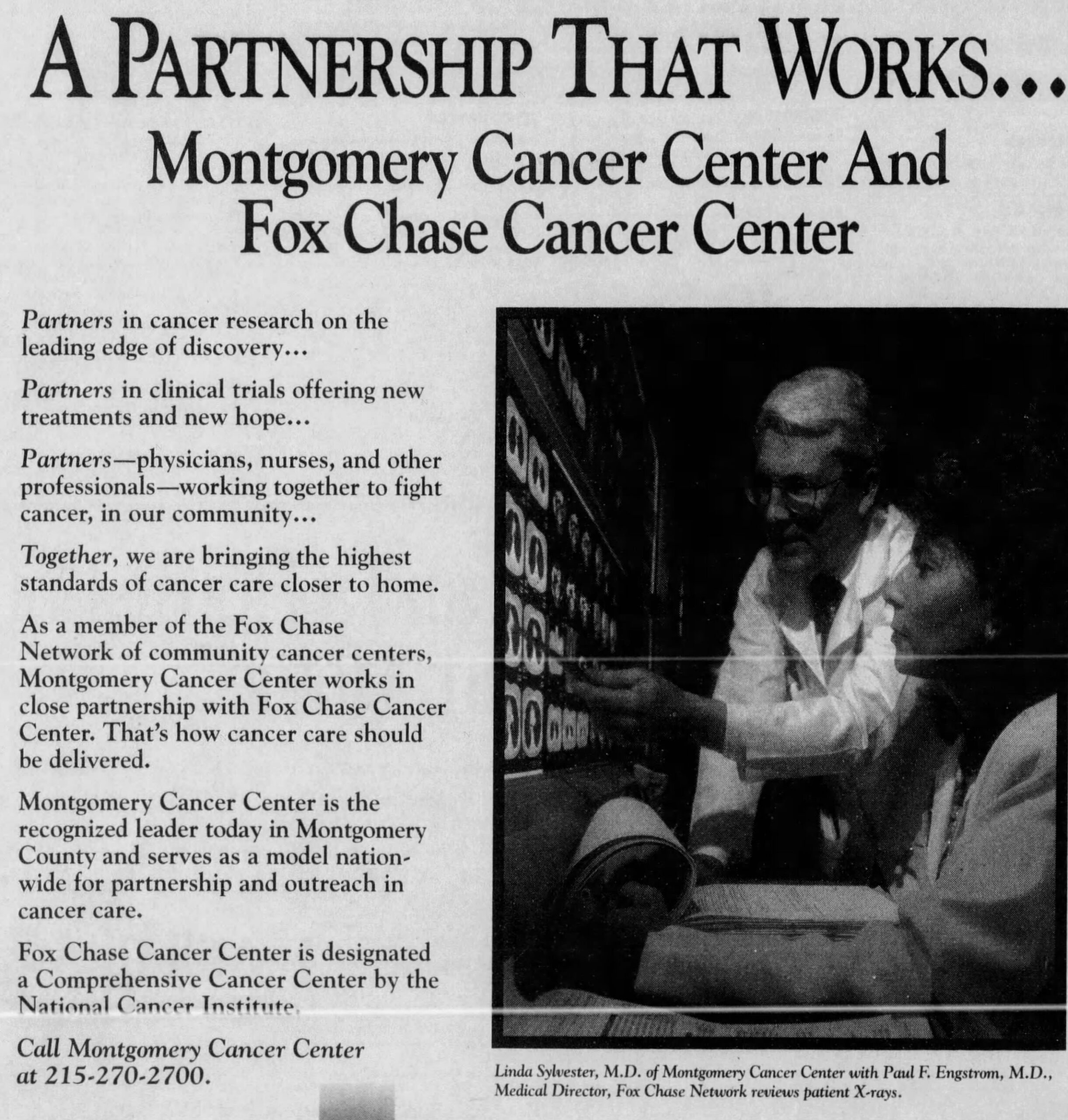
    Dr. Engstrom (left in the photo) appeared in many print advertisements for the Fox Chase Cancer Center, such as this 1995 ad in The Inquirer.

    “Medicine is a great career,” he said in 2018. “It is still the most satisfying and the best opportunity to do well, but most importantly to do good.”

    Paul Frederick Engstrom was born May 28, 1936, in St. Cloud, Minn. He played football and basketball, ran track, played trombone in the high school band, and sang in the school chorus.

    His father was the only doctor in Belgrade, Minn., and Dr. Engstrom knew early he was going to be a doctor, too. He earned a bachelor’s degree at St. Olaf College in Minnesota and completed a public health fellowship at the California Department of Health during medical school.

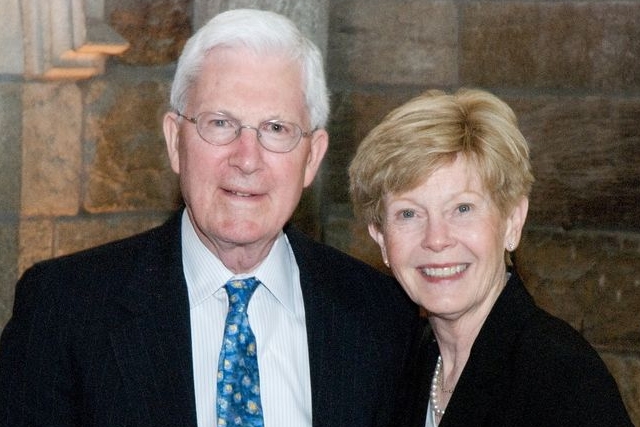
    He met nurse Janet Johnson during a procedure in a Minnesota hospital in 1960, and they married in 1961. They lived in Hawaii while he served in the Army and in Ambler until recently, and had daughters Karin and Maria, and a son, David.

    Dr. Engstrom met his wife, Janet, when she was an intensive care unit nurse.

    Dr. Engstrom and his wife enjoyed the orchestra, ballet, and theater in Philadelphia. He liked to garden, read, and travel. He was thrifty, his wife said.

    He followed many of the local college and professional sports teams, especially the Eagles, and sang in the choir at Christ’s Lutheran Church in Oreland. He survived prostate cancer and remained a lifelong learner.

    “He liked being a student,” his wife said. “He was quiet. He was persistent.”

    His family said in a tribute: “He cherished every moment spent with his wife, children, and grandchildren.”

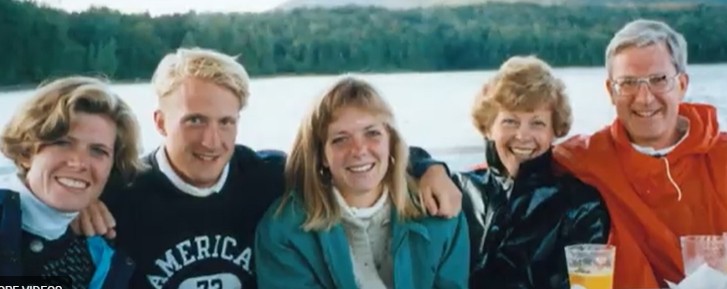
    Dr. Engstrom (right) enjoyed time with his family.

    In addition to his wife and children, Dr. Engstrom is survived by eight grandchildren, a brother, and other relatives. A brother died earlier.

    A celebration of his life was held earlier.

    Donations in his name may be made to the Fox Chase Cancer Center, 333 Cottman Ave., Philadelphia, Pa. 19111; and Christ’s Lutheran Church, 700 E. Pennsylvania Ave., Oreland, Pa. 19075.

  • Philly trash pickup starts Wednesday, on a two-day delay. Here’s when your trash will get collected.

    Philly trash pickup starts Wednesday, on a two-day delay. Here’s when your trash will get collected.

    As sanitation crews finish clearing the 14 inches of snow that blanketed Philadelphia during this week’s near-blizzard, more workers can now be diverted back to trash pickup.

    Trash and recycling collections will resume Wednesday on a two-day delayed schedule, meaning households with Monday pickups will get their trash collected Wednesday. Tuesday trash pickups will be on Thursday, Wednesday pickups on Friday, Thursday pickups on Saturday, and households with Friday pickups will have trash collected on Sunday.

    Due to the modified schedule, there will be no second trash collection for neighborhoods that regularly receive it, and no collections in rear driveways for the rest of the week. With significant snow accumulation, the Streets Department said the measures would help mitigate the risk of sanitation trucks getting stuck in snow.

    Expect collection delays as crews navigate through the snow and ice, and inaccessible streets may experience additional delays of trash pick up, according to the Streets Department.

    Residents who cannot wait for delayed trash collection or do not receive collections due to unplowed streets can use one of the six sanitation convenience centers. Open Monday through Saturday, from 8 a.m. to 6 p.m., residents can drop off trash and recycling at these locations.

    Sanitation convenience centers in Philadelphia

    • Northeast Philadelphia: 8401 State Rd., zip code 19136
    • Northwest Philadelphia: 320 Domino Ln., zip code 19128
    • Port Richmond: 3901 Delaware Ave., zip code 19137
    • Southwest Philadelphia: 3033 S 63rd St., zip code 19153
    • Strawberry Mansion: 2601 W Glenwood Ave., zip code 19121
    • West Philadelphia: 5100 Grays Ave., zip code 19143
  • Philly school officials want to close Lankenau High and give it to the city. A 1970s legal agreement may snarl that deal.

    Philly school officials want to close Lankenau High and give it to the city. A 1970s legal agreement may snarl that deal.

    Could a 1973 legal agreement help save Lankenau High?

    The Schuylkill Center for Environmental Education hopes so.

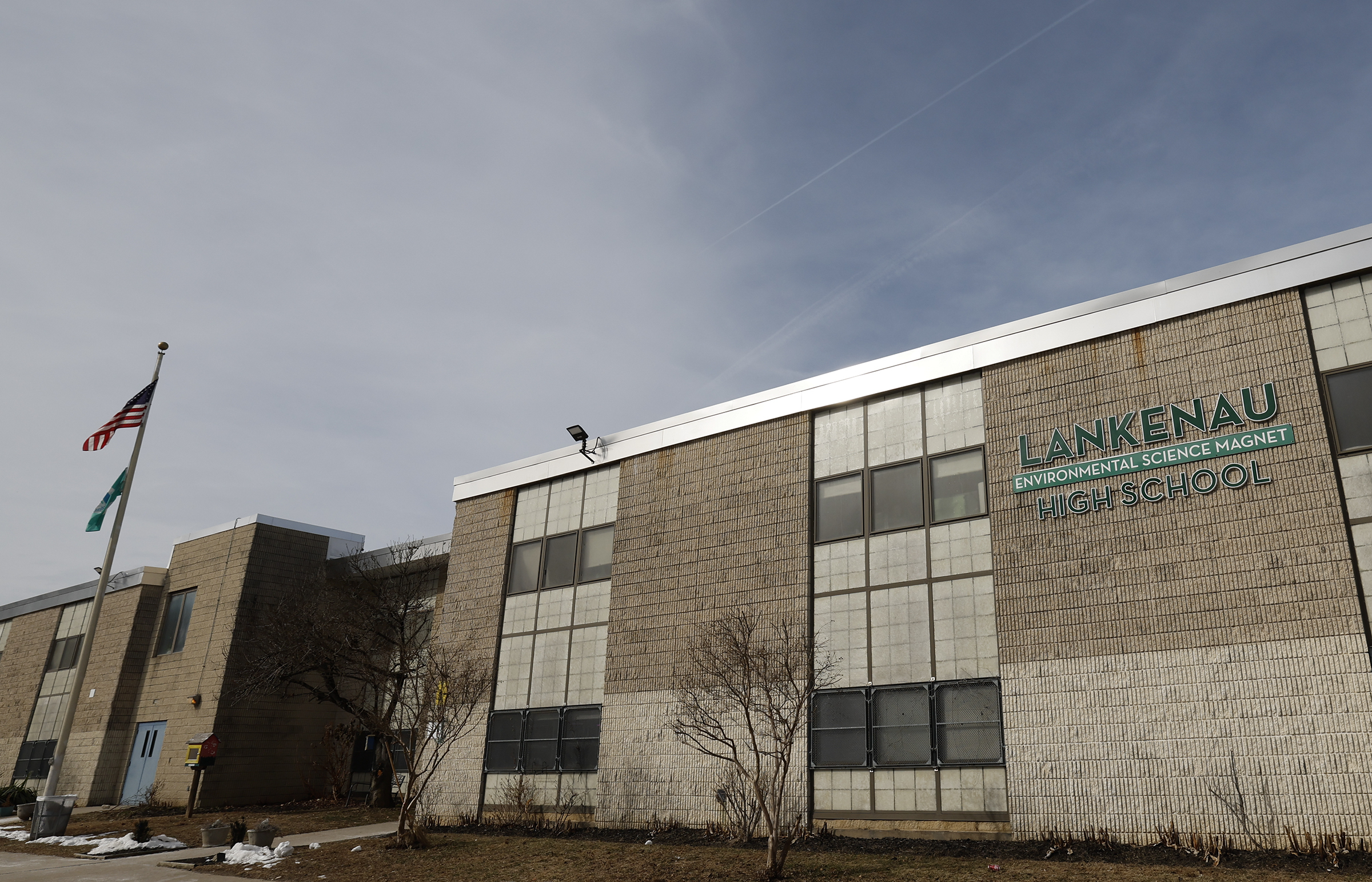
    The Philadelphia School District has proposed closing Lankenau, the city’s environmental science magnet school, and giving it to the city to help further Mayor Cherelle L. Parker’s affordable-housing goals, or for job creation.

    But the Schuylkill Center, Lankenau’s neighbor, believes it’s prohibited from doing so, and just notified Superintendent Tony B. Watlington Sr.

    The Schuylkill Center “holds a right to repurchase the property in the event that it is transferred or conveyed or used for any purpose other than school purposes, pursuant to a restriction in the October 4, 1973 deed by which [the Schuylkill Center] conveyed the property to the Lankenau School,” a lawyer for the environmental center wrote in a letter sent to the district Monday.

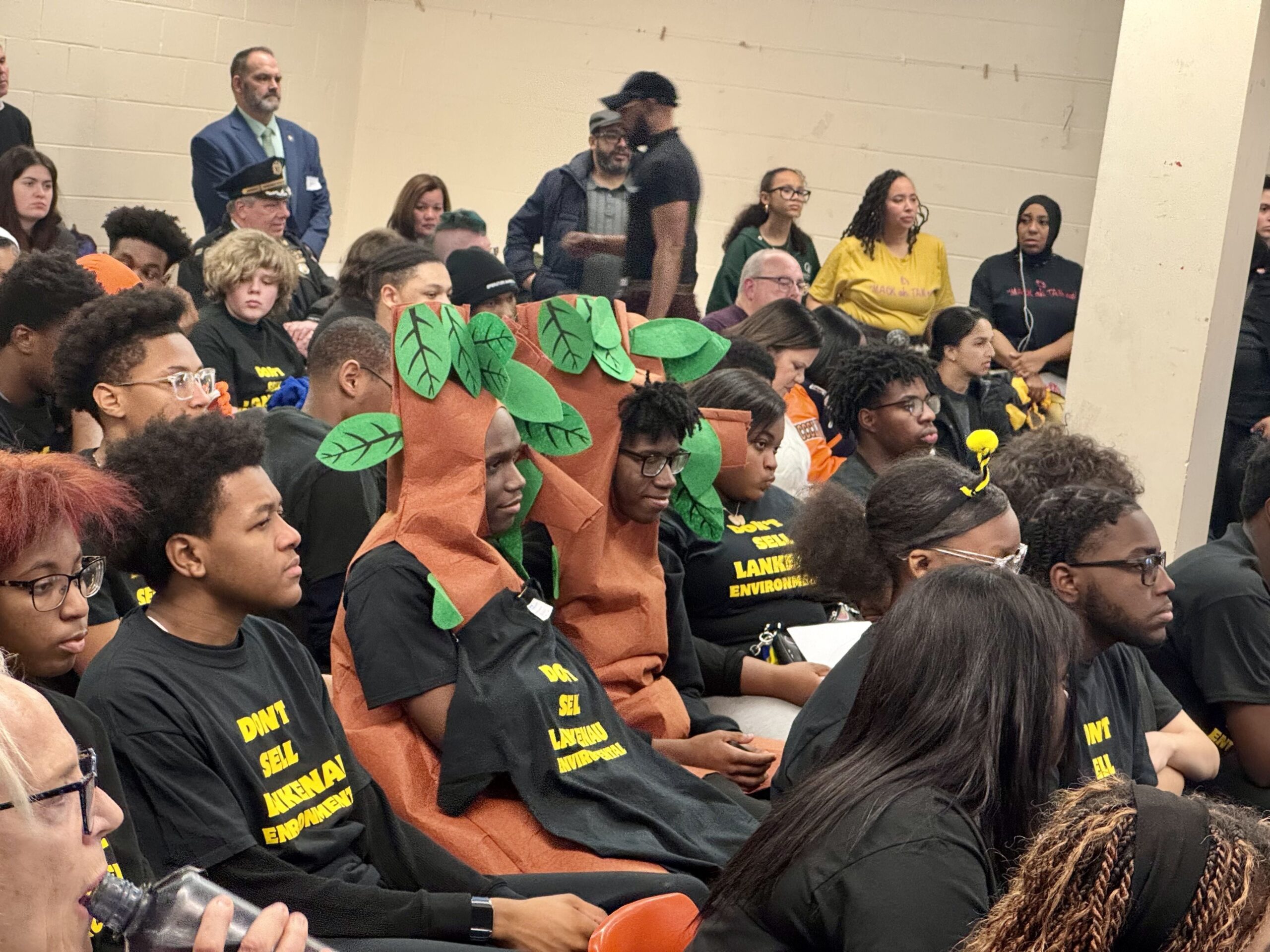
    Students, staff, and community members who support Lankenau High School – including some dressed as trees – packed a recent community meeting at the school about its proposed closure.

    If the district is “considering a sale of the property or using the property for any purposes other than continued use as a school, this letter serves as written notice of [the Schuylkill Center’s] right to repurchase,” lawyer Sean T. O’Neill wrote to Watlington, “The school district must provide [the Schuylkill Center] with reasonable advance notice of any potential conveyance or change in use and allow [the Schuylkill Center] the opportunity to exercise its right to repurchase.”

    The center, which touts itself as “one of the first urban environmental education centers in the country,” was founded in 1965. It has trails and a visitors’ center and runs educational programs and a wildlife clinic.

    District officials had no immediate comment.

    Lankenau’s history

    Lankenau sits amid 400 wooded acres adjacent to the Schuylkill Center. The 17-acre parcel Lankenau High now sits on was originally the site of the private Lankenau School for Girls; after that school closed, the Philadelphia School District purchased the land.

    What is now Lankenau High was first a program of Saul High and then Germantown High, but in 2005, it became a standalone school as part of then-CEO Paul Vallas’ small schools initiative.

    Since then, Lankenau has soared as a diverse, hands-on magnet with a 100% graduation rate in a location like no other.

    News that Lankenau landed on the district’s closure list infuriated students, parents, community members, and elected officials, who have mounted a robust campaign to fight plans to shut the school and relocate it as an honors program inside Roxborough High.

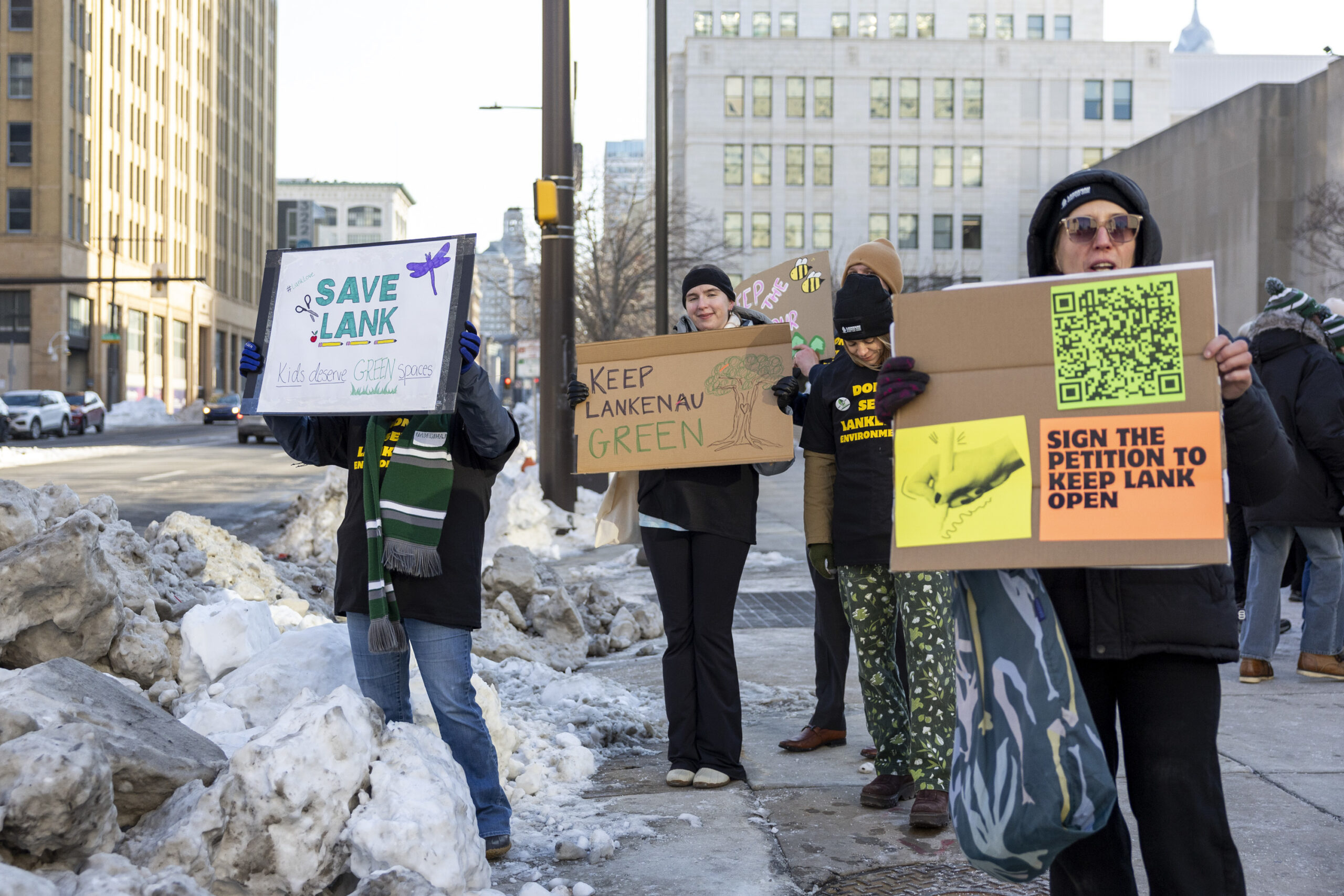
    Teachers, students, and community members from Lankenau High School rally outside a Philadelphia school board meeting in January.

    They’re particularly alarmed that Lankenau’s small size, used to justify its closing, came as enrollment shrank after the school system ordered changes to its special-admissions policy.

    The Schuylkill Center’s first priority is for Lankenau to remain as it is, said Erin Mooney, executive director of the 60-year-old organization, which now partners closely with Lankenau.

    “We are in opposition to Lankenau’s closing,” said Mooney, “but should something change with Lankenau, we want to ensure that the site continues to be used to teach people about nature.”

    Mooney, who has been public in the Schuylkill Center’s support for the school, discovered the language giving the Schuylkill Center right of first refusal if the property ever ceases being a school in the 1973 agreement.

    Watlington is scheduled to present his sweeping facilities plan — which as of January included 20 closures, six co-locations and 159 modernizations — at a school board meeting Thursday.

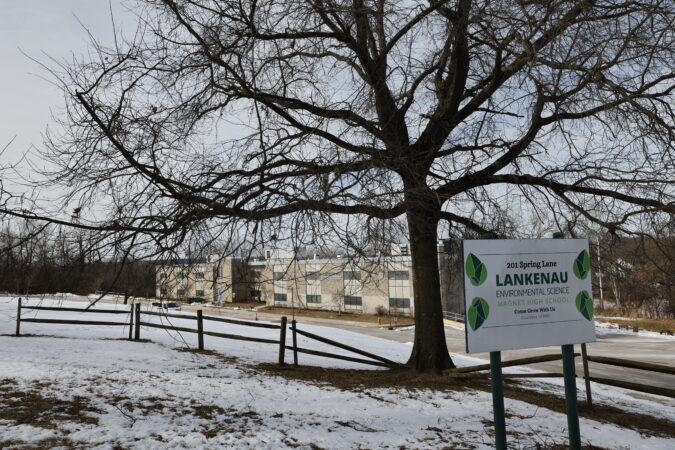
    The Lankenau Environmental Science Magnet High School in Roxborough on Saturday, January 24, 2026.

    But the superintendent has said what he presents to the board may include some tweaks to his initial recommendations.

    Mooney hopes the information the Schuylkill’s lawyers sent Monday helps Lankenau come off the closing list.

    “We want Lankenau to stay,” she said, “and I wanted the school board to have this information as part of its decision-making.”

    Watlington’s recommendations are just that; the school board has ultimate say. It has not given a date for the final vote on school closings, but said no vote will happen Thursday.

  • The Flower Show must go on: Crews start setting up for Philly Flower Show despite snow and years of weather curses

    The Flower Show must go on: Crews start setting up for Philly Flower Show despite snow and years of weather curses

    Inside a large exhibition room at the Pennsylvania Convention Center on Monday morning, where workers are setting up next week’s Philadelphia Flower Show, one could be fooled into believing that spring has somehow arrived early in Philly.

    The scent of mulch permeates every corner, tendrils of pink and red flowers are delicately laid over massive tree trunks, a mobile hanging from the ceiling dangles dozens of iridescent butterfly cutouts over the floor, and bright green shrubbery dots the halls.

    It seems as if Punxsutawney Phil maybe got it wrong this time.

    But one thing gives it away: the gaping open loading dock door ushering in a channel of 35-degree air that slices through the center of the exhibition hall. Clusters of snowflakes billow in toward a mint-colored wooden fence and a tree house.

    For the organizers of the Philadelphia Flower Show, an annual week and a half-long event that features dozens of horticultural exhibits, the 14-inch snow dump over the weekend was less than ideal, said Seth Pearsoll, the show’s creative director and vice president with the Pennsylvania Horticultural Society. But it wasn’t a surprise.

    “We have been watching the weather for weeks on end,” Pearsoll said. “You just got to stay on top of it.”

    The show, which opens to the general public on Saturday —the Horticultural Society members preview is Friday — and ends March 8, is typically held in the late winter/early spring. That’s led to some historically dicey weather.

    A 1993 blizzard forced the show to close early. Meteorologists predicted huge snowfalls in 2001 and 2013 as well. And, in 2018, a nor’easter hit the city on the opening night of the show. When the show was held outside during the years of the COVID-19 pandemic, it was shuttered or postponed for short stretches because of inclement weather.

    Despite the weather challenges the show, which has been running for nearly 200 years, is typically held at this time of year partly due to tradition. The show dates to an era long before the internet when the event was designed to present the season’s products to florists, landscapers, farmers, and others in the horticultural industry so they could place their orders in time for spring planting.

    “After that it was just part of the DNA of the show,” Pearsoll said.

    The show brings in a quarter million visitors each year, he said, and requires meticulous planning and constant pivoting.

    The original schedule for Monday included a 7 a.m. load-in time, he said, but his team later pushed that to noon to ensure that all the trucks could get to the facility safely. Many of the plant deliveries for Monday were moved to Tuesday or Wednesday, by which time the team hopes roads will be clearer.

    Trucks won’t just be contending with the weather in Philly but across the country as the event is getting shipments in from Minnesota, Florida, and New York, among other states.

    Most of the plants themselves are protected in climate-controlled trucks.

    “I think, for me, having been a part of outdoor shows, having worked a million flower shows, weather is always a thing,” Pearsoll said. “So I’ve really come to see it as just another one of those planning variables in the event industry.”

    The way he views it, the snowy, slushy, frigid weather outside enhances the magic of walking through rows of plants that have, through “sorcery,” as he calls it, been manipulated into blooming out of season.

    “It’s this crazy thing, right?” he said. “It mean it’s science. It’s art.”

    The Philadelphia Flower show is scheduled for Saturday through March 8 (with a Horticultural Society members preview on Friday) at the Pennsylvania Convention Center, 11th and Arch Streets. Hours: 10 a.m. to 8 p.m., except until 6 p.m. on March 8. Admission varies depending on person’s age and day and time of entrance. Information: phsonline.org or 215-988-8800.

  • Chinatown Stitch, which would cap the Vine Street Expressway, is in limbo after Trump yanked funds. Can it be saved?

    Chinatown Stitch, which would cap the Vine Street Expressway, is in limbo after Trump yanked funds. Can it be saved?

    Wrangling a big transportation project takes deft timing: scheduling the planning and construction stages in proper order, obtaining environmental approvals, and lining up financing from local, state, and federal sources.

    At least Philadelphia’s Chinatown Stitch, an effort to cap the Vine Street Expressway and reconnect the north and south sides of the neighborhood, had the money up front — until it didn’t.

    Now officials are trying to figure out how best to keep the project moving while replacing the lost $159 million federal grant.

    “This is a pretty unprecedented situation,” said Jesse Buerk, associate director of capital programs and project development for the Delaware Valley Regional Planning Commission (DVRPC).

    “I’ve never seen it before, where a project is funded and it’s moving along through the process, and then the funds are completely rescinded,” he said, speaking at the recent committee meeting.

    ‘A significant gamble’

    Congressional Republicans pushed through a massive domestic policy and spending bill last July that killed most of the Neighborhood Access and Equity grant program in the Department of Transportation.

    It wasn’t just Philadelphia or the Chinatown Stitch project that got nixed. That legislation rescinded $3.2 billion that had been awarded but not yet spent through the Biden-era program, 55 projects across the nation aimed at mitigating the impact of highway projects on marginalized communities.

    President Donald Trump’s administration targeted equity and access transportation projects as wasteful “DEI”-style spending.

    The city proposed using a different source of federal funding controlled by PennDot to finance the final design of the Stitch project, which would be needed before it could be considered “shovel ready.” That way, the project could progress while city officials look for construction money.

    But at a meeting earlier this month, the DVRPC’s Regional Technical Committee voted to table the city’s request to study it further.

    Several suburban residents on the technical committee, composed of experts from the eight counties in the region and the state governments of Pennsylvania and New Jersey, had raised concerns about spending up to $12.5 million on the design work without having construction money locked up.

    “This request is a significant gamble if you’re not able to recoup those reconnecting communities [funds],” said Brian E. Styche, a transportation planner for Chester County. “We would just like more time to discuss what the plan B is.”

    DVRPC’s board of directors is scheduled to discuss the city proposal on Thursday.

    Christopher Puchalsky, policy director for the city’s Office of Transportation and Infrastructure Systems, said he understood the concerns: “I don’t think there’s any arguing with the fact there’s some amount of risk.”

    Alternative construction funding

    The city was able to complete planning and engineering work with $8.4 million of the grant. It needs to secure final design funding before federal environmental review and approval, Puchalsky said.

    Not being able to move forward would add additional delay to the project, he said.

    The city is exploring alternatives for construction money, including the possibility of tax-increment financing for at least some of the funds, Puchalsky said.

    That form of financing uses property tax revenue for development in a specific local district.

    “There’s just enormous community support and political support for this project that a lot of the folks have been waiting 40 years for,” he said.

    What is the Stitch?

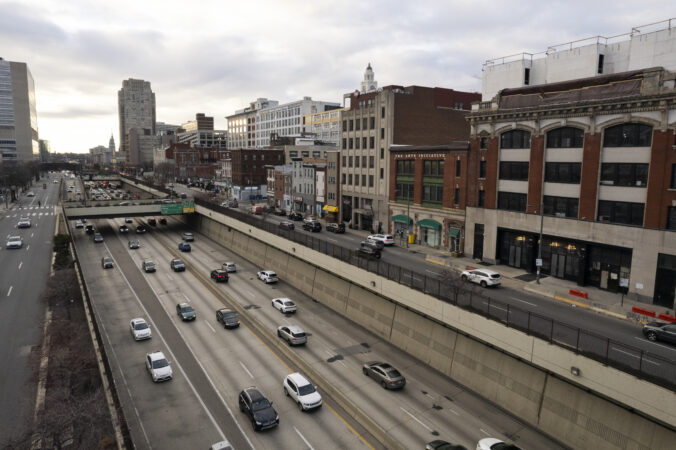
    The Chinatown Stitch project involves building a cap over I-676 from just east of 10th Street to 13th Street, allowing for a park as well as more developable land. It would reconnect the north and south sides of the neighborhood, which are split by the interstate.

  • Students would transition from this closing North Philly school to worse-performing ones in the district’s plan

    Students would transition from this closing North Philly school to worse-performing ones in the district’s plan

    Philadelphia School District officials said they considered poverty rates and prior school closings in a neighborhood when weighing which schools to close.

    Each school had a score based on its surrounding neighborhood, and only one of 20 proposed closures is in a “very high risk” neighborhood: John Welsh Elementary.

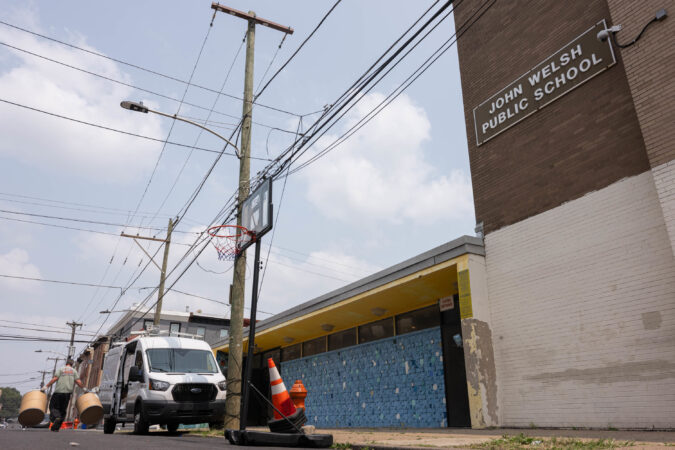
    Welsh, on the northern edge of the Norris Square neighborhood, has 185 K-8 students and operates at under a quarter of the building’s capacity. Enrollment has declined over the past several years and the school now holds an average of 20 students per grade, including only 9 second graders. About two-thirds of the students are Latino, and the other third are Black.

    While it’s small and its building is not in good shape, it was not necessarily obvious that the district would target Welsh for closure — because so-called neighborhood vulnerability was a factor in officials’ decision-making.

    But Welsh parents and students argue the school shouldn’t be closed because its students were performing well, despite the lack of investment from the district, as well as the condition of the building and its surrounding neighborhood.

    Kareemia Boyd, the parent of a Welsh eighth grader, credited the school with helping her son turn around his grades after he came from a charter school. She transitioned her son to Welsh in fifth grade, when his grades were suffering and he experienced bullying. Now poised to graduate this year, she said he gets A’s and B’s.

    “I didn’t expect he would actually grow in so many ways,” she said at a recent community meeting about the closure plan.

    The district’s draft plan calls for the Welsh building to be upgraded and converted into a new year-round high school which would open for the 2029-30 school year.

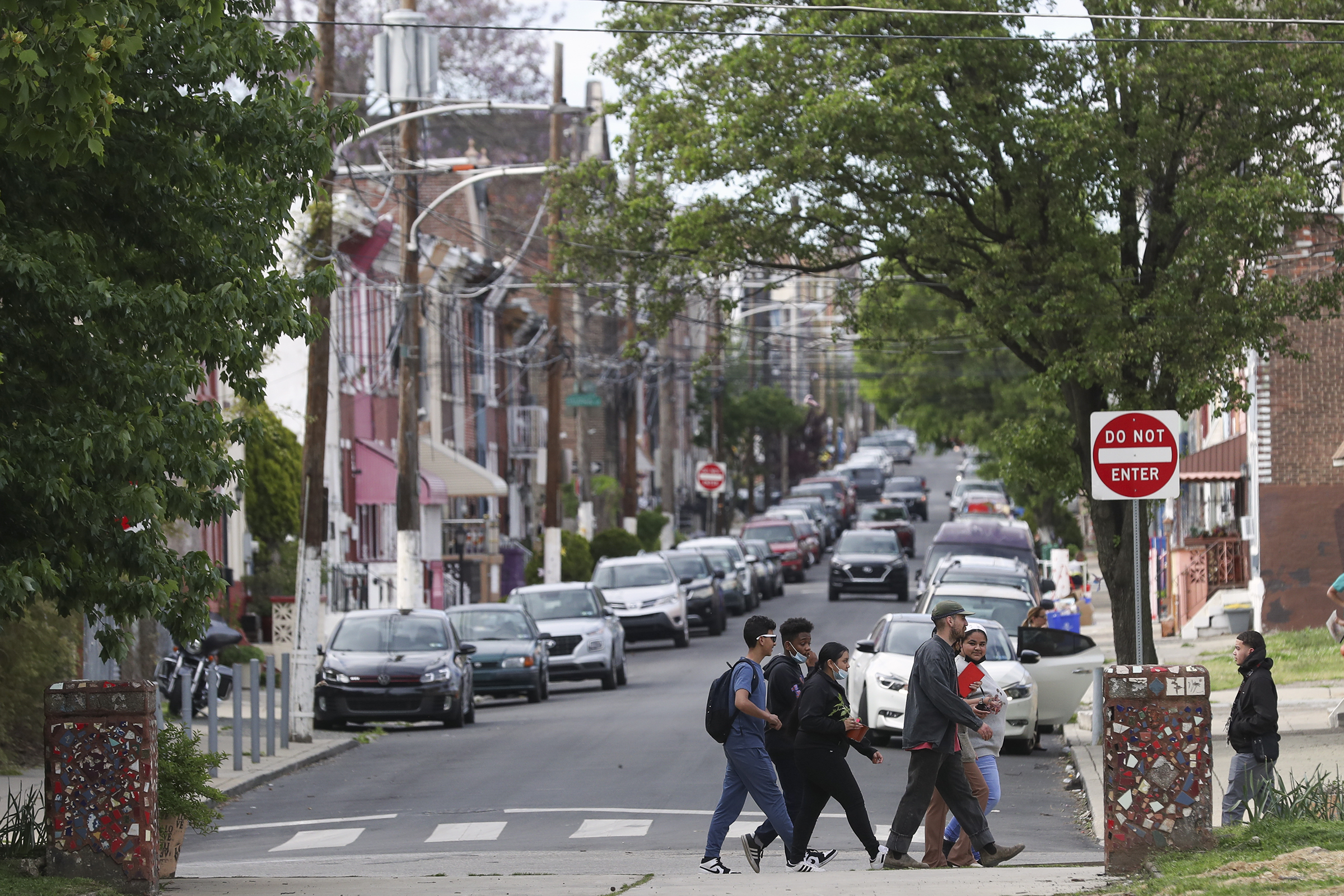
    Pedestrians walk along Susquehanna Avenue in the Norris Square neighborhood in 2022.

    Current Welsh students would transition to John F. Hartranft School or William McKinley School. Hartranft and McKinley would receive new ADA investments and other renovations, Algebra I instruction, and pre-K programming, officials said.

    Several students asked district officials at the community meeting why they would be transitioned to Hartranft and McKinley, when those schools have performed worse academically than Welsh. About 14% of students at Hartranft and 10% of students at McKinley scored at least a proficient level on state English language arts exams last year, compared to 20% of Welsh students.

    District representatives said they did not consider academic performance when deciding whether to close schools. Instead they focused on getting proper resources to students and schools, they said, which will be more feasible once schools are consolidated.

    Boyd said her son’s teachers at Welsh pushed him to improve, and wouldn’t let him settle for less than what he was capable of. She appreciated how much they cared about him, and said they had “a big impact.”

    “I want somebody to care about my kid as much as I do,” she said.

    She said she believes the declining enrollment has to do with the school’s neighborhood. Boyd said people are concerned about crime and drugs, and don’t feel safe sending their kids to the school, particularly when school security is limited.

    But for those who have stayed, Sary Rodriguez, a parent of current Welsh fifth and eighth graders, said it’s a community where everyone looks out for others.

    “We all know each other. We all support each other. So it’s hurting a lot of people,” she said about the district’s plan.

    Young people enjoy Norris Square Park in the Norris Square neighborhood, where Welsh Elementary School is slated to close under a proposal from the school district.

    Rodriguez also has a 19-year-old daughter who graduated from Welsh and works at the school. But Rodriguez said she’s considering moving her children to charter schools if the school closes, in part because of her concerns for the academics at McKinley and Hartranft. No matter where they go, transitions are difficult for all involved, she said, including parents.

    “It’s not only the students that have to meet new people and new friends and new teachers, their parents have to start all over [with] a new relationship with teachers and students, the neighborhood … I don’t know nothing about those schools,” she said.

    Rodriguez implored the district officials at the community meeting to genuinely consider pleas to keep the school open.

    “I really have the feeling it doesn’t matter what we say or what we do. It’s just going to be a decision that they’re gonna make,” she said.

    Rodriguez said she’s upset that the district hasn’t invested in Welsh, but plans to put resources into a new school at the same location.

    “It bothers me that they’re going to spend the money to fix it for a high school and they can’t fix it for our kids,” she said.

    Ava Huertas, a sixth grader at Welsh, planned to graduate from the school just like her grandmother, mother, and sister did. She’s been enrolled there since she was in kindergarten, and now would have to move to a new school for eighth grade before transitioning again for high school.

    She asked several questions to district officials about why they were planning to close her school, reading off notecards and avoiding eye contact. As she wrapped up her final question, she thanked the officials for listening, but had to be honest about her feelings.

    “I hope that the plan doesn’t go through, I’m not gonna lie,” she said.

  • Philly got its biggest snow in 10 years. This time nature will help with the cleanup.

    Philly got its biggest snow in 10 years. This time nature will help with the cleanup.

    If it wasn’t an actual blizzard, Philly’s biggest snowfall in a decade sure acted like one, and the weather the rest of this week isn’t expected to be particularly pleasant.

    But in terms of disruption — not to mention aesthetics — this was in a wholly different category from the Jan. 25 siege of snow and ice. And the aftermath should not be anywhere near as punitive and burdensome.

    Although the 14 inches measured officially at Philadelphia International Airport, dwarfed the 9.3 inches of snow and sleet that accumulated in last month’s storm, Zach Schwartz, 33, was among those who found the picturesque snow more palatable than the attack of ice balls and an Arctic freeze.

    “The last snowstorm was a tough time for everyone,” said Schwartz, who was at a Point Breeze playground helping a friend build an igloo for their kids, “and I think the city was kind of in shock a little bit.”

    The most recent storm, which left as much as 20 inches of snow in parts of South Jersey and southeastern Bucks County, did cause some issues.

    More than 130,000 households lost power at some point. Scores of trees came down as the snow, heavy and wet at the start, glommed onto branches that took beatings from the winds that gusted past 40 mph.

    The storms closed schools to the chagrin of hundreds of thousands of learning-eager children, and museums on Monday. It disrupted SEPTA services and airport operations.

    At least 87 trees across the city were downed as a result of the storm as of Monday afternoon, and the city was working to determine which ones to prioritize clearing first, Parks and Recreation commissioner Susan Slawson said.

    Mayor Cherelle L. Parker advised Philadelphians to avoid unnecessary travel as crews worked to clear the streets.

    Yet early fears that the snowfall would reach what the National Weather Service called “potentially historic” levels didn’t quite materialize, and it was not known if the storm had met “blizzard” criteria. Stopping short of “historic,” New Jersey Gov. Mikie Sherrill called it “a generational storm.”

    This one likely won’t have the staying power of last month’s storm

    While the volume of snow is formidable, road crews throughout the region now have a tremendous ally — the late-February sun.

    The city did adjust its response after the prior storm cleanup left many residents chock-full of complaints. Director of Clean and Green Initiatives Carlton Williams said Monday instead of one snow melter, the city secured three, with two already on the road Monday, despite the much shorter notice of the storm.

    But the big melter is in the sky.

    The amount of solar energy beaming toward Philadelphia is more than 35% stronger than it was on Jan. 25, according to NASA’s figures, and blacktop is great absorber of sunlight. Plus the region now is getting an hour more of daylight.

    Plus, instead of an Arctic freeze, it is forecast to be moderately cold this week, with highs in the low 30s Tuesday, and in the 40s Wednesday and Thursday.

    A weak clipper could produce an inch or less of snow early Wednesday, but, sorry kids, that won’t be another school-closer. More light rain or snow or a mix is possible Thursday.

    Computer models on Monday were seeing a potential for more snow early next week, but they may well sober up come Tuesday.

    After the Jan. 25 storm, Philly had 18 consecutive days of at least 3 inches on the ground officially at the airport, the longest stretch in 65 years. That streak won’t be challenged this time around.

    One other huge difference: Those 14 inches didn’t include a speck of ice, which, as we learned, is amazingly melt-resistant.

    Why snow totals varied tremendously

    The nor’easter that generated the snow did qualify as a “bomb cyclone,” said Tom Kines, senior meteorologist with AccuWeather Inc. The technical criteria aside, a bomb cyclone is particularly powerful storm.

    In fact, the storm’s intensity, based on a measure of its central pressure, was equal to that of a Category 1 hurricane, he added.

    Fortunately, the Shore escaped major flooding, but the winds circulating around the storm’s center over the ocean hurled back snow far inland.

    window.addEventListener(“message”,function(a){if(void 0!==a.data[“datawrapper-height”]){var e=document.querySelectorAll(“iframe”);for(var t in a.data[“datawrapper-height”])for(var r,i=0;r=e[i];i++)if(r.contentWindow===a.source){var d=a.data[“datawrapper-height”][t]+”px”;r.style.height=d}}});

    South Jersey locations received the most, along with areas in southeastern Bucks County. However, totals backed off precipitously to the west.

    “There was a really tight gradient,” said Amanda Lee, a weather service meteorologist in Mount Holly. All areas in Philly’s neighboring Pennsylvania counties did report at least several inches of snow.

    Within that broad east-west divide, however, amounts varied considerably from place to place, due in part to “banding,” in which narrow corridors of snow, caused by rapidly rising air, migrate from place depositing rapidly accumulating snow to areas underneath.

    Conversely, areas on either side of the band are snow-deprived.

    As to whether this qualified as Philadelphia’s first blizzard in 33 years, that is a verdict deferred.

    By the National Oceanic and Atmospheric Administration’s decree, a blizzard requires “frequent winds of 35 mph or higher with considerable falling and/or blowing snow that frequently reduces visibility to 1/4 of a mile or less. These conditions are expected to prevail for a minimum of 3 hours.”

    That’s a lot to ask for a snowstorm, and it is going to take considerable forensic work of poring through observations to determine whether those conditions were met in Philadelphia or elsewhere in the region, said Nick Guzzo, a weather service meteorologist in Mount Holly.

    Another big difference between this and the January storm

    Whatever else it is called, this was the most spectacularly beautiful snowfall of the season, thanks to the snow’s remarkable adhesive power.

    On the morning of Jan. 26 the trees were bare, as though they wanted no part of the snow and ice-ball assault.

    On Monday this time around, snow enchanted the branches and uncannily worked its way into architectural details.

    Cape May Mayor Zack Mullock said his town, famous for its Victorian buildings, “looks beautiful” covered in the foot of snow that had fallen.

    Said Mullock, “It looks like a snow globe.”

    Staff writers Ximena Conde, Kristen A. Graham, Michelle Myers, Amy S. Rosenberg, Henry Savage, and Nick Vadala contributed to this article.
  • Philly schools will remain virtual on Tuesday; other Pa. and N.J. districts are a mixed bag

    Philly schools will remain virtual on Tuesday; other Pa. and N.J. districts are a mixed bag

    School districts around the region made varying calls for how they’re handling classes Tuesday as the region continues to dig out from the massive snowstorm that dumped more than a foot of snow in many places — with some closed altogether, others fully open, and others open, but delayed.

    The Philadelphia School District opted for another day of virtual instruction.

    Superintendent Tony B. Watlington Sr. has said the nation’s eighth-largest school system favors in-person instruction, but places student and staff safety as its highest priority.

    In Upper Darby, Delaware County, Superintendent Dan McGarry made the call to bring students in on time.

    “The district transportation team and facilities team have been working hard all day to clear snow from our facilities for in-person instruction,” McGarry wrote in a message to families and staff. “We have been in communication with the township as well, and I want to thank them for their hard work getting roads clear for school tomorrow.”

    Districts including Council Rock and Pennridge, both in Bucks County, called two hour delays.

    In Montgomery County, Cheltenham and Lower Merion schools both announced a two-hour delay.

    “Buses are expected to arrive at bus stops two hours after their normal pickup times; however, please be patient as snow and ice on some streets may cause additional delays,” Lower Merion spokesperson Amy Buckman said in a message to families Monday evening.

    Cherry Hill and Moorestown, in Camden County, will also hold classes with a two-hour delay.

    Renewed debate over virtual instruction in New Jersey

    And while some Pennsylvania districts pivot to virtual instruction when significant snow falls, that’s not possible in New Jersey, where state law prevents it.

    A handful of New Jersey districts opted for total closures. Lenape Regional, Evesham, and Medford schools, all in Burlington County, cancelled classes altogether.

    Winslow schools in Camden County will remain closed Tuesday for a second consecutive day, said interim Superintendent Mark Pease. The district was shut down for three days during the last storm.

    Pease said the district would use two days from its spring in April to make up the missed days. The break will be cut to three days, he said.

    “If we get another storm, we will be extending the school year,” Pease said. “Let’s hope this is it for the winter.”

    The snow storm renewed calls among some New Jersey educators to the state to allow virtual and hybrid instruction to avoid closing schools due to inclement weather.

    In a social media post, Camden Education Association President Pam Clark said she was asking Gov. Mikie Shirrell to revisit the virtual option for traditional public schools. She used the hashtag “not fair.”

    New Jersey allowed virtual and hybrid instruction when the pandemic shut down schools.

    However, state law now strictly limits remote learning, according to the state Department of Education. Districts must meet a state requirement of 180 days.

    School districts may seek approval for virtual learning for school closures lasting more than three consecutive days because of a declared state of emergency or a declared public health emergency.

    There has been pushback against virtual learning because of concerns about learning loss suffered during the pandemic. There also are concerns that some schools don’t have enough Chromebooks or devices for students to log on.

    Timothy Purnell, executive director of the New Jersey School Boards Association, said districts should have the flexibility to pivot when circumstances warrant such as a snow day.

    Districts have invested in technology and training to successfully implement virtual instruction, he said.

    “Limiting virtual instruction days exclusively to public health emergencies is yesterday’s logic,“ Purnell said in a statement.