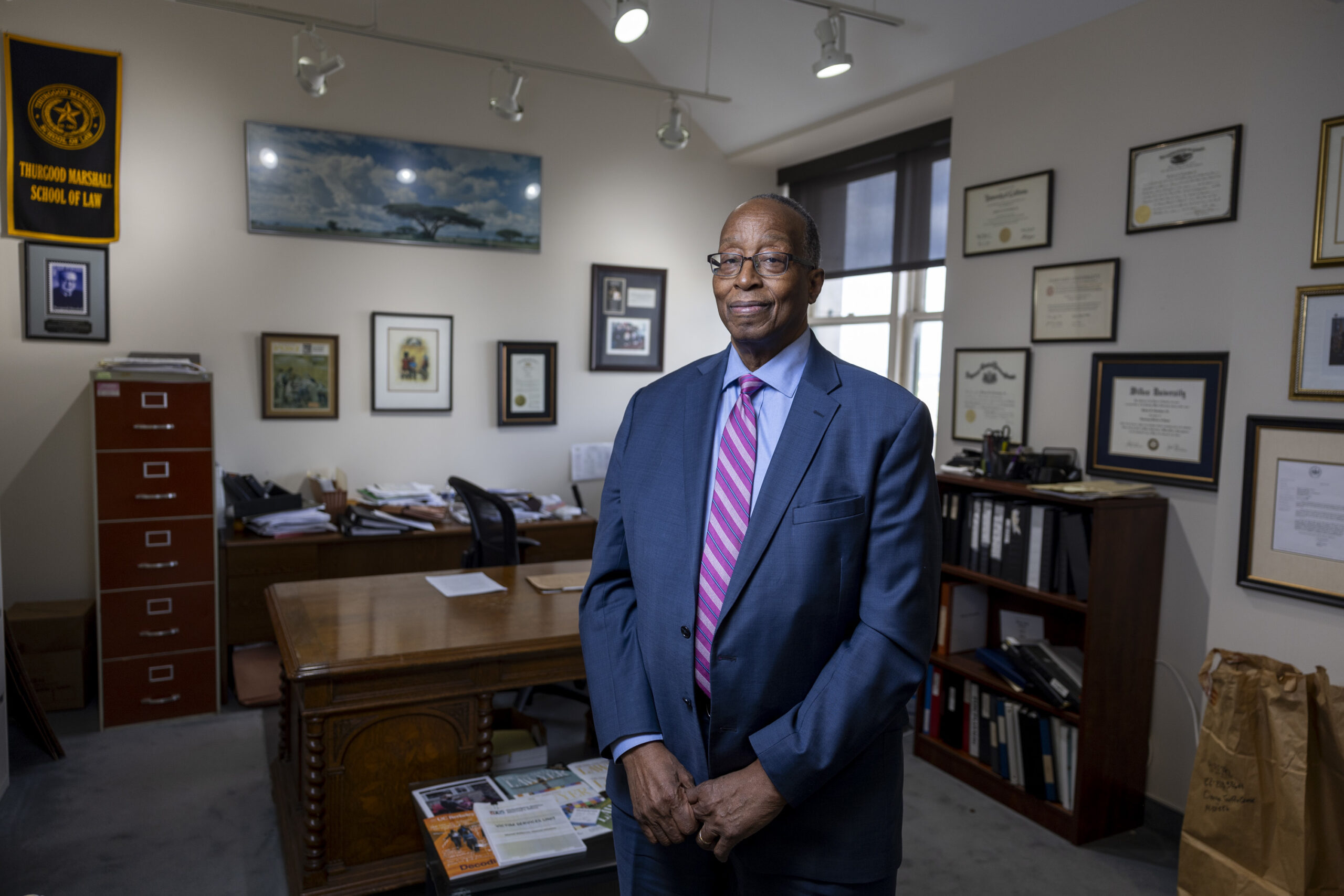
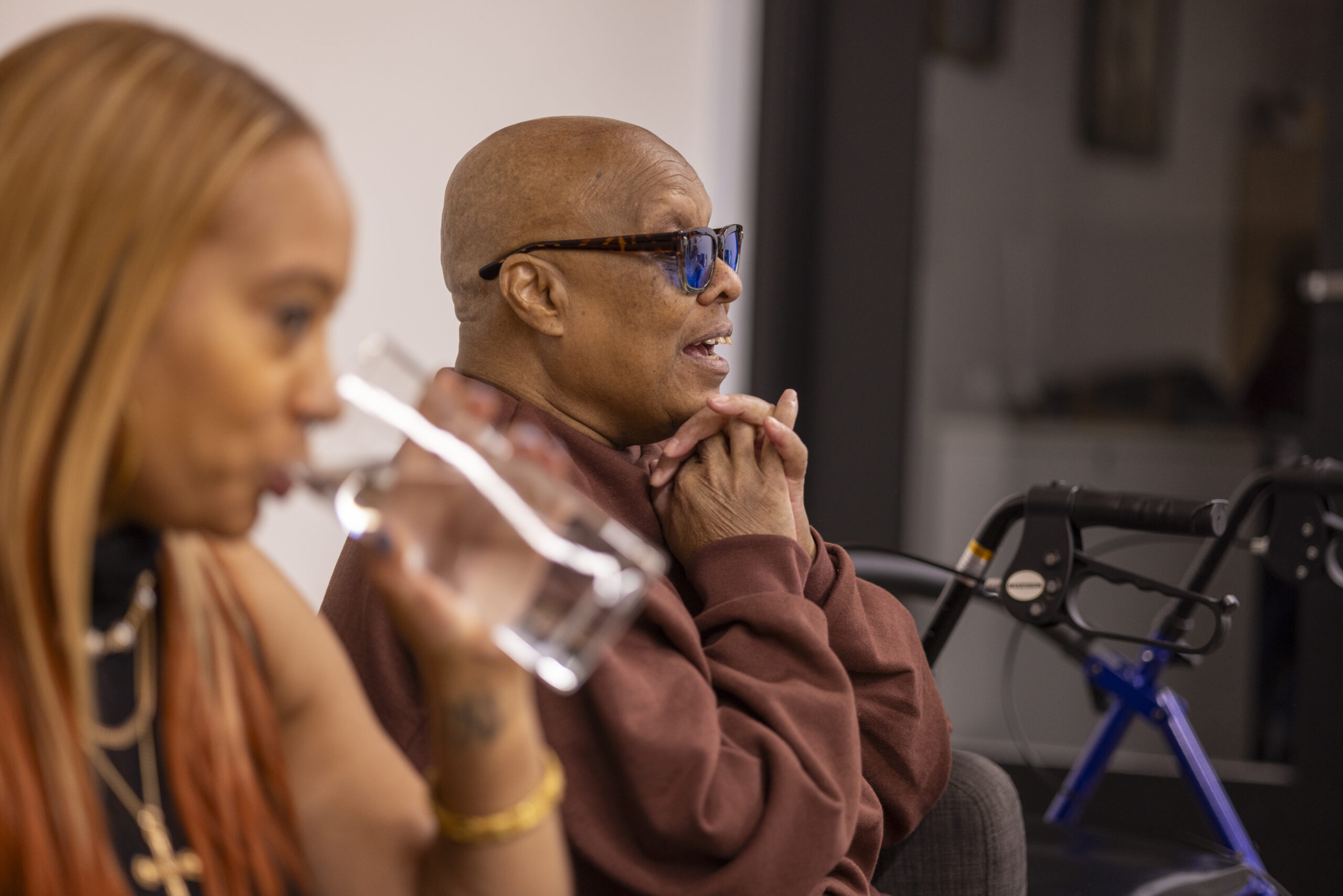
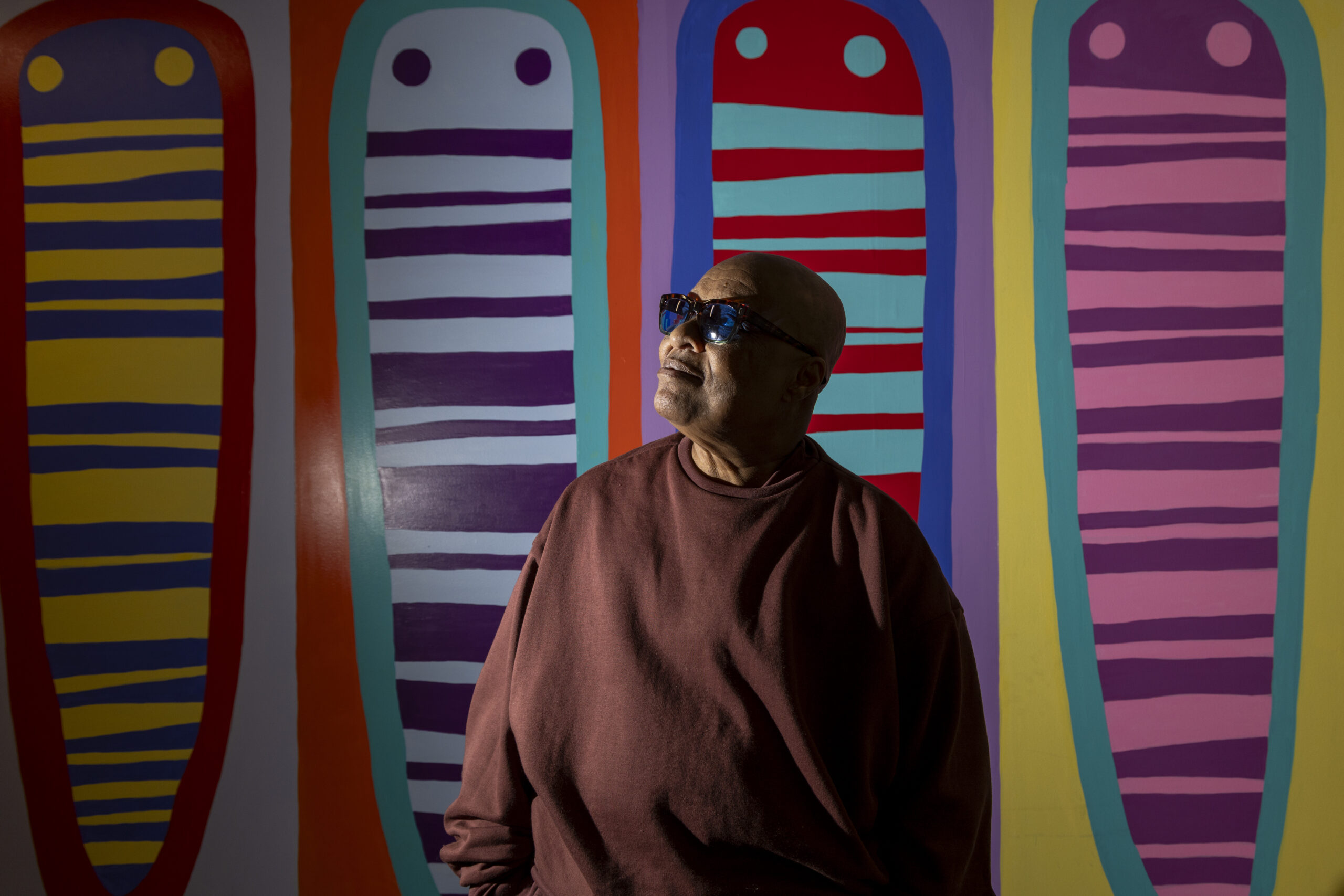
Robert Listenbee, the first assistant district attorney under Larry Krasner and a largely behind-the-scenes enforcer of the office’s progressive agenda, is retiring after nearly eight years as the office’s second-in-command.
Listenbee, 77, is expected to announce Friday that he is stepping down, marking the first shift in Krasner’s leadership team as the top prosecutor begins his third term.
A longtime public defender and juvenile justice advocate, Listenbee joined the administration at the outset of Krasner’s first term in 2018 — even as Krasner openly questioned whether the role of first assistant was necessary beyond its statutory requirement.
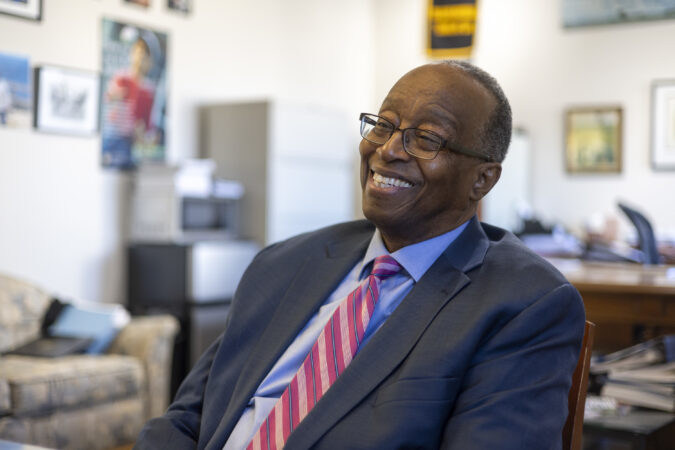
Robert Listenbee joined District Attorney Larry Krasner at the 2026 inaugural ceremony.
Over the course of Krasner’s tenure, Listenbee rarely served as the public face of the office on major cases, focusing instead on juvenile work, recruitment, and personnel matters.
Some prosecutors in the office said that often translated into a lack of visible management compared to previous first assistants, and that he served more as an internal messenger of Krasner’s often controversial agenda than the traditional day-to-day overseer of the office.
Listenbee has said his role was never set up to operate traditionally, and his goal was to carry out Krasner’s vision and reform the office.
Krasner declined to say who might replace him but he said he was evaluating candidates.
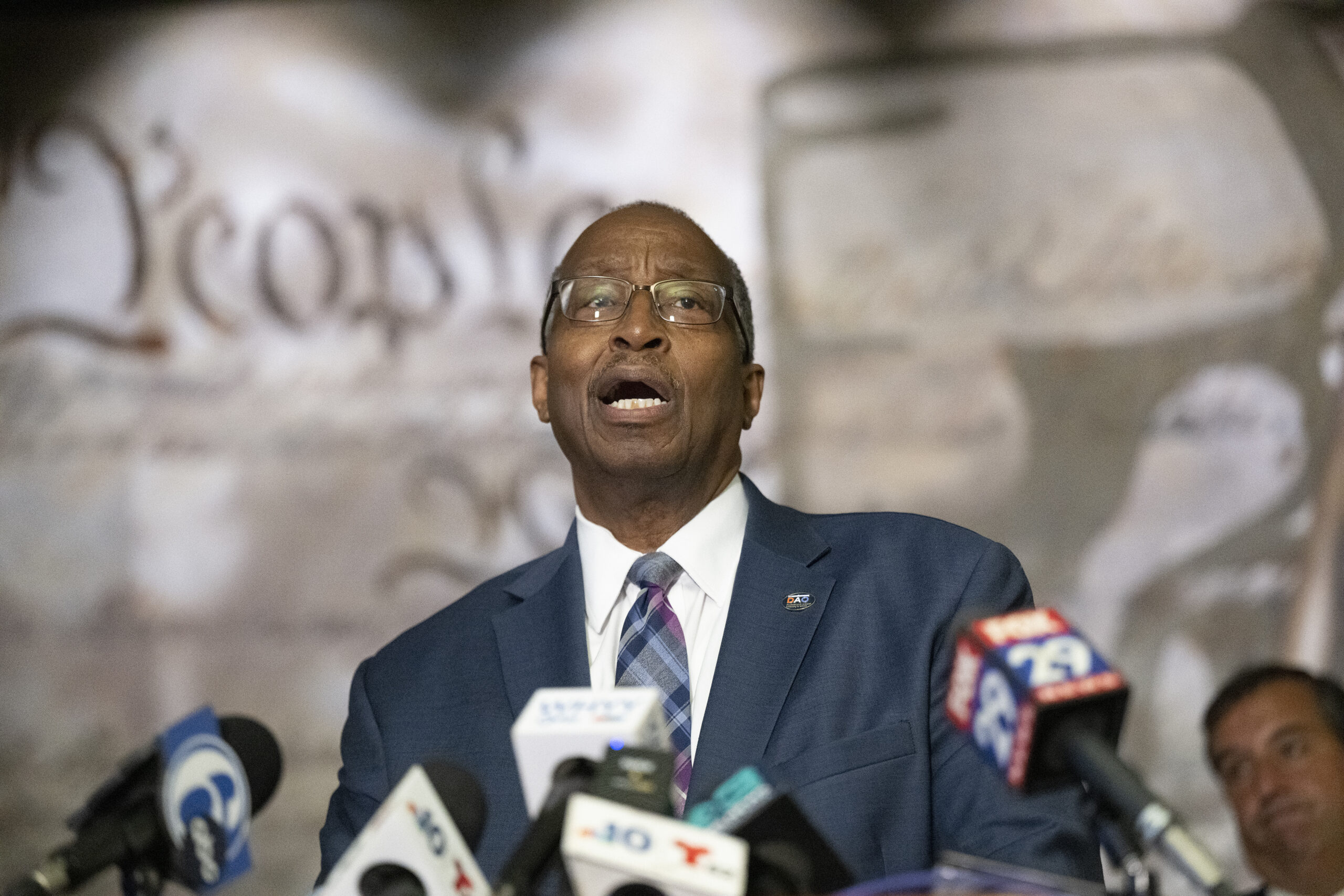
Robert Listenbee, first assistant district attorney, announced developments in the case against a West Philadelphia teen who was planning a terrorist attack.
Before joining the district attorney’s office, Listenbee spent decades as a public defender, including 16 years as chief of the juvenile unit at the Defender Association of Philadelphia. He later led the U.S. Department of Justice’s Office of Juvenile Justice and Delinquency Prevention during the Obama administration, and worked at Drexel University before returning to Philadelphia to join Krasner’s team.
We spoke with Listenbee about his unconventional path to the law, his years reshaping juvenile justice, internal tensions within the DA’s office, and his advice for Krasner’s third term.
This interview has been edited for length and clarity.
Tell me about your life growing up.
I was raised in Mount Clemens, just north of Detroit. My father worked in the auto industry. We were poor and lived in the projects. I went to a public high school, and was the first in my family to go to college.
I came from a small African American community where people look out for one another. This community saw something in me very early. When I was only planning to go to Kalamazoo College, a mom at my school decided my life was going to be different. She contacted the recruiter at Harvard University, and they visited me out in my little home in the projects when I hadn’t even applied. I got a full ride to Harvard.
I was among the first large group of African Americans at Harvard. It was 1966. We were in the middle of the Civil Rights Movement and the Vietnam War.
How was that?
There was total upheaval in this nation. Demonstrations everywhere, college campuses being taken over.
I worked on the committee that helped establish the African American Studies Department at Harvard, one of the first in the nation.
This was also at a time when African countries were becoming independent. I spent 16 months as a teacher in the rural area in western Kenya.
Robert Listenbee spent 16 months in Africa teaching English, and then traveled the continent before going to law school.
Instead of coming back from Africa, I decided to hitchhike around the world. I spent six months in Asia — Thailand, Laos, even as the war was going on. I rode a motorcycle into the Mekong Delta in Vietnam and had experiences that make me grateful to be alive. I hitchhiked across Africa and traveled 8,000 miles by train across India. I did all of this on about $600.
After a two-year gap year, I returned to Harvard and finished my degree.
I ended up getting a full-ride scholarship to Berkeley law school.
Where did you go after law school?
I had job offers but I had this crazy idea that I wanted to build a road across Africa, from Nairobi to Lagos, but I was broke and needed money to do it.
This was when the pipeline was being built across the North Slope of Alaska, and you could make gobs of money in a short period of time. So in 1976, I went to Anchorage without a job and lived in the YMCA. I shoveled snow, washed dishes, and worked at McDonald’s.
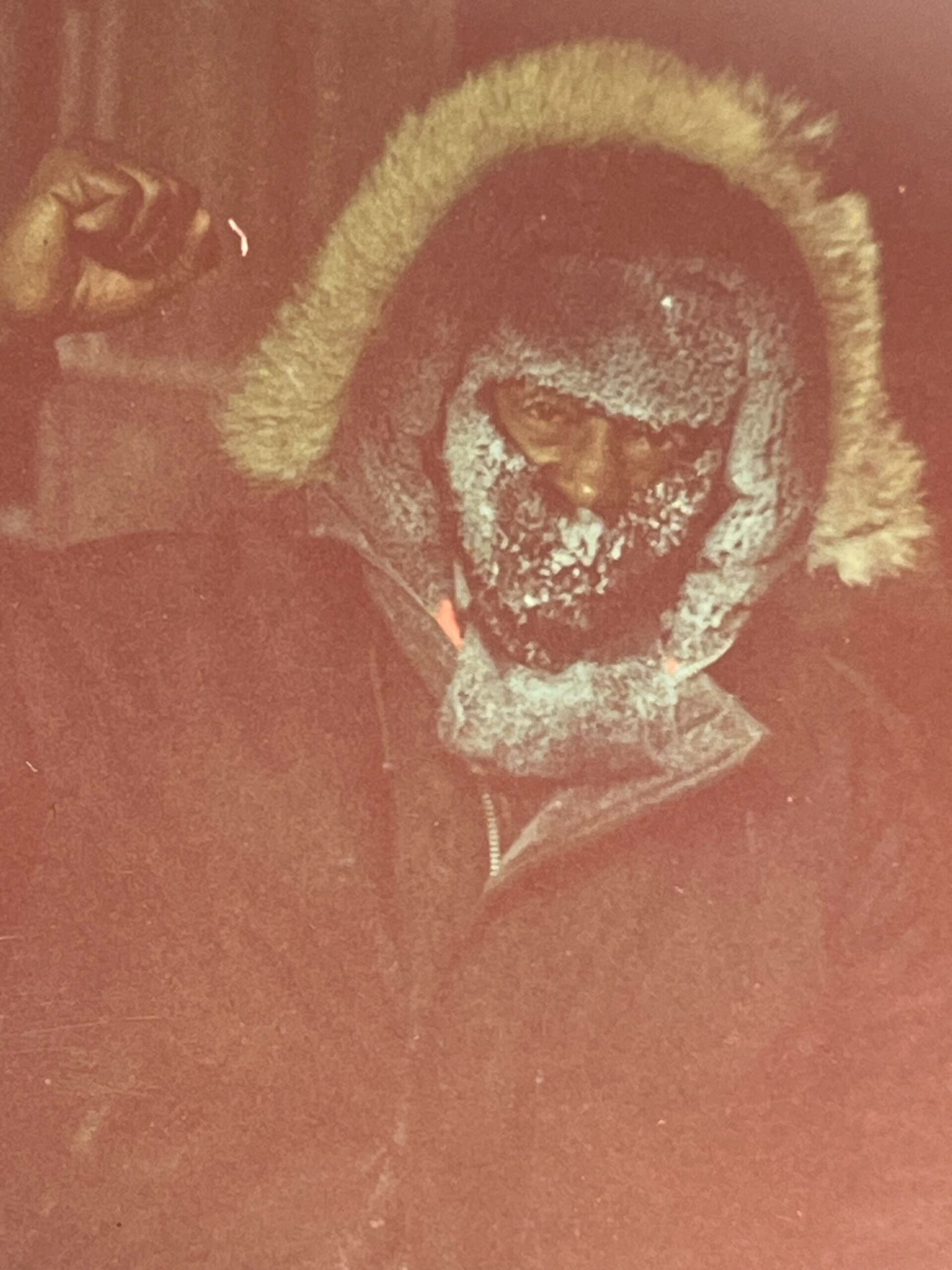
Robert Listenbee worked in the oil fields building the pipeline on the North Slope of Alaska for several years beginning in 1976.
Finally, I got a job on the pipeline.
I was there for a couple of years. I was a laborer in the oil fields. I worked trucks that rode across the Arctic Ocean in the middle of the winter. I worked on wildcat wells 50 miles from base camp. I had to relieve pressured gas to keep it from blowing up. It was 50 degrees below zero.
Robert Listenbee worked in the oil fields building the pipeline on the North Slope of Alaska for several years beginning in 1976.
I got into fights. People were trying to kill me at different points in time, and I was trying to kill other people, too. So I mean, the reason I know a little bit about criminal justice is because I was almost a criminal.
I never built the road in Africa. I eventually came back to Philadelphia, and worked construction until 1986.
So what about being a lawyer?
After my construction company failed, I was broke again. I ended up going back to legal work, and got a job working at the Defender Association.
You were the head of the juvenile unit for 16 years, and then you finished your career here on the other side — going from defending young people to prosecuting them. How was that transition for you?
Working for the U.S. Department of Justice’s Office of Juvenile Justice and Delinquency Prevention under President Obama helped prepare me for prosecutorial work.
I was adamant I would never work for this office. I thought it was corrupt. Krasner called me three times before I agreed to join as first assistant.
We were engaging in culture change. Some of the behavior of the people who were here was absolutely outrageous, especially in the homicide unit. They had a sense that this office belonged to them. It didn’t belong to the people. They were willing to cheat and do it and hide evidence in the process of doing it. That’s the feeling that I had when I first got here, and that’s what we found.
Robert Listenbee, first assistant district attorney, takes questions from the media after announcing developments in the case against a West Philadelphia teen who investigators say purchased materials including chemicals, wiring, and tactical equipment associated to become a terrorist.
There has been criticism of your juvenile work — some have said that it was too lenient during the period of intense gun violence and that kids went on to commit worse crimes. Others say the office hasn’t gone far enough to treat kids as kids. How do you assess your record?
We’ve reduced the number of kids in out of home placements. We’ve expanded juvenile diversion programs. In 2024, we created a juvenile homicide unit to review all cases of juveniles charged with murder.
I’m satisfied that we’re being as fair as we can and taking the time to carefully evaluate every issue in a case.
The first assistant is typically the person who manages the office day-to-day. Some prosecutors have said that, in this administration, that role functioned differently — that much of the management flowed directly from Krasner. Do you think that perception is fair, and how did you approach leadership in that environment?
The DA did not want the imperial first assistant that had been here before. He would prefer a flat structure to a hierarchical structure, which means you get assigned a lot of odd jobs depending on what he wants you to do.
If I were running the office, I would have run it completely differently. But I have to tell you that, having been here as long as I have, we never would have gotten this far without the DA’s serious concerns about what people around here were doing, whether they were implementing his policy or not. His skepticism, his oversight, is what’s kept this place moving in the direction that he wanted to go in. I wasn’t tuned in enough to the office to understand that from the very beginning, but I listened to him.
We hire people, we fire people, we move people around. That’s happened a lot. We sometimes end up with younger and inexperienced supervisors, because we haven’t really developed a program for training supervisors really well. We’re working on that.
I wish I had worked on juvenile issues earlier than I did.
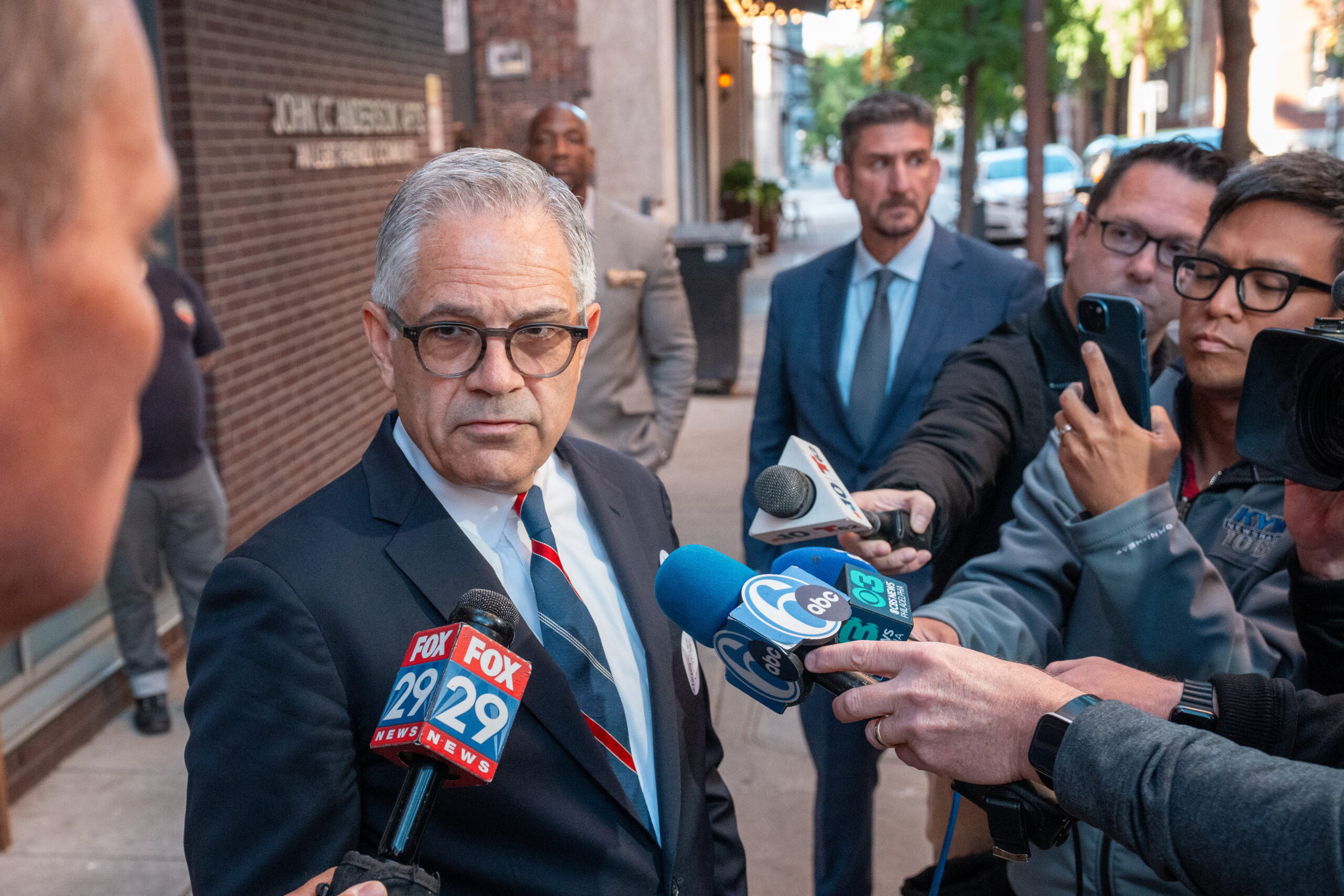
District Larry Krasner speaks with the media after casting his vote in the 2025 primary.
What’s your advice for the next first assistant?
You have to understand the DA’s goals and purposes and how he operates.
So, listen to Larry?
Not that. The DA is not a micromanager. But there’s no written directives on most of the things he wants, and there’s no organizational chart or hierarchy. If we have issues, we often go to him.
Do you have a piece of advice for Krasner in his third term?
This is a city that has a chip on its shoulder. The DA is a person who has a chip on his shoulder. They respect him for that when he speaks out. A lot of the things he says may not be politically astute, but they’re things he believes in. They like that about him.
He is the Donald Trump of the progressive era.
He needs to continue surrounding himself with people who can understand him and help him implement his policies.
A lot of people don’t like him, and I understand that. A lot of people don’t like me because I work for him. A lot of people don’t like what we do. That never mattered to me. I know that the people we have seen in court, the victims and the defendants and the witnesses, I know that we’re doing right by them. That’s my North Star.
Robert Listenbee, the first assistant to District Attorney Larry Krasner, retired on Friday.
Think you know your news? There’s only one way to find out. Welcome back to our weekly News Quiz — a quick way to see if your reading habits are sinking in and to put your local news knowledge to the test.
Question 1 of 10
A Facebook Marketplace listing is selling signage from this iconic Philly spot:
CorrectIncorrect. XX% of other readers got this question right.
Signage from the now-closed Melrose Diner was listed on Facebook Marketplace over the weekend. The diner, which opened at the intersection of 15th Street, West Passyunk Avenue, and Snyder Avenue in 1956, was demolished in 2023 to pave the way for a new six-story apartment building.
Question 2 of 10
The former CEO and President of this beloved — yet contentious, depending on your region — Pennsylvania empire died on Sunday.
CorrectIncorrect. XX% of other readers got this question right.
Stephen G. Sheetz, the former Sheetz president and CEO who popularized the Altoona convenience store chain, died Sunday. His legacy — and the Wawa vs. Sheetz rivalry — lives on.
Subscribe to The Philadelphia Inquirer
Our reporting is directly supported by reader subscriptions. If you want more journalism like this story, please subscribe today.
Which article of clothing or accessory did CBS Philadelphia anchor Jim Donovan set the Guinness record for having the largest collection of?
CorrectIncorrect. XX% of other readers got this question right.
Guinness World Records verified that the 15-time Emmy winner is now the owner of the world’s largest sock collection at 1,531 pairs, many of which have eccentric designs, including Friends and Star Trek-themed socks, and every color of the rainbow. Many of the socks were sent to him by fans during the span of his career as a journalist.
Question 4 of 10
The USWNT will play against this team at the SheBelieves Cup tournament in March:
CorrectIncorrect. XX% of other readers got this question right.
The Americans will play Colombia on March 7 at Sports Illustrated Stadium in Harrison as part of the annual SheBelieves Cup tournament. Canada and Argentina are the other teams in this year’s field, both of which are familiar foes for the U.S. team.
Question 5 of 10
The FDA issued a warning to an adult boutique on South Street, along with other shops nationwide, because it sells this item:
CorrectIncorrect. XX% of other readers got this question right.
Passional Boutique on South Street sells breast binders, mostly to trans men, online and at the store. The FDA says the store is violating its regulations because it's not registered to sell them. Critics say the warnings are a concerning attempt to police self-expression.
story continues after advertisement
Question 6 of 10
Why is the Trump store in Bensalem closing?
CorrectIncorrect. XX% of other readers got this question right.
The Trump Store is closing after six years in business. Mike Domanico's store thrived during the Biden administration, but Trump's return to the White House has been bad for business. Citing lagging sales, the store began its closeout sale on Tuesday, Jan. 6.
Question 7 of 10
The third-generation owner of Donkey's Place — the Camden eatery that’s been visited by Anthony Bourdain — says a penis bone that has sat on the bar for years was stolen. What animal did the bone belong to?
CorrectIncorrect. XX% of other readers got this question right.
Donkey’s ambience has not changed much since Bourdain’s visit. It’s cozy and packed to the gills with random decor, from beer memorabilia, boxing gloves, a megalodon tooth, and of course, the 27-inch-long walrus penis bone, also known as a walrus baculum.
Question 8 of 10
The mother of this Philly icon made her debut on Peacock’s Traitors this week:
CorrectIncorrect. XX% of other readers got this question right.
Jason and Travis Kelce’s mom, Donna Kelce — who earned recognition over the years for supporting both of her NFL sons with split-allegiance jerseys — appeared on the fourth season of The Traitors this week. The show has a similar premise to “Mafia” or “Clue.”
Question 9 of 10
“The Henriot Family (La Famille Henriot),” an oil painting completed around 1875, was removed from display last year at The Barnes Foundation to be restored. It’s back now and more vibrant. Who is the painting by?
CorrectIncorrect. XX% of other readers got this question right.
The oil painting, completed around 1875, is an impressionist work depicting three people and two long-haired dogs relaxing in a forest. A young woman in a white dress gazes directly at the viewer while a man to her right appears to be drawing her. The central figure is Henriette Henriot, one of Pierre-Auguste Renoir’s frequent models, and her admirer is the painter’s brother, Edmond Renoir.
Question 10 of 10
This TV personality will be performing with his band at Manayunk’s annual Sing Us Home festival in May:
CorrectIncorrect. XX% of other readers got this question right.
The political pundit funnyman playing the drums will be Jon Stewart, who sits on the throne behind his kit with Church and State™, the new band with whom he has played only a handful of gigs. Last month, Stewart told the audience on TheDaily Show that he picked up the sticks after failing to master the guitar or piano, and that playing in his first band at age 63 was extremely fun.
Your Results
You have skipped .
You scored XX out of 10.
The average reader scored XX out of 10
Seems like you’ve been skimming more than reading there, buddy. There’s always next week.
You’ve read some articles (or made some educated guesses) but we wouldn’t come to you first for our local news recaps. Better luck next week!
Do you work here? You’re a local news stan with the latest updates on Philly happenings. Your friends definitely ask you for summaries on what’s going on and it shows.
Regional Rail trains are operating with fewer canceled trips and are running with more cars after months of service disruptions while SEPTA rushed to inspect and repair 223 Silverliner IV cars after five caught fire last year.
Yet packed two-car trains and skipped stops persist on some lines during peak travel times.
“It’s been three months and our customers had reason to believe things would be better sooner and they’re frustrated — understandably,“ SEPTA spokesperson Andrew Busch said. ”There is still some catching up to do.”
SEPTA decided late Thursday to restore 24 Regional Rail express trips on the Lansdale/Doylestown, Media, Paoli, West Trenton, Norristown, and Wilmington Lines, Busch said. The restored expresses had been running as locals.
An Oct. 1 federal mandate to inspect and mitigate Silverliner IV fire risks required the transit authority to take the workhorse of Regional Rail offline, leading to shorter trains and furious riders.
SEPTA’s records show it canceled 2,544 Regional Rail trains from October through Dec. 31, though the number steadily droppedover time — from 1,324 to 752 to 468.
As of Thursday, 180 of the Silverliner IV cars had met all the milestones set by the Federal Railroad Administration to return to service.
Regulators demanded each car pass a safety inspection, have necessary repairs made, and have a modern thermal-detection circuit installed.
So far, however, just 78 of those 180 Nixon-Ford era rail cars have been returned to service.
That means work is yet to be completed on35 Silverliner IVs.All together, the carsmake up 57% of the Regional Rail fleet.
(function() { var l = function() { new pym.Parent( ‘regional-rail-return__graphic’, ‘https://media.inquirer.com/storage/inquirer/ai2html/regional-rail-return/index.html’); }; if(typeof(pym) === ‘undefined’) { var h = document.getElementsByTagName(‘head’)[0], s = document.createElement(‘script’); s.type = ‘text/javascript’; s.src = ‘https://pym.nprapps.org/pym.v1.min.js’; s.onload = l; h.appendChild(s); } else { l(); } })();
“Over the last couple of days, we’ve been adding more three and four-car trains,” Busch said. With the restoration of express service, that should continue, he said.
To keep Regional Rail service running in its slimmer form, SEPTA has been using its 120 Silverliner V cars, which arrived between 2009 and 2011, as well as 45 coach cars, which have no motors and are pulled by locomotives.
The Silverliners have onboard motors, carrying passengers and providing propulsion at the same time. The 78 returned to service will also add capacity.
In addition, SEPTA plans to use an additional 10 passenger coaches leased from Maryland’s commuter railroad. They are here, but train crews are undergoing training, which was delayed by vacations and work schedules over the holidays. They should be ready to go a couple of weeks, Busch said.
The transit agency is seeking to buy 20 used passenger cars from Montreal but has not heard whether it won the bidding.
Back-ordered shipments arrived around Christmas, and now there is plenty of wire to finish the job, SEPTA says. The deadline for the installations was Dec. 5, but under the circumstances, federal authorities did not punish SEPTA.
Federal judges in Philadelphia have ruled dozens of times against a Trump administration policy that mandates detention for nearly all undocumented immigrants — joining a nationwide wave of decisions criticizing the government for applying the policy in unlawful ways.
In the Eastern District of Pennsylvania, U.S. District Judge Juan R. Sánchez wrote in a memorandum this week that more than 40 people who have been detained in the region under that policy, which was rolled out by Immigration and Customs Enforcement last summer, have sought relief in the courts — and judges have ruled against the government in every case.
Chief Judge Wendy Beetlestone was even more blunt in an opinion filed last month, writing that “the law is piled sky high against the government’s position” to mandate detention and deny bond hearings for all undocumented immigrants — even those seeking to stay here via appropriate legal channels.
The administration’s insistence on employing the policy and defending it in court, Beetlestone wrote, was akin to the Greek myth of Sisyphus pushing a boulder up a hill.
“The Government’s hope, presumably, is that if it keeps pushing the boulder of its argument up the hill, at least one judge may rule against the weight of the authority,” Beetlestone wrote. “But the tale before the courts is the traditional one of Greek mythology: the Government returns again and again to push the same theory uphill, only for courts to send it rolling back down again.”
The pushback has added to a chorus of similar decisions in courts nationwide. Sánchez, appointed by George W. Bush, wrote in his memo that people challenging their detention in federal district courts “have prevailed, either on a preliminary or final basis, in 350 … cases decided by over 160 different judges sitting in about fifty different courts spread across the United States.”
A Politico analysis of court dockets published this week put that tally even higher, reporting that over the last six months, more than 300 federal judges — comprising appointees of every president since Ronald Reagan — have ordered some form of relief in mandatory detention cases to about 1,600 challengers.
Spokespeople for ICE did not reply to questions about the judicial rebukes, and many of the government’s court filings in cases challenging detention have been made under seal.
Still, the Trump administration has made no secret of its desire to boost the number of people in federal immigration detention. And the mandatory detention policy has helped push the number of confined immigrants past 65,000, a two-thirds increase since Trump took office in January.
Lilah R. Thompson, an immigration attorney in the community defense unit at the Defender Association of Philadelphia, said in an interview that mandatory detention “plainly violates the law and is an illegal policy.” But she said most challenges to it so far have come in individual cases, and the potential legal avenues seeking to strike it down nationwide are protracted and legally complex.
In the meantime, Thompson said, the government has seemed content to use the policy in its attempt to apply pressure to immigrants and, ultimately, increase deportations.
“[Authorities] are applying a blanket policy because when people are in detention, they aren’t able to withstand the horrors of detention,” Thompson said. “It makes their circumstances much more difficult.”
A dramatic change in precedent
ICE’s detention mandate was rolled out amid the Trump administration’s aggressive push to crack down on immigrants nationwide.
It came as the Board of Immigration Appeals — the highest administrative body for interpreting the nation’s immigration laws — issued three precedential rulings that made it dramatically harder for detainees to be released on bond.
In one of those rulings, the board held that immigration judges lack the power to hear or grant bond requests to people who entered the United States without permission — even if they had been in the country for years, or had few other infractions that might warrant detention as their cases wound through the immigration system.
That upended decades of established government practice, which typically allowed otherwise law-abiding people who entered the country illegally to at least receive a bond hearing and determine if they could remain in the community as their cases moved forward.
The decision also meant that thousands of detained immigrants who previously would have been eligible for bond hearings could be released only if they filed and won a federal lawsuit.
For many detainees that created an impossible situation because they have neither a lawyer nor the money to hire one.
“There are so many people that are getting picked up [under] the unlawful mandatory detention policy, but because they don’t have an attorney to file a [legal challenge], they’re still experiencing the consequences of the policy,” said Maria Thomson, another attorney in the Defender Association’s community defense unit.
Officials at the federal Executive Office for Immigration Review, which oversees the BIA, declined to answer questions about the rulings.
“The Executive Office for Immigration Review does not comment on federal court decisions,” spokesperson Kathryn Mattingly said in a statement.
Detainees who have been able to hire attorneys and appear before federal judges have been winning relief at near-universal rates, with the courts ordering their freedom or directing the immigration court to hold a bond hearing.
“The district courts have been overwhelming on this question. It’s been extremely lopsided,” said Jonah Eaton, a veteran immigration attorney who teaches law at Temple University and the University of Pennsylvania, adding that even some Trump-appointed judges “have said this is nonsense.”
Earlier this week, District Judge John Murphy said in a court filing that judges had sided with detainees in all 50 cases filed so far in Pennsylvania’s Eastern District.
And in November, District Judge Paul Diamond wrote that he’d found 288 district court decisions nationwide addressing the issue — and that judges had ruled against the administration in 282 of them.
Diamond then went on to criticize the government’s attempts to justify its policy using what he said were competing interpretations of the law.
It is “difficult to credit the Government’s squarely contradictory position here,” Diamond wrote.
Significant challenges
Still, not all wins for detainees are comprehensive.
In some instances, immigrants are granted bond hearings before an immigration judge. But Eaton said some of those immigration judges will either deny bond or set an impossibly high figure. In Philadelphia, he said, it’s become common for attorneys to ask the federal judges to order release themselves, “because immigration judges won’t do it.”
Immigration Court is part of the executive branch, not the judiciary, run by the Department of Justice. That has for years called the courts’ impartiality into question.
“Even when we’re seeing bond hearings happening, they’re being denied at a higher rate,” said attorney Emma Tuohy, a deportation-defense specialist at Simon, Choi & Tuohy in Philadelphia. So immigrant defenders “are going straight to district court and filing habeas corpus, on the premise that people are being unlawfully detained.”
Habeas corpus, Latin for “you have the body,” is a demand that the government bring a detained person to court and prove that they have been legally imprisoned. It’s considered a fundamental protection against arbitrary detention.
Beyond bond hearings, Thompson, of the Defender Association, said there are challenges in seeking to provide ample legal assistance to people who have solid grounds to fight their detention: Many can’t afford lawyers, she said, there is no statewide funding to support lawyers pursuing such challenges, and ICE can move detainees to different jurisdictions at its discretion, increasing the difficulty of petitioning for release.
“They are doing it because they can, and because the consequences are that most [immigrants] cannot fight this and will end up being deported,” she said.
Cases that might threaten the overall detention policy, meanwhile, are likely to take time to wind through appellate courts, she said — and the administration could seek to litigate the matter in jurisdictions that have been more traditionally conservative.
In the meantime, federal judges are going to continue having to confront the issue in district courts. Murphy wrote this week that there are approximately 25 petitions awaiting a ruling in Philadelphia’s federal courthouse.
If Beetlestone’s opinion is any guide, the judges would prefer that ICE change its position — rather than continuing down the same path and hoping the ruling will be different next time.
Relying on hope in the courts, Beetlestone said, “resembles a game of whack-a-mole, in which the mole (here, the Government) insists on repeatedly volunteering to get struck by the judicial gavel.”
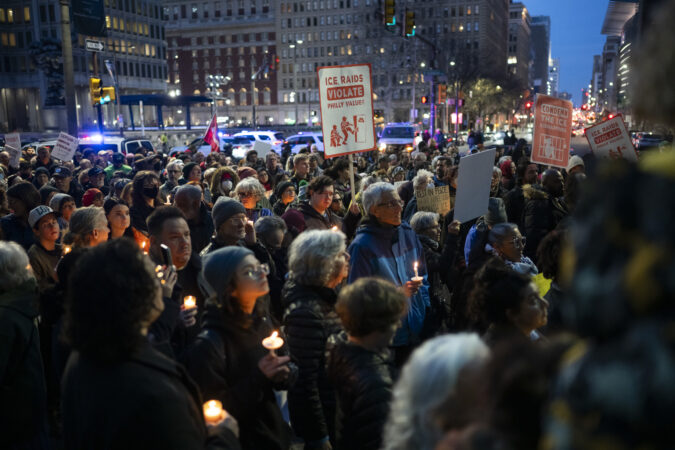
Several hundred people gathered Thursday evening in Center City to protest the death of Renee Nicole Good, a 37-year-old mother of three whom a U.S. Immigration and Customs Enforcement officer in Minneapolis shot and killed on Wednesday.
Good, who had recently moved to Minnesota, died a few blocks from where she lived, and about a mile from where police killed George Floyd in 2020.
Protesters near City Hall held candles and signs saying, “We saw the video. Stop the cover up!” and “ICE raids violate Philly values.”
“We arrive at tonight’s vigil with deep anger and grief for the murder of Renee Good at the hands of the state,” Erika Guadalupe Núñez, Juntos executive director, told the crowd. “ICE equals death; it’s the death of family, of connection, of love.”
Núñez said the actions in Minneapolis reflect a reality Philadelphia has experienced with the mistreatment of legal aid organizations and immigrant associations at the hands of immigration agents.
“Let us be honest, if ICE was willing to shoot an ally, a white woman, in the face for documenting abuse. It is our duty to expose and condemn what they have done and will continue to do to Black and brown people behind closed doors and out of the sight of cameras,” Núñez said.
Video taken by bystanders in Minneapolis posted to social media shows an officer approaching Good’s car from the driver’s side, grabbing the door handle and reaching inside the vehicle. When the Honda Pilot begins to move, a different ICE officer who had positioned himself in front of the SUV immediately fires into the vehicle at close range.
The Department of Homeland Security said the officer fired in self-defense as Good allegedly tried to run down officers with her vehicle. Minneapolis Mayor Jacob Frey said video of the incident showed the shooting was reckless and unnecessary.
The fatal shooting of Good was at least the fifth death to result from the aggressive U.S. immigration crackdown President Donald Trump’s administration launched last year.
The federal agency has been escalating immigration enforcement operations in Minnesota by deploying an anticipated 2,000 agents and officers.
An ex-husband of Good’s, who asked not to be named out of concern for the safety of their children, told the Associated Press that Good had just dropped off her 6-year-old son at school Wednesday and was driving home with her current partner when they encountered a group of ICE agents on a snowy street in Minneapolis, where they had moved last year from Kansas City, Mo.
At the Center City protest, Julie Stewart, 71, said a wave of shock took over her body after learning an ICE agent had killed a woman she didn’t know, in a different state, and the pain felt close to home.
The feeling brought her to the vigil holding a sign reading: “ICE murdered Renee Nicole Good.”
“They are twisting the story; it’s a lie. ICE needs to be shut down, held accountable, and all of their people need to be unmasked,” Stewart said.
Aniqa Raihan told the crowd the names of the people who have died in connection with ICE need to be remembered.
Raihan, a No ICE Philly volunteer, named more than 30 victims, Good being the latest.
“We are here to remember these beloved community members, whether we know their names or not. We are here to mourn, to grieve, to lean on one another, and to know that we are not alone in the anger and pain we are feeling,” Raihan said.
Addressing elected officials present in the crowd, she said: “We can’t wait. If you don’t act, Renee Good will not be the last person murdered with impunity. If you don’t act, it will happen here. If you don’t act, ICE will continue to kidnap and disappear members of our community every day.”
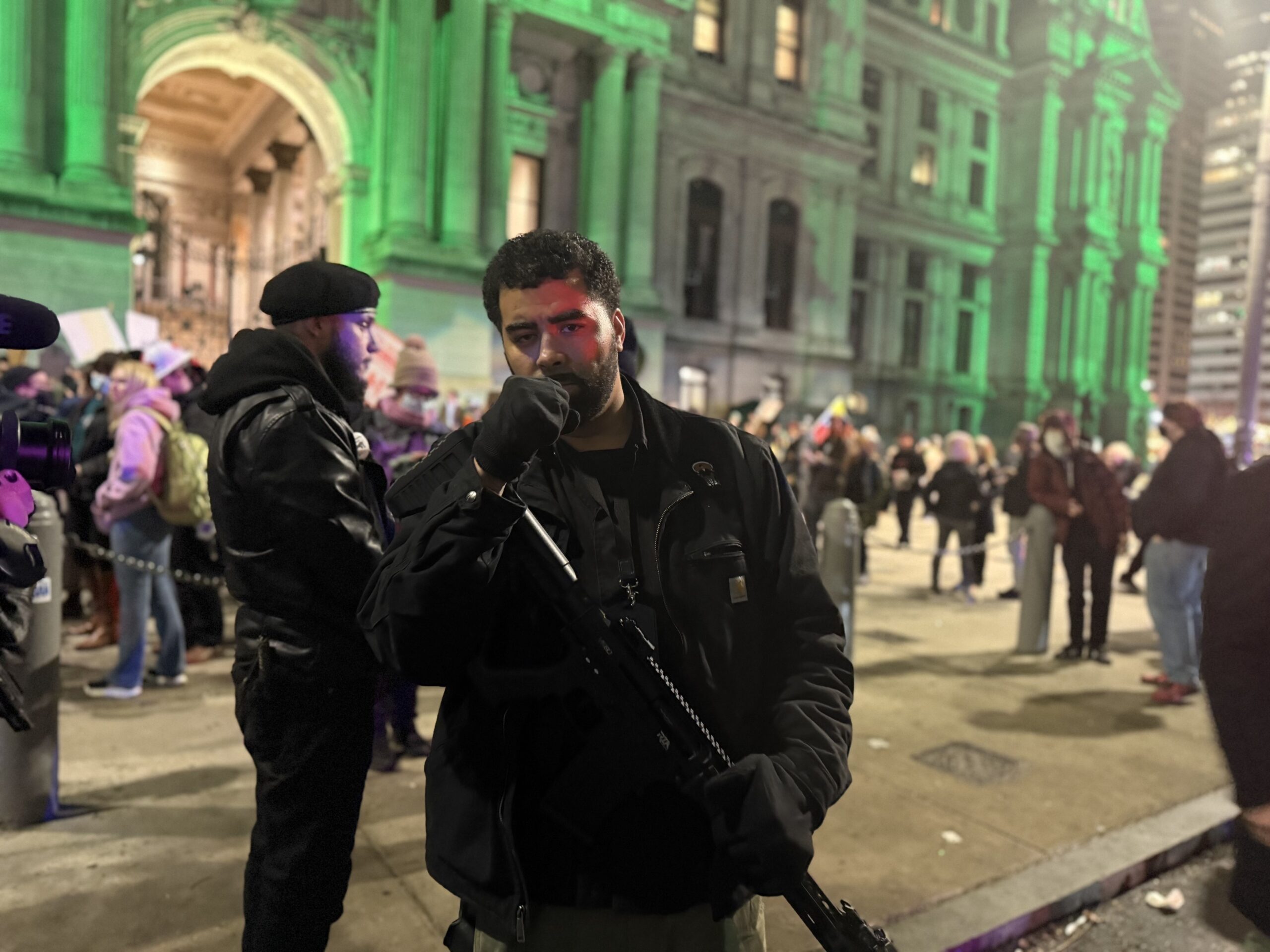
While the protest was underway, several men identifying themselves as members of the Black Panther Party for Self-Defense and armed with rifles walked down Broad Street toward City Hall and stopped at John F. Kennedy Boulevard.
Several armed men who identified themselves as the Black Panther Party for Self-Defense, including Paul Birdsong, stood outside a protest at City Hall against an ICE shooting in Minneapolis.
They said they came to protect the protesters.
“I’m here because it’s my duty,” said a man identifying himself as Paul Birdsong, 39, while holding his firearm tightly.
Birdsong said the group’s members were legally carrying their firearms and they viewed themselves as “guards of the revolution.”
“To ICE, we will respond with whatever force is use on the people,” Birdsong said.
Police closely monitored the Black Panther members and reported no problems.
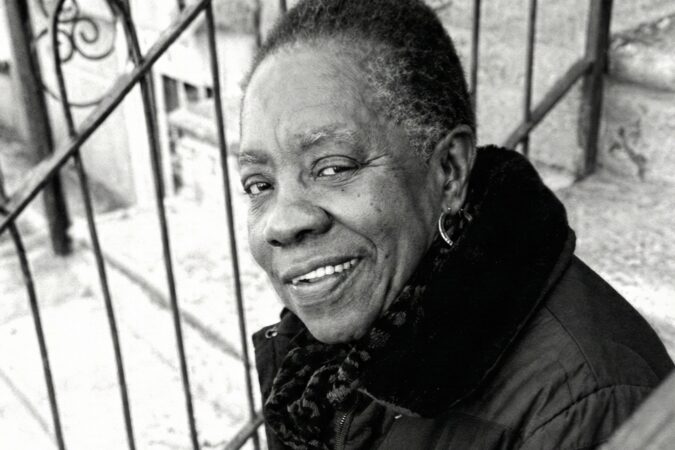
Frances Ola Walker, 86, of Philadelphia, cofounder of Parents Against Drugs and Dunlap Community Citizens Concerned, onetime president of the Mill Creek Coalition and director of the West Philadelphia Empowerment Zone, former aide to U.S. Rep. William H. Gray III, college instructor, mentor, and volunteer, died Tuesday, Dec. 30, of respiratory illness at the Hospital of the University of Pennsylvania-Cedar Avenue.
A lifelong champion of education, civil rights, comprehensive healthcare, environmental responsibility, employment and housing equity, and community partnerships, Ms. Walker spent more than 70 years, from age 13 to 86, protesting injustice, improving life for her neighbors, and caring for historic residential swaths of West Philadelphia.
In the 1960s, she marched with fellow activist Cecil B. Moore and others to protest segregation at Girard College. Most recently, she advocated for alternative SEPTA transit routes to support Black-owned businesses.
“I just stayed involved,” she said in a video interview for the West Philadelphia Landscape Project. “If there was a protest, I was leading it. … I’m glad I made a contribution people can respect.”
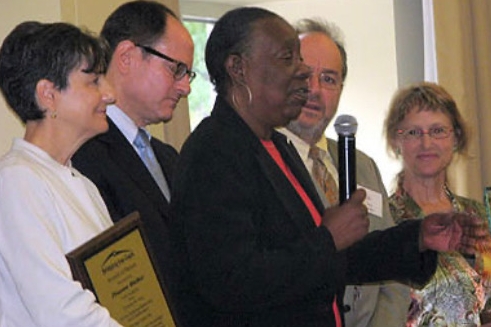
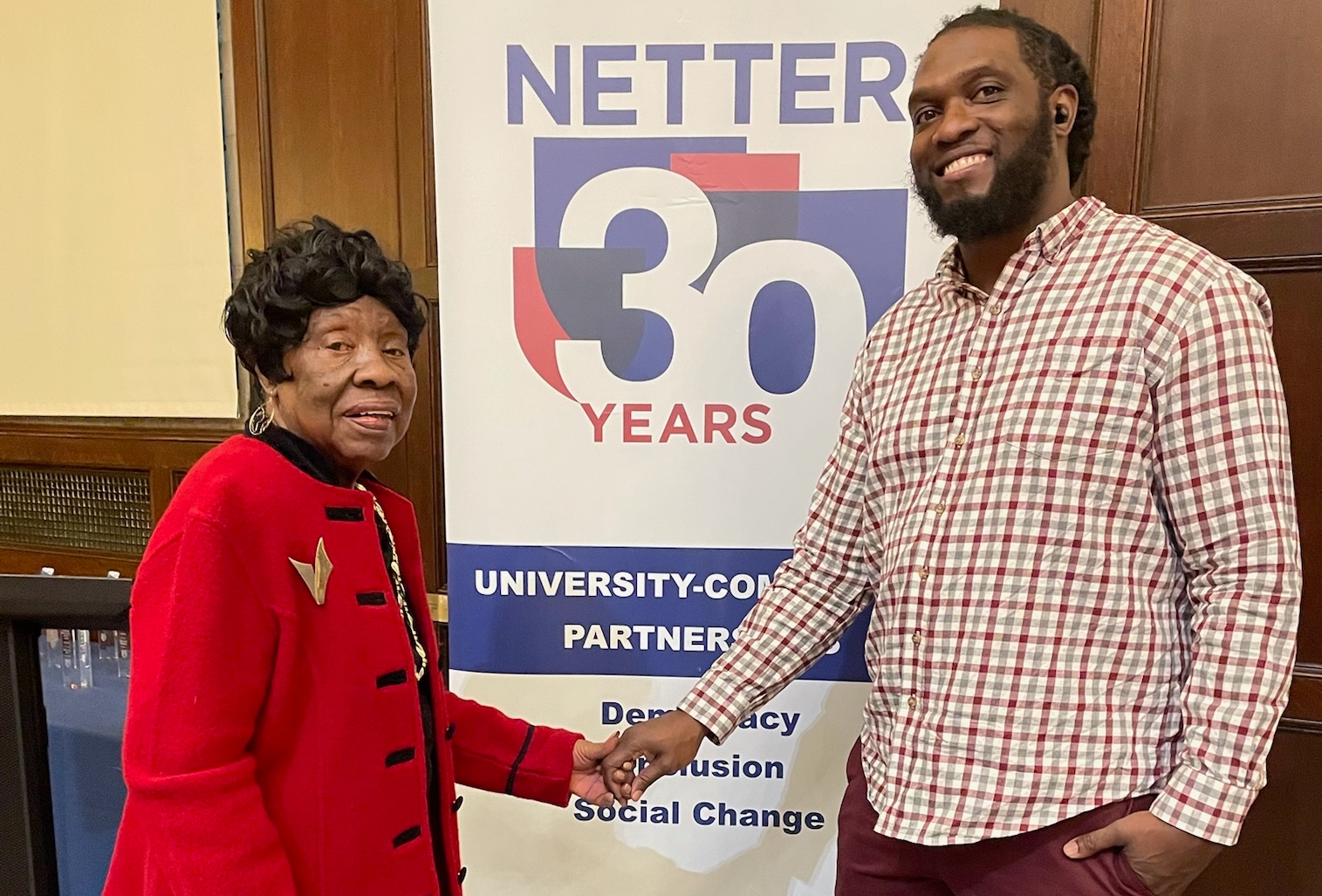
Ms. Walker (center) spoke often at awards ceremonies and civic events.
She cofounded Dunlap Community Citizens Concerned in the early 1980s to address housing and infrastructure concerns, and Parents Against Drugs in the late ‘80s. She led the local Healthy Start federal initiative to reduce infant mortality in the 1990s and served on the advisory board of Bridging the Gaps, a healthcare partnership of academic health institutions and community groups.
She developed programs that connected University of Pennsylvania students and faculty with neighborhood residents through what is now Penn’s Netter Center for Community Partnerships. She acquired federal funds to revitalize communities in the West Philadelphia Empowerment Zone, partnered with Penn to pioneer urban ecology projects, and supervised the West Philadelphia Landscape Project in the Mill Creek neighborhood.
Her family said she was “fearless in her pursuit of justice.”
Anne Whiston Spirn, professor of landscape architecture and planning at the Massachusetts Institute of Technology in Cambridge, invited Ms. Walker to lecture virtually in her ecological urbanism course. “She bridged the worlds of university, politics, and neighborhood, and called the powerful to account,” Spirn said.
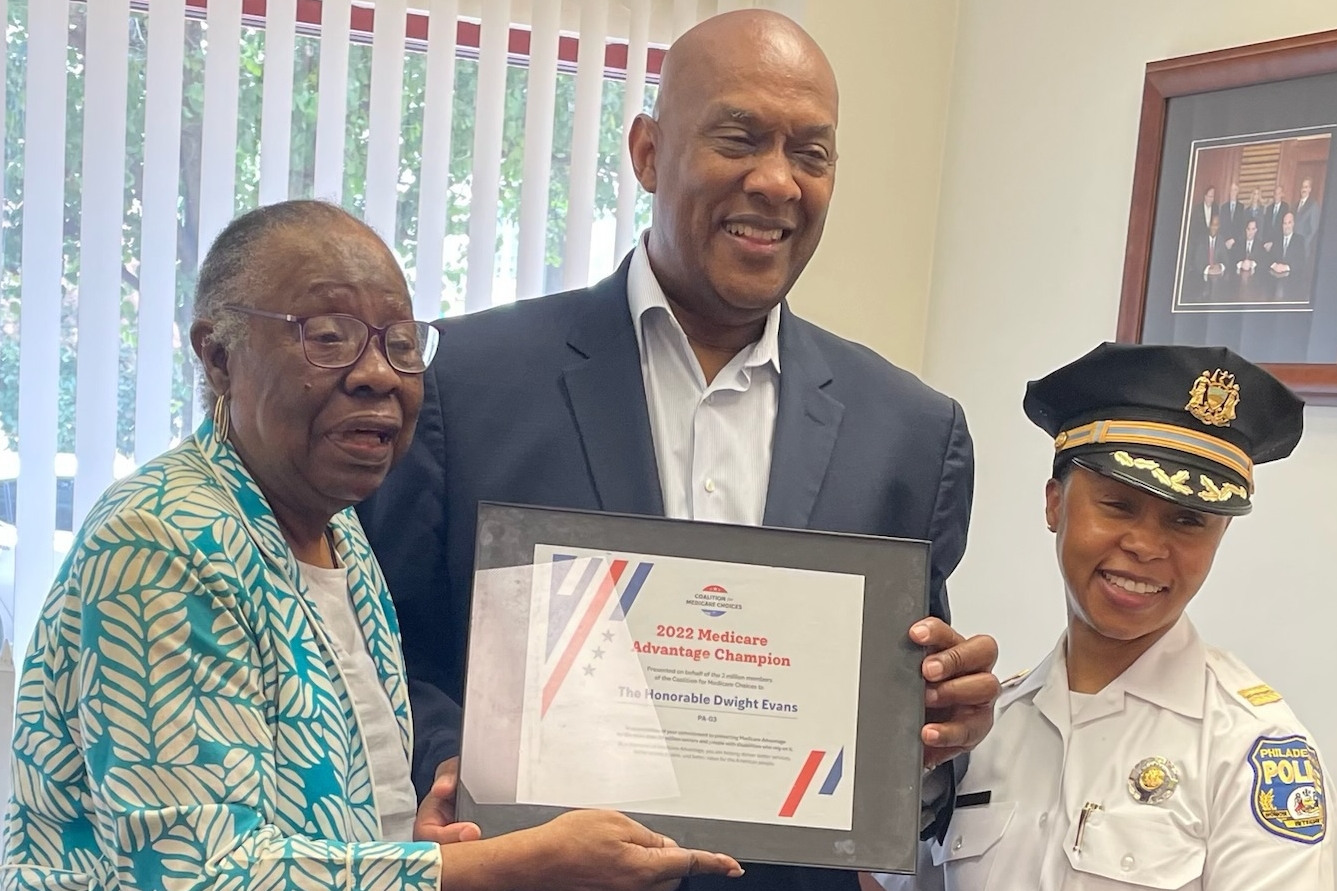
Ms. Walker (left) presents an award to U.S. Rep. Dwight Evans (center) as a Philadelphia police officer looks on.
She served on then-Mayor Ed Rendell’s search committee for a new health commissioner in 1993 and briefly considered her own run for City Council. She worked with then-Vice President Al Gore on his community empowerment programs and managed Gray’s West Philadelphia office for 10 years in the 1980s.
Former U.S. Rep. Chaka Fattah noted her “extraordinary legacy of helping others” and said: “She always chartered her own path and spoke her truth.” Former City Council member at large Blondell Reynolds Brown said: “Her unwavering grassroots work brought care, dignity, and possibility to families facing hardships.”
She studied community engagement in MIT’s Mel King Community Fellows Program in 2000 and 2001, and earned more than 100 awards, citations, and commendations, including from the White House for her leadership in a children’s immunization campaign.
Regarding drugs and crime in West Philadelphia, Ms. Walker said in 1987: “People in this community have to take a stand.”
“My grandmother didn’t leave us directions,” said her grandson, Abdul-Malik Walker, “but she left us a compass. Her voice is in our habits, and her strength is in how we handle the miles ahead.”
Frances Ola Walker was born Jan. 20, 1939, in South Philadelphia. Her father was a preacher, and the family is related to the Rev. Dr. Martin Luther King Jr. So it surprised no one when she began leading academic tutoring for her siblings and teen neighborhood friends on her front stoop.
She was one of 11 children, and her family moved to the Dunlap section of West Philadelphia in 1945. She attended West Philadelphia High School and worked at first as a personal shopper for neighborhood seniors.
She was always interested in civic affairs and social justice, and she became the first Black woman to work at an Acme markets warehouse, her family said, and one of the first female postal carriers.
Ms. Walker stands with her grandson Abdul-Malik Walker.
She had sons Gregory and James, and daughters Michelle, Roslyn, Wala, and Patricia. She married John Ponnie. Her husband, sons Gregory and James, and daughters Michelle and Patricia died earlier.
Ms. Walker enjoyed traveling and playing cards with her family. She knew the detailed history of Dunlap and Mill Creek, and delighted in sharing it with others she encountered on her frequent walks.
“She was an encourager to people of all ages,” said her niece Sibrena Stowe. “She was truly a force to be reckoned with.”
Ms. Walker told her family: “It is through love that all things are possible. For me, it is when people call on you that lets you know you make a difference.”
Ms. Walker appeared in this documentary video for the West Philadelphia Landscape Project.
In addition to her daughters, niece, and grandson, Ms. Walker is survived by 16 other grandchildren, nine great-grandchildren, two sisters, and other relatives. Six sisters and two brothers died earlier.
Visitation with the family is to be from 9 to 10 a.m. Friday, Jan. 9, at Ezekiel Baptist Church, 5701 Grays Ave., Philadelphia, Pa. 19143. A service is to follow, and a repast at 2 p.m. Livestream is at repastai.com/frances.
To hear Anthony Hudgins tell it, overtime fraud at the Philadelphia Fire Department is so brazen that some employees continued abusing the system even after officials started investigating them.
A paramedic was billing the city for overtime hours last May, Hudgins, the former first deputy fire commissioner, contends. But according to a federal lawsuit Hudgins filed Wednesday, there was one problem: That employee was luxuriating on a Norwegian Cruise at the time, not on the clock as a paramedic.
The alleged deception took place after The Inquirer reported that the city was investigating overtime abuse within the 2,800-member fire department and, at the same time, investigating Hudgins over a series of sexual harassment complaints made against him — claims Hudgins says were false and made by employees he’d reported for overtime abuse.
In his complaint filed in the U.S. District Court for the Eastern District of Pennsylvania, Hudgins accuses paramedics, the firefighters union president, and top city officials of defamation, subjecting him to a “bad faith” investigation, and ultimately forcing the department veteran of 31 years to lose his rank and take a $75,000 pay cut.
The dueling misconduct investigations have roiled the fire department since late 2024, and Mayor Cherelle L. Parker’s administration has declined to release the findings from either probe. Hudgins was demoted last fall.
Hudgins’ lawsuit claims that findings from the sexual harassment investigation conducted by the law firm Campbell Durrant cleared him of “verbal misconduct” and found that he had “hugged co-workers.” The complaint states that Fire Commissioner Jeffrey Thompson told Hudgins that the investigators found: “You were just being you.”
The lawsuit did acknowledge that Parker’s administration found that Hudgins had violated the city’s sexual harassment policy and demoted him as a result. Women who lodged complaints against Hudgins said that his conduct included unwanted touching, inappropriate comments, and intimidation tactics, The Inquirer reported last year.
However, Hudgins contended in his lawsuit that the overtime review conducted by Inspector General Alexander DeSantis concluded that two of the women who’d accused him of misconduct were “proven fraudsters” who also recruited other women to file complaints.
Hudgins claimed that the overtime probe was completed in September. DeSantis told The Inquirer last month that the investigation is “still ongoing and may be for some time.” DeSantis declined further comment Thursday.
Because Parker’s administration and DeSantis have continued to decline to release the results of their investigations, it is difficult to confirm Hudgins’ account.
Parker’s administration declined to comment on the lawsuit.
According to the complaint, Hudgins called for an overtime review in fall 2024 after hearing that paramedic Jacqulyn Murphy had lodged a disproportionately high number of overtime shifts that year. While her peers averaged about 24 overtime payments, Murphy had accrued 238, more than 80% of them without the necessary approval forms, Hudgins claimed.
The department’s payroll supervisor, Marian Farris, rubber-stamped the overtime approvals, according to Hudgins’ complaint. Hudgins alerted Fire Commissioner Thompson.
But before he could finish his review, he asserts, Murphy and Farris retaliated by filing sexual harassment complaints against him and encouraging other female employees to do the same — including Tabitha Boyle, Christina Quinones, and Dana Jackson, who are also named as defendants in the lawsuit. Requests for their comments were not returned Thursday.
Murphy, now a defendant in the lawsuit, did not respond to requests for comment Thursday. Payroll records show she was the ninth highest overtime earner in the department in 2024, more than doubling her $94,549 base salary.
The city paid Campbell Durrant $30,000 to conduct interviews and investigate the claims against Hudgins, who was reassigned to remote work and, later, forced to take a leave of absence.
The city has taken The Inquirer to court to block the release of overtime records related to the overtime investigation, claiming their public disclosure would jeopardize the integrity of the probe led by The Office of the Inspector General, the city’s fraud prevention watchdog.
Hudgins, in his lawsuit, claims to have seen the results of that investigation. According to his complaint, the OIG produced its findings to the city and found that Murphy and Farris had both conspired to defraud the city.
According to the complaint, the OIG report stated Murphy had received an undisclosed sum of overtime pay and then “consistently” paid Farris via CashApp. The payments occurred biweekly for at least six months in 2024.
Farris left the department in March 2025. In a phone interview Thursday, she denied any scheme involving payments with Murphy. Investigators found CashApp receipts on Murphy’s email account, but Farris said those were innocent transactions.
“It ain’t a good thing to say, but Jackie was somebody I could borrow money from when I was in Atlantic City, or I could babysit her son for her or something like that,” Farris said. “I get CashApps from my mother. I’m not doing anything fraudulent with my mother.”
Hudgins’ complaint also accused Murphy of continuing to bilk the overtime system even after Farris left the department last year.
The fire department did not respond to a request for comment on the complaint. Michael Bresnan, president of Local 22 of the International Fire Fighters and Paramedics Union, was also named as a defendant in the suit. He declined to comment Thursday.
Per the complaint, Hudgins received a phone call from Thompson in July, who told him the law firm found no wrongdoing and that he could return to work, saying, essentially:
“Good news! You’re coming back to work. You were just being you.”
Staff writer Samantha Melamed contributed to this article.
President Donald Trump and top White House officials offered a starkly different view, saying Good tried to run over the officer with her car.
Department of Homeland Security Secretary Kristi Noem said the officer,identified Thursday as Jonathan Ross, was justified in shooting the woman because he feared for his life. She said Good, a mother of three, had committed an act of domestic terrorism.
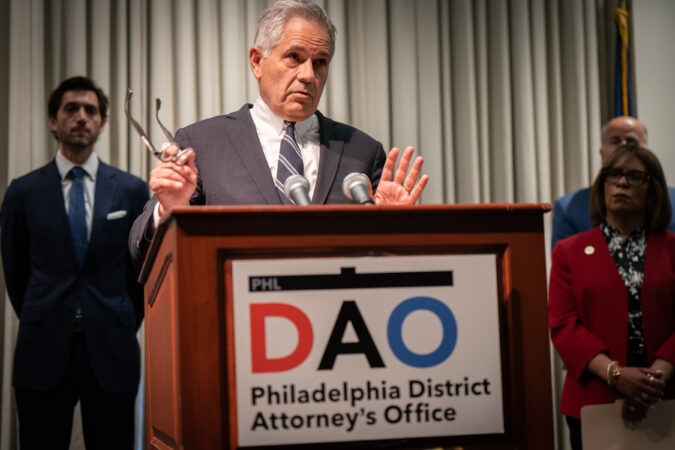
But Krasner, flanked by a group of Philadelphia City Council members and the sheriff, called the actions criminal.
The top prosecutor said that he has family ties to Minneapolis, and that he had reviewed the videos of the shooting, about a mile from where George Floyd was killed by police in 2020. He held a moment of silence for Good and displayed her photo before leading the group in a chant of her name.
“We have to use our voices to call out people who commit terrible crimes,” Krasner said. “Or who justify them.”
That last part was aimed at Trump, whom Krasner has sharply and repeatedly criticized.
The progressive prosecutor often uses his platform to openly decry the president and his policies, most recently when he urged Philadelphians to film ICE agents who have ramped up immigration enforcement since Trump’s return to office.
He said that tactic had been a success in Minneapolis because the video brought widespread attention to the incident.
After Good’s killing, Krasner said, “The first thing out of Trump’s mouth was a lasagna of lies.”
“She behaved horribly,” Trump told reporters. “And then she ran him over.”
Krasner said he could not even be certain that Good was blocking officers from the roadway, as some officials have suggested. Had Good done so, Krasner said, she would have been engaging in an act that “protesters have done forever.”
And that behavior, he said, does not justify a fatal shooting.
Any law enforcement agent inclined to behave similarly in Philadelphia should “get the eff out of here,” Krasner said. And should such an incident happen in the city, the DA said, he would charge the offending officer in state court, where presidential pardons have no effect.
“There are honest decent moral law enforcement officers by the bushel — this is not for you,” Krasner said of his warning. “This is for any one of your colleagues who thinks they are above the law.”
For the first time in more than half a century, Marie Scott is free.
Scott, 72, who served more than 52 years in prison for felony murder, was released from custody on Wednesday after Gov. Josh Shapiro commuted her life sentence in June. Despite opposition from the victim’s family, community advocates had pushed for her freedom for years, saying she had served enough time, was a model inmate, and no longer posed a threat to society.
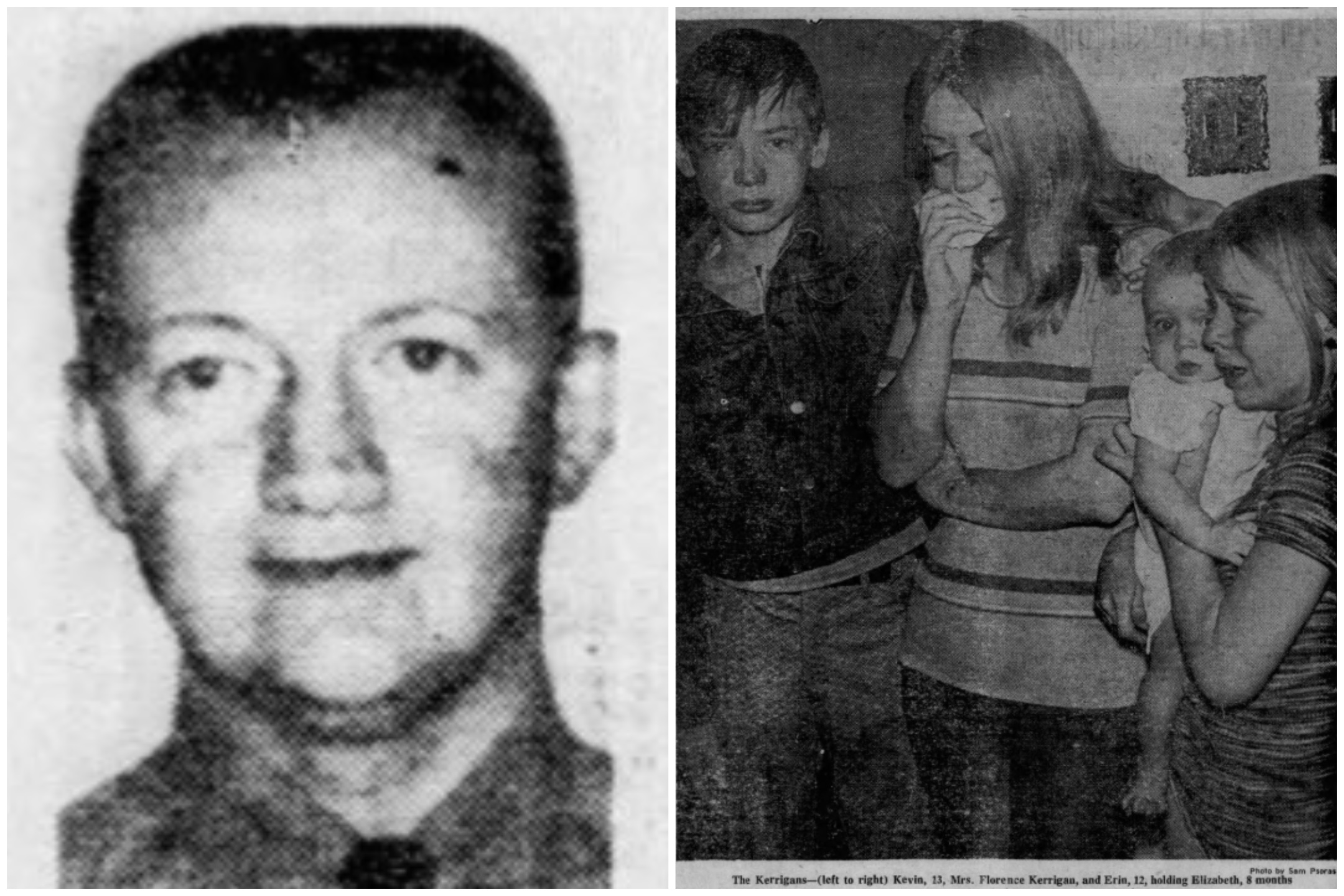
Scott, known as “Mechie,” has been incarcerated since 1973, after she and her then-16-year-old boyfriend, Leroy Saxton, robbed a Germantown gas station. She was 19 and addicted to heroin when she helped Saxton restrain the cashier, Michael Kerrigan, and then rummage through the store’s cash register and safe. Her attorneys say she was acting as a lookout when — to her surprise, she says — Saxton shot Kerrigan, 35, in the back of the head.
Philadelphia firefighter Michael Kerrigan, left, was killed in 1973. His family, shown in a 1973 photograph, was never the same. In the photo, from right to left, is Kerrigan’s son Kevin, wife Florence, and daughter Erin holding 8-month-old Angela.
Saxton was later convicted of first-degree murder and sentenced to life in prison. Scott was convicted of felony murder and handed the same fate.
But Saxton was released on time served in 2020 after the U.S. Supreme Court overturned mandatory life sentences for juveniles.
Scott had remained behind bars ever since.
Until Wednesday, when hours before dawn, she walked out of her cell in State Correctional Institutional Muncy for the final time, stepped into the back of a van, and was driven three hours toward her new life in Philadelphia.
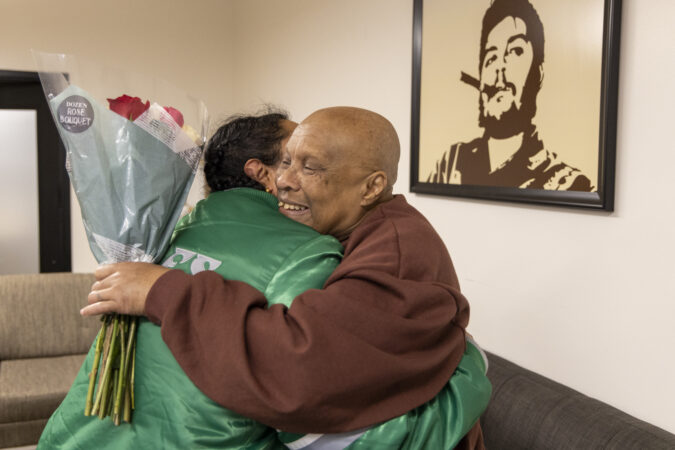
There, for the first time in her life, she hugged her daughter, Hope Segers, outside the prison walls.
“I just covered my face and lost it,” Scott said of seeing her Wednesday. “That was the first time I have seen my daughter and grandson in the real world. … To feel them, to smell them in the free air.”
Marie Scott had her life sentence commuted after 52 years in prison.
Segers was born in SCI Muncy 45 years ago. During one of the three times Scott escaped from prison between 1975 and 1980, she reunited with a man who worked in the prison kitchen and with whom she had fallen in love, and she got pregnant.
Segers has known her mother only through prison visits often years apart, and short calls via phone and Zoom. Now, she said, she is eager to begin building a true relationship with her.
“It’s still not real,” she said of sitting next to her mother. “I’m still in shock.”
Scott, who will be on parole for the rest of her life, will move into her daughter’s home in Northeast Philadelphia after living in a halfway house for a year, as is required by the prisons.
Scott’s health has deteriorated in recent years. She uses a wheelchair, suffered from Stage 2 breast cancer, and had a double mastectomy last year. She was not ill enough to qualify for compassionate release, her attorneys said.
But she has since learned she is cancer free, she said.
Marie Scott, 72, survived Stage 2 breast cancer while in prison.
Scott had been serving a mandatory life sentence under Pennsylvania’s felony murder law, which allows people to be convicted of second-degree murder if a death occurs during the commission of a felony such as robbery — even if they did not kill the victim or intend for anyone to die. Pennsylvania is one of only two states where a felony murder conviction automatically carries a life sentence, a punishment Shapiro has called unjust and unconstitutional. (Pennsylvania’s Supreme Court is currently weighing the issue.)
Other than the decades-old escapes, her attorneys said, she has been a model inmate. She is deeply remorseful for her actions, and has written books about healing, directed plays, and led drug and alcohol treatment courses for inmates, they said. She became a mentor and mother figure to dozens of women at Muncy.
Rupalee Rashatwar (from left, Hope Segers, Bret Grote, and Sam Lew worked to free Marie Scott through their work at the Abolitionist Law Center.
For years, Scott and her attorneys at the Abolitionist Law Center applied for a commutation from the Pennsylvania Board of Pardons, asking that her life sentence be reduced. Her applications were repeatedly denied without explanation, lawyer Bret Grote said.
She applied last year with renewed hope after the leadership at SCI Muncy said they would support her petition.
Still, Grote said, Laurel Harry, secretary of the state Department of Corrections, told officials she would not support Scott’s petition because of the prison escapes decades ago. Harry’s support was typically a requirement of the board’s approval for release, he said.
Grote, his colleagues, and a collection of volunteers drafted a social media, phone, and letter writing campaign to persuade Shapiro and prison officials to support her commutation. Members of Philadelphia City Council, alongside state senators and representatives, called for her release, as did Philadelphia rapper Meek Mill.
It worked. In May, the Board of Pardons voted to recommend a commutation of her sentence, and the following month, Shapiro formally approved her release. The board then required that Scott spend six additional months in prison for the prison escapes.
Her release comes amid opposition from the victim’s family.
Michael Kerrigan holding his granddaughter, Angela Kerrigan Hightower. His wife later adopted Angela to be one of her seven children.
Initially, two of Kerrigan’s daughters said they supported Scott’s release and could forgive her, but later changed their minds and asked the board of pardons and parole not to release her. They said they do not believe she has taken enough responsibility for the crime.
Angela Kerrigan Hightower, a grandchild of Kerrigan’s who was later adopted by his wife and would have been his seventh child, said Wednesday that “the system failed the victims in this case.” She said she does not believe Scott has shown sufficient remorse, and that she and Saxton should have had to serve a life sentence for the suffering they brought her family.
“I want to know,” she said, “where is the justice for the victims in this case.”
Scott has said she deeply regrets what happened. She said Wednesday that she hopes to use her time outside of prison to tell the story of the cycle of drug and sexual abuse and codependency that she has said contributed to her actions.
She also wants to push for the release of other women who she said have been reformed in prison and don’t deserve to die there.
Marie Scott, 72, joined a Zoom call with the Coalition to Abolish Death by Incarceration alongside her daughter, Hope Segers, and grandson Dashawn Green.
Scott’s grandson, Dashawn Green, 28, said he wants to get his grandmother’s health and diet back on track, introduce her to his girlfriend and miniature schnauzer, and maybe even plan a road trip.
Scott said her first order of business is to find a church.
Seated on the couches in the Abolitionist Law Center in North Philadelphia Wednesday night, she recalled gathering for her final Sunday service inside the prison last week and saying goodbye to the women in the facility who raised her.
“You’re my family,” she said she told them. “I don’t make promises because they’re made to be broken, but if you don’t have your word, then you don’t have anything. And I give you my word, I am going to die trying to get all of my women out.”
“It feels like I’m on another planet,” Marie Scott, 72, said of her newfound freedom.
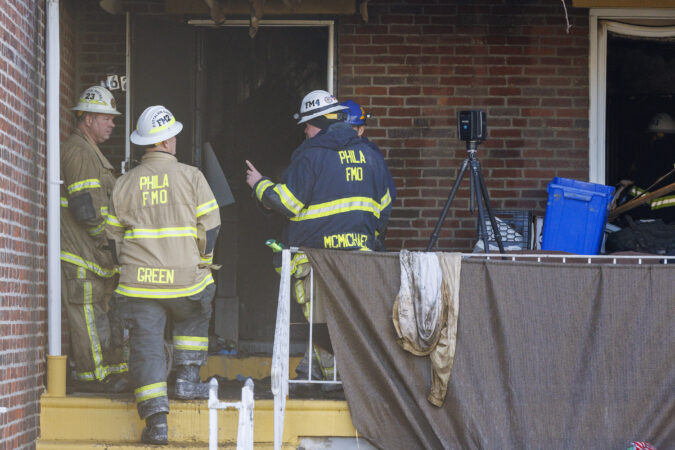
Philadelphia firefighters pulled a 60-year-old woman away from a burning building where she was trapped early Thursday morning, but she later died at a hospital.
The fire department responded to the blaze around 4:45 a.m. on the 6200 block of Ogontz Avenue in North Philadelphia. Firefighters arrived to find a heavy fire scorching throughout the two-story rowhouse.
About 60 firefighters, medics, and support staff were at the scene, officials said. Upon searching the house, firefighters found an unresponsive woman, who did not survive. The Medical Examiner’s Office will soon determine the cause of death, with the Fire Marshal’s Office investigating the cause of the fire.
There have been at least two deadly fires in the area over the last month, in addition to Thursday. Additionally, two people were rescued and survived a fire in South Philadelphia Wednesday, according to CBS.
Earlier this week, Bucks County officials confirmed the death of a third person related to the Bristol Health & Rehab Center fire, which claimed the lives of two other people and injured 20 others. Days before the Bristol fire, a deadly fire in Upper Darby killed one person, critically injured another, and left a firefighter and a handful of others with less-severe injuries.