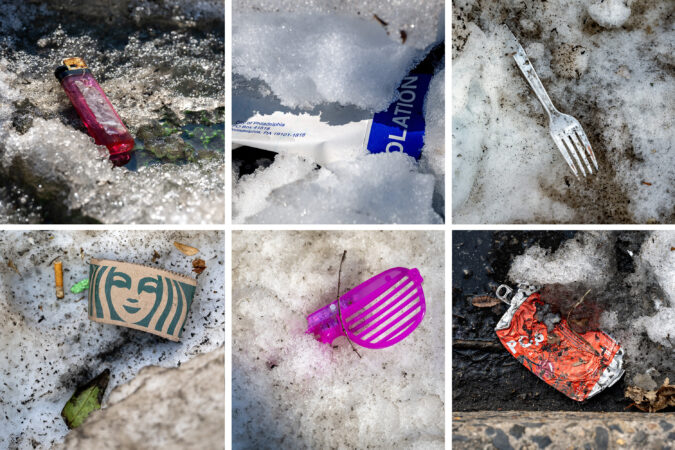
Menthol Newports. A stray shoe. Child-sized mittens. Rotten apples. A crushed pineapple White Claw.
These were a smattering of the artifacts emerging from Philadelphia’s permafrost this weekend, when temperatures neared a balmy 50 degrees on Saturday and the last vestiges of a bleak, bleak winter — feet-tall snowpack on sidewalks, in bike lanes, and smooshed between cars — were slowly, but surely, melting away.
The thawing out has left behind a Philly trash special, relics from a bygone era, before the city was buried under historic snowfall and its inhabitants were forced inside. A buffet of Wawa, Starbucks, Dunkin’, and McDonald’s cups once trapped under 9.3 inches of snow and ice have broken free. The littered receipts and Backwoods cigar wrappers sprinkled outside Fishtown bars have been reborn, soggier and muddied. The neighborhood dogs’ poop, bagged or not, has been preserved in subfreezing temperatures.
And for the people of Philadelphia who are stirring from their hibernation, the collective cabin fever is finally breaking. On Saturday afternoon, some ventured into the open air of North Philadelphia to bask in an uninhibited sun. They wore considerably fewer layers, bared arms and legs, and voluntarily gallivanted about in February.
“We celebrate it not freezing,” said Uchenna Ezeokoli, 26, of Northern Liberties, who was seen skateboarding near Johnny Brenda’s. His “coat” was a mere flannel. “If it’s not freezing, it’s a good time.”
Lori Sanchez’s narrow, one-way Fishtown street was never plowed, she said, rendering it inaccessible and shutting her in for a week. But Saturday, strolling down Fishtown’s main throughway with sister-in-law Katherine, she felt the buzz of spring.
“That’s our hope — that it stays warm,” Sanchez, 27, said.
A streak of days when the temperature eclipsed freezing made Bala Cynwyd resident Nicholas Beck, 46, feel like he’d overcome the winter blues: “When the sun comes out, that always helps. … This is probably the turning point, I think.”
Some light rain and snow is expected for tonight, producing minor accumulations over the northern half of the area. Further south towards Philly, more of a rain/snow mix cuts into any accumulation. Areas of South Jersey and Delmarva likely stay all rain. #NJwx#PAwx#MDwx#DEwxpic.twitter.com/oLgmvhpS3T
Brian Finnegan, Brixmor Property Group’s new CEO, is a true Philadelphian.
He was born in Southwest Philly, spent his formative years in Roxborough, and graduated from St. Joe’s Prep. He met his wife, Katie, at a Halloween party in his mother’s Packer Park backyard in 2009, while just down the road the Phillies played the Yankees in the World Series and Pearl Jam closed the Spectrum.
Finnegan, now 45, can’t give up his Eagles season tickets, despite living outside New York and traveling the world as a real estate executive, When he can’t make games, he can usually count on his 73-year-old mother, Geraldine, to take the seats.
Brian Finnegan, who was named CEO of Brixmor Property Group last month, said he’s especially proud of the company’s commitment to its more than 20 shopping centers in and around Philadelphia, where he grew up.
Finnegan lives in Rye, N.Y., with Katie and their three young daughters, Magnolia, Daisy, and Poppy.
The company has invested about $180 million in its Philly portfolio over the past nine years, Finnegan said, and calls itself the largest operator of open-air shopping centers in the region.
The following interview has been edited and condensed for clarity.
How would you say Brixmor is doing overall?
The company is in the best position it’s ever been. We’re signing rents at the highest level that we ever have. We have occupancy levels that are close to the highest we’ve had.
Consumers today are demanding much more of the suburbs in terms of the types of services that they’re looking for, the types of restaurant options that they’re looking for. And that’s allowed us to really improve the merchandising mix at our shopping centers with better food and beverage options and better service options in terms of health and wellness.
Why do you think Brixmor shopping centers are thriving while many brick-and-mortar stores falter?
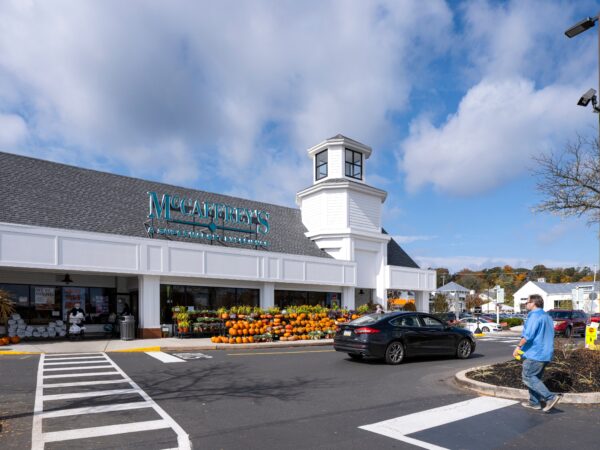
Grocers, especially [tenants like Sprouts, Whole Foods, and McCaffrey’s], have really invested in their stores, and they’re drawing a lot of traffic.
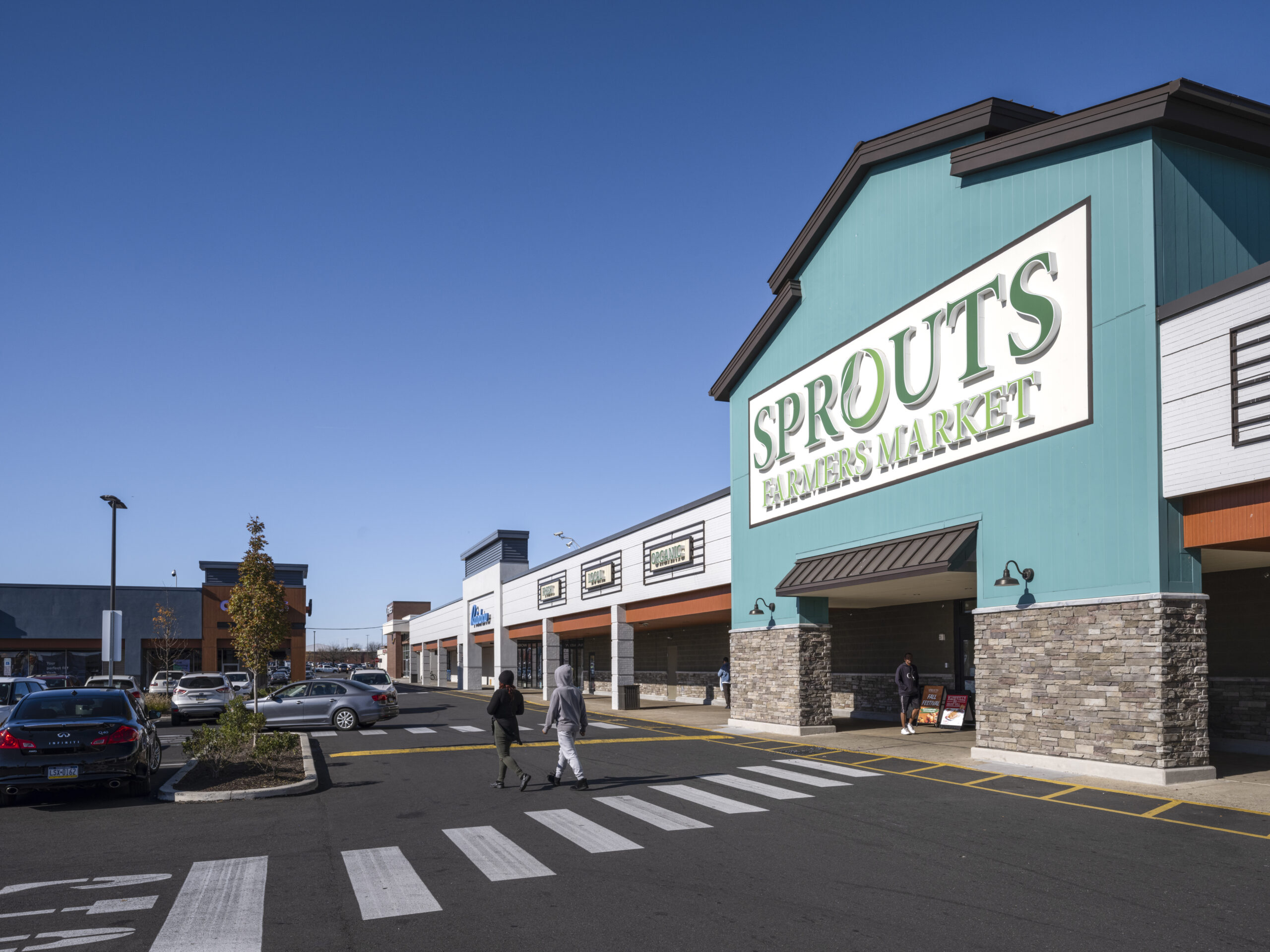
Sprouts is among the retailers located at Roosevelt Mall in Northeast Philadelphia, one of Brixmor Property Group’s complexes in the region.
As it relates to fitness and wellness, and higher quality food and beverage options, I think consumers today care more about what they’re putting in their bodies and how they look than they ever have.
You have to create an environment at specific shopping centers where if one tenant draws traffic, another tenant can complement them.
It really matters who your neighbor is, so if you’re able to put a strong merchandising mix together, which we’ve been able to do at our centers in Philadelphia, you’re really going to see traffic.
The Ross Dress for Less at Roosevelt Mall is one of several off-price retailers that have found success in Brixmor Property Group centers, according to CEO Brian Finnegan.
What would you like to accomplish as CEO?
We’d love to find some new opportunities to grow our footprint in Philadelphia.
The deals that we’ve done in Philadelphia, many of them are [with retailers new to Brixmor’s national portfolio], like with Lululemon, like with Free People, like with Warby Parker, like with Pottery Barn and Williams-Sonoma.
We think about how our centers connect with the communities that we’re in. We’re part of those communities. We’re actually landlords to Philadelphia institutions like Chickie’s & Pete’s and P.J. Whelihan’s.
The more that we can tie our assets with retailers that are relevant to those communities, the better.
What makes you optimistic about shopping centers amid all the e-commerce competition?
What [the pandemic] showed was that people like connectivity. They don’t like to just have things delivered to their door. They want to go out and experience things. They want to touch and feel things.
Our traffic since the pandemic across the entire portfolio is up 7%.
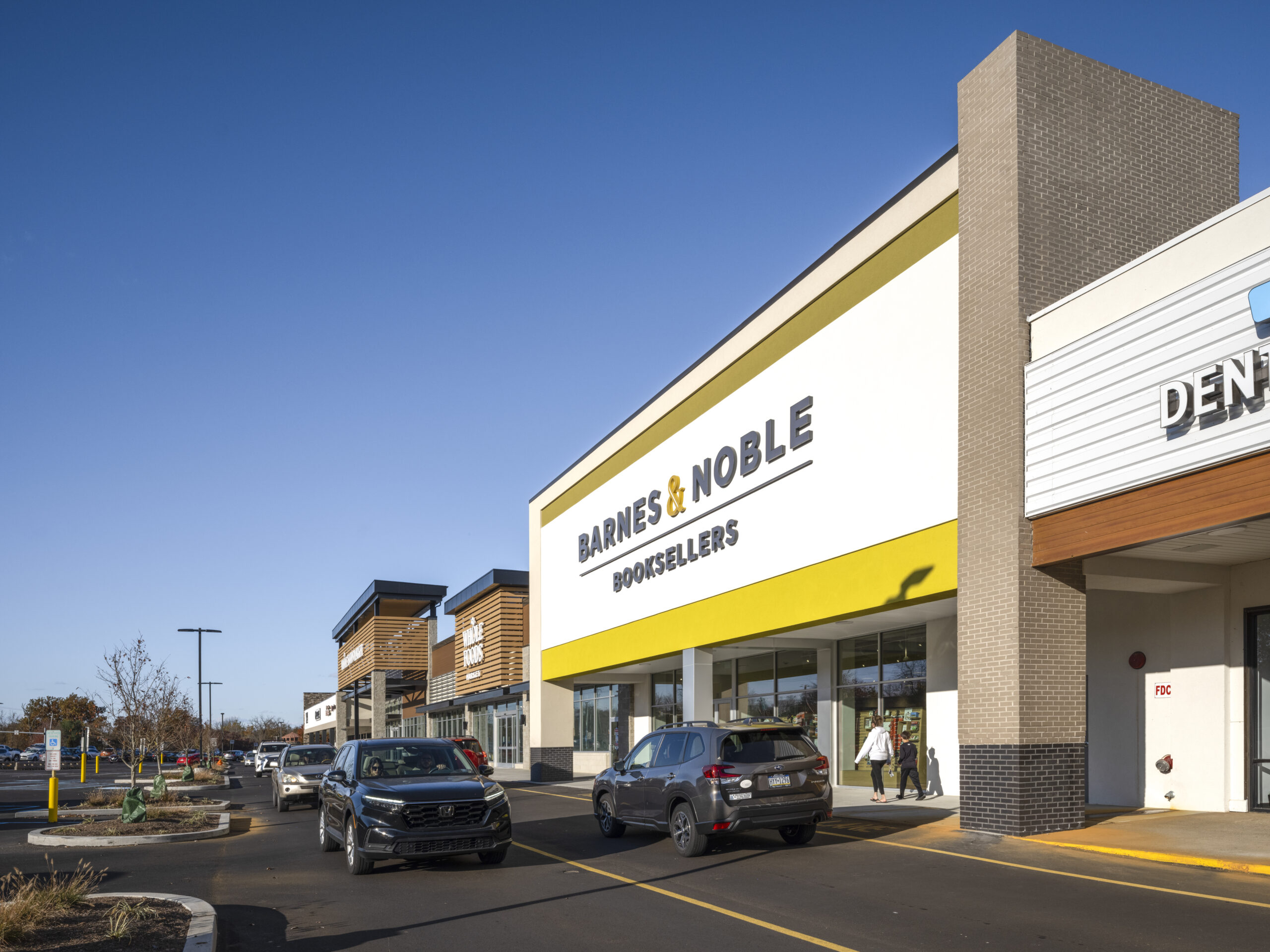
Barnes & Noble is shown at Barn Plaza shopping center in Doylestown, which is one of more than 20 complexes in the region owned by Brixmor Property Group.
If you talk to a lot of these major retailers, what they’ll say is the store is the center of everything that they do. They’re utilizing that store to be able to connect with the consumer in store, at delivery, as part of pickup.
I’m pretty bullish. There are a lot of retailers that continue to thrive despite the fact that consumers have options to be able to get something online if they wanted to.
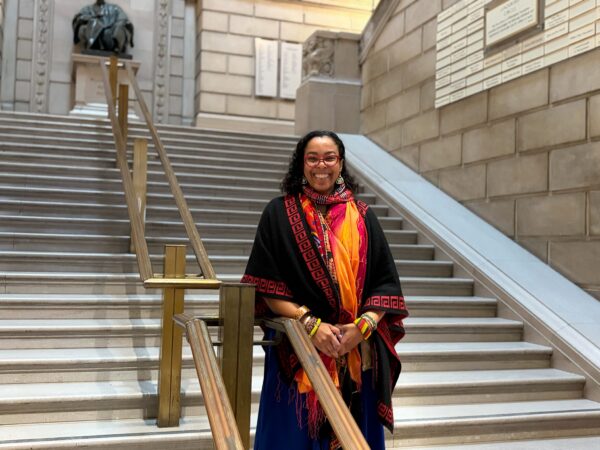
Norma Thomas had been keeping a secret since mid-January. At Saturday’s Passing the Pen ceremony, she was ready to shout it from the Central Library rooftop:
“My daughter, Raina León, is the poet laureate of Philadelphia,” Thomas said, chest puffed out and brimming with pride. “She is effervescent, outgoing, and loves the city of Philadelphia.”
Raina J. León, 44, was one of 32 applicants citywide, the largest number of candidates the city has had for the role, said Adam Feldman, the Free Library of Philadelphia department head of art and literature, and a poet laureate governing committee member.
Born in Upper Darby, León is a Black, Afro Boricuan poet, writer, educator, and cultural worker raised in Southwest Philadelphia. She speaks English, Spanish, and Italian, and believes in a world where diversity can strengthen communities.
Still unable to believe her achievement, the University of Southern Maine professor recalled lighting candles nervously, hoping to get the email bearing the news.
“I keep thinking, ‘Maybe this isn’t my time,’” León said. “But, no, DéLana would want me to dream big and to walk on assurance of my voice having a space,” she added, remembering her late friend, the poet DéLana R.A. Dameron, who died in November.
Creating a space where people feel that their voices are welcome is the legacy León wants to leave during her two-year tenure as poet laureate.
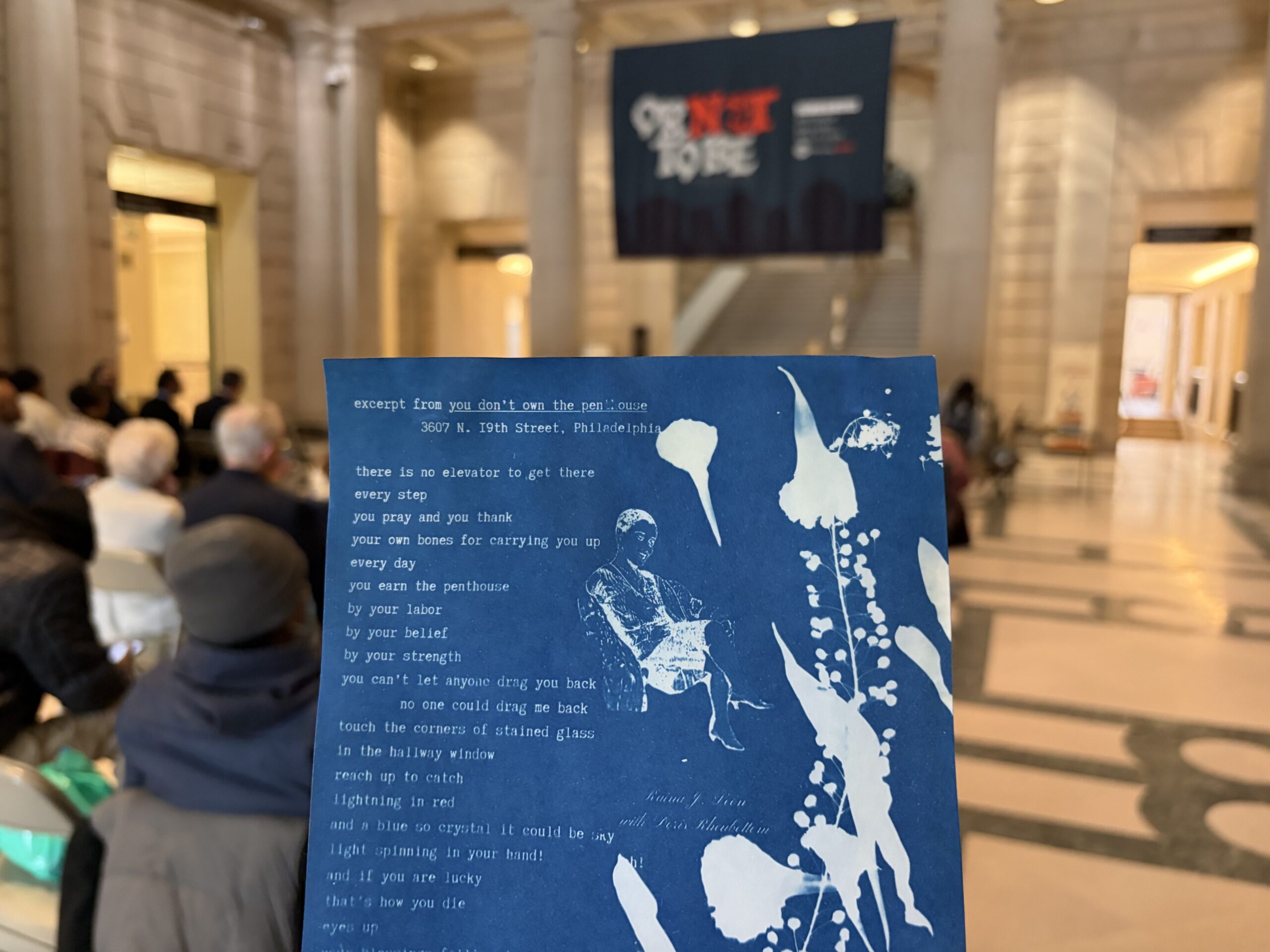
An extract from Raina León’s poem “you don’t own the penthouse.”
The poet laureate is an ambassador for poetry in the city, participating in community engagement, speaking at events, and mentoring the youth poet laureate,Rashawn Dorsey. But what excites León the most is helping Philadelphians see storytelling as a liberating practice.
“Poetry is all around you. Even if you are like, ‘I don’t understand poetry’ — it understands you,” León said. “In these times of great volatility, with attacks on history and attacks on communities, there is a desire to preserve oneself by becoming numb, and poetry says, ‘No, you can’t be numb in life. You can’t be numb and observe the world.’”
The poet laureate role comes with a $5,000 stipend, paid in two installments. But León says she isn’t in it for the money. She wants to provide language access to amplify Philadelphia’s diverse community of voices.
She plans on holding open hours once a month at the Central Library of the Free Library for people to work on writing with her. For those who cannot come in person, León also wants to do online workshops.
More importantly, she wants to work on writing projects across multiple languages, including American Sign Language, to ensure diversity opens doors in Philadelphia.
“It’s like Bad Bunny said during the ‘Benito Bowl,’ what matters is that we are alive and we should be pouring [love] into one another and caring for one another,” León said. “Only love counters hate, and that is a revolutionary thing that is activating this, something that changes and pushes back on the nihilistic threat.”
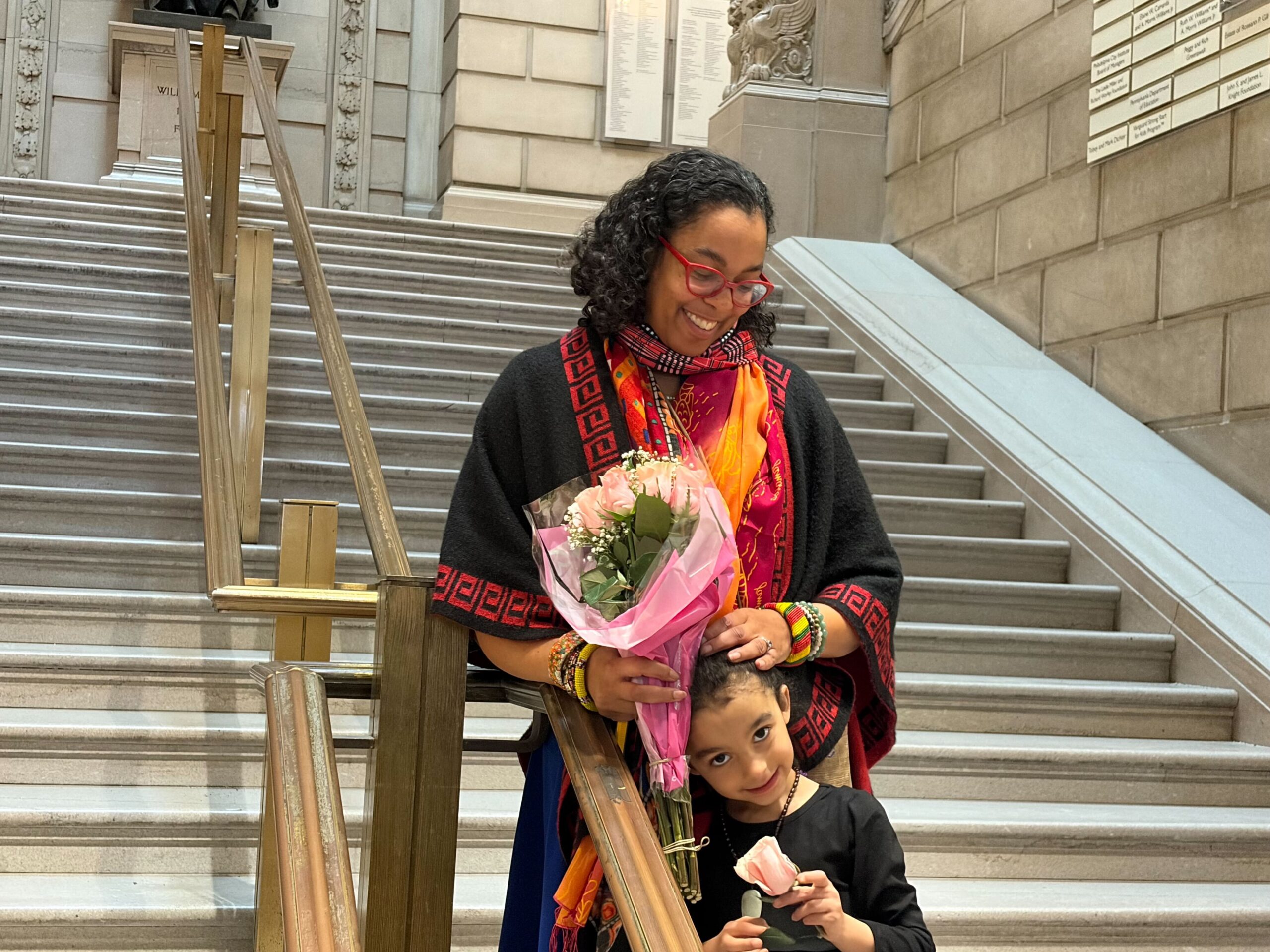
Raina León and her daughter at the Passing the Pen ceremony, in the Parkway Central Library on Saturday, Feb. 14, 2026.
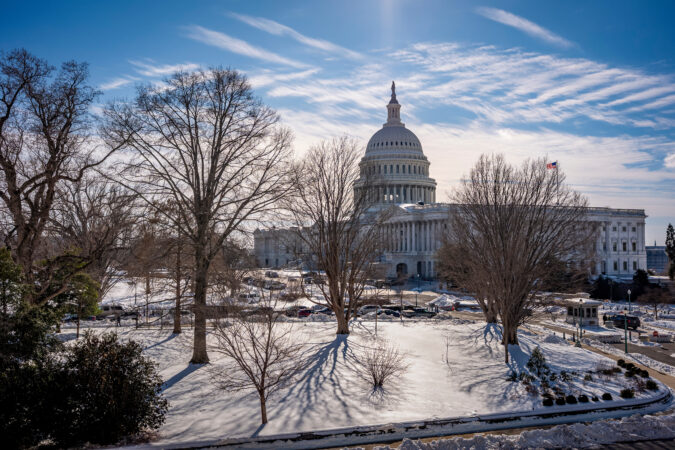
Another partial government shutdown began Saturday, with lawmakers at an impasse. But this one is different.
With congressional Democrats refusing to approve funding for the Department of Homeland Security, the last of that agency’s funding has run out.
It all stems from party-line disagreements surrounding ICE and immigration enforcement.
When a funding lapse triggered a partial government shutdown on Jan. 31, Congress made a compromise: It approved spending bills for all agencies, except for DHS.
DHS received two weeks of funding to give Congress more time to negotiate Immigration and Customs Enforcement changes, a push Senate Democrats have repeatedly made after federal immigration and border agents fatally shot two U.S. citizens in Minneapolis last month.
Now those two weeks are up and Congress is still in a standoff. Democrats want to see more guardrails regarding how ICE agents identify themselves, barring them from wearing masks, and requiring name badges. But Republicans say those practices would add too much risk to the job.
Since all other government agencies have already been funded, DHS is the only one affected by the shutdown.
Here’s what that means.
What’s a partial government shutdown?
A partial government shutdown happens when Congress has funded only certain federal agencies, leaving others in limbo. Some parts of the government close while others keep operating.
In this case, it comes down to who has funding and who doesn’t. DHS is the only agency without approved funding. The agency’s fiscal year ends Sept. 30, meaning it currently stands without funding for seven months or until Congress reaches an agreement.
When did government funding expire?
Funding for DHS expired Friday at midnight. A shutdown began Saturday at 12:01 a.m. after Congress and President Donald Trump’s administration failed to reach an agreement.
What changes with the partial shutdown?
Not much in the eyes of the general public, according to CNN.
Nearly all DHS workers remain on the job, but many won’t get paid until the shutdown ends.
But DHS officials who testified before a House panel on Wednesday warned that a funding disruption could mean delays to states seeking reimbursements for disaster relief costs, delays in cybersecurity response, and missed paychecks for agents who screen bags at airports, which could lead to unplanned absences and longer wait times.
DHS is home to agencies including the Transportation Security Aadministration, Coast Guard, and Federal Emergency Management Agency, which are all affected.
What have Pennsylvania politicians said?
Sen. John Fetterman (D., Pa.) said he “absolutely” expected a shutdown. He broke with most Senate Democrats, voting to approve funding and avoid a shutdown in a measure that failed, and arguing that delaying funding DHS won’t impact ICE since the agency has received separate funding.
Earlier this month, some members of the Pennsylvania delegation to the U.S. House of Representatives, including Chris Deluzio, Chrissy Houlahan, Brendan Boyle, Madeleine Dean, Mary Gay Scanlon, Dwight Evans, and Summer Lee, penned a letter to Fetterman and Sen. Dave McCormick (R., Pa.) asking them to vote against passing the spending bill unless ICE reform is secured. (Both senators voted in favor, but it failed.)
Houlahan, a Democrat from Chester County, criticized ICE last week and emphasized a need for immigration reform.
“We are a nation of immigrants, but ICE is clearly not reform. ICE is undertrained. ICE is vastly, vastly overfunded,” she said. “They have a budget that is larger than many countries’ entire defense budgets.”
Where does Congress stand right now?
The House had already done its part and approved funding. The chamber is in recess until Feb. 17. But Senate Democrats are pushing back on its approval without immigration reforms. That leaves the Senate with few options if it cannot pass the current measures.
The Senate adjourned Thursday for a Presidents’ Day recess after a motion to advance DHS funding failed 52-47, mostly along party lines. Democrats also blocked an attempt to extend funding for another two weeks.
Lawmakers left town, some traveling to the Munich Security Conference in Germany, others to meetings nationwide and overseas.
The chambers are not scheduled to return until Feb. 23, though that could change if a deal is reached in the meantime. But senators on each side say bipartisanship during an election year seems unlikely.
In the note, he finally filled in the blank: “Ok apparently I need to address the Miami incident.”
For eight months, the “Miami incident” hovered over the franchise without much other information. It was a turning point, but no one outside the clubhouse knew why.
Now we know his side of the story: After being pulled late in a June game in Miami, he brought a can of Presidente into the dugout and confronted Rob Thomson about what he saw as inconsistent standards. Teammates took the beer before he drank it. He apologized. The next day, his starting streak ended. And after that, the relationship was never the same.
But still, this ending lands with nostalgia.
This was the guy who turned tragic news cycles into accidental baseball folklore. The timing of his biggest hits was just uncanny. The day I-95 collapsed, or the day a president was shot at, or the day another dropped out of a race.
Then there was Liam, andthe joy of getting to experience Red October with his son in the stands. Back-to-back postseason multihomer games with his kid watching. Whatever else you thought about Castellanos, those nights felt special.
He was never boring, and that counts for something.
Northeast Philadelphia’s Delilah Dee walks through Bad Bunny’s halftime show stage at Santa Clara’s Levi’s Stadium, on Feb. 8 2026
An Eagles fan from Fishtown spent weeks rehearsing in a 50-pound grass suit, keeping the secret, grinding through 12-hour days, then waddling past Pedro Pascal and Cardi B on global television. A Northeast Philly marketing pro manifested her way onto the field crew and helped execute one of the most high-pressure seven-minute turnovers in live entertainment.
The plant story is peak Philly optimism: “The Eagles didn’t go, so I went for them.” That’s delusional in the best way. That’s Broad Street confidence. The field-team story hits deeper. In a halftime show centered on Latino pride and visibility, a Mayfair native who’s built community through Latin culture here in Philly ends up helping pull off the mechanics of the moment.
Would it have been better if it were an Eagle-and-Benito Bowl? Obviously. But Philly showed up anyway. Grass suit. Stage crew. Go Birds.
It hits 40 degrees and Philly declares emotional spring: A-
People are planning vacations, talking about the Cherry Blossom Festival, and declaring the worst is behind us while carefully sidestepping three-foot snowbanks and skating past frozen crosswalks. Someone said, “It’s gorgeous out,” and meant it sincerely.
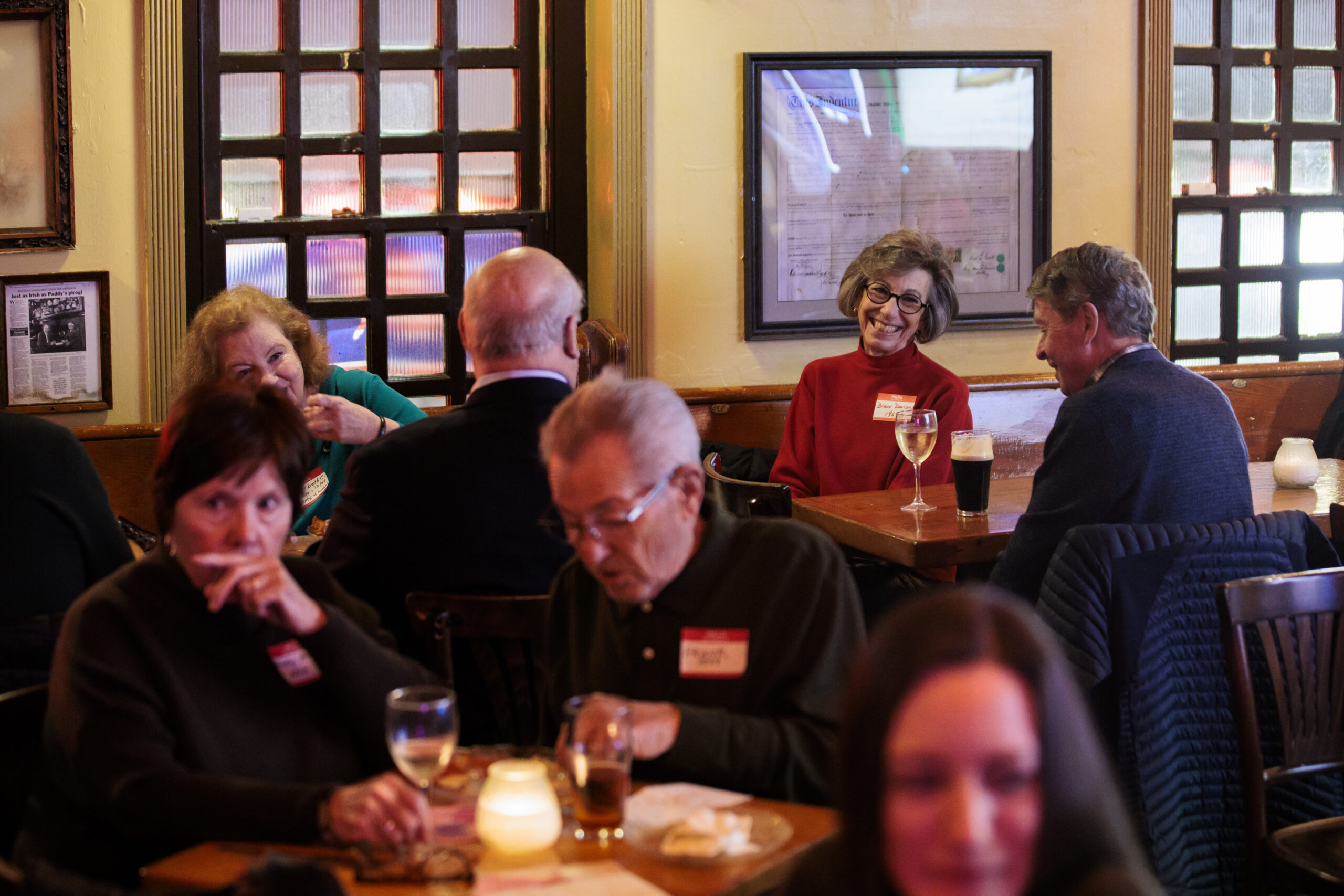
Diane and John Davison (back, right), who met here in 1969, laugh with other attendees at McGillin’s on Feb. 3, 2026. Attendees gathered for a book talk on “Cheers to McGillin’s: Philly’s Oldest Tavern.”
McGillin’s proves love doesn’t need an algorithm: A
The 166-year-old pub gathered dozens of couples this month who found love under its low ceilings and tinsel hearts. Some have been married 50-plus years while others are newlyweds who matched over wings and Yuenglings. The upstairs bar looked like a class reunion for romantics.
In a city that loves to argue about everything, this one’s hard to fight: Proximity still works. (Eye contact and beer don’t hurt, either).
There’s something deeply comforting about the idea that the most reliable matchmaker in Philly isn’t an app. It’s a place with oak tables, framed liquor licenses from the 1800s, and bartenders who’ve seen it all. At some point, the legend becomes self-fulfilling. If everyone believes McGillin’s is where love happens, eventually it does.
Pennsylvania watching eagle eggs hatch on a livestream: A
There is something deeply Pennsylvania about thousands of people spending their morning refreshing a live webcam of a bald eagle nest in an undisclosed Lancaster County tree.
More than 100 live viewers at mid-morning, with nearly 700,000 views last year. The chat section is full of viewers who are emotionally invested in avian domestic life.
There’s something quietly moving about it. Bald eagles were nearly wiped out here with just eight known active nests in 1990. Now there are more than 300.
Spring is coming. And until baseball starts, this is what we’ve got.
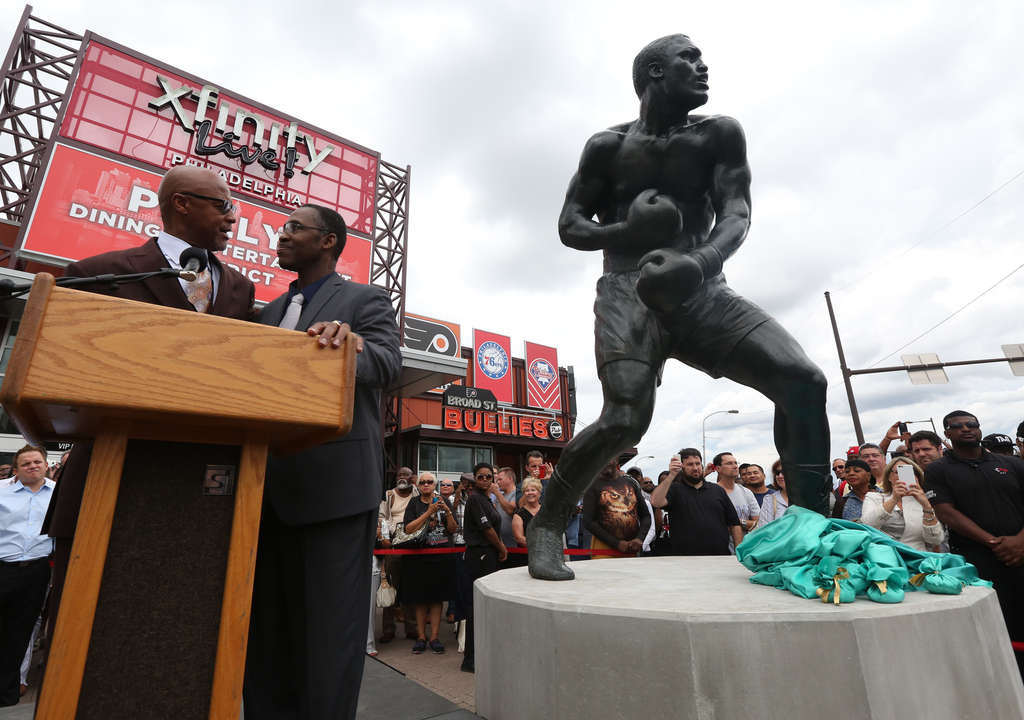
FILE – His son, and former heavyweight boxer Marvis Frazier (right), and Rev. Blane Newberry from Enon Tabernacle Baptist Church bless a 12-foot-tall 1,800-pound bronze statue of “Smokin’ Joe” Frazier after it was unveiled Saturday, September 12.2015 at XFinity Live in South Philadelphia.
The Art Commission voted unanimously to relocate Frazier’s 12-foot bronze statue from the sports complex to the base of the museum steps — the spot Rocky has occupied for two decades. Rocky, meanwhile, is headed back to the top.
On one level, the move feels overdue. Frazier wasn’t a metaphor. He was a real Philadelphian, an Olympic gold medalist, a heavyweight champion, the man who handed Muhammad Ali his first professional loss. Meanwhile, Rocky, beloved as he is, is a fictional character who may have beeninspired in part by Frazier’s life.
There’s something quietly powerful about visitors encountering Joe first, before heading up top to take a selfie with a myth.
Yes, there are valid conversations about symbolism, especially in Black History Month, about a real Black champion standing below a fictional white character. The city’s explanation is practical: Frazier’s statue is physically larger and not structurally suited for the top. Rocky’s footprint is smaller and easier to manage up there.
Logistics matter, but narrative does too, and this move reshapes the narrative. You climb the steps for the movie moment, but you pass the real champion on the way.
World Cup wants 4 a.m. last call. Philly isn’t sure it even wants 2: B-
On paper, this is easy. The World Cup is coming, and along with it comes half a million tourists and a global spotlight. Other host cities pour until 4 a.m. Philly shuts it down at 2.
The pitch is simple: if Brazil and Haiti kick off at 9 p.m., and knockout games can run long, why send thousands of fans back to their hotels when Miami and New York are just getting started?
The last time Pennsylvania tried this, during the 2016 DNC, the response was tepid, reported Philly Voice. Businesses had to deal with expensive permits and confusing rules, and the result wasn’t exactly a citywide bacchanal. And even now, bar owners quietly admit the late-night crowds aren’t what they used to be.
There’s also the Philly tension underneath this: We want to be global, but we also want to sleep. Would it be cool to say Philly partied like a World Cup city? Sure.
But it’s also true that if bars will be pouring until sunrise, at least half the neighborhoods would immediately be on 311, complaining about all the drunk and noisy tourists.
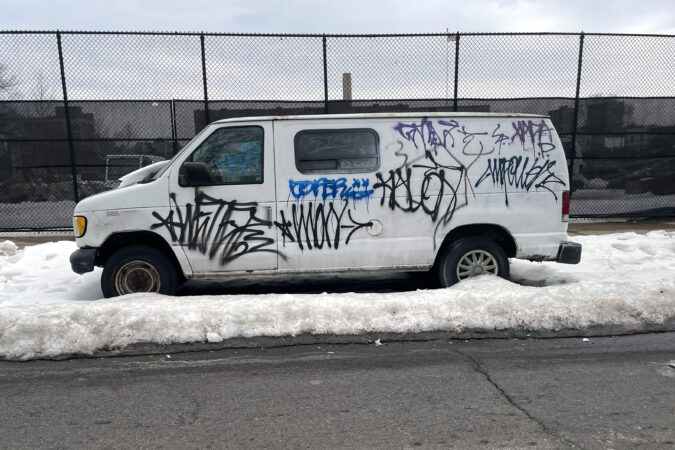
I don’t know why this scene caught my eye. I have seen graffiti-tagged walls on roll-down metal storefronts and yes, even panel trucks and vans before.
And in the past few weeks since our biggest snowfall in a decade — followed by a brutal freeze that locked in all the plowed piles — I have certainly seen enough streets lined with snowed-in vehicles. Maybe it was the combination of the two.
I was stopped because the dirty snowpack on street shoulders reduced traffic lanes and created gridlock. But while I waited through not one or two, but three traffic light cycles, I had the time to look, pick up my phone, roll down my window and take a picture.
Not the kind of image I usually look for.
Then that got me thinking, “What kinds of pictures do I like? What came first, the snow or the graffiti?” (I was at that light a long time.)
I clearly like photographing people. That’s why I got into journalism.
Highlights editor Judy Burke, last month at the editorial offices of America’s most beloved and respected educational magazines for kids.
When doing portraits on assignments I have always tried to get people comfortable with being themselves. I have always had a hard time “directing” them. It is especially difficult when the story I’m trying to illustrate is not about them, but about where they work, or what they are doing.
Trying avoid posing subjects by saying “just do whatever you’d be doing if I — and a reporter, and the public relations person(s) — wasn’t here,” doesn’t help. And just makes it awkward for all of us.
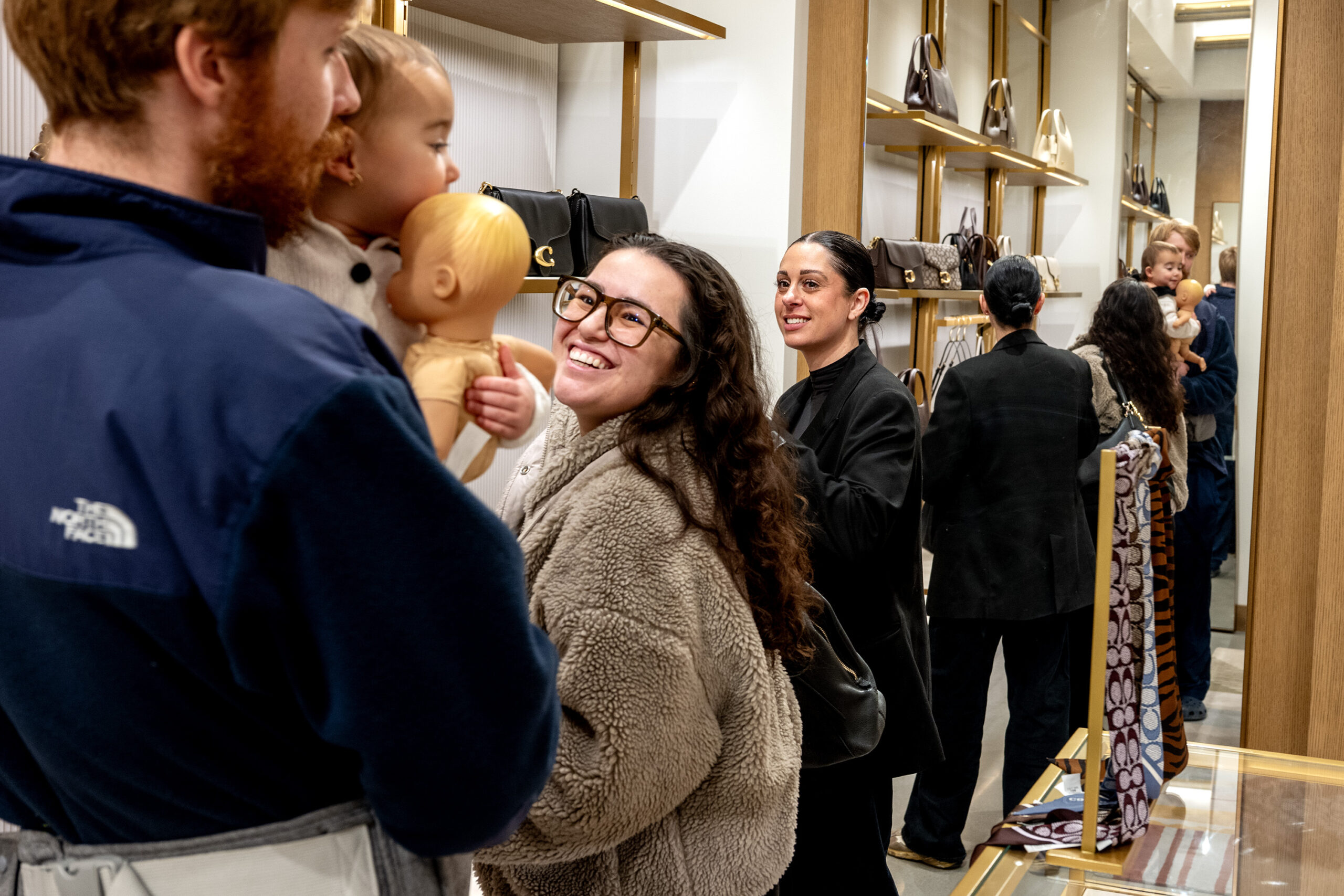
Employee Alex Costa (right) assists Alessandra Bruno as she tries out purses with husband Luke Baur and their 20 month-old daughter Rosalina at the Coach store at the Cherry Hill Mall on Monday.
Walking into a room where everyone is ready and waiting to be photographed — but unsure of what the photographer will do — is also hard for them. If possible I get them to interact with each other, even if it’s just sharing what they had for breakfast. In public spaces I will often enlist customers or passersby, asking if I can photographed over their shoulders. Then wait — and hope — for a genuine moment. Like in the mall retail shop, a customer interaction is much better than five salespeople standing among the merchandise looking at the camera.
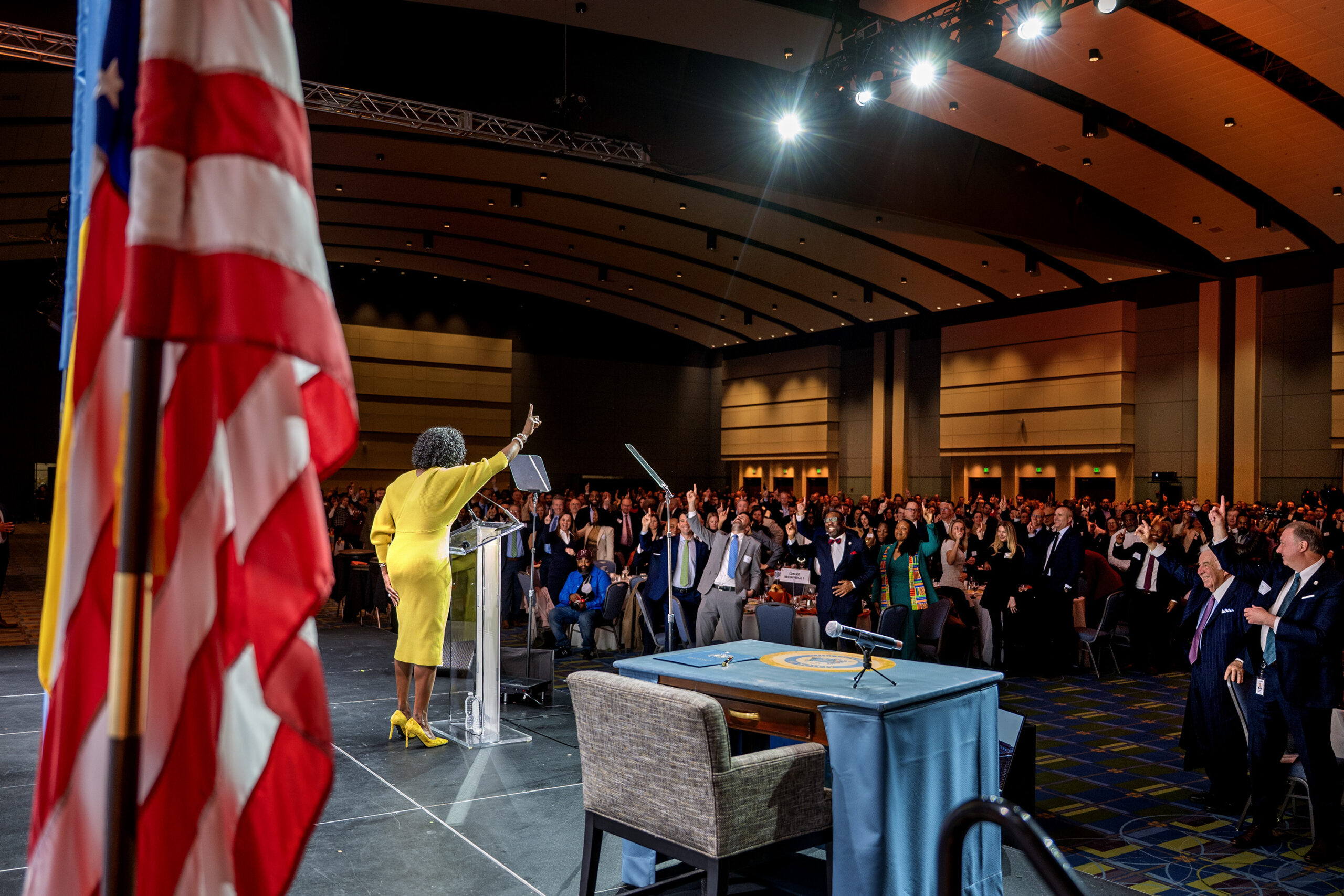
That is also why I most enjoy assignments where I am just there, observing an event trying to capture something that will make readers click on a link or pause to read a story. And I keep myself enthused while doing it. Like the many public appearances of our mayor.
Mayor Cherelle L. Parker has the whole room of business leaders standing with her and her “One Philly” chant as she finishers her keynote address at the Chamber of Commerce for Greater Philadelphia’s Annual Mayoral Luncheon Wednesday.
That goes for ordinary people too, not just politicians or executives or sports or entertainment celebrities. And what is more normal and everyday than stopping at your regular convenience store?
I also photographed Wawa’s excursion into Sheetz land in 2024. For decades, it was assumed there were unspoken boundaries in Pennsylvania between Wawa in the East and Sheetz in the West. But representatives of both chains deny they are rivals and as my colleague Stephanie Farr points out, they have worked together to support various nonprofits.
Next stop for me (soon, I hope) a photographic road trip to the nearest Buc-ees.
Since 1998 a black-and-white photo has appeared every Monday in staff photographer Tom Gralish’s “Scene Through the Lens” photo column in the print editions of The Inquirer’s local news section. Here are the most recent, in color:
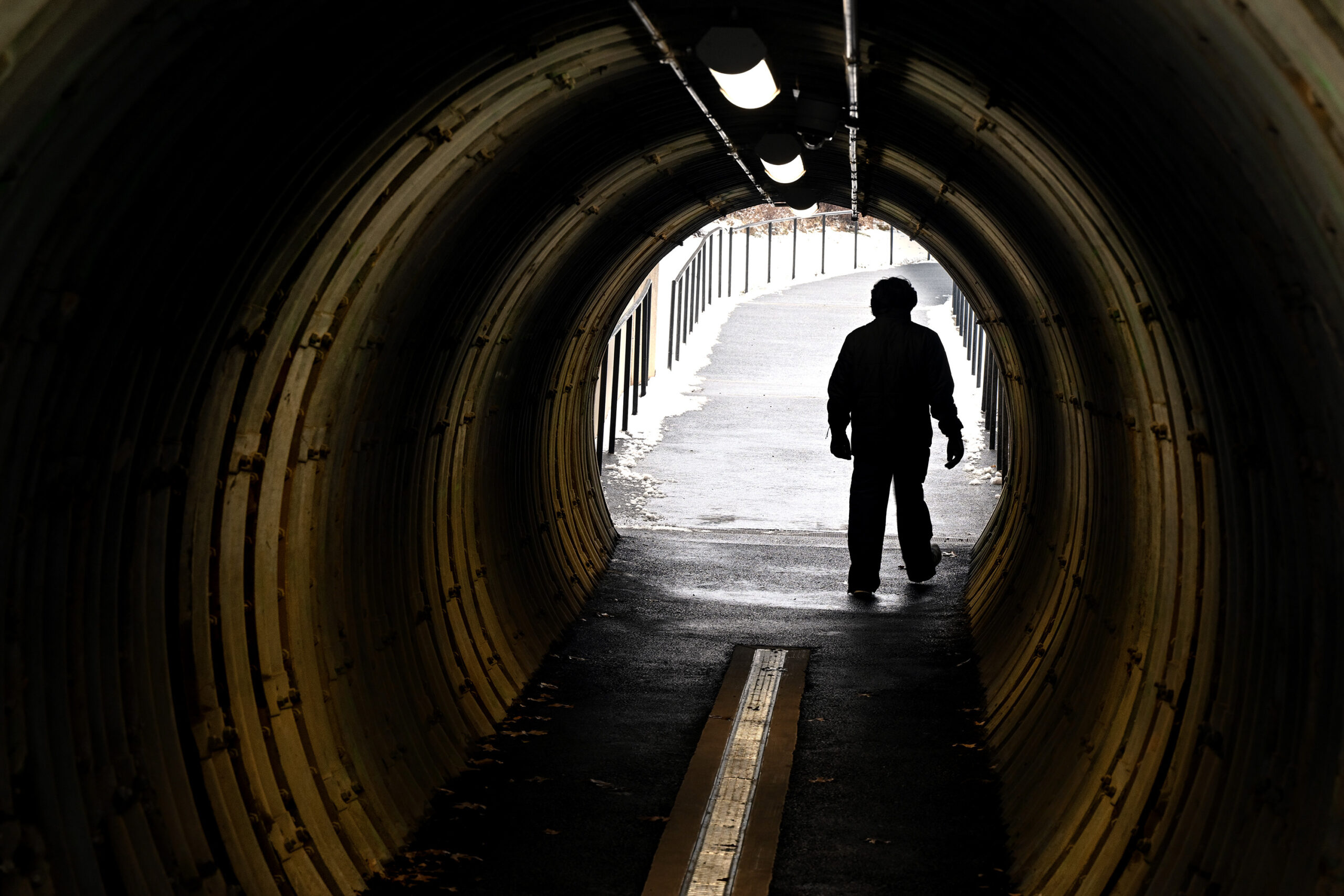
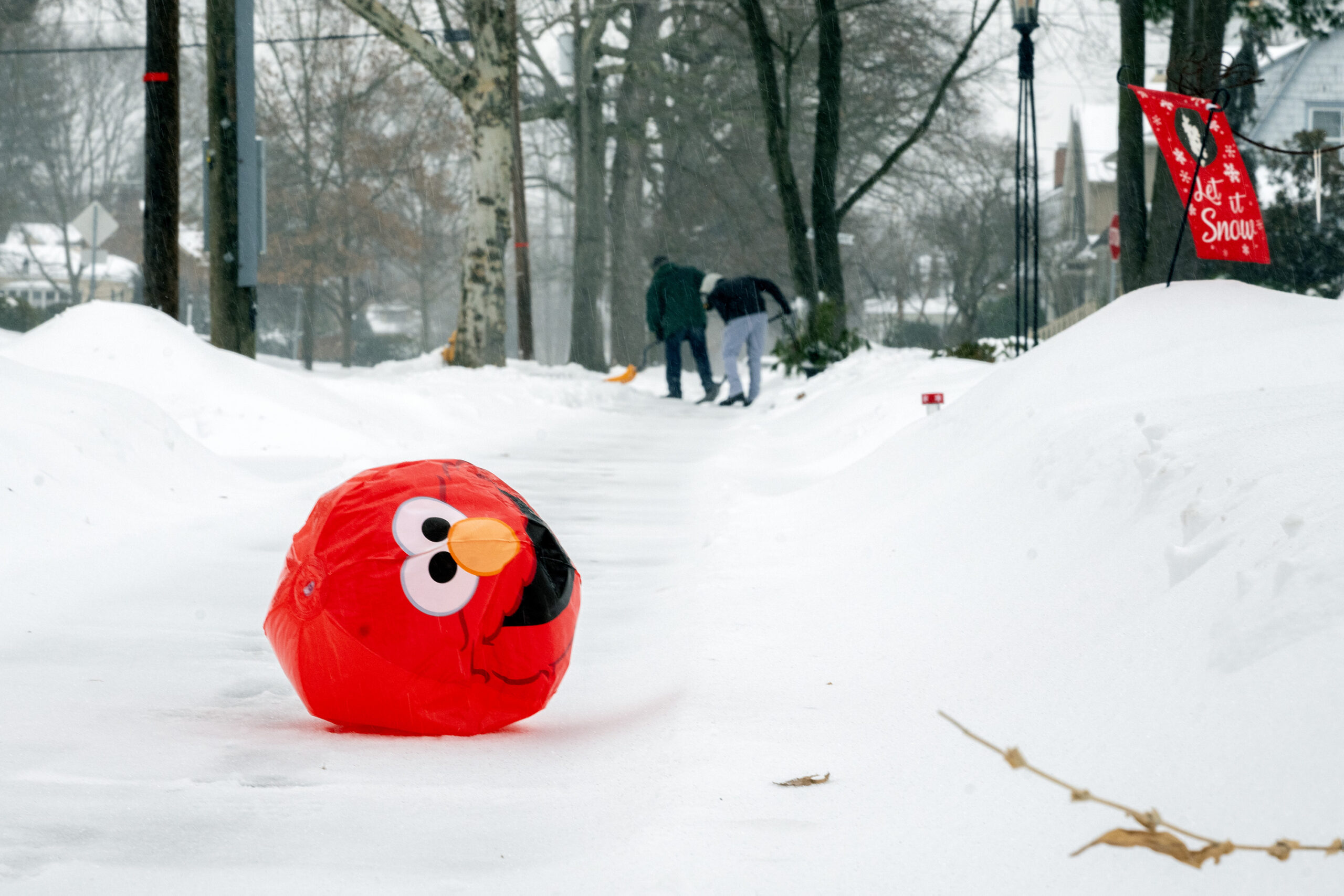
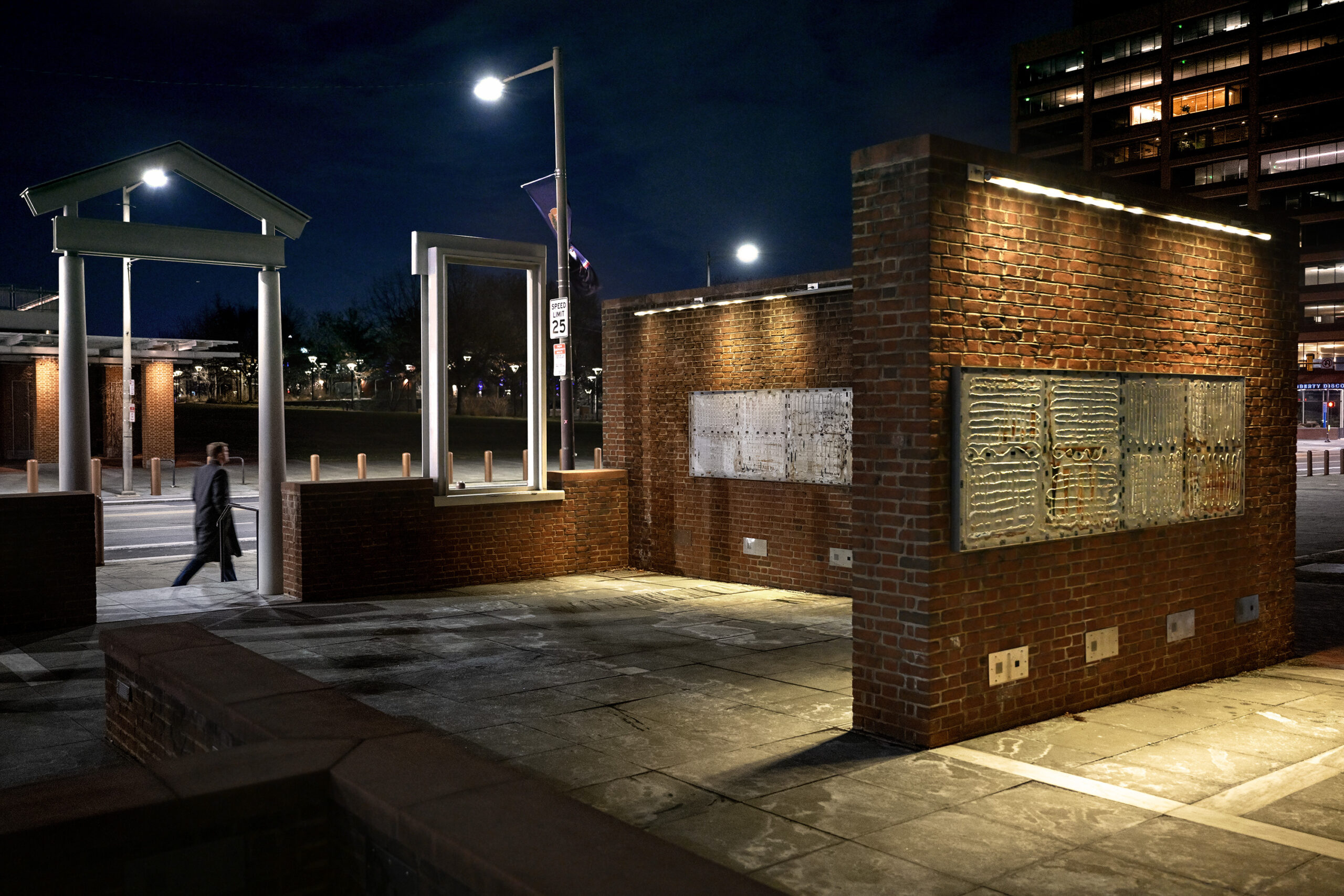
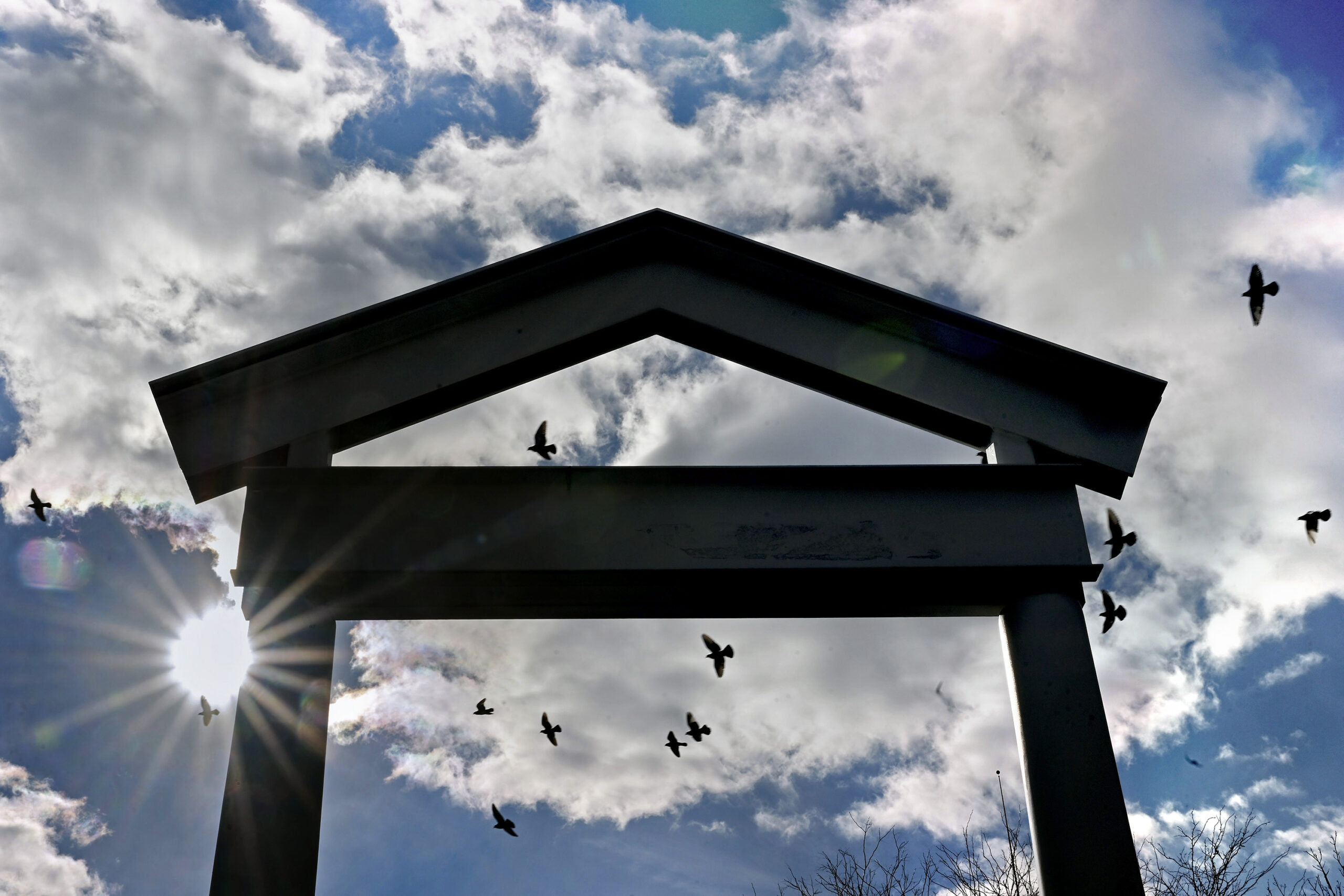
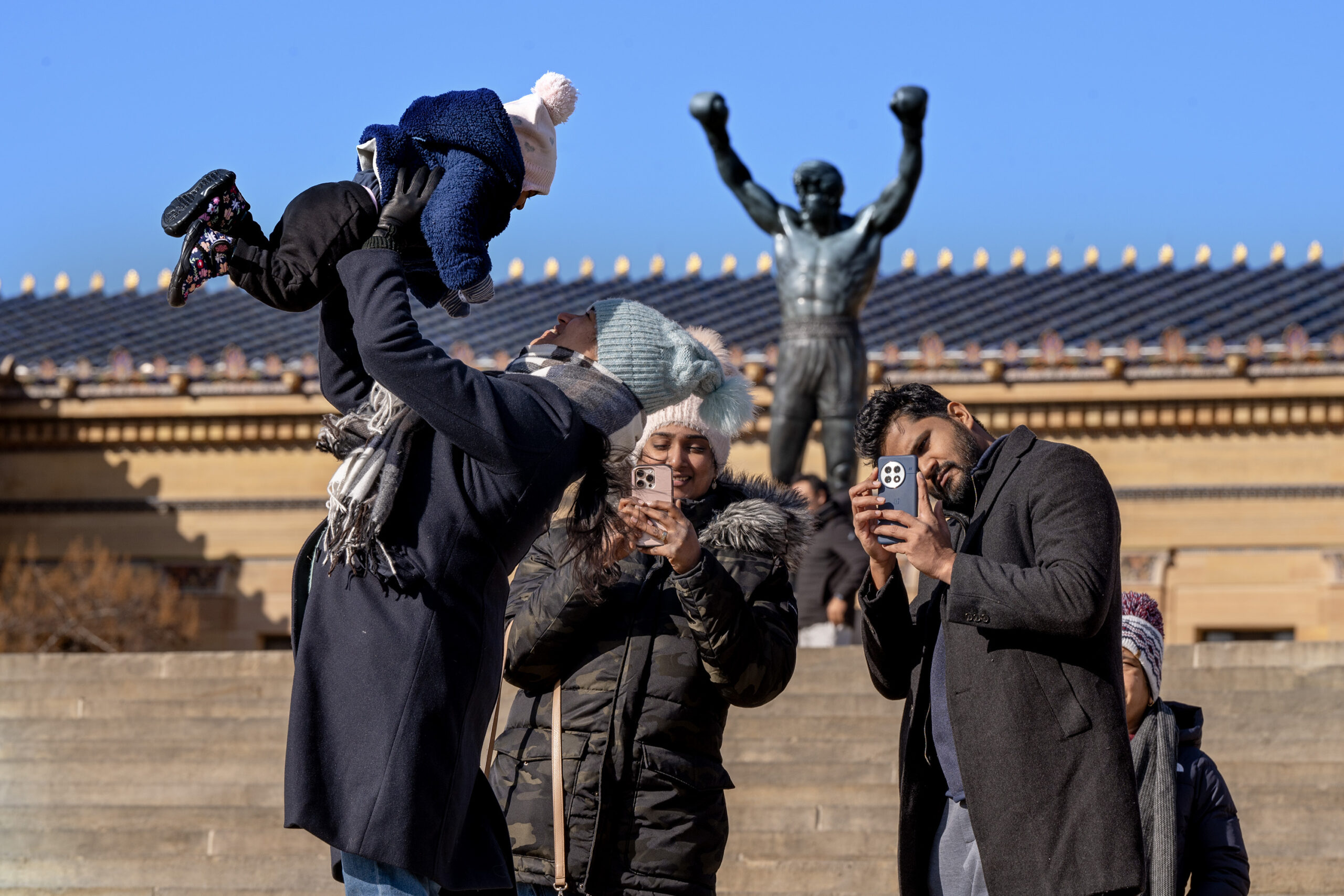
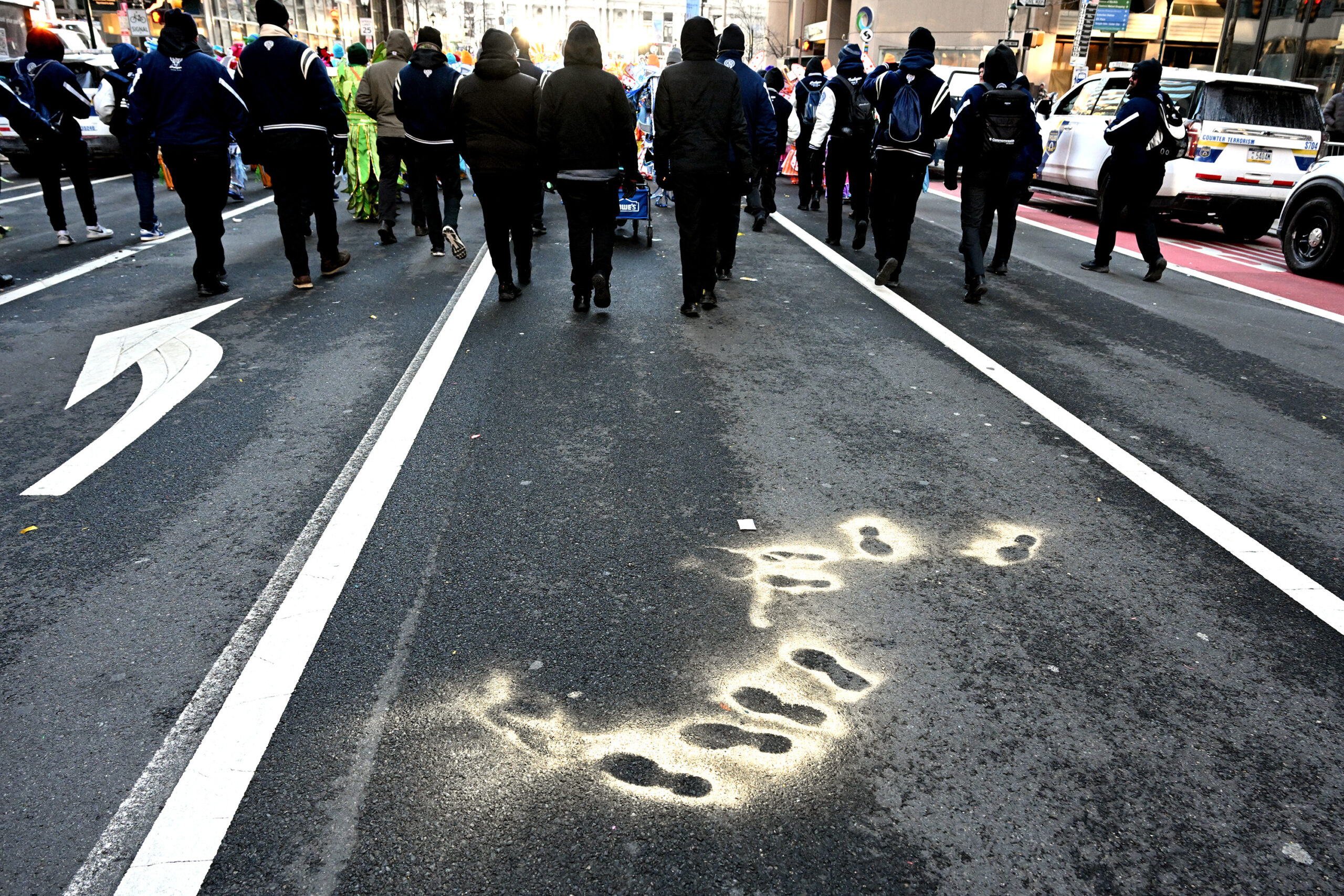
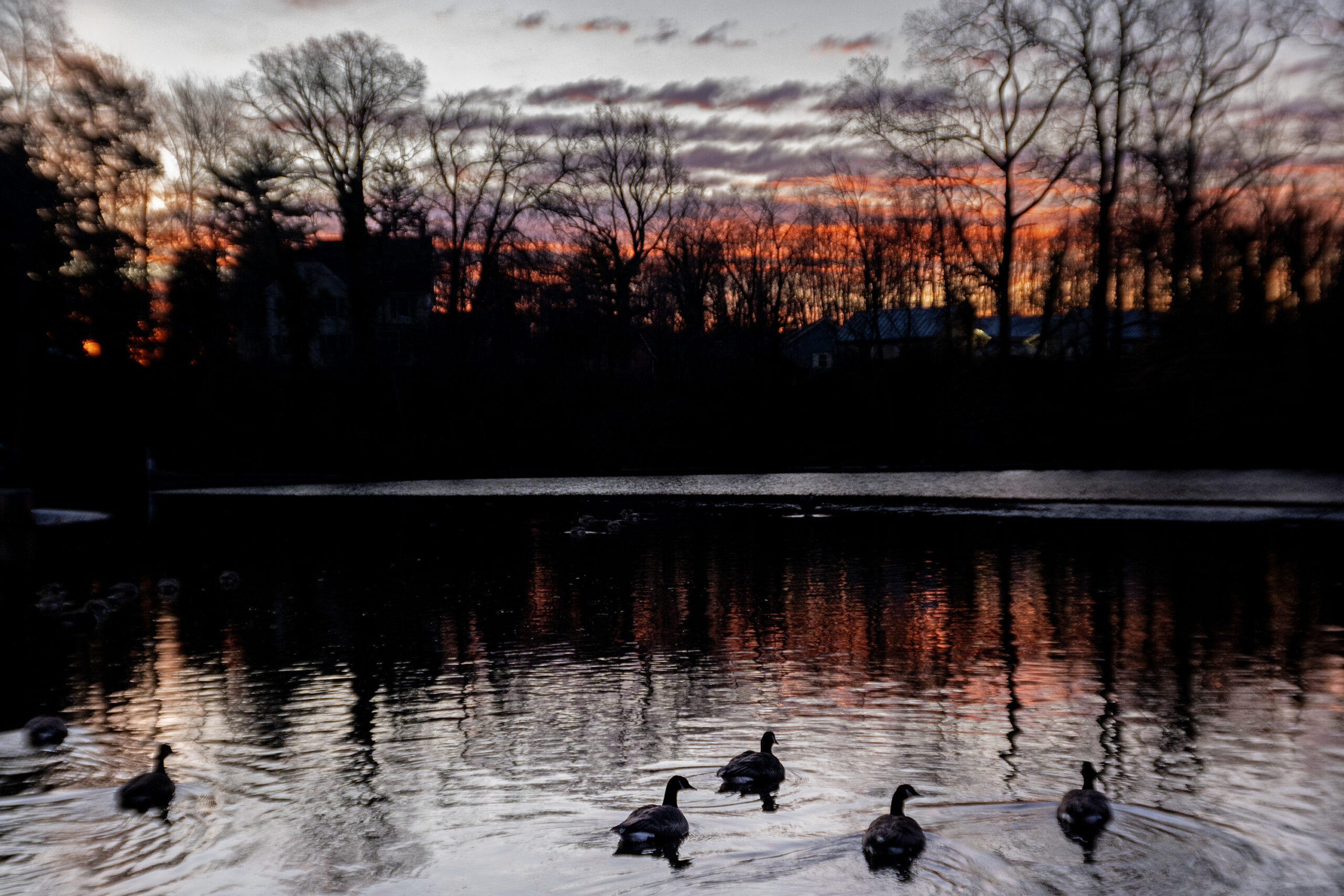
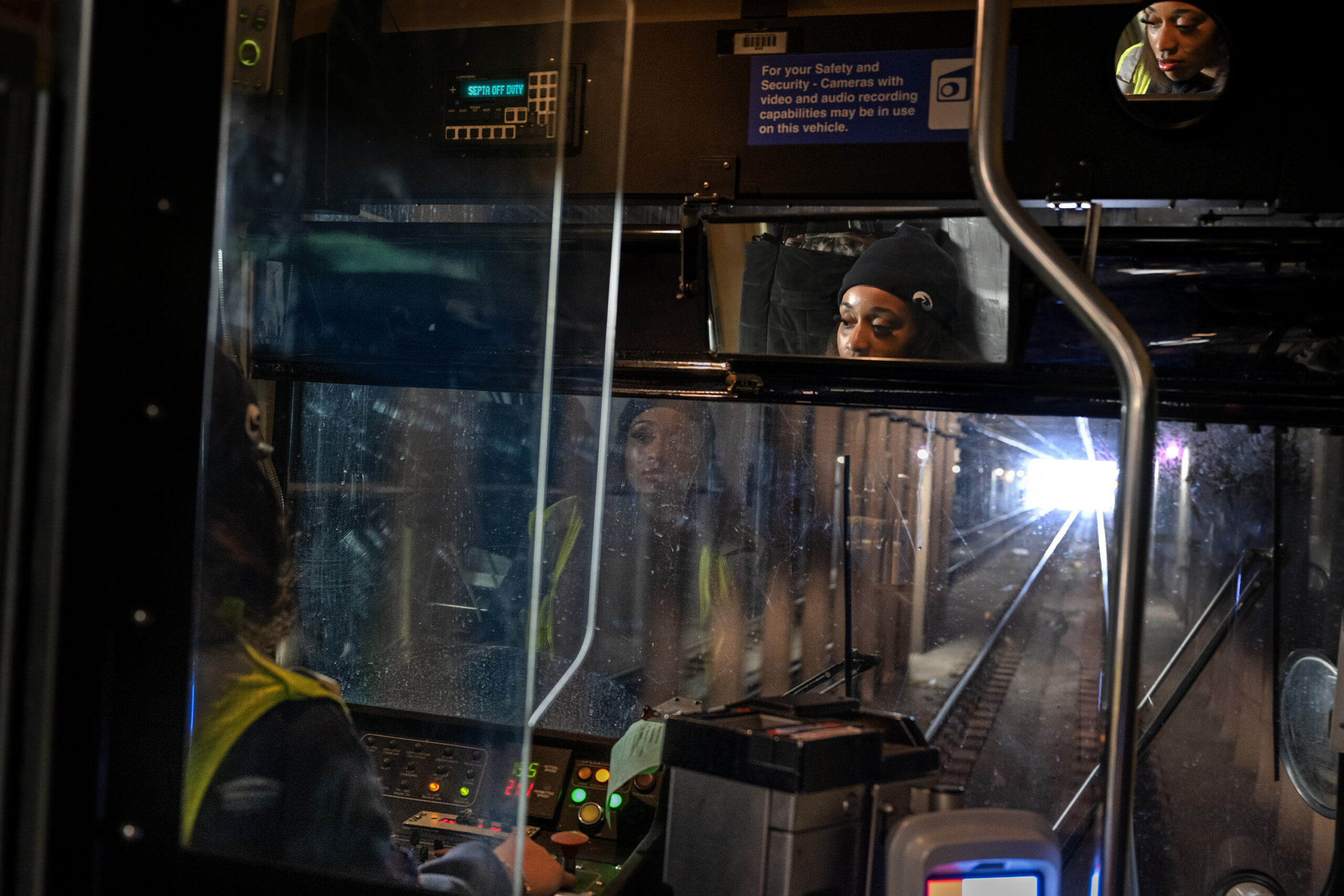
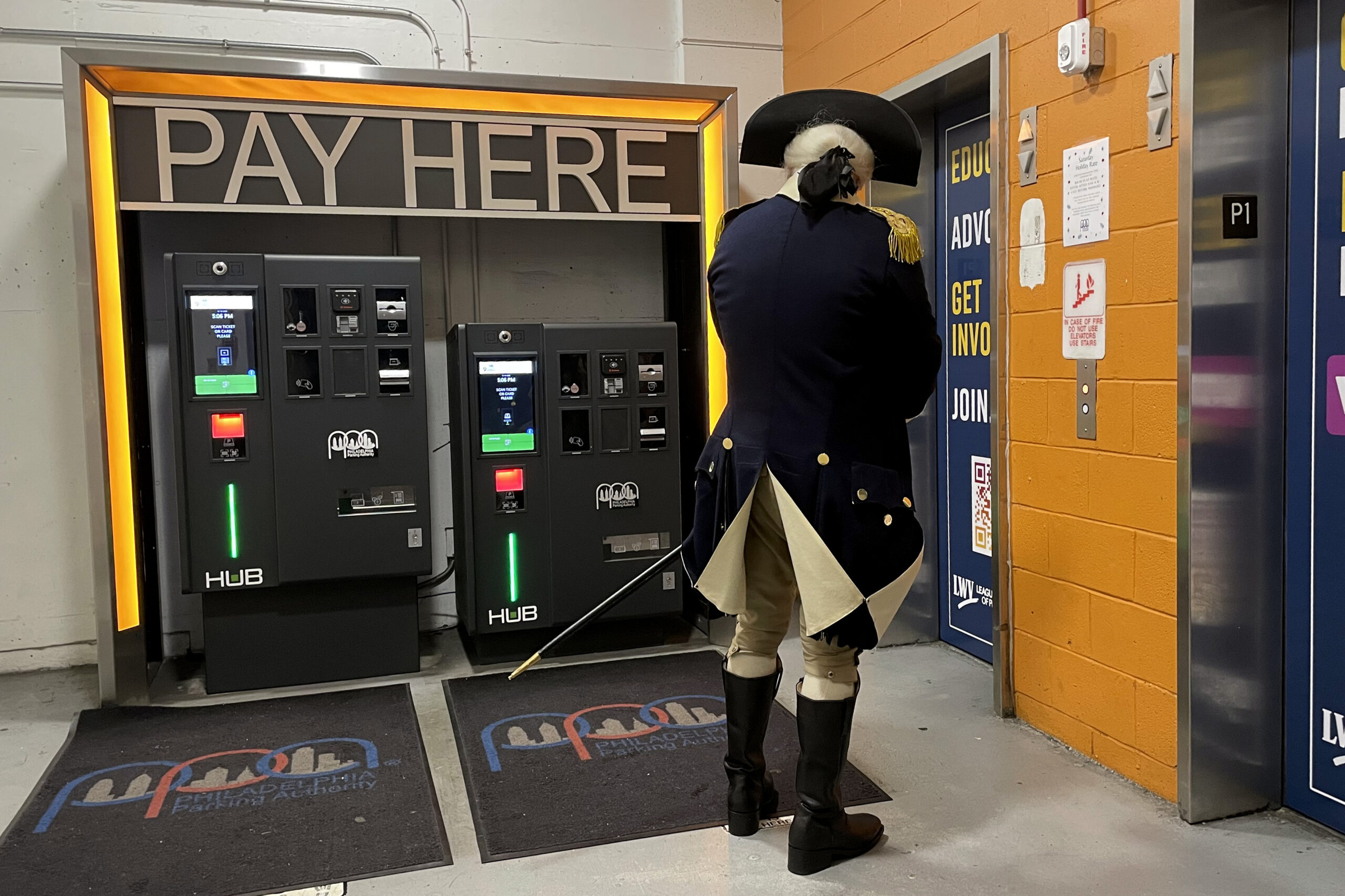
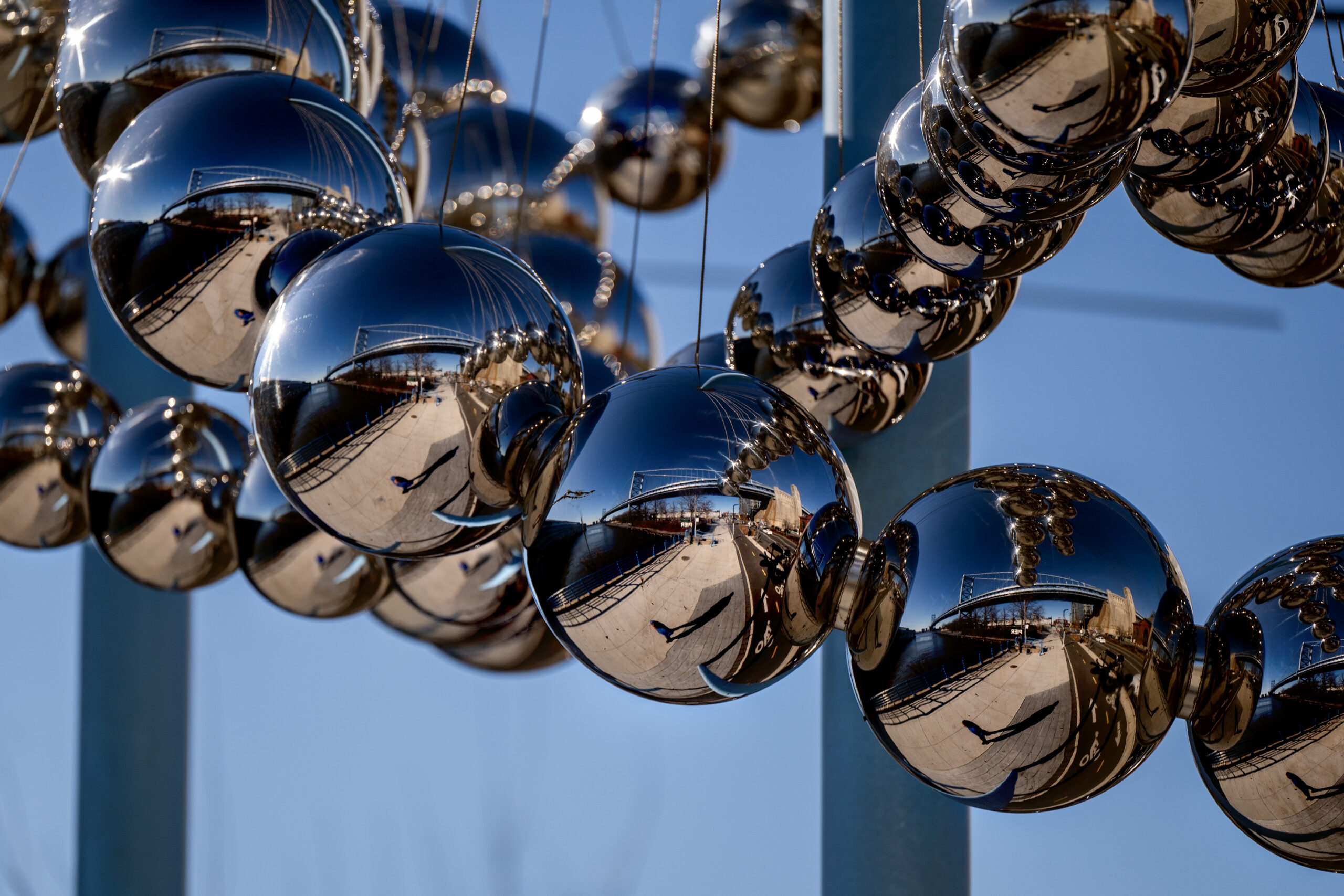
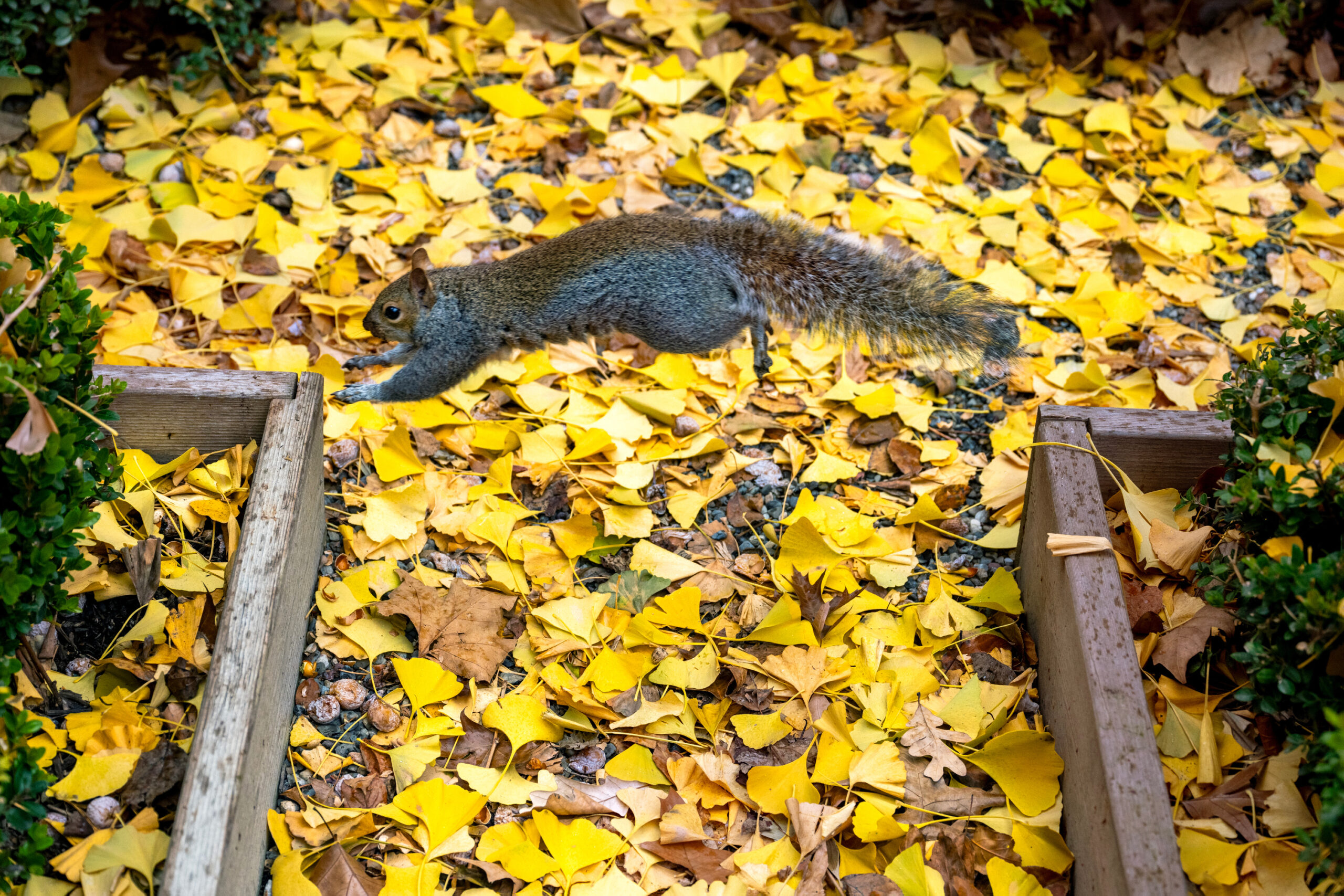
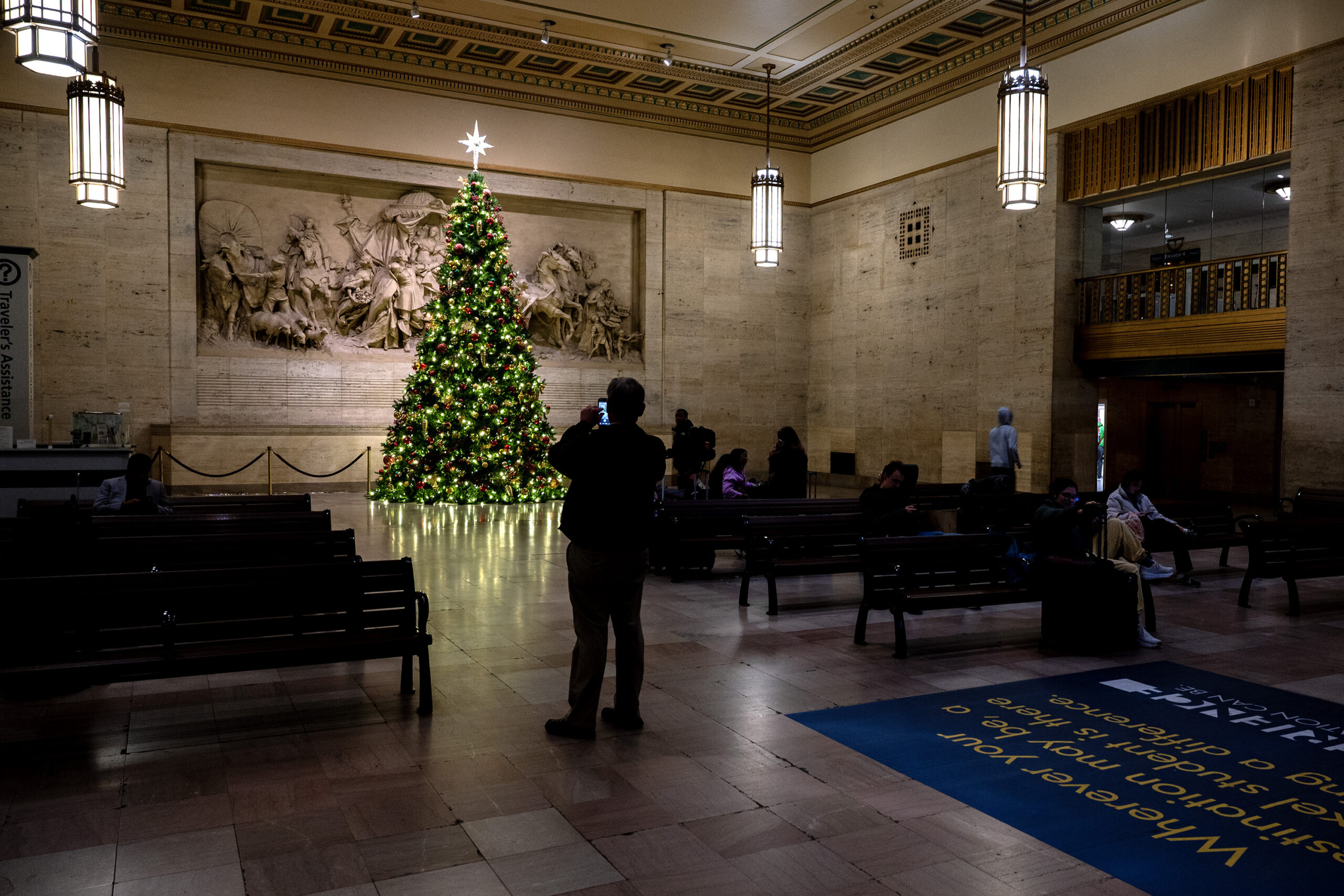
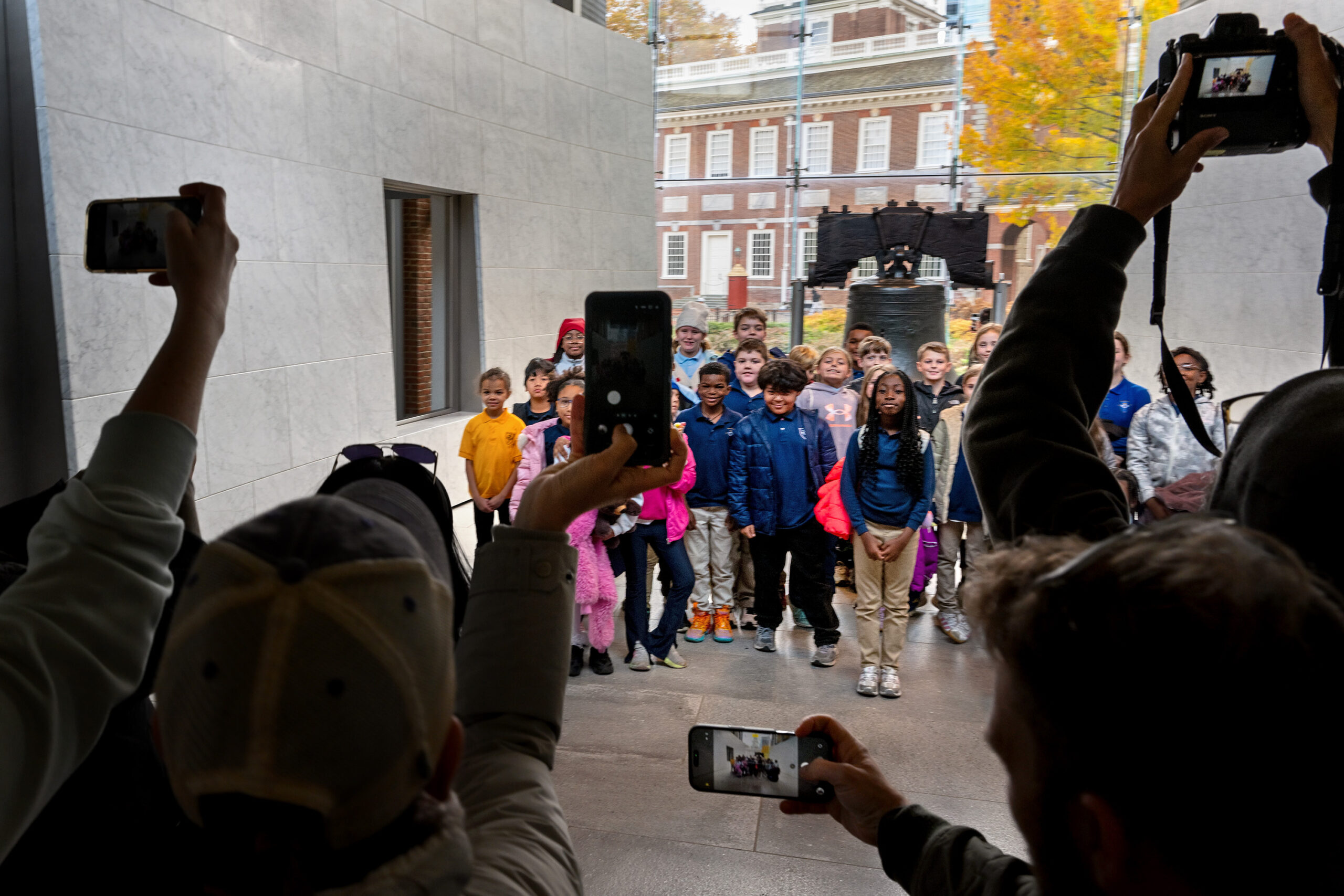
February 9, 2026: Walking through a corrugated metal culvert called the “Duck Tunnel,” a pedestrian navigates the passageway under the SEPTA tracks on the Swarthmore College campus. February 2, 2026: A light-as-air Elmo balloon rolls along a sidewalk in Haddonfield, propelled by the wind as Sunday’s heavy snow starts to turn to ice and sleet. January 26, 2026: The President’s House in Independence National Historical Park hours Jan, 22, after all historical exhibits were removed following President Trump’s Executive Order last March that the content at national parks that “inappropriately disparage” the U.S. be reviewed. The site, a reconstructed “ghost” structure titled “Freedom and Slavery in the Making of a New Nation” (2010), serves as a memorial to the nine people George Washington enslaved there during the founding of America.January 19, 2026: A low-in-the-sky winter sun is behind the triangular pediment of the “front door” of the open-air President’s House installation in Independence National Historical Park. The reconstructed “ghost” structure with partial walls and windows of the Georgian home known in the 18th century as 190 High St. is officially titled, “Freedom and Slavery in the Making of a New Nation” (2010). It is designed to give visitors a sense of the house where the first two presidents of the United States, George Washington and John Adams, served their terms of office. The commemorative site designed by Emanuel Kelly, with Kelly/Maiello Architects, pays homage to nine enslaved people of African descent who were part of the Washington household with videos scripted by Lorene Cary and directed by Louis Massiah. Deepika Iyer holds her niece Ira Samudra aloft in a Rockyesque pose, while her parents photograph their 8 month-old daughter, in front of the famous movie prop at the top of the steps at the Philadelphia Art Museum. Iyer lives in Philadelphia and is hosting a visit by her mother Vijayalakshmi Ramachandran (partially hidden); brother Gautham Ramachandran; and her sister-in-law Janani Gautham who all live in Bangalore, India.January 5, 2026: Parade marshals trail behind the musicians of the Greater Kensington String Band heading to their #9 position start in the Mummers Parade. Spray paint by comic wenches earlier in the day left “Oh, Dem Golden Slippers” shadows on the pavement of Market Street. This year marked the 125th anniversary of Philly’s iconic New Year’s Day celebration.Dec. 29, 2025: Canada geese at sunrise in Evans Pond in Haddonfield, during the week of the Winter Solstice for the Northern Hemisphere. December 22, 2025: SEPTA trolley operator Victoria Daniels approaches the end of the Center City Tunnel, heading toward the 40th Street trolley portal after a tour to update the news media on overhead wire repairs in the closed tunnel due to unexpected issues from new slider parts.December 15, 2025: A historical interpreter waits at the parking garage elevators headed not to a December crossing of the Delaware River, but an event at the National Constitution Center. General George Washington was on his way to an unveiling of the U.S. Mint’s new 2026 coins for the Semiquincentennial, December 8, 2025: The Benjamin Franklin Bridge and pedestrians on the Delaware River Trail are reflected in mirrored spheres of the “Weaver’s Knot: Sheet Bend” public artwork on Columbus Boulevard. The site-specific stainless steel piece located between the Cherry Street and Race Street Piers was commissioned by the City’s Public Art Office and the Delaware River Waterfront Corporation and created and installed in 2022 by the design and fabrication group Ball-Nogues Studio. The name recalls a history that dominated the region for hundreds of years. “Weaver’s knot” derives from use in textile mills and the “Sheet bend” or “sheet knot” was used on sailing vessels for bending ropes to sails. November 29, 2025: t’s ginkgo time in our region again when the distinctive fan-shaped leaves turn yellow and then, on one day, lose all their leaves at the same time laying a carpet on city streets and sidewalks. A squirrel leaps over leaves in the 18th Century Garden in Independence National Historical Park Nov. 25, 2025. The ginkgo (Ginkgo biloba) is considered a living fossil as it’s the only surviving species of a group of trees that existed before dinosaurs. Genetically, it has remained unchanged over the past 200 million years. William Hamilton, owner the Woodlands in SW Phila (no relation to Alexander Hamilton) brought the first ginkgo trees to North America in 1785.November 24, 2025: The old waiting room at 30th Street Station that most people only pass through on their way to the restrooms has been spiffed up with benches – and a Christmas tree. It was placed there this year in front of the 30-foot frieze, “The Spirit of Transportation” while the lobby of Amtrak’s $550 million station restoration is underway. The 1895 relief sculpture by Karl Bitter was originally hung in the Broad Street Station by City Hall, but was moved in 1933. It depicts travel from ancient to modern and even futuristic times. November 17, 2025: Students on a field trip from the Christian Academy in Brookhaven, Delaware County, pose for a group photo in front of the Liberty Bell in Independence National Historical Park on Thursday. The trip was planned weeks earlier, before they knew it would be on the day park buildings were reopening after the government shutdown ended. “We got so lucky,” a teacher said. Then corrected herself. “It’s because we prayed for it.”
We’ll show you a photo taken in the Philly-area, you drop a pin where you think it was taken. Closer to the location results in a better score. This week is all about Valentine’s Day! Good luck!
Round #20
Question 1
Where did this Valentine’s Day wedding take place?
Loading…
ClickTap on map to guess the location in the photo
ClickTap again to change your guess and hit submit when you're happy
You will be scored at the end. The closer to the location the better the score
Jessica Griffin / Staff Photographer
Pretty good/Not bad/Way off! Your guess was from the location.Spot on! Your guess was exactly at the location. Here's also where a random selection of Inquirer readers guessed.
Every year on Valentine’s Day, the city holds ceremonies for ten couples to get married or renew their vows in front of the LOVEsculpture. Time slots are reserved on the Parks and Recreation website.
Quiz continues after ad
Question 2
Where was this couple seen holding hands?
Loading…
Alejandro A. Alvarez / Staff Photographer
Pretty good/Not bad/Way off! Your guess was from the location.Spot on! Your guess was exactly at the location. Here's also where a random selection of Inquirer readers guessed.
This romantic stroll took place in front of a Chinatown mural.
Quiz continues after ad
Question 3
Where did this cherry blossom-filled kiss take place?
Loading…
Tyger Williams / Staff Photographer
Pretty good/Not bad/Way off! Your guess was from the location.Spot on! Your guess was exactly at the location. Here's also where a random selection of Inquirer readers guessed.
Springtime is right around the corner, which means the cherry blossoms will soon be blooming. This couple was photographed under the trees along Columbus Boulevard.
Your Score
ARank
❤️ Amazing work. You really love Philly geography!
BRank
❤️ Good stuff. You really love Philly geography!
CRank
C is a passing grade, but this quiz could use some love.
DRank
💔 D isn’t great. This quiz could use some love.
FRank
💔 We don’t want to say you failed, but you didn’t not fail.
You beat % of other Inquirer readers.
We’ll be back next Saturday for another round of Citywide Quest.
You may not have noticed, but that endless snowpack has developed a slow leak — in this case historically slow.
Its endurance continues to climb the charts among the snowpacks of yesteryear — and in at least one way may well be unprecedented in the period of record dating to the late 19th century.
As of 7 a.m. Friday, officially at Philadelphia International Airport, three inches of the snowy and icy remnants of what fell on the region on Jan. 25 had survived.
That made this the most-enduring snowpack of at least three inches in 65 years, said Alex Staarmann, a meteorologist at the National Weather Service in Mount Holly, the office’s climate specialist.
That earlier one, which lasted from Jan. 20 to Feb. 14, 1961, was replenished by multiple significant snowfalls, as did others at the top of the endurance list; the 2026 version was basically one-and-done after 9.3 inches were measured at the airport.
This one — and it still has its sparkle where it hasn’t mutated into frozen sludge — even has bested the snow cover attending the 44 inches that accumulated in a six-day period in February 2010, when at least four inches survived for 17 days.
The latest batch was at four inches for 18 days, good for fourth place all-time.
Not that it hasn’t had some aesthetic benefits. It can be like light therapy in the morning, and a spectacular screen for the tree shadows. It has beautifully entombed all that unfinished yard work.
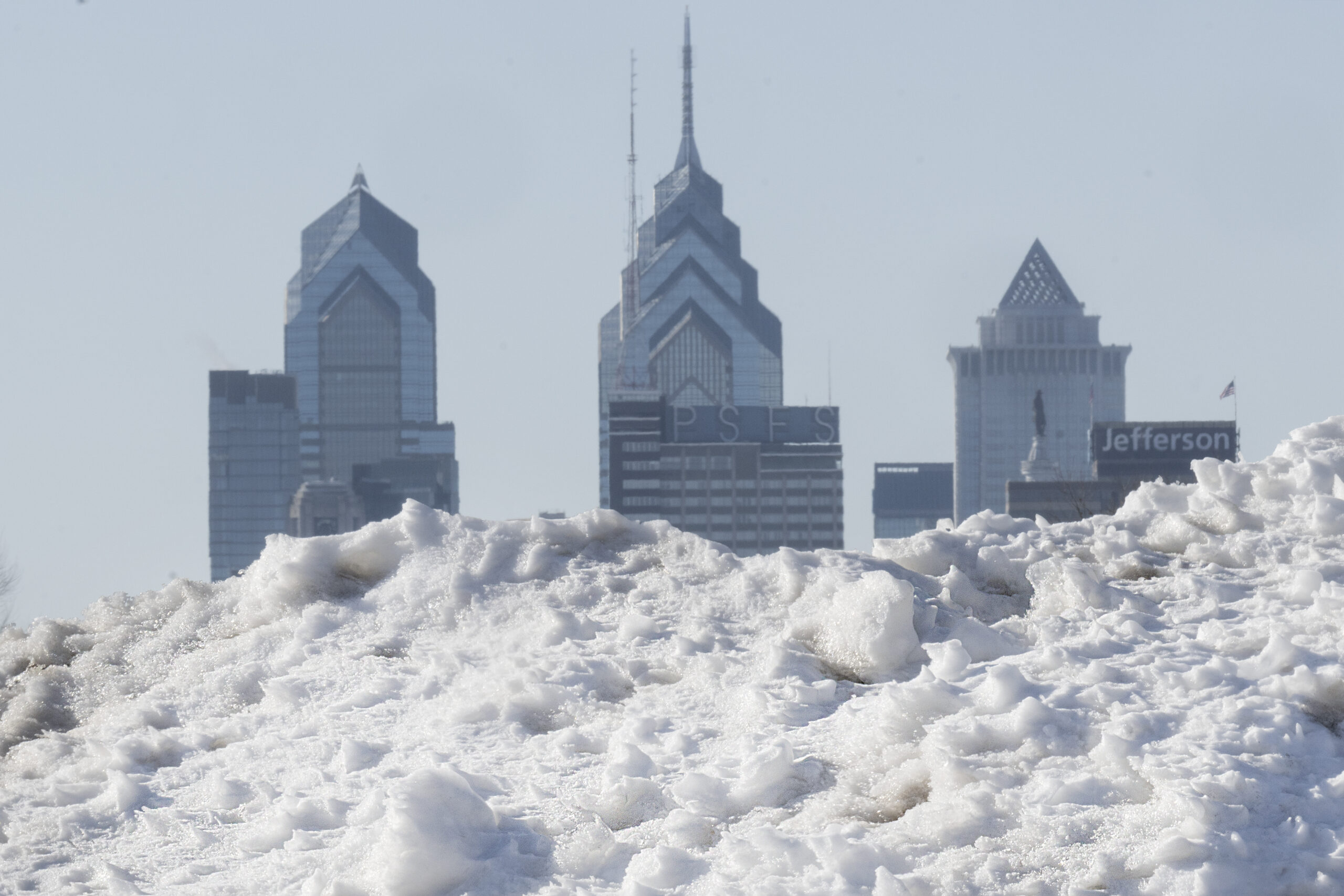
Snow and ice debris is piled along the Camden waterfront in Camden, N.J., framing the Philadelphia skyline across the Delaware River, Thursday, Feb. 5, 2026.
But it’s also been a royal pain throughout the region and begged the question: When it will go away?
When will bare ground emerge in the Philly region?
A farewell tour is likely next week as a snow threat for the holiday weekend remains a remote one, with accumulations only between “wet flakes” and “a dusting” possible, said Staarmann.
And you might keep an eye on Tuesday for a melt watch. Temperatures are forecast to fall below freezing Monday morning, and then stay above 32, even at night, through the workweek.
Highs are expected in the 40s Saturday through Monday, and then 50 or better the next three days.
More significantly for melting, the air will become noticeably more moist on Tuesday, and that should accelerate the melting. Your skin might even notice the difference.
Why has the snowpack been so enduring in Philly?
Since the precipitation ended on Jan. 25, the air has been remarkably dry, an underrated factor in the persistence of the ground cover, along with what happened after the snow stopped that day.
After more than seven inches of snow had fallen, it was topped with several hours of accumulating sleet.
Those miniature ice balls turned out to be a mighty additive: Ice may be way slower to accumulate, but it is also way slower to melt, giving the snowpack staying power.
“If we hadn’t had this much sleet, we might have some evidence of it, but it wouldn’t be this deep or persistent,” said Staarmann.
The Arctic freeze that followed and the consistently arid air have been the ideal preservatives.
Moist air, an efficient melter, has been absent.
When enough invisible water vapor comes in contact with snow and ice, it condenses and gives off latent heat that can liquefy the pack in a hurry.
After Philadelphia’s record 30.7-inch snowfall of Jan. 7-8, 1996, it was a moisture surge 11 days after the snow stopped that had a whole lot to do with erasing the snowpack even before the modest rains that followed, recalled David Robinson, the longtime New Jersey state climatologist.
The melt set off disruptive flooding, but even though rain is in the forecast for midweek, anything resembling a repeat is unlikely this time around.
Is that all there is for the winter of 2025-26?
NOAA’s Climate Prediction Center on Friday had odds favoring above-normal temperatures through Feb. 23, followed by a possible cool down.
Regarding any potential for snow, “We still have a few weeks left of opportunities,” said Staarmann.
As long as computers are operating, snow chances will never die.
However, the February sun is getting stronger by the day and lasting longer. If it does snow again, it’s a near certainty that it won’t match this one for staying power.
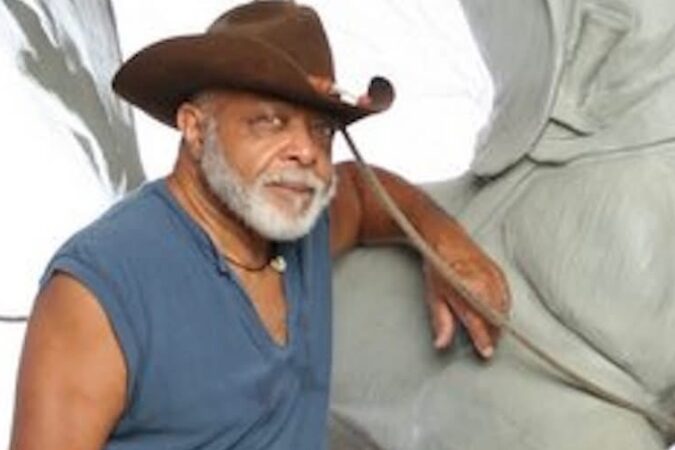
Phil Sumpter, 95, formerly of Philadelphia, celebrated sculptor, artist, art teacher, TV station art director, veteran, mentor, urban cowboy, and revered raconteur, died Thursday, Jan. 1, of age-associated decline at his home in San Juan, Puerto Rico.
A graduate of John Bartram High School and the old Philadelphia College of Art, Mr. Sumpter taught art, both its history and application, to middle and high school students in Philadelphia for 27 years. He was an engaging teacher, former students said, and a founding faculty member at the Philadelphia High School for the Creative and Performing Arts in 1978.
He started teaching in 1955 and, after a break in the 1960s and ’70s, finally retired in 1992. “You are very lucky to have a teacher in your life that believed in you, nurtured you, challenged you, and loved you,” a former student said on Facebook. “Mr. Sumpter did all that and more.”
Other former students called him their “father” and a “legend.” One said: “You did a lot of good here on earth, especially for a bunch of feral artist teenagers.”
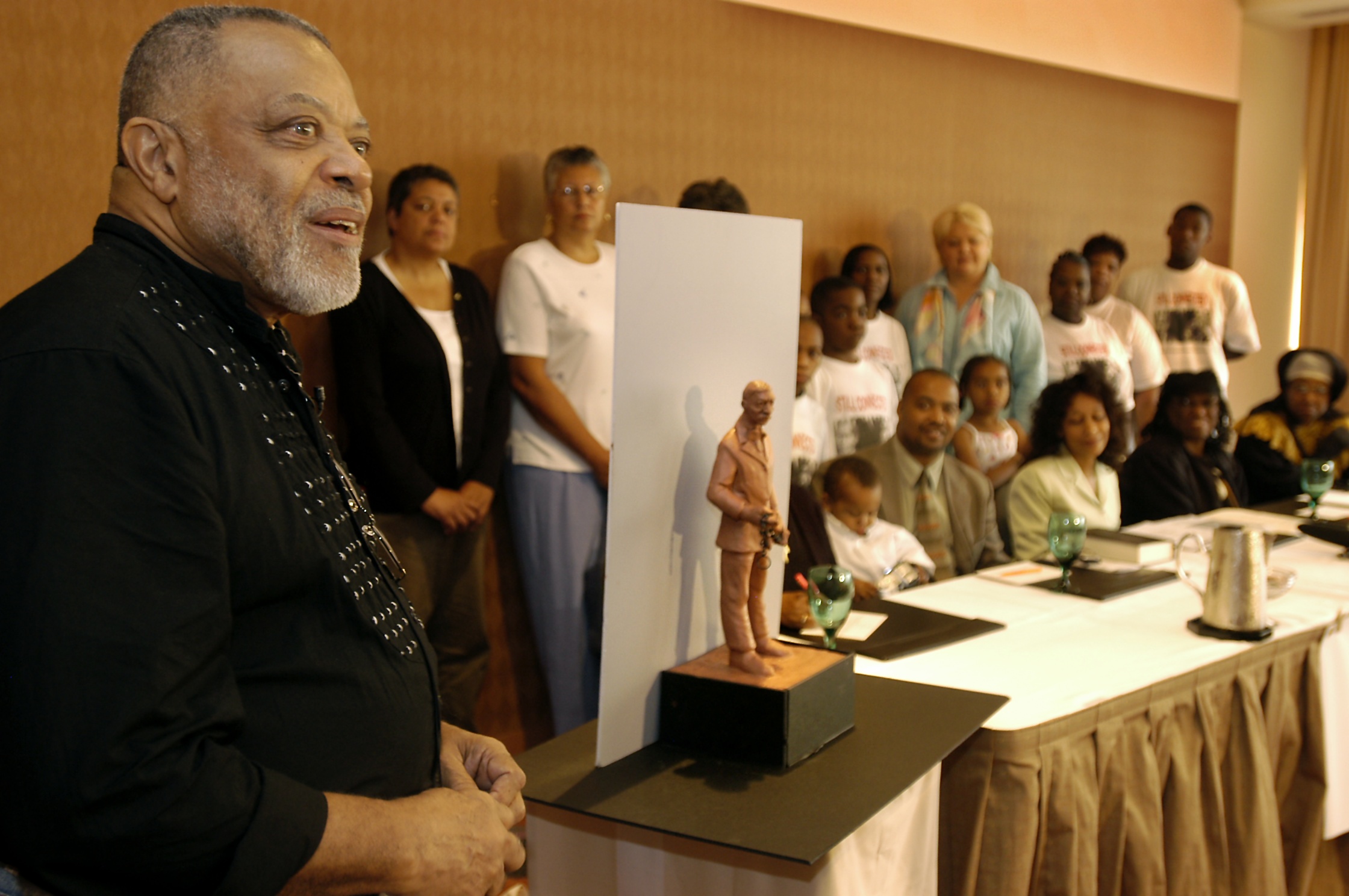
Mr. Sumpter (left) talks about his sculpture of Underground Railroad organizer William Still in 2003.
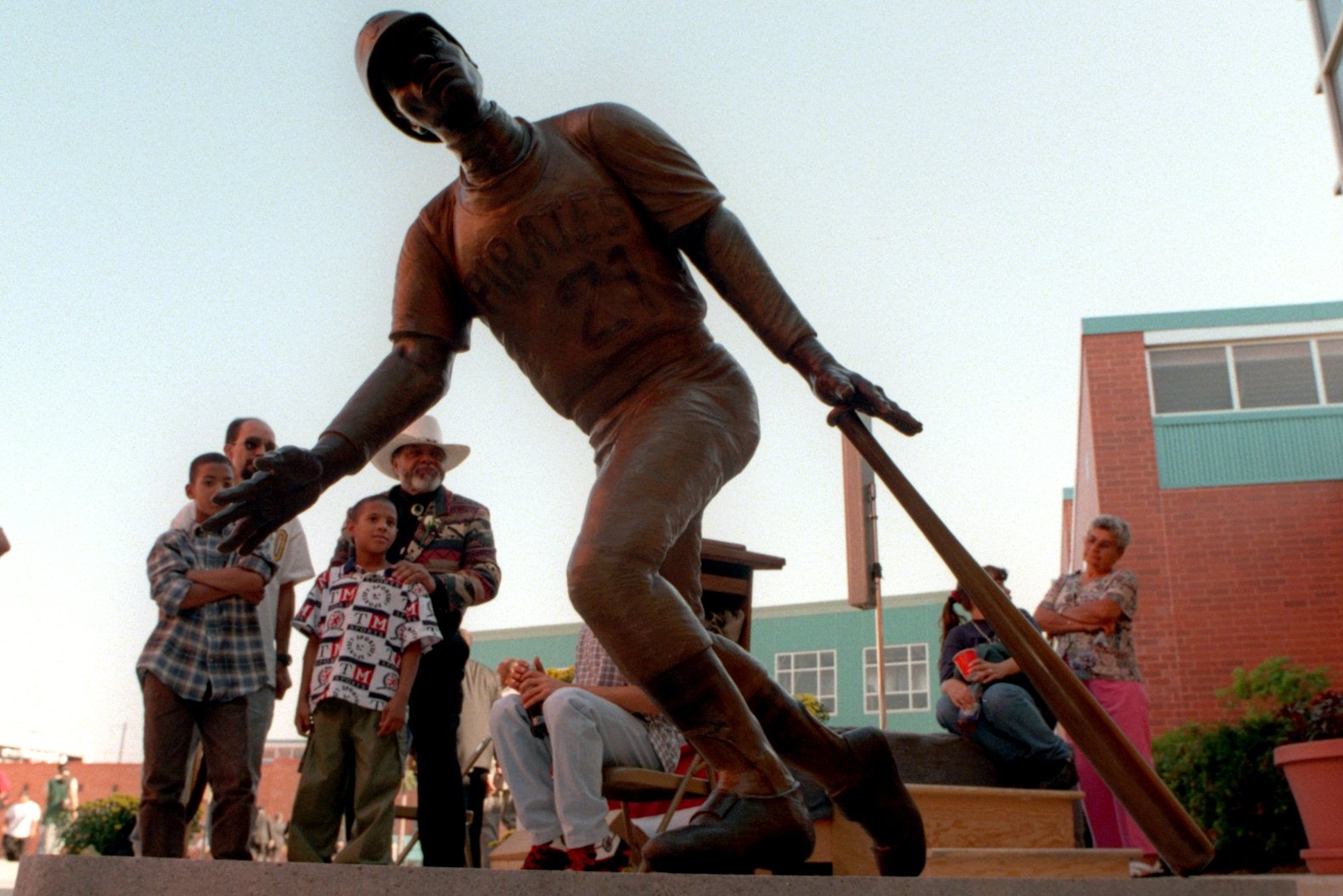
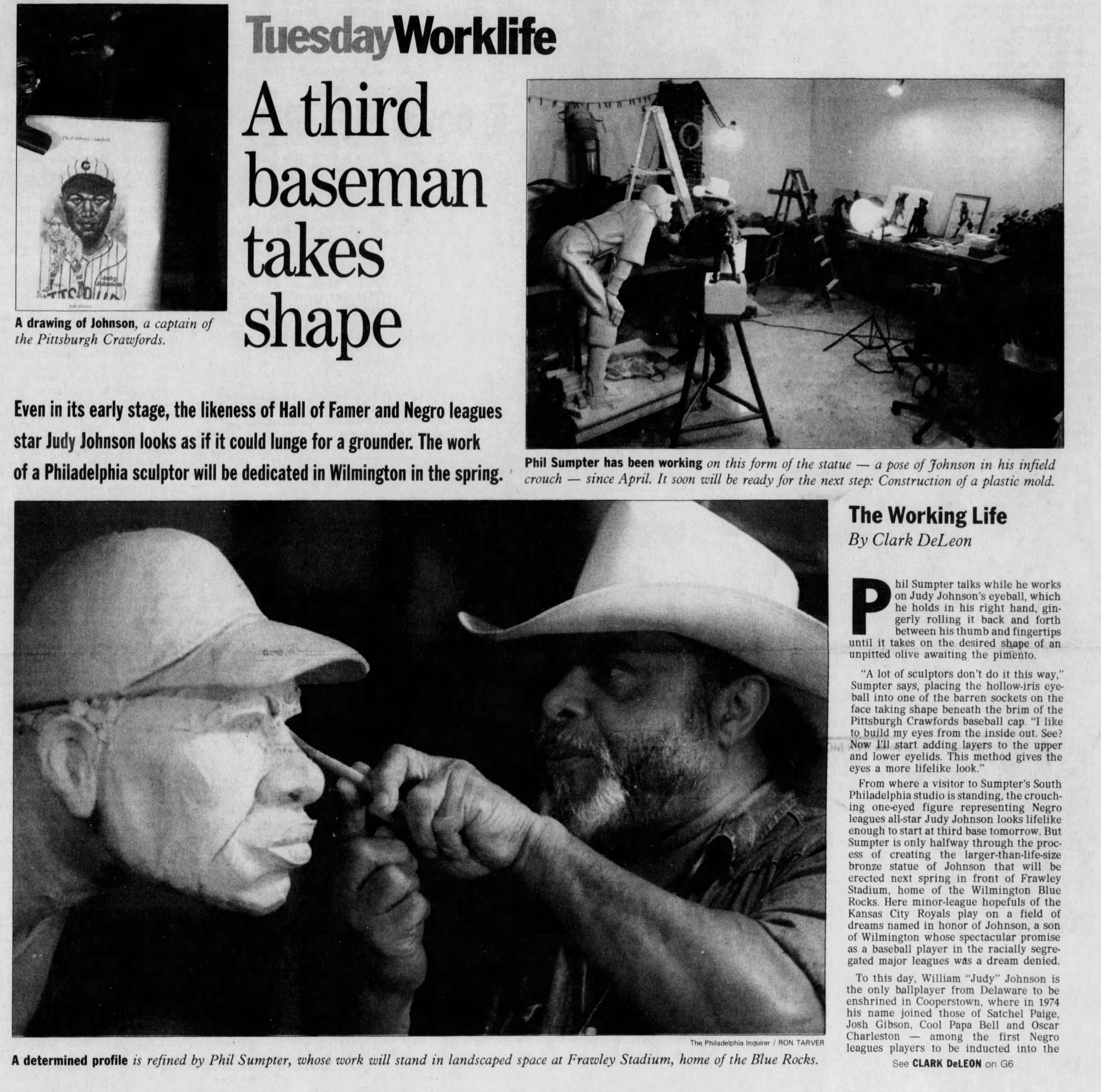
Outside the classroom, Mr. Sumpter sculpted hundreds of pieces and painted and sketched thousands of pictures in his South Philadelphia stable-turned-studio on Hicks Street. Prominent examples of his dozens of commissions and wide-ranging public art presence include the bas-relief sculpture of Black Revolutionary War soldiers at Valley Forge National Historical Park in Montgomery County, the action statue of baseball star Roberto Clemente in North Philadelphia, the Negro Leagues baseball monument in West Parkside, and the Judy Johnson and Helen Chambers statues in Wilmington.
He worked often in clay and paper, made murals, and designed commemorative coins and medals. He especially enjoyed illustrating cowboys, pirates, Puerto Rican jibaros, and landscapes.
His statue of Clemente was unveiled at Roberto Clemente Middle School in 1997, and Mr. Sumpter told The Inquirer: “I think I’ve captured a heroic image, an action figure depicting strength plus determination.”
He was among the most popular contributors to the Off the Wall Gallery at Dirty Franks bar, and his many exhibitions drew crowds and parties at the Bacchanal Gallery, the Free Library of Philadelphia, the Plastic Club, and elsewhere in the region and Puerto Rico. He hung out with other notable artists and community leaders, and collaborated on projects with his son, Philip III, and daughter, Elisabeth.
Mr. Sumpter worked often in clay and paper, made murals, and designed commemorative coins and medals.
He even marketed a homemade barbecue sauce with his wife, Carmen. His family said: “He is remembered for mentorship, cultural fluency, and presence as much as for material works.”
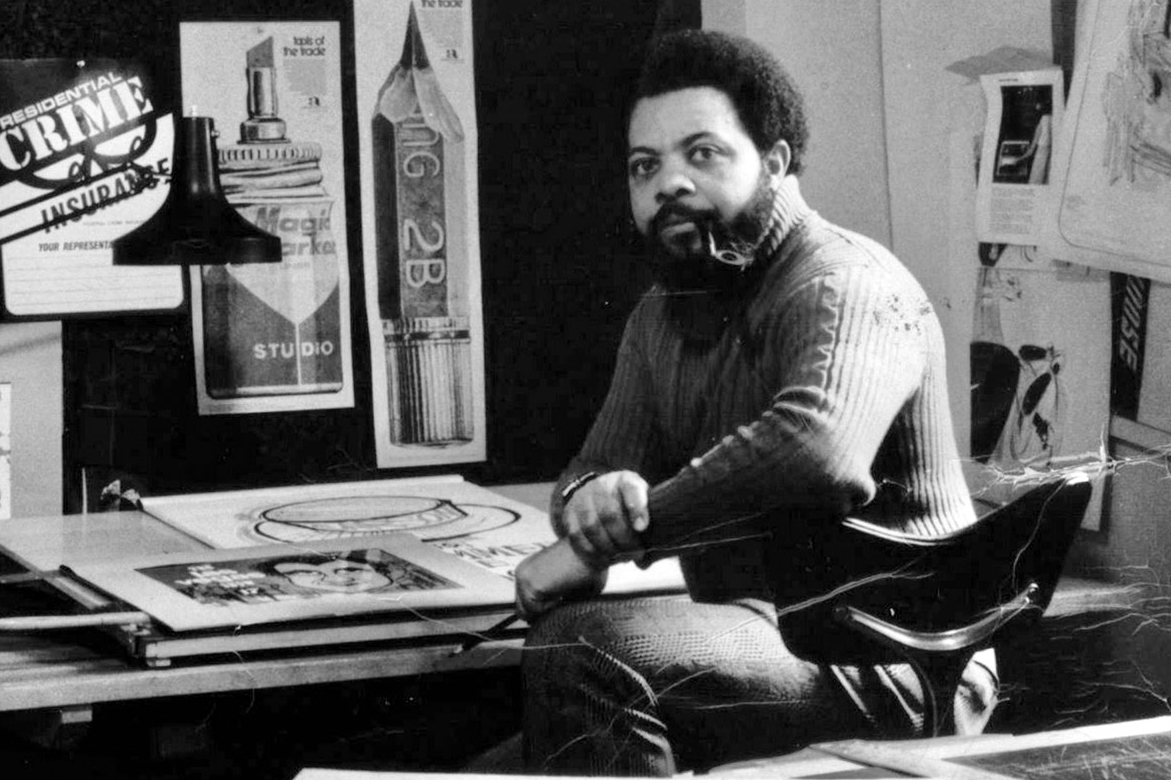
He founded Phil Sumpter Design Associates in the 1960s and worked on design and branding projects for a decade with institutions, educational organizations, and other clients. He was art director for WKBS-TV, WPHL-TV, and the Pyramid Club.
“The word for him,” his son said, “is expansive.”
Mr. Sumpter was friendly and gregarious. He became enamored with Black cowboys and Western life as a boy and went on to ride horses around town, dress daily in Western wear, and depict Black cowboys from around the world in his art. His viewpoints and exhibits were featured often in The Inquirer, the Philadelphia Tribune, Philadelphia Magazine, Dosage Magazine, and other publications.
Mr. Sumpter (in white cowboy hat) views his statue of Roberto Clemente in 1997.
He was an air observer for the Air Force during the Korean War and later, while stationed in England, studied sculpture, ceramics, and drawing at Cambridge Technical Institute. His daughter said: “He taught me how to open the portal to the infinite multiverse of my own imagination, where every mind, every soul can be free.”
Philip Harold Sumpter Jr. was born March 12, 1930, in Erie. His family moved to segregated West Philadelphia when he was young, and he earned a bachelor’s degree in art education at PCA.
He married and divorced when he was young, and then married Florence Reasner. They had a son, Philip III, and a daughter, Elisabeth, and lived in Abington. They divorced later, and he moved to Hicks Street in South Philadelphia.
He met Carmen Guzman in Philadelphia, and they married in 2001 and moved to San Juan for good in 2003. He built a studio at his new home and never really retired from creating.
Mr. Sumpter (second from left) enjoyed time with his family.
Mr. Sumpter enjoyed singing, road trips to visit family in Pittsburgh, and bomba dancing in San Juan. He was a creative cook, and what he called his “trail chili” won cook-offs and many admirers.
“He was a larger-than-life person,” his son said. “He was fearless in his frontier spirit.” His wife said: “His joy for life was contagious, as was his laughter.”
In addition to his wife, children, and former wife, Mr. Sumpter is survived by other relatives.
A celebration of his life was held earlier in Puerto Rico. Celebrations in Philadelphia are to be from 2 to 5 p.m. Saturday, March 14, at Dirty Franks, 347 S. 13th St., Philadelphia,Pa. 19107, and from 2:30 to 4:30 p.m. Sunday, March 15, at the Plastic Club, 247 S. Camac St., Philadelphia, Pa. 19107.
Mr. Sumpter’s work was featured in The Inquirer in 1994.
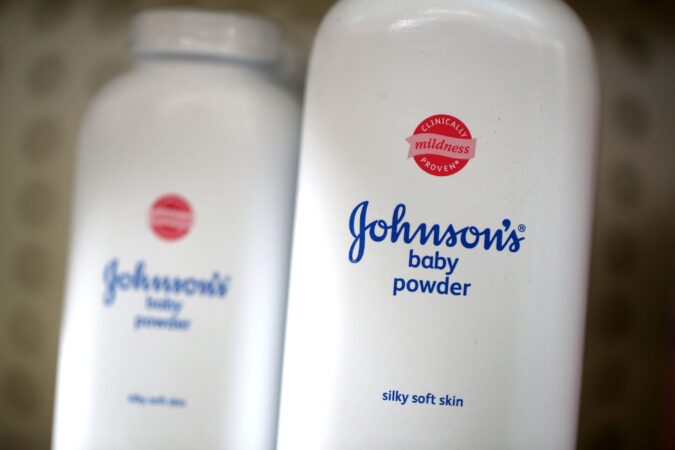
A Philadelphia jury ordered pharmaceutical and cosmetics giant Johnson & Johnson to pay $250,000 to the family of a York County woman after finding the company’s baby powder product led her to develop cancer.
Gayle Emerson sued Johnson & Johnson in 2019 as part of a nationwide wave of litigation accusing the company’s talc-based baby powder of causing ovarian cancer. Emerson, who was diagnosed with cancer in 2015, died at age 68, months after filing the complaint.
The complaint accused the New Jersey-based company of selling a defective product and failing to warn about its risks.
After a three-week trial, which Common Pleas Judge Sean F. Kennedy presided over,the jury began deliberating Tuesday afternoon and reached its verdict Friday around 2 p.m. During deliberations, jurors asked the judge questions that suggested they grappled with how strongly the evidence showed that external use of baby powder could allow a cancer-causing substance to reach the ovaries.
The verdict was comprised of $50,000 in compensatory damages and $200,000 in punitive damages.
“This token verdict reflects the jury’s appreciation that the claims were meritless and divorced from the science,” Erik Haas, Johnson & Johnson’s worldwide vice president of litigation, said in a statement.
The company plans to appeal the verdict, Haas said.
Johnson & Johnson specifically advertised the product for women, the suit says, stating on the bottle: “For you, use every day to help feel soft, fresh, and comfortable.”
Studies haveconnected talc to ovarian cancer since the early 1970s, according to the complaint. The mineral is excavated from the mines that also contain asbestos, riskingcontamination from the cancer-causing substance.
The Federal Drug Administration asked condom manufacturers in the 1990s to stop dusting their product with talc because of the risk to women.
The company was aware of the research about the increased risk of cancer for women who use the powder on their genital area, the suit says, based on internal documents and public statements.
“Gayle Emerson trusted Johnson & Johnson, and Johnson & Johnson betrayed that trust,” Leigh O’Dell, a Beasley Allen attorney representing Emerson’s family, said in her opening statement.
Attorneys in Pennsylvania aren’t allowed to advise jurors on how much to award in damages, but O’Dell noted in her closing argument that Johnson & Johnson’s net worth is $72.3 billion and a verdict should be “enough” to get the attention of the company’s boardroom.
During the trial, attorneys for Johnson & Johnson said the baby powder, which Emerson used externally, wasn’t responsible for the cancer. Other parts of her feminine care routine, such as douching, are also associated with increased risk of ovarian cancer, the attorneys said, and Emerson had other risk factors such as family history, obesity, and age.
Emerson’s attorneys ignored those risk factors because they have “talc blinders” on, Shaila Diwan, a Kirkland Ellis attorney representing the company, said to the jurors at the outset of the trial.
“Ms. Emerson would have still developed cancer if she never used Johnson’s baby powder,” Diwan said in closing.
It’s important that the jury found that Johnson & Johnson was directly responsibe for Emerson’s cancer but the award is “significantly less than the amount necessary to punish J&J,” O’Dell said in a statement.
While the Philadelphia trial was proceeding, a three-judge panel of a New Jersey appeals court disqualified Beasley Allen from the baby powder litigation in the state for ethical violations. The Alabama-based firm has been accused of receiving privileged information from an attorney who previously represented Johnson & Johnson. The firm said it would appeal the decision.
It’s unclear if the ruling will impact the Pennsylvania verdict, or future Beasley Allen cases outside New Jersey.
Emerson’s is the second talc-related lawsuit to reach a verdict in Philadelphia, after a 2021 trial concluded with the jury siding with Johnson & Johnson.
There are 176 lawsuits similar to Emerson’s pending in the Philadelphia court, and thousands across the nation. Another trial against Johnson & Johnson in a City Hall courtroom is scheduled for April.