Representatives behind Philly’s three Michelin starred restaurants are lauded for their culinary skills, hospitality, and showmanship. But the men involved with each of them also have this shared trait: They’re all certified Wife Guys.
For those uninitiated, a wife guy is a colloquial way to refer to someone who is all about their marriage and finds ways to talk about their devotion whenever possible. (There are some instances where this phrase is used snarkily, but in this case, we mean it genuinely as a compliment and in earnest.)
When chefs Amanda Shulman and Alex Kemp stepped on stage to receive Her Place Supper Club’s one-star honor, Kemp stepped to the side, opting not to be photographed alongside the Michelin Man.
“Amanda is the hardest working woman in show business,” Kemp told The Inquirer on Wednesday. “She deserves this. I felt super proud of her, but I didn’t want to take her thunder.”
While Kemp is part-owner of Her Place, Shulman founded the restaurant and is the face (and chef) of the project.
Emcee for the night, Java Ingram, remarked on stage how Kemp’s gesture to step aside was “classy.”
He wasn’t the only one paying tribute to his wife that night.
Power couple Chad and Hanna Williams, who are behind star-winning restaurant Friday Saturday Sunday, also displayed their love for each other. Chad Williams could be seen on stage holding his wife and kissing her cheek after they received their award and Michelin jackets.
“Love and partnership is the foundation of this restaurant,” Williams later told The Inquirer of his display. “We got married in the kitchen for God’s sake. To have earned a Michelin star is my greatest accomplishment but to have done it with my wife is a dream come true.”
Finally, there was Provenance, the surprise of the night, pulling off a star within the atelier’s first year of opening.
Michelin international director Gwendal Poullennec asked Nicholas Bazik on stage what his inspiration was. While holding the mic, he pointed to his wife, Eunbin Whang. “She’s right over there,” Bazik said as the crowd erupted in “aws.” Whang demurely approached Bazik on stage, covering her face, tearful and proud as Bazik draped his arm around her.
“There would be no Provenance without my wife,” Bazik told The Inquirer, citing her influence on his “culinary identity,” blending French and Korean culture and cuisine.
So is love a prerequisite to getting a star?
Bazik seems to think so.
“Everybody needs a constant, something that can help center them. This is a hard job that oscillates between insanity and reality checks. Love is that thread.”
Kemp concurs.
“Or maybe it’s being a ‘family guy,’” he quipped when asked by The Inquirer for his take. “Amanda is a very easy person to love. She’s my best friend. We do everything together. We spend every moment of the day talking or working together.”
He added, “I love being a wife guy. It’s cool being a wife guy.”
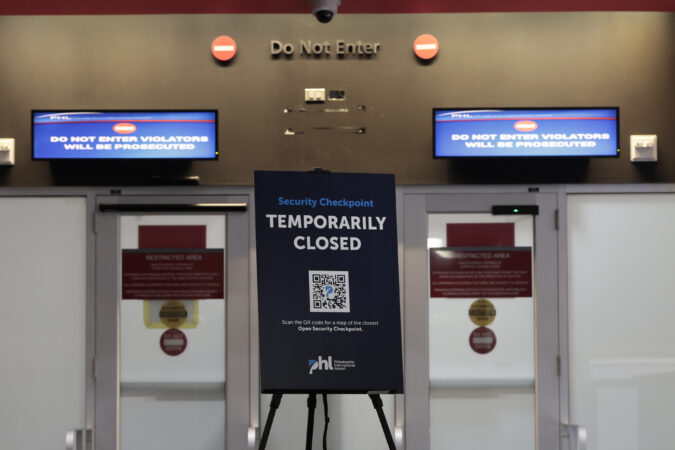
Philadelphia International Airport will reopen two U.S. Transportation Security Administration-run security checkpoints that were closed two weeks ago amid the government shutdown.
PHL’s Terminal A-West and Terminal F security checkpoints are slated to reopen Thursday, the airport announced via social media. Once opened, the checkpoints will operate on their regular schedules, with Terminal A-West running from 5 a.m. to 10:15 p.m., and Terminal F running from 4:30 a.m. to 9:30 p.m.
“We appreciate your patience as we collaborated with the TSA to maintain efficient security operations,” the airport said. “And thank you to our staff for supporting travelers throughout the closure.”
The airport closed those terminals on Nov. 5 at the request of the TSA, which was affected by the then-ongoing shutdown of the federal government. Amid the shutdown, which began Oct. 1, roughly 800 TSA officers continued screening luggage and staffing airport checkpoints without pay, and employees with the agency missed their first full paychecks on Oct. 24, The Inquirer reported.
The checkpoints’ closures, airport officials said, were temporary, though no date for their return was provided at the time they were shuttered. Checkpoints at Terminals A-East, B, C, and D/E remained operational.
The shutdown also brought a flight-reduction order from the Federal Aviation Administration, which required airlines to, in phases, eliminate 10% of their scheduled trips at 40 of the nation’s busiest airports — PHL included. Designed to ease pressure on air traffic controllers, who were experiencing staffing shortages, that order caused a number of flight delays and cancellations at PHL and other airports around the country.
The flight-reduction order was lifted Sunday, when the FAA retracted its mandate following the end of the shutdown last week. Federal legislators on Nov. 12 reached a deal to fund the government through at least Jan. 30, stopping the shutdown after 43 days — the longest stoppage in history.
Flight schedules at PHL were expected to return to normal quickly. That return to normal, as well as the reopening of the two formerly closed TSA checkpoints, comes just ahead of the holiday travel season, which the airport expects to bring about 1 million passengers through its gates between Friday and Dec. 2.
An array of dishes were set out for the critics — whole-wheat lasagna rollups, veggie samosas, cheeseburger bites with dill pickle ketchup.
The jurists did not hold back.
“That’s bussin’,” one student said of the lasagna, indicating his approval of the dish.
Semia Carter, a student at Crossroads Academy, tastes a burger bite while taste testing potential school lunch food on Wednesday at at Philadelphia School District headquarters.
“Mid,” another commented on the cheeseburger dish, shrugging his shoulders to emphasize how very mediocre it was.
Hundreds of city students descended on Philadelphia School District headquarters Wednesday for a food show — their chance to weigh in on dishes that might show up on their school breakfast and lunch plates next year. Thirty-three manufacturers showed off 55 products not yet in district cafeterias, from whole-grain onion rings to turkey sausage bites.
It’s one of the biggest days of the year for Lisa Norton, the district’s executive director of food services.
“We give the students voice to select the menu that they will eat every day,” Norton said. “It’s the dietary fuel that students need to learn.”
Norton knows her critics won’t hold back. She was prepared for that.
“They will tell the vendors, ‘We don’t like this,’” she said. “But that’s what we need. We want to buy food they’ll eat.”
All around Norton, students scoped out offerings, tasted things that looked good, then recorded their thoughts after scanning QR codes on their phones. At one station, a man dressed as Elvis danced and encouraged students to try more.
Three friends from Hancock Elementary in the Northeast said everything they tried was “really good” — an improvement from the food offered in their cafeteria now. (Though Philadelphia is a “universal feeding” district, so every student receives free breakfast and lunch regardless of income, the Hancock students were like most who spoke to The Inquirer — they said they eat school food only sometimes, preferring to bring lunch from home most days.)
“Sometimes it’s mystery mush,” sixth grader Alina Leone said of current school food offerings.
“Sometimes it’s not bad,” said her classmate Calie Sharpe.
“There’s pizza almost every day,” said Aislee Blaney, another Hancock friend.
Havyn Nelson, a seventh-grade student at Lingelbach Elementary in Germantown, found the brownie bars and the taco meat tasty.
Peyton Sanders, Havyn’s classmate, scrunched her nose when asked to describe the dishes her school offers now.
“It’s prison food,” Peytonsaid.
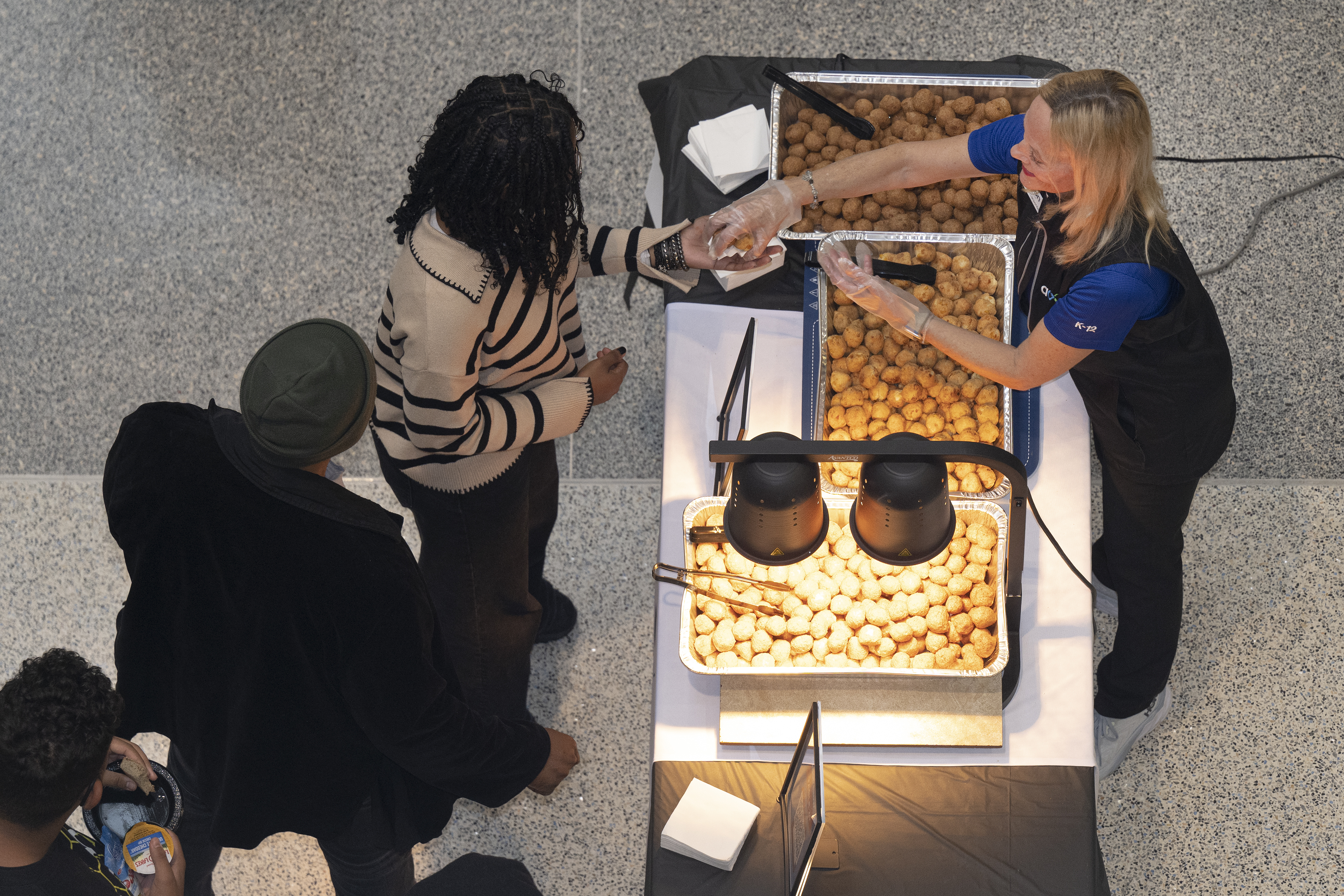
Jannette Carpentier of Acxion Foodservice serves Southern hush puppies to students during a taste test at the Philadelphia School District headquarters on Wednesday.
Angelo Valvanis, who works for the company Grecian Delight, offered students beef gyro with what he marketed as “white sauce” — tzatziki sauce. His firm has dishes that students in Chicago, Detroit, and New York eat, and it was hoping to break into Philly.
“You guys ever get gyro from food trucks? It’s really good. You know, the meat that turns, and you cut it with a knife? It’s from Greece,” Valvanis said.
The idea of school lunch still conjures the image of tasteless, lukewarm, floppy food — hot dogs, pizza, chicken nuggets — but school meals have changed, Valvanis said.
“These kids are much more open,” he said. “They all see these things on YouTube.”
In front of him, a group of students nodded.
Gabby Swaminathan, a sixth grader from Meredith Elementary in Queen Village, nibbled the gyro. It was good, she said.
“Our food at school right now is not that good,” Gabby said. Her strategy was to rate the food she liked — the gyro, the lasagna roll-ups — really highly, with hopes those will eventually replace the food she doesn’t like.
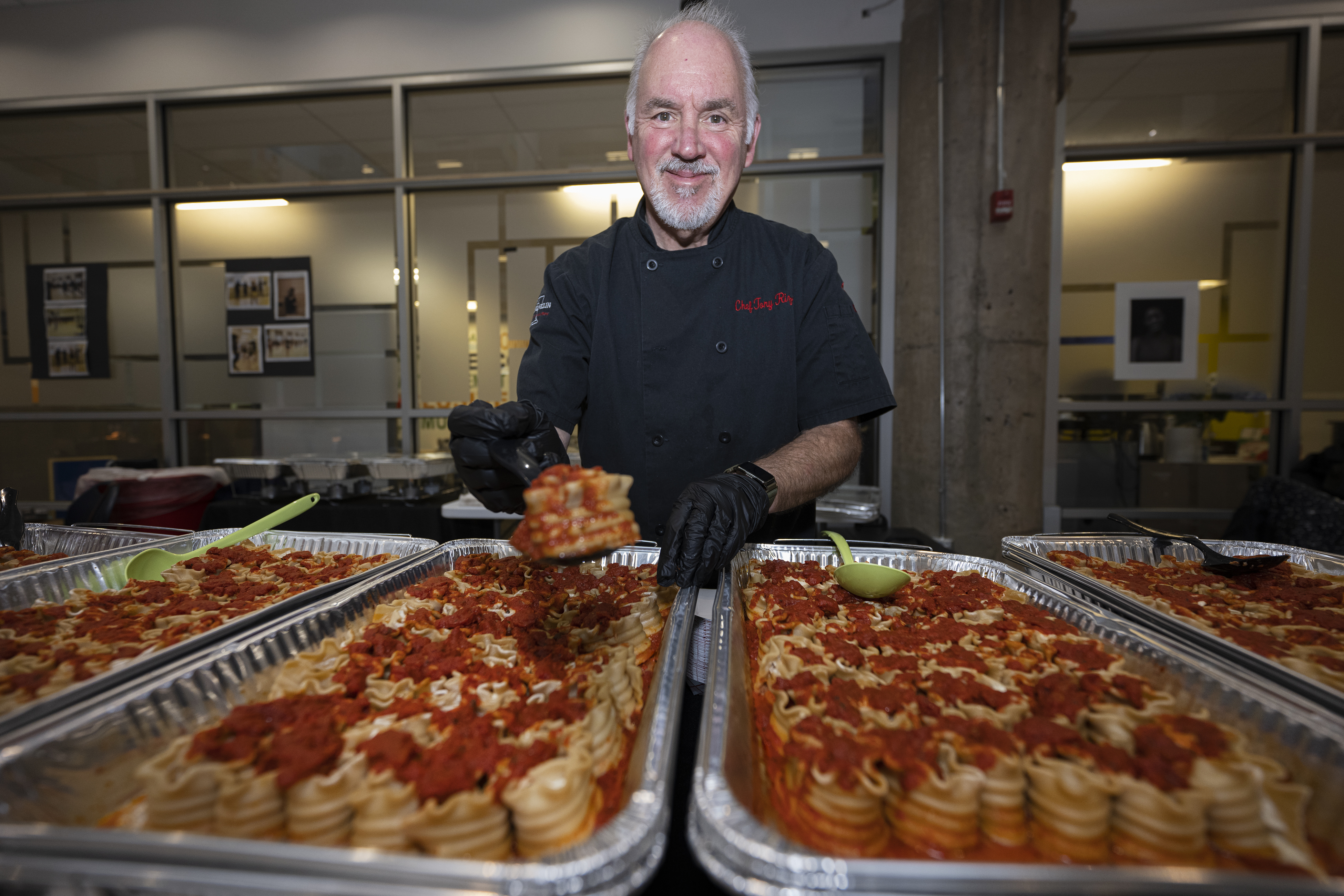
Chef Tony Rizzo of Chase Franklin Food Company shows Marieta pasta ahead of a student tasting session at the Philadelphia School District headquarters on Wednesday.
Wednesday’s event was timely. Several members of Philadelphia City Council grilled district officials about the food at a Tuesday hearing on school matters, saying constituents had concerns about the quality of the meals served to students. The elected officials said they want to come to a Center City school to eat the same lunches students eat.
Superintendent Tony B. Watlington Sr. explained the district’s conundrum — its food service program must be funded completely by reimbursements fromthe U.S. Department of Agriculture.
“The dollars are not robust enough to have filet mignon everyday, but it is sustenance, and I say that very respectfully,” Watlington told Council.
Kameron Garrick and Amaud Burton-Bullock, students at Martin Luther King High, can say definitively they have never been served filet mignon at school.
They mostly skip school lunch, they said, and buy food at a corner store or eatathome.
But sure, they were game to try the offerings.
The cheeseburger bites? OK.
“I would say it’s mid,” Kameron said. “It needs more seasoning.”
But they found a bright spot — the cornbread bowls with chicken.
“I would take that cornbread,” Amaud said. “It was nice and moist.”
Kervens Orelus, a student at Lingelbach, gets a corn dog from Elvis during a testing session at the Philadelphia School District headquarters on Wednesday.
SNAP benefits are restored, and the program is funded through next year. But the Trump administration is now looking to “completely deconstruct the program,” its top USDA official said.
Agriculture Secretary Brooke Rollins said that millions of low-income Supplemental Nutrition Assistance Program recipients will have to reapply for their benefits as part of an effort to crack down on “fraud.”
“It’s going to give us a platform and a trajectory to fundamentally rebuild this program, have everyone reapply for their benefit, make sure that everyone that’s taking a taxpayer-funded benefit through SNAP or food stamps, that they literally are vulnerable, and they can’t survive without it,” she told Newsmax last week.
On Tuesday, Rollins told Fox Business that her plan is for the U.S. Department of Agriculture to “completely deconstruct” SNAP.
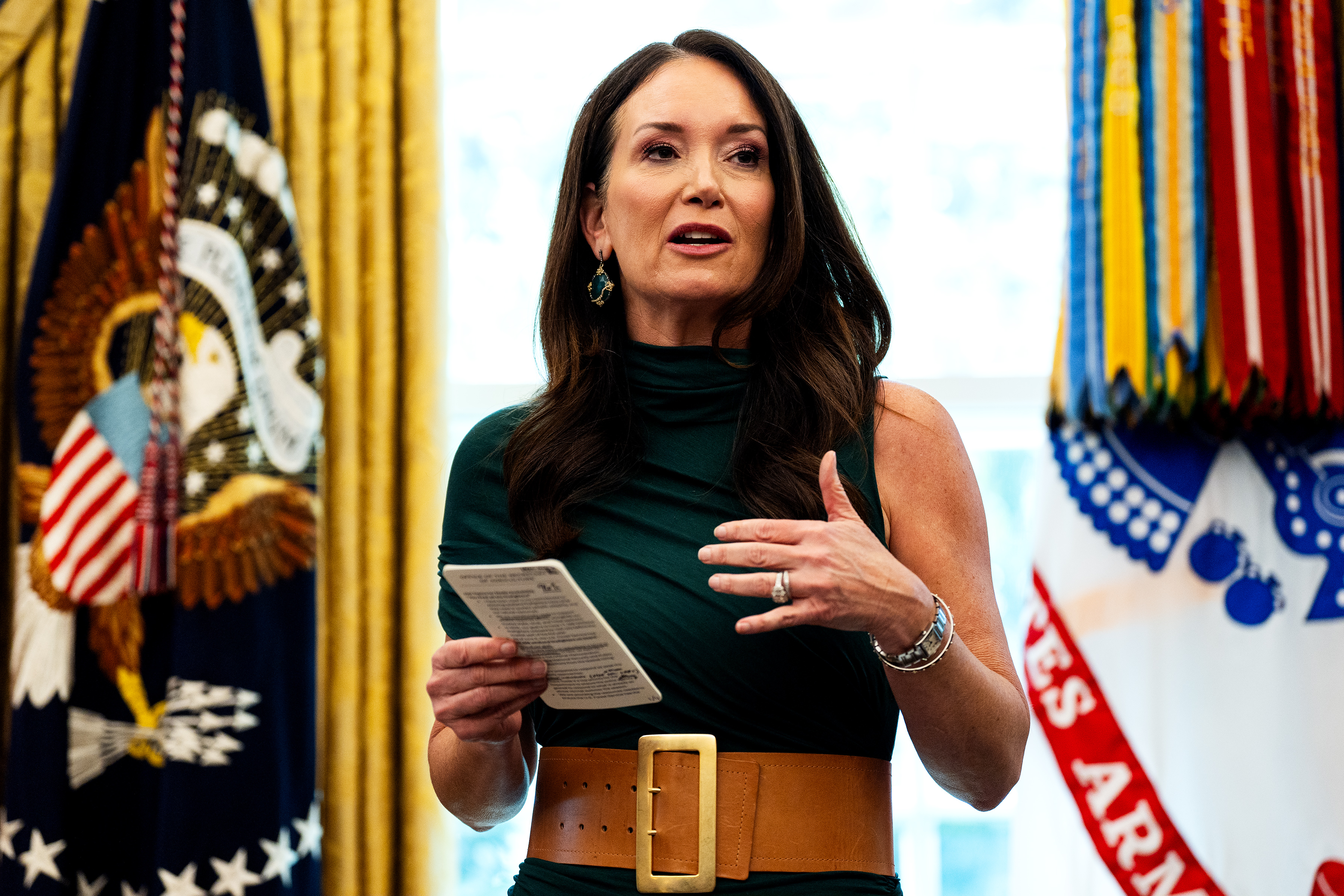
Agriculture Secretary Brooke Rollins speaks to the media in the Oval Office of the White House in June. Rollins had various roles in the first Trump administration.
However, there is no official guidance from USDA on the plans Rollins spoke of and the rules have not changed, said Community Legal Services staff attorney Mackenzie Libbey.
“Most SNAP recipients in Pennsylvania are already required to reverify household and income information every six months. SNAP recipients should continue submitting their semiannual reports and annual renewals as the current rules require,” Libbey said.
In a statement, the USDA did not confirm the existence of new changes to SNAP. Instead, a spokesperson for the agency said the “standard recertification processes for households is a part of that work.”
Jeff Garis, Outreach and Patnership Director, Penn Policy chants during rally along side SNAP recipients, clergy members, and other advocates at a rally and news conference outside of Reading Terminal Market, to urge the Trump administration to restore full SNAP funding, Wednesday, November 12, 2025.
Are SNAP benefits changing?
There are a few changes to SNAP work requirements that were implemented on Sept. 1 and Nov. 1.
On Nov. 1, some older low-income Americans were forced back to work when Congress and Trump passed additional work requirements, raising the maximum working age cap from 54 to 64 years old.
Parents with dependents age 14 and over also must go back to work or lose benefits. Previously, SNAP recipients with dependents under 18 did not have to meet work requirements. Veterans and former foster youth ages 18 through 24 are no longer exempt from work requirements either, under new federal law.
Do you have to reapply for SNAP benefits?
SNAP recipients do not currently need to reapply to the program. SNAP recipients should continue filing their semiannual reports every six months to recertify their income and household.
Lisa Mellon, 59, of Bridesburg, Pa., is walking her groceries to her friends car, who was kind enough to driver her around 40 minutes to the Feast of Justice at St. John’s Lutheran Church and back home on Tuesday, Nov. 11, 2025.
Will snap benefits be issued in December?
Yes. The SNAP program is funded through Sept. 30, 2026, after Congress reached an agreement on a spending deal last week. Most other federal government agencies and programs are funded only through Jan. 30.
Congress will need to strike another spending deal before the January deadline; otherwise the federal government could be shut down again.
However, SNAP benefits have been guaranteed through next September regardless of another shutdown.
How do you qualify for SNAP benefits?
SNAP requirements are based on your work hours and income. Other factors, like whether a member of your household is disabled, elderly, or a veteran, can provide households with additional benefits.
SNAP recipients must be working, volunteering, or participating in an education or training program for at least 20 hours a week (or 80 hours a month). They also must report those work hours.
These rules apply to you if you:
Are ages 18 through 64.
Do not have a dependent child under 14 years old.
Are considered physically and mentally able to work.
Income requirements
Households cannot exceed these monthly income limits to be eligible for SNAP benefits.
When a Marriott representative visited the construction site of the W Philadelphia hotel in Center City in January 2019, months after the project should have been completed, the concrete floors were so uneven that a pen placed on the ground rolled downhill.
The construction of Philadelphia’s largest hotel, home of the W and the Element, both part of the Marriott umbrella, began in 2015 and had a strict 2018 deadline for completion. Delays led to an avalanche of nearly 30 lawsuits with the site’s owner, construction contractor, and design company pointing fingers at each other.
The W, which comprises 295 rooms of the 51-story building, eventually opened in 2021, roughly three years late.
Bringing to a close 25 of the lawsuits, a Philadelphia judge issued a 69-page memo last weeklaying out the saga and finding the construction company responsible for the project going “off the rails.”
Common Pleas Court Judge James Crumlishfound that the construction contractor, Tutor Perini Building Corp., subcontracted the concrete work to a company that botched the job. And despite knowing about the problems, which were detrimental to the entire project, Tutor denied the issues for months.
The judge’s finding comes after trial testimonies that took five months as the parties “turned this litigation into a challenging behemoth that made any effort at resolution impossible,” Crumlish wrote.
A yearslong saga
The saga began when Chestlen Development LP, the owner of the site, picked Tutor as the construction manager. The agreement capped the cost of construction at $239 million and required completion within 1,017 days after April 2015.
An attorney for Tutor did not respond to a request for comment.
From the outset, Tutor suffered “chronic turnover of its personnel,” the judge wrote, resulting in the loss of “institutional knowledge of key decisions.”
Tutored subcontracted the concrete work to Thomas P. Carney Inc. Construction, a Bucks County company.
When a different subcontractor, Ventana DBS LLC, began installing the wall-window systems, they immediately noticed a “big problem,” according to the judge’s memo. In many places the concrete wasn’t level or did not meet the elevation requirements in the design.
Tutor pushed back, denying that there was a problem, while quietly attempting to grind the edges of the concrete slabs to address the issue.
While denying the problem, Tutor hired outside advisers to evaluate the concrete work. But they confirmed the problem too.
Finally, in March 2018, Tutor shared the outside reports that acknowledgedCarney’s shoddyconcrete work with Chestlen’s representative for the project.
As summer 2018 began, it was clear that the project would not be completed on deadline.
In September 2018 Tutor asked Chestlen for an extension, which the owner rejected, saying the request came “months if not years after some of the concrete issues started to become apparent,” according to Crumlish’s memo.
The remediation of the floor began in April 2019 andwas completed in October.
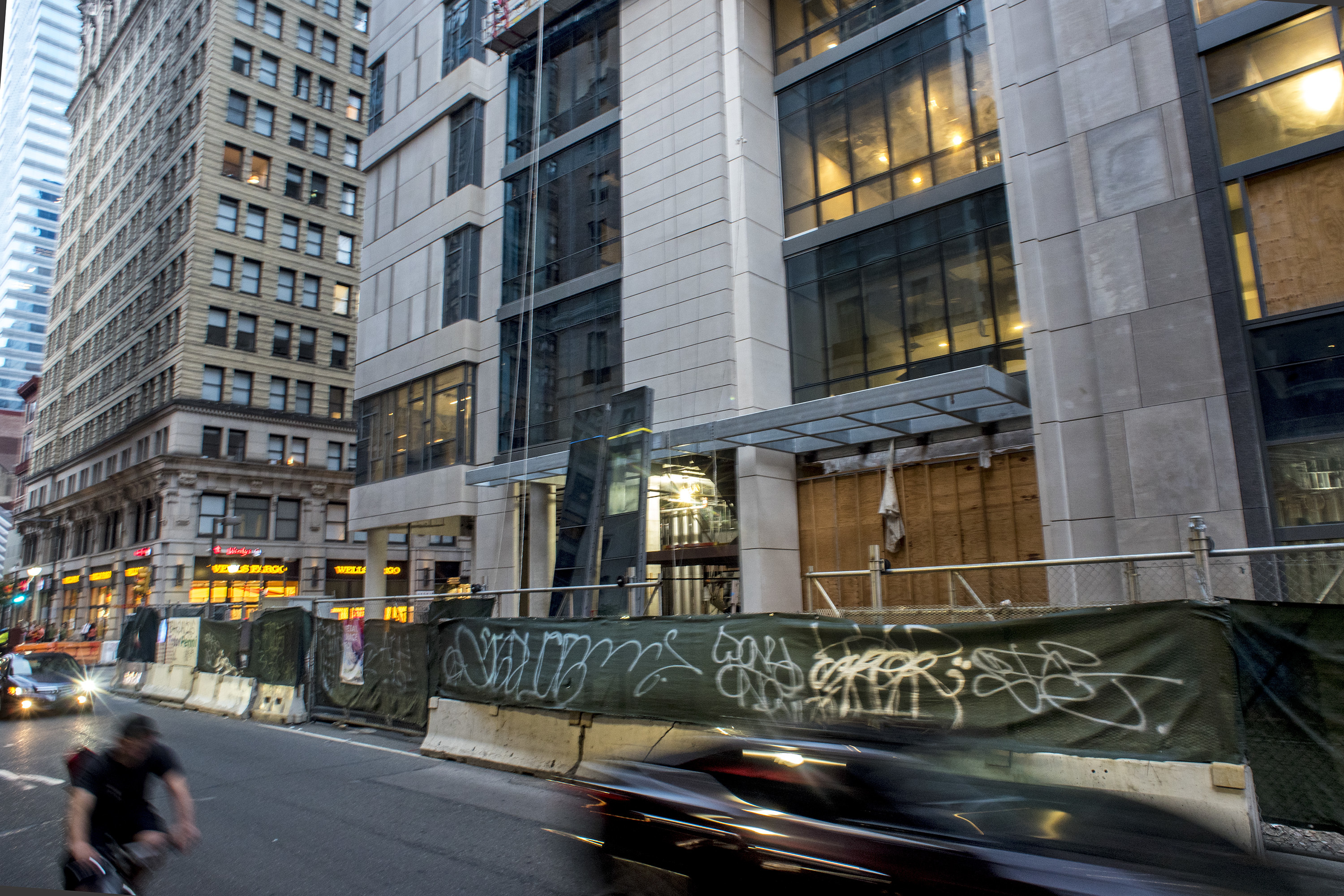
The sidewalk area of W Philadelphia and Element Philadelphia Hotel under construction, looking northwest along the 1400 block of Chestnut Street July 2, 2019.
The building finally obtained a certificate of occupancy in April 2021. But Marriott couldn’t open the W until August because over a hundred window vents were inoperable because Tutor failed to follow the design.
“Tutor knew that the floors did not meet specifications but did not timely disclose its knowledge to Chestlen or consult with it,” Crumlish wrote. The judge further found that Tutor refused to work with contractors to remediate the problems in 2017 and 2018, and proceeded to install interiors over the deficient concrete floors.
The blame game
Throughout the litigation, the parties all blamed one another for various problems and aspects of the delay.
Costs and liens piled up.
Chestlen paid Tutor $239 million for the construction, accrued over $40 million in damages as set in its contract with Tutor, and paid tens of millions to remediate the floors. The property is “clouded with over $155 million in liens,” according to the judge’s memo.
Crumlish concluded that Tutor breached its contract when it failed to oversee the concrete work and the window-wall installation, and generally didn’t fulfill its obligations.
“Every delay in the performance and completion of the project is the responsibility of Tutor and Carney,” the judge said. The judge will decide on the amount of damages following hearings scheduled for January.
Chestlen’s attorney was unavailable to provide comment. Carney did not respond to a request for comment.
The W hotel is located where One Meridian Plaza used to be, before that building suffered a devastating fire in 1991 and was finally demolished in 1999.
Filling the vacant lot, a mere block from City Hall, became a top priority for policymakers during Mayor Michael Nutter’s time in office. The hotel proposal eventually received $75 million in taxpayer support across local, state, and federal funding sources in addition to other legislative assistance.
The project was developed by Brook Lenfest, son of the former Inquirer owner H.F. “Gerry” Lenfest, whose foundation continues to own the newspaper today.
A former West Philadelphia ward leader and onetime staffer for State Sen. Vincent Hughes was sentenced Wednesday to one year in federal prison for stealing more than $140,000 from his ward and a church where he served as a deacon.
Willie Jordan, 68, had pleaded guilty to two counts of wire fraud over the summer. During his sentencing hearing Wednesday before U.S. District Judge Harvey Bartle III, Jordan said that he was sorry and that there were no excuses for his misconduct.
“It was a bad decision,” Jordan said. “It was just wrong.”
Bartle agreed, telling Jordan that although he appeared to have lived an otherwise noble life — dedicating his time and career to serving the public — stealing from institutions that sought to help people was inexcusable.
“What’s so disappointing is you had a position of trust … and you abused that position of trust,” Bartle said. “And the amount of money you took were not insignificant sums.”
Jordan for years was the unpaid leader of the 44th Ward in West Philadelphia and also a deacon at Mount Calvary Baptist Church in North Philadelphia. Prosecutors said that he had near-total control over the finances of both organizations, and that from 2020 to 2024 he took advantage of that status by writing checks to himself to cover personal expenses, including credit card and utility bills, purchases from airlines and furniture stores, and costs associated with a relative’s funeral.
In all, prosecutors said, he stole more than $57,000 from the church and $85,000 from the ward, and often claimed the money was to reimburse the organizations for expenses they never incurred. To further conceal his wrongdoing, prosecutors said, he sometimes wrote false entries on checks’ memo lines, saying they were to pay for items such as Easter baskets or summer youth programs.
Much of the fraud occurred while Jordan was working in Hughes’ office, prosecutors said, where he was a longtime top aide and had a six-figure state salary.
Jordan’s attorney, Sam Stretton, said that Jordan retired from that job earlier this year amid the federal investigation into his crimes, and that he also is no longer a ward leader.
Assistant U.S. Attorney Louis Lappen said in court that the repeated nature of Jordan’s wrongdoing, and his status as a well-paid public employee, made his crimes stand out.
“He’s somebody who should have known better,” Lappen said.
Stretton said Jordan “made a terrible mistake but is an otherwise good person.” He said Jordan has already repaid the $57,000 he stole from the church and is continuing to donate hundreds of dollars per month to help cover its bills and other expenses. Jordan also is continuing to make restitution payments to the ward, Stretton said.
Several of Jordan’s relatives wept in the courtroom after Bartle imposed his sentence. The judge then paused and addressed Jordan again before adjourning the hearing.
“You’re going to have to pay the price of your crimes, but there is life after prison, and I hope you will continue to be a useful and productive citizen,” Bartle said. “There is redemption.”
The Philadelphia Housing Authority (PHA) is planning sweeping layoffs that will affect almost 300 of the agency’s 1,200 employees, beginning in January 2026.
The cutbacks are the result of dramatic changes in how PHA, which provides affordable housing to thousands of families across the city, does maintenance and repair work. Instead of directly employing union electricians, carpenters, and other workers, beginning next year, the agency will contract out for those jobs as needed.
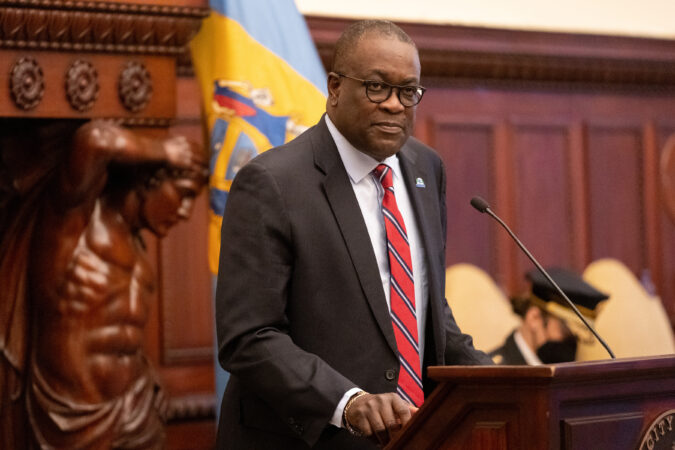
“This is a housing program, it is not a jobs program,” said Kelvin Jeremiah, the president and CEO of PHA, in an interview.
“Do I use the resources that we have to protect residents, to advance the availability of affordable housing to the families that are most in need? Or do I use those limited resources to fund positions that I don’t need?” Jeremiah said.
There are 620 members of the Philadelphia Building and Construction Trades Council employed full-time by the agency as maintenance staff. Jeremiah estimates that by almost halving that number PHA will see a cost savings of $24 million annually.
The agency said it currently costs $15,500 to maintain a single unit of traditional public housing annually, due to the agency’s complex work rules, which require many different union workers to make repairs. Most other multifamily providers have dramatically lower per-unit maintenance costs.
“PHA has engaged the unions throughout this process and can proceed with this policy decision without additional approvals,” an agency spokesperson said in an emailed statement.
Although in-house building trades workers will constitute the majority of lost jobs, other positions will also be affected, including 33 managerial roles in PHA headquarters. Overall, PHA’s workforce will shrink by about 20%.
“We are going to talk and try to offer some alternatives, but this is an issue of price sensitivity and we have to understand, given the new environment, that there are less funds to do the same mission with,” said Ryan Boyer, business manager for the Philadelphia Building and Construction Trades Council, whose unions represent many of the affected workers.
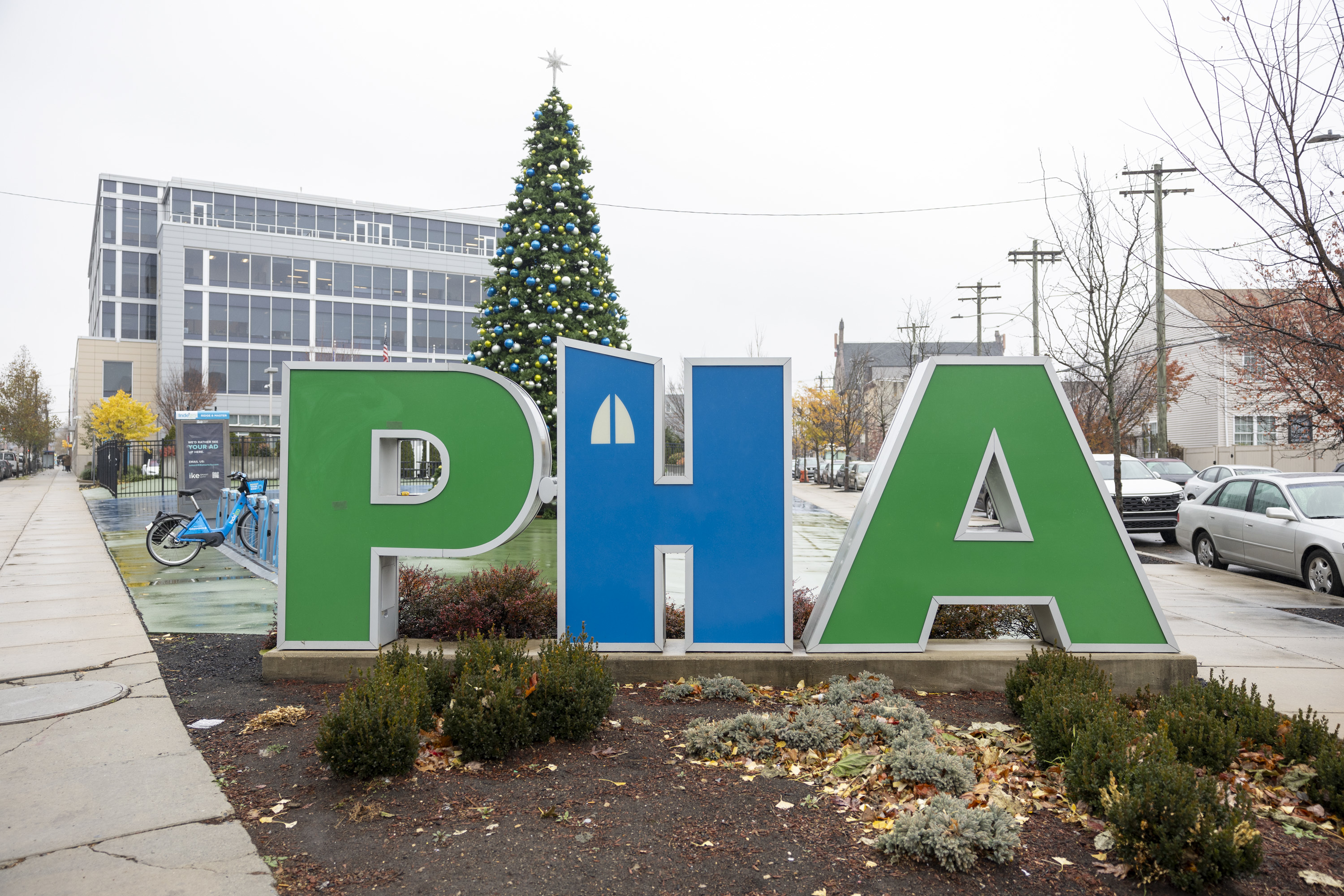
The Philadelphia Housing Authority Headquarters is planning sweeping layoffs that will affect almost 300 of the agency’s 1,200 employees, beginning in January 2026 in Philadelphia, on Wednesday, Nov. 19, 2025.
More with less?
The cutbacks come amid an aggressive $6.3 billion plan unveiled earlier this year, through which the agency hopes to expand its housing portfolio by 7,000 units while rehabbing the 13,000 units it already owns.
Jeremiah said that the staff reduction should not be seen as PHA doing more with less, and that it will not limit the agency’s ability to execute his planned expansion.
“We will not be doing less than what we’re doing now, but we have been doing too little with too much,” Jeremiah said. He said other market-rate and affordable housing multifamily operators are able to do unit repairs for far less than what PHA pays.
“My colleagues have all been doing this at substantially less cost,” Jeremiah said. “The only difference between us is that they have an operating model that does not require six different trades to do a single thing.”
Kelvin A. Jeremiah, PHA President & Chief Executive Officer, at PHA headquarters, in Philadelphia, May 21, 2025.
Because PHA’s layoffs will affect hundreds of members of Philadelphia’s influential building trades unions,Jeremiah said, he has been negotiating with Boyer on the work-rule changes.
“My reaction is one of disappointment. However, we remain partners with PHA and we will still build most of the stuff on the capital side,” Boyer said. “I don’t want it to be lost that when they build stuff, they will still be members of the Philadelphia building trades working, and there will still be members doing maintenance work.”
Jeremiah said maintenance technicians, laborers, and painters will be the only trades that remain directly employed with the agency after the work-rule changes go into effect.
The electricians union, IBEW Local 98, said it is still studying PHA’s new policy.
PHA will also still work with the trades for discrete repair and maintenance jobs within the agency’s housing portfolio but will no longer directly employ as many workers full-time, Jeremiah said.
The Trump effect?
PHA’s layoffs, and its expansion plan, are unfolding during a period of uncertaintynationwide for affordable housing policies and organizations like PHA.
Nearly all of PHA’s funding — 93% — comes from the federal government, according to the agency.
“If Congress and the administration coughs, it impacts us,” Jeremiah said. “If there is a reduction [in funding], it impacts us.”
Jeremiah said he is seeking to operate within the mandates set by Trump’s administration while continuing to support PHA’s tenant base and plans.
“Subsidizing employment … is just not the way to go at a time when we’re looking at less funding on the horizon,” Jeremiah said. “Where am I to get the funds not only to do more developments, acquire more, and preserve what we have at the same time[that] we have a workforce that is, quite frankly, I will dare to use the word bloated?”
Waves of layoffs
Despite the layoffs, Jeremiah believes the agency will still be a rich source of jobs for the building trades unions as the $6.3 billion plan unfolds. He points to an analysis of PHA’s 10-year plan byeconomic consulting firm Econsult Solutions, which said it would create 4,900 jobsannually in the city.
The first round of 260 job losses will hit in mid-January 2026, although Jeremiah says 93 of those workers will be retained in new positions as maintenance aides, laborers, and painters. A further 116-position reduction will occur next summer.
A vice president of development, Greg Hampson, also recently left PHA, although the agency declined to comment on that case. Jeremiah said that several vice president and director-level positions will be among the coming layoffs.
The last major round of layoffs at PHA was in 2016, when 14% of the staff was cut. Those positions were mostly administrative roles.
Editor’s note: A previous version of this story misstated the number of employees impacted.
“We will sing, dance, and celebrate in the way Pierre would have wanted us to,” said Chuck Damico, WMMR’s program director.
The concert will take place at the Fillmore on Dec. 17. Tickets will cost $50 and go on sale Friday at 10 a.m. through Ticketmaster on the Fillmore’s website. A portion of the proceeds will go to MANNA, the Metropolitan Area Neighborhood Nutrition Alliance.
The show will feature bands and musicians near and dear to the former WMMR host’s heart, including The Hooters, Brent Smith and Zach Meyers of Shinedown, Lizzy Hale and Joe Hottinger of Halestorm, and Ed Roland of Collective Soul.
A poster for a concert honoring former WMMR host Pierre Robert, who died unexpectedly last month.
Robert, 70, was found dead in his Gladwyne home on Oct. 29 after failing to show up for his midday show. The cause of Robert’s death was not disclosed and officials don’t plan to release additional information. Caroline Beasley, the CEO of WMMR’s parent company, Beasley Media Group, said foul play was not suspected.
“Everything seemed to be natural,” Preston Elliot said on air following Robert’s death. “It just appears he passed overnight.”
Robert was a musical institution in Philadelphia, where he spent 44 years on the air sharing his deep love of classic rock and expressing a humanity that touched musicians and listeners across the county.
“He was truly irreplaceable and his passing will leave a big hole especially in the local music community,” Hooters singer and cofounder Rob Hyman said. “Pierre was that ‘good citizen’ who will be missed by all.”
Pierre Robert’s annual Thanksgiving Day show will continue this year, hosted by his former producers.
With Thanksgiving approaching, WMMR plans to keep Robert’s annual Turkey Day show alive with a midday show anchored by Ryan Shuttleworth and featuring a collection of the rock host’s former producers — Kevin Gunn, Michael Anthony Thompson, Nick McIlwain, Jason Fehon, and Chris “Pancake” Ashcraft.
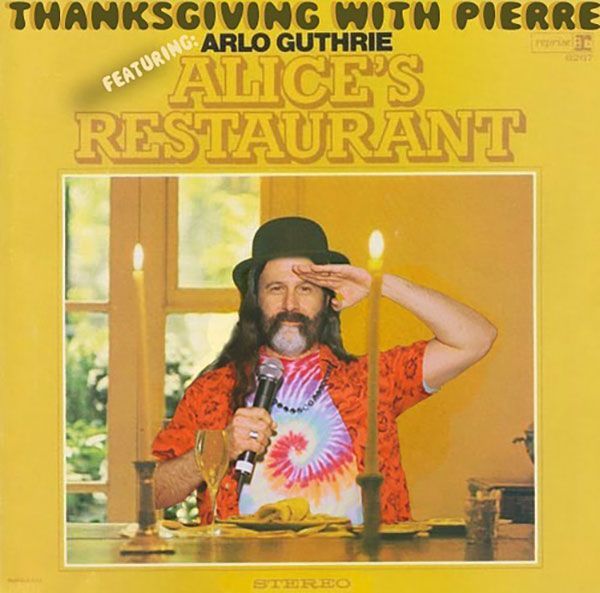
And yes, that means a heaping spoonful of Arlo Guthrie’s “Alice’s Restaurant Massacree,” the folk singer’s 18-minute opus. Expect to hear three versions of the song, including the even-longer 25th anniversary edition, which will be played at noon.
This weekend – on Sunday, Nov. 23 – 15,000 runners will participate in the sold-out 2025 Philadelphia Marathon. Thousands of spectators are expected to join them.
Whether you’re going to support someone or just want to understand why thousands of people would voluntarily run 26.2 miles, here’s what you need to know if you’re watching this year’s marathon.
Loading…
Regional rail
Subway
Indego
Road closures
Marathoners will start from 6:55 a.m, in waves, beginning at 22nd Street and Benjamin Franklin Parkway, near the Philadelphia Museum of Art.
The course, the same as previous years, loops through Center City before crossing the Schuylkill River to Fairmount Park. Runners will then go over the Girard Avenue Bridge and head up to Manayunk. From there, they’ll turn around for the final stretch down Kelly Drive towards the finish back at the museum.
If you want to cheer with a crowd, head to Chestnut Street at Mile 1. And if you’re trying to support a specific runner, you can see them again at Mile 5. “[You’d] probably have to hustle a little bit, but you could potentially see somebody four times,” said Kathleen Titus, race director for the Philadelphia Marathon.
Another popular place to watch the marathon is on Manayunk’s Main Street between Mile 19 and Mile 21. “Manayunk is a party and a half. The cheering [there] is top notch,” said Gary Brown Jr., founder and co-leader of Chasing Trail Philadelphia, a running group that meets on Sunday mornings at the Valley Green Inn.
Mile 20 is also when the runners turn around to head to the finish line. “[It’s] when you're questioning your life choices and deciding whether or not you can and want to finish this race,” said Craig Polak, leader of Manayunk Running Club. “Having all of that excitement and energy greeting you is just a really powerful statement for the runner.”
If you’d rather go somewhere a little more quiet or support runners through a lonelier stretch of the course, Mile 22 to Mile 24 on Kelly Drive might be for you.
“It’s always desolate,” said Brown of Chasing Trail Philadelphia. “We need people on Kelly Drive.”
story continues after advertisement
Getting around on race day can be tricky but is doable if you’re willing to walk. You can take SEPTA or the Regional Rail to the start line. Manayunk also has a Regional Rail station near its Main Street.
You can also get around using either your own bike or Indego, the city’s bikeshare program. There are 90 Indego stations within walking distance.
If you plan to use Indego – especially along Kelly Drive – Titus recommends looking up a few stations to pick up or return a bike. “You want to just be mindful of how far apart [the stations] are in case a dock is full or empty.”
Road closures often result in more traffic on race day, so walking or using public transit might be easier. But if you’re going to drive on race day, Kasey Manwaring – owner of GoalsFit, a fitness studio in Manayunk – suggests parking near Fairmount.
All streets, except for Eakins Oval and the Parkway, are scheduled to reopen by 3 p.m. Sunday.
story continues after advertisement
Use the toggles in the top-left corner to explore the course.
Runners rely on the spectator energy to finish the race, so it’s important that you have what you need to keep your own spirits high. “Invite your friends. Involve people,” said Brown Jr., leader of Chasing Trail Philadelphia. “I like to say, ‘Bring the party.’”
What to bring (besides the party)
Layers. The weather forecast for Sunday is a high of 55 but with strong winds making it feel colder.. “Dress warmer than you think you're going to need,” said Polak. He suggests packing at least one pair of gloves, some hand warmers, and a scarf.
Snacks and something to drink. Staying hydrated is critical for both runners and spectators, especially if you plan to cheer for a long time. “Bring water,” said Manwaring of GoalsFit. And don’t forget to pack snacks for yourself. Alternatively, you can check out these family-friendly restaurants that will be open on race day.
A cowbell. Yelling encouraging things at strangers can be fun, but it does take a toll on your voice. When you want to take a break from cheering, consider using a different instrument. “Anything, any type of noise maker, you know – cow bells, the inflatable tubes that you can bang together – those types of things,” said Polak.
Your phone with the Philadelphia Marathon app downloaded. Race weekend director Titus recommends downloading the app – which is available to download on iOS and Android – beforehand. If you’re supporting a runner, the app can show you the weekend’s schedule, explore the course map, and help you keep up with their location in real -time “It's a great way to track runners, especially if you're trying to see them at multiple points.”
A fun sign. “[For runners], there are so many places through the marathon where you kind of want to just forget about your goal,” said Manwaring. Signs can help inspire and motivate runners – or at least make them crack a smile. If you need ideas for what to write, check out our sign suggestion generator.
What to not to bring
Large umbrellas or coolers are not allowed by the event organizers.
Animals are also not allowed, except ADA service dogs.
Large blankets, backpacks, or cameras are discouraged by the marathon.
Runners appreciate cheers of all kinds but are especially grateful when spectators call them out by name – or even by outfit. “When you call out someone's name [on their bib], you really see them perk up,” said Polak. “Anytime you can root for somebody specifically, you know, call out what they're wearing. Or see somebody wearing an Eagles shirt, you know, you go crazy.”
No matter how or where you cheer this weekend, know that it matters. “You can actually see that it does help [runners], whether you get a nod or a quick little smile or picking up the pace or a message afterwards,” said Manwaring. And who knows? Spectating this year’s marathon just might inspire you to run it next year.
For the first time ever, Philadelphia has a Michelin star. Three, in fact.
Friday Saturday Sunday, Her Place Supper Club, and Provenance were each awarded a star, capping a brilliant showing as 31 other Philadelphia restaurants — including three cheesesteak shops — received honors in the city’s debut in Michelin, arguably the world’s most prestigious restaurant awards.
Tuesday night’s Northeast Cities ceremony — which included restaurants from Chicago, Washington, D.C., New York, and Boston (also in its Michelin debut) — drew hundreds of culinary professionals from around the world to the Kimmel Center, whose facade was lit up in Michelin’s signature red. The attendees were a who’s who of the culinary world, including chefs Thomas Keller and Jean-Georges Vongerichten, and drew dozens of the city’s best-known chefs and restaurateurs, such as Greg Vernick, Marc Vetri, Omar Tate, and Chutatip “Nok” Suntaranon, Jesse Ito, and Ellen Yin.
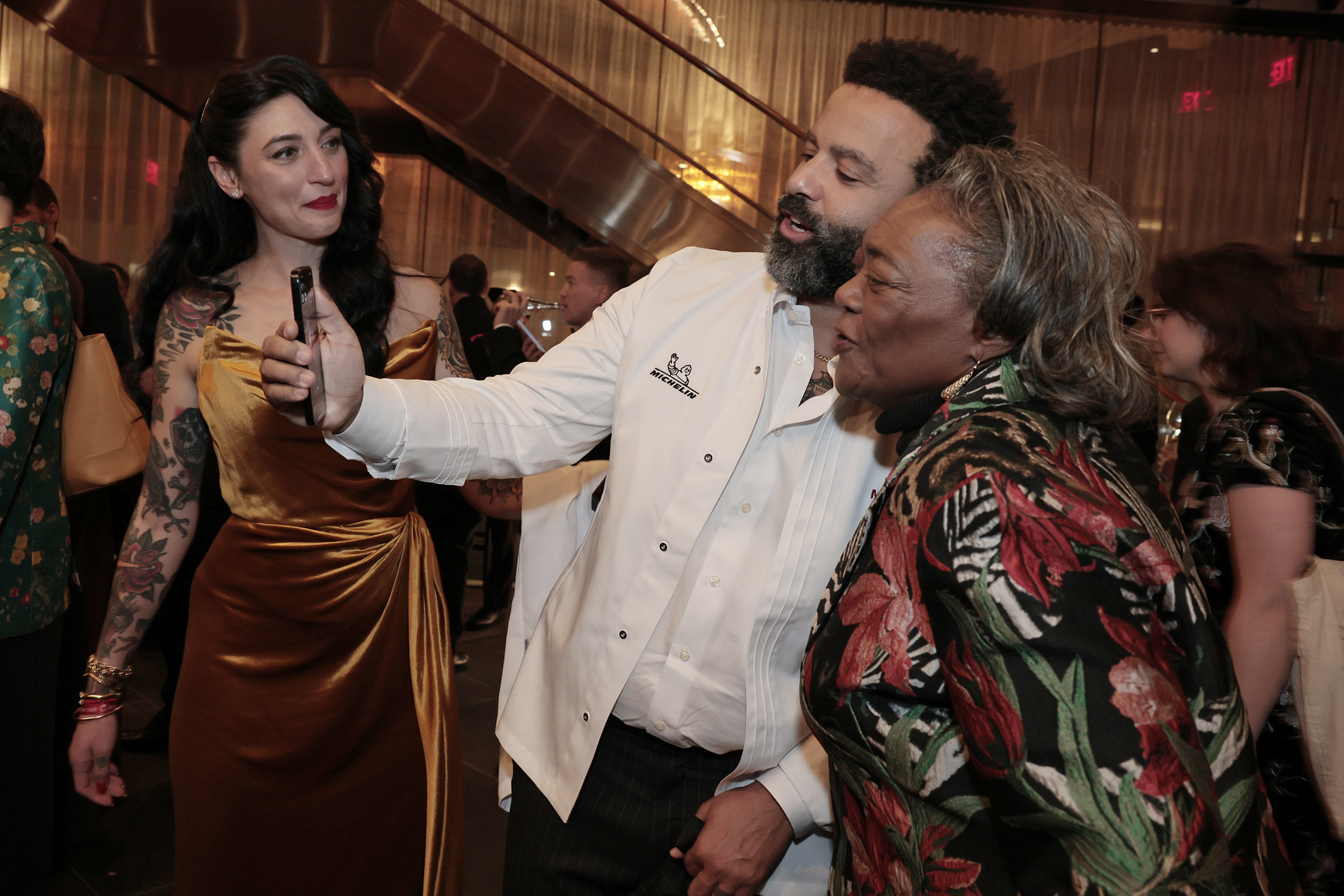
Hanna Williams looks on as her husband, chef Chad Williams, and Lynette Brown-Sow do a FaceTime after the Michelin awards at the Kimmel Center. Brown-Sow has known Chad Williams since he was a baby.
Ten Philadelphia restaurants received a Bib Gourmand — recognized as great food at a great value, though not star-worthy. They represent a mixed bag of cuisines and price points: cheesesteaks (Angelo’s, Dalessandro’s, Del Rossi’s), Israeli cuisine (Dizengoff), Mexican (El Chingón), pizza (Pizzeria Beddia, Sally), casual pasta (Fiorella), Japanese (Royal Sushi & Izakaya), and classic Jewish deli (Famous 4th Street Deli).
Michelin deemed 21 other Philadelphia restaurants as Recommended: Ambra, Forsythia, High Street, Hiroki, Honeysuckle, Illata, Kalaya, Laser Wolf, Laurel (whose final night will be Nov. 21), Little Water, Mish Mish, My Loup, Pietramala, River Twice, Roxanne, Southwark, Suraya, Vedge, Vernick Food & Drink, Vetri Cucina, and Zahav. Michelin says these restaurants serve high-quality food and use good ingredients.
Joe Beddia (from left), Greg Root, Nick Kennedy (rear), Chutatip “Nok” Suntaranon, and Roland Kassis with the Michelin Man at the Michelin Guide announcements Tuesday at the. Kimmel Center.
Besides the Recommended honor, Pietramala — chef Ian Graye’s vegan restaurant in Northern Liberties — was awarded a Green Star for demonstrating commitment to sustainability.
All can use the name “Michelin” in their marketing, a powerful tool that potentially boosts business.
Michelin, which operates in secrecy, bases the selections on its anonymous inspectors. Stars denote excellence: one star signals very good cuisine that’s “worth a stop,” two stars indicate excellence “worth a detour,” and three stars represent exceptional dining “worth a special journey.”
Chef Jesse Ito and Mia Colona at the Michelin Guide announcements Tuesdy at the Kimmel Center.
The ceremony, a milestone for Philadelphia’s profile as a dining destination, was the city’s highest-profile appearance since 2018, when the James Beard Foundation announced that year’s finalists for its annual chef, restaurant, and media awards in a ceremony at Parc.
It was a night of camaraderie, pride, and emotion. After heading to the stage to acknowledge Angelo’s Pizzeria’s Bib Gourmand, owner Danny DiGiampietro disappeared for a bit. “I had a walk outside,” he explained later. “I can’t stop crying.”
Philadelphia’s one-stars
Friday Saturday Sunday chef Chad Williams and his wife, Hanna, took over this storied Rittenhouse restaurant in 2016 and pivoted to a set multicourse menu. “Thanks to skilled technique, just the right amount of innovation and an innate understanding of the luxury ingredients he uses, his dishes fill the mouth with flavor and succulence,” the Michelin blurb reads. “His delicious crispy sweetbreads will convert any skeptic; quail with pâte plays with texture, and the New York strip is a lesson in expert seasoning. There’s a great cocktail bar on the first floor; the long, narrow, lively and warmly run restaurant is up a steep flight of stairs — and those stairs will seem even steeper when it’s time to leave. Expect an atmosphere as spirited and enjoyable as the food.”
Amanda Shulman (right) and her husband and business partner, Alex Kemp, giggle after winning a Michelin star for Her Place Supper Club at the Michelin ceremony at the Kimmel Center on Tuesday.
Her Place Supper Club, also in Rittenhouse, was born out of chef Amanda Shulman’s cooking for friends in her Penn campus apartment. Michelin praised its “warm and welcoming supper club vibe.” While diners may get their own table, “there’s a real communal feel at play here; everyone is served at the same time after Amanda has explained to the room the makeup of each dish and perhaps the influence behind it.”
Provenance, chef Nicholas Bazik’s sumptuous atelier across from Headhouse Square, delivers what Michelin calls “a high-wire, high-stakes performance defined by precision, harmony, and, of course, taste. Korean and French influences come and go with this elaborate tasting menu where special soys, vibrant oils and glossy sauces give wonderful dimension to pristine seafood and dry-aged proteins. Think Japanese tuna with whipped tofu, puffed sorghum and chili oil or brown butter hollandaise with country ham, caviar and cauliflower. The ideas are original, the flavors bold.”
The Michelin effect
All this boils down to commerce. City and state tourism boards have increasingly turned to Michelin — the French-based tire company that has been publishing the influential dining guides for decades — as food tourism plays a growing role in travel planning.
Ian Graye of Pietramala accepts a Green Star award at Tuesday’s Michelin Guide announcement event at the Kimmel Center.
Michelin has expanded rapidly in the United States over the last several years. Besides the American South region — covering Alabama, Louisiana, Mississippi, North Carolina, South Carolina, and Tennessee — there are guides for Texas and Colorado. Atlanta’s 2023 guide has since been rolled into the South. The Florida guide, launched in 2022, now includes Miami, Orlando, and Tampa. Internationally, it recently arrived in Qatar, New Zealand, and the Philippines.
(function() {
var l2 = function() {
new pym.Parent(‘michelin_philly’,
‘https://media.inquirer.com/storage/inquirer/projects/innovation/arcgis_iframe/michelin_philly.html’);
};
if (typeof(pym) === ‘undefined’) {
var h = document.getElementsByTagName(‘head’)[0],
s = document.createElement(‘script’);
s.type = ‘text/javascript’;
s.src = ‘https://pym.nprapps.org/pym.v1.min.js’;
s.onload = l2;
h.appendChild(s);
} else {
l2();
}
})();
The Philadelphia Convention and Visitors Bureau cites an Ernst & Young study, commissioned by Michelin, showing the guide’s influence: 74% of travelers consider Michelin’s presence a decisive factor when choosing a destination; 76% say they would extend a trip to dine at a recommended restaurant; and 80% report being willing to pay more for what they view as a Michelin-level dining experience.
For restaurants that receive distinctions, the impact is immediate as restaurants append “Michelin” to their social-media profiles.
The energetic and anxious crowd of chefs and restauranteurs during the Michelin ceremony at the Kimmel Center Tuesday, Nov. 18, 2025.
The reservations boost can be dramatic. In Charlotte, the 18-seat Counter sold about 900 reservations in the days after earning a star at the 2025 American South ceremony on Nov. 3, booking out through mid-February, chef-owner Sam Hart told Axios. About half the reservations came from out-of-town guests, including some international travelers.
In many U.S. markets, the guide is explicitly part of tourism strategies: Axios has reported that the states included in the South edition are collectively paying Michelin $5 million over three years. PHLCVB has not disclosed how much it paid for Michelin’s partnership, which was announced in May.
Chefs Jean Georges Vongerichten (left) and Thomas Keller posed with the Michelin Man ahead of Tuesday night’s ceremony at the Kimmel Center.
Not only can reservations rise, so can menu prices at the winning restaurants. A widely cited 2018 analysis by Carly Shin of George Washington University found that a one-star rating increases menu prices by about 15%, two stars by 55%, and three stars by roughly 80%.
Michelin says that 82% of chefs report increased revenue after receiving a distinction, 60% add new staff, and 58% say a nod boosts team motivation and morale — though anecdotally, some chefs acknowledge enormous pressure to maintain such a high level.
Michelin’s arrival has inspired the PHLCVB Foundation to sponsor the Philabundance Community Kitchen program, a 16-week culinary vocational training and life-skills program for adults with low or no income, offering hands-on kitchen experience, ServSafe certification, and post-graduation employment support in the food service and restaurant industry. The foundation will connect the recognized chefs and restaurateurs to the PCK program.