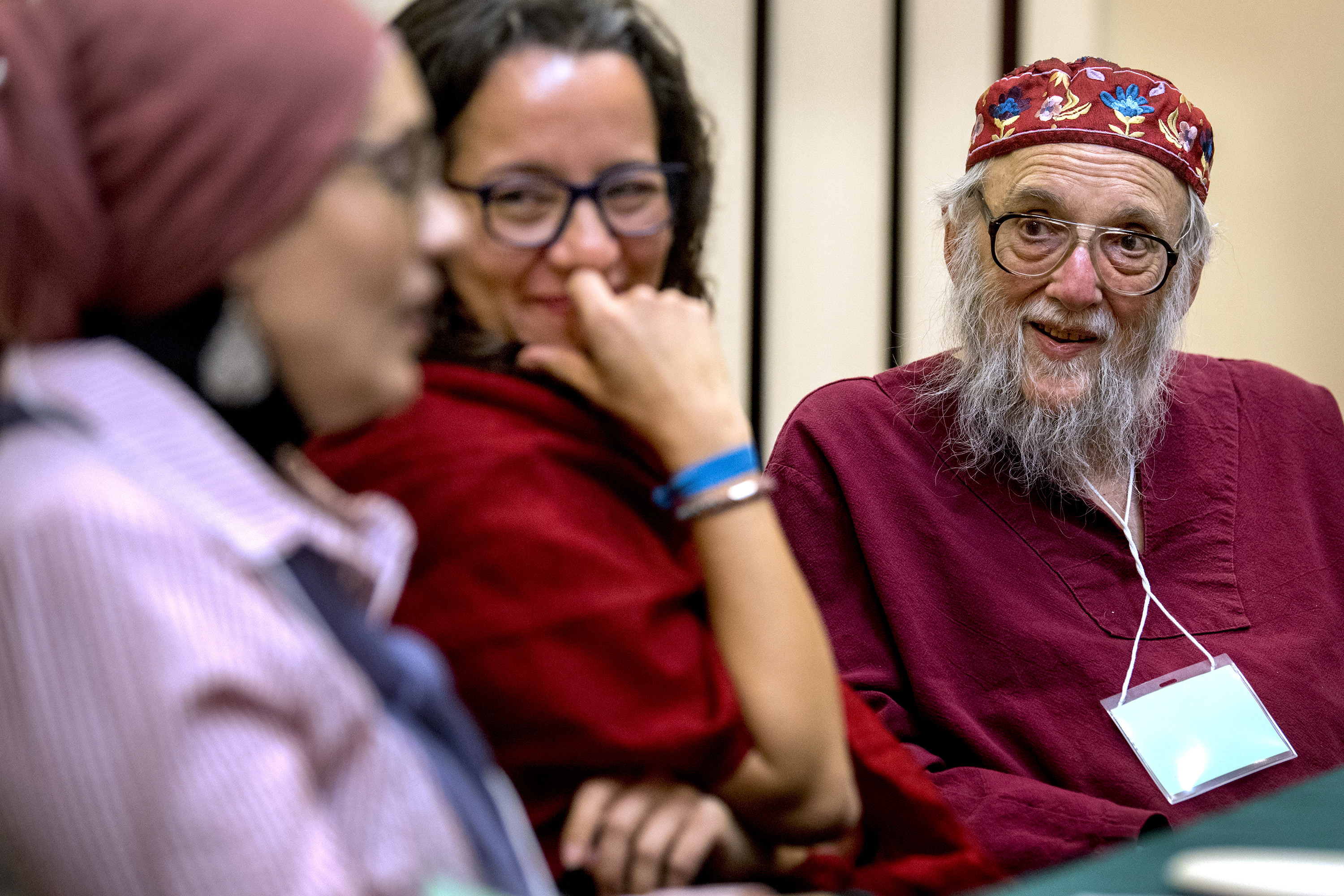
Arthur Waskow, 92, of Philadelphia, longtime social activist, pioneering Jewish scholar and rabbi, founder of the Shalom Center for public prophetic action, religion teacher, mentor, and prolific author, died Monday, Oct. 20, of chronic respiratory failure at his home in Mount Airy.
A longtime expert in Judaism, prophetic justice, and peaceful civil disobedience, Rabbi Waskow was so disturbed by the 1968 assassination of the Rev. Dr. Martin Luther King Jr. and the social unrest that followed that he protested, wrote about, and lectured around the country on what he called the “overwhelming crisis” of whether humanity will “build a decent society or will poison or burn it empty.”
For more than five decades, starting in Washington and then in Philadelphia, he connected contemporary social issues with Jewish traditions and championed prophetic justice regarding peace, nuclear disarmament, feminism, LGBTQ rights, same-sex marriage, environmental sustainability, and interfaith collaboration. “He consistently held that Judaism is not meant to stand above and apart from ordinary life, but rather to guide our actions in this life,” Rabbi Jill Jacobs said in a tribute.
Colleagues at the Shalom Center said he dramatically “fused social justice with traditional Jewish themes and spirituality.” Jacobs praised his “legacy of non-violent protest, his prophetic writing, and his courageous leadership.”
He established the Shalom Center for prophetic Judaism in Philadelphia in 1983, cofounded the Alliance for Jewish Renewal in 1993, and helped establish the National Havurah Committee, T’ruah: the Rabbinic Call for Human Rights, and other organizations. “He’s one of the most important figures to merge spirituality and politics since the 1960s,” Rabbi Tsvi Blanchard told The Inquirer in 2001. He “transcends categories and, as a result, he’s always crossing boundaries, but for good.”
Strategic action with compassion was usually his favorite tactic. He called his many disagreements with Jewish orthodoxy “a continuous loving debate” and told The Inquirer in 1970: “Jews have a radical role and mission to join with other communities to remake American society.” In 1993, he said: “In our generation, the people of the earth at last have to learn to share the great round earth or risk ruining it.”
He worked closely on social projects with Sister Mary Scullion of Project HOME, Rabbi Leonard Gordon of the Germantown Jewish Centre, and Imam Abdul-Halim Hassan of the Masjidullah Community Center Mosque. His embrace of the Jewish Renewal movement drew critics, but he never wavered in his support.
“There’s an unpredictability to him, a drama to him, a charisma to him,” Rabbi Gordon said in 2001. “That is who he is and has to be in challenging the community. We would lose too much without it.”
Rabbi Waskow celebrated the 50th anniversary of his Freedom Seder in 2019.
Rabbi Waskow was arrested dozens of times for peacefully protesting about segregation, immigration, and other issues. He wrote so many books he lost track of how many were published. “It’s either 19 or 20,” he told The Inquirer in 2007. “My wife said it’s the same number as the times I’ve been arrested.” He never retired.
He wrote and organized the first Freedom Seder in 1969 to recognize contemporary liberation efforts as well as the Exodus of the ancient Israelites. He was invited to President Clinton’s Middle East peace ceremony at the White House in 1993 and appeared in a TV ad in 2004 that denounced prisoner abuse in Iraq. “He found joy in reimagining Jewish holidays and prayers in ways that spoke to contemporary issues,” his family said in a tribute.
He came to Philadelphia from Washington in 1982 as a new faculty member at the Reconstructionist Rabbinical College and went on to teach religion at Swarthmore, Temple, Drew University in New Jersey, Vassar College in New York, and the Hebrew Union College-Jewish Institute of Religion in New York.
He wrote articles and op-eds for The Inquirer, Daily News, and other publications, and authored more than 25 books on all kinds of topics. His 1978 book Godwrestling and 1982’s Seasons of Our Joy are religious classics. In 1993, he wrote Becoming Brotherswith his younger brother, Howard.
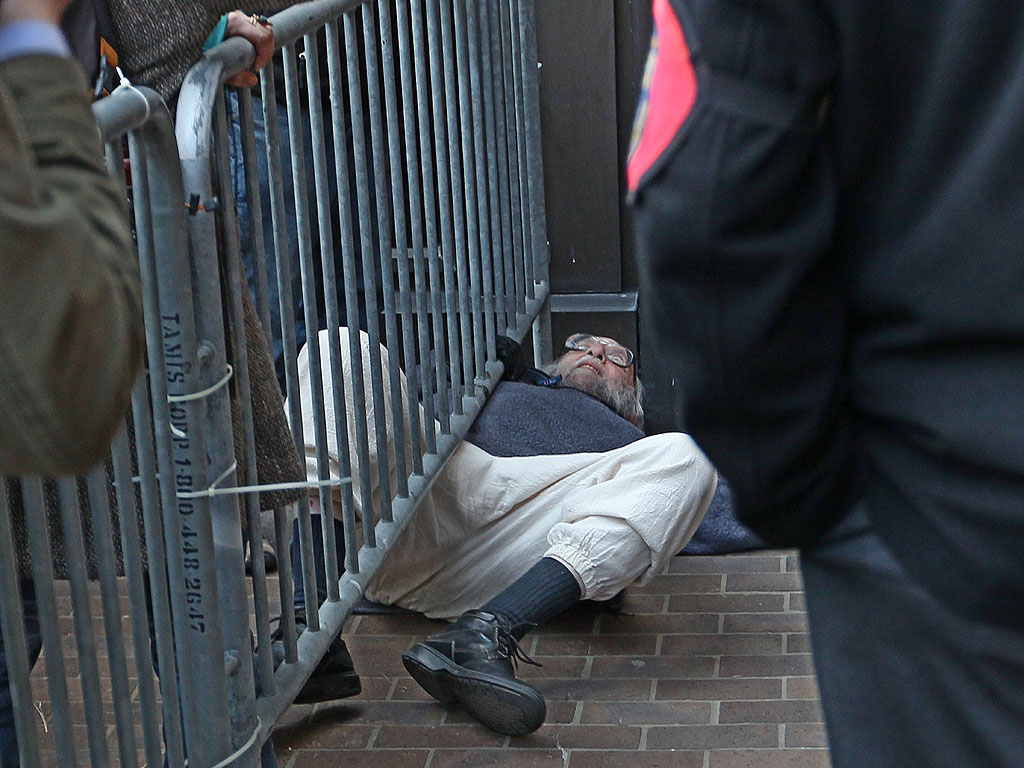
Rabbi Waskow crawls under a barricade so he could get arrested at a protest in 2014.
Rabbi Waskow won many awards and was recognized for his leadership and lifetime achievements by the Jewish Peace Fellowship, Neighborhood Interfaith Movement, and other groups. Newsweek named him one of the fifty most influential American rabbis in 2007.
Recently, he focused on describing God in traditional ways with modern insights. “Watching your kids begin to parent feels like there is a spiral to life,” he said in 2001.
Arthur Irwin Waskow was born Oct. 12, 1933, in Baltimore. He was always an avid writer and reader, especially science fiction, and fascinated by words.
His father was a high school history teacher, and, with his help, Rabbi Waskow won a newspaper history contest that paid part of his college tuition. He earned a bachelor’s degree in history from Johns Hopkins University in 1954 and a doctorate in American history from the University of Wisconsin in 1963.
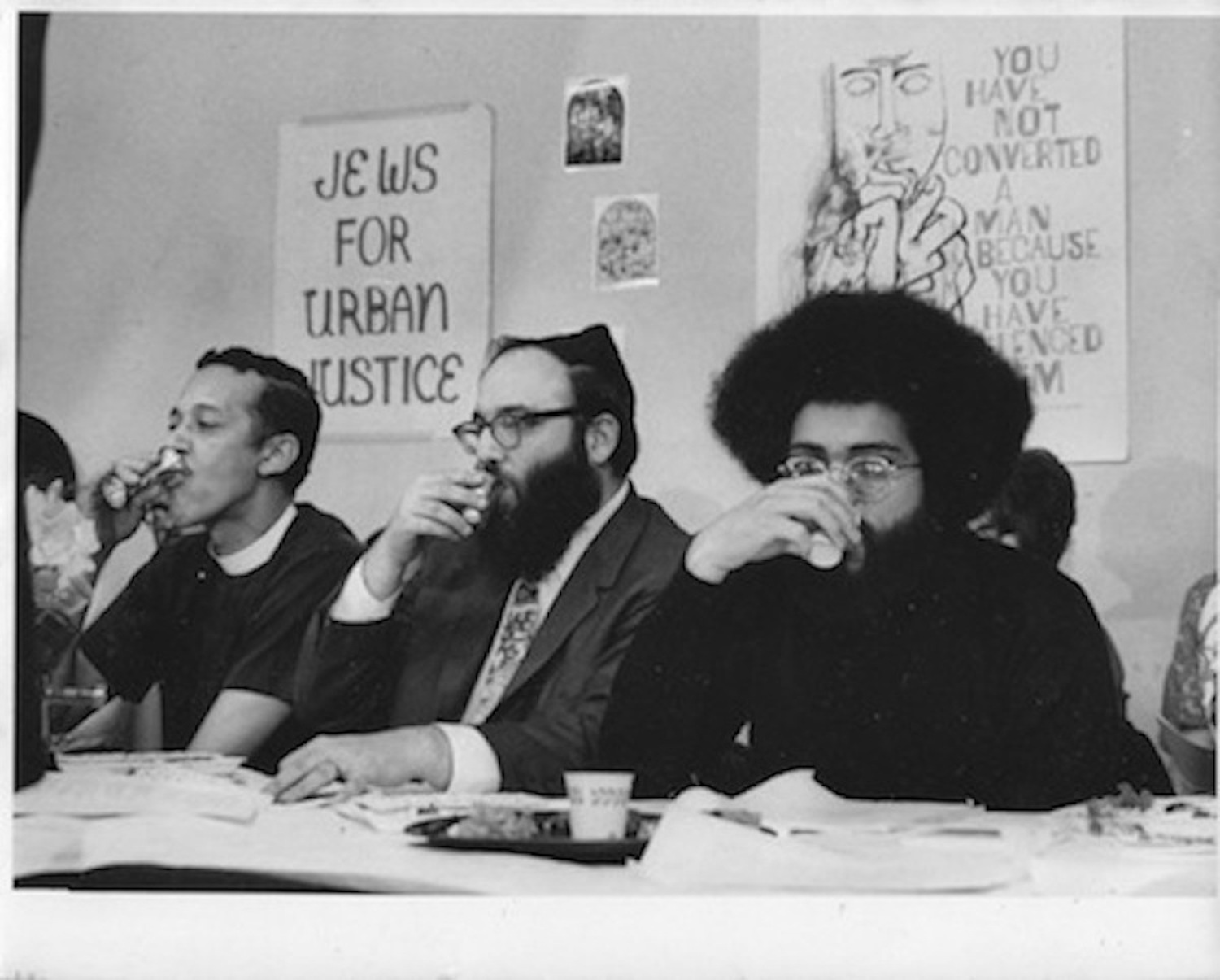
Rabbi Waskow (center) celebrates the first Freedom Seder in 1969.
He protested against the Vietnam War and other hot topics in the 1960s, and worked in Washington after college as an aide to U.S Rep. Robert Kastenmeier, and a fellow at the Institute for Policy Studies.
He married Irene Elkin, and they had a son, David, and a daughter, Shoshana. After a divorce, he met Rabbi Phyllis Berman at a conference, and they married in 1986, and both adopted the middle name Ocean.
Over the last 18 months, even though he couldn’t see, Rabbi Waskow wrote two more books. “He was very determined in the fullest sense of that,” his son said. His daughter said: “He was passionate about what he was passionate about.”
His wife said: “He was playful, brilliant, creative, and fierce. He was generous in every way.”
In addition to his wife, children, and former wife, Rabbi Waskow is survived by five grandchildren and other relatives. His brother died earlier.
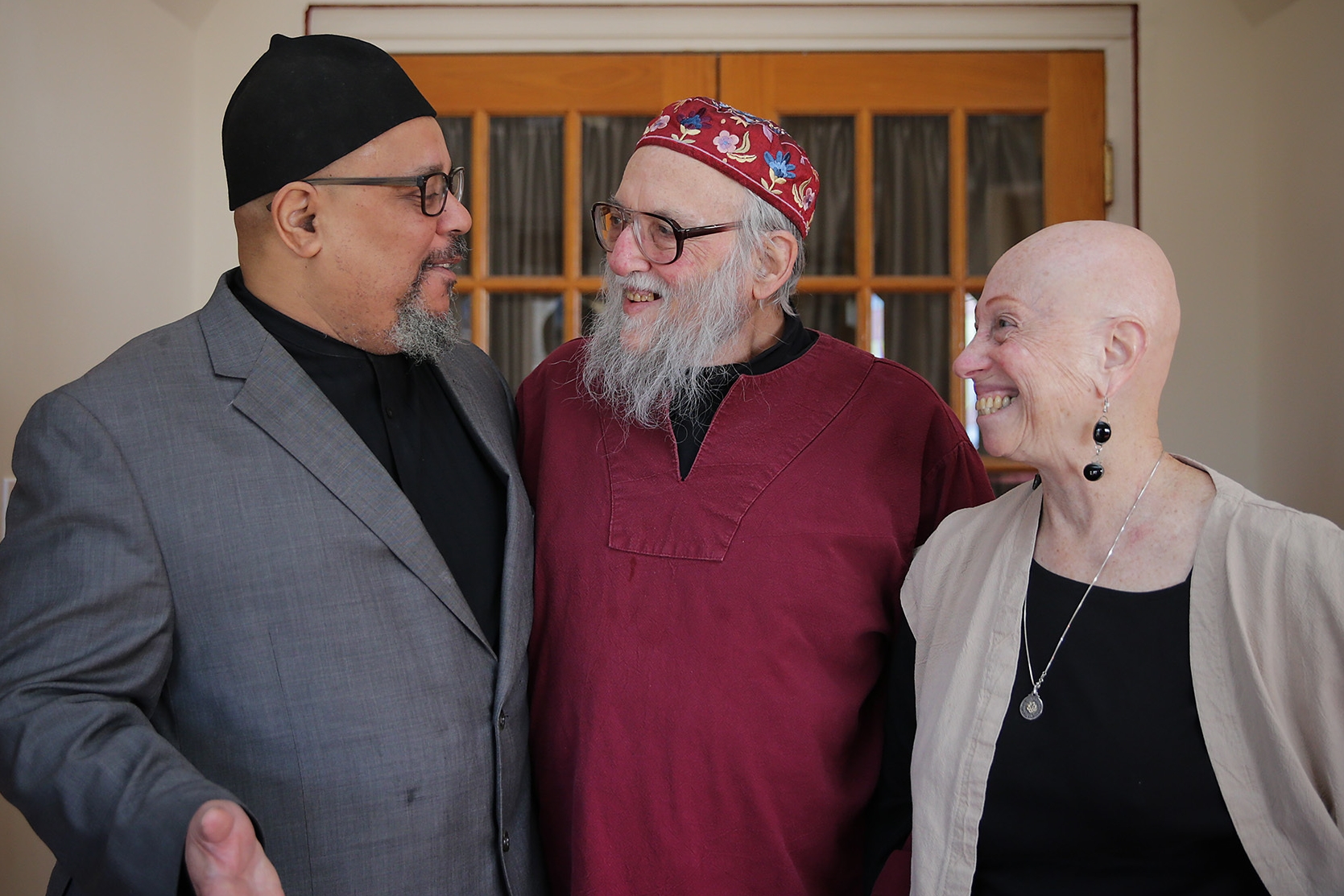
Rabbi Waskow (center) talks with his wife, Phyllis, and Imam Abdul-Halim Hassan in 2019.
Services were held on Oct. 22.
Donations in his name may be made to the legacy fund at the Shalom Center, 6711 Lincoln Dr., Philadelphia, Pa. 19119.
Pennsylvania and New Jersey turnpike officials have settled on two alternative plans for replacing the Delaware River Bridge that has linked their toll roads for 70 years.
Traffic has mushroomed since the interchange with I-95 opened in 2018, and the four-lane span is often congested, along with highways and roads in Bucks and Burlington Counties.
“We have a lot more traffic here … and it will keep growing,” said engineer John Boyer, the Pennsylvania Turnpike Commission’s project manager. “We need additional capacity.”
Before the I-95 connection was finished, about 42,000 vehicles a day crossed the Delaware River Bridge. Now, that’s up to around 67,000. Average daily traffic is projected to be 90,000 vehicles by 2050.
What are the two ‘finalist’ options for a new bridge?
In one scenario, the new bridge would be constructed at once about 75 feet north of the existing span over four years. Pennsylvania- and New Jersey-bound lanes (six in all) would be built 15 feet apart. When finished, all traffic would be moved to the new bridge. The existing bridge would be removed.
The other option: constructing the new bridge in stages, about 40 feet north of the existing bridge — over eight years. Initially, the first half of the new span would go up. Then four lanes of traffic would be diverted to the new half while the old bridge is demolished, after which the second half of the new bridge would be built. When complete, there would be six traffic lanes.
What are the next steps?
Turnpike officials are preparing a new environmental impact statement, required for federal approval and funding. The 2003 version is outdated.
The plan is to unveil the site decision in the spring. Then would come final design and the rest of the bureaucratic steps in building transportation infrastructure.
Construction could start in 2031.
The final cost of the project has not yet been estimated, officials said, but it won’t be cheap.
What’s the history of the project?
Talk of fixing the crossing started more than 30 years ago, and by 2003, after exhaustive environmental impact and engineering studies, authorities proposed building a modern bridge alongside the old one, which would be refurbished.
Federal highway officials signed off, but it never came together.
In 2010, the Pennsylvania Turnpike Commission formally deferred the project “due to funding constraints,” spokesperson Marissa Orbanek said.
A crack in a steel truss supporting the bridge closed the span for six weeks in 2017 and rekindled the idea. Engineers combed through nine possible sites north and south of the bridge and decided to replace rather than refurbish the span, as first planned.
The Pennsylvania Turnpike Commission and New Jersey Turnpike Authority are working together on the project.
In addition, the turnpike prioritized the connection to I-95 and widening the roadway to accommodate the additional traffic, as well as other projects — including removal of toll booths and switching to gantries that charge drivers by reading an EZ-Pass or snapping a picture of a vehicle’s license plate.
Act 44 was a workaround for a state constitutional prohibition on the use of the gas tax for public transit and legislators’ reluctance to hike that tax for highways and bridges.
The turnpike would contribute $750 million a year to the Pennsylvania Department of Transportation, split evenly between transit and roads.
That formula was tweaked in 2013 with Act 89, which raised the gas tax to finance roads and bridges and cut the turnpike’s annual payment to $450 million — with all of it going to transit — through 2022.
The toll road’s obligation to PennDot then dropped to $22 million a year.
Will the Pa. Turnpike need to acquire properties? Where?
It’s too early to say. Officials working on the project said they would have a better idea after the final proposal is chosen, expected in spring 2026. The two northern options are seen as likely to have fewer impacts than other alternatives considered.
What about a shared-use path for bikers and walkers?
Pennsylvania Turnpike officials have ruled that out, citing regulations barring pedestrians or nonmotorized vehicles on turnpikes and interstates — the connector is part of I-95 — as well as future maintenance costs. Advocates still want access.
John Boyle, a staffer for the Bicycle Coalition of Greater Philadelphia, pointed to several toll bridges with free paths that accommodate cyclists and pedestrians.
The Great Egg Harbor Bridge on the tolled Garden State Parkway, for instance, has bike and pedestrian lanes.
And the Gordie Howe International Bridge, a toll facility between Detroit and Windsor, Ontario, nearing completion, will have separate shared-use lanes.
What considerations guide the choice?
Boyer said they boiled itdown to picking a site that would have the lowest negative impact on the built and natural environments.
“We’re looking at it from a 10,000-foot view in the entire corridor: commercial impacts, industrial impacts, residential impacts, and potential impacts to billboards or cell towers in the area,” Boyer said.
Think you know your news? There’s only one way to find out. Welcome back to our weekly News Quiz — a quick way to see if your reading habits are sinking in and to put your local news knowledge to the test.
Question 1 of 10
The jewel heist at the Louvre this week caused a stir, marking one of the highest-profile museum thefts in living memory. But Philly’s seen its own fair share of heists over the years. In 2017, a man attending a party at the Franklin Institute broke this body part off a life-size Chinese terracotta warrior statue.
CorrectIncorrect. XX% of other readers got this question right.
While attending an after-hours ugly sweater party at the Franklin Institute, Michael Rohana broke the thumb off the warrior statue. He described the incident as a “drunken mistake” and returned the thumb, which he had taken home. Still, it caused international turmoil, with Chinese officials accusing the Franklin Institute of carelessness with the artifact. Rohana was eventually sentenced to five years’ probation, a $5,000 fine, and community service.
Question 2 of 10
In an interview on Switch the Play (with Roger Bennett of Men in Blazers), Joel Embiid said this sport was his first love:
CorrectIncorrect. XX% of other readers got this question right.
A young Embiid had dreams of being a footballer (as in soccer, not the NFL) until the 7-footer grew too tall for that to be in the cards. Even though he doesn’t play anymore, he’s still a passionate fan of Real Madrid and the Cameroonian national team.
Subscribe to The Philadelphia Inquirer
Our reporting is directly supported by reader subscriptions. If you want more journalism like this story, please subscribe today.
Which supermarket is opening at the former Walgreens in South Philadelphia at Broad and Snyder Streets in early 2026?
CorrectIncorrect. XX% of other readers got this question right.
New York-based Met Fresh is on track to open its first Philly location. The 13,000-square-foot supermarket will include a pharmacy, a fresh-cut produce department, and a deli counter. It is also applying for a license to sell beer and wine.
Question 4 of 10
In its review of HBO mini-series Task, the New York Times describes Delaware County as a ___ stretch of rural America.
CorrectIncorrect. XX% of other readers got this question right.
In the opinion piece, television journalist Alan Sepinwall, a New Jersey native who went to Penn, says show creator Brad Ingelsby — who grew up in Chester County — “transports us to a downtrodden stretch of rural America where a guy like Robbie has to resort to stealing from drug dealers in order to make ends meet.” But statistically, there’s really no argument to support that Delco is rural.
Question 5 of 10
Prime Video’s three-part series on this Philly-tied athlete premiered at the Philadelphia Film Festival this week:
CorrectIncorrect. XX% of other readers got this question right.
Prime Video’s Allen Iv3rsonfollows the journey of 11-time NBA All-Star Allen Iverson from Newport News, Va., to his career in the NBA, covering his life both on and off the court.
story continues after advertisement
Question 6 of 10
The popular phrase among Gen Z and chronically online crowds, “six-seven” (or “6-7”), has ties to Philly. Which local rapper kicked off the trend through lyrics in their song?
CorrectIncorrect. XX% of other readers got this question right.
Skrilla, 27, has more than 130 million streams across platforms and continues to rise in popularity. The Kensington-based artist’s song “Doot Doot (6 7)” features the first reference to “6-7.”
Question 7 of 10
This popular musician made an appearance in the crowds at Philadelphia’s installment of the “No Kings” rally against President Donald Trump and his administration. Who was it?
CorrectIncorrect. XX% of other readers got this question right.
Former Talking Heads singer David Byrne, amid three solo shows at the Met Philadelphia, told a fan at the "No Kings" march that “he wanted to be here for this.”
Question 8 of 10
Barry Leonard, 87, formerly of Philadelphia, known for pioneering legal change to allow unisex hair salons, died this month at his home in Hallandale Beach, Fla. Leonard was best known as this term:
CorrectIncorrect. XX% of other readers got this question right.
In the late 1960s, Mr. Leonard gave local advertising whiz Elliott Curson a haircut, and Curson, delighted with the result, suggested rebranding Mr. Leonard as “a crimper,” British slang for hairdresser. What followed was a hugely successful ad campaign and a friendship that lasted more than 50 years.
Question 9 of 10
As the United States women's national soccer team took on Portugal at Subaru Park this week, it’s worth noting that this USWNT player is an “honorary Philadelphian” due to her local ties — and Inquirer reporter sister.
CorrectIncorrect. XX% of other readers got this question right.
Sam Coffey, 26, is a product of Penn State and now one of the U.S. team’s certifiable stars: an Olympic gold medalist, defensive midfield stalwart, and even a captain for a few recent games. She’s also the sister of Inquirer sports writer Alex Coffey.
Question 10 of 10
What is the title of Josh Shapiro’s upcoming memoir?
CorrectIncorrect. XX% of other readers got this question right.
On Tuesday, Harper — an imprint of HarperCollins Publishing — announced the release of Shapiro’s forthcoming memoir, Where We Keep the Light: Stories From a Life of Service, which will hit shelves on Jan. 27, 2026. The book will detail Shapiro’s career and personal life, including when a man firebombed the governor’s mansion while Shapiro and his family slept inside and his place on the short list for Kamala Harris’ vice president.
Your Results
You have skipped .
You scored XX out of 10.
The average reader scored XX out of 10
Seems like you’ve been skimming more than reading there, buddy. There’s always next week.
You’ve read some articles (or made some educated guesses) but we wouldn’t come to you first for our local news recaps. Better luck next week!
Do you work here? You’re a local news stan with the latest updates on Philly happenings. Your friends definitely ask you for summaries on what’s going on and it shows.
A sixth person will go to trial over the September 2022 shooting outside Roxborough High School that killed 14-year-old Nicolas Elizalde and wounded four others.
Zaakir McClendon, 20, will be tried for his alleged role in the deadly ambush, which began when five young men armed with handguns burst from an SUV and sprayed more than 60 bullets at a group of boys who had just finished junior varsity football practice.
Police said a sixth person was driving the SUV. Police arrested five people in the months after the incident but did not charge McClendon until August.
At a preliminary hearing — a court process to decide whether there is enough evidence for someone to go to trial — Judge David H. Conroy reviewed video footage and cell phone records and heard from detectives.
A painting of Nicolas Elizalde, that his mother Meredith Elizalde is bringing with her as part of a small colleciton of her sons things as she packs to start a new life in Montana, two years after Nicolas was killed in a shooting, in Aston, PA, August 15, 2024.
Citing text messages, Philadelphia Police Detective Robert Daly said the shooting happened after McClendon told another defendant in Elizalde’s killing that a Northeast High School football player had assaulted a girl he knew. The Northeast and Roxborough junior varsity teams were playing a scrimmage on the day of the shooting. Elizalde, a freshman at Walter B. Saul High School who played football for Roxborough, had nothing to do with the girl, police said.
“It’s clear to me that this defendant set this all in motion,” Conroy said of McClendon.
Stephen Grace, who was a detective on the case, said police found DNA on one of the 64 cartridge casings left at the scene among the bullet fragments and discarded football equipment.
For nearly three years, police searched for the person whose DNA was found on the 9mm casing. After police in July charged McClendon with killing a 16-year old boy, and his DNA was uploaded into a criminal database, they got a match, Grace said.
Two men have already pleaded guilty and been sentenced to decades in prison for their involvement in the shooting. Three others will soon go to trial — and now, McClendon is likely to join them.
“The goal now is to link these cases and try these defendants together,” said Assistant District Attorney Ashley Toczylowski.
Lee Maniatis, 58, was one of several senior employees of Mark 1 Restoration who participated in the crimes. But prosecutors said he played a central role, influencing the Amtrak project manager, Ajith Bhaskaran, to sign off on a series of additional contracts worth tens of millions of dollars.
His prison term will be followed by three years of supervised release. Maniatis has already paid a $278,000 restitution fee, though he will also be required to contribute to a restitution fund of more than $2 million alongside his former associates.
In all, Maniatis and his colleagues funneled gifts worth more than $323,000 to Bhaskaran between 2016 and 2019, buying him luxury wristwatches and cigars, pricey vacations to India and the Galápagos Islands, Bruno Mars concert tickets, lavish dinners in Center City, and rides in limousines.
In exchange, Bhaskaran helped secure tens of millions of dollars in extra government-funded work for Mark 1 Restoration, ultimately doubling the cost of what began as a $58 million project to renovate the historic train station’s limestone facade.
While the firm did legitimate work on the property, most of the gifts were effectively subsidized by the government because Mark 1 falsely inflated its invoices by $2 million to cover the bribes. And Amtrak explicitly prohibits firms from offering gifts in exchange for favorable contracts.
Prosecutors had ample evidence linking Maniatis to the bribes. Around the time of a January 2017 dinner between Maniatis, a colleague, and Bhaskaran, the Amtrak employee was considering whether to authorize an additional $13.4 million work order for the firm. Maniatis, prosecutors said, gave Bhaskaran a Tourneau worth more than $5,000 during that meeting.
Bhaskaran approved the contract days later, and “[d]inner was worth it,” Maniatis texted an associate. Later he texted his boss: “$ ding.”
Maniatis, accompanied by his wife, appeared in federal court in Philadelphia Thursday and teared up as he read a statement to U.S. District Judge Wendy Beetlestone.
“I’m completely ashamed,” he said. “I was sick about it then, I’m sick about it now.”
The judge said the former executive’s remorse was palpable. But she said Maniatis had a choice to go to authorities over those three years — and didn’t.
“Only when federal agents raided his home” in 2019 did Maniatis admit to his wrongdoing, Beetlestone said.
“He could have resigned,” she continued. “He could have reported it to the FBI.”
Theodore T. Poulos, one of Maniatis’ defense attorneys, said he still recalls the day after that raid, when the former executive told the lawyer he’d “ruined his life.”
Poulos said Maniatis had been a victim of “misguided loyalty” to Mark 1’s owner and president, Marak Snedden, who pleaded guilty to charges of conspiracy to commit bribery and making a false claim in the scheme.
Still, U.S. Attorney Jason Grenell said, Maniatis “made a choice” to siphon public taxpayer money to “line people’s pockets.”
The attorney commended Maniatis for being the first defendant in the case to plead guilty for his crimes, swiftly admitting his guilt while his coconspirators fended off the government’s allegations in court, Grenell said.
Maniatis is not the first Mark 1 employee to face prosecution.
Early this month, Snedden, was sentenced in Beetlestone’s courtroom to 7½ years in prison. The admission made Snedden the sixth person involved to face consequences for the scheme.
Bhaskaran had been charged with unrelated wire fraud in 2019 but died of heart failure a year later.
Court documents show Bhaskaran had outsized power to approve work on behalf of the transit agency — and that his signature on “substantially overbilled” work routinely corresponded with sumptuous treatment from Maniatis and Mark 1 employees.
One such instance came in December 2017, when Bhaskaran authorized an additional $5.6 million in work for the firm. That same month, court records show, Maniatis paid $9,500 for him to visit India with a relative.
Maniatis emailed Bhaskaran tickets the following year priced at $766 for a New Year’s Eve party at Stratus, a rooftop lounge at Kimpton Hotel Monaco — a purchase investigators said Maniatis had made on his own credit card.
And when Bhaskaran decided that the Tourneau watch was not to his liking, Maniatis was ready to return it and purchase Bhaskaran an even more expensive timepiece, spending $11,294.
Beetlestone denied Poulos’ request that Maniatis be allowed to spend the entirety of his sentence on probation. He will serve his term at a prison in Lewisburg, Pa.
“Lack of fortitude is not an excuse for criminal conduct,” Beetlestone said.
Staff writer Chris Palmer contributed to this article.
A month after Keon King was charged with breaking into his ex-girlfriend’s home and attempting to strangle her, police say, his violence escalated: In January, he returned to her home with a gun, then kidnapped and assaulted her.
A warrant for his arrest was issued days later.
In the weeks that followed, King twice appeared in Philadelphia court and stood before a judge in the initial strangulation case. But no one in the courtroom seemed to know he was wanted for kidnapping.
So both times, King walked out.
In February, despite the warrant for King’s arrest, prosecutors — seemingly unaware that police said he had recently attacked their key witness — withdrew the burglary and strangulation case when the victim failed to appear in court.
Police did not go to either hearing to take him into custody, and do not appear to have alerted the prosecutor about the new arrest warrant.
And King was not formally charged with the kidnapping until April, when, for reasons that are unclear, he turned himself in.
Kada Scott, 23, was abducted from outside her workplace on Oct. 4, police said.
A review of King’sprevious criminal cases raises questions about whether police and prosecutors could have been more vigilant in holding him accountable for the earlier crimes they say he committed.
City Council has since vowed to hold a hearing examining how the city’s criminal justice system handles cases of domestic violence.
But even before the charges were withdrawn, police and court records show, there were missteps.
Marian Grace Braccia, a former Philadelphia prosecutor who is a law professor at Temple University, said she found it alarming that law enforcement failed to take King into custody when he twice stood before them in court while wanted for a violent felony.
“If this is supposed to be a collaborative effort — if there is a shared mission of public safety and victim advocacy — it sounds like everyone dropped the ball,” she said.
Detectives and prosecutors, she said, should have been aware of the arrest warrant and had officers take him into custody.
Then, she said, prosecutors could have cited the alleged kidnapping to ask a judge to increase King’s bail and keep him behind bars.
Instead, she said, “it passed by everybody, and he came in and walked out, and slipped through the cracks of the Philadelphia legal court system.”
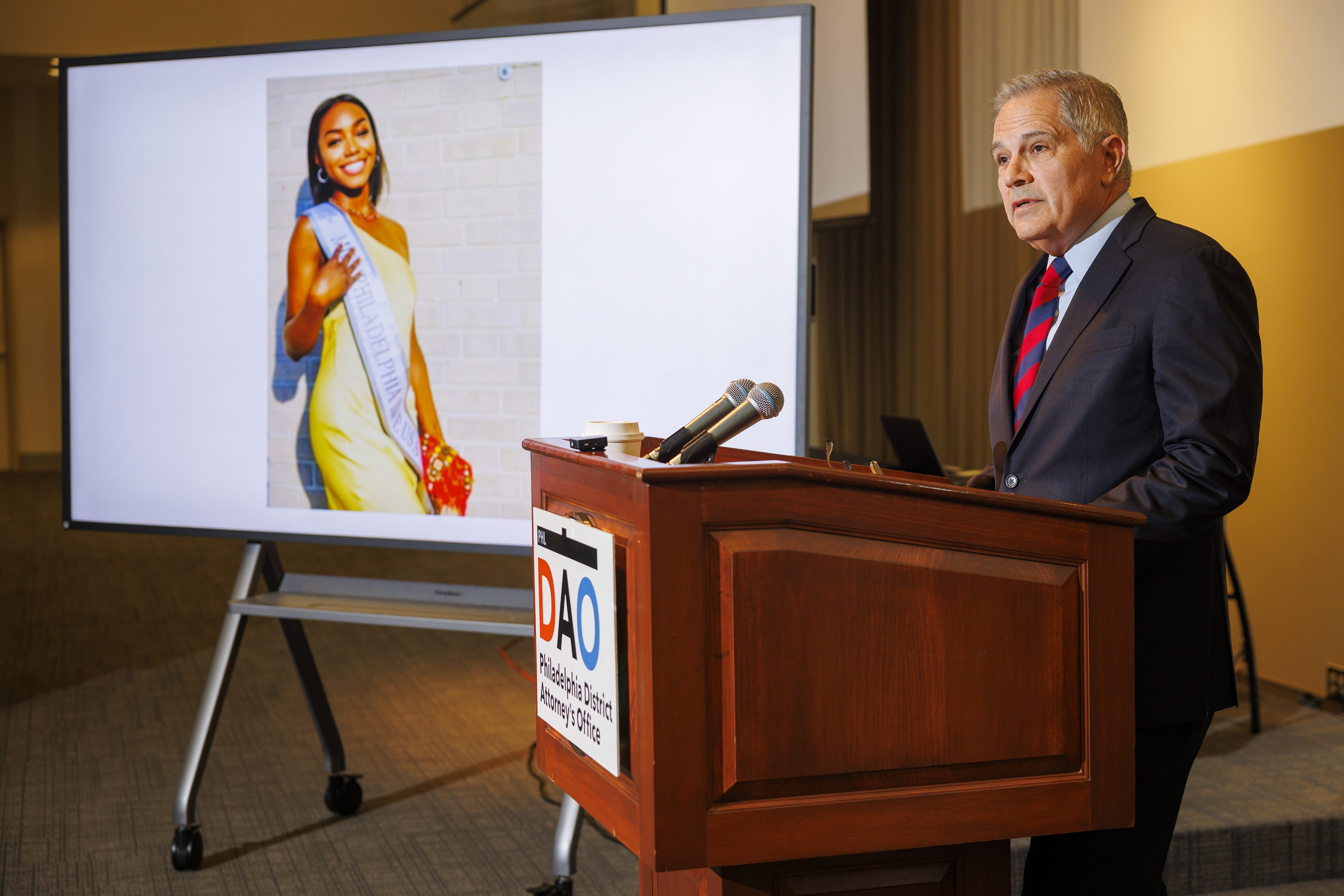
Philadelphia District Attorney Larry Krasner discusses the killing of Kada Scott at a news conference earlier this week.
Krasner said there is no system to automatically notify prosecutors when a defendant in one of their cases is arrested anew.
Similarly, there is no system to let police know that suspects in new cases have outstanding criminal matters, said Philadelphia Police Department spokesperson Sgt. Eric Gripp.
“Detectives are not automatically notified when a wanted subject is physically present in court on a different active case,” he said.
Krasner said the issues in the case underscore a lack of communication among law enforcement agencies that happens in part because their digital information systems are decades old. He said his office and other law enforcement agencies should work to update those systems.
“That is something that we can all improve together if we have the will and if we have the resources,” he said.
A wanted man walks free
Police said King first attacked his ex-girlfriend in early November of last year. He broke into her Strawberry Mansion home, then tried to strangle her, according to the affidavit of probable cause for his arrest.
He was taken into custody in December and charged with burglary and strangulation, and bail was set at $50,000. King immediately posted the necessary 10%, $5,000, and was released.
About a month later, police said, King returned to the woman’s home and tried to break in. When he could not gain entry, they said, he waited for her to step outside, then grabbed her by the hair and dragged her into his car. He drove for at least four miles, beating her along the way, before dropping her off in Fishtown, according to the affidavit for probable cause for his arrest.
A judge approved the warrant for King’s arrest on charges of kidnapping, strangulation, and related crimes on Jan. 19, court records show.
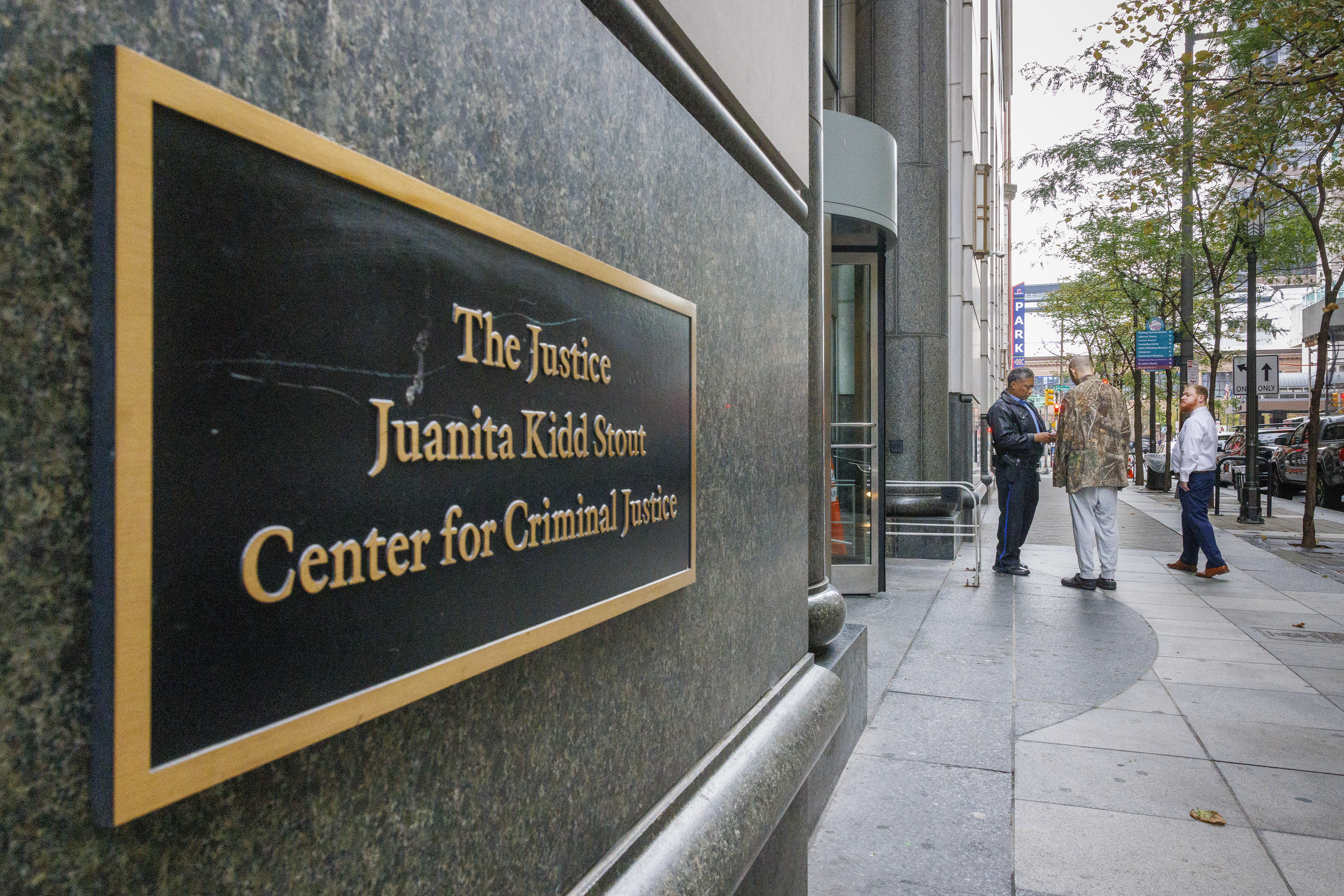
The Justice Juanita Kidd Stout Center for Criminal Justice in Philadelphia.
King — now wanted for a violent felony — appeared in court the following week for a preliminary hearing in the earlier burglary case, records show. But when the victim did not show up in court a second time, Municipal Court Judge Jacquelyn Frazier-Lyde ordered that the case had to proceed at the next listing. Prosecutors agreed.
King left court.
Meanwhile, police said, officers tried at least once to arrest him. On Feb. 11, Gripp said, police went to a home where they thought King might be, but he was not there.
Two weeks later, King was again in court for the burglary case — but police did not go there to arrest him. Once again, the victim did not show up, and prosecutors withdrew the charges
King walked out of court a free man.
Braccia, the Temple law professor, said the detective assigned to the case should have been aware of the hearing. When seeking to charge King for the kidnapping, she said, the detective should have pulled up King’s arrest history and noticed the ongoing case. He then could have flagged it to the prosecutor in the first case and gone to the hearing to arrest him.
At the same time, she said, the prosecutors who approved the kidnapping charges against King should have noticed the earlier case and told the prosecutor — particularly because it involved the same victim.
In April, King turned himself in to police to be charged with kidnapping, strangulation, and related crimes in connection with the January attack. Prosecutors asked for bail of $999,999, but the magisterial judge, Naomi Williams, set bail at $200,000, court records show. King posted the necessary $20,000 and was released.
The following month, after the victim again did not appear in court at two hearings, the kidnapping charges were also withdrawn.
Since prosecutors have refiled the charges, Krasner’s office said it has been back in touch with the woman and hopes she will testify. She declined to comment about King’s alleged crimes and the previous handling of the cases by police and prosecutors.
Six months later, King is back in custody, this time charged with murder. He is being held without bail.
The wife of the founder of Par Funding, a fraudulent and now-defunct Philadelphia-based lending firm, was sentenced Thursday to one day in jail and 60 days of house arrest for dodging about $1.6 million in taxes she should have paid on income derived from the scheme.
Lisa McElhone apologized for her conduct during a sentencing hearing before U.S. District Judge Mark A. Kearney, saying the spectacular implosion of her husband’s business — and the criminal prosecution of people associated with it — was the “most painful and transformative period of my entire life,” causing her to lose her home and her future, and watch her husband get sent to prison.
“It’s difficult, if not impossible, to express how overwhelming and life-altering this has been,” she said.
Prosecutors acknowledged that McElhone — the owner of an Old City nail salon — had almost nothing to do with Par’s day-to-day operations. And the crimes she was charged with paled in comparison to those of others associated with the business — particularly her husband, Joseph LaForte, who ran the cash-advance firm as a Mafia-style criminal enterprise that defrauded investors out of hundreds of millions of dollars, and resorted to loan shark-style tactics in efforts to collect on debts.
Still, Kearney said, McElhone, 46, did bear some responsibility by failing to question aspects of the life she was afforded that she should have known were too good to be true.
“These things only stop when good people … stop and say, ‘Hey, you’re asking me to go a step too far,’” he said. “That’s the only way these things stop. Because otherwise, if everyone falls in line, everyone goes to jail.”
Kearney said McElhone’s one-day prison stint would be Thursday. She will then serve a three-year term of supervised release, he said, and her 60 days of house arrest will begin in January 2026.
McElhone’s sentencing was notable as the final criminal proceeding for about a half-dozen people charged in connection with Par Funding, which prosecutors have called one of the biggest financial frauds in Pennsylvania history.
LaForte received the stiffest sentence: a 15½-year prison term that Kearney imposed earlier this year. LaForte founded Par to offer quick loans at high interest rates to borrowers deemed too risky to secure financing from traditional banks, but lied to investors about the company’s financial health to raise more money, used thuggish tactics to threaten borrowers who fell into default, and hid tens of millions of dollars from the IRS for his personal use.
Others charged included LaForte’s brother, who also received a lengthy prison term for participating in various aspects of the firm’s crimes. And earlier this week, two financial professionals, Rodney Ermel and Kenneth Bacon, were ordered to serve 2½ years and 6 months, respectively, behind bars for helping devise the fraudulent tax structures connected to the crimes.
Assistant U.S. Attorney Matthew Newcomer said it was perhaps fitting that McElhone’s penalty was the last to be imposed, given her limited connection to the business.
“But I think it does speak to the breadth and severity” of Par’s misdeeds, he said, “that even the least-culpable person is still on the hook for a $1.6 million tax loss.”
Par was founded in 2012 by LaForte, who was legally barred from selling securities because of previous felony convictions for financial crimes.
One way he got around that was to list McElhone as Par’s chief executive on official documents. Then, LaForte and others he recruited to work for him — including experienced financial professionals — ran radio ads and staged fancy solicitation events to raise more than $500 million, all as they portrayed the business as legitimate and lucrative.
In reality, prosecutors said, it was losing tens of millions of dollars a year. But to keep the fraud going, some of Par’s executives lied about the business’ financial health to keep raising money, and others threatened to harm or even kill borrowers who fell into default.
Still, prosecutors said McElhone was effectively uninvolved in the business, spending her workdays instead running the Old City nail salon Lacquer Lounge.
That doesn’t mean McElhone did not benefit from her husband’s grift. LaForte and his partners extracted cash from Par and spent it on things like a private jet, boats, paintings, expensive watches and jewelry, and homes in the Philadelphia area, Florida, and the Poconos.
And in the single count to which McElhone agreed to plead guilty last year, prosecutors said she knowingly signed a tax form claiming she and LaForte were living in Florida — where there is no state income tax — even though they spent most of their time that year in their $2.5 million Haverford home.
That deception led her to avoid paying about $1.6 million in taxes, prosecutors said, an amount she will now be forced to help repay.
Kearney, the judge, said that others might have been more responsible for the wide array of Par’s wrongdoing — but that she needed to be held accountable for failing to stop the wrongs that unfolded before her.
“When you get in a relationship with people,” he said, “make sure you keep your identity. Because you don’t want to be the person going to jail for their crimes.”
The head of the Pew Charitable Trusts is stepping down.
Susan K. Urahn, president and CEO, is expected to retire in early 2027 after a search for a successor is completed and the new leader has begun working at the organization, a Pew spokesperson said.
Urahn, 72, began at Pew in 1994 and took the top job in 2020 following the retirement of longtime chief Rebecca W. Rimel.
Neither Urahn nor board chair Christopher Jones were made available for interviews. But, in a statement posted on Pew’s website, Urahn said she was fortunate to work with colleagues and a board “all dedicated to finding common ground and using facts as the foundation for discussion and action.”
“Under Sue’s leadership, Pew has become even better and stronger,” read a statement attributed to Jones.
Pew — which has offices in Philadelphia, Washington, D.C., and other cities — is a combination foundation/think tank, conducting research and disbursing grants to nonprofit organizations.
In Philadelphia, it awards money to arts groups through the Pew Center for Arts and Heritage. Its D. C-based Pew Research Center provides research on demographic trends and social issues, as well as polling on matters like politics, religion, climate change, and the role of technology in daily life.
Pew’s work is funded through seven charitable trusts established between 1948 and 1979 by the children of Sun Oil Co. founder Joseph Newton Pew and his wife, Mary Anderson Pew. As of June 2024, the collective value of the trusts was $6.1 billion, a spokesperson said.
In addition to funding Philadelphia arts groups and individual artists, Pew has sometimes taken a more activist role by partnering with other philanthropists on large civic projects costing tens of millions of dollars, such as the 2012 move by the Barnes Foundation from Merion to the Ben Franklin Parkway. In 2008, Pew contributed millions toward a bailout of the Kimmel Center that relieved it of debt left over from the arts center’s construction phase.
Urahn, most recently based in D.C., worked her way through several posts — including director of Pew’s planning and evaluation division; director of the Pew Center on the States; and executive vice president for Pew’s work on state policy, economics and healthcare.
A search for a new president is expected to begin in January.
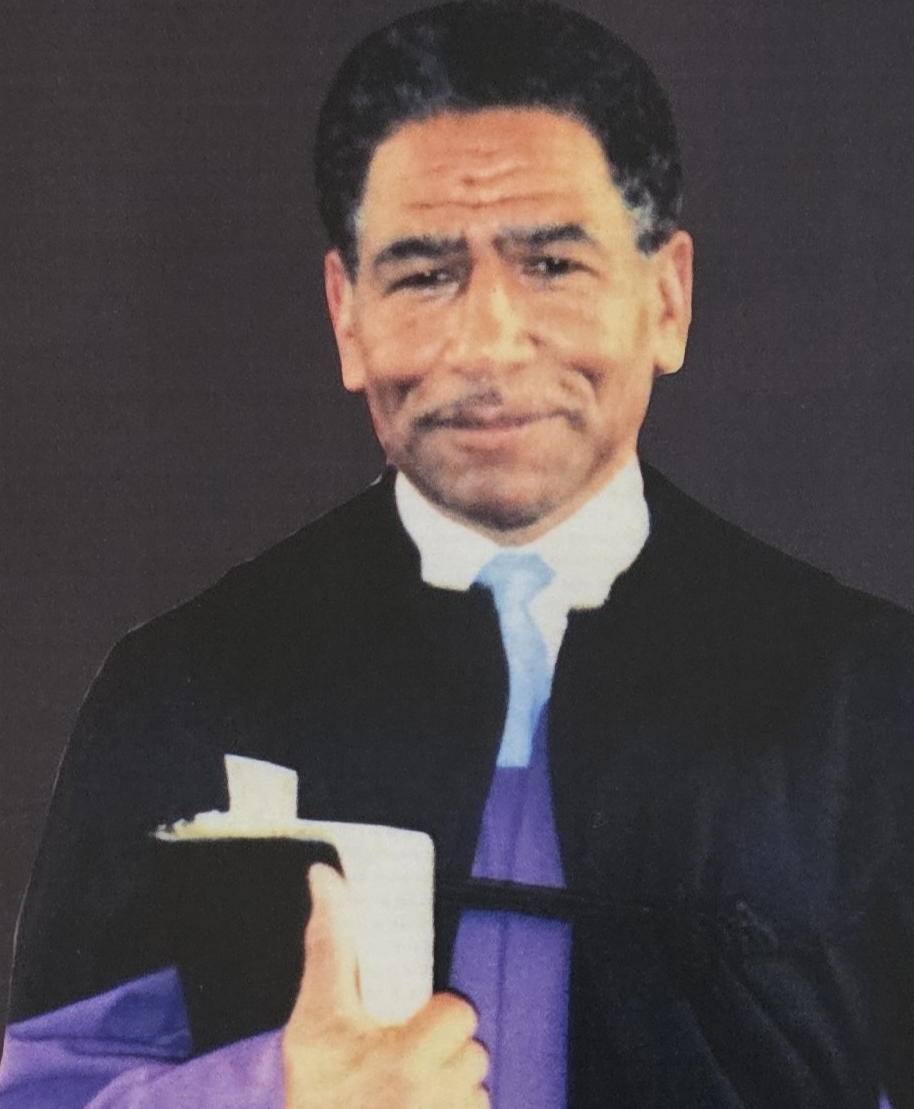
William B. Starks, 96, of Philadelphia, pastor emeritus at Community Baptist Church in Chester, former associate pastor at Greater Ebenezer Baptist Church in Philadelphia, retired supervisor for the Philadelphia Parks and Recreation Department, Montford Point Marine, lifelong singer, and volunteer, died Saturday, Oct. 4, of age-associated decline at Germantown Home rehabilitation center.
Born and reared in Nashville, Tenn., the Rev. Starks grew up singing in church every Sunday. So his wife and two daughters were not surprised that he was ordained in 1966, served 31 years as pastor at Community Baptist, and continued to sing in choirs and elsewhere for the rest of his life.
He was energetic and empathetic, they said, and he became so effective as a spiritual and practical mentor in Chester that city and church officials dedicated part of West Seventh Street in his honor on June 1. They renamed a segment of the street as Rev. William B. Starks Way, installed a sign at Fulton and West Seventh Streets, and called it “a lasting tribute to his selfless service and deep impact on our community.”
The Rev. Starks was recruited from Greater Ebenezer Baptist by Community Baptist in 1978 and commuted every Sunday, and sometimes three nights a week, from his home in West Oak Lane to the church in Chester. His family said he never missed a Sunday service.
Rev. Starks ministered at Community Baptist Church in Chester from 1978 to 2009.
“His love for the Word of God encouraged him,” his family said in a tribute.
The Rev. Starks was direct and serious in the pulpit, and willing to “roll up his sleeves and fight your fight,” his daughter Rhonda said. He created a Presidents Council to better organize church affairs, celebrated when the church paid off the mortgage, and encouraged its use as a satellite location for the Manna Bible Institute.
He invited women and young pastors to preach, and induced the Rev. Jesse Jackson, Gov. Ed Rendell, Rep. Robert Brady, and other notables to address his congregation. His outreach and ministry were recognized in awards and honors from the Four Chaplains Memorial Foundation and other church groups.
In the community, he monitored schools and families for discord, and confronted street-corner problems he encountered. He spoke out often against violence, injustice, crime, and drug abuse.
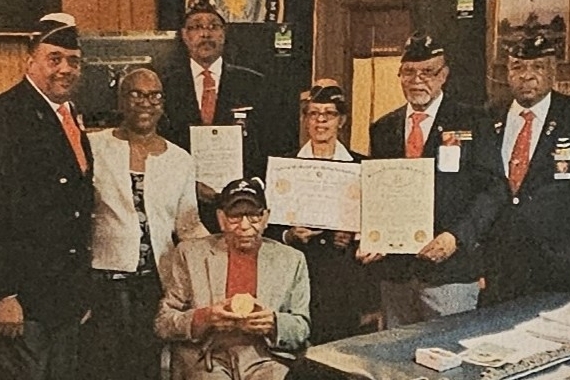
Rev. Starks (front center) is honored by the Philadelphia chapter of the National Montford Point Marine Association.
“He truly believed in the church being involved spiritually, socially, and politically,” his family said. “He truly had a heart for the people.” Earlier, he attended Tenth Memorial Baptist Church and studied theology at what is now Cairn University in Langhorne.
The Rev. Starks worked at Philco and Whitman’s Chocolates in Philadelphia after he left the Marines in 1952. He spent 25 years with the Philadelphia Parks and Recreation Department, earned service commendations from the Fairmount Park Commission, and left when he became pastor at Community Baptist. He retired from the church in 2009.
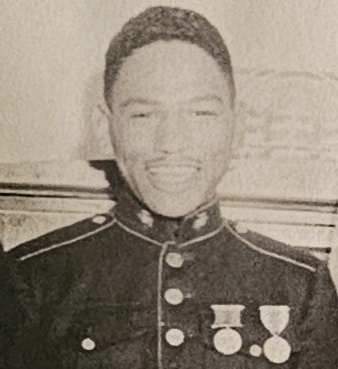
He enlisted in the Marines after high school in 1948 and became one of the celebrated Montford Point Marines in North Carolina. He spent four years in the Corps, sang with the Marine choir, rose to corporal, and was transferred to Philadelphia. He never left.
In 2012, he and other Montford Point Marines were awarded the Congressional Gold Medal for enduring racism, segregation, and discrimination during their military tours and still serving with honor and distinction.
Rev. Starks joined the Marines in 1948.
His mother’s cousin was a church pianist and singer, and she regularly took him along to sing at church in Nashville when he was young. Later, he took music classes in high school and studied voice with professor John W. Work III at nearby Fisk University.
In retirement, he volunteered at Eleanor C. Emlen Elementary School and elsewhere in the community. “He was very humble, generous, loving, and caring,” his daughter Rhonda said.
William Barton Starks was born Nov. 2, 1928. He grew up with two brothers, and it was obvious early that his singing voice was exceptional.
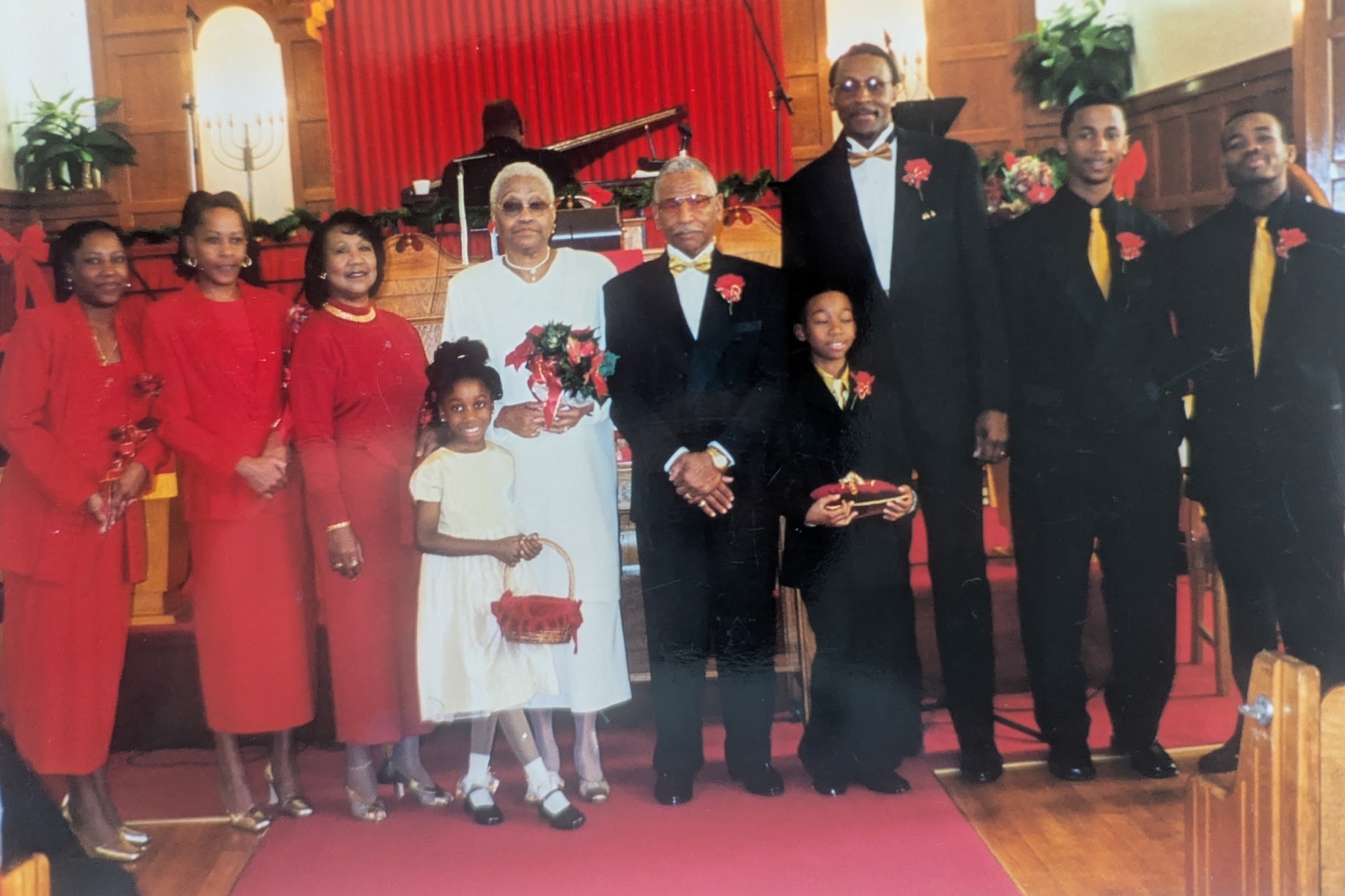
He met fellow singer Inez Baldwin at a recital, and they married in 1951. They had daughters Cheryl and Rhonda, and lived in North Philadelphia and West Oak Lane.
Rev. Starks (fifth from right) “would give you anything,” his daughter Cheryl said.
The Rev. Starks and his wife enjoyed annual summer cruises to the Bahamas. He was known as Big Daddy, his family said, “because he was like a father to so many people.” His wife died in 2016.
“He meant the world to me,” said his daughter Cheryl. “He would give you anything.”
His daughter Rhonda said: “He always told us he would do anything and everything for his family, and he did.”
In addition to his daughters, the Rev. Starks is survived by four grandchildren, five great-grandchildren, and other relatives. His brothers died earlier.
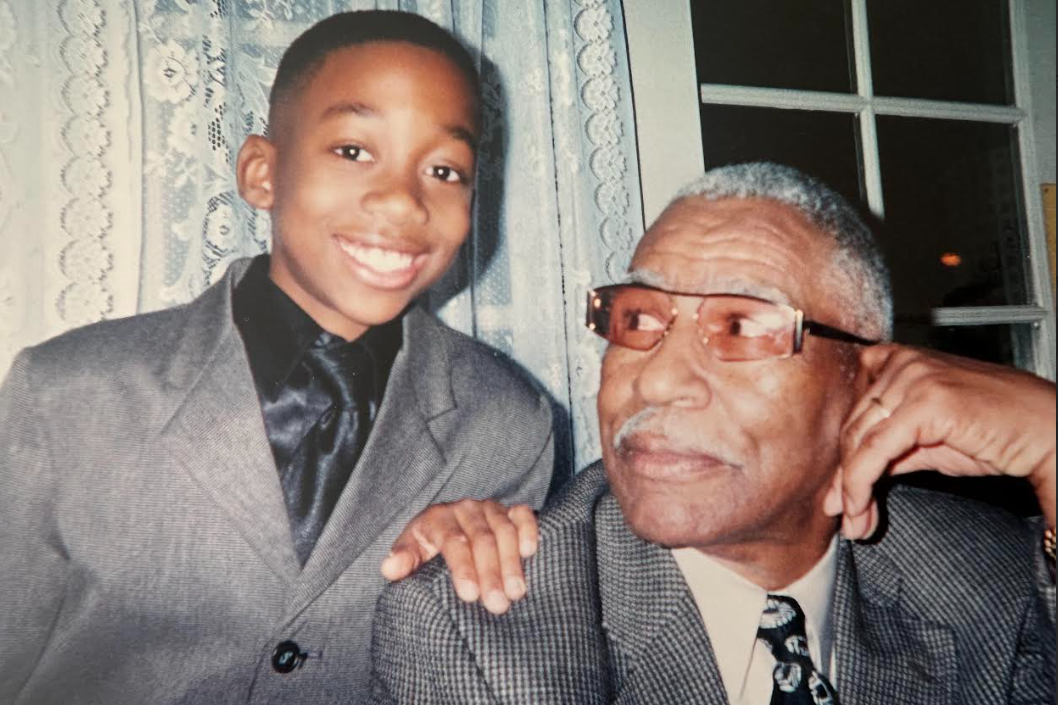
Rev. Starks (right) doted on his daughters and grandchildren.
Services were held on Oct. 17 and 18. Interment was Oct. 23 at Washington Crossing National Cemetery.
In an order issued Tuesday, Common Pleas Court Judge Vincent Johnson awarded Fiorillo $35,000 in compensatory damages and $125,000 in punitive damages. The ruling follows a hearing at which the defendant, Ryan Nelson, did not show up.
“It feels great,” Fiorillo said. “Part of what I said at the beginning is thatI would like to support some LGBTQ causes that the defendant very much would dislike his money going to, and I intend to pursue the matter.”
Nelson never responded to the lawsuit, which was filed in April, and no attorney is listed for him on the court docket. James Beasley, the journalist’s lawyer, did receive a threatening email in June from a person identifying as “RN” that included an expletive aimed at Fiorillo in the subject line.
“Tell him to unblock me and stop hiding behind facebook,” saidthe message, which was presented to the judge. “If not i guess i can go to his house and ask him.”
That email is no longer active, and The Inquirer was unable to reach Nelson through publicly available contact information.
“The only person to agree with you likes seeing dudes in dresses dance with kids,” Nelson wrote.
Fiorillo asked if the suggestion was that he was a pedophile because he performs with a drag queen.
“Yes victoria, corruption of a minor. Same as pedophile,” Nelson wrote, adding, “or do you prefer groomer.”
In another comment, Nelson said he’d “bet” that if a drag queen molested children, Victor would “prob write how the kids are homophobic.”
The lawsuit said others on the Facebook group had read Nelson’s comments, and provided an example of another person repeating them.
“There is nothing in the First Amendment that says you can call me a pedophile and a child molester,” Fiorillo previously told The Inquirer.
Fiorillo was the only witness at the Oct. 8 hearing. Johnson interrupted the lawyer’s line of questioning to ask questions of his own, the reporter said. The judge asked over and over how many times Nelson made the comments.
The Philly Mag writer recalled thinking from the stand that the hearing was not going in his favor, but felt a great sense of moral victory when the judge issued his decision.
He said he hopes the ruling sends a message to all the “keyboard warriors out there, in their mother’s basement.”
“That’s a very big part of why I went down this road to begin with. Part of defending free speech is standing against things that aren’t covered by that.”