Category: Obituaries

  • Remembering those Philly lost in 2025

    Remembering those Philly lost in 2025

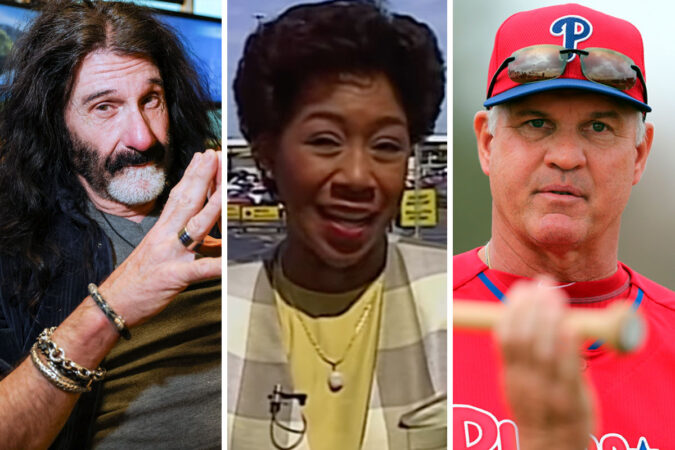
    In 2025, Philadelphians said goodbye to a beloved group of broadcasters, radio personalities, sports heroes, and public servants who left their mark on a city they all loved.

    Some were Philly natives, including former Eagles general manager Jim Murray. Others, including beloved WMMR host Pierre Robert, were transplants who made Philly their adopted home. But all left their mark on the city and across the region.

    Pierre Robert

    Former WMMR host Pierre Robert, seen in his studio in 2024.

    Pierre Robert, the beloved WMMR radio host and lover of rock music, died at his Gladwyne home in October. He was 70.

    A native of Northern California, Mr. Robert joined WMMR as an on-air host in 1981. He arrived in the city after his previous station, San Francisco’s KSAN, switched to an “urban cowboy” format, prompting him to make the cross-country drive to Philadelphia in a Volkswagen van.

    At WMMR, Mr. Robert initially hosted on the weekends, but quickly moved to the midday slot — a position he held for more than four decades up until his death.

    — Nick Vadala, Dan DeLuca

    Bernie Parent
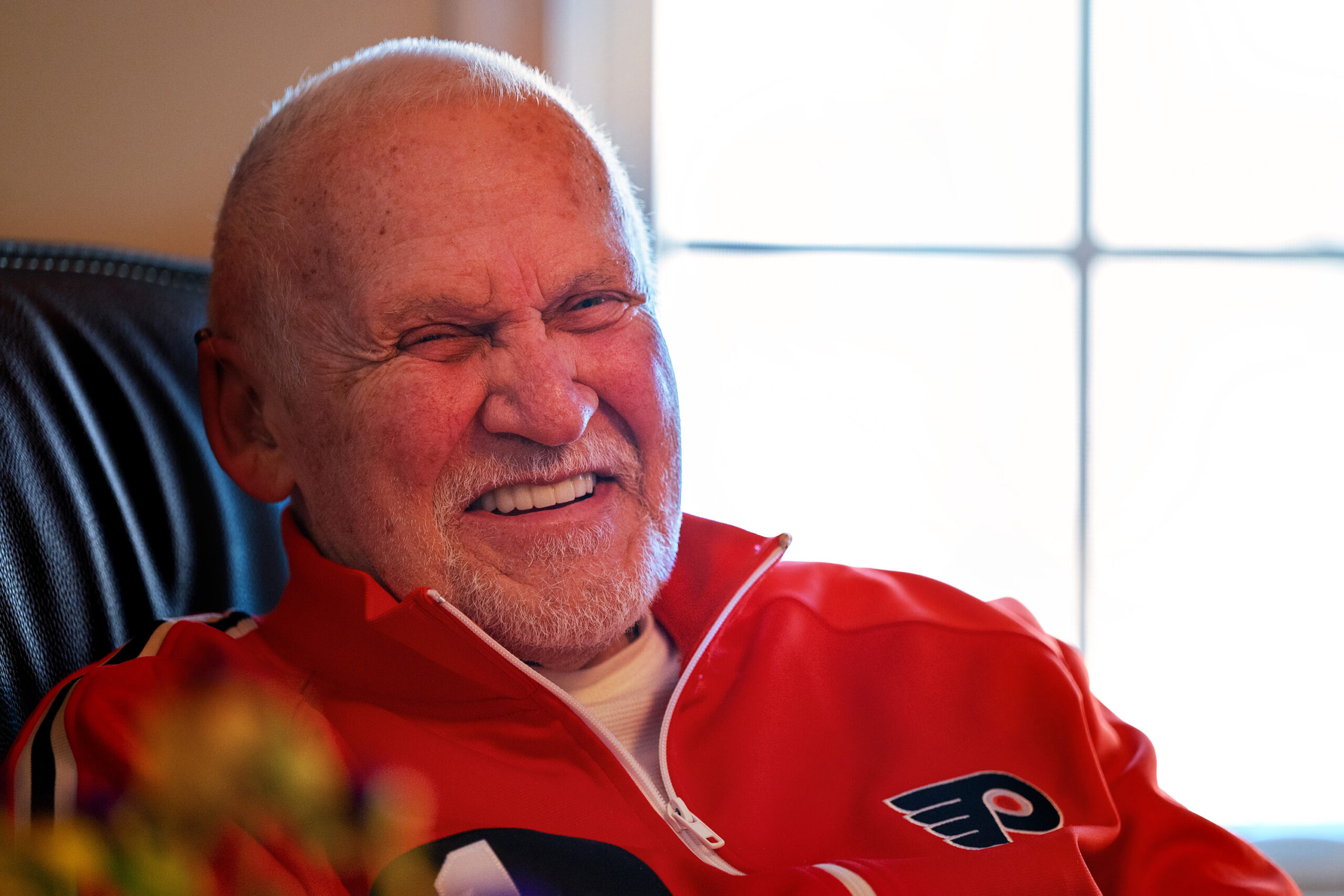
    Former Flyers goaltender Bernie Parent, seen at his home in 2024.

    Bernie Parent, the stone-wall Flyers goalie for the consecutive Stanley Cup championship teams for the Broad Street Bullies in the 1970s, died in September. He was 80.

    A Hall of Famer, Mr. Parent clinched both championships with shutouts in the final game as he blanked the Boston Bruins, 1-0, in 1974 and the Buffalo Sabres, 2-0, in 1975. Mr. Parent played 10 of his 13 NHL seasons with the Flyers and also spent a season in the World Hockey League with the Philadelphia Blazers. He retired in 1979 at 34 years old after suffering an eye injury during a game against the New York Rangers.

    He grew up in Montreal and spoke French as his first language before becoming a cultlike figure at the Spectrum as cars throughout the region had “Only the Lord Saves More Than Bernie Parent” bumper stickers.

    — Matt Breen

    David Lynch
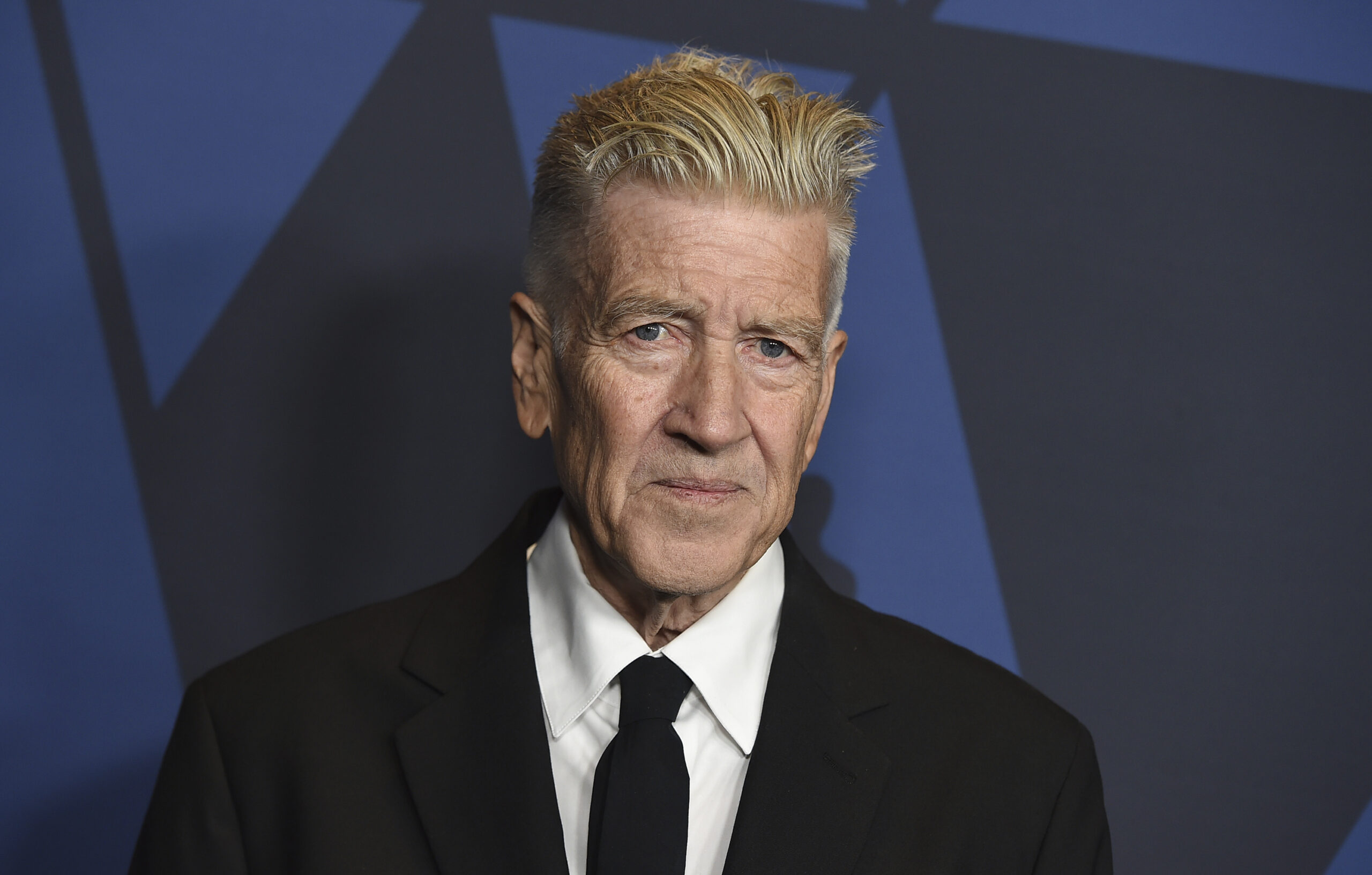
    David Lynch, seen here at the Governors Awards in Los Angeles in 2019.

    David Lynch, the visionary director behind such movies as Blue Velvet and The Elephant Man and the twisted TV show Twin Peaks, died in January of complications from emphysema. He was 78.

    Mr. Lynch was born in Missoula, Mont., but ended up in Philadelphia to enroll at the Pennsylvania Academy of the Fine Arts in 1965 at age 19. It was here he developed an interest in filmmaking as a way to see his paintings move.

    He created his first short films in Philadelphia, which he described both as “a filthy city” and “his greatest influence” as an artist. Ultimately, he moved to Los Angeles to make his first feature film, Eraserhead, though he called the film “my Philadelphia Story.

    — Rob Tornoe

    Ryne Sandberg

    Former Phillies manager Ryne Sandberg, seen here at spring training in 2018.

    Ryne Sandberg, the Hall of Fame second baseman who started his career with the Phillies but was traded shortly after to the Chicago Cubs in one of the city’s most regrettable trades, died in July of complications from cancer. He was 65.

    Mr. Sandberg played 15 seasons in Chicago and became an icon for the Cubs, simply known as “Ryno,” after being traded there in January 1982.

    He was a 10-time All-Star, won nine Gold Glove awards, and was the National League’s MVP in 1984. Mr. Sandberg was inducted into the Baseball Hall of Fame in 2005 and returned to the Phillies in 2011 as a minor-league manager and, later, the big-league manager.

    — Matt Breen

    Bob Uecker
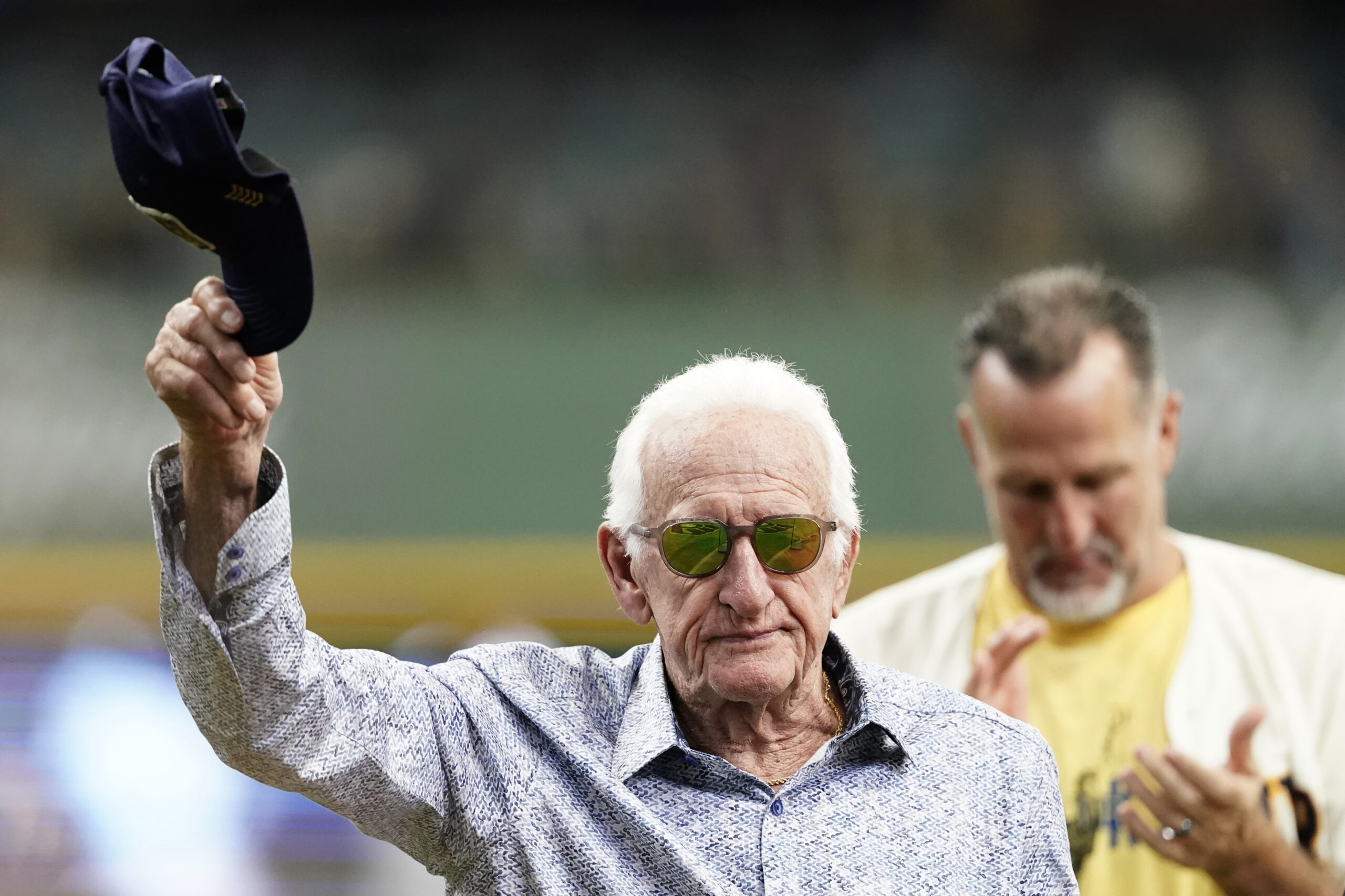
    Bob Uecker, seen here before a Brewers game in 2024.

    Bob Uecker, a former Phillies catcher who later became a Hall of Fame broadcaster for the Milwaukee Brewers and was dubbed “Mr. Baseball” by Johnny Carson for his acting roles in several movies and TV shows, died in January. He was 90.

    Mr. Uecker spent just six seasons in the major league, two with the Phillies, but the talent that would make him a Hall of Fame broadcaster — wit, self-deprecation, and the timing of a stand-up comic — were evident.

    His first broadcasting gig was in Atlanta, and he started calling Milwaukee Brewers games in 1971. Before that, he called Phillies games: Mr. Uecker used to sit in the bullpen at Connie Mack Stadium and deliver play-by-play commentary into a beer cup.

    — Matt Breen and Rob Tornoe

    Harry Donahue
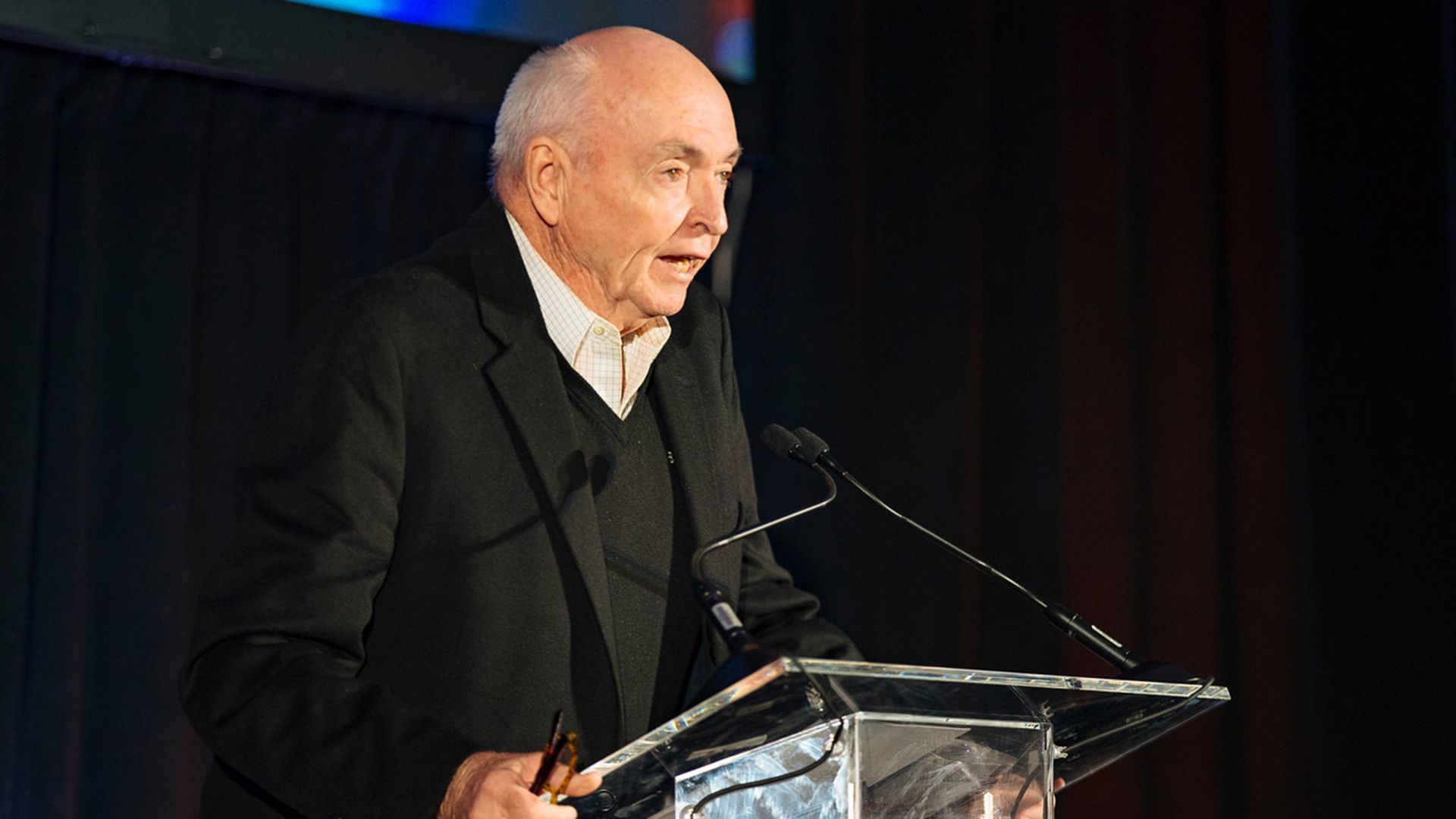
    Harry Donahue, seen here at Temple University in 2020.

    Harry Donahue, 77, a longtime KYW Newsradio anchor and the play-by-play voice of Temple University men’s basketball and football for decades, died in October after a fight with cancer.

    His was a voice that generations of people in Philadelphia and beyond grew up with in the mornings as they listened for announcements about snow days and, later, for a wide array of sports.

    — Robert Moran

    Alan Rubenstein
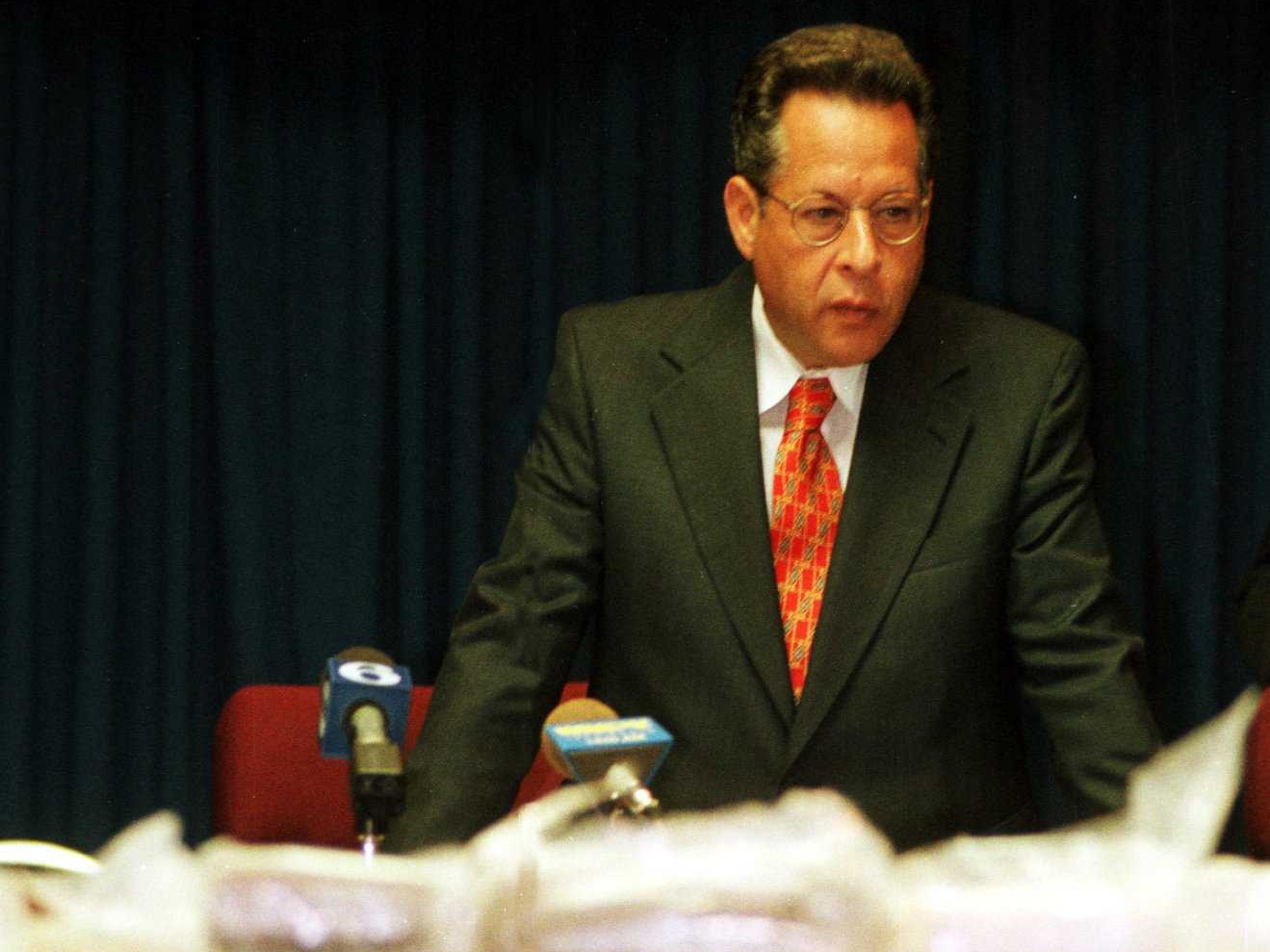
    Judge Rubenstein, then Bucks County district attorney, talks to the media about a drug case in 1998.

    Alan M. Rubenstein, a retired senior judge on Bucks County Common Pleas Court and the longest-serving district attorney in Bucks County history, died in August of complications from several ailments at his home in Holland, Bucks County. He was 79.

    For 50 years, from his hiring as an assistant district attorney in 1972 to his retirement as senior judge a few years ago, Judge Rubenstein represented Bucks County residents at countless crime scenes and news conferences, in courtrooms, and on committees. He served 14 years, from 1986 to 1999, as district attorney in Bucks County, longer than any DA before him, and then 23 years as a judge and senior judge on Bucks County Court.

    “His impact on Bucks County will be felt for generations,” outgoing Bucks County District Attorney Jennifer Schorn said in a tribute. U.S. Rep. Brian Fitzpatrick (R., Pa.) said on Facebook: “Alan Rubenstein has never been just a name. It has stood as a symbol of justice, strength, and integrity.”

    — Gary Miles

    Orien Reid Nix
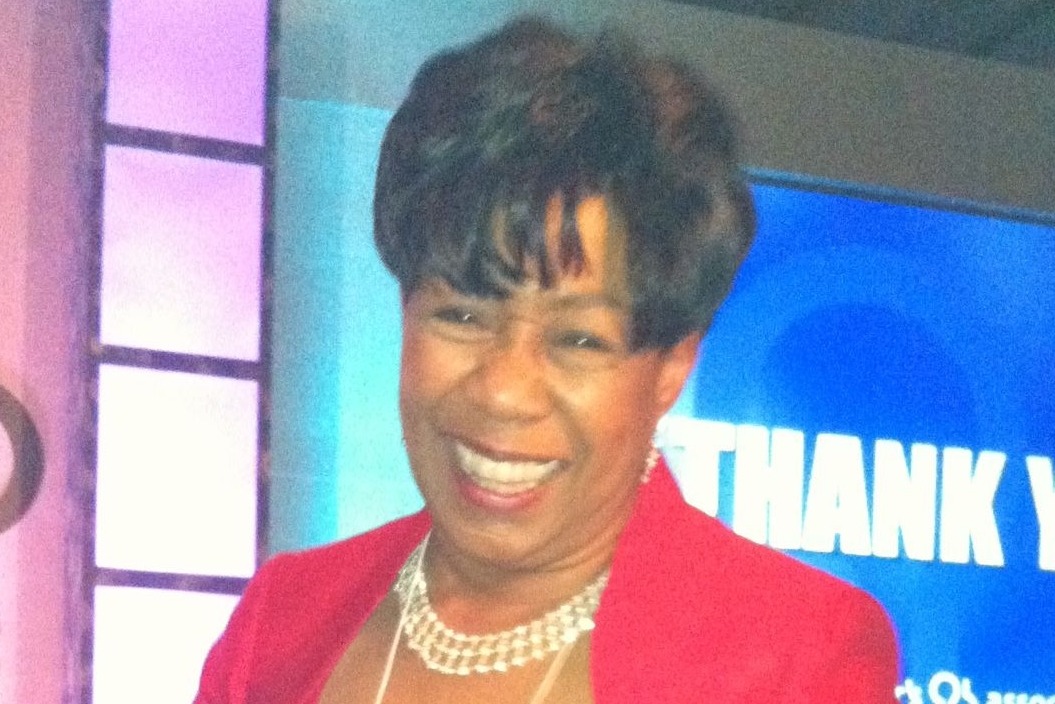
    Orien Reid Nix, seen here being inducted into the Broadcast Pioneers of Philadelphia Hall of Fame in 2018

    Orien Reid Nix, 79, of King of Prussia, retired Hall of Fame reporter for KYW-TV and WCAU-TV in Philadelphia, owner of Consumer Connection media consulting company, the first Black and female chair of the international board of the Alzheimer’s Association, former social worker, mentor, and volunteer, died in June of complications from Alzheimer’s disease.

    Charismatic, telegenic, empathetic, and driven by a lifelong desire to serve, Mrs. Reid Nix worked as a consumer service and investigative TV reporter for Channels 3 and 10 in Philadelphia for 26 years, from 1973 to her retirement in 1998. She anchored consumer service segments, including the popular Market Basket Report, that affected viewers’ lives and aired investigations on healthcare issues, price gouging, fraud, and food safety concerns.

    — Gary Miles

    Dave Frankel
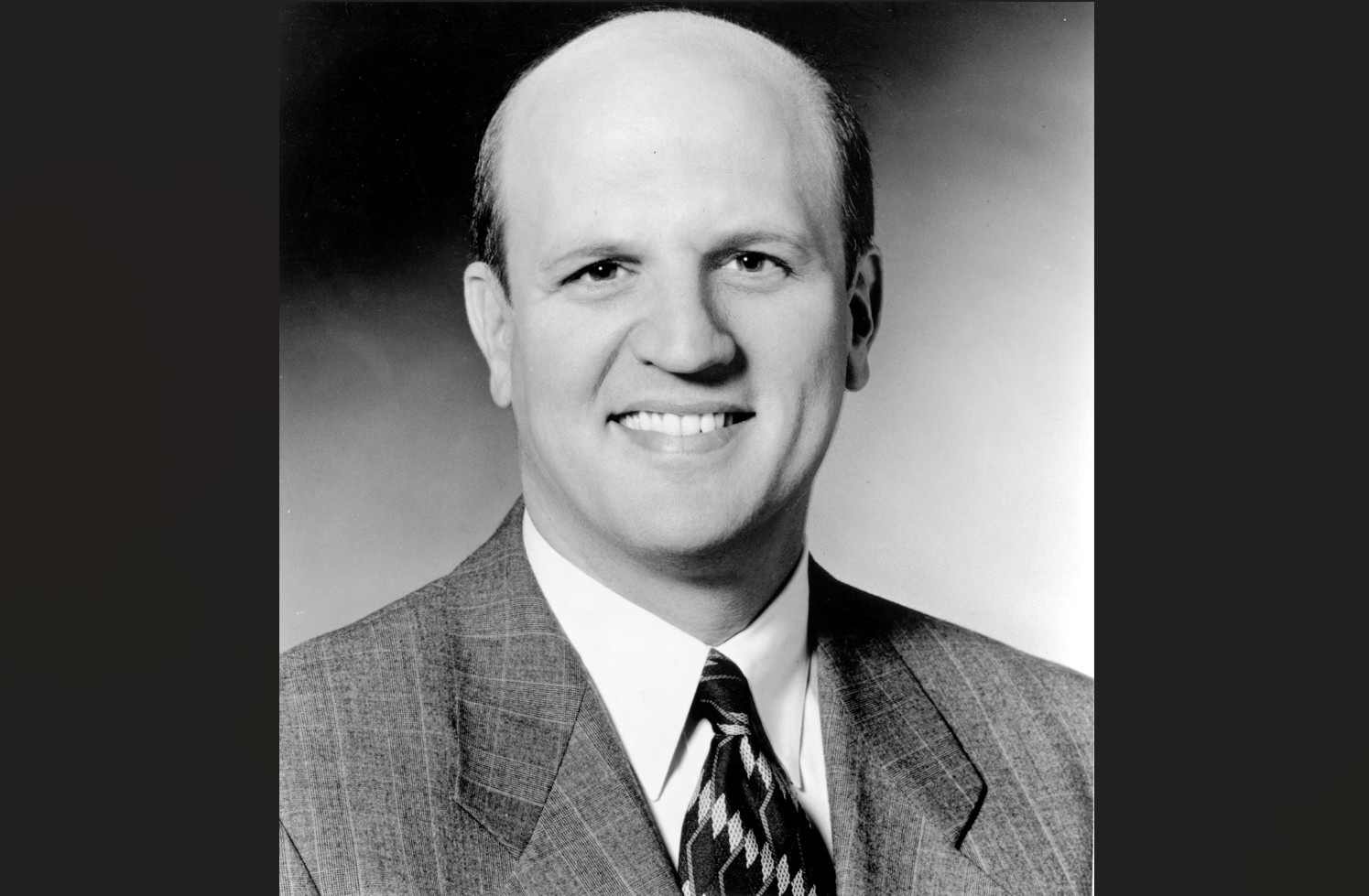
    Dave Frankel in an undated publicity photo.

    Dave Frankel, 67, a popular TV weatherman on WPVI (now 6abc) who later became a lawyer, died in February after a long battle with a neurodegenerative disease.

    Mr. Frankel grew up in Monmouth County, N.J., graduated in 1979 from Dartmouth College, and was planning to attend Dickinson School of Law to become a lawyer like his father. But an internship at a local TV station in Vermont turned into a news anchor job and a broadcast career that lasted until the early 2000s.

    — Robert Moran

    Lee Elia

    Former Phillies manager Lee Elia, seen here being ejected from a game in 1987.

    Lee Elia, the Philadelphia native who managed the Phillies after coaching third base for the 1980 World Series champions and once famously ranted against the fans who sat in the bleachers of Wrigley Field, died in July. He was 87.

    Mr. Elia’s baseball career spanned more than 50 seasons. He managed his hometown Phillies in 1987 and 1988 after managing the Chicago Cubs in 1982 and 1983.

    After his playing career was cut shot by a knee injury, Mr. Elia joined Dallas Green’s Phillies staff before the 1980 season and was coaching third base when Manny Trillo delivered a crucial triple in the clinching game of the National League Championship Series. Mr. Elia was so excited that he bit Trillo’s arm after he slid.

    — Matt Breen

    Gary Graffman

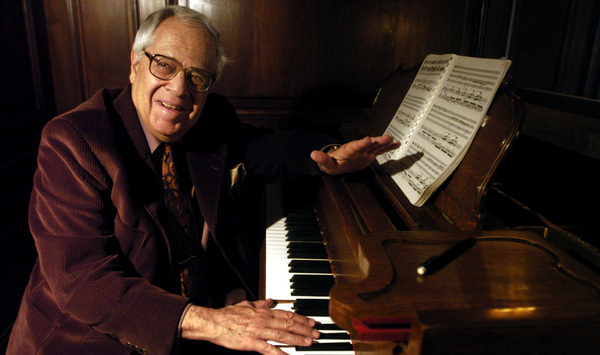
    Gary Graffman, seen here playing at the Curtis Institute of Music Orchestra Concert at Verizon Hall in 2006.

    Gary Graffman, a celebrated concert pianist and the former president of the Curtis Institute of Music, died in December in New York. He was 97.

    The New York City-born pianist arrived at Curtis at age 7. He graduated at age 17 and played roughly 100 concerts a year between the ages of 20 and 50 before retiring from touring due to a compromised right hand. Diagnosed with focal dystonia (a neurological disorder), he went on to premiere works for the left hand by Jennifer Higdon and William Bolcom.

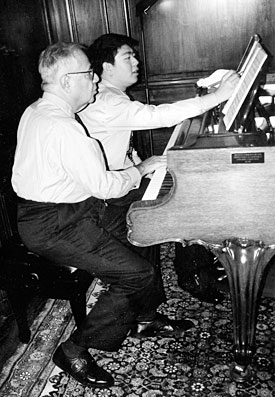
    Mr. Graffman returned to Curtis as a teacher in 1980, became director in 1986, and was named the president of the conservatory in 1995, with a teaching studio encompassing nearly 50 students, including Yuja Wang and Lang Lang among others. He performed on numerous occasions with the Philadelphia Orchestra from 1947 to 2003.

    — David Patrick Stearns

    Len Stevens
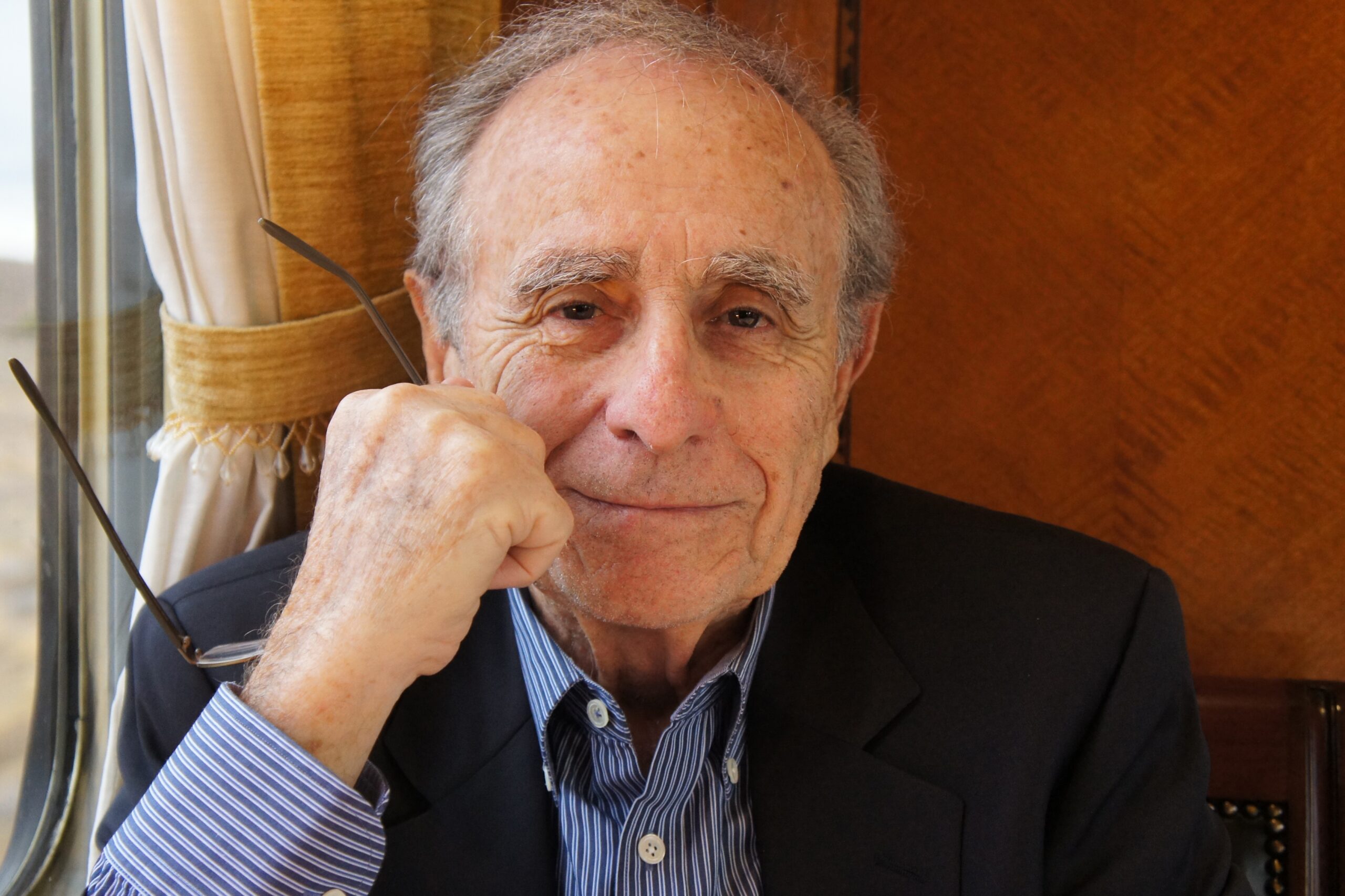
    Len Stevens was the co-founder of WPHL-TV Channel 17.

    Len Stevens, the cofounder of WPHL-TV (Channel 17) and a member of the Broadcast Pioneers of Philadelphia Hall of Fame, died in September of kidney failure. He was 94.

    Born in Philadelphia, Mr. Stevens was a natural entrepreneur. He won an audition to be a TV announcer with Dick Clark on WFIL-TV in the 1950s, persuaded The Tonight Show and NBC to air Alpo dog food ads in the 1960s, co-owned and managed the popular Library singles club on City Avenue in the 1970s and ’80s, and later turned the nascent sale of “vertical real estate” on towers and rooftops into big business.

    He and partner Aaron Katz established the Philadelphia Broadcasting Co. in 1964 and launched WPHL-TV on Sept. 17, 1965. At first, their ultrahigh frequency station, known now as PHL17, challenged the dominant very high frequency networks on a shoestring budget. But, thanks largely to Mr. Stevens’ advertising contacts and programming ideas, Channel 17 went on to air Phillies, 76ers, and Big Five college basketball games, the popular Wee Willie Webber Colorful Cartoon Club, Ultraman, and other memorable shows in the late 1960s and early ’70s.

    — Gary Miles

    Jim Murray
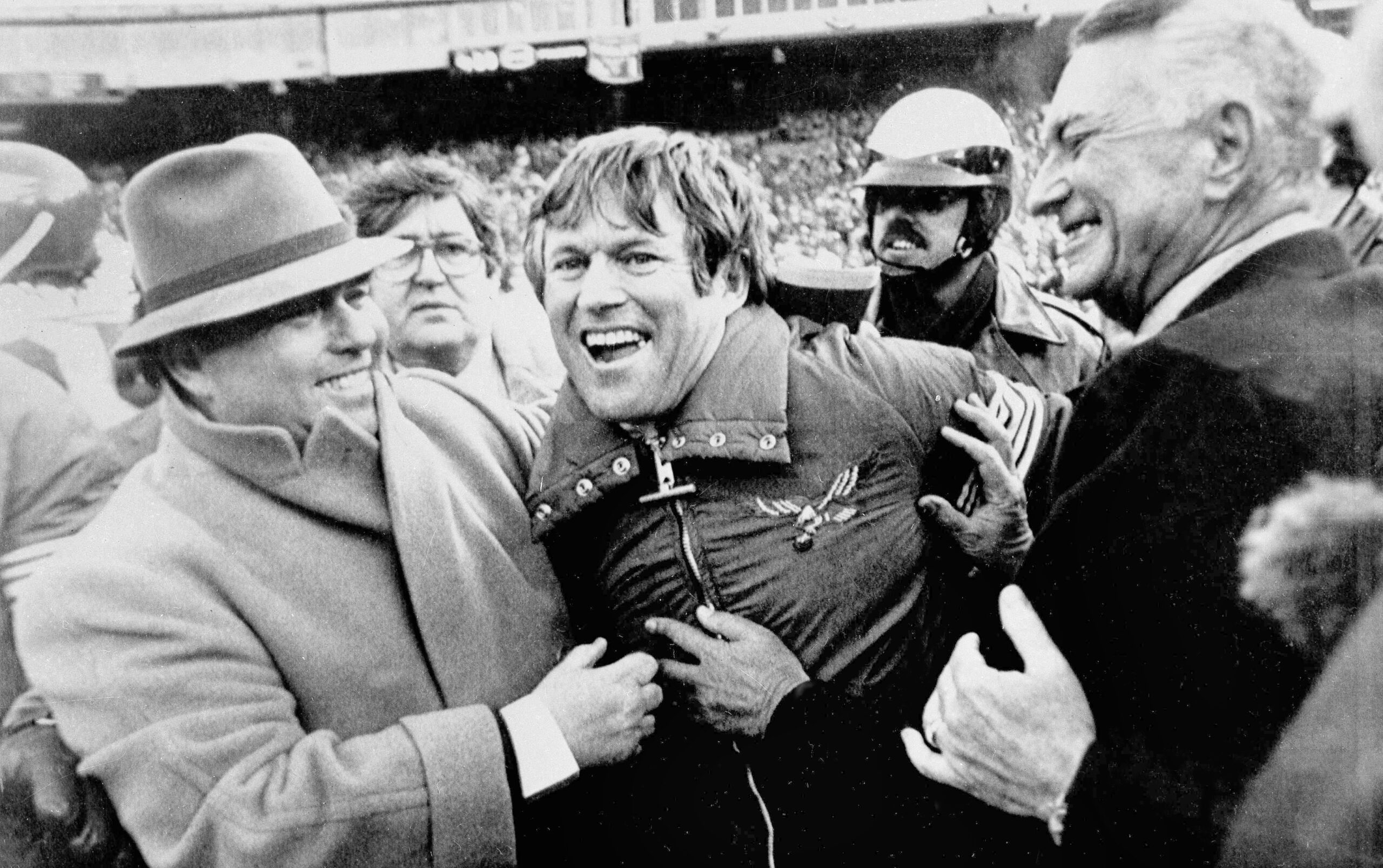
    Former Eagles general manager Jim Murray (left), seen here with Dick Vermeil and owner Leonard Tose following the 1980 NFC championship game in January 1981.

    Jim Murray, the former Eagles general manager who hired Dick Vermeil and helped the franchise return to prominence while also opening the first Ronald McDonald House, died in August at home in Bryn Mawr surrounded by his family. He was 87.

    Mr. Murray grew up in a rowhouse on Brooklyn Street in West Philadelphia and watched the Eagles at Franklin Field. The Eagles hired him in 1969 as a publicist, and Leonard Tose, then the Eagles’ owner, named him the general manager in 1974. Mr. Murray was just 36 years old and the decision was ridiculed.

    But Mr. Murray — who was known for his wit and generosity — made a series of moves to bring the Eagles back to relevance, including hiring Vermeil and acquiring players like Bill Bergey and Ron Jaworski. The Eagles made the playoffs in 1978 and reached their first Super Bowl in January 1981. The Eagles, with Murray as the GM, were finally back.

    — Matt Breen

    Michael Days

    Philadelphia Daily News Editor Michael Days celebrates with the newsroom after word of the Pulitzer win.

    Michael Days, a pillar of Philadelphia journalism who championed young Black journalists and led the Daily News during its 2010 Pulitzer Prize win for investigative reporting, died in October after falling ill. He was 72.

    A graduate of Roman Catholic High School in Philadelphia, Mr. Days worked at the Wall Street Journal and other newspapers before joining the Daily News as a reporter in 1986, where he ultimately became editor in 2005, the first Black person to lead the paper in its 90-year history. In 2011, Mr. Days was named managing editor of The Inquirer, where he held several management roles until he retired in October 2020.

    As editor of the Daily News, Mr. Days played an essential role in the decisions that would lead to its 2010 Pulitzer Prize, including whether to move forward with a story about a Philadelphia Police Department narcotics officer that a company lawyer said stood a good chance of getting them sued.

    “He said, ‘I trust my reporters, I believe in my reporters, and we’re running with it,’” recounted Inquirer senior health reporter Wendy Ruderman, who reported the piece with colleague Barbara Laker. That story revealed a deep dysfunction within the police department, Ruderman said, and led to the newspaper’s 2010 Pulitzer Prize win.

    — Brett Sholtis

    Tom McCarthy
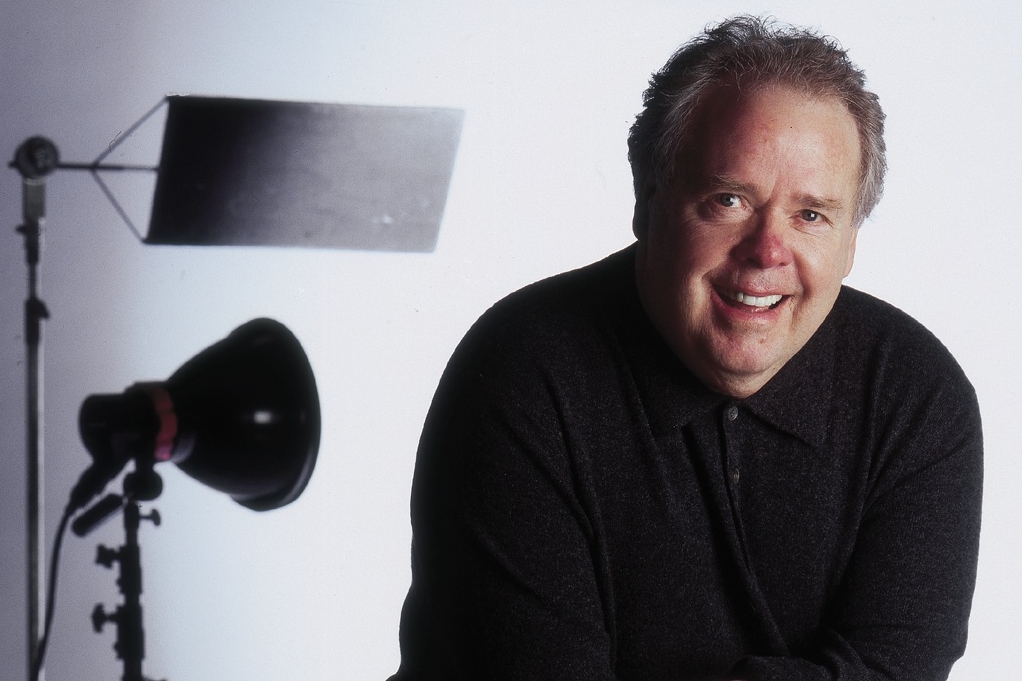
    Tom McCarthy, seen here in 2002.

    Tom McCarthy, an award-winning theater, film, and TV actor, longtime president of the local chapter of the Screen Actors Guild, former theater company board member, mentor, and veteran, died in May of complications from Parkinson’s disease at his home in Sea Isle City. He was 88.

    The Overbrook native quit his job as a bartender in 1965, sharpened his acting skills for a decade at Hedgerow Theatre Company in Rose Valley and other local venues, and, at 42, went on to earn memorable roles in major movies and TV shows.

    In the 1980s, he played a police officer with John Travolta in the movie Blow Out and a gardener with Andrew McCarthy in Mannequin. In 1998, he was a witness with Denzel Washington in Fallen. In 2011, he was a small-town mayor with Lea Thompson in Mayor Cupcake. Over the course of his career, Mr. McCarthy acted with Zsa Zsa Gabor, Harrison Ford, Kristin Scott Thomas, Cloris Leachman, Robert Redford, Donald Sutherland, John Goodman, and other big stars.

    — Gary Miles

    Carol Saline
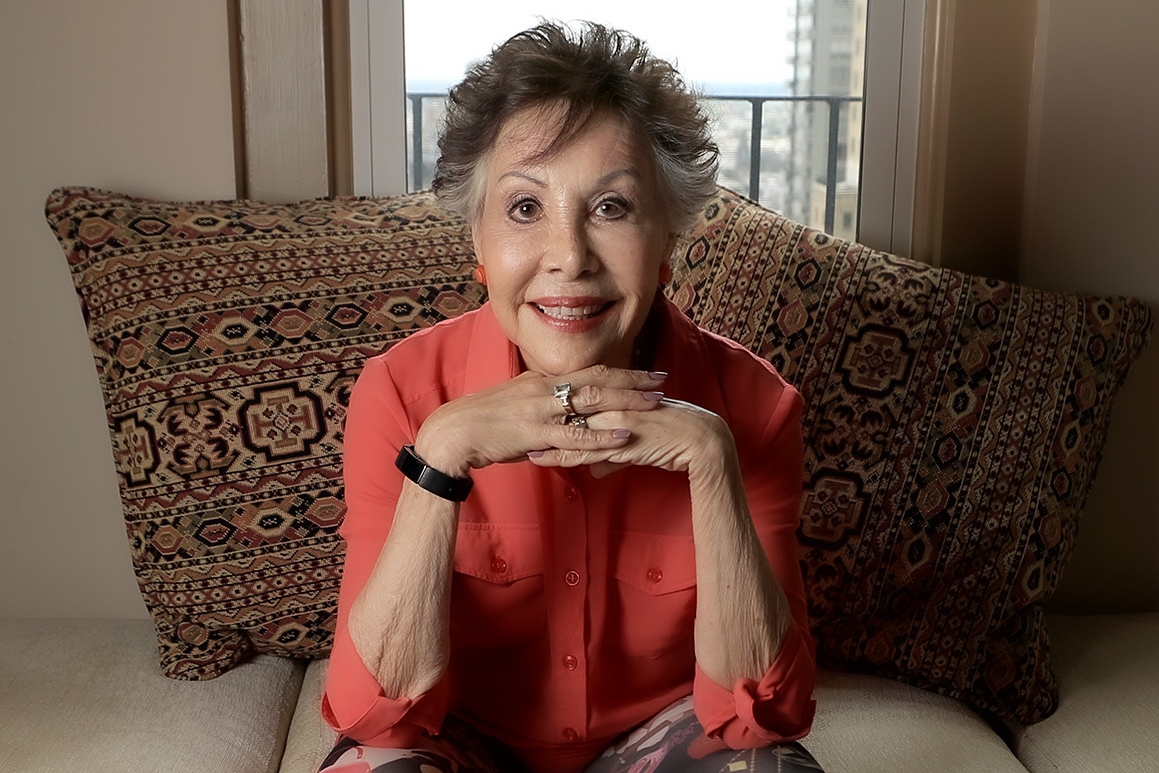
    Carol Saline, seen here at her Philadelphia home in 2021.

    Carol Saline, a longtime senior writer at Philadelphia Magazine, the best-selling author of Sisters, Mothers & Daughters, and Best Friends, and a prolific broadcaster, died in August of acute myeloid leukemia. She was 86.

    On TV, she hosted a cooking show and a talk show, was a panelist on a local public affairs program, and guested on the Oprah Winfrey Show, Inside Edition, Good Morning America, and other national shows. On radio, she hosted the Carol Saline Show on WDVT-AM.

    In June, she wrote to The Inquirer, saying: “I am contacting you because I am entering hospice care and will likely die in the next few weeks. … I wanted you to know me, not only my accomplishments but who I am as a person.

    “I want to go out,” she ended her email, “with a glass of Champagne in one hand, a balloon in the other, singing (off key) ‘Whoopee! It’s been a great ride!’”

    — Gary Miles

    Richard Wernick
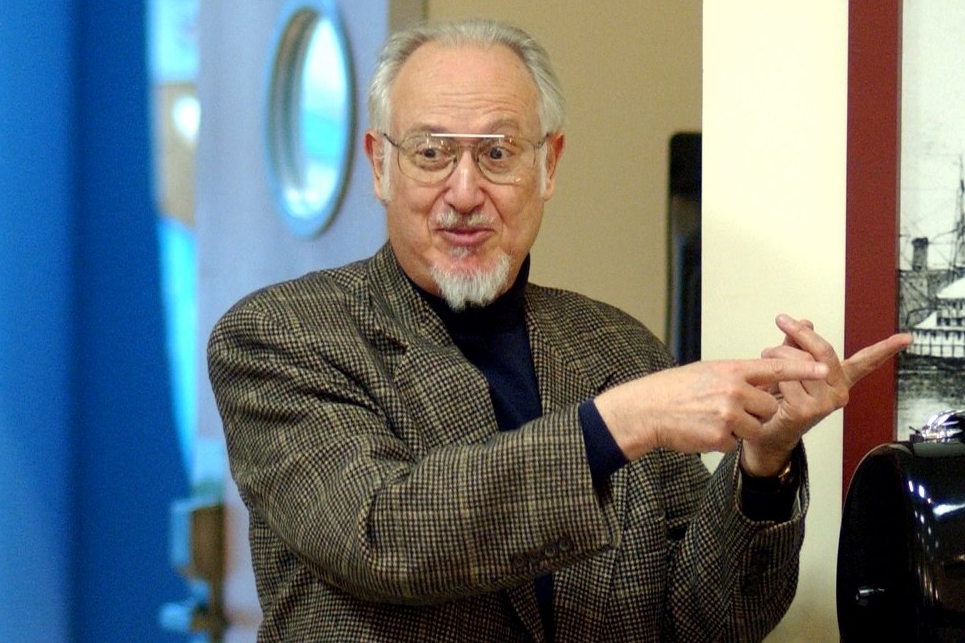
    Richard Wernick, seen here before a concert at the 2002 Festival of Philadelphia Composers.

    Richard Wernick, a Pulitzer Prize-winning composer, acclaimed conductor, and retired Irving Fine Professor of Music at the University of Pennsylvania, died in April 25 of age-associated decline at his Haverford home. He was 91.

    Professor Wernick was prolific and celebrated as a composer. He wrote hundreds of scores over six decades and appeared on more than a dozen records, and his Visions of Terror and Wonder for a mezzo-soprano and orchestra won the 1977 Pulitzer Prize for music. In 1991, his String Quartet No. 4 made him the first two-time winner of the Kennedy Center’s Friedheim Award for new American music.

    “Wernick’s orchestral music has power and brilliance, an emphasis on register, space, and scale,” Lesley Valdes, former Inquirer classical music critic, said in 1990.

    — Gary Miles

    Dorie Lenz
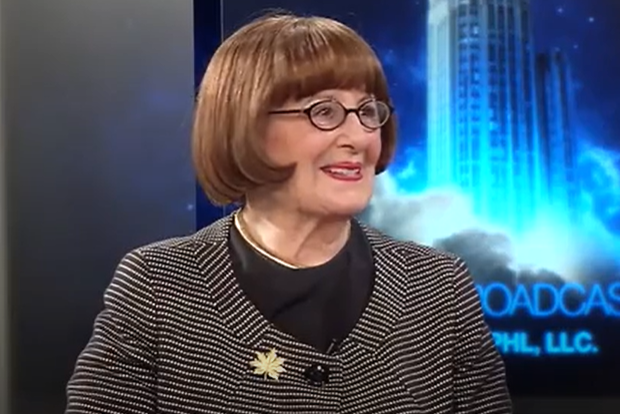
    Dorie Lenz, seen here on Channel 17 in 2015.

    Dorie Lenz, a pioneering TV broadcaster and the longtime director of public affairs for WPHL-TV (Channel 17), died in January of age-associated ailments at her home in New York. She was 101.

    A Philadelphia native, Ms. Lenz broke into TV as a 10-year-old in a local children’s show and spent 30 years, from 1970 to 2000, as director of public affairs and a program host at Channel 17, now PHL17. She specialized in detailed public service campaigns on hot-button social issues and earned two Emmys in 1988 for her program Caring for the Frail Elderly.

    Ms. Lenz interviewed newsmakers of all kinds on the public affairs programs Delaware Valley Forum, New Jersey Forum, and Community Close Up. Viewers and TV insiders hailed her as a champion and watchdog for the community. She also talked to Phillies players before games in the 1970s on her 10-minute Dorie Lenz Show.

    — Gary Miles

    Jay Sigel

    Jay Sigel, seen here after winning the Georgia-Pacific Grand Champions title in 2006.

    Jay Sigel, one of the winningest amateur golfers of all time and an eight-time PGA senior tour champion, died in April of complications from pancreatic cancer. He was 81.

    For more than 40 years, from 1961, when he won the International Jaycee Junior Golf Tournament as an 18-year-old, to 2003, when he captured the Bayer Advantage Celebrity Pro-Am title at 60, the Berwyn native was one of the winningest amateur and senior golfers in the world. Mr. Sigel won consecutive U.S. Amateur titles in 1982 and ’83 and three U.S. Mid-Amateur championships between 1983 and ’87, and remains the only golfer to win the amateur and mid-amateur titles in the same year.

    He won the Pennsylvania Amateur Championship 11 times, five straight from 1972 to ’76, and the Pennsylvania Open Championship for pros and amateurs four times. He also won the 1979 British Amateur Championship and, between 1975 and 1999, played for the U.S. team in a record nine Walker Cup tournaments against Britain and Ireland.

    — Gary Miles

    Mark Frisby
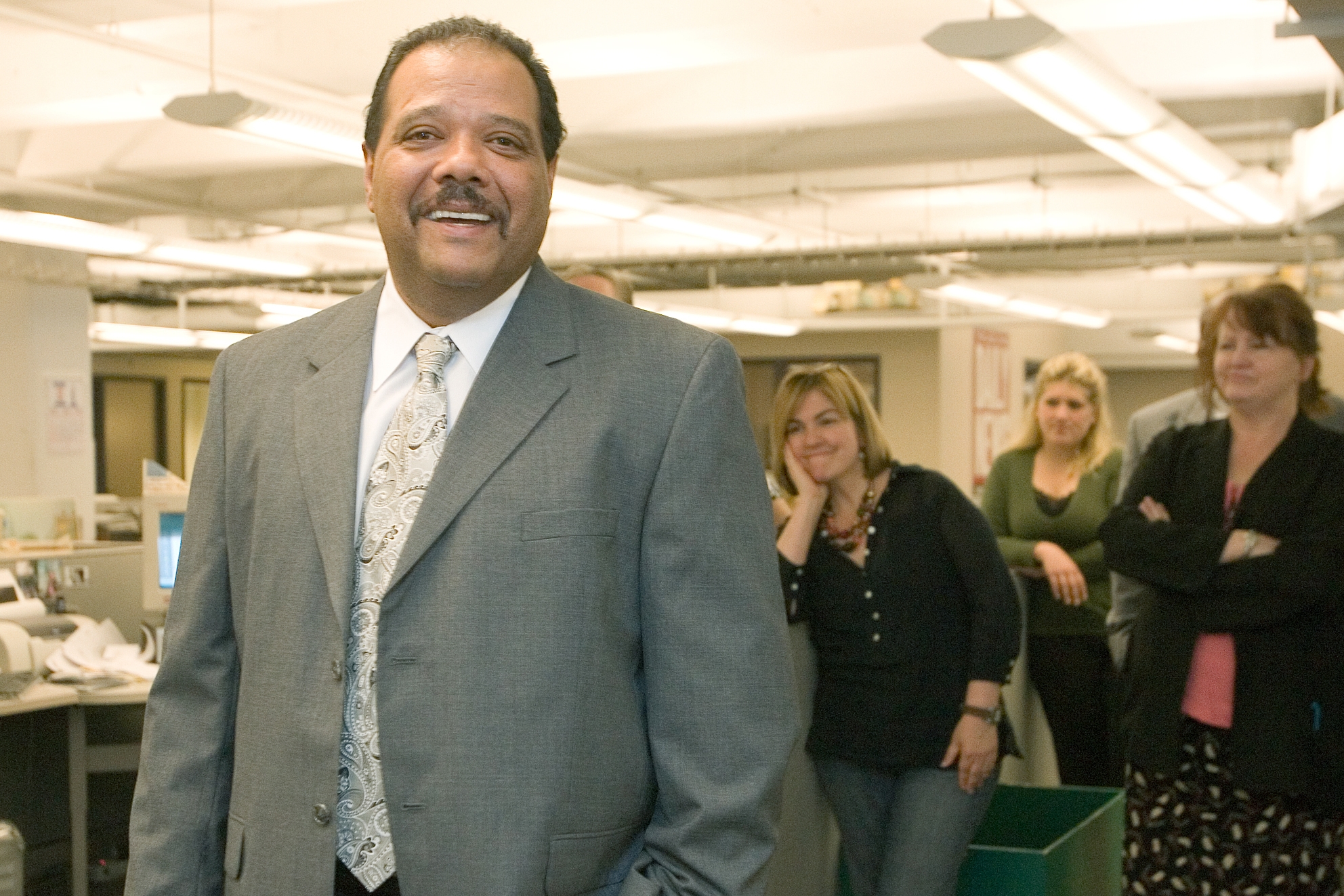
    Mark Frisby, seen here in the former newsroom of the Daily News in 2007.

    Mark Frisby, the former publisher of the Daily News and associate publisher of The Inquirer, died in September of takayasu arteritis, an inflammatory disease, at his home in Gloucester County. He was 64.

    Mr. Frisby joined The Inquirer and Daily News in November 2006 as executive vice president of production, labor, and purchasing. He was recruited from the Courier-Post by then-publisher Brian Tierney, and he went on to serve as publisher of the Daily News from 2007 to 2016 and associate publisher for operations of The Inquirer and Daily News from 2014 to his retirement in 2016.

    Mr. Frisby was one of the highest-ranking Black executives in the company’s history, and he told the Daily News in 2006 that “local ownership over here was the big attraction for me.” Michael Days, then the Daily News editor, said in 2007: “This cat is really the real deal.”

    — Gary Miles

    Leon Bates
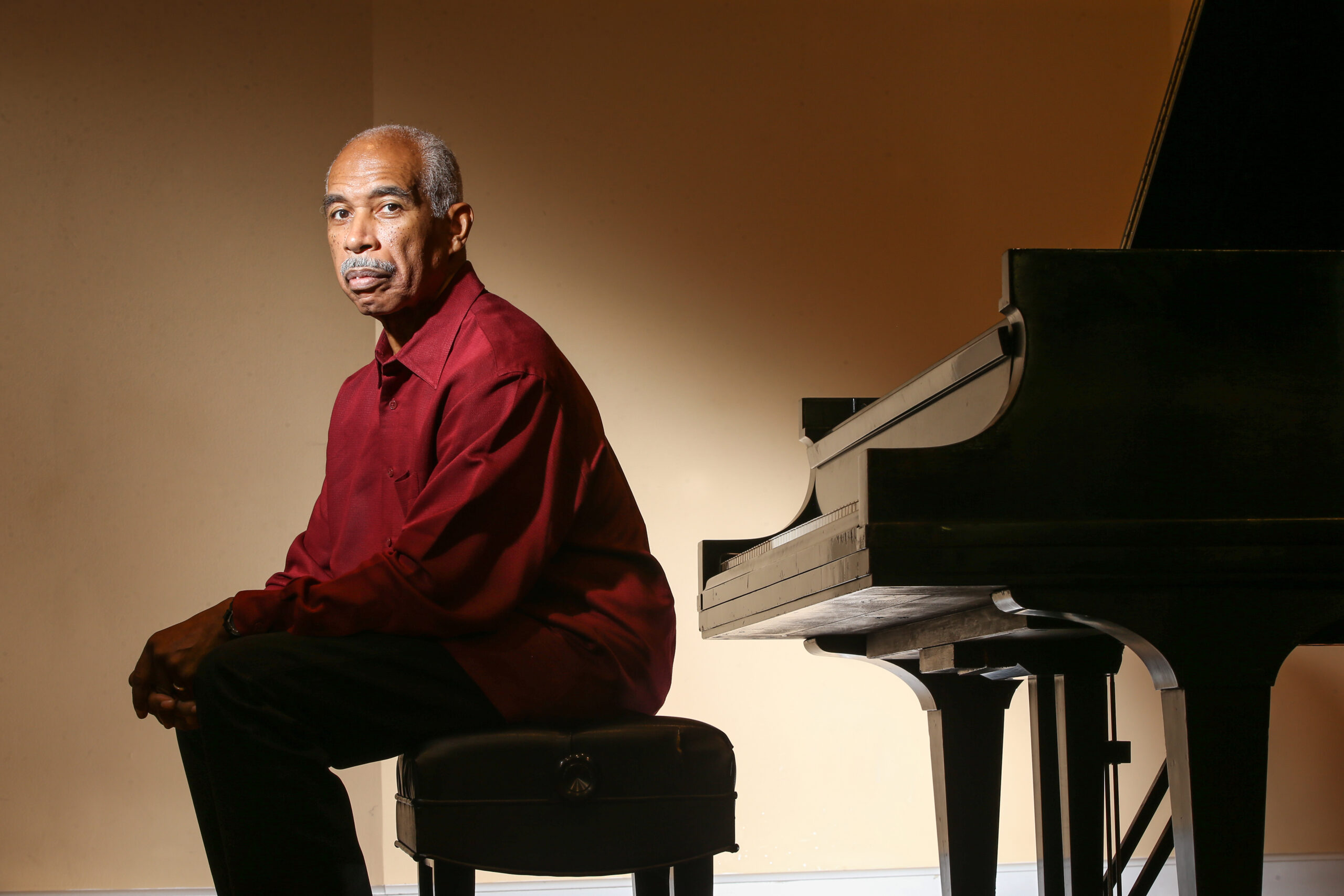
    Leon Bates, seen here at the Settlement Music School in Germantown in 2018.

    Leon Bates, a concert pianist whose musical authority and far-reaching versatility took him to the world’s greatest concert halls, died in November after a seven-year decline from Parkinson’s disease. He was 76.

    The career of Mr. Bates, a leading figure in the generation of Black pianists who followed the early-1960s breakthrough of Andre Watts, encompassed Ravel, Gershwin, and Bartok over 10 concerts with the Philadelphia Orchestra between 1970 and 2002. He played three recitals with Philadelphia Chamber Music Society and taught master classes at Temple University, where he also gave recitals at the Temple Performing Arts Center.

    In his WRTI-FM radio show, titled Notes on Philadelphia, during the 1990s, Mr. Bates was what Charles Abramovic, chair of keyboard studies at Temple University, described as “beautifully articulate and a wonderful interviewer. The warmth of personality came out. He was such a natural with that.”

    — David Patrick Stearns

    Lacy McCrary
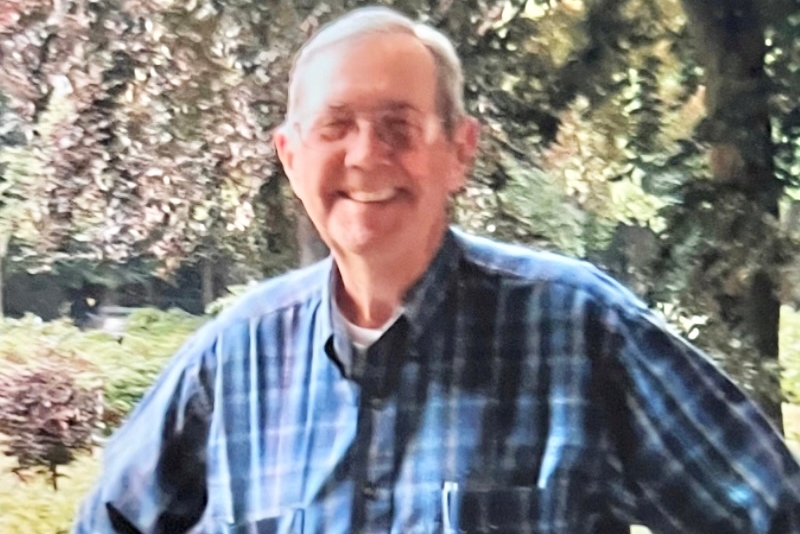
    Lacy McCrary in an undated photo.

    Lacy McCrary, a former Inquirer reporter who won a Pulitzer Prize at the Akron Beacon Journal, died in March of Alzheimer’s disease at his home in Colorado Springs, Colo. He was 91.

    Mr. McCrary, a Morrisville, Bucks County native, won the 1971 Pulitzer Prize in local general or spot news reporting as part of the Beacon Journal’s coverage of the May 4, 1970, student protest killings at Kent State University.

    He joined The Inquirer in 1973 and covered the courts, politics, and news of all sorts until his retirement in 2000. He notably wrote about unhealthy conditions and fire hazards in Pennsylvania and New Jersey boardinghouses in the late 1970s and early ’80s, and those reports earned public acclaim and resulted in new regulations to correct deadly oversights.

    — Gary Miles

    Roberta Fallon
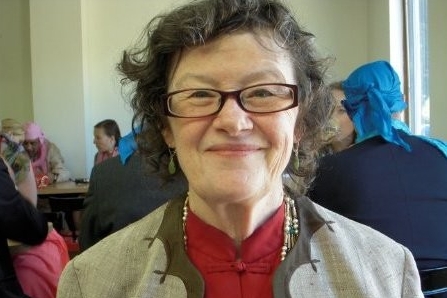
    Roberta Fallon, seen here in an undated photo.

    Roberta Fallon, 76, cofounder, editor, and longtime executive director of the online Artblog and adjunct professor at St. Joseph’s University, died in December at Thomas Jefferson University Hospital of injuries she suffered after being hit by a car. She was 76.

    Described by family and friends as empathetic, energetic, and creative, Ms. Fallon and fellow artist Libby Rosof cofounded Artblog in 2003. For nearly 22 years, until the blog became inactive in June, Ms. Fallon posted commentary, stories, interviews, reviews, videos, podcasts, and other content that chronicled the eclectic art world in Philadelphia.

    — Gary Miles

    Benita Valente

    BENI26P Gerald S. Williams 10/18/00 2011 Pine st. Philadelphia-based soprano Benita Valente has sung all over the world. At age 65, she is making her Oct. 29 performance with the Mendelssohn Club at the Academy of Music her last. 1 of 3: Benita goes over some music at the piano in her upstairs music room.

    Benita Valente, a revered lyric soprano whose voice thrilled listeners with its purity and seeming effortlessness, died in October at home in Philadelphia. She was 91.

    In a remarkable four-decade career, Ms. Valente appeared on the opera stage, in chamber music, and with orchestras. In the intimate genre of lieder — especially songs by Schubert and Brahms — she was considered one of America’s great recitalists.

    — Peter Dobrin
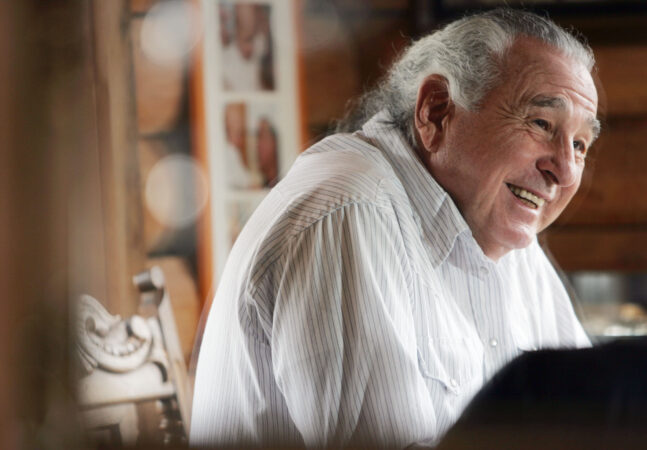
  • Ben Nighthorse Campbell, Native American senator, has died at 92

    Ben Nighthorse Campbell, Native American senator, has died at 92

    Former Sen. Ben Nighthorse Campbell of Colorado, who overcame a hardscrabble childhood to become the first Native American chairman of the Senate Committee on Indian Affairs and a leader of the effort to build the National Museum of the American Indian in Washington, died Dec. 30. He was 92.

    Mr. Campbell died surrounded by his family, his daughter, Shanan Campbell, told the Associated Press. A cause of death was not provided.

    Mr. Campbell, a member of the Northern Cheyenne tribe, represented the western slope of Colorado for three terms in the U.S. House, starting in 1987, and served two terms in the Senate beginning in 1993. In each chamber, he was the only American Indian in office at the time. He immersed himself in public lands, water, and mining issues but made Indian causes the centerpiece of his legislative career.

    In the button-down environs of Capitol Hill, Mr. Campbell stood out by arriving at work on a motorcycle, wearing a ponytail and a bolo tie with a handmade silver and turquoise clasp. His unusual resumé further set him apart from the many former lawyers in Congress.

    In his youth, Mr. Campbell was a member of the first U.S. Olympic judo team. He became a Teamsters union truck driver, an Air Force military police officer, a trainer of champion quarter horses and a successful jewelry designer before entering public service, by his account, on a whim.

    A fiscal conservative and social liberal, Mr. Campbell was elected first as a Democrat and made a high-profile switch to the Republican Party in 1995. He joined the Republicans, in part, he said, to protest Senate Democrats’ defeat of a GOP-backed proposed constitutional amendment to balance the budget.

    He continued to support abortion rights and opposed attempts by some Republicans to cut spending for the federal school lunch program. The program sometimes accounted for “the only meal I got when I was a kid,” he said, recalling a childhood that also included years in an orphanage during the Depression.

    Republicans had recently taken control of the Senate when Mr. Campbell joined their caucus, and they rewarded him with a seat on the Appropriations Committee, which controls government spending. In 1997, he was selected to chair the Indian Affairs Committee.

    His involvement with the Smithsonian Institution’s National Museum of the American Indian dated to 1989, when he was a sponsor of legislation that authorized construction of a building on the National Mall and that required the Smithsonian to identify Indian remains and sacred objects in its vast collection and repatriate them to tribes requesting their return. The museum opened in 2004.

    Unlike federal laws regarding water rights or tribal boundaries for Native Americans, the museum legislation “was about respecting their humanity,” said Kristen Carpenter, director of the American Indian Law Program at the University of Colorado.

    John Echohawk, executive director of the Native American Rights Fund, a Colorado-based public interest law firm that has worked for decades to secure the return of Indian remains and sacred objects, said the legislation was a “key part of the process of educating” the public about Indian rights and sovereignty.

    Fascination with judo

    Benny Marshall Campbell was born in Placer County, Calif., northeast of Sacramento, on April 13, 1933.

    His father, who dabbled in jewelry-making and ran a country store, tried to hide his Cheyenne Indian heritage in an era of rampant discrimination. “My father insisted we keep our Indian background a secret,” Mr. Campbell told his biographer, Herman J. Viola. “Don’t worry about it, we were told. Just keep your mouth shut. It doesn’t mean anything; don’t have anything to do with it.”

    His mother, a Portuguese immigrant, suffered from tuberculosis and was in and out of healthcare facilities for much of his childhood. She struggled to look after Benny and his sister while their father, an alcoholic, spent long periods away on drinking sprees.

    “It was all she could do, sick and weak herself, to take care of her little family,” Mr. Campbell recalled to Viola. Sometimes the only food in the house was a can of vegetables. “I remember one day, in fact, when my mother opened a can of peas and gave half of them to my sister and half to me,” he said. “All she kept for herself was the juice in the can.”

    Mr. Campbell was 6 when his mother placed her children in an orphanage in Sacramento, an act that he said he never held against her, given the family’s struggles. They occasionally returned to her care when their father was home.

    At roughly age 12, Mr. Campbell began packing fruit at the many farms in the area. He worked alongside laborers of Japanese heritage and, in one heated moment, found himself in a fight with a young man Mr. Campbell assumed he could easily knock to the ground.

    Instead, to his shock, the man put him on the floor with a judo maneuver — and Mr. Campbell became a “convert” to the sport, he said. He joined a judo club established by Japanese residents in Placer County, and the sport became an obsession.

    He left high school in 1950, during his junior year, to enlist in the Air Force at the start of the Korean War. He chose to be a military police officer, in part, because the training included judo lessons.

    He completed his high school equivalency diploma in the Air Force and, after he left the service, used the GI Bill to enroll at San Jose State College (now university), partly because of its winning judo team. His biographer wrote that Mr. Campbell’s first marriage, which was annulled within months, and his second, to Elaine Morgan, ended, in part, because he “put judo first.”

    After graduating in 1957 with degrees in physical education and fine arts, Mr. Campbell taught art and industrial arts at an elementary school near San Jose. When he learned in 1960 that judo would be introduced in the 1964 Tokyo Olympic Games, he quit his job, sold his house and car, and moved to Japan to enroll in a renowned judo program at Meiji University.

    To support himself in Tokyo, he taught English and landed bit parts in Japanese movies. He won a gold medal at the 1963 Pan American Games in Sao Paulo, Brazil.

    The next year, Mr. Campbell was part of a four-man U.S. Olympic team, but a knee injury forced him to drop out during the competition. Stunned and in pain, Mr. Campbell wept openly when he had to forfeit the match, according to his biographer.

    Returning to California, he took a job as a high school physical education teacher near Sacramento.

    In 1966, he married Linda Price, and they had two children, Colin and Shanan. A complete list of survivors was not immediately available.

    Entering politics

    In the late 1960s, a period of protest and cultural resurgence among American Indians, Mr. Campbell joined thousands of Native American young people searching for their roots. He located relatives in the Northern Cheyenne tribe in Montana, became a member of the tribe and took the name Nighthorse.

    Soon, Mr. Campbell moved his family to a ranch in Southwest Colorado and began raising champion show-ring quarter horses. He also made award-winning jewelry with Indian themes, using skills he learned from his father, who taught him how to carve wood and bone and shape metal from coins and tobacco tins.

    With a thriving jewelry business, Mr. Campbell acquired a pilot’s license and purchased a single-engine plane to ease travel to jewelry shows and competitions around the country. One day in 1982, he found himself grounded by weather in Durango, Colo., and met up with a friend who was attending a Democratic Party gathering to nominate a candidate for the state House of Representatives.

    Mr. Campbell, who had not been active in politics, volunteered when no one else agreed to run. He won election that November, with 54% of the vote, and served two terms before narrowly unseating one-term incumbent U.S. Rep. Mike Strang in 1986 in a congressional district that included the cities of Pueblo, Grand Junction, and Durango.

    In the U.S. House, Mr. Campbell successfully co-sponsored legislation to rename the Custer Battlefield National Monument in Montana, which became the Little Bighorn Battlefield National Monument. The change, according to the National Park Service, was intended “to recognize indigenous perspectives” on the American Indian victory over Lt. Col. George A. Custer and his 7th Cavalry in June 1876. The legislation also authorized a prominent memorial to the warriors who died there.

    In 1987, Mr. Campbell generated support to remove from the House Interior Committee hearing room a century-old painting, titled Death Whoop and depicting an Indian holding a bloody knife in one hand and a settler’s scalp in the other.

    “It’s out of touch with the sensitivity of Indians,” Mr. Campbell told the Associated Press at the time. “It plays on the prejudice of man.”

    After three terms in the House, Mr. Campbell ran in 1992 for an open Senate seat and won the general election with support from organized labor, energy interests, ranchers and Hispanic voters.

    He did not seek reelection in 2004, citing poor health. He had been treated for prostate cancer the previous year.

    Yet it was his vigor that most colleagues recalled.

    On one occasion, he chased down a mugger who had accosted him. In 1995, when he was 62, he used his martial arts skills to help subdue a homeless man who had shoved 92-year-old Sen. Strom Thurmond (R., S.C.) and then attacked a Capitol Police officer.

    Alluding to his colleague’s physical prowess, Sen. Mitch McConnell (R., Ky.) wryly observed when Mr. Campbell retired that “many senators became a little more inclined to vote for his amendments after that.”

  • Isiah Whitlock Jr., actor from ‘The Wire,’ ‘Veep,’ and Spike Lee films, has died at 71

    Isiah Whitlock Jr., actor from ‘The Wire,’ ‘Veep,’ and Spike Lee films, has died at 71

    Isiah Whitlock Jr., an actor who made frequent memorable appearances on the HBO series The Wire and Veep and in five films with director Spike Lee, died Tuesday. He was 71.

    Mr. Whitlock’s manager Brian Liebman told the Associated Press in an email that the actor died in New York after a short illness.

    Mr. Whitlock played openly corrupt State Sen. Clay Davis on 25 episodes across the five seasons of The Wire.

    Davis, a fan-favorite character, was known for his profane catchphrase — “sheee-it” — delivered by Mr. Whitlock in moments of triumph and blunt honesty. The actor first used the phrase in his first film with Lee, 2002’s The 25th Hour, when his detective character discovers a cache of drugs hidden in a couch.

    “It’s a big, big, big loss,” Lee said in a phone call with the AP on Tuesday night. “I’m going to miss him for the rest of my life.”

    Mr. Whitlock went on to appear in five other Lee films, including 2004’s She Hate Me, 2012’s Red Hook Summer, 2015’s Chi-Raq, 2018’s BlacKkKlansman, and 2020’s Da 5 Bloods.

    “We vibed over all those years,” Lee said. “We clicked from the jump.”

    Lee said he has especially sweet memories of the extended time he spent with Mr. Whitlock shooting Da 5 Bloods on location in Thailand, and he fondly remembered the last time he saw Mr. Whitlock — Lee and his daughter, Satchel, sat with him at a screening of Kiss of the Spider Woman earlier this year.

    “He was just a beautiful, beautiful soul,” Lee said. “If you were around him, he made everybody feel good in his presence. He would radiate. I would put that over his acting.”

    Lee pointed to Mr. Whitlock’s comic talents both on screen and off.

    “He was hilarious,” Lee said. “That was just his nature, he made people laugh. Everybody was in on the joke.”

    Mr. Whitlock is the second significant star of The Wire to die in recent weeks after the death of actor James Ransone.

    A native of South Bend, Ind., Mr. Whitlock went to Southwest Minnesota State University, where he played football and studied theater. Injuries pushed him to study acting, and he moved to San Francisco to work in theater.

    He began appearing in small television guest roles on shows including Cagney and Lacy in the late 1980s, and he had very small roles in the 1990 films Goodfellas and Gremlins 2: The New Batch.

    After The Wire, Whitlock moved on to another HBO show, the political satire Veep, where he played Secretary of Defense George Maddox for three seasons. The character ran against Julia Louis-Dreyfus′ Selina Meyer in presidential primaries.

    The Wire creator David Simon also paid tribute to Mr. Whitlock in a post on Bluesky.

    “As fine an actor as he was,” Simon said, “Isiah was an even better spirit and the greatest gentleman.”

  • Tatiana Schlossberg, journalist and granddaughter of JFK, dies at 35

    Tatiana Schlossberg, journalist and granddaughter of JFK, dies at 35

    Tatiana Schlossberg, 35, a journalist who told stories of the changing climate and the ways humans can help protect the environment, and whose terminal illness and position in the Kennedy family thrust her into the national spotlight late in life, died Tuesday.

    Her family announced the death in a social media post shared by the John F. Kennedy Presidential Library and Museum. The statement did not say where she died.

    Ms. Schlossberg published a New Yorker essay in November revealing that she had been diagnosed with a rare form of acute myeloid leukemia, a cancer of the blood and bone marrow. Between reflections on her family and mortality, she harshly criticized her cousin Robert F. Kennedy Jr., the secretary of health and human services, for his opposition to government-funded medical research and vaccines.

    “I watched from my hospital bed as Bobby, in the face of logic and common sense, was confirmed for the position, despite never having worked in medicine, public health, or the government,” she wrote.

    As an environmental journalist, Ms. Schlossberg was drawn to stories that humanized sprawling and complicated policy issues — often while offering her a chance to participate in the action herself.

    While chronicling the impact of climate change, she jumped in a cranberry bog in Massachusetts. She later spent nearly eight hours skiing the Birkebeiner, a cross-country race in Wisconsin threatened by warm weather and a lack of snow.

    “On the lake, my cross-country skis began to skate in a rhythm, something that had eluded me for much of the day,” she wrote in a dispatch for Outside magazine. “I felt like I was flying.”

    Ms. Schlossberg studied at Yale and Oxford before launching her journalism career at the Record newspaper in North Jersey, covering crime and local affairs. She joined the New York Times in 2014 as an intern and was named a staff writer on the paper’s Metro desk before moving to the science section, where colleagues regarded her as a curious, hardworking reporter who wore her privilege lightly.

    A granddaughter of President John F. Kennedy and first lady Jacqueline Kennedy Onassis, Ms. Schlossberg was the second child of Caroline Kennedy, a former U.S. ambassador to Australia and Japan, and Edwin Schlossberg, an artist and designer.

    “She was a total delight,” said Henry Fountain, a longtime climate and science reporter at the Times. Ms. Schlossberg “just researched her butt off on stories,” he added.

    After leaving the Times in 2017, Ms. Schlossberg began freelancing and, in 2019, published Inconspicuous Consumption: The Environmental Impact You Don’t Know You Have. The book examined the hidden costs of everyday activities — streaming videos, buying jeans, eating burgers — and was honored by the Society of Environmental Journalists.

    “Using history, science and a personal narrative, Schlossberg provides a better understanding of both individual and systemic drivers of ecological destruction,” the judges said in awarding her the Rachel Carson book prize. “Readers will find solace, humor and a route to feeling empowered with possibilities for positive change, rather than drained by an accumulation of bad news.”

    Ms. Schlossberg had been planning to write a second book, on the oceans, when she was found to have cancer in May 2024, while in the hospital for the birth of her second child.

    In her New Yorker essay, she wrote of her shock at getting the diagnosis — “This could not be my life” — and of the turbulent 18 months that followed, in which she received stem cell donations from her sister as well as a stranger in the Pacific Northwest; underwent chemotherapy; and participated in a clinical trial, testing a new type of immunotherapy.

    In recounting her experience, Ms. Schlossberg implicitly acknowledged that her family, and her mother in particular, had dealt with years of grief. Her mother was only 5 when her father, President Kennedy, was assassinated in Dallas in 1963. She was 10 when the same fate befell her uncle, Robert F. Kennedy, while he was campaigning for president in Los Angeles. Her younger brother, John Jr., died in a plane crash in 1999.

    “For my whole life, I have tried to be good, to be a good student and a good sister and a good daughter, and to protect my mother and never make her upset or angry,” Ms. Schlossberg wrote. “Now I have added a new tragedy to her life, to our family’s life, and there’s nothing I can do to stop it.”

    Ms. Schlossberg recalled that she was in her hospital bed when her cousin “Bobby, in the face of logic and common sense, was confirmed” as health and human services secretary, “despite never having worked in medicine, public health, or the government.”

    Kennedy had previously run for president as an independent, in what Ms. Schlossberg called “an embarrassment to me and the rest of my immediate family.” He faced blowback when he acknowledged that he had placed a dead bear in Central Park a decade earlier, a bizarre episode that — in an odd twist of fate — Ms. Schlossberg had reported on for the Times, writing in 2014 that state investigators concluded the bear had died after being struck by a car, but did not know how it ended up in the park.

    “Like law enforcement, I had no idea who was responsible for this when I wrote the story,” Ms. Schlossberg told The Times last year.

    In her New Yorker essay, Ms. Schlossberg wrote that her cousin’s health policy decisions threatened her own survival, and that of “millions of cancer survivors, small children, and the elderly.”

    “I watched as Bobby cut nearly half a billion dollars for research into mRNA vaccines, technology that could be used against certain cancers; slashed billions in funding from the National Institutes of Health, the world’s largest sponsor of medical research; and threatened to oust the panel of medical experts charged with recommending preventive cancer screenings,” she wrote.

    She also noted that the drug misoprostol, which she received to stop a postpartum hemorrhage that nearly killed her, was “part of medication abortion, which, at Bobby’s urging, is currently ‘under review’ by the Food and Drug Administration.”

    “I freeze when I think about what would have happened if it had not been immediately available to me and to millions of other women who need it to save their lives or to get the care they deserve.”

    ‘I was not just a sick person’

    Tatiana Celia Kennedy Schlossberg was born in Manhattan on May 5, 1990. She was raised on the Upper East Side with her older sister, artist and filmmaker Rose Schlossberg, and her younger brother, Jack Schlossberg, who is now running for Congress in New York.

    Ms. Schlossberg studied history at Yale University, where she received a bachelor’s degree in 2012 and served as editor in chief of the weekly Yale Herald. She later earned a master’s in American history from the University of Oxford.

    As a freelance journalist, Ms. Schlossberg contributed to publications including the Washington Post, the Atlantic, and Vanity Fair. She wrote a weekly newsletter, News From a Changing Planet, until 2024.

    Juliet Eilperin, the Post’s deputy futures editor, called her “one of the least pretentious journalists I have ever dealt with.”

    “Tatiana had an intense desire to be out in the field, immersing herself in nature and talking with scientists,” Eilperin said. “She was meticulous and exhaustive in her research, scrutinizing environmental problems and what might be done to fix them.”

    In 2017, Ms. Schlossberg married George Moran at her family’s home on Martha’s Vineyard, in a ceremony officiated by former Massachusetts Gov. Deval Patrick. Moran, a urologist, was a resident at Columbia-Presbyterian when Ms. Schlossberg was diagnosed with cancer at the hospital.

    “He did everything for me that he possibly could,” she wrote in her essay. “He talked to all the doctors and insurance people that I didn’t want to talk to; he slept on the floor of the hospital; he didn’t get mad when I was raging on steroids and yelled at him that I did not like Schweppes ginger ale, only Canada Dry.”

    In addition to her husband, survivors include their two children; her parents; and her brother and sister.

    While battling cancer, Ms. Schlossberg held her profession up as a point of pride. “My son knows that I am a writer and that I write about our planet,” she wrote. “Since I’ve been sick, I remind him a lot, so that he will know that I was not just a sick person.”

  • Khaleda Zia, former Bangladeshi prime minister and archrival of a previous premier, dies at 80

    Khaleda Zia, former Bangladeshi prime minister and archrival of a previous premier, dies at 80

    DHAKA, Bangladesh — Former Bangladeshi Prime Minister Khaleda Zia, 80, whose archrivalry with another former premier defined the country’s politics for a generation, has died, her Bangladesh Nationalist Party said in a statement Tuesday.

    Ms. Zia was the first woman elected prime minister of Bangladesh.

    Bangladesh’s interim government announced a three-day mourning period. A general holiday also was announced for Wednesday, when Ms. Zia’s funeral prayers are scheduled be held in front of the country’s national Parliament building in Dhaka.

    Bangladesh’s interim leader, Muhammad Yunus, issued a statement Tuesday citing Ms. Zia’s contributions to the country.

    “Her role in the struggle to establish democracy, a multi-party political culture, and the rights of the people in Bangladesh will be remembered forever,” Yunus said.

    Indian Prime Minister Narendra Modi offered condolences in a statement Tuesday, noting that “as the first woman Prime Minister of Bangladesh, her important contributions toward the development of Bangladesh, as well as India-Bangladesh relations, will always be remembered.”

    Sajeeb Wazed, son of former Bangladesh Prime Minister Sheikh Hasina, said in a statement Tuesday that Ms. Zia’s demise “will leave a deep impact on the country’s [democratic] transition.”

    “She will be remembered for her contributions in nation building but her death is a blow to stabilize Bangladesh,” said Wazed, whose mother was Ms. Zia’s greatest political rival.

    Hasina issued a statement from exile in India saying Ms. Zia’s death was “an irreparable loss” for politics in Bangladesh and recalling her contributions in establishing the nation’s democracy.

    Ms. Zia had faced corruption cases she said were politically motivated, but in January 2025 the Supreme Court acquitted Ms. Zia in the last corruption case against her, which would have let her run in February’s general election.

    The BNP said that after she was released from prison due to illness in 2020, her family sought permission for treatment abroad at least 18 times from Hasina’s administration, but the requests were rejected.

    Following Hasina’s ouster in 2024, the Yunus-led interim government finally allowed her to go. She went to London in January and returned to Bangladesh in May.

    Fighting military dictatorship

    Bangladesh’s early years of independence, gained in a bloody 1971 war against Pakistan, were marked by assassinations, coups, and countercoups as military figures and secular and Islamic leaders jockeyed for power.

    Ms. Zia’s husband, President Ziaur Rahman, had grabbed power as a military chief in 1977 and a year later formed the Bangladesh Nationalist Party. He was credited with opening democracy in the country but was killed in a 1981 military coup. Ms. Zia’s uncompromising stance against the military dictatorship helped build a mass movement against it, culminating with the ousting of dictator and former army chief H.M. Ershad in 1990.

    Ms. Zia’s opponent when she won her first term in 1991 and in several elections after that was Hasina, the daughter of independence leader Sheikh Mujibur Rahman, who was assassinated in a 1975 coup.

    Ms. Zia was criticized over an early 1996 election in which her party won 278 of the 300 parliamentary seats during a wide boycott by other leading parties, including Hasina’s Awami League, which demanded an election-time caretaker government. Ms. Zia’s government lasted only 12 days before a nonpartisan caretaker government was installed, and the new election was held that June.

    Ms. Zia returned to power in 2001 in a government shared with the country’s main Islamist party, Jamaat-e-Islami, which had a dark past involving Bangladesh’s independence war.

    Ms. Zia’s Bangladesh Nationalist Party was previously closely allied with the party and her government maintained the confidence of the business community by following pro-investment, open-market policies. Ms. Zia was known to have a soft spot for Pakistan and used to deliver anti-Indian political speeches. India alleged insurgents were allowed to use Bangladesh’s soil to destabilize India’s northeastern states under Ms. Zia, especially during her term from 2001 to 2006.

    During that term, Ms. Zia also was tainted by allegations that her elder son, Tarique Rahman, was running a parallel government and was involved in widespread corruption.

    A rivalry with Hasina

    In 2004, Hasina blamed Ms. Zia’s government and Rahman for grenade attacks in Dhaka that killed 24 members of her Awami League party and wounded hundreds of people. Hasina narrowly escaped the attack, which she characterized as an assassination attempt, and subsequently won the 2008 general election.

    Ms. Zia’s party and its partners boycotted the 2014 election in a dispute over a caretaker government, giving a one-sided victory to the increasingly authoritarian regime of Hasina. Her party joined the national elections in 2018 but boycotted again in 2024, allowing Hasina to return to power for a fourth consecutive time through controversial elections.

    Ms. Zia was sentenced to 17 years in jail in two separate corruption cases for misuse of power in embezzling funds meant for a charity named after her late husband. Her party said the charges were politically motivated to weaken the opposition, but the Hasina government said it did not interfere and the case was a matter for the courts.

    Hasina was bitterly criticized by both her opponents and independent critics for sending Ms. Zia to jail.

    Health concerns placed over politics

    Ms. Zia was released from jail by Hasina’s government in 2020 and was moved to a rented home, from which she regularly visited a private hospital. Her family repeatedly requested that Hasina’s administration allow Ms. Zia to travel abroad for medical treatment, but was refused.

    After 15 years in power, Hasina was ousted in a mass uprising in August 2024 and fled the country. Ms. Zia was given permission to travel abroad by an interim government led by Yunus, a Nobel Peace Prize laureate.

    Ms. Zia was silent about politics for years and did not attend political rallies, but she remained the BNP chairperson until her death. Rahman has been the party’s acting chair since 2018.

    She was last seen at an annual function of the Bangladesh military in Dhaka Cantonment on Nov. 21, when Yunus and other political leaders met her. She was in a wheelchair and appeared pale and tired.

    She is survived by Rahman, her elder son and heir apparent in the political dynasty. Her younger son, Arafat, died in 2015.

  • Gary Graffman, pianist and former Curtis faculty member and president, has died at 97

    Gary Graffman, pianist and former Curtis faculty member and president, has died at 97

    While the classical music world knew Gary Graffman as a distinguished visiting concert pianist, Philadelphia was his launching pad and artistic home over roughly eight decades. He was both a student and president at the Curtis Institute of Music, nurturing young talents to international fame before his death on Saturday in New York. He was 97.

    His death was confirmed by his longtime publicist.

    The New York City-born pianist arrived at Curtis at age 7. He graduated at age 17 and played roughly 100 concerts a year between the ages of 20 and 50 before retiring from touring due to a compromised right hand. Diagnosed with focal dystonia (a neurological disorder), he went on to premiere works for the left hand by Jennifer Higdon and William Bolcom.

    Mr. Graffman returned to Curtis as a teacher in 1980, became director in 1986, and the president of the conservatory in 1995, with a teaching studio encompassing nearly 50 students, including Yuja Wang and Lang Lang among others. He performed on numerous occasions with the Philadelphia Orchestra from 1947 to 2003.

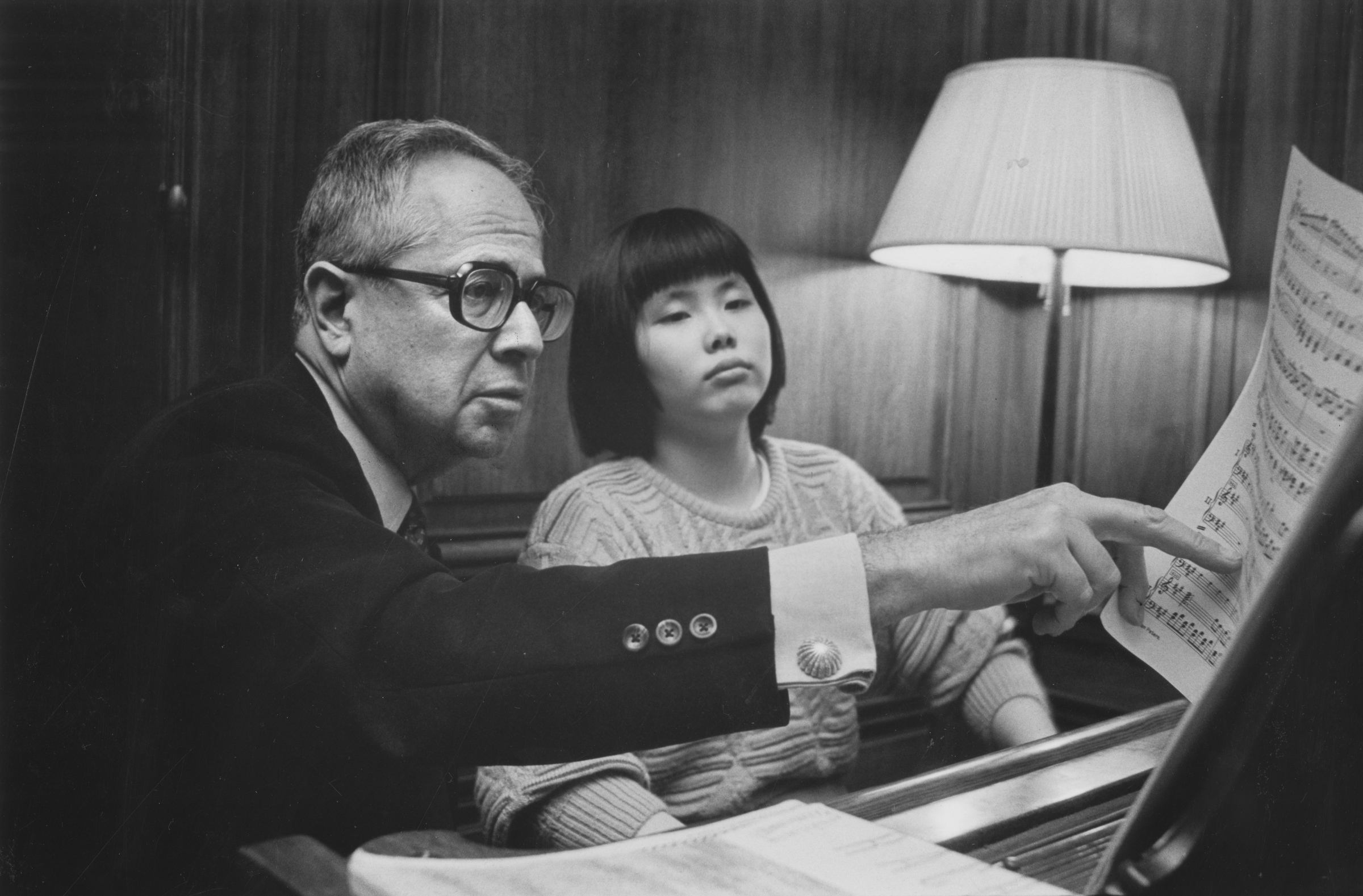
    Former Curtis Institute director Gary Graffman during a 1989 piano lesson with Angela Au, then 13.

    He stepped down from the faculty at age 92 in 2021, mainly due to travel challenges, having commuted for years between New York and his Philadelphia home at the Wanamaker House on Walnut Street. Yet he maintained a family-like association with students at his longtime 57th Street Manhattan home that was filled with antiques he acquired over many visits to China. He joked that he had cleaned out the continent, saying (with his characteristic humor), “There’s no more left. All gone!”

    Mr. Graffman’s interest in nonmusical matters helped ease his transition out of full-time touring. Often accompanied by his wife, Naomi (who preceded him in death in 2019 at age 90), he projected a been-there-done-that attitude and was relieved not to have more comprehensive ailments, having been diagnosed with Parkinson’s disease. “It’s only your hand,” he told commentator Zsolt Bognár in an extended, candid interview for Living the Classical Life, a distinguished series of podcasts.

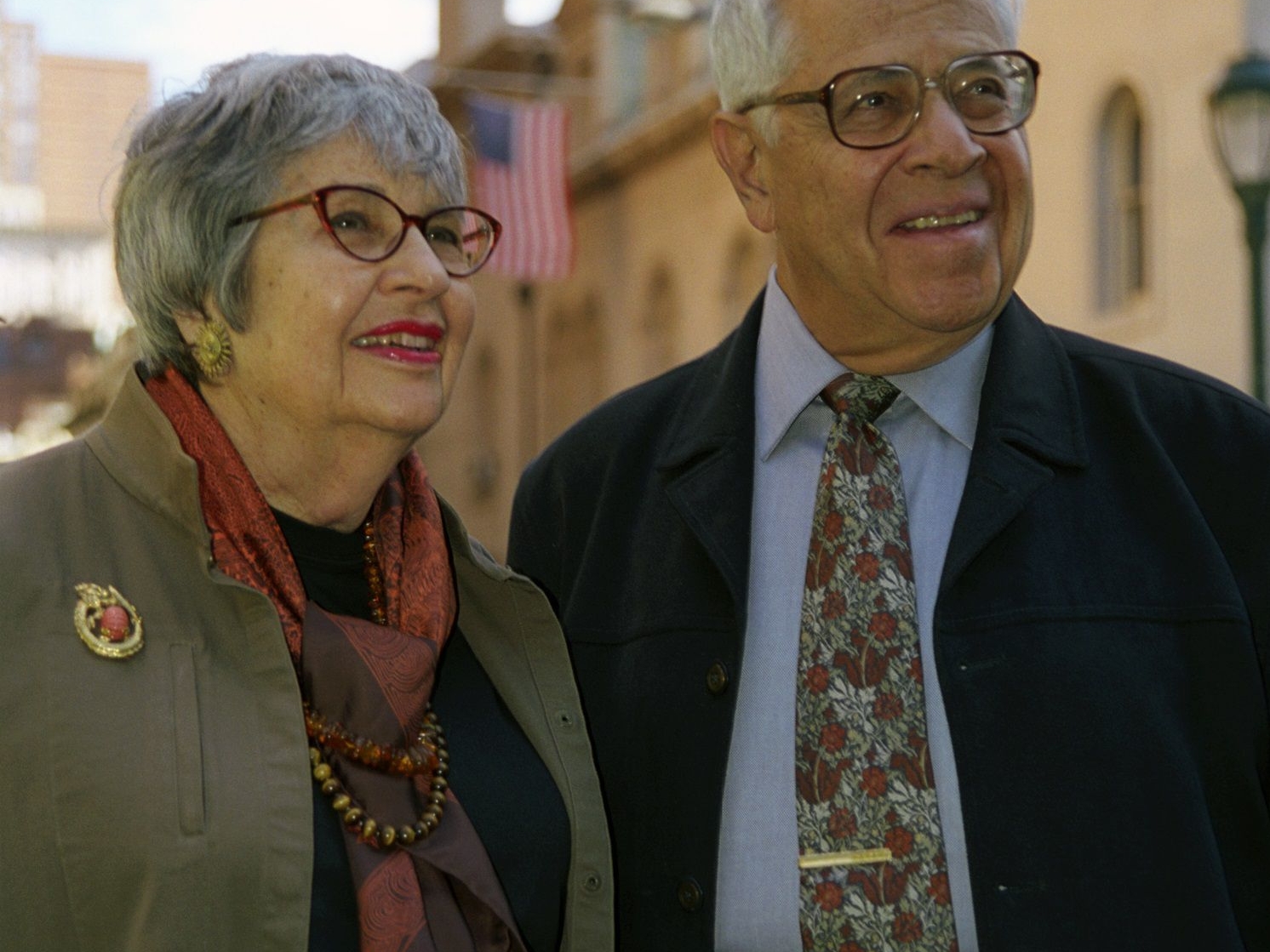
    Naomi and Gary Graffman.

    Having started playing piano at age 3 under the guidance of his Russian-heritage parents, Mr. Graffman began studying in earnest in 1936 at Curtis. Though he went on to study at Columbia University and to win the Leventritt Competition, his career effectively began at age 17 after winning the Rachmaninoff Fund competition, as documented in a short squib in the New York Times, dated March 28, 1947:

    “Gary Graffman of 226 West Ninety-seventh Street, New York, made his debut this afternoon with the Philadelphia Orchestra, conducted by Eugene Ormandy, playing Rachmaninoff’s Second piano concerto. The 18-year-old pianist was recalled to the stage several times, amid shouts of ‘bravo’ from the more than 3,000 persons in the Academy of Music.”

    Gary Graffman’s left hand rests on sheet music of composition by Prado. File photograph.

    Years of less-formal studies followed with the legendarily strong-minded Russian pianist Vladimir Horowitz, from whom Mr. Graffman learned how to bring out the individual voice of a student. During lessons, Horowitz never went to the keyboard to demonstrate how he would play a particular phrase.

    From there, Mr. Graffman had a top-of-the-line career. He recorded much of the romantic-era piano literature for RCA and Columbia, and with some of the great orchestras of the United States. Most notably, he recorded his signature Rachmaninoff Piano Concerto No. 2 with the New York Philharmonic under Leonard Bernstein.

    But while recording Tchaikovsky’s Piano Concertos 2 and 3 in Philadelphia with Eugene Ormandy, Mr. Graffman began noticing finger problems that, at the time, he was able to work around.

    Gary Graffman in 2006 near his retirement.

    Like many musicians experiencing such difficulties, it was initially assumed (even by his wife) that he wasn’t practicing enough.

    At age 50, he canceled engagements but managed to record Gershwin’s Rhapsody in Blue, which was used for the soundtrack of the Woody Allen movie Manhattan, and pursued various treatments.

    Back then, focal dystonia was little known or understood. Mr. Graffman’s colleague Leon Fleisher had been struggling with the ailment for years, finally having a late-in-life resurgence as a two-handed pianist. Not Mr. Graffman.

    He made the Ravel Piano Concerto for the Left Hand the center of his repertoire, explored other left-hand works commissioned by the Viennese pianist Paul Wittgenstein (who lost his right arm in World War I) and performed new left-hand works, including concertos by Bolcom, Daron Hagen, and Ned Rorem.

    Though he is often characterized as having been limited to repertoire for the left hand only, the practical truth is that Mr. Graffman maintained some use of his afflicted hand, allowing him to perform works that made limited use of the right hand, such as Alfred Schnittke’s Piano Quintet and Jennifer Higdon’s 1999 Scenes from the Poet’s Dream, commissioned by the Philadelphia Chamber Music Society.

    Yuja Wang takes her final lesson with Gary Graffman at the Curtis Institute of Music in 2008.

    Returning to Curtis, Mr. Graffman was good to his word in teaching each student as an individual whose journey was yet to be discovered.

    Ignat Solzhenitsyn, who graduated in 1995, became a conductor with Chamber Orchestra of Philadelphia and the Kirov Opera. Yuja Wang (2008) has pursued a mixture of new and traditional repertoire, also giving marathon concerts of the Rachmaninoff piano concertos all in one day. Though Mr. Graffman was generally against piano competitions, Hao Chen Zhang (2012) had trouble establishing his career until entering and winning the Van Cliburn Competition.

    Most interesting among Mr. Graffman’s students was, perhaps, Lang Lang (2002). His career seemed to be launched by filling in for Andre Watts at Chicago’s Ravinia Festival. Mr. Graffman maintained that event only sped up the inevitable.

    For years, Mr. Graffman had Lang Lang trying out repertoire in private events, starting small with Mendelssohn and working his way up to bigger repertoire. When Lang Lang was sidelined by tendinitis around 2017, he reportedly turned to Mr. Graffman to find his way back to the concert stage.

    Lang Lang with teacher Gary Graffman at Curtis.

    Financially, Curtis thrived during Mr. Graffman’s tenure. From 1985 to 2005, annual giving rose from $300,000 to $1.8 million and the endowment went from $45.5 million in to $140 million.

    The major blot on Mr. Graffman’s administrative career, however, was considerable. In 2019, violinist Lara St. John came forward with reports of faculty rape during her mid-1980s student years at Curtis. Investigations concluded that Mr. Graffman had failed to take appropriate action on her reports of sexual assault.

    No doubt, Mr. Graffman will be most remembered as a pianist. Truly a child of the post-Arturo Toscanini generation, Mr. Graffman played with a deep respect for the letter of the score. Often, Mr. Graffman’s Russian heritage could roar into the fore during, say, cadenzas of a Beethoven piano concerto. His impish wit could often be heard in performances of Rachmaninoff’s Rhapsody on a Theme of Paganini. And not surprisingly.

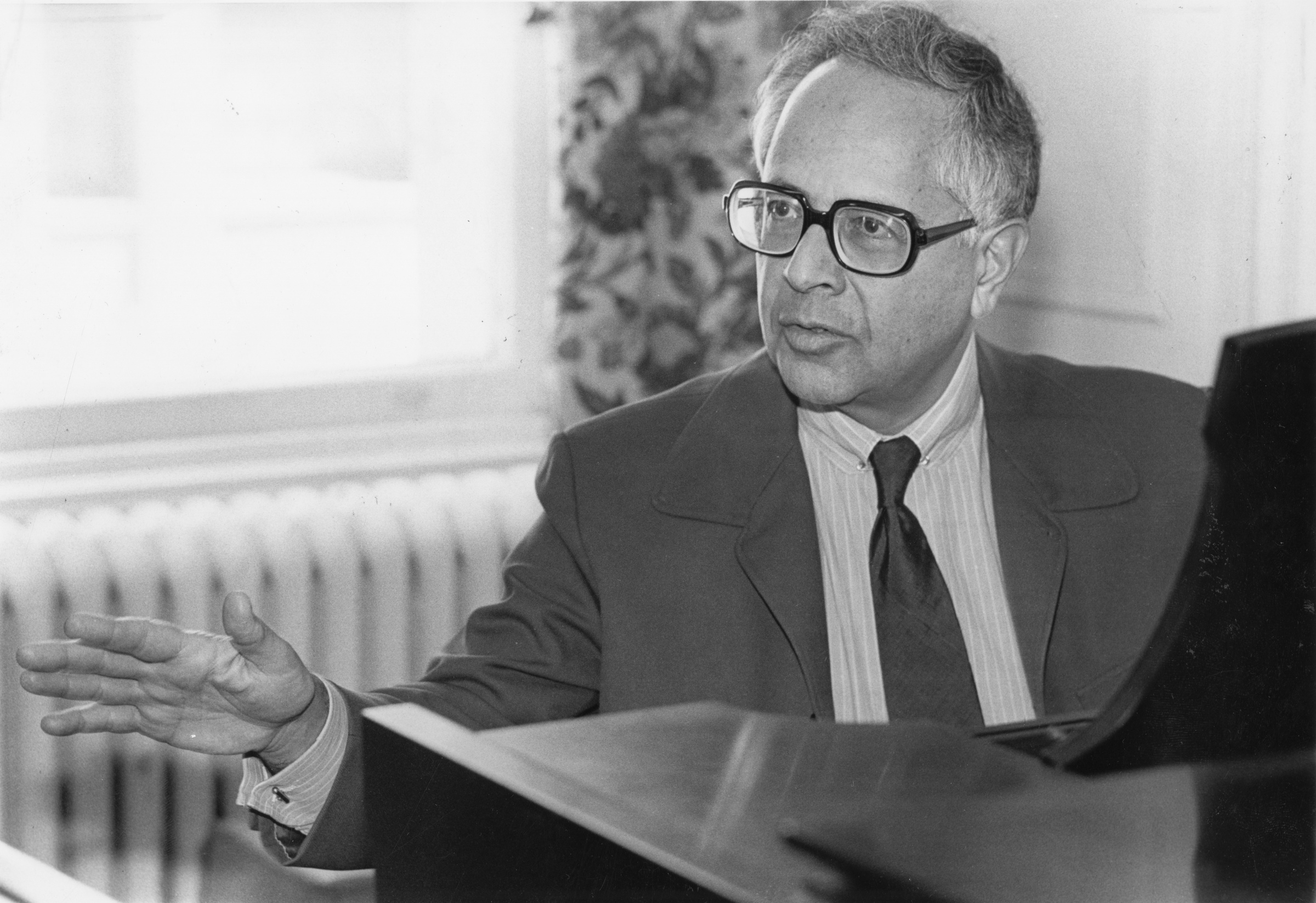
    Former Curtis Institute director Gary Graffman.

    Offstage, Mr. Graffman projected a sense of fun, which is often apparent in his 1981 memoir, I Really Should be Practicing. When Japanese-born pianist Mitsuko Uchida declared having great artistic affinity for the Central European Jewish community, Mr. Graffman began sending her Hanukkah cards. Regarding Wang, he said that she was fascinated by arts beyond the music saying, with mock incredulity, that she went to museums “because she really wants to!” When recordings by the British pianist Joyce Hatto were scandalously discovered to have been stolen from other pianists in 2007, Mr. Graffman quipped that he would be ”deeply offended” if his recordings weren’t among them.

    Mr. Graffman leaves no immediate survivors. Memorials will be announced at a later date.

  • Brigitte Bardot, 1960s French sex symbol turned militant animal rights activist, has died at 91

    Brigitte Bardot, 1960s French sex symbol turned militant animal rights activist, has died at 91

    PARIS — Brigitte Bardot, the French 1960s sex symbol who became one of the greatest screen sirens of the 20th century and later a militant animal rights activist and far-right supporter, has died. She was 91.

    Ms. Bardot died Sunday at her home in southern France, according to Bruno Jacquelin, of the Brigitte Bardot Foundation for the protection of animals. Speaking to the Associated Press, he gave no cause of death, and said that no arrangements had been made for funeral or memorial services. She had been hospitalized last month.

    Ms. Bardot became an international celebrity as a sexualized teen bride in the 1956 movie And God Created Woman. Directed by her then husband Roger Vadim, it triggered a scandal with scenes of the long-legged beauty dancing on tables naked.

    At the height of a cinema career that spanned more than two dozen films and three marriages, Ms. Bardot came to symbolize a nation bursting out of bourgeois respectability. Her tousled blond hair, voluptuous figure, and pouty irreverence made her one of France’s best-known stars, even as she struggled with depression.

    Such was her widespread appeal that in 1969 her features were chosen to be the model for “Marianne,” the national emblem of France and the official Gallic seal. Bardot’s face appeared on statues, postage stamps, and coins.

    ‘’We are mourning a legend,’’ French President Emmanuel Macron said in an X post.

    Ms. Bardot’s second career as an animal rights activist was equally sensational. She traveled to the Arctic to blow the whistle on the slaughter of baby seals. She also condemned the use of animals in laboratory experiments, and she opposed Muslim slaughter rituals.

    “Man is an insatiable predator,” Ms. Bardot told the Associated Press on her 73rd birthday, in 2007. “I don’t care about my past glory. That means nothing in the face of an animal that suffers, since it has no power, no words to defend itself.”

    Her activism earned her compatriots’ respect and, in 1985, she was awarded the Legion of Honor, the nation’s highest recognition.

    Turn to the far right

    Later, however, she fell from public grace as her animal protection diatribes took on a decidedly extremist tone. She frequently decried the influx of immigrants into France, especially Muslims.

    She was convicted and fined five times in French courts of inciting racial hatred, in incidents inspired by her opposition to the Muslim practice of slaughtering sheep during annual religious holidays.

    Ms. Bardot’s 1992 marriage to fourth husband Bernard d’Ormale, a onetime adviser to far-right National Front leader Jean-Marie Le Pen, contributed to her political shift. She described Le Pen, an outspoken nationalist with multiple racism convictions of his own, as a “lovely, intelligent man.”

    In 2012, she supported the presidential bid of Marine Le Pen, who now leads her father’s renamed National Rally party. Le Pen paid homage Sunday to an “exceptional woman” who was “incredibly French.”

    In 2018, at the height of the #MeToo movement, Ms. Bardot said in an interview that most actors protesting sexual harassment in the film industry were “hypocritical,” because many played “the teases” with producers to land parts.

    She said she had never had been a victim of sexual harassment and found it “charming to be told that I was beautiful or that I had a nice little ass.”

    Privileged but ‘difficult’ upbringing

    Brigitte Anne-Marie Bardot was born Sept. 28, 1934, to a wealthy industrialist. A shy child, she studied classical ballet and was discovered by a family friend who put her on the cover of Elle magazine at age 14.

    Bardot once described her childhood as “difficult” and said that her father was a strict disciplinarian who would sometimes punish her with a horse whip.

    Vadim, a French movie producer who she married in 1952, saw her potential and wrote And God Created Woman to showcase her provocative sensuality, an explosive cocktail of childlike innocence and raw sexuality.

    The film, which portrayed Ms. Bardot as a teen who marries to escape an orphanage and then beds her brother-in-law, had a decisive influence on New Wave directors Jean-Luc Godard and François Truffaut, and came to embody the hedonism and sexual freedom of the 1960s.

    The film was a box-office hit, and it made Ms. Bardot a superstar. Her girlish pout, tiny waist and generous bust were often more appreciated than her talent.

    “It’s an embarrassment to have acted so badly,” Ms. Bardot said of her early films. “I suffered a lot in the beginning. I was really treated like someone less than nothing.”

    Ms. Bardot’s unabashed, off-screen love affair with co-star Jean-Louis Trintignant eradicated the boundaries between her public and private life and turned her into a hot prize for paparazzi.

    Ms. Bardot never adjusted to the limelight. She blamed the constant media attention for the suicide attempt that followed 10 months after the birth of her only child, Nicolas. Photographers had broken into her house two weeks before she gave birth to snap a picture of her pregnant.

    Nicolas’ father was Jacques Charrier, a French actor who she married in 1959 but who never felt comfortable in his role as Monsieur Bardot. Ms. Bardot soon gave up her son to his father, and later said she had been chronically depressed and unready for the duties of being a mother.

    “I was looking for roots then,” she said in an interview. “I had none to offer.”

    In her 1996 autobiography Initiales B.B., she likened her pregnancy to “a tumor growing inside me,” and described Charrier as “temperamental and abusive.”

    Ms. Bardot married her third husband, West German millionaire playboy Gunther Sachs, in 1966, and they divorced three years later.

    Among her films were A Parisian (1957); In Case of Misfortune, in which she starred in 1958 with screen legend Jean Gabin; The Truth (1960); Private Life (1962); A Ravishing Idiot (1964); Shalako (1968); Women (1969); The Bear and the Doll (1970); Rum Boulevard (1971); and Don Juan (1973).

    With the exception of 1963’s critically acclaimed Contempt, directed by Godard, Ms. Bardot’s films were rarely complicated by plots. Often they were vehicles to display Ms. Bardot in scanty dresses or frolicking nude in the sun.

    “It was never a great passion of mine,” she said of filmmaking. “And it can be deadly sometimes. Marilyn [Monroe] perished because of it.”

    Ms. Bardot retired to her Riviera villa in St. Tropez at the age of 39 in 1973 after The Woman Grabber. As fans brought flowers to her home Sunday, the local St. Tropez administration called for “respect for the privacy of her family and the serenity of the places where she lived.”

    Middle-aged reinvention

    She emerged a decade later with a new persona: An animal rights lobbyist, her face was wrinkled and her voice was deep following years of heavy smoking. She abandoned her jet-set life and sold off movie memorabilia and jewelry to create a foundation devoted exclusively to the prevention of animal cruelty.

    Depression sometimes dogged her, and she said that she attempted suicide again on her 49th birthday.

    Her activism knew no borders. She urged South Korea to ban the sale of dog meat and once wrote to U.S. President Bill Clinton asking why the U.S. Navy recaptured two dolphins it had released into the wild.

    She attacked centuries-old French and Italian sporting traditions including the Palio, a free-for-all horse race, and campaigned on behalf of wolves, rabbits, kittens, and turtle doves.

    “It’s true that sometimes I get carried away, but when I see how slowly things move forward … my distress takes over,” Ms. Bardot told the AP when asked about her racial hatred convictions and opposition to Muslim ritual slaughter,

    In 1997, several towns removed Bardot-inspired statues of Marianne after the actor voiced anti-immigrant sentiment. Also that year, she received death threats after calling for a ban on the sale of horse meat.

    Environmental campaigner Paul Watson, who was beaten on a seal hunt protest in Canada alongside Ms. Bardot in 1977 and campaigned with her for five decades, acknowledged that “many disagreed with Brigitte’s politics or some of her views.”

    “Her allegiance was not to the world of humans,” he said. “The animals of this world lost a wonderful friend today.”

    Ms. Bardot once said that she identified with the animals that she was trying to save.

    “I can understand hunted animals, because of the way I was treated,” Ms. Bardot said. “What happened to me was inhuman. I was constantly surrounded by the world press.”

  • Jeffrey R. Holland, 85, next in line to lead Church of Jesus Christ of Latter-day Saints

    Jeffrey R. Holland, 85, next in line to lead Church of Jesus Christ of Latter-day Saints

    SALT LAKE CITY — Jeffrey R. Holland, a high-ranking official in the Church of Jesus Christ of Latter-day Saints who was next in line to become the faith’s president, has died. He was 85.

    Holland died early Saturday morning from complications associated with kidney disease, the Church of Jesus Christ of Latter-day Saints announced on its website.

    Holland, who died in Salt Lake City, led a governing body called the Quorum of the Twelve Apostles, which helps set church policy while overseeing the many business interests of what is known widely as the Mormon church.

    He was the next longest-tenured member of the Quorum of the Twelve after President Dallin H. Oaks, making him next in line to lead the church under a long-established succession plan.

    Henry B. Eyring, who is 92 and one of Oaks’ two top counselors, is now next in line for the presidency.

    Holland had been hospitalized during the Christmas holiday for treatment related to ongoing health complications, the church said. Experts on the faith pointed to his declining health in October when Oaks did not select Holland as a counselor. He attended several church events that month in a wheelchair.

    His death leaves a vacancy in the Quorum of the Twelve that Oaks will fill in coming months, likely by calling a new apostle from a lower-tier leadership council. Apostles are all men in accordance with the church’s all-male priesthood.

    Holland grew up in St. George, Utah, and worked for many years in education administration before his call to join the ranks of church leadership. He served as the ninth president of Brigham Young University, the Utah-based faith’s flagship school, from 1980 to 1989 and was a commissioner of the church’s global education system.

    Under his leadership, the Provo university worked to improve interfaith relations and established a satellite campus in Jerusalem. The Anti-Defamation League later honored Holland with its Torch of Liberty Award for helping foster greater understanding between Christian and Jewish communities.

    Holland is widely remembered for a 2021 speech in which he called on church members to take up metaphorical muskets in defense of the faith’s teachings against same-sex marriage. The talk, known colloquially as “the musket fire speech,” became required reading for BYU freshmen in 2024, raising concern among LGBTQ+ students and advocates.

    Holland was preceded in death by his wife, Patricia Terry Holland. He is survived by their three children, 13 grandchildren and several great-grandchildren.

  • Mohammad Bakri, renowned and controversial Palestinian actor and filmmaker, dies at 72

    Mohammad Bakri, renowned and controversial Palestinian actor and filmmaker, dies at 72

    TEL AVIV, Israel — Mohammad Bakri, 72, a Palestinian director and actor who sought to share the complexities of Palestinian identity and culture through a variety of works in both Arabic and Hebrew, has died, his family announced.

    Mr. Bakri was best known for Jenin, Jenin, a 2003 documentary he directed about an Israeli military operation in the northern West Bank city the previous year during the second Palestinian intifada, or uprising. The film, focusing on the heavy destruction and heartbreak of its Palestinian residents, was banned by Israel.

    Mr. Bakri also acted in the 2025 film All That’s Left of You, a drama about a Palestinian family through more than 76 years, alongside his sons, Adam and Saleh Bakri, who are also actors. The film has been shortlisted by the Academy Awards for the best international feature film.

    Over the years, he made several films that spanned the spectrum of Palestinian experiences. He also acted in Hebrew, including at Israel’s national theater in Tel Aviv, and appeared in a number of famous Israeli films in the 1980s and 1990s. He studied at Tel Aviv University.

    Mr. Bakri, who was born in northern Israel and held Israeli citizenship, dabbled in both film and theater. His best-known one-man show from 1986, The Pessoptimist, based on the writings of the Palestinian author Emile Habiby, focused on the intricacies and emotions of someone who has both Israeli and Palestinian identities.

    During the 1980s, Mr. Bakri played characters in mainstream Israeli films that humanized the Palestinian identity, including Beyond the Walls, a seminal film about incarcerated Israelis and Palestinians, said Raya Morag, a professor at the Hebrew University of Jerusalem who specializes in cinema and trauma.

    “He broke stereotypes about how Israelis looked at Palestinians, and allowing someone Palestinian to be regarded as a hero in Israeli society,” she said.

    “He was a very brave person, and he was brave by standing to his ideals, choosing not to be conformist in any way, and paying the price in both societies,” Morag said.

    Mr. Bakri faced some pushback within Palestinian society for his cooperation with Israelis. After Jenin, Jenin, he was plagued by almost two decades of court cases in Israel, where the film was seen as unbalanced and inciting.

    In 2022, Israel’s Supreme Court upheld a ban on the documentary, saying it defamed Israeli soldiers, and ordered Mr. Bakri to pay tens of thousands of dollars in damages to an Israeli military officer for defamation.

    Jenin, Jenin was a turning point in Mr. Bakri’s career. In Israel, he became a polarizing figure and he never worked with mainstream Israeli cinema again, Morag said. “He was loyal to himself despite all the pressures from inside and outside,” she added. “He was a firm voice that did not change during the years.”

    Local media quoted Mr. Bakri’s family as saying he died Wednesday after suffering from heart and lung problems. A cousin, Rafic, told the Arabic news site Al-Jarmaq that Mr. Bakri was a tenacious advocate for the Palestinians who used his works to express support for his people.

    “I am certain that Abu Saleh will remain in the memory of Palestinian people everywhere and all people of the free world,” he said, using Mr. Bakri’s nickname.

  • Betty Reid Soskin, 104, oldest U.S. park ranger, has died

    Betty Reid Soskin, 104, oldest U.S. park ranger, has died

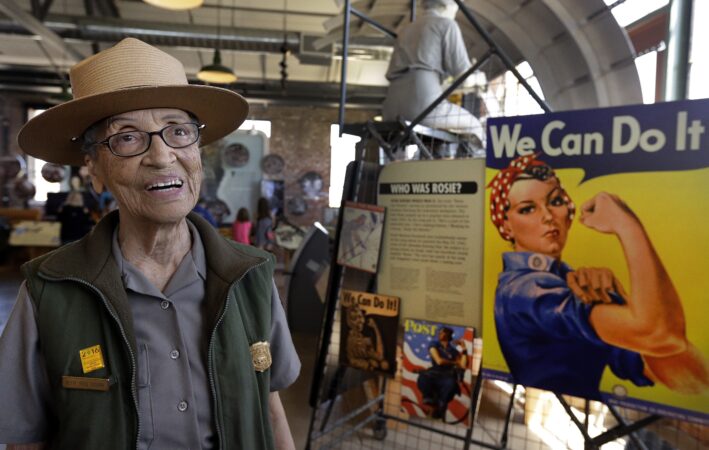
    Betty Reid Soskin, who served as the nation’s oldest park ranger and relayed firsthand accounts of segregation as a Black woman on the World War II home front, died Sunday at her home in Richmond, Calif. She was 104.

    Her death was confirmed by her son Bob Reid, who did not know the exact cause but said she had been in declining health.

    “She led a fully packed life and was ready to leave,” her family said in a statement on social media.

    Ms. Soskin, who joined the National Park Service at 85 and retired when she turned 100, used her role as the nation’s oldest park ranger to share the untold stories of Black women, including herself, who served on the home front during World War II.

    At that time, she worked as a file clerk at Boilermakers Local Auxiliary 36, a segregated union for Black workers. According to the union, Ms. Soskin worked at the sprawling Kaiser Shipyards, where thousands of women helped construct some 700 Liberty and Victory ships.

    While many were familiar with tales of the women who worked in factories as men went off to fight — known as “Rosie the Riveters” — a key detail was often omitted from those histories.

    “That was always a white women’s story,” Ms. Soskin said in an interview with the Washington Post in 2015. For most of the war, she said, Black women were not permitted to be “Rosies” until 1944, when some began to be trained as welders.

    In 2016, the union apologized to Ms. Soskin for the way she and other Black workers were relegated by the union to an auxiliary segregated lodge during the war. “On behalf of my organization, I offer Betty and all former Boilermakers who at one time belonged to an auxiliary local, an apology for what must have been a demeaning life experience,” said union leader IP Jones.

    “I’m not trained as a historian. My presentations are based on my oral history,” Ms. Soskin said. “A bottomless well of memories come up depending on questions the public asks. [The memories] are always on tap for me,” she added.

    The ranger spent her days sharing her experiences with visitors to the Rosie the Riveter WWII Home Front National Historical Park in Richmond. “Black women were not freed or emancipated in the workforce,” she told the Post. “Unions were not racially integrated and wouldn’t be for a decade. They created auxiliaries that all Blacks were dumped into. We paid dues, but didn’t have power or votes.”

    Ms. Soskin was born Betty Charbonnet in Detroit on Sept. 22, 1921, and grew up in a Cajun-Creole, African American family in New Orleans. In 1927, after a devastating flood hit the city, her family relocated to Oakland, Calif., according to a Park Service biography.

    In 1945, Ms. Soskin and her husband at the time, Mel Reid, opened one of the country’s first Black-owned music stores, Reid’s Records, which operated until 2019. In 1972, Ms. Soskin and Reid divorced, and four years later, she married William Soskin, to whom she remained married until his death in 1988.

    According to her former employer, she later went into local and state politics, working as an aide to a Berkeley City Council member and for State Assembly members.

    Ms. Soskin was working in Richmond as a field representative for a California assemblyman when she met with Park Service planners to discuss the development of an urban park paying tribute to World War II home front workers. In 2003, she left her state job to become a consultant to the Rosie the Riveter WWII Home Front National Historical Park and four years later, at the age of 85, became a park ranger.

    In a statement on social media, the park paid tribute to Ms. Soskin’s time as a ranger: “She was a powerful voice for sharing her personal experiences, highlighting untold stories, and honoring the contributions of women from diverse backgrounds who worked on the World War II Home Front.”

    In addition to her son, Bob, survivors include two daughters, Diara and Dorian; five grandchildren; and a great-grandchild.